


Abstract
Background/Objectives: Tenofovir disoproxil fumarate (TDF)-containing regimens remain the cornerstone of first-line antiretroviral therapy (ART) in many low- and middle-income countries. However, concerns regarding treatment failure and antiretroviral resistance highlight the need to evaluate the effectiveness of treatments under routine clinical conditions. This study evaluated the virologic outcomes of treatment-naïve individuals living with HIV who received predominantly TDF-based first-line ART in Davao City, Philippines. Methods: A retrospective observational study was conducted among treatment-naïve HIV patients who initiated ART between 2016 and 2020. Demographic and clinical characteristics, ART regimens, HIV surveillance stage classifications, and viral load results were extracted from routinely collected medical records. Virologic suppression was defined as an HIV RNA viral load of <1000 copies/mL and virologic failure as ≥1000 copies/mL. The availability of viral load monitoring and the interval between ART initiation and the latest viral load measurement were also evaluated. Results: A total of 494 treatment-naïve patients with HIV were included. Most patients were male (97.8%) and received TDF-containing regimens (99.0%), predominantly TDF + 3TC + EFV (95.1%). Viral load results eligible for outcompe analysis were available for 174 (35.2%) patients. Among these patients, 165 achieved virologic suppression, corresponding to a suppression rate of 94.8% (95% CI: 90.5–97.3), whereas virologic failure was observed in nine patients (5.2%; 95p% CI: 2.7–9.5). Viral load availability declined substantially among patients initiating ART in recent years, reflecting shorter follow-up durations and fewer opportunities for routine viral load monitoring. High levels of virologic suppression were observed across the demographic and clinical subgroups. Conclusions: Predominantly TDF-based first-line ART demonstrated high virologic effectiveness among treatment-naïve HIV patients with evaluable viral load measurements, with nearly 95% of patients achieving virologic suppression. However, incomplete viral load monitoring, particularly among patients initiating ART in later years, limits the evaluation of treatment outcomes at the program level. Strengthening routine viral load monitoring and long-term follow-up will improve the future real-world evaluation of ART effectiveness.
1. Introduction
The introduction of combination antiretroviral therapy (ART) has transformed HIV infection from a fatal disease into a manageable, chronic condition. Sustained viral suppression achieved through effective ART not only improves individual clinical outcomes but also reduces HIV transmission at the population level [1,2]. Consequently, achieving and maintaining virologic suppression remains the primary goal of HIV treatment programs worldwide [3].
Routine viral load monitoring plays a central role in evaluating ART effectiveness and identifying treatment failures [4,5,6]. In routine clinical practice, persistent virologic suppression is considered an important indicator of successful treatment outcomes, whereas a detectable viral load may suggest suboptimal treatment response [7]. To support HIV treatment and monitoring services, the Philippines has established a network of HIV treatment hubs and primary HIV care facilities that provide antiretroviral therapy, laboratory monitoring, and comprehensive HIV care nationwide [8]. As one of the major urban centers in southern Philippines, Davao City has established HIV treatment services and represents an important setting for evaluating treatment outcomes among individuals receiving first-line ART. These treatment programs largely follow national and international HIV treatment recommendations, in which TDF-containing regimens remain the preferred first-line therapy for treatment-naïve individuals [9,10]. In combination with lamivudine (3TC) and either efavirenz (EFV) or dolutegravir (DTG), TDF-based regimens have demonstrated high rates of virologic suppression and have been widely incorporated into national HIV treatment guidelines, including those implemented in the Philippines [11,12,13,14].
Despite ongoing efforts by national and local governments to expand access to ART through HIV treatment hubs and primary HIV care facilities, virologic failure remains an important challenge in HIV management. Failure to achieve or maintain virologic suppression may compromise treatment effectiveness, necessitate regimen modification, and increase the risk of antiretroviral resistance and continued HIV transmission [15]. In our previous genomic analysis of HIV-1 sequences from the Philippines, we identified several clinically relevant drug resistance mutations, including those associated with reduced susceptibility to nucleoside reverse transcriptase inhibitors [16]. The presence of these mutations raises concerns regarding the long-term effectiveness of TDF-containing first-line ART regimens and highlights the importance of continued monitoring of treatment outcomes in routine clinical practices. As TDF-containing regimens remain the cornerstone of first-line HIV treatment in the Philippines, continued evaluation of virologic outcomes is essential for monitoring their efficacy. However, published data describing virologic outcomes among treatment-naïve individuals receiving first-line ART in the Philippines remain limited, particularly at the local level. Additional evidence from local treatment settings is needed to support the evaluation of treatment outcomes and inform HIV treatment programs.
To address this gap, the present study aimed to evaluate the virologic outcomes among treatment-naïve HIV patients receiving ART in Davao City, Philippines, with a particular focus on the effectiveness of predominantly TDF-containing first-line regimens. Specifically, this study described the demographic and clinical characteristics of the cohort, assessed the availability of viral load monitoring data, and determined the proportion of patients who achieved virologic suppression after ART initiation. We hypothesized that treatment-naïve HIV patients receiving predominantly TDF-containing first-line ART would demonstrate a high proportion of virologic suppression under routine clinical care in Davao City, Philippines.
2. Materials and Methods
2.1. Study Design and Setting
A retrospective observational study was conducted among treatment-naïve HIV patients who initiated antiretroviral therapy (ART) between January 2016 and December 2020 at a Department of Health (DOH)-designated HIV treatment hub and an affiliated primary healthcare facility in Davao City, Philippines. The participating facilities provided comprehensive HIV services, including diagnosis, treatment initiation, laboratory monitoring, and long-term clinical follow-up. Data on patient demographics, clinical characteristics, laboratory findings, and treatment regimens were obtained by reviewing routinely collected medical records.
The primary outcome of the study was the proportion of patients who achieved virologic suppression, defined according to the latest available HIV RNA viral load measurements. Secondary outcomes included the availability of viral load monitoring, the interval between ART initiation and the latest viral load measurement, and the distribution of virologic outcomes according to demographic and clinical characteristics.
This study was reported in accordance with the Strengthening the Reporting of Observational Studies in Epidemiology (STROBE) Statement.
2.2. Participant Selection
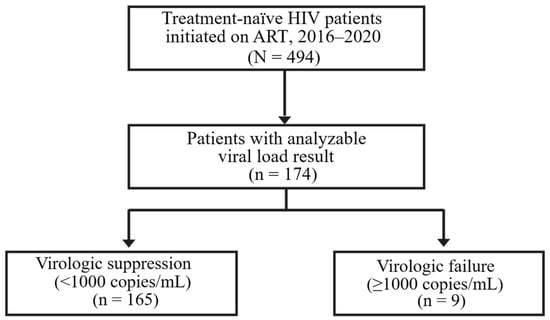
Figure 1 presents the flow diagram of participant selection and analysis. All individuals aged ≥15 years who were diagnosed with HIV infection and ART-naïve at treatment initiation between January 2016 and December 2020 were eligible for inclusion. To maximize cohort representativeness and provide a comprehensive description of treatment outcomes under routine clinical conditions, no exclusion criteria were applied at the cohort entry.
Figure 1.
Flow diagram of participant selection and virologic outcomes among treatment-naïve HIV patients.
A total of 494 treatment-naïve HIV patients met the eligibility criteria and were included in the baseline cohort. For the evaluation of virologic outcomes, patients were required to have the latest HIV RNA viral load measurement obtained at least six months after ART initiation, consistent with routine virologic monitoring recommendations. Among the 494 patients, 174 had documented viral loads that met this criterion.
2.3. Variables and Definitions
The demographic variables included age and sex of the patients. Age was categorized as ≤25 and >25 years. The clinical variables included the baseline CD4 cell count and HIV surveillance stage classification.
The CDC surveillance case definition for HIV infection was used to categorize the disease stage according to the baseline CD4 cell count. Stage 1 was defined as a CD4 count ≥ 500 cells/mm3, stage 2 as 200–499 cells/mm3, and stage 3 as <200 cells/mm3. Patients without available baseline CD4 count data were classified as having an unknown HIV stage.
The treatment variables included the prescribed ART regimen, virologic outcome status, availability of viral load monitoring, and follow-up duration. The ART regimens were classified as TDF-containing or non-TDF-containing. Virologic suppression was defined as the latest HIV RNA viral load < 1000 copies/mL, whereas virologic failure was defined as the latest HIV RNA viral load ≥ 1000 copies/mL, consistent with the World Health Organization recommendations and Philippine National HIV Program guidelines. Viral load monitoring was defined as the presence of at least one evaluable viral load measurement recorded in the medical record. Follow-up duration was defined as the interval between ART initiation and the date of the latest available viral load measurement and was expressed in months.
2.4. Data Sources and Measurements
Data were retrospectively extracted from paper-based and electronic medical records maintained by participating treatment facilities. The collected information included demographic characteristics, baseline clinical data, ART regimen information, CD4 cell counts, and viral load results.
Baseline CD4 cell counts were obtained from records generated as part of routine HIV care and used to determine the surveillance stage classifications. Viral load data were obtained from laboratory reports in the patients’ records. The most recent viral load result was used for outcome assessment. All data were collected using a standardized data extraction form. To ensure confidentiality, all personal identifiers were removed prior to the analysis, and unique study codes were assigned to each participant.
2.5. Bias
Several measures were implemented to minimize the potential sources of bias. Selection bias was reduced by including all eligible treatment-naïve HIV patients who initiated ART during the study period. Information bias was minimized through standardized data extraction procedures and cross-verification of information from multiple clinical sources, whenever available.
As this study relied on routinely collected clinical data, missing information was anticipated. Missing values were retained and reported rather than being excluded whenever possible. Patients without baseline CD4 cell count data were classified as having an unknown HIV stage. For virologic outcome analyses, only patients with available viral load measurements obtained at least six months after ART initiation were included because outcome classification was not possible in the absence of viral load testing. The potential influence of incomplete viral load monitoring, missing clinical information, and differences in follow-up duration on treatment effectiveness estimates were considered when interpreting the study findings.
2.6. Statistical Analysis
Descriptive statistics were used to summarize demographic and clinical characteristics, ART regimens, viral load monitoring availability, follow-up duration, and virologic outcomes. Categorical variables are presented as frequencies and percentages. Continuous variables are summarized using median and interquartile range (IQR).
The primary outcome was the proportion of patients who achieved virologic suppression (<1000 copies/mL), along with its corresponding 95% confidence interval (CI). Secondary outcomes included the availability of viral load monitoring according to the year of ART initiation, the interval between ART initiation and the latest viral load measurement, and the distribution of the virologic outcomes according to the demographic and clinical characteristics.
Baseline demographic and clinical characteristics were compared between patients with and without available viral load results using Pearson’s chi-square test or Fisher’s exact test, as appropriate. Among patients with available viral load measurements, the follow-up duration was summarized overall and according to the year of ART initiation using the median and interquartile range (IQR). Analyses were performed using a complete-case approach; patients with missing data for a given variable were excluded from the corresponding analysis, and no imputation of the missing values was performed. All statistical analyses were performed using Stata version 14 (StataCorp LLC, College Station, TX, USA).
3. Results
3.1. Demographic and Clinical Characteristics of the Study Population
A total of 494 treatment-naïve HIV patients receiving antiretroviral therapy (ART) were included in this study (Table 1). Among the 493 patients with available sex data, the majority were male (97.8%; n = 482), whereas females accounted for only 2.2% (n = 11). More than half of the patients were older than 25 years (53.0%; n = 262), whereas 47.0% (n = 232) were aged ≤25 years.
Table 1.
Baseline demographic and clinical characteristics of treatment-naïve HIV patients according to viral load availability (n = 494).
Most patients received TDF-containing regimens (487/492, 99.0%), predominantly TDF + 3TC + EFV (95.3%, n = 469). Other TDF-based regimens included TDF + 3TC + DTG (3.7%; n = 18) and TDF + 3TC + LPV/ritonavir (0.4%; n = 2). Non-TDF-containing regimens were uncommon, accounting for only five patients in this cohort.
Based on baseline CD4 cell counts, 150 patients (30.4%) were classified as having stage 2 HIV infection (CD4 200–499 cells/mm3), while 143 (28.9%) were classified as having stage 3 (CD4 < 200 cells/mm3). Stage 1 disease (CD4 ≥ 500 cells/mm3) was observed in 41 patients (8.3%). Baseline CD4 count data were unavailable for 160 patients (32.4%), who were consequently classified as having an unknown HIV stage.
To assess the representativeness of the cohort included in the virologic outcome analysis, baseline demographic and clinical characteristics were compared between patients with available viral load results (n = 174) and those without available viral load results (n = 320). No significant differences were observed with respect to sex (p = 0.754), age group (p = 0.430), or ART regimen (p = 0.749). However, significant differences were observed for HIV stage (p < 0.001) and year of ART initiation (p < 0.001), with patients with available viral load results more likely to have documented baseline HIV stage and to have initiated ART during the earlier years of the study period. These findings suggest that patients with available viral load results were similar to those without viral load results with respect to demographic characteristics and ART regimen but differed in baseline HIV stage documentation and the year of ART initiation.
3.2. Availability of Viral Load Results
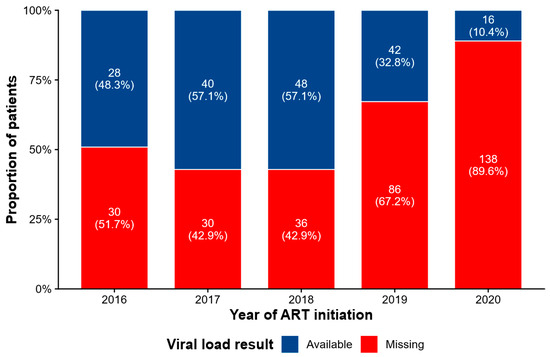
Among the 494 treatment-naïve HIV patients included in the study, 174 (35.2%) had available latest viral load results and were included in the virologic outcome analysis, whereas 320 (64.8%) had no documented viral load results during the study period. As shown in Table 1, the viral load availability was higher among patients who initiated ART during the earlier years of the study period and declined among those who initiated ART in more recent years. Specifically, viral load results were available for 48.3% of patients initiating ART in 2016, 57.1% in both 2017 and 2018, 32.8% in 2019, and only 10.4% in 2020 (Figure 2).
Figure 2.
Availability of latest viral load results among treatment-naïve HIV patients according to year of ART initiation.
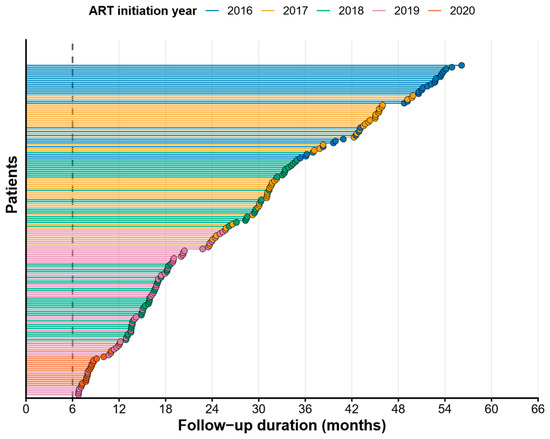
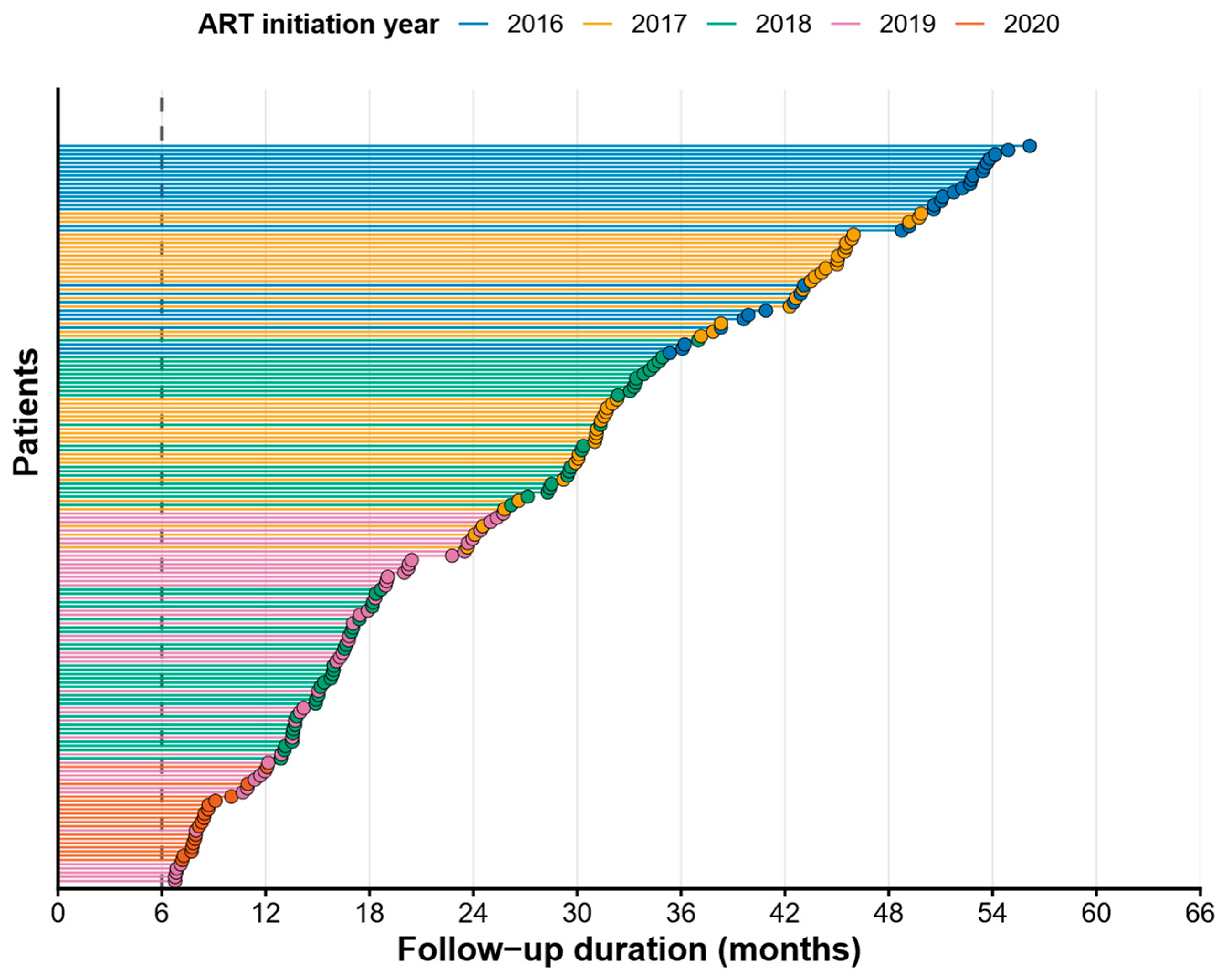
Among the 174 patients with available viral load results, the follow-up duration varied according to the year of ART initiation (Figure 3). The median interval between ART initiation and the latest viral load measurement was 50.8 months (IQR, 42.1–53.0 months) for patients who initiated ART in 2016, 37.5 months (IQR, 31.1–45.0 months) in 2017, 18.3 months (IQR, 15.3–30.6 months) in 2018, 16.6 months (IQR, 12.0–20.2 months) in 2019, and 8.3 months (IQR, 7.8–8.7 months) in 2020. These findings demonstrate progressively shorter follow-up periods among patients initiating ART in later years, resulting in fewer opportunities for routine viral load monitoring before the end of the study period. This pattern likely contributed to the lower availability of viral load results among patients who initiated ART in the later years of the study period.
Figure 3.
Follow-up Duration According to ART Initiation Year Among Patients with Available Viral Load Results. The vertical dashed line indicates the minimum follow-up duration of six months required for inclusion in the virologic outcome analysis.
3.3. Virologic Outcomes Among Patients with Available Viral Load Data
Among the 174 patients with available viral load results, 165 achieved virologic suppression, corresponding to a suppression rate of 94.8% (95% CI: 90.5–97.3), whereas virologic failure was observed in nine patients (5.2%; 95% CI: 2.7–9.5) (Table 2).
Table 2.
Virologic Outcomes According to Patient Characteristics Among Patients with Available Viral Load Data.
3.4. Virologic Outcomes According to Patient Characteristics
High levels of virologic suppression were observed across all demographic and clinical subgroups (Table 2). Among male patients, 94.7% achieved virologic suppression, whereas all three female patients were virologically suppressed. Patients older than 25 years demonstrated a slightly higher suppression rate (96.9%) than those aged 25 years or younger (92.2%).
When stratified according to the HIV surveillance case definition, virologic suppression was observed in all patients classified as having stage 1 disease (100.0%). Suppression rates remained high among patients with stage 2 (96.4%) and stage 3 (93.0%) disease, as well as among those with unknown stage (91.9%). Correspondingly, virologic failure was most frequently observed among patients with stage 3 disease (7.0%) and those with unknown stage (8.1%), although the absolute number of failures was small (Table 2).
4. Discussion
TDF-containing regimens have remained the cornerstone of first-line ART in many low- and middle-income countries for over a decade. However, reports of virologic failure and antiretroviral resistance have raised concerns regarding their long-term effectiveness in routine clinical practice. In the present study, predominantly TDF-based first-line ART achieved a virologic suppression rate of 94.8% among patients with available viral load results, indicating favorable treatment outcomes in this cohort.
The observed suppression rate is consistent with previous studies reporting high levels of virologic suppression among patients receiving TDF-based first-line ART [17,18]. Although treatment outcomes may vary across settings, suppression rates exceeding 90% have been reported in programs that implement routine viral load monitoring [19,20]. Recent real-world evidence continues to support the effectiveness of first-line ART across Southeast Asia and other low- and middle-income countries. A nationwide cohort study from Thailand demonstrated excellent virologic outcomes following the implementation of DTG-based first-line ART under the national treatment program, while a recent real-world cohort study from Indonesia similarly reported favorable clinical and virologic outcomes among patients receiving TDF/3TC/DTG in routine clinical practice [21]. These contemporary findings complement current treatment recommendations favoring DTG-based regimens because of their higher genetic barrier to resistance and improved tolerability, while reinforcing that the TDF backbone remains an important component of contemporary first-line ART [22]. Although our cohort predominantly received TDF + 3TC + EFV during the 2016–2020 study period, our findings provide important real-world evidence regarding the effectiveness of this historical first-line regimen and serve as a valuable benchmark for evaluating the ongoing transition to DTG-based first-line therapy.
Our previous genomic surveillance study of HIV-1 in the Philippines identified several clinically relevant drug resistance mutations, including those associated with reduced susceptibility to nucleoside reverse transcriptase inhibitors and non-nucleoside reverse transcriptase inhibitors [16]. Given the potential impact of mutations such as K65R and M184V on treatment outcomes [23], continued surveillance of HIV drug resistance is important. However, because resistance testing was not available in the present cohort, we could not determine whether resistance-associated mutations were present among patients with virologic failure or evaluate their contribution to the observed treatment outcomes. Nevertheless, the high virologic suppression rate observed in this cohort suggests that predominantly TDF-containing first-line ART regimens achieved favorable virologic outcomes in routine clinical practice during the study period.
In addition to resistance, treatment adherence is a major determinant of virologic suppression. Although adherence was not assessed in the present study, we previously evaluated adherence and its association with treatment outcomes in the same HIV treatment population, reporting that 73.8% of treatment-naïve patients demonstrated good adherence to ART [24]. However, the present study specifically focused on the virologic outcomes of predominantly TDF-containing first-line ART regimens rather than adherence. Consequently, while the previous findings provide context for interpreting the high virologic suppression observed in this cohort, the absence of individual-level adherence data precluded a direct assessment of the relationship between adherence and virologic outcomes in the current analysis.
Because most patients received TDF + 3TC + EFV as their first-line ART regimen, the observed suppression rate largely reflects the virologic outcomes associated with this regimen in routine clinical practice during the study period. Although the World Health Organization currently recommends DTG-based regimens as the preferred first-line therapy because of their higher genetic barrier to resistance, improved tolerability, and favorable virologic outcomes [25], TDF remains an important component of contemporary first-line ART in the Philippines. During the 2016–2020 study period, TDF + 3TC + EFV was the standard first-line regimen in the Philippines, making the evaluation of its virologic outcomes clinically relevant for understanding the performance of this regimen in routine clinical practice. The transition from EFV- to DTG-based regimens has been driven in part by the well-recognized neuropsychiatric adverse effects associated with efavirenz, including dizziness, insomnia, and mood disturbances [26,27]. On the other hand, long-term use of TDF has been associated with renal dysfunction and reduced bone mineral density in susceptible individuals [28], highlighting the importance of continuous safety monitoring. Therefore, the present findings provide valuable real-world evidence on the virologic outcomes of TDF + 3TC + EFV and may serve as a useful benchmark for evaluating the ongoing transition to DTG-based first-line therapy.
An important finding of this study was the limited availability of viral load results. Only 174 of 494 patients had documented viral load results available for evaluation, and the availability of viral load data declined substantially among patients who initiated ART in later years. The lower availability observed among more recently enrolled patients likely reflects shorter follow-up durations, resulting in fewer opportunities for routine viral load monitoring before data extraction. This pattern illustrates an inherent challenge in retrospective cohort studies, where the completeness of outcome data may vary according to the duration of follow-up.
A more pronounced decline in viral load availability was observed among patients who initiated ART in 2019 and 2020, particularly in 2020, when only a small proportion had documented viral load results. This pattern likely coincided with disruptions in routine healthcare services during the COVID-19 pandemic [29]. Similar challenges in HIV care delivery, laboratory monitoring, and patient follow-up have been reported in several settings. These findings highlight a common challenge in pharmacoepidemiological studies utilizing routinely collected clinical data, where estimates of treatment effectiveness depend on the completeness of outcome assessment. Consequently, the observed suppression rate should be interpreted in the context of the available monitoring data.
Several limitations should be considered. First, the retrospective study design restricted the analyses to information available in medical records. Viral load results were unavailable for a substantial proportion of patients, and therefore virologic outcomes could only be evaluated among patients with available viral load measurements. Consequently, selection bias cannot be excluded, as patients with available viral load results may have differed from those without viral load monitoring in ways not captured by the available clinical variables, such as adherence or retention in care. Furthermore, patients who initiated ART during the later years of the study period had shorter follow-up before study completion, resulting in fewer opportunities for routine viral load monitoring. Therefore, differences in follow-up duration may have contributed to the availability of viral load measurements and may have represented a potential source of selection bias. Virologic outcomes were based on the latest available viral load measurements; therefore, transient low-level viremia, virologic rebound, or sustained virologic suppression over time could not be distinguished. The small number of virologic failure events also precluded multivariable analyses of factors associated with treatment failure. In addition, adherence measures, treatment interruptions, resistance testing, and other important clinical variables were unavailable, limiting further evaluation of the underlying causes of virologic failure. Accordingly, the reported virologic suppression rate reflects outcomes among patients with evaluable viral load data and should not be interpreted as the overall programmatic viral suppression rate of the treatment population.
5. Conclusions
Predominantly TDF-containing first-line ART regimens were associated with favorable virologic outcomes among treatment-naïve people living with HIV who had evaluable viral load measurements during routine clinical care. Although concerns regarding treatment failure and antiretroviral resistance warrant continued surveillance, these findings provide real-world evidence supporting the virologic performance of historical TDF-based first-line ART regimens in the Philippines. However, because virologic outcomes could only be assessed among patients with available viral load measurements, the observed suppression rate should not be interpreted as the overall programmatic effectiveness of HIV treatment in this study. Strengthening viral load monitoring and improving retention in care will enhance treatment program evaluation, facilitate the timely identification of treatment failure, and support progress toward achieving UNAIDS 95-95-95 targets.
Author Contributions
Conceptualization, A.A.H.J.; methodology, A.A.H.J., A.J.B.D., A.F.F.-B., J.A.H.R. and R.J.B.E.; software, A.A.H.J.; validation, A.A.H.J., A.J.B.D., A.F.F.-B., J.A.H.R. and R.J.B.E.; formal analysis, A.A.H.J.; investigation, A.A.H.J., A.J.B.D., A.F.F.-B., J.A.H.R. and R.J.B.E.; resources, A.A.H.J., A.J.B.D., A.F.F.-B., J.A.H.R. and R.J.B.E.; data curation, A.A.H.J., A.J.B.D., A.F.F.-B., J.A.H.R. and R.J.B.E.; writing—original draft preparation, A.A.H.J., A.J.B.D., A.F.F.-B., J.A.H.R. and R.J.B.E.; writing—review and editing, A.A.H.J., A.J.B.D., A.F.F.-B., J.A.H.R. and R.J.B.E.; visualization, A.A.H.J.; supervision, A.A.H.J.; project administration, A.A.H.J.; funding acquisition, A.A.H.J. All authors have read and agreed to the published version of the manuscript.
Funding
This research was funded by the Research Publication and Innovation Center (RPIC), University of the Immaculate Conception (UIC), through the Faculty Institutional Research Program. The APC was also funded by the RPIC, UIC.
Institutional Review Board Statement
The study was conducted in accordance with the Declaration of Helsinki and the Data Privacy Act of 2012 (Republic Act No. 10173) of the Philippines. The study protocol was approved by the Institutional Review Board of the University of the Immaculate Conception (protocol code BBBB-GS-15-04-2022) on 15 April 2022.
Informed Consent Statement
Patient consent was waived owing to the retrospective study design and the use of anonymized clinical data, which posed minimal risk to participants and did not affect patient care.
Data Availability Statement
The datasets used and/or analyzed during the current study are available from the corresponding author upon reasonable request.
Acknowledgments
This work was supported and funded by the Research, Publication, and Innovation Center of the University of the Immaculate Conception. Jordana P. Ramiterre, head physician of the Davao Reproductive Health and Wellness Center, approved the gathering of data within the treatment hub premises.
Conflicts of Interest
The authors declare no conflicts of interest.
References
- Baral, S.; Rao, A.; Sullivan, P.; Phaswana-Mafuya, N.; Diouf, D.; Millett, G.; Musyoki, H.; Geng, E.; Mishra, S. The Disconnect between Individual-Level and Population-Level HIV Prevention Benefits of Antiretroviral Treatment. Lancet HIV 2019, 6, e632–e638. [Google Scholar] [CrossRef] [Scilit] [PubMed]
- Kyere, G.A.; Vechey, G.A.; Charles-Unadike, V.O.; Tarkang, E.E. Trends in Viral Load Suppression among HIV Patients on Antiretroviral Therapy (ART) at Asante Mampong Municipal Hospital, Ghana: 2019–2023. BMC Infect. Dis. 2024, 24, 1170. [Google Scholar] [CrossRef] [Scilit] [PubMed]
- Weldemhret, L.; Dejene, T.A.; Gebrehiwot, G.T.; Legese, H.; Wasihun, A.G.; Weldemariam, A.G. Virological Outcomes of Dolutegravir-Based versus Other Antiretroviral Regimens in People Living with HIV: A Systematic Review and Meta-Analysis. BMC Infect. Dis. 2026, 26, 847. [Google Scholar] [CrossRef] [Scilit] [PubMed]
- Shi, Y.-Z.; Huang, H.-H.; Wang, X.-H.; Song, B.; Jiang, T.-J.; Yu, M.-R.; Wang, Z.-R.; Li, R.-T.; Jiao, Y.-M.; Su, X.; et al. Retrospective Study on Genetic Diversity and Drug Resistance among People Living with HIV at an AIDS Clinic in Beijing. Pharmaceuticals 2024, 17, 115. [Google Scholar] [CrossRef] [Scilit] [PubMed]
- Ankunda, C.; Emunyu, J.; Namasambi, S.; Sserunjogi, C.; Kyomuhangi, B.; Mumbere, I.; Nakaweesi, J. Prevalence of Drug Resistance Mutations and Their Association with Time to Virological Failure in People Living with HIV in Uganda. BMC Infect. Dis. 2025, 25, 1241. [Google Scholar] [CrossRef] [Scilit] [PubMed]
- Foka, F.E.T.; Mufhandu, H.T. Current ARTs, Virologic Failure, and Implications for AIDS Management: A Systematic Review. Viruses 2023, 15, 1732. [Google Scholar] [CrossRef] [Scilit] [PubMed]
- Chandane Tak, M.; Vaidyanathan, A.; Mukherjee, A. Revolutionizing HIV-1 Viral Load Monitoring in India: The Potential of Dried Blood Spot Analysis for Expanding Access and Improving Care. Healthcare 2024, 12, 413. [Google Scholar] [CrossRef] [Scilit] [PubMed]
- Gangcuangco, L.M.A.; Eustaquio, P.C. The State of the HIV Epidemic in the Philippines: Progress and Challenges in 2023. Trop. Med. Infect. Dis. 2023, 8, 258. [Google Scholar] [CrossRef] [Scilit] [PubMed]
- Gandhi, R.T.; Landovitz, R.J.; Sax, P.E.; Smith, D.M.; Springer, S.A.; Günthard, H.F.; Thompson, M.A.; Bedimo, R.J.; Benson, C.A.; Buchbinder, S.P.; et al. Antiretroviral Drugs for Treatment and Prevention of HIV in Adults: 2024 Recommendations of the International Antiviral Society–USA Panel. JAMA 2025, 333, 609–628. [Google Scholar] [CrossRef] [Scilit] [PubMed]
- Girón-Callejas, A.; Lorenzana, R.; Pickles, M.; Inzaule, S.; Jordan, M.R.; Diaz, S.; Vrinten, C. High HIV Viral Suppression among Adults Receiving WHO-Recommended First-Line Dolutegravir-Based Antiretroviral Therapy in Low- and Middle-Income Countries: A Systematic Review and Meta-Analysis of Programmatic Evidence. AIDS Res. Ther. 2025, 22, 91. [Google Scholar] [CrossRef] [Scilit] [PubMed]
- Li, J.; Chen, D.; Wen, Z.; Du, Y.; Huang, Z.; Zhong, H.; Wang, Y.; Yin, S. Real-World Efficacy and Safety of Dolutegravir plus Lamivudine versus Tenofovir plus Lamivudine and Efavirenz in ART-Naïve HIV-1-Infected Adults. Medicine 2022, 101, e31100. [Google Scholar] [CrossRef] [Scilit] [PubMed]
- Fraysse, J.; Priest, J.; Turner, M.; Hill, S.; Jones, B.; Verdier, G.; Letang, E. Real-World Effectiveness and Tolerability of Dolutegravir and Lamivudine 2-Drug Regimen in People Living with HIV: Systematic Literature Review and Meta-Analysis. Infect. Dis. Ther. 2025, 14, 357–383. [Google Scholar] [CrossRef] [Scilit] [PubMed]
- Deng, L.; Li, C.; Chen, P.; Luo, X.; Zheng, X.; Zhou, L.; Zhou, Y.; Xia, J.; Hong, Z. Dolutegravir plus Lamivudine versus Efavirenz plus Tenofovir Disoproxil Fumarate and Lamivudine in Antiretroviral-Naive Adults with HIV-1 Infection. BMC Infect. Dis. 2022, 22, 17. [Google Scholar] [CrossRef] [Scilit] [PubMed]
- Palich, R.; Saliba, S.; Landowski, S.; Abdi, B.; Valantin, M.-A.; Mahrez, R.; Katlama, C.; de Truchis, P. Intermittent Doravirine/Lamivudine/Tenofovir Disoproxil Fumarate (DOR/3TC/TDF) Maintains a High Level of Viral Suppression in Virologically Suppressed People Living with HIV. Infect. Dis. Now. 2023, 53, 104736. [Google Scholar] [CrossRef] [Scilit] [PubMed]
- Li, A.; Liu, L.; Zhang, H.; Wang, X.; Li, Z.; Liu, A.; Dai, L.; Zhang, J.; Gao, Y.; Ye, J.; et al. Efficacy and Safety of Doravirine/Lamivudine/Tenofovir Disoproxil Fumarate in HIV Treatment: A Real-World Single-Center Study in China. Front. Med. 2025, 12, 1575411. [Google Scholar] [CrossRef] [Scilit] [PubMed]
- Reyes, J.A.H.; Tolentino, J.E.; Castillo, R.T.C.; Dolores, P.F.K.; Hinay, A.A., Jr. Genetic Diversity and Drug Resistance Mutations in HIV-1 Pol Gene Sequences in the Philippines: A Retrospective Genomic Analysis. J. Pure Appl. Microbiol. 2024, 18, 2462–2468. [Google Scholar] [CrossRef] [Scilit]
- Mwavika, E.T.; Kunambi, P.P.; Masasi, S.J.; Lema, N.; Kamori, D.; Matee, M. Prevalence, Rate, and Predictors of Virologic Failure among Adult HIV-Infected Clients on Second-Line Antiretroviral Therapy (ART) in Tanzania (2018–2020): A Retrospective Cohort Study. Bull. Natl. Res. Cent. 2024, 48, 96. [Google Scholar] [CrossRef] [Scilit]
- Gumede, S.B.; Venter, F.; de Wit, J.; Wensing, A.; Lalla-Edward, S.T. Antiretroviral Therapy Uptake and Predictors of Virological Failure in Patients with HIV Receiving First-Line and Second-Line Regimens in Johannesburg, South Africa: A Retrospective Cohort Data Analysis. BMJ Open 2022, 12, e054019. [Google Scholar] [CrossRef] [Scilit] [PubMed]
- Kippen, A.; Nzimande, L.; Gareta, D.; Iwuji, C. The Viral Load Monitoring Cascade in HIV Treatment Programmes in Sub-Saharan Africa: A Systematic Review. BMC Public Health 2024, 24, 2603. [Google Scholar] [CrossRef] [Scilit] [PubMed]
- Rugemalila, J.; Kamori, D.; Kunambi, P.; Mizinduko, M.; Sabasaba, A.; Masoud, S.; Msafiri, F.; Mugusi, S.; Mutagonda, R.; Mlunde, L.; et al. HIV Virologic Response, Patterns of Drug Resistance Mutations and Correlates among Adolescents and Young Adults: A Cross-Sectional Study in Tanzania. PLoS ONE 2023, 18, e0281528. [Google Scholar] [CrossRef] [Scilit] [PubMed]
- Sastrawan, I.P.Y.; Somia, I.K.A.; Gayatri, A.A.A.Y.; Utama, I.M.S.; Sukmawati, N.M.D.D.; Purnamasidhi, C.A.W.; Merati, K.T.P. Clinical Outcomes of Tenofovir, Lamivudine, and Dolutegravir in Treatment-Naïve versus Treatment-Experienced HIV Patients: A Single-Center Retrospective Cohort Study in Indonesia. Infect. Chemother. 2026, 58, 192–202. [Google Scholar] [CrossRef] [Scilit] [PubMed]
- Hiranburana, N.; Sophonphan, J.; Kerr, S.J.; Lertpiriyasuwat, C.; Noknoy, S.; Jirajariyavej, S.; Fujitnirun, C.; Chetchotisakd, P.; Lolekha, R.; Bowonwatanuwong, C.; et al. Efficacy and Predictors of Virological Non-suppression in Thailand’s Rollout of Dolutegravir-based First-line Antiretroviral Therapy: A Nationwide Cohort Analysis. HIV Med. 2026, 27, 459–470. [Google Scholar] [CrossRef] [Scilit] [PubMed]
- Balew, M.; Abeje, G.; Mekonnen, A.; Degu, G. Prevalence of HIV Drug Resistance among Patients Experiencing First-Line Treatment Failure in Ethiopia: A Systematic Review and Meta-Analysis. BMC Public Health 2025, 25, 2059. [Google Scholar] [CrossRef] [Scilit] [PubMed]
- Escartin, R.J.B.; Servillon, R.J.T.; Legarta, J.M.A.; Arriola, S.K.G.; Brahim, P.F.A.; Braza, D.L.M.; Salva, A.V.; Hinay, A.A. Success Rates and Adherence to Antiretroviral Therapy among Treatment-Naïve Patients in Davao City, Philippines: A Ten-Year Retrospective Cohort Study. Dialogues Health 2024, 5, 100195. [Google Scholar] [CrossRef] [Scilit] [PubMed]
- Moyo, R.C.; Bolton, L.; Okango, E.L.; Otto, M.; Letoao, N.; Nyasulu, P.S.; Tanser, F. Dolutegravir Rollout for Treatment of HIV with a Focus on Advanced Disease and Tuberculosis Coinfection: Findings from Rural KwaZulu-Natal, South Africa (2019–2023). AIDS Res. Ther. 2025, 22, 111. [Google Scholar] [CrossRef] [Scilit] [PubMed]
- Arnab, P.; Croxford, R.; Scott, J.; Perumal, S.; Mohammed, Z.; Wiesner, L.; Cohen, K.; Wasserman, S. Severe Efavirenz Associated Neurotoxicity: A Retrospective Cohort Study. S. Afr. J. Infect. Dis. 2023, 38, a522. [Google Scholar] [CrossRef] [Scilit] [PubMed]
- Hua, W.; Wang, S.; Wang, X.; Shao, Y.; Wang, Y.; Ye, J.; Su, B.; Jiang, T.; Zhang, T.; Wu, H.; et al. Neuropsychiatric Adverse Events During 12 Months of Treatment with Efavirenz in Treatment-Naïve HIV-Infected Patients in China: A Prospective Cohort Study. Front. Psychiatry 2021, 12, 579448. [Google Scholar] [CrossRef] [Scilit] [PubMed]
- Liu, Z.; Zhao, Z.; Ma, X.; Liu, S.; Xin, Y. Renal and Bone Side Effects of Long-Term Use of Entecavir, Tenofovir Disoproxil Fumarate, and Tenofovir Alafenamide Fumarate in Patients with Hepatitis B: A Network Meta-Analysis. BMC Gastroenterol. 2023, 23, 384. [Google Scholar] [CrossRef] [Scilit] [PubMed]
- Ukaegbu, E.; Maulenkul, T.; Sarria-Santamera, A. Impact of COVID-19 on Utilization of Healthcare Services Among People Living with HIV (PLHIV): A Systematic Review. Medicina 2025, 61, 111. [Google Scholar] [CrossRef] [Scilit] [PubMed]

Disclaimer/Publisher’s Note: The statements, opinions and data contained in all publications are solely those of the individual author(s) and contributor(s) and not of MDPI and/or the editor(s). MDPI and/or the editor(s) disclaim responsibility for any injury to people or property resulting from any ideas, methods, instructions or products referred to in the content. |
© 2026 by the authors. Licensee MDPI, Basel, Switzerland. This article is an open access article distributed under the terms and conditions of the Creative Commons Attribution (CC BY) license.