1. Introduction
Waste is a growing environmental problem on the global scale. The informal sector in South Africa is essential to keeping recyclables out of landfills. Despite their vital contributions, informal recyclers belong to a marginalized social group, often viewed negatively and as “disposable” within neoliberal economic frameworks [
1]. Since the 1970s, solid waste management has been an ongoing issue in discussions among academics and professionals around the world. Heaps of illegally discarded waste have become a typical sight in footpaths and storm drains, raising serious concerns among residents of high-density areas about the towns’ inability to collect waste on a regular and effective basis [
2]. For municipalities such as KSD, rapid urbanization has led to both increased waste generation and a decreased ability to develop an adequate institutional capacity to address waste management needs.
A lack of waste collection and management services is one of the numerous issues that many growing and urbanizing nations, such as South Africa, are confronted with. The people, who are the main producers of waste, also contribute to this situation due to a lack of knowledge and skills regarding waste management. These circumstances have brought about many problems, including unlawful dumping. As a result, waste pickers are now crucial to enhancing municipal waste management and closing the waste collection inefficiency gap [
3]. Studies have shown that informal recyclers perform critical waste diversion functions through the recovery of metals (such as steel, aluminum, copper, and zinc) [
4,
5]. Current circular economy research recognizes the potential of resource loops, reuse, and recovery in contributing to achieving multiple United Nations Sustainable Development Goals (SDGs), including responsible consumption (SDG 12), decent work (SDG 8), and climate action (SDG 13) [
6]. Therefore, strengthening informal recycling systems is essential for improving waste management efficiency while advancing broader sustainability and socioeconomic development goals.
Despite growing recognition of the role of informal recycling in addressing waste management challenges, many small municipalities continue to be excluded from national waste data, and informal recycling systems in those areas are often not reported. In addition to competing narratives surrounding informal recycling, there exists a debate between proponents who celebrate informal workers as key players in achieving environmental sustainability and critics who argue that a combination of structural barriers, weak governance, and social exclusion prevents informal recyclers from fully participating in circular economy initiatives [
7,
8]. Informal waste pickers (IWPs) must confront a number of challenges that impair their productivity, well-being, and financial stability despite their vital contributions to the recycling of plastic and metal waste. Economic exploitation, social stigma, health hazards, and legal restrictions hinder their full integration into official waste management systems [
9]. Although large city-based informal recycling systems have received considerable research attention, mid-tier municipalities such as KSD have been greatly understudied. Specifically, limited information is available on the quantity of metal recovered through informal means, the priority ranking of different types of metals recovered, the socio-economic benefits resulting from informal recycling, and the environmental contributions of informal recycling.
This study examines the dynamics of informal metal recycling in KSDLM, focusing on its environmental, socio-economic, and systemic significance within emerging circular economy frameworks. It explores how informal metal recyclers operate within local waste management systems, the socio-economic importance of their work, and the broader governance structures that shape their activities. To what extent does informal metal recycling in the King Sabata Dalindyebo Municipality contribute towards the diversion of waste, the creation of livelihoods, and resource recovery as part of the circular economy model? What kinds and quantities of metals are recovered through informal recycling? What socio-economic benefits does informal metal recycling provide to participants? What environmental benefits result from informal metal recovery? The discussion draws on relevant literature to contextualize the role of informal recyclers in resource recovery, highlight the sustainability potential of informal recycling networks, and identify the policy interventions required to maximize their contributions. Ultimately, the study emphasizes the need for strategies that bridge the gap between informal and formal waste sectors, enhance collaboration among stakeholders, and support inclusive, sustainable waste governance in the municipality.
2. Materials and Methods
2.1. Study Area
The study was carried out along the N2 and R61 transport corridors within the King Sabata Dalindyebo (KSD) Municipality, which is situated in the South African province of the Eastern Cape. KSD presents significant challenges in expanding and sustaining sanitation services due to its 45% poverty rate, which is well above the national rural average, and low municipal revenue. The King Sabata Dalindyebo Local Municipality spans around 3000 km
2 and consists of peripheral village settlements, smallholdings, and farms in addition to the urban center Mthatha, a regional center for trade, education, and health services [
10]. The municipality includes both urban and peri-urban areas, some of which have inadequate formal waste management facilities. The N2 and R61 transport corridors are where informal recyclers are mostly located while waiting for transportation to KwaZulu Natal buy back centers.
2.2. Research Approach
This study employed a mixed-methods research approach to capture both the quantitative and qualitative aspects of informal metal recycling along the N2 and R61 transport routes in the KSDLM. The mixed-methods approach was deemed appropriate to examine the materials recycled, operational practices and socio-economic impacts of informal metal waste recycling. The integration of quantitative measurements with qualitative insights allowed for triangulation, enhancing the reliability and validity of the study results. Ref. [
11] reported that approaching complex research challenges using a mixed-methods approach has several advantages as it combines the philosophical frameworks of interpretivism and post-positivism, combining qualitative and quantitative data in a way that explains research issues in a meaningful way. In this way, the study benefitted from this approach through acquiring tangible benefits such as information on incomes generated while simultaneously capturing qualitative aspects of the realities of waste pickers. In addition, the mixed-methods approach provides a logical foundation, methodological flexibility, and allowed for a thorough comprehension of minor cases. By integrating qualitative socioeconomic examination with quantitative recycling data, this study sought to provide a comprehensive understanding of the issue.
2.3. Research Design
The study adopted a descriptive research design to quantify and describe how informal metal recyclers operate within local waste management systems, the socio-economic importance of their work, and the broader governance structures that shape their activities. The frequency, categories, and quantities of metals recycled in the KSDLM were assessed by means of structured questionnaires and waste audits. These data were then compared to recycling standards reported in the national and international literature. It should be emphasized that these criteria are generally applied to standard municipal solid waste recycling levels, not metal recovery rates only, limiting the utility of direct comparisons [
6,
12]. The objective of the qualitative component is to examine the benefits and challenges of the socioeconomic system. Focus groups and semi-structured interviews with stakeholders and informal recyclers illuminated the market hurdles, safety concerns, and dependence on informal recycling for livelihoods. These narratives elucidated not only the metals most frequently recycled, but also the rationale for the endurance of specific practices and their impact on socioeconomic outcomes. Triangulation is a strength of this mixed-methods approach: quantitative data illustrated the measurable degree of recycling, while qualitative findings provided context for these results. The two threads merged to offer a comprehensive account of metal recycling in the KSDLM as both a socioeconomic endeavor and a material flow.
2.4. Sampling Procedures
The research population comprised metal waste pickers within the King Sabata Dalindyebo Local Municipality. Purposive and snowball sampling were utilized in conjunction due to the absence of an official database for informal recyclers. Ref. [
13] stated that chain-referral data is generated by snowball sampling. While snowball sampling was a good approach for sampling informants from a tough informal recycling community, it results in a risk of network homogeneity bias when participants refer other people from within their own social or operational networks as additional participants. To overcome this situation, recyclers were recruited at different sites along the N2 and R61 corridors. Snowball sampling is widely acknowledged as a good method for reaching people that are difficult to reach and is especially helpful when conducting research on delicate or private subjects since it uses the trust in social connections to promote participation. The survey concentrated on observable trends in recycling frequency, types of metals collected, and revenue generated. Given the limited nature of the recycling community in the KSDLM, a sample size of 48 participants was deemed adequate. Some scholars [
14] advocate for a minimum of 30 participants to provide allow for adequate descriptive statistical analysis, while others emphasize the importance of pragmatic sample sizes that consider resource constraints and population accessibility. Considering the fragmented and predominantly unrecorded characteristics of the target group, a sample size of 48 was both practical and provided sufficient diversity for analysis of frequency distributions and cross-tabulations in this study.
From the 48 participants, twenty participants were selected for the interview segment, which was used to identify themes to offer a diverse array of perspectives from informal recyclers, a key aspect of this study. The remaining 28 participants took part in focus group discussions; there was no overlap between the two groups. Ref. [
15] asserted that the most widely used criterion for evaluating the suitability of purposive samples in qualitative research is saturation. Saturation is a crucial sign that a sample is sufficient for the phenomenon under study, that is, that the information gathered has captured the richness, complexity, and nuances of the topics under study and hence exhibits content validity. The selection of 20 individuals ensured saturation and the representation of key stakeholders. Two focus groups, each comprising six to eight individuals, were conducted.
2.5. Data Collection
Quantitative and qualitative data were collected to capture both the operational and social dimensions of informal metal recycling along the N2 and R61 transport corridors in the KSD Municipality. Quantitative data were obtained through structured questionnaires, waste audits, and secondary sources, including policy documents and municipal records, to gather information on demographics, recycling frequency, types of metals collected, income generated, and overall recovery volumes. The quantities of metal were measured using a calibrated portable digital weighing scale (Model: TCS 300 kg electronic price scale) with a maximum capacity of 300 kg and an accuracy of ±0.05 kg manufactured by Zhejiang Mengxuan Electronic Co., Ltd. in Yongkang City, China. This scale was calibrated before the start of the fieldwork using standard calibration weights. The participants’ collected materials were weighed at designated scrap collection points along the N2 and R61 transportation corridors. Data collection took place over six weeks, from May to June 2025, and included both weekdays and weekends for recycling activities. Complementing this, qualitative data were collected via focus groups and semi-structured interviews with recyclers, alongside field observations at collection sites. This was performed in order to explore market access, health risks, handling practices, and operational challenges, providing a contextualized understanding of the recycling behaviors and socio-economic dynamics of waste pickers. Together, these methods provided a comprehensive and triangulated understanding of informal metal recycling, capturing both measurable outcomes and the nuanced social, economic, and operational factors that shape the practice in the KSD Municipality.
2.6. Data Analysis
Statistical Package for Social Sciences (SPSS) version 30.0 was employed to encode and interpret the survey and waste audit data. Recycling practices were summarized utilizing descriptive data, including means, percentages, and frequencies. The distribution of recycled metal types was analyzed using cross-tabulations to identify similarities and differences across variables. Comparative analysis facilitated benchmarking against national and international recycling rates. Graphical representations (pie charts and bar graphs) were generated in SPSS to illustrate the distribution of metals.
Themes were inductively generated from the data obtained from the focus groups and interviews without imposing predefined categories. The themes focused on socioeconomic benefits (including revenue generation and livelihood support), challenges (such as lack of recognition and safety hazards), and policy deficiencies were formulated through the inductive creation of codes. Specifically, this study followed the widely accepted and flexible approach of [
16,
17].
2.7. Ethical Considerations
The study adhered to the ethical standards for research involving human participants. Ethical clearance was obtained from the Walter Sisulu University research ethics committee prior to data collection (Approval Ref. WSU/FNS-REC/2025/02/11/G28). All participants were informed beforehand about the purpose of the study and its nature, and their voluntary participation was obtained through verbal informed consent. No financial compensation was provided to the participants. The data collection ensured that anonymity was maintained, and that confidential information was strictly prevented from being disclosed in any way. No personal details were included in the general data collected. The ethical principles approved by the university’s research ethics committee were strictly followed throughout the study. Thus, during contact with participants and during the phases of questionnaire completion and collection, the participants were treated with dignity and respect. Considering that data collection occurred along the N2 and R61 highways, appropriate fieldwork risk mitigation measures were observed to ensure the safety of both the researcher and participants.
4. Discussion
This section describes the critical evaluation of the evidence to place it within broader discussions of the circular economy, waste governance, labor in the informal economy, and livelihood strategies in developing countries. We critique the ways in which the patterns identified by recyclers along the N2 and R61 transport corridors in KSD reflect larger systemic, institutional, and socio-economic processes that shape the informal recycling of metals in South Africa and elsewhere. We also analyze the contradictions and tensions that emerge between environmental value and social neglect, economic contributions and institutional exclusion, and individual resilience and structural vulnerability.
4.1. The Central Paradox: A Large Contribution to the Circular Economy, Little Institutional Recognition
One of the most significant observations made about the recycling industry was the disconnect between the large environmental value created through the recycling of metals by informal recyclers and the lack of recognition by institutions in KSD’s waste management system [
20]. Although informal recyclers recover a significant amount of steel and aluminum, both of which are key components of circular economy models, these workers appear to receive limited formal recognition within the municipal waste management sector [
6]. This highlights the need for formal recognition and integration of informal recyclers into municipal waste management systems to fully harness their environmental contributions and strengthen circular economy initiatives.
The important work that waste pickers do is becoming more widely acknowledged in South Africa. Nevertheless, these unorganized informal workers continue to be mostly unacknowledged, are frequently stigmatized, and have a lack of social protection associated with their jobs. Waste pickers face particular work risks due to this lack of awareness and safety [
19]. In KSD, there are few mechanisms for integrating informal recycling into the waste management system [
21]. Therefore, although the municipality receives indirect benefits from the recycling efforts of informal recyclers, there is no investment in or recognition of the labor that makes recycling possible.
This raises an important governance question with regard to the inclusiveness of the local circular economy that cannot be considered truly “circular” when the labor force that underpins it is excluded from planning processes. In KSD, the persistent lack of integration reflects a long-standing pattern of utilizing informal labor for its economic utility while simultaneously marginalizing it structurally, which intersects with challenges such as rural–urban migration, unemployment, and spatial inequality to create a recycling sector that is environmentally vital yet institutionally invisible.
4.2. Material Logic and Spatial Ecology: Why Steel and Aluminum Dominate the Recycled Metal Collected by Recyclers Along the N2 and R61 Transport Corridors in KSD
The South African aluminum value chain employed 11,600 people directly and 28,900 indirectly in 2017, and it directly contributed to 0.7% of the country’s GDP in 2019. Although South Africa does not mine the bauxite ore from which aluminum is made, primary production still accounts for the majority of the nation’s aluminum production. The South African aluminum value chain includes a wide range of clients, such as manufacturers, distributors, and recyclers, and is very important to the global market [
22]. In 2022, South Africa was one of the nations that recycled the most metal. Remarkably, 72% of the aluminum and beverage cans recycled worldwide are processed here. Additionally, South Africa produces more recycled materials than the majority of other nations. Among the most recycled metals are steel, aluminum, and tin foil. Other common recycling items are food tins and beverage cans, most of which are sold domestically [
18]. The prevalence of steel and aluminum in the recycled waste stream is due not only on the participants’ preferences but also on the material ecological context of KSD’s economy. Ref. [
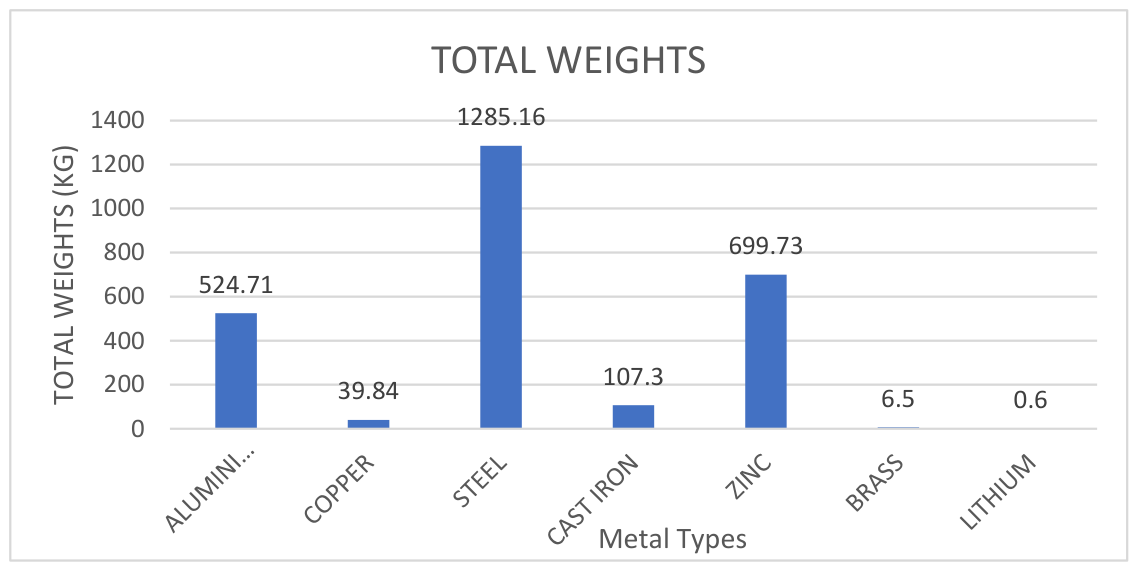
23] stated that due to local construction, transportation, and household scrap generation patterns, there is an abundance of steel available for recycling. Aluminum dominates the beverage and food packaging waste generated by the retail outlets located throughout the area. The fact that recyclers concentrate on these metals demonstrates a rational optimization strategy, targeting metals that generate the largest return per unit of labor and per unit of travel, consistent with findings in other African contexts.
The focus on specific metals also reveals the underlying structural challenges within KSD’s waste management system. Municipal-managed waste systems are unable to capture high-value materials, placing the responsibility of recovering these resources to informal collectors [
24]. In addition, the spatial arrangement of waste-generating activities, such as shops, taxi ranks, and informal dumping sites along the N2 and R61 highways, creates a corridor-shaped economy in which recyclers operate in hazardous areas with heavy traffic, a pattern observed in other South African municipalities as well [
25]. Consequently, the prominence of certain metals is not merely a matter of material preference, but reflects the spatial and economic logic of KSD, where the informal economy has developed as an adaptive response to deficiencies in environmental governance.
4.3. Market Intermediation, Extraction, and Inequality
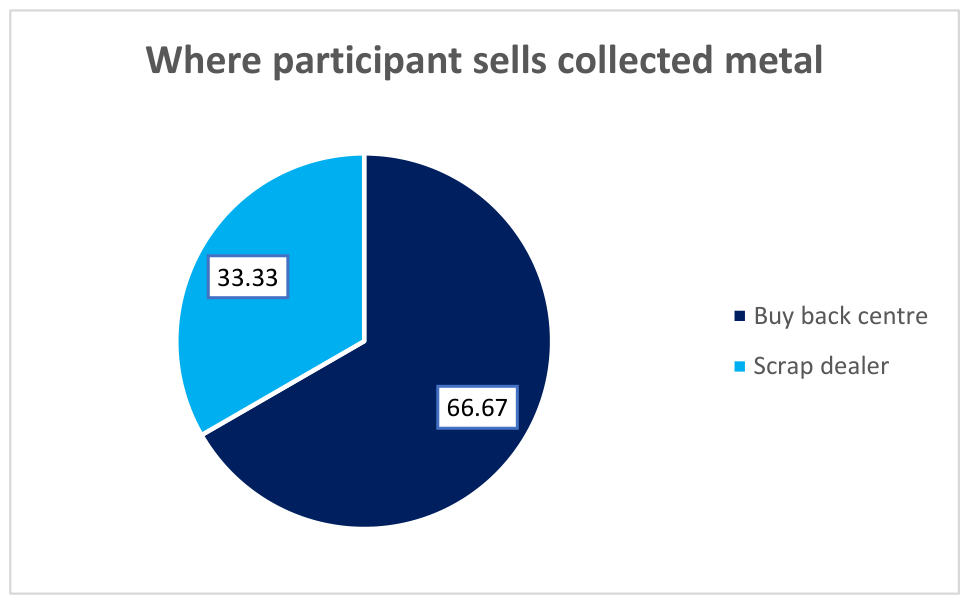
The research found that recyclers frequently rely on buy-back centers and scrap dealers as intermediaries to sell their recyclable materials, creating a structural contradiction: although informal recyclers are essential to the recycling value chain, they occupy the least advantageous position within it. In this system, informal recyclers provide the labor and materials, intermediate buyers supply the scales, infrastructure, and market access, and the benefits predominantly flow upwards rather than to the recyclers themselves, reaffirming a classic dependency structure in the informal economy where workers without assets must negotiate under unfavorable conditions with those who control processing capabilities [
1]. Informal recyclers form an important aspect of the local economy. They provide essential services to waste management and resource recovery. This helps to streamline the recycling in the KSDLM where these recyclers collect discarded metal from construction sites, households, and industrial waste. They not only contribute to reducing the waste that goes to landfill, but also to the recovery of valuable materials that can be reintegrated into the economy. Recyclers often engage in unregulated transactions in the cash-based informal metal recycling industry. This provides income to those with no formal job prospects. Informal recyclers bridge the material recovery gap by serving as intermediaries between waste producers and recycling facilities, thereby enhancing local resource efficiency.
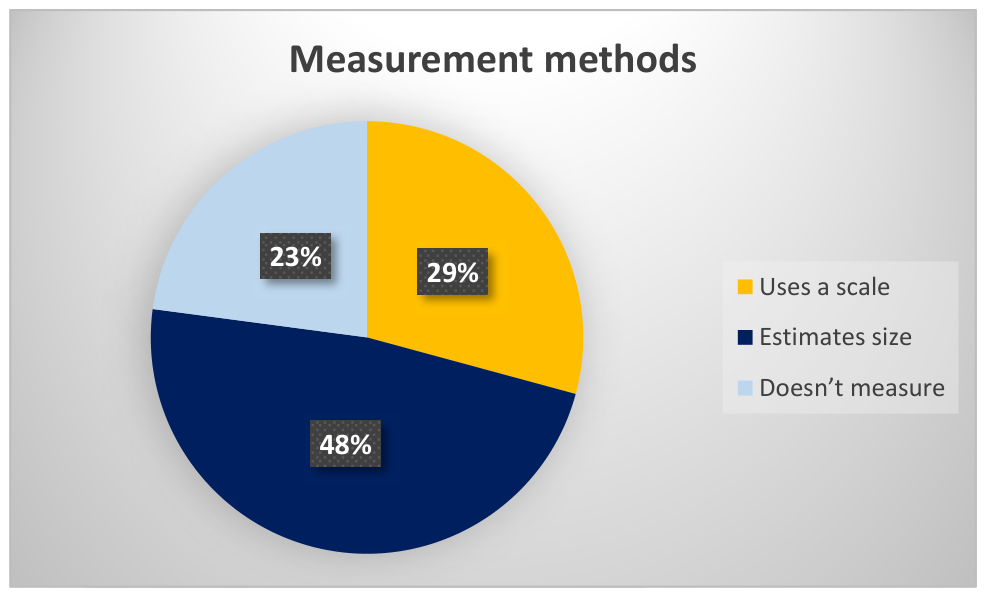
Three types of inequality were observed: asymmetry of information, where recyclers typically lack knowledge of current scrap metal prices, limiting their negotiating power; asymmetry of measurement, as more than half of the recyclers estimated the weight of their recyclables rather than measuring them, creating opportunities for undervaluation, a pattern also noted in Turkey, Brazil, and India [
8,
26]; and asymmetry of the market, since most recyclers cannot choose their buyers due to transportation constraints, allowing the pricing and sales to be controlled by intermediaries. These findings demonstrate that informal recycling along the N2 and R61 transport corridors in KSD operates within a value chain where labor is indispensable, but the benefits are unevenly distributed, highlighting the need for interventions that promote fairness, transparency, and equitable access to resources and markets.
4.4. Livelihood Dependence and the Gendered Dimensions of Informal Scrap Metal Recycling
In South Africa’s remote Eastern Cape Province, a group of women make a living by gathering scrap metal and paying for its transportation to Durban for sale. A steadily declining supply of recyclable metals, volatile commodity prices, and logistical challenges in delivering these commodities to purchasers further along the recycling value chain raise concerns about the sustainability of their livelihood [
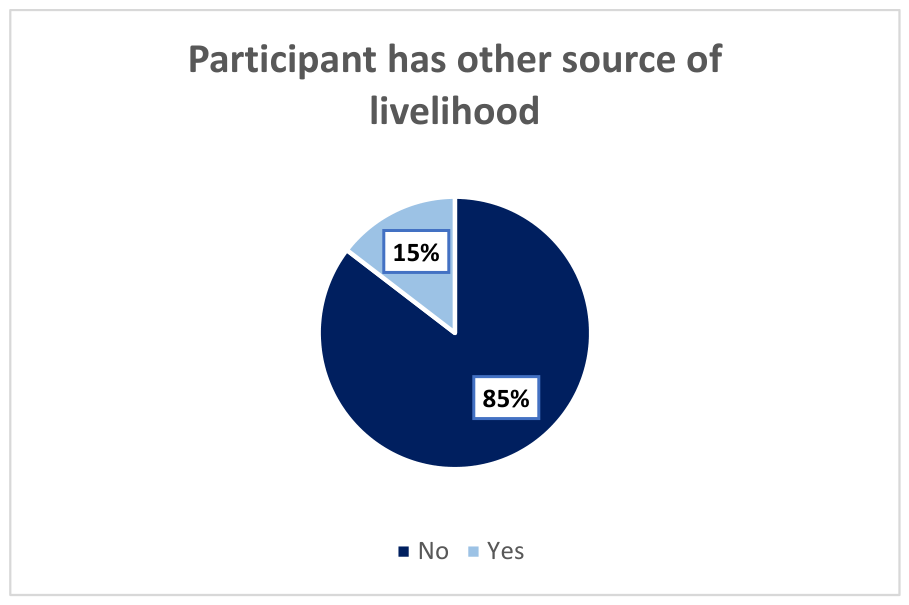
25]. In the context of metal recyclers along the N2 and R61 transport corridors in KSD, the majority of respondents (85%) identify informal recycling as their primary means of income. This demonstrates that informal recycling serves as a central livelihood strategy rather than supplemental income [
27,
28]. In addition, the lack of formal job opportunities in the area creates a void that informal recycling fills, which is consistent with other developing regions around the world (e.g., informal settlements and limited industrial development). Informal metal recycling plays a significant role in the socio-economic landscape of the King Sabata Dalindyebo Municipality, impacting both local economies and community dynamics.
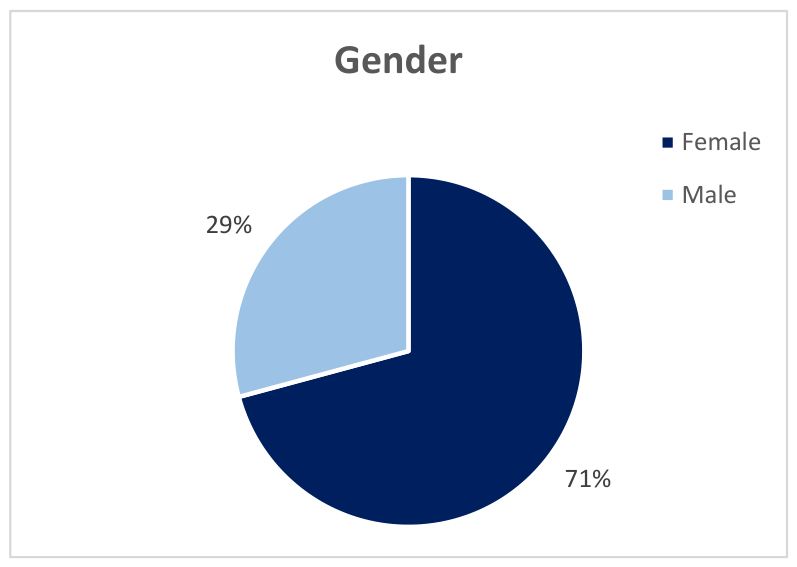
Of particular importance is the gendered nature of the sector. Women constitute 71% of recyclers, thereby providing a key route for individuals who have been restricted by multiple barriers, preventing them from accessing formal labor markets to undertake income-generating activities [
26]. The gender imbalance in the informal recycling sector along the N2 and R61 transport corridors in KSD disrupts the common narrative found in larger urban centers (such as Johannesburg) of male-dominated informal recycling, suggesting that in small- to medium-sized municipalities, women serve a more dominant and understudied role in waste recovery. The increasing reliance on environmentally linked informal work by women along the N2 and R61 in KSD may also represent a shift in employment patterns in which women are increasingly using informal work related to environmental issues to stabilize their household economies [
29,
30]. Therefore, in order to ensure that women’s work is respected, safeguarded, and incorporated into comprehensive waste management and circular economy initiatives, policies and interventions that acknowledge and promote their crucial role in informal recycling are imperative.
4.5. Occupational Hazards and the Precariousness and Unavailability of Formal Safety Provisions
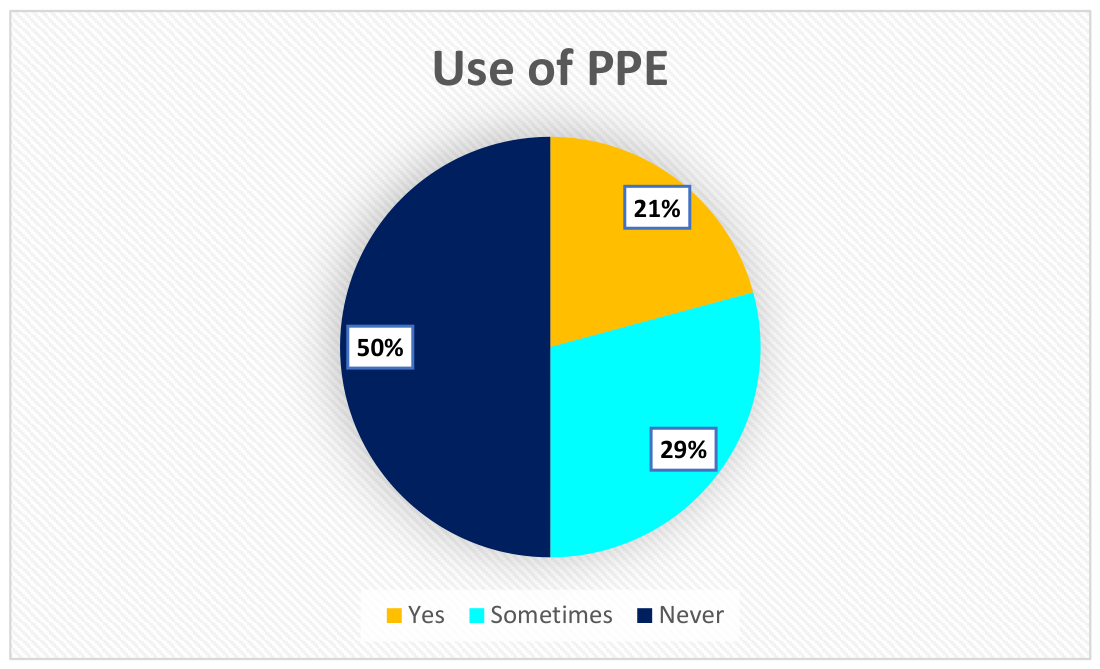
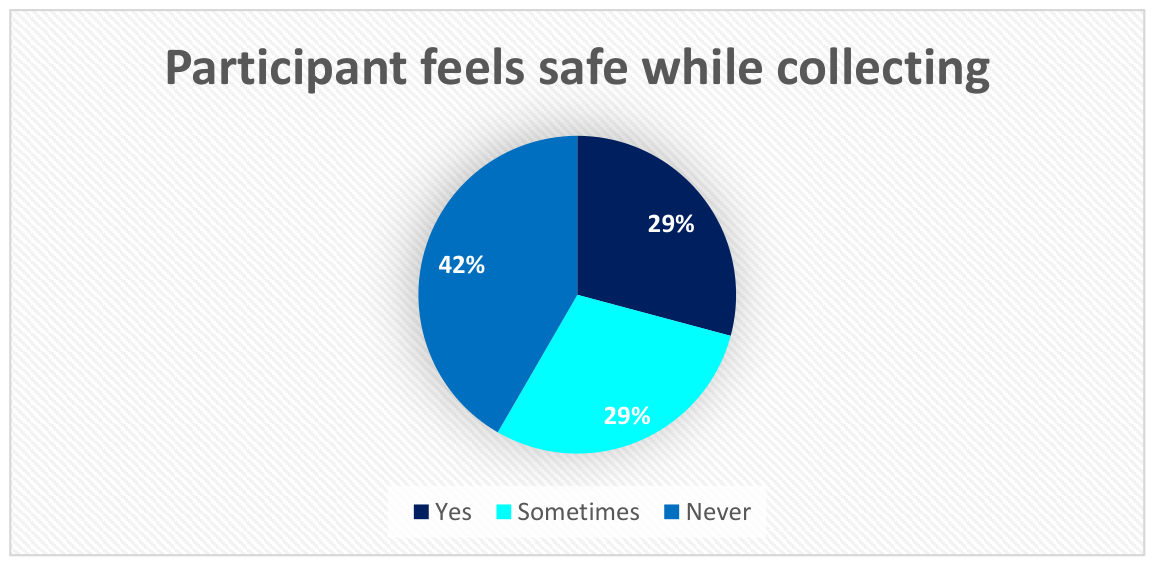
The limited availability of personal protective equipment (PPE) and the widespread perception of unsafe working conditions highlight the deeper systemic failure. Workers engaged in informal recycling often engage in hazardous occupational activities under circumstances that contradict fundamental labor rights [
31]. However, the fact that these workers operate outside the formal economy often shields institutions from responsibility and accountability for their health and safety.
Waste pickers are frequently marginalized people who select and sort waste for sale and are at great risk of environmental and occupational dangers. The majority of dump sites undoubtedly lack proper health and safety precautions, such as the usage of personal protective equipment (PPE) and training on hazard awareness, which could have a detrimental effect on the waste pickers’ health [
31]. The identified occupational hazards experienced by recyclers (cuts, respiratory hazards, heavy lifting, and traffic exposure) have been documented globally in studies of informal waste workers.
What makes KSD unique is the combination of hazards and specific risk factors faced by informal recyclers along these transport routes. The N2 and R61 function not only as highways, but also as informal commodity corridors, creating hazardous workspaces [
21]. Additionally, the lack of formal waste collection increases the likelihood that recyclers will encounter unsorted mixed waste, including contaminated materials. The labor force is also gendered, with women facing additional burdens due to caregiving responsibilities and limited access to protective equipment [
32]. These risks underscore a significant contradiction: while the municipality benefits environmentally from the activities of informal recyclers, it does not provide them with the same protections afforded to workers in the formal sector.
4.6. Contextualizing KSD Within the Global South Circular Economy Debates
Strong institutions, specific regional interventions, policies and appropriate regulatory frameworks are required to transform an economy based on linear waste management methods into a circular economy (CE) model. Nonetheless, several countries in the Global South still face long-standing problems such as weak governance of cross-border waste, inappropriate waste management practices, improper disposal practices, and a lack of incorporation of the informal recycling sector (IRS) into the general waste management schemes that are already in place [
33]. Although the IRS has played an important role in the recovery and recycling of material, including waste pickers’ informal activities, it faces a stigma and exclusion from formal policies [
34]. A growing body of literature indicates that in the Global South, circular economies are mostly dependent on informal labor rather than technology [
5]. This highlights the value in openly recognizing and including informal recyclers as part of circular economy initiatives to acknowledge their contributions, promote them, and properly leverage their work for sustainable waste management in KSD [
35].
Studies show that informal recycling is economically viable where labor costs are low and scrap costs are high, backed by good market conditions (usually when unemployment levels are high). Waste picking is seen as an effective means of survival for those that have long been excluded from full-time jobs in the Global South, offering a vital source of income in the context of a labor market where jobs are scarce [
36,
37]. In South Africa, reclaimers earn wages according to the market value only, as shown by a study on workers in the same city’s pick collection operations. Despite this, these reclaimers together make a significant annual profit; they are the main source for recyclable materials—around 51% of recyclables in the paper and packaging industry [
37].
In this process, collectors strategically increase their profits by moving resources with higher values (copper and aluminum) and collecting lower-priced metals (steel) when the transportation is more affordable or the market is favorable [
36,
38,
39]. Research in locations such as Catalonia, Pakistan, and Latin America has uncovered similar behavior trends among informal recyclers that adjust their collection behavior based on trade prices and other sources of livelihood [
38,
40]. For example, when prices of scrap fall, recyclers may scale back on collecting or increase their material sources when profit margins decrease [
39]. Evidence from around the world has confirmed that this use of informal labor coupled with price-sensitive demand and the inclusion of cheaper raw materials is a systematic component of informal recycling economies, rather than a phenomenon unique to South Africa [
36].
There is a major contradiction in the context of KSD between two competing views. While circular economy models appear to be efficient, cutting to the chase and environmentally friendly, the informal recycling environment in KSD is often characterized by the practice of scarcity and improvised adaptation to survival requirements. This tension brings forth complex theoretical questions regarding whether South Africa can achieve a circular economy model that excludes traditional waste workers who are already performing circular work at the ground level. Studies indicate that neglecting to integrate the informal waste workers into the circular economy would create a cycle of extraction where benefits from the informal economy go to the higher levels while the social and environmental costs affect the lower levels [
41].
The informal recyclers working along the N2 and R61 corridors in KSD demonstrate that circularity in KSD is not simply theoretical and is a reality, but a precarious reality. Their efforts are underreported but important and necessary environmental labor that works in large part to save the Earth through recovering and diverting wastes. It is crucial that these workers are formally recognized as environmental service providers rather than marginalized waste managers in order for an equitable transition to circularity to take place.
5. Conclusions
This study on informal metal recycling along the N2 and R61 transport corridors in the King Sabata Dalindyebo Municipality (KSD) highlights the critical yet undervalued role of informal recyclers in advancing local circular economy practices. Informal recyclers, who are predominantly women, operate within hazardous environments and under precarious economic conditions. Informal recyclers along the N2 and R61 transport routes in KSD play an important role in environmental preservation by redirecting metals like steel, aluminum, copper, and zinc away from landfills. These activities have the potential to reduce greenhouse gas emissions and conserve natural resources, although these environmental impacts were not directly quantified in this study. Their work illustrates that circularity in KSD is not merely theoretical and is actively occurring, albeit in an informal and inequitable framework. Structural challenges, including dependence on intermediaries, limited access to protective equipment, fragmented markets, and a lack of formal recognition, undermine the potential efficiency and socio-economic benefits of these activities. At the same time, informal recyclers demonstrate remarkable resilience and adaptive strategies, showing that informal labor is central to sustaining environmental and economic outcomes in this municipality. A socially just and environmentally effective circular economy cannot ignore these contributions; integrating informal recyclers into formal waste management planning, providing protective measures, market access, and institutional support are essential.




 ,
,