


Abstract
Illegal solid waste dumping is a key urban sustainability challenge due to increased urbanisation and human consumption, but its prevalence and impacts across a socially differentiated gradient are seldom considered. We used street and off-street road surveys to examine the extent of illegal solid waste dumping across an income gradient in two medium-sized towns of Makhanda and Knysna in South Africa. We enumerated all dumpsites encountered in low- and high-income areas, recorded their GPS coordinates, and visually estimated size and composition using a standardised typology. We encountered 215 illegal solid waste dumpsites unevenly distributed by town (155 in Makhanda and 60 in Knysna) and income status, with the majority located in low-income areas compared to high-income areas. Most illegal solid waste dumpsites in low-income areas were small and located along roadsides and vacant plots. In both towns, illegal solid waste dumpsites were dominated by household and garden waste. The findings suggest that social differentiation matters in illegal solid waste dumping and should be factored into service provision strategies for ensuring environmental justice. We recommend that (i) municipalities should consider income heterogeneity in designing effective and equitable waste management plans, (ii) the national government should consider additional human and financial support to municipalities for efficient and equitable residential waste management, (iii) waste recycling at source (within households) should be mainstreamed in waste management strategies, and (iv) cleanup campaigns should be considered as a short-term solution to manage existing illegal solid waste dumpsites.
1. Introduction
The concept of clean cities and towns is increasingly recognised as paramount in fulfilling the Sustainable Development Goal imperative for inclusive, safe, and livable cities. Positive links between clean cities and human being dimensions associated with clean cities are well documented, including the ability to use green spaces [1]. However, as the global population and urbanisation increase, waste production, particularly in urban areas, is also increasing and becoming a key sustainability challenge [2]. Recent studies have confirmed a positive correlation between urbanisation and waste generation, attributing the waste management challenge to increased human consumption [3,4]. The 2024 global waste generation outlook reports that about 2.1 billion tonnes of municipal solid waste is generated annually, and this is projected to increase by 56% to 3.8 billion tonnes by 2050 [5]. More than 38% of municipal solid waste is classified as uncontrolled waste [5], meaning such waste is not collected formally.
Uncontrolled municipal waste often results in frequent and prevalent illegal solid waste dumping (ISWD), particularly within urban areas across the Global South [6]. Illegal solid waste dumping is the unlawful disposal of solid waste; it is generally viewed negatively due to its negative social and environmental impacts [7]. For example, ISWD contributes to water, soil, and air pollution, as well as human and livestock health problems, which can lead to poor health or death [8]. A study in southern Italy reported a correlation between ISWD sites and diseases such as breast cancer and asthma, attributing this to hazardous waste found at dumpsites [9]. In South Africa, Tomita et al. [10] reported that residents living five kilometres from waste dumpsites are susceptible to diseases such as asthma, tuberculosis, diabetes, and depression. In addition to health impacts, economic impacts linked to ISWD include loss of property value, adverse effects on tourism, and increased municipal cleanup costs [7]. The negative impacts associated with ISWD point to the need for more research in urban areas, particularly in developing countries where the challenge is prevalent [11]. Particularly, in contexts such as South Africa, with highly differentiated income status and poor waste management, the associated ISWD might disproportionately affect poor communities [12].
In South Africa, approximately 12.7 million tonnes of domestic waste are produced annually, and an estimated 3.7 million tonnes are not collected [13]. The uncollected waste is mostly dumped illegally since most municipalities struggle to manage solid waste due to financial challenges and maladministration [13]. According to the South African National Environmental Management Waste Act 59 of 2008, local municipalities are mandated to develop integrated waste management plans, clearly outlining specific steps for managing waste in their jurisdiction. Regardless of the above-mentioned policy framework, the problem of ISWD in South Africa is on the rise in most urban areas [7,14]. For example, Niyobuhungiro and Schenck [14,15] observed extensive ISWD in Western Cape’s Fisantekraal township and intimated that cleanup efforts could not address persistent dumping by households and local tuck shop owners. Ngalo and Thondhlana [7] found that more than half of the interviewed low-income households in Komani, South Africa attributed ISWD to poor municipal waste collection services. Using Joe Slovo’s informal settlement as a case study, Jakeni et al. [16] reported that densely populated areas and those near vacant land were the most affected by ISWD. Swanepoel and Marlin [17] reported a 57% increase in illegal solid waste dumpsites in Nelson Mandela Bay Metropolitan between 2015 and 2021, with most ISWD occurring along road verges. The above-mentioned studies suggest that ISWD is a growing urban sustainability challenge in South Africa, amidst a failure by municipalities to develop effective waste management plans as prescribed by the country’s laws.
Studies in South Africa that have assessed ISWD across an income gradient have shown that low-income neighbourhoods tend to have more illegal solid waste dumpsites than high-income areas [15,16], which has implications for environmental justice. Comparisons in other countries have shown similar trends where low-income areas, particularly in developing countries, seem to have higher incidences of ISWD than high-income areas [8]. These observations have intensified the debate on solid waste management and environmental justice [18], a notion that is centred on the disproportionate impact of harmful environmental burdens (e.g., pollution, climate risk, and ISWD) on poor communities. From a South African perspective, waste-related environmental city injustices could be caused by unplanned settlements in low-income areas that are inaccessible to municipal waste collection vehicles [13]. The poor and often powerless communities in these unplanned low-income settlements are left with no option but to illegally dump solid waste along roadsides and open areas, leaving them exposed to waste-related health effects. Additionally, most people in low-income urban areas struggle to pay for private solid waste collection services, thus leaving them with no option but to dispose of solid waste illegally [18,19].
Environmental justice centres on the idea that everyone across racial, ethnic, socio-economic status, and nationality divides has the right to the same environmental protection and benefits [20]. In contrast, environmental injustice refers to the disproportionate impacts of environmental hazards on specific social groups [21]. Environmental justice is centred on three connected pillars, namely, distributional justice (equitable allocation of environmental burdens), procedural justice (fair involvement of all communities in decision-making), and recognitional justice (respect and recognition of vulnerabilities) [20]. Environmental injustice postulates that the marginalised, low-income, and minority communities of society are exposed to environmental hazards that result in high incidences of poor health due to factors such as systematic power imbalances, racism, and existing economic structures [22]. The risk associated with environmental hazards among low-income populations is further exacerbated by the fact that such populations are unable to defend themselves due to poverty and lack of power. For example, environmental racism is an example of environmental injustice, given the disproportionate exposure of racialised low-income communities to environmental hazards [23]. Although several studies [24,25] have provided evidence that marginalised low-income communities disproportionately experience environmental hazards, some studies [26,27] have contradicted the environmental justice claims, thus the need for more studies. However, to address environmental injustices, particularly linked to waste disposal in urban areas, the concepts of sustainable urban development and sustainable cities have been proposed. These concepts are centred on creating durable and efficient cities with minimal waste-related environmental effects on urban dwellers [28]. These concepts emphasise zero-waste cities, which can be achieved through waste awareness and education, urban household behavioural change, adopting effective waste technology, and 100% recycling [29]. The applicability of these concepts to address environmental injustice has always been a challenge in most developing countries, owing to the complexity of solid waste production and management. Therefore, to address waste disposal and ISWD complexities, more research is needed, particularly along urban inequalities dimensions, to help formulate effective context-specific solid waste management interventions.
Most municipalities in South Africa are struggling with waste management, resulting in the proliferation of ISWD [30]. This is compounded by the fact that most low-income areas and informal settlements are inaccessible due to narrow roads, making it a challenge for municipal trucks to collect the waste [17,31]. Further, previous studies have shown that low-income residents lack waste management infrastructure, such as disposal containers, which leaves them with no option but to illegally dump household and garden waste [7,32]. In addition, studies have shown that the distance to formal dumping landfills is long, and the costs associated with travel to authorised landfills are high to the extent that ISWD becomes a behavioural and financially viable option for poor communities [33]. Consequently, ISWD mainly occurs on road verges, vacant plots, riparian zones, and stormwater drainage systems because these are easy to access and closely located [7]. Other studies have reported that ISWD is prevalent on public infrastructure, such as along school fences and electricity substations, as well as on recreational facilities, like parks, which is likely to affect the use of public facilities [7]. Illegal solid waste composition at dumpsites tends to vary depending on location and income group. For example, Ngalo and Thondhlana [7] reported more household and garden waste than construction waste in illegal solid waste dumpsites found in low-income areas of Komani, Eastern Cape province of South Africa. In Poland, Ciura et al. [34] reported that illegal solid waste dumpsites were dominated by construction waste and recyclable materials, such as plastic and cardboard, due to their proximity to residential houses. In the United Kingdom, the most common items found on illegal solid waste dumpsites were household goods, white goods, construction, and garden waste [35]. These studies provide evidence that ISWD composition varies; thus, there is a need to conduct site-specific studies to develop effective waste management strategies. Altogether, there is a growing concern about the uneven patterns of waste collection and support services and the disproportionate impact of ISWD on low-income and vulnerable residents. Such uneven provision of waste services can translate into unsafe and unlivable conditions for the urban poor, which resonates with environmental justice imperatives in urban spaces.
To the best of our knowledge, there are few inter-town spatial analyses of the prevalence of ISWD, including abundance, composition, size, and density in urban areas, yet such information forms the baseline data needed to develop an even and equitable waste management plan. Further, most studies conducted in South Africa are mostly in metropolitan cities, such as Nelson Mandela Bay Metropolitan [17,36], yet information related to the spatial location of illegal solid waste dumpsites in small- and medium-sized towns is valuable given the unique conditions of these towns (e.g., low municipal financial resources) and the fact that they generally struggle with service delivery issues. Additionally, small- and medium-sized towns have higher population growth rates relative to their area size due to rural–urban migration, which is likely to favour illegal solid waste dumping. Several methods can be used to spatially identify illegal solid waste dumpsites in urban areas, e.g., drone imagery and remote sensing [17,36]; however, these methods are not as accurate as the road survey method, which provides detailed geographic features and landscape locations. For example, drones and remote sensing techniques might struggle to identify small illegal solid waste dumpsites in vegetated areas [37], justifying the use of the road survey method. Further, the road survey method is relatively cheap and can be quickly adopted by financially struggling municipalities to gather data on illegal solid waste dumpsite identification, distribution, and densities. Considering the above, we aimed to quantify illegal solid waste dumpsites and assess their sizes, composition, and locations across residential neighbourhoods of different income statuses in two medium-sized towns of Makhanda and Knysna, located in Eastern and Western Cape Provinces of South Africa. We hypothesise that ISWD is disproportionately prevalent in low-income neighbourhoods in both towns, thereby putting them at greater risk than high-income neighbourhoods.
2. Materials and Methods
2.1. Study Towns
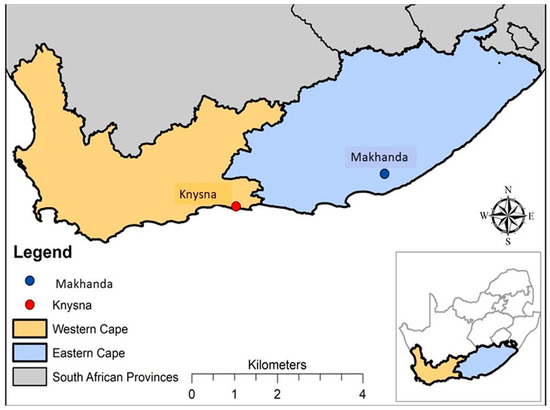
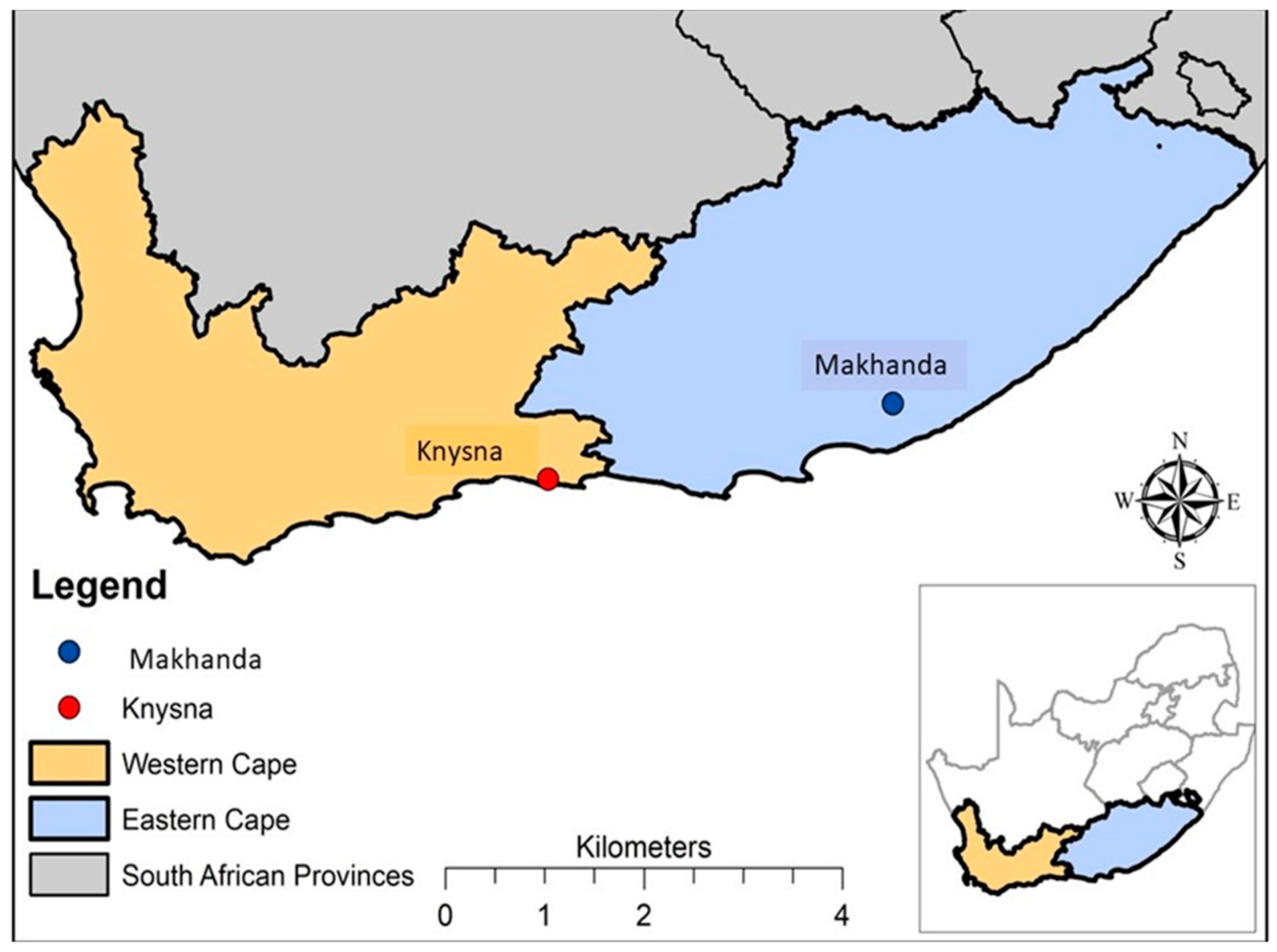
This study was conducted in two medium-sized South African towns, namely, Makhanda in the Eastern Cape Province and Knysna in the Western Cape Province (Figure 1). The towns were conveniently selected based on location and solid waste management performance for comparative purposes. Makhanda is regarded as an under-performing town, whereas Knysna is considered a better-performing town. Makhanda (33°18′36″ S 26°31′36″ E), which is the administrative centre of the Makana local municipality, has a population of approximately 75,000 people and a population density of approximately 1000 people per km2. The town has a comparatively higher representation of Black Africans (80%) than Coloureds (11%), Whites (8%), and Indians (1%) [38]. The town covers an estimated 65.1 km2 at an altitude of 550 m above sea level. Makhanda has a diverse and unique vegetation type, comprising several South African biomes, such as Albany Thicket, Afromontane Forest, Grasslands, and Nama Karoo, which are on the peripheries of the town [39]. Rain is received throughout the year, with peaks in the austral summer (October to March). Mean annual precipitation is approximately 680 mm, with mild temperatures in summer (averaging 26 °C) and cold temperatures in winter (averaging 6 °C). Consistent with most Eastern Cape province towns, Makhanda is characterised by low education levels and high unemployment levels [38].
Figure 1.
Map showing the study towns of Makhanda and Knysna in South Africa.
Knysna, the administrative centre of the Knysna local municipality, is a coastal town located along the Garden Route area of South Africa (34°02′08″ S 23°02′56″ E) (Figure 1). Its population size is approximately 96,055 residents, with a population density ranging from 470 to 1000 people per km2 [40]. Its population is characterised by a fairly equal distribution of Black Africans (34%) and Coloureds (37%), followed by Whites (18%) and others (Indians, Asians) (2%) [38]. The town covers approximately 108.7 km2 [40] at an altitude of 140.29 m above sea level. Knysna’s vegetation is characterised mainly by fynbos shrublands and indigenous Afrotemperate forests. It has a mean annual rainfall of approximately 875 mm, warm summer temperatures averaging 25 °C, and mild winters averaging 17 °C. Fires are common in the austral autumn and winter due to hot and dry bergwinds.
The two towns’ economic structures and municipal service delivery performance are markedly different. In Makhanda, the town’s economy is mainly supported by educational institutions, including Rhodes University, the biggest employer in the town, and private and public schools. Other economic opportunities include tourism from the annual festivals, such as the National Arts Festival, Sasol Science Festival, The Standard Bank Youth Jazz Festival, and The Grahamstown Foundation Festival, retail outlets and restaurants, banking institutions, and surrounding private game reserves. Recent reports have suggested that Makhanda is at risk of collapse due to dysfunctional local government, decaying infrastructure, and poor service delivery [41]. The Makana Municipality Integrated Development Plan (IDP 2024–2025) identified a lack of financial stability as the key driver to poor delivery [42]. The governance performance index (GPI), which assesses how individual South African local governments perform, ranks Makana local municipality at 25 out of 26 existing large towns (B2) [43], making it one of the worst-performing (top 15%) municipalities. In contrast, the economy of Knysna heavily relies on household spending through tourism activities and local household purchasing of goods and services [40]. Tourism activities include boat cruises, forest tours, wine tastings, and whale and dolphin watching, supported by exclusive private estates such as Pezula, Fernwood, Westford, and Belvidere. Comparatively, Knysna has better economic opportunities, with lower unemployment levels (26%) than Makhanda (33%). The governance performance index (GPI) ranks Knysna Local Municipality at 12 out of 26 existing large towns [43], making it one of the middle-performing municipalities
Both towns’ spatial structure reflects apartheid-era spatial planning patterns, with a clear distinction in housing types and sizes, infrastructure, and socio-economic conditions between high-income neighbourhoods previously reserved for Whites only and low-income neighbourhoods previously for Blacks only [44]. High-income neighbourhoods in Makhanda are primarily located on the western side, including Sommerset Heights, Westview, Sunnyside, Oatlands, and Kingswood, while low-income areas are on the eastern side of town, including Joza, Fingo, Hlalani, and Tantji [41,44]. In Knysna, high-income neighbourhoods include Thesen Islands, Fisherhaven, and Knysna Heights, while low-income areas include Hornlee, Khayalethu, Rhobololo, Xolweni, and parts of Concordia. High-income neighbourhoods in most South African urban areas are characterised by large residential plots, bigger houses, low population density, large gardens, and green infrastructure, such as street trees and recreational parks. Typically, high-income areas are inhabited by highly salaried households. In contrast, low-income areas are characterised by small residential plots, high population density, a low number of street trees and urban parks, and are inhabited by lowly salaried and non-working households. The Reconstruction and Development Programme (RDP) houses are a key feature in low-income areas. These are government-built houses, typically built on small residential plots post-apartheid to address social injustice [45]. Generally, low-income areas are associated with poverty and limited municipal services compared to high-income areas.
2.2. Street Surveys and Data Collection
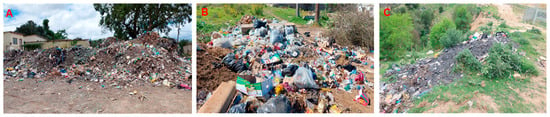
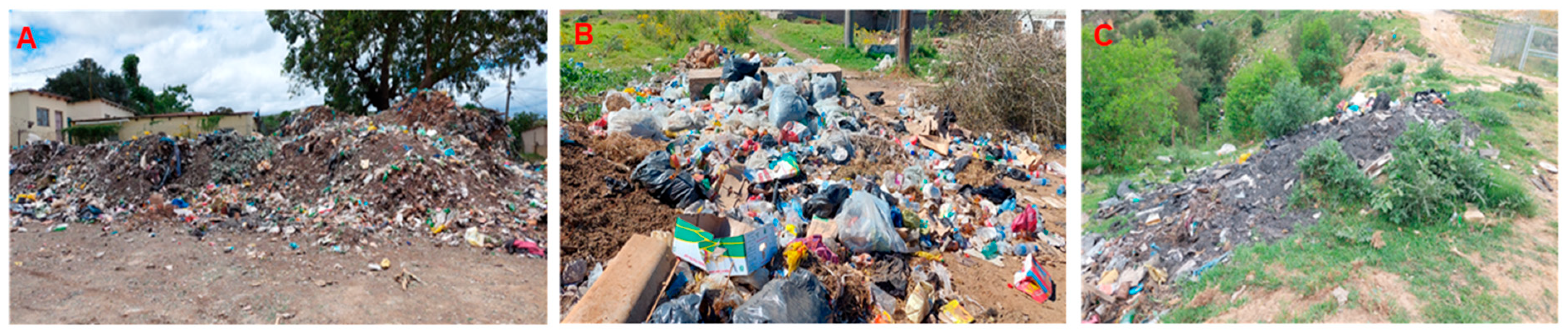
Within each town, we conducted street and off-street road surveys of all public roads between November 2022 and February 2023. Using the method described by Mabusela et al. [45], the street and off-street road surveys were conducted using a slow-moving vehicle with two field workers observing each side of the road to identify illegal solid waste dumpsites. Ngalo and Thondhlana [7] suggested that street and off-street road surveys effectively identify ISWD, which justifies using the method. We used our knowledge of the towns, housing sizes, town spatial zonation maps, existing knowledge [44], and Google Earth images to categorise two income groups within each town, namely, low-income and high-income areas. Within each income group, we identify all the roads and public footpaths using Google Earth. Delineation of the income groups and identification of all roads and footpaths was followed by a slow drive along each road, identifying visible illegal solid waste dumpsites on each road or footpath. At each identified illegal solid waste dumpsite, the following information was gathered: coordinates of the dumpsite, location of the dumpsite, size of the dumpsite, and composition of the dumpsite. All identified illegal solid waste dumpsites were counted, and coordinates were recorded using a Garmin global positioning system (GPS) device. Further, illegal solid waste dumpsite locations in relation to proximity features such as roadsides, commonages, land/plot type, and riparian zones were noted. The size of each dumpsite was visually estimated based on three categories, small, medium, and large, following Ngalo and Thondhlana [7]. Small dumpsites were less than 5 m in diameter, medium dumpsites were between 5 m and 30 m in diameter, and large dumpsites were above 30 m (see Figure 2) [7]. We used visual onsite observations and photo images to identify illegal solid waste dumpsite composition based on three categories, household waste, garden waste, and construction waste, following Ngalo and Thondhlana [7]. Household waste is generated from household daily activities (commonly called garbage) and comprises single-use plastics, food scraps, packaging material, plastic and glass bottles, and paper. Garden waste refers to plant material from garden activities (also called green waste), including plant branches, lawns, flowers, and other organic materials. Construction waste includes debris from construction activities such as bricks, concrete, tile fragments, and painting materials.
Figure 2.
Images showing illegal solid waste dumpsites based on size: (A) large dumpsites, (B) medium dumpsites, and (C) small dumpsites.
2.3. Data Analysis
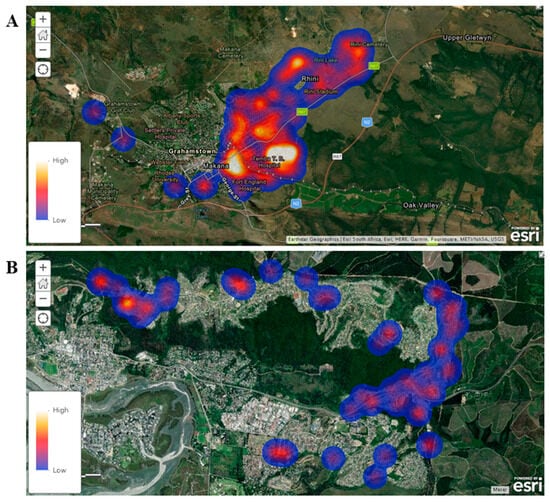
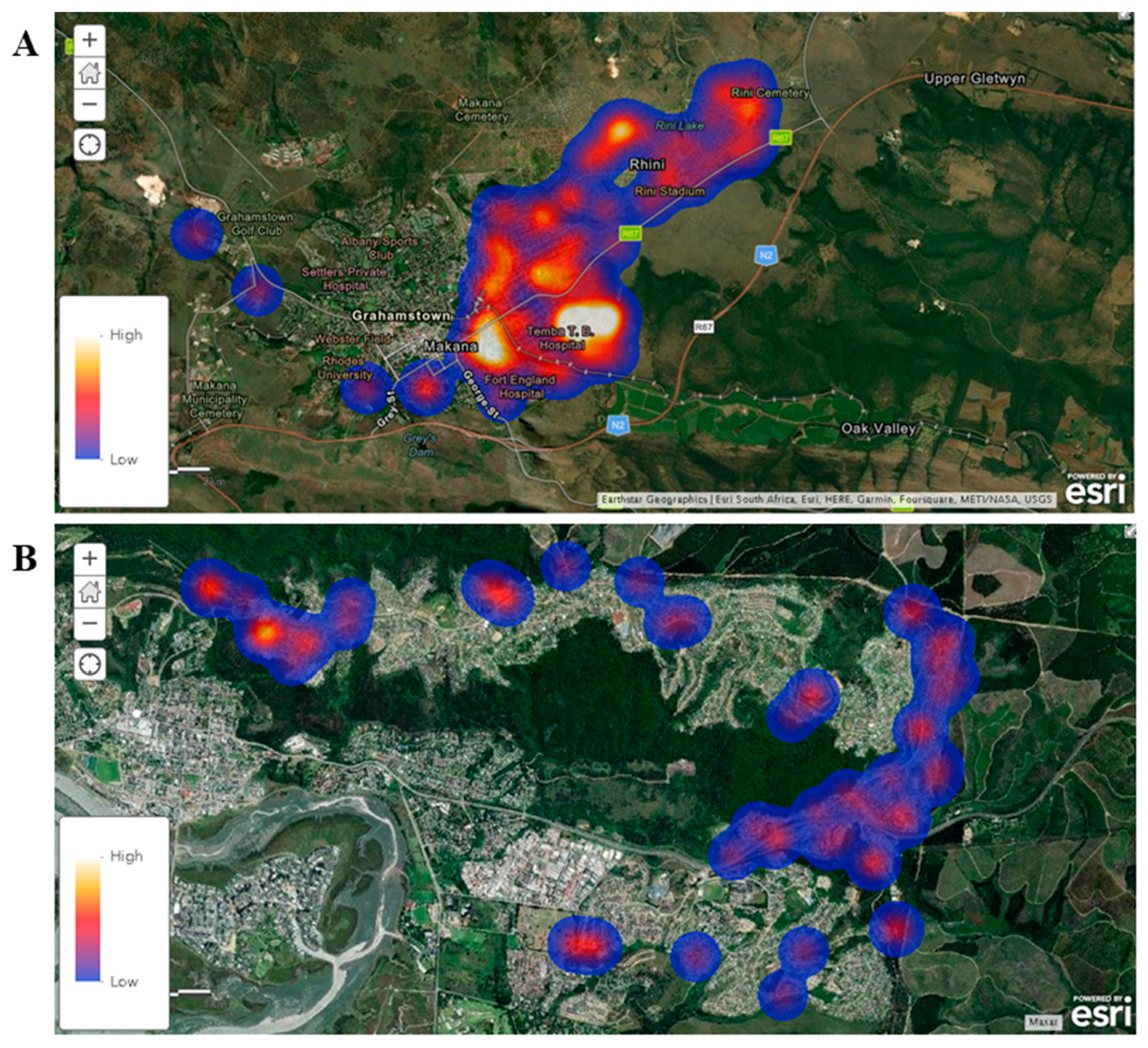
Illegal solid waste dumpsite counts were used to calculate the abundance and proportions of dumpsites per income area within each town. Global positioning system coordinate locations were used to create dumpsite spatial distribution maps and cluster distribution maps (heatmaps) based on dumpsite density and average distance between dumpsites. Based on the nearest neighbour distance, the cluster dumpsite map used yellow colour shades to represent high dumpsite density and blue colour shades to represent low dumpsite density. Using STATISTICA version 14.0, a chi-squared test was performed to compare differences in illegal solid waste dumpsite location and size between the different income groups for both towns.
The limitations of the study are threefold, namely, sample selection bias, single-season sampling, and visual estimates of dumpsites. First, convenience sampling is a non-probability technique that limits representativeness and generalisation of the results. Second, dumpsite identification and composition were conducted over one season during the austral summer, which might not be reflective of other seasons. Third, visual estimation of dumpsite size and composition is a subjective technique prone to human bias and errors. To address this, photos provided additional verification. Despite these limitations, the study provides useful transferable insights on the heterogeneity of ISWD distribution and impacts, which could be used to inform interventions for addressing ISWD within an environmental justice lens.
3. Results
3.1. Illegal Solid Waste Abundance and Location
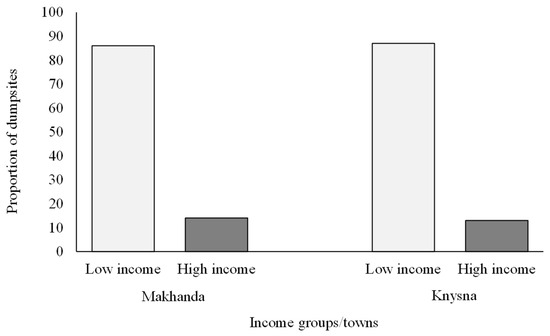
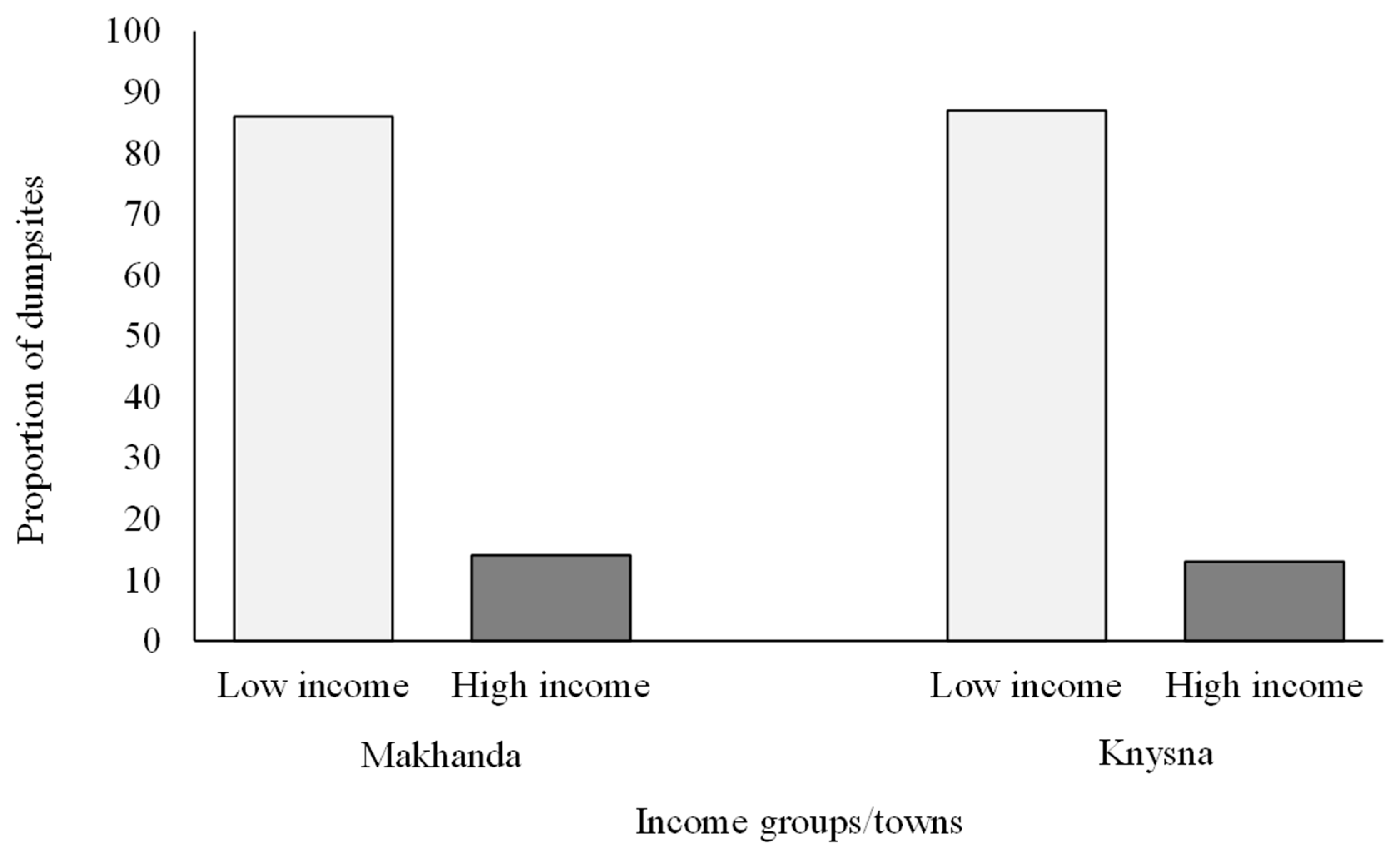
We encountered 215 illegal solid waste dumpsites in both towns, but there were nearly three times more dumpsites in Makhanda (155) than in Knysna (60). In both towns, more than 80% of the illegal solid waste dumpsites were encountered in low-income areas (Makhanda = 86%; Knysna = 87%; Figure 3). Most illegal solid waste dumpsites in low-income areas in both towns were along roadsides (Makhanda = 41%; Knysna = 77%) (Table 1). Vacant plots within low-income areas in both towns also had a substantial amount of illegal solid waste dumpsites in Makhanda (32%) compared to high-income areas (8%) and in Knysna (7%), relative to high-income areas (2%) (Table 1). Illegal solid waste dumping in commonages was observed only in Makhanda’s low-income areas (12%), whilst low proportions (3%) of illegal solid waste dumping along riparian zones were observed only in Knysna’s low-income areas (Table 1). However, there were no significant differences in the location of illegal solid waste dumpsites between low-income and high-income areas in both towns (Makhanda: χ2 = 1.589; p = 0.452 and Knysna: χ2 = 0.655; p = 0.884).
Figure 3.
Proportion of illegal solid waste dumpsites encountered in Makhanda and Knysna.
Table 1.
Proportions (%) of illegal solid waste dumpsite sizes, locations, and composition in Makhanda and Knysna.
3.2. Illegal Solid Waste Composition
In both Makhanda and Knysna, illegal solid waste dumpsites were dominated by household waste, with higher proportions recorded in low-income (86% and 83%, respectively) compared to high-income areas (13% in both towns) (Table 1). Although most garden waste was recorded in low-income areas in both towns (Makhanda = 77%; Knysna = 47%), about a tenth was recorded in low-income areas in both towns (Table 1). Similarly, most construction waste was recorded in low-income areas in both towns (Makhanda = 42%; Knysna = 37%), with high-income areas recording below 10% construction waste in both towns (Table 1).
3.3. Illegal Solid Waste Dumpsite Size and Density
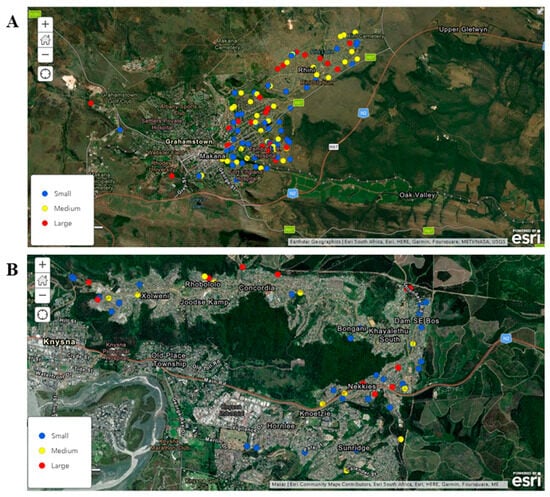
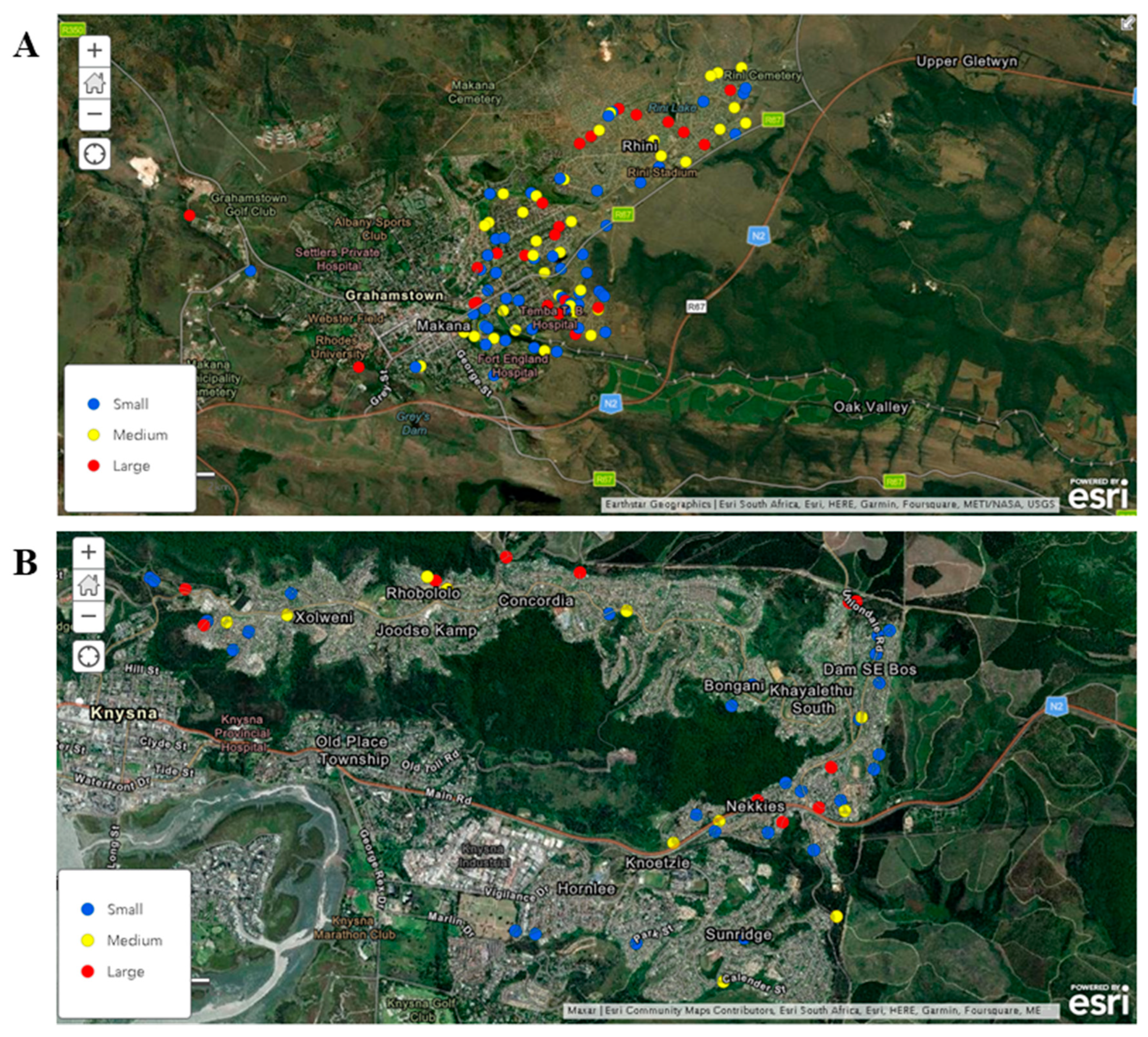
Of all the illegal solid waste dumpsites in Makhanda’s low-income areas, 40% were small compared to 29% and 18%, which were categorised as medium and large, respectively (Table 1 and Figure 4), an indication that dumpsites are mushrooming in low-income neighbourhoods. In contrast, 7% of the illegal solid waste dumpsites in Makhanda’s high-income areas were small compared to 5% and 1%, categorised as medium and large, respectively (Table 1; Figure 4). The pattern of illegal solid waste dumpsite sizes in Makhanda was also observed in Knysna’s high-income areas (Table 1; Figure 4). In contrast, about half of all the illegal solid waste dumpsites in Knysna’s low-income areas were categorised as small, with the remainder being medium (15%) and large (21%) (Table 1; Figure 4).
Figure 4.
Illegal solid waste dumpsite size distribution in (A) Makhanda and (B) Knysna.
In Makhanda’s low-income areas, most illegal solid waste dumpsites were densely clustered in the eastern areas, such as Fingo and Hlalani, but a few were observed in the peripheries of new suburbs, such as Extension 9 (Figure 5). In Makhanda’s high-income areas, most illegal solid waste dumpsites clustered in Fort England and Sunnyside compared to areas such as Somerset Heights, which had few dumpsites (Figure 5). Similar trends were observed in Knysna, where high numbers of illegal solid waste dumpsites were clustered in low-income areas of Rhobololo, Xolweni, and Khayalethu compared to high-income areas of Fisherhaven and Knysna Heights (Figure 5). A chi-squared test showed no significant differences in the sizes of dumpsites between high-income and low-income group areas in both towns (Makhanda: χ2 = 2.179; p = 0.536 and Knysna: χ2 = 1.998; p = 0.573).
Figure 5.
Heatmaps of illegal solid waste dumpsite distribution in (A) Makhanda and (B) Knysna.
4. Discussion
The results of this study support our hypothesis that ISWD is disproportionately prevalent in low-income neighbourhoods, and by extension affects more low-income than high-income neighbourhoods. The results of the street and off-street road surveys show that the abundance and distribution of ISWD were not uniform between and within both towns, with Makhanda having a higher number of illegal solid waste dumpsites than Knysna. Similarly, more illegal solid waste dumpsites were recorded in low-income areas than high-income areas in both towns, indicating the prevalence of illegal solid waste dumping in low-income areas. These findings align with studies that have reported uneven distribution of ISWD across residential neighbourhoods of different income statuses in other countries, such as Kenya [46], India [47], and Zimbabwe [48], and in South African urban areas [7,11,16,31]. There is an increasing number of studies showing linkages between governance of municipalities and the service delivery quality, with poorly governed municipalities failing to deliver basic services such as water, sanitation, and waste collection [49]. Therefore, given the poor governance of the Makana municipality in Makhanda and comparatively better governance in the Knysna municipality, it is plausible to suggest that governance explains the difference in the abundance of illegal solid waste dumpsites in the two towns. Poorly run municipalities are characterised by poor waste collection services due to maladministration and financial mismanagement, lack of waste facilities or service in low-income areas, lack of law enforcement (municipal by-laws), and poor accessibility in low-income areas [7]. Indeed, Makana local municipality has already acknowledged its financial challenges [42], which may explain the high number of dumpsites, likely due to poor waste collection services. Reports in South Africa suggest that municipal waste collection ranges from 20% to 80% [50], an indication that municipalities have ineffective waste collection services, which subsequently results in an increased rate of illegal solid waste disposal as a stopgap measure by residents who aim to get rid of the waste [7]. Municipal waste collection infrequencies in low-income areas, coupled with limited resources and poor enforcement of municipal laws, have been identified as some of the drivers of ISWD in low-income areas [7,17]. However, other studies have also attributed ISWD to societal behavioural attitudes [7], citing a non-caring attitude, mainly due to increased frustration linked to municipal inefficiencies, corruption, and failure to collect waste. Societal behavioural attitudes that trigger ISWD are linked to municipal administrative shortcomings, such as a lack of service delivery and the provision of infrastructure, like bins. Indeed, municipalities need to address administrative and financial challenges related to waste collection to address ISWD successfully.
The observed uneven distribution of ISWD between low-income and high-income areas in both towns suggests that illegal solid waste dumping is an environmental justice issue since it is more prevalent in the former than the latter. Previous studies argue that the disproportionate distribution of illegal solid waste dumping in low-income and marginalised communities (informal settlements) in South Africa constitutes an environmental justice issue that warrants prioritisation [24,51]. We observed that most dumping occurs along road verges and commonages in low-income areas, which is likely to trigger adverse health effects in vulnerable communities with limited financial resources to seek medical attention [24]. Road verges and commonages are viewed as dumping grounds due to their easy accessibility [7] and inadequate municipal by-laws, which result in these areas becoming common-pool resources. The dominance of illegal solid waste dumpsites along road verges, commonages, and vacant plots has been previously reported [7,17]. Although this was only observed in Knysna, the dumping of illegal solid waste along riparian zones is worrisome, as this might have significant effects on water quality for human consumption, as reported by Bangani et al. [52]. Apart from the above-mentioned adverse human effects linked to riparian zone dumping, rivers are the lifeblood of ecosystems. Therefore, illegal solid waste dumping along riparian zones might negatively impact river ecosystems, and by extension, ecosystem service benefits to human beings.
Although the abundance of ISWD was most significant in the low-income areas, most dumpsites in the two towns were small. Our result contradicts the results by Ngalo and Thondhlana [7], who observed a sizeable number of large (63%) and medium (21%) dumpsites in Komani town, South Africa. Further, observations by Swanepoel and Marlin [17] showed that most dumpsites in Nelson Mandela Bay Metropolitan were of medium size (25 m radius circle) in both 2015 (31%) and 2021 (48%). Swanepoel and Marlin [17] also reported that more than 20% of the dumpsites enumerated in 2015 and 2021 were small with a radius of less than 10 m. Niyobuhungiro and Schenck [15] reported that dumpsite sizes varied across the Fisantekraal area in the Western Cape Province of South Africa, an indication that dumpsite size could be influenced by factors such as waste collection accessibility in an area and regularity of waste collection services. Issues related to unequal access to waste services have been reported in the past, with low-income areas and informal settlements being the most affected [13]. This is likely to explain why the few identified large dumpsites were in these areas in both towns. Indeed, the municipality’s failure to collect waste will likely result in continuous illegal solid waste dumping, resulting in large dumpsite sizes. A limitation of this study was that dumpsite size was visually estimated due to the lack of a standardised guide to assess dumpsite size [15]. This could also explain why our results do not concur with some of the above-mentioned studies [7,17]. Despite these methodological challenges, the dominance of small dumpsites suggests that investment in their management might be low, as they are easier and cheaper to clean up than large ones.
This study was conducted in urban residential areas, which could explain the dominance of household and garden waste within the dumpsites. Ngalo and Thondhlana [7], as well as Niyobuhungiro and Schenck [15], observed similar patterns in South Africa, an expected finding given the low recycling rates among urban South African households, particularly among low-income households [38]. Indrawati and Purwaningruw [53] report that the average solid waste composition consisted of organic, wood, and paper, contributing more than 10% to illegal solid dumpsite waste. Ngalo and Thondhlana [7] reported low recycling rates in low-income areas in Komani, South Africa, citing that only one household mentioned recycling as a waste management method. In contrast, countries where recycling is practised at different waste disposal stages have less household waste at disposal sites. For example, Nagpure [47] reported that multiple levels of waste segregation in Delhi, India have positive implications on waste composition at dumpsites. However, it is essential to note that waste segregation at a household level before disposal needs some financial motivation, such as the resale of recyclable material for financial benefits. Both household and garden waste have a lot of organic waste, which, when decomposing, produces odours that attract insects and animals, such as rats and mice, that can transmit diseases. Further, household organic waste produces methane, which traps more heat in the atmosphere, causing global warming. Vaverková et al. [54] noted that the decomposition of waste at illegal solid waste dumpsites can contribute to soil contamination, which results in vegetation change and land degradation. These direct and indirect effects of waste decomposition at illegal solid waste dumpsites underscore the need for effective waste management, as vulnerable community members will be most affected due to the lack of a financial safety net. Given the challenges that South African municipalities face, it appears that investing in promoting waste segregation at both household and dumpsite levels for recycling purposes could help alleviate adverse effects related to waste, among other waste management options. Reducing waste at the household level through promoting recycling is a viable solution to mitigate ISWD.
Disaggregation of ISWD abundance by town showed that Makhanda had a bigger illegal solid waste dumping problem than Knysna. There were twice as many illegal solid waste dumpsites in Makhanda as in Knysna, yet the former is relatively smaller in size than the latter town. This could be explained by the fact that Makhanda has municipal administration and financial challenges [42]. Thus, its waste management strategy is ineffective compared to Knysna, which is categorised among the better-performing and well-managed municipalities in South Africa [43]. Hence, it is plausible to suggest that the disparity in ISWD between the two towns is attributed to municipal governance issues. Our results confirm that poorly managed municipalities, such as Makhanda, have service delivery challenges mirrored in illegal solid waste disposal. In contrast, our results prove that struggling municipalities need more support from the national government to deal with ISWD. However, such support should be accompanied by measures to address municipal administration and financial challenges as the first step. National government support for struggling municipalities could be in the form of financial and human resources to develop an effective solid waste management plan. Other possible factors contributing to ISWD are increased population densities in low-income areas due to rural–urban migration, lack of public awareness, and socio-cultural norms around waste disposal, but the observed patterns suggest urban areas still reflect a legacy of uneven service provision, including waste collection services. In South Africa, evidence shows that most people who move to cities from rural areas tend to move into low-income neighbourhoods, including informal settlements, which tend to be on the margins of cities, characterised by densely populated, often unplanned and inaccessible spaces that do not receive service delivery such as waste collection [55]. Further, income still plays a major role in accessing services. For example, in the face of poor waste services in Makhanda, well-off households organise private waste collection services, which reduces the risk of ISWD, but low-income households cannot afford private waste collection services. Well-off households often live in suburbs that have historically benefited from municipal service provision, such as green spaces and waste collection. Therefore, given the historical legacy of disproportionate service provision by income group, it is plausible to suggest that the prevalence of illegal solid waste dumpsites in the low-income neighbourhoods and informal settlements of Makhanda and Knysna mirrors historical and present patterns of service delivery in South Africa. Addressing such inequalities requires a broader approach that is centred on reducing inequalities in service provision, such as waste collection.
5. Conclusions
The use of spatial methods to measure the distribution of illegal solid waste dumpsites has its own methodological limitations. However, it provides scope for understanding the extent of and distribution of illegal solid waste dumpsites, which could, in turn, allow monitoring of waste collection services and demand accountability from municipalities where the services are not provided. Our results provide insight into the abundance, distribution, size, and composition of ISWD in two medium-sized towns of Makhanda and Knysna. The results show an uneven distribution of illegal solid waste dumpsites between and within the two towns, with higher abundances in Makhanda than in Knysna and a higher prevalence in low-income than in high-income areas. The abundance of illegal solid waste dumpsites in the low-income areas, nearly 30 years after the democratic transition in South Africa, mirrors historical patterns of uneven municipal service provision, which we argue is an environmental justice issue that requires immediate attention. Most of the illegal solid waste dumpsites were small and were distributed along road verges and vacant plots. Most illegal solid waste dumpsites were dominated by household and garden waste, an indication that possible direct and indirect adverse effects of waste dumping are likely to be felt by low-income residents, given the proliferation of dumping in these areas. Based on our results, we recommend that municipalities should prioritise the problem of ISWD in urban areas but note that this can be a difficult task if the municipalities are dysfunctional and there are no accountability checks and balances. Thus, while we reaffirm the importance of developing effective waste management systems and plans in urban areas to reduce illegal solid waste dumping, reimagining municipality governance should be central to those endeavours through improving competency and financial management in addition to addressing behavioural issues. In the context of waste management, reimagining municipal governance should include developing financially sustainable models to ensure waste services are provided, implementing innovative revenue collection systems to improve service delivery (e.g., community reporting apps, waste buyback centres, and waste transfer centres), and strengthening local accountability to address failures in waste service delivery. It is important to note that some of these waste management initiatives need to be tested in poor urban areas, such as Makhanda, that struggle with financial instability, rapid population growth, and historical segregation. Secondly, human and financial resources should be allocated towards solid waste management in low-income areas with the most illegal solid waste dumpsites. In the case of Makhanda, the national government, in collaboration with private actors, where possible, should consider supporting the municipality financially to develop an effective solid waste management system. However, such government–private collaboration should be considered in the context of sound financial sustainability and management plans, including budgeting, forecasting, and financial auditing. Thirdly, although the national legislation in South Africa requires municipalities to develop integrated waste management plans, such plans should emphasise recycling at source (within households) to reduce quantities of waste being disposed of. Recycling at source has been shown to be effective [47], and mainstreaming recycling can be achieved through educational campaigns and incentivising recycling through paying for recyclable material. Lastly, there is a need to manage existing illegal solid waste dumpsites through clean-up campaigns, but these efforts can only be effective if supported by regular waste collection by the municipality and provisioning of waste collection resources to residents (e.g., bins) to reduce illegal solid waste dumping. However, more empirical evidence on ISWD prevalence should be generated using robust methods to inform potential interventions; hence, future research should focus on a country-wide study of the prevalence and distribution of illegal solid waste dumping to identify differentiated patterns and tailor interventions that address inequalities and environmental injustices. Addressing ISWD in South Africa is not only an environmental and health issue but also a moral issue, considering the historical patterns of uneven service delivery and the disproportionate impacts of poor service delivery.
Author Contributions
G.T. and S.R. were the project leaders; Y.C.T. was the student. All authors were responsible for conceptual contributions and project design. Y.C.T. performed most of the data collection, capture, and statistical analysis. S.R. and Y.C.T. wrote the first draft of the manuscript. G.T. reviewed the draft manuscript. All authors have read and agreed to the published version of the manuscript.
Funding
This research was funded by the National Research Foundation (grant number 137789–for Prof. Sheunesu Ruwanza) and the Rhodes University Research Grant (for Prof. Gladman Thondhlana). This work was also partially supported by the South African Research Chairs Initiative of the Department of Science and Technology and the National Research Foundation of South Africa (grant No. 84379). Any opinion, finding, conclusion, or recommendation expressed in this material is that of the authors, and the NRF does not accept any liability in this regard.
Institutional Review Board Statement
Not applicable.
Informed Consent Statement
Not applicable.
Data Availability Statement
Data will be made available upon request.
Acknowledgments
We thank the Department of Environmental Science at Rhodes University for providing fieldwork equipment and the vehicle. We also thank Kamva Trevor Songo Zenani for assisting with fieldwork.
Conflicts of Interest
The authors declare no conflicts of interest.
References
- Tuhkanen, H.; Cinderby, S.; de Bruin, A.; Wikman, A.; Adelina, C.; Archer, D.; Muhoza, C. Health and wellbeing in cities—Cultural contributions from urban form in the Global South context. Wellb. Space Soc. 2022, 3, 100071. [Google Scholar] [CrossRef] [Scilit]
- Makan, A.; Salama, Y.; Mamouni, F.Z.; Makan, M. Towards Zero-Waste Cities: An Integrated and Circular Approach to Sustainable Solid Waste Management. Sustainability 2025, 17, 7884. [Google Scholar] [CrossRef] [Scilit]
- Maalouf, A.; Mavropoulos, A. Re-assessing global municipal solid waste generation. Waste Manag. Res. 2022, 41, 936–947. [Google Scholar] [CrossRef] [Scilit] [PubMed]
- Lu, M.; Zhou, C.; Wang, C.; Jackson, R.B.; Kempes, C.P. Worldwide scaling of waste generation in urban systems. Nat. Cities 2024, 1, 126–135. [Google Scholar] [CrossRef] [Scilit]
- UNEP (United Nations Environmental Programme). Global Waste Management Outlook 2024: Beyond an Age of Waste—Turning Rubbish into a Resource. Nairobi. 2024. Available online: https://wedocs.unep.org/20.500.11822/44939 (accessed on 21 September 2025).
- Zhang, Z.; Chen, Z.; Zhang, J.; Liu, Y.; Chen, L.; Yang, M.; Osman, A.I.; Farghali, M.; Liu, E.; Hassan, D.; et al. Municipal solid waste management challenges in developing regions: A comprehensive review and future perspectives for Asia and Africa. Sci. Total Environ. 2024, 903, 172794. [Google Scholar] [CrossRef] [Scilit] [PubMed]
- Ngalo, N.; Thondhlana, G. Illegal solid-waste dumping in a low-income neighbourhood in South Africa: Prevalence and perceptions. Int. J. Environ. Res. Public Health 2023, 20, 6750. [Google Scholar] [CrossRef] [Scilit] [PubMed]
- Ferronato, N.; Torretta, V. Waste mismanagement in developing countries: A review of global issues. Int. J. Environ. Res. Public Health 2019, 16, 1060. [Google Scholar] [CrossRef] [Scilit] [PubMed]
- Fazzo, L.; Manno, V.; Iavarone, I.; Minelli, G.; De Santis, M.; Beccaloni, E.; Scaini, F.; Miotto, E.; Airoma, D.; Comba, P. The health impact of hazardous waste landfills and illegal dumps contaminated sites: An epidemiological study at ecological level in Italian Region. Front. Public Health 2023, 11, 996960. [Google Scholar] [CrossRef] [Scilit]
- Tomita, A.; Cuadros, D.F.; Burns, J.K.; Tanser, F.; Slotow, R. Exposure to waste sites and their impact on health: A panel and geospatial analysis of nationally representative data from South Africa, 2008–2015. Lancet Planet Health 2020, 4, e223–e234. [Google Scholar] [CrossRef] [Scilit] [PubMed]
- Haywood, L.K.; Kapwata, T.; Oelofse, S.; Breetzke, G.; Wright, C.Y. Waste disposal practices in low-income settlements of South Africa. Int. J. Environ. Health Res. 2021, 18, 8176. [Google Scholar] [CrossRef] [Scilit] [PubMed]
- Kubanza, N.S. Analysing the challenges of solid waste management in low-income communities in South Africa: A case study of Alexandra, Johannesburg. S. Afr. Geogr. J. 2025, 107, 169–189. [Google Scholar] [CrossRef] [Scilit]
- Polasi, L. Factors associated with illegal dumping in the Zondi area, city of Johannesburg, South Africa. In Proceedings of the WasteCon 2018, Johannesburg, South Africa, 15–19 October 2018. [Google Scholar]
- Niyobuhungiro, R.V.; Schenck, C. Exploring community perceptions of illegal dumping in Fisantekraal using participatory action research. S. Afr. J. Sci. 2022, 118, 33–39. [Google Scholar] [CrossRef] [Scilit] [PubMed]
- Niyobuhungiro, R.V.; Schenck, C.J. The dynamics of indiscriminate/illegal dumping of waste in Fisantekraal, Cape Town, South Africa. J. Environ. Manag. 2021, 293, 112954. [Google Scholar] [CrossRef] [Scilit] [PubMed]
- Jakeni, Y.; Maphanga, T.; Madonsela, B.S.; Malakane, K.C. Identification of illegal dumping and community views in informal settlements, Cape Town: South Africa. Sustainability 2024, 16, 1429. [Google Scholar] [CrossRef] [Scilit]
- Swanepoel, S.; Marlin, D. Mapping illegal dumping in Nelson Mandela Bay Metro: A study using image interpretation. Remote Sens. Appl. Soc. Environ. 2024, 36, 101302. [Google Scholar] [CrossRef] [Scilit]
- Kubanza, N.S.; Simatele, D. Social and environmental injustices in solid waste management in sub-Saharan Africa: A study of Kinshasa, the Democratic Republic of Congo. Local Environ. 2016, 21, 866–882. [Google Scholar] [CrossRef] [Scilit]
- Khuluse, N.; Leonard, L.N. Unravelling factors behind illegal waste dumping in townships: A case study of Ngwelezana township, KwaZulu-Natal, South Africa. Int. J. Dev. Sustain. 2024, 13, 174–192. [Google Scholar]
- Wijsman, K.; Berbés-Blázquez, M. What do we mean by justice in sustainability pathways? Commitments, dilemmas, and translations from theory to practice in nature-based solutions. Environ. Sci. Policy 2022, 136, 377–386. [Google Scholar] [CrossRef] [Scilit]
- Brulle, R.J.; Pellow, D.N. Environmental justice: Human health and environmental inequalities. Annu. Rev. Public Health 2006, 27, 103–124. [Google Scholar] [CrossRef] [Scilit]
- Pellow, D.N. Environmental inequality formation: Toward a theory of environmental injustice. Am. Behav. Sci. 2000, 43, 581–601. [Google Scholar] [CrossRef] [Scilit]
- Tessum, C.W.; Apte, J.S.; Goodkind, A.L.; Muller, N.Z.; Mullins, K.A.; Paolella, D.A.; Polasky, S.; Springer, N.P.; Thakrar, S.K.; Marshall, J.D.; et al. Inequity in consumption of goods and services adds to racial–ethnic disparities in air pollution exposure. Proc. Natl. Acad. Sci. USA 2019, 116, 6001–6006. [Google Scholar] [CrossRef] [Scilit]
- Kekana, H.N.; Ruhiiga, T.M.; Ndou, N.N.; Palamuleni, L.G. Environmental justice in South Africa: The dilemma of informal settlement residents. GeoJournal 2023, 88, 3709–3725. [Google Scholar] [CrossRef] [Scilit]
- Clark, L.P.; Millet, D.B.; Marshall, J.D. National Patterns in Environmental Injustice and Inequality: Outdoor NO2 Air Pollution in the United States. PLoS ONE 2014, 9, e94431. [Google Scholar] [CrossRef] [Scilit]
- Anderton, D.A.; Anderson, A.B.; Rossi, P.H.; Oakes, J.M.; Fraser, M.R.; Weber, E.W.; Calabrese, E.J. Hazardous waste facilities: “Environmental equity” Issues in metropolitan areas. Eval. Rev. 1994, 18, 123–140. [Google Scholar] [CrossRef] [Scilit]
- Cutter, S.L.; Holm, D.; Clark, L. The role of geographic scale in monitoring environmental justice. Risk Anal. 1996, 16, 517–526. [Google Scholar] [CrossRef] [Scilit]
- Couth, R.; Trois, C. Sustainable waste management in Africa through CDM projects. Waste Manag. 2012, 32, 2115–2125. [Google Scholar] [CrossRef] [Scilit]
- Mesjasz-Lech, A. Municipal waste management in context of sustainable urban development. Procedia Soc. Behav. Sci. 2014, 151, 244–256. [Google Scholar] [CrossRef] [Scilit]
- Verster, A.; Bouwman, H. Land-based sources and pathways of marine plastics in a South African context. S. Afr. J. Sci. 2020, 116, 7700. [Google Scholar] [CrossRef] [Scilit] [PubMed]
- Grangxabe, X.S.; Maphanga, T.; Madonsela, B.S.; Gqomfa, B.; Phungela, T.T.; Malakane, K.C.; Thamaga, K.H.; Angwenyi, D. The escalation of informal settlement and the high levels of illegal dumping post-apartheid: Systematic review. Challenges 2023, 14, 38. [Google Scholar] [CrossRef] [Scilit]
- Srivastava, V.; Ismail, S.A.; Singh, P.; Singh, R.P. Urban solid waste management in the developing world with emphasis on India: Challenges and opportunities. Rev. Environ. Sci. Bio-Technol. 2015, 14, 317–337. [Google Scholar] [CrossRef] [Scilit]
- Mager, A.; Blass, V. From illegal waste dumps to beneficial resources using drone technology and advanced data analysis tools: A feasibility study. Remote Sens. 2022, 14, 3923. [Google Scholar] [CrossRef] [Scilit]
- Ciura, D.; Łukasiewicz, M.; Malinowski, M. Analysis of morphological composition of wastes deposited on illegal dumping sites located in the area of Olsztyn district. Pol. Acad. Sci. 2017, 4, 1301–1315. [Google Scholar] [CrossRef]
- Liu, Y.; Kong, F.; Gonzalez, E.D.R.S. Dumping, waste management and ecological security: Evidence from England. J. Clean. Prod. 2017, 167, 1425–1437. [Google Scholar] [CrossRef] [Scilit]
- Swanepoel, S.; Scheckle, T.J.; Marlin, D. Implementing land-based litter surveys through visual inspection of imagery using unmanned aerial vehicles. Environ. Chall. 2023, 13, 100753. [Google Scholar] [CrossRef] [Scilit]
- Yonezawa, C. Possibility of monitoring of waste disposal site using satellite imagery. J. Integr. Field Sci. 2009, 6, 23–28. [Google Scholar]
- Stats SA (Statistics South Africa). Statistics South Africa. 2022. Available online: https://www.statssa.gov.za/ (accessed on 30 August 2024).
- Mucina, L.; Rutherford, M.C. The Vegetation of South Africa, Lesotho and Swaziland; Strelitizai 19; South African National Biodiversity Institute: Pretoria, South Africa, 2006. [Google Scholar]
- Knysna Municipality, Integrated Development Plan (IDP). 2023. Available online: https://www.knysna.gov.za/government/important-documents/integrated-development-plan/ (accessed on 1 October 2023).
- Irvine, P.M. From Grahamstown to Makhanda: Urban frontiers and challenges in a postapartheid city. In South African Urban Change Three Decades After Apartheid: Homes Still Apart? 1st ed.; Lemon, A., Donaldson, R., Visser, G., Eds.; Springer Nature: Cham, Switzerland, 2021; pp. 163–177. [Google Scholar]
- Makana Local Municipality, Integrated Development Plan (IDP). 2024. Available online: https://www.makana.gov.za/statutory-documents/idp-municipal-statistics/ (accessed on 16 February 2026).
- Good Governance Africa. Governance Performance Indicators—South Africa 2024. 2024. Available online: https://www.corruptionwatch.org.za/the-state-of-south-africas-municipalities-revealed-in-2024-gpi/ (accessed on 23 October 2024).
- Hoefnagels, N.; Irvine, P.M.; Memela, S. Makhanda: Exploring the mise-en-scene of a city under threat. Urban Forum 2023, 34, 271–291. [Google Scholar] [CrossRef] [Scilit] [PubMed]
- Mabusela, A.; Shackleton, C.M.; Gwedla, N. The distribution of selected invasive alien species in small towns in the Eastern Cape, South Africa. S. Afr. J. Bot. 2021, 141, 290–295. [Google Scholar] [CrossRef] [Scilit]
- Henry, R.K.; Yongsheng, Z.; Jun, D. Municipal solid waste management challenges in developing countries—Kenyan case study. Waste Manag. 2006, 26, 92–100. [Google Scholar] [CrossRef] [Scilit]
- Nagpure, A.S. Assessment of quantity and composition of illegal dumped municipal solid waste (MSW) in Delhi. Resour. Conserv. Recycl. 2019, 141, 54–60. [Google Scholar] [CrossRef] [Scilit]
- Khumalo, N.; Maviza, A.; Nunu, W.N. Spatial dynamics of illegal dumpsites and prevalence of diarrhoeal diseases in Makokoba Township in Bulawayo, Zimbabwe. Sci. Afr. 2021, 13, e00939. [Google Scholar] [CrossRef] [Scilit]
- Resnick, D. Urban governance and service delivery in African Cities: The role of politics and policies. Dev. Policy Rev. 2014, 32, s3–s17. [Google Scholar] [CrossRef] [Scilit]
- IUCN-EA-QUANTIS. National Guidance for Plastic Pollution Hotspotting and Shaping Action. Country Report South Africa. 2020. Available online: https://plastichotspotting.lifecycleinitiative.org/wp-content/uploads/2020/12/southafrica_final_report_2020.pdf (accessed on 1 October 2023).
- Mamokhere, J. Understanding the complex interplay of governance, systematic, and structural factors affecting service delivery in South African municipalities. Commonw. Youth Dev. 2022, 20, 28. [Google Scholar] [CrossRef] [Scilit] [PubMed]
- Bangani, L.; Kabiti, H.M.; Amoo, O.; Nakin, M.D.V.; Magayiyana, Z. Impacts of illegal solid waste dumping on the water quality of the Mthatha River. Water Pract. Technol. 2023, 18, 1011. [Google Scholar] [CrossRef] [Scilit]
- Indrawati, D.; Purwaningrum, P. Identification and analysis the illegal dumping spot of solid waste at Ciliwung segment 5 riverbanks. IOP Conf. Ser. Earth Environ. Sci. 2018, 106, 012043. [Google Scholar] [CrossRef] [Scilit]
- Vaverková, M.D.; Maxianová, A.; Winkler, J.; Adamcová, D.; Podlasek, A. Environmental consequences and the role of illegal waste dumps and their impact on land degradation. Land Use Policy 2021, 89, 104234. [Google Scholar] [CrossRef] [Scilit]
- Balbi, S.; Selomane, O.; Sitas, N.; Blanchard, R.; Kotzee, I.; O’Farrell, P.; Villa, F. Human dependence on natural resources in rapidly urbanising South African regions. Environ. Res. Lett. 2019, 14, 044008. [Google Scholar] [CrossRef] [Scilit]

Disclaimer/Publisher’s Note: The statements, opinions and data contained in all publications are solely those of the individual author(s) and contributor(s) and not of MDPI and/or the editor(s). MDPI and/or the editor(s) disclaim responsibility for any injury to people or property resulting from any ideas, methods, instructions or products referred to in the content. |
© 2026 by the authors. Licensee MDPI, Basel, Switzerland. This article is an open access article distributed under the terms and conditions of the Creative Commons Attribution (CC BY) license.