


Abstract
This paper presents the results of a laboratory-based treatability study conducted for a confidential former wood treating site heavily impacted by a creosote non-aqueous-phase liquid (NAPL) containing pentachlorophenol (PCP). PCP impacts in the silty sands extended to approximately 33 ft (10 m) below the ground surface (bgs), with discrete soil samples containing PCP concentrations up to 14,500 mg/kg, and groundwater PCP concentrations forming a main plume exceeding 1 mg/L over 2.16 acres (0.87 ha). Treatability testing was performed on unspiked and NAPL-spiked site soils with total PCP concentrations ranging from 10 to 100 mg/kg, respectively, and leachable PCP concentrations of approximately 3 to 8 mg/L. Stabilization/solidification (S/S) mix designs using 5 to 10 weight percent (wt%, dry-reagent-to-wet-soil mass basis) of a Portland cement (PC) blend and 1 wt% powdered bentonite met the minimum unconfined compressive strength (UCS) and maximum hydraulic conductivity (K) performance criteria of 50 lb/in2 (345 kPa) and 1 × 10⁻⁶ cm/s, respectively, within the specified 28-day cure time. Long-term semi-dynamic leach testing was performed on S/S-treated soils using a modified United States Environmental Protection Agency (EPA) Method 1315 test incorporating a polydimethylsiloxane (PDMS) liner to improve the data reliability for hydrocarbons. Results showed that adding 1 wt% organoclay (OC) to the S/S mix designs did not substantially reduce leaching of common semi-volatile organic compounds (SVOCs) such as naphthalene, acenaphthene, phenanthrene and benzo(a)anthracene compared to mixes using only the PC blend with bentonite, consistent with previous studies. However, the inclusion of OC had a decisive effect on PCP immobilization, providing an order-of-magnitude (10×) reduction in the cumulative mass release of PCP over the test duration. This benefit diminished with decreasing degree of chlorination for other phenolic compounds.
1. Introduction and Background
This paper reports on the long-term leaching of semi-volatile organic compounds (SVOCs) from creosote non-aqueous-phase liquid (NAPL)-impacted soils from a confidential United States Superfund Site. Soils were treated by stabilization/solidification (S/S) and then tested by the United States Environmental Protection Agency (EPA) Method 1315 [1] modified (M) to enhance data reliability for use with organics. Key SVOCs included pentachlorophenol (PCP), naphthalene, and phenanthrene, as well as other polycyclic aromatic hydrocarbons (PAHs) with mass fractions greater than 1% in the NAPL.
PCP is frequently associated with wood treating sites [1,2,3,4] and its use often requires diesel as a carrier fluid, increasing its mobility when spilled/released. PCP itself has a solubility on the order of 14 mg/L up to its first acidity constant (pKa1 = 4.59), and then its solubility increases in a log-linear manner to a maximum solubility of 243,000 mg/L around pH 9.1 [5]. For circumneutral soils near pH 7 to 7.5, the aqueous solubility of PCP varies between approximately 2000 to 6300 mg/L, which is two orders of magnitude greater than the key PAHs within the NAPL. Therefore, controlling PCP migration is a critical consideration for any effective remedial design.
Regardless of PCP, a common strategy in the remediation of creosote-NAPL-impacted soils is to consider the use of organophilic sorbents such as granular activated carbon (GAC) and organoclay (OC) products to sorb and immobilize the wide array of volatile organic compounds (VOCs) and SVOCs associated with creosote. Here, OC refers to a surface-modified high-swelling sodium bentonite clay impregnated with long-chain quaternary amines [6,7], transforming the clay into a hydrophobic medium capable of sorbing between 50 and 200 percent of its mass in NAPL [8].
Batch equilibration experiments such as shake extractions in deionized water [9] and the synthetic precipitation leaching procedure (SPLP) [10] have shown that PCP is strongly sorbed by OC after addition to a granular PCP-impacted soil, both without or with added cementitious reagents [6,7]. However, when tested as a monolith under long-term semi-dynamic conditions (EPA Method 1315M), the inclusion of OC (or GAC) in cement-based S/S treatments has not significantly reduced the leaching of VOCs, SVOCs and PAHs from manufactured gas plant (MGP) NAPL soils [11,12,13]. For example, Gentry et al. [13] showed that the inclusion of up to 4 percent by weight OC in S/S mixes only provided up to an additional 3% leaching reduction in the EPA Method 1315M cumulative mass release (CMR) of naphthalene over PC-only blends in MGP NAPL-impacted sediments. They concluded that the use of OC was not warranted because the small incremental reduction in CMR did not justify the significant reagent cost ($35/cubic yard; $45.6/m3 soil treated). EPA therefore dropped OC from consideration for the in situ S/S (or ISS) treatment of the Gowanus Canal sediments (Brooklyn, New York City, NY, USA), allowing millions of dollars to be re-directed to other aspects of the overall remedy. Similar arguments were made by Grubb and Briggs [14], who showed that the inclusion of up to 2 wt% GAC in S/S mix designs did not result in significant EPA Method 1315M CMR reductions in several pesticides (most notably lindane) to warrant the added cost of GAC.
Accordingly, since the suite of VOCs and SVOCs between MGP and creosote NAPL are very similar, it was fully expected by the authors that an S/S mix design value engineering (VE) study performed for the current project site would eliminate the proposed use of 1 wt% OC (based on SPLP testing) as part of the S/S treatment of 300,000 cubic yards (CY, or 229,500 m3) of soil. The estimated cost of 1 wt% OC across the entire ISS footprint was estimated at $13.37 million based on a reagent unit cost of $45/CY soil treated. Instead, the inclusion of OC had a decisive effect on PCP immobilization, but its impact diminished with decreasing degree of chlorination for other phenols such that no benefit was apparent for phenol. Thus, a very targeted deployment of OC was ultimately undertaken at the site, saving EPA an estimated $12.8 million in reagent costs.
2. Site and Testing Background
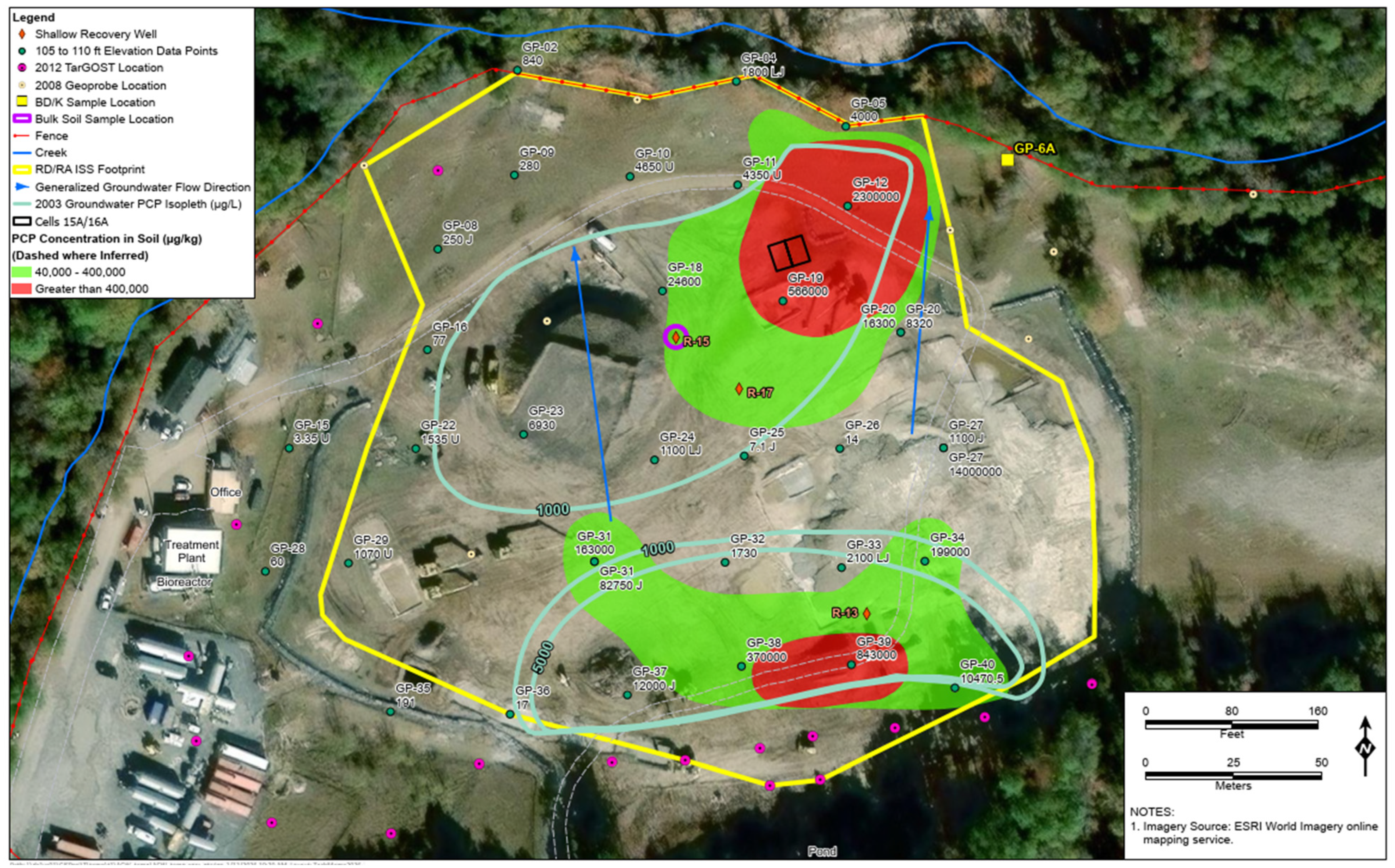
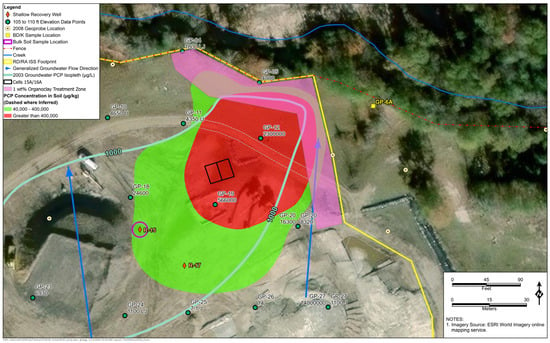
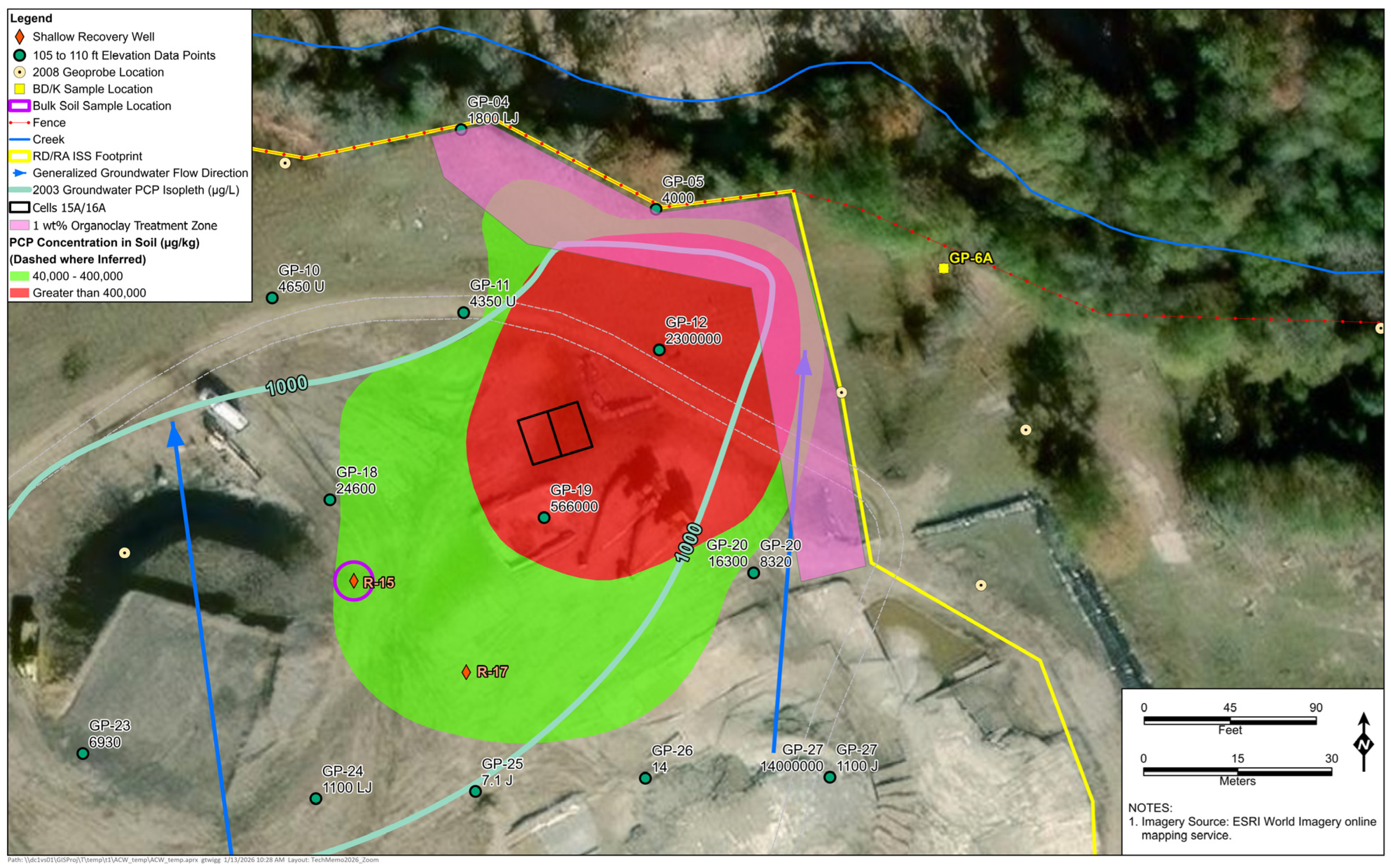
PCP was detected in site soils at concentrations up to 14,500 mg/kg. Figure 1 shows two (2003) groundwater plumes of PCP at the project site: a northern plume covering 2.16 acres (0.87 ha) with PCP exceeding 1 mg/L and a southern lobe covering 1.2 acres (0.49 ha) exceeding 5 mg/L. The proximity of the northern plume to the small creek on the northern property line was a major driver for site remediation.
Figure 1.
Site location plan.
Two treatability studies were performed to select S/S mix designs capable of effectively treating the creosote-NAPL-impacted soils at the project site. The original VE study performed by the authors in 2020 sought to eliminate OC from the recommended mix comprising 5 percent by weight (wt%) of a 30/70 weight-by-weight (w/w) blend of Type I/II Portland cement (PC) and a grade 100 ground granulated blast furnace slag cement (SC) with 1 wt% bentonite and 1 wt% OC. All doses are based on the dry weight of reagent to the wet weight of soil.
The VE study proposed by the authors instead used a 60/40 Type I/II PC/SC blend (which tends to develop strength more quickly) across four total S/S mix designs as summarized in Table 1: 5, 7.5 and 10 wt% PC/SC with 1 wt% bentonite, and an additional 5 wt% PC/SC mix containing 1 wt% OC. The VE study reconfirmed that a minimum dose of 5 wt% of the 60/40 PC/SC blend with 1 wt% bentonite successfully passed the performance criteria for the site:
Table 1.
Summary of mix designs tested between 2020 and 2023.
- Minimum unconfined compressive strength (UCS) of 50 pounds per square inch (lb/in2; 345 kPa) after 28 days of curing by ASTM D1633 [15] based on the average of triplicate samples.
- Maximum hydraulic conductivity (K) of 1.0 × 10⁻⁶ cm/s at 28 days curing by ASTM D5084 [16] based on single replicates.
A second treatability study was performed in 2023 shortly after the contractor mobilized to the site when a change in cement sources was required due to the limited availability of both Type I/II PC (which was being replaced by Type IL PC [PLC; limestone cement] in the US market) and SC. Also, the bucket mixing approach used by the contractor required that they operate at an elevated water-to-dry-reagent ratio (W/R) to successfully homogenize the soils in situ.
3. Materials and Methods
3.1. The 2020 Sampling Event
Fifteen gallons of bulk soil (three 5-gallon sealable steel buckets) were collected from borings drilled on 10-foot offsets in the vicinity of recovery well R-15 (see Figure 1), representing highly NAPL-contaminated soil from the ground surface to the top of the bedrock (approximately 30–32 ft or 9–10 m depth). An undisturbed soil sample was also collected at GP-6A (~19 ft or 5.8 m below ground surface [bgs]), outside of the contamination zone for measurement of field dry bulk density and K. Lighter-than-water NAPL (or LNAPL) was collected from recovery well R-13 and placed into 1 L glass jars (2) with Teflon-lined lids. Potable water from the Process Liquid Treatment System office building (Figure 1) was collected in 5.5 L LDPE cubitainers for use in S/S grout preparation. All sample buckets, jars, and cubitainers were stored in a walk-in refrigerator at approximately 6 degrees Celsius (°C) until testing.
3.2. The 2023 Sampling Event
Twenty gallons of bulk soil were collected in a similar manner as in the 2020 VE study near R-15. Since remediation construction was under way and the NAPL recovery well network was partially decommissioned, LNAPL was again collected from recovery well R-13, but also from R-21 and the east recovery trench cleanout) to ensure sufficient NAPL was recovered. A total of ten 1 L jars of a LNAPL/water mixture were collected; five jars from R-13, three jars from R-21, and two jars from the east recovery trench cleanouts. The NAPL was carefully decanted from each jar into a sealable 2 L glass jar yielding a total volume of approximately 1.65 L. Potable water was again collected as described above. All sample buckets, jars, and cubitainers were stored in a walk-in refrigerator at approximately 6 °C until testing.
Lastly, a freshly field-mixed ISS sample was collected during the early stages of ISS construction from cell “I5A/I6A” (see Figure 1) consisting of the 5 wt% PC blend dose with 1 wt% bentonite. Cylindrical molds of this sample were prepared both as-is and after adding 1 wt% OC to the mix ex situ to confirm field performance and evaluate the impact of OC on field-mixed samples.
3.3. Soil Sample Homogenization and Characterization
The 2020 soils were first homogenized by individual sample buckets by placing each chilled soil in a thick plastic bag and kneading and rolling the contents until visually homogeneous. The various individually homogenized media were then ultimately combined through alternating scoops of approximately equal sizes into a second series of bags that were again homogenized.
The 2023 soils were homogenized first by combining half of the site soil sample (approximately 10 gallons) in a large, galvanized steel tub and mixing with a mortar mixer. The mortar mixer was first used in an up-and-down motion to break up soil clods and homogenize the vertical profile, and then it was tilted and used in a side-to-side motion under the soil surface to incorporate the material together while limiting the amount of surface disturbance and volatilization until the final two passes incorporated the surface material. The remaining soil was homogenized in the same manner in a second galvanized tub. The homogenized soil from each tub was then evenly distributed between five 5-gallon buckets by alternating scoops of soil into each of the 5 buckets simultaneously, and the contents of each bucket were then homogenized in the steel tub as previously described before being returned to the bucket for storage.
After homogenization, representative subsamples of the bulk soil composites were collected and submitted for baseline geotechnical and as-is environmental characterization.
3.4. Soil Spiking with NAPL
Prior to leaching characterization and treatability testing, the homogenized soils were spiked with NAPL to increase their PCP concentration to a targeted 26 mg PCP/kg dry soil to match the 2015 study levels. The 2020 NAPL was dosed at 12 mL NAPL/kg dry soil. As the PCP concentration in the as-is soil in 2023 was comparable to the 2020 VE study and the NAPL PCP concentration was only slightly lower, the same spiking dose was used in the 2023 study. Incorporation of NAPL into the soil was performed in the same manner as the homogenization described for each of the studies (bag kneading in 2020 and mixing with a mortar mixer within a steel container in 2023); however, the batches were smaller (6 kg and 11 kg, respectively) to promote even NAPL distribution throughout the sample.
Subsamples were collected from the NAPL-spiked soils just after spiking for baseline environmental characterization. Untreated leaching tests and mix designs were performed after the soils equilibrated for 3 days.
4. Epa Method 1316MTesting
EPA Method 1316 [1] modified (M) for use with organics was used to evaluate the liquid–solid partitioning of the soil surrogates in a series of batch equilibrium tests at different liquid-to-solid ratios (L/S). Consistent with Khuri et al. [17], two main modifications were used during sample preparation and processing to increase data reliability for hydrocarbon analysis: (1) samples were not dried prior to testing and the MC was factored into the L/S at setup and (2) extractions were performed under zero-headspace conditions.
In 2020, the extractors were tumbled at approximately 30 revolutions per minute for 24 h plus or minus (±) 2 h, in accordance with method specifications based on the sample grain size. The contact time was extended to 7 days in the 2023 study to promote equilibration with the NAPL. Eluate pH (EPA Method 9040C [18]) and conductivity (EPA Method 9050 [19]) were immediately measured after the extractors were opened for processing. The waters were then filtered through a 0.7 µm glass-fiber Toxicity Characteristic Leaching Procedure (EPA Method 1311) syringe filter for VOC (EPA Method 8260D [20]) and SVOC (EPA Method 8270E [21]) analysis to remove any particulates or suspended NAPL, and the dissolved organic carbon (DOC) sample was further filtered through a 0.45 µm syringe filter before analysis by Standard Methods (SMs) 5310B [22].
A replicate of L/S 20 was added since it is often difficult to obtain sufficient sample volume at low L/S ratios for SVOC testing. For context, an L/S of 0.25 to 0.35 is indicative of saturated soils with total porosities on the order of 30 to 40%. Only data from the 2023 soil samples will be reported here.
4.1. Laboratory Mix Designs
The 2020 and 2023 S/S mix designs are summarized by PC type, bentonite (B) and OC content along with the final W/R in Table 1. The reagent sources are identified in the notes of Table 1 recognizing that the PC blend was always a 60/40 PC/SC blend regardless of the actual use of PC (Type I/II) or PLC (Type IL). In all cases, the bentonite was hydrated overnight in the site potable water before the other reagents were added to make the grout immediately prior to soil blending. This was not the case for the field-mixed sample where the PC blend and bentonite were added at the same time in the grout plant. The OC was added in bulk to match the cell characteristics.
During mixing, some sheens were visible when the grout was initially added to the soil, but no free NAPL was evident upon blending. When the target texture was achieved (thick milkshake), subsamples of the mixture were collected for measurement of moisture content and organics (SVOCs), and then the remaining material was packed in 2 × 4-inch (5 × 10 cm) cylindrical molds. The cylindrical molds were sealed and allowed to cure at approximately 20 °C in a moisture-controlled box until the molds were submitted for testing as described in the following sections.
4.2. Geotechnical Tests
UCS was measured in triplicate at 7 and 28 days of curing for all mixes and in duplicate at 56 days of curing for select 2023 laboratory mixes (M1–M8) using test cylinders that were 2 × 4 inches (5 × 10 cm) in size. Testing was performed in accordance with ASTM D1633.
K testing was performed on 28-day-cured test cylinders that were 2 × 4 inches (5 × 10 cm) in size. Tests were performed according to ASTM D5084 using a flexible wall permeameter with a confining stress of 8.7 lb/in2 (60 kPa) to simulate the stress at the mid-height of the ISS mass in situ.
4.3. EPA Method 1315M Semi-Dynamic Leach Testing
EPA Method 1315M semi-dynamic leach testing was performed on select 28-day-cured mix designs to measure the SVOC mass released from the cylindrical molds in the radial (3D) configuration. Modifications to EPA Method 1315 (similar to NEN 7375 [23]) were used to increase data reliability for organic compounds owing to their volatility and/or limited aqueous solubility in water. For the unmodified leaching test, the sample material is suspended in a bath of deionized (DI) water at a liquid-to-surface-area ratio (L/Sa) of 9 ± 1 mL/cm2 for a specified duration, and then it is removed and placed in a fresh DI water bath at the same L/Sa. The test uses nine time intervals (denoted T1 to T9), with exchanges occurring after 2 h and after 1, 2, 7, 14, 28, 42, 49, and 63 cumulative days of leaching. At the end of each leaching interval, the eluate water is subsampled for analysis.
The main modifications for organics testing include maintenance of zero-headspace conditions and the use of a polydimethylsiloxane (PDMS) jar liner [24] to sorb organic compounds, maintaining a strong gradient for mass transfer out of the solids and into the surrounding water. The deployment of the PDMS liner means the total mass leached from an S/S-treated sample during each interval is the sum of the compound mass in the water eluate and the PDMS (i.e., water + PDMS), and therefore the mass sorbed to the PDMS must be determined. To do this, the eluate water is sampled for the analytical suite and then discarded, and the PDMS liner is extracted over a 16 h period of longitudinal rolling with 30 mL of either methanol (for VOC analysis) or acetonitrile (for SVOC analysis). At T6 (28 days of testing, after a 2-week leaching interval), the extraction efficiency factor (EEF) of each compound from the PDMS is determined through four serial extractions of the PDMS for each mix design sample. In general accordance with Gentry et al. [13] and Khuri et al. [17], an EEF can be calculated for any analyte with two or more detections in the four-extract series by dividing the mass removed in the first extract by the sum of the mass removed in four extracts. The average EEF calculated for each individual compound was applied as a correction factor to the single extraction mass measured at each exchange event. The corrected mass from the PDMS was then combined with the corresponding mass from the water bath (thus, water + PDMS) to obtain the total mass released.
The DI water baths were analyzed for pH (EPA 9040C), conductivity (EPA 9050A), SVOCs (EPA 8270E-SCAN and -SIM) and dissolved organic carbon (SM 5310B) for all nine exchange events, while the acetonitrile extract of the PDMS liner was submitted for SVOC analysis by EPA 8270E-SCAN/SIM. VOCs were also analyzed for in the water and methanol matrices by EPA 8260D in the 2020 study only.
5. Results and Discussion
5.1. Geotechnical Baseline Characterization
Baseline geotechnical results for the untreated soil are summarized in Table 2. The 2020 soil sample was characterized as a non-plastic silty sand (SM soil). The undisturbed field sample from GP-6A had a dry bulk density (DBD or unit weight) of 101.9 lb/ft3 (16 KN/m3) and a hydraulic conductivity of 9.33 × 10⁻⁵ cm/s. The 2023 soil sample taken from the same general area and depths was essentially the same.
Table 2.
Geotechnical characterization of bulk homogenized soils.
5.2. Environmental Baseline Characterization
Baseline environmental results for the NAPL, as-is and NAPL-spiked soils, and potable water are respectively shown in Table 3, Table 4 and Table 5. The compositional results for the creosote NAPL are shown in Table 3 for the VOC/SVOC analytes detected above the method detection limit only, except for numerous phenols since they were of specific interest in this study. The NAPL samples contained no detectable VOCs other than xylene. The SVOCs are organized first by phenolics in order of decreasing degree of chlorination, and then by mass fraction in the NAPL. The 2020 NAPL had phenolics and other key SVOCs that were about 50% higher than the 2023 NAPL sample. The compositional difference between the two NAPLs likely reflects that the 2023 NAPL was collected from multiple site sources. The SVOCs shown in Table 3 and their respective chemical properties were used to estimate their equivalent mass and mole fractions in the NAPL, as shown in Table S1, to differentiate between the key compounds (e.g., greater than 1 wt% in NAPL) and trace compounds. Most key SVOCs (Table S1) were relatively similar between the two NAPL sources (Table 3).
Table 3.
Non-aqueous-phase liquid characterization (detects and phenolics only).
Table 4.
Baseline characterization of as-is and NAPL-spiked surrogate soils (project detects only).
Table 5.
Water mix characterization.
Table 4 shows the general chemistry, VOC and SVOC results for the homogenized as-is and NAPL-spiked soil surrogates where all values are the average results of duplicate samples except the 2020 as-is soil (singlet). The prior 2015 study results and respective 2020/2023 NAPL dosing rates are shown for reference. The PCP levels of the NAPL-spiked soils were considerably higher than the targeted 26 mg/kg, in part to account for potential volatilization losses during material handling and testing. Whereas several lesser chlorinated and methylated phenols were not evident in the discrete NAPL samples (Table 3), Table 4 shows that they did occur in the surrogate soils, and were therefore expected to appear in the leachates from the mix designs unless either immobilized or reacted (e.g., transformed by alkaline hydrolysis similar to lindane [14]). Note that trichlorophenols were not detected in the surrogate soils despite being added via the NAPL (Table 3) used for spiking activities.
The potable site water for the S/S mix designs had a pH of 7.6 to 8.3, alkalinity between 250 and 270 mg/L as calcium carbonate and low levels of chlorides and sulfate (Table 5).
6. Epa Method 1316M Results
The eluate analytical results are summarized by L/S replicate in Table 6 for the 2023 surrogate soils only for purposes of brevity. Eluate pH ranged between 6.9 and 7.8 standard units and SVOC concentrations typically increased with decreasing L/S. DOC concentrations ranged from 18 to 106 mg/L. PCP concentrations ranged from 3.8 mg/L at an L/S of 20 to a maximum of 8.14 mg/L at an L/S of 2, comparable to the PCP concentrations in the southern lobe and exceeding the central PCP plume (Figure 1).
Table 6.
EPA SW1316M results for 2023 NAPL-spiked surrogate soil.
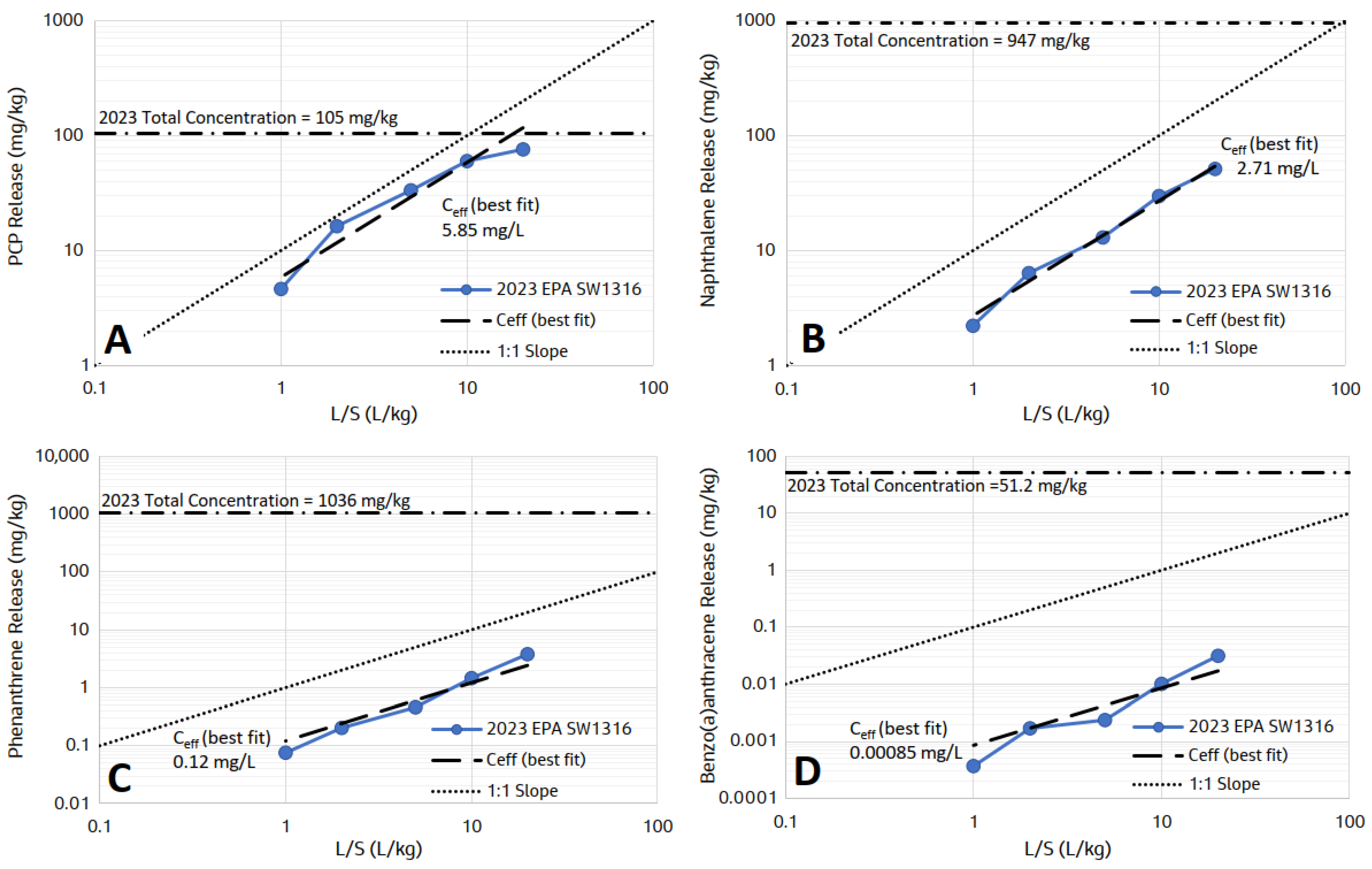
Figure 2 shows several SVOC data using format wherein the total mass release (concentration x L/S) is plotted against the L/S of the corresponding replicates. In this format, the mass release of a compound at any given L/S is bound by its respective total content (from Table 4) and the plotted curves are described as solubility-controlled for those portions of its curve that are characterized by a 1:1 slope. Invariant or flat slopes are thus available-content controlled per EPA Method 1316. In Figure 2A, the total PCP concentration is 105 mg/kg (from Table 4) which defines the maximum available-content controlled conditions and its release curve is characterized by an effective concentration (Ceff) of 5.85 mg/L, based on a linearization of its L/S 1 to 20 data for the 2023 treatability sample. Such Ceff data are needed to perform solubility checks on the EPA Method 1315M water baths to ensure that strong gradients for mass transfer persist through the long-term leaching tests. The corresponding EPA Method 1316M mass release data and effective solubility determinations for other key SVOCs such as naphthalene, phenanthrene and benzo(a)anthracene are shown in Figure 2B–D. These SVOCs were chosen for presentation purposes due to their common occurrence at creosote sites, but more importantly because the range of octanol–water partitioning coefficients (Kow) for these SVOCs (3.7 to 5.5) overlaps with that of PCP (4.74), implying that the greater hydrophobicity of benzo(a)anthracene over PCP should correspond to greater affinity for OC. Additional Ceff data are reported in Table 6 for those key SVOCs where 1:1 linearization of their 2023 treatability sample mass release data was possible.
Figure 2.
Measured EPA SW1316M mass releases of (A) PCP; (B) naphthalene; (C) phenanthrene; and (D) benzo(a)anthracene as a function of liquid-to-solid ratio.
7. Mix Design Results
7.1. Hydraulic Conductivity
As summarized in Table 7, the K values ranged from 1.1 × 10⁻⁷ to 7.2 × 10⁻⁷ cm/s. All mixes met the site criteria of K ≤ 1 × 10⁻⁶ cm/s.
Table 7.
Summary of ISS hydraulic conductivity (K) and unconfined compressive strength (UCS) for 28- or 56-day-cured samples.
7.2. Unconfined Compressive Strength
The UCSs of the 28- and 56-day-cured ISS mix designs are summarized in Table 7 with a complete reporting of replicates, including 7-day UCSs and the sample dry bulk densities (DBDs) and moisture contents appearing in Table S2. The UCSs of the mix designs were very sensitive to the W/R ratio, with the W/R 2.8 mixes producing approximately one-fifth of the strength of the mixes with the same cement dose and W/R of approximately 1.0 at 28 days. Increasing the cement dose (Mixes M9 and M10) did not lead to higher strengths, likely due to their inclusion of even more water (higher cement dose adds more water per W/R). Portland cement type and use of OC had nominal impact on UCS; however, the inclusion of SC in mixes produced UCS values approximately 3 times higher than comparable mixes without SC at 28 days. Mixes 6 to 8 without SC never achieved the UCS criteria.
7.3. Epa Method 1315M
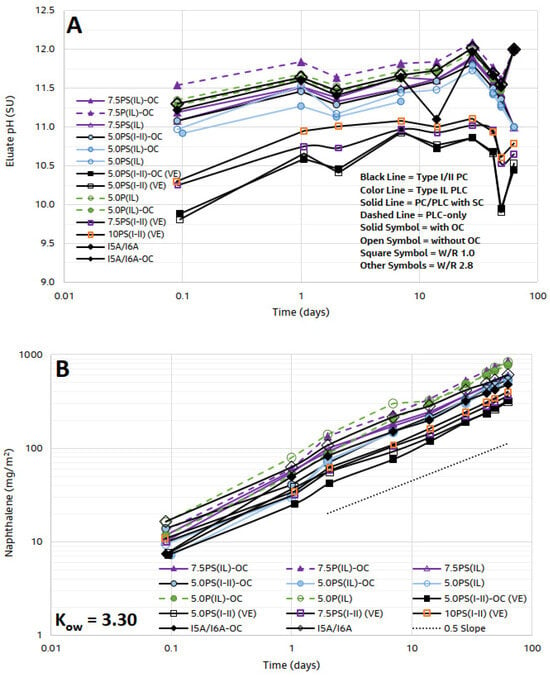
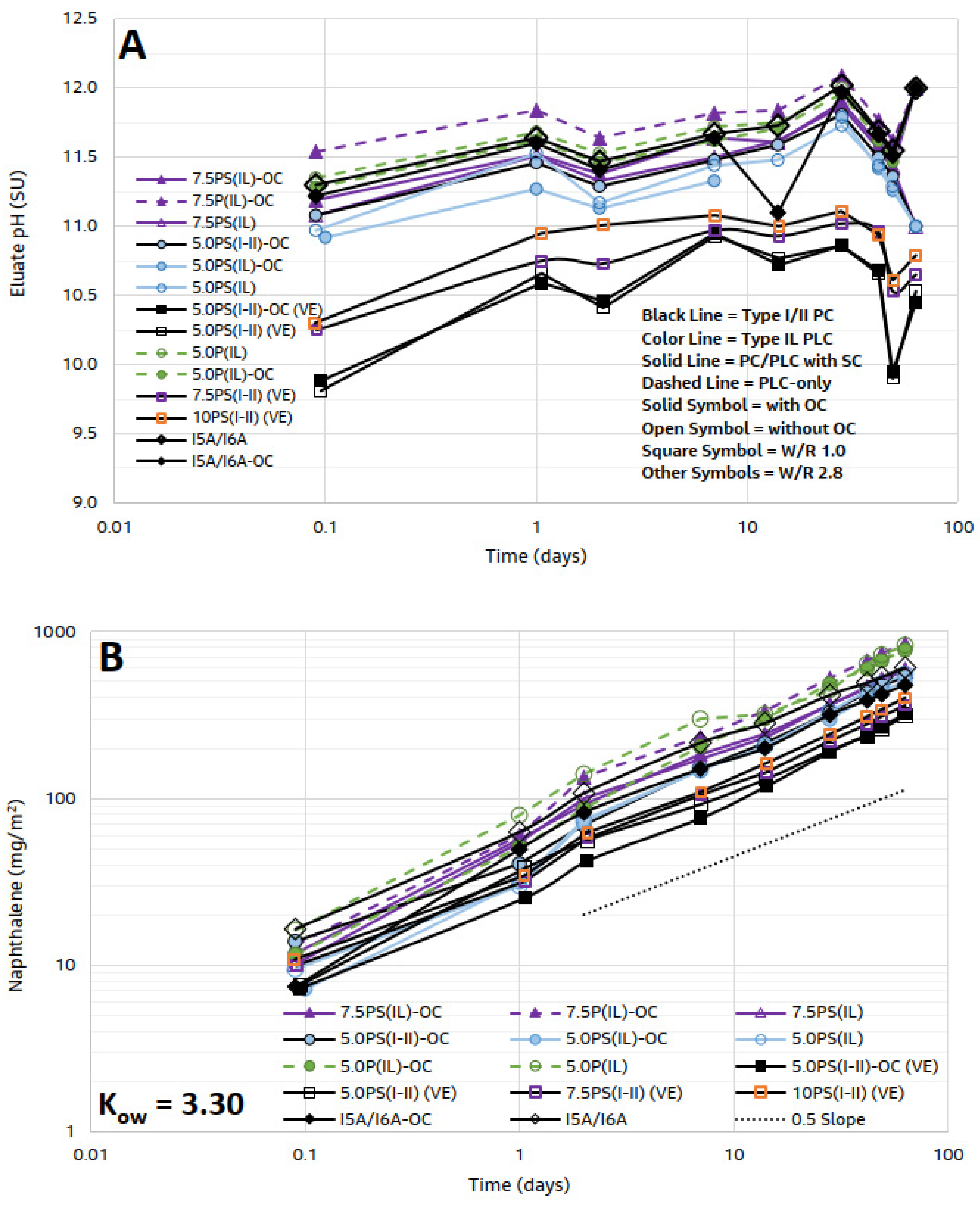
The EPA Method 1315M testing was initiated on 28-day-cured test cylinders and was performed identically for SVOCs in the 2020 and 2023 studies. Figure 3A shows the EPA Method 1315M pH measurements for all mix designs for all nine intervals for the 5 wt% PC blend (all), as well as the 7.5 and 10 wt% PC blends (2023 mixes only). The pH data for the 2020 VE study mixes at a W/R of 0.9 to 1.0, plotted using square symbols, are shown to be in the 10-to-11 range, whereas those with W/R of 2.8 from the 2023 study are typically 1 pH unit higher. The highest pH values were measured for PLC-only mixes. The corresponding EPA Method 1315M CMR curves for the same mixes are shown for naphthalene in Figure 3B. The data is tightly clustered with slightly higher CMRs being associated with the PLC. The 2020 VE study data, plotted using black square symbols, shows less naphthalene leaching over time compared to the rest of the mixes. This difference could be explained by the initial naphthalene concentration in the 2020 samples being approximately half that of the 2023 soil as indicated by the baseline environmental analyses (Table 4).
Figure 3.
EPA 1315M pH (A) and naphthalene cumulative mass release (B) for all mixes.
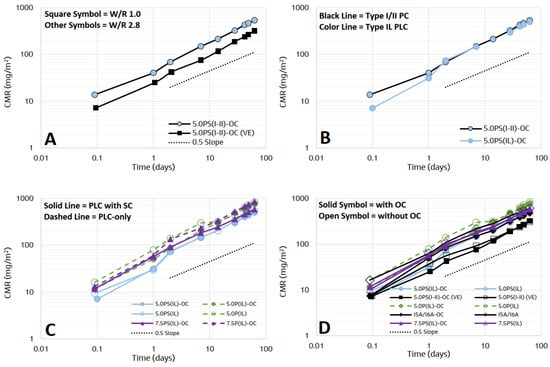
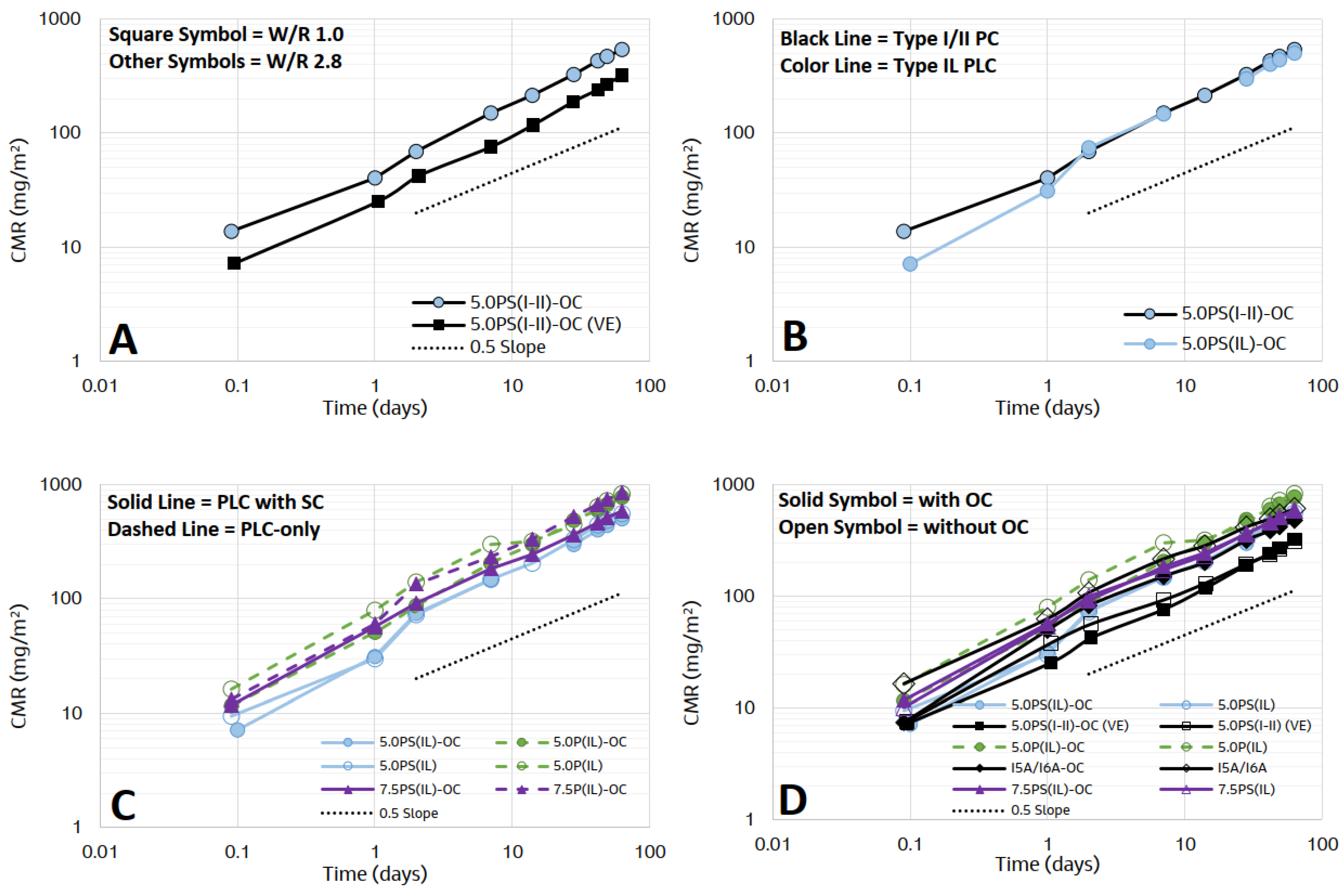
Figure 4 and Figure S1 show more clearly the effects of PC blend dose, W/R values, PC type, and incorporation of SC and OC on the leaching of naphthalene, a key compound in the creosote. Figure S1 shows that up to a 5 wt% difference in PC blend dose does not result in a meaningful difference in the CMR curves for a range of SVOCs including naphthalene, acenaphthene, phenanthrene and benzo(a)anthracene. This is consistent with Khuri et al. [17], who observed the same for chlorobenzene NAPL-impacted soils treated by 5 to 10 wt% of a PC blend. Figure S1 also shows that the inclusion of 1 wt% OC makes no difference for these four SVOCs common to MGP- and creosote-NAPL-impacted sites.
Figure 4.
EPA 1315M cumulative mass release (CMR) results for naphthalene as a function of (A) W/R ratio, (B) cement type, (C) slag inclusion, and (D) organoclay (OC) inclusion.
Figure 4A suggests that the W/R ratio had effectively no difference in the CMR plots given that CMR curves tend to be ordered (stacked) from top to bottom by total content [17], and the two CMR curves differ by a factor of 2, effectively matching their difference in total content concentrations shown in Table 4. Figure 4B shows that the cement type essentially has no influence on the naphthalene mass transfer rates, whereas Figure 4C shows that incorporating SC lowers the CMR values by approximately 50%. Figure 4D shows that the 5 and 7.5 wt% PC blend pairs with and without OC effectively overplot each other, showing little to no effect of OC in terms of leaching reductions for the 2023 sample.
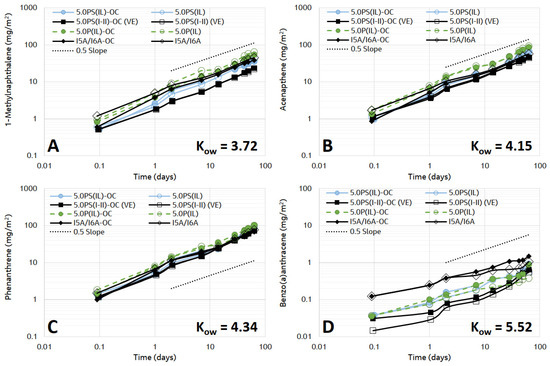
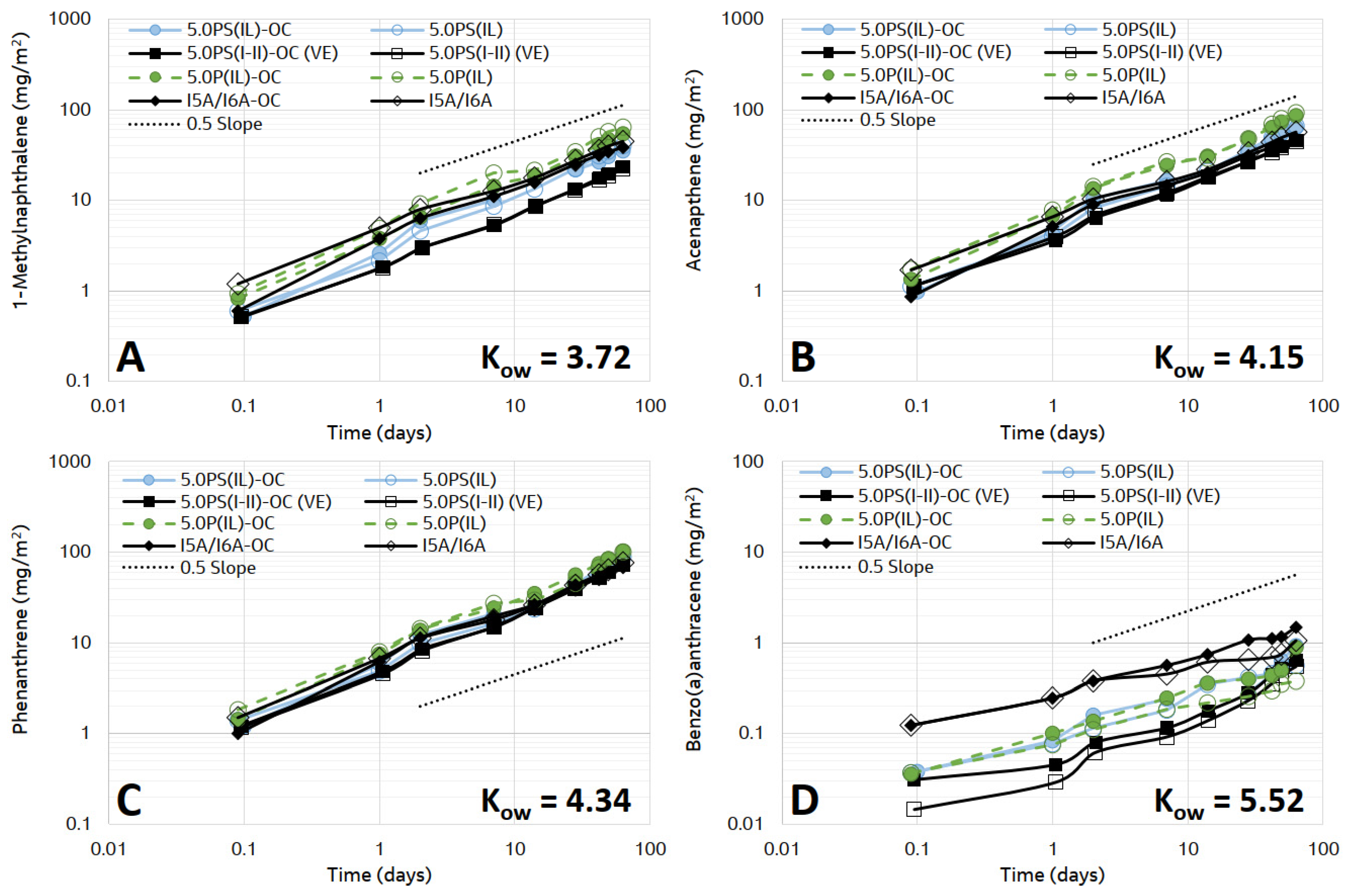
Like Figure 4D, Figure 5 shows the EPA Method 1315M CMR curves for 1-methylnaphtalene, acenaphthene, phenanthrene and benzo(a)anthracene, which are indictive a wide range of hydrophobicity based on their respective octanol–water partitioning coefficient (Kow) values. These show effectively no difference between mixes with and without OC when comparing mixes with the same PC dose. These leaching results are consistent for other VOCs/SVOCs that are prevalent at MGP- and creosote-NAPL-impacted sites [11,12,13] and for numerous pesticides treated by GAC, as summarized by Grubb and Briggs [14].
Figure 5.
EPA 1315M cumulative mass release of key SVOCs, (A) 1-Methylnapthalene, (B) Acenapthene, (C) phenanthrene and (D) benzo(a)anthracene, without and with organoclay (OC; solid symbols).
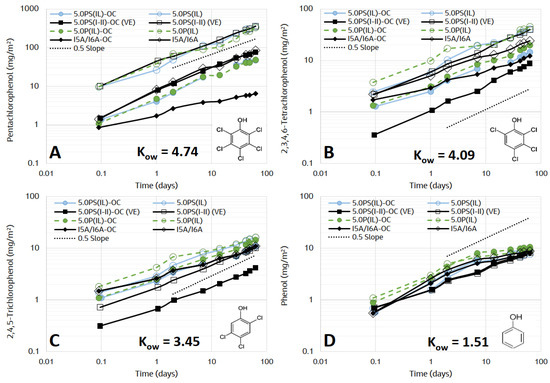
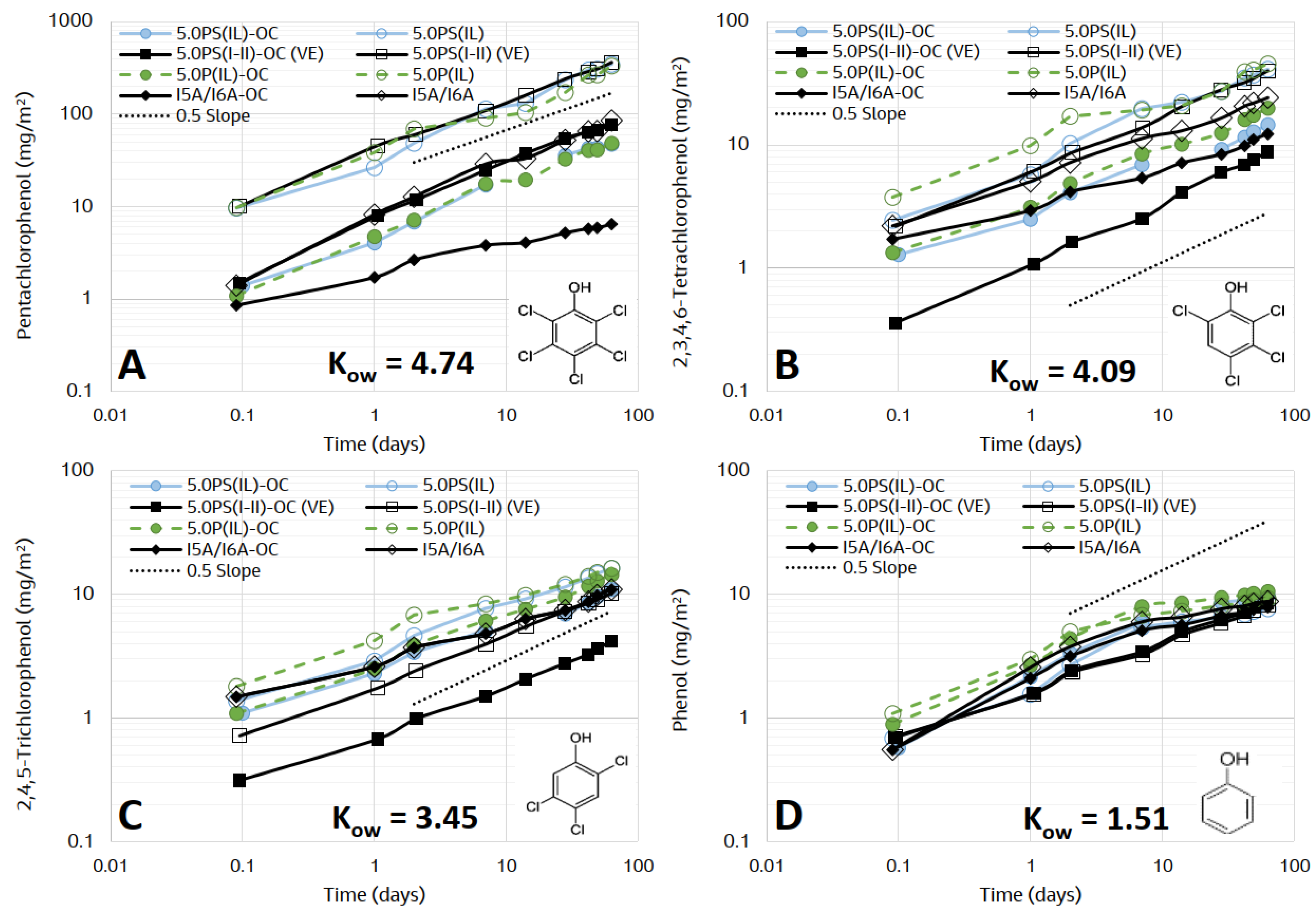
Conversely, Figure 6A shows that the use of 1 wt% OC (solid symbols) results in approximately an order-of-magnitude (10×) reduction in the EPA Method 1315M CMR curves for PCP. Figure 6B–D show that the ability of OC to reduce the leaching of chlorinated phenols is impacted by degree of chlorination, with efficacy declining rapidly to a factor of approximately two for (2,4,5-) trichlorophenol to virtually no effect for phenol (Figure 6D), just like many other VOCs/SVOCs (e.g., Figure 5 and Figure S1). Figure S2 shows a similar trend for the 2020 mixes.
Figure 6.
EPA 1315M cumulative mass release of select phenols, (A) PCP, (B) 2,3,4,6-TeCP, (C) 2,4,5-TCP, and (D) phenol, without and with organoclay (OC; solid symbols).
Figure 1 shows the ISS footprint and distribution of PCP at the site, which consists primarily of two separate plumes. The larger of the two plumes is proximate to the creek bordering the site to the north. The 2015 study recommended the use of OC for the entire footprint at an estimated reagent unit cost of $13.37 million, but Figure 3B, Figure 5, Figure 6D, Figures S1 and S2D all clearly show that OC (the organic sorbent) has essentially no effect on the SVOCs common to creosote NAPL above conventional cement treatments, consistent with prior EPA Method 1315M studies using OC (or GAC) [11,12,13,14]. Further, no real benefit of OC for treatment of the southern PCP hotspot was anticipated to exist once the site was fully treated by ISS (and maintains K ≤ 1 × 10⁻⁶ cm/s) for the simple reason that it would take hundreds of years for PCP from this hotspot to diffuse to the creek along the northern edge of the property. The inclusion of OC was perceived to be most impactful along the northeastern perimeter of the ISS treatment zone where it would capture PCP in groundwater before it leaves the site. For this reason, the remedial design included a 50 ft (15 m) ISS treatment buffer (15,000 CY; ~11,450 m3 total) where the mix designs included 1 wt% OC, as shown in Figure 7. This targeted use of OC was deemed critical and still saved EPA approximately $12.8 million over the avoided cost of using 1 wt% OC across the entire ISS footprint.
Figure 7.
Site location plan showing ISS organoclay perimeter barrier.
8. Concluding Remarks
This treatability study focused on exploring if organoclay (OC) was needed as a specialty regent for the stabilization/solidification (S/S) of creosote-NAPL-impacted soils. Fourteen mix designs were prepared and tested over two events (2020, 2023) using a combination of Type I/II Portland cement (PC) or Type IL Portland–limestone cement (PLC) with slag cement (SC), bentonite (B) powder, and with and without OC. The water-to-reagent (W/R) ratio was varied between the two studies to address site mixing challenges which required a higher W/R (2.8) for bucket mixing during field piloting. Key observations are listed below:
- All mix designs easily met the site criterion of a K ≤ 1 × 10⁻⁶ cm/s.
The single most important factor impacting strength was the W/R ratio. The W/R of 2.8 used in the field pilot passed the design criteria after 28 days of curing; however, the W/R of 1.0 had a much greater strength overall, exceeding the design criteria by a factor of 5. W/R had a mixed but not a significant impact on leaching performance.
The second most important factor was the inclusion of SC to meet the unconfined compressive strength (UCS) design criteria of 50 lb/in2 (345 kPa), but its inclusion did not significantly impact leaching performance.
Type IL PC performed comparable to Type I/II PC during the testing as there were no significant differences found in strength or leaching.
OC had negligible effects on UCS but offered up to a 10× reduction in PCP leaching. The impact on phenolic leaching decreased with decreasing degree of chlorination down to phenol, for which it had no discernable effect. OC had no significant impact on the leaching of other creosote constituents, consistent with the prior study and other EPA Method 1315M studies that incorporated OC and/or GAC reagents [11,12,13,14]. This is the first study that the authors are aware of that shows that OC provides significant EPA 1315M leaching reductions in hydrocarbons from monolithic, NAPL-impacted cement-treated samples.
Targeted use of OC was designated only to treat a PCP hotspot near the downgradient perimeter of ISS treatment area where it was most needed to protect a proximate stream. This focused use versus treating the entire ISS footprint with OC saved EPA approximately $12.8 million in reagent costs.
Supplementary Materials
The following supporting information can be downloaded at https://www.mdpi.com/article/10.3390/waste4010008/s1. Table S1: Calculated VOC and SVOC effective solubilities for 2023 NAPL-spiked surrogate soil; Table S2: Summary of 2023 ISS mix design strengths; Figure S1: 2020 mix designs EPA 1315M cumulative mass release of (A) naphthalene; (B) acenaphthene; (C) phenanthrene and (D) 2-Methylnaphthalene; Figure S2: 2020 mix designs EPA 1315M cumulative mass release of (A) PCP, (B) 2,3,4,6-TeCP, (C) 2,4,5-TCP, and (D) 2,4-dimethylphenol.
Author Contributions
Conceptualization, D.G.G. and D.R.V.B.; Methodology, D.G.G. and D.R.V.B.; Formal Analysis, D.R.V.B. and J.K.C.; Investigation, D.G.G.; Resources, D.G.G.; Data Curation, D.R.V.B. and J.K.C.; Writing—Original Draft Preparation, D.G.G. and D.R.V.B.; Writing—Review and Editing, D.G.G., D.R.V.B. and J.K.C.; Visualization, D.G.G., D.R.V.B. and J.K.C.; Supervision, D.G.G. All authors have read and agreed to the published version of the manuscript.
Funding
The data and analyses on which this paper is based were completed on behalf of USEPA Contract No. EP-W-06-021, Task Order: 112-RDRD-06G3. Additional resources were provided by Jacobs to prepare this paper.
Data Availability Statement
The data presented in this study are available on request from the corresponding author due to site confidentiality purposes.
Acknowledgments
This paper is dedicated to the memory of John Knott of Beaumont, Texas, who was the CH2M/Jacobs project manager that led much of the remedial investigation and design work as well as the early phases of construction oversight before he passed away unexpectedly in 2025. Beyond the authors, several Jacobs staff were also key to the remedial design and construction oversight activities, including T. Dye, D. Hebert, B. Jones-Stanley, R. Khuri, V. Martinez, S. McKinley, and J. Parra-Acosta, to name a few. The reference to any commercial product names is solely for identification purposes; no endorsement is implied by the authors. Any opinions, findings and conclusions expressed in this paper are those of the writers and do not necessarily reflect the views of Jacobs and/or USEPA.
Conflicts of Interest
Authors Dennis G. Grubb, Dusty R.V. Berggren, and Jyoti K. Chetri were employed by the company Jacobs Engineering. The remaining authors declare that the research was conducted in the absence of any commercial or financial relationships that could be construed as a potential conflict of interest.
References
- USEPA. SW-846 Test Method 1315: Mass Transfer Rates of Constituents in Monolithic or Compacted Granular Materials using a Semi-Dynamic Tank Leaching Procedure. In Test Methods for Evaluating Solid Waste: Physical/Chemical Methods SW-846 Method 1315; USEPA: Washington, DC, USA, 2017. [Google Scholar]
- USEPA. Contaminants and Remedial Options at Wood Preserving Sites; Office of Research and Development; USEPA: Washington, DC, USA, 1992. [Google Scholar]
- Bates, E.R.; Sahle-Demessie, E.; Grosse, D.W. Solidification/stabilization for remediation of wood preserving sites: Treatment for dioxins, PCP, creosote, and metals. Remediat. J. 2000, 10, 51–65. [Google Scholar] [CrossRef] [Scilit]
- Wiles, M.C.; Huebner, H.J.; McDonald, T.J.; Donnelly, K.C.; Phillips, T.D. Matrix-immobilized organoclay for the sorption of polycyclic aromatic hydrocarbons and pentachlorophenol from groundwater. Chemosphere 2005, 59, 1455–1464. [Google Scholar] [CrossRef] [Scilit] [PubMed]
- Huang, G.L.; Xiao, H.; Chi, J.; Shiu, W.Y.; Mackay, D. Effects of pH on the aqueous solubility of selected chlorinated phenols. J. Chem. Eng. Data 2000, 45, 411–414. [Google Scholar] [CrossRef] [Scilit]
- Boyd, S.A.; Shaobai, S.; Lee, J.F.; Mortland, M.M. Pentachlorophenol sorption by organo-clays. Clays Clay Miner. 1988, 36, 125–130. [Google Scholar] [CrossRef] [Scilit]
- Brixie, J.M.; Boyd, S.A. Treatment of contaminated soils with organoclays to reduce leachable pentachlorophenol. J. Environ. Qual. 1994, 23, 1283–1290. [Google Scholar] [CrossRef] [Scilit]
- CETCO. Technical Data Sheet: Organoclay PM-199: Organic Adsorption Media; Form TDS_ORGANOCLAY_PM—199_AM_EN-201705_V2, CETCO; CETCO: Hoffman Estates, IL, USA, 2017. [Google Scholar]
- ASTM D3987-12. (2020); Standard Practice for Shake Extraction of Solid Waste with Water. ASTM: West Conshohocken, PA, USA, 2000.
- USEPA. SW-846 Test Method 1312: Synthetic Precipitation Leaching Procedure. In Test Methods for Evaluating Solid Waste: Physical/Chemical Methods SW-846 Method 1312; USEPA: Washington, DC, USA, 1994. [Google Scholar]
- Electric Power Research Institute (EPRI). Leaching Assessment Methods for the Evaluation of the Effectiveness of In Situ Stabilization of Sediment Material at Manufactured Gas Plan Sites, EPRI and Exelon Corporation; First Energy Corporation and Southern Company: Palo Alto, CA, USA, 2009; p. 1015553. [Google Scholar]
- Finney, D.S.; Himmer, T.; Morris, J.J.; Coladonato, S. Demonstrating Leaching Reductions of NAPL-Impacted Soils Treated with Stabilization/Solidification Using Modified EPA Method 1315. J. Hazard. Toxic Radioact. Waste 2015, 19, C4014002. [Google Scholar] [CrossRef] [Scilit]
- Gentry, J.L.; Niemet, M.R.; Grubb, D.G.; Bruno, M.; Berggren, D.R.V.; Tsiamis, C.D. Gowanus Canal Superfund Site II: Stabilization/Solidification (S/S) of MGP-impacted sediments. J. Hazard. Toxic Radioact. Waste 2015, 19, C4014004. [Google Scholar] [CrossRef] [Scilit]
- Grubb, D.G.; Briggs, B. Stabilization/Solidification (S/S) Value Engineering Study—Pesticide Impacted Superfund Site. Presented at the Second Annual RE3 Conference, Hyatt at The Bellevue, Philadelphia, PA, USA, 27–29 January 2015; Sponsored by Enviroblend. [Google Scholar]
- ASTM D1633-17; Standard Test Methods for Compressive Strength of Molded Soil-Cement Cylinders. ASTM: West Conshohocken, PA, USA, 2017.
- ASTM D5084-16a; Standard Test Methods for Measurement of Hydraulic Conductivity of Saturated Porous Materials Using a Flexible Wall Permeameter. ASTM: West Conshohocken, PA, USA, 2016.
- Khuri, R.E.; Berggren, D.R.; Grubb, D.G. EPA LEAF testing of chlorobenzene-impacted sands and soil–cement mix designs. J. Hazard. Toxic Radioact. Waste 2022, 26, 04022019. [Google Scholar] [CrossRef] [Scilit]
- USEPA. SW-846 Test Method 9040C: pH Electrometric Measurement. In Test Methods for Evaluating Solid Waste: Physical/Chemical Methods SW-846 Method 9040C; USEPA: Washington, DC, USA, 2004. [Google Scholar]
- USEPA. SW-846 Test Method 9050A: Specific Conductance. In Test Methods for Evaluating Solid Waste: Physical/Chemical Methods SW-846 Method 9050A; USEPA: Washington, DC, USA, 1996. [Google Scholar]
- USEPA. SW-846 Test Method 8260D: Volatile Organic Compounds by Gas Chromatography/Mass Spectrometry. In Test Methods for Evaluating Solid Waste: Physical/Chemical Methods SW-846 Method 8260D; USEPA: Washington, DC, USA, 2018. [Google Scholar]
- USEPA. SW-846 Test Method 8270E: Semivolatile Organic Compounds by Gas Chromatography/Mass Spectrometry. In Test Methods for Evaluating Solid Waste: Physical/Chemical Methods SW-846 Method 8270E; USEPA: Washington, DC, USA, 2018. [Google Scholar]
- Eaton, A.D.; Clesceri, L.S.; Greenberg, A.E.; Franson, M.A.H. 5310 TOTAL ORGANIC CARBON (TOC) (2017). In Standard Methods for the Examination of Water and Wastewater, 23rd ed.; American Public Health Association: Washington, DC, USA, 2017. [Google Scholar]
- NEN 7375; Leaching Characteristics—Determination of the Leaching of Inorganic Components from Moulded or Monolithic Materials with a Diffusion Test—Solid Earthy and Stony Materials. NEN: Delft, The Netherlands, 2001.
- Shor, L.M.; Garrabrants, A.; Kosson, D.S. Device for Leaching Extraction and Assessment. U.S. Patent 7,930,948, 6 April 2011. [Google Scholar]

Disclaimer/Publisher’s Note: The statements, opinions and data contained in all publications are solely those of the individual author(s) and contributor(s) and not of MDPI and/or the editor(s). MDPI and/or the editor(s) disclaim responsibility for any injury to people or property resulting from any ideas, methods, instructions or products referred to in the content. |
© 2026 by the authors. Licensee MDPI, Basel, Switzerland. This article is an open access article distributed under the terms and conditions of the Creative Commons Attribution (CC BY) license.