


Abstract
Despite the potential of Eragrostis nigra in alleviating forage shortages and controlling soil erosion, there is little information about how nitrogen fertilization and row spacing affect its forage and seed production. Thus, a two-year field experiment was conducted to explore the effects of nitrogen (N) fertilization (0, 45, 90, 135 kg hectare−1 (ha−1)) and row spacing (20 cm, 40 cm) on its forage yield, nutritive value, seed yield and quality. Results showed that forage dry matter yield (DMY) and harvested seed yield (HSY) increased with higher N rates; however, no further enhancement was observed at 135 kg per ha−1, making 90 kg ha−1 optimum. This may be because excessive nitrogen disrupts the carbon–nitrogen metabolic balance. N fertilization increased the relative feed value by enhancing crude protein content and decreasing acid detergent fiber. Relative to the 20 cm spacing, the 40 cm spacing averagely raised PSY and HSY by 34.7% and 21.3%, respectively. The quadratic regression model yielded maximum predicted HSY values of 27.6 and 26.7 kg ha−1, achieved at optimal N rates of 135 and 98.6 kg ha−1 for the 20 cm and 40 cm spacings, respectively. Thousand-seed weight (TSW), germination index, and vigor index were significantly improved by row spacing and N application (p < 0.05). Seed yield enhancement from N was positively correlated with increases in number of fertile tillers (FT), number of spikelets per tiller and seed set (p < 0.05). Furthermore, FT and TSW had the strongest direct effects on seed yield, with standardized path coefficients of 0.362 and 0.390. Our findings highlight that an application rate of 90 kg ha−1 N combined with 40 cm row spacing could be recommended as the efficient agronomic practice for maximizing forage yield, nutritive value, and seed yield in E. nigra. Importantly, this regime also enhances economic returns while reducing N leaching risks, thereby supporting more sustainable forage production systems.
1. Introduction
Eragrostis nigra is a nutrient-rich yet underutilized perennial native grass in mountain areas of eastern and southern Asia and eastern Africa with significant potential to alleviate forage shortage [1,2,3]. This promising grass also features a strong root system that mitigates soil erosion and facilitates remediation of contaminated soils [4,5]. However, currently, there is a lack of information concerning its forage yield, nutrients and seed production under field management, which constrains its widespread adoption. Addressing the agronomic knowledge gap would therefore facilitate the sustainable utilization of this multipurpose species.
Fertilizer application is a common agronomic practice used in forage and seed production. As N plays a crucial role in regulating photosynthesis, tiller formation, and seed development [6,7,8] and is the most limiting soil nutrient, its application effectively improves biomass, seed yield, and quality in gramineous species [9,10,11]. N application rate and timing are important for plant production; for example, previous studies have reported that seed yield and quality in crops such as black sesame and orchard grass were obviously improved by optimized N application [12,13]. N fertilizer rate may also directly influence forage and seed yield by altering resource allocation between reproductive growth and vegetative growth. Particularly, high-N environments exacerbate the lodging of the crop because the culm cannot support the increasing weight of the panicle [14].
Forage quality is assessed by the content of crude protein (CP), neutral detergent fiber (NDF, for intake) and acid detergent fiber (ADF, for digestibility) [15]. Higher CP content, along with reductions in NDF and ADF, can enhance the palatability and quality of forage [16]. N fertilization led to CP enhancement in forage oat [17]. However, the effects of N application on forage NDF and ADF are inconsistent, possibly related to the type of grass species studied [18]. Therefore, determining the optimal N application rate is essential to guide efficient grass seed production, improve forage quality, and reduce environmental pollution caused by its overuse.
Row spacing is an important factor for plant development. Wider row spacing notably boosted quinoa yield and promoted the transfer of N from stems or leaves to seeds [19]. Sorghum at 45 cm row spacing exhibited the highest grain yield and the greatest protein yield [20]. In contrast, narrower row spacing enhanced grain yield, plant dry weight, and shoot nutrient accumulation in maize [21]. These contrasting responses indicate that the optimal row spacing is highly species-dependent. Row spacing influences forage growth and seed production by affecting several key processes such as photosynthesis, nutrient absorption and tillering [22,23]. Thus, reasonable row spacing is fundamental to improving forage and seed yield, as it affects competition between individual plants for resources like light, space, and nutrients [24,25]. The 20 cm and 40 cm row spacings are commonly used in forage plantation; however, the appropriate row spacing for E. nigra forage production or seed yield remains unclear. Testing these two contrasting spacings enables the identification of an efficient planting configuration that balances forage and seed production.
Seed yield, a quantitative trait, is mainly regulated by genetic factors [26] and agronomic practices like fertilization and row spacing [11,27,28]. Studies showed that forage seed yield is highly dependent on seed yield components, including number of fertile tillers (FT), spikelets per tiller (SP), florets per spikelet (FS), and seeds per spikelet (SS) [29,30]. These components develop sequentially, with late-developing components often controlled by early-developing ones [31]. Our previous field observation indicates that the seed yield of E. nigra is relatively low. Therefore, we aim to understand how N application and row spacing affect seed yield and yield components. Understanding the dynamic interaction between yield components is crucial to improve the efficiencies of the biological system and seed yield [32]. Recently, structural equation modeling (SEM) has been used to explore the effects of seed yield components on seed yield, as it allows the separation of direct and indirect effects among factors involved [11]. Path analysis of sequentially developing yield components has been applied in some grass species [33], allowing measurement of the direct influence of one yield component on yield from the indirect influences caused by the mutual relationships among yield components [34].
Despite the recognized potential of E. nigra as a native forage grass in many parts of the world, no agronomic research has experimentally tested the effects of N fertilization and row spacing on its forage yield, nutritive value, and seed production. A better understanding of how to optimize the forage and seed yield through management practices would not only promote the utilization of E. nigra but also provide an alternative to introduced grasses. Therefore, our main objectives were to (1) determine the individual and interactive effects of N fertilization and row spacing on forage yield, nutritive value and seed yield, and (2) quantify the direct and indirect contributions of seed yield components to overall seed yield. We hypothesized that N fertilization and row spacing would interact to influence forage and seed yield. Specifically, we expected that N would increase seed yield by enhancing fertile tiller number and seed weight, while wider row spacing would reduce inter-plant competition and thereby improve individual plant performance. Furthermore, we predicted that N fertilization would have a stronger overall effect than row spacing, given its essential role in plant growth and development.
2. Materials and Methods
2.1. Experimental Site Conditions
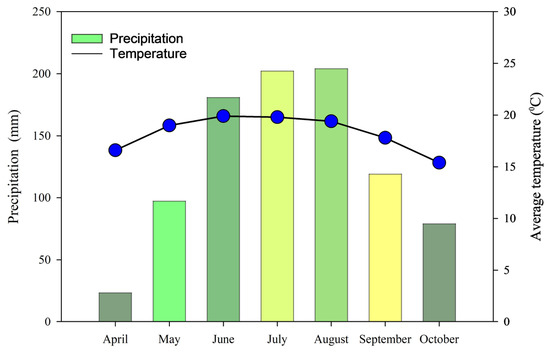
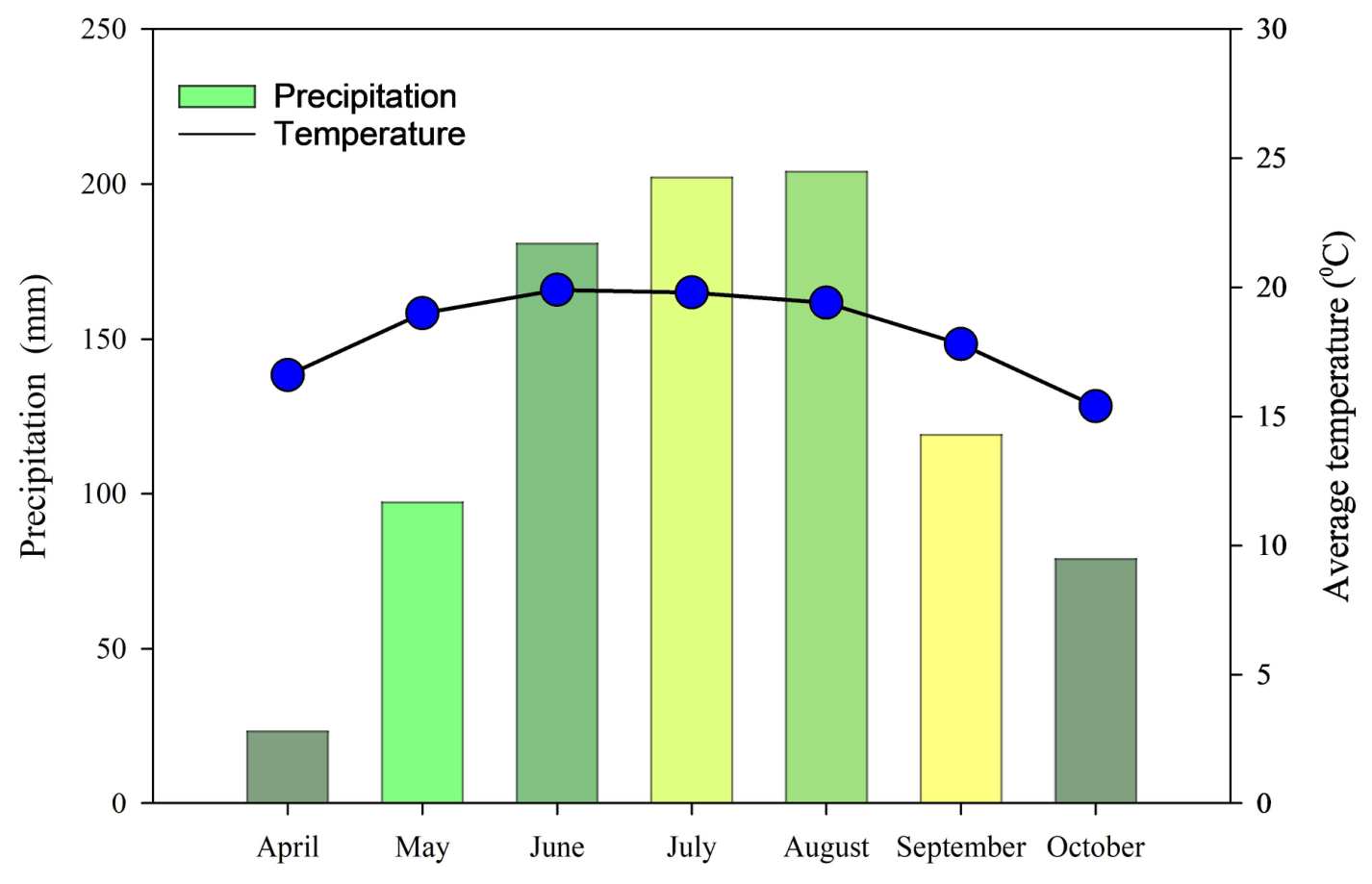
The field trial was conducted from July 2023 to October 2024 at the Experimental Farm of Yunnan Agricultural University (25°08′23″ N, 102°45′16″ E, elevation 1950 m), Kunming, China. The soil texture at the experimental plots was classified as acrisols with pH 6.13. The 0–30 cm soil layer had the following physical–chemical properties: organic matter 20.05 g.kg−1, total N 0.62 g.kg−1, total P 0.46 g.kg−1, total K 4.52 g.kg−1, available P 13.57 mg.kg−1, available K 43.27 mg.kg−1, alkali-hydrolyzed N 69.52 mg.kg−1, respectively. The nitrogen concentrations in the soil were determined with a fully automatic Kjeldahl nitrogen analyzer. The P concentration was determined using the molybdenum-blue colorimetric method. The potassium concentration was analyzed via NaOH fusion–flame photometry. The experimental site features a low-latitude plateau mountain monsoon climate. Monthly average temperature and precipitation of the main growing season from April to October 2024 were 18.3 °C and 906 mm, respectively (Figure 1).
Figure 1.
The precipitation and monthly mean temperature of growing season in 2024 in the experimental region. Blue dots represent the monthly mean temperature, and bars represent monthly precipitation.
2.2. Plant Material and Experimental Design
Seeds of E. nigra were collected in October 2022 from a mountain meadow (2950–3170 m) in Qiaojia county, southwest China. After harvesting, the seeds were naturally air-dried, threshed, and stored at room temperature. The germination rate was 65% and the thousand-seed weight was 0.16 g.
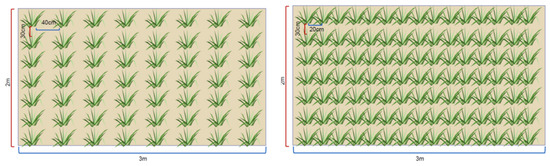
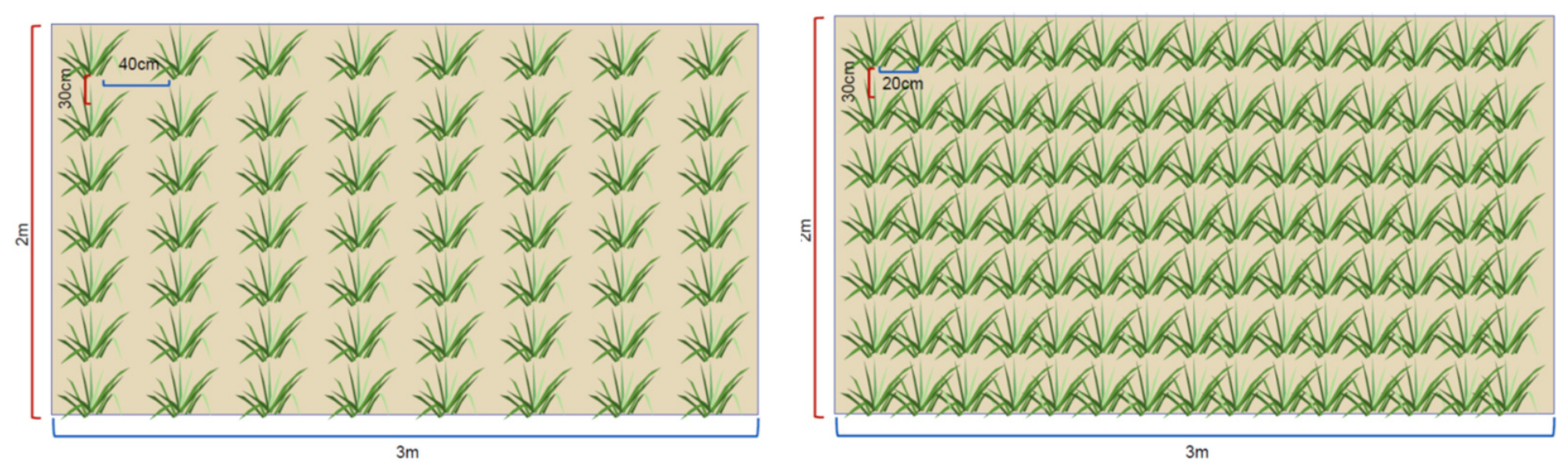
The experiment employed a two-factor factorial design including N fertilization and row spacing. Row spacing included two levels, 20 cm and 40 cm, which are commonly used in forage production. N fertilization was set at rates of 0 (control, CK), 45 (N1), 90 (N2), and 135 (N3) kg ha−1. These rates were selected to represent a gradient from deficient to excessive N supply, covering the range typically used in forage production in this region. A total of eight treatments were arranged in a randomized design with three replications, resulting in 24 experimental plots (2 × 3 m each). The row spacing and fertilization rates used were based on an assessment of plant morphology and soil nutrient supply of the experimental plot. There was a 1 m buffer zone between adjacent plots. Within a row, individual plants were spaced 30 cm apart. Planting density was adjusted according to different row spacings (Figure 2). For N fertilization, dry granular urea (46%) was split-applied in two equal doses: half applied at the tillering stage and another half applied at the stem elongation stage. The urea was manually applied to the soil surface of each plot and then watered to dissolve, which effectively reduces nitrogen volatilization.
Figure 2.
Spatial distribution of seedlings under different row spacings within an experimental plot. The 20 cm and 40 cm row spacings had 105 and 56 plants per plot, respectively. The distance between individual plants in a row is 30 cm. The blue line indicates the length of the experimental plot, and the red line indicates the width.
Seedlings of E. nigra were produced in a semi-controlled greenhouse prior to field transplantation. Seeds were surface-sterilized with 2% sodium hypochlorite for 20 min, rinsed thoroughly with distilled water, and germinated in seedling trays (72-cell) filled with a sterilized peat–perlite mixture (3:1 v/v). Trays were irrigated daily with tap water. After 4 weeks, seedlings reached a height of approximately 10 cm.
In July 2023, pre-cultivated seedlings were transplanted into the plowed experimental plots. Seedlings were irrigated for 14 days to ensure successful establishment. Soil water content was maintained at field water capacity during the nursery period. Throughout the experiment, field management was applied uniformly to each plot. Weeds were controlled manually, and no pesticide was used. Plants produced the first seeds approximately 300 days after sowing according to our field observation.
2.3. Field Sampling and Measurement
2.3.1. Determination of Forage Yield and Nutritive Value
Forage was harvested at the heading stage to optimize forage dry matter yield (DMY) and nutritive value. Aboveground biomass was collected by clipping all plant material from randomly selected 100 × 100 cm quadrates within each experimental plot. Subsequently, the collected biomass was subjected to oven-drying at 120 °C for 30 min, and then dried at 65 °C to constant weight for DMY. Afterwards, samples of drying materials were ground and passed through a 2 mm mesh for subsequent nutrient analysis.
The forage nutritive value was assessed by determining the content of crude protein (CP), acid detergent fiber (ADF) and neutral detergent fiber (NDF). The CP concentration was calculated as CP = 6.25 × total nitrogen, where total nitrogen was measured using the Kjeldahl method with digestion equipment. ADF and NDF content were determined following the procedures described by Van Soest et al. [35]. Relative feed value (RFV) was calculated based on digestible dry matter intake relative to standard forage according to the following equation from Sheaffer et al. [15]:
where digestible dry matter (%) = 88.9 − (0.779 × ADF) and dry matter intake (%) = 120/NDF. The constant, 1.29, was chosen so that RFV = 100 for full-bloom alfalfa.
2.3.2. Determination of Seed Yield and Yield Components
Harvested seed yield (HSY) was determined by hand harvesting at three randomly selected 1 m rows of each plot when 80% of seed heads were ripe. Seed samples of each plot were dried, threshed, cleaned and weighed. Then, TSW was determined. Potential seed yield (PSY) was obtained by multiplying seed yield components as in the following formula: PSY(kg ha−1) = FT × ST × FS × TSW × 10−2 [36]. Then, seed harvest efficiency was calculated as the ratio of harvested seed yield (HSY) to potential seed yield (PSY) expressed as a percentage: HSY/PSY × 100.
Seed yield components include the number of fertile tillers in m−2 (FT), spikelets per tiller (ST), florets per spikelet (FS), seeds per spikelet (SS) and percentage of seed set (PSS). FT, ST, and FS were determined at the flowering stage while SS and TSW were measured at the seed maturing stage. During sampling, the first and last rows of each experimental plot were excluded to avoid edge effects.
Number of fertile tillers in m−2 was measured in three randomly selected 1 m rows within the quadrat. The three row counts were then averaged to produce a single plot-level value for statistical analysis. Ten fertile tillers and twenty spikelets of each plot were selected randomly to determine ST, FS, and SS. PSS was calculated using the ratio (number of filled florets/number of florets).
Seed quality was assessed approximately two months post-harvest using standard germination and vigor tests in order to minimize potential dormancy effects in freshly harvested seeds. For the germination test, 50 filled seeds per replicate were sterilized with sodium hypochlorite (containing 2% available chlorine) for 20 min, and then placed on two layers of moist filter paper in a Petri dish. The dishes were kept in a growth chamber under controlled conditions (25°C/20°C day/night temperature, 75–85% relative humidity, and a 12 h light photoperiod) for 10 days. Each sample was repeated three times. Seeds germinated each day were recorded.
The germination rate (GR), germination index(GI), and vigor index (VI) of seeds were determined following the formulas given by Magray et al. [37]:
where Gt is the number of seeds germinated each day, and Dt is the corresponding number of germination days.
GR(%) = (number of seedlings/50) × 100
GI = Σ(Gt/Dt),
VI = GI × M, where GI is the germination index, and M is the seedling length. Ten seedlings of each treatment were randomly selected from each Petri dish, and the radicle length and plumule length were measured with a ruler.
2.3.3. Statistical Analysis
Two-way analysis of variance (ANOVA) from the general linear model was performed using SPSS 19 (SPSS Inc., Chicago, IL, USA) to evaluate the main effects of nitrogen, row spacing and their possible interaction effects on forage yield, nutrients, seed yield and yield components as well as seed qualities. For each row spacing (20 cm and 40 cm), multiple comparisons of nitrogen rate effects on traits were conducted using Duncan’s new multiple-range test. Quadratic regression analysis (y = a + bx + cx2, where y is the predicted forage or seed yield, x is the application rate, a is the intercept, b is the linear coefficient, c is the quadratic coefficient) was employed to assess the influences of N rates on forage yield and harvested seed yield. All regression analyses were performed using SigmaPlot 12.0. Piecewise structural equation models (SEMs) were created using SPSS AMOS 26 to assess the effects of N and row spacing on seed yield components and potential pathways through which they may affect seed yield.
3. Results
3.1. Forage Yield and Nutritive Value
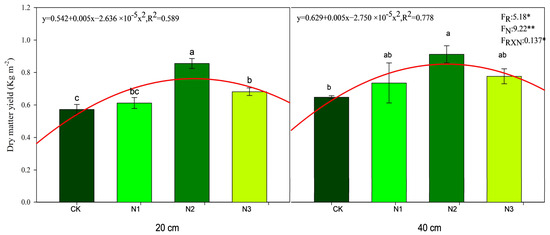
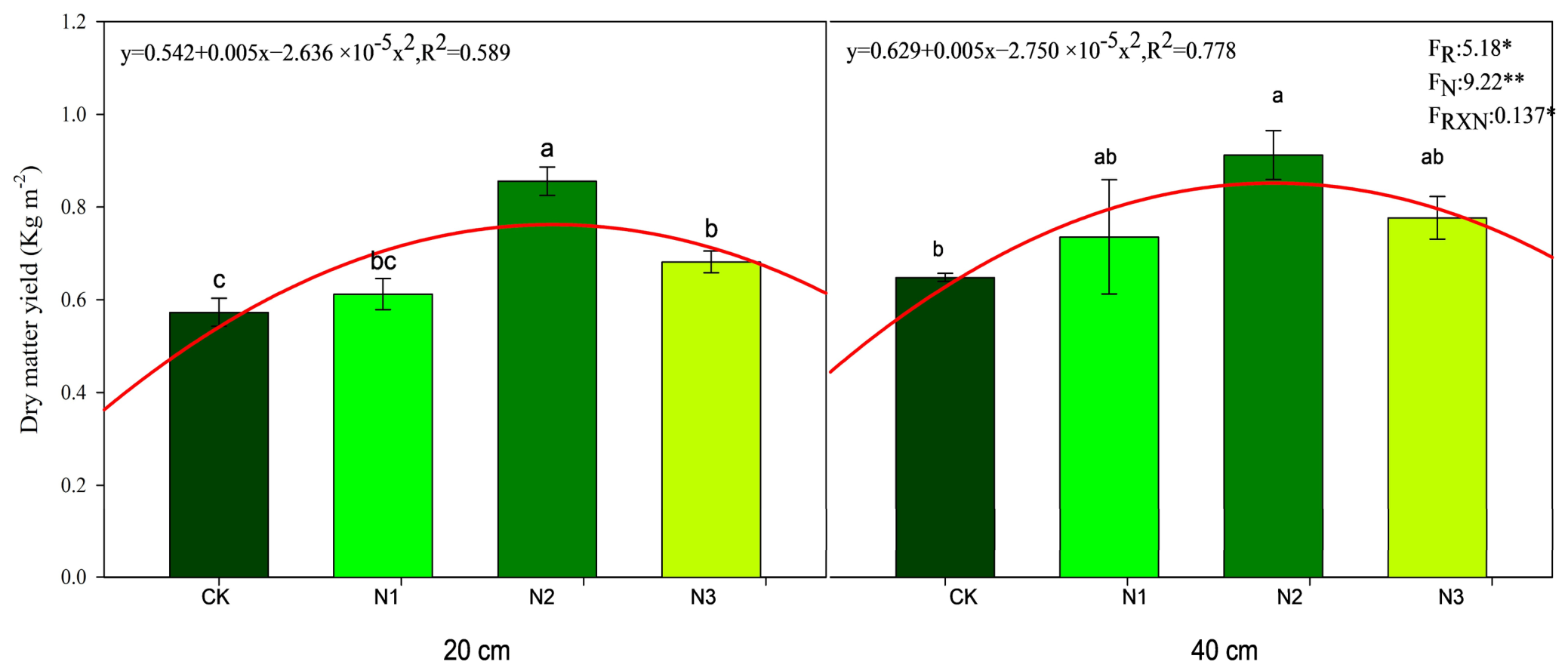
DMY and CP increased with increasing N application rates, particularly at 90 kg ha−1 N. At this rate, DMY increased by 49.4% at 20 cm row spacing and by 40.7% at 40 cm row spacing, relative to the control. The 135 kg ha−1 N treatment did not lead to further enhancement relative to application of 90 kg ha−1 N. The regression analyses showed a significant correlation between DMY and N application rates, best described by a quadratic regression model (y = a + bx + cx2) (Figure 3).The intercept (0.542 and 0.629 kg m−2) represents the baseline dry matter yield without N application at 20 cm and 40 cm row spacing. Averaged across N application levels, the 40 cm row spacing increased DMY by 12.9% compared to the 20 cm row spacing.
Figure 3.
Effects of N fertilization and row spacing on dry matter yield (DMY) of E. nigra. Notes: Different lowercase letters above bar indicate significant differences among contrasting fertilization rates within 20 or 40 cm row spacing at the p < 0.05 level according to Duncan’s new multiple-range test. F is F values; FR is the effects of row spacing; FN is the effects of nitrogen; FR×N is the possible interaction between nitrogen and row spacing. ‘*’ indicates significance at p < 0.05; ‘**’ indicates significant at p < 0.01. The red line above the bars shows the nonlinear regression of nitrogen rate versus dry matter yield at 20 cm or 40 cm as indicated.
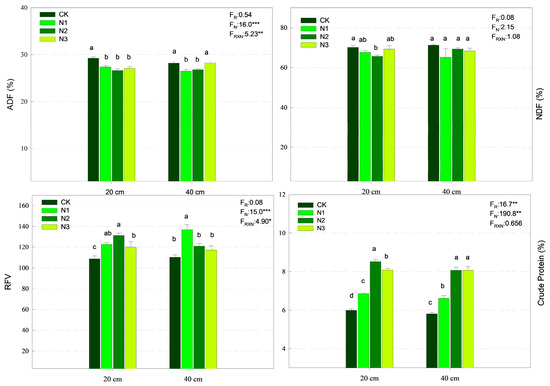
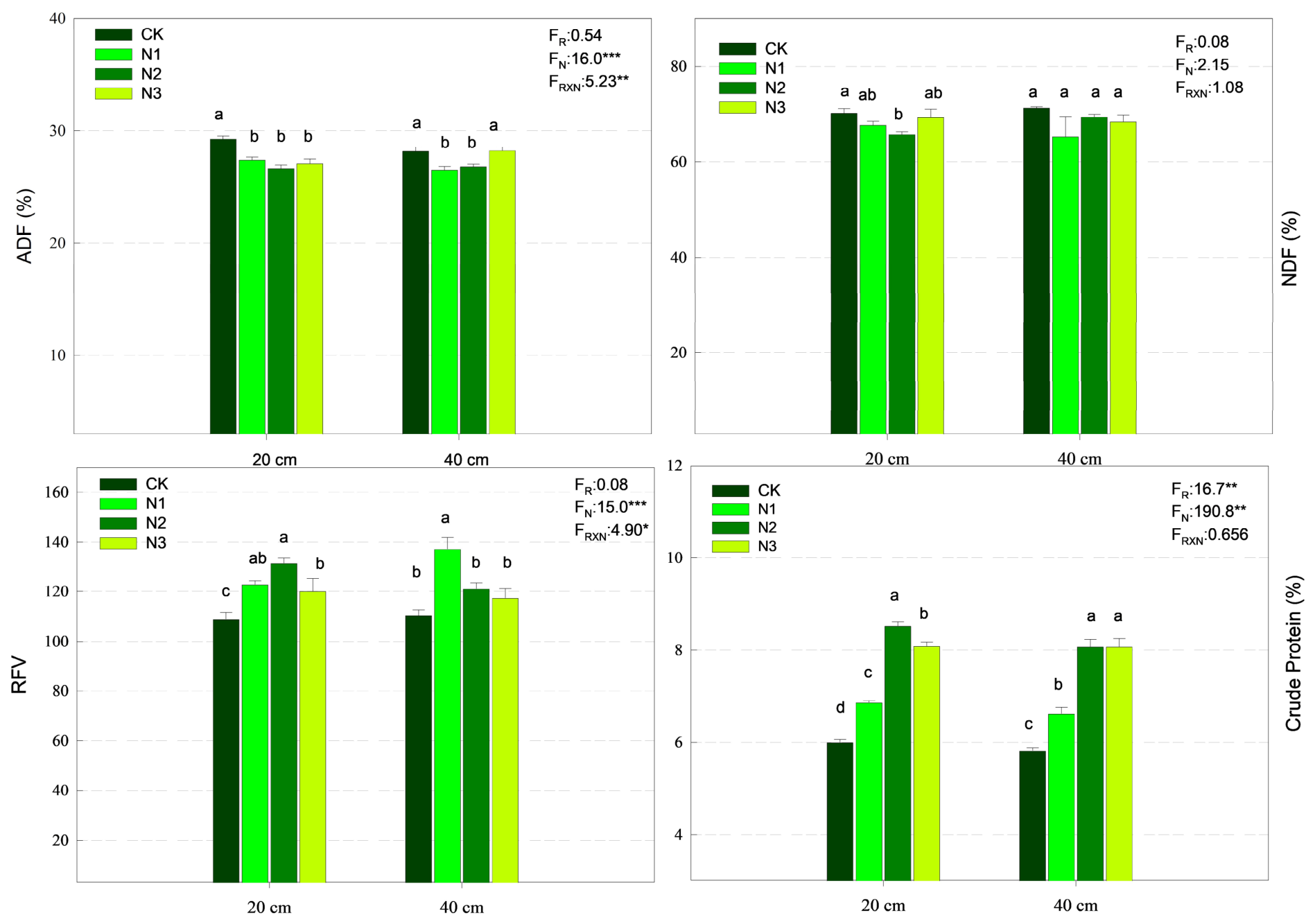
Both N rate and row spacing had significant effects on CP content (Figure 4). At the 90 kg ha−1 N rate, CP content was 42.0% higher at 20 cm and 38.7% higher at 40 cm row spacing than CK. No further improvement in CP content was observed at the 135 kg ha−1 N rate compared with the 90 kg ha−1 N rate, regardless of row spacing. N application significantly affected ADF and RFV, whereas row spacing did not (Figure 4). Notably, ADF exhibited a decreasing trend in response to elevated N rates. By contrast, NDF was not significantly affected by N application or row spacing.
Figure 4.
Effects of N fertilization and row spacing on crude protein (CP), acid detergent fiber (ADF), neutral detergent fiber(NDF) and relative feed value (RFV) of E. nigra. Notes: All values are presented as mean ± standard error (SE). CK, N1, N2, N3 represent nitrogen fertilizer rates at four levels of 0, 45, 90, 135 kg N ha−1, respectively. Each value is the mean ± SE. Different lowercase letters above bar indicate significant differences at the p < 0.05 level according to Duncan’s new multiple-range test. F is F values; FN is the effects of nitrogen; FR is the effects of row spacing; FR×N is the possible interaction between nitrogen and row spacing. * p < 0.05; ** p < 0.01; *** p < 0.0001.
3.2. Seed Yields and Yield Components
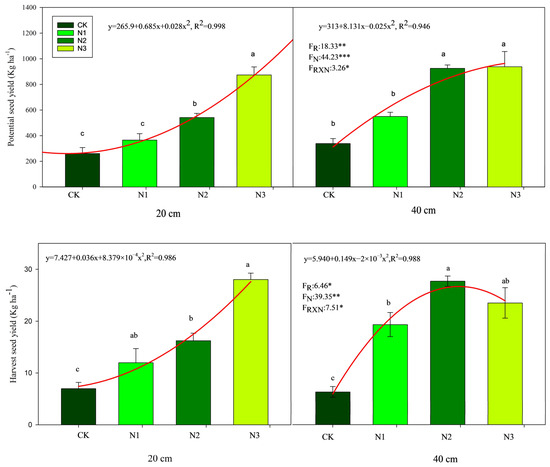
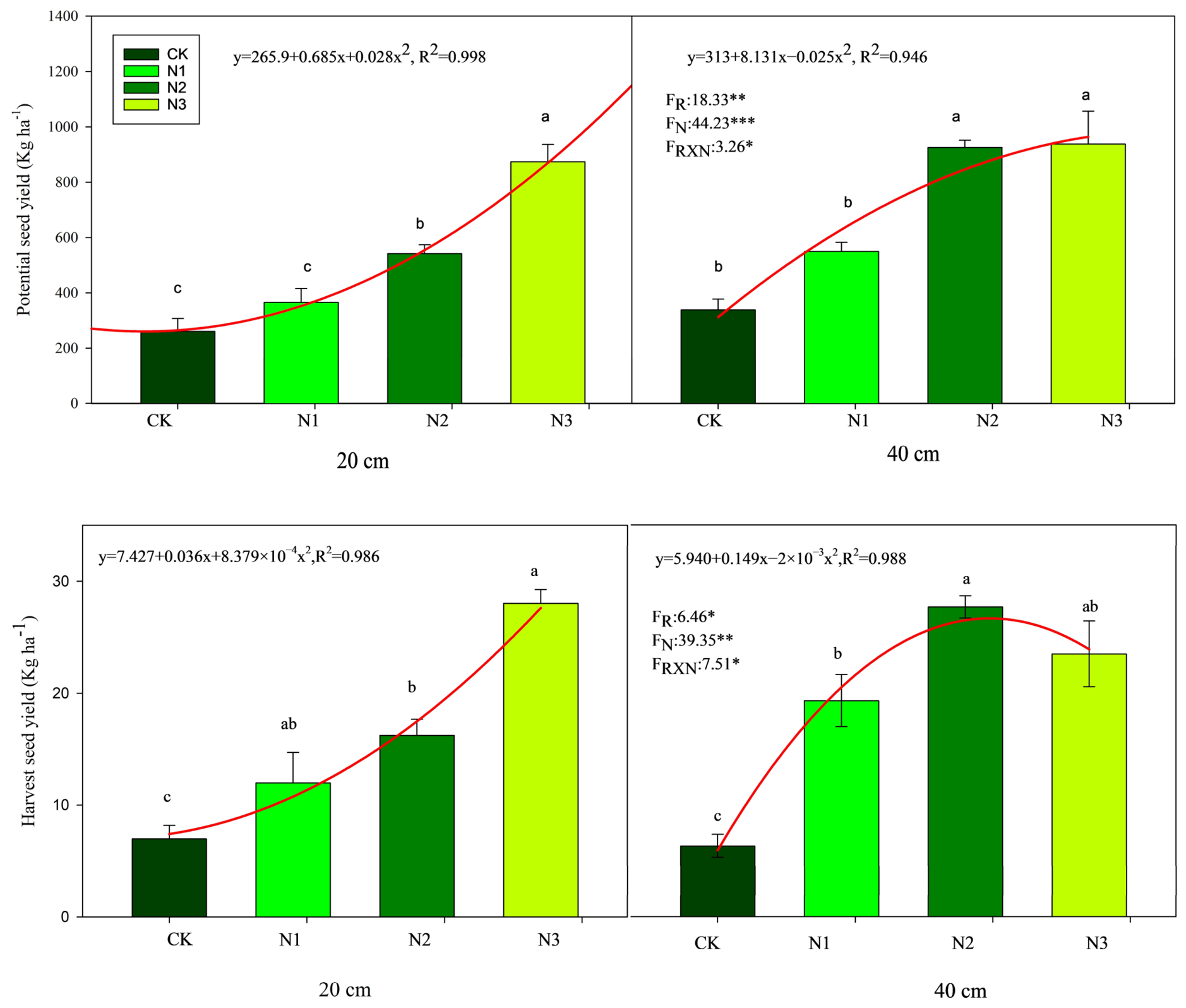
PSY and HSY were significantly affected by row spacing, N fertilization, and their combination (Figure 5). Both PSY and HSY increased with increasing N application rates, but 135 kg ha−1 N did not result in their further enhancement at 40 cm row spacing relative to application of 90 kg ha−1 N. Regarding seed harvest efficiency, it was increased by N fertilization at 40 cm (Table 1).
Figure 5.
Effects of N fertilization and row spacing on harvest seed yield (HSY) and potential seed yield (PSY) of E. nigra. Notes: CK, N1, N2, N3 represent N application rates at four levels of 0, 45, 90, 135 kg N ha−1, respectively. Labels 20 cm and 40 cm represent row spacing of 20 cm and 40 cm, respectively. Different lowercase letters above bars indicate significant differences among contrasting fertilization rates within 20 or 40 cm row spacing at the p < 0.05 level according to Duncan’s new multiple-range test. F is F values; FR is the effects of row spacing; FN is the effects of nitrogen; FR×N is the possible interaction between nitrogen and row spacing. ‘*’ indicates significance at p < 0.05; ‘**’ indicates significant at p < 0.01; ‘***’ indicates significant at p < 0.001. The red line above the bars shows the nonlinear regression of nitrogen rate versus harvest seed yield or potential seed yield at 20 cm or 40 cm, as indicated.
Table 1.
Seed yield components (mean ± SE) of E. nigra under different N fertilization rates and row spacings.
Relative to the 20 cm spacing, the 40 cm spacing raised PSY and HSY by 34.7% and 21.3%, respectively. The quadratic regression model (y = a + bx + cx2) yielded maximum predicted HSY values of 27.6 and 26.7 kg ha−1, achieved at optimal N rates of 135 and 98.6 kg ha−1 for the 20 cm and 40 cm spacing, respectively.
N fertilization had significant effects on FT, ST, SS and PSS (p < 0.01), but not FS (p > 0.05) (Table 1). FT and ST tended to increase with the enhancement of N application rate. For example, ST increased by 27.2% at 20 cm row spacing and 26.0% at 40 cm row spacing in comparison to CK. By contrast, row spacing significantly affected ST and FS (p < 0.01), whereas such effects were not observed in FT, SS and PSS (p > 0.05).
3.3. Seed Quality
TSW, GI and VI were significantly affected by N fertilization and row spacing (Table 2). At 135 kg N ha−1, TSW increased by 33.3% at 20 cm row spacing and 37.5% at 40 cm row spacing in comparison to CK. The 40 cm spacing produced a 31.3% greater TSW than the 20 cm spacing.
Table 2.
Germination rate (GR), germination index (GI), vigor index (VI), thousand-seed weight (TSW) and seed harvest efficiency (mean ± SE) of E. nigra under different N fertilization rates and row spacings.
GR was significantly affected by N fertilization but not by row spacing, yet their interaction was significant. Compared to CK, 90 kg N ha−1 increased GR by 17.4% at 20 cm spacing and 19% at 40 cm spacing. Moreover, N application enhanced seedling growth, as manifested by vigor index enhancement. Notably, the most significant improvement in seed vigor index was observed at N 90 kg ha−1 (Table 2).
3.4. Correlation and Paths Analysis of Seed Yield and Yield Components
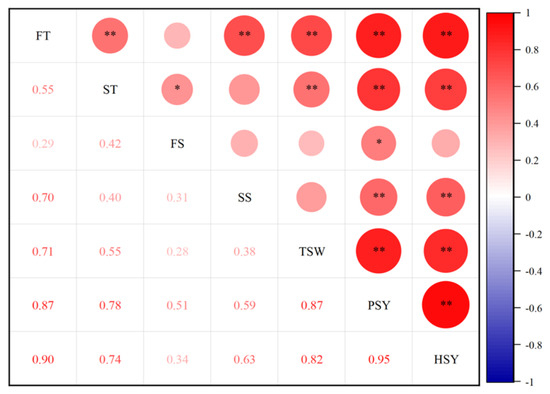
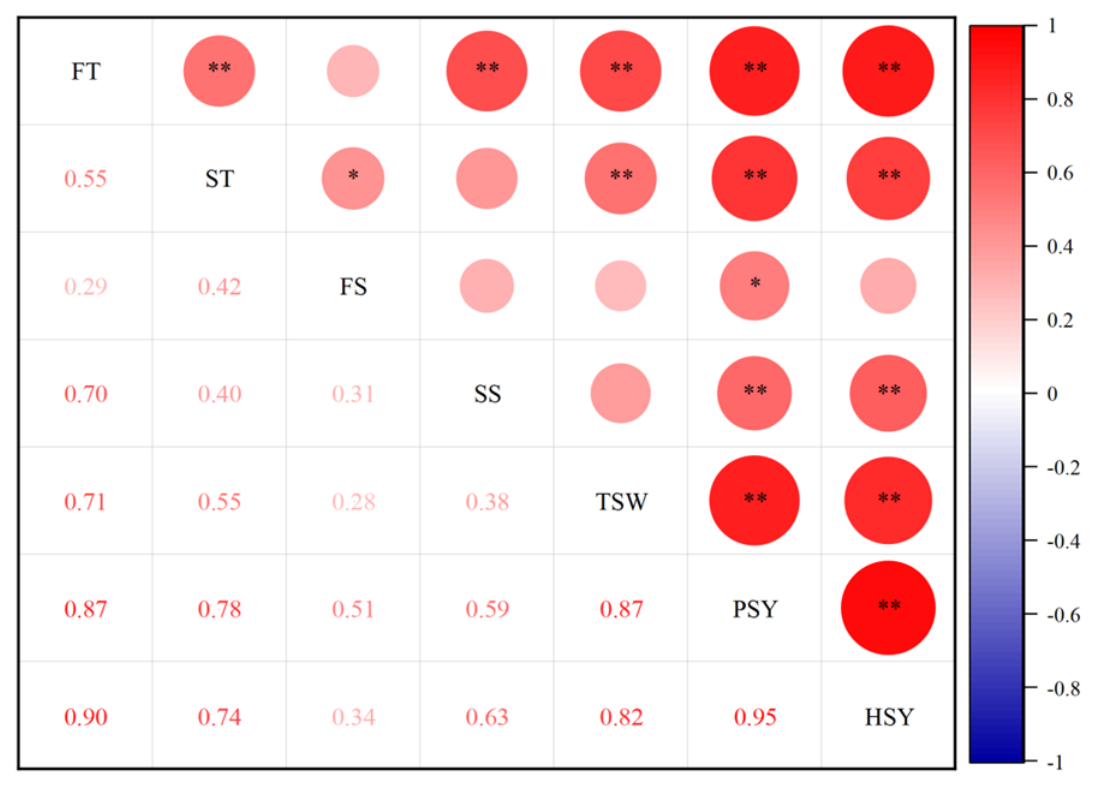
The correlation analysis showed that seed yield was significantly and positively correlated with FT, ST, SS and TSW (p < 0.01) (Figure 6). Particularly, FT had the greatest influence on HSY and PSY, as manifested by the maximum correlation coefficient over 0.90, indicating that larger FT produced greater seed yield. Significant correlations were also observed among several yield components. For instance, FT was positively correlated with ST and SS, with correlation coefficients of 0.55 and 0.70, respectively, indicating that an increase in fertile tiller number contributes to greater spikelet and seed numbers, thereby enhancing seed yield. However, FT was not significantly correlated with FS, suggesting greater fertile tillers do not necessarily mean greater florets per spikelet.
Figure 6.
The heatmap of correlation between seed yield and yield components. Fertile tillers (FT), spikelets per tiller (ST), florets per spikelet (FS), seeds per spikelet (SS), thousand-seed weight (TSW), potential seed yield (PSY), harvested seed yield (HSY). *, p < 0.05; **, p < 0.01.
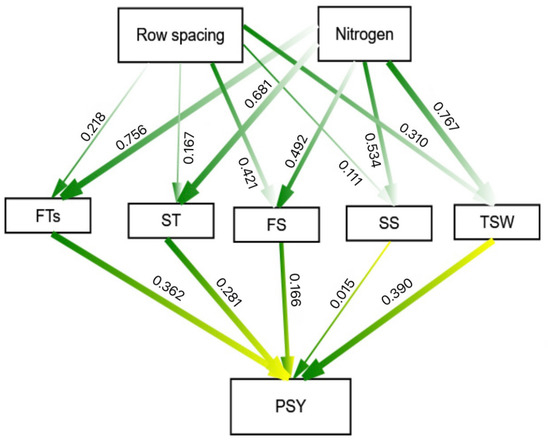
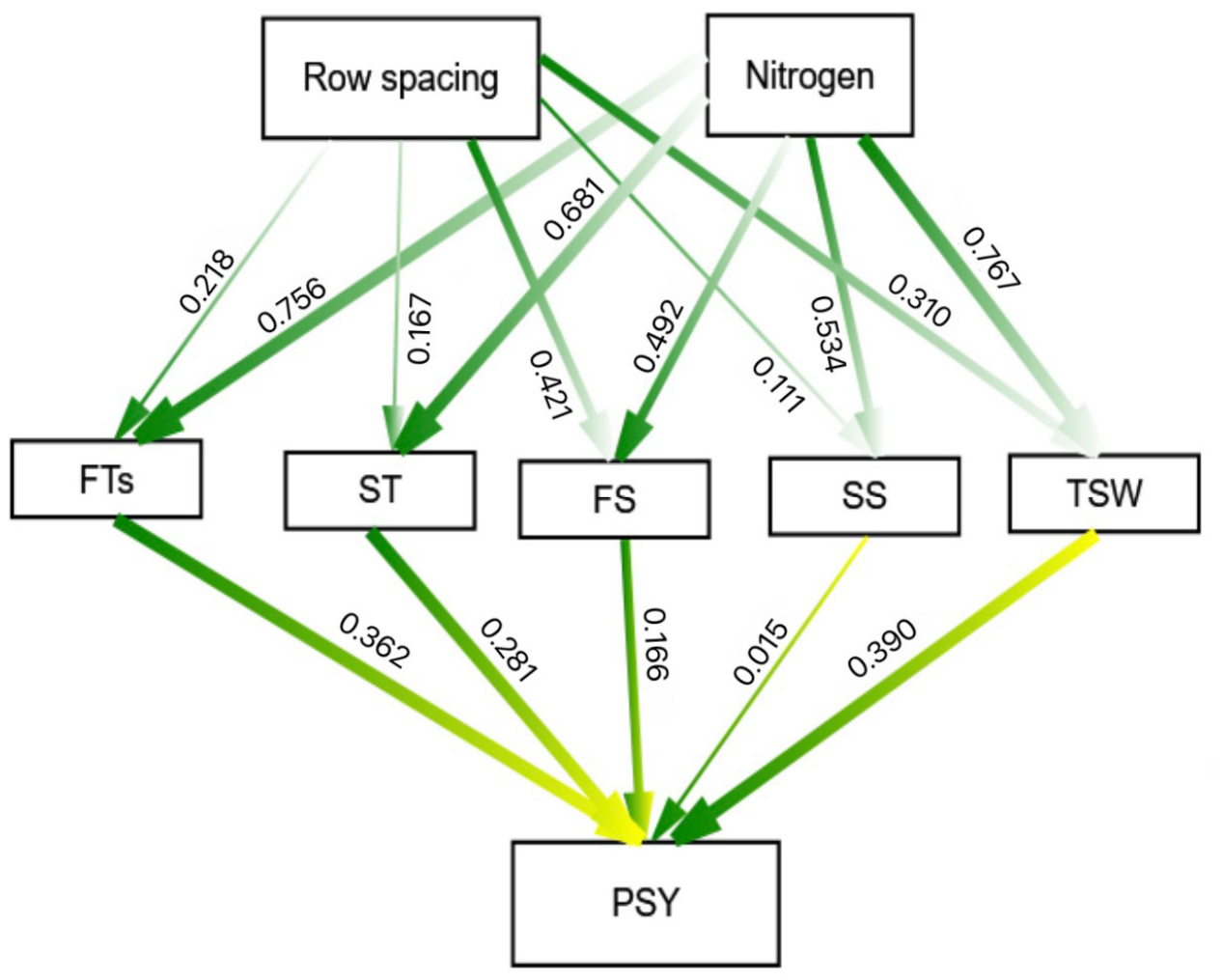
According to path analysis, N fertilization and row spacing have different effects on seed yield components (Figure 7). Row spacing had significant effects on FS (0.421) and TSW (0.310). By contrast, N fertilization significantly affected all seed yield components. Path analysis further demonstrated that FT, ST, FS and TSW directly influenced seed yield, as shown by the path correlation coefficients. Among the seed yield components, FT and TSW had the most substantial effects, followed by ST and FS, whereas SS had no significant effects (Figure 7).
Figure 7.
Path analysis reflecting the influences of N fertilization and row spacing on seed yield and yield components in E. nigra. Notes: FT, fertile tiller number; ST, number of spikelets per tiller; FS, number of florets per spikelet; SS, seeds per spikelet; TSW, thousand-seed weight; PSY, potential seed yield. The single-headed-arrow straight lines indicate direct paths. Chi-square = 21.6 (p = 0.061), df = 13, CMIN/df = 1.662. The standardized path coefficients are displayed near the arrows. The width of each arrow reflects the strength of the corresponding correlation. Medium and wide arrows denote statistical significance at p < 0.05 and p < 0.001, respectively, while non-significant paths are shown as thin lines.
4. Discussion
In the present study, forage dry matter yield, nutritive value and seed yield as well as seed quality of E. nigra were affected by N fertilization and row spacing. N fertilization is a simple and effective field approach to increase forage biomass and seed productivity, since N is a primary constituent of chlorophyll, amino acids, proteins, and nucleic acids, and is also the main limiting factor for plant growth [38].
The present study found that the agronomically efficient N application rate was 90 kg N ha−1. At the supra-optimal rate of 135 kg N ha−1, the N supply likely exceeds the plant’s photosynthetic capacity to assimilate it into structural biomass. Nitrogen assimilation requires ATP, reducing power, and carbon skeletons in the form of acids; when N is excessive, overproduction of amino acids consumes these resources, disrupting the balance between carbon and nitrogen metabolism [39]. The increase in DMY caused by N fertilization and wider row spacing in our study was in agreement with the findings in Festuca kryloviana and Lolium multiflorum [10,40]. Relative to 135 kg N ha−1, the 90 kg N ha−1 application rate can increase profitability for forage producers and lower the environmental impacts resulting from the overuse of nitrogen fertilization. Wider arrangement (40 cm row spacing) facilitated superior light interception and use efficiency, enhanced resource utilization efficiency, and ultimately increased biomass [41].
In addition to forage quantity, growth and development of herbivores also critically depend on forage nutrient quality. Nutritive value is a composite measure of feed quality, determined by its crude protein (CP), fiber content (measured as ADF and NDF), and digestibility [42]. In our study, CP concentration increased with N availability, corroborating the findings of Obour et al. in oat [43]. This increase may result from enhanced nitrogen uptake and assimilation during seed filling [44]. In line with previous investigations on forage crops [45], the present study observed a notable decline in CP content as row spacing increased. This response is plausibly attributable to reduced inter-plant competition and improved fertilizer utilization under expansive spacing [46]. It is because that augmented biomass tends to exhibit higher proportions of structural carbohydrates (cellulose and hemicellulose) alongside diminished protein content.
NDF is the most effective indicator to reflect the quality of forage fiber while ADF is the key to indicating the energy of forage; the lower its content, the higher the digestibility, and the greater the feeding value [47]. In this experiment, ADF decreased following N application, which is consistent with the study in annual ryegrass [40]. It suggests that increased N availability promotes vegetative growth, and lowers the proportion of lignified, less digestible fiber components in plants, which led to enhancement of RFV. Regarding NDF content in this study, it was not significantly affected by either N application or row spacing. This result contrasts with the findings of Coblentz et al. (2016, 2017) [18,48], who found that manure or urea fertilizer application increased NDF concentrations in oat forage. This difference likely arises from species-specific traits and environmental conditions. As noted by Fick et al. [49], disparity in NDF response to N fertilization may be partly explained by differences in growing air temperature, which is known to affect lignin deposition.
During production, a high seed yield is expected alongside the production of abundant, high-quality forage biomass. High-quality, plentiful seed is vital for sustainable forage production and the ecological restoration of degraded grasslands [50]. Low seed yield is the key issue constraining the use of E. nigra. Generally, agronomic practices like fertilization and row spacing influence forage seed yield and quality through their effects on seed yield components [33].
The positive effect of nitrogen fertilization on seed yield observed in the present study aligns with earlier reports for Kengyilia melanthera [36] and Dactylis glomerata [51]. This increase is likely attributable to the remobilization of nitrogen from vegetative organs to the grains, which enhances grain filling and consequently boosts seed yield [52]. However, application of 135 kg ha−1 N did not further increase seed yield at 40 cm row spacing, indicating this rate is excessive for seed formation of E. nigra in the experimental plot. This result is also in agreement with the findings in Siberian wildrye [23]. It might be because excessive N results in disruption of carbon–nitrogen metabolic balance and formation of nonproductive tillers [53]. Therefore, N should be carefully managed to prevent excessive vegetative tillering, which competes for limited resources and ultimately reduces harvested seed yields.
The components of seed yield are key determinants, directly and indirectly affecting seed yield through their role in seed formation. Potential seed yield and harvest seed yield are frequently used in seed production evaluation. PSY represents the seed production potential under specific climate and soil conditions [54]. By contrast, harvested seed yield reflects the realized yield after deducting losses incurred from seed shedding and harvesting delays [55,56]. In this study, both PSY and HSY were significantly improved by N fertilization and row spacing. As observed, PSY was substantially higher than HSY, consistent with findings in species like Lolium perenne and Elymus nutans [11,33]. This is because PSY was determined by the multiplication of the number of fertile tillers per unit area, spikelets per fertile tiller, florets per spikelet and average seed weight without accounting for seed losses during development and harvest.
Direct seeding success is largely determined by high seed quality, which promotes greater seedling density and vigor, thereby enhancing plant competitiveness and uniformity [57]. Seed quality in the present study was significantly affected by N fertilization and row spacing, as evidenced by increased TSW, GI, and VI. This suggests that N supplementation may supply additional energy for seed germination and early seedling development. High seed vigor enhances the germination success and environment colonization because the radicle breaks the seed coat faster, speed up the nutrient absorption from the soil, and hence accelerate seedling growth [58]. Regarding GR, it was significantly increased by N fertilization but not by row spacing. This finding aligns with previous studies on Elymus nutans following N fertilization, which may be attributed to the increased content of nutrients such as carbohydrates and transferring metabolites to reproductive organs [11,36]. Therefore, more energy was provided to seed germination and seedling growth. By contrast, wider row spacing had no such effects.
Seed yield is determined by a set of interacting yield components. In this study, FT, SP, FS, SS, and PSS exhibited different responses to N fertilization and row spacing. FT and ST increased with the enhancement of N application rate, whereas such effects were not observed in FS, suggesting FS was set prior to N fertilization. Plants grown under 40 cm row spacing exhibited higher FT, FS, TSW and PSY compared to 20 cm row spacing. This finding demonstrates that row spacing is also a critical factor limiting the seed yield of E. nigra. Consistent with Han et al. [55], wider row spacing provides more light and space for individual plants, leading to increased FS and SS, despite a possible reduction in FT. Significant positive correlations were observed between seed yield and components such as FT, ST, SS, and TSW, which were also intercorrelated. For example, FT was correlated with ST and SS with a correlation coefficient of 0.55 and 0.70, respectively, indicating that higher fertile tiller numbers enhanced spikelet and seed numbers, thereby increasing seed yield. However, FT was not significantly correlated with FS, suggesting more fertile tillers do not necessarily mean more florets per spikelet. Path analysis enables the quantification of both direct and indirect effects of individual yield components on overall seed yield [34]. Among the seed yield components studied, FT showed the greatest apparent association with HSY, as demonstrated by a high correlation coefficient (0.90) and a significant standardized path coefficient (0.362). This effect was driven specifically by N fertilization rather than by row spacing. The mechanism likely involves N fertilization increasing cytokinin content in tiller nodes, and stimulating the germination of tiller primordium [59]. Furthermore, path analysis revealed that along with FT, TSW is a potentially important direct contributor to PSY, whereas SS did not directly influence PSY. These results suggest that N fertilization primarily affects seed yield through its influence on FT and TSW.
Despite our recommendation of 40 cm row spacing and 90 kg N ha−1 for optimizing forage and seed yield in E. nigra, the present findings carry certain limitations as our results are derived from a single location, two growing seasons, and one population. Moreover, because plant density was not held constant across row spacing treatments, the effects attributed to spacing may be partially confounded with density. Accordingly, forage producers should adopt this recommendation with consideration of local growing conditions. To overcome these constraints, future research should prioritize multi-location and multi-year trials to assess the stability of the optimal management under diverse environmental conditions, as well as screening of multiple E. nigra populations or cultivars to identify genotypes with consistent performance across varying soils and climates. Factorial experiments that independently manipulate row spacing and plant density are also needed to disentangle their respective contributions. Finally, given the relatively low absolute seed yields observed in this study, future breeding efforts and agronomic interventions—such as improved harvest index, shattering resistance, and optimized pollination or seed set conditions—should be explored to enhance seed productivity beyond the levels achieved here.
5. Conclusions
E. nigra responds strongly to both nitrogen fertilization and row spacing, providing the first empirical evidence for its efficient agronomic management under controlled field conditions. The efficient practice for maximizing overall productivity is a combination of 90 kg N ha−1 and 40 cm row spacing, as this rate achieves the upper threshold of forage and seed yield increase without the diminishing returns observed at 135 kg N ha−1, while also enhancing forage nutritive value (higher CP, lower ADF) and seed quality. Nitrogen-driven seed yield is primarily regulated by increases in fertile tiller number and thousand-seed weight, which exert strong direct effects on harvest seed yield. Collectively, these findings fill a critical knowledge gap regarding the field management of E. nigra and demonstrate its potential as a promising candidate for improving forage availability in study regions (1800–3200 m).
Author Contributions
Methodology, visualization, data analysis, writing and reviewing, M.R.; material preparation, field observation, formal analysis, S.L. and Y.O.; material preparation, data curation, C.W. and W.D.; conceptualization, material preparation, data curation and analysis, reviewing, J.R. All authors have read and agreed to the published version of the manuscript.
Funding
This research was funded by Yunnan Agricultural Joint Special Project (No. 202301BD070001-112).
Data Availability Statement
Data is contained within the article. The original contributions presented in this study are included in the article. Further inquiries can be directed to the corresponding author.
Conflicts of Interest
The authors declare no conflicts of interest.
Abbreviations
The following abbreviations are used in this manuscript:
| CP | Crude protein |
| DMY | Dry matter yield |
| HSY | Harvested seed yield |
| PSY | Potential seed yield |
| ADF | Acid detergent fiber |
| NDF | Neutral detergent fiber |
| ha | Hectare |
References
- Pant, C.; Dhami, K. Variation of chemical constituents and relative nutritive value with plant maturity in Chrysopogon gryllus (Linn.) Trin and Eragrostis nigra Nees of Kumaun Hills. Asian J. Chem. 2003, 15, 225–228. [Google Scholar]
- Clayton, W.; Harman, K.; Williamson, H. World Grass Species-Synonymy Database; Royal Botanic Gardens: Kew, UK, 2006. [Google Scholar]
- Zhang, Y.; Zhang, Y.; Ganjurjav, H.; Yue, H.; Tian, K.; Wang, H.; Zhang, Q.; Zhao, Z. Assessing grassland degradation based on abrupt changes in living status of vegetation in a subalpine meadow. Front. Plant Sci. 2025, 16, 1594772. [Google Scholar] [CrossRef] [Scilit] [PubMed]
- Chen, X.; Hein, P.P.; Shi, M.; Yang, F.; Yang, J.; Fu, Y.; Yang, X. Diversity and traditional knowledge concerning fodder plants are invaluable assets for enhancing the sustainable management of crop-livestock system of Zhaotong City in the mountainous southwest China. Plant Divers. 2025, 47, 311–322. [Google Scholar] [CrossRef] [Scilit]
- Mylliemngap, W.; Barik, S.K. Plant diversity, net primary productivity and soil nutrient contents of a humid subtropical grassland remained low even after 50 years of post-disturbance recovery from coal mining. Environ. Monit. Assess. 2019, 191, 697. [Google Scholar] [CrossRef] [Scilit] [PubMed]
- Feng, X.; Yang, L.; Kang, S.; Huai, Y.; Gan, Y.; Song, S.; Li, Y.; Ning, P. Tiller growth and mortality in winter wheat as affected by carbon and nitrogen partitioning via stem internode structure. Field Crops Res. 2025, 330, 109970. [Google Scholar] [CrossRef] [Scilit]
- Mu, X.; Chen, Y. The physiological response of photosynthesis to nitrogen deficiency. Plant Physiol. Biochem. 2021, 158, 76–82. [Google Scholar] [CrossRef] [Scilit] [PubMed]
- Yang, L.; Shi, H.; Zhang, L.; Li, Y.; Tian, Q.; Yu, Q.; Zhang, W.H. Seeds exhibit the most stable elemental composition with nitrogen addition in an Inner Mongolian grassland. Sci. Total Environ. 2024, 919, 170920. [Google Scholar] [CrossRef] [Scilit] [PubMed]
- Govindasamy, P.; Muthusamy, S.K.; Bagavathiannan, M.; Mowrer, J.; Jagannadham, P.T.K.; Maity, A.; Halli, H.M.; GK, S.; Vadivel, R.; TK, D.; et al. Nitrogen use efficiency-a key to enhance crop productivity under a changing climate. Front. Plant Sci. 2023, 14, 1121073. [Google Scholar] [CrossRef] [Scilit] [PubMed]
- Shi, Z.H.; Liang, G.L.; Liu, W.H.; Li, S.D.; Qin, Y. Optimization of nitrogen and phosphorus fertilization for enhanced forage production and quality of Festuca kryloviana cv. Huanhu artificial grassland in alpine regions. Heliyon 2024, 10, e35116. [Google Scholar] [CrossRef] [Scilit] [PubMed]
- Song, J.; Yang, H.; Yu, X.; Chen, Y.; Yang, C.; He, Y.; Wang, H. Effects of combined application of nitrogen, phosphorus, and potassium fertilizers on seed yield, seed quality and economic returns of Elymus nutans in alpine region. BMC Plant Biol. 2025, 25, 130. [Google Scholar] [CrossRef] [Scilit] [PubMed]
- Wang, M.; Tian, X.; Wei, G.; Yang, H.; Wang, X.; Yang, X.; Fang, S.; Wu, Z. Physiological and molecular insights into nitrogen rate and planting density interactive regulation of black sesame nitrogen use efficiency, growth, yield, and seed quality. BMC Plant Biol. 2026, 26, 317. [Google Scholar] [CrossRef] [Scilit] [PubMed]
- Anderson, N.P.; Morad, M.M.; Chastain, T.G. Spring nitrogen and plant growth regulator effects on seed yield of orchardgrass. Crop Sci. 2024, 64, 3533–3540. [Google Scholar] [CrossRef] [Scilit]
- Berry, P.M.; Griffin, J.M.; Sylvester-Bradley, R.; Scott, R.K.; Spink, J.H.; Baker, C.J.; Clare, R.W. Controlling plant form through husbandry to minimise lodging in wheat. Field Crops Res. 2000, 67, 59–81. [Google Scholar] [CrossRef] [Scilit]
- Sheaffer, C.C.; Peterson, M.A.; Mccalin, M. Acide Detergent Fiber, Neutral Detergent Fiber Concentration and Relative Feed Value. In North American Alfalfa Improvement Conference, Minneapolis, MN, USA; 1995. Available online: https://www.naaic.org/stdtests/acidfiber.pdf (accessed on 30 July 2026).
- Katoch, R. Forage Nutritional Quality Management. In Techniques in Forage Quality Analysis; Springer: Berlin/Heidelberg, Germany, 2023. [Google Scholar] [CrossRef] [Scilit]
- Liu, W.; Yan, S.; Jiang, N.; Li, M.; Yin, L.; Zhang, S.; Xie, X.; Gao, G.; Chang, S.; Hou, F. Interaction of nitrogen and mowing frequency in enhancing regeneration and crude protein content of forage oat in northwestern of China. Field Crops Res. 2025, 331, 109994. [Google Scholar] [CrossRef] [Scilit]
- Coblentz, W.K.; Akins, M.S.; Cavadini, J.S.; Jokela, W.E. Net effects of nitrogen fertilization on the nutritive value and digestibility of oat forages. J. Dairy Sci. 2017, 100, 1739–1750. [Google Scholar] [CrossRef] [Scilit] [PubMed]
- Deng, Y.; Yao, M.; Hua, R.; Deng, C.; Gao, J.; Guo, Z.; Zheng, Y.; Sun, Y.; Sun, X.; Wang, C. Synergistic optimization of water and nitrogen use efficiency in quinoa (Chenopodium quinoa Willd.): Interplay of nitrogen fertilization and plant spacing. Agric. Water Manag. 2026, 324, 110147. [Google Scholar] [CrossRef] [Scilit]
- Szemerits, B.; Kukorelli, G.; Kabato, W.S.; Molnár, Z. Seed rate and row spacing effects on yield and quality of sorghum maturity groups under central European conditions. Seeds 2025, 4, 61. [Google Scholar] [CrossRef] [Scilit]
- Wang, J.; Chen, Z.; Liang, Z.; Yin, Y.; Huang, S.; Meng, Q.; Cui, Z.; Wang, P. Interactive Effects of Planting Density and Row Spacing on Maize Root Distribution and Yield. Agronomy 2025, 15, 2552. [Google Scholar] [CrossRef] [Scilit]
- Lawton, C.B.; Snider, J.L.; Chee, P.W.; Hobby, S.T.; Roberts, P.M.; Pokhrel, A.; Lee, J.M.; Virk, G.K.; Hand, L.C. Impacts of wide row spacings on yield and yield components of upland cotton (Gossypium hirsutum L.). Agron. J. 2024, 116, 1688–1696. [Google Scholar] [CrossRef] [Scilit]
- Wang, M.; Hou, L.; Zhang, Q.; Yu, X.; Zhao, L.; Lu, J.; Mao, P.; Hannaway, D.B. Influence of row spacing and P and N applications on seed yield components and seed yield of siberian wildrye (Elymus sibiricus L.). Crop Sci. 2017, 57, 2205–2212. [Google Scholar] [CrossRef] [Scilit]
- Jia, Q.; Xu, Y.; Ali, S.; Sun, L.; Ding, R.; Ren, X.; Zhang, P.; Jia, Z. Strategies of supplemental irrigation and modified planting densities to improve the root growth and lodging resistance of maize (Zea mays L.) under the ridge-furrow rainfall harvesting system. Field Crops Res. 2018, 224, 48–59. [Google Scholar] [CrossRef] [Scilit]
- Ren, W.; Lin, C.; Zhang, Z.; Shen, Y. Square-sowing patterns enhance mixed grass/legume communities of Elymus nutans and Onobrychis viciifolia production in the Qinghai Tibetan Plateau. Ind. Crops Prod. 2025, 223, 120159. [Google Scholar] [CrossRef] [Scilit]
- Bailey-Serres, J.; Parker, J.E.; Ainsworth, E.A.; Oldroyd, G.E.D.; Schroeder, J.I. Genetic strategies for improving crop yields. Nature 2019, 575, 109–118. [Google Scholar] [CrossRef] [Scilit] [PubMed]
- Tobiasz-Salach, R.; Jańczak-Pieniążek, M.; Augustyńska-Prejsnar, A. Effect of different row spacing and sowing density on selected photosynthesis indices, yield, and quality of white lupine seeds. Agriculture 2023, 13, 1845. [Google Scholar] [CrossRef] [Scilit]
- Obour, A.K.; Holman, J.D.; Prasad, P.V.V.; Assefa, Y. Grain sorghum yield stability as affected by nitrogen fertilizer, tillage, and yield environment. Crop Sci. 2025, 65, e70050. [Google Scholar] [CrossRef] [Scilit]
- Chen, Z.; Niu, J.; Cao, X.; Jiang, W.; Cui, J.; Wang, Q.; Zhang, Q. Seed yield can be explained by altered yield components in field-grown western wheatgrass (Pascopyrum smithii Rydb.). Sci. Rep. 2019, 9, 17976. [Google Scholar] [CrossRef] [Scilit] [PubMed]
- Ou, C.; Wang, M.; Hou, L.; Zhang, Y.; Sun, M.; Sun, S.; Jia, S.; Mao, P. Responses of seed yield components to the field practices for regulating seed yield of smooth bromegrass (Bromus inermis Leyss.). Agriculture 2021, 11, 940. [Google Scholar] [CrossRef] [Scilit]
- Moragues, M.; García del Moral, L.F.; Moralejo, M.; Royo, C. Yield formation strategies of durum wheat landraces with distinct pattern of dispersal within the Mediterranean basin I: Yield components. Field Crops Res. 2006, 95, 194–205. [Google Scholar] [CrossRef] [Scilit]
- Studer, B.; Jensen, L.B.; Hentrup, S.; Brazauskas, G.; Kolliker, R.; Lübberstedt, T. Genetic characterisation of seed yield and fertility traits in perennial ryegrass (Lolium perenne L.). Theor. Appl. Genet. 2008, 117, 781–791. [Google Scholar] [CrossRef] [Scilit] [PubMed]
- Abel, S.; Gislum, R.; Boelt, B. Path and correlation analysis of perennial ryegrass (Lolium perenne L.) seed yield components. J. Agron. Crop Sci. 2017, 203, 338–344. [Google Scholar] [CrossRef] [Scilit]
- Dewey, D.R.; Lu, K.H. A correlation and path-coefficient analysis of components of crested wheatgrass seed production. Agron. J. 1959, 51, 515–518. [Google Scholar] [CrossRef] [Scilit]
- VanSoest, P.J.; Robertson, J.B.; Lewis, B.A. Methods for dietary fiber, neutral detergent fiber, and nonstarch polysaccharides in relation to animal nutrition. J. Dairy Sci. 1991, 74, 3583−3597. [Google Scholar] [CrossRef] [Scilit] [PubMed]
- Yuan, S.; Ling, Y.; Xiong, Y.; Zhang, C.; Sha, L.; You, M.; Lei, X.; Bai, S.; Ma, X. Effect of nitrogen fertilizer on seed yield and quality of Kengyilia melanthera (Triticeae, Poaceae). PeerJ 2022, 10, e14101. [Google Scholar] [CrossRef] [Scilit] [PubMed]
- Magray, J.A.; Wani, B.A.; Ganie, A.H.; Ulqadir, R.; Nawchoo, I.A.; Javid, H. Effects of pre-sowing treatments and seed sources on seed germination of Phytolacca acinose Roxb. J. Appl. Res. Med. Aromat. Plants 2023, 34, 100478. [Google Scholar] [CrossRef] [Scilit]
- Mi, W.; Luo, F.; Liu, W.; Qin, Y.; Zhang, Y.; Liu, K.; Li, W. Nitrogen addition enhances seed yield by improving soil enzyme activity and nutrients. PeerJ 2024, 12, e16791. [Google Scholar] [CrossRef] [Scilit] [PubMed]
- Lawlor, D.W. Carbon and nitrogen assimilation in relation to yield: Mechanisms are the key to understanding production systems. J. Exp. Bot. 2002, 53, 773–787. [Google Scholar] [CrossRef] [Scilit]
- Varol, I.S.; Ciftci, B.; Kaymaz, E.; Kaplan, M. Water and nitrogen impacts on water use, forage yield and quality of annual ryegrass. Sci. Rep. 2025, 15, 34143. [Google Scholar] [CrossRef] [Scilit] [PubMed]
- Zhai, M.H.; Wei, X.W.; Pan, Z.L.; Xu, Q.Q.; Qin, D.L.; Li, J.; Zhang, J.; Wang, L.; Wang, K.; Duan, K.; et al. Optimizing plant density and canopy structure to improve light use efficiency and cotton productivity: Two years of field evidence from two locations. Ind. Crops Prod. 2024, 222, 119946. [Google Scholar] [CrossRef] [Scilit]
- McDonald, I.; Baral, R.; Min, D. Effects of alfalfa and alfalfa-grass mixtures with nitrogen fertilization on dry matter yield and forage nutritive value. J. Anim. Sci. Technol. 2021, 63, 305–318. [Google Scholar] [CrossRef] [Scilit] [PubMed]
- Obour, A.K.; Holman, J.D.; Schlegel, A.J. Seeding rate and nitrogen application effects on oat forage yield and nutritive value. J. Plant Nutr. 2019, 42, 1452–1460. [Google Scholar] [CrossRef] [Scilit]
- Ou, C.; Zhao, S.; Jia, Z.; Sun, S.; Wang, J.; Mi, C.; Shi, J.; Li, C.; Mao, P. Integrated multi-omics analysis reveals the role of nitrogen application in seed storage protein metabolism and improvement of inferior grains in smooth bromegrass. Front. Plant Sci. 2025, 16, 1605073. [Google Scholar] [CrossRef] [Scilit] [PubMed]
- Widdicombe, W.D.; Thelen, K.D. Row width and plant density effect on corn forage hybrids. Agron. J. 2002, 94, 326–330. [Google Scholar] [CrossRef] [Scilit]
- Jing, F.; Liu, Y.M.; Ren, S.L.; Bian, F.; Chen, F.; Zhang, C.J. Effects of Variety and Planting Density on Yield, Quality and Disease of Forage Oat. Acta Agrestia Sin. 2023, 31, 3174–3184. [Google Scholar]
- Bruinenberg, M.H.; Valk, H.; Korevaar, H.; Struik, P.C. Factors affecting digestibility of temperate forages from seminatural grasslands: A review. Grass Forage Sci. 2002, 57, 292–301. [Google Scholar] [CrossRef] [Scilit]
- Coblentz, W.K.; Jokela, W.E.; Cavadini, J.S. Production and nitrogen-use efficiency of oat forages receiving slurry or urea. Agron. J. 2016, 108, 1390–1404. [Google Scholar] [CrossRef] [Scilit]
- Fick, G.W.; Onstad, D.W. Statistical Models for Predicting Alfalfa Herbage Quality from Morphological or Weather Data. J. Prod. Agric. 1988, 1, 160–166. [Google Scholar] [CrossRef] [Scilit]
- Milano, C.; Pérez, D.R.; Scarfó, M.C.; Rodríguez, D.A.; Cuppari, S.Y.; Loydi, A. Seed mass affects emergence but not germination in native grassland forage species. Restor. Ecol. 2024, 32, e14248. [Google Scholar] [CrossRef] [Scilit]
- Gaier, L.; Krautzer, B.; Graiss, W.; Klingler, A.; Poetsch, E.M. Effect of fertilization and plant protection treatments on seed yield and seed quality of orchardgrass (Dactylis glomerata L.). Grassl. Sci. 2022, 68, 277–285. [Google Scholar] [CrossRef] [Scilit]
- Yi, J.; Gao, J.P.; Zhang, W.Z.; Zhao, Y.Z.; Xin, W. Delayed timing of tillering fertilizer improved grain yield and nitrogen use efficiency in Japonica rice. Crop Sci. 2020, 60, 1021–1033. [Google Scholar] [CrossRef] [Scilit]
- Wu, W.; Dong, X.; Chen, G. The elite haplotype OsGATA8-H coordinates nitrogen uptake and productive tiller formation in rice. Nat. Genet. 2024, 56, 1516–1526. [Google Scholar] [CrossRef] [Scilit] [PubMed]
- Loch, D.S.; Adkins, S.W.; Heslehurst, M.R.; Paterson, M.F.; Bellairs, S.M. Seed formation, development, and germination. In Warm-Season (C4) Grasses; Moser, L.E., Burson, B.L., Sollenberger, L.E., Eds.; American Society of Agronomy: Madison, WI, USA, 2004; pp. 95–144. [Google Scholar] [CrossRef] [Scilit]
- Han, Y.; Wang, X.; Hu, T.; Hannaway, D.B.; Mao, P.; Zhu, Z.; Wang, Z.; Li, Y. Effect of row spacing on seed yield and yield components of five cool-season Grasses. Crop Sci. 2013, 53, 2623–2630. [Google Scholar] [CrossRef] [Scilit]
- Svečnjak, Z.; Jareš, D.; Kovačević, M.; Barić, K.; Ivanušić, T.; Maćešić, D.; Dujmović Purgar, D. Changes in seed yield and quality resulting from lodging in Italian ryegrass crop. J. Cent. Eur. Agric. 2020, 21, 51–55. [Google Scholar] [CrossRef] [Scilit]
- Hampton, J. Herbage seed vigour. In Proceedings of the 3rd International Herbage Seed Group Conference, Halle, Germany, 18–23 June 1995. [Google Scholar]
- Hanley, M.E.; Cordier, P.K.; May, O.; Kelly, C.K. Seed size and seedling growth: Differential response of Australian and British Fabaceae to nutrient limitation. New Phytol. 2007, 174, 381–388. [Google Scholar] [CrossRef] [Scilit] [PubMed]
- Liu, Y.; Ding, Y.F.; Wang, Q.S.; Meng, D.X.; Wang, S.H. Effects of nitrogen and 6-benzylaminopurine on rice tiller bud growth and changes in endogenous hormones and nitrogen. Crop Sci. 2011, 51, 786–792. [Google Scholar] [CrossRef] [Scilit]

Disclaimer/Publisher’s Note: The statements, opinions and data contained in all publications are solely those of the individual author(s) and contributor(s) and not of MDPI and/or the editor(s). MDPI and/or the editor(s) disclaim responsibility for any injury to people or property resulting from any ideas, methods, instructions or products referred to in the content. |
© 2026 by the authors. Licensee MDPI, Basel, Switzerland. This article is an open access article distributed under the terms and conditions of the Creative Commons Attribution (CC BY) license.