
Osmopriming, Halopriming, and Chemopriming Differentially Modulate Stress Tolerance in Solanum lycopersicum Seeds Under Salinity and Iron Toxicity

 and
and
Abstract
1. Introduction
2. Materials and Methods
2.1. Study Area
2.2. Plant Material
2.3. Priming Treatments
2.4. Stress Conditions and Germination Test
2.5. Experimental Design
2.6. Germination and Growth Parameters
2.7. Biochemical Analyses
2.7.1. Soluble Proteins
2.7.2. Antioxidant Enzymes
2.7.3. Lipid Peroxidation (MDA)
2.8. Image Processing
2.9. Statistical Analysis
3. Results
3.1. Germination, Early Growth, Antioxidant Activity, and Lipid Peroxidation Under Salt Stress Conditions
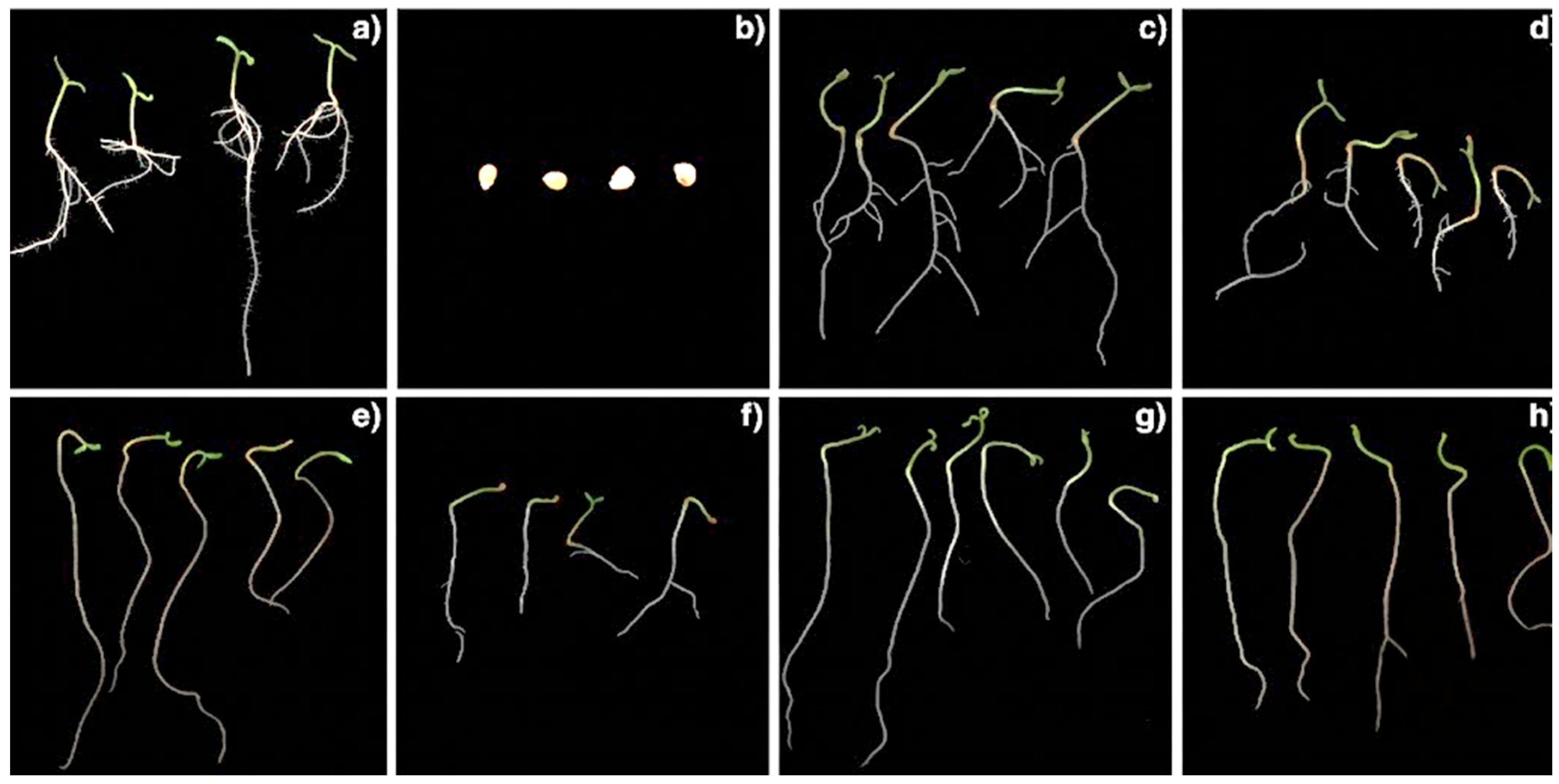
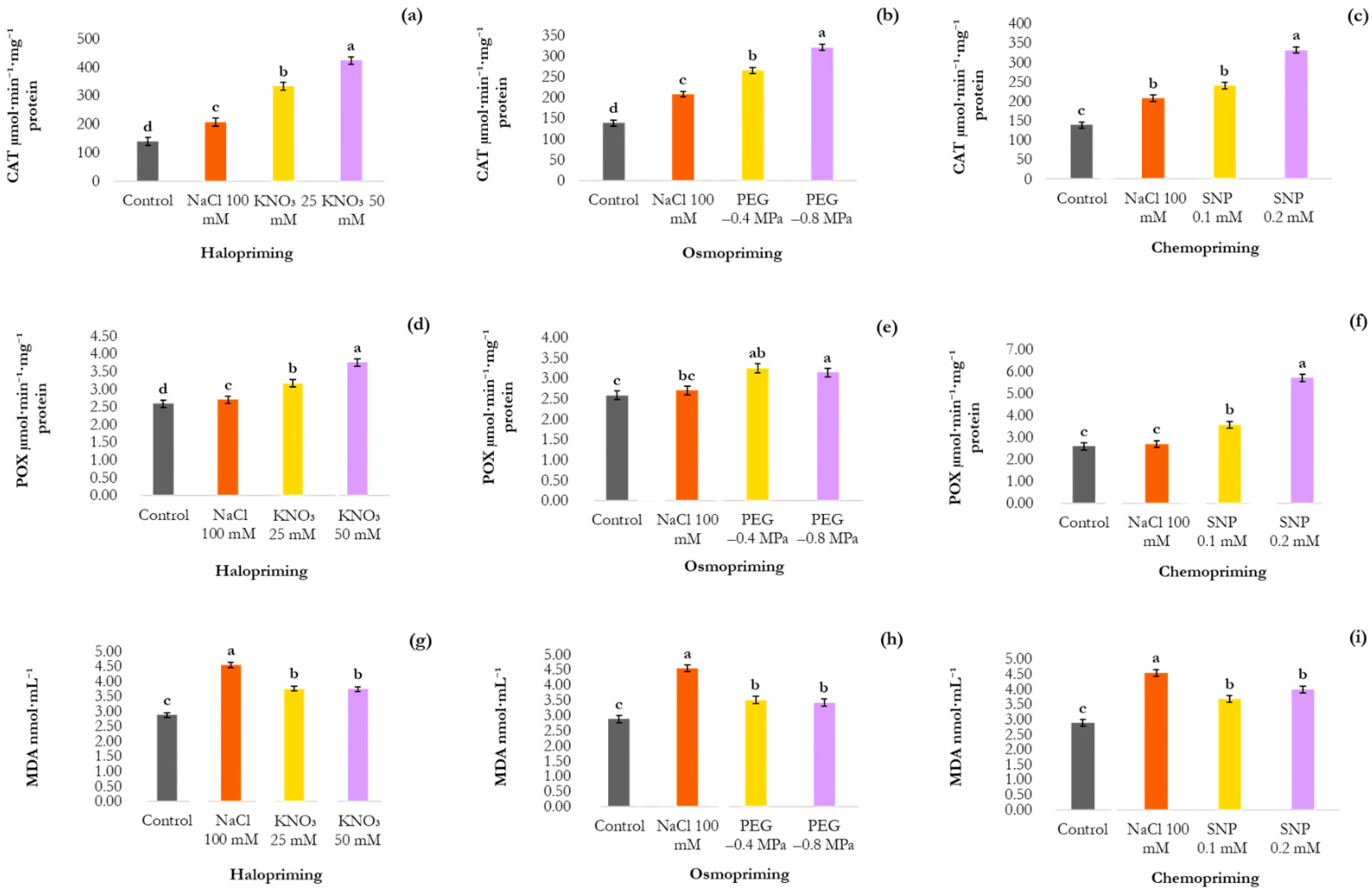
3.1.1. Germination, Initial Growth, Antioxidant Activity, and Lipid Peroxidation Under Halopriming (KNO3) in Salt Stress Conditions
3.1.2. Germination, Initial Growth, Antioxidant Activity, and Lipid Peroxidation Under Osmopriming (PEG 6000) in Salt Stress Conditions
3.1.3. Germination, Initial Growth, Antioxidant Activity, and Lipid Peroxidation Under Chemopriming (SNP) in Salt Stress Conditions
3.2. Germination, Initial Growth, Antioxidant Activity, and Lipid Peroxidation Under Iron Toxicity
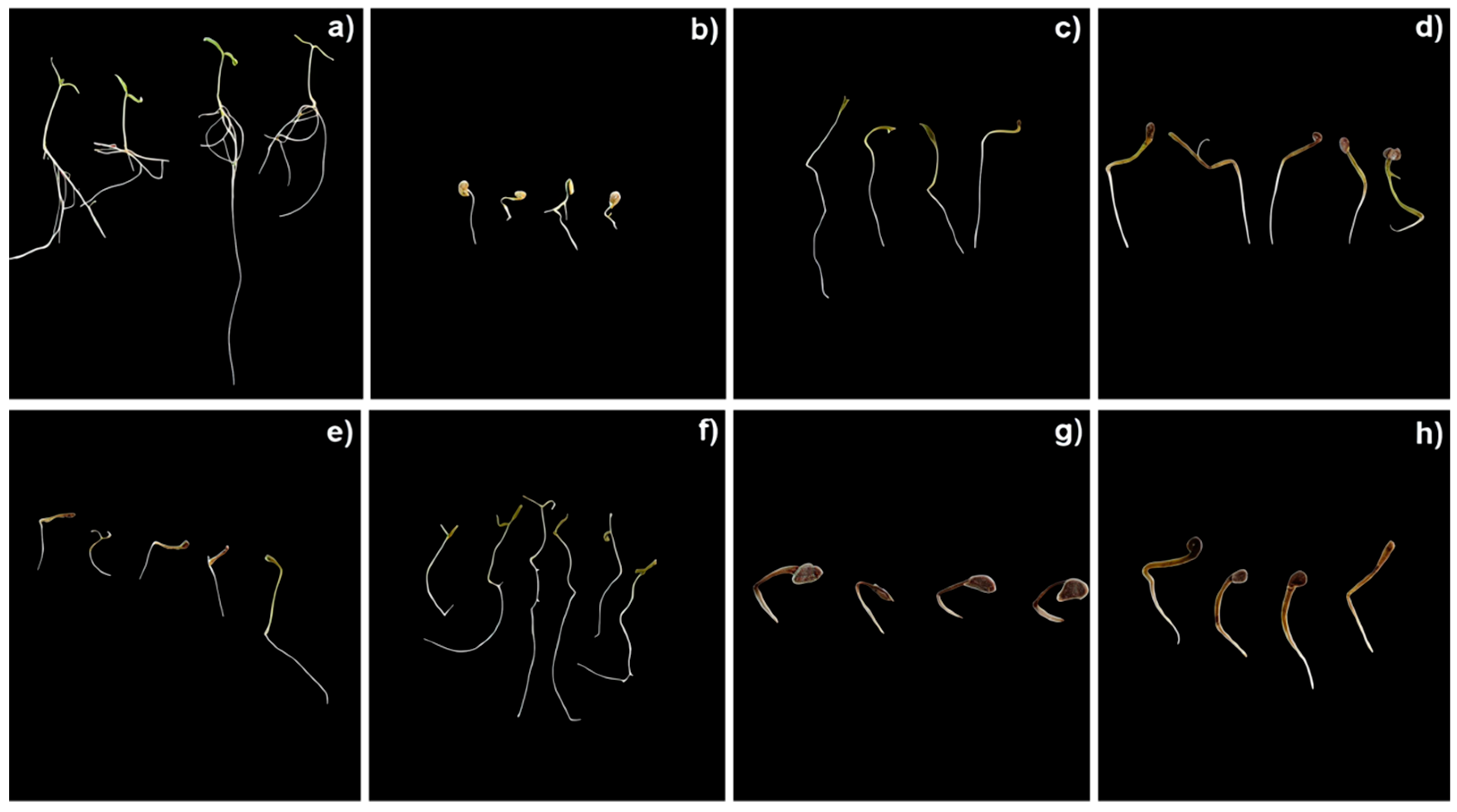
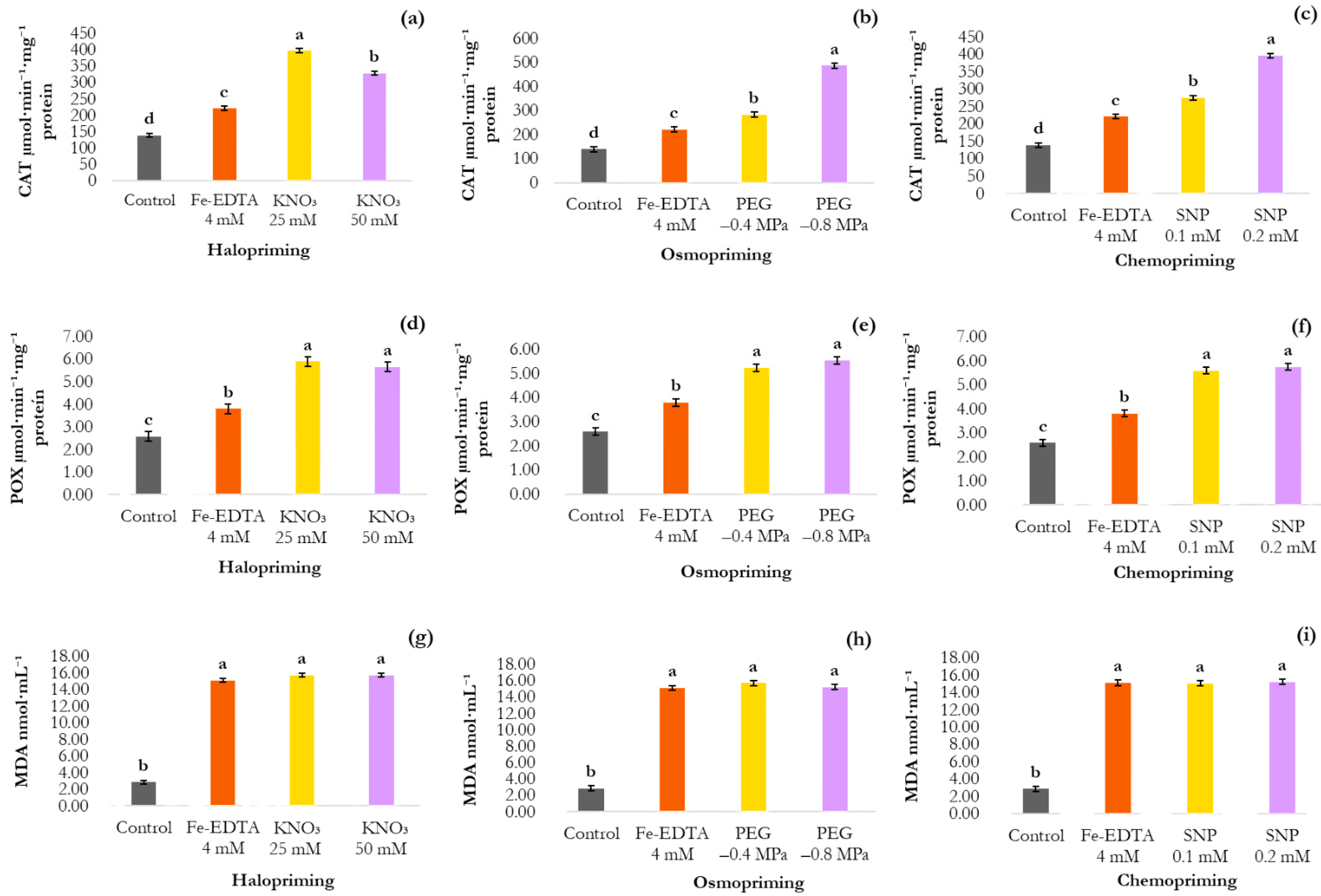
3.2.1. Germination, Initial Growth, Antioxidant Activity, and Lipid Peroxidation Under Osmopriming (PEG 6000) in Iron Toxicity Conditions
3.2.2. Germination, Initial Growth, Antioxidant Activity, and Lipid Peroxidation Under Halopriming (KNO3) in Iron Toxicity Conditions
3.2.3. Germination, Initial Growth, Antioxidant Activity, and Lipid Peroxidation Under Chemopriming (SNP) in Iron Toxicity Conditions
4. Discussion
4.1. Germination, Initial Growth, Antioxidant Activity, and Lipid Peroxidation Under Salt Stress and After Priming Treatments
4.2. Germination, Initial Growth, Antioxidant Activity, and Lipid Peroxidation Under Iron Toxicity and After Priming Treatments
5. Conclusions
Supplementary Materials
Author Contributions
Funding
Institutional Review Board Statement
Informed Consent Statement
Data Availability Statement
Acknowledgments
Conflicts of Interest
References
- Rawat, A.; Upadhyay, M.; Singh, O. Exploring the pharmacological potential and traditional use of Solanum lycopersicum L. (tomato): A review. J. Pharmacogn. Phytochem. 2024, 13, 768–771. [Google Scholar] [CrossRef] [Scilit]
- Brazilian Institute of Geography and Statistics (IBGE). Tomato: Agricultural Production; IBGE: Rio de Janeiro, Brazil, 2025. Available online: https://www.ibge.gov.br/explica/producao-agropecuaria/tomate/rj (accessed on 27 October 2025).
- Batista, T.B.L. Longevity of Primed Tomato Seeds: Physiological and Molecular Studies. Master’s Thesis, São Paulo State University (UNESP), Botucatu, Brazil, 2018. Available online: https://repositorio.unesp.br/server/api/core/bitstreams/895317f0-5f88-4ab9-be92-4f5341b9ca3b/content (accessed on 27 October 2025).
- CONAB. Tomato: Analysis of Production and Marketing Indicators in the Global, Brazilian, and Santa Catarina Markets; CONAB: Brasília, Brazil, 2019.
- Seth, R. An overview on impact of salinity stress in tomato under in vitro conditions. Int. J. Curr. Microbiol. Appl. Sci. 2024, 13, 191–201. [Google Scholar] [CrossRef] [Scilit]
- Stavi, I.; Thevs, N.; Priori, S. Soil salinity and sodicity in drylands: A review of causes, effects, monitoring, and restoration measures. Front. Environ. Sci. 2021, 9, 712831. [Google Scholar] [CrossRef] [Scilit]
- Kaushal, S.S.; Likens, G.E.; Mayer, P.M.; Shatka, R.R.; Shelton, S.A.; Grant, S.B.; Utz, R.M.; Yaculak, A.M.; Maas, C.M.; Reimer, J.E.; et al. The anthropogenic salt cycle. Nat. Rev. Earth Environ. 2023, 4, 770–784. [Google Scholar] [CrossRef] [Scilit] [PubMed]
- Habibi, N.; Aryan, S.; Sediqui, N.; Terada, N.; Sanada, A.; Kamata, A.; Koshio, K. Enhancing salt tolerance in tomato plants through PEG6000 seed priming. Plants 2025, 14, 1296. [Google Scholar] [CrossRef] [Scilit] [PubMed]
- Harish, V.; Aslam, S.; Chouhan, S.; Pratap, Y.; Lalotra, S. Iron toxicity in plants: A review. Int. J. Environ. Clim. Chang. 2023, 13, 1894–1900. [Google Scholar] [CrossRef] [Scilit]
- Shi, S.; Zhang, Z.; Ma, R.; Tao, Y.; Wang, Z.; Yang, Y. Exogenous nitric oxide relieves iron-inhibitory effect on wheat seed germination. Ecotoxicol. Environ. Saf. 2025, 291, 117875. [Google Scholar] [CrossRef] [Scilit] [PubMed]
- Lapaz, A.M.; Yoshida, C.H.P.; Gorni, P.H.; Freitas-Silva, L.; Araújo, T.O.; Ribeiro, C. Iron toxicity: Effects on plants and detoxi-fication strategies. Acta Bot. Bras. 2022, 36, e2021abb0131. [Google Scholar] [CrossRef] [Scilit]
- Das, U.; Rahman, M.M.; Roy, Z.R.; Kabir, A.H. Morpho-physiological retardations due to iron toxicity involve redox imbal-ance rather than photosynthetic damages in tomato. Plant Physiol. Biochem. 2020, 156, 55–63. [Google Scholar] [CrossRef] [Scilit] [PubMed]
- Sahoo, L.; Swain, B.; Yadav, D. A review on different priming strategies to mitigate abiotic stress in plants. Discov. Appl. Sci. 2024, 7, 618. [Google Scholar] [CrossRef] [Scilit]
- Fomekong, M.K.; Tetang, E.F.T.; Temegne, C.N.; Minlo, J.U.E.; Atabong, P.A.; Kameni, A.C.N.; Mir, B.A.; Youmbi, E.; Tonfack, L.B. Effect of osmopriming with PEG 6000 on seed germination performance in okra. Discov. Plants 2025, 2, 292. [Google Scholar] [CrossRef] [Scilit]
- Da Rocha, L.G.; Rau, B.A.; Silva, D.M.; Araújo, R.M.; Masetto, T.E. Potassium nitrate (KNO3) seed priming enhances soybean seed performance. Sci. Rep. 2025, 15, 33640. [Google Scholar] [CrossRef] [Scilit] [PubMed]
- Fejes, G.; Bodor, T.; Szőllősi, R.; Kondak, S.; Kutasi, K.; Fotopoulos, V.; Kolbert, Z. Nitric oxide as an integral element in prim-ing-induced tolerance. J. Exp. Bot. 2025, 76, 3669–3685. [Google Scholar] [CrossRef] [Scilit] [PubMed]
- Singh, N.; Maurya, V.; Gupta, K.; Sharma, I.; Sharma, A.; Kumar, R. Salt stress and its eco-friendly management in legumes. Discov. Agric. 2025, 3, 13. [Google Scholar] [CrossRef] [Scilit]
- Abbas, F.; Al-Naemi, S. Managing salinity stress through microclimate control to enhance tomato productivity in arid regions. Sci. Rep. 2026, 16, 13042. [Google Scholar] [CrossRef] [Scilit] [PubMed]
- Habibi, N.; Terada, N.; Sanada, A.; Koshio, K. Alleviating salt stress in tomatoes through seed priming with polyethylene glycol and sodium chloride combination. Stresses 2024, 4, 210–224. [Google Scholar] [CrossRef] [Scilit]
- Ellouzi, H.; Ben Slimene Debez, I.; Amraoui, S.; Rabhi, M.; Hanana, M.; Alyami, N.M.; Debez, A.; Abdelly, C.; Zorrig, W. Effect of seed priming with auxin on ROS detoxification and carbohydrate metabolism and their relationship with germination and early seedling establishment in salt stressed maize. BMC Plant Biol. 2024, 24, 704. [Google Scholar] [CrossRef] [Scilit] [PubMed]
- Karimi, M.R.; Sabokdast, M.; Korang Beheshti, H.; Abbasi, A.R.; Bihamta, M.R. Seed priming with salicylic acid enhances salt stress tolerance by boosting antioxidant defense in Phaseolus vulgaris genotypes. BMC Plant Biol. 2025, 25, 489. [Google Scholar] [CrossRef] [Scilit] [PubMed]
- Aung, M.S.; Masuda, H. How does rice defend against excess iron? Physiological and molecular mechanisms. Front. Plant Sci. 2020, 11, 1102. [Google Scholar] [CrossRef] [Scilit] [PubMed]
- Karim, M.R.; Sultana, S.; Altaf-Un-Nahar, M.; Islam, M.R.; Rahman, F.; Pretha, S.J.; Azam, M.G.; Hussain, S.; Yang, X.; Ibrahimova, U.; et al. Integrated Molecular Defense Mitigating Salt Stress in Tomatoes Using Synergistic Signaling Molecules. Physiol. Plant. 2025, 177, e70344. Available online: https://pubmed.ncbi.nlm.nih.gov/40536099/ (accessed on 15 September 2025). [CrossRef] [Scilit]
- Amooaghaie, R.; Nikzad, K. Role of nitric oxide in priming-induced low-temperature tolerance in two genotypes of tomato. Seed Sci. Res. 2013, 23, 123–131. [Google Scholar] [CrossRef] [Scilit]
- Pallaoro, D.S.; Camili, E.C.; Guimarães, S.C.; Albuquerque, M.C.D.F. Methods for priming maize seeds. J. Seed Sci. 2016, 38, 148–154. [Google Scholar] [CrossRef] [Scilit]
- Villela, F.A.; Doni-Filho, L.; Sequeira, E.L. Table of osmotic potential as a function of polyethylene glycol 6000 concentration and temperature. Pesqui. Agropecuária Bras. 1991, 26, 1957–1968. [Google Scholar]
- Ahmad, I.; Saleem, A.M.; Mustafa, G.; Ziaf, K.; Afzal, I.; Qasim, M. Seed halopriming enhances germination performance and seedling vigor of Gerbera jamesonii and Zinnia elegans. Sarhad J. Agric. 2017, 33, 199–205. [Google Scholar] [CrossRef] [Scilit]
- Ali, Q.; Daud, M.K.; Haider, M.Z.; Ali, S.; Rizwan, M.; Aslam, N.; Noman, A.; Iqbal, N.; Shahzad, F.; Deeba, F.; et al. Seed priming by sodium nitroprusside improves salt tolerance in wheat (Triticum aestivum L.) by enhancing physiological and biochemical parameters. Plant Physiol. Biochem. 2017, 119, 50–58. [Google Scholar] [CrossRef] [Scilit] [PubMed]
- Farooq, M.; Aziz, T.; ur Rehman, H.; ur Rehman, A.; Cheema, S.A. Evaluating surface drying and re-drying for wheat seed priming with polyamines: Effects on emergence, early seedling growth and starch metabolism. Acta Physiol. Plant. 2011, 33, 1707–1713. [Google Scholar] [CrossRef] [Scilit]
- Iradukunda, M.; van Iersel, M.W.; Seymour, L.; Lu, G.; Ferrarezi, R.S. Automated Imaging to Evaluate the Exogenous Gibberellin (Ga3) Impact on Seedlings from Salt-Stressed Lettuce Seeds. Sensors 2024, 24, 4228. [Google Scholar] [CrossRef] [Scilit] [PubMed]
- Ferreira, A.G.; Borghetti, F. Germination: From Basic to Applied; Artmed: Porto Alegre, Brazil, 2005; Available online: https://www.researchgate.net/publication/335078531_Germinacao_Do_basico_ao_aplicado (accessed on 13 November 2025).
- Rodrigues Filho, J.; Corte, V.B.; Perin, I.T.; Freitas, J.F.N.; Waichert, R.H.; dos Santos, C.R. Effects of Iron on oxidative stress of Cecropia hololeuca and Carica papaya plants. An. Acad. Bras. Cienc. 2022, 94, e20210154. [Google Scholar] [CrossRef] [Scilit] [PubMed]
- Ministry of Agriculture, Livestock and Food Supply (MAPA). Rules for Seed Testing; MAPA/ACS: Brasília, Brazil, 2009.
- Maguire, J.D. Speed of germination—Aid in selection and evaluation for seedling emergence and vigor. Crop Sci. 1962, 2, 176–177. [Google Scholar] [CrossRef] [Scilit]
- Bradford, M.M. A rapid and sensitive method for the quantitation of microgram quantities of protein utilizing the principle of protein-dye binding. Anal. Biochem. 1976, 72, 248–254. [Google Scholar] [CrossRef] [PubMed]
- Aebi, H. Catalase in vitro. Methods Enzymol. 1984, 105, 121–126. [Google Scholar] [CrossRef] [Scilit] [PubMed]
- Chance, B.; Maehly, A.C. Assay of catalases and peroxidases. Methods Enzymol. 1955, 2, 764–775. [Google Scholar] [CrossRef] [Scilit]
- Cakmak, I.; Horst, W.J. Effect of aluminium on lipid peroxidation, superoxide dismutase, catalase, and peroxidase activi-ties in root tips of soybean (Glycine max). Physiol. Plant. 1991, 83, 463–468. [Google Scholar] [CrossRef] [Scilit]
- Ferreira, D.F. Sisvar: A computer statistical analysis system. Cienc. Agrotec. 2011, 35, 1039–1042. [Google Scholar] [CrossRef] [Scilit]
- Weiss, D.; Ori, N. Mechanisms of cross talk between gibberellin and other hormones. Plant Physiol. 2007, 144, 1240–1246. [Google Scholar] [CrossRef] [Scilit] [PubMed]
- Hasanuzzaman, M.; Raihan, S.R.H.; Masud, A.A.C.; Rahman, K.; Nowroz, F.; Rahman, M.; Nahar, K.; Fujita, M. Regulation of reactive oxygen species under salinity stress. Int. J. Mol. Sci. 2021, 22, 9326. [Google Scholar] [CrossRef] [Scilit] [PubMed]
- Uçarlı, C. Effects of salinity on seed germination and early seedling stage. In Abiotic Stress in Plants; IntechOpen: London, UK, 2020. [Google Scholar] [CrossRef] [Scilit]
- Munns, R. Comparative physiology of salt and water stress. Plant Cell Environ. 2002, 25, 239–250. [Google Scholar] [CrossRef] [Scilit] [PubMed]
- Munns, R.; Passioura, J.B.; Colmer, T.D.; Byrt, C.S. Osmotic adjustment and energy limitations to plant growth in saline soil. New Phytol. 2020, 225, 1091–1096. [Google Scholar] [CrossRef] [Scilit] [PubMed]
- Daszkowska-Golec, A. Arabidopsis Seed Germination Under Abiotic Stress as a Concert of Action of Phytohormones. OMICS 2011, 15, 763–774. [Google Scholar] [CrossRef] [Scilit] [PubMed]
- El Sabagh, A.; Islam, M.S.; Skalicky, M.; Raza, M.A.; Singh, K.; Hossain, M.A.; Hossain, A.; Mahboob, W.; Iqbal, M.A.; Ratnasekera, D.; et al. Salinity stress in wheat (Triticum aestivum L.) in the changing climate: Adaptation and management strategies. Front. Agron. 2021, 3, 661932. [Google Scholar] [CrossRef] [Scilit]
- Hannachi, S.; Van Labeke, M.C. Salt stress affects germination, seedling growth and physiological responses differentially in eggplant cultivars (Solanum melongena L.). Sci. Hortic. 2018, 228, 56–65. [Google Scholar] [CrossRef] [Scilit]
- Metwally, R.A.; Soliman, S.A. Alleviation of the adverse effects of NaCl stress on tomato seedlings (Solanum lycopersicum L.) by Trichoderma viride through the antioxidative defense system. Bot. Stud. 2023, 64, 4. [Google Scholar] [CrossRef] [Scilit] [PubMed]
- Mamedi, A.; Hosseini, B.; Shabani, F. Seed osmopriming with Ca2+ and K+ improves salt tolerance in quinoa seeds and seedlings by amplifying antioxidant defense and ameliorating the osmotic adjustment process. Physiol. Mol. Biol. Plants 2022, 28, 1319–1333. [Google Scholar] [CrossRef] [Scilit] [PubMed]
- Lara, T.S.; Lira, J.M.S.; Rodrigues, A.C.; Rakocevic, M.; Alvarenga, A.A. Potassium Nitrate Priming Affects the Activity of Nitrate Reductase and Antioxidant Enzymes in Tomato Germination. Agric. Sci. 2014, 6, 72–81. [Google Scholar] [CrossRef] [Scilit]
- Charachimwe, R.R.; Chandiposha, M.; Manjeru, P. The Effect of Seed Priming to Improve Germination Parameters and Early Growth of Chickpea (Cicer arietnum L). Int. J. Agron. 2023, 2023, 1178679. [Google Scholar] [CrossRef] [Scilit]
- Rhaman, M.S. Seed Priming Before the Sprout: Revisiting an Established Technique for Stress-Resilient Germination. Seeds 2025, 4, 29. [Google Scholar] [CrossRef] [Scilit]
- Rehman, B.; Zulfiqar, A.; Attia, H.; Sardar, R.; Saleh, M.A.; Alamer, K.H.; Alsudays, I.M.; Mehmood, F.; uz Zaman, Q. Seed Priming with Potassium Nitrate Can Enhance Salt Stress Tolerance in Maize. Phyton 2024, 93, 1819–1838. [Google Scholar] [CrossRef] [Scilit]
- Hernández, J.A.; Díaz-Vivancos, P.; Acosta-Motos, J.R.; Barba-Espín, G. Potassium Nitrate Treatment Is Associated with Modulation of Seed Water Uptake, Antioxidative Metabolism and Phytohormone Levels of Pea Seedlings. Seeds 2021, 1, 5–15. [Google Scholar] [CrossRef] [Scilit]
- Dhillon, B.S.; Kumar, V.; Sagwal, P.; Kaur, N.; Mangat, G.S.; Singh, S. Seed Priming with Potassium Nitrate and Gibberellic Acid Enhances the Performance of Dry Direct Seeded Rice (Oryza sativa L.) in North-Western India. Agronomy 2021, 11, 849. [Google Scholar] [CrossRef] [Scilit]
- Gupta, P.; Saxena, G.; Gupta, R. Nitrate reductase-mediated nitric oxide synthesis in shaping stress resilience in plants. J. Exp. Bot. 2025, 76, 6634–6656. [Google Scholar] [CrossRef] [Scilit] [PubMed]
- Khator, K.; Parihar, S.; Jasik, J.; Shekhawat, G.S. Nitric oxide in plants: An insight on redox activity and responses toward abiotic stress signaling. Plant Signal. Behav. 2024, 19, e2298053. [Google Scholar] [CrossRef] [Scilit] [PubMed]
- Li, R.; Luo, D.; Rehman, M.; Li, X.; Wang, C.; Cao, S.; Xu, G.; Wang, M.; Chen, C.; Nie, J.; et al. Seed priming using different agents can alleviate salt stress in kenaf (Hibiscus cannabinus L.) by activating antioxidant system and related genes expression. Mol. Biol. Plants 2024, 30, 1741–1757. [Google Scholar] [CrossRef] [Scilit] [PubMed]
- Wang, R.; Li, C.; Zeng, L.; Liu, L.; Xi, J.; Li, J. Polyethylene Glycol Priming Enhances the Seed Germination and Seedling Growth of Scutellaria baicalensis Georgi under Salt Stress. Plants 2024, 13, 565. [Google Scholar] [CrossRef] [Scilit] [PubMed]
- Deak, K.I.; Malamy, J. Osmotic regulation of root system architecture. Plant J. 2005, 43, 17–28. [Google Scholar] [CrossRef] [Scilit] [PubMed]
- Shkolnik-Inbar, D.; Bar-Zvi, D. ABI4 mediates abscisic acid and cytokinin inhibition of lateral root formation by reducing polar auxin transport in Arabidopsis. Plant Cell 2010, 22, 3560–3573. [Google Scholar] [CrossRef] [Scilit] [PubMed]
- Tracy, F.E.; Gilliham, M.; Dodd, A.N.; Webb, A.A.R.; Tester, M. NaCl-induced changes in cytosolic free Ca2+ in Arabidopsis thaliana are heterogeneous and modified by external ionic composition. Plant Cell Environ. 2008, 31, 1063–1073. [Google Scholar] [CrossRef] [Scilit] [PubMed]
- Zhao, Y.; Wang, T.; Zhang, W.; Li, X. SOS3 mediates lateral root development under salt stress through regulation of auxin redistribution and maxima in Arabidopsis. New Phytol. 2011, 190, 1122–1134. [Google Scholar] [CrossRef] [Scilit] [PubMed]
- Wang, Y.; Zhou, E.; Yao, M.; Xue, D.; Zhao, N.; Zhou, Y.; Li, B.; Wang, K.H.; Miao, Y.; Wei, L. PEG-6000 Priming Improves Aged Soybean Seed Vigor via Carbon Metabolism, ROS Scavenging, Hormone Signaling, and Lignin Synthesis Regulation. Agronomy 2023, 13, 3021. [Google Scholar] [CrossRef] [Scilit]
- Zhang, Y.; Wang, R.; Wang, X.; Zhao, C.; Shen, H.; Yang, L. Nitric oxide regulates seed germination by integrating multiple signalling pathways. Int. J. Mol. Sci. 2023, 24, 9052. [Google Scholar] [CrossRef] [Scilit] [PubMed]
- Correa Aragunde, N.; Graziano, M.; Lamattina, L. Nitric oxide plays a central role in lateral root development in tomato. Planta 2004, 218, 900–905. [Google Scholar] [CrossRef] [Scilit] [PubMed]
- Alshareef, N.O.; Melino, V.J.; Saber, N.; De Rosa, A.; Rey, E.; Wang, J.V.; Albabili, S.; Byrt, C.; Tester, M.A.; Jukowska, M.M. Root remodeling mechanisms and salt tolerance trade-offs: The roles of HKT1, TMAC2, and TIP2;2 in Arabidopsis. PLoS Genet. 2025, 21, e1011713. [Google Scholar] [CrossRef] [Scilit] [PubMed]
- Das, A.; Pal, S.; Sarkar, A.K.; Addak, M.K. Mechanistic insights into nitric oxide signaling in shaping root architecture under challenging environments. Plant Sci. 2026, 364, 112903. [Google Scholar] [CrossRef] [Scilit] [PubMed]
- Fang, X.Z.; Xu, X.L.; Ye, Z.Q.; Liu, D.; Zhao, K.L.; Li, D.M.; Liu, X.X.; Jin, C.W. Excessive iron deposition in root apoplast is involved in growth arrest of roots in response to low pH. J. Exp. Bot. 2024, 75, 3188–3200. [Google Scholar] [CrossRef] [Scilit] [PubMed]
- Onyango, D.A.; Entila, F.; Dida, M.M.; Ismail, A.M.; Drame, K.N. Mechanistic understanding of iron toxicity tolerance in contrasting rice varieties from Africa: 1. Morpho-physiological and biochemical responses. Funct. Plant Biol. 2018, 46, 93–105. [Google Scholar] [CrossRef] [Scilit] [PubMed]
- Sheteiwy, M.S.; Fu, Y.; Hu, Q.; Nawaz, A.; Guan, Y.; Li, Z.; Huang, Y.; Hu, J. Seed priming with polyethylene glycol induces antioxidative defense and metabolic regulation of rice under nano-ZnO stress. Environ. Sci. Pollut. Res. 2016, 23, 19989–20002. [Google Scholar] [CrossRef] [Scilit] [PubMed]
- Wang, H.Q.; Xuan, W.; Huang, X.Y.; Mao, C.; Zhao, F.J. Cadmium inhibits lateral root emergence in rice by disrupting OsPIN-mediated auxin distribution and the protective effect of OsHMA3. Plant Cell Physiol. 2020, 62, 166–177. [Google Scholar] [CrossRef] [Scilit] [PubMed]
- Li, G.; Wu, J.; Kronzucker, H.J.; Li, B.; Shi, W. Physiological and molecular mechanisms of plant-root responses to iron toxicity. J. Plant Physiol. 2024, 297, 154257. [Google Scholar] [CrossRef] [Scilit] [PubMed]
- Aung, M.S.; Wairich, A.; Ricachenevsky, F.K. Editorial: Recent advances in iron excess toxicity and its interaction with metals in plants. Front. Plant Sci. 2024, 15, 1524947. [Google Scholar] [CrossRef] [Scilit] [PubMed]
- Akram, S.; Khan, A.R.; Junaid, J.A. A multivariate analysis of seed priming agents and dosage on germination perfor-mance, seedling growth and biochemical profiling in tomato. Sci. Rep. 2025, 15, 22991. [Google Scholar] [CrossRef] [Scilit] [PubMed]
- Wang, X.; Du, H.; Ma, M.; Rennenberg, H. The dual role of nitric oxide (NO) in plant responses to cadmium exposure. Sci. Total Environ. 2023, 892, 164597. [Google Scholar] [CrossRef] [Scilit] [PubMed]
- Radi, R. Oxygen radicals, nitric oxide, and peroxynitrite: Redox pathways in molecular medicine. Proc. Natl. Acad. Sci. USA 2018, 115, 5839–5848. [Google Scholar] [CrossRef] [Scilit] [PubMed]
- Corpas, F.J.; Barroso, J.B. Peroxynitrite (ONOO−) is endogenously produced in Arabidopsis peroxisomes and is overpro-duced under cadmium stress. Ann. Bot. 2014, 113, 87–96. [Google Scholar] [CrossRef] [Scilit] [PubMed]



| Treatments | G (%) | GSI | Root (cm) | SL (cm) |
|---|---|---|---|---|
| Halopriming | ||||
| Control | 96% a | 4.83 a | 1.76 b | 0.63 b |
| 100 mM NaCl | 0% c | 0.00 d | 0.00 c | 0.00 c |
| 25 mM KNO3 | 56% b | 1.77 c | 4.86 a | 0.74 a |
| 50 mM KNO3 | 81% a | 3.75 b | 4.57 a | 0.67 b |
| Coefficient of variance (%) | 18.43 | 14.23 | 10.00 | 4.61 |
| Osmopriming | ||||
| Control | 96% a | 4.83 a | 1.76 c | 0.63 b |
| 100 mM NaCl | 0% d | 0.00 d | 0.00 d | 0.00 c |
| PEG −0.4 MPa | 14% c | 0.50 c | 6.61 a | 0.65 a |
| PEG −0.8 MPa | 29% b | 1.00 b | 2.62 b | 0.60 a |
| Coefficient of variance (%) | 6.02 | 4.85 | 9.03 | 5.71 |
| Chemopriming | ||||
| Control | 96% a | 4.83 a | 1.76 c | 0.63 ab |
| 100 mM NaCl | 0% d | 0.00 c | 0.00 d | 0.00 d |
| 0.1 mM SNP | 19% c | 0.36 b | 4.20 b | 0.53 b |
| 0.2 mM SNP | 29% b | 0.34 b | 6.84 a | 0.68 a |
| Coefficient of variance (%) | 11.50 | 9.54 | 13.80 | 10.66 |
| Treatments | G (%) | GSI | Root (cm) | SL (cm) |
|---|---|---|---|---|
| Halopriming | ||||
| Control | 96% a | 4.83 c | 1.76 b | 0.63 a |
| 4 mM Fe-EDTA | 79% b | 3.52 d | 0.40 d | 0.00 b |
| 25 mM KNO3 | 93% a | 9.01 a | 2.18 a | 0.64 a |
| 50 mM KNO3 | 92% a | 7.96 b | 0.99 c | 0.55 a |
| Coefficient of variance (%) | 5.67 | 5.86 | 10.24 | 12.64 |
| Osmopriming | ||||
| Control | 96% a | 4.83 b | 1.76 a | 0.63 a |
| 4 mM Fe-EDTA | 79% b | 3.78 c | 0.40 c | 0.00 b |
| PEG −0.4 MPa | 88% ab | 6.78 a | 1.27 b | 0.61 a |
| PEG −0.8 MPa | 93% a | 7.03 a | 1.49 ab | 0.60 a |
| Coefficient of variance (%) | 5.75 | 8.84 | 18.72 | 12.22 |
| Chemopriming | ||||
| Control | 96% a | 4.83 b | 1.76 a | 0.63 a |
| 4 mM Fe-EDTA | 79% c | 3.78 b | 0.40 b | 0.00 b |
| 0.1 mM SNP | 90% ab | 6.90 a | 0.44 b | 0.00 b |
| 0.2 mM SNP | 81% bc | 6.43 a | 0.44 b | 0.00 b |
| Coefficient of variance (%) | 5.75 | 12.08 | 14.18 | 5.16 |
Disclaimer/Publisher’s Note: The statements, opinions and data contained in all publications are solely those of the individual author(s) and contributor(s) and not of MDPI and/or the editor(s). MDPI and/or the editor(s) disclaim responsibility for any injury to people or property resulting from any ideas, methods, instructions or products referred to in the content. |
© 2026 by the authors. Licensee MDPI, Basel, Switzerland. This article is an open access article distributed under the terms and conditions of the Creative Commons Attribution (CC BY) license.
Share and Cite
Fraga, A.N.; Filho, J.R.; Pires, M.R.; Corte, V.B.; França, H.S. Osmopriming, Halopriming, and Chemopriming Differentially Modulate Stress Tolerance in Solanum lycopersicum Seeds Under Salinity and Iron Toxicity. Seeds 2026, 5, 43. https://doi.org/10.3390/seeds5040043
Fraga AN, Filho JR, Pires MR, Corte VB, França HS. Osmopriming, Halopriming, and Chemopriming Differentially Modulate Stress Tolerance in Solanum lycopersicum Seeds Under Salinity and Iron Toxicity. Seeds. 2026; 5(4):43. https://doi.org/10.3390/seeds5040043
Chicago/Turabian StyleFraga, Anny Nogueira, Josinei Rodrigues Filho, Marina Reis Pires, Viviana Borges Corte, and Hildegardo Seibert França. 2026. "Osmopriming, Halopriming, and Chemopriming Differentially Modulate Stress Tolerance in Solanum lycopersicum Seeds Under Salinity and Iron Toxicity" Seeds 5, no. 4: 43. https://doi.org/10.3390/seeds5040043
APA StyleFraga, A. N., Filho, J. R., Pires, M. R., Corte, V. B., & França, H. S. (2026). Osmopriming, Halopriming, and Chemopriming Differentially Modulate Stress Tolerance in Solanum lycopersicum Seeds Under Salinity and Iron Toxicity. Seeds, 5(4), 43. https://doi.org/10.3390/seeds5040043