


Abstract
Damage caused by Brassicogethes aeneus primarily affects the reproductive organs of rapeseed, disrupting fertilization and often leading to premature pod opening. In addition to direct yield loss, it is hypothesized that injury to generative tissues may also alter seed nutrient composition, particularly the unsaturated fatty acid profile, which is a key determinant of rapeseed quality. To assess this indirect effect, field experiments were conducted in 2024–2025, and seed samples were collected after ripening. The study aimed to evaluate pest-induced variation in nutrient content under different insecticide treatments. Alongside an untreated control, two active substances were tested: a systemic insecticide (acetamiprid) and a combined formulation of acetamiprid and lambda-cyhalothrin. Our results demonstrated that the widely used active insecticides are not effective against B. aeneus adults. Checking the fatty acid (FA) profile, within saturated FAs, the proportion of palmitic acid (C16:0) was the highest in the control; the single and combined pesticide treatments were characterized by increasing LA (C18:2n6) and ALA (C18:3n3) levels, in which both FAs exhibited a linear pattern with the single and combined treatments. In MUFAs, the most important finding was the negligible level of erucic acid (C22:1n9) below the detection limit. Oleic acid (C18:1n9) proportion was generally high (~50) and significantly decreased in treated groups. Oil quality affection highlights the importance of effective pest management to maintain the nutritional and technological value of rapeseed, as shifts in the n6:n3 ratio and thrombogenic index reflect stress responses rather than agronomic benefits.
1. Introduction
Rapeseed (Brassica napus L. ssp. oleifera) is a species of plant that is of significant commercial importance due to its use as a source of vegetable oil. It is primarily an industrial crop, which is of outstanding importance in meeting the growing demand for biodiesel [1,2]. The double-low and triple-low varieties are processed to produce human food, edible oil, and margarine [3]. The double-low varieties have been found to contain erucic acid (C22:1n9) levels of approximately 0.03% or lower [4,5]. Moreover, contemporary hybrids are well-suited for the nutrition of monogastric animals (protein source) and biofuel production (due to high oil content) [6,7,8]. At present, rapeseed is cultivated in more than 60 countries, encompassing approximately 40 million hectares of land. The European Union, Canada, China, India, and Australia are the largest producers of this substance [9].
The fatty acid profile of rapeseed oil is variable; traditional rapeseed has an average oleic acid (C18:1n9, OA) content of around 60% and the α-linolenic acid (C18:3n3, ALA) and linoleic acid (C18:2n6, LA) content of rapeseed seeds is around 10% each on average [10]. Due to the latter compound, traditional rapeseed is prone to oxidation and unstable at high temperatures [11]. In contrast, modern OSR (high-oleic low-linolenic—(HOLL)) hybrids have a high (>75%) OA (C18:1n9) content and a lowered (<3.5%) ALA content. HOLL hybrids are stable at high temperatures, making them more suitable for biodiesel production [2] and deep-fat frying as well [12]. Rapeseed has outstanding nutritional value due to its high concentration of polyunsaturated fatty acids and low concentration of saturated fatty acids [13,14]; emphasis is put on ALA, being essential for humans and monogastric farm animals.
The fatty acid content of ripe rapeseed is fundamentally influenced by the type of soil cultivation, the sowing date, the interaction of genotypes [15], and the amount of nutrients applied [16]. It is widely acknowledged that the pollen beetle (Brassicogethes aeneus Fabricius, 1775) (Col.: Nitidulidae) is one of the most dangerous pests of rapeseed in Europe [17]. In the absence of adequate control measures, B. aeneus has the potential to inflict substantial economic losses, with the harvestable yield being reduced by up to 50% [18]. In addition to this substantial quantity loss, the quality characteristics of the plant are significantly impaired, with OA content being reduced [17].
B. aeneus is a species that develops in one generation per year [17] and migrates into the crop when the rapeseed is in the green bud stage (BBCH 53). The species’ diet consists of pollen, and it has been observed that the larva burrows into developing buds in order to obtain sustenance, chewing through the pollen. The damage is exacerbated by the fact that the female adult lays its eggs in the developing buds, where the hatching larvae further damage the bud by destroying the ovary [19,20,21,22]. Damage to flowers of this kind can be characterized by a transformation of the color from green to brown, premature fall, and an absence of fruit production [22]. The major challenge in controlling B. aeneus adults is due to their resistance to the pyrethroid active ingredients that are widely used in the EU [18,23,24,25,26,27,28].
The objective of this study was to emphasize the detrimental impact of a pest that significantly affects crop yield, manifesting primarily in alterations to the quality of the product. The laboratory tests conducted mapped the parameterizable changes in the fatty acid profile of seeds caused by damage directly inflicted on flowers and crops by a key fruit-eating pest, the pollen beetle (B. aeneus). These tests were based on field observations and sampling. A further aim of the study was to evaluate the efficiency of different active agents against B. aeneus.
2. Materials and Methods
2.1. Experimental Plot Settings
The experimental crop was sown on 24 September 2024 in Karád, Hungary (Somogy County; GPS coordinates: 46°69′07.60″ N 17°84′13.60″ E). Conventional tillage was employed during soil preparation, and subsequently, the seedbed was prepared for rapeseed by rotation prior to sowing. During the course of the study, six 10 m × 5 m plots were established, with two replicates for each treatment type. A buffer strip measuring approximately 1 m was established between each plot. Pioneer PT298® (Corteva AgriscienceTM, Indianapolis, IN, USA) winter oilseed rape was utilized in the area during the sowing process. The hybrid used in this study was coated with LumiGENTM (Corteva Agriscience™, Wilmington, DE, USA) technology, which facilitates the application of active ingredients during sowing to combat pests that emerge during the juvenile period.
- Lumiposa® FS 625 g/L and the active ingredient was cyantraniliprole (Corteva AgriscienceTM, Indianapolis, IN, USA);
- Integral® Pro FS 160 mL/100 kg seed and the active ingredient was Bacillus amyloliquefaciens MBI 600 (BASF Agricultural Solutions, Ludwigshafen, Germany);
- LumibioTM Optima was the biological stimulator (Marrone Bio Innovations, Inc., Davis, CA, USA).
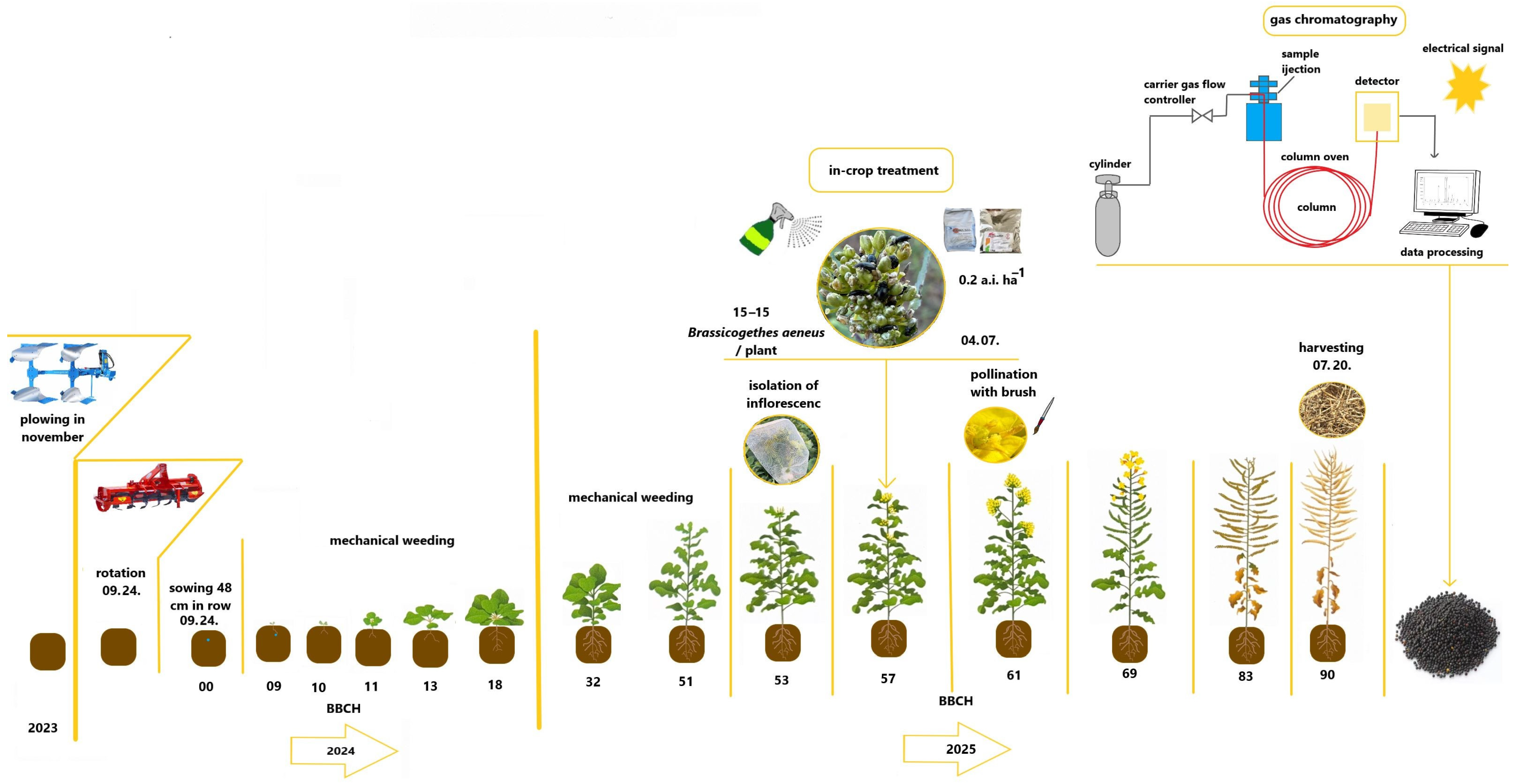
The sowing depth was consistently maintained at 2 cm within the experimental area, and the plants were sown at a row spacing of 48 cm. It is important to note that no additional nutrients were supplied. The experimental crop was maintained in a weed-free state through the implementation of mechanical methods, and no in-crop treatment with pesticides was employed until the beginning of the experiment. The experimental treatment was initiated at BBCH 53, and the crop was cultivated to BBCH 90, at which point samples were collected for subsequent laboratory analysis (Figure 1). Ripe pods were collected from all plants included in the experiment, the seeds were homogenized, and approximately 25–25 g of the homogenized samples were weighed for laboratory analysis.
Figure 1.
The methodology of the experimental settings.
2.2. Experimental Treatment in the Field
Among the objectives of this study is to conduct a laboratory-based experiment on two widely utilized insecticides in Europe, both of which are legally certified, and to assess their efficacy against B. aeneus adults, which have been proven to cause substantial economic damage. The active ingredients utilized in this study were acetamiprid Authentic® SP, containing 200 g/kg acetamiprid active ingredient, Nippon Soda Co., Ltd., Tokyo, Japan) and acetamiprid in combination with lambda-cyhalothrin (Inazuma® WG, containing 100 g/kg acetamiprid and 30 g/kg lambda-cyhalothrin active ingredient, Sumi Agro Europe Ltd., London, UK). The pesticides were administered at the stipulated dosage, as outlined in the product license, which was 0.2 L a.i. ha−1 for both insecticides. Within each experimental group, 50 plants were selected for treatment with insecticide, with the number of plants selected from each group being equal. In the case of the control plants, the inflorescences were isolated before the BBCH 53 stage of development in order to prevent pests from damaging the developing buds and affecting the OA content to be determined. Manual pollination was used for the isolated inflorescences. Prior to the application of insecticide, 15 B. aeneus adults were introduced per plant. Subsequent to this, the inflorescences and adults were isolated. The insecticide treatment was administered on 7 April 2025 at BBCH 57, and mortality values were recorded 24, 48 and 72 h after application. At the time of mortality recording, the number of dead B. aeneus individuals was determined individually for each plant.
2.3. Post-Experiment Data Processing
The mortality values resulting from the effects of the insecticide active ingredients incorporated within the experimental study were documented and calculated using Microsoft Excel 2017. At the conclusion of the vegetation period, the homogenized and equalized crops (25–25 g each) were dispatched to the Hungarian University of Agriculture and Life Sciences Laboratory for further processing. During the laboratory analysis, the precise amount of fatty acid content and composition of the crop collected from the plants subjected to different experimental treatments was ascertained. The specific apparatus was utilized during the laboratory analysis.
2.4. Fatty Acid Analysis
Seeds (150 mg) were homogenized in a ceramic mortar and 5 mg of nonadecanoic acid (C19:0, Merck 72332) internal extraction standard, as a spike was added to the raw material directly. Following this, ground seeds underwent alkaline digestion (80 °C, 1 h, 40 mL of methanol and 6 mL of 50 v/w% NaOH). Fats were then extracted into chloroform (50 mL) after neutralization (with 4M HCl, 35 mL). The fatty acid methyl esters were prepared according to Christie [29], using 1 vol % H2SO4 in methanol, at 50 °C, overnight. Gas chromatography analysis was performed according to the method of Varga-Visi et al. [30].
Briefly, a gas chromatograph (Shimadzu Nexis 2030 with FID detector, Shimadzu Corporation, Kyoto, Japan) equipped with a Zebron ZB-WaxPlus capillary column (30 m × 0.25 mm i.d., 0.25 µm film thickness; Phenomenex Inc., Torrance, CA, USA) was employed. Operating conditions included an injector temperature of 220 °C, a detector temperature of 250 °C, and a helium flow rate of 28 cm/s. The oven temperature was programmed as follows: starting from 60 °C with a 2 min hold, increasing to 150 °C, then from 150 to 180 °C at a rate of 2 °C/min with a 10 min hold at 180 °C, and finally from 180 to 220 °C at a rate of 2 °C/min with a 16 min hold at 220 °C (total duration: 74 min). Nitrogen was used as the makeup gas. The identification was based on retention times, as compared to those of a certified reference material (Merck Supelco 37 Component FAME mix, CRM47885). Chromatographic data were processed using LabSolutions 5.93 software with the PostRun module (Shimadzu, Kyoto, Japan) and manual peak integration. Fatty acid composition was expressed as weight percentage of total FAMEs and as mg/g raw material as well. Quantitative analysis was based on calibration with nonadecanoic acid methyl ester (C19:0 ME) standards (Merck, 74208). A 5-point calibration curve was generated using known concentrations of the C19:0 methyl ester, and quantification was performed by relating the peak areas of individual fatty acid methyl esters to the internal standard signal. The detector response was linear within the applied concentration range.
To assess the potential nutritional impact of compositional changes, atherogenic and thrombogenic indices were calculated according to Ulbricht and Southgate [31]. Atherogenic relates concentrations of pro-atherogenic saturated fatty acids (C12:0, C14:0, C16:0) to protective unsaturated fatty acids (MUFA, n-6 and n-3 PUFA), whereas thrombogenic estimates the tendency for thrombus formation by relating pro-thrombogenic saturated fatty acids (C14:0, C16:0, C18:0) to combinations of MUFA, n-6 and n-3 PUFA, using established formulas. Lower values of both indices indicate a more favorable fatty acid profile with respect to cardiovascular risk.
2.5. Statistical Analysis
A Shapiro–Wilk [32] analysis was employed to examine the mortality data of B. aeneus, with a sample size exceeding 50. In order to assess the normality of the distribution of the data, the Ghasemi and Zahediasl [33] methods were employed. The data were analyzed using a two-way ANOVA test in SPSS 29.0 software, with consideration given to the effects of insect mortality, time since treatments, and the different acetamiprid and acetamiprid + lambda-cyhalothrin active ingredients. The resulting values were then subjected to Tukey’s (HSD) test for separation. The Abbott [34] correction was employed to ascertain the mortality values.
To analyze parametric and non-parametric datasets, the obtained fatty acid dataset was subjected to Shapiro–Wilk test of normality and equality of variance, with a p-value ≤ 0.05. These tests were performed via R-4.2.1. One-way analysis of variance (ANOVA) with a Least Significant Difference (LSD) post hoc test was performed to detect inter-group differences. For the non-parametric dataset, Kruskal–Wallis test was conducted to assess potential significance levels. In the statistical analyses, differences between groups were considered significant when p-values were ≤0.05. The principal component analysis (PCA) was performed for dimension reduction and variable selection for classification, using the Unscrambler X software (version 10.4, 2016, CAMO, Oslo, Norway). Partial Least Squares Classification (Discriminant Analysis, PLS-DA) was performed for dimension reduction and variable selection for classification with the highest accuracy on the MetaboAnalyst GUI [35]. The principal component analysis (PCA) was performed for dimension reduction and variable selection for classification, using the Unscrambler X software (version 10.4, 2016, CAMO, Oslo, Norway). Linear regression analysis was used for checking systematic trends in the FA composition, using MS Excel 2021 software.
3. Results
3.1. Mortality Results
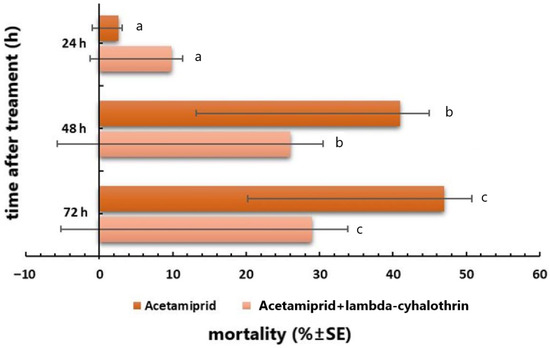
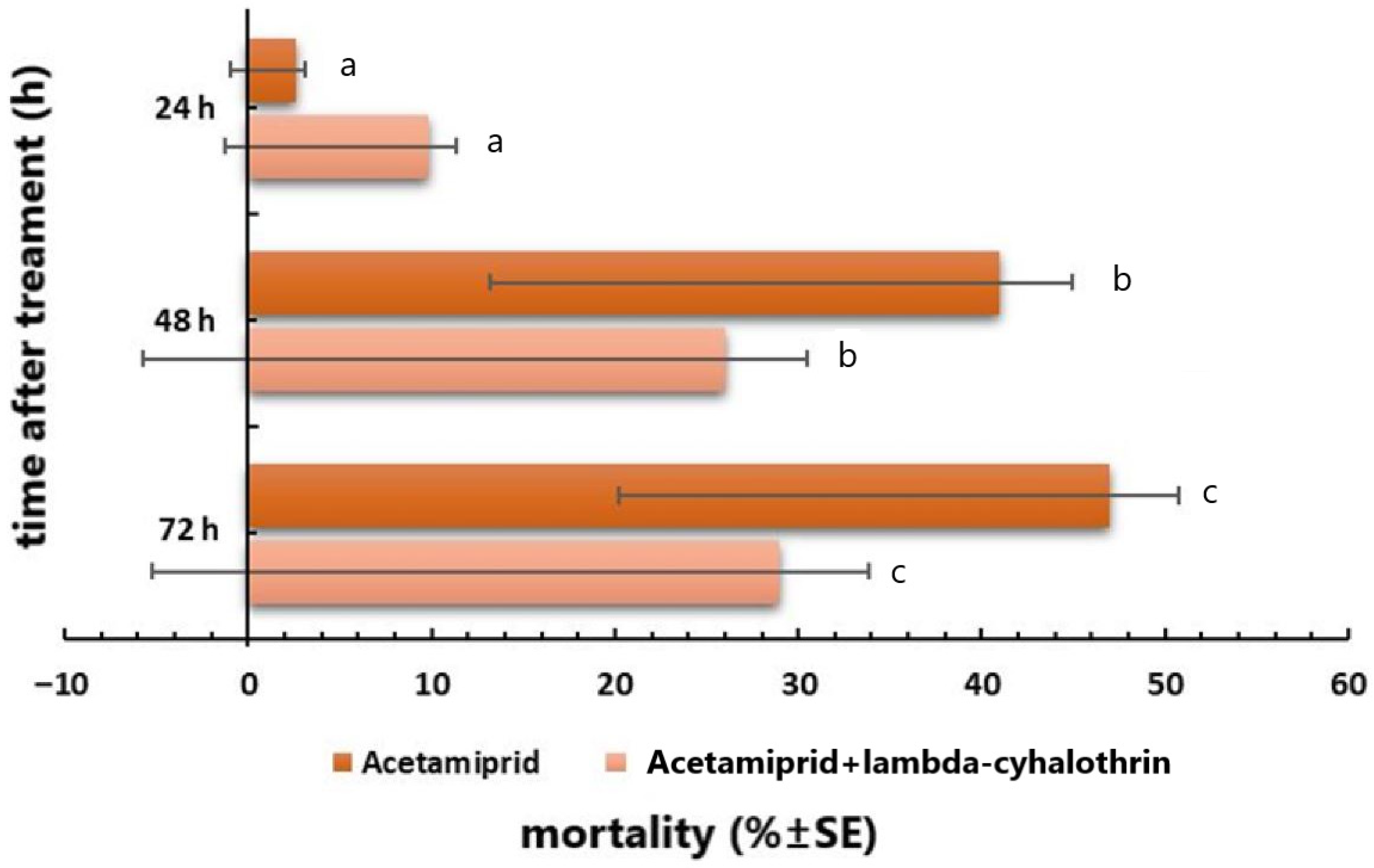
The experimental study demonstrated that the insecticides acetamiprid and acetamiprid + lambda-cyhalothrin, which were included in the experiment and analyzed, have an effect on the life activities of B. aeneus adults when applied as an in-crop treatment, but their effectiveness is not outstanding. A substantial variation in the insecticidal effect of the treated samples was observed (Figure 2). It is important to note that, whilst there may be similarities in the mortality values reported for insecticide active ingredients with different modes of action, there are also notable differences. Twenty-four hours after the treatment, the formulation containing the active ingredient lambda-cyhalothrin resulted in a higher mortality rate of nearly 10%, while the pure acetamiprid active ingredient resulted in a mortality rate of nearly 3% in the same interval. However, 48 and 72 h after the commencement of the experiment, the formulation containing only acetamiprid resulted in higher mortality rates for B. aeneus adults.
Figure 2.
Abbott corrected mortalities on Brassicogethes aeneus triggered by examined insecticide active ingredients (p ≤ 0.05). a, b, c: different letters indicate significant inter-group differences.
The formulation containing the active ingredient acetamiprid insecticide demonstrated 42% efficacy 48 h post-exposure and 47% efficacy 72 h post-exposure. Conversely, when the formulation containing the active ingredient lambda-cyhalothrin was applied through in-crop treatment, the mortality values obtained were lower. In this case, the mortality rate was 25% after 48 h following exposure, while after 72 h following spraying, it was around 29%. The findings of this study indicate that there is a significant discrepancy (nearly 20%) in the efficacy of the two insecticidal preparations when employed for the purpose of practical plant protection. However, statistical analysis has revealed that there is no statistically significant difference in the efficacy of these preparations against B. aeneus adults (Table 1). The experimental results indicated that insect mortality values did not exceed the 72 h threshold after the commencement of the experimental setup.
Table 1.
The statistical relationships between the different insecticides and measured mortality values (p < 0.05). Significant differences between the values marked with *.
3.2. Fatty Acid Composition of Seeds
We undertook qualitative and quantitative analysis; qualitative results are shown and interpreted, and qualitative data are provided in the Appendix A.
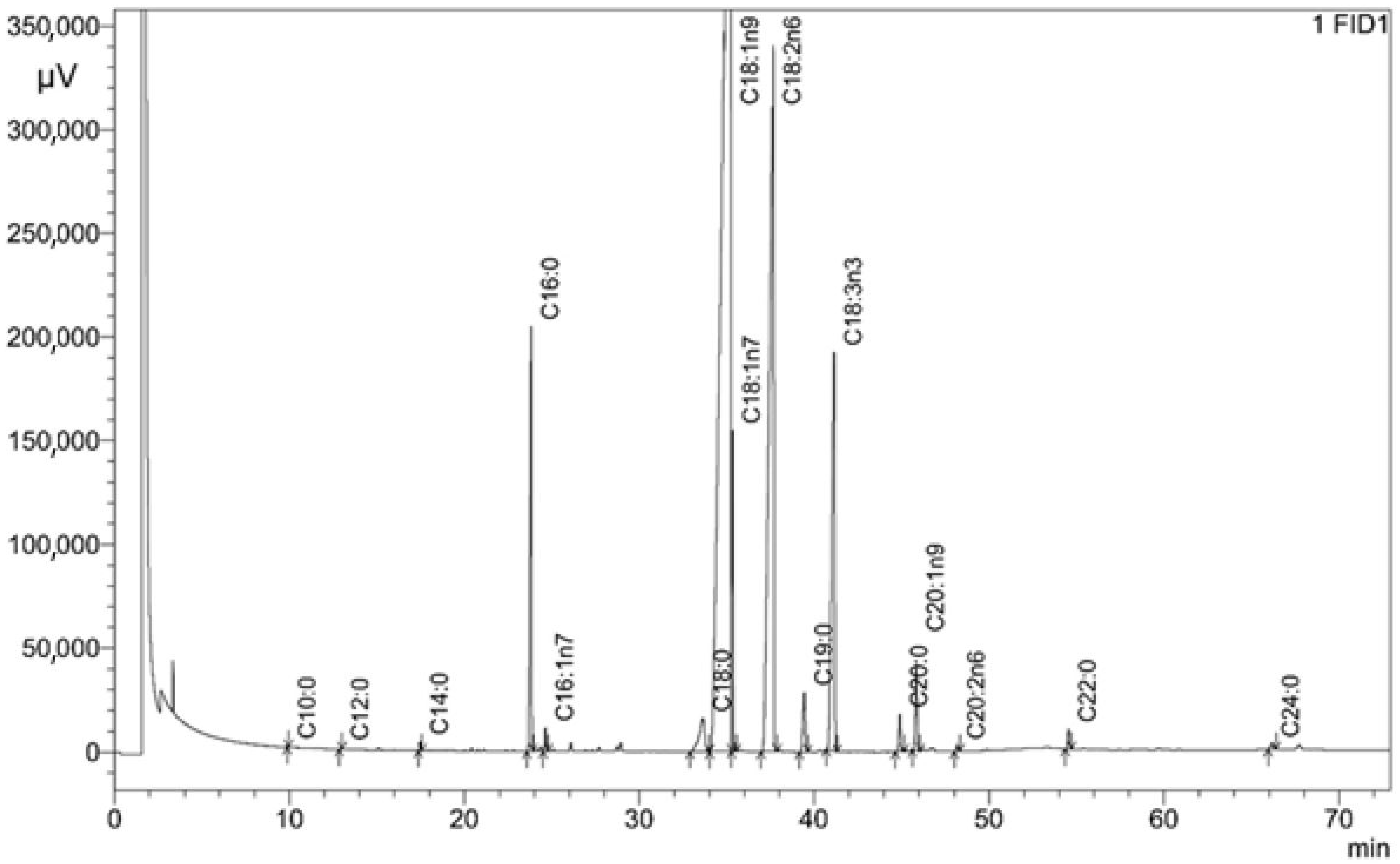
Figure 3 shows a characteristic GC-FID chromatogram including the peak of the internal standard C19:0.
Figure 3.
GC FID chromatogram of a control group sample, spiked with C19:0 internal standard.
Detailed data on the individual fatty acids and calculated indices are provided in Table 2.
Table 2.
Fatty acid profile (% from the total weight of fatty acids) of investigated varieties of treatments on rapeseeds.
Gas chromatography with flame ionization detection (GC FID) was utilized to ascertain alterations in the fatty acid composition of oilseed from B. aeneus-infested plants that had been treated with individual insecticide active ingredients, (acetamiprid alone and acetamiprid + lambda-cyhalothrin), and respective controls. The results obtained demonstrate that, in comparison with the control, there were significant differences in the FA profile of the seeds as a result of the individual treatments (Table 2).
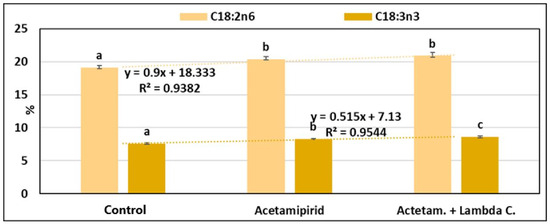
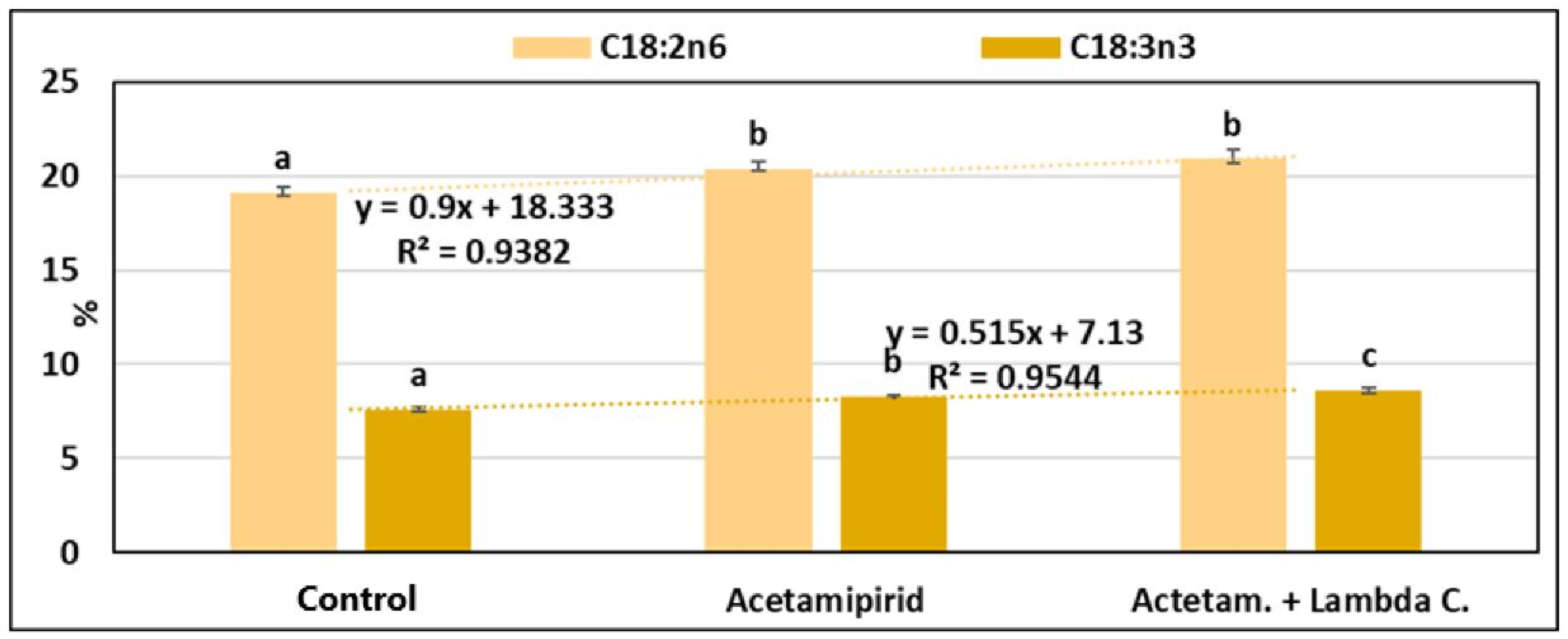
Within saturated FAs, the proportion of palmitic acid (C16:0, PA) was the highest in the control; the single and combined pesticide treatments were characterized by lower proportions (p < 0.05) but did not differ from each other. In MUFAs, the most important finding was that the erucic acid (C22:1 n9) was the below the detection limit. OA proportion was generally high (~50%) and substantially decreased in a similar pattern to palmitate (according to the pattern: control → single pesticide → combined pesticides), while cis- vaccenic acid (C18:1 n7) fluctuated at around 4% proportion. Within PUFA, seeds from plants treated by a single pesticide or the combined treatment had a remarkably high proportion of LA (p < 0.01), and also that of ALA (p < 0.0001). These FAs proportional elevation in the case of the control, single agent, and the combined agents followed a clear linear pattern, as plotted in Figure 4.
Figure 4.
Linear fitting on the proportions of LA and ALA according to the treatments. a, b, c: different letters indicate significant inter-group differences.
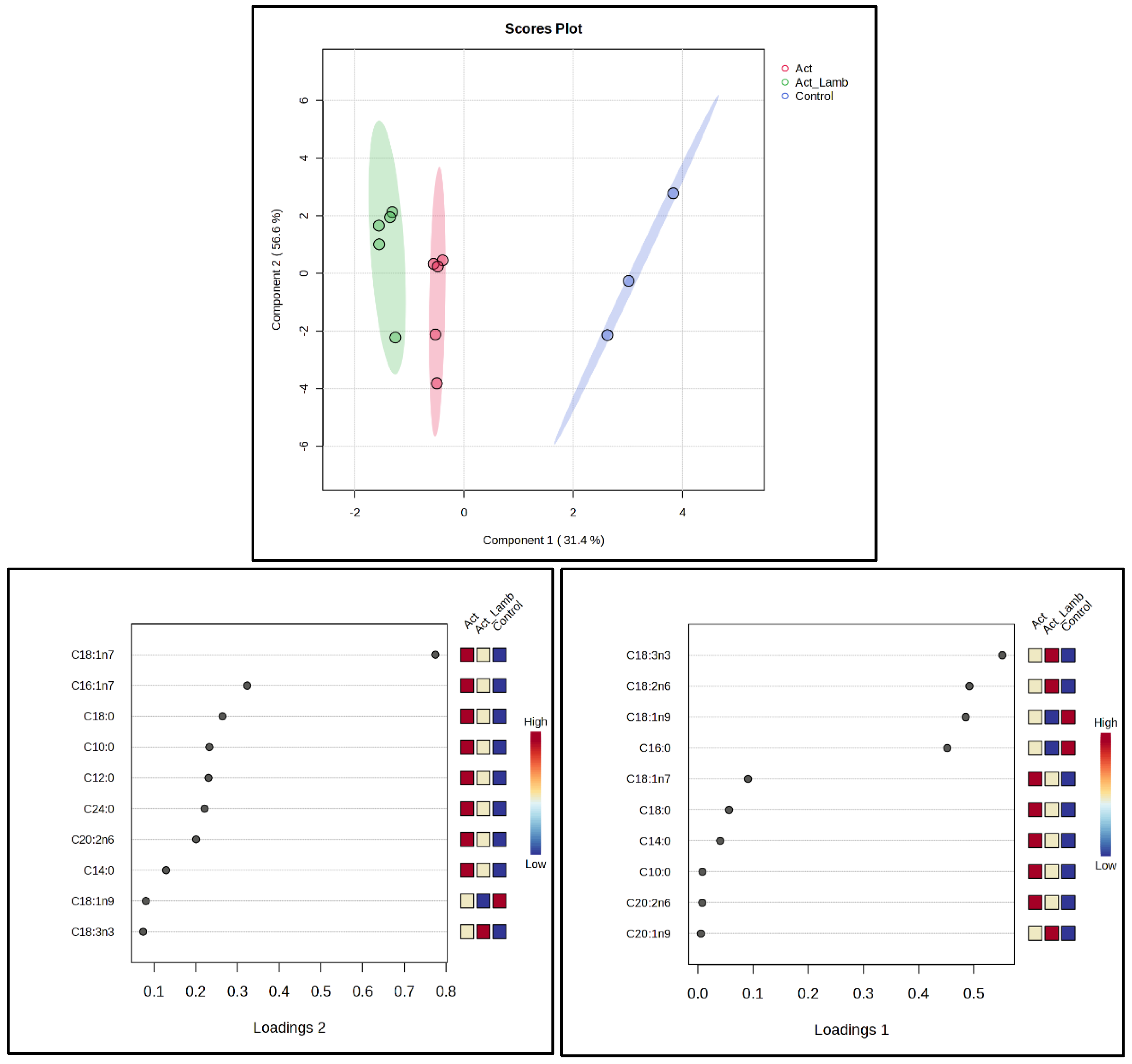
Changes in the individual fatty acids contributed to rather advantageous proportional changes in the calculated FA indices, increasing the total polyunsaturation, including both n3 and n6 FA groups, and decreasing the monounsaturation. The n6/n3 FA ratio decreased to a more favorable value, as did the thrombogenicity index as well, following the pattern: the control → single agent → combined agents pattern. Testing group separation was based on merely the primary fatty acid data (i.e., C10:0–C24:0, with all indices excluded), and sPLS-DA analysis revealed failureless spatial group separation, explaining 87% of the total variance (Figure 5).
Figure 5.
Results of the sparse partial least square discriminant analysis (sPLS-DA) method, plotting the scores above and loading below. Analyses were based on the percentage (%) of fatty acids (C18:3 n3: ALA, C18:2 n6: LA, C18:1 n9: OA and C16:0: PA) Treatments: act = acetamiprid; Act_Lamb= acetamiprid + lambda-cyhalothrin.
The two first loadings of the sPLS-DA analysis are shown in Figure 5, referring to the outstanding importance of ALA, LA, OA, and PA in shaping PC1, while PC2 was mostly influenced by vaccenic acid.
4. Discussion
4.1. Mortality of Brassicogethes aeneus
In consideration of the mortality results, it can be reported that the insecticide containing the active ingredient lambda-cyhalothrin is less effective against B. aeneus adults than acetamiprid used alone. A number of studies have previously reported on the resistance and presumed resistance of B. aeneus to the active ingredient lambda-cyhalothrin [36,37,38,39,40]. In their 2004–2005 study, Koopmann et al. [41] demonstrated that the active ingredient lambda-cyhalothrin resulted in 30–38% mortality in the pollen beetle population in Poland at the operational dose. A study was conducted between 2013 and 2017 to examine the impact of B. aeneus adults on rapeseed crops at 14 distinct locations throughout the Czech Republic. The present study found that resistance to the active ingredient lambda-cyhalothrin developed at the recommended dose of 7.5 g a.i. ha−1, with resistance to this active ingredient increasing over time [38]. In the period between 2013 and 2015, a number of insecticides belonging to the group of active substances known as pyrethroids were analyzed in relation to their effectiveness against pollen beetles in Germany [37]. The analysis revealed that, among the insecticides examined, the active ingredient lambda-cyhalothrin exhibited the least efficacious properties. Marczali et al. [40] collected B. aeneus adults from four different locations in Hungary and conducted laboratory tests to evaluate the levels of resistance to lambda-cyhalothrin. The study revealed that this active ingredient demonstrated 50–55% efficacy on the collected populations, indicating that 150–200% of the operational doses were required to achieve effective control. King et al. [39] conducted a chromosome-scale genomic study in which they found that CYP6BQ23 and CYP6BQ25 in B. aeneus adults are capable of metabolizing pyrethroid insecticides, which may confer resistance. The study indicated that CYP6BQ23 plays a pivotal role in the development of resistance. The findings of our experimental studies suggest that insecticides belonging to the pyrethroid group of active substances are ineffective in controlling B. aeneus adults. The significant resistance to the active ingredient lambda-cyhalothrin observed in this study has been confirmed by several international studies [25,26,27,28,36,37,39,40,42,43].
It has been demonstrated that acetamiprid, utilized in elevated concentrations, exhibits enhanced efficacy, a finding corroborated by numerous studies [42]. The findings of this study demonstrate that systemic compounds belonging to the neonicotinoid group of active ingredients exhibit enhanced efficacy in practical applications when employed at higher concentrations in comparison to their lower concentrations when mixed with the active ingredient lambda-cyhalothrin. However, the effectiveness of the test, which was found to be approximately 50%, did not provide satisfactory protection in practice. The results obtained during the course of the study suggest that the insecticide treatment should be repeated. B. aeneus, a species of pest known to be prevalent in the European rapeseed cultivation, has been identified as a significant factor contributing to the decline in competitiveness and profitability of the industry [7,17,23,24]. The moderate mortality achieved with the use of acetamiprid alone indicates the resistance of B. aeneus. In 2009, researchers from Poland reported that the application of acetamiprid at the recommended dose resulted in a total mortality rate of 20% 120 h after insecticide treatment [44]. In contrast to the conclusions of the present study, Croitoru et al. [45] found that the combination of acetamiprid and lambda-cyhalothrin provided effective protection against B. aeneus adults in Moldova. This assertion was corroborated by Milovanović et al. [46], who advocated for the utilization of insecticides belonging to the pyrethroid and neonicotinoid groups for the management of B. aeneus adults, citing the efficacy of these insecticides as evidenced by their studies conducted in Serbia. In contrast, several studies have confirmed the high resistance of B. aeneus to widely used pyrethroid and neonicotinoid active ingredients [25,36,37,40,42,43,44].
4.2. Fatty Acid Composition
The real challenge of the present study is to get information on the possible reason why the single- and double-agent treatments had favorable qualitative and quantitative effects on the FA profile. Most probably, the infestation by the pollen beetle, B. aeneus, led to a significant reconfiguration of the fatty acid profile in winter oilseed rape seeds, suggesting floral herbivory imposes a physiological stress that actively reprograms lipid biosynthesis in seeds. For instance, the reproductive sink damage (either partial or complete) of rapeseed, a result of insect infestation and feeding, contributes to the disruption of photosynthesis, and potentially alters lipid homeostasis. Notably, the literature lacks evidence on the direct role of the herbivore B. aeneus on lipid remodeling; however, according to Ali et al. [47], disruptions in photosynthesis (suppression/downregulation), chloroplast function, and carbon allocation are common responses associated with chewing and sap-sucking insects, where among the B. aeneus is a chewing insect, feeding mostly on buds and pollen. Hence, such metabolic events and the removal of buds could profoundly affect the source-sink dynamics and consequently affect oil deposition dynamics and its composition, as well as compromising the overall yield [48,49,50]. Lipid modulations can also be undertaken indirectly, wherein the feeding and oviposition activities of adult beetles alter the profile of volatile compounds (such as β-caryophyllene, β-farnesene, and β-ocimene) within B. napus [51], referring to a shift in the metabolic dynamics and interaction between plant and insect. This feeding process has also been reported to trigger chemical defense responses (e.g., glucosinolate, jasmonates and ethylene) in flower buds, limiting the carbon and energy available for the energetically costly conversion of OA to triglycerides, or altering metabolic fluxes [52,53].
Our study revealed depletions of PA and OA proportions that were concurrent with the elevations in LA and ALA proportions of seeds from B. aeneus-infested plants. This observation is largely mediated through external stimuli (e.g., biotic stress caused by pests), potentially known to alter FAD2 and FAD3 genes. In B. napus, these genes regulate desaturase enzymes that catalyze the OA conversion into LA and ALA [54], although specific efficiency variations across rapeseed varieties have been acknowledged [55]. As highlighted in the aforementioned paragraph, the jasmonate acid level elevation is a possible response to herbivory activities. In Arabidopsis and related Brassicaceae, this acid is a key regulator of plant secondary metabolism and can repress genes involved in primary anabolism; thus, it downregulates, either directly or indirectly, Δ12-desaturase (regulated by FAD2), which converts OA to LA. However, our results show an increase in LA, arguing against this simple model. Alternatively, damage may upregulate Δ15-desaturase (regulated by FAD3) (which is confirmed statistically: high C18:3/C18:2 in pest-infested groups, with p < 0.05) or alter the entire plastidial FA synthesis pipeline. Notably, both LA and ALA increased in treated groups; however, the ALA increase rate was higher, which had resulted in substantially low n6:n3 ratios. In rapeseed, ALA-containing triglycerides (e.g., TAG16/18:1/18:3, TAG16:1/18:1/18:3, and TAG18:1/18:1/18:3) have been reported to systematically increase during seed development but to stabilize or drop (compensated by LA and OA) during maturation [55,56,57,58]. Thus, ALA elevation magnitude in this study may indirectly indicate a shift in the ratio of polar lipids to nonpolar lipids. According to Wang et al. [16], triacylglycerol assembly is highly linked to OA and LA levels, indicating a reduced deposition of triglycerides within pest-infested groups. However, our study did not determine the composition of different lipid classes, indicating the need for further studies to confirm this hypothesis.
Although total saturation remained unchanged in this study, PA levels decreased in pest-infested seeds. This FA is commonly a precursor for longer-chain fatty acids and glycerolipids. Therefore, the proportional depletion of PA may be linked to the proposed depletion of triacylglycerols or slight enhancement of membrane permeability. During damage, a shift in metabolic priorities occurs, favoring defense signaling and membrane repair, which often favors unsaturated fatty acids (LA and ALA) for fluidity and signaling. Typically, FAD2 and FAD3 are integral to membrane fluidity, signaling molecules (oxylipins), and defense responses to pests and pathogens. Herein, the generated end products, like LA and ALA proportional elevation, are likely among the initial biological cascades against stress, as they are substrates for lipoxygenase and oxylipins (e.g., jasmonates and phytoprostanes). The oxidation of LA and ALA, upon cleavage from membranes, by lipoxygenase and allene oxide synthase forms 12-oxo-phytodienoic acid and is ultimately converted into jasmonic acid and its derivatives [59,60], key damage/stress-response hormones. Notably, in Brassica species, damage by pests potentially associates with oxidative stress (reflected in high levels of malondialdehyde and protein carbonyls) and changes in the redox system, commonly known to impact desaturase enzymes that require reducing power and are sensitive to the cellular redox poise [61]. However, this aspect represents a limitation under the current study, as further studies focusing on oxidative stress are necessary. These studies should simultaneously determine genes, like FAD2 and FAD3, and lipid-related enzyme activities to draw a comprehensive picture. To ensure full mechanistic transparency, further investigation of jasmonate-mediated regulation of fatty acid desaturation (including FAD2-related pathways) is required.
In summary, the B. aeneus infestation appears to profoundly affect the rapeseed quality, specifically FA patterns, which are positively associated with ALA proportion and, to a lesser extent, with LA proportion. These shifts probably compromise the OA and PA proportions, aiming at provoking defense/healing signaling cascades. Based on these findings, the pest management practices should not only consider the yield, but also the product quality traits as well [57,58,62,63,64,65,66].
5. Conclusions
The present study corroborates the notion that the deleterious effects of Brassicogethes aeneus on rapeseed manifest in a quantifiable manner on the fatty acid composition of ripe rapeseed. The insecticides tested, acetamiprid alone and the combination of acetamiprid and lambda-cyhalothrin, were found to be capable of reducing damage to a certain extent. However, this reduction was not deemed to be satisfactory, as the insecticides used at commercial doses were found to be ineffective in practice in Somogy County, Hungary. The moderate effectiveness of lambda-cyhalothrin and acetamiprid is consistent with the documented resistance of B. aeneus in Europe, which highlights the difficulties of rapeseed cultivation.
Gas chromatography-flame ionization detection (GC-FID) analysis demonstrated that pest pressure and the resultant physiological stress significantly altered several significant fatty acids, principally OA, LA, and ALA. Healthy, uninjured control plants exhibited a higher proportion of monounsaturated fatty acids, while plants treated with insecticide and exposed to pests demonstrated elevated levels of polyunsaturated fatty acids, encompassing both n6 and n3 groups. Although certain changes, such as a decrease in PA and an improvement in the thrombogenic index, may appear beneficial from a nutritional standpoint, these changes primarily reflect stress-induced metabolic disturbances rather than desirable agronomic or industrial traits.
The results of this study demonstrate that B. aeneus poses a dual threat to rapeseed production, both quantitatively and qualitatively. This pest has been shown to impair and affect the fatty acid composition of harvested seeds. Considering the findings of this study, it can be concluded that the implementation of targeted and rationally applied plant protection measures is essential for the economically viable cultivation of rapeseed, while also contributing to the maintenance and improvement of the quality of the seeds. Conversely, integrated and sustainable plant protection strategies remain a fundamental component within the domain of agriculture.
Author Contributions
Conceptualization, B.G. and S.K.; methodology, S.K. and A.S.; software, A.S., S.K. and O.A.; validation, S.K. and A.S.; formal analysis, S.K., O.A. and A.S.; investigation, O.A., B.G. and E.A.; resources, A.S.; data curation, O.A., B.G. and E.A.; writing—original draft preparation, B.G.; writing—review and editing, A.S., S.K. and O.A.; visualization, A.S., O.A. and B.G.; supervision, S.K.; project administration, B.G.; funding acquisition, B.G. All authors have read and agreed to the published version of the manuscript.
Funding
Supported by the EKÖP-MATE/2025/26/A university research Scolarship Programme of the Ministry for Culture and Innovation from the source of the National Research, Development and Innovation Fund. This work was partially funded by the Hungarian Research Network (HUN-REN-MATE, Mycotoxins in the Food Chain research group) and by the Hungarian National Laboratory project RRF-2.3.1-21-2022-00007. This work was supported by the Flagship Research Groups Programme of the Hungarian University of Agriculture and Life Sciences.
Data Availability Statement
The datasets analyzed during the current study are not publicly available due to private proprietary reasons but are available from the corresponding author on reasonable request.
Conflicts of Interest
The authors declare no conflicts of interest.
Appendix A
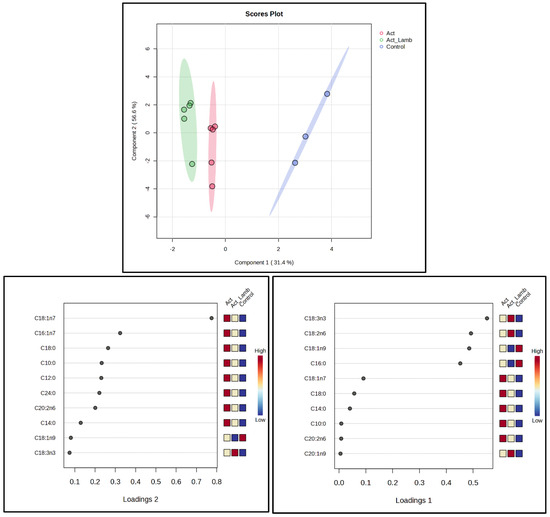
Figure A1.
Results of the principal component analysis, plotting the scores above and loading below. Outcomes were based on the concentrations (mg/100 g) of fatty acids within groups.
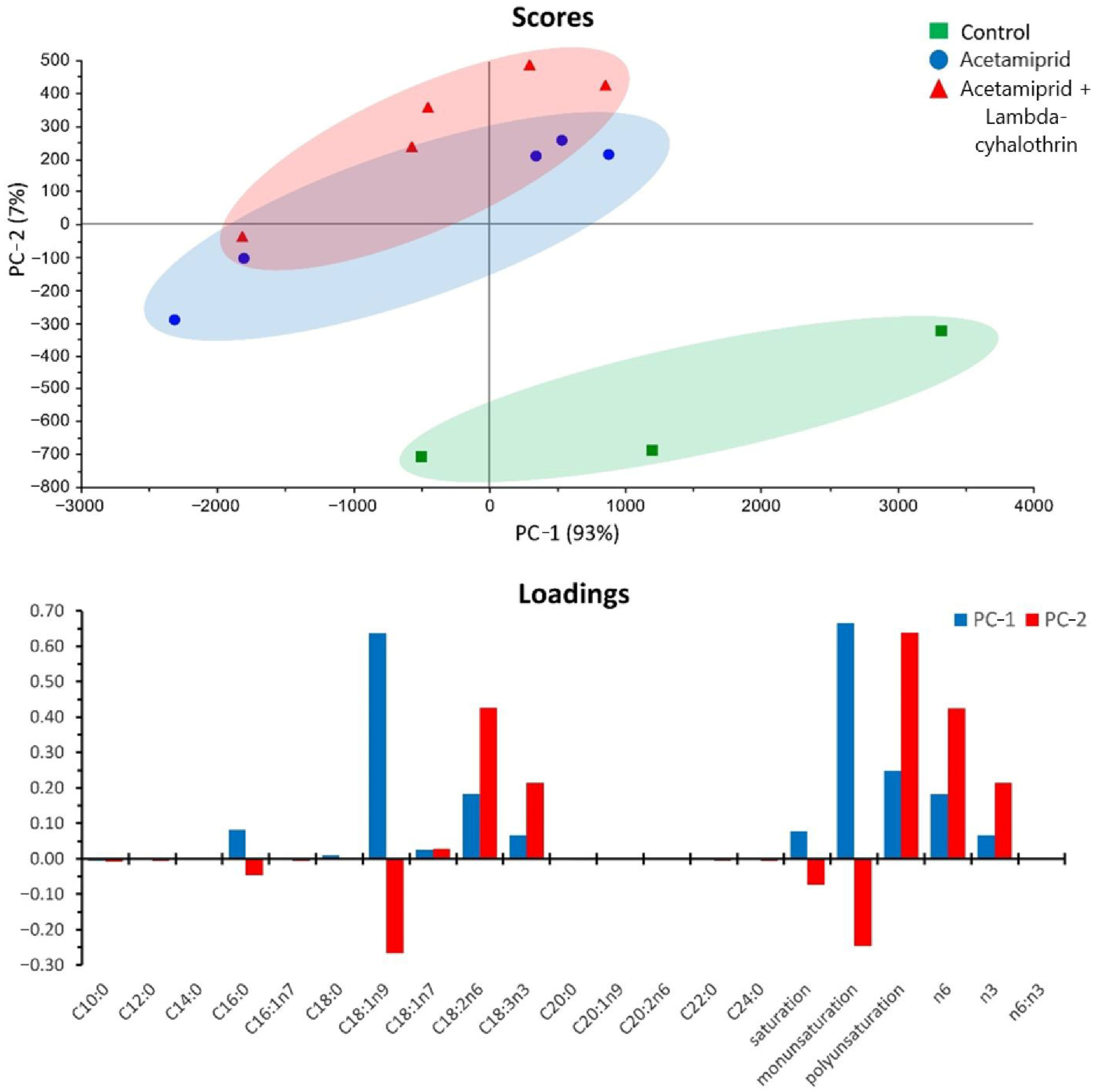
Table A1.
Fatty acid composition (mg/100 g sample) of investigated varieties of rapeseeds.
References
- HabibTabar Shiadeh, S.S.; Feizabadi, Y.; Kosari-Moghaddam, A. To What Extent Cultivar Selection Can Affect the Environmental Impact of Rapeseed Production? Environ. Sustain. Indic. 2025, 26, 100619. [Google Scholar] [CrossRef] [Scilit]
- Zapevalov, M.V.; Sergeev, N.S.; Redreev, G.V. Rapeseed Oil Is the Base for Biodiesel Fuel. IOP Conf. Ser. Earth Environ. Sci. 2021, 688, 012013. [Google Scholar] [CrossRef] [Scilit]
- Warner, D.J.; Lewis, K.A. Evaluation of the Risks of Contaminating Low Erucic Acid Rapeseed with High Erucic Rapeseed and Identification of Mitigation Strategies. Agriculture 2019, 9, 190. [Google Scholar] [CrossRef] [Scilit]
- Cullen, D.W.; Squire, G.R.; McNicol, J.W.; Jacobs, J.H.; Osborne, J.L.; Ford, L.; Ramsay, G.; Scrimgeour, C.; Young, M.W. Development and Validation of Gas Chromatography and Real-Time Quantitative PCR for the Quantification of Landscape-Scale Gene Flow from Varieties of High Erucic Acid (HEAR) Oilseed Rape. J. Sci. Food Agric. 2008, 88, 2253–2264. [Google Scholar] [CrossRef] [Scilit]
- Cuthbert, R.D.; Crow, G.; McVetty, P.B.E. Assessment of Seed Quality Performance and Heterosis for Seed Quality Traits in Hybrid High Erucic Acid Rapeseed (HEAR). Can. J. Plan Sci. 2011, 91, 837–846. [Google Scholar] [CrossRef] [Scilit]
- Gu, J.; Guan, Z.; Jiao, Y.; Liu, K.; Hong, D. The Story of a Decade: Genomics, Functional Genomics, and Molecular Breeding in Brassica Napus. Plant Commun. 2024, 5, 100884. [Google Scholar] [CrossRef] [Scilit]
- Zandberg, J.D.; Fernandez, C.T.; Danilevicz, M.F.; Thomas, W.J.W.; Edwards, D.; Batley, J.; Ordon, F.; Stahl, A.; Zandberg, J.D.; Fernandez, C.T.; et al. The Global Assessment of Oilseed Brassica Crop Species Yield, Yield Stability and the Underlying Genetics. Plants 2022, 11, 2740. [Google Scholar] [CrossRef] [Scilit]
- Gołębiewska, K.; Fraś, A.; Gołębiewski, D. Rapeseed Meal as a Feed Component in Monogastric Animal NutRition—A Review. Anim. Sci. 2022, 22, 1163–1183. [Google Scholar] [CrossRef] [Scilit]
- Zabarnyi, O.S.; Demyanyuk, O.S.; Shatsman, D.O. The Current State of Rapeseed Production in Ukraine and the World. Agric. Plant Sci. Theory Pract. 2024, 1, 80–90. [Google Scholar] [CrossRef] [Scilit]
- El-Din Saad El-Beltagi, H.; Mohamed, A.A. Variations in Fatty Acid Composition, Glucosinolate Profile and Some Phytochemical Contents in Selected Oil Seed Rape (Brassica napus L.) Cultivars. Grasas Aceites 2010, 61, 143–150. [Google Scholar] [CrossRef] [Scilit]
- Möllers, C. Development of High Oleic Acid Oilseed Rape. In Proceedings of the 2002, Vortag auf dem Internationalen Fachkongress für Nachwaschsende Rohstoffe und Pflanzenbiotechnologie NAROSSA® in Magdenburg, Magdeburg, Germany, 10–11 June 2022. [Google Scholar]
- Wroniak, M.; Raczyk, M.; Kruszewski, B.; Symoniuk, E.; Dach, D. Effect of Deep Frying of Potatoes and Tofu on Thermo-Oxidative Changes of Cold Pressed Rapeseed Oil, Cold Pressed High Oleic Rapeseed Oil and Palm Olein. Antioxidants 2021, 10, 1637. [Google Scholar] [CrossRef] [Scilit] [PubMed]
- Gauthier, M.; Pellet, D.; Monney, C.; Herrera, J.M.; Rougier, M.; Baux, A. Fatty Acids Composition of Oilseed Rape Genotypes as Affected by Solar Radiation and Temperature. Field Crop. Res. 2017, 212, 165–174. [Google Scholar] [CrossRef] [Scilit]
- Baux, A.; Colbach, N.; Allirand, J.M.; Jullien, A.; Ney, B.; Pellet, D. Insights into Temperature Effects on the Fatty Acid Composition of Oilseed Rape Varieties. Eur. J. Agron. 2013, 49, 12–19. [Google Scholar] [CrossRef] [Scilit]
- Omidi, H.; Tahmasebi, Z.; Naghdi Badi, H.A.; Torabi, H.; Miransari, M. Fatty Acid Composition of Canola (Brassica napus L.), as Affected by Agronomical, Genotypic and Environmental Parameters. C. R. Biol. 2010, 333, 248–254. [Google Scholar] [CrossRef] [Scilit]
- Wang, C.; Li, Z.; Wu, W. Understanding Fatty Acid Composition and Lipid Profile of Rapeseed Oil in Response to Nitrogen Management Strategies. Food Res. Int. 2023, 165, 112565. [Google Scholar] [CrossRef] [Scilit]
- Williams, I.H. The Major Insect Pests of Oilseed Rape in Europe and Their Management: An Overview. In Biocontrol-Based Integrated Management of Oilseed Rape Pests; Springer: Berlin/Heidelberg, Germany, 2010; pp. 1–43. [Google Scholar] [CrossRef] [Scilit]
- Gotlin Čuljak, T.; Pernar, R.; Juran, I.; Ančić, M.; Bažok, R. Impact of Oilseed Rape Crop Management Systems on the Spatial Distribution of Brassicogethes aeneus (Fabricius 1775): Implications for Integrated Pest Management. Crop Prot. 2016, 89, 129–138. [Google Scholar] [CrossRef] [Scilit]
- Seimandi-Corda, G.; Jenkins, T.; Cook, S.M. Sampling Pollen Beetle (Brassicogethes aeneus) Pressure in Oilseed Rape: Which Method Is Best? Pest Manag. Sci. 2021, 77, 2785–2794. [Google Scholar] [CrossRef] [Scilit]
- Nilsson, C. Inst. foer V.S. Yield Losses in Summer Rape Caused by Pollen Beetles (Meligethes spp.). Swed. J. Agric. Res. 1987, 17, 105–111. [Google Scholar]
- Williams, I.H.; Free, J.B. The Feeding and Mating Behaviour of Pollen Beetles (Meligethes aeneus Fab.) and Seed Weevils (Ceutorhynchus assimilis Payk.) on Oil-Seed Rape (Brassica napus L.). J. Agric. Sci. 1978, 91, 453–459. [Google Scholar] [CrossRef] [Scilit]
- Bick, E.; Sigsgaard, L.; Torrance, M.T.; Helmreich, S.; Still, L.; Beck, B.; El Rashid, R.; Lemmich, J.; Nikolajsen, T.; Cook, S.M. Dynamics of Pollen Beetle (Brassicogethes aeneus) Immigration and Colonization of Oilseed Rape (Brassica napus) in Europe. Pest Manag. Sci. 2024, 80, 2306–2313. [Google Scholar] [CrossRef] [Scilit]
- Hervé, M.R.; Cortesero, A.M. Potential for Oilseed Rape Resistance in Pollen Beetle Control. Arthropod-Plant Interact. 2016, 10, 463–475. [Google Scholar] [CrossRef] [Scilit]
- Doctorale, E.; Gaëtan, E.; Corda, S.; Leader, G. Finding New Targets to Screen Oilseed Rape (Brassica napus) Resistance to Pollen Beetle (Brassicogethe aeneus): From Metabolomics to the Field. Doctoral Dissertation, Université de Rennes, Rennes, France, 2018; p. 255. [Google Scholar] [CrossRef]
- Hansen, L.M. Occurrence of Insecticide Resistant Pollen Beetles (Meligethes aeneus F.) in Danish Oilseed Rape (Brassica napus L.) Crops. EPPO Bull. 2008, 38, 95–98. [Google Scholar] [CrossRef] [Scilit]
- Kazachkova, N.; Meijer, J.; Ekbom, B. Genetic Diversity in Pollen Beetles (Meligethes aeneus) in Sweden: Role of Spatial, Temporal and Insecticide Resistance Factors. Agric. For. Entomol. 2007, 9, 259–269. [Google Scholar] [CrossRef] [Scilit]
- Slater, R.; Ellis, S.; Genay, J.P.; Heimbach, U.; Huart, G.; Sarazin, M.; Longhurst, C.; Müller, A.; Nauen, R.; Rison, J.L.; et al. Pyrethroid Resistance Monitoring in European Populations of Pollen Beetle (Meligethes spp.): A Coordinated Approach through the Insecticide Resistance Action Committee (IRAC). Pest Manag. Sci. 2011, 67, 633–638. [Google Scholar] [CrossRef] [Scilit] [PubMed]
- Derron, J.O.; Le Clech, E.; Bezencon, N.; Goy, G. Resistance Des Melighetes Du Colza Aux Pyrethrinoides Dans Le Bassin Lemanique. Rev. Suisse Agric. 2004, 36, 237–242. [Google Scholar]
- Christie, W.W.; Han, X. Chapter 8-Gas chromatographic analysis of fatty acid derivatives. In Lipid Analysis; Woodhead Publishing: Oxford, UK, 2012; pp. 159–180. [Google Scholar]
- Varga-Visi, É.; Jócsák, I.; Kozma, V.; Lóki, K.; Ali, O.; Szabó, A. Effects of Surface Treatment with Thymol on the Lipid Oxidation Processes, Fatty Acid Profile and Color of Sliced Salami during Refrigerated Storage. Foods 2022, 11, 3917. [Google Scholar] [CrossRef] [Scilit]
- Ulbricht, T.L.V.; Southgate, D.A.T. Coronary Heart Disease: Seven Dietary Factors. Lancet 1991, 338, 985–992. [Google Scholar] [CrossRef] [Scilit]
- King, A.P.; Eckersley, R.J. Inferential Statistics IV: Choosing a Hypothesis Test. Stat. Biomed. Eng. Sci. 2019, 33, 147–171. [Google Scholar] [CrossRef] [Scilit]
- Ghasemi, A.; Zahediasl, S. Normality Tests for Statistical Analysis: A Guide for Non-Statisticians. Int. J. Endocrinol. Metab. 2012, 10, 486. [Google Scholar] [CrossRef] [Scilit]
- Dawidar, A.; Elaziz, A.M.; Mortada, M.; Raghib, H.; Abdel-Mogib, M. Molluscicidal Activity of Balanites Aegyptiaca against Monacha Cartusiana Title: A Method of Computing the Effectiveness of an Insecticide Author(s): Abbott, WS Source. J. Econ. Entomol. 2012, 18, 265–267. [Google Scholar] [CrossRef] [Scilit]
- Xia, J.; Psychogios, N.; Young, N.; Wishart, D.S. MetaboAnalyst: A Web Server for Metabolomic Data Analysis and Interpretation. Nucleic Acids Res. 2009, 37, W652–W660. [Google Scholar] [CrossRef] [Scilit] [PubMed]
- Kocourek, F.; Stara, J.; Sopko, B.; Talacko, P.; Harant, K.; Hovorka, T.; Erban, T. Proteogenomic Insight into the Basis of the Insecticide Tolerance/Resistance of the Pollen Beetle Brassicogethes (Meligethes) aeneus. J. Proteom. 2021, 233, 104086. [Google Scholar] [CrossRef] [Scilit] [PubMed]
- Brandes, M.; Heimbach, U.; Ulber, B. Effects of Thiacloprid, Tau-Fluvalinate and Lambda-Cyhalothrin on Overwintered Pollen Beetles (Brassicogethes aeneus (Fabricius)) and Their Offspring in Oilseed Rape. Arthropod-Plant Interact. 2018, 12, 823–833. [Google Scholar] [CrossRef] [Scilit]
- Spitzer, T.; Bílovský, J.; Matušinsky, P. Changes in Resistance Development in Pollen Beetle (Brassicogethes aeneus F.) to Lambda-Cyhalothrin, Etofenprox, Chlorpyrifos-Ethyl, and Thiacloprid in the Czech Republic during 2013–2017. Crop Prot. 2020, 135, 105224. [Google Scholar] [CrossRef] [Scilit]
- King, R.; Boaventura, D.; Hunt, B.J.; Hayward, A.; Singh, K.S.; Gutbrod, O.; Zimmer, C.T.; Williamson, M.S.; Field, L.M.; Bass, C.; et al. A Chromosome-Scale Genome Assembly of the Pollen Beetle, Brassicogethes Aeneus, Provides Insight Into Cytochrome P450-Mediated Pyrethroid Resistance. Entomol. Gen. 2023, 43, 639–648. [Google Scholar] [CrossRef] [Scilit]
- Ferenc Marczali, Z.; Menyhárt, L.; Daniel Kwemoi, K.; Gombai, B. Susceptibility Levels of Hungarian Pollen Beetle (Coleoptera: Nitidulidae) Populations to Lambda-Cyhalothrin Magyarországi Repcefénybogár (Coleoptera: Nitidulidae) Populációk Lambda-Cihalotrinnal Szembeni Érzékenysége. J. Cent. Eur. Agric. 2024, 25, 171–178. [Google Scholar] [CrossRef] [Scilit]
- Koopmann, B.; Cook, S.; Evans, N.; Ulber, B. IOBC/WPRS Working Group “Integrated Control in Oilseed Crops” OILB/SROP. Groupe de Travail “Lutte Integree en Culture d’Oleagineux”. In Proceedings of the IOBC/WPRS 2006, Poznań, Poland, 11–12 October 2006; Volume 29. [Google Scholar]
- Seidenglanz, M.; Poslušná, J.; Rotrekl, J.; Kolařík, P.; Hrudová, E.; Tóth, P.; Havel, J.; Bernardová, M. Meligethes Aeneus (Coleoptera: Nitidulidae) Resistance to Lambda-Cyhalothrin in the Czech Republic in 2012 and 2013. Plant Prot. Sci. 2015, 51, 94–107. [Google Scholar] [CrossRef] [Scilit]
- Wȩgorek, P.; Zamoyska, J. Current Status of Resistance in Pollen Beetle (Meligethes aeneus F.) to Selected Active Substances of Insecticides in Poland. EPPO Bull. 2008, 38, 91–94. [Google Scholar] [CrossRef] [Scilit]
- Węgorek, P.; Drożdżyński, D.; Mrówczyński, M.; Zamojska, J. Dynamics of Acetamiprid Disappearance in Oilseed Rape Plant Tissues in Connection with Its Toxic Action against Pollen Beetle (Meligethes seneus F.) and Its Influence on Ecological Aspect of Oilseed Rape Chemical Protection. Ecol. Chem. Eng. 2009, 16, 83–90. [Google Scholar]
- Croitoru, N.; Panuța, S.; Tălmaciu, M. Some Aspects in the Control of Rape Pests through the Use of Preparations Based on Acetamiprid 200g/L + Lambda-Cyhalotrin 150g/L, in the Conditions of the Republic of Moldova. Lucr. Ştiinţ. Ser. Hortic. 2024, 67, 2024. [Google Scholar]
- Milovanović, P.; Kljajić, P.; Andrić, G.; Pražić-Golić, M.; Popović, T. Efficacy of Different Insecticides in Controlling Pollen Beetle (Meligetes aeneus F.) in Rapeseed Crop. Pestic. Phytomed. 2013, 28, 255–263. [Google Scholar] [CrossRef] [Scilit]
- Ali, J.; Tonğa, A.; Islam, T.; Mir, S.; Mukarram, M.; Konôpková, A.S.; Chen, R. Defense Strategies and Associated Phytohormonal Regulation in Brassica Plants in Response to Chewing and Sap-Sucking Insects. Front. Plant Sci. 2024, 15, 1376917. [Google Scholar] [CrossRef] [Scilit] [PubMed]
- Eskandarlee, K.; Iranipour, S.; Peyghamzadeh, K.; Saber, M.; Michaud, J.P. Yield Reductions in Rapeseed, Brassica Napus, in Response to Various Regimes of Simulated Defoliation. J. Pest Sci. 2025, 98, 1893–1903. [Google Scholar] [CrossRef] [Scilit]
- Yadav, S.; Rathee, M. Sucking Pests of Rapeseed-Mustard. In Sucking Pests of Crops; Springer: Singapore, 2020; pp. 187–232. [Google Scholar] [CrossRef] [Scilit]
- Pinet, A.; Mathieu, A.; Jullien, A. Floral Bud Damage Compensation by Branching and Biomass Allocation in Genotypes of Brassica Napus with Different Architecture and Branching Potential. Front. Plant Sci. 2015, 6, 104460. [Google Scholar] [CrossRef] [Scilit] [PubMed]
- Piesik, D.; Delaney, K.J.; Wenda-Piesik, A.; Sendel, S.; Tabaka, P.; Buszewski, B. Meligethes Aeneus Pollen-Feeding Suppresses, and Oviposition Induces, Brassica Napus Volatiles: Beetle Attraction/Repellence to Lilac Aldehydes and Veratrole. Chemoecology 2013, 23, 241–250. [Google Scholar] [CrossRef] [Scilit]
- Austel, N.; Böttcher, C.; Meiners, T. Chemical Defence in Brassicaceae against Pollen Beetles Revealed by Metabolomics and Flower Bud Manipulation Approaches. Plant Cell Environ. 2021, 44, 519–534. [Google Scholar] [CrossRef] [Scilit]
- Åhman, I.; Lehrman, A.; Ekbom, B. Impact of Herbivory and Pollination on Performance and Competitive Ability of Oilseed Rape Transformed for Pollen Beetle Resistance. Arthropod-Plant Interact. 2009, 3, 105–113. [Google Scholar] [CrossRef] [Scilit]
- Yang, Q.; Fan, C.; Guo, Z.; Qin, J.; Wu, J.; Li, Q.; Fu, T.; Zhou, Y. Identification of FAD2 and FAD3 Genes in Brassica Napus Genome and Development of Allele-Specific Markers for High Oleic and Low Linolenic Acid Contents. Theor. Appl. Genet. 2012, 125, 715–729. [Google Scholar] [CrossRef] [Scilit]
- Wu, H.; Zhang, X.; Chen, X.; Li, K.; Xu, A.; Huang, Z.; Dong, J.; Yu, C. Landscape of Sequence Variations in Homologous Copies of FAD2 and FAD3 in Rapeseed (Brassica napus L.) Germplasm with High/Low Linolenic Acid Trait. Phyton-IJEB 2024, 93, 627–640. [Google Scholar] [CrossRef] [Scilit]
- Wu, J.; Yan, M.; Chen, Y.; Ma, C.; Zhang, D.; Zhou, D.; Zhang, J. Metabolome and Transcriptome Analyses Reveal Changes of Rapeseed in Response to ABA Signal during Early Seedling Development. BMC Plant Biol. 2024, 24, 245. [Google Scholar] [CrossRef] [Scilit]
- Woodfield, H.K.; Cazenave-Gassiot, A.; Haslam, R.P.; Guschina, I.A.; Wenk, M.R.; Harwood, J.L. Using Lipidomics to Reveal Details of Lipid Accumulation in Developing Seeds from Oilseed Rape (Brassica napus L.). BBA Lipids 2018, 1863, 339–348. [Google Scholar] [CrossRef] [Scilit] [PubMed]
- Lu, S.; Sturtevant, D.; Aziz, M.; Jin, C.; Li, Q.; Chapman, K.D.; Guo, L. Spatial Analysis of Lipid Metabolites and Expressed Genes Reveals Tissue-Specific Heterogeneity of Lipid Metabolism in High- and Low-Oil Brassica napus L. Seeds. Plant J. 2018, 94, 915–932. [Google Scholar] [CrossRef] [Scilit] [PubMed]
- Wasternack, C.; Song, S. Jasmonates: Biosynthesis, Metabolism, and Signaling by Proteins Activating and Repressing Transcription. J. Exp. Bot. 2017, 68, 1303–1321. [Google Scholar] [CrossRef] [Scilit] [PubMed]
- Gfeller, A.; Baerenfaller, K.; Loscos, J.; Chételat, A.; Baginsky, S.; Farmer, E.E. Jasmonate Controls Polypeptide Patterning in Undamaged Tissue in Wounded Arabidopsis Leaves. Plant Physiol. 2011, 156, 1797–1807. [Google Scholar] [CrossRef] [Scilit] [PubMed]
- Aggarwal, J.; Kaur, R.; Mittal, A.; Atri, C.; Gupta, M.; Sharma, A. Lipoxygenase 2 Is a Potential Resistance Determinant in Brassica juncea—B. Fruticulosa Derived Lines against Lipaphis erysimi Infestation. Acta Physiol. Plant. 2025, 47, 54. [Google Scholar] [CrossRef] [Scilit]
- Mancini, A.; Imperlini, E.; Nigro, E.; Montagnese, C.; Daniele, A.; Orrù, S.; Buono, P. Biological and Nutritional Properties of Palm Oil and Palmitic Acid: Effects on Health. Molecules 2015, 20, 17339–17361. [Google Scholar] [CrossRef] [Scilit]
- Annevelink, C.E.; Sapp, P.A.; Petersen, K.S.; Shearer, G.C.; Kris-Etherton, P.M. Diet-Derived and Diet-Related Endogenously Produced Palmitic Acid: Effects on Metabolic Regulation and Cardiovascular Disease Risk. J. Clin. Lipidol. 2023, 17, 577–586. [Google Scholar] [CrossRef] [Scilit]
- Takić, M.; Ranković, S.; Girek, Z.; Pavlović, S.; Jovanović, P.; Jovanović, V.; Šarac, I. Current Insights into the Effects of Dietary α-Linolenic Acid Focusing on Alterations of Polyunsaturated Fatty Acid Profiles in Metabolic Syndrome. Int. J. Mol. Sci. 2024, 25, 4909. [Google Scholar] [CrossRef] [Scilit]
- Burdge, G.C.; Wootton, S.A. Conversion of α-Linolenic Acid to Eicosapentaenoic, Docosapentaenoic and Docosahexaenoic Acids in Young Women. Br. J. Nutr. 2002, 88, 411–420. [Google Scholar] [CrossRef] [Scilit]
- Uriho, A.; Yang, S.; Tang, X.; Liu, C.S.; Wang, S.; Cong, Y.; Zhang, J.; Zhou, P. Benefits of Blended Oil Consumption over Other Sources of Lipids on the Cardiovascular System in Obese Rats. Food Funct. 2019, 10, 5290–5301. [Google Scholar] [CrossRef] [Scilit]

Disclaimer/Publisher’s Note: The statements, opinions and data contained in all publications are solely those of the individual author(s) and contributor(s) and not of MDPI and/or the editor(s). MDPI and/or the editor(s) disclaim responsibility for any injury to people or property resulting from any ideas, methods, instructions or products referred to in the content. |
© 2026 by the authors. Licensee MDPI, Basel, Switzerland. This article is an open access article distributed under the terms and conditions of the Creative Commons Attribution (CC BY) license.