


Abstract
Individuals with overweight and obesity consistently demonstrate lower circulating concentrations of serum 25-hydroxyvitamin D (25OHD), the primary biomarker of vitamin D status. Additionally, they exhibit an attenuated response to conventional vitamin D supplementation and may require doses approximately 2–3 times higher than those recommended for individuals with normal body weight to achieve equivalent serum 25OHD concentrations. However, accumulating evidence from randomized controlled trials raises concerns regarding the safety of high-dose vitamin D supplementation, with some studies reporting increased risks of falls and fractures, as well as potential adverse effects on bone mineral density and cognitive outcomes. Magnesium is an essential cofactor in vitamin D metabolism, participating in enzymatic processes required for the hepatic and renal hydroxylation of vitamin D into its active forms. Inadequate Magnesium status may therefore influence vitamin D status and response to vitamin D treatment. Previous randomized clinical trials suggest that Magnesium supplementation, administered either alone or in combination with moderate doses of vitamin D, can effectively increase serum 25OHD concentrations, particularly among individuals with overweight or obesity. Collectively, these findings suggest that optimizing Magnesium status may improve the response to vitamin D supplementation and potentially reduce the need for high-dose vitamin D therapy in obese individuals. Physicians treating overweight or obese patients for vitamin D deficiency should consider co-supplementation with Magnesium and/or encourage intake of Magnesium-rich foods to improve vitamin D status and supplementation outcomes in this population.
1. Introduction
The alarming rise in obesity prevalence in the 20th century makes it a leading non-communicable epidemic in the United States. It affects over 40% of adults in the United States and nearly 2.5 billion adults worldwide [1]. In the US, the total direct and indirect annual costs of obesity are estimated to be $400 billion. Obesity is associated with an increased risk of associated co-morbidities such as cardiovascular disease, cancers, and type 2 diabetes. A recent joint clinical perspective and expert review by Obesity Medicine Association and the American College of Osteopathic Family Physicians, 2025, noted that although approximately 8% of primary care visits involve the management of overweight and obesity, this may likely be a gross underestimation due to challenges with coding data in clinical settings [1].
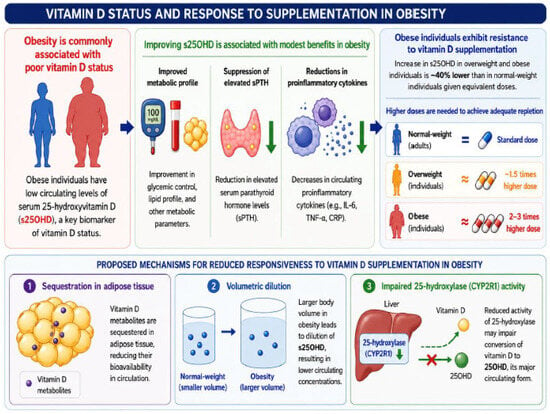
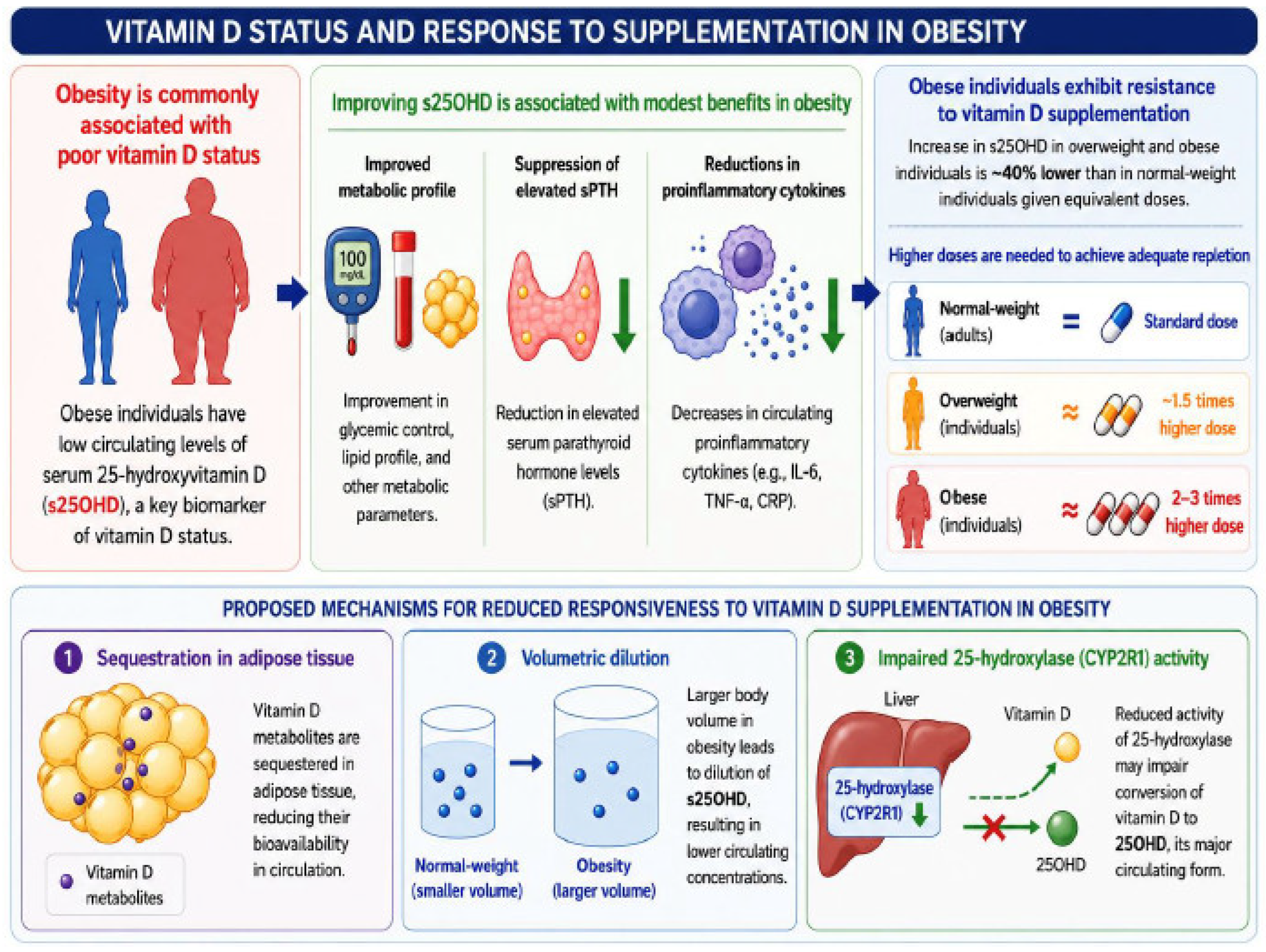
Individuals with obesity commonly exhibit poor vitamin D status, as evidenced by low circulating levels of serum 25-hydroxyvitamin D (s25OHD), a key biomarker of vitamin D status [2] (Figure 1). Several mechanisms have been proposed to explain this observation. Vitamin D, being a fat-soluble vitamin, is sequestered in adipose tissue, thereby allowing lower amounts to enter circulation [2,3,4]. Subcutaneous fat, which is known to store vitamin D3, has been shown to sequester more cutaneous synthesized vitamin D3 in obese than in nonobese subjects, and although oral vitamin D is more bioavailable, larger-than-usual doses may be required for very obese patients [2,3,4]. Another postulated mechanism is the volumetric dilution of s25OHD in obese individuals, which suggests the dilution of ingested or cutaneous synthesized vitamin D in the large adipose mass in obese individuals. Furthermore, impaired activity of the 25-hydroxylase enzyme, which may impact both the hydroxylation and conversion of vitamin D to its active form, has also been suggested. Another plausible reason includes limited exposure to sunlight, resulting in reduced cutaneous vitamin D status, due to decreased mobility and the social stigma of obesity. Finally, since parathyroid hormone (PTH) levels are also higher in obesity, it is possible that there is negative feedback from elevated 1,25 di hydroxy vitamin D {(1,25(OH)2D} and PTH levels on hepatic synthesis of 25OHD in obese individuals [2,3,4].
Figure 1.
Vitamin D status and response to supplementation in obesity.
Some studies report modest health benefits with improving s25OHD in individuals living with obesity. These include improvements in metabolic profile, suppression of elevated serum parathyroid hormone levels (sPTH), and reductions in proinflammatory cytokines in this population [5,6,7]. However, other large studies such as the VITAL study also report that adiposity blunts the response to vitamin D supplementation [4]. The VITAL study reported no benefits of vitamin D supplementation on health outcomes in obese individuals, although positive effects were observed in those with normal body weight [4]. It has been suggested that treating vitamin D deficiency in obese individuals remains challenging due to an apparent resistance to supplementation. Specifically, increases in s25OHD in overweight and obese individuals are approximately 40% lower than those observed in normal-weight individuals given equivalent doses [3,4]. Consequently, obese individuals may require two to three times higher doses of vitamin D and overweight individuals may need approximately 1.5 times higher doses compared to normal-weight adults to achieve adequate repletion of optimal s25OHD levels [3,4]. It is possible that impaired liver hydroxylation may lead to smaller increases in s25OHD even with larger doses of vitamin D supplementation. The treatment of vitamin D deficiency in this population thus remains challenging without opting for high-dose vitamin D supplementation.
2. Treatment of Vitamin D Deficiency in Obese Individuals
According to the Institutes of Medicine (IOM) [8], the normal serum range for 25OHD is >20 ng/mL, while 12–20 ng/mL is considered insufficient and <12 ng/mL is considered deficient. The Recommended Dietary Allowance (RDA) for vitamin D is 600 IU per day for adults and increases to 800 IU after 70 years of age [8]. The Endocrine Society Practice Guidelines for vitamin D intake in individuals who are at risk of vitamin D deficiency suggest a dosage of 6000 IU/d or 50,000 IU/wk of vitamin D2 or D3 for 8 weeks to achieve serum 25OHD >30 ng/mL and maintenance therapy of 1500–2000 IU/d [9]. Other experts also recommend that individuals living with overweight and obesity require a double dose of cholecalciferol compared to age-matched peers with normal body weight [10].
3. Health Effects of Higher Doses Vitamin D Supplementation
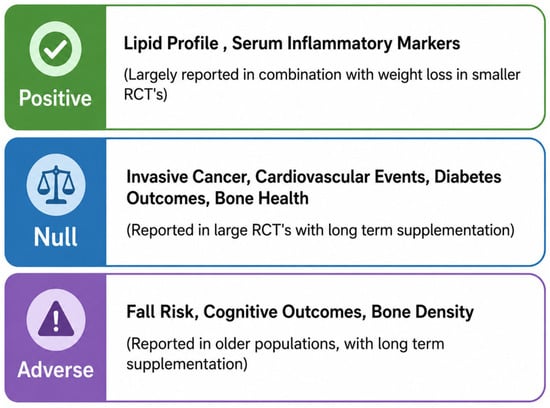
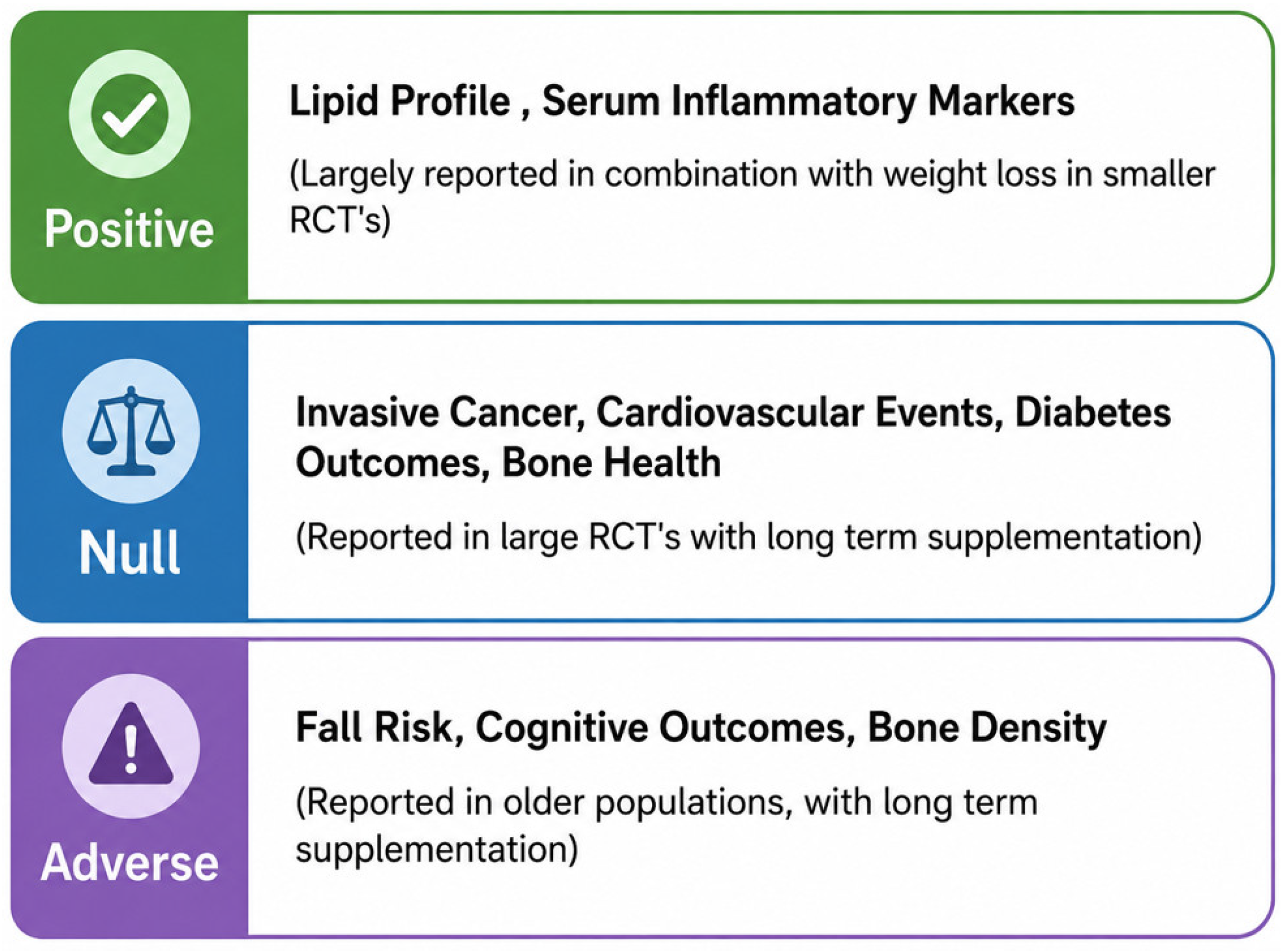
The IOM has established a tolerable upper limit (TUL) for vitamin D for adults of 4000 IU per day [8]. Interestingly, Randomized Controlled Trials (RCTs) that have used similar doses or even lower doses of vitamin D3 compared to the TUL have reported positive, null and negative outcomes with high-dose vitamin D supplementation. In this section, we will summarize findings from vitamin D RCTs that have assessed the impact of higher doses of vitamin D supplementation (>600 IU per day for <70 years and >800 IU per day for >70 years) on health outcomes (See Figure 2).
Figure 2.
Health outcomes associated with higher doses of vitamin D supplementation.
Large RCTs such as the VITAL study, DO HEALTH study, D2D study, and 3DD study that have assessed the impact of vitamin D3 supplementation for at least a 1-year period or more report no beneficial impact of supplementation on the incidence of invasive cancer, cardiovascular events, diabetes outcomes or bone outcomes [11,12,13,14]. However, a few others report that a combination of weight loss and higher-dose vitamin D supplementation has a positive impact on cardiovascular disease risk factors [9,15,16]. A few other studies also document adverse health outcomes with higher-dose vitamin D supplementation. In a study by Bischoff Ferrari et al. [17], in 200 men and women with a mean age of 78 years with a mean BMI of 26 kg/m2, 1-year supplementation with 60,000 IU once per week (2000 IU per day) or 24,000 IU (800 IU per day) plus calcifediol resulted in higher incidence of falls compared to 24,000 IU (800 IU per day). The high-dose vitamin D regimen was effective in reaching a threshold of at least 30 ng/mL of s25OHD; however, it had no benefit on lower extremity function and was associated with increased risk of falls compared with 24,000 IU. Another study by Smith et al. [18], in elderly women with a mean age of 66 years and mean BMI of 31 kg/m2, assessed the impact of supplementation of seven doses of vitamin D ranging from 400 IU to 4800 IU and a placebo for 1 year on falls. Results showed that there was no decrease in falls on low vitamin D doses of 400 to 800 IU or 4000 to 4800 IU compared to placebo; however, the alarming finding was that fall rates on high doses were increased compared to medium doses, and fall rates increased as serum 25OHD exceeded 40–45 ng/mL. Furthermore, in the STURDY study [19,20] in 688 participants aged 70 years or older with a BMI of 30 kg/m2, similar findings were noted. Participants were supplemented with varying doses of vitamin D ranging from 200 IU to 4000 IU for 2 years and reported that vitamin D doses between 1000 and 4000 IU/d might increase the risk of first-time falls with fractures. In a study by Burt et al. [21], among healthy adults with a mean age of 62 yrs and a mean BMI of 28 kg/m2, treatment with vitamin D for 3 years at a dose of 400 IU to 4000 IU per day or 10 000 IU per day had a significant impact on BMD. A statistically significant lower radial bone mineral density (BMD) and a lower tibial BMD was reported with the 10,000 IU per day dose compared to the 400 IU group [22]. In another study by Castle et al., in postmenopausal women with a mean age of 58 years, participants were randomized to 600, 2000, and 4000 IU/d groups, respectively, for 1 year. Interestingly, the 4000 IU/d group had a slower reaction time compared to the 600 IU/d group [22]. In addition to these reported adverse effects, it is important to recall that vitamin D also interacts with a nuclear receptor, namely, Vitamin D Receptor (VDR), in the body, and this may have additional long-term impact on human health. Although the adverse impacts of higher doses of vitamin D supplementation are currently limited to long-term supplementation and the elderly population, it may nevertheless be prudent to explore other novel ways to improve vitamin D status without using a higher dose of vitamin D supplementation.
4. Magnesium Status in Obesity
Obese individuals also have poor Magnesium (Mg) status. This is evidenced by low blood indicators of Mg status and lower dietary intakes of Mg compared to normal-weight controls [23,24]. The recommended dietary allowance (RDA) of Magnesium is 310–320 mg/day for females and 400–420 mg/day for males; however, findings from large epidemiological studies show that adults, especially obese adults, do not meet this recommendation [24,25]. Lower dietary intakes of Mg, reduced Mg intestinal absorption because of high fat or calcium intake, and high inflammatory factors in obesity together contribute to poor Mg status in obesity [23,24,25,26]. This is coexistent with lower s25OHD and higher sPTH in obesity [7,27,28]. Interestingly, Magnesium regulates both 25OHD and PTH secretion [27,28,29] and regulation, and this will be discussed in the next section.
5. Magnesium and Vitamin D—A Physiological Interaction
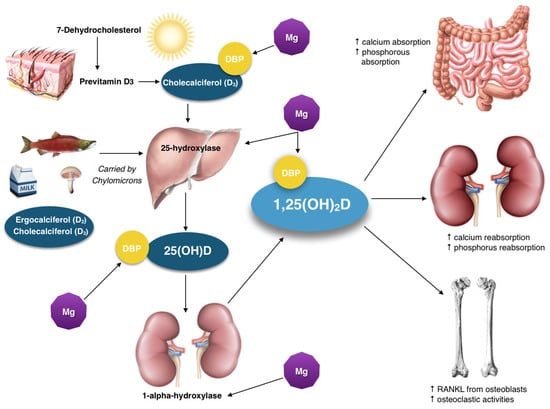
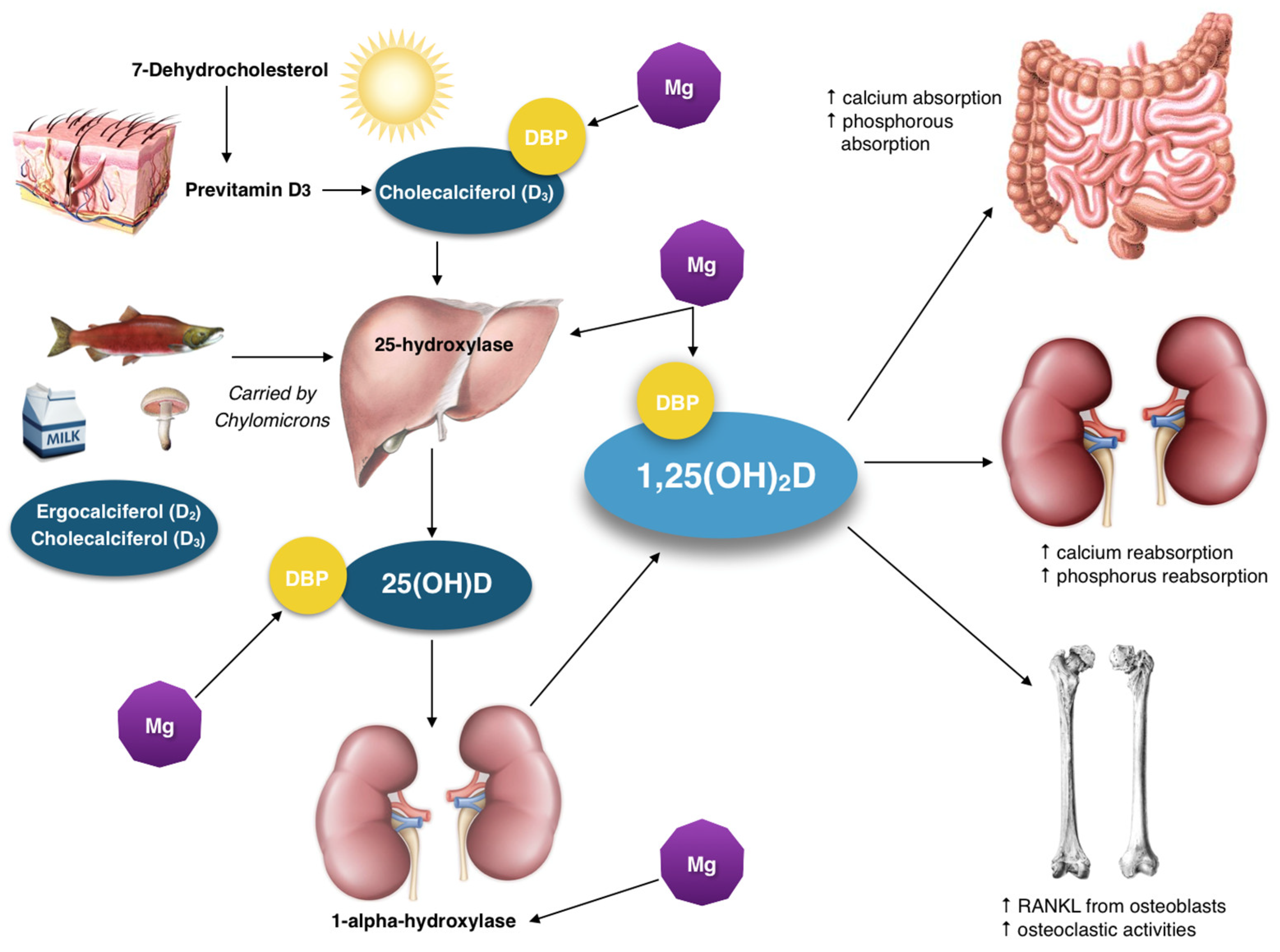
Magnesium, an intracellular cation, plays a critical role in the metabolism of vitamin D and PTH. Magnesium is a cofactor for the enzyme 25-hydroxylase, which converts vitamin D into 25-hydroxyvitamin D [27,30,31,32,33,34,35,36,37]. Magnesium also aids in binding vitamin D to its carrier protein—vitamin D-binding protein (VDBP)—and in the synthesis of its active metabolite—1,25 dihydroxyvitamin D {1,25(OH)2D} (Figure 3) [27,30,31,32,33,34,35,36,37]. Mg deficiency is an overlooked cause of vitamin D deficiency, and vitamin D aids in Mg absorption. Magnesium supplementation has also been shown to reverse resistance to vitamin D treatment and has been shown to increase both serum s25OHD and 1,25(OH)2D [30,31,32,33,34,35,36,37]. Data from the Nutrition Examination Survey (NHANES II) further shows that Magnesium intake is an important contributor to vitamin D status [28]. Mg also plays an important role in the regulation of PTH secretion from the parathyroid gland. Rodent data further support that Mg supplementation suppresses sPTH in rats fed a high Mg diet [37]. These findings suggest a potential interaction between vitamin D, PTH and Mg treatments. Given that the obese population exhibits both a vitamin D and Mg deficiency, supplementing with both vitamin D and Mg may be a novel strategy to correct both deficiencies without overdosing on either. Furthermore, previous work from our laboratory has also shown that Magnesium status is a modifier of the vitamin D–PTH axis in individuals living with obesity [29].
Figure 3.
Role of magnesium in vitamin D metabolism. Mg: Magnesium; 25OHD: 25 hydroxyvitamin D; 1,25(OH)2D: 1,25 dihydroxyvitamin D; DBP: vitamin D-binding protein; RANKL: Receptor Activator of Nuclear Factor Ligand.
6. Recent Literature Examining the Impact of Magnesium and Vitamin D Intakes and/or Supplementation on Vitamin D Status
Data from epidemiological studies have reported that poor Mg status is an important contributor to vitamin D status [28]. Using data from two large National Health and Nutrition Examination Surveys data sets (2001–2006) and NHANES III, Deng et al. [28] assessed the interactions between Mg intake and vitamin D status in over 12,000 participants. In this study, vitamin D deficiency (s25OHD < 12 ng/mL) and insufficiency (s25OHD 12–20 ng/mL) were prevalent in 42% of the participants. Results showed that higher intakes of Mg, alone or in combination with vitamin D, were associated with reduced risk of vitamin D deficiency or insufficiency. In those with higher intakes of Mg, there was also an inverse association between circulating s25OHD and cardiovascular mortality. Interestingly, the association of Mg with vitamin D deficiency and insufficiency was observed with high intake of total dietary or supplemental Magnesium.
Four RCTs have examined the effects of Mg alone or in a combined Mg and vitamin D supplement on vitamin D status in adults with a BMI >25 kg/m2 (Table 1). In a study by Abiri B et al. [38], 108 obese women with mild to moderate depressive symptoms were randomly allocated into four groups, a weekly 50,000 IU vitamin D soft gel + a daily 250 mg Magnesium tablet, only the weekly 50,000 IU vitamin D soft gel, only the daily 250 mg Magnesium tablet, and a control group, for 8 weeks. The mean age of the participants was 34.30 ± 9.18 years old and mean BMI was 33.3 kg/m2. Baseline mean s25OHD was 16.4 ng/mL. The greatest increase in 25OHD was observed in the vitamin D + Mg group, with a mean increase of 21.95 ng/mL, followed by the high D group. In vitamin D-deficient middle-aged women, the impact of vitamin D and Mg co-supplementation on muscle strength and function, body composition, and inflammation was assessed [39]. This study included 83 healthy middle-aged women receiving a weekly 50,000 IU vitamin D soft gel plus a daily 250 mg Magnesium tablet or a placebo for 8 weeks. The mean age of these women was 46 years and the mean BMI was 31.7 kg/m2. After 8 weeks, the intervention group noted a 24.3 ng/mL increase in s25OHD from a baseline 25OHD level of 13.9 ng/mL. The mean dietary Mg intake was 130 mg/day. Although both of these studies noted improvements in s25OHD with combined high-dose vitamin D and Mg supplementation, they did not include a group with lower doses of vitamin D. Therefore, whether Mg supplementation improves Vit D status with lower doses of Vit D could not be confirmed in these studies.
Table 1.
Randomized clinical trials examining thew impact of Magnesium and vitamin D supplementation on health outcomes in individuals living with overweight and obesity.
Another study by Dai Q et al. [40] examined the impact of Magnesium supplementation alone (mean dose of 205.52 mg) on s25OHD in 180 adults with a mean age of 61 years and BMI 29.9 kg/m2. In this study, Mg supplementation increased the s25OHD concentrations only in those with lower baseline 25OHD concentrations (<30 ng/mL) but decreased s25OHD when baseline s25OHD was higher (>30 ng/mL). Baseline Mg intake was reported to be 350 mg/day. These findings suggest that Magnesium supplementation not only increases s25OHD when serum levels are lower but may also efficiently regulate s25OHD in the body and decrease the risk of hypervitaminosis D. Findings from a 12-week double-blinded randomized controlled trial from our laboratory [41] showed similar results. A total of 95 adults were randomized into three treatment arms: 360 mg Magnesium glycinate + 1000 IU vitamin D3, 1000 IU vitamin D only, and placebo. Baseline s25OHD was 27 ng/mL. The combined Mg and Vit D group experienced the greatest increase in s25OHD of 6.2 ng/mL compared to 2.1 ng/mL increase in the vitamin D-only group. Mean dietary Magnesium intake was 306 mg/day.
Current evidence on this topic is limited to four RCTs, although there are some important emerging themes. Interestingly, in both studies that recruited women with vitamin D deficiency [38,39], combined Mg and vitamin D supplementation resulted in much greater increases in s25OHD compared to Dai et al. [40] and Cheung et al. [41], where baseline levels were close to 30 ng/mL and resulted only in modest increases in 25OHD. The study by Cheung et al. [41] is the only study that compared combined Mg + vitamin D supplementation to lower-dose vitamin D supplementation and showed that lower doses of combined vitamin D + Mg were more effective than 1000 IU Vit D alone. However, whether a combination of low-dose vitamin D + Mg can be an alternative to high-dose vitamin D supplementation has not been addressed in these studies.
7. Conclusions
Vitamin D deficiency is prevalent in the obese population and often coexists with poor dietary Magnesium intake. Large RCTs highlight the adverse impact of long-term high-dose vitamin D supplementation, especially in older individuals. The reported adverse impact of high-dose vitamin D supplementation includes increased risk of falls and fractures and poor cognitive outcomes. Based on the current literature, the adverse impact of higher doses of vitamin D supplementation is reported only with long-term use (>1 year) and in older individuals. However, the definition of what constitutes a high dose of vitamin D is still debatable and may differ between physiological supplementation, therapeutic replacement, and pharmacological high-dose regimens. Increasing Magnesium dietary intake and correcting Magnesium deficiency may be a promising alternative to using high-dose vitamin D supplementation in the overweight and obese population. However, studies comparing combined low-dose vitamin D and Mg supplementation directly with high-dose vitamin D supplementation are lacking at this point. Additionally, the impact of Magnesium on vitamin D status in obesity is limited to only four RCTs. There is considerable variability in these studies with respect to participant demographics, the dosages of vitamin D and Magnesium, and the baseline vitamin D levels of participants.
Considering the findings from large randomized controlled trials evaluating the effects of vitamin D supplementation on health outcomes, together with evidence regarding the influence of Magnesium on vitamin D status, the following recommendations may be considered, while acknowledging the limitations of the available studies. Physicians treating patients for vitamin D deficiency should consider restricting higher-dose treatment to a short term, and once sufficiency is achieved, they should consider a lower-dose vitamin D daily supplement together with Mg supplementation for continued maintenance of s25OHD. Clinical assessment of Magnesium status remains challenging in healthy individuals and serum levels do not adequately represent Mg status. Assessment of Magnesium intake may be estimated using food frequency questionnaires [42], and if intakes are less than the RDA, a Mg supplement may be recommended to meet needs or encouraging patients to increase their intake of Magnesium-rich foods such as whole grains, legumes, nuts and seeds. These foods contribute to a healthy dietary regimen in obese individuals and will also help with weight management. Additionally, prescribing a Magnesium supplement to achieve the RDA of Mg of 320–420 mg and encouraging patients to consume vitamin D supplements that have added Mg may contribute to improvements in both Mg and vitamin D status in obese individuals. Previous studies have evaluated Magnesium oxide and Magnesium glycinate as supplemental forms of Magnesium, but available evidence is insufficient to establish the superiority of either formulation with respect to vitamin D-related outcomes. In summary, Magnesium co-supplementation represents a promising strategy to improve the response to vitamin D supplementation and potentially mitigate the treatment resistance observed in overweight and obese individuals. However, adequately powered, large-scale randomized controlled trials are needed to establish its clinical efficacy and to determine whether Magnesium supplementation should be incorporated into the routine management of vitamin D deficiency.
Author Contributions
Conceptualization, D.S. and N.M., writing—original draft preparation, D.S. and N.M.; writing—review and editing, D.S. and N.M.; visualization, D.S. and N.M.; supervision, D.S.; project administration, D.S. and N.M. All authors have read and agreed to the published version of the manuscript.
Funding
This research received no external funding.
Data Availability Statement
No new data was generated in this study.
Acknowledgments
The visual conceptualizations and infographics were developed with the assistance of ChatGPT Edu, GPT 4o. The use of generative artificial intelligence was limited to synthesizing investigator-provided data into a visual format, refining graphic design elements, and for assistive purposes such as rewriting certain parts of the text. All scientific content, logical relationships, and variable definitions were conceived and verified by the authors.
Conflicts of Interest
The authors declare no conflicts of interest.
References
- Pennings, N.; Varney, C.; Hines, S.; Riley, B.; Happel, P.; Patel, S.; Bays, H.E. Obesity management in primary care: A joint clinical perspective and expert review from the Obesity Medicine Association (OMA) and the American College of Osteopathic Family Physicians (ACOFP) - 2025. Obes. Pillars 2025, 14, 100172. [Google Scholar] [CrossRef] [Scilit]
- Wortsman, J.; Matsuoka, L.Y.; Chen, T.C.; Lu, Z.; Holick, M.F. Decreased bioavailability of vitamin D in obesity. Am. J. Clin. Nutr. 2000, 72, 690–693, Erratum in Am. J. Clin. Nutr. 2003, 77, 1342. [Google Scholar] [CrossRef] [Scilit] [PubMed]
- Drincic, A.; Fuller, E.; Heaney, R.P.; Armas, L.A. 25-Hydroxyvitamin D response to graded vitamin D3 supplementation among obese adults. J. Clin. Endocrinol. Metab. 2013, 98, 4845–4851. [Google Scholar] [CrossRef] [Scilit] [PubMed]
- Tobias, D.K.; Luttmann-Gibson, H.; Mora, S.; Danik, J.; Bubes, V.; Copeland, T.; LeBoff, M.S.; Cook, N.R.; Lee, I.M.; Buring, J.E.; et al. Association of Body Weight With Response to Vitamin D Supplementation and Metabolism. JAMA Netw. Open 2023, 6, e2250681. [Google Scholar] [CrossRef] [Scilit] [PubMed]
- Belenchia, A.M.; Tosh, A.K.; Hillman, L.S.; Peterson, C.A. Correcting Vitamin D insufficiency improves insulin sensitivity in obese adolescents: A randomized controlled trial. Am. J. Clin. Nutr. 2013, 97, 774–781. [Google Scholar] [CrossRef] [Scilit] [PubMed]
- Zittermann, A.; Frisch, S.; Berthold, H.K.; Götting, C.; Kuhn, J.; Kleesiek, K.; Stehle, P.; Koertke, H.; Koerfer, R. Vitamin D supplementation enhances the beneficial effects of weight loss on cardiovascular disease risk markers. Am. J. Clin. Nutr. 2009, 89, 1321–1327. [Google Scholar] [CrossRef] [Scilit] [PubMed]
- Shapses, S.A.; Sukumar, D. Bone metabolism in obesity and weight loss. Annu Rev. Nutr. 2012, 32, 287–309. [Google Scholar] [CrossRef] [Scilit] [PubMed]
- Institute of Medicine; Food and Nutrition Board. Dietary Reference Intakes for Calcium and Vitamin D; National Academy Press: Washington, DC, USA, 2010. [Google Scholar]
- Holick, M.F. Vitamin D and bone health: What vitamin D can and cannot do. Adv. Food Nutr. Res. 2024, 109, 43–66. [Google Scholar] [CrossRef] [Scilit] [PubMed]
- Płudowski, P.; Kos-Kudła, B.; Walczak, M.; Fal, A.; Zozulińska-Ziółkiewicz, D.; Sieroszewski, P.; Peregud-Pogorzelski, J.; Lauterbach, R.; Targowski, T.; Lewiński, A.; et al. Guidelines for Preventing and Treating Vitamin D Deficiency: A 2023 Update in Poland. Nutrients 2023, 15, 695. [Google Scholar] [CrossRef] [Scilit] [PubMed] [PubMed Central]
- Manson, J.E.; Cook, N.R.; Lee, I.M.; Christen, W.; Bassuk, S.S.; Mora, S.; Gibson, H.; Gordon, D.; Copeland, T.; D’Agostino, D.; et al. Vitamin D Supplements and Prevention of Cancer and Cardiovascular Disease. N. Engl. J. Med. 2019, 380, 33–44. [Google Scholar] [CrossRef] [Scilit] [PubMed]
- Bischoff-Ferrari, H.A.; Vellas, B.; Rizzoli, R.; Kressig, R.W.; Da Silva, J.A.; Blauth, M.; Felson, D.T.; McCloskey, E.V.; Watzl, B.; Hofbauer, L.C.; et al. Effect of Vitamin D Supplementation, Omega-3 Fatty Acid Supplementation, or a Strength-Training Exercise Program on Clinical Outcomes in Older Adults: The DO-HEALTH Randomized Clinical Trial. JAMA 2020, 324, 1855–1868. [Google Scholar] [CrossRef] [Scilit] [PubMed]
- Pittas, A.G.; Dawson-Hughes, B.; Sheehan, P.; Ware, J.H.; Knowler, W.C.; Aroda, V.R.; Brodsky, I.; Ceglia, L.; Chadha, C.; Chatterjee, R.; et al. Vitamin D Supplementation and Prevention of Type 2 Diabetes. N. Engl. J. Med. 2019, 381, 520–530. [Google Scholar] [CrossRef] [Scilit] [PubMed]
- Pop, L.C.; Sukumar, D.; Schneider, S.H.; Schlussel, Y.; Stahl, T.; Gordon, C.; Wang, X.; Papathomas, T.V.; Shapses, S.A. Three doses of vitamin D, bone mineral density, and geometry in older women during modest weight control in a 1-year randomized controlled trial. Osteoporos. Int. 2017, 28, 377–388. [Google Scholar] [CrossRef] [Scilit] [PubMed]
- Khosravi, Z.S.; Kafeshani, M.; Tavasoli, P.; Zadeh, A.H.; Entezari, M.H. Effect of Vitamin D Supplementation on Weight Loss, Glycemic Indices, and Lipid Profile in Obese and Overweight Women: A Clinical Trial Study. Int. J. Prev. Med. 2018, 9, 63. [Google Scholar] [CrossRef] [Scilit] [PubMed]
- Mason, C.; Xiao, L.; Imayama, I.; Duggan, C.; Wang, C.Y.; Korde, L.; McTiernan, A. Vitamin D3 supplementation during weight loss: A double-blind randomized controlled trial. Am. J. Clin. Nutr. 2014, 99, 1015–1025, Erratum in Am. J. Clin. Nutr. 2014, 100, 1213. [Google Scholar] [CrossRef] [Scilit] [PubMed]
- Bischoff-Ferrari, H.A.; Dawson-Hughes, B.; Orav, E.J.; Staehelin, H.B.; Meyer, O.W.; Theiler, R.; Dick, W.; Willett, W.C.; Egli, A. Monthly High-Dose Vitamin D Treatment for the Prevention of Functional Decline: A Randomized Clinical Trial. JAMA Intern. Med. 2016, 176, 175–183. [Google Scholar] [CrossRef] [Scilit] [PubMed]
- Smith, L.M.; Gallagher, J.C.; Suiter, C. Medium doses of daily vitamin D decrease falls and higher doses of daily vitamin D3 increase falls: A randomized clinical trial. J. Steroid Biochem. Mol. Biol. 2017, 173, 317–322. [Google Scholar] [CrossRef] [Scilit] [PubMed]
- Wanigatunga, A.A.; Sternberg, A.L.; Blackford, A.L.; Cai, Y.; Mitchell, C.M.; Roth, D.L.; Miller, E.R., III; Szanton, S.L.; Juraschek, S.P.; Michos, E.D.; et al. The effects of vitamin D supplementation on types of falls. J. Am. Geriatr. Soc. 2021, 69, 2851–2864. [Google Scholar] [CrossRef] [Scilit] [PubMed]
- Appel, L.J.; Michos, E.D.; Mitchell, C.M.; Blackford, A.L.; Sternberg, A.L.; Miller, E.R., III; Juraschek, S.P.; Schrack, J.A.; Szanton, S.L.; Charleston, J.; et al. The Effects of Four Doses of Vitamin D Supplements on Falls in Older Adults: A Response-Adaptive, Randomized Clinical Trial. Ann. Intern. Med. 2021, 174, 145–156. [Google Scholar] [CrossRef] [Scilit] [PubMed]
- Burt, L.A.; Billington, E.O.; Rose, M.S.; Kremer, R.; Hanley, D.A.; Boyd, S.K. Adverse Effects of High-Dose Vitamin D Supplementation on Volumetric Bone Density Are Greater in Females than Males. J. Bone Min. Res. 2020, 35, 2404–2414. [Google Scholar] [CrossRef] [Scilit] [PubMed]
- Castle, M.; Fiedler, N.; Pop, L.C.; Schneider, S.J.; Schlussel, Y.; Sukumar, D.; Hao, L.; Shapses, S.A. Three Doses of Vitamin D and Cognitive Outcomes in Older Women: A Double-Blind Randomized Controlled Trial. J. Gerontol. A Biol. Sci. Med. Sci. 2020, 75, 835–842. [Google Scholar] [CrossRef] [Scilit] [PubMed]
- Nielsen, F.H. Magnesium, inflammation, and obesity in chronic disease. Nutr. Rev. 2010, 68, 333–340. [Google Scholar] [CrossRef] [Scilit] [PubMed]
- Piuri, G.; Zocchi, M.; Della Porta, M.; Ficara, V.; Manoni, M.; Zuccotti, G.V.; Pinotti, L.; Maier, J.A.; Cazzola, R. Magnesium in Obesity, Metabolic Syndrome, and Type 2 Diabetes. Nutrients 2021, 13, 320. [Google Scholar] [CrossRef] [Scilit] [PubMed]
- Ford, E.S.; Mokdad, A.H. Dietary magnesium intake in a national sample of US adults. J. Nutr. 2003, 133, 2879–2882. [Google Scholar] [CrossRef] [Scilit] [PubMed]
- Ford, E.S.; Li, C.; McGuire, L.C.; Mokdad, A.H.; Liu, S. Intake of dietary magnesium and the prevalence of the metabolic syndrome among U.S. adults. Obesity 2007, 15, 1139–1146. [Google Scholar] [CrossRef] [Scilit] [PubMed]
- Zittermann, A. Magnesium deficit ? Overlooked cause of low vitamin D status? BMC Med. 2013, 1, 229. [Google Scholar] [CrossRef] [Scilit] [PubMed]
- Deng, X.; Song, Y.; Manson, J.E.; Signorello, L.B.; Zhang, S.M.; Shrubsole, M.J.; Ness, R.M.; Seidner, D.L.; Dai, Q. Magnesium, Vitamin D status and mortality: Results from US National Health and Nutrition Examination Survey (NHANES) 2001 to 2006 and NHANES III. BMC Med. 2013, 1, 187. [Google Scholar] [CrossRef] [Scilit] [PubMed]
- Cheung, M.M.; DeLuccia, R.; Ramadoss, R.K.; Aljahdali, A.; Volpe, S.L.; Shewokis, P.A.; Sukumar, D. Low dietary magnesium intake alters vitamin D-parathyroid hormone relationship in adults who are overweight or obese. Nutr. Res. 2019, 69, 82–93. [Google Scholar] [CrossRef] [Scilit] [PubMed]
- Reddy, V.; Sivakumar, B. Magnesium-dependent vitamin-D-resistant rickets. Lancet 1974, 1, 963–965. [Google Scholar] [CrossRef] [Scilit] [PubMed]
- Risco, F.; Traba, M.L. Influence of magnesium on the in vitro synthesis of 24,25-dihydroxyvitamin D3 and 1 alpha, 25-dihydroxyvitamin D3. Magnes. Res. 1992, 5, 5–14. [Google Scholar] [PubMed]
- Rude, R.K.; Adams, J.S.; Ryzen, E.; Endres, D.B.; Niimi, H.; Horst, R.L.; Haddad, J.G., Jr.; Singer, F.R. Low serum concentrations of 1,25-dihydroxyvitamin D in human magnesium deficiency. J. Clin. Endocrinol. Metab. 1985, 61, 933–940. [Google Scholar] [CrossRef] [Scilit] [PubMed]
- Risco, F.; Traba, M.L. Possible involvement of a magnesium dependent mitochondrial alkaline phosphatase in the regulation of the 25-hydroxyvitamin D3-1 alpha-and 25-hydroxyvitamin D3-24R-hydroxylases in LLC-PK1 cells. Magnes. Res. 1994, 7, 169–178. [Google Scholar] [PubMed]
- Rosler, A.; Rabinowitz, D. Magnesium-induced reversal of vitamin-D resistance in hypoparathyroidism. Lancet 1973, 1, 803–804. [Google Scholar] [CrossRef] [Scilit] [PubMed]
- Sahota, O.; Mundey, M.K.; San, P.; Godber, I.M.; Hosking, D.J. Vitamin D insufficiency and the blunted PTH response in established osteoporosis: The role of magnesium deficiency. Osteoporos. Int. 2006, 17, 1013–1021. [Google Scholar] [CrossRef] [Scilit] [PubMed]
- Fuss, M.; Bergmann, P.; Bergans, A.; Bagon, J.; Cogan, E.; Pepersack, T.; Van Gossum, M.; Corvilain, J. Correction of low circulating levels of 1,25-dihydroxyvitamin D by 25-hydroxyvitamin D during reversal of hypomagnesaemia. Clin. Endocrinol. 1989, 31, 31–38. [Google Scholar] [CrossRef] [Scilit] [PubMed]
- Fiore, C.E.; Clementi, G.; Prato, A.; Tamburino, C. Influence of magnesium supplementation on parathyroid hormone and bone Gla protein concentration in normal rats. Magnes. Trace Elem. 1990, 9, 289–293. [Google Scholar] [PubMed]
- Abiri, B.; Sarbakhsh, P.; Vafa, M. Randomized study of the effects of vitamin D and/or magnesium supplementation on mood, serum levels of BDNF, inflammation, and SIRT1 in obese women with mild to moderate depressive symptoms. Nutr. Neurosci. 2022, 25, 2123–2135. [Google Scholar] [CrossRef] [Scilit] [PubMed]
- Kheyruri, F.; Sarrafzadeh, J.; Hosseini, A.F.; Abiri, B.; Vafa, M. Randomized Study of the Effects of Vitamin D and Magnesium Co-Supplementation on Muscle Strength and Function, Body Composition, and Inflammation in Vitamin D-Deficient Middle-Aged Women. Biol. Trace Elem. Res. 2021, 199, 2523–2534. [Google Scholar] [CrossRef] [Scilit] [PubMed]
- Dai, Q.; Zhu, X.; Manson, J.E.; Song, Y.; Li, X.; Franke, A.A.; Costello, R.B.; Rosanoff, A.; Nian, H.; Fan, L.; et al. Magnesium status and supplementation influence vitamin D status and metabolism: Results from a randomized trial. Am. J. Clin. Nutr. 2018, 108, 1249–1258. [Google Scholar] [CrossRef] [Scilit] [PubMed]
- Cheung, M.M.; Dall, R.D.; Shewokis, P.A.; Altasan, A.; Volpe, S.L.; Amori, R.; Singh, H.; Sukumar, D. The effect of combined magnesium and vitamin D supplementation on vitamin D status, systemic inflammation and blood pressure: A randomized double-blinded controlled trial. Nutrition 2022, 99–10, 111674. [Google Scholar] [CrossRef] [Scilit] [PubMed]
- Sukumar, D.; DeLuccia, R.; Cheung, M.; Ramadoss, R.; Ng, T.; Lamoureux, A. Validation of a Newly Developed Food Frequency Questionnaire to Assess Dietary Intakes of Magnesium. Nutrients 2019, 11, 2789. [Google Scholar] [CrossRef] [Scilit] [PubMed]

Disclaimer/Publisher’s Note: The statements, opinions and data contained in all publications are solely those of the individual author(s) and contributor(s) and not of MDPI and/or the editor(s). MDPI and/or the editor(s) disclaim responsibility for any injury to people or property resulting from any ideas, methods, instructions or products referred to in the content. |
© 2026 by the authors. Licensee MDPI, Basel, Switzerland. This article is an open access article distributed under the terms and conditions of the Creative Commons Attribution (CC BY) license.