


Abstract
The Sangamner Block in Ahilyanagar District (formerly Ahmednagar), Maharashtra, India, is a semi-arid region that receives low rainfall and is experiencing declining groundwater levels, exacerbating the vulnerability of farmers. This study employed a cross-sectional survey covering 159 farming households from six villages to examine the socioeconomic factors influencing the adoption of drip irrigation. Binary logistic regression identified education, social group, FPO membership, land size, and age as significant predictors. It shows that lower education, smaller landholdings, scheduled tribe status, and lack of farmer producer organisations (FPOs) membership can significantly reduce the likelihood of drip adoption while age and OBC (social group) status increase it. In contrast, neither gender nor government schemes had a significant effect.
1. Introduction
Agriculture is one of the foundational pillars of the Indian economy, contributing to 18.2% of GDP and directly influencing the livelihoods of approximately 42.3% of the population. In the past five years, the sector has demonstrated an average annual growth rate of 4.18%, highlighting its resilience and robustness in the face of economic changes, although preliminary estimates indicate a deceleration to 1.4% growth for 2023–2024 due to variable monsoon patterns [1,2].
Approximately 56% of the total cultivated area in India is rainfed, which contributes to 40% of the country’s food production, indicating that agricultural performance is highly dependent on the spatial and temporal behaviour of the monsoon [3]. This dependence on climate, coupled with an increase in extreme hydrological events, has exacerbated volatility in production due to exposure to droughts and floods [4].
Maharashtra, one of the leading agrarian states in the country exemplifies these challenges. Such vulnerabilities show the most effect in semi-arid regions of the state, like Sangamner Block in Ahilyanagar District (formerly Ahmednagar). The region receives 450–500 mm of average monsoon rainfall annually, which is dispersed unevenly over a brief monsoon period with a declining trend observed over 1998–2015 [5]. Studies report groundwater depletion in the region, with pre-monsoon water levels declining at a rate of 0.021 m/year and post-monsoon levels declining at a rate of 0.016 m/year between 2008 and 2017 [6]. For a region with a majority of its population relying on agriculture as a livelihood, chronic water scarcity poses a substantial threat. Such circumstances necessitate the adoption of strategies tailored to semi- arid agroecologies.
In this context, drip irrigation has emerged as a climate-resilient agricultural technique that is one of the most water-efficient methods of irrigation. Drip irrigation can save water by up to 50% and increase the yield by 20–40% in semi-arid regions [7], and is one of the most effective micro-irrigation systems in India championed by programs like Pradhan Mantri Krishi Sinchayee Yojna (PMKSY) and supported by institutions like farmer producer organisations (FPOs) [1]. The government has been making efforts to promote such micro-irrigation practices, but despite the benefits and subsidies in initial investments, adoption rates remain uneven, often influenced by socioeconomic factors like limited access to credit, social inequalities, knowledge gaps, institutions, and government schemes [8,9].
On the national level, the adoption of micro-irrigation techniques like drip and sprinkler irrigation is low. India has a potential of 72 million hectares of micro-irrigation, but had only realised 16% of this by 2019, resulting in only 11.41 million hectares. Within this, drip irrigation constituted 46.9% share of the total area [10]
While a body of literature on climate water stress and climate-resilient agricultural practices already exists, there is a lack of micro-level analyses of micro-irrigation adoption, especially for a country with 15.8% (50.8 Mha) arid and 37.6% (123.4 Mha) semi-arid areas. In a state like Maharashtra, where more than 50% of the population depends on agriculture and allied activities for livelihood, having a large number of drought-prone regions makes it highly vulnerable. Moreover, the projected rise in temperature of 1.5–3 °C in Maharashtra will exacerbate water scarcity, leading to agrarian stress [11]. Therefore, the study of factors like demographics, institutions, and government schemes influencing the adoption of the drip irrigation technique by farmers is substantial in quantifying the causes of low adoption. This study fills these gaps by analysing socioeconomic factors determining the adoption of the micro-irrigation technique drip irrigation in Sangamner, Ahilyanagar, Maharashtra.
2. Methods
2.1. Study Area Description
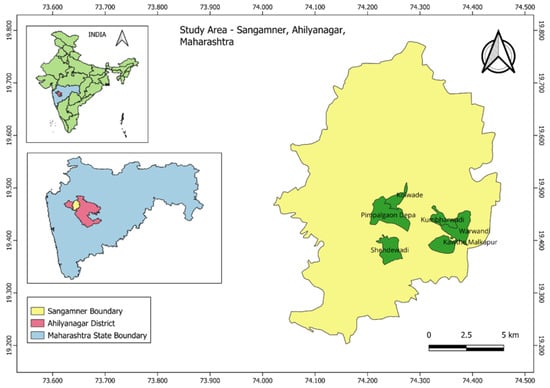
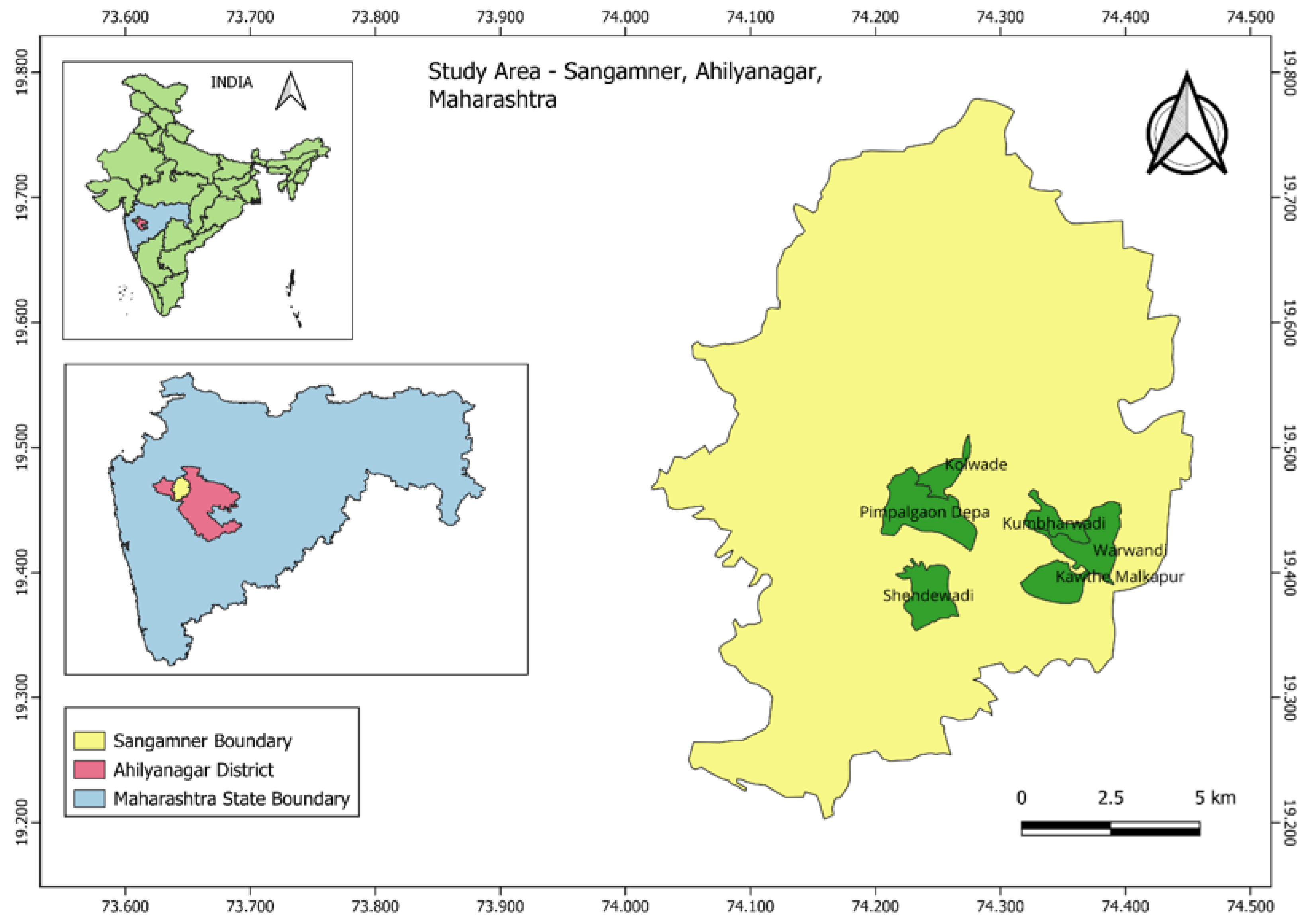
The study was conducted in the Sangamner taluka of Ahilyanagar District (formerly Ahmednagar) in Maharashtra State, India (Figure 1). The data were collected mainly from six villages in Sangamner tehsil: Kawthe Malkapur, Kolwade, Kumbharwadi, Pimpalgaon Depa, Shendewadi, and Warwandi. Sangamner is a semi-arid region lying in the rain-shadow area of Maharashtra, which is an agroclimate zone (western plateau and hills region and western Maharashtra scarcity zone) [12,13]. The area is drained by the Pravara River, a tributary of the Godavari River. Over 90% of the land in the region practices intensive farming [12].
Figure 1.
Study area map showing the location of Sangamner taluka in Ahilyanagar District, Maharashtra, India. Village boundaries (Dark green polygons) indicate Kolwade, Pimpalgaon Depa, Shendewadi, Kawthe Malkapur, Warwandi, and Kumbharwadi. The light green shaded area represents area outside. the study region.
The region experiences rainfall during the months June to September with an average annual rainfall in the range 400–560 mm. The rainfall peaks in September and the temperature peaks in May, with an average maximum of 36.5 degrees Celsius, while the lowest temperature is expected in the month of December with an average minimum of 14 degrees Celsius. Kharif (June–September) and Rabi (October–January) are the months when cropping is practiced, whereas summer has limited crops due to limited groundwater [13].
2.2. Sampling Procedures and Sample Size
This cross-sectional household survey was conducted in July 2024 in collaboration with the Watershed Organisation Trust (WOTR) in Sangamner. The six villages were selected based on their relative similarity in terms of the adoption of drip irrigation and semi-arid conditions. Within these villages, a non-probability sampling approach was used to select 159 farming households for the survey. Households were selected using convenience sampling based on accessibility and willingness to participate, facilitated through local networks. Efforts were made during data collection to ensure representation across different farm sizes, social groups, and irrigation practices, including both drip adopters and non-adopters, although household selection was not random.
2.3. Data Gathering
Primary data were collected through structured face-to-face interviews with one member of each household for the 2023–2024 agricultural year. The interviews followed ethical conduct, and participants provided pre-informed consent. The interviews lasted 1–1.5 h and were conducted in the local language, Marathi, with the help of three team members to minimise bias and proxy responses. The questionnaire covered: (1) member details (Name of house head, family members, age, education); (2) household demographics (household size, religion, social group, monthly consumption); (3) land details (landholding size, use of land (rabi/kharif)); (4) crop production (area of production, irrigation type/source, inputs like seed/fertiliser, costs, sales of main/by-product/value-added items); and (5) livestock information (inputs, production, sales). Secondary sources included reports and the existing literature.
2.4. Data Analysis
Data from 159 household questionnaires were entered into Microsoft Excel (Microsoft Corporation, Redmond, WA, USA) and cleaned using the same. Further descriptive statistical analysis was used to summarise basic socioeconomic characteristics. A binary logistic regression model was used in subsequent analysis to identify determinants of drip irrigation adoption using IBM SPSS Statistics for Windows, Version 25.0 (IBM Corp., Armonk, NY, USA). The dependent variable was coded as 1 for drip irrigation adopters and 0 for non-adopters. Further variables included: gender (male =1, female = 0), education (low (1) = up to primary, medium (2) = up to secondary/higher secondary, high (3) = graduation and above), social group (other backward class (1), others (2), scheduled caste (3), scheduled tribe (4); entered as dummy variables), binary indicators for government schemes access like kisan credit card, soil health card, Pradhan Mantri Fasal Bima Yojna, and FPO membership (yes = 1, no = 0). Landholding size was classified into terciles using visual binning: ≤4 acres (1), 4–7.25 acres (2), and >7.25 acres (3). Finally, the age of household heads was analysed as a continuous variable.
2.5. Methodological Limitations
The use of non-probability (convenience) sampling limits the statistical representativeness of the sample. As a result, findings should be interpreted as indicative of patterns within the selected villages rather than generalisable to the wider Sangamner taluka or other semi-arid regions.
3. Results and Discussion
Results are interpreted with reference to the sampled households in the selected villages and should be understood as context-specific rather than broadly generalisable.
3.1. Sample Characteristics
The survey covered 159 households in which drip adopters and non-adopters turned out to be equally distributed (i.e., 50% each). Male respondents were predominant (91.14%), and the average age of all respondents was 50.8 years (median = 48). The average landholding size of the respondents was 6.77 acres. In terms of education, 13.38% were graduates, 50.96% had pursued education up to the secondary/higher secondary level, and 26.75% had pursued education up to the primary/lower level, while 8.91% were illiterate. The sample of the population was socially diverse with 56.96% other backward caste (OBCs), 32.91% scheduled tribe, 7.59% other (including general category), and 2.53% scheduled caste.
The results of access to government schemes and institutions varied across schemes; only 20.89% of respondents were FPO members, while 53.80% owned Kisan Credit Cards and 72.78% had crops insured under Pradhan Mantri Fasal Bima Yojna (PMFBY). On the other hand, soil health card adoption was low at 33.12%.
3.2. Adoption Patterns by Socioeconomic Factors
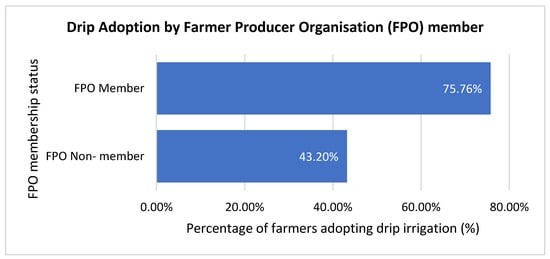
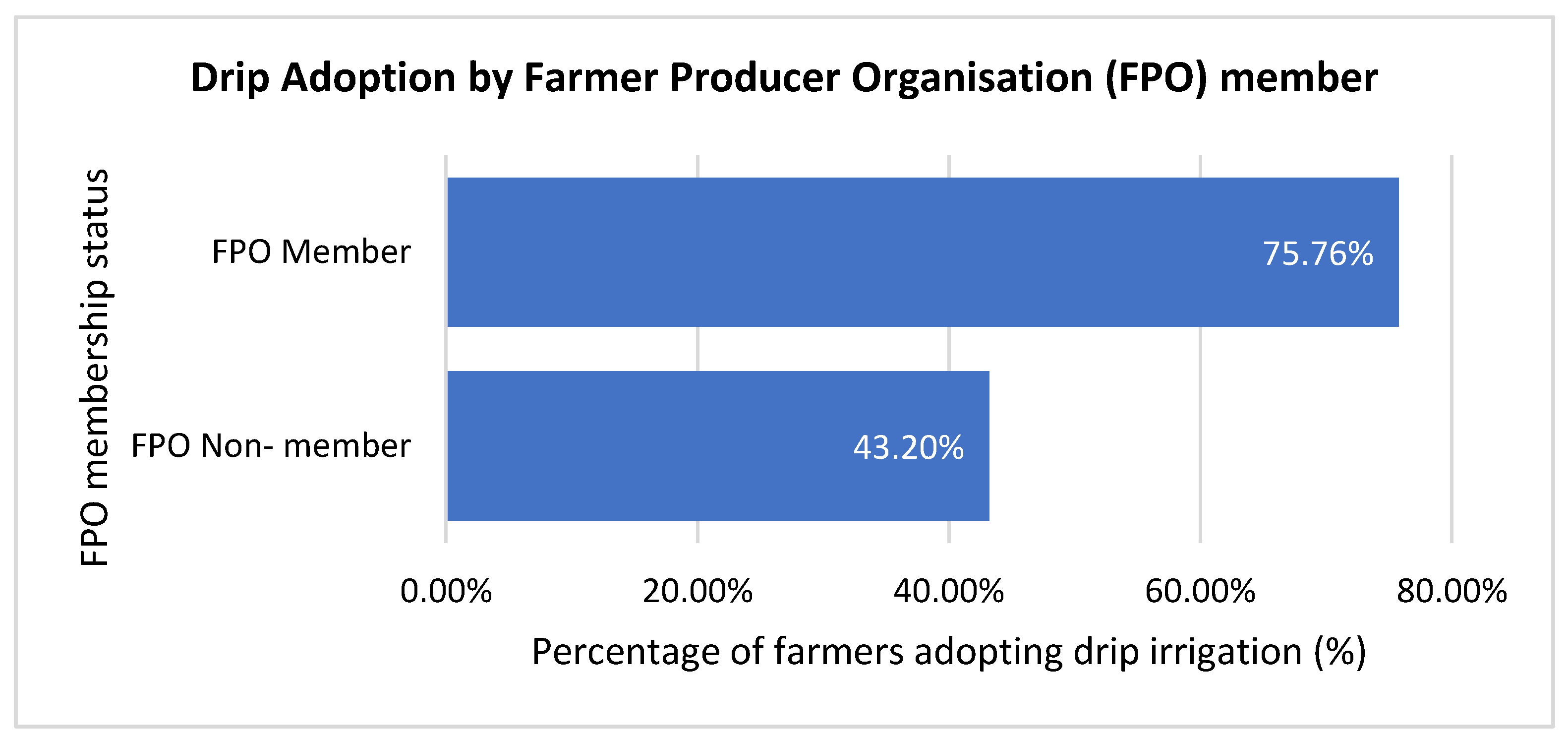
The most striking pattern in the adoption of drip irrigation was observed in FPO membership (Figure 2); 75.76% of FPO members had adopted drip irrigation, while only 43.20% of non-members had done so.
Figure 2.
Drip adoption by FPO membership status of the farmers (n = 159).
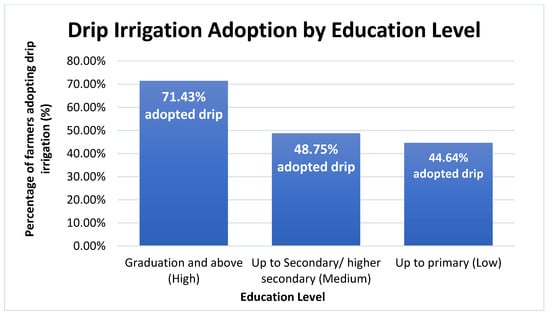
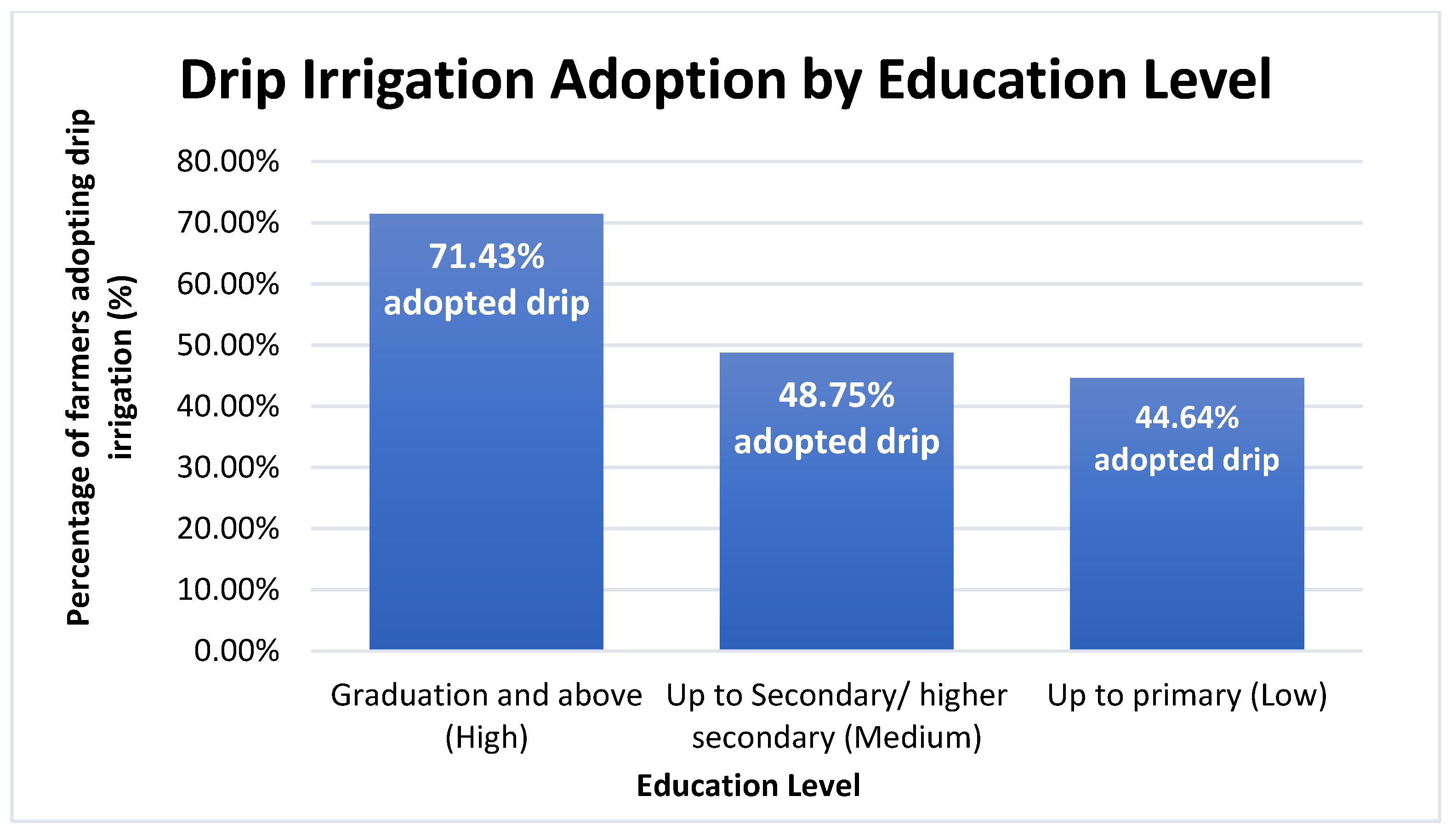
Furthermore, adoption rates decreased with a decline in educational level (Figure 3). A total of 71.43% of graduates adopted drip irrigation, with 48.75% of those with medium education (up to secondary/higher secondary level) adopting it, whereas only 44.64% of farmers with low education adopted it.
Figure 3.
Drip adoption by education level of the farmers (low, medium, high), expressed as percentage of adopters (n = 159).
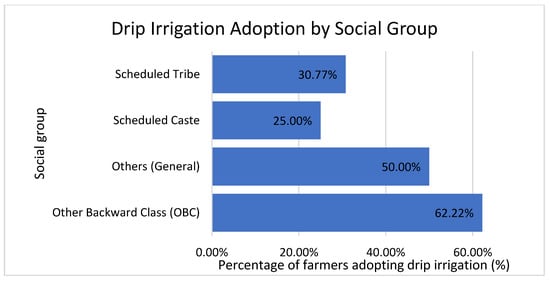
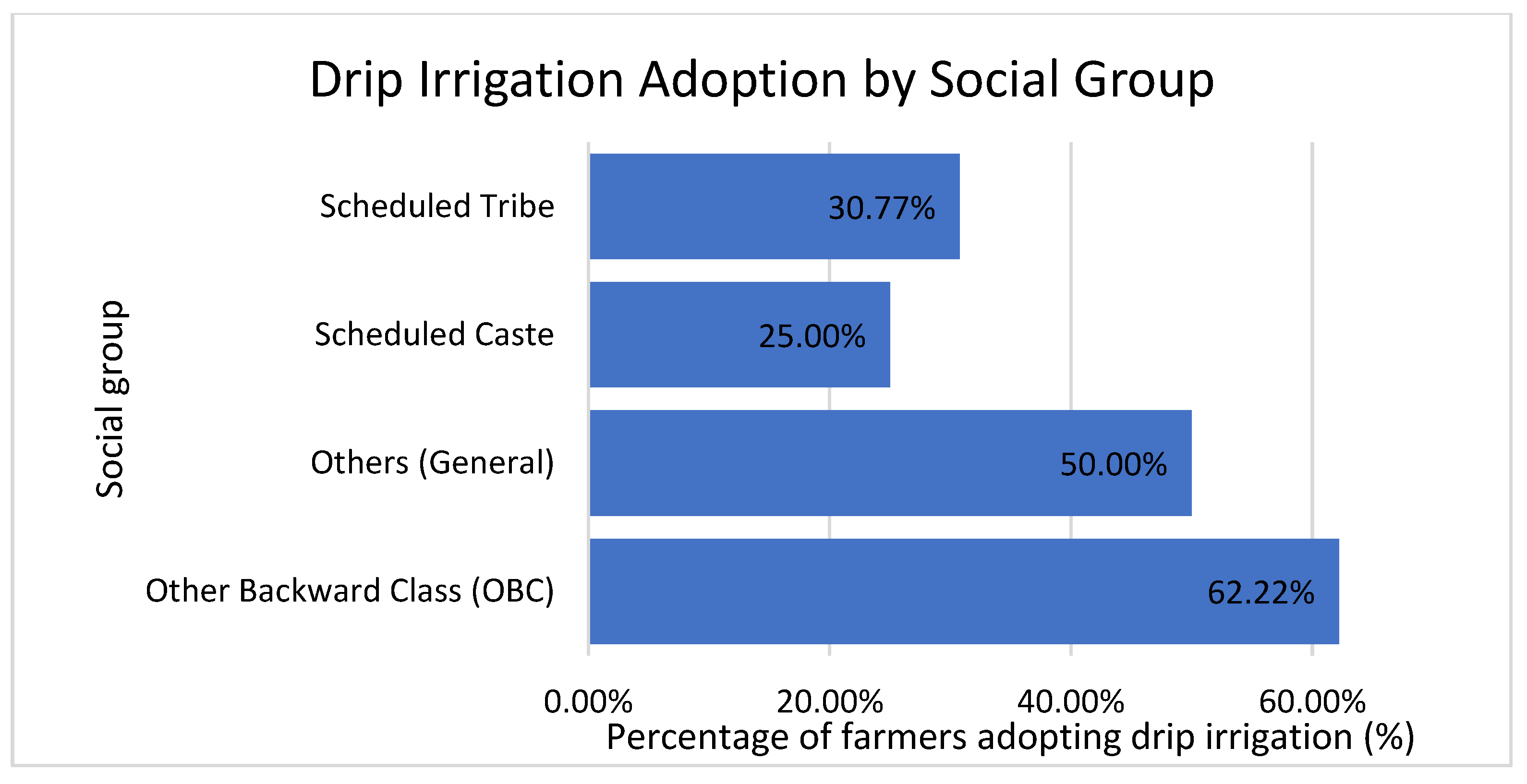
Social groups also demonstrated a clear relationship (Figure 4); the highest adoption rate was shown by OBC farmers at 62.22% followed by others (including the general category) at 50%. The adoption rates for the scheduled caste and scheduled tribe stood at 25% and 30.77%, respectively.
Figure 4.
Drip adoption by social group of the farmers (OBC, others, scheduled caste, scheduled tribe), expressed as percentage of adopters (n = 159).
3.3. Determinants of Adoption: Logistic Regression Results
The binary logistic regression model fit well (Omnibus χ2 = 53.65, p < 0.001; Nagelkerke R2 = 0.392; Hosmer–Lemeshow p = 0.109). From the 13 variables analysed, 5 acted as significant factors in drip adoption; these included education, social group, FPO membership, land size, and age (Table 1). Education was a significant factor affecting drip adoption; farmers with primary and secondary education were respectively 84% (OR = 0.16, p = 0.017) and 74% (OR = 0.26, p = 0.035) less likely to adopt drip compared to graduates. Further social stratification played a substantial role in making OBC farmers approximately four times more likely to adopt drip than a scheduled tribe farmer (OR = 4.04, 95% CI: 1.55–10.50, p = 0.004), indicating that socially marginalised farmers often face disadvantage in accessing technologies, consistent with earlier evidence on caste and institutional barriers to micro-irrigation adoption in Maharashtra and Gujrat [8,14]. Institutions also played a crucial role. FPO membership was the single most powerful predictor, where FPO non-members were 87% less likely to adopt (OR = 0.126, p < 0.001). Larger landholding size and older age increased adoption likelihood. With each additional acre, the odds of adoption increased by 14.5% (p = 0.015), and with each additional year in age, it increased by 4% (p = 0.046), indicating that the scale of farming and years of experience affect willingness to invest in drip irrigation.
Table 1.
Logistic regression estimates of socioeconomic determinants of drip irrigation adoption (n = 159).
On the other hand, gender and government schemes, such as KCC, SHC, and PMFBY, demonstrated no statistically significant impact on adoption, suggesting limited effectiveness in enabling drip investment among vulnerable stakeholders within the study sample. While these schemes are widespread, they may not sufficiently address the financial or institutional barriers faced by smallholders.
The results suggest that within the study sample, the main constraints were not technical but structural, shaped by social hierarchies, educational gaps, and uneven institutional integration. These patterns align with broader studies showing that education, landholding size, and access to collective institutions are key drivers of water-saving technology uptake in semi-arid India. For strengthening drip adoption, FPO-based activity could further promote positive results within similar institutional contexts, and targeting vulnerable communities like certain social groups under PMKSY, along with subsidies, could increase drip irrigation adoption. This approach could help maintain long-term agricultural resilience in the drought-prone region.
4. Conclusions
The study primarily examined the social, economic, and institutional factors influencing the adoption of drip irrigation in a water-scarce semi-arid region, Sangamner, and revealed that the major factors affecting adoption are education, age, landholding size, social group, and FPO membership. The general pattern observed is that adoption was better among well-educated OBC farmers and FPO members, indicating social stratification. Based on climate projections for Maharashtra and the observed groundwater decline, increasing the adoption of drip irrigation is essential, as it not only saves water, but also delivers substantial yield gains for crops. This scaling up of drip irrigation must embed an equity-focused policy that prioritises vulnerable stakeholders through targeted extension.
Funding
This research received no external funding.
Institutional Review Board Statement
Not applicable.
Informed Consent Statement
Informed consent was obtained from all respondents involved in the survey.
Data Availability Statement
Research data are available upon reasonable request.
Acknowledgments
The author thanks the faculty of the Labour Market Research Facility, School of Management and Labour Studies, Tata Institute of Social Sciences, for their guidance and feedback. The data were collected as part of a rural immersion program conducted in collaboration with the Watershed Organisation Trust (WOTR), Sangamner. All participating students are gratefully acknowledged for their contributions to the fieldwork data collection. The author utilised an AI-assisted tool for language and style editing; all the analyses and interpretations are the author’s own.
Conflicts of Interest
The author declares no conflicts of interest.
References
- Government of India. Economic Survey 2023–2024; Ministry of Finance, Department of Economic Affairs, Economic Division: New Delhi, India, 2024. [Google Scholar]
- Government of India. Agricultural Situation in India, April 2022; Directorate of Economics and Statistics, Department of Agriculture & Farmers Welfare, Ministry of Agriculture & Farmers Welfare: New Delhi, India, 2022. Available online: https://eands.da.gov.in/PDF/Agricultural%20Situation%20in%20India%20April%202022.pdf (accessed on 10 April 2025).
- Suresh, A.; Raju, S.S.; Chauhan, S.; Chaudhary, K.R. Rainfed agriculture in India: An analysis of performance and implications. Indian J. Agric. Sci. 2014, 84, 1415–1422. [Google Scholar] [CrossRef] [Scilit]
- Rudraswamy, G.K.; Umamahesh, N.V. Investigating the impact of climate change on irrigation and crop water requirements of Bhadra and Tungabhadra command area: A CMIP-6 GCMs and CROPWAT 8.0 approach. Water Supply 2024, 24, 625–642. [Google Scholar] [CrossRef] [Scilit]
- Thorat, A.; Dutta, A. The seasonal characteristics and variability of rainfall in the Ahmednagar District of Maharashtra, India: A statistical analysis. J. Adv. Sch. Res. Allied Educ. 2022, 19, 174–178. Available online: https://ignited.in/index.php/jasrae/article/view/14069 (accessed on 9 April 2025).
- Central Ground Water Board. Aquifer Maps and Ground Water Management Plan: Ahmednagar District, Maharashtra; (AAP 2017–18, 2019–2020); Ministry of Jal Shakti, Department of Water Resources, River Development & Ganga Rejuvenation, Government of India: Central Region, Nagpur, India, 2021. Available online: https://cgwb.gov.in/old_website/AQM/NAQUIM_REPORT/Maharshtra/1_Ahmednagar.pdf (accessed on 15 April 2025).
- Sijali, I.V. Drip Irrigation: Options for Smallholder Farmers in Eastern and Southern Africa; Regional Land Management Unit: Nairobi, Kenya, 2001. [Google Scholar]
- Hatch, N.R.; Daniel, D.; Pande, S. Behavioral and socio-economic factors controlling irrigation adoption in Maharashtra, India. Hydrol. Sci. J. 2022, 67, 847–857. [Google Scholar] [CrossRef] [Scilit]
- GMohan, G.; Perarapu, L.N.; Chapagain, S.K.; Reddy, A.A.; Melts, I.; Mishra, R.; Avtar, R.; Fukushi, K. Assessing determinants, challenges and perceptions to adopting water-saving technologies among agricultural households in semi-arid states of India. Curr. Res. Environ. Sustain. 2024, 7, 100255. [Google Scholar] [CrossRef] [Scilit]
- Chand, S.; Kishore, P.; Kumar, S.; Srivastava, S.K. Potential, Adoption and Impact of Micro Irrigation in Indian Agriculture; Department of Agriculture and Farmers Welfare, Ministry of Agriculture and Farmers Welfare, Government of India: New Delhi, India, 2020; pp. 1–93. Available online: https://pdmc.da.gov.in/files/General-Information/Report/3-1727113935.pdf (accessed on 9 April 2025).
- Todmal, R.S. Droughts and Agriculture in the Semi-Arid Region of Maharashtra, Western India. Weather Clim. Soc. 2019, 11, 741–754. [Google Scholar] [CrossRef] [Scilit]
- Deshmukh, K.K. Chemistry of groundwater in Sangamner area with regard to their suitability for drinking purposes. Rasayan J. Chem. 2011, 4, 770–779. [Google Scholar]
- Awasthi, S.; Kamble, P. Variations in Temperature and Rainfall in Sangamner Taluka of Ahmednagar District, Maharashtra; Watershed Organisation Trust (WOTR): Pune, India, 2013; Available online: https://www.scribd.com/document/320159134/Variations-in-Temperature-and-Rainfall-in-Sangamner-Taluka (accessed on 14 April 2025).
- Namara, R.; Upadhyay, B.; Nagar, R.K. Adoption and Impacts of Microirrigation Technologies: Empirical Results from Selected Localities of Maharashtra and Gujarat States of India; International Water Management Institute: Colombo, Sri Lanka, 2005. [Google Scholar]

Disclaimer/Publisher’s Note: The statements, opinions and data contained in all publications are solely those of the individual author(s) and contributor(s) and not of MDPI and/or the editor(s). MDPI and/or the editor(s) disclaim responsibility for any injury to people or property resulting from any ideas, methods, instructions or products referred to in the content. |
© 2026 by the author. Licensee MDPI, Basel, Switzerland. This article is an open access article distributed under the terms and conditions of the Creative Commons Attribution (CC BY) license.