


Abstract
This study analyzes the olive tree in the Menara Garden (Marrakech) to elucidate its role in the resilience of semi-arid urban agroecosystems. By combining hyperspectral remote sensing, bioeconomic modeling, and biophysical analyses, it quantifies the ecosystem services provided by the park (100 ha, 10000 trees). The results demonstrate optimal microclimate regulation (evapotranspiration accounting for 53.21% of the water balance), significant pollutant sequestration (carbon dioxide (CO2), ozone (O3), nitrogen dioxide (NO2), sulfur dioxide (SO2), particulate matter (PM)), soil stabilization, and circular valorization of 268 t/year of biomass. These performances stem from adaptive traits (adjustable stomatal conductance, phenotypic plasticity), enabling water savings of 35 ± 5%. The study proposes a framework integrating plant physiology, ecosystem services, and SDGs, advocating for urban policies refocused on green infrastructure as pillars of sustainability in semi-arid zones.
1. Introduction
The Mediterranean basin, already experiencing warming above +1.5 °C and projected to see extreme droughts intensify by 20 to 30% by 2050 [1], is under increasing climatic pressure [2]. In this context, olive trees represent both a socio-economic and an ecological pillar [3,4]. The region accounts for nearly 98% of global olive production and is a vital resource for several Mediterranean countries, including Morocco, the world’s fifth-largest producer, with an annual output of approximately 2 million t [5]. Meanwhile, urban areas, home to 56% of the world’s population and responsible for over 70% of CO2 emissions, are particularly exposed to the effects of climate change [6]. Urban heat islands amplify temperatures by 3 to 10 °C, exacerbating water and energy stress [1], and Morocco is no exception to these challenges. Although olive trees provide essential ecosystem services—carbon sequestration, air purification, hydrological regulation, and local cooling that can reach −2 to −8 °C; their quantitative assessment in semi-arid environments remains highly inadequate [7].
Recent studies [8,9,10,11] have explored various aspects of the olive tree’s potential, but few have quantified its ecosystem services in a semi-arid urban context. This study aims to address this gap by using the historic Menara Garden in Marrakech as a case study. This 100-hectare park, established in the 12th century under the Almohad dynasty, provides an ideal site for analysis. It enables the study of the olive tree’s ecophysiological traits, with the dominant cultivar being Moroccan Picholine and occasional presence of other cultivars such as Menara and Al Houzia, and the quantitative assessment of the ecosystem services it provides. By combining modeling techniques, such as i-Tree, adapted to this specific context, this work proposes an operational framework for agroecological management to enhance urban resilience, support circular economy principles, and preserve biodiversity in semi-arid regions.
2. Materials and Methods
2.1. Research Questions
- • How does the plasticity of functional traits in olive trees modulate its regulatory ecosystem services in a semi-arid urban heat island?
- • Can urban olive groves serve as a model for resilient green infrastructure for climate change mitigation and adaptation in semi-arid Mediterranean cities?
2.2. Research Approach and Materials
- • Quantitative approach: This approach aims to quantify the ecosystem services provided by the historic Menara Park (spanning 100 hectares of olive groves) and to assess its ecological performance in order to determine its specific contribution to the urban resilience of Marrakesh.
- • Empirical data collection: A field sampling protocol was implemented in the study area. It consisted of systematic site visits to collect the dendrometric parameters necessary for modeling (including botanical identification, diameter at breast height (DBH), total height, and crown dimensions). These fundamental data enable the modeling and quantification of the biophysical benefits generated by the studied public green space.
- • Software tools: The analysis utilized a suite of complementary digital tools: a Geographic Information System (Arcgis 10.8.1) for thematic mapping and spatial analysis, the i-Tree Eco V6 software (a benchmark model in urban forestry) for the biophysical quantification of ecosystem services, and Python 3.9.7 (with the Matplotlib library 3.5.1.) for statistical processing and advanced visualization of the field data.
3. Study Area
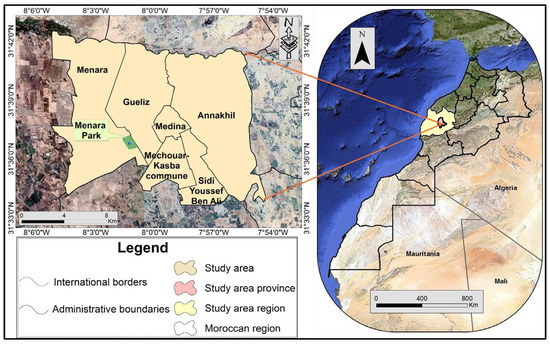
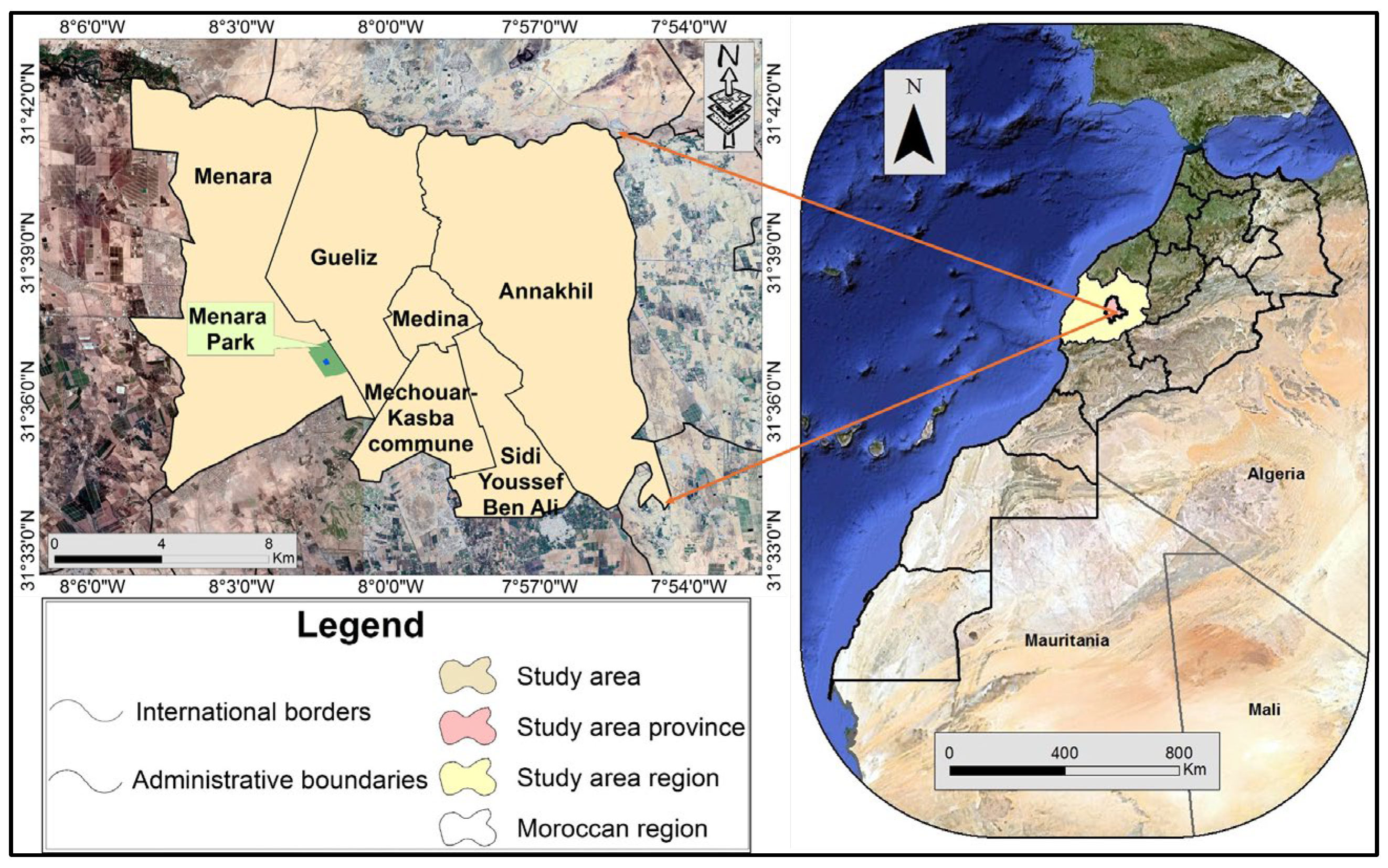
The study was conducted within the Menara Grove, a historic 100-hectare olive grove located in Marrakech, south-central Morocco (31°36′–31°42′ N, 7°55′–8°01′ W). The city, which belongs to the Marrakech-Safi region, covers an area of 230 km2 and is divided into five districts and one urban commune, with the park situated in the Menara district (Figure 1). The dominant olive variety in this grove is ‘Moroccan Picholine’, represented by the Menara and Al Houzia ecotypes. Analysis of the architectural parameters of this variety reveals mean dimensions of 4.5 ± 0.8 m for total height and 5.0 ± 1.0 m for crown diameter. This configuration, in which the horizontal spread tends to exceed the height, defines a spreading to sub-hemispherical growth habit, characteristic of biomass allocation oriented toward lateral development.
Figure 1.
Study area location. Source: Authors (2026).
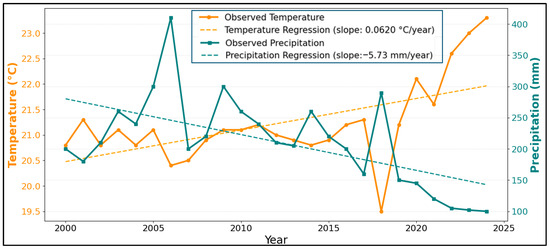
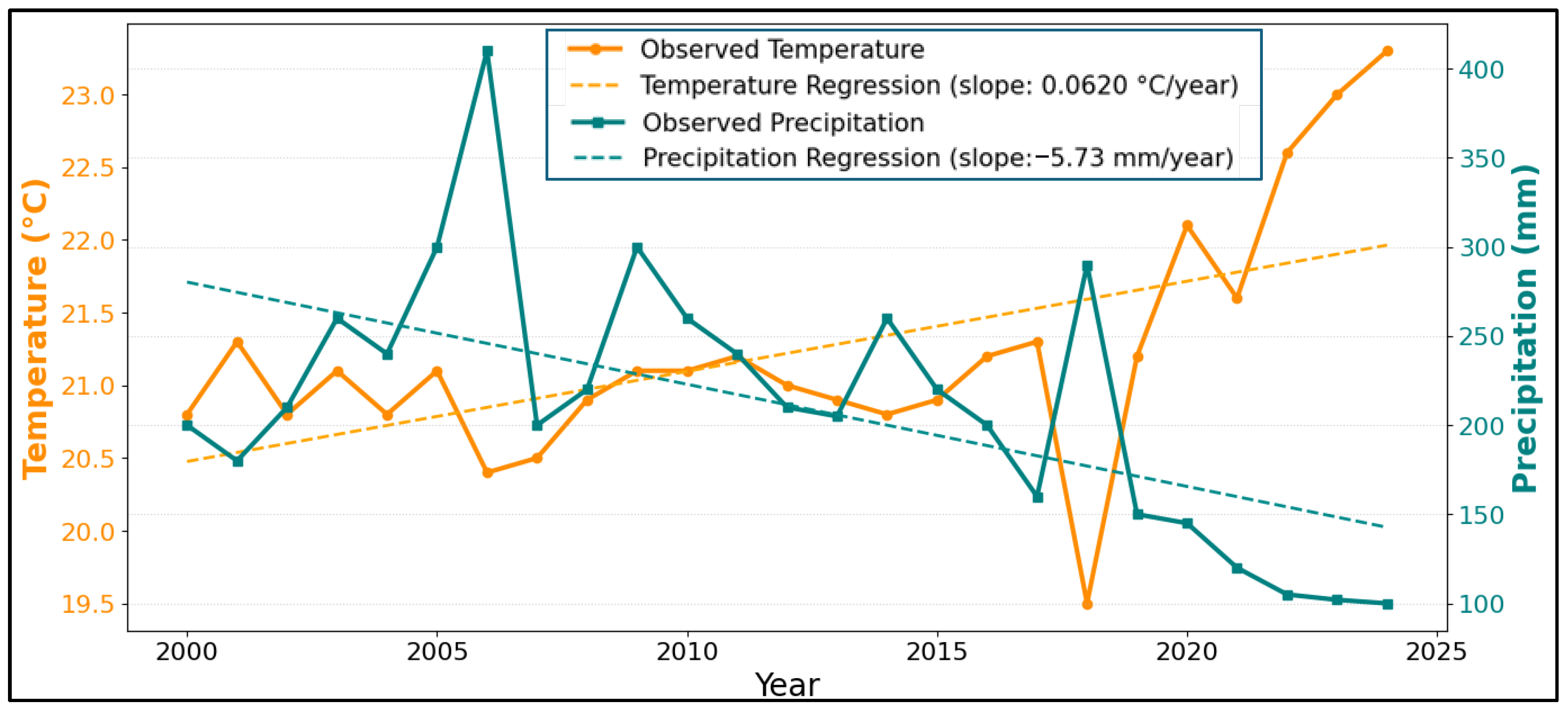
The Marrakech study area has a semi-arid climate. Analysis of local meteorological data (1990–2024) reveals significant trends in the context of global climate change. Mean annual temperature increased significantly from 20.8 °C to 23.3 °C (+2.5 °C). This warming intensified extreme events, with heatwave frequency rising by 0.11 days per year (+5 days total). Concurrently, mean annual precipitation declined sharply from 166.1 mm to 83.1 mm (−83 mm total). This increased aridity correlated with reduced cold spell frequency (0.13 days per year, totaling 6 days over 34 years) (Figure 2).
Figure 2.
Analysis of changes in temperature and precipitation patterns over the period 2000–2024. Source: TerraClimate, 2025.
4. Results and Discussion
4.1. Microclimate Regulation and Water Use Efficiency
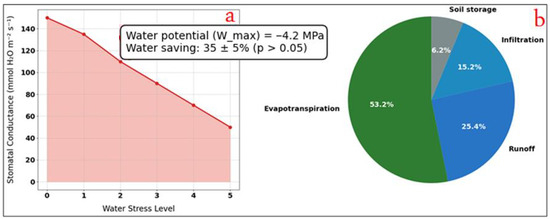
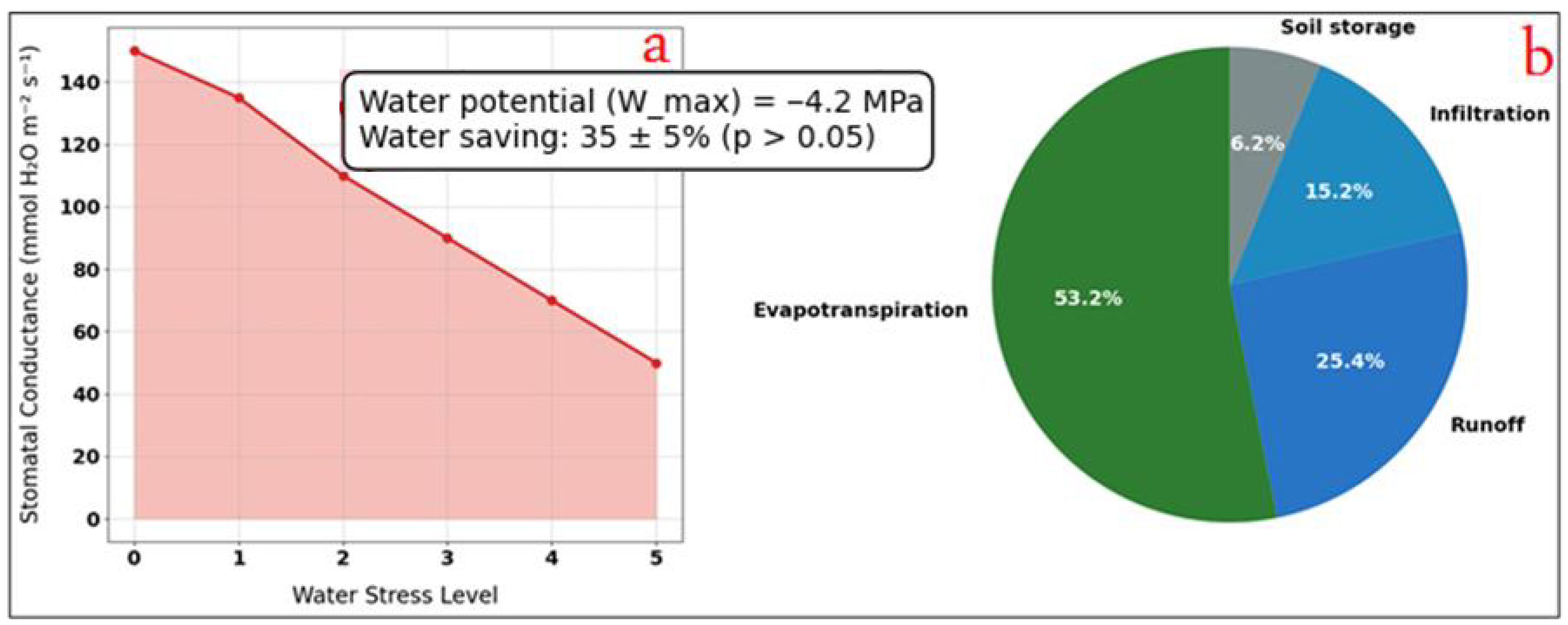
The results demonstrate an optimized regulation of the microclimate, where evapotranspiration accounts for 53.21% of the local water balance, thereby helping to mitigate the urban heat island effect. This performance is underpinned by adaptive functional traits: an adjustable stomatal conductance (50–150 mmol H2O m−2 s−1), a moderate leaf area index (2.5–4.0), and high phenotypic plasticity under water stress conditions. Hydraulic simulations confirm an exceptional optimization of water flux, with a maximum water potential (Ψmax) measured at −4.2 MPa. This adaptation enables significant water savings, estimated at 35 ± 5%, without a notable yield reduction (p > 0.05), a result that supports the hypothesis that the Moroccan Picholine cultivar is well-adapted to the local semi-arid climate [12,13] (see Figure 3).
Figure 3.
Ecophysiological adaptation (a) and water regulation dynamics of urban olive trees under semi-arid conditions (b). Source: i-Tree Eco Model Results (2025).
The analysis reveals that the adaptive functional traits of century-old olive trees; notably their phenotypic plasticity and hydraulic optimization, underpin their resilience and multifunctionality. This finding expands the scope of research on varietal selection for abiotic stress tolerance [8,9] by identifying acclimatized local phenotypes as a valuable genetic reservoir for urban agroforestry.
4.2. Atmospheric Regulation Ecosystem Services
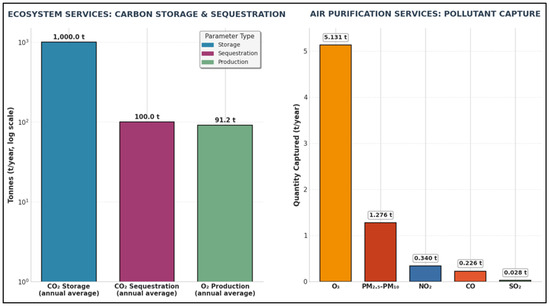
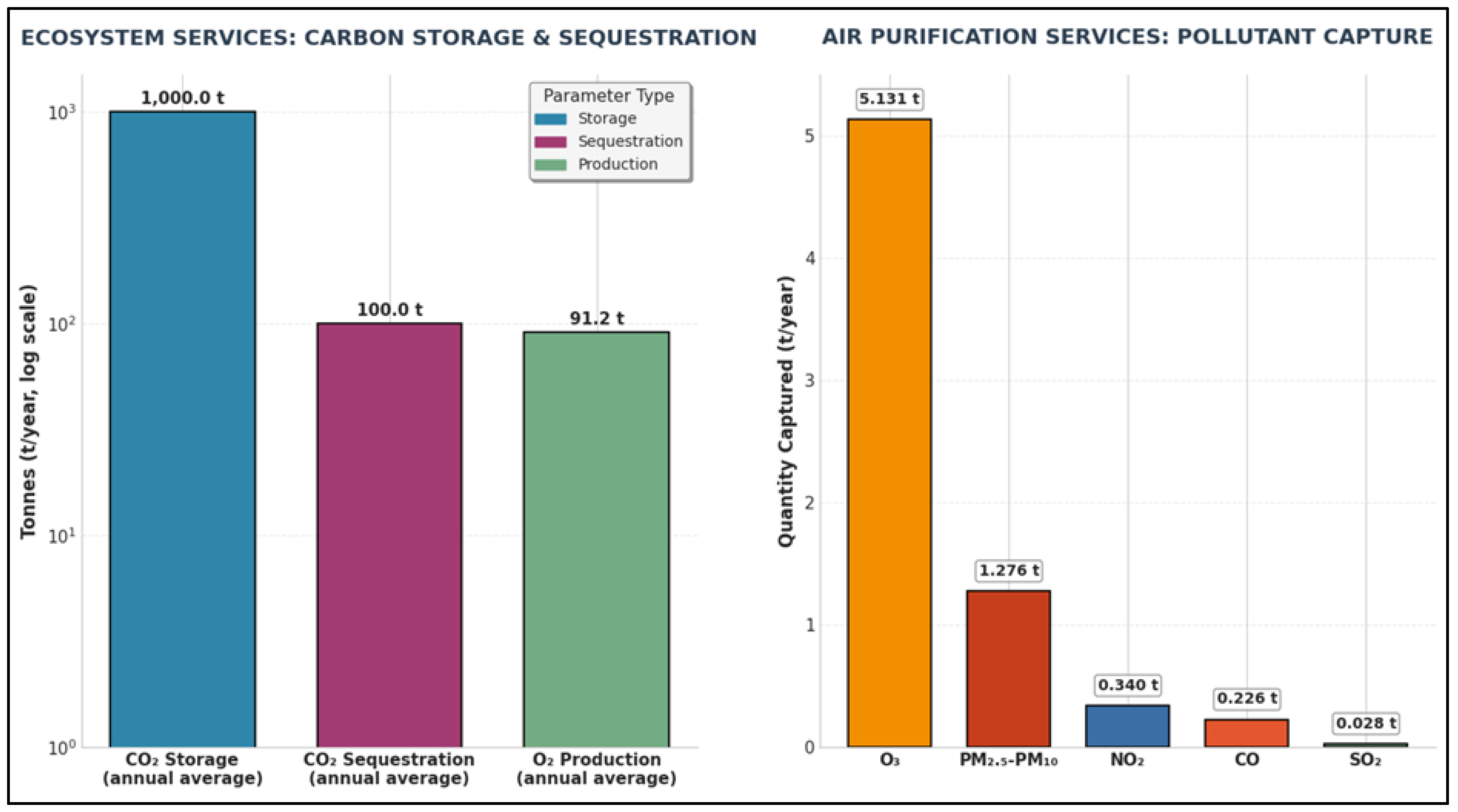
The forest stand, with over 10,000 trees on the site, provides critical ecosystem services related to the carbon cycle and air quality. It significantly contributes to carbon dioxide (CO2) storage and sequestration, oxygen (O2) production, and the removal of atmospheric pollutants. The associated average annual flows are quantified as follows: CO2 storage is estimated at approximately 1000 t; net carbon sequestration reaches nearly 100 t, corresponding to an oxygen production of 91.2 t. At the same time, the stand improves air quality through the annual capture of several pollutants, including 5.131 t of ozone (O3), 1.276 t of suspended particulate matter (PM10 and PM2.5), 0.340 t of nitrogen dioxide (NO2), 0.226 t of carbon monoxide (CO), and 0.028 t of sulfur dioxide (SO2) (see Figure 4). These figures highlight the fundamental role of this forest ecosystem in regulating atmospheric processes.
Figure 4.
Synthesis of the Annual Quantified Fluxes for Carbon-Cycle and Air-Quality Regulation Services. Source: i-Tree Eco Model Results (2025).
These annual figures demonstrate the effectiveness of the park’s vegetation in air purification, thereby contributing to the reduction of local atmospheric pollutant loads. This regulatory function is complemented by soil stabilization provided by a deep root system, with penetration depths reaching up to 0.6 m [14,15]. These results confirm the role of the olive tree as an essential green infrastructure in semi-arid environments and validate, through an innovative multi-method approach, assessment methodologies adapted to regions with limited access to high-resolution data [10].
4.3. Biomass Production and Valorization
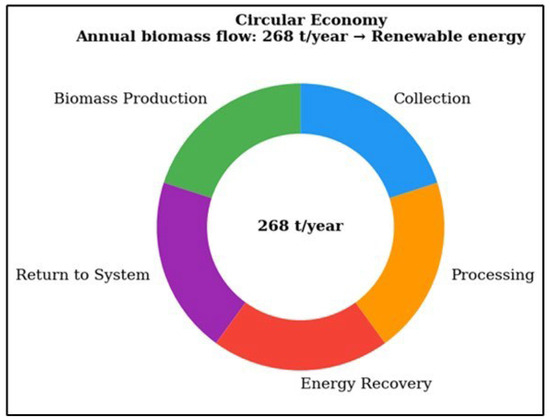
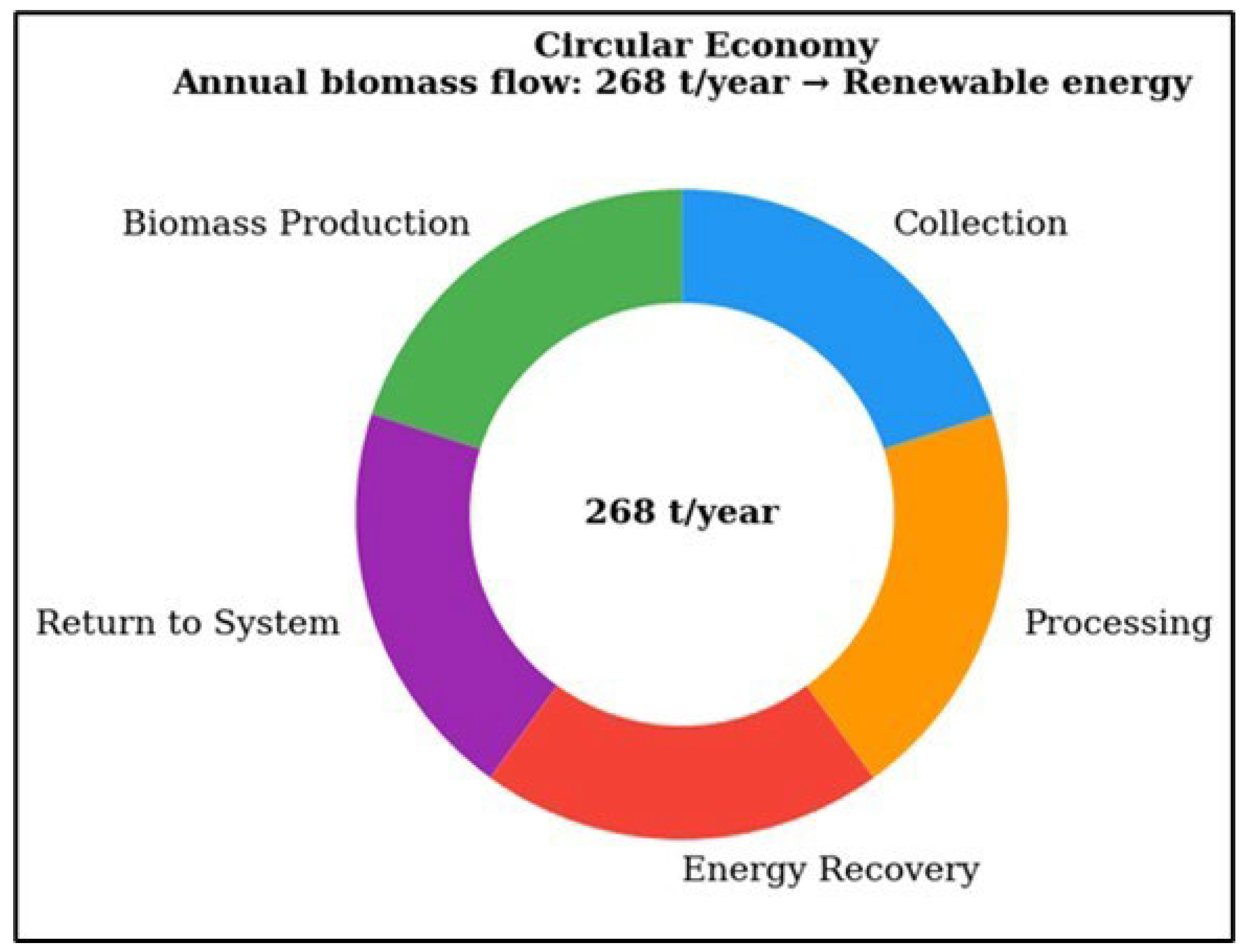
In addition to the annual olive harvest, periodic olive tree maintenance activities generate 268 t of residual biomass per year (see Figure 5). Material flow analysis reveals the complete circular valorization of this biomass into renewable energy, effectively demonstrating the integration of circular economy principles within the system.
Figure 5.
Biomass valorization cycle in urban olive cultivation. Source: i-Tree Eco Model Results (2025).
4.4. Environmental Performance
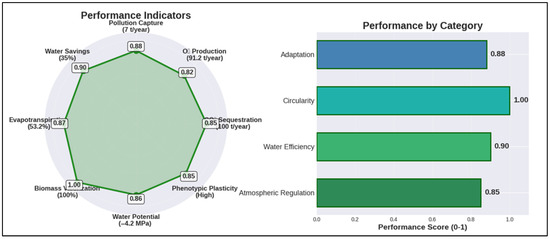
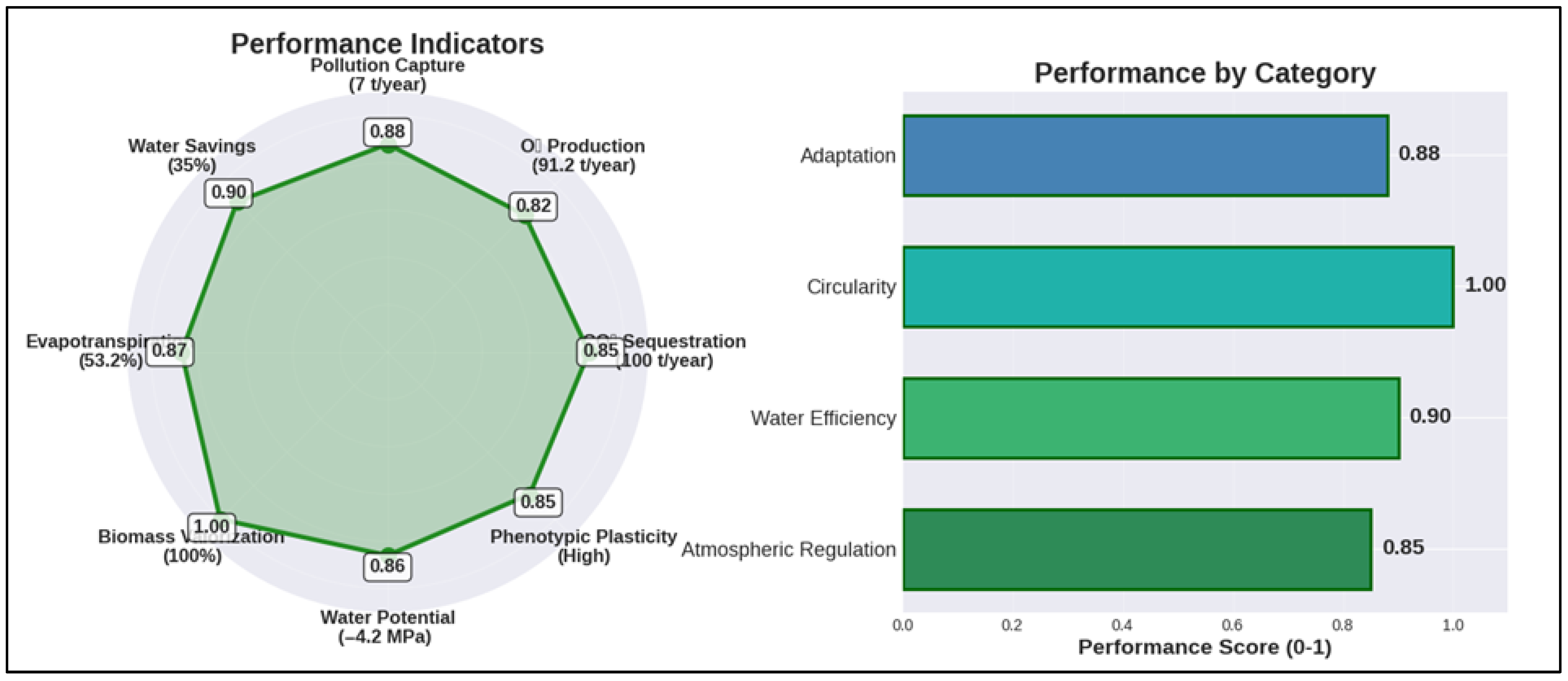
The quantitative and functional analyses conducted on the olive tree stands (Moroccan Picholine) within this historic park reveal an ecological system of remarkable performance, characterized by significant numerical indicators. This performance is articulated around four major axes: effective atmospheric regulation, exceptional water-use efficiency, complete resource circularity, and evolutionary adaptation to local environmental constraints.
The stand, comprising over 10,000 trees, acts as a highly efficient natural infrastructure for atmospheric regulation. It functions as a notable carbon sink, with an estimated stock of 1000 t of CO2 and an annual net sequestration of approximately 100 t of carbon, equivalent to an oxygen production of 91.2 t. Its role as a biological filter is also quantified by the annual capture of over 7 t of atmospheric pollutants, thereby directly improving urban air quality. These functions are supported by an optimized leaf area, characterized by a moderate Leaf Area Index (LAI) of 2.5–4.0, which promotes efficient gas exchange while limiting water loss.
Simultaneously, the olive tree exhibits exceptional water-use efficiency, enabling a 35 ± 5% water savings without a significant reduction in productivity. This performance relies on adaptive physiological traits, notably a minimum water potential of 4.2 SMPa; conferring a high tolerance to water stress; and an adjustable stomatal conductance (50–150 mmol H2O·m−2·s−1), allowing for fine-tuned optimization of water loss. Evapotranspiration, which accounts for 53.21% of the local water balance, substantially contributes to regulating the urban microclimate by mitigating the urban heat island effect.
The system also exemplifies a perfected circular-economy model by fully valorizing residual biomass. The entire 268 t of annual residues from management and production can be converted into energy resources, thereby achieving a 100% circularity rate. This closed-loop transforms secondary waste flows into valuable inputs, enhancing the sustainability and autonomy of the agroecological system (see Figure 6).
Figure 6.
Comprehensive performance evaluation of olive trees. Source: i-Tree Eco Model Results (2025).
Overall, this suite of performances is underpinned by a remarkable adaptive capacity, driven by high phenotypic plasticity. This allows the species to modulate its functional traits, such as leaf area and stomatal regulation; in response to variations in environmental conditions, particularly water availability.
4.5. The Socio-Cultural Dimension of the Menara: An Integral Component of Ecosystem Services
The Menara Garden represents an authentic socio-ecological system. Its value and resilience are the product of centuries of interactions between nature and society, making it a fundamental pillar of Marrakech’s identity. As a landscape archive and iconic symbol, the Menara embodies the city’s cultural memory and identity. This patrimonial attachment, grounded in its religious, historical, aesthetic, and identity-related values, constitutes the primary driver of its conservation. This socio-cultural dimension is not merely a “backdrop” but an essential synergistic factor that structures its ecology and ensures its long-term survival.
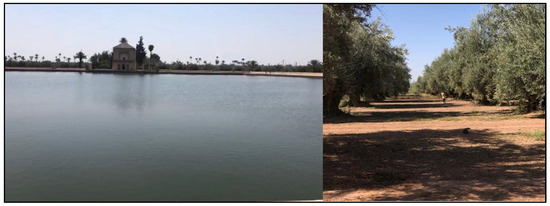
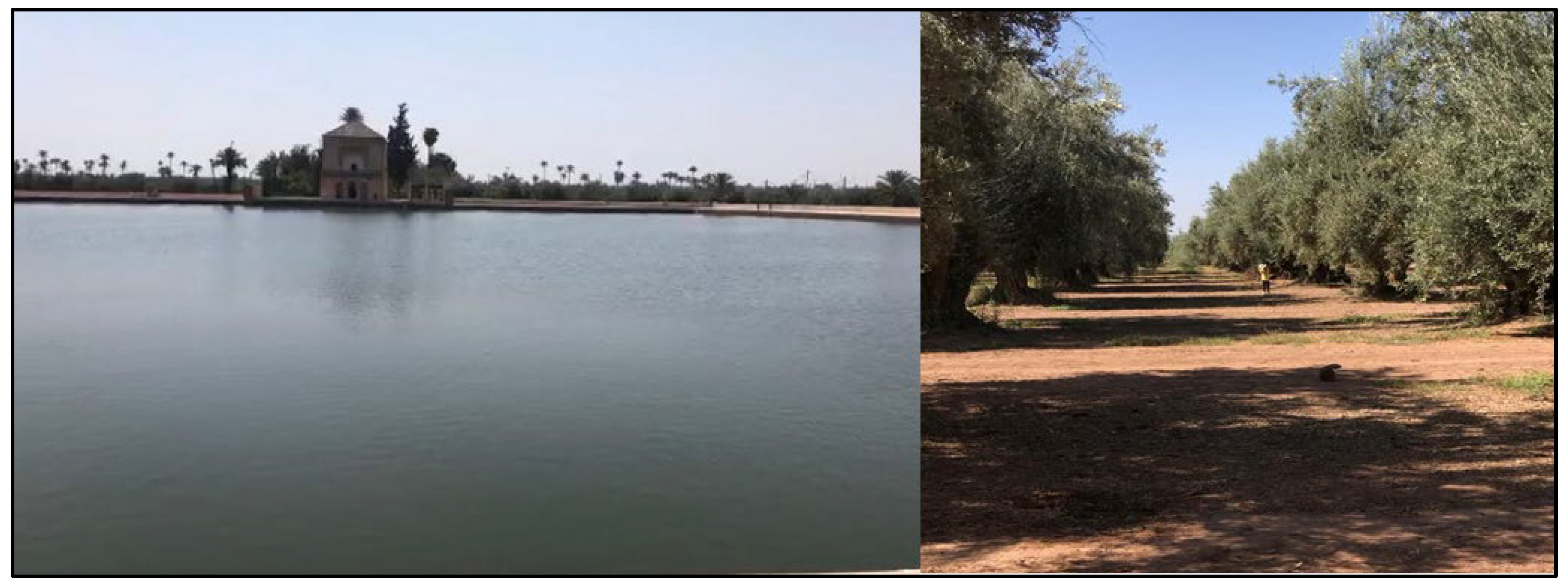
Created in the 12th century under the Almohad dynasty, the site embodies a form of sustainable water management, ingeniously adapted to a semi-arid environment. Its establishment was a political, symbolic, and technical act that demonstrated territorial mastery and the power to dispense fertility [16]. This project is part of the tradition of Arabo-Islamic hydraulic engineering, which marked a turning point due to its experimental and mathematical approach [17]. Its operation relies on a sophisticated network of Khettaras (subterranean canals) and Seguias (surface canals) that supply a large reservoir (Sahrij). These water conveyance and distribution systems, refined by Arab engineers such as the Banū Mūsā brothers, Alḥājj Yaʻīsh… were deployed in imperial cities like Marrakech, integrating water management within a framework that was both utilitarian and aesthetic. Historically, the Menara reservoir has served multiple functions (military, agricultural, social), forging a hydraulic heritage that continues to support its ecological function to this day (Figure 7). In practice, this attachment ensures the preservation of these ancestral systems and secures the sustainability of the ecosystem they support [18].
Figure 7.
Landscape composition of the Menara site: the basin (Sahrij) and its olive grove setting. Source: Authors (2025).
A profound synergy links the site’s socio-cultural dimension to its ecological performance. The conservation of its tangible and intangible heritage ensures the continuity of ecological processes. In return, the ecosystem services provided by the tree canopy; notably microclimate regulation and landscape value, strengthen social attachment to the place. This attachment can be partly explained by demonstrated public health benefits: quality green spaces promote psychological restoration and reinforce social cohesion [19]. These benefits are realized through ancestral recreational practices, such as the Nezaha (traditional stroll). This functional interdependence thus generates a virtuous cycle of preservation.
Consequently, any comprehensive assessment of the ecosystem services provided by this historic olive grove must integrate this fundamental human dimension [20,21]. Its role transcends a strictly ecological function. As an accessible natural and heritage resource, the site contributes positively to population mental health, fostering attention restoration, reducing stress and anxiety, and alleviating symptoms associated with depression, anger, and fatigue, thereby illustrating the critical intersection between environmental well-being and human well-being [22,23,24]. In historic urban landscapes, ecological performance and cultural heritage value are inextricably linked and mutually dependent [25,26].
5. Conclusions and Prospects
This study provides robust quantitative evidence establishing that the olive tree (Moroccan Picholine, Menara and Al Houzia) is not only a cultural heritage element but also an essential ecological infrastructure for urban resilience in semi-arid environments. Through a novel methodological framework that integrates hyperspectral remote sensing, bioeconomic modeling (i-Tree Eco), and ecophysiological analysis, we have deciphered the mechanisms by which the historic Menara agroecosystem in Marrakech provides a crucial range of ecosystem services.
The results demonstrate that the adaptive functional traits of the olive tree; notably the plasticity of its stomatal conductance, its exceptional hydraulic efficiency, and its deep root system; constitute the physiological drivers of its ecological multifunctionality. Beyond the specific case studied, this research proposes a reproducible methodological framework for assessing and valorizing the natural capital of urban agroecosystems in the Global South. It validates an approach that couples accessible remote sensing tools with standardized models, such as i-Tree Eco, thereby paving the way for more informed, contextually adapted urban planning.
Therefore, this study advocates for a paradigm shift in the planning of semi-arid cities. It calls for the reclassification of historic agroforestry parks, exemplified by the Menara, into “critical natural infrastructures.” Their agroecological management, which combines climate change mitigation, economic circularity, and biodiversity preservation, should serve as a model to guide future urban policies. These productive and resilient landscapes offer an operational and synergistic pathway for achieving several Sustainable Development Goals (SDGs 11, 12, 13, 15), thereby providing an integrated response to the interconnected challenges of climate change, water security, and urban well-being.
Author Contributions
Conceptualization, A.A.; methodology, A.A.; software, A.A.; validation, A.A.; formal analysis, A.A. and M.B.; investigation, A.A.; resources, A.A.; data curation, A.A. and M.B.; writing—original draft preparation, A.A. and M.B.; writing—review and editing, A.A. and M.B.; visualization, A.A.; supervision, A.A. All authors have read and agreed to the published version of the manuscript.
Funding
This research received no external funding.
Institutional Review Board Statement
Not applicable.
Informed Consent Statement
Not applicable.
Data Availability Statement
Data are contained within the article.
Conflicts of Interest
The authors declare no conflicts of interest.
References
- IPCC. Climate Change 2022: Impacts, Adaptation and Vulnerability. Contribution of Working Group II to the Sixth Assessment Report of the Intergovernmental Panel on Climate Change; Cambridge University Press: Cambridge, UK, 2022. [Google Scholar]
- Essa, Y.H.; Hirschi, M.; Thiery, W.; El-Kenawy, A.M.; Yang, C. Drought characteristics in Mediterranean under future climate change. npj Clim. Atmos. Sci. 2023, 6, 1–13. [Google Scholar] [CrossRef] [Scilit]
- Aboulaiche, A.; Gallad, M. Harnessing the potential of vegetable waste: A path towards sustainable development in Marrakech (Morocco). Rev. Int. De La Rech. Sci. (Rev.-IRS) 2023, 1, 546–557. [Google Scholar] [CrossRef]
- Aboulaiche, A.; Gallad, M. Urban Agriculture in Morocco: Which Model Is Adaptable to Socio-Economic and Environmental Challenges? (The Case of Marrakech). Biol. Life Sci. Forum 2023, 27, 56. [Google Scholar] [CrossRef] [Scilit]
- FAOSTAT. FAO Statistical Yearbook: World Food and Agriculture; FAO: Rome, Italy, 2024. [Google Scholar]
- United Nations Human Settlements Programme (UN-Habitat). World Cities Report 2020: The Value of Sustainable Urbanization; United Nations Human Settlements Programme (UN-Habitat): Nairobi, Kenya, 2020. [Google Scholar]
- CIRAD. Rapport d’activité: « Innovons ensemble pour les agricultures de demain ». Available online: https://agritrop.cirad.fr/611631/1/611631_FR.pdf (accessed on 28 November 2025).
- Long, W.; Luo, C.; Sheng, J.; Lyu, L. Varietal-specific growth performance and ecological restoration Potential of Olea europaea L. in Abandoned Mine Slags. Trees For. People 2025, 21, 100911. [Google Scholar] [CrossRef] [Scilit]
- Joine, M.; Sakar, E.H. Variations on reproductive phenology, agroclimatic requirements, and biomass production of native and foreign olive (Olea europaea L.) cultivars under central northern Morocco climatic conditions. Sci. Hortic. 2024, 340, 113932. [Google Scholar] [CrossRef] [Scilit]
- Sharma, R.; Bakshi, B.R.; Ramteke, M.; Kodamana, H. Quantifying ecosystem services from trees by using i-tree with low-resolution satellite images. Ecosyst. Serv. 2024, 67, 101611. [Google Scholar] [CrossRef] [Scilit]
- Bellido-Luque, F.S.; Galán, C.; Alcázar, P.; Moreno, R. Ecosystem services management of urban forest for sustainable cities: Study case province of Cordoba, Spain. Environ. Sustain. Indic. 2025, 27, 100774. [Google Scholar] [CrossRef] [Scilit]
- Kartas, A.; Mouden, N.; Chliyeh, M.; Msairi, S.; Saidi, N.; Ouazzani Touhami, A.; Douira, A. Evaluation of Genetic Intra-Variability and Clonal Selection Within the Main Population Variety (Moroccan Picholine cv) of the Olive Tree (Olea Europaea L.) Grown in Northern Morocco (Ouezzane Region) Using Morphological Descriptors. In Advanced Systems for Environmental Monitoring, IoT and the Application of Artificial Intelligence; Springer Nature: Cham, Switzerland, 2024; pp. 153–184. [Google Scholar] [CrossRef] [Scilit]
- Terral, J.-F.; Creusot, P.; Limier, B.; Ivorra, S.; Bombeau, A.; Bernazeau, B.; Lochon-Menseau, S.; Ater, M.; Barbara, H.; Girard, V.; et al. The potential of sap conduction in the olive tree is linked to aridity conditions of the main cultivation area of varieties and allow to uncover their sensitivity to ongoing climate change. Sci. Hortic. 2024, 339, 113856. [Google Scholar] [CrossRef] [Scilit]
- Fernández, J.E.; Moreno, F.; Cabrera, F.; Arrue, J.L.; Martín-Aranda, J. Drip irrigation, soil characteristics and the root distribution and root activity of olive trees. Plant Soil 1991, 133, 239–251. [Google Scholar] [CrossRef] [Scilit]
- Masmoudi-Charfi, C.; Masmoudi, M.; Ben Mechlia, N. Root distribution in young olive trees (Olea europaea cv. Chétoui) and agronomic application. Adv. Hortic. Sci. 2013, 25, 112–122. [Google Scholar] [CrossRef] [Scilit]
- El Faïz, M. Marrakech: De l’enclos de l’Agdâl a l’idée du «jardin planétaire». Horiz. Maghrébins-Le Droit à La Mémoire 2001, 45, 87–90. [Google Scholar] [CrossRef] [Scilit]
- El Faiz, M. L’apport des mécaniciens arabes à l’évolution de l’hydraulique médiévale. La Houille Blanche 2002, 88, 89–93. [Google Scholar] [CrossRef] [Scilit]
- Chanza, N.; Musakwa, W. Indigenous practices of ecosystem management in a changing climate: Prospects for ecosystem-based adaptation. Environ. Sci. Policy 2021, 126, 142–151. [Google Scholar] [CrossRef] [Scilit]
- Wood, L.; Hooper, P.; Foster, S.; Bull, F. Public green spaces and positive mental health—Investigating the relationship between access, quantity and types of parks and mental wellbeing. Heal. Place 2017, 48, 63–71. [Google Scholar] [CrossRef] [Scilit] [PubMed]
- Fleskens, L.; Duarte, F.; Eicher, I. A conceptual framework for the assessment of multiple functions of agro-ecosystems: A case study of Trás-os-Montes olive groves. J. Rural. Stud. 2009, 25, 141–155. [Google Scholar] [CrossRef] [Scilit]
- Ciftcioglu, G.C. Assessing the ecosystem services of the Mediterranean olive landscape and their contributions to human wellbeing as perceived by rural inhabitants in the Akdeniz (Mediterranean) Protected Area in Northern Cyprus. Socio-Ecol. Pr. Res. 2025, 7, 161–174. [Google Scholar] [CrossRef] [Scilit]
- Nutsford, D.; Pearson, A.; Kingham, S. An ecological study investigating the association between access to urban green space and mental health. Public Heal. 2013, 127, 1005–1011. [Google Scholar] [CrossRef] [Scilit]
- Dadvand, P.; Bartoll, X.; Basagaña, X.; Dalmau-Bueno, A.; Martinez, D.; Ambros, A.; Cirach, M.; Triguero-Mas, M.; Gascon, M.; Borrell, C.; et al. Green spaces and General Health: Roles of mental health status, social support, and physical activity. Environ. Int. 2016, 91, 161–167. [Google Scholar] [CrossRef] [Scilit] [PubMed]
- Beyer, K.M.M.; Kaltenbach, A.; Szabo, A.; Bogar, S.; Nieto, F.J.; Malecki, K.M. Exposure to Neighborhood Green Space and Mental Health: Evidence from the Survey of the Health of Wisconsin. Int. J. Environ. Res. Public Health 2014, 11, 3453–3472. [Google Scholar] [CrossRef] [Scilit]
- Taylor, K. The Historic Urban Landscape paradigm and cities as cultural landscapes. Challenging orthodoxy in urban conservation. Landsc. Res. 2016, 41, 471–480. [Google Scholar] [CrossRef] [Scilit]
- Hariram, N.P.; Mekha, K.B.; Suganthan, V.; Sudhakar, K. Sustainalism: An Integrated Socio-Economic-Environmental Model to Address Sustainable Development and Sustainability. Sustainability 2023, 15, 10682. [Google Scholar] [CrossRef] [Scilit]
Disclaimer/Publisher’s Note: The statements, opinions and data contained in all publications are solely those of the individual author(s) and contributor(s) and not of MDPI and/or the editor(s). MDPI and/or the editor(s) disclaim responsibility for any injury to people or property resulting from any ideas, methods, instructions or products referred to in the content. |
© 2026 by the authors. Licensee MDPI, Basel, Switzerland. This article is an open access article distributed under the terms and conditions of the Creative Commons Attribution (CC BY) license.