


Abstract
Racial disparities in out-of-school suspension (OSS) persist as a social justice concern. This study examines the associations between out-of-school suspension (OSS) and subsequent academic achievement and juvenile justice system involvement among Black and Indigenous children, controlling for exposure to multiple structural risk factors including child welfare history, poverty, disability, and emotional/behavioral disabilities. Using integrated administrative datasets from child welfare, education, and juvenile justice systems, this secondary analysis tracked a cohort of 3rd grade students (N = 60,025) attending public schools in a Midwestern state between 2008 and 2014. Results from multiple regressions indicated that OSS alone was not significantly associated with any of the academic or juvenile justice outcomes after interaction terms were included in the models. In models incorporating interaction terms, poorer academic performance and greater juvenile justice system involvement were associated with several factors, including African American and Indigenous identities, poverty, disability, and child welfare system involvement. OSS was associated with poorer academic outcomes to a significantly greater extent among Indigenous students’ academic outcomes. For Black students, the OSS experience notably increased the odds of juvenile justice involvement. The findings highlight the complexity of the relationships between OSS, intersecting social identities, and both academic and juvenile justice outcomes.
1. Introduction
This study examines the associations between out-of-school suspension (OSS) and subsequent academic achievement and juvenile justice system involvement among Black and Indigenous children in U.S. public schools while accounting for a number of factors, including child welfare system involvement, poverty, and emotional and behavioral disabilities. Out-of-school suspension is a common disciplinary practice in the United States and is frequently justified as a means of maintaining classroom safety and reducing disruption for other students. Some research suggests that exclusionary discipline may be associated with short-term deterrence or modest benefits for non-suspended students (Kinsler, 2013). However, a substantial body of evidence indicates that OSS is not associated with sustained behavioral improvement among suspended students and is associated with poorer academic and developmental outcomes. Relative to students who have not received OSS, those who have been suspended are at higher risk for repeated disciplinary problems (Cho et al., 2023; Haight et al., 2014; Mowen & Brent, 2016), low academic achievement (Noltemeyer et al., 2015; Rosenbaum, 2020), dropping out of school prior to high school completion (Mendez & Knoff, 2003), and negative social–emotional development (Gregory et al., 2011; Haight et al., 2014). Furthermore, longitudinal studies have found associations between OSS and subsequent criminal justice system involvement, including arrests, convictions, and incarceration (Mittleman, 2018; Nicholson-Crotty et al., 2009; Novak & Fagan, 2022; Rosenbaum, 2020). In addition, OSS has come under increased scrutiny on social justice grounds (Dutil, 2020; Balfanz et al., 2015). Indeed, children already exposed to multiple structural risk factors are disproportionately likely to experience OSS and subsequent adverse outcomes (Bécares & Priest, 2015; Cho et al., 2023; Shooter et al., 2023). In short, OSS and adverse academic, behavioral, and justice outcomes may occur within broader contexts of structural disadvantage, raising particular concerns for children already experiencing multiple risk factors.
1.1. Black and Indigenous Children: U.S. Historical and Contemporary Contexts
Racial disparities in school discipline occur within broader historical and contemporary educational context in the U.S. Black children are approximately four times more likely to be suspended than white children (U.S. Government Accountability Office, 2018). These disparities exist within a long history of institutional racism in U.S. education and other social institutions, including segregation and continuing structural inequities (Hogan & Siu, 1988; Smith Brice, 2017). Contemporary research has documented how exclusionary discipline, differential expectations, under-resourced schools, and the involvement of law enforcement in school discipline may contribute to the school “push out” of Black children and their disproportionate contact with the juvenile justice system (Annamma, 2017; Hirschfield, 2018; Hughes et al., 2020; M. Morris, 2016).
The experiences of Indigenous children within U.S. educational systems similarly reflect distinct historical and contemporary contexts. U.S. educational policies historically included the forced removal of Indigenous children from their families and communities into boarding schools designed to suppress Indigenous languages, cultures, and kinship systems (Adams, 2020; Child, 1998, Lomawaima, 2002). These policies caused substantial harm to Indigenous families and communities and contributed to historical trauma and enduring mistrust of educational institutions (Brave Heart et al., 2011; Horejsi et al., 1992). Contemporary educational systems may also privilege Eurocentric curricula and practices that fail to recognize Indigenous knowledge, cultural strengths, and ways of learning (Battiste, 2009). These historical and structural conditions provide important context for understanding contemporary educational experiences of Indigenous children, including exclusionary discipline and academic outcomes.
These historical and contemporary contexts are not examined as explanatory mechanisms in the present study. However, they provide context for understanding why associations between exclusionary school discipline and subsequent outcomes may not be uniform across racial and ethnic groups. Accordingly, the present study focuses specifically on whether elementary-school OSS is associated with subsequent academic achievement and juvenile justice system involvement and whether these associations differ for Black and Indigenous children. Examining these differential associations may help identify patterns of exclusionary discipline and subsequent outcomes that should be understood within the broader historical and structural contexts described above.
1.2. Intersecting Social and System Contexts
In this study, our focus is on the associations between Black and Indigenous children’s experiences of OSS and subsequent academic and juvenile justice systems outcomes. Understanding associations requires considering disciplinary experiences within a broader context of intersecting social and system factors. Drawing from intersectionality theory (Glennon, 2015; Williams-Butler et al., 2020) and cumulative disadvantage perspectives (Kurlychek & Johnson, 2019; van den Brink & Lanskey, 2025), this study considers OSS not solely as a discrete event but within a broader context involving children’s social positions, institutional responses, and involvement in overlapping systems of care. Social identities and characteristics, including race/ethnicity, gender, and disability/neurodiversity, may become consequential within social and institutional contexts characterized by racism, ableism, socioeconomic inequities, and differential institutional responses. Prior research suggests that these structural conditions, together with experiences such as child welfare involvement, school discipline history, and early developmental adversity, may intersect with patterns of school exclusion and contact with the juvenile justice system (Dettlaff & Boyd, 2020; Mendoza et al., 2020; Theriot et al., 2010; Shooter et al., 2023).
Gender. In examining the impact of OSS on children who are Black, Indigenous or have histories of child welfare involvement in the U.S., it is important to also consider various intersecting factors that may elevate the risks associated with OSS. Intersectional analyses demonstrate that gender cannot be understood in isolation from race, social class, disability, and experiences of system involvement. Notably, male students have a significantly higher probability of receiving OSS than their female counterparts (Hemphill et al., 2014; Yang et al., 2018). Yang et al. (2018) found that approximately 23% of boys received suspensions during one academic year while less than 9% of girls were suspended in the same year. Qualitative research and mixed methods research consistently demonstrates that school disciplinary practices are deeply gendered and racialized. For example, educators may interpret the behaviors of Black boys and girls through culturally biased lenses, including assumptions about disrespect and aggression, thereby contributing to their disproportionate exposure to OSS (Gibson et al., 2019; Haight et al., 2016). Internationally, research similarly documents the ways gender intersects with poverty, racial marginalization, and care experience to shape the broader trajectories of youth through social and justice systems. Drawing on the Edinburgh Study of Youth Transitions and Crime, McAra and McVie (2010, 2016) found that contact with multiple systems, including child welfare, policing, and residential care, can create cumulative disadvantages that disproportionately affect boys from marginalized communities.
Poverty and Socioeconomic Disadvantage. Poverty, at both individual and school levels, has been identified as a strong predictor for OSS. At the individual level, children from lower-income families experience disproportionately higher rates of OSS, in part because economic hardship is associated with school disengagement, housing instability, and unmet psychological needs (Clark et al., 2003; Wright et al., 2014). School-level poverty is also a significant contextual predictor. School serving high-poverty communities often operate with fewer resources, larger class sizes, and higher staff turnover, conditions that increase reliance on punitive disciplinary responses rather than preventative supports (Cho et al., 2023; E. W. Morris & Perry, 2016). Educators working in under-resourced schools may experience heightened stress and burnout, which can contribute to biased interpretations of student behavior and lower thresholds for removing students from the classroom (Skiba et al., 2014a). International research on school discipline also finds socioeconomic disadvantage is associated with higher rates of exclusionary discipline, even after accounting for student behavior and academic performance. For example, disciplinary exclusion in Scottish and English schools disproportionately affects students from low-income families, particularly when compounded by racialized or care-experienced identities (McAra & McVie, 2010; Hunter et al., 2023).
Disability Status. Students with disabilities, particularly those with neurodivergent profiles (e.g., emotional and behavioral disabilities (EBD), autism spectrum conditions, Attention-Deficit/Hyperactivity Disorder (ADHD), learning disabilities, and communication disorders) are consistently overrepresented in multiple child-serving systems, including school discipline (Gage et al., 2019; Mendoza et al., 2020; Sullivan et al., 2014; Whitford et al., 2019). Children with EBD, in particular, face a dramatically heightened risk of OSS compared to their peers without disabilities. McElderry and Cheng (2014) found that students with EBD were 11 times more likely than their peers of the same age without disabilities and nearly 9 times higher than those with other types of disabilities to receive OSSs. Qualitative research provides insight into the mechanisms underlying these disparities. Teachers who lack adequate training in disability-informed practices may have punitive interpretations of behaviors that reflect ableism within school systems and the consequent unmet support needs of children rather than children’s defiant and disrespectful misconduct (Gibson et al., 2019; Haight et al., 2016). For Black and Indigenous students with disabilities, disability-related behaviors may be interpreted through racialized and gendered expectations, contributing to disproportionate exposure to exclusionary discipline through heightened surveillance, harsher sanctions, and accelerated pathways to system involvement (Annamma, 2017). These patterns underscore the importance of situating OSS within a broader structural and intersectional framework that accounts for unmet support needs, institutional bias, and the role of exclusionary discipline in reinforcing cumulative disadvantage among children with disabilities and neurodiversity.
School Attendance and Prior School Discipline. Absenteeism and previous OSS also increase the likelihood of OSS. Empirical research suggests that absenteeism is both a precursor and consequence of disciplinary exclusion (Gentle-Genitty et al., 2020; Noltemeyer et al., 2015; Singer, 2023). Chronic absences erode school connectedness, weaken relationships with teachers, and reinforce identities of “troublemaker” or “problem student,” making future disciplinary action more likely (Gibson et al., 2019; Haight et al., 2014). Similarly, students with a history of suspension are significantly more likely to receive subsequent suspensions (Theriot et al., 2010), especially for indigenous students (Cho et al., 2023). In an ethnographic study, M. Morris (2016) documented that Black girls who accumulated absences or prior disciplinary records were often perceived by teachers as unreliable or disengaged, even when their absences stemmed from caregiving responsibilities, trauma, or structural barriers beyond their control.
Child welfare system involvement. Eurocentric policies, practices, and norms can contribute to biases in child welfare assessment and intervention. The imposition of Western cultural assumptions regarding family structure, child-rearing practices, and socialization norms may contribute to unnecessary child welfare system involvement among families from racially and ethnically minoritized communities (Haight et al., 2018). Historically and continuing into the present, Black families have gone from persistent disproportionate involvement in a system that has often been characterized by punitive surveillance and multi-system entanglement (Fluke et al., 2010; Maguire-Jack et al., 2015). Although empirical evidence on Indigenous students is more limited, recent data similarly indicates disproportionately high rates of child welfare system involvement relative to their share of the population, particularly in states with larger Indigenous populations, such as Minnesota (Cho et al., 2023).
Increasing evidence indicates that child welfare system involvement is a risk factor for exclusionary discipline in the U.S. public school system (Cho et al., 2019; Cho & Lee, 2022; Gibson et al., 2019). Students with more alleged child maltreatment reports had a 20% increased likelihood of being suspended at school (Cho et al., 2023). Most of these children have experienced multiple structural factors including poverty and family disruptions, and some have been physically, sexually, or otherwise abused. Furthermore, the U.S. child welfare literature identifies placement instability and congregate care, particularly group home placement, rather than out-of-home care per se, as factors associated with increased risks of mental health issues and juvenile justice involvement among foster children (Ryan et al., 2008; Ryan & Testa, 2005). Congregate care can present unique challenges, including frequent changes in living arrangements and disruptions to schooling, which may impact students’ behavior and adjustment within the school environment and increase their risk of disciplinary involvement (Kothari et al., 2018; Scherr, 2007).
1.3. Development Context of Early OSS
Association between OSS and subsequent outcomes may also vary across phases of child development, making exclusion during the early years of schooling particularly important to examine. During elementary school, children develop foundational literacy and numeracy skills as well as relationships with peers, teachers, and the broader school community. Because OSS removes students from the classroom, it reduces access to instruction and may disrupt important social ties to teachers and peers (Arcia, 2006; Noltemeyer et al., 2015). Exclusionary discipline has also been associated with stigmatization by school staff and peers (Jacobsen, 2020; Petras et al., 2011). Students who experience OSS can experience social isolation at school, shame, peer rejection, strained relationships with educators and school personnel, and a diminished sense of belonging within the school community (Gibson et al., 2019). Over time, these experiences represent potential pathways linking OSS with school disengagement and other adverse educational and developmental outcomes, including school dropout and involvement in the juvenile justice system (Haight et al., 2014; Mowen & Brent, 2016).
1.4. The Current Study
The current study investigated the associations between elementary school children’s experiences of OSS and their subsequent academic achievement and juvenile justice system involvement in middle school through secondary analyses of an integrated statewide administrative database. Our focus was on Black and Indigenous children and those with child welfare involvement, while also considering other intersecting factors. We addressed the following research questions: (1) Is out-of-school suspension (OSS) through grade 5 associated with lower academic achievement and juvenile justice system involvement in grades 6–8, considering other factors such as gender, ethnic identity, child welfare involvement, poverty, disability, and absenteeism? (2) Do these associations vary by ethnicity, child welfare involvement, and disability? This study extends existing research by focusing on OSS occurring in elementary school and its associations with subsequent academic and juvenile justice outcomes during middle school, whereas most prior studies have examined suspension primarily at the middle or high school level. Additionally, by integrating ethnicity, child welfare involvement, disability, and juvenile justice system involvement within the same analytic framework, this study can contribute to understanding whether patterns of association between OSS and subsequent outcomes vary across children experiencing intersecting forms of systemic disadvantage.
2. Materials and Methods
2.1. Data Source
A set of statewide administrative data was obtained from the Minnesota Linking Information for Kids project (Minn-LInK) in the School of Social Work at the University of Minnesota, U.S.A. The Minnesota Automated Reporting Student System (MARSS) annually collects students’ demographic information for each student from all districts in Minnesota by the Minnesota Department of Education (MDE). The Disciplinary Incident Reporting System (DIRS) includes school disciplinary records such as out-of-school suspensions. The Social Service Information System (SSIS) includes child protection services (CPS) and out-of-home care (OHC) history records. For this study, student data from the MARSS was linked with information from: (1) the DIRS from the MDE, (2) the SSIS from the Department of Human Services (DHS), (3) school level data from the MDE, and offending records from the Juvenile Court. De-identified data were provided by Minn-LInK under data-sharing agreements with each of the state departments. This study was reviewed and deemed not to be human subjects research by the Institutional Review Board, and data sharing agreements were signed with state departments for the purpose of this study.
2.2. Study Sample
A cohort, as the study sample, was drawn from a total of 60,035 students beginning 3rd grade who were in the Minnesota public school system in academic year 2008–2009. The cohort included virtually all third-grade students enrolled in Minnesota public schools during that year and it is broadly representative of Minnesota public-school children of the same age. Students with missing administrative data for primary independent variables or outcome variables were excluded from the analytic sample (6.8%, n = 4111), resulting in a final sample of 55,924 students. For the analytic sample, all study variables were measured based on the presence and absence of relevant administrative records. The analytic sample was followed longitudinally using linked administrative records. To establish a clear temporal sequence between independent variables and outcomes, children’s histories of out-of-school suspension (OSS) and child protection services (CPS) involvement were subsequently tracked from the 6th through the 8th grade.
2.3. Measures
Dependent variables. The outcome variables used in these analyses were children’s: (1) average MCA reading and math scores from 6th through 8th grade, continuous variables; and (2) history of juvenile justice system involvement, a binary variable indicating whether they had the juvenile justice system records any time after 6th grade.
Independent variables. Primary independent variables (IVs) of interest were binary. The child’s history of OSS was indicated as no involvement or three or more child protection services (CPS) reports through 5th grade. Juvenile justice system involvement, specifically, contact or no contact, was measured from grades 6 through 8 to maintain temporal ordering between exposure and outcomes.
Controls. This study also included six control variables found to be associated with the outcome variables in the literature (Anderson & Romm, 2020; Barrett et al., 2017; Cho et al., 2023; Skiba et al., 2014b; Sullivan et al., 2014): (1) ethnicity was broken into four binary variables based on the categories of the administrative data in the Education system: Black, Indigenous, Latinx, or Asian, with white as a reference group, (2) gender was indicated in the school records (female, male), (3) a proxy for poverty was measured by eligibility for free or reduced-price lunch, (4) a binary variable indicated whether the child is designated as having an emotional or behavioral disabilities (EBD) within Special Education records, and (5) a binary variable escribed any history of congregate care (e.g., group home and residential treatment care) through 5th grade. Although disability was not the primary focus of this study and was included only as a covariate, EBD was selected because prior research has consistently identified it as one of the disability categories most strongly associated with child welfare involvement, exclusionary school discipline, and juvenile justice system involvement (e.g., Cho et al., 2023; Cho & Lee, 2022; Lane et al., 2006; Wagner et al., 2005). (6) An average attendance rate in 5th grade was also included as a continuous variable to capture school engagement immediately prior to the middle school outcome period.
2.4. Statistical Analyses
In addition to descriptive analyses for demographic characteristics of the sample, we conducted six multiple regression models. Two types of multivariate analyses were employed to examine the relationship between OSS and outcome variables, while controlling other factors. To be specific, a multiple linear regression model was constructed to analyze the association between the continuous outcome of math test scores and two IVs (i.e., OSS and CPS records) and controls (i.e., racial/ethnic identity, gender, congregate care, poverty, EBDs, and attendance rate). Similarly, a second linear regression model was constructed to analyze the association between the continuous outcome of reading test scores and two IVs, in addition to controls. Finally, a multiple logistic regression model was used to analyze the association between the binary outcome of juvenile justice system involvement and the two IVs, along with controls. Each model was replicated to account for interaction terms, including OSS with ethnic minority status, CPS, and EBD. We examined multi-collinearity with variance inflation factors (VIFs) and there was no multicollinearity issue with VIF indicating approximately 1. VIFs for the interaction terms ranged between 2.58 and 3.35, which is not concerning given that the values below 5 are generally acceptable (Marcoulides & Raykov, 2019). Higher VIFs are expected in models with interaction and main effect terms. This was conducted using R software version 3.4.2 (R Core Team, 2017) with the built-in functions for generalized linear models.
3. Results
3.1. Descriptive Statistics
Characteristics of the sample (n = 55,924) are represented in Table 1. The sample consisted of approximately 75% white, 9% black, 7% Latinx, 6% Asian, and 2% Indigenous students. Nearly half were female in all racial groups. Overall, less than 1% of students had at least one CPS record except for the Indigenous group of students with 1.2%. Black and Indigenous students were overrepresented in OSS that occurred before 5th grade. Black and Indigenous students were also overrepresented in congregate care. A large majority of students in Black (72.7%), Latinx (66.7), and Indigenous (73.7%) groups were from low-income families who were eligible for free or reduced-price lunch. All ethnic groups of students but white students were overrepresented in special education due to emotional and behavioral disabilities. Indigenous students showed the highest rate of 21.6% in emotional and behavioral disabilities. The average attendance rate was 80% in this sample and three racial groups of students, including Black (68%), Latinx (66%), and Indigenous (73%), were below the average attendance rate.
Table 1.
Sample Characteristics (n = 55,924).
3.2. Results from Linear Regression Models for Academic Achievement
In the base model, multiple linear regressions were conducted to determine any associations between independent variables including OSS during elementary school years up to 5th grade, and the dependent variables of middle school math and reading scores between 6th and 8th grade with no interaction terms included. Next, interaction terms for OSS with CPS, congregate care, ethnic minority status, especially Black and Indigeneity, and EBD were incorporated into the subsequent model. Each table in this section presents these two models for the purpose of comparing the results from the base and interaction models.
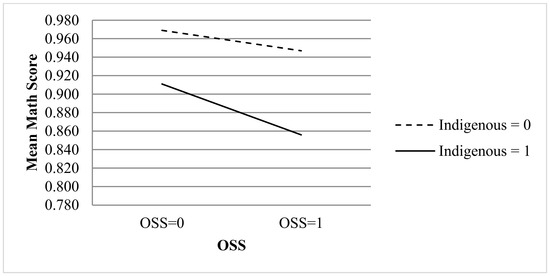
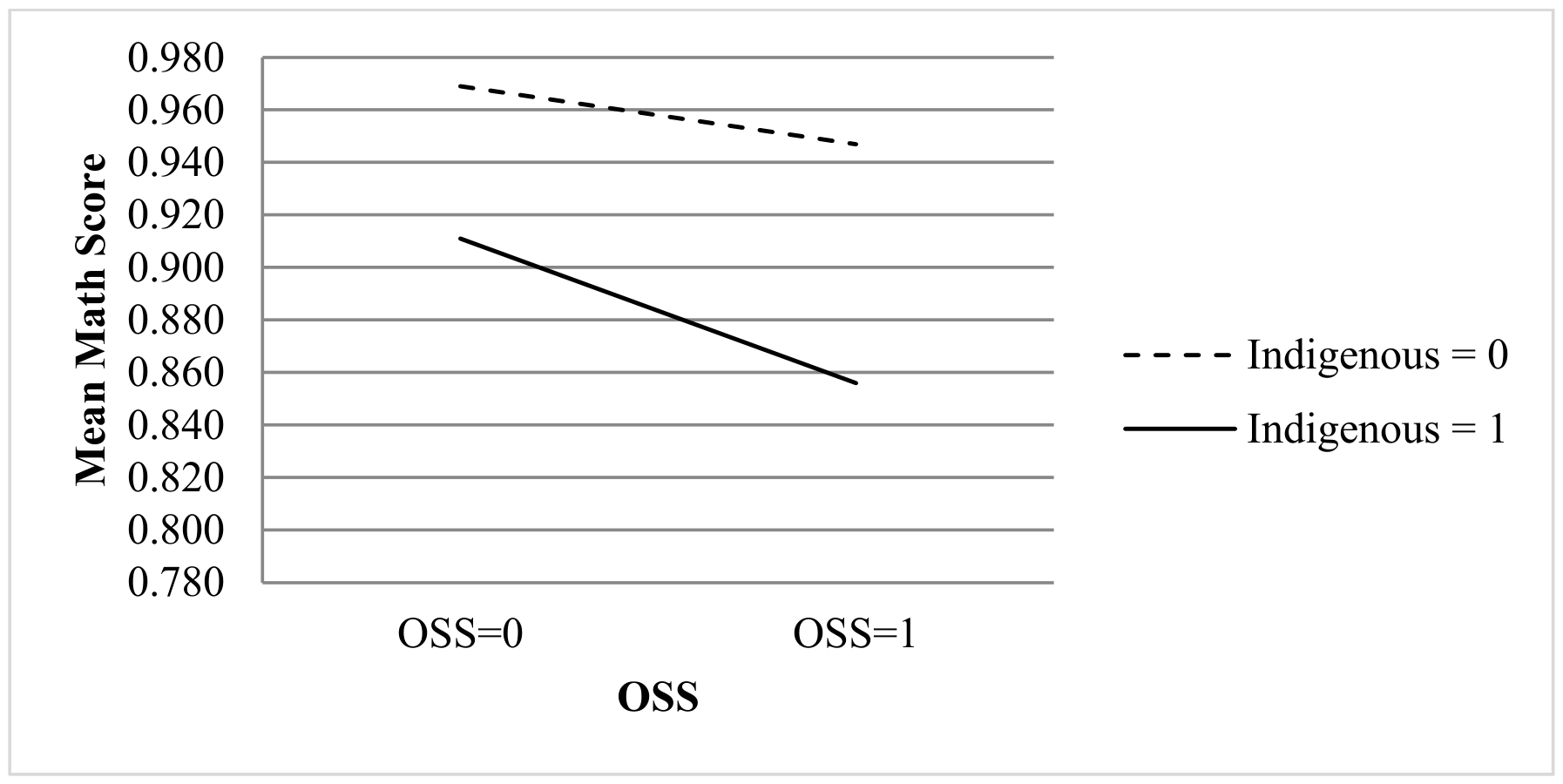
Math test scores. Table 2 presents the results from linear regression models for math test scores. In the base model, middle school math scores were significantly negatively associated with OSS (β = −4.37, p < 0.001), Indigenous (β = −4.64, p < 0.001), Black (β = −5.19, p < 0.001), and Latinx (β = −3.88, p = 0.006) identities, experience of congregate care (β = −2.74, p = 0.001), poverty (β = −1.59, p < 0.001), and EBD status (β = −0.35, p < 0.001) while math test scores were also significantly positively associated with attendance rate (β = 5.60, p < 0.001). When interaction terms were introduced, however, the previously significant effect of OSS disappeared. Other than OSS, overall, the magnitude of the effect for significant variables slightly decreased in the model with interactions terms. The interaction between OSS and Indigenous students was statistically significant (β = −8.62, p = 0.01) (see Figure 1), indicating that the negative association between OSS and math test score was significantly stronger for Indigenous students than for White students. In other words, Indigenous students who experienced OSS demonstrated markedly lower math scores than their peers with OSS. No other interaction terms were statistically significant.
Table 2.
Regression Models for Math Scores (n = 55,924).
Figure 1.
Interaction of OSS and Indigenous Identity on Middle School Math Scores.
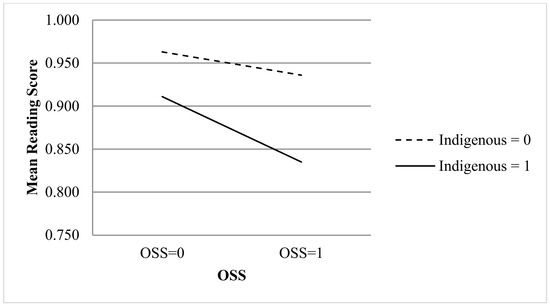
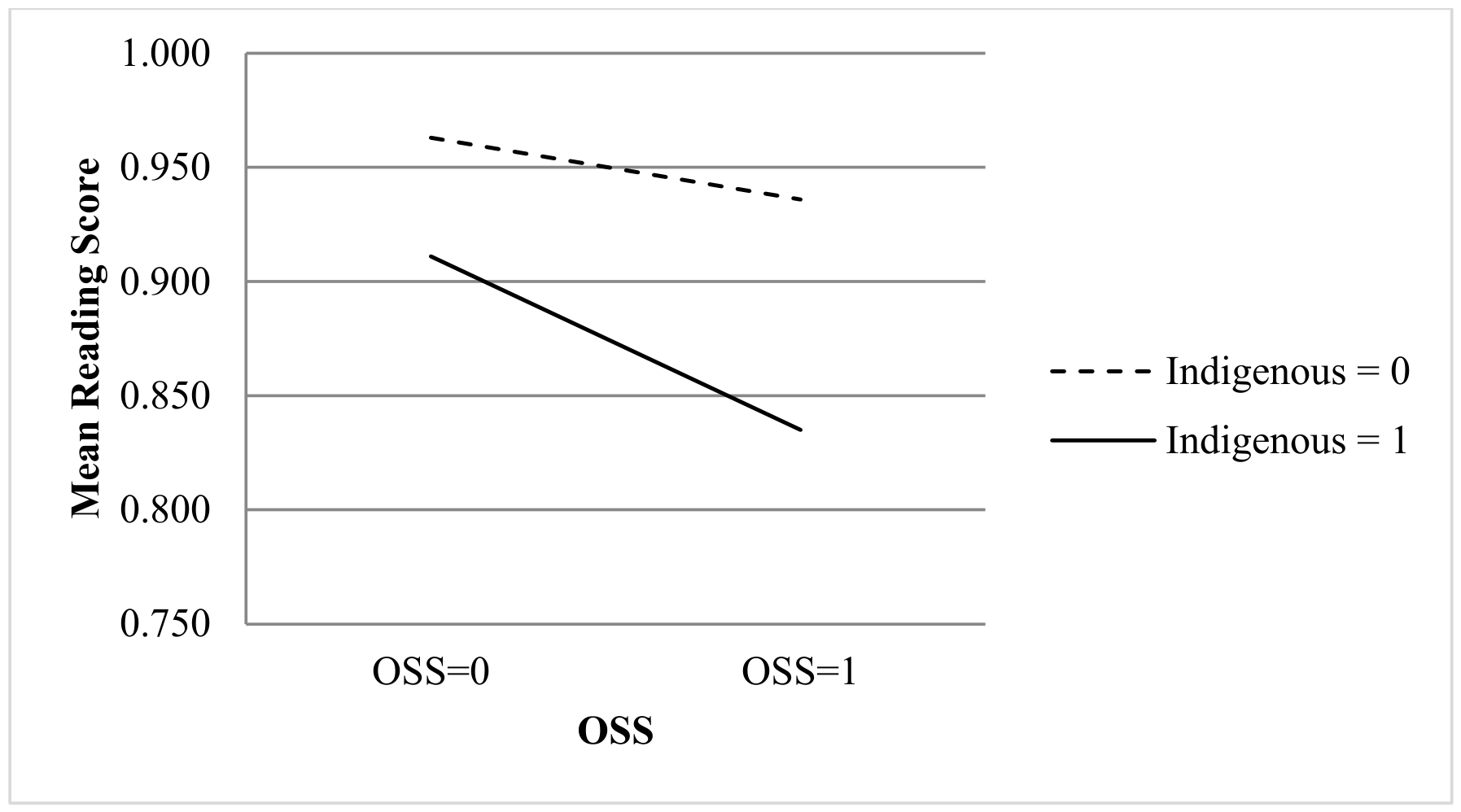
Reading test scores. A similar pattern was identified in reading test scores. Table 3 presents the results from linear regression models for reading test scores. The introduction of interaction terms into the model also nullified the significant effect of OSS on reading test scores in the base model. There was a significant interaction between OSS and Indigenous status, such that the difference in reading scores between students with and without OSS was significantly greater among Indigenous students than among non-Indigenous students (β = −9.13, p = 0.02) (see Figure 2), indicating that OSS was associated with substantially greater decline in reading achievement among Indigenous students than among White students. This finding suggests that the academic consequences of OSS appear to be disproportionately severe for Indigenous students, even after adjusting for race, disability status, CPS involvement, congregate care placement, attendance, FRL, and other covariates.
Table 3.
Regression Models for Reading Scores (n = 55,924).
Figure 2.
Interaction of Early OSS and Indigenous Identity on Middle School Reading Scores.
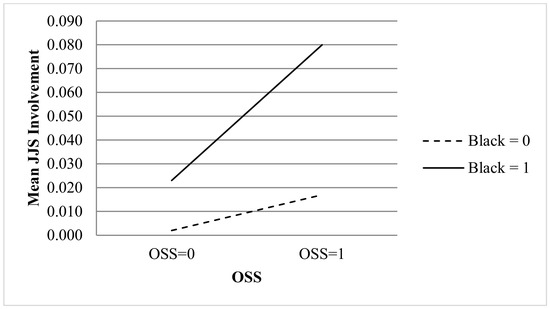
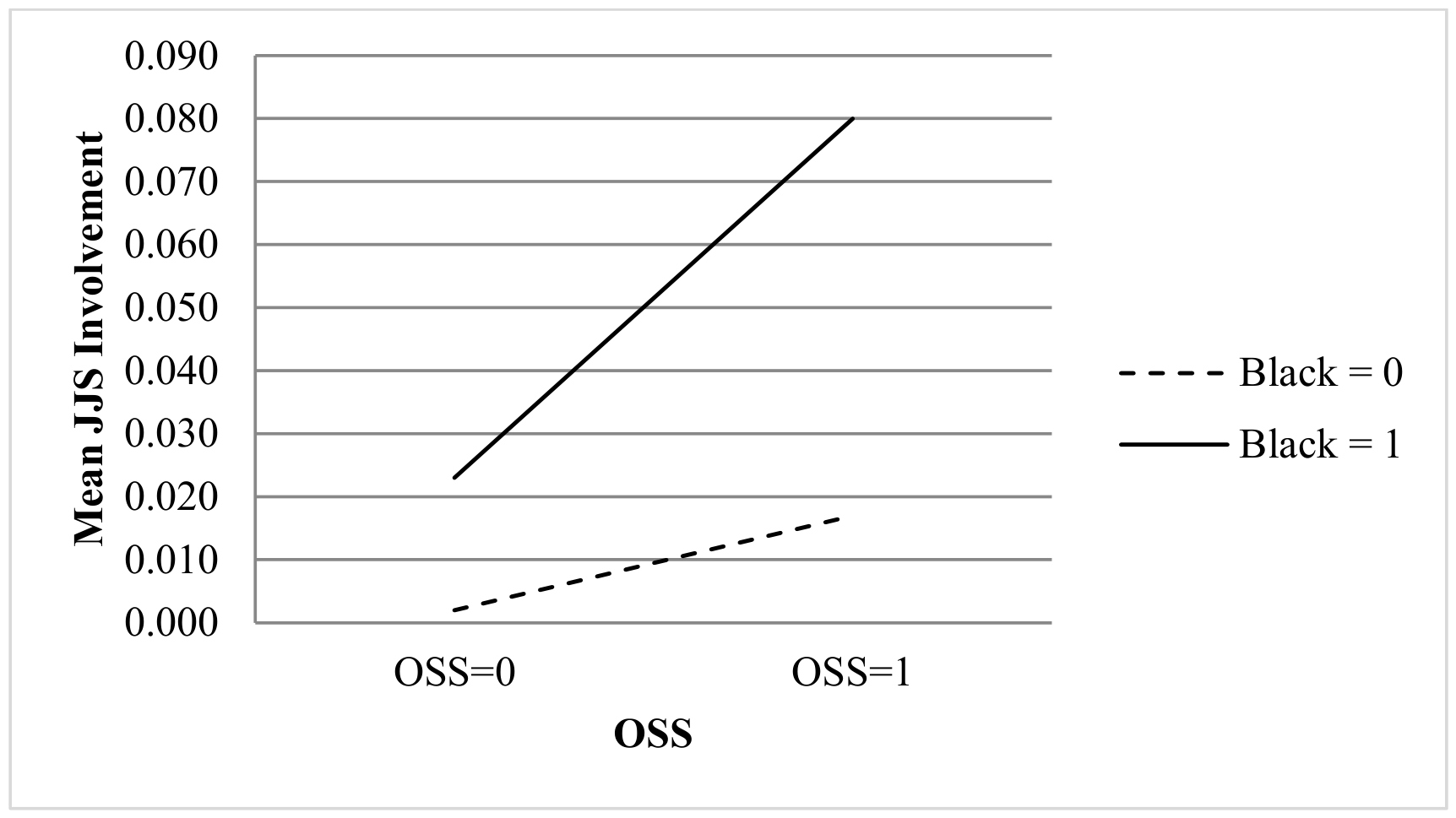
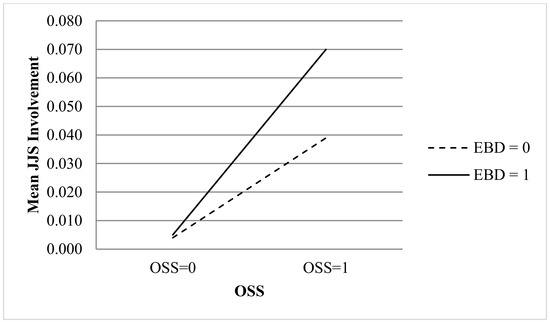
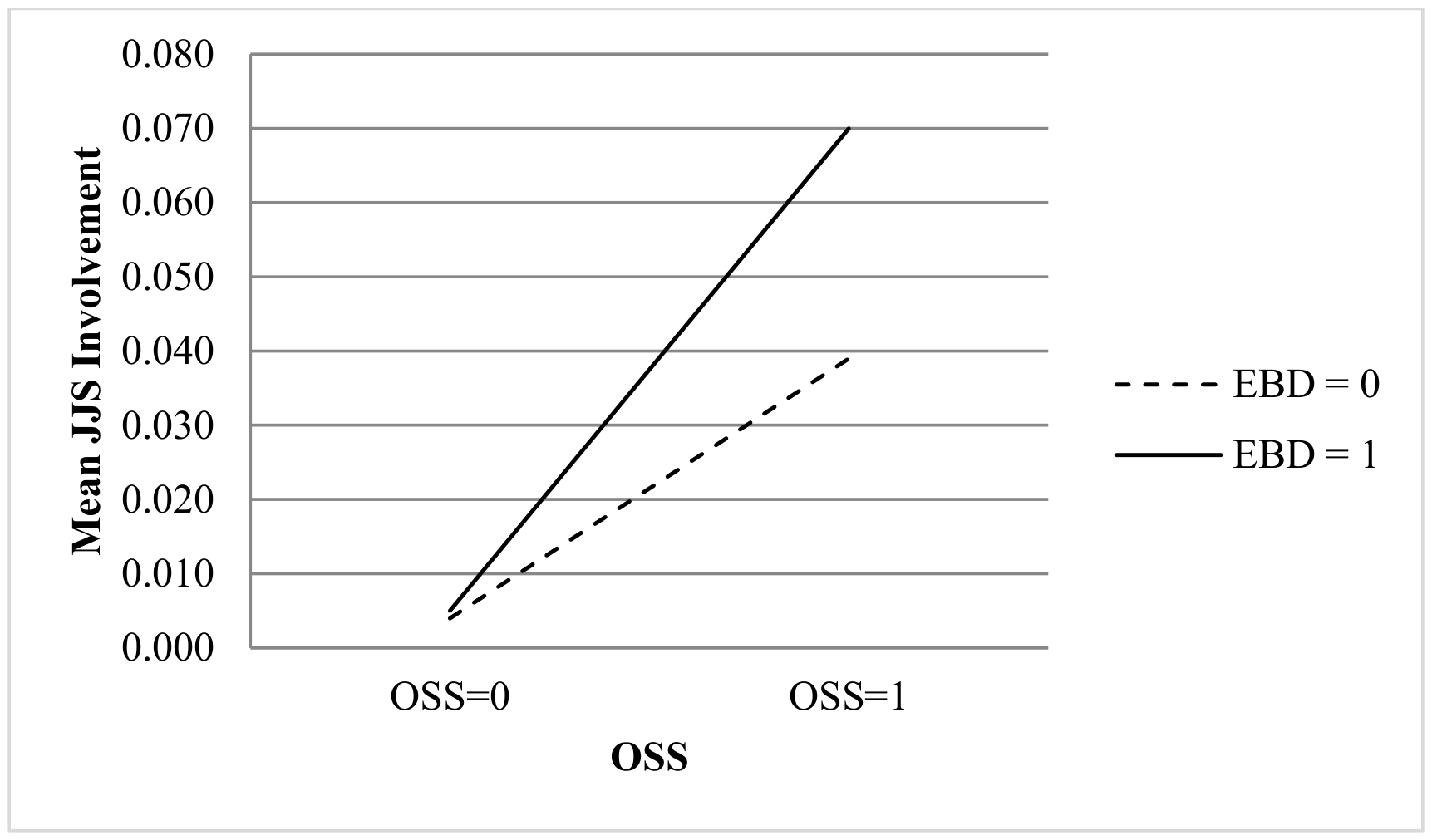
Results from logistic regression models for juvenile justice system involvement. Multiple logistic regressions were conducted to determine any associations between independent variables, including OSS during elementary school years, and the dependent variable of juvenile justice system involvement. Just like academic achievement, the base and interaction models are present in Table 4 for the results of logistic models for juvenile justice system involvement. In the base model, increased odds of juvenile justice system were significantly associated with OSS (OR = 3.52, p = 0.005), Indigenous (OR = 3.38, p = 0.002), and Black (OR = 4.94, p < 0.001) identities. Decreased odds of juvenile justice system involvement were significantly associated with being female (OR = 0.46, p = 0.003). When interaction terms were introduced, however, the previously significant association between OSS and juvenile justice system involvement was no longer significant. Instead, two interaction effects emerged, involving OSS with Black racial identity and EBD status. First, the interaction between OSS and Black race was statistically significant (β = 2.10, OR = 8.17, p = 0.01), indicating that the association between OSS and juvenile justice system involvement was substantially stronger among Black students than among non-Black students. Specifically, the odds ratio associated with OSS was approximately 8 times greater for Black students than for White students (see Figure 3). The interaction between OSS and EBD was also statistically significant (β = 0.16, OR = 1.17, p = 0.04), indicating that the odds ratio associated with OSS was approximately 17% greater among students with EBD than among students without EBD (see Figure 4).
Table 4.
Logistic Regression Models for Juvenile Justice System Involvement (n = 55,924).
Figure 3.
Interaction of Black Identity and Early OSS on Juvenile Justice System Involvement.
Figure 4.
Interaction of EBD and Early OSS on Juvenile Justice System Involvement.
4. Discussion
The findings of this study offer new evidence on differential associations among early OSS, racial/ethnic identity, child welfare system involvement, and later academic achievement and juvenile justice involvement. While prior research has examined outcomes associated with OSS, few studies have focused specifically on elementary school suspensions and their associations with subsequent academic performance and juvenile justice system involvement during middle school in the U.S. public school context. This study is therefore among the first to trace these outcomes across critical transition from elementary to middle school. Moreover, given the limited availability of administrative data linking child welfare, education, and juvenile justice systems, this study provides a more comprehensive assessment of the role of early school discipline across multiple developmental domains. This large, diverse sample also includes enough Black and Indigenous students to formally test whether associations between OSS and subsequent outcomes differ across racial groups.
Consistent with previous research, elementary school out-of-school suspension (OSS) was associated with poorer academic achievement and greater juvenile justice involvement (Arcia, 2006; Cho et al., 2019; Noltemeyer et al., 2015; Petras et al., 2011). However, one of the primary contributions of this study is demonstrating that the associations between elementary school OSS and later outcomes are not uniform across student groups. After accounting for interaction terms, the association between OSS and later academic achievement and juvenile justice involvement was not uniform across student racial/ethnic groups. To be specific, OSS was more strongly associated with lower academic achievement among Indigenous students and with juvenile justice involvement among Black students. These findings extend previous research showing that Black and Indigenous children disproportionately experience exclusionary discipline and adverse educational outcomes (Bécares & Priest, 2015; Camacho & Krezmien, 2019; Cho et al., 2019; Nicholson-Crotty et al., 2009). Rather than indicating uniform associations across children, the interaction findings suggest that the relationships between exclusionary discipline and subsequent developmental outcomes may vary depending on children’s experiences within broader educational and social systems (Davison et al., 2022; National Education Association, 2022).
These findings also underscore the importance of situating exclusionary discipline within broader educational and social systems rather than attributing observed disparities to students’ racial or ethnic identities. The distinct patterns of association observed in this study are consistent with prior research identifying educational inequities, differential disciplinary responses, and unequal access to supportive educational environments as potential structural explanations for racial/ethnic disparities (Cho et al., 2019; Cho & Lee, 2022; Gibson et al., 2019). However, these structural processes were not directly measured in the present study and therefore represent important areas for further investigation. Recent research demonstrates that disciplinary disparities can emerge not only through formal disciplinary policies but also educators’ discretionary interpretations of student behavior and referral practices (Curran, 2016; Liu et al., 2023; Sobti & Welsh, 2023).
First, interaction findings, particularly the absence of a significant main effect of OSS after accounting for the interactions, suggest that the association between OSS and academic achievement varies across students’ social and educational contexts. Although research has well documented that contemporary educational systems continue to present barriers that may limit culturally responsive educational experiences for Indigenous students, Indigenous communities have also shown remarkable resilience, cultural continuity, and sovereignty (Brave Heart et al., 2011; Child, 1998). Across generations, Indigenous peoples have maintained and revitalized their languages, cultural traditions, knowledge systems, and community practices across generations. Indigenous families, educators, and Tribal Nations have also played active roles in reclaiming educational systems through language revitalization programs, culturally grounded curricula, and community-led educational initiatives that affirm Indigenous identities and ways of knowing (Vizenor, 1999). These efforts reflect not only resilience but also survivance, a concept emphasizing Indigenous presence, agency, and resistance to colonial narratives (Vizenor, 1999), as well as the exercise of Tribal sovereignty in shaping educational priorities and supporting the well-being of Indigenous children. Recognizing these enduring strengths shifts the focus from viewing Indigenous students through a deficit lens toward understanding the cultural assets and community resources that continue to support their educational success.
In this context, the stronger association between OSS and lower academic achievement observed among Indigenous students is consistent with literature documenting broader educational and structural inequities affecting Indigenous children (Gion et al., 2018; Whitford et al., 2019; Battiste, 2009). However, the present study did not directly examine the institutional or historical processes that may underlie the difference in the association. Accordingly, these perspectives provide potential contextual explanations and directions for further investigation rather than mechanisms established by the present findings. The observed association may reflect multiple processes. OSS may reduce students’ access to instruction and supportive relationships with teachers and peers, while repeated experiences of exclusion may diminish school connectedness and engagement (Haight et al., 2014). At the same time, the present data do not provide information about the specific behaviors or severity of behavioral difficulties that resulted in OSS. Therefore, pre-existing behavioral or academic difficulties may have contributed to both students’ likelihood of receiving OSS and to their subsequent academic outcomes. The findings of the current study cannot distinguish these processes. Although many schools have made progress toward culturally responsive education, disciplinary policies and practices often continue to reflect institutional norms that do not fully recognize Indigenous cultural strengths, knowledge systems, or community priorities (Haight et al., 2014). Consequently, exclusionary discipline may further reduce instructional time, school connectedness, and opportunities for academic engagement within systems that have historically underserved Indigenous students. Situated within the broader literature, these findings support continued investigation of how disciplinary practices, instructional access, school connectedness, and culturally responsive educational environments may related to academic outcomes among Indigenous students.
Another highlight in the study findings is the significant association between OSS and juvenile justice involvement among Black students, which align with previous research documenting the criminalization and pathologization of Black youth within educational settings (Haight & Gibson, 2016; M. Morris, 2016). Rios (2011) characterize this as the “youth control complex,” whereby educators, law enforcement, and other institutions disproportionately monitor, label, and punish Black youth. Likewise, Neal et al. (2003) demonstrated how behaviors associated with Black culture may be interpreted differently by educators, contributing to harsher disciplinary responses. Recent scholarship further suggests that disparities emerge through educators’ discretionary interpretations of student behavior and office discipline referrals, even before formal disciplinary consequences occur (Liu et al., 2023). Sobti and Welsh (2023) also suggest that understanding racial disparities in school discipline requires explicit attention to structural antiblackness embedded within educational systems. The stronger association between OSS and juvenile justice involvement observed among Black students is consistent with prior research situating exclusionary discipline within broader systemic inequities affecting Black youth. Prior research suggests that differential interpretations of and responses to student behavior may contribute to racial disparities in school discipline and subsequent system involvement. However, the present study did not directly examine these institutional processes or capture the specific behaviors leading to suspension or their severity. Therefore, the observed association may be consistent with structural explanations identified in prior research, but the current findings cannot determine the extent to which it reflects differential disciplinary responses, pre-existing behavioral difficulties, the consequences of exclusionary discipline, or some combination of these processes.
Overall, the differential patterns observed in this study are consistent with prior literature documenting systemic inequities in exclusionary discipline and the overrepresentation of Black and Indigenous children across multiple child-serving systems (Cho & Lee, 2022; Cho et al., 2023; Gibson et al., 2019). Historical and contemporary scholarship provides important context for interpreting these patterns, including the histories of institutional racism, discrimination, and marginalization experienced by Black families and the effects of colonial and genocidal policies on Indigenous families and communities (Hogan & Siu, 1988; M. Morris, 2016). However, the present analyses do not directly test these historical or structural explanations. Future research should examine the specific institutional, disciplinary, and contextual processes that may contribute to the differential associations identified in this study.
It is also noteworthy that EBD showed no significant direct association with juvenile justice involvement in the interaction models. Previous research has consistently linked EBD and exclusionary discipline to adverse educational outcomes later in life (Cho et al., 2019; Hinshaw, 1992; Rolf & Farrington, 2019). The present findings, however, should not be interpreted as evidence that EBD itself increases the likelihood of juvenile justice involvement. Students identified with EBD frequently have unmet behavioral, emotional, and instructional support needs that require individualized interventions and inclusive educational support. When schools are unable to adequately address these needs, exclusionary disciplinary practices may become an institutional response to those unmet needs (Loeber & Farrington, 2000). From a developmental and systems perspective, OSS represents an institutional response that may occur in the context of early behavioral manifestations of EBD. The observed patterns are consistent with literature suggesting that EBD and exclusionary discipline may operate within broader educational and institutional contexts associated with subsequent juvenile justice system involvement. Prior research similarly indicates that exclusionary discipline is associated with both early behavioral difficulties and later adverse educational and justice outcomes (Skiba et al., 2014b; Noltemeyer et al., 2015). Accordingly, the observed association between OSS and later juvenile justice involvement may partly reflect underlying difficulties that increase both the likelihood of suspension and subsequent juvenile justice system involvement. Although EBD was included as a covariate, this measure cannot fully account for the type, severity, or circumstances of the behaviors that resulted in suspension.
Lastly, the results demonstrate that OSS during elementary school is associated with subsequent academic and social outcomes. School disengagement, stigmatization, and strained relationships with school personnel, and reduced instructional time represent potential explanatory pathways linking OSS with subsequent academic challenges and juvenile justice system involvement (Arcia, 2006; Noltemeyer et al., 2015; Petras et al., 2011). However, these mechanisms were not directly examined in the present study, and the observed associations may also reflect pre-existing behavioral difficulties associated with both suspension and later outcomes.
4.1. Limitations
Several limitations in this study should be noted. First, the scope of the current study was limited to one U.S. state. Although the findings may have relevance to the broader U.S. context, school discipline policies and practices, as well as racial composition, vary considerably across states. For instance, Hispanic children are overrepresented in the child welfare system in 10 U.S. states, whereas Indigenous children tend to be underrepresented in those same states (Hill, 2007). Although racial disproportionality affecting Black and Hispanic children has been extensively documented in U.S. education, child welfare, and juvenile justice literature (Cho et al., 2023; Dettlaff & Boyd, 2020), the experiences of Indigenous children have received comparatively less attention. Therefore, despite the limited generalizability, this study can contribute to the broader knowledge base on the experiences of Indigenous students involved in the U.S. educational and child welfare systems. Beyond the U.S., a limited number of studies conducted in other western countries, including Canada, the United Kingdom, Australia, and Belgium, have identified similar risk factors associated with school suspension and subsequent outcomes (Degroote & Van Houtte, 2022). In the international context, examining similarities and differences in school discipline across countries holds important implications for developing culturally sensitive approaches to addressing students’ behaviors associated with OSS. Behaviors considered suspendable offenses may vary cross-culturally, and understanding these variations may inform the development of culturally appropriate intervention strategies (Cho, 2020). Future research should consider cross-cultural comparisons to identify both widespread and context-specific factors associated with school suspension and the developmental outcomes of students who experience suspension across diverse cultural contexts.
Another limitation of this study is the age of the data. While we were working with the most recent available information, the statewide integrated administrative datasets were somewhat outdated, and therefore, other more recent events, such as any impacts of COVID-19, are not reflected in these findings. In addition, categories of race/ethnicity and disability were based on educational records in one state, which may vary nationwide. Furthermore, although our analyses incorporated factors commonly examined in the child welfare literature, including EBD, CPS, and congregate care placement, we lacked direct measures of the specific behaviors or incidents that preceded OSS. Thus, we were unable to determine the extent to which observed differences in OSS reflected differences in student behavior versus differences in how behaviors were interpreted and disciplinary decisions were made. Empirical evidence suggests that Black and Indigenous students are more likely to receive OSS when they received a referral for subjectively defined infractions, such as insubordination and disruptive behaviors (Gibson et al., 2019; Gion et al., 2018). Given that the gap between student behaviors and teachers’ reactions to those behaviors may reflect systematic biases against particular groups of students, additional research is needed to incorporate students’ behaviors leading to OSS as controls in the analysis. While we used all available methods to attempt to establish the effects of OSS by statistically controlling for confounds and focusing on the outcomes that occurred chronologically after the OSS, we still cannot fully determine causality from the data available to us. It is possible that other variables, such as family- and school-level variables, which are correlated with both OSS and the outcomes, could have been causal factors. While this study touched on the interacting risks of child welfare involvement and early OSS with subsequent academic performance and juvenile justice system contact, further research is needed to understand the specific mechanisms and pathways through which child welfare system experiences contribute to negative educational outcomes and early system involvement across developmental stage. In addition, the data did not provide detailed information about the behaviors or incidents that resulted in OSS, including their type or severity. This limits our ability to distinguish the association of suspension itself from pre-existing behavioral difficulties that may increase both the likelihood of suspension and the risk of subsequent academic difficulties or juvenile justice involvement. Although the analyses accounted for EBD, this measure does not capture the specific behaviors or circumstances preceding individual suspension events. Therefore, the observed associations should not be interpreted as evidence that OSS caused the subsequent outcomes. Future research incorporating detailed measures of behavior preceding disciplinary actions is needed to better distinguish these processes.
Future research can strengthen causal inference by employing a quasi-experimental design, such as matching methods, to compare outcomes between suspended and non-suspended students with similar demographic, behavioral, and contextual characteristics. Complementary subgroup or stratified analyses could further clarify whether the associations between early OSS and later academic and juvenile justice outcomes differ across race/ethnic groups, child welfare involvement, and disability status. In addition, the longitudinal nature of child welfare data limited the feasibility of applying hierarchical linear or mixed effects models because child welfare system involved children often move schools over time due to out-of-home placements, resulting in unstable school-level clustering across the observation period. Consequently, the analyses did not account for the hierarchical structure of students nested within schools. Future research using data with alternative longitudinal multilevel approaches could better account for school- and district-level contextual influences and the non-independence of observations.
4.2. Implications for Policy and Practice
The results highlight the importance of considering race/ethnicity and other intersecting characteristics when examining patterns of academic and juvenile justice outcomes associated with OSS. The disparities observed point to the need for further investigation of the systemic and institutional factors that may contribute to these patterns. Our findings align with broader literature on school push-out and the school–prison nexus documenting disproportionate experiences among Black and Indigenous students and students with disabilities. The findings extend this literature by highlighting differential patterns among Indigenous students and by demonstrating the importance of considering race/ethnicity, disability, and involvement in child-serving systems simultaneously when examining OSS. Accordingly, efforts to reduce disparities in exclusionary discipline should include attention to both individual disciplinary practices and the policies and institutional decision-making processes that warrant further examination as potential contributors to these disparities.
At the school and district levels, discipline data should be routinely reviewed and disaggregated by race/ethnicity, disability status, and their intersections to identify disparities in referrals, OSS, reasons for disciplinary action, and the consequences assigned for similar infractions. Particular attention should be given to discretionary disciplinary decisions and subjectively defined infractions. Prior research indicates that racial disproportionality in school discipline is particularly pronounced for subjective referrals, suggesting that discretion in interpreting student behavior may represent an important point for intervention (Girvan et al., 2017; Haight et al., 2016; Haight & Gibson, 2016). Although the present study did not examine referral or disciplinary decision-making processes, the differential associations identified here reinforce the importance of investigating these processes in future research and practice. The findings also support further attention to whether students with disabilities have received appropriate disability-related services and behavioral supports prior to exclusionary discipline. For students whose behavior interferes with learning, the Individuals with Disabilities Education Act (IDEA) emphasizes the consideration of positive behavioral interventions and supports, and repeated disciplinary removals may warrant reconsideration of whether existing supports are being appropriately implemented or require modification (U.S. Department of Education, Office of Special Education and Rehabilitative Services, 2022). Regular review of the implementation of students’ individualized education programs (IEPs), behavioral intervention plans, accommodations, and other supports when patterns of disciplinary referrals or removals emerge may help schools identify unmet support needs and reduce reliance on exclusionary disciplinary responses.
More broadly, the observed associations, considered alongside existing evidence on exclusionary discipline, support consideration of preventive, supportive, and educational alternatives to OSS rather than relying primarily on exclusion to address student behavior. Progressive educational alternatives emphasize responding to behavioral concerns in ways that maintain students’ connections to school, address underlying needs, and support their educational and social development (Haight & Gibson, 2016). These efforts may include positive behavioral interventions and support, restorative practices, social–emotional supports, and culturally responsive approaches (Bradshaw et al., 2010; Haight & Gibson, 2016). Culturally responsive practices that recognize the historical and institutional contexts shaping the educational experiences of Black and Indigenous students may be particularly important for promoting equitable school environments (Annamma, 2017; Brave Heart et al., 2011; Hughes et al., 2020). Rather than relying primarily on one-time implicit-bias training, schools may benefit from combining professional development with ongoing review of disciplinary decision-making, accountability mechanisms, and inclusive school-climate initiatives. Such approaches may also provide opportunities to examine the institutional processes potentially underlying racial and disability-related disparities in exclusionary discipline, which the present findings identify as an important area for further investigation.
In addition, practitioners working in the child welfare system should support the academic achievement of students they work with, given the overlap between child welfare involvement, exclusionary discipline, and educational vulnerability documented in this and prior research. Given the significant overlap between child welfare involvement and school discipline, policymakers should promote and support collaboration between education and child welfare systems. This may involve creating policies that facilitate information sharing between these systems to better identify students who are involved in both the child welfare and education systems and coordinate supportive interventions responsive to their educational and behavioral needs.
Author Contributions
Conceptualization, M.C. and W.H.; methodology, M.C.; formal analysis, S.F., writing—original draft preparation, M.C. and S.F.; writing—review, and editing, W.H.; visualization, S.F. and M.C.; supervision, W.H. All authors have read and agreed to the published version of the manuscript.
Funding
This research received no external funding.
Institutional Review Board Statement
The study was approved by the Institutional Review Board of the University of Minnesota (1703E10344, 16 July 2021).
Informed Consent Statement
Not applicable. This study involved secondary data analysis and therefore no informed consent form was required.
Data Availability Statement
Restrictions apply to the availability of these data. Dat were obtained from Minn-LInK at the University of Minnesota and are available from Minn-LInK at the University of Minnesota under data-sharing agreements with the Minnesota Department of Education (MDE), the Department of Human Services (DHS), and the Juvenile Court.
Acknowledgments
We thank Kristine Piescher and Michelle Englund at the Center for Advanced Studies in Child Welfare for providing technical support and invaluable consultation on Minn-LInK datasets.
Conflicts of Interest
The authors declare no conflicts of interest.
References
- Adams, D. W. (2020). Education for extinction: American Indians and the boarding school experience, 1875–1928. Revised and expanded. University Press of Kansas. [Google Scholar]
- Anderson, S., & Romm, K. (2020). Absenteeism across the early elementary grades: The role of time, gender, and socioeconomic status. The Elementary School Journal, 121(2), 179–196. [Google Scholar]
- Annamma, S. A. (2017). The pedagogy of pathologization: Disabled girls of color in the school-prison nexus. Routledge. [Google Scholar]
- Arcia, E. (2006). Achievement and enrollment status of suspended students: Outcomes in a large, multicultural school district. Education and Urban Society, 38(3), 359–369. [Google Scholar]
- Balfanz, R., Byrnes, V., & Fox, J. H. (2015). Sent home and put off track: The antecedents, disproportionalities, and consequences of being suspended in the 9th grade. In D. Losen (Ed.), Closing the school discipline gap: Equitable remedies for excessive exclusion (pp. 17–30). Teachers College Press. [Google Scholar]
- Barrett, N., McEachin, A., Mills, J. N., & Valant, J. (2017). Disparities in student discipline by race and family income (EdWorkingPaper No.19-53). Education Research Alliance for New Orleans. [Google Scholar]
- Battiste, M. (2009). Naturalizing indigenous knowledge in Eurocentric education. Canadian Journal of Native Education, 32(1), 1. [Google Scholar] [CrossRef]
- Bécares, L., & Priest, N. (2015). Understanding the influence of race/ethnicity, gender, and class on inequalities in academic and non-academic outcomes among eighth-grade students: Findings from an intersectionality approach. PLoS ONE, 10(10), e0141363. [Google Scholar] [CrossRef] [Scilit] [PubMed]
- Bradshaw, C. P., Mitchell, M. M., & Leaf, P. J. (2010). Examining the effects of schoolwide positive behavioral interventions and supports on student outcomes: Results from a randomized controlled effectiveness trial in elementary schools. Journal of Positive Behavior Interventions, 12(3), 133–148. [Google Scholar]
- Brave Heart, M. Y. H., Chase, J., Elkins, J., & Altschul, D. B. (2011). Historical trauma among indigenous peoples of the Americas: Concepts, research, and clinical considerations. Journal of Psychoactive Drugs, 43(4), 282–290. [Google Scholar] [CrossRef] [Scilit] [PubMed]
- Camacho, K. A., & Krezmien, M. P. (2019). Individual-and school-level factors contributing to disproportionate suspension rates: A multilevel analysis of one state. Journal of Emotional and Behavioral Disorders, 27(4), 209–220. [Google Scholar] [CrossRef] [Scilit]
- Child, B. J. (1998). Boarding school seasons: American Indian families, 1900–1940. U of Nebraska Press. [Google Scholar]
- Cho, M. (2020). Cultural variations in understanding risks for delinquency among maltreated children from the perspectives of US and Korean professionals. Children and Youth Services Review, 116, 105117. [Google Scholar] [CrossRef] [Scilit]
- Cho, M., Haight, W., Choi, W. S., Hong, S., & Piescher, K. (2019). A prospective, longitudinal study of risk factors for early onset of delinquency among maltreated youth. Children and Youth Services Review, 102, 222–230. [Google Scholar] [CrossRef] [Scilit]
- Cho, M., & Lee, C. H. (2022). Childhood maltreatment and repeat offending in juvenile delinquents: A propensity score matched-control study. Youth & Society, 54(7), 1178–1199. [Google Scholar] [CrossRef] [Scilit]
- Cho, M., Yoon, Y. J., Flanagan, S. K., & Haight, W. (2023). Students’ risks for out-of-school suspensions: Indigenous heritage and child protective services involvement. Child Maltreatment, 28(4), 563–575. [Google Scholar] [CrossRef] [Scilit] [PubMed]
- Clark, M. D., Petras, H., Kellam, S. G., Ialongo, N., & Poduska, J. M. (2003). Who’s most at risk for school removal and later juvenile delinquency? Effects of early risk factors, gender, school/community poverty, and their impact on more distal outcomes. Women & Criminal Justice, 14(2–3), 89–116. [Google Scholar]
- Curran, F. C. (2016). Estimating the effect of state zero tolerance laws on exclusionary discipline, racial discipline gaps, and student behavior. Educational Evaluation and Policy Analysis, 38(4), 647–668. [Google Scholar] [CrossRef] [Scilit]
- Davison, M., Penner, A. M., Penner, E. K., Pharris-Ciurej, N., Porter, S. R., Rose, E. K., Shem-Tov, Y., & Yoo, P. (2022). School discipline and racial disparities in early adulthood. Educational Researcher, 51(3), 231–234. [Google Scholar] [CrossRef] [Scilit] [PubMed]
- Degroote, E., & Van Houtte, M. (2022). Sense of futility as subject of disciplinary action: Do students with negative attitudes toward the educational system get disciplined more often? Behavioral Disorders, 47(3), 155–165. [Google Scholar] [CrossRef] [Scilit]
- Dettlaff, G. J., & Boyd, B. L. (2020). Racial disproportionality and disparity in school discipline: Intersectionality and the experiences of indigenous students. Journal of Child and Family Studies, 29(11), 3096–3105. [Google Scholar]
- Dutil, S. (2020). Dismantling the school-to-prison pipeline: A trauma-informed, critical race perspective on school discipline. Children & Schools, 42(3), 171–178. [Google Scholar] [CrossRef] [Scilit]
- Fluke, J. D., Chabot, M., Fallon, B., MacLaurin, B., & Blackstock, C. (2010). Placement decisions and disparities among aboriginal groups: An application of the decision-making ecology through multi-level analysis. Child Abuse & Neglect, 34(1), 57–69. [Google Scholar] [CrossRef] [Scilit] [PubMed]
- Gage, N. A., Whitford, D. K., Katsiyannis, A., Adams, S., & Jasper, A. (2019). National analysis of the disciplinary exclusion of black students with and without disabilities. Journal of Child and Family Studies, 28, 1754–1764. [Google Scholar] [CrossRef] [Scilit]
- Gentle-Genitty, C., Taylor, J., & Renguette, C. (2020). A change in the frame: From absenteeism to attendance. Frontiers in Education, 4, 161. [Google Scholar] [CrossRef] [Scilit]
- Gibson, P., Haight, W., Cho, M., Nashandi, N. J., & Yoon, Y. J. (2019). A mixed methods study of black girls’ vulnerability to out-of-school suspensions: The intersection of race and gender. Children and Youth Services Review, 102, 169–176. [Google Scholar] [CrossRef] [Scilit]
- Gion, C., McIntosh, K., & Smolkowski, K. (2018). Examination of American Indian/Alaska native school discipline disproportionality using the vulnerable decision points approach. Behavioral Disorders, 44(1), 40–52. [Google Scholar] [CrossRef] [Scilit]
- Girvan, E. J., Gion, C., McIntosh, K., & Smolkowski, K. (2017). The relative contribution of subjective office referrals to racial disproportionality in school discipline. School Psychology Quarterly, 32(3), 392. [Google Scholar] [CrossRef] [Scilit] [PubMed]
- Glennon, T. (2015). The developmental perspective and intersectionality. Temple Law Review, 88, 929. [Google Scholar]
- Gregory, A., Cornell, D., & Fan, X. (2011). The relationship of school structure and support to suspension rates for black and white high school students. American Educational Research Journal, 48(4), 904–934. [Google Scholar] [CrossRef] [Scilit]
- Haight, W., & Gibson, P. (2016). Out-of-school suspension of African American youth and progressive education alternatives. In Encyclopedia of social work. Oxford University Press. [Google Scholar]
- Haight, W., Gibson, P. A., Kayama, M., Marshall, J. M., & Wilson, R. (2014). An ecological-systems inquiry into racial disproportionalities in out-of-school suspensions from youth, caregiver and educator perspectives. Children and Youth Services Review, 46, 128–138. [Google Scholar] [CrossRef] [Scilit]
- Haight, W., Kayama, M., & Gibson, P. A. (2016). Out-of-school suspensions of black youths: Culture, ability, disability, gender, and perspective. Social Work, 61(3), 235–243. [Google Scholar] [CrossRef] [Scilit] [PubMed]
- Haight, W., Waubanascum, C., Glesener, D., & Marsalis, S. (2018). A scoping study of indigenous child welfare: The long emergency and preparations for the next seven generations. Children and Youth Services Review, 93, 397–410. [Google Scholar] [CrossRef] [Scilit]
- Hemphill, S. A., Plenty, S. M., Herrenkohl, T. I., Toumbourou, J. W., & Catalano, R. F. (2014). Student and school factors associated with school suspension: A multilevel analysis of students in Victoria, Australia and Washington State, United States. Children and Youth Services Review, 36, 187–194. [Google Scholar] [CrossRef] [Scilit] [PubMed]
- Hill, R. B. (2007). An analysis of racial/ethnic disproportionality and disparity at the national, state, and county levels. Available online: https://racialequity.issuelab.org/resources/8256/8256.pdf (accessed on 26 March 2024).
- Hinshaw, S. P. (1992). Externalizing behavior problems and academic underachievement in childhood and adolescence: Causal relationships and underlying mechanisms. Psychological Bulletin, 111(1), 127. [Google Scholar] [CrossRef] [Scilit] [PubMed]
- Hirschfield, P. J. (2018). The role of schools in sustaining juvenile justice system inequality. The Future of Children, 28(1), 11–36. [Google Scholar] [CrossRef] [Scilit]
- Hogan, P. T., & Siu, S. F. (1988). Minority children and the child welfare system: An historical perspective. Social Work, 33(6), 493–498. [Google Scholar] [CrossRef] [Scilit]
- Horejsi, C., Craig, B. H. R., & Pablo, J. (1992). Reactions by native American parents to child protection agencies: Cultural and community factors. Child Welfare, 71, 329–342. [Google Scholar] [PubMed]
- Hughes, T. L., Hess, R., Jones, J., & Worrell, F. C. (2020). From traditional practice to tiered comprehensive services for all: Developing a responsive school culture for the future. School Psychology, 35(6), 428. [Google Scholar] [CrossRef] [Scilit] [PubMed]
- Hunter, K., Francis, B., & Fitzpatrick, C. (2023). Care experience, ethnicity and youth justice involvement: Key trends and policy implications. Administrative Data Research UK. Available online: https://cyc-net.org/pdf/Policy-briefing-Katie-Hunter.pdf (accessed on 26 March 2024).
- Jacobsen, W. C. (2020). School punishment and interpersonal exclusion: Rejection, withdrawal, and separation from friends. Criminology, 58(1), 35–69. [Google Scholar] [CrossRef] [Scilit] [PubMed]
- Kinsler, J. (2013). School discipline: A source or salve for the racial achievement gap? International Economic Review, 54(1), 355–383. [Google Scholar] [CrossRef] [Scilit]
- Kothari, B. H., Godlewski, B., McBeath, B., McGee, M., Waid, J., Lipscomb, S., & Bank, L. (2018). A longitudinal analysis of school discipline events among youth in foster care. Children and Youth Services Review, 93, 117–125. [Google Scholar] [CrossRef] [Scilit] [PubMed]
- Kurlychek, M. C., & Johnson, B. D. (2019). Cumulative disadvantage in the American criminal justice system. Annual Review of Criminology, 2(1), 291–319. [Google Scholar] [CrossRef] [Scilit]
- Lane, K. L., Carter, E. W., Pierson, M. R., & Glaeser, B. C. (2006). Academic, social, and behavioral characteristics of high school students with emotional disturbances or learning disabilities. Journal of Emotional and Behavioral Disorders, 14(2), 108–117. [Google Scholar] [CrossRef] [Scilit]
- Liu, J., Penner, E. K., & Gao, W. (2023). Troublemakers? The role of frequent teacher referrers in expanding racial disciplinary disproportionalities. Educational Researcher, 52(8), 469–481. [Google Scholar] [CrossRef] [Scilit]
- Loeber, R., & Farrington, D. P. (2000). Young children who commit crime: Epidemiology, developmental origins, risk factors, early interventions, and policy implications. Development and Psychopathology, 12(4), 737–762. [Google Scholar] [CrossRef] [Scilit] [PubMed]
- Lomawaima, K. T. (2002). American Indian education: By Indians versus for Indians. In A companion to American Indian history (pp. 422–440). Blackwell Publishers. [Google Scholar]
- Maguire-Jack, K., Lanier, P., Johnson-Motoyama, M., Welch, H., & Dineen, M. (2015). Geographic variation in racial disparities in child maltreatment: The influence of county poverty and population density. Child Abuse & Neglect, 47, 1–13. [Google Scholar] [CrossRef] [Scilit] [PubMed]
- Marcoulides, K. M., & Raykov, T. (2019). Evaluation of variance inflation factors in regression models using latent variable modeling methods. Educational and Psychological Measurement, 79(5), 874–882. [Google Scholar] [CrossRef] [Scilit] [PubMed]
- McAra, L., & McVie, S. (2010). Youth crime and justice: Key messages from the Edinburgh study of youth transitions and crime. Criminology & Criminal Justice, 10(2), 179–209. [Google Scholar] [CrossRef] [Scilit]
- McAra, L., & McVie, S. (2016). Understanding youth violence: The mediating effects of gender, poverty and vulnerability. Journal of Criminal Justice, 45, 71–77. [Google Scholar] [CrossRef] [Scilit]
- McElderry, C. G., & Cheng, T. C. (2014). Understanding the discipline gap from an ecological perspective. Children & Schools, 36(4), 241–249. [Google Scholar] [CrossRef] [Scilit]
- Mendez, L. M. R., & Knoff, H. M. (2003). Who gets suspended from school and why: A demographic analysis of schools and disciplinary infractions in a large school district. Education and Treatment of Children, 26, 30–51. [Google Scholar]
- Mendoza, M., Blake, J. J., Marchbanks, M. P., III, & Ragan, K. (2020). Race, gender, and disability and the risk for juvenile justice contact. The Journal of Special Education, 53(4), 226–235. [Google Scholar] [CrossRef] [Scilit]
- Mittleman, J. (2018). A downward spiral? Childhood suspension and the path to juvenile arrest. Sociology of Education, 91(3), 183–204. [Google Scholar] [CrossRef] [Scilit]
- Morris, E. W., & Perry, B. L. (2016). The punishment gap: School suspension and racial disparities in achievement. Social Problems, 63(1), 68–86. [Google Scholar] [CrossRef] [Scilit]
- Morris, M. (2016). Pushout: The criminalization of black girls in schools. The New Press. [Google Scholar]
- Mowen, T., & Brent, J. (2016). School discipline as a turning point: The cumulative effect of suspension on arrest. Journal of Research in Crime and Delinquency, 53(5), 628–653. [Google Scholar]
- National Education Association. (2022). Report of the NEA task force on safe, just, and equitable schools. Available online: https://www.nea.org/sites/default/files/2022-06/Report%20of%20the%20NEA%20Task%20Force%20on%20Safe%2C%20Just%2C%20and%20Equitable%20Schools_2022_1.pdf (accessed on 1 September 2026).
- Neal, L. V. I., McCray, A. D., Webb-Johnson, G., & Bridgest, S. T. (2003). The effects of African American movement styles on teacher’s perceptions and reactions. The Journal of Special Education, 37(1), 49–57. [Google Scholar] [CrossRef] [Scilit]
- Nicholson-Crotty, S., Birchmeier, Z., & Valentine, D. (2009). Exploring the impact of school discipline on racial disproportion in the juvenile justice system. Social Science Quarterly, 90(4), 1003–1018. [Google Scholar] [CrossRef] [Scilit]
- Noltemeyer, A. L., Ward, R. M., & Mcloughlin, C. (2015). Relationship between school suspension and student outcomes: A meta-analysis. School Psychology Review, 44(2), 224–240. [Google Scholar] [CrossRef] [Scilit]
- Novak, A., & Fagan, A. (2022). Expanding research on the school-to-prison pipeline: Examining the relationships between suspension, expulsion, and recidivism among justice-involved youth. Crime & Delinquency, 68(1), 3–27. [Google Scholar] [CrossRef] [Scilit]
- Petras, H., Masyn, K. E., Buckley, J. A., Ialongo, N. S., & Kellam, S. (2011). Who is most at risk for school removal? A multilevel discrete-time survival analysis of individual-and context-level influences. Journal of Educational Psychology, 103(1), 223. [Google Scholar] [CrossRef] [Scilit]
- R Core Team. (2017). R: A language and environment for statistical computing (Version 3.4.2) [Computer software]. R Foundation for Statistical Computing. Available online: https://www.r-project.org/?utm_source=chatgpt.com (accessed on 26 March 2024).
- Rios, V. M. (2011). Punished: Policing the lives of black and Latino boys. New York University Press. [Google Scholar]
- Rolf, L., & Farrington, D. P. (2019). Young children who commit crime: Epidemiology, developmental origins, risk factors, early interventions, and policy implications. In Clinical forensic psychology and law (pp. 335–360). Routledge. [Google Scholar]
- Rosenbaum, J. (2020). Educational and criminal justice outcomes 12 years after school suspension. Youth & Society, 52(4), 515–547. [Google Scholar] [CrossRef] [Scilit] [PubMed]
- Ryan, J. P., Marshall, J. M., Herz, D., & Hernandez, P. M. (2008). Juvenile delinquency in child welfare: Investigating group home effects. Children and Youth Services Review, 30(9), 1088–1099. [Google Scholar] [CrossRef] [Scilit]
- Ryan, J. P., & Testa, M. F. (2005). Child maltreatment and juvenile delinquency: Investigating the role of placement and placement instability. Children and Youth Services Review, 27, 227–249. [Google Scholar] [CrossRef] [Scilit]
- Scherr, T. G. (2007). Educational experiences of children in foster care: Meta-analyses of special education, retention, and discipline rates. School Psychology International, 28(4), 419–436. [Google Scholar]
- Shooter, W., Hernandez, J., Mackay, D., & McIlvenna, M. (2023). The relationship of intergenerational poverty and exclusionary school discipline. Psychology in the Schools, 60(6), 1760–1780. [Google Scholar] [CrossRef] [Scilit]
- Singer, J. (2023). The effect of suspensions on student attendance in a high-absenteeism urban district. Urban Education, 60(2), 628–659. [Google Scholar] [CrossRef] [Scilit]
- Skiba, R. J., Arredondo, M. I., & Williams, N. T. (2014a). More than a metaphor: The contribution of exclusionary discipline to a school-to-prison pipeline. Equity & Excellence in Education, 47(4), 546–564. [Google Scholar] [CrossRef] [Scilit]
- Skiba, R. J., Chung, C. G., Trachok, M., Baker, T. L., Sheya, A., & Hughes, R. L. (2014b). Parsing disciplinary disproportionality: Contributions of infraction, student, and school characteristics to out-of-school suspension and expulsion. American Educational Research Journal, 51(4), 640–670. [Google Scholar]
- Smith Brice, T. (2017). Child welfare practice: An African-centered approach. Journal of Human Behavior in the Social Environment, 27(1–2), 81–91. [Google Scholar] [CrossRef] [Scilit]
- Sobti, N., & Welsh, R. O. (2023). Adding color to my tears: Toward a theoretical framework for antiblackness in school discipline. Educational Researcher, 52(8), 500–511. [Google Scholar] [CrossRef] [Scilit]
- Sullivan, A. L., Van Norman, E. R., & Klingbeil, D. A. (2014). Exclusionary discipline of students with disabilities: Student and school characteristics predicting suspension. Remedial and Special Education, 35(4), 199–210. [Google Scholar]
- Theriot, M. T., Craun, S. W., & Dupper, D. R. (2010). Multilevel evaluation of factors predicting school exclusion among middle and high school students. Children and Youth Services Review, 32(1), 13–19. [Google Scholar] [CrossRef] [Scilit]
- U.S. Department of Education, Office of Special Education and Rehabilitative Services. (2022). Questions and answers: Addressing the needs of children with disabilities and IDEA’s discipline provisions. Available online: https://sites.ed.gov/idea/files/qa-addressing-the-needs-of-children-with-disabilities-and-idea-discipline-provisions.pdf (accessed on 26 March 2024).
- U.S. Government Accountability Office. (2018). K-12 education: Discipline disparities for black students, boys, and students with disabilities. Report to congressional requesters. U.S. Government Accountability Office.
- van den Brink, Y., & Lanskey, C. (2025). Inequality, cumulative disadvantage and youth justice: Towards an analytical framework for understanding and addressing inequalities in youth justice decision-making. International Journal of Law, Crime and Justice, 80, 100725. [Google Scholar] [CrossRef] [Scilit]
- Vizenor, G. R. (1999). Manifest manners: Narratives on postindian survivance. U of Nebraska Press. [Google Scholar]
- Wagner, M., Kutash, K., Duchnowski, A. J., Epstein, M. H., & Sumi, W. C. (2005). The children and youth we serve: A national picture of the characteristics of students with emotional disturbances receiving special education. Journal of Emotional and Behavioral Disorders, 13(2), 79–96. [Google Scholar]
- Whitford, D. K., Gage, N. A., Katsiyannis, A., Counts, J., Rapa, L. J., & McWhorter, A. (2019). The exclusionary discipline of American Indian and Alaska Native (AI/AN) students with and without disabilities: A Civil Rights Data Collection (CRDC) national analysis. Journal of Child and Family Studies, 28, 3327–3337. [Google Scholar] [CrossRef] [Scilit]
- Williams-Butler, A., Golden, K. E., Mendez, A., & Stevens, B. (2020). Intersectionality and child welfare policy. Child Welfare, 98(4), 75–96. [Google Scholar]
- Wright, J. P., Morgan, M. A., Coyne, M. A., Beaver, K. M., & Barnes, J. C. (2014). Prior problem behavior accounts for the racial gap in school suspensions. Journal of Criminal Justice, 42(3), 257–266. [Google Scholar] [CrossRef] [Scilit]
- Yang, M. Y., Harmeyer, E., Chen, Z., & Lofaso, B. M. (2018). Predictors of early elementary school suspension by gender: A longitudinal multilevel analysis. Children and Youth Services Review, 93, 331–338. [Google Scholar] [CrossRef] [Scilit]

Disclaimer/Publisher’s Note: The statements, opinions and data contained in all publications are solely those of the individual author(s) and contributor(s) and not of MDPI and/or the editor(s). MDPI and/or the editor(s) disclaim responsibility for any injury to people or property resulting from any ideas, methods, instructions or products referred to in the content. |
© 2026 by the authors. Licensee MDPI, Basel, Switzerland. This article is an open access article distributed under the terms and conditions of the Creative Commons Attribution (CC BY) license.