


Abstract
Self-determination is widely recognized as a key determinant of Indigenous peoples’ well-being. The New Pathways Foundation (NPF), a First Nations youth organization in Québec, supports the development of youth self-determination through initiatives such as Décidaction, a participatory budgeting process. Yet, little is known about how self-determination is understood and experienced by First Nations youth themselves. This article was written collaboratively with NPF members and four Décidaction youth participants to center their voices and lived experiences. Using photovoice methodology and interviews, youth shared photographs representing self-determination and its significance in their lives. Their narratives revealed that self-determination is a dynamic, relational, and evolving process that is expressed through: reclaiming identity, rights, and culture; personal and collective experiences; and meaningful and diverse forms of self-expression. Rather than offering a single definition, this article highlights the multiple meanings of self-determination rooted in youth’s lived realities. Supporting First Nations youth self-determination is therefore essential not only for their individual flourishing, but also for the well-being of their communities.
1. Introduction
My photographs demonstrate my self-determination through my reconnection with my culture … through traditional dance. With three other girls, you know, we carved our own path. And being involved in Décidaction [participatory budgeting project] gives me the impression that I carved new paths for others. It’s kind of a continuation.(Carolyne, a Mi’kmaq participant)
We begin this article with the words of a young adult from the Mi’kmaq Nation, grounding our reflection in a lived experience of self-determination. For Carolyne, learning traditional dancing was a way of reconnecting with a culture that she, like many in her community, had not grown up practicing. This rupture with traditional practices reflects the enduring impacts of colonial policies that sought to assimilate Indigenous peoples in the territory colonially known as Canada by suppressing their cultures, languages, and ways of knowing (Truth and Reconciliation Commission of Canada, 2015). Carolyne’s journey also had ripple effects: her return to dance, alongside her peers, contributed to a renewed sense of cultural connection for many members of her community. Motivated by this experience, she sought to support other Indigenous youth through the Décidaction project—a participatory budgeting initiative led by a First Nations youth organization, the New Pathways Foundation (NPF), designed to create spaces that foster youth participation and self-determination.
First Nations are one of three Indigenous groups in Canada alongside Inuit and Métis, representing more than 50 Nations, over 630 communities, and approximately 50 languages outside of the Arctic (Crown-Indigenous Relations and Northern Affairs Canada, 2025). The NPF supports the well-being, development, and fulfillment of First Nations youth across the Canadian province Québec through initiatives such as camps, internships, workshops, and scholarships. While self-determination plays a central role in NPF initiatives, the NPF team had yet to explore its meaning for First Nations youth.
Existing definitions of self-determination often focus on community governance and political autonomy (Murphy, 2014; United Nations Declaration on the Rights of Indigenous Peoples, 2007), on the integration of Indigenous perspectives within settler state legislation and institutions (Murphy, 2008), or on the reclaiming of Indigenous cultures, languages, lands, and other traditional practices (Simpson, 2011, 2016, 2017). Self-determination is also recognized as a key determinant of Indigenous health and well-being through increased control over their lives and communities as well as through reconnection to traditional ways of knowing and being (Chandler & Lalonde, 1998; Reading & Wien, 2013).
However, these understandings of self-determination remain broad and their applicability and relevance to the everyday realities of First Nations youth remain unclear. Of the few studies exploring how youth engage with self-determination, Thorburn et al. (2023) found that reconnecting with traditional and cultural practices, sharing lived experiences and knowledge with other youth, and highlighting diverse experiences of health and wellness within communities were important expressions of Indigenous youth self-determination that positively influenced their health and wellbeing. While this research provides novel insights into Indigenous youth’s conceptualizations of self-determination, the limited literature, accompanied by the importance of recognizing Indigenous youth as experts on their own lives, underscore the need to further understand and center youth perspectives.
We thus sought to explore how First Nations youth define and experience self-determination. As part of a larger research project aiming to identify ways of decolonizing research in partnership with Indigenous youth, this study is grounded in a decolonial research approach. Such an approach recognizes the harms produced by colonial systems, including within research and academia, while challenging inequitable power relations that prioritize Western knowledge over other ways of knowing (Denscombe, 2025; Thambinathan & Kinsella, 2021; Tuck & Yang, 2014). Consistent with this perspective, we felt it particularly important to center the meanings youth themselves attributed to self-determination, rather than imposing predefined conceptual understandings. A decolonial approach also emphasizes relationality in the co-construction of knowledge. As such, knowledge is understood to be generated through relationships and then shared with communities to contribute to their well-being (Denscombe, 2025; Hogarth & Czuy, 2021; Thambinathan & Kinsella, 2021; Tuck & Yang, 2014; Wilson, 2008). These principles informed our collaborative research process, including the central role of the NPF and youth participants throughout this study and as co-authors of this article.
In this article, we present the multiple meanings of self-determination grounded in First Nations youth’s lived experiences through the narratives of four youth involved in NPF initiatives. We then examine how their experiences may inform efforts to support self-determination.
1.1. Our Story
This article emerges from a collaborative process between a university researcher (Josée), members of the NPF (Mélanie and Mathieu), and youth participants. To support inclusive participation among all authors, including academic and non-academic contributors, we began with a recorded workshop between Josée, Mélanie, and Mathieu, where we collectively developed the content of the article. During this workshop, we also interpreted the findings together, drawing on our experiences working with First Nations youth. Josée then led the writing process, integrating these discussions and perspectives into the manuscript. We also held several meetings to discuss the evolution of the article, incorporate additional perspectives, and ensure that Mélanie and Mathieu felt accurately represented. Excerpts of these conversations are woven throughout the text to preserve the plurality of voices. As co-authors, youth read the article, or, if they preferred, the sections concerning them, and provided revisions when needed to ensure their stories reflected their experiences. All discussions with co-authors took place in French and Josée translated them into English.
Josée is a Franco-Ontarian researcher with Myriagone McConnell-Université de Montréal Chair in Youth Partnerships based in Tiohtià:ke (Montréal). She collaborates with youth and partner organizations in her research, which focuses on issues relating to social inequalities and social justice. Mélanie is Mi’kmaq and a project coordinator at the NPF, where she works closely with youth to create spaces that support their well-being and self-determination, drawing from her own experiences and cultural practices. Mathieu, born and raised in France and living in Québec since 2002, is a consultant with expertise in community mobilization and social development who collaborates with First Nations organizations to support social innovation initiatives. Audrey-Ann, Béatrice, Jos, and Carolyne are youth participants whose stories are presented in the Results.
Context of an Evolving Research Partnership
The NPF considers itself a “learning organization,” actively and continually reflecting on adapting its initiatives to better support First Nations youth. This commitment led to the creation of the Social Innovation Lab (the Lab), a space to experiment innovative solutions for addressing issues identified by First Nations youth.
The NPF’s commitment to learning is also expressed in its openness to research partnerships. In 2020, an ongoing and evolving partnership began between the NPF and Myriagone, which now spans multiple projects. Together, we co-develop research projects grounded in NPF’s needs and aligned with Myriagone’s area of expertise, sharing the overall goal of better understanding how the NPF can continue to support self-determination among First Nations’ youth.
Mathieu: When we were creating the Lab in 2020, we invited 21 First Nations youth to tell us what issues the Lab should target. They clearly identified self-determination because they felt that their voices aren’t sufficiently included in decision making about resources and services that concern them. This was corroborated soon after, in 2021, in the report Sharing our Stories: A Portrait of First Nation Youth Voices (Chaire-réseau de recherche sur la jeunesse du Québec & First Nations Quebec Labrador Youth Network, 2021) where 242 First Nations youth in Quebec spoke about the place of their voices in decision-making environments such as their community, school, and workplace.
Mélanie: I agree, but I think there’s a nuance to make here. From my experience working with First Nations youth, they do express themselves. They’re invited to speak at events and they’re consulted by different institutions, but the problem is that they don’t always feel heard. They hope that speaking up will lead to some sort of change, like having more services and resources for youth in their communities. But they often feel that decisions affecting them aren’t necessarily made with their voices in mind. So, youth are frustrated because they feel like they’re speaking into a void.
Mathieu: Yes, and the Sharing our Stories report demonstrates this. I have the report here. Youth feel that they are listened to, but that what they have to say isn’t always valued. According to this report, only 25% of youth feel heard by policy makers. Outside of the political setting, a majority of youth (51%) feel heard in their community. Yet, the spaces where youth are invited to speak are not always adapted to their needs. The report notes that about 46% of youth find conventional spaces to express themselves, like meetings, intimidating. So, it’s also a question of lack of opportunities to express themselves in decision-making spaces where they feel comfortable. Instead, they tend to express themselves through social media, the arts, or during cultural gatherings.
So, this is why we developed Décidaction. This is the issue that motivated us to do it. We wanted to give youth a space where their voices mattered. We believe this can lead to self-determination, so, being able to make decisions or have an influence on decision making, and being able to develop and implement projects by and for youth.
Décidaction is a participatory budgeting initiative that supports youth in deciding how to allocate funding to projects developed by their peers. In its first implementation (2023–2024), youth distributed $40,000 across youth-led projects, such as intergenerational artisanal workshops, a collaborative music album to celebrate the Wendat language and culture, and a workshop to share traditional knowledge on making knives and cutting boards. Beyond funding projects, the initiative aims to create meaningful opportunities for youth to influence decisions and bring their ideas to life.
Mélanie: I didn’t know what a participatory budget was when I first started and it took me a bit of time to really understand what it means. But my vision of a participatory budget is, first of all, a way of giving people money to materialize projects. So, for Décidaction, youth develop and submit a project and then youth from their surroundings, usually their community or school, vote on the ones they like best. The selected projects are funded and put into action.
But I think it’s more than that. It’s a way of telling youth that we recognize that they exist, that they are brilliant, and that they have incredible ideas for projects. And that’s why the “by” youth is meaningful. It is youth who have all the decision-making power from beginning to end. That’s the magic of Décidaction.
Mathieu: That’s actually why we called it Décidaction, that is, decide + action. We wanted to emphasize the importance of youth making their own decisions and of turning those decisions into action. We initially thought it would be a temporary name, but it stuck probably because it captures the purpose of the project well. That said, two groups decided to rename the project in their own language. Youth in Wendake chose Tiondiah, which means “to build together” in Wendat, and the group from Gespeg chose Mawo’lagi, meaning “to gather” in Mi’kmaq. The fact that they chose their own name for their project, in their language, and that both names reflect collectivity is also a great way to represent our overall goal to promote the self-determination of First Nation youth through Décidaction.
As part of our ongoing research collaboration with the NPF, Myriagone’s role was to document and share what was learned from Décidaction. While we examined the processes supporting youth participation (Lapalme et al., 2026), we also identified a need to better understand how youth themselves conceptualize self-determination. This article responds to that need by centering youth perspectives.
2. Methods
To better understand how First Nations youth define self-determination, we invited 10 young adults, between 20 and 30 years old, who were involved in Décidaction to participate in a photovoice activity, followed by an interview. Josée reached out to youth via Facebook Messenger, the primary mode of communication among Décidaction participants. They already knew Josée from Décidaction, which helped preserve relationships of trust and reduced potential mistrust associated with introducing an unfamiliar researcher. Four youth agreed to participate in the photovoice activity.
Photovoice is a visual methodology that enables participants to reflect on and represent their everyday experiences through photographs (Mitchell, 2011; Wang & Burris, 1997). We selected this approach because it allowed participants to ground discussions in lived experience of self-determination, rather than abstract definitions. It further supports participants in expressing experiences that may be difficult to articulate verbally, while also serving as a prompt for in-depth discussion (Mitchell, 2011; Wang & Burris, 1997).
In this study, we invited participants to take (or select) a photograph that represented self-determination for them. This prompt was intentionally open-ended to allow participants to define self-determination on their own terms and to capture the diversity of meanings that First Nations youth associate with it. Youth decided what to include in their photographs and provided consent for their photographs to be published in this article. Josée then conducted 30-to-45 min individual audio-recorded interviews. The photographs were used as a starting point for the interviews, grounding discussions in concrete moments from participants’ lives. Participants were asked to describe their photographs and explain why they had selected them, before moving into broader discussions of the meanings they attribute to self-determination, as well as the facilitators and barriers shaping its development in their lives. Examples of interview questions included: “Tell me about your photographs. Why did you choose these photographs to represent First Nations self-determination?”; “What does First Nations self-determination mean to you?”; and “What helps or hinders the development of self-determination for First Nations youth?” Participants were also encouraged to draw on their experiences with Décidaction.
An initial thematic analysis of the interview transcripts identified preliminary themes. Josée, Mélanie, and Mathieu then discussed these themes in a collaborative workshop to deepen the analysis. We each brought a distinct analytical perspective. Mélanie approached the data relationally, tapping into both her experiences working with youth and her lived experience as a Mi’kmaq woman. Similarly, Mathieu and Josée drew on their own experiences working with youth, while also focusing on situating participants’ experiences within broader social processes. These complementary perspectives enriched the analysis and contributed to a more nuanced interpretation of the data. For instance, discussions of participants’ experiences often allowed Mélanie to contextualize and nuance interpretations in ways that Josée and Mathieu, as non-Indigenous collaborators, could not have done alone.
Through discussion, we felt that the richness and complexity of each participant’s story was diminished when organized primarily into themes. We therefore chose to present each participant’s journey to self-determination as personal narratives in the Results section. Cross-cutting themes identified through the analysis are explored in the Discussion. These themes were developed inductively by examining patterns across participants’ narratives, including the actions they described, the meanings they attributed to these actions, and the relationships and contexts that shaped their journeys. Rather than treating these themes as predefined dimensions of self-determination, we used them to synthesize commonalities across participants’ diverse experiences while preserving the distinctiveness of each journey.
3. Results
3.1. Béatrice’s Journey to Reclaiming Identity and Building Entrepreneurship
Béatrice, from the Wendat Nation, grew up just outside her community due to provisions of the Indian Act. This still-active Canadian colonial policy, first enacted in 1876 and amended over time, was designed to assimilate First Nations peoples by granting the Canadian government control over many aspects of their lives, including land access, culture, language, and governance (Indian Act, 1985; Morden, 2016). It has been one of the most significant policies undermining First Nations self-determination (Morden, 2016).
One of the provisions of the Indian Act defines criteria to determine Indigenous identity, formally recognized through a “status card”. This system was particularly discriminatory toward women, who were required to marry a First Nations man to retain their status (McIvor, 1995). If a First Nations woman married a non-First Nations man, her status was revoked, along with access to rights, such as living in her community. This was the case for Béatrice’s grandmother and mother. As a result, three generations of women in her family were disconnected from their community and their culture. Béatrice explains:
First Nations, you know, were oppressed for a long time. We couldn’t speak [our language], we couldn’t do this or do that. And even me, because I didn’t have my [First Nations status] cards, I didn’t have the right to certain services. We couldn’t even live in our community … It’s really just with the law [the Indian Act] that took away the rights of women when they married a man who wasn’t First Nations. And that’s what happened to my grandmother and my mother, which means we lost three generations.
Following legislative changes to the Indian Act in 1985 (Indian Act, 1985; McIvor, 1995), restoration of status unfolded progressively across three generations in Béatrice’s family: her grandmother regained her status in 1985, her mother in 2012, and Béatrice in 2020. This access to status represented a pivotal moment in Béatrice’s journey toward self-determination, enabling her and her family to reclaim an identity that had long been denied to them. She reflects:
She [my mother] can like assert herself and share her stories, and you know take a little bit more space. And that’s been a good thing. All those women fought for years to get their rights back and I owe them a lot. So, it’s [self-determination] really to take back the power to decide for ourselves.
Once Béatrice received her status card, she was allowed to move into her community and establish her business there. With a renewed sense of identity, she began to assert her place in the community—an experience that was not without challenges. As a newcomer, she initially faced resistance from some community members, partly due to the limited colonially defined geographical boundaries of First Nations communities, which constrain available space for housing newcomers. Yet, through perseverance, she gradually gained acceptance. Béatrice recalls:
Now, with the famous status card and the rights that come with it, I told myself: “Ok, I’m putting my foot down. I’m going to assert myself …” I set up my office in the community, started promoting my services and that’s when the bullying began. I was seen as the one trying to take other people’s jobs, like I was taking advantage of the system, that I didn’t belong there, and that I had to pay my dues. … So the first two years were hard, but it’s easing up now. … Some people even apologized to me.
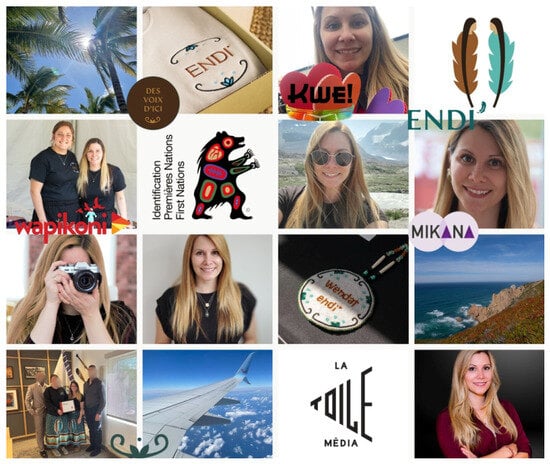
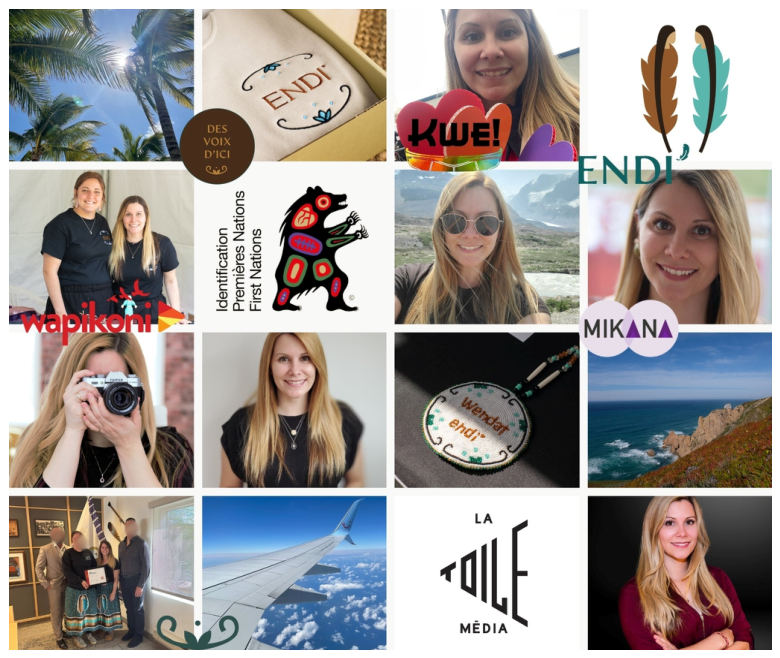
In this context, self-determination became a way for Béatrice to counter some of the impacts of the Indian Act’s oppressive measures, namely by reclaiming and asserting her identity. This process is represented in the photographs she selected (see Figure 1), which depict moments from her journey, including her involvement in Indigenous organizations, cultural practices, and entrepreneurial ventures. Together, these images illustrate a trajectory marked by challenges, accomplishments, and self-reflection. As she notes, reflecting on her experiences allowed her to recognize how far she has come: “Yeah, I think it [the photograph collage] represents the journey really well. … It was a nice introspection for me to see all the ground I’ve covered.”
Figure 1.
Béatrice’s photograph collage of moments in her journey to self-determination.
Beyond identity, Béatrice’s self-determination is also expressed through the professional path she carved for herself. She launched a first business in communications and social media, developing her skills independently and building a client base over time. She describes the risk of entrepreneurship as a leap into the unknown: “Well, yeah, self-determination was a moment … where I threw myself into the void, into the world of entrepreneurship.” Many of the photographs she shared reflected her entrepreneurship journey and the opportunities she created for herself, including starting two businesses that allow her to travel for both work and leisure. Despite challenges, these ventures enabled her to reclaim her decision-making power and align her work with her values:
Well for me it was mostly to reappropriate, you know, my decision-making power. So, it was mostly to make my own path, and to really live in line with my values, my identity. I’m really happy to have done it.
While building these businesses represented a significant personal achievement, Béatrice emphasized the invaluable role of support from family and friends. She highlights this as an important condition to success:
It’s having someone you’re close to, you know, … someone who gives you confidence … It took years for my family to understand what I was doing with my business in social media because it was a new field at the time… but they always encouraged me. … So, for youth who don’t have that structure, I can really understand that not everyone would be able to succeed.
Importantly, her entrepreneurial path also allowed her to reconnect with her culture. After obtaining her status card, she reoriented her first business, which initially had no cultural component, to better reflect her cultural values:
She later co-founded a second business with another youth from her community who had a strong connection to culture and community. This initiative both supported her own reconnection with culture and offered opportunities for community members to learn and engage. As she explains, this work is “a gesture towards my community, my culture.”…I really changed my way of seeing and of working with my business … I operated in a certain way from 2017 to 2020. I was a pretty normal Québécoise. … when I got my cards, I then transformed the values and direction of the business a bit, I did a 360 on that path.
Béatrice’s involvement in Décidaction further extended this process by enabling her to connect with and support other youth from her community, and to work collectively toward shared goals. The project supported Béatrice in developing skills such as negotiation and collective decision-making, while also fostering a sense of contributing to her community. She perceived the sense of giving back and having an impact as central to youth engagement:
Décidaction, allowed me to better understand my own strength, to connect with other youth who also had the desire to build a common project, to move forward together and to express ourselves. … when we get together in a group, well we’re solid, we’re powerful, we can change things.
3.2. Jos’ Journey of Self-Expression and Ongoing Cultural Connection
We first met Jos, an Atikamekw Iriniw, in an Indigenous college. Having left his community to pursue his studies, education represented a central dimension of self-determination for him. He associated it with greater opportunities and the possibility of building a better life, drawing on teachings from his late grandfather, Gérard, as he explains: “Self-determination … makes me think of education and with education, it’s easier to have a better life.”
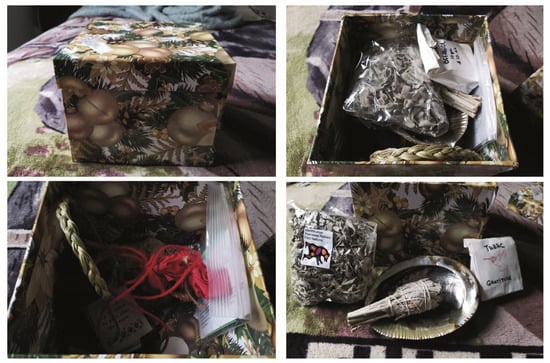
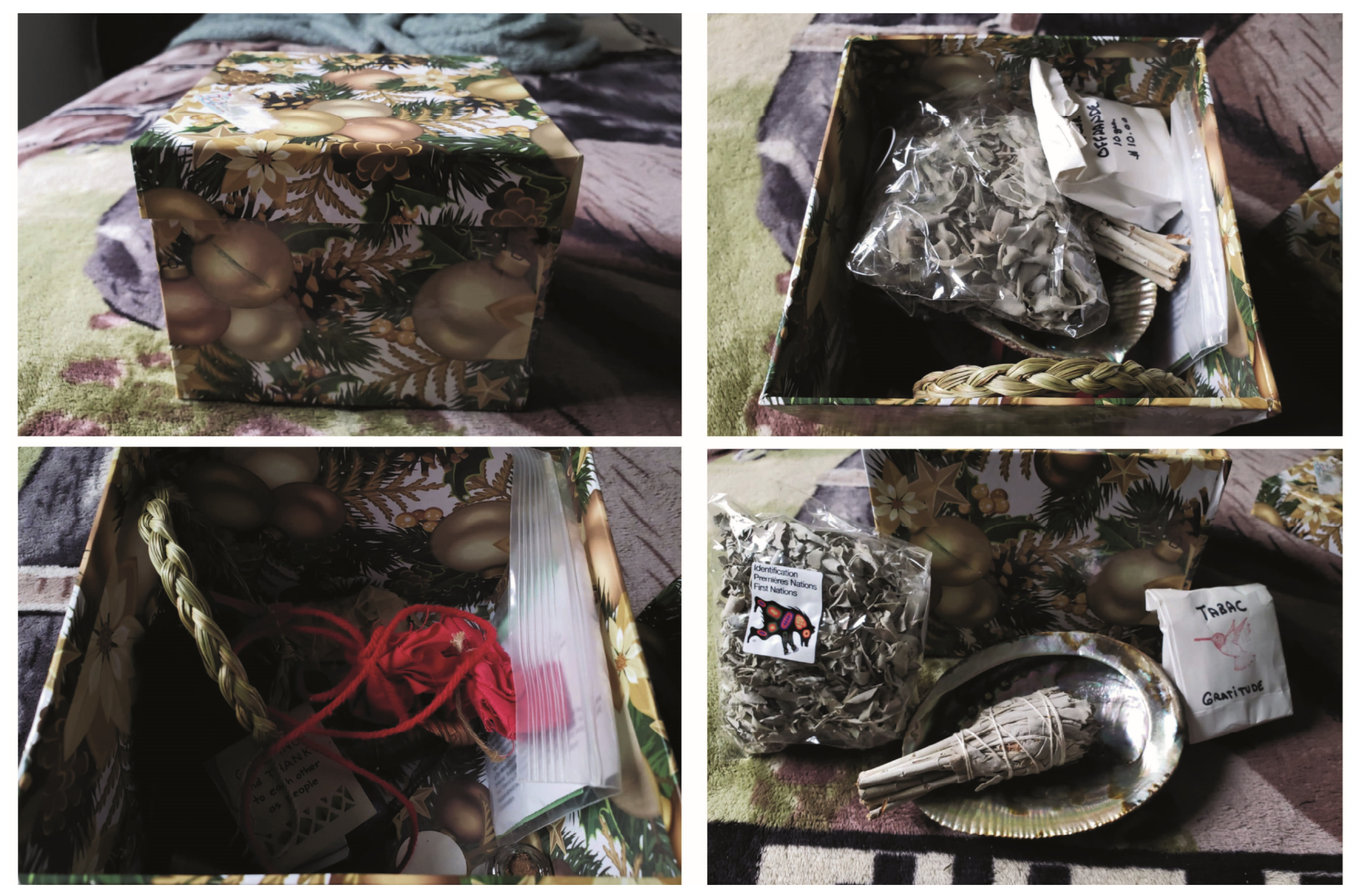
The college he attends actively integrates Indigenous cultural practices into its environment. For instance, they maintain a garden where traditional plants are cultivated and offer a range of social, artistic, and cultural activities for students. Jos’ photographs reflect this environment through what he refers to as his “Box of Happiness”, which contains culturally significant items such as sage, tobacco, and sweetgrass. He harvested the sweetgrass from the school’s garden, while the others were obtained from Indigenous shops. Access to cultural practices and opportunities to engage with culture are essential to Jos’ practice of self-determination as they contribute to nurturing his sense of identity and pride as well as preserving his culture. For him, cultural practices also serve as resources for refocusing and introspection, reconnecting with Aski (land in Atikamekw Nehiromowin), his Ancestors, and himself, as well as fostering confidence in his everyday life. His “Box of Happiness” (see Figure 2) represents one example of such a practice: “When you mentioned self-determination, well I thought to concentrate more on the cultural objects I have in my room. … I call it the Box of Happiness and I use it when I need it.”
Figure 2.
Jos’ four photographs of his “Box of Happiness”.
For Jos, self-determination was also closely tied to self-expression. He actively participates in his school environment through clubs, activities, and NPF initiatives such as Décidaction. With Décidaction, he felt able to “take more space”, particularly due to the informal and non-judgmental approach that supported participants throughout the process. These opportunities enabled him to explore and share his voice in different ways, especially through writing, poetry, and music composition in his free time. As he explains: “Poetry allows me to express myself differently, often without filters, facing my emotions as raw and uncomfortable as they may be.” These experiences allowed him to step outside of his comfort zone, allowing him to discover new aspects of himself. He recalls one of these experiences:
I went to Montréal to participate in a poetry event and Joséphine Bacon [a First Nations poet] invited me to recite one of my poems on stage. … Mentally, I didn’t want to do it, but my body really gave in.
The photovoice exercise itself became another form of self-expression. Through his photographs, Jos shared how he connects with his culture. Rather than presenting a single photograph of his “Box of Happiness”, he chose to share a series of four: first, the box closed, then two photographs of the box opened with its contents revealed, and finally, its contents laid out and displayed. This sequence of photographs reflects the process of gradually opening up and sharing aspects of himself, echoing a broader journey to self-determination characterized by self-expression.
3.3. Audrey-Ann’s Journey of Pursuing Education
Audrey-Ann is from an Abenaki community, located relatively close to urban centers. We met her at the same college as Jos, and like him, she also views education as central to carving her own path toward self-determination. Although she never sent us her photograph due to logistical difficulties in capturing it, she described an image of herself from behind, showing her wearing her school bag. For her, this image symbolized both the importance of education in her life and First Nations peoples’ right to access postsecondary education. Historically, formal education has been used as a colonial tool of assimilation, separating First Nations peoples from their communities and their cultures. Today, however, access to education is often framed as important for building a future, accessing opportunities, and acquiring knowledge that can benefit both students and their communities. As Audrey-Ann explains:
Well, let’s say my grandparents. … they didn’t necessarily have the right to education, to understand also … when they go vote, how their choice impacts their lives today. They didn’t get the chance to get jobs with the salaries they wanted because they didn’t have access to school. But I have access.
Despite increased access to postsecondary education, she highlighted persistent barriers, particularly the lack of Indigenous representation among students, faculty, staff, and within course content. She explained that without representation, it can feel intimidating and discouraging to attend non-Indigenous institutions. Indeed, she shared that she does not personally know any Indigenous person who has graduated from university:
There isn’t really anyone [in my surroundings] who knows someone who, let’s say, went to university and graduated. It’s as if it’s inaccessible for us. It’s like a dream. We would all like, you know, to continue studying, but we look at that and it’s like: “Um, do I have the competencies to get there? I’m not sure.” … So, we have access [to university], but we’re not necessarily represented enough to be motivated to self-determine ourselves as much as we would like to through education.
Her perspective shifted after visiting a university campus with dedicated Indigenous spaces, helping her to feel more comfortable. While she mainly saw non-Indigenous students on campus, she recalls thinking: “… if they can do it, why can’t I?” She then decided to enroll.
For Audrey-Ann, learning extends beyond formal education. Through community initiatives, like her local youth center, she developed practical skills such as budgeting and cooking. These learning opportunities helped her better understand how her decisions may affect both her own life and her community: “… with education, we’re better equipped to make more informed choices than … if we didn’t have information and then we wouldn’t know the impact of our choices or their influence on our future.” Décidaction represented one such initiative for Audrey-Ann to learn outside formal education settings, particularly through developing her skills related to project design and implementation. Mélanie’s ongoing presence and support played a key role in accompanying participants through this process, helping them to build confidence and skills, while maintaining ownership over their ideas. As Audrey-Ann explains:
For sure, I would say that a strength was that we were well accompanied. … But yeah, we can’t deny it, we’re more equipped to put together a project and to present it, because before, even if we wanted to, we would have just said: “Ah, I have this idea for a project” but nothing more. Now we can say: “There’ll be this and this cost, we have this and this objective, the general idea is this, the benefits will be this and this.”
3.4. Carolyne’s Journey of Cultural Reconnection
Carolyne, from the Mi’kmaq Nation, carved her path to self-determination through reconnection with her culture. Connection to culture has been lost to many community members who live away from their traditional territory and disrupted by colonial assimilation practices that severed intergenerational transmissions of cultural knowledge. Through her narrative, Carolyne demonstrated how culture and personal identity are deeply intertwined; her journey enabled her to not only learn about and ground herself in her cultural practices, but also to better understand herself, her values, and her sense of purpose. She reflects:
If I did anything in my life, it’s the self-determination through my culture that was missing in my daily life. … it was a process of greater awareness of self and of making the decision to embark in Indigenous culture.
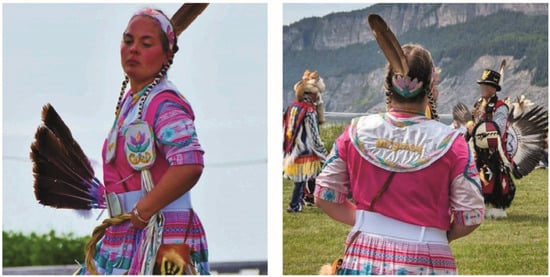
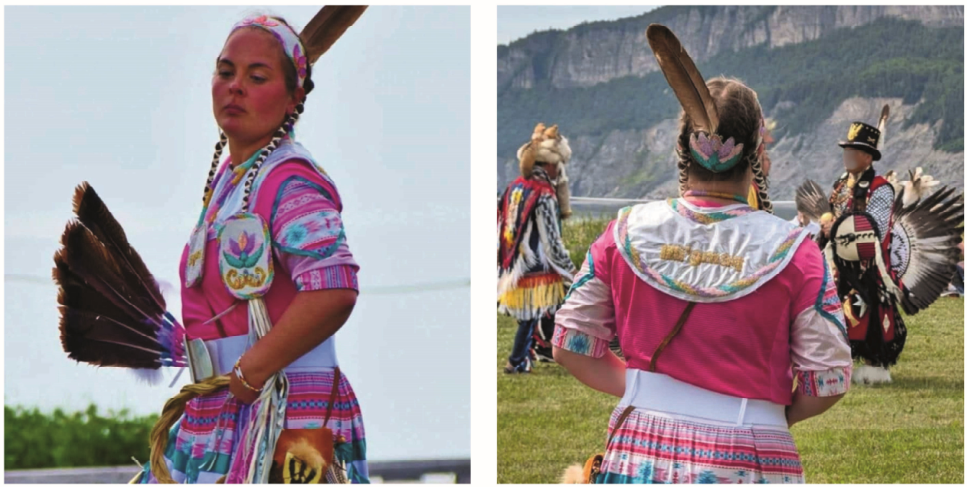
Carolyne’s engagement in different forms of traditional dance echoed her evolving cultural reconnection and self-expression. She began her dancing journey with “fancy” dancing, a style of traditional First Nations dance that she associates with strength, empowerment, and cultural affirmation. Over time, and in connection with shifts in her career and sense of purpose, she felt increasingly drawn to “jingle” dancing. She explains that jingle represents healing and caring for others, which more closely reflects the role she now plays in her life. The photographs she shared capture this transition (see Figure 3): they represent the first time she performed the jingle dance at a Mawiomi (Powwow in Mi’kmaq), which was also on her community’s traditional territory. In this way, her evolving self-determination—expressed through new life choices and aspirations—was mirrored in her changing forms of cultural expression. She recalls:
Before, I was a fancy dancer, and over the last year, I think my career change impacted the cultural aspect [of my life] … it’s [jingle] really the dance of healing, the dance of wanting to give to others. … The dance I did before [fancy], it was really more about perseverance because it represents women’s empowerment and the evolution of women’s roles within First Nations. … It used to fit with my life, that I took the lead, that I carved paths … but now, you know, my role is different, my attitude is different. So, I changed dances.
Figure 3.
Carolyne’s photographs of her dancing on her community’s traditional territory.
Carolyne first decided to reconnect with her culture when she attended an event in her community where traditional dancing was being performed. She and her cousins were inspired to learn, but there were no Elders in their community to teach them, as would have traditionally been the case. They therefore sought guidance from experienced dancers from other communities and Nations. They also learned other cultural practices such as sewing regalia, beading, and making moccasins and drums. Carolyne recognizes that the perseverance of previous generations—those who continued to practice and transmit their cultures despite oppressive policies of cultural erasure—has allowed her generation, and those that follow, to thrive within their cultures. Reconnecting with her culture is thus also a way of honoring her ancestors’ resilience in the face of this oppression. She explains:
What is necessary is learning from people who have experience. For us, it wasn’t an Elder, but an experienced dancer who shared with us and who opened our eyes to the vision of dancing. You need those individuals who mentor us … So, you see, it’s thanks to the self-determination of previous generations that today’s generations can live out a different kind of self-determination. A self-determination that is exponential, and not ultimately just about the existence and survival of our culture.
Carolyne and her cousins also encountered challenges, such as securing physical spaces to meet and practice dance. Yet, their determination to reconnect with their culture enabled them to persevere. As Carolyne reflects over the many barriers they faced: “We were four girls … who were not close to our culture, who were not close to the land. And yet, we tore down the walls to reclaim culture.”
Carolyne’s story also highlights the importance of contributing to the transmission of culture, and ultimately to the self-determination of others. Their reconnection to culture contributed to the Mawiomis in her community, and on traditional land. She expressed great pride in sharing her culture with community members, and thus in contributing to the resurgence of Mi’kmaq culture in her community. She recalls:
We started to grow the thing [interest in dancing]. The year after, it was my father, my godfather, and my uncle who started to dance … and this year, my sister will dance with my goddaughter … There is an enormous pride around this reclaiming because without this decision we made … we never would have remade the trail [engaged my community in dancing]. So, you know, more and more, the community is taking back its cultural roots. So for me, my photographs symbolize that.
Carolyne’s involvement in Décidaction represented another way of giving back, specifically in supporting youth from her community in their journey to self-determination. She aimed to help create conditions that would allow them to explore possibilities and reduce barriers in pursuing their aspirations:
I had the impression that it was me who was giving that little extra kick, you know, a little push to open the door to opportunities for youth, to make sure that their self-determination wasn’t just focused on the processes. … The committee was there, and we would be like: “Look, we will find a way to get access to the infrastructure or the spaces you need, to secure funding.” You know, we broke down barriers. I think that’s really how I see my role.
4. Discussion
Taken together, the four participants’ experiences of self-determination deepen existing understandings. Rather than a static or individual achievement, self-determination emerges as a dynamic, relational, and embodied process that evolves over time. It is developed through intentional actions that foster self-awareness, confidence, and affirmation of cultural identity. Across these accounts, we identified three dimensions of self-determination: (1) reclaiming identity, culture, and rights; (2) personal and collective experiences; and (3) meaningful and diverse self-expression. These dimensions are not separate components of self-determination, but rather overlap and intersect across participants’ experiences.
4.1. Self-Determination Through Reclaiming Identity, Rights, and Culture
Self-determination was described by all participants as an active and ongoing process of “taking back,” or reclaiming what was disrupted by colonial policies, across generations. First, reclaiming involves the affirmation of identity and rights. As seen in participants’ stories, reclaiming through state recognition and access to colonial institutions (e.g., education) can be complex, as these processes remain mediated by colonial systems. While it may seem contradictory that recognition from a colonial state plays a significant role in self-determination, Béatrice’s experience of needing a status card to integrate within her community demonstrates how state recognition continues to shape access to community and cultural life for many First Nations. For instance, state recognition can determine access to funding for housing, health benefits, and community activities (Corntassel & Bryce, 2012; Coulthard, 2007). As some Indigenous scholars argue, the “politics of recognition”—a model of reconciliation whereby Indigenous identity and certain rights are legitimized by the colonial state—can reproduce forms of dependency on or attachment to the state (Alfred, 2009; Corntassel & Bryce, 2012; Coulthard, 2007). Thus, when tied to state recognition, self-determination remains limited. These scholars critique state-centered forms of recognition, emphasizing instead a focus on relationships and responsibility to land, culture, and community to foster self-determination. However, as Mélanie recounts below, the absence of state recognition can also create concrete barriers to cultural and community participation.
Mélanie: I totally agree that it’s [identity recognition] like a sort of anchoring point for self-determination because from the moment that you can officially identify [as First Nations] … well that’s like the starting point for everything else. It’s like as if you get the impression that you’re an imposter without it.
Josée: I find it interesting how it is such an important point for self-determination and at the same time, that official recognition comes from a colonial state, it comes from the Canadian government. It’s a bit paradoxical.
Mathieu: I think we can nuance that though because some First Nations communities determine their own “membership codes”, which are the criteria that determine if you are eligible to belong to a community. Whereas for other communities, it’s the Canadian government that decides.
Mélanie: Yeah, it varies from community to community. And sometimes having a status card can help you connect more to your community. So, for example, before I got my own status card, I couldn’t dance in certain Powwows because they only allowed people with a status card. So yes, it is a colonial recognition, but it is so grounded in our realities—finances, housing, and other stuff like that—that, like it or not, it matters.
Second, reclaiming is expressed through everyday practices of resurgence. Indigenous resurgence has been described as the prioritization of Indigenous ways of being in everyday life to resist colonial structures, while fostering Indigenous peoples’ flourishing (Alfred, 2009; Corntassel & Bryce, 2012; Coulthard, 2007; Elliott, 2017; Simpson, 2011, 2016). Rather than engaging primarily with the state to transform it, resurgence focuses on strengthening Indigenous thriving through relationship building with community, culture, Ancestry, and land. Such relationships are enacted in everyday, seemingly ordinary, yet meaningful actions. These practices were evident across all narratives: Jos and Audrey-Ann through everyday engagement in Indigenous learning spaces, Béatrice through culturally grounded entrepreneurship, and Carolyne through regular collective dance practice. As highlighted by Corntassel et al. (2018), the everyday nature of these practices is fundamental to building and sustaining such relationships. Through their repetition, they nurture a sense of belonging and confidence that contributes to embodying identity, and thus sustains self-determination.
Mathieu: I find this idea of resurgence interesting because with our current political context, it is easy to feel helpless. How are we supposed to change big structures? I see resurgence, in a way, like working locally. The results of our efforts are quick and visible. I think this gives us more hope. But I wonder, what are the limits of working locally? Can we change structures if we only focus locally?
Josée: This is a great question. As I read more about resurgence, I see the importance of working locally. We can’t transform structures without a united front. We need to work collectively, and that takes relationships, it takes community ties, which are built at a smaller scale, in the everyday. And for Indigenous peoples, that is also about strengthening identity and culture, which happens through relationships to community and the land. Once we’re all stronger and more united, we can take on structural transformation more concertedly.
It’s especially important for youth to work on this resurgence so that they can have more tools, stronger relationships, a stronger sense of identity, and so on, when they are older, which can contribute to societal transformations.
Mélanie: What I find really important is the inter-Nation solidarity. Yes, we have to work on resurgence locally, or within our own communities and Nations, but we also have to recognize that there is a diversity of realities, needs, and relationships between Nations, and between communities … And we have to work together to support one another.
Structural barriers can hinder the process of reclaiming. Audrey-Ann’s story illustrates how limited Indigenous representation continues to impede First Nations peoples’ access to education. In 2021, Indigenous students represented approximately 5% of new university admissions in Canada (Statistics Canada, 2024). Given Canada’s history of compulsory schooling through residential schools—institutions designed to assimilate Indigenous children and marked by widespread abuse (Truth and Reconciliation Commission of Canada, 2015)—it is not surprising that many Indigenous peoples have complex and often fraught relationships with educational institutions rooted in colonial structures. As Audrey-Ann described, the limited visibility of Indigenous students and graduates can make higher education appear unattainable. Exposure to role models and dedicated Indigenous resources can play a critical role in fostering Indigenous students’ sense of belonging, engagement, and academic perseverance (Sonn et al., 2000; Walton et al., 2020). This association may explain the growing importance of dedicated Indigenous spaces and services within universities. In thinking about the barriers emerging from participants’ narratives, Mélanie reflected on her own experiences.
Mélanie: I think the biggest obstacle to my self-determination, for many years, was myself because I didn’t dare try. I always thought that it wasn’t my place, that people would tell me that I didn’t belong because I didn’t grow up in my community. My grandfather never talked about it [being Indigenous] because his mother taught him not to and because it limited his opportunities in life. And so, when I asked my mother about it, she wasn’t aware because her father never talked to her about it. So, I didn’t feel legitimate. I’d go to Powwows just to watch. And once I started asserting myself, I faced some closed doors. I found my self-determination through all those little fights. Then I passed on what I learned to others, so that it’s not a struggle, it’s a given for them.
As Mélanie’s reflection suggests, reconnecting with identity and culture can be profoundly meaningful, but also deeply complex. Research shows that cultural reconnection can foster a stronger sense of belonging, self-understanding, and well-being (Auger, 2016; Chandler & Lalonde, 1998; Thorburn et al., 2023; Wuttunee et al., 2019), but can also involve tensions and challenges (Lucero, 2010). This dynamic is particularly the case for those living in urban centers, who may feel disconnected from their communities, be “othered” when attempting to reconnect, or be scrutinized regarding their legitimacy and knowledge (Auger, 2016; Lucero, 2010). This is due in part because of limited space and resources for newcomers and because of the growing problem of “pretendians”, that is, non-Indigenous people falsely claiming Indigenous identity along with access to the programs and supports intended for Indigenous peoples (Desjarlais-Deklerk, 2026). Béatrice, Carolyne, and Mélanie thus demonstrate how reconnecting with culture often requires persistence, courage, and vulnerability. Their determination to reconnect and to transmit cultural teachings contributes to cultural continuity, and in turn, the well-being of First Nations peoples (Auger, 2016; Lucero, 2010).
4.2. Self-Determination as a Personal and Collective Process
Across their narratives, participants also described self-determination as both a personal journey and a relational and collective process. While self-determination seemingly centers on the “self”, participants consistently emphasized the importance of support from family, peers, mentors, and community, as well as the responsibility of giving back. This challenges dominant neoliberal conceptions of individuality as grounded in personal autonomy and responsibility for their actions (Brown, 2003). In contrast, Indigenous perspectives position the self as relational, and embedded within networks of relationships that connect people, land, and culture (Sánchez-Flores, 2026; Simpson, 2016; Wilson, 2008). As Simpson (2016) states: “Individuals are hubs of networks. When an individual is hurt, then the system is out of balance.” (p. 26)
Mélanie: [First Nations] youth know very well that their Ancestors, even grandparents and parents, didn’t have the same opportunities, so they want to seize them and bring back what they learned. Versus, most non-Indigenous youth may take a similar path, but to pursue their individual career, for their family, or to build something. And that’s not necessarily negative. But for most Indigenous youth, when they leave their community to pursue their studies, they carry their community with them, and they bring back what they learned to the community and inspire other youth to do the same.
Josée: What does it mean to “carry your community with you”?
Mélanie: It means that they’re always thinking about their community’s needs, experiences, ways of life, realities, strengths, and so on. And they will often choose a field of study in line with these needs and realities so that they can use the knowledge acquired outside of the community to contribute to their community’s development.
In this way, reciprocity supports self-determination through ongoing exchanges of knowledge, support, and opportunities. Far from unidirectional, these processes generate cycles of learning and transmission that extend across generations and communities. Carolyne learned from experienced dancers; Béatrice was inspired by family and friends; Jos explored self-expression through Indigenous-led workshops; and Audrey-Ann was supported by her Indigenous college and community. Acting in reciprocity thus underscores the generative and expanding impact of self-determination not only for individuals, but for communities and Nations (Constantinou et al., 2025; Simpson, 2017). Carolyne’s experience exemplifies the impacts of reciprocity: learning to dance shaped both her own journey and the cultural revitalization within her community.
Participants’ involvement in Décidaction also highlights the importance of collective culturally safe spaces for fostering self-determination among First Nations youth, notably in creating solidarity and shared motivation to enact change. Such spaces, often informal and non-judgmental, support relationship building and nurture a sense of belonging through cultural engagement, while also resisting colonial norms (Robbins et al., 2017; Stahl et al., 2025). They create opportunities for youth to explore identity, develop capacities, and take risks in expressing themselves (Blanchet-Cohen & Richardson/Kinewesquao, 2017; Robbins et al., 2017; Stahl et al., 2025; Thorburn et al., 2023). Such opportunities to contribute and to see their tangible impacts are central to sustaining youth engagement (Thorburn et al., 2023).
Josée: We can see how providing environments where youth can explore self-expression and take risks is important for self-determination.
Mélanie: I think Indigenous and culturally safe spaces play a big role in self-determination. You don’t have to justify who you are and why you deserve to be there. It’s reassuring.
The importance of the collective dimension of self-determination was further reflected when two of the three groups chose to rename “Décidaction” in their own language. Rather than emphasizing individual decision-making and action, the names they selected foregrounded relationality through “building together” (Tiondiah in Wendat) and “gathering” (Mawo’lagi in Mi’kmaq).
4.3. Self-Determination Through Meaningful and Diverse Self-Expression
Mélanie: I think self-determination really passes through the way you express yourself, in every sense. … From everything I heard [from the four narratives], it pretty much all passes through art, culture, or education. They’re all different ways of expressing yourself other than through words. And it’s probably an easier and more accessible way to find your voice and take your place.
Josée: One thing I think is important is what you [Mélanie] were saying earlier, about youth wanting to see action following their expression. They don’t just want to express themselves for the sake of self-expression. They want to contribute to change.
These reflections point to the central role of self-expression in participants’ understandings of self-determination. Self-expression as a dimension of self-determination does not imply that youth expect their ideas to always be directly translated into action. Rather, it involves having inclusive spaces where they can express themselves in diverse ways, meaningfully participate in decision-making, and contribute to actions that can lead to change. This is particularly important in a context where First Nations’ influence over decisions that affect them has historically been, and continues to be, constrained.
Extending beyond verbal communication, self-expression includes artistic and cultural practices through which youth may assert their identities and values outside of colonial languages and logics. Through art, performance, and social media, youth not only can express their realities, but also imagine and enact alternative ways of being (Deumert, 2021). Given that Indigenous voices have long been silenced through colonial assimilation policies (Gray et al., 2008; Truth and Reconciliation Commission of Canada, 2015), expression also becomes a form of agency and resistance, enabling youth to shape their identities, communities, and futures (Deumert, 2021; Freeman, 2017). Indigenous youth self-expression also challenges what Tuck (2009) calls “damage-centered” discourses, that frame Indigenous peoples through suffering and loss, often generating an image of a hopeless victim. Through cultural and artistic expression, youth instead assert control over their narratives, bringing forward the strength, continuity, and beauty that define their cultures (Gibson, 1998; Gray et al., 2008). For instance, Carolyne learned to express herself, and the evolution of her life, through different forms of traditional First Nations dance. She first danced fancy, as a way of affirming her identity and strength, and now dances jingle to relate her role of caring for others. In this way, reconnecting to culture can also serve as a means of embodying resistance and identity (Wuttunee et al., 2019).
Expression further extends to presence in non-Indigenous spaces. As Audrey-Ann’s experience suggests, taking space within these contexts can itself be a form of self-determination. However, meaningful inclusion requires more than presence (Gaudry & Lorenz, 2018). It involves transforming institutions by challenging dominant and colonial logics and integrating Indigenous languages, cultural practices, and ways of knowing, with the guidance of Indigenous Elders and leaders (Gaudry & Lorenz, 2018; Stahl et al., 2025). Such practices also increase exposure to Indigenous culture and ways of knowing to non-Indigenous people, which is important in challenging and reducing racist perspectives toward Indigenous peoples (Stahl et al., 2025).
Initiatives such as Décidaction provide additional avenues for expression, particularly related to projects that are meaningful and that reinforce youth agency and capacity to influence their communities (Freeman, 2017; Gray et al., 2008).
Mathieu: Décidaction allowed another way [for youth] to express themselves, and in different ways, like by being on the youth committee, by deciding how to implement Décidaction in their setting, by proposing a project that they think would be important for their community, or by voting on a project and taking part in deciding what will happen in their environment.
Mélanie: Yes, I find voting is a way for youth to know that their opinions matter and are important.
Mathieu: It’s like a “virtuous cycle”, rather than a vicious cycle. You express yourself and you develop some self-determination and in so doing, you reinforce your voice.
5. Conclusions
Josée: Can you tell me a story of witnessing a First Nations youth becoming more self-determined?
Mélanie: I’m thinking of this one girl who really marked me. She’s one of the only ones who dances in her community, and she started teaching the younger kids. During the activity where we met, she barely spoke to anyone. She was super introverted, super shy. Then, she came up to me, without really knowing me, and told me she wasn’t doing well and that she needed to share a moment with me. We stepped away from the group and danced together, just the two of us. It might seem like a small step, but it was a huge step for her toward asserting herself and being proud of who she is. It took courage to come up to me, in a moment of vulnerability.
As we began this article with a lived experience of self-determination, we also end with one. Unpacking self-determination in concrete terms and from the perspective of First Nations youth is particularly important because self-determination is often discussed through legal language or academic frameworks. However, during Carolyne’s interview, Josée asked her to describe the concept of self-determination, and she quickly answered that self-determination is not a concept, but a lived experience. This understanding resonates with Indigenous scholars who explore self-determination as an emancipatory, lived, everyday practice that is difficult to define or encapsulate in one clear definition (Alfred, 2009; Constantinou et al., 2025; Corntassel et al., 2018; Rickard, 2017). In this way, this study contributes to shifting attention from conceptually defining self-determination, to grounding understandings in everyday lived experiences. Rather than proposing a single definition, we foreground the multiple meanings that emanate from First Nations youth’s ongoing journeys. The collaboration of the NPF and youth participants in this project was a key factor in accessing such rich knowledge.
For the participants in this study, self-determination means pursuing what matters to them, whether through reclaiming identity, engaging in education or entrepreneurship, or reconnecting with culture, often in the face of structural barriers. These journeys are deeply personal, yet also fundamentally relational. Youth emphasized the importance of not only receiving support from family, friends, and community, but also giving back. Further, self-determination emerged as a process of self-expression, underscoring the need for spaces where youth can express themselves in diverse ways and have meaningful opportunities to contribute to decisions and actions that affect them and their communities. Taken together, these findings suggest that self-determination is enacted through everyday practices that can also contribute to cultural continuity.
Findings from this study both resonate with and extend the limited, but growing, literature on Indigenous youth self-determination. Consistent with previous research, participants emphasized relational, reciprocal, and cultural dimensions of self-determination (Thorburn et al., 2023). As a new contribution to the literature, our findings highlight the dimension of self-expression as a central way through which youth experience and enact self-determination, including through meaningful and diverse cultural and artistic practices that allow them to assert their identity, reclaim space, and contribute to their communities. Moreover, while existing studies have examined self-determination within specific areas, such as health and well-being, we explored more broadly how youth make sense of and enact self-determination across different areas of their lives.
Initiatives such as Décidaction play a key role in creating conditions that support youth participation, agency, and the development of meaningful youth-led projects. Doing so requires careful attention to how relationships with youth are built and sustained, and to ensuring that youth voices are heard and taken seriously. Our findings align with a broader movement among Indigenous youth toward resurgence, where reconnecting with culture, community, and land allows youth to resist and transform systemic barriers and enables Indigenous peoples to flourish (Freeman, 2017; Murphy, 2014; Simpson, 2017; Thorburn et al., 2023; Wuttunee et al., 2019). As Carolyne reflects:
Well, of course self-determination is also part of Indigenous peoples’ resilience, you know. Because let’s not kid ourselves, with all the assimilation methods there have been over the past years, hey, it takes a lot of self-determination and resilience for us to still be here. … To this day, it’s the resilience we’ve had in the face of obstacles that has allowed us to still be here, to shine even. Because, you know, if we hadn’t made the decision to fight, to commit ourselves to our culture, to not to let it fade, we wouldn’t have First Nations releasing albums, selling their crafts, becoming fashion designers, writing books or working as journalists.
Author Contributions
Conceptualization, J.L., M.N. and M.V.; methodology, J.L.; validation, J.L., M.N., M.V., A.-A.D., B.N., J.O.-D. and C.R.; formal analysis, J.L., M.N. and M.V.; data curation, J.L.; writing—original draft preparation, J.L.; writing—review and editing, J.L., M.N., M.V., A.-A.D., B.N., J.O.-D. and C.R.; funding acquisition, J.L. All authors have read and agreed to the published version of the manuscript.
Funding
This study is part of a larger study, which is funded by the Social Sciences and Humanities Research Council, grant number 430-2023-00499. Part of this project was also conducted during J.L.’s Mitacs Elevate postdoctoral fellowship. J.L.’s salary is provided by Myriagone, which receives funds from l’Université de Montréal’s Vice-rectorat à la recherche, à la découverte, à la création et à l’innovation and research funds from Canadian Institutes of Health Research (CIHR) allocated to Myriagone co-chair Dr. Katherine Frohlich in her role as Scientific Director of CIHR’s Institute of Population and Public Health. The Quebec Government’s Secrétariat à la jeunesse funded the first iteration of Décidaction (2023–2024).
Institutional Review Board Statement
The study was conducted in accordance with the Declaration of Helsinki, and approved by the Research in Education and Psychology Ethics Committee of the Université de Montréal (CEREP-22-0540-D) on 27 May 2022.
Informed Consent Statement
Informed consent was obtained from all co-authors involved in this study.
Data Availability Statement
Due to ethical restrictions, research data are unavailable at request.
Acknowledgments
The authors sincerely thank the Myriagone team, notably Sarah Fraser and Jennifer Thompson, for their valuable input, as well as the New Pathways Foundation team for their continued engagement and precious collaboration.
Conflicts of Interest
The authors declare no conflicts of interest.
Abbreviation
The following abbreviation is used in this manuscript:
| NPF | New Pathways Foundation |
References
- Alfred, G. T. (2009). Colonialism and state dependency. International Journal of Indigenous Health, 5(2), 42–60. [Google Scholar]
- Auger, M. D. D. (2016). Cultural continuity as a determinant of Indigenous peoples’ health: A metasynthesis of qualitative research in Canada and the United States. The International Indigenous Policy Journal, 7(4), 1–24. [Google Scholar] [CrossRef] [Scilit]
- Blanchet-Cohen, N., & Richardson/Kinewesquao, C. (2017). Foreword: Fostering cultural safety across contexts. AlterNative: An International Journal of Indigenous Peoples, 13(3), 138–141. [Google Scholar] [CrossRef] [Scilit]
- Brown, W. (2003). Neo-liberalism and the end of liberal democracy. Theory & Event, 7(1), 15–18. [Google Scholar] [CrossRef] [Scilit]
- Chaire-réseau de recherche sur la jeunesse du Québec & First Nations Quebec Labrador Youth Network. (2021). Sharing our Stories: A Portrait of First Nations Youth Voices. First Nations Quebec Labrador Youth Network. [Google Scholar]
- Chandler, M. J., & Lalonde, C. (1998). Cultural continuity as a hedge against suicide in Canada’s First Nations. Transcultural Psychiatry, 35(2), 191–219. [Google Scholar] [CrossRef] [Scilit]
- Constantinou, C. M., McConnell, F., Dirik, D., Regassa, A., Loong, S., & Kuokkanen, R. (2025). Reimagining self-determination: Relational, decolonial, and intersectional perspectives. Political Geography, 118, 103112. [Google Scholar] [CrossRef] [Scilit]
- Corntassel, J., Alfred, G. T., Goodyear-Ka‘ōpua, N., Silva, N. K., Aikau, H., & Mucina, D. (2018). Introduction. In J. Corntassel, G. Alfred, N. Goodyear-Ka‘ōpua, N. K. Silva, H. Aikau, & D. Mucina (Eds.), Everyday acts of resurgence: People, places, practices (pp. 15–18). Daykeeper Press. [Google Scholar][Green Version]
- Corntassel, J., & Bryce, C. (2012). Practicing sustainable self-determination: Indigenous approaches to cultural restoration and revitalization. The Brown Journal of World Affairs, 18(2), 151–162. [Google Scholar]
- Coulthard, G. S. (2007). Subjects of empire: Indigenous peoples and the ‘politics of recognition’ in Canada. Contemporary Political Theory, 6(4), 437–460. [Google Scholar] [CrossRef] [Scilit]
- Crown-Indigenous Relations and Northern Affairs Canada. (2025). First nations. Available online: https://www.rcaanc-cirnac.gc.ca/eng/1100100013791/1535470872302 (accessed on 8 June 2026).
- Denscombe, M. (2025). Decolonial research methodology: An assessment of the challenge to establish practice. International Journal of Social Research Methodology, 28(2), 231–240. [Google Scholar] [CrossRef] [Scilit]
- Desjarlais-Deklerk, K. (2026). Decolonising the spaces intended to decolonise. Canadian Journal of Indigenous Studies, 2(1), 43–64. [Google Scholar]
- Deumert, A. (2021). Insurgent words: Challenging the coloniality of language. International Journal of the Sociology of Language, 2021(272), 101–126. [Google Scholar] [CrossRef] [Scilit]
- Elliott, M. (2017). Indigenous resurgence: The drive for renewed engagement and reciprocity in the turn away from the state. Canadian Journal of Political Science, 51, 61–81. [Google Scholar] [CrossRef] [Scilit]
- Freeman, B. (2017). The spirit of Indigenous youth: The resilience and self-determination in connecting to the spirit and ways of knowing. Journal of Indigenous Wellbeing, 2(1), 60–75. [Google Scholar]
- Gaudry, A., & Lorenz, D. (2018). Indigenization as inclusion, reconciliation, and decolonization: Navigating the different visions for indigenizing the Canadian Academy. AlterNative: An International Journal of Indigenous Peoples, 14(3), 218–227. [Google Scholar] [CrossRef] [Scilit]
- Gibson, C. (1998). “We sing our home, We dance our land”: Indigenous self-determination and contemporary geopolitics in Australian popular music. Environment and Planning D: Society and Space, 16(2), 163–184. [Google Scholar] [CrossRef] [Scilit]
- Gray, N., Wolf, D., Mays, M., Equihua, M., Gomez, R., Tellez, A., Tellez, A., Rappa, B., Jirsak, J., & Nye, P. (2008). A culturally based wellness and creative expression model for Native American communities. The Journal of Equity in Health, 1(1), 52–60. [Google Scholar]
- Hogarth, M., & Czuy, K. (2021). Walking many paths, our research journey to (re)present multiple knowings: Creating our own spaces. Engaged Scholar Journal: Community-Engaged Research, Teaching, and Learning, 7(1), 159–182. [Google Scholar] [CrossRef] [Scilit]
- Indian Act, R.S.C. § c. 1-5. (1985). Available online: https://laws-lois.justice.gc.ca/eng/acts/i-5/ (accessed on 8 June 2026).
- Lapalme, J., Nogues, M., Vallet, M., & Fraser, S. (2026). Quand les jeunes s’expriment: Une initiative de budget participatif pour amplifier la voix des jeunes des Premières Nations. Revue de La Persévérance et de La Réussite Scolaires Chez Les Premiers Peuples, 6, 42–46. [Google Scholar]
- Lucero, N. M. (2010). Making meaning of urban American Indian identity: A multistage integrative process. Social Work, 55(4), 327–336. [Google Scholar] [CrossRef] [Scilit] [PubMed]
- McIvor, S. D. (1995). Aboriginal women’s rights as ‘existing rights’. Canadian Woman Studies, 15(2 & 3), 34–38. [Google Scholar]
- Mitchell, C. (2011). Doing visual research. Sage Publications. [Google Scholar]
- Morden, M. (2016). Theorizing the resilience of the Indian Act. Canadian Public Administration, 59(1), 113–133. [Google Scholar] [CrossRef] [Scilit]
- Murphy, M. (2008). Representing Indigenous self-determination. University of Toronto Law Journal, 58(2), 185–216. [Google Scholar] [CrossRef]
- Murphy, M. (2014). Self-determination as a collective capability: The case of Indigenous peoples. Journal of Human Development and Capabilities, 15(4), 320–334. [Google Scholar] [CrossRef] [Scilit]
- Reading, C. L., & Wien, F. (2013). Health inequalities and social determinants of aboriginal peoples’ health. National Collaborating Centre for Aboriginal Health. [Google Scholar]
- Rickard, J. (2017). Diversifying sovereignty and the reception of Indigenous art. Art Journal, 76(2), 81–84. [Google Scholar] [CrossRef] [Scilit]
- Robbins, J., Linds, W., Ironstand, B., & Goodpipe, E. (2017). Generating and sustaining positive spaces: Reflections on an Indigenous youth urban arts program. AlterNative: An International Journal of Indigenous Peoples, 13(3), 161–169. [Google Scholar] [CrossRef] [Scilit]
- Sánchez-Flores, M. J. (2026). Decolonizing bodies: A radical relational to racial healing and worlding shared humanity. Palgrave Macmillan. [Google Scholar]
- Simpson, L. B. (2011). Dancing on our turtles back: Stories of Nishnaabeg recreation, resurgence, and a new emergence. ARP Books. [Google Scholar]
- Simpson, L. B. (2016). Indigenous resurgence and co-resistance. Critical Ethnic Studies, 2(2), 19–34. [Google Scholar] [CrossRef] [Scilit]
- Simpson, L. B. (2017). As we have always done: Indigenous freedom through radical resistance. University of Minnesota Press. [Google Scholar]
- Sonn, C., Bishop, B., & Humphries, R. (2000). Encounters with the dominant culture: Voices of Indigenous students in mainstream higher education. Australian Psychologist, 35(2), 128–135. [Google Scholar] [CrossRef] [Scilit]
- Stahl, D. G., Boivin, L., & Leeuw, S. (2025). Art and Indigenous health and well-being: The impact of art on determinants of Indigenous health. National Collaborating Centre for Indigenous Health. [Google Scholar]
- Statistics Canada. (2024). Highlights on Indigenous new entrants to postsecondary education. Available online: https://www150.statcan.gc.ca/n1/pub/71-607-x/71-607-x2024017-eng.htm (accessed on 9 June 2026).
- Thambinathan, V., & Kinsella, E. A. (2021). Decolonizing methodologies in qualitative research: Creating spaces for transformative praxis. International Journal of Qualitative Methods, 20, 16094069211014766. [Google Scholar] [CrossRef] [Scilit]
- Thorburn, R., Ansloos, J., McCormick, S., & Zantingh, D. (2023). The role of self-determination in health and wellness: A qualitative study with Indigenous youth health leaders across Canada. International Journal of Indigenous Health, 18(1), 1–11. [Google Scholar] [CrossRef] [Scilit]
- Truth and Reconciliation Commission of Canada (Ed.). (2015). What we have learned: Principles of truth and reconciliation. Truth and Reconciliation Commission of Canada. [Google Scholar]
- Tuck, E. (2009). Suspending damage: A letter to communities. Harvard Educational Review, 79(3), 409–428. [Google Scholar] [CrossRef] [Scilit]
- Tuck, E., & Yang, W. (2014). Unbecoming claims: Pedagogies of refusal in qualitative research. Qualitative Inquiry, 20(6), 811–818. [Google Scholar] [CrossRef] [Scilit]
- United Nations Declaration on the Rights of Indigenous Peoples, Pub. L. No. Resolution 61/295. (2007). Available online: https://social.desa.un.org/sites/default/files/migrated/19/2018/11/UNDRIP_E_web.pdf (accessed on 24 April 2026).
- Walton, P. D., Hamilton, K., Clark, N., Pidgeon, M., & Arnouse, M. (2020). Indigenous university student persistence: Supports, obstacles, and recommendations. Canadian Journal of Education/Revue Canadienne de l’éducation, 43(2), 430–464. [Google Scholar]
- Wang, C., & Burris, M. A. (1997). Photovoice: Concept, methodology, and use for participatory needs assessment. Health Education & Behavior, 24(3), 369–387. [Google Scholar] [CrossRef] [Scilit] [PubMed]
- Wilson, S. (2008). Research is ceremony: Indigenous research methods. Fernwood Publishing. [Google Scholar]
- Wuttunee, K. D., Altenberg, J., & Flicker, S. (2019). Red ribbon skirts and cultural resurgence. Girlhood Studies, 12(3), 63–79. [Google Scholar] [CrossRef] [Scilit]
Disclaimer/Publisher’s Note: The statements, opinions and data contained in all publications are solely those of the individual author(s) and contributor(s) and not of MDPI and/or the editor(s). MDPI and/or the editor(s) disclaim responsibility for any injury to people or property resulting from any ideas, methods, instructions or products referred to in the content. |
© 2026 by the authors. Licensee MDPI, Basel, Switzerland. This article is an open access article distributed under the terms and conditions of the Creative Commons Attribution (CC BY) license.