


Abstract
Catechol (benzene-1,2-diol) is a highly versatile chemical motif that plays a central role in both terrestrial and marine systems, where its reactivity is governed by a combination of enzymatic oxidation and non-enzymatic interactions. This review examines the diverse enzymatic pathways responsible for catechol oxidation, including polyphenol oxidases, laccases, peroxidases, and microbial dioxygenases, and highlights how these conserved systems are adapted to distinct ecological functions such as plant defense, carbon cycling, bioadhesion, and material formation. A key focus is placed on the non-enzymatic formation of boron–catechol complexes, which can significantly modulate catechol reactivity. These complexes, formed through reversible interactions between boron species and the 1,2-diol group, can act as inhibitors of catechol oxidation by limiting substrate availability and altering redox behavior. Importantly, the extent of this inhibition is strongly dependent on pH, which governs both the speciation of boron (e.g., boric acid vs. borate) and the stability of borate esters, as well as the activity of oxidative enzymes. In terrestrial systems, variable pH conditions and soil chemistry influence the balance between oxidation, complexation, and degradation, whereas in marine environments, relatively stable and slightly alkaline conditions favor distinct modes of regulation. By integrating enzymatic and non-enzymatic perspectives, this review underscores the importance of boron–catechol interactions as a previously underappreciated control on catechol oxidation across ecosystems, with implications for biogeochemical cycling and the design of bioinspired materials.
1. Introduction
Catechol motifs (1,2-dihydroxybenzenes) are ubiquitous in both natural and synthetic systems, playing essential roles in biological processes, material science, and industrial applications [1,2,3,4]. They are key structural elements in neurotransmitters such as dopamine, plant-derived polyphenols, and adhesive biomolecules, and they contribute to diverse functions ranging from redox signaling to metal coordination [5,6,7]. However, catechols are also highly prone to oxidation, undergoing transformation into o-quinones through either autooxidation or enzyme-catalyzed pathways [8]. These oxidation processes are central to a variety of phenomena, including melanin biosynthesis, enzymatic browning in food systems, and the generation of reactive oxygen species associated with oxidative stress.
In biological systems, catechol oxidation is frequently mediated by copper-containing oxidases such as tyrosinase, which catalyzes the conversion of catechols into reactive quinone intermediates. While these processes are essential in certain physiological contexts, their dysregulation has been linked to pathological conditions, including neurodegeneration and abnormal pigmentation [9,10,11]. Similarly, in food and material sciences, uncontrolled catechol oxidation leads to undesirable discoloration and degradation, highlighting the need for effective strategies to modulate these reactions.
Traditional approaches to inhibiting catechol oxidation have largely focused on antioxidants, metal chelators, or enzyme inhibitors that interfere with oxidative pathways. While these strategies have achieved varying degrees of success, they often suffer from limitations such as low selectivity, irreversible reactivity, or limited stability under physiological conditions [12,13,14]. In this context, alternative approaches that directly target the intrinsic reactivity of catechol substrates are of considerable interest.
Boron-based compounds offer a unique and underexplored strategy for controlling catechol oxidation through reversible covalent complexation. Owing to the Lewis acidic character of boron and its ability to form cyclic borate esters with cis-diols, boric acids and related derivatives can selectively bind catechol moieties, effectively modulating their chemical reactivity [1,15,16,17]. This interaction can “mask” the hydroxyl groups required for oxidation, alter electronic properties, and potentially interfere with enzyme recognition.
Notably, boron-containing molecules have already demonstrated significant utility in medicinal chemistry, exemplified by clinically relevant agents such as Bortezomib, underscoring the potential of boron-based motifs as bioactive scaffolds and pharmacologically active functional groups [18,19]. In several cases, boric acid and borate-containing compounds have also been explored as prodrug systems because reversible boron–diol and boron–hydroxyl interactions can modulate molecular stability, bioavailability, and controlled release behavior under physiological conditions. These properties further highlight the broader biological and biomedical relevance of boron coordination chemistry beyond its environmental and physicochemical roles [1].
Despite growing interest in boron chemistry and catechol-related processes, a comprehensive understanding of how boron complexation can be leveraged to control catechol oxidation remains underdeveloped [20,21]. Existing studies are often fragmented across disciplines, spanning organic chemistry, enzymology, and materials science, with limited integration of mechanistic insights and application-driven perspectives.
In this review, we examine boron complexation as a strategy for targeting catechol oxidation, bridging fundamental chemical principles with biological and applied contexts. We discuss the mechanisms of catechol oxidation, the physicochemical basis of boron–catechol interactions, and the emerging classes of boron-based inhibitors. Particular emphasis is placed on mechanistic understanding, structure–activity relationships, and the potential applications of these systems in biomedical, industrial, and materials settings. By consolidating current knowledge and identifying key challenges, this work aims to provide a foundation for the rational design of next-generation boron-based modulators of catechol reactivity.
2. Catechol-Containing Molecules in Nature: A Comparative Perspective Across Terrestrial and Marine Ecosystems
Catechol-containing molecules (1,2-dihydroxybenzene derivatives) are widely distributed in nature, where they fulfill diverse structural, biochemical, and ecological functions. Their unique redox properties and strong metal-binding capabilities make them particularly well-suited for roles in defense, adhesion, and signaling [1,17,21,22,23]. While catechol motifs are found across both terrestrial and marine environments, the functional contexts in which they operate differ significantly, reflecting adaptation to distinct physicochemical and ecological pressures.
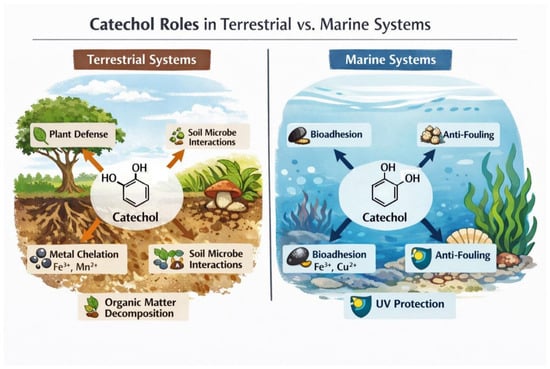
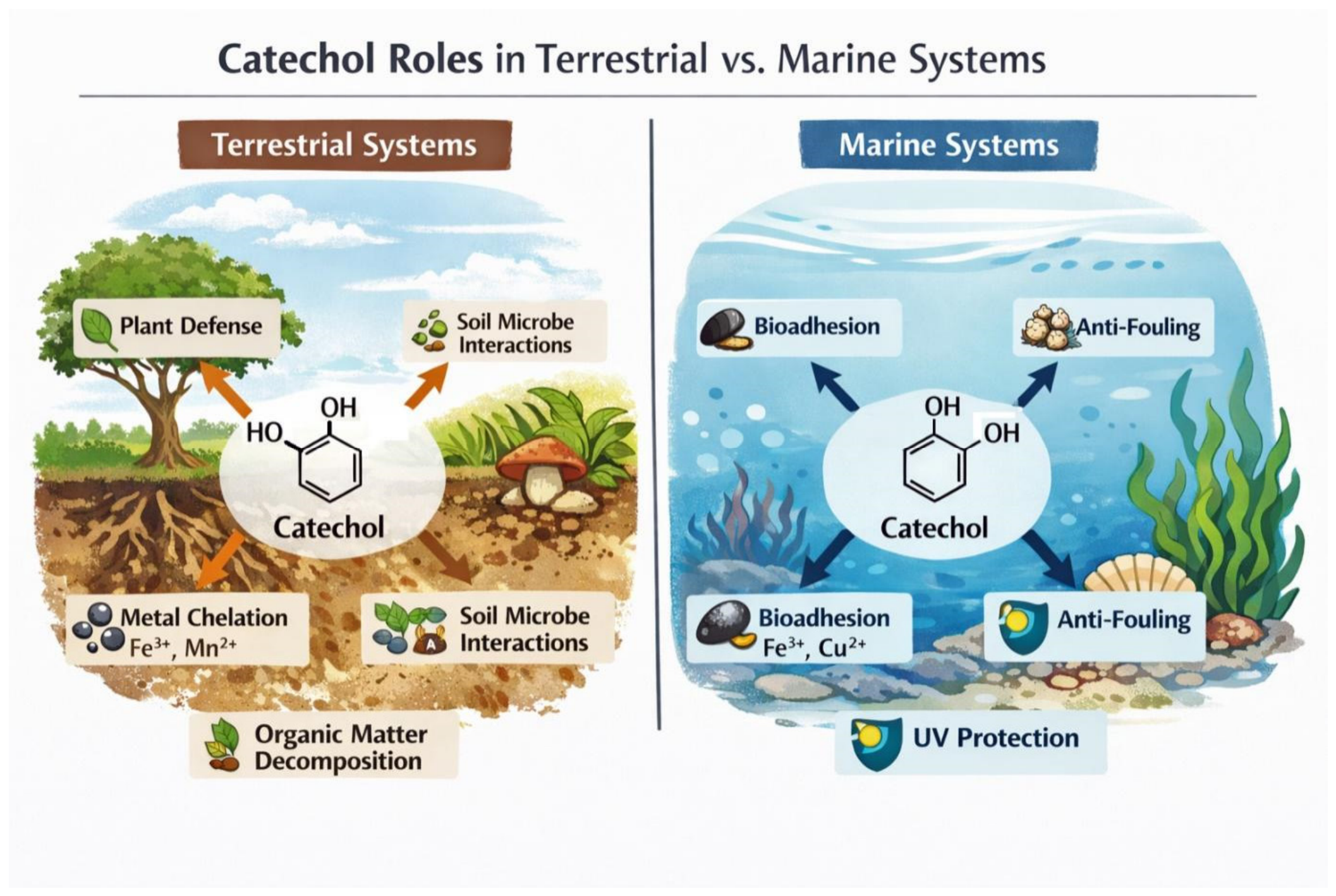
In terrestrial ecosystems, catechol-containing compounds are predominantly associated with plant secondary metabolites, particularly polyphenols such as flavonoids, tannins, and lignin precursors. These molecules play critical roles in plant defense against herbivores and pathogens, UV protection, and structural reinforcement (Figure 1). Catechol units contribute to antioxidant activity through reversible oxidation to o-quinones, enabling radical scavenging and redox buffering. Additionally, catechol-containing metabolites are involved in soil chemistry, influencing metal chelation and nutrient cycling [24,25,26]. In animals, catechol derivatives such as dopamine function as key neurotransmitters, highlighting their importance in signaling and metabolic regulation.
Figure 1.
Schematic comparison of catechol (benzene-1,2-diol) roles in terrestrial and marine systems. The central structure highlights the ortho-dihydroxyl (1,2-diol) functionality responsible for redox activity and strong metal coordination. In terrestrial environments, catechol moieties contribute to plant defense, soil microbial interactions, metal chelation (e.g., Fe3+, Mn2+), and organic matter decomposition. In marine systems, catechol chemistry underpins bioadhesion (e.g., mussel-inspired adhesion), metal binding (e.g., Fe3+, Cu2+), antifouling strategies, and UV protection.
In contrast, marine ecosystems have driven the evolution of catechol chemistry toward specialized functions under conditions of high salinity, variable pH, and constant hydration. One of the most prominent examples is the use of catechol-containing amino acid derivatives in adhesive proteins produced by marine organisms [27,28]. For instance, mussels secrete proteins rich in 3,4-dihydroxyphenylalanine (DOPA), enabling strong and reversible adhesion to wet mineral and organic surfaces. The catechol moiety plays a central role in interfacial binding, metal coordination, and oxidative crosslinking, all of which contribute to the remarkable mechanical properties of these bioadhesives [29,30].
Similarly, marine bacteria and algae utilize catechol-based siderophores for iron acquisition in nutrient-limited ocean environments. These molecules exhibit exceptionally high affinity for Fe(III), allowing efficient scavenging and transport of iron under conditions where its bioavailability is extremely low [17,21]. Compared to terrestrial systems, marine catechol-containing molecules often display enhanced stability and functional versatility, enabling them to operate effectively in dynamic and oxidative environments.
A key distinction between terrestrial and marine catechol chemistry lies in the balance between redox activity and structural function. In terrestrial organisms, catechol oxidation is frequently associated with defense mechanisms and metabolic processes, whereas in marine systems, controlled oxidation is often harnessed to drive material formation, such as crosslinking in adhesive matrices. This difference reflects the need for marine organisms to exploit catechol reactivity in a highly regulated manner to maintain functionality in aqueous environments [1,17,21,23].
Despite these contextual differences, a unifying feature of catechol-containing molecules across ecosystems is their susceptibility to oxidation, which can lead to both beneficial and detrimental outcomes. The ability to modulate catechol oxidation is therefore of fundamental importance in both natural and applied settings. Understanding how nature controls this reactivity provides valuable insights into the design of synthetic systems, including strategies based on reversible covalent interactions such as boron complexation [1,31].
This comparative perspective highlights the versatility of catechol chemistry and underscores the importance of environmental context in shaping its functional roles. These insights provide a foundation for exploring targeted approaches to control catechol oxidation, as discussed in subsequent sections [32,33].
This comparison highlights how environmental pressures shape the functional roles and reactivity of catechol-containing molecules (Table 1). While terrestrial systems often emphasize protective and antioxidant functions, marine systems exploit catechol chemistry for structural and interfacial applications [1,21,31]. These distinctions are critical for understanding how catechol oxidation can be modulated in different contexts and inform the design of targeted inhibition strategies, including those based on boron complexation.
Table 1.
Comparative Features of Catechol-Containing Molecules in Terrestrial and Marine Ecosystems.
3. Enzymatic Systems for Oxidation of Catechols in Terrestrial Species
In terrestrial environments, catechol (benzene-1,2-diol) moieties are highly reactive substrates that undergo enzymatic oxidation, primarily yielding o-quinones. These transformations are central to plant defense, lignin biosynthesis, and soil organic matter dynamics [34,35,36]. The oxidation is catalyzed by a suite of oxidoreductases that differ in substrate specificity, cofactors, and ecological function.
3.1. Polyphenol Oxidases (PPOs)
Polyphenol oxidases (PPOs) are key copper-containing enzymes in terrestrial plants that catalyze the oxidation of catechols (benzene-1,2-diols) to highly reactive o-quinones using molecular oxygen [37,38]. These enzymes, which include both tyrosinases [39] and catechol oxidases [40,41], are typically localized in plastids and become activated upon tissue damage, where they encounter phenolic substrates released from vacuoles. The resulting quinones readily undergo non-enzymatic reactions such as polymerization or covalent binding to proteins, contributing to the characteristic browning of injured tissues. Functionally, PPO-mediated oxidation plays a crucial role in plant defense, as quinones can deter herbivores, inhibit microbial growth, and reduce the nutritional quality of plant tissues. In addition, PPO activity contributes to cell wall strengthening through cross-linking reactions and may influence interactions with soil microorganisms [34,35,36]. Overall, PPOs represent a rapid-response oxidative system that exploits the reactivity of the 1,2-diol catechol group to generate protective chemical barriers in terrestrial plants.
Polyphenol oxidases are among the most prominent enzymes catalyzing catechol oxidation in terrestrial plants. Types: (i) Tyrosinases (monophenol monooxygenases), and (ii) Catechol oxidases (diphenol oxidases).
Tyrosinases (monophenol monooxygenases) are a subclass of polyphenol oxidases in terrestrial plants that catalyze both the hydroxylation of monophenols and the subsequent oxidation of o-diphenols (catechols, i.e., benzene-1,2-diols) to o-quinones [39,42,43]. These enzymes contain a conserved binuclear copper active site, which enables the activation of molecular oxygen for insertion into phenolic substrates. In plant tissues, tyrosinases are typically compartmentalized within plastids and become functionally relevant upon cellular disruption, where they encounter phenolic compounds stored in vacuoles. Their dual activity distinguishes them from catechol oxidases, allowing tyrosinases to generate catechol intermediates in situ before oxidizing them further to reactive quinones [42,43]. The resulting quinones participate in defensive responses, including antimicrobial activity, deterrence of herbivory, and the formation of cross-linked protein–phenolic networks that reduce digestibility. Additionally, tyrosinase activity contributes to enzymatic browning and may play roles in secondary metabolism and phenolic turnover in plant tissues. Overall, these enzymes provide a versatile oxidative system that expands the range of phenolic substrates that can be converted into biologically active quinone products [39].
Catechol oxidases are a subclass of polyphenol oxidases in terrestrial plants that specifically catalyze the oxidation of o-diphenols (catechols, benzene-1,2-diols) to o-quinones without possessing monophenol hydroxylase activity. These enzymes contain a binuclear copper active site that facilitates the two-electron reduction of molecular oxygen to water while simultaneously oxidizing catechol substrates [40,41,44,45]. Typically localized in plastids, catechol oxidases are spatially separated from their phenolic substrates, which are stored in vacuoles; upon tissue damage or stress, this compartmentalization is disrupted, enabling rapid enzymatic activity. The generated o-quinones are highly reactive and undergo non-enzymatic polymerization or form covalent bonds with proteins and cell wall components. Functionally, catechol oxidases play a central role in plant defense, contributing to antimicrobial activity, deterrence of herbivores, and the formation of physical and chemical barriers [40,45]. They are also responsible for the characteristic enzymatic browning observed in damaged fruits and vegetables, reflecting their role as a rapid-response system that leverages the reactivity of the 1,2-diol catechol group to produce protective quinone species.
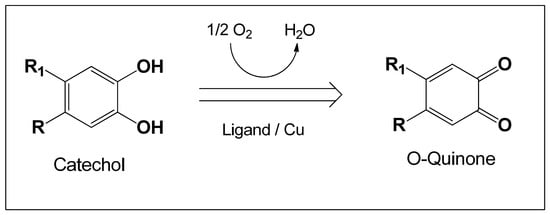
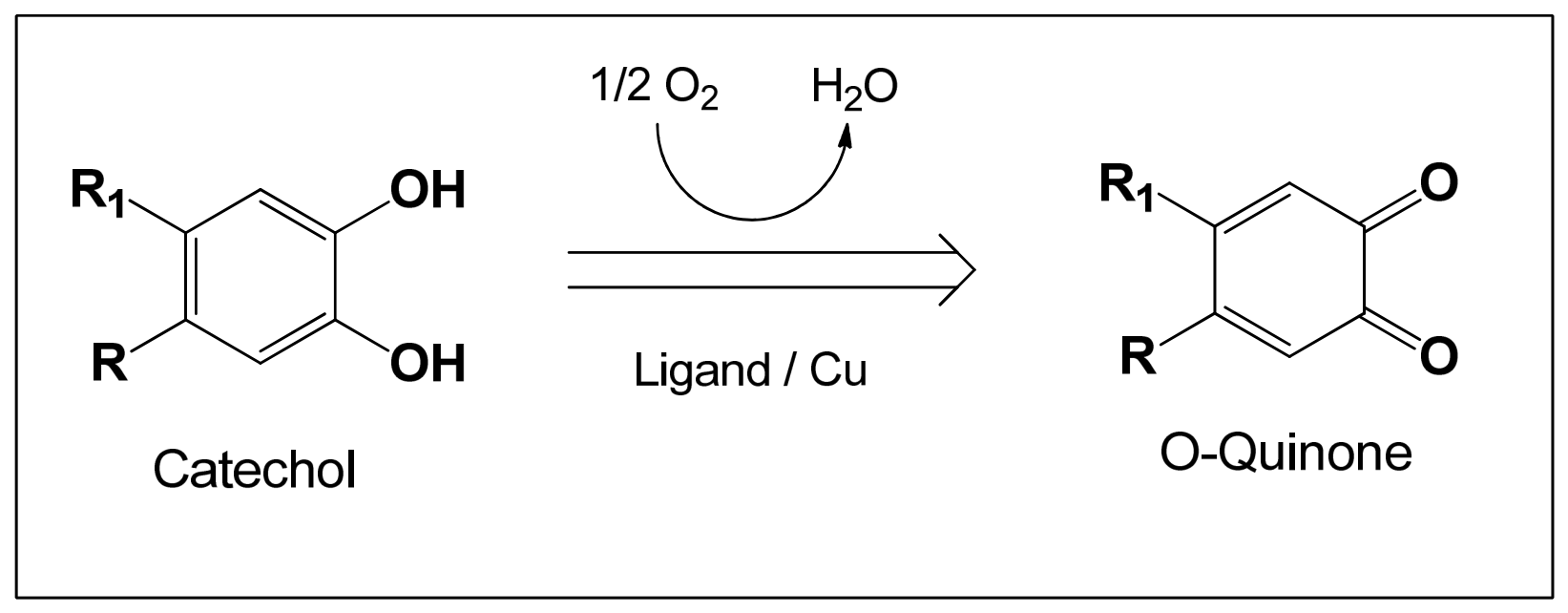
The oxidation of catechol (benzene-1,2-diol) to o-quinone is a fundamental reaction in terrestrial plants, proceeding via a two-electron transfer to molecular oxygen catalyzed by polyphenol oxidases [1,31,40,41,42,43,44,45]. This process is mediated by enzymes containing a binuclear copper center, which enables efficient electron transfer and reduction of O2 to water while simultaneously oxidizing the catechol substrate (Figure 2). The resulting o-quinones are highly reactive electrophilic species that readily undergo non-enzymatic reactions, including polymerization into melanin-like pigments or covalent binding to proteins and other cellular components. Functionally, this reaction underpins several critical biological roles: it contributes to plant defense by generating toxic quinones that deter herbivores and inhibit pathogen growth; it drives wound-induced browning, a visible marker of tissue damage and oxidative activity; and it facilitates cross-linking of cell wall proteins, enhancing structural integrity and forming protective barriers [39,40,41,42]. Together, these features make catechol oxidation a rapid and effective biochemical response to environmental stress in terrestrial plants.
Figure 2.
General schematic of catechol (benzene-1,2-diol) oxidation to o-quinone mediated by copper-containing oxidoreductases. In the presence of molecular oxygen (½ O2), catechol undergoes a two-electron oxidation to form o-quinone, with concomitant reduction of oxygen to water (H2O). The reaction is facilitated by a copper–ligand active site, characteristic of enzymes such as polyphenol oxidases and tyrosinases. This transformation generates highly reactive quinone intermediates that can participate in subsequent cross-linking, polymerization, or further redox reactions in both terrestrial and marine systems.
3.2. Peroxidases (Class III Plant Peroxidases)
Peroxidases in terrestrial plants catalyze the oxidation of catechols (benzene-1,2-diols) using hydrogen peroxide (H2O2) as the electron acceptor, producing semiquinone radicals and o-quinones along with water. These enzymes are heme-containing oxidoreductases characterized by broad substrate specificity, allowing them to act on a wide range of phenolic compounds within the plant extracellular space. They are predominantly localized in the apoplast and cell wall, where they function under conditions associated with oxidative stress and active metabolism [46,47,48]. The quinone and radical intermediates generated by peroxidase activity readily participate in oxidative coupling reactions, which are essential for lignin polymerization and the formation of complex phenolic networks in the cell wall. As a result, peroxidases play a crucial role in strengthening plant structural integrity, particularly during growth and in response to damage. Additionally, by utilizing H2O2—a reactive oxygen species—they contribute to detoxification and stress responses, helping regulate redox balance and protect plant tissues from oxidative damage [47,48].
3.3. Laccases (Multicopper Oxidases)
Laccases are multicopper oxidases that catalyze the one-electron oxidation of catechols (benzene-1,2-diols) and related phenolic compounds, coupling substrate oxidation to the reduction of molecular oxygen to water [49,50,51,52]. This reaction proceeds via the formation of phenoxy radical intermediates, which can subsequently rearrange or couple to form quinones and higher-order polymers. Structurally, laccases contain four copper ions organized into distinct active sites that facilitate efficient electron transfer and direct O2 reduction without the need for additional cofactors such as hydrogen peroxide. These enzymes are widely distributed in plants, fungi, and soil microorganisms, often functioning in extracellular environments [50,51]. Biologically, laccases play a central role in lignification, where they drive the oxidative polymerization of monolignols into lignin, as well as in humification processes that contribute to soil organic matter formation. In fungi, laccases are particularly important for the degradation of plant biomass, enabling the breakdown and transformation of complex phenolic structures during decomposition [50,51,52].
3.4. Dioxygenases in Soil Microorganisms
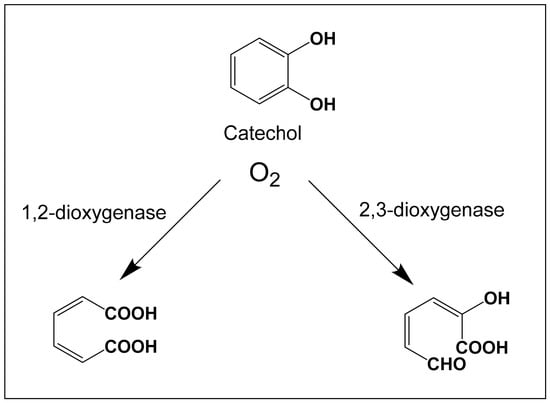
In terrestrial microorganisms, catechol oxidation is a central step in the degradation of aromatic compounds, forming part of well-characterized metabolic pathways that enable the utilization of complex organic substrates. This process is catalyzed by two main types of enzymes, catechol 1,2-dioxygenase (intradiol cleavage) and catechol 2,3-dioxygenase (extradiol cleavage), which differ in their mode of ring cleavage [53,54,55,56]. In the ortho-cleavage pathway, catechol is converted to cis,cis-muconic acid, whereas in the meta-cleavage pathway, it is transformed into 2-hydroxymuconic semialdehyde (Figure 3). Both enzyme classes require iron (Fe3+ or Fe2+) at their active sites and function by incorporating molecular oxygen directly into the aromatic ring, leading to its destabilization and opening [17,54]. These reactions are essential for the breakdown of lignin-derived phenolics and other aromatic substrates in soil environments, thereby playing a key role in microbial carbon cycling [21,55,56]. Additionally, these pathways are of significant environmental importance in the bioremediation of aromatic pollutants, enabling microbes to degrade compounds such as hydrocarbons and industrial phenolics into less harmful intermediates.
Figure 3.
Schematic representation of catechol oxidative ring-cleavage pathways catalyzed by dioxygenases. Intradiol (1,2-dioxygenase) cleavage occurs between the two hydroxylated carbon atoms, yielding cis,cis-muconic acid–type products, whereas extradiol (2,3-dioxygenase) cleavage occurs adjacent to the diol moiety, producing semialdehyde intermediates. These enzymatic pathways play central roles in microbial catechol degradation and aromatic carbon cycling in terrestrial and aquatic environments.
3.5. Ecological and Functional Integration
These enzymatic systems collectively regulate catechol (benzene-1,2-diol) reactivity across terrestrial ecosystems by directing its transformation toward distinct ecological outcomes. In plants, rapid oxidation by polyphenol oxidases and peroxidases leads to the formation of reactive quinones that support defense mechanisms and structural reinforcement, including protein cross-linking and cell wall strengthening. In fungi, oxidative enzymes such as laccases promote polymerization of phenolic compounds, contributing to the formation of humic substances and long-term carbon storage in soils [46,47,48,49,50,51,52]. In contrast, bacteria primarily utilize dioxygenase-mediated pathways to achieve aromatic ring cleavage, enabling the complete breakdown (mineralization) of catechols and their integration into microbial metabolic cycles, thereby driving nutrient turnover and carbon cycling. The balance between quinone formation via oxidases and ring cleavage via dioxygenases ultimately determines whether catechols are incorporated into stable polymers such as lignin and humus or undergo full degradation to simpler compounds [49,50,51,52,53,54].
4. Enzymatic Systems for Oxidation of Catechols in Marine Species
In marine environments, catechol (benzene-1,2-diol) oxidation plays a central role in bioadhesion, biomineralization, and redox cycling under conditions that differ markedly from terrestrial systems (e.g., high ionic strength, variable pH, and oxygen availability) [17,21]. Marine organisms have evolved specialized enzymatic systems to control catechol oxidation, balancing adhesion strength with resistance to overoxidation [57,58,59].
4.1. Tyrosinases in Marine Invertebrates
Tyrosinases are key oxidative enzymes in marine organisms, particularly in mussels and other bioadhesive species, where they catalyze the O2-dependent oxidation of catechol (benzene-1,2-diol) to o-quinone. These enzymes possess a binuclear copper active site, similar to terrestrial polyphenol oxidases, enabling both monophenol hydroxylation and diphenol oxidation [60,61,62,63]. In marine systems, tyrosinase activity is often tightly regulated in space and time, ensuring that oxidation occurs only under appropriate physiological conditions. This control is critical in bioadhesion processes, where catechol-containing residues such as DOPA must remain in their reduced form for effective surface binding before being oxidized. The resulting quinones facilitate covalent cross-linking of adhesive proteins, leading to the formation of cohesive and adhesive networks [60,63]. Ultimately, tyrosinase-mediated oxidation drives the hardening (“curing”) of secreted bioadhesives, providing mechanical strength and durability to structures such as mussel attachment plaques.
4.2. Laccase-like Multicopper Oxidases
Marine organisms and biofilms express laccase-like enzymes that catalyze the oxidation of catechols (benzene-1,2-diols) in extracellular environments, coupling substrate oxidation to the reduction of molecular oxygen to water. This process proceeds via semiquinone and quinone intermediates, which are highly reactive and capable of further chemical transformation [64,65,66]. These enzymes are multicopper oxidases adapted to saline conditions, allowing them to function efficiently in high ionic strength marine environments, and they exhibit broad substrate specificity toward diverse phenolic compounds. Frequently secreted into biofilms or extracellular matrices, laccase-like enzymes play important roles beyond intracellular metabolism. Functionally, they contribute to biofilm maturation and structural stabilization by promoting oxidative cross-linking and polymerization processes, as well as to the formation of phenolic networks in marine gels [65,66]. In addition, they participate in the transformation of dissolved organic matter (DOM), influencing carbon cycling and the chemical composition of marine ecosystems through the oxidative modification of phenolic substrates.
4.3. Peroxidases in Marine Systems
Peroxidases in marine systems also contribute to catechol (benzene-1,2-diol) oxidation, particularly under conditions of oxidative stress or within localized microenvironments such as biofilms and organism–surface interfaces. These heme-containing enzymes utilize hydrogen peroxide (H2O2) as the oxidant to convert catechols into reactive quinones, producing water as a byproduct [67,68,69,70]. Their activity is closely linked to the availability of reactive oxygen species (ROS), which are often elevated during stress responses or microbial interactions. As a result, marine peroxidases are frequently associated with defensive and adaptive processes, where controlled oxidation is required. Functionally, they facilitate the cross-linking of extracellular matrices, contributing to the structural integrity of biofilms and secreted materials, and play a role in defense against microbial colonization by generating reactive intermediates [68,69]. Additionally, peroxidase-mediated oxidation drives the modification of organic substrates in seawater, influencing the chemical transformation and reactivity of dissolved and particulate organic matter in marine environments.
4.4. Enzymatic Control in Mussel Adhesion (DOPA Chemistry)
Marine mussels provide one of the most well-characterized systems for understanding the controlled oxidation of catechols (benzene-1,2-diols) in biological materials. Their adhesive proteins are rich in 3,4-dihydroxyphenylalanine (DOPA), a catechol-bearing amino acid whose chemical reactivity underpins both surface binding and cohesive strength. In their reduced form, catechol groups exhibit strong, reversible interactions with a wide range of substrates, enabling effective adhesion in wet marine environments [71,72,73,74]. However, controlled oxidation to o-quinones is essential for subsequent covalent cross-linking, which stabilizes and hardens the adhesive matrix. This process is tightly regulated through tyrosinase-mediated oxidation during plaque curing, along with fine redox control via local pH conditions and antioxidant proteins that prevent premature oxidation. Such regulation ensures that catechols remain reduced during initial surface attachment and are only oxidized at the appropriate stage [72,73]. The functional outcome is a finely tuned balance between adhesion (mediated by reduced catechols) and cohesion (mediated by oxidized quinones), allowing mussels to form durable, resilient attachments in dynamic aquatic environments [71].
4.5. Microbial Catechol Oxidation in Marine Environments
Marine bacteria also metabolize catechols (benzene-1,2-diols), although their enzymatic strategies are adapted to the distinct physicochemical constraints of marine environments compared to soils [17,21,75]. Similar to terrestrial microbes, marine bacteria employ dioxygenases to cleave aromatic rings, but they also utilize oxygenases specialized for low nutrient availability and fluctuating oxygen conditions, which are common in seawater and microenvironments such as biofilms [75,76,77]. These enzymatic systems enable the degradation of aromatic compounds derived from natural and anthropogenic sources, contributing to the turnover of organic matter in marine ecosystems. As a result, marine bacterial catechol metabolism plays an important role in the marine carbon cycle, facilitating the transformation and remineralization of organic carbon [76,77]. Additionally, these pathways are involved in the modification of phenolic components of dissolved organic matter (DOM), influencing its chemical composition, reactivity, and persistence in the ocean.
4.6. Environmental and Functional Integration
Marine catechol oxidation systems are shaped by the need for tight redox control, driven by the functional requirement to balance adhesion and oxidative cross-linking in complex aquatic environments [21,78,79,80]. Catechol groups (benzene-1,2-diols) must remain in their reduced form to enable strong and reversible surface binding, yet undergo controlled oxidation to quinones to facilitate covalent cross-linking and material hardening. This delicate balance is further influenced by high salinity, which affects enzyme structure, stability, and metal coordination chemistry—particularly for copper- and iron-dependent oxidoreductases. Additionally, oxygen gradients in marine microenvironments, such as within biofilms or at organism–surface interfaces, determine the relative activity of oxidases versus peroxidases, thereby modulating reaction pathways [17,78,79]. As a result, marine organisms rely on precise spatiotemporal regulation of catechol oxidation, ensuring that redox transformations occur only under optimal conditions. This control enables the effective exploitation of the unique chemical properties of the 1,2-diol group for adhesion, protection, and ecological interactions in marine systems.
5. Comparative Perspective: Terrestrial vs. Marine Catechol Oxidation Systems
Catechol (benzene-1,2-diol) oxidation in terrestrial and marine systems is mediated by broadly similar enzyme classes—such as tyrosinases, laccases, and peroxidases—but differs fundamentally in functional outcomes, regulation, and environmental constraints [39,42,43,60,62]. These differences reflect adaptation to distinct ecological pressures and physicochemical conditions.
5.1. Shared Enzymatic Framework
Both terrestrial and marine organisms rely on a conserved suite of oxidative enzymes to mediate catechol (benzene-1,2-diol) transformations, reflecting the fundamental chemical versatility of this functional group. Tyrosinases and other polyphenol oxidases (PPOs) catalyze the oxidation of catechols to reactive o-quinones, while laccases, as multicopper oxidases, generate phenoxy radicals and quinones through one-electron transfer processes [39,40,41,42]. Peroxidases complement these systems by using hydrogen peroxide (H2O2) as an oxidant to drive catechol oxidation, particularly under conditions of oxidative stress. In contrast, dioxygenases, primarily found in microorganisms, catalyze the cleavage of the aromatic ring, enabling the breakdown of catechols into metabolizable intermediates [44,46,47,48]. This shared enzymatic toolkit underscores the universal reactivity of the catechol 1,2-diol motif [1,17,31], which is uniquely suited to undergo redox cycling, chelate metal ions, and form highly reactive quinones that participate in diverse biochemical pathways across ecosystems.
5.2. Divergent Functional Outcomes
Despite relying on similar enzymatic machinery, the functional purpose of catechol (benzene-1,2-diol) oxidation diverges markedly between terrestrial and marine systems. In terrestrial environments, catechol oxidation predominantly supports polymerization and degradation pathways, where the formation of reactive quinones drives processes such as lignin biosynthesis, strengthening plant cell walls, and humification, leading to the stabilization of soil organic matter [6,14,17,31]. Concurrently, microbial dioxygenases facilitate the complete mineralization of aromatic compounds, ensuring efficient carbon turnover in soils. In contrast, marine systems emphasize adhesion and surface interactions, where catechol oxidation is tightly regulated to balance functionality. Here, catechols must remain reduced for effective surface binding, as seen in mussel adhesive plaques, while controlled oxidation enables cross-linking and material curing without compromising adhesion [2,58,71,72,76]. Unlike terrestrial systems, there is less emphasis on full degradation and a greater focus on functional material formation, highlighting how similar biochemical reactions are adapted to distinct ecological and physiological needs.
5.3. Redox Regulation Strategies
A key distinction between terrestrial and marine catechol (benzene-1,2-diol) systems lies in the control of oxidation processes. In terrestrial environments, catechol oxidation is typically rapid and extensive, often triggered by tissue damage that exposes phenolic substrates to oxygen and oxidative enzymes such as polyphenol oxidases and peroxidases [46,47,48,68,69]. This leads to the accumulation of reactive quinones and their subsequent polymerization into structural or protective materials. In contrast, marine systems require fine spatiotemporal regulation of oxidation, as catechols must remain in their reduced form to enable effective surface adhesion before being selectively oxidized for cross-linking and curing. This precise control is achieved through multiple mechanisms, including local pH modulation, the presence of antioxidants and redox-active proteins, and controlled activation of enzymes such as tyrosinase [39,42,43,60,61]. Together, these strategies ensure that oxidation occurs only under optimal conditions, allowing marine organisms to balance adhesion and cohesion in dynamic aquatic environments.
5.4. Environmental Constraints
Environmental constraints play a decisive role in shaping catechol (benzene-1,2-diol) oxidation processes across ecosystems by influencing enzyme activity, substrate availability, and reaction pathways (Table 2). In terrestrial environments, factors such as oxygen availability, soil composition, moisture, and pH variability promote relatively rapid and often extensive oxidation, particularly following tissue disruption, leading to quinone formation and polymerization into lignin or humic substances. In contrast, marine environments impose distinct constraints, including high salinity, stable but slightly alkaline pH, and heterogeneous oxygen gradients, especially within biofilms and at organism–surface interfaces [81,82,83,84,85]. These conditions affect enzyme structure—particularly metal-dependent oxidoreductases—and modulate redox chemistry and substrate interactions. As a result, marine systems require tighter biochemical regulation to maintain catechols in their reduced form until oxidation is functionally advantageous [82,83,85]. Overall, environmental parameters not only govern the rate and extent of catechol oxidation but also determine whether these reactions contribute to degradation, stabilization, or specialized functions such as adhesion. These constraints shape enzyme evolution, particularly in salt tolerance, substrate affinity, and redox tuning.
Table 2.
Environmental conditions strongly influence enzymatic behavior.
5.5. Ecological Implications
In terrestrial ecosystems, catechol (benzene-1,2-diol) oxidation is a key driver of carbon cycling, soil formation, and plant defense, operating through a dynamic balance between stabilization and degradation pathways [53,64,66]. Oxidative processes lead to the formation of quinones that contribute to humus formation and long-term carbon storage, while microbial ring-cleavage pathways enable complete mineralization to CO2, supporting nutrient turnover. In contrast, in marine environments, catechol chemistry is more closely linked to organism–surface interactions and material functionality, playing central roles in bioadhesion, antifouling strategies, and the transformation of dissolved organic matter (DOM) [86,87]. These processes are not only critical for marine ecological interactions but also have significant implications for bioinspired materials science, where catechol-based chemistries are leveraged to design advanced adhesives and coatings for wet and dynamic conditions.
In summary, terrestrial systems use catechol oxidation primarily for structural reinforcement and decomposition, whereas marine systems exploit the same chemistry for adhesion and controlled material assembly. The contrast lies not in the enzymes themselves, but in how their activity is regulated, localized, and integrated into ecological function.
6. Enzymatic Oxidation of Catechols in Terrestrial and Marine Systems: An Integrated Perspective
Catechol (benzene-1,2-diol) oxidation is a central biochemical process across terrestrial and marine environments, underpinning functions that range from plant defense and carbon cycling to bioadhesion and material formation [64,66,86,87]. Although both systems employ a broadly conserved set of oxidative enzymes, their regulation and ecological roles diverge significantly.
6.1. Enzymatic Systems for Catechol Oxidation in Terrestrial Species
In terrestrial organisms, catechol oxidation is typically associated with defense, structural polymerization, and degradation pathways. The primary enzymes involved include polyphenol oxidases (PPOs), peroxidases, laccases, and microbial dioxygenases [9,36,65,66,67].
Polyphenol oxidases, including tyrosinases and catechol oxidases, catalyze the oxygen-dependent conversion of catechols to o-quinones. These reactive intermediates rapidly polymerize or form adducts with proteins, contributing to plant defense mechanisms, wound-induced browning, and cell wall reinforcement. Similarly, class III peroxidases utilize hydrogen peroxide to oxidize catechols, playing a crucial role in lignification and oxidative cross-linking within plant tissues [48].
Laccases, a class of multicopper oxidases, further contribute to oxidative polymerization by generating phenoxy radicals, facilitating the formation of lignin and humic substances [64]. In contrast, soil microorganisms employ catechol dioxygenases to cleave the aromatic ring via ortho- or meta-pathways, enabling complete mineralization of aromatic compounds and contributing to terrestrial carbon cycling.
Overall, terrestrial systems tend toward extensive oxidation, where catechol conversion leads either to stable polymers (e.g., lignin, humus) or complete degradation.
6.2. Enzymatic Systems for Catechol Oxidation in Marine Species
In marine environments, catechol oxidation is more tightly controlled and often linked to functional material properties, particularly in bioadhesive systems [30]. While similar enzyme classes are present—such as tyrosinases, laccase-like oxidases, and peroxidases—their activity is modulated to balance reactivity with environmental constraints [39,42,62].
A defining example is found in mussels, where adhesive proteins contain the catechol-bearing amino acid DOPA. Here, tyrosinase-mediated oxidation converts catechol groups into quinones during the curing phase of adhesion. Crucially, catechols must remain in their reduced (1,2-diol) form for effective surface binding, while controlled oxidation enables covalent cross-linking and cohesive strength.
Marine laccase-like enzymes and peroxidases also participate in extracellular oxidation processes, contributing to biofilm formation, structural stabilization, and transformation of dissolved organic matter [39,42,43,61]. Compared to terrestrial systems, microbial degradation pathways exist but are often less dominant than surface-associated and material-oriented functions.
Thus, marine systems emphasize precision in redox control, ensuring that catechol oxidation occurs only when and where it is functionally required.
6.3. Comparative Perspective
The contrast between terrestrial and marine catechol oxidation lies not in the enzymatic toolkit itself, but in how it is deployed.
In terrestrial environments, oxidation is generally rapid and unregulated following exposure, such as during tissue damage, leading to quinone accumulation and polymer formation [34,38]. This supports defense, structural integrity, and long-term carbon storage. In marine systems, however, oxidation must be finely tuned, as premature conversion of catechols to quinones would compromise adhesion. Organisms therefore regulate enzymatic activity through local pH, redox-active cofactors, and spatial compartmentalization [26,70].
Environmental conditions further reinforce these differences. Terrestrial systems operate in relatively low ionic strength and variable oxygen conditions, whereas marine systems must function in high salinity, stable pH, and complex interfacial environments [26,34,38,70]. These factors influence enzyme stability, substrate accessibility, and metal coordination chemistry.
Taken together, catechol oxidation in terrestrial systems is primarily associated with polymerization and degradation, driving ecosystem-scale processes such as lignification and carbon cycling [34,70]. In contrast, marine systems exploit the same underlying chemistry for adhesion, surface interactions, and controlled material assembly.
This duality highlights the versatility of the 1,2-diol functional group, whose redox activity and metal-binding capacity are harnessed differently depending on environmental context [17,31]. Understanding these distinctions not only provides insight into natural biogeochemical cycles but also informs the design of bioinspired materials and adhesives.
7. Non-Enzymatic Formation of Boron Complexes in Terrestrial Species
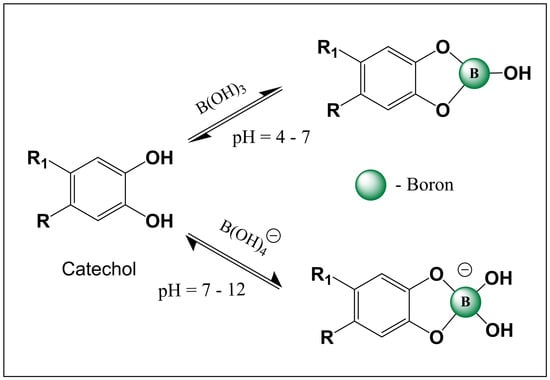
In terrestrial systems, catechol (benzene-1,2-diol) groups readily participate in the non-enzymatic formation of boron complexes, driven by the strong affinity of boron (primarily as boric acid, B(OH)3) for cis-diol functionalities (Figure 4). This interaction leads to the formation of reversible borate ester complexes, particularly under neutral to slightly alkaline pH conditions commonly found in soils and plant tissues [1,17,21,31]. In plants, such complexation plays a role in cell wall structure and stability, where boron cross-links polysaccharides such as rhamnogalacturonan II via diol-containing moieties. Catechol-containing metabolites and phenolics can also bind boron, influencing its mobility, availability, and detoxification in plant systems [88,89,90]. In soils, these interactions contribute to the retention and cycling of boron, as well as the stabilization of organic matter through additional cross-linking mechanisms [1,31]. Overall, non-enzymatic boron–catechol complexation represents an important chemical pathway that integrates micronutrient chemistry with plant physiology and soil biogeochemistry.
Figure 4.
pH-dependent non-enzymatic complexation of catechol (benzene-1,2-diol) with boron species. At near-neutral pH (4–7), boron is predominantly present as boric acid (B(OH)3), which forms reversible monoester complexes with catechol. Under alkaline conditions (pH 8–12), borate (B(OH)4−) becomes the dominant species and promotes the formation of more stable, negatively charged boronate ester complexes. These interactions involve the cis-diol functionality of catechol and can modulate its chemical reactivity, including its susceptibility to enzymatic oxidation.
The interaction between borate species and catechol derivatives is strongly influenced by pH because boron speciation determines the availability of the tetrahedral borate anion, which exhibits significantly greater affinity for vicinal diols than neutral boric acid. Reported association constants for catechol–borate complexation generally increase under mildly alkaline conditions, where formation of cyclic borate esters is thermodynamically favored. In aqueous systems near neutral pH, binding is relatively weak and highly reversible, whereas at pH values above approximately 8–9, complex stability increases substantially due to enhanced borate formation and deprotonation of catechol hydroxyl groups [1,31]. These equilibria are additionally influenced by ionic strength, solvent composition, and substitution patterns on the aromatic ring. Importantly, borate complexation can influence catechol oxidation kinetics by reducing the concentration of free catechol available for enzymatic or autoxidative reactions and by altering electron density distribution within the aromatic system. Several experimental studies have reported measurable decreases in catechol autoxidation rates and prolonged oxidation half-lives in the presence of borate under alkaline conditions, although the magnitude of inhibition varies depending on pH, oxygen concentration, and catalyst system. Consequently, reversible borate ester formation represents a potentially important regulatory factor controlling catechol oxidation dynamics in both biological and environmental systems [1,17,21,31].
8. Non-Enzymatic Formation of Boron Complexes in Marine Species
In marine environments, the non-enzymatic complexation of boron with catechol (1,2-diol) groups is similarly driven by the formation of borate esters, but occurs under conditions of high salinity, stable pH, and abundant dissolved ions, which influence both equilibrium and stability [17,21,31,91,92,93]. Seawater contains boron primarily as boric acid and borate (B(OH)4−), enabling interactions with diol-containing organic molecules, including catechol-bearing compounds in biofilms and marine organisms (Figure 5). These complexes can contribute to cross-linking within extracellular polymeric substances (EPS), enhancing the structural integrity of biofilms and marine gels. In addition, boron–catechol interactions may influence adhesive properties in systems such as mussel plaques by modulating redox chemistry and intermolecular binding. The reversible nature of these complexes also allows them to participate in the dynamic transformation of dissolved organic matter (DOM), affecting its reactivity and persistence in seawater [31,91,92,93,94]. Thus, non-enzymatic boron complexation in marine systems represents a subtle but important chemical mechanism linking trace element chemistry with organic matter structure and ecological function.
Figure 5.
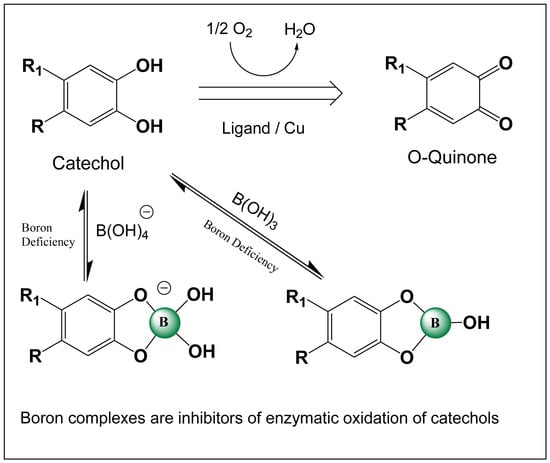
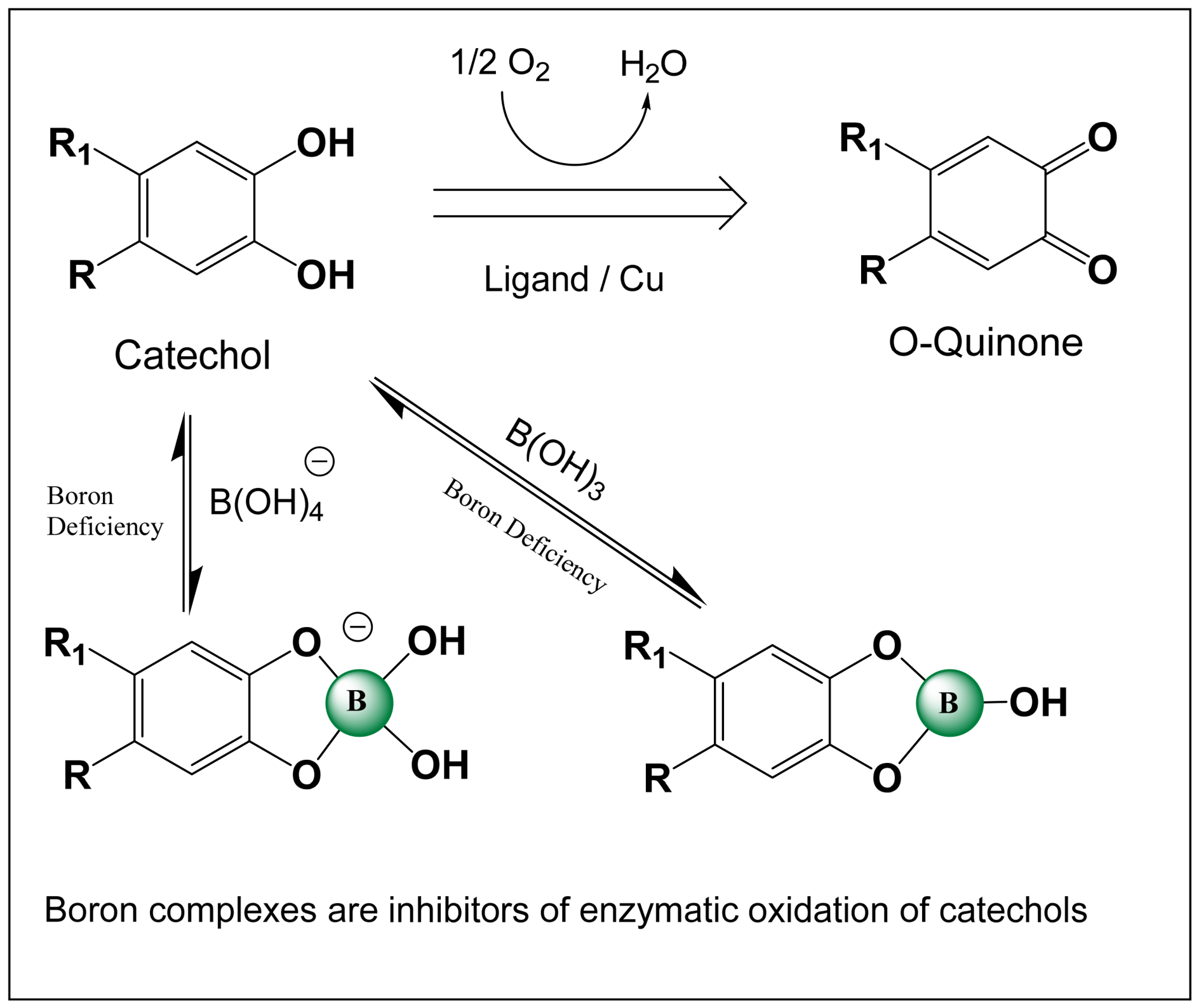
Integrated schematic of catechol (benzene-1,2-diol) oxidation and its inhibition by boron complexation. Catechol is oxidized to o-quinone via a copper-mediated, O2-dependent pathway, representative of polyphenol oxidase and tyrosinase activity. In parallel, catechol can form reversible complexes with boron species, including boric acid (B(OH)3) and borate (B(OH)4−), depending on pH. These borate complexes sequester the cis-diol functionality required for oxidation, thereby inhibiting enzymatic conversion to quinones. The equilibrium between free and boron-bound catechol is influenced by environmental conditions such as pH and boron availability, highlighting a regulatory mechanism by which boron chemistry modulates catechol reactivity and oxidation in both terrestrial and marine systems.
Boric acid and borate ions are well known to form reversible cyclic ester complexes with vicinal diol-containing molecules, including catechols, carbohydrates, and polyols [1,15,16,95,96,97]. The stability and speciation of these boron–diol complexes are strongly pH-dependent because boric acid (B(OH)3) predominates under acidic and neutral conditions, whereas the tetrahedral borate anion (B(OH)4−), which exhibits enhanced diol-binding capacity, becomes increasingly abundant under mildly alkaline conditions. Catechol–borate complex formation generally proceeds through coordination of adjacent hydroxyl groups to boron, producing five-membered cyclic borate esters that can alter catechol redox behavior, reduce substrate accessibility, and influence oxidation kinetics [15,16]. In aqueous systems, equilibrium constants for borate–catechol interactions vary substantially with pH, ionic strength, and substitution patterns on the aromatic ring. Such reversible complexation may partially suppress catechol autoxidation and enzyme-mediated oxidation by modifying electron density distribution and limiting formation of reactive quinone intermediates [98,99,100]. Consequently, boron coordination chemistry represents a potentially important but underexplored regulatory factor influencing catechol stability, oxidative transformation, and ecological function in both terrestrial and marine environments.
9. Conclusions
Catechol (benzene-1,2-diol) chemistry represents a unifying biochemical and geochemical theme across terrestrial and marine environments, driven by the intrinsic reactivity of its redox-active diol functionality. This review highlights how a conserved set of enzymatic systems—including polyphenol oxidases, laccases, peroxidases, and dioxygenases—govern catechol transformations, while non-enzymatic processes such as boron complexation further expand its chemical versatility. In terrestrial systems, catechol oxidation is predominantly directed toward polymerization and degradation, underpinning plant defense, lignification, humification, and global carbon cycling. In contrast, marine organisms exploit the same chemistry in a more tightly regulated manner to enable adhesion, surface interactions, and functional material assembly, particularly under challenging conditions of high salinity and variable oxygen availability.
A central distinction lies in the degree of redox control, with terrestrial environments favoring rapid and extensive oxidation, whereas marine systems require precise spatiotemporal regulation to balance adhesion and cross-linking. Additionally, environmental constraints and metal coordination chemistry shape enzyme function and reaction pathways in both domains. The interplay between enzymatic oxidation and non-enzymatic interactions, such as boron–catechol complexation, further emphasizes the adaptability of this chemical motif across ecosystems.
Ultimately, understanding catechol chemistry across these contexts provides valuable insight into biogeochemical cycles, ecological interactions, and evolutionary adaptation, while also offering inspiration for the development of advanced bioinspired materials, including adhesives, coatings, and responsive polymers. Future research integrating molecular, environmental, and material perspectives will continue to uncover the full potential of catechol-based systems in both natural and applied sciences.
Author Contributions
Conceptualization, V.M.D.; methodology, V.M.D. and S.V.B.; soft-ware, A.O.T.; investigation, V.M.D. and S.V.B.; resources, V.M.D.; writing—original draft preparation, A.O.T. and V.M.D.; writing—review and editing, A.O.T. and V.M.D. All authors have read and agreed to the published version of the manuscript.
Funding
This research received no funding.
Institutional Review Board Statement
Not applicable.
Data Availability Statement
No new data were created or analyzed in this study. Data sharing is not applicable to this article.
Conflicts of Interest
Author Valery M. Dembitsky was employed by the company Bio-Pharm Laboratories. The remaining authors declare that the research was conducted in the absence of any commercial or financial relationships that could be construed as a potential conflict of interest.
References
- Dembitsky, V.M.; Terent’ev, A.O.; Baranin, S.V.; Gursky, M.E. Aromatic compounds and their fascinating boron complexes as potential quorum sensing molecules. Vietnam J. Chem. 2025, 63, 883–911. [Google Scholar] [CrossRef] [Scilit]
- Wang, S.X.; Waite, J.H. Catechol redox maintenance in mussel adhesion. Nat. Rev. Chem. 2025, 9, 159–172. [Google Scholar] [CrossRef] [Scilit]
- Pandurangan, S.; Easwaramoorthi, S.; Ayyadurai, N. Engineering proteins with catechol chemistry for biotechnological applications. Crit. Rev. Biotechnol. 2025, 45, 606–624. [Google Scholar]
- Quan, M.C.; Mai, D.J. Biomolecular actuators for soft robots. Chem. Rev. 2025, 125, 4974–5002. [Google Scholar] [CrossRef] [Scilit]
- Razzak, A.A.; Al-Garawi, Z.S.; Haider, A.J.; Hassan, B. Neurotransmitter as a model therapeutic platform: A mini-review. AIP Conf. Proc. 2025, 3321, 020009. [Google Scholar]
- Alachkar, A. The DOPA scaffold: Tracing catechol chemistry from prebiotic earth to cognitive agency. Prog. Biophys. Mol. Biol. 2025; in press.
- Ng, L.; Xiao, F.; Deng, C.; Lu, L. Emerging roles of immune cell-derived neurotransmitters in immunity and disease. Immun. Inflamm. 2026, 2, 11. [Google Scholar] [CrossRef] [Scilit]
- Wang, X.; Yang, Z.; Wang, S.; Tan, W.; He, Z.; Duan, Q.; Hu, S. Catechol Derivative-Based Bioadhesives: Molecular Design for Precision Medical Adhesion. Available online: https://advanced.onlinelibrary.wiley.com/doi/10.1002/advs.202521272 (accessed on 13 May 2026).
- Pretzler, M.; Rompel, A. Beyond phenolics: Alternative substrates for type III copper enzymes. ChemBioChem 2025, 26, e202400982. [Google Scholar] [CrossRef] [Scilit]
- Ravisankar, V.C.; Selvakumaran, B.; Shanmugavadivel, S.; Ajaykamal, T.; Murali, M. Monocopper (II) complexes mimic the distinct oxidative roles of ascorbate, amine, and catechol oxidases: Promiscuous catalysis in mild conditions. Inorg. Chem. Commun. 2026, 185, 116060. [Google Scholar] [CrossRef] [Scilit]
- Reja, S.; Kejriwal, A.; Das, R.K. Copper based biomimetic catalysts of catechol oxidase: An overview on recent trends. Catal. Ind. 2023, 15, 108–124. [Google Scholar] [CrossRef] [Scilit]
- Nguyen, M.; Meunier, B.; Robert, A. Catechol-based ligands as potential metal chelators inhibiting redox activity in Alzheimer’s disease. Eur. J. Inorg. Chem. 2017, 2017, 3198–3204. [Google Scholar] [CrossRef] [Scilit]
- Andjelković, M.; Van Camp, J.; De Meulenaer, B.; Depaemelaere, G.; Socaciu, C.; Verloo, M.; Verhe, R. Iron-chelation properties of phenolic acids bearing catechol and galloyl groups. Food Chem. 2006, 98, 23–31. [Google Scholar] [CrossRef] [Scilit]
- Barclay, L.R.C.; Edwards, C.E.; Vinqvist, M.R. Media effects on antioxidant activities of phenols and catechols. J. Am. Chem. Soc. 1999, 121, 6226–6231. [Google Scholar] [CrossRef] [Scilit]
- Yoshino, K.; Kotaka, M.; Okamoto, M.; Kakihana, H. 11B-NMR study of the complex formation of borate with catechol and L-dopa. Bull. Chem. Soc. Jpn. 1979, 52, 3005–3009. [Google Scholar] [CrossRef] [Scilit]
- Pizer, R.; Babcock, L. Mechanism of the complexation of boron acids with catechol and substituted catechols. Inorg. Chem. 1977, 16, 1677–1681. [Google Scholar] [CrossRef] [Scilit]
- Dembitsky, V.M.; Terent’ev, A.O.; Baranin, S.V. Life with boron: Microbial boron-binding siderophores, adaptation, and function. Microbiol. Res. 2026, 17, 57. [Google Scholar] [CrossRef] [Scilit]
- Luan, C.; Zhu, Y.; Zhao, H. Literature review and case summary: Exploring deafness as an adverse reaction to bortezomib. Indian J. Hematol. Blood Transfus. 2026, 42, 1–4. [Google Scholar] [CrossRef] [Scilit]
- Chen, A.; Park, J.M. Novel therapies for the treatment of antibody mediated rejection in solid organ transplantation: A systematic review. OBM Transplant. 2026, 10, 1–48. [Google Scholar] [CrossRef] [Scilit]
- Frateloreto, F.; Capocasa, G.; De Angelis, M.; Sandri, G.; Lanzalunga, O.; Massera, C.; Di Stefano, S. The dynamic chemistry of the boron–nitrogen bond. Chem. Sci. 2026; in press. [CrossRef] [Scilit]
- Dembitsky, V.M.; Terent’ev, A.O.; Baranin, S.V. Functional plasticity of microbial siderophores in iron- and boron-rich niches. Appl. Microbiol. 2026, 6, 50. [Google Scholar] [CrossRef] [Scilit]
- Zhang, R.; Ma, Q.; Zheng, N.; Wang, R.; Visentin, S.; He, L.; Liu, S. Plant polyphenol-based injectable hydrogels: Advances and biomedical applications. Adv. Healthc. Mater. 2025, 14, 2500445. [Google Scholar] [CrossRef] [Scilit]
- Page, M.G. Siderophore cephalosporins. EcoSal Plus 2025, 13, eesp-0015. [Google Scholar] [CrossRef] [Scilit]
- Almendros, G.; González-Pérez, J.A. Soil organic carbon sequestration mechanisms and the chemical nature of soil organic matter—A review. Sustainability 2025, 17, 6689. [Google Scholar] [CrossRef] [Scilit]
- Lal, R. Digging Deeper: A Holistic Perspective of Factors Affecting Soil Organic Carbon Sequestration in Agroecosystems. Glob. Change Biol. 2018, 24, 3285–3301. [Google Scholar] [CrossRef] [Scilit]
- Khan, M.F. Microbial remediation of agrochemical-contaminated soils: Enzymatic mechanisms, quorum sensing, and emerging opportunities. Integr. Environ. Assess. Manag. 2025. Online ahead of print. [Google Scholar]
- Akinsemolu, A.A.; Onyeaka, H.N. Harnessing biotechnology for the remediation of organic pollutants in coastal marine ecosystems. Appl. Sci. 2025, 15, 6921. [Google Scholar] [CrossRef] [Scilit]
- Sahith, V.N.; Kumar, J.A.; Sruthi, V.S.; Sundararaman, S.; Prabu, D.; Venkatesan, D.; Renita, A.A. Bioremediation of polycyclic aromatic hydrocarbons contaminated soils/water for environmental remediation. Biodegradation 2026, 37, 3. [Google Scholar] [CrossRef] [Scilit] [PubMed]
- Kumari, N.; Chaturvedi, V.; Mishra, S. A comprehensive review on multifunctional adhesives/bio adhesives and its applications. Int. J. Adhes. Adhes. 2025, 140, 103987. [Google Scholar] [CrossRef] [Scilit]
- Desai, S.R.; Bhagwat, D.A.; Singh, A.K.; Kumbhar, R.B.; Khan, J. Bioadhesive polymers in transdermal formulations for skin disorders. Curr. Opin. Pharmacol. 2025, 83, 102544. [Google Scholar] [CrossRef] [Scilit]
- Dembitsky, V.M.; Terent’ev, A.O.; Gursky, M.E.; Baranin, S.V. Fascinating and intriguing biomolecules: The chemistry of boron complexes with carbohydrates, glycolipids, and steroids. Vietnam J. Chem. 2025, 64, 159. [Google Scholar] [CrossRef] [Scilit]
- Saiz-Poseu, J.; Mancebo-Aracil, J.; Nador, F.; Busqué, F.; Ruiz-Molina, D. The chemistry behind catechol-based adhesion. Angew. Chem. Int. Ed. 2019, 58, 696–714. [Google Scholar] [CrossRef] [Scilit]
- Pinnataip, R.; Lee, B.P. Oxidation chemistry of catechol utilized in designing stimuli-responsive adhesives and antipathogenic biomaterials. ACS Omega 2021, 6, 5113–5118. [Google Scholar] [CrossRef] [Scilit]
- Liao, J.; Wei, X.; Tao, K.; Deng, G.; Shu, J.; Qiao, Q.; Chen, S. Phenoloxidases: Catechol oxidase—The temporary employer and laccase—The rising star of vascular plants. Hortic. Res. 2023, 10, uhad102. [Google Scholar] [CrossRef] [Scilit]
- Kramer, K.J.; Kanost, M.R.; Hopkins, T.L.; Jiang, H.; Zhu, Y.C.; Xu, R.; Turecek, F. Oxidative conjugation of catechols with proteins in insect skeletal systems. Tetrahedron 2001, 57, 385–392. [Google Scholar] [CrossRef] [Scilit]
- Schweigert, N.; Zehnder, A.J.; Eggen, R.I. Chemical properties of catechols and their molecular modes of toxic action in cells, from microorganisms to mammals: Minireview. Environ. Microbiol. 2001, 3, 81–91. [Google Scholar] [CrossRef] [Scilit]
- Sullivan, M.L. Beyond brown: Polyphenol oxidases as enzymes of plant specialized metabolism. Front. Plant Sci. 2015, 5, 783. [Google Scholar] [CrossRef] [Scilit]
- Mayer, A.M. Polyphenol oxidases in plants and fungi: Going places? A review. Phytochemistry 2006, 67, 2318–2331. [Google Scholar] [CrossRef] [Scilit]
- Chang, T.S. An updated review of tyrosinase inhibitors. Int. J. Mol. Sci. 2009, 10, 2440–2475. [Google Scholar] [CrossRef] [Scilit]
- Eicken, C.; Krebs, B.; Sacchettini, J.C. Catechol oxidase—Structure and activity. Curr. Opin. Struct. Biol. 1999, 9, 677–683. [Google Scholar] [CrossRef] [Scilit]
- Siegbahn, P.E. The catalytic cycle of catechol oxidase. J. Biol. Inorg. Chem. 2004, 9, 577–590. [Google Scholar] [CrossRef] [Scilit]
- Harasym, J.; Hałdys, K. Microalgae and macroalgae as advanced sources of tyrosinase inhibitors. Molecules 2025, 31, 20. [Google Scholar] [CrossRef] [Scilit] [PubMed]
- Patil, M.; Bhatia, M.; Arvindekar, S.; Patil, R.; Pawar, V. Sources and applications of tyrosinase in life sciences. Curr. Pharm. Biotechnol. 2025, 26, 1417–1422. [Google Scholar] [CrossRef] [Scilit]
- Kumar, B.; Chatterjee, A.; Chakraborty, P.; Mandal, S.; Dey, S.K. A mononuclear Cu(II) complex as a functional mimic of both catechol oxidase and phenoxazinone synthase. New J. Chem. 2025, 49, 13849–13857. [Google Scholar] [CrossRef] [Scilit]
- Schindler, S. Reactivity of Copper(I) Complexes towards Dioxygen. Eur. J. Inorg. Chem. 2000, 11, 2311–2326. [Google Scholar] [CrossRef]
- Hiraga, S.; Sasaki, K.; Ito, H.; Ohashi, Y.; Matsui, H. A large family of class III plant peroxidases. Plant Cell Physiol. 2001, 42, 462–468. [Google Scholar] [CrossRef] [Scilit]
- Freitas, C.D.; Costa, J.H.; Germano, T.A.; Rocha, R.D.O.; Ramos, M.V.; Bezerra, L.P. Class III plant peroxidases: From classification to physiological functions. Int. J. Biol. Macromol. 2024, 263, 130306. [Google Scholar] [CrossRef] [Scilit]
- Almagro, L.; Gómez Ros, L.V.; Belchi-Navarro, S.; Bru, R.; Ros Barceló, A.; Pedreño, M.A. Class III peroxidases in plant defence reactions. J. Exp. Bot. 2009, 60, 377–390. [Google Scholar] [CrossRef] [Scilit]
- Janusz, G.; Pawlik, A.; Świderska-Burek, U.; Polak, J.; Sulej, J.; Jarosz-Wilkołazka, A.; Paszczyński, A. Laccase properties, physiological functions, and evolution. Int. J. Mol. Sci. 2020, 21, 966. [Google Scholar] [CrossRef] [Scilit]
- Khatami, S.H.; Vakili, O.; Movahedpour, A.; Ghesmati, Z.; Ghasemi, H.; Taheri-Anganeh, M. Laccase: Various types and applications. Biotechnol. Appl. Biochem. 2022, 69, 2658–2672. [Google Scholar] [CrossRef] [Scilit]
- Strong, P.J.; Claus, H. Laccase: A review of its past and its future in bioremediation. Crit. Rev. Environ. Sci. Technol. 2011, 41, 373–434. [Google Scholar] [CrossRef] [Scilit]
- Chaurasia, P.K.; Yadav, R.S.S.; Yadava, S. A review on mechanism of laccase action. Res. Rev. Biosci. 2013, 7, 66–71. [Google Scholar]
- Wittich, R.M. Degradation of dioxin-like compounds by microorganisms. Appl. Microbiol. Biotechnol. 1998, 49, 489–499. [Google Scholar] [CrossRef] [Scilit] [PubMed]
- dos Santos, D.F.K.; Istvan, P.; Noronha, E.F.; Quirino, B.F.; Krüger, R.H. New dioxygenase from metagenomic library from Brazilian soil: Insights into antibiotic resistance and bioremediation. Biotechnol. Lett. 2015, 37, 1809–1817. [Google Scholar] [CrossRef] [Scilit]
- Munyaneza, V.; Zhang, W.; Haider, S.; Ren, L.; Song, H.; Yi, B.; Ding, G. Soil microorganisms as drivers of pollutant degradation, metal detoxification, and sustainable agriculture. J. Agric. Food Chem. 2026; in press. [CrossRef] [Scilit]
- Bamforth, S.M.; Singleton, I. Bioremediation of Polycyclic Aromatic Hydrocarbons: Current Knowledge and Future Directions. J. Chem. Technol. Biotechnol. 2005, 80, 723–736. [Google Scholar] [CrossRef] [Scilit]
- Atencio-Martinez, C.L.; Lancelot, A.; Wilker, J.J. Formulation of catechol-containing adhesives for enhanced underwater bonding and workability. Sci. Technol. Adv. Mater. 2025, 26, 2467617. [Google Scholar] [CrossRef] [Scilit]
- Pérez, M.C.; García, M.; Pasquale, G.; Laitano, M.V.; Romanelli, G.; Blustein, G. Synthesis of acetylated phenolic compounds with promising antifouling applications: An approach to marine and freshwater mussel settlement control. Compounds 2025, 5, 45. [Google Scholar] [CrossRef] [Scilit]
- Jayan, J.N.; Lee, Y.M.; You, Y.J.; Srinivasan, S.; Lee, S.S. Robertkochia aurantiaca sp. nov. and Robertkochia flava sp. nov., two potential quinate- and catechol-degrading bacteria isolated from tidal-flat sediments. Antonie Van Leeuwenhoek 2025, 118, 105. [Google Scholar]
- Decker, H.; Tuczek, F. Tyrosinase/catecholoxidase activity of hemocyanins: Structural basis and molecular mechanism. Trends Biochem. Sci. 2000, 25, 392–397. [Google Scholar] [CrossRef] [Scilit]
- Sugumaran, M.; Robinson, W.E. Bioactive dehydrotyrosyl and dehydrodopyl compounds of marine origin. Mar. Drugs 2010, 8, 2906–2935. [Google Scholar] [CrossRef] [Scilit]
- Fernandes, M.S.; Kerkar, S. Microorganisms as a source of tyrosinase inhibitors: A review. Ann. Microbiol. 2017, 67, 343–358. [Google Scholar] [CrossRef] [Scilit]
- Singh, A. Exploring marine-derived bioactives for innovative cosmeceutical applications: A review. J. Appl. Nat. Sci. 2024, 16, 478–494. [Google Scholar] [CrossRef] [Scilit]
- Theerachat, M.; Guieysse, D.; Morel, S.; Remaud-Siméon, M.; Chulalaksananukul, W. Laccases from marine organisms and their applications in the biodegradation of toxic and environmental pollutants: A review. Appl. Biochem. Biotechnol. 2019, 187, 583–611. [Google Scholar] [CrossRef] [Scilit] [PubMed]
- Li, Q.; Dou, Y.; Chen, Y.; Qiao, Y.; He, H.; Zeng, Y. Enzymes involved in the manipulation of polyethylene degradation: Oxidative attack by invertebrates, microorganisms and algae on microplastics. Environ. Sci. Process. Impacts, 2026; in press. [CrossRef] [Scilit] [PubMed]
- Abideen, A.A.; Ayoade, J.O.; Cole, A.T. Biological degradation of synthesised polyethylene plastic by microorganisms and invertebrates. Afr. J. Adv. Pure Appl. Sci. 2022, 4, 89–101. [Google Scholar]
- Debashish, G.; Malay, S.; Barindra, S.; Joydeep, M. Marine enzymes. In Marine Biotechnology I; Springer: Berlin/Heidelberg, Germany, 2005; pp. 189–218. [Google Scholar]
- O’Brien, P.J. Peroxidases. Chem. Biol. Interact. 2000, 129, 113–139. [Google Scholar] [CrossRef] [Scilit]
- Dembitsky, V.M. Oxidation, epoxidation and sulfoxidation reactions catalysed by haloperoxidases. Tetrahedron 2003, 59, 4701–4720. [Google Scholar] [CrossRef] [Scilit]
- Coêlho Paranhos, C.J.; Gonçalves, M.J.L.; Filho, E.X.F.; Ferreira do Vale, L.H. Fungi in global hydrocarbon bioremediation: Biodiversity, enzymatic pathways and technological innovations. Crit. Rev. Biotechnol. 2026, 46, 183–208. [Google Scholar] [CrossRef] [Scilit]
- Waite, J.H. Catechol oxidase in the byssus of the common mussel, Mytilus edulis L. J. Mar. Biol. Assoc. U.K. 1985, 65, 359–371. [Google Scholar] [CrossRef] [Scilit]
- Supianto, M.; Wibowo, E.S.; Lubis, M.A.R.; Kusumah, S.S.; Sutiawan, J.; Yadav, S.M.; Park, B.D. Evaluating the differences of adhesion strength between mussel-inspired and conventional soy protein adhesives: A critical review. Int. J. Adhes. Adhes. 2025, 141, 104059. [Google Scholar] [CrossRef] [Scilit]
- Gupta, D.; Bhardwaj, D.; Priyadarshi, R.; Kumar, S.; Agrawal, G. Mussel-inspired biomimetic adhesive coatings for food preservation: A review. RSC Appl. Polym. 2025, 3, 1145–1164. [Google Scholar] [CrossRef] [Scilit]
- Whaite, A.; Duthoo, E.; Lefevre, M.; Hennebert, E.; Flammang, P. Recombinant proteins: A molecular tool to understand marine adhesion and to advance biomaterials. Adv. Healthc. Mater. 2026, 15, e02340. [Google Scholar]
- Bolaños-Cardet, J.; Pepió-Tárrega, B.; Saiz-Poseu, J.; López-Moral, A.; Ullah, F.; Yuste, V.J.; Suárez-García, S. The Redox Properties of Polyphenols and Their Role in ROS Generation for Biomedical Applications. Angew. Chem. 2026, 65, e13698. [Google Scholar] [CrossRef] [Scilit]
- Broderick, J.B. Catechol dioxygenases. Essays Biochem. 1999, 34, 11. [Google Scholar] [CrossRef] [Scilit]
- Maier, G.P.; Butler, A. Siderophores and mussel foot proteins: The role of catechol, cations, and metal coordination in surface adhesion. J. Biol. Inorg. Chem. 2017, 22, 739–749. [Google Scholar] [CrossRef] [Scilit]
- Napolitano, A.; Manini, P.; d’Ischia, M. Oxidation Chemistry of Catecholamines and Neuronal Degeneration: An Update. Curr. Med. Chem. 2011, 18, 1832–1845. [Google Scholar] [CrossRef] [Scilit]
- Balkenende, D.W.; Winkler, S.M.; Messersmith, P.B. Marine-inspired polymers in medical adhesion. Eur. Polym. J. 2019, 116, 134–143. [Google Scholar] [CrossRef] [Scilit]
- Silverman, H.G.; Roberto, F.F. Understanding marine mussel adhesion. Mar. Biotechnol. 2007, 9, 661–681. [Google Scholar] [CrossRef] [Scilit] [PubMed]
- Cavalieri, E.L.; Rogan, E.G.; Chakravarti, D. Initiation of cancer and other diseases by catechol ortho-quinones: A unifying mechanism. Cell. Mol. Life Sci. 2002, 59, 665–681. [Google Scholar] [CrossRef] [Scilit]
- Thompson, D.C.; Thompson, J.A.; Sugumaran, M.; Moldéus, P. Biological and toxicological consequences of quinone methide formation. Chem. Biol. Interact. 1993, 86, 129–162. [Google Scholar] [CrossRef] [Scilit]
- Stites, T.E.; Mitchell, A.E.; Rucker, R.B. Physiological importance of quinoenzymes and the O-quinone family of cofactors. J. Nutr. 2000, 130, 719–727. [Google Scholar] [CrossRef] [Scilit]
- Land, E.J.; Ramsden, C.A.; Riley, P.A. Tyrosinase autoactivation and the chemistry of ortho-quinone amines. Acc. Chem. Res. 2003, 36, 300–308. [Google Scholar] [CrossRef] [Scilit]
- Cavalieri, E.L.; Rogan, E.G. A unifying mechanism in the initiation of cancer and other diseases by catechol quinones. Ann. N. Y. Acad. Sci. 2004, 1028, 247–257. [Google Scholar] [CrossRef] [Scilit]
- Palacio, M.L.; Bhushan, B. Bioadhesion: A review of concepts and applications. Philos. Trans. R. Soc. A 2012, 370, 2321–2347. [Google Scholar] [CrossRef] [Scilit]
- Kingshott, P.; Griesser, H.J. Surfaces that resist bioadhesion. Curr. Opin. Solid State Mater. Sci. 1999, 4, 403–412. [Google Scholar] [CrossRef] [Scilit]
- O’Neill, M.A.; Ishii, T.; Albersheim, P.; Darvill, A.G. Rhamnogalacturonan II: Structure and function of a borate cross-linked cell wall pectic polysaccharide. Annu. Rev. Plant Biol. 2004, 55, 109–139. [Google Scholar] [CrossRef] [Scilit]
- Yapo, B.M. Rhamnogalacturonan-I: A structurally puzzling and functionally versatile polysaccharide from plant cell walls and mucilages. Polym. Rev. 2011, 51, 391–413. [Google Scholar] [CrossRef] [Scilit]
- Pabst, M.; Fischl, R.M.; Brecker, L.; Morelle, W.; Fauland, A.; Köfeler, H.; Leonard, R. Rhamnogalacturonan II structure shows variation in the side chains monosaccharide composition and methylation status within and across different plant species. Plant J. 2013, 76, 61–72. [Google Scholar] [CrossRef] [Scilit]
- Dembitsky, V.M.; Terent’ev, A.O.; Baranin, S.V.; Scorei, R.I. Life with boron: Steroid architecture and the chemistry of marine boronosteroids. Mar. Drugs 2026, 24, 113. [Google Scholar] [CrossRef] [Scilit]
- Dembitsky, V.M.; Baranin, S.V.; Romulus, S.I. Boron’s double edge—Antibiotics, toxins, and the fine line between them. Molecules 2026, 31, 1021. [Google Scholar] [CrossRef] [Scilit]
- Dembitsky, V.M.; Terent’ev, A.O.; Baranin, S.V. Boronosteroids as potential antitumor drugs: A review. Tumor Discov. 2026, 5, 14–33. [Google Scholar] [CrossRef] [Scilit]
- Grams, R.J.; Santos, W.L.; Scorei, I.R.; Abad-García, A.; Rosenblum, C.A.; Bita, A.; Soriano-Ursúa, M.A. The rise of boron-containing compounds: Advancements in synthesis, medicinal chemistry, and emerging pharmacology. Chem. Rev. 2024, 124, 2441–2511. [Google Scholar]
- Dembitsky, V.M.; Al Quntar, A.A.A.; Srebnik, M. Natural and synthetic small boron-containing molecules as potential inhibitors of bacterial and fungal quorum sensing. Chem. Rev. 2011, 111, 209–237. [Google Scholar] [CrossRef] [Scilit]
- Dembitsky, V.M.; Smoum, R.; Al-Quntar, A.A.; Ali, H.A.; Pergament, I.; Srebnik, M. Natural occurrence of boron-containing compounds in plants, algae and microorganisms. Plant Sci. 2002, 163, 931–942. [Google Scholar] [CrossRef] [Scilit]
- Razaviamri, S.; Wang, K.; Liu, B.; Lee, B.P. Catechol-Based Antimicrobial Polymers. Molecules 2021, 26, 559. [Google Scholar] [CrossRef] [Scilit] [PubMed]
- Gerrard, W.; Lappert, M.F.; Mountfield, B.A. 295. Interaction of boron trichloride with catechol, quinol, resorcinol, and pyrogallol. J. Chem. Soc. (Resumed) 1959, 14, 1529–1535. [Google Scholar] [CrossRef] [Scilit]
- Rafiee, M.; Nematollahi, D. Electrochemical study of catechol–boric acid complexes. Electrochim. Acta 2008, 53, 2751–2756. [Google Scholar] [CrossRef] [Scilit]
- Maiti, B.; Van der Eycken, E.V.; Coppola, G.A. Catechol modification as a platform for functional coatings. Biomater. Sci. 2026, 14, 81–99. [Google Scholar] [CrossRef] [Scilit]

Disclaimer/Publisher’s Note: The statements, opinions and data contained in all publications are solely those of the individual author(s) and contributor(s) and not of MDPI and/or the editor(s). MDPI and/or the editor(s) disclaim responsibility for any injury to people or property resulting from any ideas, methods, instructions or products referred to in the content. |
© 2026 by the authors. Licensee MDPI, Basel, Switzerland. This article is an open access article distributed under the terms and conditions of the Creative Commons Attribution (CC BY) license.