


Abstract
The increasing demand for clean-label foods has led to the development of natural preservation strategies based on plant-derived bioactive compounds. Flavomix ACE, a commercial polyphenol-based product, was evaluated as a natural antifungal treatment against spoilage fungi isolated from pullman bread. Two isolates were identified as Penicillium spp. and one as Cladosporium sp. ACE was assessed by surface spraying and agar incorporation under bread-relevant conditions and compared with potassium sorbate (E202) and calcium propionate (E282). ACE showed strong concentration- and inoculum-dependent antifungal activity. When incorporated into agar, complete inhibition was achieved for the liquid (1.7–5.0% v/v) and the powder form (1.3–4.6% w/v). Surface application required higher concentrations, particularly at the level of 105 spores/spot. E202 demonstrated greater antifungal activity than Ε282, which showed no inhibition of fungal growth at almost all tested inoculum levels. In inoculated bread stored at 25 °C, sprays containing 5–10% ACE delayed fungal growth for only 5–10 days. In contrast, 30% v/v ACE completely prevented visible mold growth for 55 days, even at 105 spores/spot. Overall, ACE demonstrated prolonged activity against bakery-associated fungi, outperforming E282 under the tested conditions. ACE shows potential as a clean-label antifungal system for long-shelf-life pullman bread.
1. Introduction
Bakery products, e.g., pullman bread, represent a major sector of the global food supply chain, providing essential nutrients such as carbohydrates, dietary energy, vitamins, minerals, and bioactive compounds [1,2,3]. Despite their nutritional and economic importance, these products are highly susceptible to fungal spoilage due to their relatively high moisture content and water activity. The growth of spoilage fungi, including Penicillium, Aspergillus, and Rhizopus species, represents a significant challenge during storage and distribution, leading to reduced shelf life, increased food waste, and potential risks associated with mycotoxin production [4,5]. Therefore, the development of effective and sustainable strategies for controlling fungal growth remains a major priority for the bakery sector.
Currently, fungal spoilage in bakery products, such as pullman bread, is mainly controlled through the addition of synthetic preservatives, including calcium propionate and potassium sorbate. Although these substances exhibit strong antifungal efficacy, there is an increasing consumer demand for natural and minimally processed foods, which has led research into alternative preservation techniques based on clean-label ingredients [6]. In this context, naturally isolated bioactive compounds have attracted considerable attention due to their multifunctional properties, including antimicrobial, antioxidant, and potential health-promoting effects.
Among plant-derived bioactive molecules, phenolic compounds represent a particularly promising class of natural antimicrobial preservatives due to their diverse chemical structures and biological activities [7]. Polyphenols contain multiple hydroxyl-functionalized aromatic structures that contribute to their antioxidant capacity and antimicrobial activity (i.e., potential binding to microbial membrane) [8,9]. Their antifungal mechanisms have been associated with several molecular interactions, including alteration of the microbial cell membrane integrity, the inhibition of essential enzymatic pathways, the disruption of intracellular redox balance, and interference with cellular homeostasis [10,11]. In addition, phenolic compounds may improve oxidative stability and contribute to the preservation of the physicochemical and sensory properties of food products [7,12] during storage. Furthermore, studies on wafers have demonstrated that formulation techniques applying bioactive phenolic ingredients can significantly improve oxidative stability during storage, highlighting the importance of ingredient selection for extending shelf life [13].
Citrus juice industry generates substantial amounts of agro-industrial by-products, mainly consisting of peels, seeds, and residual pulp. These materials represent valuable renewable sources of phenolic compounds, flavonoids, essential oils, and other bioactive metabolites [14]. Although traditionally considered waste streams, citrus by-products have gained increasing interest as functional ingredients due to their antioxidant and antimicrobial potential [15,16,17]. Their recovery and application in food systems are in line with circular economy principles, enabling the conversion of agricultural residues into high-value compounds while reducing environmental burdens associated with food processing waste.
Recent studies have demonstrated that citrus-derived phenolic extracts and other plant-based antimicrobial systems can effectively inhibit fungal growth in different food matrices [15,18]. Their addition into bakery formulations or active packaging systems has shown potential for delaying mold development, improving microbial stability, and extending shelf life while meeting consumer expectations for clean-label products [5,19]. However, further research is required to evaluate their effectiveness under realistic food processing and storage conditions, particularly regarding their interaction with bakery ingredients and their influence on product quality.
Bread and similar bakery products, such as pullman bread, are especially vulnerable to fungal contamination during post-baking operations, including cooling, slicing, and packaging, where environmental exposure may facilitate microbial cross contamination [5]. Therefore, the development of natural antifungal strategies based on bioactive plant-derived compounds represents an important approach for improving food preservation and reducing waste.
The present study aimed to evaluate the antifungal effectiveness of a bioactive ingredient obtained from citrus by-products (Flavomix ACE) when applied into pullman bread. The study examined its ability to inhibit fungal growth and extend product shelf life while considering its potential application as a sustainable clean-label preservation strategy for the bakery industry. The findings provide insights into the potential utilization of citrus-derived bioactive compounds as functional antimicrobial ingredients in food applications.
2. Materials and Methods
2.1. Isolation and Identification of Fungi
2.1.1. Morphological Identification
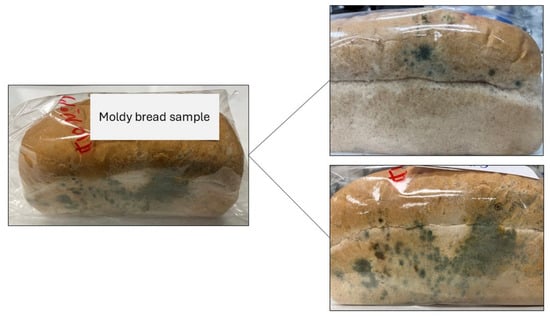
Moldy, uncut pullman bread samples were received from Polypan Company (Athens, Greece) at room temperature (25 °C), as shown on Figure 1.
Figure 1.
Moldy bread sample received from Polypan company.
The samples originated from a bakery production line and were used for the isolation of fungal species associated with the production environment. Fungal colonies were isolated from the contaminated surface of the bread based on their morphological characteristics. Using sterile inoculation loops, material was carefully scraped from the spoiled areas and inoculated onto Malt Extract Agar (MEA; Neogen, Lansing, MI, USA). The plates were incubated at 25 °C for 7 days to promote fungal growth. Subsequently, morphologically distinct fungal colonies were purified by streaking onto fresh MEA and incubated at 25 °C for 7 days. During incubation period, phase-contrast microscopy images were captured using a Leica DMi8 inverted microscope (Leica Microsystems, Wetzlar, Germany) to examine morphological differences in hyphal structure and conidial development among the isolates. Fungal spores were harvested from the surface of MEA by adding 10 mL of sterile 0.1% Tween 80 solution and by gently scraping the fungal surface with a sterile spatula. For the enumeration of isolated spore suspensions, serial ten-fold dilutions were prepared in ¼ Ringer’s solution (Oxoid, Thermo Fisher Scientific, Basingstoke, UK), and selected dilutions were plated onto MEA at 25 °C for 3 days. The spore suspensions were stored in 60% v/v glycerol at −20 °C.
2.1.2. Molecular Identification
Molecular identification of the isolated fungi was performed by sequencing the Internal Transcribed Spacer (ITS) region, which enables genus-level identification of fungi according to White et al. 1990 [20]. Specifically, the primer pair ITS1 (5′-TCCGTAGGTGAACCTGCGG-3′) and ITS4 (5′-TCCTCCGCTTATTGATATGC-3′) targeting the ITS1–ITS4 region was used for Polymerase Chain Reaction (PCR) amplification. For this purpose, fungal DNA was extracted according to the protocol described by Makariti et al. [5]. The process was initiated by inoculation of 10 μL of frozen spore suspension into 20 mL of Malt Extract Broth (MEB; Neogen) in Petri dishes. The resulting DNA pellets were resuspended in 30 μL of sterile distilled water and used as the template in downstream PCR. PCR amplification was performed according to White et al.’s method [20], with some modifications. The reaction was carried out in final volume of 25 μL, containing 10 ng of extracted genomic DNA, 1 × Ready Mix (500U, Kapa Biosystems, Wilmington, MA, USA) and 1 μM of each primer (ITS1 and ITS4). The cycling conditions were as follows: initial denaturation at 95 °C for 3 min, followed by 35 cycles of denaturation at 95 °C for 30 s, annealing at 95 °C for 30 s, extension at 55 °C for 30 s, and extension at 72 °C for 2 min, with a final extension step at 72 °C for 10 min. PCR products were resolved on a 1% w/v agarose. The resulting PCR products were subsequently sequenced using the Sanger method, and sequencing analysis was performed by an external laboratory. Following Sanger sequencing, the raw chromatogram data were subjected to quality assessment to ensure accurate base calling and the removal of low-quality regions. The validated sequences were then compared against nucleotide sequences in the NCBI database using the BLASTn (version 2.13.0) algorithm to determine the closest taxonomic matches. Species similarity and percent identity values were evaluated to assign each isolate to the most likely fungal genus.
2.2. Antimicrobial Agents and Experimental Conditions
The commercial product Flavomix ACE evaluated in this study was provided by Polypan Group in both liquid and powder form. The typical composition of the total polyphenols of Flavomix ACE expressed as tyrosol is 33,974.8 mg/Kg [40 DL. International Olive Council, COI/T.20/Doc No 29]. For the extraction of the polyphenols, only water is used as the solvent. Its antifungal activity against the isolated fungi was assessed through the determination of the minimum inhibitory concentration (MIC) under the experimental conditions described below.
In the in vitro evaluation of Flavomix ACE activity in liquid form using surface spraying, commercial antimicrobial agents, potassium sorbate (E202, Shandog Kunda Biotechnology Co., Ltd., Linyi, China) and calcium propionate (E282, Jiangsu Murpo Ift Corp., Lianyungang, China), were prepared at an initial concentration of 5.1% w/v as positive controls at a final concentration of 0.15% w/w corresponding to 1500 mg of antimicrobial per kg of MEA medium. Since potassium sorbate and calcium propionate are salts, the conversion factors of 0.746 and 0.798, respectively, were used to express the concentrations as sorbic acid and propionic acid equivalents. As a result, the final concentrations corresponded to 1119 mg of sorbic acid per kg of MEA medium and 1197 mg of propionic acid per kg of MEA medium.
In case of incorporation, 0.15% w/v were prepared by adding 0.15 g of powder in 100 mL of MEA medium. Conversely, the absence of the Flavomix ACE in any form was employed as a negative control.
Each Petri dish contained 17 mL of MEA. The pH of MEA was adjusted to 5.5 using 10 N NaOH, and water activity (aw) was adjusted to 0.91 using glycerol, thereby simulating the physicochemical conditions of bread and allowing for a more relevant assessment of microbial growth under conditions representative of the product. Both adjustments were performed under aseptic conditions after sterilization using a digital pHmeter (pH 526, WTW, Weinlheim, Germany) and an aw-meter (LabTouch, Novasina AG, Lachen, Switzerland), respectively.
Five days prior to the experiment, 100 μL of fungal cultures was subcultured onto MEA plates and incubated at 25 °C. The day of the experiment, spores were collected using 0.1% Tween 80 solution as described above. Serial 10-fold dilutions were performed in ¼ Ringer’s solution to obtain the desired spore concentration.
2.3. In Vitro Evaluation of Flavomix ACE Activity Against Isolated Fungi
2.3.1. In Vitro Evaluation of Flavomix ACE Activity in Liquid Form Using Surface Spraying
To simulate the practical bakery application of the liquid formulation, Flavomix ACE solutions and positive controls (E202 and E282) were applied by surface spraying using disinfected spray bottles. The spray bottles were disinfected one day prior to the experiment by sequential rinsing with 70% v/v ethanol and 100% v/v ethanol. The bottles were then left open in a vertical laminar flow cabinet until complete evaporation of residual ethanol. The liquid ACE formulation was diluted with sterilized water to concentrations of 30%, 20%, 15%, 12.5%, 10%, 7.5%, 6.25%, 5%, and 2.5% v/v of the initial liquid ACE, which were evaluated for the determination of the minimal inhibitory concentration. In addition, the undiluted initial liquid Flavomix ACE was also applied directly onto MEA to confirm its inhibitory effectiveness under the tested conditions in all the experiments. A volume of 0.5 g was sprayed onto the surface of MEA plates, with aw adjusted to 0.91 and pH adjusted to 5.5 to simulate bread conditions. Experiments were conducted using different fungal inoculation levels, specifically 10, 103, and 105 spores per 10 μL spot. Plates were incubated at 25 °C for 10 days, and fungal growth was monitored daily. Experiments were performed in two independent biological replicates with each condition evaluated in triplicate.
2.3.2. In Vitro Evaluation of ACE Activity in Liquid and Powder Form Through Incorporation into Malt Extract Agar
Both liquid and powder ACE formulations were incorporated into MEA at different concentrations to determine the MIC. The liquid Flavomix ACE form was tested at serial concentrations of the initial liquid Flavomix ACE, specifically 20%, 15%, 12.5%, 10%, 7.5%, 6.25%, 5%, 3.75%, 2.5%, 1.25%, and 0.625% v/v, whereas the powder form was examined for the concentrations 15%, 12.5%, 10%, 7.5%, 5%, 3.75%, 2.5%, 1.25%, and 0.625% w/v. For the powder formulation, the appropriate amount of ACE was added directly to the culture medium before autoclaving. The agar concentration was also adjusted to 2.5% w/v to ensure adequate solidification of medium. On the other hand, the appropriate volume of liquid ACE was added to sterile medium after autoclaving to obtain the desired final concentrations. The experiments were conducted using two fungal inoculation levels corresponding to 10 spores and 105 spores per 10 μL spot. Plates were incubated at 25 °C for 10 days and examined daily for visible fungal growth. Experiments were performed in two independent biological replicates with each condition evaluated in triplicate.
2.4. In Situ Evaluation of Flavomix ACE Activity (Liquid Form) Through Surface Spraying in Bread
2.4.1. Dough Preparation and Pullman Bread Making Process
The dough formulation was based on flour weight (baker’s percentage) to ensure scalability and reproducibility. The ingredients and their respective concentrations used for a standard batch size are summarized in Table 1.
Table 1.
Pullman Bread dough formulation expressed in baker’s percentages, batch mass, and total dough composition.
Refined wheat flour was the base (100%), with water added at a hydration level of 49.93% (w/w, flour basis). The remaining formula consisted of sunflower oil (3.38% w/w), fresh compressed yeast (2.11% w/w), sodium chloride (salt, 1.61% w/w), and black malt (0.73% w/w). All ingredients were of commercial food-grade quality.
Dough mixing was performed in a two-speed spiral mixer (Sancassiano S.p.a, Roddi d’Alba, Italy) using a total batch weight of approximately 15 kg. The mixing process was executed in two consecutive stages to optimize gluten network development. Initially, the dry ingredients (flour, salt, and black malt) were blended with water and yeast at low speed (slow mixing) for 4 min. At the 3rd minute of this phase, the sunflower oil was incorporated into the mixture. Subsequently, the mixer was switched to high speed (fast mixing) for an additional 7 min to achieve complete dough development. The final dough temperature directly after mixing was strictly maintained at 25 ± 1 °C.
Following the mixing stage, the bulk dough was allowed to rest for 10 to 15 min at room temperature. After resting, the dough was divided and molded into individual loaves with a target weight of 700 g each.
The molded dough portions were transferred to a proofing chamber (Sveba Dahlen, Fristad, Sweden) for fermentation. Proofing was carried out for 70 to 75 min under controlled environmental conditions, specifically at a temperature of 32–34 °C and a relative humidity (RH) of 70–75%.
Immediately after proofing, the loaves were subjected to a baking process in a preheated oven for a total duration of 28 min. The baking profile was divided into two distinct temperature stages: an initial high-temperature phase at 200 °C for the first 5 min to promote oven rise and crust setting, followed by a temperature reduction to 180 °C for the remaining 23 min to ensure uniform crumb baking and moisture stabilization. After baking, the loaves were removed from the oven and allowed to cool to room temperature prior to further analysis.
2.4.2. In Situ Evaluation of Activity Liquid ACE Through Surface Spraying in Bread
A total of 16 bread samples, weighing approximately 350 g each, were received in closed sterile plastic bags for the inhibitory assessment of Flavomix ACE. Two samples served as negative (non-inoculated) controls, while four non-inoculated half-bread samples were surface sprayed with different examined concentrations of liquid ACE in order to check the pH and the aw. The appropriate spray solutions of Flavomix ACE were prepared on the day of the experiment using sterile deionized water to a final volume of 200 mL. The solutions were then transferred into aluminum spray bottles that had been disinfected one day prior to use as described above.
Water activity was measured by carefully removing a uniform crust section using a scalpel, ensuring no crumb was included. Subsequently, the pH was measured on the same material following a modified AOAC 943.02 method. Briefly, 1 g of crust was homogenized with 10 mL of distilled water and stirred every 5 min for a total of 30 min using a glass stirring rod.
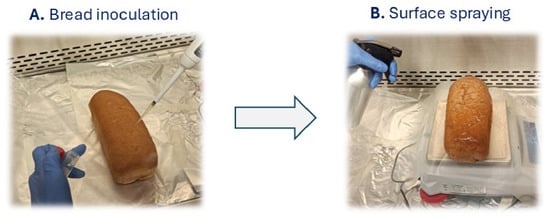
Twelve samples were inoculated. Six samples were inoculated at six distinct points on the crust surface with 50 μL of each fungal resuspension to achieve a final load of 2 log CFU/spot, followed by surface spraying with 5% and 10% v/v Flavomix ACE. The remaining six samples were inoculated in the same manner to achieve 5 log CFU/spot and were treated with 25% and 30% v/v ACE. Both inoculation and the spraying procedure were performed in a laminar-flow cabinet, as shown in Figure 2.
Figure 2.
Inoculation of bread samples (A) and surface spraying with different concentrations of ACEB (B).
All bread samples were incubated at 25 °C and evaluated at 5, 10, 14, 16, 19, 24, 44, and 55 days of storage.
2.5. Data and Statistical Analysis
For the in vitro experiments, three independent biological replicates were performed for each experimental condition, with three technical replicates conducted for each one. The mean MIC, standard deviation (SD), median, and coefficient of variation (CV) were determined for each fungal isolation at different experimental conditions (inoculum levels, spraying, and incorporation). For pairwise comparison between the means of the MIC of incorporated Flavomix ACE liquid versus powder form at the same inoculum level, Students’ t test was performed (Graphpad Prism version 8.0.1). A p value < 0.05 was considered statistically significant.
3. Results and Discussion
3.1. Characterization of Three Dominant Fungal Isolates from Bread Samples Using Morphological Assessment and Molecular Identification
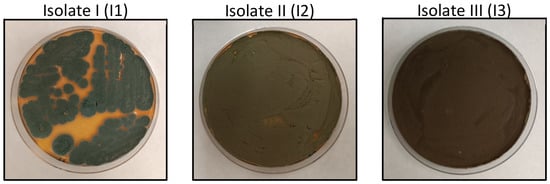
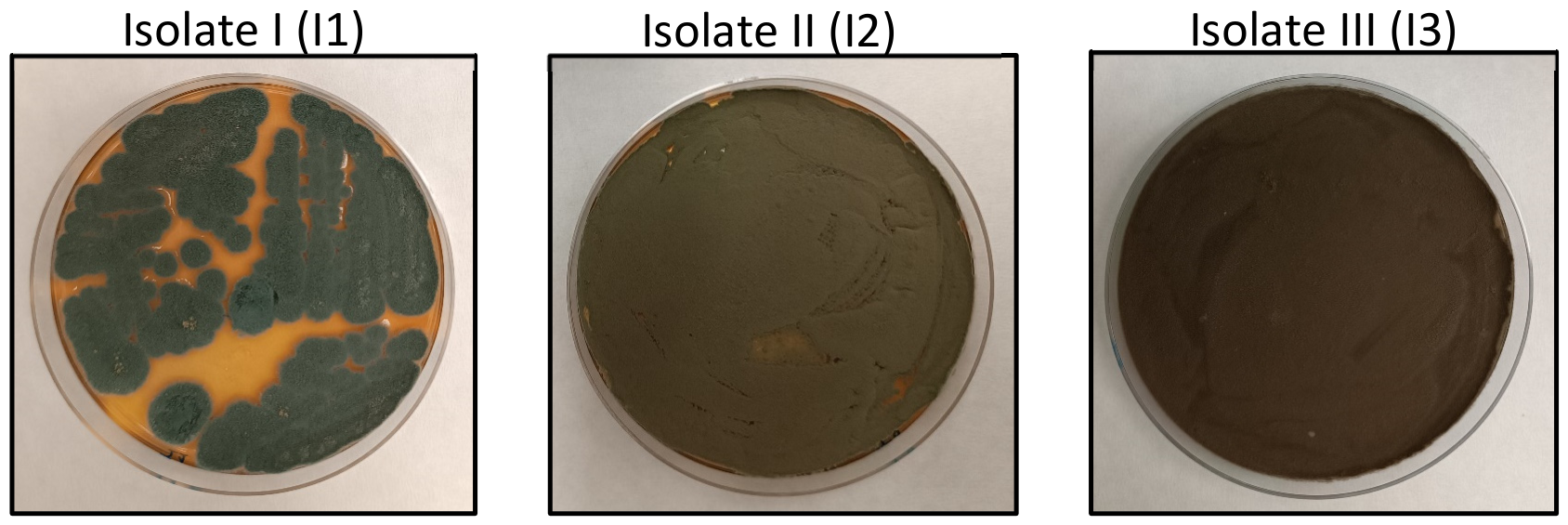
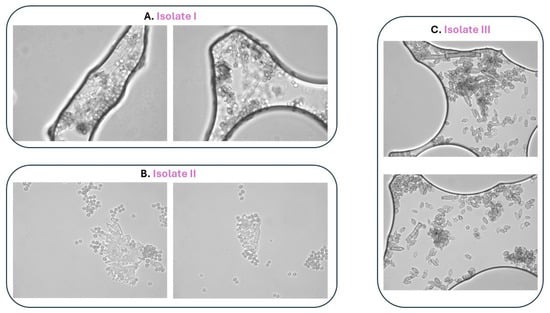
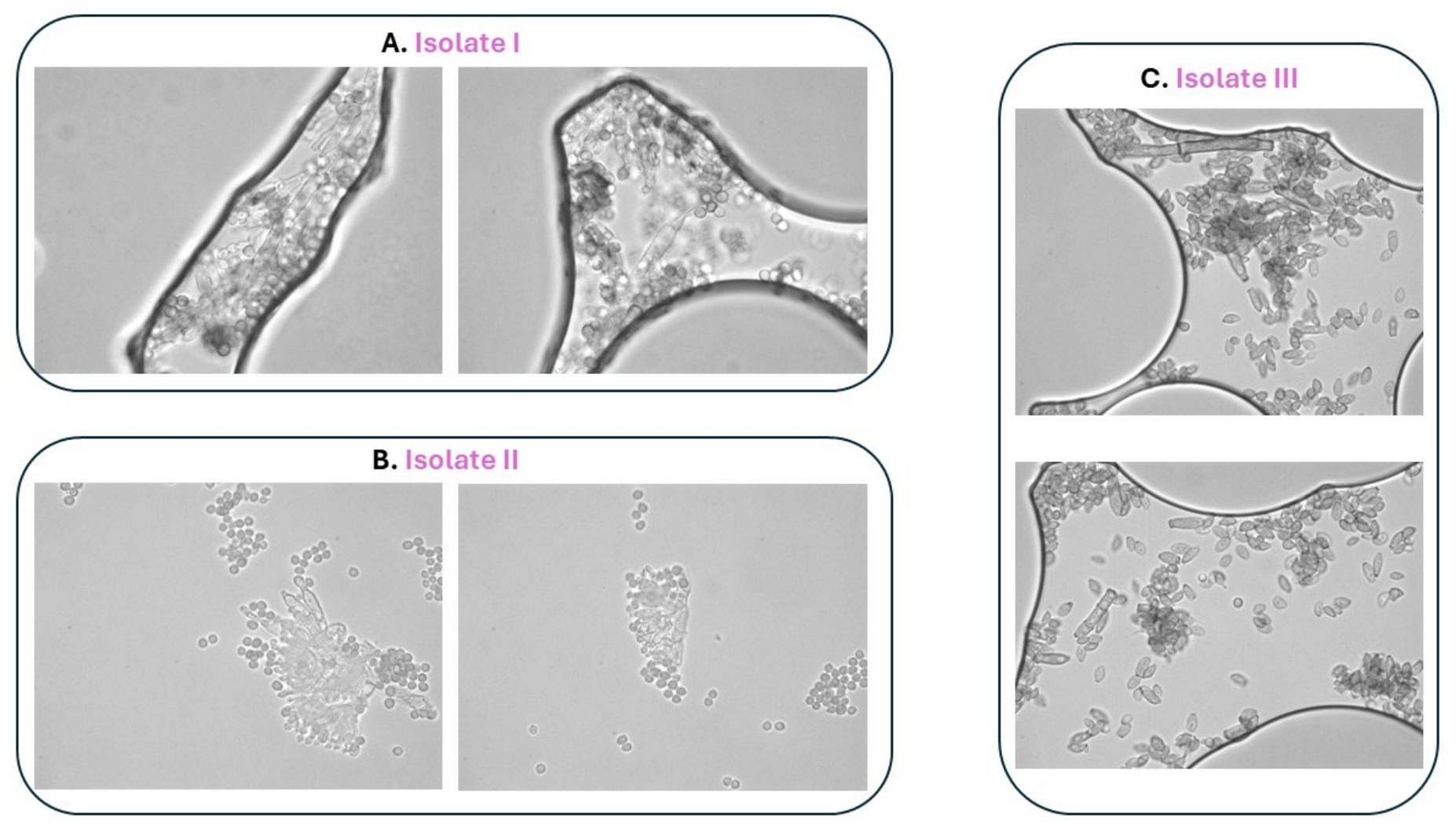
Three morphologically distinct fungal isolates were recovered from the bread sample collected from a specific bread production environment. These isolates represent the dominant fungal contaminants associated with this facility. These isolates were designated as Isolate 1 (I1), Isolate 2 (I2), and Isolate 3 (I3). Macroscopic colony morphology and microscopic characteristics reveal clear differences among the isolates as presented in Figure 3 and Figure 4, respectively.
Figure 3.
Fungi with distinct morphological characteristics, which were isolated from bread samples.
Figure 4.
Phase-contrast microscopy images of the three fungal isolates [I1 (A), I2 (B), and I3 (C)] after 5 days of growth at 25 °C. Images were captured using an inverted microscope, illustrating morphological differences in hyphal structure and conidial development among the isolates.
The taxonomic identity of isolates was further investigated through sequencing of the ITS region followed by BLASTn analysis. BLASTn analysis of the ITS sequence from Isolate I produced multiple top-ranked matches to Penicillium species, including Penicillium chrysogenum, P. rubens, P. echinulatum, and P. crustosum, with 100% sequence identity and 100% query coverage (E-value = 0) (Table 2).
Table 2.
BLASTn analysis of the Sanger-sequenced Isolate I. The table shows the top sequence matches from the NCBI database, including the species name, maximum alignment score (Max Score), total alignment score (Total Score), percentage of the query sequence covered by the alignment (Query Cover), e-value (E Value), and percent identity (Per. Ident). High percent identity and low e-values indicate strong similarity between the query sequence and the database entries.
Although a few hits from other fungal genera such as Aspergillus, Trichoderma, and Actinomucor were also observed, these likely reflect conserved ITS regions rather than true taxonomic association. Based on the exceptionally high alignment scores and dominance of Penicillium sequences, Isolate I was confidently assigned to the genus Penicillium. Similarly, the Sanger sequencing results from Isolate II were analyzed using BLASTn, revealing high similarity to sequences from the genus Penicillium. The top alignments included Penicillium brevicompactum, P. kongii, P. biourgeianum, and other Penicillium species, all showing 100% query coverage. Percent identities were exceptionally high, with several hits at 100% and others at 99.8%, and e-values of 0, indicating highly significant matches (Table 3).
Table 3.
BLASTn analysis of the Sanger-sequenced Isolate II. The table shows the top sequence matches from the NCBI database, including the species name, maximum alignment score (Max Score), total alignment score (Total Score), percentage of the query sequence covered by the alignment (Query Cover), e-value (E Value), and percent identity (Per. Ident). High percent identity and low e-values indicate strong similarity between the query sequence and the database entries.
These results confirm that the sequenced isolate belongs to the genus Penicillium. However, BLASTn analysis of the sequenced Isolate III revealed strong similarity to multiple species within the genus Cladosporium, as well as a few related taxa (Table 4).
Table 4.
BLASTn analysis of the Sanger-sequenced Isolate III. The table shows the top sequence matches from the NCBI database, including the species name, maximum alignment score (Max Score), total alignment score (Total Score), percentage of the query sequence covered by the alignment (Query Cover), e-value (E Value), and percent identity (Per. Ident). High percent identity and low e-values indicate strong similarity between the query sequence and the database entries.
The top hits included Cladosporium verrucocladosporioides, C. cladosporioides, C. subuliforme, and several other Cladosporium species, all showing 100% query coverage. Percent identities were predominantly 100%, with a few hits at 99.79%, and all e-values were 0, indicating highly significant alignments. These results indicate that the isolate belongs to the genus Cladosporium.
3.2. Flavomix ACE Effectively Inhibits Both Penicillium and Cladosporium Using Surface Spraying Method
The minimum inhibitory concertation (MIC) of liquid Flavomix ACE was determined following its application onto MEA surface using the spraying technique. The concentration required to complete inhibit fungal growth varied according to both fungal isolate and the initial spot spore load (Table 5).
Table 5.
Minimum inhibitory concentrations (MICs) of the antimicrobial Flavomix ACE sprayed onto MEA, in liquid form, against three fungal isolates (I1–I3) at three different inoculation levels. MIC values are expressed as a percentage of the initial ACE solution (% v/v for liquid form). Data are presented as the mean ± SD. The median and coefficient variation (CV) are also presented. Three biological replicates were performed for each isolate and inoculation level.
Overall, increasing the inoculum level resulted in higher MIC values, indicating an inoculum-dependent effect. At inoculum level 105 spores/spot, I1 showed the highest tolerance to ACE, requiring 27.5% v/v (SD: 4.6, %CV: 16.8) of the initial liquid Flavomix ACE for complete growth inhibition. The lowest MIC values were observed in I3 at 14.1% v/v (SD: 2.7, %CV: 18.9) of the initial liquid ACE. The same trend was followed at both 103 spores/spot and 10 spores/spot. These results indicate that I1 has lower susceptibility to ACE, whereas I3 was generally the most susceptible isolate.
The antifungal activity of ACE using surface spraying onto MEA was further compared with that of widely used preservatives in bakery products: potassium sorbate (E202) and calcium propionate (E282) at a final concentration in agar of 0.15 g per g MEA. Potassium sorbate completely inhibited the growth of all isolates at the lowest spot inoculation level (10 spores/spot). At a higher inoculum level, no visible growth was observed for any isolate. In contrast, calcium propionate did not inhibit the growth of any tested isolates, as visible growth was observed under all examined inoculum levels. The above findings highlight the potential of ACE as an effective alternative antifungal agent against both Penicillium and Cladosporium isolates even at high inoculum levels by the spraying method.
Potassium sorbate has previously reported to exhibit greater inhibitory efficacy than calcium propionate against spoilage fungi relative to bakery products [21]. Although both preservatives are salts of weak organic acid, sorbic acid is more lipophilic and can readily permeate the fungal cell membrane. Once inside the cytoplasm, it dissociates, resulting in rapid and sustained acidification of the cytosol, which can disrupt cellular homeostasis, retard mycelia growth, and delay of spore germination [22].
3.3. Enhanced Antifungal Activity of Flavomix ACE MEA Agar Incorporation
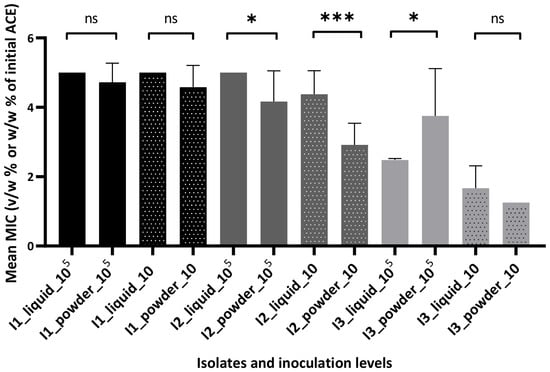
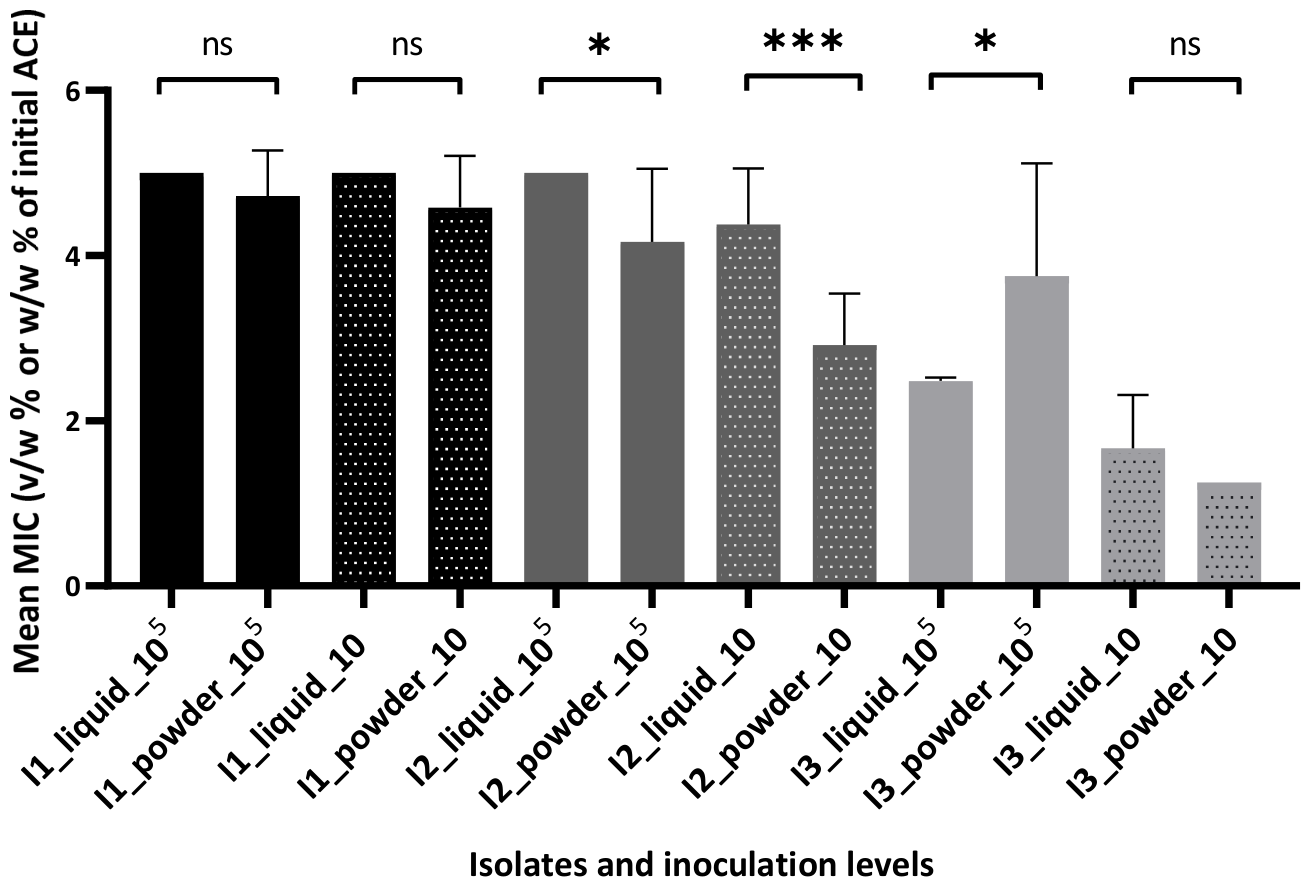
The antifungal activity of Flavomix ACE was further evaluated by incorporating its liquid and powder forms into MEA. Inoculation was performed at two different spore levels (105 and 10 spores/spot). The performance of Flavomix ACE was also compared with that of reference preservatives—potassium sorbate (E202) and calcium propionate (E282)—via the incorporation of their liquid solutions into MEA. The resulting MICs against isolated fungi are demonstrated in Figure 5.
Figure 5.
Minimum inhibitory concentrations (MICs) of the antimicrobial Flavomix ACE incorporated into MEA, in liquid and powder forms, against three fungal isolates (I1–I3) at two different inoculation levels. MIC values are expressed as a percentage of the initial ACEB solution (% v/v for liquid form and w/v for powder form). Ι1 is presented by black bars, I2 by dark gray, and I3 by light gray bars. Solid bars indicate an inoculum level of 105 spores/spot, whereas dotted bars indicate an inoculum level of 10 spores/spot. Data are presented as the mean ± SD. Three biological replicates were performed for each isolate and inoculation level. Statistical significance is indicated as follows: ns, not significant; * and ***, significant.
Complete growth inhibition was achieved at relatively low concentrations ranging from 1.7% (SD: 0.6, %CV: 38.7) to 5% v/v (SD: 0, %CV: 0) of initial Flavomix ACE liquid form depending on the isolate and inoculum level. I1 exhibited the higher resistance requiring 5% v/v (SD: 0, %CV: 0) Flavomix ACE for complete inhibition at both inoculum levels. I2 showed similar susceptibility, whereas I3 was most susceptible to Flavomix ACE, requiring the lowest concentration.
A comparable trend with the liquid form was observed for Flavomix ACE in powder form incorporating into MEA, as shown in Figure 5. MIC values ranged from 1.3% w/v (SD: 0, %CV: 0) to 4.6% w/v (SD: 0.7, %CV: 11.7) of initial powder Flavomix ACE, with I1 exhibiting the highest tolerance and I3 the lowest.
A comparison of the mean MIC values between powder and liquid forms in each inoculum level against three fungal isolates is presented in Figure 5. The mean MIC of Flavomix ACE incorporated in MEA differed among the fungal isolates and between the liquid and powder formulation. Comparison of the liquid and powder forms revealed no significant differences (p < 0.05) in MIC values for I1 at any inoculum level. In contrast, I2 exhibited significantly lower mean MICs in powder form compared to liquid form at both inoculum levels (p < 0.05). Regarding Isolate 3, a significant reduction in the MIC was observed only at a high inoculum level (105 spores/spot) using the liquid form compared with the powder form of Flavomix ACE. Overall, I3 exhibited the lowest mean MIC values at an inoculum level of 10 spores/spot compared with isolates I1 and I2, indicating greater susceptibility to Flavomix ACE in any incorporating form.
According to the controls, potassium sorbate completely inhibited the growth of I1, I2, and I3 at 10 spores/spores and I3 at 105 spores/spot in both incorporated liquid and powder forms in MEA. However, calcium propionate could not act against fungal isolates at any inoculum level, except for I3 at 10 spores/spores. These findings indicate that Flavomix ACE, when incorporated in medium, exhibits strong inhibitory activity against fungi of the genera Penicillium and Cladosporium.
Citrus peel extracts have demonstrated inhibitory effects against food spoilage fungi, such as Aspergillus flavus [23]. The antifungal activity has been associated with their content of bioactive phenol compounds, which interfere with fungal cell membranes and cellular metabolism. However, their efficacy may vary depending on the citrus species, fungal species, and extraction conditions [24,25].
3.4. Effect of Flavomix ACE Concentration on Fungal Inhibition and the Physicochemical Properties of Bread Samples During 55 Days of Storage
The efficacy of ACE against fungal spoilage was further evaluated on bread samples, which were separately inoculated with isolated fungi I1, I2, and I3 and stored at 25 °C for up to 55 days. Samples inoculated with 102 spores/ spot were sprayed with 5% and 10% v/v of initial liquid Flavomix ACE, whereas samples inoculated with 105 spores/spot were treated with 25% and 30% v/v of initial liquid Flavomix ACE. The results are demonstrated in Table 6.
Table 6.
Effect of ACE liquid treatments on inoculated bread samples stored for up to 55 days at 25 °C (+: growth, −: no growth).
At the two lower concentrations, the Flavomix ACE was unable to suppress the fungal growth beyond 5 to 10 days of storage. In contrast, bread treated with 25% and 30% v/v ACE exhibited improved protection against fungi. Among them, 30% v/v of Flavomix ACE provided the highest level of protection, maintaining the fungal growth inhibited throughout the entire storage time of 55 days despite the high inoculum level.
These findings are consistent with previous reports showing that plant-derived polyphenols can suppress spoilage microorganisms and extend the shelf life of bakery products. Galanakis et al. [26] evaluated polyphenols recovered from olive mill wastewater in bread and rusks and identified 200 mg polyphenols/kg flour as an optimal concentration; emulsification further enhanced the antimicrobial effect. In bread, olive polyphenol treatments extended the reported shelf life from approximately 10 to 15 days. The present results therefore support the same general conclusion that recovered plant polyphenols can function as effective bakery preservatives. Notably, however, direct quantitative comparison between studies should be made cautiously because the formulations, application methods, microbial challenge, and storage protocols were different. Under the deliberately severe challenge used here (105 spores/spot), 30% v/v Flavomix ACE prevented visible mold growth for the full 55-day test period, demonstrating prolonged activity in the bread matrix beyond the storage periods evaluated in the cited work.
A similar concentration-dependent antifungal response has been reported for other polyphenol-rich botanical extracts. Wang and Zhu [27] incorporated aqueous staghorn sumac (Rhus typhina) extract into wheat bread and observed delayed mold development, with up to a 5-log reduction after 7 days of storage. Sumac addition also increased total phenolic and anthocyanin contents, while formulations containing less than 4% extract showed only limited changes in loaf volume, water activity, moisture, several texture parameters, and aroma. These observations agree with the dose-dependent inhibition obtained with Flavomix ACE and reinforce the potential of polyphenol-rich plant ingredients to combine antifungal functionality with acceptable bakery quality when an appropriate dose is selected.
More recently, Costa et al. [28] reported that the incorporation of pomegranate extract at 10–17% into sliced bread prevented detectable fungal growth throughout 15 days of storage and significantly increased phenolic content and antioxidant activity.
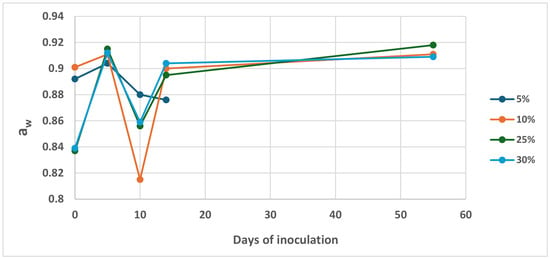
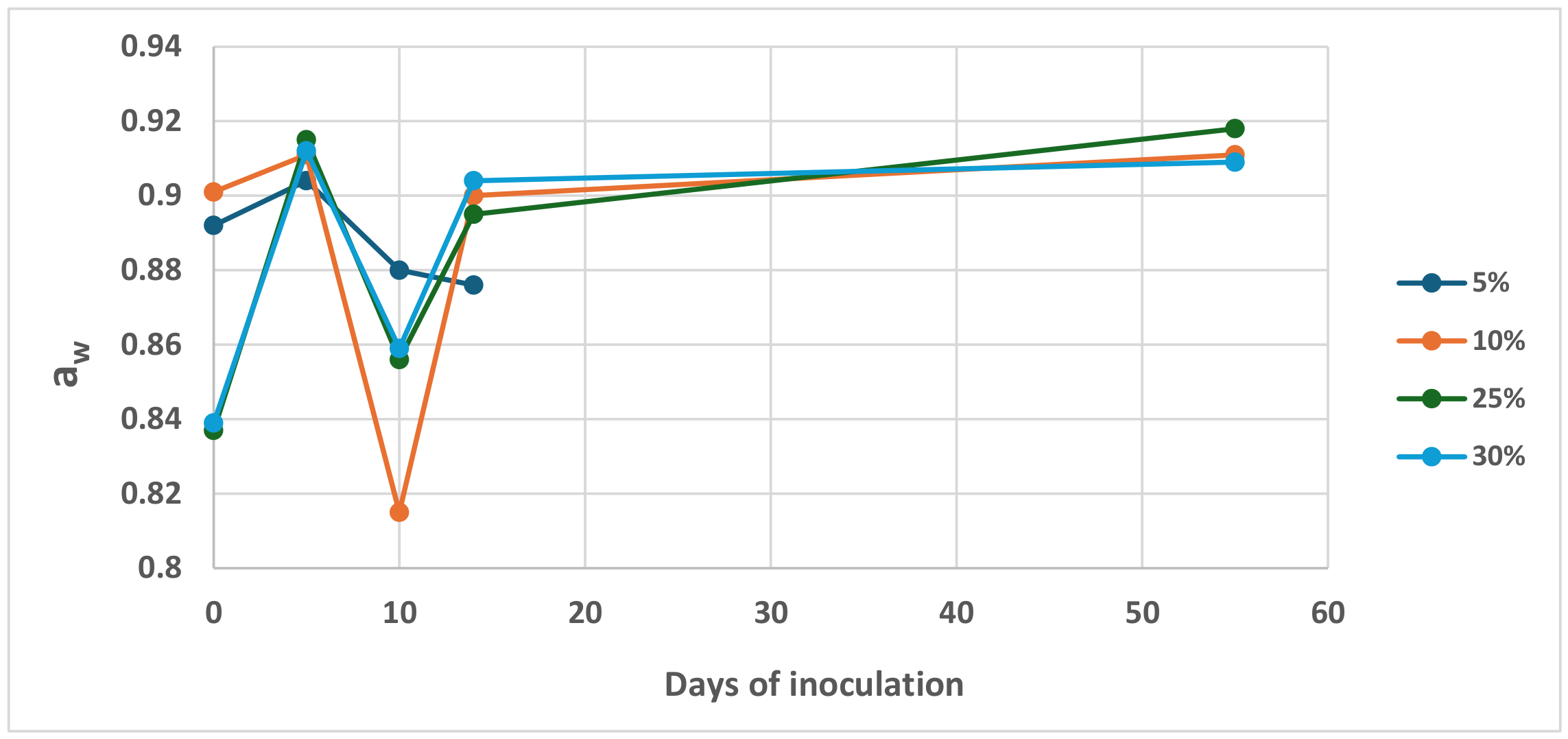
During storage, the values of water activity (aw) of crust exhibited slight fluctuations following the application of different Flavomix ACE concentrations (Figure 6).
Figure 6.
Changes in water activity (aw) of bread crust treated with different concentrations of Flavomix ACE over 55 days of storage at 25 °C. Bread samples were sprayed on the crust surface with 5% (dark blue line), 10% (orange line), 25% (green line), or 30% (light blue line) v/v Flavomix ACE.
Although differences among treatments were observed during early stages (varied from 0.84 to 0.90), aw values became largely similar at the end of the incubation period. At day 5 of storage, aw increased in all treatments and converged to approximately 0.91. This increase may be attributed to moisture migration from the crumb to the crust, resulting in a progressive redistribution of the water within the product. Subsequently, a reduction was observed on day 10, explaining the gradual establishment of moisture equilibrium between the bread and the headspace of storage container. Despite these fluctuations, water activity never reached the levels considered restrictive for the growth of isolated fungi.
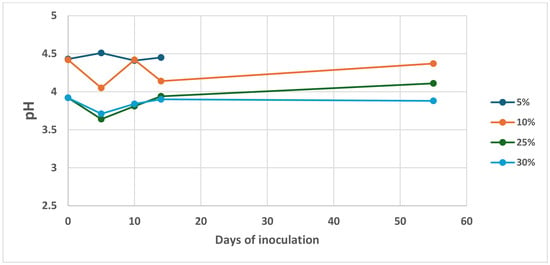
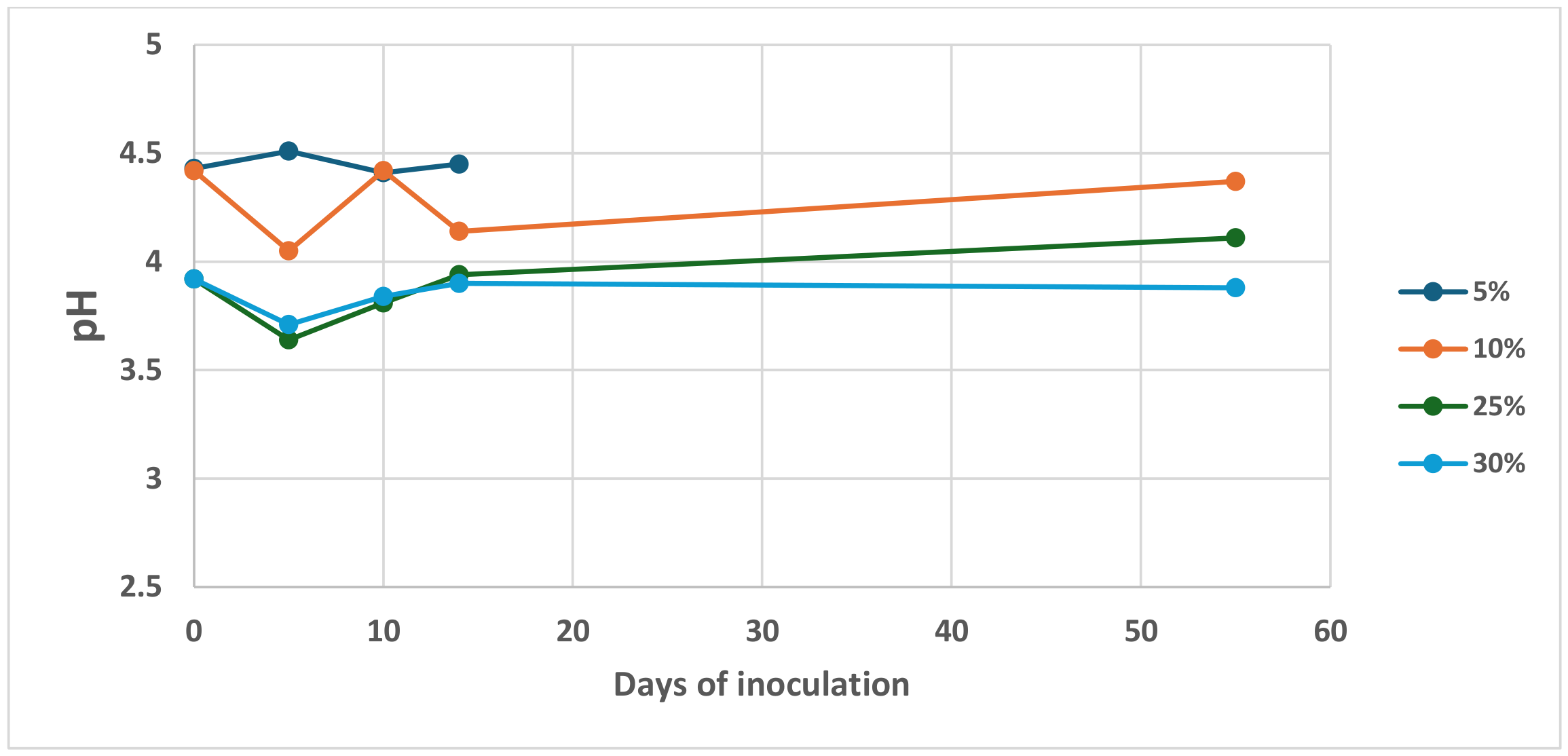
Changes in the pH of bread crust sprayed with different concentrations of liquid Flavomix ACE during storage are presented in Figure 7.
Figure 7.
Changes in pH of bread crust treated with different concentrations of Flavomix ACE over 55 days of storage at 25 °C. Bread samples were sprayed on the crust surface with 5% (dark blue line), 10% (orange line), 25% (green line), or 30% (light blue line) v/v of Flavomix ACE.
Immediately after treatment, the pH values ranged from 3.9 to 4.5, which are considerably lower than those typically observed on a commercial bread. This confirmed the acidic nature of the antimicrobial agent, resulting in the lowest values at 25% and 30% v/v of Flavomix ACE. The decrease in crust pH observed after Flavomix ACE application should also be considered in relation to the findings of Costa et al. [28]. In that study, increasing the incorporation of pomegranate extract from 10 to 17% did not significantly affect bread pH or water activity, but higher inclusion levels progressively reduced the specific volume and final height and also altered quality attributes such as color and texture. Thus, although the physicochemical parameter affected was different, both studies indicate that high inclusion rates of polyphenol-rich extracts may modify intrinsic and technological characteristics of bread. In the present study, the pronounced initial acidification of the crust (pH 3.9–4.5), particularly at 25–30% v/v Flavomix ACE, may have contributed to the observed antifungal effect; at the same time, this pH shift reinforces the need to evaluate possible sensory and technological consequences when defining the optimum industrial dose. Despite fluctuations, the pH eventually returned close to the initial of each concentration at the end of storage time (55 days).
The study provides several strengths that enhance the relevance of the findings. One is the combination of controlled in vitro tests together with validation in a real bakery matrix, which allows for a more comprehensive assessment of Flavomix ACE antifungal performance. The prolonged antifungal protection achieved under a severe fungal challenge (105 spores/spot) strengthens the practical relevance of the findings. The direct comparison with commonly used preservatives (i.e., potassium sorbate and calcium propionate) provides additional evidence regarding the relative effectiveness of Flavomix ACE as a potential alternative preservation strategy. However, there are also some limitations that should be addressed. The role of the acidic nature of Flavomix ACE in the observed antifungal activity cannot be fully ruled out, as the decrease in crust pH might have acted as an additional factor enhancing fungal inhibition. Although Flavomix ACE demonstrated strong antifungal activity, the effect of the applied concentrations on sensory attributes or consumer acceptance was not evaluated and requires further investigation.
4. Conclusions
This study evaluated a commercial polyphenol-based product (Flavomix ACE) as a natural antifungal agent against key spoilage fungi (Penicillium spp. and Cladosporium spp.) in bakery products. Through both spraying and agar incorporation (1.3–5.0%), Flavomix ACE demonstrated strong dose- and inoculum-dependent inhibition, significantly outperforming calcium propionate (E282), which showed no inhibitory effect. In the spraying assay, potassium sorbate (E202) showed the highest antifungal efficacy, completely inhibiting the growth of both Penicillium and Cladosporium isolates in all inoculum levels. On high-spore-load bread, a 30% v/v Flavomix ACE spray completely prevented mold growth for 55 days at 25 °C. Achieving 55 days of complete suppression under heavy spore challenge (105 spores/spot) is a significant technical benchmark. It demonstrates that Flavomix ACE, which is a plant-based antimicrobial agent, can protect long-shelf-life products (such as sliced sandwich breads, pre-packaged snack cakes, or exported baked goods). While plant polyphenols often lose efficacy in complex food matrices, Flavomix ACE delivered robust, long-term mold control, offering a viable natural replacement for synthetic preservatives aligned with clean-label consumer trends, despite an initial crust pH drop (3.9–4.5) that warrants sensory evaluation. Future studies may address limitations such as sensory evaluation and the application of Flavomix ACE in bakery formulations enriched with fat and protein in order to assess whether these components may affect the stability and potential deactivation of the polyphenols.
Author Contributions
Conceptualization, M.A., D.T. and P.S.; methodology, M.A., D.T., V.-I.D. and P.S.; validation, M.A., D.T. and I.M.; formal analysis, M.A., D.T., I.M. and P.S.; investigation, M.A., D.T. and I.M., resources, V.-I.D., M.T. and P.S.; writing—original draft preparation, M.A., D.T., I.M., V.-I.D., M.T. and P.S.; writing—review and editing, M.A., D.T., I.M., V.-I.D., M.T. and P.S.; visualization, M.A., D.T. and I.M.; supervision, P.S.; project administration, M.A. and D.T.; funding acquisition V.-I.D., M.T. and P.S. All authors have read and agreed to the published version of the manuscript.
Funding
This research received no external funding.
Institutional Review Board Statement
Not applicable.
Informed Consent Statement
Not applicable.
Data Availability Statement
Data available on request due to restrictions.
Conflicts of Interest
The authors declare no conflicts of interest.
References
- Amoah, I.; Cairncross, C.; Osei, E.O.; Yeboah, J.A.; Cobbinah, J.C.; Rush, E. Bioactive Properties of Bread Formulated with Plant-Based Functional Ingredients Before Consumption and Possible Links with Health Outcomes After Consumption—A Review. Plant Foods Hum. Nutr. 2022, 77, 329–339. [Google Scholar] [CrossRef] [Scilit] [PubMed]
- Dewettinck, K.; Van Bockstaele, F.; Kühne, B.; Van de Walle, D.; Courtens, T.M.; Gellynck, X. Nutritional Value of Bread: Influence of Processing, Food Interaction and Consumer Perception. J. Cereal Sci. 2008, 48, 243–257. [Google Scholar] [CrossRef] [Scilit]
- Poutanen, K.; Flander, L.; Katina, K. Sourdough and Cereal Fermentation in a Nutritional Perspective. Food Microbiol. 2009, 26, 693–699. [Google Scholar] [CrossRef] [Scilit] [PubMed]
- Legan, J.D. Mould Spoilage of Bread: The Problem and Some Solutions. Int. Biodeterior. Biodegrad. 1993, 32, 33–53. [Google Scholar] [CrossRef] [Scilit]
- Makariti, I.; Kapetanakou, A.E.; Gkerekou, M.; Bertoli, M.; Dremetsika, C.; Kalaitzoglou, I.; Skandamis, P.N. Using the Gamma Concept in Modelling Fungal Growth: A Case Study on Brioche-Type Products. Food Microbiol. 2019, 81, 12–21. [Google Scholar] [CrossRef] [Scilit] [PubMed]
- Asioli, D.; Aschemann-Witzel, J.; Caputo, V.; Vecchio, R.; Annunziata, A.; Næs, T.; Varela, P. Making Sense of the “Clean Label” Trends: A Review of Consumer Food Choice Behavior and Discussion of Industry Implications. Food Res. Int. 2017, 99, 58–71. [Google Scholar] [CrossRef] [Scilit] [PubMed]
- Michalea-Dimoulea, N.-A.; Karageorgou, A.; Goliomytis, M.; Tzoutzou, M.; Ilias-Dimopoulos, V.; Simitzis, P. The Effects of a Natural Citrus Phenolic Extract on the Quality Attributes and Oxidative Stability of Pariza-Type Meat Emulsion Product. Appl. Sci. 2024, 14, 6030. [Google Scholar] [CrossRef] [Scilit]
- De Rossi, L.; Rocchetti, G.; Lucini, L.; Rebecchi, A. Antimicrobial Potential of Polyphenols: Mechanisms of Action and Microbial Responses—A Narrative Review. Antioxidants 2025, 14, 200. [Google Scholar] [CrossRef] [Scilit] [PubMed]
- Costa, M.; Sezgin-Bayindir, Z.; Losada-Barreiro, S.; Paiva-Martins, F.; Saso, L.; Bravo-Díaz, C. Polyphenols as Antioxidants for Extending Food Shelf-Life and in the Prevention of Health Diseases: Encapsulation and Interfacial Phenomena. Biomedicines 2021, 9, 1909. [Google Scholar] [CrossRef] [Scilit] [PubMed]
- Daglia, M. Polyphenols as Antimicrobial Agents. Curr. Opin. Biotechnol. 2012, 23, 174–181. [Google Scholar] [CrossRef] [Scilit] [PubMed]
- Górniak, I.; Bartoszewski, R.; Króliczewski, J. Comprehensive Review of Antimicrobial Activities of Plant Flavonoids. Phytochem. Rev. 2019, 18, 241–272. [Google Scholar] [CrossRef] [Scilit]
- Bełkowska, L.; Muzolf-Panek, M.; Islam, M.; Tomaszewska-Gras, J. Increasing the Oxidative Stability of the Wafer Lipid Fraction with Fruit Extract during Storage. Appl. Sci. 2023, 13, 103. [Google Scholar] [CrossRef] [Scilit]
- Bełkowska, L.; Muzolf-Panek, M.; Stangierski, J.; Tomaszewska-Gras, J. The Effect of Reformulation on Quality Changes in Cream-Filled Wafers during Storage. LWT 2026, 240, 119003. [Google Scholar] [CrossRef] [Scilit]
- Mamma, D.; Christakopoulos, P. Biotransformation of Citrus By-Products into Value Added Products. Waste Biomass Valorization 2014, 5, 529–549. [Google Scholar] [CrossRef] [Scilit]
- Tsiraki, M.I.; Savvaidis, I.N. Citrus Extract or Natamycin Treatments on “Tzatziki”—A Traditional Greek Salad. Food Chem. 2014, 142, 416–422. [Google Scholar] [CrossRef] [Scilit] [PubMed]
- Tsiraki, M.I.; Yehia, H.M.; Elobeid, T.; Osaili, T.; Sakkas, H.; Savvaidis, I.N. Viability of and Escherichia Coli O157:H7 and Listeria monocytogenes in a Delicatessen Appetizer (Yogurt-Based) Salad as Affected by Citrus Extract (Citrox©) and Storage Temperature. Food Microbiol. 2018, 69, 11–17. [Google Scholar] [CrossRef] [Scilit]
- Mexis, S.F.; Chouliara, E.; Kontominas, M.G. Shelf Life Extension of Ground Chicken Meat Using an Oxygen Absorber and a Citrus Extract. LWT 2012, 49, 21–27. [Google Scholar] [CrossRef] [Scilit]
- Tsiraki, M.I.; Savvaidis, I.N. The Effects of Citrus Extract (Citrox©) on the Naturally Occurring Microflora and Inoculated Pathogens, Bacillus cereus and Salmonella enterica, in a Model Food System and the Traditional Greek Yogurt-Based Salad Tzatziki. Food Microbiol. 2016, 53, 150–155. [Google Scholar] [CrossRef] [Scilit] [PubMed]
- Siroli, L.; Patrignani, F.; Serrazanetti, D.I.; Tabanelli, G.; Montanari, C.; Tappi, S.; Rocculi, P.; Gardini, F.; Lanciotti, R. Efficacy of Natural Antimicrobials to Prolong the Shelf-Life of Minimally Processed Apples Packaged in Modified Atmosphere. Food Control 2014, 46, 403–411. [Google Scholar] [CrossRef] [Scilit]
- White, T.J.; Bruns, T.D.; Lee, S.B.; Taylor, J.W. Amplification and Direct Sequencing of Fungal Ribosomal RNA Genes for Phylogenetics. In PCR Protocols: A Guide to Methods and Applications; Academic Press: Cambridge, MA, USA, 1990; pp. 315–322. ISBN 0-12-372180-6. [Google Scholar]
- Guynot, M.E.; Ramos, A.J.; Sanchis, V.; Marín, S. Study of benzoate, propionate, and sorbate salts as mould spoilage inhibitors on intermediate moisture bakery products of low pH (4.5–5.5). Int. J. Food Microbiol. 2005, 101, 161–168. [Google Scholar] [CrossRef] [Scilit]
- Plumridge, A.; Hesse, S.J.; Watson, A.J.; Lowe, K.C.; Stratford, M.; Archer, D.B. The weak acid preservative sorbic acid inhibits conidial germination and mycelial growth of Aspergillus niger through intracellular acidification. Appl. Environ. Microbiol. 2004, 70, 3506–3511. [Google Scholar] [CrossRef] [Scilit] [PubMed]
- Liu, Y.; Benohoud, M.; Galani Yamdeu, J.H.; Gong, Y.Y.; Orfila, C. Green extraction of polyphenols from citrus peel by-products and their antifungal activity against Aspergillus flavus. Food Chem. X 2021, 12, 100144. [Google Scholar] [CrossRef] [Scilit] [PubMed]
- Al Aboody, M.S.; Mickymaray, S. Anti-Fungal Efficacy and Mechanisms of Flavonoids. Antibiotics 2020, 9, 45. [Google Scholar] [CrossRef] [Scilit] [PubMed]
- Makarewicz, M.; Drożdż, I.; Tarko, T.; Duda-Chodak, A. The Interactions between Polyphenols and Microorganisms, Especially Gut Microbiota. Antioxidants 2021, 10, 188. [Google Scholar] [CrossRef] [Scilit] [PubMed]
- Galanakis, C.M.; Tsatalas, P.; Charalambous, Z.; Galanakis, I.M. Control of Microbial Growth in Bakery Products Fortified with Polyphenols Recovered from Olive Mill Wastewater. Environ. Technol. Innov. 2018, 10, 1–15. [Google Scholar] [CrossRef] [Scilit]
- Wang, S.; Zhu, F. Quality Attributes of Bread Fortified with Staghorn Sumac Extract. J. Texture Stud. 2018, 49, 129–134. [Google Scholar] [CrossRef] [Scilit] [PubMed]
- Costa, N.H.B.; Amadio, G.B.; Souza-Santos, Y.J.; Carvalho, R.A.; Vanin, F.M. Incorporation of Pomegranate (Punica granatum) Extract Enhanced the Concentration of Bioactive Compounds and Shelf Life of Bread. Food Sci. Nutr. 2025, 13, e70690. [Google Scholar] [CrossRef] [Scilit] [PubMed]

Disclaimer/Publisher’s Note: The statements, opinions and data contained in all publications are solely those of the individual author(s) and contributor(s) and not of MDPI and/or the editor(s). MDPI and/or the editor(s) disclaim responsibility for any injury to people or property resulting from any ideas, methods, instructions or products referred to in the content. |
© 2026 by the authors. Licensee MDPI, Basel, Switzerland. This article is an open access article distributed under the terms and conditions of the Creative Commons Attribution (CC BY) license.