


Abstract
Background: Changes in estrogen and progesterone during the menstrual cycle could potentially influence standing-induced hemodynamic and autonomic responses. Aims and Objectives: We aimed to explore the effects of menstrual cycle phases on cardiovascular and autonomic adaptations to a virtual reality International Space Station (ISS) environment used as a microgravity analogue across varying body positions. Method: A randomized repeated-measures pilot study was conducted with two protocols (supine and standing) in an International Space Station-themed virtual reality environment involving healthy young female (n = 11, mean age 20 ± 1 years, height 160.6 ± 3 cm, weight 61.6 ± 9 kg) participants in 2 menstrual phases: follicular (n = 5, 20 ± 1 years, height 160 ± 3 cm, weight 55 ± 6 kg) and luteal phase (n = 6, mean age 20 ± 1 years, height 161.3 ± 2.4 cm, weight 67 ± 8 kg). Each protocol consisted of three stages: baseline, supine/standing, and recovery, each lasting 5 min. The data were analyzed using mixed repeated-measures analysis of variance. Results: Significant differences were observed between the two protocols from supine to standing across menstrual phases for several hemodynamic variables. Heart rate showed significant difference during the luteal phase (F(1,9) = 10.6, p = 0.01) with values from 72 bpm to 84 bpm and the follicular phase (F(1,9) = 7.4, p = 0.02) from 82 bpm to 92 bpm; diastolic blood pressure during the follicular phase (F(1,9) = 9.8, p = 0.01) from 55 mmHg to 80 mmHg; mean arterial pressure during the follicular phase (F(1,9) = 7.5, p = 0.02) from 73 mmHg to 93 mmHg; stroke index during the follicular phase (F(1,9) = 6.9, p = 0.03) from 74 mL/m2 to 51 mL/m2; and systemic vascular resistance index during the follicular phase (F(1,9) = 8.0, p = 0.02), with values from 1046 dyn*sec* m2/cm5 to 1564 dyn*sec* m2/cm5, respectively. This was a preliminary pilot study, and the results need to be confirmed with larger groups and validated hormonally. Conclusions: These exploratory pilot study results show that orthostatic-induced responses are influenced by the menstrual cycle phase. Since no non-VR control condition was included, the responses observed should be considered part of the VR-based protocol, and the exact role of the immersive virtual reality environment cannot be determined. The study showed that an ISS-themed virtual reality environment led to notable changes in cardiovascular function and autonomic responses during transitions from supine to standing postures, and these responses also varied across menstrual phases. Across most epochs, the standing protocol consistently shows higher heart rate, systolic and diastolic blood pressure, mean arterial pressure, and systemic vascular resistance index than the supine protocol, reflecting the effect of orthostatic loading in an ISS-themed virtual reality environment.
1. Introduction
Enhancing the lives of astronauts is crucial to the success of space missions. Human physiology evolved under Earth’s gravity, which creates a hydrostatic pressure gradient [1,2,3,4,5,6]. Under normal gravity, a significant amount of blood volume is pooled in the lower extremities when a person is upright [7,8,9,10]. In contrast, exposure to actual microgravity and experience in spaceflight trigger a rapid and major redistribution of fluids toward the head (cephalad shift) [11]. This forces the cardiovascular system to adapt. Initially, there is increased venous return, elevated central blood volume, enhanced stroke volume, and cardiac output. Autonomic regulation (heart rate variability) also becomes impaired, which underlies known problems such as orthostatic intolerance when returning to gravity [11,12,13]. Understanding cardiovascular and autonomic responses to altered gravitational environments remains an important focus of space medicine research.
In addition to gravitational influences, females experience cyclic fluctuations in estrogen and progesterone across the menstrual cycle, which influence vascular function, fluid balance, and autonomic regulation [14]. These hormonal changes may alter cardiovascular and autonomic responses to orthostatic stress; however, previous studies have reported inconsistent findings regarding heart rate variability, vascular function, and hemodynamic responses across menstrual phases [15]. Such discrepancies likely reflect differences in study design, menstrual phase identification, participant characteristics, and measurement techniques [16,17,18,19,20]. As women increasingly participate in spaceflight, understanding how the menstrual phase influences cardiovascular and autonomic regulation during spaceflight analogs has become increasingly important for optimizing astronaut health, mission planning, and post-flight recovery [18,21,22,23,24,25,26]. However, these interactions remain poorly understood, highlighting the need for further investigation under controlled experimental conditions [12,27,28,29,30,31,32,33,34].
Virtual reality (VR) has emerged as a practical and scalable alternative for studying the spaceflight environment. It allows for controlled, repeatable immersion without the logistical and safety issues of parabolic flights or actual space missions. Although VR cannot replicate effects like gravitational unloading, cephalad fluid shifts, or the ongoing cardiovascular deconditioning seen in true microgravity, it enables researchers to examine sensory-cognitive aspects of spaceflight while monitoring cardiovascular and autonomic responses. Previous research has used VR for cardiovascular and autonomic studies, and this study selected the International Space Station (ISS) visual scenario to investigate whether the interaction between immersive sensory stimulation, such as spaceflight, and posture changes influences hormonal factors. While more studies are exploring cardiovascular and autonomic responses to orthostatic stress and immersive VR experiences, no prior research has examined how menstrual cycle phases affect these responses during a virtual ISS environment. This study aims to address this gap. The objectives of this pilot study are to determine how cardiovascular function and autonomic regulation differ between the supine and standing positions across menstrual phases, and to examine how a VR simulation influences cardiovascular health and autonomic responses at rest. In this study, ‘ISS-themed virtual reality environment’ describes an immersive visual and sensory environment that mimics the interior of the ISS. It does not reproduce the physiological effects of true microgravity, such as unloading, fluid shifts, or reduced gravitational forces (~10−6 g).
The primary aim of this pilot study was to evaluate whether cardiovascular and autonomic responses differ between supine and standing postures across menstrual phases when exposed to an ISS-themed VR environment. The secondary aim was to assess whether cardiovascular and autonomic responses differ across menstrual phases in the ISS-themed virtual reality environment. The study hypothesized that cardiovascular and autonomic responses would vary between supine and standing postures and that these variations would be influenced by menstrual phase (follicular and luteal). In the study, simulated microgravity refers to an immersive ISS-themed VR analog rather than to a physiological microgravity condition.
2. Results
The results show a significant difference across protocols within the menstrual phase. Table 1 and Table 2 present the mean values of various cardiovascular and autonomic variables, along with the corresponding p-values and effect sizes for each parameter across baseline and protocols within each menstrual phase.
Table 1.
Difference between the mean values of cardiovascular and autonomic parameters across baseline (before virtual reality exposure), along with mean, standard deviation, and obtained p-values (* p < 0.05) with effect size.
Table 2.
Differences between the mean values of cardiovascular and autonomic parameters across protocols, along with standard deviations, p-values (* p < 0.05), and corresponding effect sizes.
2.1. Baseline Effect
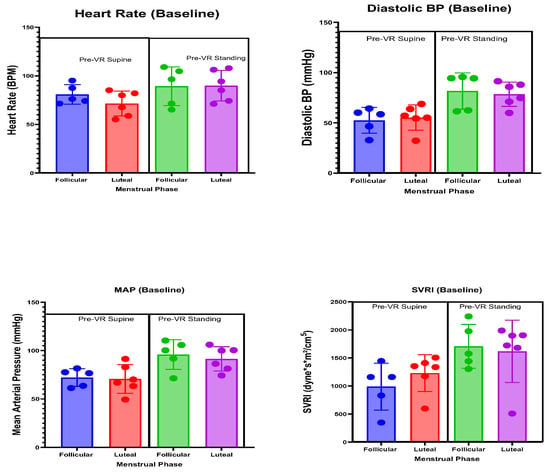
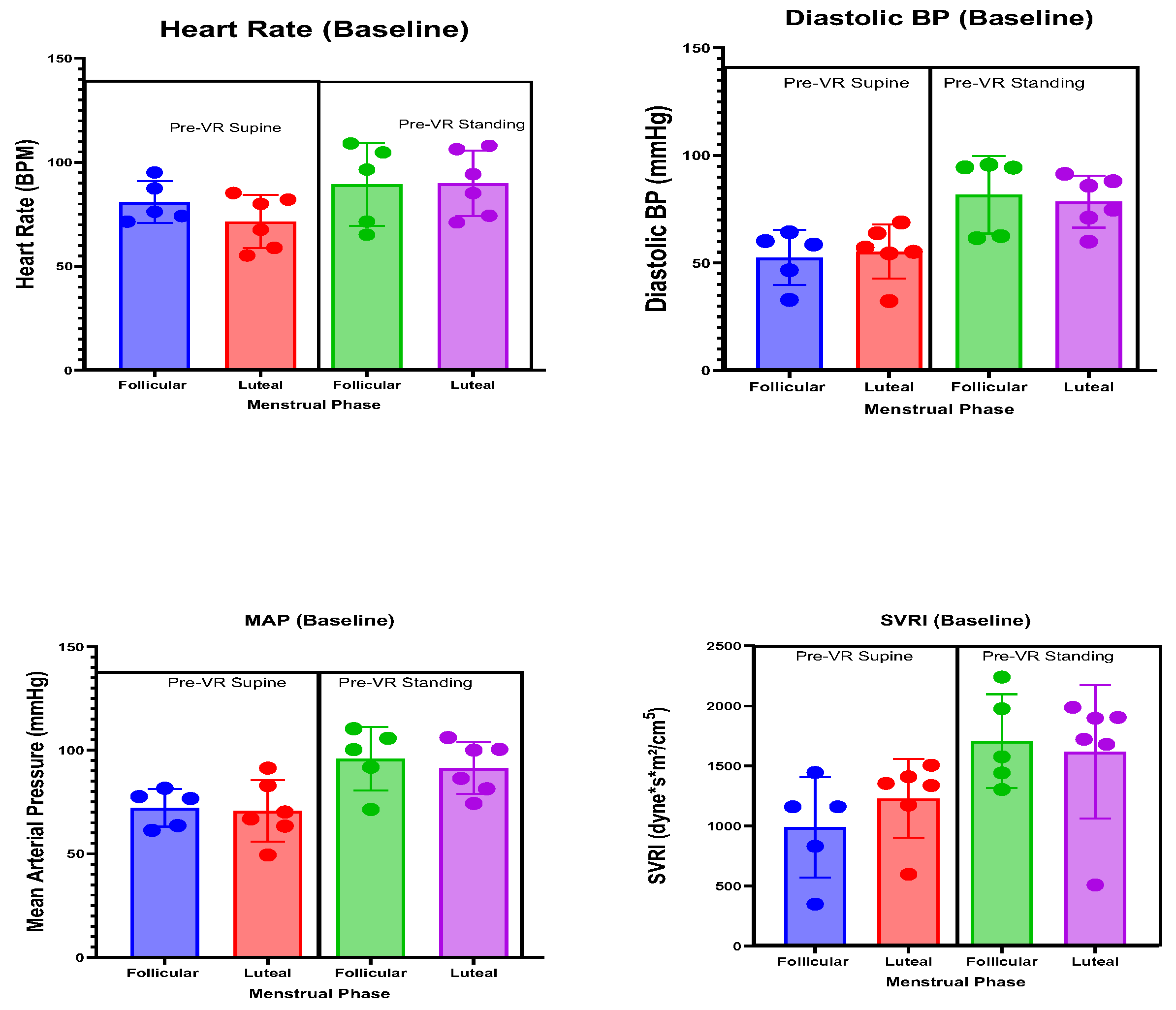
Table 1 and Figure 1 present baseline values in the standing and supine positions across menstrual phases.
Figure 1.
Baseline cardiovascular and autonomic parameters, including heart rate (HR), systolic blood pressure (SBP), diastolic blood pressure (DBP), mean arterial pressure (MAP), stroke index (SI), cardiac index (CI), and systemic vascular resistance index (SVRI), were measured before virtual reality exposure across menstrual phases. Individual participant responses are shown as filled circles for each menstrual phase. Bars represent group means, with error bars indicating variability (mean ± SD).
During the luteal phase, heart rate increased notably between two baseline assessments (mean difference: 18.3 bpm, 95% CI: 3.6–33.1, p = 0.02, partial η2 = 0.47). Likewise, diastolic blood pressure and mean arterial pressure rose significantly in both follicular and luteal phases. Specifically, follicular participants showed increases in diastolic blood pressure (mean difference: 29.2 mmHg, 95% CI: 8.4–50.0, p = 0.01, partial η2 = 0.53) and mean arterial pressure (mean difference: 23.8 mmHg, 95% CI: 6.6–41.0, p = 0.01, partial η2 = 0.52). Similar increases occurred during the luteal phase for diastolic blood pressure (mean difference: 23.2 mmHg, 95% CI: 4.3–42.2, p = 0.02, partial η2 = 0.46) and mean arterial pressure (mean difference: 20.8 mmHg, 95% CI: 5.0–36.5, p = 0.01, partial η2 = 0.49). The systemic vascular resistance index increased significantly during the follicular phase (mean difference: 718 dyn·s·m2/cm5, 95% CI: 122.6–1315, p = 0.02, partial η2 = 0.45). Other parameters, such as systolic blood pressure, cardiac index, stroke index, and LFnu-RRI, showed no significant baseline differences. These variations likely reflect temporal changes during the session, including physiological adaptation, measurement variability, or shifts in autonomic regulation. Since both baseline tests were performed in the supine position, these findings should not be viewed as direct effects of standing or orthostatic stress. Larger studies with more controls are needed to confirm these results. These should be interpreted cautiously, given the small pilot sample (Table 1).
The baseline comparison highlighted notable differences between the two pre-exposure measurement periods, mainly in heart rate during the luteal phase and in diastolic blood pressure, mean arterial pressure, and systemic vascular resistance index during the follicular phase. These results suggest that some cardiovascular parameters changed before the introduction of the ISS-themed VR environment (Figure 1).
2.2. Effects of Protocols
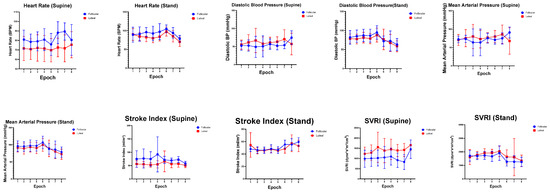
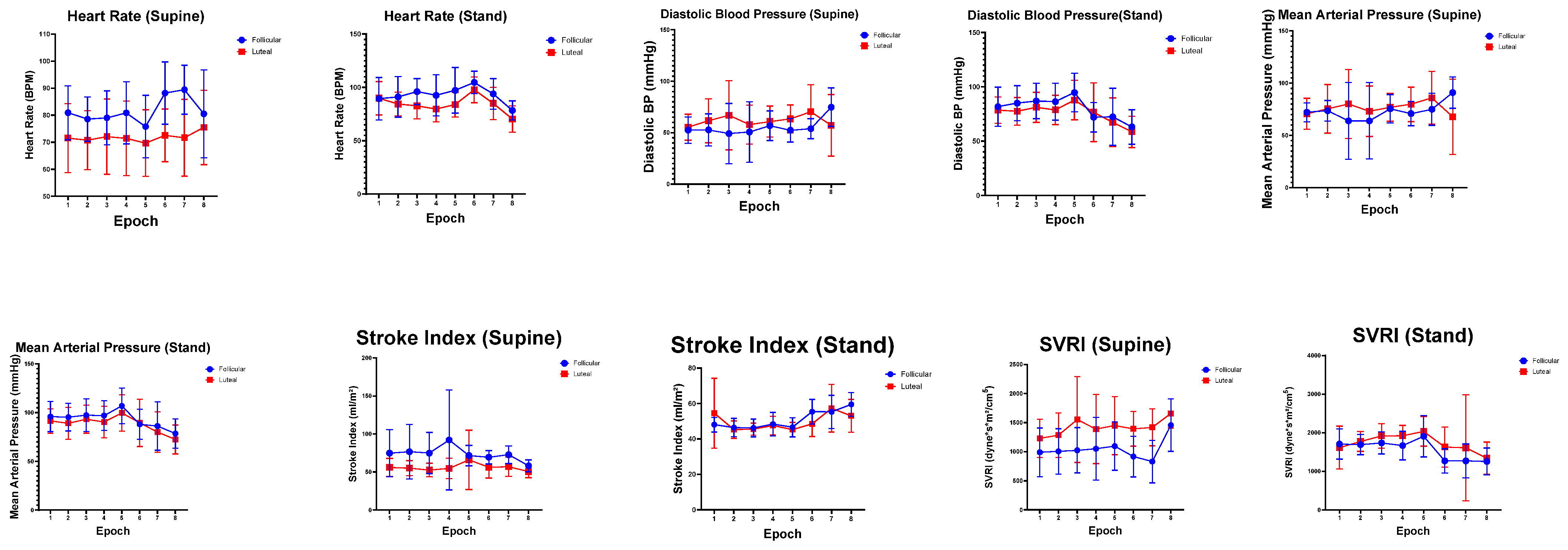
Hemodynamic and autonomic responses differed significantly across protocols in the supine and standing positions (p < 0.05) (Table 2). Notable protocol effects were observed in heart rate, diastolic blood pressure, mean arterial pressure, stroke index, and systemic vascular resistance index, with higher values during standing than during supine protocol. Conversely, systolic blood pressure, cardiac index, and low-frequency-RRI showed no significant differences (Table 2). The shift from supine to standing triggers expected cardiovascular and autonomic responses in both menstrual phases, though with differences in strength. During the follicular phase, standing significantly raised heart rate (p = 0.02), diastolic blood pressure (p = 0.01), mean arterial pressure (p = 0.02), and systemic vascular resistance index (p = 0.02), while the stroke index decreased notably (p = 0.03). These responses had moderate-to-large effect sizes (partial η2 = 0.43–0.52), indicating a strong cardiovascular reaction to orthostatic stress. In the luteal phase, only heart rate increased significantly with standing (p = 0.01; partial η2 = 0.54), whereas other parameters, including blood pressure, stroke index, cardiac index, systemic vascular resistance index, and low frequency, remained unchanged (all p > 0.05). Systolic blood pressure, cardiac index, and low-frequency R-R interval showed no variation in either phase. Overall, cardiovascular compensation appeared more effective during the follicular phase, while heart rate responses remained consistent across both phases (Table 2). Figure 2 shows the mean values of each parameter across menstrual phases.
Figure 2.
Cardiovascular changes during the supine and standing protocols across epochs in different menstrual phases. Heart rate (HR), diastolic blood pressure (DBP), mean arterial pressure (MAP), stroke index (SI), and systemic vascular resistance index (SVRI). The entire study was divided into 16 epochs (8 in the supine and 8 in the standing protocols).
Analysis of cardiovascular and autonomic responses over time revealed similar trends during the follicular and luteal phases in both the supine and standing positions (Figure 2). Standing triggered the expected increases in heart rate and adjustments in blood pressure, cardiac index, stroke index, and systemic vascular resistance index, reflecting normal cardiovascular adaptation to the orthostatic challenge. Most variables showed overlapping patterns across menstrual phases, with no distinct differences between phases (Figure 2).
3. Discussion
This pilot study examined how the menstrual cycle phase affects cardiovascular and autonomic responses during an orthostatic challenge in an ISS-themed virtual reality environment. The findings show that changing from lying to standing causes phase-dependent differences in cardiovascular and autonomic regulation, with distinct responses observed in the follicular and luteal phases. These results align with previous research indicating that hormonal fluctuations during the menstrual cycle can influence vascular tone, autonomic function, and cardiovascular adaptation [35,36,37,38].
Previous research indicates that the menstrual cycle can affect cardiovascular regulation by influencing sympathetic activity, vascular responsiveness, and autonomic control. However, results differ in both direction and strength, probably due to variations in study designs, participant traits, physiological stressors, and measurement techniques. For example, Freedman et al. (2000) and Sato et al. (1995) observed changes in vascular responsiveness and autonomic regulation across menstrual phases, while other studies found increased cardiovascular and sympathetic responses during the luteal phase [35,36,37,38]. In contrast, the study observed more notable changes in several cardiovascular parameters during the follicular phase. This suggests that the effects of menstrual phases on cardiovascular responses could differ depending on the type of physiological challenge and environmental conditions, especially within the ISS-themed virtual reality environment, which provides a unique combination of sensory input and postural stress.
3.1. Comparison Between Baseline Effects
Baseline cardiovascular measurements offer valuable insights into physiological condition before exposure to the virtual reality environment and orthostatic challenge. In this study, heart rate showed significant changes from baseline during the luteal phase in both protocols. Prior research indicates that resting cardiovascular regulation can differ across menstrual phases, with some studies reporting higher heart rates during the luteal phase than during the follicular phase [39]. Differences observed across studies may stem from variations in participant characteristics, menstrual phase classification methods, and experimental setups. This study also found notable variations in diastolic and mean arterial blood pressure across menstrual phases. While some earlier research reports minimal resting blood pressure changes during the menstrual cycle, hormonal fluctuations may still affect vascular regulation and cardiovascular stability. Given the small sample size in this pilot, these results should be viewed with caution; nonetheless, the effect sizes suggest the potential for larger studies to clarify whether these changes reflect genuine physiological patterns. Standard orthostatic testing usually involves measuring cardiovascular parameters after a period of supine rest, followed by assessments at set intervals after standing to observe postural adaptation [40,41]. In the present study, two baseline measurements were obtained at different time points within the experimental protocol. Although both measurements were collected in the supine position, the difference in systemic vascular resistance index between these baseline periods should not be interpreted as a direct effect of posture or gravitational stress. Instead, these changes may reflect short-term fluctuations in autonomic cardiovascular regulation, adaptation to the laboratory environment, repeated measurements, or normal biological variability. Cardiovascular variables such as heart rate, blood pressure, and vascular resistance are continuously influenced by sympathetic and parasympathetic activity, hydration status, emotional state, circadian rhythms, and environmental factors. Therefore, baseline differences observed in this study may represent physiological variability rather than a direct intervention effect. The primary analysis, therefore, focused on changes in cardiovascular and autonomic responses following VR exposure relative to baseline measurements. Nevertheless, the potential influence of baseline variability on subsequent physiological responses cannot be completely excluded, particularly given the exploratory nature and limited sample size of this study. Future studies incorporating larger sample sizes, repeated baseline assessments, longer stabilization periods, and appropriate control conditions are needed to determine whether these baseline variations represent consistent menstrual-phase-related physiological patterns [27,42,43]. Cardiovascular adaptation during altered gravitational conditions has also been investigated in spaceflight-related research. Balali et al. (2025) demonstrated changes in cardiovascular parameters, including heart rate, blood pressure, and stroke volume, following prolonged exposure to spaceflight compared with Earth-based baseline conditions [44].
3.2. Comparison Between Protocol Effects
The transition from supine to standing elicited distinct cardiovascular and autonomic adaptations that varied across menstrual phases. These responses reflect the physiological mechanisms involved in orthostatic regulation, where gravitational redistribution of blood volume reduces venous return and triggers compensatory increases in heart rate, vascular resistance, and sympathetic activity to maintain cardiovascular stability. In addition to these immediate postural effects, fluctuations in ovarian hormones may influence vascular compliance, autonomic balance, and cardiovascular responsiveness, potentially contributing to differences in orthostatic adaptation across menstrual phases [27,43]. In the present study, heart rate increased significantly during standing in both follicular and luteal phases, demonstrating an appropriate chronotropic response to orthostatic stress. Similar cardiovascular adaptations have been reported under altered gravitational conditions, where changes in fluid distribution and autonomic regulation contribute to increased cardiovascular demand [44]. However, unlike prolonged exposure to microgravity, the present study evaluated short-duration cardiovascular responses to postural transitions within an ISS-themed virtual reality environment. Therefore, the observed responses likely represent the combined influence of sensory stimulation, virtual environment exposure, and orthostatic loading. Blood pressure responses showed menstrual-phase-dependent patterns. Diastolic blood pressure and mean arterial pressure increased significantly from supine to standing during the follicular phase. Previous studies have demonstrated that ovarian hormones influence vascular function and cardiovascular regulation; however, the menstrual phase associated with maximal cardiovascular responsiveness has varied across investigations [27,43]. Some studies have reported enhanced cardiovascular responses during the luteal phase, whereas the present findings indicate greater changes during the follicular phase. These differences may be explained by variations in hormonal profiles, participant characteristics, study design, and the type of physiological stress imposed. The increase in systemic vascular resistance index observed during standing in the follicular phase represents a typical compensatory response to orthostatic challenge. During upright posture, gravitational pooling of blood in the lower extremities reduces venous return, requiring peripheral vasoconstriction to preserve arterial pressure. Menstrual-cycle-related hormonal fluctuations may modify this response by influencing endothelial function, vascular tone, and sympathetic-mediated vasoconstriction [17,45,46,47,48]. Therefore, the interaction between posture and menstrual phase may contribute to differences in vascular adaptation during orthostatic stress. The reduction in stroke index observed during standing in the follicular phase is also consistent with the expected physiological response to reduced cardiac filling during upright posture. Changes in estrogen and progesterone concentrations may influence vascular properties and cardiovascular regulation, potentially affecting the magnitude of stroke volume adaptation during postural transition [17,48]. Previous research has demonstrated that ovarian hormones can modify cardiovascular control mechanisms, even when resting blood pressure and heart rate remain relatively stable [45]. Autonomic regulation represents another potential mechanism underlying the observed menstrual-phase differences. Previous investigations have shown that sympathetic and parasympathetic activity vary across the menstrual cycle, with ovarian hormones influencing autonomic responses to physiological stressors [49,50,51,52]. These findings provide a physiological basis for the phase-dependent cardiovascular and autonomic responses observed in the present study. However, variability among studies suggests that menstrual-phase effects may depend on the specific physiological challenge, timing of assessment, and individual hormonal status.
Overall, the findings indicate that both posture and menstrual phase contribute to dynamic changes in cardiovascular and autonomic regulation within an ISS-themed virtual reality environment. The follicular and luteal phases demonstrated different patterns of adaptation to orthostatic stress, suggesting that menstrual-cycle-related hormonal variation may influence cardiovascular responsiveness. Given the exploratory nature of this pilot study and the absence of hormonal confirmation and a non-VR control condition, these findings should be considered preliminary and require validation in larger, adequately powered studies.
3.3. Limitations
A mixed repeated-measures analysis of variance was used to examine the effects of within-subject factors across epochs and between-subject factors across protocols on cardiovascular and autonomic responses [53]. This approach is suitable for repeated observations within participants and enables the assessment of both main and interaction effects in a within-between experimental design. This study has several limitations. First, the exploratory nature of this pilot study and its small sample size (n = 11; follicular n = 5, luteal n = 6) limited the statistical power and increased uncertainty in effect estimates. While the mixed repeated-measures ANOVA appropriately accounts for within-participant correlations in repeated physiological measurements, a small sample size may increase the risk of Type I and Type II errors and limit the generalizability of the results. Consequently, significant findings should be viewed with caution and need validation in larger, more adequately powered studies. Second, this was a between-subjects menstrual phase design: each participant was tested in only one phase, meaning observed phase differences may reflect inter-individual variation rather than true hormonal effects. Third, the menstrual phase was determined solely from self-reported tracking app data (Flo and Clue) without biochemical confirmation of estrogen, progesterone, or luteinizing hormone levels, potentially leading to misclassification. While these tools provide useful estimates of cycle timing, they do not confirm the hormonal environment or definitively verify ovulation. Consequently, there is a risk of misidentifying menstrual phases, which could have influenced the observed physiological differences. To improve the accuracy of phase classification, future research should include hormonal assays or validated ovulation-detection methods. Fourth, no formal washout period was implemented between the two sequential protocols within each session; the second protocol baseline represents the recovery epoch of the first protocol and may be influenced by carryover, fatigue, or incomplete cardiovascular recovery. Fifth, the 10-s analysis epochs used for frequency-domain heart rate variability (HRV) are shorter than the minimum recommended by standard HRV guidelines (60–120 s); LFnu-RRI findings should therefore be considered exploratory and potentially unreliable [1,27]. Furthermore, the HRV findings should be interpreted with caution. Sixth, the absence of a non-VR control arm means that VR-specific cardiovascular effects cannot be isolated from those attributable solely to postural change. Seventh, the ethnic and demographic diversity of participants (i.e., young women recruited from universities in the UAE, most of whom were either Emiratis or South Asians) could be another reason for the lack of generalizability, as physiological differences across populations of different ethnic origins have been reported previously. Given the pilot nature of this study, future adequately powered studies with larger cohorts and hormonal validation are needed to confirm these preliminary findings. Also, baseline comparisons may reflect temporal changes rather than true baseline differences.
4. Methods
4.1. Study Design
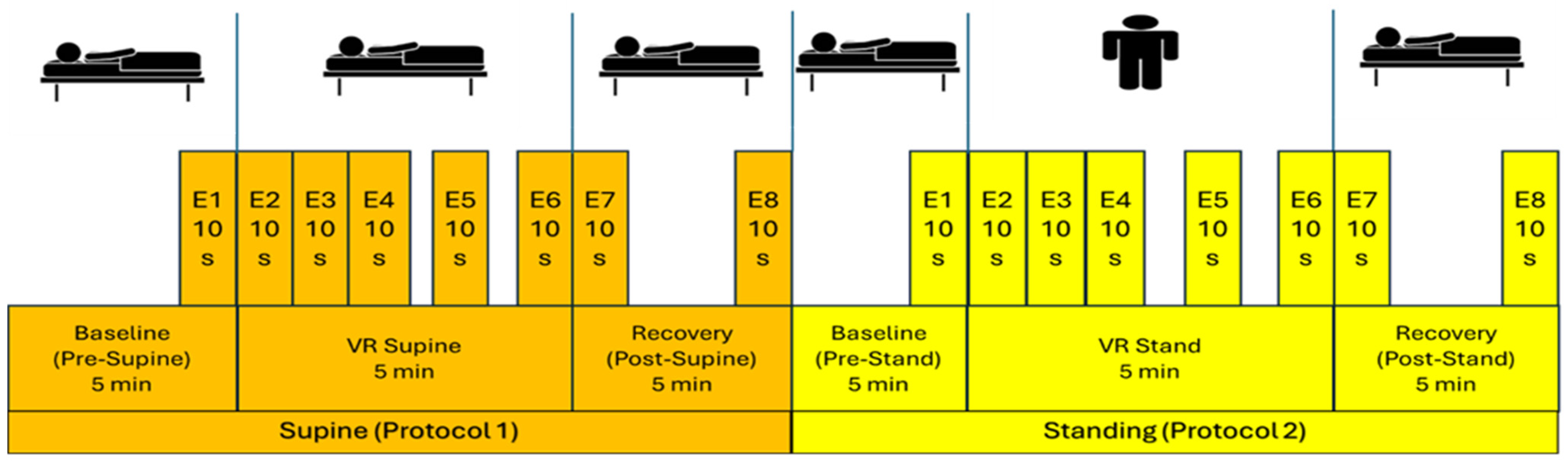
The study used a randomized crossover design in which each participant completed both the supine and standing protocols. The randomized crossover design was applied within individuals for posture (supine vs. standing), while the menstrual phase was a between-subjects factor (each participant was tested in only one phase). This design allowed each participant to serve as their own control, reducing between-subject variability. The order of protocols was randomly assigned to control for effects such as fatigue, adaptation, or learning. No non-VR control group was included; therefore, the study focused on comparing physiological responses across postural conditions during VR exposure rather than isolating VR’s specific effects. Each protocol was divided into 8 consecutive 10-s epochs for data analysis, yielding 16 epochs per participant. To maintain a consistent physiological reference, the recovery phase from the first protocol served as the baseline for the second, regardless of whether the participant started in the supine or standing condition. The study protocol included: 1. Baseline: Participants lie quietly in the supine position for 5 min. 2. VR Testing (supine): Participants experience ISS VR in the supine position for 5 min. 3. Recovery: Participants rest in the supine position for 5 min after VR exposure. 4. VR Testing (standing): Participants undergo ISS VR in the standing position for 5 min. 5. Recovery: After standing VR exposure for 5 min, participants return to supine positions to recover.
4.2. Measurements and Instrumentation
In the pilot study, physiological measurements were taken on days corresponding to menstrual phases. Participants used the Flo and Clue apps to track their menstrual cycles [54]. They experienced an ISS-themed virtual reality environment on the International Space Station via a head-mounted VR system that provided realistic visual and auditory cues, while their physiological responses were recorded. An ISS-themed virtual reality scenario was used as a sensory analog of microgravity. Hemodynamic and autonomic data were collected using the Task Force Monitor (CNSystems, Graz, Austria) [55,56,57]. The ECG was used to derive HRV signals to assess autonomic responses. In HRV analysis, LF (0.04–0.15 Hz) reflects both sympathetic and parasympathetic activity, indicating stress or exertion [58,59,60]. The low-frequency (LFnu-RRI) HRV parameter was analyzed as an exploratory measure because the protocol used ultra-short 10-s epochs. These parameters were interpreted cautiously, as conventional frequency-domain HRV assessment typically requires longer, stationary recordings.
4.3. Participants
The study included 11 young females, aged 19–22 years, in the follicular (n = 5) and luteal (n = 6) phases. Exclusion criteria included a history of smoking, alcohol use, psychological disorders, cardiovascular disease, thrombosis, syncope, or pregnancy. Participants were advised to avoid endurance sports or any physical activity for 48 h prior to measurement and to refrain from caffeine 24 h beforehand. The Task Force Monitor used participants’ height and weight to calculate body surface area (BSA) for indexing hemodynamic parameters (cardiac index, stroke index, systemic vascular resistance index). Table 3 presents the mean age, height, weight, and BMI of participants in this pilot study. Informed consent was obtained from all individual participants before their inclusion in the study. The study protocol was conducted in accordance with the latest revision of the Declaration of Helsinki [61] and approved by the Mohammed Bin Rashid University Institutional Review Board (MBRU IRB-2024-297).
Table 3.
The mean and standard deviation for the baseline characteristics of participants.
4.4. Data Processing and Statistical Analysis
Data processing began by segmenting the recordings into 10-s epochs and computing the average value for each epoch. Figure 3 shows these epochs.
Figure 3.
Study protocol and data analysis epochs: The experiment consisted of two randomized protocols (supine and standing) and 16 data-analysis epochs (eight in the supine protocol and eight in the standing protocol), each lasting 10 s. The order of supine and standing protocols was randomized across participants. When the supine protocol was administered first, its recovery was used as the baseline for the subsequent standing protocol. Conversely, when the standing protocol was performed first, its recovery phase served as the baseline for the subsequent supine protocol.
The normality of the data was assessed using the Shapiro–Wilk test for both cardiovascular and autonomic data; however, given the small sample size (n = 5–6 per group), the interpretation of normality was limited, and the inferential analysis was interpreted cautiously. Therefore, graphical Q-Q plots and distribution histograms were also examined. Due to the small sample size, all inferential analyses were treated as exploratory. A mixed repeated-measures analysis of variance was conducted to examine the effects of the within-subject factor (epochs) and the between-subject factor (menstrual phases), as well as their interaction, on the dependent variables, cardiovascular and autonomic responses. The assumption of sphericity was tested using Mauchly’s test. When violated, Greenhouse–Geisser corrections were applied. Homogeneity of variance across groups was assessed using Levene’s test for between-subject factors. Where appropriate, post hoc pairwise comparisons were performed with the Bonferroni correction to reduce the risk of type I error from multiple comparisons. All statistical analyses were performed using IBM SPSS Statistics version 29.
5. Conclusions
The pilot study demonstrates that a virtual reality ISS-themed virtual reality environment produces notable changes in cardiovascular function and autonomic responses during transitions from supine to standing postures, and that these responses also vary across menstrual phases. Across most epochs, the standing protocol consistently shows higher heart rate, systolic, diastolic, and mean arterial pressure, and systemic vascular resistance index than the supine protocol, reflecting an orthostatic response in a virtual reality environment. During virtual reality exposure, participants experienced an altered sensory environment resembling the International Space Station, which may modulate neurocognitive processing, emotions, and perceptions, all of which can influence cardiovascular activity [62]. Therefore, the combined effects of posture change, menstrual-phase-related hormonal fluctuations, and ISS-themed virtual reality environment help explain the observed hemodynamic alterations in this study. Although the sample size was limited, this pilot study indicates that the menstrual cycle phase may affect cardiovascular and autonomic responses in an International Space Station (ISS)-themed virtual reality environment. These findings should primarily be regarded as hypotheses rather than definitive proof of physiological changes associated with menstrual phases. Recognizing these sex-specific differences is essential for creating personalized health monitoring and countermeasures for future space missions, as individual variability can influence crew health and performance. Additional research with larger participant groups and longer exposure durations is necessary to validate these results and investigate the underlying mechanisms.
Author Contributions
N.G.: designed the research; H.M., M.A. and M.Y.: performed data acquisition; A.E.S., H.M., M.A. and M.Y.: pre-processed data; A.E.S.: analyzed data, performed statistical analysis, created figures and tables, and drafted the original manuscript; A.E.S., S.A. (Salonaz Abdelglil), N.M.A., S.A. (Suhaila Alnuaimi), M.N.A.K. and N.G.: interpreted results; A.E.S., M.N.A.K., F.A.A.M., M.Y.B.N., S.A.A.F., H.A. and N.G.: reviewed and edited the manuscript. All authors have read and agreed to the published version of the manuscript.
Funding
This study was supported by the Mohammed Bin Rashid University of Medicine and Health Sciences (MBRU-CM-RG2023-05) and the Mohammed Bin Rashid Space Center, Dubai. NG was also supported by Dubai Future Foundation’s Research and Development Grant (ASTROAIMED: 2024MBRUM-GOS-063).
Institutional Review Board Statement
The study protocol was conducted in accordance with the latest revision of the Declaration of Helsinki and approved by the Mohammed Bin Rashid University Institutional Review Board (MBRU IRB-2024-297), approval date: 6 November 2025.
Informed Consent Statement
Informed consent was obtained from all participants prior to enrollment in the study. Participants were informed about the study procedures, and their participation was voluntary.
Data Availability Statement
The raw data supporting the conclusions of this article will be made available by the authors, without undue reservation.
Acknowledgments
We thank all participants for their time and cooperation.
Conflicts of Interest
The authors declare that the research was conducted in the absence of any commercial or financial relationships that could be construed as a potential conflict of interest.
References
- Shankhwar, V.; Urvec, J.; Steuber, B.; Schmid Zalaudek, K.; Bergauer, A.; Alsuwaidi, H.; Du Plessis, S.; Alsheikh-Ali, A.; Kellett, C.; Bayoumi, R.; et al. Association of gender with cardiovascular and autonomic responses to central hypovolemia. Front. Cardiovasc. Med. 2023, 10, 1211774. [Google Scholar] [CrossRef] [Scilit]
- Krittanawong, C.; Singh, N.K.; Scheuring, R.A.; Urquieta, E.; Bershad, E.M.; Macaulay, T.R.; Kaplin, S.; Dunn, C.; Kry, S.F.; Russomano, T.; et al. Human Health during Space Travel: State-of-the-Art Review. Cells 2022, 12, 40. [Google Scholar] [CrossRef] [Scilit]
- Marshall-Goebel, K.; Damani, R.; Bershad, E.M. Brain Physiological Response and Adaptation During Spaceflight. Neurosurgery 2019, 85, E815–E821. [Google Scholar] [CrossRef] [Scilit] [PubMed]
- Takahashi, K.; Okumura, H.; Guo, R.; Naruse, K. Effect of Oxidative Stress on Cardiovascular System in Response to Gravity. Int. J. Mol. Sci. 2017, 18, 1426. [Google Scholar] [CrossRef] [Scilit] [PubMed]
- Bailey, D.M.; Blottner, D.; Gunga, H.-C.; Schneider, S.; Wotring, V.; Baatout, S.; Durante, M.; Engberink, R.H.G.O.; Goswami, N.; Heer, M.; et al. Integrative focus on the space exposome-integrome: Physiological challenges and practical limits of countermeasures beyond low Earth orbit. npj Microgravity 2025, 11, 82. [Google Scholar] [CrossRef] [Scilit] [PubMed]
- Goswami, N.; Batzel, J.J.; Clement, G.; Stein, T.P.; Hargens, A.R.; Sharp, M.K.; Blaber, A.P.; Roma, P.G.; Hinghofer-Szalkay, H.G. Maximizing information from space data resources: A case for expanding integration across research disciplines. Eur. J. Appl. Physiol. 2013, 113, 1645–1654. [Google Scholar] [PubMed]
- NASA. Cardiovascular Health in Microgravity; NASA: Washington, DC, USA, 2020. [Google Scholar]
- Shankhwar, V.; Singh, D.; Deepak, K.K. Effect of countermeasure bodygear on cardiac-vascular-respiratory coupling during 6-degree head-down tilt: An earth-based microgravity study. Life Sci. Space Res. 2022, 32, 45–53. [Google Scholar] [CrossRef] [Scilit] [PubMed]
- Goswami, N.; Blaber, A.P.; Valenti, G.; Hinghofer-Szalkay, H.; Evans, J.; Bailey, D.M.; Vernikos, J.; Choukér, A.; Green, D.A.; White, O.; et al. Gravity, microgravity, and artificial gravity: Physiological effects, implementation, and applications. Physiol. Rev. 2026, 106, 750–839. [Google Scholar] [CrossRef] [Scilit] [PubMed]
- Goswami, N.; Roma, P.G.; De Boever, P.; Clément, G.; Hargens, A.R.; Loeppky, J.A.; Evans, J.M.; Stein, T.P.; Blaber, A.P.; Van Loon, J.J.; et al. Using the Moon as a high-fidelity analogue environment to study biological and behavioral effects of long-duration space exploration. Planet. Space Sci. 2012, 74, 111–120. [Google Scholar] [CrossRef] [Scilit]
- Nelson, E.S.; Mulugeta, L.; Myers, J.G. Microgravity-induced fluid shift and ophthalmic changes. Life 2014, 4, 621–665. [Google Scholar] [CrossRef] [Scilit] [PubMed]
- Hussain, I.; Ullah, R.; Simran, B.; Kaur, P.; Kumar, M.; Raj, R.; Faraz, M.; Mehmoodi, A.; Malik, J. Cardiovascular effects of long-duration space flight. Health Sci. Rep. 2024, 7, e2305. [Google Scholar] [CrossRef] [Scilit] [PubMed]
- Alzaabi, A.A.; Alzaabi, F.M.; Siddiqui, R.W.; Siddiqui, T.W.; Sami, M.M. Review of microgravity’s impact on cardiovascular and nervous systems in space exploration. npj Microgravity 2025, 11, 77. [Google Scholar] [CrossRef] [Scilit] [PubMed]
- Dart, A.M.; Du, X.J.; Kingwell, B.A. Gender, sex hormones and autonomic nervous control of the cardiovascular system. Cardiovasc. Res. 2002, 53, 678–687. [Google Scholar] [CrossRef] [Scilit] [PubMed]
- de Zambotti, M.; Nicholas, C.L.; Colrain, I.M.; Trinder, J.A.; Baker, F.C. Autonomic regulation across phases of the menstrual cycle and sleep stages in women with premenstrual syndrome and healthy controls. Psychoneuroendocrinology 2013, 38, 2618–2627. [Google Scholar] [CrossRef] [Scilit] [PubMed]
- Schmalenberger, K.M.; Tauseef, H.A.; Barone, J.C.; Owens, S.A.; Lieberman, L.; Jarczok, M.N.; Girdler, S.S.; Kiesner, J.; Ditzen, B.; Eisenlohr-Moul, T.A. How to study the menstrual cycle: Practical tools and recommendations. Psychoneuroendocrinology 2021, 123, 104895. [Google Scholar] [CrossRef] [Scilit] [PubMed]
- Kwissa, M.; Krauze, T.; Mitkowska-Redman, A.; Banaszewska, B.; Spaczynski, R.Z.; Wykretowicz, A.; Guzik, P. Cardiovascular Function in Different Phases of the Menstrual Cycle in Healthy Women of Reproductive Age. J. Clin. Med. 2022, 11, 5861. [Google Scholar] [CrossRef] [Scilit] [PubMed]
- Allen, A.M.; McRae-Clark, A.L.; Carlson, S.; Saladin, M.E.; Gray, K.M.; Wetherington, C.L.; McKee, S.A.; Allen, S.S. Determining menstrual phase in human biobehavioral research: A review with recommendations. Exp. Clin. Psychopharmacol. 2016, 24, 1–11. [Google Scholar] [CrossRef] [Scilit] [PubMed]
- Greenfield, A.M. Influences of ovarian hormones on physiological responses to cold in women. Temperature 2021, 9, 23–45. [Google Scholar] [CrossRef] [Scilit] [PubMed]
- Miller, V.M.; Duckles, S.P. Vascular actions of estrogens: Functional implications. Pharmacol. Rev. 2008, 60, 210–241. [Google Scholar] [CrossRef] [Scilit] [PubMed]
- Mark, S.; Scott, G.B.; Donoviel, D.B.; Leveton, L.B.; Mahoney, E.; Charles, J.B.; Siegel, B. The impact of sex and gender on adaptation to space: Executive summary. J. Women’s Health 2014, 23, 941–947. [Google Scholar] [CrossRef] [Scilit] [PubMed]
- Leon, G.R. Men and women in space. Aviat. Space Environ. Med. 2005, 76, B84–B88. [Google Scholar] [PubMed]
- Smith, S.M.; Zwart, S.R.; Heer, M.; Hudson, E.K.; Shackelford, L.; Morgan, J.L. Men and women in space: Bone loss and kidney stone risk after long-duration spaceflight. J. Bone Miner. Res. 2014, 29, 1639–1645. [Google Scholar] [CrossRef] [Scilit] [PubMed]
- Sykes Tottenham, L.; Saucier, D.M.; Elias, L.J.; Gutwin, C. Men are more accurate than women in aiming at targets in both near space and extrapersonal space. Percept. Mot. Skills 2005, 101, 3–12. [Google Scholar] [CrossRef] [Scilit]
- Goswami, N.; White, O.; Blaber, A.; Evans, J.; Loon, J.W.A.; Clement, G. Human physiology adaptation to altered gravity environments. Acta Astronaut. 2021, 189, 216–221. [Google Scholar] [CrossRef] [Scilit]
- Špirtović, O.; Čaprić, I.; Katanić, B.; Govindasamy, K.; Geantă, V.A.; Ardelean, V.P.; Salihagić, Z.; Ajdinović, A.; Stanković, M. Group Aerobic Exercise Improves Body Composition and Lipid Profile in Young Women with Elevated BMI: A Randomized Controlled Trial. Appl. Sci. 2025, 15, 7489. [Google Scholar] [CrossRef] [Scilit]
- Shankhwar, V.; Urvec, J.; Steuber, B.; Schmid Zalaudek, K.; Salon, A.; Hawliczek, A.; Bergauer, A.; Aljasmi, K.; Abdi, A.; Naser, A.; et al. Effects of menstrual cycle on hemodynamic and autonomic responses to central hypovolemia. Front. Cardiovasc. Med. 2024, 11, 1290703. [Google Scholar] [CrossRef] [Scilit] [PubMed]
- McKinley, P.S.; King, A.R.; Shapiro, P.A.; Slavov, I.; Fang, Y.; Chen, I.S.; Jamner, L.D.; Sloan, R.P. The impact of menstrual cycle phase on cardiac autonomic regulation. Psychophysiology 2009, 46, 904–911. [Google Scholar] [CrossRef] [Scilit] [PubMed]
- Cutigni, M.; Cucina, G.; Galante, E.; Cerri, M.; Bizzarri, M. Microgravity impairs endocrine signaling and reproductive health of women. A narrative review. Front. Physiol. 2025, 16, 1558711. [Google Scholar] [CrossRef] [Scilit] [PubMed]
- Tripoli, F.; Ridolfi, L.; Scarsoglio, S. Assessing the cardiac function from micro-gravity to hyper-gravity conditions through a validated multiscale modelling approach. J. Physiol. 2025, 604, 5296–5315. [Google Scholar] [CrossRef] [Scilit] [PubMed]
- Hughes-Fulford, M.; Carroll, D.J.; Allaway, H.C.M.; Dunbar, B.J.; Sawyer, A.J. Women in space: A review of known physiological adaptationsand health perspectives. Exp. Physiol. 2024. early view. [Google Scholar]
- Claydon, V.E.; Younis, N.R.; Hainsworth, R. Phase of the menstrual cycle does not affect orthostatic tolerance in healthy women. Clin. Auton. Res. 2006, 16, 98–104. [Google Scholar] [CrossRef] [Scilit] [PubMed]
- Clement, G.; Moudy, S.; Macaulay, T.R.; Wood, S.J. Effects of short-duration spaceflight on the execution of critical mission tasks. Front. Physiol. 2025, 16, 1677377. [Google Scholar] [CrossRef] [Scilit] [PubMed]
- Goswami, N.; Batzel, J.J.; Ma, Y.J.X.; Fredriksen, P.M.; Green, D.A.; Ivanov, P.C. Network physiology in space: Vision and perspectives on exploring physiological networks during spaceflight for the benefit of life on earth. Front. Netw. Physiol. 2026, 6, 1817815. [Google Scholar] [CrossRef] [Scilit] [PubMed]
- Freedman, R.R.; Girgis, R. Effects of menstrual cycle and race on peripheral vascular alpha-adrenergic responsiveness. Hypertension 2000, 35, 795–799. [Google Scholar] [CrossRef] [Scilit] [PubMed]
- Sato, N.; Miyake, S.; Akatsu, J.; Kumashiro, M. Power spectral analysis of heart rate variability in healthy young women during the normal menstrual cycle. Psychosom. Med. 1995, 57, 331–335. [Google Scholar] [CrossRef] [Scilit] [PubMed]
- Girdler, S.S.; Turner, J.R.; Sherwood, A.; Light, K.C. Gender differences in blood pressure control during a variety of behavioral stressors. Psychosom. Med. 1990, 52, 571–591. [Google Scholar] [CrossRef] [Scilit] [PubMed]
- Leicht, A.S.; Hirning, D.A.; Allen, G.D. Heart rate variability and endogenous sex hormones during the menstrual cycle in young women. Exp. Physiol. 2003, 88, 441–446. [Google Scholar] [CrossRef] [Scilit] [PubMed]
- Moran, V.H.; Leathard, H.L.; Coley, J. Cardiovascular functioning during the menstrual cycle. Clin. Physiol. 2000, 20, 496–504. [Google Scholar] [CrossRef] [Scilit] [PubMed]
- Juraschek, S.P.; Appel, L.J.; Mitchell, C.M.; Mukamal, K.J.; Lipsitz, L.A.; Blackford, A.L.; Cai, Y.; Guralnik, J.M.; Kalyani, R.R.; Michos, E.D.; et al. Comparison of supine and seated orthostatic hypotension assessments and their association with falls and orthostatic symptoms. J. Am. Geriatr. Soc. 2022, 70, 2310–2319. [Google Scholar] [CrossRef] [Scilit] [PubMed]
- Gronwald, T.; Schaffarczyk, M.; Hoos, O. Orthostatic testing for heart rate and heart rate variability monitoring in exercise science and practice. Eur. J. Appl. Physiol. 2024, 124, 3495–3510. [Google Scholar] [CrossRef] [Scilit] [PubMed]
- Meendering, J.R.; Torgrimson, B.N.; Houghton, B.L.; Halliwill, J.R.; Minson, C.T. Menstrual cycle and sex affect hemodynamic responses to combined orthostatic and heat stress. Am. J. Physiol. Heart Circ. Physiol. 2005, 289, H631–H642. [Google Scholar] [CrossRef] [Scilit] [PubMed]
- Tada, Y.; Yoshizaki, T.; Tomata, Y.; Yokoyama, Y.; Sunami, A.; Hida, A.; Kawano, Y. The Impact of Menstrual Cycle Phases on Cardiac Autonomic Nervous System Activity: An Observational Study Considering Lifestyle (Diet, Physical Activity, and Sleep) among Female College Students. J. Nutr. Sci. Vitaminol. 2017, 63, 249–255. [Google Scholar] [CrossRef] [Scilit] [PubMed]
- Balali, P.; Luchitskaya, E.; Hossein, A.; Abdessater, E.; Faoro, V.; Debeir, O.; Tank, J.; Caiani, E.G.; van de Borne, P.; Migeotte, P.-F.; et al. Evidence of effective cardiovascular countermeasures during spaceflights: Insights from wearable monitoring. npj Microgravity 2025, 11, 68. [Google Scholar] [CrossRef] [Scilit] [PubMed]
- Hirshoren, N.; Tzoran, I.; Makrienko, I.; Edoute, Y.; Plawner, M.M.; Itskovitz-Eldor, J.; Jacob, G. Menstrual cycle effects on the neurohumoral and autonomic nervous systems regulating the cardiovascular system. J. Clin. Endocrinol. Metab. 2002, 87, 1569–1575. [Google Scholar] [CrossRef] [PubMed]
- Estanol, B.; Rivera, A.L.; Martinez Memije, R.; Fossion, R.; Gomez, F.; Bernal, K.; Beltrán, S.M.; Delgado-García, G.; Frank, A. From supine to standing: In vivo segregation of myogenic and baroreceptor vasoconstriction in humans. Physiol. Rep. 2016, 4, e13053. [Google Scholar] [CrossRef] [Scilit] [PubMed]
- Martin-Du Pan, R.C.; Benoit, R.; Girardier, L. The role of body position and gravity in the symptoms and treatment of various medical diseases. Swiss Med. Wkly. 2004, 134, 543–551. [Google Scholar] [CrossRef] [Scilit] [PubMed]
- Abidi, S.; Nili, M.; Serna, S.; Kim, S.; Hazlett, C.; Edgell, H. Influence of sex, menstrual cycle, and oral contraceptives on cerebrovascular resistance and cardiorespiratory function during Valsalva or standing. J. Appl. Physiol. 2017, 123, 375–386. [Google Scholar] [CrossRef] [Scilit] [PubMed]
- McFetridge, J.A.; Sherwood, A. Hemodynamic and sympathetic nervous system responses to stress during the menstrual cycle. AACN Adv. Crit. Care 2000, 11, 158–167. [Google Scholar] [CrossRef] [Scilit] [PubMed]
- Saeki, Y.; Atogami, F.; Takahashi, K.; Yoshizawa, T. Reflex control of autonomic function induced by posture change during the menstrual cycle. J. Auton. Nerv. Syst. 1997, 66, 69–74. [Google Scholar] [CrossRef] [Scilit] [PubMed]
- Haneda, M.; Hashimoto, Y.; Mishima, A.; Saito, D.; Yoshitomi, T. Changes in choroidal circulation hemodynamics during the menstrual cycle in young, healthy women. PLoS ONE 2022, 17, e0270501. [Google Scholar] [CrossRef] [Scilit] [PubMed]
- Rzepinski, L.; Zawadka-Kunikowska, M.; Newton, J.L.; Zalewski, P. Cardiac Autonomic Dysfunction in Myasthenia Gravis and Relapsing-Remitting Multiple Sclerosis—A Pilot Study. J. Clin. Med. 2021, 10, 2173. [Google Scholar] [CrossRef] [Scilit] [PubMed]
- Macey, P.M.; Schluter, P.J.; Macey, K.E.; Harper, R.M. Detecting variable responses in time-series using repeated measures ANOVA: Application to physiologic challenges. F1000Research 2016, 5, 563. [Google Scholar] [CrossRef] [Scilit] [PubMed]
- Ford, A.; De Togni, G.; Miller, L. Hormonal Health: Period Tracking Apps, Wellness, and Self-Management in the Era of Surveillance Capitalism. Engag. Sci. Technol. Soc. 2021, 7, 48–66. [Google Scholar] [CrossRef] [Scilit] [PubMed]
- Gao, Y.; Goswami, N.; Grasser, E.; Rossler, A.; Stoger, E.; Schwaberger, G.; Hinghofer-Szalkay, H.G. Radix astragali and orthostatic response: A double-masked crossover study. Aviat. Space Environ. Med. 2008, 79, 94–98. [Google Scholar] [CrossRef] [Scilit] [PubMed]
- Hinghofer-Szalkay, H.G.; Goswami, N.; Rössler, A.; Grasser, E.; Schneditz, D. Reactive hyperemia in the human liver. Am. J. Physiol. Gastrointest. Liver Physiol. 2008, 295, G332–G337. [Google Scholar] [CrossRef] [Scilit] [PubMed]
- Blaber, A.P.; Hinghofer-Szalkay, H.; Goswami, N. Blood volume redistribution during hypovolemia. Aviat. Space Environ. Med. 2013, 84, 59–64. [Google Scholar] [CrossRef] [Scilit] [PubMed]
- Goswami, N.; Roessler, A.; Lackner, H.K.; Schneditz, D.; Grasser, E.; Hinghofer-Szalkay, H.G. Heart rate and stroke volume response patterns to augmented orthostatic stress. Clin. Auton. Res. 2009, 19, 157–165. [Google Scholar] [CrossRef] [Scilit] [PubMed]
- Goswami, N.; Grasser, E.; Roessler, A.; Schneditz, D.; Hinghofer-Szalkay, H. The cardiovascular response to lower body negative pressure in humans depends on seal location. Physiol. Res. 2009, 58, 311–318. [Google Scholar] [CrossRef] [Scilit] [PubMed]
- Grasser, E.K.; Goswami, N.; Hinghofer-Szalkay, H. Presyncopal cardiac contractility and autonomic activity in young healthy males. Physiol. Res. 2009, 58, 817–826. [Google Scholar] [CrossRef] [Scilit] [PubMed]
- Christie, B. Doctors revise declaration of Helsinki. BMJ 2000, 321, 913. [Google Scholar] [CrossRef] [Scilit] [PubMed]
- Goswami, N.; Kavcic, V.; Marusic, U.; Simunic, B.; Rössler, A.; Hinghofer-Szalkay, H.; Pisot, R. Effect of computerized cognitive training with virtual spatial navigation task during bed rest immobilization and recovery on vascular function: A pilot study. Clin. Interv. Aging 2015, 10, 453–459. [Google Scholar] [CrossRef] [Scilit] [PubMed]

Disclaimer/Publisher’s Note: The statements, opinions and data contained in all publications are solely those of the individual author(s) and contributor(s) and not of MDPI and/or the editor(s). MDPI and/or the editor(s) disclaim responsibility for any injury to people or property resulting from any ideas, methods, instructions or products referred to in the content. |
© 2026 by the authors. Licensee MDPI, Basel, Switzerland. This article is an open access article distributed under the terms and conditions of the Creative Commons Attribution (CC BY) license.