


Abstract
Water pollution can compromise the ecological integrity of freshwater habitats, thereby exposing freshwater communities to sources of pollution such as wastewater and agricultural and industrial discharges. Diatoms are key organisms because of their role as primary producers; thus, they have been regularly used as bioindicators to assess water quality. The diatom assemblages were collected from the surface of small stones in four rivers (El Carmen, Jipiro, San Simón, and Curitroje) across three zones defined according to a land-use gradient (high, medium, and low). A total of 54 diatom species were recorded. The El Carmen stream showed the highest total richness (29 species), followed by Curitroje (21), Jipiro (19), and San Simón (11). The results revealed significant changes in diatom richness, abundance, diversity indices, trophic index (IT) and community structure associated with both stream and zone. Following a similar pattern, temperature, conductivity, TDS (total dissolved solids), and pH also strongly influenced community composition. Achnanthidium subatomus, Sellaphora lanceolata, Odontidium mesodon were indicators of the high zone and show a general preference for zones characterized by conserved riparian vegetation, fast, clear and oxygenated water. On the other hand, Gomphonema reichardtii, Rhopalodia musculus, Gomphonema clavatulum, Gomphonema subclavatum, Gomphonema variostriatum, Eunotia incisa were indicators of a low zone with heavy organic pollution, water pollution, and environmental changes in temperature, conductivity, TDS and pH.
1. Introduction
Land-use changes have been strongly associated with the degradation of water quality in freshwater ecosystems worldwide [1,2,3,4]. For example, urbanization, industrialization, grazing and agricultural processes have negative impacts on water quality at all scales and in tropical and temperate zones [5,6,7]. These activities alter the hydrological cycle and increase pollutant inputs in water quality in streams [8,9], with adverse effects on ecological functions and diversity of several aquatic organisms [10,11,12], including diatoms, which often constitute a dominant group in benthic habitats [13].
Stream pollution can compromise the ecological integrity of freshwater habitats, thus freshwater communities in urban areas are increasingly exposed to sources of pollution such as wastewater and agricultural and industrial discharges [14,15]. Diatoms are key organisms because of their role as primary producers and their ability to transform inorganic compounds into organic forms usable by other organisms [16,17,18,19]. Thus, diatoms are key bioindicators of environmental changes related to water quality in freshwater habitats [20,21,22,23]. Diatoms offer several advantages over other aquatic organisms in the environmental biomonitoring of water quality, as they respond rapidly and sensitively to changes in physicochemical characteristics such as pH, temperature, dissolved oxygen, among others [24]. Their use in monitoring has been adopted by the European Water Framework Directive 2000/60/EC (WFD) [25].
Diversity metrics, including species richness, diversity, species composition, and trophic indices, have been widely applied in diatom studies across temperate and tropical regions worldwide [26,27,28]. Therefore, these metrics provide sensitive indicators of anthropogenic impacts and environmental degradation in freshwater ecosystems [22]. Previous studies have shown that diatom diversity and community composition change in rivers and streams exposed to high levels of disturbance in various cities. For instance, zones affected by agricultural, grazing, and urban activities tend to have low richness and diversity compared to undisturbed streams with low levels of water pollution [2,29,30,31,32,33]. However, few studies have addressed the use of diatoms as bioindicators of water quality in the Neotropical region [34,35].
In Ecuador most previous studies have focused on physicochemical parameters [36,37], aquatic macroinvertebrate communities [38,39,40], and aquatic bryophytes [41,42] as bioindicators of water pollution in rivers and streams. Although only a limited number of studies are available for this region, they have demonstrated that diatoms are effective bioindicators of water pollution [28,43,44,45,46]. Castillejo et al. [28] demonstrated that the trophic tolerance values of diatom species to nutrient enrichment (nitrogen and phosphorus) associated with eutrophication are not directly applicable to local sites. Following this pattern, diatom assemblages in the most degraded sites were markedly distinct from those in conserved areas, underscoring their sensitivity and value as bioindicators of ecological change [47]. Therefore, it is necessary to establish a diatom trophic index specifically for the Andean region of Ecuador.
However, no studies have examined their performance in South Andean streams. Therefore, this study was conducted in the city of Loja with the following objectives: (1) analyze the relationship of environmental factors with the diversity, trophic index and species composition of diatoms at rivers within zones (high, medium and low) with different land use in South Ecuador, and (2) establish a baseline of indicator species for the different zones as a tool for monitoring ecological water quality processes. We hypothesize that differences in water properties across zones will determine changes in diatom diversity and composition in streams of South Ecuador.
2. Materials and Methods
2.1. Study Area
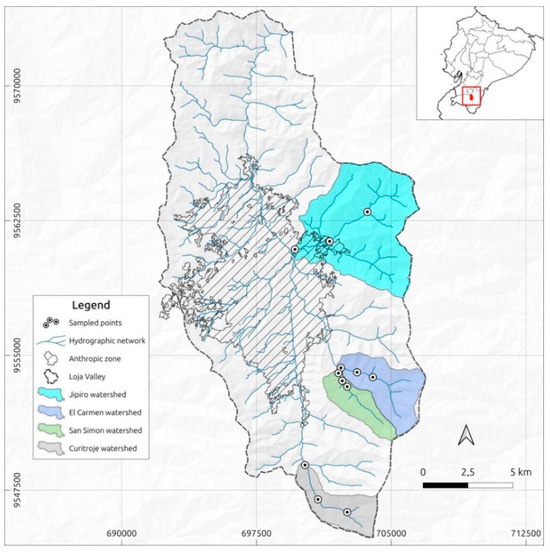
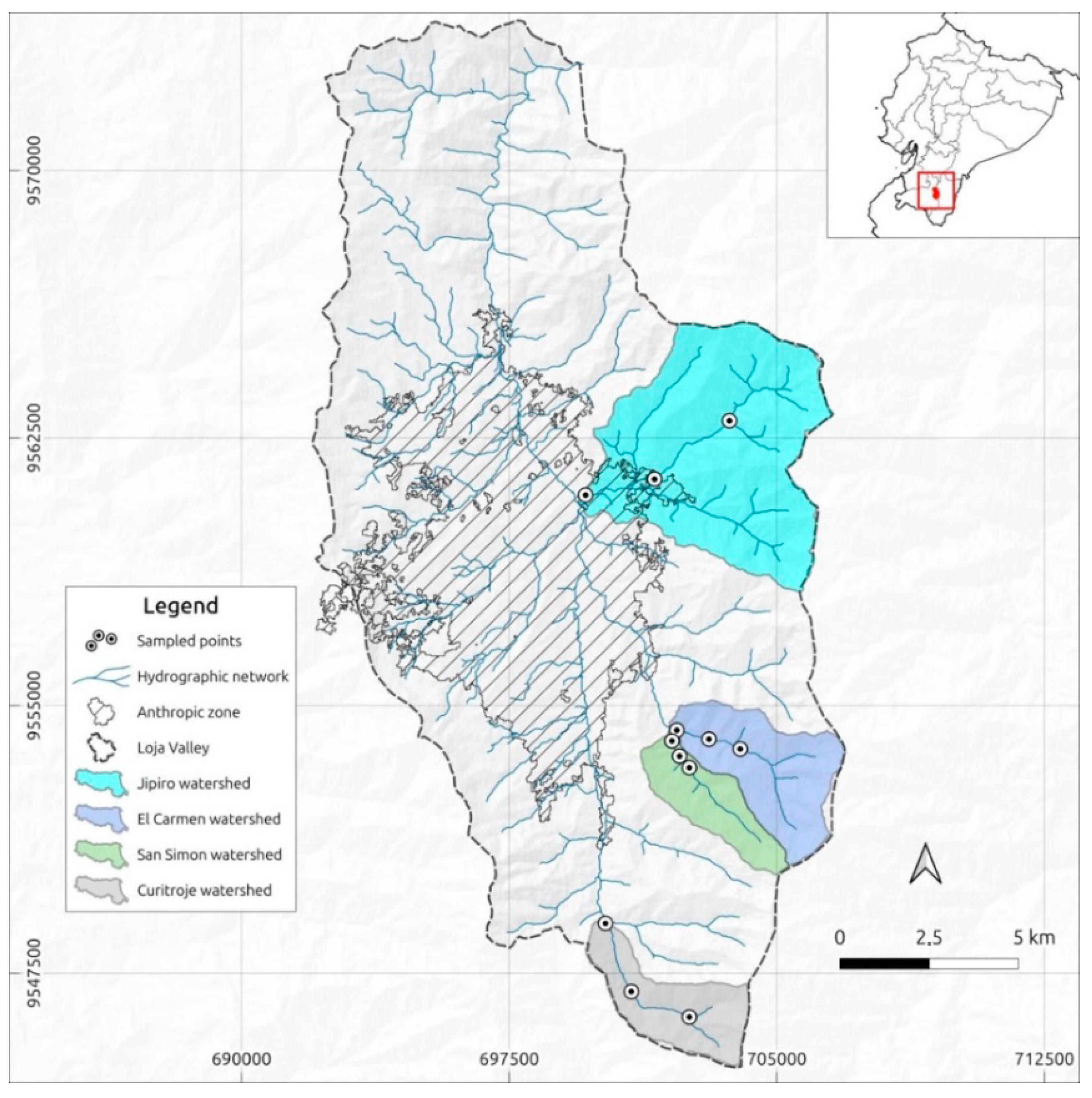
The study was conducted in the canton of Loja, province of Loja, in southern Ecuador. Monitoring took place during the dry season, between March and May 2024, in an Andean territory characterized by irregular topography and an altitudinal gradient ranging from 120 to 3880 m a.s.l. The predominance of steep slopes (25–50% and 50–100%) directly influences hydrological dynamics, land use, and anthropogenic intervention processes. The study encompassed the El Carmen, Jipiro, San Simón, and Curitroje streams (Figure 1).
Figure 1.
Location map of the Jipiro, El Carmen, San Simón, and Curitroje streams in the city of Loja, Ecuador. The red box on the right-hand map indicates the locations of the study streams in Ecuador.
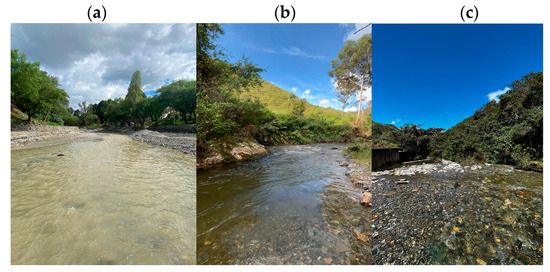
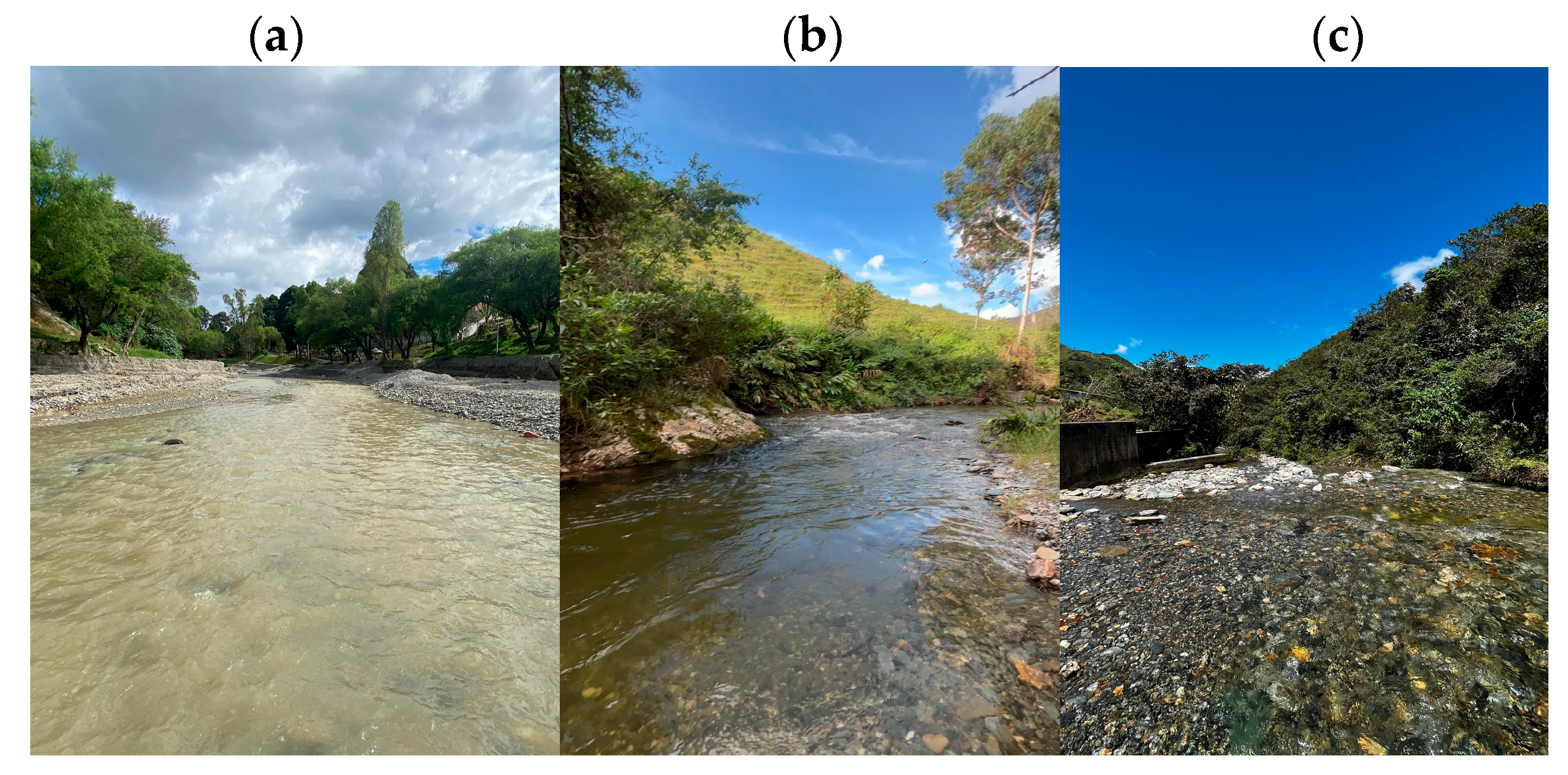
The spatial analysis using Geographic Information Systems (GIS), together with land use and riparian vegetation cover along the extent of each stream, enabled the definition of three conservation gradients: high, middle, and low (Figure 2). The upper zone is characterized by hosting the main water intake points and by constituting priority areas for water conservation, with the presence of native vegetation cover in good conservation condition and minimal anthropogenic disturbance, particularly in the surroundings of the intake sources and along stream riparian zones. The middle zone comprises landscapes influenced by agricultural and livestock activities (mainly dairy cattle farming), where anthropogenic interventions have altered vegetation cover, particularly in riparian areas, which exhibit varying levels of disturbance due to productive land use and the presence of farming (including agroecological practices, corn cultivation, family farming the production of legumes, vegetables and fruits) and grazing activities. The lower zone is predominantly influenced by urban expansion and receives the cumulative impacts of the watershed, exhibiting alterations in environmental quality due to domestic wastewater discharges. Additionally, agricultural and livestock activities are present, contributing to increased pressure on natural resources and to changes in environmental conditions.
Figure 2.
Riparian conservation status gradients: (a) lower zone; (b) middle zone; (c) upper zone.
2.2. Monitoring of Diatom Communities and Physicochemical Parameters
In each stream zone, 80 m transects were established, defining a monitoring point every 20 m, for a total of five replicates per zone [47]. For diatom sampling, five natural substrates were selected (small stones approximately 20 cm in diameter). Each substrate was washed and scraped with 20 mL of distilled water until the total volume reached 100 mL. The collected samples were labeled correctly, and 1 mL of Lugol’s solution was added for preservation under cold-chain conditions [48]. Additionally, in situ physicochemical parameters were measured at each monitoring point using a Hanna HI9819 multiparameter probe, which was calibrated in the field using certified standard solutions, including NIST-traceable pH buffer solutions (pH 4.01, 7.00, and 10.01), potassium chloride (KCl) conductivity standards, and sodium sulfite (Na2SO3) solution for zero-oxygen calibration, complemented with air-saturation calibration for dissolved oxygen. The parameters recorded included dissolved oxygen (mg L−1), temperature (°C), electrical conductivity (µS cm−1), total dissolved solids (TDS) (mg L−1) and pH.
2.3. Identification of Diatom Taxa
The diatom community was identified at the Aquatic Ecology Laboratory of the Center for Research and Services in Chemical Analysis (CISAQ) at the National University of Loja. For the cleaning process, 2–3 mL of the bottom layer of each sample were transferred to 15 mL centrifuge tubes, where 5.5% sodium hypochlorite was added to remove residual organic material [49]. The digestion process was carefully monitored to ensure the removal of organic matter and preserve the integrity of the frustules and their structures.
Once the cleaned material was obtained, slides were prepared for microscopic observation. Photomicrographs were taken at 40× and 100× magnification (Axiolab 5 microscope, Carl Zeiss AG, Oberkochen, Germany), using TopView software (ToupTek Photonics Co., Ltd., Hangzhou, China) to support morphometric analysis and taxonomic verification. Individual counts were performed in 30 random microscopic fields using a Sedgwick–Rafter chamber, with a sampling intensity sufficient to identify between 90% and 95% of the species present. Final taxonomic determination was based on detailed examination of valve morphology and morphometric characteristics, following taxonomic keys [48,50,51,52,53,54,55,56,57,58].
2.4. Trophic Index
The Water Quality Trophic Index (TWQI) was calculated based on the trophic value of diatom species. The trophic value for each species was assigned according to the list proposed by Lobo et al. [56,57]. For taxa not included in the list, a default trophic value of one (tv = 1) was assigned. The Water Quality Trophic Index was then determined using the following formula (Equation (1)).
where
- TWQI: Water Quality Trophic Index;
- vti: Trophic value assigned to the species;
- hi: Relative abundance of the species.
The TWQI values range from 1 to 4 in aquatic environments, according to the values shown in Table 1 [56].
Table 1.
Trophic Water Quality Index values.
2.5. Data Analysis
We calculated species richness, abundance, diversity and trophic index in each stream. The Shannon–Weaver index is based on the assumption that individuals are randomly selected and that all species are represented in the sample, while the Simpson index is considered as a measure of species dominance whereas [59]. The effects of environmental variables, such as stream, zone, DO, conductivity, TDS, temperature, and pH, on richness, abundance, diversity, and trophic index were modeled using Generalized Linear Models (GLMs) [60]. The richness and abundance models for diatoms were fitted with Poisson errors, and the diversity indices and trophic index were fitted with Gamma errors. The minimal adequate model was selected based on Akaike’s Information Criterion (AIC).
We computed a non-metric multidimensional scaling (NMDS) ordination of the species cover matrix to reveal the degree of similarity among zones and streams. To detect the effects of environmental variables (stream, zone, DO, conductivity, TDS, temperature and pH), we performed a permutational multivariate analysis of variance (PERMANOVA) on the cover data [61]. We used the Bray–Curtis distance measure and 999 Monte Carlo permutations. NMDS and PERMANOVA were conducted using the R package ‘vegan’ [62]. Finally, to determine which diatom species were associated with a specific zone, we used indicator species analysis [63] implemented in the ‘labdsv’ package in R (R version 4. 2. 2) [64].
3. Results
A total of 54 diatom species were recorded. The El Carmen stream showed the highest total richness (29 species), followed by Curitroje (21), Jipiro (19), and San Simón (11). A similar pattern was observed with the Chao 2 richness estimator, confirming a high number of species estimated in the El Carmen stream (41), followed by Curitroje, Jipiro, and San Simón with 24, 19, and 11 estimated species, respectively.
3.1. El Carmen Stream
In the El Carmen stream, 14 diatom taxa were identified in the lower zone, with a total of 1362 individuals classified as abundant. The community was dominated by Gomphonema subclavatum (69.35%; 945 individuals) and Gomphonema variostriatum (15.94%; 217 individuals), which represented the most characteristic taxa. In the middle zone, 18 diatom taxa were recorded, comprising 1988 abundant individuals. The assemblage was mainly composed of G. pumilum (28.33%; 563 individuals), G. subclavatum (21.02%; 418 individuals), and G. parvulum (18.66%; 371 individuals). In the upper zone, 13 taxa were observed, with Hannaea arcus being the predominant species, accounting for 60.59% of the total abundance, indicating a community structure associated with well-preserved environmental conditions.
3.2. Jipiro Stream
In Jipiro Stream, 24 diatom taxa were identified in the lower zone, where 1039 individuals were classified as abundant. The dominant species were Gomphonema pumilum (37%; 384 individuals) and G. lagenula (15%; 156 individuals). In the middle zone, 24 taxa and 1306 abundant individuals were recorded, with G. pumilum (48.65%; 635 individuals), Mayamaea atomus (10.18%; 133 individuals), and Fragilaria rumpens (8.98%; 117 individuals) being the most representative. The upper zone also exhibited 24 taxa, dominated by Mayamaea atomus (13.74%; 228 individuals), G. pumilum (20.92%; 347 individuals), and G. minutum (7.41%; 123 individuals), reflecting a gradual transition in community structure along the altitudinal gradient.
3.3. Curitroje Stream
In Curitroje Stream, the lower zone presented a richness of 10 diatom taxa, with 806 individuals classified as abundant. The dominant taxa were G. parvulum (35%; 282 individuals), F. rumpens (24.62%; 198 individuals), and G. clavatulum (16.42%; 132 individuals). In the middle zone, 12 taxa and 639 abundant individuals were recorded, with G. soprophilum (14.10%; 90 individuals), Navicula simulata (13.35%; 85 individuals), and Navicula erifuga (12.97%; 83 individuals) as the most representative species. In the upper zone, eight taxa were identified, totaling 550 abundant individuals. G. subclavatum (18.88%; 104 individuals), Geissleria punctifera (18.40%; 101 individuals), and G. minutum (15.16%; 83 individuals) exhibited the highest relative abundances, suggesting assemblages adapted to low-disturbance conditions.
3.4. San Simón Stream
In the San Simón stream, five diatom taxa were identified in the lower zone, with G. subclavatum as the overwhelmingly dominant species, accounting for 84.73% of total abun- dance (1714 individuals). In the middle zone, nine taxa were recorded, with G. subclavatum again prevailing (66.76%; 1233 individuals). In the upper zone, ten taxa were identified, and G. subclavatum remained the most abundant species (80.33%; 1315 individuals). This pattern highlights G. subclavatum’s broad ecological tolerance across environmental gradients, demonstrating its capacity to persist under varying degrees of anthropogenic disturbance.
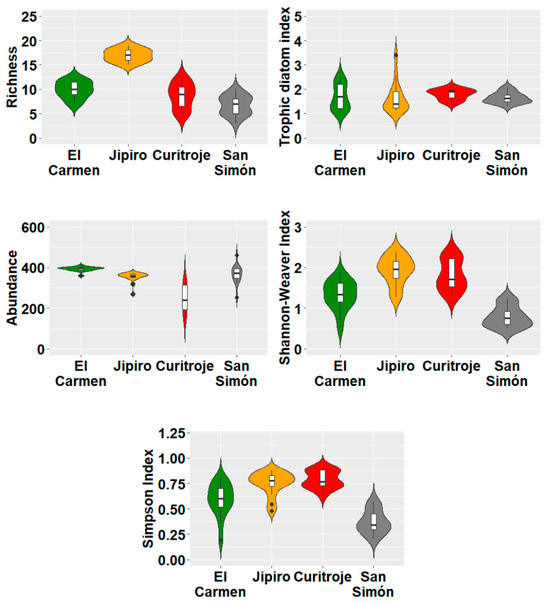
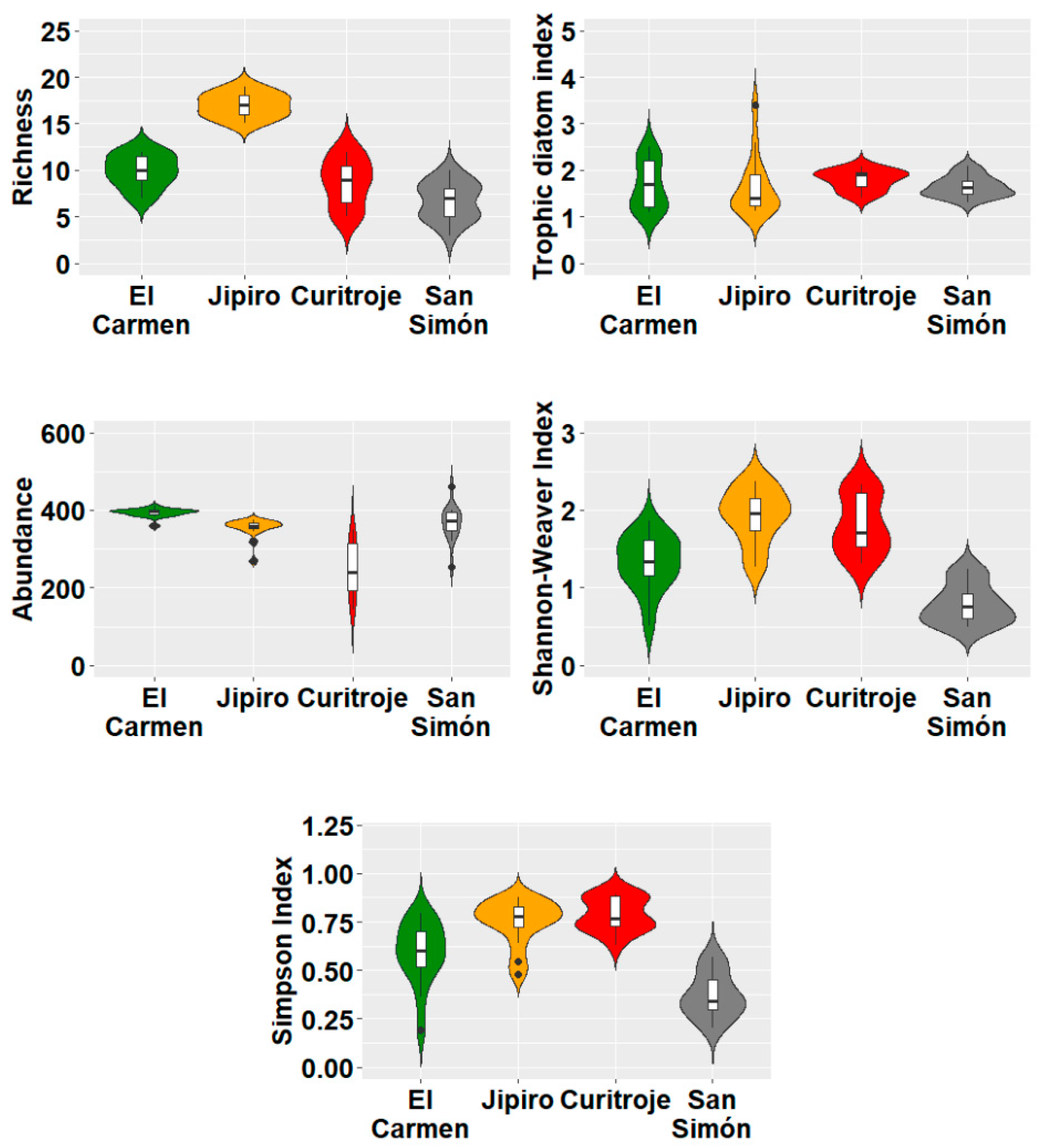
The violin plot indicated the highest richness, trophic index, abundance, and diversity in the Jipiro stream, followed by the El Carmen and Curitroje streams. In contrast, the San Simón stream exhibited the lowest values (Figure 3).
Figure 3.
Violin plot of diatoms species richness, trophic index, abundance and diversity at different streams. Violin plots show the kernel density distribution of the data. The box indicates the interquartile range (IQR), the horizontal line within the box represents the median, and the whiskers extend to 1.5 × IQR.
The medium and high zone streams showed the highest total richness, with 43 and 40 species, respectively, followed by the low-zone stream with 35 species. A similar pattern was observed with the Chao 2 richness estimator, confirming a high number of species estimated in the medium zone (47), followed by the high and low zones streams (45,184 and 38, respectively). The violin plot indicated the highest richness, trophic index, abundance, and diversity in the high and medium streams, whereas the low stream exhibited the lowest values (Figure A1).
Generalized Linear Models showed that the most relevant predictors for diatom richness, trophic index, abundance, and diversity indices were stream and zone (Table 2). Also, conductivity, DO and pH have significant influence in richness and IT. On the other hand, temperature influenced the abundance and diversity indices of diatoms.
Table 2.
Results of the Generalized Linear Model (GLM) of richness, trophic index, abundance and diversity indices (Shannon and Simpson) related with environmental variables as such as stream, zone, DO, conductivity, TDS, temperature and pH. p-value < 0.05 are highlighted in bold and considered significant.
A total of 54 diatom species were recorded. The El Carmen stream showed the highest total richness (30 species), followed by the Curitroje (20 species), the Jipiro (19 species), and the San Simón (11 species). A similar pattern was observed with the Chao 2 richness estimator, confirming a high number of species estimated in the El Carmen stream (41), followed by Curitroje, Jipiro, and San Simón with 24, 19, and 11 estimated species, respectively.
3.5. Diatoms Community Structure
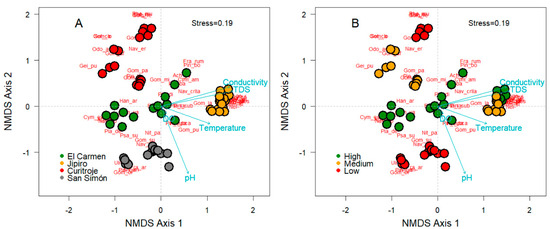
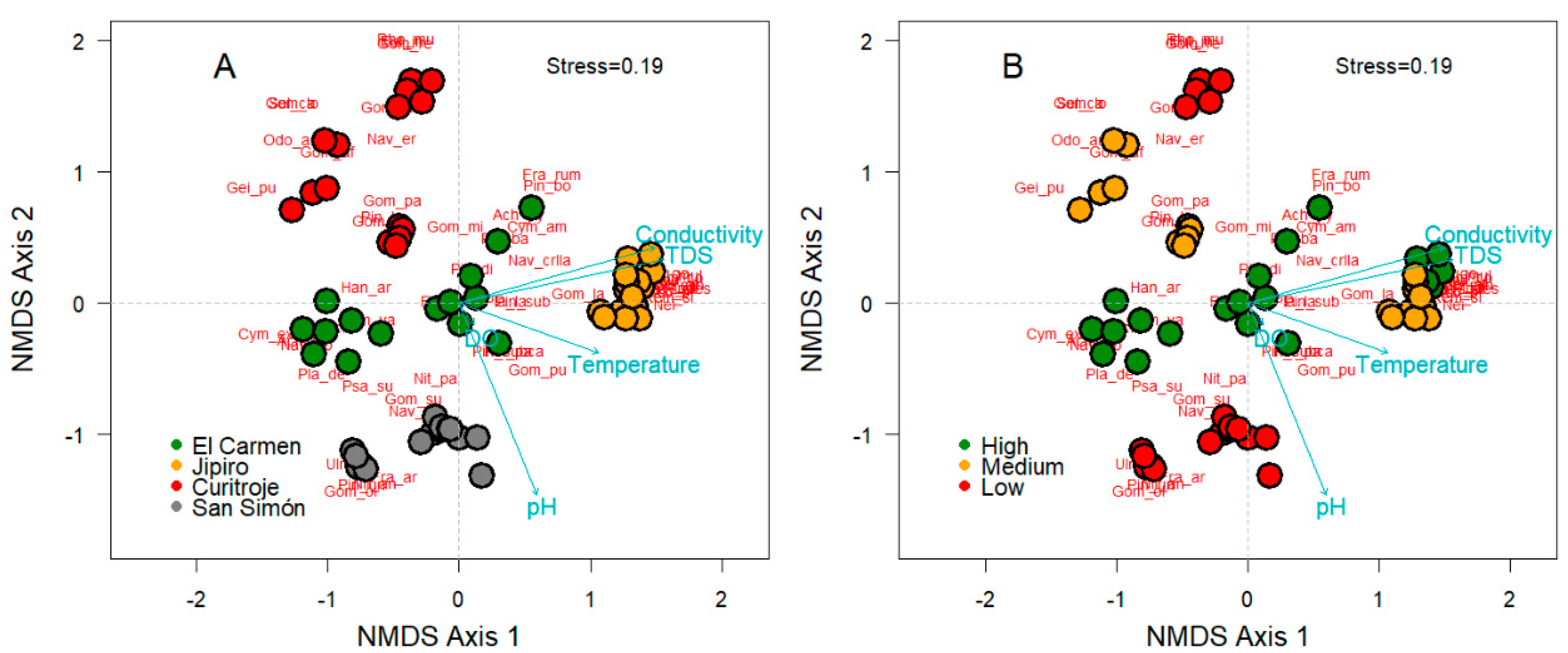
The NMDS analysis revealed strong clustering of samples based on diatom assemblage composition between streams (Figure 4A). However, the NMDS ordination showed only slight clustering of samples by stream zones (Figure 4B).
Figure 4.
NMDS plot of epilithic diatom assemblages classified by stream (A) zones (B).
PERMANOVA showed that diatom communities varied significantly both within streams and zones, explaining 27% and 22% of the variation, respectively (Table 3). TDS (correlated with conductivity), pH and temperature explained 16%, 11% and 10% of the variance in diatom communities, respectively. We identified eight indicator species in the El Carmen stream, 18 in the Jipiro stream, 10 in the Curitroje stream, and seven in the San Simón stream (Figure A2). On the other hand, we registered six indicator species in the high stream zone, 12 in the middle stream zone, and seven in the lower stream zone (Table A1).
Table 3.
Results of PERMANOVA analysis of species composition by environmental factors gradient. p-value < 0.05 are highlighted in bold and considered significant. Df = degrees of freedom; SS = sum of squares; F = statistical; R2 = coefficient of variation.
4. Discussion
Our results revealed significant changes in diatom richness, abundance, diversity, trophic diatom index (IT) and community structure associated with both stream and zone. Temperature, DO, TDS, and pH also strongly influenced alpha and beta diversity. Similarly, sensitive diatom species (Achnanthidium subatomus, Sellaphora lanceolata, Odontidium mesodon) were rarely observed in the lower stream zones, which were characterized by water pollution and environmental changes environmental factors (e.g., temperature, conductivity, TDS, and pH).
The richness, abundance, diversity, and IT were high in the conserved zones (high and medium zones) of the stream, which showed a well-preserved condition of riparian vegetation. Similarly, we documented greater diatom species diversity in the upper areas of river basins, attributed to the well-preserved condition of riparian vegetation in these zones with less urbanization [2]. The vegetation plays a key role in protecting water resources; for instance, it functions as a physicochemical barrier that traps contaminants and nutrients (such as nitrates and phosphates) originating from agricultural and livestock areas [65]. Conversely, in the lower zones of the stream, diatom richness, abundance, diversity, and the trophic diatom index (IT) declined, related to changes in riparian vegetation and changes in environmental factors. A study conducted in the Mónica River (Ecuador) reported that reductions in riparian vegetation were associated with declines in diatom diversity, likely driven by increasing anthropogenic activities, particularly in the middle and lower reaches influenced by agriculture, livestock, and nearby settlements [66].
Community structure was associated with changes in temperature, conductivity, TDS, and pH at the stream and zone levels. In accordance, previous studies showed that community composition of diatom species is closely linked to the presence of anthropogenic disturbances, exhibiting different tolerance ranges to environmental variables such as land use and the physicochemical characteristics of the water, including pH, temperature, and conductivity [67,68]. Streams lacking forest cover in their catchment areas and subjected to intensive livestock grazing negatively affect the integrity of aquatic ecosystems [40]. Following a similar pattern, Castillejo et al. [33] showed that diatom assemblages were clearly related to environmental variables and agricultural land use.
In the same line, temperature, TDS, and pH showed significant effects on diatom species composition. Previous studies have reported that temperature reflects variations in thermal regimes, while TDS is closely associated with salinity gradients and nutrient availability [69]. pH is a key environmental driver that influences both the physiological performance of diatoms and the chemical characteristics of aquatic ecosystems, thereby shaping species distribution and community composition [70]. In addition, conductivity is generally correlated with dissolved nutrient concentrations in streams and is widely used as a conservative proxy for nutrient enrichment in freshwater systems [71]. Regarding dissolved oxygen (DO), several studies have demonstrated its relevance in structuring diatom assemblages, as it reflects organic pollution and ecosystem metabolic conditions [31,69].
In the high zones of streams, the species Achnanthidium subatomus and Sellaphora lanceolata are indicators of environments unaffected by anthropogenic activities with well-preserved riparian vegetation (in the Carmen and Jipiro streams, respectively). According to Tan et al. [72], nutrient-sensitive species such as Achnanthidium subatomus show a strong preference for clear, unpolluted water. Similarly, most species of the genus Navicula are typically associated with oligotrophic conditions and are considered sensitive to pollution [73]. In our study, Navicula cryptotenelloides was recorded in the upper zones of the stream [73]. In contrast, Navicula cryptotenella, which can tolerate moderate pollution and eutrophic conditions, was found in the middle zone. Finally, previous studies have reported that other sensitive diatom species (e.g., Hannea arcus) are typically associated with oligotrophic environments characterized by low concentrations of nitrogen and phosphorus, and are therefore considered reliable bioindicators of good water quality [46,74]. This finding supports the role of well-preserved riparian vegetation in maintaining the ecological quality of freshwater systems.
In contrast, in the lower zones of the stream, species of the genus Gomphonema (Gomphonema variostriatum, Gomphonema subclavatum, Gomphonema clavatulum, Gomphonema reichardtii) were dominant and identified as bioindicator species associated with anthropogenic disturbances. These species are generally recognized as indicators of poor water quality; however, they are also found in clean streams, which may be related to their tolerance to nutrient enrichment [75]. For instance, Ivorra et al. [76] showed that Gomphonema parvulum is a common species in both clean and metal-contaminated rivers. Thus, Salomoni et al. [77] classified diatom species into three groups (species more tolerant to strong organic pollution and eutrophication, tolerant and widely distributed species, and species less tolerant to pollution), noting that species from similar genera may be included in different groups [74]. This pattern may occur because diatoms respond rapidly to short-term hydrological changes compared with other aquatic organisms. However, diatom community composition may also exhibit a delayed ecological response when recent land-use disturbances affect water quality [46].
Finally, the absence of measurements of major ions (cations and anions), key nutrients (e.g., nitrate and phosphate), and metals which have been identified as important limiting factors for diatom assemblages in freshwater ecosystems [69,78,79,80] may constrain a more comprehensive interpretation of the environmental drivers of diatom communities. Therefore, future research is necessary to evaluate the response capacity of diatom communities to environmental changes over time. Although Ecuador currently lacks fully implemented diatom-based regulatory frameworks, in several European countries, diatom-based indices are already incorporated into official water quality monitoring programs under the Water Framework Directive, demonstrating their applicability for routine ecological assessment [81,82]. In this context, our study provides baseline evidence from tropical Andean streams that supports the feasibility of adopting similar diatom-based approaches in Ecuador, contributing to the development of future biomonitoring frameworks for river conservation and restoration.
5. Conclusions
The results of this study indicate that both alpha and beta diversity of diatom communities respond to land-use changes driven by anthropogenic activities at stream and zone levels. These changes were associated with variation in key physicochemical parameters, including temperature (13.7–16.9 °C), dissolved oxygen (8.2–9.5 mg L−1), TDS (4–16 mg L−1), conductivity (7–32 µS cm−1) and pH (5.1–8.2), which influenced diatom diversity and community composition. In fact, the identification of sensitive indicator species (Achnanthidium subatomus, Navicula cryptotenelloides and Odontidium mesodon) highlights the importance of considering the influence of land use on aquatic diversity. Therefore, there is a clear need to establish diatom-based protocols and indices for water-quality assessment, aimed at developing strategies to protect riparian zones. Thus, the results of this study highlight the usefulness of diatom assemblages as sensitive indicators of anthropogenic disturbance. The observed relationships with conductivity, temperature, pH, DO and TDS variables suggest that diatom-based metrics can be effectively applied for monitoring water quality and supporting management actions aimed at reducing land-use impacts and improving stream ecological condition.
Author Contributions
Conceptualization, A.C. and Á.B.; investigation, A.C. and R.Y.; methodology, A.C. and R.Y.; project administration, A.C.; supervision, A.C.; validation, A.C., E.D.-F. and Á.B.; visualization, A.C.; writing—original draft, A.C. and Á.B.; taxonomy, E.A.L. and C.S.; writing—review and editing, A.C., N.A. and Á.B. All authors have read and agreed to the published version of the manuscript.
Funding
The open access of this article was funded by the Universidad Politécnica Salesiana.
Data Availability Statement
Data included in this study will be available from the Dryad Digital Repository upon acceptance.
Acknowledgments
To the Research Directorate of the Universidad Nacional de Loja for funding the project. To the Centro de Investigaciones y Servicios de Análisis Químico (CISAQ) of the Universidad Nacional de Loja for providing the facilities and equipment for the biological analysis of diatom community samples.
Conflicts of Interest
The authors declare no conflicts of interest.
Appendix A
Figure A1.
Violin plot of diatoms species richness, trophic index, abundance and diversity at different zones. Violin plots show the kernel density distribution of the data. The box indicates the interquartile range (IQR), the horizontal line within the box represents the median, and the whiskers extend to 1.5 × IQR.
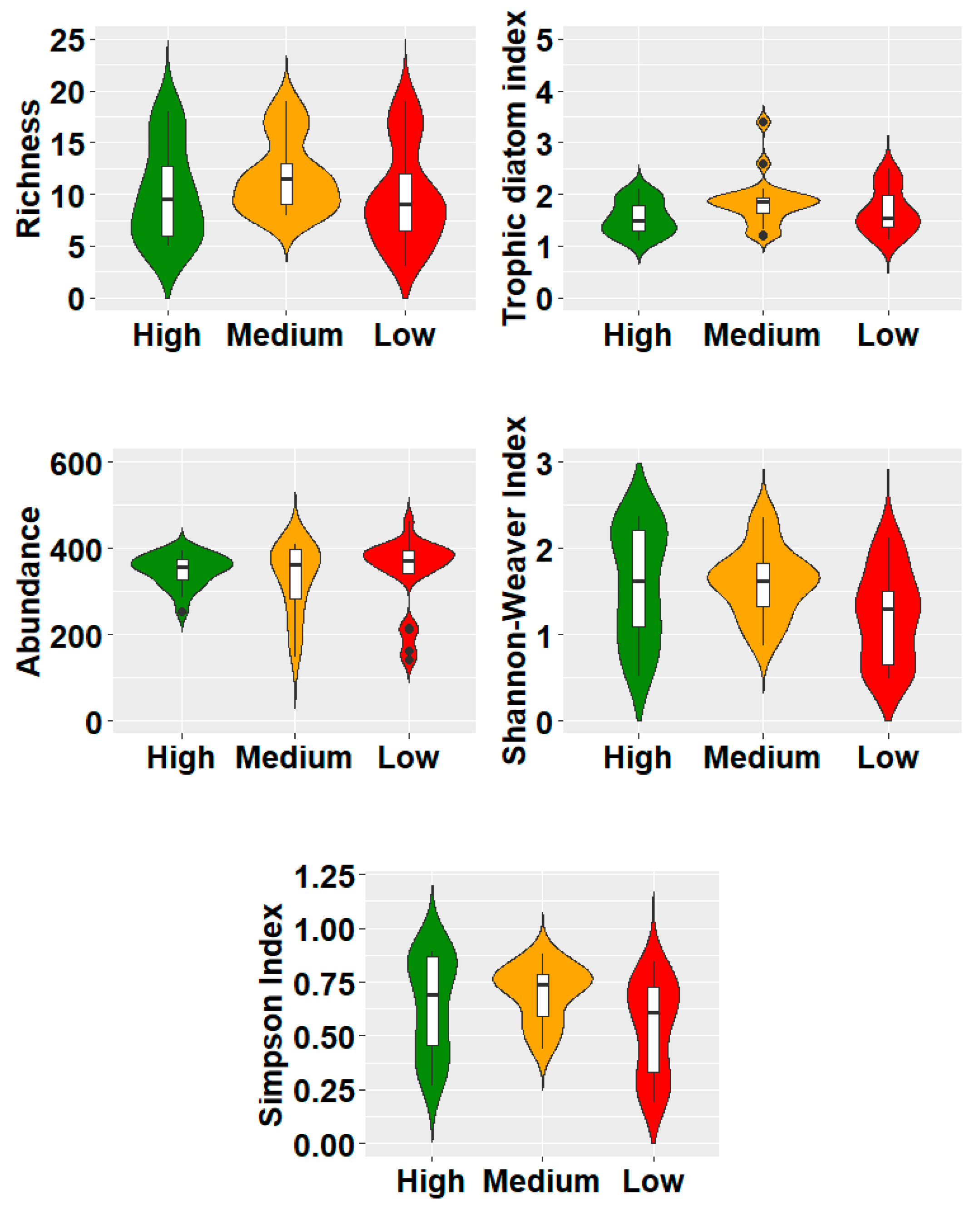
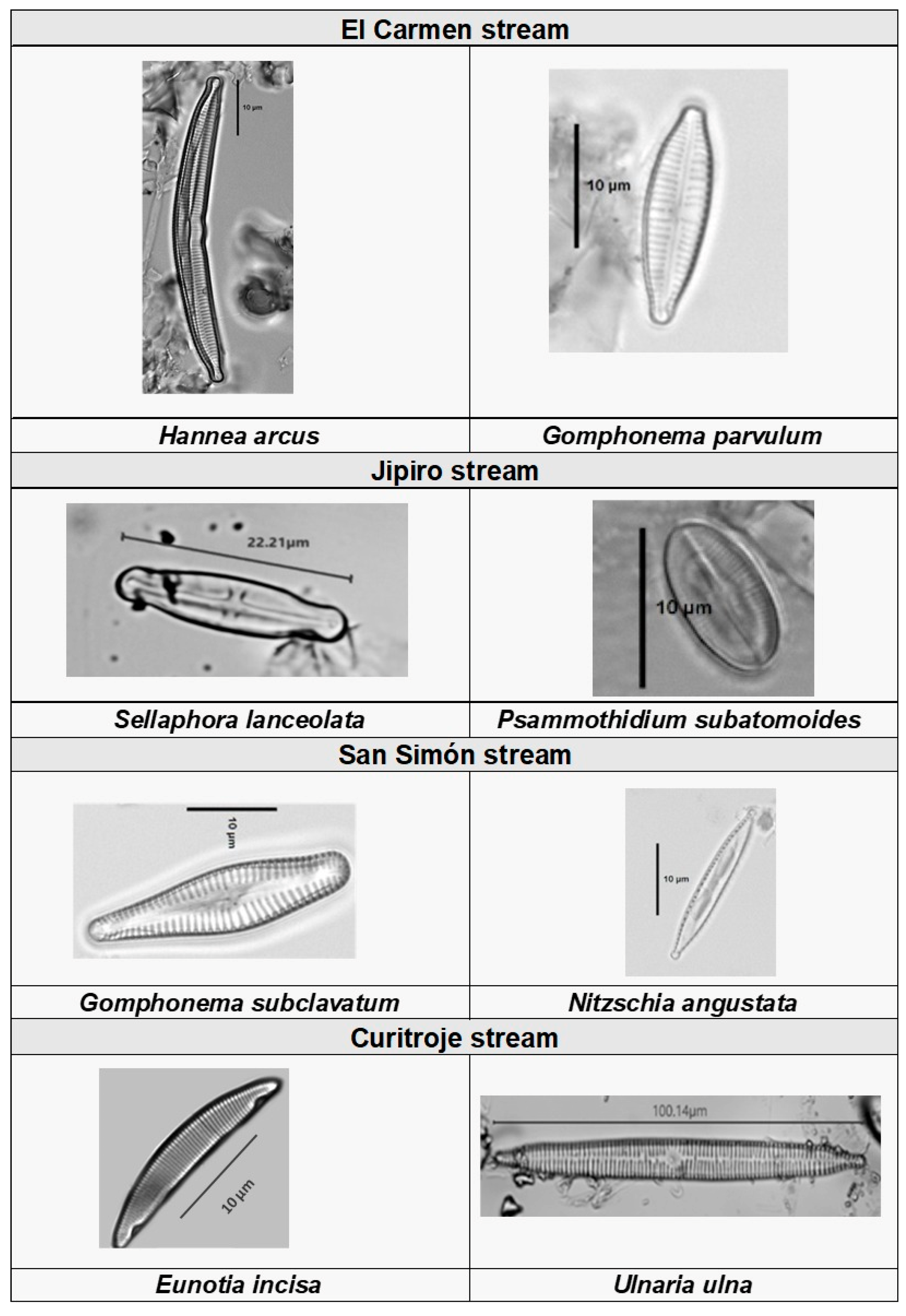
Figure A2.
Indicator species of diatoms in streams.
Appendix B
Table A1.
Indicator values (IV) for diatom species. p-values < 0.05 are highlighted in bold and considered significant. Species with high indicator value are considered as the best indicators.
References
- Buck, O.; Niyogi, D.K.; Townsend, C.R. Scale-dependence of land use effects on water quality of streams in agricultural catchments. Environ. Pollut. 2004, 130, 287–299. [Google Scholar] [CrossRef] [Scilit]
- Teittinen, A.; Taka, M.; Ruth, O.; Soininen, J. Variation in stream diatom communities in relation to water quality and catchment variables in a boreal, urbanised region. Sci. Total Environ. 2015, 530, 279–289. [Google Scholar] [CrossRef] [Scilit] [PubMed]
- Shi, P.; Zhang, Y.; Li, Z.; Li, P.; Xu, G. Influence of land use and land cover patterns on seasonal water quality at multi-spatial scales. Catena 2017, 151, 182–190. [Google Scholar] [CrossRef] [Scilit]
- Camara, M.; Jamil, N.R.; Abdullah, A.F.B. Impact of land uses on water quality in Malaysia: A review. Ecol. Process. 2019, 8, 10. [Google Scholar] [CrossRef] [Scilit]
- Uriarte, M.; Yackulic, C.B.; Lim, Y.; Arce-Nazario, J.A. Influence of land use on water quality in a tropical landscape: A multi-scale analysis. Landsc. Ecol. 2011, 26, 1151–1164. [Google Scholar] [CrossRef] [Scilit] [PubMed]
- de Mello, K.; Valente, R.A.; Randhir, T.O.; dos Santos, A.C.A.; Vettorazzi, C.A. Effects of land use and land cover on water quality of low-order streams in Southeastern Brazil: Watershed versus riparian zone. Catena 2018, 167, 130–138. [Google Scholar] [CrossRef] [Scilit]
- Nobre, R.L.G.; Caliman, A.; Cabral, C.R.; Araújo, F.D.C.; Guérin, J.; Dantas, F.D.C.C.; Quesado, L.B.; Venticinque, E.M.; Guariento, R.D.; Amado, A.M.; et al. Precipitation, landscape properties and land use interactively affect the water quality of tropical freshwaters. Sci. Total Environ. 2020, 716, 137044. [Google Scholar] [CrossRef] [Scilit] [PubMed]
- Hatt, B.E.; Fletcher, T.D.; Walsh, C.J.; Taylor, S.L. The influence of urban density and drainage infrastructure on the concentrations and loads of pollutants in small streams. Environ. Manag. 2004, 34, 112–124. [Google Scholar] [CrossRef] [Scilit] [PubMed]
- O’Driscoll, M.; Clinton, S.; Jefferson, A.; Manda, A.; McMillan, S. Urbanisation effects on watershed hydrology and in-stream processes in the southern United States. Water 2010, 2, 605–648. [Google Scholar] [CrossRef] [Scilit]
- Azrina, M.Z.; Yap, C.K.; Ismail, A.R.; Ismail, A.; Tan, S.G. Anthropogenic impacts on the distribution and biodiversity of benthic macroinvertebrates and water quality of the Langat River, Peninsular Malaysia. Ecotoxicol. Environ. Saf. 2006, 64, 337–347. [Google Scholar] [CrossRef] [Scilit] [PubMed]
- Couceiro, S.R.; Hamada, N.; Luz, S.L.; Forsberg, B.R.; Pimentel, T.P. Deforestation and sewage effects on aquatic macroinvertebrates in urban streams in Manaus, Amazonas, Brazil. Hydrobiologia 2007, 575, 271–284. [Google Scholar]
- Miserendino, M.L.; Casaux, R.; Archangelsky, M.; Di Prinzio, C.Y.; Brand, C.; Kutschker, A.M. Assessing land-use effects on water quality, in-stream habitat, riparian ecosystems and biodiversity in Patagonian northwest streams. Sci. Total Environ. 2011, 409, 612–624. [Google Scholar] [CrossRef] [Scilit] [PubMed]
- Kelly, M.G.; King, L.; Jones, R.I.; Barker, P.A.; Jamieson, B.J. Validation of diatoms as proxies for phytobenthos when assessing ecological status in lakes. Hydrobiologia 2008, 610, 125–129. [Google Scholar] [CrossRef] [Scilit]
- Burdon, F.J.; Munz, N.A.; Reyes, M.; Focks, A.; Joss, A.; Räsänen, K.; Altermatt, F.; Eggen, R.; Stamm, C. Agriculture versus wastewater pollution as drivers of macroinvertebrate community structure in streams. Sci. Total Environ. 2019, 659, 1256–1265. [Google Scholar] [CrossRef] [Scilit] [PubMed]
- Khalil, M.M.; Aboueldahab, S.M.; Abdel-Raheem, K.H.; Ahmed, M.; Ahmed, M.S.; Abdelhady, A.A. Mixed agricultural, industrial, and domestic drainage water discharge poses a massive strain on freshwater ecosystems: A case from the Nile River in Upper Egypt. Environ. Sci. Pollut. Res. 2023, 30, 122642–122662. [Google Scholar] [CrossRef] [Scilit] [PubMed]
- Lamberti, G.A. The role of periphyton in benthic food webs. In Algal Ecology; Stevenson, R.J., Bothwell, M.L., Lowe, R.L., Eds.; Academic Press: San Diego, CA, USA, 1996; pp. 533–573. [Google Scholar]
- Mulholland, P.J. Role in nutrient cycling in streams. In Algal Ecology: Freshwater Benthic Ecosystems; Stevenson, R.J., Bothwell, M.L., Lowe, R.L., Eds.; Academic Press: San Diego, CA, USA, 1996; pp. 609–640. [Google Scholar]
- Benoiston, A.S.; Ibarbalz, F.M.; Bittner, L.; Guidi, L.; Jahn, O.; Dutkiewicz, S.; Bowler, C. The evolution of diatoms and their biogeochemical functions. Philos. Trans. R. Soc. B 2017, 372, 20160397. [Google Scholar] [CrossRef] [Scilit] [PubMed]
- B-Béres, V.; Stenger-Kovács, C.; Buczkó, K.; Padisák, J.; Selmeczy, G.B.; Lengyel, E.; Tapolczai, K. Ecosystem services provided by freshwater and marine diatoms. Hydrobiologia 2023, 850, 2707–2733. [Google Scholar]
- Reid, M.A.; Tibby, J.C.; Penny, D.; Gell, P.A. The use of diatoms to assess past and present water quality. Aust. J. Ecol. 1995, 20, 57–64. [Google Scholar] [CrossRef] [Scilit]
- Stevenson, R.J.; Pan, Y.; Van Dam, H. Assessing environmental conditions in rivers and streams with diatoms. In The Diatoms: Applications for the Environmental and Earth Sciences; Stoermer, E.F., Smol, J.P., Eds.; Cambridge University Press: Cambridge, UK, 1999; pp. 11–40. [Google Scholar]
- Jüttner, I.; Sharma, S.; Dahal, B.M.; Ormerod, S.J.; Chimonides, P.J.; Cox, E.J. Diatoms as indicators of stream quality in the Kathmandu Valley and Middle Hills of Nepal and India. Freshw. Biol. 2003, 48, 2065–2084. [Google Scholar] [CrossRef] [Scilit]
- Wang, X.; Zheng, B.; Liu, L.; Li, L. Use of diatoms in river health assessment. Annu. Res. Rev. Biol. 2014, 4, 4054–4074. [Google Scholar] [CrossRef] [Scilit]
- Masouras, A.; Karaouzas, I.; Dimitriou, E.; Tsirtsis, G.; Smeti, E. Benthic diatoms in river biomonitoring—Present and future perspectives within the water framework directive. Water 2021, 13, 478. [Google Scholar] [CrossRef] [Scilit]
- European Parliament and Council. Directive 2000/60/EC of the European Parliament and of the Council establishing a framework for the Community action in the field of water policy. Off. J. Eur. Commun. 2000, L327, 1–73. [Google Scholar]
- Lobo, E.A.; Callegaro, V.L.M.; Gómez, N.; Ector, L. Review of the use of microalgae in South America for monitoring rivers, with special reference to diatoms. Vie Milieu 2004, 54, 105–114. [Google Scholar] [CrossRef] [Scilit]
- Chen, X.; Zhou, W.; Pickett, S.T.A.; Li, W.; Han, L.; Ren, Y. Diatoms are better indicators of urban stream conditions: A case study in Beijing, China. Ecol. Indic. 2016, 60, 265–274. [Google Scholar] [CrossRef] [Scilit]
- Castillejo, P.; Chamorro, S.; Paz, L.; Heinrich, C.; Carrillo, I.; Salazar, J.G.; Navarro, J.C.; Lobo, E.A. Response of epilithic diatom communities to environmental gradients along an Ecuadorian Andean River. C. R. Biol. 2018, 341, 256–263. [Google Scholar] [CrossRef] [Scilit] [PubMed]
- Walsh, G.W.; Wepener, V. The influence of land use on water quality and diatom community structures in urban and agriculturally stressed rivers. Water SA 2009, 35, 569–576. [Google Scholar] [CrossRef] [Scilit]
- Trábert, Z.; Duleba, M.; Bíró, T.; Dobosy, P.; Földi, A.; Hidas, A.; Kiss, K.T.; Óvári, M.; Takács, A.; Várbíró, G.; et al. Effect of land use on the benthic diatom community of the Danube River in the Region of Budapest. Water 2020, 12, 479. [Google Scholar] [CrossRef] [Scilit]
- Shibabaw, T.; Beyene, A.; Awoke, A.; Tirfie, M.; Azage, M.; Triest, L. Diatom community structure in relation to environmental factors in human-influenced rivers and streams in tropical Africa. PLoS ONE 2021, 16, e0246043. [Google Scholar] [CrossRef] [Scilit] [PubMed]
- Dalu, T.; Mwedzi, T.; Wasserman, R.J.; Madzivanzira, T.C.; Nhiwatiwa, T.; Cuthbert, R.N. Land use effects on water quality, habitat, and macroinvertebrate and diatom communities in African highland streams. Sci. Total Environ. 2022, 846, 157346. [Google Scholar] [CrossRef] [Scilit] [PubMed]
- Castillejo, P.; Ortiz, S.; Jijón, G.; Lobo, E.A.; Heinrich, C.; Ballesteros, I.; Rios-Touma, B. Response of macroinvertebrate and epilithic diatom communities to pollution gradients in Ecuadorian Andean rivers. Hydrobiologia 2024, 851, 431–446. [Google Scholar]
- Fritz, S.C.; Benito, X.; Steinitz-Kannan, M. Long-term and regional perspectives on recent change in lacustrine diatom communities in the tropical Andes. J. Paleolimnol. 2019, 61, 251–262. [Google Scholar]
- Villa-Achupallas, M.; Rosado, D.; Aguilar, S.; Galindo-Riaño, M.D. Water quality in the tropical Andes hotspot: The Yacuambi river (southeastern Ecuador). Sci. Total Environ. 2018, 633, 50–58. [Google Scholar] [CrossRef] [Scilit] [PubMed]
- Vinueza, D.; Ochoa-Herrera, V.; Maurice, L.; Tamayo, E.; Mejía, L.; Tejera, E.; Machado, A. Determining the microbial and chemical contamination in Ecuador’s main rivers. Sci. Rep. 2021, 11, 17640. [Google Scholar] [CrossRef] [Scilit] [PubMed]
- Alvarez-Mieles, G.; Irvine, K.; Van Griensven, A.; Arias-Hidalgo, M.; Torres, A.; Mynett, A.E. Relationships between aquatic biotic communities and water quality in a tropical river–wetland system (Ecuador). Environ. Sci. Policy 2013, 34, 115–127. [Google Scholar] [CrossRef] [Scilit]
- Iñiguez–Armijos, C.; Leiva, A.; Frede, H.G.; Hampel, H.; Breuer, L. Deforestation and benthic indicators: How much vegetation cover is needed to sustain healthy Andean streams? PLoS ONE 2014, 9, e105869. [Google Scholar] [CrossRef] [Scilit] [PubMed]
- Damanik-Ambarita, M.N.; Lock, K.; Boets, P.; Everaert, G.; Nguyen, T.H.T.; Forio, M.A.E.; Musonge, P.L.S.; Suhareva, N.; Bennetsen, E.; Landuyt, D.; et al. Ecological water quality analysis of the Guayas river basin (Ecuador) based on macroinvertebrates indices. Limnologica 2016, 57, 27–59. [Google Scholar] [CrossRef] [Scilit]
- Ramírez, Y.; Giraldo, L.; Zúñiga, M.; Ramos, B.; Chará, J. Influencia de la ganadería en la comunidad de macroinvertebrados acuáticos en microcuencas de los Andes centrales de Colombia. Rev. Biol. Trop. 2018, 66, 1244–1255. [Google Scholar] [CrossRef] [Scilit]
- Vásquez, C.; Calva, J.; Morocho, R.; Donoso, D.A.; Benítez, Á. Bryophyte communities along a tropical urban river responds to heavy metal and arsenic pollution. Water 2019, 11, 813. [Google Scholar] [CrossRef] [Scilit]
- Benítez, Á.; Torres, S.; Morocho, R.; Carrillo, W.; Donoso, D.A.; Calva, J. Platyhypnidium aquaticum as a bioindicator of metal and metalloid contamination of river water in a neotropical mountain city. Plants 2020, 9, 974. [Google Scholar] [CrossRef] [Scilit] [PubMed]
- Ballesteros, I.; Castillejo, P.; Haro, A.P.; Montes, C.C.; Heinrich, C.; Lobo, E.A. Genetic barcoding of Ecuadorian epilithic diatom species suitable as water quality bioindicators. C. R. Biol. 2020, 343, 41–52. [Google Scholar] [CrossRef] [Scilit] [PubMed]
- Quevedo, L.; Merino, K.; Godoy, S.; Carrera, C. Ecological assessment and water quality using benthic diatom communities in an Ecuadorian Amazon river. EM Int. 2021, 27, 152–158. [Google Scholar]
- Chamorro, S.; Moyón, J.; Salazar, J.; Chamorro, K.; Vicuña, Z.; Cordero, P.; Bécares, E.; Blanco, S. Water Quality Monitoring in Ecuadorian Streams Using a New Diatom-Based Index. ACS ES&T Water 2024, 4, 3816–3823. [Google Scholar] [CrossRef] [Scilit]
- Cartuche, V.A.; Manoylov, K.; Ibelings, B.W.; Aguirre, N.; Venail, P. Changes in periphyton communities with land use in tropical mountain streams in Loja (Ecuador). Limnetica 2025, 45, 249–265. [Google Scholar] [CrossRef] [Scilit]
- Cartuche, A.; Guan, Z.; Ibelings, B.W.; Venail, P. Phytoplankton diversity relates negatively with productivity in tropical high-altitude lakes from southern Ecuador. Sustainability 2019, 11, 5235. [Google Scholar] [CrossRef] [Scilit]
- Lemly, A.D.; Dimmick, J.F. Phytoplankton communities in the littoral zone of lakes: Observations on structure and dynamics in oligotrophic and eutrophic systems. Oecologia 1982, 54, 359–369. [Google Scholar] [CrossRef] [Scilit] [PubMed]
- Clavijo-Cevallos, M.P.C.; Gallegos, D.C.; Muñoz, C.V. Diatomeas epilíticasasociadas a la calidad de agua del río Illuchi, Latacunga, Ecuador. Rev. Iberoam. Ambiente Sustentabilidad 2022, 5, 66–78. [Google Scholar] [CrossRef] [Scilit]
- Blanco, S.; Bécares, E. Are biotic indices sensitive to river toxicants? A comparison of metrics based on diatoms and macro-invertebrates. Chemosphere 2010, 79, 18–25. [Google Scholar] [CrossRef] [Scilit] [PubMed]
- Lobo, M.T.M.P.S.; Scalize, P.S.; Kraus, C.N.; da Silva, W.J.; Garnier, J.; da Motta Marques, D.; Bonnet, M.-P.; de Souza Nogueira, I. Biological index based on epiphytic diatom assemblages is more restrictive than the physicochemical index in water assessment on an Amazon floodplain, Brazil. Environ. Sci. Pollut. Res. 2020, 27, 10642–10657. [Google Scholar] [CrossRef] [Scilit] [PubMed]
- Lobo, E.A.; Callegaro, V.L.M.; Hermany, G.; Bes, D.; Wetzel, C.A.; Oliveira, M.A. Use of epilithic diatoms as bioindicators from lotic systems in southern Brazil, with special emphasis on eutrophication. Acta Limnol. Bras. 2004, 16, 25–40. [Google Scholar]
- Céspedes-Vargas, E.; Umaña-Villalobos, G.; Silva-Benavides, A.M. The tolerance of ten diatom species (Bacillariophyceae) to water’s physico-chemical factors in the Sarapiqui River, Costa Rica. Rev. Biol. Trop. 2016, 64, 105–115. [Google Scholar] [PubMed]
- Heinrich, C.G.; Palacios-Peñaranda, M.L.; Peña-Salamanca, E.; Schuch, M.; Lobo, E.A. Epilithic diatom flora in Cali River hydrographical basin, Colombia. Rodriguésia 2019, 70, e02062017. [Google Scholar] [CrossRef] [Scilit]
- Lange-Bertalot, H.; Hofmann, G.; Werum, M.; Cantonati, M.; Kelly, M.G. Freshwater Benthic Diatoms of Central Europe: Over 800 Common Species Used in Ecological Assessment; Koeltz Botanical Books: Schmitten-Oberreifenberg, Germany, 2017; p. 908. [Google Scholar]
- Lobo, E.A.; Heinrich, C.G.; Schuch, M.; Wetzel, C.E.; Ector, L. Diatoms as bioindicators in rivers. In River Algae; Necchi, O., Jr., Ed.; Springer International Publishing: Cham, Switzerland, 2016; pp. 245–271. [Google Scholar]
- Lobo, E.A.; Schuch, M.; Heinrich, C.G.; Da Costa, A.B.; Düpont, A.; Wetzel, C.E.; Ector, L. Development of the Trophic Water Quality Index (TWQI) for subtropical temperate Brazilian lotic systems. Environ. Monit. Assess. 2015, 187, 354. [Google Scholar] [CrossRef] [Scilit] [PubMed]
- Metzeltin, D.; Lange-Bertalot, H.; García-Rodríguez, F. Diatoms of Uruguay: Compared with Other Taxa from South America and Elsewhere. In Iconographia Diatomologica; A.R.G. Gantner Verlag K.G.: Ruggell, Liechtenstein, 2005; Volume 15, pp. 1–736. [Google Scholar]
- Magurran, A.E. Measuring Biological Diversity; Blackwell Science: Oxford, UK, 2004. [Google Scholar]
- McCullagh, P.; Nelder, J.A. Generalized Linear Models. Monographs on Statistics and Applied Probability; Chapman and Hall: New York, NY, USA, 1989. [Google Scholar]
- Anderson, M.J.; Gorley, R.N.; Clarke, K.R. PERMANOVA+ for PRIMER: Guideto Software and Statistical Methods; PRIMER-E: Plymouth, UK, 2008. [Google Scholar]
- Oksanen, J.; Blanchet, F.G.; Kindt, R.; Legendre, P.; Minchin, P.R.; O’hara, R.B.; Simpson, G.L.; Solymos, P.; Stevens, M.H.H.; Wagner, H. Package ‘Vegan’. Community Ecology Package; Version 2(9); R Foundation for Statistical Computing: Vienna, Austria, 2013; pp. 1–295. [Google Scholar]
- Dufrêne, M.; Legendre, P. Species assemblages and indicator species: The need for a flexibl asymmetrical approach. Ecol. Monogr. 1997, 67, 345–366. [Google Scholar] [CrossRef] [Scilit]
- Roberts, D.W. labdsv: Ordination and Multivariate Analysis for Ecology Package; R Package Version 1.7–0; R Foundation for Statistical Computing: Vienna, Austria, 2015. [Google Scholar]
- Cabo, L.; Faggi, A.; Miguel, S.; Basílico, G. Rehabilitación de las riberas de un sitio de la cuenca baja del río Matanza-Riachuelo. Biol. Acuática 2019, 33, 005. [Google Scholar] [CrossRef] [Scilit]
- Yaguana, R.; Cartuche, V. Variación de diatomeas (Bacillariophyta) en un gradiente del estado de conservación de ribera del río Malacatos, Loja-Ecuador. Cedamaz 2022, 12, 111–117. [Google Scholar] [CrossRef] [Scilit]
- Ortiz, M. Caracterización de Diatomeas como Herramienta para el Estudio de la Calidad del Agua del río Teaone; Revista PUCESE; Pontificia Universidad Católica del Ecuador: Quito, Ecuador, 2015; Volume 13. [Google Scholar]
- Segura-García, V.; Almanza Álvarez, J.S.; Ponce-Saavedra, J. Diversidad en comunidades de diatomeas epilíticas con relación a los parámetros fisicoquímicos en la cabecera del río Zinapécuaro, México. Hidrobiológica 2016, 26, 187–202. [Google Scholar]
- Phuyal, P.; Ranabhat, S.; Khatri, S.; Lamichhane, N.; Pant, R.R.; Thapa, L.B.; Yadav, R.K.P. Hydrochemical characteristics, water quality and diatom assemblage in Dordi River, Nepal. Watershed Ecol. Environ. 2025, 7, 23–35. [Google Scholar] [CrossRef] [Scilit]
- Bere, T.; Tundisi, J.G. Weighted average regression and calibration of conductivity and pH of benthic diatom assemblages in streams influenced by urban pollution—São Carlos/SP, Brazil. Acta Limnol. Bras. 2009, 21, 317–325. [Google Scholar]
- Walker, C.E.; Pan, Y. Using diatom assemblages to assess urban stream conditions. Hydrobiologia 2006, 561, 179–189. [Google Scholar] [CrossRef] [Scilit]
- Tan, X.; Sheldon, F.; Bunn, S.E.; Zhang, Q. Using diatom indices for water quality assessment in a subtropical river, China. Environ. Sci. Pollut. Res. 2013, 20, 4164–4175. [Google Scholar] [CrossRef] [Scilit] [PubMed]
- Cid-Rodríguez, M.; Cantonati, M.; Angeli, N.; Bilous, O.; Al-Harbi, M.; Lange-Bertalot, H.; Levkov, Z.; Piana, L.; Spitale, D.; Saber, A.A. The diatom genus Navicula in spring ecosystems with the description of Navicula aquaesuavis sp. nov. Water 2024, 16, 2751. [Google Scholar] [CrossRef] [Scilit]
- Álvarez-Blanco, I.; Blanco, S.; Cejudo-Figueiras, C.; Bécares, E. The Duero Diatom Index (DDI) for river water quality assessment in NW Spain: Design and validation. Environ. Monit. Assess. 2013, 185, 969–981. [Google Scholar] [CrossRef] [Scilit] [PubMed]
- Bere, T.; Tundisi, J.G. Influence of land-use patterns on benthic diatom communities and water quality in the tropical Monjolinho hydrological basin, São Carlos-SP, Brazil. Water SA 2011, 37, 93–102. [Google Scholar] [CrossRef] [Scilit]
- Ivorra, N.; Barranguet, C.; Jonker, M.; Kraak, M.H.; Admiraal, W. Metal-induced tolerance in the freshwater microbenthic diatom Gomphonema parvulum. Environ. Pollut. 2002, 116, 147–157. [Google Scholar] [CrossRef] [Scilit] [PubMed]
- Salomoni, S.E.; Rocha, O.; Callegaro, V.L.; Lobo, E.A. Epilithic diatoms as indicators of water quality in the Gravataí River, Rio Grande do Sul, Brazil. Hydrobiologia 2006, 559, 233–246. [Google Scholar] [CrossRef] [Scilit]
- Medley, C.N.; Clements, W.H. Responses of diatom communities to heavy metals in streams: The influence of longitudinal variation. Ecol. Appl. 1998, 8, 631–644. [Google Scholar] [CrossRef] [Scilit]
- Duong, T.T.; Morin, S.; Herlory, O.; Feurtet-Mazel, A.; Coste, M.; Boudou, A. Seasonal effects of cadmium accumulation in periphytic diatom communities of freshwater biofilms. Aquat. Toxicol. 2008, 90, 19–28. [Google Scholar] [CrossRef] [Scilit] [PubMed]
- Chen, X.; Li, C.; McGowan, S.; Yang, X. Diatom response to heavy metal pollution and nutrient enrichment in an urban lake: Evidence from paleolimnology. Ann. Limnol. Int. J. Limnol. 2014, 50, 121–130. [Google Scholar] [CrossRef] [Scilit]
- Kelly, M.; King, L.; Ní Chatháin, B. The conceptual basis of ecological-status assessments using diatoms. Biol. Environ. Proc. R. Ir. Acad. 2009, 109, 175–189. [Google Scholar] [CrossRef] [Scilit]
- Birk, S.; Bonne, W.; Borja, A.; Brucet, S.; Courrat, A.; Poikane, S.; Solimini, A.; van de Bund, W.; Zampoukas, N.; Hering, D. Three hundred ways to assess Europe’s surface waters: An almost complete overview of biological methods to implement the Water Framework Directive. Ecol. Indic. 2012, 18, 31–41. [Google Scholar] [CrossRef] [Scilit]

Disclaimer/Publisher’s Note: The statements, opinions and data contained in all publications are solely those of the individual author(s) and contributor(s) and not of MDPI and/or the editor(s). MDPI and/or the editor(s) disclaim responsibility for any injury to people or property resulting from any ideas, methods, instructions or products referred to in the content. |
© 2026 by the authors. Licensee MDPI, Basel, Switzerland. This article is an open access article distributed under the terms and conditions of the Creative Commons Attribution (CC BY) license.