


Abstract
Gongolaria barbata has undergone a major decline along the Romanian Black Sea coast due to historical winter events of the 1970s and ongoing anthropogenic pressures and is currently listed as Critically Endangered in the Romanian List of Endangered Marine Species, highlighting the need for ex situ culture to support restoration and long-term preservation of this habitat-forming species. This study evaluates how different substrate types (travertine, shale and ceramic) influence early thallus development in G. barbata, and attachment and growth dynamics, and establishes an ex situ culture procedure tailored to Black Sea conditions. Germling-based culture was carried out under controlled conditions, with salinity maintained at 17.1 ± 0.5 PSU and seawater temperature at 19.0 ± 0.8 °C. After 216 days of ex situ culture, thalli reached comparable sizes across all substrates, with mean heights between 5 and 7 cm and maximum values ranging from 12 to over 20 cm. Thallus development progressed steadily across all substrates, each supporting comparable growth, a finding relevant for restoration, aquaculture, and large-scale cultivation. All tested hard substrates sustained early development, with travertine producing slightly more robust thalli and stronger holdfasts, highlighting its potential for future restoration initiatives along the Romanian Black Sea coast.
1. Introduction
Macroalgal forests, dominated by canopy-forming brown algae of the order Fucales (primarily the Cystoseira sensu lato complex), form structurally complex habitats in the Mediterranean and Black Sea regions that are functionally analogous to kelp forests in temperate and cold oceans. These foundational ecosystem species support high biodiversity, providing food, shelter, and critical ecosystem services. However, these vital ecosystems have undergone severe decline, with several populations becoming fragmented or locally extinct, often replaced by ephemeral and filamentous taxa [1,2], such as Ulva, Cladophora and Ceramium species. This process results in a loss of biodiversity.
Current climate change poses a critical threat to foundation species like Cystoseira s.l., risking widespread ecological collapse. Some Cystoseira s.l. populations with restricted ranges or unique evolutionary lineages are especially at risk given their low resilience and require active restoration activities due to their limited natural recovery capacity. At the same time, anthropogenic pressures within the marine environment disrupt natural connectivity, triggering habitat degradation and fragmentation, sometimes resulting in genetic isolation among Cystoseira populations, a phenomenon noticeable even across highly localized geographic areas. [3]. Despite the potential for drifting fertile fragments to aid dispersal, most Cystoseira zygotes settle and attach quickly near the parental thalli. This limited mobility hinders the species’ ability to populate broad areas, a difficulty further amplified by habitat loss and fragmentation [4].
Cystoseira barbata (Stackhouse) C. Agardh, 1820, recently known as Gongolaria barbata (Stackhouse) Kuntze 1891, constitutes one of the most ecologically significant macroalga species in the Romanian Black Sea coastal waters [5,6]. G. barbata was genetically confirmed throughout the Mediterranean and the Black Sea [3]. While G. barbata is essential for the ecological integrity of Black Sea rocky habitats, its populations show limited signs of natural resilience along the Romanian Black Sea coast, particularly along the southern part near Mangalia and 2 Mai. Numerous human-driven threats have left their recovery potential in a state of uncertainty. The long-term survival of G. barbata populations is primarily threatened by human activities along the coast, such as artificialization of the coastline, which triggers pollution and rising turbidity levels [7]. These conditions negatively influence both reproductive success and the future development of this species.
According to Riquet et al. (2021), the restricted connectivity observed among G. barbata subpopulations from the Mediterranean and Black Sea suggests that each population represents a different evolutionary significant unit, giving the highest conservation priority to this threatened species [7].
Significant population decline in G. barbata has been documented in several Mediterranean sectors [7], as well as in the Black Sea (including the Romanian coast), where formerly it was a dominant species [5,6]. The particularly severe winter of 1971–1972 had a disastrous effect on infralittoral life, hence on G. barbata. Strong storms and exceptionally low water temperatures severely affected photosynthetic activity and reproductive processes, resulting in an abrupt decrease in fresh biomass. Values dropped from more than 20,000 g/m2 reported in 1969 at Tuzla, prior to the sea-ice event, to only 100 g/m2 recorded at Agigea in 1972 [8]. Nowadays, G. barbata from the Romanian Black Sea coast is considered Critically Endangered (according to IUCN criteria) and is included in the Romanian List of Endangered Marine Species (as mentioned in Order no. 488/2020 published in the Official Gazette no. 300 of 9 April 2020) [9].
The intensification of anthropogenic activities since the 1970s (e.g., extensive hydro-engineering to reinforce the coastline), eutrophication and particularly violent storms has prevented the natural recovery of G. barbata populations along the Romanian Black Sea coast. The distribution of this species is predominantly patchy, influenced by substrate heterogeneity and other limiting ecological factors, rendering it highly sensitive to anthropogenic pressures. G. barbata canopies represent an accessible source of biological material for future ecological restoration efforts. Current coastal protection and rehabilitation efforts—particularly in the southern part of the Romanian Black Sea coast—aimed at mitigating erosion and implementing beach nourishment may pose a risk to the existence and development of this species. Currently, the largest G. barabata canopies can be found precisely in these areas. For the Romanian Black Sea coast, the natural recovery of this species is an extremely slow process under current environmental conditions, almost impossible to accomplish in some coastal zones with intense anthropogenic activities. Given that natural populations along the Romanian Black Sea coast are scarce and considering the significant risk of losing the existing ones, implementing ex situ culture methods and restoration strategies becomes essential, following regenerative aquaculture principles. Prioritizing ex situ approaches ensures a stable, protected source of plant material, strengthens conservation resilience, and provides a reliable foundation for future restoration efforts. As these canopy-forming brown algae play a crucial role in structuring benthic communities, their decline has triggered significant ecological consequences, including reduced biodiversity and diminished ecosystem resilience. Although ex situ cultivation and transplantation techniques for Cystoseira species have been increasingly adopted in several Mediterranean countries [10,11], similar restoration approaches remain extremely limited or entirely absent along the Black Sea. Conservation efforts have focused primarily on monitoring and descriptive ecological studies, with no established procedure for laboratory culture, substrate testing, or outplanting of canopy-forming brown algae, leaving a significant gap in regional efforts to recover degraded macroalgal habitats, and establishing such a method is essential for producing healthy juveniles, supporting future restoration actions.
While the in situ technique, meaning positioning fertile receptacles in a target area [10], seems to be especially suitable for species with high dispersal capacity (e.g., kelps), the ex situ technique (outplanting juveniles cultured in the laboratory) is more appropriate for species with a low dispersal capacity (e.g., G. barbata). This technique is strongly recommended for the restoration of threatened species to avoid the depletion of natural donor populations [12]. Germling-based culture methods offer a low-impact alternative to traditional transplantation methods, as they require collecting only a small proportion of fertile apices from natural populations. This approach avoids further stressing already degraded Cystoseira s.l. forests, unlike adult-thallus transplantation, which involves removing large, reproductive individuals from the wild. Such practices are particularly risky in the Romanian Black Sea, where G. barbata populations have been reduced to only a few remaining canopies of their historical distribution [6,13] and the surviving canopies are extremely vulnerable. Moving or harvesting adult plants from these remaining populations could accelerate their decline and compromise their long-term viability. By contrast, germling culture provides a sustainable source of propagules for restoration while protecting the integrity of the few surviving natural populations.
The cultivation of macroalgae is strongly aligned with key European policy frameworks, including the European Green Deal introduced by the European Commission in 2019, the Farm to Fork Strategy launched in 2020, the EU Algae Initiative adopted in 2022, and the EU Nature Restoration Regulation proposed in 2024, which represents the first EU-wide legal framework aimed at restoring degraded ecosystems. These frameworks collectively aim to accelerate the transition toward sustainable, circular, and climate-resilient food systems across Europe. In addition, the European Biodiversity Strategy for 2030, as well as global conservation efforts such as the UN Decade of Ecosystem Restoration widely acknowledge the vulnerability and restoration needs of Cystoseira species and advocate for developing sustainable ex situ laboratory culture methods to enable repopulation without compromising the integrity of donor sites [14].
Herbivory pressure on the early life stages of Cystoseira s.l. is generally more intense, as these stages are more vulnerable than adults, and high mortality rates are naturally observed during this life stage. Macroalgal species, including Cystoseira s.l., contain metabolites such as phenolic compounds, especially on young tissue, that deter herbivores’ feeding, but this chemical defence is not enough to prevent grazing. The use of ex situ culture techniques, allowing the installation in the field of larger individuals, can increase the survival of recruits against grazers [15]; therefore, long-term cultivation and the production of larger individuals in the laboratory can enhance the success of ecological restoration activities. At the same time, an extended culture period may facilitate reproductive development of the specimens obtained in laboratory-controlled environments, opening a new research direction for the future.
Our aim is to evaluate the long-term culture performance of G. barbata under controlled laboratory conditions by testing multiple types of hard substrates in order to assess plant attachment and growth dynamics, and to provide recommendations for selecting suitable materials for future coastal restoration activities involving one of the most important habitat-forming macroalgae along the Romanian Black Sea coast. In parallel, this study aims to develop an ex situ culture method tailored to the Black Sea’s ecological conditions to support large-scale restoration, sustainable aquaculture, and long-term conservation along the Romanian Black Sea coast. Implementing ex situ culture methods and identifying suitable substrates for G. barbata growth represent critical steps toward aligning Romania with current European initiatives focused on marine ecosystem reconstruction and biodiversity conservation.
2. Materials and Methods
2.1. Collection of Biological Material
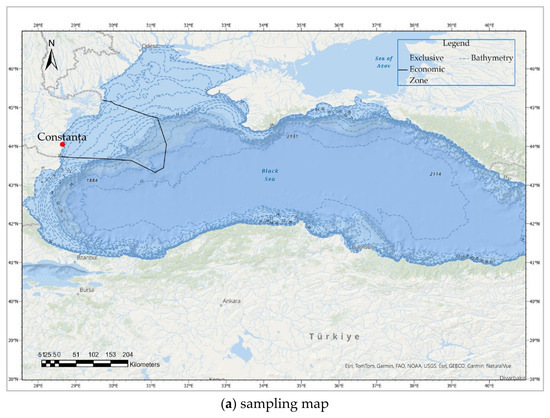
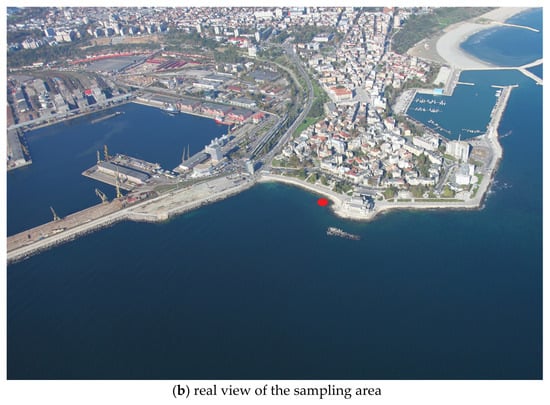
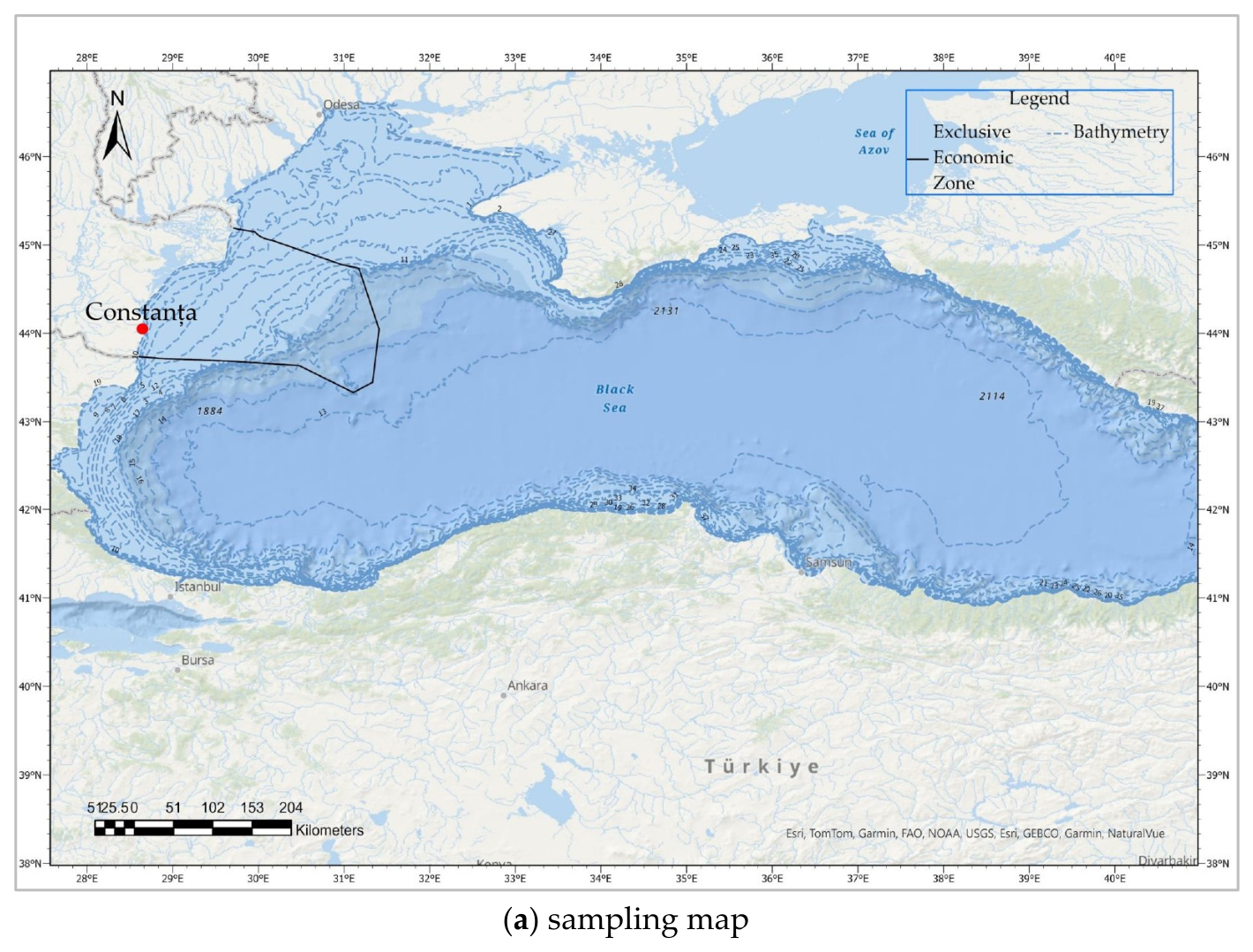
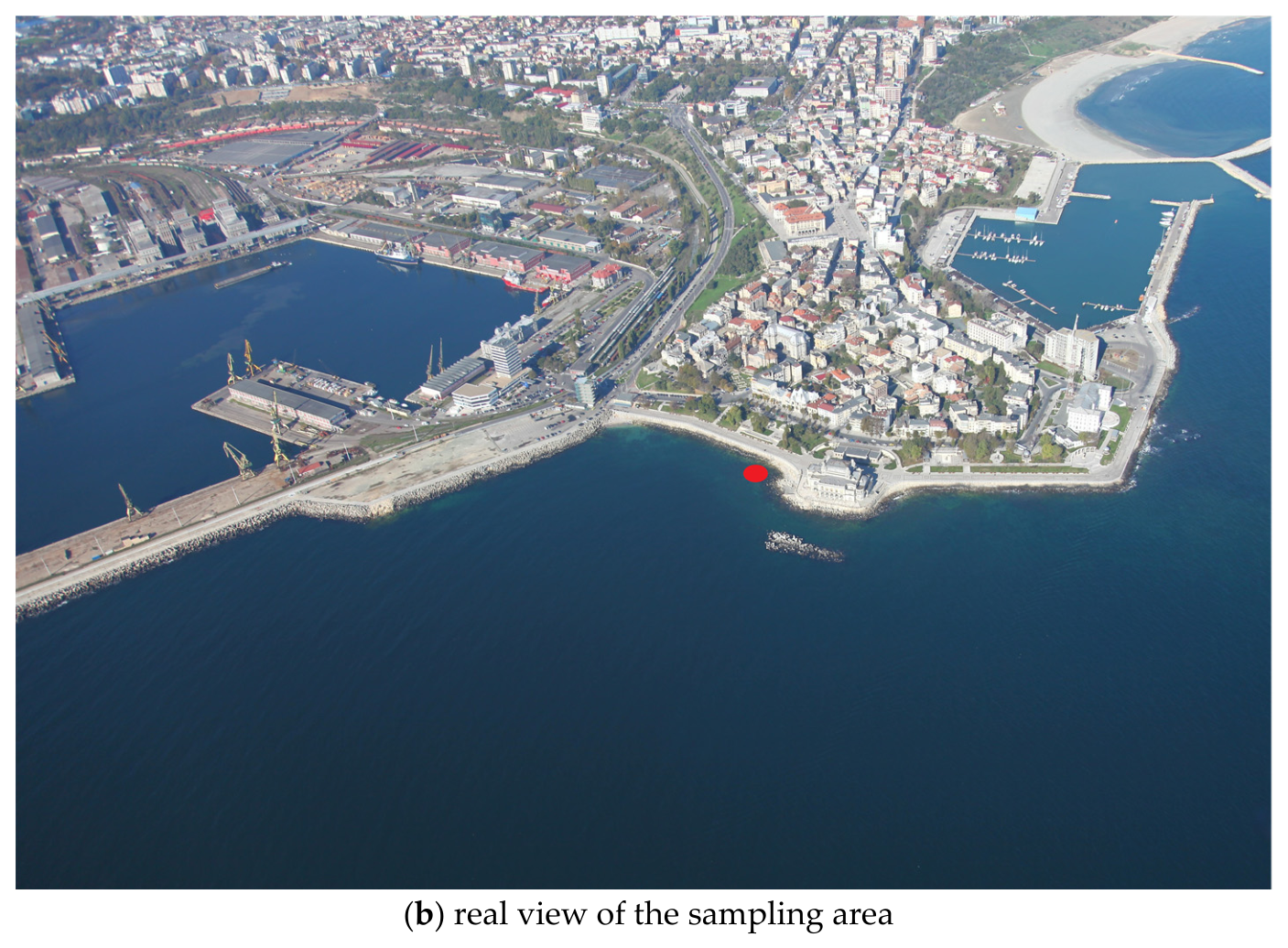
Using a sustainable approach, approximately 3 cm apical fronds bearing mature receptacles were hand-collected in June 2025 from a healthy G. barbata population in Constanța (44.1701 N, 28.6622 E) (Figure 1a,b). Donor material was taken from 20 thalli, spaced across the full extent of the population, between 0.5 and 1 m depth. In the Mediterranean Sea, gamete maturation and release of Cystoseira populations take place mostly in spring and early summer [16]. The exact timing can vary depending on species-specific biology and local environmental conditions such as temperature, light, and hydrodynamics, but in general Cystoseira species follow this pattern. According to our personal observations during annual monitoring campaigns and historical data [13], a similar seasonal trend has been observed along the Romanian Black Sea coast, where G. barbata also exhibits peak fertility during late spring and early summer. The availability of fertile branches containing large numbers of mature gametes is a key requirement for culture success. The collected fertile parts were stored in sealable Ziploc bags, without seawater, placed in a refrigerated box and transported to the laboratory within 1 h.
Figure 1.
Sampling site for reproductive thalli of G. barbata in June 2025 along the Romanian Black Sea coast. Red point indicates the exact sampling location.
2.2. Experimental Setup
A G. barbata culture trial was initiated on early 20 June 2025, using seven 12 L glass aquaria (each of 20 × 20 × 30 cm). The experimental substrates used for this ex situ culture exhibited differences in shape as well as in material composition. Therefore, four types of hard substrates of different shapes—shale, travertine (large and small tiles), ceramic (large and small plates), and granite—were installed at the base of each aquarium to provide settlement surfaces. Each substrate type was distributed across the aquaria as follows: ceramic substrates were placed in one aquarium (6 plates: 3 small and 3 large), granite in one aquarium (1 substrate), large travertine tiles in two aquaria (2 tiles each), small travertine tiles in one aquarium (15 small tiles), and shale in two aquaria (2 substrates each).
Large travertine tiles (30.5 × 10 cm), as well as shale (35 × 7.4 cm) and granite (25 × 4.8 cm), had a rectangular shape, whereas the small travertine tiles were square (l = 4.7 cm). The ceramic plates displayed a circular shape, with a radius of 7.2 cm (small) and 9.2 cm (large), respectively. A common feature of all selected substrate types was their surface roughness, which was assessed qualitatively through visual inspection. Based on this visual evaluation, all substrates were considered to share structural characteristics such as irregularities, micro-crevices, and overall roughness, which may facilitate germling attachment and the development of G. barbata recruits. Seeded area for each substrate was calculated using the geometric formula corresponding to its specific shape (rectangular, square and circular). The overall seeded area was calculated by multiplying the individual value by the number of substrates in each aquarium (Table 1).
Table 1.
Experimental design for ex situ culture of G. barbata.
For the assessment of germling height in the laboratory, substrates were treated as replicates; however, some substrates originated from the same aquarium. Due to logistic constraints, fully independent replicates could not be achieved during this laboratory phase. In addition to the replicated substrates listed in Table 1, a preliminary culture trial was performed on granite substrate to assess its suitability for future G. barbata restoration efforts. Due to the absence of granite replicates, these data were excluded from the main statistical analyses and presented as qualitative observations in the Supplementary Materials. To describe the embryology of G. barbata, several glass slides were seeded, and zygote and embryo development were examined using a stereomicroscope (OLYMPUS SZX10, Olympus, Tokyo, Japan).
2.3. Laboratory Ex Situ Culture Procedure
The ex situ culture process followed the protocols of Falace et al. (2018) [11], De La Fuente et al. (2019) [12], and Lokovšek et al. (2023) [4].
Upon arrival in the laboratory, the apical parts of the thalli of G. barbata were rinsed with filtered seawater to remove epibionts and stored in aluminium foil at 4 °C for 24 h to induce zygote release. The following day, the apices were placed onto each substrate for a 24-h period. Uniformity was achieved by placing 6 fertile apices of 2 cm on each substrate. All material originated from the same population and was collected within a narrow time window to avoid variation. They remained undisturbed overnight to allow zygote release and attachment. After this incubation period, the apices were gently removed. The aquaria were filled with seawater to a level approximately 2 cm above the apices to prevent them from floating. At this stage, no aeration was applied. From day 3 onward, 1 L of filtered seawater was added to each aquarium without the nutrient medium, and gentle aeration was introduced. On day 6, a complete seawater exchange was performed, followed by the addition of Von Stosch’s solution (VSE) as 1 mL/L seawater and Germanium dioxide (GeO2) (1 mL/L seawater) to prevent diatom growth. Aeration was increased at this stage. To supply aeration during the experiment and to ensure adequate nutrient mixing, a low-pressure air pump (220 V, 12 W) was used. The device provided an airflow rate of 14 L/min−1 and operated at a pressure greater than 0.015 MPa.
Beginning on day 6, a complete seawater exchange with VSE addition was performed every three days to minimize nutrient limitation. At each renewal, GeO2 (1 mL/L seawater) was added during the first 6 weeks to inhibit diatom growth. During every full water exchange, the aquaria were thoroughly cleaned before refilling. All the seawater used during this experiment was filtered through two filter types (1 µm and 0.5 µm) to ensure the removal of fine particulate matter and potential contaminants. Seawater quality was monitored throughout the experiment each time seawater was fully exchanged to ensure stable culture conditions. Key parameters like pH, salinity (PSU), dissolved oxygen (mg/L) and seawater temperature (°C) were measured using a Mettler Toledo TM S479 (Seven Excellence TM Multiparameter Benchtop, ©Mettler-Toledo GmbH, Greifensee, Switzerland). This approach ensured that water-quality assessments were always synchronous with the actual renewal events and accurately reflected the conditions experienced by the cultures.
All aquaria were placed in an environmentally controlled room, with an ambient temperature of 20 °C, a photoperiod (16:8 h light: dark cycle) and a light intensity of approximately 50 μmol photons m−2 s−1, adjusted to simulate seasonal conditions in the natural environment. Lighting conditions were maintained using a Novelite LED tube (20 W, 240 V, 50/60 Hz, Chiajna, Romania), producing a neutral-white spectrum at 5000 K.
After 30 days, when all specimens were macroscopically visible, a complete water exchange was carried out once per week. Clausing et al. (2024) suggested that reducing NO3− and PO3− in the culture media may be an adaptive approach to reduce epiphytes, since higher nutrients caused oxidative stress likely associated with enhanced epiphyte overgrowth [14]. Therefore, to limit the input of nutrients that support the overgrowth of opportunistic species, after two months the culture was shifted to a half-strength VSE medium (addition of 0.5 mL/L seawater, instead of full strength 1 mL/L).
2.4. Germlings Monitoring
Relative Growth Rate (RGR) was determined by measuring the height of the primary axis. In addition, we evaluated changes in thallus height over culture time for travertine, ceramic, and shale by analysing the relationship between these two variables. Thallus height measurements were taken once a month throughout the experiment, providing an appropriate assessment of early developmental progress. The heights of 7–10 specimens from each substrate type were randomly measured with a ruler, resulting in a total of 472 measurements (including granite) throughout the 216-day culture period. Although granite data were excluded from statistical analysis due to insufficient replicates, measurements of germling height were taken to also evaluate the development of G. barbata on this type of substrate. The objective was to visually assess the substrate’s viability for future ecological restoration along the Romanian Black Sea coast. Results are expressed in cm. Standard deviation reflects variability among individuals. Based on thallus height, RGR was calculated following the formula:
where
- H2 and H1 represent the thallus height at days t2 and t1;
- t2 − t1 is the number of days between measurements [17,18].
RGR was calculated in three intervals, months 0–3, 4–5, and 6–7, in order to obtain a detailed view of the species’ growth dynamics during the experiment. This segmentation of the culture period allowed us to distinguish between simple axial elongation and the onset of lateral branching, thereby providing a more comprehensive understanding of the species’ growth strategy. In addition to these measurements, visual observations and photos were taken to monitor the extent of thallus branching, allowing for a qualitative evaluation of morphological changes throughout the growth period.
2.5. Data Analysis
Statistical analyses were performed using JASP v.0.95.1. (JASP Team, Amsterdam, Netherlands) [19] to evaluate differences in thallus height and RGR among G. barbata cultured on three types of hard substrate (travertine, ceramic and shale). The dataset covers a 216-day culture period (from mid-June 2025 to mid-January 2026) and is based on measurements of G. barbata thallus height (cm) grown on these hard substrates. Prior to statistical analysis, normal distribution and homogeneity of variances were established using the Shapiro–Wilk Normality Test and Levene’s test. The significance level was set at p < 0.05. Shapiro–Wilk tests showed that data for thallus height deviated from normality for large (W = 0.956, p < 0.001) and small travertine tiles (W = 0.901, p < 0.001), for ceramic (W = 0.947, p = 0.028), and also for shale (W = 0.934, p < 0.001). At the same time, the data has not met the assumptions of homogeneity of variance as shown by the significant Levene’s test (F(3) = 9.344; p < 0.001). Given the lack of normality and unequal variances, the Kruskal–Wallis non-parametric test was employed to determine whether significant differences in G. barbata thallus growth occurred across the different hard substrate types. In case of RGR, all groups indicate no significant deviation from normality (p > 0.05) and the assumption of homogeneity of variance was met (F(3) = 0.381, p > 0.05). A one-way ANOVA was employed to determine whether RGR varied significantly across substrate types. To assess variability in seawater parameters (temperature, salinity, dissolved oxygen, and pH) and to analyze the similarities of the culture parameters throughout the experiment, a Principal Component Analysis (PCA) was performed on standardized data using PRIMER v.7 (Plymouth Routines In Multivariate Ecological Research; PRIMER-E: Plymouth, UK) [20].
3. Results
3.1. Seawater Parameters
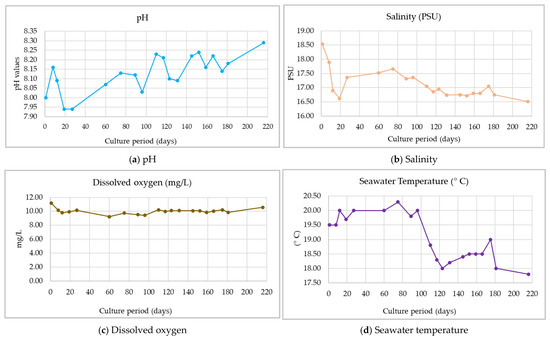
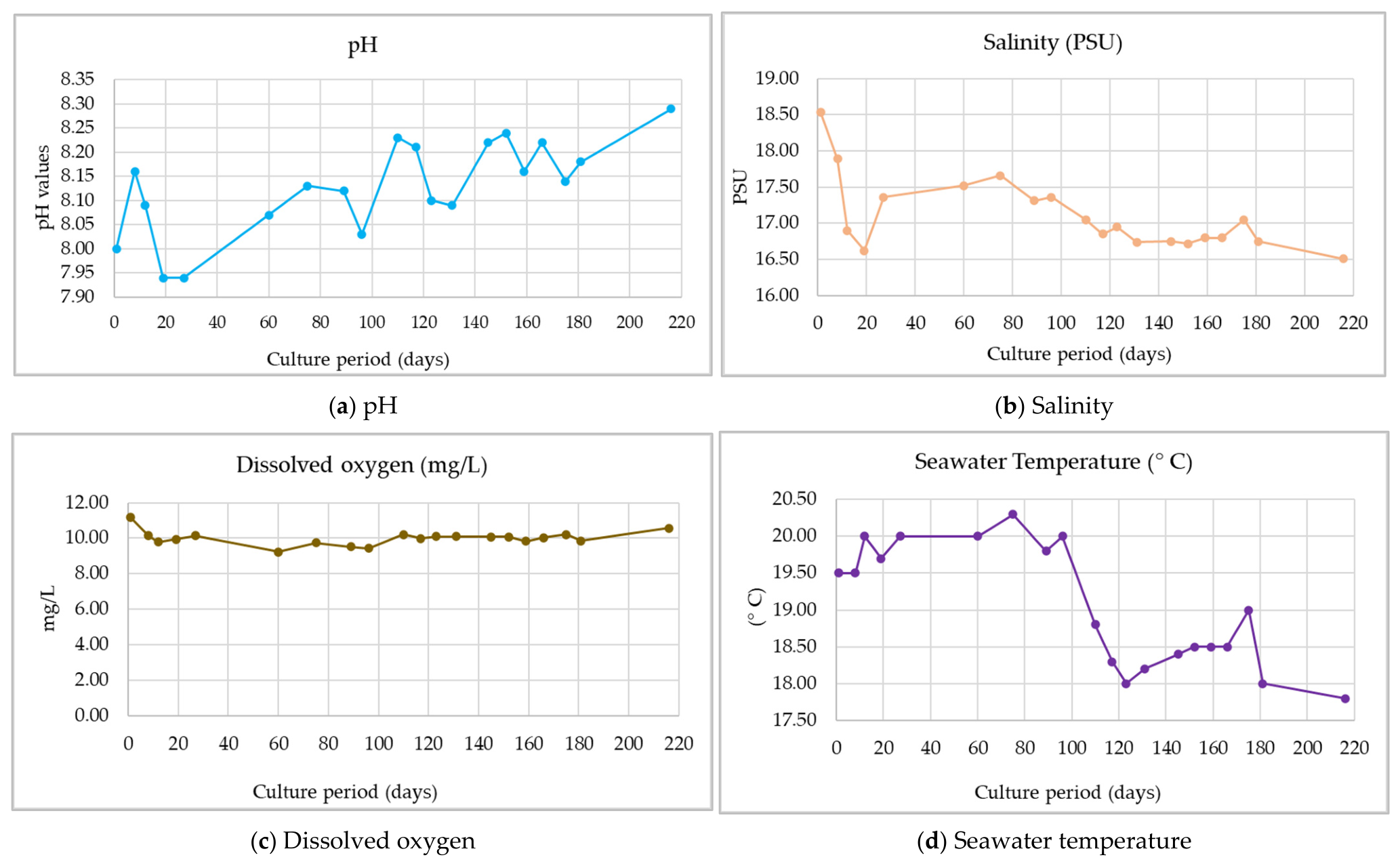
Descriptive statistics for the seawater quality parameters monitored during G. barbata ex situ culture indicated mean values of 8.1 ± 0.1 for pH, 17.1 ± 0.5 PSU for salinity, 10.0 ± 0.4 mg/L for dissolved oxygen and 19.0 ± 0.8 °C for seawater temperature for the entire culture period. The coefficient of variation remained below 10% for all parameters, specifically 1.2% for pH, 2.93% for salinity, 4.11% for dissolved oxygen, and 4.35% for seawater temperature. Minimum and maximum values indicated stable environmental conditions, with pH remaining between 7.9 and 8.3, salinity between 16.5 and 18.5 PSU, dissolved oxygen between 9.2 and 11.2 mg L−1, and temperature between 17.8 and 20.3 °C (Figure 2a–d).
Figure 2.
Range of seawater parameters during 216-day ex situ culture.
A principal component analysis (PCA) was performed to evaluate the multivariate stability of seawater parameters during the 200-day ex situ culture of G. barbata. The first two principal components explained 92% of the total variance in the dataset, with eigenvalues of 1.62 (PC1) and 0.225 (PC2). PC1 accounted for 80.9% and PC2 for 11.2% of the variability. The variable with the highest contribution on the PC1 was seawater temperature (−0.797) whereas salinity exhibited the highest loading on PC2 (–0.852). These results confirm that seawater conditions remained highly consistent throughout the culture period, with an overall similarity of 95%.
3.2. G. barbata Growth Dynamics
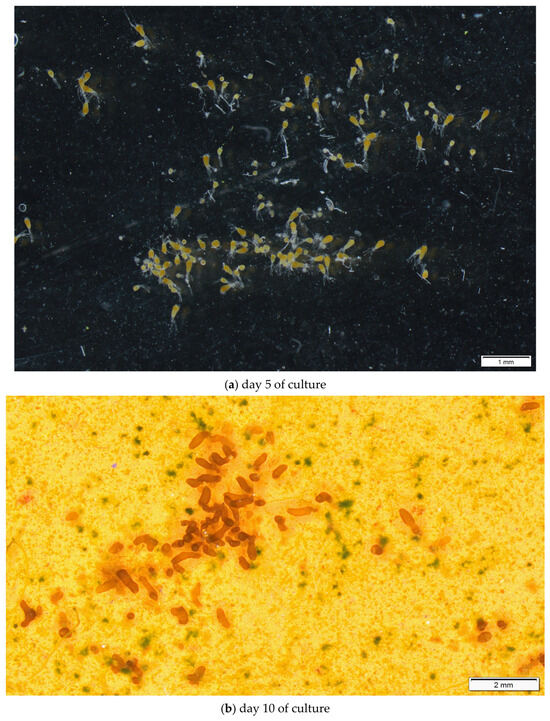
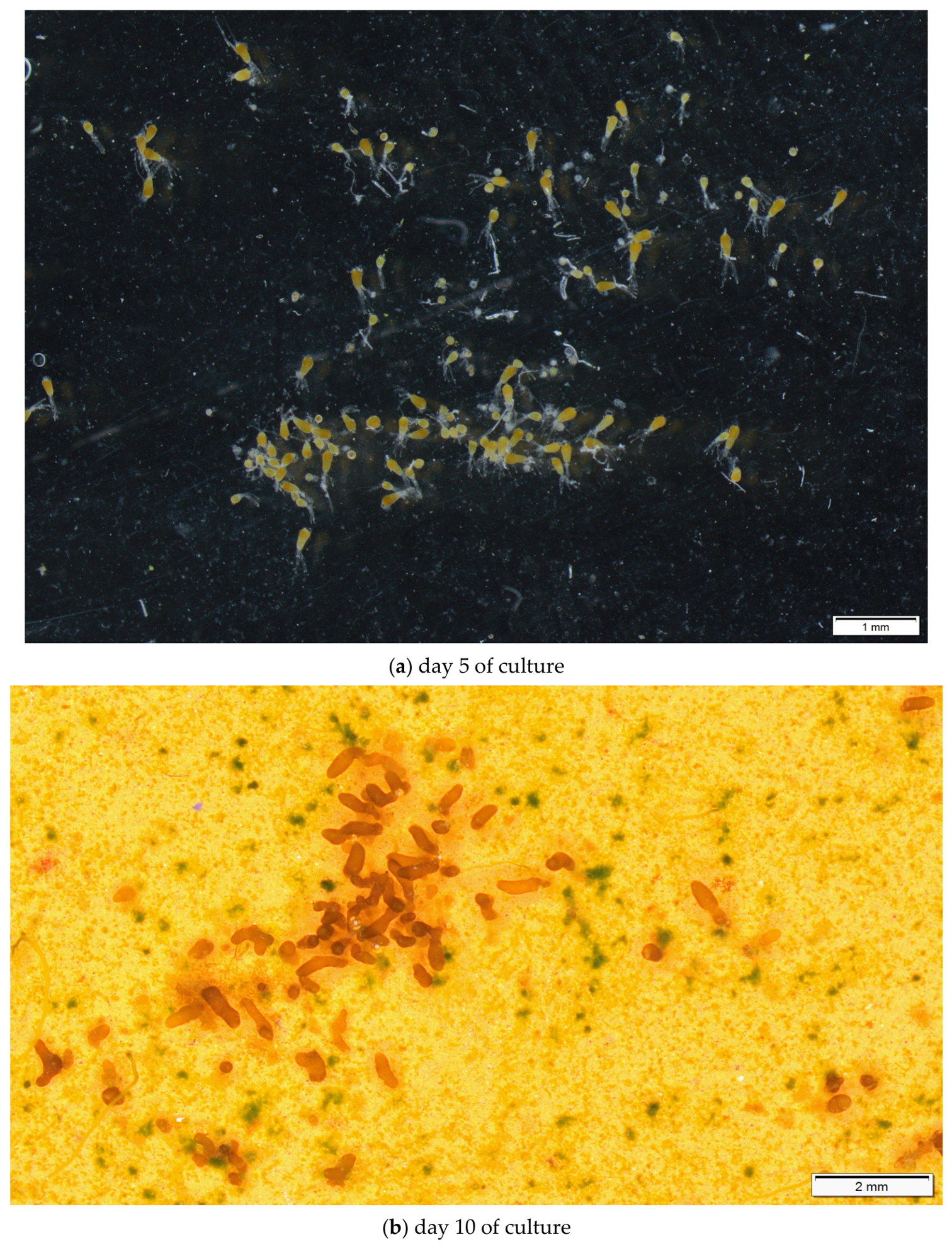
Settled germlings became visible only a few hours after the seeding process began and all substrates were successfully colonized. After 10 days, the germlings were macroscopically visible on all substrate types (Figure 3a,b).
Figure 3.
Early developmental stages of G. barbata germlings. Scale bars represent 1 mm (a) and 2 mm (b).
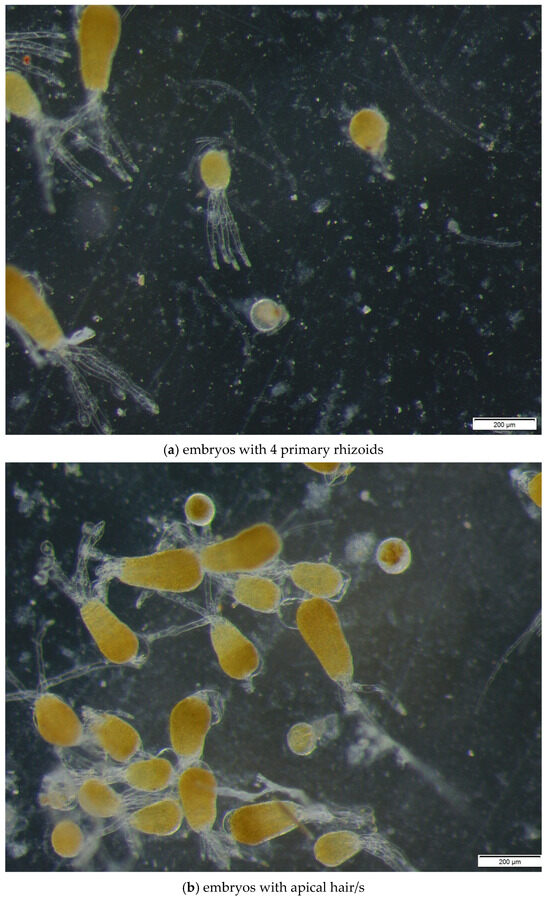
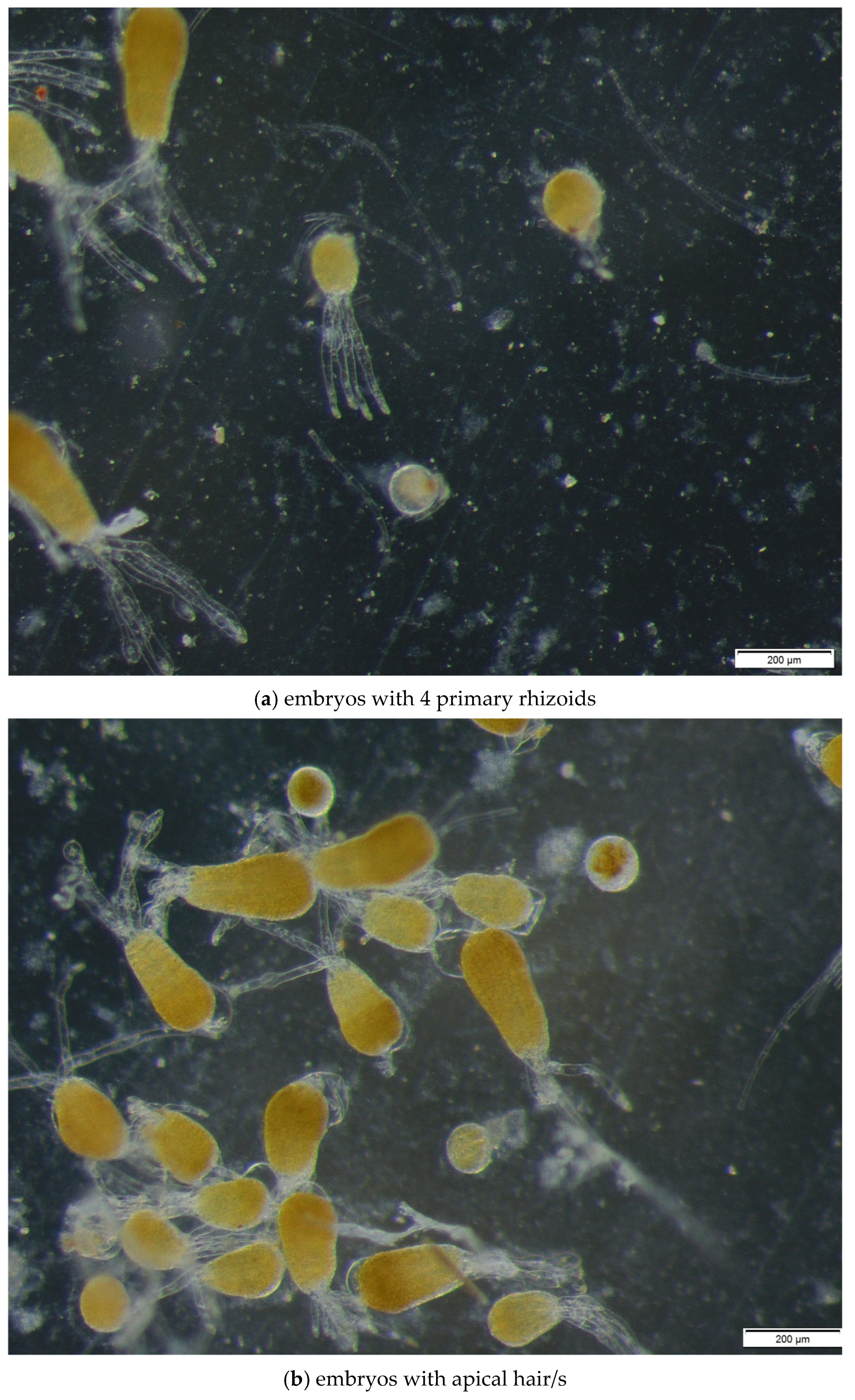
Several distinct developmental stages were documented throughout the initial phase of the culture period. At the end of the first week, embryos in four growth stages were visible on glass slides: I—embryos with 4 primary rhizoids (Figure 4a), II—embryos with 8 rhizoids, III—embryos with short apical hair/s (Figure 4b), and IV—embryos with long apical hair/s [11].
Figure 4.
Development of G. barbata during the first week of ex situ culture. Scale bars represent 200 µm.
The number of thallus measurements (n) differed among substrates (large travertine: n = 141; small travertine: n = 110; ceramic: n = 49; shale: n = 131; granite: n = 41). This variation reflects differences in early germling development, as many thalli were too small or irregular to be measured reliably during the initial growth stages.
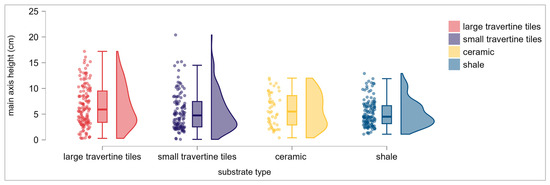
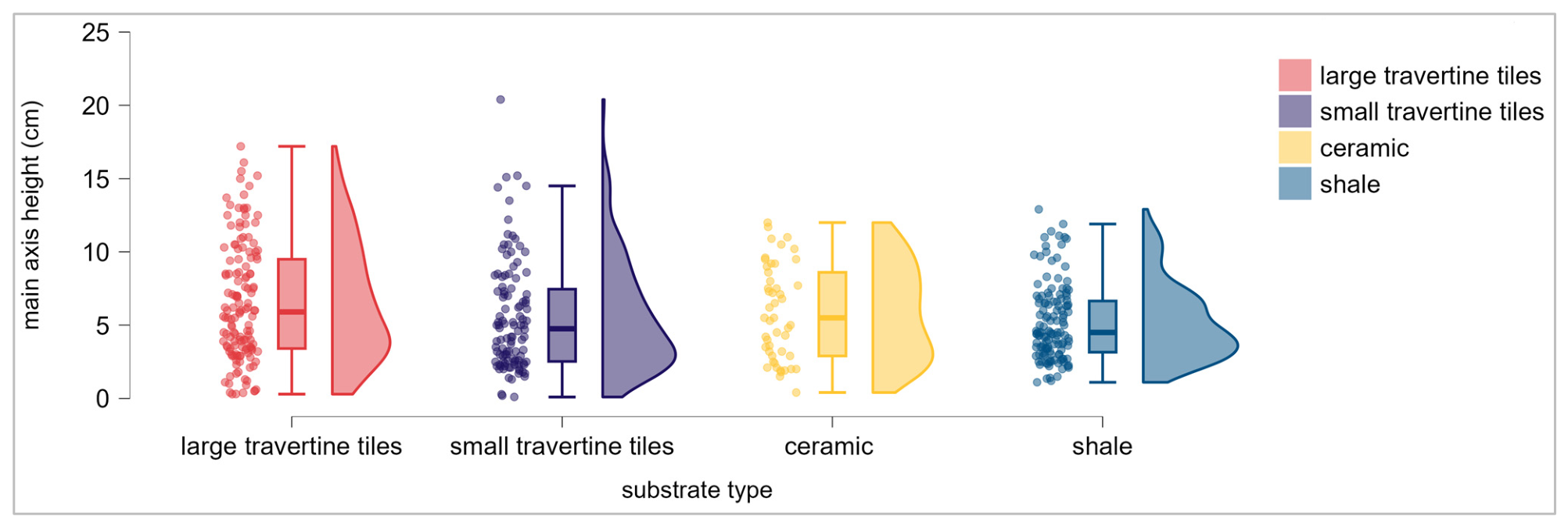
A Kruskal–Wallis non-parametric test revealed no statistically significant differences across different support materials (shale, travertine and ceramic) used for G. barbata growth (H(3) = 7.579; p = 0.056). The effect sizes (ε2 = 0.018; η2 = 0.011) indicate that height differences across substrate types were minimal (Figure 5), and that substrate type explained only a minimal proportion of the variation in specimen height. The results show that all substrates supported comparable thallus development, a finding that is highly relevant for restoration, aquaculture, and cultivation protocols when selecting the most suitable substrate for this particular species.
Figure 5.
Distribution of thallus height across substrate types. The density cloud represents the distribution of the data, and the box plot summarizes the median and interquartile range.
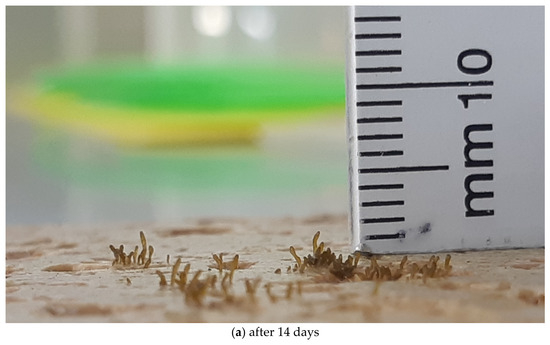
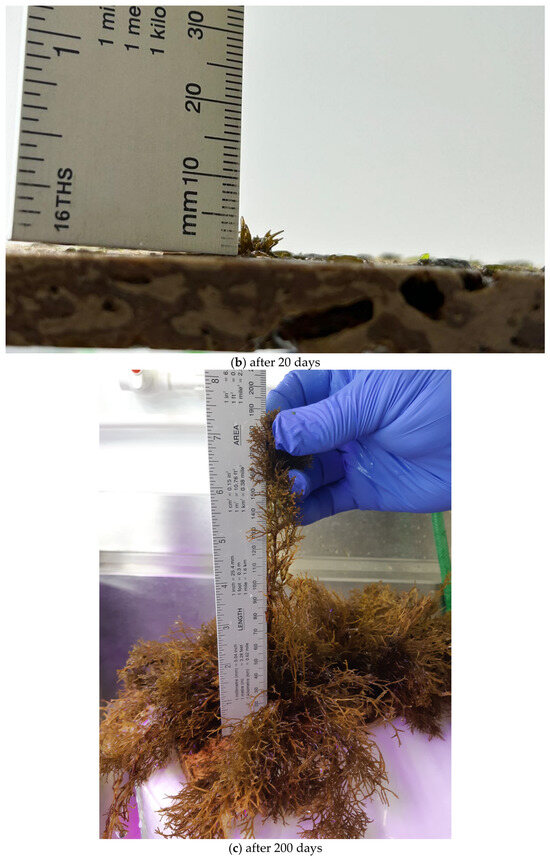
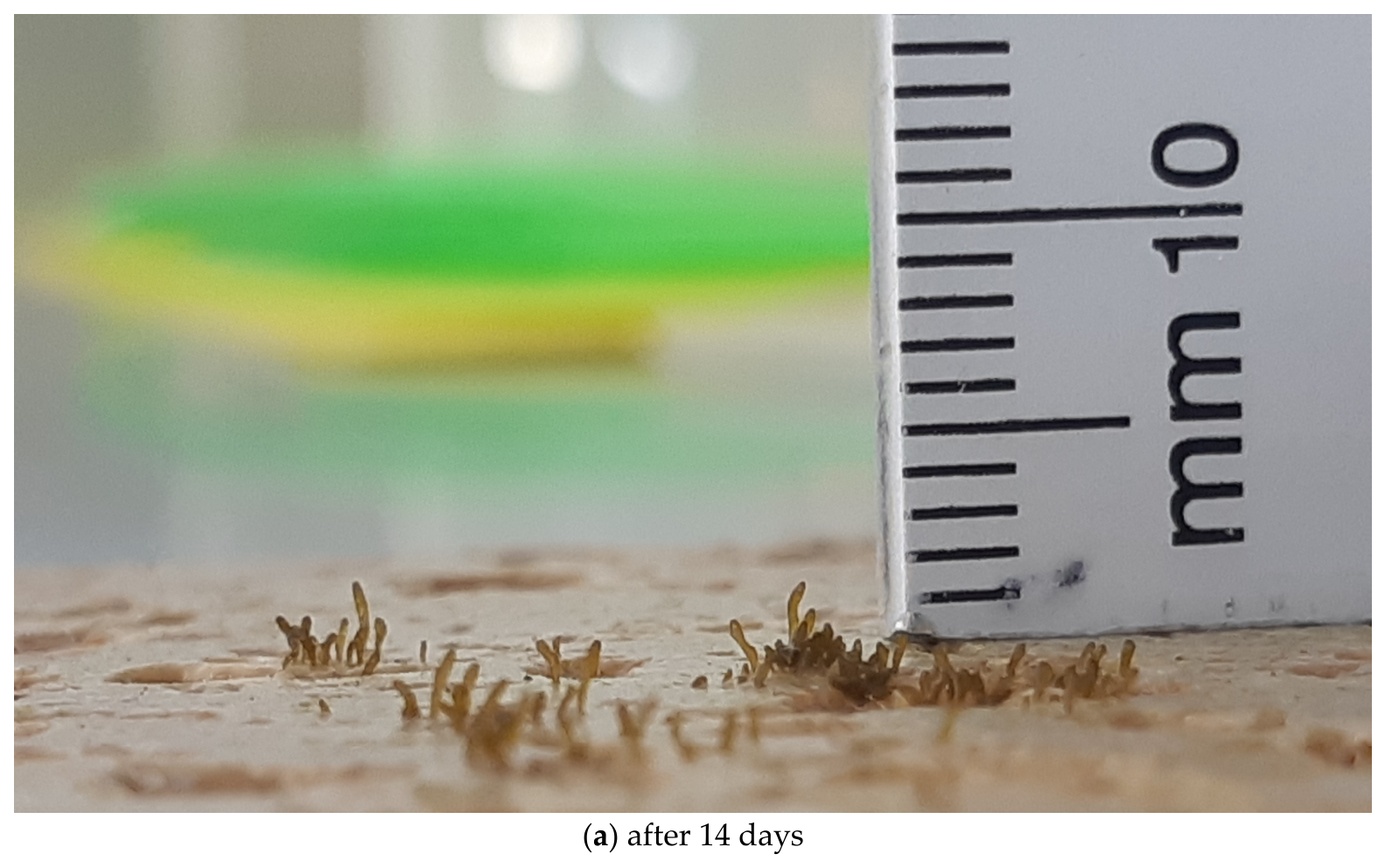
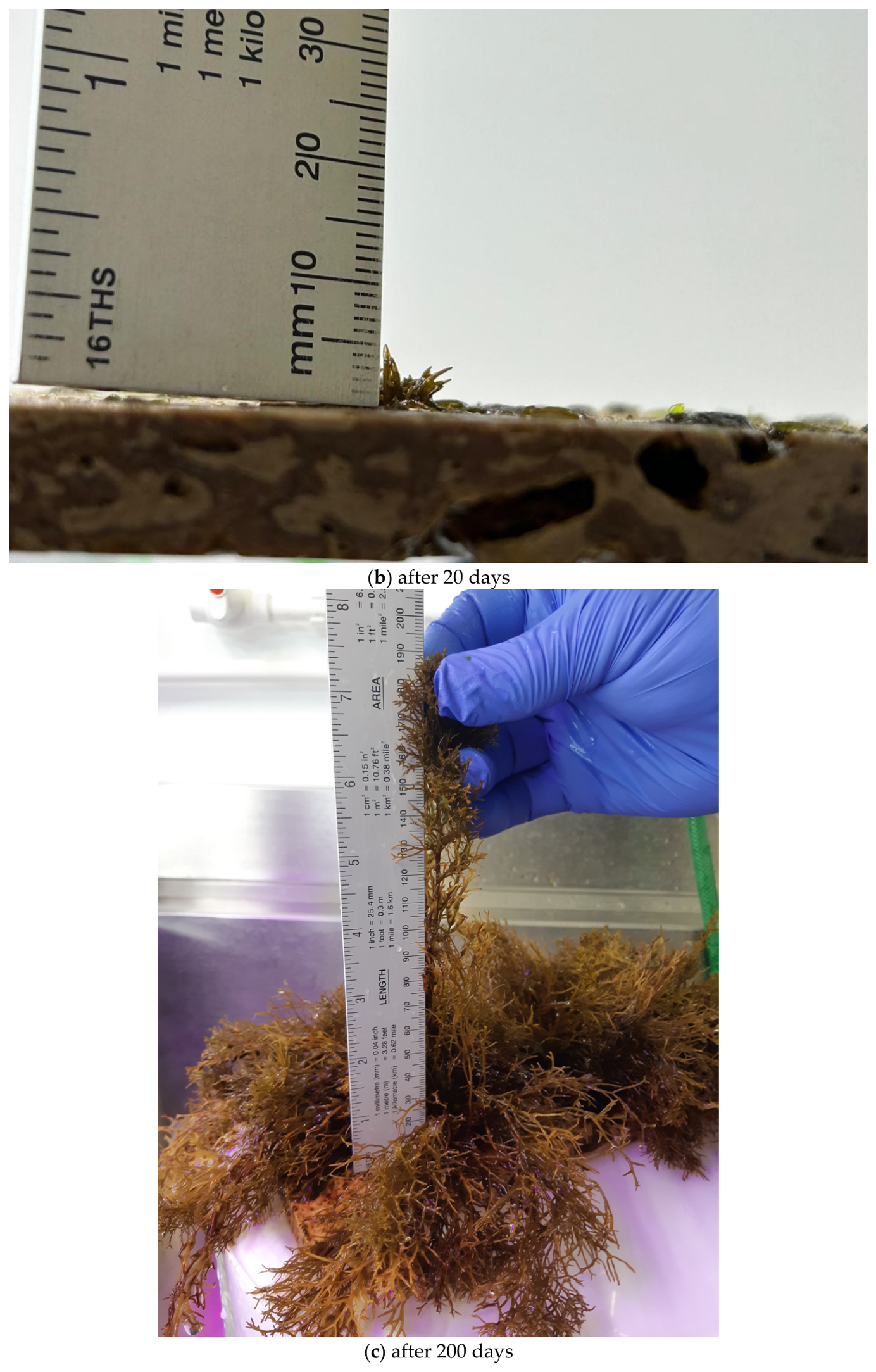
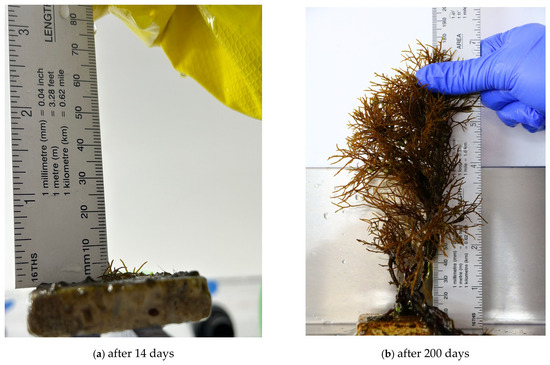
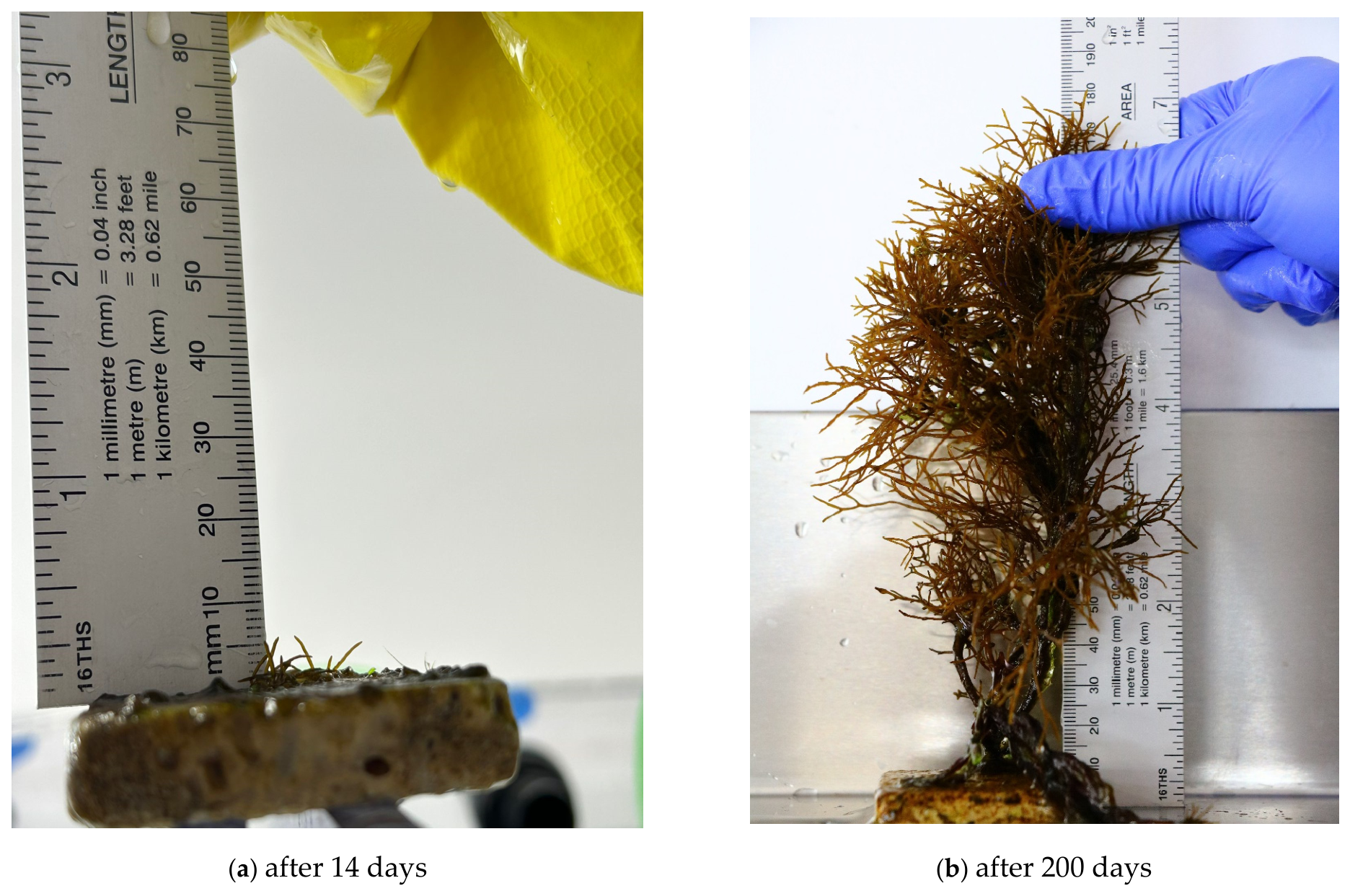
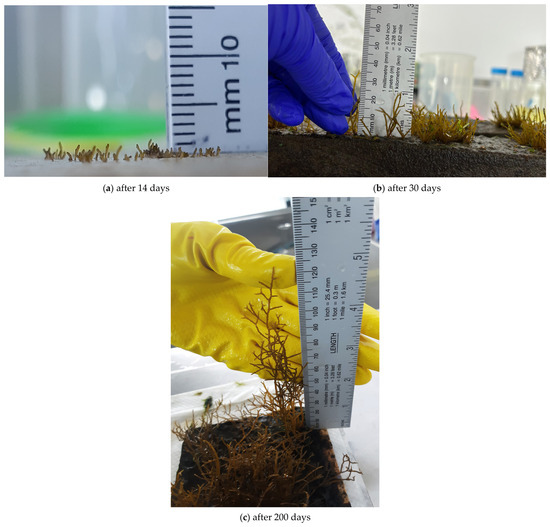
After more than 200-day of ex situ culture, the mean thallus height reached 6.52 ± 4.03 cm on large travertine tiles, with a maximum of 17.20 cm (Figure 5 and Figure 6a–c).
Figure 6.
Growth dynamics of G. barbata on large travertine tiles across different culture periods. Measurements represent true dimensions based on direct ruler assessment.
On small travertine tiles, a slightly lower mean height of 5.53 ± 3.76 cm was recorded, though a maximum height of 20.40 cm was achieved by the end of the 216-day culture period (Figure 5 and Figure 7a,b).
Figure 7.
Growth dynamics of G. barbata on small travertine tiles across different culture periods. Measurements represent true dimensions based on direct ruler assessment.
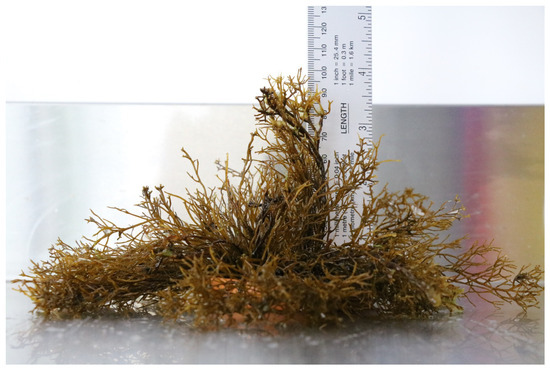
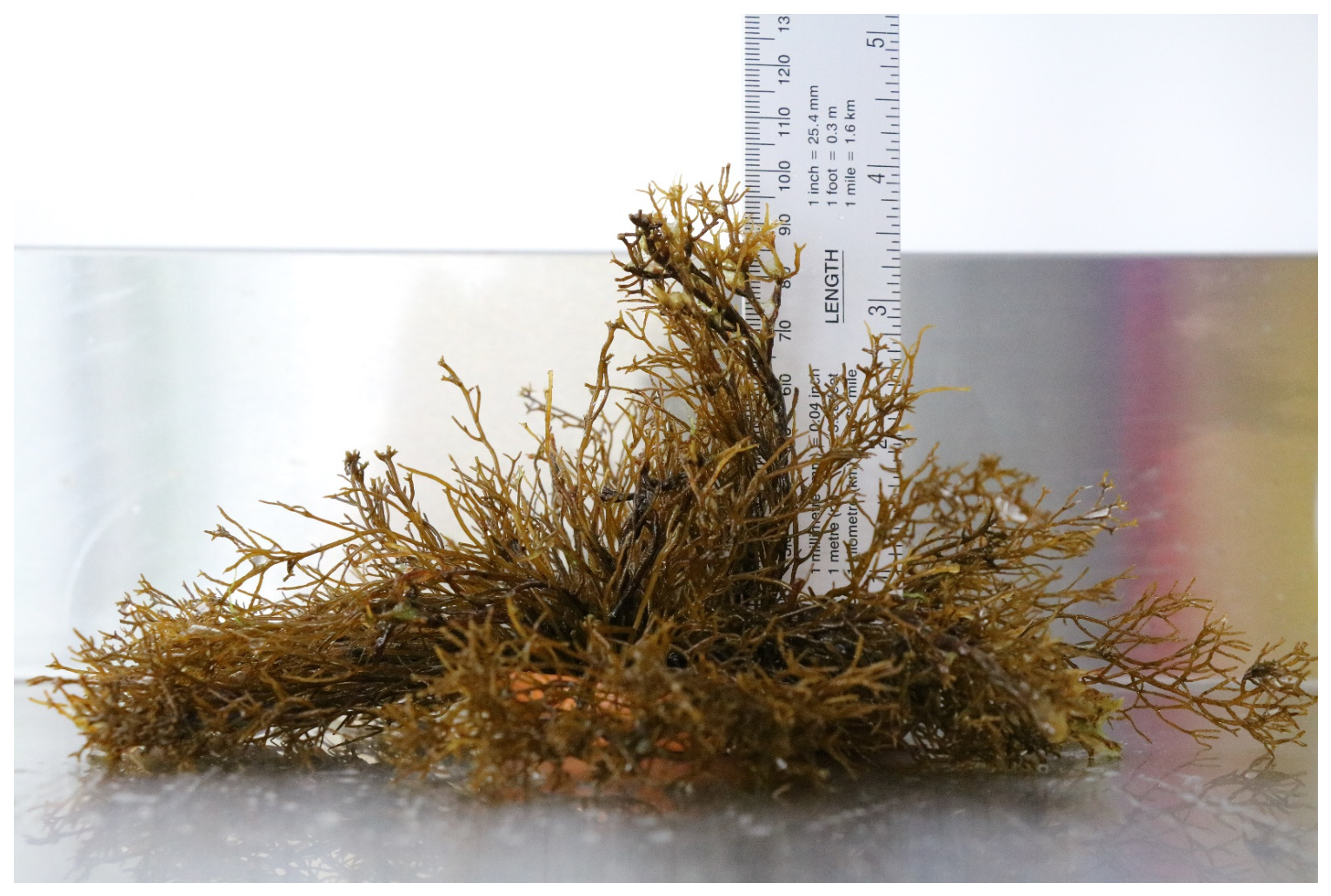
Ceramic substrates recorded a mean of 5.83 ± 3.22 cm and a maximum of 12.00 cm (Figure 5 and Figure 8), while shale supported comparable results, with a mean thallus height of 5.17 ± 2.61 cm and maximum height reaching up to 12.90 cm (Figure 5 and Figure 9a–c). After 90 days of ex situ culture, the specimens grown on ceramic substrates exhibited clear clumping behavior.
Figure 8.
Morphological development of G. barbata on ceramic after 200 days of ex situ culture. Measurements represent true dimensions based on direct ruler assessment.
Figure 9.
Growth dynamics of G. barbata on shale across different culture periods. Measurements represent true dimensions based on direct ruler assessment.
To analyze the relationship between the number of culture days and the resulting growth of G. barbata thalli, a Generalized Linear Model (GLM) with a Gamma distribution and log link function was used. Thallus growth of G. barbata increased significantly over time across analysed substrates. For large travertine tiles, the GLM including culture days fit the data better than the null model (Deviance = 18.04 vs. 75.28, AIC = 572.8 vs. 781.7, X2 = 57.24, p < 0.001), with a positive effect of culture days (β = 0.015, 95% CI: 0.013–0.016, p < 0.001). Small travertine tiles showed a similar pattern (Deviance = 13.06 vs. 57.46, AIC = 404.8 vs. 573.0, X2 = 44.40, p < 0.001; β = 0.015, 95% CI: 0.013–0.016, p < 0.001). On ceramic, growth also increased steadily (β = 0.014, 95% CI: 0.012–0.016). Shale supported growth as well, though at a slightly lower rate (β = 0.010, 95% CI: 0.009–0.011, p < 0.001). GLM results showed a significant positive effect of culture duration (β = 0.010–0.015, p < 0.001), indicating consistent growth over the 216-day ex situ culture period.
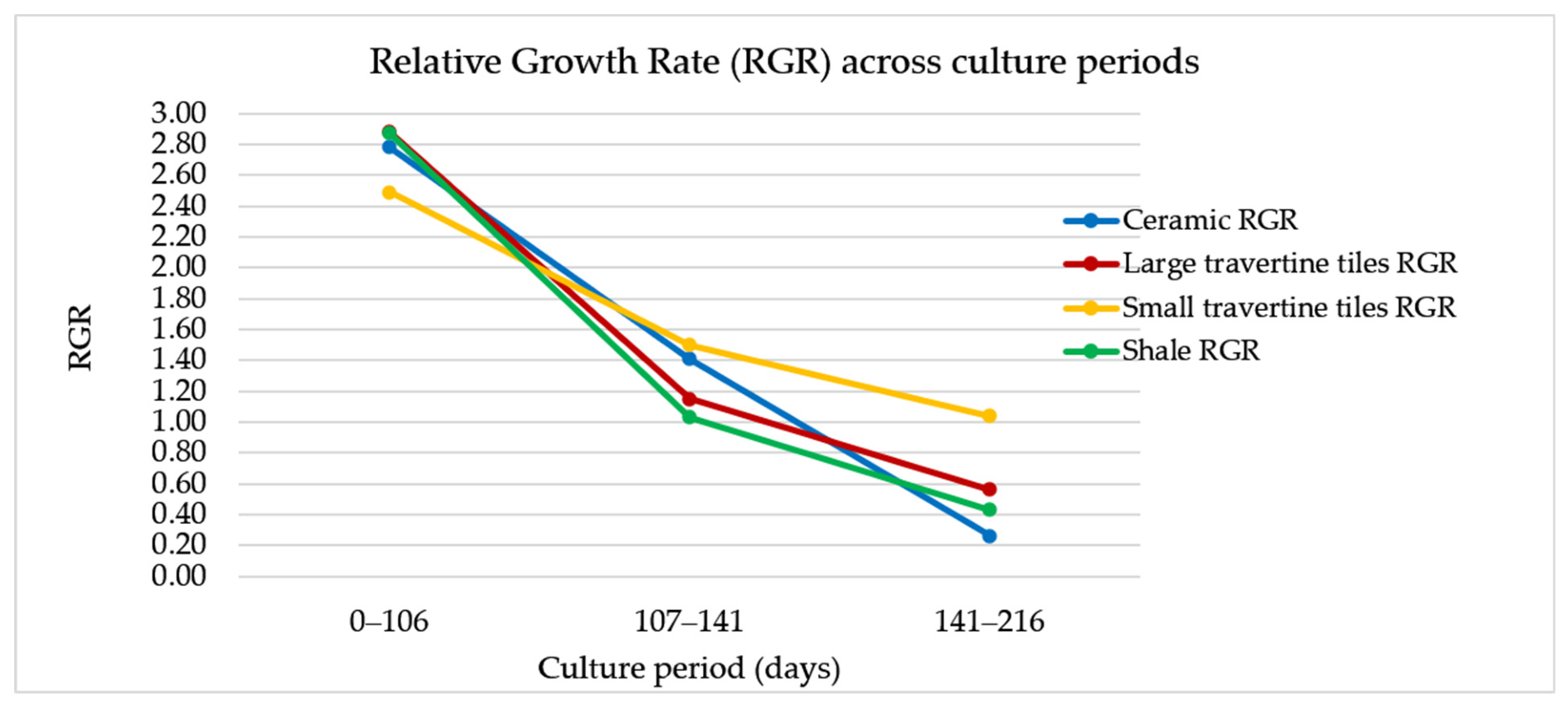
Initial germling height was measured after 10 days of development using microscope-seeded glass slides, yielding a mean starting value of 0.2 cm that served as the baseline for RGR calculations during the first culture interval (days 0–106). A consistent growth pattern was observed across all substrate types. During the initial months G. barbata exhibited a high and nearly exponential RGR, with values ranging from 2.49% day−1 on the small travertine tiles to 2.88% day−1 on the large travertine tiles, which corresponded with the rapid elongation of the main axis. As culture progressed, the RGR declined across all substrates, ranging from 0.26% day−1 on ceramic plates to 1.04% day−1 on small travertine tiles during the final culture interval (days 180–216) (Table 2, Table S1). The one-way ANOVA showed no significant differences in RGR among substrate types (F (3, 8) = 0.024, p = 0.995, η2 = 0.009), indicating that substrate material explained only a negligible proportion of the variation in growth.
Table 2.
Growth metrics of G. barbata: culture interval, mean height and relative growth rate (RGR).
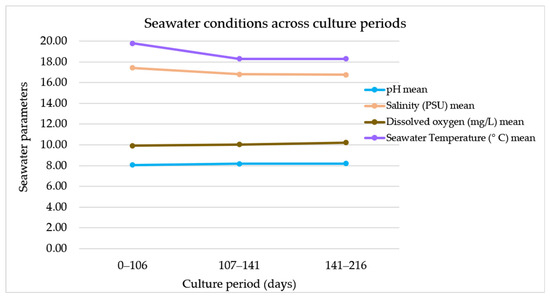
To evaluate the influence of seawater conditions on RGR across substrates, we compared RGR with the mean values of salinity, temperature, dissolved oxygen, and pH for each culture interval (Table 2). Mean seawater parameters showed only minor variation across the three culture periods (Figure 10), with pH increased slightly from 8 to 8.2, while salinity decreased marginally from 17.4 to 16.7 PSU. Dissolved oxygen remained stable (9.9–10 mg L−1), and temperature declined from 19.8 to 18.3 °C. In contrast, RGR declined markedly across analysed substrates, despite the relative stability of seawater conditions (Figure 11, Figure S2).
Figure 10.
Variation in mean seawater parameter values across the three culture intervals.
Figure 11.
RGR variation across different substrate types over the three culture intervals.
4. Discussion
Implementing non-invasive restoration methodologies and regenerative aquaculture cultivation protocols are able to offer critical data on the initial life stages and specific ecological needs of Cystoseira species, which often fluctuate across narrow geographic ranges, providing at the same time important information for halting the decline of these canopy-forming underwater forests. Effective restoration efforts depend on critical insights into the species’ reproductive cycles and early embryonic stages, data which can only be accurately gathered through ex situ cultivation trials [21].
For the Romanian Black Sea coast, developing an ex situ culture procedure for G. barbata is particularly important, as such initiatives are not developed, unlike in other marine regions where restoration techniques based on laboratory-cultivated germlings are already well established. Establishing a procedure would therefore fill a major gap in regional conservation capacity, providing the biological material needed to initiate effective and sustainable restoration programs in the region.
According to Clausing et al. (2024) [14], there are several key aspects essential for a successful restoration methodology that begins in the laboratory:
- The attachment stage of zygotes—ensuring seedling densities are high enough to promote survival and growth benefits following their reintroduction into the natural environment.
- Using a cultivation strategy that incorporates environmental fluctuations and moderate stressors to enhance recruits’ resilience, thereby improving success rates during the transfer from laboratory to sea [14].
To mitigate the gap between laboratory and field performance, Clausing et al. (2024) [14] advocate for a cultivation approach that integrates environmental stressors during the nursery phase, such as thermal variability and water turbulence. This promotes physiological and structural resilience, specifically reinforcing the thallus and stabilizing the holdfast, which are critical for survival when transitioning from the laboratory to fluctuating sea conditions [14]. A similar response was observed for G. barbata, as documented by Lokovšek et al. (2023) [4]. This extended culture period from this study exposes the recruits to repeated stress, including weekly handling during water changes and epiphytic load. After more than 200 days of ex situ culture, a noticeable shift toward thallus thickening was noticed.
Along the Romanian Black Sea coast, violent storms and strong seasonal turbulence can easily dislodge or destroy newly settled recruits, making it particularly important to maintain germlings in the laboratory for an extended culture period. This will ensure that juveniles reach a sufficiently robust size before being transferred to the field, significantly improving the success and resilience of restoration efforts. A 216-day culture period produced young G. barbata specimens large enough to reduce the risk of being rapidly overgrown or suffocated by opportunistic, fast-growing green and red macroalgae that dominate coastal habitats along the Romanian Black Sea shore, particularly during the warm season. A potential advantage that deserves further investigation in future studies is that individuals produced after an extended culture period may reach reproductive stages under controlled conditions that simulate the temperature regimes triggering reproductive development. This approach may ensure a more consistent supply of fertile material to support future restoration initiatives. According to Puccini et al. (2025) [22], the lack of high-volume seedling outplanting remains a major bottleneck for restoration. Overcoming this requires developing affordable production methods tailored to the specific reproductive biology of the species involved. Although the study targets Lithophyllum stictiforme, the authors argue that their methodological framework is transferable to other habitat-forming macroalgae. Similar techniques have already been applied to the restoration of canopy-forming taxa such as Cystoseira s.l., reinforcing the idea that ex situ seedling cultivation from fertile conceptacles represents a viable and non-destructive strategy for the natural populations [22]. This idea is also supported by Bianchelli et al. (2023), who noted that future restoration efforts will require transplanting a very large number of algal individuals to counteract grazing pressure and other stressors [23]. In our experimental cultures, a substantial number of individuals were obtained, and following this extended culture period they reached an advanced morphological development, a condition that may enhance their resilience to grazing pressure.
In other G. barbata culture experiments, the height of germlings after nearly three weeks (19 days) was 1.16 mm [24], and 1.72–3.45 mm after four weeks (30 days) [25]. When expressed in centimeters, the results of our study fall within this range. Therefore, after 23 days, germlings reached a maximum value of approximately 0.3 cm in height, which is consistent with the values reported by Savonitto et al. (2021) for 30-day-old germlings (0.172–0.345 cm) [25] and slightly higher than the 0.116 cm reported by Orlando-Bonaca et al. (2021) after 19 days [24].
In our study, smaller individuals typically exhibit higher RGRs due to more efficient resource allocation and reduced structural demands, while larger thalli allocate more energy to maintenance and support tissues. Therefore, high RGR values were recorded in small individuals of approximately 3 cm (Table 2), as this early development phase reflects a strategy focused on maximizing vertical extension to secure light exposure. Reduced RGRs towards the end of the culture period appear to be associated with the onset of intensive lateral branching, leading to the formation of a more complex thallus architecture and a shift from vertical elongation toward structural thickening and ramification. The variation in seawater parameters indicated that pH, salinity, dissolved oxygen, and temperature fluctuated only slightly throughout the 216-day experiment. These small changes do not align with the decline in RGR observed across all substrates, as this is more likely driven by species evolution rather than by environmental variability. At the same time, the absence of significant differences in RGR among substrate types indicates that growth was not strongly influenced by the settlement material, an advantage for restoration. Stable seawater conditions, light availability, nutrients, and the condition of fertile material have an important influence in determining growth. In our culture trial, cultured G. barbata specimens exhibited clumping behaviour, especially when grown on hard substrates such as large and small travertine tiles, as well as ceramic (Figure 5, Figure 6 and Figure 7). Greater clumping of individuals was linked to enhanced long-term survival in natural environments. Clausing et al. (2024) [14] mentioned that the lack of large aggregations of individuals indicates significant challenges in restoration activities.
Optimizing the timing of fertile material collection through rigorous monitoring is vital, as the final cover and aggregation patterns, namely clumping behaviour of the newly recruits, rely on the quality and quantity of the reproductive material [14]. To optimize the ex situ culture process, the collection of fertile apices must be done during the maximum reproductive period [26]; therefore monitoring G. barbata to capture the optimal reproductive period is essential for successful culture in the laboratory and for further restoration actions. This requirement becomes even more critical in the Romanian sector of the Black Sea, where natural populations are scarce and fragmented, making it difficult to collect high-quality fertile material for initiating an ex situ culture. The large distances between remaining G. barbata canopies, combined with the fact that different populations may enter their reproductive phase at different times, further complicate the acquisition of suitable biological material.
Given these circumstances, reproductive material was collected through periodic monitoring of a local G. barbata population along the Romanian Black Sea coast, with donor fertile material obtained during the species’ optimal reproductive period in early June 2025. The success of this culture trial can also be attributed to the high reproductive output of the donor individuals, underscoring the importance of collecting reproductive material during the optimal period. This likely explains the observed clumping behaviour, as the fertile collected branches released a very large number of zygotes, resulting in the formation of numerous new individuals. This aspect is particularly important for the Romanian Black Sea coast, where frequent storms can easily dislodge newly transplanted individuals, thereby compromising restoration efforts, so grouping individuals into small clumps may therefore enhance stability and improve the success of subsequent restoration actions.
The physiological resilience of Cystoseira s.l. is highly sensitive to temperature fluctuations, which can compromise both the maturation of gametes and the survival of early life stages of these species. As reported by Bevilacqua et al. (2019) [27], thermal shifts during the reproductive phase of Cystoseira s.l. can disrupt phenological pattern and hinder recruitment. For instance, research in the Gulf of Trieste documented an irregular reproductive shift in G. barbata, where reproduction occurred with a three-month temporal shift followed by a complete absence of reproductive activity for the following two years [27].
Rigorous long-term monitoring of the donor population’s reproductive material is indispensable for establishing a robust foundation for ex situ cultivation and subsequent restoration success [16]. The timing of reproduction can shift in response to variations in seawater temperature, which is a key trigger for the reproductive event in G. barbata along the Romanian coast. Another concern arising from these temperature fluctuations along the Romanian coast is the increasingly abrupt rise in seawater temperature observed in recent years. Consequently, careful monitoring of G. barbata populations becomes even more important to accurately identify the optimal reproductive period. The loss of a gradual thermal gradient limits the species’ capacity for physiological acclimation, exposing juvenile individuals in the shallow areas to environmental stress that can result in substantial mortality. Under these conditions, relying solely on natural populations for restoration material becomes increasingly risky, underscoring the need for a stable, laboratory-maintained stock of robust specimens more resistant to thermal changes in the sea water and capable of supporting consistent restoration efforts.
The primary challenge in ex situ culture of G. barbata at the Romanian Black Sea coast on hard substrates was the proliferation of associated opportunistic macroalgae, particularly Ulva spp. and Bryopsis plumosa, which developed on the same surfaces and had to be removed with tweezers during each water exchange. This is likely due to the fact that growth culture conditions highly favor epiphytic growth over this extended culture period, an aspect also mentioned by Clausing et al. (2024) [14]. The main reason remains the fact that the Romanian coast is characterized by elevated nutrient loads, largely due to the influence of the Danube, which constantly promotes the development of opportunistic green algal species. The reproductive elements of these opportunistic species are naturally present in seawater and can easily contaminate the aquaria used for cultivating G. barbata at each seawater exchange. However, limiting nutrient inputs resulted in a measurable decrease in epiphyte accumulation and, at the same time, the fact that no high-intensity light source was used (illumination remained at approximately 50 μmol photons m−2 s−1) further helped to suppress the excessive proliferation of these green macroalgae. Moreover, weekly complete water replacement and tank sanitation controlled epiphyte growth, enabling the development of G. barbata specimens without the use of antibiotics or other chemical additives.
Falace et al. (2018) reported ex situ cultivation trials for Cystoseira amentacea var. stricta, in which the authors compared two substrates differing in texture and surface roughness: smooth, polished pebbles and rough clay tiles [11]. In general, clay tiles are widely used as substrates in Cystoseira s.l. cultivation trials [26,28]. Exploring inexpensive, easily accessible materials such as ceramic, travertine, shale, or granite may allow us to better mimic the diversity of natural rocky habitats and to identify surfaces that optimize attachment, growth, and survival for G. barbata, in the storm-exposed shores of the Black Sea where the ecological conditions are different compared to the Mediterranean Sea. Testing a broader range of substrates therefore strengthens restoration design and supports species-specific requirements. An extended culture period is valuable because substrate performance can shift over time as a result of processes such as biofouling and erosion. The long-term culture period from the current study demonstrates the feasibility of using all tested hard substrates under time-dependent conditions.
Within the framework of this study, G. barbata exhibits comparable growth across different substrate types, indicating that substrate selection is highly flexible for both cultivation and restoration efforts. This versatility supports the development of effective restoration strategies, aquaculture practices, and large-scale cultivation protocols along the Romanian Black Sea coast. From a restoration perspective, the lack of substrate-specific differences over such a long period suggests that multiple low-cost or easily deployable materials may be suitable for G. barbata cultivation. This flexibility increases the practical applicability of the method in field-based restoration programs.
Although the statistical analyses did not reveal significant differences in thallus development among the three substrate types, qualitative observations suggest that travertine provided the most favorable conditions for producing robust individuals. Specimens cultivated on travertine developed stronger holdfasts and exhibited more extensive branching compared with those grown on the other substrates. This response is likely linked to the physical characteristics of travertine, whose numerous asperities, cavities, and micro-irregularities closely resemble the natural rocky substrate on which the species typically occurs along the Romanian Black Sea coast and increase spore retention, raising the settlement success. Such structural complexity may enhance attachment and stability, thereby supporting more vigorous growth. Considering these findings, we recommend the use of travertine in future ex situ cultivation experiments for this species conducted at the Romanian Black Sea coast, as it appears to best replicate the environmental conditions required for optimal development.
Nonetheless, several limitations of this study must be acknowledged. Specifically, the use of a single replicate for the granite substrate means that these findings require further validation through expanded replication. Even so, the successful growth of G. barbata on granite (Figure S1) provides encouraging preliminary evidence of its suitability for future restoration applications.
Since all experiments were conducted under controlled laboratory and nursery conditions, field validation remains essential to test mortality, grazing or sedimentation, since all these factors significantly affect the survival and establishment of G. barbata recruits. Careful site selection, the implementation of protective measures (such as temporary grazing exclusion), and monitoring during the early stages of outplanting will be essential considerations in future restoration efforts. Special methods for fixing travertine, granite, and shale, given their larger dimensions compared to ceramic substrates, will need to be identified and developed in future studies to ensure their stable deployment under natural field conditions.
However, as highlighted by Lokovšek et al. (2025), current restoration techniques, although still applied at small to medium scales, represent the most realistic and effective tools available for reversing the decline of Cystoseira s.l. forests in the Mediterranean [1]. This argument is equally compelling for the Black Sea, where canopy-forming G. barbata have suffered comparable losses and sustainable ex situ culture approaches could play a decisive role in rebuilding these degraded coastal habitats.
5. Conclusions
An extended ex situ culture period of more than 200 days allowed us to obtain robust juveniles with stronger holdfasts, which may enhance post-outplanting survival on the storm-exposed Romanian Black Sea coast. At the same time, this longer culture period reduces vulnerability to overgrowth by fast-growing opportunistic green and red algae, a common problem along the Romanian shore. At the same time, a longer culture period may allow G. barbata thalli to reach reproductive maturity under controlled conditions, providing a reliable source of fertile material for future restoration efforts. Establishing a system capable of producing healthy, robust laboratory-grown specimens represents an important step toward enabling large-scale restoration along the Romanian Black Sea coast. This study provides a practical methodology for propagating G. barbata and demonstrates its capacity to generate numerous resilient juveniles suitable for future outplanting. Through such ex situ culture approaches, the Romanian Black Sea coast becomes aligned with broader European initiatives aimed at restoring declining G. barbata populations.
Supplementary Materials
The following supporting information can be downloaded at: https://www.mdpi.com/article/10.3390/phycology6020067/s1. Figure S1: Morphological development of G. barbata on granite after 200 days of ex situ culture; Table S1: Growth metrics of G. barbata on granite: culture interval, mean height and relative growth rate (RGR); Figure S2: RGR variation on granite during three culture intervals.
Author Contributions
Conceptualization, O.A.M. and F.T.; methodology, O.A.M. and F.T.; software, O.A.M.; validation, O.A.M., F.T. and O.D.C.; formal analysis, O.A.M.; investigation, O.A.M., F.T. and O.D.C.; resources, O.A.M. and F.T.; data curation, O.A.M.; writing—original draft preparation, O.A.M.; writing—review and editing, O.A.M., F.T. and O.D.C.; visualization, O.A.M.; supervision, O.A.M., F.T. and O.D.C.; project administration, F.T.; funding acquisition, F.T. The authors have reviewed and edited the output and take full responsibility for the content of this publication. All authors have read and agreed to the published version of the manuscript.
Funding
This research was funded by the EX-AQUA project—Excellence and competitiveness in marine algae aquaculture for a sustainable Black Sea, under Grant Agreement No. 101159509, funded by the European Union. Additionally, the research was partially supported by the Nucleu Programme SMART-BLUE 2023–2026 funded by Ministry of Research, Innovation, and Digitization, grant number 33N/2023, project code PN2323.
Institutional Review Board Statement
Not applicable.
Informed Consent Statement
Not applicable.
Data Availability Statement
The data belong to the National Institute for Marine Research and Development “Grigore Antipa” (NIMRD) and can be made available upon request.
Acknowledgments
We express our gratitude to laboratory technician Viorel Candea for ensuring the optimal conditions required for all laboratory activities.
Conflicts of Interest
The authors declare no conflicts of interest.
References
- Lokovšek, A.; Orlando-Bonaca, M.; Gljušćić, E.; Bilajac, A.; Iveša, L.; Di Cave, A.; Savio, S.; Ortenzi, F.; Trkov, D.; Congestri, R.; et al. Enhancing ex situ cultivation of Mediterranean Fucales: Species-specific responses of Gongolaria barbata and Ericaria crinita seedlings to algal extracts. Mar. Environ. Res. 2025, 211, 107411. [Google Scholar] [CrossRef] [Scilit] [PubMed]
- De La Fuente, G.; Asnaghi, V.; Chiantore, M.; Thrush, S.; Povero, P.; Vassallo, P.; Petrillo, M.; Paoli, C. The effect of Cystoseira canopy on the value of midlittoral habitats in NW Mediterranean: An emergy assessment. Ecol. Model. 2019, 404, 1–11. [Google Scholar] [CrossRef] [Scilit]
- Neiva, J.; Bermejo, R.; Medrano, A.; Capdevila, P.; Milla-Figueras, D.; Afonso, P.; Ballesteros, E.; Sabour, B.; Serio, D.; Nóbrega, E.; et al. DNA barcoding reveals cryptic diversity, taxonomic conflicts and novel biogeographical insights in Cystoseira s.l. (Phaeophyceae). Eur. J. Phycol. 2023, 58, 351–375. [Google Scholar] [CrossRef] [Scilit]
- Lokovšek, A.; Pitacco, V.; Trkov, D.; Zamuda, L.L.; Falace, A.; Orlando-Bonaca, M. Keep it simple: Improving the ex situ culture of Cystoseira s.l. to restore macroalgal forests. Plants 2023, 12, 2615. [Google Scholar] [CrossRef] [Scilit] [PubMed]
- Celan, M. Note sur la flore algologique du littoral roumain de la Mer Noire. I. Sur les Cystoseira [Notes on the algal flora of the Romanian Black Sea coast. I. On Cystoseira]. Bull. Sect. Sci. Acad. Roum. 1935, 17, 81–94. [Google Scholar]
- Bavaru, A. Evaluări cantitative în populațiile de Cystoseira de la țărmul românesc al Mării Negre [Quantitative assessments of Cystoseira populations along the Romanian Black Sea coast]. Stud. Cercet. Biol. Ser. Bot. 1972, 24, 95–101. [Google Scholar]
- Riquet, F.; De Kuyper, C.A.; Fauvelot, C.; Airoldi, L.; Planes, S.; Fraschetti, S.; Mačić, V.; Milchakova, N.; Mangialajo, L.; Bottin, L. Highly restricted dispersal in habitat-forming seaweed may impede natural recovery of disturbed populations. Sci. Rep. 2021, 11, 16792. [Google Scholar] [CrossRef] [Scilit] [PubMed]
- Vasiliu, F.; Müller, G.I. Consequences of ice presence during the winter of 1972 on the Cystoseira populations along the Romanian shore of the Black Sea. Mar. Res. J. 1973, 5–6, 223–238. [Google Scholar]
- Marin, O.A.; Spinu, A. Long-term succession of engineering species Gongolaria barbata (Stackhouse) Kuntze (Fucales: Ochrophyta) along the Romanian Black Sea coast. Period. Biol. 2023, 125, 155–166. [Google Scholar] [CrossRef] [Scilit]
- Verdura, J.; Sales, M.; Ballesteros, E.; Cefalì, M.E.; Cebrian, E. Restoration of a canopy-forming alga based on recruitment enhancement: Methods and long-term success assessment. Front. Plant Sci. 2018, 9, 1832. [Google Scholar] [CrossRef] [Scilit] [PubMed]
- Falace, A.; Kaleb, S.; De La Fuente, G.; Asnaghi, V.; Chiantore, M. Ex situ cultivation protocol for Cystoseira amentacea var. stricta (Fucales, Phaeophyceae) from a restoration perspective. PLoS ONE 2018, 13, e0193011. [Google Scholar] [CrossRef] [Scilit] [PubMed]
- De La Fuente, G.; Chiantore, M.; Asnaghi, V.; Kaleb, S.; Falace, A. First ex situ outplanting of the habitat-forming seaweed Cystoseira amentacea var. stricta from a restoration perspective. PeerJ 2019, 7, e7290. [Google Scholar] [CrossRef] [Scilit] [PubMed]
- Vasiliu, F. Producția Algelor Macrofite de la Litoralul Românesc al Mării Negre [Production of Macrophytic Algae Along the Romanian Black Sea Coast]. Ph.D. Thesis, Institutul de Științe Biologice, Ministerul Educației și Învățământului, București, Romania, 1984. [Google Scholar]
- Clausing, R.J.; Falace, A.; De La Fuente, G.; Della Torre, C.; Chiantore, M.; Asnaghi, V. Ex situ restoration of the Mediterranean forest-forming macroalga Ericaria amentacea: Optimizing growth in culture may not be the key to growth in the field. Mar. Environ. Res. 2024, 202, 106718. [Google Scholar] [CrossRef] [Scilit] [PubMed]
- Monserrat, M.; Verdura, J.; Comeau, S.; Cottalorda, J.-M.; Priouzeau, F.; Romero, G.; Mangialajo, L. The role of grazers in early-life stages of Cystoseira sensu lato can be crucial in the restoration of marine forests. Front. Mar. Sci. 2023, 10, 1176780. [Google Scholar] [CrossRef] [Scilit]
- Rindi, F.; Vergés, A.; Zuchegna, I.; Bianchelli, S.; de Caralt, S.; Galobart, C.; Santamaría, J.; Martini, F.; Monserrat, M.; Orfanidis, S.; et al. Standardized protocol for reproductive phenology monitoring of fucalean algae of the genus Cystoseira s.l. with potential for restoration. Front. Mar. Sci. 2023, 10, 1250642. [Google Scholar] [CrossRef] [Scilit]
- Azevedo, I.C.; Duarte, P.M.; Marinho, G.S.; Neumann, F.; Sousa-Pinto, I. Growth of Saccharina latissima (Laminariales, Phaeophyceae) cultivated offshore under exposed conditions. Phycologia 2019, 58, 504–515. [Google Scholar] [CrossRef] [Scilit]
- Kraan, S.; Vergés Tramullas, A.; Guiry, M.D. The edible brown seaweed Alaria esculenta (Phaeophyceae, Laminariales): Hybridization, growth and genetic comparisons of six Irish populations. J. Appl. Phycol. 2000, 12, 577–583. [Google Scholar] [CrossRef] [Scilit]
- JASP Team. JASP (Version 0.95.1) [Computer Software]. Available online: https://jasp-stats.org (accessed on 16 March 2026).
- Clarke, K.R.; Gorley, R.N. PRIMER v7: User Manual/Tutorial; PRIMER-E: Plymouth, UK, 2015. [Google Scholar]
- Lardi, P.; Varkitzi, I.; Tsiamis, K.; Orfanidis, S.; Koutsoubas, D.; Falace, A.; Salomidi, M. Early development of Gongolaria montagnei (Fucales, Phaeophyta) germlings under laboratory conditions, with a view to enhancing restoration potential in the Eastern Mediterranean. Bot. Mar. 2022, 65, 279–287. [Google Scholar] [CrossRef] [Scilit]
- Puccini, A.; Kaleb, S.; Ceccherelli, G.; Porrelli, D.; Stipcich, P.; Falace, A. An ex-situ approach for cultivating coralline algae in a restoration perspective. Mar. Biol. 2025, 172, 180. [Google Scholar] [CrossRef] [Scilit]
- Bianchelli, S.; Martini, F.; Lo Martire, M.; Danovaro, R.; Corinaldesi, C. Combining passive and active restoration to rehabilitate a historically polluted marine site. Front. Mar. Sci. 2023, 10, 1213118. [Google Scholar] [CrossRef] [Scilit]
- Orlando-Bonaca, M.; Pitacco, V.; Slavinec, P.; Šiško, M.; Makovec, T.; Falace, A. First restoration experiment for Gongolaria barbata in Slovenian coastal waters. What can go wrong? Plants 2021, 10, 239. [Google Scholar] [CrossRef] [Scilit] [PubMed]
- Savonitto, G.; De la Fuente, G.; Tordoni, E.; Ciriaco, S.; Srijemsi, M.; Bacaro, G.; Chiantore, M.; Falace, A. Addressing reproductive stochasticity and grazing impacts in the restoration of a canopy-forming brown alga by implementing mitigation solutions. Aquat. Conserv. 2021, 31, 1611–1623. [Google Scholar] [CrossRef] [Scilit]
- Cimini, J.; Asnaghi, V.; Chiantore, M.; Kaleb, S.; Onida, A.; Falace, A. Can thermal anomalies impair the restoration of Cystoseira s.l. forests? Mar. Environ. Res. 2024, 198, 106537. [Google Scholar] [CrossRef] [Scilit]
- Bevilacqua, S.; Savonitto, G.; Lipizer, M.; Mancuso, P.; Ciriaco, S.; Srijemsi, M.; Falace, A. Climatic anomalies may create a long-lasting ecological phase shift by altering the reproduction of a foundation species. Ecology 2019, 100, 1–4. Available online: https://www.jstor.org/stable/26853670 (accessed on 6 April 2026).
- D’Ambros Burchio, S.; Bevilacqua, S.; Comis, S.; Marcelli, M.; Amore, E.; Batistini, E.; Segarich, M.; Falace, A. Towards streamlined restoration of macroalgal forests: Integrating suspended algaculture and ex situ outplanting. Mar. Environ. Res. 2025, 211, 107404. [Google Scholar] [CrossRef] [Scilit] [PubMed]

Disclaimer/Publisher’s Note: The statements, opinions and data contained in all publications are solely those of the individual author(s) and contributor(s) and not of MDPI and/or the editor(s). MDPI and/or the editor(s) disclaim responsibility for any injury to people or property resulting from any ideas, methods, instructions or products referred to in the content. |
© 2026 by the authors. Licensee MDPI, Basel, Switzerland. This article is an open access article distributed under the terms and conditions of the Creative Commons Attribution (CC BY) license.