


Abstract
This study integrates a Systematic Literature Review (PRISMA 2020) with a bibliometric analysis to examine how global research on microalgae biotechnology has incorporated innovation management, technology transfer, and dynamic capabilities. A total of 418 records were retrieved from Scopus and Web of Science for the period 2015–2025, of which 133 studies met the inclusion criteria after deduplication and screening based on an adapted PICO framework. Bibliometric indicators were generated using Bibliometrix (R) and VOSviewer (version 1.6.20) to identify publication trends, leading countries, collaboration networks, and thematic structures. The results suggest a progressive shift from predominantly techno-biological research toward approaches that emphasize technology maturity, innovation processes, and organizational capabilities. Three main analytical outcomes were identified: (i) studies addressing dynamic capabilities related to organizational learning and strategic reconfiguration (14.1%); (ii) research focused on technology readiness levels (TRL) and technology adoption, reflecting the transition from laboratory-scale research to pilot and industrial implementation (22.9%); and (iii) analyses of innovation ecosystems highlighting university–industry collaboration, governance mechanisms, and bioeconomy-oriented policies (17.7%). Nevertheless, approximately 22% of the literature remains exclusively technical, indicating a persistent disciplinary bias. By integrating innovation management, technology transfer, and dynamic capabilities as complementary analytical lenses, this review develops a comprehensive framework for understanding how microalgae biotechnology contributes to the consolidation of sustainable bioeconomy-oriented innovation ecosystems. The findings underscore the potential of technology governance and TRL-based management to bridge the gap between scientific research and industrial deployment.
1. Introduction
Microalgae biotechnology has emerged as a promising field within the bioeconomy, driven by its potential to support sustainable production systems, mitigate carbon emissions, and develop high-value bioproducts. Microalgae offer a versatile platform for applications in biofuels, nutraceuticals, pharmaceuticals, wastewater treatment, and bioremediation, positioning them as a key technological domain in the transition toward low-carbon and circular economies [1,2,3,4]. From an economic perspective, the global market for microalgae-derived products was valued at over USD 15 billion in 2022, with projected compound annual growth rates of approximately 6% over the coming decade [5]. As a result, scientific interest in microalgae has grown significantly over the past decades, leading to a rapid expansion of research outputs and technological developments.
Despite these advances, translating scientific knowledge into scalable technologies and commercial applications remains limited. Many microalgae-based innovations are still confined to laboratory or pilot stages, facing significant barriers related to economic feasibility, process optimization, and large-scale implementation. This gap between research and application has been widely recognized as a critical challenge in the development of sustainable biotechnological systems and bio-based industries [6,7]. As a result, there is limited systematic evidence on how organizational capabilities, governance mechanisms, and technology maturity frameworks influence the translation of microalgae research into scalable and market-ready innovations.
Several reviews have examined the microalgae domain from specific technical perspectives. For instance, comprehensive syntheses have focused on biofuel and bioenergy production [8,9,10,11], the biosynthesis of bioactive metabolites for pharmaceutical and cosmetic applications [12], and the use of microalgae in bioremediation and wastewater treatment processes [3]. While these reviews provide valuable insights into the biological and technological potential of microalgae, they largely overlook the systematic integration of technology management, dynamic capabilities, innovation processes, and knowledge transfer mechanisms. In particular, these contributions rarely incorporate innovation management frameworks, technology readiness perspectives, or ecosystem-level governance mechanisms into their analytical scope.
In contrast to previous reviews centered on biotechnological applications, the present study explicitly examines how innovation and technology transfer processes are managed within microalgae biotechnology. Specifically, it aims to identify the institutional, organizational, and collaborative mechanisms that shape the progression of microalgae-based technologies toward higher levels of technological maturity. This shift in focus moves beyond the technical characterization of cultivation systems or derived products, toward an analysis of management practices, governance structures, and coordination processes that enable the translation of scientific knowledge into scalable and sustainable solutions.
This perspective is particularly relevant because the competitiveness of the microalgae sector depends not only on scientific advances but also on the capacity of innovation ecosystems to integrate science, technology, and management. Elements such as knowledge transfer, university–industry collaboration, intellectual property protection, milestone-based financing, and technology readiness levels (TRL) emerge as key variables for explaining the transition from basic research to experimental development and, ultimately, industrial adoption. Within this context, dynamic capabilities -understood as the ability of actors to sense opportunities, seize resources, and reconfigure organizational structures -provide a useful theoretical framework for interpreting innovation trajectories in the microalgae sector [13]. This perspective becomes particularly relevant for understanding the uneven progression of microalgae-based technologies across different stages of technological maturity.
However, innovation in emerging biotechnological fields does not occur solely at the organizational level. From an innovation systems perspective [14,15,16,17], the development of new technologies depends on interactions among multiple actors, institutions, and knowledge flows within a broader socio-economic context [18]. In this regard, the Triple Helix model [19] emphasizes the importance of structured collaboration between universities, industry, and government in enabling knowledge transfer, technological scaling, and innovation performance. Integrating these perspectives allows for a more comprehensive understanding of how microalgae-based technologies evolve from scientific discovery to industrial application.
In addition to these perspectives, the concept of technological maturity, commonly operationalized through Technology Readiness Levels (TRL), provides a practical framework to assess the progression of technologies from early-stage research to commercial deployment (European Commission, 2021) [20]. While TRL has been widely adopted as a measurement tool, its potential as a strategic instrument for guiding innovation processes and coordinating actors within innovation systems remains underexplored.
Accordingly, the main objective of this study is to analyze the scientific landscape of microalgae biotechnology through an integrated innovation management framework, identifying how dynamic capabilities, technological maturity (TRL), and interactions within the innovation system shape technology transfer processes and the evolution of innovation ecosystems oriented toward a sustainable bioeconomy. To achieve this objective, the study adopts a mixed methodological approach that combines a Systematic Literature Review (PRISMA 2020) with a bibliometric analysis, guided by a reformulated PICO framework that prioritizes innovation, technology management, and technology adoption within the literature published between 2015 and 2025.
In this context, microalgae biotechnology not only represents a promising technological domain but also provides a valuable empirical setting for analyzing how innovation emerges in complex, interdisciplinary fields. By integrating perspectives on dynamic capabilities, technological maturity, and innovation systems, this study offers a comprehensive framework for understanding the systemic factors that enable or constrain the transition from research to application. Such an approach helps bridge the gap between scientific advancement and industrial deployment, providing insights for both academic research and the design of strategies to strengthen innovation ecosystems within the bioeconomy.
2. Materials and Methods
This study combines a Systematic Literature Review (SLR) with a bibliometric analysis, an approach that allows not only the systematic identification of relevant studies but also the quantitative mapping of structural patterns, collaboration dynamics, and thematic evolution within the field. The methodology was developed in accordance with the PRISMA 2020 guidelines (see Supplementary Materials), ensuring transparency and reproducibility across the identification, screening, eligibility assessment, and inclusion of documents. In parallel, bibliometric techniques were employed to characterize publication trends, patterns of collaboration among authors and institutions, and the evolution of thematic areas, using specialized tools such as Bibliometrix (R package version 5.2.1, Vienna, Austria), VOSviewer (version 1.6.20, Leiden, The Netherlands), and the “Analyze Results” function of Scopus. This integrated methodological design combines the systematic rigor of the SLR with the descriptive and visual strengths of bibliometric analysis, providing a comprehensive overview of the state of the art.
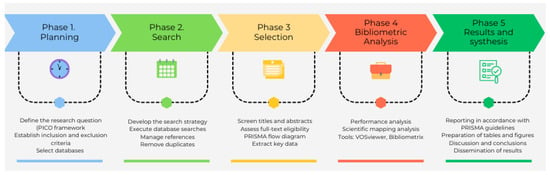
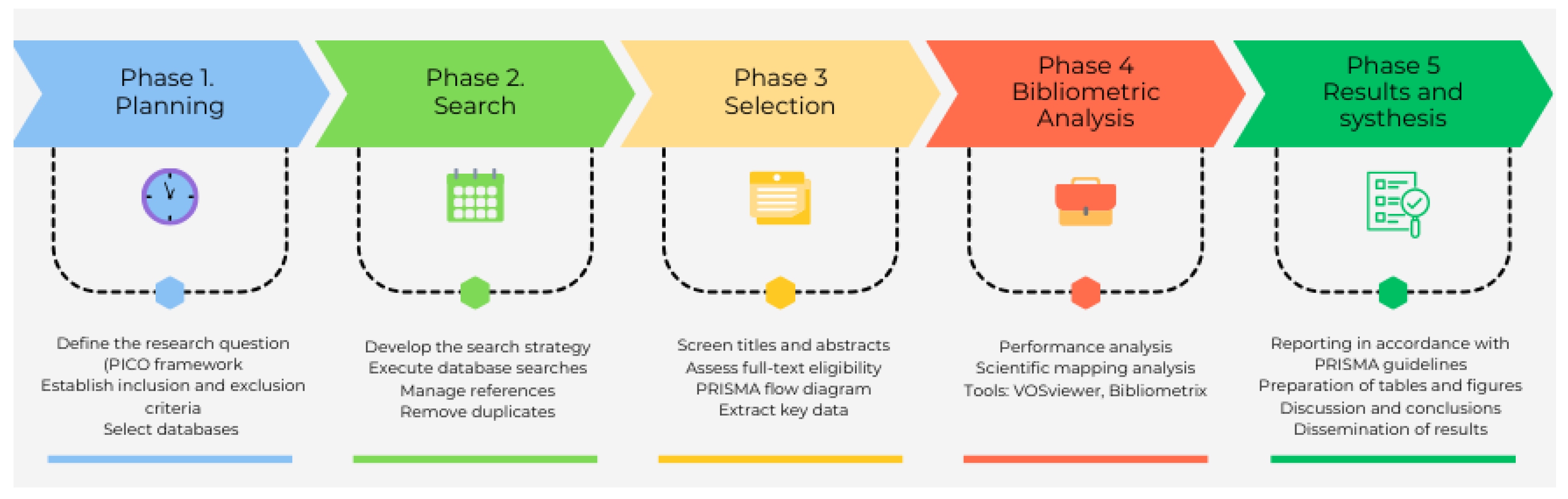
The methodological procedure adopted in this study (Figure 1) was structured into several successive phases to ensure a comprehensive search, transparent study selection, and robust analysis. The workflow was designed to ensure methodological transparency and replicability across databases and analytical stages. The diagram outlines the process from the formulation of the research question and the definition of inclusion and exclusion criteria, through record identification and screening, eligibility assessment, bibliometric analysis using specialized tools, and the final synthesis of results.
Figure 1.
Methodological workflow for the systematic literature review and bibliometric analysis in microalgae biotechnology.
2.1. Inclusion and Exclusion Criteria
To ensure the relevance and quality of the analyzed corpus, inclusion and exclusion criteria were defined in accordance with the PRISMA 2020 guidelines. These criteria ensured analytical consistency with the research objective and reduced the inclusion of studies that lacked explicit innovation or technology-transfer dimensions.
Inclusion criteria
- Scientific publications indexed in Scopus and Web of Science (WoS).
- Peer-reviewed research articles and review papers, as these provide empirical evidence or synthesized knowledge.
- Publications published between 2015 and 2025, in order to capture recent developments and emerging innovation trends in the field.
- Language: English, as it is the predominant language of international scientific communication.
- Studies that included terms related to microalgae and their intersection with innovation, technology management, knowledge transfer, dynamic capabilities, innovation ecosystems, or technology adoption in the title, abstract, or keywords.
Exclusion criteria
- Technical notes, editorials, conference abstracts, book chapters, reports, and other materials are not subjected to peer review.
- Publications addressing microalgae exclusively from a techno-biological perspective, without explicit links to innovation, technology transfer, or innovation ecosystems.
- Duplicate records were identified across databases, as well as documents lacking complete bibliographic information (e.g., DOI, title, or source).
2.2. Search Strategy
The bibliographic search was conducted in Scopus (Elsevier) and Web of Science (WoS; Clarivate), covering the period from January 2015 to July 2025 and restricted to publications in English. The initial search retrieved 568 records (Scopus: 353; WoS: 215). After database integration and duplicate removal, the consolidated corpus comprised 418 unique documents, serving as the basis for the systematic literature review and subsequent analyses. These 418 records constituted the basis for the systematic review, while a subset of 353 Scopus-indexed documents was later used for bibliometric analysis due to metadata consistency.
To construct the search strategy, two main sets of terms were defined: the first related to microalgae, and the second associated with innovation, technology management, and knowledge transfer. These sets were combined using Boolean operators. The final search equation applied was as follows:
(“microalgae” OR “micro-algae”) AND (“innovation” OR “technology management” OR “knowledge transfer” OR “technology transfer” OR “innovation management” OR “R&D management” OR “innovation ecosystem” OR “technology adoption”). The selected terms were iteratively refined through pilot searches to balance sensitivity and specificity, ensuring comprehensive coverage while minimizing irrelevant technical-only records.
This search strategy ensured comprehensive coverage of the literature on the intersection of microalgae biotechnology and innovation-related processes, providing the analytical foundation for both the systematic review and the bibliometric analysis.
2.3. Systematic Literature Review
The Systematic Literature Review (SLR) was conducted in accordance with the PRISMA 2020 guidelines [21], which provide a standardized framework for reporting the identification, screening, eligibility assessment, and inclusion of studies. This approach ensured transparency, comprehensiveness, and reproducibility throughout the review process. To enhance methodological rigor, the research question was formulated using the PICO framework [22], adapted to the specific context of microalgae biotechnology and innovation. The PICO framework was adapted to this context as a structured heuristic to operationalize innovation-oriented variables and to distinguish management-focused studies from purely technical contributions.
P (Population/Problem):
Studies on microalgae biotechnology published between 2015 and 2025 that address aspects of innovation, technology management, and knowledge transfer.
I (Intervention/Exposure):
Strategies, models, and practices of innovation management, technology transfer, and dynamic capability development are applied to the development and adoption of microalgae-based technologies.
C (Context/Contrast):
Traditional techno-scientific approaches focused exclusively on the biological or productive dimensions of microalgae, without incorporating elements of innovation management, institutional coordination, or technology transfer.
O (Outcomes):
Evidence on technology transfer mechanisms, technology adoption processes, technology maturity levels (TRL), and the strengthening of innovation ecosystems, enabling an understanding of the evolution of dynamic capabilities within the microalgae sector.
Based on this framework, the guiding research question of the review was formulated as follows:
How have studies on microalgae biotechnology (P) addressed innovation management and technology transfer processes (I), in contrast to approaches focused exclusively on the techno-scientific dimension (C), in relation to the development of dynamic capabilities, technology adoption, and innovation ecosystems (O)?
The PICO framework was adopted as a structuring tool to ensure consistency between the research question, selection criteria, and literature analysis. Its application enabled the identification of studies that explicitly address innovation management and technology transfer processes within microalgae biotechnology, while distinguishing them from contributions focused exclusively on the techno-scientific dimension. Accordingly, the combined use of the P, I, C, and O components guided both automated screening and manual review procedures, prioritizing documents that integrated concepts related to innovation management, technology transfer, dynamic capabilities, technology readiness levels (TRL), or innovation ecosystems. This methodological approach yielded an analytically relevant corpus at the intersection of biotechnology, technology management, and the bioeconomy, enabling a systematic and analytical assessment of prevailing trends, key actors, and research gaps in the literature.
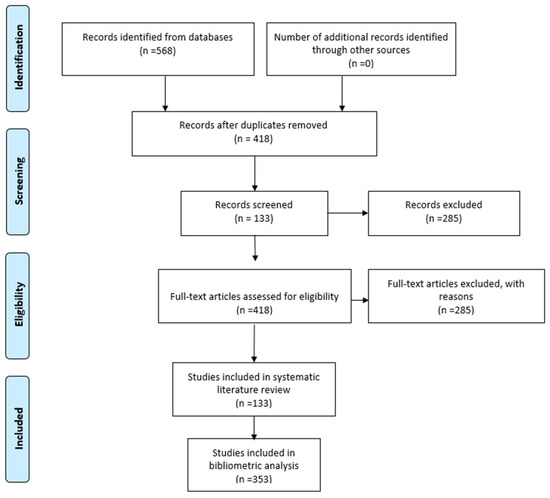
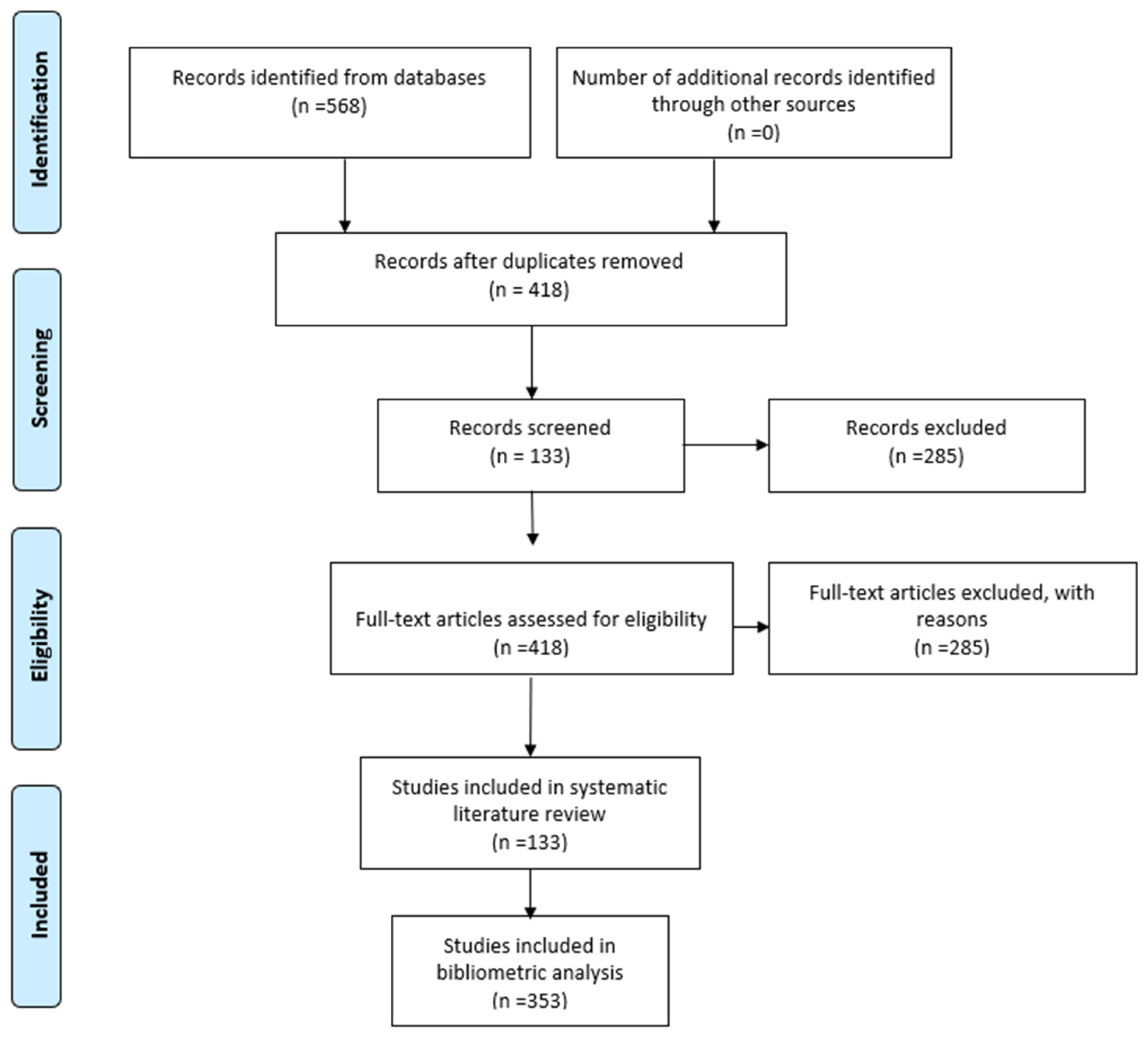
This process is illustrated in Figure 2, which presents the PRISMA 2020 flow diagram summarizing the stages of identification, screening, eligibility assessment, and final inclusion of studies.
Figure 2.
PRISMA 2020 Flow Diagram.
Protocol and Reproducibility
The operationalization of the PICO framework was implemented through a semi-automated workflow in R (Bibliometrix v4.x), complemented by manual verification to ensure consistency and accuracy. This semi-automated approach reduced selection bias while preserving analytical judgment through manual validation.
- Identification (P + I): The simultaneous presence of terms related to microalgae/micro-algae (P) and innovation, technology management, knowledge/technology transfer, R&D management, or innovation ecosystem (I) was required in the title, abstract, or keywords.
- Context/Contrast (C): Studies adopting a purely techno-biological focus, without explicit links to innovation or technology transfer, were excluded.
- Outcomes (O): Priority was given to documents explicitly addressing technology readiness levels (TRL), technology adoption, capacity building, or innovation ecosystem development.
Deduplication was performed by combining DOI information, standardized titles (lowercase, punctuation-free), publication year, and first author. Two independent reviewers screened 100% of titles and abstracts; inter-reviewer agreement reached κ = 0.82 (high) in a random 20% subsample. For the bibliometric analysis, 353 records from Scopus were retained due to their metadata homogeneity and technical compatibility with the analytical tools employed. A sensitivity analysis using Web of Science data is reported in Appendix A, showing that the main patterns—leading countries, thematic clusters, and keyword co-occurrences—remain consistent across databases.
2.4. Data Extraction and Bibliometric Analysis
Once the studies included in the Systematic Literature Review (SLR) were identified, data were extracted and organized to structure the information required for both quantitative and qualitative analyses. The selected records were compiled into a data matrix that included bibliographic variables—such as authors, publication year, title, source, document type, country, institutional affiliation, and keywords—as well as contextual information on research topics related to innovation, technology transfer, and dynamic capabilities.
Bibliometric analysis was conducted using the Bibliometrix R package [23] and VOSviewer [24], complemented by the Analyze Results function available in Scopus. These tools enabled the extraction of scientific performance indicators, including annual publication output, distribution by country and journal, and patterns of collaboration among authors and institutions. In addition, they supported the construction of keyword co-occurrence maps and collaboration network visualizations.
The data were analyzed using co-authorship, co-occurrence, and bibliographic coupling techniques to identify key actors, dominant thematic trends, and conceptual linkages within the literature on innovation and microalgae biotechnology. Data preprocessing involved term normalization and the consolidation of lexical variants in keywords (e.g., “microalgae” and “micro-algae”) to ensure consistency across analyses.
Although the systematic literature review was based on a consolidated corpus of 418 unique documents retrieved from Scopus and Web of Science (WoS), the bibliometric analysis was conducted exclusively using the 353 records indexed in Scopus. This choice reflects established practices in bibliometric research, where database homogeneity is prioritized to ensure comparability and robustness of network-based analyses. Moreover, its export formats are fully compatible with the bibliometric tools employed, thereby ensuring reproducibility and consistency in the analytical results.
3. Results
3.1. Bibliometric Results
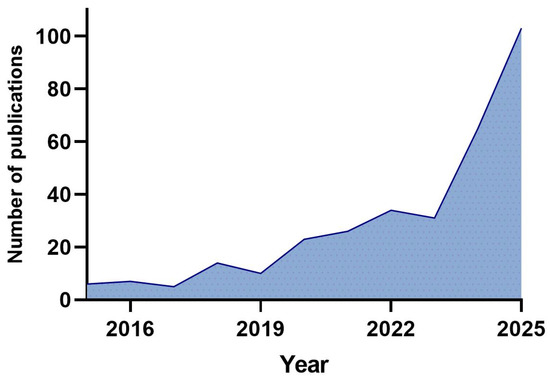
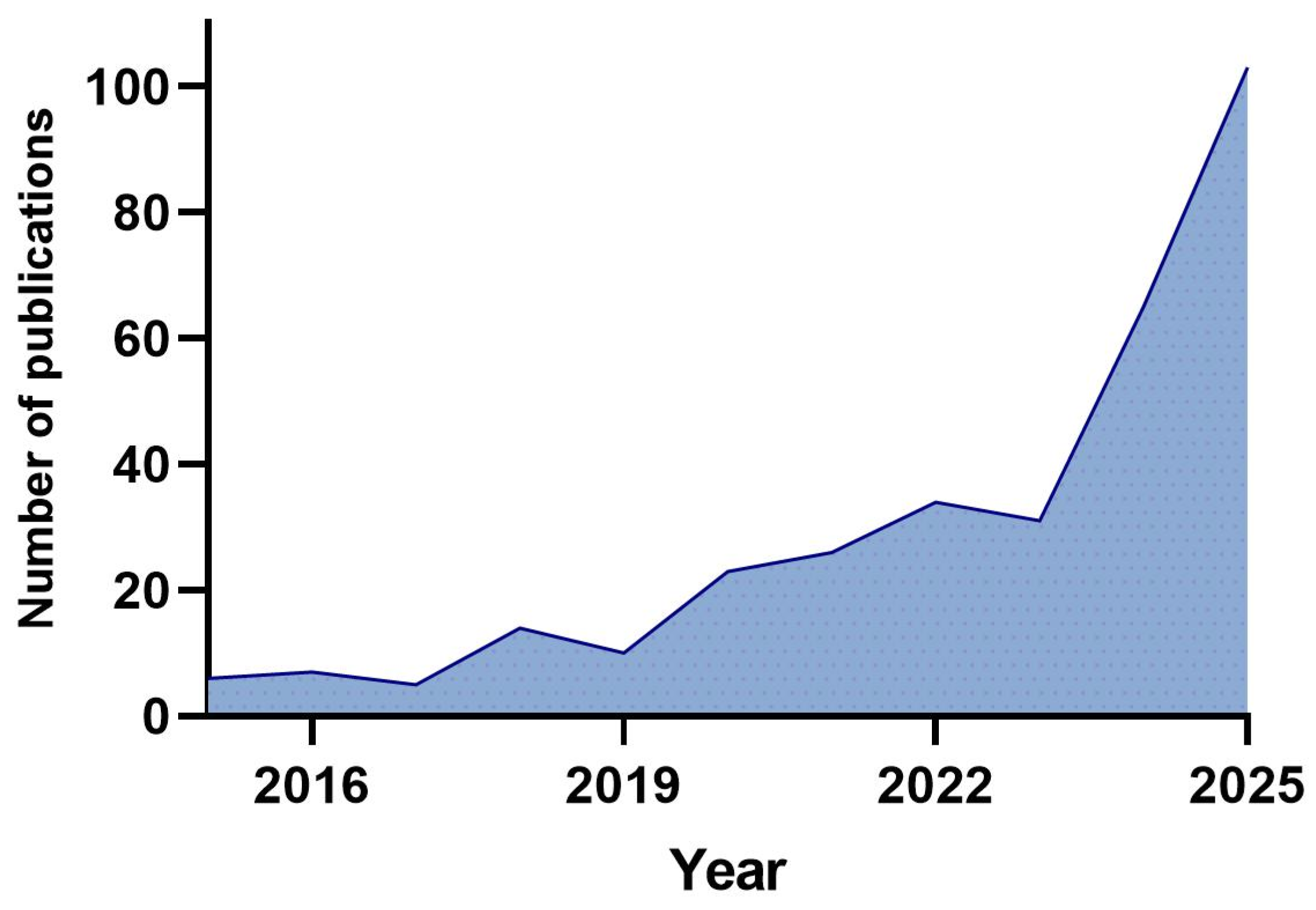
The bibliometric analysis reveals a marked acceleration in research activity on microalgae biotechnology from an innovation perspective, particularly after 2020 (Figure 3). This trend reflects the field’s growing alignment with global bioeconomy, sustainability, and energy transition agendas, as well as the increasing positioning of microalgae as technological platforms within innovation ecosystems.
Figure 3.
Annual scientific publication output in microalgae biotechnology and innovation research (2015–2025). The y-axis represents the number of publications per year.
This growth is not only temporally aligned with global bioeconomy and sustainability agendas, but also reflects a structural shift in the positioning of microalgae within innovation systems. Rather than being treated solely as biological resources, microalgae are increasingly conceptualized as technological platforms with the potential to create value across multiple sectors. However, this expansion in scientific output does not necessarily translate into proportional advances in technology transfer, suggesting a potential imbalance between knowledge generation and its effective deployment in innovation ecosystems.
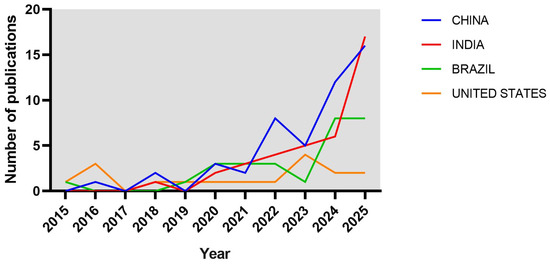
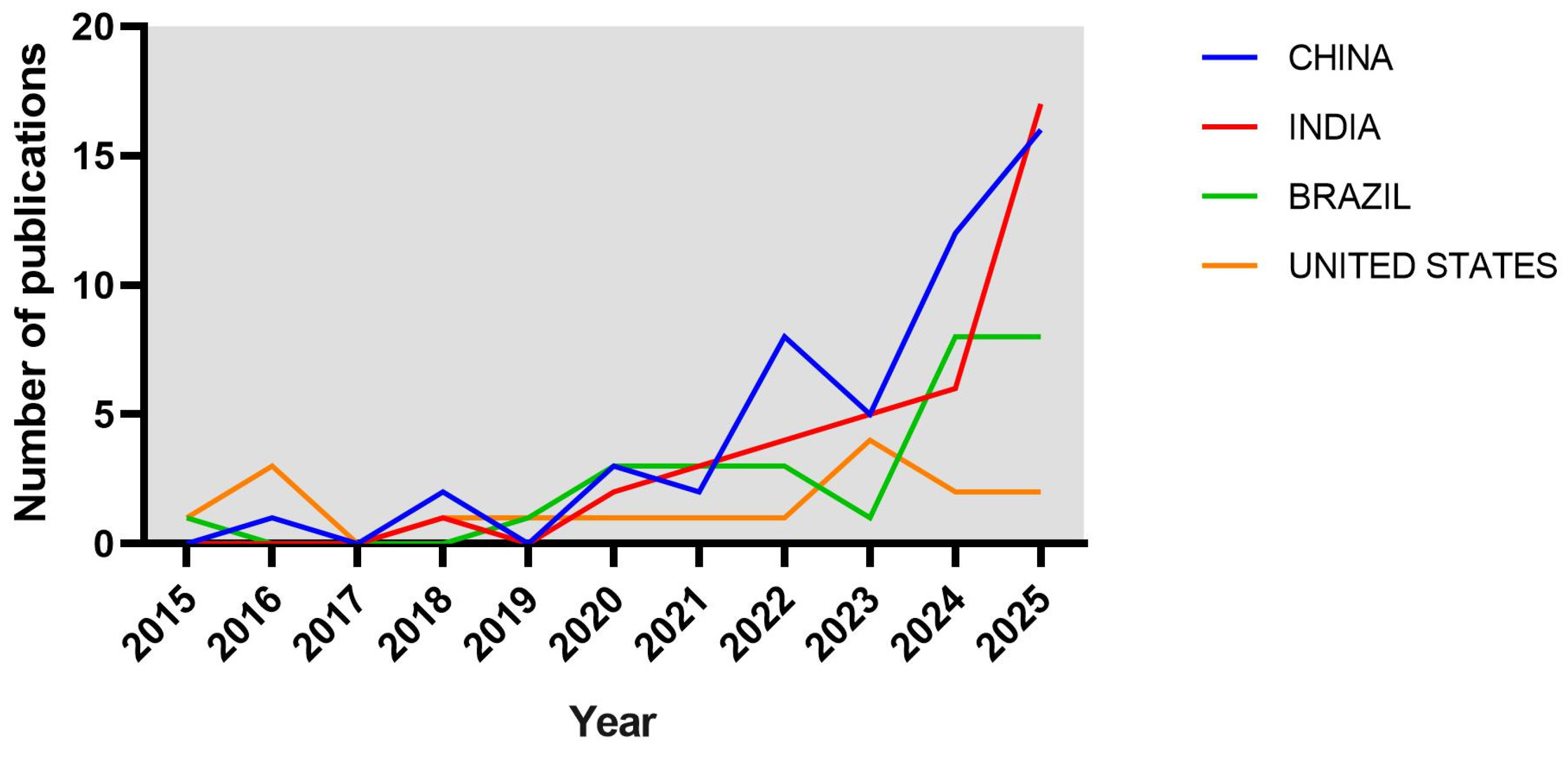
Scientific production is geographically concentrated in Asia and North America, with China, India, and the United States leading global output (Figure 4). This distribution suggests that national bioeconomy strategies and sustained investment in green technologies strongly influence the development of innovation-oriented research in microalgae biotechnology. In contrast, the limited participation of most emerging regions suggests a fragmented regional landscape, potentially associated with weaker institutional coordination and limited technology-transfer capabilities.
Figure 4.
Temporal evolution of scientific publication output by leading countries in microalgae biotechnology and innovation research (2015–2025). The y-axis represents the number of publications per year. Countries were selected based on their relevance and contribution to the analyzed literature.
The analysis of publication sources indicates that scientific output is concentrated in a relatively small group of journals within applied biotechnology, renewable energy, and sustainability (Table 1). This pattern highlights the field’s translational orientation, in which research is increasingly framed in terms of technological applications, bioresource valorization, and contributions to circular bioeconomy models.
Table 1.
Most relevant sources in terms of published documents.
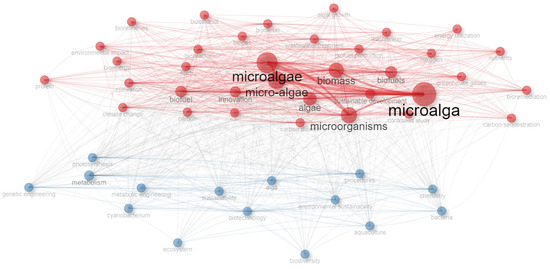
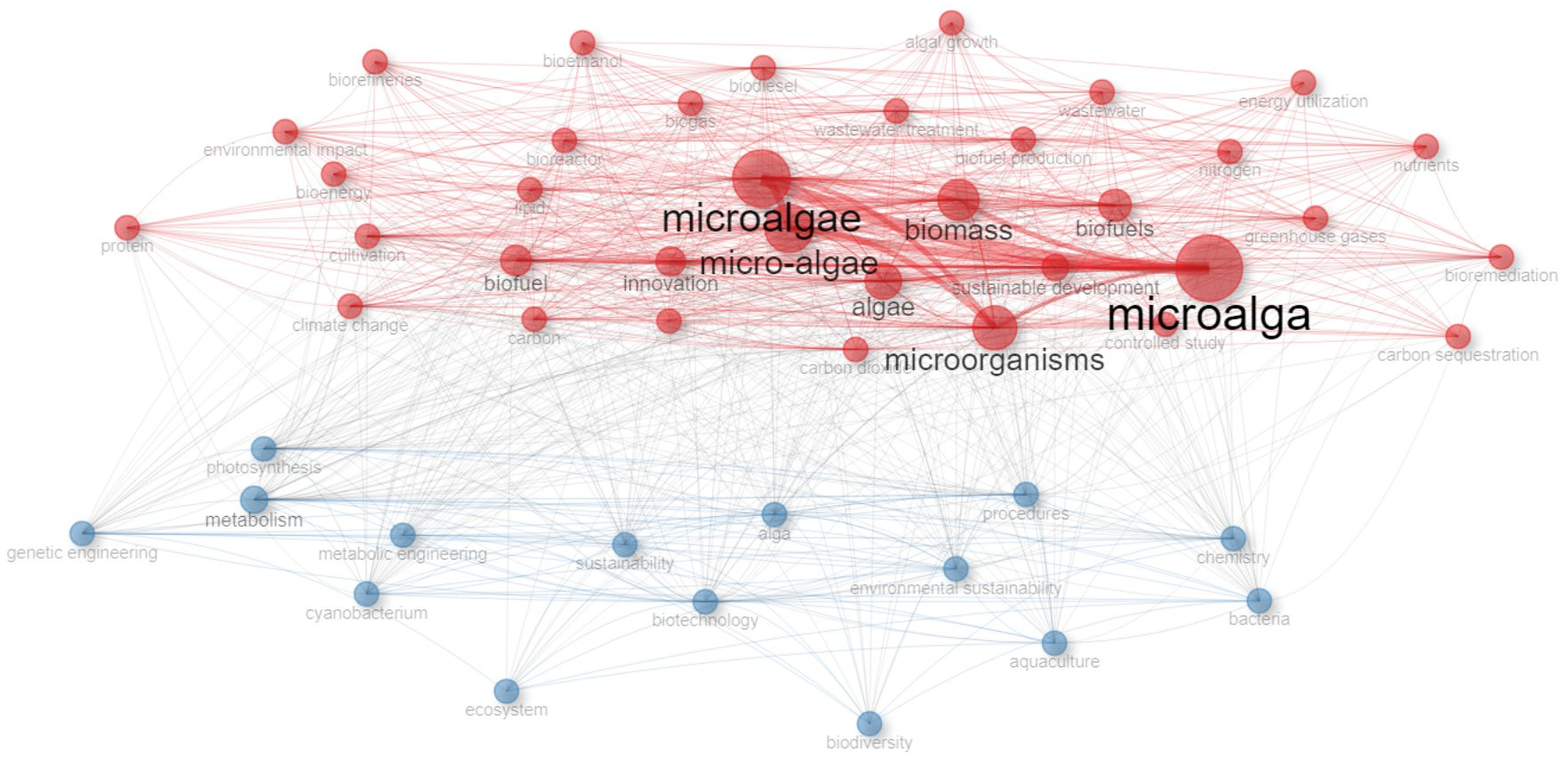
The keyword co-occurrence analysis identifies two main thematic domains: one associated with applied biotechnological processes and sustainability-oriented applications, and another linked to biological and fundamental research (Figure 5). The partial separation between these domains suggests that integration across the knowledge-to-application continuum remains limited, indicating persistent gaps between scientific research and innovation processes.
Figure 5.
Keyword co-occurrence network in studies on microalgae biotechnology (2015–2025).
Two main clusters are identified: one oriented toward applied biotechnological and sustainability-driven research, and another focused on biological and fundamental processes. Overall, this configuration suggests a gradual evolution of the field from predominantly biological research toward a more integrated perspective that incorporates sustainability, innovation, and knowledge transfer. Such a shift suggests the emergence of a research and innovation ecosystem in microalgae biotechnology that extends beyond laboratory-scale studies toward broader technological and systemic applications.
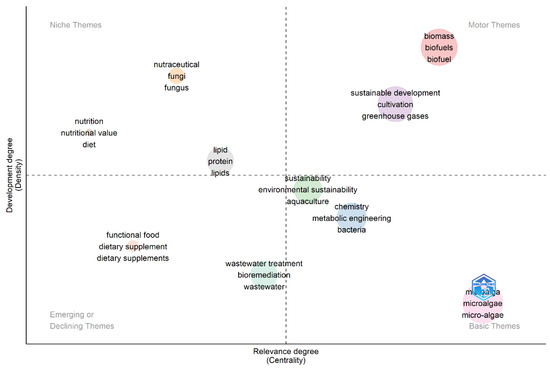
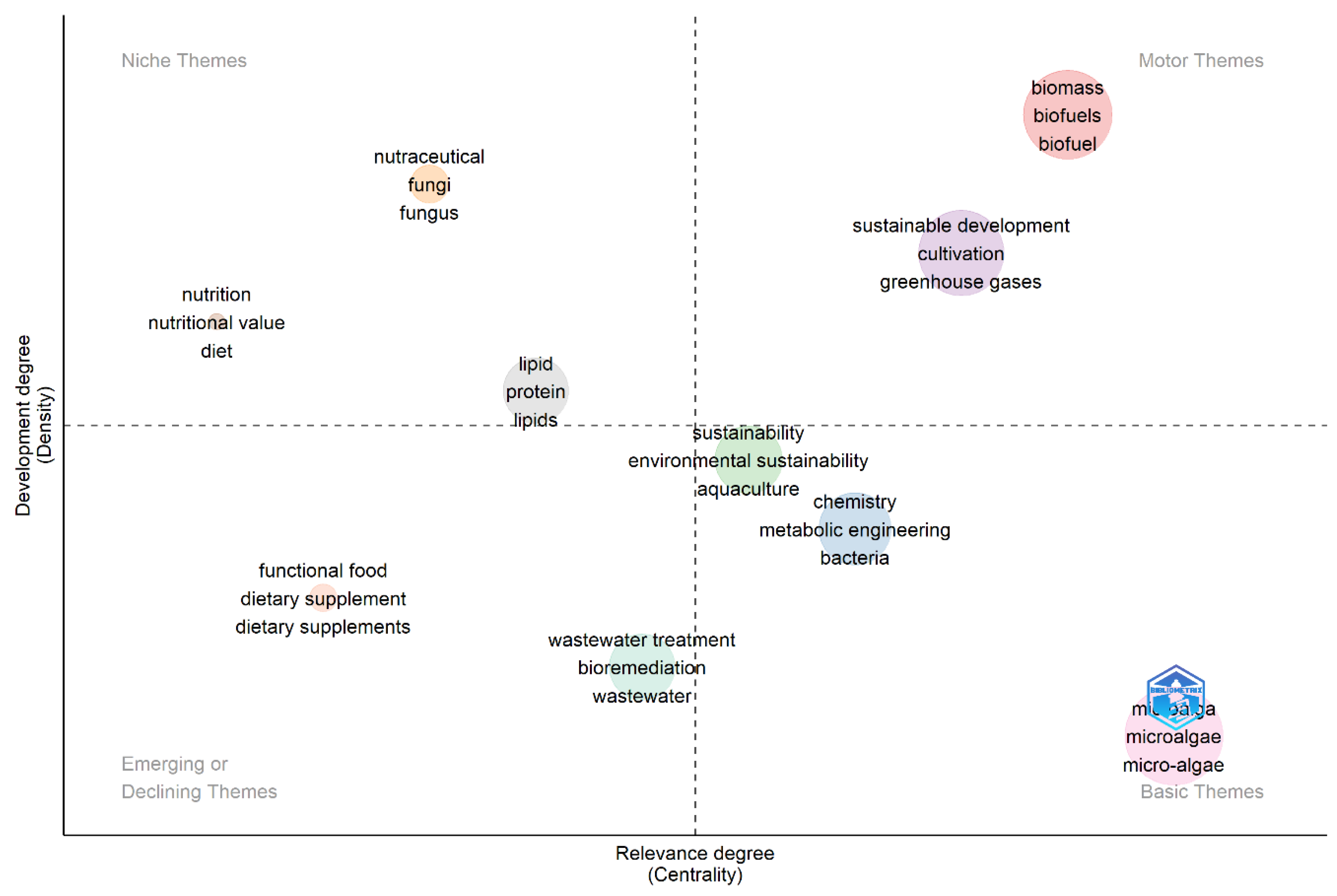
The thematic map further confirms the field’s multidimensional structure, in which bioenergy-related topics serve as motor themes, while microalgae-related concepts remain central but less internally developed (Figure 6). Emerging themes such as functional food and wastewater applications point to new directions for innovation, particularly when integrated with circular economy approaches.
Figure 6.
Thematic map of microalgae biotechnology and innovation (2015–2025).
Overall, these bibliometric patterns reveal not only the field’s expansion but also structural imbalances in its development. While scientific production has increased significantly, the observed fragmentation between research domains suggests an imbalance in the development of dynamic capabilities. Specifically, strong sensing capacities are reflected in the rapid expansion of scientific knowledge, whereas weaker seizing and reconfiguring capabilities limit the transformation of this knowledge into scalable technologies. This imbalance helps explain the persistent gap between research and effective technology transfer in microalgae biotechnology.
3.2. Thematic Synthesis of the Selected Literature
The qualitative analysis of the 133 documents selected through the PICO framework reveals a structurally heterogeneous and evolving research field, in which biotechnology, engineering, innovation management, and sustainability converge. Rather than constituting isolated lines of inquiry, the identified themes reflect different stages within the knowledge-to-innovation continuum, highlighting both complementarities and persistent gaps in the development of microalgae biotechnology.
Across the literature, five major thematic areas emerge. The first is centered on technological innovation in bioprocesses and bioproducts, with a strong focus on strain optimization, metabolic engineering, and the production of high-value compounds such as pigments, lipids, and functional proteins. While this body of work demonstrates significant advances in scientific and technical knowledge, it remains largely concentrated at early and intermediate stages of technological maturity. The frequent incorporation of biorefinery models and technology readiness level (TRL) assessments suggests an increasing awareness of scalability challenges; however, the transition from experimental validation to industrial deployment remains limited.
A second thematic area relates to bioenergy and environmental sustainability, which has gained prominence in recent years. Microalgae-based systems have been widely explored for wastewater treatment and bioremediation due to their capacity to remove nutrients and contaminants while generating valuable biomass. Recent studies have further expanded this understanding by exploring physiological and molecular responses under complex effluent conditions. For instance, the hormetic effects of dissolved organic matter derived from anaerobic digestion effluents on Chlorella sp. have been shown to influence both physiological performance and gene expression, highlighting the potential for optimizing microalgae-based bioremediation processes under variable environmental conditions [25]. Although these studies contribute to aligning microalgae biotechnology with global sustainability agendas, they also reveal a recurring emphasis on technical feasibility rather than on the systemic conditions required for large-scale implementation, including infrastructure, market integration, and regulatory frameworks.
The third thematic area focuses on innovation management and technology transfer, representing a critical interface between scientific knowledge and its practical application. Studies in this stream examine mechanisms such as university–industry collaboration, policy instruments, and the creation of biotechnology-based ventures. Importantly, this body of literature introduces the perspective of dynamic capabilities, emphasizing actors’ ability to sense opportunities, seize them through resource mobilization, and reconfigure organizational and technological assets. However, the relatively limited number of studies in this area, compared to the broader technical literature, suggests that the development of such capabilities remains underexplored and unevenly distributed across innovation ecosystems.
A fourth thematic area encompasses industrial and sectoral applications, including the use of microalgae in food, cosmetics, pharmaceuticals, and agriculture. This line of research reflects the diversification of potential markets and the growing interest in bio-based products. Nevertheless, the literature highlights significant barriers related to regulatory approval, quality standards, and cost competitiveness, which constrain the consolidation of sustainable value chains and limit the effective translation of scientific advances into commercial outcomes.
Finally, the analysis reveals an emerging focus on innovation ecosystems and international collaboration. Scientific production and collaborative networks are strongly concentrated in regions with established bioeconomy strategies, particularly in Asia and Europe, while other regions—such as Latin America—exhibit more fragmented and less coordinated innovation systems. This asymmetry suggests that the development of microalgae biotechnology is not only a function of scientific capacity but also of the strength of institutional linkages and governance structures that enable knowledge circulation and technology transfer.
Taken together, these thematic areas reveal a fundamental tension within the field. On the one hand, rapid expansion of scientific knowledge and technological exploration indicates strong sensing capabilities. On the other hand, the limited progress toward large-scale implementation reflects weaker seizing and reconfiguring capabilities, particularly in technology transfer and market integration. This imbalance helps explain the persistent gap between research and innovation in microalgae biotechnology.
Overall, the literature points to a progressive maturation of the field toward a more integrated and application-oriented paradigm. However, this transition remains incomplete, as the articulation among the scientific, technological, and institutional dimensions remains fragmented. Addressing this gap requires not only advances in biotechnological research but also the strengthening of innovation capabilities and coordination mechanisms within broader bioeconomy-oriented ecosystems.
4. Discussion
The combined evidence from the systematic review and bibliometric analysis indicates that microalgae biotechnology is evolving from a predominantly science-driven domain toward a more complex innovation-oriented system [26,27]. However, this transition remains incomplete and structurally unbalanced. While scientific production has expanded rapidly, the capacity to translate this knowledge into scalable technological and industrial applications remains limited, a challenge widely identified in bioeconomy transitions and innovation system development [6,28].
This imbalance can be interpreted through the lens of dynamic capabilities [29] but also requires a broader systemic perspective. From an innovation systems approach [14,15], innovation is not the result of isolated scientific advances, but of interactive processes among actors, institutions, and knowledge flows. In this context, the observed growth in publication output reflects strengthened sensing capabilities, as research communities increasingly identify technological opportunities [3,27]. However, the limited development of commercialization pathways indicates weak seizing and reconfiguring capabilities, which are essential for transforming knowledge into marketable innovations [30,31].
The thematic synthesis further supports this interpretation by showing that most research efforts remain concentrated in early and intermediate stages of technological maturity. Although Technology Readiness Levels (TRL) frameworks are increasingly used to assess technological progress [20,32], their application remains largely descriptive. From a systemic perspective, TRL should not only measure technological maturity but also serve as a coordination mechanism that aligns scientific development with industrial needs and policy support. The limited strategic use of TRL reflects weak articulation between actors and insufficient integration of innovation management practices.
This articulation problem becomes more evident when analyzed through the Triple Helix model [19], which emphasizes the interaction between universities, industry, and government as a key driver of innovation. The results of this study suggest that, although scientific capabilities are expanding, the connections between these actors remain fragmented, particularly in emerging bioeconomy contexts. As a result, knowledge flows are not effectively translated into technological deployment, limiting the development of sustainable value chains.
The geographical concentration of scientific production further reinforces this interpretation. Regions with consolidated innovation systems—such as the European Union, the United States, and China—benefit from strong institutional frameworks, coordinated policies, and dense collaboration networks [33,34,35]. These conditions enable the co-evolution of scientific knowledge, technological capabilities, and market formation. In contrast, regions with weaker institutional articulation face structural barriers that hinder their progression along the technology maturity spectrum.
Despite the field’s expansion, a significant portion of the literature remains focused on technical and biological dimensions in isolation [36,37,38]. While these contributions are essential, they provide limited insight into how technologies evolve within innovation systems or into commercialization. This fragmentation highlights the need to integrate engineering advances with innovation management frameworks and systemic perspectives.
Overall, this study contributes to the literature by proposing that the gap between research and innovation in microalgae biotechnology should be understood as a systemic misalignment between dynamic capabilities, technological maturity, and innovation system structures. Bridging this gap requires strengthening not only scientific research but also the institutional coordination mechanisms, governance structures, and collaborative networks that enable effective technology transfer. In this sense, integrating dynamic capabilities, TRL frameworks, and innovation systems theory offers a comprehensive analytical framework for understanding and advancing emerging biotechnological ecosystems.
4.1. Regulatory and Sustainability Perspectives in the Microalgae Bioeconomy
The recent publication of the EU4Algae report [39] provides a strategic framework that enables the findings of this review to be contextualized within the regulatory and sustainability transformations currently reshaping microalgae biotechnology at a global scale. The report highlights that the development of the algal sector depends not only on scientific progress and technological innovation but also on the capacity of production systems to demonstrate environmental legitimacy and regulatory coherence in response to emerging European sustainability frameworks.
Specifically, the report identifies three priority areas for action: harmonizing environmental assessment methodologies, integrating ecosystem services into business models, and adopting verifiable metrics to support circularity and transparency. These priorities are closely aligned with recent European regulatory instruments—such as the Green Claims Directive and the Corporate Sustainability Reporting Directive (CSRD)—which require firms to substantiate sustainability claims with standardized, quantifiable indicators of environmental and social performance. Within this evolving regulatory context, microalgae biotechnology is increasingly positioned as a core component of the regenerative blue bioeconomy, where innovations are expected to demonstrate not only technical feasibility but also measurable and credible contributions to sustainability objectives.
The findings of this review are consistent with this perspective, as technology readiness levels (TRL) and dynamic capabilities emerge as complementary instruments for advancing toward evidence-based innovation management models [6,13]. In jurisdictions with advanced regulatory frameworks—such as those within the European Union—these elements operate synergistically alongside circular-economy and green-transition policies. By contrast, evidence from emerging regions, particularly Latin America, reveals substantial institutional gaps related to technology governance, environmental monitoring, and the adoption of internationally recognized standards.
In this context, the approach promoted by EU4Algae [39], together with initiatives such as AlgaePro-BANOS [40], outlines a pathway for strengthening the environmental and economic traceability of microalgae-based products through instruments such as Life Cycle Assessment (LCA) and sector-specific Product Environmental Footprint Category Rules (PEFCR). The integration of these frameworks into both scientific practice and business strategies can enhance the international credibility of microalgae biotechnology, consolidating its role as a strategic technological vector for climate change mitigation, food security, and industrial bioinnovation.
4.2. Strategic Pathways for Technology Development in Emerging Regions
While the findings of this study are global in scope, their implications are particularly relevant for emerging innovation ecosystems, where structural constraints related to technology transfer, institutional coordination, and technological maturity are more pronounced. In this context, Latin America is considered an illustrative case to analyze how these dynamics may manifest in regions with developing innovation systems. The results of this review reveal a pronounced asymmetry between leading regions in microalgae biotechnology—primarily Asia and Europe—and emerging regions, where sectoral development remains at an incipient stage.
These constraints can be grouped into three interrelated dimensions: institutional, infrastructural, and financial. When examined through the lens of dynamic capabilities, such limitations restrict regional actors’ capacity to effectively sense opportunities in global markets, secure the resources necessary for technological scaling, and reconfigure organizational structures toward sustainable, innovation-oriented business models.
At the institutional level, fragmentation among universities, R&D centers, and firms impedes the formation of stable, effective collaboration networks. The absence of dedicated national policies for the blue bioeconomy, together with regulatory frameworks that insufficiently incentivize technology transfer, limits regional actors’ ability to scale laboratory results into prototypes or industrial applications. In this context, establishing inter-institutional technology transfer platforms and adopting guidelines based on Technology Readiness Levels (TRL) represent critical initial steps toward harmonizing evaluation criteria and directing resources toward demonstration stages (TRL 5–7).
At the infrastructural level, emerging ecosystems lack pilot biorefineries, scale-up laboratories, and shared technological services to validate the industrial feasibility of microalgae-based developments. Strategic investment in such infrastructures—combined with open-access and shared-use mechanisms—could significantly reduce experimentation costs while fostering co-creation processes between academia and the productive sector.
From a financial perspective, innovation efforts remain largely dependent on short-term public funding, with limited coordination between instruments supporting basic research and those aimed at technological validation or scaling. Addressing this gap requires promoting milestone-based financing schemes explicitly linked to TRL progression and demonstrating measurable impacts in sustainability performance, industrial competitiveness, and regional inclusion.
Based on the evidence synthesized in the systematic review and the bibliometric analysis, this study proposes a structured roadmap to strengthen microalgae biotechnology innovation in contexts such as Latin America. The roadmap is grounded in three strategic dimensions that repeatedly emerge in the literature as critical enablers of technology maturation and adoption: technology governance, shared innovation infrastructure, and milestone-based financing. These dimensions are articulated through concrete policy and innovation levers, alongside measurable performance metrics that allow monitoring progress across different stages of technological development.
Rather than presenting prescriptive recommendations, the proposed roadmap integrates representative contributions from the literature on bioeconomy, innovation ecosystems, dynamic capabilities, and technology readiness levels. In this way, Table 2 synthesizes empirical and conceptual insights into an evidence-informed framework that can support policymakers, research institutions, and innovation managers in designing strategies to bridge the gap between microalgae research and industrial deployment.
Table 2.
Evidence-informed framework for microalgae biotechnology development in emerging innovation ecosystems (illustrated through Latin America).
To ensure analytical consistency, each dimension of the proposed framework is directly grounded in recurrent patterns identified in the systematic review and the thematic synthesis. Specifically, technology governance emerges from studies on innovation ecosystems and institutional coordination (Outcome 3); shared innovation infrastructure is derived from evidence on technology maturation and TRL progression (Outcome 2); and milestone-based financing reflects recurring constraints identified in studies on technology transfer and scaling processes across emerging innovation contexts. Therefore, the proposed roadmap does not constitute a prescriptive model, but rather a structured integration of empirical findings identified across the analyzed literature.
4.3. PICO Synthesis and Validation of Results
The application of the PICO framework enabled the systematic refinement and classification of the 418 initial records retrieved from Scopus and Web of Science (WoS), allowing for the identification of studies that explicitly address innovation management and technology transfer within the field of microalgae biotechnology. Based on the predefined criteria—requiring the simultaneous presence of terms related to microalgae (P) and to innovation processes, technology management, or transfer-related outcomes (I/O)—a subset of 133 documents, representing 31.8% of the initial corpus, was selected as the final dataset for the Systematic Literature Review (SLR).
The excluded records correspond predominantly to studies with a purely technical or biological focus, lacking an explicit connection to innovation processes, technology adoption, or institutional and managerial dimensions. This group accounts for approximately 22% of the total corpus and was treated as the contrast category (C), highlighting differences between traditional biotechnology-oriented research and innovation management–oriented approaches. The remaining publications (approximately 46%) that addressed microalgae-related topics did not align sufficiently with the innovation or technology transfer dimensions and were therefore excluded for failing to meet the established inclusion criteria.
The distribution of thematic results within the final corpus further supports the analytical relevance of the adapted PICO framework (Table 3). Studies associated with Outcome 1 (dynamic capabilities) account for 14% of the analyzed literature and primarily focus on the application of conceptual frameworks—such as sensing, seizing, and reconfiguring—to explain processes of organizational learning and technological evolution. Publications linked to Outcome 2 (technology readiness levels and technology adoption) account for 23% of the corpus, reflecting the growing use of technology maturity indicators as instruments for innovation management and decision-making. Finally, studies associated with Outcome 3 (innovation ecosystems) comprise 18% of the selected documents and address themes related to university–industry collaboration, technology governance structures, and bioeconomy-oriented policy frameworks.
Table 3.
Operationalization of the PICO research question and identified empirical evidence (2015–2024).
With respect to the Intervention (I) component, 31.8% of the analyzed articles explicitly incorporate concepts related to innovation management or technology transfer, confirming a gradual shift of the field toward technology management and adoption-oriented frameworks. These studies introduce and apply tools such as Technology Readiness Levels (TRL), biorefinery models, and university–industry cooperation schemes, thereby positioning microalgae biotechnology as a strategic innovation platform within the broader bioeconomy.
The Comparison (C) component indicates that 22% of the analyzed publications retain a predominantly technical or biological orientation, focusing on physiology, metabolism, or strain optimization, without explicit links to innovation management or technology transfer processes. This quantitative contrast reinforces the initial hypothesis of this review: although the field of microalgae biotechnology is scientifically well established, its progression toward technological maturity and the systematic integration of innovation processes remains uneven.
Regarding the Outcomes (O) component, three main categories were identified. Outcome 1 (Dynamic capabilities) accounts for 14.1% of the analyzed documents and is used to explain processes of organizational adaptation, knowledge absorption, and technological reconfiguration in dynamic environments. Outcome 2 (Technology adoption and Technology Readiness Levels) is addressed in 22.9% of the studies, focusing on assessing technological maturity and the progression from experimental validation stages (TRL 3–4) to industrial demonstration phases (TRL 6–7). Finally, Outcome 3 (Innovation ecosystems) is discussed in 17.7% of publications, focusing on collaboration networks, bioeconomy-oriented public policies, and technology governance frameworks.
This distribution suggests that recent literature on microalgae biotechnology has not only advanced understanding of innovation processes but also supported their operationalization through concrete analytical and management tools. Approaches based on Technology Readiness Levels (TRL), dynamic capabilities, and technology transfer are increasingly consolidating as complementary instruments for narrowing the gap between research and industrial application. At the same time, the growing adoption of environmental assessment tools—such as Life Cycle Assessment (LCA) and Product Environmental Footprint (PEF)—reflects a clear convergence between technological innovation and sustainability-oriented decision-making.
Overall, the results indicate that this review provides a comprehensive response to the PICO research question by identifying a verifiable link between scientific advances in microalgae biotechnology and the development of institutional and organizational capacities that enable technology adoption. The empirical evidence further suggests that the most influential contributions are those that integrate the three analytical dimensions—scientific, technological, and governance-related—confirming that sectoral maturity depends not only on research excellence, but also on the strategic management of innovation and effective coordination among actors within sustainable bioeconomy ecosystems.
5. Limitations
This study presents several limitations that should be acknowledged. First, although the systematic literature review followed the PRISMA 2020 guidelines and applied a structured PICO-based selection strategy, the analysis was limited to publications indexed in Scopus and Web of Science. While these databases ensure access to high-quality, peer-reviewed sources, relevant studies indexed in other databases or in grey literature may have been excluded.
Second, the time frame considered (2015–2025) was selected to capture recent developments in microalgae biotechnology and innovation processes; however, this restriction may have excluded earlier foundational studies that contributed to the field’s evolution.
Third, the bibliometric analysis relies on metadata and keyword co-occurrence, which may not fully capture the conceptual depth or contextual nuances of the analyzed studies. Although this limitation was partially addressed through thematic synthesis, the interpretation of results still depends on the authors’ analytical perspective.
Fourth, integrating dynamic capabilities, technological maturity (TRL), and innovation systems frameworks constitutes an interpretative approach rather than a direct measurement of these constructs within each study. As such, the findings should be understood as a conceptual synthesis of trends rather than a causal empirical validation.
Finally, while the study aims to provide a global overview, the interpretation of innovation dynamics may be influenced by the uneven geographical distribution of publications, which is concentrated in regions with stronger research and innovation systems.
6. Conclusions
This study provides a comprehensive analysis of the evolution of microalgae biotechnology by integrating systematic literature review and bibliometric methods. The findings reveal that, despite the rapid expansion of scientific production, the field remains predominantly focused on early-stage research, with limited progress toward technological maturation and large-scale implementation.
From a dynamic capabilities perspective [29], this imbalance reflects a disproportionate development of sensing activities—evidenced by the identification of new applications and research opportunities—while seizing and reconfiguring capabilities remain underdeveloped. This limits the field’s ability to translate scientific knowledge into viable technological and commercial outcomes.
By incorporating an innovation systems perspective [14,15], the study highlights that these limitations are not solely technological, but systemic. The effectiveness of innovation processes depends on the alignment between scientific capabilities, institutional frameworks, and market dynamics. In this regard, the Triple Helix model [19] provides a useful framework to understand how weak articulation among universities, industry, and government constrains technology transfer and innovation performance.
Furthermore, the analysis of technological maturity using TRL frameworks shows that, although these tools are increasingly adopted, their application remains largely descriptive rather than strategic. Strengthening the role of TRL as a coordination mechanism could support more effective pathways from research to commercialization.
Overall, this study contributes to the literature by proposing an integrated analytical framework that connects dynamic capabilities, technological maturity, and innovation systems to understand the development of emerging biotechnological fields better. This approach not only advances theoretical understanding but also provides a foundation for designing strategies to strengthen innovation ecosystems and enhance technology transfer within the bioeconomy.
Supplementary Materials
The following supporting information can be downloaded at: https://www.mdpi.com/article/10.3390/phycology6020046/s1, Table S1: PRISMA 2020 Checklist.
Author Contributions
G.L.L.-B. was responsible for the conceptualization, methodology, formal analysis, investigation, data curation, visualization, project administration, and the preparation of the original draft of the manuscript. R.Y.-C. contributed through supervision and validation, providing critical revisions and strategic guidance that strengthened the scope and quality of the study. J.B.G.-M. contributed to the review and editing of the manuscript, including support in style correction and translation. All authors have read and agreed to the published version of the manuscript.
Funding
This study received financial support from Universidad Francisco de Paula Santander (Colombia) (FINU 001-2025), the Ministry of Science and Technology of Colombia, and the Colombian Institute of Educational Credit and Technical Studies Abroad (MINCIENCIAS-ICETEX) under the project titled “FOTOLIX” with the ID 2023-0686.
Institutional Review Board Statement
Not applicable.
Informed Consent Statement
Not applicable.
Data Availability Statement
The original contributions presented in this study are included in the article. Further inquiries can be directed to the corresponding author.
Acknowledgments
The author acknowledges the institutional support provided by Universidad Francisco de Paula Santander through the doctoral study leave granted for the development of this research. The author also acknowledges the academic guidance and constructive feedback received during the doctoral training process, which contributed to the conceptual and methodological development of this study.
Conflicts of Interest
The author declares no conflicts of interest.
Appendix A. Sensitivity Analysis Based on Web of Science Data
To ensure the robustness of the bibliometric results, a sensitivity analysis was conducted using records retrieved exclusively from the Web of Science (WoS) database. The analysis aimed to assess whether the inclusion of Scopus data significantly influenced the observed trends in publication output, thematic distribution, and keyword co-occurrence. The WoS dataset was processed following the same inclusion and exclusion criteria defined under the PICO framework. Comparative results indicated consistent patterns in the identification of dominant research themes, including the prominence of innovation management, technology readiness levels (TRL), and bioeconomy-related applications. Minor differences were observed in publication counts and regional contributions; however, these variations did not affect the overall interpretation of the results. Therefore, the integration of Scopus and WoS databases is considered methodologically robust and does not introduce significant bias in the analytical outcomes.
References
- Iñiguez-Moreno, M.; González-Meza, G.M.; Araújo, R.G.; Flores-Contreras, E.A.; de la Rosa, O. Microalgae Biomass as a Sustainable Solution for Food Security: Advances in Biotechnology and Their Role in Achieving Sustainable Development Goals. Bioresour. Technol. Rep. 2025, 31, 1021183. [Google Scholar] [CrossRef] [Scilit]
- Kendler, S.; Magnanelli, E.; Bless, M.; Nordtvedt, T.S. A Review of Dewatering and Drying Energy Requirements in Microalgae Production: Pathways towards Industrial Uptake and Bioeconomy Integration. Clean. Circ. Bioeconomy 2025, 12, 100184. [Google Scholar] [CrossRef] [Scilit]
- Omokaro, G.O.; Nafula, Z.S.; Iloabuchi, N.E.; Chikukula, A.A.; Osayogie, O.G.; Nnoli, E.C. Microalgae as Biofactories for Sustainable Applications: Advancing Carbon Sequestration, Bioenergy, and Environmental Remediation. Sustain. Chem. Clim. Action 2025, 7, 100098. [Google Scholar] [CrossRef] [Scilit]
- Cheah, W.Y.; Show, P.L.; Chang, J.S.; Ling, T.C.; Juan, J.C. Biosequestration of Atmospheric CO2 and Flue Gas-Containing CO2 by Microalgae. Bioresour. Technol. 2015, 184, 190–201. [Google Scholar] [CrossRef] [Scilit]
- Tang, L.; Vashisth, T. New Insight in Huanglongbing-Associated Mature Fruit Drop in Citrus and Its Link to Oxidative Stress. Sci. Hortic. 2020, 265, 109246. [Google Scholar] [CrossRef] [Scilit]
- Ferraz, D.; Pyka, A. Circular Economy, Bioeconomy, and Sustainable Development Goals: A Systematic Literature Review. Environ. Sci. Pollut. Res. 2023, 30, 1–22. [Google Scholar] [CrossRef] [Scilit] [PubMed]
- Kumari, A.; Chakraborty, S.; Sirotiya, V.; Kalita, D.; Rai, A.; Yadav, K.K.; Bhutto, J.K.; Vinayak, V. A Review on Economical and Impact of Bioethanol Production from Microalgae: Current Scenario and Future Prospect. Ind. Crops Prod. 2024, 222, 119927. [Google Scholar] [CrossRef] [Scilit]
- Hu, L.; Ye, Y.; Li, Y.; Tan, X.; Liu, X.; Zhang, T.; Wang, J.; Du, Z.; Ye, M. Bacteria–Algae Synergy in Carbon Sequestration: Molecular Mechanisms, Ecological Dynamics, and Biotechnological Innovations. Biotechnol. Adv. 2025, 83, 108655. [Google Scholar] [CrossRef] [Scilit]
- Patel, A.K.; Sumathi, Y.; Singhania, R.R.; Dubey, S.; Chen, C.; Dong, C.; Pandey, A. Advances in Microalgae-Based Lutein Production and Extraction: Enhancing Bioavailability and Applications in Health and Industry. J. Taiwan Inst. Chem. Eng. 2024, 177, 105792. [Google Scholar] [CrossRef] [Scilit]
- Singh, R.; Gaur, A.; Soni, P.; Jain, R.; Pant, G.; Kumar, D.; Kumar, G.; Shamshuddin, S.Z.M.; Mubarak, N.M.; Dehghani, M.H.; et al. A Review of Biofuels and Bioenergy Production as a Sustainable: Opportunities, Challenges and Future Perspectives. J. Environ. Health Sci. Eng. 2025, 23, 23. [Google Scholar] [CrossRef] [Scilit]
- Gendy, T.S.; El-Temtamy, S.A. Commercialization Potential Aspects of Microalgae for Biofuel Production: An Overview. Egypt. J. Pet. 2013, 22, 43–51. [Google Scholar] [CrossRef] [Scilit]
- Bagchi, S.K.; Patnaik, R.; Rawat, I.; Bux, F. Innovative Strategies for Augmenting Omega-3-Fatty Acid Production in Microalgae: Sustainable Approaches for Vegan Food Applications. Bioresour. Technol. 2025, 437, 133176. [Google Scholar] [CrossRef] [Scilit] [PubMed]
- Faulkner, J.P.; Murphy, E.; Scott, M. Bioeconomy, Planning and Sustainable Development: A Theoretical Framework. Sustainability 2024, 16, 8303. [Google Scholar] [CrossRef] [Scilit]
- Freeman, C. Technology Policy and Economic Performance: Lessons from Japan; Pinter publishers: London, UK, 1987. [Google Scholar]
- Lundvall, B.-Å. National Systems of Innovation: Toward a Theory of Innovation and Interactive Learning; Anthem Press: London, UK, 2010. [Google Scholar]
- Awasthi, M.K.; Ganeshan, P.; Gohil, N.; Kumar, V.; Singh, V.; Rajendran, K.; Harirchi, S.; Solanki, M.K.; Sindhu, R.; Binod, P.; et al. Advanced Approaches for Resource Recovery from Wastewater and Activated: A Review. Bioresour. Technol. 2023, 384, 129250. [Google Scholar] [CrossRef] [Scilit]
- Barrios, N.; Marquez, R.; McDonald, J.D.; Hubbe, M.A.; Venditti, R.A.; Venditti, A.; Pal, L. Innovation in Lignocellulosics Dewatering and Drying for Energy and Enhanced Utilization of Forestry, Agriculture, and marine Resources- A Review. Adv. Colloid Interface Sci. 2023, 318, 102936. [Google Scholar] [CrossRef] [Scilit]
- Deng, Y.; Fan, L.; Wang, W.; Lv, R.; Liu, D. Exogenous Microbubbles Contribute to Valorization of Microalgal by Ultrasound-Assisted Extraction. Bioresour. Technol. 2024, 411, 131253. [Google Scholar] [CrossRef] [Scilit]
- Etzkowitz, H.; Leydesdorff, L. The Dynamics of Innovation: From National Systems and “Mode 2” to a Triple Helix of University–Industry–Government Relations. Res. Policy 2000, 29, 109–123. [Google Scholar] [CrossRef] [Scilit]
- European Commission. Available online: https://commission.europa.eu/index_en (accessed on 14 October 2025).
- Page, M.J.; McKenzie, J.E.; Bossuyt, P.M.; Boutron, I.; Hoffmann, T.C.; Mulrow, C.D.; Shamseer, L.; Tetzlaff, J.M.; Akl, E.A.; Brennan, S.E.; et al. The PRISMA 2020 statement: An updated guideline for reporting systematic reviews. BMJ 2021, 372, n71. [Google Scholar] [CrossRef] [Scilit]
- Hosseini, M.-S.; Jahanshahlou, F.; Akbarzadeh, M.A.; Zarei, M.; Vaez-Gharamaleki, Y. Formulating Research Questions for Evidence-Based Studies. J. Med. Surg. Public Health 2024, 2, 100046. [Google Scholar] [CrossRef] [Scilit]
- Aria, M.; Cuccurullo, C. Bibliometrix: An R-Tool for Comprehensive Science Mapping Analysis. J. Informetr. 2017, 11, 959–975. [Google Scholar] [CrossRef] [Scilit]
- van Eck, N.J.; Waltman, L. Software Survey: VOSviewer, a Computer Program for Bibliometric Mapping. Scientometrics 2010, 84, 523–538. [Google Scholar] [CrossRef] [Scilit]
- Gu, Z.; Liu, Y.; Zhu, L.; Fan, B.; Li, Y.; Liu, C.; Wang, Y.; Cui, X.; Yu, Z.; Ruan, R.; et al. Hormetic Effect of Dissolved Organic Matter from Pig Manure Anaerobic Digestion Effluents on Chlorella Sp.: Physiological and Transcriptomic Responses. Water Res. 2025, 283, 123877. [Google Scholar] [CrossRef] [Scilit]
- Sarker, N.K.; Kaparaju, P.L.N. Microalgal Bioeconomy: A Green Economy Approach Towards Achieving Sustainable Development Goals. Sustainability 2024, 16, 11218. [Google Scholar] [CrossRef] [Scilit]
- Tang, D.Y.Y.; Ooi, C.; Show, P.L. Blue Bioeconomy and Biotechnology: Towards a Sustainably Growing Microalgae Industry. Blue Biotechnol. 2025, 2, 13. [Google Scholar] [CrossRef] [Scilit]
- Kumar, L.; Bharadvaja, N. A Review on Microalgae Biofuel and Biorefinery: Challenges and Way Forward. Energy Sources Part A Recovery Util. Environ. Eff. 2024, 46, 16599–16622. [Google Scholar] [CrossRef] [Scilit]
- Teece, D.J. Explicating Dynamic Capabilities: The Nature and Microfoundations of (Sustainable) Enterprise Performance. Strat. Mgmt. J. 2007, 28, 1319–1350. [Google Scholar] [CrossRef] [Scilit]
- Cavusgil, S.T.; Deligonul, S.Z. Dynamic Capabilities Framework and Its Transformative Contributions. J. Int. Bus. Stud. 2025, 56, 33–42. [Google Scholar] [CrossRef] [Scilit]
- Koneru, H.; Bamba, S.; Bell, A.; Estrada-Graf, A.A.; Johnson, Z.I. Integrating Microbial Communities into Algal Biotechnology: A Pathway to enhanced Commercialization. Front. Microbiol. 2025, 16, 1555579. [Google Scholar] [CrossRef] [Scilit]
- Xu, P.; Shao, S.; Qian, J.; Li, J.; Xu, R.; Liu, J.; Zhou, W. Scale-up of Microalgal Systems for Decarbonization and Bioproducts: Challenges and Opportunities. Bioresour. Technol. 2024, 398, 130528. [Google Scholar] [CrossRef] [Scilit]
- Brennecke, P.; Ferrante, M.I.; Johnston, I.A.; Smith, D. A Collaborative European Approach to Accelerating Translational Marine Science. J. Mar. Sci. Eng. 2018, 6, 81. [Google Scholar] [CrossRef] [Scilit]
- Rowan, N.J. Peatlands-Based Demonstration of Bioeconomy Innovations at Scale to Help Many of the United Nation’s Sustainable Development Goals. Resour. Environ. Sustain. 2025, 21, 100328. [Google Scholar] [CrossRef] [Scilit]
- OECD Economic Outlook. Available online: https://www.oecd.org/en/publications/oecd-economic-outlook/volume-2023/issue-1_ce188438-en.html (accessed on 14 October 2025).
- Deconinck, N.; Muylaert, K.; Ivens, W.P.M.F.; Vandamme, D. Innovative Harvesting Processes for Microalgae Biomass Production: A Perspective from Patent Literature. Algal Res. 2018, 31, 469–477. [Google Scholar] [CrossRef] [Scilit]
- Lu, Y.; Zhang, X.; Gu, X.; Lin, H.; Melis, A. Engineering Microalgae: Transition from Empirical Design to Programmable Cells. Crit. Rev. Biotechnol. 2021, 41, 1233–1256. [Google Scholar] [CrossRef] [Scilit] [PubMed]
- Yadav, M.; Sharma, Y.C. Approach to Microalgal Biodiesel Production: Insight Review on Recent and Future Outlook. Biofuels Bioprod. Bioref. 2023, 17, 242–260. [Google Scholar] [CrossRef] [Scilit]
- European Commission #EU4Algae: Verification of Sustainable Microalgae & Seaweed Products with High Market Potential and Available Criteria & Tools. Available online: https://op.europa.eu/en/publication-detail/-/publication/8f06c61b-6c29-11f0-bf4e-01aa75ed71a1/language-en (accessed on 14 November 2025).
- European Commission AlgaeProBANOS: Accelerating Algae-Based Innovations for a Sustainable Blue Bioeconomy in the Baltic and North Sea (Grant Agreement No. 101112943). Horizon Europe. Available online: https://cordis.europa.eu/project/id/101112943 (accessed on 14 October 2025).
- Ayoub, M.; Béfort, N.; Matt, M. From Niches to Global Value Chains: The Role of Firms’ Collaborative Strategies in the Bioeconomy. Bus. Strategy Environ. 2025, 34, 2571–2588. [Google Scholar] [CrossRef] [Scilit]
- Silva, P.M.; Gonçalves, P.; Grande, T.C.; Augusto, P.A.; Barbosa, D.; Simões, M. Innovative and High Efficiency Harvesting Process of Chlorella Vulgaris by Magnetic Harvesting. Environ. Res. 2025, 284, 122249. [Google Scholar] [CrossRef] [Scilit]
- Zhu, C.; Han, D.; Li, Y.; Zhai, X.; Chi, Z.; Zhao, Y.; Cai, H. Cultivation of Aquaculture Feed Isochrysis Zhangjiangensis in Low-Cost Wave Driven Floating Photobioreactor without Aeration Device. Bioresour. Technol. 2019, 293, 122018. [Google Scholar] [CrossRef] [Scilit] [PubMed]
- Aryanfar, Y.; Castellanos, H.G.; Hammoodi, K.A.; Farifteh, M.; Kecebas, A.; Ghasemlou, S.M.; Mammadova, A.; Yengejeh, E.A.; Neghabi, Z.H. Cleaner and Sustainable Circular Economy Approaches for Bio-Based Recovery from Industrial Effluents in a Biorefinery. Environ. Prog. Sustain. Energy 2024, 43, e14483. [Google Scholar] [CrossRef] [Scilit]

Disclaimer/Publisher’s Note: The statements, opinions and data contained in all publications are solely those of the individual author(s) and contributor(s) and not of MDPI and/or the editor(s). MDPI and/or the editor(s) disclaim responsibility for any injury to people or property resulting from any ideas, methods, instructions or products referred to in the content. |
© 2026 by the authors. Licensee MDPI, Basel, Switzerland. This article is an open access article distributed under the terms and conditions of the Creative Commons Attribution (CC BY) license.