


Abstract
Bodanella lauterborni W.M. Zimmermann and Heribaudiella fluviatilis (Areschoug) Svedelius are members of brown algae (Phaeophyceae) that exclusively inhabit freshwater habitats. Heribaudiella fluviatilis is the most frequently reported freshwater brown alga, widely distributed in the Northern Hemisphere. In contrast, B. lauterborni, one of the rarest algae globally, has been reported in only four glacial Alpine lakes and has not been observed in nature for nearly 50 years. Since 2019, the species has been considered locally extinct at its type locality, and its presence in the other three lakes is also questionable. Here, we report the occurrence of B. lauterborni in three springs on the Vlasina Plateau (Southeast Serbia), being the first finding of the species in Southeast Europe and the fifth discovery globally in environmental conditions not previously described for the species. We also provide detailed data on the morphology, ecology, and biogeography of B. lauterborni and H. fluviatilis. Additionally, we report the non-obligate association Hildenbrandio rivularis-Heribaudielletum fluviatilis discovered in two rivers. Our findings significantly expand the known ecological and geographical range of phaeophytes, highlighting Southeast Europe as a refugium for freshwater Phaeophyceae biodiversity.
1. Introduction
Brown algae (class Phaeophyceae) are predominantly marine, with only a few lineages colonizing freshwater environments [1,2]. Although this group is prevalent and diverse in marine ecosystems globally, freshwater representatives are the least diverse among all groups of freshwater algae [1]. Despite a relatively long history of surveys on freshwater phaeophytes, their actual diversity, geographical distribution, and ecological requirements remain incompletely known; most taxa are known only from scattered locations in Europe, North America, and Asia, and their classification and phylogeny are still not fully resolved [1,3,4,5,6,7,8,9,10]. Until recently, only seven species from six genera were known from freshwater environments: Bodanella lauterborni W.M. Zimmermann, Heribaudiella fluviatilis (Areschoug) Svedelius, Sphacelaria fluviatilis Jao, and S. lacustris Schloesser & Blum have been reported exclusively from freshwater environments, while Ectocarpus subulatus Kützing, Pleurocladia lacustris A. Braun, and Porterinema fluviatile (Porter) Waern also occur in brackish or marine ecosystems [2,5,6,8,11]. In 2025, Mellado-Díaz et al. [12] described a novel freshwater member of this algal group, Fluvioralfsia iberica Mellado-Díaz & J.L.Moreno, from streams in Spain.
All freshwater representatives are characterized by simple morphology and small size, but all of them can form small filamentous tufts and cushions, as well as pseudoparenchymatous crusts [6]. Although macroscopic aggregations of freshwater brown algae are often visible to the naked eye in the field, they are not easy to identify. Field researchers may mistakenly interpret these macroscopic aggregations as cyanobacteria, diatoms, or even lichens [13]. Consequently, these algae are frequently overlooked or insufficiently studied, and records of their occurrence remain relatively infrequent [6].
Data on morphology and reproduction for most freshwater phaeophytes remain incomplete, and many aspects of their life cycles are still unclear. For example, based on similarities in morphological features between B. lauterborni and H. fluviatilis, some authors suggest that B. lauterborni could represent a morphological variant of H. fluviatilis [1,2]. Several attempts have been made to clarify their classification and phylogeny. These studies have indicated that B. lauterborni and H. fluviatilis are genetically closely related, although their precise phylogenetic placement remained unresolved for a long time [1,3,4,14]. However, de Reviers et al. [15] subsequently placed these two species within the family Lithodermataceae.
Bodanella lauterborni is the only member of the monotypic genus Bodanella [5]. This species is one of the lesser-known members of this algal group, described almost a hundred years ago, and has been reported only from Austria. The first record of B. lauterborni was from Lake Constance (Austria-Switzerland-Germany) by Lauterborn, while its formal recognition and description as a new species were given by Zimmermann [16]. This species was named after its type locality, Lake Constance (German: Bodensee), and its original discoverer. Following its description, this alga was reported from three additional Austrian lakes: Lunzer Untersee [17,18], Traunsee [18], and Zeller See [19]. All of these lakes are natural, oligotrophic, glacial Alpine lakes situated on the karstic plateau at altitudes ranging from 395 m (Lake Constance) to 750 m (Zeller See) above sea level [20,21]. The last observation of B. lauterborni in Lake Constance was reported almost 50 years ago by Müller and Geller [22], and since then, the species has not been recorded in the wild. Following the most recent investigation of Lake Constance during 2017–2019, the species was considered locally extinct at its type locality [23].
According to the available literature, H. fluviatilis is the only member of the monotypic genus Heribaudiella [5,6]. This benthic alga is the most widely recognized freshwater brown alga, currently known to occur only in the Northern Hemisphere [6]. It has been reported from scattered localities across Europe [1,5,6,7,9,10,24,25,26,27,28,29,30], North America [1,31,32,33], Russia [34], China [35], and Japan [36,37]. Despite its wide distribution, the number of records remains generally low, and the species is therefore commonly regarded as rare [2]. This alga colonizes stable rocky substrata in streams, rivers, and lakes [2], although it has also been recorded in several karst springs [7,38]. According to the available literature data, H. fluviatilis prefers clear waters with high current velocities, low concentrations of inorganic nutrients, stable flow conditions, and more resistant rocks [2].
Since data on the geographical distribution of freshwater brown algae are generally scarce and all freshwater brown algae are considered rare [2,5], each new study contributes to filling important knowledge gaps regarding their morphology, reproduction, ecology, and biogeography. Recent studies, however, suggest that this algal group may not be as rare as previously assumed but rather overlooked and under-sampled [7,8,9,10,12,33,39].
This paper aims to report the first discovery of B. lauterborni populations from three springs in Serbia, representing the fifth record worldwide. In addition, we provide a detailed description of the morphological features of B. lauterborni and H. fluviatilis as helpful guidelines for further identification, along with comprehensive characterization of the environmental conditions in which these two species occur. Furthermore, the non-obligate community Hildenbrandio rivularis-Heribaudielletum fluviatilis Fritsch 1929 corr. Täuscher 2020 (hereafter referred to as the Hildenbrandio-Heribaudielletum community), as well as the associations of B. lauterborni and H. fluviatilis with other benthic macroalgae, are also described.
2. Materials and Methods
Field surveys were performed from April 2017 to June 2024 and included 454 sampling locations across more than 200 Serbian aquatic ecosystems, primarily as part of macro-algological studies.
2.1. Sampling
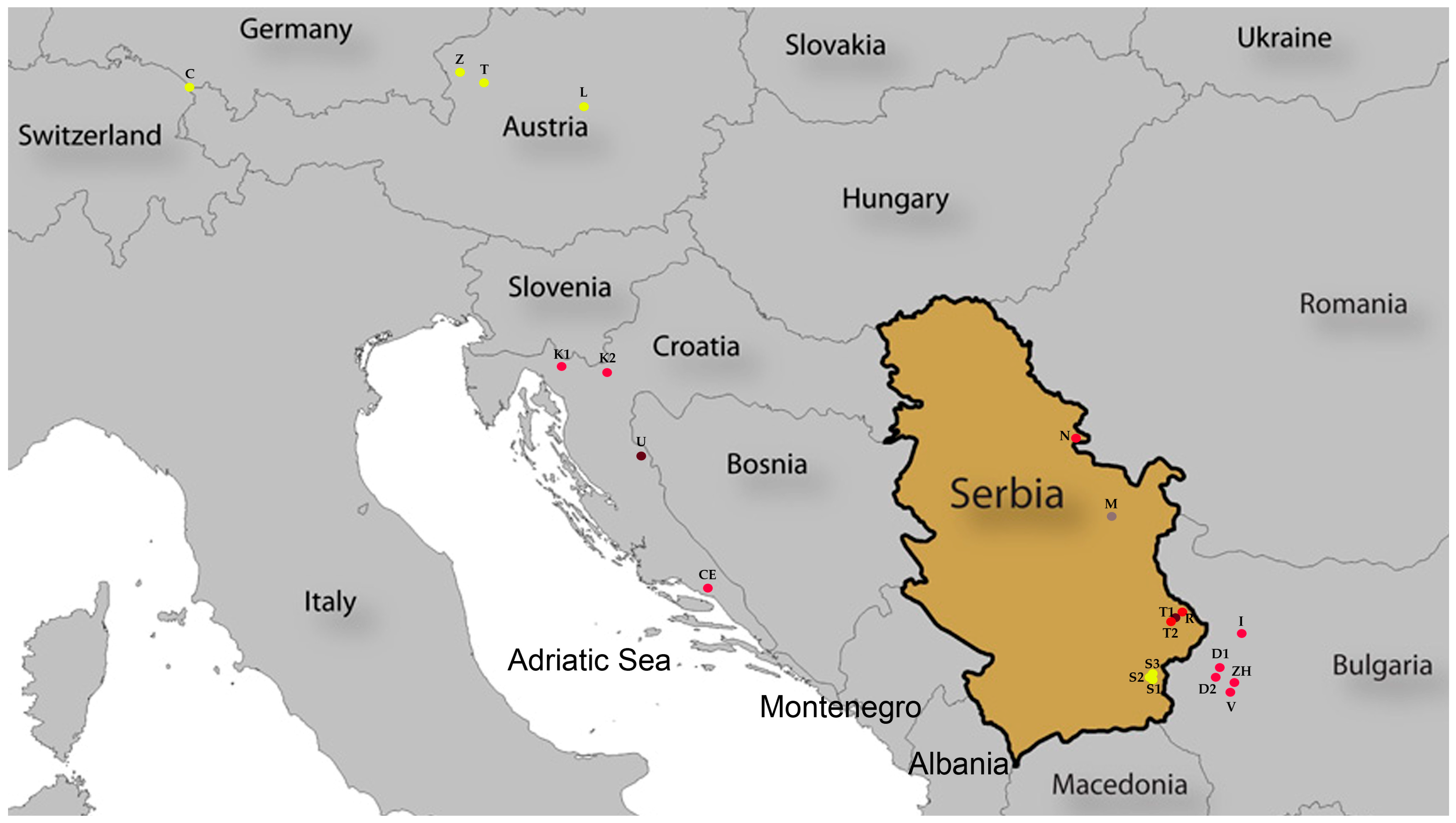
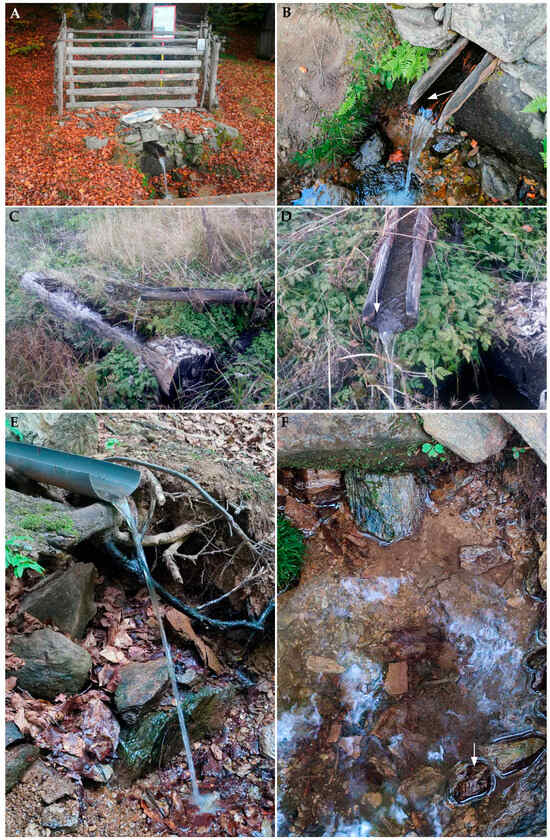
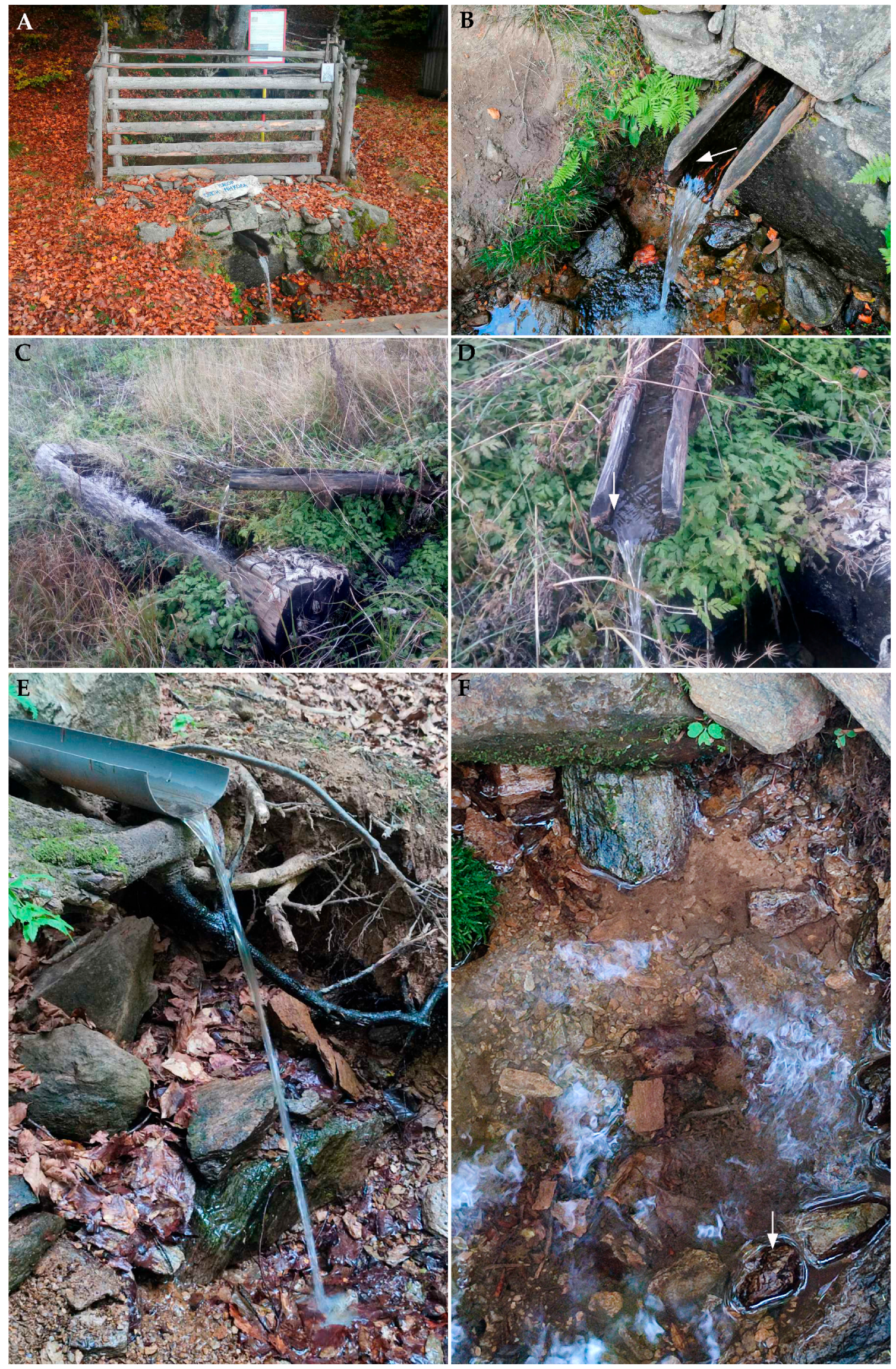
Thalli of B. lauterborni were initially collected in July 2019 at the St. Nicholas spring (S1) located on the Vlasina Plateau, Southeastern Serbia (Table 1, Figure 1 and Figure 2A,B), from a wooden trough through which water is diverted for drinking. Living material was scraped from the wooden surface. After the initial discovery of this population, samples from this location were collected and examined in more detail in September 2020, October 2021, and July 2022, and several other nearby springs with similar characteristics were also carefully investigated. Additional material of Bodanella was collected in September 2020, October 2021, and July 2022 from an unnamed spring located 100 m from the St. Nicholas spring (S2) and also from the surface of a wooden trough (Table 1, Figure 2C,D). In July 2022, B. lauterborni was detected at another unnamed spring located 1 km from the St. Nicholas Spring (S3) (Table 1, Figure 2E,F).
Table 1.
The morphometric, physical, and chemical parameters of water from the Bodanella lauterborni localities in Serbia.
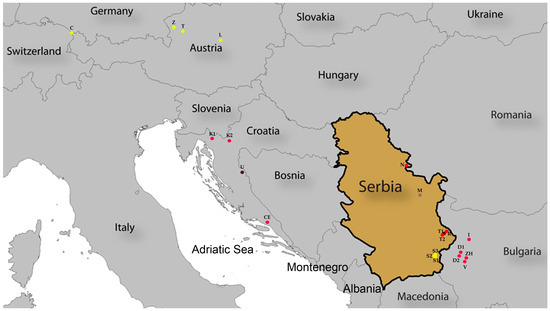
Figure 1.
Geographical locations of freshwater Phaeophyceae localities in Southeast Europe and Austria. Note: • Bodanella lauterborni: S1—St. Nicholas spring, S2—unnamed spring 100 m from the St. Nicholas spring, S3—unnamed spring 1 km from the St. Nicholas spring, C—Constance Lake, Z—Zeller See, T—Traunsee, L—Lunzer Untersee; • Heribaudiella fluviatilis: T1—Temštica River (upper stream), U—Una River; • Hildenbrandio-Heribaudielletum community: K1—Kupa River (spring), K2—Kupa River (middle course), CE—Cetina River, R—Rakitska River, T2—Temštica River (downstream), N—Nera River; I—Iskur River, D1, D2—Dragalevska River, ZH—Zhitolyub spring, V—Vedena rivulet; • Porterinema fluviatile: M—Mlava Spring.
Figure 2.
Localities and macroscopic view of Bodanella lauterborni. (A) S1 spring (St. Nicholas spring); (B) brownish-black cushions of B. lauterborni on a woody trough in S1 spring (arrow); (C) S2 spring (unnamed spring located 100 m from the St. Nicholas spring); (D) brownish-black cushions of B. lauterborni on a woody trough in S2 spring (arrow); (E) S3 spring (unnamed spring located 1 km from the St. Nicholas spring); (F) brownish-black cushions of B. lauterborni on a stone in S3 spring (arrow).
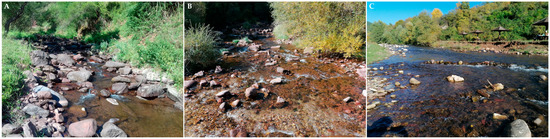
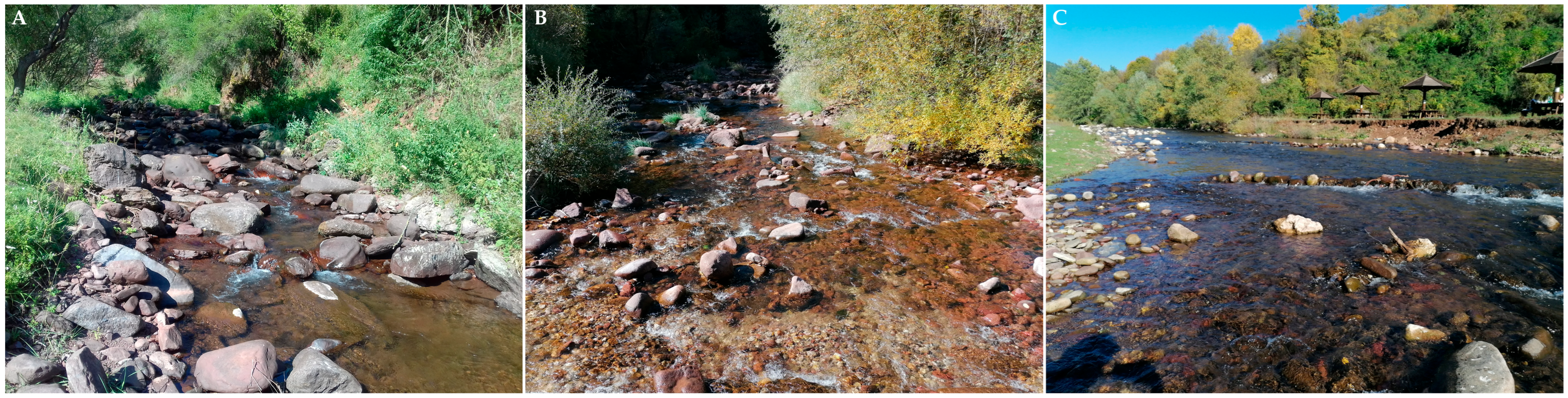
Thalli of H. fluviatilis were collected from three locations in two rivers located on Stara Planina Mt., Eastern Serbia (Figure 1). The thalli were initially collected in August 2019 in the Rakitska River (R) (Table 2, Figure 1 and Figure 3A), by cutting them from dry stones. After species identification, samples from this location were collected and examined in more detail in September 2020 and 2021, and additional streams and rivers in the surrounding area were studied more thoroughly. Further material attributed to Heribaudiella was collected in October 2020 and 2021 from the Temštica River upper stream (T1) (Table 2, Figure 1 and Figure 3B) and downstream (T2) (Table 2, Figure 1 and Figure 3C).
Table 2.
The morphometric, physical, and chemical parameters of water from the Heribaudiella fluviatilis localities in Serbia.
Figure 3.
Localities of Heribaudiella fluviatilis in Serbia. (A) Rakitska River; (B) Temštica River (upper stream); (C) Temštica River (downstream).
In addition to B. lauterborni and H. fluviatilis, thalli of other benthic macroalgae were also collected from the investigated ecosystems by scraping them from woody or stony substrata.
The collected material was immediately preserved with 4% formaldehyde for morphological analyses. All collected samples are deposited in the wet collection of the Centre for Conservation of Biodiversity and Fishing in inland waters—Aquarium at the Department of Biology and Ecology, Faculty of Science, University of Kragujevac.
Macroscopic benthic algae coverage (%) was assessed by visual analysis, according to Rodriguez et al. [40].
2.2. Microscopic Observation and Species Identification
In the laboratory, the collected material was examined under a Motic BA310 microscope (Motic, Hong Kong, China), with magnification up to 1000×, photographed using a BRESSER (9 MP) camera (Bresser GmbH, Rhede, Germany) and MicroCamLab version 6.1.4.0 software package. Species identification followed the taxonomic keys and descriptions according to Eloranta et al. [5], John et al. [27], Jüttner et al. [41] (2015), Wehr et al. [2], Necchi and Vis [42], and Vis and Necchi [43].
2.3. Environmental Conditions
At each investigated locality, the geological foundation, type of substratum, current velocity (m s−1), surrounding vegetation, and insolation (+ full shade, ++ partial shade, +++ full sunlight) were determined. Physical and chemical properties of the water were measured in situ according to the American Public Health Association [44]. In situ measurements included physical parameters—temperature (°C) and conductivity (µS cm−1), and chemical parameters—pH, water hardness (mg CaCO3 L−1), dissolved oxygen (mg O2 L−1), and oxygen saturation (% O2). Temperature, conductivity, pH, and water hardness were determined using the HI 98129 Portable pH/EC/TDS/°C Combo Pocket instrument (HANNA Instruments, Woonsocket, RI, USA), while dissolved oxygen and oxygen saturation were determined using the Mettler ToledoTM Portable pH/Conductivity/Dissolved Oxygen/Ion Meter (Mettler Toledo, Gieβen, Germany). Ex situ measurements of environmental parameters were conducted to determine the concentrations of ammonium ions (mg NH4 L−1), nitrates (mg NO3 L−1), and orthophosphates (mg PO4 L−1). For that purpose, we used the AQUALITIC AL400 Photometer (Tintometer GmbH, Dortmund, Germany).
2.4. Statistical Analyses
Principal component analysis (PCA) was performed to identify the environmental factors that are responsible for species occurrence in Serbian aquatic ecosystems, using the Statistica 13.0 software package [45] (StatSoft Inc., Tulsa, OK, USA) and Microsoft Excel 365 (version 16.0, Microsoft, Redmond, WA, USA) [46]. The statistical analyses were conducted for the investigated localities where all environmental parameters were obtained (n = 137). Only the species relevant to this study are presented in the ordination diagram. Pearson correlation coefficients between the analyzed environmental variables and the first six principal components were calculated.
The species occurrence map was created using QGIS version 3.38.2 software [47].
3. Results
3.1. Morphology and Reproduction
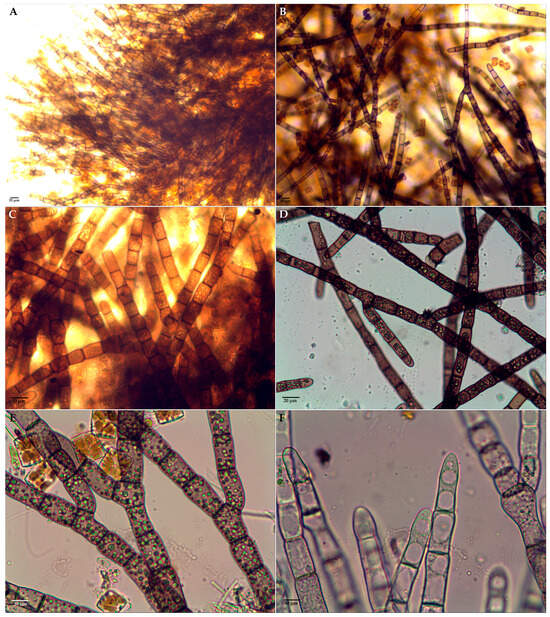
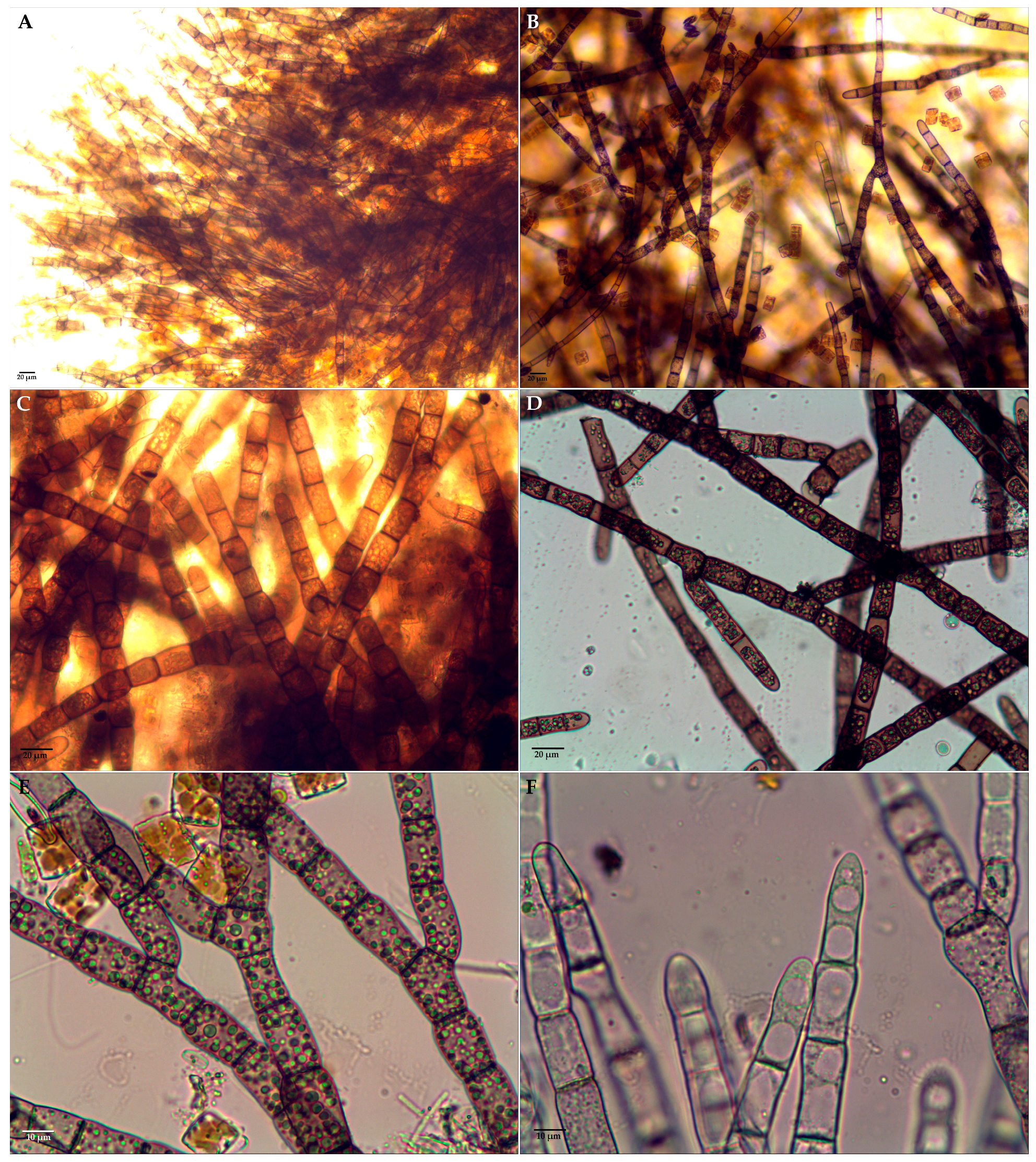
Macroscopic aggregations of B. lauterborni were found in the form of brownish-black cushions firmly attached to wooden (Figure 2B,D) or stony surfaces (Figure 2F). Microscopically, the thalli were composed of only creeping, uniseriate, richly and irregularly branched filaments (Figure 4A–F). The filaments were made up of thick-walled, elongated, and inflated cells (18–37 µm long × 12–20 µm wide) with numerous small discoid parietal plastids (2–5 µm in diameter) (Figure 4C–E). Most of the cells comprising the apical filaments contained only the cytoplasm and vacuoles (Figure 4F). Neither unilocular nor plurilocular sporangia were observed. The morphological features of B. lauterborni are summarized in Table 3.
Figure 4.
Morphological features of Bodanella lauterborni. (A,B) Microscopic view of the thalli; (C–E) irregularly branched filaments composed of thick-walled elongated and inflated cells with numerous plastids; (F) empty parts in older cells that compose the apical filaments. Scale bars: (A–D) 20 µm; (E,F) 10 µm.
Table 3.
Comparative review of the morphological and reproductive features of Bodanella lauterborni and Heribaudiella fluviatilis.
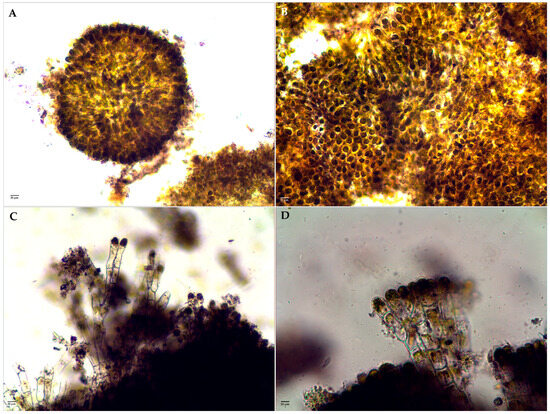
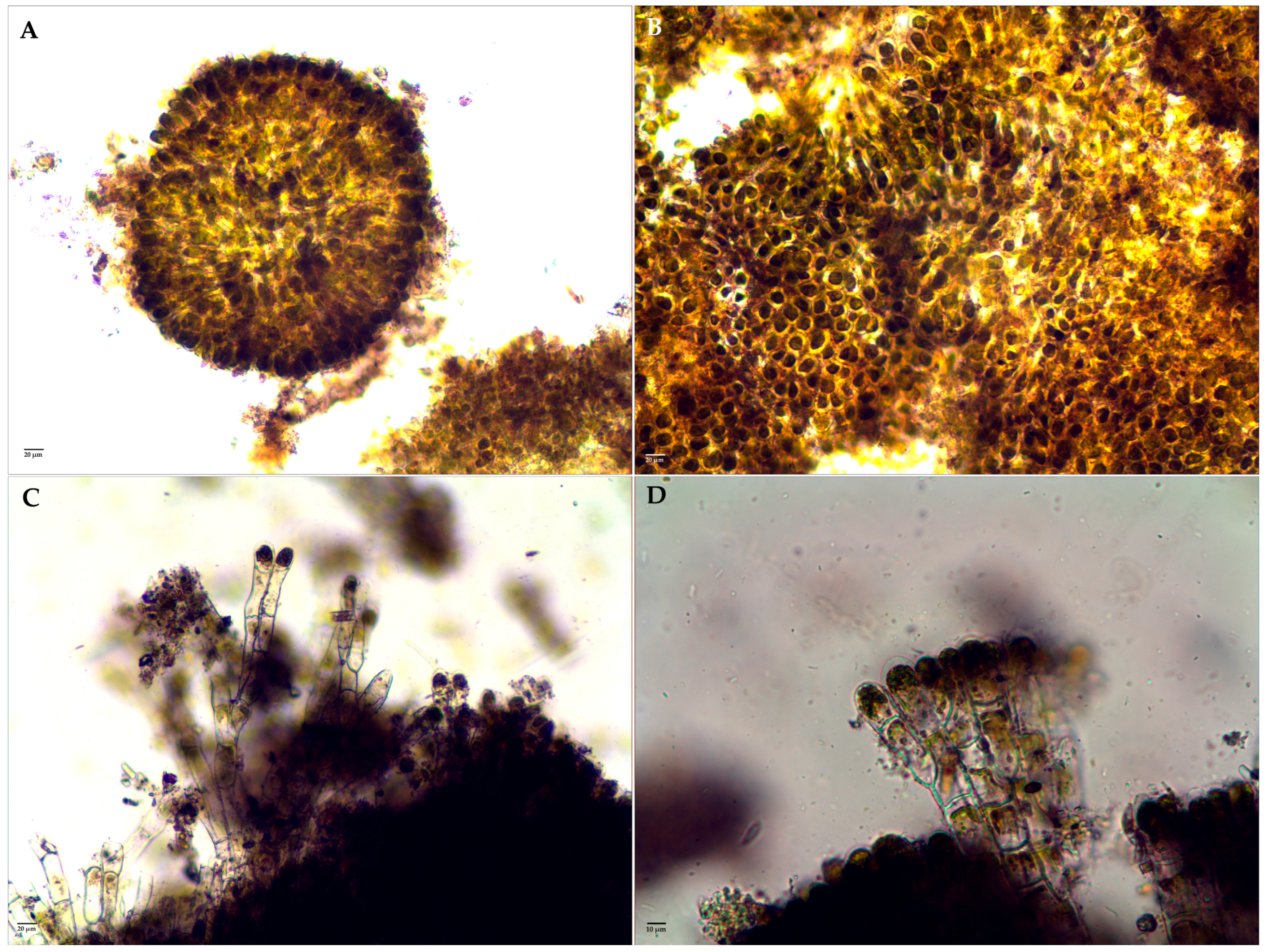
During the initial collection in 2019, thalli of H. fluviatilis were found as dried dark thick crusts in the Rakitska River (Figure 5A). In 2020 and 2021, thalli were found in the form of small disc-shaped brown crusts, 0.5–5 cm in diameter, unevenly scattered on the rocky surface (Figure 5B). The entire underside of the thalli adhered to the substratum. Individual colonies coalescing and covering the rocky surface were also noticeable. A detailed description of the morphological and reproductive features of H. fluviatilis has been published by Rakonjac and Simić in Sabovljević et al. [9] and is summarized in Table 3 and presented in Figure 6.
Figure 5.
Habitus of Heribaudiella fluviatilis thalli. (A) Dried macroscopic crusts on the stone from sampling at the Rakitska River in 2019; (B) characteristic brown macroscopic crusts.
Figure 6.
Morphological features of Heribaudiella fluviatilis. (A,B) Prostrate filaments forming a crust; (C,D) vertical filaments with terminal unilocular sporangia. Scale bars: (A–C) 20 µm; (D) 10 µm.
3.2. Distribution and Ecology
Bodanella lauterborni was recorded at springs S1 and S2, covering more than 50% of the wooden trough surface at S1 and 10% at S2. In S1, thalli of B. lauterborni were found coalescing on the wooden surface. At S3, thalli of B. lauterborni were found in trace amounts on small stones but were also found in mud samples. The physical and chemical properties of B. lauterborni habitats have been summarized in Table 1.
No other macroscopic algal aggregations were found in association with B. lauterborni. However, in September 2020, B. lauterborni was found forming slightly gelatinous cushions together with the diatoms Odontidium hyemale (Roth) Kützing and O. mesodon (Kützing) Kützing at S1 (Figure 4E).
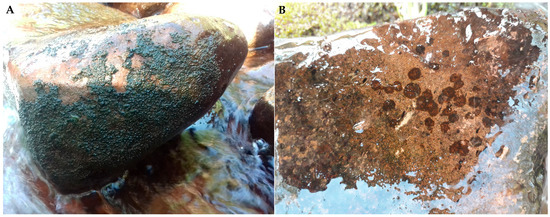
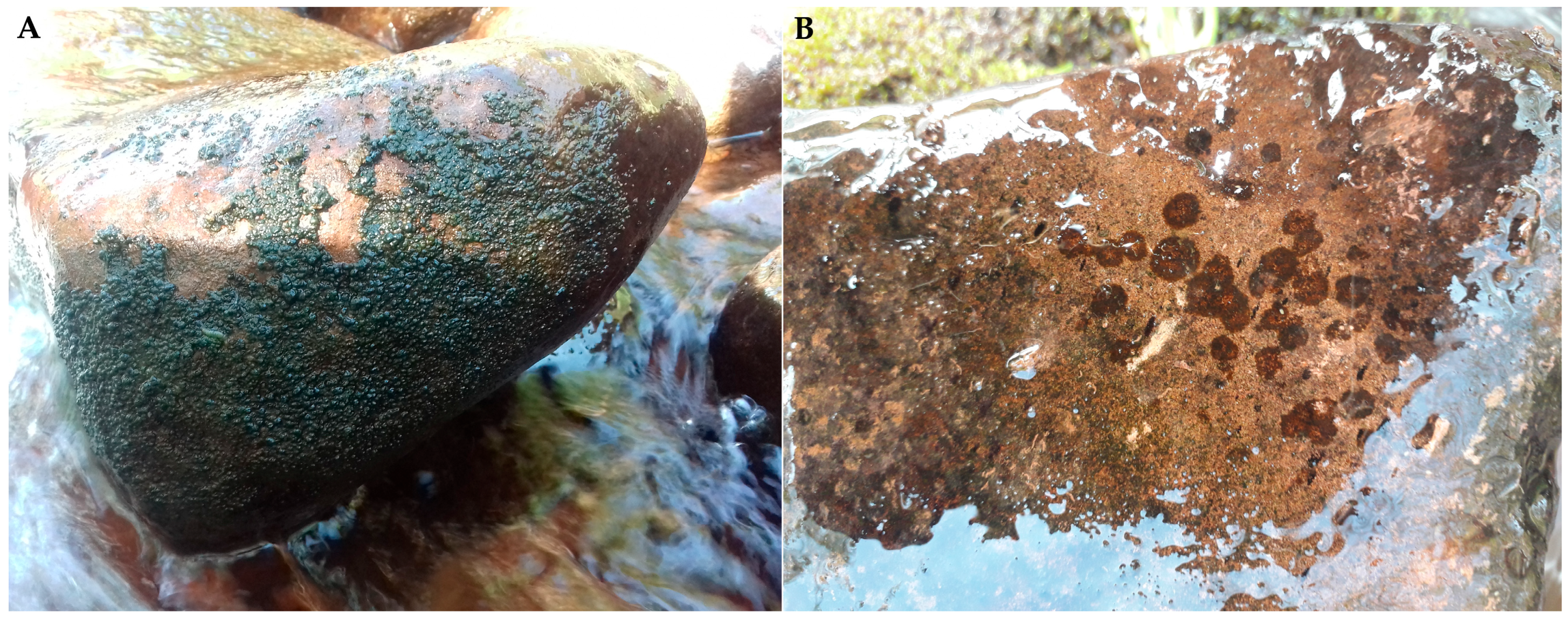
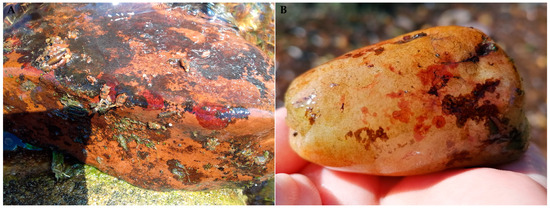
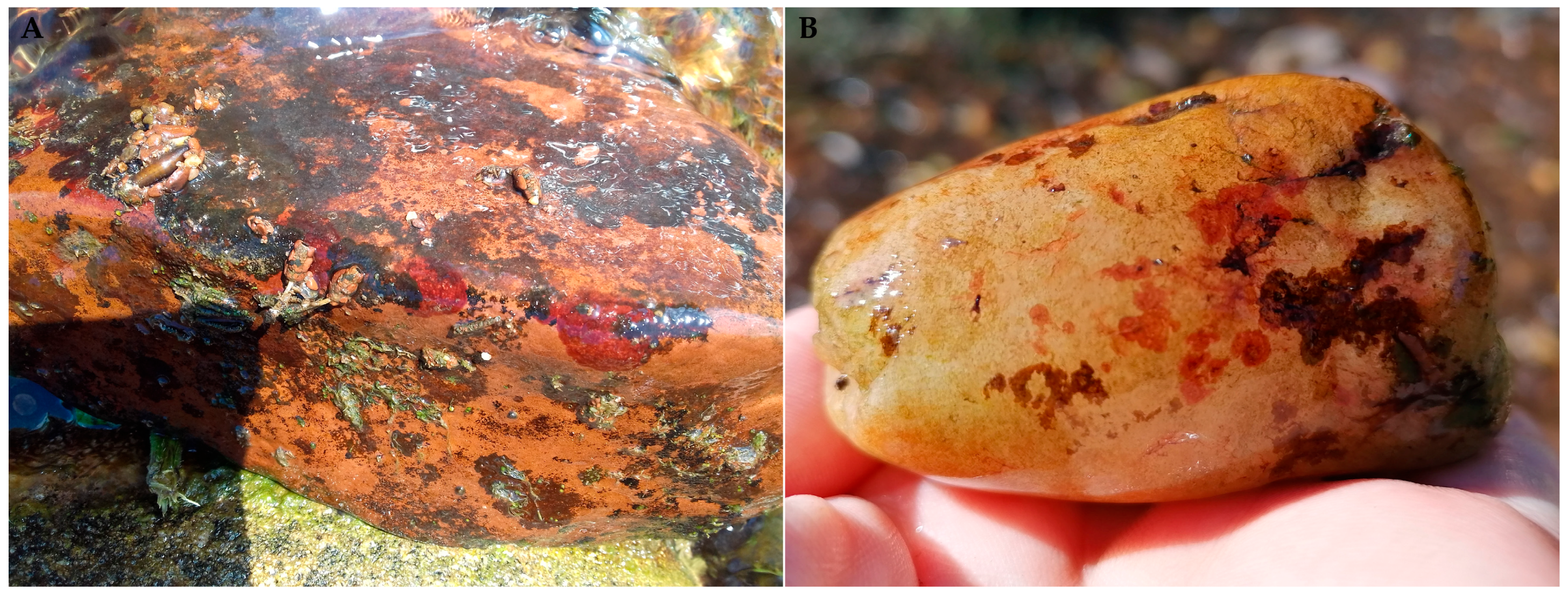
The physical and chemical properties of habitats where H. fluviatilis occurred are summarized in Table 2. Along with this encrusted brown alga, populations of Paralemanea annulata (Kützing) M.L.Vis & R.G.Sheath were detected at all localities. At the Rakitska and Temštica (downstream) rivers, along with H. fluviatilis and P. annulata, populations of green algae Cladophora sp. and Gongrosira sp. were also found. At these locations, we documented the presence of the Hildenbrandio-Heribaudielletum community (Figure 7), formed by the brown encrusting H. fluviatilis and the red encrusting Riverina rivularis (Liebmann) C.W.Vieira & G.W.Saunders (Syn. Hildenbrania rivularis), which covered a small area on several stones. At the Rakitska River, R. rivularis covered H. fluviatilis, while at the Temštica River, H. fluviatilis covered R. rivularis. At both locations, H. fluviatilis covered a larger surface than R. rivularis (Table 2).
Figure 7.
Hildenbrandio rivularis-Heribaudielletum fluviatilis community. (A) Temštica River; (B) Rakitska River.
3.3. Statistical Analysis
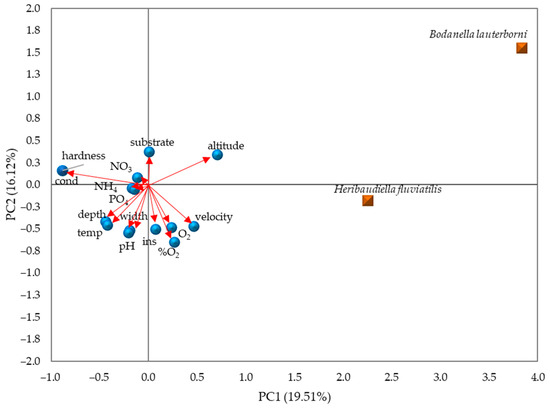
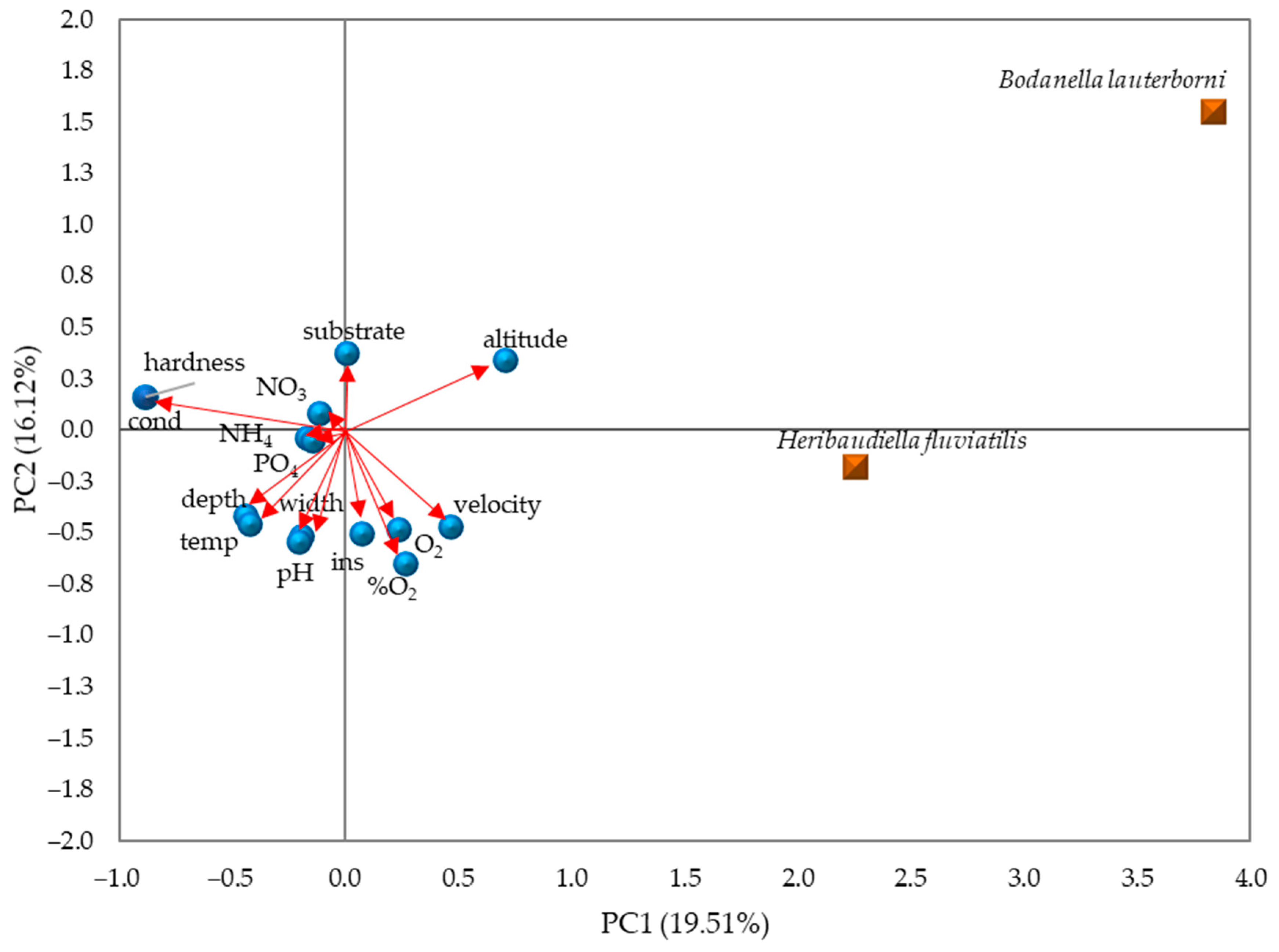
The PCA model explained 74.26% of the total data variability, reducing the 15 observed variables to six principal components that capture most of the variation in the dataset. The largest contributions come from PC1 (19.58%) and PC2 (16.12%), while the remaining components contribute less.
The results of the PCA indicate that the concentrations of ammonium, nitrate, and orthophosphate (r = −0.168, r = −0.113, r = −0.144, respectively) contribute negligibly to the formation of the first and second components, suggesting that, within this model, they do not significantly influence the presence and distribution of red and brown algal taxa.
The greatest contributions to the formation of PC1 are from altitude, electrical conductivity, and water hardness. A strong positive correlation was observed for altitude (r = 0.707), while strong negative correlations were recorded for electrical conductivity (r = −0.888) and water hardness (r = −0.885). The second principal component (PC2) is mainly influenced by river width (r = −0.520), pH (r = −0.544), oxygen saturation (r = −0.655), and dissolved oxygen concentration (r = −0.509), all of which show moderate negative correlations.
The results of the PCA indicate that B. lauterborni shows a preference for high altitudes, fast-flowing waters, low water temperatures, and shallow, slightly alkaline waters. Additionally, low values of electrical conductivity and water hardness significantly influence its distribution (Figure 8).
Figure 8.
Principal component analysis (PCA) of morphometric, physical, and chemical parameters of the environment and Bodanella lauterborni and Heribaudiella fluviatilis. Note: cond—conductivity; width—ecosystem width; depth—maximum depth; temp—water temperature; O2—dissolved oxygen concentration; %O2—dissolved oxygen saturation; ins—habitat insolation.
In contrast, the analysis suggests that H. fluviatilis prefers low water temperatures and low levels of electrical conductivity and water hardness, as well as higher oxygen concentrations and saturation levels. This species also tends to thrive in areas with fast-flowing waters, greater habitat insolation, and shallow depths (Figure 8).
4. Discussion
Every discovery of freshwater brown algae raises new questions regarding their presumed rarity, ecology, and biogeographical patterns. Are they truly rare, or is their rarity the result of under-sampling, overlooking them during field surveys, their seasonal ephemeral dynamic, or simply insufficient knowledge of their appearance in nature among researchers?
In the past, studies of macroalgae in Serbia mainly focused on filamentous and gelatinous morphological forms [48,49,50,51,52,53,54,55,56,57]. During 2017–2024, we conducted an extensive investigation of all morphological forms of macroalgae [8,9,58,59,60,61,62]. Likewise, after the first discovery of a freshwater brown alga, Porterinema fluviatile, in Serbia [8], we paid more attention to this algal group. Nevertheless, our first findings of B. lauterborni and H. fluviatilis were entirely coincidental. During the initial sampling, the thalli of these two species resembled cyanobacterial macroscopic aggregations.
Bodanella lauterborni, considered one of the rarest algae in the world, is known only from deep lakes (>15 m), where it grows on rocky substrata [2,5]. Consequently, our first finding of this alga on a wooden trough used to divert water from the spring for drinking was unexpected. After re-sampling and a detailed examination of the collected material, we identified this alga as B. lauterborni. Thalli of B. lauterborni have been described to occur as basal or creeping filaments, forming small brown cushions on rocky substrata [2], while Geitler [17] described pseudoparenchymatous discs composed of creeping uniseriate and frequently irregularly branched filaments. Cells have been described as irregularly shaped: ovoid, inflated, quadrate, angular, or rounded [2]. In our study, B. lauterborni formed brownish-black cushions firmly attached to the wooden or stony surface, composed of richly irregularly branched creeping filaments. Regarding the filament cells, we found thick-walled, elongated, and inflated that were slightly longer and wider cells than those described in the literature. Terminal, thin, and short hairs, which have been observed only in culture material [22], were not detected in our material. As previously mentioned, the reproductive cycle of this alga is incompletely known. According to available literature, unilocular sporangia and approximately 16 released slow-moving zoospores per sporangium have been observed only under culture conditions [5]. Similarly, we did not observe any reproductive structures in our collected material.
Data on the ecology of B. lauterborni are scarce and old. The last observation of the species was almost 50 years ago [22]. According to available literature data, this species is characterized as a lacustrine and deep-water alga, growing epilithic at temperature ranges from 6 to 8 °C [2,5,22]. Since the first discovery of B. lauterborni in Lake Constance, environmental conditions in this lake have changed substantially, mainly due to the immigration of the zebra mussel, Dreissena polymorpha Pallas, into this lake, but also because of increasing phosphorus concentrations provoking strong phytoplankton production [63]. Eutrophication of this lake was recognized in 1959 and 1964, the International Commission for the Protection of Lake Constance decided to implement an extensive wastewater purification programme with the aim of the lake’s re-oligotrophication, which proved highly successful [20,64]. However, the most recent attempt to find B. lauterborni in Lake Constance during 2017–2019 was without success [65]. Therefore, almost 100 years after its first discovery, the Red List of Red and Brown algae of Baden-Württemberg [23] stated B. lauterborni was locally extinct at its type locality, so the species’ possible presence in the other three lakes has become critically important. Unfortunately, some data suggest that environmental conditions in these three lakes have also changed, which can negatively affect the survival of the populations of B. lauterborni [65]. According to Schütz et al. [66], cultured material could be used for the reintroduction of the species in Lake Constance. However, the problem with the invasive D. polymorpha and, lately, the new invader D. rostriformis Andrusov, is almost impossible to resolve, so reintroduction of B. lauterborni possibly would not be effective.
At the time of its first discovery by Zimmermann [16] in Constance Lake, B. lauterborni was found in association with Riverina rivularis (Syn. Hildenbrandia rivularis) and Aegagropila brownii (Dillwyn) Kützing (Syn. Aegagropila linnaei Kützing). In this study, we found it co-occurring with diatoms Odontidium hyemale and O. mesodon. The lack of associated macroalgae with B. lauterborni is likely due to the specific environmental conditions of its habitat. We believe these conditions, while suitable for B. lauterborni, likely prevent the establishment of other algae, which explains the absence of the typical macroscopic algae associations seen with H. fluviatilis in our study.
Our findings of B. lauterborni indicate that this alga has not become extinct in the wild. Spring represents a new type of habitat for B. lauterborni. We found this species in water temperatures ranging from 5.8 °C to 10.3 °C, pH ranging from 7.28 to 7.59, conductivity up to 60 µS cm−1, and water hardness up to 20 mg CaCO3 L−1, low concentrations of ammonium and nitrates, and orthophosphate concentrations ranging from 0.14 mg L−1 to 0.21 mg L−1, on small stones and wooden substratum in fast-flowing water, in full shadow, partial shadow, or full sunlight. Although freshwater brown algae are mainly reported from streams and rivers, their occurrence in springs is not uncommon. Truly freshwater populations of Ectocarpus were reported from three springs in Florida [67], while Pleurocladia lacustris was found in karst springs in South Australia [2]. In Southeastern Europe, the occurrence of Heribaudiella fluviatilis has been reported from karst springs in Croatia [7] and Bulgaria [38]. Recently, Porterinema fluviatile has been described from a pure freshwater karst spring in Serbia [8].
Although we found B. lauterborni under environmental conditions not previously reported as suitable for the species, there may be some underlying connections. One possible explanation may lie in the presence of a natural lake in this area in the past [68]. The Vlasina Plateau is characterized by numerous small groundwater springs that presumably supplied the historical natural lake. The presence of B. lauterborni in three of several investigated groundwater springs may indicate that the species primarily inhabits groundwater springs. After the natural lake’s swelling in the Vlasina Plateau area, previously submerged groundwater springs stayed on dry land, so B. lauterborni adapted to these newly formed environmental conditions.
Additionally, the geological base on which the species was previously found and the geological base on which we found it both consist of crystalline shales. During its first discovery in Lake Constance, B. lauterborni was found on the Molasse rocks [16]. These rocks are composed of sandstone, shales, and conglomerates formed by molasse sedimentation from the praeocean in front of the rising Alps and Himalayas mountains in the late Paleocene [69,70]. Molassic sediments found in Greece, Bulgaria, and North Macedonia are formed on the metamorphic rocks of the Rhodope massif [71,72,73,74]. In Serbia, molassic sediments are also present, although data about their occurrence in Southeastern Serbia are lacking [75]. Nevertheless, the geological base of the Vlasina Plateau, where we recorded B. lauterborni, also belongs to the Rhodope massif and is mostly composed of crystalline shales [76]. Therefore, our discovery indicates that this alga should be searched for in lakes as well as in other types of freshwater ecosystems on the substrata of crystalline shales.
Another freshwater brown alga identified in our study, H. fluviatilis, is characterized by olive-brown to dark brown crusts with rounded or irregular outlines but with distinct margins according to available literature descriptions [2,5]. The thalli we initially observed in the Rakitska River were in the form of thick dark crusts, covering rocky surfaces 15 cm above the water level, so we assumed that this was some cyanobacterial macroscopic aggregation. This unusual cyanobacterial-like macro-appearance of H. fluviatilis may be a consequence of thalli drying out for a relatively long period of time. During subsequent sampling, we recorded typical brown-crusting H. fluviatilis thalli with rounded or irregular outlines, but with distinct margins in both the Rakitska and Temštica rivers, whereas the form observed during the initial sampling was not detected again. On some rocks, we also noticed that multiple colonies coalesced to cover the entire rocky surface. Regarding the size of the filament cells, we observed slightly longer and wider cells than those described by Eloranta et al. [5] and Wehr [2].
Most previously published data indicate that H. fluviatilis prefers clear streams and lakes and stable rocky substrata. It has been recorded in a broad range of thermal and light conditions, slightly alkaline waters with moderate conductivity, and low concentrations of nutrients [2,7,10]. In our research, H. fluviatilis was recorded on rocky substratum in partially shaded or fully sunlit rivers, with a temperature ranging from 5.7 °C to 13.2 °C, in slightly alkaline waters, with low to moderate conductivity and hardness, and with low nutrient concentrations.
Heribaudiella fluviatilis was reported to co-occur with other benthic macroalgae, mostly Rhodophyta representatives, such as the genera Bangia, Riverina (Syn. Hildenbrandia), Lemanea, and Chantransia [2,7,10], but also cyanobacterial genera Schizothrix, Homoeothrix, and Nostoc and green alga Chaetophora pisiformis (Roth) C. Agardh [2]. In the present study, it was most frequently found co-occurring with Paralemanea annulata (Rhodophyta), Gongrosira sp., and Cladophora sp. (Chlorophyta), and at one location with Nostoc sp. (Cyanobacteria).
The species had been documented to co-occur with the crusty-forming red alga Riverina rivularis, usually overgrowing it [77,78,79,80]. This combined distribution, firstly described as the Hildenbrandia-Lithoderma community by Fritsch (1929), is currently considered as Hildenbrandio rivularis-Heribaudielletum fluviatilis community, which has been frequently documented in Northern and Central Europe [77,78,79,80,81,82,83,84]. In contrast, in South Europe, these two species have typically been reported separately [85,86,87,88]. In Southeast Europe, the Hildenbrandio-Heribaudielletum community has been documented only in Bulgaria [38], Croatia [7] and recently in Serbia [9,10]. In this study, R. rivularis was found overlapping H. fluviatilis at the Rakitska River, while at the Temštica River, H. fluviatilis overlapped R. rivularis. At both locations, these species were also found growing separately, and along the entire river stretch, H. fluviatilis has much more abundant growth and development than R. rivularis. A recent comprehensive report by Täuscher and Krumbiegel [89] emphasized the significance of these community findings for biodiversity conservation, as these species are red-listed in Germany. Riverina rivularis is also strictly protected in Serbia by National legislation [90]. Updating the knowledge of this community may help clarify the inconsistent co-occurrence pattern of H. fluviatilis and R. rivularis. Furthermore, enhancing our understanding of the ecology and biogeography of the Hildenbrandio-Heribaudielletum community is particularly important, given recent observations of R. rivularis expansion from mountainous and highland areas into lowland regions [91]. In Serbia, crusty-forming red alga R. rivularis has been reported at 48 locations from its first observation in 2008 till nowadays [10,57,60,92,93], whereas the Hildenbrandio-Heribaudielletum community was found at only three of these locations [9,10].
Riverina rivularis was also reported in association with B. lauterborni in Lake Constance [16]. Subsequent combined records of R. rivularis and H. fluviatilis have led some researchers to suggest that B. lauterborni might be a morphological variant of H. fluviatilis, due to their morphology as well as their phylogenetic closeness [1,2,3,4]. However, our observations and knowledge on B. lauterborni and H. fluviatilis do not support this hypothesis. Based on extensive morphological analyses of collected samples of both species during three-year surveys, we found no evidence that B. lauterborni is the morphological variant of H. fluviatilis; moreover, these two species are morphologically clearly distinct. Bodanella lauterborni formed small cushions on woody and stony surfaces, firmly attached to the substrata but composed of loosely packed, richly and irregularly branched filaments, while H. fluviatilis formed crusts composed of irregularly branched filaments, densely arranged into several layers of cells. Therefore, our findings suggest that those two species, both macroscopically and microscopically, look quite different, although further genetic analyses will be necessary to clarify their evolutionary relationships.
The discovery of B. lauterborni and H. fluviatilis in Serbia greatly contributes to the global understanding of their distribution, particularly when compared to existing records in the Global Biodiversity Information Facility (GBIF) database. Currently, GBIF data for B. lauterborni are limited, with only four previously documented locations worldwide and three records in culture collections [94]. In contrast, H. fluviatilis has a broader documented presence in the GBIF database [95], primarily across Northern and Western Europe. However, records from Southeastern Europe are still fragmented and scarce. The identification of this species at three riverine locations in Serbia helps to fill a significant biogeographical gap in the Balkan Peninsula. Our findings of B. lauterborni in three springs and H. fluviatilis at three riverine localities in Serbia provide essential new data that will help fill these gaps. Once these records are added to the global database, they will offer a much clearer picture of where these rare brown algae can survive and how to protect their habitats.
5. Conclusions
In Serbia, information on freshwater brown algae has expanded substantially in recent years, largely due to intensified phycological surveys. Considered as possibly extinct, the freshwater brown alga B. lauterborni was discovered in Serbia. This paper represents a significant contribution to the knowledge of the ecology and distribution of this alga, reported from three groundwater springs on wooden and stony substrata, therefore being found in environmental conditions not previously reported as suitable for the species.
The findings of this study have significant practical implications for both future surveys and conservation efforts. Our results suggest that future searches for this rare freshwater alga should specifically target high-altitude springs with crystalline shale substrates, including artificial wooden troughs, which serve as unique micro-refugia. The discovery of B. lauterborni in these springs provides essential data for reassessing its conservation status from “possibly extinct” to “extant in refugia”. Our study underscores the need to prioritize the protection of these isolated spring environments to ensure the survival of such specialized and rare species.
In southeast Europe, H. fluviatilis has, until recently, been documented only sporadically; however, eight additional records have been reported from Croatia and Serbia. This study provides distributional data and detailed morphological descriptions of H. fluviatilis from Serbian rivers, further clarifying its ecological requirements and presence within Southern Europe.
Although our records remain among the few documented occurrences of freshwater phaeophytes in southeastern Europe, we strongly believe that these algae are more widespread than currently recognized but under-sampled and frequently overlooked. Therefore, we recommend comprehensive research focusing on dark crust-forming, tuft, and cushion macroscopic algal aggregations. Additionally, future studies combining molecular data with morphological analyses will be essential for clarifying phylogenetic relationships as well as resolving existing taxonomic uncertainties and identification problems.
Author Contributions
Conceptualization, A.B.R. and S.B.S.; methodology, A.B.R., T.Z.V. and S.B.S.; validation, A.B.R., T.Z.V., K.A.M., N.B.Đ. and S.B.S.; formal analysis, A.B.R. and K.A.M.; investigation, A.B.R., T.Z.V. and S.B.S.; writing—original draft preparation, A.B.R.; writing—review and editing, A.B.R., T.Z.V., K.A.M., N.B.Đ. and S.B.S.; visualization, A.B.R. and S.B.S.; supervision, S.B.S.; project administration, A.B.R. and S.B.S.; funding acquisition, A.B.R., T.Z.V., K.A.M., N.B.Đ. and S.B.S. All authors have read and agreed to the published version of the manuscript.
Funding
This research was funded by the Ministry of Science, Technological Development and Innovation (Nos. 451-03-33/2026-03/200216, 451-03-34/2026-03/200122, 451-03-33/2026-03/200088) and the Slovenian Research Agency supporting T.V. under the research programme No. P1-0255.
Institutional Review Board Statement
Not applicable.
Informed Consent Statement
Not applicable.
Data Availability Statement
The samples collected during this study are deposited at the Department of Biology and Ecology, Faculty of Science, University of Kragujevac, Serbia.
Acknowledgments
We would like to thank Filip Vukajlović from the Department of Biology and Ecology at the Faculty of Science, University of Kragujevac, for his assistance with the statistical analysis. We are also thankful to Kristina Luković from the Institute for Vegetable Crops for her help with statistical data visualization.
Conflicts of Interest
The authors declare no conflicts of interest.
References
- McCauley, L.R.; Wehr, J.D. Taxonomic reappraisal of the freshwater brown algae Bodanella, Ectocarpus, Heribaudiella and Pleurocladia (Phaeophyceae) on the basis of rbcL sequences and morphological characters. Phycologia 2007, 46, 429–439. [Google Scholar] [CrossRef] [Scilit]
- Wehr, J.D. Brown Algae. In Freshwater Algae of North America, Ecology and Classification, 2nd ed.; Wehr, J.D., Sheath, R.G., Kociolek, J.P., Eds.; Elsevier: San Diego, CA, USA, 2015; pp. 851–871. [Google Scholar]
- Draisma, S.G.A.; Prud’homme van Reine, W.F.; Stam, W.T.; Olsen, J.L. A reassessment of phylogenetic relationships within the Phaeophyceae based on RUBISCO large subunit and ribosomal DNA sequences. J. Phycol. 2001, 37, 586–603. [Google Scholar] [CrossRef] [Scilit]
- Draisma, S.G.A.; Prud’homme van Reine, W.F.; Kawai, H. A revised classification of the Sphacelariales (Phaeophyceae) inferred from a psbC and rbcL based phylogeny. Eur. J. Phycol. 2010, 45, 308–326. [Google Scholar] [CrossRef] [Scilit]
- Eloranta, P.; Kwandrans, J.; Kusel-Fetzmann, E. Rhodophyceae and Phaeophyceae. In Freshwater Flora of Central Europe; Band 7; Budel, B., Gartner, G., Krienitz, L., Preisig, H.R., Schagerl, M., Eds.; Spectrum Akademischer Verlag: Berlin/Heidelberg, Germany, 2011; pp. 1–155. [Google Scholar]
- Wehr, J.D. Brown Algae (Phaeophyceae) in Rivers. In River Algae; Necchi, O., Jr., Ed.; Springer International Publishing: Cham, Switzerland, 2016; pp. 129–151. [Google Scholar] [CrossRef] [Scilit]
- Koletić, N.; Alegro, A.; Vuković, N.; Rimac, A.; Šegota, V. Spotting the Spots: The Freshwater Brown Alga Heribaudiella fluviatilis (Areschoug) Svedelius within Stream Communities of Southeastern Europe. Cryptogam. Algol. 2018, 39, 449–463. [Google Scholar] [CrossRef] [Scilit]
- Simić, S.B.; Mitrović, A.B.; Đorđević, N.B. New data on the morphology, reproduction and distribution of a freshwater brown alga Porterinema fluviatile (Porter) Waern (Phaeophyceae). Cryptogam. Algol. 2019, 40, 95–103. [Google Scholar] [CrossRef] [Scilit]
- Sabovljević, M.; Tomović, G.; Kunev, G.; Taşkın, H.; Bozok, F.; Šovran, S.; Knežević, A.; Cimerman, Ž.; Strgulc Krajšek, S.; Kuzmanović, N.; et al. New records and noteworthy data of plants, algae and fungi in SE Europe and adjacent regions, 13. Bot. Serb. 2023, 47, 183–194. [Google Scholar] [CrossRef] [Scilit]
- Trbojević, I.; Milovanović, V.; Šinžar Sekulić, J.; Sekulić, N.; Krizmanić, J.; Subakov Simić, G. Brown and Red Shades in the Riverbed of the Nera River (Serbia)—Update on the Distribution and Ecology of the association Hildenbrandio rivularis-Heribaudielletum fluviatilis Fritsch 1929 corr. Täuscher 2020 in Southeastern Europe. Oceanol. Hydrobiol. Stud. 2024, 50, 218–226. [Google Scholar] [CrossRef] [Scilit]
- Dittami, S.M.; Peters, A.F.; West, J.A.; Cariou, T.; Klein Jan, H.; Burgunter-Delamare, B.; Prechoux, A.; Egan, S.; Boyen, C. Revisiting Australian Ectocarpus subulatus (Phaeophyceae) from the Hopkins River: Distribution, Abiotic Environment, and Associated Microbiota. J. Phycol. 2020, 56, 719–729. [Google Scholar] [CrossRef] [Scilit]
- Mellado-Díaz, A.; Moreno, J.L.; Verdugo-Althöfer, M.; Wehr, J.D.; Saunders, G.W. Fluvioralfsia iberica gen. et sp. nov., Fluvioralfsiaceae fam. nov.: The first freshwater member of the Ralfsiales (Phaeophyceae), collected from streams in Spain. J. Phycol. 2025, 61, 708–721. [Google Scholar] [CrossRef] [Scilit]
- Holmes, N.T.H.; Whitton, B.A. Notes on some macroscopic algae new or seldom recorded for Britain: Nostoc parmelioides, Heribaudiella fluviatilis, Cladophora aegagropila, Monostroma bullosum, Rhodoplax schinzii. Vasculum 1975, 60, 47–55. [Google Scholar]
- Silberfeld, T.; Rousseau, F.; de Reviers, B. An Updated Classification of Brown Algae (Ochrophyta, Phaeophyceae). Cryptogam. Algol. 2014, 35, 117–156. [Google Scholar] [CrossRef] [Scilit]
- de Reviers, B.; Rousseau, F.; Silberfeld, T. Class Phaeophyceae Kjellman. In Syllabus of Plant Families, Adolf Engler’s Syllabus der Pflanzenfamilien, Part 2/1 Phototrophic Eukaryotic Algae, 13th ed.; Frey, W., Ed.; Borntraeger Science Publishers: Stuttgart, Germany, 2015; Volume 19, pp. 139–176. [Google Scholar]
- Zimmermann, W. Über Algenbestände aus der Tiefenzone des Bodensees. Zur Ökologie und Soziologie der Tiefseepflanzen. Z. Bot. 1927, 20, 1–28. [Google Scholar]
- Geitler, L. Über die Tiefenflora an Felsen im Lunzer Untersee. Arch. Protistenk. 1928, 62, 96–104. [Google Scholar]
- Kann, E. Qaualitative Veränderungen der litoralen Algenbiocönose österreichischer Seen (Lunzer Untersee, Traunsee, Attersee) im Laufe der letzten Jahrzehnte. Arch. Hydrobiol. 1982, 62, 440–490. [Google Scholar]
- Kann, E. Die litorale Algenvegetation des Zeller Sees (Salzburg, Österreich). Arch. Hydrobiol. 1982, 94, 492–501. [Google Scholar]
- Müller, H. Lake Constance—A model for integrated lake restoration with international cooperation. Water Sci. Technol. 2002, 46, 93–98. [Google Scholar] [CrossRef] [Scilit]
- Teubner, K.; Dokulil, M.T. 14C-Photosynthesis of phytoplankton in an oligotrophic alpine lake (Traunsee, Austria) and its response to turbidity caused by industrial tailings. Water Air Soil Pollut. Focus 2002, 2, 181–190. [Google Scholar] [CrossRef] [Scilit]
- Müller, D.G.; Geller, W. Einige Beobachtungen an Kulturen der Süsswasser-Braunalge Bodanella lauterborni Zimmermann. Nova Hedwig. 1978, 29, 735–741. [Google Scholar]
- Schütz, W. Phaeophyceae. In Beiträge zu den Algen Baden—Württembergs; Band 2; Stutz, S., Mattern, H., Eds.; Verlag M. Hennecke: Remshalden, Germany, 2019; pp. 394–395. [Google Scholar]
- Areschoug, J.E. Observationes phycologicae. Particula tertia. De algis nonnullis scandinavicis et de conjuctione Phaeozoosporarum Dictyosiphonis hippuroidis. Nova Acta Regiae Soc. Sci. Upsal. Ser. 3 1875, 10, 1–36. [Google Scholar]
- Athanasiadis, A. Taxonomisk Litteratur och Biogeografi av Skandinaviska Rödalger och Brunalger; Algologia: Göteborg, Sweden, 1996; pp. 1–280. [Google Scholar]
- Ludwig, G.; Schnittler, M. Rote Liste Gefährdeter Pflanzen Deutschlands (Schriftenreihe für Vegetationskunde, Heft 28); Bundesamt für Naturschutz: Bonn, Germany, 1996; pp. 1–744. [Google Scholar]
- John, D.; Whitton, B.A.; Brook, A.J. The Freshwater Algal Flora of the British Isles, 2nd ed.; Cambridge University Press: Cambridge, UK, 2011; pp. 1–896. [Google Scholar]
- Täuscher, L. Checklisten und Gefährdungsgrade der Algen des Landes Brandenburg I. Einleitender Überblick, Checklisten und Gefährdungsgrade der Cyanobacteria/Cyanophyta, Rhodophyta und Phaeophyceae/Fucophyceae. Verh. Bot. Ver. Berlin Brandenbg. 2011, 144, 177–192. [Google Scholar]
- Täuscher, L. Checkliste der Algen (Cyanobacteria et Phycophyta). In Bestandssituation der Pflanzen und Tiere in Sachsen-Anhalt; Frank, D., Neumann, V., Eds.; Natur und Text: Rangsdorf, Germany, 2014; pp. 182–204. [Google Scholar]
- Täuscher, L. Algen (Cyanobacteria et Phycophyta). In Pflanzen und Tiere in Sachsen-Anhalt Ein Kompendium der Biodiversität; Frank, D., Schnitter, P., Eds.; NatWestermann Druck Zwickau: Rangsdorf, Germany, 2016; pp. 63–112. [Google Scholar]
- Wehr, J.D.; Stein, J.R. Studies on the biogeography and ecology of the freshwater phaeophycean alga Heribaudiella fluviatilis. J. Phycol. 1985, 21, 81–93. [Google Scholar] [CrossRef] [Scilit]
- Wehr, J.D.; Perrone, A.A. A new record of Heribaudiella fluviatilis, a freshwater brown alga (Phaeophyceae) from Oregon. West. N. Am. Nat. 2003, 63, 517–523. [Google Scholar]
- Wehr, J.D.; Steirer, S.E.; Sleith, R.S. Rediscovery of the Freshwater Brown Alga Heribaudiella in Connecticut After 100 Years. Northeast. Nat. 2019, 26, 343–361. [Google Scholar] [CrossRef] [Scilit]
- Vishnyakov, V. On the first record of Heribaudiella fluviatilis (Phaeophyceae), a freshwater brown alga in Sibea. Algologia 2018, 28, 78–88. [Google Scholar] [CrossRef] [Scilit]
- Jao, C.C. Studies on the freshwater algae of China. VII. Lithoderma zonatum, a new freshwater member of the Phaeophyceae. Sinensia 1941, 12, 239–244. [Google Scholar]
- Kumano, S.; Hirose, H. On the swarmers and reproductive organs of a phaeophyceous fresh-water alga of Japan, Heribaudiella fluviatilis (Areschoug) Svedelius. Bull. Jpn. Soc. Phycol. 1959, 7, 45–51. [Google Scholar]
- Yoshizaki, M.; Miyaji, K.; Kasaki, H. A morphological study of Heribaudiella fluviatilis (Areschoug) Svedelius (Phaeophyceae) from central Japan. Nankiseibutu 1984, 26, 19–23. [Google Scholar]
- Stoyneva, M.P.; Stancheva, R.; Gärtner, G. Heribaudiella fluviatilis (Aresch.) Sved. (Phaeophyceae) and the Hildenbrandia rivularis (Lieb.) J.Ag.—Heribaudiella fluviatilis (Aresch.) Sved. association newly recorded in Bulgaria. Ber. Nat.-Med. Ver. Innsbr. 2003, 90, 61–71. [Google Scholar]
- Wehr, J.D.; Stancheva, R.; Truhn, K.; Sheath, R.G. Discovery of the rare freshwater brown alga Pleurocladia lacustris (Ectocarpales, Phaeophyceae) in California streams. West. N. Am. Nat. 2013, 73, 148–157. [Google Scholar] [CrossRef] [Scilit]
- Jüttner, I.; Williams, D.M.; Levkov, Z.; Falasco, E.; Battegazzore, M.; Cantonati, M.; Van de Vijver, B.; Angele, C.; Ector, L. Reinvestigation of the type material for Odontidium hyemale (Roth) Kützing and related species, with description of four new species in the genus Odontidium (Fragilariaceae, Bacillariophyta). Phytotaxa 2015, 234, 1–36. [Google Scholar] [CrossRef] [Scilit]
- Necchi, O., Jr.; Vis, M.L. Subphylum Eurhodophytina, Classes Bangiophyceae and Florideophyceae, Subclasses Corallinophycidae, Hildenbrandiophycidae, and Rhodymeniophycidae. In Freshwater Red Algae: Phylogeny, Taxonomy, and Biogeography; Springer Nature: Cham, Switzerland, 2021; pp. 57–94. [Google Scholar] [CrossRef] [Scilit]
- Vis, M.L.; Necchi, O., Jr. Subphylum Eurhodophytina, Class Florideophyceae, Subclass Nemaliophycidae, Order Batrachospermales. In Freshwater Red Algae: Phylogeny, Taxonomy, and Biogeography; Springer Nature: Cham, Switzerland, 2021; pp. 129–332. [Google Scholar] [CrossRef] [Scilit]
- American Public Health Association. Standard Methods for Examination of Water and Wastewater, 21st ed.; American Public Health Association: Washington, DC, USA, 2005. [Google Scholar]
- Rodríguez, R.R.; Jiménez, J.C.; Delgado, C.M. Microhabitat and morphometric variation in two species of Prasiola (Prasiolales, Chlorophyta) from stream in central Mexico. Aquat. Ecol. 2007, 41, 161–168. [Google Scholar] [CrossRef] [Scilit]
- StatSoft Inc. Statistics, Data Analysis Software System, version 13.0; StatSoft Inc.: Tulsa, OK, USA, 2015.
- Microsoft Corporation. Microsoft Excel, version 2018; Microsoft Corporation: Redmond, WA, USA, 2018. Available online: https://office.microsoft.com/excel (accessed on 24 December 2025).
- QGIS Development Team. QGIS Geographic Information System, version 3.38.2; Open Source Geospatial Foundation Project: Beaverton, OR, USA, 2024. Available online: https://qgis.org (accessed on 21 January 2026).
- Simić, S. Makroalge u Tekućicama Brdsko-Planinskih Područja Srbije. Ph.D. Thesis, Univerzitet u Beogradu, Biološki Fakultet, Beograd, Serbia, 2002. [Google Scholar]
- Simić, S. Morphological and ecological characteristics of rare and endangered species Lemanea fluviatilis (L.) C. Ag. (Lemaneaceae, Rhodophyta) on new localities in Serbia. Kragujev. J. Sci. 2007, 29, 97–106. [Google Scholar]
- Simić, S. New find of the rare and endangered species Bangia atropurpurea (Roth) C. Agardh (Rhodophyta) in Serbia. Arch. Biol. Sci. 2008, 60, 727–731. [Google Scholar] [CrossRef] [Scilit]
- Krizmanić, J.; Subakov-Simić, G.; Karadžić, V. Supplementary notes on the distribution of Hydrurus foetidus (Vill.) Trevisan (Chrysophyta) in Serbia. Arch. Biol. Sci. 2008, 60, 13–14. [Google Scholar] [CrossRef] [Scilit]
- Andrejić, J.; Cvijan, M.; Simić, S. New record of endangered red alga Bangia atropurpurea (A. Roth) C. Agardh (Bangiales, Rhodophyta) in the Nišava River, Serbia. Arch. Biol. Sci. 2010, 62, 1239–1243. [Google Scholar] [CrossRef] [Scilit]
- Simić, S.B.; Đorđević, N.B. Morphology, distribution and ecology of the freshwater red algae Paralemanea (Batrachospermaceae, Batrachospermales, Rhodophyta) in Serbia. Arch. Biol. Sci. 2017, 69, 167–174. [Google Scholar] [CrossRef] [Scilit]
- Simić, S.B.; Đorđević, N.B. New data on distribution and ecology of Batrachospermum (Rhodophyta) in Serbia. Bot. Serb. 2017, 41, 65–70. [Google Scholar] [CrossRef]
- Blaženčić, J. Overview of the Stoneworts (Charales) of Serbia with the Estimation of the Threat Status. Bot. Serb. 2014, 38, 121–130. [Google Scholar]
- Simić, S.B.; Đorđević, N.B.; Vasiljević, B.M. New record of red alga Thorea hispida (Thore) Desvaux (Rhodophyta) in the River Sava (Sremska Mitrovica, Serbia). Water Res. Manag. 2014, 4, 47–52. [Google Scholar]
- Blagojević, A.; Subakov Simić, G.; Blaženčić, J.; Ilić, M.; Petrović, J.; Kostić, D.; Marjanović, P. First record of Paralemanea torulosa (Roth) Sheath & A.R. Sherwood and new findings of Lemanea fluviatilis (Linnaeus) C. Ag. and Hildenbrandia rivularis (Liebmann) J. Agardh (Rhodophyta) in Serbia. Bot. Serb. 2017, 41, 55–63. [Google Scholar] [CrossRef]
- Mitrović, A.B.; Simić, S.B. On Bangia atropurpurea (Bangiales, Rhodophyta), the strictly protected red alga in Serbia. Bot. Serb. 2021, 45, 263–272. [Google Scholar] [CrossRef] [Scilit]
- Mitrović, A.B.; Đorđević, N.B.; Simić, S.B. A review of research on the Lemanea genus in Serbia. Oceanol. Hydrobiol. Stud. 2021, 50, 47–59. [Google Scholar] [CrossRef] [Scilit]
- Rakonjac, A.; Simić, S. Updating knowledge on the distribution of red algae (Rhodophyta) in Serbia (Southeast Europe). Kragujev. J. Sci. 2023, 45, 239–244. [Google Scholar] [CrossRef] [Scilit]
- Rakonjac, A.B.; Simić, S.B. New ecological notes on freshwater chrysophycean alga Hydrurus foetidus (Chrysophyceae, Heterokontophyta): A study from Serbia (Southeast Europe). Oceanol. Hydrobiol. Stud. 2024, 53, 375–385. [Google Scholar] [CrossRef] [Scilit]
- Markeljić, K.; Krizmanić, J.; Rakonjac, A.; Đorđević, N.; Bašović, E.; Simić, S. The Potential Performance of Benthic Algal Community-based Biotic Indices for Assessing the Ecological Status: A Case Study of the Kamenica River (Serbia). TrJFAS 2025, 26, TRJFAS27662. [Google Scholar] [CrossRef] [Scilit]
- Kinzelbach, R. Einschleppung und Einwanderung von Wirbellosen in Ober- und Mittelrhein. MNA 1972, 11, 109–150. [Google Scholar]
- Petri, M. Water Quality of Lake Constance. Handb. Environ. Chem. 2006, 5, 127–138. [Google Scholar] [CrossRef] [Scilit]
- Schütz, W.; Kelly, M.G.; King, L.; Cantonati, M. Did zebra mussel fill the type habitat of worldwide-rare freshwater brown macroalga? Aquat. Conserv. Mar. Freshw. Ecosyst. 2021, 31, 3657–3659. [Google Scholar] [CrossRef] [Scilit]
- Schütz, W.; King, L.; Cantonati, M.; Leist, N. Algenbestände an den Molasse-Steilwänder des Überlinger Sees (Bodensee)—Früher und heute. Carolinea 2020, 78, 5–18. [Google Scholar]
- Wolle, F. Fresh-Water Algae. X. Bull. Torrey Bot. Club 1885, 12, 125–129. [Google Scholar] [CrossRef] [Scilit]
- Cvijić, J. Izvori, tresave i vodopadi u istočnoj Srbiji. Glas Srp. Kralj. Akad. 1896, 18, 11–22. [Google Scholar]
- Sinclair, H.D. Flysch to molasse transition in peripheral foreland basins: The role of the passive margin versus slab breakoff. Geology 1997, 25, 1123–1126. [Google Scholar] [CrossRef] [Scilit]
- Qayyum, M.; Lawrence, R.D.; Niem, A.R. Molasse-Delta-Flysch Continuum of the Himalayan Orogeny and Closure of the Paleogene Katawaz Remnant Ocean, Pakistan. Int. Geol. Rev. 1997, 39, 861–875. [Google Scholar] [CrossRef] [Scilit]
- Photiades, A.D. The Ophiolitic Molasse Unit of Ikaria Island (Greece). Turk. J. Earth Sci. 2002, 11, 27–38. [Google Scholar]
- Burchfiel, B.C.; Nakov, R.; Tzankov, T. Evidence from the Mesta half-graben, SW Bulgaria, for the Late Eocene beginning of Aegean extension in the Central Balkan Peninsula. Tectonophysics 2003, 375, 61–76. [Google Scholar] [CrossRef] [Scilit]
- Dumurdzanov, N.; Serafimovski, T.; Burchfiel, B.C. Cenozoic tectonic of Macedonia and its relation to the South Balkan extensional regime. Geosphere 2005, 1, 1–22. [Google Scholar] [CrossRef] [Scilit]
- Kilias, A.; Vamvaka, A.; Falalakis, G.; Sfeikos, A.; Papadimireiou, E.; Gkarlaouni, C.; Karakostas, B. Molassic basins in Hellenides: The Mesohellenic trough and the Thrace basin. Their structural evolution and geotectonic significance. J. Virtual Explor. Electron. Ed. 2015, 48, 1–21. [Google Scholar]
- Monthel, J.; Vadala, P.; Leistel, J.M.; Cottard, F.; Ilic, M.; Strumberger, A.; Tosovic, R.; Stepanovic, A. Mineral Deposits and Mining Districts of Serbia. Compilation Map and GIS Database; BRGM/RC-51448-FR: Orléans, France, 2002; pp. 1–67. [Google Scholar]
- Dragišić, V. Geološko-hidrološke karakteristike sliva Vlasinskog jezera. In Vlasinsko Jezero—Hidrobiološka Studija; Blaženčić, J., Ed.; Biološki Fakultet, Univerzitet u Beogradu: Beograd, Serbia, 1997; pp. 25–34. [Google Scholar]
- Budde, H. Rot- und Braunalgen des Westfälischen Sauerlandes. Ber. Dtsch. Bot. Ges. 1927, 45, 143–150. [Google Scholar]
- Fritsch, F.E. The encrusting algal communities of certain fast-flowing streams. New Phytol. 1929, 28, 165–196. [Google Scholar] [CrossRef] [Scilit]
- Geitler, L. Notizen über Hildenbrandia rivularis und Heribaudiella fluviatilis. Arch. Protistenk. 1932, 76, 581–588. [Google Scholar]
- Kusel-Fetzmann, E.L. New records of freshwater Phaeophyceae from lower Austria. Nova Hedwig. 1996, 62, 79–89. [Google Scholar] [CrossRef] [Scilit]
- Skuja, H. Bemerkungen über die Süswasserarten der Gattung Lithoderma in Lettland. Hedwigia 1925, 65, 331–340. [Google Scholar]
- Waern, M. Om Cladophora aegagropila, Nostoc pruniforme och andra alger i Lilla Ullevifjorden, Mälaren. Bot. Not. 1938, 1938, 129–142. [Google Scholar]
- Kann, E. Der Algenaufwuchs in einigen Bächen Österreichs. Verh. Int. Ver. Theor. Angew. Limnol. 1966, 16, 646–654. [Google Scholar] [CrossRef] [Scilit]
- Holmes, N.T.H.; Whitton, B.A. The macrophytic vegetation of the River Tees in 1975: Observed and predicted changes. Freshw. Biol. 1977, 7, 43–60. [Google Scholar] [CrossRef] [Scilit]
- Margalef, R. Algunos organismos interesantes de las aquas dulces de los Pirineo. Pirineos 1953, 9, 407–420. [Google Scholar]
- Anagnostidis, K. Untersuchungen über die Salz- und Süsswasser-Thiobiocönosen (Sulphuretum) Griechenlands. Wiss. Jahrb. Phys.-Math. Fak. Aristot.-Univ. Thessalon. 1968, 1, 406–860. [Google Scholar]
- Sabater, S.; Aboal, M.; Cambra, J. Nuevas observaciones de Rodoficeas en aquas epikontinentales del ne y se de España. Limnética 1989, 5, 93–100. [Google Scholar] [CrossRef] [Scilit]
- Dell’Uomo, A. Les algues des milieux lotiques et leur importance dans l’évaluation de la qualité biologique de l’eau. In Proceedings of the X Optima Meeting, Palermo, Italy, 13–19 September 2001. [Google Scholar]
- Täuscher, L.; Krumbiegel, A. Erstfunde der Krusten-Rotalge Hildenbrandia rivularis (Liebmann) JG Agardh und der Krusten-Braunalge Heribaudiella fluviatilis (Areschoug) Svedelius im Tangelnschen Bach (Sachsen-Anhalt, Deutschland). Mitt. Florist. Kart. Sachsen-Anhalt 2020, 25, 19–30. [Google Scholar]
- Official Gazette of the Republic of Serbia (5/2010, 47/2011, 32/2016 and 98/2016). Rules on the Proclamation and Protection of Strictly Protected and Protected Wild Species of Plants, Animals and Mushrooms; The Ministry of Environment and Spatial Planning and the Ministry of Agriculture, Forestry and Water Management: Belgrade, Serbia, 2016; pp. 1–109. [Google Scholar]
- Jakubas-Krzak, E.; Gąbka, M.; Panek, P.; Kowalski, W.W.; Lisek, D.; Smoczyk, M.; Rybak, A.S. The red alga Hildenbrandia rivularis is a weak indicator of the good ecological status of riverine habitats. Ecol. Indic. 2023, 147, 109918. [Google Scholar] [CrossRef] [Scilit]
- Simić, S. New finding of species Hildenbrandia rivularis (Liebmann) J. Agardh 1851 (Rhodophyta) in Serbia. Biotechnol. Biotechnol. Equip. 2008, 22, 973–976. [Google Scholar] [CrossRef] [Scilit]
- Tomović, G.; Sabovljević, M.; Assyov, B.; Kutnar, L.; Boycheva, P.; Ivanov, D.; Papp, B.; Pantović, J.; Sabovljević, A.; Šabanović, E.; et al. New records and noteworthy data of plants, algae and fungi in SE Europe and adjacent regions, 12. Bot. Serb. 2023, 47, 173–182. [Google Scholar] [CrossRef] [Scilit]
- GBIF.org. GBIF Occurrence Download. Available online: https://doi.org/10.15468/dl.xvq6hg (accessed on 2 April 2026).
- GBIF.org. GBIF Occurrence Download. Available online: https://doi.org/10.15468/dl.gtyw4k (accessed on 2 April 2026).

Disclaimer/Publisher’s Note: The statements, opinions and data contained in all publications are solely those of the individual author(s) and contributor(s) and not of MDPI and/or the editor(s). MDPI and/or the editor(s) disclaim responsibility for any injury to people or property resulting from any ideas, methods, instructions or products referred to in the content. |
© 2026 by the authors. Licensee MDPI, Basel, Switzerland. This article is an open access article distributed under the terms and conditions of the Creative Commons Attribution (CC BY) license.