


Abstract
The COVID-19 pandemic accelerated telehealth adoption, but disparities in digital access hinder its potential, especially for older adults in nonmetropolitan areas. This study examined associations between sociodemographic factors and access to select digital resources among nonmetropolitan Medicare beneficiaries. This cross-sectional study used the 2022 Medicare Current Beneficiary Survey Public Use File, including 1732 Medicare beneficiaries aged ≥65 in nonmetropolitan areas. The dependent variable of digital access was categorized as (1) access to both a computer/tablet and the internet, (2) access to either, and (3) access to neither. A survey-weighted multinomial logit model was conducted to examine associations between sociodemographic factors and digital access, with no access to either a computer/tablet or the internet as the reference category. Approximately 71.7% of nonmetropolitan beneficiaries had both computer/tablet and internet access, 14.4% had one or the other, and 13.9% had neither. About one-third of study beneficiaries lacked full digital access. Older age, male, minority race/ethnicity, lower education, and lower income were associated with reduced digital access among nonmetropolitan beneficiaries. Targeted interventions to expand digital access for these at-risk populations are needed.
1. Introduction
Telehealth is an invaluable tool that improves access to healthcare while also being cost-effective [1]. It allows patients, particularly those in remote or underserved areas, to receive medical consultations without having to travel [2]. In recent years, telehealth usage has experienced significant growth. Due to the COVID-19 pandemic, telemedicine use among office-based physicians increased from 15.4% in 2019 to 86.5% in 2021 [3]. Additionally, in the last quarter of 2023, over 12.6% of Medicare beneficiaries received a telehealth service, highlighting its role in healthcare access among older adults [4]. However, inequities in access to digital resources, such as laptops, tablets, and internet, can significantly affect who is able to receive full telehealth services [5].
Previous research has identified multiple factors associated with disparities in access to digital resources among older adults. A systematic review identified several barriers, including limited digital literacy, physical or cognitive limitations, and infrastructural barriers such as poor internet connectivity [6]. Using 2019 American Community Survey household-weight data, it was found that individuals living in nonmetropolitan areas, non-Hispanic Blacks, American Indians or Alaska Natives, and those with lower income were less likely to have digital access [7]. Additionally, 26.3% of Medicare beneficiaries lacked digital access at home, and those with a high school education or less were disproportionately affected [8]. Limited access, rather than a lack of willingness, appears to be the primary barrier, as many adults in nonmetropolitan areas are willing to use telehealth but lack the necessary resources [9].
Addressing these disparities is particularly important for older adults, as this population has greater healthcare needs and more frequent interactions with healthcare systems compared to younger populations [10]. Those aged 65 years and older were projected to nearly double from 49 million in 2016 to 95 million by 2060, making access to healthcare via telehealth increasingly critical for many [11]. This is particularly relevant in nonmetropolitan areas, where residents often face challenges in obtaining healthcare due to provider shortages and geographic barriers [12]. Additionally, rural populations tend to be older and have worse health conditions than urban populations, making them more vulnerable to barriers in healthcare access [13]. Although prior studies have examined digital access disparities among older adults, Medicare beneficiaries, and rural/nonmetropolitan populations more broadly, fewer studies have specifically evaluated how sociodemographic characteristics are associated with access to select digital resources among Medicare beneficiaries living in nonmetropolitan areas [7,8,9]. This distinction is important because nonmetropolitan beneficiaries may face overlapping barriers related to age, geography, income, education, and healthcare access. By using a nationally representative Medicare survey and focusing on nonmetropolitan beneficiaries, this study provides more specific evidence on which subgroups may be at greatest risk of limited digital access.
To bridge this literature gap, this study aims to examine sociodemographic factors associated with disparities in select digital resources among Medicare beneficiaries in nonmetropolitan areas, which can inform development of targeted interventions to potentially reduce these disparities among at-risk older adults. In this study, access to select digital resources refers specifically to reported ownership or use of a computer/tablet and access to the internet; it does not measure digital literacy, internet quality, broadband speed, or overall telehealth readiness.
2. Materials and Methods
2.1. Data
This cross-sectional study utilized secondary data from the Winter and Fall 2022 Medicare Current Beneficiary Survey (MCBS) Public Use Files [14]. The MCBS conducts continuous data collection across three annual rounds: winter (January–April), summer (May–August), and fall (September–December). Each round includes survey weights that allow analysis to be nationally representative of Medicare beneficiaries enrolled at any time during the 2022 calendar year [15,16]. The MCBS has been collected continuously since 1991 and has completed over 1.2 million interviews, ensuring high data quality and generalizability to the broader Medicare population [16]. The IRB reviewed this project and determined it does not meet the criteria for research involving human subjects. The STROBE checklist was adopted for the reporting of the study [17].
2.2. Study Population
The final analytic sample consisted of 1732 nonmetropolitan Medicare beneficiaries aged 65 years or older with complete data for all study variables. Details regarding participant selection and exclusions are presented in Figure S1 (sample selection diagram).
- Nonmetropolitan residence was defined using the MCBS metro status variable derived from the Core-Based Statistical Area (CBSA) classification. Metropolitan areas include areas within a CBSA with a population of ≥50,000, Micropolitan areas include areas within a CBSA with a population of 10,000 to <50,000, whereas areas not located within a CBSA were classified as nonmetropolitan areas [15].
2.3. Dependent Variable
The dependent variable records beneficiaries’ access to select digital resources. The following two survey questions from MCBS PUF were used for the analysis [14].
- (1)
- The first question asked respondents whether they owned or used specific types of computers: “[Do you/Does sample person (SP)] own or use any of the following types of computers? Please tell me yes or no for each item I list.” The listed items included “Desktop or laptop” and “Tablet or other portable wireless computer.”
- (2)
- The second question assessed internet access: “[Do you/Does (SP)] have access to the internet?” Response options included “Yes,” “No,” “Don’t know,” and “Refused.”
Based on these responses, a three-level categorical dependent variable was constructed, classifying Medicare beneficiaries into one of the following categories: (1) ownership/use of both a computer/tablet and internet access, (2) ownership/use of either a computer/tablet or internet access, or (3) neither computer/tablet ownership/use nor internet access. In this study, digital access refers to reported ownership or use of selected digital devices and reported internet access, rather than digital literacy or the ability to effectively use these technologies.
2.4. Sensitivity Analysis
Older adults’ use of computers, laptops, and tablets guided the primary analytic approach because access to these devices may better reflect availability of larger-screen digital resources for reading, navigation, and telehealth-related tasks. Because digital health adoption among older adults may be affected by limited digital literacy, physical and cognitive challenges, and usability barriers, smartphones were excluded from the primary analysis [6]. Given the increasing prevalence of smartphone adoption among older adults for a range of everyday activities, we conducted a sensitivity analysis in which smartphone use was additionally included in the dependent variable.
2.5. Independent Variables
The independent variables include socio-demographic factors, such as age (aged 65–74, aged ≥75), sex (male, female), race/ethnicity (Non-Hispanic White, Non-Hispanic Black, Hispanic, Other minorities), marital status (married, widowed, divorced/separated, never married), education level (less than high school, high school or vocational, more than high school), income (<$25,000, ≥$25,000), and household composition (lives alone, does not live alone). Variables were categorized using the predefined groupings from the MCBS PUF [15].
Covariates included the number of chronic conditions (0 to 1, 2 to 3, 4 or more) and functional limitations (no limitations, only Instrumental Activities of Daily Living [IADLs] limitation, ≥1 Activities of Daily Living [ADLs] limitation). The number of chronic conditions was constructed based on the presence of multiple conditions, including diabetes, hypertension/high blood pressure, high cholesterol, myocardial infarction, angina pectoris/coronary heart disease, congestive heart failure, other heart conditions (e.g., valvular disease or arrhythmias), stroke, arthritis, osteoporosis, depression, emphysema/asthma/COPD, Alzheimer’s disease/dementia, and non-skin cancer.
2.6. Data Analysis
To determine the characteristics of the study population, descriptive analysis was performed. Categorical variables were compared across digital access categories using Wald chi-square tests. In addition, a multinomial logistic regression model was used to determine the associations between socio-demographic factors and select digital resources, adjusted for covariates, among Medicare beneficiaries in nonmetropolitan areas. The reference outcome category was neither computer/tablet ownership or use nor internet access. The analysis incorporated survey weights (winter ever enrolled full sample weight and winter ever enrolled replicate weights) from the data and utilized complex survey commands (balanced repeated replication (BRR) with Fay’s adjustment = 0.3) in SAS Enterprise version 8.3 to account for MCBS’s complex survey design. A p-value of less than 0.05 was considered statistically significant.
3. Results
The descriptive analysis shows that 71.7% of Medicare beneficiaries in nonmetropolitan areas had access to both digital devices and internet, 14.4% had one or the other, and 13.9% had neither (Table 1). Medicare beneficiaries who were younger, non-Hispanic White, and married reported a higher prevalence of access to both digital devices and internet. In addition, a higher percentage of Medicare beneficiaries with more than a high school education or incomes ≥ $25,000 have access to both digital devices and internet.
Table 1.
Sociodemographic characteristics of Medicare beneficiaries in nonmetropolitan areas by digital access category (both computer/tablet & internet, either, neither).
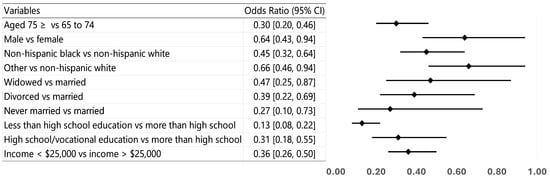
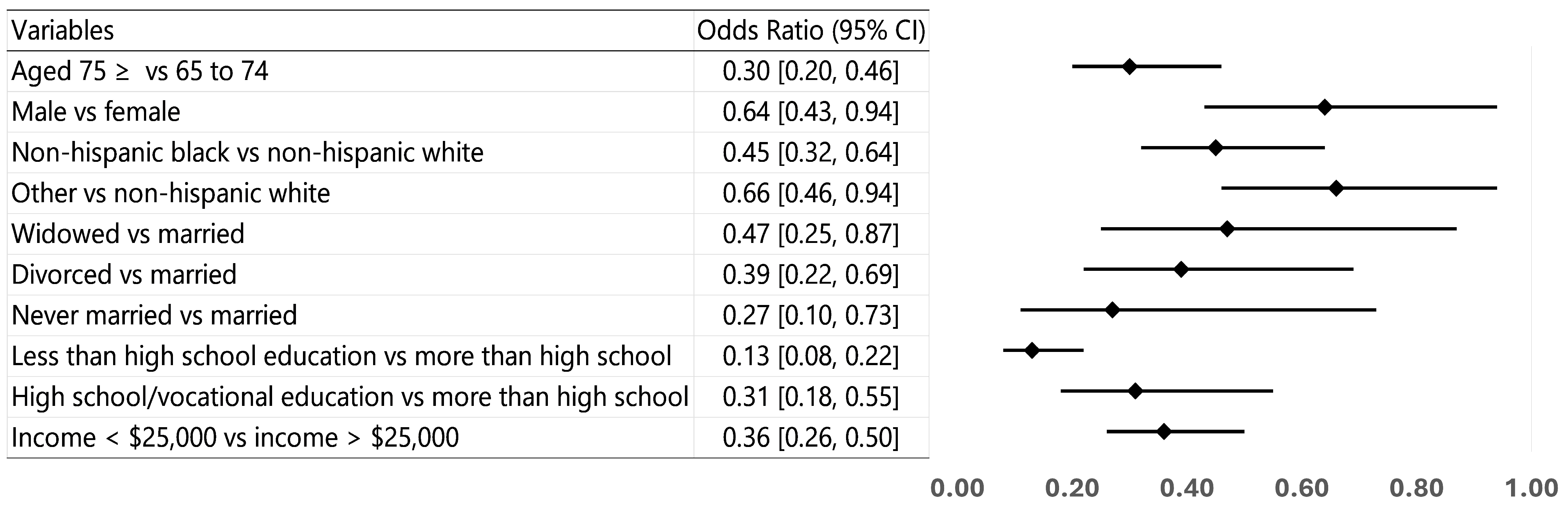
The multinomial logistic regression analysis shows the odds ratios for having access to both computer/tablet and internet by sociodemographic factors (Figure 1 and Table S1). Beneficiaries aged ≥75 years (vs. aged 65–74) had lower odds of having both a computer/tablet and internet access (OR = 0.30, p < 0.001). Males had lower odds of having both computer/tablet and internet access (OR = 0.64, p = 0.023). Non-Hispanic Blacks (OR = 0.45, p < 0.001) and other minorities (OR = 0.66, p = 0.021) had lower odds of having both computer/tablet and internet access compared to non-Hispanic Whites. Beneficiaries with marital statuses of widowed (OR = 0.47, p = 0.017), divorced (OR = 0.39, p = 0.002), or never married (OR = 0.27, p = 0.010) had lower odds of having both computer/tablet and internet access compared to married beneficiaries.
Figure 1.
Odds ratio of having both computer/tablet & internet access vs. neither by sociodemographic factors among nonmetropolitan Medicare beneficiaries.
Compared to beneficiaries with more than a high school education, those with less than a high school education (OR = 0.13, p < 0.001) and those with a high school or vocational education (OR = 0.31, p < 0.001) had lower odds of having both computer/tablet and internet access (Figure 1 and Table S1). In addition, those with incomes < $25,000 had lower odds of having both computer/tablet and internet access (OR = 0.36, p < 0.001) than those with incomes ≥ $25,000.
The multinomial logistic regression analysis also shows the odds ratios for having access to either computer/tablet or internet access by sociodemographic factors (Figure 2 and Table S1). Beneficiaries aged ≥75 years (vs. aged 65–74) had lower odds of having access to either a computer/tablet or internet (OR = 0.39, p = 0.003). Beneficiaries with marital statuses of widowed (OR = 0.53, p = 0.047), divorced (OR = 0.49, p = 0.021), or never married (OR = 0.37, p = 0.048) had lower odds of having either a computer/tablet or internet access compared to married beneficiaries. Beneficiaries with 4 or more chronic conditions (OR = 2.09, p = 0.032) had higher odds of having either a computer/tablet or internet compared to those with 0–1 chronic conditions.
Figure 2.
Odds ratio of having either computer/tablet or internet access vs. neither by sociodemographic factors among nonmetropolitan Medicare beneficiaries.
In the sensitivity analysis incorporating smartphones into the dependent variable, the weighted proportion of beneficiaries classified as having both digital device and internet access increased to 78.9%, while 10.2% had either digital device or internet access and 10.8% had neither (Table S2). In the adjusted multinomial logistic regression model, findings were generally consistent with the primary analysis, with several key associations remaining directionally similar (Table S3). Older age, male sex, non-Hispanic Black race/ethnicity, unmarried marital status, lower education, and lower income remained associated with lower odds of having both digital device and internet access compared with neither. However, selected associations were attenuated after smartphones were included, including the association for Other minority race/ethnicity, which was no longer statistically significant.
4. Discussion
Access to select digital resources among Medicare beneficiaries is a critical factor in determining opportunities for engagement with telehealth services. The implications are significant for beneficiaries in nonmetropolitan areas, where provider shortages and geographic isolation may pose barriers to accessing healthcare [12]. We found that almost one third of beneficiaries in nonmetropolitan areas report lacking access to a computer/tablet and/or internet access, representing 2.43 million beneficiaries at risk of being excluded from full digital health opportunities. Beneficiaries who are older, male, of minority race/ethnicity, less educated, unmarried, and lower income have reduced access to select digital resources. In contrast, beneficiaries with four or more chronic conditions had higher odds of having access to either a computer/tablet or internet access compared with those with 0–1 chronic conditions. Collectively, the results highlight that disparities in digital access among Medicare beneficiaries in nonmetropolitan areas are shaped by multiple sociodemographic factors. Interventions to better support these vulnerable populations should be considered.
We found that beneficiaries aged ≥75 years (vs. aged 65–74) in nonmetropolitan areas were less likely to have access to select digital resources. Similar patterns have been observed in prior studies showing that internet and digital device use declines steadily with increasing age among older adults [8,18,19]. Several factors may contribute to this observation. Older adults over 75 years old may often perceive themselves as “too old” for the internet and may not see much value in using it [20]. As individuals age, they commonly experience sensory impairments such as diminished vision and hearing [21]. These age-related limitations may further hinder technology use. Notably, about half of older adults ages 85 and older report not using the internet due to limited vision and hearing [22]. Additionally, many older adults anticipate negative experiences when using the internet, citing concerns that it is overly complex, difficult to understand, and associated with technical problems or security risks [22]. Possible interventions to improve access to digital resources among older adults include digital navigator programs, such as the Ageless Access initiative, which helps older adults set up and use digital devices and teaches essential digital skills via a structured curriculum [23]. These programs could be implemented through local referral pathways in which clinics or local public health centers identify beneficiaries with digital access barriers and connect them to available digital navigation support.
Our findings show that male beneficiaries in nonmetropolitan areas were less likely to have access to select digital resources. Prior literature shows mixed evidence regarding disparities in access to digital resources among males and females. For example, some studies show that women are more likely to have access to digital resources [8,24,25]. However, another study found no significant difference between males and females [26]. These differences reflect variation in the Medicare populations examined across studies. Additionally, sex differences may vary by geography and by how “digital access” is defined and measured. One possible behavioral explanation is that women may be more likely than men to seek health information online, which could be associated with greater ownership of select digital resources [27].
Non-Hispanic Black and Other minority beneficiaries in nonmetropolitan areas were less likely to have access to select digital resources compared to non-Hispanic Whites. This is consistent with prior evidence that racial/ethnic disparities in digital access persist among older adults and Medicare beneficiaries [7,8]. These gaps may reflect structural and economic barriers, including limited access to reliable internet connectivity and appropriate devices [7,8]. Community-based digital inclusion programs can play a role in mitigating these barriers by providing digital access for beneficiaries [28,29,30]. Additionally, preserving alternative care modalities, including telephone or in-person visits when clinically appropriate, may help prevent exclusion of beneficiaries with limited baseline digital access [8].
Beneficiaries with marital statuses of widowed, divorced, or never married in nonmetropolitan areas were less likely to have access to select digital resources compared to married beneficiaries. The findings are consistent with previous research [31]. Divorced individuals also tend to suffer long-term declines in wealth compared with those who remain continuously married [32]. These financial constraints may limit the ability of divorced beneficiaries to afford digital resources. This is likely the case for widowed beneficiaries as well. Beyond financial factors, encouragement from one’s social network, including life partners, plays a role in motivating older adults to adopt internet use [22]. In addition, older adults are more likely than younger groups to require assistance from others in learning how to use devices [18]. Married individuals may therefore be more likely to receive assistance and shared exposure to digital resources from a life partner, whereas those who are not married may have fewer opportunities for such support, indicating a need for structured digital assistance for beneficiaries without spousal support.
Compared to beneficiaries with more than a high school education, those with less than a high school education or those with a high school or vocational education in nonmetropolitan areas were less likely to have access to select digital resources. Additionally, beneficiaries with an income < $25,000 were less likely to have access to select digital resources. These findings align with previous research showing that older adults with higher education and income are more likely to use the internet and digital devices [18,21,30,33]. Older adults with lower levels of education often may hold lower-paying jobs that do not involve regular computer use and may not have the financial means to afford a computer or internet subscription [34]. In a study assessing willingness to adopt home telemedicine services among older adults, cost was cited as a major concern [35]. This highlights that individuals with limited disposable income may struggle to afford digital devices. Programs that provide low-cost digital devices and internet access may therefore help address affordability-related disparities in digital access among older adults [28,29].
Beneficiaries with 4 or more chronic conditions in nonmetropolitan areas were more likely to have access to select digital resources than those without comorbidities. This finding aligns with prior research showing greater digital health use among individuals managing multiple chronic conditions [36]. Medicare beneficiaries with multiple chronic conditions experience greater healthcare demands, including more frequent medications, appointments, and interactions with health care systems, which may increase reliance on digital health tools such as patient portals, online prescription refills, and internet-based health information [37]. Managing these ongoing needs may encourage greater need and use of digital devices among beneficiaries. This suggests that digital resources may be particularly relevant for older adults with multiple chronic conditions, whose complex health needs have been shown to be supported by digital health technologies [6]. Additionally, interventions via EHR that strengthen care coordination, reduce fragmented transitions between hospital discharge and outpatient care, and support medication management may help reduce the overall care burden for beneficiaries with multiple chronic conditions [38].
The sensitivity analysis including smartphones supports the overall robustness of the primary findings. Although including smartphones increased the proportion of beneficiaries classified as having both device and internet access, the main pattern of sociodemographic disparities remained largely similar. This suggests that smartphone access may reduce the estimated proportion of beneficiaries with limited digital resources, but it does not change the disparities by age, race/ethnicity, education, income, and marital status. These findings also reinforce the importance of distinguishing between types of digital access, as smartphone access may not be equivalent to broader device access for patient portal use, particularly when mobile access is limited by data usage or lack of mobile-friendly platforms [39].
These findings indicate a need to expand digital access among Medicare beneficiaries in nonmetropolitan areas. For example, interventions focusing on improving broadband access, increasing technology ownership, and implementing training programs could enhance telehealth readiness among populations with lower baseline readiness [23,28,29,30,40]. Limited access to select digital resources may restrict beneficiaries’ ability to participate in video visits, use patient portals, complete online forms, schedule appointments, or access internet-based health information, which may further affect telehealth utilization in nonmetropolitan areas. Another key implication is the need to screen Medicare beneficiaries for access to digital tools before offering telehealth services, allowing providers to better identify those facing barriers to telehealth, especially those in nonmetropolitan areas. Screening for digital access will ensure that telehealth initiatives can reach those who can truly benefit, while alternative options can be offered to those who face challenges in accessing telehealth. Even when connectivity is available, disparities may persist due to challenges in navigating online health resources and differences in internet literacy [30,33]. Effective computer and internet training for older adults benefits from individualized, one-on-one instruction, adequate time for skill acquisition, patience with slower learning processes, and approaches that build confidence and address psychological barriers [33].
Limitations
The findings may be susceptible to recall bias and positive response patterns due to social desirability. Given the cross-sectional design, this study cannot establish causality between sociodemographic factors, health status, and digital access. Accordingly, proposed explanations for observed disparities and potential practice implications should be interpreted as hypotheses to guide future research and intervention development. The survey also does not ask participants for their specific reasons for lacking access to or use of select digital resources, such as lack of internet service, lack of a digital device, cost, limited digital literacy, or lack of support using telehealth tools. Future research should include questions about these specific barriers to allow for more targeted intervention strategies.
Although we conducted a sensitivity analysis that incorporated smartphones into the dependent variable, the primary analysis excluded smartphones and focused on computer/tablet ownership or use and internet access. Smartphone access should not be interpreted as equivalent to broader device access for digital health tasks because the MCBS does not capture smartphone data plan quality, device functionality, comfort using smartphone applications, or the ability to complete telehealth or patient-portal tasks using a smartphone.
The outcome categories also have limitations. The “either” category is heterogeneous because beneficiaries with internet access but no device and those with a device but no internet likely face different barriers and may require different interventions. In addition, the MCBS measures access to selected digital resources but does not measure digital literacy; therefore, access to devices and internet should not be interpreted as the ability to effectively use telehealth services. The “Other minorities” race/ethnicity category grouped heterogeneous populations, which may obscure meaningful differences between racial and ethnic groups; therefore, findings for this category should be interpreted cautiously. The study population was nonmetropolitan Medicare beneficiaries aged ≥65; therefore, the results cannot be generalized to other populations. Last but not least, the MCBS PUF provides predefined categories for variables used in this study, and different categorizations may yield different insights.
5. Conclusions
In conclusion, approximately one-third (representing 2.43 million) of the beneficiaries in nonmetropolitan areas lacked access to select digital resources. Sociodemographic factors such as older age, minority race/ethnicity, lower income, lower education, and unmarried status were significantly associated with reduced digital access among nonmetropolitan Medicare beneficiaries. These inequities place at-risk beneficiaries at a disadvantage as healthcare continues to expand digitally. Addressing these gaps through targeted intervention and policy reform is essential to ensuring equitable access to telehealth and other digital health resources in nonmetropolitan communities.
Supplementary Materials
The following supporting information can be downloaded at https://www.mdpi.com/article/10.3390/jal6030051/s1. Figure S1: The Sample Selection Diagram for the Study Population; Table S1: Multinomial Regression Results of Factors Associated with Digital Device and Internet Access among Medicare Beneficiaries Aged ≥65 Years in Nonmetropolitan Areas; Table S2. Sociodemographic Characteristics of Medicare beneficiaries in Nonmetropolitan Areas by Digital Access Category, Including Smartphones in the Device Definition. (both Computer/Tablet/Smartphone & Internet, Either, Neither); Table S3. Multinomial Regression Results of Factors Associated with Digital Device and Internet Access among Medicare Beneficiaries Aged ≥65 Years in Nonmetropolitan Areas, Including Smartphones in the Device Definition.
Author Contributions
Conceptualization, B.N. and B.P.N.; methodology, B.P.N.; validation, B.P.N.; formal analysis, B.N. and B.P.N.; investigation, B.N. and B.P.N.; data curation, B.N. and B.P.N.; writing—original draft preparation, B.N., A.C. and I.J.; writing—review and editing, B.P.N., J.L. and M.M.; supervision, B.P.N.; project administration, B.N. and B.P.N.; All authors have read and agreed to the published version of the manuscript.
Funding
This research received no external funding.
Institutional Review Board Statement
The University of Central Florida Institutional Review Board determined that this is not research involving human subjects.
Informed Consent Statement
Not applicable.
Data Availability Statement
The original data presented in the study are openly available in the Centers for Medicare and Medicaid Services at https://data.cms.gov/medicare-current-beneficiary-survey-mcbs/medicare-current-beneficiary-survey-survey-file (accessed on 3 March 2025).
Conflicts of Interest
The authors declare no conflicts of interest.
References
- Patel, K.B.; Turner, K.; Alishahi Tabriz, A.; Gonzalez, B.D.; Oswald, L.B.; Nguyen, O.T.; Hong, Y.-R.; Jim, H.S.L.; Nichols, A.C.; Wang, X.; et al. Estimated Indirect Cost Savings of Using Telehealth Among Nonelderly Patients with Cancer. JAMA Netw. Open 2023, 6, e2250211. [Google Scholar] [CrossRef] [Scilit] [PubMed]
- Gajarawala, S.N.; Pelkowski, J.N. Telehealth Benefits and Barriers. J. Nurse Pract. 2021, 17, 218–221. [Google Scholar] [CrossRef] [Scilit] [PubMed]
- National Center for Health Statistics. Telemedicine Use Among Physicians by Physician Specialty: United States, 2021; National Center for Health Statistics: Hyattsville, MD, USA, 2024. Available online: https://www.cdc.gov/nchs/products/databriefs/db493.htm (accessed on 2 March 2025).
- Fact Sheet: Telehealth: AHA. Available online: https://www.aha.org/fact-sheets/2025-02-07-fact-sheet-telehealth (accessed on 2 March 2025).
- Ramsetty, A.; Adams, C. Impact of the digital divide in the age of COVID-19. J. Am. Med. Inform. Assoc. 2020, 27, 1147–1148. [Google Scholar] [CrossRef] [Scilit] [PubMed]
- Hepburn, J.; Williams, L.; McCann, L. Barriers to and Facilitators of Digital Health Technology Adoption Among Older Adults with Chronic Diseases: Updated Systematic Review. JMIR Aging 2025, 8, e80000. [Google Scholar] [CrossRef] [Scilit] [PubMed]
- Curtis, M.E.; Clingan, S.E.; Guo, H.; Zhu, Y.; Mooney, L.J.; Hser, Y.I. Disparities in digital access among American rural and urban households and implications for telemedicine-based services. J. Rural Health 2022, 38, 512–518. [Google Scholar] [CrossRef] [Scilit] [PubMed]
- Roberts, E.T.; Mehrotra, A. Assessment of Disparities in Digital Access Among Medicare Beneficiaries and Implications for Telemedicine. JAMA Intern. Med. 2020, 180, 1386–1389. [Google Scholar] [CrossRef] [Scilit] [PubMed]
- Ko, J.S.; El-Toukhy, S.; Quintero, S.M.; Wilkerson, M.J.; Nápoles, A.M.; Stewart, A.L.; Strassle, P.D. Disparities in telehealth access, not willingness to use services, likely explain rural telehealth disparities. J. Rural Health 2023, 39, 617–624. [Google Scholar] [CrossRef] [Scilit] [PubMed]
- Atella, V.; Piano Mortari, A.; Kopinska, J.; Belotti, F.; Lapi, F.; Cricelli, C.; Fontana, L. Trends in age-related disease burden and healthcare utilization. Aging Cell 2019, 18, e12861. [Google Scholar] [CrossRef] [Scilit] [PubMed]
- Vespa, J.; Medina, L.; Armstrong, D.M. Demographic Turning Points for the United States: Population Projections for 2020 to 2060. Available online: https://www.census.gov/content/dam/Census/library/publications/2020/demo/p25-1144.pdf (accessed on 3 March 2025).
- Maganty, A.; Byrnes, M.E.; Hamm, M.; Wasilko, R.; Sabik, L.M.; Davies, B.J.; Jacobs, B.L. Barriers to rural health care from the provider perspective. Rural Remote Health 2023, 23, 7769. [Google Scholar] [CrossRef] [Scilit] [PubMed]
- Centers for Disease Control and Prevention. About Rural Health. Available online: https://www.cdc.gov/rural-health/php/about/index.html (accessed on 12 June 2025).
- Medicare Current Beneficiary Survey—Survey File. Available online: https://data.cms.gov/medicare-current-beneficiary-survey-mcbs/medicare-current-beneficiary-survey-survey-file (accessed on 3 March 2025).
- Centers for Medicare & Medicaid Services. Data User’s Guide: Survey File Public Use File. 2022. Available online: https://data.cms.gov/sites/default/files/2024-10/SFPUF2022_DUG.pdf (accessed on 3 March 2025).
- Medicare Current Beneficiary Survey (MCBS). Available online: https://data.cms.gov/medicare-current-beneficiary-survey-mcbs (accessed on 3 March 2025).
- STROBE Checklists. Available online: https://www.strobe-statement.org/checklists/ (accessed on 6 June 2025).
- Anderson, M.; Perrin, A. Technology Use Among Seniors. Available online: https://www.pewresearch.org/internet/2017/05/17/technology-use-among-seniors/ (accessed on 3 March 2025).
- Fang, M.L.; Canham, S.L.; Battersby, L.; Sixsmith, J.; Wada, M.; Sixsmith, A. Exploring Privilege in the Digital Divide: Implications for Theory, Policy, and Practice. Gerontologist 2018, 59, e1–e15. [Google Scholar] [CrossRef] [Scilit] [PubMed]
- van Deursen, A.J.; Helsper, E.J. A nuanced understanding of Internet use and non-use among the elderly. Eur. J. Commun. 2015, 30, 171–187. [Google Scholar] [CrossRef] [Scilit]
- Brodkey, F.D. Aging Changes in the Senses. Available online: https://medlineplus.gov/ency/article/004013.htm (accessed on 24 October 2025).
- Friemel, T.N. The digital divide has grown old: Determinants of a digital divide among seniors. New Media Soc. 2016, 18, 313–331. [Google Scholar] [CrossRef] [Scilit]
- Ageless Access Principal Digital Navigators Help Older Adults Navigate the Digital World. Available online: https://thecenterfordigitalequity.org/ageless-access/ (accessed on 25 October 2025).
- Ng, B.P.; Hawkins, G.T.; Massey, M.; LaManna, J.B.; Park, C. Digital Divide Among Medicare Beneficiaries and the Diabetes Prevention Program. Am. J. Prev. Med. 2024, 67, 746–752. [Google Scholar] [CrossRef] [Scilit] [PubMed]
- Datta, P.; Eiland, L.; Samson, K.; Donovan, A.; Anzalone, A.J.; McAdam-Marx, C. Telemedicine and health access inequalities during the COVID-19 pandemic. J. Glob. Health 2022, 12, 05051. [Google Scholar] [CrossRef] [Scilit] [PubMed]
- Ng, B.P.; LaManna, J.B.; Hsieh, M.T.; Hawkins, G.T.; Park, C. Digital Divide and Diabetes Self-Management Education and Support Among Medicare Beneficiaries. Sci. Diabetes Self Manag. Care 2026, 52, 25–34. [Google Scholar] [CrossRef] [Scilit] [PubMed]
- Bidmon, S.; Terlutter, R. Gender Differences in Searching for Health Information on the Internet and the Virtual Patient-Physician Relationship in Germany: Exploratory Results on How Men and Women Differ and Why. J. Med. Internet Res. 2015, 17, e156. [Google Scholar] [CrossRef] [Scilit] [PubMed]
- Clark, A. A Guide to Free Internet for Seniors in 2025. Available online: https://www.theseniorlist.com/internet/free/ (accessed on 18 December 2025).
- Programs Can Help Older Adults Get or Upgrade Computers, Internet Access. Available online: https://www.aarp.org/personal-technology/programs-older-adults-computers-internet-access/ (accessed on 18 December 2025).
- Yoon, H.; Jang, Y.; Vaughan, P.W.; Garcia, M. Older Adults’ Internet Use for Health Information: Digital Divide by Race/Ethnicity and Socioeconomic Status. J. Appl. Gerontol. 2020, 39, 105–110. [Google Scholar] [CrossRef] [Scilit] [PubMed]
- Choi, N.G.; DiNitto, D.M. Internet Use Among Older Adults: Association with Health Needs, Psychological Capital, and Social Capital. J. Med. Internet Res. 2013, 15, e97. [Google Scholar] [CrossRef] [Scilit] [PubMed]
- Kapelle, N. Time cannot heal all wounds: Wealth trajectories of divorcees and the married. J. Marriage Fam. 2022, 84, 592–611. [Google Scholar] [CrossRef] [Scilit] [PubMed]
- Chang, J.; McAllister, C.; McCaslin, R. Correlates of, and Barriers to, Internet Use Among Older Adults. J. Gerontol. Soc. Work 2015, 58, 66–85. [Google Scholar] [CrossRef] [Scilit] [PubMed]
- Berner, J.; Aartsen, M.; Deeg, D. Predictors in starting and stopping Internet use between 2002 and 2012 by Dutch adults 65 years and older. Health Inform. J. 2019, 25, 715–730. [Google Scholar] [CrossRef] [Scilit] [PubMed]
- Cimperman, M.; Brenčič, M.M.; Trkman, P.; Stanonik, M.d.L. Older adults’ perceptions of home telehealth services. Telemed. J. E-Health 2013, 19, 786–790. [Google Scholar] [CrossRef] [Scilit] [PubMed]
- Levine, D.M.; Lipsitz, S.R.; Linder, J.A. Trends in Seniors’ Use of Digital Health Technology in the United States, 2011–2014. JAMA 2016, 316, 538–540. [Google Scholar] [CrossRef] [Scilit] [PubMed]
- Nouri, S.; Khoong, E.C.; Lyles, C.R.; Karliner, L. Addressing Equity in Telemedicine for Chronic Disease Management During the COVID-19 Pandemic. NEJM Catal. Innov. Care Deliv. 2020, 1, 1–13. [Google Scholar]
- Parekh, A.K.; Goodman, R.A.; Gordon, C.; Koh, H.K. Managing multiple chronic conditions: A strategic framework for improving health outcomes and quality of life. Public Health Rep. 2011, 126, 460–471. [Google Scholar] [CrossRef] [Scilit] [PubMed]
- Turner, K.; Nguyen, O.; Hong, Y.R.; Tabriz, A.A.; Patel, K.; Jim, H.S.L. Use of Electronic Health Record Patient Portal Accounts Among Patients with Smartphone-Only Internet Access. JAMA Netw. Open 2021, 4, e2118229. [Google Scholar] [CrossRef] [Scilit] [PubMed]
- Falvey, J.R.; Sun, N.; Miller, M.J.; Pravdo, A.; Mullins, C.D. Demystifying the Digital Divide: Disparities in Telerehabilitation Readiness Among Older Adults in the United States. Arch. Phys. Med. Rehabil. 2024, 105, 1255–1261. [Google Scholar] [CrossRef] [Scilit] [PubMed]



Disclaimer/Publisher’s Note: The statements, opinions and data contained in all publications are solely those of the individual author(s) and contributor(s) and not of MDPI and/or the editor(s). MDPI and/or the editor(s) disclaim responsibility for any injury to people or property resulting from any ideas, methods, instructions or products referred to in the content. |
© 2026 by the authors. Licensee MDPI, Basel, Switzerland. This article is an open access article distributed under the terms and conditions of the Creative Commons Attribution (CC BY) license.