


Abstract
A Fab Lab is a collaborative environment that provides shared material resources, fabrication processes, tools, and knowledge for experimentation and prototype development. This study connects a previously developed parametric module with an exploratory material-recovery workflow based on recycled cardboard waste generated in the UTPL Fab Lab. The parametric-module geometry had been previously developed and physically fabricated using conventional sheet material. In the present study, small-scale recycled-cardboard cellulose-fiber composite specimens were produced by varying pulp preparation, moisture content, adhesive dosage, pressing conditions, molding procedures, and drying methods. The specimens were evaluated through preliminary qualitative observations of cohesion during demolding and handling, approximate thickness control, visible cracking, dimensional stability, surface condition, edge integrity, and ease of handling. The results identify candidate formulations for future investigation, including a reference press-assisted configuration and a promising lower-resource formulation. A reduced-scale manually assembled prototype provided preliminary evidence that the proposed geometry can be represented using the recycled-cardboard material. However, the study does not validate full-scale fabrication, CNC routing, laser cutting, structural performance, or long-term functional use of recycled-cardboard panels. The study contributes a preliminary workflow linking Fab Lab waste recovery, material experimentation, parametric design, and circular-economy-oriented prototyping.
1. Introduction
In the context of technological transformation and increasing environmental challenges, parametric design and circular-economy principles have emerged as relevant approaches for advancing sustainability in architecture and design. Parametric design enables the generation and modification of complex geometries through algorithms, facilitating iterative processes in which multiple variables can be adjusted. Circular-economy approaches seek to reduce the consumption of virgin resources and retain materials in productive cycles through reuse, recycling, and recovery. Within universities, digital fabrication laboratories such as the UTPL Fab Lab generate material offcuts and discarded prototypes during design and fabrication activities. These residual materials may provide an opportunity for local recovery and material experimentation before they are treated as waste [1].
Recycled paper and cardboard are lignocellulosic resources that can be rehydrated, disintegrated, and transformed into new paper products, composite materials, insulation products, or experimental panels [2,3]. However, the performance of recycled cellulose-fiber materials depends on fiber quality, contaminants, pulp processing, water content, adhesive dosage, compaction, drying conditions, density, and exposure to moisture [2,3,4]. Previous studies on cardboard-based components further indicate that paper and cardboard are sensitive to moisture and display variable physical and mechanical behavior depending on fiber orientation, geometry, material configuration, and fabrication procedure [3,4]. Therefore, small-scale material observations cannot be directly extrapolated to full-scale structural components, CNC-machined panels, or modular assemblies without further physical, mechanical, and fabrication testing [3].
The study builds on a previous undergraduate thesis by Brito Vivanco and Campoverde Armijos, in which an interactive parametric pavilion and an interlocking modular system were developed [5]. In that previous work, the module geometry was generated through a parametric algorithm and physically fabricated at full scale using moisture-resistant medium-density fiberboard (MDF RH). The fabrication workflow included the definition of machining paths, 2D profiling, and CNC-based machining through NC Studio. This prior work verified the geometric logic of the module, its interlocking-joint configuration, and its basic assembly procedure [5].
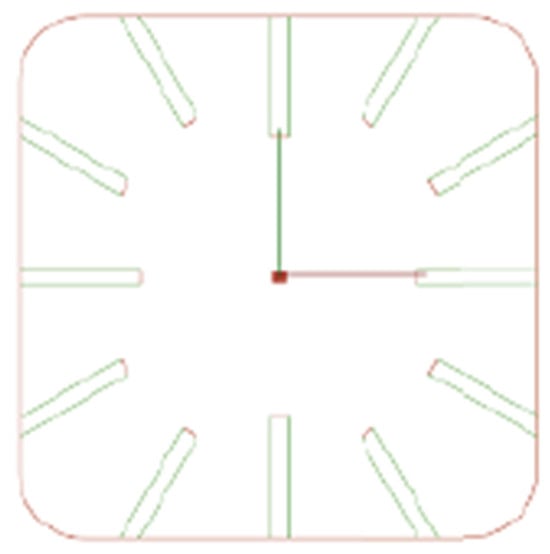
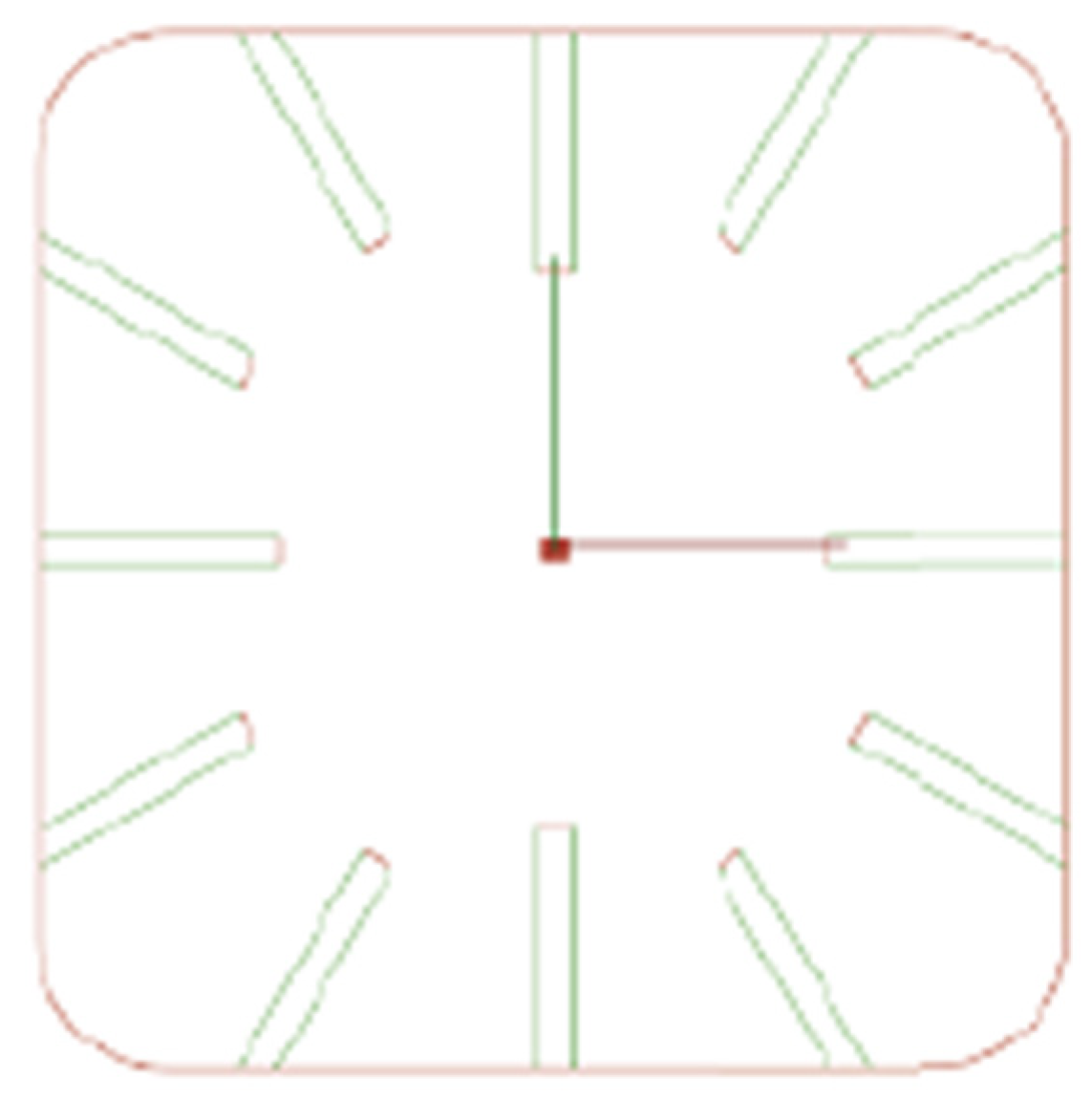
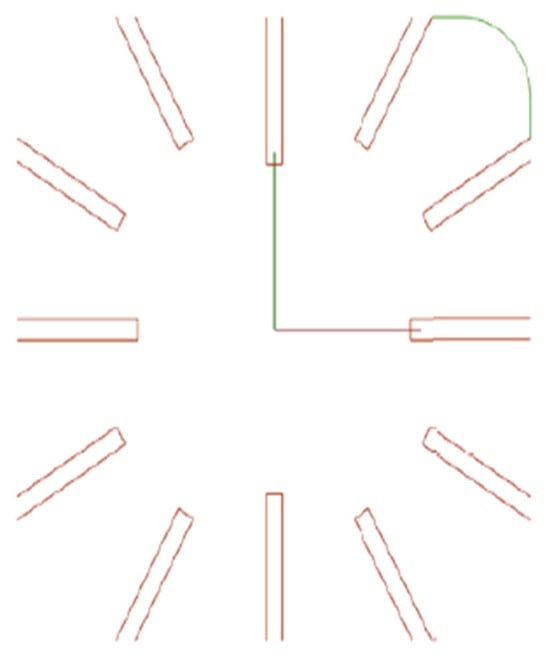
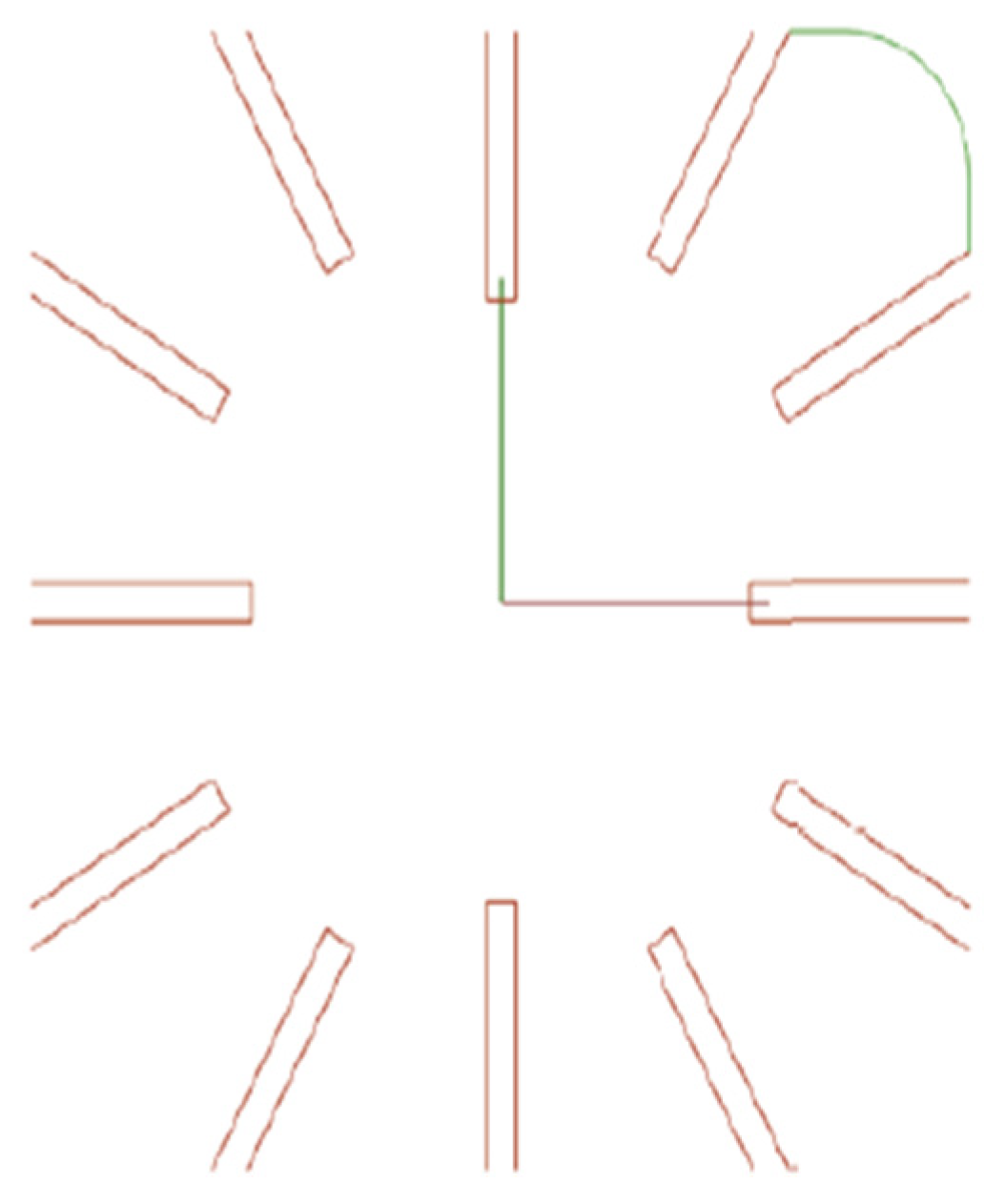
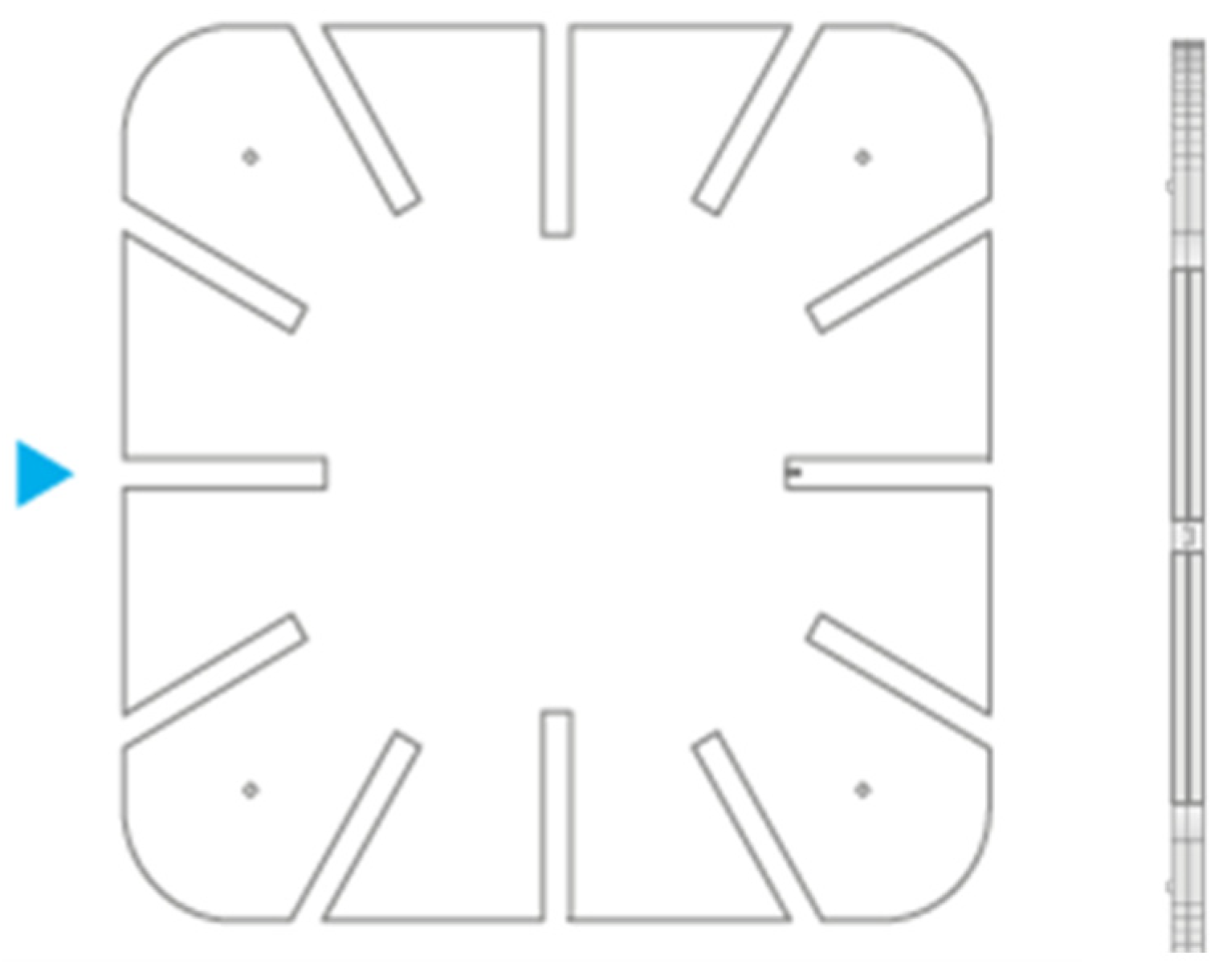
The module is based on a 35 cm square geometry with 12 evenly distributed cross-halving slots. The slots have equal nominal lengths to enable interchangeable connections, while the module corners are rounded to reduce sharp edges in play-oriented or educational configurations. The algorithm developed in Rhinoceros 8 and its integrated visual programming environment Grasshopper allows the module dimensions, joint geometry, material thickness, and connection parameters to be modified. The previous full-scale fabrication validated the parametric geometry and basic assembly logic using moisture-resistant medium-density fiberboard (MDF RH); however, it did not validate recycled-cardboard cellulose-fiber panels through CNC machining, laser cutting, or full-scale assembly [5].
The present study addresses a subsequent and complementary stage: the preliminary development of cellulose-fiber composite specimens from recycled cardboard waste generated in the UTPL Fab Lab. The material experiments were conducted at a small scale following an iterative prototyping approach, in which alternative formulations are assessed before larger amounts of material, energy, and equipment are committed to full-scale production 1. Recycled-cardboard pulp was prepared and formed into specimens by varying pulp preparation, water content, adhesive dosage, pressing conditions, molding procedures, and drying methods. The specimens were assessed through qualitative observations of cohesion during demolding and handling, approximate thickness control, visible cracking, dimensional stability, surface condition, edge integrity, and ease of handling.
The study does not claim that recycled-cardboard panels have been fabricated at full scale or validated through CNC machining, laser cutting, structural testing, repeated assembly, or long-term functional use. A reduced-scale prototype was manually assembled to provide preliminary evidence that the proposed parametric geometry can be represented and assembled using the developed material.
Accordingly, the research question is: Which processing conditions enable the production of recycled-cardboard cellulose-fiber specimens with sufficient preliminary cohesion, thickness control, and dimensional stability to be considered for future full-scale fabrication and assembly tests using a previously developed parametric-module geometry?
The study contributes an exploratory workflow that connects a previously fabricated parametric-module system with the recovery of cardboard waste generated in a Fab Lab. Its findings provide preliminary evidence for selecting candidate material formulations and establish a basis for future evaluation of physical and mechanical properties, moisture response, thermal and fire behavior, CNC- or laser-cutting response, joint tolerances, and full-scale modular assembly [3].
2. Circular Economy
The circular economy is an approach to production and consumption that seeks to reduce the extraction of virgin resources, prevent waste generation, and retain products and materials in use for as long as possible. In contrast to the conventional linear model of “take-make-dispose”, circular strategies promote the reduction in material consumption, reuse, repair, remanufacturing, recycling, and recovery [6,7]. These principles are aligned with the 2030 Agenda for Sustainable Development, particularly Sustainable Development Goal 12 (SDG 12), which calls for responsible consumption and production patterns, sustainable management and efficient use of natural resources, and substantial waste reduction through prevention, reduction, recycling, and reuse [8,9].
In the context of architecture and design, circularity requires consideration of the entire material cycle, including the origin of resources, material selection, fabrication processes, prototype lifespan, possibilities for disassembly, reuse, recycling, and end-of-life management. The reuse of waste generated during design and fabrication activities can therefore be understood as an initial circular strategy, particularly when discarded materials are transformed into inputs for subsequent material-development processes. However, a material should not be considered environmentally preferable solely because it is recyclable or biodegradable. Its environmental performance is influenced by material mass, processing requirements, energy consumption, transportation, potential reuse, and final treatment route [6].
Fab Labs and digital fabrication laboratories are relevant environments for the application of circular practices because iterative design processes commonly generate material offcuts, discarded models, packaging remnants, and failed prototypes. Sustainable digital-fabrication practices may include recovering suitable waste streams, reusing leftover pieces, selecting locally available materials, optimizing design to reduce material loss, and matching the scale and fidelity of prototypes to the purpose of each design stage. These practices can reduce unnecessary resource consumption during early experimentation and provide opportunities to document material-recovery procedures for future projects [1].
In the present research, circularity is implemented through the recovery of cardboard boards and cellulose-based waste generated during prototyping and model-making activities at the UTPL Fab Lab. Instead of being discarded after their first use, the selected cardboard waste was separated, shredded, hydrated, transformed into cellulose-fiber pulp, and used to produce small-scale composite specimens. This process gives the recovered material a new potential use cycle and allows alternative formulations to be evaluated before larger quantities of resources are committed to future fabrication stages.
The COIL framework provides the international, collaborative, and interdisciplinary educational context in which the project was developed. The detailed analysis of the COIL implementation—including the internationalization process, intercultural and interdisciplinary learning outcomes, institutional coordination, communication dynamics, and pedagogical results—is outside the scope of this manuscript and will be addressed in a separate future publication. In the present study, COIL is considered as the context that enabled collaborative exchange around parametric design, material experimentation, fabrication processes, and responsible resource use.
Accordingly, the circular contribution of the present study lies in proposing a local material-recovery workflow that connects Fab Lab waste, small-scale prototyping, and future digital-fabrication possibilities. The study does not quantify life-cycle impacts, carbon emissions, or comparative environmental performance between recycled and virgin materials. Its contribution is therefore limited to the exploratory identification of recycled-cardboard formulations that can be further assessed through standardized characterization, full-scale panel production, CNC or laser-cutting trials, and modular assembly tests.
3. Digital Fabrication
The Fab Lab concept emerged in the early 2000s at the Center for Bits and Atoms (CBA) at the Massachusetts Institute of Technology (MIT), and the term was coined by its director at the time, Neil Gershenfeld. Fab Labs form a global network of local facilities devoted to fostering individual creativity by providing access to digital fabrication tools [10].
Digital fabrication is a computational process that transforms digital designs into physical objects through a three-dimensional model created in design software and fabricated using different computer-controlled machines [11].
The process begins with the conception of ideas (sketches), followed by design definition and modelling using Rhinoceros 8 and its integrated visual programming environment, Grasshopper, as CAD (Computer-Aided Design) software The proposal is then analysed and verified using AutoCAD 2023 as CAE (Computer-Aided Engineering) software. Next, simulation and machining of the fabrication process are carried out using SmartCarve as CAM (Computer-Aided Manufacturing) technology. Finally, prototyping is performed using state-of-the-art computer-controlled laser-cutting tools. [12].
4. Digital Fabrication Laboratory (FabLab)
The Fab Lab network is one of the most active digital fabrication communities. Registered users can share their projects by distributing files and fabrication drawings so that products can be replicated, improved, or expanded at any Fab Lab worldwide. The platform also includes an issue-reporting section where users can document difficulties encountered while assembling or replicating a project and request further information or clarification from the contributor [13].
A Fab Lab is described as a low-cost laboratory that enables people to build what they need using digital and analog tools, a simple idea with far-reaching results [14]. These spaces support experimentation with different tools throughout the process of transforming a digital idea into a physical prototype. They provide access to digital fabrication technologies and enable the digitization and rapid prototyping of ideas [15].
Currently, an estimated 2500 official Fab Labs operate worldwide, with approximately 150 laboratories in Latin America. Interaction takes place virtually through videoconferences, chat messages, and email. Their main objective is to strengthen the exchange of creative ideas, resources, and experiences in using digital fabrication tools, while promoting self-directed learning and a culture of sharing work with other users. These spaces therefore require users to contribute documentation and instruction regarding their workshop processes [16].
The main tools used in digital fabrication are summarized in Table 1 [17]:
Table 1.
Digital Fabrication Tools.
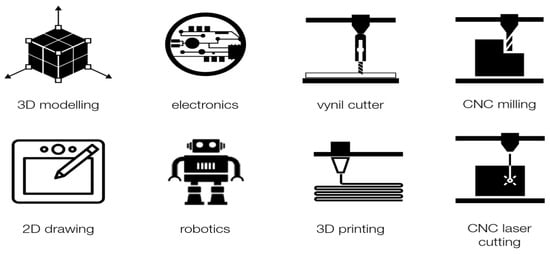
The different methodologies applied within the Fab Lab network are centred on making. Their development and application therefore require a set of digital fabrication tools and principles, as illustrated in Figure 1 principles:
Figure 1.
Main digital fabrication tools and methodologies used in Fab Labs.
4.1. Materials in Digital Fabrication Laboratories
A laboratory is a facility equipped with the resources required to conduct research, experiments, practical exercises, and scientific, technological, or technical work. Laboratories contain specific instruments and equipment with which experiments are performed under controlled conditions according to the objectives of the activity [18]. High-precision fabrication and materials development can be approached from an economic and environmental perspective that prioritizes reuse and recycling rather than the production of virgin components. Synergies must be established among advanced manufacturing, materials development, and the circular economy, not only because of the technologies and processes involved, but also because of the urgent constraints of a planet with finite resources and space [19].
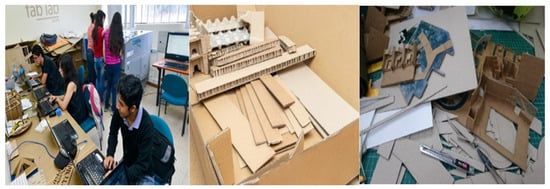
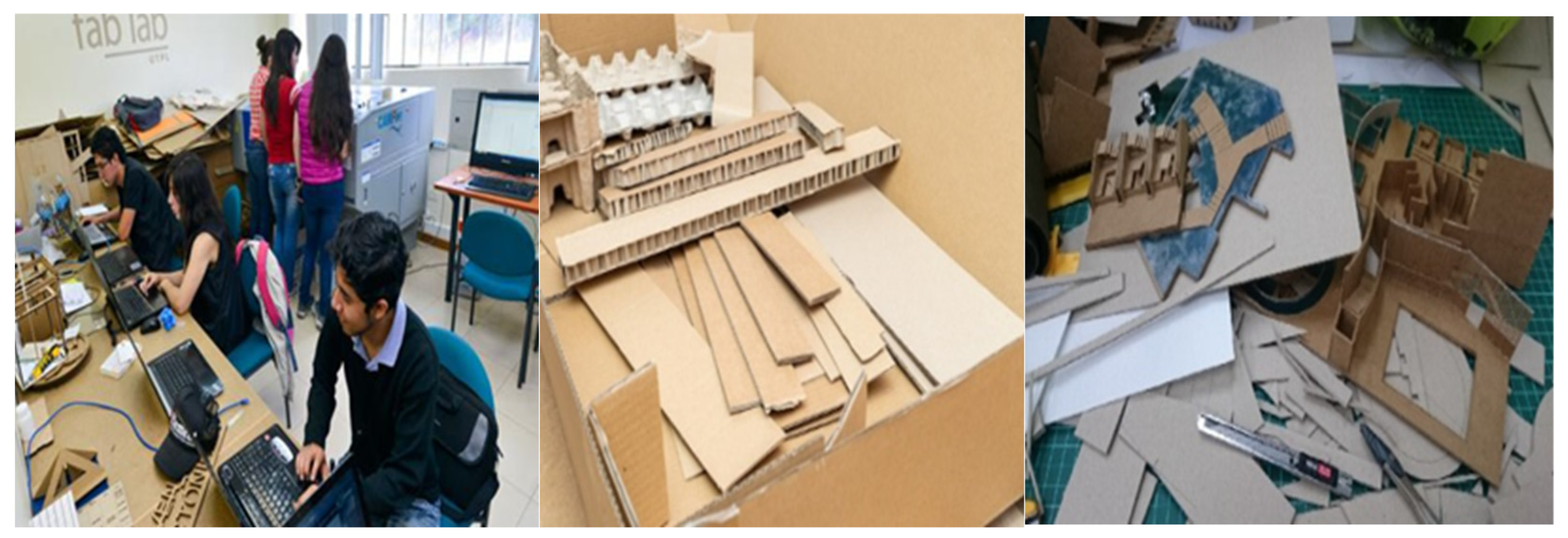
Waste generated in the fabrication laboratory results from leftover materials used by architecture students to produce prototypes, models, and coursework, as shown in Figure 2. Each material must be analyzed and classified so that suitable shredding processes can be evaluated. The resulting particles can then be bonded with resins or adhesives, enabling material reuse and reducing environmental pollution.
Figure 2.
Material Waste at the UTPL Fab Lab.
In this study, pressed cardboard refers to the dense, non-corrugated cardboard recovered from the UTPL Fab Lab. Cardboard is a paper-fiber-based material formed into sheets through processes that include pressing and drying. Its properties vary with fiber composition, density, manufacturing conditions, and exposure to moisture. Consequently, the suitability of the recovered material for a particular application requires characterization under the intended conditions [20].
Corrugated cardboard. Corrugated cardboard consists of a fluted paper sheet bonded between flat liner sheets. Its characteristics depend on the paper used for the liners and fluted layer, flute geometry, and environmental conditions such as temperature and humidity. Therefore, its suitability should be assessed in relation to the intended application [21].
Foam board. Foam board, also known as foamcore, is a lightweight sandwich material consisting of a foam core between two paper-facing layers. It is used to fabricate physical models for design and architecture and can be cut and assembled into three-dimensional forms. Its layered composition distinguishes it from the paper-fiber-based cardboard materials considered in this study [22].
4.2. Parametric Design and Digital Fabrication
Parametric design is an advanced digital technique that uses specialized software and algorithms to generate geometrically complex and original designs that can be developed with digital fabrication tools. The software enables designers to analyze alternatives, evaluate and select outcomes, and make unlimited changes by modifying the parameters used. This makes it possible to examine variants throughout the design process without rebuilding the model until the desired result is achieved [23].
The introduction of computational design has been one of the most significant technological advances in architectural design. Once computers became design tools, architects began to use curves and surfaces freely to create spaces that extended beyond the limitations of classical Euclidean forms [24]. Parametric design is a process based on algorithmic thinking that enables the expression of rules which, together, define, encode, and clarify the relationship between design intent and design response. It makes it possible to develop solutions at a more advanced level by generating designs from defined parameters. During the design process, details can be reconsidered and new ideas incorporated, while remaining within constraints established at the outset [25].
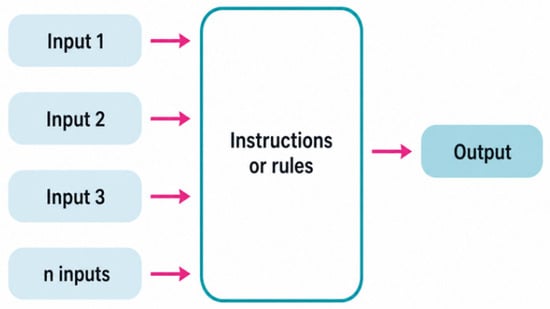
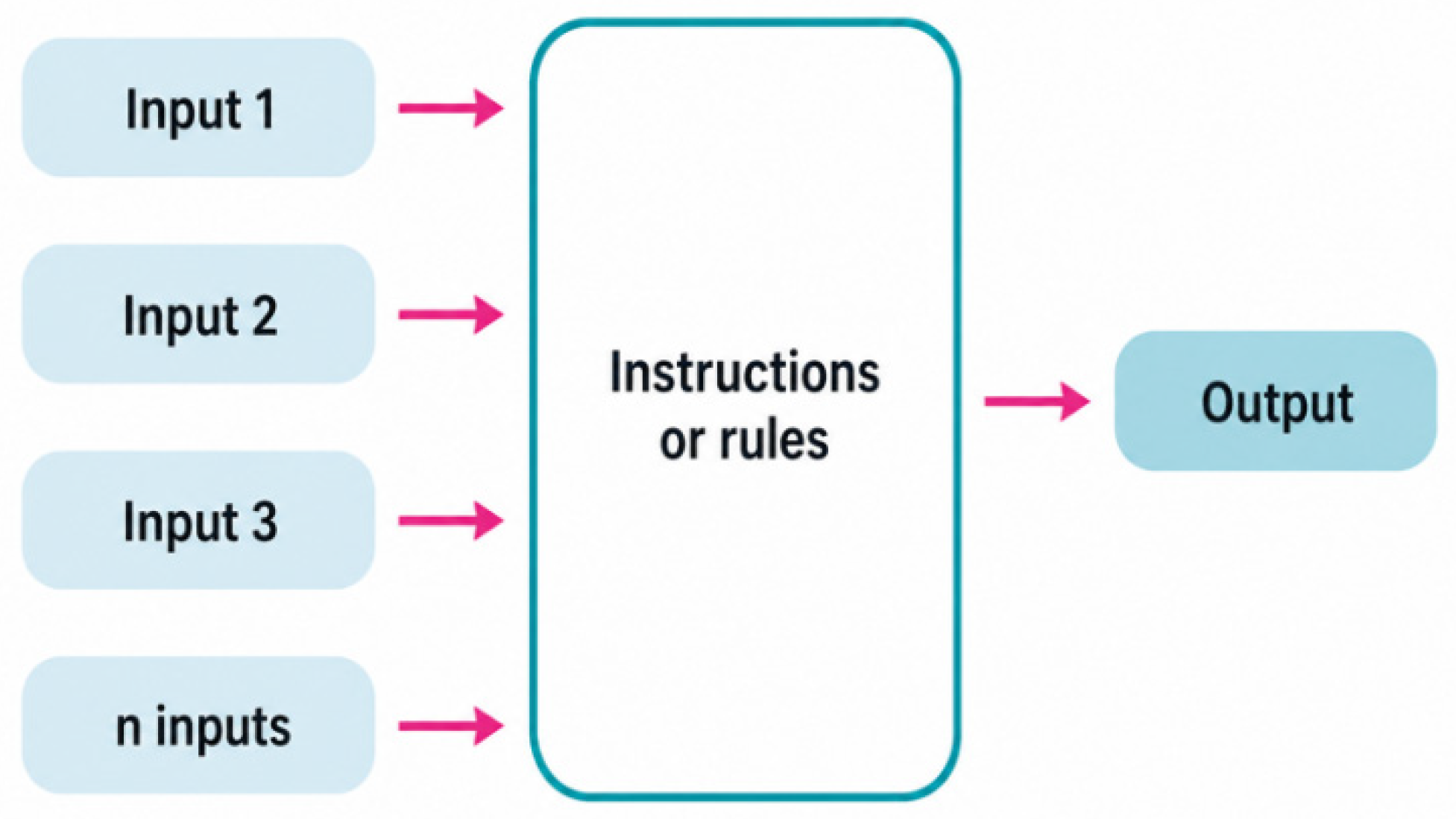
As illustrated in Figure 3, in parametric design, designers establish rules and define their logical relationships when creating the algorithm. The design can be changed at any stage by modifying either the input data or the rules governing the process, while design alternatives can be developed at any stage, generating an unlimited number of options in parallel [26]. These steps and data frequently overlap: additional conditions can be defined while the procedure is being prepared or executed or adjusted in response to predicted outcomes. Analyzing the relationships that emerge throughout the process contributes to its development and optimization [27].
Figure 3.
Parametric Design.
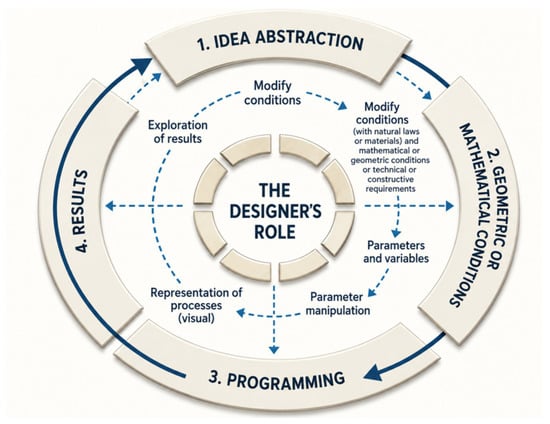
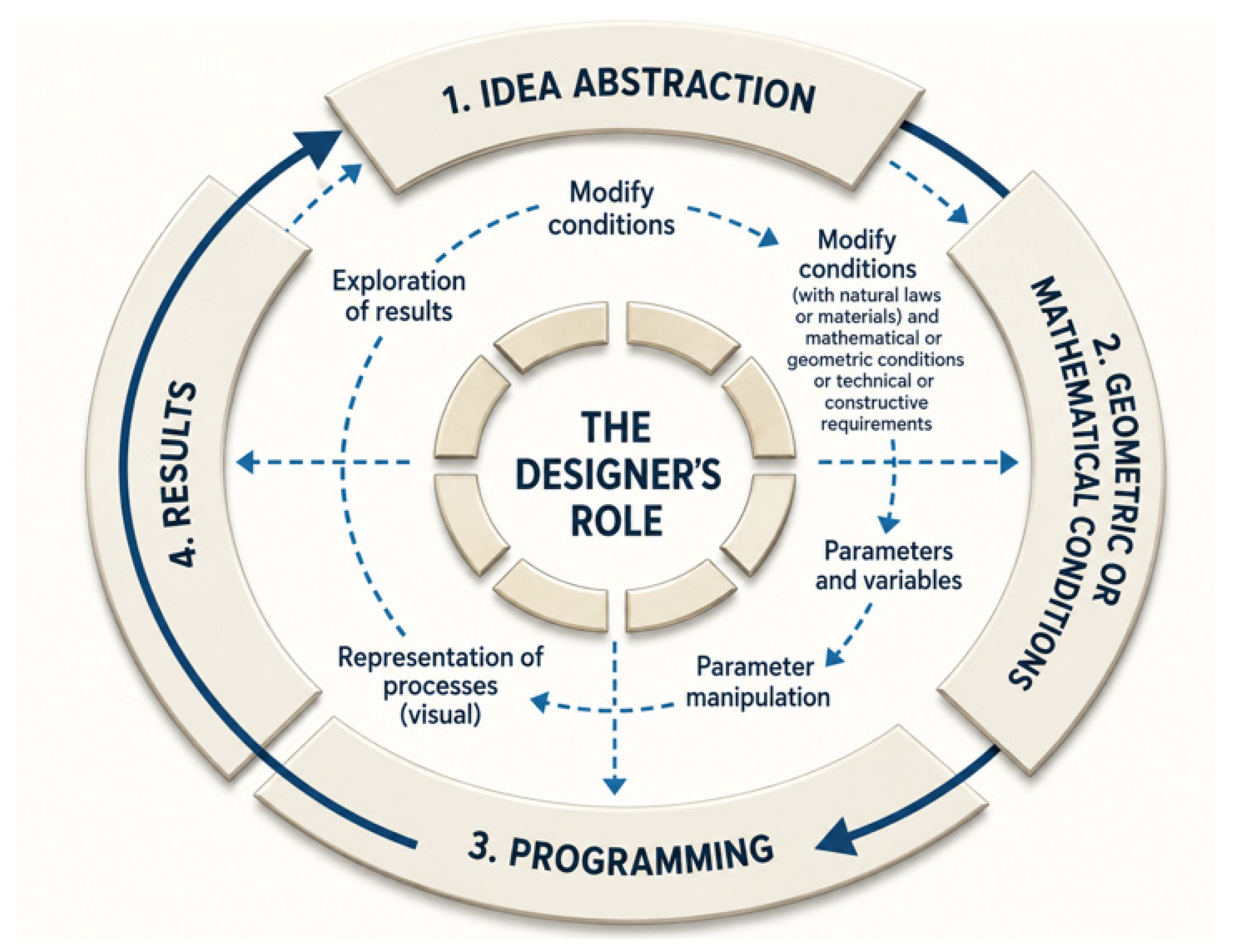
Digital fabrication comprises complementary methods used to produce an object. As illustrated in Figure 4, the process begins with the conception of ideas (sketches), followed by design definition and modeling in CAD (Computer-Aided Design) software. The proposal is then analyzed and verified in CAE (Computer-Aided Engineering) software; fabrication is simulated and machined using CAM (Computer-Aided Manufacturing) technology; and the prototype is ultimately produced using state-of-the-art computer-controlled tools. Figure 4 presents digital fabrication as a cyclic and iterative process in which the designer continuously modifies geometric or mathematical conditions, manipulates parameters, programs operations, and evaluates the resulting outputs [28].
Figure 4.
Digital fabrication processes.
Materials available in digital fabrication laboratories include the waste generated from leftover materials used by architecture students to produce prototypes, scale models, and assignments for different courses. These materials should be analyzed and classified so that appropriate shredding processes can be assessed.
The resulting particles may then be bonded using resins or adhesives, enabling the materials to be reused and reducing environmental pollution.
4.3. Requirements and Specifications for the Module to Be Parameterized
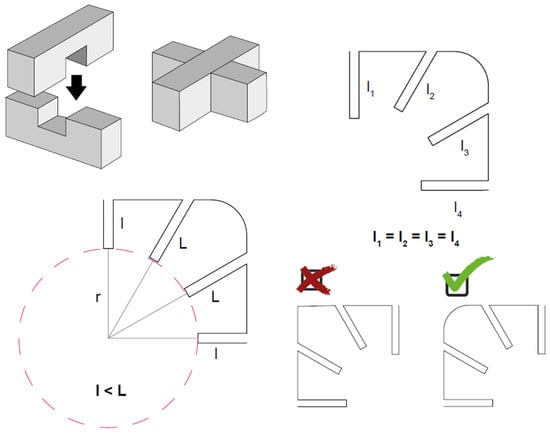
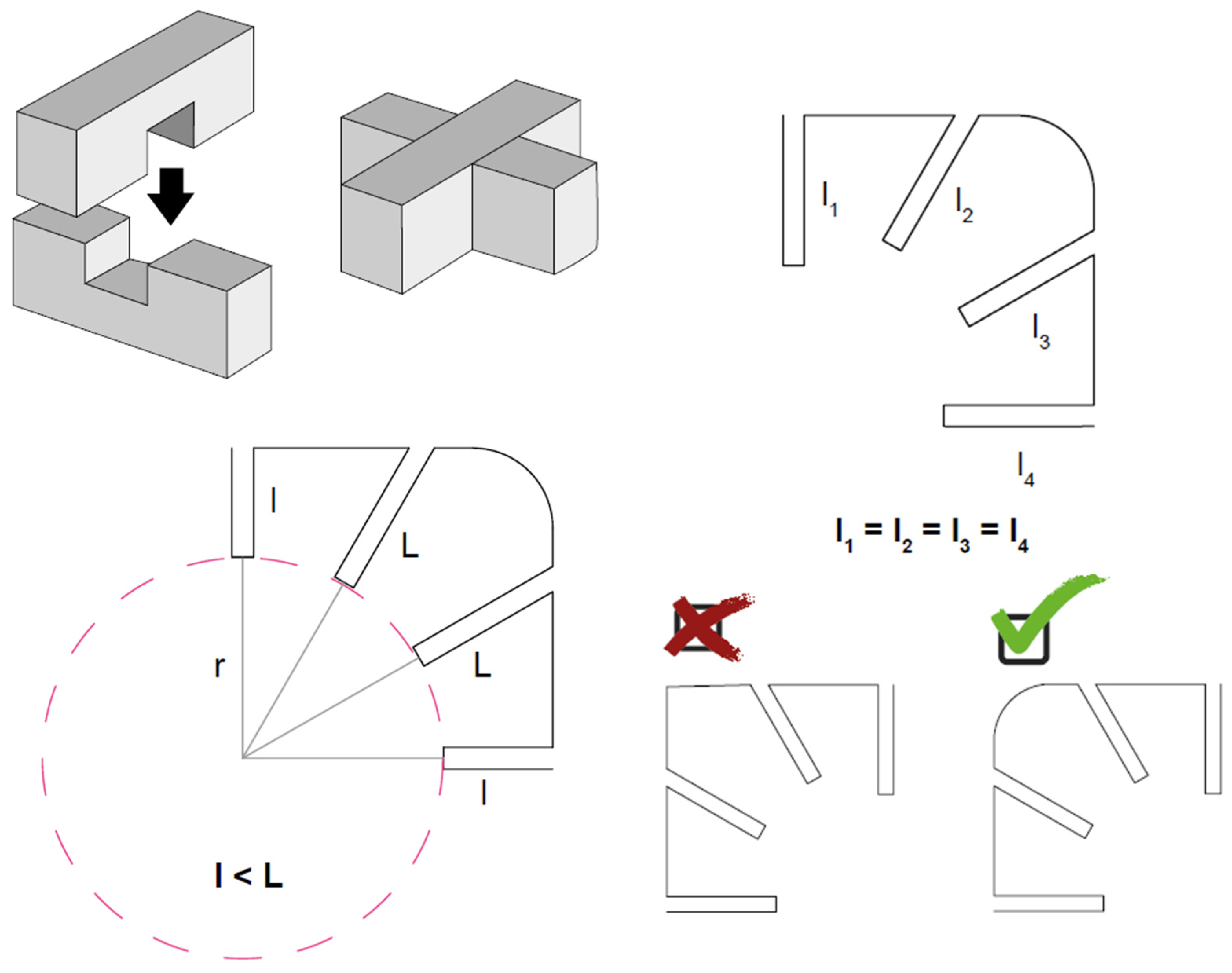
The square was selected as the base geometry for the module because identical square pieces can be arranged in continuous configurations. Cross-halving joints were adopted to connect the pieces through complementary slots, without separate connectors; this joining principle has been used in parametrically designed panel systems. In the module developed for this study, four equal-length sides and the geometric constraints shown in Figure 5 define the proposed interlocking configuration [29].
Figure 5.
Parameterized module for a cross-halving.
Unlike the prototypes shown in the patents, in which joint length was directly related to the radius of the circle circumscribing the polygon, the connection slots in this system must all have the same length. In the specific case of a square, when joint length is linked to a given radius, diagonal joints tend to be longer than vertical or horizontal ones.
The number and arrangement of joints are directly related to the variety of forms that can be generated. We therefore found it appropriate to use two inclination angles so that their combination can produce curvature with fewer pieces while also increasing the range of possible forms.
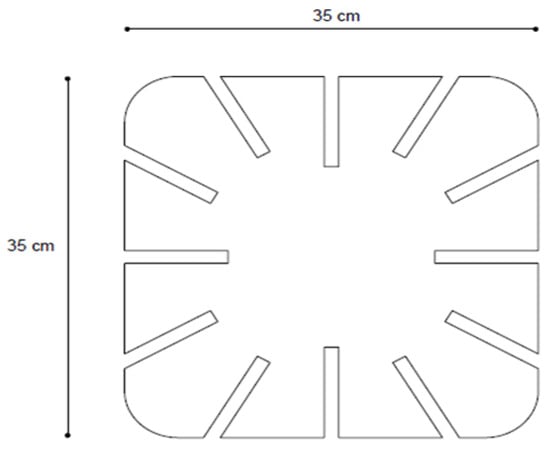
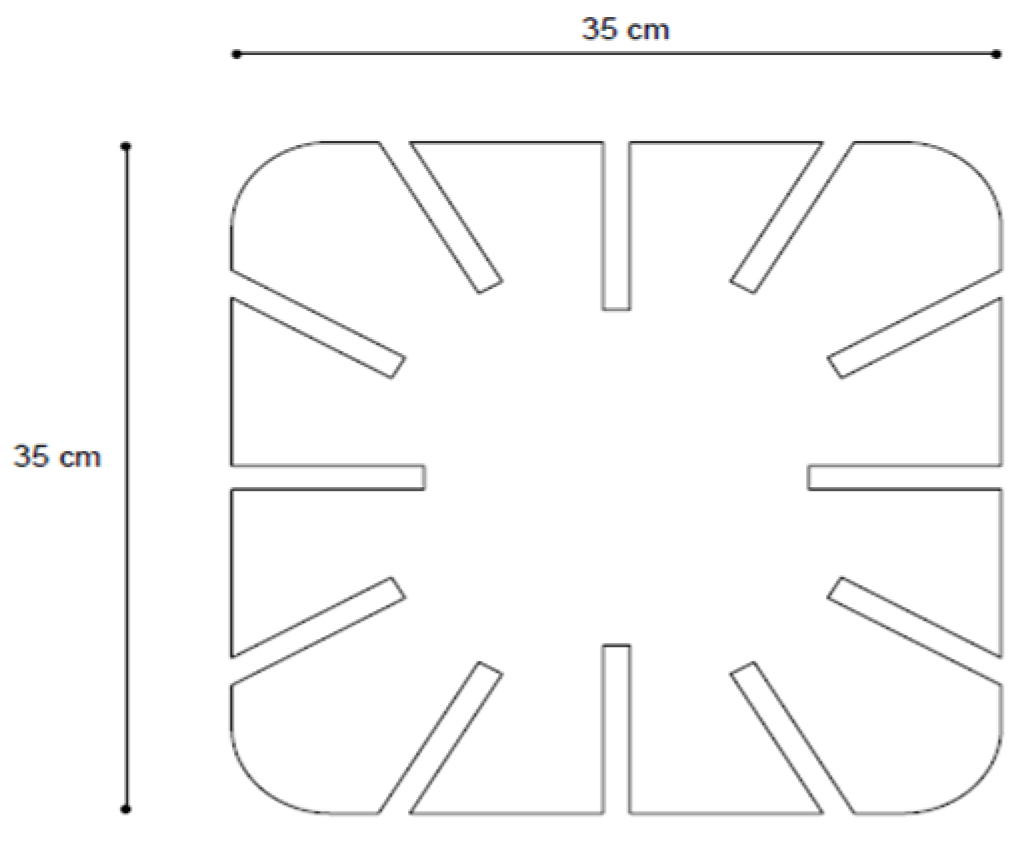
According to toy-safety standards, sharp points and edges must be avoided in play elements. Because the construction-game module is square, all four corners therefore need to be rounded as shown in Figure 6.
Figure 6.
Square module.
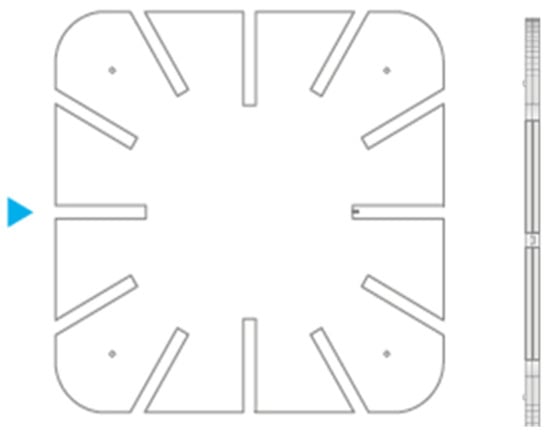
The resulting module is a square measuring 35 cm on each side, a dimension based on the table described in the user-study section. The module contains 12 slots that connect it to other pieces. All slots have the same length to promote proper assembly of the overall structure. The module corners have been rounded to meet safety specifications.
4.3.1. Module Parameterization
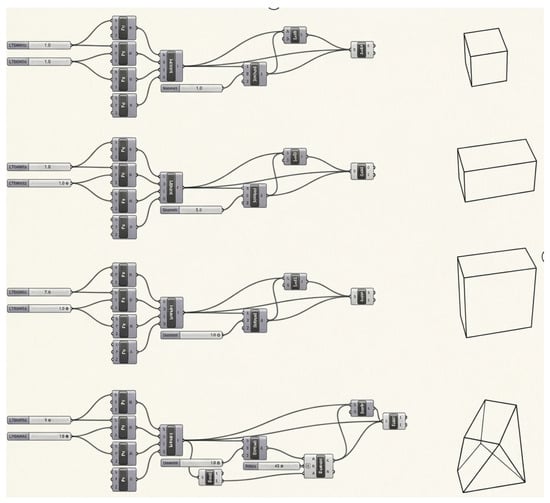
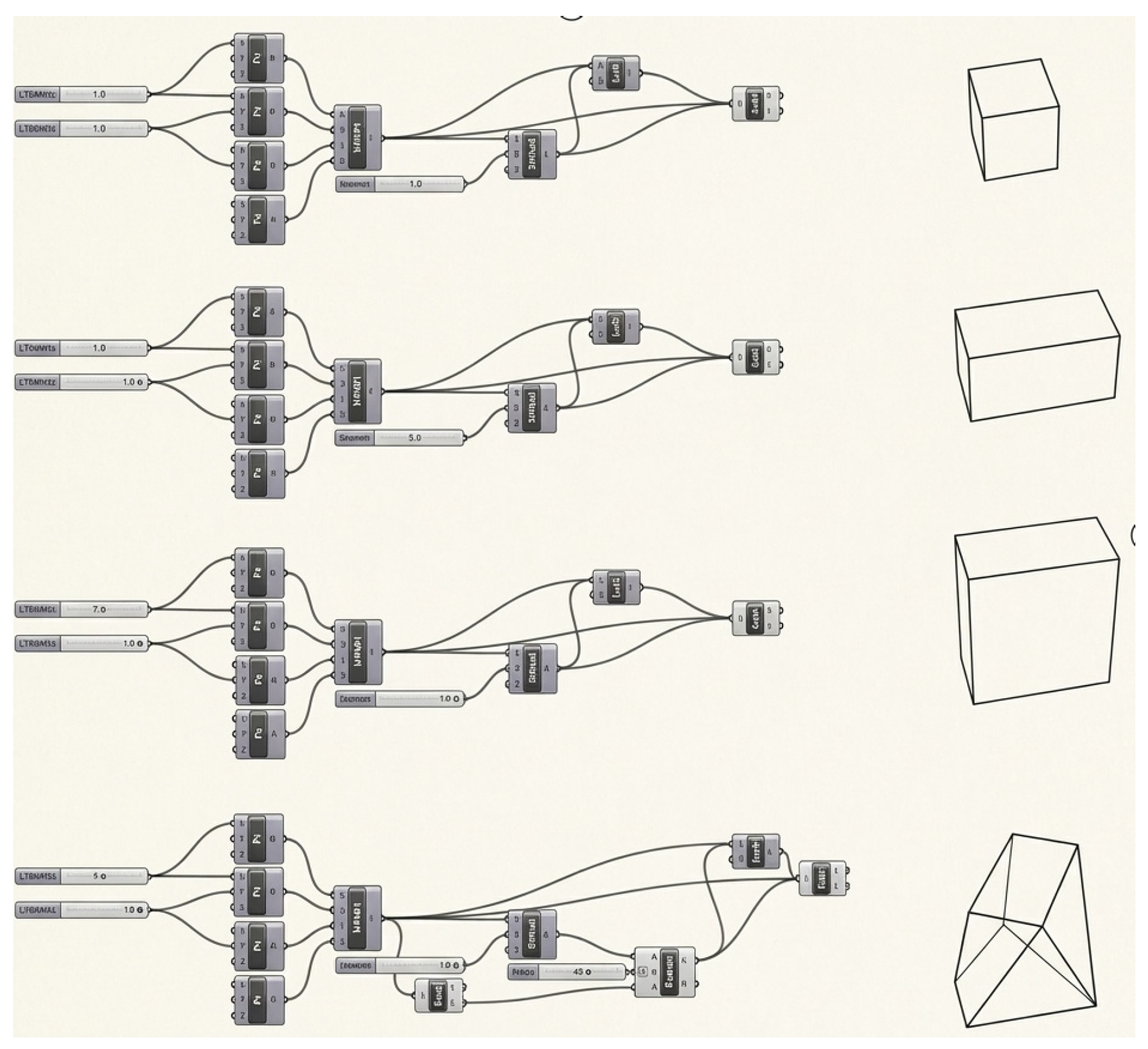
The parametric module was developed through a single algorithm in Rhinoceros 8 and Grasshopper. This approach enables the modification of key design variables, such as dimensions, slot configuration, number of connections, and corner geometry, without requiring the model to be recreated from the beginning. By changing these input variables within the same algorithm, multiple design alternatives can be generated and evaluated efficiently, as shown in Figure 7.
Figure 7.
Grasshopper algorithm and resulting module configurations generated by varying the length and width input parameters.
4.3.2. Software Selection
Rhinoceros 8 and its integrated visual programming environment, Grasshopper, were used to parameterize the proposed module. Grasshopper enables designers to define relationships among geometric variables and generate alternative configurations by modifying input parameters. In this study, the algorithm was used to adjust the module dimensions and joint configuration without rebuilding the geometry from the beginning [30].
4.3.3. Module Parameters
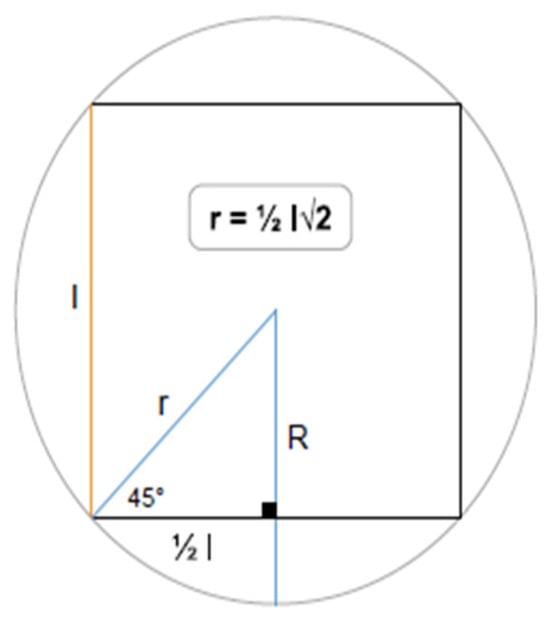
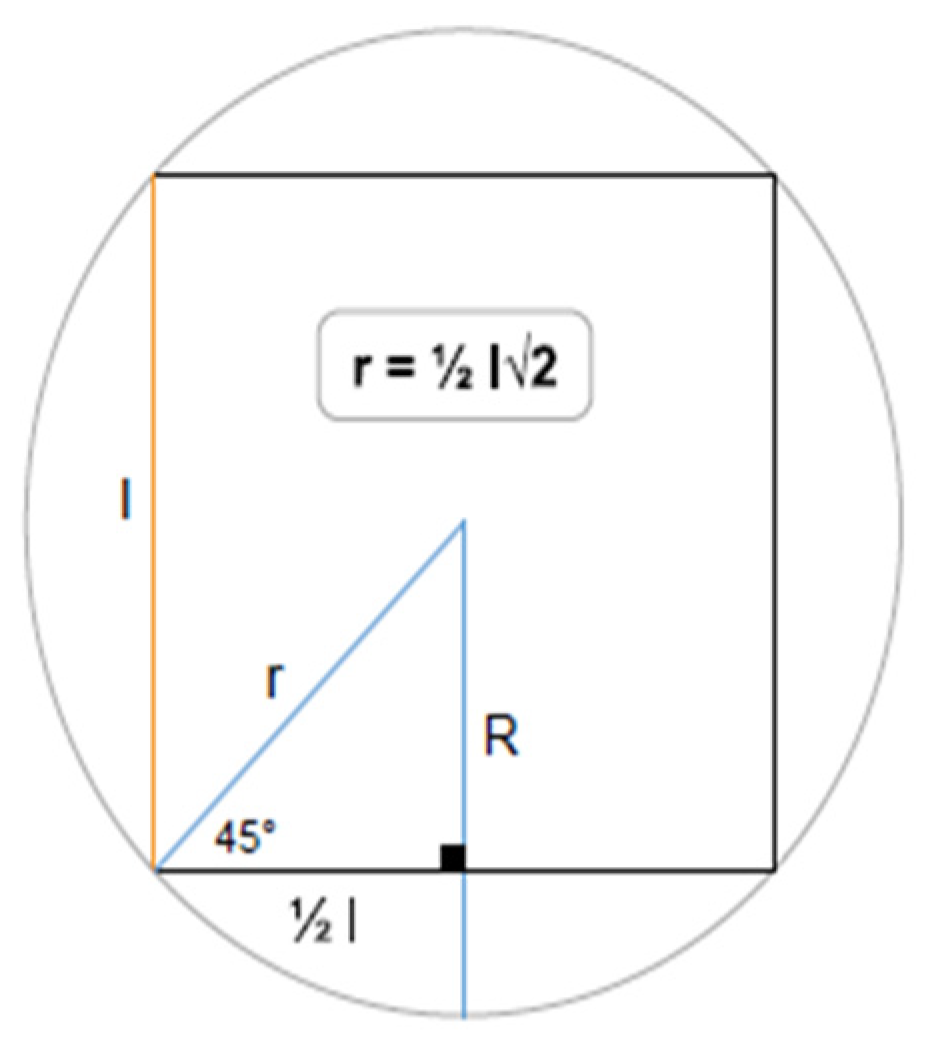
Module width. In the Grasshopper definition, the polygon is generated using a radius parameter measured from its center to a vertex. Changing this radius changes the overall size of the module; the relationship between radius and side length also depends on the number of polygon sides [31].
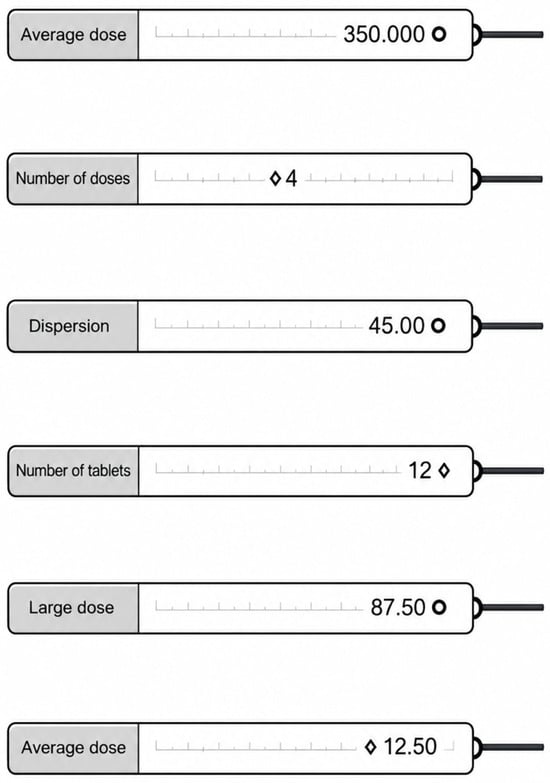
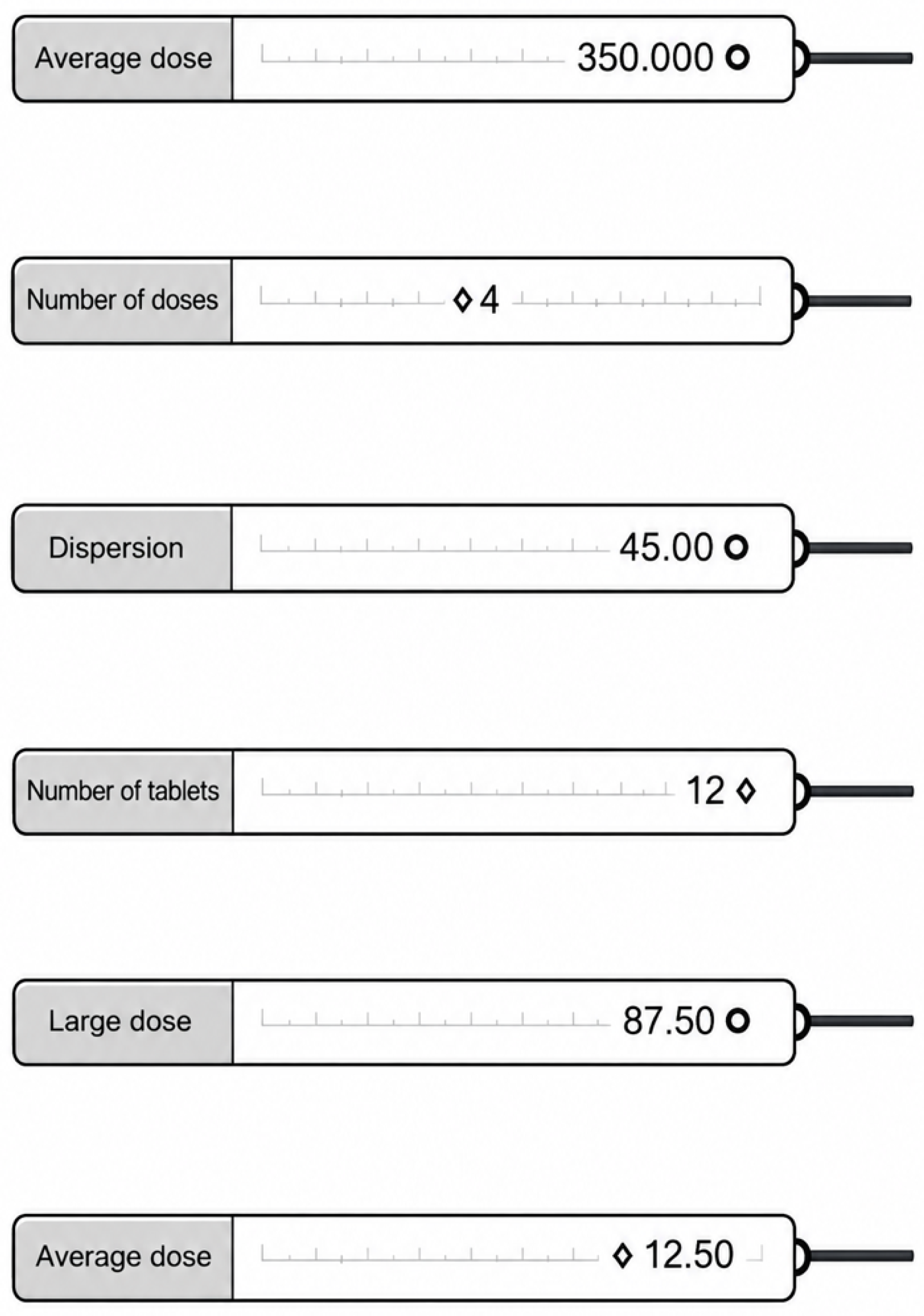
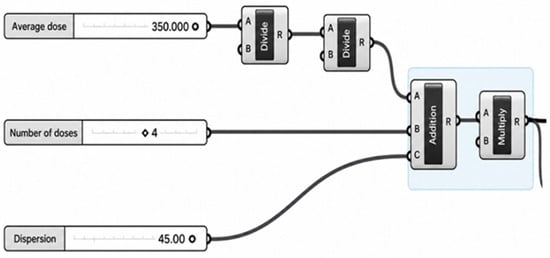
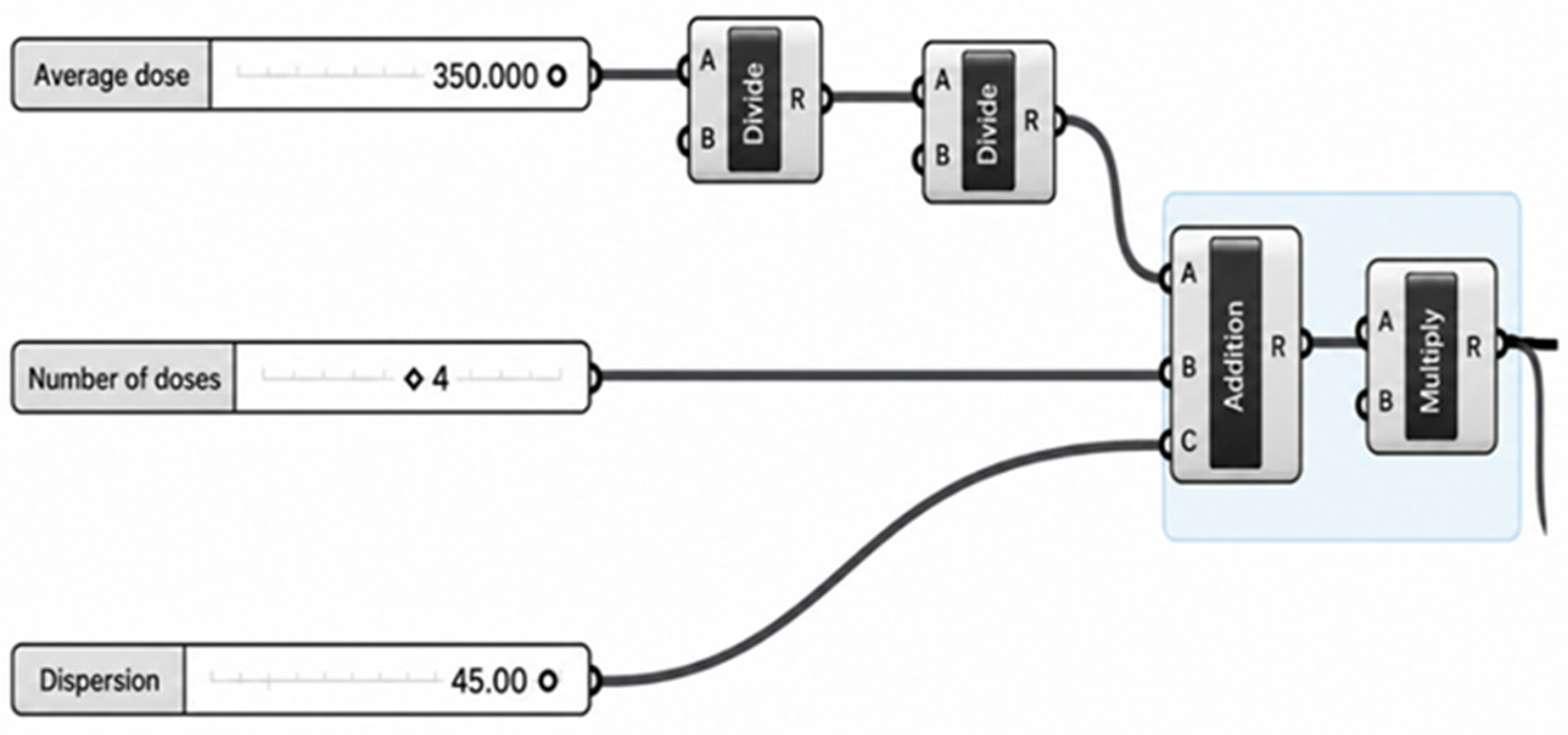
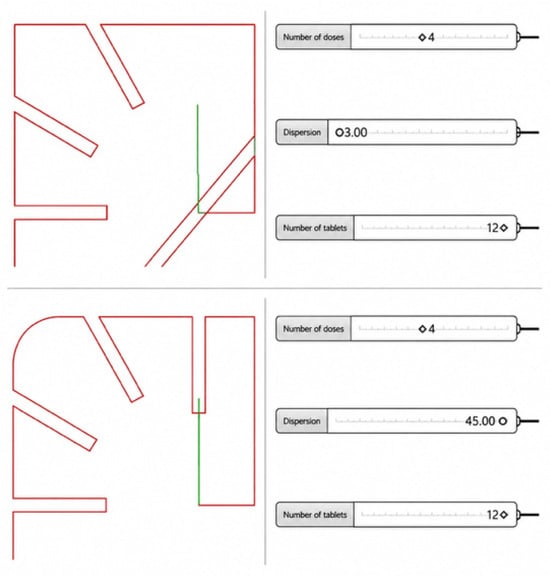
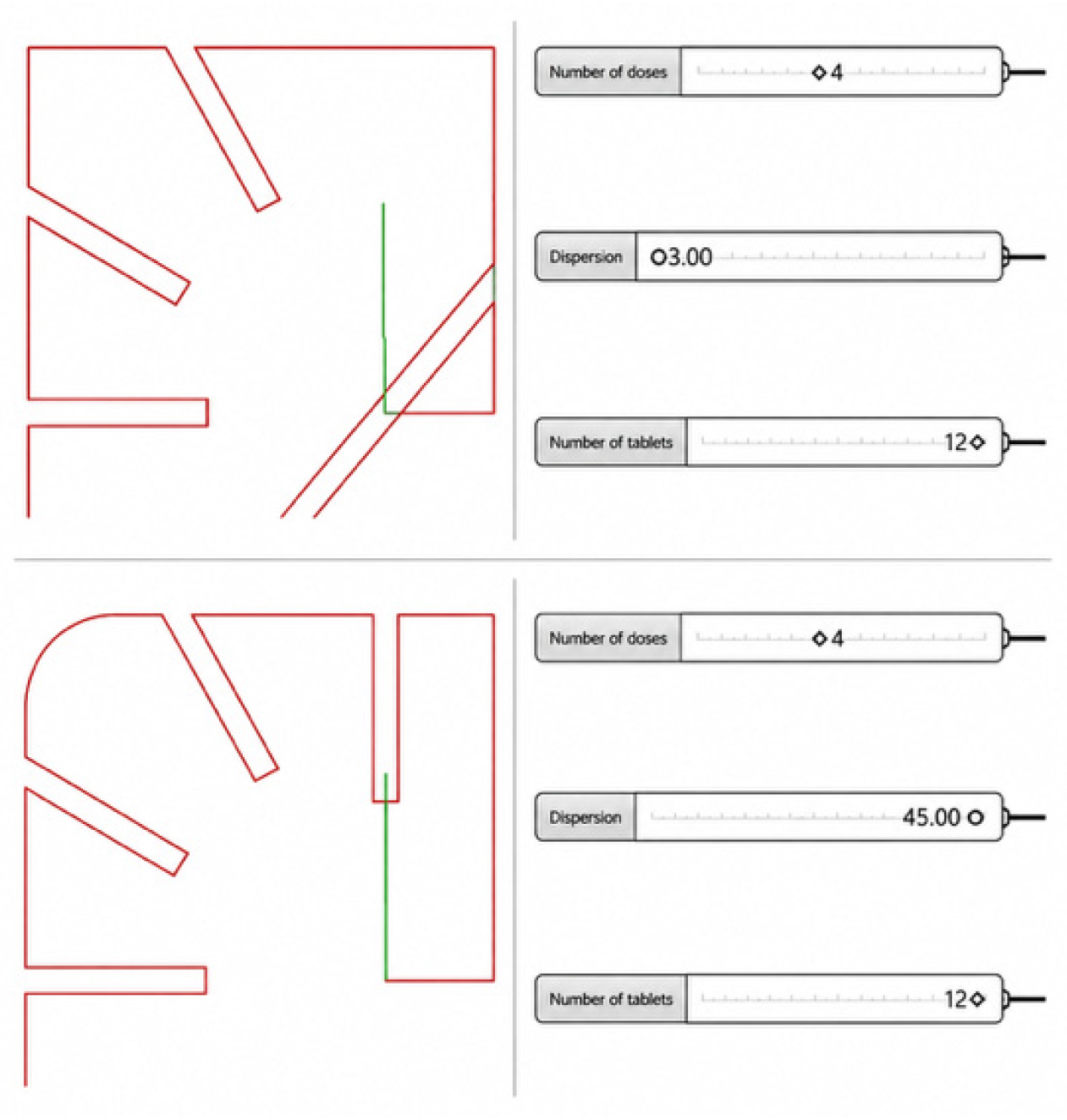
As indicated in Figure 8, then number of sides controls the total number of sides of the polygon. Although the modular figure selected for the pavilion is a square, the parametric system allows users to obtain modules with different geometric forms, creating variety in pavilion configurations.
Figure 8.
Algorithm parameters used in the Grasshopper definition, including the number of doses, dispersion, number of tablets, large dose, and average dose. The circle and diamond symbols identify the corresponding parameter controls in the Grasshopper interface.
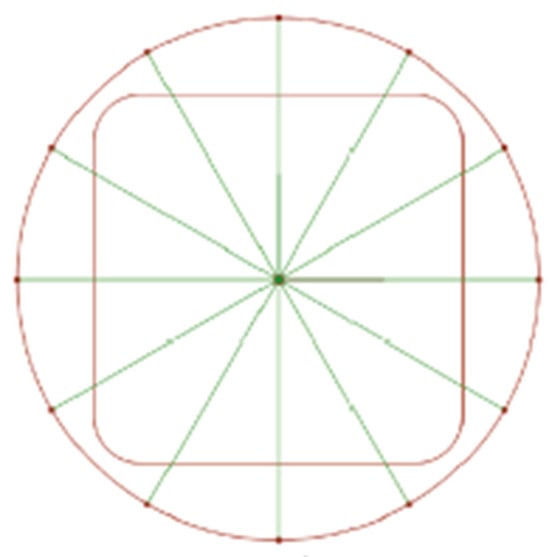
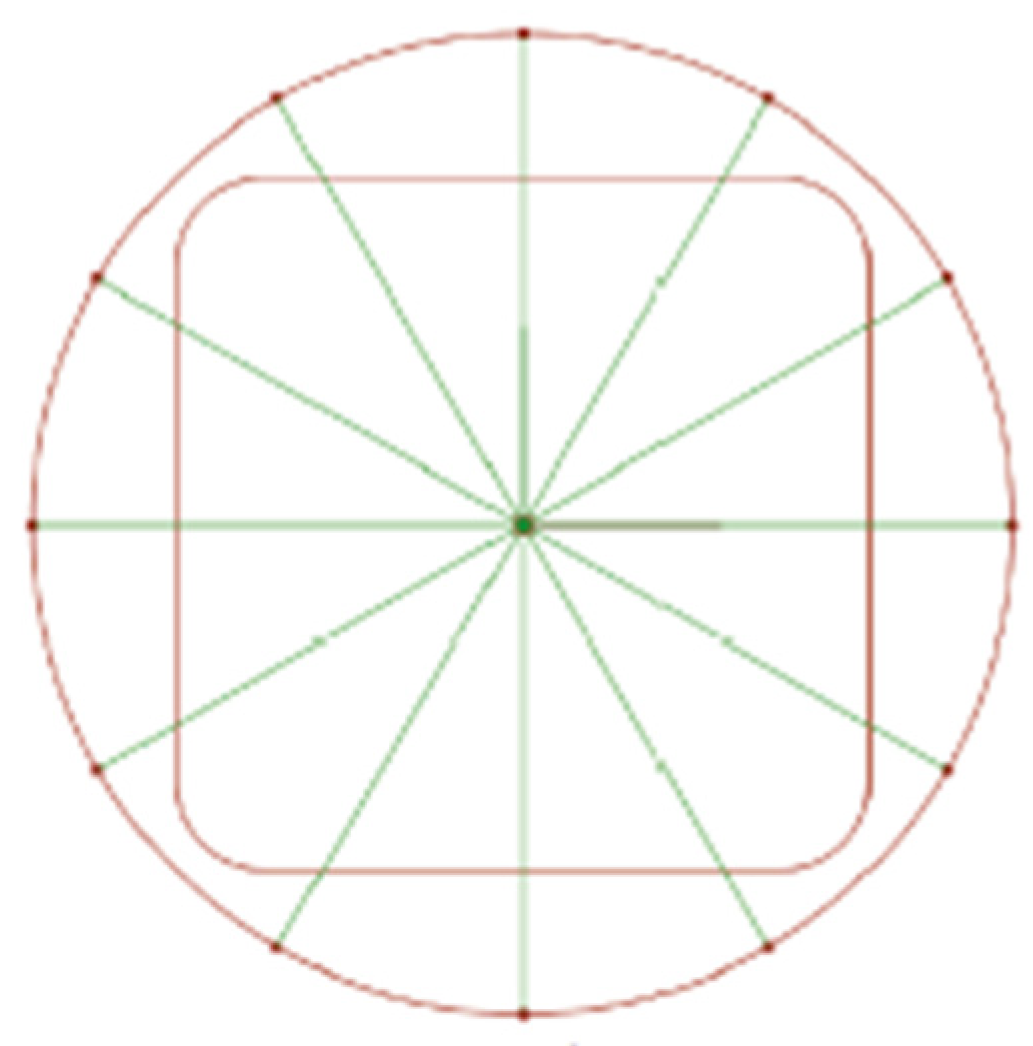
Number of joints. The number of potential joint positions is controlled by dividing the reference circle into n equal segments in Grasshopper. The resulting division points define radial positions from which joints can be placed; the final number of slots depends on which positions are selected in the algorithm [32].
Joint length. This parameter defines how far each slot extends into the module and influences how two pieces intersect. It can be modified in the parametric model, but an appropriate value for recycled-cardboard pieces must be confirmed through fabrication and assembly tests; dimensional accuracy and cutting losses can affect the fit of fabricated joints [33].
Joint width. Controls the thickness of the connection. This parameter is directly related to the material thickness. The joint-width variable enables the piece to be fabricated from different materials simply by changing the parameter to the value corresponding to the material thickness, thereby allowing the pavilion pieces to fit together properly. Changing this parameter to the optimal value corresponding to the material thickness allows the pavilion pieces to fit together correctly.
4.3.4. Algorithm Generation
Phase 1. Polygon Creation. The first phase involves creating the polygon that serves as the starting geometry for the parametric module, as shown in Figure 9.
Figure 9.
Polygon Creation.
Phase 2. Geometric Analysis. In this phase, the geometry of the polygon created in Phase 1 is analyzed, as shown in Figure 10.
Figure 10.
Geometric Analysis.
Phase 3. Parameter radius. The radius parameter is defined in this phase, as shown in Figure 11.
Figure 11.
Radius parameter and associated controls in the Grasshopper definition.
Phase 4. Point Axes. The point axes are defined in this phase, as shown in Figure 12.
Figure 12.
Point Axes.
Phase 5 Connected Algorithm. The components defined in the preceding phases are connected in the algorithm, as shown in Figure 13.
Figure 13.
Connected Algorithm.
Phase 6 Joint and Corner Analysis. The joint and corner configurations are analyzed in this phase, as shown in Figure 14.
Figure 14.
Joint and Corner Analysis.
Phase 7 Joint Length. The joint length is defined in this phase, as shown in Figure 15.
Figure 15.
Joint Length.
Phase 8 Module Edge. The module edge is defined in this phase, as shown in Figure 16.
Figure 16.
Module Edge.
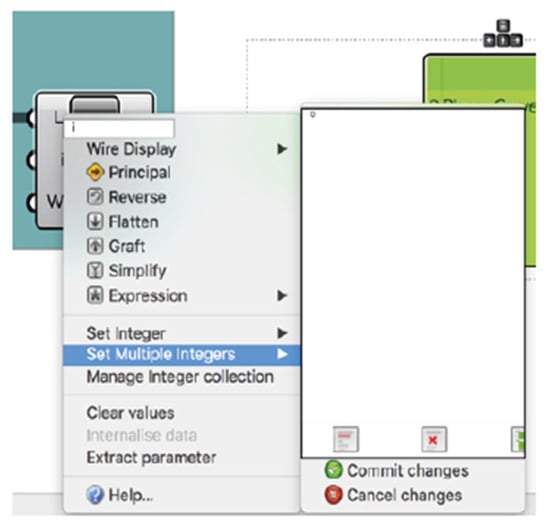
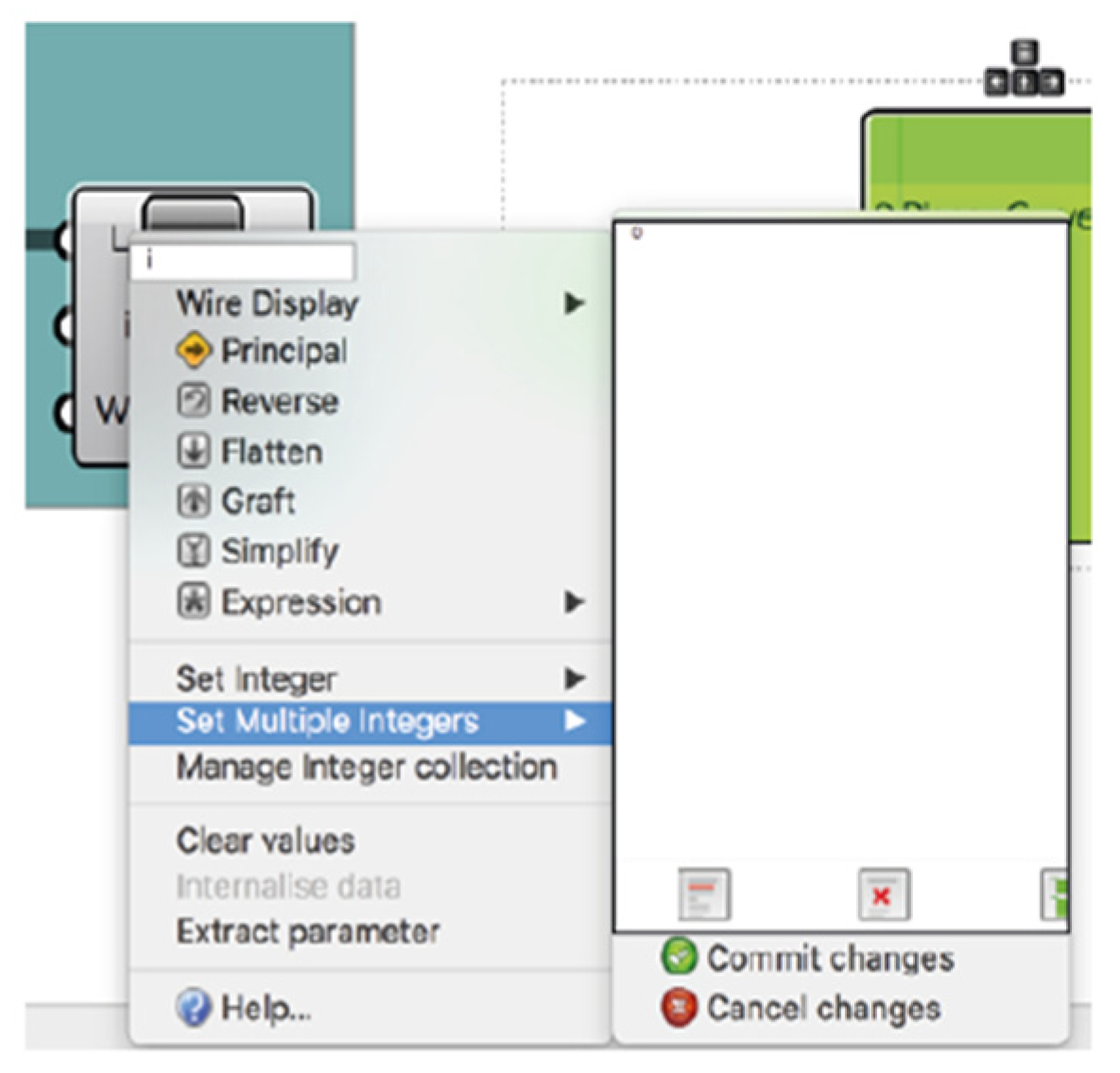
Phase 9 Module Cleanup. The “Set Multiple Integers” control used in this phase is shown in Figure 17.
Figure 17.
Set Multiple Integers” control used during module cleanup.
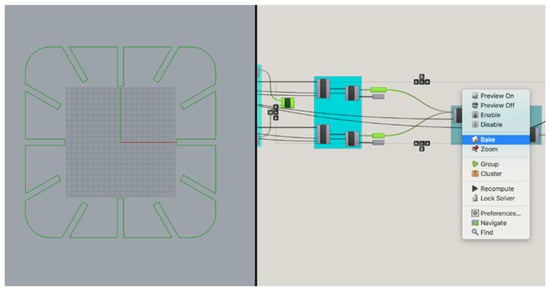
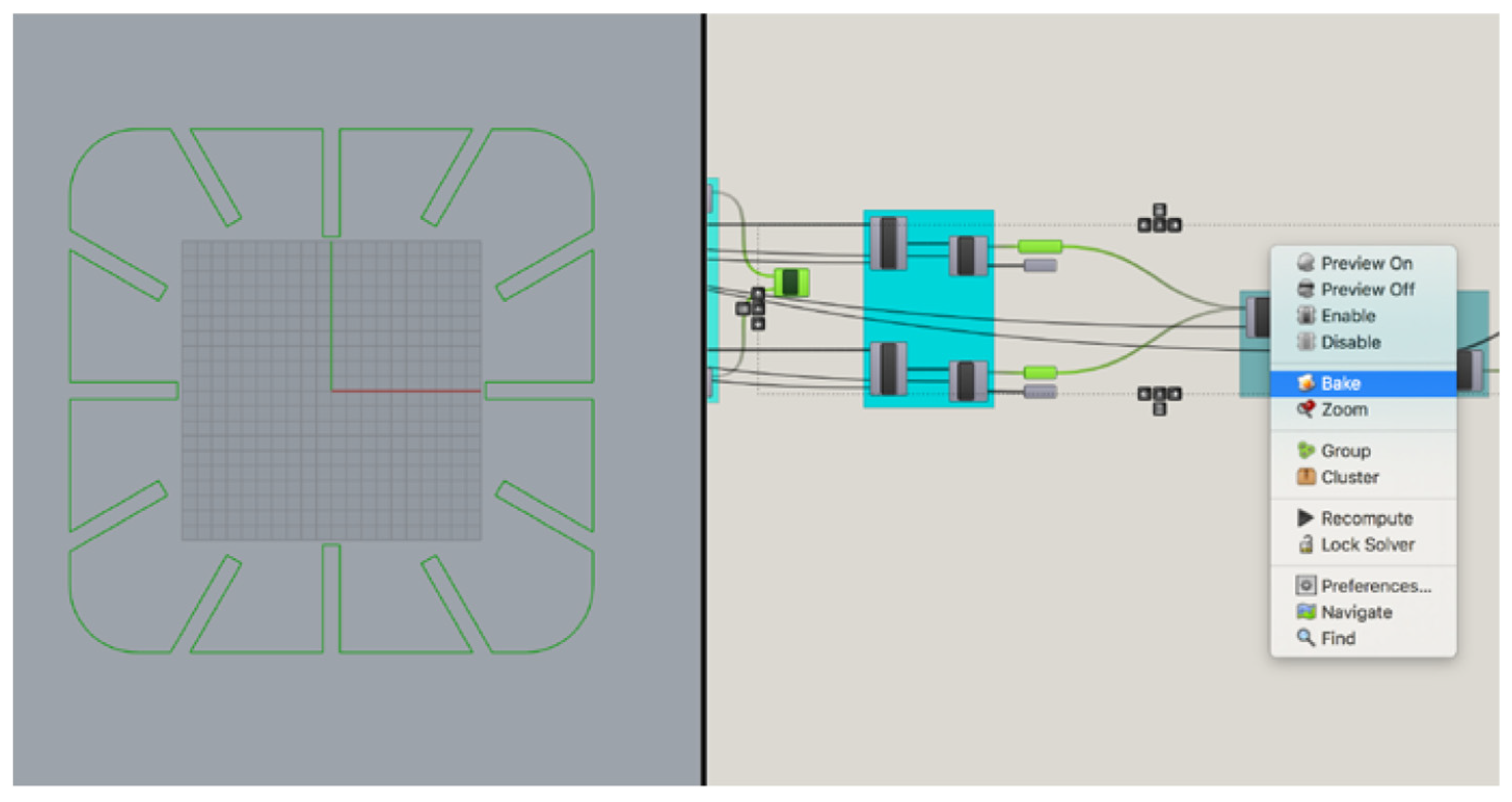
Phase 10 Baked Module (BAKE). The resulting module is shown in Figure 18 after the baking step.
Figure 18.
Baked Module.
4.3.5. Final Algorithm
Figure 19 shows the complete algorithm used to parameterize the module. Each phase described in the previous subsection is distinguished by color. The white components, excluding the parameters (sliders on the left), represent the commands for the lines that form the module’s vector drawing. These lines are exported to Rhinoceros for subsequent modification. A detailed step-by-step description of the parametric-design workflow and the Grasshopper definition of the algorithm are provided in the Supplementary Materials (Supplementary Files S1 and S2).
Figure 19.
Complete algorithm with all components connected.
4.4. Prototype Fabrication
4.4.1. Module Fabrication
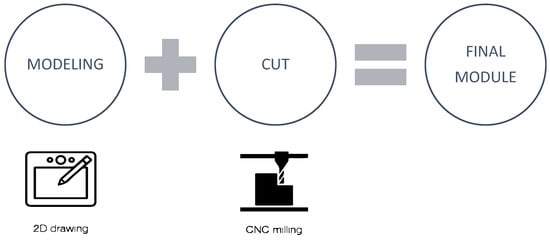
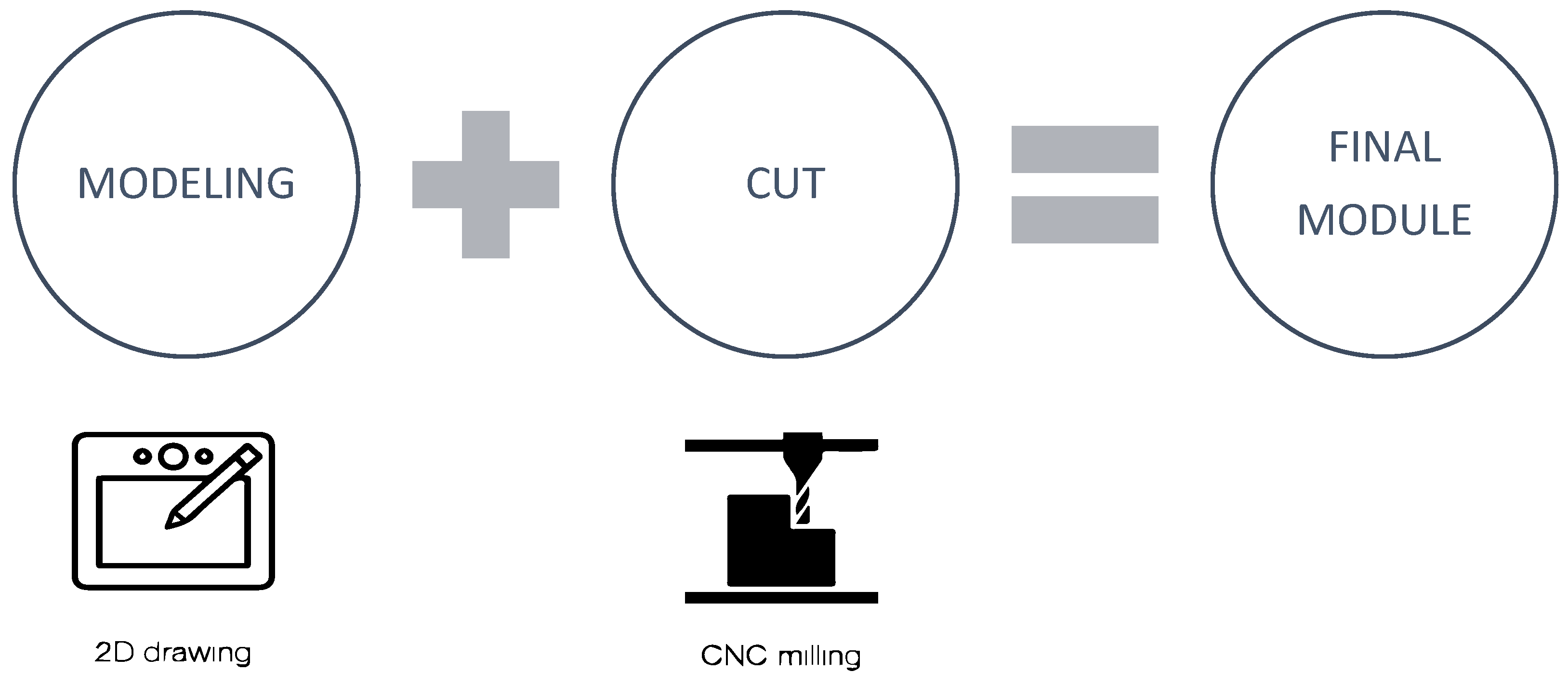
The fabrication process begins with the development of the parametric digital model, in which the variables required to define the module’s geometry, dimensions, connections, and assembly conditions are established. Based on these parameters, the final design is prepared for digital fabrication and transferred to computer-controlled CNC machines. This workflow enables the physical production of the module in accordance with the design variables defined in the parametric model, as illustrated in Figure 20.
Figure 20.
Module Production Process.
4.4.2. Experimentation with Fab Lab Materials
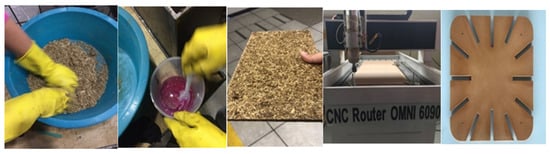
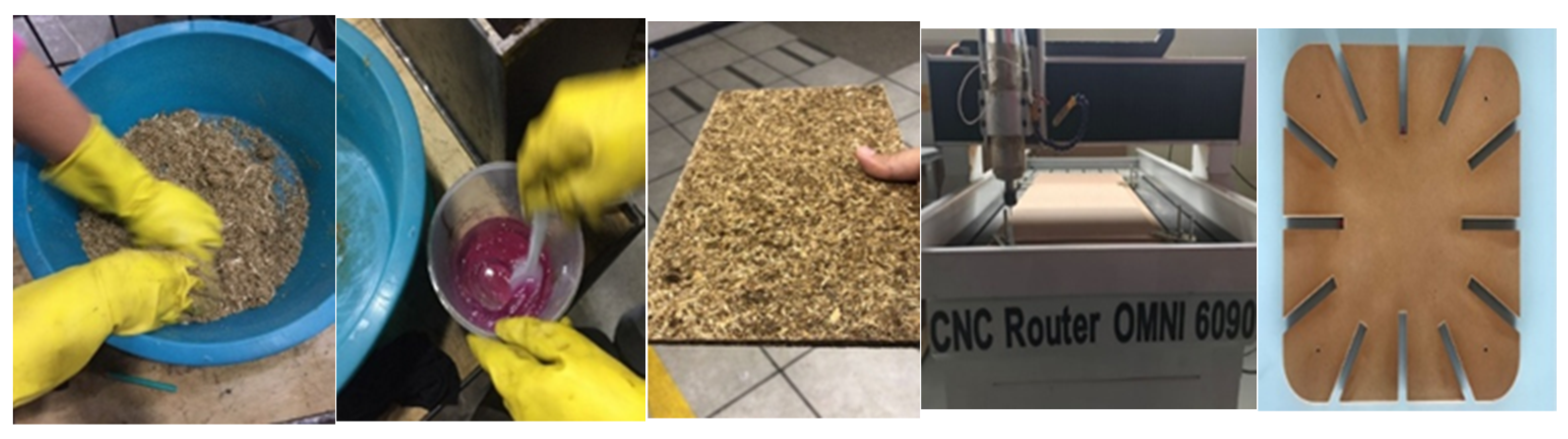
Experimentation began in support of a thesis project investigating panels made from shredded sugarcane bagasse and resin. A panel was successfully produced, after which its material-thickness parameters were adapted so that a module could be fabricated and applied to the project. The fabrication of the test specimens using Fab Lab materials and equipment is shown in Figure 21.
Figure 21.
Fabrication of test specimens using Fab Lab materials and equipment.
4.4.3. Reuse of Laboratory Materials
Reusing materials in a Fab Lab, as well as in other digital fabrication and rapid-prototyping environments, is important because it reduces waste generation and promotes more sustainable production practices. This approach is consistent with circular-economy principles applied to construction and demolition waste, whereby discarded materials can be recovered and incorporated into new products instead of being disposed of [34]. Figure 22 shows modules made from recycled materials, demonstrating the feasibility of using laboratory waste as raw material for the development of architectural components.
Figure 22.
Recycled Material Modules.
Environmental sustainability. Material reuse reduces the amount of waste generated and therefore helps reduce the environmental footprint of the fabrication process. In a global context of heightened concern about climate change and natural-resource conservation, reuse aligns with sustainable practices [35].
Cost reduction. Reusing materials can generate significant cost savings. Rather than purchasing new materials for every project, using waste or surplus materials optimizes financial resources [36].
Promotion of creativity and innovation. Creativity and innovation: Working with reused materials can inspire designers, inventors, and makers to think more creatively and identify innovative solutions. Constraints imposed by available materials may encourage the exploration of new techniques and approaches [37].
Education and Learning. In educational environments such as Fab Labs, material reuse can teach students about recycling, sustainability, and environmental responsibility. It also enables them to experiment with different materials and understand how materials can be transformed and reused in different contexts [38].
Circular economy development. Material reuse is an essential component of the circular economy, which seeks to reduce waste and maximize the value of existing resources. It promotes a longer material life cycle rather than a linear “extract, manufacture, discard” approach [39].
Adaptability and customization. Reused materials often have unique characteristics that can be leveraged to create customized products or products adapted to specific needs. This can be especially relevant in custom-product design and rapid prototyping [40].
In summary, reusing materials in Fab Labs and other fabrication environments provides clear environmental and economic benefits while also promoting innovation, education, and the development of solutions that are more sustainable and responsive to local and global needs.
4.4.4. Planimetry
Planimetry refers to the measurement and representation of a portion of a surface on a plane. It omits relief and elevation to produce a horizontal representation, enabling the idea and the spatial distribution to be represented graphically and efficiently [41].
Plan
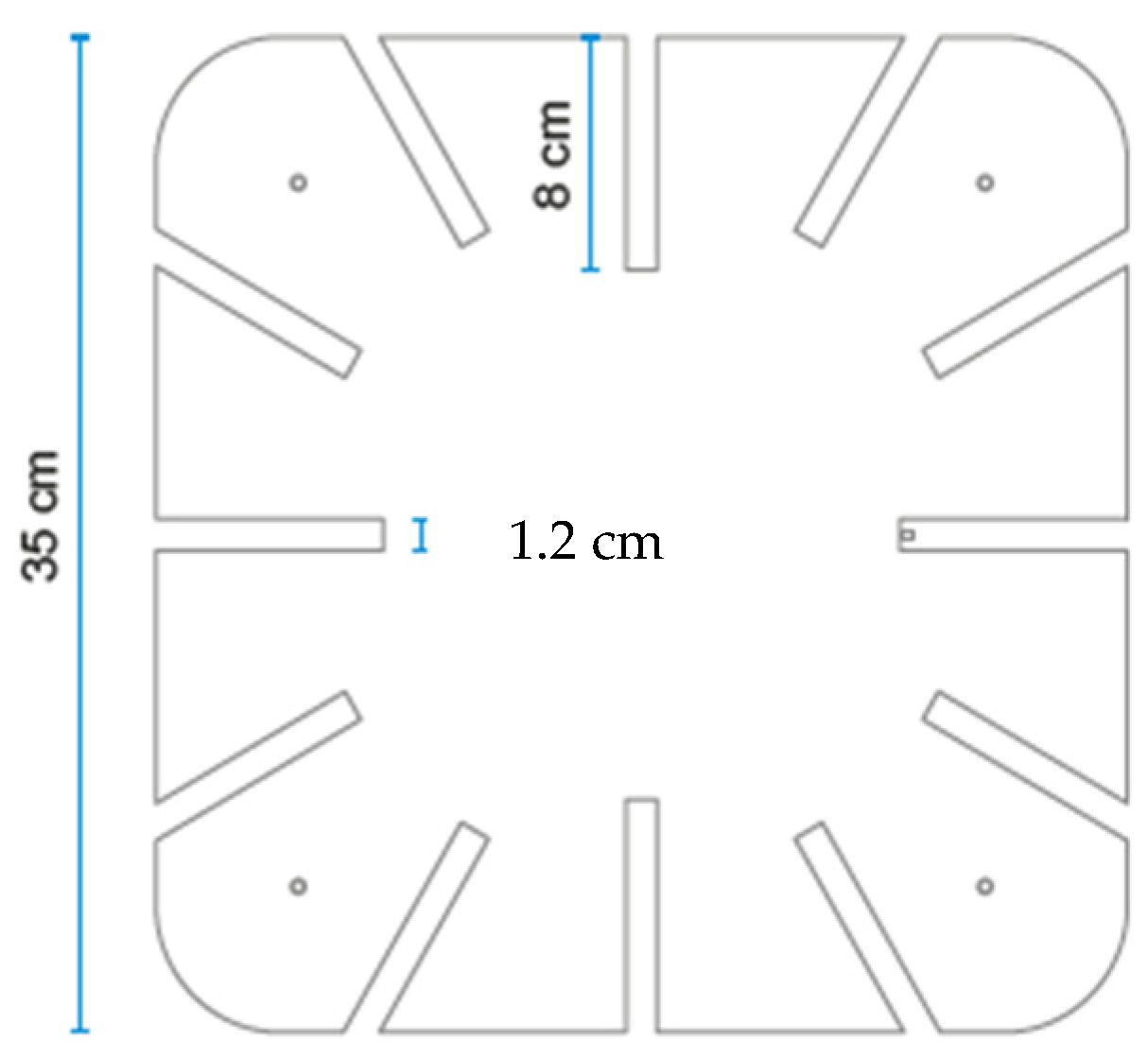
The module measures 35 cm on each side. Its connection system consists of 12 joints positioned at angles of 0, 30, 60, and 90 degrees. Each joint is 8 cm long, allowing the pieces to connect through the slots. The joint width is 1.2 cm to accommodate the fabrication material, which consists of two 0.55 cm pieces. The resulting 0.1 cm (1 mm) difference between the combined material thickness and the slot width facilitates assembly. The dimensions of the module are shown in Figure 23.
Figure 23.
Dimensions of the module plan.
Elevation-Section
Figure 24 shows the rear and right-side views of the final module. The right-side view indicates that one of the connectors is positioned at the midpoint of the module’s thickness.
Figure 24.
Rear and side diagram.
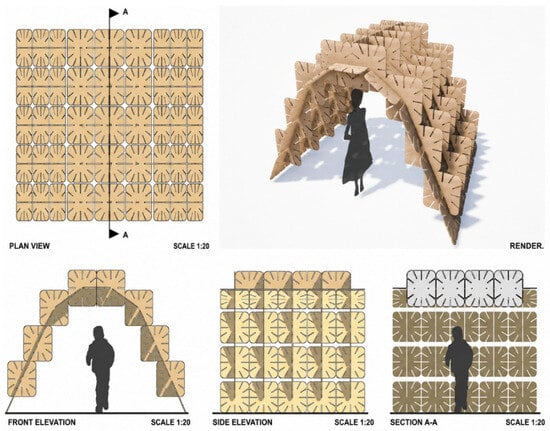
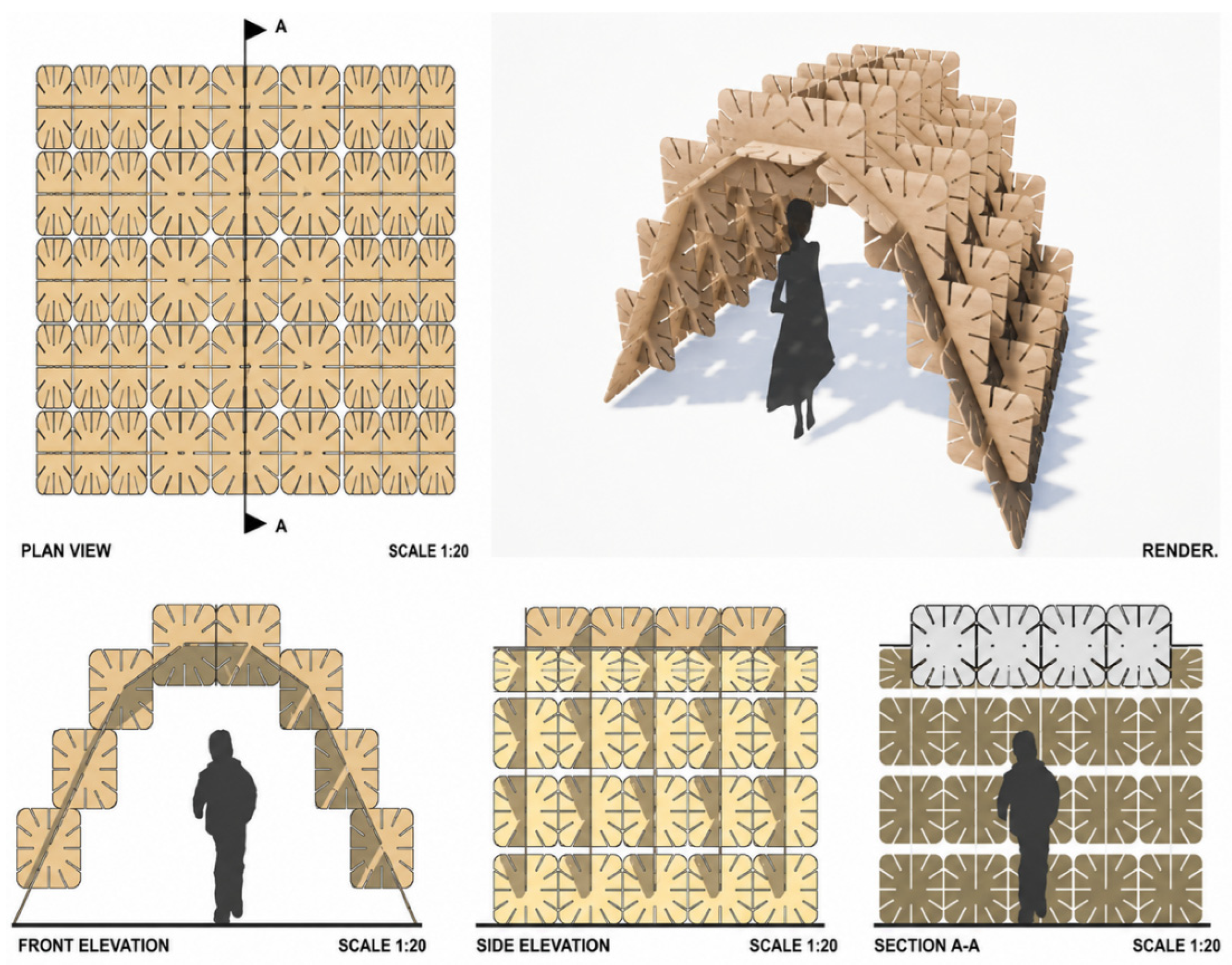
A proposed pavilion assembled from the developed module is shown in Figure 25.
Figure 25.
Proposed Pavilion Based on the Module.
The proposed module can generate different spatial configurations, such as those shown in the plans, elevations, sections, and three-dimensional model, by repeating the component and varying its orientation. Because the design is parameterized, the module dimensions, joint length and angle, and other geometric parameters can be modified, opening a wide range of formal and structural possibilities. This parameterization is directly linked to digital fabrication processes because the module geometry can be readily exported and adjusted for CNC or laser cutting, optimizing production time and allowing the design to be iterated without redefining the system from scratch.
4.5. Cellulose Production from Recovered Cardboard in the Fab Lab
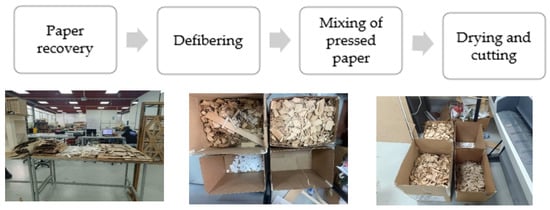
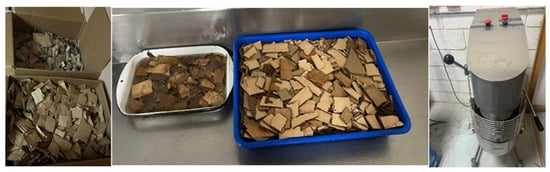
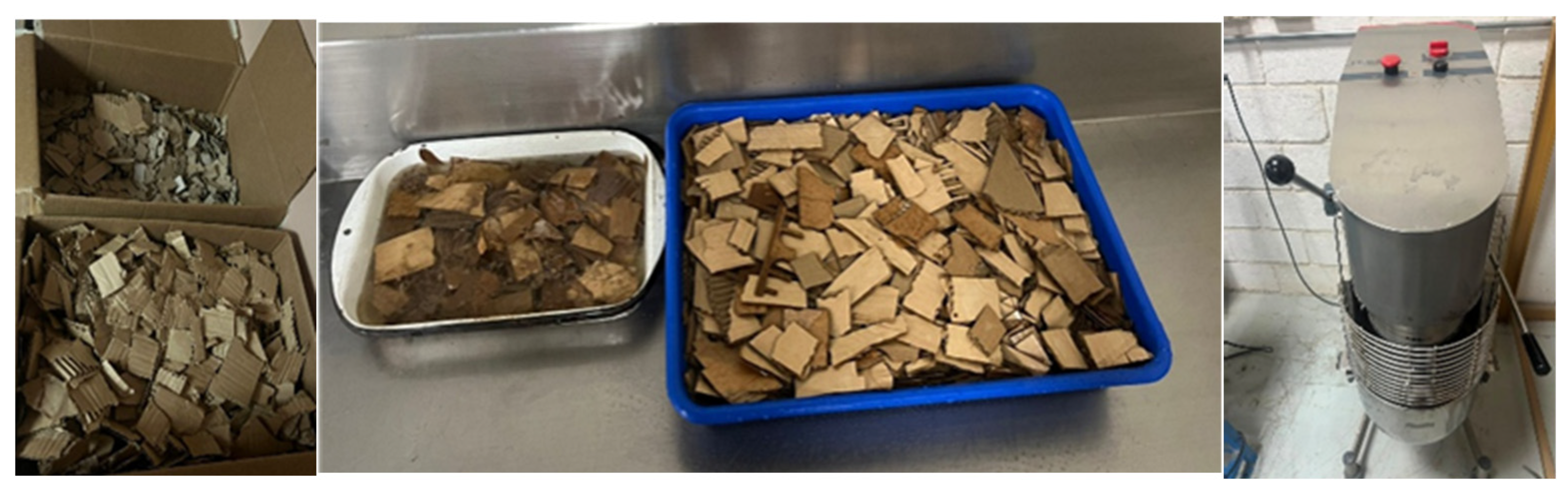
Recovered cardboard represents a readily available source of cellulose fibres that can be revalued through circular-economy strategies. In this study, discarded cardboard was collected and processed in the Fab Lab to obtain a cellulose-based material for experimental prototyping. As shown in Figure 26, the process consisted of four main stages: paper recovery, defibering, mixing of the pressed paper pulp, and subsequent drying and cutting. These stages transformed discarded cardboard into a cellulose-based material suitable for the fabrication and evaluation of experimental test specimens.
Figure 26.
Cellulose production in the Fab Lab.
4.5.1. Wet Cellulose
Wet cellulose derived from recycled cardboard is a fibrous pulp obtained by mixing used cardboard with water, forming a suspension that serves as a raw material for new paper or cardboard products.
Wet-Cellulose Production Process
The process begins with the collection of recycled cardboard, which is mixed with water in large vats known as pulpers. These machines disintegrate the cardboard into a homogeneous pulp. The mixture is then screened and cleaned to remove impurities such as inks, staples, and plastics. The resulting pulp contains approximately 2.5% fiber and 97.5% water, facilitating handling and subsequent processing [42].
Applications of Wet Cellulose
Once produced, wet cellulose has several applications, including:
- Manufacturing of recycled paper and cardboard: After contaminants are removed and its properties adjusted, the pulp is dried and pressed to form new paper or cardboard sheets. The pulp can also be poured into molds to create new specimens that are subsequently dried and hardened [34].
- Thermal and acoustic insulation: Recycled cellulose-based materials have been investigated for thermal and acoustic applications. Their performance depends on density, fiber arrangement, panel configuration, moisture content, and test conditions. The present study did not evaluate thermal or acoustic performance; therefore, these potential applications are mentioned only as possible directions for future research.
4.5.2. Moisture
Moisture content is a critical factor in cellulose-based materials. During drying, water removal should be controlled because excessive drying may alter fiber bonding and contribute to hornification. In insulation and panel applications, moisture uptake may affect thermal behavior, dimensional stability, and long-term durability. Therefore, moisture management is required when cellulose-based materials are considered for architectural applications [3].
4.5.3. Experimental Specimens of Recycled Fiber and Particle Composites to Validate Technical Feasibility
During the experimental stage, waste generated in digital fabrication laboratories (Fab Labs) was used, particularly recycled cardboard and cellulose derived from post-consumer cardboard from architecture students’ model-making activities. The waste was separated, shredded, rehydrated, and transformed to obtain reusable wet cellulose.
Technical process:
- Shredding recycled cardboard.
- Mixing it with water to create cellulose pulp.
- Filtering and screening to remove impurities (plastics, inks, adhesives).
- Compression or vacuum molding to obtain new base materials.
- Drying and physical characterization (strength, density, flexibility).
4.5.4. Circular Economy Approach
This approach seeks to close the material life cycle within the educational ecosystem:
- Reduction: Decreasing the use of virgin materials.
- Reuse: Recovering waste for new processes.
- Upcycling: Generating products with functional or aesthetic value.
- System Feedback: Integrating technical and methodological learning into the academic community.
The proposal aligns with eco-design and regenerative-design principles, under which each decision seeks to maximize material usefulness throughout all phases of its life cycle.
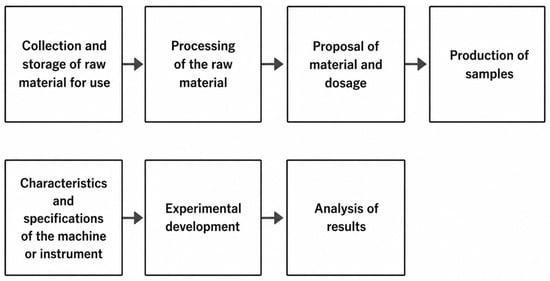
4.5.5. Methodology
To investigate the potential of recovered cardboard as a cellulose-based material, three cardboard types were selected according to their structural composition and relevant physical properties. Foam board, pressed cardboard, and corrugated cardboard were considered because they provide different combinations of density, rigidity, and compressive resistance. The methodology and the main characteristics of the selected materials are summarized in Table 2.
Table 2.
Methodology for Experimental Fiber and Particle Composite Specimens.
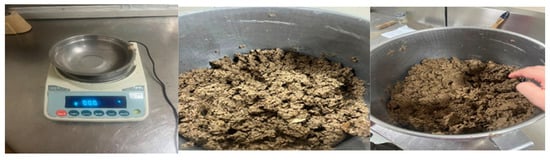
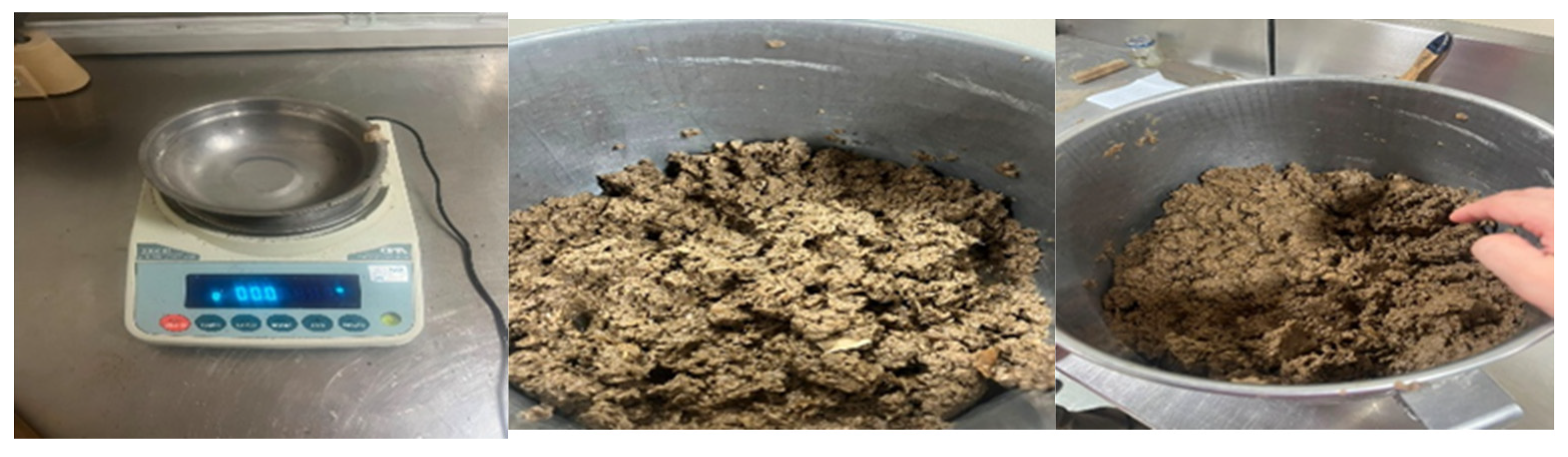
During the experimental phase, laboratory equipment was used for weighing, mixing, molding, pressing, and preliminary observation of the specimens. The principal equipment included an AD FX-5000i precision balance, a Soiltest CN-470 hydraulic press, a standard laboratory mortar mixer, and an ETIPROETI BM-22 laboratory mixer. This equipment was used to control material dosage, pulp mixing, specimen forming, and press-assisted compaction.
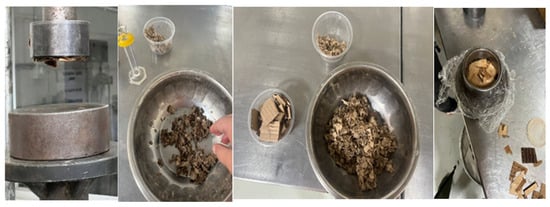
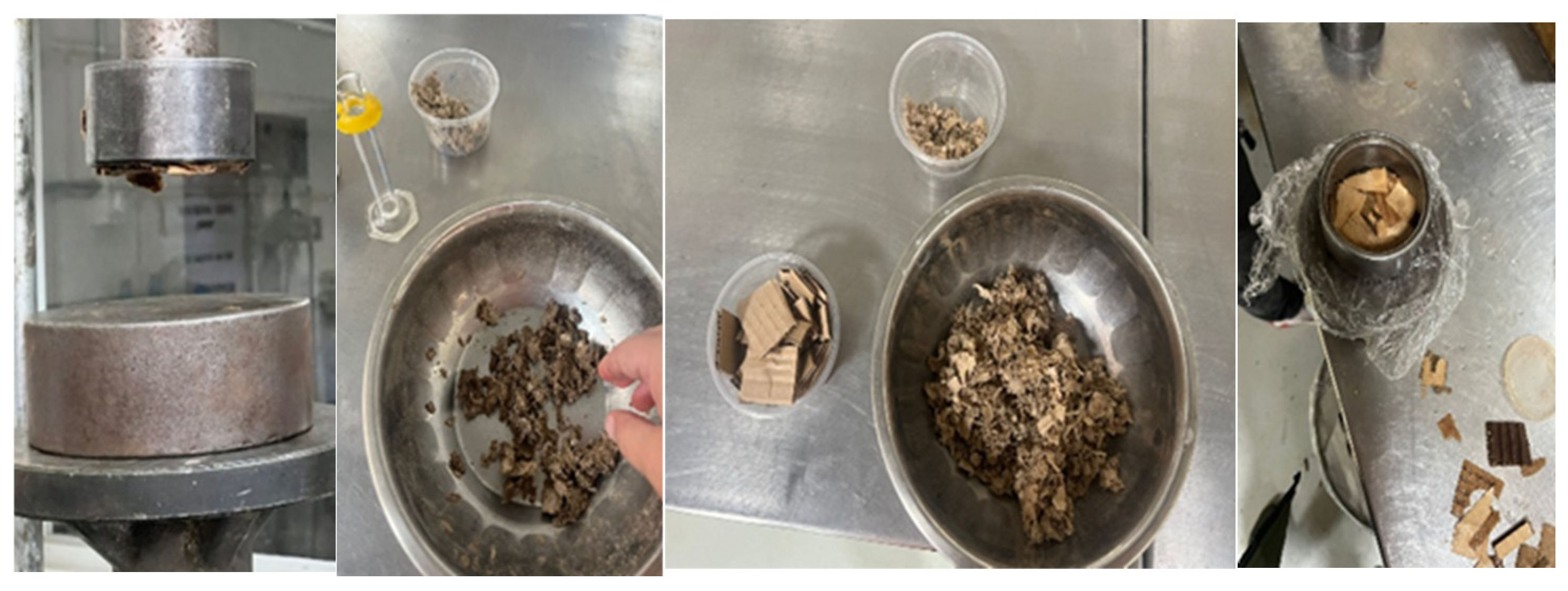
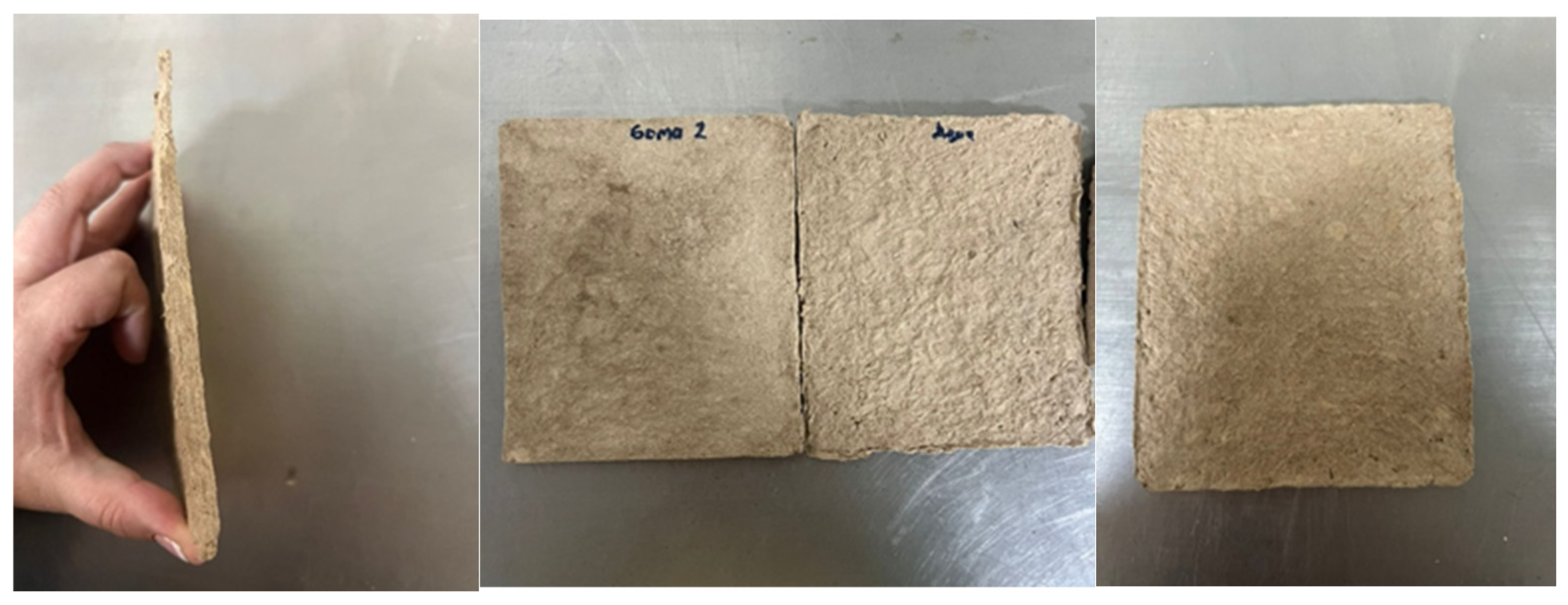
Lignocellulosic composite specimens were produced from recycled fibers, water, and adhesive under selected experimental conditions. The mixtures were prepared, placed in molds, pressed when applicable, and dried under controlled ventilation conditions, as shown in Figure 27. The resulting specimens were evaluated qualitatively for cohesion during demolding and handling, approximate thickness control, visible cracking, surface and edge condition, and visible dimensional stability. No standardized physical or mechanical characterization was performed in the present study.
Figure 27.
Preparation Process of Experimental Fiber–Particle Composite Specimens.
4.6. Equipment Used in the Materials Laboratory
Scale A&D FX-5000i
Equipment: lab precision scale, A&D FX-5000i. Main technical specifications.
- Maximum capacity: 5200 g.
- Resolution/legibility: 0.01 g.
- Repeatability: 0.01 g.
- Linearity: ±0.02 g.
- Typical use: high-precision weighing in materials laboratories, including cement, mortar, and fine aggregates.
Soil test CN-470 hydraulic (press/testing machine). Use: application of loads to specimens (mortar, concrete, and cement-treated soils).
- FX-5000i Scale.
- Capacity: 5200 g; resolution: 0.01 g; pan Ø 150 mm.
- Functions: Applying a controlled compressive load to specimens to determine mechanical strength.
Standard laboratory mortar mixer EN 196/ASTM C305: Use: preparation of mortar/cement specimens (prisms, cubes, etc.) in accordance with EN 196-1, EN 196-3, ASTM C305, AASHTO T162, BS 3892, ISO 679, and related standards. Configuration: stainless-steel bowl, standard paddle, planetary motion (paddle rotation + bowl rotation).
ETIPROETI BM-22 laboratory mixer. Manufacturer: PROETI, S.A. (ETI), Madrid, Spain. Type: laboratory concrete/mortar mixer. Visible model: BM-22. Use: mixing concrete and mortar in official laboratories, universities, and materials quality-control facilities.
4.7. Preliminary Evaluation of Recycled-Cardboard Cellulose-Fiber Specimens and Reduced-Scale Prototype
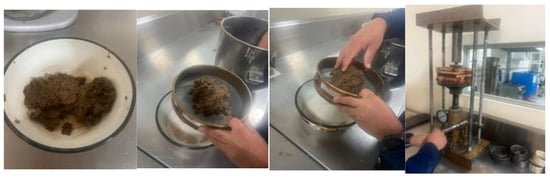
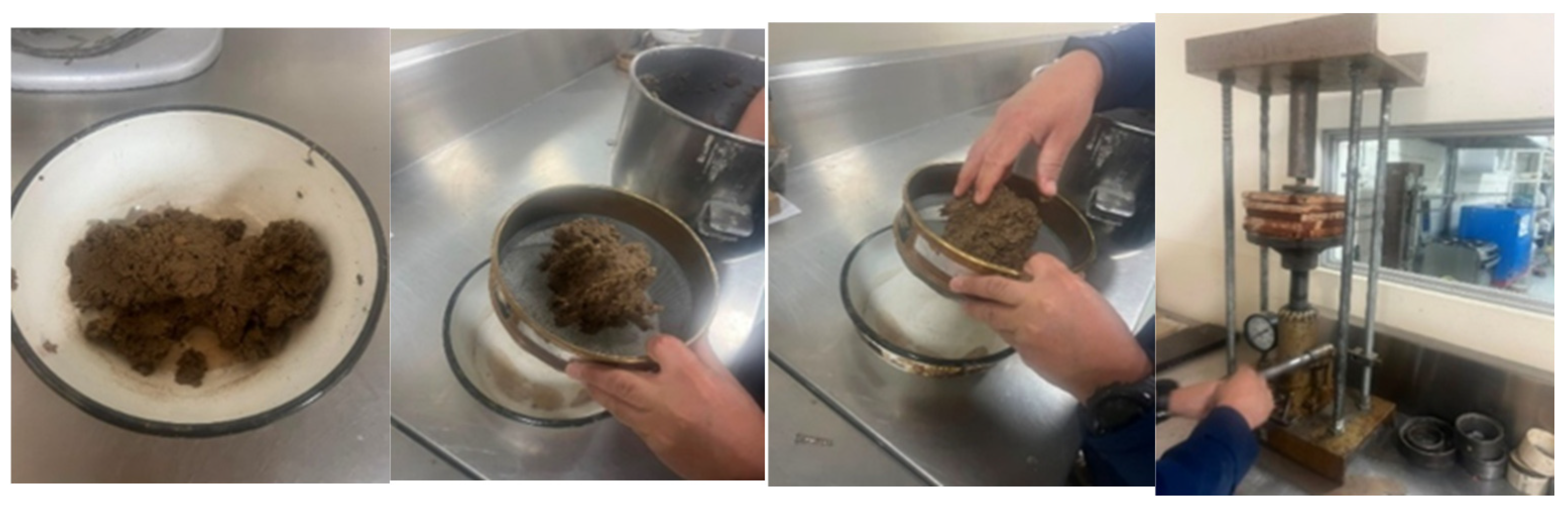
Two types of lignocellulosic raw materials were used. After the initial specimens were tested and the results analyzed, a higher-capacity mixer was introduced to prepare the material. A final series of specimens was then produced using material proportions adjusted according to the findings of the initial analysis, as shown in Figure 28.
Figure 28.
Experimental process for fiber–particle composite specimens.
Recycled specialty-cardboard pulp was prepared by disintegrating selected cardboard in water until a homogeneous fibrous suspension was formed, as shown in Figure 29.
Figure 29.
Kneaded recycled cardboard particles used in the experimental composite mixture.
Pressed-cardboard pulp, derived from gray/pressed cardboard that was shredded and likewise converted to pulp by mixing it with water in controlled proportions. In both cases, the pulp was prepared with clean water and without additional chemical additives. Moisture content was subsequently adjusted through pressing and drying to reach the target values defined in the experimental design.
The specialty cardboard and pressed cardboard were received and classified, and non-cellulosic elements such as plastics, metal, and external adhesives were removed. The cardboard was then disintegrated in water, using a pulper or mechanical mixing, until a uniform pulp suitable for molding was obtained, as shown in Figure 30.
Figure 30.
Cardboard Disintegration.
The pulp was screened and its moisture content determined by weighing it in the wet state, drying it, and weighing it again in the dry state, using the formula
%H = (Ph − Ps)/Ps × 100
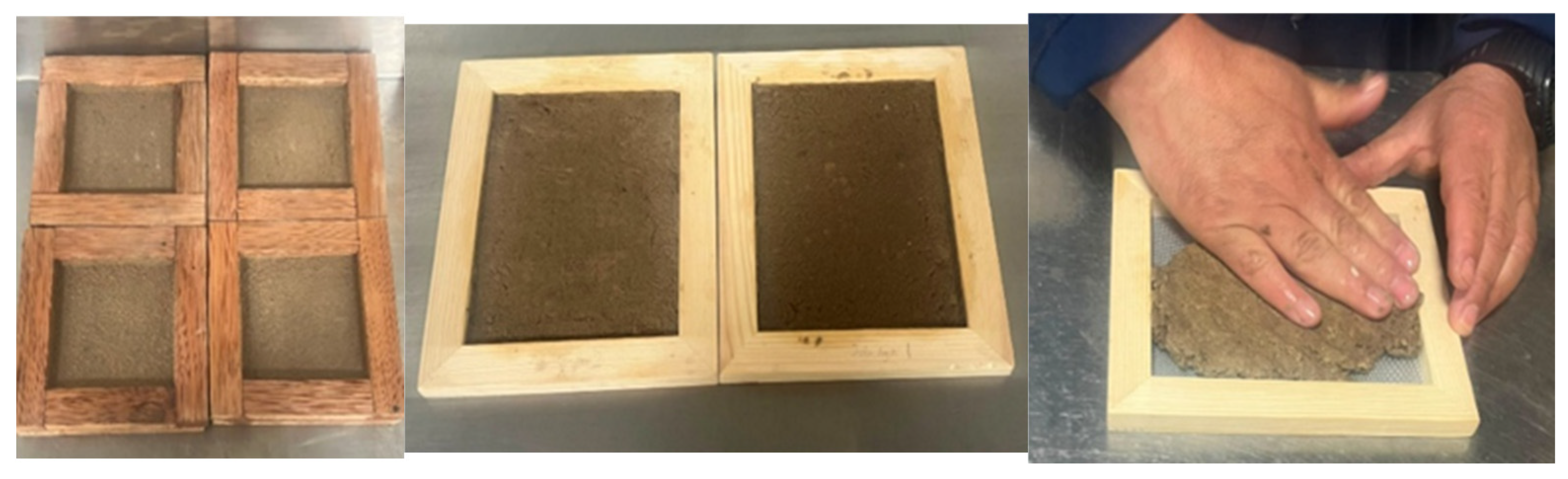
Pulp was dosed for each specimen (10 cm × 10 cm and 11 cm × 14 cm), defining material mass, thickness, and target apparent density according to the experimental design. In the adhesive-containing specimens, Bioplast Cola Blanca (Pegamento Biológico) was used as the binder. According to the product label, the adhesive is intended for bonding cardboard, paper, and fabric, and it is not recommended for applications subjected to high pressure. The adhesive was locally available and was selected because of its intended compatibility with cellulosic materials and its ease of incorporation into the wet recycled-cardboard pulp through manual mixing. It was added at approximately 4–5% of the dry pulp mass and mixed until the fibers and binder were distributed homogeneously. In the present study, the adhesive was used as an exploratory processing variable to assess its potential contribution to preliminary cohesion during demolding and handling. The chemical composition, volatile organic compound content, toxicity, water resistance, moisture response, environmental profile, recyclability, disassembly potential, and end-of-life behavior of the binder were not characterized. Therefore, no claim is made regarding the environmental compatibility of the adhesive or the recyclability of the final bonded composite.
The pulp-screening step is shown in Figure 31.
Figure 31.
Pulp screening.
The incorporation of Bioplast Cola Blanca into the wet pulp is shown in Figure 32. Although selected specimens were compacted using a hydraulic press, the present study did not evaluate the adhesive under standardized high-pressure bonding conditions. The applied pressing loads were used to compact the wet pulp and assist water drainage during specimen forming, rather than to characterize adhesive performance. Consequently, the interaction between Bioplast Cola Blanca and the press-assisted forming conditions requires further controlled investigation.
Figure 32.
Incorporation of adhesive into the wet pulp.
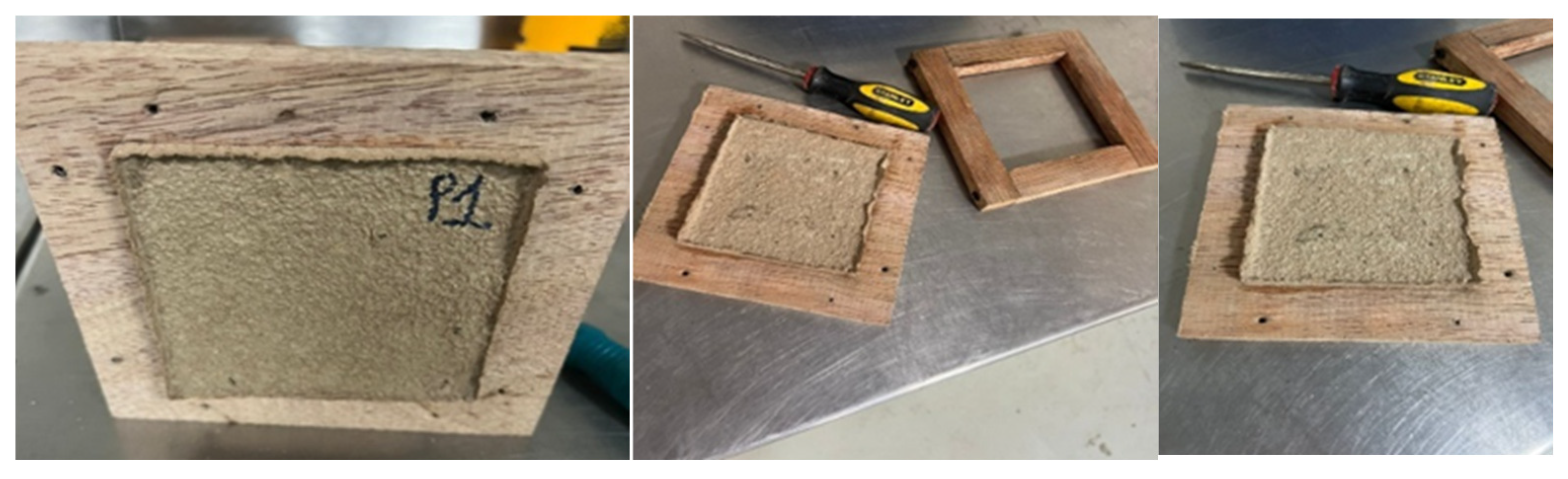
The specimens were dried and cured for at least 48 h under constant temperature and ventilation conditions until an essentially constant mass was achieved, as shown in Figure 33. Each specimen was then demolded and initially evaluated for cohesion, cracking, edge integrity, and surface texture, with the results differentiated between specialty-cardboard pulp and pressed-cardboard pulp.
Figure 33.
Drying and curing of the specimens.
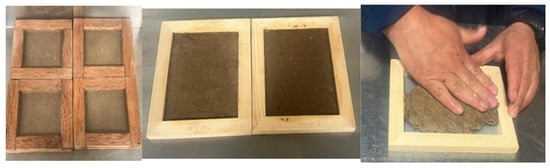
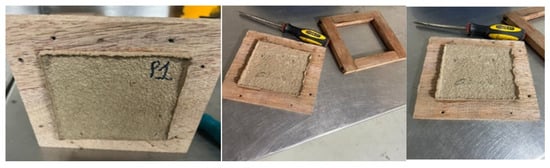
The specimens were molded in wooden frames fitted with mesh, as shown in Figure 34. mixture was placed in the mold while wet and subjected to the specified pressing pressure: 500 psi (3.45 MPa), 1000 psi (6.89 MPa), 1500 psi (10.34 MPa), or 2000 psi (13.79 MPa), to control compaction and water drainage.
Figure 34.
Specimen model.
- Specimen 1
Specimen 1 was produced in a 10 cm × 10 cm × 0.4 cm mold using 80 g of wet mixed-cardboard pulp and a pressing pressure of 2000 psi (13.79 MPa), without adhesive. During demolding, the specimen lacked sufficient preliminary cohesion and disintegrated. Under the tested conditions, the application of high pressing pressure without adhesive was not sufficient to obtain a specimen that remained intact during demolding and manual handling.
- Specimen 2
Specimen 2 was produced in a 10 cm × 10 cm mold using 80 g of wet mixed-cardboard pulp, with a target thickness of 0.2 cm and a pressing pressure of 1500 psi (10.34 MPa), without adhesive. After initial drying, the specimen remained firm and cohesive during preliminary handling. This observation suggests that, under the tested conditions, a lower target thickness combined with intermediate pressing pressure may contribute to preliminary cohesion without adhesive. Further replicated testing would be required to evaluate dimensional stability and mechanical performance.
- Specimen 3
Specimen 3 was produced in a 10 cm × 10 cm mold using 100 g of wet mixed-cardboard pulp, with variable thickness and a pressing pressure of 500 psi (3.45 MPa), without adhesive. The specimen did not compact adequately and showed low apparent density during preliminary observation. Under the tested conditions, the combination of higher wet mass, low pressing pressure, and no adhesive did not provide sufficient cohesion for stable demolding and handling.
- Specimen 4
Specimen 4 was produced in a 10 cm × 10 cm mold using 80 g of wet mixed-cardboard pulp, with variable thickness and a pressing pressure of 500 psi (3.45 MPa), without adhesive. The specimen showed more homogeneous preliminary compaction than Specimen 3. However, its dimensional stability, final thickness consistency, and cohesion after extended drying were not quantitatively evaluated and require further assessment.
- Specimen 5
Specimen 5 was produced in a 10 cm × 10 cm mold using 80 g of wet mixed-cardboard pulp and a pressing pressure of 1000 psi (6.89 MPa). An adhesive dosage of approximately 5% of the dry pulp mass was incorporated using Bioplast Cola Blanca (Pegamento Biológico) of approximately 5% of the dry pulp mass was incorporated. After initial drying, the specimen showed good preliminary cohesion and approximate thickness control during demolding and handling. Among the press-assisted configurations tested, it showed the most favorable preliminary combination of cohesion and thickness control.
Specimen 5 was therefore retained as the reference press-assisted configuration for future panel development. Its production depends on hydraulic-press equipment, and its physical, mechanical, moisture-related, and machining performance was not evaluated through standardized tests in the present study.
- Specimen 6
Specimen 6 was prepared in a 10 cm × 10 cm mold using 80 g of wet pulp, corresponding to approximately 55.27 g of dry mass, a pressing pressure of 500 psi (3.45 MPa), and an A Bioplast Cola Blanca (Pegamento Biológico) adhesive dosage of approximately 4% by dry mass was incorporated of approximately 4% by dry mass. After modification and drying, the specimen showed good preliminary cohesion during handling. This observation indicates that, within the conditions assessed, a low adhesive dosage combined with moderate pressing may contribute to cohesive specimens. Replicated testing and quantitative characterization are required before assessing its physical or mechanical performance.
- Specimen 7
Specimen 7 was produced in an 11 cm × 14 cm × 0.4 cm mold using 120 g of wet mixed-cardboard pulp, without adhesive. A mesh mold was used to assist in controlling deformation during drying. The larger format enabled preliminary observation of the material behavior in a larger specimen; however, the result depended on mold support and form control. Warping, shrinkage, final thickness variation, and long-term dimensional stability were not quantified.
- Specimen 8
Specimen 8 was produced in an 11 cm × 14 cm × 0.4 cm mold using 120 g of wet pulp with reduced water content relative to Specimen 7. An A Bioplast Cola Blanca (Pegamento Biológico) adhesive dosage of approximately 4% of dry pulp mass, corresponding to 3 g of adhesive, was incorporated of approximately 4% of dry pulp mass, corresponding to 3 g of adhesive, was incorporated. No hydraulic press or thermal drying was used. Instead, the fabrication process included manual kneading, shredding, forming in a mesh mold, and ambient-air drying. The specimen showed adequate preliminary cohesion and approximate thickness control during handling.
Specimen 8 was identified as the most promising lower-resource formulation for subsequent testing because it did not depend on hydraulic-press equipment or thermal drying and involved a comparatively simple fabrication procedure. This assessment refers only to the process requirements and preliminary qualitative observations made in the present study. It does not demonstrate superior mechanical, thermal, moisture, machining, structural, or environmental performance.
Overall, the eight specimens showed different preliminary responses to changes in wet pulp mass, target thickness, pressing pressure, adhesive dosage, molding procedure, and drying method. The observed behavior indicated that both press-assisted and lower-resource fabrication routes may produce specimens with preliminary cohesion under selected conditions. These results should be interpreted as exploratory observations rather than as standardized material-performance results.
The specimens reported in Table 3 were interpreted using the preliminary qualitative criteria summarized in Table 4. The assessment focused on cohesion during demolding and handling, approximate thickness control, visible dimensional stability after drying, surface and edge integrity, process intensity, and procedural replicability. These criteria were used to compare the experimental formulations and identify candidate conditions for subsequent testing. They do not provide quantitative evidence of mechanical, thermal, moisture, machining, structural, or environmental performance.
Table 3.
Experimental conditions and preliminary qualitative observations for recycled-cardboard cellulose-fiber composite specimens.
Table 4.
Preliminary qualitative criteria used to compare the specimens.
The selection of Specimens 5 and 8 was based on a preliminary qualitative comparison rather than on standardized mechanical-performance testing. The comparison considered cohesion during demolding and handling, approximate thickness control, visible dimensional stability after drying, surface and edge integrity, dependence on specialized equipment, and procedural replicability. Under the press-assisted route, Specimen 5 showed the most favorable combination of cohesion and thickness control. Therefore, it was retained as the reference configuration for future press-assisted panel development.
In contrast, Specimen 8 showed adequate preliminary cohesion and approximate thickness control without the use of a hydraulic press or thermal drying. It was therefore identified as the most promising lower-resource formulation for subsequent testing, considering its lower dependence on specialized equipment and its simpler fabrication procedure. This selection does not demonstrate superior mechanical, thermal, moisture, machining, or structural performance, because these properties were not measured in the present study.
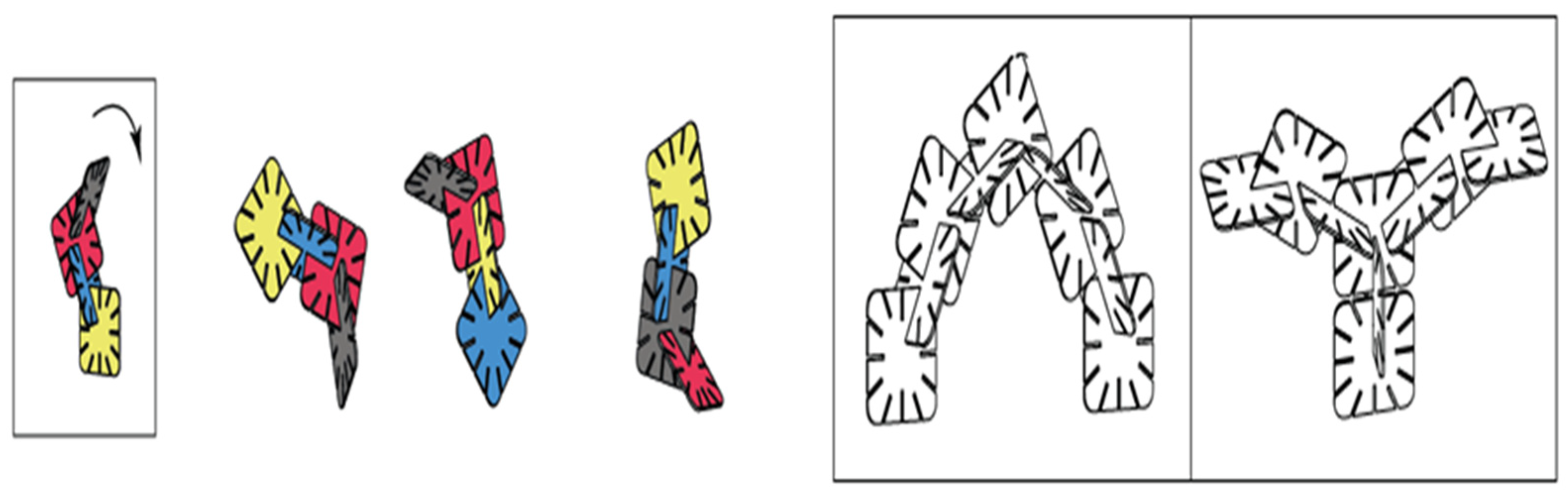
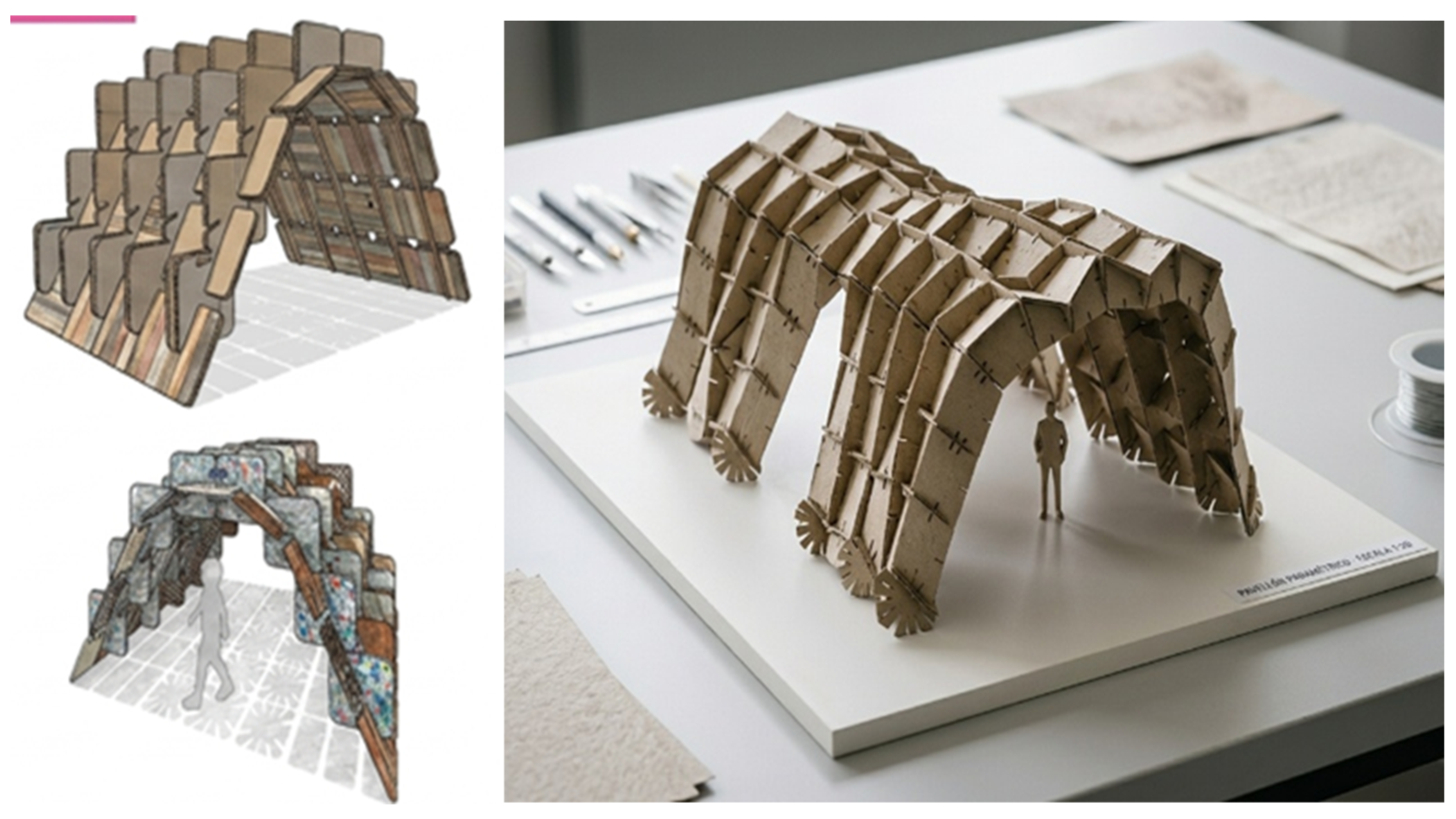
The parametric geometry builds on the interlocking-module system previously developed in the undergraduate thesis by Brito Vivanco and Campoverde Armijos 5. That prior work documented the geometric logic and basic assembly procedure using MDF RH and CNC-based machining. In the present study, the same geometric principles were explored through the reduced-scale recycled-cardboard prototype. As shown in Figure 35, the prototype presents digital representations of alternative interlocking configurations together with a manually assembled physical model. The recycled-cardboard formulations should therefore be considered candidate materials for future validation through replicated physical and mechanical characterization, density and water-absorption measurements, moisture and durability assessment, full-scale panel fabrication, CNC or laser-cutting trials, edge-quality evaluation, dimensional-tolerance verification, interlocking-joint tests, and full-scale modular assembly.
Figure 35.
Reduced-scale parametric-module prototype produced from recycled-cardboard cellulose-fiber material, showing digital representations of alternative interlocking configurations and a manually assembled physical prototype. The figure provides preliminary evidence of geometric representation and manual assembly feasibility at reduced scale; it does not demonstrate full-scale fabrication, CNC routing, laser cutting, structural performance, or long-term material behavior.
5. Discussion
The exploratory experimental campaign showed that variations in pulp preparation, wet mass, target thickness, adhesive dosage, pressing pressure, molding conditions, and drying procedures were associated with different preliminary responses during demolding and handling. The observations indicate that pulp homogeneity and processing conditions may influence the cohesion and approximate thickness control of recycled-cardboard cellulose-fiber specimens. However, because the campaign involved a limited number of specimens and relied primarily on qualitative observations, the individual effects of each variable cannot be isolated or statistically evaluated.
The comparison between adhesive-free and adhesive-containing specimens suggests that adhesive incorporation may contribute to preliminary cohesion under the tested conditions. Similarly, the press-assisted specimens indicated that compaction conditions may influence thickness control and handling behavior. These observations should not be interpreted as quantified evidence of density, mechanical strength, moisture resistance, thermal performance, durability, or machinability. Such properties require replicated testing using appropriate standardized methods.
The qualitative criteria summarized in Table 4 were introduced to make the specimen-selection process transparent. Specimen 5 was retained as the reference press-assisted configuration because it showed the most favorable preliminary combination of cohesion and approximate thickness control among the press-produced specimens. Specimen 8 was identified as a promising lower-resource formulation because it showed adequate preliminary cohesion and approximate thickness control without hydraulic pressing or thermal drying. The designation of Specimen 8 as a lower-resource route refers to its reduced dependence on specialized equipment and a simpler procedure; it does not constitute a quantified claim of lower energy consumption, lower environmental impact, or superior material performance.
The interpretation of these results requires a clear distinction between parametric-geometry validation and recycled-material validation. The interlocking parametric module had previously been developed and physically fabricated in a 2018 undergraduate thesis using MDF RH and CNC-based machining. That previous work verified the module geometry, joint configuration, and basic assembly logic. The present study includes a reduced-scale manually assembled prototype made from recycled-cardboard cellulose-fiber material; however, it does not demonstrate full-scale fabrication, CNC routing, laser cutting, structural performance, repeated assembly, or long-term functional use.
Therefore, the study provides preliminary evidence of a material-recovery workflow rather than a validated construction system. The recycled-cardboard formulations should be regarded as candidate materials for subsequent full-scale assessment using the previously developed parametric geometry. Future research should include replicated specimen series, standardized density and water-absorption testing, mechanical characterization in compression, bending, tension, and shear where relevant, moisture and durability assessment, thermal and fire-performance testing, full-scale fabrication trials, CNC- and laser-cutting tests, edge-quality and tolerance analysis, joint testing, and modular assembly evaluation.
Study Limitations and Future Validation
This study has limitations that define the scope of its conclusions. First, the experimental campaign was exploratory and included a limited number of small-scale specimens. The specimens were not produced as replicated series sufficient for statistical analysis. Second, the assessment relied primarily on qualitative observations of cohesion during demolding and handling, approximate thickness control, visible cracking, surface and edge condition, and visible dimensional stability after drying. Standardized measurements of density, water absorption, moisture sorption, compressive strength, tensile strength, flexural strength, shear strength, thermal conductivity, acoustic performance, fire resistance, durability, biodegradation, or long-term dimensional stability were not performed.
Third, the recycled-cardboard specimens were not manufactured as full-scale panels and were not subjected to CNC routing, laser cutting, drilling, slot machining, edge-quality assessment, tolerance verification, joint testing, structural loading, or modular assembly. Although the parametric geometry and interlocking logic had been physically fabricated in prior work using MDF RH, this prior validation cannot be transferred directly to the recycled-cardboard formulations. Finally, no life-cycle assessment, carbon-footprint calculation, energy measurement, or comparative environmental assessment was conducted. The circular-economy contribution of the study is therefore limited to a preliminary local material-recovery workflow.
In addition, the adhesive-containing specimens incorporated Bioplast Cola Blanca (Pegamento Biológico), a commercially available white adhesive intended for cardboard, paper, and fabric bonding. The present study did not determine its chemical formulation, bonding mechanism, water resistance, aging behavior, volatile organic compound content, environmental profile, compatibility with high-pressure processing, recyclability, or end-of-life behavior within the recycled-cardboard composite. These aspects require evaluation through product documentation and controlled experimental testing before the material can be assessed for specific architectural applications.
Future work should address these limitations through replicated experimental series, controlled manufacturing conditions, standardized physical and mechanical characterization, moisture and durability testing, fire and thermal assessment, full-scale panel fabrication, digital-cutting trials, and full modular-assembly validation.
6. Conclusions
This study explored the preliminary feasibility of producing cellulose-fiber composite specimens from recycled cardboard waste generated in a university Fab Lab. The experimental observations indicated that variations in pulp preparation, wet mass, adhesive dosage, pressing conditions, molding procedures, and drying methods were associated with different levels of cohesion during demolding and handling, approximate thickness control, and visible dimensional stability. The results identify candidate formulations for further study but do not provide standardized evidence of mechanical, thermal, moisture-related, machining, structural, or environmental performance.
Among the press-assisted conditions evaluated, Specimen 5 showed the most favorable preliminary combination of cohesion and approximate thickness control and was therefore retained as the reference press-assisted configuration. Specimen 8 was identified as a promising lower-resource formulation because it showed adequate preliminary cohesion and approximate thickness control without hydraulic pressing or thermal drying. These findings are based on qualitative observations and fabrication-process requirements only; they do not demonstrate superior material performance or quantified environmental benefits.
A reduced-scale manually assembled prototype produced from recycled-cardboard cellulose-fiber material provided preliminary evidence that the proposed parametric geometry can be represented and assembled using the developed material. Nevertheless, this result does not validate the performance of full-scale panels, CNC routing, laser cutting, interlocking-joint tolerances, structural capacity, repeated assembly, or long-term durability.
The research connects the exploratory material-recovery workflow with a previously developed parametric-module geometry. The parametric module had been physically fabricated and assembled in previous undergraduate research using MDF RH and CNC-based machining. The present study therefore represents a subsequent material-development stage, in which recycled-cardboard formulations are evaluated at small scale and preliminarily assembled as a reduced-scale prototype. The two stages should be understood as complementary rather than as a fully validated integrated construction solution.
The main contribution of this work is the documentation of a preliminary workflow for recovering Fab Lab cardboard waste and transforming it into small-scale cellulose-fiber composite specimens and a reduced-scale modular prototype. Further research is required to characterize selected formulations through replicated physical and mechanical testing, moisture and durability assessment, thermal and fire evaluation, full-scale panel fabrication, CNC or laser-cutting trials, joint testing, modular assembly, and life-cycle assessment.
Supplementary Materials
The following supporting information can be downloaded at: https://www.mdpi.com/article/10.3390/architecture6040190/s1. Supplementary File S1: MANUAL-DE-CREACION-ALGORITMO-2.pdf, providing a step-by-step description of the parametric-design workflow used to develop the module described in this manuscript; Supplementary File S2: Algoritmo Modulo.gh, containing the Grasshopper definition of the parametric algorithm developed for the module. The file can be opened using Rhinoceros and the Grasshopper plug-in.
Author Contributions
Conceptualization, C.C.-A. and F.H.-O.; methodology, C.C.-A., X.E.B.-V. and F.H.-O.; software, C.C.-A. and D.K.B.-V.; validation, C.C.-A., D.K.B.-V. and X.E.B.-V.; formal analysis, C.C.-A. and F.H.-O.; investigation, C.C.-A., D.K.B.-V. and X.E.B.-V.; resources, X.E.B.-V. and D.K.B.-V.; data curation, C.C.-A. and D.K.B.-V.; writing—original draft preparation, C.C.-A.; writing—review and editing, C.C.-A., X.E.B.-V. and F.H.-O.; visualization, C.C.-A. and D.K.B.-V.; supervision, X.E.B.-V. and F.H.-O.; project administration, C.C.-A. and X.E.B.-V.; funding acquisition, C.C.-A. All authors have read and agreed to the published version of the manuscript.
Funding
This research received no external funding. The APC was funded by the Universidad Técnica Particular de Loja (UTPL) in support of the corresponding author’s doctoral research requirements.
Institutional Review Board Statement
All the Fab Lab activities, projects, and results described in the manuscript were developed with the direct participation of Dayana Brito and Xavier Burneo, who are co-authors of the submitted manuscript. Therefore, Institutional Review Board approval is not required.
Informed Consent Statement
All the Fab Lab activities, projects, and results described in the manuscript were developed with the direct participation of Dayana Brito and Xavier Burneo, who are co-authors of the submitted manuscript. The data and results included in the study were obtained from the work carried out by these authors during the Fab Lab activities. Therefore, they were fully aware of the use of their work, project outputs, and generated data for the purposes of this research and for their inclusion in the submitted manuscript.
Data Availability Statement
The data supporting the findings of this study are available in the Supplementary Materials. Supplementary File S1 provides a step-by-step description of the parametric design workflow, and Supplementary File S2 contains the Grasshopper definition developed for the parametric module. Additional data supporting the findings of this study are available from the corresponding author upon reasonable request.
Conflicts of Interest
The authors declare no conflict of interest.
References
- Georgiev, G.V.; Nanjappan, V. Sustainability considerations in digital fabrication design education. Sustainability 2023, 15, 1519. [Google Scholar] [CrossRef] [Scilit]
- Obradovic, D.; Mishra, L.N. Mechanical properties of recycled paper and cardboard. J. Eng. Exact Sci. 2020, 6, 0429–0434. [Google Scholar] [CrossRef] [Scilit]
- Sapienza, V.; Ricciardi, G.; Di Stefano, I. Corrugated cardboard in architecture: A state-of-the-art review of material properties, building components, and prototypes. Architecture 2026, 6, 61. [Google Scholar] [CrossRef] [Scilit]
- Mazaherifar, M.H.; Cosereanu, C.; Timar, M.C.; Georgescu, S.V. Physical and mechanical properties of foam-type panels manufactured from recycled cardboard. Constr. Build. Mater. 2024, 411, 134685. [Google Scholar] [CrossRef] [Scilit]
- Brito Vivanco, D.K.; Campoverde Armijos, C.C.; Brito Vivanco, D.K.; Campoverde Armijos, C.C. Trabajo para ser Publicado en la Revista. Bachelor’s Thesis, Universidad Técnica Particular de Loja (UTPL), Loja, Ecuador, 2018. Available online: http://dspace.utpl.edu.ec/handle/20.500.11962/23454 (accessed on 21 September 2026).
- Silva, N.; Molina-Besch, K. Replacing plastic with corrugated cardboard: A carbon footprint analysis of disposable packaging in a B2B global supply chain—A case study. Resour. Conserv. Recycl. 2023, 191, 106871. [Google Scholar] [CrossRef] [Scilit]
- Rieradevall, J.P.J.; Gasol, M.C. Economía Circular. El Camino Hacia la Sostenibilidad; Universitat Autònoma de Barcelona: Barcelona, Spain, 2025. [Google Scholar]
- United Nations. Transforming Our World: The 2030 Agenda for Sustainable Development; United Nations General Assembly: New York, NY, USA, 2015; Available online: https://sdgs.un.org/2030agenda (accessed on 21 September 2026).
- United Nations. Goal 12: Ensure Sustainable Consumption and Production Patterns. Available online: https://sdgs.un.org/goals/goal12 (accessed on 21 September 2026).
- Lamikiz, M.A. Fabricación Aditiva; UNED: Madrid, Spain, 2023. [Google Scholar]
- Condom-Vilà, P. Ciencia, Tecnologia y Startups; Publicacions i Edicions de la Universitat de Barcelona: Barcelona, Spain, 2020. [Google Scholar]
- Flores, L.C.; Gómez, P.M. Conocimiento Compartido y Educación; Dykinson, S.L.: Madrid, Spain, 2024. [Google Scholar]
- Monsalve, L.L.; Pardo, B.M.I.; Vidal, E.M.I. Pedagogía y Cambios Culturales en el Siglo XXI; Ediciones Octaedro: Barcelona, Spain, 2020. [Google Scholar]
- Gershenfeld, N. FAB: The Coming Revolution on Your Desktop—From Personal Computers to Personal Fabrication; Basic Books: New York, NY, USA, 2006. [Google Scholar]
- Matas, M.M.C. Innovación Educativa en las Enseñanzas Técnicas; Laboratorio de Fabricación Digital (FabLab): Madrid, Spain, 2021. [Google Scholar]
- Cuero, A.Y.Á.; Bello, P.C.A. Desarrollo y Promoción de Ecosistemas de Emprendimiento Regionales. Casos, Experiencias y Buenas Prácticas; Universidad del Rosario: Bogotá, Colombia, 2024. [Google Scholar]
- Vico, B.A.; Vega, C.L. El Poder de la Enseñanza: Herramientas Educativas Para un Mundo Diverso; Dykinson, S.L.: Madrid, Spain, 2025. [Google Scholar]
- Gómez-Pallete, I.B. Optimizar la producción: Material y herramienta. In Colaboratorio: Fabricación Digital y Arquitecturas Colaborativas; Archidocs LLC.: Miami, FL, USA, 2022; pp. 56–59. [Google Scholar]
- Setièl, T.D.G. Del Taller al FABLAB Hacia una Didáctica Creativa y Productiva; Ribot: Madrid, Spain, 2022. [Google Scholar]
- Latka, J.F. Paper in Architecture: Research by Design, Engineering and Prototyping. A+BE|Archit. Built Environ. 2017, 7, 1–532. [Google Scholar] [CrossRef]
- Rogalka, M.; Grabski, J.K.; Garbowski, T. Identification of Geometric Features of the Corrugated Board Using Images and Genetic Algorithm. Sensors 2023, 23, 6242. [Google Scholar] [CrossRef] [Scilit]
- Abdullah, M.; Seidel, L.; Wernicke, B.; Gouasmi, M.; Hackl, A.; Kern, T.; Lempert, C.; Lempert, C.; Bizer, D.; Storch, W.; et al. PopCore: Personal Fabrication of 3D Foamcore Models for Professional High-Quality Applications in Design and Architecture. In Proceedings of the ACM Symposium on Computational Fabrication (SCF ’24), Aarhus, Denmark, 7–10 July 2024; ACM: New York, NY, USA, 2024. [Google Scholar] [CrossRef] [Scilit]
- Romano, A.M. Aprender a Proyectar Arquitectura; Archidocs LLC.: Miami, FL, USA, 2021. [Google Scholar]
- Martinez de Murguis, F.B. Origenes Inconformistas de la Arquitectura Moderna; Nobuko Diseño Editorial: Buenos Aires, Argentina, 2023. [Google Scholar]
- Pérez-Díaz, H. Procedimiento de Parametrización en Modelo 3D de Máquina de Llenado de Liquidos; Universidad de Antioquia: Medellín, Colombia, 2024. [Google Scholar]
- Campos, C.-S.P. Imaginar, Compartir, Crear: Consolidación de la Innovación Docente en Arquitectura; CEU Ediciones: Madrid, Spain, 2020. [Google Scholar]
- Esteban, F.-C. Arquitectura Religiosa del Siglo XXI en España; Ilco: Madrid, Spain, 2022. [Google Scholar]
- Departamento Nacional de Planeación. Guía para el Análisis y Especificación de Requerimientos de Sistemas de Información; Departamento Nacional de Planeación: Bogotá, Colombia, 2020. Available online: https://iitec.appsiapi.com.mx/cargas/pdf/b166865e6c193950320791fbdfce1a5d_nsk.pdf (accessed on 21 September 2026).
- Agostino, R.; Pone, S. Adaptive Cross-Panel System: Digital Fabrication for Freeform Architecture. In Proceedings of the IASS Annual Symposium 2020/21 and the 7th International Conference on Spatial Structures, Guildford, UK, 23–27 August 2021. [Google Scholar]
- Martín-Mariscal, A.; Fernández-Rodríguez, J.F.; Picardo, A.; Peralta, E. Grasshopper Algorithmic Modelling: Parametric Design for Product Platform Customisation. Appl. Sci. 2025, 15, 6243. [Google Scholar] [CrossRef] [Scilit]
- Grasshopper Docs. Polygon—Grasshopper Curve Component. Available online: https://grasshopperdocs.com/components/grasshoppercurve/polygon.html (accessed on 21 September 2026).
- Grasshopper Docs. Divide Curve—Grasshopper Curve Component. Available online: https://grasshopperdocs.com/components/grasshoppercurve/divideCurve.html (accessed on 21 September 2026).
- Katakura, S.; Taraz, M.; Abdullah, M.; Methfessel, P.; Rambold, L.; Kovacs, R.; Baudisch, P. Kerfmeter: Automatic Kerf Calibration for Laser Cutting. In Proceedings of the 2023 CHI Conference on Human Factors in Computing Systems, Hamburg, Germany, 23–28 April 2023; ACM: New York, NY, USA, 2023. [Google Scholar] [CrossRef] [Scilit]
- Figueroa, I.A.S.; Cifuentes, R.P.A.; Fonseca, S.E.B.; Uribe, C.S.L.; Molina, L.d.C. Aprovechamiento de los Residuos de Construcción y Demolición en Ingeniería y Arquitectura; Universidad de la Salle: Bogotá, Colombia, 2024. [Google Scholar]
- Giménez, S. Educación Maker: Creando un Aprendizaje Activo y Significativo; Autores de Argentina: Buenos Aires, Argentina, 2024. [Google Scholar]
- Berlinguer, M. Repensar la Smart City Barcelona: Ciudad Abierta, Colaborativa y Democratica; Icaria: Barcelona, Spain, 2021. [Google Scholar]
- Stahel, W.R. Economía Circular Para Todos Conceptos Básicos Para Ciudadanos, Empresas y Gobiernos; Books on Demand—Spanien: Norderstedt, Germany, 2025. [Google Scholar]
- Manchado, P.E.; López, F.I.; Biel, I.M.P.; Sanz, S.R. Diseño y Reflexión el Cambio del Diseño y el Diseño del Cambio; Prensas de la Universidad de Zaragoza: Zaragoza, Spain, 2020. [Google Scholar]
- Arenal, L.C. Planificación y Apertura de un Pequeño Comercio; Tutor Formación: Madrid, Spain, 2025. [Google Scholar]
- Villanova, N. Cirujas, Cartoneros y Empresarios La Población Sobrante Como Base de la Industria Papelera Buenos Aires, 1989–2012; Ediciones R Y R: Madrid, Spain, 2024. [Google Scholar]
- Dávila-Flores, B.J. Reciclaje de Residuos de Celulosa en la Elaboración de Briquetas que Puedan ser Evaluadas Para su Disponibilidad de Segundo uso en Diversas Actividades Antrópicas Propiciando la Protección del Medio Ambiente; Universidad Nacional San Agustín de Arequipa: Arequipa, Peru, 2022. [Google Scholar]
- Rodriguez, d.R.M.E. Gestión del Departamento de Pisos; Ediciones Paraninfo, S.A.: Madrid, Spain, 2020. [Google Scholar]



Disclaimer/Publisher’s Note: The statements, opinions and data contained in all publications are solely those of the individual author(s) and contributor(s) and not of MDPI and/or the editor(s). MDPI and/or the editor(s) disclaim responsibility for any injury to people or property resulting from any ideas, methods, instructions or products referred to in the content. |
© 2026 by the authors. Licensee MDPI, Basel, Switzerland. This article is an open access article distributed under the terms and conditions of the Creative Commons Attribution (CC BY) license.