


Abstract
Social connectedness is essential to student learning, development, and well-being, and campus social infrastructure is one important contributor to that connectedness. This two-phase qualitative study draws on interviews with students living on campus at a U.S. university during COVID-19 campus restrictions (Spring 2021; n = 26) and after campus spaces reopened (Spring 2022; n = 17). Fourteen students participated in both phases; three Phase II-only participants were recruited to add exploratory disability perspectives. Using the pandemic as a naturally occurring socio-spatial disruption, a grounded, iterative thematic analysis examined how campus environments were experienced as supporting or constraining different phases of relationship-building. Participants associated restricted access with fewer incidental encounters, reduced opportunities to develop weak ties, and fewer proximate social cues supporting recognition and low-stakes interaction. Early-year students often struggled to initiate relationships, while returning students described difficulty maintaining and deepening existing ties. Proximity to roommates, suitemates, and neighbors buffered isolation for some, and interactive classroom formats supported connection despite restrictions. After reopening, longitudinal participants described renewed incidental contact, broader academic networks, and improved well-being, although some experienced lingering barriers. The Phase II-only disability perspectives highlighted both the accessibility benefits of remote participation and the consequences of rolling back flexible accommodations. As campuses navigate hybrid learning, increasingly digitally mediated social life, and concerns about student mental health, the findings offer design and programming considerations for strengthening campus social infrastructure. Although the evidence comes from a single U.S. campus during an unusual period, these mechanism-focused insights suggest priorities for future research and context-specific campus planning.
1. Introduction
Social connectedness is a vital determinant of health and well-being, with the need for shared places, or social infrastructure, to support it widely acknowledged [1]. For students, social connectedness is essential for learning, development, persistence, and overall well-being. But what happens when shared physical space is restricted? To curb the spread of COVID-19, higher education institutions worldwide limited access to campus environments designed to deliberately foster interaction and shared learning. These spatial restrictions were swiftly implemented and rigorously enforced to protect students and were associated with widely reported negative experiences—most notably, increased loneliness and social isolation among students [2,3].
The COVID-19 campus restrictions created a naturally occurring socio-spatial disruption, substantially limiting access to proximate, interaction-rich campus environments. Examining students’ accounts of what changed when access was restricted helps illuminate design affordances as participants perceived them to be associated with relationship initiation, maintenance, and deepening. These affordances may be relevant in other contexts where access to shared places is constrained (e.g., periods of hybrid instruction or settings where interaction is primarily digitally mediated), though the evidence presented here is drawn from a U.S. university campus.
Studies of loneliness in the built environment suggest that young adults, such as traditional college-aged students, have been studied less than older adults [4]. These studies point to the complex interplay of socio-economic factors influencing how the built environment supports social connection [5,6,7]. This study examines the subjective experience of traditionally college-aged young adults living in campus housing at a U.S. university during the COVID-19 pandemic shutdown. Participants’ living conditions were generally safe, uncrowded, well-lit, and included access to nearby campus greenspaces, with broadly similar conditions across participants. This sets the study apart from research that has considered pandemic well-being impacts related to variations in housing quality [8,9].
This two-phase study examined students’ social and emotional well-being during COVID-19 campus spatial restrictions (Spring 2021) and again, approximately one year later, after access to campus settings resumed (Spring 2022). The inquiry began with a broad, participant-centered question—how students understood modifications to physical campus environments as shaping their experience of learning and community—and, through iterative interviewing and analysis, narrowed to a focused interest in relationship-building. In particular, students’ accounts directed attention to how access to proximate spaces shaped their relationships and which settings mattered most for developing and sustaining social connections.
Leveraging the disruption-and-return structure as a within-context comparison, the study examines contrasts between participants associated with restricted access to interaction-rich settings versus experiences after access returned. Interviews illuminated how both formal and informal environments supported distinct phases of relationship-building, including forming new networks and maintaining or deepening existing ties, and they also surfaced cases in which reopening itself created barriers to connection, complicating a singular “return-to-normal” narrative. Synthesizing these patterns, the paper asks: How do proximate campus environments support students’ relationship-building across initiation, maintenance, and deepening, and what socio-spatial mechanisms do students describe as shaping those processes under restricted access and after access returns?
In this paper, “mechanisms” refers to participant-described linkages and the author’s interpretive synthesis across interview accounts regarding how socio-spatial conditions shaped relationship-building under constrained and reopened access in this campus context. This mechanism-focused framing can inform design and programming decisions for campus leaders, student affairs, and built environment professionals concerned with creating socially resilient campus environments; it may be hypothesis-generating for select comparable settings where access to shared places is constrained.
2. Literature Review
In qualitative inquiry, sensitizing constructs can orient the researcher to likely processes and topics while preserving openness to what emerges from participants’ accounts [10]. These concepts are provisional starting points that may be refined, adapted, or discarded as analysis proceeds [11]. This study takes a grounded, iterative analytic approach, drawing on sensitizing concepts from multiple research traditions to interpret how campus spaces shape student social relationships and how pandemic-related spatial restrictions were experienced. Literature from Higher Education, Student Affairs, Public Health, Architecture, and Environmental Psychology was drawn on selectively to support interpretation and contextualize emergent themes as they developed through analysis [12].
2.1. Social Connection and Health
It is well established that social connection is critical for human health and well-being and is recognized as a fundamental human need [13]. Moreover, the subjective experience of loneliness and perceived deficits in the quantity and quality of social connections [14,15] can have wide-ranging health effects. Individuals experiencing a lack of social connection face higher risks of physical and mental illness, behavioral issues, cognitive decline, and deteriorating emotional states [15,16,17].
Loneliness has long been linked to spatial restrictions even before the global pandemic. Reviews of the psychological impacts of quarantines, published at the onset of COVID-19 restrictions, noted that isolation and disrupted routines contributed to stress, fear, frustration, loneliness, and boredom [18,19]. Social disconnection worsened during the pandemic, intensifying public health concerns—especially for young adults already at risk [20,21,22]. Students, in particular, experienced poorer mental health, decreased well-being, and heightened loneliness compared to the general population, and these mental health declines were associated with lower academic performance [2,3,23].
2.2. Social Connection and Student Well-Being
In higher education, well-being is defined as an optimal and dynamic state enabling students to reach their full potential [24]. Interpersonal relationships, emotional connections, and social support are all considered key contributors to both individual and community well-being [24]. On an individual level, social connection involves everyday interactions ranging from fleeting to in-depth; on a community level, it encompasses involvement in relationships and a sense of belonging within a broader social context [1].
Social connection is closely tied to student success: peer relationships and everyday interactions influence academic and personal development and are associated with measures such as learning gains, persistence, and degree completion [25,26,27]. Empirical work demonstrates the practical impact of close campus ties. For example, Bronkema and Bowman find that students reporting at least one close campus friend show higher emotional connection, better GPA, and greater graduation rates than those without [28]; moreover, the presence of a third and fourth close friend further increases the likelihood of graduating within six years. Such findings shift attention from generalized social integration to the measurable effects of proximate, repeated social contacts on academic outcomes.
Sense of belonging, defined for students as their perceived support, feeling of mattering, and sense of inclusion on campus, is tightly linked to motivation and positive functioning and is especially important for students from marginalized backgrounds [29,30]. Even before the pandemic, undergraduates identified loneliness as a significant impediment to academic performance [31]. Thus, understanding the interplay of spatial environments and social connectedness remains important across higher education contexts.
2.3. Social Connection and the Built Environment
Relationships between the built environment and social well-being are complex and multifaceted across spatial scales. Research at the urban and neighborhood scales holds that physical characteristics and infrastructures associated with walkability, transportation access, mixed uses, and availability of green spaces contribute to greater opportunities for social interaction and the ability to develop social relationships [6,32,33,34]. At the building and campus level, the literature concerning the relationship between social ties and spatial contexts is helpful for understanding how pandemic restrictions affected students’ experience of social connectedness. Two socio-spatial concepts [35] that became particularly relevant as sensitizing constructs are spatial propinquity and spatial composition.
Spatial propinquity refers to the tendency for close relationships to form due to physical proximity. Frequent exposure and interactions among individuals at work or school, and in residential, neighborhood or organizational settings have been shown to lead to greater trust and a closer bond, as well as to a higher frequency of communication and knowledge exchange [36,37]. In higher education, the “propinquity effect” describes the likelihood that through “chance” encounters in campus spaces, students will interact, form relationships, and influence each other [38]. Students’ living arrangements provide their greatest source of daily contact. Although evidence on the impact of campus housing on student success is mixed [39,40], studies indicate that the convenience of living on or near campus facilitates participation in academic and social activities, encouraging greater engagement in collaborative learning and trust-building among diverse peers [40,41,42]. Proximity also allows for brief interactions with peripheral contacts or “weak ties” [43], which have been shown to boost social and emotional well-being [44,45,46]. Researchers have found that on days when students interact with more classmates than usual, they feel greater happiness and a sense of belonging [47].
Spatial composition describes the presence of places that enable social interaction. At the neighborhood level, this refers to the availability of public spaces for social mixing, such as parks, fitness centers, or cafés; at the organizational level, it includes micro-environments such as lobbies, lounges, or coffee stations [48,49,50]. Oldenburg’s concept of the “third place,” emphasizes informal, neutral, and relatively low-barrier gathering places distinct from home and work that support repeated casual interaction [49]. Campus settings do not always fully satisfy this definition strictly because their access, ownership, and use are institutionally structured. Nevertheless, settings such as dining halls and cafés, libraries and informal study areas, residence-hall lounges, departmental commons, and outdoor spaces may perform similar social functions by enabling co-presence and low-stakes encounters. In this study, these settings were not classified a priori as third places; rather, third-place scholarship served as a sensitizing lens for interpreting participants’ accounts of informal shared settings.
Related campus research describes “socially catalytic” common spaces as environments that “encourage spontaneous and informal educationally purposeful interactions” [51] (p. 283). Residence hall architecture may encourage frequent interactions and foster a “sense of community,” particularly during first-year transitions [52]. Research shows that “socializing” residential architecture featuring common spaces is associated with better first semester outcomes, contrasting with “isolating” apartment-style layouts that minimize communal space [53]. Accessible informal settings such as lounges, study spaces, and dining halls are also cited as critical for providing opportunities for students to discover shared interests, values, and perspectives that can support the development of relationships that cross social boundaries [41]. Through interactions in these comfortable campus spaces, “students learn about their peers’ lived experiences, beliefs, and cultural practices with a level of depth and authenticity that can’t be achieved in more structured settings” [41] (p. 475).
The availability of informal shared settings does not itself ensure that they will be socially supportive or inclusive. As used here, affordances refer to opportunities for action enabled by environmental features but not determined by them [54]. The social affordances of informal shared settings are also shaped by accessibility, institutional practices, social norms, and students’ experiences of comfort, safety, and belonging [55,56]. Concerns that pandemic-related closures alongside digital behaviors formed during lockdowns may have lasting effects on campus interaction further highlight the need to understand these relationships [57,58,59]. Although existing research establishes associations among proximity, shared settings, and social connection, less is known about how students experience these spatial conditions as supporting or constraining different phases and aspects of relationship-building. This gap motivates the present study’s attention to the socio-spatial processes participants described under restricted access and after reopening.
3. Materials and Methods
Although prior research documents links between social connection and student outcomes, less is known about the spatial conditions and mechanisms that underlie those associations. To address this gap, this study uses a grounded, iterative thematic analysis, based on two phases of in-depth semi-structured interviews with on-campus residents (Spring 2021 and Spring 2022) to explore how pandemic-era campus space restrictions were experienced and how relationship-building processes shifted as access changed.
Interviews were selected because they are well suited to examining how participants construct and interpret their own experiences and to identifying recurring social patterns [60]. A semi-structured format provided structured flexibility: it supported consistency across interviews while allowing follow-up on unanticipated topics, inviting participants to foreground what they experienced as most salient, and enabling reflective sense-making during the conversation [61]. The two-phase design leveraged the pandemic as a naturally occurring socio-spatial disruption, enabling a within-context comparison of periods of constrained and resumed access while remaining open to emergent processes and meanings in participants’ accounts.
3.1. Setting
Data were collected at a large U.S. research university. During Spring 2021, the campus enforced stricter access rules than the surrounding community: indoor masking and distancing were mandatory, academic spaces were accessible only to attend class, and common areas were off-limits (with violations risking loss of future campus housing privileges). Just before the first round of data collection, some restrictions eased slightly, allowing time-limited dining and recreation access. By Spring 2022, most campus spaces had reopened, though some institutional measures (vaccine requirements, selective masking) remained in place. This contrast shaped both participant experience and the study’s two-phase design.
3.2. Participants and Sampling
An iterative purposive sampling strategy was used to identify information-rich cases and to seek variation relevant to the emerging analysis [62]. Phase I recruitment began with a study notice posted in the Residential Life e-newsletter in late March 2021, followed by a second posting in late April. Residential Life staff facilitated distribution of the notice but did not identify or refer individual students, nor were they informed who completed the screening survey or participated in the study. Interested students independently completed an online screening survey covering their year of study, mode of instruction, living arrangement, and location within the university’s seven on-campus residential areas; optional demographic information was also requested. Students meeting the inclusion criteria were contacted directly by the author and provided with a link to an online scheduling site to arrange a Zoom interview.
Of the 71 students who completed the screening survey, 57 met the inclusion criteria and were invited to schedule an interview; 26 completed a Phase I interview. Although not all interview appointments were filled, the availability of appointments narrowed toward the end of the semester; consequently, some eligible students who intended to participate may not have been able to schedule an interview within the available recruitment period.
At that time, the campus offered multiple residential configurations, including traditional residence halls, as well as suites and apartments across seven different residential areas. Sampling therefore sought variation across these settings to capture a range of on-campus housing experiences [63]. Initial recruitment prioritized three traditional residential areas under the expectation that students in those settings would be most affected by pandemic-related changes. As interviews progressed, however, it became clear that differences by building type were less analytically salient than differences related to living arrangement (single rooms versus shared rooms or suites with a common room) and academic stage. Recruitment was therefore adjusted to prioritize diversity in living arrangements, learning settings, and year in school, while monitoring these dimensions as data collection continued (for example, pausing recruitment in oversampled categories). These adjustments were intended to increase analytical coverage of emerging themes and ensure depth across key variations in participants’ experiences. Phase I recruitment closed at the end of the spring 2021 semester; by that point, iterative analysis showed recurring patterns and sufficient variation across these dimensions to support the focused, contextually bounded thematic account developed here.
Phase I interviews were conducted in Spring 2021 (n = 26). In Spring 2022, participants were invited to complete follow-up interviews after campus settings had largely reopened. Fourteen Phase I participants completed a second interview (longitudinal n = 14). The longitudinal sample was determined by follow-up participation during the Spring 2022 data-collection window and was intended to provide within-participant accounts of experiences after reopening. Because not all interviewees participated in Phase II, the full dataset includes both longitudinal evidence (participants interviewed in both phases) and cross-sectional evidence (Phase I-only and Phase II-only participants).
Emerging scholarship during the pandemic suggested that both the “pivot” to remote learning and the subsequent return to campus could involve different risks, constraints, and benefits for students who identify as disabled [64,65,66]. Disability status was not collected through screening during Phase I, and no participants disclosed disability in Phase I interviews. In Phase II follow-up interviews, returning participants were also invited to reflect on identities shaping their campus experience; none disclosed disability in response to this open-ended prompt. Phase II outreach therefore sought to broaden the dataset to include disability perspectives. Study information was distributed through broad group emails circulated by the campus disability services office and disability cultural group. Staff and group leaders did not identify or directly recruit individual students and were not informed who responded or participated. This outreach yielded three eligible Phase II-only participants (n = 3; Phase II total n = 17), reflecting the number of eligible volunteers within the available recruitment window. Because these participants were not interviewed in Phase I, their descriptions of the restricted period are retrospective and do not provide longitudinal evidence. Given the small subgroup, their accounts are presented as a purposively added exploratory perspective and are not generalized beyond these three participants. Participant characteristics and phase participation are summarized in Appendix A—Table A1, which distinguishes Phase I-only, longitudinal follow-up, and Phase II-only recruitment.
3.3. Data Collection
The study received institutional review board (IRB) approval. After eligibility was confirmed, students who chose to participate completed the informed consent form and independently scheduled a 30–60 min Zoom interview via an online scheduler. Participants received an electronic gift card to a local vendor of their choice for each interview completed: $10 for Phase I and $20 for Phase II.
A semi-structured interview protocol guided the initial interviews. Interviews began with questions about participants’ academic background, such as “How long have you been at [institution]?” and “Can you tell me about your studies?” Participants were then asked about their experiences in academic spaces during campus restrictions including the types of spaces in which they attended classes and what it was like to learn in those environments. Follow-up prompts explored how participants connected with peers and faculty (in-person, during and outside of class, and online).
Questions were tailored to participants’ prior experience at the institution. First-year students were asked to compare their experiences with their expectations of college, whereas returning students were invited to compare their pre-pandemic routines with those of the restricted period and to reflect on how restrictions shaped their academic and social lives. Participants were also asked to “walk” the interviewer through a typical day under campus restrictions and, when relevant, to contrast it with a typical pre-pandemic day. Because these descriptions concerned experiences before data collection, accounts of pre-pandemic descriptions were treated as retrospective reports. Adapted versions of these questions addressed residential and dining environments, with additional probes examining participants’ perceptions of the relationships among campus spaces, peer relationships, and sense of community (see Appendix B for sample questions).
Follow-up interviews conducted in Spring 2022 invited participants to reflect on the return to campus and identify the spaces that had become most important to their academic and social lives. Follow-up interviews addressed renewed access to campus spaces, pandemic impacts, and themes and interpretations emerging from Phase I. The order of these topics varied according to the flow of each semi-structured interview. Follow-up interviews also included an open-ended question inviting participants to reflect on the identities they understood as shaping their campus experiences. Phase II-only participants also provided retrospective reflections on remote learning, social engagement and sense of belonging during pandemic-era restrictions; these accounts were included in analysis.
3.4. Data Analysis
Interviews were digitally recorded, transcribed using an automated tool, and each transcript was checked for accuracy against the recording before being imported into MAXQDA (version 2018) [67]. Participants were assigned pseudonyms immediately, and the identification key was stored separately from transcripts, working documents, and analytic files. Analysis used a grounded, iterative thematic approach that combined inductive coding with sensitizing constructs from relevant studies to support interpretation [12]. Three coding cycles were used: initial (open) coding, focused coding, and axial coding.
Initial coding captured spatial categories (e.g., residential, learning and other campus environments), as well as recurring elements in participants’ accounts of how restrictions shaped academic and social life [68]. Codes were applied as descriptive categories (environments), process codes (gerunds), and in vivo codes drawn from participants’ language [69]. As coding progressed, codes were developed for institutional policies and participants’ experiences of safety, mental health and well-being. As Phase II-only transcripts were coded, codes related to lived experience of disability and access were developed (e.g., accessibility barriers, mental load, remote learning benefits and drawbacks, and reopening experiences).
Focused coding was used to consolidate and refine initial codes into higher-level thematic categories based on recurrence and analytic salience [12,69]. Analytic memos were used throughout data collection and analysis to track evolving interpretations, comparisons, and analytic decisions. Comparative analysis examined continuity and variation within and across phases by comparing accounts across participants and across analytically relevant subgroups (e.g., academic stage, living arrangement, learning setting, and disability-related access experiences). MAXQDA (version 2018) visualization tools (e.g., code maps and co-occurrence displays) were used as analytic aids to examine connections among themes and support cross-phase comparison.
Axial coding was then used to examine relationships among focused categories and develop broader interpretive groupings [69]. Working definitions documented what each category and theme captured, what evidence it included, and how it varied across accounts. Final themes represented recurring patterns that were important to the research question and connected contextual conditions, interaction processes, and relationship-building experiences. The interpretive model was developed by comparing themes and organizing recurrent connections among altered socio-spatial conditions, interaction processes, and reported relational challenges. Disconfirming and boundary cases were used to qualify claims, identify circumstances in which patterns differed or did not hold, and revise interpretations that initially appeared more consistent across participants or phases. Across both phases, memoing and comparison across cases supported the progression from initial codes to focused categories, themes, and the final model. Appendix C provides a worked example of this process.
The author conducted all interviews and was responsible for code development, coding, memoing, cross-case comparison, theme development, interpretation, and manuscript preparation. A research assistant supported administrative and data management tasks including transcript cleaning and formatting, and assisted with the graphic production of visual summaries. The author reviewed and interpreted these summaries. Although the author held a faculty position at the university, the author had no prior relationship with the participants and no role in teaching, advising, or evaluating them. The potential power differential associated with interviewing students was nevertheless considered through reflexive memoing and debriefing with colleagues with different identities and disciplinary perspectives, which helped to surface assumptions and test interpretations.
3.5. Visual Summaries
While grounded, iterative thematic analysis was the primary analytic approach, participant-specific visual summaries were developed as a supplementary, design-oriented form of qualitative memoing. Twenty-two diagrams drawing on 36 interviews were produced: one for each of the 14 longitudinal participants, integrating their Phase I and Phase II accounts, and one for 8 of the 12 Phase I-only participants. Because diagramming emerged as an exploratory analytic aid rather than a prespecified data product, it was not completed for four Phase I-only participants; these omissions did not reflect a planned sampling criterion. Diagrams were not produced for the three Phase II-only participants because analysis of those interviews centered on lived experiences of disability, access, and reopening rather than comparisons of specifically identified places across study periods.
During initial coding, the author used a spreadsheet to record campus and off-campus places that participants explicitly named or clearly described their academic or social routines. Places were grouped into a consistent set of broad spatial categories aligned with campus spatial and organizational types: academic/studying/library, residential, dining, co-curricular/recreation, outdoors/off-campus. Classification was interpretive and based on the surrounding account and the described function of each setting. The research assistant translated these records into diagrams using a consistent graphic template, and the author reviewed the diagrams against the records and corresponding transcripts and determined their analytic interpretation.
Places were positioned in the column corresponding to the period being described: pre-restriction (left), restricted period (middle), or post-reopening (right). (Figure 1) The diagrams are researcher-produced representations derived from interview transcripts rather than independently collected spatial data. They record the range of place-types mentioned in participants’ accounts; they do not measure the frequency or duration of use, independently observed spatial behavior, or relational and well-being outcomes. Accordingly, visual contraction or expansion refers only to a narrower or broader range of place-types described across periods.
Figure 1.
Participant-specific visual summaries (“bowties”) derived from interview transcripts: (a) Example showing spaces named across three periods: pre-restrictions (left), during restrictions (middle), and post-reopening (right). (b) Example illustrating an expanded spatial repertoire after restrictions were lifted (right column). Legend: formal academic (dark purple), informal academic (light purple), residential (red/pink), dining (salmon), co-curricular/recreation (teal/light blue), outdoors/off-campus (greens).
The visual summaries were reviewed alongside transcripts and coded material to support within-case interpretation and prompt cross-case comparisons. They helped identify patterns across participant accounts, including changes in the range of place-types mentioned, apparent spatial substitutions such as movement from indoor or on-campus settings to outdoor or off-campus settings, and variation after reopening. When reviewed alongside the transcripts, the diagrams also helped identify accounts of spatial adaptation. These interpretations were assessed in relation to the corresponding interview evidence rather than inferred from the diagrams alone.
The terms “bowties” and “half-bowties” (for students interviewed during their first year) are used as a descriptive shorthand for the contraction and, for some participants, subsequent expansion of the range of place-types described across periods. Some participants described a broader spatial repertoire after reopening (Figure 1b, for example), while others continued to describe a relatively modest or constrained range of settings.
3.6. Trustworthiness
The trustworthiness of the analysis was strengthened through iterative coding and memoing, cross-phase comparison, peer debriefing, and attending to disconfirming evidence, methods that aim for “validity considerations throughout the inquiry” [70] (p. 327). Code definitions were refined iteratively and documented through code memos. A reflexive memo was written immediately after each interview to capture context, emerging interpretations, and instances that appeared to confirm, extend, or challenge the developing analytic accounts.
Peer debriefing with colleagues provided opportunities to test interpretations and surface assumptions. In Phase II interviews, interpretations emerging from Phase I were revisited with returning participants to check resonance and refine meanings. Relevant scholarship was engaged iteratively during analysis to contextualize interpretations and to assess coherence with prior work.
3.7. Limitations
Participation was voluntary; the sample may not represent the full diversity of on-campus students and included more women than men. Given documented variation in pandemic impacts by identity and marginalization [20,33,71], some perspectives may be under-represented here. As a qualitative study conducted at a single U.S. institution, findings are contextually grounded and intended to illuminate socio-spatial dynamics rather than provide broad generalizations.
The two-phase design is not a full panel: only 14 of 26 Phase I participants completed follow-up interviews, and three additional participants who identified as disabled were recruited in Phase II. Follow-up was selective for practical reasons (e.g., graduation, studying abroad, nonresponse), and those who returned may differ from those who did not. Differences in sample composition across phases and the small Phase II-only subgroup limit inference about change over time. Some evidence also relies on retrospective reconstruction of pre-restriction campus life, and interviews carry risks of recall and social desirability bias [60].
Finally, the disruption-and-return context involved multiple simultaneous changes beyond spatial access. Between Spring 2021 and Spring 2022, students progressed academically and socially, perceptions of pandemic risk shifted, and institutional conditions changed (e.g., vaccines, masking practices, and related campus policies). As a result, the study cannot isolate the effects of spatial accessibility from these co-occurring factors; findings should be interpreted as participants’ accounts of how changes in access to campus settings were experienced alongside other pandemic-related shifts, including pedagogical and institutional conditions that shaped how spaces could be used.
4. Findings
The following findings summarize patterns in participants’ accounts linking socio-spatial conditions with changes in everyday interaction and connectedness during pandemic-related spatial restrictions, while noting concurrent pedagogical, institutional, public-health, and social conditions. During Spring 2021, protocols intended to limit viral spread narrowed access to both formal and informal campus settings and reduced the availability of indoor public spaces for everyday social contact.
Participant phase status is summarized in Appendix A, Table A1. Section 4.1, Section 4.2, Section 4.3 and Section 4.4 draw on contemporaneous accounts from all 26 Phase I participants; these accounts are considered together because subsequent follow-up participation was not relevant to the Phase I themes. Section 4.5 draws primarily on Phase I accounts and identifies retrospective contributions from Phase II-only participants where included. Section 4.6, Section 4.7 and Section 4.8 draw primarily on follow-up accounts from the 14 longitudinal participants, with contributions from the three Phase II-only participants identified where included. Cross-phase interpretations are based primarily on within-participant accounts; retrospective accounts are identified where relevant.
4.1. Altered Social Behaviors in Informal and Formal Spaces
When interviewed in Spring 2021, students consistently emphasized that “things are really different.” Returning students compared their current campus lives to pre-pandemic routines, while new and transfer students with some prior exposure to campus lamented the shift in campus “energy.” Many described intentionally limiting casual in-person contact to reduce COVID-19 risk, including uncomfortable protocol-oriented conversations (e.g., asking when someone last tested negative) before socializing indoors. In their accounts, these practices contributed to a social chill across campus spaces.
Vanessa, a second-year student living in a traditional residence hall, expressed concern over a loss of basic sociality. She enjoyed saying “hi” to people in the hallway but felt that “people won’t make eye contact with you anymore.” While she understood the safety concerns behind cautious behavior, she felt there was now a “penalty for being social,” noting that expanding one’s social circle could be read as increasing exposure risk. She also worried that these social norms might persist after protocols were lifted.
Formal campus settings were also reshaped. Dining halls, typically spaces encouraging social mixing, became more difficult places for incoming students to initiate contact. Madison, a first-year student, described how masking and occupancy limits changed what felt possible:
It’s not like I can just walk up to a table and sit down with them in the dining commons these days. Because you can’t see whose face it is. And…there’s a limit to how many people can be at each table. So, it’s not like I’m going to make friends that way.
Reflecting on the negotiation required to feel safe enough to share a meal, she concluded, “There’s no way to cross that threshold right now.” Across accounts, students described protocols as making low-stakes interactions more difficult in both informal residence spaces and formal shared campus environments, shaping how feasible casual contact and relationship-building felt.
4.2. Connecting in Proximate Environments
Even with campus restrictions, students reported forming new relationships within the proximate environments of their residence halls. In Spring 2021, many students returning to campus lived in single-occupancy rooms; lounges were closed and congregating in hallways was prohibited. Still, students often connected with others nearby, most frequently next-door neighbors or suitemates. Stella, a new biochemical engineering major, was typical in describing companionship emerging through proximity and shared risk-tolerance:
The first few weeks, it was rough because I was a little bit paranoid about meeting people and having fun. Thankfully, I don’t even know how this happened, but I met my next-door neighbors…we just became friends and…I stuck on that friend group… Because we know we have the same COVID safety.
Like Stella, most first-year students reflected that once they connected with one to three friends they felt safe with, they “stuck to that group.” Physical proximity was central to these early ties. As Stella explained, “I mostly see the people who are next to me, next door, because they’re right there, you know?”
Several interviewees shared living spaces with a roommate or suitemate, and many described this arrangement as helping buffer loneliness. Vanessa discussed feeling lucky that she had requested a roommate, who developed into a close friend. She reflected on how much having a roommate contributed to her well-being, sharing, “I don’t think my mental health would be as good if I wasn’t with her… I definitely have it better off than other people I know.” Students in suites especially valued having a built-in social partner and a shared communal space. Madison and her suitemate synchronized their schedules—waking up together, working at the same time, and watching a show every night—creating reliable companionship. Madison related, “I think having [my suitemate] was really helpful…Even if we were just doing our own thing, it was just better than being in your room all the time.” Other students with roommates echoed similar sentiments, emphasizing the value of a stable companion for talking, eating, and socializing within shared routines.
4.3. Fostering Relationships in Academic Spaces
Participants described how academic and social life intersect, with both formal and informal learning spaces serving as key settings for interaction. Qualities of classroom environments, such as layout, seating, and opportunities for small-group work, strongly influenced how feasible relationship-building felt. Students whose only in-person course met in tiered lecture halls, for example, often reported not meeting anyone through class and rarely speaking to classmates before or after.
Other formats were similarly difficult for relationship-building. Many students returned for lab classes but found that strict protocols limited interaction; remote courses, even highly participatory courses like language and discussion sections, offered few avenues for spontaneous connection. Jordan, a third-year student, reflected:
It’s been very hard to meet new people. When it’s in-person… I like to sit in the same seat throughout the whole semester so I get to know the same person or a few people…I definitely noticed, I haven’t made new friends…You can’t really have private side conversations before class starts, because it’s either you talk and everyone hears, or you go to a breakout room, which is not really an option during remote class.
In these accounts, the casual conversations that typically seed new relationships were harder to initiate without shared, low-stakes spaces for informal talk.
By contrast, participants described one learning environment that consistently supported connection: the Team-Based Learning (TBL) classroom. Abigail, a first-year student, noted that the layout and in-class discussion helped her build connections with her tablemates such that they often went to the dining hall after class. She described meeting a classmate at the gym and building on their classroom relationship: “I recognized him from that class, or I wouldn’t have said anything to him.” Aaron, a third-year student, emphasized how collaborative work time made the class feel “surprisingly normal,” explaining, “We end up staying there for two hours and working on problems.…we just enjoy being in the space with other people and working on things.” Across these accounts, sustained in-class interaction in TBL settings supported connections that extended beyond the classroom.
4.4. Maintaining and Deepening Relationships Under Spatial Restrictions
Without the ability to comfortably interact in campus spaces, arranging social interactions and nurturing relationships often felt increasingly difficult. Many COVID-compliant students described the challenges of navigating campus rules to see friends, and these difficulties were most acutely felt by returning students who, before the pandemic, moved freely across campus and connected with peers in a wide range of settings.
Second-year students, in particular, reported how restrictions interrupted the slow work of deepening first-year connections. Claire captured this shared loss: “It takes time…I lost some of those connections…and I know, a lot of my friends feel the same way.” Back on campus in her second year she elaborated on the day-to-day barriers that limited contact, noting that even though she had two friends on her floor,
It’s been a lot more difficult…I don’t see them a lot…I think we’re still not allowed to have guests…So I feel like we all just kind of stay in our rooms… [We] just want to see each other like normal, but we can’t really do that.
Claire’s remarks illustrate how changing rules and limited access to informal places left many relationships stalled, reducing opportunities for the casual, repeated encounters that deepen ties.
Returning students also pointed to the loss of specific spaces, such as dining halls and informal study spaces, that had previously sustained friendships. Aaron explained, “Usually me and my friends would very, very often go to the library to study usually into the late hours of the night. But that’s obviously not really a thing right now.” Capacity limits made even small gatherings difficult, leading Aaron to reflect that it felt “a little bit more, quote unquote, ‘lonely on campus.’”
With study areas and meeting rooms shuttered, heavier workloads and extracurricular commitments kept many upperclassmen in their dorm rooms, tethered to their computers. Rafael, a third-year resident advisor, characterized in-person time as “really, really lacking.” Like many participants, he relied on virtual means to sustain networks, “I’m always messaging people online…In that aspect, I’m fine.” Yet, he still admitted, “I do feel a bit isolated.” Across accounts, students described restricted mobility and diminished spatial opportunity as making both maintenance and deepening of friendships harder; virtual connection helped but often felt insufficient.
4.5. Adaptive Strategies
In the absence of campus spaces designed for social mixing, participants described a range of adaptive strategies to manage social disconnection. First- and second-year students without proximate friend groups often shared pragmatic approaches to expanding networks. Mira, a first-year student, captured this constraint: “Really the only way you can meet people—is if you either knew them from before or you knew them through other people.” Second-year students, positioned between eager first-years and more settled upper-class cohorts, were often willing to try new activities. One student reported pledging a sorority she said she otherwise might not have joined, while others pushed themselves into unfamiliar pursuits (climbing teams and beekeeping, for example), viewing these as investments in post-pandemic social opportunities.
Participants also described spatial adaptations in response to altered campus access and rules. Students described changing routes across campus, traveling to more distant dining halls, and turning walks into social time. As Abigail, a first-year student recalled, “When they didn’t allow people in your rooms…my whole [floor] would get together, we would walk to the dining hall, all branch off and get food…and then walk home and that was it.” Others described organizing outdoor activities, such as games and hikes, and joining intramural teams. Figure 2a provides an illustrative transcript-derived visual summary of one participant’s account, in which the range of place-types described during restrictions included outdoor and off-campus settings alongside a narrower range of academic settings.
Figure 2.
Illustrative participant-specific visual summaries derived from interview transcripts: (a) Place-types described by one participant across pre-restriction (left), during restrictions (middle), and post-reopening (right), including a narrower range of academic settings and references to outdoor and off-campus settings during restrictions. (b) Place-types described by another participant during restrictions (left) and post-reopening (right), including a broader range of academic spaces after reopening.
Not all adaptations complied with rules. While most students followed protocols, some reported bending restrictions to maintain social bonds (e.g., hiding a visitor in a dorm room or joining an off-campus gym). Silas, a first-year, noted how some floormates, many of whom had already contracted COVID-19 and considered themselves immune, had largely stopped following regulations and now gathered in small groups. As he explained, “It’s the people that are scared that…have gotten the short end of the stick because they’re trying to stay safe…but they don’t get to meet people.” His account points to a social divide between those who deepened connections by flouting restrictions and risk-averse students whose opportunities were more curtailed.
The three Phase II-only participants recruited to broaden disability perspectives provided retrospective accounts of a different form of adaptation during the restricted period. In these accounts, remote learning sometimes reduced everyday barriers, freeing time and energy for academic work, and making some forms of participation more accessible. Ellie, a senior, reflected how removing daily campus travel “gave me so much more time to actually get schoolwork done,” noting that moving from dorm to dining hall to multiple classes and social activities is itself exhausting. She also emphasized that remote options reduced environmental barriers to participation: “It’s easier to just hop on a Zoom call for a club meeting than to…roll three quarters of a mile to go through the one entrance that has a push button.” Ellie acknowledged that remote modes were not a universal equalizer but her account complicates a simple narrative of compliance or rule-breaking by showing how adaptations could be shaped by individual circumstances and access.
4.6. Expanded Socio-Spatial Opportunities
In follow-up interviews, many of the fourteen longitudinal participants associated reopened access and expanded mobility with increased opportunities for interaction, and improved well-being. Mira, a second-year student, described “a big improvement in my happiness, and all my peers’ happiness,” attributing it to forms of interaction that had been largely unavailable the previous year. Maya, a senior, emphasized the value of these casual interactions for maintaining and building ties:
Now since we’ve come back on campus…I see friends, even when I’m not planning on seeing them, just because I run into them around campus.…even for five minutes sometimes, and you keep that connection going.
Participants also described renewed “public” visibility—simply seeing people moving through buildings and shared spaces—as meaningful after a year of constrained contact. Chloe credited her expanded social circle to “seeing people in public, being at the dining hall… and then having classes with them too.”
Sharing physical space was also important for deepening relationships. Claire, a third-year student, contrasted online and in-person connection, emphasizing the role of “that personal connection, like repetitiveness and seeing someone.” She also noted that nonverbal cues, such as body language, are lost on Zoom: “you can’t really do that when you’re just seeing each other’s faces.” Across accounts, participants described short, repeated encounters in shared campus spaces as supporting relationship maintenance and deepening, and many associated these experiences with improved well-being.
4.7. Forging Academic Connections
Among the longitudinal participants, a prominent pattern in follow-up interviews was a reported change in the composition of social networks after campus reopened: many described expanding beyond proximate ties to include more peers with shared academic and professional interests. Students emphasized how interacting with “random people” in class and then “bumping into” them in dining halls or libraries helped build community around their majors. They noted the ease of “jumping into a conversation” about assignments and characterized these low-stakes exchanges as “lay[ing] the groundwork” and creating an “open door” to deeper connection. Alexa captured this change: “Now that classes are completely in-person…I have, I would say, best friends in food science,” adding that they often eat dinner together after class—something she “didn’t have the opportunity” to do previously. Abigail similarly noted that, after in-person classes resumed, she now has a close major-based friend group that “consistently sits together in every class and hangs out.” Many participants reflected on this increased overlap between their academic and social lives; Figure 2b illustrates one participant’s account, showing a broader range of academic place-types described after reopening.
Beyond classroom encounters, departmental common areas emerged as important sites for relationship-building. Amelia, a third-year nursing student, praised the quality and availability of study spaces in her home department:
There’s a lot of nice spaces where people can gather, just to study, or do some work between classes…or work together with the whiteboards… It’s a really nice building, and it feels like it’s our own…I guess like we belong, because we’ll see professors there… It’s nice to feel like we have that space, that homebase where we can go if we need to study and…do our thing with people who understand it.
Students whose departments lacked comparable spaces expressed a distinct desire for an “academic home.” In these accounts, department-based encounters were often linked to belonging and well-being.
4.8. Differential and Ongoing Barriers to Reconnection
Although many longitudinal participants associated reopened access with broader academic and social opportunities, these changes were not experienced uniformly. Some continued to describe ongoing pandemic-related impacts that complicated meaningful reconnection. Madison captured a common experience of lingering residue: “I feel like there’s still this leftover residual thing from COVID…this absence of something that… used to make it much easier to connect.” She joined clubs to push past that hesitancy but added, “it’s easier to interact with people…but I feel like making meaningful connections is still difficult.”
Interviewed in Spring 2022, the three Phase II-only participants recruited to broaden disability perspectives reflected retrospectively on the restricted period while describing uneven experiences of the return to a largely in-person campus. The rapid lifting of mask mandates left some feeling excluded from shared spaces; Cameron, a junior who had struggled with remote learning during the shutdown, shared that they “only felt safe” in one class where peers agreed to mask and otherwise “felt compromised.” Participants also described how hybrid accommodations adopted during the height of the pandemic were quickly rolled back, reducing their ability to participate fully. Ellie argued that this rollback overlooked practical lessons about inclusion, such as hybrid and universal-design practices that “just make sense.” As she put it, while “genuine human connection” matters, “there’s something to be said for flexibility…for saying, ‘Okay, I’m going to do this remote today.’”
Taken together, participants’ accounts suggest reopened access expanded everyday social opportunities for many, while both longitudinal and Phase II-only accounts identified lingering pandemic impacts and uneven barriers to participation.
5. Discussion
The findings offer a snapshot of a campus during a period when environments typically supporting everyday interaction were substantially constrained by pandemic-era protocols and access rules. Participants frequently linked this restricted access to loneliness, social disconnection, and diminished well-being. At the same time, students described meaningful differences by academic stage and preexisting social networks: early-year students faced significant challenges and often struggled to form new connections without the usual access to social spaces, while upper-year students described difficulties maintaining or deepening established relationships. Although these experiences occurred under pandemic restrictions, they help illuminate socio-spatial dynamics that may become salient in other contexts where access to informal social infrastructure is constrained. Figure 3 summarizes the paper’s central analytic contribution: an interpretive mechanism model grounded in participants’ accounts of how restricted access was experienced as reshaping opportunities for interaction and relationship-building. In a period of growing digitally mediated sociality and ongoing debate about the role of in-person interaction on campus, this study offers insights into how formal and informal campus spaces may help support relationship-building and social health at different stages of the student experience.
Figure 3.
Mechanism model summarizing student-identified linkages among altered socio-spatial affordances, interaction processes, and reported relational challenges under pandemic-era campus restrictions (interpretive synthesis of interview accounts).
5.1. Proximate Environments and Student Well-Being
These findings reinforce prior research concerning the important role of spatial propinquity in forming social ties [37,38]. Many interviewees formed their closest relationships due to proximity; frequent exposure to students living nearby—often next door—was associated with perceived trust around COVID-19 safety and opportunities to develop close bonds. Once students formed a few close friendships, they tended to describe limiting the expansion of their social networks. Many students described these intimate circles as buffering them from some pandemic impacts, as regular interaction with close relationships is known to alleviate loneliness and support social well-being [13]. Restricted movement was described by participants as intensifying this propinquity effect, extending research highlighting that design and social affordances of proximate environments are critical for connectedness, belonging, and social health [53,72,73].
5.2. The Role of Social Infrastructure
Reliance on strong ties can provide stability during a crisis. However, researchers describe this as networks “turtling up” in response to shocks [74], where communication narrows to close relationships, neglecting more distant ones. Yet research demonstrates that weak ties—relationships characterized by a more modest investment in time, intensity, and intimacy [43]—are also vital for social health. Everyday interactions with peripheral contacts boost belonging and socio-emotional health [47]. During the pandemic, the loss of shared public spaces limited students’ opportunities to form such weak ties. This study examines participants’ experiences both during and after spatial restrictions, offering a nuanced understanding of how accessible public spaces influence weak tie development among emerging adults [33].
Further, this study adds to research concerning the critical role of public and common spaces in fostering social connections by illustrating how disruptions can be experienced at different relational stages when access to these spaces is restricted [49,75]. Additionally, the findings suggest that students’ needs evolve from their initial transition to campus—when physical proximity fosters connection—to later stages, where engaging, “socially catalytic” spaces may promote relationships based on shared interests, identities, and inquiry [41,51].
5.3. Academic Spaces and Social Health
Participants consistently described the design and pedagogical structure of formal learning spaces as shaping opportunities for interaction and connection. Team-Based Learning (TBL) classrooms were singled out as settings that supported repeated, interactive encounters under constrained conditions, and noted features such as room geometry, furnishings, collaborative technologies, and pedagogy. These observations resonate with studies linking how architectural design influences social interaction in academic settings [76,77]. The findings reinforce calls for greater flexibility and adaptability in furnishings and layouts that can respond to students’ varied physical, social, and access needs [55,78]. They also point to the practical value of embedding communication and collaboration technologies into both classrooms and informal learning spaces to broaden accessibility and participation [65,79].
5.4. Social Ecology of Campus Spaces
Collectively, the findings underscore the social ecology of campus settings: physical affordances interact with shared norms to enable or inhibit informal interaction [54,80]. During the pandemic, institutional protocols curtailed everyday social routines (e.g., greeting others in hallways) and contributed to a perceived “social chill” in informal areas. By contrast, students who were less adherent to these rules reported sustaining more social contact. As restrictions eased, the meaning and use of campus spaces expanded to accommodate a wider range of social behaviors and experiences, but also introduced uneven barriers, particularly for students with disabilities or immunocompromise. Their accounts describe environments that could shift quickly from welcoming to unwelcoming (and vice versa), often under conditions that differed from those shaping most students’ experiences. These findings reinforce research showing that campus social contexts can create both explicit and subtle barriers to inclusion even when spaces are physically conducive to interaction [30,81,82]. They also highlight a persistent tension: socio-spatial strategies that increase access for some students may simultaneously be experienced as limiting by others [83].
6. Implications for Research and Practice
The study’s findings highlight several practice considerations for campus and design professionals spanning architecture, facilities planning, student affairs and campus leadership. Figure 4 translates the mechanism model (Figure 3) into design and programming levers that may support the identified relationship-building processes in campus contexts, alongside institutional and pedagogical conditions. The implications below distinguish considerations grounded directly in participants’ accounts, those reinforced by prior literature, and design propositions that warrant evaluation in future research and practice. Because the study draws on a single U.S. campus during an unusual period shaped by public-health protocols and related institutional changes, these implications are offered as mechanism-informed, contextually grounded considerations rather than universal prescriptions. In addition, because this study does not include independent architectural measurement (e.g., POE or behavior mapping), the more specific design propositions are framed as hypothesis-generating and appropriate for future evaluation rather than as prescriptive specifications.
Figure 4.
Hypothesis-generating practice-oriented translation of Figure 3, linking potential design and programming levers to interaction processes and relationship-building goals in campus contexts.
First, participants’ accounts of relationships formed through proximity, interpreted alongside prior research on residential environments, suggest that campus housing and adjacent “in-between” spaces can be designed and programmed to better support brief, low-stakes interaction—particularly for early-year students building initial networks. Consistent with research showing that forming even one close relationship is associated with persistence, residential settings (e.g., floor clusters, suites, shared kitchens and lounges, circulation zones) may help create opportunities for intimate, trusting, and neighboring relationships. Potential design directions for evaluation include comfortable, legible circulation and shared areas that invite short interactions (e.g., visibility, seating, environmental comfort). Given emerging trends toward “privacy-oriented” housing [84], students may increasingly spend more time in their units for daily activities. Thus, student affairs staff may also play a larger role by tailoring programming to differing student populations (e.g., early-year, upper-year, transfer) and residential contexts to encourage engagement beyond immediate neighbors.
Second, participants repeatedly emphasized the importance of accessible informal settings for incidental encounters and weak-tie maintenance, a finding reinforced by social-infrastructure scholarship [1]. Facilities and campus decision-makers can therefore treat social infrastructure as an asset requiring ongoing investment and maintenance, not only as leftover space. Both formal and informal areas can be assessed for their capacity to support belonging among diverse students, whose needs for comfort, safety, representation, and agency evolve over time [55,73,85]. As a proposition for future evaluation, distributing informal social places, such as small-scale commons and lounges, across residential clusters and academic nodes is a plausible strategy to reduce travel friction and support quick unplanned interactions.
Third, participants’ accounts of interactive learning environments, considered alongside prior research, point to the importance of classroom design and pedagogy as jointly shaping opportunities for interaction [77,86]. Prior literature identifies flexible and accessible features such as mobile seating and tables, writable surfaces and shared displays, accessible power, and integrated collaboration technology (including options for remote participation). These literature-informed design considerations warrant further evaluation for their potential to support interactive pedagogy and informal academic interactions while accommodating a wider range of access needs [65,79].
Fourth, participants’ accounts directly underscore that physical space is rarely sufficient without norms, staffing, and programming that make spaces socially usable. As a practice-oriented extension of this finding, student affairs and program staff can emphasize low-barrier events and routines that help convert weak ties into repeat interactions and can attend to how spaces are staffed and supported so they do not inadvertently marginalize students who face greater risks of social disconnection.
Finally, because this study did not include independent architectural measurement, future research and practice would benefit from pairing interventions with pragmatic evaluation methods. Regular assessment of campus spaces for social affordances can be built into facilities planning cycles [53,56,87], and can include observational audits, ethnographic studies, post-occupancy surveys, and targeted focus groups to guide iterative improvement. Cross-sector collaboration can help generate context-specific evidence that strengthens both design and programming decisions.
7. Conclusions
Framed as a naturally occurring socio-spatial disruption, the pandemic illuminated processes through which proximate environments, together with institutional practices and social norms, can support, or constrain, everyday social connection. These dynamics may remain relevant as campuses adopt hybrid pedagogies, contend with scarce and underperforming spatial resources, and support a diverse student population facing elevated risks of loneliness. Although the evidence comes from a single U.S. campus context during an unusual period, the mechanism-focused insights suggest priorities for future research and for campus planning and programming aimed at strengthening social health. Consistent with calls for more research on public environments and social health [1], these insights may be hypothesis-generating for select comparable settings. By attending to the processes highlighted here, architects, planners, and campus leaders can consider targeted investment in social infrastructure that may help support student well-being, not only during disruption but in campus life more broadly.
Funding
This work was supported by an Architectural Research Centers Consortium (ARCC) Research Incentive Award and a UMass Amherst Department of Architecture Research Collaborative Seed Grant.
Institutional Review Board Statement
This study was approved by the Institutional Review Board at the University of Massachusetts Amherst (Protocol Number 2438, approval date: 2 December 2020; amendment approval date: 14 March 2022).
Informed Consent Statement
Informed consent was obtained from all participants prior to their inclusion in the study.
Data Availability Statement
The data that support the findings of this study are not publicly available due to participant confidentiality. At the time of data collection, participants were promised a level of anonymity and confidentiality that is impossible to offer with publicly accessible data. While it is the case that not every person accessing publicly available data could ascertain the identities of participants, sufficient personal and locational data is provided that someone with prior knowledge of a participant (but without the knowledge they participated in the study) could discern participant identity. Moreover, since the interplay of personal experience and location is precisely the point of this study, any attempt to redact that content from the dataset would render the resulting dataset fundamentally compromised.
Acknowledgments
The author extends sincere gratitude to Nina Tissi-Gassoway for methodological consultation, to Ezekial Kimball for consultation and peer debriefing during the research process, and to Ryan Wells for constructive feedback on early drafts of this manuscript. The author also gratefully acknowledges colleagues who contributed to the development of this work through peer debriefing, feedback on emerging interpretations and early drafts, and thoughtful engagement with presentations over the course of the project. Finally, thanks are extended to Colleen Tully for administrative support and graphic production.
Conflicts of Interest
The author declares no conflicts of interest.
Appendix A
Table A1.
Participant characteristics and phase participation (Phase I and Phase II).
Appendix B. Selected Questions from the Semi-Structured Interview Guides
The questions below are organized thematically. Because the interviews were semi-structured, the wording, sequence, and use of follow-up prompts varied in response to each participant’s account. For longitudinal participants, Phase II follow-up interviews were tailored using their Phase I accounts. Questions for Phase II-only participants invited retrospective reflection on the restricted period as well as reflection on experiences after campus reopening.
Table A2.
Phase I interviews.
Table A3.
Phase II interviews.
Appendix C. Data Analysis Illustrative Progression from Interview Excerpt to Theme and Interpretive Model
A passage describing “meeting next-door neighbors” and “sticking to that friend group” due to shared COVID-safety was initially coded with in vivo and process codes capturing perceived risk/safety, discussing testing norms, meeting new people, “sticking to a bubble,” and traditional residence-hall setting. During focused coding, these initial codes were consolidated into (1) Observing Rules/Institutional policy navigation and (2) Affecting relationship-building processes alongside (3) an environment category (Traditional residence hall, single-occupancy). Cross-case comparison indicated similar patterns across accounts of proximate friendships formed under constrained mobility. In axial coding, these linked categories contributed to the integrated theme “Connecting in Proximate Environments,” describing how proximity and shared risk norms shaped early tie formation and, for some participants, subsequent network narrowing. This example is illustrative of the analytic process; themes were developed through iterative comparison across the dataset rather than from any single excerpt. The integrated theme was subsequently compared with other themes to identify recurring relationships among socio-spatial conditions, interaction processes, and reported relational challenges. These cross-theme linkages informed the organization of the interpretive model, while boundary and conflicting cases were used to qualify the conditions under which the identified patterns appeared to hold.
References
- WHO. From Loneliness to Social Connection; World Health Organization: Geneva, Switzerland, 2025. [Google Scholar]
- Bonsaksen, T.; Chiu, V.; Leung, J.; Schoultz, M.; Thygesen, H.; Price, D.; Ruffolo, M.; Geirdal, A.Ø. Students’ Mental Health, Well-Being, and Loneliness during the COVID-19 Pandemic: A Cross-National Study. Healthcare 2022, 10, 996. [Google Scholar] [CrossRef] [Scilit] [PubMed]
- Freyhofer, S.; Ziegler, N.; De Jong, E.M.; Schippers, M.C. Depression and Anxiety in Times of COVID-19: How Coping Strategies and Loneliness Relate to Mental Health Outcomes and Academic Performance. Front. Psychol. 2021, 12, 682684. [Google Scholar] [CrossRef] [Scilit] [PubMed]
- Bower, M.; Kent, J.; Patulny, R.; Green, O.; McGrath, L.; Teesson, L.; Jamalishahni, T.; Sandison, H.; Rugel, E. The Impact of the Built Environment on Loneliness: A Systematic Review and Narrative Synthesis. Health Place 2023, 79, 102962. [Google Scholar] [CrossRef] [Scilit] [PubMed]
- Barreto, M.; Doyle, D.M.; Qualter, P. Changing the Narrative: Loneliness as a Social Justice Issue. Political Psychol. 2024, 45, 157–181. [Google Scholar] [CrossRef] [Scilit]
- Schepers, W.; Gryp, D.; Häussermann, F.; Heylen, L.; Van Regenmortel, T.; De Witte, J. The Relation between Physical and Social Neighbourhood Characteristics and Loneliness. A Systematic Review. Health Place 2025, 94, 103491. [Google Scholar] [CrossRef] [Scilit] [PubMed]
- Wilson, B.; Neale, C.; Roe, J. Urban Green Space Access, Social Cohesion, and Mental Health Outcomes Before and During Covid-19. Cities 2024, 152, 105173. [Google Scholar] [CrossRef] [Scilit]
- Amerio, A.; Brambilla, A.; Morganti, A.; Aguglia, A.; Bianchi, D.; Santi, F.; Costantini, L.; Odone, A.; Costanza, A.; Signorelli, C.; et al. COVID-19 Lockdown: Housing Built Environment’s Effects on Mental Health. Int. J. Environ. Res. Public Health 2020, 17, 5973. [Google Scholar] [CrossRef] [Scilit] [PubMed]
- Bower, M.; Buckle, C.; Rugel, E.; Donohoe-Bales, A.; McGrath, L.; Gournay, K.; Barrett, E.; Phibbs, P.; Teesson, M. “Trapped”, “Anxious” and “Traumatised”: COVID-19 Intensified the Impact of Housing Inequality on Australians’ Mental Health. Int. J. Hous. Policy 2023, 23, 260–291. [Google Scholar] [CrossRef] [Scilit]
- Charmaz, K. Grounded Theory. In Rethinking Methods in Psychology; Smith, J.A., Harre, R., van Langenhove, L., Eds.; SAGE Publications: London, UK, 1996; pp. 27–49. [Google Scholar]
- Dey, I. Grounding Grounded Theory: Guidelines for Qualitative Inquiry; Academic Press: San Diego, CA, USA, 1999. [Google Scholar]
- Charmaz, K. Constructing Grounded Theory, 2nd ed.; SAGE Publications: Thousand Oaks, CA, USA, 2014. [Google Scholar]
- Baumeister, R.F.; Leary, M.R. The Need to Belong: Desire for Interpersonal Attachments as a Fundamental Human Motivation. Psychol. Bull. 1995, 117, 497–529. [Google Scholar] [CrossRef]
- de Jong-Gierveld, J.; van Tilburg, T.G. Loneliness and Social Isolation. In The Cambridge Handbook of Personal Relationships; Perlman, D., Vangelisti, A.L., Eds.; Cambridge University Press: Cambridge, UK, 2006; pp. 485–500. [Google Scholar]
- OSG. Our Epidemic of Loneliness and Isolation: The U.S. Surgeon General’s Advisory on the Healing Effects of Social Connection and Community; Publications and Reports of the Surgeon General; US Department of Health and Human Services: Washington, DC, USA, 2023.
- Baumeister, R.F.; DeWall, C.N.; Ciarocco, N.J.; Twenge, J.M. Social Exclusion Impairs Self-Regulation. J. Personal. Soc. Psychol. 2005, 88, 589–604. [Google Scholar] [CrossRef] [Scilit] [PubMed]
- Holt-Lunstad, J. Social Connection as a Public Health Issue: The Evidence and a Systemic Framework for Prioritizing the “Social” in Social Determinants of Health. Annu. Rev. Public Health 2022, 43, 193–213. [Google Scholar] [CrossRef] [Scilit] [PubMed]
- Brooks, S.K.; Webster, R.K.; Smith, L.E.; Woodland, L.; Wessely, S.; Greenberg, N.; Rubin, G.J. The Psychological Impact of Quarantine and How to Reduce It: Rapid Review of the Evidence. Lancet 2020, 395, 912–920. [Google Scholar] [CrossRef] [Scilit] [PubMed]
- Smith, B.J.; Lim, M.H. How the COVID-19 Pandemic Is Focusing Attention on Loneliness and Social Isolation|PHRP. Public Health Res. Pract. 2020, 30, e3022008. [Google Scholar] [CrossRef] [Scilit] [PubMed]
- Arnett, J.J. The Mental Health Effects of COVID-19: A Continuing Crisis, Especially for Emerging Adults Ages 18–29; Ruderman Family Foundation: Newton, MA, USA, 2023. [Google Scholar]
- Bu, F.; Steptoe, A.; Fancourt, D. Who Is Lonely in Lockdown? Cross-Cohort Analyses of Predictors of Loneliness before and during the COVID-19 Pandemic. Public Health 2020, 186, 31–34. [Google Scholar] [CrossRef] [Scilit] [PubMed]
- Shovestul, B.; Han, J.; Germine, L.; Dodell-Feder, D. Risk Factors for Loneliness: The High Relative Importance of Age versus Other Factors. PLoS ONE 2020, 15, e0229087. [Google Scholar] [CrossRef] [Scilit] [PubMed]
- Werner, A.M.; Tibubos, A.N.; Mülder, L.M.; Reichel, J.L.; Schäfer, M.; Heller, S.; Pfirrmann, D.; Edelmann, D.; Dietz, P.; Rigotti, T.; et al. The Impact of Lockdown Stress and Loneliness during the COVID-19 Pandemic on Mental Health among University Students in Germany. Sci. Rep. 2021, 11, 22637. [Google Scholar] [CrossRef] [Scilit] [PubMed]
- NIRSA; NASPA; ACHA. Inter-Association Definition of Well-Being; NIRSA: Corvallis, OR, USA, 2020. [Google Scholar]
- Astin, A.W. What Matters in College? Lib. Educ. 1993, 79, 4–15. [Google Scholar] [CrossRef] [Scilit]
- Pascarella, E.T.; Terenzini, P.T. How College Affects Students: A Third Decade of Research, 1st ed.; The Jossey-Bass Higher and Adult Education Series; Jossey-Bass Publishers: San Francisco, CA, USA, 2005. [Google Scholar]
- Schreiner, L.A. Thriving in Community. About Campus 2010, 15, 2–11. [Google Scholar] [CrossRef] [Scilit]
- Bronkema, R.H.; Bowman, N.A. Close Campus Friendships and College Student Success. J. Coll. Stud. Retent. Res. Theory Pract. 2019, 21, 270–285. [Google Scholar] [CrossRef] [Scilit]
- Maestas, R.; Vaquera, G.S.; Zehr, L.M. Factors Impacting Sense of Belonging at a Hispanic-Serving Institution. J. Hisp. High. Educ. 2007, 6, 237–256. [Google Scholar] [CrossRef] [Scilit]
- Strayhorn, T.L. College Students’ Sense of Belonging: A Key to Educational Success for All Students, 2nd ed.; Routledge: New York, NY, USA, 2019. [Google Scholar]
- American College Health Association. American College Health Association-National College Health Assessment Ii: Undergraduate Student Executive Summary Spring 2019; American College Health Association: Silver Spring, MD, USA, 2019. [Google Scholar]
- Bergefurt, L.; Kemperman, A.; Van Den Berg, P.; Borgers, A.; Van Der Waerden, P.; Oosterhuis, G.; Hommel, M. Loneliness and Life Satisfaction Explained by Public-Space Use and Mobility Patterns. Int. J. Environ. Res. Public Health 2019, 16, 4282. [Google Scholar] [CrossRef] [Scilit] [PubMed]
- Borowski, E.; Stathopoulos, A. Nowhere to Go? A Study of Marginalization, Social Connection, and Mental Health Outcomes among Young Adults Experiencing the COVID-19 Pandemic. J. Transp. Health 2023, 30, 101589. [Google Scholar] [CrossRef] [Scilit] [PubMed]
- Mouratidis, K. Built Environment and Social Well-Being: How Does Urban Form Affect Social Life and Personal Relationships? Cities 2018, 74, 7–20. [Google Scholar] [CrossRef] [Scilit]
- Small, M.L.; Adler, L. The Role of Space in the Formation of Social Ties. Annu. Rev. Sociol. 2019, 45, 111–132. [Google Scholar] [CrossRef] [Scilit]
- Allen, T.J. Managing the Flow of Technology: Technology Transfer and the Dissemination of Technological Information Within the R&D Organization, 7th ed.; MIT Press: Cambridge, MA, USA, 1995. [Google Scholar]
- Festinger, L.; Schachter, S.; Back, K. Social Pressures in Informal Groups; Stanford University Press: Stanford, CA, USA, 1950. [Google Scholar]
- Newcomb, T.M. Student Peer-Group Influence. In The American College: A Psychological and Social Interpretation of the Higher Learning; Sanford, N., Ed.; John Wiley & Sons Inc.: Hoboken, NJ, USA, 1962; pp. 469–488. [Google Scholar]
- Dumford, A.D.; Ribera, A.K.; Miller, A.L. Where and with Whom Students Live: Impacts on Peer Belonging and Institutional Acceptance. J. Coll. Univ. Stud. Hous. 2019, 46, 10–29. [Google Scholar]
- Graham, P.A.; Hurtado, S.S.; Gonyea, R.M. The Benefits of Living on Campus: Do Residence Halls Provide Distinctive Environments of Engagement? J. Stud. Aff. Res. Pract. 2018, 55, 255–269. [Google Scholar] [CrossRef] [Scilit]
- Hudson, T.D.; Rockenbach, A.N. “We Met in a Place That Fostered Exploring”: Campus Environments That Influence Boundary-Crossing Friendships. Innov. High. Educ. 2025, 50, 461–485. [Google Scholar] [CrossRef] [Scilit]
- Mayhew, M.; Dahl, L.; Hooten, Z. 2019 Assessment of Collegiate Residential Environments & Outcomes Report; The Ohio State University: Columbus, OH, USA, 2019. [Google Scholar]
- Granovetter, M.S. The Strength of Weak Ties. Am. J. Sociol. 1973, 78, 1360–1380. [Google Scholar] [CrossRef] [Scilit] [PubMed]
- Epley, N.; Schroeder, J. Mistakenly Seeking Solitude. J. Exp. Psychol. Gen. 2014, 143, 1980–1999. [Google Scholar] [CrossRef] [Scilit] [PubMed]
- Moreton, J.; Kelly, C.S.; Sandstrom, G.M. Social Support from Weak Ties: Insight from the Literature on Minimal Social Interactions. Soc. Amp. Personal. Psych. 2023, 17, e12729. [Google Scholar] [CrossRef] [Scilit]
- Sandstrom, G.M.; Dunn, E.W. Is Efficiency Overrated? Minimal Social Interactions Lead to Belonging and Positive Affect. Soc. Psychol. Personal. Sci. 2014, 5, 437–442. [Google Scholar] [CrossRef] [Scilit]
- Sandstrom, G.M.; Dunn, E.W. Social Interactions and Well-Being: The Surprising Power of Weak Ties. Pers. Soc. Psychol. Bull. 2014, 40, 910–922. [Google Scholar] [CrossRef] [Scilit] [PubMed]
- Fayard, A.-L.; Weeks, J. Photocopiers and Water-Coolers: The Affordances of Informal Interaction. Organ. Stud. 2007, 28, 605–634. [Google Scholar] [CrossRef] [Scilit]
- Oldenburg, R. The Great Good Place: Cafés, Coffee Shops, Community Centers, Beauty Parlors, General Stores, Bars, Hangouts, and How They Get You Through the Day, 1st ed.; Paragon House: New York, NY, USA, 1989. [Google Scholar]
- Whyte, W.H. The Social Life of Small Urban Spaces, 7th ed.; Project for Public Spaces: New York, NY, USA, 2010. [Google Scholar]
- Kuh, G.D.; Kinzie, J.; Schuh, J.; Whitt, E. Student Success in College: Creating Conditions That Matter, 1st ed.; Jossey-Bass: San Francisco, CA, USA, 2010. [Google Scholar]
- Berger, J.B. Students’ Sense of Community in Residence Halls, Social Integration, and First-Year Persistence. J. Coll. Stud. Dev. 1997, 38, 441–452. [Google Scholar]
- Brown, J.; Volk, F.; Spratto, E.M. The Hidden Structure: The Influence of Residence Hall Design on Academic Outcomes. J. Stud. Aff. Res. Pract. 2019, 56, 267–283. [Google Scholar] [CrossRef] [Scilit]
- Gibson, J.J. The Ecological Approach to Visual Perception; Houghton Mifflin: Boston, MA, USA, 1979. [Google Scholar]
- Dowling, S. The Planning and Design of Diverse, Equitable and Inclusive Campus Environments; Society for College and University Planning: Ann Arbor, MI, USA, 2022. [Google Scholar]
- Samura, M. Understanding Campus Spaces to Improve Student Belonging. About Campus 2018, 23, 19–23. [Google Scholar] [CrossRef] [Scilit]
- Cannon, M.L.; Bergman, L.; Finlay, J.M. COVID-19 Pandemic Impacts on Community Connections and Third Place Engagement: A Qualitative Analysis of Older Americans. J. Aging Environ. 2024, 38, 381–397. [Google Scholar] [CrossRef] [Scilit] [PubMed]
- Li, J.; Xue, E.; Liu, B.; Han, Q. Impact of COVID-19 on the Psychological and Behavioral Health of College Students Worldwide: A Knowledge Mapping Approach. Humanit. Soc. Sci. Commun. 2024, 11, 1353. [Google Scholar] [CrossRef] [Scilit]
- Low, S.; Smart, A. Thoughts about Public Space during COVID-19 Pandemic. City Soc. 2020, 32, 10–1111. [Google Scholar] [CrossRef] [Scilit] [PubMed]
- Gerson, K.; Damaske, S. The Science and Art of Interviewing; Oxford University Press: New York, NY, USA, 2020. [Google Scholar]
- Kvale, S.; Brinkmann, S. Interviews: Learning the Craft of Qualitative Research Interviewing, 3rd ed.; SAGE Publications: Los Angeles, CA, USA, 2015. [Google Scholar]
- Patton, M.Q. Qualitative Evaluation and Research Methods, 2nd ed; SAGE Publications: Thousand Oaks, CA, USA, 1990. [Google Scholar]
- Weiss, R.S. Learning from Strangers: The Art and Method of Qualitative Interview Studies; Free Press: New York, NY, USA, 1995. [Google Scholar]
- Madaus, J.W.; Gelbar, N.; Faggella-Luby, M.; Dukes, L.L. Experiences of Students with Disabilities during the COVID-19 Interruption of In-Person Instruction. J. Postsecond. Educ. Disabil. 2021, 34, 5–18. [Google Scholar]
- Madaus, J.W.; Faggella-Luby, M.N.; Dukes, L.L.; Gelbar, N.W.; Langdon, S.; Tarconish, E.J.; Taconet, A. What Happened Next? The Experiences of Postsecondary Students with Disabilities as Colleges and Universities Reconvened During the Pandemic. Front. Psychol. 2022, 13, 872733. [Google Scholar] [CrossRef] [Scilit] [PubMed]
- Scott, S.; Aquino, K.C. COVID-19 Transitions: Higher Education Professionals’ Perspectives on Access Barriers, Services, and Solutions for Students with Disabilities; Association on Higher Education and Disability: Huntersville, NC, USA, 2020. [Google Scholar]
- VERBI Software. MAXQDA, version 2018; VERBI Software GmbH: Berlin, Germany, 2018.
- Bernard, H.R.; Ryan, G.W. Analyzing Qualitative Data: Systematic Approaches; SAGE Publications: Thousand Oaks, CA, USA, 2010. [Google Scholar]
- Saldaña, J. The Coding Manual for Qualitative Researchers, 3rd. ed.; SAGE Publications: Thousand Oaks, CA, USA, 2016. [Google Scholar]
- Cho, J.; Trent, A. Validity in Qualitative Research Revisited. Qual. Res. 2006, 6, 319–340. [Google Scholar] [CrossRef] [Scilit]
- Soria, K.M.; Horgos, B.; Chirikov, I.; Jones-White, D. The Experiences of Undergraduate Students with Physical, Learning, Neurodevelopmental, and Cognitive Disabilities During the Pandemic; SERU Consortium Reports; UC Berkeley: Center for Studies in Higher Education: Berkeley, CA, USA, 2020. [Google Scholar]
- Myers, H.E.W.; Rollings, K.A. Perceived Effects of Residential Design on Mental Well-Being: A Quasi-Experimental Study of the University of Michigan’s Munger Graduate Residences. J. Environ. Psychol. 2024, 98, 102408. [Google Scholar] [CrossRef] [Scilit]
- Samura, M. How Can Residence Hall Spaces Facilitate Student Belonging? Examining Students’ Experiences to Inform Campus Planning and Programs. Plan. High. Educ. J. 2016, 44, 90–101. [Google Scholar]
- Romero, D.M.; Uzzi, B.; Kleinberg, J. Social Networks under Stress: Specialized Team Roles and Their Communication Structure. ACM Trans. Web 2019, 13, 1–24. [Google Scholar] [CrossRef] [Scilit]
- Francis, J.; Wood, L.J.; Knuiman, M.; Giles-Corti, B. Quality or Quantity? Exploring the Relationship between Public Open Space Attributes and Mental Health in Perth, Western Australia. Soc. Sci. Med. 2012, 74, 1570–1577. [Google Scholar] [CrossRef] [Scilit] [PubMed]
- Carlos, V.; Reses, G.; Soares, S.C. Active Learning Spaces Design and Assessment: A Qualitative Systematic Literature Review. Interact. Learn. Environ. 2023, 32, 2925–2942. [Google Scholar] [CrossRef] [Scilit]
- Webster, M.; Clark, C.; Taeyaerts, D.; Nobre, P. Post-Occupancy Evaluation for Active Learning Environments. Presented at the Society for College and University Planning Annual Conference, Seattle, WA, USA, 14–16 July 2019. [Google Scholar]
- Martinez-Requejo, S.; López Martín, I.; Fernández Collantes, J. The Influence of Physical Space on University Mentoring. Learn. Env. Res. 2024, 27, 283–298. [Google Scholar] [CrossRef] [Scilit]
- Owenz, M.; Spencer, B.; Aydemir-Doke, D. “Institutional Betrayal”: The Return to Normal and College Students with Disabilities in the USA. Disabil. Soc. 2025, 40, 1965–1989. [Google Scholar] [CrossRef] [Scilit]
- Kinzie, J.; Mulholland, S. Transforming Physical Spaces into Inclusive Multicultural Learning Environments. In Creating Inclusive Campus Environments for Cross-Cultural Learning and Student Engagement; Harper, S.R., Ed.; NASPA: Washington, DC, USA, 2008; pp. 103–120. [Google Scholar]
- Keels, M. Campus Counterspaces: Black and Latinx Students’ Search for Community at Historically White Universities; Cornell University Press: Ithaca, NY, USA, 2019. [Google Scholar]
- McClure, K.; Ryder, A.J. The Costs of Belonging: How Spending Money Influences Social Relationships in College. J. Stud. Aff. Res. Pract. 2018, 55, 196–209. [Google Scholar] [CrossRef] [Scilit]
- Dolmage, J. Universal Design: Places to Start. Disabil. Stud. Q. 2015, 35. [Google Scholar] [CrossRef] [Scilit]
- McCartney, S.; Rosenvasser, X. Not Your Parents’ Dorm Room: Changes in Universities’ Residential Housing Privacy Levels and Impacts on Student Success. Sage Open 2023, 13, 21582440231178540. [Google Scholar] [CrossRef] [Scilit]
- Strange, C.C.; Banning, J.H. Designing for Learning: Creating Campus Environments for Student Success, 2nd ed.; Jossey-Bass: San Francisco, CA, USA, 2015. [Google Scholar]
- MacKinnon, B.N. How Team-Based Learning Fosters Student Well-Being in Higher Education. Honors Thesis, University of Massachusetts Amherst, Amherst, MA, USA, 2023. [Google Scholar]
- Kinzie, J.; Arcelus, V. Understanding Campus Environments. In The Handbook of Student Affairs Administration; McClellan, G.S., Stringer, J., Eds.; Jossey-Bass: San Francisco, CA, USA, 2016; pp. 49–71. [Google Scholar]
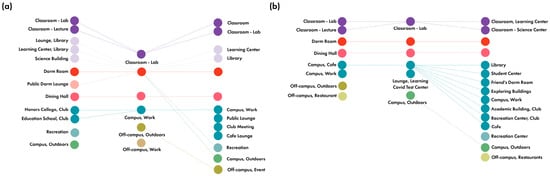
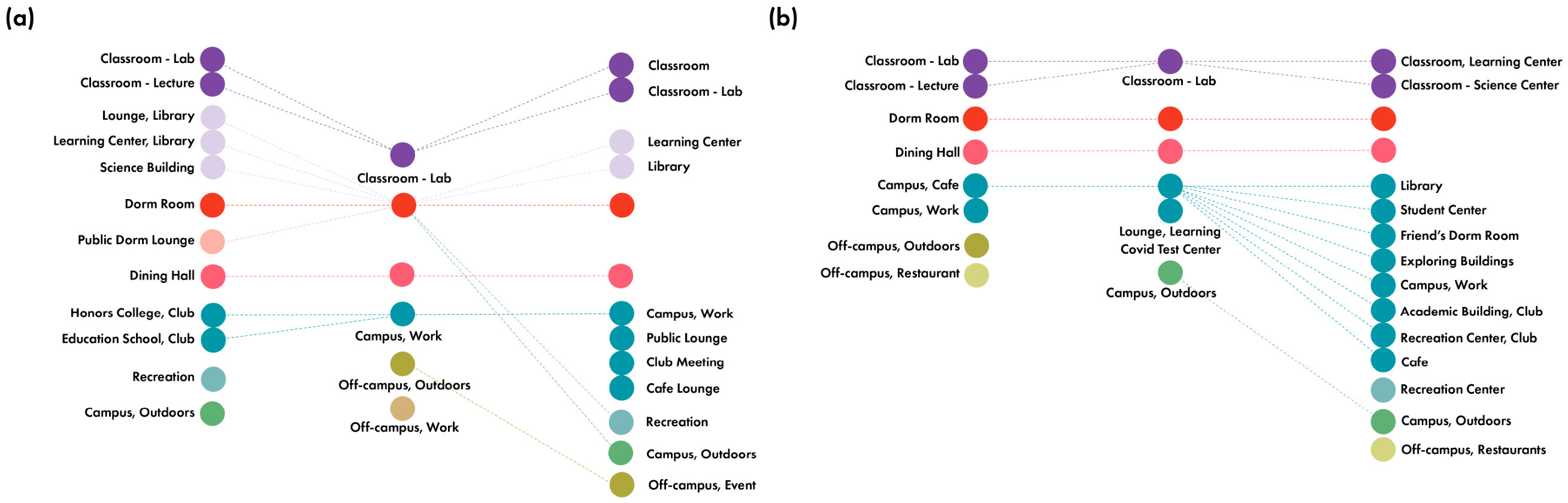
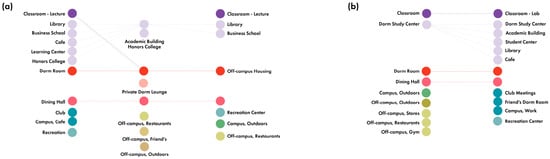
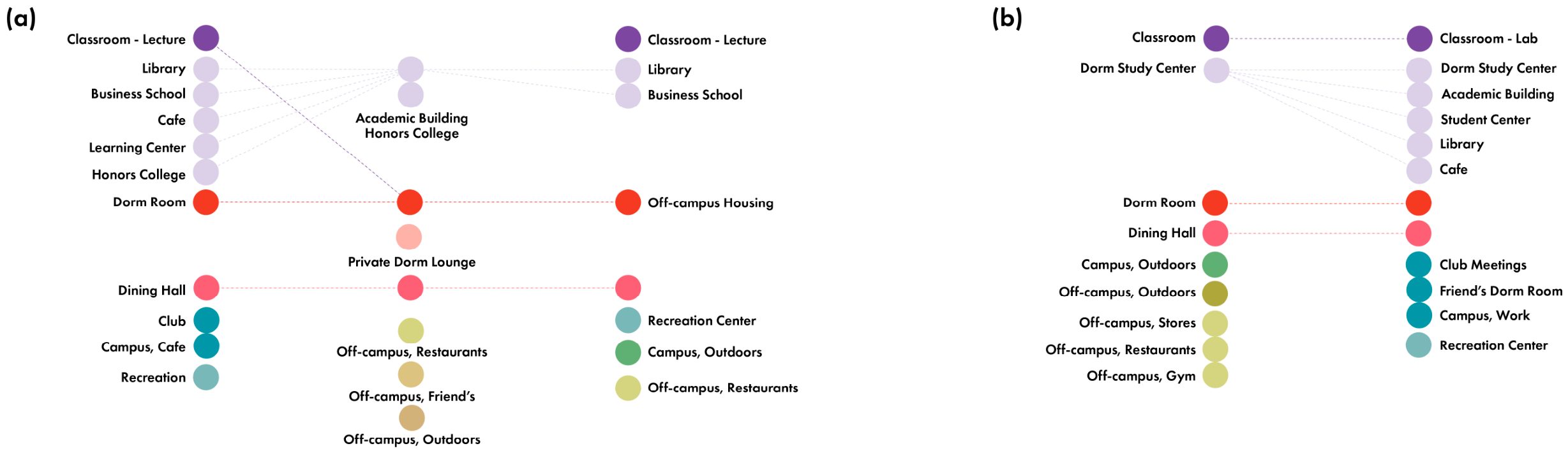
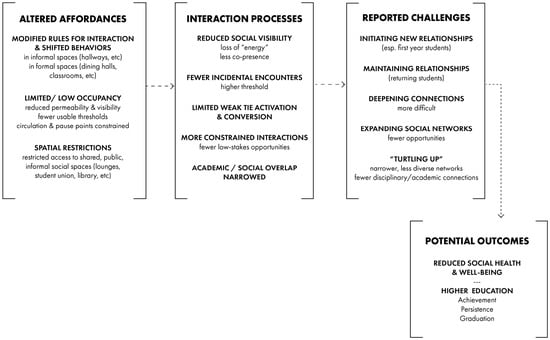
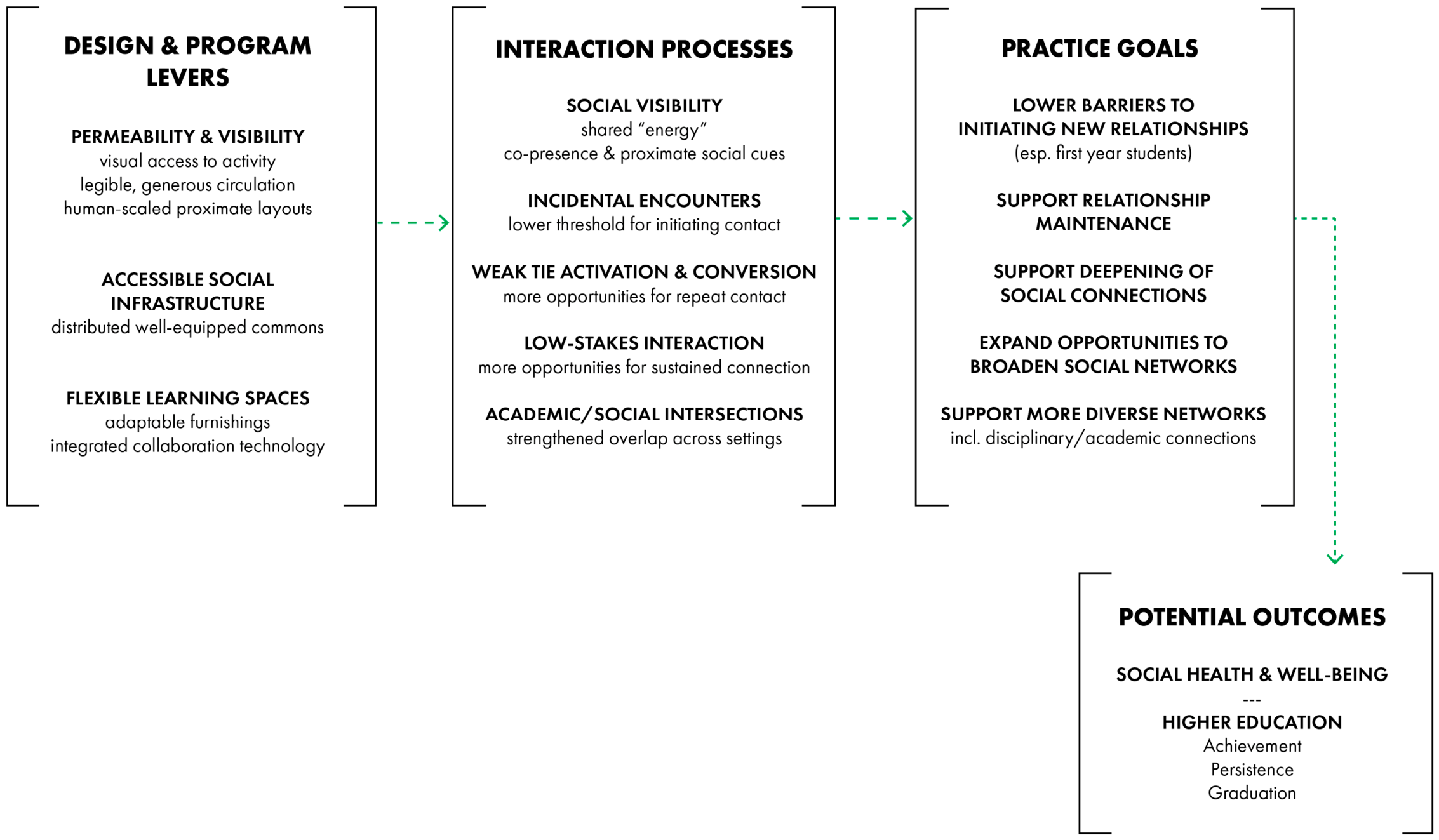
Disclaimer/Publisher’s Note: The statements, opinions and data contained in all publications are solely those of the individual author(s) and contributor(s) and not of MDPI and/or the editor(s). MDPI and/or the editor(s) disclaim responsibility for any injury to people or property resulting from any ideas, methods, instructions or products referred to in the content. |
© 2026 by the author. Licensee MDPI, Basel, Switzerland. This article is an open access article distributed under the terms and conditions of the Creative Commons Attribution (CC BY) license.