


Abstract
Thresholds are not simply separations between spaces; they are relational conditions through which interior spatial experience and subjectivity are formed. How thresholds are constituted through interiority, and how they produce different experiential regimes, remain less examined. Drawing on phenomenological and post-phenomenological perspectives, this article repositions the domestic threshold through the animated interiors of Encanto (2021) and Coraline (2009). These films offer two comparable cases in which similar spatial devices produce markedly different experiences. A scene-based comparative coding analysis, conducted with MAXQDA, traces five interior parameters: boundary elements, material articulation, chromatic strategies, kinetic spatial behaviors, and object relations. These parameters give rise to two distinct threshold regimes. In Encanto, a supportive regime cultivates belonging, recognition, and spatial integration; in Coraline, a deceptive and manipulative regime produces disorientation, alienation, and the uncanny. The threshold is therefore understood both as an atmospheric and multisensory experience, as phenomenology emphasizes, and as a mediating spatial arrangement that positions the subject within specific relational networks. By proposing the concept of the threshold regime, the study offers a theoretical and methodological framework for understanding domestic interiority as a dynamic, multilayered, and relational spatial formation.
1. Introduction
In interior architecture discourse, the threshold is more than a boundary line or a physical element enabling passage from one space to another. It is a spatial condition through which transition into a new architectural order becomes visible and materially articulated. This becomes particularly evident in domestic interiors, where entry, separation, belonging, or alienation is rarely produced solely through the organization of individual rooms; these experiences are shaped instead through passages, boundaries, and in-between conditions established between spatial orders. The threshold therefore offers a productive conceptual ground for examining the emotional and experiential dimensions of domestic interior space.
This article examines the domestic thresholds of Encanto and Coraline from the perspective of interior architecture. Rather than treating the home as a narrative backdrop, the article conceptualizes it as an active spatial system that shapes proximity and distance, invites movement, and at times produces disorientation. By analyzing thresholds as interior conditions articulated through materiality, color, movement, and spatial organization, the study investigates how domestic experience is produced differently across animated interiors. The comparison matters because both films center on the idea of a magical home while configuring domestic thresholds through divergent experiential logics. In Encanto, thresholds support belonging, recognition, and integration; in Coraline, they generate disorientation, alienation, and the uncanny.
1.1. Threshold as a Spatial Condition in Architectural Narrative
This study conceives the threshold as an in-between condition in which differences between spatial states become perceptible, transition gains intensity, and experience gathers around a point of spatial concentration. Gaston Bachelard’s account of lived space as exceeding geometric space frames the interior as an experiential field shaped by memory, imagination, and the sense of protection [1]. Within this framework, the threshold operates as a spatial focus through which the felt quality of space, the production of meaning, and movement from one condition to another come into view. Till Boettger’s approach to threshold spaces further supports this reading: the threshold is an active spatial agent that receives the body, guides or slows its movement, and prepares it for a new spatial condition [2].
To cross a threshold is to enter not only another spatial condition but a different spatial order, atmospheric condition, experiential field, and network of relations. Georg Simmel’s reflections on the door reveal this double operation: the door separates two domains while also making that separation traversable, so the threshold organizes the relationship between separation and connection architecturally [3]. Christian Norberg-Schulz’s approach to dwelling similarly shows that the architectural environment is not only a physical setting, but also an existential field that generates orientation, belonging, and a sense of place [4]. Juhani Pallasmaa emphasizes the embodied and multisensory nature of architectural experience, where space is perceived through touch, movement, sound, and material presence as well as vision [5]. The threshold can therefore be read as a field of intensification in which the body attunes itself to a new spatial condition and becomes sensitive to spatial difference.
In the context of domestic interiors, the threshold becomes decisive. Whether the home is experienced as secure, familiar, and inviting, or as exclusionary and threatening, is shaped largely by the configuration of thresholds. This understanding relates to the idea of the home less as a physical shell than as a field of interiority charged with memory, protection, and lived experience [1]. Interiority refers to the emotional, bodily, perceptual, and interpretive relationship the subject establishes with space [6], and Vlad Ionescu defines the interior in similar terms, as a relational field constituted through memory, imagination, subjective experience, and embodied awareness [7]. Space acquires the quality of place when it gains meaning through experience, time, and emotional attachment [8], while housing becomes home through everyday environmental experience, affective meaning, and the lived relationship established with the dwelling [9]. The threshold therefore functions as an experiential mechanism that shapes the feeling of being at home and mediates relations between familiarity and estrangement, openness and closure, invitation and exclusion, integration and fragmentation. Kang et al.’s phenomenological work on interior/exterior relations shows that spatial experience is shaped by the ways boundaries regulate perceptual and environmental continuity [10]. Lee’s work on body and emotion shows that the emotional effect of interior architecture emerges through the interaction of materiality, atmosphere, bodily perception, and spatial configuration [11]. In this sense, the domestic threshold becomes a central interior component in the emergence, disruption, or reconstruction of the feeling of being at home.
Empirical work on atmosphere and phenomenological spatial experience shows that felt spatial qualities can be examined through systematic analytical procedures. Using semi-structured interviews and Grounded Theory Methodology, Pritzen et al. develop a typology of spatial experience that identifies specific and general patterns formed through atmosphere [12]. Treacy relates records of the physical environment to the felt qualities of space at the same moment and examines atmosphere as a condition of in-betweenness arising between the perceiving subject and the environment [13]. Gürdağ and Koca convert phenomenological qualities such as light and shadow, acoustics and sound, proportion and scale, color and texture, movement, and temporality into a structured analytical framework and apply it to architectural representations [14]. Alongside this empirical work, Gepshtein and Malpas develop conceptual distinctions concerning boundaries in human experience and in forms of representation, holding the boundary together as geometrical limit, sensory threshold, and phenomenal horizon, and they observe that architects often overlook how perceptual boundaries shape experience [15]. These directions show that phenomenological experience need not remain an abstract theoretical category, since it can be followed through particular spatial components and relations. The present study does not measure actual user experience. It analyzes the atmospheric and experiential directions of represented interiors systematically, by coding boundary, material, chromatic, kinetic, and object relations in animated interiors.
1.2. Threshold in Animation Narrative
Recent architectural film scholarship frames cinematic space as an architectonic formation in which time, movement, spatiality, and haptic experience are interwoven, showing that filmic space operates beyond narrative setting alone [16]. Cinematic experience also forms through the capacity of images to generate tactile and embodied resonances that exceed the visual [17]. Penz suggests that film can operate as a medium through which lived spatial situations, movement, and everyday architectural experience become available for spatial analysis [18]. Animated space transforms, reorganizes itself as the story moves, and lets the work of transition show. Suzanne Buchan observes that animated films bend and manipulate architectural space in ways live-action cinema cannot, and that their spaces become frameworks for spatial thinking rather than mere backdrops [19]. Doors, corridors, walls, courtyards, and passages consequently read as legible threshold elements. Animation offers no theory of thresholds, but it does offer a field in which their operation, namely spatial change and the logic of transition, becomes visible.
This legibility comes from animation’s freedom with form. Eisenstein’s plasmatic names the way animated form stays mutable instead of settling into a fixed structure [20]. Paul Wells makes a related point: animation’s narrative and formal range can render conditions that ordinary material reality cannot hold [21]. This capacity carries an epistemological consequence for interior architecture. Following Bachelard, the home is inhabited first as an image: its meanings of protection, intimacy, and threat are constituted in memory and imagination as much as in built form [1]. Buchan’s account of the architectural imagination of animation points in the same direction: animated space does not merely depict architecture but becomes a framework in which spatial thinking, including its uncanny registers, takes place [19]. Representation, in this sense, is not secondary to architectural experience; it is one of the fields in which architectural meaning is formed. and becomes analyzable. The plasmatic freedom of animated form intensifies this access, rendering visible operations of the threshold, such as invitation, deception, acceptance, and exclusion, that remain latent or diffuse in built space [20]. A door in animation, then, is rarely just a door. It can carry invitation, acceptance, threat, deception, or exclusion. A corridor, garden, or courtyard works the same way, sharpening the emotional and experiential thresholds of the narrative and shaping its affective and visual dynamics [22]. Daniel Paul O’Brien’s post-phenomenological account pushes this further, showing that cinematic experience reaches us not as immediate perception but through technological mediations such as the camera, the framing, and the screen [23]. The spaces a viewer meets on screen are never neutral presentations; they are formally arranged and directed. Read this way, the doors, corridors, and walls of an animated home are not only represented architecture but mediated structures that guide perception and orientation. This is what makes animation a medium where transition, reorientation, and experiential shift can be traced, and where thresholds can be studied as spatial arrangements that organize interior experience.
Empirical work treats cinematic and animated spaces as research material rather than as narrative backgrounds. Working through constructivist grounded theory, Aydoğan Tekcan and Uz examine cinematic narrative and built space together and describe architectural space as a dynamic structure of bodily, temporal, and affective relations [24]. Bolat and Dikmen Güleryüz show that interiors in television series operate as active components shaping character psychology, social relations, and the progression of the narrative [25]. Within animation, Şen et al. analyze Up together with viewer comments through visual and textual content analysis and show that an animated film, read together with audience responses, can yield data on architectural perception, the relation between user, space, and time, and the meaning of home [26]. This body of work situates the present study within current empirical research on cinematic and animated interiors as fields in which narrative, experience, and spatial meaning are produced together.
1.3. Domestic Threshold in Encanto and Coraline
The home is a multilayered spatial concept shaped by social relations, emotional bonds, symbolic meanings, and everyday practices [27]. It can also work as an interior world in which security, belonging, and recognition, or conversely unease, alienation, and threat, take spatial form. Encanto and Coraline offer two productive cases for reading this comparatively, since both construct the domestic interior as an active spatial agent rather than a passive setting [28,29]. Research on domestic spatial configuration shows that the home provides a shared framework for everyday life, where social meanings are constructed through spatial patterns, domestic routines, and relations of use; domestic space can therefore be read less as a static arrangement than as an organized relational structure [30].
The two films diverge markedly in the way domestic thresholds operate. In Encanto, thresholds primarily support belonging, recognition, and integration. Doors, rooms, and transitional spaces situate individual differences within the family structure and sustain collective life [28]. In Coraline, a similar threshold logic produces disorientation, alienation, and the uncanny: openings promise access but lead to enclosure, passages suggest discovery but become traps, and familiar interior elements slowly build an unsafe atmosphere [29]. The same spatial devices thus yield opposite outcomes, recognition and integration in one film, exclusion and unease in the other.
1.4. Aim and Research Questions
This study examines how domestic thresholds are constructed in Encanto and Coraline, and how they relate to experiences of spatial transition, recognition, belonging, alienation, and the uncanny in animated interiors, approached from the perspective of interior architectural design. Through a comparative spatial coding analysis supported by MAXQDA, thresholds are treated not as mere physical points of passage but as spatial arrangements that shape the narrative and experiential organization of the interior. Pearce translates interior architectural theory into codable qualitative components shows that subjective dimensions such as lived interior experience, user agency, and spatial quality can be examined within systematic analytical frameworks [31]. The study accordingly addresses the following research questions:
RQ1. How are domestic thresholds constructed in Encanto and Coraline through interior architectural parameters such as boundary elements, material articulation, chromatic strategies, kinetic spatial behaviors, and object relations?
RQ2. How do these threshold configurations differ in the two films in terms of producing experiences of belonging, recognition, and integration, on the one hand, and disorientation, alienation, and the uncanny, on the other?
RQ3. How can representations of domestic thresholds in animated cinema be conceptualized within interior architecture through a phenomenological and post-phenomenological reading?
The contribution of this study to interior architecture operates on three levels. For architectural theory, it proposes the concept of the threshold regime: the domestic threshold is understood not as a door or a point of passage alone, but as a relational arrangement through which orientation, belonging, and alienation take spatial form. For the methodology of interior analysis, the study develops a scene-based comparative reading in which threshold experience becomes traceable through boundary, material, chromatic, kinetic, and object parameters, following earlier work on translating interior architectural theory into codable categories [31]. For design, the findings suggest that thresholds guide, receive, delay, exclude, or mislead the subject; these operations bear on how transitional spaces are conceived in real interiors, as developed in Section 4.4. Animation serves here less as an object of inquiry than as a ground on which such operations become visible. The analysis therefore concentrates not on the narratives of the films but on the interior devices through which similar threshold structures produce opposing experiential regimes.
1.5. From Phenomenology to Post-Phenomenology
In phenomenology, perception belongs to the body’s intentional, lived relation to the world rather than to thought or vision alone [32]. Read at this first level, the threshold is an experienced boundary: it intensifies the subject’s relation to space, makes spatial difference perceptible, and lets the passage from one condition to another register in the body. Gernot Böhme’s account of atmosphere as a sphere of felt bodily presence shows that crossing a threshold is also an atmospheric shift, not simply the crossing of a formal line [33]. Juhani Pallasmaa’s work on the multisensory, embodied nature of architectural experience points the same way: a threshold is experienced through movement, contact, and orientation as much as through sight [5]. Phenomenology thus grounds the felt and lived dimensions of threshold experience, yet it does not reach far enough on its own.
A threshold also mediates. It situates, guides, invites, delays, or excludes the subject within specific relations. Orientation is fundamental to how the body relates to space and objects, since bodies become situated by turning toward particular objects, directions, and relations [34]. Peter-Paul Verbeek’s concept of mediation matters here: designed objects and spatial arrangements shape the human relation to the world rather than merely reflecting it [35]. Daniel Paul O’Brien’s post-phenomenological approach to film extends this, showing that cinematic experience reaches us through technical and formal mediations rather than directly [23]. The threshold, within this framework, is at once an experienced in-between condition and an active interior arrangement that shapes perception, orientation, and spatial behavior.
The study therefore reads phenomenology and post-phenomenology together. Phenomenology explains the felt, embodied, and atmospheric side of threshold experience; post-phenomenology clarifies how that experience is directed, organized, and positioned through spatial mediation. This pairing is what lets the two films be read side by side. Anthony Vidler’s account of the architectural uncanny explains how a domestic space meant to feel familiar and secure can be disturbed from within and turn unsettling [36]. Windsor’s rereadings of Freud’s uncanny emphasize that uncanny experience cannot be reduced only to the return of the repressed; it also emerges when familiar reality appears to confirm what should have remained surmounted, thereby unsettling the stability of ordinary perception [37]. Together, these accounts show how familiar threshold elements in Coraline, its doors, passages, and domestic objects, harden into a deceptive and uncanny regime, while the same elements in Encanto sustain belonging, recognition, and integration.
In this study, the post-phenomenological reading works at the level of the interior itself. What is analyzed is not the technical apparatus of the films, their camerawork, editing, or framing, but the interior arrangements that act as mediating structures: boundaries that admit or refuse, materials that reassure or estrange, movements that guide or delay, and objects that receive or deceive. The cinematic and animated mode of representation is treated as the condition that renders these mediations visible in condensed form rather than as a separate analytical category. Claims concerning cinematic mediation are accordingly limited to this enabling role; the analytical weight of the study rests on the five interior parameters and on the direction of spatial mediation they establish, as reflected in the two-layer coding logic described in Section 2.4.
The two perspectives are complementary and work in sequence within the analysis. The reading begins with the spatial element as it appears in the scene; it asks how that element is bodily perceived and what atmospheric quality it lends to the situation, which is the phenomenological moment of the analysis, carried by the accounts of embodied perception and atmosphere introduced above [32,33]; it then asks how the element mediates the relation between subject and interior, situating, guiding, delaying, or excluding, and what position the subject is given within the interior, which is the post-phenomenological moment, following the concept of mediation and its cinematic extension [23,35]. The threshold regime names the consistent direction that emerges when this movement is traced across the five parameters of a scene. The two layers of the coding framework follow the same order: the first records the felt and atmospheric tone of the scene, and the second examines how that tone is spatially produced and how the subject is positioned. The perspectives are therefore complementary rather than interchangeable: each carries the analysis one step further, from lived experience to the arrangements that organize it.
1.6. The Threshold Regime as an Analytical Concept
This study proposes the concept of the threshold regime to name the experiential pattern that emerges when boundary elements, material articulation, chromatic strategies, kinetic spatial behaviors, and object relations operate together within a domestic interior. The concept is analytical rather than descriptive. It does not designate a new kind of threshold; it names a configuration of interior parameters whose joint working produces a consistent experiential direction, such as belonging and integration in one interior, or disorientation and the uncanny in another. A regime, in this sense, is the dominant direction of a configuration rather than a uniform state: moments that run against this direction do not suspend the regime; they belong to its structure.
This definition also marks the difference from neighboring concepts. Atmosphere names the felt quality of a spatial situation as it is bodily encountered [33]; a threshold regime names the configuration through which such qualities are produced and sustained, and it is therefore traceable as a pattern that can be coded and compared across scenes. Mediation concerns the way a designed arrangement shapes the relation between subject and world [23,35]; a threshold regime describes the overall direction that several mediating elements establish together within an interior. Liminality, as developed in the anthropology of rites of passage, names the transitional condition of a subject who, in van Gennep’s phrase, “wavers between two worlds” [38]; a threshold regime concerns the interior configuration through which such in-between situations acquire a consistent experiential direction rather than the condition of in-betweenness itself. The concept thus draws on phenomenological and post-phenomenological insights, but its function is not synthesis alone: it converts these insights into a unit of comparison, which is what allows the same five parameters to explain the opposing experiential outcomes of Encanto and Coraline through configuration rather than narrative tone.
2. Materials and Methods
This study adopts a comparative qualitative research design to examine how thresholds are constructed within the context of interior architecture in Encanto1 and Coraline2. The design follows Yin’s understanding of the case study as a strategy that allows a specific phenomenon to be examined in detail within its own contextual conditions [39]. Domestic thresholds are therefore analyzed within the narrative, atmospheric, and interior spatial context of each film, not as abstract elements detached from the works. The films are read as representational spatial structures, not only as narrative texts: structures in which interior relations, boundaries, transitions, and atmospheric orientations become visible.
The methodology proceeds in three stages. First, the research design and case selection are justified: Encanto and Coraline were chosen because they construct the domestic interior as an active spatial field and make thresholds visible through different experiential conditions. Second, the scene corpus was delimited according to criteria related to thresholds, transition, orientation, interior/exterior relations, and the production of domestic atmosphere. Third, the selected scenes were examined through comparative spatial coding, which traces how thresholds are constructed through interior architectural parameters such as boundary elements, material articulation, chromatic strategies, kinetic spatial behaviors, and object relations.
Comparative spatial coding, as used here, analyzes domestic thresholds in the two films through comparable analytical categories and traces their similarities and differences across the cases. Its aim is less to describe the films than to build a traceable analytical logic: through which spatial means thresholds are constructed, how they operate, and what experiential outcomes they produce. Coding was structured to keep a consistent relationship between the theoretical framework and the research questions, so that the method works as a form of analytical organization, not a purely technical exercise in classification.
MAXQDA served as an analytical support tool for organizing the coding process, classifying the data systematically, and facilitating comparative reading. It made the relationships between codes across scenes traceable, revealed recurring spatial patterns, and helped structure the comparison within an organized data framework. The following sections set out the research design, the case and scene selection criteria, the comparative spatial coding framework, and the analytical role of MAXQDA.
2.1. Research Design
The research is designed as a comparative qualitative inquiry into the spatial operation of domestic thresholds in Encanto and Coraline. Instead of producing quantitative measurements or statistical generalizations, it shows how these thresholds are constructed in the two films and through which spatial patterns they generate different experiential outcomes. It therefore adopts a qualitative coding logic that organizes the data under predefined analytical categories and interprets the coded material comparatively [40]. The focus falls on interior spatial relations and threshold configurations rather than on the general narrative of the films; the primary object of inquiry is the system of domestic thresholds built within those narratives.
Treating visual materials as research data requires images to be analyzed for how they are organized, how they produce meaning, and how they relate to the viewer, alongside what they represent [41]. The study accordingly stops short of comprehensive film analysis and concentrates on threshold-forming spatial configurations: doors, transitional areas, boundary elements, interior/exterior relations, and domestic configurations of orientation. This makes it possible to trace how experiences such as transition, orientation, acceptance, exclusion, integration, and alienation are produced through interior architectural means.
A comparative case study approach makes it possible to pursue similar analytical questions across cases and to discuss similarities and differences systematically [42]. Thampanichwat et al. show that architectural atmosphere and spatial qualities can be classified through coding frameworks, which offers a methodological precedent here [43]. Adapted to interior architecture and oriented toward domestic thresholds, spatial relations, and experiential orientations, this logic grounds the method in a scene-based practice of comparative coding, not in the software itself.
2.2. Case Selection Rationale
Encanto and Coraline offer two analytically suitable cases for comparing the different experiential outcomes that domestic thresholds produce. Neither film uses domestic space as a mere setting for events; both weave transitions, boundaries, and relations of orientation within the home directly into the workings of the narrative [28,29]. Doors, corridors, hidden passages, circulation paths, and interior/exterior boundaries can be traced clearly at the scene level in each, which is why the study treats them as units of analysis that regulate experiences of transition, orientation, acceptance, and exclusion [28,29].
The analytical significance of the pairing lies in how the two films develop the same conceptual field in opposite directions, set out in Section 1.3: in Encanto, domestic thresholds work toward belonging, recognition, and integration; in Coraline, toward disorientation, alienation, and the uncanny. The difference is not one of narrative tone or genre atmosphere alone; it lies in how domestic thresholds spatially produce distinct experiential regimes. The case selection therefore rests not on thematic proximity but on the analytical suitability of the two films for examining the interior spatial operation of domestic thresholds through comparative spatial coding.
2.3. Scene Corpus and Selection Criteria
The analysis works from a selected scene corpus tied directly to the research questions, not from a full sequential reading of the films. Rather than summarizing the narrative, it examines scenes in which domestic thresholds become visible and analytically concentrated. Scene selection was therefore purposive rather than random, aimed at identifying the threshold systems at the focus of the research. This follows purposive sampling in qualitative research, which identifies the data units with the highest relational density in relation to the research question [44].
Four criteria guided this selection, and they work at two levels. The first records whether a scene stages an explicit threshold event, such as a door ceremony, a hidden passage, or a crossing within or directly bound to the domestic interior. The second asks whether the scene can be coded through at least one of the five code families, and the third whether it makes the relation between spatial parameters and experiential direction legible, so that inclusion rests on the coded interior rather than on the narrative tone of the moment. The fourth records whether the scene has a counterpart that supports comparison across the two films. The second and third criteria set the condition for entry: a scene joined the corpus when it was codable on these terms and when the parameter-to-experience relation could be read from it, and it was left out when neither could be established. The first and fourth criteria vary across the corpus and describe what an included scene offers: several scenes were retained for a codable threshold configuration without staging a manifest crossing, and a few were retained for their place in a film’s own arc of collapse and repair without a direct equivalent in the other film. The full corpus comprises 91 scenes (Encanto: 43; Coraline: 48), listed with time range, duration, the criteria each scene meets, and its threshold type in Appendix A.
Comparable scene clusters were then formed for each film. For Encanto, the corpus includes the door ceremony, scenes in which cracks within Casita become visible, the structural collapse, and the reconstruction scenes. For Coraline, it includes the discovery of the hidden door, the tunnel passage, the first encounter and dining arrangement, the revelation of the Other House, and the closing moments. These scenes were chosen not to establish one-to-one event similarities but to read comparable spatial conditions together: the ritual threshold, the crisis threshold, the deceptive threshold, and the threshold of reconstruction or closure.
The unit of analysis is the scene itself and the spatial organization within it. The reading therefore attends to the interior spatial arrangements, boundary elements, circulation relations, and atmospheric orientations through which events are spatially articulated, rather than to the narrative significance of those events alone. This directly serves RQ1 and RQ2, supporting a traceable, scene-based discussion of how domestic thresholds are constructed in the two films and what different experiential outcomes they produce.
2.4. Comparative Spatial Coding Framework
The coding framework was designed to examine how domestic threshold experience forms through interior architectural parameters. The concept of the threshold regime, introduced in Section 1.6, describes the experiential pattern these parameters form together. In qualitative content analysis, a coding framework helps organize data under categories and subunits related to the research questions [40]. Coding here is treated as a traceable interpretation of the data through theoretically defined categories rather than a descriptive act of labeling [45]. Studies that translate interior architectural theory into codable variables likewise show that qualitative dimensions such as lived interior experience, user agency, and spatial quality can be discussed through systematic analytical categories [31].
The coding logic followed how threshold experience unfolds within each scene. The first layer identified the experiential tone of the interior: whether it feels secure or unsettling, inviting or estranging, oriented toward belonging, alienation, or exclusion. This layer formed the phenomenological ground of the reading by foregrounding lived and embodied experience. The second layer examined how that tone is spatially produced, through boundary configurations, material articulation, chromatic strategies, kinetic spatial behaviors, and object arrangements. These parameters were treated as elements that shape the affective direction of the scene and organize how the threshold is encountered, not as background descriptors. This layer corresponds to the post-phenomenological concern of the study, where the threshold is understood at once as a felt condition and a mediating arrangement. The five code families were structured around this relation between felt experience and spatial mediation. Contextual codes for character emotions and the magical status of spaces were retained to keep the relationship between scene affect and interior articulation traceable within the coding matrix. Table 1 summarizes the code system: the five interior architectural code families correspond to the second layer, while the contextual codes anchor the first; their relationships within the coding matrix support the comparative reading presented in Section 3. The system comprises twenty subcodes in total: fifteen distributed across the five interior architectural code families and five contextual subcodes, grouped as the magical status of spaces and character emotions.
Table 1.
Coding framework: code families, subcodes, and their role in tracing threshold experience.
2.4.1. Coding of Boundary and Threshold Elements
This category traces how boundaries are spatially organized in domestic threshold experience. Transitional spaces between interior and exterior are not only points of physical separation or connection; they are in-between conditions through which social, cultural, environmental, and perceptual relations take shape [46]. In coding, doors, walls, passages, corridors, courtyards, gardens, and other interior/exterior boundary elements were evaluated as components that regulate spatial orientation, transition, and boundary experience, organized under predefined analytical subunits [40]. Doors and transitional elements were treated as spatial events that redirect movement, regulate access, speed or slow passage, while corridors and passages were coded as threshold spaces that make orientation, uncertainty, opening and closure, and interruptions of spatial continuity visible. Boundary elements were therefore understood as relational arrangements that shape the flow of domestic experience rather than as fixed architectural parts.
Semi-open spaces were read through the same threshold logic. Courtyards and gardens were coded as in-between conditions belonging neither fully to the interior nor fully to the exterior, making visible the depth of interior/exterior relations, degrees of openness and closure, and the quality of spatial transition. The boundary, in this view, modulates the relationship between inside and outside and produces experiential depth [10]. Relations such as interior/exterior, open/closed, acceptance/exclusion, and center/periphery were evaluated accordingly. These elements are discussed in relation to the idea of the pomerium, used here not as a historical Roman category but as a conceptual reference to a boundary condition that marks and regulates the relationship between inside and outside. The category therefore does more than describe boundary elements: it comparatively analyzes the spatial means through which domestic threshold experience is structured within the scene.
2.4.2. Coding of Material Articulation
Materiality enters this category through its contribution to the felt quality of domestic threshold experience. In coding, wood, metal, organic surfaces, artificial finishes, and their tactile effects of warmth and coolness were evaluated as interior spatial parameters that shape the atmospheric tone of the threshold, not as visual or structural qualities alone. Because architectural atmosphere forms through the holistic relationship between environmental qualities, objects, materials, and bodily sensations rather than through formal properties alone [47], materiality was treated as a threshold component that influences whether passage within the domestic interior feels inviting, protective, distant, uncanny, or deceptive.
Within this code family, wood and similar organic surfaces were coded through effects of warmth, continuity, lived quality, and tactile proximity, while metal, concrete, and artificial finishes were coded through coolness, distance, hardness, and surface-level appearance. The point was not to fix a meaning to each material but to trace the sensory orientation it produces within threshold experience. Keunhye Lee shows that building materials are not perceived only as visual or aesthetic surfaces; their visual and tactile qualities shape experiential judgments such as warmth, proximity, and sensory orientation [48], and it is consistent with Keunhye Lee’s argument that interior experience emerges through the emotional bond between the body and the spatial environment [11]. Materiality is therefore analyzed as an atmospheric and affective component that helps determine whether domestic thresholds are experienced as protective, inviting, artificial, disguised, or unsafe.
2.4.3. Coding of Chromatic Strategies
Color enters the framework as a parameter that helps construct domestic threshold experience. Architectural experience is formed not only by the formal organization of a building but by the combined perception of sensory components such as light, color, texture, materiality, scale, and movement [49]. Color was therefore coded not as a visual and aesthetic choice alone but as a design parameter that shapes spatial atmosphere and affects how the threshold is felt. The axes of warm/cool, vivid/muted, and continuity/deviation served as the main analytical subunits for defining chromatic regimes. Category-based analyses of architectural atmosphere through visual and environmental qualities make it possible to treat chromatic arrangements as codable elements that structure atmospheric experience [43].
Particular colors were not treated as carriers of fixed emotions. Instead, the analysis traced how chromatic arrangements accompany experiential orientations such as security, tension, attraction, or manipulation within the scene. Color was read as a variable design parameter that affects spatial perception according to context, composition, and its relation to other spatial elements, not as an independent sign producing universal meanings [50]. Within this code family, warm, saturated tones and cool, low-saturation tones were evaluated as factors regulating the atmospheric tone of the threshold. Chromatic continuity was coded as the maintenance of a coherent chromatic structure within a given spatial regime, while chromatic deviation referred to sudden chromatic rupture, fading, or displacement. Color was thereby analyzed as an atmospheric tool and threshold component that can make a transitional space feel inviting, balanced, unsettling, or deceptive. Coded in this way, it functions not as decoration but as an active chromatic strategy that contributes to the spatial formation of security, tension, attraction, and manipulation.
2.4.4. Coding of Kinetic Spatial Behaviors
In this category, movement is what makes the domestic threshold an active spatial arrangement rather than a fixed boundary. Moving surfaces, opening and closing thresholds, guiding stairs, and responsive architectural elements were coded as spatial behaviors through which transition becomes perceptible, and the subject is situated within new spatial conditions, not as visual dynamism alone. Movement was therefore treated as a threshold parameter that intensifies the felt quality of domestic passage and shapes orientation, rhythm, and spatial encounter. Kinetic behavior was assessed through the displacement of architectural elements and, beyond that, through the ways space responds to the subject. Opening, closing, expansion, contraction, guidance, delay, and response served as the main subunits defining the operative role of the threshold. Stillness, in turn, was coded as an analytical counterpoint: the suspension of movement, the restriction of passage, or the reduction in spatial relation to a one-directional encounter. The category thus examines how movement constructs passages and repositions the subject within space, rather than simply opposing motion and stillness.
This dimension is central to post-phenomenological reading. O’Brien’s account of cinematic experience through technical and formal mediation shows that spatial events in film operate as mediated structures that guide experience, not simply as represented situations [23]. Kinetic spatial behaviors were accordingly coded as threshold behaviors that are at once perceptual and operative: they guide the viewer or character and position them within specific relations. They function as active arrangements in the construction of domestic threshold experience rather than as decorative features.
2.4.5. Coding of Furniture and Object Relations
This category examines how furniture and objects shape the relational and experiential dimensions of domestic threshold experience at the micro scale. The dining table, bed, sofa, and similar interior elements were coded as threshold elements that organize proximity, shared domestic life, withdrawal, enclosure, and vulnerability, not as functional components alone. Object relations in this sense make visible how domestic relations are established, how the body is positioned, and how the threshold is felt through everyday interior arrangements. Furniture and domestic objects can be understood not merely as functional elements but as material components through which the home participates in the formation of identity and everyday spatial meaning [51]; designed interior elements, likewise, can be read as mediating arrangements whose meanings and effects emerge through relations among users, artifacts, and environments rather than as independent objects [52].
The dining table was coded as a threshold object of communal sharing, encounter, collective domestic life, and tense togetherness. The bed was treated as an internal threshold associated with withdrawal, protection, isolation, or vulnerability, while sofas and similar seating were coded in relation to rest, compression, enclosure, or false comfort. Objects were not assigned fixed symbolic meanings; instead, the coding examined how each object type frames domestic relations and places the subject within specific experiential conditions. This is consistent with Keunhye Lee’s understanding of the interior as an experiential environment that generates an emotional bond between body and space [11]. Furniture and objects are therefore read as active interior arrangements that construct domestic threshold experience through bodily proximity, shared relations, use, and the sense of boundary, not as decorative details.
2.5. Coding Procedure, Dependability, and Analytical Support
The code system was developed through iterative discussion between the two authors. Coding then moved from the experiential tone of each scene to the interior parameters through which that tone was produced.
The code families deliberately work with a small number of contrastive categories, and this simplification is methodological rather than descriptive. A comparative scheme can be applied identically to two films only if its categories remain few, mutually exclusive, and directly observable, so that every scene is coded on the same terms and the intersections between codes remain traceable. The contrasts themselves follow the material organization of the films: both interiors are designed through oppositions of warm and cool materials and tones, and both stage domestic life around the table, the bed, and the sofa as the objects through which gathering, withdrawal, and rest take spatial form. The categories are therefore entry points rather than descriptions of experience. The atmospheric, multisensory, and relational complexity of the threshold is not expected from any single code; it is reconstructed at the level of the intersections between the parameter codes and the contextual codes, and in the scene readings of Section 3, where the coded elements are interpreted within their spatial and narrative situations. The claim of sufficiency is accordingly bounded: the five families are sufficient for tracing the direction of threshold experience across comparable cases, not for exhausting its texture.
The five code families and their subcodes were refined through repeated review of the selected scenes. When a classification was ambiguous, the authors returned to the scene and discussed how the element operated within the threshold experience, especially where it could be read as a boundary condition, an object relation, or a kinetic behavior. Such ambiguities were resolved through shared definitions and consensus. Once the code system was finalized, the first author applied it to the full corpus as a single coder, to maintain consistency across both films. Uncertain cases were checked against the shared definitions and discussed again by the authors. Because the final coding was conducted by one coder, formal intercoder reliability was not calculated. In qualitative inquiry, the trustworthiness of interpretive coding rests less on intercoder agreement than on dependability, the consistency and traceability of analytical decisions across a study [53]; dependability was therefore supported through collaborative code development, shared definitions, and the consensus-based resolution of ambiguous cases.
Several features of the procedure work against reading a scene toward a conclusion already in hand. Entry to the corpus was decided on codability and on the legibility of the parameter-to-experience relation, as Section 2.3 sets out, so no scene was included for the direction it turned out to carry. Where a segment could be assigned to more than one code family, the overlap was retained rather than settled in favor of the reading under way, and it is these retained co-occurrences that the matrix reports. Scenes that run against a film’s dominant direction stayed in the corpus and were coded on the same terms: Encanto includes a deceptive threshold, and Coraline a group of scenes of reconstruction and closure, both recorded in Appendix A and read in Section 3.3 as part of the comparison rather than as exceptions to it. Where a classification could be argued more than one way, the alternatives were weighed against the shared definitions before a code was applied, and cases still uncertain after that discussion were returned to the scene and discussed again. Appendix B follows eight scenes through the steps of this procedure, from the spatial element in the scene to the codes applied, the reading they support, and the threshold type recorded in Appendix A.
Read against the four criteria commonly used to assess qualitative research [53], the procedure stands as follows. Credibility rests on repeated viewing, on definitions developed and agreed between the authors before the code system was finalized, on the discussion of uncertain classifications during coding, and on the retention of scenes that run against a film’s dominant direction. Dependability rests on the use of the same finalized code system across the full corpus of both films and on the return of uncertain cases to the shared definitions and to discussion between the authors. Appendix B follows this process through eight scenes so that the steps can be inspected. Confirmability is a matter of traceability: the corpus and its criteria are listed in Appendix A, the codes are defined in Table 1, and the intersections reported in Section 3 can be read back to the segments they summarize. Transferability is treated as a bounded claim, and Section 5 states its limits.
MAXQDA served as an organizational and comparative support tool. It helped organize scenes, record code applications, trace relationships between code families, and identify recurring spatial patterns. Analytical decisions were guided by the research questions and the theoretical framework rather than by the software’s technical possibilities.
The intersections reported in the following section were examined using MAXQDA’s Code Matrix Browser and Code Relations Browser, where the size of each node and the column sums indicate how frequently codes are assigned to the same coded segments. References to the “concentration” of a code therefore describe the relative frequency of these coded co-occurrences across the analyzed scenes, read from the matrix rather than from inferential statistics. Across the two films, a total of 633 coded segments were applied (Encanto: 313; Coraline: 320). The SUM values reported in the figures of Section 3 refer to the number of coded segments assigned to each code, not to scene counts.
Coding frequencies are read in this study as indicators of recurrence rather than of theoretical weight: a higher count shows that a spatial pattern returns across the analyzed scenes, and it does not by itself rank one code family above another. All codes were applied with equal status, and no weighting was introduced among them. Where two codes met on the same segment, the overlap was retained and read as a relation between parameters; these co-occurrences form the material of the matrix readings reported in Section 3. The frequencies therefore support qualitative interpretation and are not presented as statistical evidence.
The figures in Section 3 display these matrix and code-relation outputs. They serve as interpretive instruments rather than as illustrations or as statistical evidence: node size and column values show how often codes were assigned to the same segments, and the argument is carried by the reading that accompanies each figure. Where a figure is cited in Section 3, it marks the coded pattern from which an interpretation proceeds, not a measured effect.
Appendix C presents the procedure described in this section as a single sequence, from the selection of the scene corpus to the comparative reading of code relations.
3. Results
3.1. Encanto: Domestic Threshold of Belonging, Recognition, and Integration
In Encanto, the home operates as a living interior system that regulates family relations, guides characters, and gives rhythm to domestic life. Its thresholds are therefore more than points of passage; they are spatial arrangements through which recognition, acceptance, exclusion, participation, and reintegration are negotiated. This system is organized around belonging, recognition, and integration: the courtyard, doors, material continuity, kinetic interior elements, the warm chromatic atmosphere, and objects of collective life work together to sustain the home’s inclusive structure. It remains vulnerable, however. As the magic weakens and family tensions surface, the threshold structure begins to crack. Yet the rupture signals less the destruction of the domestic order than a crisis of unity that can be repaired.
3.1.1. Boundary and Threshold Elements
In Encanto, the domestic threshold system is organized through a central interior unity rather than through fragmented or disorienting boundaries. Boundary elements do not close characters off from one another; they coordinate family relations, direct circulation, and hold collective life together. The courtyard and interior doors are the most prominent among them, making the threshold legible as an interior interface of belonging, encounter, and integration rather than a barrier of exclusion. This centered boundary logic emerges clearly from the coded distribution (Figure 1).
Figure 1.
Encanto: Interior spatial boundary elements in relation to magical spaces and emotional states. Circle size indicates the frequency with which row and column codes co-occur within the same coded segments; larger circle represent more frequent co-occurrence, while the bottom values show column totals.
The courtyard holds the highest concentration among interior boundary elements and is strongly associated with both “Enchanted Spaces” and “Joy and Happiness.” It operates, then, not as a simple open or common use area but as the emotional, magical, and relational center of domestic life. Encanto organizes the house around a shared core rather than along its edges; circulation around the courtyard keeps family members connected in everyday domestic life instead of dispersing them into isolated rooms. The threshold thereby becomes a unifying system that gathers transitions into a shared plane of domestic experience.
This centering is confirmed when the courtyard is set against the garden across the two films (Figure 2): in Encanto the courtyard dominates while the garden stays peripheral. The home’s threshold is built through a shared in-between space gathered within the interior, not through an outward-facing edge. Belonging is produced first by drawing the family inward rather than by defending against what lies outside. The courtyard mediates between inside and outside while reorganizing both around family life, and its semi-open character carries openness and protection at once, so the threshold is felt as a being-together at the center of shared domestic life. Here lies the distinctive quality of Encanto’s boundary system: the boundary becomes a spatial backbone of relation rather than a line of separation.
Figure 2.
Courtyard and garden distribution in the films. Circle size indicates coding frequency within each film; larger circles represent more coded segments, showing courtyards concentrated in Encanto and gardens more frequent in Coraline.
Doors form the second key element of this centered system. Their concentration shows that the main threshold experience in Encanto is built through relational transitions within the house rather than through rigid openings to the external world (Figure 3). Interior doors also intersect strongly with “Enchanted Spaces,” “Vibrant and Warm Tones,” “Wood and Warm-Toned Materials,” and “Joy and Happiness.” They function, therefore, as spatial means of recognition, acceptance, and positioning within the family, not as mere room separators. The opening of a door provides more than physical access; it marks visibility, recognition, and inclusion within a shared domestic unity. Doors in Encanto consequently operate as thresholds of ritual acceptance: each one confirms a character’s place in the family, turning the threshold into an interior spatial event where identity and belonging are recognized.
Figure 3.
Encanto: Transitional spaces in relation to magical spaces, emotional states, material articulation and color. Larger circles indicate more frequent code co-occurrence, with interior doors showing the strongest overall concentration; bottom values present column totals.
Figure 1 and Figure 3 also show that this integrative system is not free of conflict. The courtyard intersects to some extent with “Cursed Spaces” and “Fear and Anxiety,” and interior doors carry limited traces of crisis. This keeps the Encanto threshold system from reading as a simple structure of comfort. Crisis appears not through the disappearance of the boundary system but through tension within the very spatial nodes that produce belonging. Threat does not arrive from outside as an invasion; it emerges as fractures within the unifying core of the home. Those fractures do not harden into permanent dissolution. The courtyard remains central, doors continue to mediate recognition, and interior circulation preserves the ground of collective life. Crisis in Encanto is therefore a temporary strain on an integrative threshold system, a domestic boundary regime best understood through reintegration rather than fragmentation.
3.1.2. Material Articulation
In Encanto, materiality is central to how the domestic threshold is felt. Wood and warm-toned surfaces give Casita a protective, inviting, continuous interior atmosphere, constructing the threshold as a warm regime of passage that accommodates the body and family life rather than a rigid or alienating boundary. Material articulation thus works beyond surface appearance: it produces an experiential threshold tone grounded in material warmth (Figure 4).
Figure 4.
Encanto: Material articulation in relation to magical spaces and emotional states. Co-occurrences concentrate around wood and warm-toned materials, particularly with Enchanted Spaces and Joy and Happiness; circle size reflects relative frequency, and bottom values show column totals.
The coded distribution favors “Wood and Warm-Toned Materials” over “Metal, Concrete and Cool-Toned Materials.” Wood and warm-toned materials intersect strongly with “Enchanted Spaces” and especially with “Joy and Happiness,” whereas metal, concrete, and cool-toned materials align with “Cursed Spaces” and “Fear and Anxiety.” Materiality therefore carries security, proximity, and magical continuity rather than only setting the aesthetic appearance of space. The prominence of wood reinforces the house’s living, protective, and inclusive character and gives family life a reassuring sensory ground.
Material use in Encanto thereby strengthens protective domesticity. Warm surfaces sustain interior unity visually, tactilely, and emotionally, turning the threshold from a cold line of separation into a field of shared domestic passage; circulation, room transitions, and collective life all gain continuity through this material language. This security is not fixed, however. As the magic weakens and structural cracks appear, a cooler, more industrial language briefly surfaces, and Figure 4 registers that fragility in the link between cool-toned materials, “Cursed Spaces,” and “Fear and Anxiety.” The rupture does not expose the home as deceptive. Even under crisis, material warmth stays tied to protection and belonging. What materiality marks here is a domestic system that can fracture for a time yet hold its grounding in security and integration.
3.1.3. Chromatic Strategies
In Encanto, chromatic arrangement shapes the emotional tone of the domestic threshold. The warm, saturated, coherent palette does more than make Casita visually vivid; it strengthens belonging, proximity, and togetherness. Color thus works beyond surface aesthetics, producing an interior continuity that gently connects domestic life and establishes a language of warm continuity rather than framing the threshold as rigid or alienating (Figure 5).
Figure 5.
Encanto: Color use in relation to magical spaces and emotional states. Vibrant and Warm Tones are most strongly associated with Enchanted Spaces and Joy and Happiness, whereas cool and grey tones relate mainly to Cursed Spaces and Fear and Anxiety. Circle size indicates relative co-occurrence frequency, and bottom values show column totals.
“Vibrant and Warm Tones” concentrate more heavily than “Cool and Grey Tones,” and, more tellingly, they intersect strongly with “Enchanted Spaces” and “Joy and Happiness,” while cool and grey tones align with “Cursed Spaces” and “Fear and Anxiety.” This pattern shows that color in Encanto is structural, not incidental. A coherent warm chromatic regime supports the magical, reassuring spatial order, making color an active atmospheric tool that reinforces the inclusive character of the home and renders interior unity perceptible.
Chromatic coherence, in this way, forms a threshold atmosphere of recognition and unity. Entering a room, crossing into the courtyard, or moving through the house reads not as a fragmented or uncertain passage but as part of a continuous domestic field that sustains belonging. Threshold experience is shaped by the emotional continuity of color as much as by doors or boundary elements. That coherence is vulnerable to disruption: in moments of crisis, cool, muted, low-saturation tones introduce temporary tension and expose the fragility of the threshold, a shift Figure 5 captures in the intersection of “Cursed Spaces” and “Fear and Anxiety” with cool and grey tones. This does not make the home’s chromatic regime deceptive. Warm continuity remains the underlying structure, and cool tones surface as passing ruptures when that structure is shaken. Chromatic deviation thus signals a brief strain on belonging and unity, not the collapse of the threshold system.
3.1.4. Kinetic Spatial Behaviors
In Encanto, Casita’s moving architecture is responsive interior behavior, not decorative liveliness. The undulating floor, the redirecting stairs, the opening drawers, and the house’s direct responses to characters show that movement is a relational mechanism through which the home helps, guides, and protects. Movement thereby becomes the visible expression of the bond between house and family, letting Casita operate as a living interior agent (Figure 6).
Figure 6.
Encanto: Kinetic and static interior spatial configurations in relation to magical spaces, material articulation and character emotions. Kinetic and interactive furniture is associated mainly with Enchanted Spaces, Warm-Toned Materials, and Joy and Happiness, whereas static furniture relates more to Cursed Spaces, Metal, Concrete and Cool-Toned Materials, and Fear and Anxiety. Larger circles indicate more frequent co-occurrence, and bottom values show column totals.
“Kinetic and Interactive Furniture” concentrates more heavily than “Static and Noninteractive Furniture,” intersecting strongly with “Enchanted Spaces,” “Wood and Warm-Toned Materials,” and “Joy and Happiness,” while static, noninteractive elements remain more limited and attach to “Cursed Spaces,” “Metal, Concrete and Cool-Toned Materials,” and “Fear and Anxiety.” Movement in Encanto is therefore far from neutral: it works as a support system tied to magic, warmth, and positive affect. Through this kinetic language Casita does more than appear alive; it opens paths, prevents falls, redirects bodies, and joins the rhythm of everyday domestic life. Its movement produces an interior spatial mediation grounded in assistance and guidance.
Threshold experience in Encanto is thus active, not fixed. The threshold becomes a responsive interface that eases passage and situates the body within changing spatial conditions; moving through rooms, stairs, and shared areas feels grounded in belonging because Casita’s movement supports orientation and acceptance. Movement does not harden boundaries but turns them into living passages that sustain relational experience. This supportive system is vulnerable, too. When the magic weakens, Casita’s protective rhythm falters and the threshold fractures instead of responding safely, a rupture Figure 6 registers in the association of static, noninteractive elements with fear, anxiety, and cursed spaces. Even so, the disruption does not expose the house as deceptive from the start. The supportive regime of movement remains the film’s underlying spatial logic, and crisis figures only as a temporary strain on the kinetic system that produces belonging and acceptance.
3.1.5. Furniture and Object Relations
In Encanto, objects and furniture act as relational thresholds that support shared domestic life rather than as passive elements of everyday use. The dining table and other domestic objects bring family members onto a common spatial plane and intensify encounter, sharing, and shared presence. Object arrangement thereby becomes an interior architectural means through which family relations, bodily positioning, and micro-scale domestic experience are made visible; furniture, in this sense, embeds belonging in everyday life (Figure 7).
Figure 7.
Encanto: Furniture and object relations in relation to magical spaces, emotional states, and color use. The dining table shows the highest concentration of co-occurrences, while the bed displays a smaller but mixed pattern and the sofa shows none. Larger circles indicate more frequent co-occurrence; bottom values present column totals.
The heaviest coding concentration falls on the “Dining Table.” The “Bed” carries a more limited but meaningful presence, while the “Sofa” shows no analytically significant intersection. The dining table intersects with both “Enchanted Spaces” and “Cursed Spaces,” with both “Vibrant and Warm Tones” and “Cool and Grey Tones,” and with both “Joy and Happiness” and “Fear and Anxiety.” It functions, then, as the main object-based threshold through which family relations are formed, tested, and reorganized. The bed plays a more inward domestic role: its intersections with “Cool and Grey Tones,” “Fear and Anxiety,” “Bored and Sadness,” and “Joy and Happiness” point to an internal threshold of vulnerability, solitude, and possible recovery. Objects, on this evidence, mediate relations and emotions at different scales rather than serving only functional roles.
In Encanto, then, object relations strengthen threshold experience through shared domestic life. The dining table works as a relational center where transition, acceptance, and shared presence are produced through gathering, so that the threshold is constructed through the practice of being around the same table as much as through doors or passages. Furniture and objects support recognition within the family without being free of tension: the dining table’s intersection with both positive and crisis-related codes shows that shared objects can also expose conflict. Such moments, however, mark a temporary strain on a supportive arrangement rather than its undoing. Across all five parameters, then, Encanto assembles a domestic threshold regime that holds the family together and, even under crisis, keeps open the possibility of coming back together rather than falling apart.
3.2. Coraline: Domestic Threshold of Disorientation, Alienation, and the Uncanny
In Coraline, domestic interiors first promise safety, attraction, and home-like familiarity, yet this promise gradually becomes disturbed, misdirected, and reversed. The domestic setting is doubled between the Pink Palace Apartments, the family’s actual residence, and the Other House, a warmer and more attentive copy reached through the hidden door. These two interiors are treated as registers of a single domestic threshold system. The home does not function as a passive background, but as an active interior arrangement that reshapes orientation, curiosity, and bodily and emotional positioning. Unlike Encanto, thresholds in Coraline do not primarily support acceptance or integration. Doors, corridors, chromatic and material regimes, moving surfaces, and object relations fracture the secure image of home and reveal how domestic space can become a trap.
3.2.1. Boundary and Threshold Elements
In Coraline, boundary and threshold elements do not support a secure domestic order. They first appear inviting, then turn into deceptive structures that produce disorientation and threat. The hidden door, the tunnel, and the corridor form the core of this system. The door embedded in the wall offers no neutral passage; it draws Coraline through the familiar and places her within an unsafe, unfamiliar order. The threshold becomes less an accepting entrance than a misleading mechanism that redirects body and perception. This deceptive boundary regime is already legible in the coded distribution (Figure 8).
Figure 8.
Coraline: Interior spatial boundary elements in relation to magical spaces and emotional states. Co-occurrences concentrate around Walls, particularly with Cursed Spaces and Fear and Anxiety; Gardens show a smaller mixed pattern, while Courtyards show none. Circle size indicates relative frequency, and bottom values present column totals.
The distribution confirms the deceptive logic of Coraline’s boundary regime. Walls hold the highest concentration among interior boundary elements, followed by gardens, while courtyards are absent altogether. Rather than organizing domestic threshold experience around a stable shared core, the film relies on elements that enclose, conceal, and unsettle orientation. Walls intersect strongly with “Cursed Spaces” and “Fear and Anxiety,” which mark them as something other than protective shells: they become dominant boundary elements that generate fear, conceal passage, and turn spatial security into uncertainty. The garden, though significant, works less as a secure semi-open domestic space than as an unstable boundary field where attraction and threat overlap. The hidden passage within the wall deepens this reading; the boundary is no longer a clear line of separation but a surface from which danger emerges. Across the Pink Palace, the tunnel, and the Other House, the wall first conceals passage, then intensifies transition, and finally turns domestic space into an unsafe threshold field.
The absence of courtyards, set against the relative prominence of the garden, confirms how little integrative domestic core Coraline offers. Unlike Encanto, the film provides no shared interior center to gather circulation and encounter. It builds instead a peripheral logic that seems to reach outward while drawing the character inward. The garden first appears ordered and attractive, but that safe appearance does not hold. It becomes a traplike threshold that disrupts orientation through a false sense of security. This disorienting passage system comes into sharper focus when corridors and doors are mapped (Figure 9).
Figure 9.
Coraline: Corridors and doors in relation to magical spaces, emotional states, material articulation, and color use. Co-occurrences are strongest around exterior doors, particularly with Cool and Grey Tones, Cursed Spaces, and Fear and Anxiety; Corridors show a secondary concentration, while interior doors remain more limited. Larger circles indicate more frequent co-occurrence, and bottom values show column totals.
Exterior doors and corridors concentrate more heavily than interior doors, which stay comparatively limited. Exterior doors associate strongly with “Cursed Spaces,” “Cool and Grey Tones,” and “Fear and Anxiety,” and corridors intersect with several of the same codes. The main threshold experience in Coraline is therefore produced through boundary elements that promise passage while destabilizing orientation. Exterior doors and corridors do not liberate movement; they work through the promise of exit, the door seeming to open before it turns toward closure, the corridor suggesting forward movement before it leads into disorientation. The threshold operates through deceptive passage, not domestic belonging.
The boundary regime in Coraline is thus disruptive by design: it unsettles domestic experience rather than ordering it. The hidden door and tunnel dramatize passage, walls bind that passage to pressure and fear, and corridors and exterior doors destabilize orientation. The threshold works as a deceptive mechanism that grants entry and then produces displacement, not as an accepting interface. The uncanny quality of domestic space arises, then, not from an external attack but from the trap-like operation of the boundary elements themselves.
3.2.2. Material Articulation
In Coraline, materiality offers no reassuring domestic continuity. It first appears familiar and warm, then gradually reveals a deceptive threshold logic. Wood and warm-toned surfaces make the house seem habitable, inviting, and protective, yet this warmth does not sustain belonging; it produces a temporary security that allows entry into the house’s deceptive threshold system, softening the threshold while concealing danger. Materiality works here less as genuine domestic intimacy than as deceptive warmth (Figure 10).
Figure 10.
Coraline: Material articulation in relation to magical spaces and character emotional states. Metal, Concrete, and Cool-Toned Materials cluster mainly with Cursed Spaces, Fear and Anxiety, and Bored and Sadness, whereas Wood and Warm-Toned Materials relate more strongly to Enchanted Spaces and Joy and Happiness. Circle size denotes relative co-occurrence frequency; bottom values show column totals.
“Metal, Concrete and Cool-Toned Materials” concentrate more heavily than “Wood and Warm-Toned Materials.” Cool materials intersect strongly with “Cursed Spaces,” “Fear and Anxiety,” and “Bored and Sadness,” while warm materials tie more closely to “Enchanted Spaces” and “Joy and Happiness.” Warmth in Coraline is therefore unstable rather than reliable: it offers comfort and attraction on the surface, while the colder material language carries the deeper operation of the house as a regime of pressure, fear, and alienation. Materiality becomes an arrangement of allure that first invites entry and then exposes the threat within the domestic threshold.
What the material data reveal is a regime of false belonging and false comfort rather than secure domestic attachment. Warm surfaces imitate familiarity and safety at first, but they do not reflect the deeper order of the house. Instead of holding the body within a trustworthy environment, they create a passing comfort that leaves threshold experience exposed. Materiality thus becomes deceptive mediation: it gives the impression of protection while steering threshold experience toward insecurity. Where Encanto uses warmth to support continuity and belonging, Coraline uses it as a temporary illusion. As the threat becomes visible, cold and industrial materials come forward, revealing a home that was never secured, only imitated. The material palette is, in this sense, a key component of a deceptive domestic system that invites entry and unsettles belonging from within.
3.2.3. Chromatic Strategies
In Coraline, the chromatic regime does not build the domestic threshold as a secure field of transition. It produces instead a deceptive atmosphere that looks inviting at first, then deteriorates into something threatening. Vivid, saturated, warm tones create a surface effect that makes the house seem familiar, attractive, and accepting, yet this appeal yields no genuine belonging; it offers only the temporary comfort that allows entry into the house’s deceptive threshold system. Color here is more than a source of visual richness: it works as a chromatic lure that imitates security and softens the crossing of the threshold (Figure 11).
Figure 11.
Coraline: Color use in relation to magical spaces and emotional states. Cool and Grey Tones are concentrated around Cursed Spaces, Fear and Anxiety, and Bored and Sadness, whereas Vibrant and Warm Tones relate mainly to Enchanted Spaces and Joy and Happiness. Larger circles indicate more frequent co-occurrence; bottom values show column totals.
The distribution shows a much higher concentration of “Cool and Grey Tones” than “Vibrant and Warm Tones.” Cool and grey tones associate strongly with “Cursed Spaces,” “Fear and Anxiety,” and “Bored and Sadness,” while vibrant and warm tones show more limited links with “Enchanted Spaces” and “Joy and Happiness.” Color in Coraline therefore establishes no stable regime of security: it briefly creates attraction and acceptance, then withdraws that comfort as the threshold grows more threatening. The strong overlap between cool tones, cursed spaces, and fear marks chromatic change as more than aesthetic variation; it becomes a threshold mechanism that makes the transformation of the spatial regime visible and sustains a manipulative atmosphere.
Threshold experience in Coraline is thus first softened through color, then destabilized. Warm tones briefly make entry feel possible and emotionally reassuring, but the warmth does not last; as threat surfaces, chromatic saturation recedes into a cool, muted, oppressive order. Color acts not as a stable carrier of belonging but as a transitional mechanism that first produces attraction and then leads threshold experience into insecurity. The warm chromatic order conceals the house’s threatening character, and when that warmth withdraws, so does the sense of acceptance it created. Chromatic strategy in Coraline is, in the end, a device that first constructs the appearance of domestic safety and then withdraws it, leaving the threshold increasingly uncanny.
3.2.4. Kinetic Spatial Behaviors
Spatial movement in Coraline produces no domestic liveliness that helps or protects. It works instead as a controlled form of interior behavior that makes passage feel animated while quietly narrowing orientation. Moving surfaces, responsive elements, and interiors that seem alive suggest reciprocity with the house, yet this responsiveness is not genuinely supportive: it guides threshold experience along a prepared path, turning movement into a means of spatial direction. Passage feels self-directed even as the spatial order arranges the route. Kinetic behavior here works less as spontaneous domestic responsiveness than as a controlled logic of passage (Figure 12).
Figure 12.
Coraline: Kinetic and Static interior spatial configurations in relation to magical spaces, material articulation, and character emotions. Kinetic and Interactive Furniture relates mainly to Enchanted Spaces, Warm-Toned Materials, and Joy and Happiness, whereas Static Furniture concentrates around Cool-Toned Materials and Bored and Sadness. Larger circles indicate more frequent co-occurrence; bottom values show column totals.
“Static and Noninteractive Furniture” concentrates more heavily than “Kinetic and Interactive Furniture.” Movement, then, does not form a dominant or continuous language of security; it appears as a staged effect within a limited phase of the threshold experience. “Kinetic and Interactive Furniture” associates especially with “Enchanted Spaces,” “Wood and Warm-Toned Materials,” and “Joy and Happiness,” whereas “Static and Noninteractive Furniture” intersects more strongly with “Metal, Concrete and Cool-Toned Materials” and “Bored and Sadness.” Movement therefore signals no genuine vitality: it creates attraction, acts on orientation, and makes entry into the deceptive threshold system feel briefly animated.
In Coraline, then, movement activates threshold experience only to place it under regulation rather than open orientation. Moving surfaces and staged responses organize passage, making transition feel guided while keeping it under spatial control. Guidance here does not liberate; it becomes a manipulative form of direction that enchants while restricting orientation. Movement does more than make the threshold visible: it turns the threshold into a deceptive passage. When movement recedes, the attractive surface of the house begins to dissolve and its oppressive order shows through. The higher concentration of static, noninteractive elements matters precisely here: beneath the brief animation lies not relational vitality but a stillness that reveals control. The kinetic system in Coraline therefore dissolves after a short phase of enchantment, and what remains is not supportive movement but a stillness that exposes the disorienting order beneath it.
3.2.5. Furniture and Object Relations
Furniture and objects in Coraline first promise care, comfort, and domestic intimacy. The dining table, the bed, and the seating elements make the house appear livable, orderly, and welcoming. They do not stay neutral components of everyday use, however; they become threshold arrangements that steer domestic relations through the appearance of care. Object arrangement offers not a protective interior environment but an intimacy that licenses entry into the house’s unsettling threshold system (Figure 13).
Figure 13.
Coraline: Furniture and object relations in relation to Magical Spaces, emotional states, and color use. The Dining Table shows the broadest mixed pattern, while the Bed concentrates around Cool and Grey Tones and Bored and Sadness; the Sofa displays limited threat-related associations. Larger circles indicate more frequent co-occurrence, and bottom values show column totals.
The greatest concentration falls on the “Dining Table,” with the “Bed” carrying a more limited but significant presence and the “Sofa” lower still. What matters is the mixed pattern of associations rather than frequency alone. The dining table intersects with both “Enchanted Spaces” and “Cursed Spaces,” with “Vibrant and Warm Tones” and “Cool and Grey Tones,” and with “Fear and Anxiety,” “Bored and Sadness,” and “Joy and Happiness.” It stages acceptance and care while letting threat surface beneath them. The bed’s links with “Cool and Grey Tones,” “Cursed Spaces,” and “Bored and Sadness” pull it away from protection toward isolation and enclosure, and the sofa’s limited but direct links with threat-related codes likewise suggest confinement rather than rest.
This object pattern points to a domestic environment in which comfort gradually hardens into enclosure. The dining table no longer works as a natural center of family unity; it becomes a transitional object through which acceptance and care are performed rather than secured. The bed turns threshold experience inward, toward isolation and vulnerability, while the sofa carries rest toward confinement and threat. What first appears warm, familiar, and protective loses that quality and becomes part of a constraining, oppressive, uncanny domestic structure. As these object roles converge, furniture and objects produce not care and togetherness but encirclement and unstable intimacy. Across all five parameters, then, Coraline assembles a domestic threshold regime that imitates belonging in order to undo it, drawing the subject inward through an apparent promise of security and disturbing the sense of home from within.
3.3. Comparative Reading of Domestic Threshold
A comparative reading of Encanto and Coraline shows that the same interior architectural parameters can generate opposing threshold regimes. Table 2 gathers the main contrasts across boundary elements, material articulation, chromatic strategies, kinetic spatial behaviors, and furniture and object relations. The concept of the threshold regime, as used here, names the holistic experiential structure that forms when these parameters act together: Encanto develops a supportive regime grounded in belonging, recognition, and integration, while Coraline develops a deceptive one shaped by disorientation, alienation, and the uncanny. The comparison clarifies how similar interior tools can lead to opposing domestic experiences.
Table 2.
Comparative threshold regimes across interior architectural parameters.
Materiality, color, and movement extend this contrast rather than simply repeat it. In Encanto, wood, warm surfaces, chromatic continuity, and Casita’s guiding movement soften thresholds, support the body, and sustain belonging. Coraline begins from the same vocabulary, the Pink Palace and the Other House using warm surfaces and vivid colors to create reassurance, but that reassurance proves unstable as cool surfaces, fading saturation, and controlled movement come forward. The very design tools that make passage protective in one film unsettle security in the other from within.
The micro scale tells the same story through furniture and objects. Encanto’s everyday objects support shared life, togetherness, and mutual recognition; Coraline’s dining table, bed, and seating elements promise care and comfort before shifting toward false intimacy, enclosure, and uncanny domesticity. Similar domestic arrangements, in other words, can produce opposing experiential outcomes.
This is why the two films cannot be separated by genre or mood alone. Each uses doors, materials, colors, movement, and objects to organize domestic transition, yet the experiential direction diverges. Encanto’s supportive regime stays inclusive even under crisis, because its ruptures open toward repair; Coraline’s deceptive regime begins with acceptance and intimacy, then turns those promises toward disorientation, alienation, and the uncanny. In both films, the domestic threshold marks a change in experiential condition, not merely a change in space.
The comparative reading also registers the moments that run against each film’s dominant direction, and these moments test the regimes rather than escape them. In Encanto, the coding links cool-toned materials with “Cursed Spaces” and “Fear and Anxiety” as the cracks spread (Figure 4), and the threshold system negotiates exclusion as well as acceptance; the ceremony that leaves Mirabel without a door of her own, and the interstitial space behind the walls in which Bruno dwells, mark the points where the supportive regime shows its internal hierarchy and where the interiority of the home is distributed unevenly among its inhabitants. In Coraline, warm materials intersect with “Enchanted Spaces” and “Joy and Happiness” (Figure 10), and the Other House first operates through genuine attraction and responsive care; the deceptive regime works precisely because its invitation is, for a time, real. The two regimes are therefore not mirror opposites imposed on the material: each contains the seeds of its counter-direction, and what distinguishes them is the configuration that governs how such moments are absorbed, in Encanto toward repair and reintegration, in Coraline toward entrapment.
The closing scenes of Coraline carry the same logic on the other side of the comparison. The passage is locked from the side of the real house, the Pink Palace is re-entered as a place chosen rather than assigned, and the girl returns to her family and her neighbors through thresholds that Appendix A records as thresholds of reconstruction or closure. What these scenes show is a deceptive regime brought to an end through the very curiosity and initiative it had exploited rather than converted into a supportive one.
4. Discussion
These findings position the domestic threshold as an active spatial arrangement that guides interior experience, regulates atmosphere, and shapes relations with space. In both films, thresholds do this work even as the same architectural parameters yield distinct regimes. Encanto and Coraline thus show that thresholds function as experiential and relational conditions rather than fixed architectural elements. The discussion develops this argument in three steps: it widens the conceptual scope of the threshold, examines its relation to atmosphere, experience, and spatial guidance, and clarifies what the framework contributes to interior architecture.
4.1. Threshold as More than Physical Transition
The study’s main conceptual outcome is that the domestic threshold cannot be reduced to a physical line of passage. Read through interior architectural patterns, it appears as a multilayered arrangement that shapes the formation of the interior, its felt atmosphere, and the positioning of bodies and perception within it. Eunki Kang and Eun Joo Park argue that the relation between inside and outside is a phenomenological field that deepens spatial experience rather than a simple division [10]. The threshold is thus understood here as a structure that organizes entry, inhabitation, and interior experience. Anthony Vidler’s account of the architectural uncanny, particularly its relation to the unhomely, clarifies how threat can emerge from the disturbance of what first seems familiar [36]. Encanto and Coraline develop this logic in opposite directions: the former turns threshold experience toward belonging and recognition, the latter toward alienation and the uncanny. The threshold becomes, in each case, a relational system that determines whether the interior is lived as home or as something unhomely.
The comparison confirms that similar interior parameters need not lead to similar experiential outcomes. The concept of the threshold must therefore be grasped through experiential consequences as much as through architectural form. Its significance lies in shaping the direction of atmosphere, the form of relation, and the quality of interior spatial experience.
4.2. Domestic Threshold, Spatial Atmosphere and Phenomenological Experience
Home is not only physical shelter but a multilayered field of meaning shaped by identity, order, belonging, and spatial orientation [54]. From an interior architectural perspective, thresholds carry atmosphere as much as they mark passage. To cross one is to enter a particular condition of warmth, openness, security, tension, enclosure, or proximity. Encanto and Coraline show that comparable interior tools can produce sharply different atmospheric effects.
In Encanto, that condition is safe and accepting. Warm materials, chromatic continuity, courtyard openness, and Casita’s supportive movement make the interior inviting. Wooden surfaces and warm tones lend continuity to domestic space; the courtyard keeps transition from hardening into separation; Casita’s responsive movement opens the way for the body and guides its passage. Security, recognition, and domestic warmth are intensified through the threshold, not merely represented by it.
In Coraline, the same field turns the other way. The Pink Palace and the Other House first create reassurance through apparent material warmth, attractive color, and controlled movement, then gradually withdraw it. Comfort never settles into durable belonging. As color fades, warmth recedes, and movement guides without supporting, passage grows unsettled, and the uncanny emerges as an interior tone that begins in familiarity and slowly turns oppressive. Home may promise security, belonging, and support, yet it can also carry instability in social roles, relations of care, and subject positions [55].
Gernot Böhme theorizes atmosphere through felt space and places its relation to architecture at the center of his account [33]. This helps explain why the effect of a domestic threshold cannot be located in a single object or surface: it arises through the interplay of materiality, color, movement, openness, and bodily position, felt in the relation between body and interior. Such a reading also calls for attention to the multisensory body. Pallasmaa argues that architectural experience cannot be reduced to vision, since perception depends on the body and its several senses [5], and Keunhye Lee approaches interior experience phenomenologically, foregrounding the emotional bond between space and experience alongside multisensory perception [11]. Thampanichwat et al. add that atmospheric qualities can support experiential states tied to awareness [43]. Within this framework, the threshold is seen and felt at once, through touch, orientation, openness, enclosure, and spatial proximity. The findings position it as a phenomenological structure that shapes bodily orientation and the felt quality of interior space.
4.3. Post-Phenomenological Mediation and Spatial Guidance
The previous section positioned the domestic threshold as a felt atmospheric condition, yet atmosphere does not exhaust its role in interior architecture. The findings also show that thresholds orient movement, regulate passage, and shape possible behavior, which extends the analysis from atmosphere to spatial guidance. Peter-Paul Verbeek’s theory of mediation holds that technologies actively shape human relations with the world rather than leaving them untouched [35]. Daniel Paul O’Brien similarly treats post-phenomenological film experience as a condition in which technical devices and formal arrangements alter and filter what is experienced [23]. Together, these approaches frame the threshold as a mediated structure that shapes relations with the interior through invitation, orientation, misdirection, or enclosure.
In Encanto, this mediation takes a protective form. Casita’s moving architecture works with “Enchanted Spaces,” “Joy and Happiness,” and “Wood and Warm-Toned Materials,” and its movement operates as help, communication, and orientation. Casita behaves as a responsive interface: it prevents falls, offers direction, and supports everyday transitions. The threshold is more than a warm atmosphere here; it is an active arrangement that invites entry safely and organizes domestic acceptance through guidance rather than control.
Coraline redirects this same mediating capacity toward threat. The hidden door sits embedded in the wall; corridors and exterior doors associate with “Fear and Anxiety,” “Cursed Spaces,” and “Cool and Grey Tones”; movement attracts through a deliberate, performative structure. Object relations complete the arrangement at the micro scale, as the dining table stages false acceptance, the bed intensifies isolation, and the sofa becomes linked to enclosure. Passage is no longer simply a boundary to be experienced; it works as a trap-like arrangement that draws domestic space into another regime, disturbs orientation, and manipulates spatial relation. Guidance no longer protects; it repositions.
The uncanny can arise not only from the foreign but from the return or deformation of what seems familiar and domestic [56]. Anthony Vidler’s notion of the unhomely describes how familiar structures can turn alienating, which helps explain the domestic disturbance Coraline produces [36]. Windsor’s rereading of Freud further suggests that the uncanny emerges when a familiar domestic order appears to confirm beliefs the subject thought surmounted, disturbing the continuity through which they ordinarily orient themselves within the world [37]. These perspectives clarify Coraline’s uncanny logic: a seemingly familiar domestic order does not merely grow uncomfortable; it shifts the threshold into another spatial regime. The uncanny is therefore at once a phenomenological unease and a mediated reconfiguration of spatial relations.
The analysis thus extends beyond a solely phenomenological reading. The domestic threshold is felt as atmosphere, but it also acts as a mediated structure that directs the relation between body and interior. In Encanto, this mediation supports orientation, belonging, and secure entry; in Coraline, comparable mechanisms redirect passage toward alienation and disorientation. The threshold operates, in the end, as a domestic system that shapes entry, bodily positioning, and the possibility of being drawn into another spatial order.
4.4. Contribution to Interior Architecture
This study repositions the threshold in interior architecture beyond the door, the passage, or the circulation element. It reads the threshold as an arrangement that shapes the narrative and experiential structure of the interior: how it is entered, felt, interpreted, and relationally inhabited. The reading connects technical resolution with lived experience and shows that threshold design bears on belonging, acceptance, recognition, orientation, and alienation. Interior experience forms through the emotional connection between body and space, and the inside-outside relation can be read as a phenomenological structure that deepens experience and makes space felt [10,11]. Threshold design, from this perspective, becomes a central site where such relations are configured.
Animation, in this study, offers a productive field for examining interior architectural concepts rather than a domain treated only as representation. Boundary elements, material articulation, chromatic strategies, kinetic spatial behaviors, and object relations are often studied separately, yet the two films show how they work together within domestic threshold experience. Bitner’s work on the impact of physical surroundings shows that environmental arrangements are not passive backdrops but active conditions that shape user responses; this supports the reading of interior elements as active components of threshold experience [57].
The findings present domestic thresholds as layered configurations of materiality, color, movement, and object arrangement. The aim is not a design formula but a relational, experience-oriented framework for threshold design.
Read as design considerations, these findings bear on decisions that recur in practice. A transitional space settles orientation and acceptance before a room is reached, so its proportion, its lighting, and the material change at that point carry experiential weight rather than serving circulation alone. Emotional continuity depends on whether material and chromatic decisions hold across a sequence of spaces, since warmth that continues through courtyard, door, and room sustains belonging, while warmth introduced and then withdrawn unsettles the passage it appeared to secure. At the scale of the plan, circulation gathered around a shared interior core keeps inhabitants within one another’s reach; circulation distributed along corridors and peripheral routes leaves orientation without a center to return to. Casita and the Pink Palace stand at the two ends of that range. The same holds for responsive interiors, whether the response comes from moving elements or from light, sound, and adjustable surfaces, since guidance and delay can support an inhabitant or restrict one. What the framework offers at the design stage is therefore a question rather than a prescription: whether the decisions that shape a transition carry one experiential direction, and what an inhabitant meets where they do not.
These findings allow the threefold contribution outlined in the introduction to be stated more precisely. At the theoretical level, the comparison shows that the threshold regime operates as a workable concept rather than a descriptive label: the same five interior parameters produced a supportive regime in Encanto and a deceptive one in Coraline, which indicates that experiential outcomes belong to the configuration of parameters rather than to any single element. Methodologically, the coding framework showed that threshold experience can be traced through comparable analytical categories across cases, extending the precedent of translating interior architectural theory into codable form [31] toward the study of represented interiors. For design, the analysis suggests that transitional spaces gain their experiential character through the joint working of boundary, material, chromatic, kinetic, and object decisions; a threshold that is intended to receive and orient can turn misleading when these decisions fall out of alignment. This reading offers interior architects a way of thinking about entrances, corridors, and transitional arrangements as experiential instruments rather than as circulation problems alone.
4.5. Threshold and the Children’s Spatial Imagination
The study does not directly examine child viewers. Since Encanto and Coraline are animated narratives closely associated with child audiences, however, their domestic thresholds open a cautious route for considering how children might intuitively read space. Kyttä shows that children’s engagement with their surroundings depends on the affordances available in the environment and the degree to which they can move, explore, and actualize those affordances [58]. Newcombe and Frick suggest that children’s spatial thinking is malleable and can be supported through early educational experiences involving spatial representation, transformation, and reasoning [59]. Within this limited frame, domestic thresholds can be discussed as arrangements that shape how entry, safety, orientation, and belonging are interpreted.
The films develop this implication differently. In Encanto, threshold experience is largely organized through recognition, acceptance, and belonging, and the home can be read as responsive and relationally coherent. In Coraline, threshold experience begins with attraction and invitation, then shifts toward deception, disorientation, and the uncanny. The contrast suggests that children’s spatial imagination need not organize domestic space only as safe or threatening; space may appear welcoming, protective, misleading, or open to question. The section avoids claims about child or viewer psychology. Its point is more limited: animated domestic thresholds can shape intuitive readings of space, which matters for broader viewer experience because thresholds affect how interiors are trusted, questioned, or felt as unsettling.
4.6. The Findings in Relation to Recent Empirical Research
Research allows the findings to be tested against results and not only against positions. The closest case is Tzortzi and Saxena, cited in Section 2.4.1 for the claim that transitional spaces are in-between conditions rather than points of separation or connection alone [46]. They arrive at it by analyzing traditional dwellings in six Indian settlements through five spatial parameters, reading transparency, material choice, hierarchy, and enclosure as the qualities that carry threshold experience. The convergence with this study is procedural, since both compare thresholds across cases through a small set of parameters and both work from Boettger’s account of threshold space [2]. The divergence is what the present contribution rests on. Their parameters record how a threshold is organized and inhabited within one building culture; ours record the direction an arrangement gives to experience, in two cases chosen because their directions oppose. A comparable parameter set can therefore carry opposite experiential directions.
Three further results bear on this. Bolat and Dikmen Güleryüz, and Aydoğan Tekcan and Uz, establish that such interiors act rather than merely frame, since television interiors shape character psychology, social relations, and narrative progression [25], and cinematic narrative yields architectural space as a dynamic structure of bodily, temporal, and affective relations [24]. What the present findings add is that activity does not settle direction, because the same repertoire supports belonging in Encanto and produces deception in Coraline. Pritzen et al. and Treacy establish that it can be divided into describable units, whether through a typology built from users’ accounts [12] or through measured environmental records aligned with felt responses [13]; the two-layer framework reaches comparable units from the design side, where the parameters record the arrangement and the contextual codes the tone. Şen et al. reach architectural perception and the meaning of home from viewer comments on Up [26], which marks the limit of what coding can show and the point at which reception evidence would take over. Gürdağ and Koca have already turned phenomenological qualities into a structured framework for architectural representations [14]; what this study adds to that move is the comparative step, since one framework applied to two opposed cases is what lets the threshold regime appear as a finding. The wider stake is stated by Gepshtein and Malpas, who hold the geometrical limit, the sensory threshold, and the phenomenal horizon together as senses of the boundary and note that the way perceptual boundaries shape experience is often overlooked [15]. The threshold regime keeps both sides in view, since the parameter codes record the measurable arrangement and the contextual codes the limit that arrangement produces in experience.
5. Conclusions
This study examined how domestic thresholds are constructed through animated interiors in Encanto and Coraline, and, through a comparative analysis, how they diverge. Rather than treating the threshold only as a physical point of passage, the study approaches it as a relational and constitutive element that shapes interior spatial morphology and processes of subject positioning. Boundary elements, material articulation, chromatic strategies, kinetic spatial behaviors, and object relations were examined through an integrated framework in order to analyze the mechanisms through which domestic threshold experience is produced. The findings show that domestic thresholds in the two films do not operate symmetrically: they organize opposing experiential regimes. In Encanto, thresholds operate through belonging, recognition, and spatial integration, whereas in Coraline, they function through disorientation, alienation, and the uncanny. This contrast demonstrates that the same interior architectural tools can produce radically different experiential outcomes depending on narrative context, design intention, and the direction of spatial mediation.
The scope of these claims is bounded in three respects. The study examines represented interiors; its findings concern how threshold regimes are constructed within two animated films, and they carry no direct empirical claim about user experience in built environments. The framework was developed through the deliberate pairing of Encanto and Coraline, and its transferability to other animated works, to live-action cinema, or to other forms of interior representation remains a question for further research. Likewise, the observations concerning children’s spatial imagination follow from the interpretive analysis of the films rather than from reception research; how child viewers actually perceive these thresholds is an empirical question that the present study does not address. Within these boundaries, the concept of the threshold regime and the five-parameter coding framework offer a transferable analytical model whose application to other interior contexts can now be tested.
Domestic thresholds should accordingly be read less as zones of passage than as spatial arrangements that actively structure interior experience. At the phenomenological level, the threshold is constructed as a bodily and multisensory atmosphere of transition; at the post-phenomenological level, it operates as a mediator that configures the relation between the subject and the interior. This dual operation means that the same parameters may become part of either a supportive regime, as in Encanto, or a deceptive and manipulative regime, as in Coraline, depending on how the mediation of the interior is organized. Interiority is therefore no longer understood as a spatial quality that is passively experienced; it is reconceived as a dynamic and relational condition that is continuously renegotiated through the mediation and performance of the threshold. The threshold, in this sense, ceases to be a passive boundary, or pomerium, separating two spatial realms and becomes an active structure that conditions how the interior is existentially lived. With this framework, the study moves beyond a cinematic analysis of animation and contributes to interior architecture by expanding the conceptual boundaries of the threshold and offering a methodological model for further investigation.
Author Contributions
Conceptualization, A.D. and B.E.Y.; methodology, A.D. and B.E.Y.; software, B.E.Y.; validation, B.E.Y. and A.D.; formal analysis, B.E.Y.; investigation, B.E.Y. and A.D.; resources, B.E.Y. and A.D.; data curation, B.E.Y.; writing—original draft preparation, A.D. and B.E.Y.; writing—review and editing, A.D.; visualization, B.E.Y.; supervision, A.D.; project administration, A.D. All authors have read and agreed to the published version of the manuscript.
Funding
This research received no external funding.
Institutional Review Board Statement
Not applicable. This study did not involve human participants, animals, clinical data, or personally identifiable information.
Informed Consent Statement
Not applicable. This study did not involve human participants.
Data Availability Statement
The original contributions presented in this study are included in the article. Further inquiries can be directed to the corresponding author.
Conflicts of Interest
The authors declare no conflicts of interest.
Appendix A. Analyzed Scene Corpus
Appendix A.1. Distribution of Analyzed Scenes
Table A1.
Distribution of analyzed scenes by film and threshold type.
Appendix A.2. Encanto Scene Corpus
Table A2.
Encanto scene corpus (43 scenes).
Appendix A.3. Coraline Scene Corpus
Table A3.
Coraline scene corpus (48 scenes).
Appendix B. Worked Examples of the Coding Sequence
The table below follows single scenes through the analytical steps described in Section 2.4 and Section 2.5. It gives one scene for each threshold type present in each film, so that the sequence can be checked where it runs with and where it runs against the film’s dominant direction. Codes are defined in Table 1, and the threshold type in the final column is the one recorded for the scene in Appendix A.
Table A4.
The coding sequence followed for eight scenes.
Appendix C. The Coding Procedure
The diagram below sets out the four stages of the procedure described in Section 2.5 and indicates where each stage is documented in the manuscript.
Figure A1.
The coding procedure followed in the study.
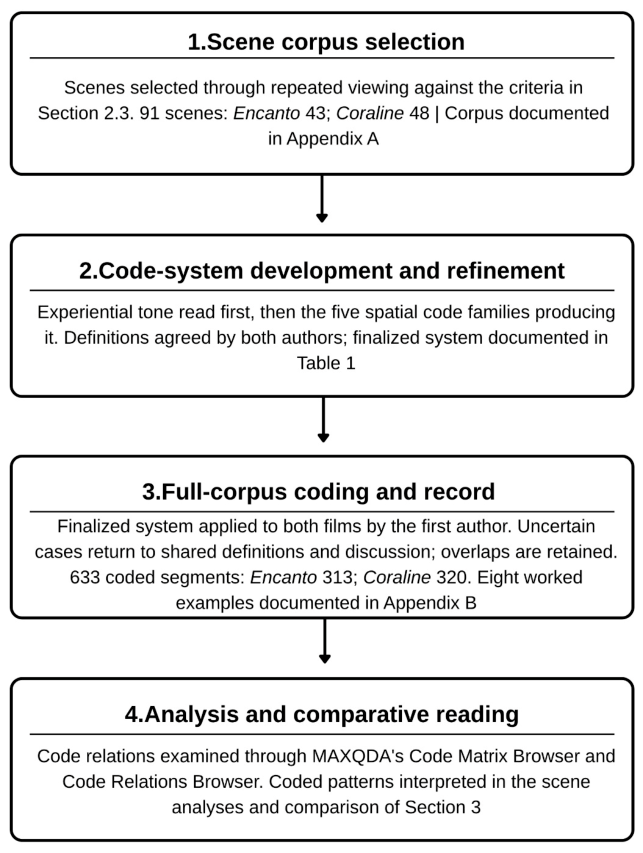
Notes
| 1 | Encanto; Bush, J., Howard, B., Castro Smith, C., Dirs.; Walt Disney Animation Studios; Walt Disney Pictures: Burbank, CA, USA, 2021. |
| 2 | Coraline; Selick, H., Dir. and Screenwriter; LAIKA: Hillsboro, OR, USA, 2009. |
References
- Bachelard, G. Mekânın Poetikası; Tümertekin, A., Translator; İthaki Yayınları: İstanbul, Türkiye, 2014; ISBN 978-605-375-336-0. [Google Scholar]
- Boettger, T. Threshold Spaces: Transitions in Architecture: Analysis and Design Tools; Birkhäuser: Basel, Switzerland, 2014; ISBN 978-3-03821-587-5. [Google Scholar]
- Simmel, G. Bridge and door. Theory Cult. Soc. 1994, 11, 5–10. [Google Scholar] [CrossRef] [Scilit]
- Norberg-Schulz, C. Genius Loci: Towards a Phenomenology of Architecture; Rizzoli: New York, NY, USA, 1980; ISBN 978-0-8478-0287-6. [Google Scholar]
- Pallasmaa, J. Tenin Gözleri: Mimarlık ve Duyular; Kılıç, A.U., Translator; YEM Yayınları: İstanbul, Türkiye, 2011; ISBN 978-9944-757-46-1. [Google Scholar]
- McCarthy, C. Toward a definition of interiority. Space Cult. 2005, 8, 112–125. [Google Scholar] [CrossRef] [Scilit]
- Ionescu, V. The interior as interiority. Palgrave Commun. 2018, 4, 33. [Google Scholar] [CrossRef] [Scilit]
- Tuan, Y.-F. Space and Place: The Perspective of Experience; University of Minnesota Press: Minneapolis, MN, USA, 1977; ISBN 978-0-8166-3877-2. [Google Scholar]
- Sixsmith, J. The meaning of home: An exploratory study of environmental experience. J. Environ. Psychol. 1986, 6, 281–298. [Google Scholar] [CrossRef] [Scilit]
- Kang, E.; Park, E.J. Phenomenological transparency through depth of “inside/outside” for a sustainable architectural environment. Sustainability 2021, 13, 9046. [Google Scholar] [CrossRef] [Scilit]
- Lee, K. The interior experience of architecture: An emotional connection between space and the body. Buildings 2022, 12, 326. [Google Scholar] [CrossRef] [Scilit]
- Pritzen, A.; Aeschbach, V.M.-J.; Ehret, S.; Thomaschke, R. Feel the atmosphere: A qualitative study on spatial experiences in contemporary Muße architecture. J. Urban Des. 2024, 29, 122–141. [Google Scholar] [CrossRef] [Scilit]
- Treacy, G. Harvesting atmospheres—Exploring atmospheric elements in spatial design. Architecture 2025, 5, 126. [Google Scholar] [CrossRef] [Scilit]
- Gürdağ, B.; Koca, D. Rethinking the relationship between architectural representation and spatial experience through the 12th International Architecture Exhibition. ICONARP Int. J. Archit. Plan. 2026, 14, 348–370. [Google Scholar] [CrossRef] [Scilit]
- Gepshtein, S.; Malpas, J. Horizons and thresholds: Boundary and representation in architecture and science. Archit. Sci. Rev. 2025, 68, 343–354. [Google Scholar] [CrossRef] [Scilit]
- Amouzad Khalili, H. The cinema of Béla Tarr: The architectonics of time, movement and hapticity. Archit. Theory Rev. 2025, 29, 45–71. [Google Scholar] [CrossRef] [Scilit]
- Marks, L.U. The Skin of the Film: Intercultural Cinema, Embodiment, and the Senses; Duke University Press: Durham, NC, USA, 2000; ISBN 978-0-8223-2391-4. [Google Scholar]
- Penz, F. Cinematic Aided Design: An Everyday Life Approach to Architecture; Routledge: London, UK; New York, NY, USA, 2017. [Google Scholar] [CrossRef] [Scilit]
- Buchan, S. Uncanny place, narrative space: The architectural imagination of animation. In What Is Architecture? An Anthology of Texts; Budak, A., Ed.; Bunkier Sztuki Contemporary Art Gallery: Krakow, Poland, 2002; pp. 354–391. ISBN 978-83-86905-45-4. [Google Scholar]
- Eisenstein, S. Eisenstein on Disney; Leyda, J., Ed.; Upchurch, A.Y., Translator; Seagull Books: Kolkata, India, 1986; ISBN 978-0-930621-38-4. [Google Scholar]
- Wells, P. Understanding Animation; Routledge: London, UK; New York, NY, USA, 1998; ISBN 978-0-415-11596-4. [Google Scholar]
- Köymen, E. Stylized architecture in 3D animated films: Aesthetic and narrative perspectives. IDA Int. Des. Art J. 2025, 7, 269–288. Available online: https://www.idajournal.com/index.php/ida/article/view/438 (accessed on 10 June 2026).
- O’Brien, D.P. Hap-tech narration and the postphenomenological film. Philosophies 2019, 4, 47. [Google Scholar] [CrossRef] [Scilit]
- Aydoğan Tekcan, E.; Uz, F. From cinematic narrative to architectural space: Unveiling relational spatialities through roles and modes. Front. Archit. Res. 2026, in press. [Google Scholar] [CrossRef] [Scilit]
- Bolat, İ.; Dikmen Güleryüz, O. The interrelation of TV-series and interior design in the construction of meaning: Cinematic narratives and the psychological function of space. CINEJ Cine. J. 2025, 13, 845–884. [Google Scholar] [CrossRef] [Scilit]
- Şen, S.; Eyüboğlu, H.; Dinçer, S.; Topaloğlu, G. Analyzing viewer comments of the animated film ‘Up’ within the discipline of architecture. Tykhe J. Art Des. 2024, 9, 459–482. [Google Scholar] [CrossRef] [Scilit]
- Blunt, A.; Dowling, R. Home, 2nd ed.; Routledge: London, UK; New York, NY, USA, 2022; ISBN 978-1-000-55552-3. [Google Scholar]
- Encanto; Walt Disney Pictures: Burbank, CA, USA; Walt Disney Animation Studios: Burbank, CA, USA, 2021.
- Coraline; LAIKA: Hillsboro, OR, USA; Pandemonium Films: Hillsboro, OR, USA, 2009.
- Hanson, J. Decoding Homes and Houses; Cambridge University Press: Cambridge, UK, 1998. [Google Scholar] [CrossRef] [Scilit]
- Pearce, L. Translating across disciplines: On coding interior architecture theory to advance complex indoor environment quality. Buildings 2018, 8, 82. [Google Scholar] [CrossRef] [Scilit]
- Merleau-Ponty, M. Phenomenology of Perception; Landes, D.A., Translator; Routledge: London, UK; New York, NY, USA, 2012; ISBN 978-0-415-55869-3. [Google Scholar]
- Böhme, G. Atmospheric Architectures: The Aesthetics of Felt Spaces; Engels-Schwarzpaul, A.-C., Ed. and Translator; Bloomsbury Academic: London, UK, 2017; ISBN 978-1-4742-5808-1. [Google Scholar]
- Ahmed, S. Queer Phenomenology: Orientations, Objects, Others; Duke University Press: Durham, NC, USA; London, UK, 2006; ISBN 978-0-8223-3861-1. [Google Scholar]
- Verbeek, P.-P. What Things Do: Philosophical Reflections on Technology, Agency, and Design; Crease, R.P., Translator; Pennsylvania State University Press: University Park, PA, USA, 2005; ISBN 978-0-271-02539-1. [Google Scholar]
- Vidler, A. The Architectural Uncanny: Essays in the Modern Unhomely; MIT Press: Cambridge, MA, USA, 1994; ISBN 978-0-262-72018-2. [Google Scholar]
- Windsor, M. Freud on the uncanny: A tale of two theories. Philos. Lit. 2020, 44, 35–51. [Google Scholar] [CrossRef] [Scilit]
- Van Gennep, A. The Rites of Passage; Routledge: Abingdon, UK, 2010. [Google Scholar]
- Yin, R.K. Case Study Research and Applications: Design and Methods, 6th ed.; SAGE Publications: Thousand Oaks, CA, USA, 2018; ISBN 978-1-5063-3618-3. [Google Scholar]
- Schreier, M. Qualitative Content Analysis in Practice; SAGE Publications: London, UK, 2012; ISBN 978-1-84920-592-4. [Google Scholar]
- Rose, G. Visual Methodologies: An Introduction to Researching with Visual Materials, 5th ed.; SAGE Publications: London, UK, 2023; ISBN 978-1-5297-6719-3. [Google Scholar]
- Goodrick, D. Comparative case studies. In SAGE Research Methods Foundations; Atkinson, P., Delamont, S., Cernat, A., Sakshaug, J.W., Williams, R.A., Eds.; SAGE Publications: London, UK, 2019. [Google Scholar] [CrossRef] [Scilit][Green Version]
- Thampanichwat, C.; Bunyarittikit, S.; Moorapun, C.; Phaibulputhipong, P. A content analysis of architectural atmosphere influencing mindfulness through the lens of Instagram. Sustainability 2023, 15, 10063. [Google Scholar] [CrossRef] [Scilit]
- Palinkas, L.A.; Horwitz, S.M.; Green, C.A.; Wisdom, J.P.; Duan, N.; Hoagwood, K. Purposeful sampling for qualitative data collection and analysis in mixed method implementation research. Adm. Policy Ment. Health Ment. Health Serv. Res. 2015, 42, 533–544. [Google Scholar] [CrossRef] [Scilit] [PubMed]
- Mayring, P. Qualitative content analysis. Forum Qual. Soc. Res. 2000, 1, 20. [Google Scholar] [CrossRef]
- Tzortzi, J.N.; Saxena, I. Threshold spaces: The transitional spaces between outside and inside in traditional Indian dwellings. Heritage 2024, 7, 6683–6711. [Google Scholar] [CrossRef] [Scilit]
- Zumthor, P. Atmospheres: Architectural Environments, Surrounding Objects; Birkhäuser: Basel, Switzerland, 2006; ISBN 978-3-7643-7495-2. [Google Scholar]
- Wastiels, L.; Schifferstein, H.N.J.; Heylighen, A.; Wouters, I. Relating material experience to technical parameters: A case study on visual and tactile warmth perception of indoor wall materials. Build. Environ. 2012, 49, 359–367. [Google Scholar] [CrossRef] [Scilit]
- Rasmussen, S.E. Experiencing Architecture, 2nd ed.; MIT Press: Cambridge, MA, USA, 1964; ISBN 978-0-262-68002-8. [Google Scholar]
- Jaglarz, A. Perception of color in architecture and urban space. Buildings 2023, 13, 2000. [Google Scholar] [CrossRef] [Scilit]
- Jacobs, K.; Malpas, J. Material objects, identity and the home: Towards a relational housing research agenda. Hous. Theory Soc. 2013, 30, 281–292. [Google Scholar] [CrossRef] [Scilit]
- Yaneva, A. Making the social hold: Towards an actor-network theory of design. Des. Cult. 2009, 1, 273–288. [Google Scholar] [CrossRef] [Scilit]
- Lincoln, Y.S.; Guba, E.G. Naturalistic Inquiry; SAGE Publications: Beverly Hills, CA, USA, 1985; ISBN 978-0-8039-2431-4. [Google Scholar]
- Dovey, K. Home and homelessness. In Home Environments; Altman, I., Werner, C.M., Eds.; Springer: Boston, MA, USA, 1985; Volume 8, pp. 33–64. [Google Scholar] [CrossRef] [Scilit]
- Young, I.M. House and home: Feminist variations on a theme. In On Female Body Experience: “Throwing like a Girl” and Other Essays; Oxford University Press: New York, NY, USA, 2005; pp. 123–154. [Google Scholar] [CrossRef] [Scilit]
- Freud, S. The Uncanny; McLintock, D., Translator; Penguin Books: London, UK, 2003; ISBN 978-0-14-118237-7. [Google Scholar]
- Bitner, M.J. Servicescapes: The impact of physical surroundings on customers and employees. J. Mark. 1992, 56, 57–71. [Google Scholar] [CrossRef] [Scilit]
- Kyttä, M. The extent of children’s independent mobility and the number of actualized affordances as criteria for child-friendly environment. J. Environ. Psychol. 2004, 24, 179–198. [Google Scholar] [CrossRef] [Scilit]
- Newcombe, N.S.; Frick, A. Early education for spatial intelligence: Why, what, and how. Mind Brain Educ. 2010, 4, 102–111. [Google Scholar] [CrossRef] [Scilit]
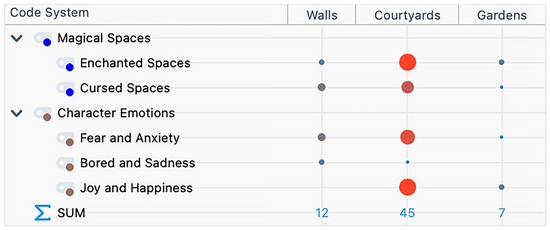
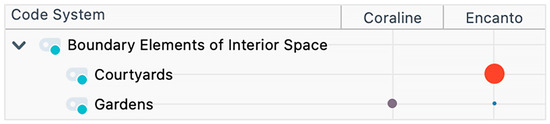
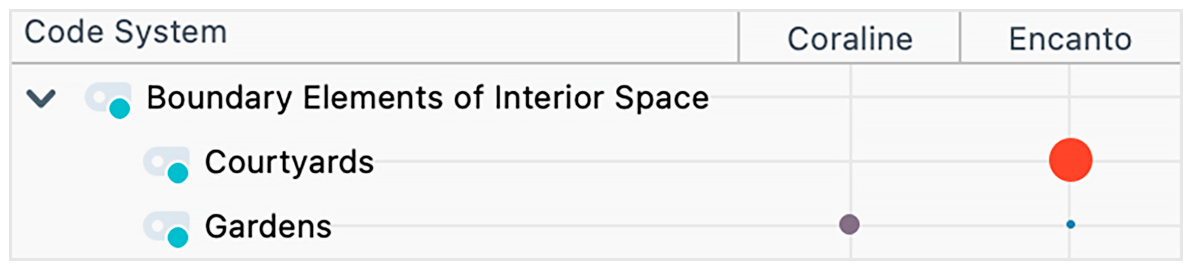
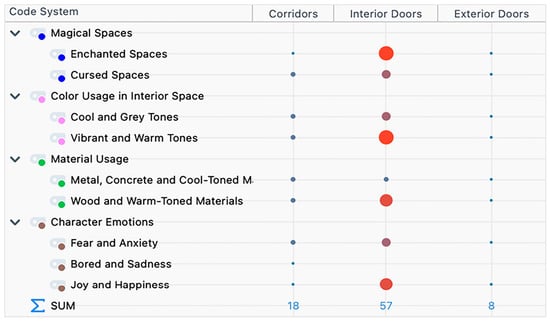
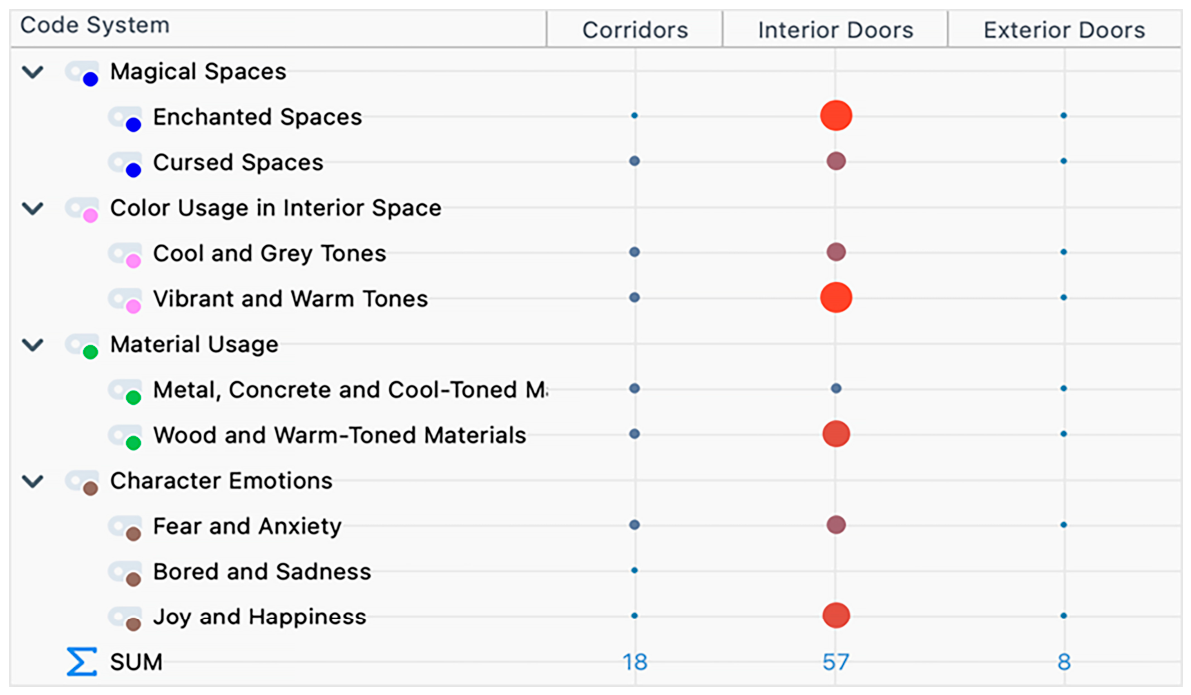
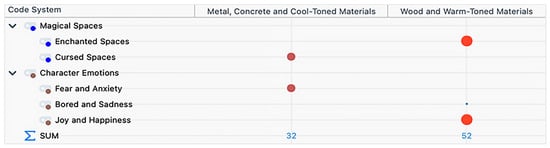
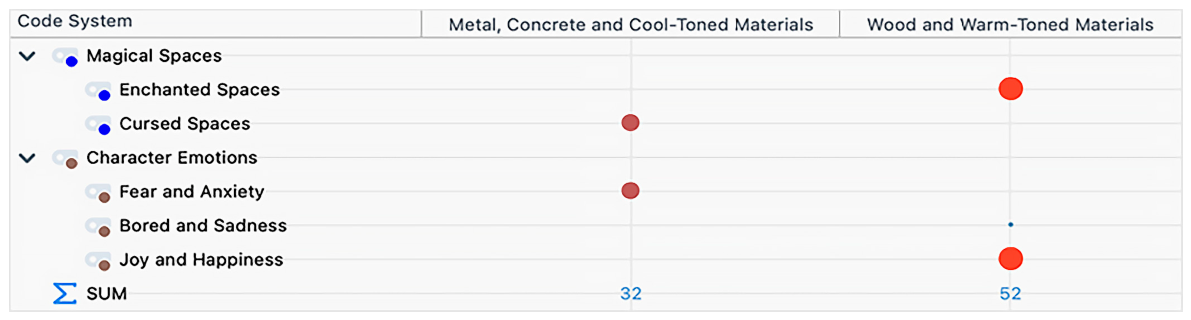
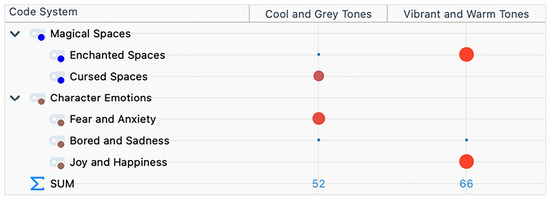
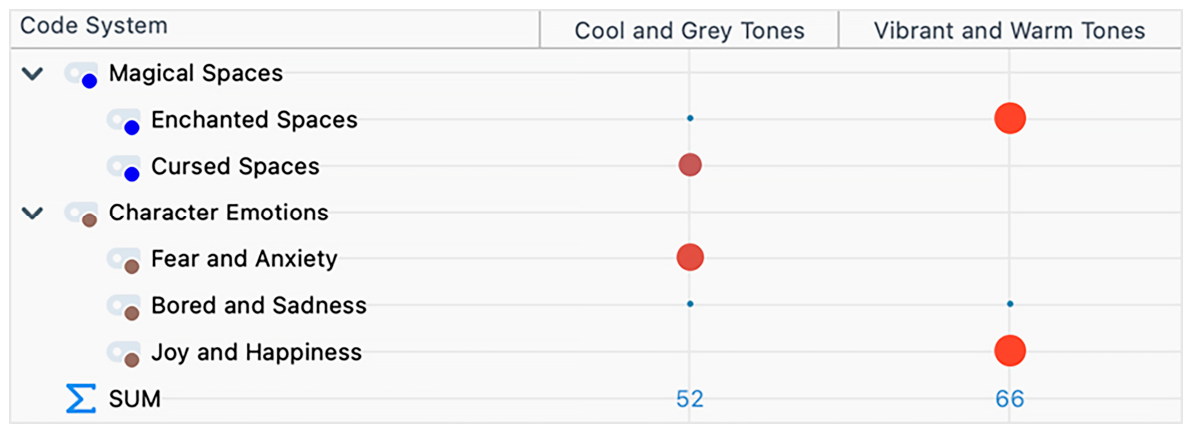
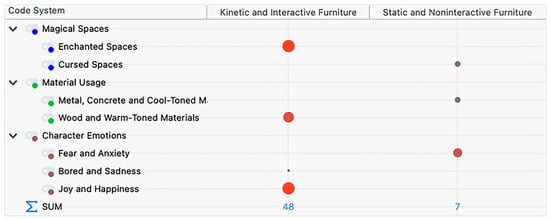
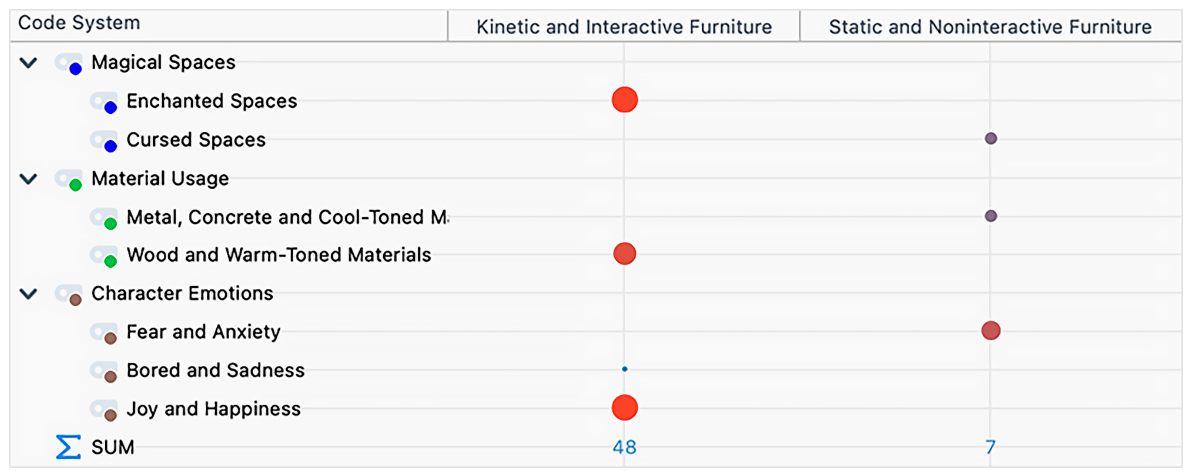
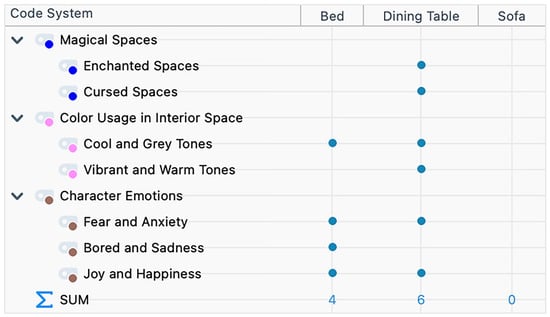
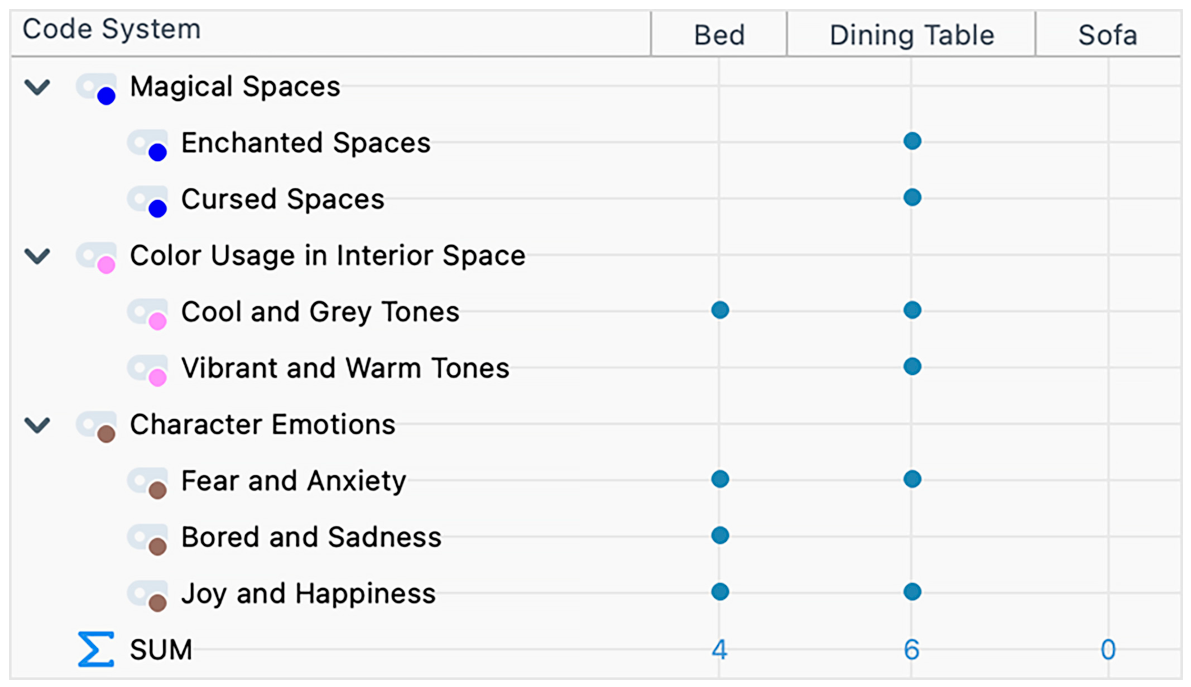
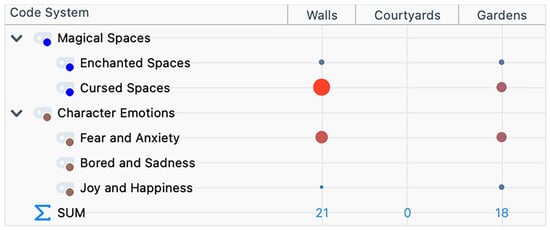
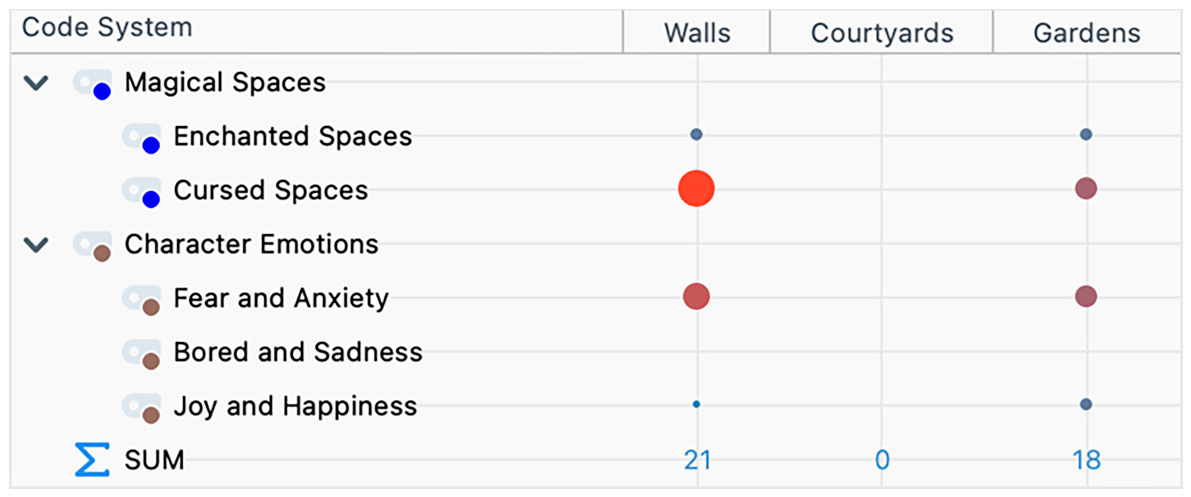
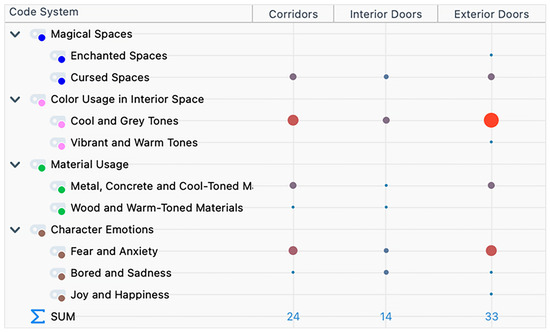
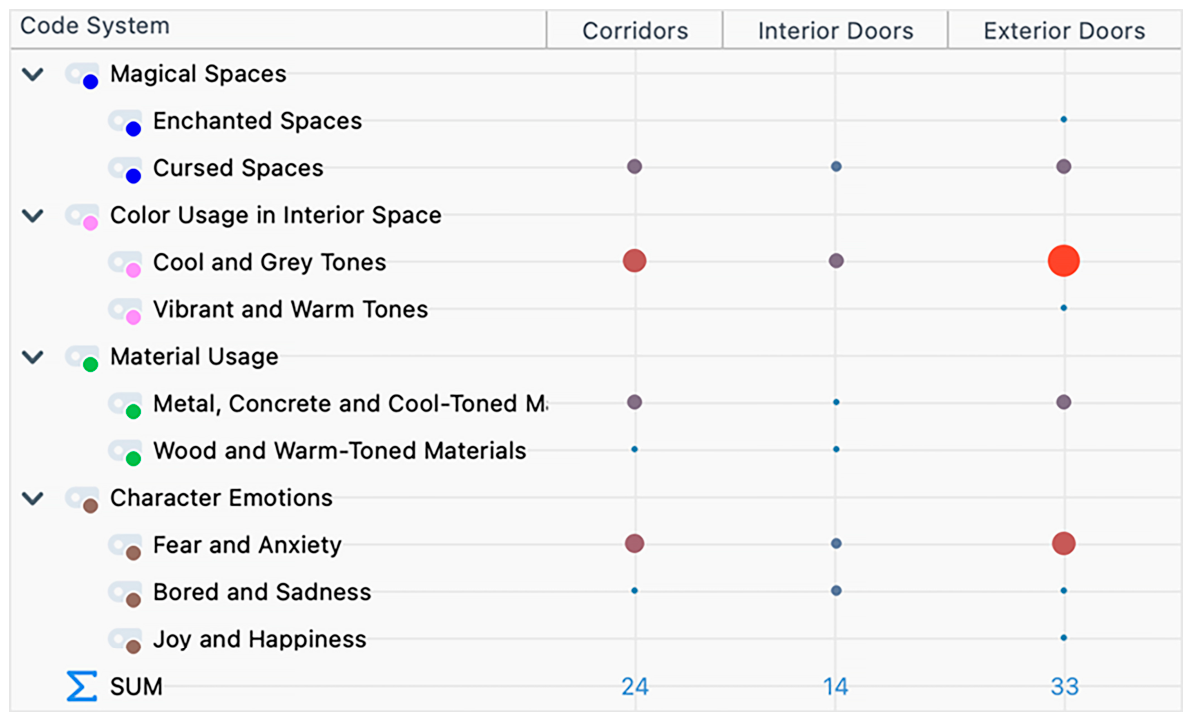
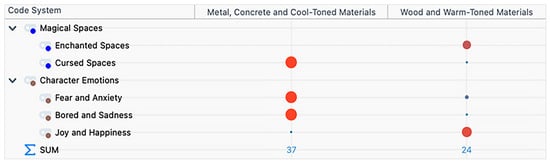
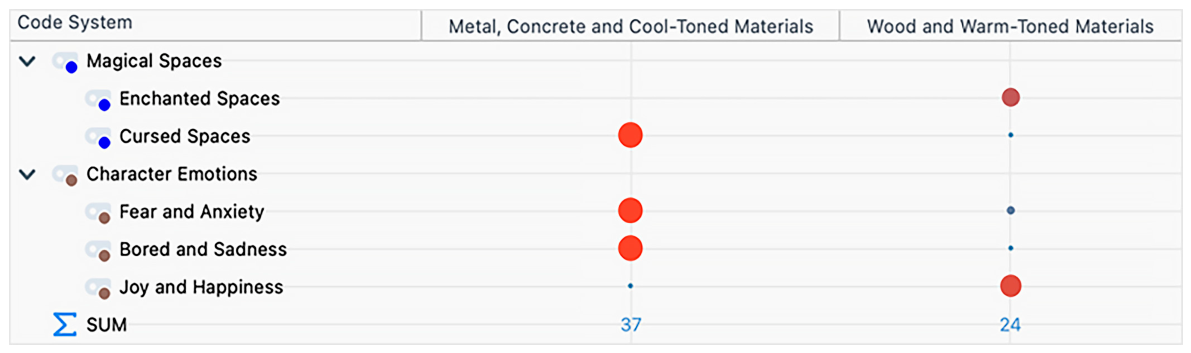
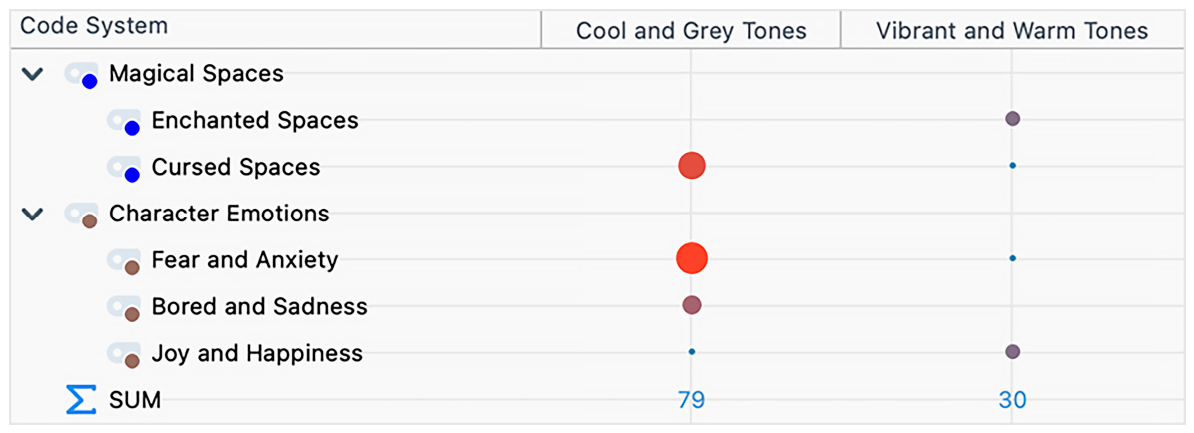
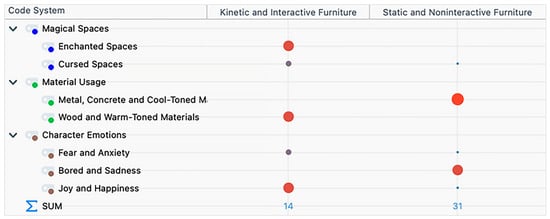
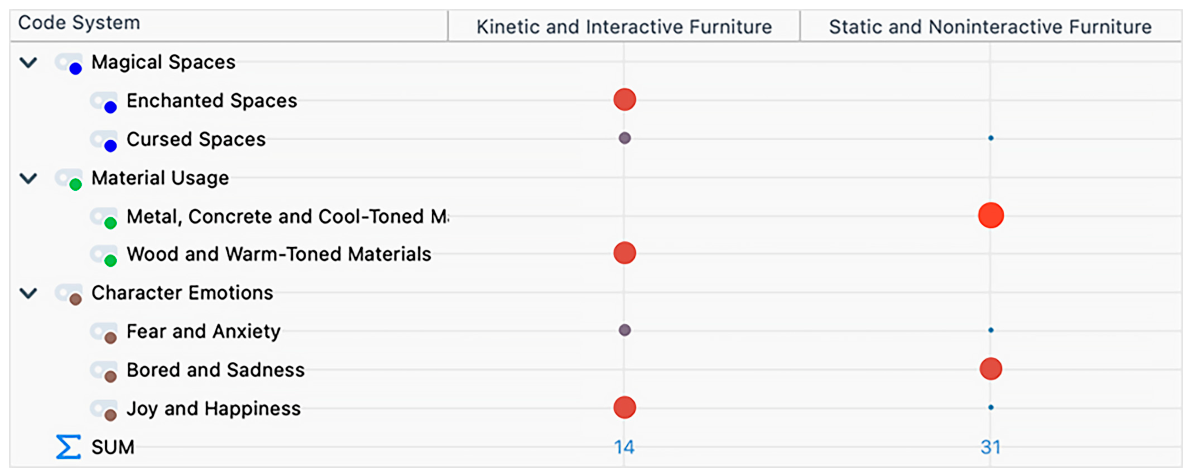
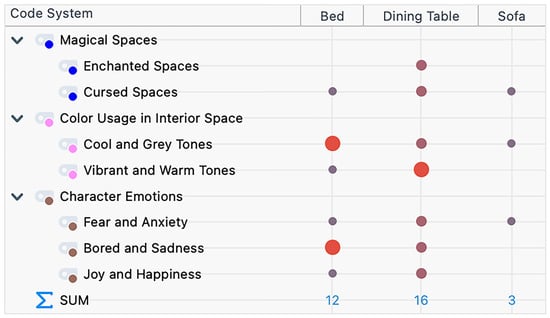
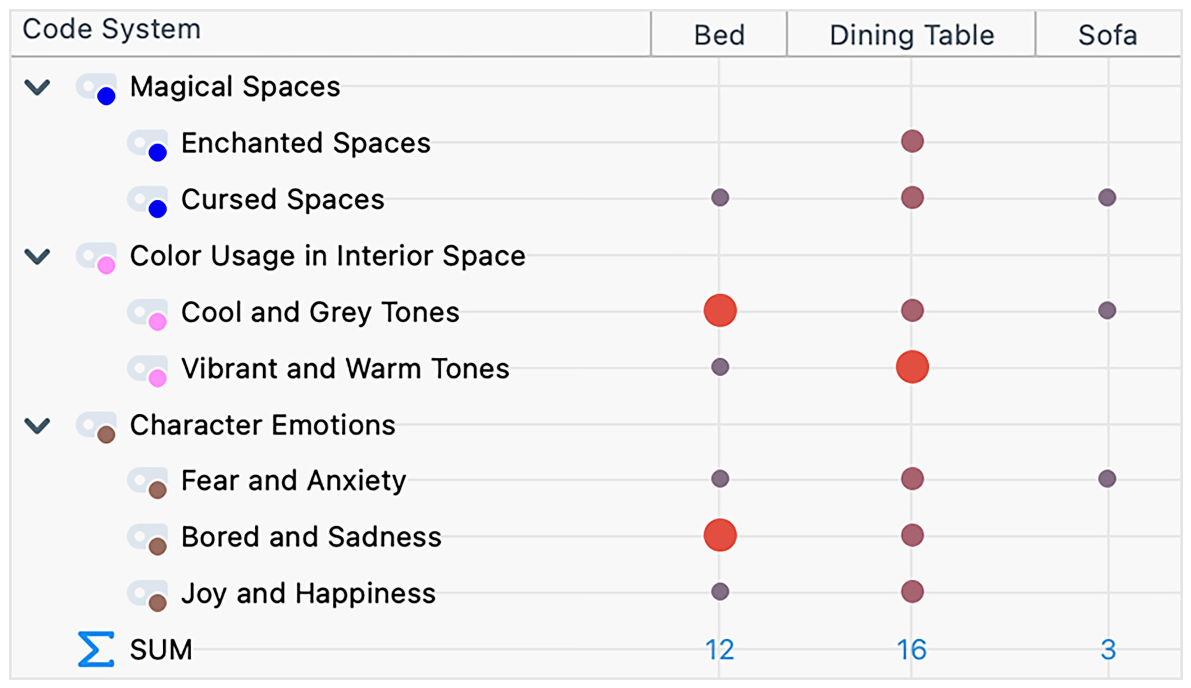

Disclaimer/Publisher’s Note: The statements, opinions and data contained in all publications are solely those of the individual author(s) and contributor(s) and not of MDPI and/or the editor(s). MDPI and/or the editor(s) disclaim responsibility for any injury to people or property resulting from any ideas, methods, instructions or products referred to in the content. |
© 2026 by the authors. Licensee MDPI, Basel, Switzerland. This article is an open access article distributed under the terms and conditions of the Creative Commons Attribution (CC BY) license.