


Abstract
In contemporary scientific disciplines, there is an increasing interest in adopting artificial intelligence (AI) as a cornerstone of data-driven intelligence (DDI). While DDI has not yet been fully integrated into architectural design, AI has already begun to exert a notable influence on design practices. Current discourse on architectural design in the digital age provides critical insights into the evolving role of the architect. The transformation extends beyond the adoption of new tools and techniques, reconfiguring the organisation of architectural knowledge, decision-making and authorship. The paper’s methodology is structured around two primary conceptual threads, analysed through a comparative lens. It employs the “digital chain” (first thread) model as a conceptual framework to integrate DDI and to compare it with emerging AI-based approaches. Aligned with the thematic focus of the recent eCAADe 2024 and 2025 conferences (second thread), the study identifies key shifts within contemporary architectural practice. The findings from the analysed sample suggest a transition from structured, rule-based workflows to more adaptive, AI-supported design. This shift is associated with a reconfiguration of the architect’s role within hybrid human–AI environments, remaining responsible for defining the core design. The aim of the study is to develop a framework for interpreting the potential integration of AI into architectural design, emphasising the role of the architect in guiding computational processes and maintaining architectural intent. It provides a structured perspective on the relationship between DDI and AI, supporting a critical reassessment of the architect’s position within emerging digital paradigms and contemporary architectural culture.
1. Introduction
Henri Bergson in Creative Evolution (1932) argued that human intelligence1 [1] has always evolved in close relation to the development of tools, an often underestimated dynamic. In contemporary scientific disciplines, there is a growing imperative to incorporate artificial intelligence (AI) as an integral part of data-driven intelligence (DDI). Although DDI has yet to be fully integrated into architectural design, AI has already begun to exert a significant influence. Current advancements in digital design [2] provide valuable opportunities to reassess the role of the architect.
Miller’s [3] conception of digital culture is predicated on the notion of societal transformation through the process of data transformation into meaningful information. Alongside society’s transformation, technological developments have reshaped the positioning of the architect across multiple domains, influencing design thinking, creativity, collaboration, and process management in critical efforts to develop new tools that drive innovation.
The digital transformation of architecture has progressively shifted design from representational workflows to computational, data-driven, and increasingly AI-enhanced processes. The shift affects not only the tools and techniques in use but also the organisation of architectural knowledge, decision-making, and authorship.
The study aligns with the RIBA 2024 report [4], which addresses the impact of AI on the architectural profession by examining how architects engage with it, including its applications, opportunities, benefits, risks, and associated ethical concerns. It further explores the balance between design and technological knowledge, positioning the architect as both a pivotal human driver and a fluid actor [5] within future architectural processes.
The design and implementation of architecture are approached from the perspective of the architect–designer, prioritising the architect’s role over user-driven or software-determined selections [6]. The approach adopts a continuous, data- and AI-driven process to anchor architects within an evolving and increasingly complex context. Treating each project as both an architectural and construction experiment—characterised by unforeseen outcomes arising from incomplete technological exploration—is essential.
As technologies evolve, evaluating individual tools, their roles in the overall process, and their interactions with various stakeholders become crucial for understanding the positioning of the architect. Engaging with new technological processes increasingly requires architects to operate within the engineering dimension of the profession [7,8]. Consequently, the effective linking of architectural intent with digital processes requires a solid understanding of digital media to achieve meaningful architectural expression.
Within this context, the study is framed by the recent eCAADe2 conferences [9] (2024 and 2025), which highlight advancements in architectural design and technology integration. While eCAADe 2024 [10] focuses on the role of DDI in architectural education and research—understood as code-based processes that transform data into design outputs—eCAADe 2025 [11] emphasises the confluence of AI and DDI in shaping contemporary practice.
Conceptual Framework
Situated between the perspectives of the eCAADe conferences, the research conceptualises their relationship through the “digital chain”, revealing both discrepancies and convergences that serve as shift indicators for the future positioning of the architect.
The paper investigates the evolving role of the architect within design and construction processes, using the “digital chain” as its foundational conceptual framework. Defined as a continuous, digitally supported workflow encompassing the design brief, design development, and transition from design to production, the concept—developed by Prof. Dr. Ludger Hovestadt (CAAD Chair at ETH Zurich)3 [12]—provides a basis for understanding architecture within a fully digitalised process. In its contemporary extension, the “digital chain” expands to digital architectonics, including processes of encoding, coding, and decoding, while engaging broader social dimensions across sacred, public, and private domains [13]
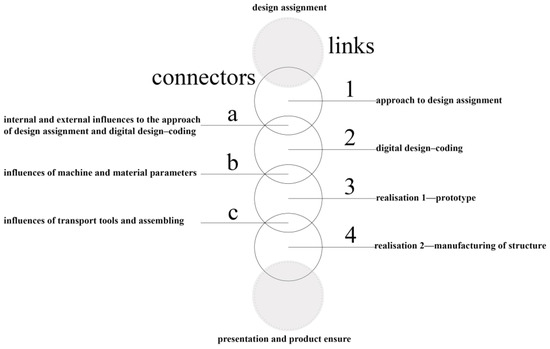
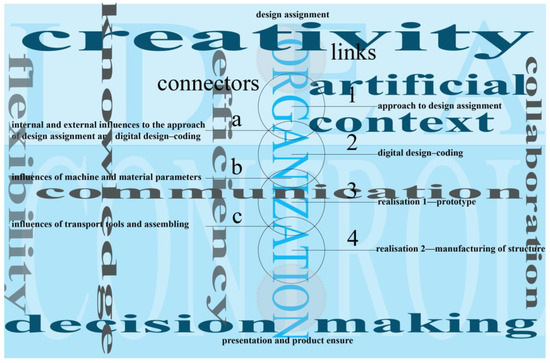
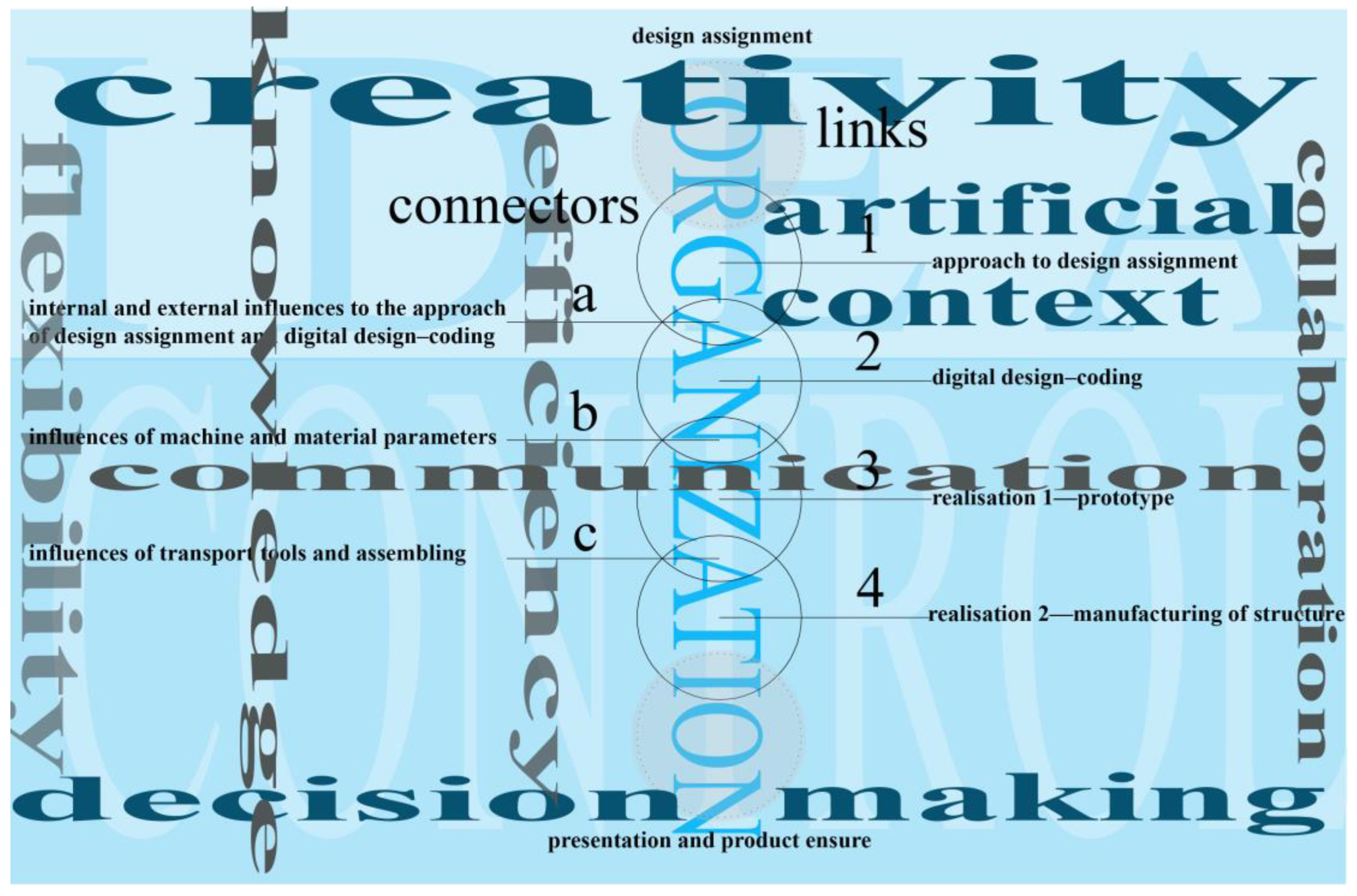
The “digital chain” (Figure 1), understood as a structured yet non-linear model of the architectural design process, comprises interconnected sub-processes that collectively support the transition from design conception to realisation. Its genesis initiates the digital design process, while its subsequent articulation enables a clearer understanding of its components, their overlaps with traditional design methods, and their manifestation in practice [14].
Figure 1.
“Digital chain”—scheme with links and connectors explaining the first thread of the conceptual framework, linking design conception, computational generation, prototyping, and realisation. Adapted from [5,14].
The process unfolds through a series of linked stages organised into four primary sub-processes:
- Approach to the design assignment;
- Digital design (coding);
- Realisation I (prototyping);
- Realisation II (manufacturing).
Although independent, these sub-processes are interconnected through a series of influence points, or connectors, which disrupt linear progression. The connectors emerge from the interaction of complex design and production conditions and include: (a) internal and external influences on design approach and coding processes; (b) machine and material parameters affecting realisation; and (c) constraints related to transportation, tools, and assembly processes.
The “digital chain” is thus not a fixed sequence but a dynamic and adaptive system. To enable systematic analysis, the study organises the sub-processes into four analytical phases of a comparative framework presented in the following section.
The study is structured around two complementary conceptual threads. The first is the “digital chain”, a continuous, non-linear framework linking design conception, computational generation, prototyping, and realisation. The second consists of selected contributions from the eCAADe 2024 and 2025 conferences, which provide a contemporary research context for examining the transition from data-driven to AI-enhanced design approaches.
Together, the two threads enable a comparative analysis of how architectural processes evolve and how the role of the architect is redefined within increasingly complex computational environments.
The strong relationship between architecture and digital technology raises concerns when the latter assumes a leading position in shaping architectural ideas. As noted in [6], this new landscape of contexts underscores the continued significance of the architect’s role. Consequently, there is a need to critically reassess the context in which architecture operates, considering both digital environments and human factors, including architects, users and artefacts. The roles and scope of these entities in architectural design and realisation require reconsideration.
The evolution of the “digital chain” in architectural discourse has progressed from early implementations, such as the Monte Rosa mountain shelter [15], to a more in-depth examination of architectural paradigms [16], its subsequent redefinition [17], and its experiential application [18]. More recently, the topic has expanded into related technological domains. It now includes the development of knowledge bases for monitoring within Industry 4.0 [19], gesture-based virtual reality [20], the Internet of Things [21], and kinematically redundant robotic systems [22].
The work by [2] traces the historical evolution of digital and AI environments, drawing on the theories of MIT cybernetics researchers from the 1960s. Today, the implementation of AI—particularly machine learning—represents a significant trend, enabling the cognitive integration and processing of existing data. The integration of AI into architectural design, including ideation, concept generation and project archiving, reflects ongoing developments in the field [4].
AI, a broad discipline, creates systems that perform tasks typically requiring human intelligence, such as reasoning, learning, problem-solving, perception and language comprehension. AI seeks to simulate or replicate human cognitive functions in machines. While earlier AI systems relied on explicit rule-based instructions, contemporary developments have adaptive, data-driven capabilities. In this sense, the “digital chain” initially emerged through data-driven approaches, but recent AI developments extend its logic.
The AI expansion in architecture encompasses both micro- and macro-level applications across multiple scales—from urban systems to detailed design [23]. As demonstrated in [8], emerging tools and methods for AI-driven architectural design bridge the gap between AI research and architectural practice. In particular, generative AI models based on deep learning approaches—such as Variational Autoencoders (VAEs), Generative Adversarial Networks (GANs) and Diffusion Models (DMs) [24]—use algorithmic generation to transform the approach to architectural design tasks.
Exploring AI in architecture is closely linked to the evolving role of the architect within the design process. The adoption of novel tools signals a shift from traditional creative practices to processes informed by machine learning [25], establishing a new paradigm in which architects may also act as AI experts [26].
In AI-assisted design, the architect’s role shifts from a sole creator to a mediator and decision-maker within human–AI collaborative systems. In such contexts, intelligent tools support early-stage analysis, generative exploration, and the alignment of design solutions [27]. At the same time, the effectiveness of these systems depends on the architect’s capacity to critically interpret data, guide AI processes through informed input, and ensure that outcomes remain grounded in disciplinary knowledge and meaningful architectural intent [28]. The context is reflected in the annual eCAADe conference themes that highlight advancements in architectural design and technology integration.
The paper addresses the gap by proposing the “digital chain” as a conceptual and analytical framework for understanding the transformation of architectural design processes in the context of DDI and AI. By combining theoretical reflection with a comparative analysis of selected eCAADe 2024 and 2025 papers, the study aims to examine how emerging computational approaches reshape both design workflows and the role of the architect. The paper is structured as follows: Section 2 outlines the methodological approach, Section 3 presents the results of the comparative analysis, Section 4 discusses the implications of these findings, and Section 5 concludes with key contributions and directions for future research.
Through this approach, the research identifies key transformations in the architectural design process, emphasising the architect’s role as a decision-maker, process designer, and interpreter within increasingly complex, data-driven and AI-assisted design environments.
2. Materials and Methods
Building on the conceptual framework of the “digital chain,” the methodology is designed to examine how this framework can be observed and interpreted within contemporary architectural research. The following section outlines the data selection process and analytical strategy used to identify and evaluate relevant research material.
2.1. Research Design
The study adopts a qualitative, exploratory, and practice-based research methodology structured around a comparative analytical framework. The approach integrates two complementary conceptual material threads: (1) the “digital chain”, as a theoretical and operational model of architectural design processes, and (2) a curated sample of recent contributions from eCAADe conference proceedings (2024 and 2025), analysed in relation to this framework.
The aim of the methodology is not to provide a statistically representative survey of the field but to enable an in-depth conceptual comparison of emerging approaches to DDI and AI in architectural design. Accordingly, the study follows a purposive sampling strategy, appropriate for exploratory and theory-building research.
2.2. Material
The first thread is the “digital chain”, understood as a continuous, non-linear design framework that links design conception, computational generation, prototyping, and realisation. It is employed as an analytical framework for structuring comparative analysis developed through a longitudinal review of relevant sources, including the CAAD archive, prior doctoral research, and related peer-reviewed literature.
The second thread consists of eCAADe conference proceedings—eCAADe 20244 (Data-Driven Intelligence, Volume I—74 papers; Volume II—72 papers) [10] and eCAADe 20255 (Confluence, Volume I—94 papers; Volume II—73 papers) [11]—which together provide a contemporary research context for examining the transition from DDI to AI-enhanced design approaches.
eCAADe 2024 [29] questions the influence of DDI on architectural education and research in the context of AI. DDI indicates how code processes data—input—and generates solutions—output. It explicitly asks what the future role of the architect will be in the data-driven era. eCAADe 2025 [30] seeks to highlight the interplay as the confluence of AI and DDI in shaping thought in education and practice. Both conference proceedings recognise this relationship as the “digital chain”, positioning architects as representatives of a data-driven design approach leading towards AI within architectural design and realisation processes. These proceedings form the dataset from which a focused sample of papers was selected for detailed analysis.
2.3. Methods
As previously stated, the research adopts a qualitative, exploratory design based on a comparative analytical framework, integrating the “digital chain” as a theoretical model and a curated selection of papers from eCAADe 2024 and 2025.
A purposive sampling strategy was used to identify relevant contributions. The paper selection used keyword filtering, followed by qualitative screening based on their engagement with architectural design processes and their relevance to DDI or AI.
The final sample consists of 13 papers [31,32,33,34,35,36,37,38,39,40,41,42,43], enabling a focused conceptual comparison rather than statistical generalisation.
The paper selection was a transparent, three-step procedure:
- 1.
- Keyword Filtering.
An initial screening of all papers used predefined keywords, including AI, machine learning, generative design, parametric design, data-driven design, and computational design. This step identified contributions engaging with DDI and AI within architectural design contexts.
- 2.
- Qualitative Screening (Manual Review).
The evaluation of filtered papers used qualitative conceptual screening based on the following criteria:
- Explicit engagement with architectural design processes;
- Relevance to DDI and/or AI methodologies;
- Contribution to at least one of the analytical dimensions: process structure, level of automation, generative capacity, or distribution of authorship.
- 3.
- Final Selection.
A focused 13-paper sample was created: five from eCAADe 2024 and eight from eCAADe 2025. The difference in sample size reflects the higher concentration of AI-related contributions in the 2025 proceedings, particularly those aligned with hybrid human–AI design approaches.
2.4. Analytical Framework
The analytical procedure applied a comparative framework to examine the impact of DDI and AI-based approaches on architectural design processes and the positioning of the architect.
Building on the “digital chain” concept, as a series of interconnected sub-processes, the analytical procedure is organised into four corresponding phases for systematic comparison:
- Digital representation (approach to the design assignment);
- Parametric and data-driven design (digital design and coding);
- AI-enhanced design (extended computational generation and decision support);
- Hybrid human–AI design environments (integration within prototyping and realisation processes).
The phase-based mapping translates the conceptual structure of the “digital chain” into an analytical framework that enables the consistent evaluation of selected papers.
Each paper was assigned to a dominant phase based on its primary methodological focus. The classification followed decision rules: (1) papers focused on data structuring and representation were assigned to Phase 1; (2) rule-based parametric and optimisation workflows to Phase 2; (3) AI-driven generative or predictive systems to Phase 3; and (4) studies explicitly addressing human–AI collaboration or integrated workflows to Phase 4. In cases of overlap, the dominant contribution of the study determined its classification. Each paper was analysed according to its dominant characteristics within these phases and assessed using four criteria:
- Process structure (linear, iterative, adaptive);
- Level of automation;
- Generative capacity;
- Distribution of authorship between the architect and computational system.
The criteria provide the analytical basis for mapping the studies onto four consecutive phases of the “digital chain”, enabling a systematic comparison of the transition workflows from DDI to hybrid human–AI design collaborative environments while examining the evolving role of the architect.
2.5. Scope, Limitations, and Reproducibility
The methodological approach is intentionally focused and exploratory. The selected sample represents a limited subset of the total number of conference papers and is not intended to provide a comprehensive or statistically representative overview of the field. Instead, it enables a conceptually driven analysis aligned to develop and test the “digital chain” framework.
To ensure transparency and reproducibility, the keyword set, selection criteria, and analytical procedure are explicitly defined. The methodology is designed as a scalable framework that can be extended in future research toward a broader systematic review or empirical validation through case studies or practitioner-based investigations.
The results and discussion are based on a comparative analytical methodology integrating the findings to evaluate the transformation of architectural processes and the evolving role of the architect as a mediator, decision-maker, and interpreter within hybrid human–AI systems.
3. Results
The results are structured according to the “digital chain” framework introduced earlier, allowing for a systematic comparison between data-driven and AI-enhanced design approaches. The analysis focuses on identifying patterns across the selected papers and interpreting their implications for architectural practice.
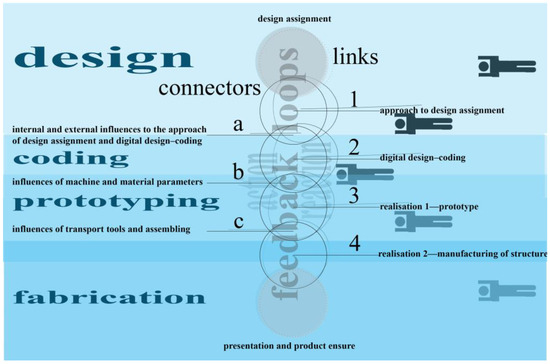
The comparative analysis applies the “digital chain” as an analytical framework to examine how DDI and AI-enhanced approaches influence architectural design processes (Figure 2).
Figure 2.
“Digital chain” model illustrating four design phases and feedback loops, with the architect positioned as a mediator and decision-maker within the process. Adapted from [4].
The selected papers from eCAADe 2024 and eCAADe 2025 [31,32,33,34,35,36,37,38,39,40,41,42,43] are analysed according to four evaluation criteria derived from the “digital chain” framework: (1) process structure, (2) level of automation, (3) generative capacity, and (4) distribution of authorship. Rather than comparing the conferences independently, the analysis identifies convergences and differences across these criteria to reveal broader developments in contemporary architectural design.
3.1. Process Structure
The first criterion examines how architectural workflows are organised throughout the “digital chain”.
Within the analysed material, DDI approaches are characterised by structured design workflows progressing through stages of optimisation, testing, and solution selection. These processes are typically defined within computational environments shaped by selected parameters, tools, and the architect’s input. As a result, design strategies emerge within controlled digital contexts where outcomes are closely linked to predefined rules and the architect’s ability to manage them.
In contrast to these structured workflows, the findings suggest that the transition toward AI-enhanced approaches introduces increased variability in how design processes are configured and interpreted. While both DDI and AI approaches rely on data-driven environments, the role of the architect shifts from defining fixed parametric conditions to navigating and interpreting more adaptive computational outputs.
Across the analysed material, the later phases of the “digital chain”—particularly those related to realisation and post-production—indicate an increasing integration of feedback mechanisms connecting design, evaluation, and presentation processes. The “digital chain” thus operates not only as a sequence of stages but also as an interconnected system linking design development, verification and communication.
The findings indicate a transition from sequential, parameter-driven workflows to more adaptive, iterative process structures, particularly in AI-enhanced design contexts. It highlights the increasing importance of creativity, flexibility and knowledge as key competencies for the architect.
3.2. Level of Automation
The second criterion evaluates the extent to which computational systems participate in architectural decision-making.
Within DDI approaches, automation primarily supports repetitive computational tasks, optimisation procedures, and performance simulations while remaining dependent on explicit human-defined parameters.
The analysed AI approaches extend automation beyond execution by supporting design exploration, concept generation, prediction, and pattern recognition. Automation, therefore, becomes collaborative rather than merely procedural, requiring continuous interaction between the architect and intelligent systems.
This shift suggests that automation evolves from supporting mechanisms to an active component of the design process, requiring continuous interaction between the architect and system. It highlights the increasing importance of communication, collaboration, efficiency and knowledge as key competencies for the architect.
3.3. Generative Capacity
The third criterion investigates how computational systems contribute to design generation.
Data-driven approaches generate alternatives within predefined design spaces established through parametric relationships and rule-based systems. Creative exploration remains constrained by the initial computational framework.
AI-enhanced approaches significantly expand generative capacity through machine learning and generative models that produce novel design alternatives. Rather than simply optimising existing solutions, AI enables the exploration of previously unforeseen possibilities, fundamentally changing the relationship between the designer and computational system [44].
The analysed papers indicate that architectural design processes within the “digital chain” are increasingly structured through iterative cycles of parameter definition, testing, and refinement. These processes enable the generation of multiple design alternatives, with prototyping and evaluation informing subsequent adjustments of initial conditions.
In the creative realm, DDI emphasises optimisation, while AI focuses on generative design that produces a range of unexpected and innovative results [45].
The results suggest an expansion of generative capacity from predefined parametric variations to AI-driven exploration of novel, less predictable design alternatives. It highlights the increasing importance of creativity, flexibility and knowledge as key competencies for the architect.
3.4. Distribution of Authorship and the Positioning of the Architect
The final criterion examines the evolving role of the architect within computational design environments.
Across data-driven approaches, architects primarily function as system designers who outline parameters, constraints, and evaluation criteria while maintaining direct authorship over design outcomes.
In AI-enhanced environments, authorship becomes increasingly distributed between human expertise and computational intelligence. Rather than replacing architectural agency, AI redistributes design responsibilities, positioning the architect as a mediator, curator, and critical decision-maker responsible for directing computational processes, interpreting generated outputs, and maintaining architectural intent.
Across both data-driven and AI-enhanced approaches, the findings suggest that the architect maintains a central role in overseeing and directing these processes. While computational systems support the generation and evaluation of design options, decision-making remains dependent on the architect’s ability to interpret outputs and guide the development process.
Architects specialising in digital architecture should receive comprehensive training and a strong foundation in design knowledge [46]. Mark Burry, an architect versed in both traditional and digital methodologies, explores architects’ reluctance to learn programming by posing several thought-provoking questions6 [47].
The analysed material indicates a redistribution of authorship, with the architect’s role shifting from direct form generation to mediation, evaluation, and decision-making within hybrid systems. However, the architect remains responsible for defining the conceptual direction of the design process. The study highlights the growing importance of creativity, flexibility, communication, collaboration, efficiency and knowledge as key competencies for the architect.
3.5. Comparative Synthesis
The comparative analysis suggests that the transition from DDI to AI is not characterised by a replacement of architectural expertise but by a transformation of architectural practice. Across all four evaluation criteria, the “digital chain” evolves from a structured computational workflow to an adaptive, iterative framework integrating human judgement with intelligent computational systems.
The findings suggest that the most significant transformation is not technological alone but organisational and conceptual, redefining how architectural knowledge is generated, evaluated, and applied throughout the design process.
The results further indicate that the “digital chain” operates across multiple scales, from experimental material investigations to larger architectural and urban applications. The expanded scope of design processes integrates computational tools into both conceptual exploration and realisation phases.
The analysed eCAADe 2024 papers indicate a transition from structured data-driven approaches to the integration of AI through parametric modelling, generative systems, and machine learning. In these contributions, the architectural process is organised as a sequence of interconnected, data-informed phases, emphasising optimisation, performance-driven exploration, and the encoding of design logic. At the same time, these approaches reveal emerging limitations in addressing creativity and interpretative decision-making within strictly data-driven workflows.
The eCAADe 2025 contributions further develop this trajectory by articulating the convergence of AI and DDI through hybrid human–AI design environments. The analysed papers highlight the growing role of generative AI in early-stage ideation, the emergence of AI systems as active contributors in the design process, and the restructuring of architectural workflows into adaptive iterative configurations.
Across both datasets, the findings indicate a consistent repositioning of the architect. While eCAADe 2024 [31,32,33,34,35] situates the architect within structured, parameter-driven processes, eCAADe 2025 [36,37,38,39,40,41,42,43] reflects a shift toward roles centred on process management, interpretation of computational outputs, and the maintenance of architectural intent within hybrid systems. This comparative analysis indicates a methodological shift from structured, optimisation-driven workflows to adaptive, collaborative design environments.
The selected eCAADe 2024 and 2025 papers can be systematically mapped onto the four phases of the “digital chain”, illustrating the progression from data structuring to hybrid human–AI design environments. Phase 1 (digital representation) is characterised by 56 research papers on data encoding and BIM-to-AI transitions, proposing the informational basis of the process. Phase 2 (parametric and data-driven design) includes studies on parametric modelling, surrogate modelling, and machine learning-assisted exploration, emphasising rule-based generation and optimisation workflows. Phase 3 (AI-enhanced design) introduces generative AI, evolutionary algorithms, and automated design systems that expand the solution space and redefine design authorship. Phase 4 (hybrid human–AI environments) focuses on cognitive, collaborative, and co-design frameworks, where the architect operates as a mediator, decision-maker, and interpreter of computational outputs. Within this framework, the “digital chain” functions as a continuous structure connecting these phases, highlighting the transformation of architectural processes and the evolving positioning of the architect in AI-assisted design.
Table 1 presents a conceptual mapping of the selected papers based on their dominant methodological focus and their position within the “digital chain”. It illustrates the transition from structured data-driven processes to adaptive AI-enhanced systems through a four-phase mapping and highlights the corresponding evolution of the architect’s role. This shift reflects increasing automation, higher generative capacity, and a redistribution of authorship from architect-led processes to collaborative human–AI environments.
Table 1.
Four-phase mapping constellation suggesting a progression from structured, data-driven workflows (Phases 1–2, predominantly eCAADe 2024) toward generative and hybrid human–AI systems (Phases 3–4, predominantly eCAADe 2025).
These findings provide the basis for a broader interpretation of how architectural design processes are evolving in relation to emerging computational paradigms. The following discussion examines these transformations in greater depth, with particular attention to their implications for the role of the architect.
4. Discussion
The findings highlight the shift from DDI to AI-enhanced approaches as two complementary yet distinct threads (components) of the contemporary digital landscape in architecture [48]. As suggested by the analysed eCAADe 2024 and 2025 contributions, the transition is not purely technological but reflects a broader reorganisation of architectural knowledge, decision-making, and authorship within the design process.
Within the analysed sample, DDI frameworks—primarily based on parametric modelling and rule-based systems—structure architectural processes through optimisation, performance evaluation, and the systematic organisation of design logic. At the same time, these approaches indicate limitations in addressing interpretative decision-making and creative exploration beyond predefined parameters. In contrast, AI-based approaches introduce adaptive, learning-based systems that dynamically generate and evaluate design alternatives. The eCAADe 2025 contributions suggest that AI supports early-stage ideation, predictive modelling, and iterative refinement, enabling more responsive and flexible design environments.
These developments have direct implications for the positioning of the architect [5]. The findings indicate a shift from the architect as a designer operating within controlled parametric systems to a mediator, curator, and process-oriented (Figure 3) decision-maker within hybrid human [49,50]–AI environments. Rather than diminishing architectural agency [51], AI reshapes responsibilities, requiring architects to guide computational processes, critically interpret outputs [52], and define and maintain architectural intent. In this context, authorship becomes redistributed, as design outcomes emerge from interactions between human and computational agents. Despite the increasing role of computational systems, the architect remains responsible for defining the conceptual direction and core design intent.
Figure 3.
Comparative positioning of the architect in data-driven (DDI) and AI-enhanced design environments, illustrating the shift from system control to mediation and collaboration skills. Adapted from [5].
The “digital chain” provides a useful interpretative framework for understanding these transformations. As a continuous yet non-linear structure linking design conception, coding, prototyping, and realisation, it highlights the interconnected nature of architectural workflows. Rather than operating as a fixed sequence, it enables iterative feedback, testing, and refinement across phases. At the same time, it reinforces the centrality of the architect by maintaining continuity between design intent and realisation, even as AI introduces variability and non-linearity into workflows.
The experimental nature of the “digital chain” [17] further suggests that architectural projects increasingly function as a test environment, where iterations, prototyping, and feedback loops inform decision-making. In this way, it expands the scope of architectural practice across scales [53,54,55], from material experimentation to urban systems, reflecting the integration of computational methods [52] into both conceptual exploration and realisation.
The development also highlights the growing importance of interdisciplinary collaboration. The analysed cases suggest that effective design approaches combine digital and AI tools under the control of the architect [56], requiring engagement with data science, computation, and engineering domains. At the same time, this reinforces the need to preserve architectural knowledge [5] and critical judgement, ensuring alignment with spatial, cultural, and social considerations.
While AI enhances efficiency, generative capacity, and the ability to process complex datasets, it also introduces challenges. Reliance on data-driven systems may risk overlooking contextual, cultural, and experiential dimensions that cannot be fully quantified. Similarly, the opacity of algorithmic processes [12] raises questions of transparency, accountability, and ethical responsibility. These limitations underline the importance of maintaining a critical and reflective perspective in the application of AI within architecture.
The findings further suggest that the most effective design approaches are those in which digital and AI tools remain under the direction of the architect, rather than operating autonomously. In this context, competencies such as computational thinking, data interpretation [57] and the ability to critically evaluate algorithmic outputs become increasingly important.
From an educational perspective, this transformation calls for a redefinition of architectural training [58]. Future architects [59] should be equipped with design knowledge and an understanding of computational processes and AI-driven methodologies while retaining core disciplinary capacities, such as creativity, critical thinking [60], ethical awareness and spatial understanding, to ensure meaningful architectural outcomes [61].
Building on the analytical mapping presented in Table 1, the study introduces a pilot questionnaire (Supplementary Materials) as an initial step toward empirical validation. Although not yet formally validated, it is conceived as a preliminary tool for examining AI integration in architectural practice and exploring the applicability of the “digital chain” as an analytical framework. Structured around the evaluation criteria—process structure, level of automation, generative capacity, and distribution of authorship—the questionnaire enables positioning of respondents within the four analytical phases derived from the framework, without requiring direct engagement with its terminology.
The preliminary framework establishes a basis for a broader empirical investigation, enabling the testing and refinement of the conceptual model across different professional contexts. By linking the analytical findings of this study with practitioner-based insights, future research may evaluate the applicability and limitations of the “digital chain” in contemporary architectural workflows.
These observations underline the need to reconsider the positioning of the architect and methodological frameworks in the context of AI integration.
5. Conclusions
The study examines the transformation of architectural design processes through the integration of DDI and AI, interpreting the “digital chain” (first thread) as a conceptual framework. Within the analysed sample of eCAADe conference papers (second thread), the findings suggest a shift from structured, rule-based workflows to adaptive, iterative, and collaborative human–AI design environments.
Within this transition, the role of the architect is not diminished but reconfigured. As indicated in the analysed sample, architects increasingly assume the position of mediators and process-oriented decision-makers responsible for guiding computational systems, interpreting outputs, and maintaining architectural intent. The reviewed papers indicate that AI does not replace architectural agencies; rather, it contributes to its transformation by introducing new relationships between human expertise and computational processes.
Importantly, this redistribution of roles does not displace the architect from the position of conceptual authorship but rather reinforces their responsibility in defining and maintaining the core design idea.
The findings further suggest that the most effective design approaches are those that integrate digital and AI tools under the direction of the architect. In this context, the “digital chain” serves as a conceptual framework for interpreting the continuity between design conception, computational generation, prototyping, and realisation while accommodating increasing variability and non-linearity introduced by AI systems.
At the same time, the study highlights the importance of maintaining a critical perspective. While AI may expand generative capacity and the ability to process complex datasets, it may also introduce challenges related to authorship, transparency, and a potential reduction in contextual and cultural sensitivity. These aspects suggest the need for careful consideration of how technological systems are integrated into architectural practice.
From an educational and professional perspective, these findings indicate a growing need for expanded competencies in architectural practice. Future architects may benefit from developing skills in computational thinking, data interpretation, and AI-assisted design while maintaining core disciplinary strengths in creativity, critical thinking, and spatial understanding.
The study is subject to several limitations. The analysis is based on a purposive sample of selected papers from eCAADe 2024 and 2025 and does not aim to provide statistically generalisable conclusions. Rather, it offers a conceptually driven interpretation that could be further tested and refined through broader datasets and empirical research.
At this stage, the findings may be understood as defining a preliminary set of principles that structure the relationship between DDI and AI through the four-phase framework (Table 1), which articulates the transformation of architectural processes while positioning the architect within shifting conditions of authorship, control, and decision-making. In this context, as a conceptual foundation, two complementary research directions are proposed. The first involves practice-based applications, in which these principles are tested and refined through real-world design processes. The second focuses on the systematic exploration of their possible combinations to define coherent design models that identify recurring patterns, workflows, and methodological frameworks within DDI- and AI-driven architectural practice.
Future research may extend this framework through larger-scale studies, cross-contextual comparisons, and practitioner-based investigations. In particular, the proposed four-phase model (Table 1) and the pilot questionnaire introduced in this study may serve as a basis for further empirical validation, including case studies and survey-based research. In this sense, the findings presented here should be understood as an initial step toward a more systematic exploration of the relationship between DDI, AI, and the evolving role of architects in contemporary design practice.
In conclusion, the integration of DDI and AI proposes a new paradigm for architectural design, in which digital methodologies expand rather than replace traditional approaches. By maintaining control over tools and processes while embracing technological innovation, architects can actively shape the future of architecture, ensuring that it remains responsive, meaningful, and grounded in human-centred design principles.
Supplementary Materials
The following supporting information can be downloaded at https://www.mdpi.com/article/10.3390/architecture6030122/s1. Supplementary Materials: Pilot Questionnaire: AI Integration in Architectural Design.
Author Contributions
Conceptualization, S.M., A.N. and I.M.V.; methodology, S.M., A.N. and I.M.V.; investigation, S.M., A.N. and I.M.V.; writing—original draft preparation, S.M., A.N. and I.M.V.; visualization, S.M., A.N. and I.M.V. All authors have read and agreed to the published version of the manuscript.
Funding
This research received no external funding.
Institutional Review Board Statement
Not applicable.
Informed Consent Statement
Not applicable.
Data Availability Statement
The findings of the study are based on publicly available sources, namely conference proceedings and the literature cited in the manuscript. The methodology section explains how the publications examined were selected through a keyword-based search and qualitative review. The manuscript also describes the selection and analysis criteria to ensure transparency of the research approach. The study did not generate any new experimental or empirical datasets. All sources used are publicly accessible and referenced in the paper.
Acknowledgments
The authors would like to acknowledge the use of digital tools that supported various stages of the research and writing process. ChatGPT (ChatGPT) assisted in refining language articulation of arguments and discussions. Furthermore, Grammarly, DeepL and ChatGPT provided language-related support, including formatting suggestions and feedback on the clarity and coherence of the text. The final organisation of the work was independently revised and modified by the authors to reflect specific research findings. All core research components, including the research design, qualitative analysis, primary arguments, discussions and conclusions, were developed independently by the authors. The authors confirm full responsibility for the content, interpretation, and academic integrity of this work.
Conflicts of Interest
The authors declare no conflict of interest.
Notes
| 1 | Bergson, H. (1932). Creative Evolution, 143. “As far as human intelligence is concerned, it is not sufficiently observed that mechanical discovery was initially its essential procedure, that it is still a social life that revolves around the exploitation of the creation of artificial devices, and that innovations that mark the path of progress also mark its direction. It is difficult to see, but usually the change in mankind is behind the change in the tool. Our individual and social habits live long after the circumstances for which they were designed, so that the profound effects of an invention are felt long after we’ve lost sight of its novelty.” [1] |
| 2 | eCAADe, eCAADe, accessed 14 June 2026, https://ecaade.org/. “Education and Research in Computer Aided Architectural Design in Europe—is a non-profit making association of institutions and individuals with a common interest in promoting good practice and sharing information in relation to the use of computers in research and education in architecture and related professions) as last update stage of tecnological innovatin in architecture.” |
| 3 | ETH Zuerich, Digital Architectonics Prof. Dr. Ludger Hovestadt, accessed 14 June 2026, https://ita.arch.ethz.ch/chairs/computer-aided-architectural-design--caad-.html. “One of the big questions posing itself at present is whether the usual theories really do fall so short of our technical possibilities. For more than a hundred years now, we have found ourselves on an obviously very unpopular technical and cultural plateau: we now regularly conceive what just a short time ago was inconceivable…” |
| 4 | eCAADe 2024: Nicosia, eCaaDe, accessed 1 January 2025, https://ecaade.org/conference/current/. “During the 2020s and beyond, the field of computational design and fabrication will face a number of new challenges and opportunities offered by Artificial Intelligence (AI) and Machine Learning (ML). These technologies represent a new era of data-driven intelligence, which is steadily gaining increasing influence in other fields, but as yet has had little impact in architecture. At the core of this new technological shift, data will be collected, processed, shared, and used as a decision-making tool to resolve a multitude of social, economic, and environmental issues…” |
| 5 | eCAADe 2025 @ Ankara, Türkiye Confluence, eCaaDe, accessed 30 January, 2025, https://ecaade2025.metu.edu.tr/theme/. “The CAAD Chair (Computer aided architectural Design) under the leading rule of Prof. Hovestadt at the ETHZ developed prototypes of “Digital Chain of Production”. The aim of this work is to show the process of design and building, which is in every step supported by computers and whose interfaces are digital. A “Digital Chain” is an uninterruptible digital process from the design (structure and form finding), over the construction (detail) to production (CNC- fabrication (manufacture)). Every step is programmed entity, which are connected by universal interfaces. The computer does not appear like a passive digital drawing board, but like an active design controlled work tool. Rules, connections and aims are verbalized by architects, who can make optimizations of a number of different variants as a result of computing power of computer. The role of architects moves from designer of form to designer of process. The Aesthetic of results is sometimes exciting and exceptional, sometimes organic and self-evident… it is always result of specified parameters. There are crystallized three topics, which could have influence to contemporary architecture: efficiency, complexity and refinement.” |
| 6 | Burry, M. (2011). Scripting cultures: Architectural design and programming, 086–088. “To program, to code, to script, to borrow, to mash, to avoid? Here is a list of pointers that I think will help the initiate avoid spending many hours learning a program or language that ultimately proves to be the wrong one. 1. Listen to what your closest confidants, colleagues and teachers tell you but always look beyond them. It is very easy for them to proselytise what they are familiar with, and teach you what they know. 2. Get a sense of your own aptitude. If you find the learning and practising achievable (note that only one of my 30-plus correspondents thought that coding skill is anything less than hard won), then consider learning a generic coding language ahead of a proprietary language tied to particular software. 3. If you appear to be gifted then write your own, as has been referred to above (Processing). 4. Be generous—share rather than try to hide your code. 5. Keep an eye on the future … probably best done by considering the past a bit more closely. 6. Do not be slave to a technique, pre-packaged algorithms, copiable code unless working with someone else’s prior knowledge that fits your preferred approach exactly. Leave the learning mother ship as soon as possible or risk being a clone. Collaborate. 7. Most crucial of all: hone your critical judgement skills, look at what you have achieved as if you were looking into a mirror. Can you see yourself (intellect) in your work, or the uninvited contribution of anonymous others? Or, even more crucial, work out if this even matters in the 21st century.” |
References
- Bergson, H. Creative Evolution; Kosmos: Belgrade, Serbia, 1932. [Google Scholar]
- Carpo, M. A Short but Believable History of the Digital Turn in Architecture. e-Flux Architecture 2023. Available online: https://www.e-flux.com/architecture/chronograms/528659/a-short-but-believable-history-of-the-digital-turn-in-architecture/ (accessed on 14 June 2026).
- Miller, V. Understanding Digital Culture; Sage Publications: London, UK, 2011. [Google Scholar]
- Royal Institute of British Architects (RIBA). Artificial Intelligence: How Are Architects Using AI Right Now and What Are They Using It for? 2024. Available online: https://www.architecture.com/knowledge-and-resources/knowledge-landing-page/artificial-intelligence-in-architecture (accessed on 14 June 2026).
- Marković, S. Positioning of the Architect in the Process of Design and Realisation of Architecture on Principles of Digital Chain. Ph.D. Thesis, University of Belgrade, Belgrade, Serbia, 2016. [Google Scholar]
- Marković, S.; Miodragović Vella, I.; Hovestadt, L. A conceptual framework for positioning the architect within continual digital approach to designing architecture: The “digital chain” case. Facta Univ. Archit. Civ. Eng. 2024, 22, 239–253. [Google Scholar] [CrossRef] [Scilit]
- Terzidis, K. Algorithmic Architecture; Architectural Press: Oxford, UK, 2006. [Google Scholar]
- Chaillou, S. Artificial Intelligence and Architecture: From Research to Practice; Birkhäuser: Basel, Switzerland, 2022. [Google Scholar]
- eCAADe. Available online: https://ecaade.org/ (accessed on 14 June 2026).
- 10eCAADe 2024: Nicosia. Available online: https://cyprusconferences.org/ecaade2024/ (accessed on 14 June 2026).
- eCAADe 2025 @ Ankara, Türkiye: Confluence. Available online: https://ecaade2025.metu.edu.tr// (accessed on 14 June 2026).
- Archive.arch.ethz.ch. Professur Fuer CAAD ETHZ. Professur Fuer CAAD ETHZ. Available online: https://web.archive.org/web/20230324161724/https://archive.arch.ethz.ch/caad-wiki/twiki/bin/view/MAS0506stu/Strongmodule1Assignment01-03FirstPluginstrong.html (accessed on 26 July 2026).
- Hovestadt, L. On Digital Architecture, Vols. I–VI; Birkhäuser: Zürich, Switzerland, 2023. [Google Scholar]
- Marković, S. The Guide Through the Process of the Digital Chain in Architecture; Endowment Andrejević: Belgrade, Serbia, 2013. [Google Scholar]
- Dohmen, P.; Rüdenauer, K. Digital chains in modern architecture. In Proceedings of the eCAADe 25; Hovestadt, L., Ed.; ETH Zürich Institute for CAAD: Zürich, Switzerland, 2006; pp. 801–804. [Google Scholar] [CrossRef] [Scilit]
- Loveridge, R. Process Bifurcation and the Digital Chain in Architecture. Ph.D. Thesis, EPFL, LABA, Lausanne, Switzerland, 2012. [Google Scholar]
- Marković, S.; Svetel, I.; Lazović, Z. Redefinition of the process of design and realisation in emerging architecture on the principle of “digital chain”. Facta Univ. Archit. Civ. Eng. 2017, 15, 295–306. [Google Scholar] [CrossRef] [Scilit]
- Cvetić, M.; Marković, S. Experience and theory in architectural design: Digital chain case. AM J. Art Media Stud. 2017, 12, 121–134. [Google Scholar] [CrossRef] [Scilit]
- Meski, O.; Belkadi, F.; Laroche, F.; Furet, B. Towards a knowledge-based framework for digital chain monitoring within Industry 4.0. Procedia CIRP 2019, 84, 118–123. [Google Scholar] [CrossRef] [Scilit]
- Numfu, M.; Riel, A.; Noël, F. Virtual reality-based digital chain for creating a knowledge base of hand gestures in maintenance tasks. Procedia CIRP 2020, 90, 648–653. [Google Scholar] [CrossRef] [Scilit]
- Sakshi, A.M.; Sharma, A.K. Blockchain-based digital chain of custody multimedia evidence preservation framework for Internet of Things. J. Inf. Secur. Appl. 2023, 77, 103579. [Google Scholar] [CrossRef] [Scilit]
- Subrin, K.; Garnier, S.; Bressac, T.; Furet, B. Digital chain development for sanding application with a kinematically redundant robotic system. Procedia CIRP 2019, 82, 515–520. [Google Scholar] [CrossRef] [Scilit]
- As, I.; Basu, P.; Talwar, P. (Eds.) Artificial Intelligence in Urban Planning and Design Technologies; Elsevier: Amsterdam, The Netherland, 2022; pp. 1889–1890. [Google Scholar] [CrossRef] [Scilit]
- Li, C.; Zhang, T.; Du, X.; Zhang, Y.; Xie, H. Generative AI for architectural design: A literature review. arXiv 2025. [Google Scholar] [CrossRef] [Scilit]
- Lukovich, T. Artificial intelligence and architecture: Towards a new paradigm. Ybl J. Built Environ. 2023, 8, 30–45. [Google Scholar] [CrossRef] [Scilit]
- Burry, M. A new agenda for AI-based urban design and planning. In Artificial Intelligence in Urban Planning and Design; As, I., Basu, P., Talwar, P., Eds.; Elsevier: Amsterdam, The Netherland, 2022; pp. 3–20. [Google Scholar] [CrossRef] [Scilit]
- Miodragovic Vella, I.; Markovic, S. Recipe for AI integration in architecture: Learning from good practice precedents. In Proceedings of the eCAADe 2025, Ankara, Turkey, 1–5 September 2025. [Google Scholar] [CrossRef] [Scilit]
- Svetel, I.; Markovic, S.; Hudet, M. The role of AI in architecture: Fantasies and reality. In Proceedings of the STRAND Conference 2025, Belgrade, Serbia, 4–5 December 2025. [Google Scholar] [CrossRef] [Scilit]
- eCAADe. Downloads. eCAADe 2025 Confluence Volume 1, Volume 2. Available online: https://ecaade.org/publications/downloads/ (accessed on 14 June 2026).
- eCAADe. Downloads. eCAADe 2024 Data-Driven Intelligence Volume 1, Volume 2. Available online: https://ecaade.org/publications/downloads/0 (accessed on 14 June 2026).
- Sebestyen, A.; Özdenizci, O.; Legenstein, R.; Hirschberg, U.L. AI-Infused Design: Merging Parametric Models for Architectural Design. In Proceedings of the 42nd Conference on Education and Research in Computer Aided Architectural Design in Europe (eCAADe 2024): Data-Driven Intelligence, Nicosia, Cyprus, 11–13 September 2024; Volume 1, pp. 489–498. [Google Scholar] [CrossRef] [Scilit]
- Bielski, J.; Karaali, O.; Eisenstadt, V.; Langenhan, C.; Petzold, F. Sequencing the Architectural Design Process for Artificial Intelligence: A Design-Theory-Based Framework for Machine Learning Approaches. In Proceedings of the 42nd Conference on Education and Research in Computer Aided Architectural Design in Europe (eCAADe 2024): Data-Driven Intelligence, Nicosia, Cyprus, 11–13 September 2024; Volume 1, pp. 449–458. [Google Scholar] [CrossRef] [Scilit]
- Mottaghi, E.; Erhan, H.; Abuzuraiq, A.M.; Okhoya, V.; Ampanavos, S.; Bernal, M.; Chen, C.; Madkour, Y. Integrating Surrogate Modeling and Design Analytics for Data-Informed Exploration in Early Phases of Building Design. In Proceedings of the 42nd Conference on Education and Research in Computer Aided Architectural Design in Europe (eCAADe 2024): Data-Driven Intelligence, Nicosia, Cyprus, 11–13 September 2024; Volume 2, pp. 301–310. [Google Scholar] [CrossRef] [Scilit]
- Mueller, L.-M.; Andriotis, C.; Turrin, M. Data and Parameterization Requirements for 3D Generative Deep Learning Models in Architecture. In Proceedings of the 42nd Conference on Education and Research in Computer Aided Architectural Design in Europe (eCAADe 2024): Data-Driven Intelligence, Nicosia, Cyprus, 11–13 September 2024; Volume 1, pp. 615–624. [Google Scholar] [CrossRef] [Scilit]
- Vissers-Similon, E.; Dounas, T. Spatial Interpretation in a Text-to-Image Accelerated Architectural Design Process. In Proceedings of the 42nd Conference on Education and Research in Computer Aided Architectural Design in Europe (eCAADe 2024): Data-Driven Intelligence, Nicosia, Cyprus, 11–13 September 2024; Volume 2, pp. 527–536. [Google Scholar] [CrossRef] [Scilit]
- Yazici, G.; Dogan, F. Metacognitive, Cognitive and Creative Dynamics in the Artificial Intelligence-Aided Design Process. In Proceedings of the 43rd Conference on Education and Research in Computer Aided Architectural Design in Europe (eCAADe 2025): Confluence, Ankara, Türkiye, 1–5 September 2025; Volume 2, pp. 473–482. [Google Scholar] [CrossRef] [Scilit]
- Yüksek, G.; de Boissieu, A. When Architectural Ideation Meets Generative AI. In Proceedings of the 43rd Conference on Education and Research in Computer Aided Architectural Design in Europe (eCAADe 2025): Confluence, Ankara, Türkiye, 1–5 September 2025; Volume 2, pp. 711–720. [Google Scholar] [CrossRef] [Scilit]
- Zhong, X.; Li, Y.; Fricker, P.; Zhang, X. From Automation to Intelligence: An AI Agent for Spatial Reasoning and 3D Co-Design. In Proceedings of the 43rd Conference on Education and Research in Computer Aided Architectural Design in Europe (eCAADe 2025): Confluence, Ankara, Türkiye, 1–5 September 2025; Volume 1, pp. 431–440. [Google Scholar] [CrossRef] [Scilit]
- Sopher, H.; Varinlioglu, G. Comparative Study of Two AI-Assisted Architectural Design Studios. In Proceedings of the 43rd Conference on Education and Research in Computer Aided Architectural Design in Europe (eCAADe 2025): Confluence, Ankara, Türkiye, 1–5 September 2025; Volume 1, pp. 873–880. [Google Scholar] [CrossRef] [Scilit]
- Pestriakova, E.; Schubert, G.; Petzold, F. Navigating Design Space in the Creative Process: Integrating Machine Learning for Structured Exploration. In Proceedings of the 43rd Conference on Education and Research in Computer Aided Architectural Design in Europe (eCAADe 2025): Confluence, Ankara, Türkiye, 1–5 September 2025; Volume 1, pp. 713–722. [Google Scholar] [CrossRef] [Scilit]
- Kulcke, M.; Wurzer, G.; Lorenz, W.E. Artificially Interactive Individualized Genetic Algorithms (AIIGA) for Gestalt Analysis: Evolutionary algorithms enhanced with sAI in architectural design. In Proceedings of the 43rd Conference on Education and Research in Computer Aided Architectural Design in Europe (eCAADe 2025): Confluence, Ankara, Türkiye, 1–5 September 2025; Volume 1, pp. 11–20. [Google Scholar] [CrossRef] [Scilit]
- Mersin, G.; Çiçek, S.; Başarır, L. Insights from AI-Driven Architectural Design Competition: Challenging Conventional Paradigms. In Proceedings of the 43rd Conference on Education and Research in Computer Aided Architectural Design in Europe (eCAADe 2025): Confluence, Ankara, Türkiye, 1–5 September 2025; Volume 1, pp. 71–80. [Google Scholar] [CrossRef] [Scilit]
- Mondello, M.; Abdelalim, M.P. Educational Confluences in the Gap from BIM to AI: Driving innovation to evolve didactical frameworks beyond computational design. In Proceedings of the 43rd Conference on Education and Research in Computer Aided Architectural Design in Europe (eCAADe 2025): Confluence, Ankara, Türkiye, 1–5 September 2025; Volume 1, pp. 923–930. [Google Scholar] [CrossRef] [Scilit]
- Lawson, B.; Dorst, K. Design Expertise; Routledge: New York, NY, USA, 2009. [Google Scholar]
- Lawson, B. How Designers Think; Routledge: New York, NY, USA, 2005. [Google Scholar]
- Miodragović Vella, I.; Marković, S. Topological interlocking assembly: Introduction to computational architecture. Appl. Sci. 2024, 14, 6409. [Google Scholar] [CrossRef] [Scilit]
- Burry, M. Scripting Cultures: Architectural Design and Programming; John Wiley & Sons: Chichester, UK, 2011. [Google Scholar]
- Steenson, M. Architectural Intelligence: “How Designers and Architects Created the Digital Landscape”; MIT Press: Cambridge, MA, USA, 2017. [Google Scholar]
- Von Debschitz, U.; Von Debschitz, T.; Heller, S. Fritz Kahn; Taschen: Köln, Germany, 2013. [Google Scholar]
- Colomina, B.; Wigley, M. Are We Human? Lars Müller Publishers: Baden, Germany, 2016/2022. [Google Scholar]
- Negroponte, N. Being Digital; Hodder & Stoughton: London, UK, 1995. [Google Scholar]
- Mapкoвић, C. Днeвник изaзoвa у caвpeмeнoм пoзициoниpaњу apхитeктe [Елeктpoнcки извop]: пpинцип “диrитaлнor лaнцa” и дaљe…. Бeorpaд: Унивepзитeт у Бeorpaду, Apхитeктoнcки фaкултeт, Бeorpaд, Cpбијa, 2024. Available online: https://hdl.handle.net/21.15107/rcub_raf_2615 (accessed on 26 July 2026). (Marković, S. Logbook of Challenges in Contemporary Positioning of the Architect—The Principle of “Digital Chain” and Beyond. Univ. Belgrade Fac. Archit. 2024.).
- Marković, D. Dr Ana Nikezić: Technology, Human, and Architecture Become One. Gradnja 2019. Available online: https://www.gradnja.rs/dr-ana-nikezic-tehnologija-covek-i-arhitektura-postaju-jedno/ (accessed on 1 January 2019).
- Sunguroğlu Hensel, D.; Tyc, J.; Hensel, M. Data-driven design for Architecture and Environment Integration: Convergence of data-integrated workflows for understanding and designing environments. SPOOL 2022, 9, 19–34. [Google Scholar] [CrossRef] [Scilit]
- Nikezić, A. House and human within a new urban ecology. In Put do Kuće—Osam Priča o Stambenoj Arhitekturi; Novaković, N., Kuvač, I., Eds.; AGGF: Banja Luka, Bosnia and Herzegovina, 2022; pp. 149–157. [Google Scholar]
- Cudzik, J.; Radziszewski, K. Artificial intelligence aided architectural design. In Proceedings of the eCAADe 36: Computing for a Better Tomorrow, Łódź, Poland, 19–21 September 2018; pp. 77–84. [Google Scholar] [CrossRef] [Scilit]
- Gengnagel, C.; Killian, A.; Palz, N.; Scheurer, F. Computational Design Modelling; Springer: Berlin, Germany, 2011. [Google Scholar]
- Miodragović Vella, I. Digital design in ‘peripheral’ contexts. In Proceedings of the eCAADe 41: Digital Design Reconsidered, Graz, Austria, 18–23 September 2023; pp. 61–68. [Google Scholar] [CrossRef] [Scilit]
- Palfrey, J.; Gasser, U. Born Digital; Basic Books: Philadelphia, PA, USA, 2008. [Google Scholar]
- Hébert, C. Knowing and/or experiencing: A critical examination of reflective models of John Dewey and Donald Schön. Reflective Pract. 2015, 16, 361–371. [Google Scholar] [CrossRef] [Scilit]
- Simon, H. The Sciences of the Artificial, 3rd ed.; MIT Press: Cambridge, MA, USA, 1996. [Google Scholar]

Disclaimer/Publisher’s Note: The statements, opinions and data contained in all publications are solely those of the individual author(s) and contributor(s) and not of MDPI and/or the editor(s). MDPI and/or the editor(s) disclaim responsibility for any injury to people or property resulting from any ideas, methods, instructions or products referred to in the content. |
© 2026 by the authors. Licensee MDPI, Basel, Switzerland. This article is an open access article distributed under the terms and conditions of the Creative Commons Attribution (CC BY) license.