


Abstract
The growing scale and duration of global displacement driven by complex humanitarian crises pose significant challenges for humanitarian shelter and settlement planning. Refugees and displaced persons often live long-term in settlements and collective accommodation initially intended as temporary, which are frequently characterised by overcrowding, limited privacy, inadequate infrastructure, and uncertain living conditions, heightening psychological distress. Despite the recognition of mental health and psychosocial support (MHPSS) in humanitarian response, the role of the built environment and its impact on MHPSS remains underexplored. This study utilises a systematic-informed review of academic and grey literature to examine how healing architecture can support humanitarian settlement planning, with a focus on the wellbeing of displaced communities. Literature was identified through searches in Web of Science and Google Scholar, alongside selected publications from United Nations agencies and non-governmental organisations, resulting in a total of 34 documents included in the analysis. The paper addresses three research questions: What mental health challenges are most common among displaced populations? What healing architecture strategies are most relevant, and how do they influence mental health? How and under what conditions can healing architecture strategies contribute to humanitarian settlement planning to support wellbeing? Studies were identified through database and repository searches, appraised for quality, and synthesised using thematic analysis. Findings highlight key design strategies, including access to private and communal spaces, connection to nature, and culturally responsive layouts. Although the analysis identified contextual and methodological limitations in humanitarian settlement planning, integrating healing architecture offers practical pathways to enhance wellbeing through participatory and inclusive design.
1. Introduction
The United Nations High Commissioner for Refugees (UNHCR) estimates that at mid-2024, the number of forcibly displaced persons (FDP), individuals who are compelled to leave their homes due to persecution, conflict, violence, human rights violations or disasters, worldwide numbered 122.6 million [1]. This number can be further broken down to show that of the 122.6 forcibly displaced persons, 68.3 million are internally displaced persons (IDPs), people displaced due to conflict, violence, or disasters who remain within their own country’s borders, and 37.9 million are refugees [1], people flee their home country due to war, violence, or serious public disorder and cannot return due to a well-founded fear of danger. In the current context of emerging multiple conflicts worldwide, the number of displaced persons is expected to increase, leading to the requirement for emergency accommodation in humanitarian settlements or refugee camps, in which the forcibly displaced communities may reside for longer time frames extending from many years to even decades [2]. The duration of stay within a refugee settlement can vary; the average length of stay in a camp is about twenty years [3].
Following a long and arduous journey, refugees and displaced persons reside in several accommodation typologies, such as living with family members, rental accommodation and hosting, among others. In addition to these accommodation typologies, displaced people often reside in planned or unplanned settlements or in collective accommodation intended to shelter asylum-seekers, refugees or IDPs transitionally for more extended periods [4]. Among these humanitarian settlements, one of the most common is the refugee camp, often with dire living conditions and multiple conditions of vulnerability [5]. The limitations of these settlements and shelters are evidenced by different studies, which highlight the unsuitability of camp design to fulfil displaced people’s needs and the impact on their physical and mental wellbeing [6,7,8]. For instance, emergency shelters are often set out with limited space, contributing to overcrowding [7]. IDPs housed in collective accommodation, such as halls and schools in Lviv (Ukraine), also face uncertainty about the length of stay, ongoing stressors (e.g., sirens and attacks), and limited opportunities to build social networks and a sense of belonging [8]. When displaced communities reside in these humanitarian settlements for extended periods of time, the result of inadequacies within these built environments can cause psychological stress and negatively impact people’s ability to reconstruct social networks and accommodate the emerging housing needs [7,9,10,11]. These concerns highlight the need to rethink spatial design approaches of these facilities, which is crucial to provide respite for the refugees and displaced persons, who may have experienced traumatic events before or during displacement, such as the preflight phase, or the time before refugees escape their country of origin [12]. Avoiding focus on the conditions of the humanitarian settlements, where these displaced communities reside, may threaten to magnify existing or trigger further mental health issues.
Mental health facility and hospital design increasingly draws on design-informed approaches commonly referred to as Healing Architecture, which integrates design strategies to promote wellbeing and support psychological recovery [12]. This study examines key architectural principles that can enhance wellbeing, alongside the psychological challenges faced by refugees and IDPs living in camps, who often experience trauma linked to protracted displacement [11,13,14]. The paper explores critical mental health issues in refugee settings and the potential for adapting healing architecture principles to improve living conditions, drawing on both theoretical and practice-oriented studies. A systematic-informed review of academic and grey literature is conducted to address three research questions: (RQ1) What are the common mental health challenges faced by refugees and displaced persons? (RQ2) What are the most relevant healing architecture strategies, and what impact do these have on people’s mental health? And (RQ3) How and under what conditions can healing architecture strategies inform humanitarian settlement planning to support wellbeing? The results of this study will provide indicative design guidance, from architecture and urban design strategies to humanitarian settlement planning, to contribute to a shift in settlement planning paradigms toward residents’ wellbeing-oriented approaches.
This study adopts a systematic-informed approach rather than a fully reproducible systematic review. The process in this paper follows structured procedures for literature identification, screening, and thematic synthesis. Additionally, it incorporates conceptual interpretation to bridge disciplinary gaps between architecture, public health, and humanitarian practice. Furthermore, the concept of Healing Architecture is situated within adjacent frameworks, including trauma-informed design, therapeutic landscapes (see [15]), and design-informed considerations, which collectively inform understanding of how built environments influence mental health and wellbeing.
2. Materials and Methods
This study is based on a Systematic Literature Review (SRL), in accordance with recommendations as outlined by Van Wee and Banister [16], including paper selection and searching. The SRL analyses academic articles and a selection of grey literature through a humanitarian architecture lens, considering humanitarian organisations’ perspectives as implementing stakeholders of projects and programs to support humanitarian initiatives in refugee camps, as evidenced in reports, Non-Government Organisations (NGOs) articles, and other relevant documents.
The systematic literature review conducted in this study adhered to key guidelines for developing a rigorous approach to searching, evaluating, and synthesising evidence [17,18]. A thorough literature review is fundamental to academic research, as advancing knowledge relies on building well-established, high-quality studies. It also helps identify research gaps that can inform the development of new theories and discoveries [19,20]. Moreover, systematic review enhances the quality, replicability, reliability, and validity of research findings [20]. The following sections outline the literature search process, data extraction and analysis, and the reporting approach used in this study.
2.1. Selection of Data Sources, Search Engines and Search Keywords
Research into the mental health of refugees and displaced persons, the area of ‘Healing Architecture’, and the application of healing architecture to humanitarian settlements began through an internet search using two databases: Web of Science and Google Scholar. The selection of these two databases was done considering Web of Science’s high reputation as one of the most trustworthy scientific engines, and the need to include different sources and documents that are part of the grey literature, which are included in Google Scholar. Grey literature from Google Scholar and humanitarian organisations’ reports was selected based on the credibility, expertise, and publication track record of the authors and publishers. After defining the search engines, the next step was to define keywords and key phrases, as outlined in Table 1, which were later used to create search strings that included the Boolean operators “AND”, “IN” and “OR”.
Table 1.
Keywords & phrases used in initial database search.
2.2. Selection of Studies
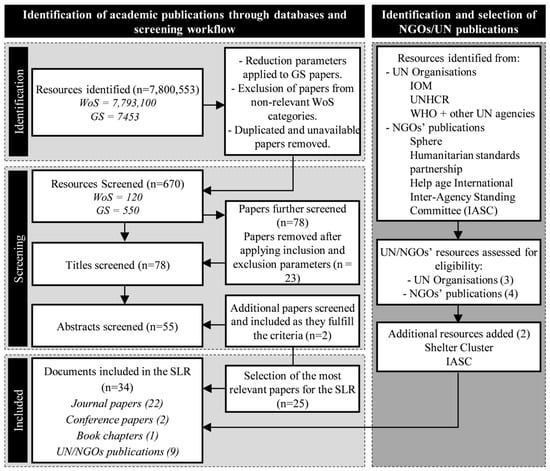
The Preferred Reporting Items for Systematic Reviews (PRISMA) statement [21] was used as a systematic review guideline for this study’s phases of screening relevant references. The PRISMA diagram presented in Figure 1 outlines the selection process for the studies and relevant literature included in this systematic analysis, as well as the inclusion and exclusion criteria across four phases: identification, screening, and, finally, defining the included papers for the thematic analysis, which will be included in the study findings.
Figure 1.
PRISMA diagram, outlining paper selection process. Source: Authors.
The initial “Identification” phase of source screening provided the following outcomes: Google Scholar (GS) = 7,793,100, Web of Science (WoS) = 7453. The papers were retrieved from search engines and considered the keywords and titles that included the search strings described in the previous section. The large number of results, especially from Google Scholar, required applying methods for quickly filtering the most relevant studies following reduction parameters such as focusing on the first five pages of results or the first 200 results [22,23]. These reduction parameters were not applied arbitrarily; the authors carefully considered the most relevant sources based on their titles and fields. Similarly, the results from the WoS were filtered considering the WoS categories or fields most relevant to the study. Following these reduction parameters, the results from this phase are as follows: Google Scholar (GS): 550 results, Web of Science (WoS): 120 results.
Importantly, the selection of Web of Science and Google Scholar reflects the topic’s interdisciplinary nature. Google Scholar was included to capture grey literature and practitioner-oriented publications that are often not indexed in structured databases. The screening of Google Scholar results was limited to the first five pages or 200 results as a pragmatic filtering strategy [23]. It is acknowledged that this strategy may exclude relevant studies beyond this range. However, this strategy also enabled the identification of the most contextually relevant sources within the scope of the study.
The following Screening stage included two steps. The first step considered analysing the relevance of the papers’ titles to the study, resulting in 78 papers. The second step in this Screening phase included analysing abstracts and a quick analysis of the articles’ contents, such as context of the studies, results, discussions and conclusions, which, together with the application of the inclusion and exclusion parameters specified in Table 2, resulted in 24 papers selected for full thematic analysis. In addition, publications from United Nations agencies and non-governmental organisations were included to capture practice-oriented perspectives. The final corpus, therefore, consists of 34 documents, which form the basis of the thematic synthesis.
Table 2.
Inclusion and exclusion parameters.
Additional publications from international humanitarian organisations such as the United Nations (UN) & Non-Government Organisations (NGO) were also selected and assessed for eligibility and relevance to this study’s objectives and research questions. Relevant organisations’ publications were initially screened from the following UN agencies: IOM, UNHCR, WHO, and the Inter-Agency Standing Committee (IASC). Additional resources were identified from the following NGOs: Sphere, Humanitarian Standards Partnership, and HelpAge International. This selection process resulted in the inclusion of seven documents in the SLR.
The final selection of documents included 34 documents and papers (as seen in Figure 1) for their exhaustive thematic analysis: Ten papers on healing architecture, fifteen on the mental health of refugees and displaced persons, and seven from NGO and UN agencies. In the last stage, two additional resources on mental health and psychosocial support (MHPSS) for refugees and displaced persons were included in this paper by specialised agencies on humanitarian aid and shelter assistance: the Shelter Cluster and the Inter-Agency Standing Committee (IASC).
2.3. Content Analysis and Synthesis
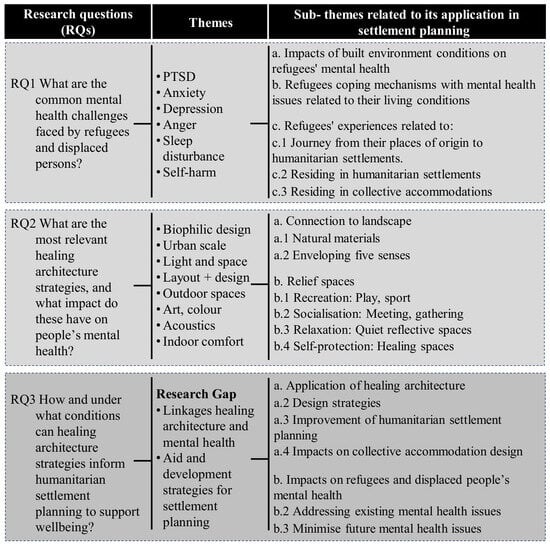
Following the selection of relevant academic and non-academic publications for exhaustive analysis to answer the research questions, a coding framework (presented in Figure 2) was developed, which will be key to the thematic analysis of the 34 selected documents. The coding framework contains a series of themes and sub-themes aligned to the research questions. Thematic analysis was used in this study to identify and organise patterns of meaning, or “themes,” to better understand collective experiences [19,24,25] within a qualitative approach for analysing the selected publications. A coding and sub-coding approach was applied to examine key issues [26] essential for addressing the three research questions. The answer to Research Question 1 (RQ1) identifies the mental health issues that displaced people face and that are crucial to consider in humanitarian settlements. The answer to Research Question 2 (RQ2) explores strategies within the built environment that can alleviate mental health concerns. In this case, the exploration focuses on healing architecture strategies used in mental health facilities, such as hospitals. The answer to Research Question 3 (RQ3) has been identified as a knowledge gap: the linkages between healing architecture strategies to address mental health issues among refugees and displaced people, specifically in humanitarian settlement planning and design, have not been analysed in previous studies. Thus, this study proposes a framework for the connection between these factors in the discussion section.
Figure 2.
Coding Framework. Source: Authors.
The coding process was conducted by the authors using an iterative thematic analysis approach (see [27]). Initial codes were developed based on the research questions and refined through repeated engagement with the selected materials. Themes were identified inductively and organised into categories reflecting mental health challenges, architectural strategies, and their integration. Given the exploratory nature of the study, no formal inter-coder reliability testing or software-assisted coding was employed. Analytical consistency was maintained through iterative discussion between the authors.
2.4. Limitations and Scope
This study focuses on key issues linking the built environment, living conditions, and health impacts on refugees and displaced persons in camps, given the potential for long-term displacement, as alternatives for their return to their home countries or permanent relocation are under evaluation. Given the impacts of the physical environment on people’s mental health, this includes aspects such as humanitarian settlement design, covering both planned and unplanned (organic) settlements; interventions in existing settlements, whether planned or informal; and collective accommodation, such as transit centres. However, urban settlements and accommodation where refugees are resettled permanently in another country are excluded from this study. In addition, specific demographic factors, such as age, gender, and ethnicity, are not considered in the mental health analysis. Finally, this study is based on secondary data; thus, no primary data were collected from residents or managers of refugee camps or other temporary accommodations for refugees or displaced persons.
Furthermore, this study may be affected by selection and publication bias, as it relies on English-language sources and a limited number of databases and grey literature. Additionally, subjective judgment in study selection and thematic analysis may influence the interpretation of findings across heterogeneous contexts. The analysis is conducted from the authors’ perspective as humanitarian workers and academics. Therefore, this study is an exploration of relevant studies and identification of key issues and factors that need to be considered for empirical studies, or that can serve as the basis for further analysis and evaluation in the implementation of settlement design by relevant humanitarian organisations or others involved. Further studies may include displaced people’s perspectives, experiences, and opportunities to improve their living environments and support their wellbeing and mental health.
This study is based on a Systematic Literature Review (SRL). However, it adopts a systematic-informed approach rather than a fully reproducible systematic review. The study follows structured procedures for literature identification, screening, and thematic synthesis. Additionally, it incorporates conceptual interpretation to support interdisciplinary analysis. Due to the scope of the study and the inclusion of heterogeneous sources, certain elements such as full search repositories, screening logs, and formal risk-of-bias assessments were not developed, and this is acknowledged as a limitation.
3. Findings
The findings synthesise evidence from diverse sources with varying methodological strengths. Where relevant, distinctions are drawn between direct evidence, indirect evidence from related contexts (such as healthcare), and interpretive insights. Following the screening process specified above, the detailed list of the 34 selected academic and non-academic documents is presented in Table 3 below. Table 3 also shows the correlation between the contents of the selected publications and the three research questions and the themes specified in the Coding Framework in Figure 2. The analysis of the specific themes and sub-themes is presented grouped in three main sub-sections: (a) Refugees and displaced people’s mental health challenges, (b) Relevant healing architecture strategies for mental health, and (c) Integration of healing architecture for improving people’s mental health.
Table 3.
Thematic distributions of selected publications.
3.1. Refugees and Displaced People’s Mental Health Challenges
The mental health challenges impacting refugees and displaced people identified from the literature review are linked to two instances: Health issues associated with the condition of displacement and the triggers of it, such as conflict, and issues emerging due to the inhabitation conditions in humanitarian settlements and collective accommodation that work as pressing factors on the mental wellbeing of refugees and IDPs.
- a.
- Issues arising from conditions of displacement
Multiple mental health issues pose complex challenges impacting refugees and displaced people [39]. The literature review indicates that refugees and displaced people experience higher rates of post-traumatic stress disorder (PTSD), major depression, anxiety and anger compared to the general population [55]. PTSD and major depression are common effects of traumatic experiences, which can impact displaced people for decades and even mark their entire lives, extending after they are resettled in a safe country [59]. PTSD and depression are predominant conditions in refugees and internally displaced persons (IDPs) [8], with studies pointing out that the prevalence of PTSD, depression and anxiety in these displaced populations is up to 7–8 times higher than in the general population [60,61]. These mental health issues often result from traumatic experiences and other stressors, including the initial forced departure from their homes, uncertainty of asylum and poor living conditions, combined with unpredictable timeframes [39,62]. PTSD can also be associated with pre-displacement conditions, as van de et al. [55] observed in a study on two Rohingya refugee camps in Bangladesh. PTSD symptoms in Rohingya refugees are linked with exposure to prior trauma, which includes conditions of invisibility, violence and discrimination, such as food insecurity, lack of freedom of movement, safety concerns and living conditions within their pre-displacement housing and settlements. Additionally, physical and psychological impacts of trauma intersect when somatisation and anger also emerge as the result of severe distress experienced by refugees and displaced persons [45].
Anxiety is also a common mental health disorder associated with displacement, and most refugees suffer severe anxiety as they are often concerned about their own and their families’ health and their uncertain future [8,39]. In addition, sleep disturbance is also present in these communities, and this condition is linked with PTSD and anxiety [8,63]. The prevalence of sleep disorders is not limited to adults, as children and adolescents are also significantly affected [64]. Another crucial issue emerging from the literature review is the risk associated with self-harm and suicide among refugees and displaced people [11]. Even though some researchers associate these risks with the time refugees and IDPs spend in camps and their precarious living conditions [55], the origin of these issues is not limited to post-displacement trauma. Self-harm risks reflect a complex response to pre-migration trauma, violence during displacement and multiple challenges within refugee camps [65]. These findings highlight the severity of the mental health challenges faced by refugees and displaced persons and provide opportunities to explore alternatives for thoughtful humanitarian settlement design, shelter planning, and supportive spatial and built environment strategies.
- b.
- Challenges related to the conditions and duration of inhabitation in humanitarian settlements
Poor conditions within humanitarian settlements can contribute to the onset and severity of mental health issues [8,62]. Several aspects of living in humanitarian settlements and collective accommodation have been shown to negatively impact the mental health of refugees and IDPs. Humanitarian settlements, even those intended for extended timeframes, are intended to be transitional residing places for refugees and IDPs while the conditions in their home countries or regions improve, allowing them to go back home or until they are permanently resettled in a third country, which is considered their “safe haven”. However, the evidence indicates that the intended short-term stay can extend for decades and cause intergenerational issues [66]. The uncertainty about the duration of their stay in humanitarian settlements and the prolonged time spent in these settlements often exacerbates PTSD and related mental health issues [30]. Studies in other typologies of collective accommodation, such as transit centres analysed by Rizzi et al. [8], revealed similar outcomes and a correlation between the prolonged time spent in these accommodations and the mental health of refugees and IDPs. Rizzi et al. [8] studied transit centres in Lviv, Ukraine, and observed that their residents developed anxiety, anger, depression and severe sleep disturbances. Conzatti et al. [67] identified a correlation between shelter conditions and the mental health of displaced communities, including stress and sleep disorders. However, the study also notes that conclusive evidence linking shelter conditions to health outcomes is lacking, given the difficult and unpredictable nature of displacement settings, which hinders reliable data collection and long-term monitoring.
In relation to the risk factors within humanitarian settlements, leading to refugees experiencing mental health problems [39], the United Nations’ Inter-Agency Standing Committee [41] highlight multiple stressors that risk their mental and physical health, emphasise their association with the settlement’s physical conditions, such as poor ventilation, inadequate or unsafe toilets and washing facilities, inadequate feminine hygiene facilities, inadequate water supply and drainage (water, sanitation and hygiene—WASH), poor waste management and insufficient area per person that promotes overcrowding. Living conditions challenges in refugee camps are not limited to shelter or their physical environment, but they evidence a complex series of issues such as food insecurity, poor quality services and health, poverty, and exposure to and experiences of sexual and gender-based violence [39].
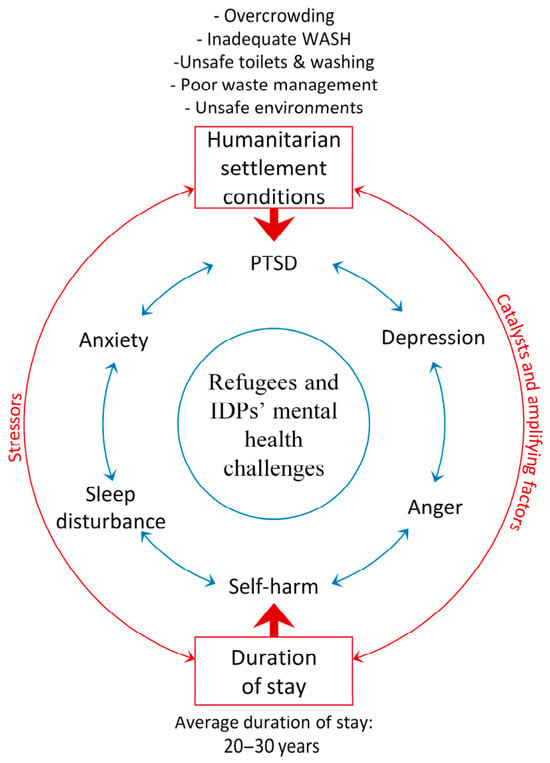
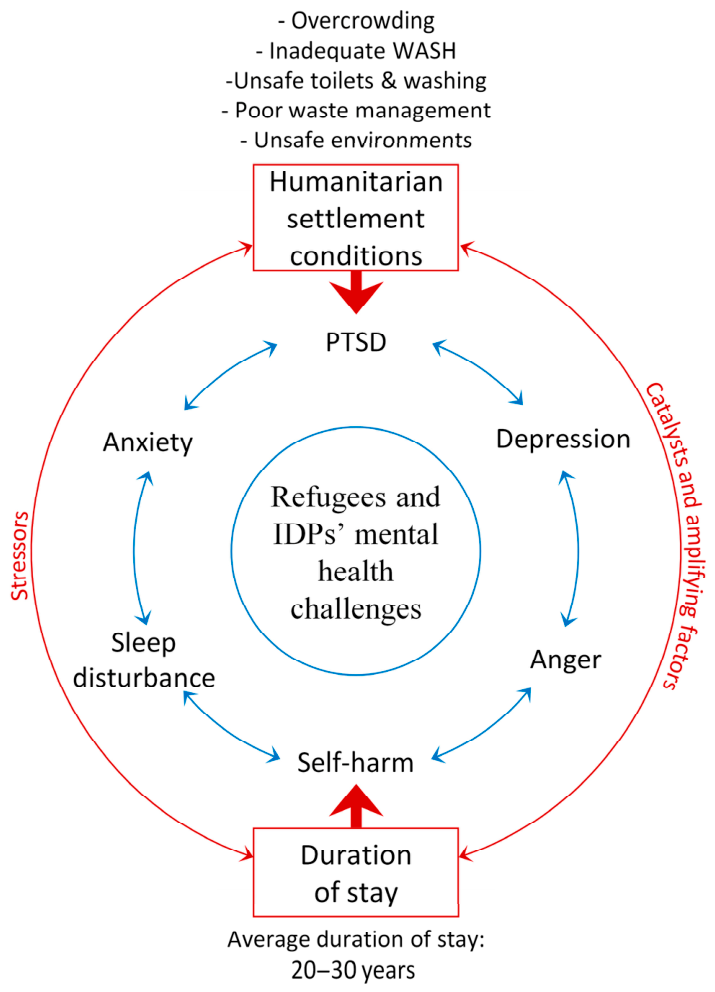
Issues related to personal and family safety are additional stressors and catalysts for mental health issues among refugees and IDPs. Benoni et al. [11] observed that Yazidi refugees in an Iraqi Kurdish camp perceived themselves as much safer in the camp compared to external living environments, as the perceived dangers for themselves and their accompanying and separated relatives were greater during their pre-flight or before escape and during flight stages [12]. In refugee camps and collective accommodation, some of the major concerns are related to violence against women and children [68]. These safety risks are intensified by multiple living conditions, such as overcrowding, lack of access to proper services and untreated trauma and mental health issues [69]. Figure 3 above presents the main mental health issues identified in the literature review, and their correlations with conditions in humanitarian settlements and with length of stay, as stressors, critical catalysts, and amplifying factors that directly influence refugees, asylum seekers, and IDPs residing in humanitarian settlements.
Figure 3.
Impact of length of stay in settlement and conditions on the mental health of refugees and displaced persons. Source: Authors.
The diverse living conditions and uncertainty about the length of stay in these humanitarian settlements. The understanding of these risk factors and the influence of settlement design and planning offers opportunities to mitigate people’s vulnerabilities through careful settlement planning, especially to minimise risks associated with gender-based violence [44].
3.2. Relevant Healing Architecture Strategies for Mental Health
Architecture and urban planning can impact people’s physical health, mental health and wellbeing, which is especially relevant in high-density collective housing [70]. The diverse living conditions and uncertainty on the length of stay in these humanitarian settlements identified in the literature review increase the risk of mental health issues and psychological trauma among refugees, asylum seekers and IDPs [39]. The understanding of these risk factors and the influence of settlement design and planning offers opportunities to mitigate people’s vulnerabilities through careful settlement planning, especially to minimise risks associated with gender-based violence [44].
This section explores the potential for integrating Healing Architecture strategies into the design and planning of humanitarian settlements. Diverse studies evidence the positive impacts of Healing Architecture strategies applied in hospitals and mental health facilities, which are extended to urban planning, promoting healing and wellbeing [47]. Carefully designed spaces that incorporate natural elements and ample light can contribute significantly to physical and mental healing in medical facilities [48]. In this context, healing architecture can support emotional recovery by reducing stress, mitigating PTSD symptoms, and promoting overall wellbeing [48].
Lawson [71] expands the understanding of Healing Architecture by arguing that design elements under architects’ control, including architectural layout, interior spaces, and responses to the environment, landscape, and light, can significantly influence patient satisfaction, quality of life, treatment duration, medication use, levels of aggression, and sleep patterns. In this sense, the design of healing environments plays an important role in supporting patients’ wellbeing and recovery. Aripin [72] suggests that creating a healing environment would reduce patients’ stress and, in turn, shorten hospital stays. The multiple impacts of Healing Architecture in promoting people’s wellbeing and minimising mental health issues, based on the relevant literature, are presented in Table 4.
Table 4.
Healing Architecture Strategies and their impact on Mental Health issues.
- a.
- Biophilic design
Ghazaly et al. [14] in their study on healing architecture, identified biophilic design as a key strategy, as it is based on the extensive empirical research that has demonstrated the powerful and restorative influence of natural elements on human cognitive, physiological, and psychological functions of the human body. This growing body of evidence has driven the development of biophilic design as a recognised and impactful approach in architectural practice. Research suggests that incorporating biophilic design into healthcare environments, such as hospitals, can significantly improve mental health outcomes by reducing stress, enhancing mood, and promoting emotional resilience [14]. These benefits extend beyond healthcare settings and are equally relevant to the design of humanitarian settlements. For refugees and displaced persons, who often face prolonged uncertainty, trauma, and displacement, biophilic design strategies can play a critical role in supporting psychological wellbeing and fostering a sense of safety and dignity. Key biophilic design strategies and their associated mental health benefits are outlined in Table 5 below.
Table 5.
Biophilic design strategies and their impact on the mental health of patients.
- b.
- Urban scale
Aspects of Healing Architecture can be applied at the urban scale through the planning and design of the built environment. The literature suggests that healing outcomes can be fostered in urban settings when healing design strategies are integrated into urban planning [14]. These principles are also relevant to humanitarian settlement planning and design, where many of the key design elements overlap with urban planning frameworks. These include circulation and the provision of open or communal spaces, which can help reduce stress and support overall wellbeing. Gardens have been shown to alleviate anxiety, reduce symptoms of PTSD, and promote psychological recovery [14]. Mitigating the urban heat island effect through landscape design, calm streetscapes, and visual relief can further reduce stress and depressive symptoms. Additionally, ensuring proper solar orientation and access to sunlight supports wellbeing, while inclusive and accessible design for people with disabilities and older adults can enable social inclusion and reduce stress in these populations.
- c.
- Light
Adequate use of light is a fundamental strategy of Healing Architecture, with a growing body of research supporting its role in promoting health and wellbeing. Exposure to natural light has been shown to improve patient recovery outcomes, enhance mood, and contribute to overall physical and mental health [42]. This aligns with findings by Codinhoto [31], who emphasises that both natural and artificial light are intrinsically linked to physical, physiological, and psychological health outcomes. These insights reveal key strategies that incorporate daylight to alleviate symptoms of depression, regulate circadian rhythms, and enable a sense of connection with the natural environment. Additionally, well-designed artificial lighting can help mitigate sleep disturbances and support emotional stability, especially in settings where access to natural light is limited [34].
- d.
- Layout, wayfinding and exterior design
An easy-to-navigate internal building layout has been shown to reduce stress and promote overall wellbeing. Features such as intuitive spatial organisation, clear signage, and visible circulation paths, with clear signage, contribute to a more positive and calming environment [47]. This is especially important for older adults and individuals with disabilities, for whom navigation ease enhances not only physical comfort but also a sense of autonomy and dignity. Adequate signage would also promote people’s sense of safety and protection in settlements and areas that can be vulnerable to hazards [73]. The inclusion of acoustic emergency signals alongside visual or graphic evacuation signals is important to support people who may be visually or hearing impaired.
In Healing Architecture, sensitive wayfinding and circulation are key strategies for decreasing stress and supporting inclusion. These include consistent visual cues, logical spatial sequencing, and minimising disorienting transitions [51]. Accessible design that meets the needs of vulnerable populations not only improves functionality but also supports psychological wellbeing by promoting inclusivity and respect [47].
- e.
- Art and Colour
The use of art in mental health facilities is a vital strategy in healing architecture, as it can help alleviate conditions such as depression, anxiety and low self-esteem [31]. Strategies related to art and colour include integrating visual artworks throughout the facility and providing creative, art-based activities. These approaches can reduce the symptoms of depression, stress, and anxiety, and promote social interaction and reduce isolation [51]. Other expressions of art, such as handicrafts, can also have a positive impact on traumatised people, serving as forms of cultural preservation and reconnection for displaced people with their cultural roots and identities [74].
The use of contrasting colours can enhance accessibility for people with visual impairments, supporting inclusivity and reducing the pressure on people with visual impairments to navigate internal and external spaces [51]. In addition, selecting a carefully considered healing colour palette and avoiding colours known to have adverse psychological effects are fundamental design principles. For example, grey, purple, and red have been linked to depressive moods and are typically excluded from environments such as hospices and psychiatric hospitals. Red may trigger heightened anxiety and is best avoided. In contrast, natural tones, as well as blues and greens, are associated with calmness, lower anxiety levels, and improved sleep quality [31,34]. It is important to consider the psychological and socio-cultural associations of specific colours or symbols to properly communicate the messages and avoid adverse impacts [75].
- f.
- Acoustics and sound transmission
Acoustics and sound transmission are important considerations in the design of healthcare and mental health facilities. Excessive noise can increase stress and disrupt sleep, while reducing sound transmission supports relaxation, comfort, and rest [31]. Minimising sound transmission can promote relaxation, allow for comfort and rest while reducing the risk of sleep disturbance; conversely, excessive noise can also be associated with a surge of stress [31]. Acoustic strategies in Healing Architecture include avoiding sound-reflective surfaces, incorporating acoustic barriers, and ensuring effective separation between spaces. Good acoustic design throughout a facility can lower stress [47], and separation between bedrooms is especially important in mitigating sleep disturbance. In the context of displaced populations, preserving acoustic comfort in collective accommodation is also associated with their sense of dignity and privacy, as well as the proximity between residents’ shelters or housing units of residents of various ages, such as the elderly and infants, and reducing potential sources of conflict among residents [76].
- g.
- Outdoor Spaces
The link between mental health issues and the refugee settlement is explored by Benoni et al. [11] in their research. A focus group in their study discussed ‘Places and setting’ highlighted that the sub-areas within the camp and the tents were the main elements negatively impacting the mental health of refugees, reflecting the limited social spaces despite being crucial for people to interact besides the isolating sense in their tents [11]. Thus, the importance of the physical settings in refugee camps, encompassing private and collective spaces, and of the interaction between the tents and the entire settlement and their role in promoting people’s wellbeing.
Outdoor areas, including both community and private spaces, are a vital component of Healing Architecture and related urban design. Osonwa et al. [47] noted that architecture can promote social interaction and a sense of community by providing inviting common areas and gathering spaces. Key strategies include incorporating shared outdoor spaces that encourage social engagement, helping to reduce feelings of isolation, stress, and anxiety. For displaced communities, having the opportunity to use purpose-designed or built spaces for social interaction, or to create spontaneously resident-driven, adapted open spaces, can promote healing from adverse experiences, restore the sense of community, and avoid isolation, especially among vulnerable groups such as the elderly [10]. In contrast, the inclusion of private, tranquil outdoor areas supports quiet reflection and contemplation, which can enhance wellbeing and alleviate depressive symptoms [34].
- h.
- Indoor comfort
Indoor comfort is directly linked to room and space layout, and is influenced by factors such as privacy, thermal performance, acoustic comfort, and accessibility for people with disabilities and the elderly. Jablonska and Furmanczyk [42] highlight that spaces should be coherent and easy to navigate to minimise feelings of disorientation, discomfort, and anxiety. Architecture should also offer a sense of privacy, confidentiality, and security, which are key considerations in Healing Architecture that relate to the human scale and a personalised experience. Healing Architecture strategies that enhance indoor comfort include ensuring privacy, maintaining thermal and acoustic comfort, and supporting restful sleep while reducing stress and anxiety. In addition, designing for accessibility promotes inclusiveness, reduces stress for elderly individuals and those with disabilities, and promotes a sense of dignity and independence [47].
3.3. Integration of Healing Architecture for Improving People’s Mental Health in Humanitarian Settlements
The application of healing architecture strategies to humanitarian settlements should be interpreted with caution. Much of the available evidence originates from healthcare and controlled environments, and its transferability to humanitarian contexts remains indirect and context-dependent. The relationships presented are therefore conceptual rather than empirically validated.
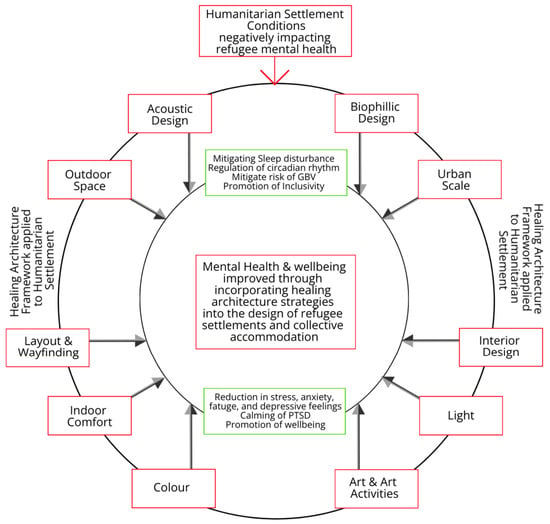
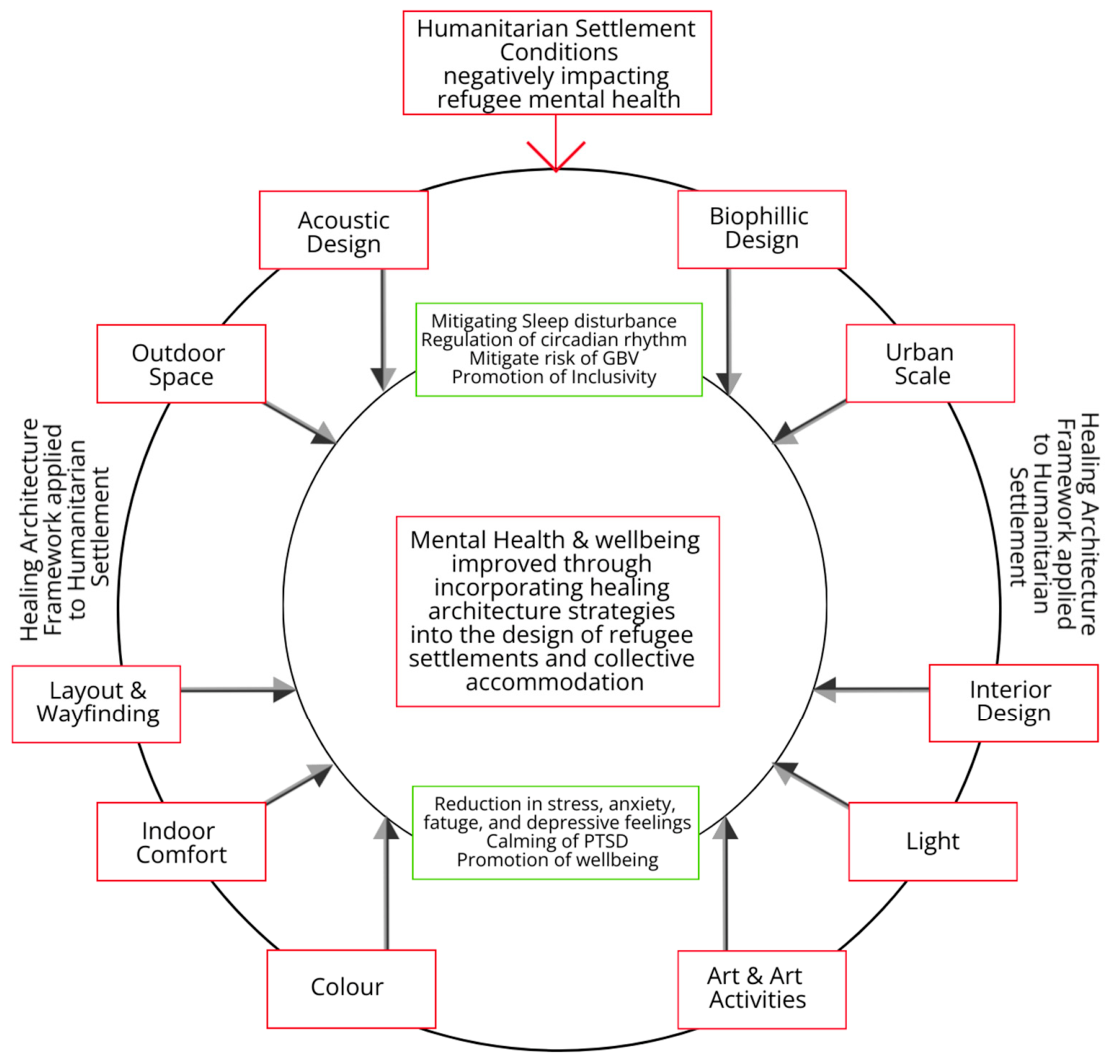
Integrating the healing architecture strategies discussed earlier offers opportunities to design, plan, and implement initiatives in humanitarian settlements to reduce mental health risks among displaced populations. These strategies have been applied in hospitals and mental health facilities to minimise patients’ stress. By harnessing these benefits for mentally vulnerable individuals, healing architecture can help create suitable environments for traumatised displaced people in humanitarian settlements and alleviate their mental health challenges. This approach combines spatial, cultural, and community-based strategies to reduce displacement-related stressors while promoting resilience, social connection, and a sense of personal and collective identity. However, integrating healing architecture principles into humanitarian settlements remains challenging. Unlike specialised health facilities, humanitarian settlements often face unstable, temporary, insecure, and financially constrained conditions. Therefore, it is important to identify opportunities to incorporate healing architecture principles within existing frameworks and approaches for the planning and management of humanitarian settlements. Figure 4 below illustrates the application of healing architecture strategies and highlights the positive impact this framework has on the mental health of refugees and displaced persons, as outlined in Table 4.
Figure 4.
Conceptual framework illustrating the potential application of healing architecture strategies to humanitarian settlements and their indicative relationships with mental health outcomes. Source: Authors.
- a.
- Fostering participatory and adaptive design approaches
The Global Shelter Cluster [37] highlights the importance of participatory approaches in supporting people’s recovery from displacement and in preventing the chronic stress caused by inadequate shelter. Engaging refugees and IDPs in co-designing and co-managing settlements promotes ownership and self-reliance in managing shelter, health, and communal spaces [54] and restores autonomy and reduces feelings of helplessness. Promoting the active participation of crisis-affected people in shelter and settlement assistance allows a proper understanding of the specific local conditions and defines the shelter assistance that will work better based on the multiple factors defining the physical, cultural and socio-economic context [36] as well as their concerns and priorities, such as those related to safety, that might not necessarily align with the planning and design priorities of the settlements’ managing organisations. Participation in shelter decisions and the implementation of shelter initiatives support individual improvements to living conditions by allowing residents to work on their shelters spontaneously and collectively [36]. The support provided to residents during their displacement can also have an impact at the end of the displacement, such as supporting the camp closure and return to longer-term housing solutions [36]. However, implementing participatory processes within humanitarian contexts presents operational challenges. Emergency responses often require the rapid deployment of shelter infrastructure, leaving limited time for consultation or co-design during the initial phase of displacement. In this emergency stage, the primary focus is on providing safety, shelter, and immediate access to essential services, while displaced people often need time to adapt to new environments and address urgent physical and mental health concerns. However, as conditions stabilise, opportunities may emerge for participatory approaches in the adaptation and improvement of settlement spaces. In this second phase, refugees and displaced persons who are willing and able to participate may contribute through co-creation, consultation processes, and more proactive engagement, including community-led advocacy to communicate residents’ experiences and needs to planners and service providers. Such approaches can strengthen trust, social cohesion, and community ownership, while supporting more responsive and wellbeing-oriented settlement environments. Complex governance arrangements involving humanitarian agencies, host governments, and camp management authorities can limit the autonomy displaced populations have in shaping their living environments [33]. Therefore, participatory settlement planning often requires negotiation between humanitarian operational requirements and the rights of affected populations to influence decisions affecting their daily lives.
- b.
- Designing spaces that support psychological safety and identity
Poor shelter conditions in humanitarian settlements, especially in camps, and prolonged stays in tents have profound impacts on people’s physical and mental health, leading to the loss of the sense of “psychological home” or connection to a specific place, which is a vital factor for mental wellbeing in long-term refugee situations [11]. Conditions of overcrowding, insecurity, and lack of privacy can contribute significantly to mental health deterioration among displaced populations [30]. Despite the planning and design limitations inherent to humanitarian settlements, shelter and humanitarian standards offer opportunities to integrate settlement planning and design principles that prioritise safety, privacy, and dignity while reducing exposure to violence, exploitation, and environmental hazards [36]. Similarly, site planning guidance developed by humanitarian actors highlights the importance of spatial layouts that minimise protection risks such as gender-based violence and unsafe access routes within camps [14]. These protection considerations differ from those in healthcare facilities, where therapeutic environments are typically designed within secure institutional settings. In humanitarian settlements, safety must be achieved through spatial planning strategies, including adequate lighting, safe access routes, separation of private and communal areas, and proximity to essential services. Strategies of biophilic design indicate the positive effect of nature on the restoration and healing of the mind and body [14]. Open community spaces, quiet contemplation areas with connections to the landscape, and spaces for children that encourage exploration can all contribute to residents’ wellbeing in humanitarian settlements. These may include healing or therapeutic garden spaces [14], as well as visual connections to the surrounding landscape from shelters and throughout the settlement. Views of the landscape and indoor plants, along with internal layout considerations, can be incorporated into the design of collective accommodation to benefit occupants’ mental health.
- c.
- Incorporating environments that support meaningful activities and social interaction.
Humanitarian frameworks are increasingly recognising social resilience and community recovery as essential components beyond mere physical survival of displaced populations. The IASC MHPSS framework emphasises strengthening community networks and social support systems as key to psychosocial recovery after crises or displacement [15]. Communal infrastructure within humanitarian settlements, such as community centres, educational facilities, marketplaces, and recreational areas, plays a crucial role in supporting wellbeing by enabling displaced people to rebuild social ties, sustain cultural practices, and engage in collective activities [10]. These spaces promote social cohesion and help restore routines disrupted by displacement. For instance, dedicated spaces for adolescents offer opportunities for skill development, autonomy, and distraction from traumatic memories [37]. In the absence of such spaces, many individuals, especially young women who face additional gender-specific mental health challenges, risk social isolation and loss of motivation [37]. Furthermore, collective activities, informal support networks, and shared governance facilitate community resilience by enabling resource organisation, advocacy, and mutual support during prolonged displacement [33].
Humanitarian operations must prioritise essential infrastructure such as shelter, water, and sanitation [53]. However, once these immediate needs are addressed, incorporating multifunctional communal spaces into settlement layouts can provide a cost-effective way to enhance liveability, social resilience, and wellbeing. The Arts in various forms, including fine and decorative art and performing art, can help mitigate mental health conditions and promote inclusion and social interaction [28]. Design-informed strategies relating to art and colour that can be incorporated into humanitarian settlements and collective accommodation include: Encouraging occupants to use calming colours when painting their own shelter, incorporation of appropriate colours throughout the settlement, creation of street art and visual art throughout the settlement, art-based activities for all settlement occupants, including elderly and persons with disabilities. Art zones within the settlement and collective accommodation and paint the interior of the collective accommodation in calming colours.
- d.
- Embedding healing spaces in community and governance structures.
According to Ekezie [33] resilience should be understood not merely as an individual capacity but as a systemic outcome shaped by settlement-level governance, participatory decision-making, and communal coping strategies. Healing architecture can support these systems by enabling spatial conditions that facilitate collective organisation, such as communal meeting areas, safe zones for women and children, and flexible layouts that accommodate local leadership structures. Humanitarian settlements often develop complex governance arrangements that combine formal and informal leadership structures [40,41], in which community committees, representative groups, and local organisations play important roles in coordinating services, mediating conflicts, and facilitating communication between residents and humanitarian agencies [41]. Research on internally displaced populations shows that these governance systems can strengthen resilience by enabling communities to organise resources, advocate for improved living conditions, and collectively respond to emerging challenges [33]. Settlement planning can support these processes by providing spatial environments that encourage participation, dialogue, and inclusive decision-making. Multi-purpose community spaces, meeting areas, and shared facilities can therefore function as hubs for leadership activities, community discussions, and peer support initiatives. Integrating such spaces within settlement layouts strengthens governance structures while also supporting psychosocial wellbeing by promoting social interaction, collective problem-solving, and community cohesion.
- e.
- Targeting stigma through inclusive space design and psychosocial support
Humanitarian frameworks emphasise the importance of integrating mental health and psychosocial support (MHPSS) across multiple sectors of humanitarian response. The IASC guidelines highlight that shelter, protection, health, and community services should work collaboratively to support psychosocial recovery and strengthen resilience among crisis-affected populations [40,41]. Embedding psychosocial support services within community infrastructure can help reduce the stigma often associated with mental health while improving access to care [41]. Rather than isolating these services within specialised facilities, humanitarian settlements can incorporate safe community spaces where counselling, peer support, and psychosocial programmes are delivered alongside other communal activities, allowing support to be accessed in more familiar and socially accepted environments [11]. Inclusive design is particularly important to ensure that vulnerable groups, including women, older persons, and individuals with disabilities, can safely access these services. Humanitarian protection guidance, therefore, emphasises the creation of accessible and inclusive environments that enable all individuals to participate in community life and benefit from available services [38]. Equitable access within the settlement is associated with reduced stress for the elderly and persons with disabilities, a reduction in the risk of GBV, the promotion of inclusiveness and a sense of dignity. Collective accommodation design to include accessibility for persons with disabilities and the elderly, and a mix of spaces for the elderly and children to promote inclusivity.
4. Conclusions
This study explored the potential of applying conceptual design guidance from Healing Architecture strategies to humanitarian settlement planning and collective accommodation to support the mental health and wellbeing of refugees and IDPs. The systematic informed review of academic and humanitarian literature demonstrated the linkages among the mental health challenges experienced by displaced populations; the living conditions and design of humanitarian settlements and collective accommodations; architectural strategies associated with therapeutic environments; and the opportunities and limitations for integrating these approaches into humanitarian settlement planning. The findings highlight that the built environment plays a significant but often underestimated role in shaping psychosocial outcomes for displaced populations, while acknowledging the challenges of implementing these strategies in less stable environments such as humanitarian settlements.
The analysis of the literature confirms that refugees and IDPs face complex and persistent mental health challenges resulting from both pre-displacement challenging experiences and post-displacement living conditions. Conditions such as PTSD, anxiety, depression, sleep disturbances, anger, and risks of self-harm are widely reported among displaced populations. Although these conditions are often associated with experiences of violence, forced migration, and loss, the evidence also demonstrates that prolonged stays in humanitarian settlements can intensify psychological distress. Overcrowding, lack of privacy, limited safety, poor infrastructure, and uncertainty regarding the duration of displacement, which can last from years to become intergenerational challenges for families, contribute to an environment risking the perpetuation of stress rather than support recovery.
The findings also suggest that existing shelter assistance paradigms often prioritise the rapid provision of basic accommodation without fully considering the long-term quality and liveability of settlement environments. However, these limitations are not necessarily due to a lack of recognition of mental health and psychosocial support (MHPSS), which is already well established in humanitarian practice, but rather to the operational realities of emergency contexts. Humanitarian responses must prioritise immediate needs such as shelter, water, sanitation, healthcare, and protection, often leaving limited financial, technical, and organisational capacity for spatial and landscape interventions. Furthermore, healing architecture should not be considered a replacement for effective MHPSS systems. Instead, these approaches should be understood as complementary strategies that can enhance liveability, dignity, social cohesion, and wellbeing once essential humanitarian services and support systems are established.
Several healing architecture strategies identified in the literature, including biophilic design, access to natural light, legible spatial layouts, acoustic comfort, the use of art and colour, and the provision of outdoor and communal spaces, have been associated with reduced stress, improved mood, better sleep regulation, and enhanced social interaction. However, transferring these strategies to humanitarian settlements requires careful consideration, as healing architecture principles were largely developed for controlled healthcare environments with stable governance, predictable occupancy, and significant financial resources. In contrast, humanitarian settlements operate within conditions of uncertainty, limited funding, temporary infrastructure, and complex governance arrangements. The literature suggests promising opportunities for adapting healing design strategies to displacement contexts; however, practical implementation will require navigating operational, financial, political and spatial realities.
The study also highlights opportunities to integrate mental health considerations into shelter assistance frameworks within the humanitarian sector, despite the pressures to secure housing for the increasing number of displaced people worldwide. For instance, the analysis emphasises the importance of linking spatial strategies with humanitarian governance and community-based approaches. Participatory settlement planning can enhance autonomy and ownership among displaced communities, while spatial designs that prioritise safety, accessibility, and privacy can reduce safety concerns and support psychological wellbeing. Furthermore, communal spaces and social infrastructure are crucial for encouraging social interaction, rebuilding collective identity, and strengthening informal support networks during prolonged displacement.
This study is subject to several limitations. The restricted database coverage, reliance on English-language sources, and inclusion of heterogeneous materials limit the comprehensiveness and reproducibility of the review. The absence of formal critical appraisal and the interpretive nature of the synthesis further constrain the strength of the conclusions. The findings should therefore be understood as a conceptual and evidence-informed contribution rather than a definitive systematic evaluation.
Empirical studies in refugee camps and other forms of humanitarian collective accommodation are needed to evaluate how healing-oriented design strategies function in real and specific humanitarian settings. Further research should examine how factors such as gender, age, disability, and cultural background influence perceptions of, and the effectiveness of, healing environments for displaced communities in humanitarian contexts. Strengthening collaboration between architects, planners, humanitarian organisations, and affected communities is crucial for translating conceptual frameworks into practical planning tools and initiatives. Advancing this interdisciplinary agenda may contribute to a gradual integration of relevant approaches, such as Healing Architecture, shifting humanitarian settlement planning from a narrow focus on emergency shelter provision toward environments that more effectively support recovery, resilience, wellbeing, and dignity for displaced populations. Further empirical and interdisciplinary research is required to evaluate how these approaches can be adapted and implemented across different humanitarian contexts, cultures, settlement typologies, and stages of displacement.
Author Contributions
Conceptualization, D.A. and S.C.; methodology D.A. and S.C.; writing—original draft preparation D.A. and S.C.; writing—review and editing D.A. and S.C.; visualization D.A. and S.C. All authors have read and agreed to the published version of the manuscript.
Funding
This research received no external funding.
Institutional Review Board Statement
Not applicable.
Informed Consent Statement
Not applicable.
Data Availability Statement
No new data were created or analysed in this study.
Conflicts of Interest
The authors declare no conflicts of interest.
Abbreviations
The following abbreviations are used in this manuscript:
| FDP | Forcibly Displaced Persons |
| GBV | Gender-Based Violence |
| GS | Google Scholar |
| IASC | Inter-Agency Standing Committee |
| IDPs | Internally Displaced Persons |
| IOM | International Organization for Migration |
| MHPSS | Mental Health and Psychosocial Support |
| NGO(s) | Non-Governmental Organisation(s) |
| PRISMA | Preferred Reporting Items for Systematic Reviews and Meta-Analyses |
| PTSD | Post-Traumatic Stress Disorder |
| RQ | Research Question |
| SRL | Systematic Literature Review |
| UN | United Nations |
| UNHCR | United Nations High Commissioner for Refugees |
| WASH | Water, Sanitation and Hygiene |
| WHO | World Health Organization |
| WoS | Web of Science |
References
- UNHCR. Refugee Statistics. Available online: https://www.unhcr.org/refugee-statistics (accessed on 3 September 2024).
- UNHCR. Refugee Camps. Available online: https://www.unrefugees.org/refugee-facts/camps/ (accessed on 2 April 2025).
- Devictor, X.; Do, Q.T. How many years have refugees been in exile? In Policy Research Working Paper|no. WPS 7810; World Bank: Washington, DC, USA, 2016. [Google Scholar]
- UNHCR. Settlement & Shelter Interventions. Available online: https://emergency.unhcr.org/emergency-assistance/settlement-and-shelter/settlement-shelter-interventions (accessed on 17 July 2025).
- Kuligowski, E.D.; Gwynne, S.M.V.; Xie, H.; Westbury, A.; Antonellis, D.; Pongratz, C. Simulating Evacuation of Humanitarian Settlements. Fire Technol. 2025, 61, 1327–1357. [Google Scholar] [CrossRef] [Scilit]
- Alexander, D.; Davidson, C.H.; Fox, A.; Lizzaralde, G.; Johnson, C. Post-Disaster Reconstruction: Meeting Stakeholder Interests: Proceedings of a Conference Held at the Scuola di Sanità Militare, Florence, Italy, 17–19 May 2006; Firenze University Press: Florence, Italy, 2007. [Google Scholar]
- Caia, G.; Ventimiglia, F.; Maass, A. Container vs. dacha: The psychological effects of temporary housing characteristics on earthquake survivors. J. Environ. Psychol. 2010, 30, 60–66. [Google Scholar] [CrossRef] [Scilit]
- Rizzi, D.; Ciuffo, G.; Sandoli, G.; Mangiagalli, M.; de Angelis, P.; Scavuzzo, G.; Nych, M.; Landoni, M.; Ionio, C. Running Away from the War in Ukraine: The Impact on Mental Health of Internally Displaced Persons (IDPs) and Refugees in Transit in Poland. Int. J. Environ. Res. Public. Health 2022, 19, 16439. [Google Scholar] [CrossRef] [Scilit] [PubMed]
- Albadra, D.; Elamin, Z.; Adeyeye, K.; Polychronaki, E.; Coley, D.A.; Holley, J.; Copping, A. Participatory design in refugee camps: Comparison of different methods and visualization tools. Build. Res. Inf. 2021, 49, 248–264. [Google Scholar] [CrossRef] [Scilit]
- Carrasco, S.; O’Brien, D. Urbanism of Emergency: Use and Adaptation of Public Open Spaces in Disaster-Induced Resettlement Sites. In Resettlement Challenges for Displaced Populations and Refugees; Springer: Berlin/Heidelberg, Germany, 2019; pp. 163–174. [Google Scholar]
- Benoni, R.; Giacomelli, C.; Vegro, G.; Hamo, F.; Avesani, R.; Albi, P.; Gatta, M.; Moretti, F. Assessing the mental health needs of Yazidi adolescents and young adults in an Iraqi Kurdi IDP Camp: A focus group study. Int. J. Equity Health 2024, 23, 88. [Google Scholar] [CrossRef] [Scilit]
- Lustig, S.L.; Kia-Keating, M.; Knight, W.G.; Geltman, P.; Ellis, H.; Kinzie, J.D.; Keane, T.; Saxe, G.N. Review of child and adolescent refugee mental health. J. Am. Acad. Child. Adolesc. Psychiatry 2004, 43, 24–36. [Google Scholar] [CrossRef] [Scilit]
- Oliver-Smith, A. Defying Displacement: Grassroots Resistance and the Critique of Development; University of Texas Press: Austin, TX, USA, 2010. [Google Scholar]
- Ghazaly, M.; Badokhon, D.; Alyamani, N.; Alnumani, S. Healing Architecture. Civ. Eng. Archit. 2022, 10, 108–117. [Google Scholar] [CrossRef] [Scilit]
- Bell, S.L.; Foley, R.; Houghton, F.; Maddrell, A.; Williams, A.M. From therapeutic landscapes to healthy spaces, places and practices: A scoping review. Soc. Sci. Med. 2018, 196, 123–130. [Google Scholar] [CrossRef] [Scilit]
- van Wee, B.; Banister, D. Literature review papers: The search and selection process. J. Decis. Syst. 2024, 33, 559–565. [Google Scholar] [CrossRef] [Scilit]
- Sacks, H.S.; Berrier, J.; Reitman, D.; Ancona-Berk, V.A.; Chalmers, T.C. Meta-analyses of randomized controlled trials. N. Engl. J. Med. 1987, 316, 450–455. [Google Scholar] [CrossRef] [Scilit] [PubMed]
- Purssell, E.; McCrae, N. How to Perform a Systematic Literature Review: A Guide for Healthcare Researchers, Practitioners and Students; Springer: Berlin/Heidelberg, Germany, 2020. [Google Scholar]
- Carrasco, S.; O’Brien, D. Build Back Safely: Evaluating the Occupational Health and Safety in Post-Disaster Reconstruction. Sustainability 2023, 15, 7721. [Google Scholar] [CrossRef] [Scilit]
- Xiao, Y.; Watson, M. Guidance on conducting a systematic literature review. J. Plan. Educ. Res. 2019, 39, 93–112. [Google Scholar] [CrossRef] [Scilit]
- Page, M.J.; McKenzie, J.E.; Bossuyt, P.M.; Boutron, I.; Hoffmann, T.C.; Mulrow, C.D.; Shamseer, L.; Tetzlaff, J.M.; Akl, E.A.; Brennan, S.E.; et al. The PRISMA 2020 statement: An updated guideline for reporting systematic reviews. Int. J. Surg. 2021, 88, 105906. [Google Scholar] [CrossRef]
- The University of Queensland. Systematic Reviews: A Brief Overview of Systematic Reviews and Resources to Support Producing One. Available online: https://guides.library.uq.edu.au/research-techniques/systematic-review/sources (accessed on 1 April 2025).
- Briscoe, S.; Abbott, R.; Lawal, H.; Shaw, L.; Coon, J.T. Feasibility and desirability of screening search results from Google Search exhaustively for systematic reviews: A cross-case analysis. Res. Synth. Methods 2023, 14, 427–437. [Google Scholar] [CrossRef] [Scilit]
- Denyer, D.; Tranfield, D. Producing a Systematic Review. In The Sage Handbook of Organizational Research Methods; Buchanan, D., Bryman, A., Eds.; Sage: Thousand Oaks, CA, USA, 2009. [Google Scholar]
- Vaismoradi, M.; Turunen, H.; Bondas, T. Content analysis and thematic analysis: Implications for conducting a qualitative descriptive study. Nurs. Health Sci. 2013, 15, 398–405. [Google Scholar] [CrossRef] [Scilit]
- Saldaña, J. The Coding Manual for Qualitative Researchers, 2nd ed.; SAGE: London, UK, 2013; pp. 1–440. [Google Scholar]
- Morgan, D.L.; Nica, A. Iterative Thematic Inquiry: A New Method for Analyzing Qualitative Data. Int. J. Qual. Methods 2020, 19, 1609406920955118. [Google Scholar] [CrossRef] [Scilit]
- Akinyemi, O.O.; Owoaje, E.T.; Cadmus, E.O. In Their Own Words: Mental Health and Quality of Life of West African Refugees in Nigeria. J. Int. Migr. Integr. 2016, 17, 273–287. [Google Scholar] [CrossRef] [Scilit]
- Asfour, K. Healing Children Through «Spatial Experience» Architecture. Arquit. Mind Land. Soc. 2019, 31, 27–50. [Google Scholar]
- Braun-Lewensohn, O.; Al-Sayed, K. Syrian Adolescent Refugees: How Do They Cope During Their Stay in Refugee Camps? Front. Psychol. 2018, 9, 1258. [Google Scholar] [CrossRef] [Scilit] [PubMed]
- Codinhoto, R. Architecture: Healing architecture. In Design for Health; Tsekleves, E., Cooper, R., Eds.; Routledge: Abingdon, UK, 2017; pp. 111–153. [Google Scholar]
- Connellan, K.; Gaardboe, M.; Riggs, D.; Due, C.; Reinschmidt, A.; Mustillo, L. Stressed spaces: Mental health and architecture. HERD—Health Environ. Res. Des. J. 2013, 6, 127–168. [Google Scholar] [CrossRef] [Scilit]
- Ekezie, W. Resilience actions of Internally Displaced Persons (IDPs) living in camp-like settings: A Northern Nigeria case study. J. Migr. Health 2022, 6, 100115. [Google Scholar] [CrossRef] [Scilit] [PubMed]
- El Shamy, N. The Impact of Architectural Psychology on the Interior Design of Psychiatric Hospitals. J. Des. Sci. Appl. Arts 2021, 2, 41–59. [Google Scholar] [CrossRef] [Scilit]
- Getanda, E.M.; Papadopoulos, C.; Evans, H. The mental health, quality of life and life satisfaction of internally displaced persons living in Nakuru County, Kenya. BMC Public. Health 2015, 15, 755. [Google Scholar] [CrossRef] [Scilit]
- Global Shelter Cluster. Shelter Project Essentials: Learning from Programming in Humanitarian Crises; Global Shelter Cluster: Geneva, Switzerland, 2021. [Google Scholar]
- Global Shelter Cluster. Connecting Shelter and MHPSS: A Guidance Paper; Global Shelter Cluster: Geneva, Switzerland, 2024. [Google Scholar]
- HelpAge International. Protection Interventions for Older People in Emergencies; HelpAge International: London, UK, 2013. [Google Scholar]
- Ilyas, M.; Siddiqui, A.A.; Alshammary, F.; Al-Enizy, A.S.; Alam, M.K. Mental Health and Well-being of Refugees. In Handbook of Healthcare in the Arab World; Laher, I., Ed.; Springer International Publishing: Cham, Switzerland, 2021; pp. 333–353. [Google Scholar]
- IASC. IASC Guidelines on Mental Health and Psychosocial Support in Emergency Settings; IASC: Geneva, Switzerland, 2007. [Google Scholar]
- IASC. The Mental Health and Psychosocial Support Minimum Service Package; IASC: Geneva, Switzerland, 2022. [Google Scholar]
- Jablonska, J.; Furmanczyk, J. Healing Architecture in Mental Health Facilities in the New European Bauhaus Context. Buildings 2024, 14, 1056. [Google Scholar] [CrossRef] [Scilit]
- Jaradat, S.; Beunders, N. Participatory design in refugee camps: Ethnographic case studies from Greece. Eng. Constr. Archit. Manag. 2023, 30, 1080–1097. [Google Scholar] [CrossRef] [Scilit]
- Kennedy, J.; Sophonpanich, W.; Mamo, J. Site Planning—Guidance to Reduce the Risk of Gender-Based Violence, 3rd ed.; Global Shelter Cluster: Geneva, Switzerland, 2018. [Google Scholar]
- Kronick, R. Mental Health of Refugees and Asylum Seekers: Assessment and Intervention. Can. J. Psychiatry 2018, 63, 290–296. [Google Scholar] [CrossRef] [Scilit] [PubMed]
- Osama, M. Asylum: A Place of Refuge. Archnet-IJAR Int. J. Archit. Res. 2020, 14, 60–69. [Google Scholar] [CrossRef] [Scilit]
- Osonwa, E.C. Healing Through Architecture: The Impact Of Architecture In The Process Of Healing And Well-Being In Therapeutic Resorts. Int. J. Innov. Environ. Stud. Res. 2023, 11, 65–69. [Google Scholar]
- Riley, A.; Varner, A.; Ventevogel, P.; Taimur Hasan, M.M.; Welton-Mitchell, C. Daily stressors, trauma exposure, and mental health among stateless Rohingya refugees in Bangladesh. Transcult. Psychiatry 2017, 54, 304–331. [Google Scholar] [CrossRef] [Scilit]
- Scharpf, F.; Mkinga, G.; Masath, F.B.; Hecker, T. A socio-ecological analysis of risk, protective and promotive factors for the mental health of Burundian refugee children living in refugee camps. Eur. Child. Adolesc. Psychiatry 2021, 30, 1651–1662. [Google Scholar] [CrossRef] [Scilit]
- Scharpf, F.; Kaltenbach, E.; Nickerson, A.; Hecker, T. A systematic review of socio-ecological factors contributing to risk and protection of the mental health of refugee children and adolescents. Clin. Psychol. Rev. 2021, 83, 101930. [Google Scholar] [CrossRef] [Scilit]
- Singh, S.; Sabahat, M.; Qamrudiin, J. The impact of architecture in the process of healing & well-being. Int. J. Res. Appl. Sci. Eng. Technol. 2021, 9, 202–222. [Google Scholar] [CrossRef] [Scilit]
- Simonsen, T.P.; Duff, C. Healing architecture and psychiatric practice: (re)ordering work and space in an in-patient ward in Denmark. Sociol. Health Illn. 2020, 42, 379–392. [Google Scholar] [CrossRef] [Scilit] [PubMed]
- Sphere Association. The Sphere Handbook: Humanitarian Charter and Minimum Standards in Humanitarian Response, 4th ed.; Sphere Association: Geneve, Switzerland, 2018. [Google Scholar]
- The Alliance. Minimum Standards for Child Protection in Humanitarian Action; The Alliance: Minneapolis, MN, USA, 2019. [Google Scholar]
- van de Wiel, W.; Castillo-Laborde, C.; Francisco Urzúa, I.; Fish, M.; Scholte, W.F. Mental health consequences of long-term stays in refugee camps: Preliminary evidence from Moria. BMC Public. Health 2021, 21, 1290. [Google Scholar] [CrossRef] [Scilit]
- Weissbecker, I.; Hanna, F.; El Shazly, M.; Gao, J.; Ventevogel, P. Integrative Mental Health and Psychosocial Support Interventions for Refugees in Humanitarian Crisis Settings. In An Uncertain Safety: Integrative Health Care for the 21st Century Refugees; Wenzel, T., Drožđek, B., Eds.; Springer International Publishing: Cham, Switzerland, 2019; pp. 117–153. [Google Scholar]
- WHO. Guidance Note on Disability and Emergency Risk Management for Health; WHO: Geneva, Switzerland, 2013. [Google Scholar]
- Yetti, A.E. Study of Healthy Architecture Approach in Architectural Design at Health Care Facilities. Proc. Int. Healthc. Facil. 2021, 1, 47–55. [Google Scholar]
- Carrasco, S.; Dangol, N.; Faleh, M. Rethinking social networks in responding to COVID-19: The case of African migrants in Melbourne’s Public Housing. Int. J. Disaster Risk Reduct. 2023, 98, 104073. [Google Scholar] [CrossRef] [Scilit]
- Aysazci-Cakar, F.; Schroder, T.; Hunt, N. A systematic review of prevalence and correlates of post-traumatic stress disorder, depression and anxiety in displaced Syrian population. J. Affect. Disord. Rep. 2022, 10, 100397. [Google Scholar] [CrossRef] [Scilit]
- Fazel, M.; Wheeler, J.; Danesh, J. Prevalence of serious mental disorder in 7000 refugees resettled in western countries: A systematic review. Lancet 2005, 365, 1309–1314. [Google Scholar] [CrossRef] [Scilit] [PubMed]
- Anwar, A.; Akter, N.; Yadav, U.N.; Ghimire, S.; Bhattacharjee, S.; Eusufzai, S.Z.; Mahumud, R.A.; Ali, A.R.M.M.; Huda, M.N.; Majumder, M.S.I.; et al. Assessment of mental well-being and its socio-economic determinants among older adults in the Rohingya refugee camp of Bangladesh. Sci. Rep. 2024, 14, 17918. [Google Scholar] [CrossRef] [Scilit]
- Lies, J.; Drummond, S.P.A.; Jobson, L. Longitudinal investigation of the relationships between trauma exposure, post-migration stress, sleep disturbance, and mental health in Syrian refugees. Eur. J. Psychotraumatol 2020, 11, 1825166. [Google Scholar] [CrossRef] [Scilit]
- Richter, K.; Baumgärtner, L.; Niklewski, G.; Peter, L.; Köck, M.; Kellner, S.; Hillemacher, T.; Büttner-Teleaga, A. Sleep disorders in migrants and refugees: A systematic review with implications for personalized medical approach. EPMA J. 2020, 11, 251–260. [Google Scholar] [CrossRef] [Scilit]
- Kaggwa, M.M.; Abaatyo, J.; Otika, D.; Pebolo, P.F.; Bongomin, F. Chronicity of self-harming behaviors among adolescent teenage girls living in refugee settlements in Northern Uganda. BMC Psychol. 2024, 12, 394. [Google Scholar] [CrossRef] [Scilit]
- Dantas, A.; Amado, M. Refugee Camp: A Literature Review. J. Urban. Plan. Dev. 2023, 149, 03123003. [Google Scholar] [CrossRef] [Scilit]
- Conzatti, A.; Kershaw, T.; Copping, A.; Coley, D. A review of the impact of shelter design on the health of displaced populations. J. Int. Humanit. Action. 2022, 7, 18. [Google Scholar] [CrossRef] [Scilit]
- Laughon, K.; Montalvo-Liendo, N.; Eaton, S.; Bassett, L. Health and safety concerns of female asylum seekers living in an informal migrant camp in Matamoros, Mexico. J. Adv. Nurs. 2023, 79, 1830–1839. [Google Scholar] [CrossRef] [Scilit]
- PCRF. What Are the Dangers in Refugee Camps? Available online: https://www.pcrf.net/information-you-should-know/what-are-the-dangers-in-refugee-camps.html (accessed on 15 September 2025).
- Barros, P.; Ng Fat, L.; Garcia, L.M.T.; Slovic, A.D.; Thomopoulos, N.; de Sá, T.H.; Morais, P.; Mindell, J.S. Social consequences and mental health outcomes of living in high-rise residential buildings and the influence of planning, urban design and architectural decisions: A systematic review. Cities 2019, 93, 263–272. [Google Scholar] [CrossRef] [Scilit]
- Lawson, B. Healing architecture. Arts Health 2010, 2, 95–108. [Google Scholar] [CrossRef] [Scilit]
- Aripin, S. Healing architecture: A study on the physical aspects of healing environment in hospital design. In Proceedings of the 40th Annual Conference of the Architectural Science Association (ANZAScA), Adelaide, South Australia, 22–25 November 2006; pp. 22–25. [Google Scholar]
- Hansson, S.; Orru, K.; Siibak, A.; Bäck, A.; Krüger, M.; Gabel, F.; Morsut, C. Communication-related vulnerability to disasters: A heuristic framework. Int. J. Disaster Risk Reduct. 2020, 51, 101931. [Google Scholar] [CrossRef] [Scilit]
- Andemicael, A. Positive Energy: A Review of the Role of Artistic Activities in Refugee Camps; PDES: Geneva, Switzerland, 2011. [Google Scholar]
- Aslam, M.M. Are You Selling the Right Colour? A Cross-cultural Review of Colour as a Marketing Cue. J. Mark. Commun. 2006, 12, 15–30. [Google Scholar] [CrossRef] [Scilit]
- Carrasco, S.; Ochiai, C.; Okazaki, K. Residential satisfaction and housing modifications: A study in disaster-induced resettlement sites in Cagayan de Oro, Philippines. Int. J. Disaster Resil. Built Environ. 2017, 8, 175–189. [Google Scholar] [CrossRef] [Scilit]

Disclaimer/Publisher’s Note: The statements, opinions and data contained in all publications are solely those of the individual author(s) and contributor(s) and not of MDPI and/or the editor(s). MDPI and/or the editor(s) disclaim responsibility for any injury to people or property resulting from any ideas, methods, instructions or products referred to in the content. |
© 2026 by the authors. Licensee MDPI, Basel, Switzerland. This article is an open access article distributed under the terms and conditions of the Creative Commons Attribution (CC BY) license.