


Abstract
Micro and nanoplastics (MNPs), defined as particles under 5 mm down to the submicron scale (<1 µm or 1–1000 nm), have shifted from an environmental concern into a general potential contaminant of our global food supply. As plastic production escalates, the fragmentation process disperses particles across soils, water bodies and the atmosphere, resulting in their reported detection in a variety of food products and, in some studies, in human biological matrices including the bloodstream to major organs. However, confirming their presence is not equivalent to tracing their journey. Current scientific understanding of how these contaminants migrate remains uncertain, since most studies focus on isolated sources rather than the interconnected stages of production and exposure. To address this, we propose the Farm-to-Table Microplastic Exposure Cascade (FT-MPEC), an integrated concept designed to describe the potential progressive accumulation of MNPs across the food continuum. This review synthesizes the trajectory of particles from primary production into the food chain, evaluating potential transfer pathways during post-harvest handling, industrial processing and domestic preparation. By mapping these routes, we identify critical knowledge gaps and research priorities necessary to improve future monitoring, exposure assessment and mitigation strategies for public health.
1. Introduction
Plastic is the predominant material of our era. Since the mid-twentieth century, global production has risen from a few million tonnes to over 400 million annually, supporting sectors from healthcare and transportation to food production and packaging [1,2]. The durability that makes plastics highly versatile also contributes to their environmental persistence. Through mechanical abrasion, ultraviolet degradation and chemical weathering, larger fragments are converted into MNPs that saturate the biosphere [3,4,5]. These particles have infiltrated every level of the human diet, detected in seafood, fresh produce and drinking water [6,7,8,9]. Recent analytical advances have also identified them in several human biological matrices, including blood, brain, placental tissue and breast milk, suggesting that our exposure is both chronic and systemic [10,11,12,13,14].
While conventional synthetic polymers dominate the current literature on the presence of and exposure to MNPs, biodegradable and bio-based plastics have attracted increasing attention. Despite being designed to degrade under specific environmental conditions or during industrial composting, their incomplete degradation in real-world scenarios can generate particles. Thus, these materials should not be viewed as inherently free of environmental risks, especially given that their occurrence, persistence, and potential health impacts remain far less studied than those of traditional polymers [15,16,17]. Nevertheless, detecting MNPs in foods or biological samples does not necessarily explain how they move in the food system or which stages contribute most significantly to cumulative exposure. This scenario has induced urgent examinations by international agencies, including the European Food Safety Authority (EFSA) and the Food and Agriculture Organization (FAO), both of which have highlighted major uncertainties in MNP detection, characterization and their health implications [4,18].
The current evidence base remains substantially more robust for microplastics. This disparity largely reflects the analytical challenges associated with the detection, identification and quantification of nanoplastics in complex environmental, food and biological matrices, rather than less environmental or toxicological relevance. Consequently, the discussion presented in this work reflects the current state of scientific knowledge while noting critical gaps that must be addressed as analytical methodologies continue to evolve. Despite this, much of the current literature continues to examine contamination pathways in isolation, frequently separating environmental contamination from industrial processing, food contact materials (FCMs) and domestic exposure conditions. Understanding particle migration is vital and should be interpreted as a cumulative and dynamic process [8,9,19,20]. A systems perspective is needed to trace how plastic particles travel from environmental reservoirs to the human diet, as multiple processes may contribute to this movement. Microplastics present in soils, irrigation water and atmospheric deposition can interact with crops, livestock and aquatic organisms during primary production [7,21,22]. After harvest, food products move in complex logistical and industrial networks where repeated contact with polymer materials, mechanical handling and indoor airborne particles introduce additional contamination [19,23]. Packaging materials, contact surfaces and domestic preparation practices can further influence the final particle load present in foods at the point of consumption [20,24,25].
More than a single point of entry, MNPs permeate the food supply as a continuous flow. From agricultural production to industrial processing and household preparation, each stage acts as a potential point where particles can enter, transfer and ultimately amplify. Viewing contamination with this wider lens is essential for identifying critical control points and refining risk assessment [10,18].
In this context, we introduce the Farm-to-Table Microplastic Exposure Cascade (FT-MPEC), a human-centred conceptual model designed to connect food system contamination with cumulative exposure, without assuming that every stage necessarily increases the particle load. In this manuscript, the term microplastics refers generally to plastic particles below 5 mm, while nanoplastics are treated operationally as particles below 1 µm, with explicit caution when cited studies adopt <100 nm or 1–1000 nm definitions. This distinction is important because the 100 nm–1 µm fraction is analytically difficult and can be biologically relevant. By connecting environmental reservoirs, primary production, post-harvest logistics, industrial processing, packaging and consumer environments, FT-MPEC aims to clarify possible transfer routes, locate knowledge gaps and prioritize mitigation strategies for food safety and public health.
2. Literature Search Strategy and Evidence Synthesis
This review was designed as a narrative and conceptual synthesis. The objective is to integrate evidence on MNPs occurrence, transfer, release and exposure across the food continuum, from environmental reservoirs and primary production to processing, packaging, domestic preparation and human exposure. To improve transparency, the search logic, eligibility criteria and extraction approach used to structure the synthesis are summarized below (Table 1).
Table 1.
Eligibility criteria and extraction approach used to structure the manuscript.
Searches were performed in Web of Science, Scopus, PubMed and ScienceDirect using combinations of controlled and free text terms related to microplastics, nanoplastics, food contamination, farm-to-fork pathways, FCMs, agricultural soils, irrigation water, livestock, aquaculture, food processing, domestic exposure, ingestion, inhalation, translocation and human health. Peer-reviewed articles, reviews and reports from international food safety and environmental agencies were considered, with priority given to publications from 2020 to 2026. The final literature update was completed in June 2026.
Study selection followed a structured multi-stage screening process involving duplicate removal, title/abstract screening, full-text assessment and eligibility evaluation. Records were first screened at the title and abstract level and subsequently assessed in full text when they addressed at least one FT-MPEC stage. Eligibility was determined according to the predefined inclusion and exclusion criteria. Exclusion criteria included absence of polymer confirmation, exclusive focus on non-food environmental compartments without transfer relevance, insufficient methodological description, duplicate reporting of the same dataset or claims not linked to MNP occurrence, transfer or exposure. Given the heterogeneity of particle definitions, analytical thresholds, polymer identification and reporting units, no quantitative pooling was attempted. Evidence was extracted into specific stage categories: source or interface, occurrence/transfer evidence, relevance to food matrices, evidence category, limitations, possible intervention level and references. These categories were subsequently used in the manuscript to interpret contamination pathways and human exposure within the FT-MPEC model, distinguishing direct field evidence, controlled experimental evidence, mechanistic support, hypotheses and areas requiring further characterization. In total, 244 publications and agency reports informed the manuscript, of which the most directly relevant sources are cited in the tables. Experimental evidence on MNP uptake, systemic translocation and human health effects was interpreted with caution, as reported particle loads reflect the combined effects of methodological factors alongside environmental or processing-related variables. Discrepancies in analytical detection limits, particle size ranges, sample preparation, contamination control procedures, polymer confirmation methods, matrix recovery and reporting units change how published results align, especially when comparing microplastics and nanoplastics. These methodological attributes guided the evidence synthesis and directly shaped the interpretation of the FT-MPEC conceptual model.
3. The Farm-to-Table MNP Pathway: A Conceptual Structure
To better capture the complexity of MNP contamination, we propose the Farm-to-Table Microplastic Exposure Cascade (FT-MPEC), which classifies the food system as a continuous pathway where particles can be introduced, transferred, retained, removed or redistributed and progressively accumulate from environmental reservoirs to human exposure [8,26].
Unlike existing proposals, which typically examine individual contamination sources or isolated stages of the food chain, the FT-MPEC provides a system-based concept that integrates environmental reservoirs, food production, post-harvest handling, industrial processing, packaging, consumer practices and human exposure within a single continuum. More than viewing contamination as a series of independent events, the model considers each stage as a potential recipient, modifier and secondary source of MNPs, allowing contamination pathways to be interpreted as dynamic and interconnected processes. This integrated perspective facilitates the recognition of critical control points, identifies knowledge gaps across the food continuum and provides a structure to support future monitoring strategies, exposure assessment and mitigation measures. Essentially, the FT-MPEC is designed as a foundational conceptual structure. It maps the dynamic fluctuations of contamination across the food continuum, tracking how particle loads increase, stabilize or decrease based on the unique balance of inputs and removal processes operating at each specific stage.
The FT-MPEC comprises five interconnected components:
- Environmental reservoirs: the starting point, where soil, water and the atmosphere act as primary sources with macroplastics degradation and industrial emissions [27,28].
- Primary production: the first biological interface, where particles move into crops, livestock and aquaculture via root uptake, ingestion or filtration [29,30,31,32].
- Post-harvest supply chain: a transition stage where handling, storage and distribution, often involving plastic wraps and piping, modify particle dynamics by mechanical stress and contact [19,23].
- Industrial processing and packaging: potential amplification points, where mechanical operations (milling, mixing) and prolonged contact with FCMs enhance particle release [20,33,34,35].
- Consumer environment: the final interface, where domestic practices, including microwaving and the use of plastic utensils, coupled with indoor airborne deposition, influence the load prior to ingestion [36,37,38].
A central feature of the FT-MPEC is that particle loads may vary throughout the food continuum according to the balance between contamination inputs and removal processes operating at each stage. As food progresses along the supply chain, repeated contact with polymeric materials, material ageing and environmental exposure may contribute to additional particle release. However, processes such as washing, peeling, filtration and evisceration may also reduce particle loads, depending on the food matrix and processing conditions. This cumulative dynamic is illustrated in Figure 1, while Figure 2 represents a conceptual scenario of the growth in contamination levels along the continuum.
Figure 1.
The Farm-to-Table Microplastic Exposure Cascade (FT-MPEC).
Figure 2.
Conceptual amplification of MNP contamination across the food supply chain.
Primary production can be the baseline contamination from environmental sources, while subsequent stages contribute additional input or removals. Packaging and FCMs represent plausible amplification points due to prolonged contact with food matrices, whereas domestic environments introduce variable contributions. The curve is conceptual and illustrates cumulative trends as a hypothetical scenario rather than quantitative evidence (Figure 2).
In its simplest form, Equation (1) conceptually represents the FT-MPEC as a qualitative mass-balance expression illustrating how particle loads can vary according to the balance between contamination inputs and removal processes. This formulation functions specifically as a tool to visualize system dynamics across the food chain.
where L(n) represents the particle burden at a given stage of the food chain, represents contamination inputs or secondary release occurring at that stage and represents particle removal in processes such as washing, peeling, filtration or evisceration. This formulation is conceptual and does not have fixed coefficients, units or universal transfer rates.
L(n+1) = Ln + Δn − rn
3.1. Environmental Reservoirs
The process begins in the surrounding environment, where soil, water and air can accumulate MNPs from degradation, industrial activity, tire wear and textile fibres. Agricultural soils, in particular, are estimated to hold higher microplastic loads than oceans [29], making them the primary source point of the entire production cycle [27,28].
3.2. Entry into Primary Production
The entry into the biological chain occurs at early production stages. MNPs can adhere to crop surfaces, occur at soil/root interfaces, be ingested by livestock via pastures and feed or filtered by aquatic organisms in aquaculture and fisheries systems [29,30,31,32]. Importantly, detection must be distinguished from confirmed presence in the edible fraction consumed by humans.
3.3. Amplification Along the Supply Chain
After harvest or slaughter, the risk is often amplified. Logistics, processing and packaging introduce new sources of contamination as food comes into direct contact with polymeric materials. Abrasion, pressure and temperature changes can facilitate particle release, increasing overall loads [20,33,34,35].
3.4. Consumer Environment
The domestic setting, particularly the kitchen, is a critical point of final exposure. The normal use of plastic utensils and the presence of indoor airborne microplastics and fibres contributes to direct deposition onto meals [36,37,38].
3.5. Human Exposure Interface
This is the convergence point where ingestion and inhalation combine with particle characteristics, exposure level and host factors to determine the potential for biological interaction. [39,40]. The available evidence supports concern and further investigation, but does not establish the magnitude of systemic dose or clinical effect for the general population [41,42].
4. Primary Production: Environmental Entry into the Food System
Agricultural and aquaculture systems connect environment with production, while also relying on polymer contributions such as films, pipes, nets and feed packaging. In addition, routine practices including tillage, irrigation and mechanical handling can promote particle release [43].
According to FT-MPEC, this stage constitutes the first biological interface where environmental MNPs are transferred into food matrices, linking environmental compartments to agricultural and aquatic organisms. Evidence from recent studies indicates that MNPs accumulate in agricultural soils by multiple pathways and that their composition and distribution depend on polymer properties, soil characteristics, climatic conditions and management practices [4,44] (Figure 3).
Figure 3.
Entry routes of MNPs into primary production systems.
4.1. Soil and Agricultural Substrates
The contamination of agricultural soil by MNPs receives both intentional and unintentional influences. The most significant include the application of sewage sludge and composted organic waste that may contain in the order of 104–106 particles per kilogram of dry matter [45,46]. A 25-year study reported persistent microplastics in agricultural soils following repeated sewage sludge applications, providing rare temporal resolution on accumulation and persistence under real farming conditions [19]. Plastic mulching films and protective covers represent another major route. This is particularly evident in intensive systems where plastic films typically age and fragment, eventually merging with the topsoil via mechanical cultivation and environmental exposure. A review study consolidates that agricultural plastics and organic amendments constitute dominant causes and that accumulation can change soil properties and biological functions, with implications for soil fertility and ecosystem processes [47].
Greenhouse and facility agriculture settings also combine intensive film use, limited dispersion and repeated disturbance. Empirical work in greenhouse soil has quantified higher burdens associated with longer mulching duration and established relationships between soil properties and MNPs levels, consistent with the concept that protected cultivation can amplify local accumulation [48].
Ultimately, atmospheric deposition and farm dust contributions are difficult to manage and are often less systematically quantified. Syntheses focused on rural environments indicate that the combined influence of local sources, agricultural plastics, rural wastewater, domestic waste, regional transport processes, atmospheric deposition and hydrological redistribution reinforces the need to treat it as a real contamination possibility [49].
4.2. Irrigation Water and Livestock Drinking Water
Irrigation and livestock drinking water function as active vectors for MNPs into agricultural fields and animal systems, especially when sourced from contaminated surface waters, inadequately treated supplies or reservoirs that collect runoff and atmospheric deposition [49].
Recent evidence reports that irrigation networks act as dynamic integrators of upstream contamination, with MNP concentrations fluctuating significantly based on the interaction between water source and local management practices [50,51]. In livestock systems, the risk is even greater due to infrastructure. Water transported via aged plastic piping or stored in decentralized, open-air reservoirs often introduces a secondary layer of contamination. The distinction between municipal treatment networks and water collected on farms is essential, since the typical lack of advanced filtration creates a direct exposure interface in both crops and livestock systems [8,30].
4.3. Crops and Plants: Surface Deposition vs. Internalization
For foods based on plants, contamination occurs via two distinct routes: external adherence and internal translocation [52]. Surface deposition is considered possible and consistent with observations of airborne particles in agricultural environments. Also, irrigation water leads to particle accumulation on leaves, fruits and tubers, a process partially mitigated by washing, peeling or post-harvest processing, like washing and handling effects [44,49].
Recent imaging studies have reported uptake and internal distribution of nanoplastics under controlled exposure scenarios, including work in major crop species that assessed localization and translocation after root and foliar exposure. For instance, polystyrene NPs (50–200 nm) have been detected in the xylem and edible tissues of lettuce, wheat and rice under controlled conditions. However, such findings do not automatically quantify the extent of transfer under realistic concentrations, heterogeneous particle types and mixed exposure durations. They are often derived from high-concentration hydroponic experiments that may not reflect real-world exposures, meaning that the extent of true internalization in agricultural settings remains uncertain [53,54].
The environmental behaviour and bioavailability of MNPs depend on physical transport via apoplastic and symplastic pathways but also on the dynamic conditions of the rhizosphere. For instance, extracellular polymeric substances (EPSs) secreted by root-associated microbes alter particle aggregation, colloidal stability and surface charge, directly influencing how particles move and accumulate at the root surface. Simultaneously, root exudates can drive the formation of eco-coronas around polymers, modifying their physicochemical profile and subsequent interactions with plant cell walls and plasma membranes. While these rhizosphere interactions are recognized in MNPs uptake, their quantitative impact under realistic field conditions remains unquantified [55,56,57]. Recent studies suggest that these particles induce transcriptional shifts in genes influencing oxidative stress, aquaporin function, membrane transport, cell-wall remodelling and phytohormone signalling [58,59]. These molecular adjustments can interfere with plant stress tolerance, as well as with the efficiency of particle internalization and systemic translocation. Current evidence derives largely from high-dose laboratory experiments on model species, showing that validating these mechanisms under field conditions remains a priority [60].
4.4. Livestock Exposure
In terrestrial animal production, the infiltration of MNPs follows a multi-pathway, converging within feed, drinking water and the barn environment. The compound feeds, silage and stored forages are often compromised during the preservation processes. Harvesting, storage and transport frequently depend on plastic wraps, bags and tarps. Over time, these materials degrade, shedding fragments directly into the feed matrices and transforming protective barriers into sources of contamination. Beyond nutrition, the physical infrastructure of the farm is also a persistent reservoir. In intensive housing systems, animals exist in constant contact with polymer surfaces, from synthetic bedding and troughs to airborne microfibers released by insulation and ventilation systems. While drinking water from unfiltered or aged piping facilitates this entry, the indoor environment’s role as a continuous exposure interface is also important. Although MNPs have been consistently detected within the gastrointestinal tracts of poultry, swine and cattle, the scientific community‘s understanding remains limited regarding systemic translocation, especially about the movement of these particles into muscle tissue or milk [13,30,61].
4.5. Aquaculture and Fisheries
Both wild and farmed seafood are exposed to high environmental loads of MNPs from oceanic gyres, riverine inputs and aquaculture infrastructure, like nets, floaters and feed bags [62,63].
Bivalves, such as clams, mussels and oysters, are filter feeders, which make them especially susceptible to ingestion and retention of particles in their digestive glands, with concentrations correlating strongly with local water pollution levels [32,64,65,66].
Fish will possibly ingest MNPs directly or via trophic transfer, accumulating them primarily in the gastrointestinal tract, though some studies report translocation to liver and muscle tissue, particularly for NPs [67]. While gut removal during preparation reduces consumer exposure, whole consumption species, like small fish and shellfish, set higher intake risks. From a human exposure perspective, environmental contamination is primarily relevant when it results in the accumulation of MNPs in edible tissues. Therefore, future risk assessments should prioritize contamination levels in consumed tissues instead of environmental occurrence itself [68,69]. Recent monitoring confirms widespread presence in global seafood markets, reinforcing the role of aquatic environments as critical contamination points [31,70,71,72].
In addition to ingestion, the adherence of microplastics to gills, skin and shells, together with interactions with biofilms, can promote particle retention and facilitate transfer during handling and processing. Recent reviews summarize biological effects across organisms, including oxidative stress and functional disruption and support the need to consider both environmental exposure and processing contributions when interpreting microplastic presence in seafood [63,73].
To avoid confusing detection in an organism with contamination of the consumed fraction, evidence should be interpreted according to the compartment in which the particles are detected. The matrix below summarizes the main distinctions relevant to plants, terrestrial animals and aquatic organisms (Table 2).
Table 2.
Main distinctions relevant to plants, terrestrial animals and aquatic organisms.
A synthesis of primary production entry routes, evidence strength and control options is presented in Table 3.
Table 3.
Primary production entry routes for MNPs: evidence, relevance and control options. Summary of major MNP entry routes into primary production systems, highlighting evidence of occurrence or transfer, relevance to food matrices, main limitations and possible control options.
5. Post-Harvest Handling, Storage and Transportation
Following harvest, products enter a complex logistical chain. Unlike primary production, where environmental exposure dominates, this phase is characterized by technological and operational drivers that introduce and amplify particle loads [23]. In the context of the FT-MPEC, this stage represents a transition from environmentally driven inputs to supply chain-mediated processes. In practice, logistics is an amplification stage where repeated releases from handling materials and indoor microenvironments accumulate over time and across batches and the relative contribution depends on commodity type, duration of storage and the intensity of mechanical contact [8,20] (Figure 4).
Figure 4.
Post-harvest, processing and food contact material amplification points for MNP contamination.
5.1. Handling Materials and Packaging Contact
Handling and containment frequently depend on polymer materials, including sacks and woven bags, big-bags, plastic crates and reusable boxes, nets, ropes and strapping. These items can suffer mechanical wear, flexing and abrasion, particularly under repetitive loading and unloading cycles, vibration during transport and friction between commodity surfaces and packaging walls [24,84]. Reviews about food packaging and food chains identify direct interaction with plastic tools and containers, together with wear and friction, as probable mechanisms for particle release into food matrices [8,20]. Routine usage, including washing and heat exposure, significantly increases microplastic discharge from plasticware. These findings show how progressive surface degradation and material fatigue during repeated use serve as persistent sources of contamination [25].
For fresh produce, surface contamination is particularly relevant at this stage because handling, market exposure and repackaging improve opportunities for deposition and contact transfer. Recent work documenting MNPs on the surfaces of fruits and vegetables purchased in retail provides direct evidence that this type of contamination exists on sale points, consistent with cumulative contributions from post-harvest and distribution environments [85].
5.2. Warehousing and Indoor Airborne Microplastics
Warehouses, packing houses, cold rooms and distribution centres function as indoor microenvironments where airborne microplastics and settled dust can accumulate and be resuspended by routine operations [86]. They can be substantial in indoor spaces and their deposition is measurable even in adjacent areas, such as dining facilities, indicating that food and contact surfaces can receive a continuous load of MNPs [87,88].
Within logistics environments, there is a prevalent exposure of commodities via permeable containment systems, ventilated packaging or bulk storage modalities. Particulate resuspension is intensified by mechanical and anthropogenic perturbations, involving forklift maneuvering, pedestrian transit, ventilation dynamics and material handling procedures. This risk is particularly evident for produce and commodities maintained without hermetic sealing, facilitating deposition onto food matrices and packaging surfaces [89,90].
5.3. Transport and Mechanical Abrasion
Reusable containers and boxes are reservoirs when particles accumulate on interior surfaces and are redistributed across lots during subsequent use, mainly when cleaning is incomplete or when the process itself promotes surface wear [25]. Experimental evidence that washing and warmer conditions can increase microplastic release from plastic containers supports that reuse, cleaning and thermal cycling accelerate the process [91]. In addition, friction particle generation can occur at several interfaces, such as container walls, ropes and nets under tension and palletization materials during transport vibration [20].
6. Industrial Food Processing
Industrial processing and food service sectors introduce contamination profiles, driven by repeated mechanical handling, diverse unit operations and complex indoor microenvironments. Contamination can occur by direct contact with polymer infrastructure, turbulent water streams, packaging materials and airborne microfibers, particularly when products are exposed for long periods or undergo multiple processing steps [92,93].
6.1. Equipment and Contact Surfaces
Food manufacturing environments include many polymer components, such as conveyor belts, hoses, membrane modules, gaskets and coated fittings. These materials are essential for industrial efficiency, but they may be exposed to mechanical stress, thermal fluctuation and chemical cleaning [94,95]. The operational process can accelerate surface ageing and abrasion, turning some contact surfaces into potential secondary sources of particles. This interpretation is consistent with recent overviews noting that prolonged and repetitive contact between food and polymeric materials occurs under conditions which favour wear and release [92,96,97].
6.2. Process Water Systems
It is mainly used for washing raw materials, dilution, brining, transport and beverage production. Reviews of microplastics in tap and bottled water report widespread detection across systems and accentuate that particle abundance depends on treatment, distribution infrastructure and analytical method [98,99]. In food and beverage manufacturing, this implies that the same water quality relevant to drinking must be applied to processing, with the additional complexity that industrial circuits include storage tanks, recirculation loops and polymer components that can be reservoirs and sources [100,101,102]. Filtration can perform as a critical barrier, but the filter or membrane itself should also be evaluated for possible particle shedding, depending on material composition, ageing and pressure gradients [99,103].
6.3. Mechanical Unit Operations
Many industrial unit operations create conditions that promote particle generation and transfer, such as milling, mixing, homogenization, pumping, filling, cutting and slicing, which increase the frequency and intensity of surface interactions, also elevating turbulence and collision rates in the product stream [92,93]. Food service and preparation environments can also directly contribute particles to foods because cutting, scraping and handling occur at a high frequency [104].
6.4. Airborne Contamination in Processing Environments
Industrial facilities, commercial kitchens and food service settings are indoor microenvironments where airborne microplastics and settled dust can accumulate and be resuspended by human activity, ventilation flows and routine operations. The airborne fibres and fragments can deposit directly onto exposed products, intermediate materials and contact surfaces [87,105].
Reviews of indoor airborne microplastics underline that fibres dominate many samples, that concentrations can exceed outdoor levels and that ventilation, occupancy and surface disturbance are determinants of resuspension and deposition [88,106].
For factory and food service settings, the practical implication is that airborne contamination interacts with operational choices such as open vs. closed handling, the duration of product exposure before sealing and air treatment practices [88,93].
7. Packaging and Food Contact Materials (FCMs)
The FCMs establish a plausible source for MNP contamination because they combine intimate contact with the food matrix, large surface area in many formats and frequent mechanical actions during normal use [92]. Packaging introduces a more direct pathway in which particles may be generated or transferred at the food interface, sometimes under conditions that promote abrasion, ageing and thermal stress [18]. Within the FT-MPEC model, this stage constitutes an amplification point.
7.1. Particle Shedding from Packaging Materials
The structural integrity of food packaging is frequently challenged by the inclusion of functional additives. Metallic nanoparticles, metal oxides and polymeric nanocomposites, while integrated into films to increase barrier properties, remain susceptible to migration into food, especially when subjected to thermal or mechanical stressors [82,107]. It is influenced by multiple factors, including polymer type, storage temperature, contact time and the chemical characteristics of the food (pH, lipid content, presence of solvents). Preceding the release of the particles, the leaching of specialized chemical additives, most notably phthalates, bisphenols and non-phthalate plasticizers, presents a significant toxicological challenge. These compounds are of particular concern due to their documented potential for endocrine disruption and their broader interference with human metabolic pathways [108,109].
The vulnerability of these materials is most evident during domestic preparation, where plastic containers used for microwave heating are a promoter for degradation. Elevated temperatures accelerate particle release, with evidence demonstrated in plastic compared to inert glass or ceramic alternatives [20,36,37].
A similar dynamic manages the safety of bottled water. When stored in polyethylene terephthalate (PET) or polycarbonate containers, the water’s MNP load is highly sensitive to environmental conditions, with exposure to high temperatures or solar radiation triggering a marked increase in particle concentrations [110,111,112].
7.2. Thermal Degradation
Thermal processes are common in food processing, including pasteurization, sterilization, frying and cooking. Elevated temperatures can accelerate the degradation of plastic releasing particles [113,114,115]. Processing equipment with plastic components, piping, seals and non-stick coatings constitutes a source of contamination in production lines [116].
Processed and packaged foods frequently demonstrate higher MNP concentrations compared to fresh, unprocessed foods [82]. This amplification results from cumulative exposure to multiple contamination sources along the processing chain, from preparation utensils and equipment to primary and secondary packaging [20]. Canned foods, although traditionally considered safe due to their metallic coating, often contain internal polymeric linings that can release MNPs, especially in acidic or high-lipidic products [82].
Food products that require filtration through synthetic materials, including teas in nylon or polypropylene bags and filtered coffee, show significant contamination by the release of fibres during the infusion or filtration process [107,115], which is frequently ignored but can contribute substantially to total daily exposure [9].
7.3. Migration vs. Particle Release
A critical distinction must be made between chemical migration and particle release, as these processes operate using fundamentally different biophysical mechanisms and present divergent toxicological profiles [117,118,119,120]. Migration involves the diffusive transport of low-molecular-weight substances from the polymer matrix into the food, a phenomenon primarily managed by chemical affinity and partition coefficients [18,121,122]. In contrast, particle release refers to the physical fragmentation of the polymer’s bulk structure, resulting in the shedding of MNPs by mechanical abrasion or thermal degradation [123,124]. While chemical migration is traditionally associated with endocrine disruption and metabolic interference, particulate release introduces the challenge of physical toxicity. Here, the persistence, morphology and surface reactivity of the particles determine their capacity for systemic translocation and the subsequent induction of chronic inflammatory responses within human tissues [125,126,127].
7.4. Laboratory Tests vs. Real-World Use
A central challenge in interpreting the published literature is that results are strongly conditioned by experimental design. Parameters that should be reported as a minimum include food or simulant type, surface-area/volume ratio, temperature, contact time, mechanical abrasion, opening/closing cycles, ageing or reuse, sample handling, procedural blanks, particle size detection limit, polymer confirmation method and reporting unit. Studies applying aggressive methods are useful for mechanism discovery, but they can overestimate exposure if the conditions exceed typical consumer use. On the contrary, studies that simulate realistic use may underestimate smaller particles when the detection limit excludes particles below 10 µm or when polymer confirmation is incomplete. EFSA’s 2025 literature review on MNP release from food contact materials used a structured search up to 20 January 2025, identified 1711 publications and selected 122 for data extraction. It concluded that most studies concern microplastics and that nanoplastic data are almost absent [18,128,129]. The main post-harvest, processing and FCMs related amplification points are summarized in Table 4.
Table 4.
Technological amplification points after primary production. Summary of post-harvest, processing and food contact interfaces that may act as secondary sources or amplification nodes for MNP contamination before consumption.
8. Domestic Preparation and Consumption
This final stage represents a crucial and often undervalued vector for particulate and chemical contamination. FT-MPEC is the last interface where additional MNP loads occur. The home environment introduces distinct contamination driven by indoor air quality, material degradation of utensils and thermal processing methods. This section delineates the mechanisms by which particles enter the food matrix during final preparation [86,143] (Figure 5).
Figure 5.
Domestic preparation and consumption as final pre-exposure interfaces for MNP contamination.
8.1. The Kitchen Airborne Microplastics
The domestic kitchen operates as a dynamic atmospheric interface where airborne microplastics and settled dust are in constant flux. Far from static, these particles are continuously resuspended by routine human activity, ventilation flows and cleaning practices, ensuring their presence in food preparation areas. This persistent cycle facilitates the direct fallout of synthetic fibres and fragments onto meals immediately prior to consumption [38,88,144,145]. This is especially relevant when food remains uncovered on countertops, during cooling periods or throughout meal assembly, because deposition and resuspension provide repeated opportunities for surface contamination even in the absence of direct contact with plastics [38,88,105].
8.2. Kitchen Utensils and Containers
Several common kitchen items have been identified as potential vectors of contamination, primarily due to their susceptibility to recurrent mechanical abrasion and direct food contact. Among these, polypropylene cutting boards represent one of the most extensively characterized examples [148,149]. Beyond cutting surfaces, repeated interaction with plastic containers, closures and reusable bags may contribute to particulate release via surface ageing and mechanical wear, particularly under conditions of frequent hygiene cycles or thermal cycling [36,37]. Appliances used with hot water, like electric kettles, with polypropylene components, have also been discussed as potential sources during boiling [150].
8.3. Culinary Processes—Heat, Microwaving, Reuse and Ageing
Thermal stress is consistent across domestic scenarios. Microwave heating of plastic food containers and reusable bags produced the highest MNP release among tested use conditions, reinforcing microwaving as a critical determinant of elevated particulate exposure compared to passive storage at room temperature or under refrigeration [146,147].
The cumulative effects of reuse and ageing present significant influence on material properties, making risk assessment and interpretation more challenging. Common household articles are subject to repeated hygienic cleaning, mechanical wear and thermal stress, leading to progressive surface degradation [151]. This is consistent with evidence from high-temperature domestic applications, particularly polypropylene infant feeding bottles, which demonstrate elevated release during sterilization and formula mixing [152].
8.4. Beverages and Water
They are consumed frequently and often prepared or stored in contact with polymeric materials. Studies focused on larger microplastics, commonly above 10–20 µm, frequently report lower particle counts than experiments capable of detecting smaller MNPs. For example, Qian et al. (2024) used hyperspectral stimulated Raman scattering and reported values in the order of 105 particles per litre in bottled water, with a large fraction assigned to the nanoscale range [153]. By contrast, conventional Raman or FTIR surveys comparing tap and bottled water detect substantially lower counts because they target larger particles and apply different sampling, filtration and confirmation procedures [99,111,154,155]. Disposable and coated paper cups can also contribute particles to hot and cold beverages, depending on coating material, temperature, contact time and detection limits [156,157].
Domestic pre-consumption interfaces and practical control options are summarized in Table 5.
Table 5.
Domestic pre-consumption interfaces influencing MNP exposure. Summary of household practices that may modify MNP contamination immediately before intake.
9. Human Exposure and Biological Interaction
This section examines how MNPs can interact with biological barriers following ingestion, inhalation or dermal contact. The discussion distinguishes between exposure, particle detection in human matrices, biological translocation, experimental mechanisms, hazard identification and confirmed human health risk. While evidence for occurrence and exposure is relatively strong, current evidence linking MNP exposure to systemic toxicity is derived predominantly from in vitro studies, animal models and controlled experimental systems, whereas direct epidemiological evidence demonstrating causal disease outcomes in human populations remains limited [166] (Figure 6).
Figure 6.
Human exposure pathways and biological interactions of MNPs.
9.1. Exposure Pathways
9.1.1. Ingestion—The Dominant Route
Approximately 74% of human exposure is due to the consumption of contaminated food and water [153]. This chronic and involuntary dietary ingestion affects all populations universally, regardless of socioeconomic status or geographic location [154]. Quantitative estimates of MNP ingestion exhibit variations, from 0.0002 to over 1.5 × 10⁶ particles per day, determined by methodological heterogeneity, diverse dietary patterns and food contamination levels [155].
Drinking water, both tap and bottled, exhibits MNP concentrations ranging from 10 to 105 particles per litre [133,153,155]. Based on a standard daily consumption rate of 2 L, this specific pathway contributes an annual influx of tens of thousands of particles into the human body [108].
Seafood products, particularly bivalve molluscs and small fish consumed whole, represent concentrated sources of exposure. This is a direct consequence of bioaccumulation in filter-feeding and benthic organisms, which leads to elevated particle loads in edible tissues [167,168,169]. Therefore, human populations with diets rich in marine products, characteristic of coastal regions and cultures with high fish consumption, face particularly elevated exposures [9,143,170].
Processed and packaged foods can contribute to cumulative dietary exposure. These products integrate multiple potential inputs derived from industrial processing stages, contact surfaces and packaging materials. However, MNP measurements in these complex food matrices should be interpreted as cumulative indices of the entire production chain instead of attributed to a single, isolated source of contamination [82].
9.1.2. Inhalation—Atmospheric Particles
Inhalation is considered the second most significant contamination route. The fragmentation of plastic waste, tire abrasion, wear of synthetic textiles and industrial emissions are the main sources of plastic particles in urban and indoor air environments. When compared to outdoor settings, indoor environments, such as homes, workplaces and schools, typically show higher concentrations of atmospheric MNPs. Exposure driven by inhalation is increased by inadequate ventilation and dust buildup in enclosed areas [39,171].
Particle size has a crucial role in how inhaled particles deposit in the respiratory system. After being held in the upper airways, larger particles (>10 μm) are typically removed by mucociliary processes. Intermediate particles (2.5–10 μm) settle in the lower airways, but ultrafine particles (<2.5 μm) and nanoparticles (<100 nm) can reach the pulmonary alveoli, where translocation into the systemic circulation becomes possible [104,172,173].
Compared to the general population, occupationally exposed populations, such as those employed in the plastic processing, recycling and textile industries, face significantly higher inhalation exposures. The risk is further increased in industrial settings by inadequate ventilation and a lack of suitable respiratory protective equipment [174,175].
9.1.3. Dermal Exposure
Dermal exposure is quantitatively less significant than ingestion and inhalation and represents an often ignored exposure pathway [171]. Cutaneous contact with MNPs containing products, including cosmetics, personal hygiene products, synthetic textiles and contaminated dust, establishes a route of chronic exposure [104].
Cosmetic and personal care products have historically intentionally added plastic microbeads as exfoliating agents or texture modifiers, synthetic polymers that can fragment into MNPs during use. Although recent regulations have restricted the use of microbeads in many jurisdictions, legacy products and non-regulated formulations continue to circulate [176].
The capacity of MNPs to penetrate the cutaneous interface is limited compared to intestinal and pulmonary surfaces. The stratum corneum, the outermost layer of the epidermis, constitutes an effective physical shield against larger particles [104]. However, nanoparticles (<100 nm) may potentially penetrate via hair follicles, sebaceous and sweat glands or compromised skin [177,178].
The principal concern regarding dermal exposure is the release of chemical additives containing phthalates, bisphenols and flame retardants, which may be absorbed transdermally and exert systemic effects, rather than the systemic absorption of intact particles [82]. Synthetic textiles in prolonged contact with the skin can release both fibres and chemical additives, establishing a chronic exposure route [172,176].
Interpreting the effects of exposure to MNPs requires a rigorous differentiation of levels of scientific evidence. The most robust data confirm their environmental occurrence and food contamination, followed by evidence of human exposure via ingestion and inhalation [179,180,181]. The identification of particles in human biological samples has increased, however, critical methodological barriers persist regarding analytical precision, contamination control and sampling [182,183,184,185]. On the contrary, the association between MNPs and clinical outcomes in human health remains indirect, based primarily on experimental and mechanistic trials, given the lack of conclusive epidemiological data [181,186].
9.2. Mechanisms of Bioabsorption and Systemic Distribution
After biological contact, only a fraction of particles is expected to interact with epithelial barriers and an even smaller amount may reach internal compartments. The following subsections distinguish plausible translocation mechanisms from confirmed systemic burden in humans.
9.2.1. Translocation Across Epithelial Barriers
One factor relevant to possible systemic toxicity is the ability to pass epithelial barriers. Larger microplastics (>10 μm) are expected to be retained at epithelial surfaces and cleared via mucociliary or peristaltic mechanisms, but nanoparticles exhibit a significant capacity for transepithelial penetration [173,187].
Specialized M cells within the intestinal Peyer’s patches can internalize nanoscale particles by endocytosis, transferring them to the underlying lymphoid tissue. While naturally evolved for luminal antigen sampling, these cells facilitate the systemic absorption of MNPs across the gastrointestinal tract [177].
At the intestinal epithelial barrier, MNPs can enter cells through various endocytic pathways, such as clathrin- or caveolae- mediated uptake, macropinocytosis and phagocytosis, depending heavily on particle size, shape, surface chemistry and the specific cell type involved. Once inside biological fluids, these particles can be coated with proteins and lipids. This coating reshapes their biological identity, directly governing how cells recognize them, how they interact with membranes and how efficiently they cross biological barriers. However, their actual quantitative contribution to human uptake under real exposure scenarios remains unclear [188,189].
Paracellular translocation can also occur when the intestinal barrier is disrupted by oxidative or inflammatory processes, allowing particles to pass intercellular junctions [190].
If sufficiently small particles reach pulmonary alveoli, they have two potential paths: crossing the alveolar epithelium into the bloodstream or being internalized by alveolar macrophages. The translocation of nanoparticles is particularly facilitated by the alveolar thin epithelial barrier, approximately 0.5 μm, specifically optimized for efficient gas exchange. Inhaled nanoparticles can be found in the systemic circulation minutes after exposure, according to experimental research [179,191,192].
The translocation across the placental barrier is of particular concern due to its impact on fetal development. Recent identification of MNPs in human placental tissue confirms that nanoscale particles can traverse the maternal and fetal interface, implying in utero exposure with potential risks to neurological and immunological health [14,177].
9.2.2. Systemic Distribution and Detection in Tissues
Reports of MNPs in human tissues and fluids are important because they suggest biological contact beyond external exposure. Recent data indicates a 33–65% prevalence of detected particles in human blood samples [168,190], establishing the circulatory system as a pathway for extrapulmonary distribution and chronic accumulation within distant organs [176,193].
MNPs have also been detected in human feces, confirming dietary exposure and partial excretion via the gastrointestinal tract [182]. The simultaneous presence of particles in blood and tissues indicates that fecal elimination is incomplete, with a significant fraction of ingested particles translocating into systemic circulation [177]. The kinetics of elimination remain poorly characterized, but evidence suggests that nanoscale particles may persist in tissues over prolonged periods [194,195].
Research has shown that MNPs can accumulate in several organs, including the lungs, liver, kidneys, brain, intestines and reproductive organs [171,179,196,197,198]. How these particles distribute in the body depends on specific factors such as size, surface charge, hydrophobicity and whether they have adsorbed proteins [199]. Of particular concern again are nanoscale particles, which can cross the blood/brain barrier, leading to potential neurotoxicity and neurodegeneration [200].
The fact that MNPs may accumulate in the ovaries and testicles raises questions about reproductive health and the risk of passing these effects down to future generations [12,201,202,203].
Additionally, finding these particles in human breast milk confirms that infants are being exposed, implying that it starts at the very earliest stages of life [204,205,206], but important uncertainties remain regarding particle translocation, persistence and health relevance.
9.2.3. Cellular Mechanisms and Toxicity
The way MNPs affect cells is complex and largely depends on their physical and chemical characteristics. They are absorbed mainly through endocytic pathways, such as clathrin- or caveolin-mediated endocytosis, macropinocytosis and phagocytosis [199,203]. Once inside the cell, the particles can be deposited in endosomal and lysosomal compartments, where they can disrupt normal cellular functions, but real human exposure remains limited [194].
In addition to their physicochemical properties, MNPs can also influence biological responses by acting as vectors for surface-adsorbed co-contaminants. Depending on the environmental conditions and the nature of the plastic itself, MNPs can adsorb and later release substances like plastic additives, pesticides, antibiotics, pharmaceuticals and heavy metals, potentially shifting bioavailability and toxicity. Recent experimental evidence suggests that this combined exposure can amplify oxidative stress, inflammatory responses and other harmful biological effects compared with exposure to individual contaminants. However, these outcomes remain highly dependent on particle composition, contaminant affinity and environmental context [207,208,209].
One of the biggest concerns regarding exposure to MNPs is oxidative stress. It can trigger the production of reactive oxygen species (ROS) and disrupt mitochondrial function, activate NADPH oxidase enzymes or promote Fenton reactions, driven by metals that adhere to the surface of the particles. This oxidative imbalance damages lipids, proteins and DNA itself, threatening cell survival and overall tissue health [196,203,210].
When cells and tissues are exposed, they often activate inflammatory pathways, like the NLRP3 inflammasome and NF-κB signalling. This leads to the release of inflammatory cytokines, such as IL-1β, IL-6 and TNF-α, which can contribute to cardiovascular, metabolic and neurodegenerative diseases [123,125,168].
Endocrine disruption is also a significant problem, caused both by the plastic particles themselves and by the chemical additives they carry. Phthalates and bisphenols are plasticizers that can mimic or block hormones, interfering with reproductive development and metabolic balance [136,210,211]. Because MNPs can act as vectors that transport these and other chemical contaminants into the body, their potential toxicity is even greater [157].
Finally, there is clear evidence of genotoxic effects, including DNA damage and chromosomal instability, in several experimental models exposed to MNPs, namely oxidative stress, interference with DNA repair and disruptions during mitosis [212,213,214]. The link between exposure and an increased risk of type-2 diabetes, driven by the endocrine-disrupting effects of plasticizers, illustrates the potential metabolic impact of plastic contamination [210,211,215,216].
Table 6 outlines the current hierarchy of evidence derived from the literature reviewed, including environmental occurrence studies, food contamination surveys, human biomonitoring investigations, toxicological studies and international assessments by the EFSA, WHO and FAO [18,23,217,218].
Table 6.
Hierarchy of current evidence regarding human exposure and health implications of MNPs.
Recent studies on human exposure pathways, biological interactions and interpretation limits are summarized in Table 7.
Table 7.
Human exposure pathways and biological interactions of MNPs: current evidence and interpretation limits. Summary of human exposure routes and biological interaction mechanisms, distinguishing established exposure pathways from experimental evidence and remaining uncertainties.
10. Future Directions and Recommendations
Future research should prioritize a clearer understanding of human exposure to MNPs and their potential biological effects. Experimental studies have identified pathways involving oxidative stress, inflammation, endocrine disruption and genotoxicity, but significant uncertainties remain regarding real exposure levels, particle characteristics, biodistribution and dose–response relationships. Robust epidemiological studies are needed to clarify possible associations between exposure and chronic diseases, including cardiovascular, metabolic, neurodegenerative and oncological conditions [212,213,214,215]. The identification and validation of biomarkers of exposure and biological effect can improve human biomonitoring, exposure assessment and risk consideration [165,216].
The development of standardized, validated and accessible analytical methodologies capable of detecting, identifying and quantifying MNPs across environmental, food and biological matrices is crucial. Current differences in sampling strategies, contamination control procedures, particle size detection limits and reporting units continue to complicate comparisons among studies. The establishment of harmonized protocols, certified reference materials and interlaboratory validation exercises would increase reliability and facilitate the creation of global contamination databases [124,147,158,163,164].
It is also important to focus on generating more representative exposure data across coordinated monitoring programmes covering food products, drinking water, environmental compartments and human biological samples. Harmonized surveillance systems would allow the identification of geographical and temporal trends, improve exposure estimates and provide the evidence base necessary for future risk assessments [159,237].
Another major priority is creating an applicable way to report data on nanoplastics, especially for particles smaller than 1 μm, which are still the hardest to detect and analyze. Since there is no international agreement yet, the immediate focus should be on standardized results presentation so that different studies can be compared. For that, researchers should report the minimum particle sizes detected, how sizes are distributed and concentrations based on both particle count and mass. Also, the polymer type, quality control (QA/QC) rules and sample preparation and analysis procedures should be clearly stated. Toxicity studies should be applied in terms of oxidative stress, inflammation, gut or tissue barrier damage, DNA damage (genotoxicity) and how cells absorb these particles. The focus is to build quality data for large-scale analyses and ultimately contribute to more robust risk assessment [18].
From a mitigation perspective, multiple intervention points should be explored across the food system. These include the development of safer and biodegradable packaging materials [160], improvements in wastewater treatment technologies [158,161,162,242], the adoption of agricultural practices that minimize plastic inputs into soils and water resources [19,28,46,48,62,153,165] and the advancement of recycling technologies that reduce plastic fragmentation and environmental release [243]. Reducing unnecessary sources of MNPs, including microbeads in cosmetic products and non-biodegradable agricultural plastic mulching, should also remain a priority [173,238].
With analytical tools, exposure models and toxicology constantly improving, future studies will provide the solid scientific footing needed to set real safety limits. This progress will allow us to create practical monitoring targets and regulations for specific foods and drinking water. Any new standard will only be as good as the data behind it, meaning that we strictly need validated testing methods, comprehensive exposure datasets and a much clearer picture of how these biological effects impact our health in the real world [18,159,236].
Finally, effective communication remains essential. Researchers, policymakers, industry stakeholders and consumers should be informed about current knowledge, exposure pathways, mitigation opportunities and existing uncertainties. Communication strategies should promote evidence-based decision while avoiding both risk minimization and unnecessary alarmism [229,236,239,240,241].
Specific recommendations include:
- Promote international harmonization of analytical methodologies, reporting criteria and quality assurance procedures for MNP detection and quantification [124,147,159,163,164].
- Establish coordinated monitoring programmes for MNPs in food, drinking water, environmental compartments and human populations using standardized protocols [159,237].
- Expand human biomonitoring and epidemiological studies to better characterize exposure patterns, susceptible populations and potential health outcomes [165,212,213,214,215,216].
- Reduce sources with improved product design, sustainable agricultural practices, enhanced waste management and the replacement of unnecessary plastic applications [20,136,160,173,238,243].
- Develop risk evaluation models based on real evidence capable of informing future regulatory decisions when sufficient scientific evidence becomes available [18,159,236].
- Design public awareness and science communication strategies that help consumers make smart decisions without overstating the current facts, balancing what we know with existing scientific uncertainties [229,236,239,240,241].
11. Conclusions
The movement of MNPs from environmental compartments to the human body reflects a complex and interconnected process that spans the entire food system. From the initial contamination of soil, water and air, uptake in crops and animals, to subsequent increases during processing, packaging and domestic preparation, MNPs are continuously introduced and redistributed along the farm-to-table continuum.
The FT-MPEC proposed concept provides a structured way to interpret these processes. By bringing together environmental sources, food production systems, supply chain dynamics and consumer environments, it helps explain how human exposure emerges from cumulative contributions occurring across multiple stages, rather than from isolated contamination events.
Current evidence suggests that smaller particles, particularly at the nanoscale, may cross biological barriers, enter systemic circulation and accumulate in different tissues, raising concerns about potential health effects. At the same time, important uncertainties remain regarding real-world exposure levels, particle characteristics and dose–response relationships. Much of the available toxicological evidence still comes from controlled experimental conditions, which may not fully represent environmental exposures.
The core challenge remains in improving the comparability and reliability of data. The lack of standardized analytical methods, especially for the detection and quantification of nanoplastics, continues to limit robust exposure assessment and risk evaluation. Addressing these methodological gaps will be essential for strengthening the evidence base.
From a systems perspective, identifying the main control points along the FT-MPEC pathway offers a practical route for mitigation. Reducing inputs at source, improving material design, refining food processing and packaging practices and limiting indoor contamination are all acceptable strategies to reduce human exposure.
Ultimately, understanding MNP contamination requires an integrated approach that connects environmental science, food systems and human health, providing a basis for future research, improved monitoring and the development of mitigation strategies based on evidence to protect food safety and public health.
Author Contributions
Conceptualization: L.F. and P.B.T.; methodology: L.F. and P.B.T.; validation: L.F., P.B.T., J.C.G. and J.R.F.; formal analysis: L.F., P.B.T. and J.R.F.; writing—original draft preparation: L.F.; writing—review and editing: L.F., P.B.T., J.C.G. and J.R.F.; visualization: L.F., P.B.T., J.C.G. and J.R.F.; supervision: P.B.T.; project administration: L.F., P.B.T. and J.R.F. All authors have read and agreed to the published version of the manuscript.
Funding
J.C. Guimarães expresses his gratitude to the ReFOOD4North project for the UTAD BI/26/2026 scholarship.
Data Availability Statement
No new data were created or analyzed in this study.
Acknowledgments
This article was executed within the scope of the ReFOOD4North project—Rebuilding FOODshed for a Sustainable Future in the North Region, NORTE2030-FEDER-02654300, financed by the European Regional Development Fund (ERDF) through the Northern Regional Programme 2021–2027 [NORTE2030]. The authors acknowledge CQ-VR, Chemistry Research Center—Vila Real, UID/PRR2/00616/2025, https://doi.org/10.54499/UID/PRR2/00616/2025. During the preparation of this manuscript, the authors used ChatGPT 5.4 partially to support the image creation process. The authors have reviewed and edited the output and take full responsibility for the content of this publication.
Conflicts of Interest
The authors declare no conflicts of interest.
References
- Dokl, M.; Copot, A.; Krajnc, D.; Van Fan, Y.; Vujanović, A.; Aviso, K.B.; Tan, R.R.; Kravanja, Z.; Čuček, L. Global Projections of Plastic Use, End-of-Life Fate and Potential Changes in Consumption, Reduction, Recycling and Replacement with Bioplastics to 2050. Sustain. Prod. Consum. 2024, 51, 498–518. [Google Scholar] [CrossRef] [Scilit]
- OECD. Global Plastics Outlook: Policy Scenarios to 2060; OECD Publishing: Paris, France, 2022. [Google Scholar]
- Tsochatzis, E.D.; Gika, H.; Theodoridis, G.; Maragou, N.; Thomaidis, N.; Corredig, M. Microplastics and Nanoplastics: Exposure and Toxicological Effects Require Important Analysis Considerations. Heliyon 2024, 10, e32261. [Google Scholar] [CrossRef] [Scilit] [PubMed]
- En-Nejmy, K.; El Hayany, B.; Al-Alawi, M.; Jemo, M.; Hafidi, M.; El Fels, L. Microplastics in Soil: A Comprehensive Review of Occurrence, Sources, Fate, Analytical Techniques and Potential Impacts. Ecotoxicol. Environ. Saf. 2024, 288, 117332. [Google Scholar] [CrossRef] [Scilit] [PubMed]
- Evangelou, I.; Bucci, S.; Stohl, A. Atmospheric Microplastic Emissions from Land and Ocean. Nature 2026, 649, 1186–1189. [Google Scholar] [CrossRef] [Scilit] [PubMed]
- Süssmann, J.; Krause, T.; Kerstin, E.; Walz, E.; Greiner, R.; Rohn, S.; Fritsche, J. Microplastics in Fresh and Processed Seafood—A Survey of Products Sold in Germany. Food Control 2026, 179, 111565. [Google Scholar] [CrossRef] [Scilit]
- Rose, M. Risks Associated with Dietary Exposure to Contaminants from Foods Obtained from Marine and Fresh Water, Including Aquaculture. Int. J. Environ. Res. Public Health 2026, 23, 85. [Google Scholar] [CrossRef] [Scilit] [PubMed]
- Rahman, S.; Sarker, P.; Datta, T.; Maysha, T.; Rahman, S.; Saha, W.; Sarker, A.; Mazumder, R. From Farm to Fork: Microplastic Contamination in the Meat and Dairy Supply Chain. Curr. Res. Food Sci. 2026, 12, 101334. [Google Scholar] [CrossRef] [Scilit] [PubMed]
- Zhao, L.; Hu, B.; Xia, Q.; Huang, S.; Zhuang, S. Human Exposure to Microplastics from Food-Contact and Daily-Contact Materials: Current Evidence and Perspectives. Environ. Microb. Technol. 2026, 1, 2512002643. [Google Scholar] [CrossRef] [Scilit]
- Lane, T.; Wardani, I.; Koelmans, A.A. Exposure Scenarios for Human Health Risk Assessment of Nano- and Microplastic Particles. Microplastics Nanoplastics 2025, 5, 28. [Google Scholar] [CrossRef] [Scilit] [PubMed]
- Khan, A.L.; Zaidi, A.A. Separation and Detection of Microplastics in Human Exposure Pathways: Challenges, Analytical Techniques, and Emerging Solutions. J. Xenobiotics 2025, 15, 154. [Google Scholar] [CrossRef] [Scilit] [PubMed]
- Nihart, A.J.; Garcia, M.A.; El Hayek, E.; Liu, R.; Olewine, M.; Kingston, J.D.; Castillo, E.F.; Gullapalli, R.R.; Howard, T.; Bleske, B.; et al. Bioaccumulation of Microplastics in Decedent Human Brains. Nat. Med. 2024, 31, 1114–1119. [Google Scholar] [CrossRef] [Scilit] [PubMed]
- Adjama, I.; Dave, H.; Balarabe, B.; Masiyambiri, V.; Marycleopha, M. Microplastics in Dairy Products and Human Breast Milk: Contamination Status and Greenness Analysis of Available Analytical Methods. J. Hazard. Mater. Lett. 2024, 5, 100120. [Google Scholar] [CrossRef] [Scilit]
- Andonotopo, W.; Bachnas, M.A.; Dewantiningrum, J.; Besari, M.; Pramono, A.; Sanjaya, I.N.H. Microplastics in the Perinatal Period: Emerging Evidence on Maternal Exposure, Placental Transfer, and Fetal Health Outcomes. Sarvodaya Int. J. Med. 2025, 1, 82–94. [Google Scholar] [CrossRef] [Scilit] [PubMed]
- Haq, F.; Kiran, M.; Khan, I.A.; Mehmood, S.; Aziz, T.; Haroon, M. Exploring the Pathways to Sustainability: A Comprehensive Review of Biodegradable Plastics in the Circular Economy. Mater. Today Sustain. 2025, 29, 101067. [Google Scholar] [CrossRef] [Scilit]
- Hwang, E.; Yang, Y.H.; Choi, J.; Park, S.H.; Park, K.; Lee, J. Biodegradable Plastics as Sustainable Alternatives: Advances, Basics, Challenges, and Directions for the Future. Materials 2025, 18, 4247. [Google Scholar] [CrossRef] [Scilit] [PubMed]
- Dallaev, R.; Papež, N.; Allaham, M.M.; Holcman, V. Biodegradable Polymers: Properties, Applications, and Environmental Impact. Polymers 2025, 17, 1981. [Google Scholar] [CrossRef] [Scilit] [PubMed]
- Barthélémy, E.; Cariou, R.; Castle, L.; Crebelli, R.; Consiglio, D.; Dumas, T.H.; Franz, R.; Grob, K.; Lampi, E.; Milana, M.R.; et al. Literature Review on Micro- and Nanoplastic Release from Food Contact Materials during Their Use. EFSA Support. Publ. 2025, 22, 9733E. [Google Scholar] [CrossRef] [Scilit]
- Ramage, S.J.F.F.; Coull, M.; Cooper, P.; Campbell, C.D.; Prabhu, R.; Yates, K.; Dawson, L.A.; Devalla, S. Microplastics in Agricultural Soils Following Sewage Sludge Applications: Evidence from a 25-Year Study. Chemosphere 2025, 376, 144277. [Google Scholar] [CrossRef] [Scilit] [PubMed]
- Chinglenthoiba, C.; Lani, M.; Anuar, S.; Amesho, K.; Priya, L.; Hernandez, J. Microplastics in Food Packaging: Analytical Methods, Health Risks, and Sustainable Alternatives. J. Hazard. Mater. Adv. 2025, 18, 100746. [Google Scholar] [CrossRef] [Scilit]
- Chen, Z.; Carter, L.J.; Banwart, S.A.; Kay, P. Microplastics in Soil-Plant Systems: Current Knowledge, Research Gaps, and Future Directions for Agricultural Sustainability. Agronomy 2025, 15, 1519. [Google Scholar] [CrossRef] [Scilit]
- Yu, Z.; Xu, X.; Guo, L.; Jin, R.; Lu, Y. Uptake and Transport of Micro/Nanoplastics in Terrestrial Plants: Detection, Mechanisms, and Influencing Factors. Sci. Total Environ. 2024, 907, 168155. [Google Scholar] [CrossRef] [Scilit] [PubMed]
- Garrido, E.; Costanzo, V. FAO: Microplastics in Food Commodities- A Food Safety Review on Human Exposure through Dietary Sources; FAO: Rome, Italy, 2025. [Google Scholar]
- Kadac-Czapska, K.; Knez, E.; Gierszewska, M.; Olewnik-Kruszkowska, E.; Grembecka, M. Microplastics Derived from Food Packaging Waste- Their Origin and Health Risks. Materials 2023, 16, 674. [Google Scholar] [CrossRef] [Scilit] [PubMed]
- Hee, Y.; Weston, K.; Suratman, S. The Effect of Storage Conditions and Washing on Microplastic Release from Food and Drink Containers. Food Packag. Shelf Life 2022, 32, 100826. [Google Scholar] [CrossRef] [Scilit]
- Saeedi, M. How Microplastics Interact with Food Chain: A Short Overview of Fate and Impacts. J. Food Sci. Technol. 2024, 61, 403–413. [Google Scholar] [CrossRef] [Scilit] [PubMed]
- Mohasin, M.; Habib, K.; Rao, P.S.; Ahmad, M.; Siddiqui, S. Microplastics in Agricultural Soils: Sources, Impacts, and Mitigation Strategies. Environ. Monit. Assess. 2025, 197, 684. [Google Scholar] [CrossRef] [Scilit] [PubMed]
- Garai, S.; Bhattacharjee, C.; Sarkar, S.; Moulick, D.; Dey, S.; Jana, S.; Dhar, A.; Roy, A.; Mondal, K.; Mondal, M.; et al. Microplastics in the Soil- Water- Food Nexus: Inclusive Insight into Global Research Findings. Sci. Total Environ. 2024, 946, 173891. [Google Scholar] [CrossRef] [Scilit] [PubMed]
- Nizzeto, L.; Hurley, R.; Collard, F.; Thompson, R.; Carcasci, G. State of Research on the Impacts of Plastic Pollution on Soil Health and Crops; Environment and Natural Resources Management Working Paper; FAO: Rome, Italy, 2025. [Google Scholar]
- Olmo, L.; Holman, B. The Sources and Impact of Microplastic Intake on Livestock and Poultry Performance and Meat Products: A Review. Anim. Prod. Sci. 2025, 65, AN25022. [Google Scholar] [CrossRef] [Scilit]
- Bhat, R.; Sidiq, M.J.; Altinok, I. Impact of Microplastics and Nanoplastics on Fish Health and Reproduction. Aquaculture 2024, 590, 741037. [Google Scholar] [CrossRef] [Scilit]
- Arnaud, H.; Morgane, L.G.; Hippolyte, G.; Ika, P.-P. The Issues of Micro-Nanoplastics in the Oyster and Mussel Aquaculture Sector. Rev. Aquac. 2025, 17, e70047. [Google Scholar] [CrossRef]
- Sewwandi, M.; Wijesekara, H.; Rajapaksha, A.; Soysa, S.; Vithanage, M. Microplastics and Plastics-Associated Contaminants in Food and Beverages; Global Trends, Concentrations, and Human Exposure. Environ. Pollut. 2023, 317, 120747. [Google Scholar] [CrossRef] [Scilit] [PubMed]
- Katsara, K.; Viskadourakis, Z.; Kenanakis, G. Microplastic Migration from Food Packaging on Cheese. Microplastics 2025, 4, 17. [Google Scholar] [CrossRef] [Scilit]
- Seref, N.; Cufaoglu, G. Food Packaging and Chemical Migration: A Food Safety Perspective. J. Food Sci. 2025, 90, e70265. [Google Scholar] [CrossRef] [Scilit] [PubMed]
- Rehman, Z.U.; Song, J.; Pastorino, P.; Wang, C.; Kazmi, S.; Fan, C.; Khan, Z.H.; Azeem, M.; Shahid, K.; Guan, D.-X.; et al. From Kitchen to Cell: A Critical Review of Microplastic Release from Consumer Products and Its Health Implications. Toxics 2026, 4, 94. [Google Scholar] [CrossRef] [Scilit] [PubMed]
- Liu, Y.; Cao, Y.; Li, H.; Liu, H.; Bi, L.; Chen, Q.; Peng, R. A Systematic Review of Microplastics Emissions in Kitchens: Understanding the Links with Diseases in Daily Life. Environ. Int. 2024, 188, 108740. [Google Scholar] [CrossRef] [Scilit] [PubMed]
- Zahir, N.H.; Azid, A.; Amin, S.; Samsudin, M. Airborne Microplastics In Indoor Environments: A Comprehensive Review Of Sources, Characterization Methods, And Health Implications. Int. J. Environ. Sci. 2025, 11, 2412–2426. Available online: https://theaspd.com/index.php/ijes/article/view/9863 (accessed on 4 August 2026).
- Snehamayee, N.; Somya, S.; Kumar, S.C.; Niranjan, M.; Ranjan, S.B.; Kumar, M. Microplastics and Human Health: A Comprehensive Review on Exposure Pathways, Toxicity, and Emerging Risks. Microplastics 2026, 5, 8. [Google Scholar] [CrossRef] [Scilit]
- Hoang, H.G.; Nguyen, N.; Zhang, T.; Tran, H.; Mukherjee, S.; Naidu, R. A Review of Microplastic Pollution and Human Health Risk Assessment: Current Knowledge and Future Outlook. Front. Environ. Sci. 2025, 13, 1606332. [Google Scholar] [CrossRef] [Scilit]
- Ali, N.; Katsouli, J.; Auyang, E.; Serna, B. Microplastic and Nanoplastic Pollution and Associated Potential Disease Risks. Lancet Planet. Health 2025, 9, 101390. [Google Scholar] [CrossRef] [Scilit] [PubMed]
- Pechcińska, A.; Malejczyk, J.; Tulewicz- Marti, E.; Małkiewicz, K. Multiple Effects of Microplastic Particles Onhuman Internal Organs—Narrative Review. Ann. Agric. Environ. Med. 2025. [Google Scholar] [CrossRef] [Scilit]
- Leal, T.W.; Tochetto, G.; Lima, S.; De Oliveira, P.V.; Schossler, H.J.; Oliveira, C.; Júnior, A. Nanoplastics and Microplastics in Agricultural Systems: Effects on Plants and Implications for Human Consumption. Microplastics 2025, 4, 16. [Google Scholar] [CrossRef] [Scilit]
- Chaudhary, H.D.; Shah, G.; Bhatt, U.; Singh, H.; Soni, V. Microplastics and Plant Health: A Comprehensive Review of Sources, Distribution, Toxicity, and Remediation. npj Emerg. Contam. 2025, 1, 8. [Google Scholar] [CrossRef] [Scilit]
- Hooge, A.; Hauggaard-Nielsen, H.; Heinze, W.M.; Lyngsie, G.; Ramos, T.M.; Sandgaard, M.H.; Vollertsen, J.; Syberg, K. Fate of Microplastics in Sewage Sludge and in Agricultural Soils. Trends Anal. Chem. 2023, 166, 117184. [Google Scholar] [CrossRef] [Scilit]
- Milojevic, N.; Cydzik-Kwiatkowska, A. Agricultural Use of Sewage Sludge as a Threat of Microplastic (MP) Spread in the Environment and the Role of Governance. Energies 2021, 14, 6293. [Google Scholar] [CrossRef] [Scilit]
- Aslam, I.; Bux, N.; Yu, X.; Bi, M.; Guo, H.; Niu, Y.; Ma, Q.; Wang, T. Microplastics in Agricultural Soils: Impacts on Soil Microbial Communities, Nutrient Cycling, Earthworm Health, and Soil Ecosystem Functions. Environ. Chem. Ecotoxicol. 2026, 8, 1157–1175. [Google Scholar] [CrossRef] [Scilit]
- Boonsong, P.; Ussawarujikulchai, A.; Prapagdee, B.; Pansak, W. Contamination of Microplastics in Greenhouse Soil Subjected to Plastic Mulching. Environ. Technol. Innov. 2025, 37, 103991. [Google Scholar] [CrossRef] [Scilit]
- Bhowmik, A.; Saha, G. Microplastics in the Rural Environment: Sources, Transport, and Impacts. Pollutants 2026, 6, 3. [Google Scholar] [CrossRef] [Scilit]
- Jiries, A.; Al-Omari, A.; Fraihat, S.; Hamra, M. Al Abundance and Distribution of Microplastics in Irrigation Canal Water in Jordan. Desalin. Water Treat. 2024, 318, 100409. [Google Scholar] [CrossRef] [Scilit]
- Mwesiga, J.J.; Shilla, D.J.; Shilla, D.A. Microplastics in Irrigation Water and Vegetable Garden Soils Adjacent to the Msimbazi River, Tanzania. Discov. Appl. Sci. 2025, 7, 1100. [Google Scholar] [CrossRef] [Scilit] [PubMed]
- Roy, T.; Dey, T.K.; Jamal, M. Microplastic/Nanoplastic Toxicity in Plants: An Imminent Concern. Environ. Monit. Assess. 2023, 195, 27. [Google Scholar] [CrossRef] [Scilit] [PubMed]
- Vleeming, J.; Laan, S.N.J.; Bosker, T. Uptake and Translocation of Polystyrene Nanoplastics in Edible Plants via Root and Foliar Exposure: A Qualitative Imaging-Based Study. Environ. Pollut. 2026, 390, 127516. [Google Scholar] [CrossRef] [Scilit] [PubMed]
- Zytowski, E.; Mollavali, M.; Baldermann, S. Uptake and Translocation of Nanoplastics in Mono and Dicot Vegetables. Plant Cell Environ. 2025, 48, 134–148. [Google Scholar] [CrossRef] [Scilit] [PubMed]
- Yang, H.; Chen, Z.; Kong, L.; Xing, H.; Yang, Q.; Wu, J. A Review of Eco-Corona Formation on Micro/Nanoplastics and Its Effects on Stability, Bioavailability, and Toxicity. Water 2025, 17, 1124. [Google Scholar] [CrossRef] [Scilit]
- Zhao, B.; Chen, F.; Zhou, K.; Lin, M.; Shi, L.; Mi, S.; Pan, H.; Yao, Q.; Zhao, X. Polyethylene Nanoplastics, Tebuconazole and Cadmium Affect Soil-Wheat System by Altering Rhizosphere Microenvironment under Single or Combined Exposure. J. Hazard. Mater. 2024, 480, 135843. [Google Scholar] [CrossRef] [Scilit] [PubMed]
- Hu, M.; Huang, Y.; Liu, L.; Ren, L.; Li, C.; Yang, R.; Zhang, Y. The Effects of Micro/Nano-Plastics Exposure on Plants and Their Toxic Mechanisms: A Review from Multi-Omics Perspectives. J. Hazard. Mater. 2024, 465, 133279. [Google Scholar] [CrossRef] [Scilit] [PubMed]
- Jamil, A.; Ahmad, A.; Moeen-ud-din, M.; Zhang, Y.; Zhao, Y.; Chen, X.; Cui, X.; Tong, Y.; Liu, X. Unveiling the Mechanism of Micro-and-Nano Plastic Phytotoxicity on Terrestrial Plants: A Comprehensive Review of Omics Approaches. Environ. Int. 2025, 195, 109257. [Google Scholar] [CrossRef] [Scilit] [PubMed]
- Ngara, R.; Shavrukov, Y. Omics and Multi-Omics Insights into Plant Responses to Abiotic Stresses. Plants 2026, 15, 799. [Google Scholar] [CrossRef] [Scilit] [PubMed]
- D’Angelo, S. Micro- and Nanoplastics in Agroecosystems: Plant Uptake, Food Safety, and Implications for Human Health. Sustainability 2026, 18, 2817. [Google Scholar] [CrossRef] [Scilit]
- Patrucco, S.; Abid, K.; Rivoira, L.; Concetta, M.; Bracco, P.; Kaihara, H.; Barbera, S.; Tassone, S. Microplastics Contamination in Ruminant Feeds of Northwestern Italy: A Preliminary Assessment. Sci. Total Environ. 2025, 1001, 180479. [Google Scholar] [CrossRef] [Scilit] [PubMed]
- Kibria, G. Impacts of Microplastic on Fisheries and Seafood Security—Global Analysis and Synthesis. Sci. Total Environ. 2023, 904, 166652. [Google Scholar] [CrossRef] [Scilit] [PubMed]
- Pal, D.; Prabhakar, R.; Barua, V.; Zekker, I.; Burlakovs, J.; Krauklis, A.; Hogland, W.; Gaile, Z. Microplastics in Aquatic Systems: A Comprehensive Review of Its Distribution, Environmental Interactions, and Health Risks. Environ. Sci. Pollut. Res. 2025, 32, 56–88. [Google Scholar] [CrossRef] [Scilit] [PubMed]
- Rong, Y.; Tang, Y.; Ren, L.; Taylor, W.D.; Razlutskij, V.; Naselli, L.; Liu, Z.; Zhang, X. Effects of the Filter-Feeding Benthic Bivalve Corbicula Fluminea on Plankton Community and Water Quality in Aquatic Ecosystems: A Mesocosm Study. Water 2021, 13, 1827. [Google Scholar] [CrossRef] [Scilit]
- Fraissinet, S.; De Benedetto, G.E.; Malitesta, C.; Holzinger, R.; Materic, D. Microplastics and Nanoplastics Size Distribution in Farmed Mussel Tissues. Commun. Earth Environ. 2024, 5, 128. [Google Scholar] [CrossRef] [Scilit]
- Ventura, E.; Gonçalves, J.M.; Vilke, J.M.; Benedetti, M.; Regoli, F.; Bebianno, M. Are Mixtures of Micro/Nanoplastics More Toxic than Individual Micro or Nanoplastic Contamination in the Clam Ruditapes Decussatus? Mar. Pollut. Bull. 2024, 206, 116697. [Google Scholar] [CrossRef] [Scilit] [PubMed]
- Parra, S.; Varandas, S.; Santos, D.; Fernandes, L.; Cabecinha, E.; Monteiro, S.M. Multi-Biomarker Responses of Asian Clam Corbicula Fluminea (Bivalvia, Corbiculidea) to Cadmium and Microplastics Pollutants. Water 2021, 13, 394. [Google Scholar] [CrossRef] [Scilit]
- Ullah, I.; Chen, H.; Wang, J.; Kaiser, H.; Basher, A.A.; Li, J.; Zhu, X. Impacts of Microplastics on the Early Life Stages of Fish: Sources, Mechanisms, Ecological Consequences, and Mitigation Strategies. Toxics 2026, 14, 27. [Google Scholar] [CrossRef] [Scilit] [PubMed]
- Conger, E.; Dziobak, M.; Berens McCabe, E.J.; Curtin, T.; Gaur, A.; Wells, R.S.; Weinstein, J.E.; Hart, L.B. An Analysis of Suspected Microplastics in the Muscle and Gastrointestinal Tissues of Fish from Sarasota Bay, FL: Exposure and Implications for Apex Predators and Seafood Consumers. Environments 2024, 11, 185. [Google Scholar] [CrossRef] [Scilit] [PubMed]
- Yuan, X.; Tong, F.; Cai, C.; He, D.; Chen, H.; Liang, B.; Zhang, Z. The Adaptive Consequences of Micro- and Nano—Plastics on Fish: A Meta-Analysis. Rev. Fish. Biol. Fish. 2025, 35, 1429–1444. [Google Scholar] [CrossRef] [Scilit]
- Naz, S.; Chatha, A.; Khan, N.; Ullah, Q.; Zaman, F.; Qadeer, A.; Khan, I.; Danabas, D.; Kiran, A.; Skalickova, S.; et al. Unraveling the Ecotoxicological Effects of Micro and Nano-Plastics on Aquatic Organisms and Human Health. Front. Environ. Sci. 2024, 12, 1390510. [Google Scholar] [CrossRef] [Scilit]
- Khan, F.R.; Clark, N.; Xu, E.G. Micro (Nano) Plastics in the Fish Gastrointestinal Tract: A Mini Review and Relevance to One Health Perspective. Curr. Opin. Environ. Sci. Health 2025, 46, 100645. [Google Scholar] [CrossRef] [Scilit]
- Oza, J.; Rabari, V.; Yadav, V.K.; Sahoo, D.K.; Patel, A.; Trivedi, J. A Systematic Review on Microplastic Contamination in Fishes of Asia: Polymeric Risk Assessment and Future Prospectives. Environ. Toxicol. Chem. 2024, 43, 671–685. [Google Scholar] [CrossRef] [Scilit] [PubMed]
- Gencer, M.; Akca, M.; Acar, M.; Abdelrazik, Z.; Wahab, T.; Gündogdu, S.; Turgay, O. Microplastic Accumulation and Soil Quality Changes Under Varying Plastic Mulching Durations in the Mediterranean Region. J. Soil Sci. Plant Nutr. 2026, 26, 2513–2528. [Google Scholar] [CrossRef] [Scilit]
- Vasic, V.; Sreckov, Z.; MrKonjic, Z.; Bojovic, M.; Nikolic, O.; Radic, D. Microplastics in Agroecosystems: A Barrier to Soil Health and Crop Productivity. Ital. J. Agron. J. 2025, 20, 100057. [Google Scholar] [CrossRef] [Scilit]
- Schmidt, P.; Leibig, L.; Meyer, L.; Roth, C.; Bolduan, P.; Battagliarin, G.; Kunkel, A.; Harrison, S.; Uluseker, C.; Wohlleben, W. Soil-Biodegradable Mulch Film: Distinguishing between Persistent Microplastics and Fragments Released from Certified Soil-Biodegradable Products. Sci. Total Environ. 2025, 1009, 181048. [Google Scholar] [CrossRef] [Scilit] [PubMed]
- Letwin, N.V.; Gillespie, A.W.; Csajaghy, J.D.; Kudla, Y.M.; Ijzerman, M.M.; Prosser, R.S. Comparing the Microplastic Content in Biosolid- Amended and Non-Amended Agricultural Soils. Environ. Sci. Process. Impacts 2026, 28, 317–329. [Google Scholar] [CrossRef] [Scilit] [PubMed]
- Aydin, S.; Mucevher, O.; Ulvi, A.; Beduk, F.; Emin, M.; Ozen, A.; Cihan, M. Effects of Long-Term Wastewater Irrigation on Microplastics Pollution in Agricultural Soil. Environ. Sci. Pollut. Res. 2025, 32, 12340–12359. [Google Scholar] [CrossRef] [Scilit] [PubMed]
- Bhattacharjee, L.; Nair, A.; Beheshtimaal, A.; Jazaei, F. Mechanisms of Microplastic Generation from Polymer-Coated. J. Hazard. Mater. 2025, 486, 137082. [Google Scholar] [CrossRef] [Scilit] [PubMed]
- Saravi, H.; Saghandali, F.; Koohi, A.; Salehi, M. Hydrogel-Based Controlled-Release Fertilizers: A Step towards Sustainable Agriculture. Iran. Polym. J. 2026, 35, 1607–1646. [Google Scholar] [CrossRef] [Scilit]
- Boulant, D.C.; Simon, M.; Magueresse, A.; Mortas, N.; Thévenin, N.; Yeuch, V.; Durand, G.; Caurant, A.; Goulitquer, S.; Even, A.; et al. Method Validation: Extraction of Microplastics from Organic Fertilisers. Environments 2025, 12, 143. [Google Scholar] [CrossRef] [Scilit]
- Prathipa, R.; Gopalakrishnan, N.K.; Chaudhary, A.; Pappuswamy, M. Impact of Microplastics on Human Health: A Comprehensive Review. J. Prev. Diagn. Treat. Strateg. Med. 2024, 3, 76–84. [Google Scholar] [CrossRef] [Scilit] [PubMed]
- Bristi, S.; Islam, R. Microplastics in Poultry: Sources, Bioaccumulation and Human Health Consequences. Poult. Sci. J. 2026, 105, 106387. [Google Scholar] [CrossRef] [Scilit] [PubMed]
- Kaseke, T.; Lujic, T.; Velickovic, T.C. Nano- and Microplastics Migration from Plastic Food Packaging into Dairy Products: Impact on Nutrient Digestion, Absorption, and Metabolism. Foods 2023, 12, 3043. [Google Scholar] [CrossRef] [Scilit] [PubMed]
- Nassar, S.; Tatan, B.; Mortula, M.; Fattah, K.P.; Atabay, S. Microplastics Contamination on the Surfaces of Fruits and Vegetables: Abundance, Characteristics, and Exposure Assessment. Microplastics 2025, 4, 61. [Google Scholar] [CrossRef] [Scilit]
- Radzi, A.; Abdull, N.; Tay, J.; Okochi, H.; Shinohara, K. Microplastics in Indoor Air and Dust: Characterization, Risk Factors, and Health Risks. Water Air Soil Pollut. 2026, 237, 526. [Google Scholar] [CrossRef] [Scilit]
- Zhai, X.; Zheng, H.; Xu, Y.; Zhao, R.; Wang, W.; Guo, H. Characterization and Quantification of Microplastics in Indoor Environments. Heliyon 2023, 9, e15901. [Google Scholar] [CrossRef] [Scilit] [PubMed]
- Gaylarde, C.; Neto, J.; Fonseca, E. Indoor Airborne Microplastics: Human Health Importance and Effects of Air Filtration and Turbulence. Microplastics 2024, 3, 653–670. [Google Scholar] [CrossRef] [Scilit]
- O’Brien, S.; Rauert, C.; Ribeiro, F.; Okoffo, E.; Burrows, S.; O’Brien, J.; Wang, X.; Wright, S.; Thomas, K. There’s Something in the Air: A Review of Sources, Prevalence and Behaviour of Microplastics in the Atmosphere. Sci. Total Environ. 2023, 874, 162193. [Google Scholar] [CrossRef] [Scilit] [PubMed]
- Danso, I.K.; Woo, J.H.; Baek, S.H.; Kim, K.; Lee, K. Pulmonary Toxicity Assessment of Polypropylene, Polystyrene, and Polyethylene Microplastic Fragments in Mice. Toxicol. Res. 2024, 40, 313–323. [Google Scholar] [CrossRef] [Scilit] [PubMed]
- Pušic, T.; Dimitrov, N.; Šaravanja, A.; Štrac, I.; Dekanic, T. Effect of Washing Process on the Release of Microplastics from Polyester Fabrics. Separations 2025, 12, 28. [Google Scholar] [CrossRef] [Scilit]
- Zimmermann, L.; Geueke, B.; Parkinson, L.V.; Schür, C.; Wagner, M.; Muncke, J. Food Contact Articles as Source of Micro- and Nanoplastics: A Systematic Evidence Map. npj Sci. Food 2025, 9, 111. [Google Scholar] [CrossRef] [Scilit] [PubMed]
- Di Fiore, C.; Carriera, F.; Russo, M.; Avino, P. Are Microplastics a Macro Issue? A Review on the Sources of Contamination, Analytical Challenges and Impact on Human Health of Microplastics in Food. Foods 2023, 12, 3915. [Google Scholar] [CrossRef] [Scilit] [PubMed]
- Ceretti, D.V.A.; Edeleva, M.; Cardon, L.; D’hooge, D.R. Molecular Pathways for Polymer Degradation during Conventional Processing, Additive Manufacturing, and Mechanical Recycling. Molecules 2023, 28, 2344. [Google Scholar] [CrossRef] [Scilit] [PubMed]
- Pejanovic, I.; Djekic, I.; Kljajevic, N. Assessment and Standards in Hygienic Design of Food Equipment: A Comprehensive Cross-Industry Review. Standards 2026, 6, 9. [Google Scholar] [CrossRef] [Scilit]
- Lewanska, M.; Barczynska, R. Microplastics from Food Packaging: Polymer Degradation Pathways, Environmental Distribution, and Effects on the Human Gastrointestinal Tract. Polymers 2025, 17, 293. [Google Scholar] [CrossRef] [Scilit] [PubMed]
- Matondo, J.D.; Issa-Zacharia, A.; Chacha, J.S. Microplastics and Nanoplastics from Food Packages: Linking Contamination and Exposure to Potential Health Impacts and Mitigation Strategies. Trends Food Sci. Technol. 2026, 174, 105836. [Google Scholar] [CrossRef] [Scilit]
- Zhang, J.; Liu, Y.; Zhao, L.; Peng, C.; Wang, L. Microplastics and Nanoplastics in Drinking Water and Beverages: Occurrence and Human Exposure. J. Environ. Expo. Assess. 2024, 3, 24. [Google Scholar] [CrossRef] [Scilit]
- Gambino, I.; Bagordo, F.; Grassi, T.; Panico, A.; De Donno, A. Occurrence of Microplastics in Tap and Bottled Water: Current Knowledge. Int. J. Environ. Res. Public Health 2022, 19, 5283. [Google Scholar] [CrossRef] [Scilit] [PubMed]
- Chaïb, I.; Doyen, P.; Merveillie, P.; Dehaut, A.; Duflos, G. Microplastic Contaminations in a Set of Beverages Sold in France. J. Food Compos. Anal. 2025, 144, 107719. [Google Scholar] [CrossRef] [Scilit]
- Exposito, N.; Rovira, J.; Torres, E.A.; Barrientos-Riosalido, A.; Emiliano, P.; Valero, F.; Sierra, J. Microplastics in Treatment Units and Water Recirculation Systems of Two Drinking Water Treatment Plants Feed with Fresh Water in Catalonia (NE Spain). Water Air Soil Pollut. 2025, 236, 755. [Google Scholar] [CrossRef] [Scilit]
- Sheng, K.; Yang, Z.; Tang, Y.; Zhang, Y. Release of Microplastics from Pipe Materials and Their Impact on Stagnant Water. J. Water Process Eng. 2025, 69, 106872. [Google Scholar] [CrossRef] [Scilit]
- Cai, T.; Tang, Z.; Gu, T.; Tong, K.; Wang, X.; Chen, H.; Zhou, X.; Long, Z.; Hao, C.; Chen, C.; et al. Microplastics in Drinking Water: A Review of Sources, Removal, Detection, Occurrence, and Potential Risks. Toxics 2025, 13, 782. [Google Scholar] [CrossRef] [Scilit] [PubMed]
- Deji-Oloruntoba, O.; Agidigbi, T.; Jang, M. Microplastics and Nano-Plastics Contamination in Foods: Current Understanding of the Health Impact on Human and Potential Solutions. Eur. J. Nutr. Food Saf. 2024, 16, 11–31. [Google Scholar] [CrossRef] [Scilit]
- Rangrazi, A.; Bonyadi, Z.; Sarkhosh, M. Investigation of Airborne Microplastics Emission and Characteristics in Hospital Laundry Environments. Sci. Rep. 2026, 16, 6107. [Google Scholar] [CrossRef] [Scilit] [PubMed]
- Rednikin, A.R.; Frank, Y.A.; Rozhin, A.O.; Vorobiev, D.S.; Fakhrullin, R.F. Airborne Microplastics: Challenges, Prospects, and Experimental Approaches. Atmosphere 2024, 15, 1380. [Google Scholar] [CrossRef] [Scilit]
- Giri, S.; Lamichhane, G.; Khadka, D.; Devkota, H. Microplastics Contamination in Food Products: Occurrence, Analytical Techniques and Potential Impacts on Human Health. Curr. Res. Biotechnol. 2024, 7, 100190. [Google Scholar] [CrossRef] [Scilit]
- Ashkar, I.; Masaabi, M.; Daas, M.; Abdrabou, E.; Karim, A.; Taha, R. The Hidden Dangers of Plastic Use in the Food Industry: Implications for Diabetes and Public Health. Glob. J. Health Sci. 2025, 10, 44–63. [Google Scholar] [CrossRef] [Scilit]
- Lebelo, K.; Malebo, N.; Mochane, M.J.; Masinde, M. Chemical Contamination Pathways and the Food Safety Implications along the Various Stages of Food Production: A Review. Int. J. Environ. Res. Public Health 2021, 18, 5795. [Google Scholar] [CrossRef] [Scilit] [PubMed]
- Seyhan, G.; Ustundag, U.V.; Unal, I.; Kalkan, P.; Cansiz, D.; Alturfan, E.; Alturfan, A. The Effect of Different Storage Conditions on the Migration of Chemicals from Polyethylene Terephthalate and Polycarbonate Bottles to Water. Experimed 2022, 12, 74–79. [Google Scholar] [CrossRef] [Scilit]
- Taheri, S.; Shoshtari-Yeganeh, B.; Pourzamani, H.; Ebrahimpour, K. Investigating the Pollution of Bottled Water by the Microplastics (MPs): The Effects of Mechanical Stress, Sunlight Exposure, and Freezing on MPs Release. Environ. Monit. Assess. 2023, 195, 62. [Google Scholar] [CrossRef] [Scilit] [PubMed]
- Singh, T. Generation of Microplastics from the Opening and Closing of Disposable Plastic Water Bottles. J. Water Health 2021, 19, 488–498. [Google Scholar] [CrossRef] [Scilit] [PubMed]
- Liu, X.; Li, D.; Li, Z.; Ball, A.S.; Chen, C. Release of Microplastics from Commonly Used Plastic Containers: Combined Meta-Analysis and Case Study. J. Hazard. Mater. Plast. 2026, 2, 100028. [Google Scholar] [CrossRef] [Scilit]
- Li, H.; Wang, T.; Zhou, Y.; He, J.; Dong, R.; Xu, A.; Liu, Y. The Released Micro/Nano-Plastics from Plastic Containers Amplified the Toxic Response of Disinfection by-Products in Human Cells. Food Chem. 2025, 470, 142636. [Google Scholar] [CrossRef] [Scilit] [PubMed]
- Yaroslavov, A.A.; Efimova, A.A.; Grokhovskaya, T.E.; Badikova, A.G.; Spiridonov, V.V.; Pozdyshev, D.V.; Lyulin, S.V.; Kenny, J.M. Evolution of Microplastics Released from Tea Bags into Water. Polymers 2025, 17, 2700. [Google Scholar] [CrossRef] [Scilit] [PubMed]
- Faille, C.; Cunault, C.; Dubois, T.; Bénézech, T. Hygienic Design of Food Processing Lines to Mitigate the Risk of Bacterial Food Contamination with Respect to Environmental Concerns. Innov. Food Sci. Emerg. Technol. 2018, 46, 65–73. [Google Scholar] [CrossRef] [Scilit]
- Gupta, R.; Pipliya, S.; Karunanithi, S.; Eswaran, G.; Kumar, S.; Mandliya, S.; Srivastav, P.; Suthar, T.; Shaik, A.; Hansányi, E.; et al. Migration of Chemical Compounds from Packaging Materials into Packaged Foods: Interaction, Mechanism, Assessment, and Regulations. Foods 2024, 13, 3125. [Google Scholar] [CrossRef] [Scilit] [PubMed]
- Zhang, Q.; Huo, Y.; Yang, Q.; Zhao, F.; Li, M.; Ju, J. Migration of Chemical Substances from Packaging Materials to Food. Food Chem. 2025, 485, 144544. [Google Scholar] [CrossRef] [Scilit] [PubMed]
- Taylor, R.B.; Sapozhnikova, Y. Assessing Chemical Migration from Plastic Food Packaging into Food Simulant by Gas and Liquid Chromatography with High- Resolution Mass Spectrometry. J. Agric. Food Chem. 2022, 70, 4805–4816. [Google Scholar] [CrossRef] [Scilit] [PubMed]
- Culleré, L.; Sangüesa, E.; Lomba, L.; Ribate, M.; Zuriaga, E.; García, C.B. A Systematic Review: Migration of Chemical Compounds from Plastic Material Containers in Food and Pharmaceutical Fields. J. Xenobiotics 2025, 15, 194. [Google Scholar] [CrossRef] [Scilit] [PubMed]
- Petrosino, F.; Coppola, G.; Chakraborty, S.; Curcio, S. Modeling of Specific Migration from Food Contact Materials. J. Food Eng. 2023, 357, 111652. [Google Scholar] [CrossRef] [Scilit]
- Etienne, J.; Bradbury, I.; Jaskiewicz, K.; Maestre, M.; Madsen, J.; Smith, E.; Schwarz, A.; Holzbach, N.; Lensen, S.; Pexas, G. Study on Sustainability in the Context of Food Contact Materials (FCM) in View of a Possible Revision of the FCM Legislation; EU: Brussels, Belgium, 2025. [Google Scholar]
- Pfohl, P.; Santizo, K.; Sipe, J.; Wiesner, M.; Harrison, S.; Svendsen, C.; Wohlleben, W. Environmental Degradation and Fragmentation of Microplastics: Dependence on Polymer Type, Humidity, UV Dose and Temperature. Microplastics Nanoplastics 2025, 5, 7. [Google Scholar] [CrossRef] [Scilit]
- Wohlleben, W.; Bossa, N.; Mitrano, D.M.; Scott, K. Everything Falls Apart: How Solids Degrade and Release Nanomaterials, Composite Fragments, and Microplastics. NanoImpact 2024, 34, 100510. [Google Scholar] [CrossRef] [Scilit] [PubMed]
- Mahmud, F.; Sarker, D.; Jocelyn, J.; Sang, Q. Molecular and Cellular Effects of Microplastics and Nanoplastics: Focus on Inflammation and Senescence. Cells 2024, 13, 1788. [Google Scholar] [CrossRef] [Scilit] [PubMed]
- Melikoglu, M. Microplastics and Nanoplastics in Food Systems: Contamination, Impacts, and Mitigation Strategies—A Global Review. Next Res. 2025, 2, 100998. [Google Scholar] [CrossRef] [Scilit]
- Lopez, G.L.; Lamarre, A. The Impact of Micro- and Nanoplastics on Immune System Development and Functions: Current Knowledge and Future Directions. Reprod. Toxicol. 2025, 135, 108951. [Google Scholar] [CrossRef] [Scilit] [PubMed]
- Giese, A.; Kerpen, J.; Weber, F.; Prediger, J. A Preliminary Study of Microplastic Abrasion from the Screw Cap System of Reusable Plastic Bottles by Raman Microspectroscopy. ACS EST Water 2021, 2021, 1363–1368. [Google Scholar] [CrossRef] [Scilit]
- Munno, K.; Lusher, A.; Minor, E.; Gray, A.; Ho, K.; Hankett, J.; Lee, C.; Primpke, S.; McNeish, R.; Wong, C.; et al. Patterns of Microparticles in Blank Samples: A Study to Inform Best Practices for Microplastic Analysis. Chemosphere 2023, 333, 138883. [Google Scholar] [CrossRef] [Scilit] [PubMed]
- Ahmad, M.; Ahmad, J.; Usama, M.; Al-Swadi, H.; Mousa, M.; Rafique, M.; Al-Wabel, M.; Farraj, A. Microplastic Contamination in Commercial Food and Drink Products and Associated Risk of Potential Human Intake in Riyadh, Saudi Arabia. Environ. Monit. Assess. 2025, 197, 246. [Google Scholar] [CrossRef] [Scilit] [PubMed]
- Dangal, A.; Dahal, S.; Timsina, P.; Khan, K.; Romano, A.; Giuffrè, A.; Acharya, D.; Rai, K.; Baroncelli, E.; Gautam, N.; et al. Microplastic Contamination of Dairy and Bakery Products: Sources and Effects on Human Health—A Review. Food Saf. Health 2025, 3, 535–546. [Google Scholar] [CrossRef] [Scilit]
- Wang, Y.; Zhao, Y.; Jiang, Y.; Xie, M.; Ma, F.; Wang, G. Polyethylene Cutting Board-Derived Microplastics: Mechanical Abrasion in Retail Meat Processing and Concentration-Dependent Modulation of Meat Microbial Spoilage. Food Res. Int. 2026, 231, 118677. [Google Scholar] [CrossRef] [Scilit]
- Meng, J.; Zhang, L.; Zhao, S.; Zhai, Q.; Zhang, Q. Micro- and Nano-Plastic Contamination in Foods and Potential Risk to Human Health. Ecotoxicol. Environ. Saf. 2025, 303, 119021. [Google Scholar] [CrossRef] [Scilit] [PubMed]
- Okoffo, E.D.; Tscharke, B.J.; Thomas, K. V Release of Micro- and Nanosized Particles from Plastic Articles during Mechanical Dishwashing. ACS EST Water 2025, 5, 2870–2881. [Google Scholar] [CrossRef] [Scilit]
- Al-Mansoori, M.; Harrad, S.; Abdallah, M. Microplastics in Commercial Food Products from the United Kingdom Market: Implications for Human Exposure. Environ. Res. 2026, 288, 123178. [Google Scholar] [CrossRef] [Scilit]
- Adjama, I.; Dave, H. Quantitative and Qualitative Assessment of Microplastics Contamination in Plastic-Wrapped Candies and Estimation of Dietary Exposure in Early Childhood. Sci. Total Environ. 2026, 1013, 181345. [Google Scholar] [CrossRef] [Scilit] [PubMed]
- Zajác, P.; Čapla, J.; Čurlej, J. Microplastic Contamination of Food. Scifood 2025, 19, 1–16. [Google Scholar] [CrossRef] [Scilit]
- Bebianno, M.; Monthopoulos, M.; Nathan, J.; Cristina, S.; Ribeiro, L.; Luna-Araújo, R.; Icely, J.; Grafoso, B.; Moura, D. Aquaculture in the Crossroad of Microplastic Contamination. Mar. Pollut. Bull. J. 2025, 216, 117916. [Google Scholar] [CrossRef] [Scilit] [PubMed]
- Jeyachandran, S.; Vibhute, P.; Dahms, H.; Mudigonda, S.; Manavalan, A.; Heese, K. Microplastic Pollution in Aquaculture: Challenges and Mitigation. Water Environ. J. 2026, 40, 3–20. [Google Scholar] [CrossRef] [Scilit]
- Bhuyan, S.; Senapathi, V.; Karthikeyan, S.; Kunda, M.; Islam, T.; Iheanacho, S.; Choudhury, A. Microplastics Contamination in Seaweed: Impacts on Human Health and Mitigation Approaches. Discov. Ocean. 2025, 2, 2. [Google Scholar] [CrossRef] [Scilit]
- Wang, Y.; Xie, F.; Li, W.; Ji, L.; Guan, G.; Abudula, A.; Yang, Z.; Gao, F. Impact of Microplastics on Growth and Lipid Accumulation in Scenedesmus Quadricauda. Fermentation 2025, 11, 56. [Google Scholar] [CrossRef] [Scilit]
- Morton, S.; Vucelic-Frick, G.; Dickey, J.; Rajput, B.; Spiegel, C.; Loomis, D.; Jackrel, S.; Burkart, M.; Shurin, J. Microplastic Pollution Induces Algae Blooms in Experimental Ponds but Bioplastics Are Less Harmful. Commun. Sustain. 2026, 1, 16. [Google Scholar] [CrossRef] [Scilit] [PubMed]
- Zuri, G.; Karanasiou, A.; Lacorte, S. Microplastics: Human Exposure Assessment through Air, Water, and Food. Environ. Int. 2023, 179, 108150. [Google Scholar] [CrossRef] [Scilit] [PubMed]
- Uchmanowicz, D.; Styszko, K.; Chen, X.; Terribile, G.; Jakhar, R.; Sancini, G.; Pyssa, J. Microplastics in Airborne Particulate Matter: A Comprehensive Review of Separation Techniques, In Vitro Toxicity and Health Impacts. Int. J. Mol. Sci. 2025, 26, 10332. [Google Scholar] [CrossRef] [Scilit] [PubMed]
- Zhang, J.; Wang, L.; Kannan, K. Microplastics in House Dust from 12 Countries and Associated Human Exposure. Environ. Int. 2020, 134, 105314. [Google Scholar] [CrossRef] [Scilit] [PubMed]
- Hussain, K.A.; Romanova, S.; Okur, I.; Zhang, D.; Kuebler, J.; Huang, X.; Wang, B.; Fernandez-Ballester, L.; Lu, Y.; Schubert, M.; et al. Assessing the Release of Microplastics and Nanoplastics from Plastic Containers and Reusable Food Pouches: Implications for Human Health. Environ. Sci. Technol. 2023, 57, 9782–9792. [Google Scholar] [CrossRef] [Scilit] [PubMed]
- Sanz-Abengozar, I.; Garcia-Costa, A.L.; Casas, J.A.; Quintanilla, A. Rapid Activation of Microplastics by Microwave Heating in an Aqueous Phase: A Novel Approach for Enhanced Plastic Recycling. Sep. Purif. Technol. 2025, 361, 131347. [Google Scholar] [CrossRef] [Scilit]
- Yadav, H.; Khan, R.H.; Quadir, M.; Rusch, K.A.; Mondal, P.P.; Orr, M.; Xu, E.G.; Iskander, S. Cutting Boards: An Overlooked Source of Microplastics in Human Food? Environ. Sci. Technol. 2023, 57, 8225–8235. [Google Scholar] [CrossRef] [Scilit] [PubMed]
- Gan, H.-J.; Chen, S.; Yao, K.; Lin, X.-Y.; Juhasz, A.L.; Zhou, D.; Li, H.-B. Simulated Microplastic Release from Cutting Boards and Evaluation of Intestinal Inflammation and Gut Microbiota in Mice. Environ. Health Perspect. 2025, 133, 047003. [Google Scholar] [CrossRef] [Scilit] [PubMed]
- Shi, K.; Okoffo, E.; Fu, H.; Bapp, C.; Jiang, J.; Rauert, C.; Thomas, K. Release of Nanoplastic from Polypropylene Kettles. Emerg. Contam. 2025, 1, 16. [Google Scholar] [CrossRef] [Scilit]
- Miranda, M.N.; Sampaio, M.J.; Tavares, P.B.; Silva, A.M.T.; Pereira, M.F.R. Aging Assessment of Microplastics (LDPE, PET and UPVC) under Urban Environment Stressors. Sci. Total Environ. 2021, 796, 148914. [Google Scholar] [CrossRef] [Scilit] [PubMed]
- Zhao, L.; Gu, Y.; Cai, H.; Xu, X.; Yu, J.; Li, J.; Shen, Y.; Zhu, L.; Jin, Y.; Zhang, M.; et al. Microplastics Release from Infant Feeding Bottles and Milk Storage Bags. Food Control 2025, 168, 110921. [Google Scholar] [CrossRef] [Scilit]
- Qian, N.; Gao, X.; Lang, X.; Deng, H.; Bratu, T.; Chen, Q.; Stapleton, P.; Yan, B.; Min, W. Rapid Single-Particle Chemical Imaging of Nanoplastics by SRS Microscopy. Chem. Environ. Sci. 2024, 121, e2300582121. [Google Scholar] [CrossRef] [Scilit] [PubMed]
- Altunışık, A. Microplastic Pollution and Human Risk Assessment in Turkish Bottled Natural and Mineral Waters. Environ. Sci. Pollut. Res. 2023, 30, 39815–39825. [Google Scholar] [CrossRef] [Scilit] [PubMed]
- Schymanski, D.; Oßmann, B.; Benismail, N.; Boukerma, K.; Dallmann, G.; Esch, E.; Fischer, D.; Fischer, F.; Gilliland, D.; Glas, K.; et al. Analysis of Microplastics in Drinking Water and Other Clean Water Samples with Micro-Raman and Micro-Infrared Spectroscopy: Minimum Requirements and Best Practice Guidelines. Anal. Bioanal. Chem. 2021, 413, 5969–5994. [Google Scholar] [CrossRef] [Scilit] [PubMed]
- Akbulut, S.; Akman, P.K.; Tornuk, F.; Yetim, H. Microplastic Release from Single-Use Plastic Beverage Cups. Foods 2024, 13, 1564. [Google Scholar] [CrossRef] [Scilit] [PubMed]
- Son, J.; Nam, Y.; Kim, C. Nanoplastics from Disposable Paper Cups and Microwavable Food Containers. J. Hazard. Mater. 2024, 464, 133014. [Google Scholar] [CrossRef] [Scilit] [PubMed]
- Koli, T.; Thumar, M.; Patel, N. Microplastics in Human Diet: A Comprehensive Review of Detection Approaches and Exposure Pathways. Prog. Chem. Biochem. Res. J. 2026, 9, 82–98. [Google Scholar] [CrossRef]
- Hamed, M.; El-Sherif, D.M.; Iheanacho, S.C.; Hasan, A.K.M.M.; Niaz, K.; Khaled, M.A. Microplastics in Food Chains: Global Evidence, Bioaccumulation, Spatial Distribution and Health Risks. Food Control 2026, 182, 111836. [Google Scholar] [CrossRef] [Scilit]
- Mummaleti, G.; Kong, F. Micro and Nano Plastics in the Food Chain: Challenges, Risks, and Future Directions. J. Food Chem. Nanotechnol. 2024, 10, 140–149. [Google Scholar] [CrossRef] [Scilit]
- Jahedi, F.; Jaafarzadeh, N.; Fard, H.; Abdullatif, M.; Hesam, S.; Dehbandi, R.; Kaydi, N. Characterization of Airborne Microplastics and Exposure Assessment in the Mahshahr Special Economic Zone, Northern Persian Gulf. Atmos. Pollut. Res. 2025, 16, 102585. [Google Scholar] [CrossRef] [Scilit]
- Rao, M.N.; Ghude, S.D.; Nivdange, S.D.; Panchang, R.; Pipal, A.S.; Mukherjee, A.; Sharma, H.; Kumar, V. Characterization and Health Risk Assessment of Airborne Microplastics in Delhi NCR. Nat. Sci. Rep. 2025, 15, 25662. [Google Scholar] [CrossRef] [Scilit] [PubMed]
- Felek, D.; Erkoc, M.; Yaylacı, M.; Turksoy, V. Assessment of Microplastic Exposure in Diabetic Patients Using Insulin. Toxics 2025, 13, 926. [Google Scholar] [CrossRef] [Scilit] [PubMed]
- Bocker, R.; Silva, E.K. Microplastics in Our Diet: A Growing Concern for Human Health. Sci. Total Environ. 2025, 968, 178882. [Google Scholar] [CrossRef] [Scilit] [PubMed]
- Hsiao, H.-Y.; Nien, C.-Y.; Shiu, R.-F.; Chin, W.-C.; Yen, T.-H. Microplastic and Nanoplastic Exposure and Risk of Diabetes Mellitus. World J. Clin. Cases 2025, 13, 98110. [Google Scholar] [CrossRef] [Scilit] [PubMed]
- Kaidashev, I.; Rybalchenko, Y. The Micronanoplastics-Immune Axis across Organ Systems: Towards a Research Agenda. Discov. Med. 2025, 2, 306. [Google Scholar] [CrossRef] [Scilit]
- Habumugisha, T.; Zhang, Z.; Uwizewe, C.; Yan, C.; Ndayishimiye, J.; Rehman, A.; Zhang, X. Toxicological Review of Micro- and Nano- Plastics in Aquatic Environments: Risks to Ecosystems, Food Web Dynamics and Human Health. Ecotoxicol. Environ. Saf. 2024, 278, 116426. [Google Scholar] [CrossRef] [Scilit] [PubMed]
- Carvalho, J.; Augusto, H.; Ferraz, R.; Delerue-Matos, C.; Fernandes, V. Micro(Nano)Plastic and Related Chemicals: Emerging Contaminants in Environment, Food and Health Impacts. Toxics 2024, 12, 762. [Google Scholar] [CrossRef] [Scilit] [PubMed]
- Kataria, N.; Yadav, S.; Garg, V.; Rene, E.; Jang, J.; Rose, P.; Kumar, M.; Khoo, K. Occurrence, Transport, and Toxicity of Microplastics in Tropical Food Chains: Perspectives View and Way Forward; Springer: Dordrecht, The Netherlands, 2024; Vollume 46, ISBN 1065302401862. [Google Scholar]
- Hore, M.; Bhattacharyya, S.; Roy, S.; Sarkar, D.; Biswas, J. Human Exposure to Dietary Microplastics and Health Risk: A Comprehensive Review. Rev. Environ. Contam. Toxicol. 2024, 262, 14. [Google Scholar] [CrossRef] [Scilit]
- Abbas, G.; Ahmed, U.; Ahmad, M.A. Impact of Microplastics on Human Health: Risks, Diseases, and Affected Body Systems. Microplastics 2025, 4, 23. [Google Scholar] [CrossRef] [Scilit]
- Borgatta, M.; Breider, F. Inhalation of Microplastics—A Toxicological Complexity. Toxics 2024, 12, 358. [Google Scholar] [CrossRef] [Scilit] [PubMed]
- Nawab, A.; Ahmad, M.; Khan, M.; Nafees, M.; Khan, I.; Ihsanullah, I. Human Exposure to Microplastics: A Review on Exposure Routes and Public Health Impacts. J. Hazard. Mater. Adv. 2024, 16, 100487. [Google Scholar] [CrossRef] [Scilit]
- International Labour Organization. Hazardous Exposures to Plastics in the World of Work; International Labour Organization: Geneva, Switzerland, 2023. [Google Scholar]
- Pinto, V.; Mizrachi, M. The Health Impact of Fast Fashion: Exploring Toxic Chemicals in Clothing and Textiles. Encyclopedia 2025, 5, 84. [Google Scholar] [CrossRef] [Scilit]
- Bikiaris, N.; Nikolaidis, N.; Barmpalexis, P. Microplastics (MPs) in Cosmetics: A Review on Their Presence in Personal-Care, Cosmetic, and Cleaning Products (PCCPs) and Sustainable Alternatives from Biobased and Biodegradable Polymers. Cosmetics 2024, 11, 145. [Google Scholar] [CrossRef] [Scilit]
- Mir, M.; Khan, M.; Banik, B.; Hasnain, S.; Alzayer, L.; Andrews, K.; Abba, S. Microplastics in Food Products: Prevalence, Artificial Intelligence Based Detection, and Potential Health Impacts on Humans. Emerg. Contam. 2025, 11, 100477. [Google Scholar] [CrossRef] [Scilit]
- Menichetti, A.; Mordini, D.; Montalti, M. Penetration of Microplastics and Nanoparticles Through Skin: Effects of Size, Shape, and Surface Chemistry. J. Xenobiotics 2025, 15, 6. [Google Scholar] [CrossRef] [Scilit] [PubMed]
- Jahedi, F.; Fard, N. Micro- and Nanoplastic Toxicity in Humans: Exposure Pathways, Cellular Effects, and Mitigation Strategies. Toxicol. Rep. 2025, 14, 102043. [Google Scholar] [CrossRef] [Scilit] [PubMed]
- Otorkpa, O.J.; Otorkpa, C.O. Health Effects of Microplastics and Nanoplastics: Review of Published Case Reports. Environ. Anal. Health Toxicol. 2024, 39, e2024020. [Google Scholar] [CrossRef] [Scilit] [PubMed]
- Ririe, A.K.; Fatema, N.; Dina, T.J.; Devi Kuchipudi, J.; Tamanna, P.; Libriansyah, L.; Akter, T.; Kaderi, N. Impact of Microplastic Exposure on Human Health: A Systematic Review of Mechanisms, Biomarkers, and Clinical Outcomes. Cureus 2025, 17, 100295. [Google Scholar] [CrossRef] [Scilit] [PubMed]
- Anik, A.H.; Oishy, M.N.; Murshed, F.; Abdullah, R.B.; Khan, R. Distribution and Health Impacts of Micro- and Nanoplastics (MNPs) in Human Organs: Accumulation, Translocation, and Toxicity—A Systematic Review of Current Evidence. J. Hazard. Mater. Plast. 2025, 1, 100002. [Google Scholar] [CrossRef] [Scilit]
- Dzierżyński, E.; Gawlik, P.J.; Puźniak, D.; Flieger, W.; Jóźwik, K.; Teresiński, G.; Forma, A.; Wdowiak, P.; Baj, J.; Flieger, J. Microplastics in the Human Body: Exposure, Detection, and Risk of Carcinogenesis: A State-of-the-Art Review. Cancers 2024, 16, 3703. [Google Scholar] [CrossRef] [Scilit] [PubMed]
- Bhat, M.A.; Gedik, K.; Gaga, E.O. Atmospheric Micro (Nano) Plastics: Future Growing Concerns for Human Health. Air Qual. Atmos. Health 2023, 16, 233–262. [Google Scholar] [CrossRef] [Scilit] [PubMed]
- Zarate-Bermudez, M.; Casillas, G.; Hils, J.; Yeh, M.; Carroll, Y. Human Exposures to Micro- and Nanoplastics in Water and Data Needed to Understand Potential Health Effects—A State of the Science Review. Microplastics 2025, 4, 60. [Google Scholar] [CrossRef] [Scilit] [PubMed]
- Walker-Franklin, I.; Villalobos Santeli, A.; Neal-Walthall, N. Tracking Microplastics From Source to Impact: A Review of Environmental Presence, Exposure, Remediation, and Health Risks. Curr. Environ. Health Rep. 2026, 13, 12. [Google Scholar] [CrossRef] [Scilit] [PubMed]
- Visentin, E.; Niero, G.; Benetti, F.; O’Donnell, C.; De Marchi, M. Assessing Microplastic Contamination in Milk and Dairy Products. npj Sci. Food 2025, 9, 135. [Google Scholar] [CrossRef] [Scilit] [PubMed]
- Yee, M.; Hii, L.; Looi, C.; Lim, W.; Wong, S.; Kik, Y.; Tan, B.; Wong, C.; Leong, C. Impact of Microplastics and Nanoplastics on Human Health. Nanomaterials 2021, 11, 496. [Google Scholar] [CrossRef] [Scilit] [PubMed]
- Campanale, C.; Massarelli, C.; Savino, I.; Locaputo, V.; Uricchio, V.F. A Detailed Review Study on Potential Effects of Microplastics and Additives of Concern on Human Health. Int. J. Environ. Res. Public Health 2020, 17, 1212. [Google Scholar] [CrossRef] [Scilit] [PubMed]
- Akyildiz, S.; Fiore, S.; Bruno, M.; Sezgin, H.; Yalcin-Enis, I.; Yalcin, B.; Bellopede, R. Release of Microplastic Fibers from Synthetic Textiles during Household Washing. Environ. Pollut. 2024, 357, 124455. [Google Scholar] [CrossRef] [Scilit] [PubMed]
- Bessa, M.J.; Brandão, F.; Rosário, F.; Moreira, L.; Reis, A.T.; Valdiglesias, V.; Laffon, B.; Fraga, S.; Teixeira, J.P. Assessing the in Vitro Toxicity of Airborne (Nano)Particles to the Human Respiratory System: From Basic to Advanced Models. J. Toxicol. Environ. Health—Part B Crit. Rev. 2023, 26, 67–96. [Google Scholar] [CrossRef] [Scilit] [PubMed]
- Xu, H.; Zhu, Y.; Zhu, L.; Wang, D.; Lv, S.; Li, X.; Guo, C.; Li, Y. Warning on the Inhalation of Silica Nanoparticles: Experimental Evidence for Its Easy Passage through the Air-Blood Barrier, Resulting in Systemic Distribution and Pathological Injuries. Chem. Biol. Interact. 2025, 409, 111423. [Google Scholar] [CrossRef] [Scilit] [PubMed]
- Anifowoshe, A.; Akhtar, N.; Majeed, A.; Singh, A.; Ismail, T.; Nongthomba, U. Microplastics: A Threat to Fetoplacental Unit and Reproductive Systems. Toxicol. Rep. 2025, 14, 101938. [Google Scholar] [CrossRef] [Scilit] [PubMed]
- Refosco, A.; Dierkes, J.; Kögel, T.; Dankel, S.N.; Laupsa-Borge, J.; Gomiero, A.; Daniel, D.B. Microplastics in Human Feces: A Pilot Study Exploring Links with Dietary Habits. Microplastics Nanoplastics 2025, 5, 22. [Google Scholar] [CrossRef] [Scilit]
- Zheng, S.; Wang, W. Contrasting the Distribution Kinetics of Microplastics and Nanoplastics in Medaka Following Exposure and Depuration. J. Hazard. Mater. 2024, 478, 135620. [Google Scholar] [CrossRef] [Scilit] [PubMed]
- Bhardwaj, G.; Abdulkadhim, M.; Joshi, K.; Wankhede, L.; Das, R.K.; Brar, S. Exposure Pathways, Systemic Distribution, and Health Implications of Micro- and Nanoplastics in Humans. Appl. Sci. 2025, 15, 8813. [Google Scholar] [CrossRef] [Scilit]
- Popa, R.; Tabaran, A. A Systematic Review of the Toxicokinetics of Micro- and Nanoplastics in Mammals Following Digestive Exposure. Appl. Sci. 2025, 15, 6135. [Google Scholar] [CrossRef] [Scilit]
- Jayavel, S.; Govindaraju, B.; Michael, J.R.; Viswanathan, B. Impacts of Micro and Nanoplastics on Human Health. Bull. Natl. Res. Cent. 2024, 48, 110. [Google Scholar] [CrossRef] [Scilit]
- Lee, S.E.; Kim, D.Y.; Jeong, T.S.; Park, Y.S. Micro- and Nano-Plastic-Induced Adverse Health Effects on Lungs and Kidneys Linked to Oxidative Stress and Inflammation. Life 2025, 15, 392. [Google Scholar] [CrossRef] [Scilit] [PubMed]
- Thapliyal, C.; Negi, S.; Nagarkoti, S.; Daverey, A. Mechanistic Insight into Potential Toxic Effects of Microplastics and Nanoplastics on Human Health. Discov. Appl. Sci. 2025, 7, 645. [Google Scholar] [CrossRef] [Scilit]
- Li, Y.; Chen, L.; Zhou, N.; Chen, Y.; Ling, Z.; Xiang, P. Microplastics in the Human Body: A Comprehensive Review of Exposure, Distribution, Migration Mechanisms, and Toxicity. Sci. Total Environ. 2024, 946, 174215. [Google Scholar] [CrossRef] [Scilit] [PubMed]
- Peng, Y.; He, Q. Ecotoxicology and Environmental Safety Reproductive Toxicity and Related Mechanisms of Micro (Nano) Plastics in Terrestrial Mammals: Review of Current Evidence. Ecotoxicol. Environ. Saf. 2024, 279, 116505. [Google Scholar] [CrossRef] [Scilit] [PubMed]
- Balali, H.; Morabbi, A.; Karimian, M. Concerning Influences of Micro/Nano Plastics on Female Reproductive Health: Focusing on Cellular and Molecular Pathways from Animal Models to Human Studies. Reprod. Biol. Endocrinol. 2024, 22, 141. [Google Scholar] [CrossRef] [Scilit] [PubMed]
- Yi, J.; Ma, Y.; Ruan, J.; You, S.; Ma, J.; Yu, H.; Zhao, J.; Zhang, K.; Yang, Q.; Jin, L.; et al. The Invisible Threat: Assessing the Reproductive and Transgenerational Impacts of Micro- and Nanoplastics on Fish. Environ. Int. 2024, 183, 108432. [Google Scholar] [CrossRef] [Scilit] [PubMed]
- Hernández, A.F.; Lacasaña, M.; Tsatsakis, A.M.; Docea, A. Cellular and Molecular Mechanisms of Micro- and Nanoplastics Driving Adverse Human Health Effects. Toxics 2025, 13, 921. [Google Scholar] [CrossRef] [Scilit] [PubMed]
- Saraluck, A.; Techarang, T.; Bunyapipat, P.; Boonchuwong, K.; Pullaput, Y.; Mordmuang, A. Detection of Microplastics in Human Breast Milk and Its Association with Changes in Human Milk Bacterial Microbiota. J. Clin. Med. 2024, 13, 4029. [Google Scholar] [CrossRef] [Scilit] [PubMed]
- Boháčková, J.; Cajthaml, T. Contribution of Chemical Toxicity to the Overall Toxicity of Microplastic Particles: A Review. Sci. Total Environ. 2024, 957, 177611. [Google Scholar] [CrossRef] [Scilit] [PubMed]
- Yu, Z.; An, Q.; Zhou, T.; Zhou, L.; Yan, B. Meta-Analysis Unravels the Complex Combined Toxicity of Microplastics and Antibiotics in Aquatic Ecosystems. Sci. Total Environ. 2024, 929, 172503. [Google Scholar] [CrossRef] [Scilit] [PubMed]
- Zhang, Y.; Xu, X.; Xu, J.; Li, Z.; Cheng, L.; Fu, J.; Sun, W.; Dang, C. When Antibiotics Encounter Microplastics in Aquatic Environments: Interaction, Combined Toxicity, and Risk Assessments. Sci. Total Environ. 2024, 929, 172455. [Google Scholar] [CrossRef] [Scilit] [PubMed]
- Kokkinari, A.; Antoniou, E.; Gourounti, K.; Dagla, M.; Lykeridou, A.; Zervoudis, S.; Tomara, E.; Iatrakis, G. Human Breast Milk as a Biological Matrix for Assessing Maternal and Environmental Exposure to Dioxins and Dioxin-like Polychlorinated Biphenyls: A Narrative Review of Determinants. Pollutants 2025, 5, 25. [Google Scholar] [CrossRef] [Scilit]
- Yang, Q.; Chen, D.; Liu, X.; Li, W.; Zheng, H.; Cai, X.; Li, R. Identification of Nanoparticle Infiltration in Human Breast Milk: Chemical Profiles and Trajectory Pathways. Proc. Natl. Acad. Sci. USA 2025, 122, 11220–11222. [Google Scholar] [CrossRef] [Scilit] [PubMed]
- Kovacs, K.; Bodis, J.; Vass, R.A. Microplastics, Endocrine Disruptors, and Oxidative Stress: Mechanisms and Health Implications. Int. J. Mol. Sci. 2026, 27, 399. [Google Scholar] [CrossRef] [Scilit] [PubMed]
- Bhattacharyya, S.; Grrer, M.; Salahi, M. Impact of Micro- and Nanoplastics Exposure on Human Health: Focus on Neurological Effects from Ingestion. Front. Public Health 2025, 13, 1681776. [Google Scholar] [CrossRef] [Scilit] [PubMed]
- Alimba, C.; Adesida, S.; Owonikoko, W.; Oteyola, A. Micro (Nano) Plastics Vitiation of Genetic Material: Systematic Review of Genotoxic Biomarkers and Model Bioindicators. J. Appl. Toxicol. 2026, 46, 110–140. [Google Scholar] [CrossRef] [Scilit] [PubMed]
- Tang, K. Genotoxicity of Microplastics on Living Organisms: Effects on Chromosomes, DNA and Gene Expression. Environments 2025, 12, 10. [Google Scholar] [CrossRef] [Scilit]
- Shukla, R.K.; Badiye, A.; Vajpayee, K.; Kapoor, N. Genotoxic Potential of Nanoparticles: Structural and Functional Modifications in DNA. Front. Genet. 2021, 12, 728250. [Google Scholar] [CrossRef] [Scilit] [PubMed]
- WHO. WHO-Microplastics in Drinking Water; WHO: Geneva, Switzerland, 2019; ISBN 9789241516198. [Google Scholar]
- World Health Organization. Dietary and Inhalation Exposure to Nano and Microplastic Particles and Potential Implications for Human Health; WHO: Geneva, Switzerland, 2022. [Google Scholar]
- Bucur, R.; Radulescu, C.; Dulama, I.; Stirbescu, R.; Bucurica, I.; Banica, A.; Stanescu, S. Potential Health Risk of Microplastic Exposures from Skin- Cleansing Products. Toxics 2025, 13, 354. [Google Scholar] [CrossRef] [Scilit] [PubMed]
- Aristizabal, M.; Jiménez-Orrego, K.; Caicedo-León, M.; Páez-Cárdenas, L.; Castellanos-Garcia, I.; Villalba-Moreno, D.; Ramírez-Zuluaga, L.; Hsu, J.; Jaller, J.; Gold, M. Microplastics in Dermatology: Potential Effects on Skin Homeostasis. J. Cosmet. Dermatol. 2024, 23, 766–772. [Google Scholar] [CrossRef] [Scilit] [PubMed]
- Zhou, L.I.; Ran, L.; He, Y.; Huang, Y. Mechanisms of Microplastics on Gastrointestinal Injury and Liver Metabolism Disorder (Review). Mol. Med. Rep. 2025, 31, 98. [Google Scholar] [CrossRef] [Scilit] [PubMed]
- Peters, R.; De Jong, N.; De Haan, L.; Wright, S.; Bouwmeester, H. Release and Intestinal Translocation of Chemicals Associated with Microplastics in an in Vitro Human Gastrointestinal Digestion Model. Microplastics Nanoplastics 2022, 2, 3. [Google Scholar] [CrossRef] [Scilit]
- Hong, Y.; Gan, S.K.-E.; Shim, B.S. Microplastics in Human Body: Accumulation, Natural Clearance, and Biomedical Detoxification Strategies Resulted in Extensive Plastic Regulations and Have Driven. Biomed. Eng. Lett. 2025, 15, 1013–1032. [Google Scholar] [CrossRef] [Scilit] [PubMed]
- Aminah, I.; Ikejima, K.; Vermeiren, P. Ingestion and Translocation of Microplastics in Tissues of Deposit-Feeding Crabs (Grapsoidea, Ocypodoidea) in Kochi Estuary, Japan. Mar. Environ. Res. 2023, 192, 106252. [Google Scholar] [CrossRef] [Scilit] [PubMed]
- Nardi, A.; Pittura, L.; D’Errico, G.; Cesaroni, D.; Mongera, F.; Gorbi, S.; Benedetti, M.; Regoli, F. Cellular Effects of Microplastics Are Influenced by Their Dimension: Mechanistic Relationships and Integrated Criteria for Particles Definition. Environ. Pollut. 2024, 344, 123327. [Google Scholar] [CrossRef] [Scilit] [PubMed]
- Saha, S.; Chandra, S.; Saha, D.; Saha, R.; Paul, A.; Gupta, M.; Roy, S.; Korotkova, E.I.; Saqib, M.; Kar, P.K. The Mitochondrial Battleground: A Review of Microplastic-Induced Oxidative Stress and Inflammatory Pathways in Human Health. Microplastics 2026, 5, 36. [Google Scholar] [CrossRef] [Scilit]
- Parsaeimehr, A.; Miller, C.M.; Ozbay, G. Microplastics and Their Interactions with Microbiota. Heliyon 2023, 9, e15104. [Google Scholar] [CrossRef] [Scilit] [PubMed]
- Bora, S.S.; Gogoi, R.; Sharma, M.R.; Borah, M.P.; Deka, P.; Bora, J.; Naorem, R.S.; Das, J.; Teli, A.B. Microplastics and Human Health: Unveiling the Gut Microbiome Disruption and Chronic Disease Risks. Front. Cell. Infect. Microbiol. 2024, 14, 1492759. [Google Scholar] [CrossRef] [Scilit] [PubMed]
- Liu, H.; Li, H.; Yao, X.; Yan, X.; Peng, R. Environmental Nanoplastics Induce Mitochondrial Dysfunction: A Review of Cellular Mechanisms and Associated Diseases. Environ. Pollut. 2025, 382, 126695. [Google Scholar] [CrossRef] [Scilit] [PubMed]
- Procopio, A.; Soggiu, A.; Urbani, A.; Roncada, P. Interactions between Microplastics and Microbiota in a One Health Perspective. One Health 2025, 20, 101002. [Google Scholar] [CrossRef] [Scilit] [PubMed]
- Mclean, P.; Christopher, E.A.; Sleeuwenhoek, A.; Lofty, M.; Dixon, K.; Galea, K.S. Dermal Exposure, Review of Current Knowledge on the Uptake of Micro- and Nano-Plastics. Microplastics Nanoplastics 2026, 6, 12. [Google Scholar] [CrossRef] [Scilit]
- Calzoni, E.; Montegiove, N.; Cesaretti, A.; Bertoldi, A.; Cusumano, G.; Gigliotti, G.; Emiliani, C. Microplastic and Extracellular Vesicle Interactions: Recent Studies on Human Health and Environment Risks. Biophysica 2024, 4, 724–746. [Google Scholar] [CrossRef] [Scilit]
- Chulkov, V.; Gasanov, M.; Isakov, V.; Denisenko, A.; Nwosu, C.; Rodkin, S. Molecular and Cellular Effects of Microplastics and Nanoplastics in the Pathogenesis of Cardiovascular, Nervous, Urinary, Digestive, and Reproductive System Diseases: A Global Systematic Review. Int. J. Mol. Sci. 2025, 26, 11194. [Google Scholar] [CrossRef] [Scilit] [PubMed]
- Kadac-Czapska, K.; Knez, E.; Grembecka, M. Microplastics and Oxidative Stress- Current Problems and Prospects. Antioxidants 2024, 13, 579. [Google Scholar] [CrossRef] [Scilit] [PubMed]
- Grabacka, M.; Pierzchalska, M. Micro- and Nanoplastics Act as Metal Carriers with the Potential to Alter Human Gene Expression Patterns- The Inferences from Bioinformatic Online Tools. Biomolecules 2025, 15, 1418. [Google Scholar] [CrossRef] [Scilit] [PubMed]
- Kahraman, B.F. How Do Micro- and Nanoplastics (MNPs) Affect Contaminant Removal by Nano Zero- Valent Iron (NZVI) in Water and Soil ?: A Review. CLEAN–Soil Air Water 2026, 54, e70096. [Google Scholar] [CrossRef] [Scilit]
- Emran, A.; Nayem, M.J. Vector Effects of Microplastics on Organic Pollutants: Sorption-Desorption and Bioaccumulation Kinetics. Chemosphere 2025, 388, 144698. [Google Scholar] [CrossRef] [Scilit] [PubMed]
- Ali, M.; Xu, C.; Li, K. Micro- and Nanoplastics as Emerging Threats to Both Terrestrial and Aquatic Animals: A Comprehensive Review. Vet. Sci. 2025, 12, 688. [Google Scholar] [CrossRef] [Scilit] [PubMed]
- Habumugisha, T.; Zhang, Z.; Minor, E.; Rehman, A.; Yan, C.; Ndayisenga, F.; Manzi, H.; Eric, C.; Shaheen, U.; Iradukunda, Y.; et al. Micro/Nanoplastics as Environmental Mediators: A Systematic Review of Sources and Interfacial Processes Driving Cross-Media Transport and Impacts. J. Hazard. Mater. 2026, 504, 141257. [Google Scholar] [CrossRef] [Scilit] [PubMed]
- Matavos-Aramyan, S. Addressing the Microplastic Crisis: A Multifaceted Approach to Removal and Regulation. Environ. Adv. 2024, 17, 100579. [Google Scholar] [CrossRef] [Scilit]
- Oleksiuk, K.; Kotara, K.; Slusarska, A.; Ligus, J.; Spychala, A.; Slowinski, J. Microplastic in Food and Water: Current Knowledge and Awareness of Consumers. Nutrients 2022, 14, 4857. [Google Scholar] [CrossRef] [Scilit] [PubMed]
- Meng, X.; Yuan, J.; Huang, Q.; Liu, R.; Yang, Y.; Yang, X.; Wang, K. A Review of Sources, Hazards, and Removal Methods of Microplastics in the Environment. Water 2025, 17, 102. [Google Scholar] [CrossRef] [Scilit]
- Khorsandi, J.; Blank, L.; Momchilov, K.; Dagovetz, M.; Batra, K. From Ocean to Table: How Public Awareness Shapes the Fight Against Microplastic Pollution. Urban Sci. 2025, 9, 418. [Google Scholar] [CrossRef] [Scilit]
- Saha, G.; Priya, A.; Chandrasekaran, N. Airborne Microplastics and Its Impact to Environmental Health. Water Air Soil Pollut. 2026, 237, 215. [Google Scholar] [CrossRef] [Scilit]
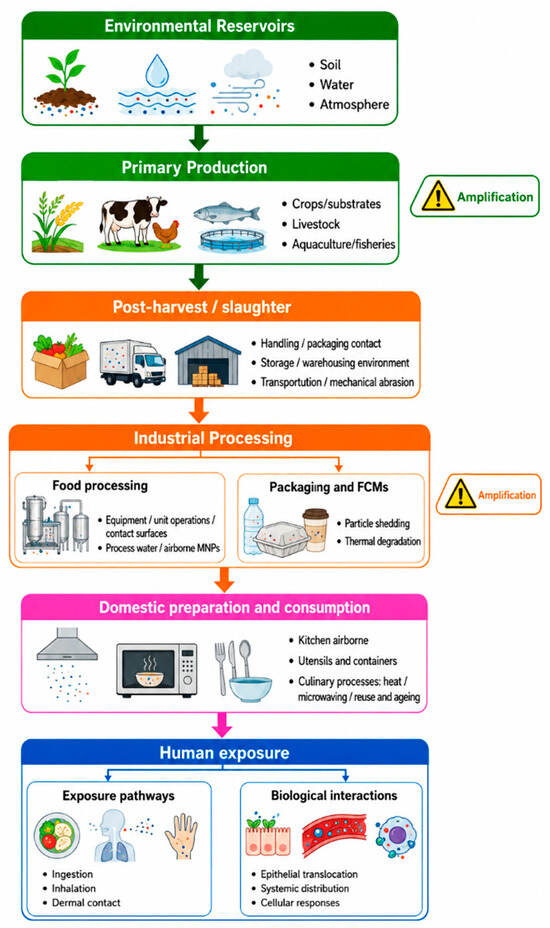
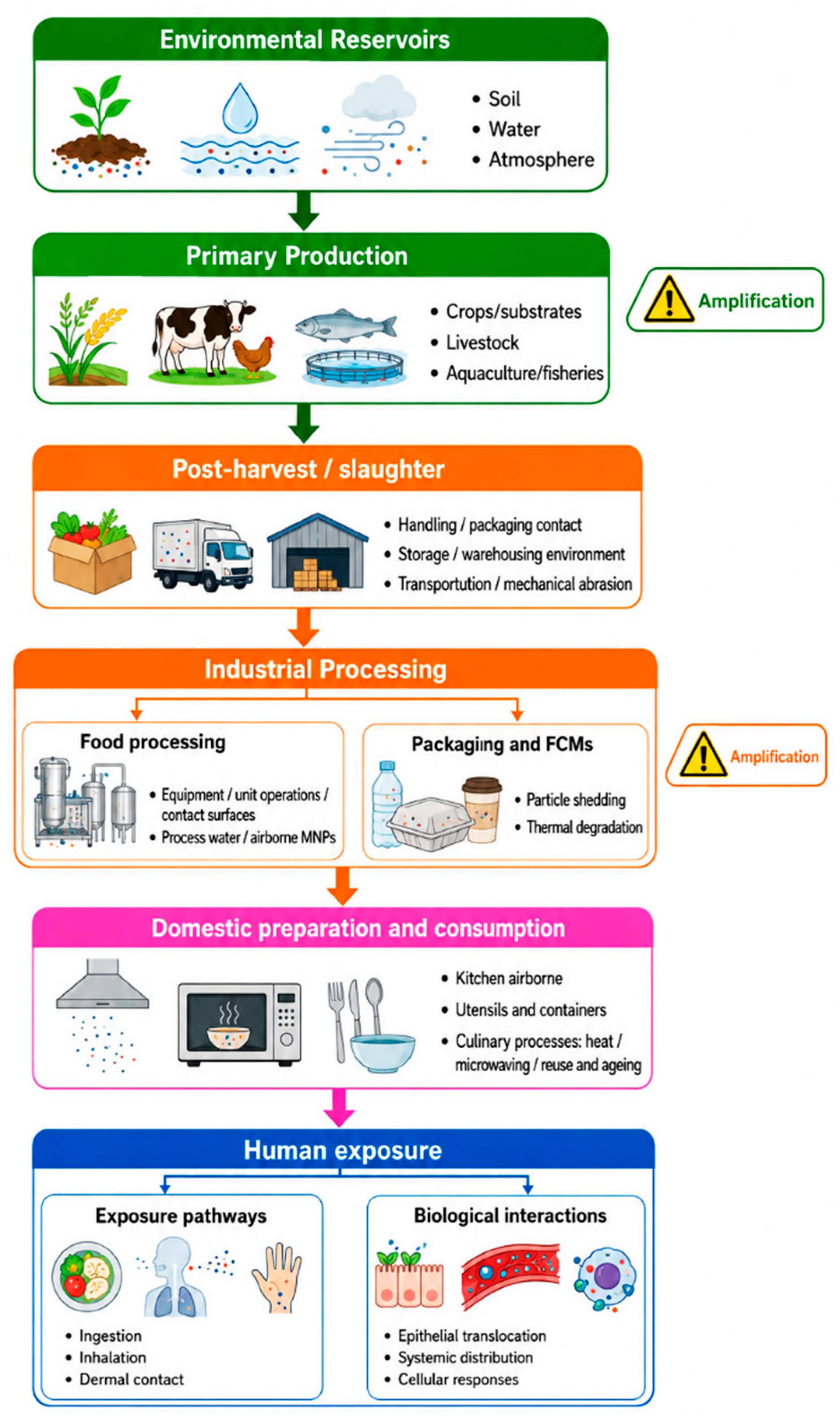
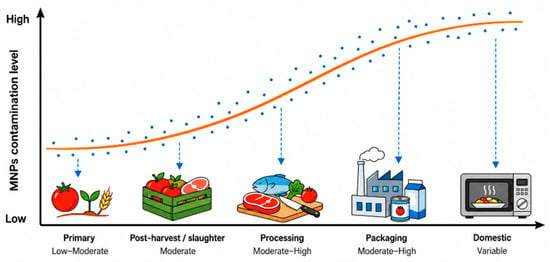
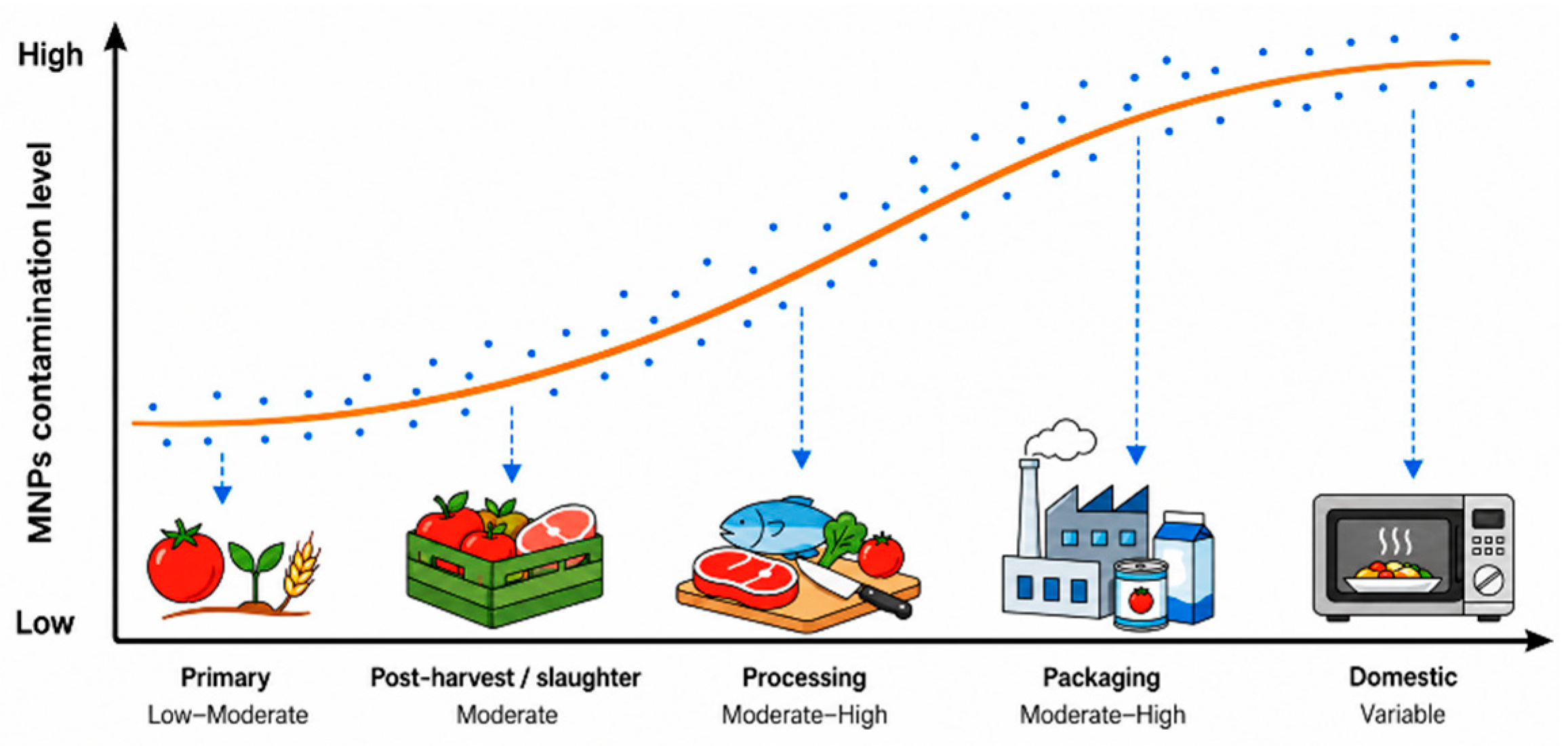
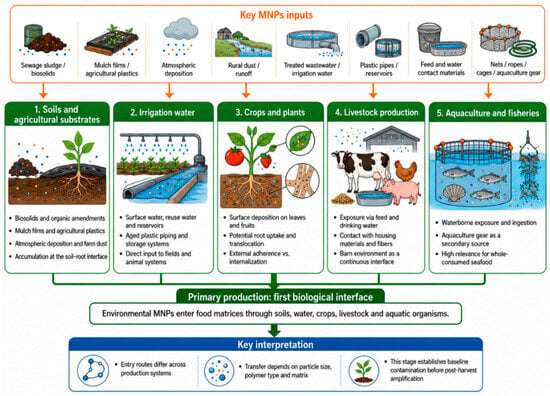
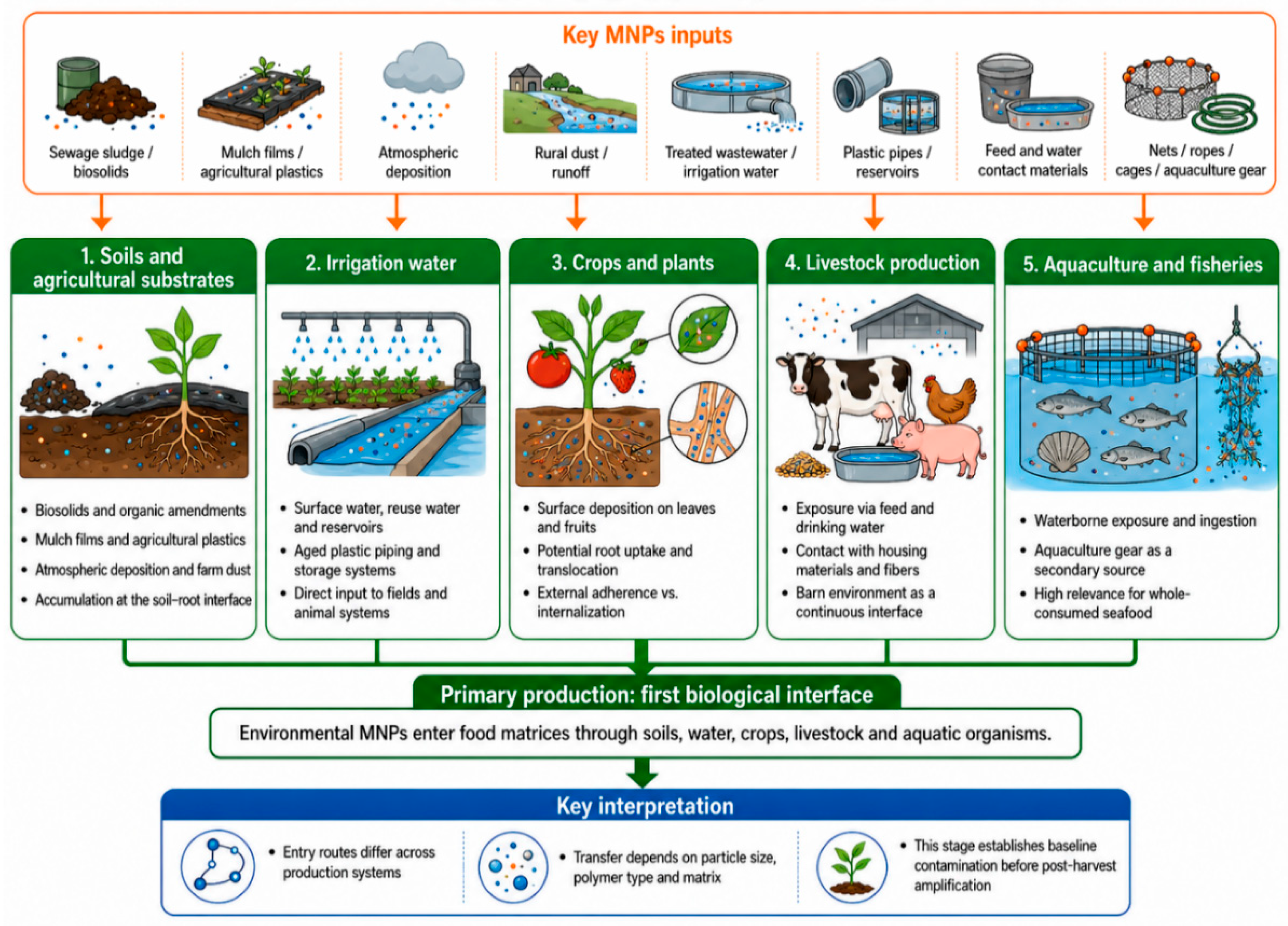
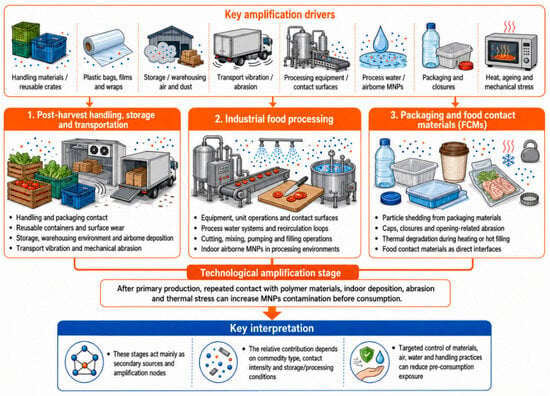
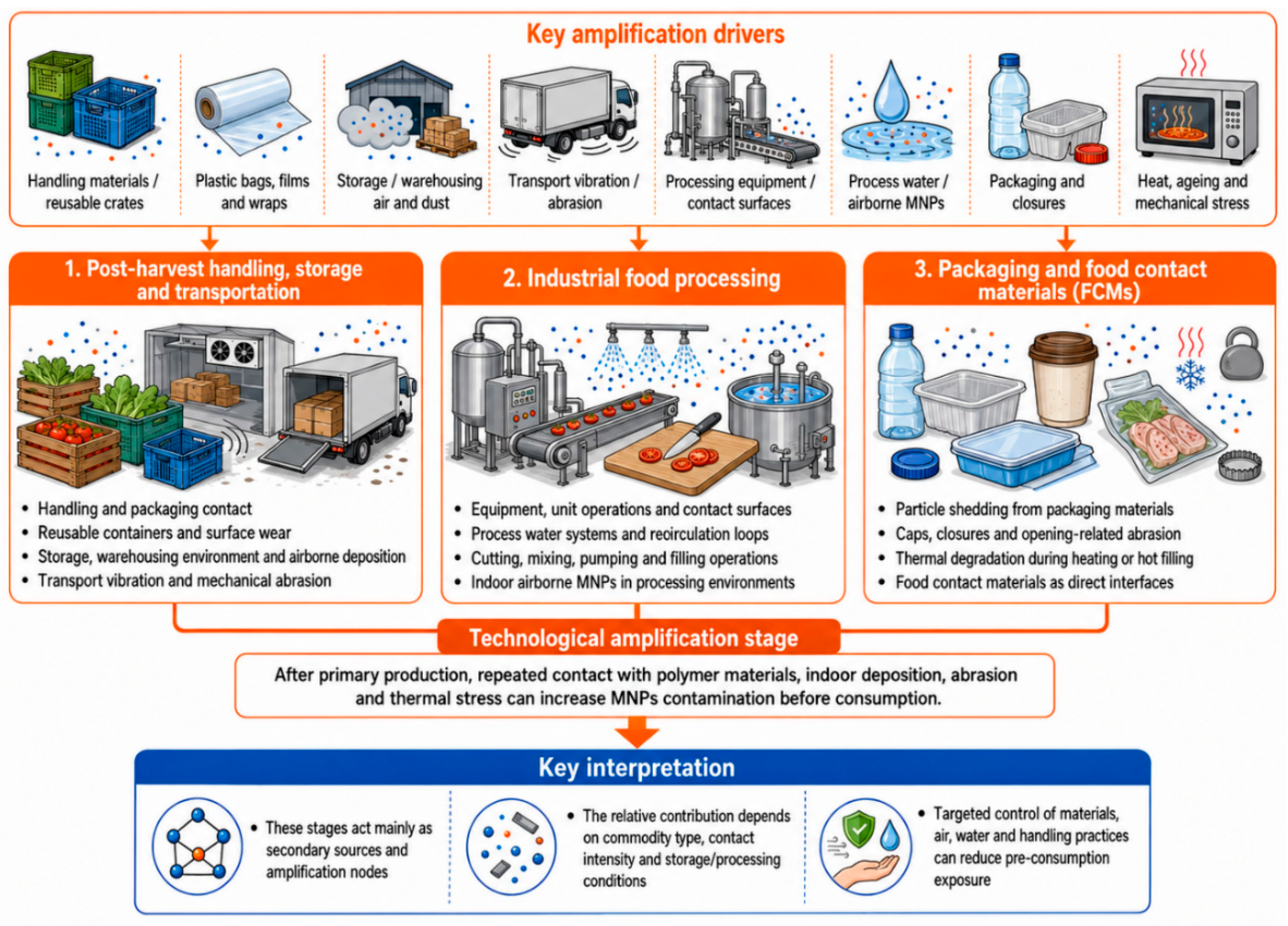
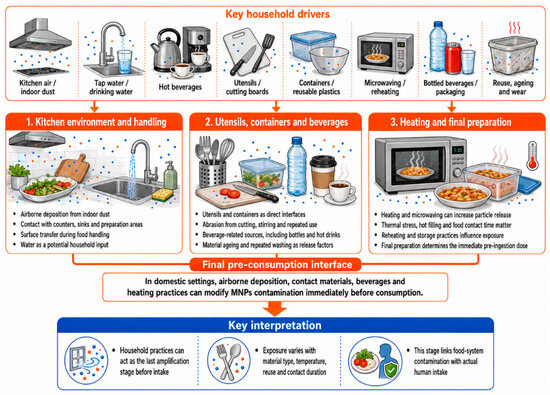
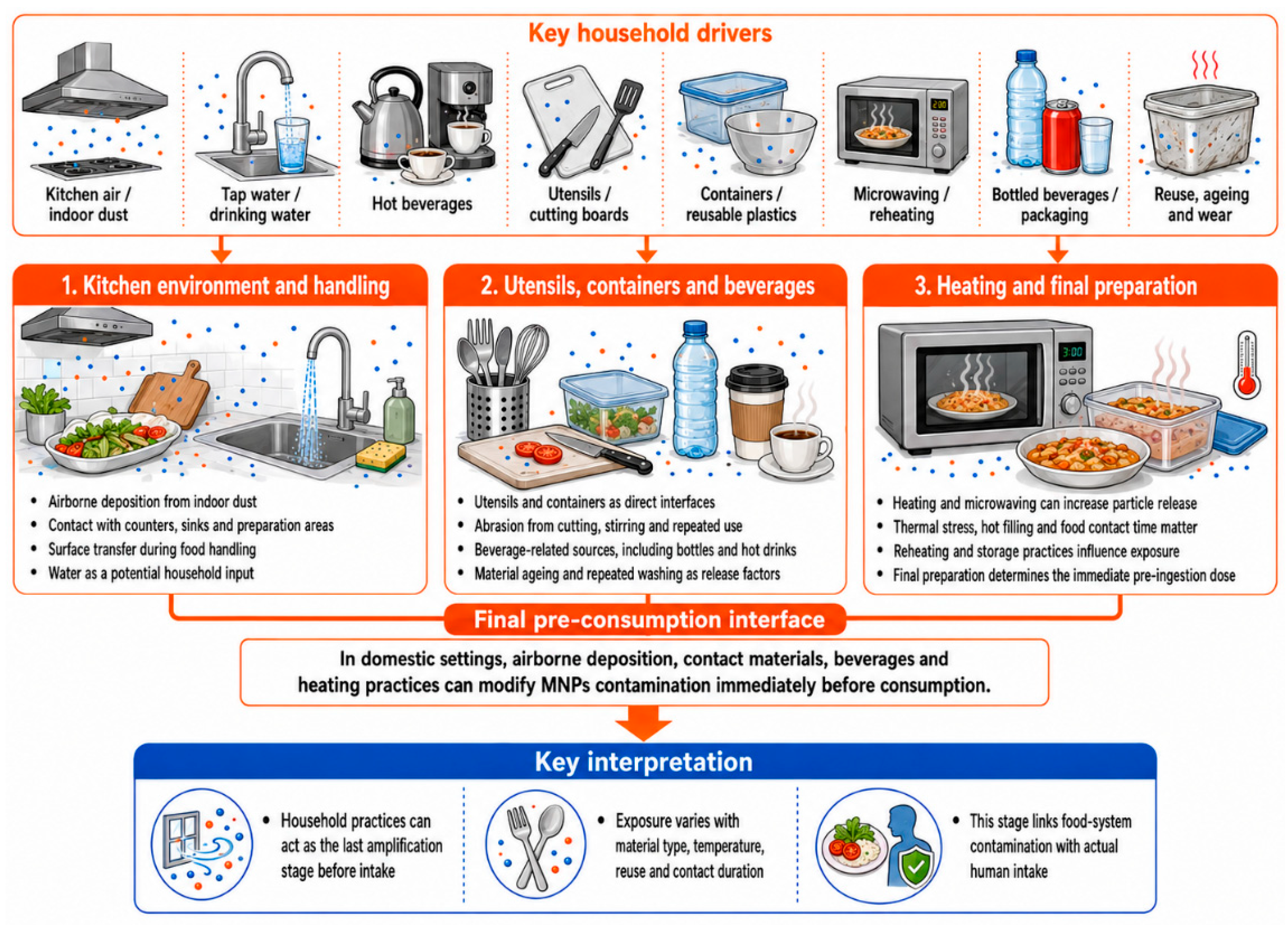
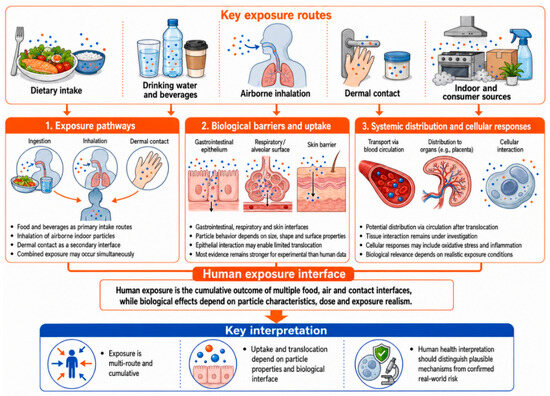
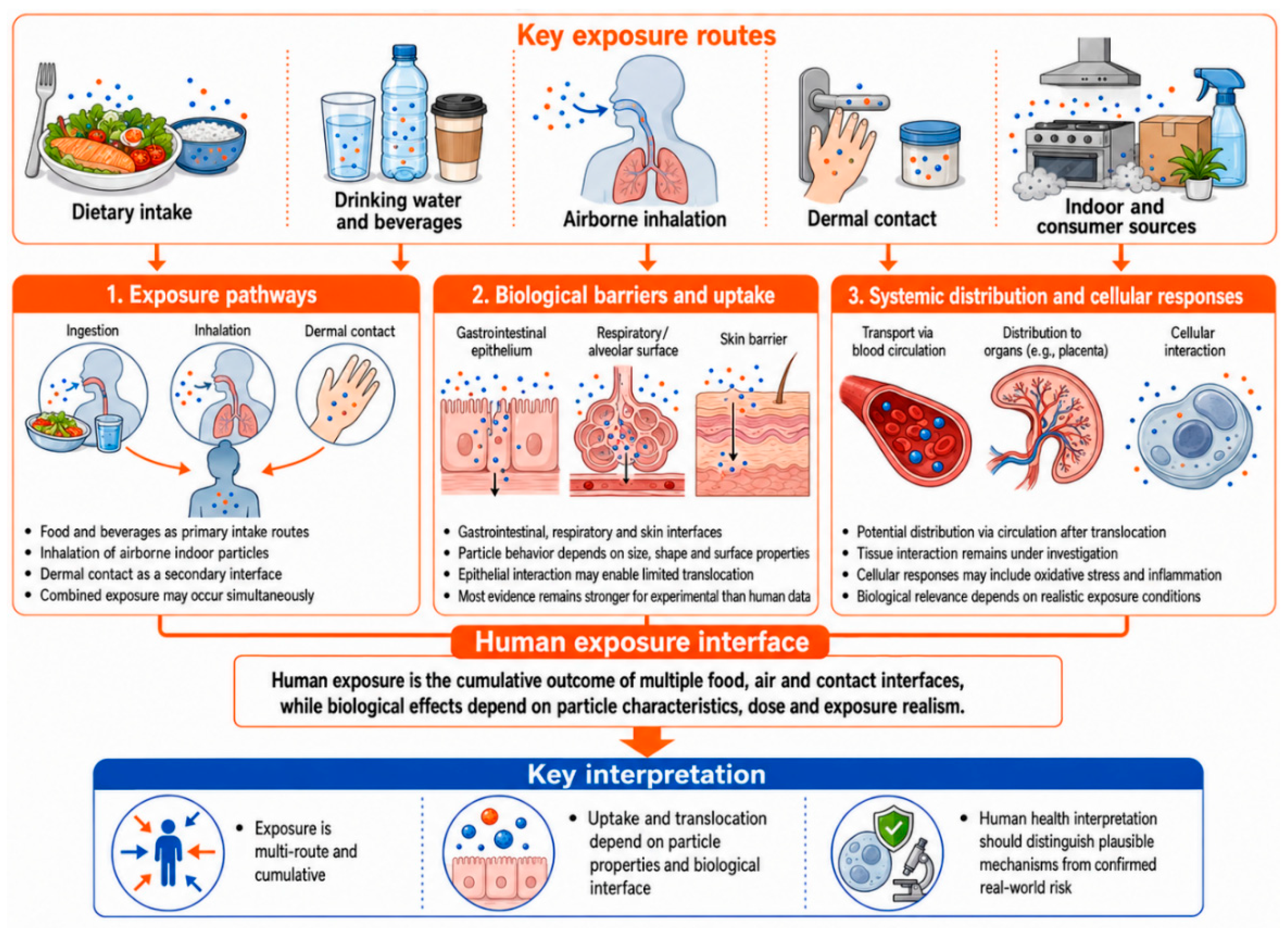

Disclaimer/Publisher’s Note: The statements, opinions and data contained in all publications are solely those of the individual author(s) and contributor(s) and not of MDPI and/or the editor(s). MDPI and/or the editor(s) disclaim responsibility for any injury to people or property resulting from any ideas, methods, instructions or products referred to in the content. |
© 2026 by the authors. Licensee MDPI, Basel, Switzerland. This article is an open access article distributed under the terms and conditions of the Creative Commons Attribution (CC BY) license.