Review

Bioaccumulation and Trophic Transfer of Microplastics in Aquatic Invertebrates: A Trait-Habitat-Particle (THP) Framework


by
Jerome Otiti
1,2,3,*,
Lelethu UnathiNkosi Peter Heshula
1,2,
Trishan Naidoo
4,5,
Linda Lunga Sibali
6 and
Anthony Ifeanyi Okoh
1,2,3
1
Department of Biotechnology and Biological Sciences, University of Fort Hare, Alice 5700, South Africa
2
SAMRC Microbial Water Quality Monitoring Centre, University of Fort Hare, Alice 5700, South Africa
3
SARChI Chair in Water Quality and Environmental Genomics, University of Fort Hare, Alice 5700, South Africa
4
Department of Zoology and Entomology, Faculty of Science, Rhodes University, Makhanda 6140, South Africa
5
South African Institute for Aquatic Biodiversity, Makhanda 6140, South Africa
6
Office of the Dean, Faculty of Science and Agriculture, University of Fort Hare, Alice 5700, South Africa
*
Author to whom correspondence should be addressed.
Microplastics 2026, 5(3), 155; https://doi.org/10.3390/microplastics5030155
Submission received: 2 May 2026 / Revised: 7 July 2026 / Accepted: 9 July 2026 / Published: 5 August 2026

Abstract

Microplastic pollution has emerged as a pervasive stressor in aquatic ecosystems, with aquatic invertebrates playing central roles in particle uptake, retention, and transfer within food webs. This review synthesises evidence on microplastic ingestion, bioaccumulation, trophic transfer, and biomagnification across major aquatic invertebrate groups, including arthropods, molluscs, sediment-associated worms, suspension feeders, and echinoderms. A structured literature search identified 66 studies spanning freshwater, estuarine, and marine environments. Evidence indicates that microplastic uptake occurs through multiple pathways, including filter feeding, deposit feeding, grazing, and predator–prey interactions. Across the reviewed studies, feeding strategy, habitat-specific exposure, and particle characteristics were recurrently associated with variation in microplastic ingestion, retention, and trophic transfer. While ingestion and bioaccumulation were widely documented, quantitative understanding of trophic transfer within aquatic invertebrate food webs remained limited, and no conclusive evidence of biomagnification was identified. To interpret recurring patterns, this review proposes the Trait–Habitat–Particle (THP) framework as a conceptual tool linking biological and functional traits, habitat-mediated exposure, and particle properties. Methodological inconsistencies, limited representation of certain taxa and habitats, and insufficient quantification of trophic transfer remain important knowledge gaps. Future research should prioritise methodological standardisation and ecologically realistic long-term studies.

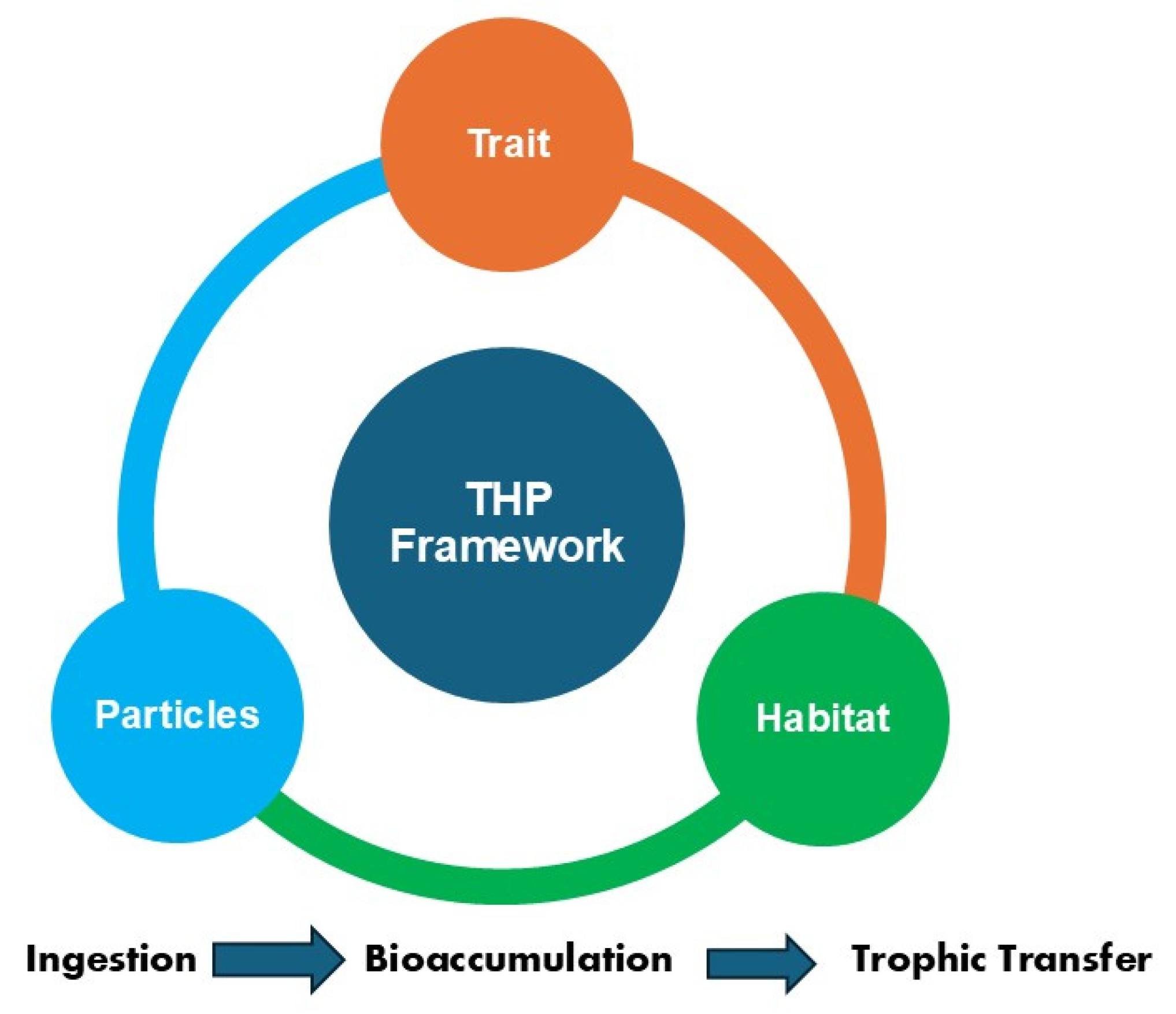
Graphical Abstract

1. Introduction

Microplastic pollution has emerged as a major global environmental concern due to its widespread occurrence and persistence in aquatic ecosystems. Microplastics (MPs), commonly defined as plastic particles ≤ 5 mm in size, originate either as primary particles intentionally manufactured at small sizes or as secondary particles generated through the fragmentation of larger plastic debris. MPs have been detected in virtually all aquatic environments, including oceans, rivers, lakes, reservoirs, estuaries, polar regions, and remote mountain systems, demonstrating their extensive distribution and persistence [1,2,3]. Large-scale assessments reveal considerable spatial variability in MP abundance, largely influenced by population density, land use, economic activity, and proximity to pollution sources [4,5]. Particles smaller than 1 mm are of particular concern because of their high mobility, bioavailability, and increased likelihood of biological uptake.
Aquatic invertebrates constitute a diverse and functionally important component of freshwater, estuarine, and marine ecosystems. Through ecological roles such as filter feeding, grazing, detritivory, scavenging, and predation, they contribute substantially to nutrient cycling, sediment bioturbation, and energy transfer within aquatic food webs [6,7,8,9]. In addition, several invertebrate taxa, including mussels and sponges, function as ecosystem engineers by creating habitats that enhance biodiversity and ecosystem stability [10,11,12]. Owing to their diverse feeding strategies and close interactions with water, sediments, and prey, aquatic invertebrates are particularly susceptible to MP exposure and therefore serve as important indicators of environmental contamination [13,14].
Microplastic interactions with aquatic invertebrates occur through several interconnected processes. Ingestion refers to the uptake of MPs during feeding or filtration activities, whereas bioaccumulation describes the retention or persistence of MPs within tissues or digestive compartments over time. Trophic transfer occurs when MPs are transferred between prey and predators within food webs, while biomagnification refers to increasing MP concentrations across successive trophic levels. Although evidence for ingestion is now widespread across aquatic invertebrate taxa, understanding of bioaccumulation and trophic transfer remains comparatively limited, and the occurrence of biomagnification remains unresolved [15]. Furthermore, inconsistencies in terminology, methodological approaches, and reporting practices have hindered comparisons among studies and constrained broader ecological interpretation.
Beyond their physical presence, MPs may act as vectors for chemical additives, environmental contaminants, and microorganisms, thereby potentially amplifying ecological and toxicological risks [13,16]. The detection of MPs in edible aquatic organisms has also raised concerns regarding ecosystem integrity, seafood safety, and human exposure, although evidence relating to long-term ecological consequences remains limited and, in some cases, contradictory [17,18,19].
Despite rapid growth in MP research, studies investigating aquatic invertebrates remain fragmented across taxa, habitats, and methodological approaches, limiting broader understanding of the processes governing ingestion, bioaccumulation, trophic transfer, and biomagnification within aquatic food webs. In particular, the relative influence of organismal traits, habitat-specific exposure, and particle characteristics on MP dynamics has rarely been synthesised across diverse invertebrate groups.
Existing evidence suggests that microplastic interactions are influenced by multiple interacting factors, including biological traits, habitat-mediated exposure, and particle characteristics. However, these determinants are often examined independently, restricting comparisons across ecosystems and invertebrate groups. An integrative synthesis that considers these interacting factors may therefore improve interpretation of recurring patterns in MP ingestion, retention, and transfer.
Accordingly, this review synthesises evidence from laboratory and field studies to provide a comprehensive overview of microplastic interactions across major aquatic invertebrate groups, including arthropods, molluscs, sediment-associated worms, suspension feeders, and echinoderms. Specifically, the review aims to: (i) synthesise current knowledge on MP ingestion, bioaccumulation, trophic transfer, and biomagnification in aquatic invertebrates; (ii) identify common patterns and key determinants influencing MP interactions across functional groups and habitats; and (iii) propose the Trait–Habitat–Particle (THP) framework as a conceptual tool for interpreting variability in microplastic dynamics and identifying priorities for future research.

2. Materials and Methods

2.1. Literature Search Strategy

A structured literature search was undertaken across Scopus, ScienceDirect, Web of Science, PubMed, and Google Scholar to identify peer-reviewed studies addressing microplastic interactions in aquatic invertebrates. Search terms combined keywords relating to microplastics, aquatic invertebrates, ingestion, bioaccumulation, trophic transfer, and biomagnification. Additional relevant articles were identified through manual screening of reference lists from selected studies. Following screening and eligibility assessment, 66 studies satisfied the inclusion criteria and were incorporated into the synthesis (Figure 1).

2.2. Eligibility Criteria and Study Selection

Studies were included if they: (i) examined aquatic invertebrates inhabiting freshwater, estuarine, or marine ecosystems; (ii) reported evidence of microplastic ingestion, bioaccumulation, trophic transfer, or biomagnification in aquatic invertebrates.
Studies cited elsewhere in the manuscript to provide contextual background, outline microplastic sources and pathways, or discuss the Trait–Habitat–Particle (THP) framework were excluded from the studies synthesised in Table 1 and Table 2.
Exclusion criteria comprised studies that: (i) focused solely on vertebrates or terrestrial organisms; (ii) did not investigate microplastics; (iii) were review articles, editorials, conference abstracts, or book chapters; (iv) lacked sufficient data to meet the objectives of this review.
To strengthen the reliability of the synthesis, methodological details concerning microplastic identification and characterisation were considered during study selection and data extraction. Emphasis was placed on identification techniques (e.g., visual microscopy, Fourier-transform infrared spectroscopy (FTIR), or Raman spectroscopy), particle attributes (including size, shape, and polymer type), and quality assurance/quality control (QA/QC) procedures, such as contamination prevention and the use of procedural blanks. Given the heterogeneity of published methodologies, no minimum QA/QC threshold was applied as an exclusion criterion. Nonetheless, methodological variation across studies was considered during data interpretation and synthesis.

2.3. Study Screening and Data Extraction

Key information was extracted from eligible studies and synthesised qualitatively. Extracted data included invertebrate group, habitat type, ecosystem, study design, exposure type, and evidence of microplastic ingestion, bioaccumulation, trophic transfer, and biomagnification. Studies were subsequently classified into five principal invertebrate categories: Arthropods, molluscs, sediment-associated worms, suspension feeders, and echinoderms. Their distribution and characteristics are presented in Table 1, with detailed study information provided in Supplementary Table S1.

3. Microplastics in Aquatic Environments

Sources and Pathways of Microplastics in the Aquatic Environment

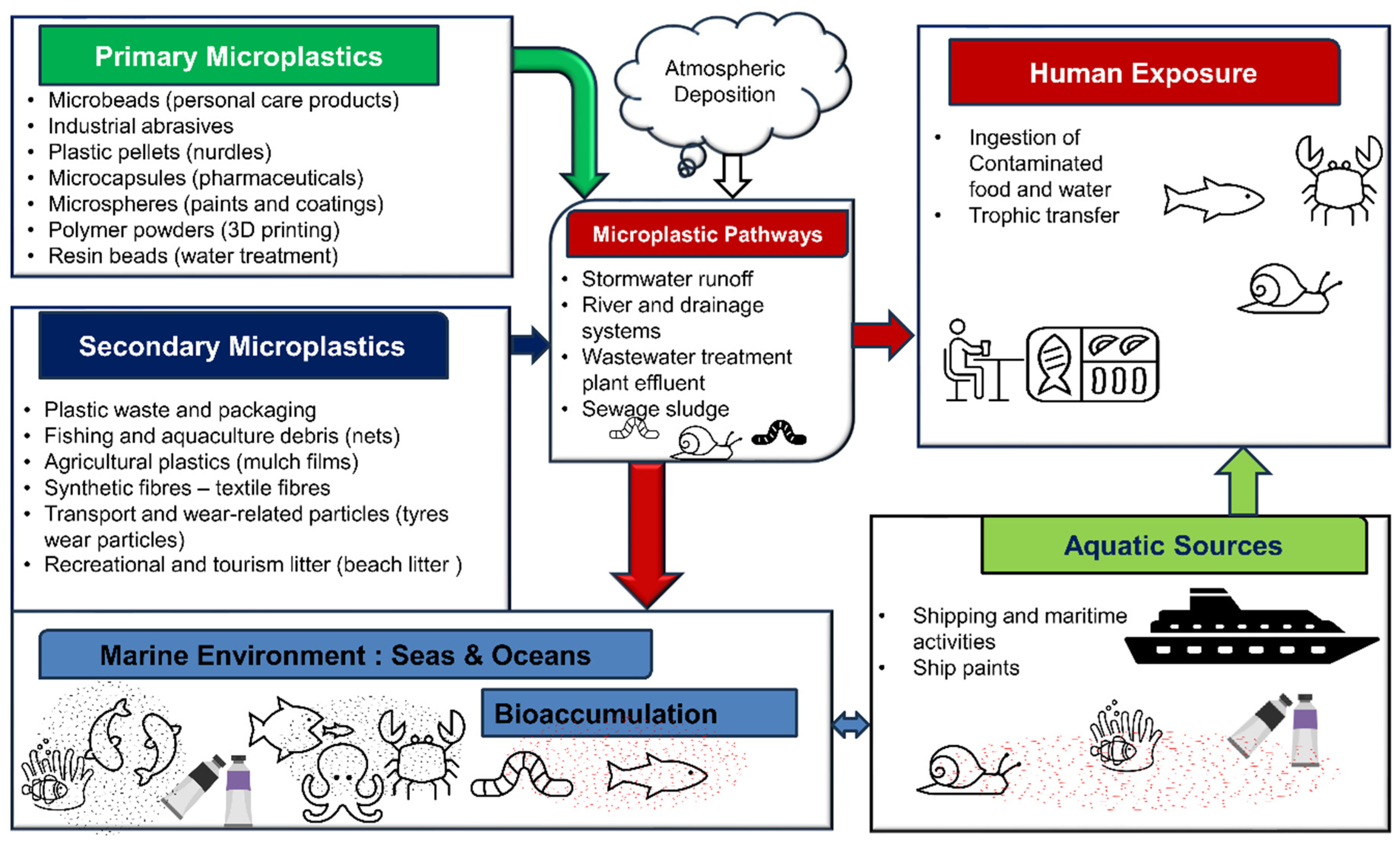
Microplastics (MPs; <5 mm) are pervasive contaminants in freshwater, estuarine, and marine environments. They are generally classified as primary MPs, including microbeads, industrial pellets, and synthetic fibres, or secondary MPs formed through the degradation of larger plastic debris [20,21,22,23]. MPs occur in varied forms such as fibres, fragments, films, foams, and pellets, and consist of polymers including polyethylene (PE), polypropylene (PP), polystyrene (PS), polyvinyl chloride (PVC), and polyethylene terephthalate (PET) [24]. Fibres, largely originating from textiles, are consistently identified as the dominant type in aquatic systems [25,26].
Aquatic ecosystems are exposed to MPs from diverse anthropogenic sources, including urban runoff, wastewater discharge, textile washing, tyre wear, mismanaged plastic waste, fisheries, aquaculture, and maritime operations [27]. Rivers, stormwater networks, and effluents from wastewater treatment plants (WWTPs) act as major pathways, transferring MPs from terrestrial environments into estuarine and marine systems [28,29,30,31]. Atmospheric circulation further contributes to dispersal, with deposition recorded in remote regions such as Arctic and Antarctic snow and sea ice, as well as high-altitude aquatic systems [32,33,34,35,36]. Airborne MPs deposited on soils may subsequently be mobilised into rivers and lakes via surface runoff [37].
The fate of MPs is determined by physicochemical properties and environmental conditions, leading to their accumulation in both the water column and sediments [23]. Aquatic invertebrates are particularly susceptible, given their varied ecological niches and feeding strategies, including filter feeding, deposit feeding, grazing, scavenging, and predation. MPs may be ingested directly from water and sediments or indirectly through trophic interactions, thereby facilitating bioaccumulation and trophic transfer within aquatic food webs [38,39]. Owing to these roles, aquatic invertebrates serve as important indicators for assessing the ecological consequences of MP contamination. Figure 2 illustrates the principal sources, pathways, and environmental fate of MPs across interconnected systems.

4. Microplastic Interactions with Aquatic Invertebrates

A total of 66 studies met the inclusion criteria and were synthesised in this review. These studies encompassed five major aquatic invertebrate groups: Arthropods (Crustaceans and Aquatic Insects; n = 12), Molluscs (n = 7), Sediment-Associated Worms (Annelids, Nematodes, and Platyhelminthes; n = 18), Suspension Feeders (Poriferans, Cnidarians, and Tunicates; n = 17), and Echinoderms (n = 12). The included studies represented freshwater, estuarine, and marine ecosystems and comprised both laboratory and field investigations. Sediment-associated worms and suspension feeders received the greatest research attention, whereas molluscs were comparatively underrepresented (Table 1).

4.1. Arthropods (Crustaceans and Aquatic Insects)

Arthropods, encompassing crustaceans and aquatic insects, display diverse feeding strategies, including filter feeding, detritivory, scavenging, and predation, which strongly influence microplastic (MP) uptake [40,41,42,43]. Filter feeders predominantly ingest suspended MPs from the water column, whereas deposit feeders acquire MPs through sediment ingestion. Predatory taxa may additionally accumulate MPs indirectly via trophic transfer from contaminated prey.
Habitat exerts a decisive influence on exposure pathways. Pelagic crustaceans are primarily exposed to suspended MPs, while benthic species such as Nephrops norvegicus encounter sediment-associated particles. Field investigations reveal that populations inhabiting coastal or wastewater-impacted environments generally exhibit higher MP burdens than those from less disturbed habitats, reflecting spatial variability in contamination [40,44,45,46]. Particle characteristics further regulate ingestion and retention. Smaller particles are consistently ingested across arthropod taxa, whereas fibres and irregularly shaped particles often exhibit prolonged retention due to reduced egestion efficiency [45,46,47]. Experimental studies confirm that crustaceans readily ingest polymers such as polyethylene and polystyrene; however, immediate tissue translocation and nutritional effects may be limited under controlled conditions [48]. Retention is also influenced by biological traits, including gut morphology, body size, and moulting cycles, with ecdysis functioning as a principal elimination mechanism in crustaceans [46,49].
In aquatic insects, feeding guilds strongly shape MP dynamics. Collector-gatherers and filter feeders generally exhibit higher ingestion rates than predatory taxa owing to continuous exposure to contaminated sediments and suspended organic matter [41]. Nevertheless, trophic transfer represents an important accumulation pathway in predatory insects, with experimental evidence showing that prey-mediated exposure can result in higher MP burdens than direct uptake [49]. Physiological responses to MP exposure, including oxidative stress, metabolic disruption, impaired growth, behavioural alterations, delayed development, reduced emergence success, and changes in gut microbiota, have been widely documented in arthropods [47,50]. Beyond aquatic systems, insects with complex life cycles may facilitate the transfer of MPs across ecosystem boundaries. Microplastics acquired during aquatic larval stages can persist through metamorphosis and subsequently enter terrestrial food webs, thereby extending exposure to higher trophic levels. The detection of MPs in edible aquatic insects further underscores potential implications for human exposure [51].
Overall, MP interactions in arthropods are governed by the interplay among feeding strategy, habitat-specific exposure, and particle characteristics. Collectively, these factors determine ingestion, retention, and trophic transfer patterns, emphasising the role of arthropods as key mediators of MP dynamics within and across aquatic ecosystems.

4.2. Molluscs

Molluscs employ varied feeding strategies, including filter feeding, grazing, and deposit feeding, which strongly influence microplastic (MP) uptake and retention [52,53]. Bivalves, as dominant filter feeders, are particularly vulnerable to ingesting suspended MPs from the water column, whereas gastropods acquire MPs through grazing on biofilms or interacting with sediment-associated particles [54,55]. Consequently, molluscs represent key organisms linking pelagic and benthic MP pathways [56].
Habitat conditions further shape exposure dynamics. Bivalves inhabiting coastal and pelagic environments continuously filter large volumes of water, resulting in sustained exposure to suspended MPs. By contrast, benthic gastropods and other sediment-associated molluscs are primarily exposed to particles deposited within sediments, where contamination levels are influenced by local hydrodynamics and anthropogenic inputs [57]. Field investigations, including those conducted in the Persian Gulf, have reported widespread MP contamination in edible molluscs, with fibres and fragments representing the dominant particle types [58].
Particle characteristics play a critical role in ingestion, retention, and depuration. Fibres and tyre-derived particles have been shown to persist longer in Mytilus edulis than more readily egested fragments, underscoring the importance of particle morphology in toxicokinetics [53]. Similarly, nonlinear uptake and incomplete depuration have been documented in oysters (Crassostrea virginica), suggesting that MPs may remain within organisms despite extended clearance periods [57]. Accumulation patterns are also influenced by polymer type and environmental concentrations, as demonstrated in freshwater species such as Physa acuta [52].
Microplastics have been detected in multiple molluscan tissues, indicating that exposure pathways may extend beyond ingestion to include adhesion to external surfaces followed by internalisation [54]. Feeding ecology further influences particle selectivity, with habitat-specific availability contributing to the predominance of coloured fibres in certain gastropod species [55]. Physiological responses to MP exposure, including oxidative stress, histopathological alterations, and biochemical disruption, have also been widely documented, highlighting the sensitivity of molluscs to MP contamination [56].
Overall, MP interactions in molluscs are governed by the combined influence of feeding strategy, habitat-specific exposure, and particle characteristics. These factors collectively determine ingestion dynamics, retention potential, and ecological effects, reinforcing the importance of molluscs as bioindicators of MP pollution and potential vectors for transfer to higher trophic levels, including humans.

4.3. Sediment-Associated Worms (Annelids, Nematodes, and Platyhelminthes)

Annelids, nematodes, and benthic platyhelminths (e.g., planarians) are closely linked to sedimentary habitats, making them particularly vulnerable to microplastic (MP) exposure. Deposit feeding, scavenging, and predatory behaviours facilitate continuous ingestion of sediment particles and contaminated prey, constituting the primary pathways of MP uptake in benthic systems [59,60,61,62]. These taxa therefore play important roles in mediating MP dynamics within sedimentary environments [63,64,65].
Habitat strongly influences exposure, as MPs accumulate in benthic substrates through sedimentation, increasing their bioavailability to sediment-dwelling organisms. Polychaetes, oligochaetes, meiofaunal nematodes, and planarians are exposed through direct sediment ingestion and indirect dietary pathways. Tube-dwelling annelids may also incorporate MPs into their tubes, potentially acting as localised sinks and indicators of sediment contamination [65,66].
Species-specific traits and feeding modes further regulate MP ingestion. In annelids, both filter-feeding and deposit-feeding species ingest MPs, although uptake rates vary among taxa and feeding strategies [61]. Nematodes exhibit pronounced size-selective ingestion, with smaller particles (≤5 µm) preferentially consumed and retained due to morphological constraints such as buccal cavity size [67,68]. Planarians, by contrast, predominantly acquire MPs through trophic interactions, consuming contaminated prey or detrital material. Experimental studies demonstrate incomplete egestion and measurable retention within the digestive tract [62].
Particle characteristics substantially influence retention and transfer potential. Fibres, which often dominate sedimentary habitats, are readily ingested by non-selective deposit-feeding annelids, underscoring the role of feeding strategy in microplastic uptake [60]. Incomplete egestion of smaller particles in annelids and nematodes may enhance persistence within organisms, while repeated prey-mediated exposure in planarians can result in cumulative MP uptake despite relatively low retention following individual feeding events [69,70]. Such repeated ingestion-egestion cycles may facilitate significant MP fluxes through benthic food webs, increasing the likelihood of trophic transfer.
Environmental variables, including sediment grain size, organic matter content, and contamination sources, further influence MP availability and uptake across taxa and habitats [64]. Co-exposure to MPs and other pollutants, such as heavy metals and persistent organic compounds, may exacerbate physiological stress responses. For instance, combined exposures in planarians have been shown to intensify oxidative stress, disrupt metabolic processes, and impair cellular regulation [71,72]. Physiological and ecological consequences of MP exposure include oxidative stress, metabolic disruption, altered growth, and changes in population dynamics. Multigenerational studies in nematodes suggest that chronic exposure may reduce growth and carrying capacity, with implications for energy transfer within benthic ecosystems [73,74]. In planarians, MPs can interfere with stem cell (neoblast) activity and tissue differentiation, impairing regeneration and highlighting sensitivity at both cellular and organismal levels [62,75,76]. Overall, MP interactions in sediment-associated invertebrates are governed by the interplay among feeding strategy, benthic habitat exposure, and particle characteristics. These organisms act as bioindicators, intermediary reservoirs, and conduits of MP redistribution, facilitating retention and trophic transfer within aquatic ecosystems.

4.4. Suspension Feeders (Poriferans, Cnidarians, and Tunicates)

Poriferans, cnidarians, and tunicates are predominantly suspension feeders that capture or filter particles from the water column, making them highly vulnerable to microplastic (MP) exposure [77,78,79]. This feeding mode facilitates direct uptake of suspended MPs and positions these taxa as important mediators of MP dynamics in pelagic and reef-associated ecosystems.
Habitat conditions strongly shape exposure patterns. In coastal, reef, and open-water environments, hydrodynamic processes maintain MPs in suspension and promote their redistribution, thereby increasing availability to filter-feeding organisms [80,81]. As largely sessile or slow-moving organisms, poriferans and many cnidarians experience prolonged localised exposure, whereas planktonic tunicates encounter MPs across broader spatial gradients [82,83]. These contrasting life-history traits highlight the combined influence of habitat and organism mobility on MP uptake.
In poriferans (sponges), continuous filtration of large volumes of water can lead to substantial accumulation of fibres, fragments, and pellets. Reported MP abundances vary considerably among environments, suggesting that contamination levels are primarily driven by site-specific conditions rather than species-specific selectivity [78,82]. Morphological traits further influence retention, with encrusting species often accumulating higher MP loads than branching forms, and particles frequently adhering to external tissues and structural components such as spongin fibres [84,85]. The detection of MPs in sponges from remote regions, including polar habitats, underscores their value as indicators of widespread contamination [86].
Cnidarians interact with MPs through ingestion, external adhesion, and trophic transfer. Non-selective feeding behaviour facilitates uptake of particles resembling natural prey, while mucus production enhances retention on external surfaces. In corals, MPs may interfere with symbiotic associations by occupying spaces associated with algal symbionts, potentially compromising physiological stability and reef resilience [87]. In gelatinous cnidarians, including jellyfish, ingestion and egestion rates vary among species, with some exhibiting rapid clearance and others showing enhanced uptake through prey-mediated exposure [88,89]. Particle traits, including size, polymer type, and biofilm formation, further influence ingestion and retention dynamics while jellyfish such as Pelagia noctiluca predominantly ingest fibre-dominated microplastics [90].
Tunicates, including ascidians and thaliaceans, are efficient suspension feeders capable of accumulating MPs within digestive and internal tissues. Experimental studies demonstrate that species such as Ciona intestinalis readily ingest MPs, with evidence of particle translocation into internal compartments, indicating potential systemic exposure [91,92]. In planktonic tunicates, exposure has been linked to reduced feeding efficiency, impaired growth, and metabolic disruption, highlighting their physiological sensitivity to particle contamination [93]. These findings suggest that tunicates may contribute significantly to MP transfer across lower trophic levels.
Across suspension-feeding taxa, particle characteristics strongly influence uptake and retention, with smaller particles more readily captured and fibres frequently dominating due to their widespread occurrence. Although ingestion is often non-selective, retention and physiological responses vary according to species-specific traits and environmental conditions.
Overall, MP interactions in suspension-feeding invertebrates are governed by the interplay among filtration-based feeding strategies, habitat-specific exposure, and particle characteristics. These organisms act as effective bioindicators of MP contamination and contribute to the redistribution and trophic transfer of MPs within aquatic ecosystems.

4.5. Echinoderms

Echinoderms, including sea urchins, sea stars, and sea cucumbers, employ diverse feeding strategies such as deposit feeding, grazing, and predation, which strongly influence microplastic (MP) uptake [94,95,96]. Deposit-feeding taxa, particularly holothurians, are especially prone to ingesting sediment-associated MPs, whereas grazing and predatory species may acquire particles incidentally during feeding or indirectly through trophic interactions [97,98,99,100]. Habitat plays a central role in exposure because echinoderms are predominantly benthic organisms that interact closely with sediments, which act as major sinks for MPs. Field studies consistently demonstrate strong correlations between MP concentrations in sediments and those detected within echinoderm digestive tissues, indicating that sediment ingestion constitutes the principal exposure pathway [101,102]. This relationship is particularly evident in low-energy environments, where fibres frequently dominate both sediment and biological samples, reflecting local deposition patterns.
Particle characteristics and environmental availability further influence ingestion and retention. Polymer composition, particle size, and morphology detected in echinoderms generally mirror those present in surrounding sediments, suggesting largely non-selective uptake governed by environmental exposure rather than active selection [96,103]. Nonetheless, interspecific differences in particle size distributions indicate that biological traits, including feeding mode and digestive processing, may modulate retention patterns [104]. Studies of commercially important species such as Paracentrotus lividus confirm that local contamination levels strongly influence MP accumulation [101]. Feeding strategy contributes substantially to variation in MP burdens among functional groups. Sediment-feeding echinoderms, notably sea urchins, encounter microplastics through sustained interaction with contaminated sediments during foraging, highlighting the importance of functional traits in modulating exposure intensity within benthic ecosystems [96].
Experimental studies further demonstrate that MP exposure may induce developmental abnormalities during early life stages, including reduced survival, impaired growth, developmental delay, and inhibited metamorphosis, indicating heightened sensitivity during critical developmental periods [105]. Such effects suggest that MPs may influence physiological processes beyond simple accumulation, with potential consequences for population dynamics and ecosystem functioning.
Overall, MP interactions in echinoderms are governed by the interplay among feeding strategy, benthic habitat exposure, and particle characteristics. Consequently, these organisms serve as effective indicators of sediment-associated MP pollution and contribute to MP redistribution and trophic transfer within marine food webs.
The occurrence of ingestion, bioaccumulation, trophic transfer, and biomagnification across the 66 included studies is summarised in Table 2.

5. Trait–Habitat–Particle (THP) Framework: A Conceptual Perspective

5.1. The THP Framework as a Conceptual Tool

Advancing understanding of microplastic (MP) ingestion, bioaccumulation, and trophic transfer in aquatic invertebrates requires consideration of the biological and environmental factors that govern particle uptake. Evidence synthesised in this review indicates that MP interactions are rarely determined by a single factor but instead emerge from the interplay among biological and functional traits, habitat-mediated exposure, and particle characteristics [106].However, these determinants are often examined independently, limiting broader interpretation across taxa and ecosystems.
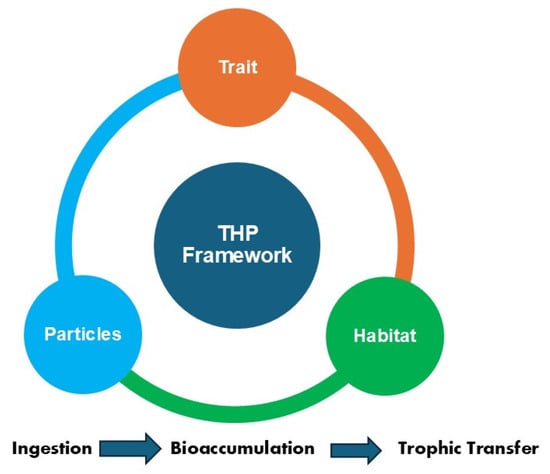
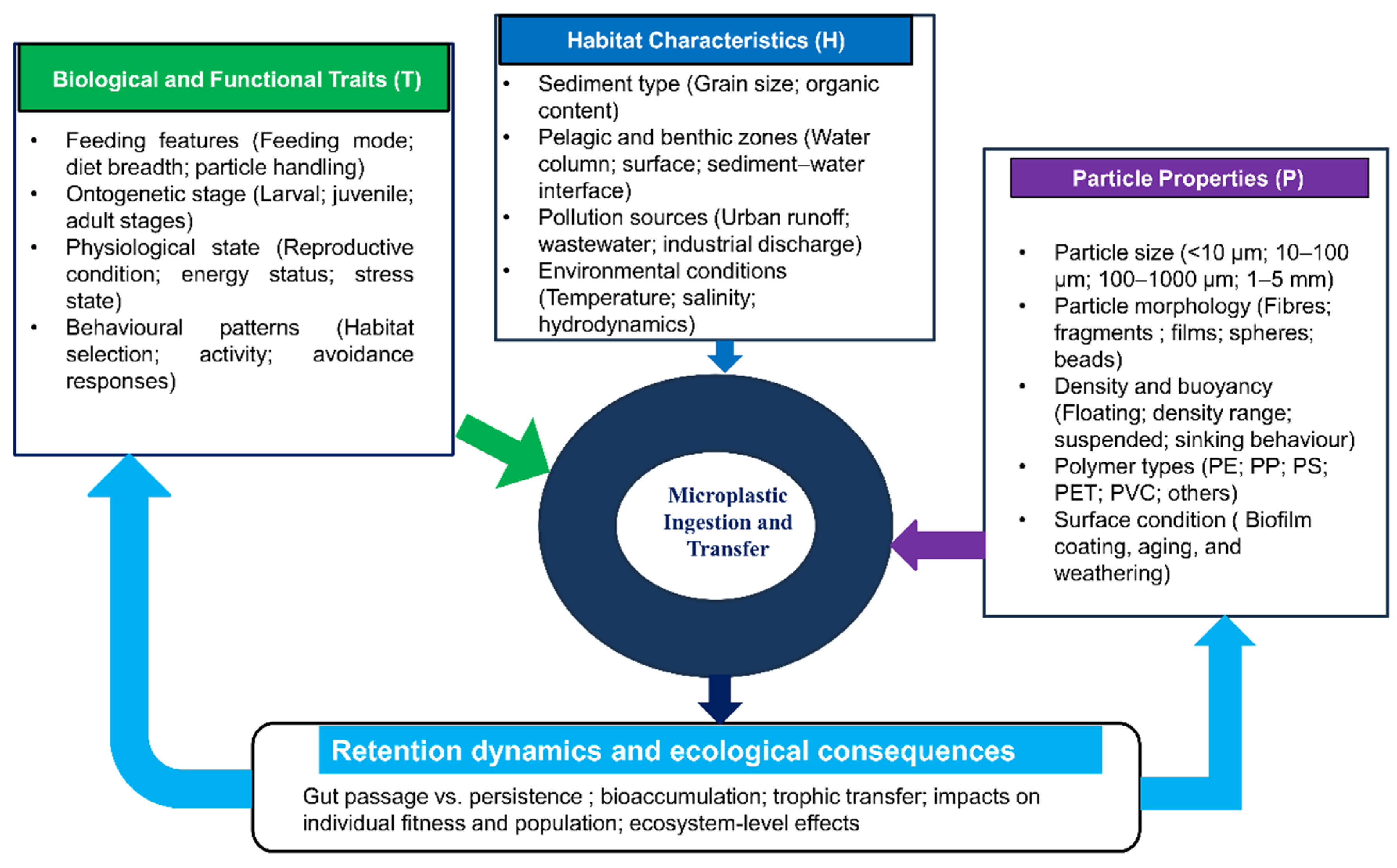
To address this gap, the Trait–Habitat–Particle (THP) framework (Figure 3) is proposed as a conceptual tool integrating three major determinants: (i) biological and functional traits (T), (ii) habitat characteristics influencing exposure (H), and (iii) particle properties (P). Rather than functioning as a predictive model, the framework provides a qualitative basis for organising existing evidence and identifying mechanisms underlying MP ingestion, retention, and trophic transfer within aquatic food webs.
Within this framework, biological and functional traits encompass characteristics that influence particle encounter and uptake, including feeding features, ontogenetic stage, physiological state, and behavioural patterns. Habitat characteristics describe environmental conditions that regulate particle availability and exposure, including sediment properties, pelagic and benthic zones, proximity to pollution sources, and environmental conditions such as hydrodynamics, temperature, and salinity. Particle properties refer to the physicochemical attributes of MPs, including particle size, morphology, polymer type, density and buoyancy, and surface condition, such as ageing, weathering, and biofilm coating, which influence particle bioavailability and interactions with aquatic invertebrates.
Importantly, these determinants operate interactively rather than independently. For instance, the influence of particle size may be constrained by feeding mechanisms, while habitat conditions determine particle distribution and accessibility. Consequently, similar particles may exhibit different ingestion patterns among functional groups and ecosystems, underscoring the importance of considering interactions among traits, habitat, and particle characteristics when interpreting MP dynamics.
The THP framework is articulated as a conceptual tool rather than a quantitative model intended for prediction. It serves to synthesise recurrent patterns observed across diverse studies by linking biological and functional traits, habitat-related exposure, and particle properties. In doing so, it facilitates comparisons among functional groups and ecosystems whilst acknowledging the heterogeneity inherent in the available empirical evidence.

5.2. Trait, Habitat, and Particle Interactions

Within the THP framework, biological and functional traits define the primary interface between aquatic invertebrates and MPs. Feeding strategy emerges as the most consistent determinant of uptake, with filter feeders exhibiting continuous, largely non-selective ingestion of particles from the water column [107,108], deposit feeders consuming sediment-bound particles [109,110], and predators acquiring MPs indirectly through trophic transfer [111]. Morphological and life-history traits, including body size and developmental stage, further influence ingestion capacity and retention potential [65].
Habitat regulates exposure by shaping MP distribution and availability. Pelagic systems facilitate encounters with suspended particles, whereas benthic environments act as sinks where MPs accumulate and persist [110,112]. Proximity to anthropogenic inputs, such as wastewater discharges and urban runoff, may further elevate exposure levels in aquatic ecosystems [109].
Particle properties also influence bioavailability and interaction outcomes. Smaller particles are generally more readily ingested due to their resemblance to natural food items, while fibres frequently dominate environmental samples and often exhibit prolonged retention [65]. Surface modification through biofilm formation may enhance ingestion by increasing similarity to natural prey [113]). MPs may also act as vectors for co-contaminants, thereby influencing ecological risk profiles [114].
The THP framework may be applied qualitatively to interpret microplastic interactions. First, biological and functional traits (T) are considered to establish probable pathways of microplastic encounter, ingestion, and retention. Second, habitat characteristics (H) are examined to evaluate particle availability and exposure. Third, particle properties (P) are assessed to interpret potential bioavailability and retention. Considered collectively, these components provide a qualitative basis for interpreting patterns of ingestion, retention, and trophic transfer within specific ecological contexts.

5.3. Functional Outcomes and Ecological Implications

The combined influence of biological and functional traits, habitat characteristics, and particle properties shapes the functional outcomes of MP interactions across aquatic invertebrate groups. Systems characterised by high trait susceptibility, elevated exposure, and increased particle bioavailability are generally associated with greater ingestion and retention [106,113].
Sediment-associated functional groups may act as reservoirs due to sustained exposure and continuous ingestion of contaminated substrates [115,116]. By contrast, mobile and predatory groups may contribute to MP redistribution through trophic transfer, linking benthic and pelagic compartments [111]. These patterns suggest that MP dynamics are influenced by the convergence of biological and environmental factors rather than taxonomic identity alone.

5.4. Cross-Functional Groups Synthesis Under the THP Framework

Consistent patterns emerge across functional groups when interpreted through the THP framework. Feeding strategy appears to be the primary determinant of MP ingestion, with filter feeders and deposit feeders exhibiting comparatively higher uptake, whereas predators contribute mainly through indirect pathways of exposure [107,111]. Habitat further modulates these effects, with benthic systems promoting long-term accumulation and pelagic systems facilitating continuous exposure [110,112].
Particle characteristics exert broadly similar influences across functional groups, with smaller and fibrous MPs being most frequently ingested due to their bioavailability and widespread occurrence [65]. Nevertheless, variation within functional groups often reflects differences in trait–habitat interactions rather than particle properties alone. This synthesis suggests that MP ingestion patterns may be interpreted through the interaction among traits, habitat characteristics, and particle properties (Table 3).

5.5. Limitations and Future Applications of the THP Framework

The THP framework should be regarded as an exploratory conceptual tool rather than a validated predictive model. It was developed through qualitative synthesis of heterogeneous studies encompassing diverse taxa, habitats, particle types, and experimental approaches. Consequently, the framework has not yet undergone empirical validation or quantitative testing across multiple ecosystems.
Differences in study design, methodological approaches, microplastic characterisation, and quality assurance procedures among the reviewed studies further constrain direct comparisons and limit generalisability. The framework is therefore intended primarily as a heuristic device for organising existing knowledge, identifying recurrent patterns, and generating hypotheses for future research.
Future investigations should evaluate the applicability of the THP framework through standardised laboratory and field studies conducted across multiple invertebrate groups and ecosystems. Integrating trait-based approaches with quantitative assessments of exposure, retention, and trophic transfer may further improve the framework and enhance understanding of microplastic dynamics within aquatic food webs.

6. Knowledge Gaps and Future Research Directions

Although evidence of microplastic (MP) ingestion in aquatic invertebrates is expanding rapidly, several critical limitations continue to constrain predictive understanding. A major challenge is the lack of methodological standardisation across studies, with inconsistencies in sampling approaches, particle extraction procedures, identification techniques, quality assurance/quality control (QA/QC) practices, and reporting units restricting comparability and synthesis [14,117]. Standardisation may be advanced through the adoption of harmonised reporting requirements across invertebrate studies. At a minimum, studies should report particle abundance using clearly defined and, where possible, comparable units; describe digestion and extraction procedures; specify methods used for polymer confirmation; document contamination controls and procedural blanks; report recovery controls where applicable; and distinguish whether microplastics were quantified in gut contents, whole organisms, or specific tissues. Consistent reporting of particle size ranges, detection limits, and the biological compartment analysed would further improve comparability across invertebrate groups and ecosystems. Such harmonisation would substantially improve comparability among studies and facilitate large-scale synthesis.
Beyond feeding strategy, biological traits such as behaviour, physiology, and life-history characteristics remain insufficiently investigated, limiting the development of robust trait-based frameworks. Habitat variability is also underrepresented, particularly in deep-sea, estuarine, polar, and tropical freshwater ecosystems, where spatial and temporal dynamics of MP exposure remain poorly characterised [104,112]. Expanding research within these understudied environments is necessary to strengthen ecological generalisation and improve understanding of ecosystem-specific exposure pathways.
The influence of particle characteristics, including morphology, polymer type, ageing, and biofilm formation, is not consistently evaluated across functional groups despite evidence of their importance in ingestion and retention dynamics [113,117]. Quantitative understanding of trophic transfer also remains limited, particularly regarding transfer efficiency, retention across trophic levels, and the potential for biomagnification [15,26]. Future investigations should incorporate controlled prey–predator experiments, stable isotope-assisted food-web analyses, and standardised transfer efficiency metrics to quantify MP movement across trophic levels under environmentally realistic conditions. Future investigations should incorporate controlled prey–consumer experiments and, where appropriate, complementary food-web approaches to quantify MP movement across trophic levels under environmentally realistic conditions. Comparable metrics should include transfer efficiency, retention time, prey-to-consumer particle ratios, and gut-clearance controls to distinguish transient gut passage from persistent retention. Studies should also report exposure duration, prey contamination levels, consumer uptake, and post-exposure depuration periods to improve comparisons across taxa and trophic pathways.
Many current studies rely on controlled laboratory experiments that may not fully capture the complexity of natural environments. Future research should therefore prioritise ecologically realistic and multifactorial study designs that integrate biological and functional traits, habitat conditions, and particle characteristics under environmentally relevant exposure scenarios. Long-term and multigenerational studies are also required to evaluate cumulative impacts on organismal fitness, population dynamics, and ecosystem functioning.
Finally, while the Trait–Habitat–Particle (THP) framework provides a structured lens for interpreting MP interactions, its application remains largely conceptual. Empirical evaluation across multiple functional groups, habitats, and ecosystems would be valuable for assessing its broader applicability and determining whether the framework can support future quantitative assessments of microplastic dynamics in aquatic food webs.

7. Conclusions

Microplastic contamination in aquatic invertebrates is pervasive across freshwater, estuarine, and marine ecosystems. Evidence synthesised in this review demonstrates that diverse invertebrate groups ingest and retain microplastics through multiple pathways shaped by feeding strategy, habitat characteristics, and particle properties. Aquatic invertebrates therefore act not only as recipients of microplastic contamination but also as mediators of particle transfer within aquatic food webs.
This review highlights that microplastic interactions are governed by the combined influence of biological and environmental factors rather than taxonomic identity alone. The proposed Trait–Habitat–Particle (THP) framework provides a conceptual lens for interpreting patterns of ingestion, retention, and trophic transfer across functional groups and ecosystems. However, the framework remains exploratory and requires further empirical evaluation.
Despite growing evidence of microplastic ingestion and bioaccumulation, quantitative understanding of trophic transfer within aquatic invertebrate food webs remains limited, and no conclusive evidence of biomagnification was identified among the reviewed studies. Future research should prioritise methodological standardisation, long-term and ecologically realistic investigations, and quantitative assessments of trophic transfer across diverse invertebrate groups and habitats. Supported by future empirical validation and standardised quantitative data, such efforts may improve ecological risk assessment and strengthen understanding of microplastic dynamics in aquatic ecosystems.

Supplementary Materials

The following supporting information can be downloaded at: https://www.mdpi.com/article/10.3390/microplastics5030155/s1, Supplementary Table S1. Summary of studies included in the review and their reported evidence of microplastic ingestion, bioaccumulation, trophic transfer, and biomagnification in aquatic invertebrates.

Author Contributions

Conceptualization, J.O., L.U.P.H., L.L.S., T.N. and A.I.O.; methodology, J.O.; writing—original draft preparation, J.O.; writing—review and editing, L.U.P.H., T.N., L.L.S. and A.I.O.; visualization, J.O.; supervision, L.U.P.H., L.L.S. and A.I.O.; project administration, A.I.O.; funding acquisition, A.I.O. All authors have read and agreed to the published version of the manuscript.

Funding

This research was funded by the South African Medical Research Council (Grant No. SAMRC/UFH/P790) and the National Research Foundation of South Africa (Grant No. RCHDI241119283812). The article processing charge (APC) was jointly funded by the University of Fort Hare, South Africa, and Rhodes University, South Africa.

Data Availability Statement

No new data were created or analysed in this study. Data sharing is not applicable to this article.

Acknowledgments

We gratefully acknowledge the South African Medical Research Council (grant # SAMRC/UFH/P790), and the National Research Foundation of South Africa (grant # RCHDI241119283812) for their financial supports.

Conflicts of Interest

The authors declare no conflict of interest.

References

  1. Hale, R.C.; Seeley, M.E.; La Guardia, M.J.; Mai, L.; Zeng, E.Y. A Global Perspective on Microplastics. J. Geophys. Res. Oceans 2020, 125, e2018JC014719. [Google Scholar] [CrossRef] [Scilit]
  2. Jolaosho, T.L.; Rasaq, M.F.; Omotoye, E.V.; Araomo, O.V.; Adekoya, O.S.; Abolaji, O.Y.; Hungbo, J.J. Microplastics in Freshwater and Marine Ecosystems: Occurrence, Characterization, Sources, Distribution Dynamics, Fate, Transport Processes, Potential Mitigation Strategies, and Policy Interventions. Ecotoxicol. Environ. Saf. 2025, 294, 118036. [Google Scholar] [CrossRef] [Scilit] [PubMed]
  3. Rani, A. Types and Sources of Microplastics; the Ubiquitous Environment Contaminant: A Review. J. Polym. Mater. 2022, 39, 17–35. [Google Scholar] [CrossRef] [Scilit]
  4. Guo, Z.; Boeing, W.J.; Xu, Y.; Borgomeo, E.; Mason, S.A.; Zhu, Y.-G. Global Meta-Analysis of Microplastic Contamination in Reservoirs with a Novel Framework. Water Res. 2021, 207, 117828. [Google Scholar] [CrossRef] [Scilit] [PubMed]
  5. Tang, L.; Feng, J.-C.; Li, C.; Liang, J.; Zhang, S.; Yang, Z. Global Occurrence, Drivers, and Environmental Risks of Microplastics in Marine Environments. J. Environ. Manag. 2023, 329, 116961. [Google Scholar] [CrossRef] [Scilit]
  6. Allan, J.D.; Castillo, M.M.; Capps, K.A. Energy Flow and Nutrient Cycling in Aquatic Communities. In Stream Ecology: Structure and Function of Running Waters; Springer: Cham, Switzerland, 2021; pp. 357–381. [Google Scholar]
  7. Boudreau, S.A.; Worm, B. Ecological Role of Large Benthic Decapods in Marine Ecosystems: A Review. Mar. Ecol. Prog. Ser. 2012, 469, 195–213. [Google Scholar] [CrossRef] [Scilit]
  8. Chakraborty, A.; Saha, G.K.; Aditya, G. Macroinvertebrates as Engineers for Bioturbation in Freshwater Ecosystem. Environ. Sci. Pollut. Res. 2022, 29, 64447–64468. [Google Scholar] [CrossRef] [Scilit]
  9. Prather, C.M.; Pelini, S.L.; Laws, A.; Rivest, E.; Woltz, M.; Bloch, C.P.; Del Toro, I.; Ho, C.; Kominoski, J.; Newbold, T.S. Invertebrates, Ecosystem Services and Climate Change. Biol. Rev. 2013, 88, 327–348. [Google Scholar] [PubMed]
  10. Arribas, L.P.; Donnarumma, L.; Palomo, M.G.; Scrosati, R.A. Intertidal Mussels as Ecosystem Engineers: Their Associated Invertebrate Biodiversity under Contrasting Wave Exposures. Mar. Biodivers. 2014, 44, 203–211. [Google Scholar] [CrossRef] [Scilit]
  11. Coppock, A.G.; Kingsford, M.J.; Jones, G.P. Importance of Complex Sponges as Habitat and Feeding Substrata for Coral Reef Fishes. Mar. Biol. 2024, 171, 154. [Google Scholar] [CrossRef] [Scilit]
  12. Folkers, M.; Rombouts, T. Sponges Revealed: A Synthesis of Their Overlooked Ecological Functions Within Aquatic Ecosystems; Springer: Cham, Switzerland, 2019; pp. 181–193. [Google Scholar]
  13. Du, J.; Zhou, Q.; Li, H.; Xu, S.; Wang, C.; Fu, L.; Tang, J. Environmental Distribution, Transport and Ecotoxicity of Microplastics: A Review. J. Appl. Toxicol. 2021, 41, 52–64. [Google Scholar] [PubMed]
  14. Lusher, A.; Hollman, P.; Mendoza-Hill, J. Microplastics in Fisheries and Aquaculture: Status of Knowledge on Their Occurrence and Implications for Aquatic Organisms and Food Safety; FAO: Rome, Italy, 2017. [Google Scholar]
  15. Carbery, M.; O’Connor, W.; Palanisami, T. Trophic Transfer of Microplastics and Mixed Contaminants in the Marine Food Web and Implications for Human Health. Environ. Int. 2018, 115, 400–409. [Google Scholar] [CrossRef] [Scilit] [PubMed]
  16. Wu, L.; Zhou, X.; Lai, C.; Ma, M.; Qin, L.; Wang, W. Microplastics–Pollutant Interactions in Environmental Systems: Mechanisms, Ecological Effects, and Implications for Sustainable Management. Molecules 2026, 31, 1852. [Google Scholar] [CrossRef] [Scilit] [PubMed]
  17. Cox, K.D.; Covernton, G.A.; Davies, H.L.; Dower, J.F.; Juanes, F.; Dudas, S.E. Human Consumption of Microplastics. Environ. Sci. Technol. 2019, 53, 7068–7074. [Google Scholar] [CrossRef] [Scilit] [PubMed]
  18. Rodríguez-Pérez, C.; de Rodrigáñez, M.S.; Pula, H.J. Occurrence of Nano/Microplastics from Wild and Farmed Edible Species. Potential Effects of Exposure on Human Health. In Advances in Food and Nutrition Research; Elsevier: Amsterdam, The Netherlands, 2023; Volume 103, pp. 273–311. [Google Scholar]
  19. Traylor, S.D.; Granek, E.F.; Duncan, M.; Brander, S.M. From the Ocean to Our Kitchen Table: Anthropogenic Particles in the Edible Tissue of US West Coast Seafood Species. Front. Toxicol. 2024, 6, 1469995. [Google Scholar] [CrossRef] [Scilit] [PubMed]
  20. Duis, K.; Coors, A. Microplastics in the Aquatic and Terrestrial Environment: Sources (with a Specific Focus on Personal Care Products), Fate and Effects. Environ. Sci. Eur. 2016, 28, 2. [Google Scholar] [CrossRef] [Scilit] [PubMed]
  21. GESAMP. Guidelines for the Monitoring and Assessment of Plastic Litter in the Ocean. J. Ser. GESAMP Rep. Stud. 2019, 99, 130. [Google Scholar]
  22. Koelmans, A.A.; Nor, N.H.M.; Hermsen, E.; Kooi, M.; Mintenig, S.M.; De France, J. Microplastics in Freshwaters and Drinking Water: Critical Review and Assessment of Data Quality. Water Res. 2019, 155, 410–422. [Google Scholar] [CrossRef] [Scilit] [PubMed]
  23. Song, J.; Wang, C.; Li, G. Defining Primary and Secondary Microplastics: A Connotation Analysis. ACS ES T Water 2024, 4, 2330–2332. [Google Scholar] [CrossRef] [Scilit]
  24. Soliz, D.L.; González, G.P.; Munoz-Arnanz, J.; Bravo-Yagüe, J.C.; Hernando, P.F.; Martínez, R.M.G. Identification and Morphological Characterization of Different Types of Plastic Microparticles. Heliyon 2024, 10, e30749. [Google Scholar] [CrossRef] [Scilit] [PubMed]
  25. Auta, H.S.; Emenike, C.U.; Fauziah, S.H. Distribution and Importance of Microplastics in the Marine Environment: A Review of the Sources, Fate, Effects, and Potential Solutions. Environ. Int. 2017, 102, 165–176. [Google Scholar] [CrossRef] [Scilit] [PubMed]
  26. Nelms, S.E.; Galloway, T.S.; Godley, B.J.; Jarvis, D.S.; Lindeque, P.K. Investigating Microplastic Trophic Transfer in Marine Top Predators. Environ. Pollut. 2018, 238, 999–1007. [Google Scholar] [CrossRef] [Scilit] [PubMed]
  27. Osman, A.I.; Hosny, M.; Eltaweil, A.S.; Omar, S.; Elgarahy, A.M.; Farghali, M.; Yap, P.-S.; Wu, Y.-S.; Nagandran, S.; Batumalaie, K. Microplastic Sources, Formation, Toxicity and Remediation: A Review. Environ. Chem. Lett. 2023, 21, 2129–2169. [Google Scholar] [CrossRef] [Scilit]
  28. Iyare, P.U.; Ouki, S.K.; Bond, T. Microplastics Removal in Wastewater Treatment Plants: A Critical Review. Environ. Sci. Water Res. Technol. 2020, 6, 2664–2675. [Google Scholar] [CrossRef] [Scilit]
  29. Kunz, A.; Schneider, F.; Anthony, N.; Lin, H.-T. Microplastics in Rivers along an Urban-Rural Gradient in an Urban Agglomeration: Correlation with Land Use, Potential Sources and Pathways. Environ. Pollut. 2023, 321, 121096. [Google Scholar] [CrossRef] [Scilit] [PubMed]
  30. Petroody, S.S.A.; Hashemi, S.H.; van Gestel, C.A. Transport and Accumulation of Microplastics through Wastewater Treatment Sludge Processes. Chemosphere 2021, 278, 130471. [Google Scholar] [CrossRef] [Scilit]
  31. Na, S.-H.; Kim, M.-J.; Kim, J.; Batool, R.; Cho, K.; Chung, J.; Lee, S.; Kim, E.-J. Fate and Potential Risks of Microplastic Fibers and Fragments in Water and Wastewater Treatment Processes. J. Hazard. Mater. 2024, 463, 132938. [Google Scholar] [CrossRef] [Scilit] [PubMed]
  32. Aves, A.R.; Revell, L.E.; Gaw, S.; Ruffell, H.; Schuddeboom, A.; Wotherspoon, N.E.; LaRue, M.; McDonald, A.J. First Evidence of Microplastics in Antarctic Snow. Cryosphere Discuss. 2022, 16, 2127–2145. [Google Scholar] [CrossRef] [Scilit]
  33. Bergmann, M.; Mützel, S.; Primpke, S.; Tekman, M.B.; Trachsel, J.; Gerdts, G. White and Wonderful? Microplastics Prevail in Snow from the Alps to the Arctic. Sci. Adv. 2019, 5, eaax1157. [Google Scholar] [CrossRef] [Scilit] [PubMed]
  34. Cunningham, E.M.; Rico Seijo, N.; Altieri, K.E.; Audh, R.R.; Burger, J.M.; Bornman, T.G.; Fawcett, S.; Gwinnett, C.; Osborne, A.O.; Woodall, L.C. The Transport and Fate of Microplastic Fibres in the Antarctic: The Role of Multiple Global Processes. Front. Mar. Sci. 2022, 9, 1056081. [Google Scholar] [CrossRef] [Scilit]
  35. Ohno, H.; Iizuka, Y. Microplastics in Snow from Protected Areas in Hokkaido, the Northern Island of Japan. Sci. Rep. 2023, 13, 9942. [Google Scholar] [CrossRef] [Scilit] [PubMed]
  36. Rosso, B.; Scoto, F.; Hallanger, I.G.; Larose, C.; Gallet, J.C.; Spolaor, A.; Bravo, B.; Barbante, C.; Gambaro, A.; Corami, F. Characteristics and Quantification of Small Microplastics (<100 Μm) in Seasonal Svalbard Snow on Glaciers and Lands. J. Hazard. Mater. 2024, 467, 133723. [Google Scholar] [CrossRef] [Scilit] [PubMed]
  37. Dris, R.; Gasperi, J.; Mirande, C.; Mandin, C.; Guerrouache, M.; Langlois, V.; Tassin, B. A First Overview of Textile Fibers, Including Microplastics, in Indoor and Outdoor Environments. Environ. Pollut. 2017, 221, 453–458. [Google Scholar] [CrossRef] [Scilit] [PubMed]
  38. Bellasi, A.; Binda, G.; Pozzi, A.; Galafassi, S.; Volta, P.; Bettinetti, R. Microplastic Contamination in Freshwater Environments: A Review, Focusing on Interactions with Sediments and Benthic Organisms. Environments 2020, 7, 30. [Google Scholar] [CrossRef] [Scilit]
  39. Smith, M.; Love, D.C.; Rochman, C.M.; Neff, R.A. Microplastics in Seafood and the Implications for Human Health. Curr. Environ. Health Rep. 2018, 5, 375–386. [Google Scholar] [CrossRef] [Scilit] [PubMed]
  40. Haque, M.R.; Ahmed, W.; Rahman, M.A.; Md Zulfiker Rahman, K.; Rahman, M.M. Aquatic Insects as Mediator for Microplastics Pollution in a River Ecosystem of Bangladesh. Sci. Rep. 2025, 15, 15635. [Google Scholar] [CrossRef] [Scilit] [PubMed]
  41. Khedre, A.M.; Ramadan, S.A.; Ashry, A.; Alaraby, M. Assessment of Microplastic Accumulation in Aquatic Insects of Different Feeding Guilds Collected from Wastewater in Sohag Governorate, Egypt. Mar. Freshw. Res. 2023, 74, 733–745. [Google Scholar] [CrossRef] [Scilit]
  42. Khedre, A.M.; Ramadan, S.A.; Ashry, A.; Alaraby, M. Abundance and Risk Assessment of Microplastics in Water, Sediment, and Aquatic Insects of the Nile River. Chemosphere 2024, 353, 141557. [Google Scholar] [CrossRef] [Scilit] [PubMed]
  43. Amponsah, A.K.; Afrifa, E.K.A.; Essandoh, P.K. Plastic in the Food Chain: Investigating Microplastic Consumption by the Blue-Swimming Crab (de Rochebrune, 1883) and Shrimp (Pérez-Farfante, 1967) from an Estuarine System in Ghana. Sci. Afr. 2024, 25, e02261. [Google Scholar] [CrossRef] [Scilit]
  44. Akindele, E.O.; Ehlers, S.M.; Koop, J.H. Freshwater Insects of Different Feeding Guilds Ingest Microplastics in Two Gulf of Guinea Tributaries in Nigeria. Environ. Sci. Pollut. Res. 2020, 27, 33373–33379. [Google Scholar] [CrossRef] [Scilit]
  45. Hara, J.; Frias, J.; Nash, R. Quantification of Microplastic Ingestion by the Decapod Crustacean Nephrops Norvegicus from Irish Waters. Mar. Pollut. Bull. 2020, 152, 110905. [Google Scholar] [CrossRef] [Scilit] [PubMed]
  46. Welden, N.A.; Cowie, P.R. Environment and Gut Morphology Influence Microplastic Retention in Langoustine, Nephrops Norvegicus. Environ. Pollut. 2016, 214, 859–865. [Google Scholar] [CrossRef] [Scilit] [PubMed]
  47. Silva, C.J.; Silva, A.L.P.; Campos, D.; Machado, A.L.; Pestana, J.L.; Gravato, C. Oxidative Damage and Decreased Aerobic Energy Production Due to Ingestion of Polyethylene Microplastics by Chironomus riparius (Diptera) Larvae. J. Hazard. Mater. 2021, 402, 123775. [Google Scholar] [CrossRef] [Scilit] [PubMed]
  48. Devriese, L.I.; De Witte, B.; Vethaak, A.D.; Hostens, K.; Leslie, H.A. Bioaccumulation of PCBs from Microplastics in Norway Lobster (Nephrops norvegicus): An Experimental Study. Chemosphere 2017, 186, 10–16. [Google Scholar] [CrossRef] [Scilit] [PubMed]
  49. Drummond, L.O.; de Oliveira, A.C.; De Grande, S.; Nuvoloni, F.M. Microplastic Bioaccumulation in Odonata Larvae: Integrating Evidence from Experimental Studies in Freshwater Microcosm. Chemosphere 2025, 390, 144716. [Google Scholar] [CrossRef] [Scilit] [PubMed]
  50. Wang, T.; Hu, M.; Xu, G.; Shi, H.; Leung, J.Y.; Wang, Y. Microplastic Accumulation via Trophic Transfer: Can a Predatory Crab Counter the Adverse Effects of Microplastics by Body Defence? Sci. Total Environ. 2021, 754, 142099. [Google Scholar] [CrossRef] [Scilit] [PubMed]
  51. Maneechan, W.; Prommi, T.O. Occurrence of Microplastics in Edible Aquatic Insect Pantala sp. (Odonata: Libellulidae) from Rice Fields. PeerJ 2022, 10, e12902. [Google Scholar] [CrossRef] [Scilit] [PubMed]
  52. Kumari, N.; Samantaray, B.P.; Patel, A.; Kumar, R. Microplastics Affect Rates of Locomotion and Reproduction via Dietary Uptake in Globally Invasive Snail Physa Acuta. Water 2023, 15, 928. [Google Scholar] [CrossRef] [Scilit]
  53. Woods, M.N.; Stack, M.E.; Fields, D.M.; Shaw, S.D.; Matrai, P.A. Microplastic Fiber Uptake, Ingestion, and Egestion Rates in the Blue Mussel (Mytilus edulis). Mar. Pollut. Bull. 2018, 137, 638–645. [Google Scholar] [CrossRef] [Scilit] [PubMed]
  54. Gong, Y.; Wang, Y.; Chen, L.; Li, Y.; Chen, X.; Liu, B. Microplastics in Different Tissues of a Pelagic Squid (Dosidicus gigas) in the Northern Humboldt Current Ecosystem. Mar. Pollut. Bull. 2021, 169, 112509. [Google Scholar] [CrossRef] [Scilit] [PubMed]
  55. Rahman, M.; Hoque, M.E.; Hasan, Z.; Alam, M.M.T.; Jakaria, M.; Das, K.; Nelson, R.-B.; Siddique, M.A.M. Quantification and Characterization of Microplastics in an Intertidal Gastropod the Common Periwinkle Littorina littorea. Water Biol. Secur. 2025, 4, 100401. [Google Scholar] [CrossRef] [Scilit]
  56. Expósito, N.; Rovira, J.; Sierra, J.; Gimenez, G.; Domingo, J.L.; Schuhmacher, M. Levels of Microplastics and Their Characteristics in Molluscs from North-West Mediterranean Sea: Human Intake. Mar. Pollut. Bull. 2022, 181, 113843. [Google Scholar] [CrossRef] [Scilit] [PubMed]
  57. Weinstein, J.E.; Ertel, B.M.; Gray, A.D. Accumulation and Depuration of Microplastic Fibers, Fragments, and Tire Particles in the Eastern Oyster, Crassostrea virginica: A Toxicokinetic Approach. Environ. Pollut. 2022, 308, 119681. [Google Scholar] [CrossRef] [Scilit] [PubMed]
  58. Naji, A.; Nuri, M.; Vethaak, A.D. Microplastics Contamination in Molluscs from the Northern Part of the Persian Gulf. Environ. Pollut. 2018, 235, 113–120. [Google Scholar] [CrossRef] [Scilit] [PubMed]
  59. Hurley, R.R.; Woodward, J.C.; Rothwell, J.J. Ingestion of Microplastics by Freshwater Tubifex Worms. Environ. Sci. Technol. 2017, 51, 12844–12851. [Google Scholar] [CrossRef] [Scilit] [PubMed]
  60. Keerthika, K.; Padmavathy, P.; Rani, V.; Jeyashakila, R.; Aanand, S.; Kutty, R. Evidence of Microplastics in the Polychaete Worm (Capitellids—Capitella capitata) (Fabricicus, 1780) along Thoothukudi Region. Environ. Monit. Assess. 2024, 196, 556. [Google Scholar] [CrossRef] [Scilit] [PubMed]
  61. Porter, A.; Barber, D.; Hobbs, C.; Love, J.; Power, A.L.; Bakir, A.; Galloway, T.S.; Lewis, C. Uptake of Microplastics by Marine Worms Depends on Feeding Mode and Particle Shape but Not Exposure Time. Sci. Total Environ. 2023, 857, 159287. [Google Scholar] [CrossRef] [Scilit] [PubMed]
  62. Silva, S.A.; Prata, J.C.; Dias-Pereira, P.; Rodrigues, A.C.; Soares, A.M.; Sarmento, R.A.; Rocha-Santos, T.; Gravato, C.; Silva, A.L.P. Microplastics Altered Cellular Responses, Physiology, Behaviour, and Regeneration of Planarians Feeding on Contaminated Prey. Sci. Total Environ. 2023, 875, 162556. [Google Scholar] [CrossRef] [Scilit] [PubMed]
  63. Hamzah, S.R.; Altrawneh, R.S.; Anuar, S.T.; Khalik, W.M.A.W.M.; Kolandhasamy, P.; Ibrahim, Y.S. Ingestion of Microplastics by the Estuarine Polychaete, Namalycastis sp. in the Setiu Wetlands, Malaysia. Mar. Pollut. Bull. 2021, 170, 112617. [Google Scholar] [CrossRef] [Scilit] [PubMed]
  64. James, K.; Kripa, V.; Vineetha, G.; Padua, S.; Parvathy, R.; Lavanya, R.; Joseph, R.V.; Abhilash, K.; Babu, A.; John, S. Microplastic Ingestion by the Polychaete Community in the Coastal Waters of Kochi, Southwest Coast of India. Reg. Stud. Mar. Sci. 2023, 62, 102948. [Google Scholar] [CrossRef] [Scilit]
  65. Vecchi, S.; Bianchi, J.; Scalici, M.; Fabroni, F.; Tomassetti, P. Field Evidence for Microplastic Interactions in Marine Benthic Invertebrates. Sci. Rep. 2021, 11, 20900. [Google Scholar] [CrossRef] [Scilit] [PubMed]
  66. Schuab, J.M.; Quirino, W.P.; de Paula, M.S.; Milagres, M.R.; Motta, D.G.; Zamprogno, G.C.; Otegui, M.B.P.; Ocaris, E.R.Y.; da Costa, M.B. Abundance of Microplastic in Different Coastal Areas Using Phragmatopoma caudata (Kroyer in Morch, 1863) (Polychaeta: Sabelariidae) as an Indicator. Sci. Total Environ. 2023, 880, 163219. [Google Scholar] [CrossRef] [Scilit] [PubMed]
  67. Fueser, H.; Mueller, M.-T.; Weiss, L.; Höss, S.; Traunspurger, W. Ingestion of Microplastics by Nematodes Depends on Feeding Strategy and Buccal Cavity Size. Environ. Pollut. 2019, 255, 113227. [Google Scholar] [CrossRef] [Scilit] [PubMed]
  68. Kang, T.; Kim, D.; Oh, J.H. Ingestion of Microplastics by Free-Living Marine Nematodes, Especially Enoplolaimus spp., in Mallipo Beach, South Korea. Plankton Benthos Res. 2021, 16, 109–117. [Google Scholar] [CrossRef] [Scilit]
  69. Fueser, H.; Mueller, M.-T.; Traunspurger, W. Rapid Ingestion and Egestion of Spherical Microplastics by Bacteria-Feeding Nematodes. Chemosphere 2020, 261, 128162. [Google Scholar] [CrossRef] [Scilit] [PubMed]
  70. Fueser, H.; Mueller, M.-T.; Traunspurger, W. Ingestion of Microplastics by Meiobenthic Communities in Small-Scale Microcosm Experiments. Sci. Total Environ. 2020, 746, 141276. [Google Scholar] [CrossRef] [Scilit] [PubMed]
  71. Huang, J.; Zhang, J.; Sun, J.; Gong, M.; Yuan, Z. Exposure to Polystyrene Microplastics and Perfluorooctane Sulfonate Disrupt the Homeostasis of Intact Planarians and the Growth of Regenerating Planarians. Sci. Total Environ. 2024, 924, 171653. [Google Scholar] [CrossRef] [Scilit] [PubMed]
  72. Xie, C.; Li, X.; Chen, Y.; Wu, X.; Chen, H.; Zhang, S.; Jiang, L.; Pang, Q.; Irshad, S.; Guo, Z. Impact of Polystyrene Microplastic Carriers on the Toxicity of Pb 2+ towards Freshwater Planarian Dugesia japonica. Environ. Sci. Nano 2024, 11, 2994–3005. [Google Scholar] [CrossRef] [Scilit]
  73. Mueller, M.-T.; Fueser, H.; Höss, S.; Traunspurger, W. Species-Specific Effects of Long-Term Microplastic Exposure on the Population Growth of Nematodes, with a Focus on Microplastic Ingestion. Ecol. Indic. 2020, 118, 106698. [Google Scholar] [CrossRef] [Scilit]
  74. Mueller, M.-T.; Fueser, H.; Trac, L.N.; Mayer, P.; Traunspurger, W.; Höss, S. Surface-Related Toxicity of Polystyrene Beads to Nematodes and the Role of Food Availability. Environ. Sci. Technol. 2020, 54, 1790–1798. [Google Scholar] [CrossRef] [Scilit] [PubMed]
  75. Gambino, G.; Falleni, A.; Nigro, M.; Salvetti, A.; Cecchettini, A.; Ippolito, C.; Guidi, P.; Rossi, L. Dynamics of Interaction and Effects of Microplastics on Planarian Tissue Regeneration and Cellular Homeostasis. Aquat. Toxicol. 2020, 218, 105354. [Google Scholar] [CrossRef] [Scilit] [PubMed]
  76. Gao, T.; Sun, B.; Xu, Z.; Chen, Q.; Yang, M.; Wan, Q.; Song, L.; Chen, G.; Jing, C.; Zeng, E.Y. Exposure to Polystyrene Microplastics Reduces Regeneration and Growth in Planarians. J. Hazard. Mater. 2022, 432, 128673. [Google Scholar] [CrossRef] [Scilit] [PubMed]
  77. Hu, J.; Ye, F.; Zhang, S.; Li, H.; Bao, Q.; Gan, J.; Ye, Q.; Wang, W. Multi-Dimensional Visualization of Ingestion, Biological Effects and Interactions of Microplastics and a Representative POP in Edible Jellyfish. Environ. Int. 2023, 178, 108028. [Google Scholar] [CrossRef] [Scilit] [PubMed]
  78. Samudra, D.; Aunurohim, A.; Setiawan, E. Preliminary Report of Microplastic (MPs) Presence on East Java Freshwater Sponges at Brantas Porong River. BIO Web Conf. 2024, 94, 04019. [Google Scholar] [CrossRef] [Scilit]
  79. Savage, G.; Porter, A.; Simpson, S.D. Uptake of Microplastics by the Snakelocks anemone (Anemonia viridis) Is Commonplace across Environmental Conditions. Sci. Total Environ. 2022, 836, 155144. [Google Scholar] [CrossRef] [Scilit] [PubMed]
  80. Celis-Hernández, O.; Ávila, E.; Ward, R.D.; Rodríguez-Santiago, M.A.; Aguirre-Téllez, J.A. Microplastic Distribution in Urban vs Pristine Mangroves: Using Marine Sponges as Bioindicators of Environmental Pollution. Environ. Pollut. 2021, 284, 117391. [Google Scholar] [CrossRef] [Scilit] [PubMed]
  81. Devereux, R.; Hartl, M.G.; Bell, M.; Capper, A. The Abundance of Microplastics in Cnidaria and Ctenophora in the North Sea. Mar. Pollut. Bull. 2021, 173, 112992. [Google Scholar] [CrossRef] [Scilit] [PubMed]
  82. Krikech, I.; Conti, G.O.; Pulvirenti, E.; Rapisarda, P.; Castrogiovanni, M.; Maisano, M.; Le Pennec, G.; Leermakers, M.; Ferrante, M.; Cappello, T. Microplastics (≤10 Μm) Bioaccumulation in Marine Sponges along the Moroccan Mediterranean Coast: Insights into Species-Specific Distribution and Potential Bioindication. Environ. Res. 2023, 235, 116608. [Google Scholar] [CrossRef] [Scilit] [PubMed]
  83. Sucharitakul, P.; Pitt, K.A.; Welsh, D.T. Trophic Transfer of Microbeads to Jellyfish and the Importance of Aging Microbeads for Microplastic Experiments. Mar. Pollut. Bull. 2021, 172, 112867. [Google Scholar] [CrossRef] [Scilit] [PubMed]
  84. Hossain, K.; Charoenpong, C.; Tongrod, A.; Putchakarn, S.; Wang, X.; Tasnim, J.; Sompongchaiyakul, P. Insights into Microplastic Abundance and Characteristics in Sea Sponges: Influence of Extraction Methods and Morphological Traits. Int. J. Environ. Sci. Technol. 2026, 23, 400. [Google Scholar] [CrossRef] [Scilit]
  85. Sivan, G.; Dileep, V.; Yesudas, A.; Prabhakaran, P. Comparative Bioaccumulation Potential of Trace Elements and Microplastics in Marine Sponges as Bioindicators. Int. J. Environ. Res. 2025, 19, 255. [Google Scholar] [CrossRef] [Scilit]
  86. Corti, A.; Pagano, G.; Giudice, A.L.; Papale, M.; Rizzo, C.; Azzaro, M.; Vinciguerra, V.; Castelvetro, V.; Giannarelli, S. Marine Sponges as Bioindicators of Pollution by Synthetic Microfibers in Antarctica. Sci. Total Environ. 2023, 902, 166043. [Google Scholar] [CrossRef] [Scilit] [PubMed]
  87. Okubo, N.; Tamura-Nakano, M.; Watanabe, T. Experimental Observation of Microplastics Invading the Endoderm of Anthozoan Polyps. Mar. Environ. Res. 2020, 162, 105125. [Google Scholar] [CrossRef] [Scilit] [PubMed]
  88. Costa, E.; Piazza, V.; Lavorano, S.; Faimali, M.; Garaventa, F.; Gambardella, C. Trophic Transfer of Microplastics from Copepods to Jellyfish in the Marine Environment. Front. Environ. Sci. 2020, 8, 571732. [Google Scholar] [CrossRef] [Scilit]
  89. Sucharitakul, P.; Pitt, K.A.; Welsh, D.T. Limited Ingestion, Rapid Egestion and No Detectable Impacts of Microbeads on the Moon Jellyfish, Aurelia aurita. Mar. Pollut. Bull. 2020, 156, 111208. [Google Scholar] [CrossRef] [Scilit] [PubMed]
  90. Rapp, J.; Herrera, A.; Bondyale-Juez, D.R.; González-Pleiter, M.; Reinold, S.; Asensio, M.; Martínez, I.; Gómez, M. Microplastic Ingestion in Jellyfish Pelagia noctiluca (Forsskal, 1775) in the North Atlantic Ocean. Mar. Pollut. Bull. 2021, 166, 112266. [Google Scholar] [CrossRef] [Scilit] [PubMed]
  91. Messinetti, S.; Mercurio, S.; Scarì, G.; Pennati, A.; Pennati, R. Ingested Microscopic Plastics Translocate from the Gut Cavity of Juveniles of the Ascidian Ciona Intestinalis. Eur. Zool. J. 2019, 86, 189–195. [Google Scholar] [CrossRef] [Scilit]
  92. Pennati, R.; Castelletti, C.; Parolini, M.; Scarì, G.; Mercurio, S. Mixotrophic Flagellate Ingestion Boosts Microplastic Accumulation in Ascidians. J. Exp. Zool. Part A Ecol. Integr. Physiol. 2022, 337, 639–644. [Google Scholar] [CrossRef] [Scilit]
  93. Paffenhöfer, G.-A.; Köster, M. The Effects of Microplastics on Dolioletta gegenbauri (Tunicata, Thaliacea). Arch. Environ. Contam. Toxicol. 2020, 78, 94–105. [Google Scholar] [PubMed]
  94. Lekatompessy, V.C.; Marhendra, A.P.W.; Kurniawan, N. Accumulation of Microplastics in the Digestive Tract and Gonads and Its Effects on Gonad Quality of Sea Urchins Tripneustes gratilla. Biotropika J. Trop. Biol. 2023, 11, 53–63. [Google Scholar] [CrossRef] [Scilit]
  95. Martines, A.; Furfaro, G.; Solca, M.; Muzzi, M.; Di Giulio, A.; Rossi, S. An Analysis of Microplastics Ingested by the Mediterranean Detritivore Holothuria tubulosa (Echinodermata: Holothuroidea) Sheds Light on Patterns of Contaminant Distribution in Different Marine Areas. Water 2023, 15, 1597. [Google Scholar] [CrossRef] [Scilit]
  96. Rahmawati; Krisanti, M.; Riani, E.; Cordova, M.R. Microplastic Contamination in the Digestive Tract of Sea Urchins (Echinodermata: Echinoidea) in Kepulauan Seribu, Indonesia. Environ. Monit. Assess. 2023, 195, 1103. [Google Scholar] [CrossRef] [Scilit] [PubMed]
  97. Bulleri, F.; Ravaglioli, C.; Anselmi, S.; Renzi, M. The Sea Cucumber Holothuria tubulosa Does Not Reduce the Size of Microplastics but Enhances Their Resuspension in the Water Column. Sci. Total Environ. 2021, 781, 146650. [Google Scholar] [CrossRef] [Scilit] [PubMed]
  98. Feng, Z.; Wang, R.; Zhang, T.; Wang, J.; Huang, W.; Li, J.; Xu, J.; Gao, G. Microplastics in Specific Tissues of Wild Sea Urchins along the Coastal Areas of Northern China. Sci. Total Environ. 2020, 728, 138660. [Google Scholar] [CrossRef] [Scilit] [PubMed]
  99. Renzi, M.; Blašković, A.; Bernardi, G.; Russo, G.F. Plastic Litter Transfer from Sediments towards Marine Trophic Webs: A Case Study on Holothurians. Mar. Pollut. Bull. 2018, 135, 376–385. [Google Scholar] [CrossRef] [Scilit] [PubMed]
  100. Suckling, C.C.; Richard, J. Short-Term Exposure to Storm-like Scenario Microplastic and Salinity Conditions Does Not Impact Adult Sea Urchin (Arbacia punctulata) Physiology. Arch. Environ. Contam. Toxicol. 2020, 78, 495–500. [Google Scholar] [CrossRef] [Scilit] [PubMed]
  101. Hennicke, A.; Macrina, L.; Malcolm-Mckay, A.; Miliou, A. Assessment of Microplastic Accumulation in Wild Paracentrotus lividus, a Commercially Important Sea Urchin Species, in the Eastern Aegean Sea, Greece. Reg. Stud. Mar. Sci. 2021, 45, 101855. [Google Scholar] [CrossRef] [Scilit]
  102. Muhammad Husin, M.J.; Mazlan, N.; Shalom, J.; Saud, S.N.; Abdullah Sani, M.S. Evaluation of Microplastics Ingested by Sea Cucumber Stichopus horrens in Pulau Pangkor, Perak, Malaysia. Environ. Sci. Pollut. Res. 2021, 28, 61592–61600. [Google Scholar] [CrossRef] [Scilit]
  103. Zamani, N.P.; Bengen, D.G.; Ling Lim, C.; Cordova, M.R. Characteristic of Microplastic on Coral Reef Sediment and Sea Urchin (Diadema sp.) in Tidung Island, Jakarta Bay, Indonesia. ILMU Kelaut. Indones. J. Mar. Sci. 2023, 28, 289. [Google Scholar] [CrossRef] [Scilit]
  104. Cossi, P.F.; Ojeda, M.; Chiesa, I.L.; Rimondino, G.N.; Fraysse, C.; Calcagno, J.; Pérez, A.F. First Evidence of Microplastics in the Marine Protected Area Namuncurá at Burdwood Bank, Argentina: A Study on Henricia obesa and Odontaster penicillatus (Echinodermata: Asteroidea). Polar Biol. 2021, 44, 2277–2287. [Google Scholar] [CrossRef] [Scilit]
  105. Wu, H.; Mohsen, M.; Cen, Y.; Yang, Y.; Yu, Z. Effects of Microplastics on Larval Ingestion, Survival, and Development of Sea Cucumber Holothuria leucospilota. Water Biol. Secur. 2025, 4, 100329. [Google Scholar] [CrossRef] [Scilit]
  106. Berlino, M.; Sarà, G.; Mangano, M. Functional Trait-Based Evidence of Microplastic Effects on Aquatic Species. Biology 2023, 12, 811. [Google Scholar] [CrossRef] [Scilit] [PubMed]
  107. Setälä, O.; Norkko, J.; Lehtiniemi, M. Feeding Type Affects Microplastic Ingestion in a Coastal Invertebrate Community. Mar. Pollut. Bull. 2016, 102, 95–101. [Google Scholar] [CrossRef] [Scilit] [PubMed]
  108. Van Cauwenberghe, L.; Claessens, M.; Vandegehuchte, M.B.; Janssen, C.R. Microplastics Are Taken up by Mussels (Mytilus edulis) and Lugworms (Arenicola marina) Living in Natural Habitats. Environ. Pollut. 2015, 199, 10–17. [Google Scholar] [CrossRef] [Scilit] [PubMed]
  109. Bertoli, M.; Pastorino, P.; Lesa, D.; Renzi, M.; Anselmi, S.; Prearo, M.; Pizzul, E. Microplastics Accumulation in Functional Feeding Guilds and Functional Habit Groups of Freshwater Macrobenthic Invertebrates: Novel Insights in a Riverine Ecosystem. Sci. Total Environ. 2022, 804, 150207. [Google Scholar] [CrossRef] [Scilit] [PubMed]
  110. Pan, C.-G.; Mintenig, S.M.; Redondo-Hasselerharm, P.E.; Neijenhuis, P.H.; Yu, K.-F.; Wang, Y.-H.; Koelmans, A.A. Automated μFTIR Imaging Demonstrates Taxon-Specific and Selective Uptake of Microplastic by Freshwater Invertebrates. Environ. Sci. Technol. 2021, 55, 9916–9925. [Google Scholar] [CrossRef] [Scilit] [PubMed]
  111. Pagter, E.; Nash, R.; Frias, J.; Kavanagh, F. Assessing Microplastic Distribution within Infaunal Benthic Communities in a Coastal Embayment. Sci. Total Environ. 2021, 791, 148278. [Google Scholar] [CrossRef] [Scilit] [PubMed]
  112. Courtene-Jones, W.; Quinn, B.; Ewins, C.; Gary, S.F.; Narayanaswamy, B.E. Consistent Microplastic Ingestion by Deep-Sea Invertebrates over the Last Four Decades (1976–2015), a Study from the North East Atlantic. Environ. Pollut. 2019, 244, 503–512. [Google Scholar] [CrossRef] [Scilit] [PubMed]
  113. Kahane-Rapport, S.; Czapanskiy, M.; Fahlbusch, J.; Friedlaender, A.; Calambokidis, J.; Hazen, E.; Goldbogen, J.; Savoca, M. Field Measurements Reveal Exposure Risk to Microplastic Ingestion by Filter-Feeding Megafauna. Nat. Commun. 2022, 13, 6327. [Google Scholar] [CrossRef] [Scilit] [PubMed]
  114. Khan, F.R.; Catarino, A.I.; Clark, N.J. The Ecotoxicological Consequences of Microplastics and Co-Contaminants in Aquatic Organisms: A Mini-Review. Emerg. Top. Life Sci. 2022, 6, 339–348. [Google Scholar] [CrossRef] [Scilit] [PubMed]
  115. Costa, L.L.; da Costa, I.D.; da Silva Oliveira, A.; Zalmon, I.R. “Microplastic Ecology”: Testing the Influence of Ecological Traits and Urbanization in Microplastic Ingestion by Sandy Beach Fauna. Estuar. Coast. Shelf Sci. 2023, 290, 108406. [Google Scholar] [CrossRef] [Scilit]
  116. Kangas, A.; Setälä, O.; Kauppi, L.; Lehtiniemi, M. Trophic Transfer Increases the Exposure to Microplastics in Littoral Predators. Mar. Pollut. Bull. 2023, 196, 115553. [Google Scholar] [CrossRef] [Scilit] [PubMed]
  117. Prata, J.C.; da Costa, J.P.; Lopes, I.; Andrady, A.L.; Duarte, A.C.; Rocha-Santos, T. A One Health Perspective of the Impacts of Microplastics on Animal, Human and Environmental Health. Sci. Total Environ. 2021, 777, 146094. [Google Scholar] [CrossRef] [Scilit] [PubMed]
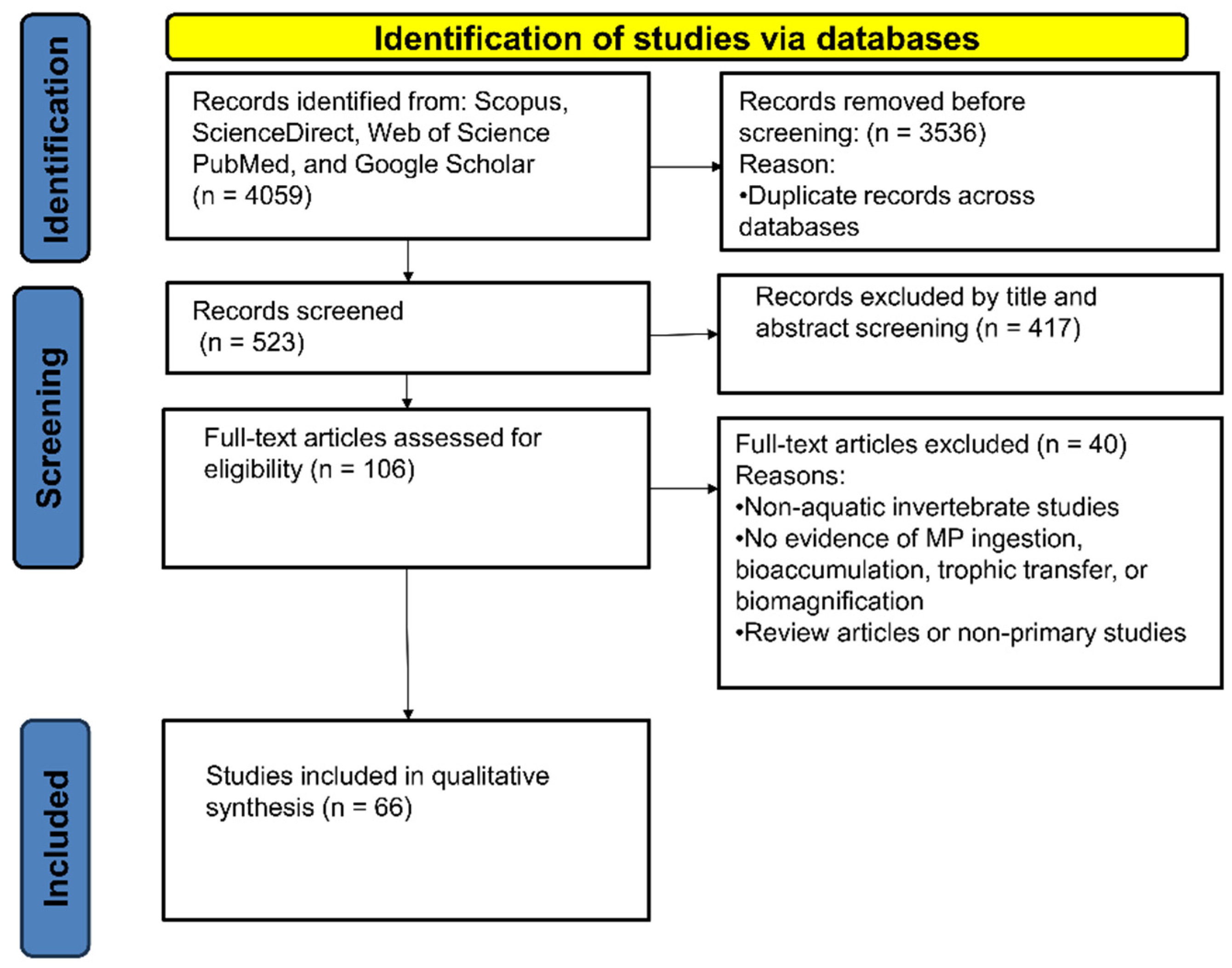
Figure 1. Flow diagram illustrating the literature search, screening, eligibility assessment, and study selection process used in this review.
Microplastics 05 00155 g001
Figure 2. Sources and pathways of microplastics in the Aquatic environment. Arrows indicate the principal transport pathways of microplastics, while dots represent microplastic particles illustrating their distribution and accumulation across aquatic ecosystems.
Microplastics 05 00155 g002
Figure 3. Trait–Habitat–Particle (THP) framework illustrating the interaction of biological and functional traits (T), habitat characteristics (H), and particle properties (P) in shaping microplastic ingestion, retention, and trophic transfer in aquatic invertebrates. Arrows indicate the conceptual interactions among the components and their combined influence on microplastic exposure, uptake, retention, and trophic transfer. The framework is intended as a qualitative conceptual tool rather than a predictive model. PE = polyethylene; PP = polypropylene; PS = polystyrene; PET = polyethylene terephthalate; PVC = polyvinyl chloride.
Microplastics 05 00155 g003
Table 1. Distribution and Characteristics of Studies Included in the Review.
Invertebrate GroupNumber of Studies (n)Habitat CoverageLaboratory Studies (n)Field Studies (n)Dominant Research Themes
Arthropods (Crustaceans and Aquatic Insects)12F (8), E (1), M (3)66Ingestion, bioaccumulation, and trophic transfer
Molluscs7F (1), M (6)25Filtration-mediated ingestion, retention, and bioaccumulation
Sediment-Associated Worms (Annelids, Nematodes, and Platyhelminthes)18F (11), E (1), M (6)135Sediment-associated uptake, ingestion, and retention
Suspension Feeders (Poriferans, Cnidarians, and Tunicates)17F (1), M (16)98Suspension feeding, particle selectivity, and accumulation
Echinoderms12M (12)39Ingestion, retention, and ecological effects
Total66F (21), E (2), M (43)3333
Table note. Studies were classified according to the dominant invertebrate group, habitat coverage, study design, and dominant research themes. Habitat coverage refers to the aquatic environments represented within each taxonomic group and includes freshwater (F), estuarine (E), and marine (M) ecosystems. Studies employing both field and laboratory approaches were classified according to their principal methodology. n denotes the number of studies.
Table 2. Evidence for Microplastic Ingestion, Bioaccumulation, Trophic Transfer and Biomagnification Across Aquatic Invertebrate Groups.
Invertebrate GroupStudies Reporting Ingestion (n)Studies Reporting Bioaccumulation (n)Studies Reporting Trophic Transfer (n)Studies Reporting Biomagnification (n)Summary of Evidence
Arthropods (Crustaceans and Aquatic Insects)12720Strong evidence for ingestion and bioaccumulation; limited evidence for trophic transfer; biomagnification not reported
Molluscs7700Strong evidence for ingestion and retention; no evidence for trophic transfer or biomagnification
Sediment-Associated Worms (Annelids, Nematodes, and Platyhelminthes)18310Widespread ingestion; limited bioaccumulation and trophic transfer evidence
Suspension Feeders (Poriferans, Cnidarians, and Tunicates)17930Frequent ingestion and bioaccumulation; emerging evidence for trophic transfer
Echinoderms12400Evidence primarily limited to ingestion and retention
Total663060Biomagnification remains insufficiently documented across aquatic invertebrates
Table note. Ingestion refers to the uptake of microplastics by organisms through feeding or filtration activities. Bioaccumulation refers to the retention or accumulation of microplastics within tissues or digestive compartments over time. Trophic transfer refers to the movement of microplastics between prey and predators within food webs, whereas biomagnification refers to increasing concentrations of microplastics across successive trophic levels. Evidence from the included studies indicates that microplastic ingestion is widespread across aquatic invertebrates, bioaccumulation has been reported in several taxa, trophic transfer is comparatively less studied, and there is currently no conclusive evidence of biomagnification in aquatic invertebrates. n denotes the number of studies.
Table 3. Functional classification of microplastic interactions in aquatic invertebrates under the Trait–Habitat–Particle (THP) framework.
Functional GroupExample Organisms (Illustrative)Trait (T)Habitat (H)Particle Interaction (P)THP-Based Interpretation (Qualitative)
Filter feedersBivalves (Mytilus spp.), sponges, tunicatesNon-selective filtration; continuous feedingPelagic–benthic interface; particle-rich watersSmall suspended particles; fibres; biofilm-coated MPsPersistent ingestion and retention of suspended microplastics through filtration pathways
Deposit feedersPolychaetes, oligochaetes, nematodesSediment ingestion; detritivorySediment-rich benthic habitats; estuarine and freshwater sedimentsSediment-bound particles; fibres; fine fragmentsSustained uptake and internal retention of microplastics due to continuous sediment ingestion
Collector-gatherersAmphipods, aquatic insect larvaeMixed feeding strategies; detritus collectionBenthic substrates with organic detritusMixed particle types from sediments and detritusVariable ingestion driven by sediment–detritus interactions and feeding selectivity
GrazersGastropods, Daphnia spp. Echinoderms (sea urchins), Molluscs (Limpets)Scraping and grazing on biofilms/algaeLittoral zones; periphyton-rich surfacesBiofilm-associated particles; small fragmentsIngestion linked to biofilm-mediated particle attraction and surface grazing activity
PredatorsDecapod crustaceans, aquatic insects, planariansTrophic feeding; prey consumptionAcross benthic and pelagic food websSecondary exposure via contaminated preyIndirect ingestion through trophic transfer; exposure dependent on prey contamination levels
Suspension/selective feedersCnidarians, some echinodermsSelective or passive suspension feedingWater column and benthic interface zonesParticles influenced by size, shape, and organic coatingsUptake shaped by particle properties and ambient concentration gradients
Table note. This classification derives from a qualitative synthesis of recurring patterns reported in the literature and is intended to illustrate general relationships among organismal traits, habitat exposure, and particle characteristics. The framework should be interpreted as a conceptual tool for hypothesis generation and comparative interpretation rather than as a validated predictive model.
Disclaimer/Publisher’s Note: The statements, opinions and data contained in all publications are solely those of the individual author(s) and contributor(s) and not of MDPI and/or the editor(s). MDPI and/or the editor(s) disclaim responsibility for any injury to people or property resulting from any ideas, methods, instructions or products referred to in the content.