


Previous Issue
Volume 4, December


Microplastics, Volume 5, Issue 1 (March 2026) – 23 articles
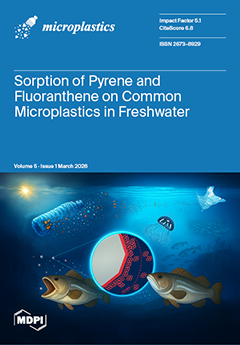
Cover Story (view full-size image): In freshwater environments, microplastics regularly interact with dissolved hydrophobic organic pollutants, which is an interaction that determines their environmental fate. This work demonstrates that common microplastics can adsorb significant quantities of priority polycyclic aromatic hydrocarbons under relevant environmental conditions, i.e., at low particle concentrations. Although all materials were good adsorbers, polyolefin particles showed the greatest capacity. Chemisorption at the microplastic surface is kinetically controlled by the transport of pollutants through the hydrodynamic boundary layer surrounding the microparticle. These findings suggest that microplastics actively influence the movement of pollutants and their degree of toxicity in aquatic environments. View this paper
  • Issues are regarded as officially published after their release is announced to the table of contents alert mailing list.
  • You may sign up for e-mail alerts to receive table of contents of newly released issues.
  • PDF is the official format for papers published in both, html and pdf forms. To view the papers in pdf format, click on the "PDF Full-text" link, and use the free Adobe Reader to open them.
Order results
Result details
Select all
Export citation of selected articles as:
19 pages, 2696 KB  
Article
Quantification of Microplastics in Treated Drinking Water Using µ-FT-IR Spectroscopy: A Case Study from Northeast Italy
by Giulia Dalla Fontana, Davide Lamprillo, Francesca Dotti, Ada Ferri, Tommaso Foccardi and Raffaella Mossotti
Microplastics 2026, 5(1), 23; https://doi.org/10.3390/microplastics5010023 - 2 Feb 2026
Abstract
Microplastics spread through the environment in various ways. Inland waters are an ideal medium for their dispersal, as they collect pollutants from various sources and transport them over long distances. From there, microplastics can enter the marine environment, break down into smaller particles [...] Read more.
Microplastics spread through the environment in various ways. Inland waters are an ideal medium for their dispersal, as they collect pollutants from various sources and transport them over long distances. From there, microplastics can enter the marine environment, break down into smaller particles or end up in drinking water treatment plants. However, the fate, transport and potential health effects of microplastics after ingestion of drinking water and water in food are not yet fully understood. It is therefore necessary to evaluate the quantification and identification of microplastics in drinking water by analysing real samples in order to assess the potential impact on human health. To this end, microplastic contamination in 32 treated drinking water samples from a surface water treatment plant in north-eastern Italy were analysed using micro-Fourier transform infrared spectroscopy (µ-FT-IR). The results indicated low levels of contamination, with all the samples containing less than 170 microplastics per litre, which is in line with European drinking water levels. Polyolefins with size 50–500 µm, such as polypropylene and polyethylene, were the predominant polymers detected (50.2%), while surprisingly polyethylene terephthalate was scarcely present (0.1%, size range 10–50 µm). Statistical analysis revealed a significant negative correlation between microplastic concentration and sampling volume, with larger volumes yielding fewer particles. This inconsistency likely results from the lack of bottle rinsing when only a fraction of the sampling volume is filtered. It was also found that rinsing the sampling bottles with ethanol alone prior to analysis was sufficient to ensure accurate quantification. These results highlight the challenges in standardising the detection of microplastics in drinking water and underline the need for optimised sampling protocols. Full article
(This article belongs to the Collection Feature Papers in Microplastics)
Show Figures

Graphical abstract

19 pages, 1472 KB  
Review
From Soil to Table: Pathways, Influencing Factors, and Human Health Risks of Micro- and Nanoplastic Uptake by Plants in Terrestrial Ecosystems
by Lingli Ren, Xiyuan Wang, Jiaxu Zheng, Youqian Zhai, Lei Liu, Zijun Xu and Qingdong Shi
Microplastics 2026, 5(1), 22; https://doi.org/10.3390/microplastics5010022 - 2 Feb 2026
Abstract
Micro- and nanoplastics (MNPs) are a new type of pollutant that are widely present in terrestrial ecosystems due to agricultural plastics, sludge use, deposition, and litter degradation. Plants can absorb them through the soil and atmosphere, with adverse effects on plant growth and [...] Read more.
Micro- and nanoplastics (MNPs) are a new type of pollutant that are widely present in terrestrial ecosystems due to agricultural plastics, sludge use, deposition, and litter degradation. Plants can absorb them through the soil and atmosphere, with adverse effects on plant growth and development. Several studies have reported the effects of MNPs on plant physiology, biochemistry, and toxicity. However, the food chain risk of plant uptake of MNPs has not been systematically studied. This review synthesizes current research on plant MNP pollution, focusing on the uptake and transport mechanisms of MNPs by plants, influencing factors, and health hazards. The size, type, and surface charge characteristics of MNPs, as well as environmental conditions, are key factors affecting MNP absorption and accumulation in plants. Furthermore, when MNP-enriched plants are consumed by humans and animals, the accumulated MNPs can diffuse through the bloodstream to various organs, impairing physiological functions and causing a range of health problems. While a comprehensive, traceable investigation of the transmission of MNPs through the terrestrial food chain remains unconfirmed, health risk signals are unequivocal—dietary intake is the primary route of human exposure to MNPs, with direct evidence of their bioaccumulation in human tissues. Addressing this critical research gap, i.e., systematically verifying the full terrestrial food chain translocation of MNPs, is therefore pivotal for conducting robust and comprehensive assessments of the food safety and health risks posed by MNPs. This study analyzed a total of 154 literature sources, providing important theoretical insights into the absorption, transport, and accumulation of MNPs in plants, as well as the health risks associated with their transfer to humans through the food chain. It is expected to provide valuable reference for the research on the transfer of MNPs in the “soil-plant-human” chain. Full article
(This article belongs to the Collection Feature Papers in Microplastics)
Show Figures

Figure 1

14 pages, 1193 KB  
Article
Separation and Quantification of Microplastics in Black Sea Water Using a Combination of Countercurrent Chromatography and Pyro-GC-MS
by Mikhail Ermolin, Alexandr Ivaneev, Elena Savonina, Rustam Dzhenloda, Tatiana Maryutina and Petr Fedotov
Microplastics 2026, 5(1), 21; https://doi.org/10.3390/microplastics5010021 - 2 Feb 2026
Abstract
Development of novel methods for the separation, characterization, and analysis of microplastics is an urgent task. Countercurrent chromatography (CCC) has been proven to be an efficient method for the separation and preconcentration of microplastics from aqueous samples using two-phase water–oil systems. However, the [...] Read more.
Development of novel methods for the separation, characterization, and analysis of microplastics is an urgent task. Countercurrent chromatography (CCC) has been proven to be an efficient method for the separation and preconcentration of microplastics from aqueous samples using two-phase water–oil systems. However, the efficiency of separation of microplastics from natural seawater by CCC has not been studied so far. Here we demonstrate the high efficiency of separation of microplastics from Black Sea water samples by CCC. The separation efficiency of PE, PP, PS, PVC, PET microparticles of different size (<63, 63–100, 100–250 μm) from spiked seawater samples is about 100%. The method enables the separation of microplastics with size at least down to 1 μm to be performed. The combination of CCC and pyro-GC-MS was applied to the quantification of microplastics in Black Sea water samples. Seven microplastics (μPE, μPP, μSBR, μPVC, μPET) were determined in the seawater samples under study. The total concentration of determined microplastics was about 6.5 μg/L. It was shown that the combination of CCC and pyro-GC-MS enabled robust analytical data to be obtained and hence can be applied to an accurate quantification of microplastics in seawater. Full article
Show Figures

Figure 1

23 pages, 2278 KB  
Review
Beyond Microplastics: Analytical Boundaries, Real-World Barriers, and the Possibilities for Scalable Removal
by Danka Kiperović, Dimitrije Mara, Saša Đurović, Gordana Racić, Igor Vukelić, Ana R. M. Mendes and Jovana Vunduk
Microplastics 2026, 5(1), 20; https://doi.org/10.3390/microplastics5010020 - 1 Feb 2026
Abstract
Plastic has transitioned rapidly from a revolutionary material to a global environmental concern, primarily due to mismanagement. Synthetic polymers have quickly gained widespread use due to their versatility, durability, and affordability. However, the properties making plastic indispensable contribute to its permanence in the [...] Read more.
Plastic has transitioned rapidly from a revolutionary material to a global environmental concern, primarily due to mismanagement. Synthetic polymers have quickly gained widespread use due to their versatility, durability, and affordability. However, the properties making plastic indispensable contribute to its permanence in the environment, where it breaks down into microplastics—tiny particles that are typically classified in the size range from 0.1 μm to 5 mm. These particles can now be found in all ecosystems, including the oceans, soil, atmosphere, and within living organisms, raising global concerns about their long-term environmental and health impacts. This review critically examines the current status and potential for identifying, analyzing, and mitigating microplastic pollution. In this paper, we particularly focus on the destructive and non-destructive analytical methods used for microplastic identification and characterization, examining their technical capabilities and limitations, the challenges in maintaining sample integrity, and the reliability of their quantification methods. In addition, the review addresses microplastic removal strategies, from laboratory procedures to real-world applications, examining barriers to implementation and the limited availability of existing solutions. Finally, the review highlights the urgent need for standardized protocols, regulatory frameworks, and interdisciplinary collaboration to address the multifaceted nature of microplastic pollution. Full article
Show Figures

Graphical abstract

16 pages, 3690 KB  
Article
An Easily Adopted Workflow for the Preparation, Filtration, and Quantification of Microplastic Standards
by Karima Mohamadin, Samraa Smadi, Keyla Correia, Dejun Chen, Mostafa M. Nasr and Jesse Meiller
Microplastics 2026, 5(1), 19; https://doi.org/10.3390/microplastics5010019 - 31 Jan 2026
Viewed by 71
Abstract
Microplastic (MP) pollution poses an emerging environmental concern, yet current methods for isolation and quantification are often time-consuming, costly, and poorly adapted to real-world variability. In this study, a workflow for the preparation, filtration, and quantification of MP standards, emphasizing environmental relevance and [...] Read more.
Microplastic (MP) pollution poses an emerging environmental concern, yet current methods for isolation and quantification are often time-consuming, costly, and poorly adapted to real-world variability. In this study, a workflow for the preparation, filtration, and quantification of MP standards, emphasizing environmental relevance and methodological efficiency, was developed and evaluated. To address the scarcity of irregularly shaped MP standards, low-cost, environmentally representative standards were lab-prepared by grinding and sieving plastic sheets. These MPs were successfully categorized according to sizes up to ~250 μm and dyed for enhanced visibility. The filtration efficiency for two systems, a long-circuit pump (LC-pump) and a short-circuit vacuum (SC-vacuum), was compared. The SC-vacuum method demonstrated a more than 11-fold increase in filtration speed and higher MP recovery rates for both polystyrene and polypropylene standards. Ethanol-based solvents significantly improved MP dispersion and recovery for irregular shapes of the MPs, including polystyrene and polypropylene. Finally, a user-guided machine learning tool (Ilastik) was implemented for automated MP quantification. Ilastik showed a strong correlation with manual counting (r = 0.824) and reduced variability, offering a reproducible and time-efficient alternative. By cutting down cost, time, and technical complexity relative to existing MP analysis techniques, this workflow provides a more accessible path toward consistent and scalable environmental MP assessments. Full article
(This article belongs to the Collection Feature Papers in Microplastics)
Show Figures

Figure 1

23 pages, 3470 KB  
Review
Plastic Microbead Accumulation in Our Freshwaters: North American Great Lakes Assessments and Perspectives
by Mary Torrance, Emma Gillies, Tristan H. Borchers, Avery Shoemaker, Clarisse Chiche-Lapierre and Christopher J. Barrett
Microplastics 2026, 5(1), 18; https://doi.org/10.3390/microplastics5010018 - 28 Jan 2026
Viewed by 103
Abstract
Plastic microbeads, widely incorporated into personal care and cleansing products, have emerged as a pervasive contaminant in freshwater systems, including in North America. Historical estimates indicate that North American consumers alone contributed trillions of microbeads daily to municipal wastewater, with global usage reaching [...] Read more.
Plastic microbeads, widely incorporated into personal care and cleansing products, have emerged as a pervasive contaminant in freshwater systems, including in North America. Historical estimates indicate that North American consumers alone contributed trillions of microbeads daily to municipal wastewater, with global usage reaching quadrillions per day. Regulatory actions in 2017 in Canada and the USA to ban microbeads in personal care products appear to have greatly reduced microbead contamination levels, including a decrease in microbead proportion from 2 to 5% to 0.003%, and an 86% reduction in PE microbead discharge from wastewater treatment plants. Yet these particles still persist in the environment due to their resistance to degradation and continued release from unregulated sources, including industrial abrasives and certain cleaning agents. Studies across the Great Lakes, one of the world’s largest freshwater systems, have documented widespread microbead contamination in surface waters, sediments, and shorelines, highlighting their persistence and accumulation. This review synthesizes findings from key studies conducted between 2013 and 2017 to establish a pre-ban baseline of microbead distribution in the Great Lakes, and presents new data collected from 2018 to 2021 as a post-ban contamination assessment. The review emphasizes the unique challenges posed by microbeads within the broader context of microplastic pollution. We also hope that this paper underscores the critical role of polymer chemists and engineers in developing innovative materials and removal strategies to mitigate future contamination. Full article
(This article belongs to the Special Issue Microplastics in Freshwater Ecosystems)
Show Figures

Figure 1

20 pages, 3496 KB  
Article
Deposition of Roadside Atmospheric Non-Tire Wear Microplastics: Characteristics and Influencing Factors
by Annisa Nikmatul Lathifah, Young-Sik Ham and Zcelina Kristle Oyson
Microplastics 2026, 5(1), 17; https://doi.org/10.3390/microplastics5010017 - 21 Jan 2026
Viewed by 192
Abstract
Atmospheric deposition of microplastics (MPs) contributes to the contamination of both terrestrial and aquatic environments. Roads show high MP deposition, yet the factors influencing the deposition rate and characteristics (polymer types and sizes) remain insufficiently understood. In this study, we investigated atmospheric MPs [...] Read more.
Atmospheric deposition of microplastics (MPs) contributes to the contamination of both terrestrial and aquatic environments. Roads show high MP deposition, yet the factors influencing the deposition rate and characteristics (polymer types and sizes) remain insufficiently understood. In this study, we investigated atmospheric MPs in two size fractions: 45–300 μm (small) and ≥300 μm (large), collected monthly for one year using a bulk deposition method. Large MPs were visually sorted and characterized via ATR-FTIR spectroscopy for polymer identification, while smaller MPs were quantified by measuring non-purgeable organic carbon (NPOC) using a total organic carbon (TOC analyzer), without polymer characterization. Deposition rates of large MPs ranged from 3 to 9 million pcs/ha/month, while small MPs averaged 72.2 gC/ha/month. Identified polymers included PP, PE, PS, PVC, PET, PVAC, PA, and PU. Traffic mainly influenced large MPs, especially PET and PA, near roads, whereas wind direction and intensity enhanced dispersal of small MPs and the transport of PVC, PS, and PU. Predominant easterly winds also indicated possible contributions from industrial and other anthropogenic sources. By focusing on the road area, integrating influence of traffic and meteorological factors, and adapting TOC-based carbon quantification, this study provides new insights and extends existing knowledge in the field. Full article
Show Figures

Graphical abstract

15 pages, 420 KB  
Review
Research Progress on the Effects of Combined Microplastics and Cadmium Pollution on Plants
by Jiaxu Zheng, Xiyuan Wang, Lingli Ren, Youqian Zhai, Lei Liu, Zijun Xu and Qingdong Shi
Microplastics 2026, 5(1), 16; https://doi.org/10.3390/microplastics5010016 - 21 Jan 2026
Viewed by 151
Abstract
The toxic effects of soil heavy metals and microplastics on plants have been extensively documented, with some researchers having conducted studies exploring the combination of these two factors. Preliminary findings indicate that their combined action can “reduce biomass, exacerbate oxidative stress, and inhibit [...] Read more.
The toxic effects of soil heavy metals and microplastics on plants have been extensively documented, with some researchers having conducted studies exploring the combination of these two factors. Preliminary findings indicate that their combined action can “reduce biomass, exacerbate oxidative stress, and inhibit photosynthesis,” and the potential mechanisms of this combined toxicity are currently being explored. However, these combined effects remain unclear, with conflicting conclusions across studies. Research subjects are relatively fragmented, and systematic summaries are lacking. This paper systematically reviews current research findings on the combined toxic effects of microplastics and Cd on plants, specifically focusing on the following factors: (1) the mechanisms and influencing factors of Cd adsorption by microplastics: electrostatic adsorption is the primary mechanism, and soil environmental factors are significant influencers; (2) microplastics’ altering of the available Cd content in soil: soil environmental conditions can be modified to increase or decrease available Cd concentrations; (3) The “synergistic or antagonistic” toxic effects of microplastics and Cd on plants. Future research directions warranting in-depth investigation are also identified in this study. Full article
Show Figures

Graphical abstract

34 pages, 2386 KB  
Article
Seasonal and Cross-Shore Assessment of Large and Small Microplastics Collected on the Ferrara Coast (Italy)
by Joana Buoninsegni, Giorgio Anfuso, Umberto Tessari, Valentina Giro, Elena Marrocchino and Carmela Vaccaro
Microplastics 2026, 5(1), 15; https://doi.org/10.3390/microplastics5010015 - 19 Jan 2026
Viewed by 287
Abstract
Microplastic (MP) contamination along coastlines is a globally recognized environmental concern. This paper investigates the seasonal and cross-shore distribution of large and small microplastics (LMPs and SMPs) at four sites along the Ferrara coast in the northern Adriatic Sea (Italy). A combination of [...] Read more.
Microplastic (MP) contamination along coastlines is a globally recognized environmental concern. This paper investigates the seasonal and cross-shore distribution of large and small microplastics (LMPs and SMPs) at four sites along the Ferrara coast in the northern Adriatic Sea (Italy). A combination of sampling and analytical approaches was employed to characterize the typology, morphology, and size of MPs. A subsample of LMPs was analyzed by Raman spectroscopy to determine polymers’ composition. The mean abundances recorded were 5.66 ± 13.15 LMPs/m2 and 2402.19 ± 1169.85 SMPs/m2. Among the LMPs, pellets and fragments, essentially cream and white in color, were dominant. The samples were predominantly composed of polyethylene, polypropylene, and polyethylene terephthalate. SMPs primarily consisted of black fibers. LMPs and SMPs displayed their lowest abundances in winter and cross-shore patterns indicated preferential accumulation at dune foot and crest. Since the study sites are located downstream of the Po and Reno river mouths, urban and riverine discharges, as well as emissions from plastic-processing industries, are likely major contributors to the observed MPs. Full article
Show Figures

Figure 1

28 pages, 1539 KB  
Article
From Antioxidant Defenses to Transcriptomic Signatures: Concentration-Dependent Responses to Polystyrene Nanoplastics in Reef Fish
by Manuela Piccardo, Mirko Mutalipassi, Lucia Pittura, Rosa Maria Sepe, Pasquale De Luca, Laurence Besseau, Monia Renzi, Stefania Gorbi, Vincent Laudet, Alberto Pallavicini, Paolo Sordino and Antonio Terlizzi
Microplastics 2026, 5(1), 14; https://doi.org/10.3390/microplastics5010014 - 16 Jan 2026
Viewed by 246
Abstract
Nanoplastics (NPs) pose significant risks due to their small size and ability to penetrate biological tissues. However, the molecular pathways and cellular mechanisms affected by NP exposure in marine teleosts remain poorly understood, especially in tropical reef fishes. This study examined the impact [...] Read more.
Nanoplastics (NPs) pose significant risks due to their small size and ability to penetrate biological tissues. However, the molecular pathways and cellular mechanisms affected by NP exposure in marine teleosts remain poorly understood, especially in tropical reef fishes. This study examined the impact of short-term (7 days) waterborne exposure of 100 nm-carboxyl-modified polystyrene NPs on the false clownfish (Amphiprion ocellaris) exposed at two daily concentrations: low (20 µg/L, environmentally relevant) and high (2000 µg/L). A multidisciplinary approach, including biochemical and transcriptomic analyses, was conducted to assess toxic effects. Biochemical assays revealed limited changes in antioxidant defenses (CAT, GR, GST, TOSC). However, the Integrated Biomarker Response index (IBRv2i) suggested a compromised physiological condition, supported by transcriptomic data. Transcriptomic profiling revealed 409 significantly differentially expressed genes (DEGs) in the high-concentration and 354 DEGs in the low-concentration groups, with 120 shared DEGs mostly upregulated and indicative of a core molecular response. Collectively, the transcriptional profile of the low-concentration group resembled an early-warning, energy-reallocation strategy aimed at preserving essential sensory functions while minimizing expendable functions. The high-concentration group amplified the shared stress signature and recruited an additional 289 unique genes, resulting in pronounced enrichment of Gene Ontology terms related to “muscle contraction”, “oxygen transport”, “hydrogen-peroxide catabolism”, and “extracellular-matrix”. This study demonstrates that PS-NP exposure can alter gene expression and physiology in juvenile reef fish, even at environmentally relevant concentrations. Molecular responses varied with concentrations highlighting the role of exposure level in influencing biological systems and potential long-term impacts of NP pollution in marine environments. Full article
Show Figures

Graphical abstract

17 pages, 1700 KB  
Article
Urban River Microplastics as Vectors for Pharmaceutical Contaminants in a Savannah Region (Caatinga Biome)
by Yannice Tatiane da Costa Santos, Anderson Targino da Silva Ferreira, Lyndyanne Dias Martins, Hellen da Silva Sousa, Francisco Wedson Faustino, Maria Carolina Hernandez Ribeiro, Maria Kuznetsova, Anderson Zanardi de Freitas and Niklaus Ursus Wetter
Microplastics 2026, 5(1), 13; https://doi.org/10.3390/microplastics5010013 - 16 Jan 2026
Viewed by 186
Abstract
The study investigates the presence of emerging contaminants in a river within a watershed located in the Brazilian semiarid region, specifically within the Caatinga biome, emphasizing the importance of environmental monitoring in areas that have historically been underrepresented in scientific research. The analysis [...] Read more.
The study investigates the presence of emerging contaminants in a river within a watershed located in the Brazilian semiarid region, specifically within the Caatinga biome, emphasizing the importance of environmental monitoring in areas that have historically been underrepresented in scientific research. The analysis focused on the associations between microplastics and pharmaceutical compounds, demonstrating that the discharge of untreated domestic effluents and the low efficiency of sanitation systems increase water resource contamination and threaten water security. The interdependence between these variables underscores the need for integrated public policies for waste management, complemented by environmental education strategies and technological innovations. The work makes an unprecedented contribution to expanding knowledge about emerging pollutants in semiarid environments, highlighting the urgency of holistic approaches, continuous monitoring, and strengthening environmental governance to ensure the sustainability and resilience of ecosystems like the Caatinga in the face of the challenges posed by global environmental change, urban growth, and those outlined in the Sustainable Development Goals. Full article
(This article belongs to the Special Issue Microplastics in Freshwater Ecosystems)
Show Figures

Figure 1

18 pages, 2782 KB  
Article
Can Cigarette Butt-Derived Cellulose Acetate Nanoplastics Induce Toxicity in Allolobophora caliginosa? Immunological, Biochemical, and Histopathological Insights
by Zeinab Bakr, Shimaa Mohamed Said, Naser A. Elshimy, Mohamed Abd El-Aal and Gehad N. Aboulnasr
Microplastics 2026, 5(1), 12; https://doi.org/10.3390/microplastics5010012 - 15 Jan 2026
Viewed by 180
Abstract
Plastic pollution is a major global challenge, especially nanoplastics (NPs) emerging as harmful pollutants due to their small size, reactivity, and persistence in ecosystems. Among them, cigarette butts composed of cellulose acetate (CA) are one of the most widespread and hazardous sources of [...] Read more.
Plastic pollution is a major global challenge, especially nanoplastics (NPs) emerging as harmful pollutants due to their small size, reactivity, and persistence in ecosystems. Among them, cigarette butts composed of cellulose acetate (CA) are one of the most widespread and hazardous sources of terrestrial NPs. In this study, the immunotoxic, biochemical, and histopathological effects of cellulose acetate nanoplastics (CA-NPs) derived from smoked cigarette butts (SCB-NPs), unsmoked cigarette butts (USCB-NPs), and commercial cellulose acetate (CCA-NPs) were evaluated on the earthworm Allolobophora caliginosa. Adult worms were exposed for 30 days to 100 mg/kg CA-NPs in artificial soil under controlled laboratory conditions. Results revealed that SCB-NPs induced the most pronounced alterations, including increased lysozyme and metallothionein levels, reduced phagocytic and peroxidase activities, and depletion of protein and carbohydrate reserves. Histological examination showed vacuoles in epithelial layer vacuolization, space between muscle fiber disruption, and degeneration in gut and body wall, especially under SCB-NP exposure. USCB-NPs and CCA-NPs caused milder but still significant effects. Taken together, these findings highlight that the high toxicity of SCB-NPs is due to the presence of combustion-derived toxicants (nicotine, polycyclic aromatic hydrocarbons, and heavy metals), which exacerbate oxidative stress, immune suppression, and tissue damage in soil invertebrates. This study underscores the ecological risk of cigarette butt-derived NPs and calls for urgent policy measures to mitigate their terrestrial impacts. Full article
Show Figures

Figure 1

22 pages, 1690 KB  
Review
Gaps and Pathways Towards Standardized, FAIR Microplastics Data Harmonization: A Systematic Review
by Ebenezer S. Nyadjro, Just Cebrian, T. Erin Cox, Zhankun Wang, Yee H. Lau, Anastasia M. Konefal, Gray Turnage, Tia Offner, Rebecca Gilpin, Tim Boyer, Kirsten Larsen, Paul Mickle, Eric Sparks and Jennifer A. B. Webster
Microplastics 2026, 5(1), 11; https://doi.org/10.3390/microplastics5010011 - 14 Jan 2026
Viewed by 255
Abstract
The global proliferation of plastics and their degradation into microplastics (<5 mm) have created a pervasive environmental crisis with severe ecological and human health consequences. Despite the exponential growth in microplastic research over the past decade, standardized protocols are still lacking. The absence [...] Read more.
The global proliferation of plastics and their degradation into microplastics (<5 mm) have created a pervasive environmental crisis with severe ecological and human health consequences. Despite the exponential growth in microplastic research over the past decade, standardized protocols are still lacking. The absence of consistent sampling, analysis, and reporting methods limits data comparability, interoperability, and harmonization across studies. This study conducted a systematic bibliographic review of 355 peer-reviewed articles published between 2010 and 2022 that investigated microplastics in freshwater as well as marine water and sediment environments. The goal was to evaluate methodological consistency, sampling instruments, measurement units, reported characteristics, and data-sharing practices to identify pathways toward harmonized and FAIR (Findable, Accessible, Interoperable, and Reusable) microplastic data. Results show that 80.6% of studies focused on marine environments, 18% on freshwater, and 1.4% on both. This highlights persistent data gaps in freshwater systems, which function as key transport pathways for plastics to the ocean. Most studies targeted water (59%) rather than sediment (41%) and were mostly based on single-time sampling, limiting long-term analyses. Surface layers (<1 m) were predominantly sampled, while deeper layers remain understudied. Nets, particularly Manta, neuston, and plankton nets were the dominant tools for water sampling, whereas grabs, corers, and metallic receptacles were used for sediments. However, variations in mesh size and sampling depth introduce substantial biases in particle size recovery and reduce comparability across studies. The most common units were counts/volume for water and counts/g dry weight for sediments, but more than ten unit expressions were identified, complicating conversions. Only 35% of studies reported all four key microplastic characteristics (color, polymer type, shape, and size), and less than 20% made datasets publicly available. To advance harmonization, we recommend the adoption of consistent measurement units, mandatory reporting of key metadata, and wider implementation of open data practices aligned with the FAIR principles. These insights provide a foundation for developing robust monitoring strategies and evidence-based management frameworks. This is especially important for freshwater systems, where data remain scarce, and policy intervention is urgently needed. Full article
Show Figures

Figure 1

22 pages, 1871 KB  
Article
Sorption of Pyrene and Fluoranthene onto Common Microplastics Under Freshwater Conditions
by Sara Exojo-Trujillo, Laura Higueras-Contreras, Pilar Hernández-Muñoz and Rafael Gavara
Microplastics 2026, 5(1), 10; https://doi.org/10.3390/microplastics5010010 - 14 Jan 2026
Viewed by 148
Abstract
Microplastics (MPs) are recognised as emerging vectors for hydrophobic organic contaminants in aquatic environments due to their relatively large surface area and the diversity of their polymer chemistries compositions. This study investigates the sorption behaviour of two priority polycyclic aromatic hydrocarbons (PAHs), pyrene [...] Read more.
Microplastics (MPs) are recognised as emerging vectors for hydrophobic organic contaminants in aquatic environments due to their relatively large surface area and the diversity of their polymer chemistries compositions. This study investigates the sorption behaviour of two priority polycyclic aromatic hydrocarbons (PAHs), pyrene (PYR) and fluoranthene (FLU), onto six common MPs: poly(m-xylene adipamide) (PA-MXD6), high- and low-density polyethylene (HDPE, LDPE), polypropylene (PP), polyethylene terephthalate (PET), and polylactic acid (PLA). Sorption isotherms and kinetics were evaluated under simulated freshwater conditions at environmentally relevant concentrations (1–50 µg·L−1). Despite the low MP concentration used (0.2 g·L−1), over 80% of the initial PAH content was removed by polyolefins, and more than 50% by all other MPs. Sorption capacity was strongly dependent on particle surface area. Langmuir, Henry, and Freundlich isotherms models were fitted, with linear behaviour prevailing at low concentrations. Analysis using the Dubini–-Radushkevich model confirmed that sorption involves chemisorption contributions, mainly through π–π interactions and hydrophobic interactions (polyolefins). Mechanistically, molecular diffusion within the MP matrix was not governing the sorption process, as diffusion coefficients varied with particle size instead of polymer chemistry. Instead, sorption appears to be governed by PAH diffusion through the hydrodynamic boundary layer and subsequent retention on the MP surface. Empirically, kinetic data fitted the pseudo-second-order model, further supporting that the sorption process involves chemisorption. These findings highlight the role of MPs as vectors for PAHs in freshwater systems and their potential application in contaminant removal. Expressing sorption per unit surface area is recommended for accurate assessment. This work contributes to understanding the environmental behaviour of MPs and their implications for pollutant transport and toxicity. Full article
(This article belongs to the Special Issue Microplastics in Freshwater Ecosystems)
Show Figures

Graphical abstract

3 pages, 224 KB  
Editorial
Microplastics—Four Years of Publications on the Environmental Challenges and Adverse Health Effects of Microplastics
by Nicolas Kalogerakis
Microplastics 2026, 5(1), 9; https://doi.org/10.3390/microplastics5010009 - 13 Jan 2026
Viewed by 414
Abstract
Microplastics is a new, open access, peer-reviewed journal from MDPI that has just completed its fourth year of publication (2025) [...] Full article
Show Figures

Figure 1

23 pages, 1208 KB  
Review
Microplastics and Human Health: A Comprehensive Review on Exposure Pathways, Toxicity, and Emerging Risks
by Nayak Snehamayee, Sephalika Somya, Sahoo Chinmaya Kumar, Mohanty Niranjan, Sahu Bikash Ranjan and Mohakud Nirmal Kumar
Microplastics 2026, 5(1), 8; https://doi.org/10.3390/microplastics5010008 - 13 Jan 2026
Viewed by 1147
Abstract
Microplastics (MPs) are considered to be dominant agents responsible for serious contamination in environmental and biological systems. Despite a huge increase in research on these contaminants, there are still considerable uncertainties and progress to be made on the exposure pathways of biological systems, [...] Read more.
Microplastics (MPs) are considered to be dominant agents responsible for serious contamination in environmental and biological systems. Despite a huge increase in research on these contaminants, there are still considerable uncertainties and progress to be made on the exposure pathways of biological systems, modes of detection, and toxicity assessments. Therefore, developing a critical review of MPs is crucial due to growing evidence of their harmful effects on human health. In the current review, we aim to emphasize the potential toxic effects of MPs on different biological systems in humans, the mechanisms of their toxic effects, and gaps in our knowledge on risk assessment. Importantly, we focus on the risks posed by MPs for fetuses and child health. To ensure methodological rigor, the current review follows the PRISMA guidelines, explicitly detailing the literature search strategy and inclusion/exclusion criteria. The present review summarizes potential sources of MP generation, exposure pathways, quantitative analyses of dietary exposure, estimated daily intake, particle/leachate toxicity evidence, detection in different human organs, and potential toxic effects. MPs cause toxicity in several biological systems in humans, such as the gastrointestinal, nervous, hepatic, endocrine, respiratory, and reproductive systems. In addition, these particles are known to cause oxidative stress, alter metabolism, and affect gut microflora and gastrointestinal functions. Importantly, the current review also discusses the challenges encountered in conducting risk assessments for MPs and the approaches for counteracting these challenges. Finally, the review concludes by recommending future research directions in terms of counteracting the toxic effects of MPs on human health. Full article
Show Figures

Figure 1

19 pages, 8780 KB  
Article
Impact of Microplastics on Copper Electrodeposition: Morphological and Electrochemical Insights
by Claudia Giovani, Walter Giurlani, Monica Tonelli, Laura Sforzi, Massimo Bonini, Alessandra Cincinelli, Tania Martellini and Massimo Innocenti
Microplastics 2026, 5(1), 7; https://doi.org/10.3390/microplastics5010007 - 9 Jan 2026
Viewed by 282
Abstract
Microplastics (MPs) have been attracting considerable interest in recent years due to their ubiquitous existence and accumulation within different systems and ecosystems. Moreover, their presence in electroplating baths involves a more serious challenge considering that the electroplating industry is progressing towards the electroplating [...] Read more.
Microplastics (MPs) have been attracting considerable interest in recent years due to their ubiquitous existence and accumulation within different systems and ecosystems. Moreover, their presence in electroplating baths involves a more serious challenge considering that the electroplating industry is progressing towards the electroplating of plastic materials. Contaminated baths can lead to surface defects, poor adhesion, corrosion, and inconsistent deposit thicknesses. Despite these issues, the interactions between pollutant MPs and heavy metal ions in electroplating environments are still underexplored. The present study aims to investigate the behavior of self-produced “Nylon PA” MPs dispersed in acid copper electroplating baths and their interactions with copper ions in solution. Scanning electron microscopy (SEM) reveals several surface defects in copper deposits caused by MPs in the bath. Additionally, cyclic voltammetry and chronoamperometry indicate significant changes in nucleation and growth mechanisms, with MPs showing suppressant-like effects on copper deposition. These results shed light on the impact of MPs on copper electrodeposition, emphasizing the urgent need for further research and mitigation strategies to address this emerging issue in the electroplating industry. Full article
Show Figures

Figure 1

19 pages, 1582 KB  
Article
Sticking Efficiency of Microplastic Particles in Terrestrial Environments Determined with Atomic Force Microscopy
by Robert M. Wheeler and Steven K. Lower
Microplastics 2026, 5(1), 6; https://doi.org/10.3390/microplastics5010006 - 9 Jan 2026
Viewed by 207
Abstract
Subsurface deposition determines whether soils, aquifers, or ocean sediment represent a sink or temporary reservoir for microplastics. Deposition is generally studied by applying the Smoluchowski–Levich equation to determine a particle’s sticking efficiency, which relates the number of particles filtered by sediment to the [...] Read more.
Subsurface deposition determines whether soils, aquifers, or ocean sediment represent a sink or temporary reservoir for microplastics. Deposition is generally studied by applying the Smoluchowski–Levich equation to determine a particle’s sticking efficiency, which relates the number of particles filtered by sediment to the probability of attachment occurring from an interaction between particles and sediment. Sticking efficiency is typically measured using column experiments or estimated from theory using the Interaction Force Boundary Layer (IFBL) model. However, there is generally a large discrepancy (orders of magnitude) between the values predicted from IFBL theory and the experimental column measurements. One way to bridge this gap is to directly measure a microparticle’s interaction forces using Atomic Force Microscopy (AFM). Herein, an AFM method is presented to measure sticking efficiency for a model polystyrene microparticle (2 μm) on a model geomaterial surface (glass or quartz) in environmentally relevant, synthetic freshwaters of varying ionic strength (de-ionized water, soft water, hard water). These data, collected over nanometer length scales, are compared to sticking efficiencies determined through traditional approaches. Force measurement results show that AFM can detect extremely low sticking efficiencies, surpassing the sensitivity of column studies. These data also demonstrate that the 75th to 95th percentile, rather than the mean or median force values, provides a better approximation to values measured in model column experiments or field settings. This variability of the methods provides insight into the fundamental mechanics of microplastic deposition and suggests AFM is isolating the physicochemical interactions, while column experiments also include physical interactions like straining. Advantages of AFM over traditional column/field experiments include high throughput, small volumes, and speed of data collection. For example, at a ramp rate of 1 Hz, 60 sticking efficiency measurements could be made in only a minute. Compared to column or field experiments, the AFM requires much less liquid (μL volume) making it effortless to examine the impact of solution chemistry (temperature, pH, ionic strength, valency of dissolved ions, presence of organics, etc.). Potential limitations of this AFM approach are presented alongside possible solutions (e.g., baseline correction, numerical integration). If these challenges are successfully addressed, then AFM would provide a completely new approach to help elucidate which subsurface minerals represent a sink or temporary storage site for microparticles on their journey from terrestrial to oceanic environments. Full article
(This article belongs to the Special Issue Microplastics in Freshwater Ecosystems)
Show Figures

Figure 1

16 pages, 3534 KB  
Article
Toxic Impact of Polystyrene Microplastics (PS-MPs) on Freshwater Mussel Lamellidens marginalis
by Nishigandha Muduli, Sthitaprajna Nath Sharma, Smruti Prajna Pradhan, Pratyusha Nayak, Subhashree Nayak and Lipika Patnaik
Microplastics 2026, 5(1), 5; https://doi.org/10.3390/microplastics5010005 - 9 Jan 2026
Viewed by 242
Abstract
Microplastics are among the most emerging environmental micro-threats to aquatic ecosystems. Bivalves are filter-feeding benthic organisms and are often considered excellent bioindicators of contamination in aquatic bodies. This study focuses on the toxic effects of fibrous polystyrene microplastics (1 mg/L) on biochemical parameters [...] Read more.
Microplastics are among the most emerging environmental micro-threats to aquatic ecosystems. Bivalves are filter-feeding benthic organisms and are often considered excellent bioindicators of contamination in aquatic bodies. This study focuses on the toxic effects of fibrous polystyrene microplastics (1 mg/L) on biochemical parameters of the freshwater bivalve Lamellidens marginalis after exposure periods of 7, 10, and 15 days (Experimental groups I, II, and III, respectively). Biochemical analysis showed reduced protein, ACP, and ALP activities in all tissues except for a significant increase in ACP in the mantle and foot of group III. AST activity increased in the gill and hepatopancreas but declined in the mantle and foot. ALT activity consistently decreased across all experimental tissues relative to the control. The Integrated Biomarker Response Index increased over time for gill, mantle, and foot tissue. For the hepatopancreas, the values were 11, 8.82, and 9.02 for Experimental groups I, II, and III, respectively. From Biomarker Response Index values, group I gill tissue (2.2) was most severely altered. Major alterations occurred in the hepatopancreas, mantle, and foot of groups II and III. Hepatopancreas generally acts as a site of detoxification, digestion, and absorption, and exposure to microplastics can lead to the accumulation in hepatopancreas. Full article
Show Figures

Figure 1

17 pages, 5540 KB  
Article
Microplastic Contamination of Surface Water and Sediments in Lake Kotokel (Eastern Cisbaikalia)
by Selmeg V. Bazarsadueva, Elena P. Nikitina, Yulia A. Frank, Vasilii V. Taraskin, Liubov A. Konovalova and Endon Zh. Garmaev
Microplastics 2026, 5(1), 4; https://doi.org/10.3390/microplastics5010004 - 7 Jan 2026
Viewed by 364
Abstract
Lake Kotokel is one of the largest lakes along the eastern shore of Lake Baikal. Increasing anthropogenic pressure combined with climate variability led to a sharp decline in its ecological condition, culminating in an outbreak of Gaff disease in 2009. Moreover, Lake Kotokel [...] Read more.
Lake Kotokel is one of the largest lakes along the eastern shore of Lake Baikal. Increasing anthropogenic pressure combined with climate variability led to a sharp decline in its ecological condition, culminating in an outbreak of Gaff disease in 2009. Moreover, Lake Kotokel may serve as a source of pollutants to Lake Baikal due to its hydrological connection via a system of rivers. In light of these factors, ongoing research seeks to identify the drivers of ecological degradation in the lake ecosystem and provide a comprehensive assessment of its current environmental status and potential adverse processes. In this study, we report, for the first time, the occurrence of microplastic particles in the surface water and sediments of Lake Kotokel. Mean microplastic concentrations were 0.59 ± 0.25 items/m3 in water and 280 ± 162 items/kg dry weight in sediments, with corresponding average microplastic masses of 2.6 ± 1.4 μg/m3 in water and 1.33 ± 1.21 mg/kg dry weight in sediments. In surface waters, microplastic were predominantly 1–3 mm in size, whereas sediments were dominated by 0.1–1 mm particles. Fibers were the most abundant morphological form, comprising 79.5% and 82.8% of particles in water and sediments, respectively. Five polymer types were identified, with polyethylene terephthalate being the most prevalent. Based on particle abundance and polymer composition, the ecological risk of microplastic in Lake Kotokel was assessed as low to moderate. Full article
Show Figures

Figure 1

20 pages, 1584 KB  
Review
Plastic Particles and Female Fertility: Pathways, Toxicity, and Analytical Challenges
by Vanda Rísová, Lívia Gajdošová, Rami Saade, Olia El Hassoun Sečanská, Martin Kopáni and Štefan Polák
Microplastics 2026, 5(1), 3; https://doi.org/10.3390/microplastics5010003 - 1 Jan 2026
Viewed by 597
Abstract
Microplastics (MPs) and nanoplastics (NPs) are widespread environmental contaminants with documented impacts on human health, particularly on the female reproductive system. Defined as polymeric fragments smaller than 5 mm, MPs (typically ranging from 1 µm to 5 mm) and NPs (smaller than 1 [...] Read more.
Microplastics (MPs) and nanoplastics (NPs) are widespread environmental contaminants with documented impacts on human health, particularly on the female reproductive system. Defined as polymeric fragments smaller than 5 mm, MPs (typically ranging from 1 µm to 5 mm) and NPs (smaller than 1 µm, often <100 nm) originate either from primary sources—intentionally manufactured for specific industrial applications—or from secondary sources through physical, chemical, or biological degradation of macroplastics. Human exposure occurs via multiple routes, including ingestion, inhalation, dermal absorption, and iatrogenic introduction, with growing evidence that these particles can accumulate in the ovaries, oocytes, and placental tissue. Experimental studies in rodents demonstrate that MPs and NPs induce oxidative stress, trigger inflammatory responses, and promote granulosa cell apoptosis, ultimately diminishing ovarian reserve and impairing folliculogenesis. Clinical and pilot human studies have confirmed the presence of MPs in placentas, umbilical cord blood, and meconium, indicating exposure from the earliest stages of development. Moreover, MPs and NPs may disrupt the hypothalamic–pituitary–ovarian axis, contributing to endocrine dysregulation and hormonal imbalance. Analytical methods such as Fourier-transform infrared spectroscopy, Raman spectroscopy, and scanning electron microscopy enable detection of these particles in biological samples, although methodological standardization remains insufficient. This paper summarizes current evidence on the exposure pathways, toxicological effects, and reproductive consequences of MPs and NPs in women. It further highlights existing research gaps and evaluates available analytical approaches to support future studies and develop strategies aimed at mitigating their detrimental impact on women’s reproductive health and fertility. Full article
Show Figures

Figure 1

20 pages, 988 KB  
Article
Detection and Identification of Non-Labeled Polystyrene Nanoplastics in Rodent Tissues Using Asymmetric Flow Field-Flow Fractionation (AF4) Combined with UV–Vis, Dynamic Light Scattering (DLS) Detectors and Offline Pyrolysis–GCMS (Pyro-GCMS)
by Gurmit Singh, Ligia Velasquez, Chris Mason, Michal Scur, Kristen A. Marcellus and Santokh Gill
Microplastics 2026, 5(1), 2; https://doi.org/10.3390/microplastics5010002 - 1 Jan 2026
Viewed by 644
Abstract
Microplastic pollution is a growing global environmental and public health concern, driven by the increasing production and use of plastics. Due to their ubiquitous presence in the environment, humans and animals may be exposed to micro- and nanoplastics via several possible routes. For [...] Read more.
Microplastic pollution is a growing global environmental and public health concern, driven by the increasing production and use of plastics. Due to their ubiquitous presence in the environment, humans and animals may be exposed to micro- and nanoplastics via several possible routes. For micro- and nanoplastics, the development of standardized and validated methods remains an important area of progress to support human health risk assessments. In order to monitor micro/nanoplastics’ occurrence in organisms and the environment, it is necessary to develop accurate and reliable methods to quantify and characterize micro/nanoplastics from various biological and environmental matrices. In this study, an analytical, multi-platform approach was established to characterize and quantify polystyrene nanoplastics in biological samples through a combination of sample pre-concentration, asymmetric flow field-flow fractionation, ultraviolet–visible light, dynamic light scattering detectors and pyrolysis–gas chromatography–mass spectroscopy. Several digestion methods on various rodent tissues were tested and modified, and these led to the development of tissue-specific protocols to maximize yield. These digestion protocols were then combined with a new method of concentrating and retaining plastics to prevent the loss of submicron particles. For identification and quantification, known amounts of polystyrene nanoplastics were spiked into rodent tissues (intestine, kidney and liver). This was followed up by a mouse in vivo study consisting of a single dose of PS-NPs, followed by tissue collection, digestion and analysis. Polystyrene particles were detected in the liver and kidney, but not reliably in the intestinal tissues. Full article
Show Figures

Figure 1

30 pages, 1709 KB  
Review
Mechanisms and Perspectives of Microplastic Biodegradation by Insects and Their Associated Microorganisms
by Feroz Ahmad, Huarui Zhang, Chao Sun, Abrar Muhammad and Yongqi Shao
Microplastics 2026, 5(1), 1; https://doi.org/10.3390/microplastics5010001 - 23 Dec 2025
Viewed by 683
Abstract
Plastic pollution, particularly the widespread presence of microplastics, has emerged as a global environmental threat. Conventional plastics are highly resistant to degradation and can persist in ecosystems for decades, posing a serious long-term risk to wildlife, habitats, and human health. Increasing evidence suggests [...] Read more.
Plastic pollution, particularly the widespread presence of microplastics, has emerged as a global environmental threat. Conventional plastics are highly resistant to degradation and can persist in ecosystems for decades, posing a serious long-term risk to wildlife, habitats, and human health. Increasing evidence suggests that insects and their gut microbiota may play a significant role in the degradation of these plastics. This review examines the mechanisms by which insects and their associated microorganisms contribute to microplastic biodegradation. Plastivorous insect larvae such as Spodoptera frugiperda, Galleria mellonella, Tenebrio molitor and Zophobas atratus have demonstrated the ability to ingest and partially degrade diverse polymers. The initial mechanical breakdown caused by insect mandibles increases the surface area, which allows gut microbes to colonize the material. Once these microbes are established, they form biofilms that help with adhesion, create localized redox environments, and concentrate degradative enzymes at the polymer interface. The enzymatic machinery of insect-associated microbes plays a crucial role in breaking down polymers. Oxidative enzymes, including DyP-type peroxidases, multicopper oxidases, alkane monooxygenases, and laccases, initiate the oxidation of polymers, while hydrolases and esterases further break down the resulting fragments. Co-metabolic processes and microbial consortia improve degradation efficiency by primary degraders by producing oxidized intermediates, which are then consumed and mineralized by secondary fermenters. Despite significant progress, the complete biochemical pathways of microplastic mineralization remain unclear. Degradation rates are slow, and scalability challenges hinder practical applications, with incomplete mineralization in insect biodegradation potentially causing secondary microplastics. Understanding these mechanisms will lay the groundwork for developing insect-microbe systems as potential biotechnological solutions to mitigate plastic pollution in terrestrial environments. Full article
Show Figures

Figure 1

Previous Issue
Back to TopTop
