Next Article in Journal
Urban River Microplastics as Vectors for Pharmaceutical Contaminants in a Savannah Region (Caatinga Biome)
Next Article in Special Issue
From Antioxidant Defenses to Transcriptomic Signatures: Concentration-Dependent Responses to Polystyrene Nanoplastics in Reef Fish
Previous Article in Journal
Gaps and Pathways Towards Standardized, FAIR Microplastics Data Harmonization: A Systematic Review
 
 
Due to scheduled maintenance work on our servers, there may be short service disruptions on this website between 11:00 and 12:00 CEST on March 28th.
Article

Can Cigarette Butt-Derived Cellulose Acetate Nanoplastics Induce Toxicity in Allolobophora caliginosa? Immunological, Biochemical, and Histopathological Insights


by
Zeinab Bakr
1,*,
Shimaa Mohamed Said
1,
Naser A. Elshimy
1,
Mohamed Abd El-Aal
2,* and
Gehad N. Aboulnasr
1
1
Department of Zoology, Faculty of Science, Assiut University, Assiut 71516, Egypt
2
Chemistry Department, Faculty of Sciences, Assiut University, Assiut 71516, Egypt
*
Authors to whom correspondence should be addressed.
Microplastics 2026, 5(1), 12; https://doi.org/10.3390/microplastics5010012
Submission received: 29 October 2025 / Revised: 26 November 2025 / Accepted: 1 January 2026 / Published: 15 January 2026

Abstract

Plastic pollution is a major global challenge, especially nanoplastics (NPs) emerging as harmful pollutants due to their small size, reactivity, and persistence in ecosystems. Among them, cigarette butts composed of cellulose acetate (CA) are one of the most widespread and hazardous sources of terrestrial NPs. In this study, the immunotoxic, biochemical, and histopathological effects of cellulose acetate nanoplastics (CA-NPs) derived from smoked cigarette butts (SCB-NPs), unsmoked cigarette butts (USCB-NPs), and commercial cellulose acetate (CCA-NPs) were evaluated on the earthworm Allolobophora caliginosa. Adult worms were exposed for 30 days to 100 mg/kg CA-NPs in artificial soil under controlled laboratory conditions. Results revealed that SCB-NPs induced the most pronounced alterations, including increased lysozyme and metallothionein levels, reduced phagocytic and peroxidase activities, and depletion of protein and carbohydrate reserves. Histological examination showed vacuoles in epithelial layer vacuolization, space between muscle fiber disruption, and degeneration in gut and body wall, especially under SCB-NP exposure. USCB-NPs and CCA-NPs caused milder but still significant effects. Taken together, these findings highlight that the high toxicity of SCB-NPs is due to the presence of combustion-derived toxicants (nicotine, polycyclic aromatic hydrocarbons, and heavy metals), which exacerbate oxidative stress, immune suppression, and tissue damage in soil invertebrates. This study underscores the ecological risk of cigarette butt-derived NPs and calls for urgent policy measures to mitigate their terrestrial impacts.

1. Introduction

Plastic pollution has become one of the most pressing environmental challenges of the 21st century. Globally, the production of plastic exceeds 390 million tons annually, a significant portion of which enters terrestrial and aquatic ecosystems due to poor waste management [1]. Plastics are highly persistent in the environment, breaking down slowly into smaller fragments known as microplastics (MPs) and eventually into nanoplastics (NPs) [2,3]. These fragments can persist for decades, infiltrating food webs and posing toxicological risks to a broad range of organisms, including soil fauna and aquatic species [4,5].
NPs (<1 µm) are a more insidious form of plastic pollution due to their small size and high reactivity [6]. They can penetrate biological membranes, induce oxidative stress, and alter cellular processes. Terrestrial ecosystems are increasingly affected, with evidence showing that NPs negatively impact soil structure, reduce plant growth, and harm soil-dwelling organisms like earthworms [7,8]. Moreover, their interaction with co-contaminants such as heavy metals can amplify environmental toxicity [9,10,11].
Among emerging sources of terrestrial NP pollution, smoked cigarette butts (SCBs) are particularly concerning. Globally, an estimated 4.5–6 trillion cigarettes are consumed annually, with most of the filters composed predominantly of cellulose acetate (CA) improperly discarded into the environment [12,13]. SCBs leach toxic substances such as nicotine, polycyclic aromatic hydrocarbons (PAHs), and heavy metals, contributing to soil and water pollution [14,15]. Their degradation is slow, with some components persisting in soils for decades. Cellulose acetate NPs (CA-NPs) derived from SCBs are of increasing concern due to their enhanced toxicity compared to other NPs sources [16]. Studies have shown that combustion by-products from smoking alter the chemical profile of these particles, increasing their toxicity and bioavailability [16,17]. Once in the soil, SCB-derived NPs can interact with organisms through ingestion or dermal contact, leading to cellular damage, oxidative stress, and disruptions in metabolic activity [18,19]. These NPs are found in urban soils at concentrations ranging from 100 to 200 mg/kg, with higher loads near high-use areas [20,21].
A recent study by Bakr et al. [16] demonstrated that CA-NPs derived from SCB-NPs induced the most severe ecotoxicological effects among tested plastic types. Earthworms exposed to SCB-NPs exhibited significantly increased mortality and growth inhibition, along with pronounced oxidative stress responses, including elevated levels of lipid peroxidation (LPX), hydroperoxide content (HPC), and oxidized proteins (OXP) [16]. These changes were accompanied by reduced activities of key antioxidant enzymes such as catalase (CAT), superoxide dismutase (SOD), and glutathione S-transferase (GST), as well as enhanced DNA fragmentation confirmed via comet assay [16]. In contrast, commercially available CA-NPs and NPs from unsmoked cigarette butts (USCB-NPs) caused milder effects [16]. These results suggest that combustion by-products embedded in smoked filters exacerbate the toxicity of NPs, leading to more pronounced physiological disruptions in earthworms [16]. Such impacts impair the organisms’ vital functions, including burrowing, feeding, and reproduction, ultimately posing a risk to soil structure, nutrient cycling, and the broader ecosystem [16]. Multiple studies have revealed that NPs cause significant physiological and cellular disruptions in earthworms. For instance, exposure to NPs has been shown to induce oxidative stress and lysosome-associated cell death in Eisenia fetida, highlighting the activation of immune-defensive apoptosis pathways in coelomocytes [22]. Similarly, integrated multi-omics and microbiome analyses have demonstrated that NPs disrupt gut microbiota composition, damage intestinal tissues, and alter gene expression profiles linked to immunity, energy metabolism, and oxidative defense [23]. NPs have been shown to significantly impair the immune responses of earthworms, such as Eisenia fetida, exposure to polystyrene NPs (PS-NPs) triggers a cascade of cytotoxic and immunotoxic effects. These include alterations in coelomocyte viability, morphology, and phagocytic activity key indicators of immune competence in earthworms. PS-NPs disrupt lysosomal membrane integrity and elevate reactive oxygen species (ROS) production, leading to oxidative stress and cellular apoptosis [22,24,25].
Beyond biological toxicity, NPs also affect the structure and functioning of the soil itself. Through their interaction with soil biota, NPs can alter microbial diversity, affect enzyme activities, and interfere with soil physical properties [26]. A notable study demonstrated that Lumbricus terrestris can transport NPs vertically and laterally within the soil profile via bioturbation, enhancing their mobility and ecological exposure [27]. This bioturbation-mediated transport increases the risk of widespread NP contamination in soil layers, potentially affecting deeper-rooted plants and subsurface organisms. Moreover, a bibliometric analysis has revealed a surge in global research interest on the ecological risks of micro- and NP toxicity in soils, emphasizing earthworms as sensitive and ecologically relevant bioindicators for assessing terrestrial pollution [28]. Collectively, these studies underscore the multifaceted risks posed by NPs to both soil health and its biological inhabitants, calling for urgent measures to evaluate, monitor, and regulate NPs contamination in terrestrial environments. The disruption of earthworm function impacts soil aeration, nutrient cycling, and microbial activity, thereby threatening overall soil health and ecosystem services [15,29].
Immune biomarkers such as lysozyme activity, phagocytic activity, peroxidase levels, and metallothionein expression play crucial roles in evaluating the immunotoxic effects of NPs in soil invertebrates like earthworms. Lysozyme, an antimicrobial enzyme, serves as a frontline defense in innate immunity, and its activity reflects the organism’s capacity to combat pathogens. A reduction in lysozyme activity indicates compromised immune function and increased susceptibility to infections [30,31]. Phagocytic activity of coelomocytes the immune cells in earthworms is another vital indicator of immune competence, as it reflects the organism’s ability to recognize, engulf, and eliminate foreign particles, including NPs [32,33]. Peroxidase enzymes, involved in the detoxification of ROS, are essential for maintaining oxidative balance within immune cells, and fluctuations in their activity signal oxidative stress and potential immune suppression [34,35]. Metallothioneins, small cysteine-rich proteins, bind heavy metals and neutralize ROS, and their upregulation often indicates cellular stress and metal ion disturbance caused by NP exposure [36,37]. Histological examination of the skin and intestine is a fundamental tool for assessing the toxicity of NPs in terrestrial invertebrates such as earthworms. These tissues serve as primary interfaces between the organism and its environment, making them highly susceptible to NP exposure [38,39]. The skin acts as a protective barrier and is involved in respiration and environmental sensing, while the intestine plays a crucial role in nutrient absorption and serves as a major route for NP ingestion [40,41]. Histopathological changes such as epithelial detachment, mucosal erosion, goblet cell hyperplasia, inflammatory infiltration, and disruption of tissue architecture are clear indicators of NP-induced tissue damage [39,42]. Such alterations can impair physiological functions like nutrient uptake, barrier integrity, and immune defense, leading to systemic stress.
Due to their ecological relevance and direct contact with soil matrices, earthworms are widely used as model organisms in terrestrial ecotoxicology. Their roles in bioturbation, organic matter decomposition, and nutrient recycling make them ideal indicators of soil health [43]. Species like Allolobophora caliginosa have been extensively employed in toxicity assays involving heavy metals, pesticides, and nanomaterials [39,44]. Their sensitivity to environmental stressors and well-characterized biology facilitate mechanistic studies of contaminant effects and recovery dynamics [45].
The objective of this study was to investigate and compare the immunological, biochemical, and histopathological effects of CA-NPs derived from smoked cigarette butts (SCB-NPs), unsmoked cigarette butts (USCB-NPs), and commercial sources (CCA-NPs) on the soil-dwelling earthworm Allolobophora caliginosa. We hypothesized that exposure to CA-NPs would impair immune responses, metabolic balance, and tissue integrity in earthworms, and that SCB-NPs would elicit more severe toxic effects than USCB-NPs or CCA-NPs due to the presence of combustion-derived toxicants such as nicotine, PAHs, and heavy metals.

2. Materials and Methods

2.1. Chemicals and Extraction of Cellulose Acetate Nanoplastics (CA-NPs)

Commercial cellulose acetate (CCA), with an acetyl value of approximately 53% CH3COOH, was purchased from Searle Company, Hopkin & Williams, England. Unsmoked cigarette butts (USCBs) of the same brand were obtained from a local store in Assiut Governorate, Egypt, while smoked cigarette butts (SCBs) were collected from post-consumer waste of the same brand. The extraction of cellulose acetate (CA) from cigarette butts followed the procedure described by Bakr et al. [16]. Initially, the outer paper wrapping of the used CBs was removed, and the filters were cleaned in hot water at 50 °C for one hour, followed by three washes with cold water to facilitate CA fiber separation. The purified CA fibers were then dried in an oven at 60 °C for one hour. To synthesize cellulose acetate nanoplastics (CA-NPs), including CCA-NPs, SCB-NPs, and USCB-NPs, a combination of the drop casting method and ball milling was employed. A total of 20 g of extracted CA was dissolved in a 43:7 acetone-to-water solution under continuous stirring. Once fully dissolved, the solution was uniformly cast onto a clean glass substrate and allowed to dry for 24 h at room temperature in a well-lit area. The resulting CA film was then carefully removed, further dried, and ground using a Fritsch Mini-Mill Pulverisette 23 (GmbH, Duisburg, Germany) for 10 min to produce nanosized particles [16]. The first part of this study [16] provided a comprehensive characterization of CA-NPs, including CCA-NPs, SCB-NPs, and USCB-NPs using several advanced analytical techniques. A Philips PW 2103 diffractometer (Amsterdam, The Netherlands) fitted with a CuKα radiation source (λ = 1.54056 Å) was used to undertake X-ray powder diffraction (XRD), a Nicolet spectrophotometer (model 6700) was used to perform fourier transform infrared spectroscopy (FTIR), a JEOL Model JSM-5400 LV (JEM-100CX II, JEOL, Tokyo, Japan) was used for transmission electron microscopy (TEM), zeta potential analysis of the samples was determined using a Malvern Zetasizer Nano ZEN 3600, particle size distribution (PSD) analysis of the samples was analyzed with a laser diffraction particle size analyzer (LS13320, Beckman Coulter, Inc., California, USA), and image analysis using ImageJ software (Fiji/ImageJ 2.14.0). The summary of this comprehensive characterization is provided in Table 1.

2.2. Preparation of Artificial Soil

Artificial soil was formulated according to the OECD protocol (OECD, 1984) using a standardized mixture comprising 50% fine quartz sand, 20% kaolin clay, and 10% air-dried, finely ground sphagnum peat moss. The peat moss pH was adjusted to 5.5–6.5 using calcium carbonate where necessary. The dry ingredients were thoroughly blended, after which deionized water was incorporated to reach a moisture content equal to 50–60% of the soil’s water-holding capacity (WHC) [39]. This artificial substrate provided a controlled, contaminant-free medium for laboratory assessments of nanoplastic (NP) effects on soil-dwelling invertebrates, specifically earthworms. The prepared soil was incubated 24 h before use to allow moisture stabilization. Prior to NP addition, soil quality was verified through analyses of texture, pH, and moisture levels, along with screening for potential contaminants (e.g., heavy metals, organic pollutants) to prevent confounding effects in subsequent experiments.

2.3. Collection of Earthworm

Adult specimens of Allolobophora caliginosa were collected from pesticide-free agricultural soil in Assiut Governorate, Egypt. Selected worms weighed approximately 1.5 ± 0.5 g and measured about 8.5 ± 0.5 cm in length. After field collection, earthworms were transported to the Ecology Laboratory at Assiut University and housed in culture containers containing soil from their native habitat. During a 15-day acclimatization period, they were maintained in artificial soil under controlled laboratory conditions. A total of 240 worms were collected for use in the exposure experiments.

2.4. Exposures to CA-NPs

Following acclimatization, adult worms were randomly assigned to four treatment groups: Group I (Control): Artificial soil without nanoplastics.; Group II: Soil containing CCA-NPs at 100 mg/kg; Group III: Soil containing SCB-NPs at 100 mg/kg; and Group IV: Soil containing USCB-NPs at 100 mg/kg. To minimize aggregation-related artifacts, all NP suspensions were sonicated under identical conditions and thoroughly mixed into the soil using a standardized homogenization protocol. NPs concentration was expressed in mg/kg soil, consistent with previous terrestrial NP studies, because quantifying particle count, number concentration, or specific surface area in heterogeneous soil matrices is currently not technically feasible. The chosen concentration (100 mg/kg soil) was based on prior studies demonstrating its environmental relevance and capability to elicit measurable toxic responses [27,39,46]. It is important to note that precise quantification of NPs in terrestrial environments remains technically limited due to analytical challenges in detecting submicron particles within complex soil matrices. Therefore, while our selected concentration of 100 mg/kg aligns with the upper range of reported microplastic contamination levels in urban and agricultural soils (approximately 100–200 mg/kg) [47], it should be interpreted as an environmentally plausible but conservative estimate for NPs. This approach is consistent with previous NP toxicity assessments using comparable exposure ranges [16,27,39,46], allowing for meaningful comparisons and mechanistic insights while acknowledging that actual NP concentrations in soils may be higher and highly variable. Field observations have documented cigarette butt densities from several hundred to over 20,000 butts per hectare [48], correlating with localized soil contamination levels of approximately 100–200 mg/kg [27,47]. Moreover, our concentrations were still lower than in other bioturbation and effect studies [8,27,49,50,51], because we aimed to use concentrations which were likely to be present in the environment. Each treatment was replicated in three exposure chambers, each containing 1000 g of prepared artificial soil and 20 clitellate adults. The 30-day exposure period was conducted at 20 ± 2 °C, with a 12 h light/dark cycle and relative humidity maintained at 70–80% [52]. At the end of the experiment, the worms were selected, rinsed with distilled water and prepared for analysis.

2.5. Immune and Detoxification Responses

At the end of the exposure period, earthworm samples were collected for biochemical and immune analysis (n = 6 samples per group). The tissues were homogenized using a Potter–Elvejhem glass/Teflon homogenizer in cold phosphate-buffered saline (PBS) (0.1 M; pH 7.4). Following filtering, the homogenates were centrifuged for 10 min at 1600 rpm at 4 °C. This supernatant was then used to evaluate immune and detoxification responses in earthworms including measurements of lysozyme activity, metallothionein (MT) concentration, peroxidase activity, and phagocytic activity.
Lysozyme activity was quantified using a turbidimetric method with Micrococcus lysodeikticus as the substrate [53,54,55]. Metallothionein levels were determined using a protein-binding assay [56]. Phagocytic activity was measured by incubating earthworm coelomic fluid with heat-killed Staphylococcus aureus and examining the engulfment of bacterial particles under a microscope. Total peroxidase activity was determined by using commercially available assay kits, following the manufacturer’s protocol [55,57,58].

2.6. Measurement of Biochemical Parameters

The supernatants as well were used for biochemical assays. Total protein (TP) concentration was determined by the Coomassie brilliant blue G-250 dye-binding method, based on the absorption shift from 465 to 595 nm upon protein binding [59]. Total carbohydrate (TC) content was measured from 100 μL aliquots using anthrone reagent with glucose as the standard, and absorbance was read at 620 nm [60]. Total lipid (TL) levels were quantified according to the method described by [61].

2.7. Histology and Histochemical Change

Earthworms (n = 6) were collected at the end of experiment and fixed in 10% neutral-buffered formalin, dehydrated through a graded ethanol series, cleared in xylene, and embedded in paraffin. Sections (5 µm) were cut and stained with hematoxylin and eosin (H&E) for general histology [62], and Masson’s trichrome for collagen fiber detection and tissue fibrosis [63]. Stained sections were examined under a light microscope for histopathological and histochemical alterations. Gut and body wall sections were examined with a BX50F4 OLYMPUS microscope (Olympus Optical Co., Ltd., Tokyo, Japan).

2.8. Statistical Analysis

Data analysis was carried out using GraphPad Prism version 9.0. Results were expressed as mean ± standard error of the mean (SEM). The Shapiro–Wilk test assessed data normality and variance homogeneity. When assumptions of ANOVA were met, a one-way ANOVA with Fisher’s LSD post hoc test was applied; otherwise, the Kruskal–Walli’s test was used. Differences were considered statistically significant at p ≤ 0.05. Statistical significance was denoted as **** (p < 0.0001), *** (p < 0.001), ** (p < 0.01), and * (p < 0.05).
A priori power analysis was not possible due to the lack of variance estimates for cigarette butt-derived nanoplastics. Nevertheless, the sample size (n = 6 per group for biochemical, immune, and histological endpoints) follows OECD guidance and established earthworm toxicology practices. Significant treatment-related effects indicate sufficient sensitivity, with each measurement representing an independent biological replicate and no pooling.
Fisher’s LSD post hoc test was used because treatment contrasts were predefined, prioritizing detection of biologically relevant differences over strict Type I error control. While more conservative corrections (e.g., Bonferroni, Tukey HSD) could reduce Type I error, they may obscure effects under limited sample sizes. This approach aligns with standard practices in earthworm nanotoxicology.

3. Results

3.1. Summary of Comprehensive NPs Characterization

The three CA-NP types exhibited distinct physicochemical properties that are likely to contribute to their differing biological effects (Table 1). This characterization was provided by the details in the first part of this project Bakr et al. [16]. XRD analysis revealed characteristic cellulose acetate diffraction peaks in all samples, though SCB-NPs showed moderate-to-high intensities, USCB-NPs displayed generally reduced intensities consistent with carbonaceous deposition, and CCA-NPs exhibited moderate intensities. Crystallite sizes varied notably, with CCA-NPs being the smallest (8.9 nm), followed by SCB-NPs (17.8 nm) and USCB-NPs (23.8 nm). FTIR spectra confirmed the same functional groups across all samples, typical CA bands at O–H, C–H, C=O, C–O–C, and CH2/CH3 vibrations. Although the FTIR band intensities differed, being highest in SCB-NPs and lowest in USCB-NPs. TEM images showed that all NP types were agglomerated and semi-spherical, with SCB-NPs being the smallest (156.7 ± 5.6 nm), followed by USCB-NPs (195.7 ± 25 nm) and CCA-NPs (214 ± 12.2 nm). Zeta potential measurements indicated negatively charged surfaces in all nanoparticles, with USCB-NPs showing the highest magnitude (–19.9 ± 2.2 mV), suggesting greater colloidal stability relative to SCB-NPs (–14.1 ± 2.7 mV) and CCA-NPs (–10.6 ± 0.8 mV). Particle size distribution (PSD) analysis further demonstrated a unimodal pattern for all samples, with mean sizes increasing from SCB-NPs (79.3 ± 3.1 μm) to USCB-NPs (115.2 ± 6.9 μm) and CCA-NPs (151.5 ± 10.6 μm).

3.2. Immunological Parameters

The immunological parameters of earthworms from the Control group and those exposed to SCB-NPs, USCB-NPs, and CCB-NPs are shown in Figure 1. Lysozyme concentration was significantly increased in all exposed groups compared to the Control, with the SCB-NPs and USCB-NPs groups showing highly significant increases (p < 0.0001) and the CCB-NPs group showing a smaller yet significant increase (p < 0.05). Metallothionein levels were also significantly increased in all exposed groups, with the highest increases observed in the SCB-NPs and USCB-NPs groups (p < 0.0001), followed by the CCB-NPs group (p < 0.001). In contrast, peroxidase activity was significantly decreased in the SCB-NPs, USCB-NPs, and CCB-NPs groups (p < 0.0001). Similarly, phagocytic activity significantly decreased in the SCB-NPs and USCB-NPs groups (p < 0.0001), while the CCB-NPs group also showed a significant decrease (p < 0.001) compared to Control.

3.3. Biochemical Parameters

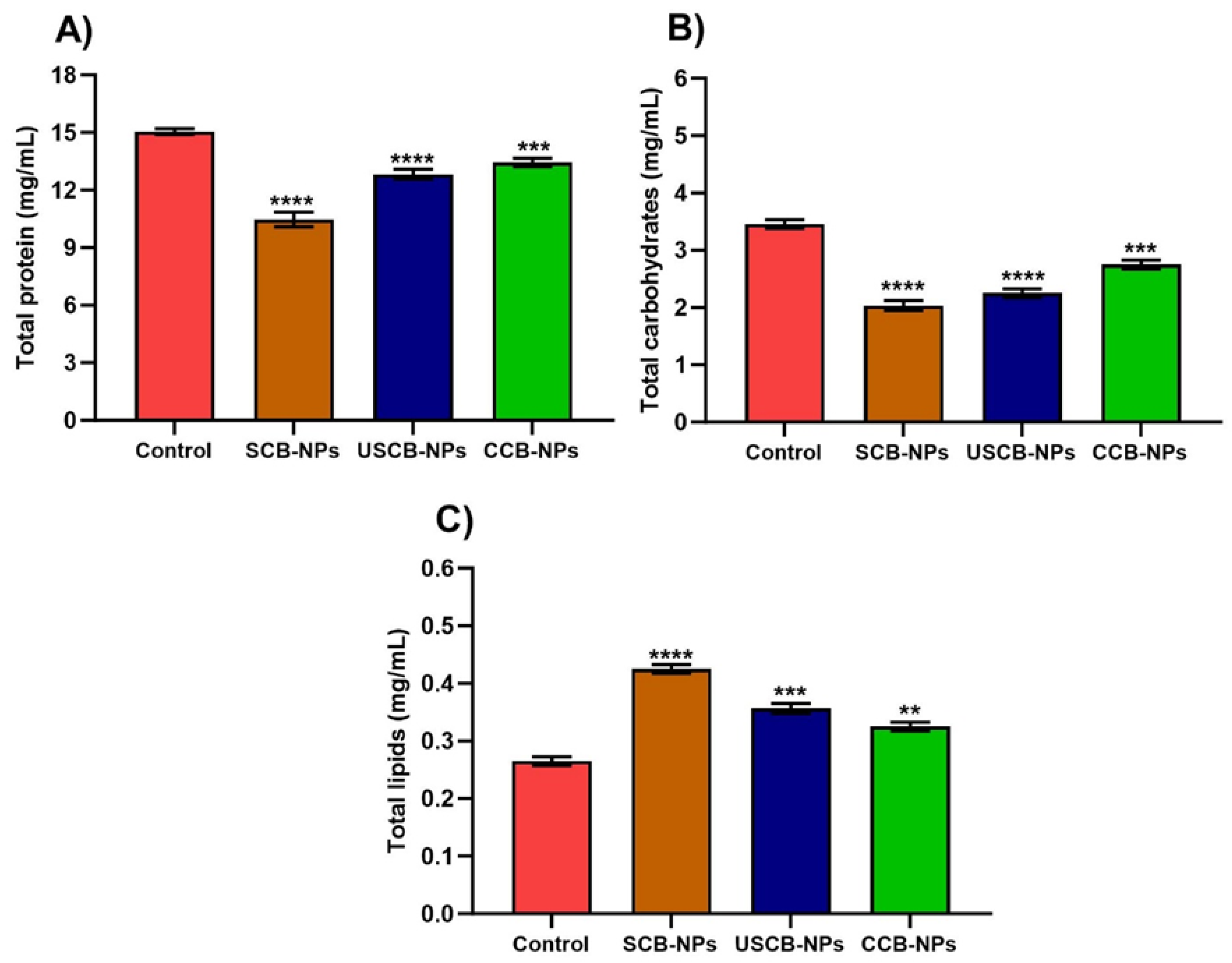
The biochemical parameters of earthworms from the Control group and those exposed to SCB-NPs, USCB-NPs, and CCB-NPs are presented in Figure 2. Total protein concentration was significantly decreased in the SCB-NPs and USCB-NPs groups (p < 0.0001) compared to the Control, while the CCB-NPs group showed a less pronounced but still significant decrease (p < 0.001). Total carbohydrate levels were also significantly decreased in the SCB-NPs and USCB-NPs groups (p < 0.0001), with the CCB-NPs group showing a smaller yet significant reduction (p < 0.001). In contrast, total lipid content was significantly increased in the SCB-NPs group (p < 0.0001), in the USCB-NPs group (p < 0.001), and in the CCB-NPs group (p < 0.001) compared to the Control.

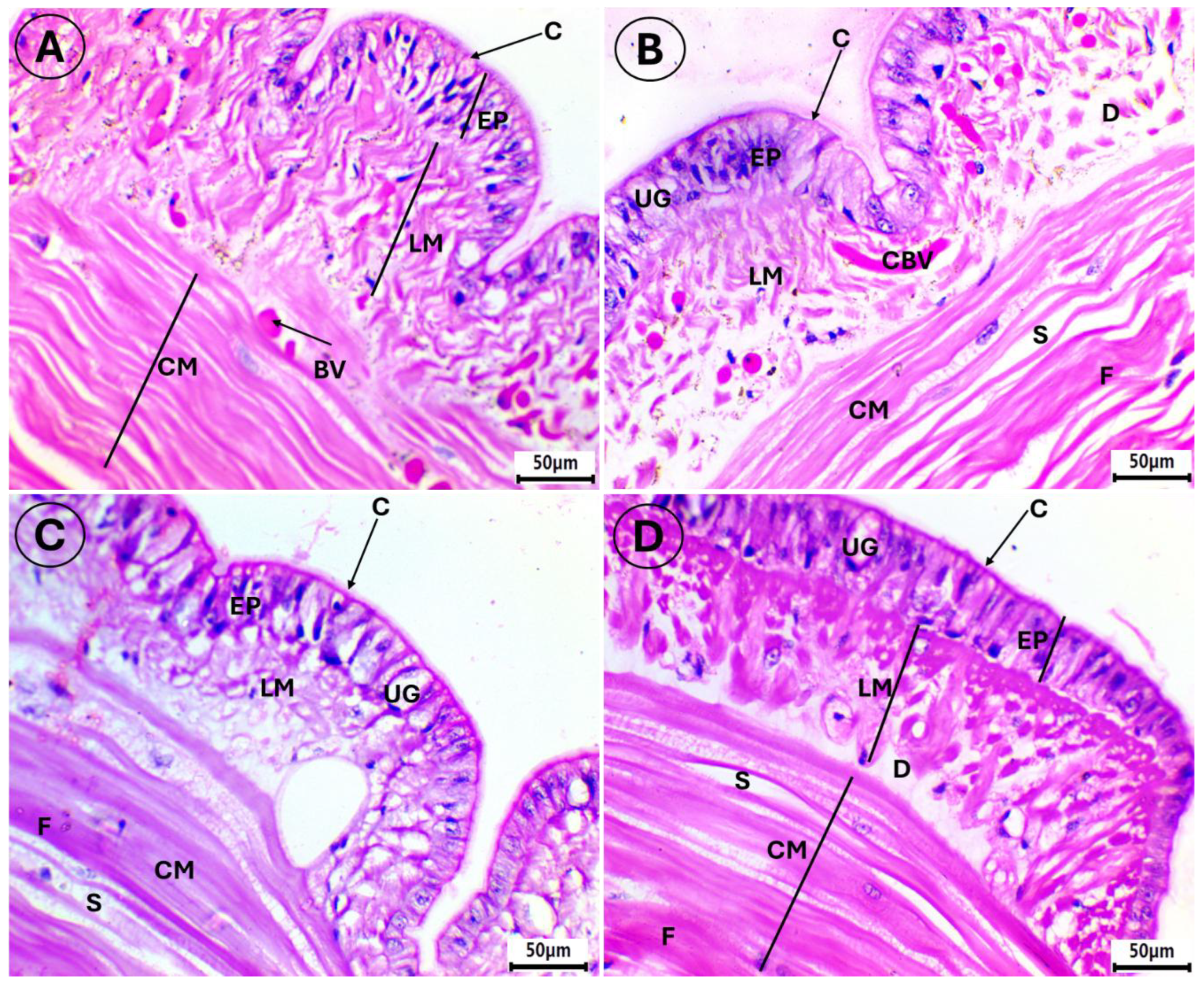
3.4. Histology and Histochemical Change in the Body Wall

The normal morphological structure of the body wall in earthworm from the control group showed a normal structure. The outer layer of the body wall is the epidermis, consisting of one layer of columnar epithelial cells. It is covered with a thin layer of cuticle. Below the epidermis, there are longitudinal and circular muscular layers. Blood vessels are structurally normal without congestion or hemorrhage (Figure 3A). Earthworms exposed to SCB-NPs showed that the epidermis was disorganized, and ruptures were present in the muscle layers and unicellular glands. Fibrosis was also detected, and the nuclei of muscle fibers degenerated and appeared in large spaces. Blood vessels are dilated and congested (Figure 3B). While earthworms exposed to USCB-NPs, the epidermis was covered with a thick layer of mucus, many unicellular glands in the epidermis lost their secretion, and the nuclei of the columnar cells became more elongated. The muscle layers lost their normal architecture, with increased fibrosis and increased space between the fibers (Figure 3C). In the group exposed to CCA-NPs, cuticles became thicker, and the muscle layer completely degenerated and was represented by the appearance of empty spaces (Figure 3D).
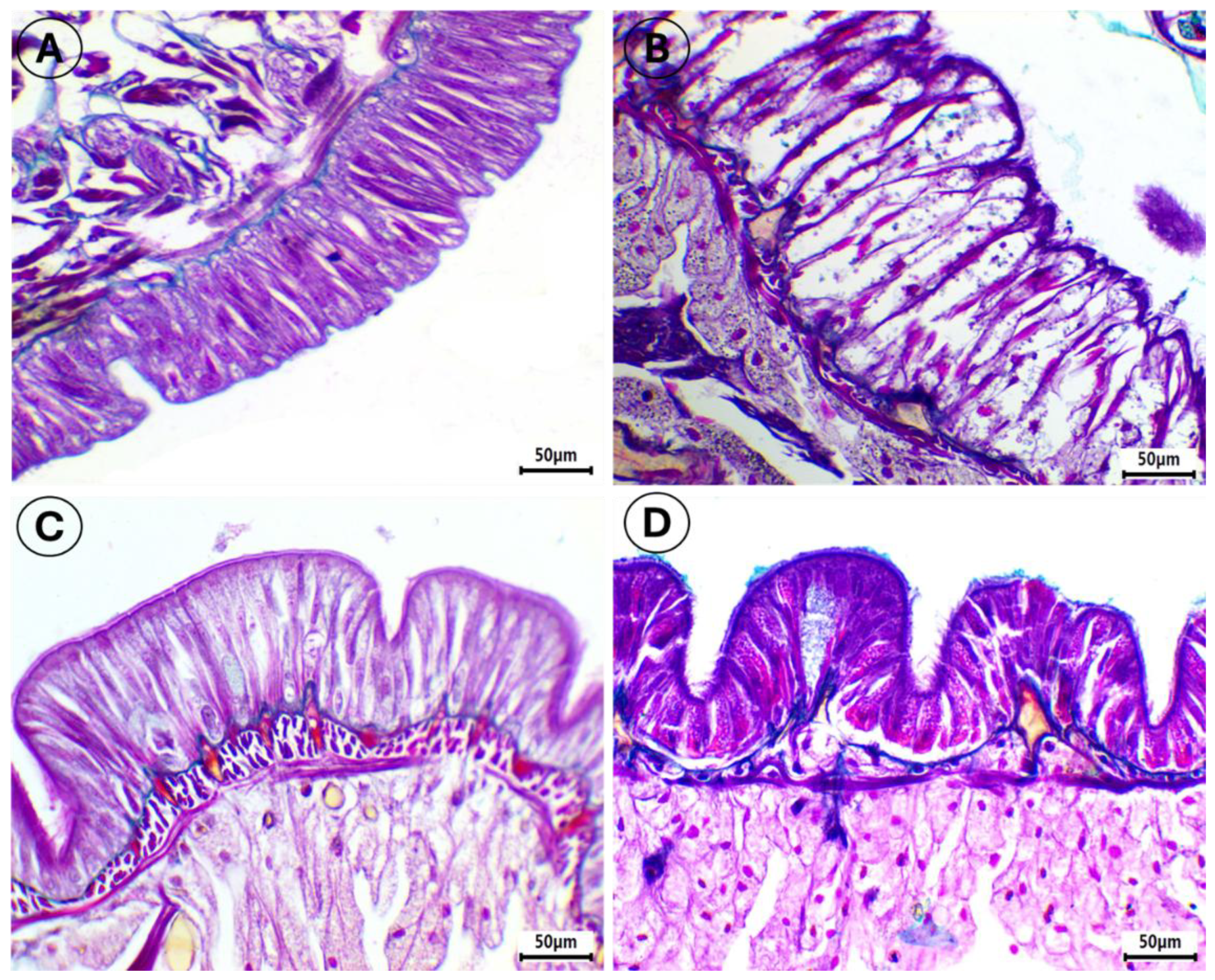
Masson’s trichrome stain showed a normal distribution of collagen fibers in the control group in the earthworm body wall (Figure 4A). In the group exposed to SCB-NPs, a decrease in collagen fibers appeared. Swelling in the gland cells, damage, and large spaces between muscle fibers were detected (Figure 4B). While the group exposed to UNSCB-NPs showed hyperplasia and more swelling in the epidermal layer, an increase in collagen fibers in the epidermal layer, large spaces, and damage were observed in longitudinal and circular muscle fibers (Figure 4C). The separation between the gland cells disappeared in the group exposed to CCA-NPs. The muscle fibers became more decomposed, and the collagen fibers increased between the epidermal layer and muscle layer compared to normal (Figure 4D).

3.5. Histology and Histochemical Change in the Gut

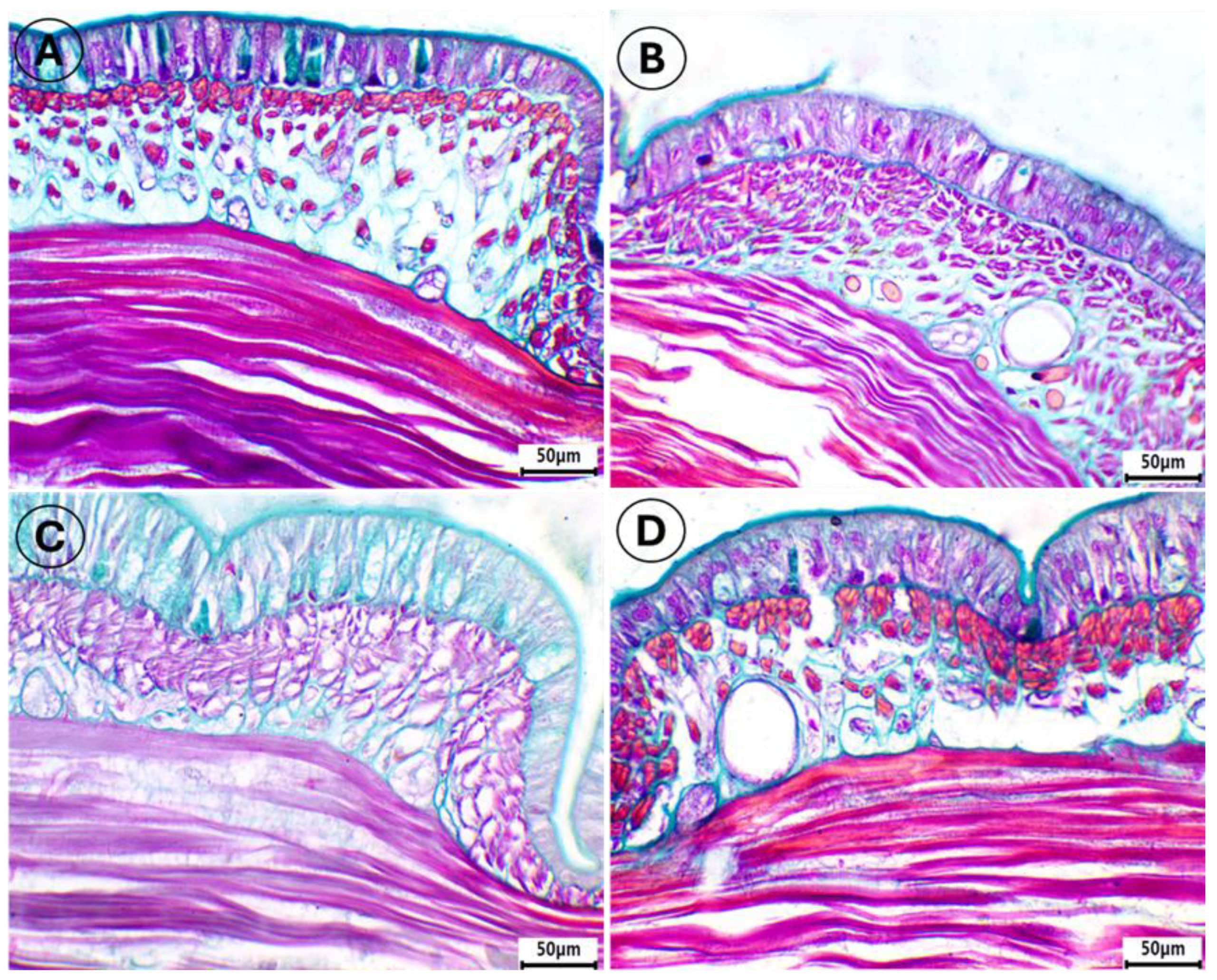
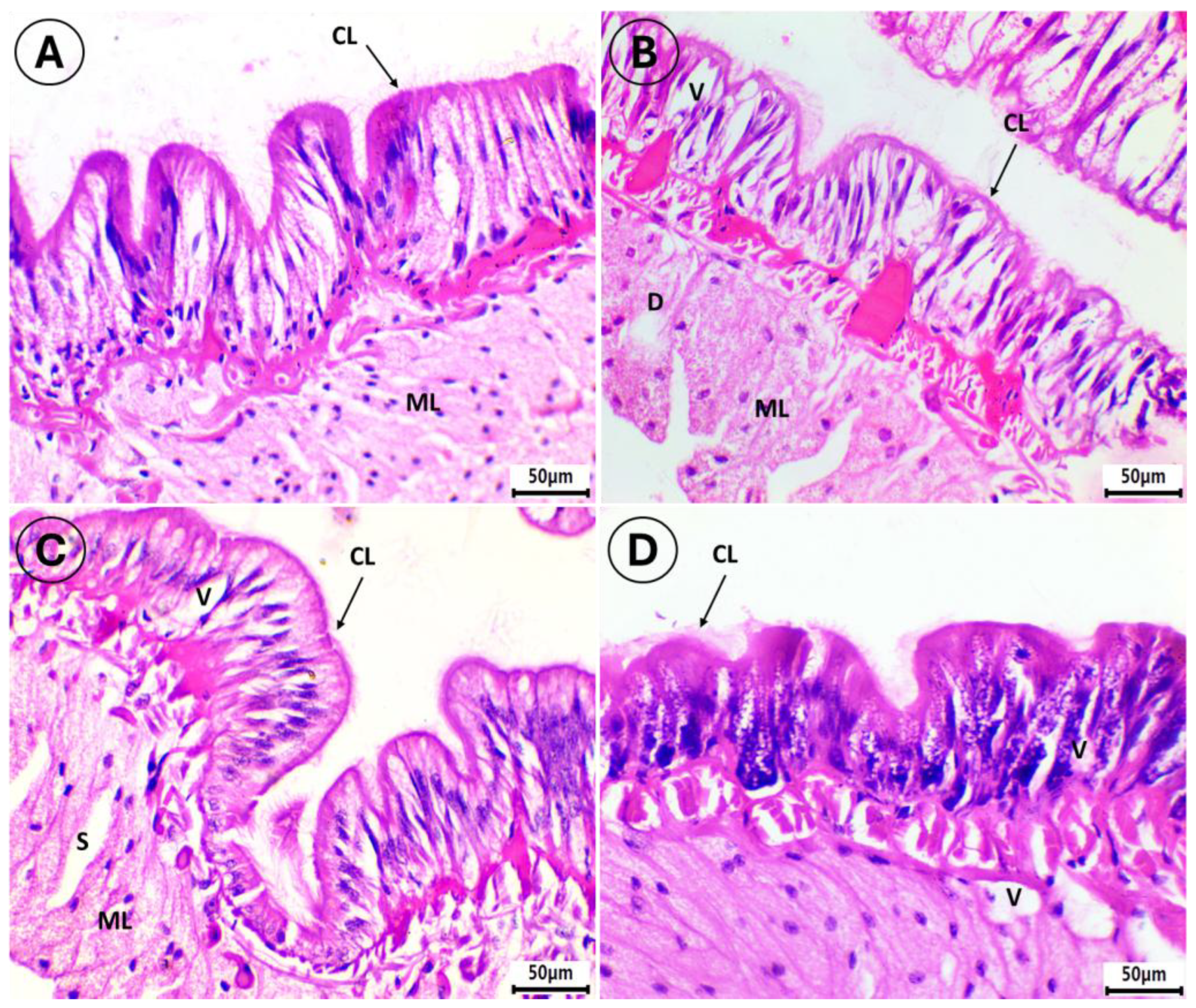
In the control group, the gut consists of ciliated simple columnar cells with goblet cells. The submucosa contains connective tissue and normal muscle fibers (Figure 5A). In earthworms exposed to SCB-NPs, the columnar cells appeared damaged with irregular arrangements, and many vacuoles were detected. The submucosa showed dense and dilated blood vessels. Muscle cells were enlarged in size, and spaces appeared between them (Figure 5B). In the gut of earthworms exposed to USCB-NPs, the cilia were thickened, and the cell boundaries were not discernible. Large spaces appeared between the muscle fibers (Figure 5C). In earthworm guts exposed to CCA-NPs, the columnar cells of the mucosa replicated, leading to the formation of multiple cell layers. The submucosa and muscularis completely lost their normal structure, and the empty spaces between muscle fibers became wider (Figure 5D).
Masson’s trichrome staining in the control group showed a normal distribution of collagen fibers in the gut of Allolobophora caliginosa (Figure 6A). In earthworm guts exposed to SCB-NPs, fibers appeared less dense than in the control, and the columnar epithelium became damaged, with large vacuoles appearing (Figure 6B). In worms exposed to USCB-NPs, collagen fibers appeared milder than in the control, and a thick layer of mucus was secreted to line the mucosal layer (Figure 6C). In worms exposed to CCA-NPs, the columnar cells of the mucosa lost their shape and borders. The connective tissue of the submucosa and muscle layer lost their normal structure (Figure 6D).

4. Discussion

The present study demonstrates that CA-NPs, particularly those derived from SCB-NPs, exert profound immunotoxic, biochemical, and histopathological effects in the earthworm Allolobophora caliginosa. These findings are consistent with growing evidence that cigarette butts are one of the most hazardous forms of plastic waste due to their persistence and the presence of combustion-derived toxicants, such as nicotine, polycyclic aromatic hydrocarbons, and heavy metals, which leach from the smoked filter into soils [14,64,65]. While unsmoked cigarette butt-derived NPs (USCB-NPs) and commercial CA-NPs (CCA-NPs) also induced measurable adverse effects, the intensity of immune and tissue damage was markedly higher under SCB-NP exposure, highlighting the role of embedded combustion by-products in amplifying NP toxicity [16]. While the current study employed a nominal concentration of 100 mg/kg to ensure measurable biological responses, we acknowledge that the true environmental concentrations of NPs remain highly uncertain. This uncertainty arises from the absence of standardized analytical detection methods, the transformation of microplastics into nanoscale fragments over time, and the heterogeneous distribution of such particles across soils of varying land use. We acknowledge that differences in NP density, morphology, or aggregation behavior may influence their distribution in soil and, consequently, the degree of organismal exposure.
Exposure to CA-NPs, particularly SCB-NPs, significantly altered earthworm immune biomarkers. Lysozyme activity was elevated across all exposed groups, with the strongest response in SCB-NPs. This increase likely reflects an acute immune activation against NP intrusion, consistent with lysozyme’s role as a front-line defense enzyme [30,31]. Similar elevations in lysozyme activity have been observed in Eisenia fetida following exposure to NPs [22,25] and graphene oxide [38], confirming that nanomaterials can trigger innate immune activation. By contrast, peroxidase and phagocytic activities were suppressed. Reduced phagocytosis indicates impaired coelomocyte function, weakening the earthworm’s capacity to neutralize pathogens and foreign particles [32,33,36]. A comparable inhibition of immune cell activity was recently reported in earthworms exposed to MPs [66]. The strong suppression under SCB-NPs exposure suggests that combustion by-products embedded in smoked filters intensify immunotoxicity [16]. Metallothionein levels rose in all CA-NPs treatments, which is a classical biomarker of stress caused by heavy metals and oxidative conditions [37]. The induction here likely reflects both metal leachates from SCBs [65,67] and NP-driven oxidative stress [22]. Collectively, these findings reveal a dual immune response: initial stimulation (lysozyme upregulation) but longer-term suppression (phagocytosis and peroxidase inhibition). This immunological imbalance mirrors the mixed pro- and anti-immune effects reported for other nanomaterials in annelids [24,33].
The disruption of earthworm metabolism was evident in the strong reductions in total protein and carbohydrate levels, coupled with a significant elevation of total lipids. Depletion of protein and carbohydrate reserves likely reflects their catabolism to fuel increased energy demands under stress, a metabolic cost previously reported in earthworms exposed to copper nanoparticles [46] and polystyrene microplastics [68]. The observed lipid accumulation may indicate impaired lipid utilization or stress-induced mobilization of lipid reserves, which has also been linked to oxidative disruption of lipid metabolism in NP-exposed earthworms [23,69]. These biochemical shifts align with the hypothesis that NPs impose a high energetic burden by inducing oxidative stress and destabilizing membrane integrity, forcing organisms to redirect metabolic pathways for survival [22,70].
Histopathological and histochemical evaluations revealed that exposure to CA-NPs, particularly SCB-NPs, inflicted pronounced structural damage in both body wall and gut tissues of A. caliginosa, underscoring the susceptibility of epithelial and absorptive barriers to NPs intrusion. In the skin, SCB-NPs exposure produced vacuolization, swelling, and hyperplasia of epithelial and appeared large space, fibrosis and damage between muscle fibers Masson’s trichrome staining showing fragmentation, increase and decrease in collagen fibers. Similar body wall and gut alterations have also been observed in E. fetida exposed to graphene oxide [38], ZnO-NPs [40], MPs [71], and PS-NPs [68], supporting the view that nanomaterials compromise skin integrity through oxidative stress, membrane destabilization, and inflammatory infiltration.
The body wall architecture was similarly compromised, with SCB-NPs causing epithelial disorganization, cell hyperplasia, and degeneration of muscle fibers. These findings align with [39], who observed intestinal vacuolation, mucosal thickening, and necrosis in nanoparticle-exposed A. caliginosa, confirming that nanoparticles compromise gastrointestinal tissues through oxidative imbalance and cytotoxicity. Additional parallels are found in studies of PS-NPs, which induced epithelial detachment, chloragogen degeneration, and goblet cell hyperplasia in E. fetida [23,68]. Zhou et al. [22] further showed that NPs can trigger lysosome-associated cell death in intestinal immune cells, while Qi et al. [70] demonstrated that co-exposure with metals intensifies gut oxidative injury mechanisms likely exacerbated in SCB-NPs by the presence of nicotine, PAHs, and heavy metals [65,67].
A mechanistic interpretation of these lesions points to oxidative stress as a central driver. Excessive ROS generation damages epithelial membranes, extracellular collagen, and muscle fibers, while fibrosis and connective tissue disorganization reflect chronic attempts at tissue remodeling. Hyperplasia of mucus and goblet cells likely represents a compensatory defense, enhancing mucin secretion to entrap or expel foreign particles, a phenomenon similarly reported under microplastic and cigarette butt exposures [15,72]. However, this protective response comes at the cost of epithelial integrity, nutrient absorption, and locomotory efficiency, ultimately weakening organismal performance.
Taking together, the histopathological and mechanistic evidence demonstrates that SCB-derived NPs inflict more severe damage than CCA-NPs or USCB-NPs, reflecting the additive impact of embedded nicotine, PAHs, and heavy metals. These particles are known from previous studies to penetrate earthworm tissues and induce oxidative stress and immune disruption; in our study, the strong biochemical and histopathological responses are consistent with such internal interactions, although direct visualization of particle uptake was not conducted. Such outcomes are consistent with Bakr et al. [39] and other nanoparticle studies, reinforcing that both engineered and environmental nanomaterials compromise earthworm tissues through oxidative stress, immune disruption, and structural degradation. Beyond threatening individual survival, these impairments diminish the ecological functions of earthworms as soil engineers responsible for nutrient cycling and soil aeration [43], with cascading effects on soil quality and ecosystem stability. The findings align with recent reviews highlighting the ecological risks of cigarette butt pollution [13,73,74] and underscore the urgent need for policies restricting or banning cellulose acetate filters to prevent their transformation into toxic NPs in terrestrial environments.
By comparing these findings with previous nanoparticle and microplastic studies, it becomes clear that SCB-NPs induce more severe and multifaceted toxic responses than either engineered nanoparticles [22,33,36,39,46,75] or pristine plastics [8,68,76]. This heightened toxicity reflects a mechanistic synergy between oxidative stress, immune dysfunction, and structural barrier failure, which collectively diminishes organismal resilience. Such insights highlight the urgent need for stricter regulation of cigarette filter waste [13,74] and support calls for their classification as hazardous microplastic sources in terrestrial environments [73].
Future research should integrate multi-omics and microbiome analyses to further elucidate the molecular pathways underlying NP toxicity and to guide policy frameworks aimed at mitigating the impacts of cigarette butt-derived NPs on terrestrial ecosystems. Moreover, the development of reliable quantification methods for NPs in soils is urgently needed to refine ecological risk assessments and ensure that laboratory exposure scenarios reflect environmentally realistic concentrations.

5. Conclusions

This study demonstrates that CA-NPs adversely affect the health of A. caliginosa, with SCB-derived particles eliciting the strongest toxic responses. Immune disruption, oxidative imbalance, metabolic stress, and tissue alterations were most pronounced in worms exposed to SCB-NPs, supporting the interpretation that combustion-related residues increase the biological impact of CB-derived particles. The stronger toxicity of SCB-NPs relative to USCB-NPs and CCA-NPs may be associated with the known enrichment of combustion-derived toxicants in SCB; however, the specific chemical drivers were not quantified here and should be investigated in future studies. Overall, these findings highlight the susceptibility of soil invertebrates to NPs originating from cigarette filters and underscore the need for further research into the physicochemical drivers of toxicity, particle uptake pathways, and long-term ecological consequences in terrestrial environments. The results contribute to a growing body of evidence on the ecotoxicological relevance of CB-derived MPs and NPs and emphasize the importance of improved environmental monitoring and characterization of these particles.

Author Contributions

Conceptualization, Z.B., S.M.S., N.A.E., M.A.E.-A. and G.N.A.; methodology, Z.B.; software, Z.B.; validation, Z.B., S.M.S., N.A.E., M.A.E.-A. and G.N.A.; formal analysis, Z.B.; investigation, Z.B.; resources, Z.B., S.M.S., N.A.E., M.A.E.-A. and G.N.A.; data curation, Z.B., S.M.S., N.A.E., M.A.E.-A. and G.N.A.; writing—original draft preparation, Z.B.; writing—review and editing, Z.B., S.M.S., N.A.E., M.A.E.-A. and G.N.A.; visualization, Z.B., S.M.S., N.A.E., M.A.E.-A. and G.N.A.; supervision, S.M.S., N.A.E., and G.N.A.; project administration, N.A.E. and M.A.E.-A.; funding acquisition, Z.B. and M.A.E.-A. All authors have read and agreed to the published version of the manuscript.

Funding

The authors gratefully acknowledge Assiut University for its continuous support and funding of the PhD project of Miss Zeinab Bakr (Funding No. AUN2025F.SciH0006). The university’s financial assistance, research facilities, and academic guidance have been instrumental in the successful execution of this study. We sincerely appreciate the resources and encouragement provided, which have greatly contributed to the completion of this work.

Institutional Review Board Statement

All procedures involving earthworms adhered to the ethical requirements of Assiut University for invertebrate research. Approval was granted under reference number 01-2025-0005 by the Faculty of Science Ethics Committee at 01/03/2025. Collection from natural habitats was performed with minimal disturbance, and laboratory conditions were designed to replicate natural environmental parameters to reduce stress. Handling, acclimatization, NP exposure, and subsequent analyses were performed with attention to the welfare of the specimens.

Informed Consent Statement

Not applicable.

Data Availability Statement

The datasets generated and analyzed in this study are available from the corresponding author upon request.

Conflicts of Interest

The authors declare no conflicts of interest.

Abbreviations

AbbreviationFull Term
CACellulose Acetate
CA-NPsCellulose Acetate Nanoplastics
CCA-NPsCommercial Cellulose Acetate Nanoplastics
CBCigarette Butt
CBVCongested Blood Vessels
CLCilia
CMCircular Muscle
DDegeneration
EPEpidermis
FFibrosis
H&EHematoxylin and Eosin
LMLongitudinal Muscle
LPXLipid Peroxidation
MLMuscle Layer
MTMetallothionein
NPsNanoplastics
OXPOxidized Protein
PAHsPolycyclic Aromatic Hydrocarbons
PBSPhosphate-Buffered Saline
PS-NPsPolystyrene Nanoplastics
ROSReactive Oxygen Species
SSpace
SCBSmoked Cigarette Butt
SCB-NPsSmoked Cigarette Butts Nanoplastics
SEMStandard Error of the Mean
TLTotal Lipid
TCTotal Carbohydrate
TPTotal Protein
UGUnicellular Gland
USCBUnsmoked Cigarette Butt
USCB-NPsUnsmoked Cigarette Butts Nanoplastics
WHCWater-Holding Capacity

References

  1. Gautam, B.P.S.; Qureshi, A.; Gwasikoti, A.; Kumar, V.; Gondwal, M. Global scenario of plastic production, consumption, and waste generation and their impacts on environment and human health. In Advanced Strategies for Biodegradation of Plastic Polymers; Springer: Berlin/Heidelberg, Germany, 2024; pp. 1–34. [Google Scholar]
  2. Shi, H.; Frias, J.; Sayed, A.E.-D.H.; De-la-Torre, G.E.; Jong, M.-C.; Uddin, S.A.; Rajaram, R.; Chavanich, S.; Najii, A.; Fernández-Severini, M.D. Small plastic fragments: A bridge between large plastic debris and micro-& nano-plastics. TrAC Trends Anal. Chem. 2023, 168, 117308. [Google Scholar] [CrossRef]
  3. Hamed, M.; Mazi, W.; Alatawi, I.S.; Omer, N.; Jame, R.; Abdelaziz, M.A.; Khaled, M.A. Characterization, surface deformation analysis and sources of small plastic fragments collected in diverse environments of Egypt. Mar. Pollut. Bull. 2024, 209, 117222. [Google Scholar] [CrossRef]
  4. Rillig, M.C.; Lehmann, A. Microplastic in terrestrial ecosystems. Science 2020, 368, 1430–1431. [Google Scholar] [CrossRef]
  5. Anderson, J.C.; Park, B.J.; Palace, V.P. Microplastics in aquatic environments: Implications for Canadian ecosystems. Environ. Pollut. 2016, 218, 269–280. [Google Scholar] [CrossRef]
  6. Mitrano, D.M.; Wick, P.; Nowack, B. Placing nanoplastics in the context of global plastic pollution. Nat. Nanotechnol. 2021, 16, 491–500. [Google Scholar] [CrossRef]
  7. Wu, X.; Lyu, X.; Li, Z.; Gao, B.; Zeng, X.; Wu, J.; Sun, Y. Transport of polystyrene nanoplastics in natural soils: Effect of soil properties, ionic strength and cation type. Sci. Total Environ. 2020, 707, 136065. [Google Scholar] [CrossRef] [PubMed]
  8. Huerta Lwanga, E.; Gertsen, H.; Gooren, H.; Peters, P.; Salánki, T.; Van Der Ploeg, M.; Besseling, E.; Koelmans, A.A.; Geissen, V. Microplastics in the terrestrial ecosystem: Implications for Lumbricus terrestris (Oligochaeta, Lumbricidae). Environ. Sci. Technol. 2016, 50, 2685–2691. [Google Scholar] [CrossRef] [PubMed]
  9. Zhao, X.; Wu, X.; White, J.C.; Tang, Z.; Wu, F. Micro/nanoplastics contamination of the terrestrial environment: Exposure routes, dose, and co-contaminants complicate the risk calculus. Carbon. Res. 2023, 2, 24. [Google Scholar] [CrossRef]
  10. Xie, Y.; Lyu, Y.; Irshad, S.; Liu, X.; Jiang, Y.; Sun, Y.; Zhang, Z.; Wei, H.; He, H.; An, C. Combined interactions and ecotoxicological effects of micro/nanoplastics and organic pollutants in soil–plant systems: A critical overview. Environ. Sci. Adv. 2025, 4, 1166–1180. [Google Scholar] [CrossRef]
  11. Trevisan, R.; Ranasinghe, P.; Jayasundara, N.; Di Giulio, R.T. Nanoplastics in aquatic environments: Impacts on aquatic species and interactions with environmental factors and pollutants. Toxics 2022, 10, 326. [Google Scholar] [CrossRef]
  12. Korobushkin, D.I.; Garibian, P.G.; Pelgunova, L.A.; Zaitsev, A.S. The earthworm species Eisenia fetida accelerates the decomposition rate of cigarette butts on the soil surface. Soil. Biol. Biochem. 2020, 151, 108022. [Google Scholar] [CrossRef]
  13. Everaert, S.; Schoeters, G.; Lardon, F.; Janssens, A.; Van Larebeke, N.; Raquez, J.-M.; Bervoets, L.; Spanoghe, P. Protecting public health and the environment: Towards a general ban on cellulose acetate cigarette filters in the European Union. Front. Public Health 2023, 11, 1282655. [Google Scholar] [CrossRef]
  14. Green, D.S.; Kregting, L.; Boots, B. Smoked cigarette butt leachate impacts survival and behaviour of freshwater invertebrates. Environ. Pollut. 2020, 266, 115286. [Google Scholar] [CrossRef]
  15. Green, D.S.; Tongue, A.D.; Boots, B. The ecological impacts of discarded cigarette butts. Trends Ecol. Evol. 2022, 37, 183–192. [Google Scholar] [CrossRef] [PubMed]
  16. Bakr, Z.; Aboulnasr, G.N.; Abd El-Aal, M.; Elshimy, N.A.; Said, S.M. Ecotoxicological effects of cellulose acetate nanoplastic derived from cigarette butts on earthworm (Allolobophora caliginosa): Implications for soil health. Environ. Res. 2025, 284, 122189. [Google Scholar] [CrossRef] [PubMed]
  17. Donaldson, K.; Tran, L.; Jimenez, L.A.; Duffin, R.; Newby, D.E.; Mills, N.; MacNee, W.; Stone, V. Combustion-derived nanoparticles: A review of their toxicology following inhalation exposure. Part. Fibre Toxicol. 2005, 2, 10. [Google Scholar] [CrossRef] [PubMed]
  18. Prajitha, N.; Athira, S.; Mohanan, P. Bio-interactions and risks of engineered nanoparticles. Environ. Res. 2019, 172, 98–108. [Google Scholar] [CrossRef]
  19. Pathan, S.I.; Arfaioli, P.; Bardelli, T.; Ceccherini, M.T.; Nannipieri, P.; Pietramellara, G. Soil pollution from micro-and nanoplastic debris: A hidden and unknown biohazard. Sustainability 2020, 12, 7255. [Google Scholar] [CrossRef]
  20. Maity, S.; Guchhait, R.; Sarkar, M.B.; Pramanick, K. Occurrence and distribution of micro/nanoplastics in soils and their phytotoxic effects: A review. Plant Cell Environ. 2022, 45, 1011–1028. [Google Scholar] [CrossRef]
  21. Kurmus, H.; Mohajerani, A. Recycling of cigarette butts in fired clay bricks: A new laboratory investigation. Materials 2020, 13, 790. [Google Scholar] [CrossRef]
  22. Zhou, Y.; He, G.; Jiang, H.; Pan, K.; Liu, W. Nanoplastics induces oxidative stress and triggers lysosome-associated immune-defensive cell death in the earthworm Eisenia fetida. Environ. Int. 2023, 174, 107899. [Google Scholar] [CrossRef] [PubMed]
  23. Tang, R.; Zhu, D.; Luo, Y.; He, D.; Zhang, H.; El-Naggar, A.; Palansooriya, K.N.; Chen, K.; Yan, Y.; Lu, X. Nanoplastics induce molecular toxicity in earthworm: Integrated multi-omics, morphological, and intestinal microorganism analyses. J. Hazard. Mater. 2023, 442, 130034. [Google Scholar] [CrossRef] [PubMed]
  24. He, F.; Shi, H.; Guo, S.; Li, X.; Tan, X.; Liu, R. Molecular mechanisms of nano-sized polystyrene plastics induced cytotoxicity and immunotoxicity in Eisenia fetida. J. Hazard. Mater. 2024, 465, 133032. [Google Scholar] [CrossRef]
  25. Shi, H.; Wang, Y.; Li, X.; Wang, X.; Qi, Y.; Hu, S.; Liu, R. Polystyrene Nanoplastics Elicit Multiple Responses in Immune Cells of the Eisenia fetida (Savigny, 1826). Toxics 2025, 13, 18. [Google Scholar] [CrossRef]
  26. Ameen, F.; Alsamhary, K.; Alabdullatif, J.A.; Alnadhari, S. A review on metal-based nanoparticles and their toxicity to beneficial soil bacteria and fungi. Ecotoxicol. Environ. Saf. 2021, 213, 112027. [Google Scholar] [CrossRef]
  27. Heinze, W.M.; Mitrano, D.M.; Lahive, E.; Koestel, J.; Cornelis, G. Nanoplastic Transport in Soil via Bioturbation by Lumbricus terrestris. Environ. Sci. Technol. 2021, 55, 16423–16433. [Google Scholar] [CrossRef] [PubMed]
  28. Guo, S.; Wang, Q.; Li, Z.; Chen, Y.; Li, H.; Zhang, J.; Wang, X.; Liu, J.; Cao, B.; Zou, G.; et al. Ecological risk of microplastic toxicity to earthworms in soil: A bibliometric analysis. Front. Environ. Sci. 2023, 11, 1126847. [Google Scholar] [CrossRef]
  29. Sharma, D.; Tomar, S.; Chakraborty, D. Role of earthworm in improving soil structure and functioning. Curr. Sci. 2017, 113, 1064–1071. [Google Scholar] [CrossRef]
  30. Saurabh, S.; Sahoo, P. Lysozyme: An important defence molecule of fish innate immune system. Aquac. Res. 2008, 39, 223–239. [Google Scholar] [CrossRef]
  31. Fiołka, M.J.; Zagaja, M.P.; Hułas-Stasiak, M.; Wielbo, J. Activity and immunodetection of lysozyme in earthworm Dendrobaena veneta (Annelida). J. Invertebr. Pathol. 2012, 109, 83–90. [Google Scholar] [CrossRef]
  32. Gupta, S.; Kushwah, T.; Yadav, S. Earthworm coelomocytes as nanoscavenger of ZnO NPs. Nanoscale Res. Lett. 2014, 9, 259. [Google Scholar] [CrossRef] [PubMed]
  33. Bodó, K.; Baranzini, N.; Girardello, R.; Kokhanyuk, B.; Németh, P.; Hayashi, Y.; Grimaldi, A.; Engelmann, P. Nanomaterials and Annelid Immunity: A Comparative Survey to Reveal the Common Stress and Defense Responses of Two Sentinel Species to Nanomaterials in the Environment. Biology 2020, 9, 307. [Google Scholar] [CrossRef]
  34. Sharma, P.; Chouhan, R.; Bakshi, P.; Gandhi, S.G.; Kaur, R.; Sharma, A.; Bhardwaj, R. Amelioration of Chromium-Induced Oxidative Stress by Combined Treatment of Selected Plant-Growth-Promoting Rhizobacteria and Earthworms via Modulating the Expression of Genes Related to Reactive Oxygen Species Metabolism in Brassica juncea. Front. Microbiol. 2022, 13, 802512. [Google Scholar] [CrossRef] [PubMed]
  35. Wang, L.; Luo, J.; Qiu, Z.; Qian, M.; Hayat, K. Earthworms under threat: Assessing the environmental impact of cyhalofop-butyl herbicide on soil health and ecosystem sustainability. RSC Adv. 2025, 15, 25000–25008. [Google Scholar] [CrossRef] [PubMed]
  36. Bodó, K.; Hayashi, Y.; Gerencsér, G.; László, Z.; Kéri, A.; Galbács, G.; Telek, E.; Mészáros, M.; Deli, M.A.; Kokhanyuk, B.; et al. Species-specific sensitivity of Eisenia earthworms towards noble metal nanoparticles: A multiparametric in vitro study. Environ. Sci. Nano 2020, 7, 3509–3525. [Google Scholar] [CrossRef]
  37. Höckner, M.; Dallinger, R.; Stürzenbaum, S.R. Metallothionein gene activation in the earthworm (Lumbricus rubellus). Biochem. Biophys. Res. Commun. 2015, 460, 537–542. [Google Scholar] [CrossRef]
  38. Duo, L.; Wang, Y.; Zhao, S. Individual and histopathological responses of the earthworm (Eisenia fetida) to graphene oxide exposure. Ecotoxicol. Environ. Saf. 2022, 229, 113076. [Google Scholar] [CrossRef]
  39. Bakr, Z.; Abdel-Wahab, M.; Thabet, A.A.; Hamed, M.; El-Aal, M.A.; Saad, E.; Faheem, M.; Sayed, A.E.-D.H. Toxicity of silver, copper oxide, and polyethylene nanoparticles on the earthworm Allolobophora caliginosa using multiple biomarkers. Appl. Soil. Ecol. 2023, 181, 104681. [Google Scholar] [CrossRef]
  40. Świątek, Z.M.; Woźnicka, O.; Bednarska, A.J. Unravelling the ZnO-NPs mechanistic pathway: Cellular changes and altered morphology in the gastrointestinal tract of the earthworm Eisenia andrei. Ecotoxicol. Environ. Saf. 2020, 196, 110532. [Google Scholar] [CrossRef]
  41. Roubalová, R.; Prochazkova, P.; Dvořák, J.; Škanta, F.; Bilej, M. The role of earthworm defense mechanisms in ecotoxicity studies. Invertebr. Surviv. J. 2015, 12, 203–213. [Google Scholar]
  42. Lourenço, J.; Silva, A.; Carvalho, F.; Oliveira, J.; Malta, M.; Mendo, S.; Gonçalves, F.; Pereira, R. Histopathological changes in the earthworm Eisenia andrei associated with the exposure to metals and radionuclides. Chemosphere 2011, 85, 1630–1634. [Google Scholar] [CrossRef]
  43. Blouin, M.; Hodson, M.E.; Delgado, E.A.; Baker, G.; Brussaard, L.; Butt, K.R.; Dai, J.; Dendooven, L.; Pérès, G.; Tondoh, J. A review of earthworm impact on soil function and ecosystem services. Eur. J. Soil. Sci. 2013, 64, 161–182. [Google Scholar] [CrossRef]
  44. Ahmed, G.M.; Mostafa, N.A.; El-Garhy, M.; Fahmy, S.R.; Mohamed, A.S.; Ali, S.B. Allolobophora caliginosa as bioindicator for chitosan-saponin-bentonite nanocomposite contaminated soil. Sci. Rep. 2025, 15, 23670. [Google Scholar] [CrossRef]
  45. Sadek, S.A.; Soliman, A.M.; Marzouk, M. Ameliorative effect of Allolobophora caliginosa extract on hepatotoxicity induced by silicon dioxide nanoparticles. Toxicol. Ind. Health 2016, 32, 1358–1372. [Google Scholar] [CrossRef]
  46. Gautam, A.; Ray, A.; Mukherjee, S.; Das, S.; Pal, K.; Das, S.; Karmakar, P.; Ray, M.; Ray, S. Immunotoxicity of copper nanoparticle and copper sulfate in a common Indian earthworm. Ecotoxicol. Environ. Saf. 2018, 148, 620–631. [Google Scholar] [CrossRef]
  47. Zhou, Y.; Wang, J.; Zou, M.; Yin, Q.; Qiu, Y.; Li, C.; Ye, B.; Guo, T.; Jia, Z.; Li, Y. Microplastics in urban soils of Nanjing in eastern China: Occurrence, relationships, and sources. Chemosphere 2022, 303, 134999. [Google Scholar] [CrossRef] [PubMed]
  48. Parker, T.T.; Rayburn, J. A comparison of electronic and traditional cigarette butt leachate on the development of Xenopus laevis embryos. Toxicol. Rep. 2017, 4, 77–82. [Google Scholar] [CrossRef]
  49. Judy, J.D.; Williams, M.; Gregg, A.; Oliver, D.; Kumar, A.; Kookana, R.; Kirby, J.K. Microplastics in municipal mixed-waste organic outputs induce minimal short to long-term toxicity in key terrestrial biota. Environ. Pollut. 2019, 252, 522–531. [Google Scholar] [CrossRef]
  50. Zhu, D.; Chen, Q.-L.; An, X.-L.; Yang, X.-R.; Christie, P.; Ke, X.; Wu, L.-H.; Zhu, Y.-G. Exposure of soil collembolans to microplastics perturbs their gut microbiota and alters their isotopic composition. Soil. Biol. Biochem. 2018, 116, 302–310. [Google Scholar] [CrossRef]
  51. Ju, H.; Zhu, D.; Qiao, M. Effects of polyethylene microplastics on the gut microbial community, reproduction and avoidance behaviors of the soil springtail, Folsomia candida. Environ. Pollut. 2019, 247, 890–897. [Google Scholar] [CrossRef]
  52. OECD. Test No. 222: Earthworm Reproduction Test (Eisenia fetida/Eisenia andrei); OECD Guidelines for the Testing of Chemicals; OECD: Paris, France, 2016. [Google Scholar]
  53. Overkamp, D.; Mohammed-Ali, S.; Cartledge, C.; Landon, J. Production of polyclonal antibodies in ascitic fluid of mice: Technique and applications. J. Immunoass. 1988, 9, 51–68. [Google Scholar] [CrossRef]
  54. Parry, R.M., Jr.; Chandan, R.C.; Shahani, K.M. A rapid and sensitive assay of muramidase. Proc. Soc. Exp. Biol. Med. 1965, 119, 384–386. [Google Scholar] [CrossRef] [PubMed]
  55. Hamed, M.; Said, R.E.M.; Soliman, H.A.M.; Osman, A.G.M.; Martyniuk, C.J. Immunotoxicological, histopathological, and ultrastructural effects of waterborne pyrogallol exposure on African catfish (Clarias gariepinus). Chemosphere 2024, 349, 140792. [Google Scholar] [CrossRef]
  56. Mehra, R.K.; Bremner, I. Development of a radioimmunoassay for rat liver metallothionein-I and its application to the analysis of rat plasma and kidneys. Biochem. J. 1983, 213, 459–465. [Google Scholar] [CrossRef]
  57. Siwicki, A.K.; Anderson, D.P.; Rumsey, G.L. Dietary intake of immunostimulants by rainbow trout affects non-specific immunity and protection against furunculosis. Vet. Immunol. Immunopathol. 1994, 41, 125–139. [Google Scholar] [CrossRef] [PubMed]
  58. Park, K.H.; Do Jeong, H. Enhanced resistance against Edwardsiella tarda infection in tilapia (Oreochromis niloticus) by administration of protein-bound polysaccharide. Aquaculture 1996, 143, 135–143. [Google Scholar] [CrossRef]
  59. Bradford, M.M. A rapid and sensitive method for the quantitation of microgram quantities of protein utilizing the principle of protein-dye binding. Anal. Biochem. 1976, 72, 248–254. [Google Scholar] [CrossRef]
  60. Moreau, R.; Gourdoux, L.; Dutrieu, J.; Benkhay, A. Hemolymph trehalose and carbohydrates in starved male adult Locust a migratoria: Possibility of endocrine modification. Comp. Biochem. Physiol. Part A Physiol. 1984, 78, 481–485. [Google Scholar] [CrossRef]
  61. Goldsworthy, G.; Mordue, W.; Guthkelch, J. Studies on insect adipokinetic hormones. Gen. Comp. Endocrinol. 1972, 18, 545–551. [Google Scholar] [CrossRef]
  62. Bancroft, J.D.; Gamble, M. Theory and Practice of Histological Techniques; Elsevier Health Sciences: Amsterdam, The Netherlands, 2008. [Google Scholar]
  63. Foot, N.C. The Masson Trichrome Staining Methods in Routine Laboratory Use. Stain. Technol. 1933, 8, 101–110. [Google Scholar] [CrossRef]
  64. Dobaradaran, S.; Soleimani, F.; Akhbarizadeh, R.; Schmidt, T.C.; Marzban, M.; BasirianJahromi, R. Environmental fate of cigarette butts and their toxicity in aquatic organisms: A comprehensive systematic review. Environ. Res. 2021, 195, 110881. [Google Scholar] [CrossRef]
  65. Xi, Y.; Diao, L.; Wang, Z.; Jin, Z.; Wang, Y.; Liu, W.; Wen, D.; Li, H.; Sun, C.; Lu, J. Toxicity of leachate from smoked cigarette butts to terrestrial animals: A case study on the earthworm Eisenia fetida. Sci. Total Environ. 2023, 898, 165531. [Google Scholar] [CrossRef]
  66. Kwak, J.I.; Jeong, S.; Kim, L.; Hyun, Y.-M.; An, Y.-J. Microplastic pollution inhibits the phagocytosis of E. coli by earthworm immune cells in soil. J. Hazard. Mater. 2025, 491, 137946. [Google Scholar] [CrossRef]
  67. Dobaradaran, S.; Schmidt, T.C.; Lorenzo-Parodi, N.; Jochmann, M.A.; Nabipour, I.; Raeisi, A.; Stojanović, N.; Mahmoodi, M. Cigarette butts: An overlooked source of PAHs in the environment? Environ. Pollut. 2019, 249, 932–939. [Google Scholar] [CrossRef] [PubMed]
  68. Jiang, X.; Chang, Y.; Zhang, T.; Qiao, Y.; Klobučar, G.; Li, M. Toxicological effects of polystyrene microplastics on earthworm (Eisenia fetida). Environ. Pollut. 2020, 259, 113896. [Google Scholar] [CrossRef] [PubMed]
  69. Wang, H.; Guo, S.; He, F.; Li, X.; Wang, Y.; Wang, T.; Tian, G.; Liu, R. The combined effects of polystyrene nanoplastics with nickel on oxidative stress and related toxic effects to earthworms from individual and cellular perspectives. Sci. Total Environ. 2024, 912, 168819. [Google Scholar] [CrossRef]
  70. Qi, Y.; Wang, X.; Guo, S.; Li, X.; Song, H.; Zhao, X.; Niu, Q.; Hu, S.; Liu, R. New regulatory mechanisms of polystyrene nanoplastics on the ecological risk of zinc: Cellular oxidative injury and molecular toxicity mechanisms in soil sentinel organisms (Eisenia fetida). Environ. Pollut. 2025, 381, 126624. [Google Scholar] [CrossRef]
  71. Wang, J.; Lv, L.; An, X.; Zhang, C.; Tang, T.; Sun, Y.; Wang, F. Combined effects of different-sized microplastics and fluindapyr on earthworm: Bioaccumulation, oxidative stress, histopathological responses and gut microbiota. Environ. Pollut. 2025, 366, 125478. [Google Scholar] [CrossRef]
  72. Montalvão, M.F.; Chagas, T.Q.; da Silva Alvarez, T.G.; Mesak, C.; da Costa Araújo, A.P.; Gomes, A.R.; de Andrade Vieira, J.E.; Rocha, T.L.; Malafaia, G. Cigarette butt leachate as a risk factor to the health of freshwater bivalve. Chemosphere 2019, 234, 379–387. [Google Scholar] [CrossRef]
  73. Belzagui, F.; Buscio, V.; Gutiérrez-Bouzán, C.; Vilaseca, M. Cigarette butts as a microfiber source with a microplastic level of concern. Sci. Total Environ. 2021, 762, 144165. [Google Scholar] [CrossRef] [PubMed]
  74. Green, D.S.; Almroth, B.C.; Altman, R.; Bergmann, M.; Gündoğdu, S.; Warrier, A.K.; Boots, B.; Walker, T.R.; Krieger, A.; Syberg, K. Time to kick the butt of the most common litter item in the world: Ban cigarette filters. Sci. Total Environ. 2023, 865, 161256. [Google Scholar] [CrossRef] [PubMed]
  75. Said, R.E.M.; Hamed, M.; Shaalan, W.M.; Elbaghdady, H.A.M.; Sayed, A.E.-D.H. Exploring the Coexposure Effects of Pyrogallol and Microplastic on the Red Swamp Crayfish Procambarus clarkii. Aquac. Res. 2025, 2025, 6084150. [Google Scholar] [CrossRef]
  76. Hamed, M.; Said, R.E.M.; Shaalan, W.M.; Elbaghdady, H.A.M.; Sayed, A.E.-D.H. Immunological, neurological, and intestinal changes in red swamp crayfish (Procambarus clarkii) exposed to the combined toxicity of Pyrogallol and microplastics. Mar. Pollut. Bull. 2025, 213, 117641. [Google Scholar] [CrossRef]
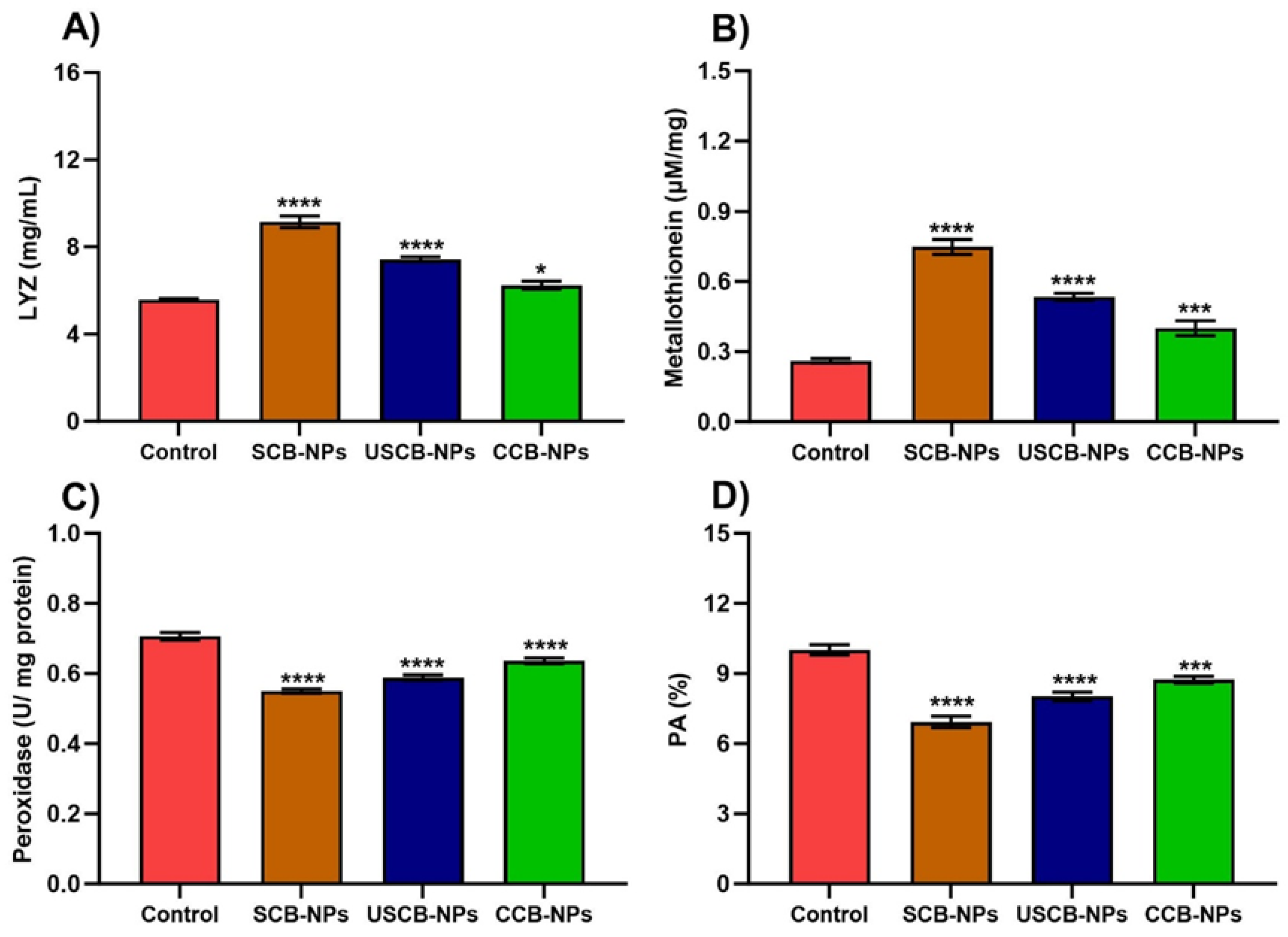
Figure 1. Immunological parameters of earthworms (Allolobophora caliginosa) exposed to SCB-NPs, USCB-NPs, and CCA-NPs. (A) lysozyme concentration, (B) metallothionein levels, (C) peroxidase activity, and (D) phagocytic activity. Significant differences from the control group are indicated as p < 0.05 (*), p < 0.001 (***), and p < 0.0001 (****). Abbreviation: (Control): Group with no exposure to cellulose acetate nanoplastics. (SCB-NPs): Cellulose acetate nanoplastics extracted from smoked cigarette butts. (USCB-NPs): Cellulose acetate nanoplastics extracted from unsmoked cigarette butts. (CCA-NPs): Commercially available cellulose acetate nanoplastics.
Microplastics 05 00012 g001
Figure 2. Biochemical parameters of earthworms (Allolobophora caliginosa) exposed to SCB-NPs, USCB-NPs, and CCA-NPs. (A) total protein concentration, (B) total carbohydrate levels, and (C) total lipid content. Significant differences from the Control group are indicated as p < 0.01 (**), p < 0.001 (***), and p < 0.0001 (****). Abbreviation: (Control): Group with no exposure to cellulose acetate nanoplastics. (SCB-NPs): Cellulose acetate nanoplastics extracted from smoked cigarette butts. (USCB-NPs): Cellulose acetate nanoplastics extracted from unsmoked cigarette butts. (CCA-NPs): Commercially available cellulose acetate nanoplastics.
Microplastics 05 00012 g002
Figure 3. Body wall section of earthworms (Allolobophora caliginosa) exposed to Control (A), SCB-NPs (B), USCB-NPs (C), and CCA-NPs (D). Abbreviation: (Control): Group with no exposure to cellulose acetate nanoplastics, (SCB-NPs): Cellulose acetate nanoplastics extracted from smoked cigarette butts, (USCB-NPs): Cellulose acetate nanoplastics extracted from unsmoked cigarette butts, (CCA-NPs): Commercially available cellulose acetate nanoplastics, (C): The cuticle, (EP): epidermis, (LM): longitudinal muscle, (BV): blood vessels, (CM): circular muscle, (UG): unicellular gland, (D): degeneration, (F): fibrosis, (S): spaces, (CBV): congested blood vessels. Hematoxylin and eosin (H&E)-stained (40×).
Microplastics 05 00012 g003
Figure 4. Body wall section of earthworms (Allolobophora caliginosa) exposed to Control (A), SCB-NPs (B), USCB-NPs (C), and CCA-NPs (D). Abbreviation: (Control): Group with no exposure to cellulose acetate nanoplastics, (SCB-NPs): Cellulose acetate nanoplastics extracted from smoked cigarette butts, (USCB-NPs): Cellulose acetate nanoplastics extracted from unsmoked cigarette butts, (CCA-NPs): Commercially available cellulose acetate nanoplastics, Masson’s trichrome-stained (40×).
Microplastics 05 00012 g004
Figure 5. Gut section of earthworms (Allolobophora caliginosa) exposed to Control (A), SCB-NPs (B), USCB-NPs (C), and CCA-NPs (D). Abbreviation: (Control): Group with no exposure to cellulose acetate nanoplastics, (SCB-NPs): Cellulose acetate nanoplastics extracted from smoked cigarette butts, (USCB-NPs): Cellulose acetate nanoplastics extracted from unsmoked cigarette butts, (CCA-NPs): Commercially available cellulose acetate nanoplastics, (CL): cilia, (V): vacuolation, (ML): muscle layer, (D): degeneration, (S): space. Hematoxylin and eosin (H&E)-stained (40×).
Microplastics 05 00012 g005
Figure 6. Intestine section of earthworms (Allolobophora caliginosa) exposed to Control (A), SCB-NPs (B), USCB-NPs (C), and CCA-NPs (D). Abbreviation: (Control): Group with no exposure to cellulose acetate nanoplastics, (SCB-NPs): Cellulose acetate nanoplastics extracted from smoked cigarette butts, (USCB-NPs): Cellulose acetate nanoplastics extracted from unsmoked cigarette butts, (CCA-NPs): Commercially available cellulose acetate nanoplastics. Masson’s trichrome-stained (40×).
Microplastics 05 00012 g006
Table 1. Physicochemical characterization of cellulose acetate nanoparticles (CCA-NPs, SCB-NPs, and USCB-NPs).
Property/ObservationSCB-NPsUSCB-NPsCCA-NPs
XRD—Peak Positions (2θ)17.7°, 19.8°, 21.3°, 25.3°, 72.1°20.7°, 22.8°, 25.1°, 72.1°17.4°, 18.8°, 20.9°, 23.7°, 25.4°, 72.8°
XRD—Peak Intensity ObservationModerate to high intensitiesGenerally lowest intensities except at 72.1° (reduced due to carbon deposition)Moderate intensities
Crystallite Size (nm)17.8 nm23.8 nm8.9 nm
FTIR—Key Functional GroupsAll CA-NPs show same groups: O–H (3495 cm−1), C–H (2944 cm−1), C=O of acetate (1755 cm−1), O–H bending (1635 cm−1), CH2 bending (1436 cm−1), CH3 deformation/C–O (1375 cm−1), C–O–C (1160, 1039, 901 cm−1), C–OH bending (604 cm−1)Same bands as SCB-NPs, but lower intensitiesSame bands as others, moderate intensity
FTIR—Intensity ObservationHighest band intensitiesLowest band intensities (due to carbon/nicotine deposition)Lower than SCB-NPs but higher than USCB-NPs
TEM—MorphologyAgglomerated semi-sphericalAgglomerated semi-sphericalAgglomerated semi-spherical
TEM—Average Particle Size 156.7 ± 5.6 nm195.7 ± 25 nm214 ± 12.2 nm
Zeta Potential (mV)−14.1 ± 2.7−19.9 ± 2.2 −10.6 ± 0.8
PSD—Average Particle Size (μm)79.3 ± 3.1 μm115.2 ± 6.9 μm151.5 ± 10.6 μm
PSD—Distribution TypeUnimodalUnimodalUnimodal
Disclaimer/Publisher’s Note: The statements, opinions and data contained in all publications are solely those of the individual author(s) and contributor(s) and not of MDPI and/or the editor(s). MDPI and/or the editor(s) disclaim responsibility for any injury to people or property resulting from any ideas, methods, instructions or products referred to in the content.