Article

Impact of Microplastics on Copper Electrodeposition: Morphological and Electrochemical Insights

1
Dipartimento di Chimica “Ugo Schiff”, Università degli Studi di Firenze, via della Lastruccia 3, 50019 Sesto Fiorentino, Italy
2
National Interuniversity Consortium of Materials Science and Technology (INSTM), Via G. Giusti 9, 50121 Firenze, Italy
3
CSGI (Center for Colloid and Surface Science), Via della Lastruccia 3, 50019 Sesto Fiorentino, Italy
*
Author to whom correspondence should be addressed.
Microplastics 2026, 5(1), 7; https://doi.org/10.3390/microplastics5010007
Submission received: 4 September 2025 / Revised: 13 November 2025 / Accepted: 18 December 2025 / Published: 9 January 2026

Abstract

Microplastics (MPs) have been attracting considerable interest in recent years due to their ubiquitous existence and accumulation within different systems and ecosystems. Moreover, their presence in electroplating baths involves a more serious challenge considering that the electroplating industry is progressing towards the electroplating of plastic materials. Contaminated baths can lead to surface defects, poor adhesion, corrosion, and inconsistent deposit thicknesses. Despite these issues, the interactions between pollutant MPs and heavy metal ions in electroplating environments are still underexplored. The present study aims to investigate the behavior of self-produced “Nylon PA” MPs dispersed in acid copper electroplating baths and their interactions with copper ions in solution. Scanning electron microscopy (SEM) reveals several surface defects in copper deposits caused by MPs in the bath. Additionally, cyclic voltammetry and chronoamperometry indicate significant changes in nucleation and growth mechanisms, with MPs showing suppressant-like effects on copper deposition. These results shed light on the impact of MPs on copper electrodeposition, emphasizing the urgent need for further research and mitigation strategies to address this emerging issue in the electroplating industry.

1. Introduction

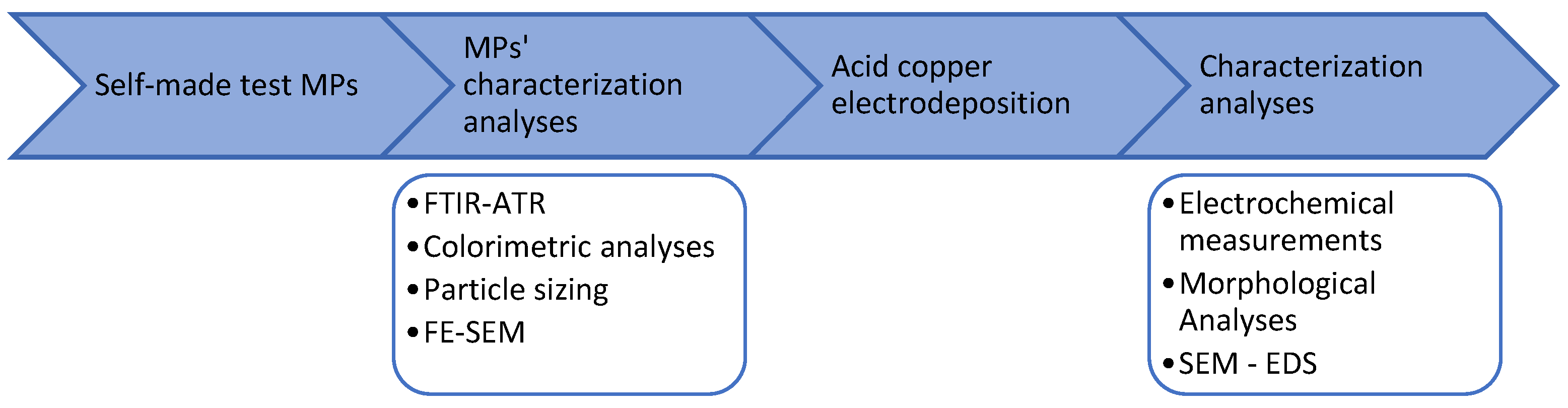
MPs and large MPs, defined as any solid plastic particle insoluble in water with any dimension between 1 µm and 5000 µm (=5 mm) by the U.S. National Oceanic and Atmospheric Administration (NOAA) [1,2] and the European Chemicals Agency (ECHA), as reported in the UNI EN ISO 24187:2023 (ISO/TR 21960:2020 modified) [3], have become ubiquitous environmental concerns. These items, whether formed accidentally from the degradation of larger plastic objects such as car tires and synthetic fabrics or deliberately produced for use in products such as cosmetics, exhibit properties such as high strength, flexibility, light weight, impermeability, and low production cost, which drive their extensive application in a wide range of fields [4]. Once released into the environment, MPs persist indefinitely due to their resistance to biodegradation, contributing to the ongoing pollution of ecosystems [5]. Studies highlight that MPs, with their small size, high porosity, large surface-to-volume ratio, and hydrophobicity, can adsorb a range of pollutants, including heavy metals (e.g., Pb, Cu, Zn, Ni, and Cd), which are often discharged from industrial processes such as electroplating and textiles production [6]. The above-mentioned properties enable MPs to act as carriers, transporting pollutants through aquatic environments [7]. Furthermore, the aging of MPs increases their reactivity, altering their interaction with pollutants [8]. For example, aged nylon MPs exhibit rougher, more irregular surfaces and increased carboxyl functional groups, which boost their affinity for heavy metal ions compared to virgin MPs [9]. Computational simulations corroborate these findings, showing that aged MPs have a greater capacity to adsorb heavy metals, with small, aged MPs demonstrating up to five times the adsorption capacity of their virgin counterparts [10]. Aging can induce the formation of new absorption bands by increasing the polarity of the polymer and inducing a surface charge, thus improving its reactivity [11]. Studies comparing the behaviors of virgin and aged MPs have shown significant differences in their interaction with heavy metals. Characterization techniques such as X-ray photoelectron spectroscopy (XPS) and Fourier Transform Infrared Spectroscopy (FTIR) have revealed that aging processes lead to the formation of hydroxyl and carboxyl groups on nylon MP samples [12]. This results in an increase in negative charge in aqueous solutions, favoring the preferential adsorption of metal ions through specific interactions such as surface complexation with the adsorption sites formed by carboxyl groups on nylon MPs [6]. These primary bonds can be further enhanced by associations with hydroxyl groups, and the adsorption capacity of MPs tends to increase with higher initial concentrations of metal ions. In summary, the interaction mechanisms between MPs and heavy metals are complex and influenced by multiple factors, including the type of polymer, the aging process, and the concentration of metal ions. The interaction mechanisms between heavy metals and MPs are complex and influenced by multiple factors, including the type of polymer, the aging process, and the concentration of metal ions and may involve indirect interactions or direct interactions, including electrostatic interactions or surface complexation, where metals bind to polar or charged MPs through Coulombic forces [13]. It is important to note that the same adsorption and surface reactivity phenomena that make MPs efficient pollutant carriers in environmental systems can also interfere with technological processes. The capability of MPs to adsorb and transport heavy metals, influenced by degradation and aging, presents notable challenges in industrial electrochemical environments, particularly within electroplating baths. MPs may adsorb metal ions or organic additives, altering their local concentration and thus affecting electrodeposition kinetics. Therefore, understanding MP–metal interactions is not only environmentally relevant but also technologically crucial. Currently, there is a growing trend towards polymer metallization, a novel additive manufacturing technique that addresses the limitations of polymers by coating them with a metallic layer that acts as a functional outer skin [14]. However, care must be taken when dealing with the release of MPs during this process. Contaminated baths can lead to severe issues such as surface defects, poor adhesion, corrosion, and inconsistent deposit thicknesses, compromising the quality of electroplated products and increasing the toxicity of industrial waste [15]. In this framework, our work bridges environmental and industrial perspectives: while previous studies have mostly focused on the capacity of MPs to adsorb and transport metals in natural environments, here, we investigate how MPs can affect industrial electroplating systems. Despite these concerns, the current literature lacks comprehensive studies on the behavior of MPs in electroplating environments. To address this gap, our research investigates the factors influencing interaction and adsorption behaviors of heavy metals by MPs, focusing on the metal most studied in laboratory research [16,17,18]—copper ions (Cu2+)—and polymers frequently examined for interaction models, such as polyamides (PA). The behavior of “Nylon PA” MPs in acid copper electroplating baths and their interactions with Cu2+ were evaluated. Acid copper electroplating is one of the most extensively used industrial processes for both electronic and decorative applications [19,20,21,22], enabling the production of compact, leveled, and bright copper coatings with excellent mechanical and aesthetic properties. These characteristics are achieved through the addition of organic and inorganic compounds—commonly referred to as additives—which regulate nucleation, grain growth, and deposit morphology [23,24,25]. Organic additives are traditionally grouped into three functional categories: brighteners, levelers, and suppressors. Brighteners are small, sulfur-containing molecules (e.g., 3-mercapto-1-propanesulfonate (MPS), bis-3-sulfopropyl-disulfide (SPS), and thiourea derivatives [26]) that accelerate copper deposition and refine grain size, often interacting with suppressors [27,28]. Levelers (e.g., benzotriazole derivatives and Janus Green B) adsorb preferentially on high-current-density areas, reducing surface roughness and improving deposit uniformity. Their effectiveness is linked to the presence of aromatic nitrogen atoms, which promote electron-acceptor behavior through low-energy LUMO orbitals [29,30]. Suppressors, typically polyethers such as PEG or PPG, adsorb on the cathodic surface, increasing the overpotential and moderating growth rates, thus promoting uniform, fine-grained deposits [31]. The synergistic interaction among these additives ensures precise control of electro-crystallization and deposit properties. However, the introduction of MPs into electroplating baths, whether through wastewater recirculation, material abrasion, or polymer degradation, could disrupt these delicate equilibria. Due to their adsorption capacity, MPs may interact with metal ions or additives, modifying local concentration and altering the kinetics of electrodeposition. We started by conducting pilot studies using filtration and stereomicroscope analysis to detect the presence of MPs in polluted baths. Then, as described in the flowchart in Figure 1, aged “Nylon PA” MPs were prepared by subjecting virgin PA nylon fabric samples to chemical and mechanical aging processes, followed by spectroscopic and dimensional analyses. These MPs were introduced at varying concentrations into acid copper baths, commonly used in electrochemical research for their stability and prevalence in industry. Depositions on brass cathode plates from these contaminated baths were analyzed for surface morphology, and electrochemical analyses were performed to understand the behavior of MPs and copper ions in solutions. It should be noted that the primary aim of this study was not to optimize or investigate the metallization of polymer substrates. Rather, the focus was to evaluate how the presence of microplastics (MPs) in acid copper electroplating baths affects electrochemical behavior and deposit morphology. Brass was chosen as a model substrate due to its stable, conductive, and reproducible surface, which minimizes experimental variability and ensures that observed effects can be attributed to the presence of MPs in the electrolyte rather than substrate-specific phenomena. From an industrial perspective, this approach remains relevant because electroplating baths may be shared between metallic and polymeric components, and MPs can enter metallic baths through wastewater recirculation, equipment degradation, or cross-contamination. Therefore, understanding the influence of MPs in metallic plating baths is essential for maintaining coating quality and supporting sustainable bath management. In this context, our findings aim to provide critical insights into the impact of MPs on electroplating processes, highlighting the urgent need for effective mitigation strategies.


2. Materials and Methods

2.1. Materials

Raw nylon PA fabric was supplied by Hypertech s.r.l. Commercial acid copper plating bath provided by Valmet Plating s.r.l. (Florence, Italy) was used. The electroplating solution formulation was H2SO4 (96%) 65 g/L (0.66 M), CuSO4 · 5 H2O 210 g/L (0.84 M), and NaCl 2.8 mM (Cl 100 ppm). Furthermore, the bath contains proprietary additives covered by industrial secrecy.
The method for self-production of MPs developed in this work was designed to generate “nylon PA” MPs under conditions that realistically simulate those occurring in electroplating plants. Unlike more conventional preparation techniques such as mechanical grinding [7] or solvent dissolution–recrystallization, where MPs are produced from pristine polymers under controlled laboratory conditions, our approach combines sequential chemical (alkaline and acidic) and mechanical aging steps to reproduce the simultaneous exposure to corrosive, thermal, and hydrodynamic stresses typical of electroplating processes. The procedure begins by selecting and weighing portions of white virgin nylon fabric. To simulate the processes within an electroplating plant, where materials are frequently exposed to washing, electrochemical degreasing, and mechanical treatment, an accelerated aging process was performed. This aging process involves several steps. Initially, the virgin nylon fabric samples are immersed in Milli-Q water and NaOH solution (pH = 11) for basic aging for about 10 min, followed by a rinse in a Milli-Q water washing solution. Then, they are immersed in a 5% H2SO4 solution for acidic aging for about 10 min and then washed again in a Milli-Q water solution. After this chemical aging, the fabric samples are air-dried and shredded into fibers using metal tweezers. These fibers are then dispersed in aqueous solution (Milli-Q water) at different concentrations. To ensure correct shredding of the fibers, they are processed using a glass blender with metal blades to avoid contamination. The resulting solutions, containing the dispersed MPs, are then subjected to thermal and mechanical aging. Specifically, the solutions are stirred with a magnetic stirrer and sonicated at 50 °C for about two hours. This accelerated aging process aims to replicate the combined physical and chemical conditions that MPs would endure in an electroplating production plant [32], ensuring that the experimental results are representative of real-world scenarios. This methodology allows the formation of MPs whose surface chemistry, oxidation state, and morphology closely resemble those expected in actual electroplating environments. Moreover, it avoids the use of organic solvents and external dispersants, reducing contamination risks and maintaining compatibility with subsequent electrochemical tests. Therefore, this procedure bridges the gap between idealized laboratory-prepared microplastics and those generated under industrial conditions, providing a more realistic basis for evaluating their impact within electroplating systems. After the aging process, the acid copper plating bath reagents are added to the dispersions to create electrolyte solutions for electroplating baths contaminated with known concentrations of aged “Nylon PA” MPs.
The concentrations of nylon MPs were selected to span a range of contamination levels, from relatively low to visually high, to explore the potential effects of increasing MP presence on the electroplating process. These values are also consistent with concentrations reported in previous studies on the interaction between microplastics and heavy metals [9].

2.2. Electroplating Bath Solutions

In this study an acidic copper plating bath with the following formulation was used: H2SO4 (96%) 65 g/L (0.66 M), CuSO4 ∙ 5 H2O 210 g/L (0.84 M), and NaCl 2.8 mM (Cl 100 ppm), all supplied by Merck (Merck Life Science S.r.l., Milan, Italy). This formulation was chosen to match the datasheet of the commercial CULTRA PRO (Valmet Plating s.r.l., Florence, Italy) acid copper plating bath. Three specific additives for this electroplating bath were supplied by Valmet Plating s.r.l.: Make Up (MU), Brightener (BR), and Leveler (LEV). Their exact composition is not public due to industrial secrecy, but the three additives listed consist of a mixture of the molecules described in Section 1. The concentration of the additives used in the experiments was selected based on the optimal values indicated in the commercial datasheet by the company: MU 8 mL/L; BR 0.3 mL/L; and LEV 0.5 mL/L. In total, five different acid copper electroplating bath solutions were prepared and named by concentration of dispersed MPs, as listed in Table 1.

2.3. Characterization of MPs

Fourier Transform Infrared Spectroscopy-Attenuated Total Reflectance (FTIR IRAffinity-1S, with ATR analyzer, SHIMADZU, Milan, Italy) analysis was conducted to reveal differences between virgin nylon samples and nylon samples subjected to chemical degradation. Specifically, the samples listed in Table 2 were prepared and characterized to highlight eventual differences arising from the aging treatments.
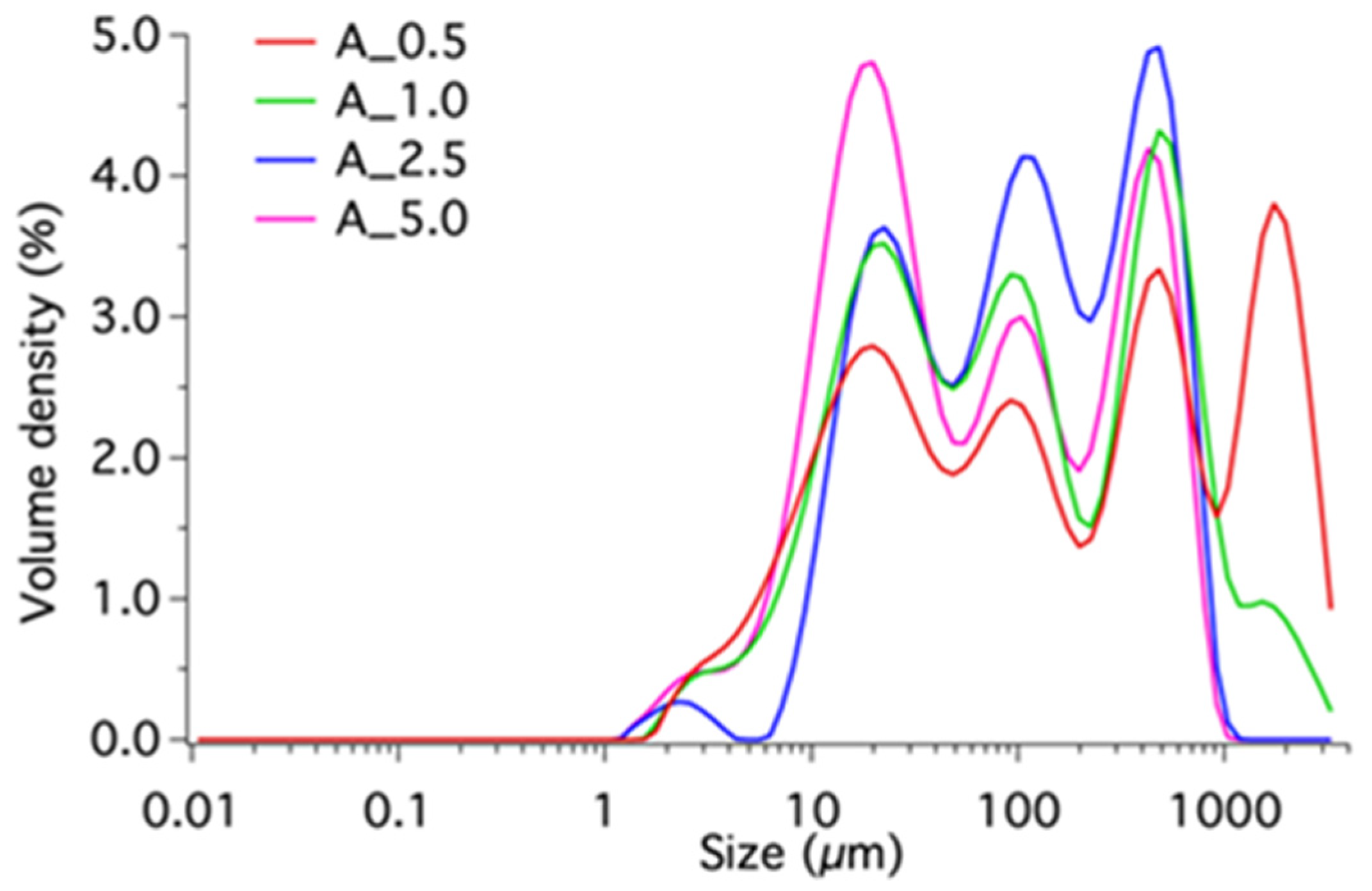
Once the MPs were produced according to the validated self-production method, their belonging to the microscale was verified. A dimensional analysis was performed on the five sample solutions listed in Table 1, by means of laser granulometry analysis, performed using a Mastersizer 3000 laser diffraction particle size analyzer (Malvern Panalytical Ltd., Malvern, UK) equipped with HYDRO SM wet dispersion unit. The experiments were performed on aliquots collected from the dispersions used for the metallization, using water as dispersant and mixing at 1900 rpm. Each reported curve is the average of 10 measurements of 10 s each.
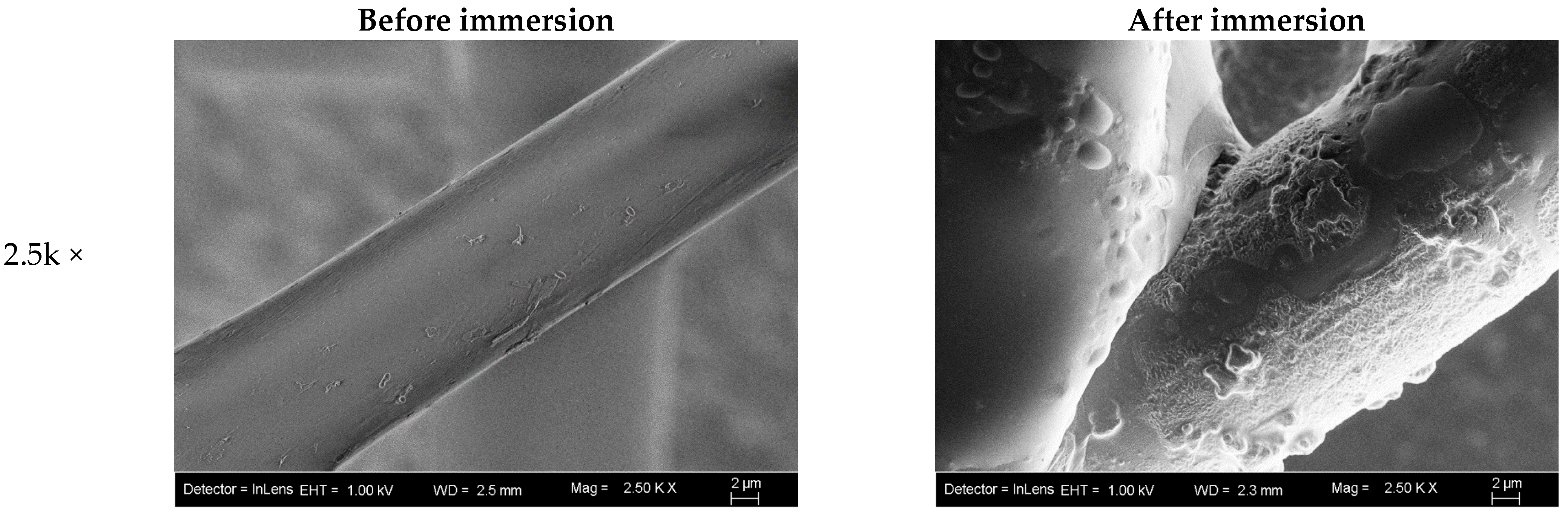
A, virgin nylon, and C, Cu-aged nylon, MPs were also characterized by means of Field Emission Scanning Electron Microscopy (FE-SEM) analysis, using a Zeiss ΣIGMA FE-SEM instrument (Carl Zeiss Microscopy GMbH, Germany). To this purpose, the samples were fixed on aluminum stubs by means of conductive tape, and FE-SEM micrographs were collected at an acceleration voltage of 1 kV using the InLens detector at various magnifications.

2.4. Electrochemical Analysis

Cyclo-voltametric and chrono-amperometric analyses were conducted to investigate the behavior of copper ions in an electrolyte solution containing interfering nylon MPs (Table 1). The electrochemical measurements were performed using a Potentiostat/Galvanostat μAutolab Type III, controlled by Nova 2.1.4 software (Metrohm Autolab B.V., Utrecht, The Netherlands). During the analysis, 50 mL of solution was used with a three-electrode setup: an Ag/AgCl (KCl 3 M) reference electrode (RE); a gold rod counter electrode (CE); and a platinum rotating disk electrode (RDE) with a diameter of 3 mm, which served as a working electrode (WE). The RDE was rotated using an Autolab motor controller and rotator (Metrohm Autolab B.V., Utrecht, The Netherlands).

2.4.1. Cyclic Voltammetry

The samples were subjected to cyclic voltammetry (CV) measurements. CV, is an electrochemical technique in which the electrode potential is varied in a cyclic manner. In this work, CV experiments were performed using a stepwise potential scan, in whichthe electrode potential is varied in a stepwise manner, either increasing or decreasing, rather than following continuous cycles as in traditional cyclic voltammetry. This stepwise approach provides greater time resolution than classical cyclovoltammetry, allowing for more detailed information on the kinetics of electrochemical reactions [33]. The experimental setup included an Ag/AgCl-saturated KCl reference electrode, with all potentials recorded relative to this reference electrode. A gold wire served as the counter-electrode, and a platinum electrode (Metrohm) with a rotating disk (RDE-2) was used as the working electrode. The platinum electrode underwent an electrochemical cleaning process, which involved cleaning on alumina with sonication in Milli-Q water, followed by electrochemical cleaning in sulfuric acid and rinsing in Milli-Q water [24]. Temperature control was maintained at 25 °C using a thermal bath equipped with a temperature control system. The CVs were recorded between −0.25 and +1 V at a scan speed of 50 mV/s. During the potential scan, a small amount of copper was alternately deposited on the electrode and stripped off by anodic dissolution, while the current response reflected the kinetic influence of the organic species present in the bath.

2.4.2. Chronoamperometry

Chrono-amperometric measurements were performed at an applied potential of −0.1 V for a duration of 10 s, during which the current as a function of time was monitored. This applied potential was selected based on the results of the cyclo-voltametric measurements and corresponds to the nucleation stage of copper electrodeposition, located just beyond the onset of copper reduction but before the diffusion-controlled growth region. This allows the analysis of the initial nucleation kinetics and the effect of MPs on the early stages of metal deposition. The experimental setup was identical to that used for the CV measurements. Following each chrono-amperometric measurement, potentiostatic Linear Sweep Voltammetry (LSV) in the anodic direction was conducted by applying a potential between 0.05 V and 0.6 V to strip any material deposited on the electrode surface.

2.5. Electroplating

Deposition parameters expected for electroplating copper baths include a typically low operating temperature, usually between 20 and 25 °C, to ensure good leveling capability, a current density of 1.5–3 A/dm2, and vigorous agitation by insufflated air. Current density and agitation must be balanced to obtain deposits with the desired properties. The following work concerns the copper electrodeposition on brass cathode plates using a volume of 250 mL of baths polluted with nylon MPs. Copper-plated samples were made by applying a current density of 2 A/dm2 for 6 min at room temperature (≈25 °C). The nominal deposition rate of 0.9 μm/min corresponds to the reference value reported in the technical datasheet of the commercial acid copper bath (CULTR PRO and Valmet Plating s.r.l.) used in this work. Three different deposition modes, static without air insufflation, high air insufflation, and low air insufflation mode, were evaluated to assess the influence of agitation on deposition in the presence of MPs. The electrode system consists of a Copper Phosphorus (CuP) anode and the cathode is defined by the brass cathode plate acting as the substrate. The brass cathode plates (Cu 63% and Zn 37%) had dimensions of 35 × 50 × 0.3 mm and were supplied as high-quality polished sheets, featuring one mirror-finished and protected side with very low surface roughness. These properties ensured excellent surface uniformity and reproducibility among all samples. The anode was made of high- purity, oxygen-free copper with a phosphorus content of 0.02–0.08% and was usually coated with a Meraklon (polypropylene textile) bag to prevent the detachment of black films, which are necessary when the process operates at excessively high current densities. Before deposition, the anode and cathode underwent a degreasing process. After the electroplating bath, the copper-plated samples were washed in Milli-Q water and air-dried.
In total 15 copper-plated samples were produced and named, as listed in Table 3.

3. Results and Discussion

3.1. Pilot Study

A pilot study was conducted to verify the actual presence of MPs inside production baths, provided by the companies involved in the metallization of plastic substrates. A volume of 2 L was taken from the tank containing the industrial electroplating bath. The sample was homogenized, and filtration was performed on glass fiber filters. Then, filters were dried and observed with a stereomicroscope. Once the actual presence of polymeric nylon fibers within the bath was ascertained, the MPs were self-produced. The compliance of the MPs was then verified under the Leica S9iper stereomicroscope (Leica, Microsystems, Wetzlar, Germany) [34].

3.2. MP Characterization Analysis

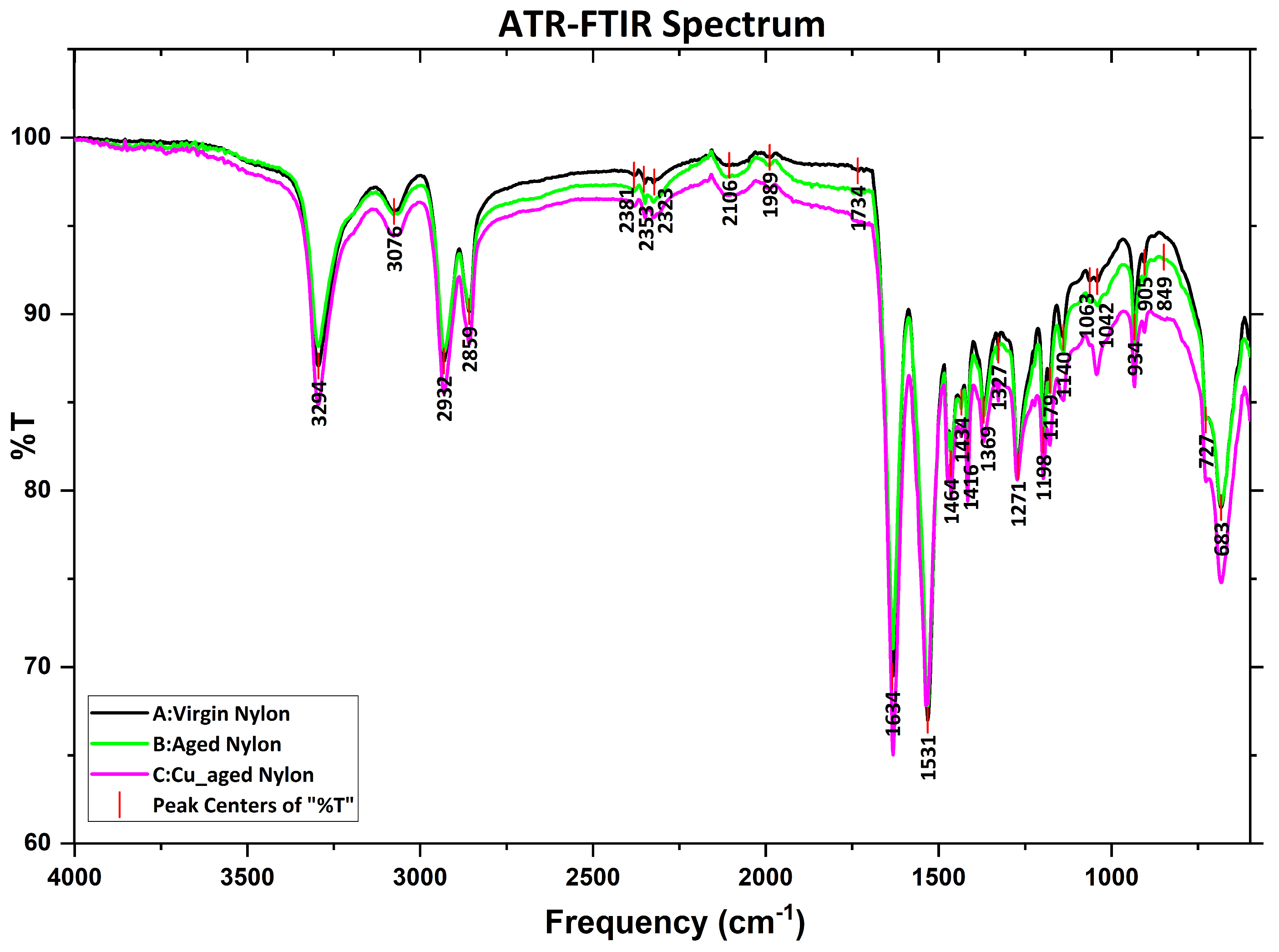
FTIR-ATR analysis conducted on the three nylon samples listed in Table 2 revealed a slight decrease in transmittance intensity with an increasing degree of aging, indicating changes in the chemical structure and surface properties of the MPs. As displayed in Figure 2, the characteristic absorption bands of polyamide are observed at approximately 3294 cm−1 (N–H stretching vibration of amide groups involved in hydrogen bonding), 3076 cm−1 (Fermi resonance of N-H stretching), 2929 and 2859 cm−1 (CH2 asymmetric and symmetric stretching), 1634 cm−1 (amide I, mainly C=O vibration of the amide group), and 1531 cm−1 (amide II band, N–H bending coupled with C–N stretching) [35,36]. Compared with the virgin nylon (sample A), the aged samples (B and C) exhibit a slight decrease in transmittance of the N-H and CH2 stretching and amide I bands attributable to partial hydrolysis, surface oxidation, decreased crystallinity and increased surface disorder, and adsorption of organic additives (leveling agents, brighteners, and make-up) or Cu2+ species on the surface. These spectral variations confirm that chemical and electrochemical aging promote oxidation and structural rearrangements in the polymer backbone of nylon microplastics.
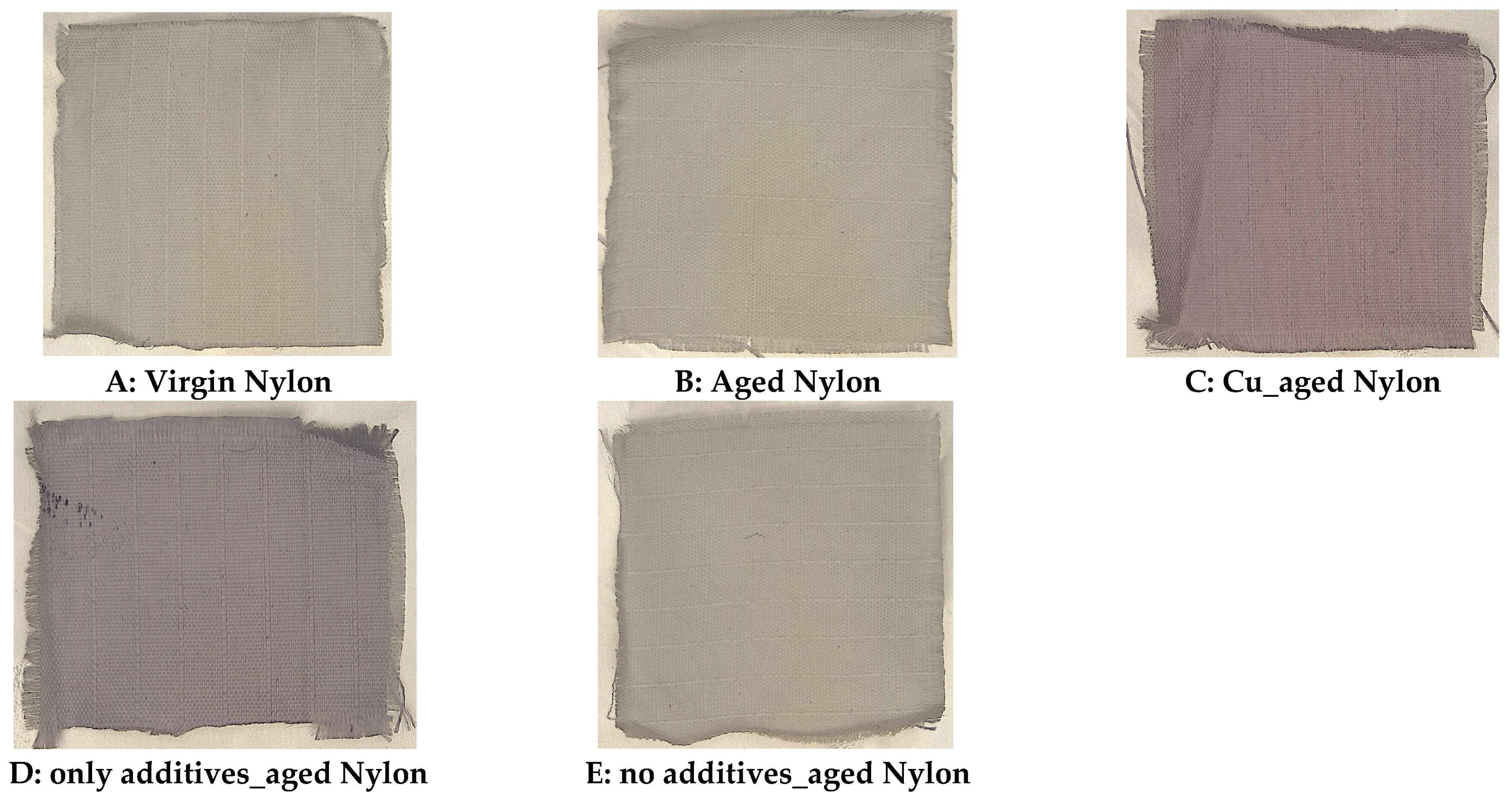
Visually, the third sample “C: Cu_aged Nylon” exhibited a pink color, while the other two samples remained white (Figure 3). This observed color change is consistent with the decrease in transmittance intensity and suggests alterations in the chemical structure and surface properties of MPs as they undergo aging processes. These changes influence their interaction with copper ions in electrochemical baths. For further characterization, two additional virgin nylon fabric samples were chemically aged and then immersed in a sulphate-free acid copper bath (Figure 3—sample D) or in an additive-free acid copper bath (Figure 3—sample E), respectively.
The virgin nylon sample (A) and the aged samples, C, D, and E, reported in Figure 3, were compared by means of colorimetric analysis, based on the CIE-Lab system [37]. This is an internationally recognized color measurement system that was developed by the CIE (Commission Internationale de l’Éclairage) and adopted in 1976. This method offers the advantage of describing colors mathematically, without the intervention of the human eye. The CIE-Lab method expresses color in terms of three-dimensional coordinates: L*, a*, and b*. L* is the brightness; an L* value of 0 means that the sample does not reflect any light, while an L* value of 100 means that all incident light is reflected. The a* coordinate measures the intensity of the red (positive) or green (negative) component of the spectrum, while the b* coordinate represents the intensity of the yellow (positive) or blue (negative) component. The color of a sample can thus be defined by plotting these coordinates as a point in the three-dimensional color space L*a*b*. The color variation was estimated by evaluating ΔE, which is the Euclidean distance between the individual color coordinates of two different samples, which is expressed by the following relationship (Equation (1)). The difference is perceptible to the human eye if this distance is greater than or equal to 3; in addition, two colors can be said to be distinctly different when the ΔE value is greater than 6. The color space coordinates CIE L*a*b*, acquired for the virgin reference sample (L*1 − a*1 − b*1 (A)) and for the samples after treatment (L*2 − a*2 − b*2 (C, D, E)), and the ΔE (Equation (1)) values, representative of the variation in the color space coordinates of each sample following the test, are reported (Table 4).
E = L 1 L 2 2 + a 1 a 2 2 + b 1 b 2 2
A practical classification of the color perception threshold was proposed by Schlapfer (Farbmetrik in der Reproduktionstechnik und im Mehrfarbendruck, 1993):
  • Not visible (ΔE < 0.2);
  • Very small (0.2 < ΔE < 1);
  • Small (1 < ΔE < 3);
  • Medium (3 < ΔE < 6);
  • Large (ΔE > 6).
From the results obtained, it can be stated that the change in color of the samples is largely perceptible to the human eye and is due to the absorption of the additives on the surface of the nylon fibers.
Following these analyses, the self-production method for nylon PA MPs was validated. To this purpose, the MPs were characterized both in terms of dimensions and by means of FE-SEM analyses. The particle size distribution curves of the nylon fibers for the sample investigated in this work and listed in Table 1 are reported in Figure 4 and Table 5. It can be seen that all fibers present dimensions between 1 μm and 3 mm, compatible with the definition of “microplastic” (plastic elements below 5 mm in size [38] or specifically between 1 μm and 5 mm [39]). The absence of fibers longer than 5 mm was also confirmed by the FE-SEM images acquired on the samples. These results confirm that the procedure used here to prepare plastic fibers allowed the obtaining of MPs with some differences between the samples. Overall, all samples display a multi-modal distribution, ascribed to the presence of fibers of different dimensions, with various populations centered around 2.5 μm, 20 μm, 100 μm, and 480 μm. Combining this information with the FE-SEM images reported below, we can further hypothesize that the population centered at about 2.5 µm can probably be ascribed to some impurities or fiber portions, the population centered around 20 µm can be ascribed to the MP diameter, and the other larger distributions arise from the fiber length. Moreover, it appears that when dealing with less concentrated dispersions, longer fibers were also abundant. In fact, many particles of 1–3 mm were present in the A_0.5 sample, while only some fibers of about 1–3 mm can be observed in the A_1.0 sample, and very few items in the same size range were present in the A_2.5 and A_5.0 samples. The presence of agglomerated fibers was excluded as the effect of the mixing velocity and sonication was evaluated in some preliminary experiments not reported here, achieving the same results, suggesting that the fibers were properly dispersed in all samples during the analysis.
The FE-SEM image acquired on B, aged nylon, and C, Cu_aged nylon, fibers are reported in Figure 5 and Figure S1 in the Supplementary Materials. According to the results, the nylon fibers subjected only to thermal, chemical, and mechanical aging (B: aged nylon) display a smooth and homogeneous surface. Their surface morphology is characterized by thin, parallel lines along the longitudinal axis of the fibers, resulting from the extrusion and spinning processes. These markings indicate a high degree of structural regularity and compactness, typical of intact synthetic fibers, even after aging processes. The surface appears free from significant irregularities or discontinuities, confirming the polymer’s structural integrity post-aging. In contrast, C (Cu_aged nylon) fibers display a substantially altered surface. Irregularities and discontinuities are observed, along with signs of surface swelling and chemical degradation. These alterations suggest an interaction between the acid copper solution and the nylon polymer fibers, potentially causing hydrolysis or chemical attack on the polymer chains, thereby degrading the surface structure. The observed swelling and discontinuity phenomena may be due to absorption of the acid solution, which partially compromises the fiber’s compactness and uniformity.

3.3. Electrochemical Measurements

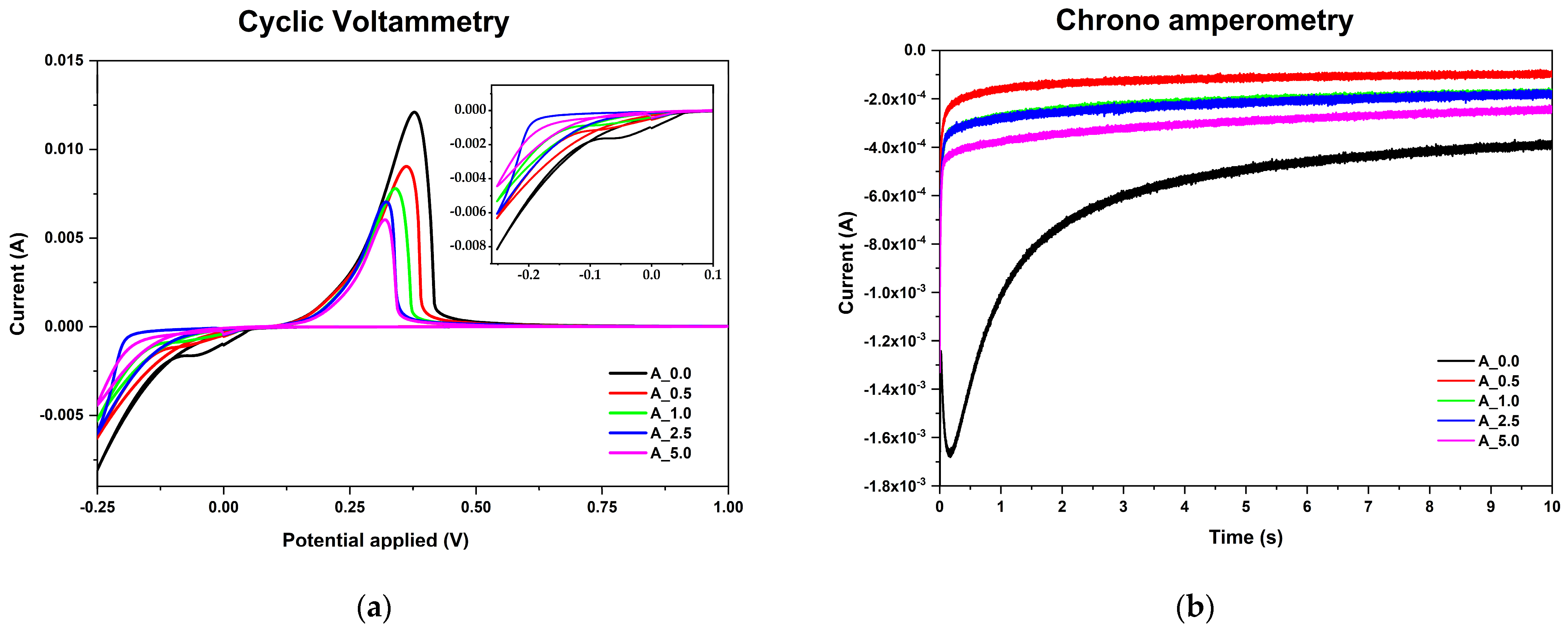
The electroplating bath solutions listed in Table 1 were subjected to electrochemical measurements to assess the behavior of MPs and copper ions within the galvanic bath solution (Figure 6). The current versus potential curves recorded for the samples in static mode are presented (Figure 6a). The graphs reveal a change in the onset reduction potential of copper, specifically a shift to more negative potentials in the presence of MPs compared to the unpolluted bath. Additionally, a shift to more negative potentials is observed in the stripping potential. The current versus time recorded curves (Figure 6b) demonstrate distinct differences between the clean bath sample and those containing MPs, indicating altered nucleation and growth mechanisms. This response resembles that typically induced by suppressor additives, which decrease the plating rate. However, unlike conventional additives (e.g., PEG, Cl), MPs are not expected to act as direct inhibitors. Their apparent suppressive effect is more plausibly attributed to adsorption or interaction with existing additives, modifying their local concentration and consequently influencing the electrodeposition dynamics. As previously evidenced by colorimetric analysis (Section 3.2), nylon MPs exhibit significant adsorption capacity toward organic additive molecules, potentially reducing the local concentration of active additives or complexing species near the electrode surface [40].

3.4. Morphological Analyses

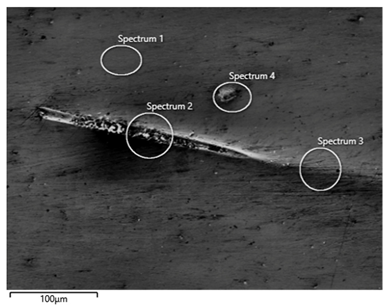
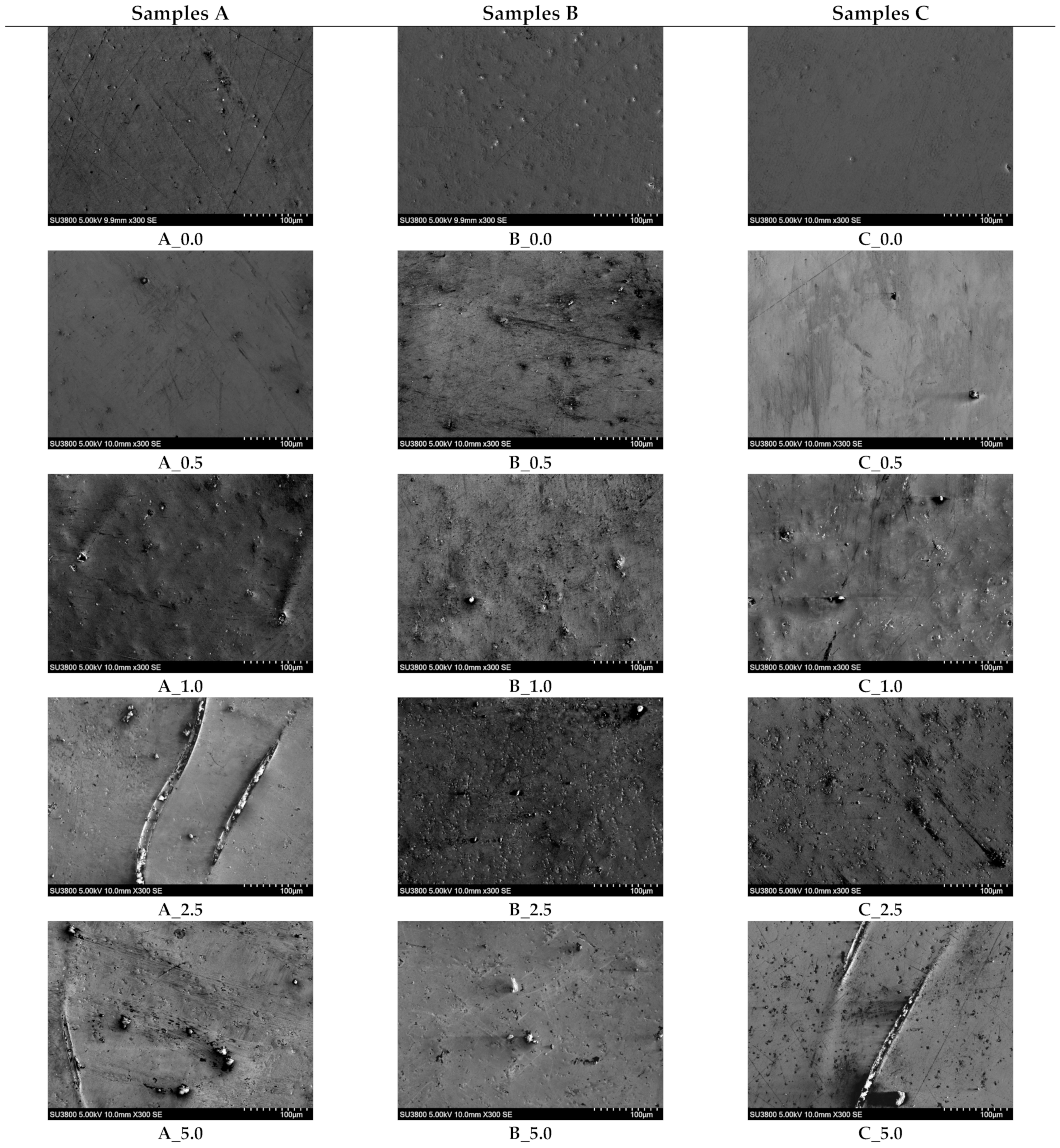
Following the previously described procedure for acid copper electrodeposition on brass cathode plates, the obtained copper-plated samples were analyzed using the semi-quantitative SEM-EDS technique with no additional preparation. Hitachi SU3800 (Tokyo, Japan) SEM equipped with an Oxford Instruments NanoAnalysis Ultim max 40 SDD was used to perform imaging, microanalysis, and sample composition. The SEM analyses were performed at an acceleration voltage (VACC) of 5 kV and 300× magnification (Figure 7). For the copper-plated samples derived from MP-polluted bath depositions, EDS point ID analyses were conducted on a representative central region of the sample surface exhibiting embedded nylon microfibers and surrounding copper matrices to avoid edge effects and ensure uniformity of the examined area. This approach aimed to identify differences in surface composition by scanning multiple areas containing MPs embedded within the deposit. Significant alterations in copper-plated sample morphology were observed across the entire surface. The deposits were granular and inhomogeneous, exhibiting features such as stippling, scratches, burns, and embedded MPs. The results of the EDS analyses are summarized in Table 6. Spectra 1 and 3 correspond to areas of the copper matrix free of visible MPs, while Spectra 2 and 4 were collected directly on or near the encapsulated nylon fibers. The areas associated with the MPs (Spectra 2 and 4) show significantly higher percentages of carbon, oxygen, and nitrogen compared with the surrounding copper matrix, confirming the presence of nylon microplastics within the deposit. Correspondingly, a local decrease in copper content was observed in these regions (from ~97 wt% Cu in the pure matrix to ~86 wt% Cu near the MPs), suggesting that the embedded MPs locally inhibited copper deposition and caused a discontinuous coating structure. As the concentration of MPs increased, surface defects and embedded microfibers became more pronounced, with the deposits displaying a more granular texture and greater opacity. These findings indicate that the presence of nylon MPs affects both the morphology and uniformity of copper electroplating, promoting the formation of defects and compositional heterogeneities on the deposit surface.
Additionally, 3D surface reconstructions of the copper-plated specimens were acquired by means of quadrant-type BSE, and the height and roughness measures of the specimens are listed in the following Table 7 and Figure S3 in the Supplementary Materials. The 3D images were performed using Hitachi map 3D software for TM4000, Rev. 03 (Hitachi High-Tech, Tokyo, Japan & Digital Surf, Besançon, France), a software capable of displaying a 3D image and analyzing a specimen by using four BSE images that are captured by using a 3D capture function and calculating the height of the specimen ([41,42]). The observed fluctuations in surface roughness (Sq) at higher MPs concentrations may result from competing effects: the localized incorporation of MPs promotes surface irregularities and defects, while partial smoothing can occur due to re-deposition phenomena during electrodeposition. Furthermore, the fibrous morphology of nylon MPs, their dimensional heterogeneity, and their variable orientation within the deposit can significantly influence the size and shape of surface asperities, contributing to the dispersion in roughness values. These observations are in good agreement with the dimensional analysis discussed in Section 2.4. Overall, the presence of MPs leads to a general increase in surface roughness and is expected to reduce coating compactness and uniformity, potentially affecting mechanical and corrosion vulnerability.
The copper-plated samples were sectioned at their midpoint to expose the central region of the deposits. Metallographic cross-sections were then prepared according to standard specimen preparation protocols [44]. Approximately 1 cm segments from the central area were first embedded in phenolic resin by a hot mounting process. The embedded specimens were then ground and mechanically polished up to a mirror finish, with the final step carried out with 1 μm of polycrystalline diamond suspension. The cross-sections were examined by scanning electron microscopy coupled with energy dispersive X-ray detector (SEM-EDS). SEM analyses were performed at an acceleration voltage (VACC) of 15 kV and 10 mm of working distance. Backscattered electron (BSE) images of the cross-sections for samples A, B, and C are reported in Figure S2 in the Supplementary Materials.
The deposition rate reported in this study corresponds to the nominal value (0.9 μm/min) provided in the technical datasheet of the commercial acid copper bath. Experimental measurements of coating thickness were performed using semi-quantitative XRF Analysis (BOWMAN BA 100, Bowman Analytics, Inc., Schaumburg, IL, USA) and SEM-EDS analysis of cross-sections, yielding average values of 7.02 ± 1.12 μm and of 6.56 ± 2.62 μm, respectively. These correspond to deposition rates of approximately 1.17 μm/min and 1.09 μm/min, respectively, which are both consistent with the supplier’s specifications.
No significant differences in thickness were detected among the deposits containing MPs. The variability observed among individual samples within each group (A0.0-A5.0 or B0.0-B5.0 or C0.0-C5.0) was considered acceptable and not statistically significant. In contrast, the differences observed between Groups A, B, and C (Table 8) were primarily explained by the presence or absence of air agitation during electrodeposition. Air agitation is known to strongly influence mass transport, current distribution, and local hydrodynamics, resulting in measurable differences in coating thickness between deposition modes A, B, and C [45].
Although cyclic voltammetry data revealed higher overpotentials in the presence of MPs (Section 3.3), electrodeposition was performed in galvanostatic mode at a constant current density, ensuring complete copper reduction. Consequently, the applied potential was automatically adjusted during the electroplating process to maintain the imposed current. According to Faraday’s law of electrolysis, a mass of metal deposited (m) is directly proportional to the total charge (Q = I × t) passed through the electrolyte, as expressed by the following:
m =   M   × Q n   × F
where M is the molar mass of copper (63.55 g/mol), n = 2 is the number of electrons involved in the Cu2+/Cu0 reduction, and F is the Faraday constant (96,485 C/mol). Since all experiments were performed at the same current density and deposition time, the total charge was nearly identical. Therefore, the mass and thickness of the deposited copper layers remained nearly constant across all samples, despite variations in overpotential due to the presence of MPs.

4. Conclusions

The present study aimed to investigate the effects of nylon PA MPs in electrochemical baths and their interaction with copper ions (Cu2+). MPs represent a challenging problem in the electroplating industry since they could modify the macroscopic appearance of manufactured products, affecting the conformity parameters set for production lines. A preliminary pilot study verified the presence of contaminating MPs in galvanic production baths by filtration and stereomicroscopic analysis. Considering that standardized pollutants are needed for further investigations, a methodology was developed for the self-production of nylon PA MPs. Accordingly, virgin nylon fabric was artificially aged in simulated electrochemical conditions relative to those occurring in production facilities and then reduced to less than 5 mm long fibers. Relevant differences between aged samples and virgin nylon were highlighted by means of FTIR-ATR spectroscopy and colorimetric analyses. Notably, samples treated in an acidic copper bath solution developed a characteristic pink/violet coloration, showing the additives were absorbed onto nylon fiber surfaces. Granulometric analyses confirmed that the obtained MPs were within the defined size range for MPs, while FE-SEM analysis provided evidence of the effect of the Cu electroplating bath on the fibers’ morphology. Once assured of MP conformity, acid copper bath solutions with increased concentrations of MPs were prepared. Electrochemical analyses have been conducted to see the behavior of MPs and copper ions in solution. Voltametric measurements showed a shift in copper reduction, stripping potentials toward negative values in the presence of MPs. Chronoamperometric measurements showed significant differences in curves obtained for clean baths compared with MP-contaminated baths, which would indicate that the MPs are acting similarly to the suppressor additives by changing the nucleation and growth mechanism. It is highly likely that exposure to the acidic copper bath led to chemical reactions with the amide groups of nylon, causing increased deterioration of the fiber surface structure following previous aging treatments. These interactions indicate the degradation of the polymer microstructure, as evidenced by the presence of deteriorated areas and a loss of the surface’s initial regularity. The polluted acidic copper baths were deposited on brass cathode plates, and the resulting deposits were analyzed through the surface. It was observed that with the increase in MP concentration, the morphological features of copper deposits changed with respect to the granularity, surface roughness, and embedded MPs. Overall, SEM-EDS analyses of the cross-sections confirmed that, despite the presence of MPs, the copper layer thickness remained largely consistent across all deposition modes. However, morphological features, including local irregularities, embedded particles, and surface heterogeneity, varied depending on agitation conditions and the presence of MPs. These findings support the notion that, under galvanostatic conditions, MPs primarily influence the microstructure and surface morphology of the deposits rather than their overall thickness, providing insights that are relevant for optimizing plating processes in contaminated electrolytes. The present research paves the way towards an understanding of the role of MPs in copper electroplating baths and their interaction with copper ions. The results presented here outline new parameters that must be considered for optimizing electroplating production processes to consistently produce high-quality manufactured articles.

Supplementary Materials

The following supporting information can be downloaded at https://www.mdpi.com/article/10.3390/microplastics5010007/s1. Figure S1: FE-SEM micrographs of nylon MPs fibers before and after immersion in acid copper bath solution; Figure S2: backscattered electron (BSE) micrographs of the metallographic cross-sections of samples A, B, and C acquired by SEM-EDS and average coating thickness measured for all samples; Figure S3: surface roughness analysis of A-B-C samples.

Author Contributions

Investigation, C.G., M.T. and L.S.; resources, M.I.; writing—original draft preparation, C.G. and M.T.; writing—review and editing, C.G., W.G., M.T., M.B., A.C. and T.M.; supervision, W.G., M.B., A.C., T.M. and M.I.; project administration, A.C., T.M. and M.I.; funding acquisition, M.B. and M.I. All authors have read and agreed to the published version of the manuscript.

Funding

Project funded under the National Recovery and Resilience Plan (NRRP), Mission 4 Component 2 Investment 1.3—Call for tender No. 341 of 15 March 2022 of Italian Ministry of University and Research (MUR) funded by the European Union—NextGenerationEU -Project code PE_00000004, CUP B83C22004890007, Project title “3A-ITALY—Made-in-Italy circolare e sostenibile”.

Institutional Review Board Statement

Not applicable.

Informed Consent Statement

Not applicable.

Data Availability Statement

The original contributions presented in this study are included in the article/Supplementary Materials. Further inquiries can be directed to the corresponding author(s).

Acknowledgments

The authors acknowledge MUR-Dipartimenti di Eccellenza 2023–2027 (DICUS 2.0) at the Department of Chemistry “Ugo Schiff” of the University of Florence.

Conflicts of Interest

The authors declare no conflicts of interest.

References

  1. Arthur, C.; Baker, J.E.; Bamaford, H. Proceedings of the International Research Workshop on the Occurrence, Effects, and Fate of Microplastic Marine Debris, 9–11 September 2008, University of Washington Tacoma, Tacoma, WA, USA; NOAA Technical Memorandum NOS-OR&R-30; National Oceanic and Atmospheric Administration: Washington, DC, USA, 2009. [Google Scholar]
  2. Wood, K.M.; Box, C.; Neusner, G.; Herring, C. Report on Microfiber Pollution; Interagency Marine Debris Coordinating Committee (IMDCC): Washington, DC, USA, 2024; p. 149. Available online: https://marinedebris.noaa.gov/interagency-marine-debris-coordinating-committee-reports/interagency-marine-debris-coordinating-committee-report-microfiber-pollution (accessed on 17 December 2025).
  3. European Chemicals Agency (ECHA). Annex XVII to Reach—Conditions of Restriction: Synthetic Polymer Microparticles; European Chemicals Agency: Helsinki, Finland, 2023; Available online: https://echa.europa.eu/documents/10162/5469015c-525b-ec20-3bae-cbbc2bac7fb6 (accessed on 17 December 2025).
  4. PlasticsEurope. Plastics—The Facts 2019: An Analysis of European Plastics Production, Demand and Waste Data; PlasticsEurope AISBL: Brussels, Belgium, 2019; Available online: https://plasticseurope.org/knowledge-hub/plastics-the-facts-2019/ (accessed on 17 December 2025).
  5. Loganathan, Y.; Kizhakedathil, M.P.J. A Review on Microplastics—An Indelible Ubiquitous Pollutant. Biointerface Res. Appl. Chem. 2022, 13, 126. [Google Scholar] [CrossRef]
  6. Cao, Y.; Zhao, M.; Ma, X.; Song, Y.; Zuo, S.; Li, H.; Deng, W. A critical review on the interactions of microplastics with heavy metals: Mechanism and their combined effect on organisms and humans. Sci. Total Environ. 2021, 788, 147620. [Google Scholar] [CrossRef]
  7. Mozafarjalali, M.; Hamidian, A.H.; Sayadi, M.H. Microplastics as carriers of iron and copper nanoparticles in aqueous solution. Chemosphere 2023, 324, 138332. [Google Scholar] [CrossRef] [PubMed]
  8. Liu, P.; Qian, L.; Wang, H.; Zhan, X.; Lu, K.; Gu, C.; Gao, S. New Insights into the Aging Behavior of Microplastics Accelerated by Advanced Oxidation Processes. Environ. Sci. Technol. 2019, 53, 3579–3588. [Google Scholar] [CrossRef] [PubMed]
  9. Tang, S.; Lin, L.; Wang, X.; Feng, A.; Yu, A. Pb(II) uptake onto nylon microplastics: Interaction mechanism and adsorption performance. J. Hazard. Mater. 2020, 386, 121960. [Google Scholar] [CrossRef] [PubMed]
  10. Guo, X.; Wang, J. Projecting the sorption capacity of heavy metal ions onto microplastics in global aquatic environments using artificial neural networks. J. Hazard. Mater. 2021, 402, 123709. [Google Scholar] [CrossRef]
  11. Bao, R.; Fu, D.; Fan, Z.; Peng, X.; Peng, L. Aging of microplastics and their role as vector for copper in aqueous solution. Gondwana Res. 2022, 108, 81–90. [Google Scholar] [CrossRef]
  12. Bernstein, R.; Derzon, D.K.; Gillen, K.T. Nylon 6.6 accelerated aging studies: Thermal–oxidative degradation and its interaction with hydrolysis. Polym. Degrad. Stab. 2005, 88, 480–488. [Google Scholar] [CrossRef]
  13. Fu, Q.; Tan, X.; Ye, S.; Ma, L.; Gu, Y.; Zhang, P.; Chen, Q.; Yang, Y.; Tang, Y. Mechanism analysis of heavy metal lead captured by natural-aged microplastics. Chemosphere 2021, 270, 128624. [Google Scholar] [CrossRef]
  14. Melentiev, R.; Yudhanto, A.; Tao, R.; Vuchkov, T.; Lubineau, G. Metallization of polymers and composites: State-of-the-art approaches. Mater. Des. 2022, 221, 110958. [Google Scholar] [CrossRef]
  15. Giurlani, W.; Pappaianni, G.; Biffoli, F.; Mariani, E.; Bonechi, M.; Giliberti, L.; Tufarelli, M.; Franzo, P.; Cianfanelli, E.; Innocenti, M. What Is the Current State of Sustainability in the Decorative Electroplating Industry? A Close Look at New Practices and Advances. Sustainability 2024, 16, 5821. [Google Scholar] [CrossRef]
  16. Naqash, N.; Prakash, S.; Kapoor, D.; Singh, R. Interaction of freshwater microplastics with biota and heavy metals: A review. Environ. Chem. Lett. 2020, 18, 1813–1824. [Google Scholar] [CrossRef]
  17. Tang, S.; Lin, L.; Wang, X.; Yu, A.; Sun, X. Interfacial interactions between collected nylon microplastics and three divalent metal ions (Cu(II), Ni(II), Zn(II)) in aqueous solutions. J. Hazard. Mater. 2021, 403, 123548. [Google Scholar] [CrossRef] [PubMed]
  18. Wang, L.; Guo, C.; Qian, Q.; Lang, D.; Wu, R.; Abliz, S.; Wang, W.; Wang, J. Adsorption behavior of UV aged microplastics on the heavy metals Pb(II) and Cu(II) in aqueous solutions. Chemosphere 2023, 313, 137439. [Google Scholar] [CrossRef]
  19. Mariani, E.; Giurlani, W.; Bonechi, M.; Dell’Aquila, V.; Innocenti, M. A systematic study of pulse and pulse reverse plating on acid copper bath for decorative and functional applications. Sci. Rep. 2022, 12, 18175. [Google Scholar] [CrossRef] [PubMed]
  20. Giurlani, W.; Zangari, G.; Gambinossi, F.; Passaponti, M.; Salvietti, E.; Di Benedetto, F.; Caporali, S.; Innocenti, M. Electroplating for Decorative Applications: Recent Trends in Research and Development. Coatings 2018, 8, 260. [Google Scholar] [CrossRef]
  21. Giurlani, W.; Biffoli, F.; Fei, L.; Pizzetti, F.; Bonechi, M.; Fontanesi, C.; Innocenti, M. Analytic procedure for the evaluation of copper intermetallic diffusion in electroplated gold coatings with energy dispersive X-ray microanalysis. Anal. Chim. Acta 2023, 1269, 341428. [Google Scholar] [CrossRef]
  22. Biffoli, F.; Giurlani, W.; Vorobyova, M.; Maccioni, I.; Giovani, C.; Salvi, M.; Cianfanelli, E.; Pagliai, M.; Innocenti, M. Tailoring barrier layers design for haute couture through X-ray microanalysis: Insights and guidelines. Heliyon 2024, 10, e32147. [Google Scholar] [CrossRef]
  23. Lai, Z.; Wang, S.; Wang, C.; Hong, Y.; Zhou, G.; Chen, Y.; He, W.; Peng, Y.; Xiao, D. A comparison of typical additives for copper electroplating based on theoretical computation. Comput. Mater. Sci. 2018, 147, 95–102. [Google Scholar] [CrossRef]
  24. Verrucchi, M.; Comparini, A.; Bonechi, M.; Del Pace, I.; Zangari, G.; Giurlani, W.; Innocenti, M. Electrochemical spectroscopic analysis of additives in copper plating baths by DRT and multivariate approach. J. Electroanal. Chem. 2024, 954, 118045. [Google Scholar] [CrossRef]
  25. Guo, L.; Li, S.; He, Z.; Fu, Y.; Qiu, F.; Liu, R.; Yang, G. Electroplated Copper Additives for Advanced Packaging: A Review. ACS Omega 2024, 9, 20637–20647. [Google Scholar] [CrossRef]
  26. Xiang, J.; Qin, Z.; Xu, Y.; Zeng, C.; Yang, W.; Tian, L.; Ruan, H. Effect of Cu(I) on electrochemical behavior and surface morphology of electrodeposited copper for different accelerators. Ionics 2023, 29, 1487–1495. [Google Scholar] [CrossRef]
  27. Bogomolov, K.; Grishina, E.; Ein-Eli, Y. Sulfonate compounds embraced from acid copper electroplating baths as innovative additives for alkaline Zn batteries. J. Mater. Chem. A 2023, 11, 24099–24113. [Google Scholar] [CrossRef]
  28. Wang, Y.-H.; Senthil Raja, D.; Tsai, D.-H. Quantifying thiolated chemical additives for copper electroplating process. Anal. Chim. Acta 2024, 1307, 342608. [Google Scholar] [CrossRef] [PubMed]
  29. Xiao, L.; Li, Q.; Zeng, H.; Tian, L.; Huang, X.; Xie, J.; Zhang, H.; He, W.; Liang, K.; Huang, Q.; et al. Investigation of azathioprine and its local-structure molecules as levelers for through-holes copper electroplating. Surf. Interfaces 2024, 53, 105073. [Google Scholar] [CrossRef]
  30. Wang, Z.-Y.; Jin, L.; Yang, J.-Q.; Li, W.-Q.; Wu, D.-Y.; Zhan, D.; Yang, F.-Z.; Sun, S.-G. A transfer-adsorption model for forward understanding the synergistic effects of additives in through-hole uniform copper thickening. J. Electroanal. Chem. 2023, 936, 117373. [Google Scholar] [CrossRef]
  31. Han, C.; Zhai, Y.; Chen, Y.; Li, J.; Cai, W.; Zhou, Z.; Hong, Y.; Wang, C.; Zhou, G. Alkyl-terminated PEG suppressors for copper electroplating and their hydrophilic and hydrophobic properties. Surf. Coat. Technol. 2024, 484, 130848. [Google Scholar] [CrossRef]
  32. Fragassa, C.; Zucchelli, A. Trattamenti e Finiture. 2011. Available online: https://www.tecnichenuove.com/libri/manuale-di-trattamenti-e-finiture (accessed on 17 December 2025).
  33. Metrohm Autolab B.V. NOVA User Manual, version 2.1.2; Metrohm Autolab B.V.: Utrecht, The Netherlands, 2017. Available online: www.metrohm-autolab.com (accessed on 17 December 2025).
  34. Woo, H.; Seo, K.; Choi, Y.; Kim, J.; Tanaka, M.; Lee, K.; Choi, J. Methods of Analyzing Microsized Plastics in the Environment. Appl. Sci. 2021, 11, 10640. [Google Scholar] [CrossRef]
  35. Tech, J.E.T. A Combination of Waste Biomass Activated Carbon and Nylon Nanofiber for Removal of Triclosan from Aqueous Solutions. J. Environ. Treat. Tech. 2020, 8, 1036–1045. [Google Scholar] [CrossRef]
  36. Dias, F.G.d.A.; Veiga, A.G.; da C.P. Gomes, A.P.A.; Da Costa, M.F.; Rocco, M.L.M. Using XPS and FTIR spectroscopies to investigate polyamide 11 degradation on aging flexible risers. Polym. Degrad. Stab. 2022, 195, 109787. [Google Scholar] [CrossRef]
  37. Agarwal, D.P.; Raykhtsaum, G.; Technology, G. Color technology for jewelry alloy applications. In Proceedings of the Santa Fe Symposium on Jewelry Manufacturing, Santa Fe, NM, USA, 21–24 September 1988. [Google Scholar]
  38. Angnunavuri, P.N.; Attiogbe, F.; Mensah, B. Consideration of emerging environmental contaminants in Africa: Review of occurrence, formation, fate, and toxicity of plastic particles. Sci. Afr. 2020, 9, e00546. [Google Scholar] [CrossRef]
  39. Horton, A.A.; Walton, A.; Spurgeon, D.J.; Lahive, E.; Svendsen, C. Microplastics in freshwater and terrestrial environments: Evaluating the current understanding to identify the knowledge gaps and future research priorities. Sci. Total Environ. 2017, 586, 127–141. [Google Scholar] [CrossRef]
  40. Biffoli, F.; Cartechini, I.; Riccardi, M.; Giurlani, W.; Bonechi, M.; Bazzicalupi, C.; Fontanesi, C.; Pagliai, M.; Innocenti, M. Clarifying the mechanism of actions of suppressor, brightener and sodium chloride in acid copper electrodeposition: A multidisciplinary approach for a many variable problem. J. Electroanal. Chem. 2024, 972, 118617. [Google Scholar] [CrossRef]
  41. Hemmleb, M.; Bettge, D.; Driehorst, I.; Berger, D. 3D surface reconstruction with segmented BSE detector: New improvements and application for fracture analysis in SEM. In European Microscopy Congress 2016: Proceedings; European Microscopy Society, Ed.; Wiley: Hoboken, NJ, USA, 2016; pp. 489–490. ISBN 978-3-527-34297-6. [Google Scholar]
  42. Nagalingam, A.P.; Vohra, M.S.; Kapur, P.; Yeo, S.H. Effect of Cut-Off, Evaluation Length, and Measurement Area in Profile and Areal Surface Texture Characterization of As-Built Metal Additive Manufactured Components. Appl. Sci. 2021, 11, 5089. [Google Scholar] [CrossRef]
  43. ISO 25178-2; Geometrical Product Specifications (GPS)—Surface Texture: Areal Part 2: Terms, Definitions and Surface Texture Parameters. International Organization for Standardization: Geneva, Switzerland, 2021. Available online: https://www.iso.org/obp/ui/#iso:std:iso:25178:-2:ed-2:v1:en (accessed on 17 December 2025).
  44. Giurlani, W.; Berretti, E.; Innocenti, M.; Lavacchi, A. Measuring the Thickness of Metal Coatings: A Review of the Methods. Coatings 2020, 10, 1211. [Google Scholar] [CrossRef]
  45. Ward, M.; Roberts, C.J.; Gabe, D.R. Effects of air agitation on conductivity in acid copper electrodeposition solutions. J. Appl. Electrochem. 2000, 30, 457–466. [Google Scholar] [CrossRef]
Figure 1. Flowchart of research methodology.
Microplastics 05 00007 g001
Figure 2. FTIR–ATR analysis of A: virgin nylon; B: aged nylon; and C: Cu_aged nylon test samples.
Microplastics 05 00007 g002
Figure 3. Images of nylon fabric samples before and after aging processes: (A) virgin nylon, (B) aged nylon, (C) Cu_aged nylon, (D) only additives_aged nylon, and (E) no additives_aged nylon.
Microplastics 05 00007 g003
Figure 4. Size Analysis of A_0.5, A_1.0, A_2.5, and A_5.0 samples.
Microplastics 05 00007 g004
Figure 5. FE-SEM analysis of nylon MP fibers before and after immersion in acid copper bath solution.
Microplastics 05 00007 g005
Figure 6. Electrochemical measurements for test samples. (a) current vs. potential recorded curves for A_0.0, A_0.5, A_1.0, A_2.5, and A_5.0 samples in static mode, (b) current vs. time recorded curves for A_0.0, A_0.5, A_1.0, A_2.5, and A_5.0 samples in static mode.
Microplastics 05 00007 g006
Figure 7. SEM (SE) images acquired for A, B, and C test samples.
Microplastics 05 00007 g007
Table 1. Five sample solutions by concentration of dispersed MPs.
SampleA_0.0A_0.5A_1.0A_2.5A_5.0
MPs
concentration
0 g/L0.5 g/L1.0 g/L2.5 g/L5.0 g/L
H2SO4 (96%)65 g/L65 g/L65 g/L65 g/L65 g/L
CuSO4 ∙ 5 H2O210 g/L210 g/L210 g/L210 g/L210 g/L
Cl100 ppm100 ppm100 ppm100 ppm100 ppm
MU8 mL/L8 mL/L8 mL/L8 mL/L8 mL/L
BRE0.3 mL/L0.3 mL/L0.3 mL/L0.3 mL/L0.3 mL/L
LEV0.5 mL/L0.5 mL/L0.5 mL/L0.5 mL/L0.5 mL/L
Table 2. FTIR-ATR samples for fabric characterization analysis.
SampleDescription
A: Virgin NylonUntreated virgin nylon sample
B: Aged NylonNylon sample subjected to chemical aging by successive immersion in alkaline and acid bath and then immersion in Milli-Q H2O and subjected to thermal and mechanical aging by sonication at 50 °C.
C: Cu_aged NylonNylon sample subjected to chemical aging by successive immersion in alkaline and acid bath and subsequently immersed in acid copper electroplating bath
Table 3. List of 15 copper-plated samples grouped by deposition mode and concentration of dispersed MPs. Group A corresponds to static conditions (no air insufflation), Group B to high air insufflation, and Group C to low air insufflation deposition mode. Within each group, the MP concentration was varied from 0.0 to 5.0 g/L to investigate the combined effect of agitation and MP content on copper electrodeposition.
Group ASampleA_0.0A_0.5A_1.0A_2.5A_5.0
MPs (g/L)0.00.51.02.55.0
Deposition modeStatic mode: no insufflation shaking
Group BSampleB_0.0B_0.5B_1.0B_2.5B_5.0
MPs (g/L)0.00.51.02.55.0
Deposition modeHigh air insufflation shaking
Group CSampleC_0.0C_0.5C_1.0C_2.5C_5.0
MPs (g/L)0.00.51.02.55.0
Deposition modeLow air insufflation shaking
Table 4. Colorimetric analysis of nylon aged samples.
Sample namePseudo Color (D65)L* (D65)a* (D65)b* (D65)ΔE
A: Virgin Nylon 81.58−0.82−1.46reference
C: Cu_aged Nylon 76.542.41−3.996.5
D: only additives_aged Nylon 75.11−0.17−5.147.5
E: no additives_aged Nylon 82.02−0.86−1.330.5
Table 5. Particle size distribution parameters (d10, d50, d90) of A samples.
Sampled10 (μm)d50 (μm)d90 (μm)
A_0.510.21441860
A_1.011.589.8741
A_2.516.3109532
A_5.09.852478
Table 6. EDS analysis for A, B, and C test samples, together with an SEM image displaying the point where the EDS spectra were acquired. Spectra 1 and 3 correspond to the area of the copper matrix. Spectra 2 and 4 correspond to the area on or near the MPs embedded within the copper matrix.
Microplastics 05 00007 i001
Element
wt% Cwt% Nwt% Owt% Cu
Spectrum 12.11 ± 0.080.08 ± 0.070.50 ± 0.0497.31 ± 0.11
Spectrum 211.69 ± 0.110.10 ± 0.072.14 ± 0.0586.08 ± 0.14
Spectrum 33.90 ± 0.090.00 ± 0.070.76 ± 0.0495.33 ± 0.12
Spectrum 44.56 ± 0.090.04 ± 0.070.93 ± 0.0594.46 ± 0.12
Table 7. Surface roughness analysis (Sq) of A, B, and C samples measured according to ISO 25178 [43].
MPs (g/L)Samples A (µm)Samples B (µm)Samples C (µm)
0.00.063810.13760.09245
0.50.09660.080540.1107
1.00.50880.47320.5821
2.51.1660.18410.2041
5.00.76840.57241.211
Table 8. Average coating thickness and standard deviation measured from metallographic cross-sections for the three deposition groups (A, B, C).
Group AGroup BGroup C
8.83 ± 1.19 μm6.25 ± 3.10 μm4.59 ± 1.24 μm
Disclaimer/Publisher’s Note: The statements, opinions and data contained in all publications are solely those of the individual author(s) and contributor(s) and not of MDPI and/or the editor(s). MDPI and/or the editor(s) disclaim responsibility for any injury to people or property resulting from any ideas, methods, instructions or products referred to in the content.