Review

Research Progress on the Effects of Combined Microplastics and Cadmium Pollution on Plants

1
College of Ecology and Environment, Xinjiang University, Urumqi 830046, China
2
Key Laboratory of Oasis Ecology, Xinjiang University, Urumqi 830046, China
*
Author to whom correspondence should be addressed.
These authors contributed equally to this work.
Microplastics 2026, 5(1), 16; https://doi.org/10.3390/microplastics5010016
Submission received: 8 November 2025 / Revised: 17 December 2025 / Accepted: 16 January 2026 / Published: 21 January 2026

Abstract

The toxic effects of soil heavy metals and microplastics on plants have been extensively documented, with some researchers having conducted studies exploring the combination of these two factors. Preliminary findings indicate that their combined action can “reduce biomass, exacerbate oxidative stress, and inhibit photosynthesis,” and the potential mechanisms of this combined toxicity are currently being explored. However, these combined effects remain unclear, with conflicting conclusions across studies. Research subjects are relatively fragmented, and systematic summaries are lacking. This paper systematically reviews current research findings on the combined toxic effects of microplastics and Cd on plants, specifically focusing on the following factors: (1) the mechanisms and influencing factors of Cd adsorption by microplastics: electrostatic adsorption is the primary mechanism, and soil environmental factors are significant influencers; (2) microplastics’ altering of the available Cd content in soil: soil environmental conditions can be modified to increase or decrease available Cd concentrations; (3) The “synergistic or antagonistic” toxic effects of microplastics and Cd on plants. Future research directions warranting in-depth investigation are also identified in this study.

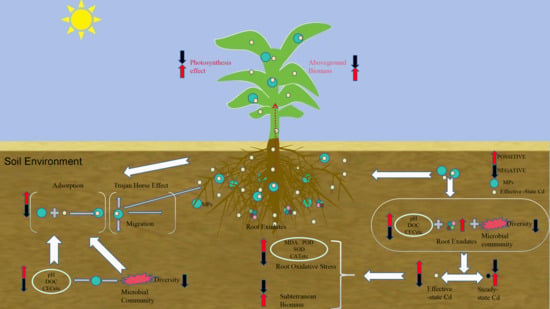
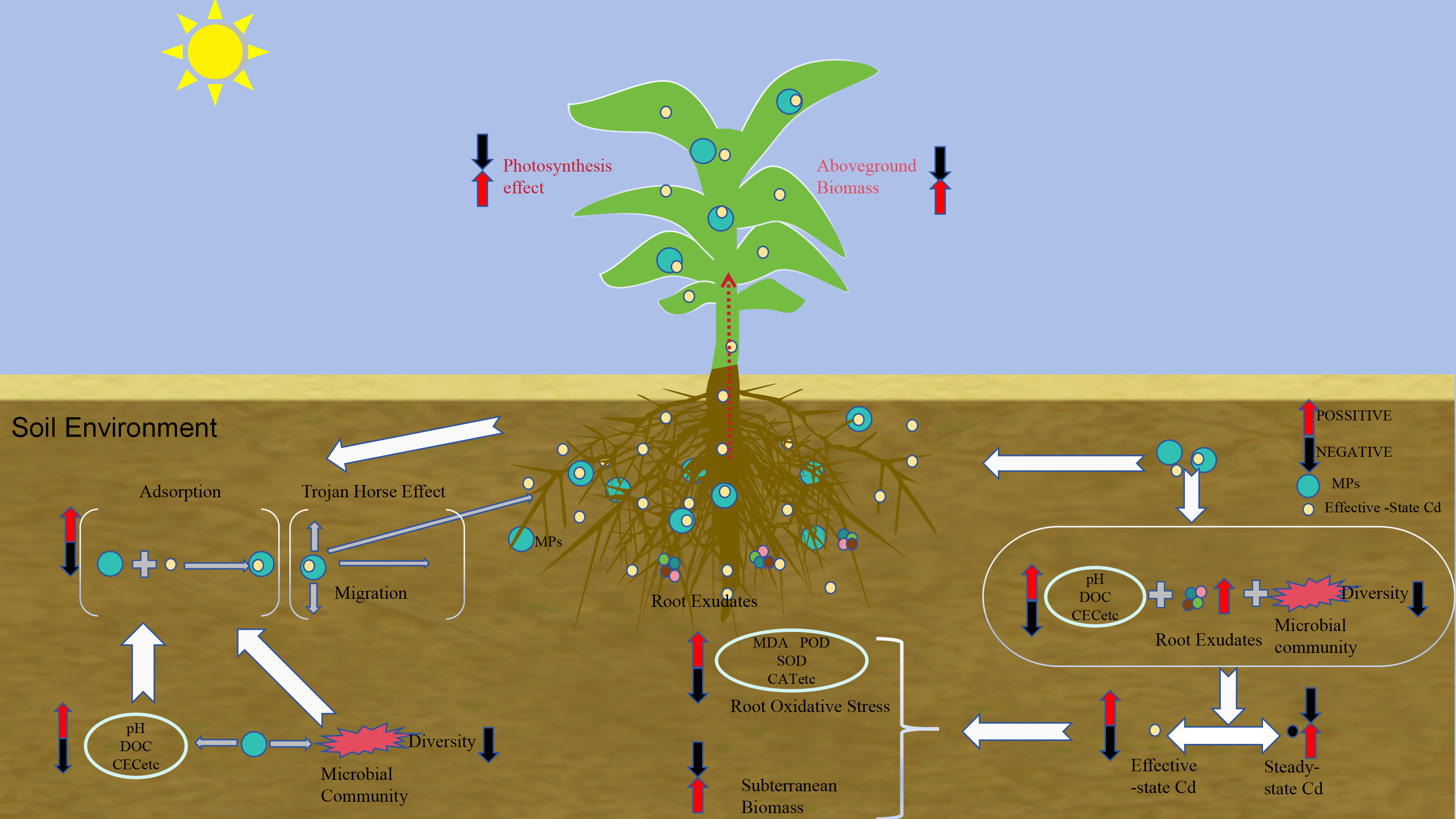
Graphical Abstract

1. Introduction

Microplastics (MPs) are plastic particles, films, and fibres measuring less than 5 millimetres in diameter [1]. MPs are a class of organic polymers primarily composed of carbon and hydrogen elements, exhibiting stable chemical properties and encompassing a variety of materials including polyethylene (PE), polypropylene (PP), polystyrene (PS) and polyvinyl chloride (PVC), amongst others [2]. Reports indicate that microplastics’ abundance in terrestrial environments is 4 to 23 times higher than in marine sediments, with annual microplastic inputs into agricultural soils far exceeding those entering the oceans [3]. The main sources of MPs in soil environments include residues of agricultural plastic mulch film, organic fertilisers, irrigation water, surface runoff, sludge application, plastic wastes, and atmospheric deposition [4]. Due to extensive agricultural film usage and low recycling rates, China’s farmland exhibits average microplastic concentrations of 103 kg/hm2 and microplastic abundances of 4537 particles/kg [5]. MPs reduce plant biomass and photosynthetic rates, inhibit seed germination by suppressing water and nutrient uptake, and stunt root development [6].
Globally, 14–17% of agricultural land (approximately 242 million hectares) exhibits at least one toxic metal at levels that exceed safe limits, with Cadmium (Cd), Nickel (Ni), and Chromium (Cr) being the most prevalent. High-risk zones are concentrated in South Asia, the Middle East, southern China, and parts of Africa [7]. Concurrently, 18.3% of China’s cultivated land exceeds heavy metal contamination thresholds, with Cadmium (Cd) being the primary heavy metal pollutant in this regard [8]. Cd, which is readily absorbed and accumulated by plants, is a highly toxic and environmentally hazardous metal element with a strong translocation capacity [9,10,11]. It significantly reduces plant biomass and height by inducing oxidative stress, decreasing chlorophyll content, and inhibiting essential metal element accumulation [12]. Furthermore, Cd and its chelates absorbed through plant roots can migrate within the plant via apoplastic transport pathways, accumulating in organs such as leaves and buds and thereby causing physiological toxicity to tissue cells [13].
MPs adsorb various pollutants—including heavy metal ions—from the environment, leading to synergistic toxic effects [14]. MPs exhibit strong adsorption capacity for Cd in the environment, forming complexes through electrostatic adsorption and adsorption via surface oxygen-containing functional groups [15]. MPs undergo horizontal, vertical, and cross-medium migration within soil [16], which facilitates heavy metal transport, enhancing their bioavailability and potential environmental risks. Concurrently, due to their small size, MPs can penetrate beyond the root surface into internal plant tissues. Heavy metals can thus enter plant root systems via microplastic adsorption, creating a ‘Trojan horse effect’ [17] that further impairs plant growth. MPs and heavy metals in soil not only inhibit plant growth, leading to diminished plant quality or reduced yields, but can also accumulate through plant uptake, enter the food chain, and ultimately pose risks to human health [18].
Current research on the combined toxic effects of MPs and heavy metals primarily focuses on aquatic organisms, with relatively fewer studies on terrestrial species. On the one hand, research on soil MPs’ heavy metal adsorption remains inadequate and highly contentious. On the other, investigations into the combined effects of MPs and heavy metals on plants and their underlying mechanisms are scarce, with a very limited range of plant species studied. Furthermore, the intrinsic properties of MPs themselves (such as their type, particle size, and degree of ageing) significantly influence Cd adsorption and their combined effects, leading to discrepancies and even contradictory findings across different studies. This paper therefore summarises existing research on the combined effects of MPs and Cd contamination on plants, comparing differences in experimental design, material selection, and analytical methods across studies and analysing discrepancies in conclusions to identify the limitations of current research and guide future investigations.

2. Cd Adsorption by MPs and Influencing Factors

2.1. Types and Mechanisms of Cd Adsorption by MPs

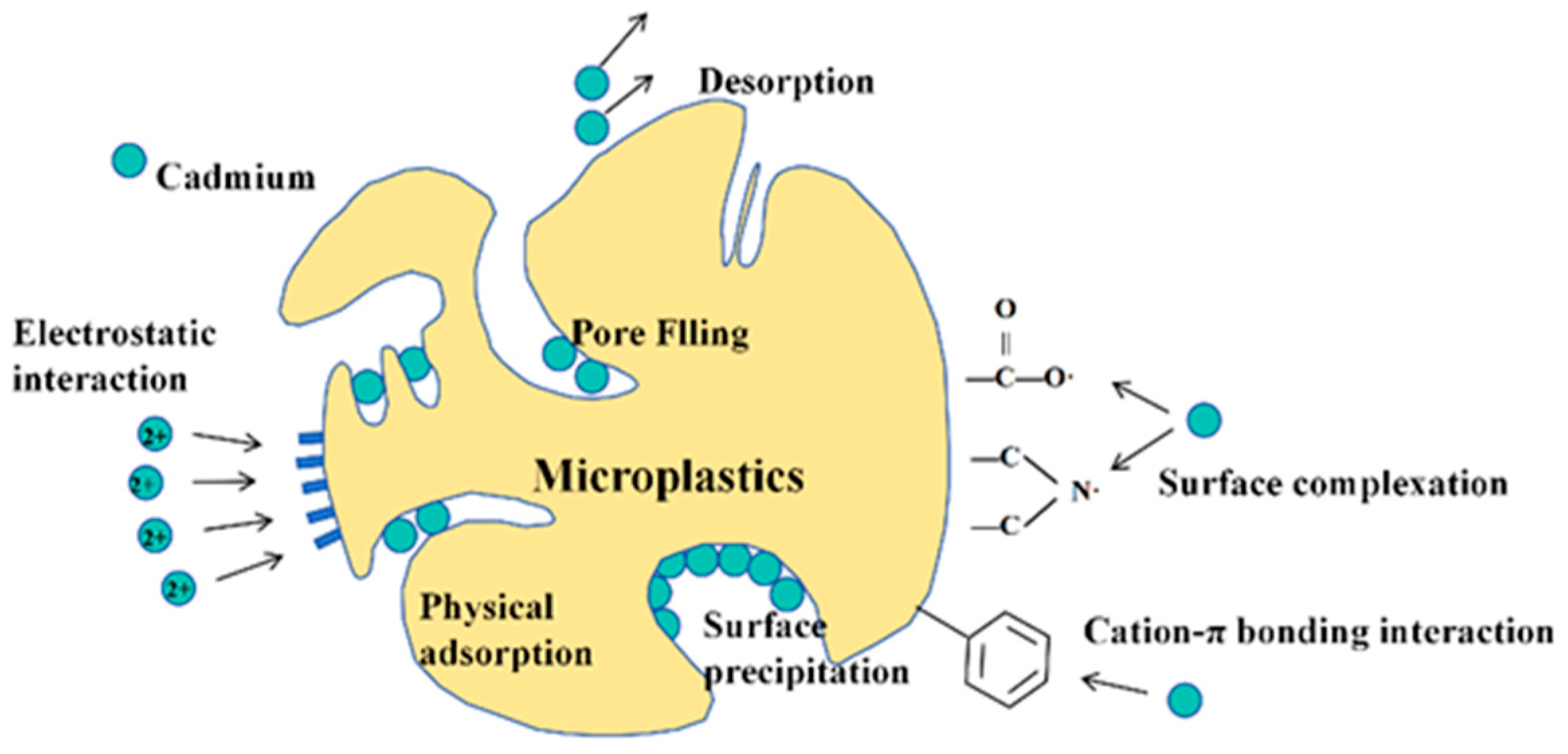
MPs and Cd form composite pollutants through interactions such as electrostatic adsorption, surface complexation, and chemical coordination bonds. Figure 1 illustrates the mechanism and process by which Cd is adsorbed by individual MPs [6], the capacity of which exhibits significant variation.
No universally accepted conclusion has yet been reached regarding isothermal adsorption models for MPs with respect to Cd. Studies suggest that PS’ Cd adsorption conforms to the Freundlich model [19] and PS-HBCD (Polystyrene-Hexabromocyclododecane) adsorption [20] and virgin PE adsorption adhere to the Langmuir model, while naturally aged PE adsorption aligns more closely with the Freundlich model [21]. Consequently, the process of Cd adsorption onto MPs is determined by the combined effects of factors influencing surface functional group type and quantity, such as the type of MPs and its degree of ageing [22]. Current kinetic and isotherm model investigations into the Cd adsorption process reveal that this is not merely uniform monolayer adsorption on the surface; it also involves other heterogeneous adsorption processes, such as chemisorption. The process of Cd adsorption onto MPs conforms to the pseudo-second-order kinetic model. Further research indicates that various additives incorporated during plastic production, such as surfactants and plasticisers, can also lead to differing plastic surface properties and structures [23]. Consequently, MPs’ adsorption of Cd warrants specific and in-depth investigation.

2.2. Environmental and Biological Factors Influencing MPs’ Cd Adsorption

Research indicates that both soil pH and temperature influence Cd adsorption by MPs. At lower pH levels, the surface of MPs becomes positively charged due to protonation, leading to electrostatic repulsion with Cd2+. Furthermore, H+ competes with Cd2+ for active sites, enhancing Cd2+ desorption from MPs [24]. As pH increases, surface deprotonation occurs, lowering the surface potential to a negative charge and promoting Cd2+ adsorption. Further pH increases may cause Cd2+ precipitation, reducing adsorption capacity. Rising pH typically promotes exchange site ionisation in soil, thereby increasing cation exchange capacity (CEC) [25]. Decreasing soil pH reduces CEC and may also promote desorption and cation release from the soil [22]. Competition exists between heavy metal ions (Pb2+, Ca2+, Cu2+, etc.) and Cd2+, where competition for binding sites reduces Cd2+ adsorption by MPs [26]. However, MP type significantly influences soil pH: HDPE (High-Density Polyethylene) markedly lowers soil pH, whereas PLA (Polylactic Acid) shows no significant effect [27]. Another study found that PBAT (Polybutylene Adipate Terephthalate), PLA, and PET (Polyethylene terephthalate) significantly increased soil pH [28,29]. Conversely, Cd adsorption by MPs is generally an endothermic process that occurs spontaneously, with moderate temperature increases favouring adsorption [30].
During plant growth, roots secrete substantial organic acids that promote soil mineral decomposition, activate heavy metals, and enhance nutrient uptake. This simultaneously alters root-zone soil pH, increases cation exchange capacity (CEC), and intensifies competition for active sites on MPs surfaces [27,31]. Proteins and phenolic compounds within root exudates convert available heavy metals into stable forms, enhancing immobilisation efficacy, reducing available heavy metal concentrations, and inhibiting MP adsorption [32]. Microorganisms chelate heavy metals by secreting polysaccharides and proteins while also altering heavy metal speciation through redox reactions and mineralisation, thereby reducing their biotoxicity [33]. Plants can modulate microbial community structure and enhance biomass through root exudates, thereby strengthening the microbial passivation of heavy metals [34]. Collectively, plant root exudates and microorganisms reduce available Cd concentrations, inhibiting its adsorption by MPs.
MPs provide adsorption sites for microorganisms, which can inhabit cracks, pores, and other surface structures within the particles. Additionally, hydrophilic and hydrophobic groups enable selective adhesion to the MPs’ surfaces [35]. Microbial communities forming on the MPs promote heavy metal adsorption [36]. Microbial communities form biofilms with EPSs (Extracellular Polymeric Substances) secreted during cell growth; EPSs are aggregates of various organic macromolecules such as polysaccharides and proteins [37]. Heavy metal ions adsorb onto cell surfaces through interactions with EPSs on microbial cells via ion exchange, surface complexation, and precipitation, enhancing heavy metals’ microbial uptake and immobilisation [38]. Conversely, opposing evidence suggests that MPs significantly increase the abundance of Clostridium species with soil-activating functions, thereby enhancing heavy metal bioavailability [39]. The influence of soil biological factors on MPs’ Cd adsorption is complex; it not only stems from soil biodiversity, but also from how MP-induced soil environmental changes affect microbial communities and functions, as well as soil fauna [40]. Consequently, the influence of biological factors on MPs’ Cd adsorption warrants extensive and in-depth investigation.

2.3. Impact of MPs on Bioavailable Cd Content in Soil Environments

Bioavailable Cd constitutes the key factor inducing phytotoxicity, with alterations in soil conditions being the primary driver of Cd speciation changes. MPs can alter the soil environment’s physicochemical properties, thereby influencing soil Cd speciation changes [41,42]. Given the complexity of plastic types, structural diversity, and significant variations in elemental composition, different plastic types exhibit distinct mechanisms and outcomes in their interactions with the soil environment. Changes in soil physicochemical properties alter immobilisation and mobilisation capacities, directly affecting the concentration of available Cd and its toxic effects.

2.3.1. Stabilisation

Stabilisation refers to the transformation of heavy metals from soluble, reactive forms into stable residues. This transformation is primarily influenced by soil pH, cation exchange capacity (CEC), and dissolved organic carbon (DOC). Larger-sized MPs occupy a greater spatial volume within soil, significantly increasing soil pH by enhancing aeration and porosity [43]. This pH elevation promotes exchange site ionisation within soil components, thereby increasing soil CEC [44]. (1) PS (2 μm,20 μm) reduces available Cd concentrations by elevating soil pH and CEC, thereby promoting the transformation of available Cd (exchangeable form) into carbonate-bound, stable forms (iron-manganese oxide-bound, organically bound, and residual forms) [45]. As pH increases, soil negative charge capacity rises, enhancing the adsorption of positively charged metal ions and promoting the conversion of available Cd to stable forms, thereby reducing its bioavailability [46]. (2) MPs enhance soil dissolved organic carbon (DOC) content by promoting organic matter decomposition. The carboxyl and aromatic groups within DOC exhibit potent adsorption capacity for heavy metals [47]. At elevated concentrations, DOC adsorbs onto mineral surfaces, thereby increasing Cd adsorption sites and reducing Cd bioavailability [48].

2.3.2. Activation

Activation refers to the transformation of heavy metals from stable (e.g., insoluble or complexed states) into bioavailable forms. MPs can increase bioavailable heavy metal content by enhancing the desorption capacity of soil particles and minerals towards heavy metal ions; this is termed the ‘dilution effect’ [49]. For instance, PP promotes soil organic–mineral complex decomposition, thereby reducing Cd adsorption and immobilisation capacity and increasing the available Cd content in soil [50]. Individual MPs often elevate soil pH. Research indicates HDPE significantly reduces soil pH, though the precise mechanism remains unclear [27]. In the presence of plants, however, MPs can markedly lower root-zone soil pH by enhancing urease and acid phosphatase activity in the rhizosphere and inducing increased organic and inorganic acid secretion by plant roots [51]. This pH reduction diminishes negative charges on soil mineral surfaces, decreasing Cd adsorption onto soil particles and thereby increasing Cd bioavailability [50]. Concurrently, low pH promotes protonation reactions and competition between H+ ions and dissolved metals for soil adsorption sites, consequently affecting heavy metal adsorption capacity [52].
Heavy metal immobilisation and mobilisation represent a dynamic interconversion between stable and bioavailable forms. The extent of this interplay determines heavy metal biotoxicity and bioavailability, while soil properties—particularly pH fluctuations—dictate immobilisation and mobilisation intensity. Accumulated heavy metals alter soil properties, inducing pH changes that subsequently influence this transformation.

3. Toxic Effects of MP–Cd Complexes on Plants

3.1. Toxic Effects of Cd Complexed with MPs on Plants

As previously noted, MPs may either promote or inhibit Cd absorption and accumulation by plant roots, exacerbating or alleviating Cd-induced oxidative and photosynthetic stresses and thereby amplifying or mitigating Cd’s toxic effects. Compared to exposure to Cd alone, the interaction between MPs and Cd exhibits a cumulative effect when the toxic impact on plants is amplified, and an antagonistic effect when the toxic impact is mitigated. This cumulative or antagonistic interaction is influenced by multiple factors, including the properties of the metal chelating agents, Cd concentration, plant species, and the method of application. Furthermore, differing application methods (adding MPs and Cd to soil versus adding MPs to Cd-contaminated soil) result in varying degrees of MP–Cd complexation and distinct combined effects. Table 1 summarises the toxic effects of co-exposure on plants, where all experimental designs involved separate application.

3.1.1. Effects on Biomass

Research indicates that the combination of MPs and Cd inhibits plant growth, reducing biomass and plant height, with a synergistic interaction between the two. Through a meta-analysis, Huang et al. [53] found that combined MP and Cd contamination reduced shoot and root biomass in plants, with the combined effect of PE and Cd being more pronounced that of than other types of MPs. However, Wang et al. [54] observed that under 5 mg/kg Cd contamination, high-dose (10%) PLA/PE significantly inhibited biomass in Pinus massoniana seedlings, whereas low-dose (1%) treatments showed no significant effect. This indicates MP dosage may be a critical factor determining the combined effect. Chen et al. [55] observed that, at 1 mg/kg Cd contamination, increasing PE dosage (10–10,000 mg/kg) exhibited a ‘low-promoting, high-inhibiting’ pattern on the aboveground biomass of wheat. At 5 mg/kg Cd, PE/PP generally promoted root biomass. This occurs because at 1 mg/kg Cd, elevated PE concentrations cause wheat’s aboveground Cd content to follow the same trend, while high PE concentrations significantly inhibit photosynthesis. At 5 mg/kg Cd, MPs’ inhibitory on root Cd uptake progressively intensifies. Given the variations in experimental designs and plant types, further diverse and in-depth studies are required to elucidate plant growth response patterns under MP and Cd co-exposure, particularly regarding the ‘low-concentration promotion, high-concentration inhibition’ conclusion observed by some researchers.

3.1.2. Effects on Photosynthesis

MP and Cd exposure can influence plant photosynthesis by affecting photosynthetic pigment content. Li et al. [16] observed that 0.5% PE/PLA-5 mg/kg Cd significantly reduced chlorophyll a, chlorophyll b, and total chlorophyll content in Chinese cabbage leaves. MPs may also enhance photosynthetic pigment content, alleviating the photosynthetic limitations caused by Cd stress. Xu et al. [56] observed that 0.2% PLA-5 mg/kg Cd increased chlorophyll a, chlorophyll b, and total chlorophyll content in lettuce leaves. However, Wang et al. [54] observed that both PE and PLA additions to 5 mg/kg Cd-contaminated soil significantly inhibited photosynthesis, though with no significant effect on chlorophyll a or total chlorophyll content. Only 10% PE addition markedly reduced chlorophyll b content, suggesting that MP–Cd may constrain photosynthesis through mechanisms beyond photosynthetic pigments. Zhao et al. [57] observed that (0.1%, 1%) PU-5 mg/kg Cd significantly reduced photosynthetically active radiation in rice leaves, thereby limiting photosynthesis.

3.1.3. Effects on Oxidative Stress

Both MPs and Cd induce oxidative stress in plant tissues, altering antioxidant enzyme activities. Zhang et al. [29] observed that a 2% dose of PS-10 mg/kg Cd elevated malondialdehyde (MDA) content and peroxidase (POD) and superoxide dismutase (SOD) activity in cabbage roots and shoots, with MDA levels increasing significantly with higher PS concentrations. Wang et al. [54] noted that 10% PE/PLA-Cd markedly increased proline (Pro) content and enhanced POD and SOD activity. Nevertheless, MPs can alleviate Cd-induced oxidative stress and reduce plant stress susceptibility. Zhou et al. [58] observed that 1% PLA/PBAT/PBS (Polybutylene Succinate)/LDPE (Low-Density Polyethylene)/PVC/PS significantly reduced H2O2 content in ryegrass, while only 1% LDPE markedly decreased MDA content, with no significant differences in such effects among other MPs. Yang et al. [59] observed that 0.05% PVC/PP/PE significantly reduced ROS (Reactive Oxygen Species) accumulation and MDA content in tomato tissues under Cd stress while decreasing POD, SOD, and CAT activity. Compared to PE, PVC and PP demonstrated stronger capacity to alleviate oxidative stress.

3.1.4. Effects on Plant Cd Accumulation

Soil MPs can either promote or inhibit Cd uptake by plant roots, altering Cd accumulation levels in tissues and thereby influencing combined toxicity effects. Wang et al. [60] observed that 1% PLA/PBAT increased root biomass in Arabidopsis thaliana while significantly reducing Cd content in both roots and shoots. Xu et al. [61] observed that (0.1–5%) PE substantially reduced Cd accumulation in both above- and belowground parts of Solanum nigrum, an effect that markedly intensifies at higher PE concentrations. Zhang et al. [29] noted that (0.5–2%) PS significantly diminished Cd uptake in both the aboveground and root tissues of Brassica oleracea, exhibiting a negative correlation between Cd uptake and PS concentration. However, Zhao et al. [62] observed that polyurethane (0.1%, 0.5%) significantly increased Cd content in both the aboveground and root tissues of maize, with root Cd levels rising with increasing PU (Polyurethane) concentration. Duan et al. [63] observed that (0.1%, 1%) PE/PS increased Cd content in both above- and belowground parts of sorghum. As MP concentration increased, Cd transfer from roots to aboveground parts was promoted, leading to an overall increase in its accumulation.
Table 1. Toxic effects of soil MPs and Cd on plants.
NumberPlantMPs/Size/Mass FractionTime/dCd
mg/kg
Toxic EffectsLiterature
1Pinus massonianaPE/PLA
45–50 μm
1%/10%
1205MP–Cd reduces biomass and photosynthetic rates while increasing antioxidant enzyme activity.[54]
2SorghumPVC:6.5 μm
0.5%
8010Both above- and belowground length and dry weight decreased, while Cadmium content increased significantly.[46]
3SorghumPE/PS
13 /550 μm
0.1%/1%
7010MP–Cd increases both aboveground and belowground dry weight, and elevates aboveground Cd content.[63]
4MaizePS: 50/100 nm
PP: 5/10 μm
2%
425MP–Cd increases root and stem dry weight, root system and aboveground Cd content while reducing plant height and aboveground dry weight.[64]
5MaizePE
100 μm–1 mm
0.1%/1%
2010PE-Cd enhances oxidative stress-induced losses and increases Cd content in both aboveground and root tissues.[65]
6MaizePU: 1 mm
0.1%/0.5%
425Dry weight and root length increased, while PU-Cd significantly reduced net photosynthetic rate and increased root Cd content.[62]
7TomatoPVC/PP/PE
10/150 μm
0.05%
305PVC and PP demonstrated greater capacity to alleviate oxidative stress than PE, enhancing plant height, dry weight, and fresh weight while reducing Cd accumulation in fruit.[59]
8PakchoiPE/(aged)PE
150 μm
1%
2140
250
PE-40Cd increases dry and fresh weight during the seedling stage, while PE-Cd reduces dry and fresh weight at maturity; it mitigates oxidative stress-induced losses.[66]
9Panax notoginsengPE
100 μm
0.1%/1%/2%
1500.6
6
Low concentrations of PE-Cd increase both shoot and root biomass, whereas high concentrations reduce it.[67]
10LettucePLA/PBAT
60–150 μm
0.2%/1%/
2.5%
355MP–Cd reduced plant height and fresh weight; 0.2% PLA increased the content of various photosynthetic pigments, whereas 2.5% decreased it; Chlorophyll inhibition by PBAT intensified with increasing concentration.[56]
11WheatPE/PP:
40–48 μm
10/50/100/
200/500/1000/5000/10,000 mg/kg
281
5
PE-5 mg/kg Cd demonstrated a promoting effect on root biomass; MPs–1 mg/kg Cd inhibited Cd accumulation in the aboveground parts, while MPs–5 mg/kg Cd promoted it.[55]
12RicePET/PLA
51 μm
0.2%/2%
905PLA-Cd reduces aboveground biomass and chlorophyll a content while decreasing Cd levels in roots and shoots.[68]
13Solanum nigrum L.PE: 25 μm
0.1%/1%/5%
603
6
PE-Cd reduces shoot dry weight, lowers Cd content in roots and shoots, and alleviates oxidative stress.[61]
14Lolium perenne L.PLA/PBAT/PBS/LDPE/PS
8.68–500 μm
1%
4522.84PLA reduced aboveground dry weight whilst PBAT increased root dry weight; PS enhanced shoot dry weight but inhibited root dry weight; PBAT/PBS/PS decreased CAT activity and increased root Cd accumulation, whereas PLA/PBAT/PBS reduced aboveground Cd accumulation.[58]

3.2. Potential Mechanisms

Changes in biomass represent plants’ long-term integrated response to combined MP–Cd stress. This dual stress alters plant biomass by affecting root nutrient uptake, oxidative stress, and photosynthesis. For instance, the presence of MPs weakens microbial resistance to heavy metal stress, while this combined stress inhibits the expression of functional genes involved in microbial C, N, and P cycling, thereby suppressing the ability of plant roots to absorb and utilise nutrients from the soil [69]. Larger-scale MPs primarily affect roots due to their strong hydrophobicity, readily adhering to root surfaces. Concurrently, root exudates concentrate MPs, leading to accumulation around root surfaces. This inhibits root growth and impairs water and nutrient uptake through epidermal pores, thereby reducing biomass [70]. At the same time, smaller-scale nanoplastics (NPs) can induce pore formation within the protective intercellular layer of the epidermis or infiltrate apical tissues through fissures between lateral and primary roots [71,72]. Once within the root system, MPs and released additives stimulate tissues, exacerbating oxidative stress, impairing photosynthesis, and reducing the accumulation of photosynthetic products, ultimately diminishing biomass [73]. Moreover, MPs may mitigate Cd toxicity by reducing soil-available Cd levels, thereby decreasing its accumulation in tissues and enhancing biomass production [61].
MP–Cd complexes inhibit photosynthesis by reducing photosynthetic pigment content. Compared to Cd alone, combined exposure lowers Fe and Zn concentrations in rice leaves [68], both of which are crucial precursors for chlorophyll synthesis [74]. This likely represents the primary mechanism by which composite pollution diminishes photosynthetic pigment content. PS-Cd can also induce excessive Reactive Oxygen Species (ROS) production, impairing photosynthetic capacity [75]. Furthermore, PS significantly reduced the activity of the photosynthesis-related enzyme RubiSco in radish leaves [76]. PE/PLA-Cd showed no significant effect on chlorophyll a or total chlorophyll content but markedly reduced photosynthesis. This stems from MP–Cd substantially decreasing the photosynthetic saturation rate (Asat), reducing the accumulation of non-structural carbohydrates (NSCs) such as soluble sugars and starch, ultimately leading to biomass reduction [54].
The impact of the MP–Cd complex on plant oxidative stress primarily stems from its influence on Cd uptake. MPs alter Cd speciation and bioavailability through multiple mechanisms—including modifying soil conditions—while also regulating root metabolism to affect its uptake and utilisation. PU enhances available Cd by lowering pH and promoting activation, thereby stimulating root elongation and increasing adsorption sites [11]. Additionally, through chelation and complexation, organic compounds such as amino acids in root exudates reduce Cd availability. PE inhibits soil microbial activation of Cd by increasing the number of C=O, C-H, and -COO functional groups in soil organic matter [13]. Larger-sized MPs cannot typically be absorbed by plants. They may adsorb onto root surfaces, competing with Cd for binding sites, or bind to soil organic matter and become integral components, thereby enhancing Cd adsorption and immobilisation and reducing plant uptake [77,78].
Adsorbed Cd co-transports with its carrier MPs, a phenomenon termed the ‘Trojan horse effect’ [17]. As MPs enter plant roots, they may carry adsorbed Cd, and this co-migration process from soil to root tips may increase uptake and accumulation. Furthermore, MPs can regulate root gene expression. Studies indicate that PE/PP/PS mitigates Cd toxicity by downregulating ABC transmembrane transporter and glutathione (GSH) metabolism gene expression levels in tomato roots [57]. Conversely, PLA/PBAT enhances Cd toxicity and bioaccumulation by downregulating ABC transporter expression and the phenylpropanoid biosynthetic pathway in lettuce roots, as well as reducing the associated metabolite levels [56]. These seemingly contradictory conclusions arise because PE/PP/PS significantly reduced soil-available Cd content, whereas PLA/PBAT markedly increased it. The differing effects on available Cd led to either mitigated or enhanced MP-induced plant Cd, suggesting that variations in available Cd levels may be pivotal in mediating synergistic or antagonistic MP–Cd interactions in composite toxicity effects.

3.3. Existing Issues

Current research on the combined effects of MP–Cd on plants primarily focuses on the direct impact of composite pollution on various physiological indicators. The combined effects are determined based on the degree of response to pollution, as measured by physiological indicators and the levels of accumulated Cd in plant tissues. However, research in this area still faces several challenges, as detailed below.
Firstly, the complex relationships between the properties of MPs, soil physicochemical characteristics, and soil microbial communities require further exploration and elucidation. The processes and mechanisms by which physicochemical properties influence Cd species interconversion remain unclear, and research into the effects of soil enzymes and microorganisms on nutrient cycling requires further advancement.
Secondly, current studies on MPs and Cd predominantly utilise virgin MPs at the micro- and nanoscale to investigate their physiological toxicity to seedling-stage plants. There is little research employing naturally aged MPs to examine their combined effects with Cd. Simulated aged MP materials are obtained by subjecting virgin MPs to photo-ageing, high temperatures, and reducing agents [79]. Their properties may differ from naturally aged plastics, meaning that the combined pollution effects of naturally aged MPs and Cd remain unexplored.
Thirdly, studies covering the entire plant growth cycle remain relatively scarce, as current distribution research primarily focuses on roots, leaves, and shoots during the seedling stage. The relationship between combined MP and Cd pollution may change across different stages of the plant growth cycle. For instance, PE-Cd increased both dry and fresh weight in Chinese cabbage seedlings but reduced these metrics at maturity, shifting the relationship from antagonism to synergy.
Fourthly, various additives released during plastic fragmentation and ageing, such as phthalate additives, exhibit potent biotoxicity [80]. However, owing to the limited duration of experimental studies, many investigations have not addressed the hazards posed by additives released from MPs.

3.4. MPs’ Effects on Plant Cd Accumulation

3.4.1. Enrichment Levels

The quantity of heavy metals absorbed and accumulated by plants from soil primarily depends on the soil around the roots, plant growth and metabolism, and bioavailable heavy metal concentrations [81]. MPs can alter soil properties and the soil environment, thereby increasing or decreasing bioavailable heavy metal concentrations [82]. Plant biomass size also influences their accumulation. MP–heavy metal complexes alter plant biomass, thereby increasing or decreasing cumulative levels [83]. Furthermore, root uptake constitutes the primary pathway for heavy metals’ entry into plants. Research indicates that MPs can promote root growth, increase total root surface area, and provide additional binding sites [43]. MPs may also influence root metabolic activity, thereby regulating root exudate production and affecting heavy metal uptake [84].

3.4.2. Distribution in Accumulating Organs

Plant roots absorb heavy metals via apoplast and symbiotic pathways, transporting them through xylem transporters before transferring them to the aboveground parts via phloem [80]. Roots, leaves, and shoots constitute the primary organs in which heavy metals accumulate. MPs entering roots may amass and cause blockages due to issues such as excessive size, hindering internal translocation and thereby reducing heavy metal uptake. In contrast, nanoplastics with stronger adsorption capacities increase leaf accumulation during translocation to the shoot [85]. Studies indicate that MPs enhance Cd accumulation in plant roots and shoots (14.6%, 13.5%), with PE exhibiting a stronger promoting effect (29.4%) [9]. MPs can also modulate ABC transporter metabolism and plant hormone signal transduction in roots, leading to increased Cd uptake in lettuce and elevated accumulation in leaves [86]. Furthermore, the driving force for Cd translocation from below- to aboveground parts stems from plant transpiration. Given their small size, MPs that enter plant tissues can also cause pore blockage, reducing transpiration efficiency, which diminishes Cd translocation from below- to aboveground parts and promotes accumulation in roots [72].

4. Summary and Outlook

4.1. Unresolved Issues in Existing Research

The toxic effects of MP–heavy metal complexes on plants are influenced by multiple interacting factors. Comprehensive research systems have been established to investigate their combined toxic effects, encompassing plant physiological and biochemical impacts, heavy metal accumulation levels in plant organs, soil heavy metal speciation transformations, and alterations in soil microbial communities and functions. However, further investigation into how aspects such as MPs and heavy metal type, particle size, and concentration interact is required to determine their combined toxic effects. Moreover, most current studies focus on virgin MPs with larger particle sizes, with limited research on aged or nanoscale MPs. The extent of contaminant accumulation in plants, particularly across different tissues and organs, remains unclear. While plant toxicity is largely attributed to heavy metals, the specific contribution of MPs within these interactions has not been thoroughly examined.

4.2. Key Areas for Future Research Breakthroughs

(1) The combined toxic effects of composite materials—comprising MPs with varying characteristics (material composition, particle size, additives, degree of ageing, functional groups, etc.) and heavy metals—on plants.
(2) The influence of soil characteristics (type, physicochemical properties, cultivation practices, fertilisation, etc.) on plant growth processes under microplastic–heavy metal stress.
(3) Response mechanisms and interactions between microbial communities and different plant types in coping with microplastic–heavy metal stress.

Author Contributions

Conceptualisation, J.Z. and X.W.; methodology, X.W. and Q.S.; formal analysis, J.Z. and L.R.; investigation and data curation, Y.Z. and L.L.; writing—original draft preparation, J.Z.; writing—review and editing, Q.S., X.W. and Z.X.; visualisation, Y.Z. and L.L.; supervision, L.L.; project administration, L.R.; funding acquisition, X.W. All authors have read and agreed to the published version of the manuscript.

Funding

This research was financially assisted by the Xinjiang Autonomous Region Nature Fund Project, grant number 2023D01A113.

Data Availability Statement

No new data were created or analysed in this study. Data sharing is not applicable to this article.

Conflicts of Interest

The authors declare no conflicts of interest.

References

  1. Bohdan, K.; Honeychurch, K.C. Under-researched and under-reported new findings in microplastic field. Sci. Total Environ. 2024, 918, 170466. [Google Scholar] [CrossRef]
  2. Soliz, D.L.; Paniagua González, G.; Muñoz-Arnanz, J.; Bravo-Yagüe, J.C.; Fernández Hernando, P.; Garcinuño Martínez, R.M. Identification and morphological characterization of different types of plastic microparticles. Heliyon 2024, 10, e30749. [Google Scholar] [CrossRef]
  3. Nizzetto, L.; Futter, M.; Langaas, S. Are Agricultural Soils Dumps for Microplastics of Urban Origin? Environ. Sci. Technol. 2016, 50, 10777–10779. [Google Scholar] [CrossRef]
  4. Bläsing, M.; Amelung, W. Plastics in soil: Analytical methods and possible sources. Sci. Total Environ. 2018, 612, 422–435. [Google Scholar] [CrossRef] [PubMed]
  5. Ren, S.; Wang, K.; Zhang, J.; Li, J.; Zhang, H.; Qi, R.; Xu, W.; Yan, C.; Liu, X.; Zhang, F.; et al. Potential sources and occurrence of macro-plastics and microplastics pollution in farmland soils: A typical case of China. Crit. Rev. Environ. Sci. Technol. 2024, 54, 533–556. [Google Scholar] [CrossRef]
  6. Li, F.; Yang, X.; Zhang, Z.; Jiang, Y.; Gong, Y. Behaviour, ecological impacts of microplastics and cadmium on soil systems: A systematic review. Environ. Technol. Innov. 2024, 35, 103637. [Google Scholar] [CrossRef]
  7. Hou, D.; Jia, X.; Wang, L.; McGrath, S.P.; Zhu, Y.-G.; Hu, Q.; Zhao, F.-J.; Bank, M.S.; O’Connor, D.; Nriagu, J. Global soil pollution by toxic metals threatens agriculture and human health. Science 2025, 388, 316–321. [Google Scholar] [CrossRef]
  8. Zhao, F.-J.; Ma, Y.; Zhu, Y.-G.; Tang, Z.; McGrath, S.P. Soil Contamination in China: Current Status and Mitigation Strategies. Environ. Sci. Technol. 2015, 49, 750–759. [Google Scholar] [CrossRef]
  9. Zhu, Y.; Wang, H.; Lv, X.; Zhang, Y.; Wang, W. Effects of biochar and biofertilizer on cadmium-contaminated cotton growth and the antioxidative defense system. Sci. Rep. 2020, 10, 20112. [Google Scholar] [CrossRef]
  10. Wen, M.; Ma, Z.; Gingerich, D.B.; Zhao, X.; Zhao, D. Heavy metals in agricultural soil in China: A systematic review and meta-analysis. Eco-Environ. Health 2022, 1, 219–228. [Google Scholar] [CrossRef]
  11. Duan, C.; Fang, L.; Yang, C.; Chen, W.; Cui, Y.; Li, S. Reveal the response of enzyme activities to heavy metals through in situ zymography. Ecotoxicol. Environ. Saf. 2018, 156, 106–115. [Google Scholar] [CrossRef]
  12. Liu, J.; Ni, J.; Mo, A.; Fan, X.; Jiang, Y.; Xie, H.; Hu, J.; Zhu, Y.; Peng, C.; Yang, F. Cadmium affects the growth, antioxidant capacity, chlorophyll content, and homeostasis of essential elements in soybean plants. S. Afr. J. Bot. 2023, 162, 604–610. [Google Scholar] [CrossRef]
  13. Tao, J.; Lu, L. Advances in Genes-Encoding Transporters for Cadmium Uptake, Translocation, and Accumulation in Plants. Toxics 2022, 10, 411. [Google Scholar] [CrossRef]
  14. Wang, Y.; Feng, Z.; Ghani, M.I.; Wang, Q.; Zeng, L.; Yang, X.; Zhang, X.; Chen, C.; Li, S.; Cao, P.; et al. Co-exposure to microplastics and soil pollutants significantly exacerbates toxicity to crops: Insights from a global meta and machine-learning analysis. Sci. Total Environ. 2024, 954, 176490. [Google Scholar] [CrossRef]
  15. Feng, F.; Wang, S.; He, X.; Wang, X.; Huang, J.; Liu, G.; Rong, S.; Su, S.; Yan, H.; Han, B.; et al. Adsorption behavior and mechanism of cadmium, copper, and lead on polylactic acid microplastics exposed to ultraviolet light. J. Environ. Chem. Eng. 2025, 13, 117033. [Google Scholar] [CrossRef]
  16. Li, G.; Cui, X.; Tariq, M.; Khan, I.; Khan, A.R.; Obaid, S.A.; Ansari, M.J.; Zhou, H.; Iqbal, B.; Zhao, X. Microplastic and cadmium contamination: Impact on the soil by inhibiting the growth of pak choi (Brassica rapa subsp. chinensis). Process Saf. Environ. Prot. 2024, 189, 714–727. [Google Scholar] [CrossRef]
  17. Jian, M.; Niu, J.; Li, W.; Huang, Y.; Yu, H.; Lai, Z.; Liu, S.; Xu, E.G. How do microplastics adsorb metals? A preliminary study under simulated wetland conditions. Chemosphere 2022, 309, 136547. [Google Scholar] [CrossRef] [PubMed]
  18. Hayat, M.T.; Nauman, M.; Nazir, N.; Ali, S.; Bangash, N. Chapter 7—Environmental Hazards of Cadmium: Past, Present, and Future. In Cadmium Toxicity and Tolerance in Plants; Hasanuzzaman, M., Prasad, M.N.V., Fujita, M., Eds.; Academic Press: New York, NY, USA, 2019; pp. 163–183. [Google Scholar]
  19. Tenea, A.-G.; Dinu, C.; Rus, P.A.; Ionescu, I.A.; Gheorghe, S.; Iancu, V.I.; Vasile, G.G.; Pascu, L.F.; Chiriac, F.L. Exploring adsorption dynamics of heavy metals onto varied commercial microplastic substrates: Isothermal models and kinetics analysis. Heliyon 2024, 10, e35364. [Google Scholar] [CrossRef] [PubMed]
  20. Yu, A.; Sun, X.; Tang, S.; Zhang, Y.; Li, M.; Wang, X. Adsorption mechanism of cadmium on polystyrene microplastics containing hexabromocyclododecane. Environ. Technol. Innov. 2021, 24, 102036. [Google Scholar] [CrossRef]
  21. Wang, F.; Yang, W.; Cheng, P.; Zhang, S.; Zhang, S.; Jiao, W.; Sun, Y. Adsorption characteristics of cadmium onto microplastics from aqueous solutions. Chemosphere 2019, 235, 1073–1080. [Google Scholar] [CrossRef]
  22. Yang, Y.; Li, Y.; Wang, M.; Chen, W.; Dai, Y. Limestone dosage response of cadmium phytoavailability minimization in rice: A trade-off relationship between soil pH and amorphous manganese content. J. Hazard. Mater. 2021, 403, 123664. [Google Scholar] [CrossRef]
  23. Cao, X.; Liang, Y.; Jiang, J.; Mo, A.; He, D. Organic additives in agricultural plastics and their impacts on soil ecosystems: Compared with conventional and biodegradable plastics. TrAC Trends Anal. Chem. 2023, 166, 117212. [Google Scholar] [CrossRef]
  24. Li, W.; Zu, B.; Yang, Q.; Huang, Y.; Li, J. Adsorption of lead and cadmium by microplastics and their desorption behavior as vectors in the gastrointestinal environment. J. Environ. Chem. Eng. 2022, 10, 107379. [Google Scholar] [CrossRef]
  25. Ma, H.; Yang, H.; Lü, X.; Pan, Y.; Wu, H.; Liang, Z.; Ooi, M.K.J. Does high pH give a reliable assessment of the effect of alkaline soil on seed germination? A case study with Leymus chinensis (Poaceae). Plant Soil 2015, 394, 35–43. [Google Scholar] [CrossRef]
  26. Chen, C.; Liu, Y.; Tian, T. Study on the adsorption behaviors of cadmium ion by several typical microplastics and its influencing factors. J. Saf. Environ. 2023, 23, 2081–2089. [Google Scholar]
  27. Boots, B.; Russell, C.W.; Green, D.S. Effects of Microplastics in Soil Ecosystems: Above and Below Ground. Environ. Sci. Technol. 2019, 53, 11496–11506. [Google Scholar] [CrossRef] [PubMed]
  28. Tang, Y.; Xing, Y.; Wang, X.; Ya, H.; Zhang, T.; Lv, M.; Wang, J.; Zhang, H.; Dai, W.; Zhang, D.; et al. PET microplastics influenced microbial community and heavy metal speciation in heavy-metal contaminated soils. Appl. Soil Ecol. 2024, 201, 105488. [Google Scholar] [CrossRef]
  29. Zhang, Z.; Li, Y.; Qiu, T.; Duan, C.; Chen, L.; Zhao, S.; Zhang, X.; Fang, L. Microplastics addition reduced the toxicity and uptake of cadmium to Brassica chinensis L. Sci. Total Environ. 2022, 852, 158353. [Google Scholar] [CrossRef]
  30. Hao, A.H.; Zhao, B.W.; Zhang, J.; Zhang, X.; Duan, K.X.; Liu, H. Adsorptive Characteristics and Mechanisms of Cadmium in Aqueous Solution onto Low-Density Polyethylene Microplastics Aged with Ultra-Violet Light. Fresenius Environ. Bull. 2022, 31, 6495–6507. [Google Scholar]
  31. Kumar Yadav, K.; Gupta, N.; Kumar, A.; Reece, L.M.; Singh, N.; Rezania, S.; Ahmad Khan, S. Mechanistic understanding and holistic approach of phytoremediation: A review on application and future prospects. Ecol. Eng. 2018, 120, 274–298. [Google Scholar] [CrossRef]
  32. Agarwal, H.; Chaudhary, D.; Aggarwal, H.; Karala, C.; Purkait, N.; Sharma, N.; Mishra, A.; Mishra, V.; Kumar, A.; Singh, P.; et al. Molecular underpinning of heavy metal sequestration through advanced remediation strategies in higher plants. Plant Stress 2025, 16, 100881. [Google Scholar] [CrossRef]
  33. Campillo-Cora, C.; Rodríguez-Seijo, A.; Pérez-Rodríguez, P.; Fernández-Calviño, D.; Santás-Miguel, V. Effect of heavy metal pollution on soil microorganisms: Influence of soil physicochemical properties. A systematic review. Eur. J. Soil Biol. 2025, 124, 103706. [Google Scholar] [CrossRef]
  34. Hang, S.; Wu, C.; Peng, G.; Li, F.; Ge, F.; Gan, J.; Li, L.; Li, J. Rhizosphere endophytes as allies in plant defense against heavy metals and organic pollutants in soil: Advances and applications. Appl. Soil Ecol. 2025, 211, 106119. [Google Scholar] [CrossRef]
  35. Lin, Y.; Tao, J.; Chen, D.; Cao, C.; Chen, J.; Zhang, Y.; Qian, Q. The fate of plastic wraps in constructed wetland: Surface structure and microbial community. Sci. Total Environ. 2024, 934, 173133. [Google Scholar] [CrossRef]
  36. Zhang, X.; Li, Y.; Ouyang, D.; Lei, J.; Tan, Q.; Xie, L.; Li, Z.; Liu, T.; Xiao, Y.; Farooq, T.H.; et al. Systematical review of interactions between microplastics and microorganisms in the soil environment. J. Hazard. Mater. 2021, 418, 126288. [Google Scholar] [CrossRef]
  37. Sheng, G.-P.; Yu, H.-Q.; Li, X.-Y. Extracellular polymeric substances (EPS) of microbial aggregates in biological wastewater treatment systems: A review. Biotechnol. Adv. 2010, 28, 882–894. [Google Scholar] [CrossRef] [PubMed]
  38. Mao, Y.; Tan, H.; Wang, M.; Jiang, T.; Wei, H.; Xu, W.; Jiang, Q.; Bao, H.; Ding, Y.; Wang, F.; et al. Research Progress of Soil Microorganisms in Response to Heavy Metals in Rice. J. Agric. Food Chem. 2022, 70, 8513–8522. [Google Scholar] [CrossRef] [PubMed]
  39. Lai, J.-l.; Deng, Z.-X.; Ji, X.-H.; Luo, X.-G. Absorption and interaction mechanisms of uranium & cadmium in purple sweet potato(Ipomoea batatas L.). J. Hazard. Mater. 2020, 400, 123264. [Google Scholar] [CrossRef]
  40. Hasan, M.M.; Tarannum, M.N. Adverse impacts of microplastics on soil physicochemical properties and crop health in agricultural systems. J. Hazard. Mater. Adv. 2025, 17, 100528. [Google Scholar] [CrossRef]
  41. Dong, Y.; Qiao, Y.; Lin, H. Insights into microplastics in the soil environment: Migration, biodegradation, toxicity and risk assessment. Process Saf. Environ. Prot. 2024, 189, 1450–1463. [Google Scholar] [CrossRef]
  42. Kumar, R.; Ivy, N.; Bhattacharya, S.; Dey, A.; Sharma, P. Coupled effects of microplastics and heavy metals on plants: Uptake, bioaccumulation, and environmental health perspectives. Sci. Total Environ. 2022, 836, 155619. [Google Scholar] [CrossRef]
  43. de Souza Machado, A.A.; Lau, C.W.; Kloas, W.; Bergmann, J.; Bachelier, J.B.; Faltin, E.; Becker, R.; Görlich, A.S.; Rillig, M.C. Microplastics Can Change Soil Properties and Affect Plant Performance. Environ. Sci. Technol. 2019, 53, 6044–6052. [Google Scholar] [CrossRef]
  44. Raij, B.; Sacchetto, M.; Igue, T. Relationship between pH and base saturation of soils. Bragantia 1968, 27, 193–200. [Google Scholar] [CrossRef]
  45. An, Q.; Zheng, N.; Chen, C.; Li, X.; Ji, Y.; Peng, L.; Xiu, Z.; Lin, Q. Regulation strategies of microplastics with different particle sizes on cadmium migration processes and toxicity in soil-pakchoi system. J. Hazard. Mater. 2025, 488, 137505. [Google Scholar] [CrossRef]
  46. Zhang, Y.; Chen, Y.; Jiao, R.-Q.; Gao, S.-S.; Li, B.L.; Li, Y.-Y.; Han, H.; Chen, Z.-J. Beneficial microbial consortia effectively alleviated plant stress caused by the synergistic toxicity of microplastics and cadmium. Ind. Crops Prod. 2025, 225, 120479. [Google Scholar] [CrossRef]
  47. Xiao, M.; Shahbaz, M.; Liang, Y.; Yang, J.; Wang, S.; Chadwicka, D.R.; Jones, D.; Chen, J.; Ge, T. Effect of microplastics on organic matter decomposition in paddy soil amended with crop residues and labile C: A three-source-partitioning study. J. Hazard. Mater. 2021, 416, 126221. [Google Scholar] [CrossRef]
  48. Wang, G.; Hu, Z.; Li, S.; Wang, Y.; Sun, X.; Zhang, X.; Li, M. Sulfur controlled cadmium dissolution in pore water of cadmium-contaminated soil as affected by DOC under waterlogging. Chemosphere 2020, 240, 124846. [Google Scholar] [CrossRef] [PubMed]
  49. Zhang, S.W.; Han, B.; Sun, Y.H.; Wang, F.Y. Microplastics influence the adsorption and desorption characteristics of Cd in an agricultural soil. J. Hazard. Mater. 2020, 388, 121775. [Google Scholar] [CrossRef] [PubMed]
  50. Cao, Y.; Ma, X.; Chen, N.; Chen, T.; Zhao, M.; Li, H.; Song, Y.; Zhou, J.; Yang, J. Polypropylene microplastics affect the distribution and bioavailability of cadmium by changing soil components during soil aging. J. Hazard. Mater. 2023, 443, 130079. [Google Scholar] [CrossRef] [PubMed]
  51. Lin, Z.; Qiao, Y.; Xu, K.; Lu, L.; Shu, Q.-Y.; Tian, S. The endophytic fungus Serendipita indica reshapes rhizosphere soil microbiota to improve Salix suchowensis growth and phytoremediation. J. Hazard. Mater. 2025, 495, 138620. [Google Scholar] [CrossRef]
  52. Abollino, O.; Aceto, M.; Malandrino, M.; Sarzanini, C.; Mentasti, E. Adsorption of heavy metals on Na-montmorillonite. Effect of pH and organic substances. Water Res. 2003, 37, 1619–1627. [Google Scholar] [CrossRef]
  53. Huang, F.; Hu, J.; Chen, L.; Wang, Z.; Sun, S.; Zhang, W.; Jiang, H.; Luo, Y.; Wang, L.; Zeng, Y.; et al. Microplastics may increase the environmental risks of Cd via promoting Cd uptake by plants: A meta-analysis. J. Hazard. Mater. 2023, 448, 130887. [Google Scholar] [CrossRef] [PubMed]
  54. Wang, Y.; Zhang, K.; Chen, Z.; Wang, J.; Fang, Y.; Duan, Y.; Duan, H. Effects of microplastics and their combination with cadmium on Pinus massoniana are dependent on the type of microplastics. Trees For. People 2025, 21, 100912. [Google Scholar] [CrossRef]
  55. Chen, S.; Feng, T.; Lin, X.; Hou, Z.; Chao, L.; Zhang, X.; Liu, Y. Effects of microplastics and cadmium on the soil-wheat system as single and combined contaminants. Plant Physiol. Biochem. 2023, 196, 291–301. [Google Scholar] [CrossRef]
  56. Xu, X.; Peng, C.; Shao, X.; Gong, K.; Zhao, X.; Xie, W.; Zhang, W.; Tan, J. Unveiling the impacts of biodegradable microplastics on cadmium toxicity, translocation, transformation, and metabolome in lettuce. Sci. Total Environ. 2024, 957, 177669. [Google Scholar] [CrossRef]
  57. Zhao, M.; Li, C.; Zhang, C.; Zhao, Y.; Wang, X.; Cao, B.; Xu, L.; Zhang, J.; Wang, J.; Zuo, Q.; et al. Under flooding conditions, controlled-release fertiliser coated microplastics affect the growth and accumulation of cadmium in rice by increasing the fluidity of cadmium and interfering with metabolic pathways. Sci. Total Environ. 2023, 901, 166434. [Google Scholar] [CrossRef]
  58. Zhou, W.; Huang, D.; Chen, S.; Wang, G.; Li, R.; Xu, W.; Lei, Y.; Xiao, R.; Yin, L.; Chen, H.; et al. Microplastic dilemma: Assessing the unexpected trade-offs between biodegradable and non-biodegradable forms on plant health, cadmium uptake, and sediment microbial ecology. J. Hazard. Mater. 2024, 477, 135240. [Google Scholar] [CrossRef] [PubMed]
  59. Yang, R.; Cheng, L.; Li, Z.; Cui, Y.; Liu, J.; Xu, D.; Liu, S.; Lin, Z.; Chen, J.; Zhang, Y. Mechanism of microplastics in the reduction of cadmium toxicity in tomato. Ecotoxicol. Environ. Saf. 2025, 289, 117621. [Google Scholar] [CrossRef]
  60. Wang, B.; Wang, P.; Zhao, S.; Shi, H.; Zhu, Y.; Teng, Y.; Jiang, G.; Liu, S. Combined effects of microplastics and cadmium on the soil-plant system: Phytotoxicity, Cd accumulation and microbial activity. Environ. Pollut. 2023, 333, 121960. [Google Scholar] [CrossRef]
  61. Xu, L.; Yu, C.; Xie, W.; Liang, X.; Zhan, J.; Dai, H.; Skuza, L.; Xu, J.; Jing, Y.; Zhang, Q.; et al. Effects of polyethylene microplastics on cadmium accumulation in Solanum nigrum L.: A study involving microbial communities and metabolomics profiles. J. Hazard. Mater. 2025, 489, 137621. [Google Scholar] [CrossRef]
  62. Zhao, M.; Li, Y.; Li, C.; Wang, X.; Cao, B.; Zhang, J.; Wang, J.; Zou, G.; Chen, Y. Effects of polyurethane microplastics combined with cadmium on maize growth and cadmium accumulation under different long-term fertilisation histories. J. Hazard. Mater. 2024, 473, 134726. [Google Scholar] [CrossRef]
  63. Duan, L.-Y.; Zhang, Y.; Li, Y.-Y.; Li, X.-Q.; Liu, Y.-Q.; Li, B.L.; Ding, C.-Y.; Ren, X.-M.; Duan, P.-F.; Han, H.; et al. Effects of combined microplastic and cadmium pollution on sorghum growth, Cd accumulation, and rhizosphere microbial functions. Ecotoxicol. Environ. Saf. 2024, 277, 116380. [Google Scholar] [CrossRef]
  64. Zhao, M.; Xu, L.; Wang, X.; Li, C.; Zhao, Y.; Cao, B.; Zhang, C.; Zhang, J.; Wang, J.; Chen, Y.; et al. Microplastics promoted cadmium accumulation in maize plants by improving active cadmium and amino acid synthesis. J. Hazard. Mater. 2023, 447, 130788. [Google Scholar] [CrossRef] [PubMed]
  65. Zhang, J.; Hao, A.; Zhao, B.; Ma, F.; Zhang, X.; Zhang, Y.; Duan, K.; Li, Y. Effects of microplastics and cadmium co-contamination on soil properties, maize (Zea mays L.) growth characteristics, and cadmium accumulation in maize in loessial soil-maize systems. Environ. Pollut. 2024, 356, 124363. [Google Scholar] [CrossRef]
  66. Men, C.; Xie, Z.; Li, K.; Xing, X.; Li, Z.; Zuo, J. Single and combined effect of polyethylene microplastics (virgin and naturally aged) and cadmium on pakchoi (Brassica rapa subsp. chinensis) under different growth stages. Sci. Total Environ. 2024, 951, 175602. [Google Scholar] [CrossRef]
  67. Li, Z.; Zhou, X.; Mei, X.; Yang, S.; Zu, Y. The response of Panax notoginseng to combined microplastics and cadmium stress and its mechanism of rhizosphere microorganisms and root metabolites. J. Hazard. Mater. Adv. 2025, 18, 100734. [Google Scholar] [CrossRef]
  68. Liu, Y.; Cui, W.; Li, W.; Xu, S.; Sun, Y.; Xu, G.; Wang, F. Effects of microplastics on cadmium accumulation by rice and arbuscular mycorrhizal fungal communities in cadmium-contaminated soil. J. Hazard. Mater. 2023, 442, 130102. [Google Scholar] [CrossRef] [PubMed]
  69. Wang, Y.; Zhang, F.; Yang, L.; Zhang, G.; Wang, H.; Zhu, S.; Zhang, H.; Guo, T. Synergy of plastics and heavy metals weakened soil bacterial diversity by regulating microbial functions in the Qinghai-Tibet Plateau. J. Hazard. Mater. 2025, 487, 137241. [Google Scholar] [CrossRef] [PubMed]
  70. Xu, Z.; Zhang, Y.; Lin, L.; Wang, L.; Sun, W.; Liu, C.; Yu, G.; Yu, J.; Lv, Y.; Chen, J.; et al. Toxic effects of microplastics in plants depend more by their surface functional groups than just accumulation contents. Sci. Total Environ. 2022, 833, 155097. [Google Scholar] [CrossRef]
  71. Wang, L.; Liu, B.; Zhang, W.; Li, Q.; Lin, B.; Wei, C. An unrecognized entry pathway of submicrometre plastics into crop root: The split of hole in protective layer. J. Hazard. Mater. 2023, 457, 131732. [Google Scholar] [CrossRef]
  72. Li, L.; Luo, Y.; Li, R.; Zhou, Q.; Peijnenburg, W.J.G.M.; Yin, N.; Yang, J.; Tu, C.; Zhang, Y. Effective uptake of submicrometre plastics by crop plants via a crack-entry mode. Nat. Sustain. 2020, 3, 929–937. [Google Scholar] [CrossRef]
  73. Pflugmacher, S.; Tallinen, S.; Kim, Y.J.; Kim, S.; Esterhuizen, M. Ageing affects microplastic toxicity over time: Effects of aged polycarbonate on germination, growth, and oxidative stress of Lepidium sativum. Sci. Total Environ. 2021, 790, 148166. [Google Scholar] [CrossRef]
  74. Tavanti, T.R.; de Melo, A.A.R.; Moreira, L.D.K.; Sanchez, D.E.J.; Silva, R.D.S.; de Silva, R.M.; Reis, A.R.D. Micronutrient fertilization enhances ROS scavenging system for alleviation of abiotic stresses in plants. Plant Physiol. Biochem. 2021, 160, 386–396. [Google Scholar] [CrossRef]
  75. Huang, D.; Zhou, W.; Chen, S.; Tao, J.; Li, R.; Yin, L.; Wang, X.; Chen, H. Presence of polystyrene microplastics in Cd contaminated water promotes Cd removal by nano zero-valent iron and ryegrass (Lolium perenne L.). Chemosphere 2022, 303, 134729. [Google Scholar] [CrossRef] [PubMed]
  76. Dong, Y.; Gao, M.; Qiu, W.; Song, Z. Uptake of microplastics by carrots in presence of As (III): Combined toxic effects. J. Hazard. Mater. 2021, 411, 125055. [Google Scholar] [CrossRef] [PubMed]
  77. Ijaz, S.; Liu, G.; Rehman, A.; Haider, M.I.S.; Safeer, R.; Sattar, B.; Gulzar, M.Z.; Nosheen, S.; Yousaf, B. Organic matter and microplastics nexus: A comprehensive understanding of the synergistic impact on soil health. Sci. Total Environ. 2025, 978, 179420. [Google Scholar] [CrossRef]
  78. Zhao, B.; Xu, Z.; Li, S.; Yang, Z.; Ling, W.; Wu, Z.; Gao, J.; Wang, Y. Reduction of the exchangeable cadmium content in soil by appropriately increasing the maturity degree of organic fertilizers. J. Environ. Manag. 2024, 365, 121599. [Google Scholar] [CrossRef]
  79. Li, R.; Zhi, L.; Wei, X.; Gong, H.; Wang, J. Mechanistic insights into non-negligible toxicity evolution of microplastics under different aging processes. Environ. Chem. Ecotoxicol. 2025, 7, 1349–1361. [Google Scholar] [CrossRef]
  80. Li, Y.; Rahman, S.U.; Qiu, Z.; Shahzad, S.M.; Nawaz, M.F.; Huang, J.; Naveed, S.; Li, L.; Wang, X.; Cheng, H. Toxic effects of cadmium on the physiological and biochemical attributes of plants, and phytoremediation strategies: A review. Environ. Pollut. 2023, 325, 121433. [Google Scholar] [CrossRef]
  81. Lin, H.; Cui, G.; Jin, Q.; Liu, J.; Dong, Y. Effects of microplastics on the uptake and accumulation of heavy metals in plants: A review. J. Environ. Chem. Eng. 2024, 12, 111812. [Google Scholar] [CrossRef]
  82. Wen, X.; Yin, L.; Zhou, Z.; Kang, Z.; Sun, Q.; Zhang, Y.; Long, Y.; Nie, X.; Wu, Z.; Jiang, C. Microplastics can affect soil properties and chemical speciation of metals in yellow-brown soil. Ecotoxicol. Environ. Saf. 2022, 243, 113958. [Google Scholar] [CrossRef]
  83. Shi, X.; Shi, R.; Fu, X.; Zhao, Y.; Ge, Y.; Liu, J.; Chen, C.; Liu, W. Impact of microplastics on plant physiology: A meta-analysis of dose, particle size, and crop type interactions in agricultural ecosystems. Sci. Total Environ. 2024, 955, 177245. [Google Scholar] [CrossRef] [PubMed]
  84. Kajal, S.; Thakur, S. Coexistence of microplastics and heavy metals in soil: Occurrence, transport, key interactions and effect on plants. Environ. Res. 2024, 262, 119960. [Google Scholar] [CrossRef] [PubMed]
  85. Mamathaxim, N.; Song, W.; Wang, Y.; Habibul, N. Effects of microplastics on arsenic uptake and distribution in rice seedlings. Sci. Total Environ. 2023, 862, 160837. [Google Scholar] [CrossRef] [PubMed]
  86. Xu, G.; Lin, X.; Yu, Y. Different effects and mechanisms of polystyrene micro- and nano-plastics on the uptake of heavy metals (Cu, Zn, Pb and Cd) by lettuce (Lactuca sativa L.). Environ. Pollut. 2023, 316, 120656. [Google Scholar] [CrossRef]
Figure 1. Microplastics adsorb Cd.
Microplastics 05 00016 g001
Disclaimer/Publisher’s Note: The statements, opinions and data contained in all publications are solely those of the individual author(s) and contributor(s) and not of MDPI and/or the editor(s). MDPI and/or the editor(s) disclaim responsibility for any injury to people or property resulting from any ideas, methods, instructions or products referred to in the content.