


Abstract
Perinatal loss, the loss of a fetus or neonate between conception and 28 days after birth, is a worldwide phenomenon impacting millions of individuals annually. Whether due to miscarriage, stillbirth, life-limiting fetal diagnoses, or neonatal death, up to 60% of bereaved parents exhibit symptoms of depression, anxiety, and posttraumatic stress disorder. Despite the high prevalence of posttraumatic stress symptoms, perinatal loss is not framed using a trauma lens. The purpose of this scoping review is to gain insight into the trauma within the perinatal loss experience.
1. Introduction
Perinatal loss is a worldwide phenomenon impacting millions of lives every year [1]. In the United States alone, 2.4 million fetal and neonatal deaths occur in the perinatal period, which is 4 times greater than the annual number of deaths from cancer [2]. Perinatal loss, the death of a fetus or neonate between conception and 28 days after birth, is categorized as miscarriage (fetal death prior to 20 weeks gestation), stillbirth (fetal death after 20 weeks gestation), and neonatal death (death between birth and 28 days after birth). The grief associated with perinatal loss is unique, paradoxical in nature [3], and often goes unrecognized by society [3,4,5]. Long-standing stigmas and misconceptions regarding perinatal loss contribute to the shroud of silence which often obscures parents’ grief from others [3,6]. In fact, perinatal loss was not recognized by many health care professionals as an emotional experience prior to 1970 [3]. Following medical recognition of perinatal grief as a psychosocial construct, studies have since uncovered multiple associated adverse biopsychosocial outcomes, including obesity, hypertension, diabetes, cancer, depression, anxiety, suicidal ideation, sleep disturbance, eating disorders, substance misuse, and posttraumatic stress disorder (PTSD) [7,8,9].
The prevalence of adverse outcomes, such as complicated grief, depression, anxiety, and PTSD, are unknown as such constructs are inconsistently measured in research and clinical practice. For example, reports of complicated grief following perinatal loss range from 25 to 75% [4,9]. These statistics are alarming considering that only 4% of the general population (those experiencing a loss other than perinatal loss) experience adverse outcomes associated with complicated grief [10].
Posttraumatic stress is an adverse outcome which has been increasingly identified in the wake of perinatal loss. Posttraumatic stress disorder (PTSD), a syndrome arising from exposure to a traumatic event, is characterized by adverse biopsychosocial outcomes which are disruptive to daily life [11]. Symptoms associated with PTSD are often debilitating and linked to multiple chronic physical and mental health conditions such as cardiovascular disease, diabetes, depression, eating disorders, substance misuse, and suicidal ideation [12]. In response to the qualitative studies exploring perinatal loss which have recorded parents’ accounts of trauma, researchers have begun to further explore the nature of trauma following perinatal loss. Researchers in Australia, Europe, and the United States measuring symptoms of trauma in men and women following miscarriage, stillbirth, and neonatal death have reported that between 30 and 60% of the participants meet the clinical criteria for PTSD [7,13,14].
Millions of parents worldwide experience perinatal loss each year. Considering that up to 60% of parents experience PTSD following perinatal loss, it is critical to understand the traumatic nature of miscarriage, stillbirth, and neonatal death to effectively address parents’ complex biopsychosocial needs following perinatal loss. Therefore, the purpose of this scoping review is to gain insight into the trauma within the perinatal loss experience.
2. Materials and Methods
2.1. Scoping Review Process
Scoping reviews are helpful to examine the extent, nature, and range of research activity; to clarify complex concepts; and to refine future research trajectories [13]. Thus, it is the ideal method for exploring trauma within the perinatal loss experience. This review follows the five-stage methodological framework outlined by Levac et al. (2012) [14]: (1) identifying the research question; (2) searching for relevant studies; (3) selecting studies; (4) charting the data; and (5) collating, summarizing, and reporting the results.
2.2. Literature Search
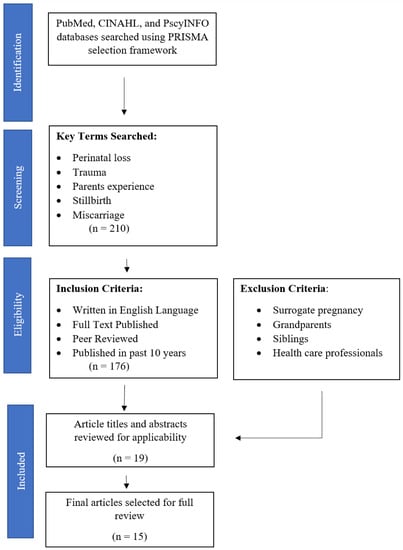
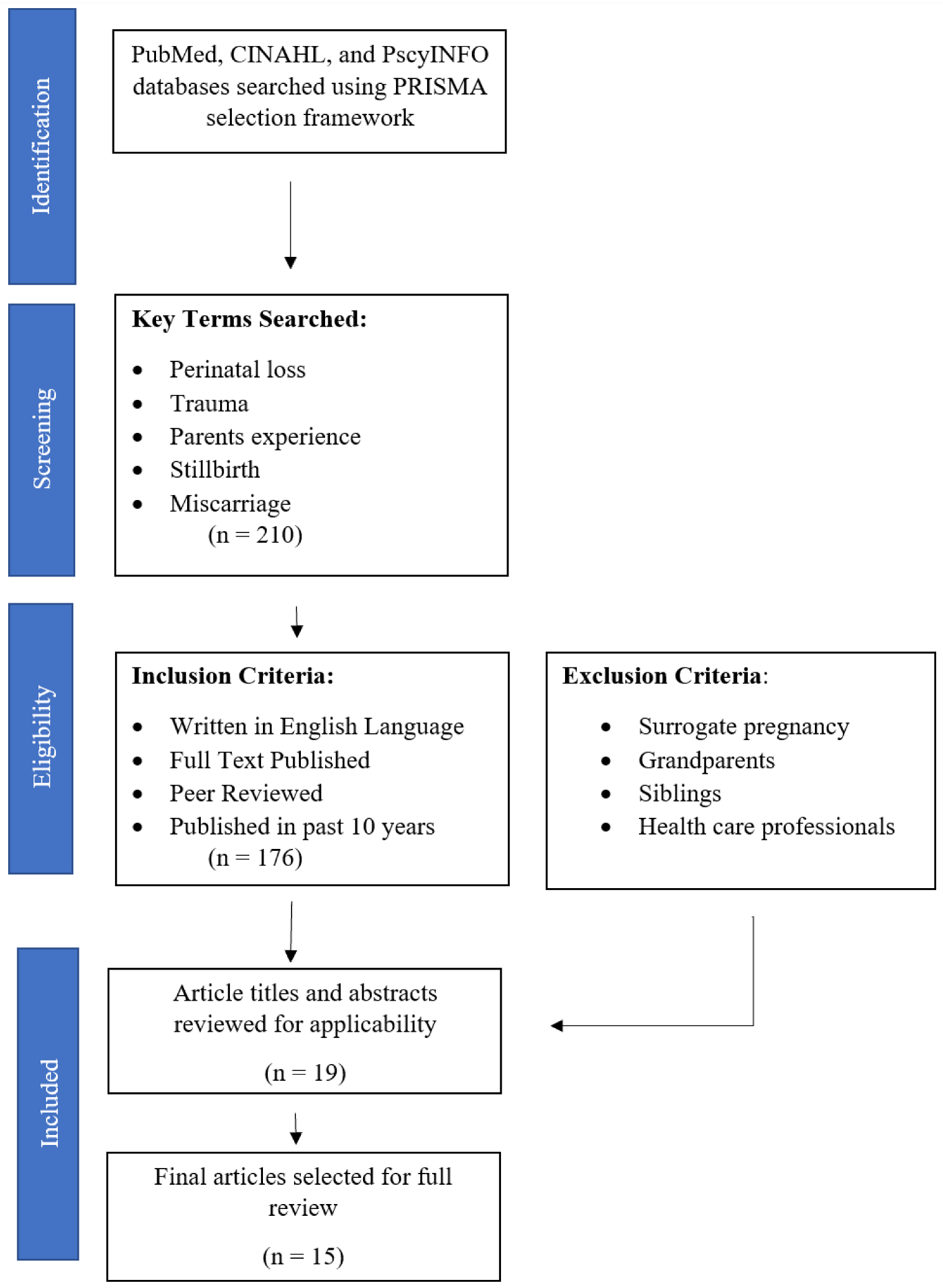
This scoping review was guided by the following question: what is known about trauma within the perinatal loss experience? A literature search was conducted using the Preferred Reporting Items for Systematic Reviews and Meta-Analysis extension for Scoping Reviews (PRISMA-ScR) [14] in PubMed, PsycINFO, and CINAHL Complete. Search terms included combinations of “perinatal loss”, “trauma”, “parents experience”, “stillbirth”, and “miscarriage” (Table 1). Inclusion criteria consisted of peer-reviewed articles published in English in the past 10 years reporting trauma within the perinatal loss experience from the parents’ perspective.
2.3. Article Selection Process
Article titles were screened for eligibility using the inclusion criteria of “perinatal loss” and “parent”. Abstracts of articles discussing perinatal loss from the parents’ perspective in the form of miscarriage, stillbirth, life-limiting fetal conditions (LLFCs), and neonatal death occurring within the first 28 days of life were reviewed. Articles exploring the emotional aspect of perinatal loss were reviewed in full. All articles mentioning trauma within the parental perinatal loss experience were included in this review.
2.4. Data Extraction and Synthesis
Articles meeting the eligibility criteria were reviewed in full using the hermeneutic process. Hermeneutic interpretation is a century-old process of interpreting text by looking at the parts in respect to the whole [15]. By exploring the parts within the whole and with respect to the sum, subtle nuances within context come to light. This is especially important with topics about which little is known.
References to trauma within the articles were extracted and categorized according to the nature with which trauma was referenced. For example, studies measuring the extent of PTSD following perinatal loss were categorized as “prevalence of trauma”. A summary of each article with supporting verbatim quotes is outlined in Table 1.
Table 1.
Summary of Article Findings.
3. Results
Search results produced a total of 210 articles. Of those, 34 articles were duplicates. Twenty-five abstracts and 19 full articles were reviewed. Fifteen articles met the inclusion criteria (Figure 1).
Figure 1.
PRISMA-ScR flow diagram [15].
3.1. Study Characteristics
Methodological approaches were described as quantitative (n = 3), qualitative (n = 6), mixed-methods (n = 2), reviews (n = 2), and discussion (n = 1). Sample sizes ranged from 11 to 455 participants and included both men (n = 235) and women (n = 869). Data were collected via survey (n = 2), psychometric questionnaire (n = 4), and interview (n = 8). Reported etiologies of perinatal loss were reported as miscarriage (n = 3), stillbirth (n = 4), death of a co-twin (n = 1), life-limiting fetal anomalies (n = 1), termination for fetal anomaly (n = 1), “perinatal loss” (n = 4), and “gestational loss” (n = 2). The timeframe for the perinatal loss experience extended to 12 years following the loss. While all studies reported took place in Westernized societies such as the United States, United Kingdom, Australia, and Canada, the geographic location of data collection were not consistently reported. Demographic characteristics beyond participant gender were also not consistently reported.
3.2. Content Categories
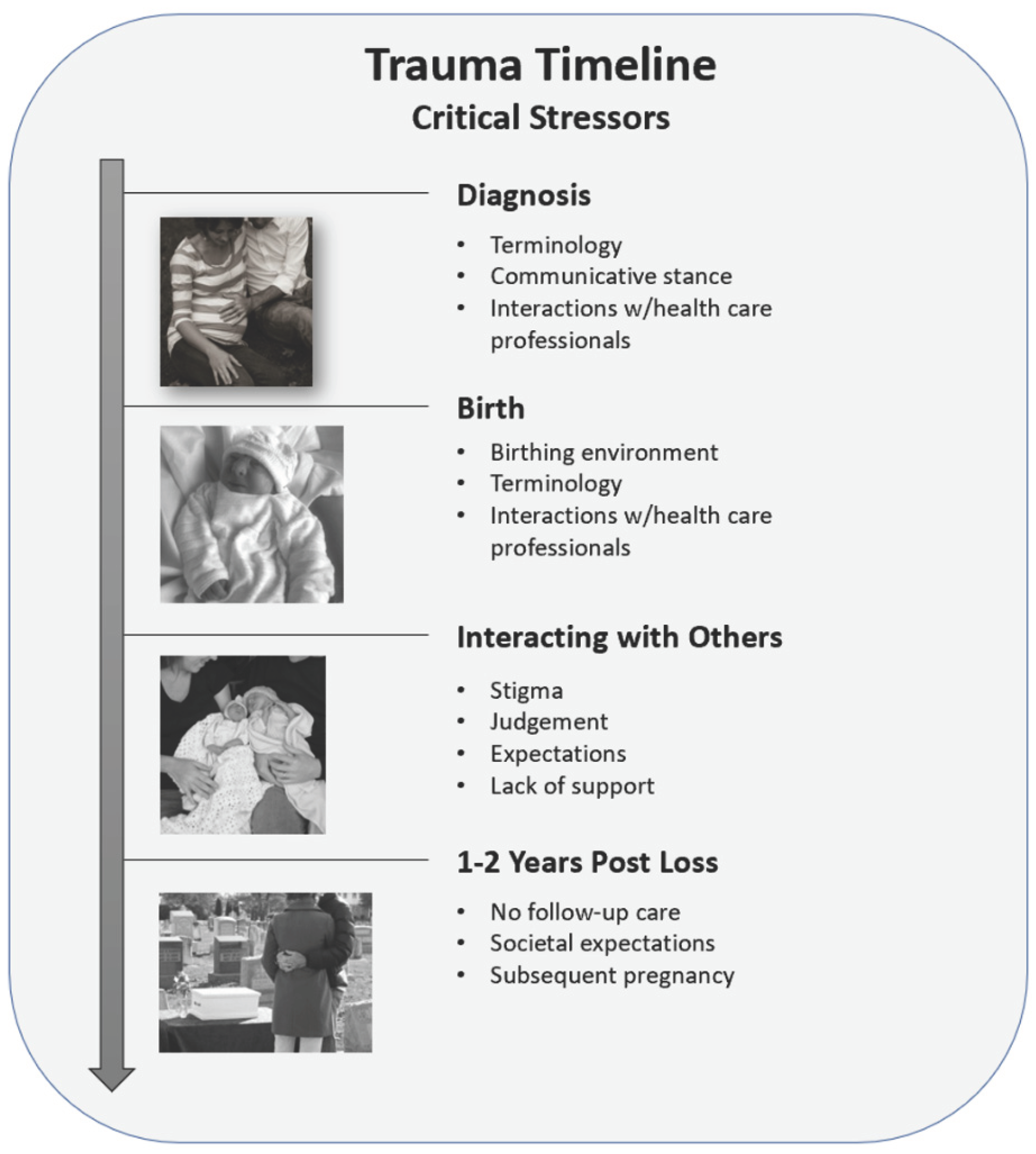
Three content categories emerged during the literature analysis: the prevalence of trauma, the characteristics of trauma, and key milestones which potentiate the traumatic nature of the perinatal loss experience. A key milestone is a significant event in an individual’s life which triggers change. Milestones often influence development and are important when considering an individual’s response to a traumatic event. Key milestones were further categorized into subcategories. Subcategories included the trauma of (1) the diagnosis, (2) the birth experience, (3) communicating with others, and (4) following the loss experience. Each category will be examined in depth.
3.2.1. Prevalence of Trauma
Emotional trauma was reported across the etiology of perinatal loss, gestational age at the time of loss, and participant gender. Jones et al. (2019) reported PTSD in 39% of women and 15% of men, finding that the symptoms of PTSD were similar in prevalence and intensity across loss experiences (i.e., miscarriage vs. stillbirth) and gestational age at the time of loss. Ordóñez et al. (2020) also report that the etiology of perinatal loss is not a statistically significant predictor of PTSD, with 22% of participants meeting the criteria for PTSD. When further broken down by etiology of loss, clinically significant levels of PTSD were identified following spontaneous abortion (19%), voluntary termination (17%), termination for fetal anomaly (38%), and neonatal death (67%) [7].
Martin et al. (2021) measured both PTSD and Complex PTSD (CPTSD), a new classification of PTSD issued by the World Health Organization. In the study, 10% and 30% of the participants met the criteria for PTSD and CPTSD, respectively. Chavez et al. (2019) report that 42% of men describe emotional trauma both during and following their partner’s miscarriage. In the Krosh et al. (2017) study of 328 women, PTSD was reported in 44% of women up to four years following the perinatal loss experience. The authors reported concern over the high levels of PTSD so far out from the loss experience, stating “by this time, posttraumatic stress symptoms would typically be expected to have decreased considerably” (p. 429). In a systematic review, Westby et al. (2021) found that up to 60% of research participants met the criteria for PTSD.
The trauma of perinatal loss was found to impact parents for up to 12 years following the loss experience [4,23,24]. At one year post-loss, the diagnosis of PSTD was 2 times higher than a diagnosis of depression or anxiety [28]. Symptoms of trauma remained clinically significant up to seven years following the loss experience, and 4% of participants develop chronic PTSD [7,18]. Authors hypothesized that measures used to assess PTSD were inadequate to fully capture the extent and burden of grief the parents experienced [24].
3.2.2. Characteristics of Trauma
Participants described being debilitated by trauma [5] and being in a disassociated state with little memory of the year following the loss [4,24]. The trauma was often embodied and women described being “stuck”, unable to move forward following their loss experience [19]. Murphy et al. (2021), exploring trauma-related symptoms rarely discussed in perinatal loss literature, found that anger, hostility, and interpersonal sensitivity were prevalent characteristics of PTSD among parents following perinatal loss. A lack of social support was associated with adverse outcomes common with interpersonal sensitivity, such as loneliness, isolation, and difficulty interacting with others [18]. Somatic symptoms, such as sleep disturbance, eating disorders, dizziness, and headache, were also found to be common characteristics associated with the trauma of perinatal loss [18].
3.2.3. Key Milestones
Parents within the identified studies spoke to key milestones which potentiated the emotional trauma of perinatal loss. Key milestones included the communication of the diagnosis of actual or imminent perinatal loss, the delivery and birth experience, sharing the news of loss with others, and attempting to return to daily life following the loss.
Trauma of the Diagnosis
The first key milestone contributing to emotional trauma within the perinatal loss experience was learning of the non-viable nature of the pregnancy. Whether due to miscarriage, stillbirth, or a diagnosis of a life-limiting fetal condition (LLFC), parents recounted feeling intense emotions, being in a state of shock, and feeling as if the world had collapsed around them [4,5,17,29]. Both mothers and fathers spoke of the trauma of miscarriage and stated being horrified, angry, and confused [21]. Despite both men and women experiencing emotional trauma at the diagnosis of miscarriage or an LLFC, men rarely received emotional support from health care professionals or members of their social circle [4,17]. According to Chaves et al. (2019) one man stated, “It was the third or fourth miscarriage before someone at the hospital even thought to ask if I was okay” (p. 670).
Receiving a diagnosis of a life-limiting fetal condition was also emotionally traumatic for parents [4,18]. Parents described being in a state of shock, being blind-sided by the news, and being pushed to make life-altering decisions immediately upon diagnosis. Parents desired to make a decision they could live with [4,5] and felt especially emotionally traumatized when pressured to decide to continue or terminate the pregnancy at the diagnostic appointment [4]. Interactions with health care professionals heavily influenced the intensity of parents’ emotional trauma [4,27]. The terminology used throughout the diagnosis was important to parents. Health care professionals whose interactions were described as cold and clinically detached negatively impacted parents’ emotional state [4]. Health care professionals who were supportive, guided parents through the decision-making process, and discussed the potential consequences of each decision positively influences parents’ overall experience [5,22].
Trauma of the Delivery and Birth
Both men and women described labor and birth as an acute phase of trauma within the perinatal loss experience [4,5,17]. Parents who described a traumatic birth experience also described persistent PTSD in the years following their loss [4]. Health care professionals played an important role in mitigating the emotional trauma of the birth experience [4,5,27]. Parents expressed wishes for a dedicated bereavement team, which they felt would have decreased the emotional trauma of their experience [5]. Health care professionals who facilitated memory making, showed kindness towards the deceased fetus or neonate, allowed unlimited visitors, and roomed parents away from expectant women and healthy neonates were described as extremely helpful [4,5,17].
Trauma of Interacting with Others
Fathers were expected to convey the news of perinatal loss to family, friends, and coworkers and described the task as a traumatic experience [4,5,17]. Reactions of those receiving the news also contributed to the emotional trauma. Fathers described receiving judgment or insensitive and hurtful comments from others [4,22]. Fathers also discussed the difficulty in being strong and comforting others as they shared the news as a time when they needed to be supported [4,5,17]. Many parents described relationships with friends and family as ending following insensitive or judgmental comments [4].
The trauma of interacting with others was further exacerbated by the expectations of society for parents to operate as if perinatal loss had not occurred [4,5]. Parents, particularly fathers, were expected to hide their grief and refrain from talking about their loss with others [4]. Parents’ social circles also expected parents’ grief to resolve with the completion of the pregnancy 4. Legal acknowledgment of the fetus or neonate via a birth certificate is issued based on gestational age at the time of loss. Miscarriages are often not legally recognized as the death of a “person”, which furthers the lack of social recognition of the loss [17]. The lack of social support which resulted in stigmatization, silence, and disenfranchised grief was found to be a predictor of PTSD [28].
Trauma following the Loss Experience
Symptoms of trauma persisted for years following the perinatal loss experience [4,5,18,25,26]. Hypersensitivity, hyperreactivity, triggering events, and nightmares were disruptive to many parents’ lives [4]. The grief and trauma of the loss were embodied by participants, who felt chronically “stuck” in emptiness [19]. Parents described feeling alone and abandoned by both social and professional support systems following the “end” (i.e., delivery or birth of the fetus or neonate) of the perinatal loss experience [4,5]. The absence of social support and follow-up care required parents to actively seek help following their loss, which contributed to feelings of being alone and abandoned and often prevented parents from receiving the psychological support they needed [13,18,23].
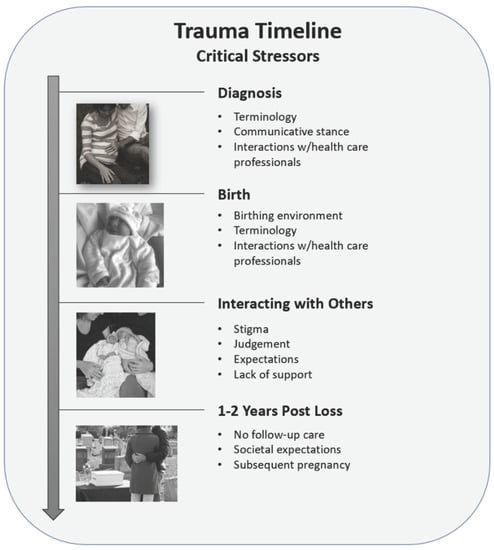
Social support was a protective factor in the development of PTSD [28]. Within the realm of social support were ritual and ceremonial acknowledgments of the fetal or neonatal death. Parents’ grief was negatively impacted when they were not “allowed” or offered the opportunity to engage in cultural rituals surrounding their loss [19]. Subsequent pregnancies and twin pregnancies complicated parents’ preexisting grief and trauma following perinatal loss. Women who experienced a pregnancy subsequent to perinatal loss were especially vulnerable to developing PTSD [29]. Pregnancies after loss were wrought with depression, anxiety, and PTSD [5]. Societal expectations of a subsequent pregnancy to “fix” the grief of prior loss often prevented parents from receiving psychosocial support [4,5,18]. Similarly, the loss of a co-twin was described as a traumatic event with multiple unique and complex emotional stressors [4,26]. The coexistence of joy and heartbreak amidst caring for the surviving twin took a substantial biopsychosocial toll on both mothers and fathers. Parents reported needing to put their emotions on the back burner to care for the surviving twin, which consequently prolonged the emotional trauma of the loss experience [4,26]. Figure 2 illustrates the identified themes in the form of a timeline.
Figure 2.
Trauma timeline and key milestones.
Disruption of core beliefs was a positive predictor for PTSD [26]. Parents described needing to relearn how to live in a world without their child, stating that the way the world worked no longer made sense [4,5,20]. Parents expressed their desire for professional help in learning how to reconstruct meaning in the years after their loss, stating they struggled to understand their new identity [4,5]. As parents relearned how to live in a new reality and find their new identity, they stated that maintaining relationships with their spouse or partner, living children, and social network was also challenging [4]. Parents’ perception of value evolved with the disruption of their core beliefs, lending to value conflicts within their social circle. Value conflicts, relationship strain, and lack of support exacerbated the emotional trauma parents were experiencing [4,13,21].
Positive outcomes amidst the trauma were reported in the literature. Some parents found solace in volunteering, and “altruism born of suffering” was found to foster posttraumatic growth [25]. When exploring the effects of therapeutic approaches to support women following perinatal loss, non-trauma-focused counseling was ineffective in providing the support women needed [20].
4. Discussion
Emotional trauma is prevalent throughout the perinatal loss experience, with up to 60% of parents meeting the criteria for PTSD. Many parents continued to experience PTSD for years following their loss experience. This paper provides important insight into the prevalence of emotional trauma and PTSD within the perinatal loss experience. The findings speak to the critical importance of addressing the emotional trauma immediately, during, and in the years following perinatal loss. Social support, both professional and personal, was found to be a protective factor in the development of PTSD [28]. Interactions with health care professionals were also found to impact the severity of PTSD [17].
Key milestones affecting the degree of emotional trauma were identified in this review and included trauma of the diagnosis; of the birth; of sharing the news with others; and in the days, weeks, and months following the loss. Such findings are significant in that they align with critical milestones which influence an individual’s propensity to achieve wellness or become susceptible to illness. According to Meleis’s Transitions Theory [30], change is a life process (transition) during which health care professionals can facilitate well-being and healthy coping. Common properties of a transition include critical milestones (i.e., birth, parenthood), disruption in the status quo in daily life, and/or loss. Outcomes following transitions are influenced by the individual’s understanding and attributed meaning of the transition, the associated stigmas attached to the transition, interactions with others throughout the transition process, and “environmental conditions that expose individuals to potential damage, problematic or extended recovery, or delayed or unhealthy coping” [16]. Each milestone identified in this paper (diagnosis, birth, communicating with others, and the post-loss timeframe) align with critical transition milestones which influence an individual’s well-being or susceptibility to illness. These findings suggest the prevalence and degree of PTSD associated with perinatal loss may be mitigated by strategic interventions by the health care team. Considering that up to 60% of parents experience PTSD following perinatal loss, the need to address adverse biopsychosocial outcomes associated with perinatal loss is of the utmost importance.
Health care systems have recently adopted a framework to guide health care professionals in providing care to patients who have experienced trauma, known as trauma-informed care (TIC). The TIC framework has successfully equipped health care professionals with tools to avoid the retraumatization of patients with a history of trauma [12]. Adoption of TIC practices has addressed issues of underutilization of health care resources and mistrust of health care providers which subsequently lead to adverse health outcomes in survivors of trauma [11]. Based on the findings in this review, the adoption of a TIC framework specifically adapted to meet the needs of bereaved parents may improve patient outcomes following perinatal loss.
4.1. Implications for Practice
Health care professionals have the responsibility of facilitating a healthy transition from “healthy pregnancy” to “non-viable pregnancy”. Such a responsibility is admittedly a herculean task. It is necessary to recognize perinatal loss as a traumatic event. In recognizing the trauma of perinatal loss, health care professionals can begin to address parents’ unique biopsychosocial needs throughout the perinatal loss experience. Utilization of a TIC framework equips health care professionals with the specialized tools necessary to mitigate the risk of further traumatizing grieving parents. Within the TIC framework, health care professionals may improve parents’ experiences by acknowledging the loss of both parents; normalizing both parents’ emotional responses; facilitating memory making, rituals, and ceremonies; and providing follow-up care for at least one year following the loss.
Pregnancies subsequent to perinatal loss are often wrought with anxiety and PTSD. Identifying pregnant persons with a history of gestational loss is necessary to recognize those who require additional psychological and emotional support throughout the pregnancy. Developing automated flagging systems in electronic health records may facilitate early identification and resource allocation to those with prior gestational loss. Providing early interventions and emotional support may decrease the anxiety and trauma of pregnancy subsequent to gestational loss.
4.2. Future Research
Considering the unique nature of perinatal loss, it is necessary to adapt current TIC models to meet the needs of grieving parents. Several non-profit organizations (String of Pearls, Be Not Afraid) utilize TIC when attending to the needs of families experiencing perinatal loss. Examination of an adapted TIC model and exploration of biopsychosocial outcomes of parents who have had TIC are important next steps for future research.
Follow-up care in the wake of perinatal loss is not yet a standard of care. In the 2019 position statement of perinatal palliative care issued by the American College of Obstetricians and Gynecologists (ACOG), the provision of follow-up care was not mentioned. Considering the longevity of adverse biopsychosocial outcomes, providing follow-up care after perinatal loss is mandatory. Research is needed to develop follow-up care protocols and recommendations.
4.3. Limitations
This scoping review was conducted by a single author. While the utilization of a team approach when conducting a scoping review is recommended, it is not a requirement to maintain rigor within the process of study selection. Due to the scant literature discussing trauma in perinatal loss, the study elimination contained few to no nuances. Therefore, the rigor of this scoping review was not compromised by the work of a single author.
An additional limitation to this review is the homogeneous sample within the literature. While more men have been included in perinatal loss literature as of late, inclusion of minority populations, homosexual and transgender parents, and parents of lower socioeconomic status is severely lacking. Thus, the findings of this review cannot be generalized to all populations experiencing perinatal loss.
5. Conclusions
Perinatal loss is a long-term, emotionally traumatic experience for many parents. With up to 60% of parents meeting the criteria for PTSD, it is critical to approach perinatal loss through a lens of trauma. Health care professionals are influential in mitigating the traumatic nature of the loss experience and in addressing the subsequent posttraumatic stress parent experience. Adopting a trauma-informed framework in the event of perinatal loss is critical. While more research is necessary, health care professionals may positively influence grieving parents’ experiences by adopting a trauma-informed approach, acknowledging the loss, normalizing the emotional response, facilitating memory making, and providing follow-up care for at least one year after the perinatal loss experience.
Funding
This research received no external funding.
Institutional Review Board Statement
Not applicable.
Informed Consent Statement
Not applicable.
Data Availability Statement
Not applicable.
Conflicts of Interest
The author declares no conflict of interest.
References
- World Health Organization. Newborns: Improving Survival and Well-Being. 2020. Available online: https://www.who.int/news-room/fact-sheets/detail/newborns-reducing-mortality (accessed on 4 May 2022).
- Ely, D.M.; Driscoll, A.K. National vital statistics reports infant mortality in the United States, 2018: Data from the period linked birth/infant death file. Natl. Vital Stat. Rep. 2020, 69, 1–18. [Google Scholar]
- Berry, S.N.; Marko, T.; Oneal, G. Qualitative Interpretive Metasynthesis of Parents’ Experiences of Perinatal Loss. J. Obstet. Gynecol. Neonatal Nurs. 2021, 50, 20–29. [Google Scholar] [CrossRef] [Scilit]
- Berry, S.N.; Severtsen, B.; Davis, A.; Nelson, L.; Hutti, M.H.; Oneal, G. The impact of anencephaly on parents: A mixed-methods study. Death Stud. 2021, 1–10. [Google Scholar] [CrossRef] [Scilit] [PubMed]
- Gillis, C.; Wheatley, V.; Jones, A.; Roland, B.; Gill, M.; Marlett, N.; Shklarov, S. Stillbirth, still life: A qualitative patient-led study on parents’ unsilenced stories of stillbirth. Bereave. Care 2020, 39, 124–132. [Google Scholar] [CrossRef] [Scilit]
- Browne, C. National Standards for Bereavement Care Following Pregnancy Loss and Perinatal Death; HSE National Standards for Bereavement Care: Dublin, Ireland, 2016. [Google Scholar]
- Fernández-Ordoñez, E.; González-Cano-Caballero, M.; Guerra-Marmolejo, C.; Fernández-Fernández, E.; García-Gámez, M. Perinatal Grief and Post-Traumatic Stress Disorder in Pregnancy after Perinatal Loss: A Longitudinal Study Protocol. Int. J. Environ. Res. Public Health 2021, 18, 2874. [Google Scholar] [CrossRef] [Scilit]
- Fernández-Sola, C.; Camacho-Ávila, M.; Hernández-Padilla, J.M.; Fernández-Medina, I.M.; Jiménez-López, F.R.; Hernández-Sánchez, E.; Conesa-Ferrer, M.B.; Granero-Molina, J. Impact of Perinatal Death on the Social and Family Context of the Parents. Int. J. Environ. Res. Public Health 2020, 17, 3421. [Google Scholar] [CrossRef] [Scilit] [PubMed]
- Hutti, M.H.; Myers, J.; Hall, L.A.; Polivka, B.J.; White, S.; Hill, J.; Kloenne, E.; Hayden, J.; Grisanti, M.M. Predicting grief intensity after recent perinatal loss. J. Psychosom. Res. 2017, 101, 128–134. [Google Scholar] [CrossRef] [Scilit] [PubMed]
- Enez, O. Complicated grief: Epidemiology, clinical features, assessment, and diagnosis. Curr. Approaches Psychiatry 2018, 10, 269–279. [Google Scholar]
- Kartha, A.; Brower, V.; Saitz, R.; Samet, J.; Keane, T.; Liebschutz, J. The Impact of Trauma Exposure and Post-Traumatic Stress Disorder on Healthcare Utilization Among Primary Care Patients. Med Care 2008, 46, 388–393. [Google Scholar] [CrossRef] [Scilit]
- Elisseou, S.; Puranam, S.; Nandi, M. A Novel, Trauma-Informed Physical Examination Curriculum for First-Year Medical Students. J. Teach. Learn. Resour. 2019, 15, 10799. [Google Scholar] [CrossRef] [Scilit]
- Westby, C.L.; Erlandsen, A.R.; Nilsen, S.A.; Visted, E.; Thimm, J.C. Depression, anxiety, PTSD, and OCD after stillbirth: A systematic review. BMC Pregnancy Childbirth 2021, 21, 782. [Google Scholar] [CrossRef] [Scilit] [PubMed]
- Levac, D.; Colquhoun, H.; O’Brien, K. Scoping studies: Advancing the methodology. Represent. Interv. 2012, 69, 1–18. [Google Scholar] [CrossRef] [Scilit] [PubMed]
- Tricco, A.C.; Lillie, E.; Zarin, W.; O’Brien, K.K.; Colquhoun, H.; Levac, D.; Moher, D.; Peters, M.D.J.; Horsley, T.; Weeks, L.; et al. PRISMA Extension for Scoping Reviews (PRISMA-ScR): Checklist and Explanation. Ann. Intern. Med. 2018, 169, 467–473. [Google Scholar] [CrossRef] [Scilit]
- Cacciatore, J.; Blood, C.; Kurker, S. From “Silent Birth” to Voices Heard: Volunteering, Meaning, and Posttraumatic Growth After Stillbirth. Illn. Crisis Loss 2017, 26, 23–39. [Google Scholar] [CrossRef] [Scilit]
- Chavez, M.S.; Handley, V.; Jones, R.L.; Eddy, B.; Poll, V. Men’s Experiences of Miscarriage: A Passive Phenomenological Analysis of Online Data. J. Loss Trauma 2019, 24, 664–677. [Google Scholar] [CrossRef] [Scilit]
- Guclu, O.; Senormanci, G.; Tuten, A.; Gok, K.; Senormanci, O. Perinatal Grief and Related Factors After Termination of Pregnancy for Fetal Anomaly: One-Year Follow-up Study. Arch. Neuropsychiatry 2021, 58, 221–227. [Google Scholar] [CrossRef] [Scilit] [PubMed]
- Jones, K.; Robb, M.; Murphy, S.; Davies, A. New understandings of fathers’ experiences of grief and loss following stillbirth and neonatal death: A scoping review. Midwifery 2019, 79, 102531. [Google Scholar] [CrossRef] [Scilit]
- Krosch, D.J.; Shakespeare-Finch, J. Grief, traumatic stress, and posttraumatic growth in women who have experienced pregnancy loss. Psychol. Trauma Theory Res. Pract. Policy 2017, 9, 425–433. [Google Scholar] [CrossRef] [Scilit]
- Kurz, M.R. When Death Precedes Birth: The Embodied Experiences of Women with a History of Miscarriage or Stillbirth—A Phenomenological Study Using Artistic Inquiry. Am. J. Dance Ther. 2020, 42, 194–222. [Google Scholar] [CrossRef] [Scilit]
- Markin, R.D. “Ghosts” in the womb: A mentalizing approach to understanding and treating prenatal attachment disturbances during pregnancies after loss. Psychotherapy. 2018, 55, 275–288. [Google Scholar] [CrossRef] [Scilit]
- Martin, C.J.H.; Patterson, J.; Paterson, C.; Welsh, N.; Dougall, N.; Karatzias, T.; Williams, B. ICD-11 complex Post Traumatic Stress Disorder (CPTSD) in parents with perinatal bereavement: Implications for treatment and care. Midwifery 2021, 96, 102947. [Google Scholar] [CrossRef] [Scilit] [PubMed]
- Murphy, S.; Shevlin, M.; Elklit, A. Psychological Consequences of Pregnancy Loss and Infant Death in a Sample of Bereaved Parents. J. Loss Trauma 2013, 19, 56–69. [Google Scholar] [CrossRef] [Scilit]
- Ordóñez, E.F.; Díaz, C.R.; Gil, I.M.M.; Manzanares, M.T.L. Post-traumatic stress disorder after subsequent birth to a gestational loss: An observational study. Salud Ment. 2020, 43, 129–136. [Google Scholar] [CrossRef] [Scilit]
- Richards, J.; Graham, R.; Embleton, N.D.; Campbell, C.; Rankin, J. Mothers’ perspectives on the perinatal loss of a co-twin: A qualitative study. BMC Pregnancy Childbirth 2015, 15, 143. [Google Scholar] [CrossRef] [Scilit] [PubMed]
- Smith, L.K.; Dickens, J.; Atik, R.B.; Bevan, C.; Fisher, J.; Hinton, L. Parents’ experiences of care following the loss of a baby at the margins between miscarriage, stillbirth and neonatal death: A UK qualitative study. BJOG Int. J. Obstet. Gynaecol. 2020, 127, 868–874. [Google Scholar] [CrossRef] [Scilit] [PubMed]
- Ironside, P.M. New Pedagogies for Teaching Thinking: The Lived Experiences of Students and Teachers Enacting Narrative Pedagogy. J. Nurs. Educ. 2003, 42, 509–516. [Google Scholar] [CrossRef] [Scilit] [PubMed]
- Denney-Koelsch, E.; Cote-Arsenault, D. Life-limiting fetal conditions and pregnancy continuation: Parental decision-making processes. BMJ Support. Palliat. Care 2021, 1–7. [Google Scholar] [CrossRef] [Scilit]
- Meleis, A.I.; Sawyer, L.M.; Im, E.-O.; Messias, D.K.H.; Schumacher, K. Experiencing Transitions: An Emerging Middle-Range Theory. Adv. Nurs. Sci. 2000, 23, 12–28. [Google Scholar] [CrossRef] [Scilit]
Publisher’s Note: MDPI stays neutral with regard to jurisdictional claims in published maps and institutional affiliations. |
© 2022 by the author. Licensee MDPI, Basel, Switzerland. This article is an open access article distributed under the terms and conditions of the Creative Commons Attribution (CC BY) license (https://creativecommons.org/licenses/by/4.0/).