


Abstract
Research on teacher digital competence has expanded sharply over the past decade. However, the field’s development, thematic structure, and underlying terminological characteristics have remained under-examined. The rapid integration of artificial intelligence has compounded this challenge, introducing new competence-related constructs and reshaping the field’s conceptual landscape. In the context of Sustainable Development Goal (SDG) targets 4.4 (developing digital skills) and 4.c (ensuring a supply of qualified teachers), this raises the question of whether the knowledge base is developing coherently. To address this question, we analyse a corpus of 4097 Scopus-indexed publications retrieved through a broad search on teacher digital competence, published between 2015 and 2025, using longitudinal bibliometric analysis and science mapping. The analysis reveals marked terminological variability: a high Pielou’s evenness index (J′ = 0.86) indicates that occurrences are distributed relatively evenly across 8567 normalised terms, suggesting the absence of a strongly dominant terminological core at the corpus level, while singleton terms account for a large share of the vocabulary (76%), pointing to substantial fragmentation. Against this fragmented backdrop, an AI-oriented strand accounts for 10.4% of the corpus and rises to 26.1% of annual output by 2025; rather than displacing established competence-related concepts, AI-related concepts form an emerging technological layer within teacher digital competence research. These thematic patterns are accompanied by uneven publication activity and international collaboration. Taken together, these findings indicate that the conceptual boundaries of teacher digital competence research are shaped by substantial terminological variability and ongoing thematic expansion. They further highlight the importance of transparent search strategies and greater terminological clarity and consistency for improving the comparability, reproducibility, and cumulative development of research in this field.
1. Introduction
Amid the ongoing digital transformation of education, research on teacher digital competence has become an established and rapidly growing area within educational technology. This growth reflects the increasing importance of teachers’ digital competence for supporting technology-enhanced teaching and for advancing the United Nations Sustainable Development Goals (SDG Targets 4.4 and 4.c). Recent bibliometric and systematic reviews confirm both the momentum and the scale of this research [1,2]: reviews of educational technology and of digital competence in higher education have identified teachers’ preparedness to use digital technologies as one of the field’s most frequently investigated themes [3,4], and the accumulated body of work has grown large enough to warrant systematic empirical mapping in its own right.
The scope of the field has widened considerably over the past decade. Research on teacher digital competence is no longer confined to the operational digital skills of individual teachers; it increasingly addresses the broader professional and pedagogical dimensions of competence. Studies have examined the strategies through which pre-service teachers are prepared to integrate technology [5,6], the formation of teachers’ professional digital identity [7], and pedagogical digital competence as a distinct construct linking technological and didactic knowledge [8]. More recent work frames teacher digital competence as an inherently multidimensional construct, encompassing not only technical proficiency but also professional, ethical, and context-dependent capacities [9,10]. This conceptual widening is significant: as the boundaries of the field expand, so too does the range of terminology used to describe it.
This expansion has been accompanied by a proliferation of conceptual frameworks. The literature draws on the European Digital Competence Framework for Educators (DigCompEdu), the Digital Competence Framework for Citizens (DigComp), the UNESCO ICT Competency Framework for Teachers (ICT-CFT), and the Technological Pedagogical Content Knowledge (TPACK) framework, among others, each emphasising different dimensions of teachers’ digital competence [11,12,13,14,15,16]. Alongside these frameworks, the field employs a wide range of overlapping labels (digital competence, digital literacy, digital skills, and ICT competence) that are not always used consistently. Reviews have repeatedly identified this conceptual and terminological diversity as a persistent feature of the literature: the same educational phenomena are frequently described under competing designations, with no shared definition across studies [17,18,19]. This terminological variability is more than a semantic inconvenience; it directly shapes how the literature can be retrieved, mapped, and compared [20,21].
A substantial body of review and bibliometric research has already mapped this literature from complementary perspectives. Systematic reviews have synthesised competence frameworks, assessment instruments, and approaches to teacher professional development [4,22], while bibliometric studies have charted publication trends, collaboration networks, citation structures, and thematic evolution [3,23]. Together, these syntheses have mapped the field’s established thematic structure, publication landscape, and principal lines of research.
What remains largely unexamined, however, is the empirical delineation of the field’s conceptual boundaries. Existing syntheses predominantly take these boundaries as a given, focusing on what the corpus contains rather than on how its conceptual core can be distinguished from adjacent research traditions that share terminology. Yet, terminological variability carries direct methodological consequences for corpus construction, record retrieval, and science mapping: when a single construct appears under multiple competing labels, and a single label spans distinct constructs, field boundaries become an empirical question rather than an assumption. The present study addresses this gap through a deliberately broad retrieval strategy and bibliometric network analysis, guided by the following research questions:
RQ1: How did the conceptual structure of research on teacher digital competence evolve across three analytically defined phases between 2015 and 2025, and how has the emergence of AI-related competence constructs been reflected in this evolution?
RQ2: To what extent does terminological variability affect bibliometric retrieval, mapping, and the comparability of studies on teacher digital competence?
RQ3: How do international collaboration patterns vary across countries within the research field of teacher digital competence?
2. Method
2.1. Data Source and Search Strategy
Scopus was selected as the bibliometric data source for two reasons: first, it provides comprehensive international coverage of peer-reviewed literature on teacher digital competence; second, its structured metadata are directly compatible with bibliometric analysis and science-mapping software.
These properties made it possible to construct a chronologically consistent corpus spanning 2015 to 2025, and thereby to track how the field’s themes shifted and how AI-related competence constructs emerged within the Scopus-indexed literature.
The search query combined a competence/literacy block with a teaching-role block using the Boolean operator AND, applied across titles, abstracts, and author keywords (TITLE-ABS-KEY). Wildcard truncation (*) was used to capture morphological and spelling variants. The search parameters and inclusion criteria are summarised in Table 1, and the complete Scopus search string is provided in Appendix A and the Supplementary Materials.
Table 1.
Corpus inclusion criteria.
The query was built around digital competence. Consequently, the AI-oriented segment identified in the corpus (Section 3.5) reflects the extent to which AI-related vocabulary has become embedded within teacher digital competence research.
2.2. Study Selection and Corpus Construction
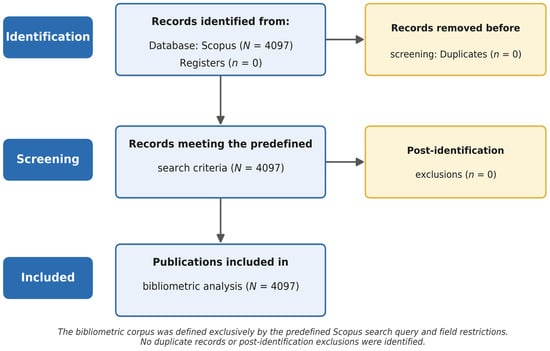
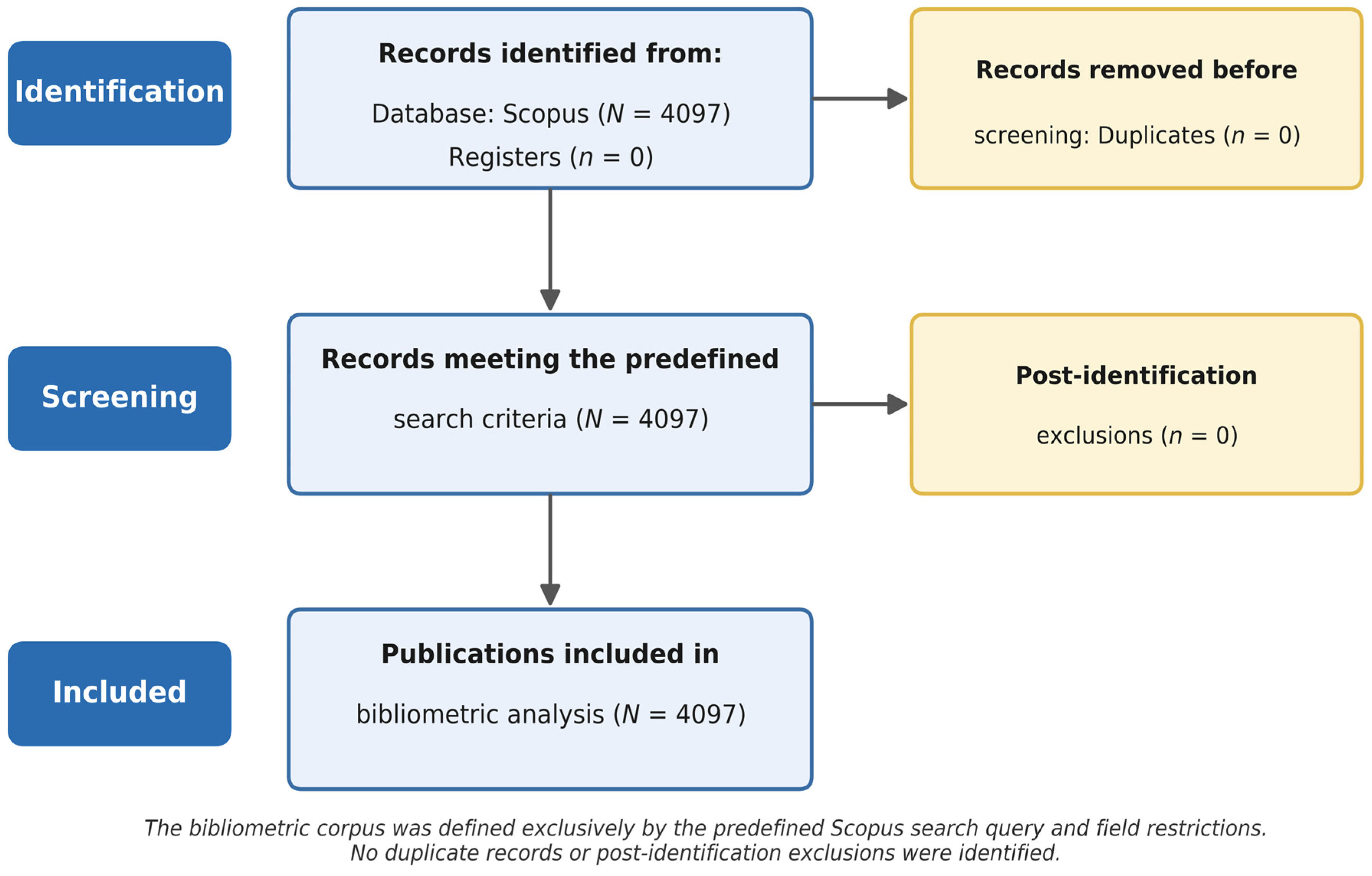
Reporting follows bibliometric reporting guidance (BIBLIO), and the corpus-construction workflow is presented as a PRISMA-style identification diagram (Figure 1), with the source attributed to the PRISMA 2020 Statement [24]. Executing the search query yielded 4097 records. No duplicate records were identified, and no post-identification exclusions were applied; all 4097 records were retained for analysis. Bibliographic metadata were extracted from Scopus and analysed using the bibliometrix R package (version 4.3.3) [25] and VOSviewer (version 1.6.20) [26].
Figure 1.
PRISMA-style identification workflow for corpus construction. Adapted from the PRISMA 2020 Statement (Page et al., 2021) [24].
The broad retrieval strategy prioritised recall over specificity, seeking to capture the terminological space associated with teacher digital competence rather than to construct a maximally precise corpus around a single conceptual definition.
2.2.1. Corpus Relevance Assessment
Corpus relevance was assessed on a random subsample of 200 records (~5% of the corpus). Two coders independently classified each record using a protocol that distinguished studies in which teacher digital competence was the primary substantive focus from those in which it appeared only as a peripheral mention. Inter-coder agreement before consensus resolution was almost perfect (Cohen’s κ = 0.93; 97.5% raw agreement), and the remaining disagreements were resolved through discussion.
Most disagreements arose in borderline cases at the interface between teacher digital competence and adjacent educational or technological domains. Such cases are a direct consequence of the deliberately broad retrieval strategy, which was designed to maximise recall across the conceptual breadth of the field. They do not indicate retrieval error or coding inconsistency but are an inherent characteristic of the literature—an empirical manifestation of the conceptual and terminological variability that is itself one of the central findings of this study.
One boundary case warrants explicit treatment. Studies that frame teacher digital competence through technology-acceptance and self-efficacy constructs (e.g., TAM, UTAUT, or perceived-usefulness measures) could be regarded as a conceptually distinct strand. In the present corpus, they are retained rather than excluded, accounting for 266 records (6.5%). A sensitivity analysis confirms that their inclusion does not materially affect the terminological findings: recomputing the core diversity statistics after removing these records leaves them essentially unchanged, with Pielou’s J′ and the singleton share shifting by less than 0.01 and 0.3 percentage points, respectively, from the full-corpus values reported in Section 3.3 (Pielou’s J′ = 0.861; singleton share approximately 76%). These indicators of terminological variability are therefore robust to the inclusion or exclusion of this strand.
2.2.2. Structural Embeddedness
A bibliographic-coupling network was constructed from the publications’ cited references, with edge weights normalised using the Salton measure. For each publication, structural embeddedness was quantified by its k-core number, derived from the network topology: a higher k-core value indicates that a publication belongs to a densely connected, cohesive core of mutually coupled literature rather than to the periphery. Validated against expert relevance labels, k-core position showed a statistically significant positive association with substantive relevance (point-biserial r = 0.34, p < 0.001).
2.3. Analytical Procedures
The corpus was analysed along two complementary dimensions: the thematic composition of the field, which is the primary focus of this study, and its collaborative and structural organisation, which provides supporting context. Two text sources were used depending on the analysis: the normalised author and index keywords, and, where broader lexical coverage was required, a combined text field.
Terminological structure. The analysis of the field’s terminology (Section 3.3) drew on author and index keywords. These were normalised prior to analysis to reduce superficial variation: they were converted to lower case, and morphological and spelling variants—plural and singular forms, British and American spellings, and hyphenation differences—were consolidated so that frequency counts reflect conceptual rather than orthographic distinctions. For each normalised term, occurrence frequencies were computed across the corpus, and the proportion of single-occurrence terms together with the share held by the most frequent terms was used to describe the overall distribution. Terminological evenness was quantified using Pielou’s evenness index (J′), derived from the Shannon diversity index.
Dictionary-based thematic profiling. For each record, a combined text field (title, author keywords, and abstract) was compiled, and three thematic dictionaries were constructed from it using regular expressions:
- Core Digital Competence—digital competence, digital literacy, digital skills, ICT competence, and their variants;
- COVID-19/Emergency Remote Teaching—COVID-19, pandemic, emergency remote teaching, distance learning, and online learning;
- Artificial Intelligence/Generative AI—artificial intelligence, machine learning, ChatGPT, generative AI, and large language models.
A publication was assigned to a theme if its text matched at least one pattern in the corresponding dictionary, and assignments were non-exclusive, so that a publication could belong to more than one theme. The complete regular-expression patterns are provided in Appendix B.
Periodisation. The observation window was divided into three analytical phases: Phase I (2015–2020), Phase II (2021–2022), and Phase III (2023–2025). These boundaries were not derived from the series itself: the annual publication counts were tested for endogenous structure using offline change-point detection [27], which returned no stable break points across model specifications; the three phases were therefore fixed a priori by external contextual markers (the onset of COVID-19 in 2020 and the public release of generative-AI tools in late 2022).
Collaboration and network analysis. International collaboration was analysed at the country level from author affiliations, using fractional counting, in which each publication is distributed equally among its contributing countries, so that national output sums to the number of publications rather than to the number of country participations. Records without affiliation data were excluded from the geographic analysis only. Author affiliations were normalised to the country level, merging spelling variants (for example, Türkiye and Turkey) and removing residual organisation-level artefacts introduced by affiliation parsing. A country co-authorship network was constructed, linking two countries whenever they co-authored a publication, and each country’s position was characterised by its degree and betweenness centrality. On this basis, countries were assigned to four structural positions: a network core, comprising countries lying above the network mean on both degree and betweenness centrality (a positive combined centrality z-score), so that core membership reflects connectivity rather than publication volume; and, among the remaining countries, connected (three or more co-authored publications with a core country), semi-peripheral (one or two), and peripheral (none). These positions correspond to the colour coding in the collaboration map (Section 3.4). For each country, the international co-authorship rate (ICR) was computed as the proportion of its publications co-authored with at least one other country. To examine the internal thematic organisation of Phase III (2023–2025), a keyword co-occurrence network was constructed, in which two terms are linked when they appear together in the same publication. Finally, k-core decomposition was applied to the bibliographic-coupling network to assess how strongly each publication is embedded in the shared referencing structure of the field. Full specifications of the search query and field restrictions are provided in Appendix A.
3. Results
3.1. Corpus Construction and Screening Results
The search strategy identified 4097 Scopus-indexed journal articles published between 2015 and 2025 (Figure 1). Two experts independently coded a random 200-record subsample; inter-rater agreement was almost perfect (Cohen’s κ = 0.93; 97.5% raw agreement). Following consensus resolution of the five discrepant records, 74.0% of the subsample (95% CI 67.9–80.1) were judged substantively relevant to the conceptual field of teacher digital competence, while the remainder reflected peripheral or incidental usage across adjacent domains.
3.2. Evolution of the Research Field
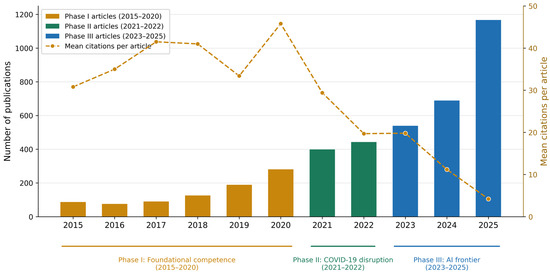
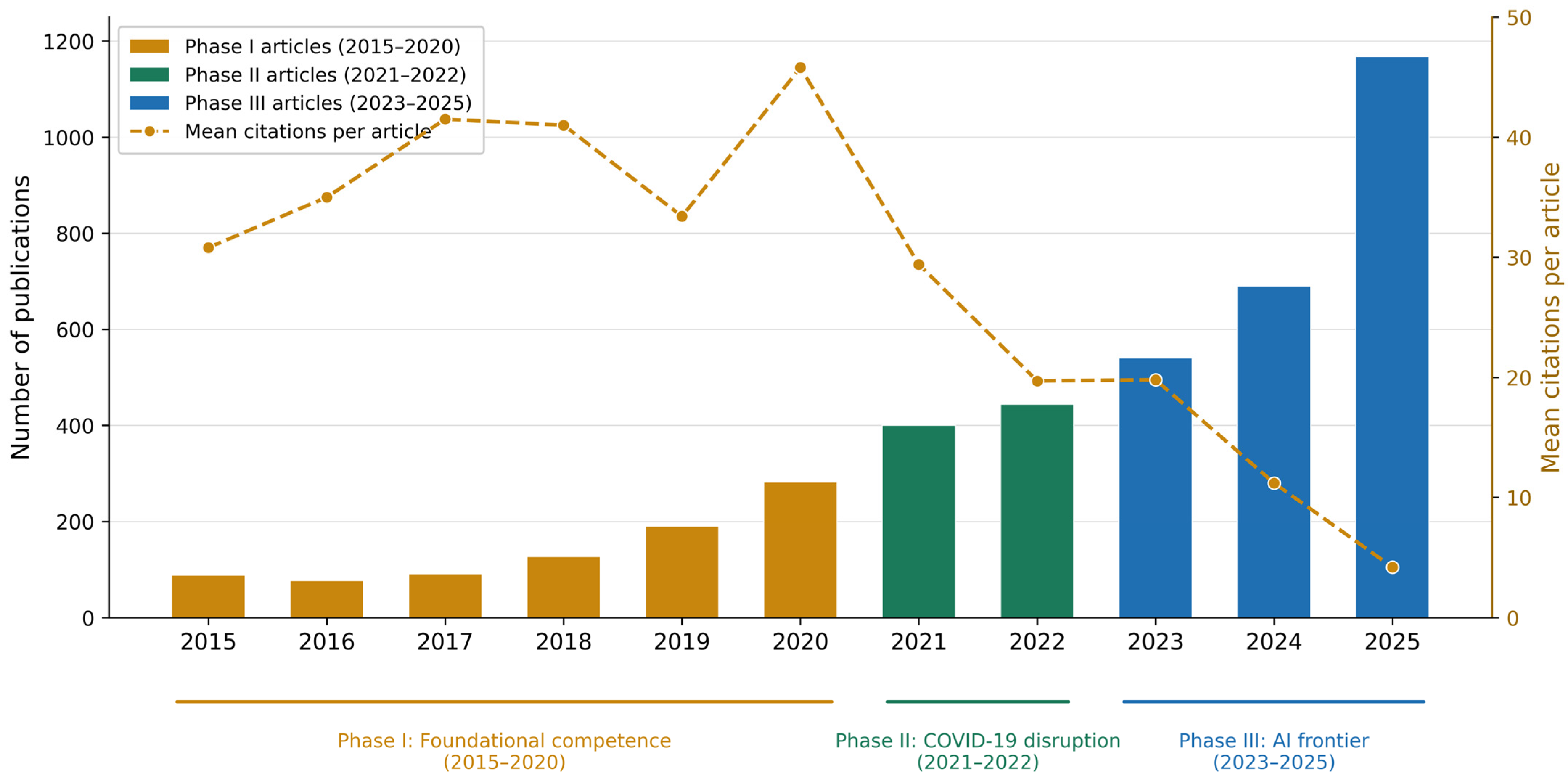
Annual publication output rose continuously from 88 articles in 2015 to 1168 in 2025, a more than thirteenfold increase (Figure 2). Testing for structural break points in the time series revealed no stable, endogenously derived boundaries across the tested specifications: the trajectory is best described as continuous, accelerating growth rather than a succession of discrete structural shifts.
Figure 2.
Annual publication volume and mean citations per article, 2015–2025 (N = 4097). Publication counts are complete for all years, including 2025 (database last searched 2026). Mean citation values for the most recent years reflect shorter citation-accrual periods and should be interpreted accordingly.
Because change-point detection yields no intrinsic boundaries [27], the field was instead partitioned into three analytical phases defined by external contextual markers:
- Phase I (2015–2020): Foundational competence and literacy frameworks;
- Phase II (2021–2022): COVID-19 pandemic and emergency remote teaching;
- Phase III (2023–2025): AI emergence and digital transformation.
The dictionary-based thematic profiling supports this partition. Phase I is dominated by foundational literacy vocabulary (digital literacy, information literacy, ICT); Phase II shows a pronounced surge in pandemic-related terms (COVID-19, distance learning, online teaching); and Phase III exhibits a sharp rise in AI-related terms (artificial intelligence, ChatGPT) alongside the continued consolidation of core competence vocabulary.
Across the full period, mean citation rates decline systematically from earlier to more recent years (Figure 2, Table 2). This pattern reflects the time lag inherent in citation accrual—older publications have had a longer window in which to accumulate citations—rather than any decline in underlying scientific impact.
Table 2.
Analytical periodisation of research on teacher digital competence, 2015–2025.
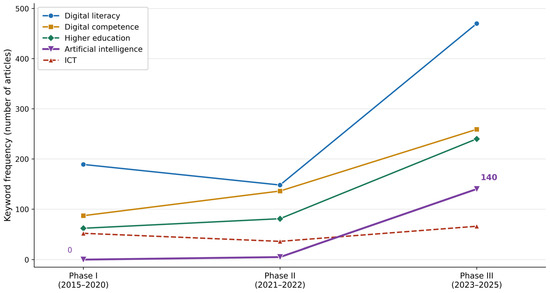
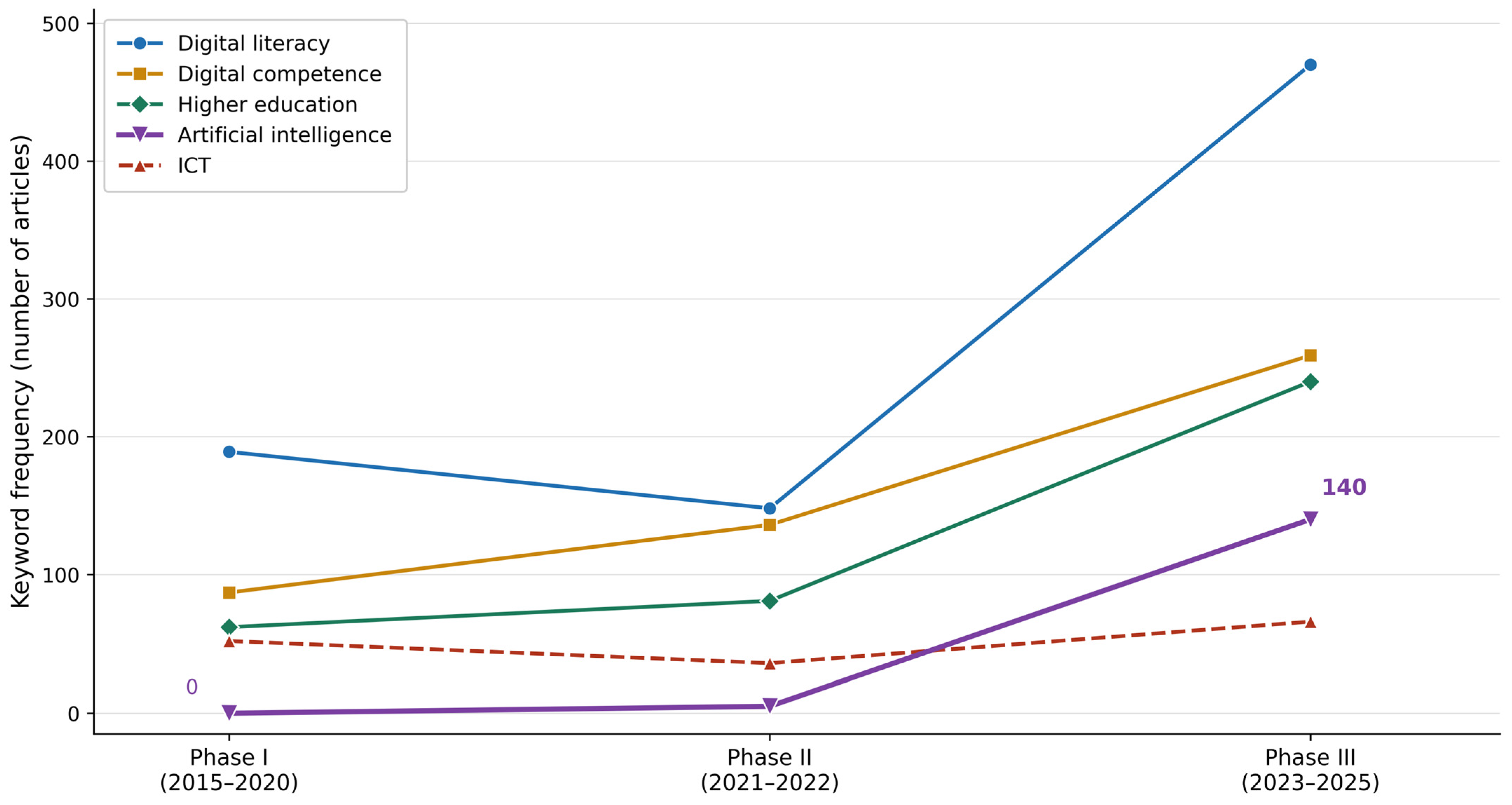
The analysis revealed differences in how teacher digital competence was conceptualised across phases (Figure 3).
Figure 3.
Thematic evolution of the five most frequent conceptual keywords across the three analytical phases, by number of articles. Artificial intelligence emerged as one of the most frequent author keywords, appearing in 140 articles during the third phase and reflecting its rapid incorporation into teacher digital competence research in the final years of the study period.
3.3. Terminological Structure of the Field
Author keywords were present in 3937 records (96.1%), yielding 21,442 keyword occurrences that normalisation resolved into 8567 unique terms.
The resulting distribution is highly dispersed: single-occurrence terms account for 75.9% of the unique vocabulary (n = 6502) but only 30.3% of total keyword volume, while the ten most frequent terms together account for 14.2% of all occurrences.
Terminological evenness is correspondingly high (Pielou’s J′ = 0.861; Shannon H′ = 7.79), indicating a strongly decentralised vocabulary with no single dominant core at the level of the corpus as a whole.
This dispersion notwithstanding, two conceptual anchors persist across all three phases: digital literacy (n = 902) and digital competence (n = 566). Digital literacy leads in overall frequency, yet digital competence becomes proportionally dominant within the strongly coupled core identified by the k-core analysis—a two-level pattern in which the field has no dominant vocabulary overall but a clear conceptual centre among its most tightly coupled publications. AI-related terms expand rapidly in Phase III, reaching 140 occurrences in author keywords (Figure 3 and Figure 4).
Figure 4.
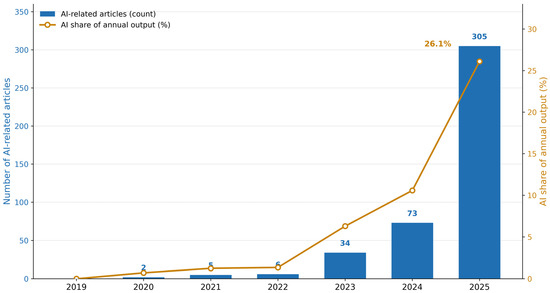
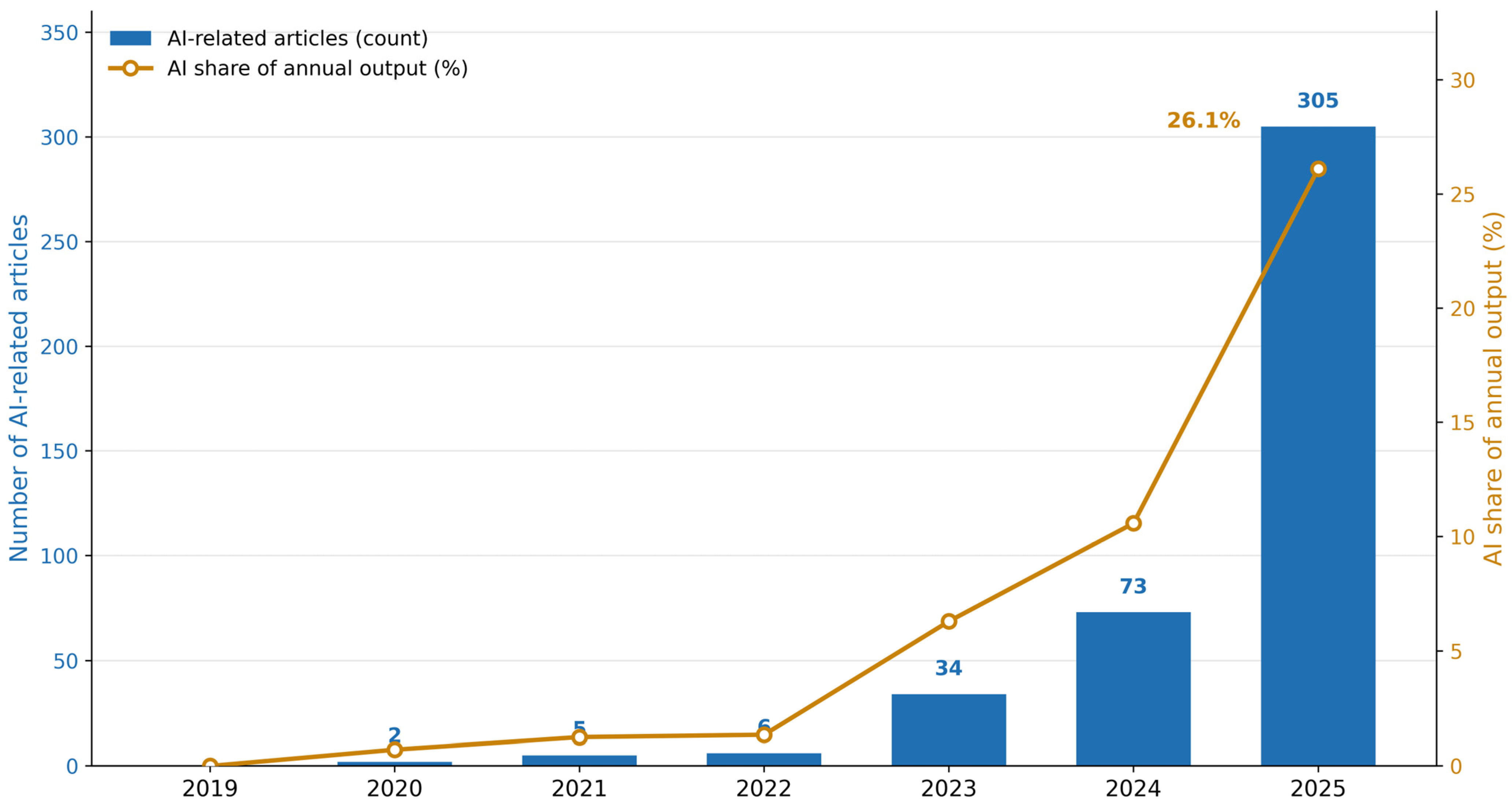
Annual growth of AI-related research within the teacher digital competence corpus (2019–2025). Bars represent the number of AI-related articles, whereas the line shows their proportion of the total annual publication output.
A term-family decomposition of the query provides direct evidence on this point. Each of the five competence/literacy families retrieves a largely distinct set of records: 72–83% of the publications matched by digital competenc*, digital literac*, ICT competenc*, and technological competenc* are matched by that family alone, and only digital skill* overlaps more substantially with the others (54% unique). Across the corpus, 85.7% of records match exactly one term family and only 14.1% match two or more, so the families function less as synonyms than as partially separate retrieval channels. Wildcard truncation ensured that each family captured its orthographic and morphological variants—for example, ICT competenc* retrieved both “ICT competence” and “ICT competency/ies”, and digital literac* retrieved both “digital literacy” and “digital literacies”. This limited overlap is itself an answer to RQ2: because competing terminological traditions retrieve substantially different literatures, the choice of search vocabulary materially determines which portion of the field a review observes.
3.4. International Collaboration and Citation Patterns
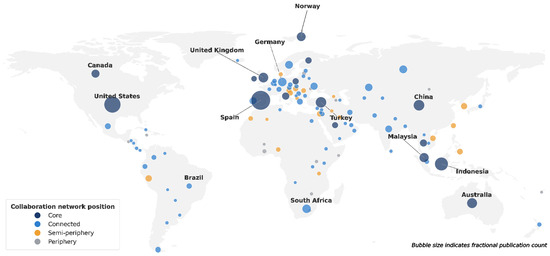
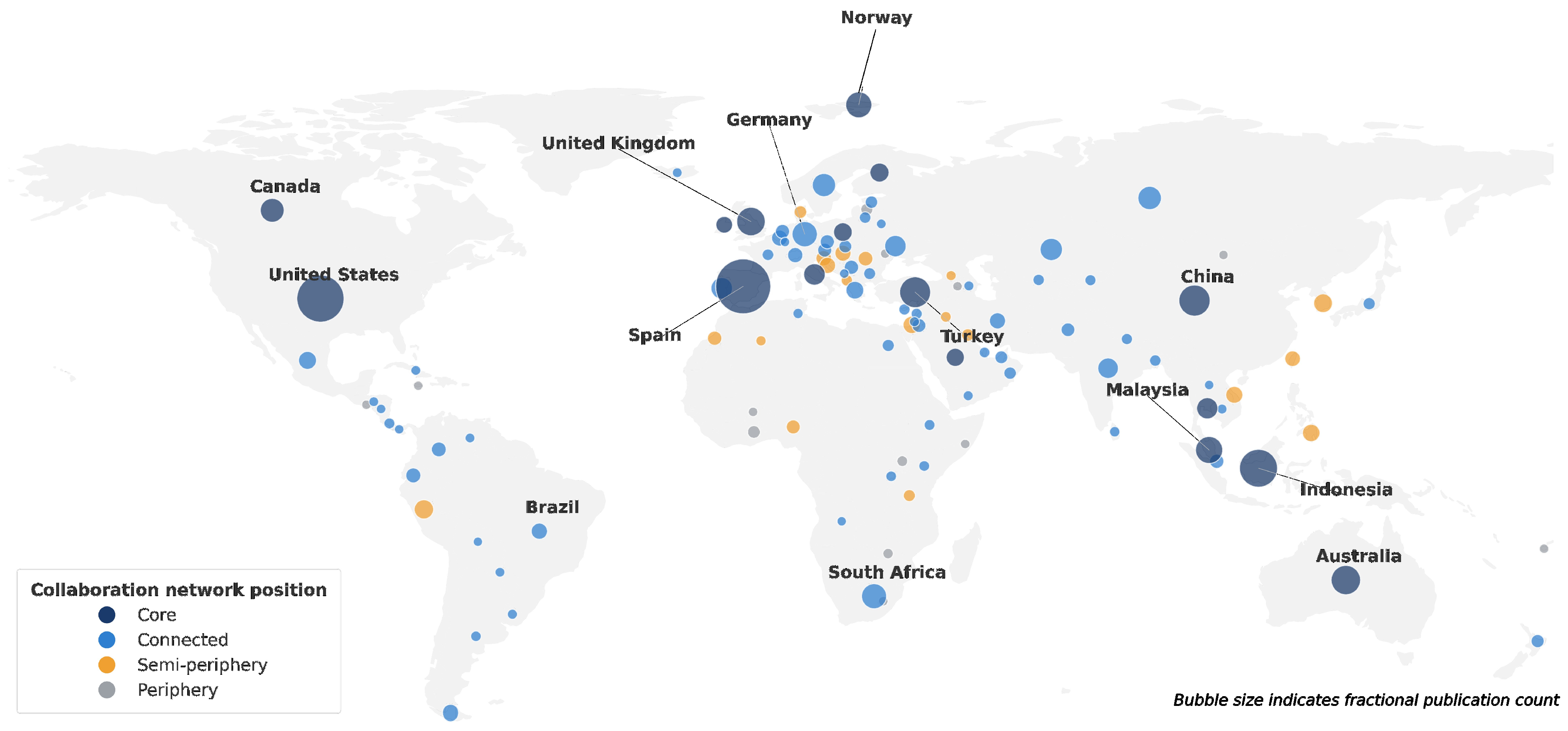
The co-authorship network reveals pronounced cross-national variation in publication output and in the structural position of individual countries within the international collaboration network (Figure 5).
Figure 5.
Geographic distribution of publications and the international co-authorship network based on 4063 publications with affiliation data. Marker size is proportional to national publication output (fractional counting), whereas marker colour indicates each country’s position in the co-authorship network (core, dark blue; connected, medium blue; semi-periphery, orange; periphery, grey). Base map made with Natural Earth (public domain).
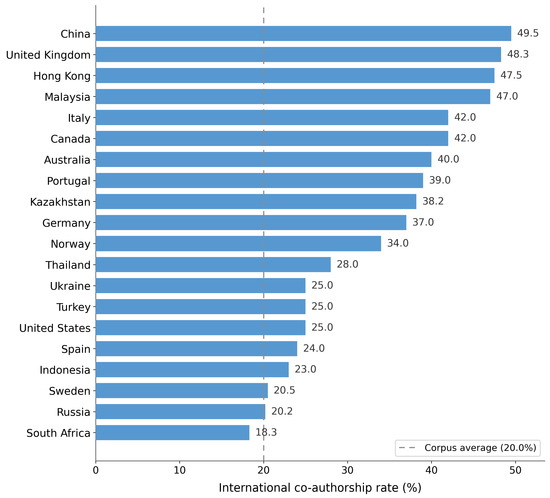
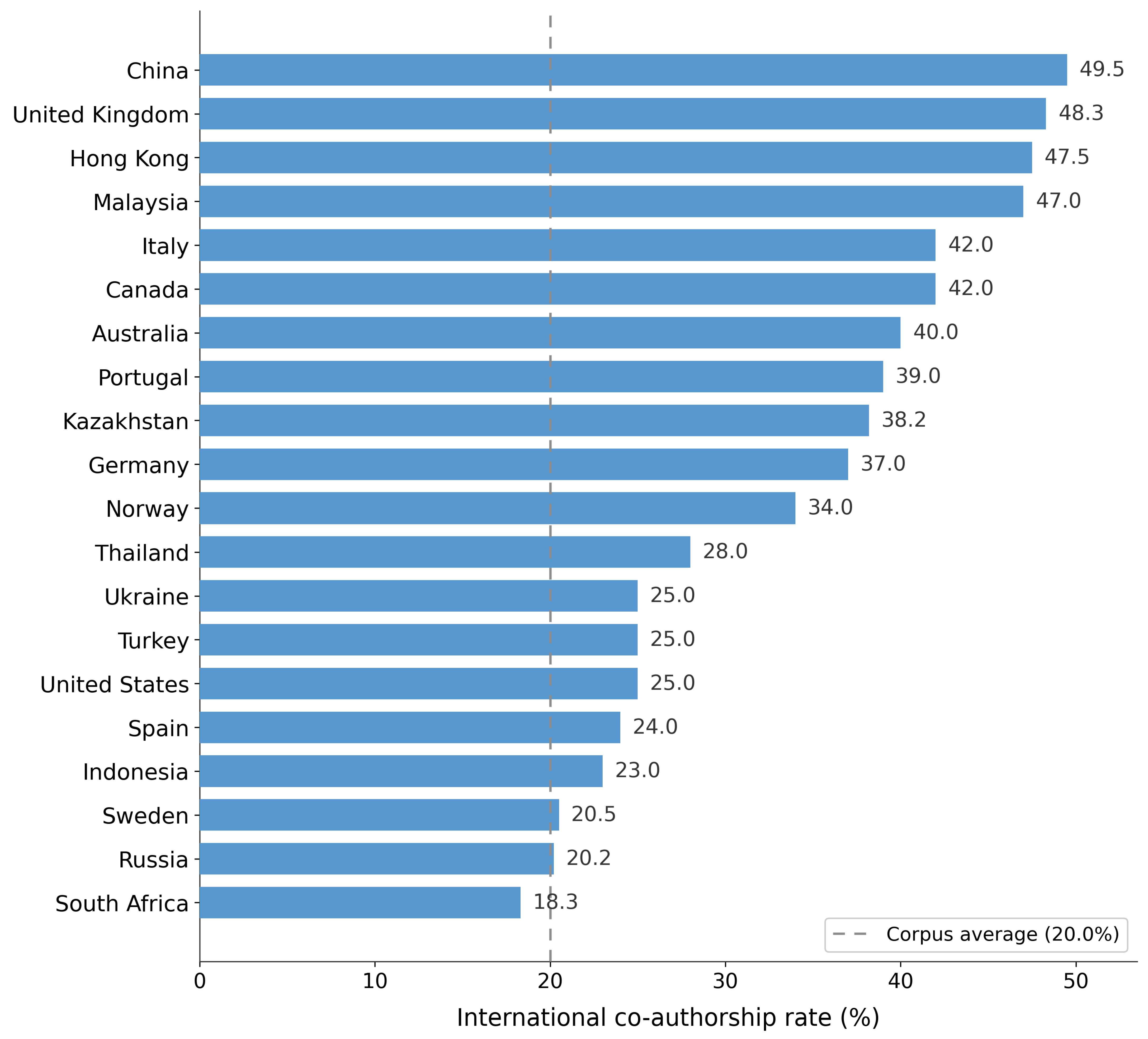
Affiliation data were available for 4063 publications across 146 countries, and the global distribution of output is geographically diverse (H′ = 3.84; J′ = 0.771). Publication volume is concentrated among a few leading producers—Spain (fractional n = 511), followed by the United States, Indonesia, and China—yet international co-authorship rates (ICR) vary markedly across the twenty most productive countries (Figure 6).
Figure 6.
International co-authorship rate (ICR) by country—top 20 by publication count.
They are highest for China (49.5%), the United Kingdom (48.3%), Hong Kong (47.5%), and Malaysia (47.0%); intermediate for Australia (40.0%), Kazakhstan (38.2%), and Germany (37.0%); and lowest for South Africa (18.3%), Russia (20.2%), and Sweden (20.5%).
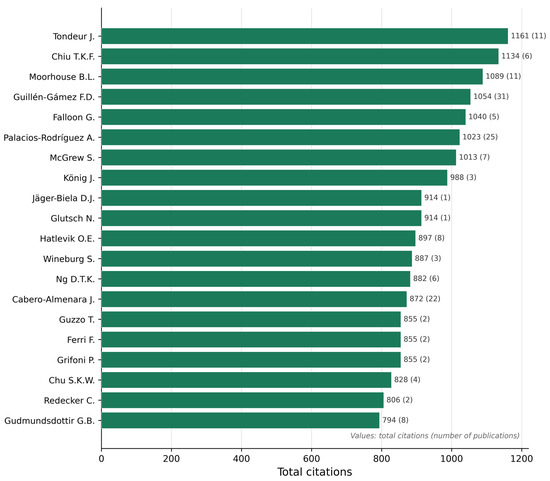
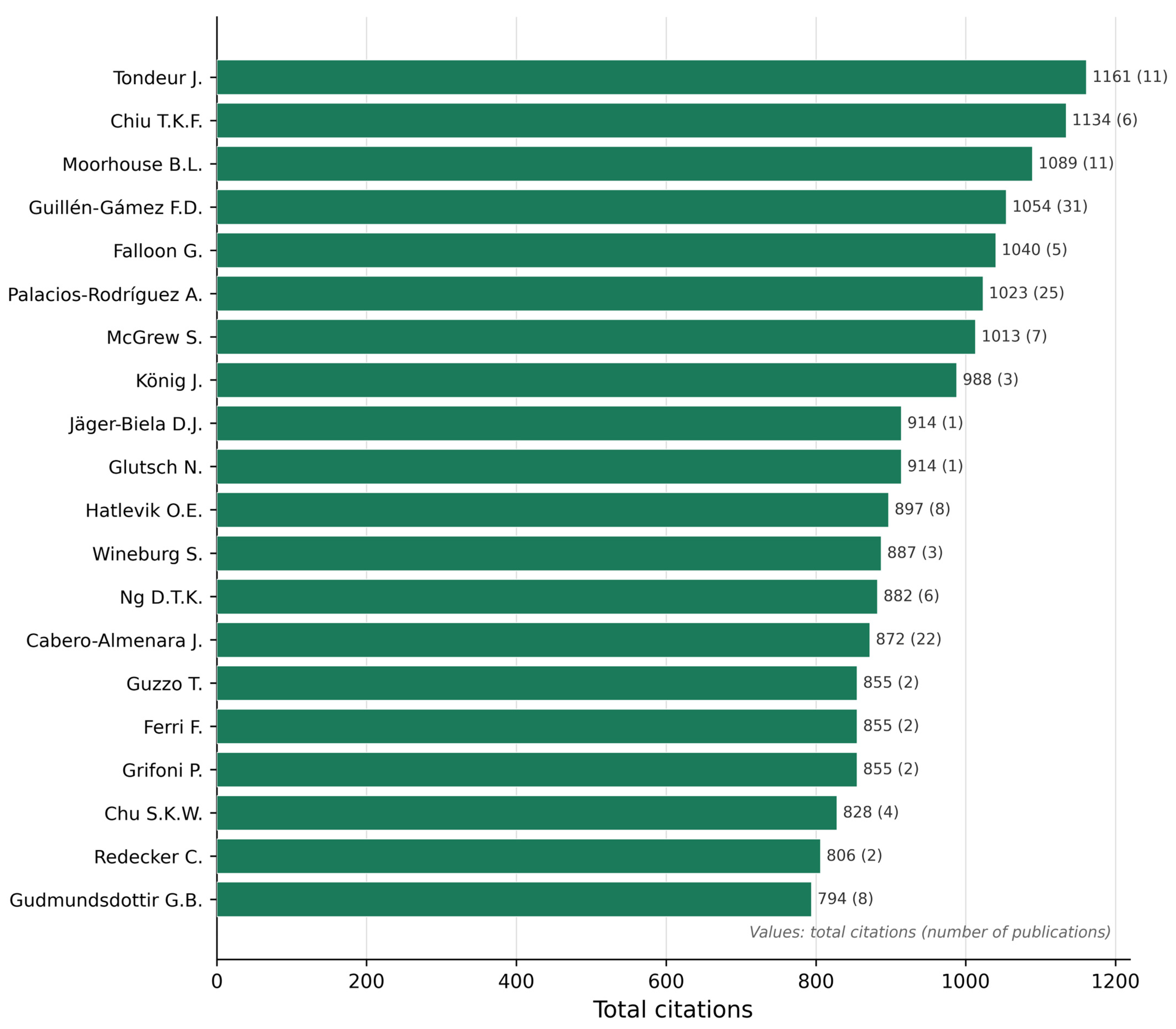
Citation counts are likewise concentrated: the most cited authors are Tondeur J. (1161 citations), Chiu T.K.F. (1134), and Moorhouse B.L. (1089) (Figure 7).
Figure 7.
Top 20 most-cited authors in the corpus.
3.5. AI-Oriented Research Within the Corpus
The AI-oriented subcorpus comprises 425 publications (10.4% of the corpus). Its output grew from 2 publications in 2020 to 305 in 2025, by which point AI-related studies accounted for 26.1% of that year’s annual volume (Figure 4).
This expansion is, however, unevenly distributed across the field’s structure: within the strongly coupled core, AI-related terms account for only about 6% of publications, well below their 10.4% share across the corpus as a whole.
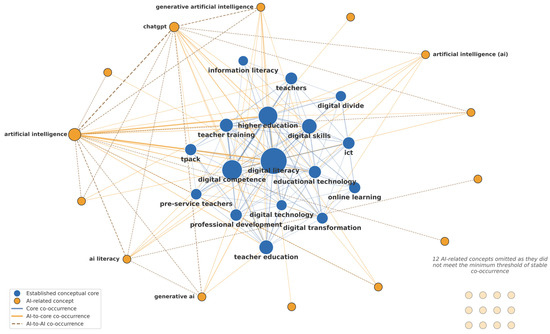
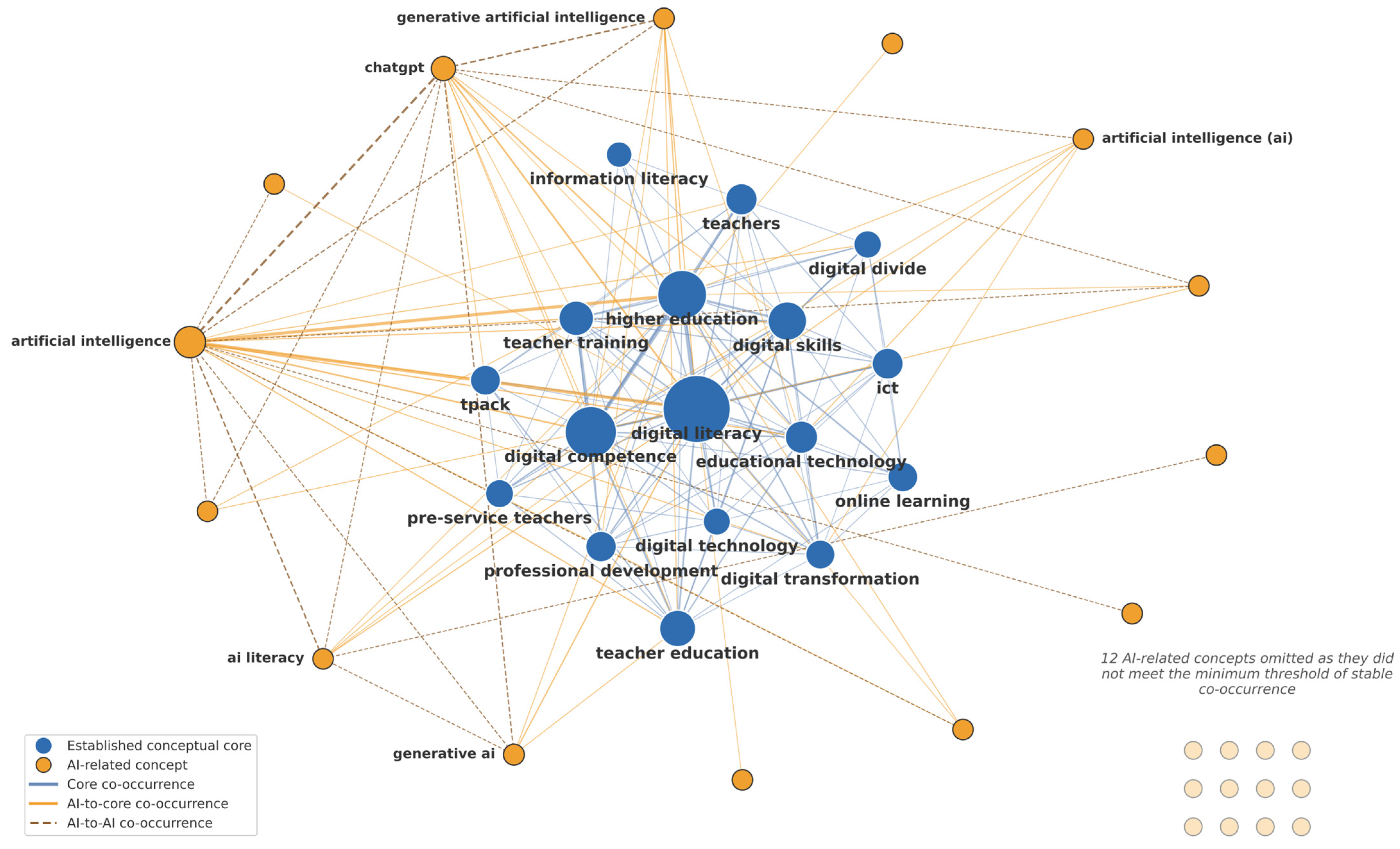
Keyword co-occurrence analysis for Phase III (Figure 8) is consistent with this pattern, showing that AI-related terms co-occur primarily with established sub-domains—digital competence, higher education, and teacher training—rather than forming densely connected AI-only clusters. In the Phase III co-occurrence network (Figure 8), links among established concepts (99) and between AI-related and established concepts (48) far outnumber links among AI-related concepts themselves (17), and a further twelve AI-related concepts do not meet the minimum co-occurrence threshold at all. Taken together, these observations indicate that AI is, at present, becoming established within the existing conceptual structure of the field rather than constituting an autonomous domain of its own.
Figure 8.
Author-keyword co-occurrence network during Phase III (2023–2025).
The study makes four principal contributions (C1–C4), summarised in Table 3.
Table 3.
Summary of contributions (C1–C4).
4. Discussion
In this section, the primary empirical findings are contextualised and compared with established conceptual frameworks and prevailing trends identified in the broader literature on teacher digital competence.
4.1. A Layered, Cumulative Structure
The three analytical phases identified in this study are best understood not as a sequence in which each stage supersedes the last, but as successive layers that accumulate within a single, expanding conceptual structure. Each layer performs a distinct function in the field’s development. The foundational layer, established during the earliest period and retained throughout the subsequent phases, is concerned with defining what teacher digital competence is: it establishes the core vocabulary of digital literacy, digital competence, and ICT competence, and the frameworks that formalise them [35,36]. The contextual layer, which rises sharply during the pandemic period, demonstrates how these competences operate under conditions of large-scale educational disruption, as the field turns to emergency remote teaching and distance learning. The technological layer, dominant in the most recent period, articulates the same competence concerns through the vocabulary of artificial intelligence, extending them to AI-mediated teaching and learning [37,38,39,40,41].
The defining feature of this structure is that the layers are cumulative. The rise in the AI-related vocabulary is not accompanied by any contraction of the foundational one: as artificial intelligence expands through the most recent period, the established terms of digital literacy and digital competence continue to grow rather than recede. The new layer is added without the earlier one giving way. This pattern, which may be described as cumulative thematic accretion, indicates that the field expands by accumulating new concerns around a stable conceptual core, rather than by successive replacement of dominant thematic configurations. The three thematic layers therefore represent overlapping components of a continuously expanding conceptual structure rather than successive stages of conceptual replacement.
The position of the AI-related layer is consistent with this reading. Within the field’s internal structure, AI-related terms are articulated through the existing competence vocabulary rather than forming an autonomous conceptual domain of their own. The emerging technological layer is, at present, an extension of the field’s established concerns rather than a departure from them.
This layered, cumulative structure has a direct bearing on how the boundaries of the field should be understood. If conceptual development followed a succession model—each configuration replacing the last—the boundaries at any moment would be relatively well-defined by the dominant themes of the day. Because the field grows instead by accretion, its boundaries are continually redrawn as new vocabularies are absorbed without the old ones being discarded. Rather than representing a fixed domain, teacher digital competence research appears as a dynamically evolving field whose conceptual boundaries are continuously negotiated through competing frameworks, constructs, and terminology. The terminological variability documented in this study is, on this view, not noise to be filtered out but the very medium through which the field’s boundaries are drawn and redrawn. Because these conceptual boundaries are expressed through terminology, they can be reconstructed empirically by analysing the vocabulary through which the field defines itself, rather than by presupposing fixed disciplinary limits.
4.2. Methodological Implications
Beyond its conceptual findings, this study has a methodological implication that follows directly from the terminological variability documented above. Because the field expresses a small set of stable concepts through a large and inconsistent vocabulary, the choice of search terms does not merely filter the literature—it determines which regions of the conceptual structure become visible at all. Terminological variability thus translates into retrieval sensitivity: a narrow query privileges whichever terminological tradition it encodes, foreshortening the layered structure that a broader strategy reveals. This sensitivity has a direct consequence for reproducibility, since two studies of ostensibly the same field may reconstruct materially different corpora depending on the terms they adopt. Search-string design is therefore not a neutral technical step but a determinant of the evidence that a review can observe. Ongoing efforts to promote terminological consistency, including the continued development of the European Digital Competence Framework for Citizens (DigComp 2.2) [13] and the UNESCO ICT Competency Framework for Teachers [14], may improve the reliability and replicability of bibliometric mapping, but they cannot substitute for search strategies that are explicit about the terminological boundaries they impose.
4.3. International Collaboration Patterns
International collaboration in the field is markedly uneven. The co-authorship network reveals a small group of highly central countries alongside a substantial periphery of nationally concentrated research systems. Similar patterns have been reported in related bibliometric work; for example, refs. [3,42] documented the low representation of developing countries and the persistent limitations of North–South research cooperation, consistent with the peripheral positions observed here. These asymmetries indicate that the global knowledge base on teacher digital competence, while broad in aggregate, remains unevenly distributed, and they point to a need for further research into the factors that shape scientific partnerships in this field.
4.4. Limitations of the Study
The findings of this study should be evaluated in light of several methodological limitations. First, restricting the corpus to English-language peer-reviewed articles indexed in Scopus inevitably underrepresents local and regional research communities. This language and indexing bias, arising in part from the exclusive reliance on Scopus without coverage of the Web of Science Core Collection and regional databases, may affect the mapping of international publication and collaboration profiles. Second, bibliometric methods reveal structural patterns but cannot identify the mechanisms behind them. The co-authorship gaps, citation imbalances, and semantic divergences identified here may stem from institutional factors, historical context, or differences in research practice. Exploring these causal mechanisms falls outside the scope of this analysis. Third, the analysis relied on author-assigned keywords as the primary metadata source for analysing the terminological structure and thematic mapping. Although 96.1% of the publications contained author keywords, a segment of the dataset (160 of 4097 records) lacked this element, restricting the comprehensiveness of the structural analysis. Furthermore, unlike platforms such as MEDLINE, which implement a controlled vocabulary (e.g., Medical Subject Headings, MeSH), Scopus does not enforce a standardised system of subject descriptors for author-assigned keywords. Consequently, conceptually proximate studies are frequently indexed under distinct terms and spelling variations, which may affect keyword co-occurrence parameters, the configuration of co-occurrence networks, and the subsequent interpretation of the field’s thematic boundaries.
4.5. Future Research
The findings in this study suggest directions for future research. Additional empirical work is needed to examine the structural determinants that shape diverging conceptual frameworks regarding teacher digital and AI competence. Further studies should test the operational boundaries between AI competence and traditional digital competence models, assessing their degree of conceptual integration. There remains a persistent need for cross-cultural and contextual validation of existing competency frameworks across diverse educational and sociocultural ecosystems. Lastly, longitudinal designs would help investigate how variations in teacher digital and AI competence translate into actual pedagogical practices and classroom educational outcomes. Such efforts could also build on recent systematic reviews of generative AI in secondary education, which report comparable terminological inconsistency and a fragmented, largely experimental evidence base [43].
5. Conclusions
Although the field’s output has expanded rapidly over the past decade, its conceptual boundaries are defined by a stable core expressed through a highly fragmented vocabulary. A small set of anchor concepts persists across the entire observation window, whereas the overwhelming majority of terms occur only once. The rapid emergence of AI-related terms and competence constructs is extending this fragmented vocabulary, adding a new technological layer; yet their predominant connections with established concepts indicate that they have not yet consolidated into an autonomous conceptual domain. This development highlights the need to clarify how emerging AI-related competence constructs relate to established digital competence concepts and frameworks.
Methodologically, the study shows that search-string design is a key determinant of bibliometric evidence rather than a purely technical detail—it directly shapes which parts of a field’s conceptual landscape become visible.
Internationally, collaboration remains uneven, with a limited group of highly connected countries coexisting with a substantial periphery of more nationally concentrated research systems. Expanding collaboration across these research systems would enable teacher digital competence constructs and emerging AI-related competence models to be examined across more diverse educational and technological contexts, strengthening the cross-contextual validity of the field’s evidence base.
These findings carry direct practical implications: greater terminological consistency would facilitate the alignment of professional standards, the design of coherent teacher-development programmes, and the comparability of research. Anchored in established international frameworks such as DigCompEdu and the UNESCO ICT Competency Framework for Teachers, such consistency can support cumulative progress in the field rather than being a cosmetic concern. At the policy level, establishing conceptual coherence can strengthen the evidence base required to support global education targets, particularly SDG Targets 4.4 (developing digital skills) and 4.c (ensuring a supply of qualified teachers).
Ultimately, whether the rapidly expanding literature on teacher digital competence forms a cumulative evidence base or a fragmented archive depends on its terminological coherence. The findings suggest that the conceptual boundaries of this research field are not fixed disciplinary entities but evolving structures that can be empirically reconstructed through bibliometric evidence.
Supplementary Materials
The following supporting information can be downloaded at: https://www.mdpi.com/article/10.3390/encyclopedia6090185/s1, Table S1: Bibliographic Corpus Used for Analysis; File S1: Conceptual Boundaries and Terminological Variability in Scopus-Indexed Teacher Digital Competence Research.
Author Contributions
K.S.: Conceptualisation, Methodology, Formal Analysis, Investigation, Data Curation, Visualisation, Writing—Original Draft, Writing—Review and Editing. Z.B.: Writing—Review and Editing. G.O.: Writing—Review and Editing. S.S.: Supervision, Project Administration, Validation, Writing—Review and Editing. M.V.: Data Curation, Investigation, Validation, Writing—Review and Editing. All authors have read and agreed to the published version of the manuscript.
Funding
This research received no external funding.
Institutional Review Board Statement
Not applicable.
Informed Consent Statement
Not applicable.
Data Availability Statement
The original contributions presented in this study are included in the article and Supplementary Material. Further inquiries can be directed to the corresponding authors.
Acknowledgments
During the preparation of this manuscript, the authors used Claude 4.8 Opus (Anthropic) and ChatGPT 5.6-Luna (OpenAI) to assist with English-language editing and translation of text originally drafted by the authors. All bibliometric data collection, corpus construction, analysis, interpretation, and visualisation were performed exclusively by the authors using the bibliometrix R package (version 4.3.3), VOSviewer (version 1.6.20), and Python (version 3.12.3). The authors critically reviewed and edited all AI-assisted output and take full responsibility for the content of this publication.
Conflicts of Interest
The authors declare no conflicts of interest.
Appendix A. Complete Scopus Search Query
The following query was executed in the Scopus Advanced Search interface. The search was last run on 23 July 2026 and returned 4097 records for the period 2015–2025.
TITLE-ABS-KEY ((“digital competenc*” OR “digital skill*” OR “ICT competenc*” OR “technological competenc*” OR “digital literac*”) AND (“teacher*” OR “educator*” OR “instructor*” OR “pedagog*”)) AND (LIMIT-TO (SUBJAREA, “SOCI”) OR LIMIT-TO (SUBJAREA, “COMP”)) AND (LIMIT-TO (DOCTYPE, “ar”)) AND (LIMIT-TO (LANGUAGE, “English”)) AND (LIMIT-TO (SRCTYPE, “j”)) AND PUBYEAR > 2014 AND PUBYEAR < 2026
Field restrictions: subject area limited to Social Sciences (SOCI) or Computer Science (COMP); document type limited to journal articles (DOCTYPE “ar”; SRCTYPE “j”); language limited to English; publication years 2015–2025. Wildcard truncation (*) captures morphological and spelling variants of each term. The corresponding Scopus search history is provided as Supplementary Material.
Appendix B. Thematic Dictionary Patterns
Each publication’s combined text field (title + author keywords + abstract) was lower-cased, and missing values were replaced with empty strings. A publication was assigned to a theme if its text matched at least one pattern in the corresponding dictionary; assignments were non-exclusive. The patterns below are given as case-insensitive regular expressions; \b denotes a word boundary; and * denotes Latin-script wildcards.
Appendix B.1. Core Digital Competence
digital\s+competenc\w*|digital\s+literac\w*|digital\s+skill\w*|ict\s+competenc\w*|ict\s+literac\w*|technological\s+competenc\w*|media\s+literac\w*|information\s+literac\w*
Appendix B.2. COVID-19/Emergency Remote Teaching
covid(-|\s)?19|pandemic|emergency\s+remote\s+teach\w*|remote\s+learn\w*|distance\s+learn\w*|distance\s+educ\w*|online\s+learn\w*|online\s+teach\w*
Appendix B.3. Artificial Intelligence/Generative AI
\bai\b|artificial\s+intelligence|machine\s+learn\w*|\bchatgpt\b|generative\s+ai|large\s+language\s+model\w*|\bllm\b|\bgenai\b
References
- Jiangmei, S.; Ghasemy, M. A holistic bibliometric review of teachers’ ICT competence research in higher education. J. Appl. Res. High. Educ. 2026, 18, 220–237. [Google Scholar] [CrossRef] [Scilit]
- Lim, S.P.; Wong Mee Mee, R.; Che Yob, F.S.; Sivabalan, Y.; Cruz, G.R.C.; Estrada, J. From Screens to Sustainability: A Bibliometric Analysis of Digital Literacy Development Among Children for Inclusive and Sustainable Futures. Int. J. Sustain. Dev. Plan. 2026, 21, 1747–1758. [Google Scholar] [CrossRef] [Scilit]
- Shadyrova, A.B.; Abayeva, G.A.; Ashirov, S.K.; Mamadaliyev, S.T.; Seiilbek, A.E.; Eshakhanova, Y.S. Bridging gaps with technology: A bibliometric review of inclusive education through educational technology. Contemp. Educ. Technol. 2026, 18, ep634. [Google Scholar] [CrossRef] [Scilit] [PubMed]
- Revuelta-Domínguez, F.-I.; Guerra-Antequera, J.; González-Pérez, A.; Pedrera-Rodríguez, M.-I.; González-Fernández, A. Digital teaching competence: A systematic review. Sustainability 2022, 14, 6428. [Google Scholar] [CrossRef] [Scilit]
- Tondeur, J.; van Braak, J.; Sang, G.; Voogt, J.; Fisser, P.; Ottenbreit-Leftwich, A. Preparing pre-service teachers to integrate technology in education: A synthesis of qualitative evidence. Comput. Educ. 2012, 59, 134–144. [Google Scholar] [CrossRef] [Scilit]
- Tondeur, J.; Trevisan, O.; Howard, S.K.; van Braak, J. Preparing preservice teachers to teach with digital technologies: An update of effective SQD-strategies. Comput. Educ. 2025, 232, 105262. [Google Scholar] [CrossRef] [Scilit]
- Engeness, I. Developing teachers’ digital identity: Towards the pedagogic design principles of digital environments to enhance students’ learning in the 21st century. Eur. J. Teach. Educ. 2021, 44, 96–114. [Google Scholar] [CrossRef] [Scilit]
- Guillén-Gámez, F.D.; Mayorga-Fernández, M.J.; Bravo-Agapito, J.; Escribano-Ortiz, D. Analysis of teachers’ pedagogical digital competence: Identification of factors predicting their acquisition. Technol. Knowl. Learn. 2021, 26, 481–498. [Google Scholar] [CrossRef] [Scilit]
- Falloon, G. From digital literacy to digital competence: The teacher digital competency (TDC) framework. Educ. Technol. Res. Dev. 2020, 68, 2449–2472. [Google Scholar] [CrossRef] [Scilit]
- Nagel, I.; Amdam, S.H. Teachers’ Professional Digital Competence. Encyclopedia 2025, 5, 148. [Google Scholar] [CrossRef] [Scilit]
- Mattar, J.; Ramos, D.K.; Lucas, M.R. DigComp-based digital competence assessment tools: Literature review and instrument analysis. Educ. Inf. Technol. 2022, 27, 10843–10867. [Google Scholar] [CrossRef] [Scilit]
- Redecker, C. European Framework for the Digital Competence of Educators: DigCompEdu; Punie, Y., Ed.; Publications Office of the European Union: Luxembourg, 2017. [Google Scholar] [CrossRef]
- Vuorikari, R.; Kluzer, S.; Punie, Y. DigComp 2.2: The Digital Competence Framework for Citizens—With New Examples of Knowledge, Skills and Attitudes; Publications Office of the European Union: Luxembourg, 2022. [Google Scholar] [CrossRef] [PubMed]
- UNESCO. ICT Competency Framework for Teachers; Version 3; UNESCO: Paris, France, 2018. [Google Scholar]
- Caena, F.; Redecker, C. Aligning teacher competence frameworks to 21st century challenges: The case for the European Digital Competence Framework for Educators (DigCompEdu). Eur. J. Educ. 2019, 54, 356–369. [Google Scholar] [CrossRef] [Scilit]
- Koehler, M.J.; Mishra, P. What is technological pedagogical content knowledge (TPACK)? Contemp. Issues Technol. Teach. Educ. 2009, 9, 60–70. [Google Scholar]
- Pettersson, F. On the issues of digital competence in educational contexts—A review of literature. Educ. Inf. Technol. 2018, 23, 1005–1021. [Google Scholar] [CrossRef] [Scilit]
- Heine, S.; Krepf, M.; König, J. Digital resources as an aspect of teacher professional digital competence: One term, different definitions—A systematic review. Educ. Inf. Technol. 2023, 28, 3711–3738. [Google Scholar] [CrossRef] [Scilit] [PubMed]
- List, A. Defining digital literacy development: An examination of pre-service teachers’ beliefs. Comput. Educ. 2019, 138, 146–158. [Google Scholar] [CrossRef] [Scilit]
- Spante, M.; Hashemi, S.S.; Lundin, M.; Algers, A. Digital competence and digital literacy in higher education research: Systematic review of concept use. Cogent Educ. 2018, 5, 1519143. [Google Scholar] [CrossRef] [Scilit]
- Claro, M.; Castro-Grau, C.; Ochoa, J.M.; Hinostroza, J.E.; Cabello, P. Systematic review of quantitative research on digital competences of in-service school teachers. Comput. Educ. 2024, 215, 105030. [Google Scholar] [CrossRef] [Scilit]
- Basilotta-Gómez-Pablos, V.; Matarranz, M.; Casado-Aranda, L.A.; Otto, A. Teachers’ digital competencies in higher education: A systematic literature review. Int. J. Educ. Technol. High. Educ. 2022, 19, 8. [Google Scholar] [CrossRef] [Scilit]
- Butar Butar, S.; Haniva, R.; Mulyadi, H. Research trends in teacher digital competencies: A bibliometric review. J. VARIDIKA 2024, 36, 31–49. [Google Scholar] [CrossRef] [Scilit]
- Page, M.J.; McKenzie, J.E.; Bossuyt, P.M.; Boutron, I.; Hoffmann, T.C.; Mulrow, C.D.; Shamseer, L.; Tetzlaff, J.M.; Akl, E.A.; Brennan, S.E.; et al. The PRISMA 2020 statement: An updated guideline for reporting systematic reviews. BMJ 2021, 372, n71. [Google Scholar] [CrossRef] [Scilit] [PubMed]
- Aria, M.; Cuccurullo, C. bibliometrix: An R–tool for comprehensive science mapping analysis. J. Informetr. 2017, 11, 959–975. [Google Scholar] [CrossRef] [Scilit]
- van Eck, N.J.; Waltman, L. Software survey: VOSviewer, a computer program for bibliometric mapping. Scientometrics 2010, 84, 523–538. [Google Scholar] [CrossRef] [Scilit] [PubMed]
- Truong, C.; Oudre, L.; Vayatis, N. Selective review of offline change point detection methods. Signal Process. 2020, 167, 107299. [Google Scholar] [CrossRef] [Scilit]
- Gudmundsdottir, G.B.; Hatlevik, O.E. Newly qualified teachers’ professional digital competence: Implications for teacher education. Eur. J. Teach. Educ. 2018, 41, 214–231. [Google Scholar] [CrossRef] [Scilit]
- Cabero-Almenara, J.; Guillén-Gámez, F.D.; Ruiz-Palmero, J.; Palacios-Rodríguez, A. Digital competence of higher education professor according to DigCompEdu: Statistical research methods with ANOVA between fields of knowledge in different age ranges. Educ. Inf. Technol. 2021, 26, 4691–4708. [Google Scholar] [CrossRef] [Scilit] [PubMed]
- Zimmer, W.K.; Matthews, S.D. A virtual coaching model of professional development to increase teachers’ digital learning competencies. Teach. Teach. Educ. 2022, 109, 103544. [Google Scholar] [CrossRef] [Scilit]
- Reisoğlu, İ.; Çebi, A. How can the digital competences of pre-service teachers be developed? Examining a case study through the lens of DigComp and DigCompEdu. Comput. Educ. 2020, 156, 103940. [Google Scholar] [CrossRef] [Scilit]
- Bearman, M.; Ryan, J.; Ajjawi, R. Discourses of artificial intelligence in higher education: A critical literature review. High. Educ. 2023, 86, 369–385. [Google Scholar] [CrossRef] [Scilit]
- Tzafilkou, K.; Perifanou, M.; Economides, A.A. Assessing teachers’ digital competence in primary and secondary education: Applying a new instrument to integrate pedagogical and professional elements for digital education. Educ. Inf. Technol. 2023, 28, 16017–16040. [Google Scholar] [CrossRef] [Scilit] [PubMed]
- ElSayary, A. An investigation of teachers’ perceptions of using ChatGPT as a supporting tool for teaching and learning in the digital era. J. Comput. Assist. Learn. 2023, 40, 931–945. [Google Scholar] [CrossRef] [Scilit]
- Amhag, L.; Hellström, L.; Stigmar, M. Teacher educators’ use of digital tools and needs for digital competence in higher education. J. Digit. Learn. Teach. Educ. 2019, 35, 203–220. [Google Scholar] [CrossRef] [Scilit]
- Tondeur, J.; Howard, S.; Van Zanten, M.; Gorissen, P.; Van der Neut, I.; Uerz, D.; Kral, M. The HeDiCom framework: Higher Education teachers’ digital competencies for the future. Educ. Technol. Res. Dev. 2023, 71, 33–53. [Google Scholar] [CrossRef] [Scilit] [PubMed]
- Kaplan, R.; Meylani, R. Dimensions of artificial intelligence literacy: A qualitative synthesis of contemporary research literature. J. Comput. Educ. Res. 2025, 13, 790–825. [Google Scholar] [CrossRef] [Scilit]
- UNESCO. AI Competency Framework for Teachers; UNESCO: Paris, France, 2024; Available online: https://unesdoc.unesco.org/ark:/48223/pf0000391104 (accessed on 29 June 2026).
- OECD. Empowering Learners for the Age of AI: An AI Literacy Framework for Primary and Secondary Education (Review Draft); OECD Publishing: Paris, France, 2025. [Google Scholar]
- Zou, D.; Xie, H.; Kohnke, L. Navigating the future: Establishing a framework for educators’ pedagogic artificial intelligence competence. Eur. J. Educ. 2025, 60, e70117. [Google Scholar] [CrossRef] [Scilit]
- Chiu, T.K.F.; Ahmad, Z.; Çoban, M. Development and validation of teacher artificial intelligence (AI) competence self-efficacy (TAICS) scale. Educ. Inf. Technol. 2025, 30, 6667–6685. [Google Scholar] [CrossRef] [Scilit]
- Bond, M.; Khosravi, H.; De Laat, M.; Bergdahl, N.; Negrea, V.; Oxley, E.; Pham, P.; Chong, S.W.; Siemens, G. A meta systematic review of artificial intelligence in higher education: A call for increased ethics, collaboration, and rigour. Int. J. Educ. Technol. High. Educ. 2024, 21, 4. [Google Scholar] [CrossRef] [Scilit]
- Pérez-Montesdeoca, H.; Rodríguez-Rodríguez, D.; Fernández-Sogorb, A. The integration of generative artificial intelligence in secondary education: A systematic review. Contemp. Educ. Technol. 2026, 18, ep667. [Google Scholar] [CrossRef] [Scilit] [PubMed]

Disclaimer/Publisher’s Note: The statements, opinions and data contained in all publications are solely those of the individual author(s) and contributor(s) and not of MDPI and/or the editor(s). MDPI and/or the editor(s) disclaim responsibility for any injury to people or property resulting from any ideas, methods, instructions or products referred to in the content. |
© 2026 by the authors. Licensee MDPI, Basel, Switzerland. This article is an open access article distributed under the terms and conditions of the Creative Commons Attribution (CC BY) license.