


Definition
Cross-border cooperation (CBC) is defined as the structured, institutionalized, or informal collaboration between adjacent regional and local authorities, economic actors, and civil society groups across international state borders. Within contemporary border studies, CBC has transitioned from traditional top-down, state-centric diplomatic containment toward bottom-up, grassroots territorial integration. This entry synthesizes the multidisciplinary evolution of CBC across geography, economics, jurisprudence, sociology, and political science, structuring the analysis around four core dimensions: spatial, political, economic, and socio-cultural. It categorizes diverse territorial and governance mechanisms of cooperation, ranging from localized town twinnings to formalized Euroregions and European Groupings of Territorial Cooperation (EGTCs), and introduces quantitative performance metrics such as the Cross-Border Activity Index (CBAI). Examining how these structures operate along both the internal and external borders of the European Union, this entry analyzes the cyclical, non-linear dynamics of the bordering–debordering–rebordering framework. By evaluating diverse theoretical models across varying geopolitical contexts, it identifies the universal characteristics of contemporary border dynamics, conceptualizing borders not merely as physical or political demarcations, but as analytical lenses reflecting broader processes of globalization, regionalization, and territorial resilience.
1. Introduction
Cross-border cooperation (CBC) is a widely used term for explaining processes in regional development and geopolitical stability. Scholars most often refer to the transformation of peripheral border regions into dynamic spaces of territorial integration. While the practical implementation of CBC has been extensively documented, the academic definition still lacks a unified approach, as various disciplines analyze borders through isolated theoretical lenses. Terms such as “Europe of Regions,” “Borderless Europe,” or “Europe without Borders” became widespread in the early 1990s, with the change of regimes reshaping Central and Eastern Europe. The European Union enlargements, resulting in an extensive eastward expansion in the early 2000s, opened up an entirely new path for these concepts. The transformation processes generated a major conceptual shift in geopolitics, inviting border theorists to provide new models and frameworks. Borders have not only become permeable in the literal sense but have also formed bridges between academic disciplines in a figurative sense. As a result, traditional geopolitical demarcations have given way to interdisciplinary cooperation in border studies. This entry addresses this gap by providing a comprehensive, systematic study of established theoretical models and analytical perspectives that define contemporary border studies. To make the complex phenomenon of CBC accessible to scientists working outside this specific field, this entry synthesizes the existing literature into a cohesive, four-dimensional matrix encompassing geographical, political, economic, and socio-cultural perspectives.
The central aim of this work is to evaluate how these shifting theoretical concepts operate across space and time, with a chronological focus on the post-1990 development of CBC within the European Union and a specific focus on the structural tensions within Central and Eastern Europe. By anchoring the analysis to the post-Cold War era, this entry explores the geopolitical and institutional shift triggered by the change of regimes, using earlier structures (such as the Council for Mutual Economic Assistance—COMECON—framework) strictly as historical-institutional contrasts. The entry examines two closely interrelated hypotheses prominent both in academic literature [1] and current EU policy debates: first, that top-down institutional frameworks (such as EU-driven regional policies) require the parallel evolution of bottom-up social trust and functional networks for sustainable CBC; and second, that subjective “mental borders” persist as invisible friction points long after physical and legal barriers have been dismantled. The duality of the analytical framework used in this entry is rooted in the parallel discussion of scholarly research and European integration. In academic literature, CBC is primarily treated as a territorial and relational concept; in EU policy, it is also an instrument of regional integration and development.
The entry is divided into three main analytical sections with the aim of providing an integrated analytical framework for border research. The first section establishes the conceptual foundations of border studies (2.1), supported by the geographical dimensions of territorial, functional, and relational perspectives (2.2); the (geo)political dimension of multilevel governance (2.3); the economic frameworks of market integration (2.4); and the sociological constructs of spatial socialization (2.5). The second section introduces the most common existing CBC models and typologies grouped around six thematic areas (3.1–3.6). Concluding the entry, the third section highlights contemporary challenges and CBC resilience (4.1), summarizes the historical–institutional evolution and main characteristics of European CBC frameworks (4.2), introduces the multidimensional added values of CBC (4.3), offers an integrated matrix for resilient and optimal CBC frameworks while summing up the future perspectives of CBC based on the discussed dimensions, frameworks, and models (4.4), and outlines some of the methodological and analytical limitations (4.5). The current synthesis of theoretical works demonstrates that successful CBC does not depend on the absolute eradication of borders, but on the capacity of local and transnational actors to manage the hybrid, networked spaces created between central state sovereignty and regional integration.
2. Conceptual Framework
2.1. Conceptual Foundations of Cross-Border Cooperation (CBC)
Both the academic literature and EU policy use the term cross-border cooperation (CBC) as a general expression for cooperation across state borders, though the focus differs across these two domains [2]. In political geography and regional science, CBC is typically defined as formal or informal cooperation between adjacent local and regional authorities, economic actors, and civil society organizations across international state borders for a common purpose or shared benefit [3,4,5,6]. CBC focuses on the collective interests in the neighborhood relations of private or public actors rather than private interactions [7].
In institutional terms, this concept is defined in international legal frameworks by the Council of Europe’s Madrid Outline Convention [8]. It formally defines transfrontier cooperation as any concerted action across international boundaries between territorial communities or authorities which aims at fostering and developing good neighborly relations. This legal perspective is further refined by the Association of European Border Regions (AEBR) in its Charter for European Border and Cross-Border Regions [9], which operationalizes CBC. The Charter conceptualizes European borders as dual entities: they are simultaneously the “scars of history” and potential places of encounter. The AEBR describes CBC as the “cement of the European house,” functioning as a bottom-up mechanism designed to overcome structural isolation and transform international borders into active “bridges between neighbors.” Within this framework, this institutional drive focuses explicitly on mitigating peripheral disadvantages and establishing mutual trust through long-term partnerships [9].
Within the specific fields of urban and spatial sciences, this institutional drive is closely linked to spatial planning, where CBC is defined as a fundamental tool for improving the administrative and functional coordination of planning activities among neighboring territorial authorities [10]. This regional development approach highlights the fact that since environmental risks, public infrastructure, and settlement patterns extend beyond national borders, structural coordination across contiguous borders is a prerequisite for balanced regional growth [10].
In EU policy, CBC has been defined in relation to regional development objectives. During the pre-accession period prior to the Eastern enlargement, particularly in the context of programs such as Phare, CBC was utilized to promote economic convergence through territorial integration, specifically aiming to prevent the emergence of peripheral border zones along the candidate countries’ borders [11].
Depending on the geographical continuity of the territories involved, three distinct types of cooperation can be distinguished: transnational, interregional, and cross-border [12]. Perkmann’s foundational work on cross-border regions and CBC, as well as subsequent geographical typologies of euroregions, support this distinction [3,13,14]. While transnational cooperation involves large-scale macroregions (e.g., the Danube Region or the Baltic Sea Region) and interregional cooperation connects non-adjacent territorial units across globally dispersed spaces (e.g., URBACT networks), CBC focuses specifically on immediate, contiguous borderlands where daily spatial and functional interactions occur at the local level. Sustainable CBC depends on a combination of social, institutional, and territorial conditions. Kurowska-Pysz and Szczepańska-Woszczyna [15] identify three broad groups of factors that support sustainable CBC: first, people and institutions, particularly interpersonal trust; second, planning and procedural arrangements, including EU funding mechanisms; and third, environmental conditions such as historical affinity and geographical proximity between neighboring regions.
Within the European Union, CBC functions as a policy framework designed to overcome the social, economic, and administrative barriers imposed by national borders. Accordingly, it supports joint planning and development projects between adjacent border regions in at least two different countries with the aim of tackling common challenges (such as infrastructure connectivity, environmental protection, healthcare, and disaster management) and exploiting the economic potential of border regions. To implement these objectives, current EU programming (2021–2027) categorizes European Territorial Cooperation (Interreg) into four distinct strands: cross-border cooperation (Strand A), transnational cooperation (Strand B), interregional cooperation (Strand C), and outermost regions’ cooperation (Strand D).
Both theoretical and policy approaches to CBC have changed over time in response to shifting geopolitical and economic conditions in Europe. The concepts of borders and border regions have been interpreted in different ways, depending on the strategic position of states and the stage of integration they have reached [16]. For a long time, theories of borders emerged independently of one another and remained underdeveloped, as borders were treated as unique, historically specific, and incomparable phenomena. However, over time, with the rise of European regional policy and the intensified process of political and economic integration, it became clear that recurring structural similarities could also be observed in border regions. This encouraged researchers to engage in systematic analysis, comparative classification, and generalized modeling [17,18,19]. Although borders are still regarded as “too diverse and varied for a single model [20],” there are recurring themes which can connect geographers, economists, political scientists, or sociologists. This shift has led to the emergence of modern border studies, which increasingly focus on the specific forms and phases of cooperation occurring in various border regions.
The theories and models presented in this entry outline only the main approaches. In addition to these, there are numerous other valuable models that provide a detailed examination of specific subfields or geographical perspectives within each of these frameworks.
2.2. Geographical Dimension
In spatial sciences, which map and analyze physical or geographical patterns, the analytical focus has evolved from viewing borders as static lines to interpreting them as dynamic territorial zones [20,21], shaping territorial interactions through a multidimensional matrix of space, distance, and physical features. Early border research, from the late nineteenth to the mid-twentieth century, was dominated by descriptive and historical-geographical approaches, which tended to interpret and conceptualize political boundaries in deterministic terms. This perspective is anchored in Richard Hartshorne’s genetic classification [22], later systematized and visualized by Peter Haggett [23], which categorizes boundaries into four fundamental evolutionary types based on their chronological relationship to human settlement patterns and cultural landscapes (Figure 1).
Figure 1.
Genetic classification of borders based on the relationship between settlement and demarcation. The directional arrows indicate the spatial expansion and growth trajectory of human settlements over time. Source: Author’s own digital visualization based on Hartshorne’s [22] and Haggett’s [23] classifications.
- Subsequent Boundaries (a): Drawn after a stable settlement pattern has taken shape, thereby reflecting pre-existing social, economic, ethnic, and cultural patterns (e.g., historical European nation-state margins).
- Antecedent Boundaries (b): Established before an area is fully settled or developed, forcing subsequent populations to acknowledge the existing demarcation (e.g., the US–Canada border or Antarctica meridians).
- Superimposed Boundaries (c): Forcibly imposed upon already settled territories, frequently disregarding pre-existing sociological, environmental, or cultural structures (e.g., colonial boundaries in Africa or post-colonial partitions in British India).
- Relic Boundaries: Frontiers that have lost their official political and legal functions but remain visible in the cultural landscape, socio-economic infrastructure, or local identities (e.g., the former Berlin Wall or the Iron Curtain).
In Central and Eastern Europe (CEE), the disruptive effects of superimposed boundaries are often associated with the “Trianon border effect” [24,25]. Tóth demonstrated how these superimposed administrative borders cut across historically integrated socio-economic microregions, distorting local settlement subsystems and contributing to structural peripheralization [26].
Within this early framework, borders are primarily understood through physical attributes, legal status, and defensive functions [7,27,28]. However, with the spatial and structural turns in human geography, borders began to be modeled as active spatial parameters that systematically regulate, distort, or facilitate territorial interaction [29,30]. From the 1950s throughout the 1970s, a functional approach dominated border research in geography, focusing on the nature of flows and barriers. Since the 1980s, a clear conceptual shift can be observed with the dominance of a constructivist approach relying on relational perspectives [7,31]. These conceptual shifts established three distinct geographical perspectives:
- Territorial perspective: Focuses on the location where cooperation takes place. It maps physical space, scales, and topography in order to fully grasp the regional disparities and spatial evolutions [32,33,34].
- Functional perspective: Focuses on spatial flows, mapping daily economic and social integration, such as cross-border labor commuting, shared utility grids, and joint healthcare infrastructure [35,36].
- Relational (socio-cultural) perspective: Analyzes mental maps, language gaps, and historical memory that shape whether local populations view the neighboring country as close or distant, regardless of physical proximity [37,38].
Early quantitative and systemic analysis established that borders act as structural barriers that distort economic landscapes and market areas. Haggett’s foundational work on spatial diffusion and nodal structures demonstrated how political boundaries interrupt natural geographic networks, fragment market areas, and impede the flow of innovations [23]. Within contemporary human geography, CBC is understood as a functional response to spatial resistance. By systematically altering physical and functional friction, cooperation frameworks progressively transform the frontier from a classical Westphalian barrier or selective filtering element into an open bridge and contact zone.
Van Houtum also provides an overview of European geographical research on borders and border regions, highlighting the growing academic interest in borders in relation to globalization [39]. The three approaches (flow, cross-border, and people) are discussed as parts of the economic (2.4) and socio-cultural dimensions (2.5).
2.3. Political Dimension
As the historical evolution of border theory shows, the political conceptualization of borders has shifted from state-centered geopolitical containment toward more flexible forms of institutional integration [16,21]. The changing relationship between (spatial) knowledge and (state) power transformed this geopolitical interpretation of borders across four distinct twentieth-century phases (Table 1).
Table 1.
Phases of the historical evolution of geopolitical border interpretation. Source: Author’s own synthesis.
Contemporary political models address the structural tension stemming from this trajectory, balancing between the Westphalian nation-state and the emergence of decentralized sub-national actor networks across international borders [41,42,43]. Within political science and regional geography, these dynamics operate along a continuum ranging from centralized territorial control (top-down approaches) to multilevel cross-border governance (bottom-up approaches). At one end lies the sovereignty-limits perspective, which treats the border as the rigid external boundary of a state’s legal, administrative, and military authority. In this model, cross-border interaction is restricted primarily to formal state-to-state diplomacy, and border regions function as passive buffer zones where horizontal networking among sub-national actors is limited to protect national territorial integrity.
The other extreme is represented by the “governance zones” approach, which views border regions in a post-national context as decentralized spaces of multilevel governance. In this case, cross-border regionalism refers to a process of institutional rescaling driven by local policy actors [44]. Within this framework, euroregions and European Groupings of Territorial Cooperation (EGTCs) serve as primary institutional archetypes, combining international legal frameworks—such as the Council of Europe’s Madrid Convention—with local administrative capacities to implement autonomous cross-border development strategies [16,44,45]. Along the European Union’s external borders, these governance zones overlap with broader geopolitical instruments such as the European Neighborhood Policy (ENP), which have been used to manage power asymmetries, promote stability, and regulate border filtering processes [41,46].
To systematically evaluate how political will and legal frameworks transform physical borders into operational governance zones across space and time, contemporary structural modeling introduces a distinct dichotomy between qualitative and quantitative cooperation factors.
The qualitative dimension examines the objective political and legal nature of the border. It distinguishes between the highly integrated internal borders of the European Union, which are characterized by the abolition of institutionalized borders (debordering) and direct access to European cohesion funds, and the strictly regulated external borders with third countries, which represent the re-establishment of institutionalized borders (rebordering). Within this framework, a critical geopolitical prerequisite is defined by the 1993 Copenhagen criteria, which enforce a strict institutional rule that candidate states must resolve all outstanding boundary disputes with neighboring countries diplomatically prior to accession. This legal mechanism effectively transforms disputed national borders into stabilized supranational borders surrounding the single European market. Consequently, geographical location and the specific historical year of EU accession create a strong political determinism that defines a border region’s fundamental eligibility for territorial funding and institutional recognition [16].
The quantitative dimension captures the actual density and typological diversity of established CBC frameworks. It categorizes the political formalization of the borderland based on the coexistence of multiple cooperation tiers, ranging from localized town twinnings and project-based partnerships to highly formalized, legally binding euroregions and EGTC entities [47,48,49] (Table 2).
Table 2.
Quantitative tiers and conceptual definitions of cross-border institutional frameworks. Source: Author’s own synthesis based on Perkmann [13] and Czimre [16].
Within this political-institutional framework, cross-border cooperation ceases to be a mere administrative tool. Instead, it represents the measurable convergence of a border’s qualitative geopolitical status and its quantitative institutional density, reflecting how successfully local actors navigate the tension between central state sovereignty and transnational integration.
2.4. Economic Dimension
Economic sciences examine how market forces, regulatory divergence, and border-specific functions shape the economic profile, development trajectory, and spatial equilibrium of borderlands [52]. The political geographer Henk van Houtum differentiates between major theoretical trends within geography, which also correspond to trends within economic sciences [39]. The foundational “flow approach” analyzes borders through their direct, restrictive effects on physical and functional interaction, viewing boundaries as institutional friction points that fragment natural market areas and economic networks [53,54,55]. Conversely, the “cross-border cooperation approach” emerged rapidly in the early 1990s, shifting the focus toward integration and the concept of a “Europe without Borders [56],” treating the limiting function of boundaries as an artificial barrier to regional harmonization and spatial equilibrium. These two approaches are closely related to the economic dimension of border interpretation. As human geography moved through successive stages of spatial conceptual development, economic border studies also shifted from treating frontiers as spatial disruptions to understanding them as dynamic zones of transactional costs, product exchange, and functional contact. Within regional economics, the effects of international boundaries on trade, labor mobility, and regional development are approached using two contrasting frameworks [30,32,57] (Table 3).
Table 3.
Contrasting economic frameworks in borderland development. Source: Author’s own work based on [32].
The first framework focuses on the short-term economic exploitation of spatial and regulatory asymmetries created by the border line. From this perspective, the border functions as an economic seam or filtering zone, where local and transnational actors systematically exploit differences in wages, prices, taxation, and exchange rates. From this perspective, border economies are characterized by highly selective and unstable flows, including cross-border consumer shopping, asymmetrical commuting patterns, and various forms of market exploitation. Although these dynamics can generate rapid local activity and support informal exchange networks, they rarely result in long-lasting development impacts. On the contrary, they can reinforce the structural vulnerability of border regions by exposing them to sudden shifts in exchange rates, regulations, and public policies.
The second framework, by contrast, emphasizes the long-term harmonization of neighboring markets and their gradual integration across international borders. This approach does not rely on the temporary exploitation of differences, but rather focuses on structural cohesion, harmonization, and institutional coordination. Its main tools include joint infrastructure investments (such as cross-border transport corridors and shared utility networks), the reduction in transaction costs associated with crossing borders, the joint management of regional value chains, and the gradual convergence of labor markets to create a unified, transnational functional region. The goal is to create a more continuous transnational economic area in which border regions function less as peripheries and more as integrated territorial systems.
In Europe, the integration process contributed to the transition from geo-economic to territorial integration by introducing targeted financial instruments for cross-border projects. The cross-border programs funded by the EU Cohesion Policy had a stabilizing and improving effect on the economic development of border regions [58,59,60,61,62]. This reduction in regional disparities in border regions manifests across the entire territory of the European Union. Along internal EU borders, project-based CBC plays an undisputable role in this development, supported by the successive generations of the Interreg program initiated through 14 pilot projects in 1989. The EU takes action along its external borders as well, primarily to secure good neighborly relations and to promote stability along the external borders with pre-accession countries. The financial instruments along the external borders of the EU focus on macroregions and successive rounds of pre-accession countries. The macroregional approach included the historical Phare CBC program for transforming Central and Eastern European candidate states, the TACIS CBC framework for Eastern European and Newly Independent States, and the CARDS program for the stabilization of the Western Balkans—later unified under successive generations of the Instrument for Pre-Accession Assistance (IPA CBC). Today, this external track is maintained by contemporary Interreg NEXT programs funded through the Neighborhood, Development and International Cooperation Instrument (NDICI). By funding joint projects, these mechanisms mitigate the border effect, eliminate infrastructural, environmental, and economic bottlenecks, reduce administrative transaction costs, and provide financial stability for chambers of commerce, SMEs, and local governments to build sustainable transnational networks and clusters.
Overall, these frameworks, showcasing the economic dimension, demonstrate that the economic role of borders is not fixed. Borders can support short-term arbitrage and selective exchange, but through institutional support and cross-border cooperation, they can gradually transform into spaces of sustained economic convergence.
2.5. Sociological and Socio-Cultural Dimension
Sociological and socio-cultural frameworks extend the analysis of borders beyond physical, legal, and economic dimensions by examining how international borders are continuously reproduced through human agency, cognitive processes, and collective identity. The behaviorist approach, based on Henk van Houtum’s conceptual “people approach,” treats borders not merely as spatial phenomena but as human creations and social constructions defined by individuals’ perceptions of space and collective attitudes toward it [39,40,63,64]. Theoretical paradigms shifting over space and time suggest that contemporary border studies increasingly adopt a constructivist approach, which conceptualizes borders as subjective institutions embedded in the historical consciousness of local populations constantly reinterpreted by social practice [16].
This approach highlights the process-oriented turn that has taken place in human geography, where borders are understood as continuous, dynamic, and discursive social, and political processes (the construction of borders—bordering) through which societal inclusion and exclusion are produced and maintained [17]. From a critical sociological perspective, this view also reveals a central paradox of the European Union: the coexistence of internal openness and external exclusion. As Étienne Balibar argues, contemporary borders are no longer confined to territorial edges but have become diffuse and polysemic, operating within social and administrative institutions that continually sort and filter populations [65]. This selective filtering also aligns with Zygmunt Bauman’s conceptualization of liquid modernity, where borders function as asymmetric mechanisms designed to enable the rapid flow of global capital while simultaneously immobilizing and excluding particular groups at the external frontiers [66].
Within the framework of this social construction, global and regional integration processes activate competing spatial dynamics that fluctuate between the functional softening of borders (the disappearance of borders—debordering) and the return of physical or psychological barriers due to geopolitical shocks (the re-emergence of borders—rebordering) [18,40,67]. Importantly, these processes are not only the result of top-down geopolitical decisions but are also deeply embedded in everyday practices. Chris Rumford’s notion of “borderwork” shows how societal bordering activities are undertaken by citizens themselves, so that borders are continually enacted and negotiated in daily life [68]. These practices intersect with what Nira Yuval-Davis calls the “intersectional politics of belonging,” through which boundaries of membership, entitlement, and social inclusion within cross-border communities are constructed [69]. This collective sense of identification can be further situated within classic theories of nationhood. Benedict Anderson, Eric Hobsbawm, and Ernest Renan help explain how collective belonging is historically produced, symbolically reinforced, and politically constituted, rather than simply depending on race, language, or territory [70,71,72]. These shifting social constructs directly shape spatial socialization—the lifelong process whereby individuals internalize territorial identities, collective symbols, and historical narratives [64].
Using elements of narrative geography—including the lived stories of inhabitants, local iconography, and cultural symbols—this perspective demonstrates that even where political and economic integration advances, deeper socio-cultural divisions may remain intact. Consequently, enduring “mental borders” can heavily constrain functional integration. These psychological boundaries remain deeply rooted in shared historical memory, language barriers, and clashing cultural norms [73]. Such friction is distinctly visible across Central and Eastern Europe, particularly within the Carpathian Basin. Here, recent empirical evidence confirms that subjective border perceptions persist long after formal administrative barriers disappear [74,75]. Within this socio-cultural framework, the intensity of civil society engagement (e.g., town twinnings, cultural festivals, and educational partnerships) serves as the primary quantitative indicator of social integration, reflecting how successfully local interactions gradually restructure the mental maps of border residents, transforming the border from a line of cognitive separation into a shared transnational space of mutual trust [19,30,75].
3. Theoretical CBC Models and Typologies
3.1. Evolutionary Models: Oscar Martínez’s Borderlands
Evolutionary models interpret border regions as dynamic socio-political areas that transition through distinct chronological phases based on the intensity of international relations. To demonstrate this, Oscar Martínez’s model of borderland typologies focuses on borderlands interaction. Based on empirical field research and interviews along the United States–Mexico border, Martínez established that the internal socio-economic environment and the cross-border interaction capacity of borderlands are directly shaped by the relationship between adjacent nation-states. The model identifies four fundamental, evolutionary types of border regions (Figure 2).
Figure 2.
Model for borderlands interactions. The horizontal arrows and their varying thickness indicate the presence, direction, and intensity of cross-border interactions and transactional flows between the adjacent countries. Source: Author’s own digital visualization based on Martínez [76].
- (a)
- Alienated Borderlands: The most disadvantageous state, characterized by an absolute absence of cross-border interaction. Driven by warfare, intense political disputes, nationalism, or ideological and ethnic conflicts, the border is heavily militarized and functions as a strict barrier.
- (b)
- Coexistent Borderlands: Inter-state conflicts stabilize to a manageable level, but the socio-political environment remains unfavorable for organic, bottom-up cooperation. Cross-border interactions are minimal, highly supervised, and strictly institutionalized.
- (c)
- Interdependent Borderlands: Stable, symbiotic cross-border cooperation emerges, driven by structural economic interdependence. This stage often features an asymmetrical, dominant-subordinate dynamic where one state provides capital and production capacity, while the other offers raw materials and cheap labor. While local populations establish social networks, this asymmetry can generate smuggling and illegal migration, requiring continuous monitoring by central governments.
- (d)
- Integrated Borderlands: The optimal stage achieved when political differences and all administrative, economic, and socio-cultural barriers are dismantled. Cooperating partners achieve absolute equality across all sectors, transforming the borderland into a unified, transnational functional region.
This model has been adapted by many scholars since it was first published, explaining borderlands interaction from the German–Polish border [77] to the borderland in Kashmir [78].
3.2. Functional and Transactional Models: House and Ratti
Beyond institutional structures, functional models examine how economic asymmetries, regulatory filtering, and central–local tensions shape the operational flow of cross-border interactions. Functional and transactional models help explain how borders shape real flows of people and services, beyond formal state structures.
3.2.1. House’s Frontier Transactions Model
John W. House [79] established a framework for analyzing structural asymmetries in borderlands through his study of the US–Mexico border, stating that frontier zones are complex transitional spaces characterized by a “double periphery” (core–periphery and frontier–frontier) status. Because border regions are geographically, socially, and politically distant from their respective national decision-making centers, a structural mismatch emerges between the geopolitical goals of the central state and the immediate socio-economic needs of the local border population.
As conceptualized in his transaction flow model (Figure 3), spatial interactions move across a distinct multi-tier hierarchy connecting national core centers (A, B), regional or provincial centers (Ai, Bi), and immediate frontier zones (Az, Bz).
Figure 3.
Spatial elements and operational flows of the Frontier Transaction Flow Model. The abbreviations indicate the spatial and administrative tiers of the model, where Ai and Bi represent regional or provincial centers, and Az and Bz delineate the immediate frontier zones on opposite sides of the international boundary. Source: Author’s own visualization based on House [79].
House attempted to explain the causes of movements and interlinks between border regions [77]. He argued that the natural development of borderlands is frequently interrupted by centralized national policies, which generate top-down economic and administrative distortions that fragment borderland development. To analyze these power dynamics, House classifies borderland flows into four systematic transactional typologies:
- Inter-State Transactions (A/B, B/A): Centralized, formal diplomacy and state-to-state macro-level networks managed exclusively by national capitals.
- Core–Periphery Transactions (A/Az, B/Bz): Internal, vertical top-down command and developmental control linking national centers via regional hubs (Ai, Bi) to the border.
- Frontier Zone Transactions (Az/Bz): Localized, horizontal bottom-up interactions occurring directly across the international boundary between neighboring border communities.
- Core–Periphery Adjacent State Transactions (A/Bz, B/Az): Cross-border asymmetrical flows where a dominant national core directly influences or exploits the adjacent foreign borderland.
This hierarchical matrix creates a distinctive spatial environment where legal and illegal flows of goods, capital, labor, and information move across the boundary. House emphasized that sharp socio-economic disparities—known as the gradient effect—between adjacent countries act as volatile catalysts, often triggering rapid, asymmetric, or informal structural changes within the transaction zone, making this framework essential for analyzing border conflicts and economic border management [79]. Consequently, this friction drives a mix of legal and illegal flows (such as smuggling or unregulated commuting), forcing central governments to heavily monitor the border—keeping it open only to the extent that it serves centralized state diplomacy rather than local community integration. Ultimately, these top-down national policies generate institutional distortions that fragment borderland development, making House’s model an essential complement to classic core–periphery frameworks rather than a replacement.
3.2.2. Ratti’s Model and Functional Typology
Complementing the transactional view, Remigio Ratti [52] concludes that border regions are best understood through a dual-model approach based on the specific economic and institutional functions that boundaries perform.
First, Ratti conceptualizes the border as a dual-faced phenomenon balancing a top-down dividing factor (separating political and institutional systems) and a bottom-up connecting factor (linking societies and communities). Depending on which function dominates, the border in his model generates three evolutionary states (Figure 4).
Figure 4.
Remigio Ratti’s conceptual framework of the border as a dual-faced phenomenon. Source: Author’s own digital visualization based on Ratti [52].
- Barrier Border (Closed): The dividing factor is absolute, creating a severe “economic punishment effect” that isolates natural gravitation zones and drives demographic aging and peripheral underdevelopment (e.g., the COMECON era).
- Filter Border (Selective): The boundary regulates and filters spatial flows based on national policies. While central states enforce intensive control, local populations capitalize on cross-border arbitrage (price and wage gaps), creating segmented and positioned income streams alongside shadow economies or smuggling.
- Open Border (Bridge): The connecting function becomes completely dominant. Barriers to the free movement of people, labor, capital, and information dissolve, allowing adjacent borderlands to merge into an integrated cross-border region.
Second, to evaluate how these states manifest within global political economies, Ratti mapped border problems across a four-quadrant typological matrix. This model structures cooperation forms along a vertical axis (Border line vs. Border zone) and a horizontal axis (Stable border vs. Dynamic border) (Figure 5).
Figure 5.
Remigio Ratti’s structural typology of cross-border cooperation forms. Source: Author’s own digital visualization based on Ratti [52].
- Quadrant A (Institutional Borders): Defined by a stable border line where interaction is institutionalized via formal inter-state cooperations driven by national economies.
- Quadrant B (Geopolitical Borders): Characterized by a dominant border line operating under dynamic external shifts, resulting in top-down political alliances or colonial/hegemonic control.
- Quadrant C (Socio-Cultural Borders): Positioned within shifting border zones, where interactions are shaped by international pluralism, liberal multilateral trade, and deep socio-cultural ties.
- Quadrant D (Social-Territorial Borders): The optimal environment for sustainable CBC, combining a stable border zone with integration-cooperation to build functional cross-border cooperation frameworks at the local level.
Taken together, the evolutionary and functional models discussed above provide a useful conceptual contrast between different geographical and political-economic contexts. Although Oscar Martínez’s evolutionary stages and John W. House’s transaction matrix were developed along the United States–Mexico border, they offer important analytical benchmarks that complement Remigio Ratti’s more Europe-centered framework.
Within the European Union, CBC tends to be highly formalized, supranational, and structured by public law, often supported by centralized funding instruments. By contrast, the North American models provide a necessary analytical framework to evaluate environments in which sharp economic asymmetries, captured in House’s notion of the gradient effect, and persistent central–local political tensions are not mitigated by supranational institutions. In this respect, House’s idea of double peripherality and Martínez’s taxonomy are especially useful for interpreting the structural bottlenecks observed along the European Union’s current external frontiers, including the EU–Ukraine and EU–Western Balkan borders. At the same time, these models also help explain how internal EU borders can, under geopolitical pressure, regress from a more integrated status to a merely coexistent one. Integrating these comparative typologies therefore shows that market-driven spatial asymmetries and top-down institutional distortions are not region-specific phenomena, but universal dynamics that deepen understanding of Europe’s highly institutionalized model of integration.
3.3. Spatial Economics Models: Friction Versus Market Integration
Beyond transactional and geopolitical matrices, quantitative spatial economics uses models to explain the specific friction that boundary lines exert on market landscapes. The foundational concept for this approach follows classical European economic geography [53,54,55]. In his seminal work The Economics of Location, August Lösch [55] argued that tariffs and customs barriers act as an artificial “elongation of economic distance,” distorting natural market networks and converting borderlands into peripheral “deserts or wastelands.”
This classical phenomenon is formalized through the spatial friction model of the border effect, showing the discontinuity in interaction along borders (Figure 6a). The model demonstrates that as geographic distance moves away from the domestic core toward the boundary line, the volume and intensity of socio-economic activities experience a sharp, discontinuous drop at the international frontier, enforcing peripheral isolation. Conversely, when institutional boundaries dissolve under structured cross-border regionalism, the system transitions toward the integrated market model (Figure 6b). Here, the intensity of activities, as well as the marginal transaction and transportation costs, achieve spatial equilibrium across the border. Flows cross the boundary line continuously without structural breaks, eliminating the Lösch-style peripheral deficit and transforming the frontier into a contiguous contact zone.
Figure 6.
Spatial and economic modeling of boundary functions: (a) the border effect under structural spatial friction; (b) transaction cost equilibrium within an integrated market. Source: Author’s own digital visualization based on van Houtum [80].
Borders as non-linear discontinuities that fragment economic space and raise accessibility costs are explicitly discussed for the European Union by van Houtum, who treats borders as sources of network blockages and higher transaction costs for cross-border flows [81].
3.4. Centralized Top-Down Models: COMECON Framework
In the modeling of borders, there is a critical tension between decentralized, bottom-up functional integration and centralized, top-down state control. In Western Europe, the evolving principles of the European integration process actively favored functional regionalism, gradually facilitating the “etherizing” of internal borders to support local horizontal networks. The situation, however, was more complex east of the Iron Curtain in Central and Eastern Europe. Prior to the geopolitical transition of 1989–1990, socialist countries suffered from extreme top-down institutionalization, which resulted in controlled and limited cross-border interactions. However, COMECON and related organizations sometimes enabled member-state maneuvering and certain sectoral cross-border links existed, though these were often inefficient and tightly politicized.
This mechanism was systematically modeled by József Tóth [26], who analyzed cross-border relations among member states of the former COMECON during the socialist era (1945–1989). Tóth’s framework (Figure 7) clearly highlights the difficulties that hindered cross-border relations resulting from a power-controlled era. The model presupposes a strictly closed, heavily securitized border line (I), which is entirely dependent on a hyper-centralized party-state power structure. Within this geopolitical environment, the neighboring local border regions (II.a and II.b) were structurally prohibited from establishing horizontal, autonomous networks.
Figure 7.
The mechanism of establishing CBC in COMECON countries between 1945 and 1989. The annotations represent adjacent states (A, B), national capitals (Ac, Bc), local border regions (II.a, II.b), and the securitized border line (I). The numbered arrows (1–5) illustrate the rigid vertical and diplomatic workflow required to authorize local cross-border cooperation. Source: Author’s own digital visualization based on Tóth [26].
As illustrated by the directional vectors in Figure 7, initiating local cooperation required navigating a rigid, strictly vertical bureaucratic procedure. Instead of communicating directly across the border, a local initiative originating from region II.a had to be reported upward to the respective capital city (Ac). The state-party in the capital then initiated intergovernmental diplomatic negotiations with the capital of the neighboring state (Bc). Following a central party-state evaluation, administrative decisions were transmitted top-down back to the relevant regional authorities (II.a and II.b) for official ratification. The main problem with this process was that the one-party states did not always support the establishment of diplomatic relations; if the parties involved insisted on it, the entire process had to be started over from the beginning, as diplomatic negotiations between capitals could drag on for months.
Tóth’s model serves as an essential historical reference framework in border studies, contrasting sharply with contemporary multilevel governance models in Europe. It demonstrates how institutional hyper-centralization and ideological barriers enforce the border-as-barrier function, completely suppressing localized socio–economic development and restricting cross-border contact to superficial, state-approved cultural diplomacy. This historical difference explains why the opening of borders after 1990 was a true turning point. It was only after these strict state controls disappeared that Central and Eastern European regions could begin building cross-border partnerships at all levels.
Comparable top-down, hyper-securitized arrangements can also be observed in contemporary non-European contexts (e.g., Kaesong Industrial Complex in the North–South Korean border zone), where special cross-border economic zones remain highly vulnerable to central political decisions and lack supranational legal guarantees. These parallels underline that without multilevel governance and embedded local networks, cross-border cooperation remains structurally fragile.
3.5. Governance and Institutionalization Theories: Perkmann’s Typology
Perkmann’s work provides a widely used framework for understanding how cross-border regions are institutionalized and scaled. This aspect of contemporary border modeling categorizes the legal, administrative, and spatial formalization of CBC frameworks. The central element of this approach is Markus Perkmann’s theory of cross-border regionalism [13]. Perkmann interprets Euroregions not as organic social fusions, but as strategic territorial rescaling processes driven by local entrepreneurs—or proactive subnational actors—who establish cross-border institutions to exploit supranational funding and build political autonomy [13,44].
According to Perkmann, sustainable CBC requires stable multilevel governance structured around three dimensions: institutionalization (transitioning from informal networks to formal bodies), contractual and programmatic frameworks (EU Interreg programs, joint strategies, and intervention agendas), and dedicated governing bodies that ensure long-term reliability [49,82,83]. At the domestic level, this capacity is mediated by various types of governance, ranging from highly centralized or selective national coordination to transnational and laissez-faire approaches.
To systematically classify these institutional landscapes, Perkmann developed a structural typology to distinguish types of cross-border regions based on geographical scope (micro versus large-scale), cooperation intensity (high versus low), and the level of participating authorities (local versus regional) (Table 4) [13].
Table 4.
Perkmann’s core dimensions and types of cross-border regions (CBRs) in Europe. Source: Author’s own synthesis based on Perkmann [13].
In the contemporary legal framework, the EGTC represents the most advanced stage of this institutionalization process. The EGTC, which possesses full legal personality recognized across all EU Member States, eliminates the legal asymmetries of separate national jurisdictions. It enables local authorities in integrated microregions to move beyond project-based partnerships and, as a single, unified legal entity, jointly manage public services, operate shared infrastructure, and administer European Territorial Cooperation (ETC) funds.
3.6. Quantitative and Structural Models: Spatial Exposure and Activity Indices
To transition border studies from descriptive geography to empirical territorial evaluation, structural modeling also utilizes quantitative frameworks. These methodologies evaluate cross-border performance by correlating a border’s qualitative geopolitical status with its quantitative institutional density.
3.6.1. Spatial Exposure and Morphological Metrics: Border/Area Ratio
To quantify a state’s or region’s structural exposure to cross-border dynamics, spatial models introduce exact morphogenetic and density parameters (Table 5). The Border/Area Ratio, which defines a country’s cross-border relevance by dividing the total length of its terrestrial land borders by its total surface area, is regarded as a baseline parameter. A high B/A ratio signifies that a substantial portion of a country’s territory is functionally exposed to adjacent borders, rendering it statistically more likely to participate in multilevel governance networks.
Table 5.
Structural and morphological indicators in cross-border analysis.
3.6.2. From Cooperation Density to Endogenous Activity
Within the framework of the Cooperation Activity Index (CAI), the morphogenetic B/A ratio serves as a foundational baseline to correlate the physical length of a specific border segment with the quantitative density of formalized cooperation structures (including municipal twinnings, euroregions, and EGTCs) established along that boundary [84]. By assessing these values over time, researchers can objectively calculate the structural activity and cooperative maturity of a border region.
While macro-level models map physical exposure and demographic growth, the Cross-Border Activity Index (CBAI) captures the endogenous micro-level dimension by evaluating cooperation willingness at the settlement level [85]. Focusing on proactive, voluntary, bottom-up processes, the CBAI measures the intensity of institutionalized cross-border activity performed by municipalities. Data collection utilizes a three-dimensional approach across three development stages of local cooperation (Table 6).
Table 6.
Chronological development stages of local cross-border cooperation.
By compiling these dimensions, the CBAI weighs cooperation intensity along different border sections to provide key insights for EU regional policy. Specifically, the index identifies key municipal partners within Interreg, IPA, and EGTC frameworks, justifies funding eligibility, and highlights structural performance asymmetries between integrated internal EU borders and heavily regulated external borders.
3.6.3. Multidimensional Measures of Cross-Border Integration
In addition to individual institutional indicators, cross-border integration is increasingly perceived as a multilayered and multidimensional phenomenon that cannot be described by a single flow or location-based activity indicator. Contemporary research favors complex, spatially explicit measures that combine functional, social, institutional, and structural factors to more accurately reflect how borders are functioning.
Durand and Decoville developed a systematic index for all EU internal borders based on three dimensions. They measure the intensity of cross-border practices (such as commuting and shopping), the mutual social trust between border populations, and involvement in CBC projects. Based on this three-dimensional approach, they propose a regional typology of internal EU cross-border areas, which highlights the similarities and differences regarding the dynamics of cross-border integration [86]. The indicators, assigned a value between 0 and 100, are synthesized to calculate the final integration index. The results are used to create six geographical groups, or models, of cross-border integration that follow the macroregional division of Europe. The empirical applications of their functional-ideational-institutional framework show that functional intensity, social trust, and institutional activity can strongly diverge, proving that no single integration score is sufficient [87].
4. Future Perspectives: Resilience, Added Value, and Governance
4.1. Contemporary Challenges and Spatial Vulnerabilities
4.1.1. The Bordering–Debordering–Rebordering Cycle
The stability of cross-border flows and urban regions is shaped by a continuous, uneven play of bordering, debordering, and rebordering, rather than a one-way move toward “borderless” space. Building on Newman’s work, borders’ salience and permeability shift with economic integration, security concerns, and political crises, producing recurring tensions rather than a simple linear trajectory [18,20,21]. This cyclical tension can be described as a feedback mechanism between supranational (territorial) integration and state-centered reactions (security crises) (Figure 8).
Figure 8.
The cyclic mechanism of the bordering–debordering–rebordering framework. Source: Author’s own digital visualization based on Newman [18].
- Bordering/Barrier: The original state in which frontiers function as rigid administrative, legal, and physical barriers. This phase reflects the traditional Westphalian model of territorial demarcation, in which central state control prioritizes national sovereignty, disrupting local horizontal networks and restricting cross-border spatial interaction [18,20,88,89]. From a critical perspective, this initial demarcation establishes the foundational structures of societal exclusion and the asymmetric filtering of populations [65,66].
- Debordering/Schengen Flow: This phase is characterized by the systematic easing of administrative, customs, and physical controls, exemplified by the creation of the EU Schengen Area. This openness, driven by EU integration accelerates the quantitative density of cross-border agglomerations, maximizes labor mobility [90,91], and reduces transactional costs, thereby transforming the border into an active spatial resource and an open bridge [92,93]. In this open phase, formal institutional frameworks are actively reinforced by the everyday “borderwork” and routines of local citizens [68].
- Rebordering/Selective Filter: This final phase is triggered by sudden macro-level systemic crises and geopolitical shocks, such as mass migration waves [94], global health pandemics (e.g., COVID-19 border closures), or acute regional security threats [95,96]. In this phase, nation-states temporarily re-centralize territorial control and re-introduce physical barriers, passport checkpoints, and administrative filters to protect national sovereignty and security. From the perspective of international relations theory, this transition can be understood as a process of securitization, in which political elites frame external crises or cross-border flows as existential threats. This narrative, spread through the media, turns border crossing into an “us versus them” issue, thereby helping to justify exceptional border controls and the temporary return of central state authority [97,98]. This sudden closure directly threatens local integration by transforming physical checkpoints back into rigid mental maps and clashing politics of belonging [69]. If these temporary filters become long-term restrictive measures through the consolidation of sovereignty, the cycle closes, and the system returns to the rigid Bordering/Barrier phase.
The bordering–debordering–rebordering framework demonstrates that territorial integration is not an irreversible, linear historical path. Instead, it operates as a cyclical, fluctuating tension that directly impacts the continuity of cross-border regional policy, shifts the legal baseline of formalized euroregions, and tests the institutional resilience of local governance frameworks.
4.1.2. Key Dimensions of Spatial Vulnerabilities
The analytical frameworks and CBC models discussed above function effectively only when external conditions permit. The bordering–debordering–rebordering cycle clearly demonstrates how profoundly shifting macro-environmental circumstances impact CBC networks. While twentieth-century regional science largely assumed a linear progression toward borderless spaces, contemporary reality shows that cross-border networks remain highly vulnerable to fluctuating external pressures. Over the past decade, both global and regional geopolitical shocks—such as the COVID-19 pandemic, mass migration waves, and the outbreak of proximity warfare—have proven capable of inducing sudden border closures and functional reconfigurations. The short- and long-term ramifications of these closures directly disrupt the core dimensions established in the second section of this entry, manifesting as distinct spatial vulnerabilities:
- Institutionalized Rebordering Trap: Geopolitical shocks prompt nation-states to abruptly adopt measures that reinforce central sovereignty. When national governments unilaterally reintroduce physical barriers, they reverse decades of local economic integration. This recentralization forces a return to defensive practices where localized horizontal networks freeze, and cross-border interactions are reduced to superficial, state-approved cultural diplomacy.
- Disparities in Infrastructure and Agglomerations: Transnational suburbanization and cross-border agglomerations are extremely sensitive to regulatory barriers. When borders close or functionally tighten, the underlying gradient effect [79] shifts unpredictably. Cross-border commuters face significant travel delays, while public service networks—including healthcare, education, and transportation—struggle with severe structural bottlenecks due to a lack of legal harmonization between neighboring jurisdictions.
- Social “Mental Border” Friction: As constructivist sociological models emphasize [17,74], the physical opening of a border does not guarantee social or psychological integration. Historical traumas, language barriers, and cultural differences continue to function as invisible points of friction across generations. Without continuous local intervention, these deeply rooted mental maps can easily be mobilized by populist political discourses during crises, leading to social alienation even within economically interdependent regions.
Ultimately, while temporary rebordering is frequently implemented by central governments as an immediate crisis-response tool, it creates a structural trap. Resolving the tension between centralized state sovereignty and local integration remains the most critical bottleneck for securing sustainable, long-term CBC frameworks.
4.2. From Early Experiments to Modern Crisis Management
To understand how contemporary challenges interact with existing European structures, the trajectory of CBC must be evaluated through its shifting macro-institutional and financial milestones. The evolution of CBC—from isolated, bottom-up post-war local experiments to highly formalized, supranational governance mechanisms—can be structured across five successive developmental phases, culminating in the modern resilience model (Table 7).
Table 7.
Historical-institutional evolution and main characteristics of European CBC frameworks.
As the macro-matrix above illustrates, the current era (2021–Present) is defined specifically by resilience. This operational context directly requires local policymakers to shift their focus from the mere quantitative expansion of isolated projects toward long-term structural resilience and high-quality crisis management, in order to preserve the viability of functional cross-border integration against global and regional shocks (such as pandemics and wars).
4.3. The Multidimensional Added Value of CBC
To assess the systemic impact of CBC, one must analyze its intrinsic added value—that is, the principle that territorial cooperation generates specific socio-economic and political benefits that cannot be achieved through national measures alone. As summarized by the AEBR [9], CBC functions as a central catalyst for integration and generates multidimensional outcomes that can be measured across five thematic dimensions (Table 8).
Table 8.
The AEBR matrix of cross-border cooperation added value. Source: Author’s own synthesis based on AEBR [9].
The AEBR suggests that these elements convert socio-cultural and economic cooperation into constituent components of sustainable regional development, provided they operate within a legally secured cross-border framework.
4.4. Integrated Matrix for Resilient and Optimal CBC Frameworks
To understand these contemporary challenges and ensure long-term regional resilience, structural modeling establishes that the optimal CBC framework cannot rely on ad hoc, project-based arrangements. Instead, sustainable territorial integration requires the coordination of four distinct, overlapping dimensions (Table 9).
Table 9.
The multidimensional synthesis for optimal CBC.
Taking these theoretical perspectives together, it becomes clear that an optimal CBC framework does not necessarily require the complete elimination of international borders. Instead, it depends on the extent to which local policymakers are able to establish and develop legally binding, multilevel governance bodies capable of maintaining operational continuity, utilizing supranational funding, and protecting local transnational ecosystems against fluctuating waves of national recentralization.
4.5. Methodological and Analytical Limitations
While this framework offers a comprehensive approach to cross-border analysis, its theoretical synthesis and empirical application are bound by distinct geographical, temporal, and conceptual limitations.
Geographically, the focus remains strictly European. The unique geopolitical conditions of the continent have allowed for highly institutionalized CBC, a structural development that cannot be replicated on other continents.
Temporally, the analysis focuses primarily on the post-Cold War period, since structured, highly formalized, and legally secured forms of CBC are closely tied to modern European integration and EU enlargement. As a result, earlier historical or sporadic forms of cross-border interactions, especially those predating the 1950s, fall outside the scope of this entry. Furthermore, earlier experiments and centralized alternative frameworks, including the COMECON model, are considered where they provide a useful institutional contrast, but a systematic comparison between Western European and socialist forms of border integration before 1990 is not undertaken here. By anchoring the main chronological framework to the post-1990 development of CBC within the European Union, the entry maintains a focus on the contemporary governance structures that define the continent today.
Conceptually, this multidimensional approach uses only four core dimensions—geographical, political, economic, and socio-cultural—leaving a potential opening for future research to expand the analytical framework by including additional dimensions. Finally, the theoretical frameworks and authors cited within each section are intentionally selective. Presenting a complete compilation of all cross-border cooperation models and analytical frameworks would exceed the structural limits of an encyclopedia entry.
To move beyond the established four-dimensional model, future research and policy analysis should engage more directly with the emerging trends reshaping cross-border cooperation. Two areas seem especially important for the future of CBC studies. First, analytical frameworks should incorporate a digital dimension, showing how digital tools, smart city networks, cross-border e-governance, and online public services can help border regions remain connected even when physical borders are temporarily closed. Second, future research should also expand the spatial and economic dimensions toward environmental cooperation, with greater attention to shared ecosystems, cross-border green energy grids, and joint climate adaptation strategies, particularly given that climate risks do not respect national boundaries. By integrating these digital and ecological dimensions, future scholarship can better capture the polycentric nature of cross-border integration and develop more dynamic tools for understanding and responding to national recentralization.
Funding
This research received no external funding.
Institutional Review Board Statement
Not applicable.
Informed Consent Statement
Not applicable.
Data Availability Statement
No new data were created or analysed in this study. Data sharing is not applicable to this article.
Conflicts of Interest
The author declares no conflicts of interest.
Abbreviations
The following abbreviations are used in this manuscript:
| AEBR | Association of European Border Regions |
| CAI | Cooperation Activity Index |
| CARDS | Community Assistance for Reconstruction, Development and Stabilisation |
| CBAI | Cross-Border Activity Index |
| CBC | Cross-Border Cooperation |
| CBFAs | Cross-Border Functional Areas |
| CBRs | Cross-Border Regions |
| CEE | Central and Eastern Europe |
| COMECON | Council for Mutual Economic Assistance |
| EGTCs | European Groupings of Territorial Cooperation |
| ENP | European Neighborhood Policy |
| ETC | European Territorial Cooperation |
| EU | European Union |
| NEXT | Neighborhood External Territorial |
| IPA | Instrument for Pre-Accession Assistance |
| JRC | Joint Research Centre |
| LAU | Local Administrative Units |
| NDICI | Neighborhood, Development and International Cooperation Instrument |
| NUTS | Nomenclature of Territorial Units for Statistics |
| PHARE | Poland and Hungary: Assistance for the Restructuring of the Economy |
| R&D | Research and Development |
| SMEs | Small and Medium-Sized Enterprises |
| TACIS | Technical Assistance to the Commonwealth of Independent States |
| US | United States of America |
References
- Anderson, J.; O’Dowd, L. Borders, Border Regions and Territoriality: Contradictory Meanings, Changing Significance. Reg. Stud. 1999, 33, 593–604. [Google Scholar] [CrossRef] [Scilit]
- Klöters, M.; Pijnenburg, V. Beyond Cooperation: A Reflection on the Framing of Cross-Border Activities and Corresponding Terminology. J. Borderl. Stud. 2025, 40, 1685–1694. [Google Scholar] [CrossRef] [Scilit]
- Perkmann, M. Building Governance Institutions Across European Borders. Reg. Stud. 1999, 33, 657–667. [Google Scholar] [CrossRef] [Scilit]
- Bufon, M.; Markelj, V. Regional Policies and Cross-Border Cooperation: New Challenges and New Development Models in Central Europe. Rev. Română Geogr. Politică 2010, 12, 18–28. [Google Scholar]
- Roll, G. Civil Society Cooperation in the Face of Territorial Adversity: The Estonian–Russian Case. J. Eur. Integr. 2010, 32, 475–490. [Google Scholar] [CrossRef] [Scilit]
- González-Gómez, T.; Gualda, E. Reporting a Bottom-up Political Process: Local Perceptions of Cross-Border Cooperation in the Southern Portugal–Spain Region. Eur. Urban Reg. Stud. 2016, 23, 468–480. [Google Scholar] [CrossRef] [Scilit]
- Wassenberg, B.; Reitel, B. Critical Dictionary on Borders, Cross-Border Cooperation and European Integration; Border Studies, 1; Peter Lang International Academic Publishers: Bern, Switzerland, 2020. [Google Scholar]
- CETS 106—European Outline Convention on Transfrontier Co-Operation Between Territorial Communities or Authorities. Available online: https://rm.coe.int/1680078b0c (accessed on 27 May 2026).
- Charter for European Border and Cross-Border Regions—New Version. Available online: https://www.aebr.eu/wp-content/uploads/2021/07/140823-Charta-EN.pdf (accessed on 27 May 2026).
- Knippschild, R. Cooperation, Cross-Border. Available online: https://nbn-resolving.org/urn:nbn:de:0156-559911220 (accessed on 28 May 2026).
- Commission Regulation (EC) No 2760/98 of 18 December 1998 Concerning the Implementation of a Programme for Cross-Border Cooperation in the Framework of the PHARE Programme. 1998, Volume 345. Available online: https://eur-lex.europa.eu/eli/reg/1998/2760/oj/eng (accessed on 28 May 2026).
- Kolosov, V.A.; Sebentsov, A.B.; Morachevskaya, K.A. Formal Borders and Cross-Border Interactions: Country–Region–Municipality. Balt. Reg. 2024, 16, 21–41. [Google Scholar] [CrossRef] [Scilit]
- Perkmann, M. Cross-Border Regions in Europe: Significance and Drivers of Regional Cross-Border Co-Operation. Eur. Urban Reg. Stud. 2003, 10, 153–171. [Google Scholar] [CrossRef] [Scilit]
- Medeiros, E. (Re)Defining the Euroregion Concept. Eur. Plan. Stud. 2011, 19, 141–158. [Google Scholar] [CrossRef] [Scilit]
- Kurowska-Pysz, J.; Szczepańska-Woszczyna, K. The Analysis of the Determinants of Sustainable Cross-Border Cooperation and Recommendations on Its Harmonization. Sustainability 2017, 9, 2226. [Google Scholar] [CrossRef] [Scilit]
- Czimre, K. Shifting Focuses in European CBC Modelling: Theories Influenced by Space and Time. Eurolimes 2019, 27, 49–64. [Google Scholar]
- Paasi, A. Inclusion, Exclusion and the Construction of Territorial Identities: Boundaries in the Globalizing Geopolitical Landscape. Nord. Samhallgeogr. Tidskr. 1996, 23, 6–23. [Google Scholar]
- Newman, D. Borders and Bordering: Towards an Interdisciplinary Dialogue. Eur. J. Soc. Theory 2006, 9, 171–186. [Google Scholar] [CrossRef] [Scilit]
- Hardi, T.; Uszkai, A. Theoretical Models of Cross-Border Integration. Sociální Stud. Soc. Stud. 2017, 14, 9–30. [Google Scholar] [CrossRef] [Scilit]
- Newman, D. Contemporary Research Agendas in Border Studies: An Overview. In The Ashgate Research Companion to Border Studies; Ashgate: Farnham, UK, 2011; pp. 33–48. [Google Scholar]
- Newman, D. Territory, Compartments and Borders: Avoiding the Trap of the Territorial Trap. Geopolitics 2010, 15, 773–778. [Google Scholar] [CrossRef] [Scilit]
- Hartshorne, R. The Functional Approach in Political Geography. Ann. Assoc. Am. Geogr. 1950, 40, 95–130. [Google Scholar] [CrossRef] [Scilit]
- Haggett, P. Geography: A Modern Synthesis; Harper & Row: Manhattan, NY, USA, 1979. [Google Scholar]
- Hajdú, Z. Structural and Administrative Implications of the Trianon Peace Treaty, 1920. Reg. Stat. 2020, 10, 3–22. [Google Scholar] [CrossRef] [Scilit]
- Pénzes, J. The Impact of the Trianon Peace Treaty on the Border Zones—An Attempt to Analyse the Historic Territorial Development Pattern and Its Changes in Hungary. Reg. Stat. 2020, 10, 60–81. [Google Scholar] [CrossRef] [Scilit]
- Tóth, J. Kell nekünk régió? [Do We Need Regions?]. Iskolakultúra 2004, 14, 48–68. [Google Scholar]
- Hataley, T.; Leuprecht, C. Determinants of Cross-Border Cooperation. J. Borderl. Stud. 2018, 33, 317–328. [Google Scholar] [CrossRef] [Scilit]
- Prescott, J.R.V. Political Frontiers and Boundaries, 1st ed.; Routledge: London, UK, 1987. [Google Scholar]
- Kolossov, V. Border Studies: Changing Perspectives and Theoretical Approaches. Geopolitics 2005, 10, 606–632. [Google Scholar] [CrossRef] [Scilit]
- Brunet-Jailly, E. Cross-Border Cooperation: A Global Overview. Alternatives 2022, 47, 3–17. [Google Scholar] [CrossRef] [Scilit] [PubMed]
- Plangger, M. De-and Re-Bordering the Alpine Space: How Cross-Border Cooperation Intertwines Spatial and Institutional Patterns of Exclusion and Inclusion, Subordination and Horizontality. J. Borderl. Stud. 2020, 35, 443–465. [Google Scholar] [CrossRef] [Scilit]
- Sohn, C. Modelling Cross-Border Integration: The Role of Borders as a Resource. Geopolitics 2014, 19, 587–608. [Google Scholar] [CrossRef] [Scilit]
- Berzi, M. The Cross-Border Reterritorialization Concept Revisited: The Territorialist Approach Applied to the Case of Cerdanya on the French-Spanish Border. Eur. Plan. Stud. 2017, 25, 1575–1596. [Google Scholar] [CrossRef] [Scilit]
- Kaucic, J.; Sohn, C. Mapping the Cross-Border Cooperation ‘Galaxy’: An Exploration of Scalar Arrangements in Europe. Eur. Plan. Stud. 2022, 30, 2373–2393. [Google Scholar] [CrossRef] [Scilit]
- Jakubowski, A.; Trykacz, K.; Studzieniecki, T.; Skibiński, J. Identifying Cross-Border Functional Areas: Conceptual Background and Empirical Findings from Polish Borderlands. Eur. Plan. Stud. 2022, 30, 2433–2455. [Google Scholar] [CrossRef] [Scilit]
- Vila-Lage, R.; Otero-Varela, A.; Paül, V. Developing Cross-Border Spatial Planning: Establishing a Common Understanding Through a Forthcoming European Grouping of Territorial Cooperation Between Galicia and Portugal. Land 2025, 14, 542. [Google Scholar] [CrossRef] [Scilit]
- Nienaber, B.; Wille, C. Cross-Border Cooperation in Europe: A Relational Perspective. Eur. Plan. Stud. 2020, 28, 1–7. [Google Scholar] [CrossRef] [Scilit]
- Hofius, M.; Kranke, M. Boundary Work and the (Un)Making of Global Cooperation: Mapping the Terrain. Int. Aff. 2025, 101, 761–778. [Google Scholar] [CrossRef] [Scilit]
- van Houtum, H. III European Perspectives on Borderlands: An Overview of European Geographical Research on Borders and Border Regions. J. Borderl. Stud. 2000, 15, 56–83. [Google Scholar] [CrossRef] [Scilit]
- Newman, D.; Paasi, A. Fences and Neighbours in the Postmodern World: Boundary Narratives in Political Geography. Prog. Hum. Geogr. 1998, 22, 186–207. [Google Scholar] [CrossRef] [Scilit]
- Scott, J.W. Bordering and Ordering the European Nieghbourhood: A Critical Perspective on EU Territoriality and Geopolitics. Trames J. Humanit. Soc. Sci. 2009, 13, 232–247. [Google Scholar] [CrossRef] [Scilit]
- Newman, D. Boundaries, Territory and Postmodernity; Routledge: London, UK, 2013. [Google Scholar]
- Popescu, G. The Conflicting Logics of Cross-Border Reterritorialization: Geopolitics of Euroregions in Eastern Europe. Political Geogr. 2008, 27, 418–438. [Google Scholar] [CrossRef] [Scilit]
- Perkmann, M. Policy Entrepreneurship and Multilevel Governance: A Comparative Study of European Cross-Border Regions. Environ. Plan. C Gov. Policy 2007, 25, 861–879. [Google Scholar] [CrossRef] [Scilit]
- Perkmann, M. Construction of New Territorial Scales: A Framework and Case Study of the EUREGIO Cross-Border Region. Reg. Stud. 2007, 41, 253–266. [Google Scholar] [CrossRef] [Scilit]
- Scott, J.W.; Liikanen, I. Civil Society and the ‘Neighbourhood’—Europeanization through Cross-Border Cooperation? J. Eur. Integr. 2010, 32, 423–438. [Google Scholar] [CrossRef] [Scilit]
- Ţoca, C.-V.; Popoviciu, A.-C. The European Grouping of Territorial Cooperation (EGTC), Instrument of Cross-Border Cooperation. Case Study: Romania–Hungary. Eurolimes 2010, 10, 89–103. [Google Scholar]
- Engl, A. Bridging Borders through Institution-Building: The EGTC as a Facilitator of Institutional Integration in Cross-Border Regions. Reg. Fed. Stud. 2016, 26, 143–169. [Google Scholar] [CrossRef] [Scilit]
- Noferini, A.; Berzi, M.; Camonita, F.; Durà, A. Cross-Border Cooperation in the EU: Euroregions amid Multilevel Governance and Re-Territorialization. Eur. Plan. Stud. 2020, 28, 35–56. [Google Scholar] [CrossRef] [Scilit]
- Brucker, B.; Zsibók, Z. Paradiplomacy in Hungary: A New Research Topic? In Ciesielska-Klikowska Joanna; TIP: Buenos Aires, Argentina, 2025; Volume 14, pp. 126–143. [Google Scholar]
- Horeczki, R.; Kézai, P.K.; Baranyai, N. Social Innovation Achieved in a Development Trap: Examples of Local Efforts in Hungary. Soc. Sci. 2026, 15, 19. [Google Scholar] [CrossRef] [Scilit]
- Ratti, R. Different Levels of Transborder Cooperation. Croat. Int. Relat. Rev. 1997, 3, 27–33. [Google Scholar]
- Boggs, S.W. International Boundaries: A Study of Boundary Functions and Problems; Columbia University Press: New York, NY, USA, 1940. [Google Scholar]
- Giersch, H. Economic Union Between Nations and the Location of Industries. Rev. Econ. Stud. 1949, 17, 87–97. [Google Scholar] [CrossRef] [Scilit]
- Lösch, A. Economics of Location; Yale University Press: New Haven, CT, USA, 1954. [Google Scholar]
- O’Dowd, L.; Wilson, T.M. (Eds.) Borders, Nations and States: Frontiers of Sovereignty in the New Europe; Avebury: Aldershot, UK, 1999. [Google Scholar]
- Paul, H.; Chilla, T.; Sommer, C. Economy and Border Regions—A Research Gap? Results from a Scoping Review. J. Borderl. Stud. 2026, 41, 215–233. [Google Scholar] [CrossRef] [Scilit]
- Capello, R.; Caragliu, A.; Fratesi, U. Measuring Border Effects in European Cross-Border Regions. Reg. Stud. 2018, 52, 986–996. [Google Scholar] [CrossRef] [Scilit]
- Medeiros, E. From Smart Growth to European Spatial Planning: A New Paradigm for EU Cohesion Policy Post-2020. Eur. Plan. Stud. 2017, 25, 1856–1875. [Google Scholar] [CrossRef] [Scilit]
- Martín-Uceda, J.; Vicente Rufí, J. Territorial Development and Cross-Border Cooperation: A Review of the Consequences of European INTERREG Policies on the Spanish–French Border (2007–2020). Sustainability 2021, 13, 12017. [Google Scholar] [CrossRef] [Scilit]
- Chirodea, F. The Issue of Border Regions in the Context of Deepening the European Integration Process. In Europe in a Changing World: Opportunities and Challenges; Oradea University Press: Oradea, Romania; Debrecen University Press: Debrecen, Hungary, 2022; pp. 225–238. [Google Scholar]
- Chamusca, P. Territorial Cooperation and Cross-Border Development: The Portuguese Dynamics. Soc. Sci. 2024, 13, 108. [Google Scholar] [CrossRef] [Scilit]
- Leimgruber, W. Defying Political Boundaries: Transborder Tourism in a Regional Contex. Vis. Leis. Bus. 1998, 17, 8–29. [Google Scholar]
- Paasi, A. Examining the Persistence of Bounded Spaces: Remarks on Regions, Territories, and the Practices of Bordering. Geogr. Ann. Ser. B Hum. Geogr. 2022, 104, 9–26. [Google Scholar] [CrossRef] [Scilit]
- Balibar, É. Politics and the Other Scene. Available online: https://construcciondeidentidades.wordpress.com/wp-content/uploads/2014/09/etienne_balibar_politics_and_the_other_scene.pdf (accessed on 18 June 2026).
- Bauman, Z. Globalization: The Human Consequences; Columbia University Press: New York, NY, USA, 1998. [Google Scholar]
- Newman, D. Borders, Boundaries, and Borderlands. In International Encyclopedia of Geography; John Wiley & Sons, Ltd.: Hoboken, NJ, USA, 2017; pp. 1–13. [Google Scholar]
- Rumford, C. Towards a Vernacularized Border Studies: The Case of Citizen Borderwork. J. Borderl. Stud. 2013, 28, 169–180. [Google Scholar] [CrossRef] [Scilit]
- Yuval-Davis, N. Belonging and the Politics of Belonging. Patterns Prejud. 2006, 40, 197–214. [Google Scholar] [CrossRef] [Scilit]
- Anderson, B. Imagined Communities: Reflections on the Origin and Spread of Nationalism. In The New Social Theory Reader; Routledge: Abingdon, UK, 2008. [Google Scholar]
- Hobsbawm, E. Introduction: Inventing Traditions. In The Invention of Tradition; Canto Classics; Hobsbawm, E., Ranger, T., Eds.; Cambridge University Press: Cambridge, UK, 2012; pp. 1–14. [Google Scholar]
- Renan, E.; Thom, M. What Is a Nation? In Nation and Narration; Routledge: Abingdon, UK, 1990. [Google Scholar]
- Van Houtum, H. Internationalisation and Mental Borders. Tijdschr. Econ. Soc. Geogr. 1999, 90, 329–335. [Google Scholar] [CrossRef] [Scilit]
- Hardi, T. A határtérség térszerkezeti jellemzői. Tér Társadalom 2008, 22, 3–25. [Google Scholar] [CrossRef] [Scilit]
- Böhm, H.; Bendl, T.; Boháč, A.; Drápela, E. Employing Mental Mapping to Study Youth Cross-Border Spatial Practices: An Example from the Czech-Polish Borderland. J. Cult. Geogr. 2025, 42, 176–201. [Google Scholar] [CrossRef] [Scilit]
- Martínez, O.J. Border People. Life and Society in the U.S.-Mexico Borderlands; The University of Arizona Press: Tucson, AZ, USA, 1994. [Google Scholar]
- Wróblewski, Ł.D. Rethinking Cross-Border Integration. A Step to Further Discussion. Bord. Reg. Stud. 2020, 8, 111–135. [Google Scholar] [CrossRef] [Scilit]
- Mahapatra, D.A. From Alienation to Co-Existence and Beyond: Examining the Evolution of the Borderland in Kashmir. J. Borderl. Stud. 2018, 33, 141–155. [Google Scholar] [CrossRef] [Scilit]
- House, J.W. The Frontier Zone: A Conceptual Problem for Policy Makers. Int. Political Sci. Rev. 1980, 1, 456–477. [Google Scholar] [CrossRef] [Scilit]
- van Houtum, H. The Development of Cross-Border Economic Relations; Katholieke Universiteit Brabant: Tilburg, The Netherlands, 1998. [Google Scholar]
- van Houtum, H. Borders of Comfort: Spatial Economic Bordering Processes in and by the European Union. Reg. Fed. Stud. 2002, 12, 37–58. [Google Scholar] [CrossRef] [Scilit]
- Beck, J. Cross-Border Cooperation: Challenges and Perspectives for the Horizontal Dimension of European Integration. Adm. Consult. 2018, 4, 56–62. [Google Scholar]
- Chilla, T. The Domestic Dimension of Cross-Border Governance: Patterns of Coordination and Cooperation. Raumforsch. Raumordn. Spat. Res. Plan. 2023, 81, 140–153. [Google Scholar] [CrossRef] [Scilit]
- Czimre, K. Quantity or Quality? Cooperation Activity Index: Theoretical and Practical Cross-Border Cooperation Evaluation Methods. In Achievements, Contemporary Approaches and Perspectives in the Evaluation of Cross-Border Cooperation; Debrecen University Press: Debrecen, Hungary, 2017; pp. 205–219. [Google Scholar]
- Czimre, K.; Szaniszló, Z.; Ricz, A.; Nagy, I. Cross-Border Activity along the EU External Borders of Hungary. In Abstracts—14th World Congress of the RSAI: Sustainable Regional Economic Growth: Global Challenges and New Regional Development Trajectories; Regional Science Association International: Kecskemét, Hungary, 2024; p. 62. Available online: https://m2.mtmt.hu/gui2/?mode=browse¶ms=publication;34818901 (accessed on 27 May 2026).
- Decoville, A.; Durand, F. Exploring Cross-Border Integration in Europe: How Do Populations Cross Borders and Perceive Their Neighbours? Eur. Urban Reg. Stud. 2019, 26, 134–157. [Google Scholar] [CrossRef] [Scilit]
- Durand, F.; Decoville, A. A Multidimensional Measurement of the Integration between European Border Regions. J. Eur. Integr. 2020, 42, 163–178. [Google Scholar] [CrossRef] [Scilit]
- Herzog, L.A.; Sohn, C. The Co-Mingling of Bordering Dynamics in the San Diego–Tijuana Cross-Border Metropolis. Territ. Politics Gov. 2019, 7, 177–199. [Google Scholar] [CrossRef] [Scilit]
- Schimmelfennig, F. Rebordering Europe: External Boundaries and Integration in the European Union. J. Eur. Public Policy 2021, 28, 1–20. [Google Scholar] [CrossRef] [Scilit]
- Bazillier, R.; Magris, F.; Mirza, D. Labor Mobility Agreements and Exit of Migrants: Evidence from Europe. Kyklos 2023, 76, 319–350. [Google Scholar] [CrossRef] [Scilit]
- Parenti, A.; Tealdi, C. Don’t Stop Me Now: Cross-Border Commuting in the Aftermath of Schengen. B.E. J. Econ. Anal. Policy 2023, 23, 761–806. [Google Scholar] [CrossRef] [Scilit]
- Chilla, T.; Evrard, E.; Schulz, C. On the Territoriality of Cross-Border Cooperation: “Institutional Mapping” in a Multi-Level Context. Eur. Plan. Stud. 2012, 20, 961–980. [Google Scholar] [CrossRef] [Scilit]
- Sousa, L.D. Understanding European Cross-Border Cooperation: A Framework for Analysis. J. Eur. Integr. 2013, 35, 669–687. [Google Scholar] [CrossRef] [Scilit]
- Pap, N.; Reményi, P. Re-Bordering of the Hungarian South: Geopolitics of the Hungarian Border Fence. Hung. Geogr. Bull. 2017, 66, 235–250. [Google Scholar] [CrossRef] [Scilit]
- Opiłowska, E. The COVID-19 Crisis: The End of a Borderless Europe? Eur. Soc. 2021, 23, S589–S600. [Google Scholar] [CrossRef] [Scilit]
- Pool, H. Immobility beyond Borders: Differential Inclusion and the Impact of the COVID-19 Border Closures. Politics 2024, 44, 302–316. [Google Scholar] [CrossRef] [Scilit] [PubMed]
- Ceyhan, A.; Tsoukala, A. The Securitization of Migration in Western Societies: Ambivalent Discourses and Policies. Alternatives 2002, 27, 21–39. [Google Scholar] [CrossRef] [Scilit]
- Balzacq, T. A Theory of Securitization: Origins, Core Assumptions, and Variants. In Securitization Theory; Routledge: London, UK, 2010; p. 272. [Google Scholar]
- von Malchus, V.F. 1. Europäisches Symposium der Grenzregionen: Die Zusammenarbeit Europäischer Grenzgebiete (Teil I); Council of Europe: Strasbourg, France, 1972. [Google Scholar]
- von Malchus, V.F. 1. Europäisches Symposium der Grenzregionen: Die Zusammenarbeit Europäischer Grenzgebiete (Teil II); Council of Europe: Strasbourg, France, 1972. [Google Scholar]
- von Malchus, V.F. 2. Europäisches Symposium der Grenzregionen; Council of Europe: Strasbourg, France, 1975. [Google Scholar]
- Council of Europe. European Charter of Local Self-Government and Explanatory Report; Council of Europe Publishing: Strasbourg, France, 2010; Available online: https://ccre-cemr.org/wp-content/uploads/2024/03/charter_localselfgovernment_en.pdf (accessed on 28 May 2026).
- European Commission. Notice C(90) 1562/3 to the Member States, laying down guidelines for operational programmes which Member States are invited to establish in the framework of a Community initiative concerning border areas (Interreg). Off. J. Eur. Commun. 1990, 33, 4–9. Available online: https://europa.eu (accessed on 28 May 2026).
- European Union. Treaty of Amsterdam Amending the Treaty on European Union, the Treaties Establishing the European Communities and Certain Related Acts. Off. J. Eur. Commun. 1997, 40, 1–144. Available online: https://europa.eu (accessed on 28 May 2026).
- The European Grouping of Territorial Cooperation (EGTC)—European Sources Online. Available online: https://www.europeansources.info/record/the-european-grouping-of-territorial-cooperation-egtc/ (accessed on 27 May 2026).
- Regulation (EU) 2022/2192 of the European Parliament and of the Council of 9 November 2022 Laying Down Specific Provisions for the 2014–2020 Cooperation Programmes Supported by the European Neighbourhood Instrument and Under the European Territorial Cooperation Goal, Following Programme Implementation Disruption. 2022. Available online: https://eur-lex.europa.eu/legal-content/en/TXT/?uri=CELEX:32022R2192&qid=1775230923850 (accessed on 28 May 2026).
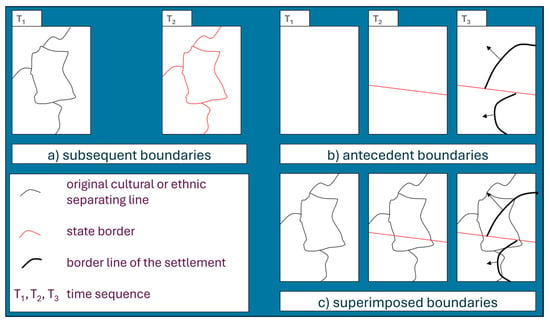
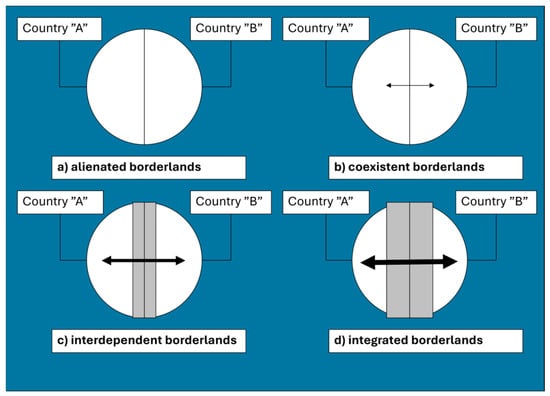
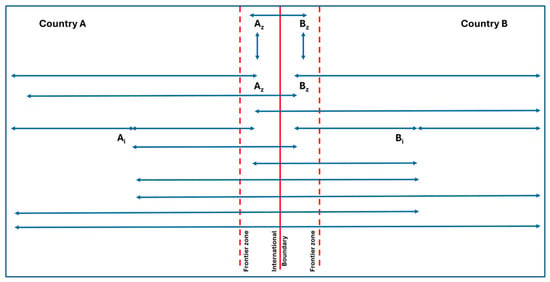
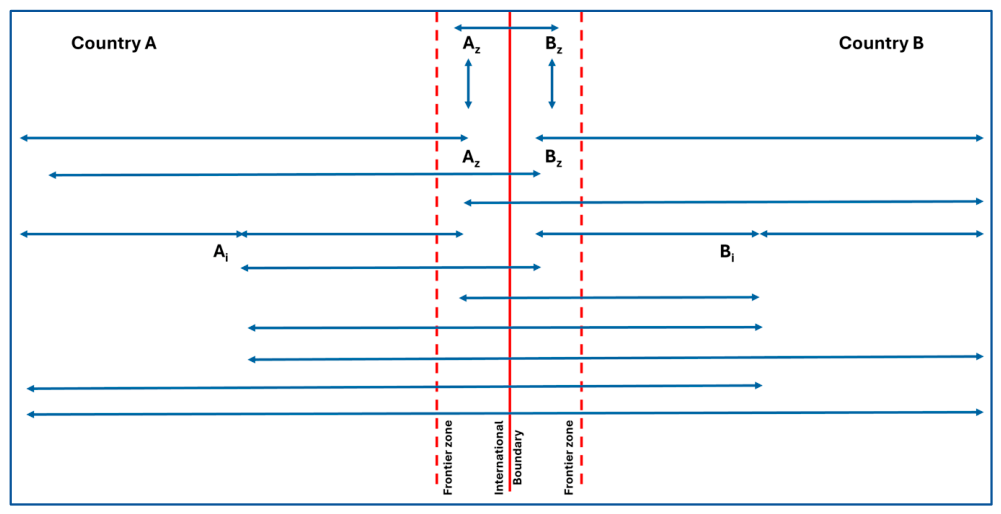
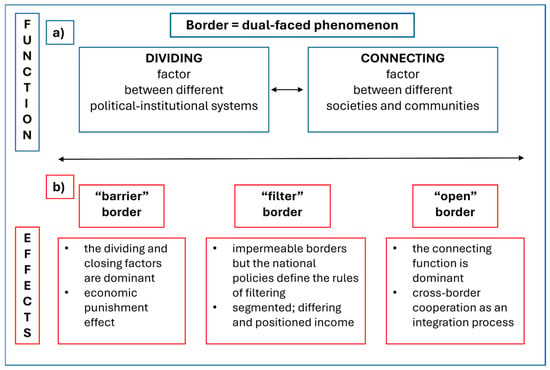
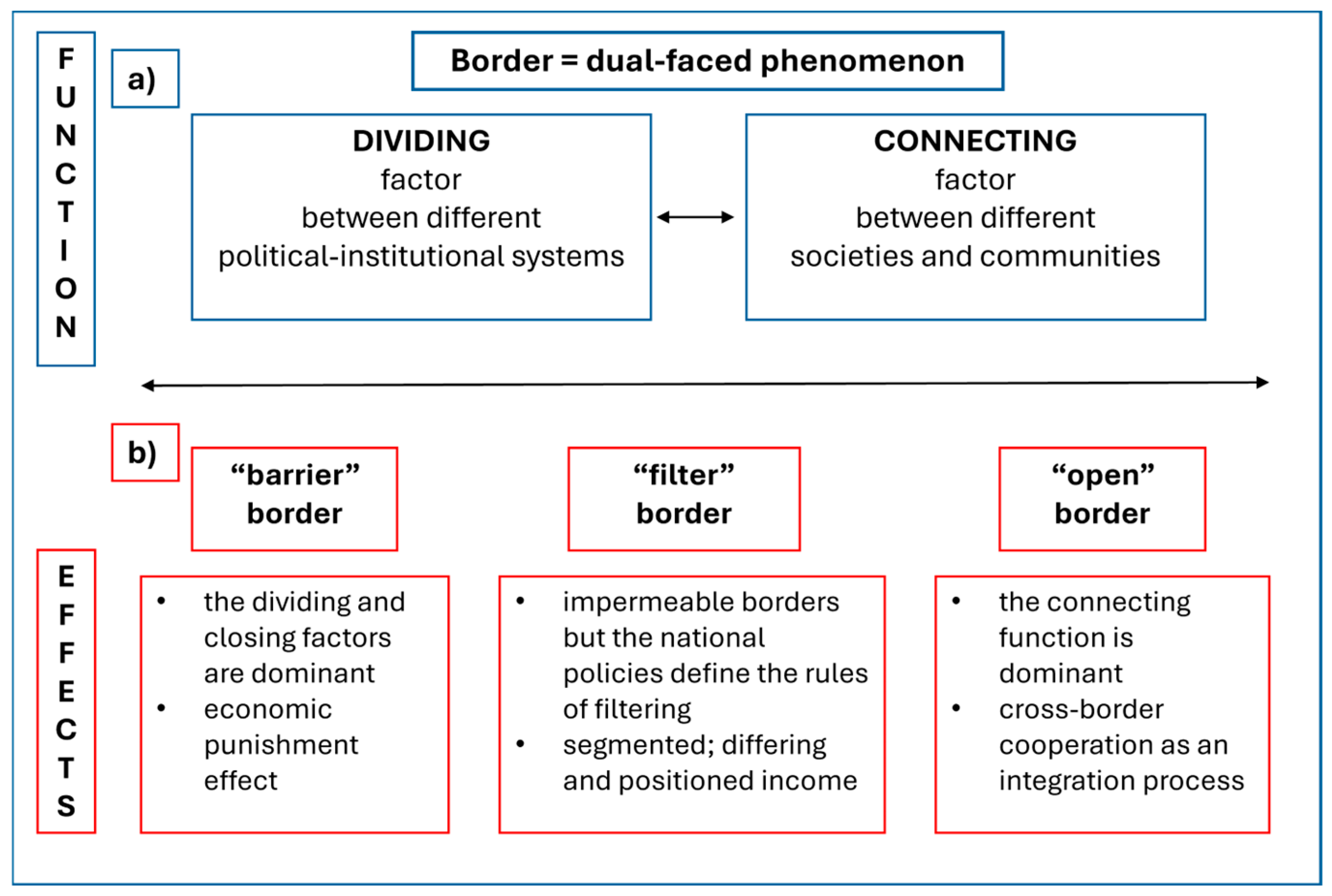
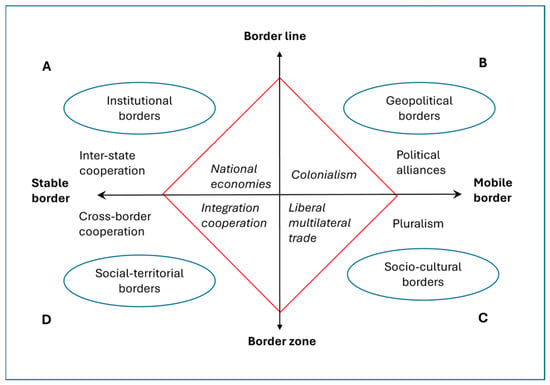
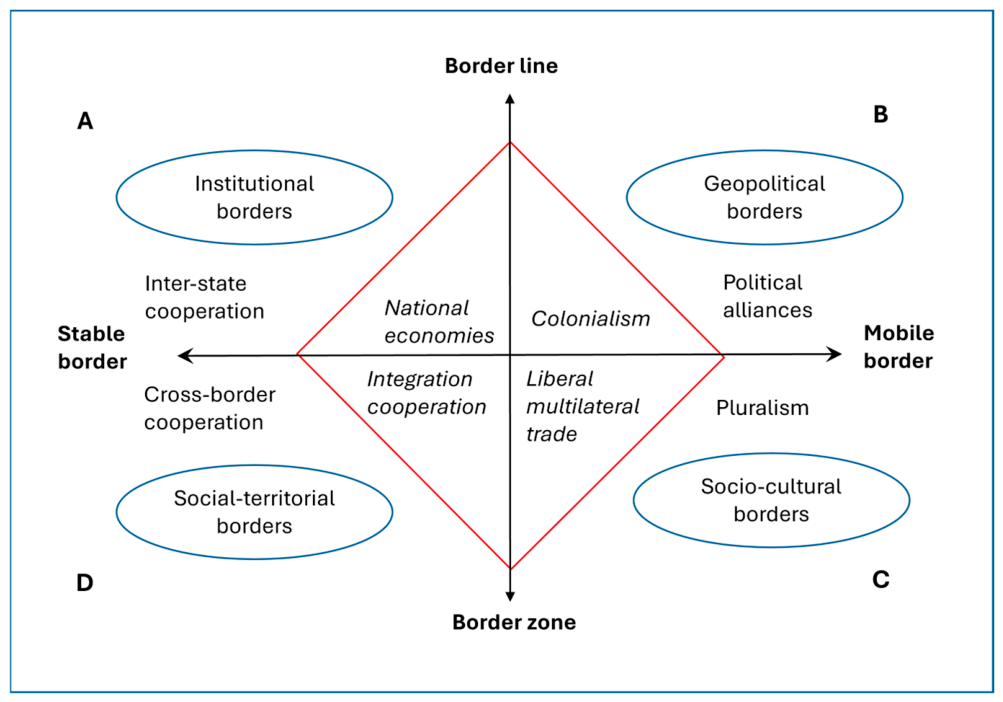
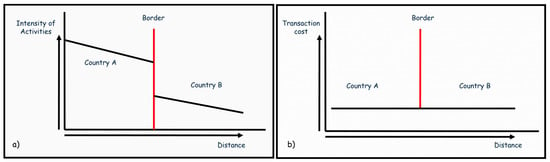
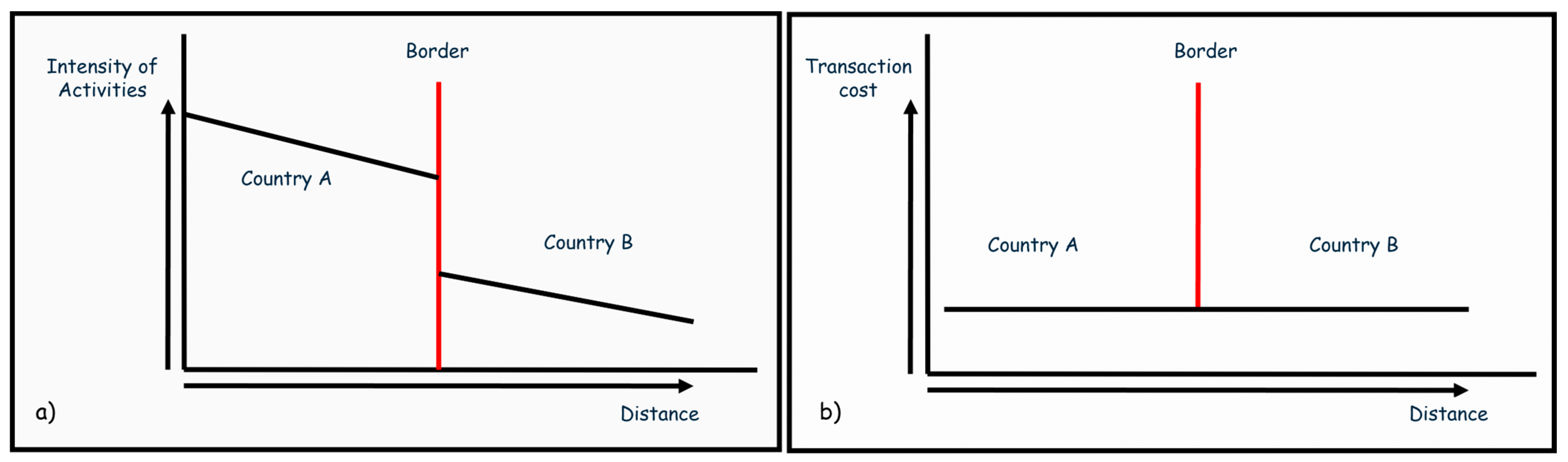
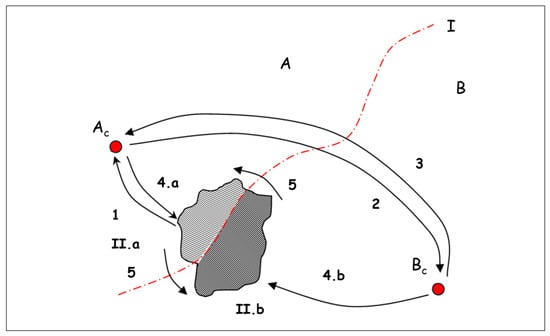
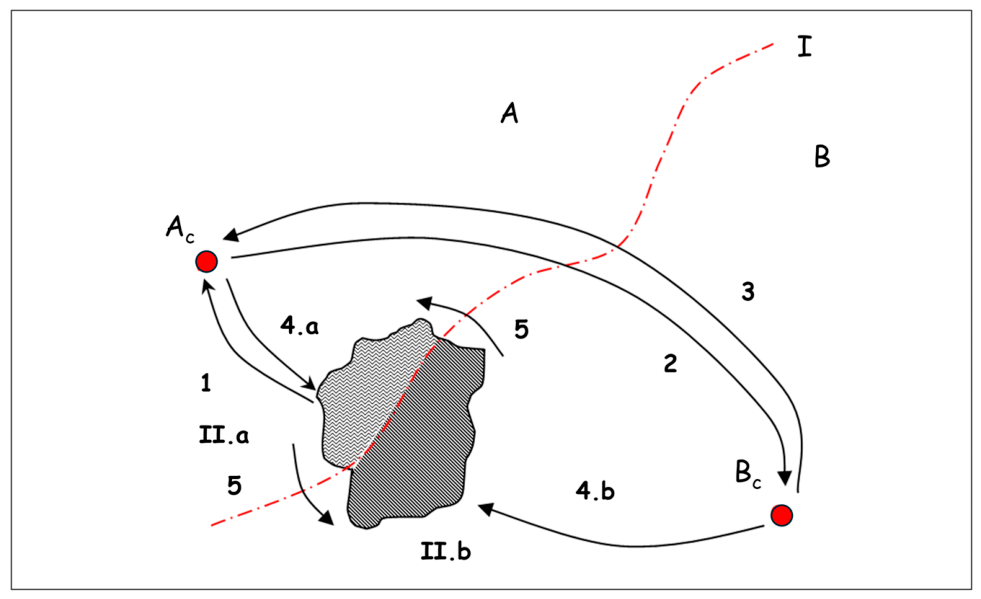
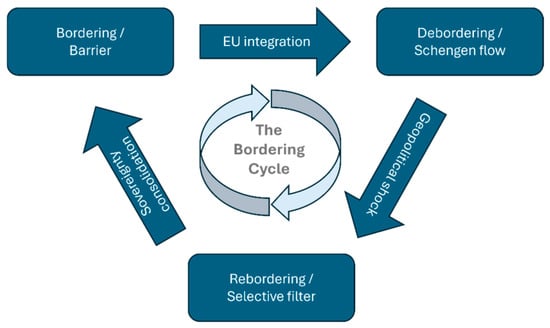
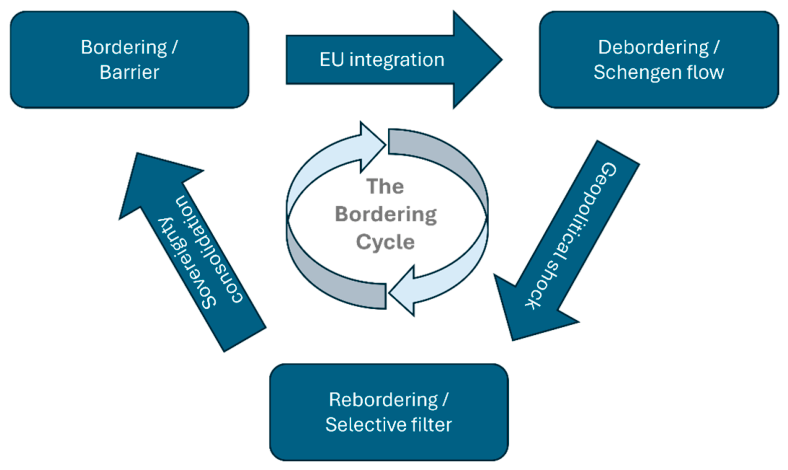

Disclaimer/Publisher’s Note: The statements, opinions and data contained in all publications are solely those of the individual author(s) and contributor(s) and not of MDPI and/or the editor(s). MDPI and/or the editor(s) disclaim responsibility for any injury to people or property resulting from any ideas, methods, instructions or products referred to in the content. |
© 2026 by the author. Licensee MDPI, Basel, Switzerland. This article is an open access article distributed under the terms and conditions of the Creative Commons Attribution (CC BY) license.