


Abstract
Additive manufacturing [AM; three-dimensional (3D) printing] is reshaping heterogeneous photocatalysis by enabling architected materials and devices that span from centimeter-scale monoliths to micro- and lab-on-chip reactors. Heterogeneous photocatalysts have traditionally been deployed as powders or simple coatings, which offer high activity but suffer from mass-transfer limitations, poor light utilization and difficult recovery. Three-dimensional (3D) printing now allows precise control over macroscopic geometry, internal channel networks and micro-/nano-scale surface texturing, creating structured photocatalysts and microreactors that can be tailored for specific photon and flow fields. In contrast to recent reviews that primarily survey materials development or additive-manufacturing routes, this work focuses on photocatalytic microreactors and lab-on-chip devices as multi-scale reactors in which catalyst composition, architected geometry, photon management and hydrodynamics are co-designed across length scales. We summarize three-dimensional 3D-printed photocatalytic systems based on polymer–oxide composites, ceramic scaffolds such as zinc oxide (ZnO)/titanium dioxide (TiO2) clay monoliths, and laser-written titanium dioxide (TiO2) nano-architectures, with particular emphasis on microfluidic and lab-on-chip implementations fabricated by fused deposition modeling (FDM), direct ink writing (DIW), stereolithography (SLA), digital light processing (DLP) and laser direct writing (LDW). Based on the literature data and representative case studies, we examine how architected lattices, sponges and microreactor chips affect key performance metrics—apparent rate constants, apparent quantum yield (AQY) and space–time yield (STY)—for the degradation of dyes, antibiotics, detergents and other emerging contaminants in realistic matrices, and we compile reported values to illustrate emerging performance trends and limitations. Representative case studies highlight 3D-printed manganese-doped zinc oxide (Mn:ZnO)-decorated sponges used as modular cartridges for greywater and detergent treatment, as well as laser-written titanium dioxide (TiO2) nano-photocatalysts integrated into microchannels to couple structured light fields with controlled residence times. Finally, we outline materials and process challenges—including ultraviolet (UV) aging of polymer supports, the energy intensity of ceramic sintering and the lack of standardized testing protocols—and identify future research directions formulti-scalee modeling and techno-economic evaluation of three-dimensional (3D)-printed photocatalytic microreactors and devices.
1. Introduction
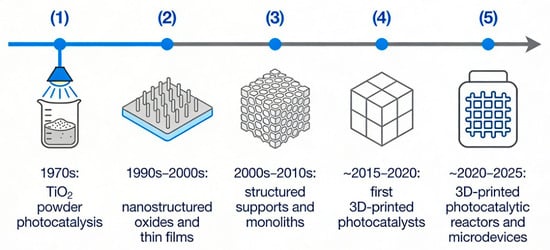
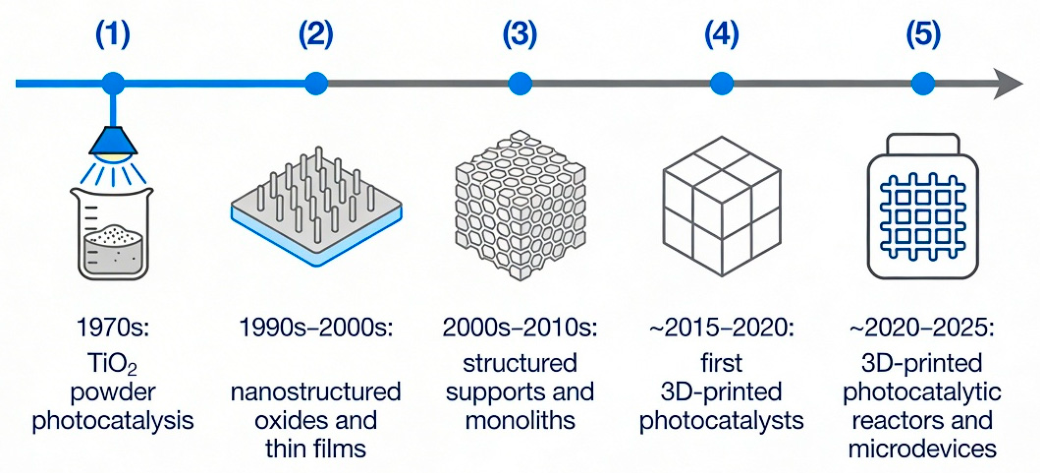
Environmental pollution, rapid urbanization and escalating energy demand have intensified the search for sustainable technologies capable of degrading persistent contaminants and converting solar energy into storable chemical forms [1,2,3,4]. Among advanced oxidation processes, heterogeneous photocatalysis has attracted particular interest because it uses photons to generate highly reactive species that can oxidize a broad range of organic and inorganic pollutants under mild conditions, while also enabling solar-driven reactions such as water splitting, CO2 reduction and nitrogen fixation [1,2,3,5,6]. Over the past decades, substantial efforts have been devoted to developing photocatalysts based on metal oxides (TiO2, ZnO, WO3, Fe2O3), sulfides and oxynitrides, carbonaceous materials, metal–organic frameworks (MOFs), covalent organic frameworks (COFs) and polymeric semiconductors (e.g., g-C3N4), as well as their doped and heterostructured derivatives, in order to extend light absorption, suppress charge-carrier recombination and improve interfacial charge transfer [3,5,7,8,9]. Comprehensive reviews now document this evolution from early UV-responsive TiO2 powders to visible-light-active and multi-component photocatalytic systems tailored for applications in water/air purification, plastic and organic conversion and solar fuels [2,3,5,7,8,9].
Despite this wide range of available materials, most photocatalysts are still used as fine powders suspended in liquid. This approach provides a high surface area and many active sites, but it creates practical problems: the particles tend to clump together, mass transfer is limited, and separating the catalyst after treatment is difficult [1,2,3,10,11,12]. Immobilized photocatalytic systems—in the form of thin films, coated monoliths and structured supports—mitigate recovery issues but are constrained by manufacturing routes that limit achievable geometries, internal porosity and light management, often enforcing a compromise between catalytic activity, pressure drop and scalability [10,11,12,13]. Recent studies show that the performance of photocatalytic water and air treatment depends not only on the material itself, but also on reactor design, fluid flow, light management, and process integration. This highlights the need for structured photocatalysts and reactors that combine materials, geometry, and flow in a single design [1,2,10,11,13].
In this context, 3D printing has emerged as a powerful fabrication platform, offering exceptional freedom to design and build complex structures with controlled composition and architecture at multiple length scales [10,11,12,13]. By building objects layer-by-layer directly from digital models, 3D printing allows precise control over macroscopic shape, internal channel networks, pore size distribution and surface texturing, while also being compatible with polymers, ceramics, composites and hybrid systems [11,12,13,14,15,16]. In the field of photocatalysis, extrusion-based methods like fused deposition modeling (FDM) and direct ink writing (DIW), vat photopolymerization techniques such as stereolithography (SLA) and digital light processing (DLP), and laser-based approaches have all been adapted to produce architected photocatalysts and reactors [11,14,15,16,17,18,19]. These capabilities can be exploited to de-couple and then rationally re-couple key design parameters such as irradiated surface area, residence time, mass-transfer paths and optical pathways, opening new opportunities to optimize the interplay between reaction, transport and illumination [11,14,15,16,17,18,19].
This work presents a topical review and perspective on these developments, combining the recent literature with our own previously published results; no new experimental data are reported. The survey covers representative studies up to 2024–2025, with particular attention to architected monoliths, fractal supports, and 3D-printed photocatalytic microreactors for both environmental remediation and emerging energy-conversion applications.
In particular, we emphasize 3D-printed photocatalytic microreactors and lab-on-chip devices as emerging platforms where architected materials, microfluidics and multi-scale reactor design converge.
For clarity, the literature surveyed here is organized along three intersecting axes. As seen in Figure 1, in terms of catalyst class, we primarily consider metal-oxide systems (e.g., TiO2, ZnO and their doped derivatives), but also reference emerging carbonaceous materials, MOFs and related hybrids where they have been implemented in 3D-printed reactors. In terms of reactor type, we distinguish between fixed-bed and flow-through monoliths, sponge-type cartridges and microfluidic or lab-on-chip devices. In terms of application area, the focus is on degradation of organic pollutants (dyes, antibiotics, detergents and endocrine disruptors) in water; wherever possible, we also note studies that extend 3D-printed photocatalyst architectures toward energy-conversion reactions such as water splitting or CO2 reduction.
Figure 1.
Conceptual illustration of 3D-printed photocatalyst inserts treating polluted water, compared with conventional slurry photocatalysis using dispersed nanoparticles.
The article is organized as follows: Section 2 revisits key photocatalytic mechanisms, geometry effects and metrics; Section 3 surveys additive manufacturing strategies for photocatalysts and reactors; Section 4 focuses on architected 3D materials; Section 5 discusses representative 3D-printed devices and microreactors; Section 6 outlines current challenges; and Section 7 summarizes the main conclusions and research directions.
Recent studies have demonstrated 3D-printed polymer–oxide composites, ceramic monoliths, g-C3N4-based scaffolds and hybrid structures for efficient degradation of dyes, antibiotics and emerging contaminants, often reporting improved performance and easy catalyst recovery compared to conventional immobilized systems [16,17,18,19,20,21]. As a representative case study, Mn:ZnO-decorated HDPE sponges demonstrate how polymer-based 3D lattices can be configured as modular cartridges for greywater treatment, complementing ceramic ZnO/clay monoliths and PET-TiO2 structures reported by other groups [16,22,23,24,25,26].
Compared with recent reviews that primarily survey materials development or additive-manufacturing routes for photocatalytic systems, this work places particular emphasis on photocatalytic microreactors and lab-on-chip devices, highlighting how architected 3D structures couple photon management, hydrodynamics and residence-time control across scales. We present the literature data on apparent rate constants, apparent quantum yield and space–time yield where available, and we discuss 3D-printed polymer, ceramic and hybrid reactors in a common performance and design framework that spans from cartridge-type sponges to laser-written micro-architectures. Furthermore, we integrate these developments with representative case studies from our own work to illustrate multi-scale reactor design concepts rather than to provide an exhaustive catalog of printing recipes.
2. Fundamentals
2.1. Photocatalytic Mechanisms in Semiconducting Oxides
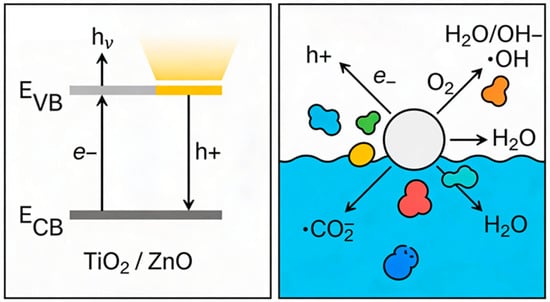
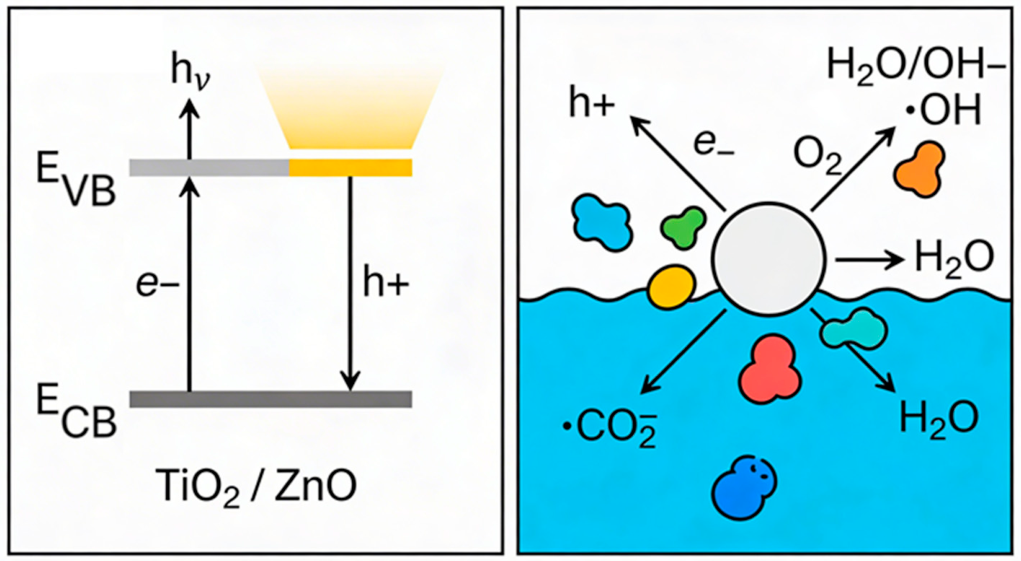
Heterogeneous photocatalysis in semiconducting oxides relies on the generation, separation and utilization of electron–hole pairs upon absorption of photons with energy equal to or greater than the semiconductor band gap [3,5,7,8,9]. Illumination promotes electrons from the valence band (VB) to the conduction band (CB), leaving holes that can migrate to the surface and drive oxidative reactions, while CB electrons participate in reductive processes [3,5,7,8,9]. Photogenerated carriers may recombine in the bulk or at the surface, or participate in interfacial redox reactions whose competition strongly depends on crystallinity, defect density, surface states and morphology [3,5,7,8,9]. Holes can directly oxidize organics or react with surface-adsorbed hydroxyl groups and water to generate •OH, while electrons reduce dissolved oxygen to •O2− and related species (Figure 2); these radicals then attack pollutants such as dyes, pharmaceuticals, fertilizers and detergents [3,5,7,8,9]. Representative case syudies on TiO2 and ZnO thin films, doped oxides and powders has shown how composition and microstructure influence these processes, demonstrating efficient degradation of methylene blue, stearic acid and more complex contaminants under UV and near-UV light [3,5,7,8,9].
Figure 2.
Photocatalytic mechanism in oxide semiconductors: band diagram showing e−/h+ generation and surface reactions forming—OH and—O2− that mineralize organic pollutants.
2.2. Impact of Geometry and Morphology
Geometry governs the transport of charge carriers, photons, and reactants. Since charge-carrier diffusion lengths are typically in the range of tens to hundreds of nanometers, nanostructures with similar dimensions improve the probability that electrons and holes reach the surface before recombining. Conversely, excessively thick or dense films increase the likelihood of bulk recombination. At the same time, feature size and morphology determine light penetration depth and scattering; high-aspect-ratio structures and hierarchical porosity can enhance light trapping and internal reflection, but overly opaque or thick architectures suffer from self-screening [10,11,12,13,17,18,20,24,27].
Our studies on chemically grown ZnO nanowires on glass and sapphire have highlighted how seed-layer choice and growth conditions control nanowire alignment and aspect ratio, which in turn affect light absorption, surface area, hydrophilicity switching and photocatalytic performance [22,23]. Similar conclusions were drawn from TiO2 films and Fe-doped TiO2 nanostructures, where controlled porosity and roughness improved both light harvesting and pollutant access. These insights provide a direct conceptual bridge to architected 3D lattices and sponges, where macro-scale geometry and micro-scale roughness jointly shape light and mass transport [10,11,12,13,17,18,19,20,24,27].
For architected 3D reactors, the coupling between micro/nanostructures, fluid dynamics and photocatalytic kinetics is crucial. At the micro- and nano-scale, pore size, surface roughness and hierarchical textures set the characteristic diffusion length and local residence time of reactants within the reactive boundary layer, influencing how efficiently photogenerated carriers can be harvested before recombination. At the meso-scale and macro-scale, channel shape, tortuosity, porosity and connectivity determine velocity profiles, mixing and residence-time distributions, which in turn control how often fluid elements encounter illuminated catalyst regions. Tight channels and high tortuosity enhance mass-transfer and light–matter interaction but increase pressure drop and risk of clogging, whereas highly open sponges favor low pressure drop and easy retrofitting but are more prone to bypassing and channeling. The observed apparent k, AQY and STY therefore emerge from a multi-scale interplay between micro/nanostructure, hydrodynamics and reaction kinetics rather than from material properties alone.
Earlier studies on structured ZnO/TiO2 thin films, nanowire arrays and textured surfaces demonstrated how morphology, wettability and micro-/nano-roughness affect light absorption, hydrophilicity switching and photocatalytic rates, and they established benchmarking protocols based on stearic acid films and model dyes such as methylene blue [13,16,22,24,26]. These legacy systems did not involve additive manufacturing, but they provided the methodological and mechanistic foundation on which many of the 3D-printed architectures considered here were built. For this reason, we refer to them only briefly as conceptual precursors and concentrate the remainder of the review on additively manufactured photocatalysts and reactors.
2.3. Metrics and Testing Protocols
Quantitative metrics such as apparent rate constants, surface-area-normalized rates, apparent quantum yield (AQY) and space–time yield (STY) are essential for comparing photocatalysts and reactors [1,2,3,10,11,12,20]. However, recent reviews highlight that inconsistent reporting of light intensity, reactor geometry and pollutant composition severely limits comparability. Recent studies, from stearic acid and methylene blue benchmarks to real detergents and complex mixtures, demonstrate the importance of combining standardized model tests with realistic matrices containing multiple components and high ionic strength [16,22,23,24,25,26].
In addition to these kinetic and photonic metrics, it is important to distinguish between dye decolorization and full mineralization or detoxification. Dye decolorization, typically monitored by UV–Vis absorbance decrease at the characteristic wavelength of the chromophore, mainly reflects the breakdown or transformation of the chromophoric group and does not by itself guarantee complete oxidation of organic intermediates or removal of toxicity. By contrast, mineralization is more rigorously assessed via total organic carbon (TOC), chemical oxygen demand (COD) or related indicators, often complemented by toxicity assays, which are still less frequently reported for 3D-printed photocatalytic systems [16,20,21,22].
For clarity, we briefly recall the working definitions used in this review. The apparent first-order rate constant k is obtained by fitting the concentration decay to:
where C0 and C are the initial and instantaneous pollutant concentrations and t is the irradiation time.
The apparent quantum yield (AQY) is defined as:
typically estimated from the concentration change, illuminated area, irradiation time and incident photon flux reported in the original studies.
The space–time yield (STY) is expressed as:
usually reported in units such as g m−3 h−1. STY normalizes productivity to the reactor volume and enables comparison between reactors of different scale and throughput.
In practice, many 3D-printed photocatalytic studies report decolorization and apparent k, whereas AQY, STY, pressure-drop measurements and detailed mass-transfer coefficients are still rarely quantified, which limits the depth of horizontal benchmarking.
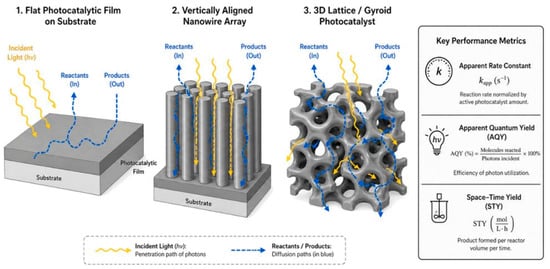
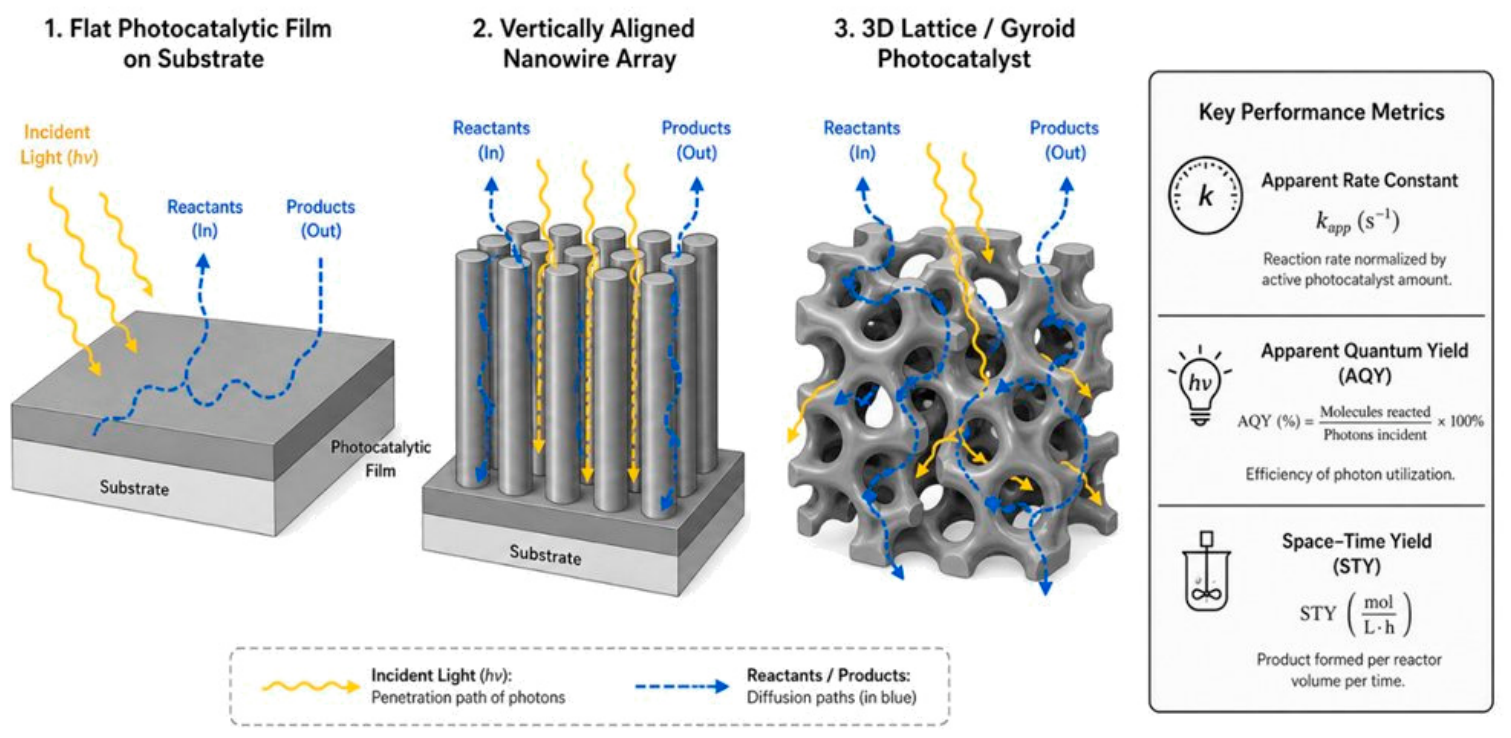
Beyond the choice of metric, reported performance is strongly influenced by discrepancies in experimental conditions across the literature. Illumination sources range from low-pressure mercury lamps to UV-A/visible LEDs and simulated solar light, often with incomplete or non-comparable reporting of spectral distribution, irradiance and optical path length. Reactor geometries vary from stirred batch cells and annular reactors to serpentine microchannels and TPMS monoliths, with different illuminated areas, path lengths and residence-time distributions (see also Figure 3). Pollutant type and concentration (dyes, antibiotics, detergents, endocrine disruptors), solution chemistry (pH, ionic strength, presence of surfactants or natural organic matter) and catalyst pre-conditioning further complicate cross-comparison. These variations make it difficult to transpose k, AQY or STY values from one study to another without careful normalization.
Figure 3.
Effect of photocatalyst geometry (flat film, nanowire array, 3D lattice) on light penetration, mass transport and key performance metrics (k, AQY, STY).
To move toward more universal testing and reporting standards for 3D-printed photocatalytic reactors, several pragmatic steps can be adopted. First, studies should report lamp type, spectrum, incident irradiance (or photon flux) at the catalyst surface, reactor geometry (including illuminated area, path length and volume) and pollutant composition in a standardized format, ideally accompanied by schematics. Second, at least one benchmark test (e.g., stearic acid film or methylene blue solution under defined conditions) could be shared across studies to enable inter-laboratory comparison, while additional tests with realistic matrices (detergents, greywater, pharmaceutical mixtures) probe practical performance. Third, authors should explicitly state whether reported k values are apparent k (lumped over the specific reactor configuration) and, where possible, complement them with AQY or STY so that both photon efficiency and volumetric productivity can be assessed.
Each metric has a distinct application window and limitation. Apparent k is straightforward to extract and useful for comparing different reactors tested under similar conditions, but it depends on light intensity, reactor geometry and hydrodynamics, and therefore cannot be assumed intrinsic. AQY provides a more fundamental measure of photon utilization but requires accurate photon-flux measurements and is rarely reported for complex lamps or opaque 3D structures. STY captures how much pollutant is removed per reactor volume and time and is particularly relevant for techno-economic assessment and scale-up, but it can obscure differences in photon efficiency and is meaningful only when reactor volume, residence time and operating conditions are clearly specified. For 3D-printed systems, combining k (or surface-area-normalized rates) with AQY and STY where feasible offers the most informative picture, provided that the underlying experimental conditions are thoroughly documented.
3. Additive Manufacturing Strategies
3.1. Fused Deposition Modeling (FDM)
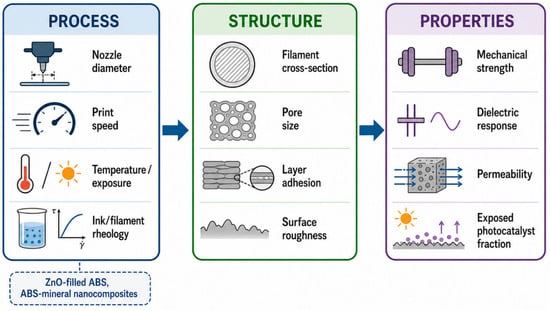
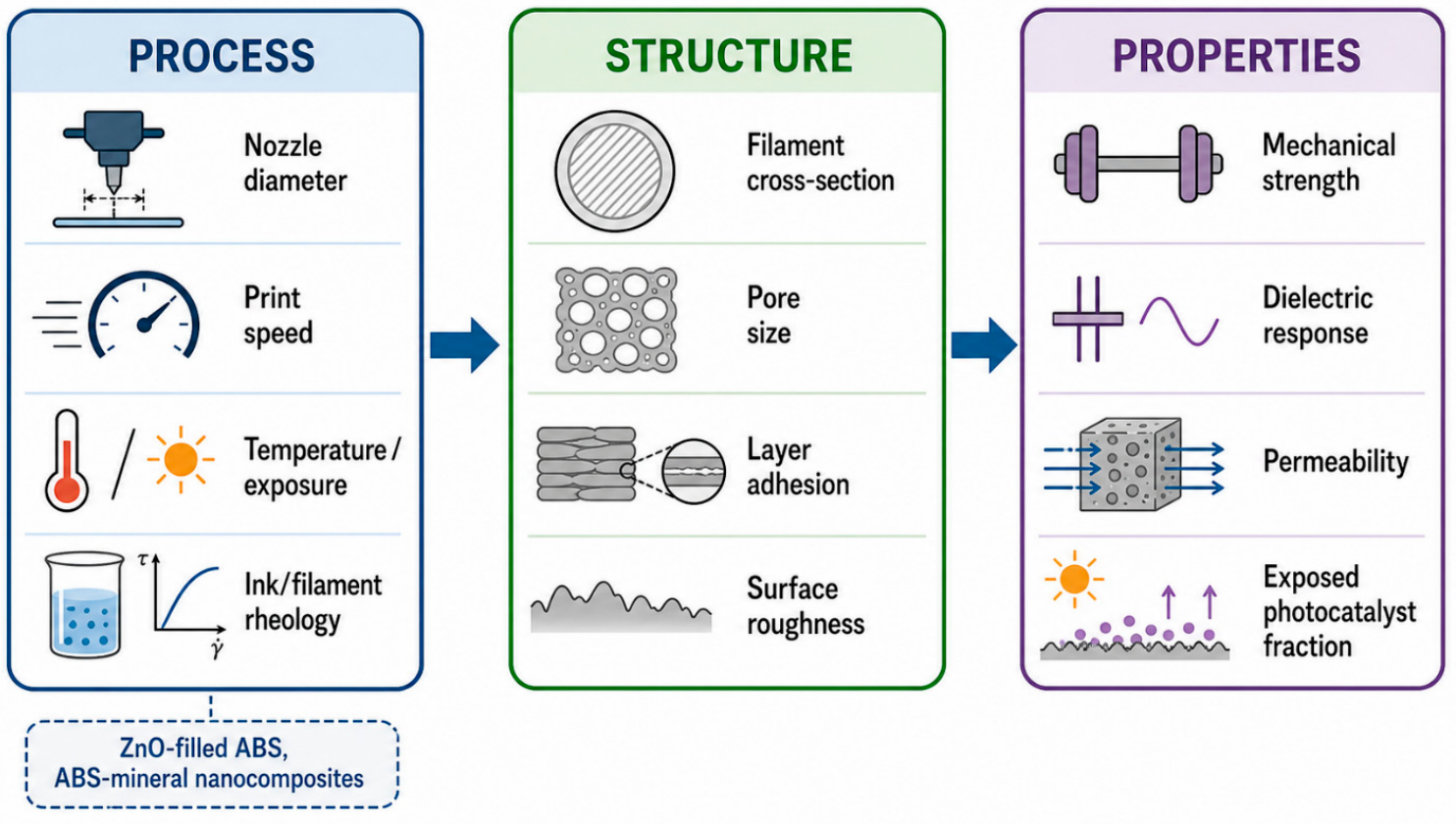
FDM is widely used to fabricate low-cost 3D-printed supports and monoliths from thermoplastics such as PLA, ABS and PET, either as inert scaffolds later coated with photocatalysts or as polymer–oxide composites (see also Figure 4 and Figure 5). Studies have demonstrated FDM-printed PLA or ABS lattices functionalized with ZnO and TiO2 nanoparticles for dye and NOx degradation, showing the importance of channel design for hydrodynamics and light distribution. Trade-offs arise because high filler loadings improve activity but compromise filament rheology, printability and mechanical properties. Our experience with 3D-printed polymer nanocomposites and ABS–mineral composites provides platform know-how for optimizing these trade-offs in photocatalysis-capable filaments [12,19,20,28,29].
Figure 4.
Schematic overview of fused deposition modeling (FDM) routes for photocatalytic supports, illustrating 3D-printed polymer lattices and monoliths that are either post-coated with oxide photocatalysts or formulated as polymer–oxide composites to combine tailored channel geometries with accessible active surfaces.
Figure 5.
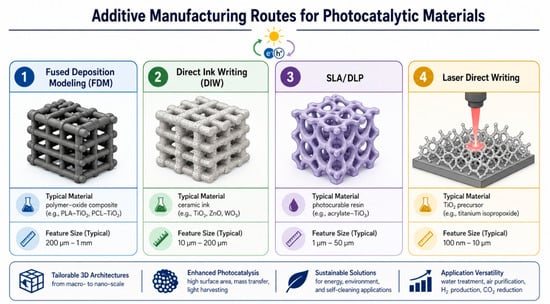
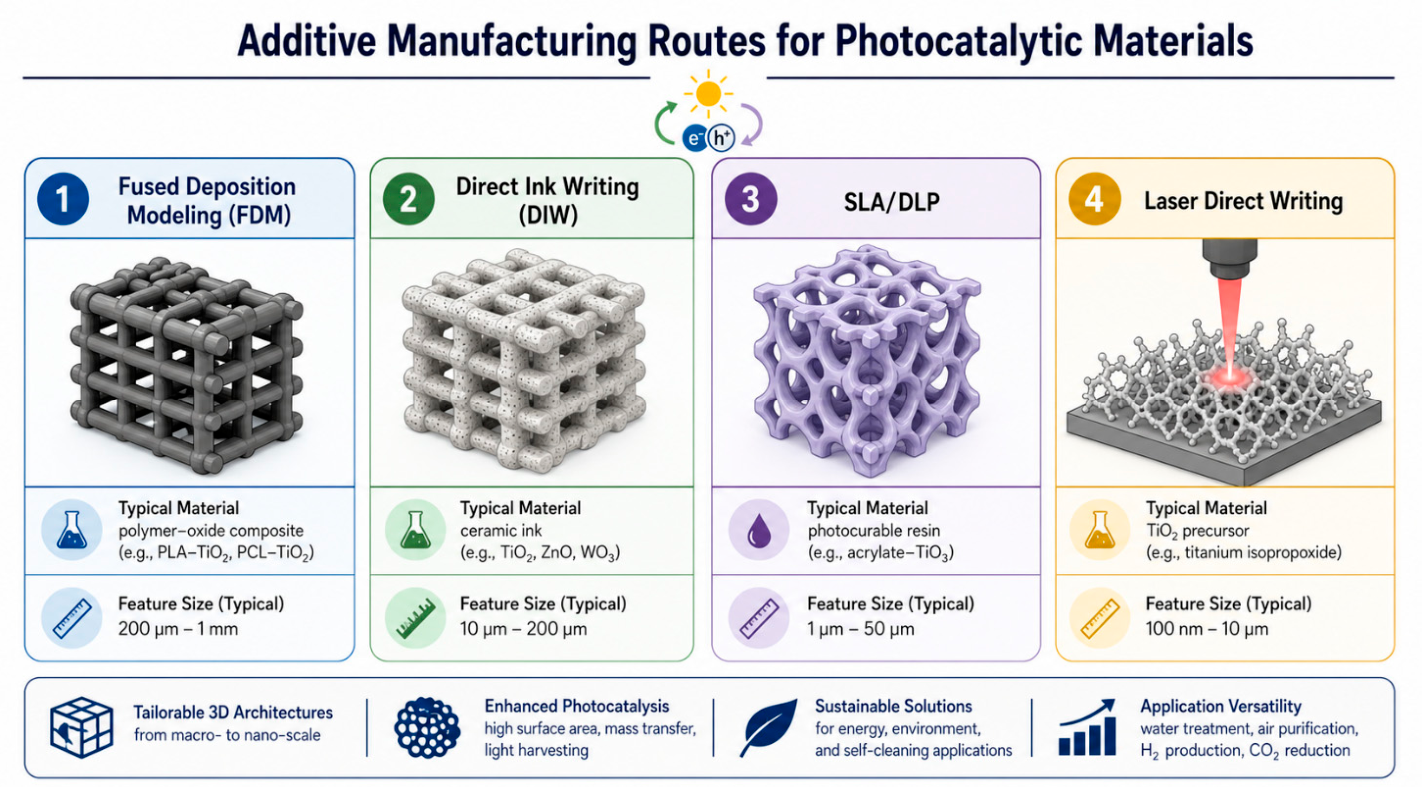
Overview of additive-manufacturing routes for photocatalysts and reactors, including FDM, DIW, SLA/DLP and laser direct writing.
3.2. Direct Ink Writing (DIW)
DIW (Figure 5) uses viscoelastic ceramic or composite inks to produce self-supporting filaments and hierarchically porous scaffolds after drying and sintering. For photocatalysis, DIW has been employed to print inks containing TiO2, ZnO or mixed ceramic systems, yielding robust, high-porosity monoliths with interconnected macro- and mesopores that facilitate reactant diffusion and light penetration [12,30,31].
3.3. Vat Photopolymerization and Multi-Photon Lithography
Vat photopolymerization (SLA/DLP; Figure 5) offers high resolution and smooth surfaces by selectively curing photocurable resins, which can be loaded with TiO2 or other photocatalysts or post-coated. DLP-printed photoreactors with TiO2-containing resins or g-C3N4 coatings have demonstrated efficient degradation of dyes and antibiotics in compact continuous-flow devices. Multi-photon lithography and laser direct writing enable fabrication of TiO2 nano-architectures with sub-micrometer features, as recorded on laser-written 3D TiO2 micro-photocatalysts, which provide high surface area and controlled topology for microreactor applications [12,17,19,21,32].
3.4. Laser-Induced Patterning on 3D Supports
Laser-based patterning (Figure 5) allows local functionalization and crystallization of photocatalytic layers on 2D and 3D substrates, bridging conventional coatings and full AM. For example, 3D-printed fractal polymer structures have been grafted with ZnO, TiO2 and Fe-MOF nanoparticles to yield hybrid photocatalysts for dye and antibiotic degradation. Typical TiO2 and ZnO coatings on structured substrates, including silicon spikes and other textured surfaces, provide a natural extension of this concept to 3D-printed scaffolds [32,33].
To move beyond a purely descriptive comparison of printing routes of Figure 5, Table 1 compiles representative 3D-printed photocatalytic systems, highlighting how each additive-manufacturing strategy maps onto specific photocatalysts, reactor configurations, target pollutants, operating conditions and performance metrics.
Table 1.
Representative 3D-printed photocatalytic systems: printing method, configuration, pollutants and key performance indicators.
3.5. Comparative Overview and Selection Guidelines
Table 2 provides a concise horizontal comparison of the main additive-manufacturing routes discussed in this review, highlighting printing resolution, material compatibility, typical component properties and reactor scales.
Table 2.
Qualitative comparison of major 3D-printing routes for photocatalytic reactors, summarizing typical printing resolution, material compatibility, component properties, catalyst integration strategies, reactor scales, and indicative cost/throughput for FDM, DIW, SLA/DLP and laser direct writing.
These differences translate into distinct application niches. FDM and DIW are naturally suited to large-scale or modular cartridge-type reactors, where centimeter-scale channels and low equipment cost are more important than sub-micrometer resolution; they are therefore attractive for greywater and detergent treatment modules, as well as robust ceramic monoliths. SLA/DLP excel in the fabrication of microreactors and lab-on-chip devices, where smooth internal microchannels, controlled path length and integrated optics enable precise residence-time and photon-management control at the mm–cm scale. LDW/MPL, by contrast, is best reserved for high-precision nano-photocatalysts and integrated micro-architectures in lab-on-chip platforms or sensors, where resolution and local field control justify the higher cost and lower throughput. Selecting a printing route for a given application thus requires balancing resolution, material compatibility, mechanical and chemical stability, catalyst integration strategy and the targeted reactor scale.
4. Architected 3D Photocatalytic Materials
4.1. Polymer-Based 3D Architectures Loaded with Photocatalysts
Polymer-based lattices and scaffolds loaded with oxide nanoparticles combine geometric freedom with mechanical robustness and low density. FDM-printed ABS/TPU/CaSiO3 skeletons decorated with ZnO nanostructures or containing ZnO in bulk have shown combined adsorption–photocatalysis for dye removal. Recent studies on 3D-printed ABS–mineral and ZnO-filled polymer nanocomposites directly informs the processing, dispersion and percolation behavior needed to balance mechanical, dielectric and photocatalytic properties in such systems [12,26,29].
4.2. 3D-Printed Photocatalytic Sponges (Mn:ZnO and Others)
We have recently demonstrated 3D-printed HDPE sponges decorated with Mn-doped ZnO nanostructures grown by a low-temperature chemical route, forming hierarchical architectures with robust polymer struts and dense photocatalytic coatings. Mn doping reduced the ZnO band gap and enhanced visible-light absorption, while photocatalytic tests with a commercial liquid laundry detergent (Dixan) showed high decolorization efficiencies (~88% after multiple cycles for 10 mol% Mn) and good reusability. These sponges function as modular, low-pressure-drop inserts for detergent and drug residual removal, aligning with emerging interests in everyday-use pollutant abatement.
At the same time, the use of soft polymer scaffolds such as HDPE raises important questions about long-term stability and environmental footprint under photocatalytic operating conditions. Under continuous UV irradiation and exposure to reactive oxygen species (•OH, •O2−) generated at the Mn:ZnO surface, HDPE is susceptible to chain scission, oxidation and embrittlement, potentially leading to surface cracking, catalyst detachment and release of polymer fragments into the treated stream. The existing Mn:ZnO/HDPE sponge studies cover a limited number of cycles under controlled conditions and do not yet quantify polymer degradation, microplastic formation or mechanical fatigue beyond this window. Systematic aging tests, microplastic monitoring and comparison with more inert ceramic or metallic supports are therefore essential before such polymer-based cartridges can be considered for long-term, continuous photocatalytic treatment.
Comparable 3D-printed ZnO/clay monoliths and ZnO-based ceramic scaffolds have been reported for dye and endocrine disruptor removal, but our system is distinctive in its use of soft polymers and realistic detergent matrices [16,20,31].
4.3. Laser-Written and Micro-Printed 3D Nano-Photocatalysts
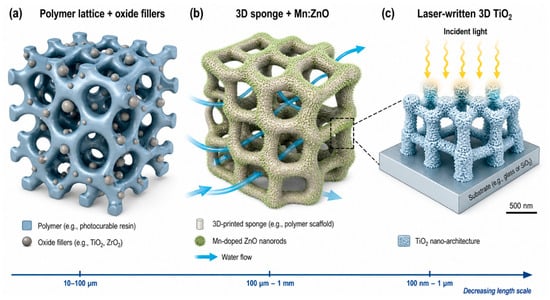
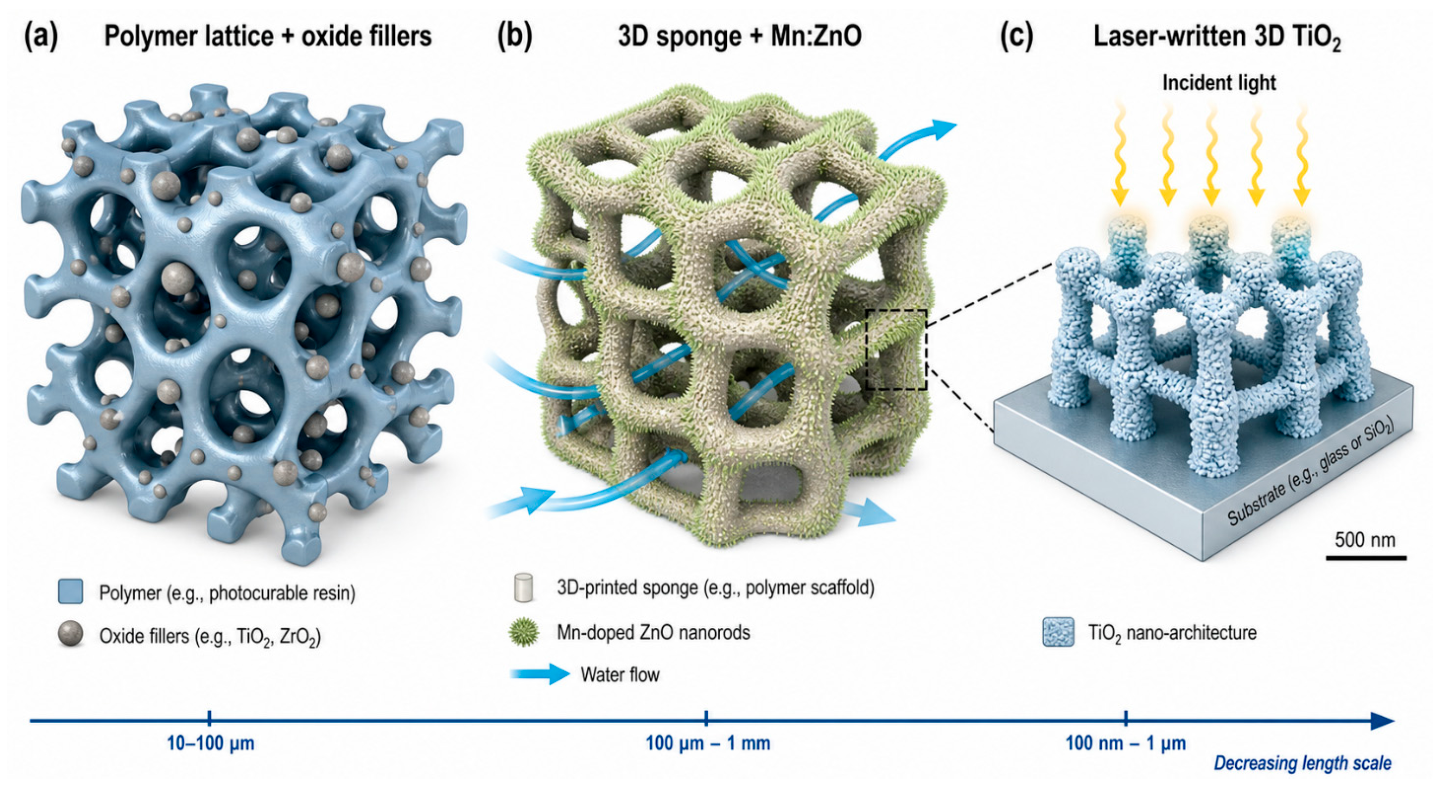
Our laser-direct-written 3D TiO2 nano-architectures, produced from photosensitive precursors followed by annealing, provide highly controlled nano-scale frameworks with efficient light trapping and short diffusion paths (see Figure 6). Photocatalytic tests demonstrate strong degradation of model organics, suggesting their use as microreactors and as building blocks in lab-on-chip platforms. Compared with TiO2-coated SLA/DLP-printed supports, which mainly exploit macro-scale geometry, these nano-architected systems emphasize the role of engineered nano-optics and local field enhancement [19,33].
Figure 6.
Architected 3D photocatalytic materials obtained by additive manufacturing, including polymer-based lattices loaded with oxide nanoparticles, Mn:ZnO-decorated sponges, and nano-architected TiO2 frameworks that jointly control surface area, light management and mass-transport pathways.
However, as discussed in Section 6, the high capital cost and comparatively low fabrication throughput of LDW naturally confine such nano-architectures to niche, high-value applications rather than large-scale water treatment.
Although the majority of 3D-printed photocatalytic architectures reported to date target pollutant degradation in water, similar design principles are beginning to be explored for energy-conversion reactions. Recent studies have used 3D-printed oxide and hybrid scaffolds as photoelectrodes for solar water splitting, as structured photocathodes for CO2 reduction, or as light-management inserts in photoelectrochemical cells, typically adapting FDM/DIW or SLA-type architectures developed for pollutant removal. These energy-focused examples remain fewer in number and often emphasize proof-of-concept demonstrations rather than fully engineered reactors, but they highlight that architected 3D photocatalysts can, in principle, be extended beyond environmental remediation and motivate broader exploration of energy-conversion applications in future work.
Beyond the case studies discussed above, several very recent reports further illustrate the rapid evolution of 3D-printed photocatalytic architectures. Perovskite oxynitride monoliths such as 3D-printed SrNbO2N structures have demonstrated complete methylene-blue degradation with good stability over multiple cycles, highlighting the feasibility of printing complex oxide photocatalysts directly as active monoliths. LCD or SLA-type printing of fractal polymer substrates functionalized with hierarchically immobilized Ni-MOF/BiOI/AgVO3 heterojunctions has shown how advanced immobilization methods (e.g., plasma-assisted MOF growth) can be combined with architected geometries to enhance visible-light activity and recyclability. Other recent studies explore TiO2-functionalized 3D-printed plastic plates for gas-phase photocatalysis and photocatalytic inserts based on TiO2–polymer composite filaments for organic synthesis, underscoring the diversity of materials and reactor formats now accessible via additive manufacturing [34,35,36,37].
5. 3D-Printed Devices and Reactors
5.1. Fixed-Bed and Flow-Through Reactors
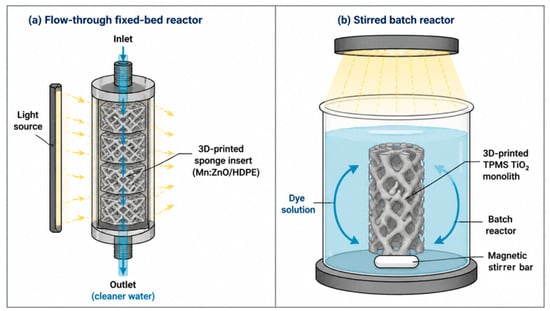
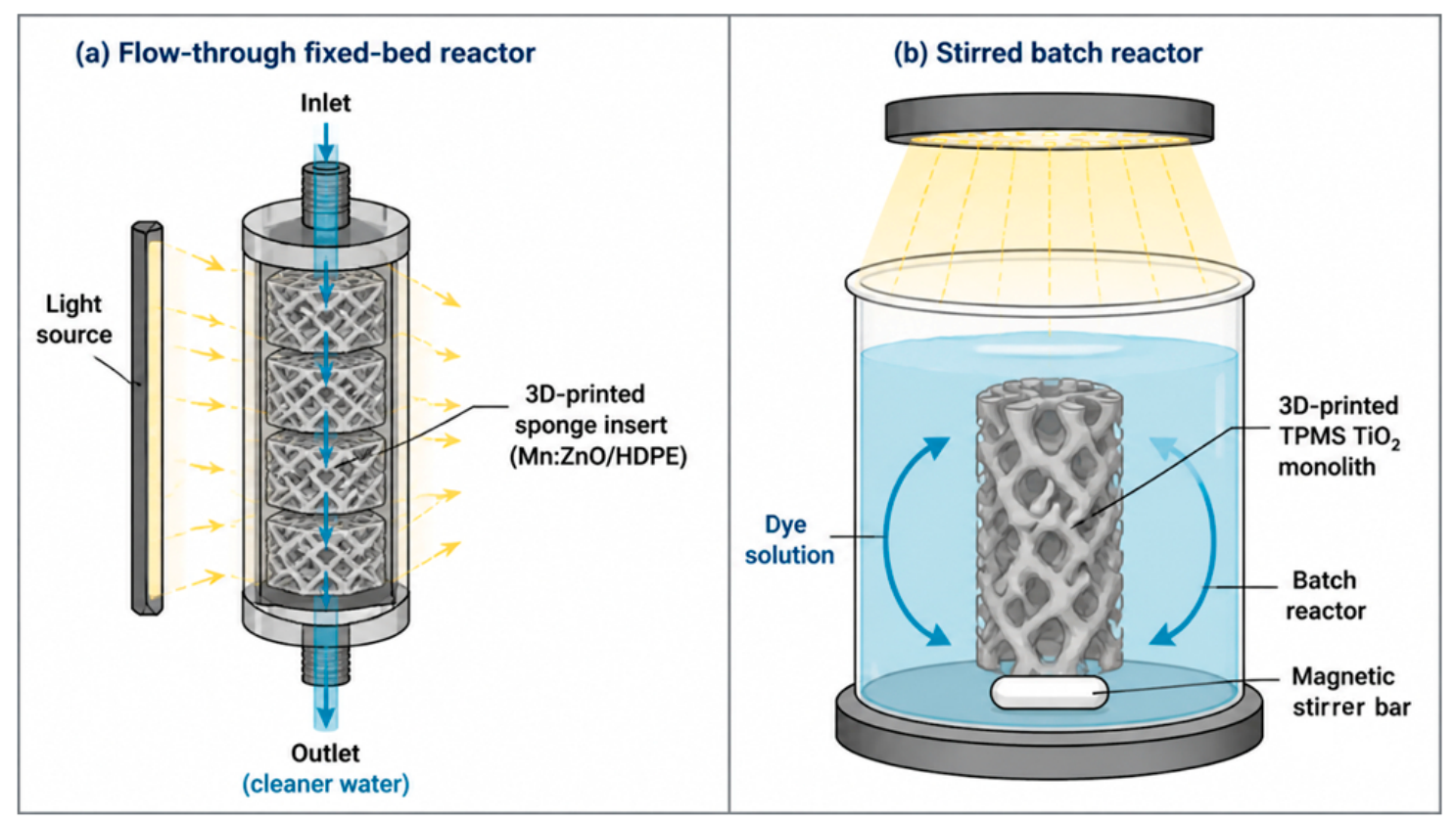
3D-printed photocatalysts are often implemented as inserts in fixed-bed or flow-through reactors (Figure 7). Here we focus on 3D-printed photocatalytic devices across scales, with particular emphasis on microreactors and lab-on-chip architectures. DLP-printed TPMS TiO2 reactors, for example, have achieved complete dye removal with structure-dependent kinetics, while SLA-printed TiO2-impregnated reactor inserts have improved light distribution and RhB degradation. Recent studies on Mn:ZnO/HDPE sponges can be used as modular cartridges or packed-bed elements for the treatment of laundry and greywater streams, providing high porosity, low pressure drop and high reusability in realistic detergent matrices [12,16,17,19].
Figure 7.
3D-printed fixed-bed and flow-through photocatalytic reactors, showing monolithic inserts, porous lattices and sponge-type cartridges integrated in channels to enhance light distribution, reduce pressure drop and enable facile catalyst recovery during continuous wastewater treatment.
Sponge-type cartridges and mathematically defined lattices such as TPMS structures illustrate two distinct approaches to structuring the flow path. Random or semi-structured porous networks, like the 3D-printed HDPE sponge, offer very high overall porosity and low pressure drop but can exhibit non-uniform flow distribution, dead zones and channeling during continuous operation, especially as fouling progresses. In contrast, TPMS lattices provide a well-defined, periodic pore architecture with controlled connectivity and tortuosity, which can improve flow uniformity and reduce stagnant regions, albeit with more rigid geometrical constraints and potentially higher design complexity. Quantitative comparisons of residence-time distributions, mass-transfer coefficients and fouling patterns between such random and mathematically defined architectures are still scarce, and represent an important direction for future work.
5.2. Microfluidic and Lab-on-Chip Devices
DLP and SLA have been widely used to fabricate photocatalytic microreactors and lab-on-chip devices with embedded TiO2, g-C3N4 and other catalysts, typically organized in planar or multi-layered microchannel networks with characteristic channel heights in the 100–500 µm range and millimeter-to-centimeter-scale footprints. Such chips often employ serpentine, meandering or split-and-recombine channel geometries to increase surface-to-volume ratio and residence-time control compared with macroscopic reactors, while benefiting from the design freedom and rapid prototyping afforded by vat photopolymerization [12,17,19,21].
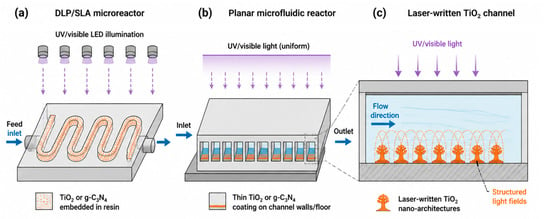
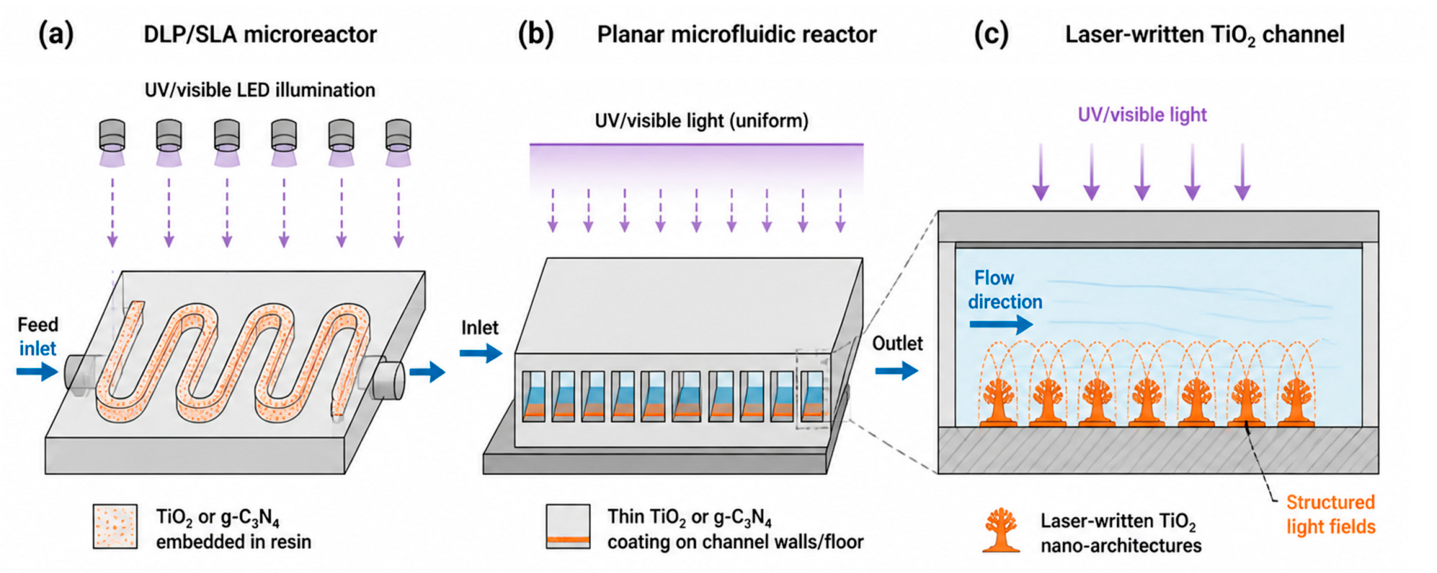
Figure 8 summarizes representative layouts, including single-layer planar microchannels, multi-channel architectures and chips incorporating internal photocatalyst structures.
Figure 8.
Microfluidic and lab-on-chip photocatalytic devices: (a) DLP/SLA-printed microreactor with embedded photocatalyst operating in continuous flow, (b) planar microfluidic chip with immobilized catalyst and high surface-to-volume ratio, and (c) microchannel incorporating laser-written TiO2 nano-architectures as high-surface elements for intensified microscale photocatalysis.
Photocatalytic microreactors fabricated by SLA/DLP typically operate in continuous-flow mode under UV or visible LEDs placed above, below or alongside the chip, with residence times ranging from a few seconds to several minutes depending on channel length and flow rate. Reported systems include TiO2-loaded resins and g-C3N4-coated channels achieving high dye and antibiotic decolorization under modest light intensities, often with apparent rate constants exceeding those of analogous batch configurations on a per-volume basis owing to enhanced mass transfer and illumination uniformity. However, as for larger-scale reactors, mineralization indicators and long-term stability are less commonly reported, which limits direct performance benchmarking across devices [12,17,19,21,32].
Laser-direct-written TiO2 nano-architectures represent a complementary approach, in which high-surface, nano-structured photocatalyst elements are fabricated directly within or on top of microchannels, enabling fine control over local topology, light trapping and diffusion lengths at the sub-micrometer scale. When integrated into microfluidic chips, such nano-architectures can act as modular inserts that tailor photon management and surface reactions without substantially altering the overall channel geometry, offering a route to combine macro-scale flow design with engineered nano-optics. These microreactor and lab-on-chip platforms are particularly attractive for treating high-value or hazardous streams, for on-chip synthesis and analysis, and for coupling photocatalysis with in situ sensing or spectroscopic monitoring, where compactness, precise residence-time control and efficient light utilization are more critical than absolute throughput [12,17,19,21,32].
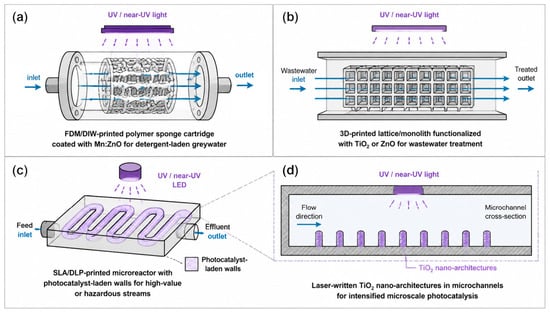
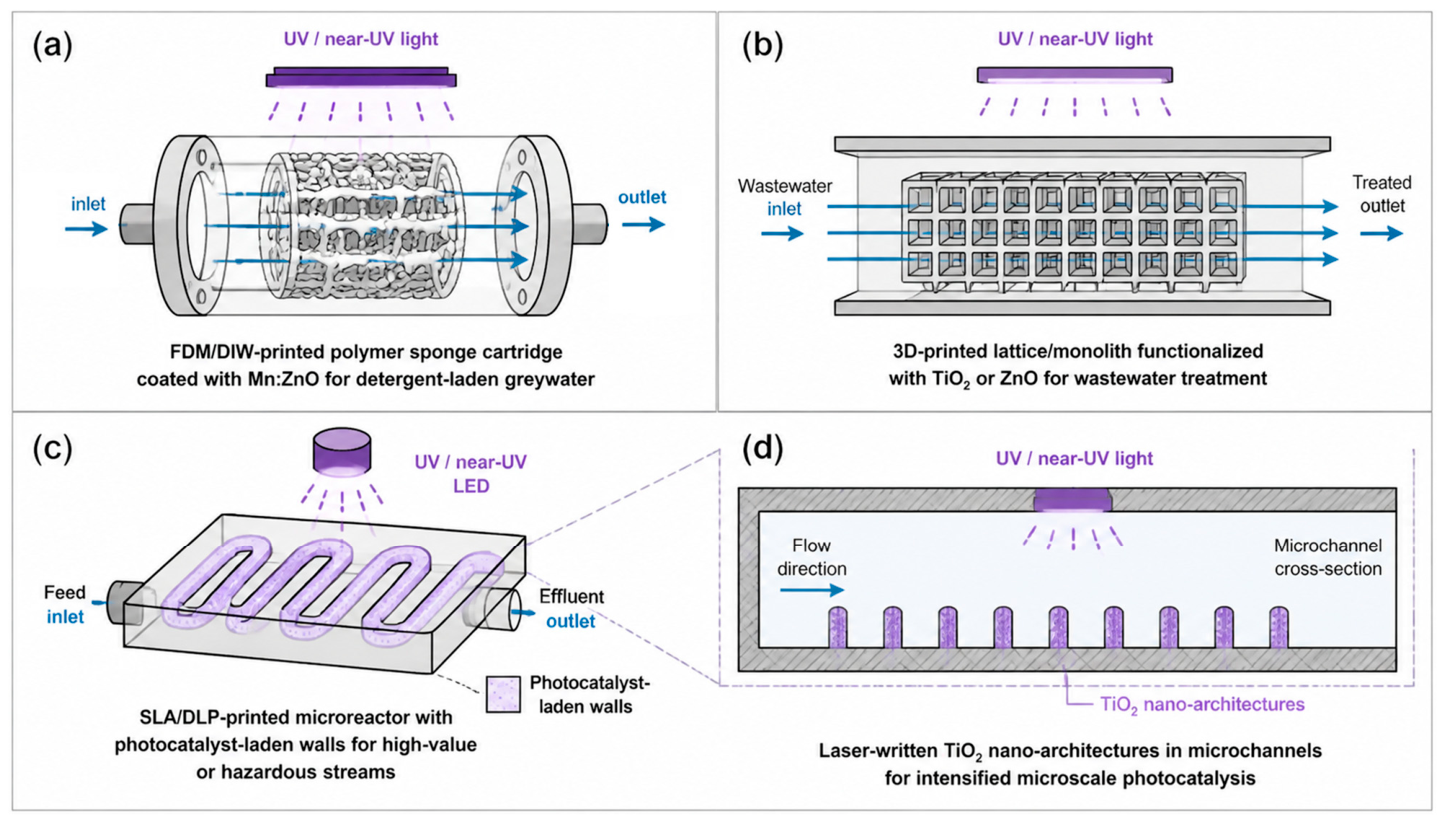
5.3. Representative Devices
Recent years have seen a rapid diversification of 3D-printed photocatalytic devices, ranging from centimeter-scale inserts for batch and flow reactors to fully integrated microfluidic platforms (see also Figure 9). As discussed in Section 5.2, microfluidic and lab-on-chip reactors fabricated by SLA/DLP and laser-based approaches illustrate how 3D-printed architectures can be pushed toward high-surface, high-control devices for niche applications where micro-scale reactor engineering is paramount. Representative examples include FDM-printed monoliths and lattices functionalized with TiO2 or ZnO for dye and NOx degradation, DIW-printed ceramic or composite scaffolds for wastewater treatment, and vat-photopolymerized reactors with photocatalyst-loaded resins or post-coated internal surfaces. These systems typically exploit tailored channel networks and high specific surface area to enhance illumination uniformity and minimize mass-transfer limitations compared to planar films and packed beds [19,32,38].
Figure 9.
Representative 3D-printed photocatalytic devices across length scales, from cartridge-type sponges (a) and lattice monoliths for greywater and wastewater treatment (b), to compact microreactors (c) and laser-structured channels (d) designed for high-value or hazardous streams.
For larger-scale operation, 3D-printed inserts and cartridges can be assembled into modular fixed-bed reactors that treat greywater or industrial effluents under UV or near-UV irradiation. FDM and DIW are particularly attractive in this context because they allow robust, low-cost supports with application-specific geometries that can be easily retrofitted into existing reactors. At the opposite end of the length scale, SLA/DLP-printed microreactors and laser-written TiO2 nano-architectures enable precise control of light paths, residence times and local field enhancement, making them promising platforms for high-value or hazardous streams where compactness and performance per volume are more important than absolute throughput.
Our own work illustrates this spectrum of devices, from 3D-printed Mn:ZnO-decorated HDPE sponges operating as interchangeable cartridges for commercial detergent removal, to laser-direct-written TiO2 micro-architectures embedded in microchannels for intensifying photocatalytic reactions at the microscale. Together with recent reports on ZnO/clay monoliths and other ceramic scaffolds, these examples demonstrate how additive manufacturing can bridge the gap between lab-scale demonstrations and practical, application-driven reactor designs, while also highlighting the need for standardized testing protocols and realistic effluent matrices when benchmarking device performance [20,38].
6. Challenges and Outlook
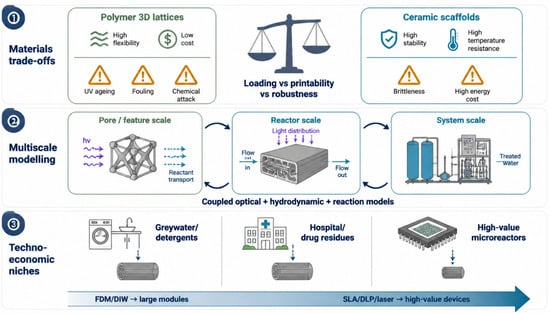
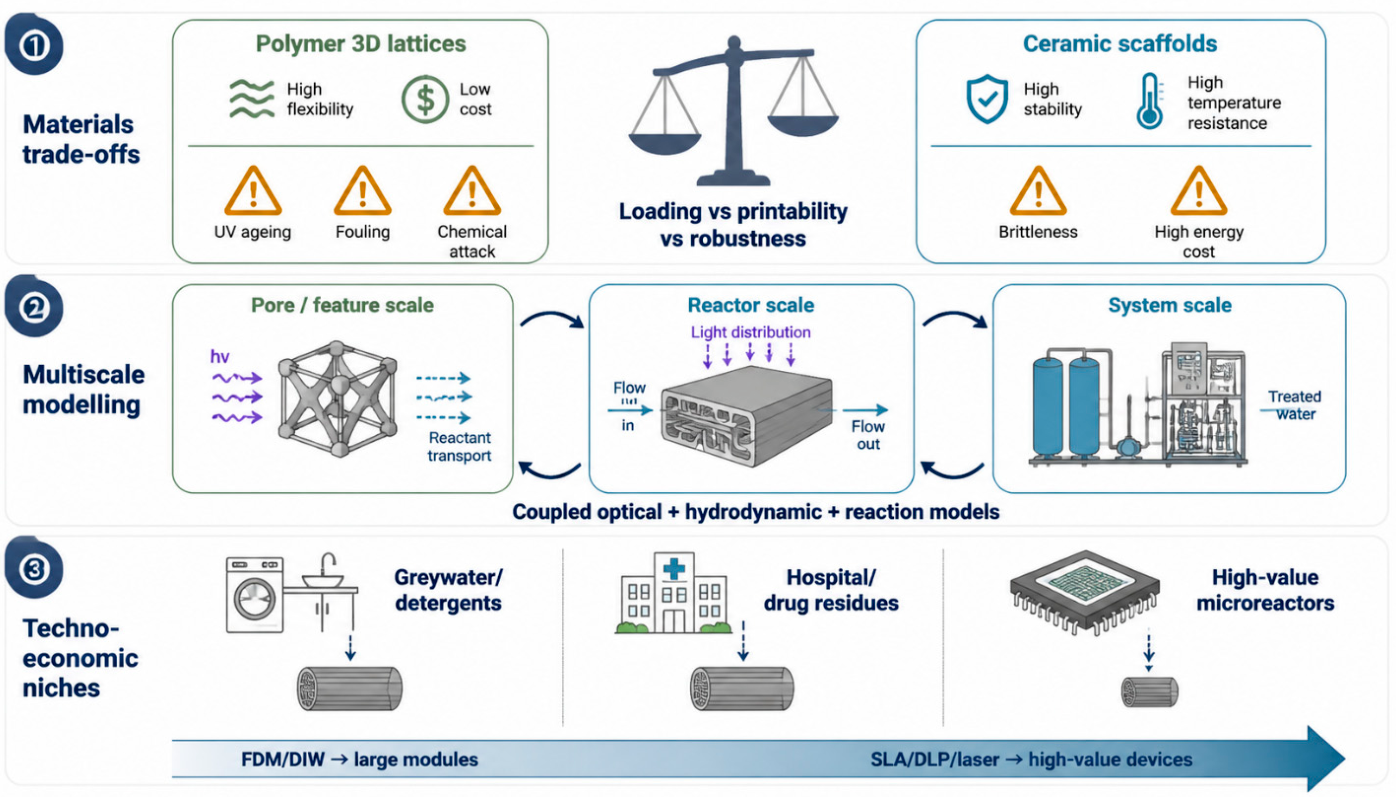
Balancing photocatalyst loading with printability and mechanical robustness remains a primary materials challenge across FDM, DIW and vat-photopolymerization (see also Figure 10). Polymer-based architectures are prone to UV aging, chemical attack and fouling, whereas ceramic scaffolds are more stable but more brittle and energy-intensive to produce. Standardization of testing protocols and long-term stability assessment is essential but still uncommon; recent reviews and our own work on complex matrices (e.g., microplastics in honey, commercial detergents) highlight how strongly real effluents can deviate from model dye solutions [5,10,11,12,16,39]. In particular, polymer-based 3D scaffolds such as HDPE sponges must be evaluated not only for UV mechanical aging but also for potential microplastic generation and polymer-derived debris under prolonged photocatalytic operation, which may offset some of their apparent sustainability advantages.
Figure 10.
Conceptual summary of challenges and outlook for 3D-printed photocatalytic reactors, highlighting materials-processing trade-offs, the need for multi-scale optical–hydrodynamic–reaction modeling, and techno-economic niches where architected reactors can offer clear advantages over conventional configurations.
Existing 3D-printed photocatalytic devices have only rarely been evaluated under extended cycling or in real wastewater matrices, so their long-term stability and anti-fouling performance remain incompletely understood. Most studies report reusability over a small number of cycles (typically 3–5) in model solutions, with only qualitative comments on activity loss and scant information on structural changes, catalyst leaching or support degradation. Under continuous operation, polymer lattices may suffer from UV- and ROS-induced embrittlement, ceramic scaffolds can crack or spall under thermal or hydraulic stress, and microchannels are susceptible to fouling and biofilm formation that alter residence-time distributions and pressure drop. Adaptation to real wastewater—containing suspended solids, natural organic matter, surfactants and variable ionic strength—can exacerbate these effects and introduce new failure modes such as pore clogging, wettability shifts and competitive adsorption. Systematic long-term tests that track performance, pressure drop, structural integrity and leached species, combined with post-mortem analysis of fouling layers, are therefore essential to assess the true operational lifetime and robustness of 3D-printed photocatalytic reactors.
Design and multi-scale modeling present both challenges and opportunities. Current perspectives stress the need to couple optical, hydrodynamic, and reaction models across scales, yet few studies systematically exploit this approach for AM-enabled reactors. Such multi-scale frameworks are particularly powerful for photocatalytic microreactors, where device performance is governed by the coupled design of microchannel geometry, light fields, and residence-time distributions. Advances in electromagnetic and optical simulation tools offer a promising route to engineer internal geometries that optimize light distribution and local field enhancement, potentially enabling truly performance-driven reactor design [10,11,12,39].
From a techno-economic standpoint, FDM and DIW appear most promising for larger-scale water treatment modules, while SLA/DLP and laser-based techniques are better suited to high-value microreactors and hybrid devices. Over the next 5–10 years, architected 3D-printed photocatalysts are well placed to deliver practical solutions in specific niches: modular units for detergents and drug residuals in greywater and hospital effluents; architected self-cleaning and anti-fouling surfaces for buildings and marine environments; and micro- and meso-scale reactors for high-value or toxic streams. Our demonstrated Mn:ZnO sponges and laser-written TiO2 micro-architectures are strong prototypes for these applications, and future work integrating sensing and EM functionality can further differentiate 3D-printed photocatalytic devices from conventional approaches [10,12,16,17,19,39,40,41].
From a techno-economic standpoint, multi-photon lithography and related laser direct writing (LDW) techniques remain substantially more capital- and time-intensive than extrusion-based or vat-photopolymerization printers. LDW systems require femtosecond laser sources, high-precision nano-positioning stages and beam-shaping optics, leading to much higher equipment costs than desktop FDM or DLP printers. Even with recent advances in holographic parallelization, typical build rates for LDW are on the order of mm3–cm3 h−1, whereas FDM/DIW and DLP systems routinely fabricate centimeter-scale monoliths or reactor arrays within tens of minutes. As a result, LDW-fabricated TiO2 nano-architectures are most realistically deployed as high-value components—such as integrated microreactors, sensors or inserts for hazardous or high-added-value streams—rather than as the primary platform for treating bulk wastewater volumes. Future techno-economic analyses will need to quantify these trade-offs explicitly, but the current evidence already suggests a clear niche role for LDW compared with higher-throughput printing technologies.
More broadly, assessing the practicality and industrialization potential of 3D-printed photocatalytic systems requires at least a first-order techno-economic perspective. For extrusion-based and vat-photopolymerization routes (FDM, DIW, SLA/DLP), key cost drivers include printer and lamp hardware, photocurable resins or composite filaments/inks, post-processing (e.g., sintering, curing, catalyst deposition) and the expected service life of the printed inserts under realistic operating conditions. FDM and DIW benefit from relatively low equipment cost and high fabrication throughput, but may require periodic replacement of polymer sponges or ceramic monoliths as they foul or age; SLA/DLP chips occupy an intermediate position, with higher per-device cost but compact footprints and easy integration into modular treatment trains. LDW/MPL, as discussed above, currently carries the highest capital and operating cost and the lowest fabrication throughput, confining it to high-value, low-volume applications. At this stage, detailed TEA and life-cycle assessment data for 3D-printed photocatalytic reactors are scarce, but even simple metrics such as cost per treated volume, replacement frequency of inserts and energy consumption per unit pollutant removed can help benchmark emerging designs against conventional slurry or monolithic reactors.
7. Conclusions
Additive manufacturing has opened a new phase in heterogeneous photocatalysis by enabling the transition from dispersed powders and simple coated supports to architected 3D materials and reactors with programmable geometry, internal porosity and surface functionality. Across fused deposition modeling (FDM), direct ink writing (DIW), vat photopolymerization and laser-based methods, three-dimensional (3D) printing provides a practical route to de-couple and re-integrate key design variables such as catalyst loading, irradiated surface area, mass-transport pathways and residence time, thereby allowing photocatalytic performance to be optimized at the device level rather than only at the material level.
The literature reviewed here shows that 3D-printed photocatalytic systems now span polymer–oxide composites, ceramic monoliths, architected sponges, microfluidic chips and laser-written titanium dioxide (TiO2) nano-architectures, with applications ranging from dye degradation to treatment of antibiotics, detergents and other emerging contaminants. In this context, structured reactors and microreactors offer clear advantages in catalyst recovery, pressure-drop management, light distribution and process integration compared with conventional slurry photocatalysis, particularly when realistic water matrices are considered.
At the same time, important challenges remain. Balancing photocatalyst loading with printability, mechanical integrity and long-term stability is still a central materials issue, especially for polymer-based systems exposed to ultraviolet (UV) aging, fouling and chemical attack, while ceramic alternatives often require more energy-intensive processing. Progress in this area will depend not only on improved materials formulations, but also on standardized testing protocols, realistic benchmarking conditions and multi-scale modeling approaches that couple optics, hydrodynamics and surface reaction kinetics. A key priority is the adoption of more standardized testing and reporting protocols—including explicit documentation of light fields, reactor geometry and solution chemistry, and combined reporting of k, AQY and STY—so that 3D-printed photocatalytic reactors can be compared on a consistent basis across studies.
The field is shifting from proof-of-concept structures toward practical, application-driven devices. The most promising near-term opportunities include modular inserts for greywater and hospital effluents, self-cleaning and anti-fouling surfaces, and compact microreactors for high-value or hazardous streams. In these applications, reactor architecture and process design are expected to matter as much as the intrinsic properties of the photocatalyst. Recent advances in 3D-printed perovskite oxynitride monoliths, MOF-based fractal supports, TiO2–polymer composite reactors, and photocatalytic microreactors for hydrogen evolution confirm that the design concepts discussed here are already spreading to new materials and application areas.
As additive manufacturing, photocatalysis, and microdevice engineering continue to converge, 3D-printed photocatalytic microreactors are expected to move from laboratory prototypes to practical building blocks for next-generation water treatment systems. Extending these architectures to energy-conversion reactions such as water splitting and CO2 reduction is a promising, though still early-stage, direction that will draw on the same multi-scale design principles and performance metrics discussed in this review.
Priority should also be given to systematic long-term stability and fouling studies under realistic water matrices, and to techno-economic and life-cycle assessments that quantify cost per treated volume, replacement intervals for printed inserts and energy consumption, so that 3D-printed photocatalytic reactors can be positioned realistically against conventional technologies.
Funding
This work was supported by proposal number 101092339 (acronym Exploit4InnoMat), under the call: HORIZON-CL4-2022-RESILIENCE-01 (topic: HORIZON-CL4-2022-RESILIENCE-01-20; type of action: HORIZON-IA).
Institutional Review Board Statement
Not applicable.
Informed Consent Statement
Not applicable.
Data Availability Statement
No new data were created or analyzed in this study. Data sharing is not applicable to this article.
Conflicts of Interest
The author declares no conflicts of interest.
References
- Roslan, N.N.; Lau, H.L.H.; Suhaimi, N.A.A.; Shahri, N.N.M.; Verinda, S.B.; Nur, M.; Lim, J.-W.; Usman, A. Recent Advances in Advanced Oxidation Processes for Degrading Pharmaceuticals in Wastewater—A Review. Catalysts 2024, 14, 189. [Google Scholar] [CrossRef] [Scilit]
- Wafi, A.; Aji, D.; Khan, M.M. Recent Advances in Photocatalysis: From Laboratory to Market. Results Chem. 2025, 18, 102672. [Google Scholar] [CrossRef] [Scilit]
- Chakravorty, A.; Roy, S. A review of photocatalysis, basic principles, processes, and materials. Sustain. Chem. Environ. 2024, 8, 100155. [Google Scholar] [CrossRef] [Scilit]
- Paiu, M.; Lutic, D.; Favier, L.; Gavrilescu, M. Heterogeneous Photocatalysis for Advanced Water Treatment: Materials. Mechanisms, Reactor Configurations, and Emerging Applications. Appl. Sci. 2025, 15, 5681. [Google Scholar] [CrossRef] [Scilit]
- Kumari, S.; Sharma, K.; Korpal, S.; Dalal, J.; Kumar, A.; Gaonkar, S.; Kumare, S.; Duhan, S. A comprehensive study on photocatalysis: Materials and applications. Cryst. Eng. Comm. 2024, 26, 4886–4915. [Google Scholar] [CrossRef] [Scilit]
- Chen, C.-X.; Yang, S.-S.; Pang, J.-W.; He, L.; Zang, Y.-N.; Ding, L.; Ren, N.-Q.; Ding, J. Anthraquinones-based photocatalysis: A comprehensive review. Environ. Sci. Ecotechnol. 2024, 22, 100449. [Google Scholar] [CrossRef] [Scilit] [PubMed]
- Al Miad, A.; Saikat, S.P.; Alam, M.K.; Hossain, M.S.; Bahadur, N.M.; Ahmed, S. Metal oxide-based photocatalysts for the efficient degradation of organic pollutants for a sustainable environment: A review. Nanoscale Adv. 2024, 6, 4781–4803. [Google Scholar] [CrossRef] [Scilit] [PubMed]
- Zhou, Z.; Xiao, Y.; Tian, J.; Nan, N.; Song, R.; Li, J. Recent advances in metal-free covalent organic frameworks for photocatalytic applications in energy and environmental fields. J. Mater. Chem. A 2023, 11, 3245–3261. [Google Scholar] [CrossRef] [Scilit]
- Shi, H.; Chen, G.; Zhang, C.; Zou, Z. Polymeric g-C3N4 Coupled with NaNbO3 Nanowires toward Enhanced Photocatalytic Reduction of CO2 into Renewable Fuel. ACS Catal. 2014, 4, 3637–3643. [Google Scholar] [CrossRef] [Scilit]
- Yusuf, A.O.; Jitan, S.A.; Al Sakkaf, R.; Jarusheh, H.S.; Garlisi, C.; Dumée, L.F.; Palmisano, G. 3D Printing to enable photocatalytic process engineering: A critical assessment and perspective. Appl. Mater. Today 2023, 35, 101940. [Google Scholar] [CrossRef] [Scilit]
- Aguirre-Cortés, J.M.; Moral-Rodríguez, A.I.; Bailón-García, E.; Davó-Quiñonero, A.; Pérez-Cadenas, A.F.; Carrasco-Marín, F. 3D printing in photocatalysis: Methods and capabilities for the improved performance. Appl. Mater. Today 2023, 32, 101831. [Google Scholar] [CrossRef] [Scilit]
- Haoyuan, Y.; Biyang, Z.; Xiaomei, D.; Jinman, Y.; Jizhou, J.; Hui, X. 3D printing technology for photocatalysis: Review and prospect. Funct. Compos. Struct. 2025, 1, 20250205. [Google Scholar] [CrossRef] [Scilit]
- Lin, H.; Ma, M.; Qi, H.; Wang, X.; Xing, Z.; Alowasheeir, A.; Tang, H.; Jun, S.C.; Yamauchi, Y.; Liu, S. 3D-Printed photocatalysts for revolutionizing catalytic conversion of solar to chemical energy. Prog. Mater. Sci. 2025, 151, 101427. [Google Scholar] [CrossRef] [Scilit]
- Verma, N.; Awasthi, P.; Gupta, A.; Banerjee, S.S. Fused Deposition Modeling of Polyolefins: Challenges and Opportunities. Macromol. Mater. Eng. 2023, 308, 2200421. [Google Scholar]
- Razavi, S.A.; Fargas, G.; Vilella, T.; Serrano, I.; Laguna-Bercero, M.Á.; Llanes, L.; Rodríguez, D.; Ginebra, M.-P.; Llorca, J.; Morales, M. Direct Ink Writing of cobalt-zirconia monoliths for catalytic applications: A novel single-step fabrication approach. J. Eur. Ceram. Soc. 2025, 45, 117137. [Google Scholar] [CrossRef] [Scilit]
- Vrithias, N.R.; Katsara, K.; Papoutsakis, L.; Papadakis, V.M.; Viskadourakis, Z.; Remediakis, I.N.; Kenanakis, G. Three-Dimensional-Printed Photocatalytic Sponges Decorated with Mn-Doped ZnO Nanoparticles. Materials 2023, 16, 5672. [Google Scholar] [CrossRef] [Scilit] [PubMed]
- Chen, C.-H.; Wang, S.-C.; Chen, H.-W.; Chou, T.-Y.; Chang, C.-S. High-Efficiency Photocatalytic Reactors Fabricated via Rapid DLP 3D Printing: Enhanced Dye Photodegradation with Optimized TiO2 Loading and Structural Design. ACS EST Water 2024, 4, 1883–1893. [Google Scholar] [CrossRef] [Scilit]
- Mendez-Arriaga, F.; de la Calleja, E.; Ruiz-Huerta, L.; Caballero-Ruiz, A.; Almanza, R. TiO2 3D structures for environmental purposes by additive manufacturing: Photoactivity test and reuse. Mater. Sci. Energy Technol. 2019, 100, 35–41. [Google Scholar] [CrossRef] [Scilit]
- Barbosa, I.S.O.; Manrique, Y.A.; Paiva, D.; Faria, J.L.; Santos, R.J.; Silva, C.G. Efficient photocatalytic reactors via 3D printing: SLA fabrication and TiO2 hybrid materials. RSC Adv. 2025, 15, 2275–2286. [Google Scholar] [CrossRef] [Scilit] [PubMed]
- Ali, S.; Aljarrah, M.T.; Al-Otoom, A.; Abdelaziz, N. Development and Testing of Robust 3D Printed ZnO/Clay Photocatalysts for Sustainable Wastewater Treatment. ACS Omega 2025, 10, 16156–16168. [Google Scholar] [CrossRef] [Scilit] [PubMed]
- Phang, S.J.; Wong, V.-L.; Cheah, K.H.; Tan, L.-L. 3D-printed photoreactor with robust g-C3N4 homojunction based thermoset coating as a new and sustainable approach for photocatalytic wastewater treatment. J. Environ. Chem. Eng. 2021, 9, 106437. [Google Scholar] [CrossRef] [Scilit]
- Frysali, M.A.; Papoutsakis, L.; Kenanakis, G.; Anastasiadis, S.H. Functional Surfaces with Photocatalytic Behavior and Reversible Wettability: ZnO Coating on Silicon Spikes. J. Phys. Chem. C 2015, 119, 25401–25407. [Google Scholar] [CrossRef] [Scilit]
- Kenanakis, G.; Katsarakis, N. ZnO nanowires on glass via chemical routes: A prospective photocatalyst for indoors applications. J. Environ. Chem. Eng. 2014, 2, 1416–1422. [Google Scholar] [CrossRef] [Scilit]
- Kenanakis, G.; Vernardou, D.; Dalamagkas, A.; Katsarakis, N. Photocatalytic and electrooxidation properties of TiO2 thin films deposited by sol–gel. Catal. Today 2015, 240, 146–152. [Google Scholar] [CrossRef] [Scilit]
- Syngelakis, I.; Manousidaki, M.; Kabouraki, E.; Kyriakakis, A.; Kenanakis, G.; Klini, A.; Tzortzakis, S.; Farsari, M. Laser direct writing of efficient 3D TiO2 nano-photocatalysts. J. Appl. Phys. 2023, 134, 234504. [Google Scholar] [CrossRef] [Scilit]
- Sevastaki, M.; Papadakis, V.M.; Romanitan, C.; Suchea, M.P.; Kenanakis, G. Photocatalytic Properties of Eco-Friendly ZnO Nanostructures on 3D-Printed Polylactic Acid Scaffolds. Nanomaterials 2021, 11, 168. [Google Scholar] [CrossRef] [Scilit] [PubMed]
- Matias, M.L.; Pimentel, A.; Reis-Machado, A.S.; Rodrigues, J.; Deuermeier, J.; Fortunato, E.; Martins, R.; Nunes, D. Enhanced Fe-TiO2 Solar Photocatalysts on Porous Platforms for Water Purification. Nanomaterials 2022, 12, 1005. [Google Scholar] [CrossRef] [Scilit] [PubMed]
- Basterrechea, G.F.B.; Montesinos, V.N.; Quici, N. Photocatalytic NOx removal with TiO2-impregnated 3D-printed PET supports. Heliyon 2023, 9, e22635. [Google Scholar] [CrossRef] [Scilit]
- Zhang, M.; Xia, X.; Cao, C.; Xue, H.; Yang, Y.; Li, W.; Chen, Q.; Xiao, L.; Qian, Q. A ZnO@ABS/TPU/CaSiO3 3D skeleton and its adsorption/photocatalysis properties for dye contaminant removal. RSC Adv. 2020, 10, 41272–41282. [Google Scholar] [CrossRef] [Scilit] [PubMed]
- Zhao, Y.; Zhu, J.; He, W.; Liu, Y.; Sang, X.; Liu, R. 3D printing of unsupported multi-scale and large-span ceramic via near-infrared assisted direct ink writing. Nat. Commun. 2023, 14, 2381. [Google Scholar] [CrossRef] [Scilit] [PubMed]
- Cárcamo-Gutiérrez, A.Y.; Ávila-López, M.A.; Lara-Ceniceros, T.E.; Bonilla-Cruz, J. 3D-printable scaffolds via DIW from ceramic pastes of ZnO nanoparticles without organic binders and their application as reusable photocatalysts for the degradation of Bisphenol A. J. Eur. Ceram. Soc. 2025, 45, 117578. [Google Scholar] [CrossRef] [Scilit]
- Kaur, B.; Singh, P.; Thakur, S.; Singh, A.; Chaudhary, V.; Kumar, N.; Khan, A.A.P.; Rub, M.A.; Azum, N.; Raizada, P. Harnessing 3D printing for tailored TiO2 structures redefining organic pollutant degradation. J. Environ. Chem. Eng. 2025, 13, 116042. [Google Scholar] [CrossRef] [Scilit]
- Li, K.; de Rancourt de Mimérand, Y.; Jin, X.; Yi, J.; Guo, J. Metal Oxide (ZnO and TiO2) and Fe-Based Metal–Organic-Framework Nanoparticles on 3D-Printed Fractal Polymer Surfaces for Photocatalytic Degradation of Organic Pollutants. ACS Appl. Nano Mater. 2020, 3, 2830–2845. [Google Scholar] [CrossRef] [Scilit]
- Kang, Y.; Cai, J.; Zhang, L.; Wang, H.-W.; Jin, R.-B.; de Rancourt de Mimérand, Y.; Jin, X.; Guo, J. Controlled Architectures in Supported Photocatalysis: Exploring the Potential of Cold Plasma Discharge, Additive Manufacturing, and Fractal Geometry to Form Hierarchically Immobilized Ni-MOF/BiOI/AgVO3. ACS Appl. Mater. Interfaces 2023, 15, 31849–31866. [Google Scholar] [CrossRef] [Scilit] [PubMed]
- Dopazo, M.J.; Passalía, C.; Flores, M.J.; Labas, M.D.; Brandi, R.J. Functionalization of 3D-Printed Plastics for the Photocatalytic Removal of Organic Pollutants in Air. Photocatal. Res. Potential 2025, 2, 10002. [Google Scholar] [CrossRef] [Scilit]
- Kuo, C.-Y.; Shih, C.-H.; Lee, C.-K.; Shen, B.-H.; Lin, W.-H.; Lee, P.-C.; Lin, C.B. Enhancing photocatalytic performance of regular porous silver bromide structures through 3D printing. Addit. Manuf. 2023, 78, 103866. [Google Scholar] [CrossRef] [Scilit]
- Iborra-Torres, A.; Huš, M.; Vamvakeros, A.; Sajjad, M.T.; Dunn, S.; Mertens, M.; Jacques, S.; Beale, A.M.; Likozar, B.; Hyett, G.; et al. 3D printed SrNbO2N photocatalyst for degradation of organic pollutants in water. Mat. Adv. 2023, 4, 3461–3472. [Google Scholar] [CrossRef] [Scilit]
- Barman, S.R.; Gavit, P.; Chowdhury, S.; Chatterjee, K.; Nain, A. 3D-Printed Materials for Wastewater Treatment. JACS Au 2023, 3, 2930–2947. [Google Scholar] [CrossRef] [Scilit]
- Chalatsi-Diamanti, P.; Isari, E.A.; Grilla, E.; Kokkinos, P.; Kalavrouziotis, I.K. Recent prospects, challenges and advancements of photocatalysis as a wastewater treatment method. Water Emerg. Contam. Nanoplast. 2025, 4, 12. [Google Scholar] [CrossRef] [Scilit]
- Huong, V.T.; Duc, B.V.; An, N.T.; Anh, T.T.P.; Aminabhavi, T.M.; Vasseghian, Y.; Joo, S.-W. 3D-Printed WO3-UiO-66@reduced graphene oxide nanocomposites for photocatalytic degradation of sulfamethoxazole. Chem. Eng. J. 2024, 483, 149277. [Google Scholar] [CrossRef] [Scilit]
- Hossain, E.; Kwon, K.-S. Aerosol-Printed Silver 3D Mesh Decorated with Zinc Oxide Nanorods for Enhanced Photocatalytic Degradation of Organic Pollutants. ACS Omega 2025, 10, 35771–35784. [Google Scholar] [CrossRef] [Scilit] [PubMed]

Disclaimer/Publisher’s Note: The statements, opinions and data contained in all publications are solely those of the individual author(s) and contributor(s) and not of MDPI and/or the editor(s). MDPI and/or the editor(s) disclaim responsibility for any injury to people or property resulting from any ideas, methods, instructions or products referred to in the content. |
© 2026 by the author. Licensee MDPI, Basel, Switzerland. This article is an open access article distributed under the terms and conditions of the Creative Commons Attribution (CC BY) license.