


Abstract
The main objective of this research was to determine and correlate the equilibrium solubility of sodium sulfamethazine (NaSMT) in several {ethanol (1) + water (2)} mixtures reported in mass/volume and mass/mass percentages at different temperatures, as well as the density of saturated solutions. NaSMT solubility decreases with decreasing temperature, and also decreases non-linearly with the addition of ethanol to water at every temperature. Logarithmic solubility was adequately correlated with a bivariate model involving temperature and mixture composition. Solubility values were also well correlated with some Jouyban–Acree-based models. Moreover, an adapted version of the Jouyban–Acree model was used to represent the density of the saturated systems at different temperatures. Furthermore, the apparent specific volumes of NaSMT at saturation were also calculated from densities of saturated solutions and cosolvent mixtures free of drug at every mixture composition and temperature. These findings provide valuable insights into the solubility and volumetric behavior of NaSMT that could be useful for improving pharmaceutical formulation processes.
1. Introduction
As widely reported in the literature, the exhaustive physicochemical characterization of dissolved pharmaceuticals plays a crucial role in all R&D stages of homogenous liquid pharmaceutical dosage forms, in particular of those presented in small volumes intended for parenteral administration, like ampules, because these products commonly supply high doses of drugs [1,2,3,4].
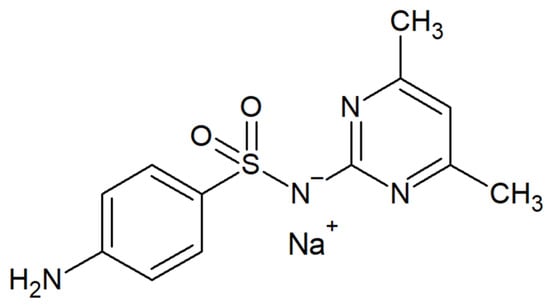
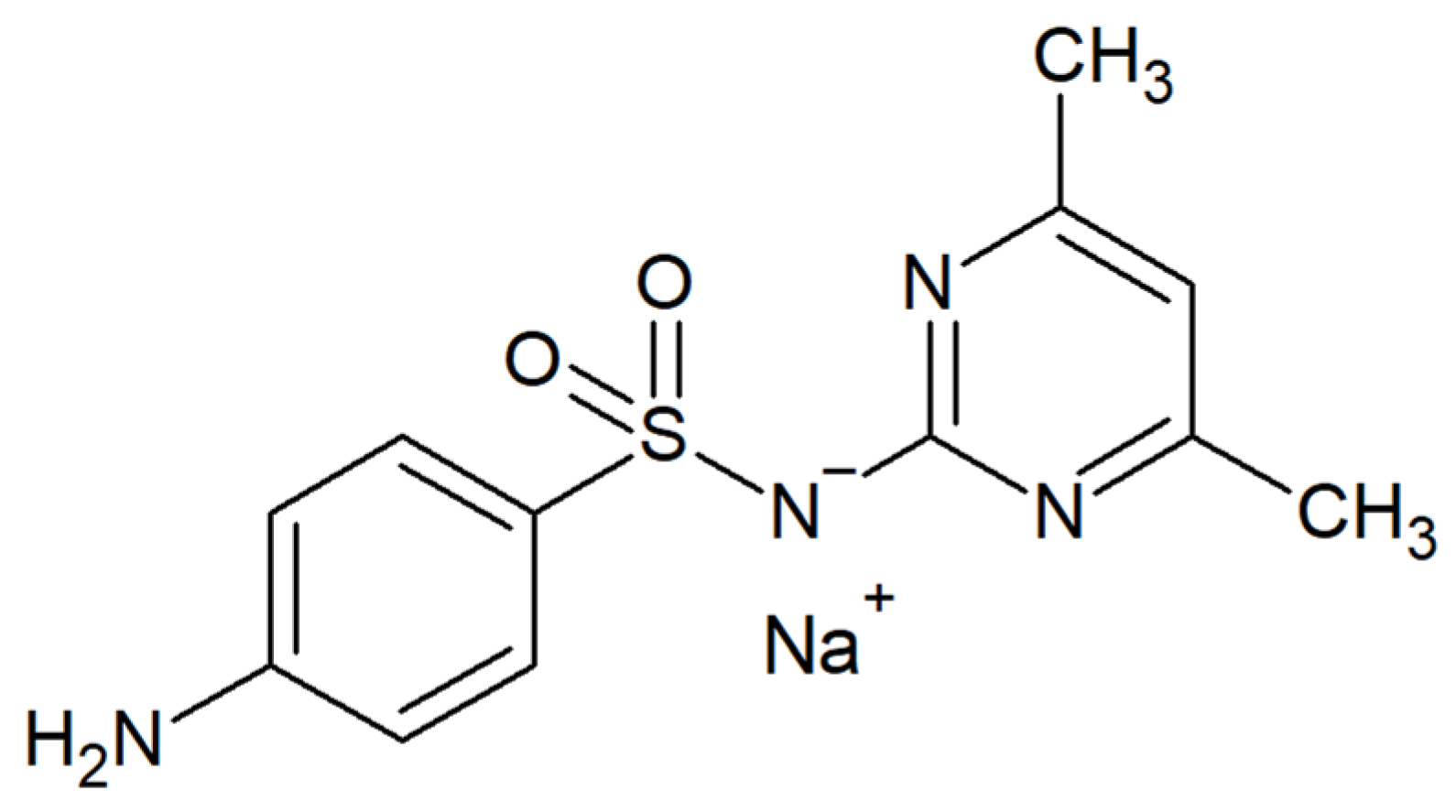
Sodium sulfamethazine (IUPAC name: sodium (4-aminophenyl)sulfonyl-(4,6-dimethylpyrimidin-2-yl)azanide; CAS number: 1981-58-4; molecular formula: C12H13N4NaO2S; molar mass: 300.31 g/mol; NaSMT; Figure 1) is an antimicrobial drug compound employed in the treatment of certain infections caused by different microorganisms [5,6,7]. Despite the wide use of NaSMT in therapeutics, its physicochemical behavior in aqueous solutions is still being studied. Select physicochemical studies regarding this drug have been reported in the literature. For example, the equilibrium solubility values expressed in molarity and mole fraction as well as the respective thermodynamic quantities of dissolution and mixing in several ethanol–water mixtures have been reported [8,9]. Moreover, its equilibrium solubility and apparent specific volumes at saturation in {propylene glycol (1) + water (2)} mixtures at 25.0 °C have also been reported [10]. Apparent molar volumes at several NaSMT concentrations have been determined at several temperatures in neat water and other aqueous systems [11,12,13]. Several other physicochemical properties of NaSMT have been reported in water at various drug concentrations and temperatures including the molar electrical conductivity, the calorimetric enthalpy of dissolution and the viscosity [14,15,16]. The aforementioned investigations demonstrate the main role of the hydrophilic and hydrophobic hydration processes of this drug in the observed physicochemical magnitudes obtained in aqueous media.
Figure 1.
Molecular structure of sodium sulfamethazine (NaSMT).
From an industrial viewpoint, the systematic searching, acquisition, and systematization of equilibrium solubility values and volumetric contributions of drugs and excipients at saturation in aqueous and non-aqueous solvent mixtures are fundamental for theoretical and practical purposes. This is because different cosolvent blends are currently being used in the purification of pharmaceutical ingredients by recrystallization. Moreover, solvent mixtures are also considered in dosage form preformulation studies, as well as in the development and preparation of homogeneous liquid medicines [16,17]. For these reasons, it is important for the chemical and pharmaceutical communities to systematically determine the equilibrium solubility and specific volume contribution of all pharmaceuticals.
To provide the pharmaceutical industry with additional experimental values, we have determined the equilibrium solubility, expressed in mass/volume (% m/v) and mass/mass (% m/m) percentages, as well as the apparent specific volume (/mL/g) at saturation of NaSMT in several aqueous–ethanolic binary mixtures at seven equidistant temperatures from 5.0 to 35.0 °C. Thus, this research expands the available database of these properties reported earlier for other analogous drugs in the same binary mixtures and temperatures, namely sodium sulfadiazine and sodium sulfamerazine [17,18]. Here we indicate “equilibrium solubility” to differentiate it from “kinetic solubility” that is commonly used in pharmaceutical sciences before saturation as a mean of dissolution rate [1,2,3].
2. Methods
2.1. Reagents and Materials
NaSMT provided by Sigma-Aldrich, Burlington, MA, USA (mass fraction purity > 0.99), absolute ethanol (CAS number: 64-17-5; molecular formula: C2H6O; molar mass: 46.07 g/mol; density, ρ = 0.7854 g/mL at 25.0 °C; dielectric constant, ε = 24.1 at 25.0 °C), provided by Merck, Darmstadt, Germany (mass fraction purity > 0.995) and laboratory distilled water (CAS number: 7732-18-5; molecular formula: H2O; molar mass: 18.02 g/mol; density, ρ = 0.9970 g/mL at 25.0 °C; dielectric constant, ε = 78.5 at 25.0 °C) (conductivity < 2 μS/cm) were studied in this research.
2.2. Cosolvent Mixtures Preparation
Aqueous ethanolic cosolvent mixture preparation was performed gravimetrically in quantities of 100.00 g with ethanol mass fractions (w1) in compositions from w1 = 0.10 to w1 = 0.90 varying by 0.10 in mass fraction to study the NaSMT solubility in nine binary mixtures and both pure solvents.
2.3. NaSMT Solubility Determination
NaSMT solubility was determined by following the same classical shake-flask method and UV–vis spectrophotometry procedures [19,20] used before for studying the behavior of sodium sulfadiazine and sodium sulfamerazine [17,18]. Briefly, an excess of NaSMT was added to 50 mL of each solvent system in stoppered dark glass flasks. Then, the solid–liquid mixtures were stirred in a mechanical shaker (Burrel, Wrist Action Shaker, Model 75, Pittsburgh, PA, USA) at room temperature for at least four hours. After this stirring, the flasks were kept at 35.0 ± 0.05 °C in some recirculating thermostatic baths (Neslab RTE 10 Digital One Thermo Electron Company, Waltham, MA, USA) with sporadic stirring for at least three days until saturation is reached. After this time, the supernatant dispersions were filtered (at isothermal conditions) using 0.45 μm pore diameter cartridges to ensure that they were free of undissolved particulate matter before sampling for composition analysis. NaSMT concentrations at saturation were determined by measuring UV absorbance after appropriate gravimetric aqueous dilution and interpolation from a previously established UV spectrophotometric calibration curve (UV/Vis BioMate 3 Thermo Electron Company spectrophotometer, Waltham, MA, USA). Then, the thermostatic bath temperature was decreased in successive steps of 5.0 °C following the same procedures indicated above until reaching the lowest research temperature of 5.0 °C. All solubility experiments were performed at least three times. Moreover, to facilitate the transformation of NaSMT solubility values between volumetric and gravimetric concentration scales [2,21] and to allow the calculation of apparent specific volumes of NaSMT at saturation, the density of the saturated solutions was determined at every temperature using a digital density meter (DMA 45 Anton Paar, Graz, Austria) connected to a recirculating thermostatic bath (Neslab RTE 10 Digital One Thermo Electron Company, Waltham, MA, USA). All calculations, correlations, and graphs were performed and prepared using different tools of MS Excel® v. 2013.
3. Results and Discussion
3.1. Experimental Solubility of NaSMT at Different Temperatures and Mixture Compositions
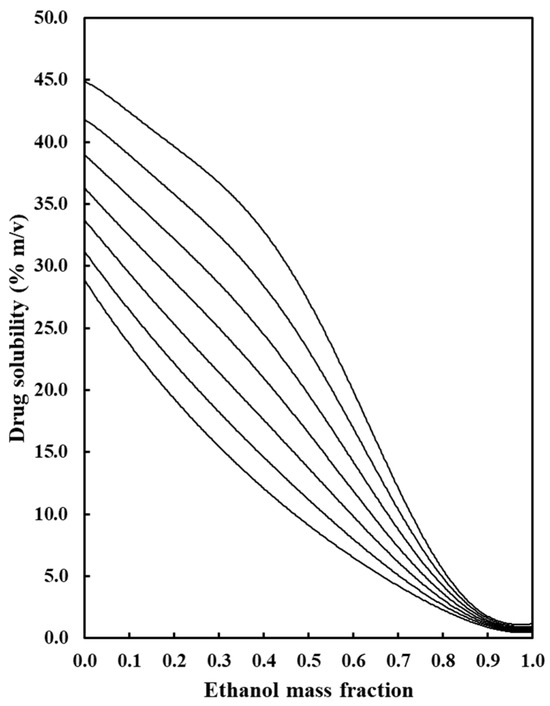
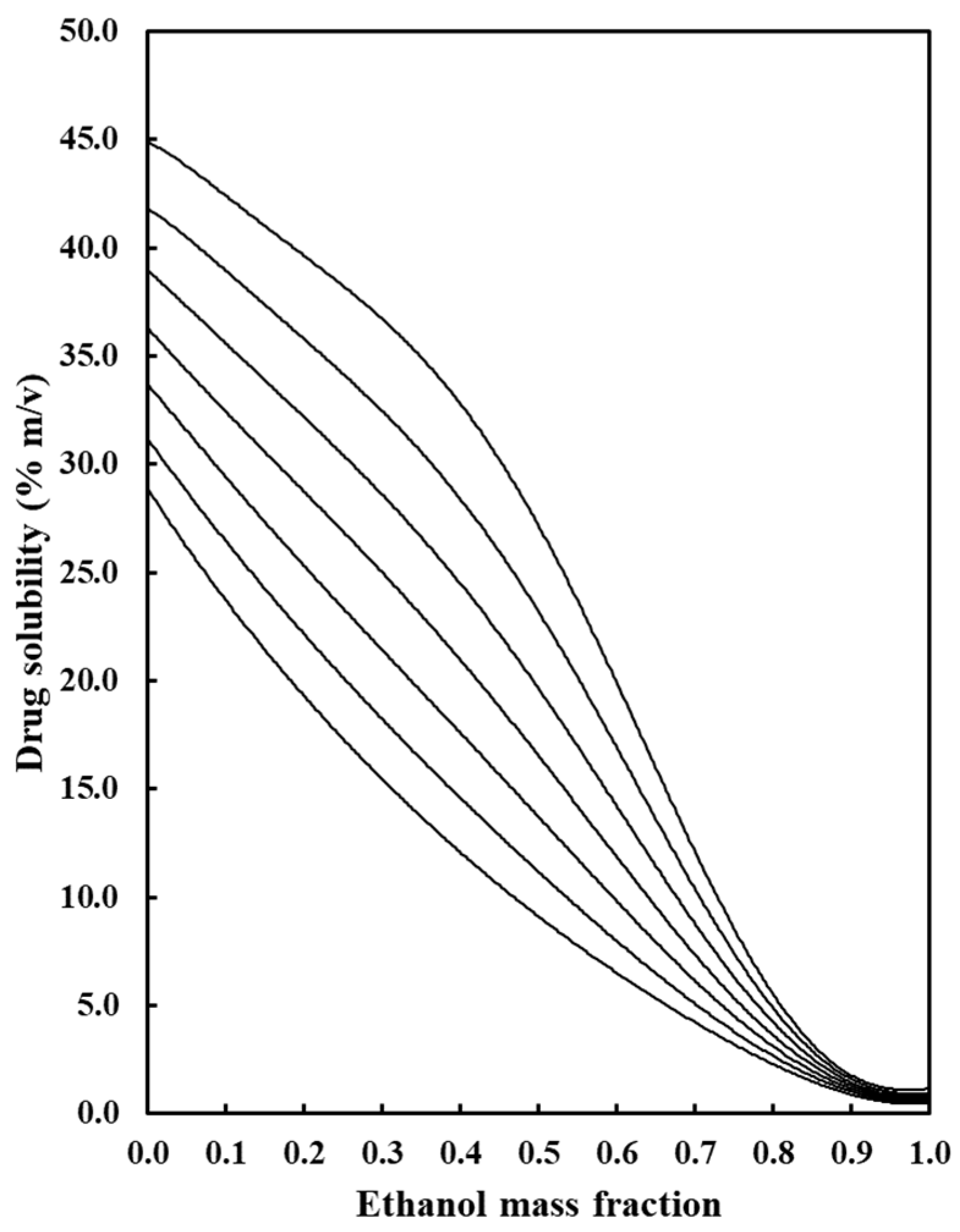
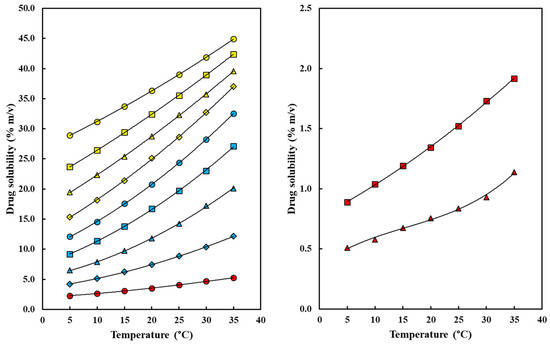
Table 1 summarizes the experimental mass/volume percentage (% m/v) solubilities of NaSMT in the aqueous ethanol mixtures as a function of both solvent system composition and temperature. As a visual aid, % m/v solubilities are depicted as a function of mixture compositions at all temperatures in Figure 2. NaSMT equilibrium solubility increases with increasing temperature, but it decreases with increase in ethanol proportion in the mixtures at all temperatures. The respective trends were adjusted to regular polynomials in the fourth degree in all cases [22,23,24]. Moreover, % m/v solubilities of NaSMT are depicted for all mixture compositions as a function of temperature in Figure 3, with linear, parabolic or hyperbolic NaSMT increases in solubility.
Table 1.
Equilibrium solubility of sodium sulfamethazine in aqueous ethanolic mixtures at different temperatures expressed in mass/volume percentage (% m/v).
Figure 2.
Equilibrium solubility of sodium sulfamethazine expressed in mass/volume percentage in some aqueous ethanolic mixtures as a function of ethanol mass fraction at different temperatures. Trends from top to bottom: 35.0 °C, 30.0 °C, 25.0 °C, 20.0 °C, 15.0 °C, 10.0 °C, and 5.0 °C.
Figure 3.
Equilibrium solubility of sodium sulfamethazine in some aqueous ethanolic mixtures as a function of temperature expressed in mass/volume percentage. ●: neat water; ■: w1 = 0.10; ▲: w2 = 0.20; ♦: w1 = 0.30; ●: w1 = 0.40; ■: w1 = 0.50; ▲: w2 = 0.60; ♦: w1 = 0.70; ●: w1 = 0.80; ■: w1 = 0.90; ▲: neat ethanol.
All logarithmic % m/v solubility values of NaSMT (compound 3) in {ethanol (compound 1) + water (compound 2)} systems (ln S3,1+2) were correlated as the bivariate polynomial model shown as Equation (1), where w1 denotes the mass fraction of ethanol in the solvent mixtures free of drug and the temperature (t) is expressed in degrees Celsius (°C). Obtained statistical parameters were as follows: adjusted r2 = 0.9936; mean standard error = 0.1042; and statistical F value = 2377. This bivariate model allows the calculation of NaSMT solubility with a mean percentage deviation (MPD %) of 8.2%—as calculated with Equation (2), where and are the calculated and experimental solubility NaSMT values, respectively [22,23,24].
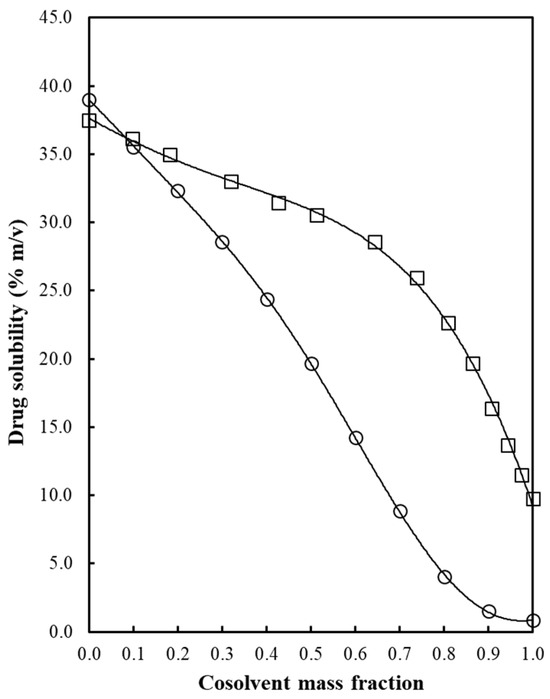
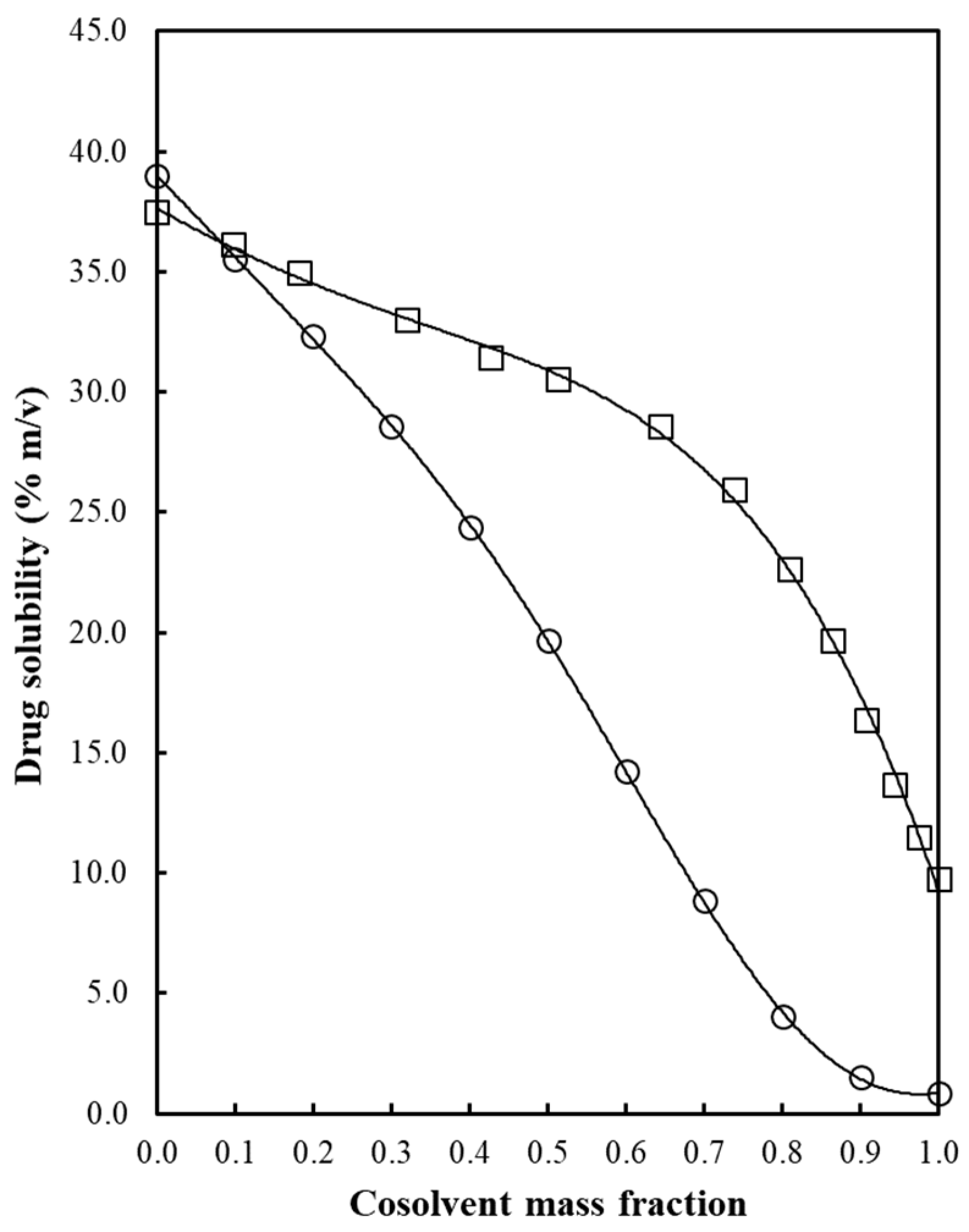
Regarding the solubility of NaSMT in other aqueous cosolvent systems, Figure 4 allows comparison when ethanol is exchanged for propylene glycol as a cosolvent at 25.0 °C. As observed, propylene glycol exhibits a better solubilizing power due to its higher polarity relative to ethanol, as described by its dielectric constant, i.e., 32.0 [2,25].
Figure 4.
Equilibrium solubility of sodium sulfamethazine expressed in mass/volume percentage in some aqueous-cosolvent mixtures as a function of the cosolvent mass fraction free of solute at 25.0 °C. ○: {ethanol (1) + water (2)} mixtures (this work). □: {propylene glycol (1) + water (2)} mixtures (calculated from values reported in [10]).
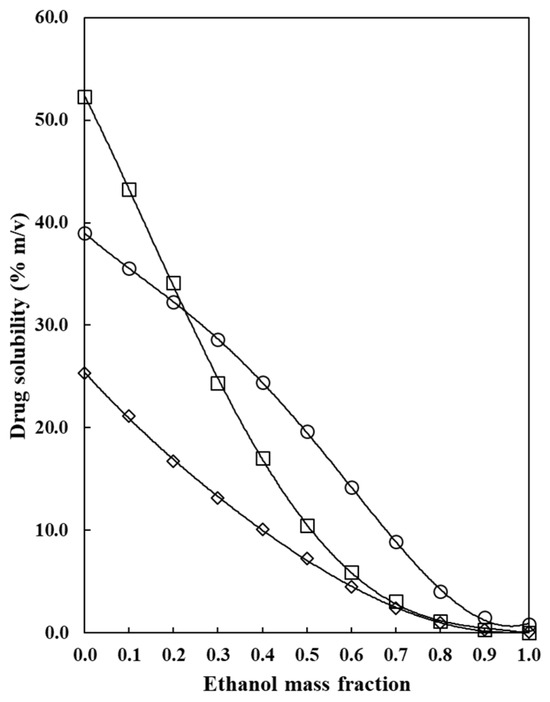
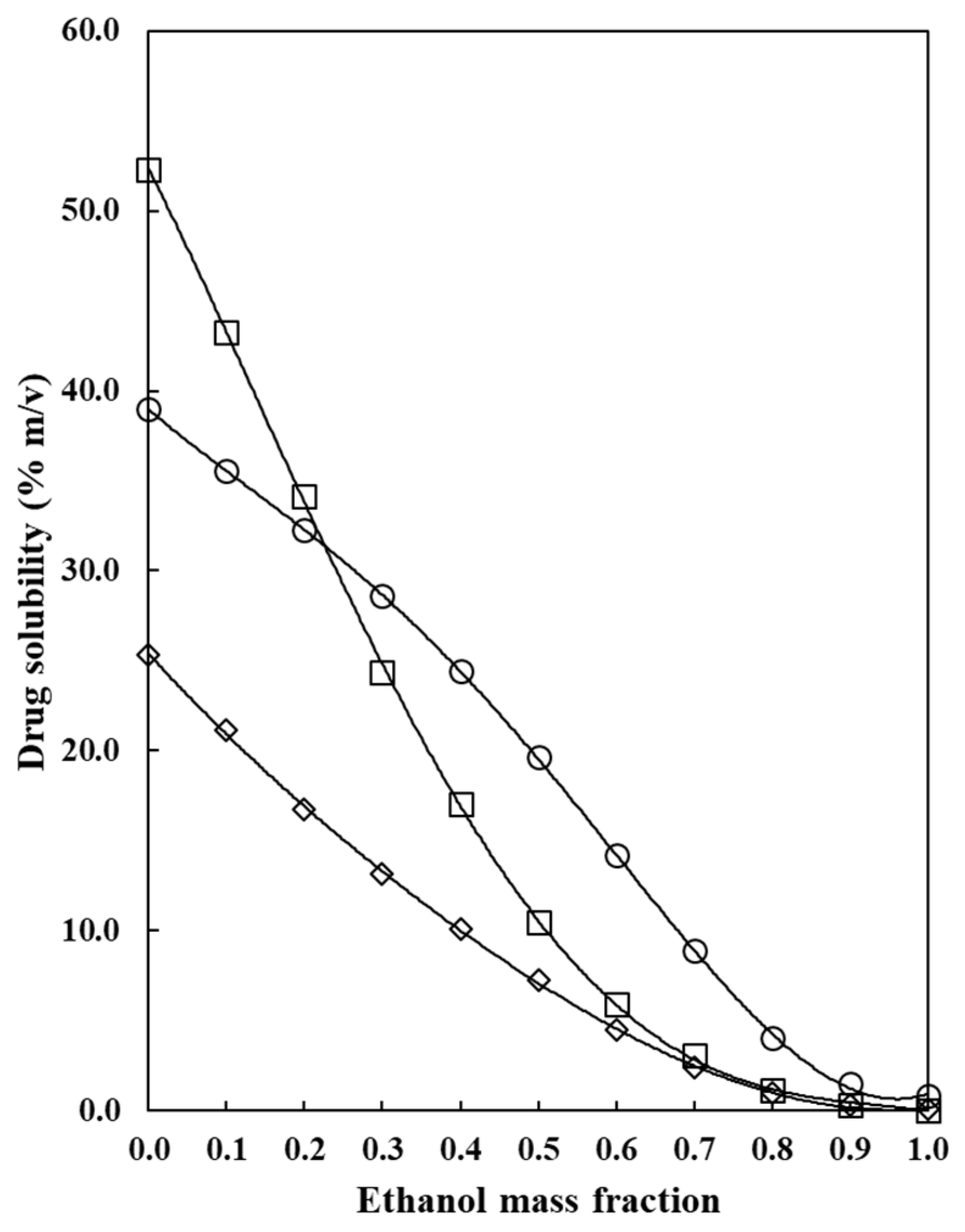
Figure 5 shows that all NaSMT % m/v solubilities at 25.0 °C are higher than those reported earlier for sodium sulfamerazine [18] in all mixture compositions but lower than the solubility of sodium sulfadiazine in water-rich mixtures [17]. Thus, aqueous solubility of these sodium sulfonamides decreases in the following order: sodium sulfadiazine > NaSMT > sodium sulfamerazine.
Figure 5.
Equilibrium solubility of sodium sulfadiazine (□), sodium sulfamerazine (◊) and sodium sulfamethazine (○) expressed in mass/volume percentage in some aqueous ethanolic mixtures as a function of ethanol mass fraction free of solute at 25.0 °C.
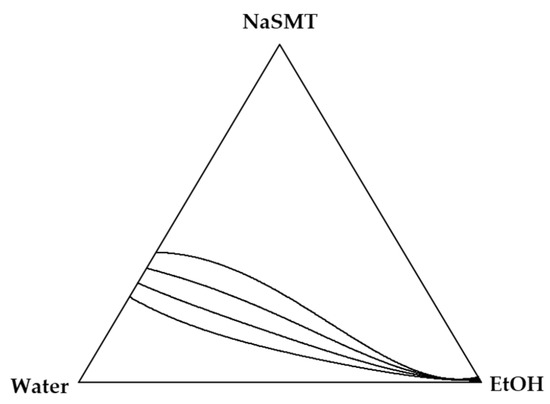
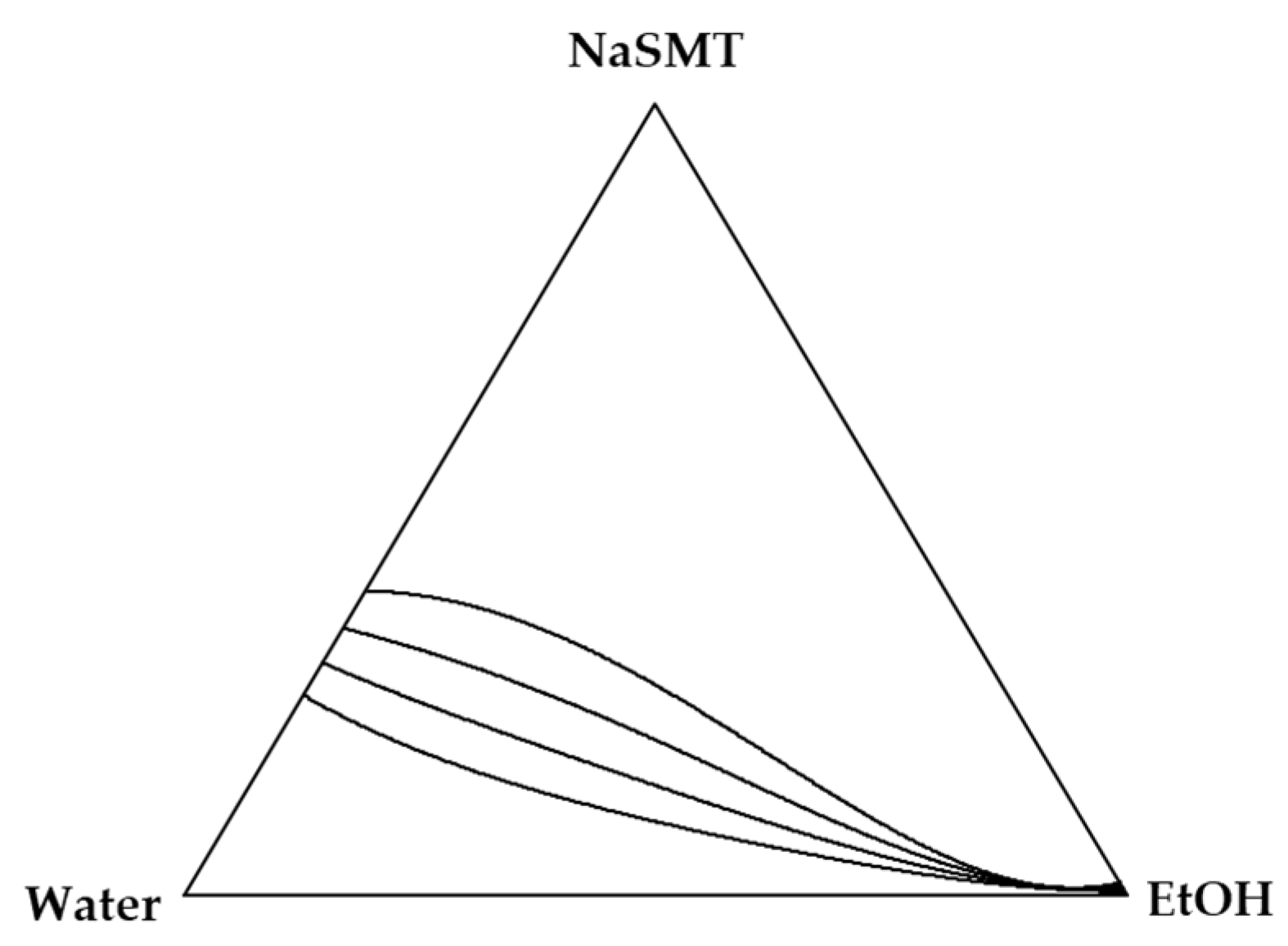
Table 2 summarizes the experimental mass/mass percentage solubilities of NaSMT in aqueous mixtures of ethanol as a function of mixture composition and temperature. Moreover, % m/m solubilities are depicted as a function of mixture compositions at four temperatures in Figure 6 as a Gibbs–Roozeboom triangular graph [26,27]. It is important to note that mass fraction solubilities are required for calculating the apparent specific volumes of NaSMT as indicated below.
Table 2.
Equilibrium solubility of sodium sulfamethazine in aqueous ethanolic mixtures at different temperatures expressed in mass/mass percentage (% m/m).
Figure 6.
Equilibrium solubility of sodium sulfamethazine expressed in mass fraction in aqueous ethanolic mixtures at different temperatures. Trends from top to bottom: 35.0 °C, 25.0 °C, 15.0 °C, and 5.0 °C.
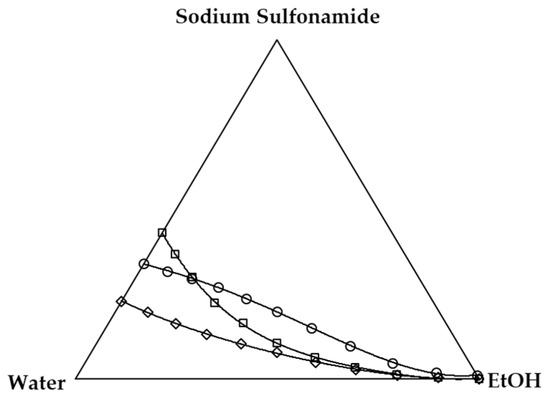
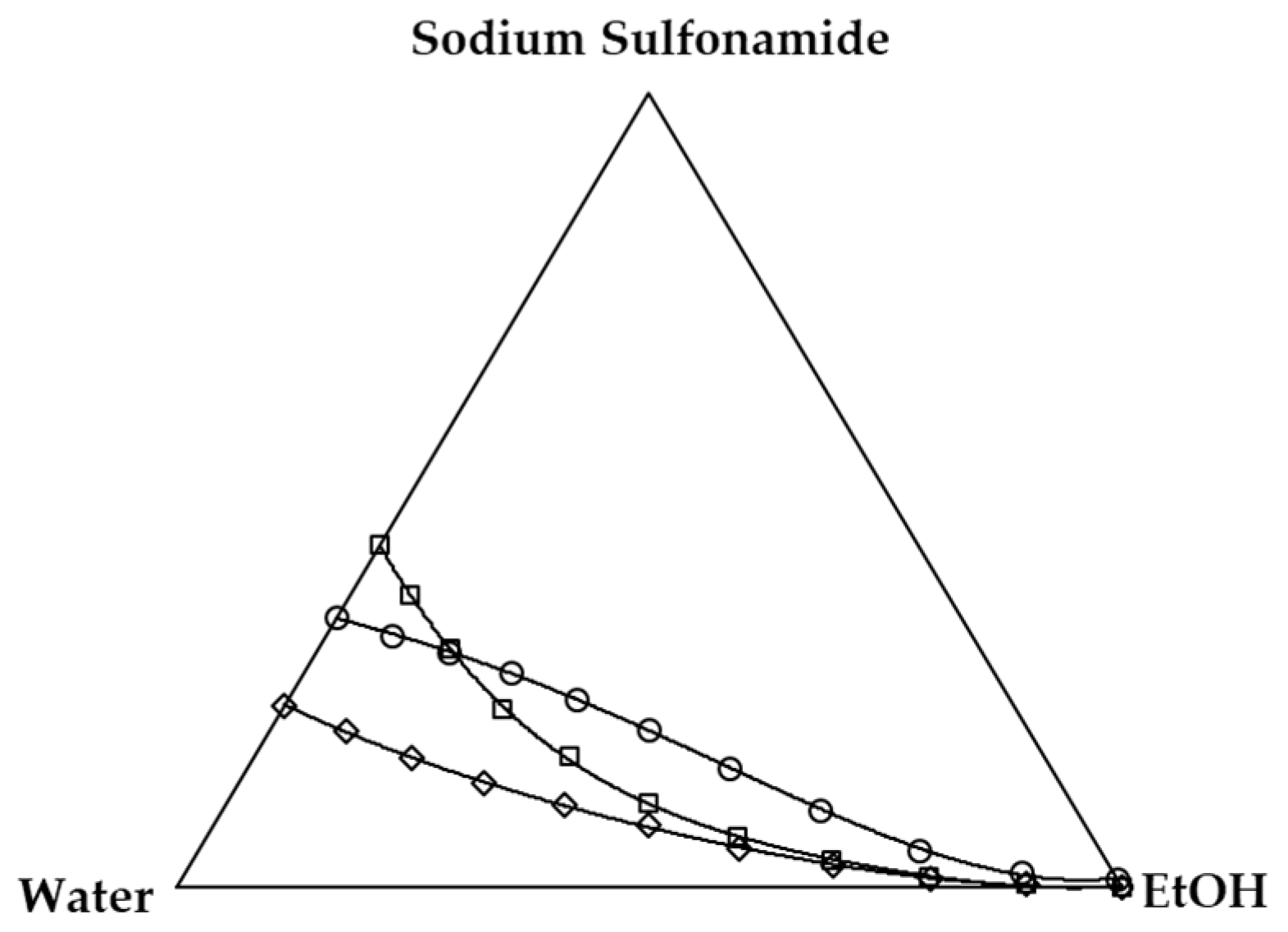
Moreover, Figure 7 also allows the comparison of equilibrium solubilities of NaSMT and its analogues, sodium sulfadiazine [17] and sodium sulfamerazine [18], using a Gibbs–Roozeboom triangular graph [26,27].
Figure 7.
Equilibrium solubility of drugs expressed as mass fraction in aqueous ethanolic mixtures at 25.0 °C. Sodium sulfadiazine (□), sodium sulfamerazine (◊), and sodium sulfamethazine (○).
The Jouyban–Acree model provided a promising and accurate representation of the solubility data in mixed solvent systems at different temperatures. Its accuracy could be affected by a number of parameters including the expressions of the solvent composition and solubilities. The effects of solubility units are systematically investigated in a previous work [28], and the effects of solubility expression units of NaSMT in aqueous alcoholic mixtures at different temperatures are studied in this work. The obtained results are listed in Table 3, and as shown, the model constants varied with different solubility units; however, there was no significant difference among the MPD% values except for mole fraction solubility. It should be noted that the solvent composition is expressed as mass fraction for the results reported in Table 3.
Table 3.
Jouyban–Acree and Jouyban–Acree–van’t Hoff model parameters for equilibrium solubility of sodium sulfamethazine in aqueous ethanolic mixtures at different temperatures.
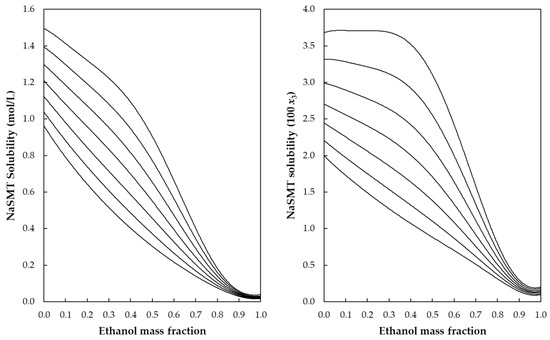
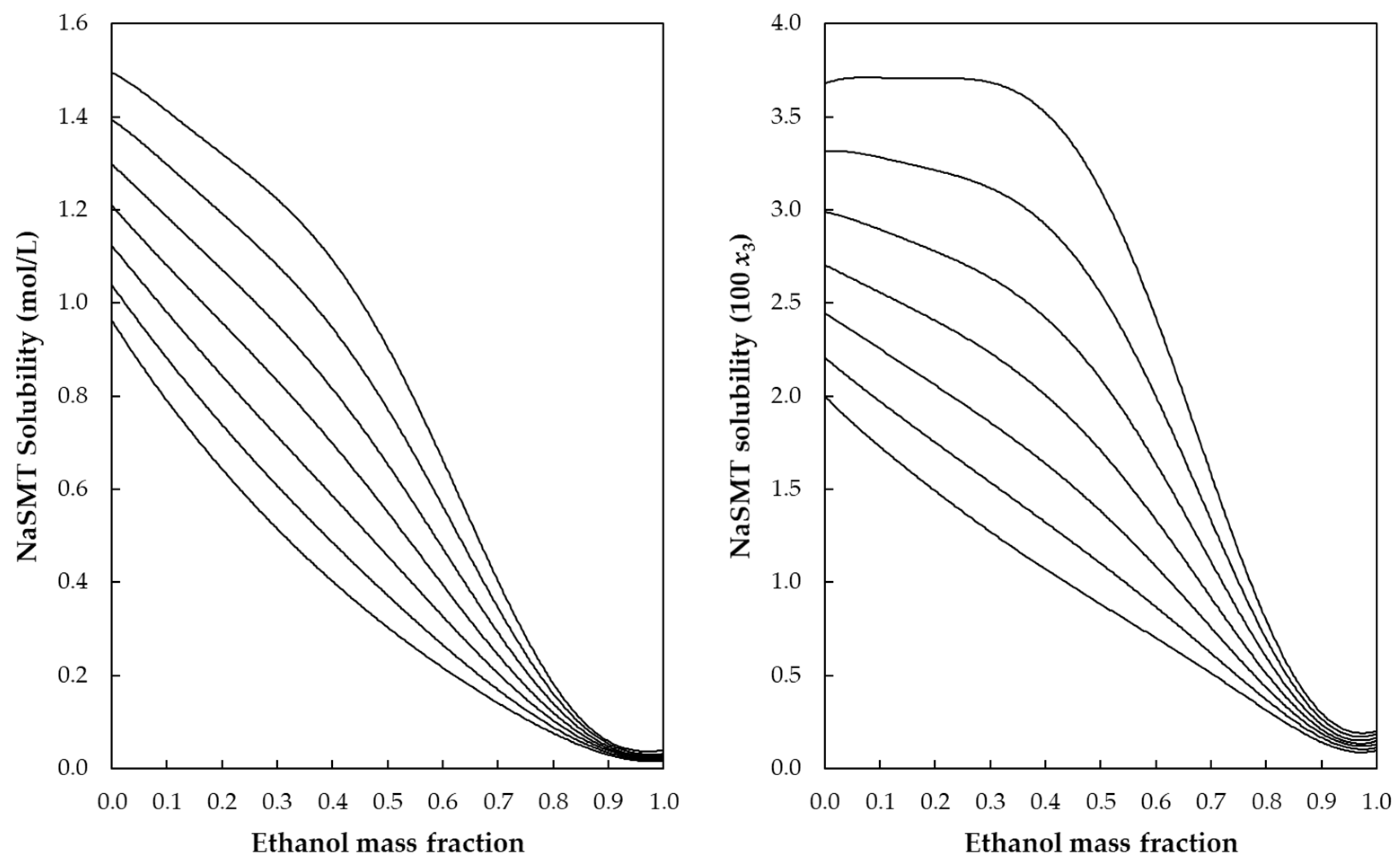
Figure 8 depict the equilibrium solubility of NaSMT expressed as molarity and mole fraction in these aqueous ethanolic mixtures at all temperatures. As expected, the shape of solubility profiles expressed in molarity is the same as that shown in Figure 2 (% m/v) because both of them are volumetric scales. However, the shape of profiles expressed in mole fraction are different because this scale is gravimetric and involves the molar masses of the solute and solvents [2]. As observed in these scales, in all cases, NaSMT solubility decreases with the addition of ethanol to water, as expected, because the dielectric constants of the mixtures free of salt are decreasing as the ethanol proportion increases. In this way, the capacity of the solvent mixture to separate ionic charges decreases. Moreover, the capacity of the solvent mixture components to solvate the respective ions is also reduced [29]. Therefore, strong ion–dipole interactions that favor the saline drug solubility are present manly in water-rich mixtures at all temperatures studied.
Figure 8.
Equilibrium solubility of sodium sulfamethazine expressed in molarity (left) and mole fraction (right) in some aqueous ethanolic mixtures as a function of ethanol mass fraction at different temperatures. Trends from top to bottom: 35.0 °C, 30.0 °C, 25.0 °C, 20.0 °C, 15.0 °C, 10.0 °C, and 5.0 °C.
3.2. Apparent Specific Volume of NaSMT at Saturation
As described earlier in the literature, knowledge of the volumetric contribution of drugs and excipients after their dissolutions in aqueous cosolvent mixtures, as a function of system composition and temperature, is fundamental from both practical and theoretical viewpoints. Thus, a well-known property of pharmaceutical solutes in saturated solutions is its apparent specific volume (), which is obtained using Equation (3) [30,31,32]:
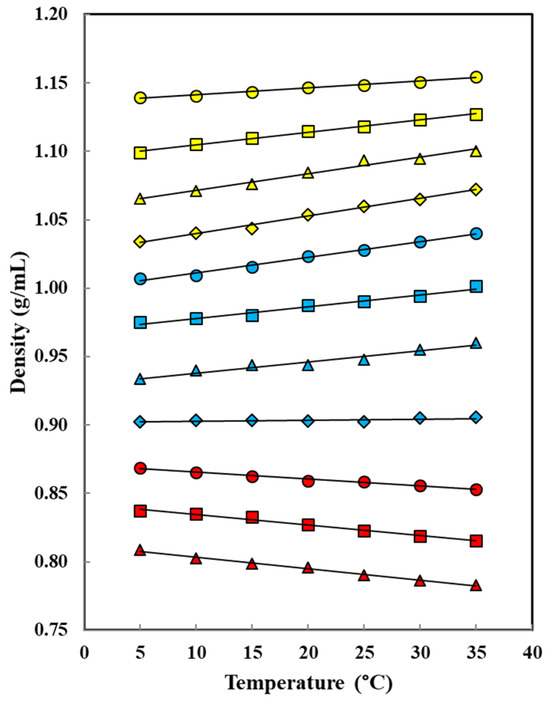
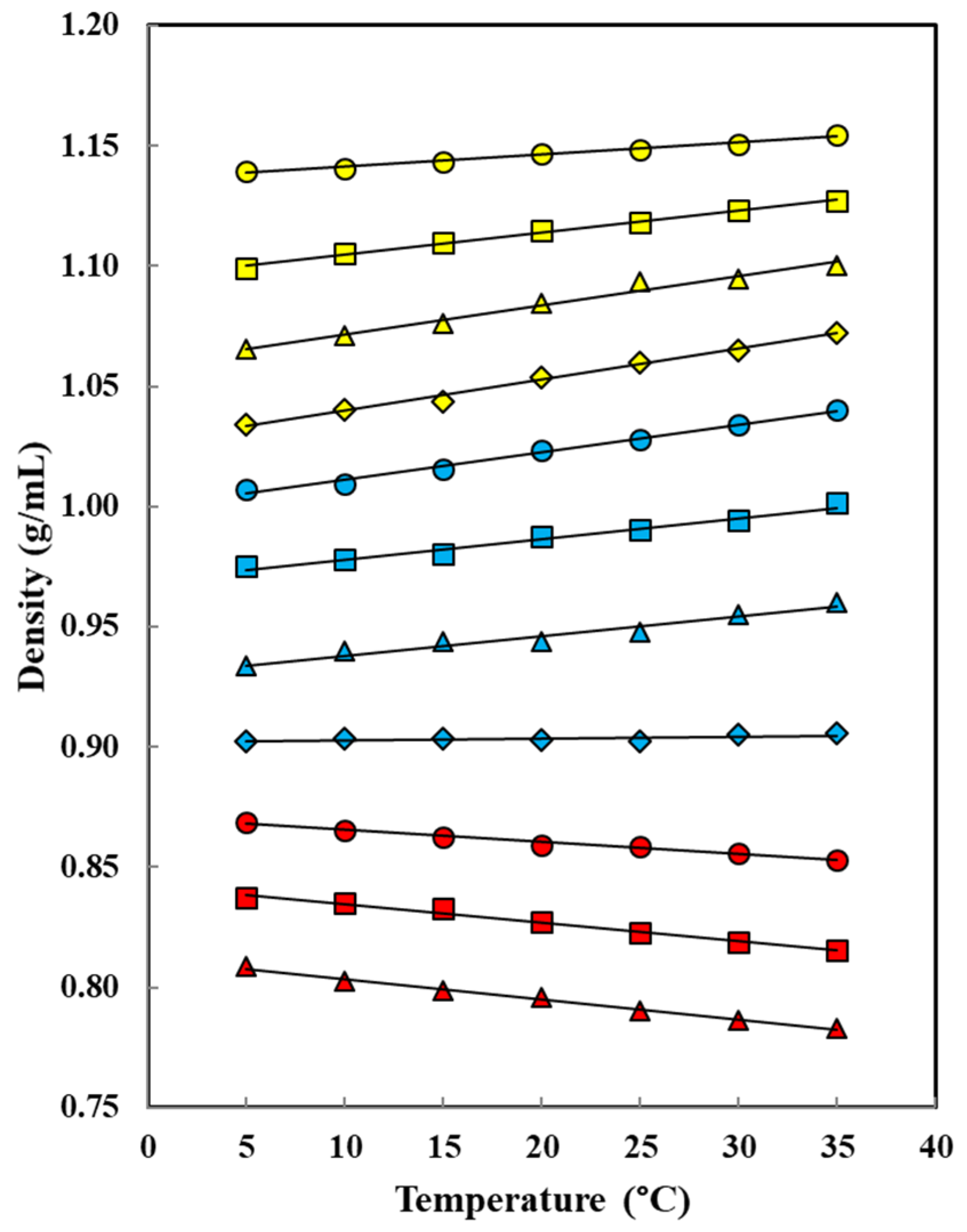
Here, w3 and w1+2 are the mass fractions of NaSMT (3) and the {ethanol (1) + water (2)} mixture in every saturated solution, respectively, whereas, ρ1+2+3 and ρ1+2 are the densities of the saturated solution and the cosolvent mixture free of NaSMT, respectively. The density values of the NaSMT-saturated solutions in all studied cosolvent mixtures and neat solvents at all temperatures are summarized in Table 4 and depicted in Figure 9. Regarding the behavior of the saturated mixtures, the density values decrease with the ethanol proportion in the mixtures (Table 4 and Figure 9) because ethanol is the component exhibiting the lowest density and because the NaSMT solubility decreases as the ethanol proportion increases in these aqueous mixtures. Regarding the effect of increasing temperature, the density of the saturated systems increases in pure water and in mixtures of 0.10 ≤ w1 ≤ 0.70. This is because the effect of NaSMT solubility increase is more important than the density decrease of the solvent systems free of the drug. Otherwise, the density of saturated systems decreases with increasing temperature in the solvent systems of 0.80 ≤ w1 ≤ 1.00, demonstrating the main role of density decrease of solvent systems with increasing temperature compared with the NaSMT solubility increase due to the low drug solubilities observed in these solvent systems.
Table 4.
Density of saturated solutions of sodium sulfamethazine in aqueous ethanolic mixtures (ρ1+2/g/mL) at different temperatures.
Figure 9.
Density of saturated solutions of sodium sulfamethazine in some aqueous ethanolic mixtures as a function of temperature. ●: neat water; ■: w1 = 0.10; ▲: w2 = 0.20; ♦: w1 = 0.30; ●: w1 = 0.40; ■: w1 = 0.50; ▲: w2 = 0.60; ♦: w1 = 0.70; ●: w1 = 0.80; ■: w1 = 0.90; ▲: neat ethanol.
Table 5 summarizes the difference between the densities of the NaSMT-saturated solutions and the aqueous ethanolic mixtures free of drug at different temperatures. Densities of binary mixtures free of NaSMT were taken numerically from the literature [33,34].
Table 5.
Difference in density of saturated solutions of sodium sulfamethazine and aqueous ethanolic mixtures free of drug (Δρ/g/mL) at different temperatures.
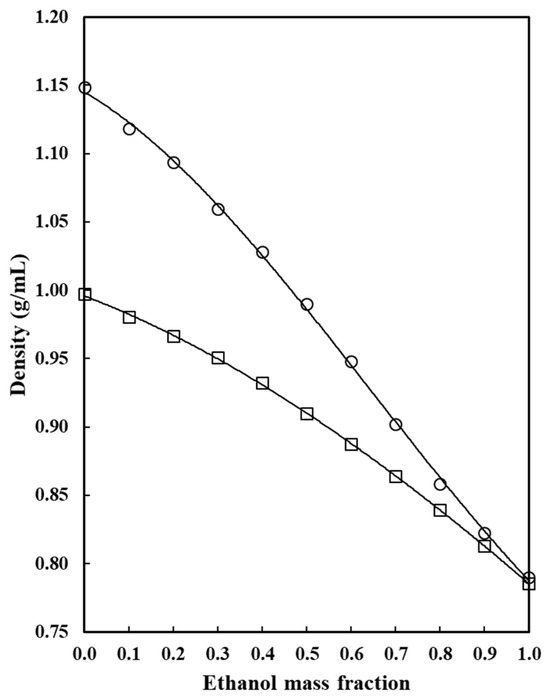
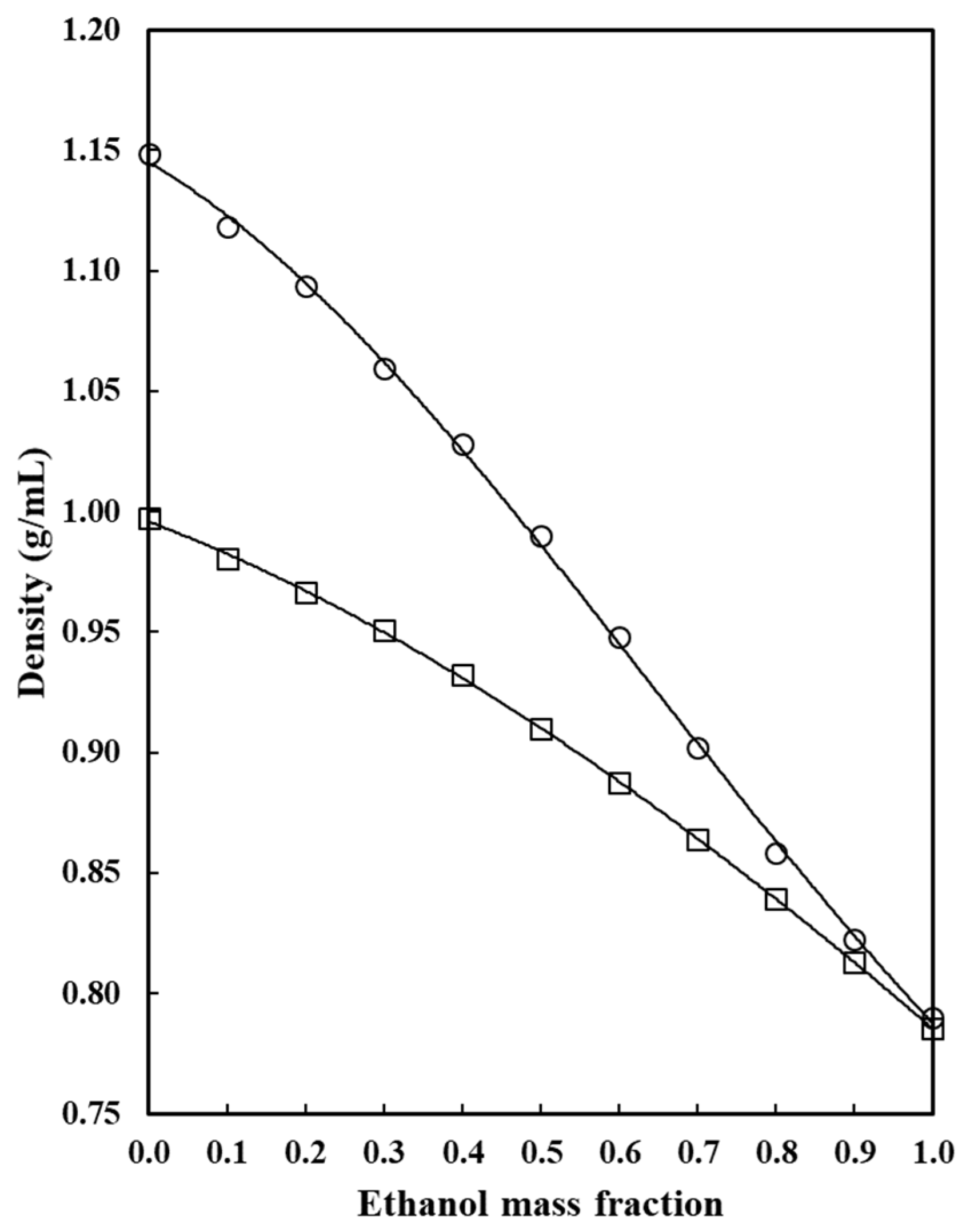
Figure 10 depicts a comparison of densities for all saturated solutions and the respective cosolvent mixtures free of NaSMT at 25.0 °C. Careful examination of Figure 10 reveals that all of the saturated solutions exhibit densities higher than those of the cosolvent mixtures free of NaSMT because this drug exhibits higher density compared with all respective solvent systems. As observed, density differences decrease as the ethanol proportion decreases in the mixtures as a consequence of NaSMT solubility decrease. Moreover, density differences increase with increasing temperature from pure water to the mixture of w1 = 0.80 owing to the increase in NaSMT solubility. However, in the mixture of w1 = 0.90 and in pure ethanol, the differences follow erratic tendencies.
Figure 10.
Density of saturated solutions of sodium sulfamethazine (○) and density of aqueous ethanolic mixtures free of drug (□) in aqueous ethanolic mixtures as a function of mixture composition at 25.0 °C.
An adapted version of the Jouyban–Acree model was presented for modeling the physicochemical properties of the solvent mixtures at different temperatures, including their density values [35]. The model could be trained using the solute-free density values of the solvent mixtures at various temperatures, because the small effect of the dissolved drug on the numerical values of the density of the saturated solution could be ignored, in particular in the case of organic salts in ethanol-rich mixtures. The trained model using the NaSMT-free mixtures of {ethanol (1) + water (2)} mixtures is as follows [18]:
Equation (4) was used to predict the density of the NaSMT in {ethanol (1) + water (2)} mixtures employing the experimental density of the drug in neat ethanol and water at each temperature of interest with the MPD of 1.0% [18]. Using the same prediction procedure, the MPD for NaSMT is 0.9%.
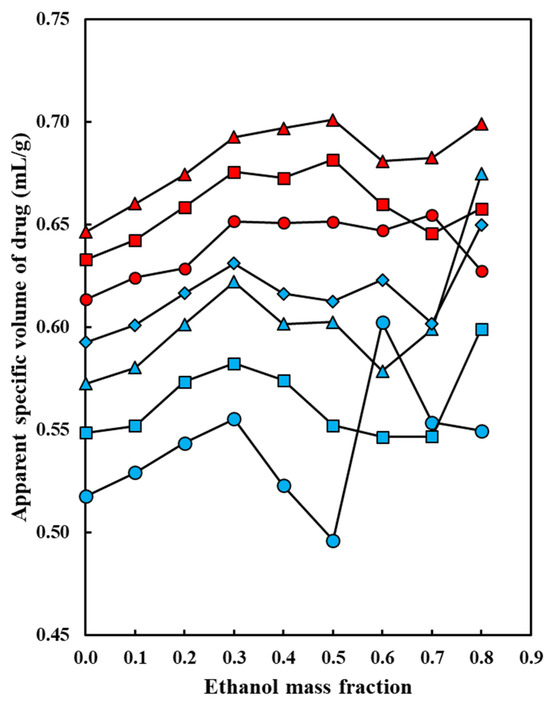
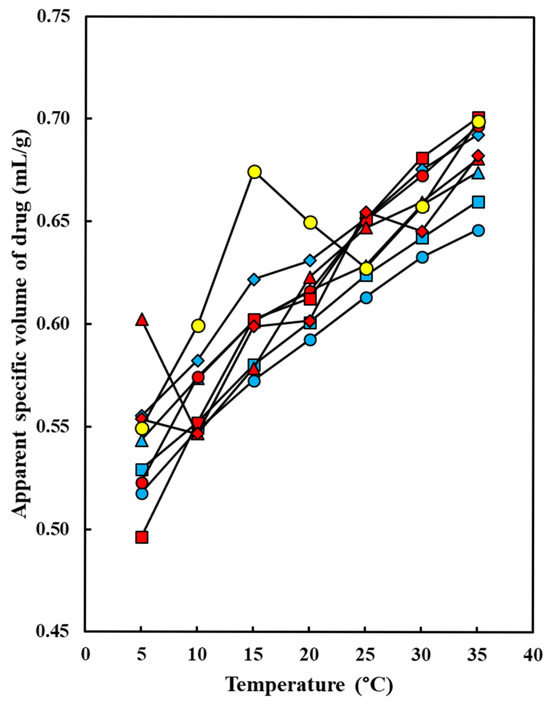
The calculated apparent specific volumes of NaSMT at saturation () as functions of mixture composition and temperature are summarized in Table 6. Moreover, as a visual aid, Figure 11 and Figure 12 depict this property as a function of the {ethanol (1) + water (2)} mixture composition and temperature, respectively. It is important to note that significant values are obtained from pure water to the mixture of w1 = 0.80, while in the mixture of w1 = 0.90, very low values are observed at 10.0 and 15.0 °C; moreover, in pure ethanol, a negative value is observed, i.e., –0.28 mL/g.
Table 6.
Apparent specific volume of sodium sulfamethazine at saturation (/mL/g) in several aqueous ethanolic mixtures at several temperatures.
Figure 11.
Apparent specific volume of sodium sulfamethazine at saturation in aqueous alcoholic mixtures as a function of ethanol mass fraction at several temperatures. ●: 5.0 °C; ■: 10.0 °C; ▲: 15.0 °C; ♦: 20.0 °C; ●: 25.0 °C; ■: 30.0 °C; ▲: 35.0 °C.
Figure 12.
Apparent specific volume of sodium sulfamethazine at saturation in aqueous alcoholic mixtures as a function of temperature. ●: neat water; ■: w1 = 0.10; ▲: w2 = 0.20; ♦: w1 = 0.30; ●: w1 = 0.40; ■: w1 = 0.50; ▲: w1 = 0.60; ♦: w1 = 0.70; ●: w1 = 0.80.
As observed, NaSMT values increase continuously with increasing solution temperature in the composition interval of 0.00 ≤ w1 ≤ 0.50. From w1 = 0.60 to w1 = 0.80 the behavior is slightly erratic, perhaps because of the experimental uncertainty associated with one or two of the experimental values. The behavior appears more erratic; however, in w1 = 0.90 and in neat ethanol, it is fully erratic at the lower four temperatures. In fact, the apparent specific volume of sodium sulfamethazine is negative at 5 °C. Regarding the variation in the NaSMT values with the ethanol proportion in the mixtures at constant temperature, the behavior is also erratic, particularly at 5.0 °C, where the observed trend is clearly different compared with those observed at other temperatures. As observed, the more erratic values are observed in those systems and conditions exhibiting the lower solubilities, which implies smaller differences in densities of saturated solutions and mixtures.
The main technological purpose of determining the values of drugs and excipients is to verify if this property is almost constantly independent of temperature and mixture composition. Thus, in this ternary (or binary in the case of pure solvents) system, in the interval of 0.00 ≤ w1 ≤ 0.80, the global mean value is 0.615 (±0.051) mL/g (with relative standard deviation, RSD = 8.33%). As clearly observed, this relative deviation exceeds 5.0%, indicating that, in some cases, it is better to study the effect of mixture composition and temperature on this property in order to obtain more reliable values during the different stages associated with the research and development of homogeneous liquid pharmaceutical dosage forms [36,37,38,39].
4. Conclusions
From all topics discussed previously, it can be concluded that the NaSMT solubility in {ethanol (1) + water (2)} mixtures is strongly dependent on temperature and the cosolvent mixture composition. NaSMT equilibrium solubility increases with increasing temperature, but decreases with an increase in the proportion of ethanol in the mixtures at all temperatures studied. This is because the dielectric constant of the mixtures free of NaSMT is lower as the ethanol proportion increases. Thus, the capacity of the solvent mixture to separate ionic charges decreases. Moreover, the capacity of the solvent mixture components to solvate the respective ions is also reduced. Mass/volume percentage logarithmic solubility is adequately correlated with a multivariate model involving a linear effect of temperature and a fourth-degree polynomial effect of mixture composition. Furthermore, the apparent specific volume () of NaSMT at saturation is also dependent on temperature and ethanol proportion in the mixtures. Thus, a global mean NaSMT value of 0.615 (±0.051) mL/g is obtained in the mixture composition interval of 0.00 ≤ w1 ≤ 0.80. Moreover, it can be said that both the solubility and volumetric data presented in this report expand the physicochemical information on the behavior of saline drugs in mixed aqueous solutions [29,40].
Author Contributions
Conceptualization, D.R.D., F.M., M.Á.P., A.J. and W.E.A.J.; methodology, D.R.D.; software, D.R.D., F.M. and A.J.; validation, D.R.D., F.M., M.Á.P., T.S., A.J. and W.E.A.J.; formal analysis, D.R.D., F.M., M.Á.P., A.J. and W.E.A.J.; investigation, D.R.D., F.M., M.Á.P., T.S., A.J. and W.E.A.J.; resources, F.M.; data curation, D.R.D., F.M., T.S. and A.J.; writing—original draft preparation, D.R.D., F.M. and A.J.; writing—review and editing, D.R.D., F.M., M.Á.P., A.J. and W.E.A.J.; visualization, F.M.; supervision, F.M., A.J. and W.E.A.J.; project administration, F.M.; funding acquisition, F.M. All authors have read and agreed to the published version of the manuscript.
Funding
This research received no external funding.
Institutional Review Board Statement
Not applicable.
Informed Consent Statement
Not applicable.
Data Availability Statement
All generated and required physicochemical data are reported in this manuscript.
Acknowledgments
We thank the Department of Pharmacy of the Universidad Nacional de Colombia for providing us the reagents, equipment, and laboratories used in this research.
Conflicts of Interest
The authors declare no conflicts of interest.
Abbreviations
The following abbreviations are used in this manuscript:
| CAS | Chemical Abstract Service |
| MPD% | Mean percentage deviation |
| NaSMT | Sodium sulfamethazine |
| RSD | Relative standard deviation |
| R&D | Research and Development |
| w1 | Mass fraction of ethanol |
| w1+2 | Mass fraction of solvent mixture |
| w3 | Mass fraction of solute |
| x3 | Mole fraction of solute |
| % m/m | Mass/mass percentage |
| % m/v | Mass/volume percentage |
| ε | Dielectric constant |
| Apparent specific volume | |
| ρ | Density |
References
- Rubino, J.T. Cosolvents and cosolvency. In Encyclopedia of Pharmaceutical Technology; Swarbrick, J.C., Boylan, J., Eds.; Marcel Dekker: New York, NY, USA, 1988; Volume 3, pp. 375–398. [Google Scholar]
- Martin, A.; Bustamante, P.; Chun, A.H.C. Physical Pharmacy: Physical Chemical Principles in the Pharmaceutical Sciences, 4th ed.; Lea & Febiger: Philadelphia, PA, USA, 1993; pp. 221–235. [Google Scholar]
- Yalkowsky, S.H. Solubility and Solubilization in Aqueous Media; American Chemical Society and Oxford University Press: New York, NY, USA, 1999; pp. 180–235. [Google Scholar]
- Florence, A.T.; Attwood, D. Physicochemical Principles of Pharmacy, 5th ed.; Pharmaceutical Press: London, UK, 2011; pp. 53–88. [Google Scholar]
- Budavari, S.; O’Neil, M.J.; Smith, A.; Heckelman, P.E.; Obenchain, J.R., Jr.; Gallipeau, J.A.R.; D’Arecea, M.A. The Merck Index: An Encyclopedia of Chemicals, Drugs, and Biologicals, 13th ed.; Merck & Co., Inc.: Whitehouse Station, NJ, USA, 2001; p. 1586. [Google Scholar]
- Gelone, S.; O’Donell, J.A. Anti-Infectives. In Remington: The Science and Practice of Pharmacy, 21st ed.; Gennaro, A.R., Ed.; Lippincott Williams & Wilkins: Philadelphia, PA, USA, 2005; pp. 1630–1633. [Google Scholar]
- MacDougall, C. Sulfonamides, trimethoprim-sulfamethoxazole, quinolones, and agents for urinary tract infections. In Goodman & Gilman’s the Pharmacological Basis of Therapeutics, 13th ed.; Brunton, L.L., Hilal-Dandan, R., Knollmann, B.C., Eds.; McGraw-Hill: New York, NY, USA, 2017; pp. 1011–1021. [Google Scholar]
- Delgado, D.R.; Martínez, F.; Fakhree, M.A.A.; Jouyban, A. Study of the solubility of some sodium sulfonamides in ethanol + water cosolvent mixtures and correlation with the Jouyban-Acree model. Biomed. Int. 2011, 2, 5–11. [Google Scholar]
- Delgado, D.R.; Vargas, E.F.; Martínez, F. Thermodynamics of mixing of some sodium sulfonamides in ethanol + water cosolvent mixtures. Vitae 2011, 18, 192–200. [Google Scholar] [CrossRef] [Scilit]
- Muñoz, M.M.; Rodríguez, C.J.; Delgado, D.R.; Peña, M.Á.; Jouyban, A.; Martínez, F. Solubility and saturation apparent specific volume of some sodium sulfonamides in propylene glycol + water mixtures at 298.15 K. J. Mol. Liq. 2015, 211, 192–196. [Google Scholar] [CrossRef] [Scilit]
- Delgado, D.R.; Vargas, E.F.; Martínez, F. Apparent molar volumes of some sodium sulfonamides in water at several concentrations and temperatures. J. Solut. Chem. 2011, 40, 1955–1963. [Google Scholar] [CrossRef] [Scilit]
- Rodríguez, G.A.; Martínez, F.; Vargas, E.F. Volumetric and acoustic properties of some sodium sulfonamides in dilute aqueous solutions at several temperatures. J. Chem. Thermodyn. 2018, 118, 159–164. [Google Scholar] [CrossRef] [Scilit]
- Rodríguez, G.A.; Martínez, F.; Vargas, E.F. Volumetric and acoustic properties of some structurally related sodium sulfonamides in normal saline solution at several temperatures. Phys. Chem. Liq. 2026, 64, 261–298. [Google Scholar] [CrossRef] [Scilit]
- Galindres, D.M.; Rodríguez, G.A.; Martínez, F.; Vargas, E.F. Molar electrical conductivity of sodium sulfonamides in aqueous solution at several temperatures. J. Mol. Liq. 2019, 287, 110984. [Google Scholar] [CrossRef] [Scilit]
- Rodriguez, G.A.; Martinez, F.; Vargas, E.F. Molar dissolution enthalpies of some sodium sulfonamides in water and normal saline solution at several temperatures. J. Therm. Anal. Calorim. 2025, 150, 5419–5432. [Google Scholar] [CrossRef] [Scilit]
- Rodríguez, G.A.; Martínez, F.; Vargas, E.F. Dynamic viscosities of some sodium sulfonamides in water and normal saline solution at several temperatures. Int. J. Thermophys. 2026, 47, 107. [Google Scholar] [CrossRef] [Scilit]
- Delgado, D.R.; Martinez, F.; Peña, M.Á.; Jouyban, A.; Acree, W.E., Jr. Effect of ethanol on the solubility and apparent specific volume of sodium sulfadiazine in aqueous mixtures. J. Pharm. BioTech Ind. 2025, 2, 5. [Google Scholar] [CrossRef] [Scilit]
- Delgado, D.R.; Martinez, F.; Peña, M.Á.; Jouyban, A.; Acree, W.E., Jr. Solubility and apparent specific volume of sodium sulfamerazine in aqueous-ethanolic mixtures. J. Solut. Chem. 2026, 55, 1028–1047. [Google Scholar] [CrossRef] [Scilit]
- Higuchi, T.; Connors, K. Advances in Analytical Chemistry and Instrumentation; Interscience Publishers, Inc.: New York, NY, USA, 1965. [Google Scholar]
- Mader, W.J.; Higuchi, T. Phase solubility analysis. C R C Crit. Rev. Anal. Chem. 1970, 1, 193–215. [Google Scholar] [CrossRef] [Scilit]
- Ansel, H.C.; Stoklosa, M.J. Pharmaceutical Calculations, 12th ed.; Lippincott, Williams & Wilkins: Baltimore, MD, USA, 2006; pp. 79–98. [Google Scholar]
- Bevington, P.R. Data Reduction and Error Analysis for the Physical Sciences; McGraw-Hill Book, Co.: New York, NY, USA, 1969. [Google Scholar]
- Carstensen, J.T. Modeling and Data Treatment in the Pharmaceutical Sciences; Technomic Publishing Co., Inc.: Lancaster, PA, USA, 1996. [Google Scholar]
- Barrante, J.R. Applied Mathematics for Physical Chemistry, 2nd ed.; Prentice Hall, Inc.: Upper Saddle River, NJ, USA, 1998. [Google Scholar]
- Marcus, Y. The Properties of Solvents; John Wiley & Sons: Chichester, UK, 1998. [Google Scholar]
- Palatnik, L.S.; Landau, A.I. Phase Equilibria in Multicomponent Systems; Holt, Rinehart and Winston, Inc.: New York, NY, USA, 1964; pp. 2–3. [Google Scholar]
- Gamboa, R. Diagramas Ternarios: Teoría y Ejercicios; Dextra Editorial S.L.: Madrid, Spain, 2018. [Google Scholar]
- Rahimpour, E.; Alvani-Alamdari, S.; Acree, W.E., Jr.; Jouyban, A. Drug solubility correlation using the Jouyban–Acree model: Effects of concentration units and error criteria. Molecules 2022, 27, 1998. [Google Scholar] [CrossRef] [Scilit] [PubMed]
- Pudipeddi, M.; Serajuddin, A.T.M.; Grant, D.J.W.; Stahl, P.H. Solubility and dissolution of weak acids, bases, and salts. In Handbook of Pharmaceutical Salts. Properties, Selection, and Use; Stahl, P.H., Wermuth, C.G., Eds.; IUPAC: Research Triangle Park, NC, USA; Wiley-VCH: Zurich, Switzerland, 2002. [Google Scholar]
- Cárdenas, Z.J.; Jiménez, D.M.; Martínez, F. Solubility and saturation apparent volume of Propranolol Hydrochloride in some binary aqueous cosolvent mixtures at 298.15 K. J. Chem. Eng. Data 2015, 60, 1520–1525. [Google Scholar] [CrossRef] [Scilit]
- Jiménez, D.M.; Cárdenas, Z.J.; Martínez, F. Solubility and apparent specific volume of some pharmaceutical salts in propylene glycol + water mixtures at 298.15 K. Chem. Eng. Commun. 2016, 203, 1013–1019. [Google Scholar] [CrossRef] [Scilit]
- Muñoz, M.M.; Almanza, O.A.; Peña, M.Á.; Jouyban, A.; Martínez, F.; Acree, W.E., Jr. Solubility and apparent specific volume at saturation of some pharmaceutical salts in methanol + water mixtures at 298.15 K. J. Mol. Liq. 2016, 220, 842–847. [Google Scholar] [CrossRef] [Scilit]
- Jiménez, J.; Manrique, J.; Martínez, F. Effect of temperature on some volumetric properties for ethanol + water mixtures. Rev. Colomb. Cienc. Quím. Farm. 2004, 33, 145–155. [Google Scholar]
- Rodríguez, G.A.; Delgado, D.R.; Martínez, F.; Khoubnasabjafari, M.; Jouyban, A. Volumetric properties of some pharmaceutical binary mixtures at low temperatures and correlation with the Jouyban-Acree model. Rev. Colomb. Cienc. Quím. Farm. 2011, 40, 222–239. [Google Scholar]
- Jouyban, A.; Acree, W.E., Jr. A single model to represent physico-chemical properties of liquid mixtures at various temperatures. J. Mol. Liq. 2011, 323, 115054. [Google Scholar] [CrossRef] [Scilit]
- Wells, J.I. Pharmaceutical Preformulation: The Physicochemical Properties of Drug Substances; Ellis Horwood, Ltd.: Chichester, UK, 1988; pp. 21–102. [Google Scholar]
- Carstensen, J.T. Theory of Pharmaceutical Systems. I. General Principles; Academic Press, Inc.: New York, NY, USA, 1972; pp. 1–55. [Google Scholar]
- Allen, L.V., Jr.; Ansel, H.C. Ansel’s Pharmaceutical Dosage Forms and Drug Delivery Systems, 10th ed.; Wolters Kluwer: Philadelphia, PA, USA, 2014; pp. 396–444. [Google Scholar]
- Murdan, S. Solutions. In Aulton’s Pharmaceutics: The Design and Manufacture of Medicines, 6th ed.; Taylor, K.M.G., Aulton, M.E., Eds.; Elsevier Ltd.: Amsterdam, The Netherlands, 2022; pp. 386–396. [Google Scholar]
- Serajuddin, A.T. Salt formation to improve drug solubility. Adv. Drug Deliv. Rev. 2007, 59, 603–616. [Google Scholar] [CrossRef] [Scilit] [PubMed]

Disclaimer/Publisher’s Note: The statements, opinions and data contained in all publications are solely those of the individual author(s) and contributor(s) and not of MDPI and/or the editor(s). MDPI and/or the editor(s) disclaim responsibility for any injury to people or property resulting from any ideas, methods, instructions or products referred to in the content. |
© 2026 by the authors. Licensee MDPI, Basel, Switzerland. This article is an open access article distributed under the terms and conditions of the Creative Commons Attribution (CC BY) license.