


Abstract
This research focused on the plant growth-promoting properties of endophytic bacteria isolated from Morisonia scabrida, a tree adapted to heat stress. Sixteen bacterial strains were isolated; among them, S1R21 tolerated 50 °C; S1H21 inhibited the growth of Fusarium sp. FH at 25 and 30 °C; and S1R16 inhibited Alternaria sp. ATCC20084 and F. oxysporum CTLM12 at 25 and 30 °C. Regarding enzymatic activities, S1R21 exhibited amylase activity at 30 °C; S1T20 showed proteinase activity at 37 °C; S1T11 showed pectinase activity at 37 °C; S1R16 and S1R9 demonstrated lipase activity; and S1R20 showed CMCase activity at 30 °C. S1T1 solubilized tricalcium phosphate at 25 and 30 °C; S1H5 produced siderophores at 30 °C; and S1T11 produced IAA and fixed nitrogen at 30 and 37 °C. With respect to germination percentage of corn and alfalfa, the highest values were achieved with strain S1R21 at 30 and 37 °C. Seven strains were selected and identified by 16S rDNA analysis as Bacillus albus S1H21, Bacillus cereus S1R21, Lysinibacillus fusiformis S1R9, Enterobacter sp. (S1H5 and S1R8), Klebsiella sp. S1R16 and Stutzerimonas stutzeri S1T11. Most of these strains increased growth parameters of Zea mays and Medicago sativa, with Stutzerimonas stutzeri S1T11 standing out regarding high aerial and root length, as well as fresh and dry weight. This research study is one of the few studies on endophytic bacteria associated with the Morisonia scabrida tree. It demonstrates that its bacterial diversity could contribute to various biological roles, such as that of plant growth promoter under heat stress.
1. Introduction
Currently, rising temperatures are one of the most impactful phenomena affecting agriculture worldwide; they are considered more devastating than drought, salinity, or heavy metals [1,2,3]. In maize and alfalfa, it has been found that this phenomenon negatively alters the photosynthesis and respiration processes, as well as inducing phenological variations during germination, growth, development, and reproduction [4,5,6], and that it disturbs hormone synthesis, enzyme production, sugar and nutrient metabolism, transpiration, and cell division [7,8,9,10].
On the other hand, endophytic bacteria influence the phenology and life cycles of some forest plants adapted to high temperatures; they colonize the living tissues of their hosts and develop beneficial interactions [1,10,11,12], providing nutrients—nitrogen, phosphates, potassium, iron, and zinc—and producing phytohormones such as indoleacetic acid, cytokinins and gibberellins, as well as mitigating phytopathogens by producing extracellular enzymes such as amylases, cellulases, lipases, and proteases [10,12,13,14,15,16,17,18]. In this sense, endophytic bacteria benefit host plants living under heat stress, particularly by contributing to plant health; conversely, some plants with unbalanced endophytic populations can experience poor health [19,20].
Morisonia scabrida, known as “sapote,” is a woody native plant from northern Peru and common in neotropical forests [21,22,23]. It is adapted to heat stress [24]; some mechanisms for this response are the synthesis of osmotic regulators such as proline (Pro), soluble sugars, and proteins, and the presence of associated endophytic bacteria that could act by preventing protein inactivation or allowing the synthesis of photosynthetic pigments or plant growth-promoting properties [25,26].
In this sense, this study aimed to isolate endophytic bacterial strains from Morisonia scabrida collected in a part of the dry forest of Piura (Peru). Their potential as plant growth promoters under heat stress was determined using maize and alfalfa, as these plants are common in Peruvian agriculture. Satisfactory information on the properties of certain bacteria was found, which could inform future studies aimed at developing effective plant growth-promoting bacterial formulations for agricultural applications within sustainability frameworks.
2. Materials and Methods
2.1. Collection and Handling of Biological Samples
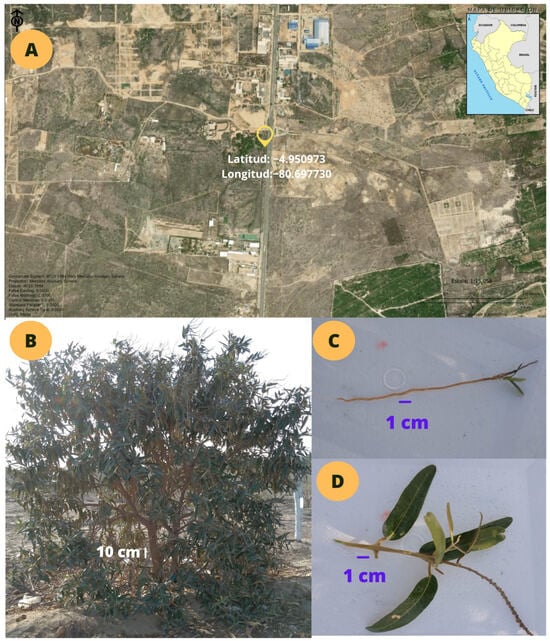
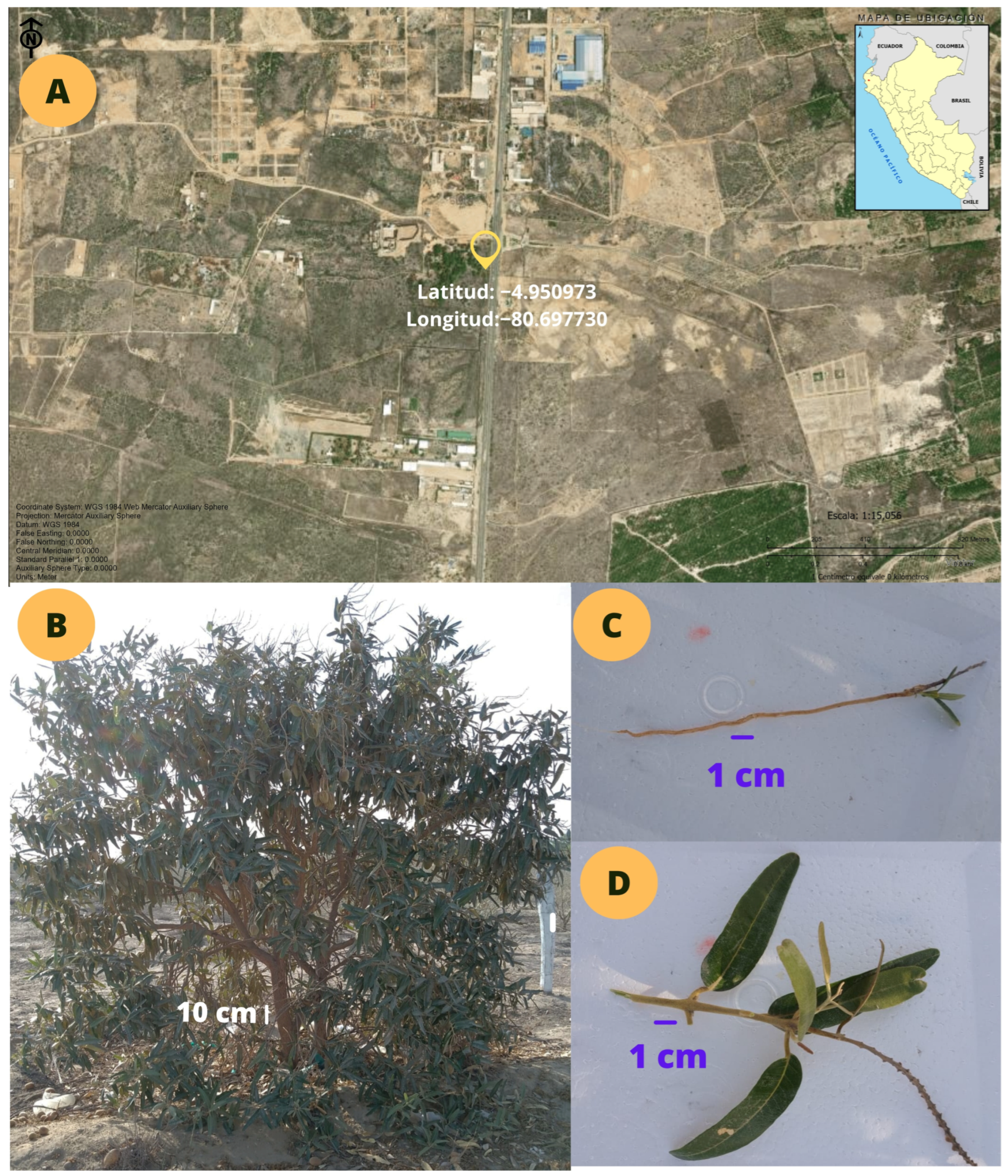
Leaves, stems, and roots of five plants of Morisonia scabrida were collected from dry forests (Latitude: −4.950973; Longitude: −80.697730) in Sullana, Piura, Peru (Figure 1A), in January 2024. The samples showed no external damage or disease symptoms. They were disinfected with ethanol 70°, placed in sterile bags, transported to the Microbial Biotechnology Research Laboratory of the Universidad Nacional de Frontera, and stored at 4 °C for 24 h. A specimen was herborized for its botanical identification at the Herbarium Truxillense (Universidad Nacional de Trujillo, Peru) (Figure S1) and vouchered with code HUT: 65888 and collection authorization from SERFOR, RD N°. D000039-2025-MIDAGRI-SERFOR-DGGSPFFS-DGSPF.
Figure 1.
Collection site of Morisonia scabrida. (A) Collection site (−4,950973, −80,697730) (Software: National Geographic Institute of Peru—Center for Geospatial Data Infrastructure); (B) Morisonia scabrida (whole plant in its habitat), (C) root, and (D) stems and leaves.
2.2. Isolation of Endophytic Bacteria
Twenty-five leaf, stem, and root fragments (1.5 cm each) were washed with tap water; then, in a sterile chamber, they were disinfected for 15 min with a solution of HgCl2 (0.1%) plus Tween-20 (0.3%); afterwards, they were washed five times with sterile distilled water [27,28]. The disinfected samples were submerged in 2 mL of Potato Dextrose Broth (PDB) for 5 min; this procedure was performed as a superficial contamination control [28]. Afterward, they were placed on sterile filter paper, cut into two pieces, and transferred to vials with Tryptic Soy Agar (TSA) supplemented with nystatin (4000 UI/mL). All samples were incubated at 25 °C for 10 days. A bacterium was considered endophytic when its superficial contamination control showed no microbial growth. The endophytic bacteria were cultured by streaking on TSA; pure colonies were transferred to tubes with TSA and TSB. The axenic cultures were pelleted and cryopreserved [28].
2.3. Plant Growth-Promoting Tests of Endophytic Bacteria
2.3.1. Preparation of Endophytic Bacteria Inoculum
The bacterial strains were cultivated in TSB broth (4 mL) at 30 °C for 16 h. They were centrifuged at 2000× g for 5 min, and their pellets were resuspended in sterile NaCl (0.8%) to an optical density (OD: 620 nm) of 0.08, equivalent to 1 × 10⁸ CFU/mL [27].
2.3.2. Tolerance to Temperature Stress
Eight milliliters of TSB were inoculated with 100 µL of fresh culture (OD620: 0.08), and incubated for 0, 24, 48, 72, 96, 120, 144, and 168 h at 25, 30, 37, 42, and 50 °C. The negative control was prepared with TSB and inoculated with sterile distilled water. All samples were prepared in triplicate. Growth was measured spectrophotometrically by absorbance at 620 nm using a UV-Vis spectrophotometer.
2.3.3. Antifungal Activity
Bacteria were evaluated against some filamentous fungi: Fusarium sp. FH [29], F. oxysporum CTLM12 [30], Neofusicoccum sp. PT-S (isolated from avocado fruits showing signs of disease), Alternaria sp. ATCC20084, and Aspergillus niger ATCC7275 (Table S1). The inoculum was discs (5 mm diameter), which were grown on PDA plates for 5 days at 30 °C [28]. For the assays, fresh bacterial cultures (OD620: 0.08) were inoculated by surface spreading onto PDA plates, and two fungal discs were immediately placed on each plate. Control fungal growth did not include bacterial inoculation. All plates were incubated at 25, 30, and 37 °C for 9 days. The diameters of the fungal colonies were measured to determine the effect of the bacteria. The formula used to calculate the relative growth or inhibition of the fungal colony was (Ifo%) = [(A − B)/A] × 100, where A is the diameter of the fungal colony in the control plates (without bacteria), and B is the diameter of the fungal colony in the plates that contain the endophytic bacteria; it was expressed as a percentage of fungal growth reduction [28].
2.3.4. Production of Hydrolytic Enzymes
All assays were performed in triplicate, and negative controls inoculated with saline solution were included.
For amylolytic activity, Starch Agar plates (0.1% glucose, 0.5% peptone, 1.5% starch, and 1.5% agar-agar, pH 7) were used. Fresh bacterial culture (2 mL, OD620: 0.08) was placed in sterile filter paper discs (6 mm) as inoculum and incubated at 25, 30, and 37 °C for 24 h [31]. Lugol solution (5%) was added, and the presence of a clear halo around the disc was taken as positive activity [32].
For proteolytic activity, Milk Agar (0.5% casein peptone, 0.25% yeast extract, 0.1% dextrose, and 1.5% agar-agar, supplemented with 8% skim milk) with wells (5 mm diameter) was used; the wells were inoculated with 10 mL of fresh bacterial culture (OD620: 0.08). The samples were incubated at 25, 30, and 37 °C for 24 h; the transparent halo around the well confirmed proteolytic activity.
For lipolytic activity, Milk Cream Agar was prepared (0.5% casein peptone, 0.25% yeast extract, 0.1% dextrose, and 1.5% agar-agar, supplemented with 1% milk cream), and fresh bacterial culture (2 µL, OD620: 0.08) in sterile filter paper discs (6 mm) was placed on it [33]. The samples were incubated at 25, 30, and 37 °C for 24 h. A transparent halo around the disc confirmed lipolytic activity.
For cellulolytic activity, TSA-CMC plates (TSA supplemented with 0.5% carboxymethylcellulose) were inoculated with 2 µL of fresh bacterial culture (OD620: 0.08) in sterile filter paper discs (6 mm) [28]. The samples were incubated at 25, 30, and 37 °C for 48 h. The CMC hydrolysis was determined by a clear halo around the colony after application of the Congo Red methodology [34].
Pectinolytic activity was assessed following the methodology proposed by Pal et al. [32]. Plates with TSA plus 0.3% citric pectin were inoculated with 2 µL of fresh bacterial culture (OD620: 0,08) in sterile filter paper discs (6 mm). They were incubated at 25, 30, and 37 °C for 48 h. The plates were colored with 0.2% (w/v) Congo Red [34] and washed with 0.8% NaCl plus 1% (v/v) acetic acid [35]. The clear halo around discs was considered positive for pectinase enzymes.
2.3.5. Phosphate Solubilization
Plates with NBRIP Agar plus Ca3PO4 at pH 7 [28] were inoculated with 2 µL of fresh bacterial suspension (OD620: 0.08) in sterile filter paper discs (6 mm). All samples were incubated at 25, 30, and 37 °C for 5 days. The clear zone around the discs was considered positive activity. Phosphate solubilization index was quantified by the following formula: PSI = A/B, where A is the diameter of the halo plus its colony, and B is the diameter of the colony [36].
2.3.6. Siderophore Production
Petri dishes with CAS-TSA culture media were inoculated with 2 µL of fresh bacterial culture (OD620: 0.08) in sterile filter paper discs [28,37]. All samples were incubated at 25, 30, and 37 °C for 7 days. The CAS side changed from blue to yellow in a positive reaction for siderophore production.
2.3.7. Nitrogen Fixation
This was performed following the methodologies proposed by Thi et al. [38] and Tsipinana et al. [39], with some modifications. Plates with Burk culture medium (5 g glucose, 0.16 g KH2PO4, 0.64 g K2HPO4, 0.2 g NaCl, 0.2 g MgSO4·7H2O, 0.05 g CaSO4·2H2O, 0.01 g NaMoO4·2H2O, 0.003 g FeSO4, and 15 g agar-agar per 1 L and pH 6.8) were inoculated with 2 µL of fresh bacterial suspension (OD620: 0.08) in sterile filter paper discs (6 mm). All samples were incubated at 25, 30, and 37 °C for 7 days. Results were evaluated based on bacterial growth on the medium.
2.3.8. Indole-3-Acetic Acid (IAA) Production
The capability of IAA production was evaluated according to the methodology of Ulloa-Muñoz et al. [28], with some modifications. Microtubes (2 mL) with 1.5 mL TSB with 2 mg/mL L-tryptophan were inoculated with fresh bacterial culture (75 µL, OD620: 0.08) and incubated at 25, 30, and 37 °C for 48 h. Afterward, bacterial cultures were centrifuged at 2000× g for 4 min, and 100 µL supernatant was transferred to 96-well microplates containing 100 µL of Salkowski’s reagent. The microplates were kept in the dark for 30 min. A pink color was considered a positive result. IAA production was measured using a spectrophotometer at 530 nm. For IAA quantification, an IAA standard curve (0 to 70 µg mL−1) was prepared; the samples’ absorbance was extrapolated to determine their IAA concentrations [28]. All samples were tested in triplicate.
2.3.9. Inoculation of Endophytic Bacteria into Maize and Alfalfa
Commercial seeds of maize (Zea mays var. everta) and alfalfa (Medicago sativa var. San Pedrana) were used for the inoculation assay.
For the inoculum preparation, bacterial strains were cultured in Falcon tubes with 4 mL TSB at 30 °C for 24 h, after which they were centrifuged at 4500× g for 5 min. The cells were resuspended in physiological solution (NaCl 0.8%) and adjusted at OD620 of 0.8. For seed disinfection, 0.1% mercuric dichloride (HgCl2) was applied for 3 min. Seeds were washed six times with sterile distilled water, transferred to Petri dishes with sterile absorbent paper, and submerged in 30 mL of bacterial suspension for 3 h.
The germination assay was carried out on Water Agar (1.5% agar-agar) using 15 maize and 25 alfalfa seeds. Seeds soaked in NaCl (0.8%) served as negative controls; all samples were prepared in triplicate and incubated at 25, 30, and 37 °C under dark conditions for 24 h. The germination percentage was evaluated at 24 h, and thermotolerant endophytic bacteria that induced better germination results were selected.
To evaluate the effects on plant growth, 15 five-day-old seedlings were transplanted into pots containing sterile vermiculite. They were cultured under light (16 h) and at room temperature (37 ± 3 °C) for 10 days (Zea mays) and 30 days (Medicago sativa) [28]. One pot was an experimental block and was prepared in triplicate. Irrigation was carried out with sterile distilled water. The growth parameters in this assay were the lengths and weights of the shoots and roots.
2.3.10. Molecular Taxonomic Identification of Selected Bacteria
DNA extraction was performed using the CTAB extraction method. The 16S rDNA PCR was performed as described by Ulloa-Muñoz et al. [28]. The amplicons were sequenced using primers 518F and 800R by the Sanger method at Macrogen (Seoul, South Korea). Edited and assembled sequences were BLASTed from NCBI (https://blast.ncbi.nlm.nih.gov/), accessed on 23 December 2025, to download similar sequences from the type material database. Sequences were aligned in ClustalX v.2.1; MEGA v.11 was used, and the analysis and construction of the phylogenetic tree were performed using the Neighbor-Joining algorithm and the Kimura-2 parameter model with 1000 bootstrap replicates.
2.4. Statistical Analysis
All tests were carried out with two or three replicates to ensure reliability. For the statistical analysis of quantitative experiments, means and standard deviations (SD) were calculated. ANOVA was performed, followed by Duncan’s test at α = 0.05, using the Statistical Package for the Social Sciences (SPSS) v23.
3. Results
3.1. Sample Collection and Isolation of Endophytic Bacteria
Sixteen bacterial strains were successfully isolated from Morisonia scabrida (Figure 1B), of which four were from leaves, five from stems, and seven from roots (Table 1).
Table 1.
Endophytic bacteria isolated from Morisonia scabrida collected in January 2024 from the dry forests of Piura, Peru.
3.2. Plant Growth-Promotion Tests
3.2.1. Temperature Tolerance
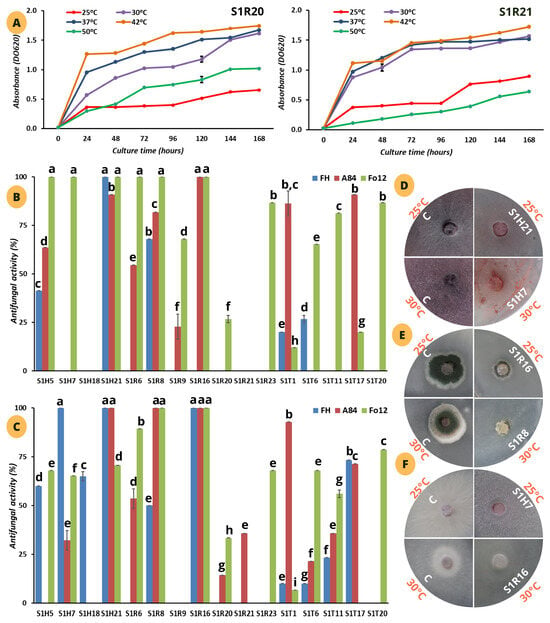
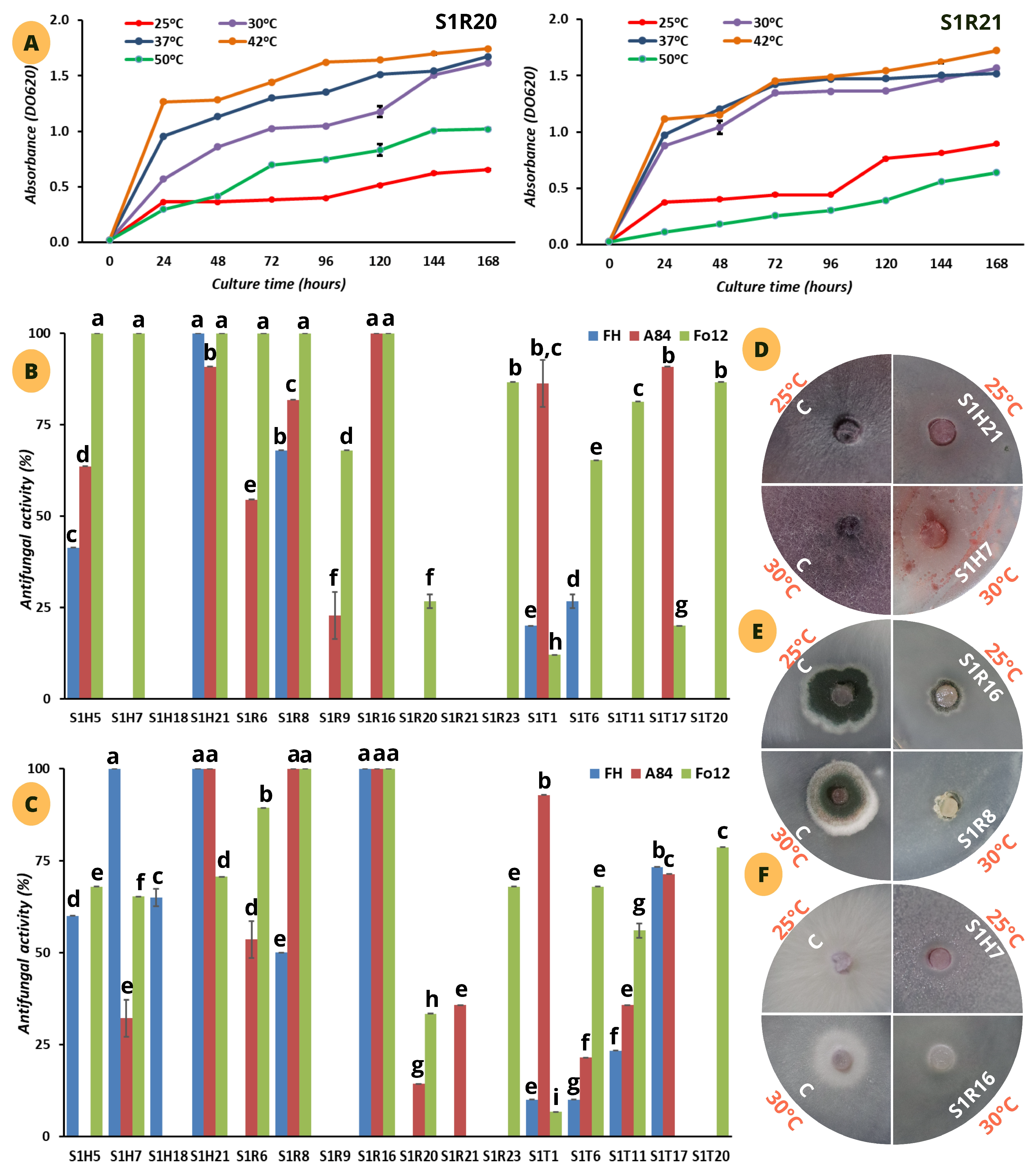
The bacterial growth decreased as temperature increased. Bacterial strains S1R20, S1R21, S1R23, and S1T6 achieved the highest growth at 50 °C, with values ranging from 0.5 to 1.0 (OD620); the bacterial strain S1R20 showed the most outstanding performance (Figure 2A and Table S2).
Figure 2.
Thermotolerance and antifungal potential of endophytic bacteria of Morisonia scabrida. (A) Growth curve (0–168 h) of S1R20 and S1R21 under different temperatures (25, 30, 37, 42, and 45 °C); (B) Antifungal activity at 25 °C; (C) Antifungal activity at 30 °C; (D) Antifungal activity of S1H21 and S1H7 against FH (C is the negative control of FH); (E) Antifungal activity of S1R16 and S1R8 against A84 (C: negative control of A84); (F) Antifungal activity of S1H7 and S1R16 against Fo12 (C: negative control of Fo12). Values represent the mean of three (Growth curve) and two replicates (Antifungal activity) ± SD. The letters represent significant differences among treatments according to Duncan’s test (p < 0.05). FH: Fusarium sp. H; A84: Alternaria sp. ATCC20084; Fo12: Fusarium oxysporum CTLM12.
3.2.2. Inhibition of Filamentous Fungi
The antifungal activity was evaluated at 25 to 37 °C, and it was determined that no bacteria inhibited Neofusicoccum sp. PT-S or Aspergillus niger. On the other hand, Fusarium and Alternaria species were inhibited only at 37 °C, and they were controlled by some bacteria from 25 to 30 °C. In this sense, bacterial strain S1H21 exhibited strong inhibitory activity against Fusarium sp. FH at 25 and 30 °C. Similarly, S1H7 and S1R16 inhibited this fungus at 30 °C. S1R16 inhibited Alternaria sp. ATCC20084 at 25 and 30 °C, while bacterial strains S1H21 and S1R8 inhibited it at 30 °C. Additionally, strains S1R8 and S1R16 completely inhibited F. oxysporum CTLM12; further, this fungus was partially inhibited at 25 °C by bacterial strains S1H5, S1H7, S1R8, and S1R16 (Figure 2B–F).
3.2.3. Production of Degradative Enzymes
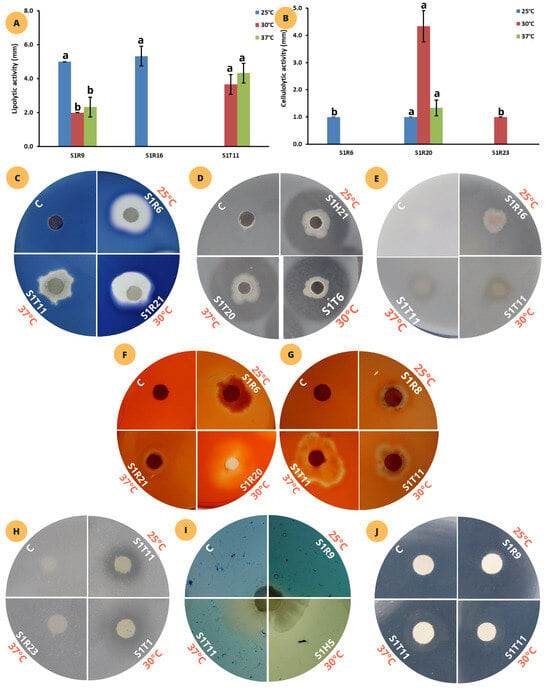
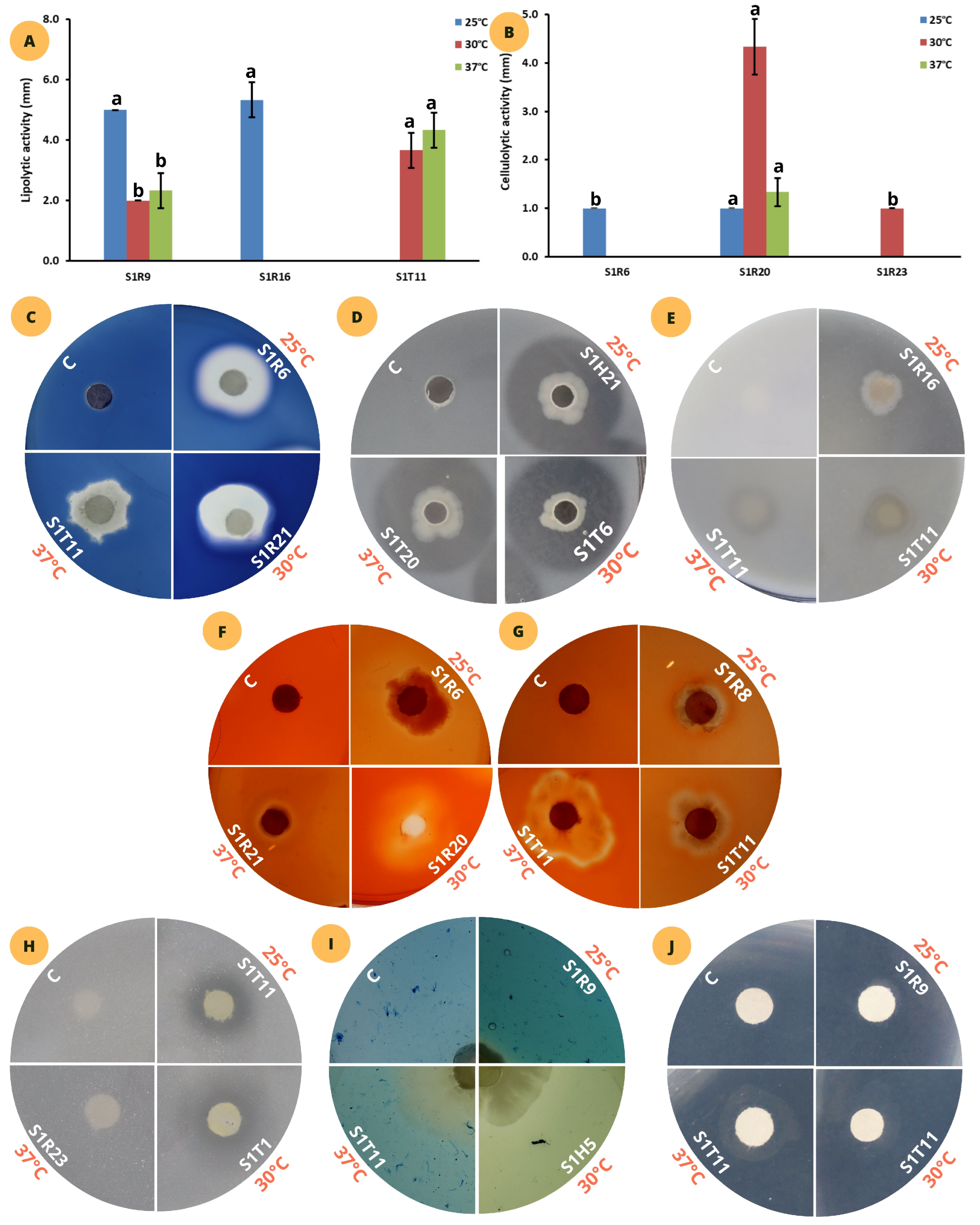
Many bacteria showed the capacity to degrade starch, and strain S1R21 achieved the highest response (7 mm) at 30 °C. All bacterial strains exhibited proteinase activity, where S1T20 showed the highest activity (16 mm) at 37 °C. Pectinase activity was weak, where S1T11 showed better activity (3.7 mm) at 37 °C (Table 2). Similarly, lipid and CMC degradation were observed only in three bacterial strains; S1R16 achieved the highest lipolytic activity (5.3 mm) at 25 °C and S1R20 exhibited the best cellulolytic activity (4.3 mm) at 30 °C (Figure 3A–G).
Table 2.
Hydrolytic activity of endophytic bacteria from Morisonia scabrida at different temperatures.
Figure 3.
Production of extracellular enzymes and plant growth assays by endophytic bacteria isolated from Morisonia scabrida evaluated at 25, 30, and 37 °C. (A) Lipolytic activity. (B) Cellulolytic activity. (C) Amylolytic activity (S1R6, S1R21, and S1T11 with greatest response). (D) Proteolytic activity (S1H21, S1T6, and S1T20 with strongest action). (E) Lipolytic activity (S1R16 and S1T11 with high activity). (F) Cellulolytic activity (S1R6, S1R20, and S1R21 with greatest response). (G) Pectinolytic activity (S1R8 and S1T11 with strongest action). (H) Phosphate solubilization (C: negative control; S1T11 and S1T1 showed strong activity; S1R23 without activity). (I) Siderophore production (C: negative control; S1H5, S1T1, and S1R9 exhibited strong, moderate, and no activity, respectively). (J) Nitrogen fixation (C: negative control; S1R9 showed low activity, and S1T11 showed strong activity). C: negative control. The numbers represent the means of three replicates ± SD. Letters determine the statistical groups according to Duncan’s test (p < 0.05).
3.2.4. Phosphate Solubilization, Siderophore Production, Nitrogen Fixation, and IAA Synthesis
Regarding the phosphate solubilization assay, no strain showed activity at 37 °C. However, a few bacterial strains exhibited activity at 25 and 30 °C, where S1T1 showed the highest activity. Nine endophytic bacterial strains produced siderophores, and S1H5 achieved the best activity at 30 °C, which decreased at 25 and 37 °C. Five bacterial strains showed positive results in the nitrogen-fixing assay, with bacterial strain S1T11 showing better growth at 25, 30, and 37 °C. Similarly, five bacterial strains produced IAA, and S1T11 showed the highest IAA yield at 37 °C (Table 3 and Figure 3H–J). IAA synthesis was directly influenced by increasing temperature.
Table 3.
Endophytic bacteria, isolated from Morisonia scabrida, with the capacity to solubilize phosphates, produce siderophores, fix nitrogen, and produce IAA.
3.2.5. Effect of Endophytic Bacteria Isolated from Morisonia scabrida on Maize and Alfalfa Growth
For maize germination, seeds inoculated with strains S1R9 and S1R21 achieved the highest germination percentages (78 and 76%, respectively) at 37 °C, compared with the control (62%). Furthermore, temperature increased the germination percentage. With respect to alfalfa, the bacterial strains S1R8, S1R21, S1T11, and S1H21 achieved the best germination percentages at 25 and 30 °C compared to their control, but at higher temperatures showed negative effects on their germination percentage (Table 4 and Figure S2).
Table 4.
Germination percentages of endophytic bacteria isolated from Morisonia scabrida inoculated into maize and alfalfa, and incubated at 25, 30, and 37 °C.
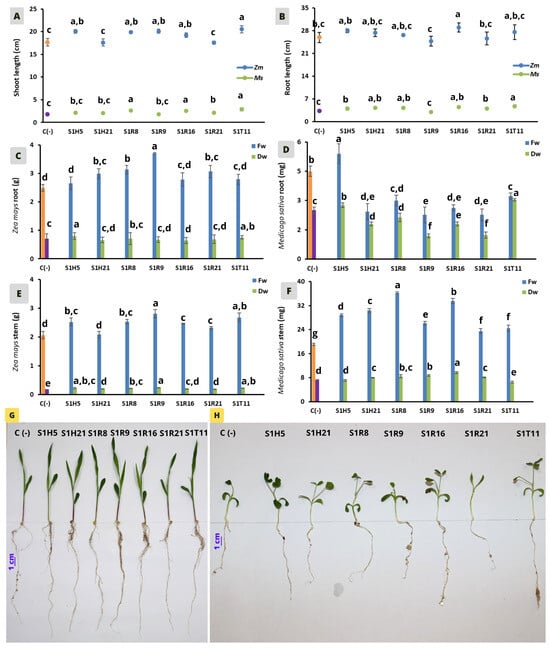
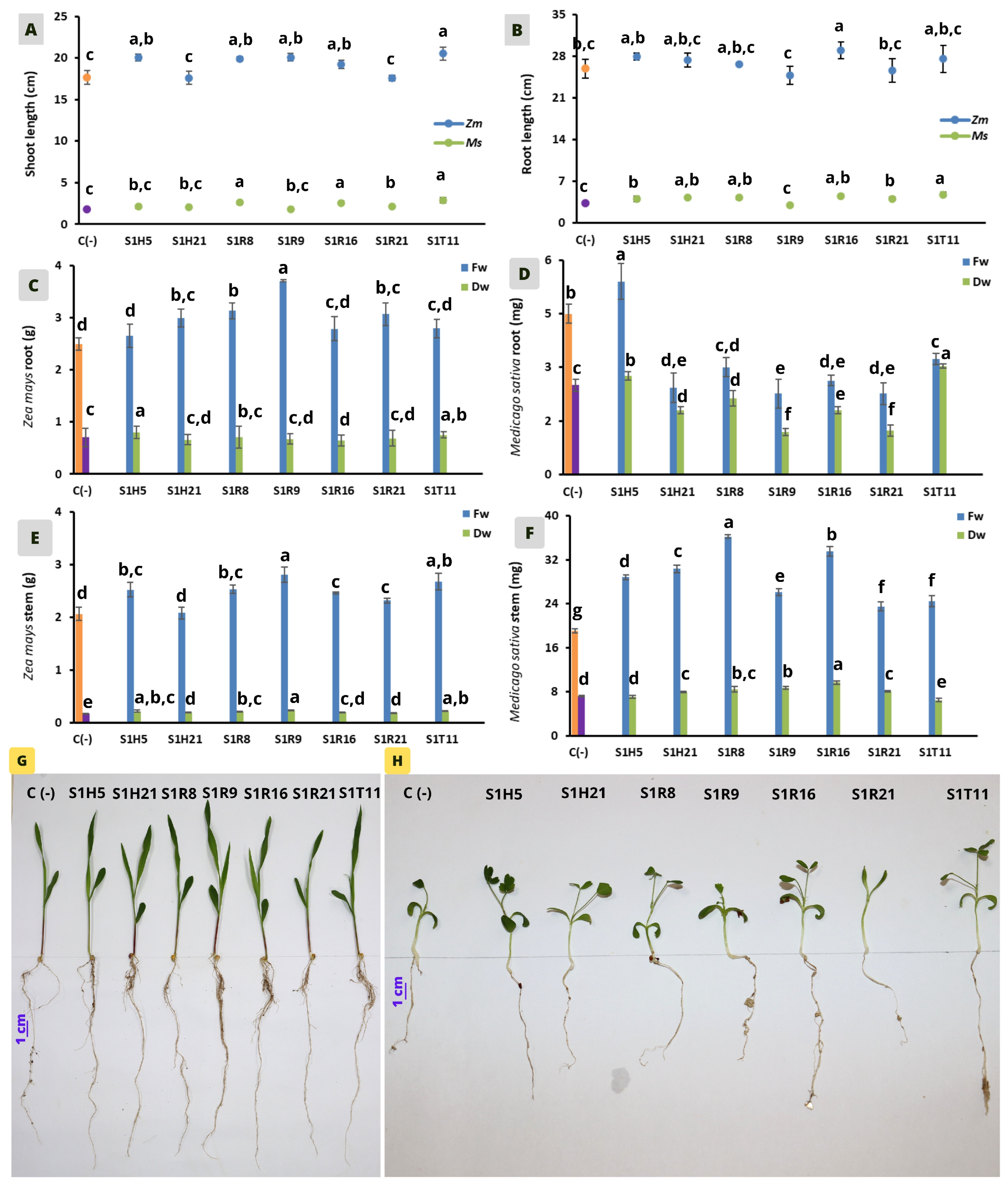
Based on the positive results of previous assays, namely, phosphate solubilization, siderophore production, IAA production, nitrogen fixation, antimicrobial activity, degradative enzyme production, and germination percentage, seven samples inoculated with endophytic bacteria were selected in order to continue evaluating their effects on plant growth and development. It was found that bacterial strains S1H5, S1R8, S1R9, S1R16, and S1T11 induced the highest maize shoot length, with values of 19.26–20.52 cm; while in alfalfa, the bacterial strains S1R8, S1R16, and S1T11 reached 2.6–2.9 cm in shoot length. With respect to root length, bacterial strains S1H5, S1H21, S1R8, S1R16, and S1T11 induced roots 26.7–29 cm in maize, and in alfalfa, bacterial strains S1H21, S1R8, S1R16, and S1T11 achieved roots of 4.2–4.8 cm. Regarding fresh root weight, strain S1R9 recorded the best value, 3.7 g, in maize, while strain S1H5 reached 5.4 mg in alfalfa. For dry root weight, maize inoculated with bacterial strains S1T11 and S1H5 achieved values of 2.67 and 2.81 g, respectively; also, alfalfa inoculated with bacterial strain S1T11 reached 3 mg. Similarly, as for fresh shoot weight, maize inoculated with bacterial strains S1T11 and S1R9 reached values of 2.7 and 2.8 g, respectively; while alfalfa inoculated with bacterial strain S1R8 reached 36.17 mg. Regarding dry shoot weight, maize inoculated with bacterial strains S1H5, S1R9, and S1T11 achieved values of 0.22 and 0.24 g; also, alfalfa inoculated with bacterial strain S1R16 reached 9.67 mg (Figure 4).
Figure 4.
Growth characters of maize and alfalfa inoculated with endophytic bacteria from Morisonia scabrida. (A) Shoot length. (B) Root length (Zm: Zea mays and Ms: Medicago sativa). (C,E) Zea mays. (D,F) Medicago sativa (Fw: fresh weight; Dw: dry weight). (G) Growth of Zea mays at 10 days. (H) Growth of Medicago sativa at 30 days. C (−): negative control without endophytic bacteria. The numbers represent the means of three replicates ± SD. Letters determine the statistical groups according to Duncan’s test (p < 0.05).
3.2.6. Phylogenetic Analysis of Endophytic Bacteria
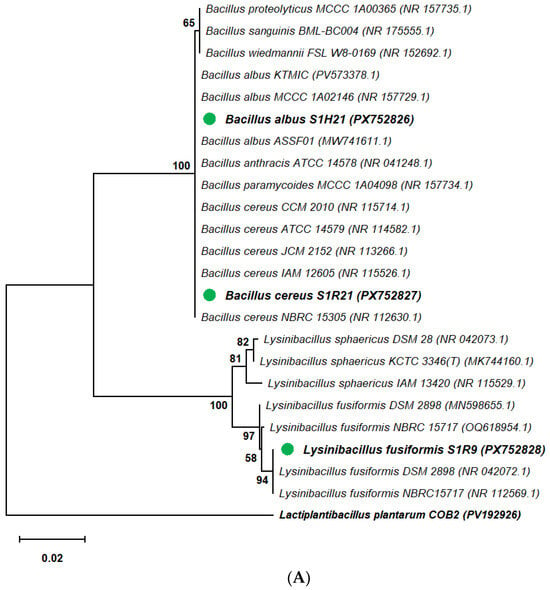
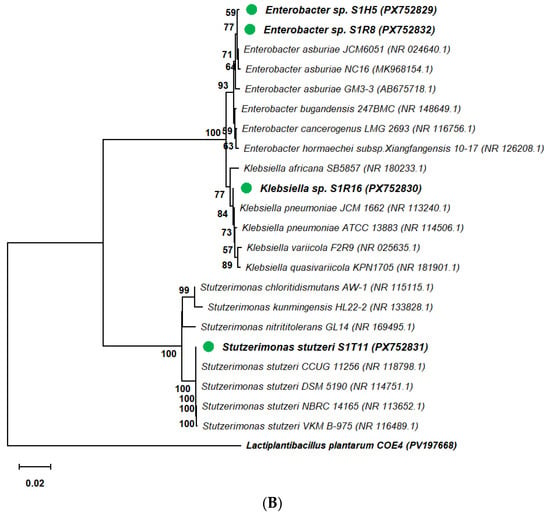
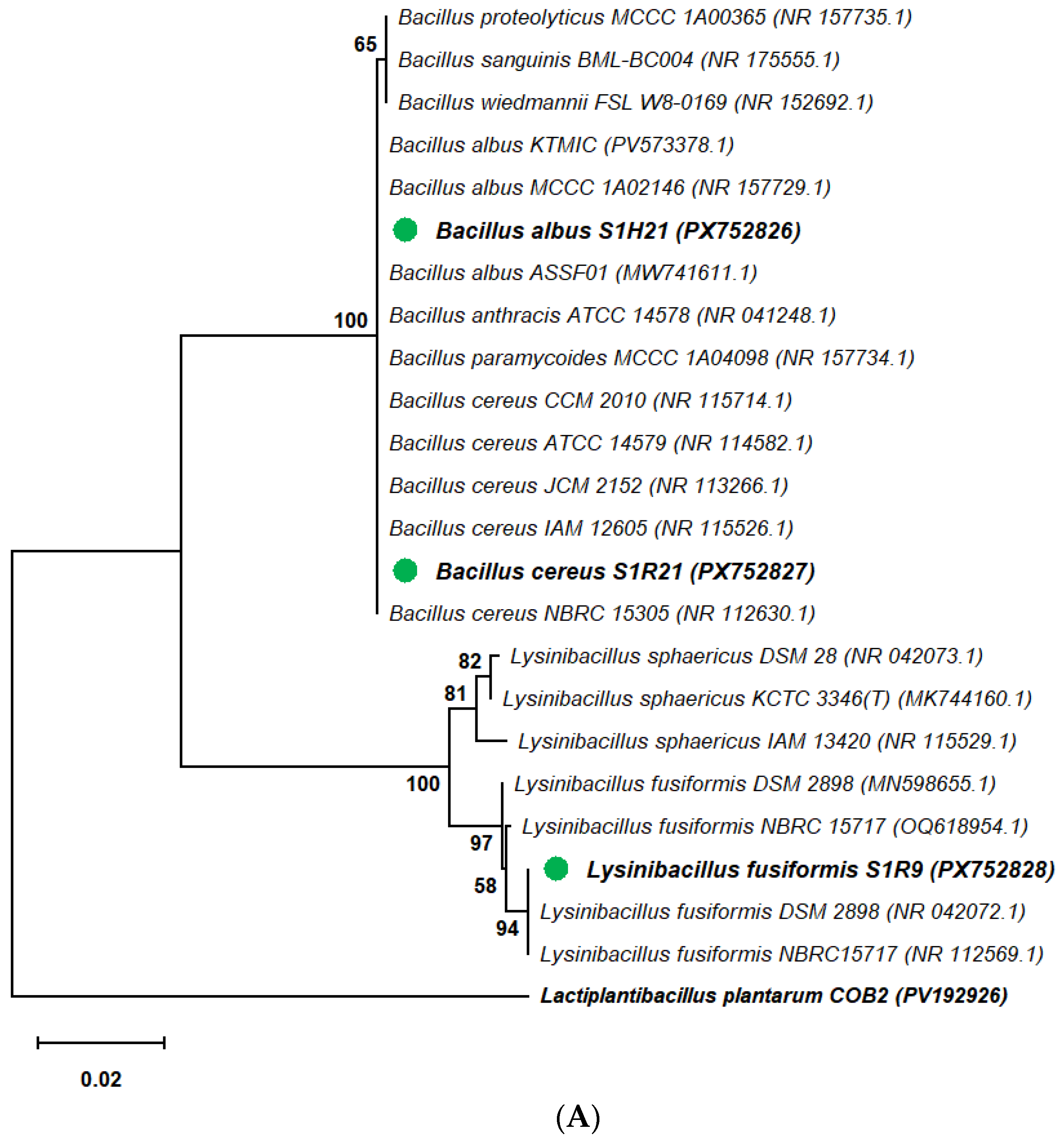
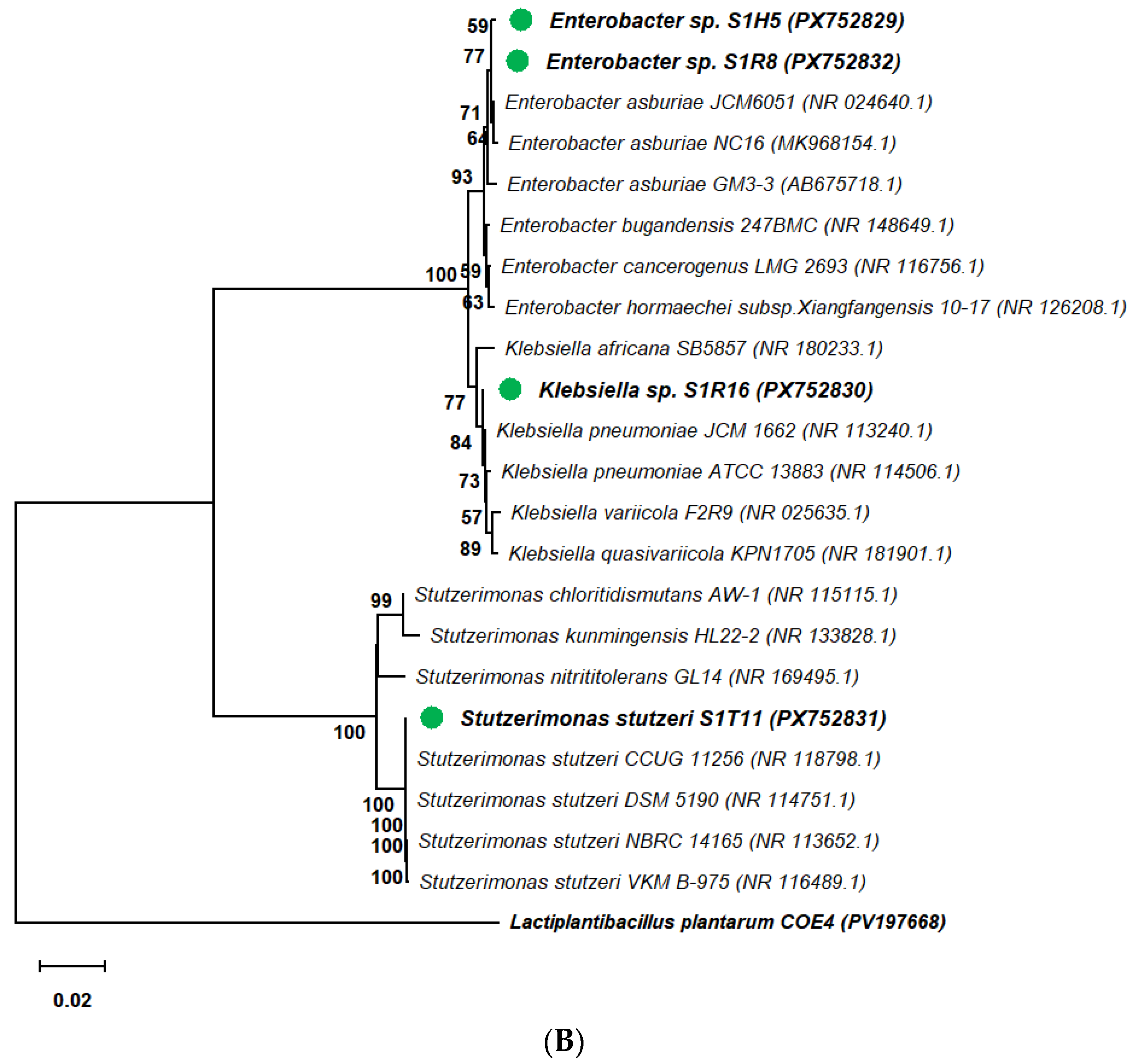
Seven endophytic bacteria were selected; three Gram-positive bacteria were identified as Bacillus albus S1H21, Bacillus cereus S1R21, and Lysinibacillus fusiformis S1R9, and four Gram-negative strains corresponded to Enterobacter sp. (S1H5 and S1R8), Klebsiella sp. S1R16, and Stutzerimonas stutzeri S1T11 (Figure 5 and Table S3).
Figure 5.
Analysis of phylogenetic tree of endophytic bacteria isolated from Morisonia scabrida according to 16S rDNA sequences. (A) Gram-positive group and (B) Gram-negative group. The green circles represent the endophytic bacteria isolated in this study, while the other bacterial strains were obtained from GenBank; in all cases, the accession numbers are presented in parentheses.
4. Discussion
Forest plants have co-evolved with bacterial communities, which are critical for their survival or tolerance to hostile environments [15,32,40]. In this study, 16 endophytic bacterial strains were isolated from Morisonia scabrida, mainly from its roots. The abundance of bacteria in the root zone has also been reported by other authors [28,40,41,42]. This abundance may be attributed to chemoattractant exudates such as flavonoids, sugars, amino acids, organic acids, phenolic compounds, and other nutrients synthesized by host plants, enabling colonization of root tissue as the primary route of direct contact [28,32,43]. Furthermore, cultivable and non-cultivable endophytic communities may vary depending on biotic and abiotic stress, with heat stress also exerting selective pressure on diverse bacterial populations in this specific ecosystem [12,32].
Bacterial cells possess various molecules that allow them to adapt to heat stress [44]. In this context, Bacillus cereus S1R21 showed the ability to grow at 50°C; other strains of this species have exhibited this finding [45,46]. This capacity could be attributed to the production of heat shock proteins, which act as molecular chaperones, preventing protein aggregation due to high temperatures and thus maintaining metabolic activity and cellular processes [45,47]. Furthermore, the rigidity of their cell walls could be maintained by the presence of saturated fatty acids, creating a hydrophobic environment and more electrostatic and hydrophobic interactions, or by the presence of stabilizing bonds such as disulfide bridges in protein complexes [48].
Likewise, endophytes Bacillus albus S1H21 and Klebsiella sp. S1R16 showed antagonistic activity on Fusarium sp., Alternaria sp. and Fusarium oxysporum, whose properties could be due to the synthesis of secondary metabolites that limit the growth and development of phytopathogenic fungi such as the production of extracellular enzymes like amylases, proteases, lipases, cellulases, and pectinases that alter cellular metabolism, interrupt the biosynthesis of fungal DNA, alter the actin filaments of the cytoskeleton or cause mitochondrial electrochemical depolarization [13,15,49,50,51]. Furthermore, these compounds could be agricultural and industrial bioproducts characterized by their pesticidal, bactericidal, fungicidal, herbicidal, and algicidal properties [52]; they also contribute to the decomposition of organic matter [53], which is important for releasing nutrients into agricultural soil and bettering its features.
Phosphorus (P), iron (Fe), and nitrogen (N) are essential macronutrients and micronutrients for plant growth, but their bioavailability in the soil may be in a non-assimilable state [28,41,45]. The endophyte Stutzerimonas stutzeri S1T11 solubilizes phosphates, produces siderophores, and facilitates nitrogen fixation. These properties have been reported for other strains in other studies [54,55,56]. The capacity to solubilize phosphates could reduce dependence on chemical fertilizers and improve phosphorus availability [28,57]. Regarding siderophore production, it could contribute to the formation of iron chelates (Fe2+ or extracellular Fe3+), enhancing iron absorption by the plant and blocking the availability of iron to phytopathogens through competition [28,58]. Then, two roles are possible for siderophores: one gives nutrients to the host, and the other is a biocontrol. Nitrogen fixation allows conversion of nitrogen into NH3 and NH4, increasing its availability in the plant; this process plays vital roles in energy metabolism, protein synthesis, and photosynthetic activity [3,59,60,61].
IAA, a phytohormone, influences root development and its elongation; its production by some bacteria is a key criterion for selecting plant growth-promoting bacteria (PGPB) [15,28]. Stutzerimonas stutzeri S1T11 exhibited high IAA production. Activity was also reported in S. stutzeri WA4 isolated from soil polluted with ashes near the thermal Center of Mettur, Salem, Tamil Nadu, India [54]. This capacity could increase root diameter and length, improving nutrient uptake [58,62]. Furthermore, some reports indicate that high temperatures can reduce plant hormone synthesis [6,45]. In this sense, IAA-producing microorganisms could be useful for agriculture under heat stress.
Endophytic bacteria are used as plant growth promoters, bettering plant development, health, and productivity, constituting a promising option [28,63]. In this study, Stutzerimonas stutzeri S1T11 and Lysinibacillus fusiformis S1R9 improved significantly the germination percentage, root and stem length, and fresh and dry weight of maize and alfalfa, activities that have also been reported by some bacteria in other crops such as Solanum lycopersicum “tomato” [56,57], Spinacia oleracea “palak”, Amaranto rojo “red spinach”, Capsicum annum “green chili”, Solanum melongena “eggplant” [54], Glycine max “soybean” [64,65], and Oryza sativa “rice” [66]. These results could be possible due to the synthesis of IAA, production of siderophores and proteases, phosphate solubilization, nitrogen fixation, sulfur oxidation, cellulose degradation, and other soil nutrients [32,41,54,55,56,67,68,69,70,71,72], which were reported in this study for both the S. stutzeri S1T11 and L. fusiformis strains S1R9, even under thermal stress conditions. In addition, some L. fusiformis strains produce abundant proteases with strong antifungal, insecticidal, and larvicidal activities and turn on plant defense mechanisms by inducing the synthesis of hydrogen cyanide (HCN) [73,74,75,76].
Although S. stutzeri is not yet widely used as a commercial bioinoculant, the plant growth-promoting properties of bacterial strain S1T11 are comparable to those of bacterial genera commonly used in commercial formulations, such as Bacillus, Azospirillum, and Pseudomonas [77]. Commercial inoculants that include these genera have been shown to promote plant growth by controlling phytopathogens, producing IAA, solubilizing phosphates, producing siderophores, and fixing nitrogen [78,79]. Therefore, the performance of S. stutzeri S1T11 observed in this study suggests that this strain could be a promising candidate for the development of biofertilizers. However, further investigation into its biology, genetics, and ecological interactions requires deeper studies to confirm its health safety and guide agronomic and commercial potential use.
5. Conclusions
A total of sixteen endophytic bacteria were isolated from Morisonia scabrida collected from dry forests (Sullana, Piura, northern Peru). Furthermore, these strains exhibit characteristics that promote plant growth by tolerating high temperatures and exhibiting antifungal activity against Fusarium sp. FH, Alternaria sp. ATCC20084, and F. oxysporum CTLM12, as well as synthesizing degradative enzymes such as amylases, proteases, lipases, cellulases, and pectinases, and showing the ability to solubilize phosphates, produce siderophores, fix nitrogen, synthesize IAA, and increase germination rates. Bacillus albus S1H21, Bacillus cereus S1R21, Lysinibacillus fusiformis S1R9, Enterobacter sp. (S1H5 and S1R8), Klebsiella sp. S1R16, and Stutzerimonas stutzeri S1T11 exhibited promising traits as PPG. Then, the bioassay on corn and alfalfa demonstrated that the strain Stutzerimonas stutzeri S1T11 has high potential for use as an inoculant to promote plant growth under heat stress conditions and could be a promising candidate for developing protection strategies for crops of agricultural interest. For this reason, it is necessary to conduct whole-genome studies that allow the determination of which associated mechanisms are involved in the plant growth promotion properties found in this bacterial strain; furthermore, it is important to determine the presence or absence of virulence genes to evaluate the potential risk and possible solutions in applying safe and eco-friendly biotechnological methodologies, such as genetic editing, use of metabolome, etc.
Supplementary Materials
The following supporting information can be downloaded at: https://www.mdpi.com/article/10.3390/applmicrobiol6080094/s1, Figure S1: Taxonomic identification of Morisonia scabrida in the Herbarium Truxillense, Universidad Nacional de Trujillo (UNT), Trujillo, Perú; Figure S2: Germination percentage of endophytic bacteria isolated from Morisonia scabrida evaluated at 25, 30, and 37 °C. A. Zea mays (S1T20, S1R8, and S1R21 showed better response) and B. Medicago sativa (S1R8, S1H21, and S1R9 showed better response). C (−): Growth control without bacteria; Table S1: Information on fungal strains; Table S2: Thermotolerance of endophytic bacteria of Morisonia scabrida; Table S3: Closely related reference sequences of endophytic bacteria from Morisonia scabrida obtained from GenBank.
Author Contributions
E.J.V.-P.: Supervision, Investigation, Validation, Writing—original draft, Funding acquisition. M.M.R.-C.: Supervision, Writing—review. M.B.-P.: Supervision, Methodology, Formal analysis. C.T.-A.: Writing—review and editing, Data curation, Formal analysis, Validation. P.O.-G.: Writing—review and editing, Data curation, Formal analysis, Validation. All authors have read and agreed to the published version of the manuscript.
Funding
This study was conducted without financial support from any funding entity in the public or private sectors.
Institutional Review Board Statement
The authors declare that this research was conducted in accordance with all applicable ethical and biosecurity standards.
Informed Consent Statement
The collection of Morisonia scabrida samples from the dry forests of Sullana (Piura, Peru) was authorized by the SERFOR (National Forest and Wildlife Service) through RD No. D000039-2025-MIDAGRI-SERFOR-DGGSPFFS-DGSPF of 19 February 2025.
Data Availability Statement
The original contributions resulting from this research are available in the published article or in Supplementary Material. For further information, interested parties may contact the corresponding authors.
Acknowledgments
The authors gratefully acknowledge the National University of Frontera for providing access to its microbial biotechnology research laboratory for the development of the experimental trials. Furthermore, this thesis is part of the Unidad de Posgrado in Ciencias Biologicas, entitled “Aislamiento de bacterias termotolerantes asociadas a Colicodendron scabridum (Kunth) Seem. como promotores de crecimiento vegetal” at the National University of Trujillo, Trujillo, Peru.
Conflicts of Interest
The authors declare no conflicts of interest.
References
- Arpitha, P.S.; Earanna, N.; Shivashankara, K.S.; Laxman, R.H. Fungal Endophytes of Himalayan Cold Desert Induces Heat Tolerance in Rice (Oryza sativa L.). Ecol. Environ. Conserv. 2022, 28, 1726–1732. [Google Scholar] [CrossRef] [Scilit]
- Dlamini, W.N.; Yu, K.P.; Chen, W.C.; Shen, F.T. Exploring the Interaction Dynamics of Growth-Promoting Bacterial Endophytes and Fertilizer on Oryza sativa L. Under Heat Stress. Rice 2025, 18, 33. [Google Scholar] [CrossRef] [Scilit] [PubMed]
- Shaffique, S.; Khan, M.A.; Wani, S.H.; Pande, A.; Imran, M.; Kang, S.M.; Rahim, W.; Khan, S.A.; Bhatta, D.; Kwon, E.H.; et al. A Review on the Role of Endophytes and Plant Growth Promoting Rhizobacteria in Mitigating Heat Stress in Plants. Microorganisms 2022, 10, 1286. [Google Scholar] [CrossRef] [Scilit] [PubMed]
- Hwang, H.H.; Chien, P.R.; Huang, F.C.; Yeh, P.H.; Hung, S.H.W.; Deng, W.L.; Huang, C.C. A Plant Endophytic Bacterium Priestia megaterium StrainBP-R2 Isolated from the Halophyte Bolboschoenus planiculmis Enhances Plant Growth under Salt and Drought Stresses. Microorganisms 2022, 10, 2047. [Google Scholar] [CrossRef] [Scilit] [PubMed]
- Krishnan, P.; Ramakrishnan, B.; Reddy, K.R.; Reddy, V.R. Chapter Three—High-Temperature Effects on Rice Growth, Yield, and Grain Quality. In Advances in Agronomy; Sparks, D.L., Ed.; Academic Press: Cambridge, MA, USA, 2011; Volume 111, pp. 87–206. [Google Scholar]
- Chen, X.J.; Yin, Y.Q.; Zhu, X.M.; Xia, X.; Han, J.J. High Ambient Temperature Regulated the Plant Systemic Response to the Beneficial Endophytic Fungus Serendipita Indica. Front. Plant Sci. 2022, 13, 844572. [Google Scholar] [CrossRef] [Scilit] [PubMed]
- Dlamini, W.N.; Lai, W.A.; Chen, W.C.; Shen, F.T. Unveiling the Thermotolerance and Growth-Promoting Attributes of Endophytic Bacteria Derived from Oryza sativa: Implications for Sustainable Agriculture. Microorganisms 2025, 13, 766. [Google Scholar] [CrossRef] [Scilit] [PubMed]
- Hu, J.; Zhao, X.; Gu, L.; Liu, P.; Zhao, B.; Zhang, J.; Ren, B. The Effects of High Temperature, Drought, and Their Combined Stresses on the Photosynthesis and Senescence of Summer Maize. Agric. Water Manag. 2023, 289, 108525. [Google Scholar] [CrossRef] [Scilit]
- Zhou, J.; Tang, X.; Li, J.; Dang, S.; Ma, H.; Zhang, Y. Comparative Transcriptomic and Metabolomic Analyses Provide Insights into the Responses to High Temperature Stress in Alfalfa (Medicago sativa L.). BMC Plant Biol. 2024, 24, 776. [Google Scholar] [CrossRef] [Scilit] [PubMed]
- Kamran, M.; Imran, Q.M.; Ahmed, M.B.; Falak, N.; Khatoon, A.; Yun, B.W. Endophyte-Mediated Stress Tolerance in Plants: A Sustainable Strategy to Enhance Resilience and Assist Crop Improvement. Cells 2022, 11, 3292. [Google Scholar] [CrossRef] [Scilit] [PubMed]
- Munakata, Y.; Spina, R.; Slezack-Deschaumes, S.; Genestier, J.; Hehn, A.; Laurain-Mattar, D. Screening of Endophytic Bacteria of Leucojum aestivum ‘Gravety Giant’ as a Potential Source of Alkaloids and as Antagonist to Some Plant Fungal Pathogens. Microorganisms 2022, 10, 2089. [Google Scholar] [CrossRef] [Scilit] [PubMed]
- Aswini, K.; Suman, A.; Sharma, P.; Singh, P.K.; Gond, S.; Pathak, D. Seed Endophytic Bacterial Profiling from Wheat Varieties of Contrasting Heat Sensitivity. Front. Plant Sci. 2023, 14, 1101818. [Google Scholar] [CrossRef] [Scilit] [PubMed]
- Wang, L.; Xi, N.; Lang, D.; Zhou, L.; Zhang, Y.; Zhang, X. Potential Biocontrol and Plant Growth Promotion of an Endophytic Bacteria Isolated from Glycyrrhiza uralensis Seeds. Egypt. J. Biol. Pest Control 2022, 32, 55. [Google Scholar] [CrossRef] [Scilit]
- Wan, Y.; Xiao, Q.; Xiao, X.; Huang, Y.; Liu, S.; Feng, W.; Liu, T.; Ren, Z.; Ren, W.; Luo, X.; et al. Response of Tomatoes to Inactivated Endophyte LSE01 under Combined Stress of High-Temperature and Drought. Plant Physiol. Biochem. 2024, 207, 108321. [Google Scholar] [CrossRef] [Scilit] [PubMed]
- Biswas, S.; Philip, I.; Jayaram, S.; Sarojini, S. Endophytic Bacteria Klebsiella spp. and Bacillus spp. from Alternanthera philoxeroides in Madiwala Lake Exhibit Additive Plant Growth-Promoting and Biocontrol Activities. J. Genet. Eng. Biotechnol. 2023, 21, 153. [Google Scholar] [CrossRef] [Scilit] [PubMed]
- Ganie, S.A.; Bhat, J.A.; Devoto, A. The Influence of Endophytes on Rice Fitness under Environmental Stresses. Plant Mol. Biol. 2022, 109, 447–467. [Google Scholar] [CrossRef] [Scilit] [PubMed]
- Espinoza, C.; Herrera-García, C.D.; Espinosa-García, V.; Couttolenc, A.; Andrade-Torres, A.; Padrón, J.M.; Trigos, Á. The Antiproliferative Potential of Fungi Associated with Coral and Algae Collected from a Veracruz Reef System, Gulf of Mexico. Lat. Am. J. Aquat. Res. 2021, 49, 843–849. [Google Scholar] [CrossRef] [Scilit]
- Matsumoto, H.; Fan, X.; Wang, Y.; Kusstatscher, P.; Duan, J.; Wu, S.; Chen, S.; Qiao, K.; Wang, Y.; Ma, B.; et al. Bacterial Seed Endophyte Shapes Disease Resistance in Rice. Nat. Plants 2021, 7, 60–72. [Google Scholar] [CrossRef] [Scilit] [PubMed]
- Hamaoka, K.; Aoki, Y.; Takahashi, S.; Enoki, S.; Yamamoto, K.; Tanaka, K.; Suzuki, S. Diversity of Endophytic Bacterial Microbiota in Grapevine Shoot Xylems Varies Depending on Wine Grape-Growing Region, Cultivar, and Shoot Growth Stage. Sci. Rep. 2022, 12, 15772. [Google Scholar] [CrossRef] [Scilit] [PubMed]
- Terhonen, E.; Blumenstein, K.; Kovalchuk, A.; Asiegbu, F.O. Forest Tree Microbiomes and Associated Fungal Endophytes: Functional Roles and Impact on Forest Health. Forests 2019, 10, 42. [Google Scholar] [CrossRef] [Scilit]
- Palacios-Ramos, S.; Montenegro, R.; Appleton, R.D.; Sánchez, R.I.; Vallejos, D.J.; Vallejos, J.; Owen, M.A.; Van Horn, R.C. La Fenología de Colicodendron scabridum, Sapote, en un Bosque Seco del Norte del Perú—The Phenology of Colicodendron scabridum, Sapote, in a Dry Forest of Northern Peru. Caldasia 2022, 44, 469–483. [Google Scholar] [CrossRef] [Scilit]
- Mostacero, J.; De La Cruz, J.; Taramona, L. Características Germinativas de Colicodendron scabridum (Kunth) Seem.: Recurso Promisorio para la Reforestación y Alimentación en el Perú. Rev. Investig. Univ. Cordon Bleu 2018, 5, 117–131. [Google Scholar] [CrossRef] [Scilit]
- Ravelo, J.M.; Culquicondor, W.E.; Seminario, V.A.; León, J.M.; de la Cruz Castillo, A.J.; Zavala, J.L.; Velasquez, C.L. Structure of the Dry Forest Adjacent to the Mangroves of San Pedro de Vice, Sechura-Piura. Rev. Investig. Cient. REBIOL 2023, 43, 1–13. [Google Scholar] [CrossRef] [Scilit]
- Rajamani, T.; Govinda Rajulu, M.B.; Murali, T.S.; Suryanarayanan, T.S. Unusual Thermal Resistance of Spores of Mesophilic Fungi. Asian J. Mycol. 2021, 4, 1–9. [Google Scholar] [CrossRef] [Scilit]
- Lin, W.; Liu, L.; Liang, J.; Tang, X.; Shi, J.; Zhang, L.; Wu, P.; Lan, S.; Wang, S.; Zhou, Y.; et al. Changes of Endophytic Microbial Community in Rhododendron simsii Roots under Heat Stress and Its Correlation with Leaf Physiological Indicators. Front. Microbiol. 2022, 13, 1006686. [Google Scholar] [CrossRef] [Scilit] [PubMed]
- Liu, L.; Lin, W.; Zhang, L.; Tang, X.; Liu, Y.; Lan, S.; Wang, S.; Zhou, Y.; Chen, X.; Wang, L.; et al. Changes and Correlation Between Physiological Characteristics of Rhododendron simsii and Soil Microbial Communities Under Heat Stress. Front. Plant Sci. 2022, 13, 950947. [Google Scholar] [CrossRef] [Scilit] [PubMed]
- Vega-portalatino, E.J.; Rosales-Cuentas, M.M.; Tamariz-Angeles, C.; Olivera-Gonzales, P.; Espinoza-Espinoza, L.A.; Moreno-Quispe, L.A.; Portalatino-Zevallos, J.C. Diversity of Endophytic Bacteria with Antimicrobial Potential Isolated from Marine Macroalgae from Yacila and Cangrejos Beaches, Piura-Peru. Arch. Microbiol. 2024, 206, 372. [Google Scholar] [CrossRef] [Scilit] [PubMed]
- Ulloa-Muñoz, R.; Olivera-Gonzales, P.; Castañeda-Barreto, A.; Villena, G.K.; Tamariz-Angeles, C. Diversity of Endophytic Plant-Growth Microorganisms from Gentianella weberbaueri and Valeriana Pycnantha, Highland Peruvian Medicinal Plants. Microbiol. Res. 2020, 233, 126413. [Google Scholar] [CrossRef] [Scilit] [PubMed]
- Tamariz-Angeles, C.; Olivera-Gonzales, P.; Santill, M. Diverse Biological Activities and Secondary Metabolites Profile of Penicillium brevicompactum HE19ct Isolated from the High-Andean Medicinal Plant Perezia coerulescens. Fungal Biol. 2023, 127, 1439–1450. [Google Scholar] [CrossRef] [Scilit] [PubMed]
- Muñoz-Silva, L.; Olivera-Gonzales, P.; Santillán-Torres, M.; Tamariz-Angeles, C. Microorganismos Tolerantes a Metales Pesados del Pasivo Minero Santa Rosa, Jangas (Perú). Rev. Peru. Biol. 2019, 26, 109–118. [Google Scholar] [CrossRef] [Scilit]
- Verma, S.K.; Kingsley, K.; Irizarry, I.; Bergen, M.; Kharwar, R.N.; White, J.F., Jr. Seed-Vectored Endophytic Bacteria Modulate Development of Rice Seedlings. J. Appl. Microbiol. 2017, 122, 1680–1691. [Google Scholar] [CrossRef] [Scilit] [PubMed]
- Pal, G.; Kumar, K.; Verma, A.; Verma, S.K. Seed Inhabiting Bacterial Endophytes of Maize Promote Seedling Establishment and Provide Protection against Fungal Disease. Microbiol. Res. 2022, 255, 126926. [Google Scholar] [CrossRef] [Scilit] [PubMed]
- Barzegar, H.; Alizadeh Behbahani, B.; Falah, F. Safety, Probiotic Properties, Antimicrobial Activity, and Technological Performance of Lactobacillus Strains Isolated from Iranian Raw Milk Cheeses. Food Sci. Nutr. 2021, 9, 4094–4107. [Google Scholar] [CrossRef] [Scilit] [PubMed]
- Tamariz-Angeles, C. Isolation and Identification of Cellulolytic and Xylanolytic Bacteria from Huancarhuaz Hot Spring, Peru. Annu. Res. Rev. Biol. 2014, 4, 2920–2930. [Google Scholar] [CrossRef] [Scilit]
- Kumar, P.; Verma, A.; Sundharam, S.S.; Ojha, A.K.; Krishnamurthi, S. Exploring Diversity and Polymer Degrading Potential of Epiphytic Bacteria Isolated from Marine Macroalgae. Microorganisms 2022, 10, 2513. [Google Scholar] [CrossRef] [Scilit] [PubMed]
- Montañez, A.; Blanco, A.R.; Barlocco, C.; Beracochea, M.; Sicardi, M. Characterization of Cultivable Putative Endophytic Plant Growth Promoting Bacteria Associated with Maize Cultivars (Zea mays L.) and Their Inoculation Effects In Vitro. Appl. Soil Ecol. 2012, 58, 21–28. [Google Scholar] [CrossRef] [Scilit]
- Schwyn, B.; Neilands, J.B. Universal Chemical Assay for the Detection and Determination of Siderophores. Anal. Biochem. 1987, 160, 47–56. [Google Scholar] [CrossRef] [Scilit] [PubMed]
- Thi, Q.V.C.; Minh, N.L.K.; Thuy, N.P.; Tat, T.Q.; Tran, T. Characterization of Endophytic Bacteria Isolated from Wild Rice Plants in the Mekong Delta, Vietnam. Biodiversitas 2024, 25, 2576–2585. [Google Scholar] [CrossRef] [Scilit]
- Tsipinana, S.; Obi, L.; Amoo, S.; Adeleke, R. Plant Growth-Promoting Potential of Bacterial Endophytes Isolated from Lessertia frutescens. S. Afr. J. Bot. 2024, 174, 768–778. [Google Scholar] [CrossRef] [Scilit]
- Marchut-Mikołajczyk, O.; Chlebicz, M.; Kawecka, M.; Michalak, A.; Prucnal, F.; Nielipinski, M.; Filipek, J.; Jankowska, M.; Perek, Z.; Drożdżyński, P.; et al. Endophytic Bacteria Isolated from Urtica dioica L.-Preliminary Screening for Enzyme and Polyphenols Production. Microb. Cell Fact. 2023, 22, 169. [Google Scholar] [CrossRef] [Scilit] [PubMed]
- Kumar, V.; Jain, L.; Jain, S.K.; Chaturvedi, S.; Kaushal, P. South African Journal of Botany Bacterial Endophytes of Rice (Oryza sativa L.) and Their Potential for Plant Growth Promotion and Antagonistic Activities. S. Afr. J. Bot. 2020, 134, 50–63. [Google Scholar] [CrossRef] [Scilit]
- Martínez-Hidalgo, P.; Flores-Félix, D.; Sánchez-Juanes, F.; Rivas, R.; Mateos, P.F.; Santa, R.I.; Peix, Á.; Martínez-Molina, E.; Igual, J.M.; Velázquez, E. Identification of Canola Roots Endophytic Bacteria and Analysis of Their Potential as Biofertilizers for Canola Crops with Special Emphasis on Sporulating Bacteria. Agronomy 2021, 11, 1796. [Google Scholar] [CrossRef] [Scilit]
- Khare, E.; Mishra, J.; Arora, N.K. Multifaceted Interactions between Endophytes and Plant: Developments and Prospects. Front. Microbiol. 2018, 9, 2732. [Google Scholar] [CrossRef] [Scilit] [PubMed]
- Sato, Y.; Okano, K.; Honda, K. Effects of Small Heat Shock Proteins from Thermotolerant Bacteria on the Stress Resistance of Escherichia coli to Temperature, PH, and Hyperosmolarity. Extremophiles 2024, 28, 12. [Google Scholar] [CrossRef] [Scilit] [PubMed]
- Ahmad, M.; Imtiaz, M.; Nawaz, M.S.; Mubeen, F.; Sarwar, Y.; Hayat, M.; Asif, M.; Naqvi, R.Z.; Ahmad, M.; Imran, A. Thermotolerant PGPR Consortium B3P Modulates Physio—Biochemical and Molecular Machinery for Enhanced Heat Tolerance in Maize during Early Vegetative Growth. Ann. Microbiol. 2023, 73, 34. [Google Scholar] [CrossRef] [Scilit]
- Mukhtar, T.; Shafiq-ur-Rehman; Sultan, T.; Munis, F.H.; Chaudhary, H.J. Induction of Heat Tolerance in Tomato Cultivar with Heat Tolerant Bacteria under Field Condition. Asian J. Agric. Biol. 2022, 2022, 202103112. [Google Scholar] [CrossRef] [Scilit]
- Whitley, D.; Goldberg, S.P.; Jordan, W.D. Heat Shock Proteins: A Review of the Molecular Chaperones. J. Vasc. Surg. 1999, 29, 748–751. [Google Scholar] [CrossRef] [Scilit] [PubMed]
- Mahajan, G.B.; Balachandran, L. Sources of Antibiotics: Hot Springs. Biochem. Pharmacol. 2017, 134, 35–41. [Google Scholar] [CrossRef] [Scilit] [PubMed]
- Jabborova, D.P.; Narimanov, A.A.; Enakiev, Y.I.; Davranov, K.D. Effect of Bacillus subtilis 1 Strain on the Growth and Development of Wheat (Triticum aestivum L.) under Saline Condition. Bulg. J. Agric. Sci. 2020, 26, 744–747. [Google Scholar]
- Egamberdieva, D.; Jabborova, D.; Babich, S.; Xalmirzaeva, S.; Salakhiddinov, K.; Madazimov, M. Antimicrobial Activities of Herbal Plants from Uzbekistan against Human Pathogenic Microbes. Environ. Sustain. 2021, 4, 87–94. [Google Scholar] [CrossRef] [Scilit]
- Vega-Portalatino, E.J.; Rosales-Cuentas, M.M.; Valdiviezo-Marcelo, J.; Arana-Torres, N.M.; Espinoza-Espinoza, L.A.; Moreno-Quispe, L.A. Antimicrobial and Production of Hydrolytic Enzymes Potentials of Bacteria and Fungi Associated with Macroalgae and Their Applications: A Review. Front. Mar. Sci. 2023, 10, 1174569. [Google Scholar] [CrossRef] [Scilit]
- Bhutani, N.; Maheshwari, R.; Kumar, P.; Dahiya, R.; Suneja, P. Bioprospecting for Extracellular Enzymes from Endophytic Bacteria Isolated from Vigna radiata and Cajanus cajan. J. Appl. Biol. Biotechnol. 2021, 9, 26–34. [Google Scholar] [CrossRef] [Scilit]
- Gonzalez, J.M.; Santana, M.M.; Gomez, E.J.; Delgado, J.A. Soil Thermophiles and Their Extracellular Enzymes: A Set of Capabilities Able to Provide Significant Services and Risks. Microorganisms 2023, 11, 1650. [Google Scholar] [CrossRef] [Scilit] [PubMed]
- Saravanan, K.; Vellingiri, K.; Kathirvel, P. Screening of Multi-Metal Tolerant Plant Growth Promoting Bacteria (PGPB) Stutzerimonas stutzeri WA4 and Its Assistance on Phytoextraction of Heavy Metals (Cu, Ag and Pb). Int. J. Phytoremediation 2025, 27, 505–525. [Google Scholar] [CrossRef] [Scilit] [PubMed]
- Li, L.; Xue, B.; Yan, S.; Shen, H.; Yang, Y.; Fan, Y.; Zhang, R.; Shen, W.; Gao, N. Stutzerimonas stutzeri Culture Enhances Microbial Community Structure and Tomato Seedling Growth in Saline Soil. J. Appl. Microbiol. 2025, 136, lxaf026. [Google Scholar] [CrossRef] [Scilit] [PubMed]
- Gao, N.; Zhang, H.; Hu, C.; Li, Q.; Li, L.; Lei, P.; Xu, H.; Shen, W.; Gao, N.; Zhang, H.; et al. Inoculation with Stutzerimonas stutzeri Strains Decreases N2O Emissions from Vegetable Soil by Altering Microbial Community Composition and Diversity. Microbiol. Spectr. 2024, 12, e0018624. [Google Scholar] [CrossRef] [Scilit] [PubMed]
- Farrar, K.; Bryant, D.; Cope-Selby, N. Understanding and Engineering Beneficial Plant-Microbe Interactions: Plant Growth Promotion in Energy Crops. Plant Biotechnol. J. 2014, 12, 1193–1206. [Google Scholar] [CrossRef] [Scilit] [PubMed]
- Shah, D.; Khan, M.S.; Aziz, S.; Ali, H.; Pecoraro, L. Molecular and Biochemical Characterization, Antimicrobial Activity, Stress Tolerance, and Plant Growth-Promoting Effect of Endophytic Bacteria Isolated from Wheat Varieties. Microorganisms 2022, 10, 21. [Google Scholar] [CrossRef] [Scilit] [PubMed]
- Fogaça de Freitas, V.; Cerezini, P.; Hungria, M.; Nogueira, M.A. Strategies to Deal with Drought-Stress in Biological Nitrogen Fixation in Soybean. Appl. Soil Ecol. 2022, 172, 104352. [Google Scholar] [CrossRef] [Scilit]
- Moynihan, M.A.; Goodkin, N.F.; Morgan, K.M.; Kho, P.Y.Y.; Lopes dos Santos, A.; Lauro, F.M.; Baker, D.M.; Martin, P. Coral-Associated Nitrogen Fixation Rates and Diazotrophic Diversity on a Nutrient-Replete Equatorial Reef. ISME J. 2022, 16, 233–246. [Google Scholar] [CrossRef] [Scilit] [PubMed]
- Masood, S.; Zhao, X.Q.; Shen, R.F. Bacillus Pumilus Promotes the Growth and Nitrogen Uptake of Tomato Plants under Nitrogen Fertilization. Sci. Hortic. 2020, 272, 109581. [Google Scholar] [CrossRef] [Scilit]
- Pavlova, A.S.; Leontieva, M.R.; Smirnova, T.A.; Kolomeitseva, G.L.; Netrusov, A.I.; Tsavkelova, E.A. Colonization Strategy of the Endophytic Plant Growth-promoting Strains of Pseudomonas fluorescens and Klebsiella oxytoca on the Seeds, Seedlings and Roots of the Epiphytic Orchid, Dendrobium nobile Lindl. J. Appl. Microbiol. 2017, 123, 217–232. [Google Scholar] [CrossRef] [Scilit] [PubMed]
- Arcela-Castro, L.M.; Morales-Medina, D.B.; Rosales-Cuentas, M.M.; Salazar-Sandoval, C.A.; Cornelio-Santiago, H.P.; Portalatino-Zevallos, J.C.; Vega-Portalatino, E.J. Marine Macroalgae-Associated Fungi from Yacila and Los Cangrejos Beaches (Northern Peru) and Previously Selected Marine Bacteria Evaluated as Plant Growth Promoters in Maize under Saline Stress. Front. Fungal Biol. 2026, 6, 1726850. [Google Scholar] [CrossRef] [Scilit] [PubMed]
- Vitorino, L.C.; Jose, E.; Oliveira, M.S.; Silva, I.D.O.; Santos, S.; Andre, M. Effect of a Bacillus velezensis and Lysinibacillus fusiformis—Based Biofertilizer on Phosphorus Acquisition and Grain Yield of Soybean. Front. Plant Sci. 2024, 15, 1433828. [Google Scholar] [CrossRef] [Scilit] [PubMed]
- Imran, M.; Mpovo, C.L.; Khan, M.A.; Shaffique, S.; Ninson, D.; Bilal, S.; Khan, M.; Kwon, E.; Kang, S.; Yun, B.; et al. Synergistic Effect of Melatonin and Lysinibacillus fusiformis L. (PLT16) to Mitigate Drought Stress via Regulation of Hormonal, Antioxidants System, and Physio-Molecular Responses in Soybean Plants. Int. J. Mol. Sci. 2023, 24, 8489. [Google Scholar] [CrossRef] [Scilit] [PubMed]
- Malarvizhi, P.; Chanthini, K.M.-P.; Ramasubramanian, R.; Deva-Andrews, A.; Pavithra, G.-S.; Murugan, P.; Han, Y.S.; Vasantha-Srinivasan, P.; Proćków, J.; Al Kubaisi, N.; et al. Lysinibacillus fusiformis LF-E2 as a Plant Growth-Promoting Bioinoculant for Improved Rice Growth. Biocatal. Agric. Biotechnol. 2025, 68, 103683. [Google Scholar] [CrossRef] [Scilit]
- Raimi, A.; Adeleke, R. 16S RRNA Gene-based Identification and Plant Growth-promoting Potential of Cultivable Endophytic Bacteria. Agron. J. 2022, 115, 1447–1462. [Google Scholar] [CrossRef] [Scilit]
- Yue, H.; Zhao, L.; Yang, D.; Zhang, M.; Wu, J.; Zhao, Z.; Xing, X.; Zhang, L.; Qin, Y.; Guo, F.; et al. Comparative Analysis of the Endophytic Bacterial Diversity of Populus euphratica Oliv. in Environments of Different Salinity Intensities. Microbiol. Spectr. 2022, 10, e0050022. [Google Scholar] [CrossRef] [Scilit] [PubMed]
- Alavi, S.M.; Rahimian, H.; Tarighi, S.; Mehrvar, M. Assessment of the Phenotypic and Genotypic Diversity of Endophytic Strains of Bacillus and Closely Related Genera from Carpinus betulus in the Hyrcanian Forests of Iran. Mol. Biol. Rep. 2024, 51, 306. [Google Scholar] [CrossRef] [Scilit] [PubMed]
- Khan, M.A.; Asaf, S.; Khan, A.L.; Jan, R.; Kang, S.M.; Kim, K.M.; Lee, I.J. Thermotolerance Effect of Plant Growth-Promoting Bacillus cereus SA1 on Soybean during Heat Stress. BMC Microbiol. 2020, 20, 175. [Google Scholar] [CrossRef] [Scilit] [PubMed]
- Tsai, S.; Hsiao, Y.; Chang, P.E.; Kuo, C.; Lai, M.; Chuang, H. Exploring the Biologically Active Metabolites Produced by Bacillus cereus for Plant Growth Promotion, Heat Stress Tolerance, and Resistance to Bacterial Soft Rot in Arabidopsis. Metabolites 2023, 13, 676. [Google Scholar] [CrossRef] [Scilit] [PubMed]
- Gil, T.; Teixeira, R.; Sousa, A.; Alice, M.; Cruz, A.; De Matos, C.; Costa, M.N.; Sof, A.; Sequero, C.; Ignacio, J. Isolation and Characterization of Culturable Osmotolerant Microbiota in Hypersaline and Hypergypsic Soils as New Treatment for Osmotic Stress in Plants. Soil Syst. 2023, 7, 86. [Google Scholar] [CrossRef] [Scilit]
- Khadka, S.; Adhikari, S.; Thapa, A.; Panday, R.; Adhikari, M.; Sapkota, S.; Regmi, R.S.; Adhikari, N.P.; Proshad, R.; Koirala, N. Screening and Optimization of Newly Isolated Thermotolerant Lysinibacillus fusiformis Strain SK for Protease and Antifungal Activity. Curr. Microbiol. 2020, 77, 1558–1568. [Google Scholar] [CrossRef] [Scilit] [PubMed]
- Akhter, A.; Bin Nisar, W.; Taqqi Abbas, M.; Ali Khan, H.A.; Khurshid, M.; Anjum, T.; Saeed, A. Characterization and Evaluation of Antifungal Potential of Bacterial Endophytes of Rice against Fusarium Moniliforme and Rhizoctonia Solani. Agric. Sci. J. 2022, 4, 13–27. [Google Scholar] [CrossRef] [Scilit]
- Sajid Jamal, Q.M.; Ahmad, V. Lysinibacilli: A Biological Factories Intended for Diseases Genus Lysinibacillus. J. Fungi 2022, 8, 1288. [Google Scholar] [CrossRef] [Scilit] [PubMed]
- Aguilar, C.; Herrera, R.; Causadías, J.L.; Bernal, B.; Chavarria, O. Genomic Insights into Plant Growth-Promoting Traits of Lysinibacillus fusiformis and Bacillus cereus from Rice Fields in Panama. Microbiol. Res. 2025, 16, 95. [Google Scholar] [CrossRef] [Scilit]
- Marchão, R.L.; Silva, G.C.d.; Andrade, S.R.M.d.; Junior, F.B.d.R.; Júnior, M.P.d.B.; Haphonsso, R.H.; Carvalho, A.M.d. Improving Soybean Development and Grain Yield by Complementary Inoculation with Growth-Promoting Bacteria Azospirillum, Pseudomonas, Priestia, and Bacillus. Plants 2025, 14, 402. [Google Scholar] [CrossRef] [Scilit] [PubMed]
- Bagheri, N.; Ahmadzadeh, M.; Mariotte, P.; Jouzani, G.S. Behavior and Interactions of the Plant Growth-Promoting Bacteria Azospirillum oryzae NBT506 and Bacillus velezensis UTB96 in a Co-Culture System. World J. Microbiol. Biotechnol. 2022, 38, 101. [Google Scholar] [CrossRef] [Scilit] [PubMed]
- Mishra, R.K.; Pandey, S.; Rathore, U.S.; Mishra, M.; Kumar, K.; Kumar, S.; Manjunatha, L. Characterization of Plant Growth-Promoting, Antifungal, and Enzymatic Properties of Beneficial Bacterial Strains Associated with Pulses Rhizosphere from Bundelkhand Region of India. Braz. J. Microbiol. 2023, 54, 2349–2360. [Google Scholar] [CrossRef] [Scilit] [PubMed]

Disclaimer/Publisher’s Note: The statements, opinions and data contained in all publications are solely those of the individual author(s) and contributor(s) and not of MDPI and/or the editor(s). MDPI and/or the editor(s) disclaim responsibility for any injury to people or property resulting from any ideas, methods, instructions or products referred to in the content. |
© 2026 by the authors. Licensee MDPI, Basel, Switzerland. This article is an open access article distributed under the terms and conditions of the Creative Commons Attribution (CC BY) license.