


Abstract
The common bean (Phaseolus vulgaris L.) is of great food and economic importance in Brazil, but its productivity is highly affected by water deficit due to its superficial root system and short cycle. With the increase in prolonged droughts, irrigation has become a solution, albeit a costly one, for small farmers. In this scenario, bioinputs, such as Bacillus aryabhattai, represent a sustainable and low-cost strategy to improve crop performance under reduced irrigation conditions. The objective of this study was to evaluate the potential of B. aryabhattai to improve the agronomic performance of the common bean under reduced irrigation levels. A greenhouse experiment was conducted in randomized blocks with a 2 × 4 factorial design (presence/absence of B. aryabhattai and four irrigation levels: 40, 60, 80, and 100% of the ETc). Agronomic and productive variables were evaluated. The results showed better performance at 80 and 100% ETc, achieving 16 and 20 g per plant−1. Inoculation increased water use efficiency by 13% and contributed to higher grain yield. It was concluded that rational irrigation management combined with the use of B. aryabhattai improves agronomic performance and water use efficiency under reduced irrigation levels.
1. Introduction
The common bean (Phaseolus vulgaris L.) is a legume native to the Americas and cultivated throughout Brazil. It is a fundamental food in the population’s diet, mainly due to the fact that it is a source of vegetable protein. Its consumption is significant in all social classes, but especially among those with lower purchasing power [1,2]. Despite its socioeconomic importance, common bean production is highly vulnerable to environmental stresses, particularly water scarcity, which threatens yield stability in many producing regions.
Water deficit is one of the main limiting factors for common bean production, causing significant stress that affects multiple physiological processes. Reduced water availability can impair photosynthesis, limiting stomatal conductance, decreasing turgor and cell elongation, altering nutrient uptake, and reducing biomass accumulation [3]. Common beans are particularly sensitive to water stress during the germination, flowering, and grain-filling stages, when water stress can reduce pod formation, grain sizes, and overall productivity [4]. Understanding these physiological responses is crucial for developing strategies to mitigate the negative effects of drought. These physiological limitations highlight the urgent need for innovative and sustainable strategies capable of improving crop resilience under limited water availability.
It is considered a crop sensitive to water deficit, as its cycle is relatively short, between 80 and 95 days; its root system is shallow, reaching approximately 20 cm; and it has low water use efficiency [4]. The impact of water scarcity on this crop is even more serious when cultivated during the dry season or winter when there is no irrigation, where it will depend exclusively on rain and water stored in the soil, which can compromise up to 80% of production [5]. Therefore, strategies that enhance water use efficiency and drought tolerance without increasing production costs are essential, especially for smallholder farming systems.
Climate change has further exacerbated water shortages for bean cultivation. In recent years, extreme weather events, such as prolonged droughts, have become increasingly frequent, significantly affecting agricultural production. The forecast of higher temperatures and reduced rainfall represents a growing threat to food security, especially in rainfed farming areas, which makes the development of efficient management strategies for this scenario even more urgent [6]. In this context, relying solely on conventional engineering-based irrigation solutions may not be sufficient to ensure sustainable production under increasingly restrictive climatic conditions.
Irrigation is widely adopted to compensate for insufficient rainfall and to stabilize crop productivity under water-limited conditions [7]. However, irrigation systems require high initial investment, which can limit their adoption by small farmers, who are responsible for a large proportion of bean production [8]. In many vulnerable agroecosystems, the economic and infrastructural constraints associated with irrigation highlight the need for complementary, low-cost biological strategies to improve crop performance under deficit conditions.
Recently, microbiome-based approaches have emerged as promising biological strategies to enhance plant tolerance to abiotic stresses, including drought. A promising solution is to grow plants inoculated with rhizobacteria, which promote plant growth, stimulate root development, and increase the plant’s ability to tolerate longer periods of drought [9]. Plant growth-promoting rhizobacteria (PGPR), such as Bacillus aryabhattai, act through multiple mechanisms to improve plant performance under water stress. These include the production of phytohormones such as auxins and gibberellins, which stimulate root growth and cell elongation, and 1-aminocyclopropane-1-carboxylate (ACC) deaminase, which reduces stress-induced ethylene levels; the solubilization of nutrients, such as phosphorus, thus enhancing nutrient availability; the formation of biofilms that improve water retention around roots; and modulation of the rhizosphere microbiota through root exudates, thus promoting beneficial microbial communities that further support plant growth and resilience under stress conditions [10]. These multifunctional traits position PGPR as potential bio-tools to improve crop performance under deficit irrigation scenarios.
Bacillus aryabhattai CMAA 1363 is recognized for its ability to mitigate drought stress in plants through the production of exopolysaccharides (EPSs), which enhance soil moisture retention around the roots, and the modulation of antioxidant enzymes [11,12]. Previous studies have demonstrated its efficacy in promoting growth and yield stability under water-limiting conditions by maintaining leaf turgor and reducing oxidative damage [13,14].
Despite the documented benefits of Bacillus species under drought conditions in crops such as maize, soybeans, and forage grasses, little is known about the effectiveness of Bacillus aryabhattai in enhancing the yield stability and water use efficiency of common beans cultivated under deficit irrigation conditions [15,16,17,18]. Although this species has been reported to exhibit important plant growth-promoting traits, including phytohormone production, ACC deaminase activity, and nutrient solubilization, its potential to strengthen the physiological resilience of the common bean under controlled irrigation restriction remains insufficiently explored. In particular, there is a lack of studies evaluating whether B. aryabhattai can function as a complementary biological strategy to improve the robustness of deficit irrigation management in water-limited agroecosystems.
We hypothesized that inoculation with Bacillus aryabhattai could improve the agronomic performance and water use efficiency of common beans cultivated under reduced irrigation levels, thus allowing plants grown under deficit irrigation conditions to maintain productive performance comparable to those grown under full irrigation. Therefore, considering the increasing need to optimize water use in agriculture and the limitations associated with capital-intensive irrigation systems, this study aimed to evaluate whether inoculation with Bacillus aryabhattai enhances agronomic performance, water use efficiency, and yield stability of the common bean under different irrigation levels. Rather than proposing a new irrigation model, this study investigates whether a low-cost and easily deployable bioinoculant can improve the effectiveness and sustainability of existing deficit irrigation management strategies in vulnerable production systems.
2. Materials and Methods
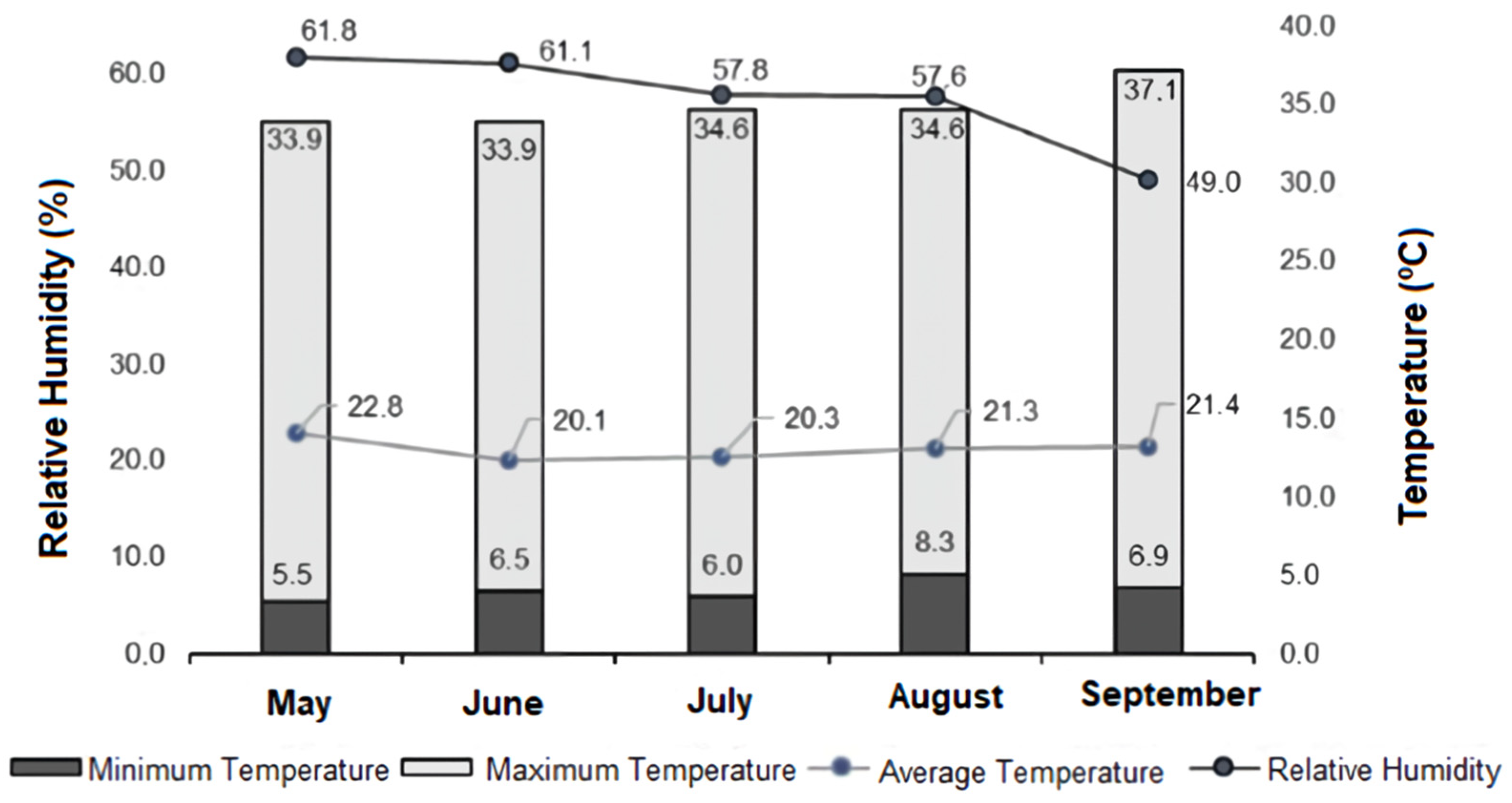
The experiment was carried out in a greenhouse located at Professor Edson Antônio Velano University—Unifenas, in the city of Alfenas—MG, Brazil, whose geographic coordinates are 21°27′21″ for latitude and 45°56′39″ for longitude at an altitude of 843 m. Climate data, which include the minimum and maximum temperature measurements and relative air humidity, were recorded during the experiment using a digital thermo-hygrometer. This instrument was strategically installed close to the experimental area to ensure measurement accuracy. The environmental conditions recorded during the experimental period are presented in Figure 1 and were used to characterize the greenhouse microclimate and support evapotranspiration estimations.
Figure 1.
Minimum, maximum, and average temperatures (T) and relative humidity (RH) in the protected environment during the experiment.
The experiment was conducted under a 2 × 4 factorial scheme with four replicates, including the presence/absence of Bacillus aryabhattai and four irrigation levels (40, 60, 80 and 100% of the ETc); water restriction began at the V3 phenological stage. For the inoculation treatments, the commercial bioinoculant AURAS® (NOOA Ciência e Tecnologia Agrícola, Patos de Minas, MG, Brazil), which contained the Bacillus aryabhattai strain CMAA 1363, was used. This strain, which was originally isolated from the rhizosphere of Pilosocereus gounellei in the Brazilian Caatinga biome [19], was selected and validated by the Brazilian Agricultural Research Corporation (Embrapa). The inoculant was prepared according to the manufacturer’s protocol to ensure a minimum concentration of 1 × 10⁸ CFU mL−1.
Seed inoculation was performed immediately before sowing at a rate of 4 mL kg−1 to ensure adequate adhesion of the bacterial suspension and promote early microorganism–plant interaction during germination and root establishment. After application, the seeds were homogenized in a sterile plastic container to ensure uniform coating. Additionally, for subsequent phenological stages, applications were performed via drenching, thus ensuring direct contact of the inoculant with the root system.
Sowing was carried out using seeds of the BRS Estilo cultivar, which has a cycle of 85–95 days, erect growth, high productivity, quality grains and resistance to lodging. Ten seeds were sown per pot at a depth of 4 cm. Ten days after emergence, thinning was carried out, leaving only three plants per pot. All water regimes were initiated at V3 (first trifoliate leaf), where they remained at water regimes of 40, 60, 80 and 100% of the ETc until harvest.
The experiment was carried out in 8 L pots, with soil collected from Latosol, with the chemical characteristics shown in Table 1 and physical characteristics shown in Table 2. The soil was not sterilized in order to preserve its native microbiota and better simulate field conditions. Fertilization and liming management followed the recommendations of Bulletin 100 for bean crops [20].
Table 1.
Chemical analysis of the soil used to fill the vessels used in the experiment.
Table 2.
Physical analysis of the soil used to fill the pots used in the experiment.
Acidity correction was performed by calculating liming requirements while considering a volume of 7 L of soil per pot. For correction, dolomitic limestone with a PRNT of 83% was used at a dose of 1420 kg ha−1, totaling 25.84 g per pot, and it was applied 60 days before sowing. Fertilization of common beans was carried out using 0.65, 3.4 and 0.47 g pot−1 of N, P2O5 and K2O, respectively. Topdressing was performed at V3 with 3.2 and 0.46 g pot−1 of N and K2O, respectively, and at R5 (pre-flowering) with 3.2 g pot−1 of N. Urea, triple superphosphate and potassium chloride were used as sources of N, P2O5 and K2O, respectively.
Irrigation was carried out manually once a day in the morning according to the treatments. The volume of water applied was adjusted based on climatic conditions observed in the experimental area. The irrigation requirement was estimated using data from a Class A evaporation pan, with crop evapotranspiration (ETc) calculated as the product of the reference evapotranspiration (ETo) and the crop coefficient (Kc), which varied according to the phenological stages (Table 3) [22].
Table 3.
Crop coefficient (Kc) for the phenological stages of the common bean.
Water was applied directly to the pots using graduated containers, thereby ensuring precise control of the volumes corresponding to each treatment. This methodology allowed us to vary the amount of water applied based on the specific water restrictions imposed, thus promoting efficient water use. The total volume of water applied per pot during the experimental period was 7.298 L, 10.948 L, 14.597 L, and 18.246 L for the 40%, 60%, 80% and 100% ETc treatments, respectively.
During the experiment, weed monitoring was carried out daily, with manual uprooting of plants when necessary. For pest control, a chemical insecticide with an active ingredient based on imidachloropid was applied at a dose of 300 g of the commercial product per hectare at stages V3, V4, R5 and R7, using a backpack pump with a fan nozzle and maximum pressure to ensure uniform application.
Full flowering of the common bean occurred at 55 DAE (days after emergence), and at 100 DAE, the plants reached the R9 stage, which was signaled by the change in the color of the pods and the falling of leaves. At this stage, two plants per pot were manually harvested for the purpose of evaluating the yield components.
2.1. Agronomic Measurements
The end of the crop cycle corresponds to the R9 phenological stage (physiological maturity) described in Table 3. Each treatment consisted of four experimental replicates, with three plants per pot, and measurements were performed using two plants per experimental unit. For plant height, a graduated tape measure (cm) was used to measure the distance between the base and the apex of the main stem. The height of the first pod insertion was measured as the distance from the plant collar to the node bearing the first pod using a graduated measuring tape.
The number of pods per plant was obtained by manually counting the pods in each plant. The number of grains per pod was determined by threshing the pods and manually counting the grains, disregarding those that did not develop completely due to water stress. To obtain the number of grains per plant, after counting the grains per pod, all the grains were gathered and counted manually.
Grain production was determined after counting, with the grains of each plant being dried until moisture stabilized at 13%, and they were subsequently weighed on a precision balance. The mass of 100 grains was estimated by weighing a representative sample and applying the rule of three to calculate the weight corresponding to 100 units. Root dry mass was obtained after drying the fresh roots in an oven at 55 °C for a period of 72 h, followed by weighing.
The nitrogen (N) content in the grains was determined using the Kjeldahl method [24]. The amount of crude protein in the grains was calculated after determining the nitrogen amount and multiplying the value obtained by 6.25, a standard conversion factor that considers that proteins contain approximately 16% nitrogen. Irrigation water productivity was determined by the ratio between the production of each plant (Kg plant−1) and the volume of water applied per pot (L plant−1) at the end of the cycle [24].
Soil samples were collected from the rhizosphere at a defined depth using sterile equipment. In each experimental plot, subsamples were taken, homogenized, and combined to form a representative composite sample. In the laboratory, the samples were sieved (2 mm) under aseptic conditions to remove debris and roots. Subsequently, 10 g of soil was transferred to sterile vials containing 90 mL of a 0.60% saline solution to obtain the initial dilution (10−1). The suspension was homogenized on an orbital shaker for 10 min to release microbial cells from the soil matrix. Serial decimal dilutions were then performed up to 10−6, and 0.1 mL aliquots of each dilution were inoculated onto Petri dishes containing sterile PDA (potato dextrose agar) medium using the spread plate technique. The plates were incubated at 25 °C, and colonies were counted after 24 and 48 h of incubation. The number of viable microorganisms was expressed in colony-forming units per gram of soil (CFUs g−1) based on the number of visible colonies and the respective dilution factor [25].
2.2. Statistical Analysis
The data were assessed for normality using the Anderson–Darling test and for homoscedasticity using the Levene test. Subsequently, analysis of variance (ANOVA) was performed, with a significance level of 5% for the probability of error. The means were submitted to the Tukey test at a 5% probability of error using the AgroEstat software; the regression equations were performed using the R software, and the graphs were developed with the aid of SigmaPlot 14.1.
3. Results
The inoculation and irrigation factors significantly influenced some plant characteristics, as shown in Table 4.
Table 4.
p-values and coefficient of variation (CV) for the variables plant height (PH), first pod insertion height (FPIH), number of pods per plant (NPP), number of grains per pod (NGP), number of grains per plant (NGPP), production (P), mass of 100 grains (M100), root dry mass (RDM), nitrogen in grains (N%), crude protein in grains (CP%), irrigation water productivity (PAir) and colony-forming unit (CFU).
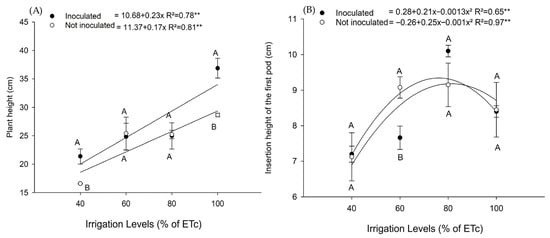
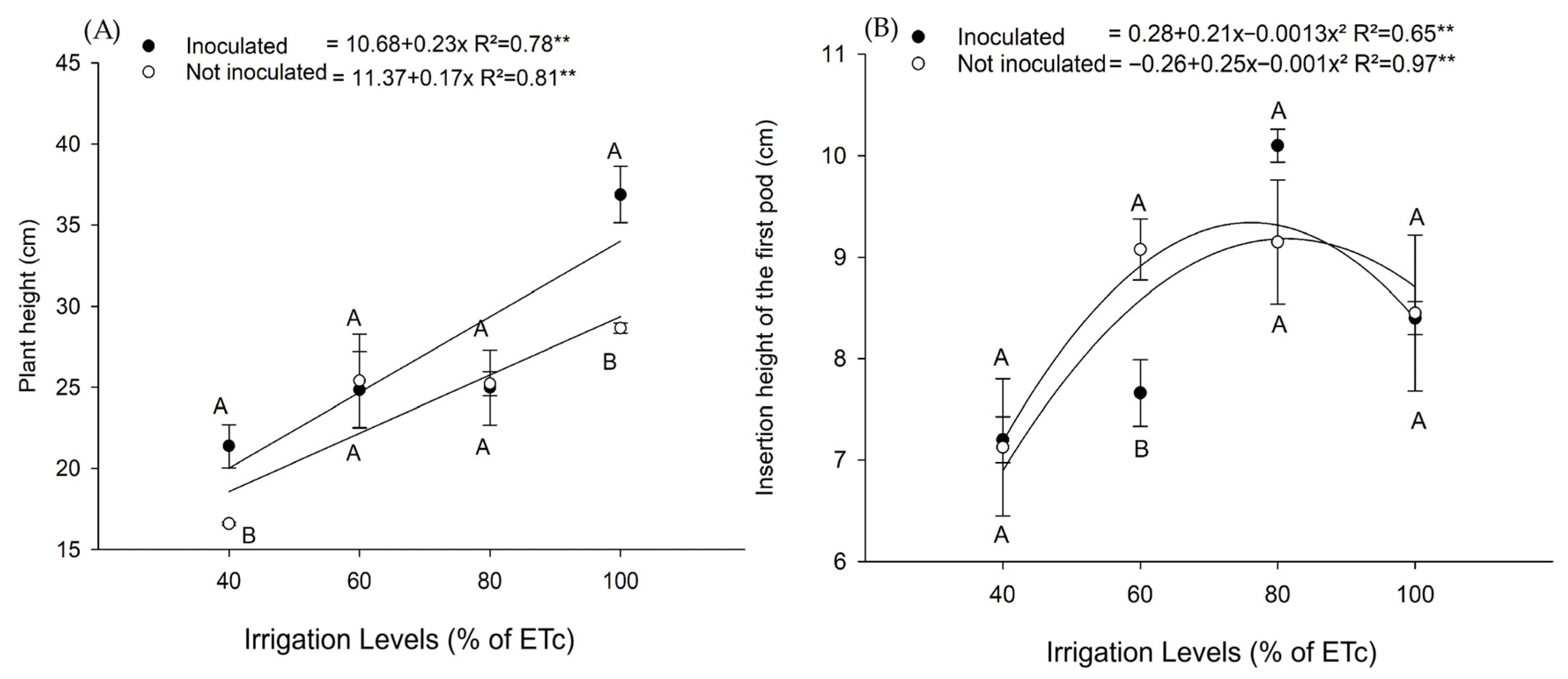
Plant height was influenced by the interaction between bioinput inoculation and different irrigation levels (Table 4). Increasing the irrigation level provided a linear increase in plant height. Regarding the use of B. aryabhattai, there were increases of 18.5% and 22.3% in plant height under water stress conditions (40% ETc) and full irrigation (100% ETc), respectively, compared to non-inoculated plants (Figure 2A).
Figure 2.
(A) Plant height for treatments with and without B. aryabhattai under different irrigation levels. (B) Height of insertion of the first pod for treatments with and without B. aryabhattai under different irrigation levels. ** indicates significant at the 1% probability level by the F-Test. Different letters on the irrigation slides indicate significant differences between inoculation and non-inoculation with B. aryabhattai at the 5% probability level. Error bars represent the standard deviation (SD).
Regarding the height of insertion of the first pod, there was an interaction between the factors studied (Table 4). As demonstrated in Figure 2B, the irrigation level corresponding to 60% of the ETc was the only one to present a difference between the presence and absence of B. aryabhattai. Inoculation with B. aryabhattai resulted in a 15.5% increase in the height of insertion of the first pod compared to non-inoculated plants (Figure 2B).
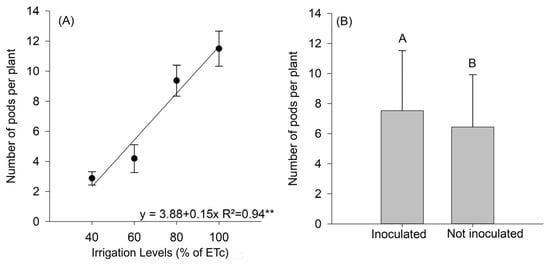
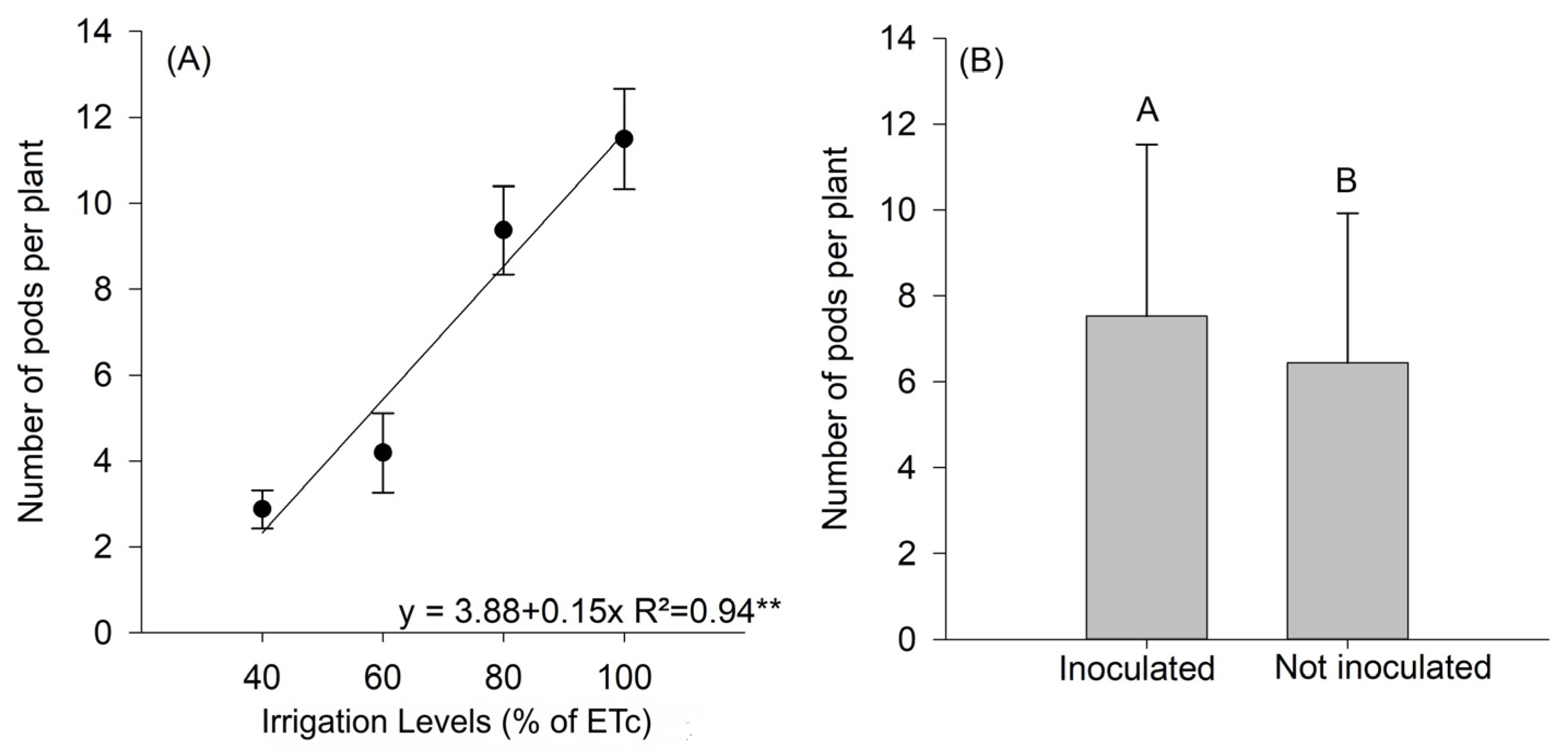
For the number of pods per plant, no significant interaction between inoculation and irrigation factors was observed (Table 4). Therefore, the main effects were analyzed separately. Irrigation level significantly affected pod number, showing a linear increase with increasing water availability (Figure 3A). Regardless of irrigation level, inoculation with Bacillus aryabhattai significantly increased the number of pods per plant compared to non-inoculated treatments (Figure 3B), with an average increase of approximately 20%.
Figure 3.
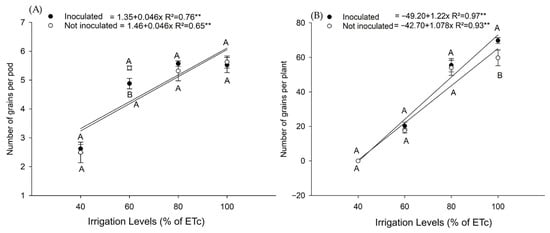
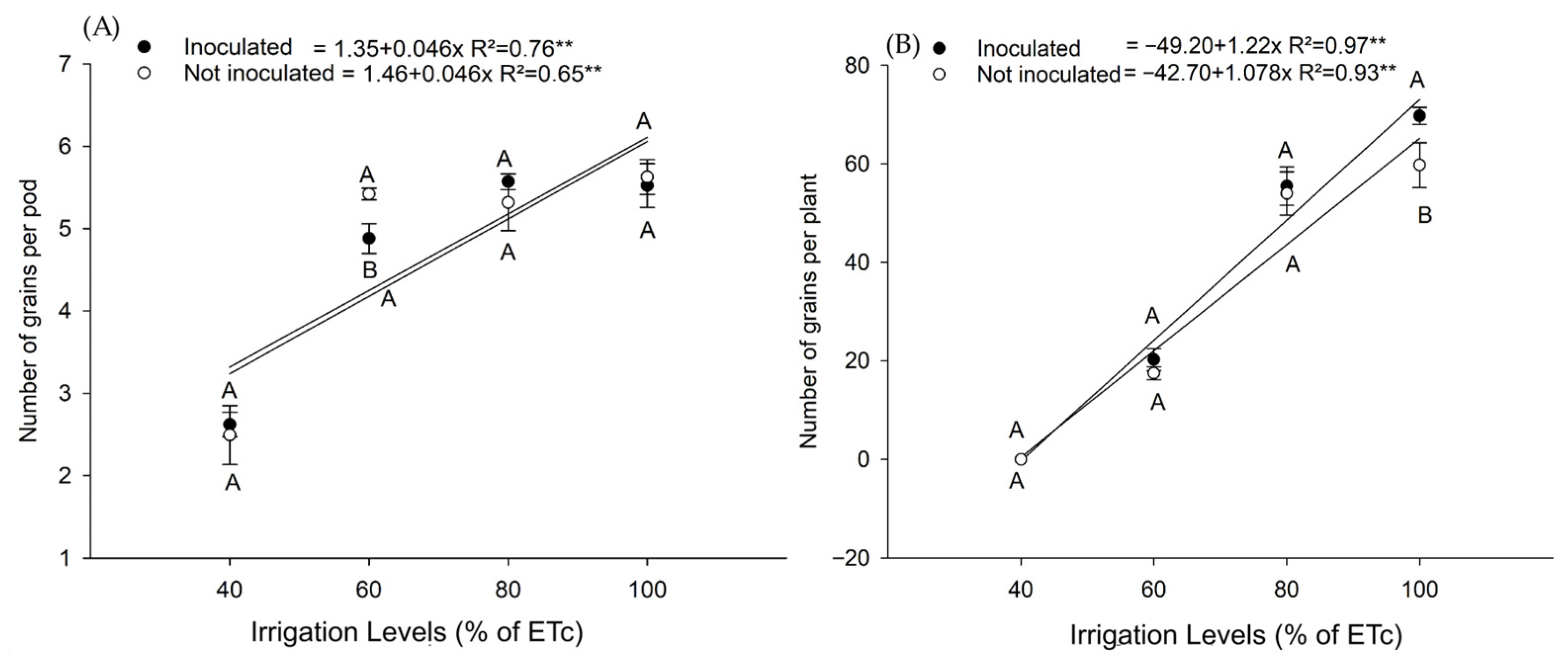
(A) Number of pods per plant under different irrigation levels (40, 60, 80 and 100% ETc) regardless of inoculation. (B) Mean number of pods per plant for inoculated and non-inoculated treatments considering all irrigation levels. ** indicates significant at the 1% probability level by the F-Test. Different letters on the irrigation slides indicate significant differences between inoculation and non-inoculation with B. aryabhattai at the 5% probability level. Error bars represent the standard deviation (SD).The number of grains per pod was influenced by the interaction between the application of the bioinput and the different irrigation levels (Table 4). Greater water availability resulted in an increase in the number of grains per pod, regardless of the inoculation factor (Figure 4A). This linear relationship suggests that water availability plays a fundamental role in the formation of grains per pod, providing better physiological conditions for the reproductive development of the plants. However, in the management with 60% of the ETC, inoculation with B. aryabhattai enhanced this response, producing, on average, 11.4% more grains per pod compared to non-inoculated plants.
Irrigation management and application of B. aryabhattai significantly influenced the number of grains per plant (Table 4). As irrigation levels increased, a linear increase in the number of grains per plant was observed, both in treatments with and without bioinput. However, only the 100% ETc depth provided a significant difference in relation to the presence and absence of the bioinput (Figure 4B). Full water availability and the application of bioinputs provided an increase of approximately 10 grains per plant when irrigated at the 100% depth.
Figure 4.
(A) Number of grains per pod for treatments with and without B. aryabhattai under different irrigation levels. (B) Number of grains per plant for treatments with and without B. aryabhattai under different irrigation levels. ** indicates significant at the 1% probability level by the F-Test. Different letters on the irrigation slides indicate significant differences between inoculation and non-inoculation with B. aryabhattai at the 5% probability level. Error bars represent the standard deviation (SD).
Regarding grain production, no significant interaction was detected between irrigation levels and Bacillus aryabhattai inoculation (Table 4). Therefore, the main effects of irrigation and inoculation were analyzed independently. As shown in Figure 5A, grain production increased linearly with the increase in irrigation levels, showing that greater water availability favors production. In the same sense, Figure 5B shows that the application of the bioinput provided a significantly higher production rate compared to non-inoculated plants, regardless of the irrigation level.
Figure 5.
(A) Grain production per plant as a function of irrigation level (% ETc), averaged across inoculation treatments due to the absence of significant interactions between factors. (B) Main effect of Bacillus aryabhattai inoculation on grain production, averaged across irrigation levels. ** indicates significant at the 1% probability level by the F-Test. Different letters on the irrigation slides indicate significant differences between inoculation and non-inoculation with B. aryabhattai at the 5% probability level. Error bars represent the standard deviation (SD). Unlike the total grain production, the mass of 100 grains showed a significant interaction between the inoculation with B. aryabhattai and the different irrigation levels, as demonstrated in Table 4. According to Figure 6, significant differences between the presence and absence of the bioinput were observed only at irrigation levels of 60% and 100% of the ETc.
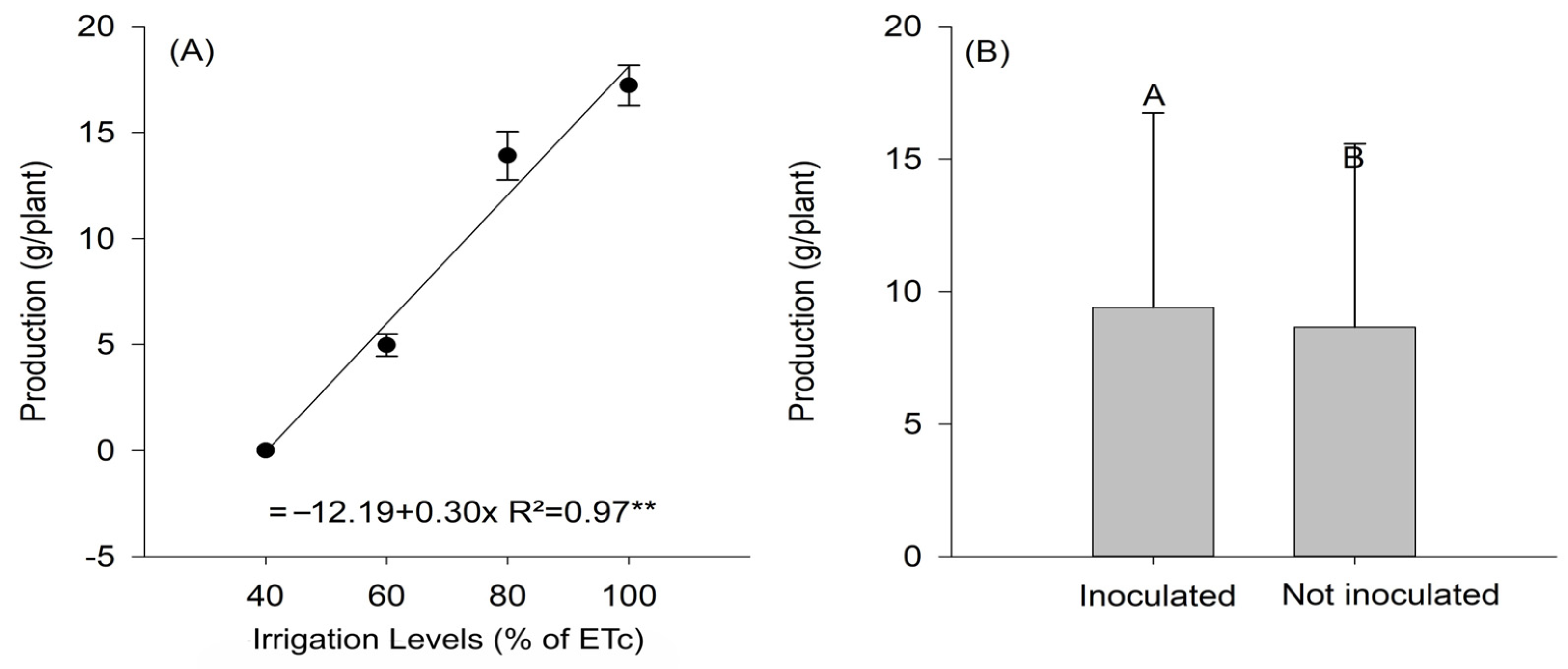
Figure 6.
Mass of 100 grains for treatments with and without B. aryabhattai under different irrigation levels. ** indicates significant at the 1% probability level by the F-Test. Different letters on the irrigation slides indicate significant differences between inoculation and non-inoculation with B. aryabhattai at the 5% probability level. Error bars represent the standard deviation (SD).
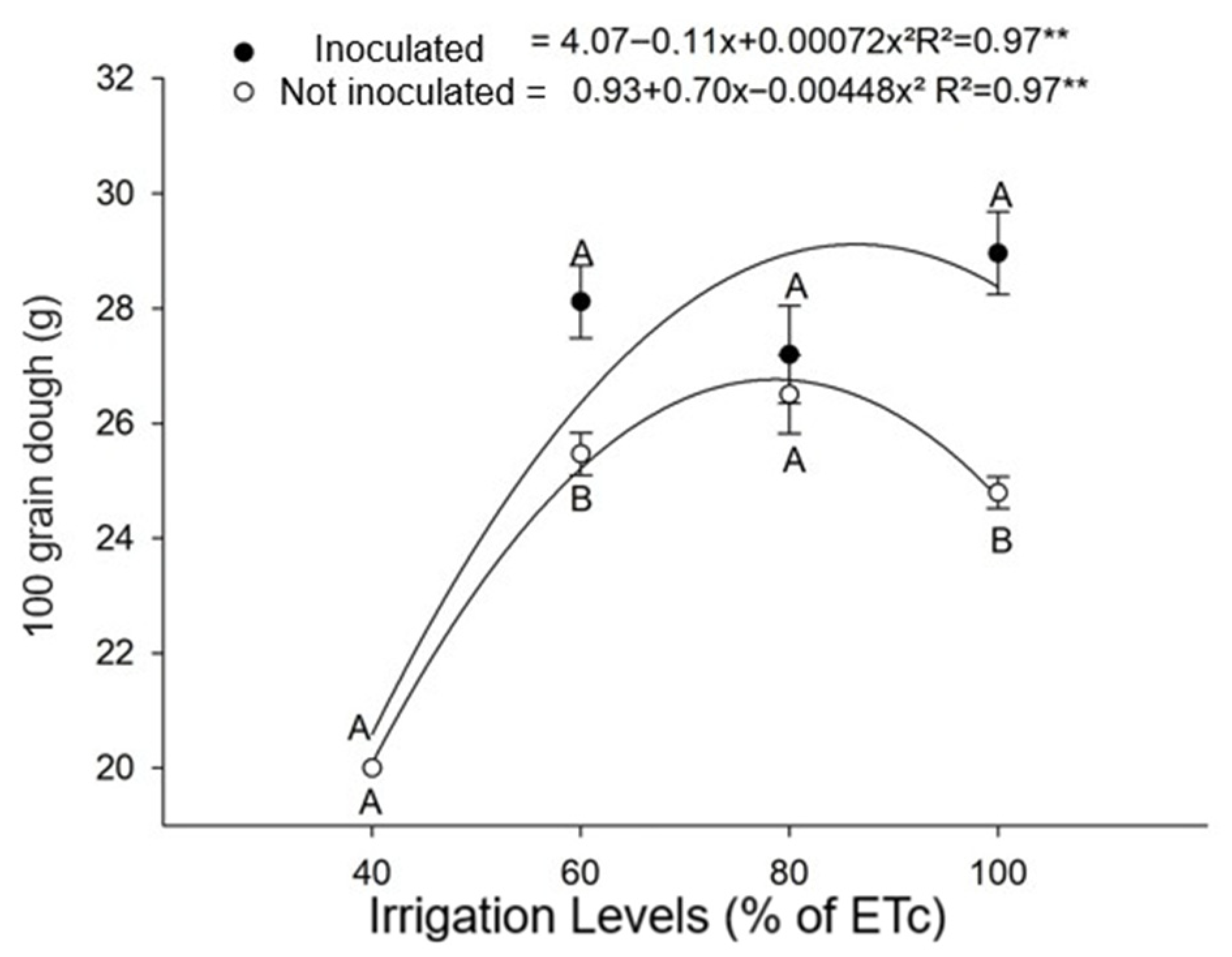
Under these conditions, the inoculated plants showed an increase in the 100-grain weight of 9.42% at 60% of the ETc and of 14.36% at 100% of the ETc compared to the non-inoculated plants. However, Figure 5 also shows the existence of an optimal irrigation range, which was determined according to the derivation to maximize the 100-grain weight and located between 60% and 80% of the ETc, for the non-inoculated plants. Above this range, a reduction in the weight of the grains is observed in both treatments (with and without inoculation).
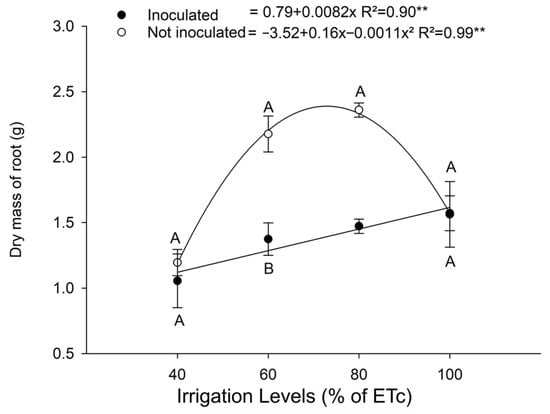
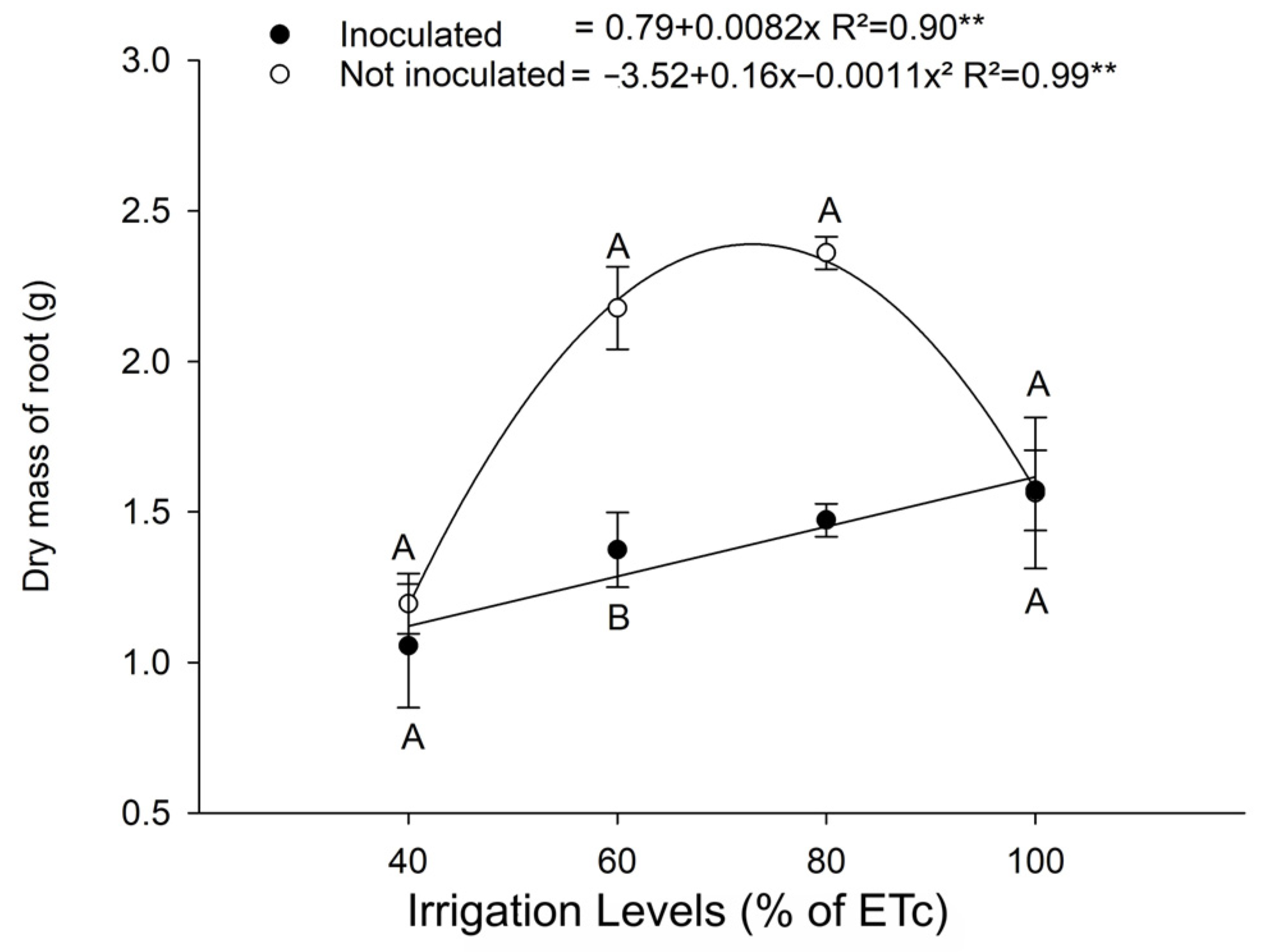
Root dry mass showed an interaction between irrigation levels and bioinput application (Table 4). For inoculated treatments, there was a linear increase in root dry mass according to greater water availability. On the other hand, in non-inoculated plants, the highest root dry mass (2.5 g plant−1) was observed with a depth of 72.73% of the ETc according to the derivation. The difference between treatments was more evident at depths of 60% and 80% of the ETc, where non-inoculated plants had root dry masses 58.6% and 60.5% higher than those of inoculated plants, respectively (Figure 7).
Figure 7.
Root dry mass for treatments with and without B. aryabhattai under different irrigation levels. ** indicates significant at the 1% probability level by the F-Test. Different letters on the irrigation slides indicate significant differences between inoculation and non-inoculation with B. aryabhattai at the 5% probability level. Error bars represent the standard deviation (SD).
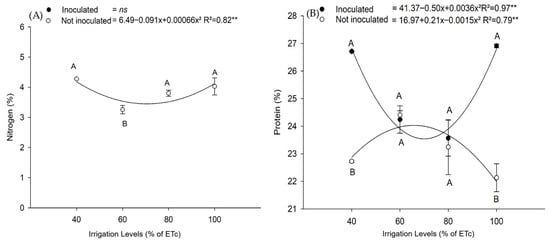
For the nitrogen (N) content in the grain, a significant interaction between irrigation level and inoculation was observed (Table 4). Significant differences between inoculated and non-inoculated plants were detected at the 40% and 60% ETc levels. Inoculated plants presented similar nitrogen contents across irrigation levels.
In non-inoculated plants, nitrogen content varied according to irrigation level, reaching a minimum value (3.4%) at approximately 68.9% of the ETc. This response indicates that nitrogen accumulation in grains may be influenced by water availability, which can affect nutrient uptake and metabolic processes. These results suggest that intermediate irrigation levels may alter nitrogen dynamics in non-inoculated plants (Figure 8A).
Figure 8.
(A) Grain nitrogen content for treatments with and without B. aryabhattai under different irrigation levels. (B) Protein content in grain for treatments with and without B. aryabhattai under different irrigation levels. For non-inoculated plants, the regression was significant at the 1% probability level by the F-Test (**). Different letters on the irrigation slides indicate significant differences between inoculated and non-inoculated treatments at the 5% probability level. Error bars represent the standard deviation (SD).
The analysis of the protein content in the grains revealed a significant interaction between the irrigation level and inoculation with the bioinput (Table 4). This interaction was more evident at the 40% and 100% ETc depths, in which the inoculated plants showed increases of 17.5% and 20.3%, respectively, compared to the non-inoculated plants (Figure 8B).
For non-inoculated plants, the highest protein content can be observed with the 70% ETc blade, at 24% according to the derivation of the equation, while in the inoculated plants, the lowest protein content occurred in this same blade, at 16.2% (Figure 9). These results suggest that the combination of inoculation and the 40% and 100% ETc blades was more beneficial for increasing the protein content in the grains.
Figure 9.
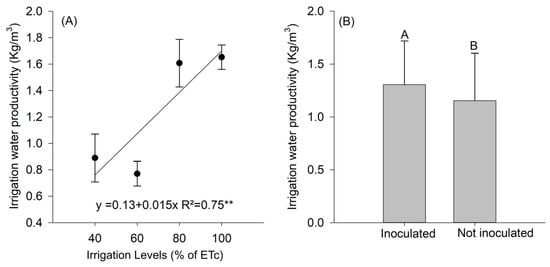
Water productivity (kg m−3) under different treatments. (A) Effect of irrigation level (% ETc), averaged across inoculation treatments due to the absence of significant interaction. (B) Main effect of Bacillus aryabhattai inoculation averaged across irrigation levels. Error bars represent the standard deviation. ** indicates significant at the 1% probability level by the F-Test. Different letters indicate significant differences at the 5% probability level.
Water productivity did not show a significant interaction between irrigation level and inoculation (Table 4). Thus, the main effects were evaluated separately. Irrigation level significantly influenced water productivity, showing a linear increase when averaged across inoculation treatments (Figure 8A). Regardless of irrigation level, plants inoculated with Bacillus aryabhattai exhibited higher water productivity compared to non-inoculated plants (Figure 8B).
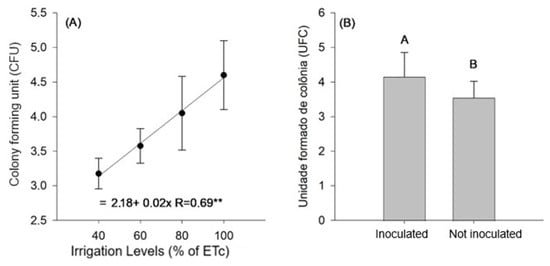
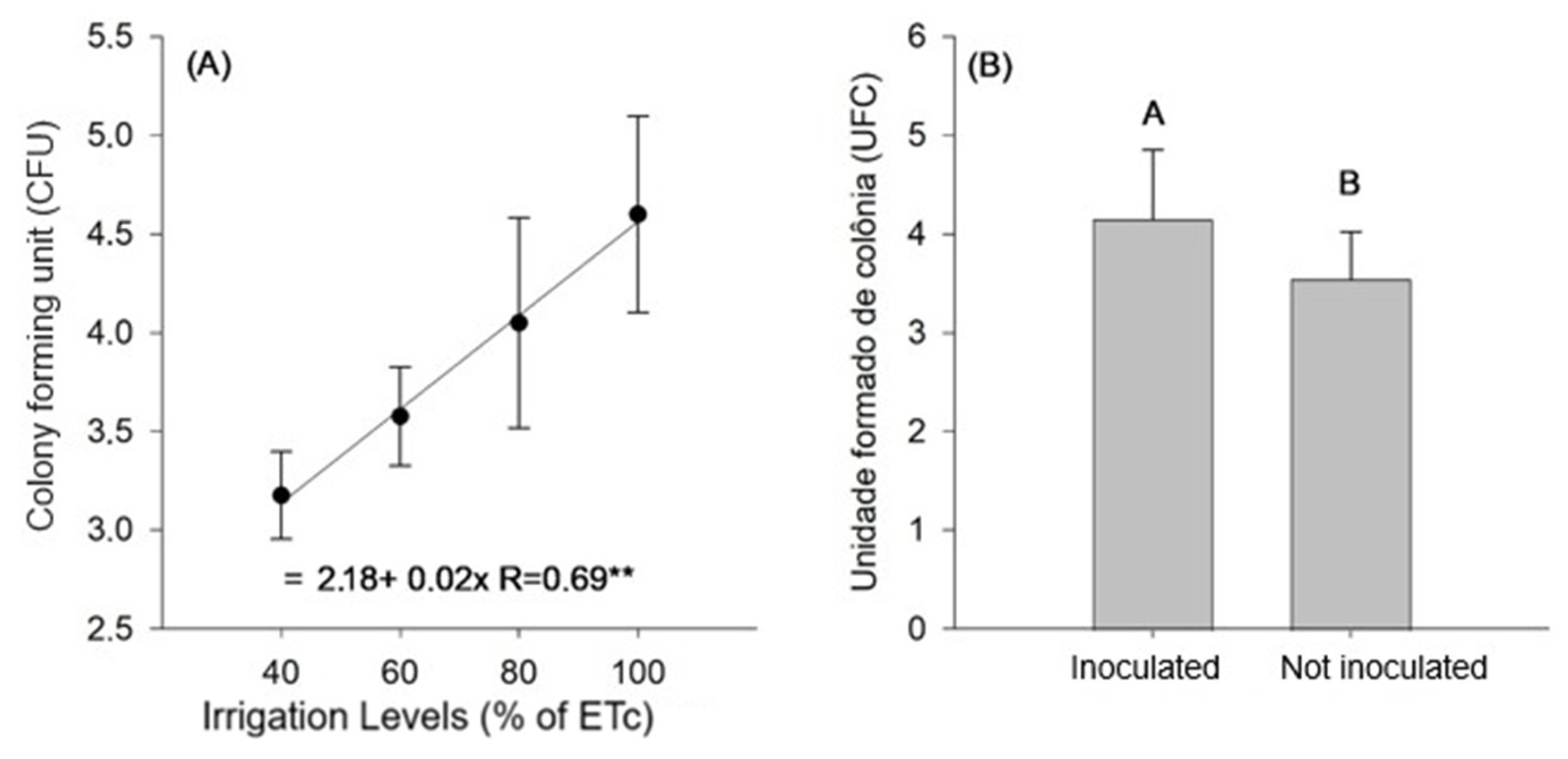
The colony-forming unit (CFU) variable showed no significant interaction between irrigation level and inoculation (Table 4). Therefore, the main effects were analyzed independently. The CFU increased linearly with irrigation level when averaged across inoculation treatments (Figure 10A). Regardless of irrigation level, inoculation with Bacillus aryabhattai resulted in a greater number of microbial colonies compared to non-inoculated treatments (Figure 10B).
Figure 10.
Colony-forming unit (CFU) for treatments with and without B. aryabhattai under different irrigation levels. (A) Effect of irrigation level (% of the ETc). (B) Effect of inoculation (inoculated vs. non-inoculated). ** indicates significance at the 1% probability level by the F-Test. Different letters indicate significant differences between inoculated and non-inoculated treatments at the 5% probability level. Error bars represent the standard deviation (SD).
4. Discussion
The common bean is a crop highly sensitive to water shortages, and little is known about which stages of its development are most vulnerable to this stress, especially when Bacillus aryabhattai is used. This lack of information hinders the adoption of more efficient management strategies. The results of this research indicate that inoculation with B. aryabhattai had positive effects, although not significantly in all evaluated variables. This bacterium promotes plant growth, enhances performance under reduced irrigation levels, and improves water use efficiency, helping to preserve physiological processes even under adverse conditions [26]. Although the bean crop presents different water demands throughout its cycle, this study evaluated responses to different irrigation levels from the V3 stage onward, without differentiating each phenological phase. Thus, the technical and scientific knowledge generated contributes to improving crop yield and quality [27].
The results for plant height and the height of the first pod insertion were significantly influenced by the interaction between treatments, with inoculation by B. aryabhattai showing positive effects on these parameters, especially under water stress conditions (Figure 2). The increase in plant height was primarily influenced by irrigation level. This effect may be related to the microorganism’s ability to promote the accumulation of hormones such as auxins, which stimulate cell elongation and contribute to improved plant performance under reduced irrigation levels [15]. A similar trend was observed for the height of the first pod insertion, where inoculation with B. aryabhattai resulted in a 15% increase compared to non-inoculated plants. However, the average values obtained (approximately 10 cm) were below the ideal (greater than 12 cm), which compromises the efficiency of mechanized harvesting [28]. This limitation can be attributed to the fact that the experiment was conducted in pots, which restricts root growth and, consequently, plant height.
In this study, inoculation with B. aryabhattai was associated with increased root dry matter as irrigation levels increased. Although the specific mechanisms of this bacterium are not yet fully described, several processes have been proposed to explain how plant growth-promoting rhizobacteria (PGPR) influence plant development. These include the production of auxins that stimulate cell elongation and root growth; ACC deaminase activity, which may contribute to improved plant performance under limited water availability; nutrient solubilization, particularly phosphorus, thus increasing nutrient availability to plants; and rhizosphere modulation through interactions with root exudates, thereby favoring beneficial microbial communities that contribute to plant resilience under stress conditions [29].
Non-inoculated plants subjected to intermediate water deficits (60% and 80% of the ETc) exhibited greater root dry matter, which may reflect an adaptive response to stress conditions, as plants often increase root growth to explore larger soil volumes while in search of water and nutrients [30]. In contrast, inoculated plants showed lower root biomass under the same irrigation levels while maintaining agronomic performance. One possible explanation is that Bacillus aryabhattai enhances water and nutrient acquisition efficiency through rhizosphere-mediated mechanisms, such as phytohormone production, exopolysaccharide secretion, and improved nutrient availability, allowing plants to sustain growth with reduced investment in root biomass [15,16,17,18].
Water availability directly affects flowering, pod formation, and grain filling. This study demonstrated that higher irrigation levels significantly increased these variables (Figure 3 and Figure 4), as water is essential for nutrient transport and cell maintenance, with both critical for healthy pod formation [31]. Furthermore, B. aryabhattai may have improved nutrient uptake efficiency, leading to better results in inoculated plants. This bacterium is known to promote plant development through the production of phytohormones such as indole-3-acetic acid (IAA) and gibberellins, which stimulate growth and enhance the productive components of the bean plant [10].
Reduced irrigation caused significant losses in the mentioned variables (Figure 3 and Figure 4), likely due to disturbances in key physiological processes such as photosynthesis, nutrient transport, and cell growth, resulting in lower performance. In addition, a water deficit induces oxidative stress, causing the accumulation of reactive oxygen species that damage cellular structures [32]. The positive effects observed on yield and the mass of 100 grains demonstrate that irrigation management combined with B. aryabhattai inoculation improved bean production. Adequate water supply throughout the crop cycle favors development, while inoculation promotes full pod formation and heavier grains, increasing productivity. This may occur due to the bacterium’s ability to enhance nutrient availability and absorption and strengthen plants, which may be associated with improved rhizosphere functioning and plant performance under reduced irrigation conditions, allowing them to retain water near the roots and improve water availability [26].
Irrigation water productivity (PAir) increased linearly with greater irrigation levels, regardless of bioinput application (Figure 9). However, results obtained at 80% ETc were similar to those at 100% ETc, suggesting that a slight reduction in irrigation volume does not compromise yield and may optimize water use efficiency. Therefore, applying 80% of the ETc appears to be a viable strategy to save water without significantly reducing production. Studies indicate that moderate irrigation adjustments can maintain or even enhance productivity, thus allowing water and financial savings [28].
In this context, B. aryabhattai acted independently to improve water use efficiency compared to non-inoculated treatments. This effect aligns with previous studies that highlight the potential of this bacterium to mitigate the impacts of water scarcity and enhance water efficiency in crops [26]. Thus, the combination of B. aryabhattai inoculation with irrigation at 80% ETc represents a promising management practice to increase yield while conserving water.
The nitrogen content in plants is directly related to protein synthesis, since nitrogen is an essential component of amino acids, the building blocks of proteins [30,33]. The interaction between irrigation level and Bacillus aryabhattai inoculation significantly affected both the nitrogen and protein contents in the grains (Figure 8). In general, non-inoculated plants under lower irrigation levels exhibited reduced nitrogen content, which was associated with lower protein accumulation in the grains. This response may be related to the influence of water availability on nutrient uptake and metabolic activity.
Regarding colony-forming units (CFUs), a linear increase was observed with greater irrigation levels, indicating that water availability positively influences microbial development in the soil. Water is essential for nutrient transport, metabolic activity, and microbial mobility, and it helps stabilize the soil structure, creating a more favorable environment for microbial colonization [34]. Inoculation with B. aryabhattai significantly increased the number of colonies, confirming its capacity to stimulate beneficial microbial communities. This increase may be attributed to the bacterium’s role as a facilitator organism, modifying the rhizosphere to favor growth-promoting bacterial populations. This phenomenon is associated with the bacterium’s ability to solubilize nutrients, particularly phosphorus, via the production of organic acids and secondary metabolites that attract other beneficial rhizobacteria, thus enhancing microbial diversity and soil health [35].
A key factor in the success of PGPR is their ability to compete with the native soil microbiota. In this study, the use of non-sterile soil provided a competitive environment that mimics natural conditions. The fact that B. aryabhattai CMAA 1363 mitigated drought stress indicates its high saprophytic and competitive ability. However, we acknowledge that soil-specific properties can influence reproducibility [36]. Future studies should investigate the persistence of this strain using metagenomic tools to understand its long-term impact on the native microbial ecology and its stability across different soil textures and organic matter contents.
5. Conclusions
Water deficit was confirmed as a major limiting factor for common bean production, significantly impairing crop performance under reduced irrigation levels. However, inoculation with Bacillus aryabhattai proved to be a promising strategy to mitigate the negative effects of water restriction, improving agronomic performance and enhancing water use efficiency. The results indicate that this bioinoculant may contribute to maintaining productivity under deficit irrigation, highlighting its potential as a low-cost and sustainable tool for water management in agriculture.
It is important to emphasize that the results obtained in this study were generated under controlled greenhouse conditions, which may not fully represent the complexity of field environments. In natural soils, the performance of inoculated strains can be influenced by interactions with native microbial communities, potentially affecting their establishment, persistence, and overall effectiveness. Therefore, further studies under field conditions and across diverse edaphoclimatic scenarios are essential to validate the consistency of these findings and to better understand the ecological dynamics of Bacillus aryabhattai in real agricultural systems.
Author Contributions
Conceptualization: A.L.P.O., J.P.S., F.F.P. and G.F.S.; methodology: A.L.P.O. and J.P.S.; investigation: A.L.P.O.; validation, A.L.P.O. and J.P.S. Analysis: A.L.P.O. and J.P.S.; data curation: A.L.P.O. and J.P.S.; writing—original draft: A.L.P.O. and J.P.S.; writing—review and editing: A.L.P.O., J.P.S., F.F.P. and G.F.S.; supervision: F.F.P. and G.F.S.; project administration: F.F.P. All authors have read and agreed to the published version of the manuscript.
Funding
This research was funded by Fundação de Amparo à Pesquisa do Estado de São Paulo (FAPESP, grants 22/03005-2 and 2025/03951-3), Brazilian National Council for Scientific and Technological Development (CNPq, grant 406288/2022-4), and the Foundation for the Coordination of Improvement of Higher Education Personnel (CAPES, grant 88887.147895/2025-00).
Data Availability Statement
The original contributions presented in this study are included in the article. Further inquiries can be directed to the corresponding author.
Acknowledgments
The authors thank Fundação de Amparo à Pesquisa do Estado de São Paulo (FAPESP, grants 22/03005-2 and 2025/03951-3), Brazilian National Council for Scientific and Technological Development (CNPq, grant 406288/2022-4), and the Foundation for the Coordination of Improvement of Higher Education Personnel (CAPES, grant 88887.147895/2025-00) for their financial support. The authors also thank the Laboratory Agricultural Biosystems (BioAgro-UNESP) for providing institutional support. The authors also thank the Microbiology Laboratory at Unifenas for the support provided during the experiment.
Conflicts of Interest
The authors declare no conflicts of interest.
Abbreviations
The following abbreviations are used in this manuscript:
| ETc | Crop Evapotranspiration |
| ETo | Reference Evapotranspiration |
| Kc | Crop Coefficient |
| DAE | Days After Emergence |
| CFU | Colony-Forming Unit |
| PRNT | Total Relative Neutralizing Power |
| MSR | Root Dry Mass |
| IAA | Indole-3-acetic acid |
References
- Robinson, G.H.J.; Balk, J.; Domoney, C. Improving pulse crops as a source of protein, starch and micronutrients. Nutr. Bull. 2019, 44, 202–215. [Google Scholar] [CrossRef] [Scilit] [PubMed]
- Coelho, C.; Valcacer-Coelho, A.E. O padrão do consumidor de arroz e feijão no estado de Goiás. In Arroz e Feijão: Tradição e Segurança Alimentar; Embrapa: Brasília, Brazil; Embrapa Arroz e Feijão: Santo Antônio de Goiás, Brazil, 2021; p. 71. [Google Scholar]
- Oliveira, L.F.C.; Oliveira, M.D.C.; Wendland, A.; Heinemann, A.B.; Guimarães, C.M.; Ferreira, E.D.B.; da Silva, S.C. Conhecendo a Fenologia do Feijoeiro e Seus Aspectos Fitotécnicos. Available online: https://www.sidalc.net/search/Record/dig-infoteca-e-doc-1098515/Description (accessed on 15 October 2024).
- Embrapa, Centro Nacional de Pesquisa de Solos. Sistema Brasileiro de Classificação de Solos, 3rd ed.; Embrapa: Rio de Janeiro, Brazil, 2013. [Google Scholar]
- Justino, L.F.; Júnior, J.A.; Battisti, R.; Heinemann, A.B.; Leite, C.V.; Evangelista, A.W.P.; Casaroli, D. Assessment of economic returns by using a central pivot system to irrigate common beans during the rainfed season in Central Brazil. Agric. Water Manag. 2019, 224, 10574. [Google Scholar] [CrossRef] [Scilit]
- Gitz, V.; Meybeck, A.; Lipper, L.; Young, C.D.; Braatz, S. Climate Change and Food Security: Risks and Responses; Food and Agriculture Organization of the United Nations (FAO): Rome, Italy, 2016; Volume 110, pp. 3–36. [Google Scholar]
- Amudha, J.; Balasubramani, G. Recent molecular advances to combat abiotic stress tolerance in crop plants. Biotechnol. Mol. Biol. 2011, 6, 31–58. [Google Scholar]
- Polania, J.; Poschenrieder, C.; Rao, I.; Beebe, S. Estimation of phenotypic variability in symbiotic nitrogen fixation ability of common bean under drought stress using 15N natural abundance in grain. Eur. J. Agron. 2016, 79, 66–73. [Google Scholar] [CrossRef] [Scilit]
- Bonilla Buitrago, R.R.; González de Bashan, L.E.; Pedraza, R.O.; Estrada Bonilla, G.A.; Pardo Díaz, S.; Mazo Molina, D.C.; Ramírez Gómez, M.M. Bactérias Promotoras de Crescimento Vegetal en Sistemas de Agricultura Sostenible. Available online: https://www.sidalc.net/search/Record/dig-bac-20.500.12324-36976/Description (accessed on 22 October 2024).
- Lee, S.; Ka, J.O.; Song, H.G. Growth promotion of Xanthium italicum by application of rhizobacterial isolates of Bacillus aryabhatai in microcosm soil. J. Microbiol. 2012, 50, 45–49. [Google Scholar] [CrossRef] [Scilit]
- Castelo Sousa, H.; Gomes de Sousa, G.; de Araújo Viana, T.V.; Prudêncio de Araújo Pereira, A.; Nojosa Lessa, C.I.; Pires de Souza, M.V.; da Silva Guilherme, J.M.; Ferreira Goes, G.; da Silveira Alves, F.G.; Primola Gomes, S.; et al. Bacillus aryabhattai mitigates the effects of salt and water stress on the agronomic performance of maize under an agroecological system. Agriculture 2023, 13, 1150. [Google Scholar] [CrossRef] [Scilit]
- Buqori, D.M.A.I.; Sugiharto, B.; Suherman; Siswoyo, T.A.; Hariyono, K. Mitigating drought stress by application of drought-tolerant Bacillus spp. enhanced root architecture, growth, antioxidant and photosynthetic genes expression in sugarcane. Sci. Rep. 2025, 15, 5259. [Google Scholar] [CrossRef] [Scilit]
- Siddika, A.; Rashid, A.A.; Khan, S.N.; Khatun, A.; Karim, M.M.; Prasad, P.V.; Hasanuzzaman, M. Harnessing plant growth-promoting rhizobacteria, Bacillus subtilis and B. aryabhattai to combat salt stress in rice: A study on the regulation of antioxidant defense, ion homeostasis, and photosynthetic parameters. Front. Plant Sci. 2024, 15, 1419764. [Google Scholar] [CrossRef] [Scilit]
- Fuga, C.A.G.; Caixeta, G.A.N.; Caixeta, C.F.; de Melo, I.S. Promoção de crescimento no milho (Zea mays L.) por Bacillus aryabhattai cepa CMAA 1363. Agrária-Rev. Bras. De Ciências Agrárias 2023, 18, e3340. [Google Scholar]
- Park, Y.G.; Mun, B.G.; Kang, S.M.; Hussain, A.; Shahzad, R.; Seo, C.W.; Yun, B.W. Bacillus aryabhattai SRB02 tolerates oxidative and nitrosative stress and promotes the growth of soybean by modulating the production of phytohormones. PLoS ONE 2017, 12, 3. [Google Scholar] [CrossRef] [Scilit]
- Moreno-Galván, A.; Romero-Perdomo, F.A.; Estrada-Bonilla, G.; Meneses, C.H.S.G.; Bonilla, R.R. Dry-caribbean Bacillus spp. strains ameliorate drought stress in maize by a strain-specific antioxidant response modulation. Microorganisms 2020, 8, 823. [Google Scholar] [CrossRef] [Scilit]
- Mendoza-Labrador, J.; Romero-Perdomo, F.; Abril, J.; Hernández, J.P.; Uribe-Vélez, D.; Buitrago, R.B. Bacillus strains immobilized in alginate macrobeads enhance drought stress adaptation of guinea grass. Rhizosphere 2021, 19, 100385. [Google Scholar] [CrossRef] [Scilit]
- Deng, C.; Zhang, N.; Liang, X.; Huang, T.; Li, B. Bacillus aryabhattai LAD impacts rhizosphere bacterial community structure and promotes maize plant growth. J. Sci. Food Agric. 2022, 102, 6650–6657. [Google Scholar] [CrossRef] [Scilit] [PubMed]
- Kavamura, V.; Santos, S.; Taketani, R.; Vasconcellos, R.; Melo, I. Sequência do genoma preliminar de Bacillus sp. cepa CMAA 1363, promotora do crescimento vegetal e tolerante à seca, isolada do bioma Caatinga brasileiro. Genome Announc. 2017, 5, e01534-16. [Google Scholar] [CrossRef] [Scilit] [PubMed]
- Wutke, E.B.; Chiorato, A.F.; Esteves, J.A.F.; Carbonell, S.A.M.; Ambrosano, E.J.; Lemos, L.B.; Arf, O.; Feijão, C.H. Boletim 100: Recomendações de Adubação e Calagem para o Estado de São Paulo; IAC: Campinas, Brazil, 2022; pp. 246–249. [Google Scholar]
- Mehlich, A. Determination of cation- and anion-exchange properties of soils. Soil Sci. 1948, 66, 429–446. [Google Scholar] [CrossRef] [Scilit]
- Allen, R.G.; Pereira, L.S.; Raes, D.; Smith, M. Crop Evapotranspiration; FAO Irrigation and Drainage Paper 56; FAO: Rome, Italy, 1998; pp. 60–64. [Google Scholar]
- Pavani, L.C.; Lopes, A.S.; Pereira, G.T. Desenvolvimento da cultura do feijoeiro submetida a dois sistemas de manejo de irrigação e de cultivo. Acta Sci. Agron. 2009, 31, 453–459. [Google Scholar] [CrossRef] [Scilit]
- Malavolta, E.; Vitti, G.C.; Oliveira, S.A. Avaliação do Estado Nutricional das Plantas: Princípios e Aplicações; Potafos: Piracicaba, Brazil, 1989. [Google Scholar]
- Madigan, M.T.; Martinko, J.M.; Parker, J. Brock Biology of Microorganisms, 16th ed.; Prentice Hall: São Paulo, Brazil, 2004. [Google Scholar]
- Melo, I.S. Inoculante à base de Bacillus aryabhattai para mitigação do estresse hídrico. In Pesquisas, Avanços e Futuro: O Crescimento da Fixação Biológica de Nitrogênio (FBN) e o Empenho de Pesquisadores e Empresas na Busca pela Sustentabilidade Agrícola; ANPII: Valinhos, Brazil, 2022; p. 85. [Google Scholar]
- Fischer Filho, J.A.; Zocoler, J.L.; Poloni, N.M.; Furlani Junior, E. Evapotranspiração e disponibilidade hídrica em feijoeiro (Phaseolus vulgaris) sob estresse hídrico. Rev. Bras. Agric. Irrig. 2014, 8, 366–374. [Google Scholar] [CrossRef] [Scilit]
- Silva, J.G.; Nascente, A.S.; Machado, A.L.T. Colheita Mecanizada do Feijoeiro: Passado, Presente e Futuro; Circular Técnica, n.92; Embrapa: Brasília, Brazil, 2020; Available online: http://www.infoteca.cnptia.embrapa.br/infoteca/handle/doc/1127024 (accessed on 23 November 2024).
- Fuga, C. Pesquisa e desenvolvimento Nooa Brasil; AURAS: Quarto Centenário, Brazil, 2021; p. 27. [Google Scholar]
- Taiz, L.; Zeiger, E.; Moller, I.M.; Murphy, A. Fisiologia e Desenvolvimento Vegetal, 6th ed.; Artmed Editora: Porto Alegre, Brazil, 2017. [Google Scholar]
- Oliveira, A.L.; Santos, R.M.; Ferreira, M. Efeito do estresse hídrico na produção de feijoeiro. Rev. Bras. Agrociência 2017, 23, 120–128. [Google Scholar]
- Santos, R.F.; Carlesso, R. Déficit hídrico e os processos morfológico e fisiológico das plantas. Rev. Bras. Eng. Agrícola Ambient. 1998, 2, 287–294. [Google Scholar] [CrossRef] [Scilit]
- Sun, Y.; Wang, M.; Mur, L.A.J.; Shen, Q.; Guo, S. Unravelling the roles of nitrogen nutrition in plant disease defences. Int. J. Mol. Sci. 2020, 21, 572. [Google Scholar] [CrossRef] [Scilit]
- Ren, C.; Chen, J.; Lu, X.; Doughty, R.; Zhao, F.; Zhon, Z.; Ren, G. Responses of soil total microbial biomass and community compositions to rainfall reductions. Soil Biol. Biochem. 2018, 116, 4–10. [Google Scholar] [CrossRef] [Scilit]
- Song, C.; Wang, W.; Gan, Y.; Wang, L.; Chang, X.; Wang, Y.; Yang, W. Growth promotion ability of phosphate-solubilizing bacteria from the soybean rhizosphere under maize–soybean intercropping systems. J. Sci. Food Agric. 2022, 102, 1430–1442. [Google Scholar] [CrossRef] [Scilit]
- Timmusk, S.; Pall, T.; Raz, S.; Fetsiukh, A.; Nevo, E. The potential for plant growth-promoting bacteria to impact crop productivity in future agricultural systems is linked to understanding the principles of microbial ecology. Front. Microbiol. 2023, 14, 1141862. [Google Scholar] [CrossRef] [Scilit]

Disclaimer/Publisher’s Note: The statements, opinions and data contained in all publications are solely those of the individual author(s) and contributor(s) and not of MDPI and/or the editor(s). MDPI and/or the editor(s) disclaim responsibility for any injury to people or property resulting from any ideas, methods, instructions or products referred to in the content. |
© 2026 by the authors. Licensee MDPI, Basel, Switzerland. This article is an open access article distributed under the terms and conditions of the Creative Commons Attribution (CC BY) license.