


Abstract
This study examines the determinants of Generation Z’s purchase intention for environmentally friendly public transportation in Indonesia, a mode of transport that continues to experience suboptimal ridership. We investigate the effect of consumers’ awareness of green product attributes and operational processes, as well as their exposure to green promotions, on green brand sustainability and, subsequently, on green purchase intention. The study involved 400 Generation Z respondents aged 19 years or older residing in Jakarta, Indonesia. Data were analyzed using Structural Equation Modeling (SEM) with LISREL11.0. The results show that green product awareness, green process awareness, and green promotion exposure significantly influence green brand sustainability, explaining 69 percent of its variance, with green product awareness being the most dominant predictor. Furthermore, green purchase intention is significantly shaped by these antecedents and green brand sustainability, collectively explaining 84 percent of its variance. The findings demonstrate that strengthening environmental awareness across product attributes, operational processes, and promotional communication can substantially increase Generation Z’s intention to use sustainable public transportation. This study extends the research on green consumer behavior and provides strategic insights to strengthen sustainability in the public transportation sector.
1. Introduction
Global attention toward environmental sustainability has fundamentally reshaped consumer behavior, particularly within the transportation sector [1]. Kotler and Keller [2] argue that consumers increasingly associate sustainability with service quality and long-term value, shifting preferences toward environmentally responsible mobility options. This perspective provides a compelling foundation for examining how younger generations, especially Gen Z, interpret and respond to sustainability initiatives within urban transportation systems [3]. Generation Z are individuals born between 1997 and 2012 [4]. They are widely recognized for their heightened environmental consciousness and strong preference for brands that embody sustainability values. Ling et al. [5] emphasize that Gen Z integrates ecological responsibility into their lifestyle identity, considering it a core determinant of consumption choices. Therefore, elucidating the factors that determine Gen Z’s choice of transportation mode has become an urgent issue [6,7,8].
Previous studies have delineated several factors that lead to behavioral intention to adopt green products. Some scholars have confirmed the significant effect of several variables within the framework of the Theory of Planned Behavior (TPB; [9]). These include attitude toward green product, social pressure, and behavioral control [10]. Other studies demonstrate the pivotal role of environmental concern and knowledge in governing green purchase behavior [11,12]. Furthermore, Dangelico and Vocalelli [13] assert that consumer perceptions of brand sustainability can lead to eco-friendly choices. These perceptions are built on the consistency of ecological values embedded across products, production processes, and promotional communication. Awareness of green attributes, ranging from low-emission technology and energy-efficient operations to sustainability-oriented promotional messaging, may play a pivotal role in shaping user perceptions. A rigorous understanding of these interlinked mechanisms is crucial for designing effective strategies to increase the adoption of environmentally friendly transportation modes among young urban commuters. However, empirical studies that investigate the effects of these variables within the same framework remain scarce. This study attempts to narrow the gap in the literature. Specifically, we investigate how Gen Z’s awareness of public transportation services, their production processes, and green promotional activities influences their willingness to use these services. To deepen our understanding of the mechanism, we also examine how these relationships are moderated by their beliefs about the service’s ability to maintain environmental, social, and economic commitments.
In this study, we focus on the Mass Rapid Transit (MRT) Jakarta, one of the transportation modes considered to provide sustainable transportation services in Indonesia. As a modern, electricity-powered mass transit system, MRT Jakarta possesses significant potential to become an emblem of sustainable urban mobility amid escalating air pollution and congestion. However, several serious issues may prevent Gen Z from choosing this mode of transportation. First, low occupancy rates and limited public recognition of its sustainability initiatives reveal a gap between implementation and perception. Second, many youths perceive motorcycles as more convenient than walking to and transferring through multiple transit systems. This disparity necessitates a deeper investigation into how MRT Jakarta’s green efforts effectively resonate with Gen Z, particularly in shaping attitudes, preferences, and behavioral intentions toward environmentally sustainable transportation.
This study contributes to the literature in some respects. First, its findings are essential in framing the intersection of sustainability imperatives, Gen Z behavioral dynamics, and the strategic challenges faced by MRT Jakarta in particular, and sustainable transportation modes in general. By investigating the roles of green product awareness, green process awareness, and green promotion exposure in strengthening green brand sustainability (and eventually purchase intentions), the study deepens our understanding of the mechanisms by which knowledge and beliefs lead to the adoption of sustainable products or services. Second, the insights generated are expected to have managerial implications to support firms in developing a stronger sustainability-driven value proposition, thereby enhancing user intention and positioning their services as a preferred, future-oriented mode of public transportation.
The remainder of this paper is organized as follows. In the next section, we introduce the key concepts used in this study. Subsequently, we describe the conceptual model and the hypotheses. This is followed by the Method section, in which we explain the research instruments and data collection procedures. We then report the results of the analysis in the subsequent section. Following this, we discuss the implications and conclude our findings. Lastly, we mention some limitations of this study and a direction for future research.
2. Literature Review
2.1. Green Purchase Intention
Green purchase intention (GPI) refers to a consumer’s stated willingness, motivation, or plan to buy products or services that are environmentally friendly or perceived as environmentally better than conventional alternatives [14]. It is typically measured via self-report survey items that capture willingness, plan, or likelihood of purchasing green products in the near future. In the green marketing literature, GPI is treated as the proximal predictor of green purchase behavior. It is often modeled as the key cognitive antecedent within broader theories of pro-environmental consumer decision-making (e.g., TPB) or integrated frameworks that combine attitudes, norms, perceived behavioral control, and values [15,16]. Multiple studies converge on the view that GPI is the pivotal intermediary that translates environmental attitudes and concerns into concrete green purchasing actions, although intention-behavior gaps are recognized in some contexts [17,18].
Previous studies have delineated several factors that influence GPI. Numerous TPB-based studies show that attitudes, perceived behavioral control, and subjective norms are significant antecedents of GPI [19,20,21]. Attitude toward green products has been consistently reported to increase GPI. Some studies treat attitude as either a primary driver of GPI or as a mediator between other variables and GPI [22,23]. Personal values and related norms contribute to GPI through attitudinal or normative pathways. Studies grounded in value-belief-norm theory show that altruistic values influence attitudes and subsequently GPI [24,25]. In some cases, these values influence GPI more strongly when combined with constructs of awareness or knowledge [24]. Perceived behavioral control frequently shapes GPI, either directly or indirectly through attitudes. In the context of eco-friendly consumer goods, behavioral control is shown to have a strong positive influence on intention [22].
Furthermore, environmental concern and knowledge are often incorporated as additional predictors or moderators in extended TPB models that influence intention formation [26]. Environmental concern is widely established as a robust antecedent of GPI, frequently exerting a direct positive effect or operating through attitudes or perceived value frameworks [27]. Some studies also reveal environmental concern as a mediator or moderator in more complex models [23]. Environmental knowledge consistently emerges as a predictor of green purchase outcomes, though its direct influence on GPI varies across contexts and model specifications. Several studies report positive links between environmental knowledge and GPI, sometimes with attitude or concern as mediators [23,28]. In some settings, its effect operates through environmental concern or attitudes toward green products [29].
2.2. Green Product Awareness
Green product awareness (GPD) refers to the extent to which consumers are aware of environmentally friendly product attributes, benefits, and environmental implications [30]. It encompasses knowledge about eco-friendly features, environmental claims, and the relevance of sustainability in product evaluation [31]. Several studies explicitly treat environmental consequences of a product as a critical antecedent to green attitudes, intentions, and behaviors, underscoring its role as a cognitive precursor to pro-environmental purchasing [11,15]. In this sense, GPD can be seen as a component of the broader environmental knowledge construct, with a specific emphasis on product-level environmental attributes and claims. Some works distinguish GPD from general environmental knowledge or concern. This distinction matters because awareness at the product level may more directly activate attitudinal and evaluative processes toward specific green products, whereas environmental knowledge and concern can operate more broadly across product categories or consumption contexts [30,32].
Across multiple studies, GPD significantly influences green purchase decisions, either directly or indirectly through the mediation of attitudes or knowledge. For example, several studies report that environmental knowledge and GPD positively affect the evaluation of green products, with attitude often mediating the awareness–attitude–intention chain [30,31]. Another study suggests that GPD, along with perceived price, quality, and perceived value, positively influences GPI [33].
2.3. Green Process Awareness
We define green process awareness (GPR) as consumers’ cognizance of the environmental implications of production processes, supply chains, and operational practices that contribute to a product’s overall sustainability profile. More specifically, it describes the degree to which consumers are aware of environmentally responsible production processes, such as energy efficiency, waste reduction, water stewardship, low-carbon logistics, ethical sourcing, and certification practices that contribute to a product’s sustainability beyond its end-use attributes. While GPD concentrates on product attributes and eco-claims, GPR focuses on the process level—how products or services are produced, sourced, and managed to reduce environmental impact. It emphasizes process-level practices and system-level sustainability actions rather than solely product features or general environmental facts. The literature indicates that sustainable production and logistics processes favorably influence consumer perceptions, purchase behavior, brand image, and firm performance across multiple industries [34,35]. In the electronics and consumer electronics markets, consumer perceptions of a company’s green supply chain practices positively relate to purchase intention, mediated by factors such as trust and brand image [35,36].
2.4. The Role of Green Promotion
Green brand promotion refers to marketing efforts that communicate a brand’s environmental commitments, sustainability actions, and eco-friendly attributes to influence consumer attitudes, brand equity, and ultimately purchase intentions and behavior [37,38]. It encompasses several promotional activities, including sustainability claims, green advertising, and green brand communication [39]. Previous studies have focused on how exposure to green promotion (GPM) (e.g., advertising and eco-labeling) induces favorable consumer attitudes, perceptions, and behavioral intentions toward green products [40,41]. For example, Luo et al. (2020) point out that green advertising that is perceived as credible and aligned with actual sustainability practices tends to increase consumer understanding, reduce skepticism, and boost brand equity and purchase intentions [42]. Furthermore, Shahrin et al. (2017) suggest that eco-labeling provides verifiable signals that can build trust and reduce skepticism, thereby contributing to stronger brand equity and purchase intentions across many markets, though effectiveness can vary by culture and perceived authenticity [43]. However, it should be noted that mismatches between claims and practice can trigger greenwashing concerns, dampening effects on intention and behavior [44]. The extant literature has also attempted to investigate the mechanism by which GPM leads to consumer responses. For example, Riyaz et al. [45] demonstrate that exposure to green promotions can enhance consumer environmental knowledge, environmental concern, and perceived value, eventually increasing GPI.
2.5. Green Brand Sustainability
Green brand sustainability (GBS) refers to consumers’ beliefs about a brand’s ability to maintain environmental, social, and economic commitments [46,47]. It describes the organization-level integration of sustainability into branding practice, strategy, governance, and reporting, producing sustainability-oriented signals that may be interpreted by stakeholders, including consumers. This construct is similar to green brand image, which refers to consumers’ perceptions of a brand’s environmental friendliness and environmental commitments. However, GBS represents a broader, organizational-level integration of sustainability into a company’s strategy and operations, and the translation of those sustainability practices into long-term performance and stakeholder value. It also differs from the concepts of green trust and green perceived value, which are consumer-level constructs describing how people evaluate and respond to green signals from brands. Evidence from previous studies indicates that GBS enhances consumer trust and perceived value, which, in turn, elevates green purchase intentions and sustainable brand equity [48]. The logic is that consumers’ perceptions of a brand’s environmental value are linked to its environmental commitments and sustainability. These result in a decrease in the perceived risk associated with a brand’s environmental consequences, giving consumers reasons to rely on its environmental claims and performance [49]. Previous studies also suggest that GBS leads to favorable perceived green value; that is, consumer assessments of the benefits of a green product relative to its price [50]. The increase in green value perceptions eventually elevates behavioral intentions to adopt the product [51].
3. Model Conceptualization and Hypotheses Development
3.1. Conceptual Model
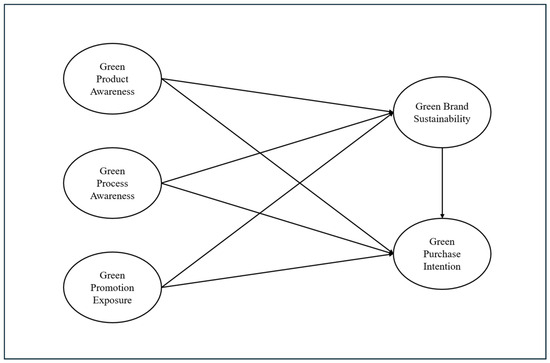
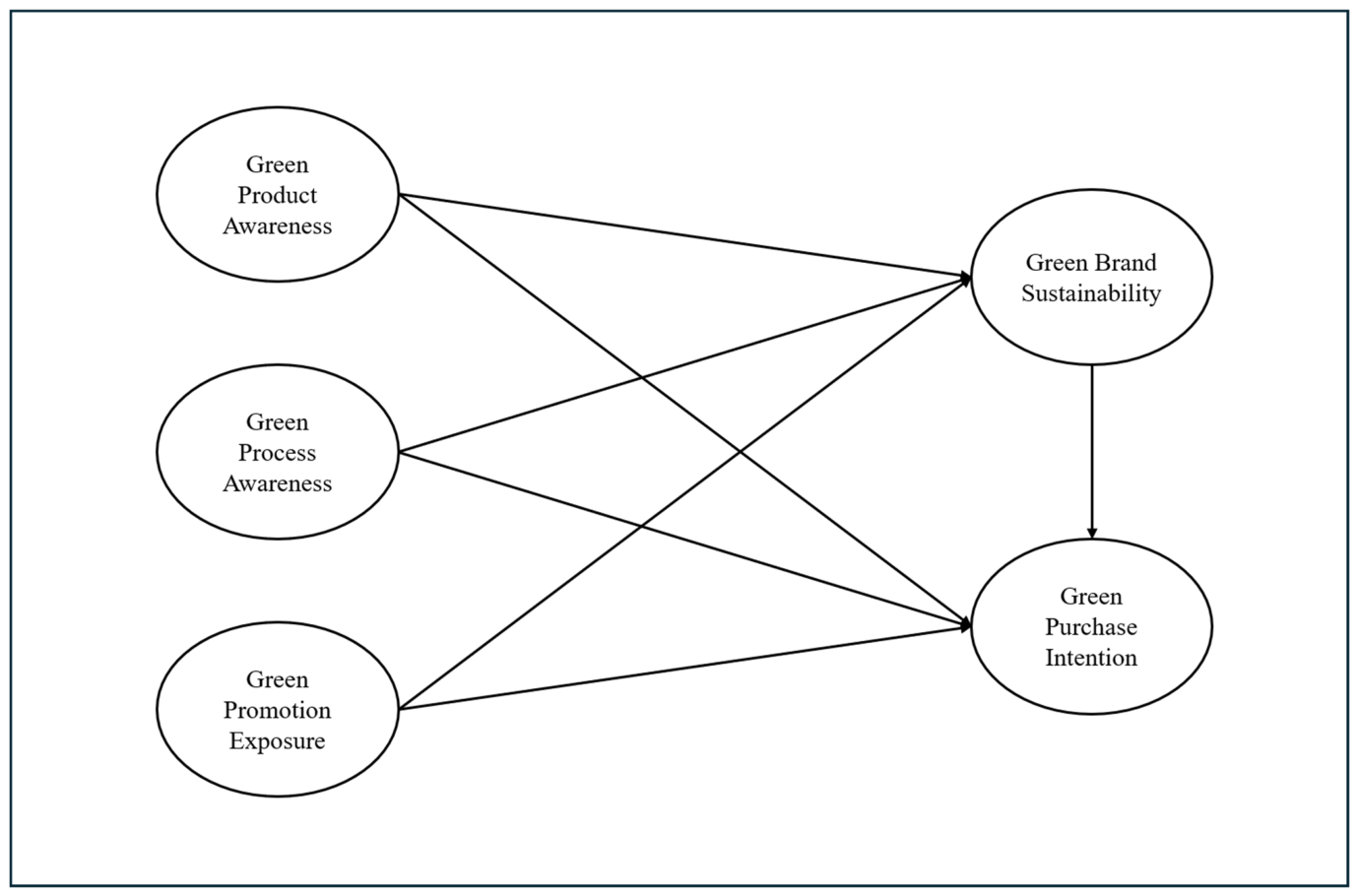
Based on the extant literature, we propose a conceptual model shown in Figure 1. The model aims to explain how public transportation environmental awareness and green promotional activities shape brand sustainability and, in turn, enhance green purchase intention among Generation Z users. The model incorporates three antecedent constructs: knowledge of environmental product attributes (GPD), environmentally responsible operational processes (GPR), and exposure to credible sustainability-focused promotion (GPM), with GBS serving as a mediator linking these variables to GPI. The model is anchored in the TPB, which asserts that attitudes, subjective norms, and perceived behavioral control jointly determine behavioral intention [9]. Furthermore, the model draws on Brand Equity Theory [41,52] to position brand sustainability as a central evaluative outcome shaped by environmental cues embedded in product attributes, processes, and communication. Finally, insights from the green marketing literature guide the inclusion of product–process–promotion dimensions as key drivers of perceived sustainability and environmentally oriented behavioral intentions [13,53].
Figure 1.
Research model.
3.2. The Impact of Green Product Awareness
In line with previous studies’ findings, we anticipate that consumer awareness of the environmental attributes of public transportation services will lead to behavioral intentions. As suggested by the TPB, when individuals better understand a public transportation system’s eco-friendly features, they develop more favorable attitudes toward using it, which enhances their intention to choose the environmentally beneficial option [18]. Indeed, prior findings demonstrate that environmental knowledge increases users’ perceived value and strengthens their intention to engage in sustainable consumption behaviors [54]. Hence, we propose the following hypothesis.
H1.
Green purchase awareness positively influences green purchase intention.
GPD of public transportation, such as energy efficiency, low emissions, eco-friendly materials, and reduced ecological impact, plays a significant role in shaping users’ evaluations of a transportation brand’s long-term credibility and responsibility [55]. Prior research confirms that understanding these environmentally responsible attributes enhances perceived value and strengthens positive brand evaluations [54,56]. In the public transportation context, these cues signal a strong institutional commitment to environmental stewardship, which directly contributes to perceived brand sustainability. Accordingly, the following hypothesis is proposed.
H2.
Green product awareness positively influences green brand sustainability.
3.3. The Impact of Green Process Awareness
Individuals’ awareness of how a product or service is produced, distributed, and delivered to consumers (i.e., GPR) is expected to shape behavioral intentions [34]. In line with the TPB, perceptions of ease, efficiency, and operational reliability influence the formation of intentions. In the context of sustainable public transportation, environmentally responsible processes reinforce users’ perceived behavioral control and strengthen their willingness to adopt greener mobility choices. Studies confirm that when service operations demonstrate ecological responsibility, users are more motivated to engage in sustainable consumption [57]. Hence, we propose the following hypothesis.
H3.
Green process awareness positively influences green purchase intention.
Individuals’ awareness of efficient energy utilization, waste reduction, compliance with environmental standards, and sustainable supply chain practices provides strong cues that a transportation system upholds environmental values in practice [58]. Literature on sustainable production and services emphasizes that such practices enhance credibility and strengthen the foundation of a sustainable brand [57,59]. When individuals perceive that operational processes align with sustainability claims, their trust in the brand’s long-term environmental commitment increases [60]. Hence, we anticipate the following relationship.
H4.
Green process awareness positively influences green brand sustainability.
3.4. Green Promotion Exposure and Green Brand Sustainability
As suggested by previous studies, we anticipate that sustainability-focused promotional exposure also directly shapes behavioral intentions [40,41]. Furthermore, promotional messages perceived as credible, transparent, and aligned with user experience increase trust and strengthen willingness to engage in environmentally responsible behavior [61]. Moreover, for Gen Z users, persuasive environmental communication serves not only as information but also as normative reinforcement [62]. Therefore, the following hypothesis is proposed:
H5.
Green promotion exposure positively influences green purchase intention.
Promotional messages that highlight environmental efforts supported by credible evidence, transparent storytelling, and verified certifications help build legitimacy and strengthen positive brand associations [42]. Previous research shows that sustainability-oriented promotion plays a crucial role in shaping brand image and perceived brand responsibility [61,63]. For Generation Z, whose decision-making is influenced by authenticity and social alignment, environmental messaging is particularly effective in reinforcing perceptions of brand sustainability [64]. Hence, we propose the following hypothesis.
H6.
Green promotion exposure positively influences green brand sustainability.
3.5. Green Brand Sustainability and Green Purchase Intention
The extant literature suggests GBS can play a critical role in shaping consumers’ long-term behavioral intentions. As outlined previously, strong perceptions of brand sustainability reinforce trust, satisfaction, and preference, ultimately leading to greater intention to adopt sustainable services [48,65]. Furthermore, a strong GBS helps consumers reduce perceived risks associated with unfamiliar green products [49] and enhances the product’s perceived value [50]. Hence, we propose the following hypothesis.
H7.
Green brand sustainability positively influences green purchase intention.
4. Method
4.1. Research Approach
This study employs a quantitative research approach using a structured survey to analyze the associations among variables within the green purchase intention model among public transportation users. The quantitative approach is considered appropriate for examining complex conceptual models that incorporate latent constructs and reflective indicators. Structural Equation Modeling (SEM) using LISREL 11.0 is used to assess both the direct and indirect relationships within the proposed model and to evaluate the measurement and structural models simultaneously.
In addition, this methodological design ensures a systematic and rigorous assessment of the theoretical framework by enabling empirical validation of the hypothesized relationships. The use of SEM–LISREL allows for a comprehensive evaluation of construct reliability and validity, thereby enhancing the robustness and generalizability of the research findings. Furthermore, by using a structured quantitative design, the study can generate objective, replicable, and statistically verifiable insights. This strengthens the empirical foundation of the green purchase intention model and supports the development of actionable implications for scholars, policymakers, and practitioners in the public transportation sector.
4.2. Research Instrument
The research instrument consists of a closed-ended questionnaire employing a five-point Likert scale (1 = strongly disagree, 5 = strongly agree) [66,67]. As shown in Appendix A, each construct is operationalized with eight indicators, each comprising three or more items [56,68]. The items were carefully developed based on prior studies to ensure comprehensive coverage of the conceptual domain and enhance the precision of the measurement model [69,70]. This balanced structure supports the robustness of the empirical assessment and aligns with established methodological practices in sustainability and consumer behavior research [71,72]. All indicators are evaluated using the LISREL measurement model, adhering to the recommended psychometric criteria, including a factor loading threshold of ≥0.70, Construct Reliability (CR) of ≥0.70, and Variance Extracted (VE) of ≥0.50, consistent with the guidelines proposed by Hair et al. [71] and Fornell and Larcker [73]. This ensures the reliability, validity, and robustness of the measurement model for subsequent structural analysis. Model fit was assessed using absolute, incremental, and parsimonious indices, including RMSEA, CFI, GFI, TLI, and CN, after which hypothesis testing was conducted based on the t-values of the structural paths [71].
Furthermore, the development of the measurement instrument follows a rigorous conceptual-to-empirical alignment process, ensuring that each indicator accurately reflects the theoretical domain of its corresponding construct [69,70]. This alignment enhances content validity and increases the precision of the structural relationships examined in the study [72,74]. By adopting established measurement standards, the study contributes to methodological transparency and supports the replicability of findings in future research on sustainability and consumer behavior [67,75].
In addition, using multiple constructs with a balanced number of indicators enhances the measurement instrument’s sensitivity to variation in respondents’ perceptions [70,72]. This structure also facilitates a more robust evaluation of convergent and discriminant validity during confirmatory factor analysis. Consequently, the instrument provides a comprehensive and statistically rigorous foundation for evaluating green awareness, sustainability perceptions, and behavioral intentions among public transportation users [76,77].
4.3. Data Collection
Data collection for this study was conducted using an offline questionnaire targeting Generation Z respondents aged 19 years or older who had experience using public transportation services. The sample selection procedure was designed to ensure comprehensive representation across the MRT Jakarta network. All 13 operational MRT stations in Jakarta, Indonesia, were included as data collection sites. Respondents were selected using an on-site intercept sampling approach conducted by a team of 13 trained enumerators, each assigned to one station. Data collection was conducted between 08:00 and 17:00, during which enumerators were stationed at the station exit gates to approach individuals exiting the MRT system. Each potential respondent was first asked whether they had just used the MRT service to exclude non-users present at the station (e.g., staff or passersby). Individuals who confirmed recent MRT use were subsequently screened by age, and only those aged 19 years or older at the time of data collection were included in the final sample. This age threshold was applied to ensure that respondents possess sufficient cognitive maturity and the ability to fully comprehend and reliably respond to the questionnaire items. Eligible respondents were then invited to participate voluntarily in the survey. Those who agreed were asked to complete a self-administered questionnaire on-site via a Google Form directly on their smartphones. This procedure ensured the immediate collection of responses and minimized potential recall and non-response bias associated with delayed survey completion. Responses were monitored and compiled in real time across all stations through the Google Form platform. Data collection concluded once 400 valid responses were obtained to ensure sufficient robustness of the data for subsequent analysis. The sample size also meets the minimum Critical N requirement (CN ≥ 200) recommended by Hair et al. [71], confirming its adequacy for Structural Equation Modeling (SEM) involving multiple latent constructs and indicators. Table 1 shows the demographic profile of the sample.
Table 1.
Demographic Profile of the Generation Z Sample.
5. Results
5.1. Measurement Model Assessment
As shown in Table 2, the measurement model demonstrated satisfactory psychometric properties, as all constructs met the recommended thresholds for factor loadings, internal consistency reliability, composite reliability, and Average Variance Extracted (AVE), thereby confirming model reliability, convergent validity, and discriminant validity in accordance with established SEM guidelines [71,73,78]. Composite reliability reflects the degree of internal consistency among the indicators measuring a latent construct by accounting for the standardized factor loadings and measurement errors of individual items. Unlike Cronbach’s alpha, composite reliability does not assume equal indicator loadings and therefore provides a more accurate reliability estimate in confirmatory factor analysis and SEM contexts. Values exceeding the recommended threshold of 0.70 indicate that the indicators consistently and reliably represent their underlying construct, confirming adequate internal consistency prior to structural model evaluation [67,71,73]. Average Variance Extracted (AVE) measures the average proportion of variance that a latent construct captures from its indicators relative to the variance attributable to measurement error. An AVE value of 0.50 or higher suggests that the construct explains more than half of the variance of its indicators, thereby providing strong evidence of convergent validity. In addition, AVE serves as an important criterion for assessing discriminant validity, compared with inter-construct correlations, ensuring that each construct is empirically distinct within the measurement model [71,72,73]. The validation procedures adopted in this study further align with contemporary methodological standards in structural equation modeling, emphasizing the importance of measurement precision, theoretical coherence, and internal consistency to ensure that latent constructs are empirically sound prior to structural analysis, thereby strengthening the robustness, credibility, and reproducibility of the findings [72,79].
Table 2.
Measurement Model Performance.
5.2. Structural Model Assessment
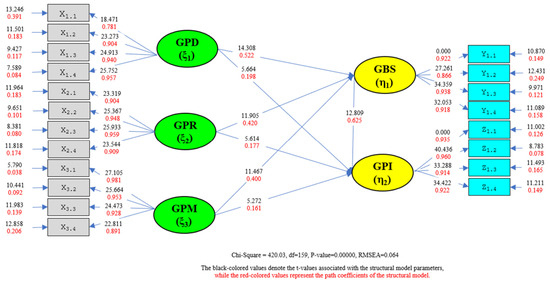
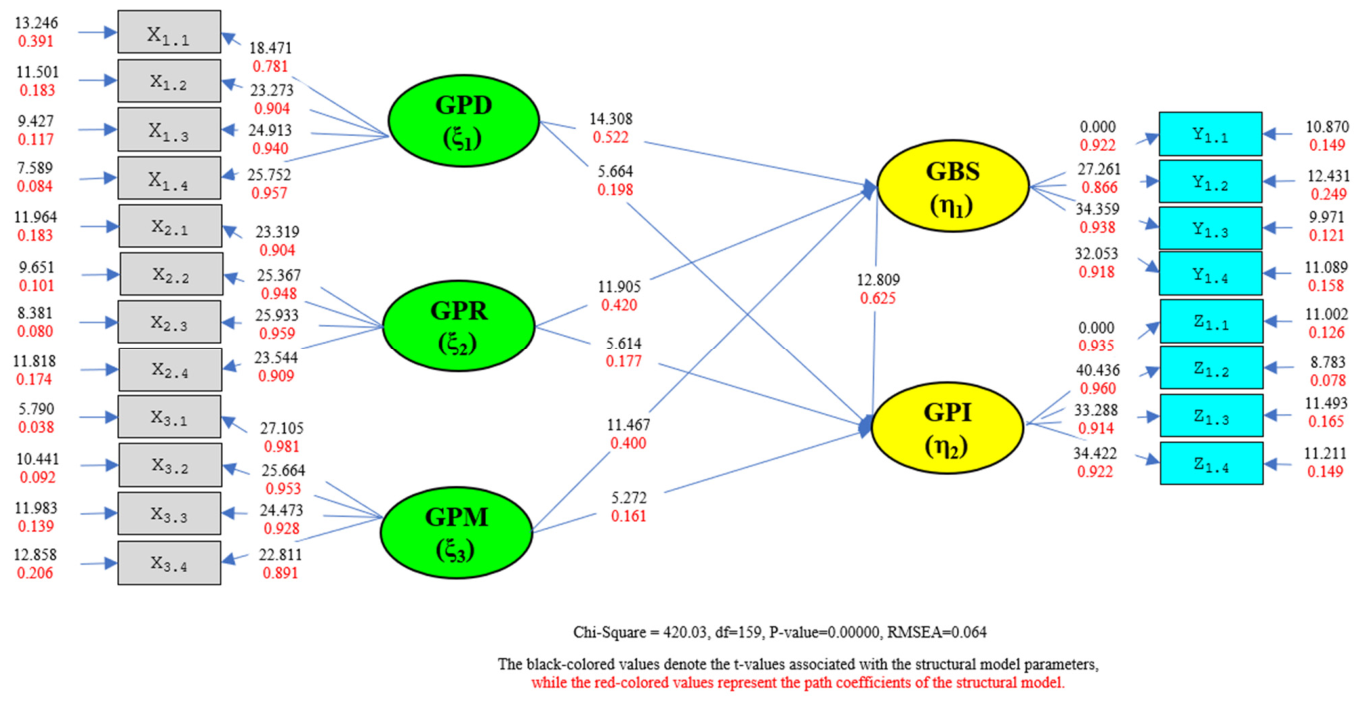
The structural model was evaluated using the LISREL covariance-based SEM approach by examining the standardized path coefficients and their associated t-values (see Figure 2). Path significance was determined using maximum-likelihood estimation, with t-values exceeding 1.69 indicating statistically significant causal relationships [72,80]. This evaluation followed the recommended two-step SEM framework to ensure that the structural relationships among the latent constructs were both theoretically coherent and empirically supported [74,79].
Figure 2.
Structural Model t-Value Parameters and Structural Model Path Coefficients.
The structural model results presented in Table 3 demonstrate coherent and statistically robust relationships among the constructs within the LISREL covariance-based SEM framework. All structural paths exhibit positive and significant coefficients, with t-values well above the conventional critical threshold of 1.69, indicating that the proposed causal relationships are empirically supported. The magnitude of the coefficients, ranging from small to strong effects, reflects the varying contributions of green product awareness, green process awareness, and green promotion exposure in shaping green brand sustainability and green purchase intention. Notably, the relationship between green brand sustainability and green purchase intention shows the strongest effect, underscoring the central role of brand-level sustainability attributes in shaping pro-environmental behavioral intentions.
Table 3.
Hypothesis Testing Results.
The pattern of direct and indirect effects further supports the mediating function of green brand sustainability. Significant indirect paths indicate that brand-level sustainability perceptions serve as a mechanism by which environmental awareness and promotional exposure translate into purchase-related outcomes. Because both direct and mediated pathways remain significant, the results align with a complementary partial mediation structure, suggesting that green brand sustainability amplifies rather than substitutes the influence of upstream environmental attributes on green purchase intention. Collectively, these findings reinforce the theoretical relevance of sustainability as a strategic bridging construct for explaining environmentally driven consumer decision-making.
6. Discussion and Implications
This study contributes to the broader discussions on sustainable urban mobility by demonstrating that the consistent integration of sustainability principles into service design and communication enables public transportation systems, such as MRT Jakarta, to foster environmentally responsible attitudes among Generation Z users. The findings show that credible, observable sustainability practices strengthen both cognitive evaluations and affective alignment, illustrating that user behavior is influenced not merely by functional service attributes but also by the coherence between environmental expectations and verifiable operational performance. Overall, the study positions sustainability-driven public transportation as a strategic avenue for fostering long-term pro-environmental engagement and advancing broader socio-environmental transformation in dense metropolitan contexts.
6.1. Theoretical Implications
This study offers a clear theoretical novelty by advancing the green consumer behavior literature beyond fragmented, product-centric explanations toward an integrative, brand-centered sustainability mechanism in the context of service-based public transportation. Unlike prior studies that primarily examine green purchase intention through isolated antecedents such as environmental concern, green product attributes, or perceived value [76,77], this research is among the first to systematically integrate green product awareness, green process awareness, and green promotion exposure within a single structural framework, positioning green brand sustainability as a mediating construct rather than a peripheral outcome [56]. By doing so, the study reconceptualizes green brand sustainability as an active theoretical conduit through which multiple environmental cues are cognitively and affectively synthesized into coherent brand evaluations and behavioral intentions, thereby extending existing branding and sustainability theories that have largely treated sustainability perceptions as static brand attributes [81]. Furthermore, this research contributes novel insight by empirically demonstrating how cognitive awareness, affective sustainability perceptions, and brand-related beliefs operate simultaneously in shaping green purchase intention among Generation Z—an understudied cohort in the public transportation sustainability literature—thus addressing calls to extend intention-based models such as the Theory of Planned Behavior beyond individual consumption settings to infrastructural and service-driven sustainability domains [9,76]. In this regard, the study not only broadens the theoretical domain of green consumer behavior but also introduces a contextually grounded and generationally specific framework that strengthens the explanatory power and relevance of sustainability and green branding theories in urban mobility research.
6.2. Practical Implications
This study offers practical insights for public transportation providers, such as MRT Jakarta, by showing that sustainability initiatives are more effective when translated into visible, actionable actions that users can directly experience. The findings suggest that embedding sustainability into daily service operations—such as displaying real-time information on energy efficiency or emissions reduction at stations and within mobile applications—can make environmental benefits more tangible to Generation Z users. In addition, improving transparency through practical measures, such as the regular release of concise sustainability updates or visual explanations of green operational practices, may help build user trust and reduce skepticism about sustainability claims. The results also indicate that communication strategies should move beyond generic environmental messages and focus on interactive, engagement-driven approaches, such as short educational content on social media, collaborative campaigns with universities, or partnerships with environmentally conscious influencers relevant to younger audiences. From a managerial perspective, treating sustainability as a long-term operational priority rather than a one-off promotional message enables public transportation providers to align service innovation, digitalization efforts, and environmental goals more effectively. By implementing these practical actions, providers can encourage repeat use, positive word-of-mouth, and sustained engagement, thereby strengthening the competitive position of sustainable public transportation services among Generation Z in urban settings.
7. Conclusions
The findings indicate that green product awareness, green process awareness, and green promotion exposure collectively enhance both green brand sustainability and green purchase intention among Generation Z users of public transportation in Indonesia, particularly those utilizing the MRT system in Jakarta Province. The results show that Gen Z passengers respond positively to sustainability-related attributes such as product-use efficiency, responsible energy consumption, and environmental messaging, suggesting that these dimensions meaningfully shape their perceptions of sustainable public transport brands.
The analysis also demonstrates that green brand sustainability serves as a key mediating mechanism, strengthening the influence of environmental awareness and sustainability-oriented promotional exposure on green purchase intention. This pattern indicates that Gen Z consumers in Jakarta are more likely to translate sustainability information into purchase-oriented behavioral intentions when it is reinforced by credible brand-level sustainability performance. Overall, these findings highlight the importance of embedding sustainability-centered branding strategies within Indonesia’s public transportation sector to better engage environmentally conscious young consumers and support a transition toward sustainable urban mobility.
8. Limitations and Future Work
The scope of this study is constrained by its exclusive focus on Generation Z MRT Jakarta users, which limits the generalizability of the findings to other demographic groups, transportation modes, and urban contexts with different socio-cultural and infrastructural characteristics. Moreover, the cross-sectional, purely quantitative research design limits the ability to capture temporal dynamics and the deeper psychological mechanisms underlying sustainability-oriented behavioral intentions. Future research should extend the model to multiple cities, transportation systems, and demographic cohorts while incorporating advanced psychological variables and mixed-methods approaches to enrich theoretical depth and contextual relevance. Longitudinal investigations are also warranted to examine how sustainability perceptions and green purchase intentions evolve over time in response to policy innovations, service improvements, and shifts in urban mobility ecosystems.
Author Contributions
Conceptualization, A.S. and W.D.D.; Methodology, A.S.; Software, D.W.; Validation, W.D.D. and D.W.; Formal Analysis, A.S.; Investigation, A.S.; Resources, D.W.; Data Curation, A.S.; Writing—Original Draft Preparation, A.S.; Writing—Review and Editing, W.D.D.; Visualization, A.S.; Supervision, D.W.; Project Administration, A.S.; Funding Acquisition, W.D.D. All authors have read and agreed to the published version of the manuscript.
Funding
This research was supported by a research grant provided by the University of Osaka (grant number: J210503011).
Institutional Review Board Statement
The study was conducted in accordance with the Declaration of Helsinki, and approved by the Institutional Review Board of the School of Post-graduate Studies, Pakuan University (Approval number 1114/SPs/Unpak/VI/2026) on 12 January 2026.
Informed Consent Statement
Informed consent was obtained from all participants involved in the study.
Data Availability Statement
The data used in this study are available from the corresponding author upon a reasonable request.
Conflicts of Interest
There are no conflicts of interest to declare.
Abbreviations
The following abbreviations are used in this manuscript:
| MRT | Mass Rapid Transit |
| TPB | Theory of Planned Behavior |
| GPI | Green Purchase Intention |
| GPD | Green Product Awareness |
| GPR | Green Process Awareness |
| GPM | Green Promotion Exposure |
| BGS | Brand Green Sustainability |
| SEM | Structural Equation Modeling |
Appendix A
Table A1.
Variables, Dimensions, and Indicators Used in This Study.
References
- Shah, K.J.; Pan, S.-Y.; Lee, I.; Kim, H.; You, Z.; Zheng, J.-M.; Chiang, P.-C. Green transportation for sustainability: Review of current barriers, strategies, and innovative technologies. J. Clean. Prod. 2021, 326, 129392. [Google Scholar] [CrossRef] [Scilit]
- Kotler, P.; Keller, K.L. Marketing Management, 15th ed.; Pearson: London, UK, 2016. [Google Scholar]
- Mlázovský, M.; Svoboda, O.; Kantorová, K. The impact of environmental attitudes and information processing on decision-making in transport services: A case study of Gen Z students. J. Serv. Theory Pract. 2025, 35, 951–976. [Google Scholar] [CrossRef] [Scilit]
- Turner, A. Generation Z: Technology and social interest. J. Individ. Psychol. 2015, 71, 103–113. [Google Scholar] [CrossRef] [Scilit]
- Ling, P.S.; Chin, C.H.; Yi, J.; Wong, W.P.M. Green consumption behaviour among generation Z college students in China: The moderating role of government support. Young Consum. 2024, 25, 507–527. [Google Scholar]
- Vávrová, L.; Nacházelová, E.; Brůhová Foltýnová, H. Shaping mobility futures: Understanding Millennials and Gen Z transport choices for sustainable policy design. Sustain. Communities 2025, 2, 2483250. [Google Scholar] [CrossRef] [Scilit]
- Grzesiuk, K.; Jegorow, D.; Wawer, M.; Głowacz, A. Energy-efficient city transportation solutions in the context of energy-conserving and mobility behaviours of generation Z. Energies 2023, 16, 5846. [Google Scholar] [CrossRef] [Scilit]
- Olsson, L.E.; Friman, M.; Lättman, K.; Fujii, S. Travel and life satisfaction-From Gen Z to the silent generation. J. Transp. Health 2020, 18, 100894. [Google Scholar] [CrossRef] [Scilit]
- Ajzen, I. The theory of planned behavior. Organ. Behav. Hum. Decis. Process. 1991, 50, 179–211. [Google Scholar] [CrossRef] [Scilit]
- Ma, Y.; Li, Y.; Fang, H. Interconnected Eco-Consciousness: Gen Z Travelers’ Intentions toward Low-Carbon Transportation and Hotels. Sustainability 2024, 16, 6559. [Google Scholar] [CrossRef] [Scilit]
- Kamalanon, P.; Chen, J.; Le, T. “Why Do We Buy Green Products?” An Extended Theory of the Planned Behavior Model for Green Product Purchase Behavior. Sustainability 2022, 14, 689. [Google Scholar] [CrossRef] [Scilit]
- Petkowicz, A.; Pelegrini, T.; Bodah, B.; Rotini, C.; Moro, L.; Neckel, A.; Spanhol, C.P.; Araújo, E.G.; Pauli, J.; Mores, G. Purchasing Intention of Products with Sustainable Packaging. Sustainability 2024, 16, 2914. [Google Scholar] [CrossRef] [Scilit]
- Dangelico, R.M.; Vocalelli, D. “Green Marketing”: An analysis of definitions, strategy steps, and tools through a systematic review of the literature. J. Clean. Prod. 2017, 165, 1263–1279. [Google Scholar] [CrossRef] [Scilit]
- Nekmahmud, M.; Fekete, M.; Farkas, M. Why Not Green Marketing? Determinates of Consumers’ Intention to Green Purchase Decision in a New Developing Nation. Sustainability 2020, 12, 7880. [Google Scholar] [CrossRef] [Scilit]
- Ko, S.; Jin, B. Predictors of purchase intention toward green apparel products. J. Fash. Mark. Manag. 2017, 21, 70–87. [Google Scholar] [CrossRef] [Scilit]
- Boobalan, K.; Nawaz, N.; Harindranath, R.; Gajenderan, V. Influence of Altruistic Motives on Organic Food Purchase: Theory of Planned Behavior. Sustainability 2021, 13, 6023. [Google Scholar] [CrossRef] [Scilit]
- Margariti, K.; Hatzithomas, L.; Boutsouki, C. Elucidating the gap between green attitudes, intentions, and behavior through the prism of greenwashing concerns. Sustainability 2024, 16, 5108. [Google Scholar] [CrossRef] [Scilit]
- Di Pillo, F.; Palombi, G.; Strazzullo, S. Does Greenwashing Wash Away Gen Z’s Green Purchase Intention? Bus. Strategy Environ. 2025, 34, 9081–9092. [Google Scholar] [CrossRef] [Scilit]
- Carrión Bósquez, N.G.; Arias-Bolzmann, L.G. Factors influencing green purchasing inconsistency of Ecuadorian millennials. Br. Food J. 2022, 124, 2461–2480. [Google Scholar]
- Chaudhary, R. Green buying behavior in India: An empirical analysis. J. Glob. Responsib. 2018, 9, 179–192. [Google Scholar] [CrossRef] [Scilit]
- Wei, L.S.; Chin, T.A.; Masod, A.; Mohamad, N.S. The role of pricing and product knowledge on Malaysian consumers’ green purchase intention. Int. J. Acad. Res. Bus. Soc. Sci. 2022, 12, 1698–1732. [Google Scholar] [CrossRef] [Scilit] [PubMed]
- Royani, I.; Imaningsih, E.S. Determinants of green purchase intentions for eco-friendly skincare products. J. Appl. Bus. Tax. Econ. Res. 2024, 4, 267–287. [Google Scholar] [CrossRef] [Scilit]
- Annunziata, E.; Pucci, T.; Cammeo, J.; Zanni, L.; Frey, M. The mediating role of exogenous shocks in green purchase intention: Evidence from Italian fashion industry in the COVID-19 era. Ital. J. Mark. 2023, 2023, 59–79. [Google Scholar] [CrossRef] [Scilit]
- Kim, Y.; Oh, K.; Jung, H. Determinants of eco-friendly outdoor wear products purchase intention: Exploring Value-Belief-Norm Theory. Fash. Text. Res. J. 2015, 17, 965–977. [Google Scholar] [CrossRef] [Scilit]
- Duong, C. Environmental corporate social responsibility initiatives and the attitude–intention–behavior gap in green consumption. Soc. Responsib. J. 2024, 20, 305–325. [Google Scholar]
- Chao, C.M.; Yu, T.K. How emotions and green altruism explain consumer purchase intention toward circular economy products: A multi-group analysis on willingness to be environmentally friendly. Bus. Strategy Environ. 2024, 33, 2803–2816. [Google Scholar]
- Shafiq, A.; Khan, M.M.A.; Tahir, S.A. Identifying key antecedents of eco-conscious consumer behavior: Mediating role of intentions to purchase green DC inverter air conditioners. Rev. Appl. Manag. Soc. Sci. 2024, 7, 69–88. [Google Scholar] [CrossRef] [Scilit]
- Bajar, R.G.C.A.; Ong, A.K.S.; German, J.D. Determining sustainable purchase behavior for green products from name-brand shops: A Gen Z perspective in a developing country. Sustainability 2024, 16, 3747. [Google Scholar] [CrossRef] [Scilit]
- Rahayu, S.; Vedy, N.; Novitasari, E. Impact of environmental knowledge toward green purchase intention: Attitude as mediator. J. Bus. Inf. Syst. 2024, 6, 224–237. [Google Scholar] [CrossRef] [Scilit]
- Lavuri, R.; Parida, R.; Singh, S. Unveiling ways to examine the purchase intention of green products in emerging markets. Benchmarking Int. J. 2024, 31, 1385–1401. [Google Scholar]
- Paták, M.; Branská, L.; Pecinová, Z. Consumer Intention to Purchase Green Consumer Chemicals. Sustainability 2021, 13, 7992. [Google Scholar] [CrossRef] [Scilit]
- Indrajaya, N.; Perizade, B.; Wahab, Z.; Shihab, M. Mediating role of attitude in green purchase intention for solar power plants: A green marketing analysis. Ann. Manag. Organ. Res. 2024, 5, 127–141. [Google Scholar] [CrossRef] [Scilit]
- Ansu-Mensah, P. Green product awareness effect on green purchase intentions of university students’: An emerging market’s perspective. Future Bus. J. 2021, 7, 48. [Google Scholar] [CrossRef] [Scilit]
- Charalampidis, I.; Xanthopoulos, A.; Diamantidis, A.; Chatzoglou, P. Public Perception of Green Supply Chains and Its Impact on Customer Behavior: An Empirical Analysis. Sustainability 2023, 15, 16345. [Google Scholar] [CrossRef] [Scilit]
- Damberg, S.; Saari, U.; Fritz, M.; Dlugoborskytė, V.; Božič, K. Consumers’ purchase behavior of Cradle to Cradle Certified® products—The role of trust and supply chain transparency. Bus. Strategy Environ. 2024, 33, 8280–8299. [Google Scholar] [CrossRef] [Scilit]
- Khan, M.; Khalid, S.; Zaman, U.; José, A.; Ferreira, P. Green Paradox in Emerging Tourism Supply Chains: Achieving Green Consumption Behavior through Strategic Green Marketing Orientation, Brand Social Responsibility, and Green Image. Int. J. Environ. Res. Public Health 2021, 18, 9626. [Google Scholar] [CrossRef] [Scilit] [PubMed]
- Wong, A. How green sustainability efforts affect brand-related outcomes. Asia-Pac. J. Bus. Adm. 2024, 16, 1182–1201. [Google Scholar]
- Hu, T.; Chao, C.; Lin, C. The Role of Social Media Marketing in Green Product Repurchase Intention. Sustainability 2024, 16, 5916. [Google Scholar] [CrossRef] [Scilit]
- Khandelwal, U.; Singh, T. Explaining media effect of green advertising on audience attitude. Soc. Bus. Rev. 2023, 18, 523–546. [Google Scholar] [CrossRef] [Scilit]
- Kao, T.F.; Du, Y.Z. A study on the influence of green advertising design and environmental emotion on advertising effect. J. Clean. Prod. 2020, 242, 118294. [Google Scholar] [CrossRef] [Scilit]
- Liang, S.; Chu, Y.; Zhang, M.; Chang, Y.; Yan, Y.; He, L.; Wei, T. The influence of promotion mode of green products on sharing intention. J. Clean. Prod. 2022, 364, 132633. [Google Scholar] [CrossRef] [Scilit]
- Luo, B.; Sun, Y.; Shen, J.; Xia, L. How does green advertising skepticism on social media affect consumer intention to purchase green products? J. Consum. Behav. 2020, 19, 371–381. [Google Scholar] [CrossRef] [Scilit]
- Shahrin, R.; Quoquab, F.; Jamil, R.; Mahadi, N.; Mohammad, J.; Salam, Z.; Hussin, N. Green “eco-label” or “greenwashing”? Building awareness about environmental claims of marketers. Adv. Sci. Lett. 2017, 23, 3205–3208. [Google Scholar] [CrossRef] [Scilit]
- Dahl, R. Green washing: Do you know what you’re buying? Environ. Health Perspect. 2010, 118, A246. [Google Scholar] [CrossRef] [Scilit] [PubMed]
- Riyaz, M.; Jan, A.; Khan, D.; Zahoor, A. Determinants of purchase intention for green consumer durables: Investigating the moderating role of price sensitivity. Jindal Manag. J. 2025, 14, 197–207. [Google Scholar] [CrossRef] [Scilit] [PubMed]
- Tan, Z.; Sadiq, B.; Bashir, T.; Mahmood, H.; Rasool, Y. Investigating the Impact of Green Marketing Components on Purchase Intention: The Mediating Role of Brand Image and Brand Trust. Sustainability 2022, 14, 5939. [Google Scholar] [CrossRef] [Scilit]
- Ramtiyal, B.; Garg, P.; Johari, S.; Rathore, A.; Thakrey, A. Investigating the effects of corporate social responsibility on sustainable consumer purchase behavior. J. Glob. Oper. Strateg. Sourc. 2024, 17, 1–27. [Google Scholar]
- Gong, Y.; Xiao, J.; Tang, X.; Li, J. How sustainable marketing influences the customer engagement and sustainable purchase intention? The moderating role of corporate social responsibility. Front. Psychol. 2023, 14, 1128686. [Google Scholar] [CrossRef] [Scilit] [PubMed]
- Majeed, M.; Aslam, S.; Murtaza, S.; Szakács, A.; Molnár, E. Green Marketing Approaches and Their Impact on Green Purchase Intentions: Mediating Role of Green Brand Image and Consumer Beliefs towards the Environment. Sustainability 2022, 14, 11703. [Google Scholar] [CrossRef] [Scilit]
- Yu, S.; Zhong, Z.; Zhu, Y.; Sun, J. Green emotion: Incorporating emotional perception in green marketing to increase green furniture purchase intentions. Sustainability 2024, 16, 4935. [Google Scholar] [CrossRef] [Scilit]
- Soliman, K.; Bahareth, A. Closed-Loop Supply Chain Integration: Assessing Marketing Impacts and Customer Perceptions of Sustainable Brand Value in the Saudi Photovoltaic Industry. Int. J. Prof. Bus. Rev. 2023, 8, e04064. [Google Scholar] [CrossRef] [Scilit]
- Aaker, D.A. Managing Brand Equity: Capitalizing on the Value of a Brand Name; Free Press: New York, NY, USA, 1991. [Google Scholar]
- Peattie, K.; Charter, M. Green Marketing. In The Marketing Book, 5th ed.; Baker, M.J., Ed.; Butterworth-Heinemann: Oxford, UK, 2003. [Google Scholar]
- Zameer, H.; Yasmeen, H. Green innovation and environmental awareness driven green purchase intentions. Mark. Intell. Plan. 2022, 40, 624–638. [Google Scholar] [CrossRef] [Scilit]
- Fu, L.; Sun, Z.; Zha, L.; Liu, F.; He, L.; Sun, X.; Jing, X. Environmental awareness and pro-environmental behavior within China’s road freight transportation industry: Moderating role of perceived policy effectiveness. J. Clean. Prod. 2020, 252, 119796. [Google Scholar] [CrossRef] [Scilit]
- Chen, Y.-S. The drivers of green brand equity: Green brand image, green satisfaction, and green trust. J. Bus. Ethics 2010, 93, 307–319. [Google Scholar]
- Peattie, K. Sustainability Marketing: Principles and Practice; Routledge: Abingdon, UK, 2018. [Google Scholar]
- Cheng, C.; Ahmad, S.F.; Irshad, M.; Alsanie, G.; Khan, Y.; Ahmad, A.Y.B.; Aleemi, A.R. Impact of green process innovation and productivity on sustainability: The moderating role of environmental awareness. Sustainability 2023, 15, 12945. [Google Scholar] [CrossRef] [Scilit]
- Ottman, J.A. The New Rules of Green Marketing: Strategies, Tools, and Inspiration for Sustainable Branding; Berrett-Koehler: Oakland, CA, USA, 2011. [Google Scholar]
- Corazza, M.V.; Guida, U.; Musso, A.; Tozzi, M. A new generation of buses to support more sustainable urban transport policies: A path towards “greener” awareness among bus stakeholders in Europe. Res. Transp. Econ. 2016, 55, 20–29. [Google Scholar] [CrossRef] [Scilit]
- Sharma, A.P. Consumers’ purchase behaviour and green marketing: A synthesis, review and agenda. Int. J. Consum. Stud. 2021, 45, 1217–1238. [Google Scholar] [CrossRef] [Scilit]
- Borah, P.S.; Dogbe, C.S.K.; Marwa, N. Generation Z’s green purchase behavior: Do green consumer knowledge, consumer social responsibility, green advertising, and green consumer trust matter for sustainable development? Bus. Strategy Environ. 2024, 33, 4530–4546. [Google Scholar] [CrossRef] [Scilit]
- Leonidou, C.N.; Katsikeas, C.S.; Morgan, N.A. “Greening” the marketing mix: Do firms do it and does it pay off? J. Acad. Mark. Sci. 2013, 41, 151–170. [Google Scholar]
- Szabo, S.; Webster, J. Perceived greenwashing: The effects of green marketing on environmental and product perceptions. J. Bus. Ethics 2021, 171, 719–739. [Google Scholar]
- Sweeney, J.C.; Soutar, G.N. Consumer perceived value: The development of a multiple item scale. J. Retail. 2001, 77, 203–220. [Google Scholar] [CrossRef] [Scilit]
- Likert, R. A technique for the measurement of attitudes. Arch. Psychol. 1932, 140, 5–55. [Google Scholar]
- Hair, J.F.; Hult, G.T.M.; Ringle, C.M.; Sarstedt, M. A Primer on Partial Least Squares Structural Equation Modeling, 2nd ed.; Sage: Thousand Oaks, CA, USA, 2019. [Google Scholar]
- Kumar, P.; Ghodeswar, B.M. Factors affecting consumers’ green product purchase decisions. Mark. Intell. Plan. 2025, 33, 330–347. [Google Scholar]
- Churchill, G.A. A paradigm for developing better measures of marketing constructs. J. Mark. Res. 1979, 16, 64–73. [Google Scholar] [CrossRef] [Scilit]
- DeVellis, R.F. Scale Development: Theory and Applications, 4th ed.; Sage: Thousand Oaks, CA, USA, 2017. [Google Scholar]
- Hair, J.F.; Black, W.C.; Babin, B.J.; Anderson, R.E. Multivariate Data Analysis, 7th ed.; Pearson: London, UK, 2010. [Google Scholar]
- Kline, R.B. Principles and Practice of Structural Equation Modeling, 4th ed.; Guilford Press: New York, NY, USA, 2016. [Google Scholar]
- Fornell, C.; Larcker, D.F. Evaluating structural equation models with unobservable variables and measurement error. J. Mark. Res. 1981, 18, 39–50. [Google Scholar] [CrossRef] [Scilit]
- Bollen, K.A. Structural Equations with Latent Variables; Wiley: Hoboken, NJ, USA, 1989. [Google Scholar]
- Podsakoff, P.M.; MacKenzie, S.B.; Podsakoff, N.P. Sources of method bias in social science research and recommendations on how to control it. Annu. Rev. Psychol. 2012, 63, 539–569. [Google Scholar] [CrossRef] [Scilit] [PubMed]
- Chen, Y.S.; Chang, C.H. Enhance green purchase intentions: The roles of green perceived value, green perceived risk, and green trust. Manag. Decis. 2012, 50, 502–520. [Google Scholar] [CrossRef] [Scilit]
- Peattie, K.; Crane, A. Green marketing: Legend, myth, farce or prophesy? Qual. Mark. Res. Int. J. 2005, 8, 357–370. [Google Scholar] [CrossRef] [Scilit]
- Chin, W.W. The partial least squares approach to structural equation modeling. In Modern Methods for Business Research; Marcoulides, G.A., Ed.; Lawrence Erlbaum Associates: Mahwah, NJ, USA, 1998; pp. 295–336. [Google Scholar]
- Anderson, J.C.; Gerbing, D.W. Structural equation modeling in practice: A review and recommended two-step approach. Psychol. Bull. 1988, 103, 411–423. [Google Scholar] [CrossRef]
- Jöreskog, K.G.; Sörbom, D. LISREL 8: Structural Equation Modeling with the SIMPLIS Command Language; Scientific Software International: Skokie, IL, USA, 1996. [Google Scholar]
- Martínez, P. Customer loyalty: Exploring its antecedents from a green marketing perspective. Int. J. Contemp. Hosp. Manag. 2015, 27, 896–917. [Google Scholar] [CrossRef] [Scilit]

Disclaimer/Publisher’s Note: The statements, opinions and data contained in all publications are solely those of the individual author(s) and contributor(s) and not of MDPI and/or the editor(s). MDPI and/or the editor(s) disclaim responsibility for any injury to people or property resulting from any ideas, methods, instructions or products referred to in the content. |
© 2026 by the authors. Licensee MDPI, Basel, Switzerland. This article is an open access article distributed under the terms and conditions of the Creative Commons Attribution (CC BY) license.