


Abstract
Buildings account for roughly 37% of energy-related CO2 emissions, and space cooling already consumes nearly 10% of global electricity. Cooling demand is rising fastest in tropical cities, where air-conditioning could reach 45% of peak load, especially in India by 2050. This review critically examines thermal energy storage (TES) as a flexibility resource across three distinct scales: individual buildings, district heating and cooling networks, and city-level multi-energy systems. Using a Preferred Reporting Items for Systematic Reviews and Meta-Analyses (PRISMA)-based search of Scopus, Web of Science, and IEEE Xplore with primary and supplementary strings, 4447 records were identified, of which 174 were included. Each quantitative study was classified by validation level (simulation, laboratory, pilot, or operational) and by the centrality of thermal storage. Sensible, latent, and thermochemical storage technologies are compared using energy density (10–500 kWh/m3), efficiency (40–95%), cycle stability, and technology readiness. The review then evaluates the role of artificial intelligence (AI), machine learning, and Internet of Things platforms in forecasting, predictive control, and operational optimization of TES networks. Thirteen method families, grouped into AI and machine learning methods, optimization methods, control methods, and digital enabling technologies, are assessed against six explicitly defined criteria with evidence-coded scores. Among 47 quantitative studies, 37 (78.7%) are simulation-only, and only four (8.5%) report operational data. Direct TES-AI studies report simulated energy savings of 8–64% and peak load reductions of about 35%, whereas field-validated intelligent control reports 17% energy savings in a single real building experiment. The review also identifies inherent drawbacks of artificial intelligence-based operations, including limited interpretability, high data and computational demands, concept drift, and cyber vulnerabilities that increased peak electric load by 17.4% in a simulated attack. A structural imbalance in the literature is evident: most validated deployments remain at the building-scale, whereas urban-scale evidence is confined to district cooling, aquifer and pit storage, and multi-energy hub studies; no study reports the coordinated operation of distributed TES assets across multiple districts. A conceptual framework and a staged roadmap linking building, district, and urban scales are proposed. Priority research needs include urban-scale pilots in tropical climates, techno-economic assessment, interpretable and drift-robust AI, and interoperability standards that support United Nations’ Sustainable Development Goals 7, 11, and 13.
1. Introduction
1.1. Background and Motivation
Urban areas concentrate buildings, industry, and transport, and therefore dominate global energy use and emissions. Cities consequently play a pivotal role in climate mitigation and the transition toward sustainable energy systems [1,2]. The concept of net-zero energy cities, where annual energy demand is balanced by renewable generation, has emerged as a critical pathway for long-term environmental sustainability and energy security. Real net-zero urban energy systems (UESs) require the coordinated integration of renewable energy technologies, advanced energy storage, and intelligent energy management frameworks that balance supply and demand while reducing fossil fuel dependence [3,4]. Within this transformation, net-zero energy buildings (NZEBs) represent the foundational units of sustainable cities. These buildings minimize demand through passive design, efficient envelopes, and optimized heating, ventilation, and air-conditioning (HVAC) systems, supported by renewable energy generation and storage [5].
Rapidly urbanizing countries such as India face additional challenges from rising energy demand and climate variability. The most critical challenge is the rapid growth in cooling demand, driven by population growth, expanding urban infrastructure, higher ambient temperatures, and urban heat island effects [6,7]. Space cooling already accounts for close to 10% of global electricity use, and the worldwide air-conditioner stock is projected to grow from 1.6 to 5.6 billion units by 2050 [8]. In India, air-conditioning could rise from about 10% to 45% of peak electric load by 2050 without efficiency and flexibility measures [8]. The national cooling demand is projected to grow nearly eight-fold between 2017 and 2038 [9]. Cooling demand in buildings accounts for a significant share of electricity consumption in Indian cities [10,11]. This growth stresses electricity infrastructure through peak load, higher operating costs, and increased emissions [12,13]. Addressing these challenges requires solutions that manage thermal loads efficiently while enabling greater integration of renewable energy sources (RES). Thermal energy storage (TES) has gained considerable attention for this role [14,15]. TES systems store excess thermal energy during low-demand periods and release it during peak periods, reducing electricity consumption, improving load management, and enhancing grid stability [16,17,18]. Sensible heat storage raises the temperature of media such as water, rocks, or molten salts, with the capacity determined by the heat capacity and the temperature difference [19]. Latent heat storage uses phase change materials (PCMs) that absorb and release large amounts of heat during phase transitions, providing higher storage density and near-constant operating temperatures, which are well-suited to building heating and cooling [20,21]. Thermochemical storage uses reversible reactions to reach high energy density and long-duration storage, at the cost of greater system complexity [22].
1.2. Urban Energy Systems: Definition and Scale Boundaries
The term “urban energy system” is used inconsistently in the literature, complicating comparisons across studies. Following Keirstead et al. [23], a UES is defined here as the combined processes of acquiring and using energy to satisfy the energy service demands of a given urban area. A UES is therefore not a single technology but a system of systems. It spans buildings, distribution networks, generation and storage assets, and the institutions that govern them. Building-scale systems (roughly 1 kWhth to 1 MWhth of storage capacity) serve a single building and are controlled by a single owner via a building management system. Building clusters (1–100 MWhth) share centralized plants or thermal loops among several buildings. District-scale systems (100 MWhth to 10 GWhth) distribute heating or cooling through networks serving hundreds of buildings, often with large water tanks, borehole fields, or aquifer storage. Urban or city-scale systems (10 GWhth to 1 TWhth) coordinate multiple districts, couple thermal networks with power, gas, water, and transport infrastructure, and involve municipal planning and regulation. Regional systems (above 1 TWhth) link cities through inter-regional networks and seasonal storage. Capacity alone does not define scale. Three additional criteria are applied consistently in this review: the number of independently owned TES assets under coordinated control (one, several, tens to hundreds, or multiple districts), the administrative boundary of the decision-maker (owner, aggregator, utility, or municipality), and whether the study reports model results or coordinated operation of physical assets. A study is classified as city-scale only if it coordinates TES assets across at least two districts under a common objective. Urban-scale energy system optimization models that treat storage as an aggregated variable are labeled urban (model) and are distinguished from deployed networks. The distinction matters for three reasons. First, the applicable TES technologies differ: PCM modules and water tanks dominate at the building-scale, whereas aquifer, borehole, and pit storage become economical only at the district-scale and above [24,25]. Second, control objectives shift from indoor comfort and utility bills at the building-scale to network hydraulics, peak shaving, and market participation at the district and city scales [26]. Third, the decision-makers change from individual owners to utilities, municipalities, and regulators, so deployment barriers become institutional rather than purely technical. Distribution-grid constraints illustrate this institutional dimension. In Romania, residential prosumer capacity grew from 1.52 MW in 2019 to 5312 MW by April 2026, while the grid saturation index fell from 0.96 to −0.59, and the estimated carrying capacity reached roughly 398,000 prosumers [27]. Flexibility resources such as TES, rather than additional generation, therefore set the pace at which urban systems can absorb renewables. In this review, the phrase intelligent TES network denotes digitally coordinated TES assets operating at least at the district scale. Building-level studies are reviewed as the enabling foundation of such networks and are labeled accordingly.
1.3. Related Reviews and Recent Advances
In recent years, integrating TES with digital and intelligent energy management has attracted increasing attention. AI, smart grid technologies, and Internet of Things (IoT) platforms open new opportunities to optimize TES operation and system-level performance [28,29,30]. AI-driven algorithms forecast energy demand and renewable energy availability while optimizing TES charging and discharging in real-time [31,32]. IoT-based monitoring platforms complement these capabilities by continuously acquiring data from distributed energy assets [33,34]. Recent literature also highlights the potential of combining advanced materials and AI to improve TES performance. Mohammed et al. [35] reported that incorporating nanomaterials such as Al2O3 and CuO into PCMs and nanofluids increased thermal conductivity by up to 28.8%. They also showed that artificial neural networks (ANNs) and particle swarm optimization reached predictive accuracies above 97%, with energy savings of up to 28% in AI-driven PCM-based HVAC systems. Shukla et al. [36] reviewed AI applications in battery energy storage, covering real-time monitoring, state estimation, and predictive maintenance. AI and machine learning (ML) improve the optimization, forecasting, and maintenance of storage assets, resulting in measurable efficiency gains and cost reductions [37]. Hybrid energy systems integrate multiple sources to improve efficiency and renewable integration in distributed generation, and AI techniques improve their control and reliability despite added system complexity [38]. Li et al. [39] developed an AI-based optimization platform for solid-gas sorption storage, in which ANNs predicted performance with absolute relative errors below 1% and a multi-population genetic algorithm identified optimal adsorbate pressures of 5.2–8.7 bar.
Intelligent control for building energy management has been explored extensively. Lv et al. [40] used digital twins to optimize the scheduling of PCM-integrated walls, thereby preventing battery overcharging in microgrids and reducing economic and environmental costs. Shaterabadi et al. [41] reported 34.6% lower total costs and 51.2% lower pollution for a plus-zero energy building when cost optimization was prioritized. Reinforcement learning (RL) shows strong potential for energy system optimization, with documented efficiency gains but persistent challenges in scalability, interpretability, and integration [42]. Deep learning delivers similar gains for smart-city energy optimization, but at a high computational cost [43]. Liu et al. [44] combined RL with adaptive model predictive control (MPC) for building energy systems, cutting energy consumption by 12.1% while improving photovoltaic (PV) utilization. At infrastructure scale, a bibliometric analysis of large-scale underground energy storage identified intelligent system integration, hybrid storage, and underground biomethanation as emerging themes [45].
Table 1 compares the present study with recent reviews and confirms that most prior work is building- or district-focused. This review makes four specific contributions. First, it defines explicit scale boundaries for TES deployment, from buildings to regions, and maps technologies, capacities, and applications to each scale. Second, it provides a criteria-based comparison of thirteen AI and intelligent digital method families, grouped into AI/ML, optimization, control, and digital enabling technologies, for TES operation using six defined assessment dimensions and an evidence-anchored scoring scale with reported inter-rater agreement and sensitivity analysis. Third, it synthesizes quantified performance evidence across 47 recent building, district, and urban case studies, including reported energy savings, peak reductions, and payback periods, stratified by validation level and by the centrality of TES in the system boundary. Fourth, it identifies deployment barriers and a staged roadmap for tropical cities, with explicit attention to the drawbacks and risks of AI-based operation rather than its benefits alone.
Table 1.
Comparison of recent reviews with the present review.
The remainder of the paper is organized as follows. Section 2 describes the review methodology, the evidence-quality framework, and the governing equations and metrics used for quantitative comparison. Section 3 reviews TES technologies. Section 4 examines TES integration at building, district, and urban scales and consolidates the structured evidence table. Section 5 assesses AI and digital technologies. Section 6 consolidates applications, impacts, and case studies. Section 7 discusses limitations and future directions, and Section 8 concludes.
2. Research Methodology
2.1. Search Strategy and Study Selection
The literature selection followed the Preferred Reporting Items for Systematic Reviews and Meta-Analyses (PRISMA) framework using the Scopus, Web of Science, and IEEE databases [55]. Two search strings were applied. The primary string combined the terms “artificial intelligence” and “thermal energy storage” and was run on 30 June 2026. A supplementary string was run to capture studies that use “machine learning, deep learning, reinforcement learning, predictive or intelligent control, demand response, thermal flexibility, district cooling, or aquifer, borehole, pit, ice, and PCM storage”. Table 2 lists the exact database-specific strings, search fields, Boolean operators, date limits, and record counts. The primary string returned 2960 records (Scopus 1684; Web of Science 912; IEEE Xplore 364), and the supplementary string returned 1487 records, giving 4447 records in total. Duplicate removal by DOI and normalized title matching eliminated 1655 records, leaving 2792 records for title and abstract screening. Filters for English language, publication years (2002–2026), journal articles and reviews, conference papers, book chapters, and final publication stage were then applied, and each abstract was checked for relevance to the review theme. Screening excluded 2471 records: 1612 addressed storage without a thermal component (battery, electrochemical, or hydrogen only), 598 contained no AI, ML, optimization, or intelligent control element, 187 fell outside the building, district, or urban context, and 74 were editorials, errata, notes, or non-English documents. Full texts of 321 reports were assessed. A further 180 were excluded because TES was peripheral to or absent from the system boundary (74), no quantified energy, cost, emission, or peak load metric was reported (41), methodological detail was insufficient to assign a validation level (33), the same dataset was reported elsewhere (12), or the full text was not accessible (20). This process resulted in 141 database-identified documents. Backward citation searching of the included reviews yielded 33 records, comprising foundational references on district heating and cooling, urban energy system definitions, and AI interpretability, as well as authoritative reports from the International Energy Agency and NITI Aayog. These records were screened with the same eligibility criteria and are identified in Figure 1. The final evidence base contains 174 documents: 52 reviews, 110 research articles, 2 conference papers, 3 books or book chapters, and 7 reports and guidelines. Nearly 61% of the selected documents were published during 2025–2026, indicating a rapidly evolving research domain.
Table 2.
Database-specific search strings, fields, limits, and record counts (accessed 30 June 2026).
Figure 1.
PRISMA 2020 flow diagram for the primary and supplementary searches, with exclusion counts and reasons at each stage.
The bibliometric profile of the included literature confirms that the field is young and geographically concentrated. Figure 2 shows the annual distribution of the 174 included records. Only 25 records (14.4%) were published before 2020, whereas 107 records (61.5%) appeared in 2025–2026. Figure 3 maps the records by the lead author’s country. China (44 records, 25.3%) and India (18 records, 10.3%) lead, followed by the United States (12), the United Kingdom (10), Italy (9), and Germany (8). European countries together contribute 61 records (35.1%), but only 9 records (5.2%) originate from tropical countries other than India. The evidence base is therefore thinnest where cooling-driven demand growth is highest.
Figure 2.
Annual distribution and cumulative count of the 174 records included in this review (2002 to June 2026).
Figure 3.
Geographic distribution of the included records by lead author country (n = 174).
The reviewed literature shows that advanced TES technologies, intelligent control algorithms, and integrated system architectures are converging. Yet several gaps remain. Most studies address individual TES technologies or building-scale applications, while few examine TES integration within city-scale thermal networks. The role of AI in optimizing distributed TES networks across urban infrastructure has not been comprehensively examined. Most studies also focus on developed regions, with limited attention to rapidly urbanizing tropical countries such as India, where demand patterns, infrastructure constraints, and climate differ substantially. Finally, conceptual frameworks that integrate TES technologies, renewable energy, AI-driven optimization, and smart urban infrastructure within a unified model for net-zero cities remain scarce. Figure 4 presents the conceptual framework of intelligent TES networks for net-zero energy cities that structures this review and links urban energy challenges, storage technologies, the digital intelligence layer, applications, and enabling frameworks.
Figure 4.
Conceptual framework of intelligent TES networks for net-zero energy cities.
2.2. Evidence-Quality Framework, TES-Centrality Categories, and Scale Criteria
No formal risk-of-bias instrument exists for engineering simulation and deployment studies. A transparent evidence-quality framework was therefore defined a priori and applied to every study reporting quantitative outcomes in energy, cost, emissions, peak load, or accuracy (Table 3). Validation level L1 denotes simulation-only studies, including optimization models and co-simulations without measured data. L2 denotes laboratory experiments, test rigs, or models calibrated against measured data from a real system. L3 denotes pilot or field demonstrations in which the intelligent controller operated a real building or network for a limited period. L4 denotes operational deployments with multi-year monitored data or fleet-level statistics. Each study was also assigned a TES-centrality category. Category (a) contains studies in which an AI, optimization, or control method directly operates or designs a TES asset and the reported outcome is attributable to that asset. Category (b) contains multi-energy systems in which TES is one of several storage components. Category (c) contains AI-based energy management studies without an explicit TES component that are cited only for methodological context. Studies that report TES deployment without any intelligent component are labeled T. Two authors independently classified all studies. Initial agreement was 42 of 47 studies (89.4%) for validation level and 44 of 47 (93.6%) for centrality category; disagreements were resolved by discussion with a third author. Conclusions about AI performance in TES are drawn from category (a) studies, and the validation level is reported alongside every performance value in Section 4, Section 5 and Section 6. The scale criteria defined in Section 1.2 were applied in the same pass.
Table 3.
Evidence-quality levels, TES-centrality categories, and scale criteria applied in this review.
2.3. Governing Equations and Performance Metrics Used for Quantitative Comparison
The quantitative values synthesized in this review derive from a small set of governing relations and performance metrics. They are summarized here so that reported figures can be interpreted on a common basis. The stored energy in sensible, latent, and thermochemical storage follows Equations (1)–(3), where m is the storage mass, Cp the specific heat, L the latent heat, ΔHr the reaction enthalpy per unit mass, and α the reacted fraction.
Transient storage behavior is governed by energy conservation. For sensible storage, the heat-conduction form applies Equation (4); for latent storage, the enthalpy formulation absorbs the moving phase boundary Equation (5). Thermochemical storage couples the same energy balance to a reaction source term, Equation (6), in which the reacted fraction follows a simplified first-order kinetic law, Equation (7). The kinetic relation is a reaction rate expression, not a heat transfer equation.
System-level performance is compared using the round-trip efficiency and volumetric energy density, as given in Equations (8) and (9), where Qdis and Qch are the discharged and charged energies over a cycle, and V is the storage volume.
Operational outcomes reported in Section 4 to Section 6 are normalized relative to a stated baseline. Energy savings, peak load reduction, and cost savings follow Equations (10)–(12), where the subscript ref denotes the baseline control strategy over the same evaluation period. Simple payback follows Equation (13).
Forecasting accuracy is reported through the mean absolute error, root mean square error, and coefficient of determination, Equations (14)–(16), for n predicted values ŷi against measurements yi with mean ȳ.
Decision methods differ in the problem they solve. Model predictive and mixed-integer formulations minimize a cost functional over a horizon N subject to system dynamics and constraints, Equation (17), where uk is the control vector (charging and discharging rates) and xk is the state (storage level, temperatures). RL instead maximizes the expected discounted return of a policy π through the action-value function, Equation (18), with reward rt (negative cost or discomfort) and discount factor γ. These formulations underlie the comparative scoring in Section 5.
3. TES Technologies
TES is a key enabling technology for sustainable UESs. TES allows excess thermal energy to be stored during low-demand periods and released during peak periods, improving energy efficiency and reducing electricity consumption. In urban environments, TES balances supply and demand, supports the integration of renewables, and improves building energy performance. TES also enables load shifting, productive use of waste heat, and thermal regulation of indoor spaces. TES technologies fall into three main categories: sensible heat storage, latent heat storage, and thermochemical storage. Figure 5 illustrates the operating principle of each category: a temperature rise in a stratified medium, a near-isothermal melting plateau, and a reversible endothermic-exothermic reaction pair that permits loss-free storage between charging and discharging. Figure 6 shows this classification, including the main advantages, disadvantages, example materials, and storage durations for each category.
Figure 5.
Operating principles of (a) sensible, (b) latent, and (c) thermochemical storage with the corresponding capacity relations, typical system-level energy densities, and cycle stabilities.
Figure 6.
Major classifications of TES systems [15,16,17,20,21,22].
Table 4 quantitatively compares the three categories, distinguishing material-level from system-level parameters and providing source-specific ranges. Energy density rises from 10–50 kWh/m3 for sensible storage to 150–500 kWh/m3 for thermochemical storage, while cycle stability and technical maturity fall in the same order. No single technology dominates: sensible storage offers maturity and low cost, latent storage offers compactness and near-isothermal operation, and thermochemical storage offers long-duration capability at high complexity.
3.1. Sensible Heat Storage
Sensible heat storage systems store thermal energy by raising the temperature of a storage medium without phase change. Water, molten salts, rocks, and concrete are commonly used for their high heat capacity and thermal stability. These systems are widely used in district heating networks, solar thermal plants, and industrial waste heat recovery (WHR). Comparative analyses of TES technologies show differences in energy density, efficiency, operating temperature, and technology readiness that determine suitability for urban applications [70]. Sensible storage dominates district networks because of its maturity, low cost per kWh, and cycle stability above 10,000 cycles. Its main drawbacks are low energy density and large storage volumes, which constrain siting in dense urban areas.
Table 4.
Quantitative comparison of the major TES categories with material-level (M) and system-level (S) parameters and source-specific ranges [15,17,19,22,70,71].
3.2. Latent Heat Storage
Latent heat storage uses PCMs to store energy during phase transitions, typically between solid and liquid states. PCMs absorb large amounts of heat during melting and release it during solidification, enabling higher storage density and stable operating temperatures [71]. PCMs are classified into organic, inorganic, and eutectic materials. Organic PCMs such as paraffin offer chemical stability and non-corrosiveness, whereas inorganic PCMs such as salt hydrates provide higher thermal conductivity and storage capacity [72]. PCM-based systems are widely used for building thermal regulation and cooling load management [73]. Their main limitations are low thermal conductivity (0.2–0.6 W/m·K), volume change of 5–15% during phase change, encapsulation failures, and cycle degradation.
Recent studies address these limitations through advanced composites, and Table 5 compares their quantified gains against the baseline limitations. Bu et al. [74] reviewed porous, shape-stabilized composite PCMs produced via vacuum impregnation, chemical grafting, and electrospinning, in which biomass-derived scaffolds enhanced conductivity and structural stability while retaining high latent heat. Tang et al. [75] developed PCM-hemp concrete with graphene oxide additives that increased latent heat capacity by 10% and thermal conductivity by 8.6%, yielding a potential 25% reduction in building energy consumption but a 55% loss in compressive strength. Dou et al. [76] improved microcapsule PCM composites with silane coupling agents and TiO2, increasing the tensile strength by 23.6% and the rupture strength of the hybrid microcapsules by 105.2%. Liu et al. [77] reported cellulose-based phase change gels with switchable stiffness (21.87 to 5.37 MPa) and latent heat of 128.26 J/g. Gardner and Wang [78] introduced statistical frameworks that reduced parameter-estimation bias in nucleation during supercooling storage, thereby improving the predictive reliability of TES heat exchanger design.
Table 5.
Recent material- and component-level TES studies: reported gains, penalties, and validation level.
Across these studies, conductivity gains of 8.6–28.8% and mechanical gains of 23.6–105.2% are consistently traded against latent heat or strength penalties of 10–55%, and all remain at the L2 laboratory validation stage. These material gains remain laboratory-scale, and their durability and manufacturability at network scale are unproven.
3.3. Thermochemical Storage
Thermochemical storage systems store heat through reversible chemical reactions or sorption processes. They offer the highest storage capacity (150–500 kWh/m3) and are well-suited to long-duration or seasonal storage, but entail greater system complexity, limited cycle stability (100–2000 cycles), and higher capital costs [22]. Thermochemical storage is being explored for seasonal TES, which could significantly improve long-term energy management in UESs. Current deployments remain at the pilot and demonstration scales, corresponding to technology readiness levels of 3 to 6, and none of the thermochemical studies in this review exceed validation level L2.
4. TES Integration Across Building, District, and Urban Scales
Energy systems evolve bottom-up, from single buildings to building clusters, district networks, and finally integrated UESs. At the building-level, intelligent energy management, renewable integration, and TES improve efficiency and flexibility. District thermal networks then interconnect these systems, enabling energy sharing, WHR, and coordinated operation. Aggregation, optimization, and digital integration further enhance performance at the city-scale, supported by policy, interoperability, and stakeholder engagement. Social acceptance is a precondition at every scale. In a survey of 673 rural households in Romania, local conditions were the strongest predictor of willingness to adopt renewable heating (standardized β = 0.437; adjusted R2 = 0.347), and 59.7% of female respondents supported the technology, indicating that technical performance alone does not secure uptake [80]. Table 6 maps typical systems, TES technologies, capacities, applications, and technical considerations across these five scales and frames the structure of this section. Figure 7 shows the corresponding integration architecture, in which TES assets are aggregated bottom-up while price, carbon, and grid signals propagate top-down. Each subsection concludes with the validation level and TES-centrality category for the cited studies, and Section 4.4 consolidates all quantitative evidence into a single structured table.
Table 6.
TES systems, capacities, and applications from building-level to regional level [23,24,25,81,82,83].
Figure 7.
Multi-scale integration architecture for intelligent TES networks, showing TES assets, control objectives, and intelligence layers at each scale and the bidirectional signal and data flows.
4.1. Building-Scale TES and Smart Buildings
Integrating RESs such as solar and wind is essential for net-zero cities, but their variability challenges grid stability and supply reliability. TES addresses these challenges by storing excess thermal energy during periods of high renewable output and releasing it during periods of high demand [84]. Solar thermal energy stored during the day can serve to heat or cool buildings at night, and industrial waste heat can be stored for later use [85]. TES also supports demand-side management by shifting thermal loads away from peak electricity periods [86]. When integrated with smart grids, TES responds dynamically to real-time prices and grid signals [87].
Building-scale studies provide the most mature quantified evidence. Svetozarevic et al. [60] applied deep RL to building energy management with EV batteries and thermal loads, achieving 17% energy savings, 19% higher comfort satisfaction, and 30% lower operational energy use in a real building deployment (L3, category b). Dengiz and Kleinebrahm [88] designed an imitation learning heat pump controller with underfloor storage that reduced electricity costs while requiring less computation time than conventional optimization (L1, a). Ye and Ding [58] introduced active PCM walls with water circulation, in which Transformer-LSTM models improved prediction accuracy by 13.6%, reduced MAE by 70.8%, and increased thermal regulation capacity by 21.1% (L2, a). Ma et al. [56] optimized combined cooling, heating, and power systems with PCM heat banks using genetic algorithms (GA)-BP neural networks, reducing primary energy consumption by 7.74 × 10³ to 2.08 × 10⁶ kWh across five climate zones (L1, a). Emami et al. [69] implemented IoT-based PCM control, reducing electricity consumption by 8.2% and emissions by 8.7% while maintaining indoor temperatures at 17–21 °C under dynamic pricing (L1, a).
Further building-level evidence is consistent in direction but heterogeneous in system boundaries. Salerno et al. [89] reduced heating costs by 35% and cooling costs by 97% through intelligent building design integration without an explicit TES component (L1, c). Ahmad and Khan [90] reduced energy costs by 20.5% and achieved 88.2% load-scheduling accuracy in smart buildings (L1, c). Wu et al. [91] reduced NZEB energy consumption by up to 39.7% across Chinese climates with prediction accuracies above 0.94 (L1, c). Elaouzy and El Fadar [92] reported energy savings of 43.1–64.3% with PCM integration and carbon payback of 0.40–0.67 years for solar TES (L1, a). Fiorotti et al. [93] achieved 66% cost reduction by optimizing load scheduling for ten devices (L1, b). Yip et al. [94] reported peak power reductions of up to 54% and 25% cost savings for grid-responsive buildings (L1, b). Liu et al. [95] combined hydrogen, battery, and thermal storage using deep RL, achieving up to a 62.9% cost reduction amid renewable intermittency (L1, b). Peng et al. [96] developed thermochromic storage windows with 69.9% optical modulation, indoor temperature reductions of up to 28 °C, and savings of 43.3 MJ/m2. Maturo et al. [97] reported PCM-PVT storage of 186.3 Wh/K with a payback period near 13.5 years, and Park et al. [98] cut envelope energy use by 5–9% while reducing thermal bridge losses by 89.6%. Reviews of solar-assisted heat pumps [99] and building-integrated PVT systems [100] confirm improved efficiency through hybrid integration, although fewer than 15% of the latter studies address high-rise applications. Direct TES-AI studies at building-scale (category a, n = 13) report simulated energy savings of 8.2–64.3% and peak load reductions of 35.5%; the single field-validated intelligent controller reports 17% energy savings [60], and the single operational BTES case supplies 28.5% of building demand [62]. Cost reductions of 0.8–66% come almost entirely from category (b) and (c) studies in which battery, hydrogen, or appliance scheduling contributes to the savings. The aggregate range of 8–40% energy savings reported in earlier versions of this review therefore describes simulation outcomes under favorable tariff and data assumptions, not validated expectations. Most results are derived from simulation; experimentally validated deployments, such as those in Svetozarevic et al. [60], remain the minority.
4.2. District Heating and Cooling Networks with TES
District heating and cooling (DHC) is the established pathway for scaling TES beyond single buildings. District energy networks distribute thermal energy from centralized or distributed plants to many buildings, and their global research output has grown steadily [101,102]. Modern network concepts strengthen the role of storage. Fourth-generation district heating lowers supply temperatures to 30–70 °C, enabling renewable and waste heat sources and making water-based storage more effective [81]. Fifth-generation networks operate near ground temperature and exchange both heating and cooling among prosumers, with early European case networks demonstrating the concept [82]. TES in DHC serves four documented functions: daily peak shaving, seasonal balancing, network congestion relief, and market-based flexibility [83]. Control strategies that unlock this flexibility, including storage-aware scheduling and demand response, are reviewed by Vandermeulen et al. [26], who identify network thermal inertia itself as an underused storage resource.
Large sensible storage technologies are commercially proven at this scale. More than 2800 aquifer TES (ATES) systems operate worldwide, delivering over 2.5 TWh of heating and cooling per year with energy savings of 40–70% and payback periods of 2–10 years [24] (L4, T). Pit storage reaches a similar level of maturity in Denmark, where the Vojens system stores 203,000 m3 of hot water for solar district heating, and tank and pit costs fall below 0.5 EUR/kWh at large volumes [25] (L4, T). Borehole TES (BTES) integrates with district systems and heat pumps: a smart geothermal building system with BTES and district heating generated 120 kWh/m2, reduced CO2 intensity to 1.90 kg/MWh, and reached an eight-year payback [103] (L2, b). A deep green cooling installation in Uppsala supplied 28.5% of building energy demand from boreholes, delivering 3138 MWh of heating and cooling and avoiding 143.7 t of CO2 [62] (L4, a). Hemmatabady et al. [64] showed that ANN-assisted optimization of solar-coupled BTES cut emissions by 60% relative to fossil systems at only 13% higher levelized cost (L1, a).
District cooling is the most relevant configuration for tropical cities, and intelligent operation at this scale is emerging. Wang et al. [57] achieved real-time optimization of an ice storage district cooling network with up to 619 nodes within milliseconds using safe deep RL (L1, a). Waste heat integration strengthens district economics: a techno-economic assessment of data centre WHR for district energy scored 0.78 in an analytical hierarchy evaluation and cut greenhouse gas emissions by 30% [104] (L1, b). District multi-energy configurations and their performance are systematically classified by Xu et al. [105]. At the district scale, therefore, the operational evidence (L4) concerns the passive or rule-based operation of ATES, BTES, and pit storage, whereas every intelligent control study remains at L1. The two evidence types have not yet been combined in a single monitored network. Nevertheless, validated district cooling studies incorporating TES in high-wet-bulb tropical climates remain scarce, and most of the quantified evidence for DHC still comes from European heating-dominated networks. This asymmetry is a central deployment barrier for the cities where cooling demand is growing fastest [8].
4.3. City-Scale Multi-Energy Systems and Smart Grids
City-scale integration couples thermal networks with electricity, gas, water, and transport infrastructure. Applying the scale criteria of Section 1.2 reclassifies most studies previously described as city-scale. Of the ten quantitative studies cited in this subsection, six address building clusters or single districts, three are urban-scale optimization models without physical coordination of TES assets, and none report coordinated operation of distributed TES across multiple districts. Chen et al. [106] developed a residential energy hub integrating electricity, gas, solar, and thermal storage, using LSTM-based forecasting to reduce operating costs while maintaining comfort (district model, L1, b). Khan et al. [66] showed that shared electric, thermal, and hydrogen storage in multi-energy microgrids reduced total costs by 0.8% and emissions by 5.3% under mixed integer linear programming (MILP) (building cluster, L1, b). Monfaredi et al. [67] reduced operating costs by 2.96–4.62% and emissions by 4.68–6.03% in combined electricity and gas networks using adaptive PSO (urban model, L1, c). Wang et al. [107] demonstrated that equivalent storage modeling improves reliability assessment of urban multi-energy systems while reducing computational burden. Kazemi et al. [108] implemented cloud-based MPC with Kubernetes scalability for multi-carrier home energy management, and Ceja-Espinosa et al. [109] cut operational costs by 63% and computation by 70% in cooperative multi-microgrid networks (building cluster, L1, c). Electrification compounds the coordination challenge: heat pumps and EV charging could add 102 GW and 96 GW of peak load in Germany by 2045, reinforcing the need for flexible storage [110].
Digital coordination at this scale introduces new vulnerabilities. Tavangar Rizi et al. [111] showed that cyber-attacks on smart energy hubs with electrical and thermal storage increased peak electric load by 17.4%, while support vector machine detection reached 91.67% classification accuracy (L1, b). In water-energy nexus systems, false data injection altered electricity demand by 2.3–21.5% and water demand by 6.3–21.5%, and LSTM-ResNet correction reduced reconstruction errors to 10.3% for power and 3.2% for water [112]. Repurposed infrastructure offers city-scale storage opportunities: abandoned mines converted into integrated energy hubs provided 2.22 × 10⁶ kWh of storage and 6400 kW of cooling, achieving 80.6% carbon reduction and 99.3% energy self-sufficiency [113] (district, L1, b). Kröger et al. [110] and Grubler et al. [114] both indicate that such sector coupling, rather than isolated technologies, drives deep urban decarbonization. Overall, city-scale studies remain dominated by simulation and optimization models, and the claim that validated city-scale intelligent TES networks are lacking rests on the absence of any L2-L4 study that coordinates TES assets across two or more districts.
4.4. Structured Evidence Table and Cross-Scale Synthesis
Table 7 consolidates the 47 quantitative studies supporting the performance claims in this review. Each row reports the TES type, scale, climate or location, baseline or comparison strategy, evaluation period, metric and value, validation level, and TES-centrality category. Three patterns emerge. First, 31 of 47 studies (66.0%) are building-scale or component-scale, 8 (17.0%) address building clusters, 7 (14.9%) address districts, and a single urban-scale model exists. Second, 37 studies (78.7%) are simulation-only, 4 (8.5%) are laboratory or calibrated studies, 2 (4.3%) are field demonstrations, and 4 (8.5%) are operational; of the four operational cases, only one [62] includes an intelligent control layer on a TES asset. Third, the evaluation baselines differ: 29 studies compare against rule-based or fixed-schedule control, 9 against a no-storage reference, 5 against another optimization method, and 4 against measured operation, so percentage savings are not additive or directly comparable across rows. Climate coverage is also uneven. Seven studies (14.9%) are set in tropical or subtropical climates, and only two of these, an on-site demand response experiment [61] and a solar dryer digital twin [115], exceed validation level L1. Because of this heterogeneity, the remainder of this review reports performance ranges only within a stated category and validation level, and no range in this review should be read as a general performance expectation. Figure 8 shows the distribution of the 47 quantitative studies by validation level across system scales and across TES-centrality categories.
Table 7.
Structured evidence table of quantitative studies by scale (L1–L4 validation level; a, b, c, T centrality category).
Figure 8.
Distribution of the 47 quantitative studies by validation level: (a) across system scales and (b) across TES-centrality categories.
5. AI and Intelligent Digital Methods for TES Networks
5.1. AI and Intelligent Digital Methods Applied to TES
Smart energy management systems are central to TES operation in modern urban energy networks. Data-driven algorithms analyze historical consumption data to identify patterns in building thermal loads [129]. ANNs model nonlinear thermal processes and predict PCM behavior under varying conditions [130]. RL enables systems to learn operating strategies through interaction with the environment, allowing autonomous TES scheduling [131]. Evolutionary algorithms, such as GA and PSO, identify efficient operating strategies for TES networks [132]. Forecast-based optimization coordinates renewable generation and storage by predicting demand and weather [133]. Wu et al. [134] proposed the USFFNet architecture for battery state-of-charge estimation, reducing MAE by 68% at low temperatures and reaching 85% cross-domain accuracy with 94% reliability in a 1 MWh grid system; this battery study is cited for the architecture only (category c). Cetina-Quiñones et al. [115] built an ANN digital twin of a solar dryer with sensible storage, achieving R2 = 0.9896 and improving drying efficiency to 12.57%. Leonori et al. [135] used dynamic programming to improve grid energy fluctuation control by nearly 100% and stabilized daily energy exchange by a further 28%. Reviews of RL-based home energy management report improved efficiency and resilience but identify multi-agent coordination of storage as underexplored [136]. The methods in a closed-loop architecture: sensed data feed forecasting models, whose outputs enter a decision layer that issues charge and discharge commands to the physical TES system, with digital twins, cyber-resilience, and rule-based fallback as supporting functions (Figure 9). The methods differ in kind, and the taxonomy used here distinguishes four groups. Group (i) comprises AI and ML methods that learn mappings or policies from data (ANNs, LSTMs, Transformers, RL, SVMs, imitation learning, and hybrid deep networks). Group (ii) comprises optimization methods that search a decision space under an explicit objective (GA, PSO, MILP); these are not AI methods in themselves, and MILP in particular provides deterministic optimality guarantees. Group (iii) comprises control methods (MPC and its AI-assisted variants) that close the loop on a plant model. Group (iv) comprises digital enabling technologies (AI-based digital twins) that integrate sensing, models, and analytics but are not algorithms in their own right.
Figure 9.
Closed-loop architecture of an intelligent TES system showing the sensing, forecasting, decision, and actuation layers, the physical storage system, and the supporting digital twin, cyber-resilience, and fallback functions.
Optimization and MPC approaches are classified as intelligent digital methods and are labeled AI-assisted only when a learning component is explicit. Table 8 summarizes 13 method families for TES applications, their strengths, inherent limitations, and representative quantified results, along with sources and validation levels.
5.2. Assessment Criteria and Comparative Evaluation
Comparisons of AI methods in the energy literature often rely on undefined qualitative labels. To avoid this, the thirteen method families in Table 8 are evaluated here against six explicitly defined criteria. Predictive accuracy denotes agreement between predicted and measured TES or load variables. Computational speed denotes online decision or inference latency at operational timescales. Interpretability denotes the degree to which operators can trace a decision to physical or logical causes. Data efficiency denotes performance attainable from limited historical or sensor data. Scalability denotes the ability to coordinate many distributed assets. Robustness denotes the retention of performance under distribution shift, such as weather extremes or changes in demand patterns.
Table 8.
AI and intelligent digital methods for intelligent TES networks: group, applications, strengths, limitations, and reported performance with validation level.
Table 9 defines the 1–5 anchor levels for each criterion, including the intermediate levels 2 and 4, which are assigned when the evidence satisfies the lower anchor fully and the higher anchor partially; for example, a latency of seconds to one-minute scores 4 on computational speed. Scores are not intrinsic properties of an algorithm family. They summarize the implementations, hardware, datasets, and network sizes reported in the cited TES and energy studies, and they are valid only for that evidence base. Table 10 therefore links every score to its supporting studies and codes each of the 78 cells as E (two or more supporting studies), S (a single study), or I (inferred from method properties because TES-specific evidence is insufficient). Of the 78 cells, 41 (52.6%) are coded E, 22 (28.2%) S, and 15 (19.2%) I; the 37 S and I cells are reported as provisional. Two authors independently scored the matrix using the anchors; 66 of 78 cells (84.6%) agreed on first pass, with a quadratic-weighted Cohen’s kappa of 0.81, and the remaining 12 cells were resolved through discussion with a third author. A sensitivity analysis perturbed all 37 provisional cells by −1, 0, or +1 with equal probability in 10,000 Monte Carlo draws. For every criterion, at least one of the baseline leading methods remained a leading method in 100% of draws. When all provisional cells were set to the neutral value of 3, the leaders for computational speed (RL), interpretability (MILP), data efficiency (MILP), and robustness (hybrid deep learning and digital twins) were unchanged, whereas the leaders for predictive accuracy and scalability narrowed to methods with E-coded evidence. Mean scores across criteria span only 3.0 to 3.5, so the framework does not support an overall ranking of methods, and none is offered. Scores were assigned by the authors from the quantified evidence; these scores represent a structured qualitative synthesis, not a meta-analysis. Figure 10 presents the resulting score matrix with the evidence codes.
Table 9.
Assessment criteria and anchor levels used for the comparative scoring (authors’ definition), including intermediate levels.
Table 10.
Evidence supporting each score: supporting studies, number of studies, and evidence codes per criterion (A accuracy, S speed, I interpretability, D data efficiency, Sc scalability, R robustness; E two or more studies, S one study, I inferred).
The matrix shows that no single method dominates all criteria. Transformer-based and hybrid deep models achieve the highest accuracy and scalability but the lowest interpretability and data efficiency; the Transformer scores are based on a single study [58]. MILP offers the strongest interpretability and optimality guarantees but limited robustness to nonlinearity and scale. RL scores highly on speed and adaptability after training, yet its sample inefficiency and opaque policies limit trust in safety-critical operation [42]. MPC occupies an intermediate position with balanced scores of 3 to 4 on all criteria, which explains its frequent use as the benchmark against which learning-based controllers are tested. Classical methods such as SVMs and evolutionary algorithms remain competitive when data are scarce or when transparent design optimization is required. Vetter et al. [65] provide a rare like-for-like benchmark: deep RL approached the MILP optimum (8.78% versus 10.06% cost reduction) while requiring only 22% of the computation time, illustrating the accuracy-speed trade-off directly. Method selection should therefore follow application priorities: deep learning for accuracy-intensive forecasting, MILP for auditable scheduling, RL for fast adaptive control, and data-efficient methods in resource-constrained settings.
5.3. Benefits, Drawbacks, and Risks of AI-Based TES Operation
The documented benefits of AI in TES operation are substantial but bounded. Restricting the synthesis to category (a) studies, AI-based control and optimization deliver simulated energy savings of 8.2–64.3% (n = 4 studies with percentage outcomes), simulated peak load reductions of 35.5% [63] and load shifts of 74% [121], and emission reductions of 8.7–60% (n = 2). Field-validated or operational outcomes for intelligent TES control are limited to 17% energy savings in a real building [60] and a 28.5% share of demand from a monitored BTES system [62]. The wider 0.8–66% cost reduction ranges arise from studies in categories (b) and (c) and include savings from batteries, hydrogen, and appliance scheduling. IoT monitoring platforms enable real-time data acquisition, predictive maintenance, and adaptive control in smart buildings and district systems [33,34]. Digital twins integrate sensor data, simulation, and analytics to test operating scenarios before deployment [143,144], and digital twin-enabled systems have improved forecasting accuracy and operational efficiency by over 20% [142,145], again in simulation.
These benefits carry inherent drawbacks that the TES literature often understates. First, interpretability: high-performing deep models are black boxes, and post hoc explanations can be unreliable for high-stakes operational decisions [137]. Limited transparency reduces operator trust in safety-critical grid operations. Second, data and computing demands: deep and hybrid models require large volumes of high-quality sensor data and substantial training compute, which conflict with the data scarcity in newly built TES networks [146]. Third, distribution shift: models trained on historical data are susceptible to concept drift and non-stationary demand, so reported accuracies on historical datasets overstate field performance [42]. Fourth, the simulation-to-reality gap: 37 of 47 quantitative studies (78.7%) are simulation-only, whereas real building RL deployments, such as Svetozarevic et al. [60], remain the exception. Fifth, cybersecurity: digital coordination widens the attack surface, with demonstrated peak load increases of 17.4% under simulated attacks and demand falsification of up to 21.5% [111,112]. Sixth, dependency and fallback: networks operated by learned policies require verified, rule-based fallbacks, since model failures or sensor losses can propagate across coupled districts. Adaptive predictive control studies also report inconsistent results across operating conditions [140], and the benefits of PCM control depend strongly on climate and design [147]. Consequently, claims that AI integration alone will secure urban decarbonization are not supported by current evidence; AI is an enabler whose net benefit depends on data quality, interpretability requirements, and cyber-resilient system design.
6. Applications, Impacts, and Case Studies
6.1. Applications Across Urban Infrastructure
Intelligent TES networks serve three principal application domains in UESs. The first is buildings, which account for roughly 37% of worldwide energy-related CO2 emissions [105]. TES integrated with HVAC systems stores thermal energy during off-peak hours for use during peak periods, reducing electricity consumption and improving comfort [61,148]. On-site experiments with active TES air-conditioning under transactive control confirm the practicality of building-level demand response [61] (L3, a). The second domain is district energy, where TES integrated with district cooling networks manages load, reduces peak electricity demand, and improves reliability [102]. The third domain is industrial waste heat, which can be captured in concrete, nanofluid, or PCM-based stores and redistributed to nearby buildings or districts [149,150]. Applications span sectors with quantifiable outcomes. Renewable-assisted cold TES air-conditioning substantially reduces emissions, although intermittency persists [151]. Cold TES in residential cooling delivered electricity savings of up to 14.5% and cost reductions of 42.3% in Spain [118] (L1, T). Lifecycle-oriented retrofits combining thermal storage and smart technologies achieved a 73% reduction in global warming potential [152]. PCM stores also serve controlled-environment agriculture [153] and refrigerated warehouses, where compatibility and control remain the key challenges [154]. On the materials side, bio-based PCMs could address the building sector, which accounts for over 30% of energy consumption [53]; solar TES walls could improve building self-sufficiency [50]; and transparent wood PCM composites achieved 89 J/g of latent heat with a 39% lower environmental impact [79].
6.2. Impacts on Energy, Emissions, and Grid Operation
Deploying TES networks produces four documented impact categories. Peak load reduction decreases electricity demand during high-consumption periods and reduces grid strain, complementing industrial and residential demand response [155,156]. Renewable utilization improves through storage-enabled load balancing [157]; hybrid TES-battery configurations cut grid imports and renewable curtailment by up to 35–40% in Portuguese energy communities [158]. Reliability improves through AI- and IoT-enabled predictive maintenance and real-time monitoring [143], with digital twins supporting scenario testing and operational optimization [144,159,160]. Reported carbon reductions attributable to combined TES and intelligent management range from approximately 20% to 40% across the reviewed case studies [159,160]. These figures should be read with caution: they derive predominantly from simulations with favorable tariff and data assumptions, and few have been verified against long-term measured data. At the system-level, large-scale TES supports sector coupling and deep decarbonization of urban networks [114,161]. AI-driven management enhances grid flexibility and reduces peak demand [162], and combining TES with grid-enhancing technologies accelerates decarbonization while reducing infrastructure stress [87,163]. ML also supports component design: gradient boosting predicted thermophysical properties of compressed-air storage with correlation coefficients above 0.999 [164], and IoT-enabled thermal modeling improved building demand estimation [165].
6.3. Case Studies of Intelligent TES and Smart Energy Systems
Table 11 compares recent intelligent TES and smart energy case studies across countries, objectives, methods, and impacts, with validation level and TES-centrality category added. The reported outcomes include collector efficiency gains of 0.9–1.2% with 9.5–15% higher coefficient of performance in Indian solar cooling [119], 55.4% thermal efficiency with 931 t/year CO2 reduction in Chinese solar cogeneration with molten salt storage [128], 40–50% faster simulation execution in digital twin-controlled solar-hydrogen systems [141], 55% energy cost reduction in Norwegian smart renewable communities [126], leakage-free cold storage cycling with biomass brine gels [166], and 60.9% CO2 reduction in a near-zero energy hotel system [116]. All seven cases are simulation-based (L1) except the brine-gel material study (L2), and only three [119,128,166] place TES at the centre of the system boundary.
Table 11.
Case studies on TES and smart energy systems with validation level and TES-centrality category.
Building-focused studies complement these system cases. PCM-integrated lightweight walls in German and USA climates enhanced thermal capacity, with orientation strongly influencing performance [167]. Reviews of building automation report that adaptive control and MPC improve energy management, although savings vary widely across operating conditions [168]. Fuzzy logic control of hybrid solar-gas-electric systems with PCM storage cut energy costs to 35% of the initial value with 12% monthly savings [169]. Hierarchical MPC integrating vehicle-to-building operation maintained comfort and reliability under forecast uncertainty [139], and physics-informed unsupervised learning for distributed energy resources cut computational complexity by 73% and carbon emissions by 46% [170]. Hybrid sorption TES with battery storage in PV greenhouses reduced annual energy dependency by 19.2% and battery cycling by nearly 30% [120] (L1, a). Dynamic-priority flexibility quantification for grid-interactive buildings achieved an average load shift of 74%, with active TES contributing 50.8% [121] (L1, a). Decentralized multi-agent RL across six-building neighborhoods exhibited 4–5% variation in grid purchases, with computational costs rising linearly with agent count [138]. In off-grid contexts, PV-driven vapor-compression reached 100% solar fraction in hot-arid climates, with TES reducing battery dependence [171].
Across the NZEB case studies compiled in Table 12, TES consistently improves building and urban energy flexibility, with simulated peak load reductions of 25–35% and significant carbon savings. Uncertainty-tolerant intelligent controls substantially enhance TES performance. Economic viability depends heavily on tariffs and sizing: green tariffs cut payback periods by 17–18%, and larger storage reduced payback by nearly 40% [122]. A major gap remains for tropical climates, since most validated studies come from temperate or dry regions, leaving high wet-bulb and monsoon conditions unverified. Only two of the ten NZEB cases, the monitored Vienna school [124] and the calibrated reduced-order model of the same building [59], exceed validation level L1, and both are heating-dominated.
Table 12.
Case studies on TES for NZEBs (compiled by the authors from the cited sources) with validation level and TES-centrality category.
6.4. Roadmap Toward Net-Zero Energy Cities
Figure 11 illustrates a staged pathway to a net-zero city, synthesized by the authors from the reviewed literature. It begins with a baseline assessment of energy use, emissions, and cooling demand, followed by policy frameworks covering targets, building codes, and incentives. Core interventions include energy efficiency, renewable integration, TES, district energy systems, smart grids, and AI-based management, interconnected through hybrid storage and city-scale integration, enabling sector coupling between buildings and transport. The outcomes are reduced peak load, increased renewable share, and lower emissions. For tropical countries, national projections indicate sharply rising cooling demand [173], and TES deployment is expected to expand alongside district cooling infrastructure [174]. Whether integrated AI-driven thermal grids can deliver city-scale benefits by 2050 depends on resolving the validation, economic, and governance barriers detailed in Section 7; the projected benefits remain conditional on evidence that does not yet extend beyond district-scale.
Figure 11.
Roadmap to net-zero energy cities.
7. Limitations, Challenges, and Future Research Directions
7.1. Limitations of This Review and of the Field
This review is based on published literature and therefore cannot validate the intelligent TES network concept against new experimental or operational data. The evidence base is also structurally imbalanced: most reviewed studies address component-level innovations or building-scale implementations, and validated city-scale TES networks do not yet exist. Table 13 maps each limitation to the research direction that addresses it and to the minimum validation level required before the direction can be considered resolved. The following limitations and challenges constrain deployment.
Table 13.
Mapping of identified limitations to research directions, required evidence, and target scale.
- Scalability, interoperability, and long-term operational performance across diverse urban environments remain insufficiently explored, and pilot evidence beyond single districts is absent.
- Techno-economic evidence is thin for tropical cities; location-specific assessments of district cooling with TES under high wet-bulb conditions are largely missing.
- High initial investment, financing barriers, infrastructure readiness, and policy support are seldom analyzed, limiting real-world applicability of reported findings.
- Long-term stability, environmental impact, and large-scale manufacturability of advanced materials such as nano-enhanced PCMs remain uncertain.
- AI models with high accuracy on historical datasets are susceptible to concept drift and non-stationary demand, and their black-box nature limits operator trust in safety-critical operation.
- Dependence on large volumes of high-quality data, high computational requirements, cybersecurity risks, and heterogeneous digital platforms further constrain large-scale integration.
- The evidence-quality and scoring frameworks introduced here are qualitative. Validation levels were assigned based on published descriptions; inter-rater agreement was measured only for a two-author panel; and the scores rest on 32 supporting studies, with 37 of 78 cells being provisional.
7.2. Future Research Directions
Future work should prioritize large-scale pilots and real-world demonstrations of intelligent TES networks, particularly district cooling with TES in tropical cities, to convert simulated benefits into measured evidence. Specific directions follow.
- Develop integrated urban energy models that couple TES, renewable generation, and smart grid infrastructure, and validate them against measured district data.
- Conduct techno-economic analyses of lifecycle costs, return on investment, and financing mechanisms tailored to developing economies and tropical climates.
- Establish regulatory frameworks, financial incentives, and standardized guidelines that enable municipal-scale TES procurement and operation.
- Advance high-performance, cost-effective, and environmentally sustainable TES materials, supported by lifecycle assessments of recyclability and long-term stability.
- Explore hybrid systems that combine TES with renewable sources, battery storage, and WHR, since TES alone cannot meet large-scale urban thermal demand.
- Develop hybrid AI architectures that embed power system physics, together with federated learning, digital twins, and explainable AI, to improve scalability, transparency, and trust.
- Improve robustness against concept drift through online learning, uncertainty quantification, and real-time model adaptation, and benchmark AI controllers against interpretable baselines such as MPC and MILP.
- Strengthen cybersecurity frameworks and standardized communication protocols for secure integration of TES networks with smart grid infrastructure.
- Report validation level, TES-centrality, baseline, evaluation period, and tariff assumptions in every new TES-AI study so that future syntheses can pool results quantitatively.
Interdisciplinary collaboration across academia, industry, and government will be needed to translate these directions into scalable deployments for net-zero energy cities.
8. Conclusions
The transition toward net-zero cities requires transformation of UESs, particularly in rapidly urbanizing tropical regions where cooling demand is rising sharply. This review examined TES as an enabling technology for balancing supply and demand across building, district, and urban scales, and critically assessed the role of AI in TES operation. The major conclusions are as follows.
- Sensible, latent, and thermochemical TES offer complementary capabilities, with energy densities of 10–50, 50–150, and 150–500 kWh/m3, respectively, suited to deployment scales from single buildings to seasonal district storage.
- District-scale TES is commercially proven: over 2800 aquifer storage systems deliver more than 2.5 TWh of heating and cooling annually with 40–70% energy savings, and pit stores exceed 200,000 m3. In contrast, validated city-scale intelligent TES networks have not yet been reported; no study coordinates TES assets across two or more districts beyond simulation.
- AI methods improve TES operation measurably in simulation. Direct TES-AI studies report energy savings of 8.2–64.3%, peak reductions of 35.5%, and emission reductions of 8.7–60%, whereas field-validated intelligent control reports 17% energy savings in a single real building. Of 47 quantitative studies, 78.7% are simulation-only, and 8.5% are operational. The six-criteria assessment shows no dominant method; selection involves explicit trade-offs among accuracy, speed, interpretability, data efficiency, scalability, and robustness, and 47.4% of the scores remain provisional pending TES-specific evidence.
- The drawbacks of AI-based operation are material: limited interpretability, high data and computing demands, concept drift, and cyber vulnerabilities that raised peak load by 17.4% in a simulated attack. Deployment requires interpretable baselines, verified fallbacks, and cyber-resilient design.
- The critical evidence gap is tropical district cooling with TES. Most validated studies come from temperate or dry climates, whereas growth in cooling demand is concentrated in humid tropical cities; only two of the seven tropical studies achieve simulation-level validation.
This review has limitations that bound its conclusions. It synthesizes published evidence and could not generate new measurements. The search covered three databases and English-language documents, so non-indexed pilot reports and grey literature from utilities may be under-represented. The validation levels, centrality categories, and scores were assigned by a small author panel and, although inter-rater agreement was high, they remain qualitative judgments. The bibliometric analysis uses the lead author’s country as a proxy for study location. Future work should extend the approach in three ways: by repeating the classification as new L3-L4 studies appear and pooling normalized outcomes in a formal meta-analysis once at least ten field-validated TES-AI studies exist; by adding databases and languages that capture Asian and Latin American deployment reports; and by applying the evidence-quality framework prospectively as a reporting checklist for new TES-AI studies. Expanding TES from individual buildings to district and city scales, supported by measured pilot evidence, transparent AI, and enabling policy, offers a credible pathway to reduce peak cooling demand and emissions in urban energy transitions aligned with Sustainable Development Goals 7, 11 and 13.
Author Contributions
Conceptualization, A.K.C. and R.S.; formal analysis, A.K.C., R.S.P., C.S., S.R. and R.S.; methodology, A.K.C., R.S.P., C.S., S.R. and R.S.; investigation, A.K.C., R.S.P., C.S., S.R. and R.S.; visualization, A.K.C., R.S.P. and C.S.; validation, S.R. and R.S.; data curation, R.S.; writing—original draft preparation, A.K.C., R.S.P. and C.S.; writing—review and editing, S.R. and R.S. All authors have read and agreed to the published version of the manuscript.
Funding
This research received no external funding.
Data Availability Statement
Data will be made available on request.
Acknowledgments
The authors thank the SRM Institute of Science and Technology, Kattankulathur Campus, Chennai, for providing research facilities. During the preparation of this manuscript, the authors used Claude 5 and ChatGPT-5.2 to improve English and grammar usage. After using these tools or services, the authors reviewed and edited the content as needed and take full responsibility for the content of the published article.
Conflicts of Interest
The authors declare no conflict of interest.
Abbreviations
The following abbreviations are used in this manuscript:
| AI | Artificial intelligence |
| ATES | Aquifer thermal energy storage |
| ANN | Artificial neural networks |
| BTES | Borehole thermal energy storage |
| DHC | District heating and cooling |
| EV | Electric vehicle |
| GA | Genetic Algorithm |
| HES | Hybrid energy systems |
| HVAC | Heating, ventilation, and air-conditioning |
| IoT | Internet of Things |
| L1-L4 | Validation levels (simulation, laboratory/calibrated, pilot/field, operational) |
| LSTM | Long Short-Term Memory |
| MAE | Mean absolute error |
| MILP | Mixed integer linear programming |
| ML | Machine learning |
| MPC | Model predictive control |
| NZEB | Net-zero energy buildings |
| ORC | Organic Rankine cycle |
| PCM | Phase change materials |
| PSO | Particle swarm optimization |
| PTES | Pit thermal energy storage |
| PV | Photovoltaic |
| RES | Renewable energy sources |
| RL | Reinforcement learning |
| SVM | Support vector machine |
| TES | Thermal energy storage |
| TRL | Technology readiness level |
| UES | Urban energy systems |
| WHR | Waste heat recovery |
Nomenclature
| A | Surface area (m2) |
| Concentration of reactant (mol/m3 or kg/m3) | |
| Specific heat capacity (kJ/kg·K or J/kg·K) | |
| Enthalpy (J/kg) | |
| Thermal conductivity (W/m·K) | |
| Reaction rate constant (s−1) | |
| Latent heat of phase change (kJ/kg) | |
| Mass (kg) | |
| Heat stored or transferred (J or kJ) | |
| Temperature (K or °C) | |
| Time (s) | |
| α | Reacted fraction (–) |
| Ea | Activation energy (J/mol) |
| ev | Volumetric energy density (kWh/m3) |
| fl | Liquid fraction (–) |
| I0 | Initial investment (currency) |
| N | Prediction horizon (steps) |
| Pmax | Peak electric load (kW) |
| R | Universal gas constant (J/mol·K) |
| uk, xk | Control and state vectors at step k |
| γ | Discount factor (–) |
| ηrt | Round-trip efficiency (%) |
| π | Control policy |
| Greek Symbols | |
| Reaction enthalpy (kJ/kg or J/mol) | |
| Temperature difference (K or °C) | |
| Density (kg/m3) | |
| Laplacian of temperature (K/m2) | |
| Partial derivative operator | |
References
- Fankhauser, S.; Smith, S.M.; Allen, M.; Axelsson, K.; Hale, T.; Hepburn, C.; Kendall, J.M.; Khosla, R.; Lezaun, J.; Mitchell-Larson, E.; et al. The meaning of net zero and how to get it right. Nat. Clim. Change 2022, 12, 15–21. [Google Scholar] [CrossRef] [Scilit]
- Ulpiani, G.; Vetters, N.; Maduta, C. Towards (net) zero emissions in the stationary energy sector: A city perspective. Sustain. Cities Soc. 2023, 97, 104750. [Google Scholar] [CrossRef] [Scilit]
- Li, Q.; Ma, R.; Yang, M.; Wang, W.; Chen, J. Net Zero Energy Buildings for Low-Carbon Cities: Progress, Challenges, and Future Directions. J. Build. Des. Environ. 2025, 3, 202559. [Google Scholar] [CrossRef] [Scilit]
- Li, Y.; Luo, H.; Wang, S.; Liu, Y.; Yang, Z.; Meng, X.; Yang, X. Energy-related carbon emissions in the building sector: Drivers, forecasting, and multi-scenario analysis. Energy Rep. 2026, 15, 109128. [Google Scholar] [CrossRef] [Scilit]
- Maghami, M.R.; Maghoul, A.; Thang, K.F.; Sundaram, S. Net zero energy buildings: An overview of passive and active designs. Energy Rep. 2025, 14, 1327–1348. [Google Scholar] [CrossRef] [Scilit]
- Islam, S.; Karipot, A.; Bhawar, R.; Sinha, P.; Kedia, S.; Khare, M. Urban heat island effect in India: A review of current status, impact and mitigation strategies. Discov. Cities 2024, 1, 34. [Google Scholar] [CrossRef] [Scilit]
- Hussain, S.; Hussain, E.; Saxena, P.; Sharma, A.; Thathola, P.; Sonwani, S. Navigating the impact of climate change in India: A perspective on climate action (SDG13) and sustainable cities and communities (SDG11). Front. Sustain. Cities 2024, 5, 1308684. [Google Scholar] [CrossRef] [Scilit]
- International Energy Agency. The Future of Cooling: Opportunities for Energy-Efficient Air Conditioning; IEA Publications: Paris, France, 2018; Available online: https://www.iea.org/reports/the-future-of-cooling (accessed on 30 June 2026).
- Ministry of Environment, Forest and Climate Change. India Cooling Action Plan; Government of India: New Delhi, India, 2019. Available online: https://ozonecell.nic.in/ (accessed on 30 June 2026).
- Sharma, A.; Tyagi, V.V.; Chen, C.R.; Buddhi, D. Review on thermal energy storage with phase change materials and applications. Renew. Sustain. Energy Rev. 2009, 13, 318–345. [Google Scholar] [CrossRef] [Scilit]
- Arul Babu, A.D.C.; Srivastava, R.S.; Rai, A.C. Impact of climate change on the heating and cooling load components of an archetypical residential room in major Indian cities. Build. Environ. 2024, 250, 111181. [Google Scholar] [CrossRef] [Scilit]
- Zhang, Y.; Zhou, G.; Lin, K.; Zhang, Q.; Di, H. Application of Latent Heat Thermal Energy Storage in Buildings: State-of-the-Art and Outlook. Build. Environ. 2007, 42, 2197–2209. [Google Scholar] [CrossRef] [Scilit]
- Kumar, S.; Meha, D.; Thakur, J. Evaluating the district cooling potential for India using a GIS-based top-down approach. Energy 2025, 335, 137935. [Google Scholar] [CrossRef] [Scilit]
- Salman, R.; Aljabair, S. Energy storage technology: The growing role of phase change materials in the construction industry—A review. Int. J. Thermofluids 2024, 23, 100712. [Google Scholar] [CrossRef] [Scilit]
- Amiri, A.A.; Shams, A.; Mokheimer, E.M.A. Challenges and future perspectives in thermal energy storage systems: A comprehensive review. Arab. J. Sci. Eng. 2026; in press. [CrossRef] [Scilit]
- Cabeza, L.F.; Martorell, I.; Miró, L.; Fernández, A.I.; Barreneche, C. Introduction to Thermal Energy Storage (TES) Systems. In Advances in Thermal Energy Storage Systems: Methods and Applications; Woodhead Publishing: Sawston, UK, 2015; pp. 1–28. [Google Scholar] [CrossRef] [Scilit]
- Vallese, L.; Javadi, H.; Badenes, B.; Urchueguia, J.F.; Lombardo, G.; Menegazzo, D.; Ure, Z.; Cesari, S.; Bottarelli, M.; Baccega, E.; et al. A comprehensive review of thermal energy storage technologies and their applications: Creation of a database. Renew. Sustain. Energy Rev. 2026, 225, 116133. [Google Scholar] [CrossRef] [Scilit]
- Jaysawal, R.J.; Chakraborty, S.; Elangovan, D.; Padmanaban, S. Concept of net zero energy buildings (NZEB)—A literature review. Clean. Eng. Technol. 2022, 11, 100582. [Google Scholar] [CrossRef] [Scilit]
- Dincer, I.; Rosen, M.A. Thermal Energy Storage: Systems and Applications, 2nd ed.; Wiley: Chichester, UK, 2011. [Google Scholar] [CrossRef] [Scilit]
- Punniakodi, B.M.S.; Senthil, R. A review on container geometry and orientations of phase change materials for solar thermal systems. J. Energy Storage 2021, 36, 102452. [Google Scholar] [CrossRef] [Scilit]
- Srevathsan, M.R.; Selvam, C.; Senthil, R. Experimental study of a hybrid pin fin heat sink using phase change material and graphene nanofluid for electronic cooling. Particuology 2026, 111, 150–163. [Google Scholar] [CrossRef] [Scilit]
- Spietz, T.; Fryza, R.; Lasek, J.; Zuwała, J. Thermochemical Energy Storage Based on Salt Hydrates: A Comprehensive Review. Energies 2025, 18, 2643. [Google Scholar] [CrossRef] [Scilit]
- Keirstead, J.; Jennings, M.; Sivakumar, A. A review of urban energy system models: Approaches, challenges and opportunities. Renew. Sustain. Energy Rev. 2012, 16, 3847–3866. [Google Scholar] [CrossRef] [Scilit]
- Fleuchaus, P.; Godschalk, B.; Stober, I.; Blum, P. Worldwide application of aquifer thermal energy storage—A review. Renew. Sustain. Energy Rev. 2018, 94, 861–876. [Google Scholar] [CrossRef] [Scilit]
- Dahash, A.; Ochs, F.; Janetti, M.B.; Streicher, W. Advances in seasonal thermal energy storage for solar district heating applications: A critical review on large-scale hot-water tank and pit thermal energy storage systems. Appl. Energy 2019, 239, 296–315. [Google Scholar] [CrossRef] [Scilit]
- Vandermeulen, A.; van der Heijde, B.; Helsen, L. Controlling district heating and cooling networks to unlock flexibility: A review. Energy 2018, 151, 103–115. [Google Scholar] [CrossRef] [Scilit]
- Sebestyén, T.T.; Benedek, J. From rapid expansion to system saturation: Modelling prosumer diffusion, policy effectiveness, and grid constraints in Romania. Energies 2026, 19, 3315. [Google Scholar] [CrossRef] [Scilit]
- Mehraj, N.; Mateu, C.; Cabeza, L.F. Artificial Intelligence and Thermal Energy Storage: A Review of Design Techniques and Applications. J. Energy Storage 2025, 124, 116870. [Google Scholar] [CrossRef] [Scilit]
- Bibri, S.E.; Huang, J. AI and AI-powered digital twins for smart, green, and zero-energy buildings: A systematic review of leading-edge solutions for advancing environmental sustainability goals. Environ. Sci. Ecotechnol. 2025, 28, 100628. [Google Scholar] [CrossRef] [Scilit] [PubMed]
- Lin, Y.; Tang, J.; Guo, J.; Wu, S.; Li, Z. Advancing AI-Enabled Techniques in Energy System Modeling: A Review of Data-Driven, Mechanism-Driven, and Hybrid Modeling Approaches. Energies 2025, 18, 845. [Google Scholar] [CrossRef] [Scilit]
- Ma, S.; Liu, Y.; Liu, Y.; Wang, J.; Fang, Q.; Huang, Y. Artificial intelligence-enabled predictive energy saving planning of liquid cooling system for data centers. Adv. Eng. Inform. 2025, 65, 103283. [Google Scholar] [CrossRef] [Scilit]
- Hussain, Z.; Kim, H.; You, N.; Cho, H. Advances in AI-enhanced model predictive control for heat pumps: A comprehensive review. Renew. Sustain. Energy Rev. 2026, 233, 116878. [Google Scholar] [CrossRef] [Scilit]
- Kabir, M.R.; Halder, D.; Ray, S. Digital twins for IoT-driven energy systems: A survey. IEEE Access 2024, 12, 177123–177143. [Google Scholar] [CrossRef] [Scilit]
- Ba, L.; Zhang, H.; Liu, Y. Analysis of digital twin applications in energy efficiency and smart energy systems. Sustainability 2025, 17, 3560. [Google Scholar] [CrossRef] [Scilit]
- Mohammed, H.I.; Rashid, F.L.; Togun, H.; Agyekum, E.B.; Ameen, A.; Hammoodi, K.A.; Parveen, R.; Kadhim, S.A.; Abbas, W.N. The role of nanotechnology and artificial intelligence in optimizing thermal energy systems. Appl. Energy 2025, 400, 126576. [Google Scholar] [CrossRef] [Scilit]
- Shukla, G.; Shukla, A.K.; Shukla, K.N.; Dixit, S. Synergizing artificial intelligence and battery energy storage systems for a sustainable clean energy transition. J. Energy Storage 2026, 149, 120343. [Google Scholar] [CrossRef] [Scilit]
- Zhang, T.; Strbac, G. Artificial Intelligence Applications for Energy Storage: A Comprehensive Review. Energies 2025, 18, 4718. [Google Scholar] [CrossRef] [Scilit]
- Maghami, M.R.; Mutambara, A.G.O. Challenges associated with Hybrid Energy Systems: An artificial intelligence solution. Energy Rep. 2023, 9, 924–940. [Google Scholar] [CrossRef] [Scilit]
- Li, D.; Turkeri, C.; Ding, Y.; Li, Y. Optimisation study on solid–gas sorption based thermal energy storage using artificial intelligence approaches. Energy Convers. Manag. 2026, 351, 121022. [Google Scholar] [CrossRef] [Scilit]
- Lv, Z.; Cheng, C.; Lv, H. Digital twins for secure thermal energy storage in building. Appl. Energy 2023, 338, 120907. [Google Scholar] [CrossRef] [Scilit]
- Shaterabadi, M.; Jirdehi, M.A.; Amiri, N.; Omidi, S. Enhancement the economical and environmental aspects of plus-zero energy buildings integrated with INVELOX turbines. Renew. Energy 2020, 153, 1355–1367. [Google Scholar] [CrossRef] [Scilit]
- Stavrev, S.; Ginchev, D. Reinforcement Learning Techniques in Optimizing Energy Systems. Electronics 2024, 13, 1459. [Google Scholar] [CrossRef] [Scilit]
- Rojek, I.; Mikołajewski, D.; Galas, K.; Piszcz, A. Advanced Deep Learning Algorithms for Energy Optimization of Smart Cities. Energies 2025, 18, 407. [Google Scholar] [CrossRef] [Scilit]
- Liu, J.; Wu, B.; Meng, X.; Wu, J.; Ma, Z. LearnAMR: Learning-based adaptive model predictive control enhanced by reinforcement learning for optimizing energy flexibility in building energy systems incorporating demand-side management. Appl. Energy 2025, 401, 126707. [Google Scholar] [CrossRef] [Scilit]
- Huang, L.; Hou, Z.; Fang, Y.; Luo, J.; Wu, L.; Wang, Q.; Guo, Y.; Zhang, X.; Shi, T.; Liu, J. The development, frontier and prospect of Large-Scale Underground Energy Storage: A bibliometric review. J. Energy Storage 2024, 103, 114293. [Google Scholar] [CrossRef] [Scilit]
- Dora, S.; Kuznik, F.; Madhavan, M.K. Phase change materials for buildings’ thermal energy management: An overview. Therm. Sci. Eng. Prog. 2026, 71, 104521. [Google Scholar] [CrossRef] [Scilit]
- Hawraa, A.H.; Tarish, A.L.; Al-Mudhafar, A.H.N. Recent advances in nearly zero energy commercial and residential buildings: Innovations, challenges, and climate-specific solutions. Green Technol. Sustain. 2026, 4, 100330. [Google Scholar] [CrossRef] [Scilit]
- Selvam, D.C.; Devarajan, Y.; Mohapatra, T.K.; Kumar, S.; Prashanth, S.P.; Nagappan, B.; Jain, M. A comprehensive review on hybrid solar–PCM systems for energy-efficient buildings. Sustain. Energy Technol. Assess. 2025, 82, 104562. [Google Scholar] [CrossRef] [Scilit]
- Teamah, H.M.; Teamah, M. Phase Change Materials Integration in Building Envelopes Under Different Climatic Conditions: State of the Art, Opportunities, and Challenges. Energy Storage 2025, 7, e70250. [Google Scholar] [CrossRef] [Scilit]
- Huang, X.; Li, M.; Li, Y.; Yang, X.; He, Y.-L. Current progress in energy utilization of building systems combining solar thermal and heat storage technologies. Renew. Sustain. Energy Rev. 2026, 226, 116330. [Google Scholar] [CrossRef] [Scilit]
- Michailidis, P.; Michailidis, I.; Minelli, F.; Coban, H.H.; Kosmatopoulos, E. Model predictive control for smart buildings: Applications and innovations in energy management. Buildings 2025, 15, 3298. [Google Scholar] [CrossRef] [Scilit]
- Khdair, A.I.; Kalbasi, R.; Dara, R.N.; Afrand, M. Phase change materials in buildings: A comprehensive review of applications, climate strategies, and 3E performance. J. Energy Storage 2025, 132, 117675. [Google Scholar] [CrossRef] [Scilit]
- Kang, Y.; Atinafu, D.G.; Kim, S. Fundamentals, performance, and advances in bioarchitected phase-change composites for carbon neutral and zero-energy in buildings. J. Energy Storage 2025, 123, 116840. [Google Scholar] [CrossRef] [Scilit]
- Melo, L.G.T.C.; Weiler, N.; Simmons, S.C.; de Menezes, F.D.; Lubitz, W.D. A green energy framework and perspectives for off-grid industrial buildings in cold climates. Appl. Energy 2026, 416, 127990. [Google Scholar] [CrossRef] [Scilit]
- Page, M.J.; McKenzie, J.E.; Bossuyt, P.M.; Boutron, I.; Hoffmann, T.C.; Mulrow, C.D.; Shamseer, L.; Tetzlaff, J.M.; Akl, E.A.; Brennan, S.E.; et al. The PRISMA 2020 statement: An updated guideline for reporting systematic reviews. BMJ 2021, 372, n71. [Google Scholar] [CrossRef] [Scilit] [PubMed]
- Ma, W.; Feng, T.; Su, C.; Ahmed, S.F.; Liu, G. Performance optimization of phase change energy storage combined cooling, heating and power system based on GA + BP neural network algorithm. J. Energy Storage 2024, 88, 111653. [Google Scholar] [CrossRef] [Scilit]
- Wang, Z.Y.; Zheng, J.H.; Wu, Q.H. Real-time operational strategy for ice thermal storage district cooling systems via model-free safe deep reinforcement learning. IEEE Trans. Smart Grid 2026, 17, 217–229. [Google Scholar] [CrossRef] [Scilit]
- Ye, L.; Ding, Y. Comparative analysis of shallow and deep machine learning models for predicting indoor thermal response of flexible envelope system. J. Energy Storage 2025, 126, 116997. [Google Scholar] [CrossRef] [Scilit]
- Serageldin, A.A.; Mihály, N.; Rezk, K.; Hainoun, A. Development and validation of reduced-order building energy model for an Austrian zero-energy school using IDA ICE. J. Build. Eng. 2025, 115, 114401. [Google Scholar] [CrossRef] [Scilit]
- Svetozarevic, B.; Baumann, C.; Muntwiler, S.; Di Natale, L.; Zeilinger, M.N.; Heer, P. Data-driven control of room temperature and bidirectional EV charging using deep reinforcement learning: Simulations and experiments. Appl. Energy 2022, 307, 118127. [Google Scholar] [CrossRef] [Scilit]
- Xiong, C.; Meng, Q.; Wei, Y.; Luo, H.; Lei, Y.; Liu, J.; Yan, X. A demand response method for an active thermal energy storage air-conditioning system using improved transactive control: On-site experiments. Appl. Energy 2023, 339, 120935. [Google Scholar] [CrossRef] [Scilit]
- Behzadi, A.; Sadrizadeh, S. Advanced smart HVAC system utilizing borehole thermal energy storage: Detailed analysis of a Uppsala case study focused on the deep green cooling innovation. J. Energy Storage 2024, 99, 113470. [Google Scholar] [CrossRef] [Scilit]
- Jin, Y.; Jiang, Z.; Wang, X.; Dong, B. Empowering phase change material thermodynamics via physics-consistent neural network-enabled advanced building control. Appl. Energy 2026, 404, 127143. [Google Scholar] [CrossRef] [Scilit]
- Hemmatabady, H.; Welsch, B.; Formhals, J.; Sass, I. AI-based enviro-economic optimization of solar-coupled and standalone geothermal systems for heating and cooling. Appl. Energy 2022, 311, 118652. [Google Scholar] [CrossRef] [Scilit]
- Vetter, V.; Wohlgenannt, P.; Kepplinger, P.; Eder, E. Deep reinforcement learning approaches the MILP optimum of a multi-energy optimization in energy communities. Energies 2025, 18, 4489. [Google Scholar] [CrossRef] [Scilit]
- Khan, M.A.; Rehman, T.; Hussain, A.; Kim, H.-M. Day-ahead operation of a multi-energy microgrid community with shared hybrid energy storage and EV integration. J. Energy Storage 2024, 97, 112855. [Google Scholar] [CrossRef] [Scilit]
- Monfaredi, F.; Shayeghi, H.; Bizon, N. Developing optimal energy management of integrated energy systems in the hybrid electricity and gas networks. J. Energy Storage 2022, 48, 103984. [Google Scholar] [CrossRef] [Scilit]
- Alotaibi, B.S. Hybrid ensemble forecasting and model predictive control for whole-building energy efficiency and peak demand mitigation in large office facilities under hot-climate conditions. Energy Build. 2026, 359, 117268. [Google Scholar] [CrossRef] [Scilit]
- Emami, A.; Chitsaz, A.; Nouri, A.; Hasanzadeh, A. Smart demand-side management with paraffin-based phase change materials for an energy flexible and decarbonized building in London. Appl. Therm. Eng. 2026, 292, 129815. [Google Scholar] [CrossRef] [Scilit]
- Zalba, B.; Marín, J.M.; Cabeza, L.F.; Mehling, H. Review on thermal energy storage with phase change materials. Appl. Therm. Eng. 2003, 23, 251–283. [Google Scholar] [CrossRef] [Scilit]
- Yang, T.; King, W.P.; Miljkovic, N. Phase change material-based thermal energy storage. Cell Rep. Phys. Sci. 2021, 2, 100540. [Google Scholar] [CrossRef] [Scilit]
- Kenisarin, M.; Mahkamov, K. Solar energy storage using phase change materials. Renew. Sustain. Energy Rev. 2007, 11, 1913–1965. [Google Scholar] [CrossRef] [Scilit]
- Senthil, R.; Gopalakrishnan, S.; Rajagopal, P.; Priya, R.S. Phase change materials for building thermal regulation. In Navigating a Sustainable Future with Phase Change Materials for Energy Storage; Elsevier: Amsterdam, The Netherlands, 2026; pp. 281–306. [Google Scholar] [CrossRef] [Scilit]
- Bu, W.; Tan, W.; Wu, X.; Fan, D.; Ding, Z. Organic porous form-stable composite phase change energy storage materials: Multifunctional fabrication strategies and thermal performance optimization. J. Energy Storage 2026, 142, 119640. [Google Scholar] [CrossRef] [Scilit]
- Tang, X.; Yan, G.; Mohammed, K.J.; Khadimallah, M.A.; Elshekh, A.E.; Abdullah, N.; Elattar, S.; Marzouki, R.; Hashmi, A.; Assilzadeh, H.; et al. Enhancing sustainable energy storage through PCM-hemp concrete formulations: Environmental advancements in building materials. J. Energy Storage 2025, 132, 117555. [Google Scholar] [CrossRef] [Scilit]
- Dou, G.; Xu, M.; Hu, Y.; Sun, Y.; Jiang, H.; Peng, G. Improving the mechanical performance of phase change microcapsule/epoxy composites via alternately enhancing interface bonding and strength of microcapsules. J. Energy Storage 2023, 73, 109212. [Google Scholar] [CrossRef] [Scilit]
- Liu, Z.; Ji, X.; Ma, Q.; Qiao, L.; Zhou, J.; Wang, F.; Liu, Y.; Yu, Y.; Zhu, J.; Yang, H.; et al. Sea cucumber-inspired cellulose phase-change gel with a switchable mechanical state for thermal management. J. Energy Storage 2025, 134, 118342. [Google Scholar] [CrossRef] [Scilit]
- Gardner, D.B.; Wang, H. Enhanced estimation of nucleation rates in supercooled water aiming at novel ice thermal energy storage systems. J. Energy Storage 2025, 136, 118190. [Google Scholar] [CrossRef] [Scilit]
- Montanari, C.; Chen, H.; Lidfeldt, M.; Gunnarsson, J.; Olsén, P.; Berglund, L.A. Sustainable thermal energy batteries from fully bio-based transparent wood. Small 2023, 19, e2301262. [Google Scholar] [CrossRef] [Scilit] [PubMed]
- Török, I.; Mátyus, E.; Sebestyén, T.-T.; Păunescu, C.; Havadi-Nagy, K.X. Exploring acceptance of agro-biomass as innovative solution for heating in rural areas in Romania. Resources 2024, 13, 155. [Google Scholar] [CrossRef] [Scilit]
- Lund, H.; Werner, S.; Wiltshire, R.; Svendsen, S.; Thorsen, J.E.; Hvelplund, F.; Mathiesen, B.V., 4th. Generation District Heating (4GDH): Integrating smart thermal grids into future sustainable energy systems. Energy 2014, 68, 1–11. [Google Scholar] [CrossRef] [Scilit]
- Buffa, S.; Cozzini, M.; D’Antoni, M.; Baratieri, M.; Fedrizzi, R. 5th generation district heating and cooling systems: A review of existing cases in Europe. Renew. Sustain. Energy Rev. 2019, 104, 504–522. [Google Scholar] [CrossRef] [Scilit]
- Guelpa, E.; Verda, V. Thermal energy storage in district heating and cooling systems: A review. Appl. Energy 2019, 252, 113474. [Google Scholar] [CrossRef] [Scilit]
- Chen, W.; Song, H. Fostering renewable energy use through smart city construction: The role of National Innovation Systems. Energy Strategy Rev. 2025, 58, 101690. [Google Scholar] [CrossRef] [Scilit]
- Kwasi-Effaha, C.C.; Okpako, O. Comprehensive review of emerging trends in thermal energy storage mechanisms, materials and applications. Front. Energy Res. 2025, 13, 1651471. [Google Scholar] [CrossRef] [Scilit]
- Enescu, D.; Chicco, G.; Porumb, R.; Seritan, G. Thermal energy storage for grid applications: Current status and emerging trends. Energies 2020, 13, 340. [Google Scholar] [CrossRef] [Scilit]
- Su, T.; Zhao, J.; Gomez-Exposito, A.; Chen, Y.; Terzija, V.; Gentle, J.P. Grid-enhancing technologies for clean energy systems. Nat. Rev. Clean Technol. 2025, 1, 16–31. [Google Scholar] [CrossRef] [Scilit]
- Dengiz, T.; Kleinebrahm, M. Imitation learning with artificial neural networks for demand response with a heuristic control approach for heat pumps. Energy AI 2024, 18, 100441. [Google Scholar] [CrossRef] [Scilit]
- Salerno, I.; Anjos, M.F.; McKinnon, K.; Gómez-Herrera, J.A. Adaptable energy management system for smart buildings. J. Build. Eng. 2021, 44, 102748. [Google Scholar] [CrossRef] [Scilit]
- Ahmad, A.; Khan, J.Y. Optimal sizing and management of distributed energy resources in smart buildings. Energy 2022, 244, 123110. [Google Scholar] [CrossRef] [Scilit]
- Wu, X.; Li, X.; Qin, Y.; Xu, W.; Liu, Y. Intelligent multiobjective optimization design for NZEBs in China: Four climatic regions. Appl. Energy 2023, 339, 120934. [Google Scholar] [CrossRef] [Scilit]
- Elaouzy, Y.; El Fadar, A. Potential of thermal, electricity and hydrogen storage systems for achieving sustainable buildings. Energy Convers. Manag. 2023, 294, 117601. [Google Scholar] [CrossRef] [Scilit]
- Fiorotti, R.; Fardin, J.F.; Rocha, H.R.O.; Rua, D.; Lopes, J.A.P. Day-ahead optimal scheduling considering thermal and electrical energy management in smart homes with photovoltaic–thermal systems. Appl. Energy 2024, 374, 124070. [Google Scholar] [CrossRef] [Scilit]
- Yip, S.; Athienitis, A.; Lee, B. Analysis of building form influence on energy flexibility in an archetype net zero energy building with building-integrated PV/thermal (BIPV/T) roof for early stage design. Energy Build. 2025, 349, 116557. [Google Scholar] [CrossRef] [Scilit]
- Liu, M.; Bu, S.; Zhu, Z.; Zhou, B. Adaptive home energy management based on PI-DRA-PPO for integrated electricity, hydrogen, and heat storage systems. Appl. Energy 2026, 407, 127257. [Google Scholar] [CrossRef] [Scilit]
- Peng, H.; Fu, R.; Wang, H.; Liu, Z.; Gu, Y.; Yang, Q.; Chen, S.; Yan, B. On-demand electro-/thermo-chromic smart windows with self-adaptive sensible heat storage for multimode synergistic building energy conservation. Appl. Energy 2026, 405, 127222. [Google Scholar] [CrossRef] [Scilit]
- Maturo, A.; Buonomano, A.; Athienitis, A. Design for energy flexibility in smart buildings through solar based and thermal storage systems: Modelling, simulation and control for the system optimization. Energy 2022, 260, 125024. [Google Scholar] [CrossRef] [Scilit]
- Park, J.H.; Yuk, H.; Kang, S.T.; Kim, S. Integrating thermal bridge analysis with lifecycle assessment: Energy and environmental performance of Ply-Lam CLT envelopes in ZEB-Level apartments. Build. Environ. 2026, 290, 114169. [Google Scholar] [CrossRef] [Scilit]
- Vahidhosseini, S.M.; Rashidi, S.; Hsu, S.-H.; Yan, W.-M.; Rashidi, A. Integration of solar thermal collectors and heat pumps with thermal energy storage systems for building energy demand reduction: A comprehensive review. J. Energy Storage 2024, 95, 112568. [Google Scholar] [CrossRef] [Scilit]
- Anjum, T.; Alam, M.M.; Hossain, I.; Gomaa, M.; Kumar, L. Methods, technologies and challenges of building integrated photovoltaic thermal (BIPV/T) systems to achieve net-zero in high rise buildings: A systematic review. J. Build. Eng. 2025, 114, 114284. [Google Scholar] [CrossRef] [Scilit]
- Werner, S. International review of district heating and cooling. Energy 2017, 137, 617–631. [Google Scholar] [CrossRef] [Scilit]
- Perea-Moreno, A.-J.; Muñoz-Rodríguez, D.; Hernandez-Escobedo, Q.; Salmerón-Manzano, E.; Manzano-Agugliaro, F. Worldwide scientific landscape on district heating systems. Energy Effic. 2026, 19, 19. [Google Scholar] [CrossRef] [Scilit]
- Behzadi, A.; Duwig, C.; Ploskic, A.; Holmberg, S.; Sadrizadeh, S. Application to novel smart techniques for decarbonization of commercial building heating and cooling through optimal energy management. Appl. Energy 2024, 376, 124224. [Google Scholar] [CrossRef] [Scilit]
- Alawadhi, M.K.; Hadj-Alouane, A.B.; Said, Z. Techno-economic assessment of waste heat recovery from data centres for district energy integration. Procedia Comput. Sci. 2026, 277, 2775–2784. [Google Scholar] [CrossRef] [Scilit]
- Xu, Y.; Leonforte, F.; Del Pero, C. District multi-energy systems: A comprehensive review of configurations, technologies, and performances. Build. Environ. 2024, 253, 111318. [Google Scholar] [CrossRef] [Scilit]
- Chen, Y.; Tian, M.; Xue, J.; Zhang, L.; Ying, J. Data-driven approaches to achieve energy transition: Statistical analysis of demand-side management and smart decision making in urban energy hub networks. Sustain. Cities Soc. 2024, 101, 105150. [Google Scholar] [CrossRef] [Scilit]
- Wang, S.; Hui, H.; Ding, Y.; Ye, C.; Zheng, M. Operational reliability evaluation of urban multi-energy systems with equivalent energy storage. IEEE Trans. Ind. Appl. 2023, 59, 2186–2201. [Google Scholar] [CrossRef] [Scilit]
- Kazemi, M.; Papadimitriou, C.N.; Paterakis, N.G.; Kok, K. Cloud-based real-time model predictive control for a multi-carrier and multi-objective home energy management system. IEEE Trans. Ind. Appl. 2025, 61, 8329–8344. [Google Scholar] [CrossRef] [Scilit]
- Ceja-Espinosa, C.; Pirnia, M.; Cañizares, C.A. An affine arithmetic-based energy management system for cooperative multi-microgrid networks. IEEE Trans. Smart Grid 2024, 15, 1317–1329. [Google Scholar] [CrossRef] [Scilit]
- Kröger, D.; Peper, J.; Rehtanz, C. Electricity market modeling considering a high penetration of flexible heating systems and electric vehicles. Appl. Energy 2023, 331, 120406. [Google Scholar] [CrossRef] [Scilit]
- Tavangar Rizi, D.; Nazari, M.H.; Hosseinian, S.H.; Gharehpetian, G.B. Enhancing cyber security in energy hubs with electrical and thermal storage: Leveraging machine learning for demand-supply structure perspective in threat detection. J. Energy Storage 2025, 111, 115342. [Google Scholar] [CrossRef] [Scilit]
- Tavangar Rizi, D.; Nazari, M.H.; Hosseinian, S.H. Cyber-resilient energy modeling in water-energy nexus: Computational intelligence techniques and optimization for promoting agricultural systems sustainability. Energy Nexus 2026, 21, 100673. [Google Scholar] [CrossRef] [Scilit]
- Zhang, Y.; Wang, J.; Chen, P.; Bao, L.; Liu, W. A sustainable energy hub from abandoned mines: Integrated pumped hydro, solar-thermal, and heat pump system for carbon-neutral communities. Sustain. Energy Technol. Assess. 2026, 85, 104757. [Google Scholar] [CrossRef] [Scilit]
- Grubler, A.; Wilson, C.; Bento, N.; Boza-Kiss, B.; Krey, V.; McCollum, D.L.; Rao, N.D.; Riahi, K.; Rogelj, J.; De Stercke, S.; et al. A low energy demand scenario for meeting the 1.5 °C target and sustainable development goals without negative emission technologies. Nat. Energy 2018, 3, 515–527. [Google Scholar] [CrossRef] [Scilit]
- Cetina-Quiñones, A.J.; Arıcı, M.; Cisneros-Villalobos, L.; Bassam, A. Digital twin model and global sensitivity analysis of an indirect type solar dryer with sensible heat storage material: An approach from exergy sustainability indicators under tropical climate conditions. J. Energy Storage 2023, 58, 106368. [Google Scholar] [CrossRef] [Scilit]
- Du, G.; Hassan, W.H.; Singh, N.S.S.; Sharma, K.; Hussein, A.A.; Aich, W.; Rajhi, W.; Alhumaid, S.; AlShammrei, S. Design, transient simulation, and multiobjective optimization using artificial neural networks and genetic algorithms of a solar-assisted building energy system integrating energy storage: A case study of Xi’an, China. J. Energy Storage 2025, 139, 118647. [Google Scholar] [CrossRef] [Scilit]
- Abuhussain, M.A. Digital twin and AI-driven smart adaptive walls for energy, comfort and carbon optimization in intelligent green buildings. Energy 2026, 353, 140990. [Google Scholar] [CrossRef] [Scilit]
- Alfaro-López, M.A.; Ramírez, F.J.; Belmonte, J.F.; Almendros-Ibáñez, J.A. A stochastic thermo-economic analysis of thermal energy storage for residential cooling: The case of Spain. Energy 2026, 346, 140159. [Google Scholar] [CrossRef] [Scilit]
- Lal, M.; Sadhu, P.K.; Das, S. An intelligent solar-assisted 1kW Lithium–Bromide vapor absorption system. Int. J. Mod. Phys. B 2025, 39, 2550078X. [Google Scholar] [CrossRef] [Scilit]
- Gholami, M.; Li, D.; Lin, S.; Muyeen, S.M. Hybrid sorption thermal–battery storage in photovoltaic greenhouses: Toward net-zero energy and reduced battery stress. J. Energy Storage 2026, 165, 122254. [Google Scholar] [CrossRef] [Scilit]
- Wang, D.; Fan, P.; Wang, W. A novel dynamic-priority-based quantification method for comprehensive flexibility potential of grid-interactive building. Appl. Therm. Eng. 2026, 298, 131011. [Google Scholar] [CrossRef] [Scilit]
- Mulani, F.I.; Ling, J.-M. Planning net zero energy buildings: Integrating renewable energy sources and energy storage solutions. J. Energy Storage 2026, 165, 122281. [Google Scholar] [CrossRef] [Scilit]
- Esmaeilzadeh, A.; Deal, B.; Hamdy, M. Adaptive supervisory control for optimizing buildings’ energy flexibility with hybrid HVAC systems under variable climates and operation conditions. Energy Rep. 2026, 15, 109049. [Google Scholar] [CrossRef] [Scilit]
- Hainoun, A.; Stortecky, S.; Horak, D.; Serageldin, A.A. Monitoring and evaluation of integrated energy solutions in a Zero-Energy building (ZEB) in Vienna. Energy Build. 2025, 343, 115906. [Google Scholar] [CrossRef] [Scilit]
- Ataya, S.; Joseph, A.; Ismail, M.; Sharshir, S.W. Case studies on organic Rankine cycle hybrid systems for energy-efficient buildings. Case Stud. Therm. Eng. 2025, 73, 106759. [Google Scholar] [CrossRef] [Scilit]
- Karkon, E.G.; Liravi, M.; Georges, L.; Li, J.; Novakovic, V. Optimal control framework for cost-effective, intelligent, renewable energy-driven communities in Norway, enhanced by ANN and grey wolf method. Energy 2024, 313, 133922. [Google Scholar] [CrossRef] [Scilit]
- Valsan, V.; Abhishek Sai, A.M.; Kumar, A.G.; Devidas, A.R.; Ramesh, M.V.; P, K. Deep learning-enabled spatiotemporal sustainable energy strategy for rural multiple microgrids. Results Eng. 2025, 28, 107569. [Google Scholar] [CrossRef] [Scilit]
- Tian, L.; Zhao, F.; Wu, J. Optimisation study of solar-coupled combined heat and power for crude oil export terminals. Appl. Therm. Eng. 2026, 290, 129787. [Google Scholar] [CrossRef] [Scilit]
- Zhu, J.; Shen, Y.; Song, Z.; Zhou, D.; Zhang, Z.; Kusiak, A. Data-driven building load profiling and energy management. Sustain. Cities Soc. 2019, 49, 101587. [Google Scholar] [CrossRef] [Scilit]
- Kalaiselvam, S.; Parameshwaran, R. Thermal Energy Storage Technologies for Sustainability: Systems Design, Assessment and Applications; Academic Press: London, UK, 2014; ISBN 9780124172913. [Google Scholar]
- Wei, T.; Wang, Y.; Zhu, Q. Deep reinforcement learning for building HVAC control. In Proceedings of the 54th Annual Design Automation Conference, Austin, TX, USA, 18–22 June 2017; pp. 1–6. [Google Scholar] [CrossRef] [Scilit]
- Deb, K.; Pratap, A.; Agarwal, S.; Meyarivan, T. A fast and elitist multiobjective genetic algorithm: NSGA-II. IEEE Trans. Evol. Comput. 2002, 6, 182–197. [Google Scholar] [CrossRef] [Scilit]
- Frieß, N.; Pferschy, U.; Raese, D.; Schauer, J. Assessing the potential of forecast-based optimization in renewable energy communities with flexible electricity, heat and mobility resources. Appl. Energy 2025, 401, 126664. [Google Scholar] [CrossRef] [Scilit]
- Wu, Z.; Xu, B.; Wen, F.; Zhao, J.; Shen, F. An end-to-end dual-domain attention fusion network with evidential uncertainty for battery state of charge estimation. J. Energy Storage 2026, 148, 119996. [Google Scholar] [CrossRef] [Scilit]
- Leonori, S.; Rocca, R.; Ricci, M.; Frattale Mascioli, F.M. Smart home energy flow optimization, a practical case study. Energy Convers. Manag. X 2025, 28, 101340. [Google Scholar] [CrossRef] [Scilit]
- Pinthurat, W.; Surinkaew, T.; Hredzak, B. An overview of reinforcement learning-based approaches for smart home energy management systems with energy storages. Renew. Sustain. Energy Rev. 2024, 202, 114648. [Google Scholar] [CrossRef] [Scilit]
- Rudin, C. Stop explaining black box machine learning models for high stakes decisions and use interpretable models instead. Nat. Mach. Intell. 2019, 1, 206–215. [Google Scholar] [CrossRef] [Scilit] [PubMed]
- Yang, Y.; Goia, F. Hyperparameter optimization impact and tuning guidelines for decentralized multi-agent reinforcement learning in multi-energy neighborhoods. Appl. Energy 2026, 414, 127833. [Google Scholar] [CrossRef] [Scilit]
- Taha, M.S.; Mohamed, Y.A.-R.I. Hierarchical model predictive control for multi-time-scale energy management in V2B-integrated smart buildings. IEEE Access 2026, 14, 55601–55620. [Google Scholar] [CrossRef] [Scilit]
- Gholamzadehmir, M.; Del Pero, C.; Buffa, S.; Fedrizzi, R.; Aste, N. Adaptive-predictive control strategy for HVAC systems in smart buildings—A review. Sustain. Cities Soc. 2020, 63, 102480. [Google Scholar] [CrossRef] [Scilit]
- Goudarzi, N.; Talebi, S.; Ochbelagh, D.R.; Sadrizadeh, S. New algorithm development for real-time dynamic simulation of thermal–hydraulic grids and artificial intelligence-assisted hierarchical control of integrated concentrated solar power, steam Rankine cycle, and high-temperature steam electrolysis systems. Energy Convers. Manag. 2026, 349, 120921. [Google Scholar] [CrossRef] [Scilit]
- Ardebili, A.; Zappatore, M.; Ramadan, A.I.H.A.; Longo, A.; Ficarella, A. Digital Twins of smart energy systems: A systematic literature review on enablers, design, management and computational challenges. Energy Inform. 2024, 7, 94. [Google Scholar] [CrossRef] [Scilit]
- Iranshahi, K.; Brun, J.; Arnold, T.; Sergi, T.; Müller, U.C. Digital Twins: Recent Advances and Future Directions in Engineering Fields. Intell. Syst. Appl. 2025, 26, 200516. [Google Scholar] [CrossRef] [Scilit]
- Aghdam, F.H.; Rasti, M.; Pongracz, E.; Anvari-Moghaddam, A. Digital twin assisted real-time energy management systems for smart homes. Energy Build. 2026, 355, 116978. [Google Scholar] [CrossRef] [Scilit]
- Zhou, Z.; Li, Y.; He, Y. Leveraging digital twins for integrated energy and transportation management in smart cities. IEEE Access 2025, 13, 153024–153034. [Google Scholar] [CrossRef] [Scilit]
- Ahmad, T.; Zhang, D.; Huang, C.; Zhang, H.; Dai, N.; Song, Y.; Chen, H. Artificial intelligence in sustainable energy industry: Status quo, challenges and opportunities. J. Clean. Prod. 2021, 289, 125834. [Google Scholar] [CrossRef] [Scilit]
- Fateh, A.; Borelli, D.; Weinläder, H.; Devia, F. Cardinal orientation and melting temperature effects for PCM-enhanced light-walls in different climates. Sustain. Cities Soc. 2019, 51, 101766. [Google Scholar] [CrossRef] [Scilit]
- Santos, A.; Duarte, W.; Barbieri, P.; Machado, L.; Xu, T.; Paulino, T. Air Conditioning System Integrated with Thermal Energy Storage for Buildings in Tropical Climates. Processes 2024, 12, 2388. [Google Scholar] [CrossRef] [Scilit]
- Barbhuiya, S.; Das, B.B.; Idrees, M. Thermal energy storage in concrete: A comprehensive review on fundamentals, technology and sustainability. J. Build. Eng. 2024, 82, 108302. [Google Scholar] [CrossRef] [Scilit]
- Peer, M.S.; Cascetta, M.; Migliari, L.; Petrollese, M. Nanofluids in Thermal Energy Storage Systems: A Comprehensive Review. Energies 2025, 18, 707. [Google Scholar] [CrossRef] [Scilit]
- Alam, M.A.; Irshad, K.; Rehman, S.; Masood, F.; Zayed, M.E. Recent developments in renewable energy assisted cold thermal energy storage air conditioning systems. J. Energy Storage 2025, 127, 117124. [Google Scholar] [CrossRef] [Scilit]
- Valle, A.D.; Toosi, H.A.; Leonforte, F.; Pero, C.D.; Lavagna, M.; Campioli, A.; Aste, N. Measuring the impact of holistic energy retrofit strategies: Life cycle assessment aligned with level(s). Energy Build. 2025, 347, 116357. [Google Scholar] [CrossRef] [Scilit]
- Cao, Z.; Sun, S.; Ma, G.; Feng, A.; Kang, K.; Sun, G.; Li, J. Phase change materials for efficient thermal energy storage and its potential applications in sustainable facility agriculture: A critical review. Renew. Sustain. Energy Rev. 2026, 225, 116169. [Google Scholar] [CrossRef] [Scilit]
- Xing, Z.; Pan, Y.; Yin, R.; Yuan, X.; Liang, Y.; Jia, X.; Huang, Z. Phase change materials for flexible refrigerated warehouses: A multi-level review of material properties, system integration, and control strategies. Appl. Energy 2025, 401, 126735. [Google Scholar] [CrossRef] [Scilit]
- Chatuanramtharnghaka, B.; Deb, S.; Singh, K.R.; Ustun, T.S.; Kalam, A. Reviewing Demand Response for Energy Management with Consideration of Renewable Energy Sources and Electric Vehicles. World Electr. Veh. J. 2024, 15, 412. [Google Scholar] [CrossRef] [Scilit]
- DeHaan, M.; Billings, B.; Sieving, J.; Powell, K.M. Intelligent industrial demand response to increase grid flexibility and reliability: A review. Energy Rep. 2026, 15, 108962. [Google Scholar] [CrossRef] [Scilit]
- Rehman, O.A.; Borri, E.; Palomba, V.; Frazzica, A.; Brancato, V.; Botargues, T.; Cabeza, L.F. Analysis on integration of heat pumps and thermal energy storage in current energy system: From research outputs to energy policies. J. Energy Storage 2024, 97, 112795. [Google Scholar] [CrossRef] [Scilit]
- Santos, T.J.C.; Farinha, J.M.T.; Mendes, M.; Monteiro, J. Thermal Energy Storage in Renewable Energy Communities: A State-of-the-Art Review. Energies 2026, 19, 1363. [Google Scholar] [CrossRef] [Scilit]
- Semeraro, C.; Olabi, A.G.; Aljaghoub, H.; Alami, A.H.; Al Radi, M.; Dassisti, M.; Abdelkareem, M.A. Digital Twin Application in Energy Storage: Trends and Challenges. J. Energy Storage 2023, 58, 106347. [Google Scholar] [CrossRef] [Scilit]
- Chatzikonstantinidis, K.; Afxentiou, N.; Giama, E.; Fokaides, P.A.; Papadopoulos, A.M. Energy Management of Smart Buildings during Crises and Digital Twins as an Optimisation Tool for Sustainable Urban Environment. Int. J. Sustain. Energy 2025, 44, 2455134. [Google Scholar] [CrossRef] [Scilit]
- Sun, M.; Liu, T.; Wang, X.; Liu, T.; Li, M.; Chen, G.; Jiang, D. Roles of thermal energy storage technology for carbon neutrality. Carbon Neutral. 2023, 2, 12. [Google Scholar] [CrossRef] [Scilit]
- Rajaperumal, T.A.; Columbus, C.C. Transforming the electrical grid: The role of AI in advancing smart, sustainable, and secure energy systems. Energy Inform. 2025, 8, 51. [Google Scholar] [CrossRef] [Scilit]
- Adeyinka, A.M.; Esan, O.C.; Ijaola, A.O.; Farayibi, P.K. Advancements in hybrid energy storage systems for enhancing renewable energy-to-grid integration. Sustain. Energy Res. 2024, 11, 26. [Google Scholar] [CrossRef] [Scilit]
- Dehaghani, A.H.S.; Soleimani, R.; Mohammadi, A.H. Screening of important parameters in optimal design of compressed air energy storage system using an ensemble learning method. J. Energy Storage 2022, 48, 104023. [Google Scholar] [CrossRef] [Scilit]
- Li, J.; Gu, C.; Wei, X.; Gil, I.H.; Xiang, Y. An IoT-based thermal modelling of dwelling rooms to enable flexible energy management. IEEE Trans. Smart Grid 2023, 14, 3550–3560. [Google Scholar] [CrossRef] [Scilit]
- Wang, L.; Lin, P.; Chen, Y. Boosting low-temperature thermal management performance and mechanical property of biomass brine gels by host-guest mutual promotion mechanism towards efficient cold energy utilization in biomedical cold chain. Energy 2025, 335, 137826. [Google Scholar] [CrossRef] [Scilit]
- Esmaeilzadeh, A.; Zakerzadeh, M.R.; Koma, A.Y. The comparison of some advanced control methods for energy optimization and comfort management in buildings. Sustain. Cities Soc. 2018, 43, 601–623. [Google Scholar] [CrossRef] [Scilit]
- Pombeiro, H.; Machado, M.J.; Silva, C. Dynamic programming and genetic algorithms to control an HVAC system: Maximizing thermal comfort and minimizing cost with PV production and storage. Sustain. Cities Soc. 2017, 34, 228–238. [Google Scholar] [CrossRef] [Scilit]
- Stritih, U.; Tyagi, V.V.; Stropnik, R.; Paksoy, H.; Haghighat, F.; Joybari, M.M. Integration of passive PCM technologies for net-zero energy buildings. Sustain. Cities Soc. 2018, 41, 286–295. [Google Scholar] [CrossRef] [Scilit]
- Huang, Y.; Jiang, J.; Gao, Z.; Sun, H.; Gao, Z. PIUL-DERs: Physics-informed pseudo-labeling unsupervised learning for smart homes with distributed energy resources. Appl. Energy 2026, 403, 127045. [Google Scholar] [CrossRef] [Scilit]
- Rinchi, B.; Dababseh, R.; Ayadi, O. A systematic review of off-grid solar cooling and heating technologies. Renew. Sustain. Energy Rev. 2026, 235, 116960. [Google Scholar] [CrossRef] [Scilit]
- Firoozi, A.A.; Firoozi, A.A.; Maghami, M.R. Green architecture for urban futures: Elevating resilience through sustainable building practices. Energy Rep. 2026, 15, 109341. [Google Scholar] [CrossRef] [Scilit]
- NITI Aayog. Scenarios Towards Viksit Bharat and Net Zero: Sectoral Insights—Power; Government of India: New Delhi, India, 2026; Volume 7. Available online: https://niti.gov.in/sites/default/files/2026-02/Scenarios-Towards-Viksit-Bharat-and-Net-Zero-Sectoral-Insights-Power.pdf (accessed on 30 June 2026).
- Electrical India. Thermal Energy Storage in India’s Clean Energy Transition. 2026. Available online: https://www.electricalindia.in/thermal-energy-storage-in-indias-clean-energy-transition/ (accessed on 30 June 2026).
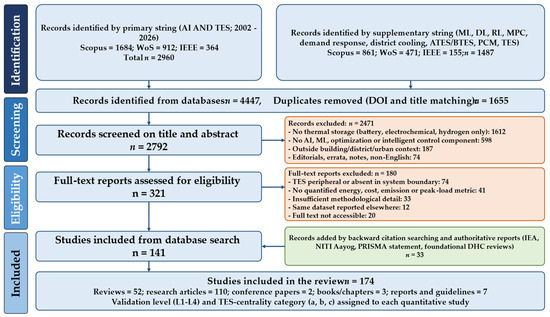
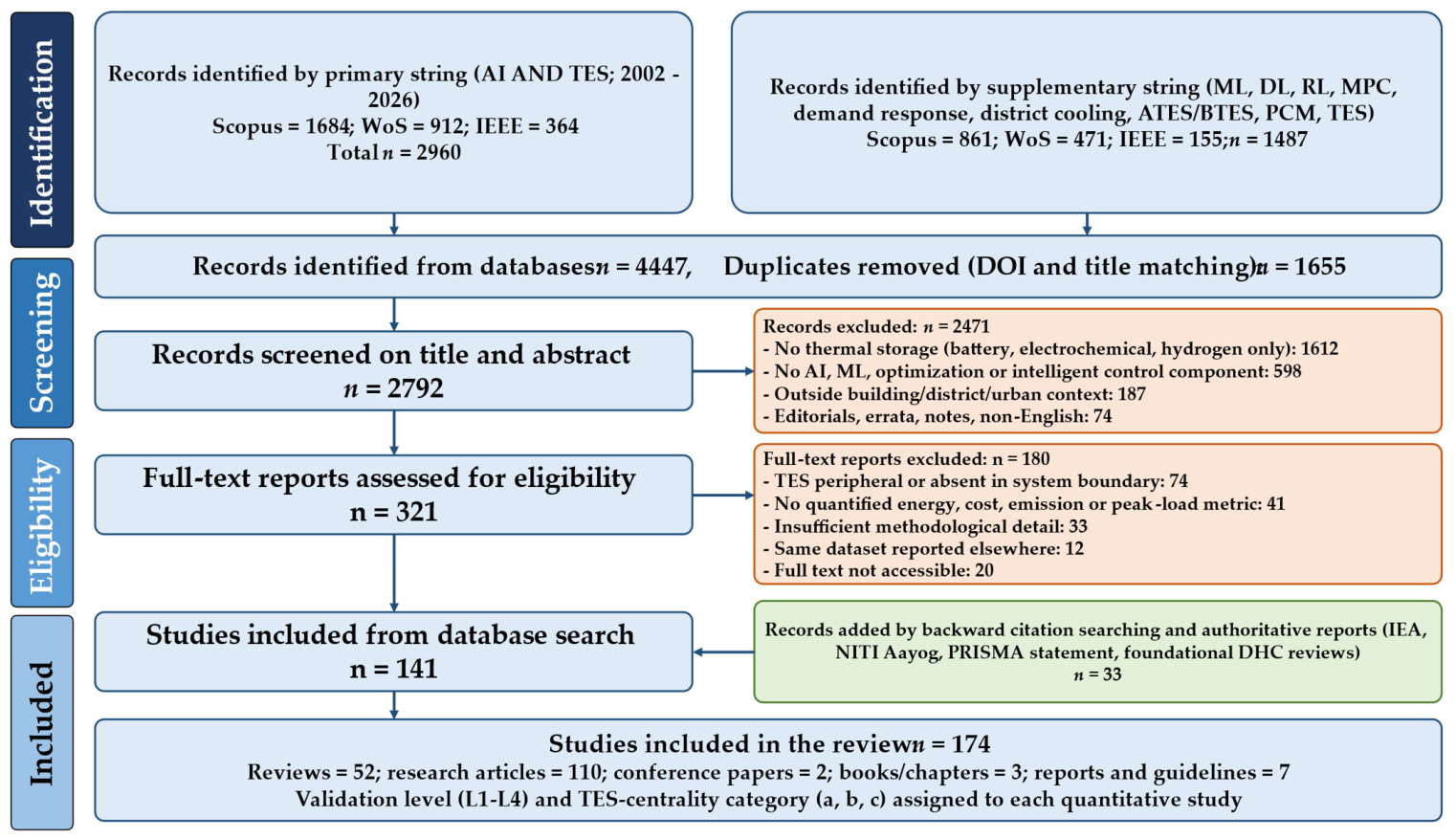
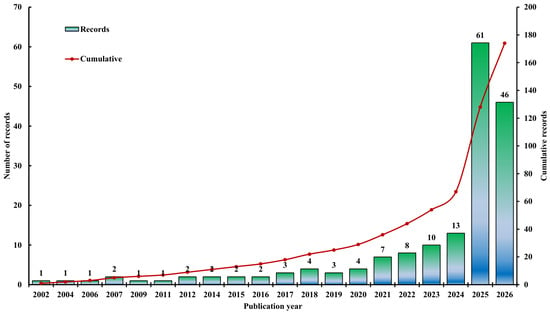
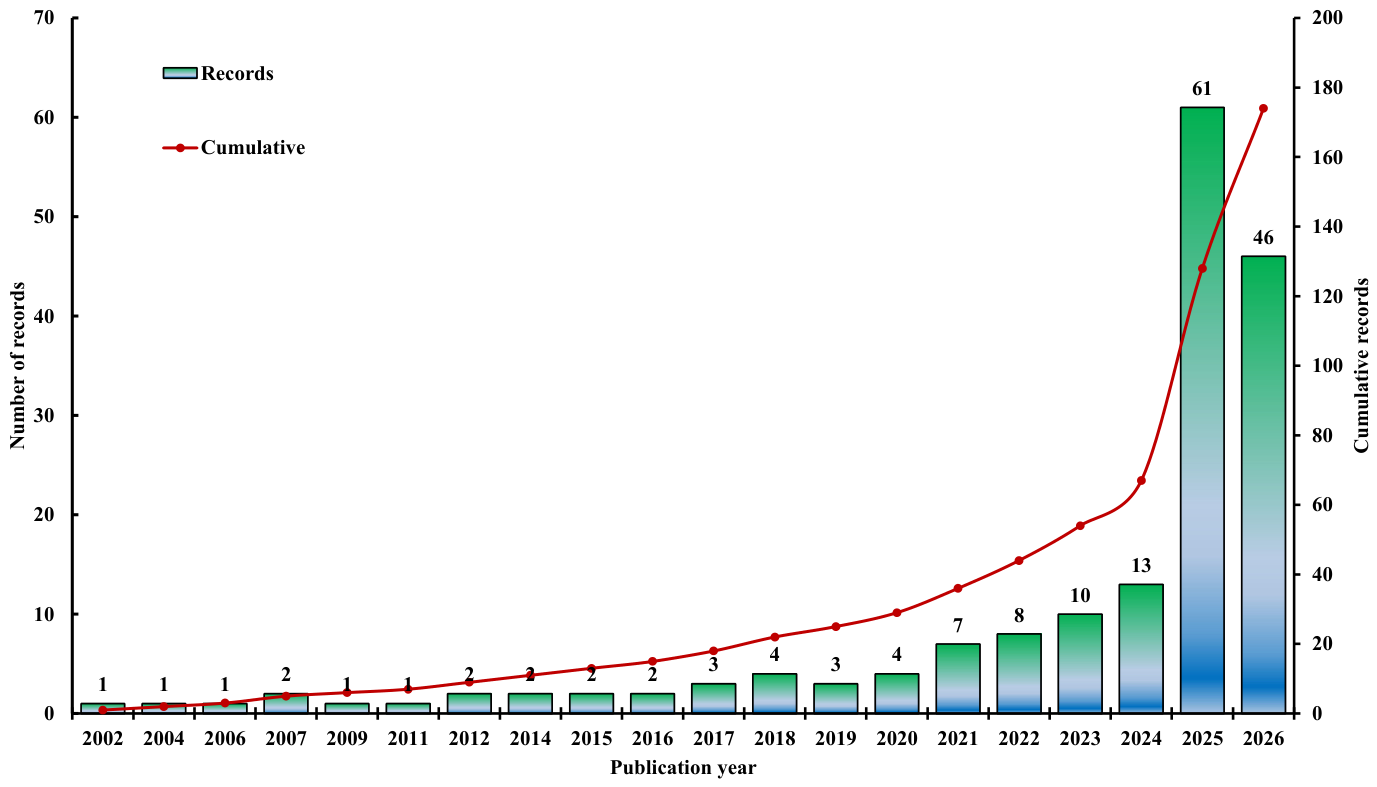
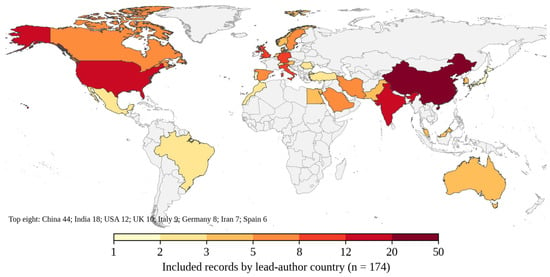
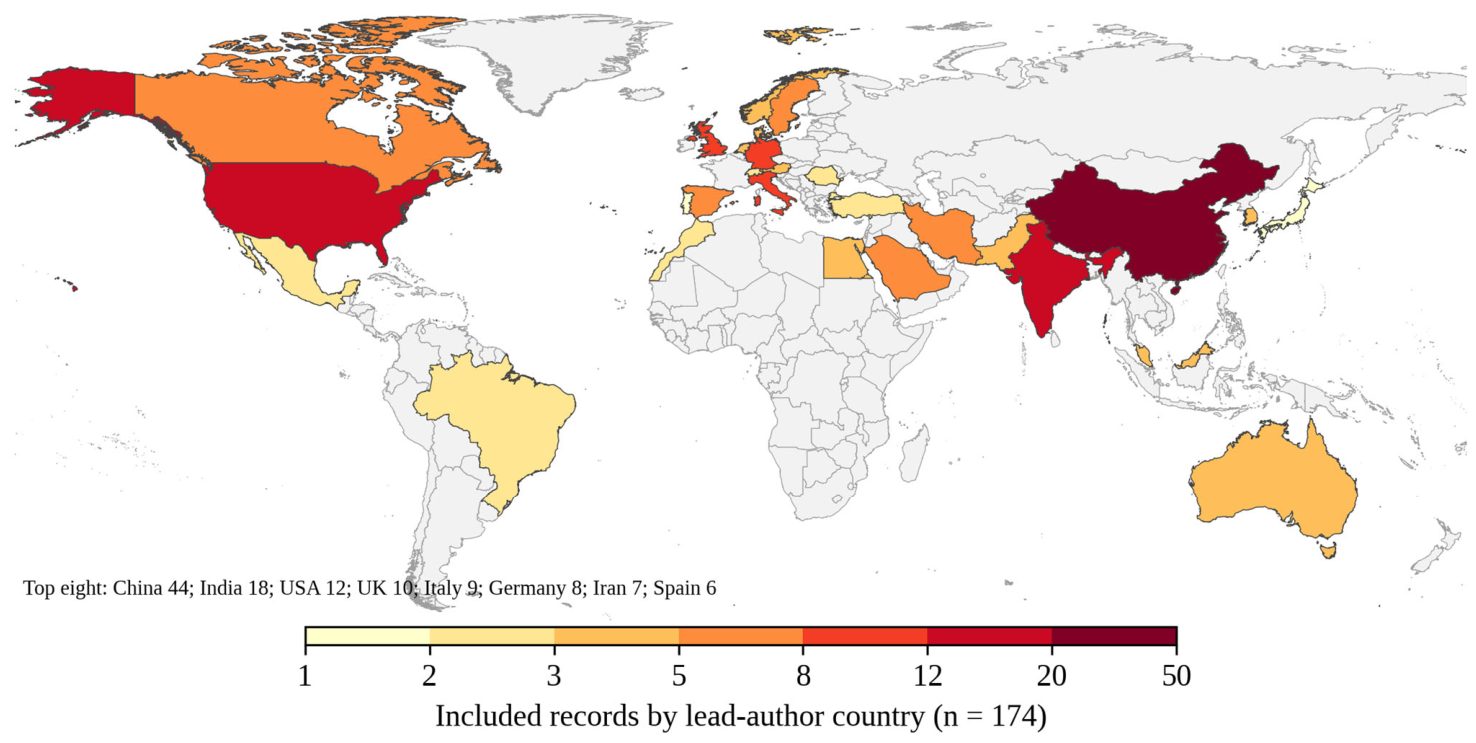
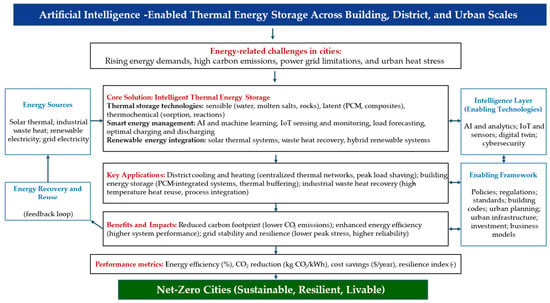
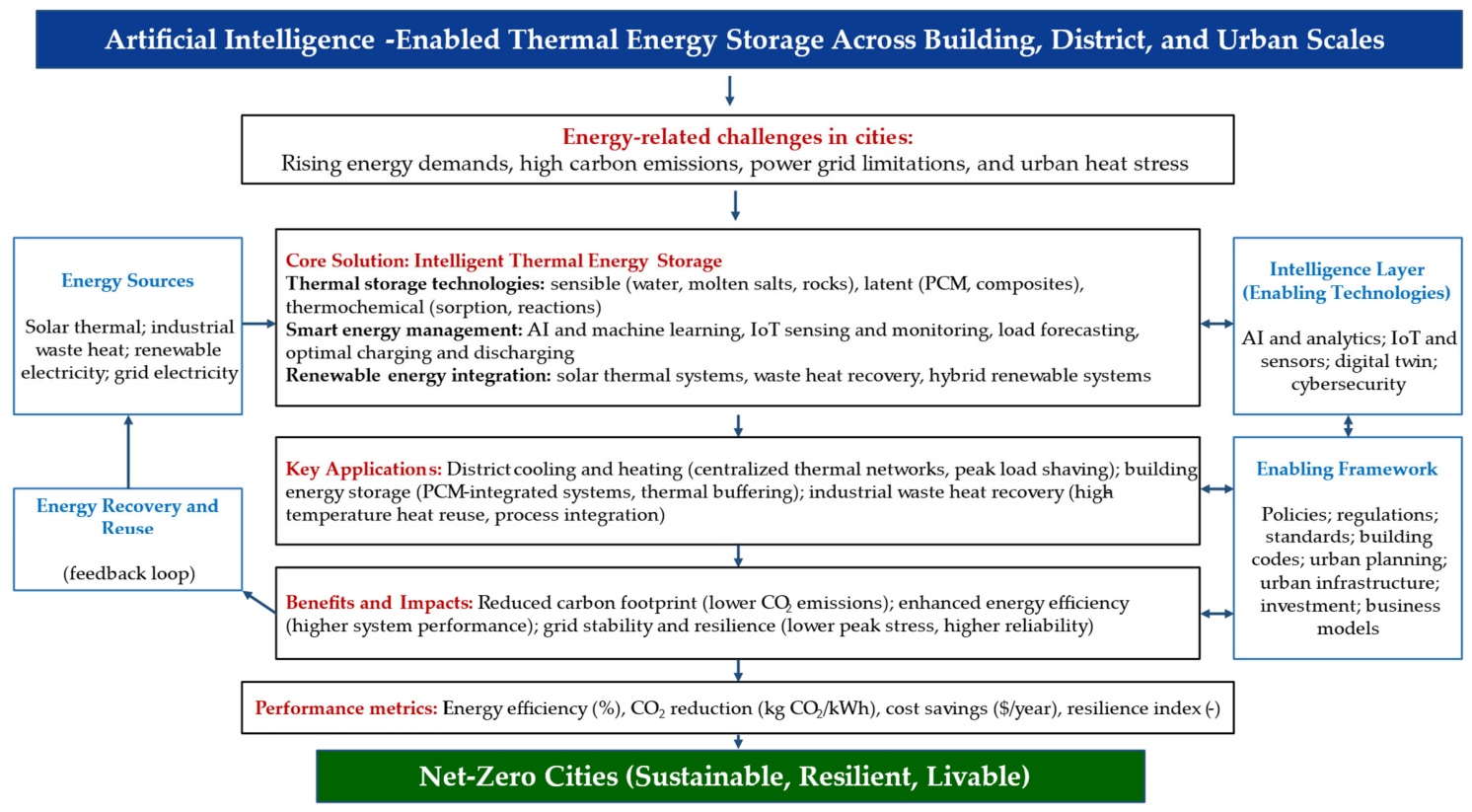
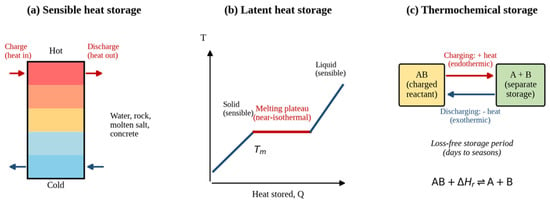
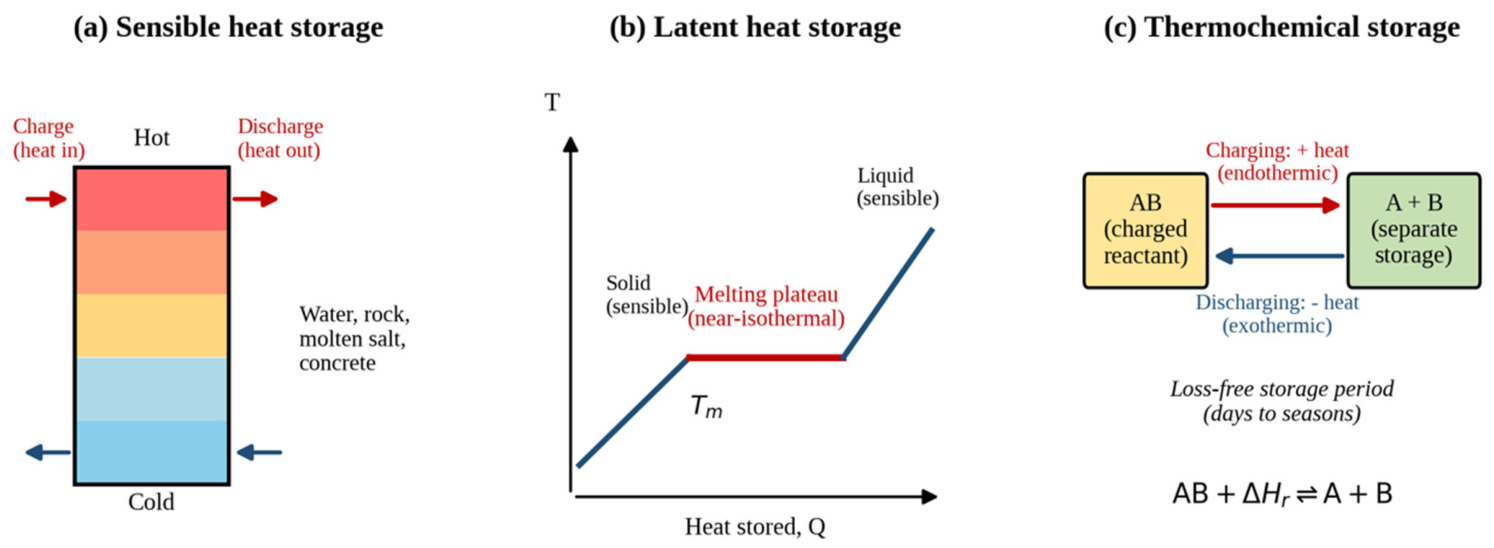
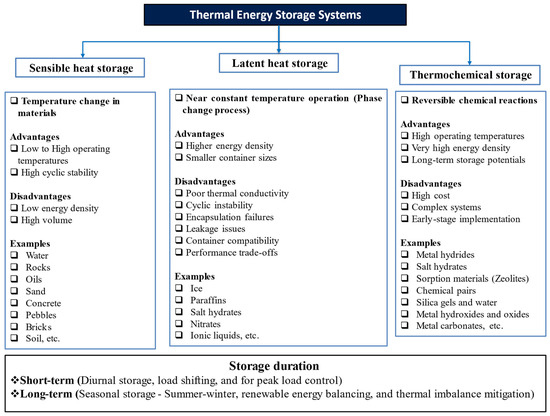
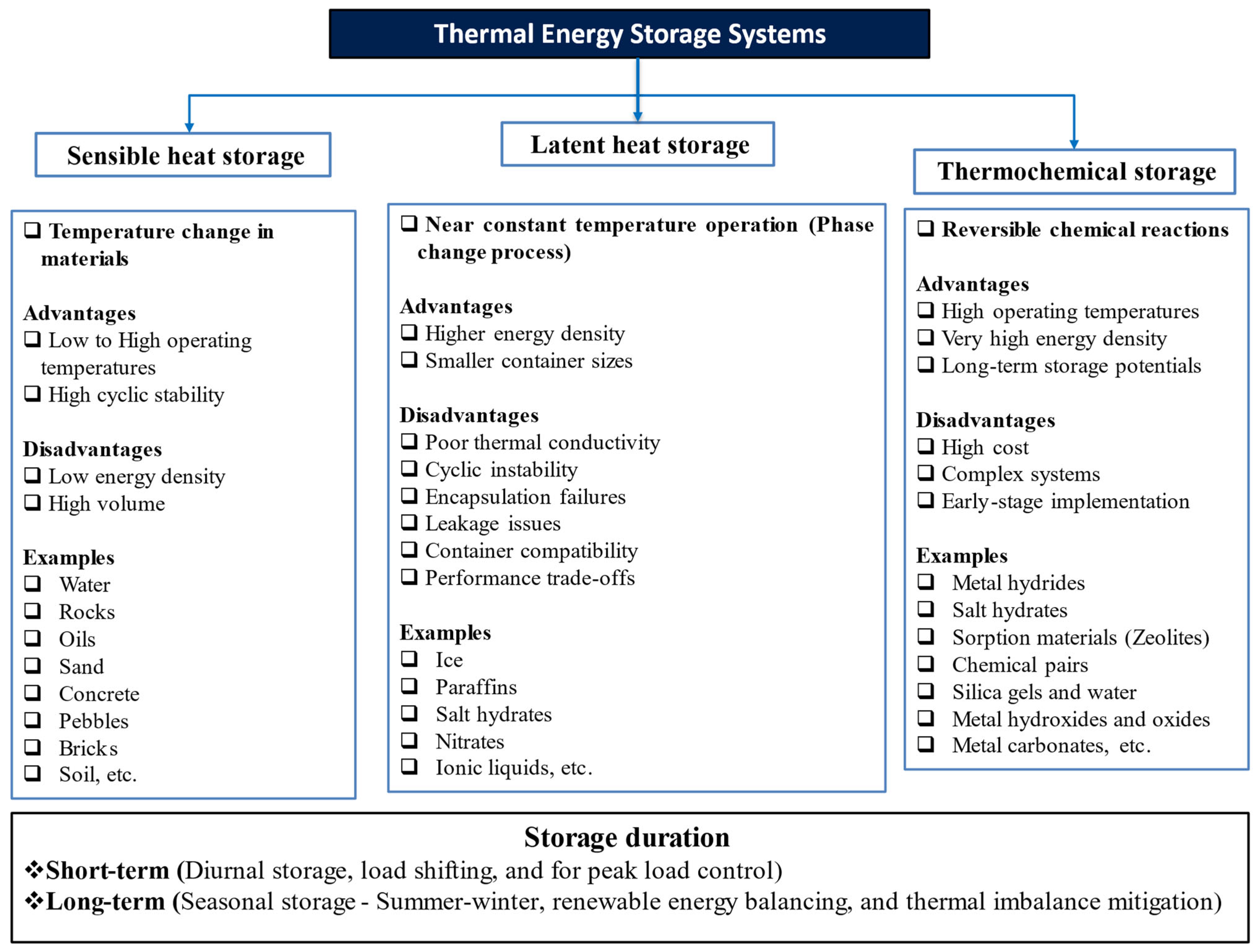
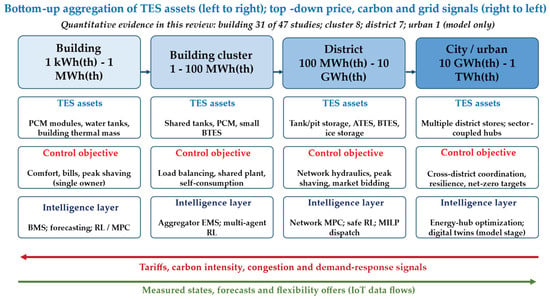
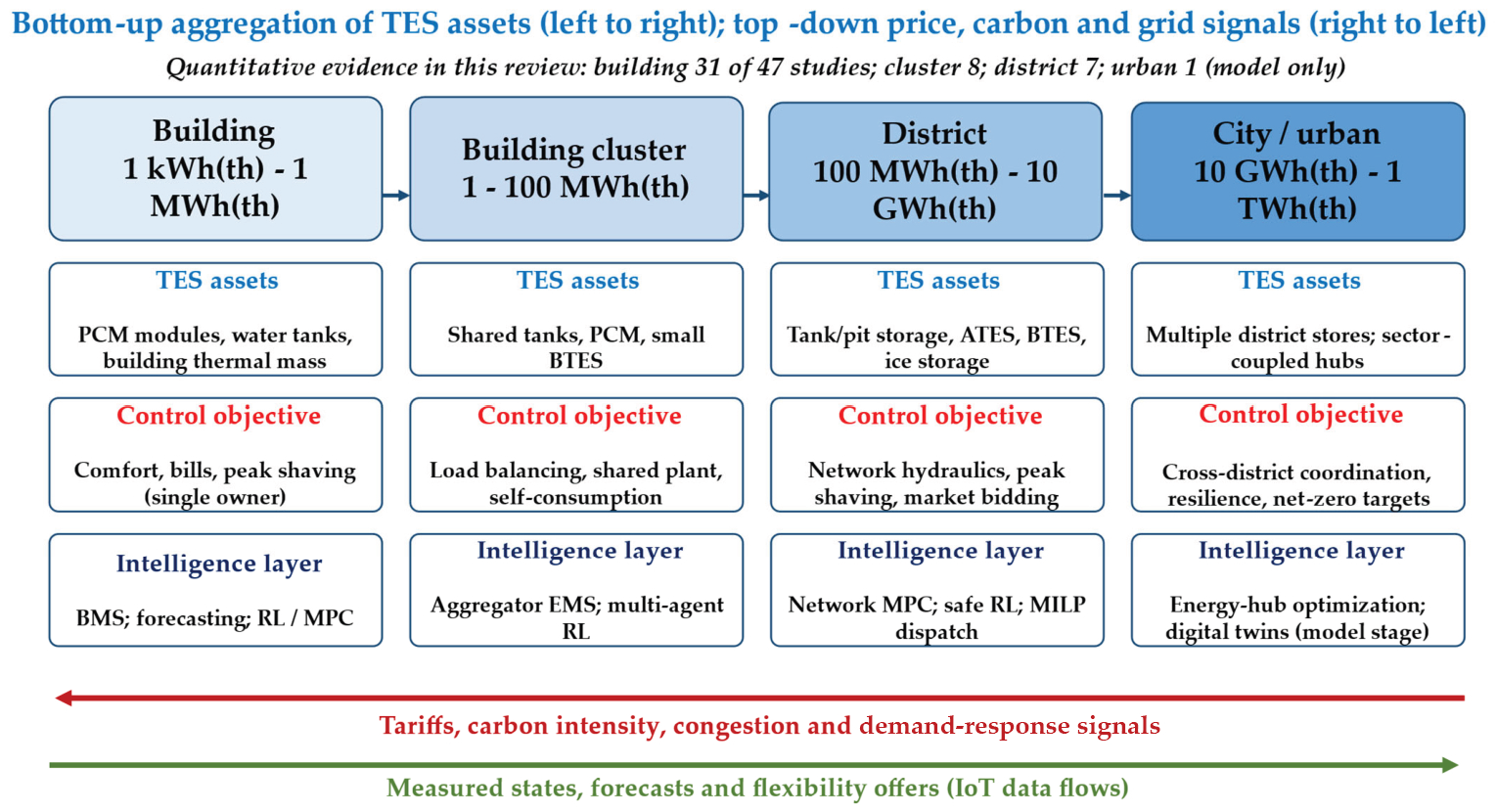
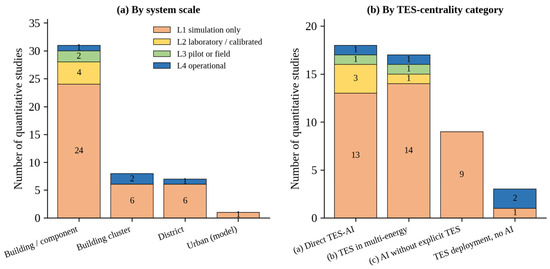
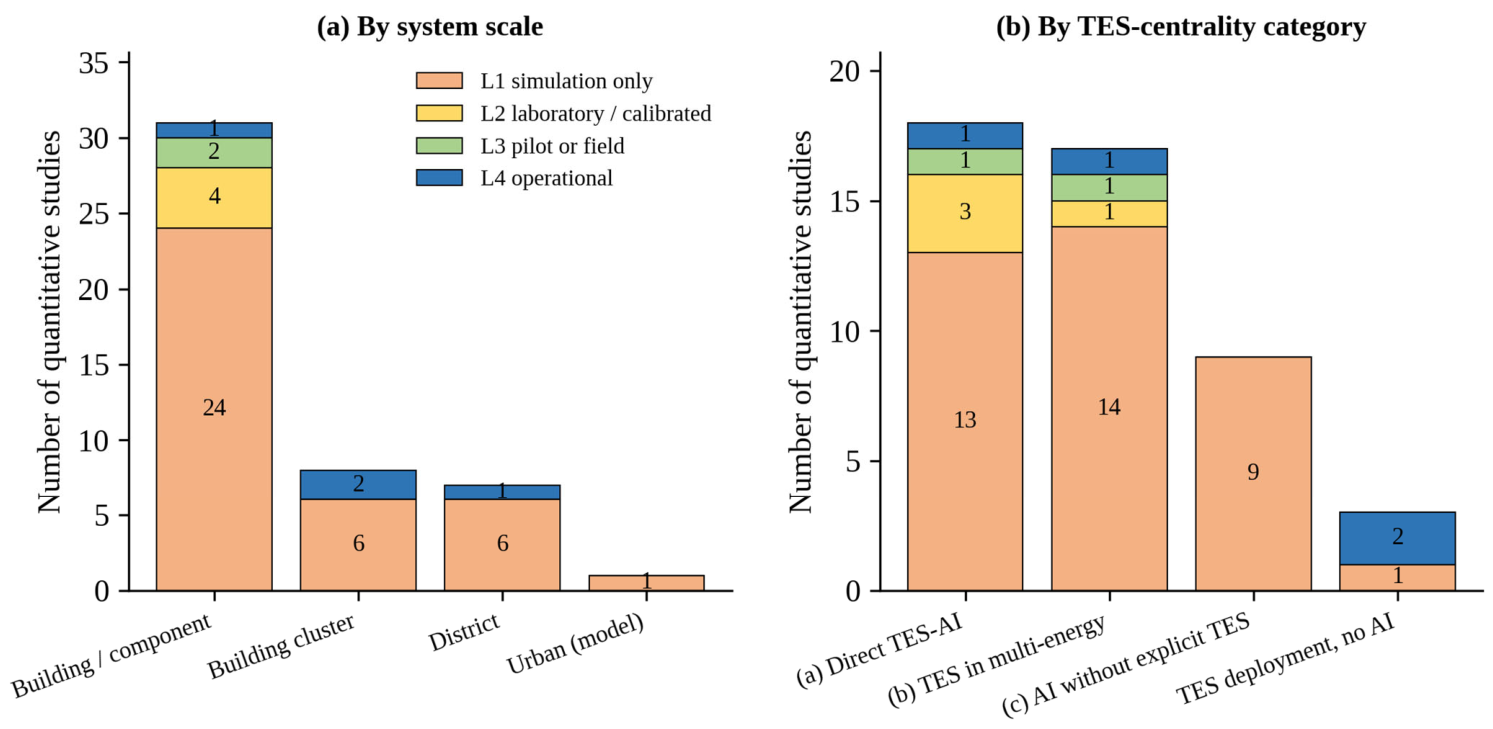
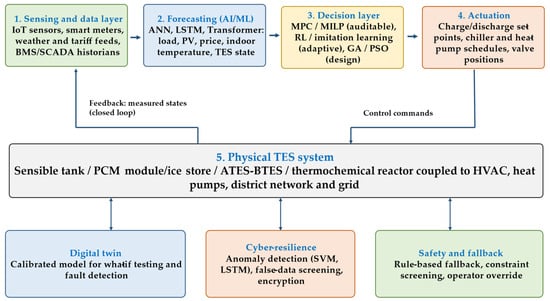
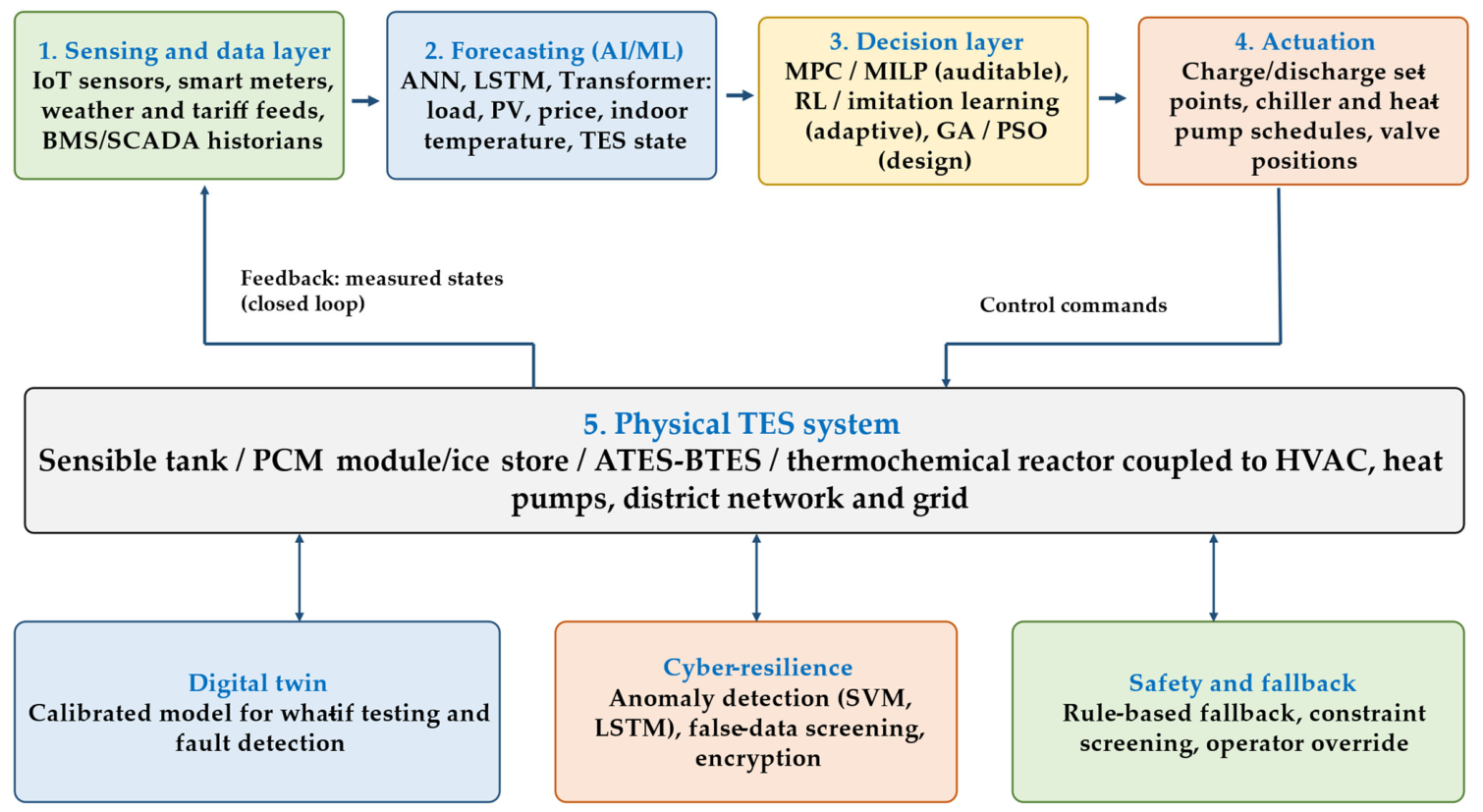
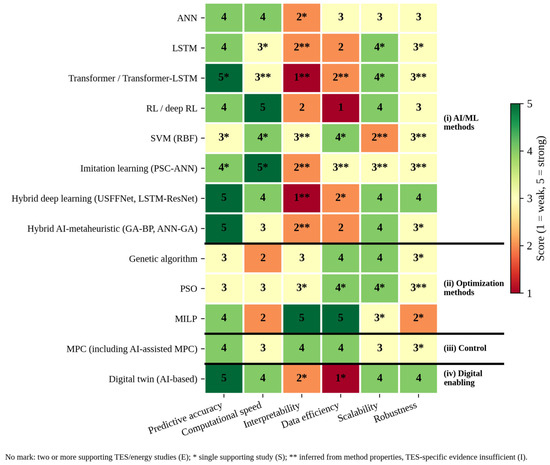
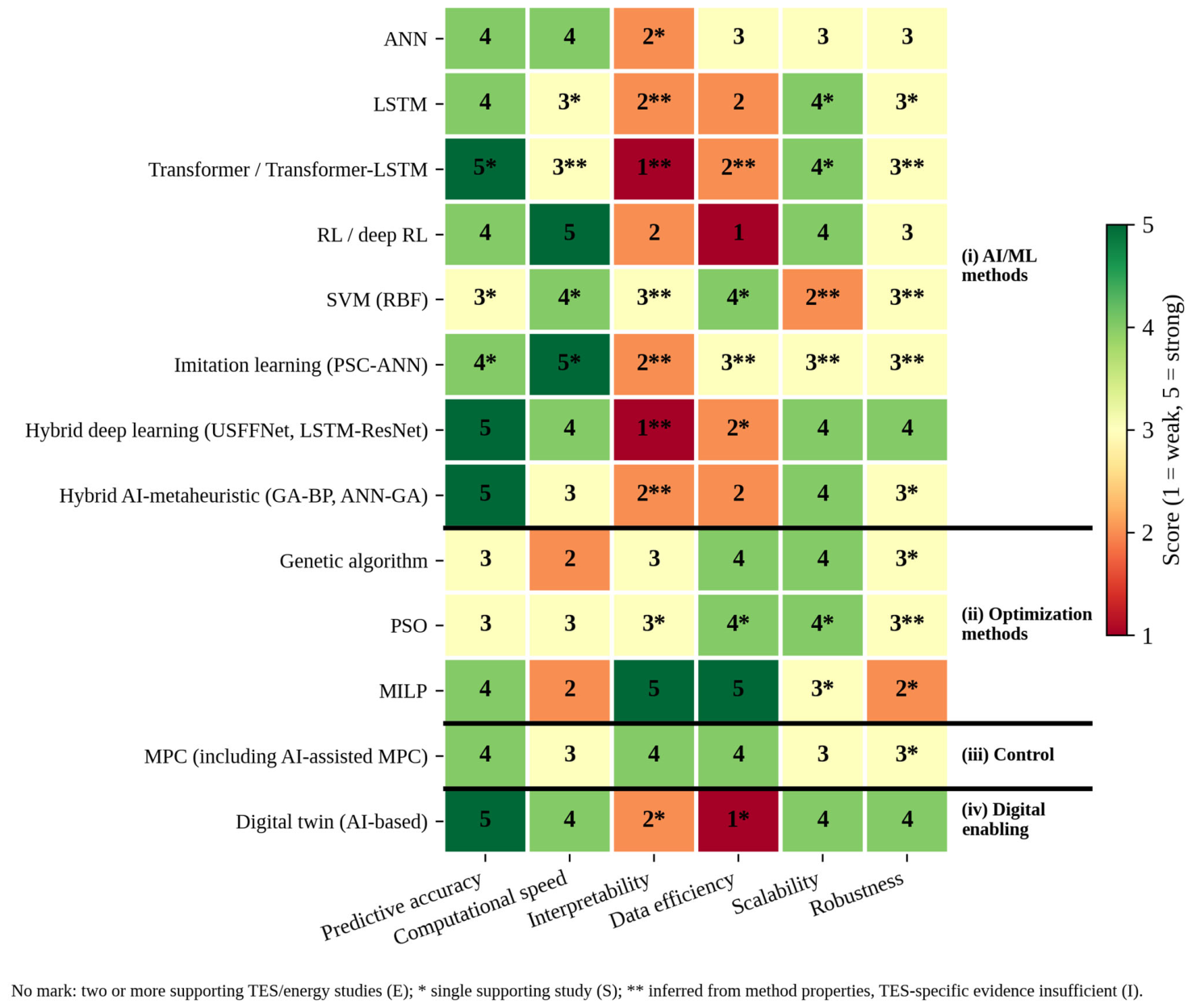
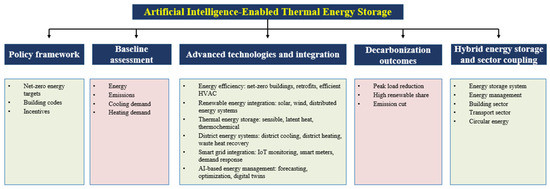
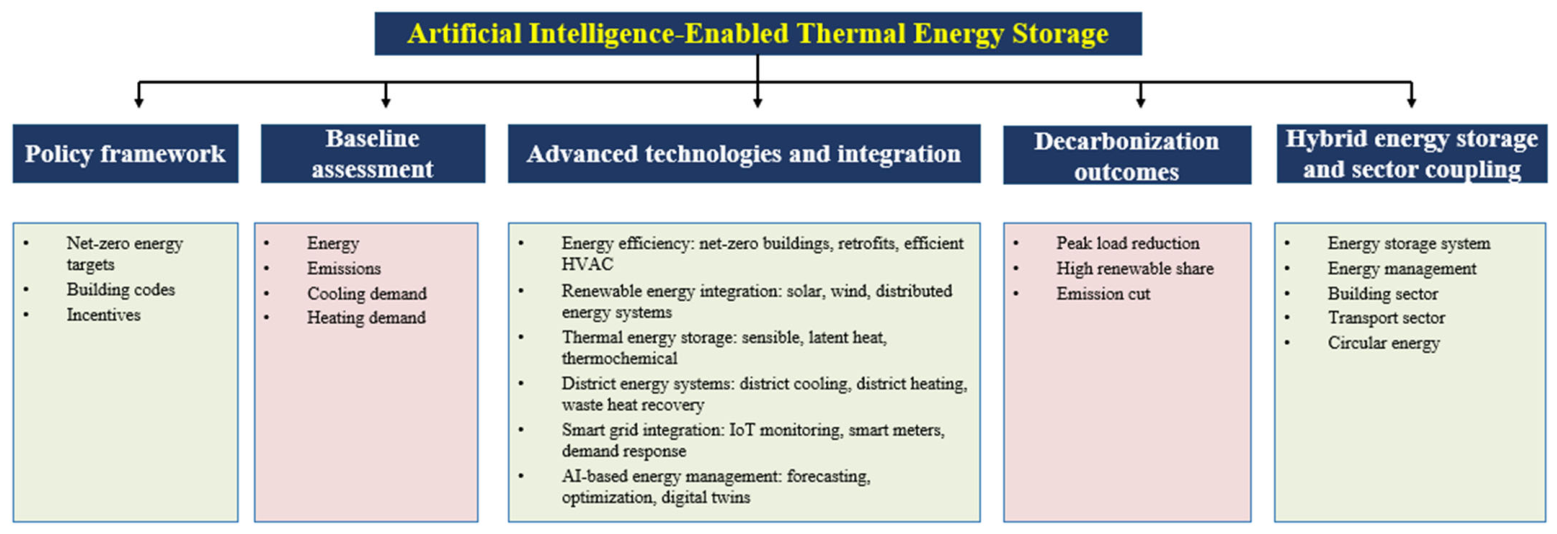

Disclaimer/Publisher’s Note: The statements, opinions and data contained in all publications are solely those of the individual author(s) and contributor(s) and not of MDPI and/or the editor(s). MDPI and/or the editor(s) disclaim responsibility for any injury to people or property resulting from any ideas, methods, instructions or products referred to in the content. |
© 2026 by the authors. Licensee MDPI, Basel, Switzerland. This article is an open access article distributed under the terms and conditions of the Creative Commons Attribution (CC BY) license.