


Abstract
Silk fabrics and caftans preserved in the Topkapı Palace Museum collection constitute a distinguished group of cultural heritage objects reflecting the advanced weaving technologies, refined metal-thread use, and sophisticated natural dyeing practices of Ottoman court textile production. In this study, selected ceremonial caftans attributed to five Ottoman sultans were examined through a multidisciplinary and multi-analytical approach to characterize their structural, chromatic, and chemical properties. Color characteristics were evaluated in the CIE L*a*b* color space, while yarn properties, weave structures, and production techniques were investigated by optical microscopy. The morphology and elemental composition of the metal threads were analyzed using scanning electron microscopy coupled with energy-dispersive X-ray spectroscopy (SEM–EDX), and dyestuffs were identified by high-performance liquid chromatography with diode-array detection (HPLC–DAD). The results show that compound silk weaving structures were widely used in Ottoman court textiles, metal threads were predominantly silver-based and often gold-gilded, and dyestuffs with high fastness properties were preferentially selected. The revised manuscript situates these findings within a broader international literature on historical textile analysis and natural dye characterization, while using only a limited number of directly relevant studies from the authors’ previous work. The present study therefore provides new, object-specific and comparable data for the scientific documentation, material characterization, and conservation-oriented understanding of Ottoman textile heritage.
1. Introduction
Historical silk textiles constitute one of the most significant categories of material culture, reflecting technological expertise, esthetic sensibilities, production and trade networks, and symbolic representations of power in pre-industrial societies. In this context, Ottoman court textiles, particularly silk fabrics and caftans, occupy a privileged position owing to their advanced weaving techniques, the extensive and high-quality use of metal threads, and their richly colored surfaces achieved through natural dyeing methods. Produced in palace workshops, these textiles are notable not only for their technical and esthetic qualities but also for their strong symbolic associations with imperial identity and ceremonial practices.
The scientific investigation of historical textiles has developed into a broad interdisciplinary field in which contributions from different research groups have demonstrated the importance of combining material analysis, conservation science, art history, and textile technology. Analytical studies on heritage textiles from diverse cultural contexts have employed optical microscopy, colorimetry, SEM–EDX, chromatographic techniques, mass spectrometry, and non-invasive spectroscopic methods to characterize fibers, weaving technologies, metal threads, and organic colorants [1,2,3,4,5,6,7]. Within this wider framework, a limited number of studies specifically addressing Ottoman silk textiles and Topkapı Palace Museum objects have provided important comparative evidence on compound weaving structures, gilded silver threads, and natural dye sources [8,9,10,11].
The identification of natural dyes in historical textiles remains a complex analytical challenge, as it is influenced by sampling strategy, extraction procedures, dye heterogeneity, contamination, conservation history, and the degree of material degradation, all of which directly affect the reliability of analytical interpretation [12,13,14]. The inherent chemical complexity of natural dyes further necessitates the use of advanced analytical techniques, particularly when working with fragile cultural heritage materials [15,16,17,18]. Although non-invasive approaches such as fiber optic reflectance spectroscopy (FORS), surface-enhanced Raman spectroscopy (SERS), and macro-X-ray fluorescence (MA-XRF) mapping provide rapid preliminary insights, their limited molecular selectivity often requires confirmation through chromatographic and mass spectrometric techniques [3,4,19,20]. In this regard, HPLC-DAD, LC–MS/MS, and UHPLC-based approaches are widely used for the accurate identification and differentiation of dye compounds, including structurally related insect-derived red colorants such as cochineal and kermes [2,17,18,21,22].
Recent research has increasingly emphasized the importance of integrating complementary analytical techniques to achieve comprehensive and robust results. Multi-analytical approaches combining chromatographic, spectrometric, and imaging methods enable the identification of a wide range of natural dyes, such as madder, indigo, weld, lac, and cochineal, while also providing insights into botanical or zoological origin, geographical variation, and historical dyeing practices [5,6,7,23,24,25,26,27,28,29,30]. Such approaches have also revealed transitions from natural to early synthetic dyes and regional differences in dye usage [23,31]. The integration of SEM–EDX and advanced imaging methods enables the simultaneous characterization of fibers, dye mixtures, and metal threads, thereby supporting a more holistic interpretation of textile production technologies across different cultural contexts [7,26,27]. In addition, studies focusing on specific dye systems have provided further insights into dye chemistry, production technologies, and optical behavior [30,31,32].
Despite these advances, comprehensive comparative investigations integrating color measurement, technical textile analysis, optical microscopy, SEM–EDX characterization of metal threads, and HPLC–DAD identification of dyestuffs remain limited for Ottoman court textiles. Many previous studies have focused on individual analytical techniques, single object groups, or restricted datasets, with comparatively little emphasis on the combined evaluation of structural, chemical, elemental, and chromatic evidence. Moreover, destructive and minimally invasive analytical techniques, although highly effective, must be carefully justified and applied to obtain precise and reproducible results while respecting conservation ethics [33]. These analytical developments play a crucial role in dating, provenance discussion, conservation planning, and the interpretation of historical dyeing technologies [34,35].
Recent studies have also explored non-destructive and minimally invasive approaches for dye characterization in historical textiles, including spectroscopic methods supported by multivariate analysis, ambient mass spectrometry techniques such as DESI-MS for the in situ examination of fragile heritage objects, and microspectrofluorimetry combined with HPLC–MS to identify dye sources in archeological and historical textiles [36,37,38,39]. These approaches highlight both the potential and the limitations of minimally invasive analysis, particularly in relation to sample preparation, degradation state, conservation history, and the interpretation of complex dye mixtures. Accordingly, the main research question addressed in this study is how the structural features, dye composition, elemental characteristics, and chromatic properties of selected Ottoman ceremonial silk caftans from the Topkapı Palace Museum can be evaluated through an integrated analytical approach to better understand their material composition, production technology, and coloration practices. Against this background, the present study examines ceremonial caftans attributed to five Ottoman sultans, together with associated silk fabrics from the Topkapı Palace Museum collection, through a multidisciplinary analytical framework. The novelty of the present study lies in the combined evaluation of newly obtained colorimetric, technical, SEM–EDX, and HPLC–DAD data with carefully selected comparative information from the wider field of historical textile analysis. In this way, the study provides comprehensive and comparable insights into the production technologies, material composition, and chromatic characteristics of Ottoman court textiles.
2. Materials and Methods
2.1. Materials and Comparative Inventory Information
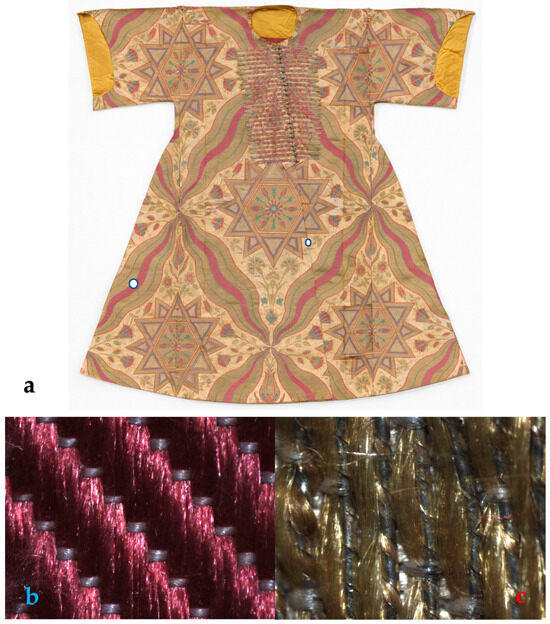
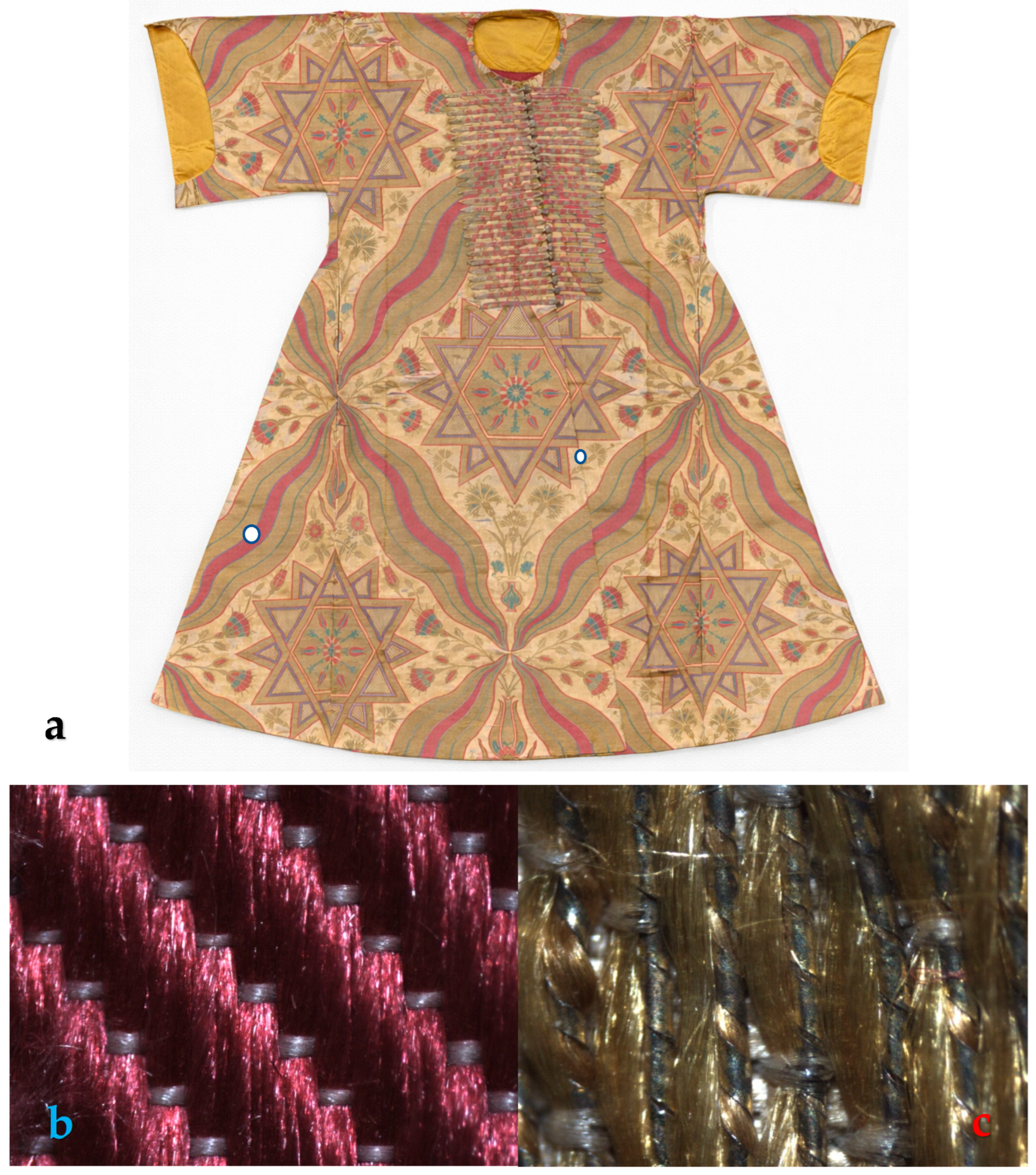
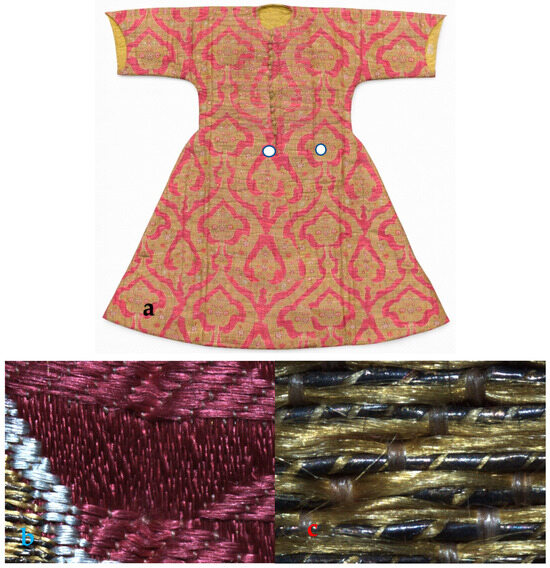
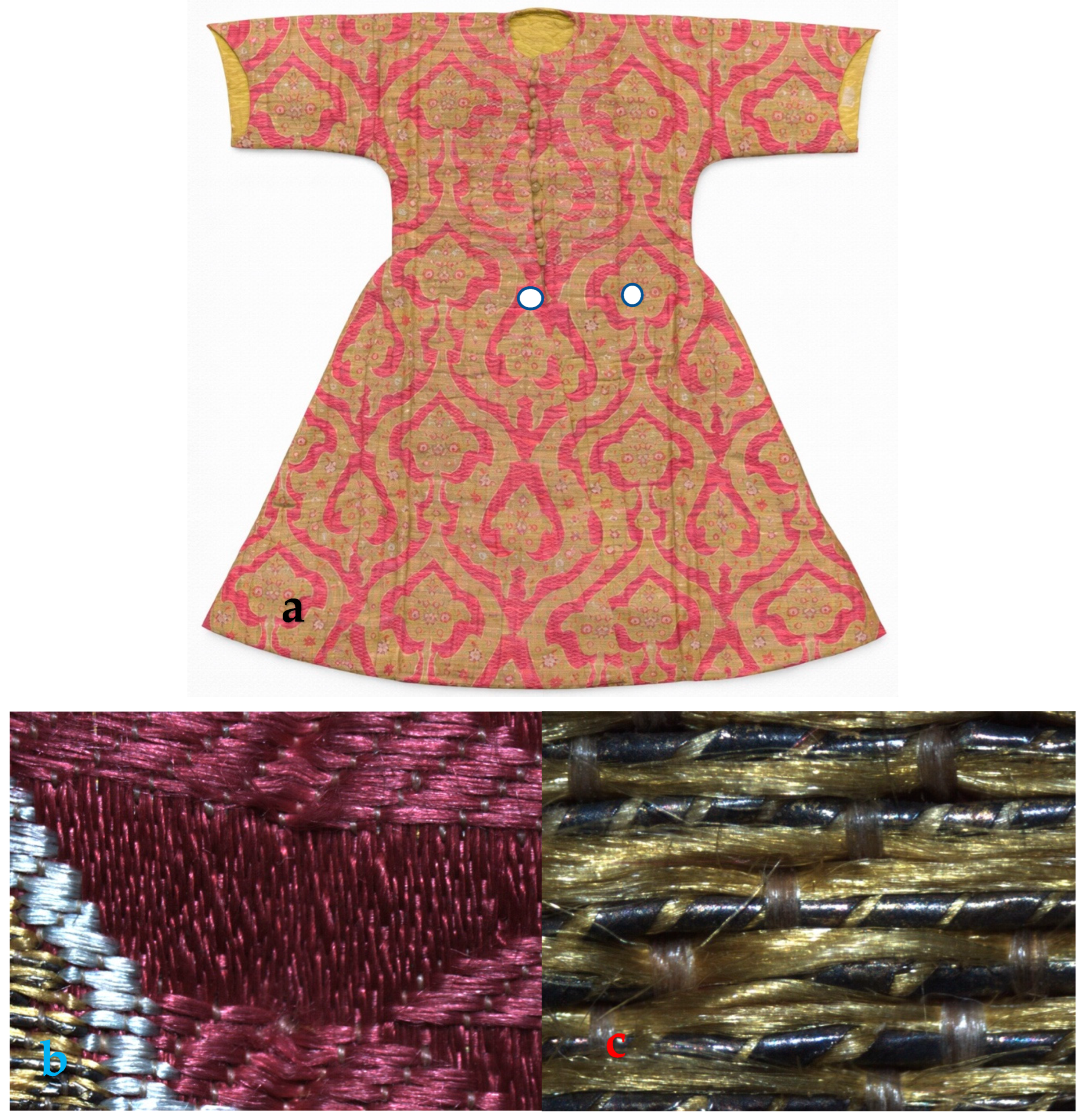
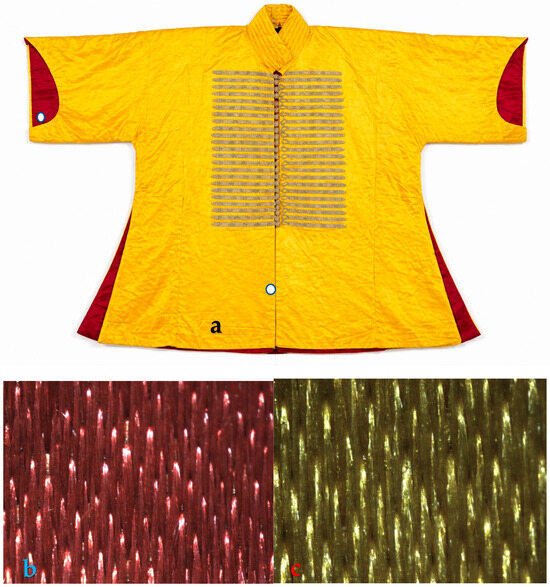
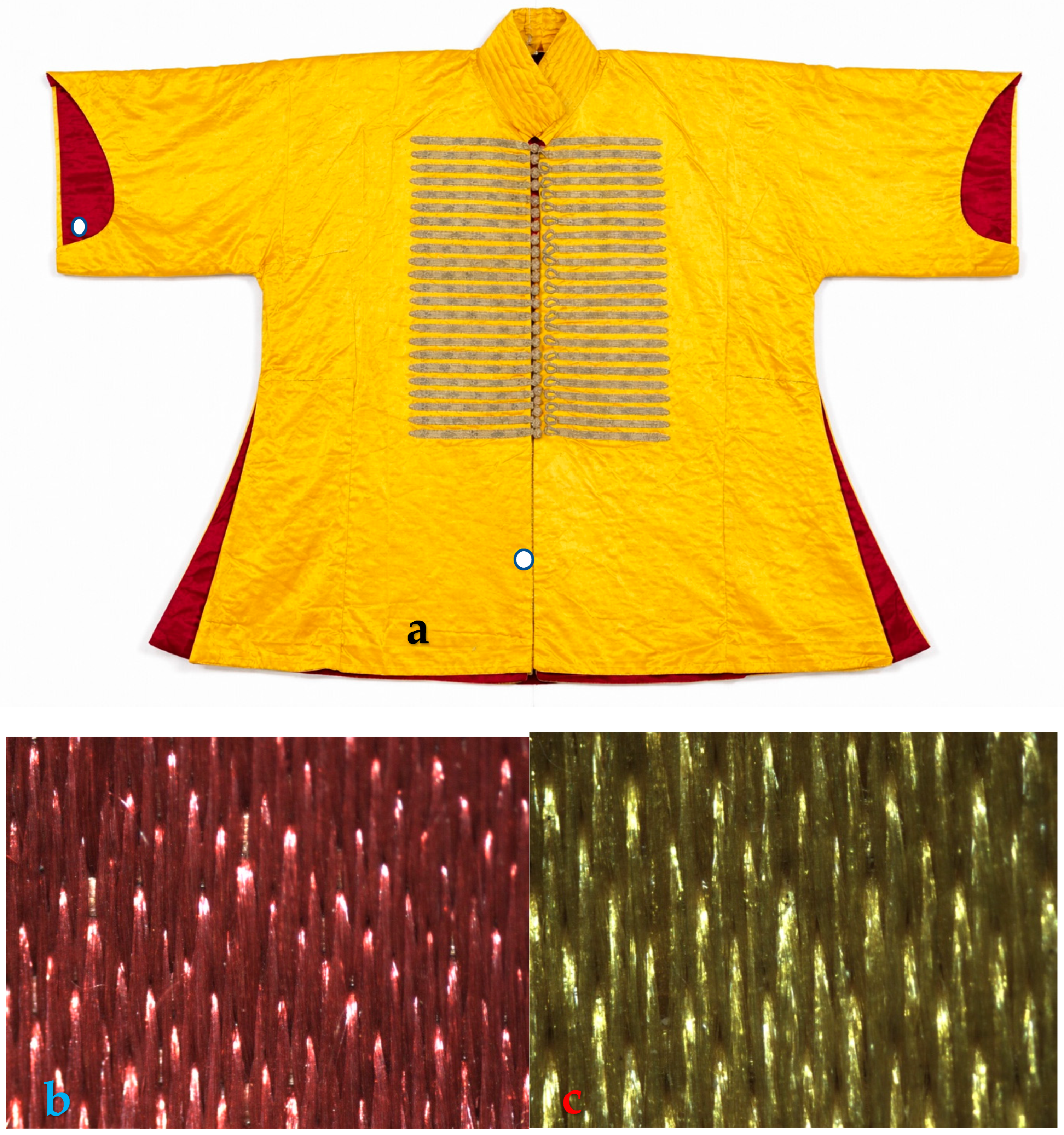
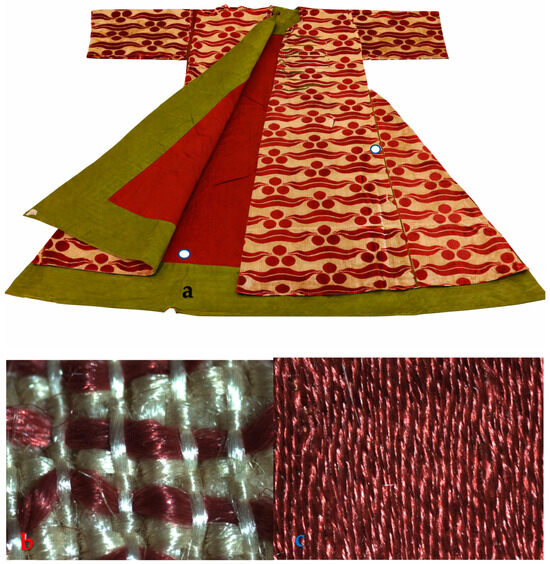
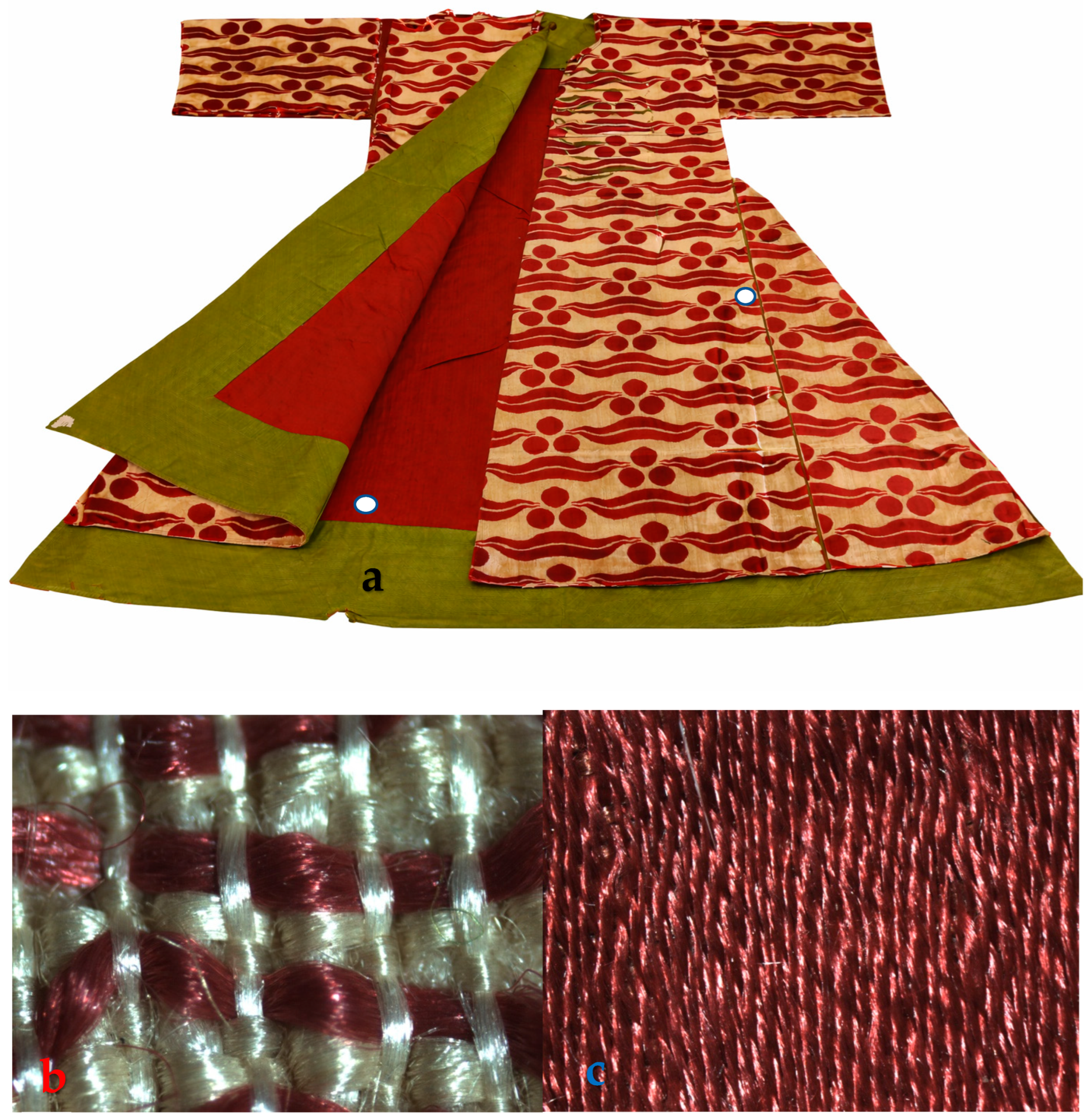
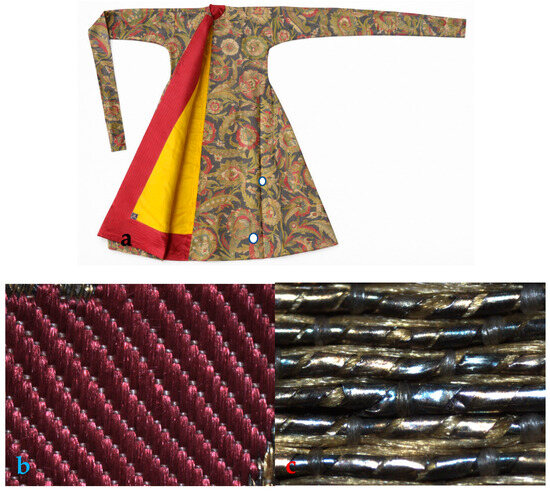
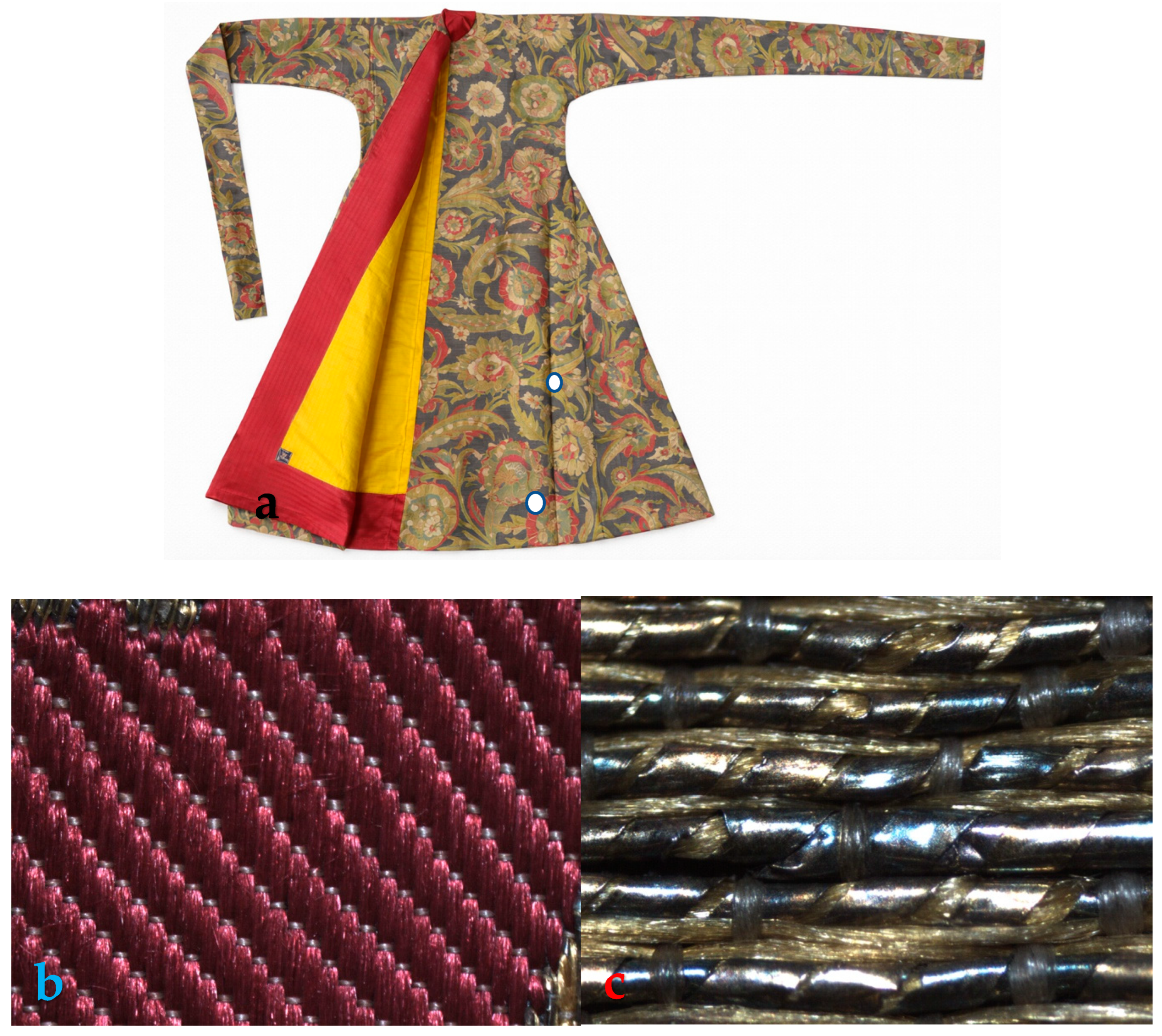
Selected silk caftans from the textile collection of the Topkapı Palace Museum were examined. All objects are registered in the museum’s textile inventory system and are identified by inventory numbers 13/21 (Figure 1), 13/46 (Figure 2), 13/23 (Figure 3), 13/6 (Figure 4), and 13/37 (Figure 5). Sampling was conducted in accordance with conservation ethics, using micro-samples taken from pre-existing damaged or concealed areas to minimize any impact on the objects. Additional inventory numbers of previously analyzed Ottoman silk caftans and silk fabrics from the same museum collection are provided in Table 1 as comparative contextual information. Commercially available reference dyestuffs used for the preparation of standard solutions included alizarin, purpurin, carminic acid, ellagic acid, luteolin, apigenin, indigotin, and indirubin, all of which were obtained from Sigma-Aldrich, St. Louis, MO, USA. Kermesic acid and flavokermesic acid were obtained by extraction from Kermes vermilio and were provided by DATU—Cultural Heritage Preservation and Natural Dyes Laboratory, Istanbul, Türkiye. These compounds were used as reference compounds for the identification of kermes-derived anthraquinone colorants.
Figure 1.
(a) Ceremonial caftan, dated to the 15th century (inventory no. 13/21), Topkapi Palace Museum Collection; (b) stereomicroscopic detail of the reverse side; (c) stereomicroscopic detail of the reverse side of the metal threads (The hollow circles indicate the sampling and analysis areas).
Figure 2.
(a) Ceremonial caftan, dated to the 16th century (inventory no. 13/46), Topkapı Palace Museum Collection; (b) stereomicroscopic detail of the reverse side; (c) stereomicroscopic detail of the reverse side of the metal threads (The hollow circles indicate the sampling and analysis areas).
Figure 3.
(a) Ceremonial caftan, dated to the 15th century (inventory no. 13/23), Topkapı Palace Museum Collection; (b) stereomicroscopic detail of the red colored inner surface; (c) stereomicroscopic detail of the yellow-colored front side (The hollow circles indicate the sampling and analysis areas).
Figure 4.
(a) Ceremonial caftan, dated to the 15th century (inventory no. 13/6), Topkapı Palace Museum Collection; (b) stereomicroscopic detail of the reverse side; (c) stereomicroscopic detail of the red colored on the reverse side (The hollow circles indicate the sampling and analysis areas).
Figure 5.
(a) Ceremonial caftan, dated to the 16th century (inventory no. 13/37), Topkapı Palace Museum Collection; (b) stereomicroscopic detail of the reverse side; (c) stereomicroscopic detail of the metal threads on the reverse side (The hollow circles indicate the sampling and analysis areas).
Table 1.
Inventory numbers of previously analyzed Ottoman silk caftans and silk fabrics preserved in the Topkapı Palace Museum collection.
2.2. Color Measurement
Color measurements of the textile objects were carried out using a portable Konica Minolta spectrophotometer (CM-700d, Konica Minolta Sensing Inc., Osaka, Japan) under standard D65 illumination with a 10° standard observer. Measurements were recorded in the CIE L*a*b* color space. For each object, multiple measurements were obtained from representative areas to assess color variation, fading phenomena, and surface heterogeneity related to aging processes and long-term environmental exposure.
2.3. Technical and Morphological Analysis
The technical and morphological characterization of the historical caftans was performed using an OLYMPUS SZ61 stereomicroscope equipped with an SZ2-ILST illumination stand and a C18U digital camera. Micro-samples were taken from pre-existing damaged or concealed areas of the artifacts in accordance with conservation ethics and were examined without chemical pretreatment. The analyses included the identification of weave types; the identification of warp and weft fiber types; the determination of yarn twist direction; and the measurement of warp and weft yarn densities (ends and picks per cm). In addition, optical microscopy was used to characterize complex weave structures, such as lampas, brocade, and other compound weaves, and to examine the structural features of metallic threads, including the core yarn and wrapping technique.
2.4. HPLC-DAD
2.4.1. Sample Preparation for HPLC-DAD Analysis
At the time, the HCl-based extraction protocol was considered the most suitable approach for historical textiles according to the literature and was therefore selected. Standard solutions were prepared using the reference dyestuffs specified in the Materials section and were used for chromatographic comparison and dye identification. Prior to dye analysis, all textile samples were weighed (0.3–2.0 mg), and fiber lengths were measured (3–12 mm).
Standard solutions for dye analysis were prepared at a concentration of 0.15 mg/mL in methanol (MeOH) for most dyestuffs. Due to their limited solubility, indigotin and indirubin standards were prepared at a concentration of 0.10 mg/mL in dimethyl sulfoxide (DMSO). Following appropriate dilution, these solutions were used for HPLC–DAD analyses.
To ensure efficient extraction of dyestuffs from the historical textile samples, three different extraction methods were applied depending on color characteristics and sample type.
Acid Hydrolysis Extraction
As the first extraction method, a hydrochloric acid (HCl) hydrolysis protocol widely reported for historical dyestuffs was employed for all non-blue samples. Each sample was treated with 400 µL of a mixture consisting of 37% HCl, MeOH, and distilled water (H2O) in a volumetric ratio of 2:1:1 (v/v/v). The samples were placed in conical glass tubes and heated in a water bath at 100 °C for 8 min to extract organic dyestuffs. After extraction, the solutions were rapidly cooled under running water and evaporated to dryness at 60–65 °C under a gentle nitrogen stream. The resulting dry residues were re-dissolved in either 200 µL or 400 µL of a MeOH:H2O (2:1, v/v) mixture [17,40,41,42].
For blue-colored samples, acidic conditions were avoided due to the potential degradation of indigotin and indirubin. Instead, 400 µL of DMSO was added, and the samples were heated at 80 °C for 5 min, following established approaches for indigoid colorants in historical textile analysis [40,41,42].
All extracts obtained using this method were centrifuged at 4000 rpm for 10 min, and the supernatants were transferred into separate vials. Aliquots of 100 µL from each extract were subjected to HPLC–DAD analysis.
Glycoside-Oriented Extraction
The second extraction method was applied to samples cataloged as Inv. Nos. 13/b, 13/c, 13/d, and 13/e. Each sample was treated with 50 µL of a MeOH:water:formic acid mixture prepared using concentrated formic acid, 98–100%, in a volumetric ratio of 9:8:3 (v/v/v), followed by ultrasonic extraction for 20 min and incubation in a water bath at 60 °C for 25 min. The resulting extracts were separated from the fibers and diluted with 25 µL of a MeOH:water solution (2:3, v/v). This protocol was used to improve the recovery of glycosidic and insect-derived dye markers relevant to the characterization of cochineal, kermes, and related scale-insect dyes [18,43,44,45].
Mild Extraction
The third extraction method was applied to red and yellow samples associated with Inv. No. 13/a using milder extraction conditions. A 400 µL volume of 5% (v/v) aqueous formic acid solution, prepared from concentrated formic acid, 98–100%, was added to each sample. The red sample underwent ultrasonic extraction for 30 min, followed by heating at 60 °C for an additional 30 min. For the yellow sample, a milder protocol was applied, consisting of ultrasonic treatment for 2.5 min followed by heating at 60 °C for 10 min. The resulting residues were dissolved in 400 µL of MeOH:H2O (2:1, v/v), centrifuged, and the supernatants were transferred into vials for subsequent HPLC analysis [17,42,43].
2.4.2. Chromatographic Analysis
For the chromatographic separation of hydrolyzed historical samples, two mobile phases were used: mobile phase A consisted of water containing 0.1% trifluoroacetic acid (TFA), and mobile phase B consisted of acetonitrile (CH3CN) containing 0.1% TFA. Dye separation was achieved using a gradient elution program consistent with established HPLC–DAD methods for natural dyestuffs in historical textile analysis [17,40,42]. Dye components were identified by comparing their retention times and UV–Vis spectra with those of authenticated reference standards.
A Nova-Pak C18 analytical column (3.9 × 150 mm, 4 μm; Waters) was used. The analytical column was preceded by a guard column packed with the same stationary phase to prevent contamination and extend column lifetime. Both the analytical and guard columns were maintained at 30 °C throughout the analysis. Data acquisition and processing were performed using Agilent ChemStation software, version B.04.03 (Agilent Technologies, Santa Clara, CA, USA).
2.5. SEM–EDX
SEM–EDX analyses were carried out using a TESCAN VEGA3 scanning electron microscope (TESCAN, Brno, Czech Republic). The system is equipped with secondary electron (SE) and backscattered electron (BSE) detectors, as well as an integrated energy-dispersive X-ray spectroscopy (EDX) unit for elemental analysis. A thermionic tungsten filament was used as the electron source. SEM imaging and EDX analyses were performed under appropriate operating conditions to reliably characterize the morphological and elemental properties of the historical metal threads.
Sample Preparation for SEM–EDX Analysis
The metal threads were examined using scanning electron microscopy (SEM) for both surface imaging and elemental analysis. Owing to their electrically conductive nature, the metal threads were analyzed directly without the application of any conductive coating. No coating was applied prior to SEM imaging or EDX analysis. This enabled direct surface observation and the determination of elemental compositions, expressed as percentage (%) values. SEM images were acquired under high-vacuum conditions using a secondary electron (SE) detector to characterize surface topography.
3. Results and Discussion
3.1. Colorimetric Properties
Within the scope of color measurements, the CIE L*a*b*.color space coordinates (L*, a*, and b* values) of the samples obtained from Ottoman silk caftans and silk fabrics with inventory numbers 13/21, 13/46, 13/23, 13/6, and 13/37 are presented in Table 2. In the CIE L*a*b* color space, L* represents lightness, ranging from black to white, while a* indicates the red–green chromatic axis, with positive values corresponding to red and negative values corresponding to green. The b* coordinate represents the yellow–blue chromatic axis, with positive values indicating yellow and negative values indicating blue. The quantitative determination of color properties constitutes a fundamental reference for documenting the present measured color characteristics and current condition of the artifacts. However, these measured values should not be interpreted as the original color parameters of the objects, since aging processes, dye degradation, and long-term environmental exposure may have altered their original appearance. In restoration and conservation processes, spectrophotometric color measurements can support informed decision-making by providing objective data on the current hue, lightness, and chroma of the textile surfaces. During repair or completion interventions, the threads and dyed surfaces to be used should therefore be selected with reference to the present visual condition of the object, while also considering historical, material, and conservation-related evidence. Otherwise, color discrepancies may compromise the visual integrity of the woven surface and adversely affect the esthetic and historical value of the artifact. Likewise, in cases where faithful replicas of these caftans and fabrics are produced, the present colorimetric data may serve as a useful reference, but should be interpreted cautiously and not as definitive evidence of the original color parameters.
Table 2.
CIE L*a*b* colorimetric values and sample descriptions of the measured Ottoman silk caftans and silk fabrics.
3.2. Structural and Technical Characteristics
In the stereomicroscopic examinations, the weaving structures of the ceremonial caftans with inventory numbers 13/21, 13/46, 13/23, 13/6, and 13/37, as well as the densities of the warp and weft yarns, their twist directions, and the wrapping directions of the metal-wrapped thread yarns were determined. Overall views of the analyzed artifacts (13/21, 13/46, 13/23, 13/6, and 13/37), together with detailed stereomicroscopy images, are presented in Figure 1, Figure 2, Figure 3, Figure 4 and Figure 5, while the technical characteristics of the samples are summarized in Table 3. The caftan with inventory number 13/6 is made of silk velvet and is lined with a red satin fabric. Silk velvet is produced using a velvet weaving technique in which an additional pile warp is introduced into the warp direction. In this technique, pile yarns added to the ground weave system are either cut or uncut, forming a dense, homogeneous, and three-dimensional pile layer on the surface. The natural luster of silk fibers allows light to be reflected at varying angles across the surface, while the woven structure imparts a pronounced textural depth and surface richness to the fabric.
Table 3.
Weave structures, yarn densities, and twist directions of the examined caftans.
The caftan with inventory number 13/23 exhibits a satin structure on both its outer surface (yellow) and inner surface (red), specifically a warp-faced satin weave. Satin fabrics of this type are produced through a weave structure in which warp yarns float over weft yarns in long floats. Owing to the pronounced warp dominance, the face of the fabric displays a smooth, homogeneous, and highly lustrous appearance, whereas the reverse side appears comparatively more matte. The caftans with inventory numbers 13/21, 13/46, and 13/37 are identified as Kemha fabrics. Kemha textiles are high-status, luxurious patterned fabrics produced using the lampas weaving technique. Their structure incorporates separate warp and weft systems for the ground and the pattern. The decorative motifs are typically formed by additional pattern wefts and, in many cases, by the use of metal-wrapped (metal thread) yarns, creating a raised and richly textured surface effect.
The identification of weaving characteristics is of critical importance not only for technical classification but also for the restoration and conservation of the artifacts. During restoration or repair interventions, the yarns to be used must possess the same technical properties as the original materials. For instance, the use of Z-twist yarns to repair warp or weft yarns that were originally S-twisted may result in conspicuous and undesirable visual discrepancies on the woven surface. Accordingly, technical analyses constitute the foundation of reliable conservation practice. Likewise, in cases where exact replicas of these artifacts are to be produced, it is essential that the structural and technical characteristics of the original textiles be strictly maintained.
3.3. Dyestuff Identification by HPLC-DAD
Previous analytical studies on Ottoman and other historical silk textiles have reported the recurrent use of insect-derived red dyes, weld-derived yellow colorants, and indigo-based blue dyes in high-status textile production [5,6,8,9,18,28]. In the Ottoman court context, a limited number of directly relevant studies have identified chromophoric markers such as carminic acid, kermesic acid, luteolin, apigenin, indigotin, and indirubin in silk fabrics, brocades, and caftans [8,9,11]. Therefore, the present results do not differ fundamentally from the broader literature; rather, they confirm and expand the existing analytical evidence by providing additional object-specific data for the examined inventory numbers.
Within the scope of the HPLC-DAD analyses, the dyestuffs present in the micro-samples obtained from the Ottoman silk caftans and silk fabrics with inventory numbers 13/21, 13/46, 13/23, 13/6, and 13/37 were identified and their characteristic components were determined. The analytical findings are summarized in Table 4. Determining the chemical identity and relative distribution of dyestuffs contributes not only to clarifying the production technologies of historical textile artifacts but also to informing conservation and intervention strategies on a scientific basis. In addition, dyestuff identification is important for supporting and, where possible, confirming the historical periods attributed to the artifacts, since the presence or absence of specific dye markers may be consistent with particular chronological contexts. In cases where conservation intervention is required, the dyed yarns selected for restoration must be compatible with the original material not only in terms of color tone but also with respect to molecular composition and degradation behavior. Different dye systems may exhibit significantly different degradation kinetics when exposed to light, humidity, and atmospheric pollutants. Such chemical incompatibilities may, over time, result in color imbalance, heterogeneous aging behavior, and progressive material deterioration. These processes may compromise the visual coherence of the woven surface and adversely affect the long-term preservation of the artefact. In this context, HPLC-DAD constitutes a key analytical tool for selecting appropriate dye sources in restoration practice, planning interventions in accordance with the principles of reversibility and recognizability, and safeguarding the original material character of the artefact. Likewise, in cases where exact replicas of these caftans and fabrics are produced, the dyestuff profiles determined by HPLC-DAD should serve as a primary reference for both historical accuracy and scientific reliability.
Table 4.
HPLC–DAD identification results of natural dyestuffs and their biological sources in the analyzed textile samples.
Previous analytical studies on silk textiles preserved in the Topkapı Palace Museum collection have reported the use of a characteristic group of natural dyestuffs in Ottoman court textiles, including insect-derived red dyes, weld-derived yellow colorants, and indigo-based blue dyes [8,9,10,14,16]. In particular, earlier investigations of silk fabrics and caftans attributed to the Ottoman court, including objects associated with Sultan Mehmed II, identified chromophoric markers such as carminic acid, kermesic acid, luteolin, apigenin, indigotin, and indirubin. Therefore, the present results do not differ fundamentally from previous studies; rather, they confirm and expand the existing analytical evidence by providing additional object-specific data for the examined inventory numbers.
According to museum records and art-historical assessments, the caftans with inventory numbers 13/6, 13/21, and 13/23 have been attributed to Sultan Mehmed II (r. 1451–1481). Dyestuff analyses carried out on the red areas of the caftans with inventory numbers 13/6 and 13/21 identified carminic acid as the principal chromophoric component. Considering the attribution of these objects to Sultan Mehmed II and their proposed 15th-century chronology, the use of American cochineal (Dactylopius coccus) is not chronologically plausible. Therefore, the presence of carminic acid is more likely associated with an Old World carminic-acid-containing insect dye, particularly Ararat kermes (Porphyrophora hamelii), rather than American cochineal. The possible use of other Old World Porphyrophora species, such as Polish cochineal (Porphyrophora polonica L.), should also be considered in relation to the broad historical and geographical distribution of crimson-dyeing scale insects. However, Polish cochineal is generally characterized by comparatively higher and more prominent amounts of kermesic acid and related anthraquinone components together with carminic acid. In the relevant samples of the present study, the chromatographic profile was dominated by carminic acid, whereas kermesic acid was either absent or not sufficiently prominent. Therefore, although the use of Porphyrophora polonica cannot be completely excluded, the analytical profile makes this source less likely.
In contrast, dyestuff analyses of the red areas of the caftan with inventory number 13/23 revealed kermesic acid and kermesic acid derivative, indicating the use of a kermes insect dye rather than cochineal. This finding suggests that the caftan most likely dates to the period of Sultan Mehmed II and provides scientific support for the current historical attribution. This result is also consistent with the wider analytical literature, in which kermesic acid is widely regarded as a key marker for kermes-type insect dyes in historical textiles [18,21,43].
In all artifacts examined within the scope of the study, dyestuff analyses of samples taken from yellow areas identified luteolin and apigenin, while samples from green areas revealed luteolin and apigenin in combination with indigotin. These results indicate the use of Reseda luteola in the production of both yellow and green colors. Analyses of the blue areas revealed the presence of indigotin and indirubin, demonstrating that these colors were obtained from plant-derived indigo-containing dye sources. These findings correspond closely with earlier studies on Topkapı Palace Museum silk textiles, where weld was frequently identified as the principal yellow dye source and indigo-containing plants were identified as the main blue dye sources.
In the sample taken from the purple area of the caftan with inventory number 13/37, carminic acid and indigotin were detected, indicating that the purple hue was achieved through the combined use of cochineal and indigo. According to museum records, the caftan with inventory number 13/37 is dated to the period after the mid-sixteenth century.
The analytical results are therefore consistent with the museum documentation. The findings obtained in this study show strong correspondence with previously published analytical results relating to textile artifacts in the Topkapı Palace Museum collection and suggest the sustained use of specific natural dye sources for the production of yellow, blue, red, green, and purple colors in Ottoman court textiles [8,9,10,14,16]. Overall, the main difference between the present study and previous investigations is not the identification of entirely different dye sources, but the refinement of object-specific interpretations, particularly regarding the distinction between kermes-type insect dyes, Old World carminic-acid-containing insect dyes, and later cochineal-based dyeing practices in Ottoman silk textiles.
In the sample taken from the purple area of the caftan with inventory number 13/37, carminic acid and indigotin were detected, indicating that the purple hue was achieved through the combined use of cochineal-type insect dye and indigo. According to museum records, the caftan with inventory number 13/37 is dated to the period after the mid-sixteenth century. The analytical results are therefore consistent with the museum documentation. Overall, the findings obtained in this study correspond with both previous studies on Ottoman textiles and broader international research on historical dye analysis, suggesting the sustained use of specific natural dye sources for the production of yellow, blue, red, green, and purple colors in Ottoman court and luxury textiles [5,6,8,9,11,18,28]. The main contribution of the present study is not the identification of entirely different dye sources, but rather the refinement of object-specific interpretations, particularly regarding the distinction between kermes-type insect dyes, Old World carminic-acid-containing insect dyes, and later cochineal-based dyeing practices in Ottoman silk textiles.
3.4. SEM-EDX Results of Metal Threads
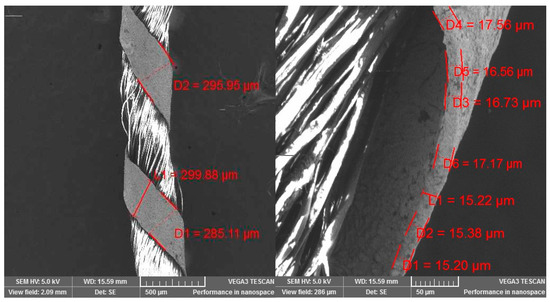
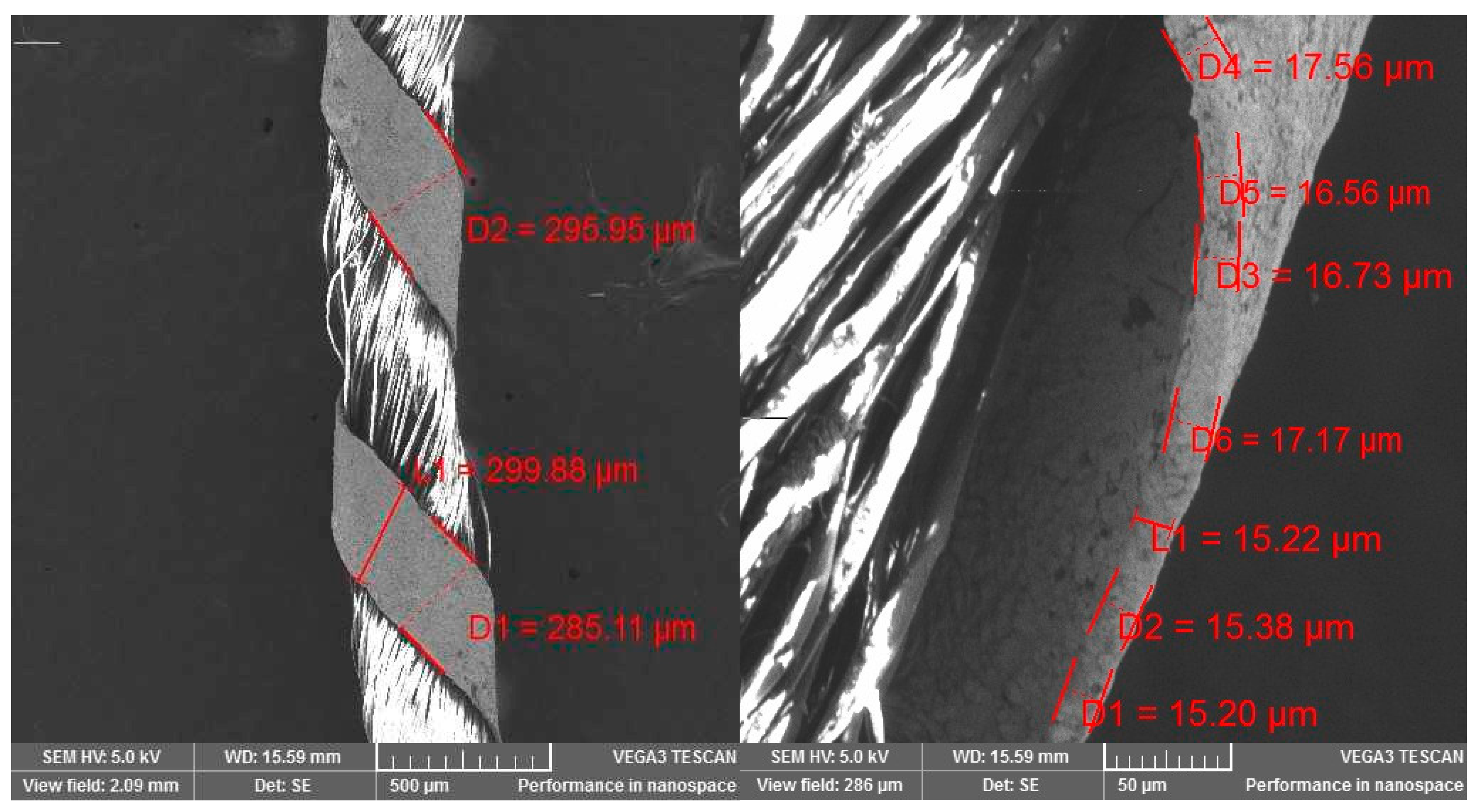
To determine the elemental composition and manufacturing technology of the metal-thread (klabdan) yarns, SEM–EDX analyses were conducted on samples taken from the caftans with inventory numbers 13/21, 13/23, and 13/37. As no metal-thread yarns were observed in the caftans with inventory numbers 13/6 and 13/46, these artifacts were excluded from the elemental evaluation. Figure 6 presents an SEM image of the metal thread yarn from caftan 13/21, including width and thickness measurements.
Figure 6.
SEM image of the metal thread yarn from the caftan with inventory number 13/21, showing the measurement of its width and thickness.
SEM observations clearly revealed the characteristic layered morphology of the metal-thread yarns, showing a composite structure in which a metal strip is helically wrapped around an organic core yarn. In addition, the cross-sectional SEM image revealed the presence of a thin gilded layer over a silver substrate, providing direct visual evidence for the production technology of the metal threads. EDX spectra obtained from the metal thread surfaces indicated that silver (Ag) and gold (Au) were the predominant elements, while copper or other alloying elements were not detected at statistically significant levels. The quantitative elemental ratios of gold and silver (wt.%) are presented in Table 5. Taken together, the morphological and elemental distribution results confirm that the metal-thread yarns were not produced as gold–silver alloys; instead, they were manufactured using a gilding technique intended to enhance visual impact while reducing the consumption of precious metals [46,47]. This production approach is consistent with previous analytical observations on Ottoman-period metal threads, while the present multi-voltage SEM–EDX results provide additional object-specific evidence for the examined caftans [9,10,11]. The absence of additional metal elements further indicates that this technique was implemented as part of a deliberate material selection reflecting an esthetic–economic balance.
Table 5.
Elemental composition (wt.%) of art objects as determined by SEM–EDX analysis.
In order to evaluate the structural character of the metal surfaces in greater detail, EDX analyses were performed at three different accelerating voltages, namely 10 kV, 20 kV, and 30 kV. Under low-voltage conditions (10 kV), which provide greater surface sensitivity, relatively higher Au ratios were detected. With increasing accelerating voltage (20 and 30 kV), a noticeable decrease in the Au percentage and a corresponding increase in the Ag percentage were observed, consistent with the increased penetration depth of the analysis. This voltage-dependent elemental variation clearly demonstrates that gold is not present as a homogeneous alloy component but rather as a thin gilded layer applied over a silver substrate.
The elemental distribution results confirm that the metal-thread yarns were not produced as gold–silver alloys; instead, they were manufactured using a gilding technique intended to enhance visual impact while reducing the consumption of precious metals [46,47]. This production approach is consistent with previous findings on Ottoman-period metal-thread manufacturing technologies [9]. The absence of additional metal elements further indicates that this technique was implemented as part of a deliberate material selection reflecting an esthetic–economic balance.
The similar elemental profiles observed across the three caftans suggest the presence of a certain degree of technical standardization in the production of metal-thread yarns. These findings not only contribute to a better understanding of the original material technology of metal-thread production in Ottoman court textiles but also provide a scientific reference for the selection of appropriate metal threads in conservation, restoration, and replication practices.
4. Conclusions
In this study, selected Ottoman ceremonial caftans (13/21, 13/46, 13/23, 13/6, and 13/37) were comprehensively characterized through a multi-analytical approach combining color measurements, light microscopy, SEM–EDX, and HPLC-DAD analyses. The color parameters obtained (CIE L*a*b*) enabled the quantitative documentation of the optical properties of the textiles and provided a reliable reference for conservation practices. Structural, morphological, and technical analyses revealed a high degree of technical standardization in terms of yarn densities, twist directions, and weaving structures.
Funding
This research received no external funding. The article processing charge (APC) was funded by Istanbul Aydın University.
Institutional Review Board Statement
Not applicable.
Data Availability Statement
The data supporting the findings of this study are available from the corresponding author upon reasonable request. Due to the cultural heritage nature of the analyzed museum objects and related institutional restrictions, the data are not publicly available.
Conflicts of Interest
The author declares no conflict of interest.
References
- Degano, I.; Biesaga, M.; Colombini, M.P.; Trojanowicz, M. Analytical methods for the characterization of organic dyes in artworks and in historical textiles. Appl. Spectrosc. Rev. 2009, 44, 363–410. [Google Scholar] [CrossRef] [Scilit]
- Rosenberg, E. Characterisation of historical organic dyestuffs by liquid chromatography–mass spectrometry. Anal. Bioanal. Chem. 2008, 391, 33–57. [Google Scholar] [CrossRef] [Scilit]
- Gulmini, M.; Idone, A.; Diana, E.; Gastaldi, D.; Vaudan, D.; Aceto, M. Identification of dyestuffs in historical textiles: Strong and weak points of a non-invasive approach. Dye. Pigment. 2013, 98, 136–145. [Google Scholar] [CrossRef] [Scilit]
- Vanden Berghe, I.; Cotte, M.; Higgitt, C.; Saverwyns, S.; De Clercq, W.; De Meyer, S.; Vandenabeele, P. Non-invasive analysis of heritage textiles with MA-XRF mapping—Exploring the possibilities. The study of Bishop Jacques de Vitry’s mitres and fragile medieval reliquary purses from Namur (Belgium). Herit. Sci. 2023, 11, 183. [Google Scholar] [CrossRef] [Scilit]
- Petroviciu, I.; Vanden Berghe, I.; Cretu, I.; Albu, F.; Medvedovici, A. Identification of natural dyes in historical textiles from Romanian collections by LC-DAD and LC-MS (single stage and tandem MS). J. Cult. Herit. 2012, 13, 89–97. [Google Scholar] [CrossRef] [Scilit]
- Mantzouris, D.; Karapanagiotis, I.; Valianou, L.; Panayiotou, C. HPLC–DAD–MS analysis of dyes identified in textiles from Mount Athos. Anal. Bioanal. Chem. 2011, 399, 3065–3079. [Google Scholar] [CrossRef] [Scilit]
- Al-Sharairi, N.; Sandu, I.C.A.; Vasilache, V.; Sandu, I. Recognition of natural silk fibers, dyes and metal threads of historical Romanian textile fragments using the multi-analytical techniques approach. Text. Res. J. 2020, 90, 1671–1688. [Google Scholar] [CrossRef] [Scilit]
- Karadag, R.; Torgan, E.; Taskopru, T.; Yildiz, Y. Characterization of dyestuffs and metals from selected 16–17th-century Ottoman silk brocades by RP-HPLC-DAD and FESEM-EDX. J. Liq. Chromatogr. Relat. Technol. 2015, 38, 591–599. [Google Scholar] [CrossRef] [Scilit]
- Kahraman, N.; Karadag, R. Characterization of sixteenth to nineteenth century Ottoman silk brocades by SEM–EDX and HPLC. Anal. Lett. 2017, 50, 1553–1567. [Google Scholar] [CrossRef] [Scilit]
- Oraltay, R.G.; Karadag, R. Surface investigation of metal threads and solid metals of Ottoman textiles in the Topkapi Palace Museum. Stud. Conserv. 2020, 65, 59–64. [Google Scholar] [CrossRef] [Scilit]
- Karadag, R.; Oraltay, R.G. Application of a new SEM–EDX technique associated with HPLC/DAD: Manufacturing methods of historical textiles. Archaeol. Anthr. Sci. 2023, 15, 8. [Google Scholar] [CrossRef] [Scilit]
- Blackburn, R.S. Natural dyes in madder (Rubia spp.) and their extraction and analysis in historical textiles. Color. Technol. 2017, 133, 449–462. [Google Scholar] [CrossRef] [Scilit]
- Ortega Saez, N.; Vanden Berghe, I.; Verhecken-Lammens, C.; De Clercq, W.; Cardon, D. Material analysis versus historical dye recipes: Ingredients found in black dyed wool from five Belgian archives (1650–1850). Conserv. Patrim. 2019, 31, 115–132. [Google Scholar] [CrossRef] [Scilit]
- Liu, J.; Li, W.; Kang, X.; Zhao, F.; He, M.; She, Y.; Zhou, Y. Profiling by HPLC-DAD-MSD reveals a 2500-year history of the use of natural dyes in Northwest China. Dye. Pigment. 2021, 187, 109143. [Google Scholar] [CrossRef] [Scilit]
- Cardon, D. Natural Dyes: Sources, Tradition, Technology and Science; Archetype Publications: London, UK, 2007. [Google Scholar]
- Hofenk de Graaff, J.H. The Colourful Past: Origins, Chemistry and Identification of Natural Dyestuffs; Abegg-Stiftung and Archetype Publications: Riggisberg, Switzerland; London, UK, 2004. [Google Scholar]
- Valianou, L.; Karapanagiotis, I.; Chryssoulakis, Y. Comparison of extraction methods for the analysis of natural dyes in historical textiles by high-performance liquid chromatography. Anal. Bioanal. Chem. 2009, 395, 2175–2189. [Google Scholar] [CrossRef] [Scilit]
- Serrano, A.; Sousa, M.M.; Hallett, J.; Lopes, J.A.; Oliveira, M.C. Investigation of crimson-dyed fibres for a new approach on the characterization of cochineal and kermes dyes in historical textiles. Anal. Chim. Acta 2015, 897, 116–127. [Google Scholar] [CrossRef] [Scilit]
- Idone, A.; Gulmini, M.; Henry, A.I.; Casadio, F.; Chang, L.; Appolonia, L.; van Duyne, R.P.; Shah, N.C. Silver colloidal pastes for dye analysis of reference and historical textile fibers using direct, extractionless, non-hydrolysis surface-enhanced Raman spectroscopy. Analyst 2013, 138, 5895–5903. [Google Scholar] [CrossRef] [Scilit]
- Reggio, D. Testing, Validation and Optimization of Surface-Enhanced Raman Spectroscopy (SERS) Sensors for the Detection of Small Molecules in Cultural Heritage Materials. Ph.D. Thesis, Universidade de Santiago de Compostela, Santiago de Compostela, Spain, 2021. [Google Scholar]
- Zhang, X.; Laursen, R. Application of LC–MS to the analysis of dyes in objects of historical interest. Int. J. Mass Spectrom. 2009, 284, 108–114. [Google Scholar] [CrossRef] [Scilit]
- Lech, K.; Nawała, J.; Popiel, S. Mass spectrometry for investigation of natural dyes in historical textiles: Unveiling the mystery behind safflower-dyed fibers. J. Am. Soc. Mass Spectrom. 2021, 32, 2552–2566. [Google Scholar] [CrossRef] [Scilit]
- Petroviciu, I.; Teodorescu, I.C.; Vasilca, S.; Albu, F. Transition from natural to early synthetic dyes in the Romanian traditional shirts decoration. Heritage 2023, 6, 505–523. [Google Scholar] [CrossRef] [Scilit]
- Sharif, S.; Nabais, P.; Melo, M.J.; Oliveira, M.C. Traditional yellow dyes used in the 21st century in Central Iran: The knowledge of master dyers revealed by HPLC-DAD and UHPLC-HRMS/MS. Molecules 2020, 25, 908. [Google Scholar] [CrossRef] [Scilit]
- Zhang, X.; Good, I.; Laursen, R. Characterization of dyestuffs in ancient textiles from Xinjiang. J. Archaeol. Sci. 2008, 35, 1095–1103. [Google Scholar] [CrossRef] [Scilit]
- Li, Y.; Wei, S.; Fu, M. Multi-analytical techniques used for the identification of the dyeing techniques of several textile of ancient China. Microchem. J. 2020, 156, 104790. [Google Scholar] [CrossRef] [Scilit]
- Dyer, J.; Tamburini, D.; Speakman, N.; Cartwright, C.R. Hidden treasures: Precious textiles from the St Eustace Head Reliquary. Heritage 2025, 8, 206. [Google Scholar] [CrossRef] [Scilit]
- Karapanagiotis, I.; Verhecken-Lammens, C.; Kamaterou, P. Identification of dyes in Egyptian textiles of the first millennium AD from the collection Fill-Trevisiol. Archaeol. Anthr. Sci. 2019, 11, 2699–2710. [Google Scholar] [CrossRef] [Scilit]
- Karapanagiotis, I.; Mantzouris, D.; Kamaterou, P.; Lampakis, D.; Panayiotou, C. Identification of materials in post-Byzantine textiles from Mount Athos. J. Archaeol. Sci. 2011, 38, 3217–3223. [Google Scholar] [CrossRef] [Scilit]
- Crippa, M.; Cardon, D.; Tamburini, D.; Kondo, T.; Nabais, P. Lac dye colours: A review of the origin, history and identification techniques in textiles. J. Cult. Herit. 2025, 75, 307–325. [Google Scholar] [CrossRef] [Scilit]
- Veneno, M.; Nabais, P.; Otero, V.; Clemente, A.; Oliveira, M.C.; Melo, M.J. Yellow lake pigments from weld in art: Investigating the Winsor & Newton 19th century archive. Heritage 2021, 4, 422–436. [Google Scholar] [CrossRef] [Scilit]
- Ramig, K.; Lavinda, O.; Szalda, D.J.; Mironova, I.; Karimi, S.; Pozzi, F.; Shah, N.; Samson, J.; Ajiki, H.; Massa, L.; et al. The nature of thermochromic effects in dyeings with indigo, 6-bromoindigo, and 6,6′-dibromoindigo, components of Tyrian purple. Dye. Pigment. 2015, 117, 37–48. [Google Scholar] [CrossRef] [Scilit]
- Nedumpillil, N.N.; Sankaran, A.; Jose, S.; George, S.; Thomas, S. Destructive analytical techniques for the analysis of historic textiles. In Handbook of Museum Textiles, Volume 2: Scientific and Technological Research; Jose, S., Thomas, S., Pandit, P., Pandey, R., Eds.; Wiley: Hoboken, NJ, USA, 2022; pp. 215–234. [Google Scholar]
- Melo, M.J. History of natural dyes in the ancient Mediterranean civilization. In Handbook of Natural Colorants, 2nd ed.; Bechtold, T., Manian, A.P., Pham, T., Eds.; John Wiley & Sons Ltd.: Hoboken, NJ, USA, 2023; pp. 3–26. [Google Scholar]
- Laursen, R. The analysis of dyes in textiles. Text. Mus. J. 2020, 47, 55–69. [Google Scholar] [CrossRef] [Scilit]
- Celani, C.P.; Degano, I.; Chen, C.; Jaeger, O.; Speed, A.M.; Booksh, K.S.; Alcantara-Garcia, J. Exploring elucidation of red dye mixtures on woolen historical textiles via non-destructive spectroscopic analysis and multivariate cluster analysis. Herit. Sci. 2024, 12, 48. [Google Scholar] [CrossRef] [Scilit]
- Nabais, P.; Malcolm-Davies, J.; Melo, M.J.; Teixeira, N.; Behlen, B. Early modern knitted caps (fifteenth to sixteenth centuries): Analyzing dyes in archaeological samples using microspectrofluorimetry complemented by HPLC–MS. Herit. Sci. 2023, 11, 220. [Google Scholar] [CrossRef] [Scilit]
- Witkowski, B.; Stachurska, M.; Lustyk, P.; Gierczak, T.; Biesaga, M. Pitfalls of dye identification in historical fabrics. J. Cult. Herit. 2025, 72, 180–190. [Google Scholar] [CrossRef] [Scilit]
- Sandström, E.; Vettorazzo, C.; Mackay, C.L.; Troalen, L.G.; Hulme, A.N. Historical textile dye analysis using DESI-MS. Heritage 2023, 6, 4042–4053. [Google Scholar] [CrossRef] [Scilit]
- Wouters, J. High performance liquid chromatography of anthraquinones: Analysis of plant and insect extracts and dyed textiles. Stud. Conserv. 1985, 30, 119–128. [Google Scholar] [CrossRef] [Scilit]
- Tamburini, D.; Sabatini, F.; Berbers, S.; van Bommel, M.R.; Degano, I. An introduction and recent advances in the analytical study of early synthetic dyes and organic pigments in cultural heritage. Heritage 2024, 7, 1969–2010. [Google Scholar] [CrossRef] [Scilit]
- Lech, K.; Jarosz, M. Novel methodology for the extraction and identification of natural dyestuffs in historical textiles by HPLC–UV–Vis–ESI MS. Case study: Chasubles from the Wawel Cathedral collection. Anal. Bioanal. Chem. 2011, 399, 3241–3251. [Google Scholar] [CrossRef] [Scilit]
- Lech, K.; Jarosz, M. Identification of Polish cochineal (Porphyrophora polonica L.) in historical textiles by high-performance liquid chromatography coupled with spectrophotometric and tandem mass spectrometric detection. Anal. Bioanal. Chem. 2016, 408, 3349–3358. [Google Scholar] [CrossRef] [Scilit]
- Lech, K.; Fornal, E. A mass spectrometry-based approach for characterization of red, blue, and purple natural dyes. Molecules 2020, 25, 3223. [Google Scholar] [CrossRef] [Scilit]
- Lech, K.; Witkoś, K.; Wileńska, B.; Jarosz, M. Identification of unknown colorants in pre-Columbian textiles dyed with American cochineal (Dactylopius coccus Costa) using high-performance liquid chromatography and tandem mass spectrometry. Anal. Bioanal. Chem. 2015, 407, 855–867. [Google Scholar] [CrossRef] [Scilit]
- Járó, M. Gold embroidery and fabrics in Europe: XI–XIV centuries. Gold Bull. 1990, 23, 40–57. [Google Scholar] [CrossRef] [Scilit]
- Taşkömür, H. Simlik ve Tel Çekimi in the Ottoman Empire. Master’s Thesis, İstanbul University, İstanbul, Türkiye, 1990. [Google Scholar]

Disclaimer/Publisher’s Note: The statements, opinions and data contained in all publications are solely those of the individual author(s) and contributor(s) and not of MDPI and/or the editor(s). MDPI and/or the editor(s) disclaim responsibility for any injury to people or property resulting from any ideas, methods, instructions or products referred to in the content. |
© 2026 by the author. Licensee MDPI, Basel, Switzerland. This article is an open access article distributed under the terms and conditions of the Creative Commons Attribution (CC BY) license.