All articles published by MDPI are made immediately available worldwide under an open access license. No special
permission is required to reuse all or part of the article published by MDPI, including figures and tables. For
articles published under an open access Creative Common CC BY license, any part of the article may be reused without
permission provided that the original article is clearly cited. For more information, please refer to
https://www.mdpi.com/openaccess.
Feature papers represent the most advanced research with significant potential for high impact in the field. A Feature
Paper should be a substantial original Article that involves several techniques or approaches, provides an outlook for
future research directions and describes possible research applications.
Feature papers are submitted upon individual invitation or recommendation by the scientific editors and must receive
positive feedback from the reviewers.
Editor’s Choice articles are based on recommendations by the scientific editors of MDPI journals from around the world.
Editors select a small number of articles recently published in the journal that they believe will be particularly
interesting to readers, or important in the respective research area. The aim is to provide a snapshot of some of the
most exciting work published in the various research areas of the journal.
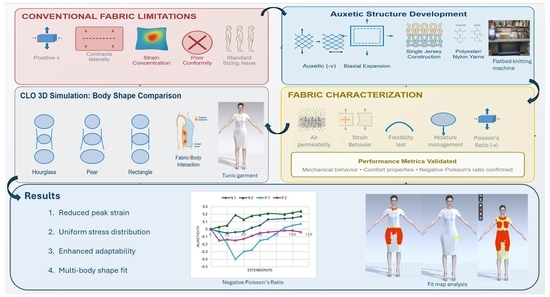
Traditional ready-to-wear garments can mostly not conform to different body shapes because of the adoption of the generic sizing system, which leads to the local strain of concentration and morphological misfit. Auxetic structures, which have a negative Poisson’s ratio, permit enhanced redistribution of stress and geometry and allow deformation. Two auxetic knitted structures were developed by using 100% polyester and 100% nylon yarns with a fabric density of 41 Wales and 40 courses per inch. Characterization of the initial fabrics involved checking the behavior of negative Poisson’s ratio (NPR) where the polyester line (P1) structure shows the highest auxeticity, with a NPR of approximately −0.4 and peak strain reductions of 80–90%, as well as air permeability, moisture management, bend test, compression, roughness, friction properties and stiffness tests to check the mechanical and comfort-related performances. The standardized tunic garment was modeled in CLO 3D on three female body shapes—hourglass, pear and rectangle—with a constant size of 34. The fit map showed a strain of 91.49% in auxetic and 509.75% in single-jersey fabric at the hip area of the pear body shape when measuring fabric and body interaction. The findings indicate lower peak strain levels, which ascertain that increased adaptability is possible and support its use in the development of adaptive ready-to-wear garments.
Auxetic structures are a unique category of materials that have a contrary mechanical behavior as compared to other materials. The term auxetic is of Greek origin, from the word AUXETIKOS, which means “to swell” or “to grow” [1]. Unlike conventional materials, which contract laterally when stretched and expand when compressed, auxetic materials exhibit the opposite behavior. They expand under tensile loading and contract under compressive loading, resulting in biaxial expansion during tension and biaxial contraction during compression. This unique response reflects their negative Poisson’s ratio characteristics [2]. This deformation is counterintuitive, with exceptional functional benefits that have given it great importance in material science and textile engineering. This is characterized by the defining parameter of Poisson’s ratio (ν), which is the association existing between transverse and longitudinal strain and is determined by:
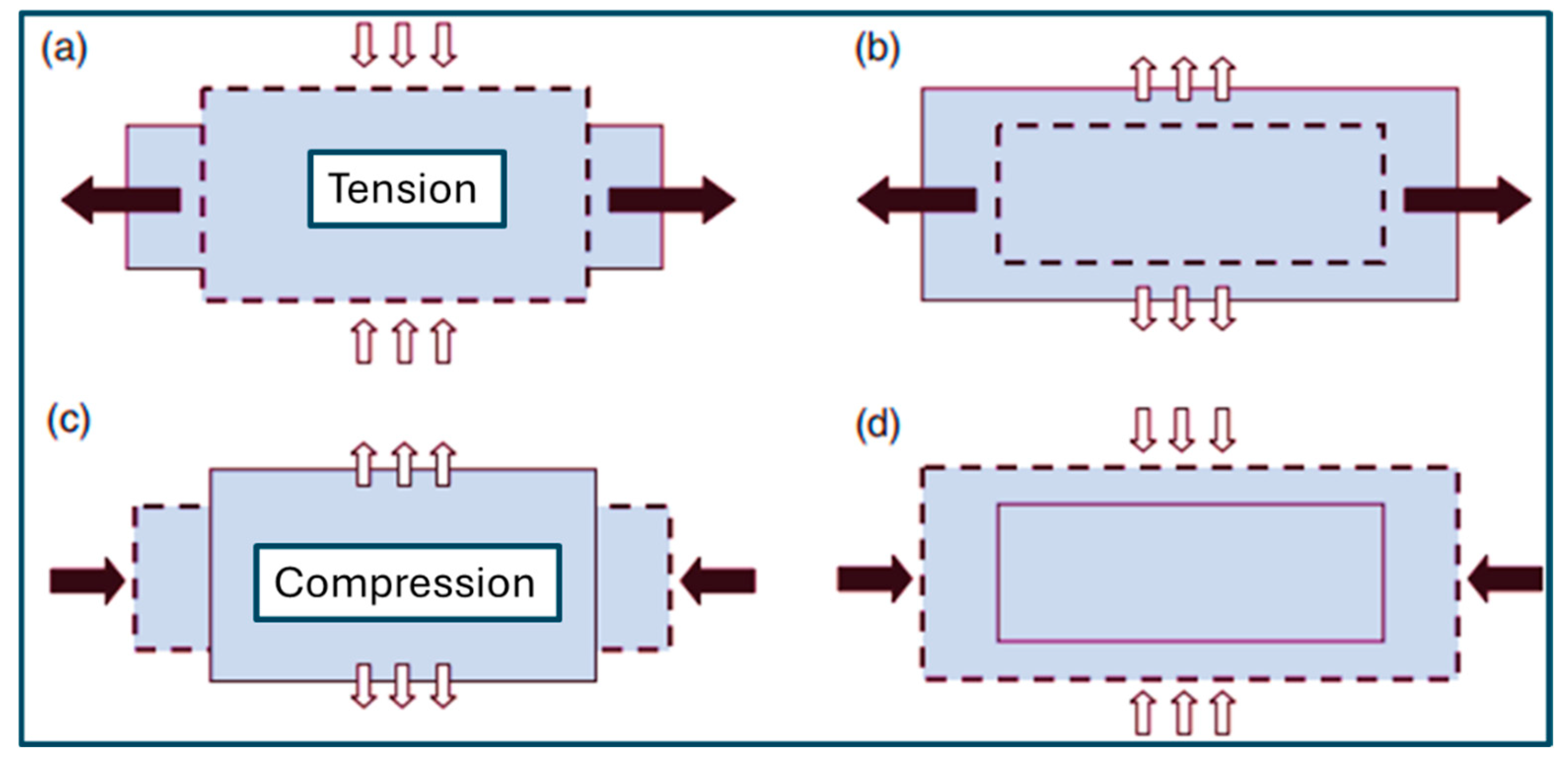
where = (W − W0)/W0 represents lateral strain and (L − L0)/L0 represents longitudinal strain; here, L and W are the initial length and width of the sample, while L and W denote the corresponding dimensions under applied tensile force [3]. Figure 1 explains that in conventional material (a and c), the material expands in only one direction, whereas in auxetic material (b and d), the material expands and contracts biaxially.
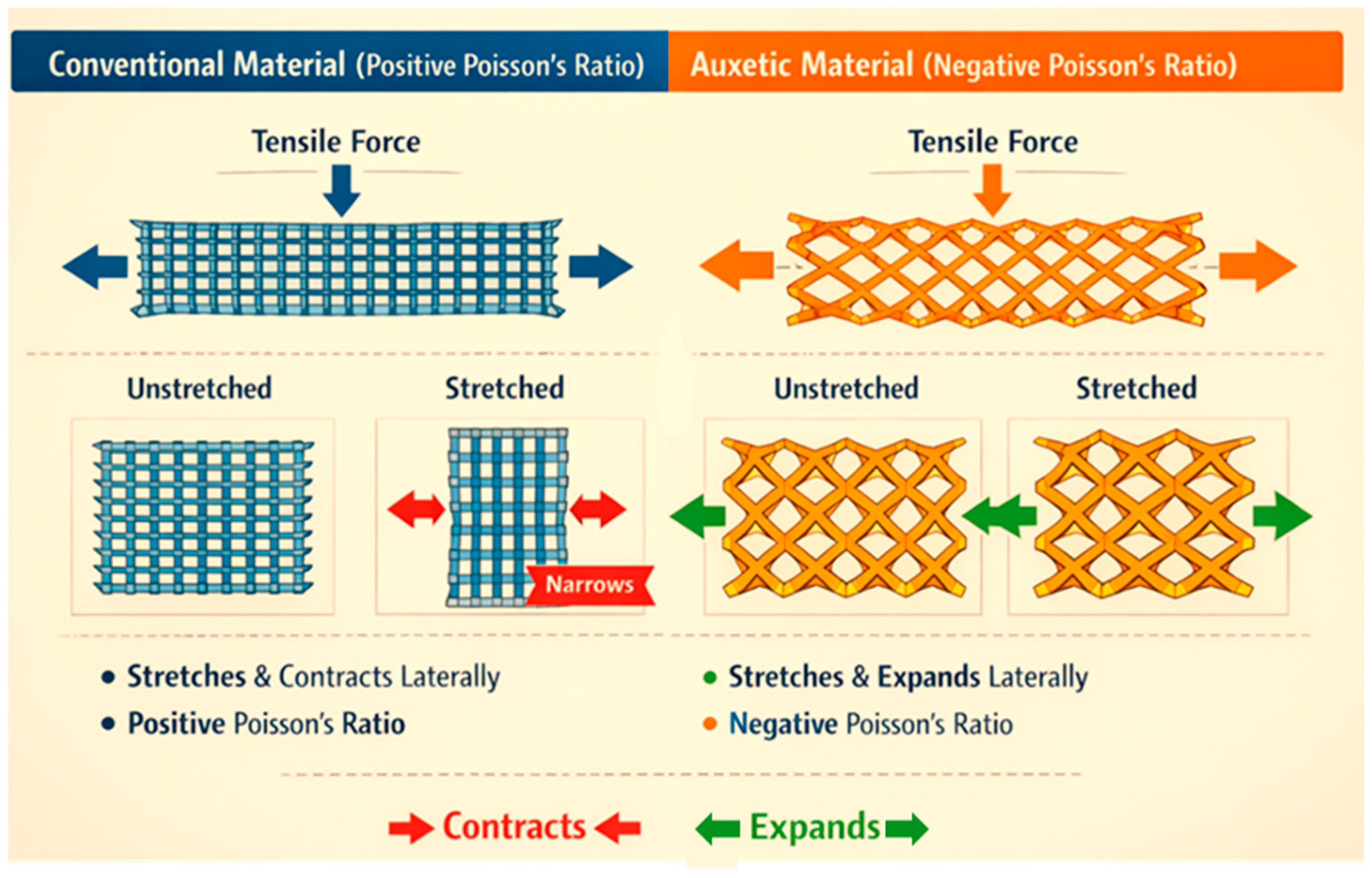
In traditional materials, Poisson’s ratio is positive, implying the material contracts laterally when it is stretched. On the contrary, Poisson’s ratio can be negative in the case of auxetic materials, which proves their capacity to spread apart laterally under tensile pressure. The property causes deformation in both disciplinary directions concurrently, which increases structural adaptability [4]. Figure 2 describes the behavior of auxetic and conventional materials.
The main effect is that the auxetic behavior is dictated by the geometry of the structure and not by the material composition. Auxetic structures are isotropic in nature, that is, they do not change in their mechanical response with the direction of the applied force [5]. Moreover, they are believed to be scale-independent, and principles of their designs can be successfully applied to macro-, micro-, and nano-scales without any functionality loss. The scalability of auxetic structures allows the application of auxetic structures in a variety of applications, such as aerospace, biomedical engineering, protective systems, and textiles [6,7].
Both engineered and natural materials have been found to exhibit auxetic behavior. Natural auxetic materials consist of some crystalline structures and mineral structures, whereas engineered auxetic structures consist of polymers, foams, fiber-reinforced composite, and textiles [8]. Auxetic behavior has been exhibited in the textile field in the form of auxetic yarns, knitted fabrics, woven structures and hybrid textile composites. Of these, knitted auxetic structures prove especially beneficial because of their natural flexibility, low bending rigidity, and large reversible deformations, which qualify them as highly convenient wearable clothing products [9].
Auxetic behavior in textile engineering is realized through engineered structural configurations such as re-entrant geometries, rotating unit systems, nodule–fibril networks, chiral architectures, helical yarn constructions, and liquid crystalline models. These structures can be fabricated using conventional yarns via knitting or weaving, through additive manufacturing techniques, or by employing gradient architectures that integrate auxetic and non-auxetic regions to achieve localized functional responses [10]. There exists a combination involving auxetic yarn design, in which auxetic behavior is integrated at the yarn level. The helical yarn model strives to achieve this, wherein a stiff filament coils helically around a flexible core, which remains coiled in the unstrained configuration but straightens out in the tensed state to take up the prime carrying role, with the core expanding laterally to create auxetic materials, while in the liquid crystalline model, stiff components are combined in a softer matrix, wherein, on being extended, the components tend to turn, causing lateral expansion and hence auxetic behavior [11,12].
In auxetic textiles, smart foldable structures can be modeled to extend in the sideways direction with stretching. The most analyzed auxetic structure includes re-entrant shapes, which consist of inwardly angled cells with patterns such as zigzags, lines, honeycombs, star-shaped loops, lozenges, or sinusoids [13,14]. The rotating unit model consists of rigid/semi-rigid components joined with flexible joints capable of rotating when under tension, thus expanding the material. For the nodule–fibril model, the material is made of small nodules that are connected by fibrils to allow them to separate when traction is applied to allow for expansion, while the chiral lattices form auxetics based on unraveling ligaments round a central node to allow for expansion [15,16].
Auxetic textile materials have great novel properties, making their applications very precious for clothing [17]. These properties include high resistance to pressure, high capacity of energy absorption, high resistance to fracture, high shear stiffness, as well as high flexibility. An additional novel property is the synclastic curvature which is maintained in the material [18]. This suggests that the material has a property of being able to conform easily to curved surfaces without wrinkling. This contrasts with conventional textile materials that do not conform well and always present points of discomfort to the wearer [19].
The auxetic textiles are also unique in that they can wick away moisture to achieve greater breathability. The textile will stretch, therefore allowing more pores and air passages which will maximize the evaporation of sweat while wearing them [20,21]. Auxetic textiles are more resistant against pressure, since the forces are distributed over a bigger area, hence making them ideal in the manufacturing of protective clothing, clothing for sports, and functional clothing in general. The uniqueness exhibited by auxetic materials in comfort, durability and the ability to wick away moisture is driving their application in a host of products ranging from protective clothing, biomedical strips, maternity dresses, kids wear, sensors, and filter materials to shock-resistance systems [22].
The shape and form of a human body is important in determining the fit and functionality of clothing. This is not just dependent on the size of a person’s body but also on the ratio that exists between different body parts like the shoulders, bust, waist, hips and torso. According to these ratios of the body, body types are generally classified under different types that include hourglass body, pear body, apple body, rectangular body, and inverted triangle bodies [23]. Each body type presents distinct features that influence how clothing will move on that body. For example, in the hourglass body shape, a person has equal bust and hip measurements with a narrow waist. Another body shape is the pear body shape, which has larger hips compared to the bust and shoulders [24]. Other body types include apple body shapes, which are heavier around the abdominal parts with small hips. Rectangular body shapes have minimal body curvatures with little definition at the waist. Finally, individuals with inverted triangle body types have larger shoulders compared to their hips [25].
Clothing size ranges are based on what is considered a standard body type, determined by averaging the measurements taken from a small group of individuals. This standard assumes that corresponding body measurements, such as bust, waist, and hips, will increase proportionately as sizes increase or decrease [26]. A standard body does not proportionately increase or decrease like measurements for different sizes. For instance, it is possible for one person’s hips to be larger while their bust size is not similarly larger, depending on their body type. This creates fitting and comfort problems [27].
A clothing model based on standard body models does not usually fit people well whose body proportions do not match the presumed standard. This is because each body type has different measurement requirements [28]. For instance, people with pear-shaped bodies require additional space around their hips without increasing their waist unduly [29]. The standard method of designing does not correlate well with these different body shapes, thus making it difficult to fit ready-to-wear clothes. This results in tightness at some points, sagging at others, strain lines, seams that are displaced, distorted surfaces, and a lack of flexibility. A resulting effect is that such clothes fit well at some points but hang poorly at others, thus making one feel uncomfortable while at the same time affecting the appearance of dresses that should fit the body well [30].
Consumers, in fact, make use of post-production modification and tailoring to overcome issues of ill-fitting clothing through techniques such as dart modification, seam modification, and resin change [31]. Although such techniques work well for consumer comforts, they do have their own drawback in terms of increased costs in terms of money and materials used [32]. Moreover, at a macro level, consumer dependence on such alterations leads to increased costs in terms of inefficiency, lack of scalability, and increased generation of waste, while ill-fitting clothing itself is one reason for increased returns, thus impacting consumer satisfaction as well as sustainability [33]. It can be well understood here that such consumer dependence on clothing alterations reveals one critical flaw in the M-System [34], which is based on standard models for bodies, rather than adapting to various models. Thus, there is a pressing need for adaptive solutions to garments in terms of materials and structures, which must be capable of adapting to changing shapes without necessarily requiring any alterations. Adapted materials have tremendous potential to change clothing structures at their foundation [35].
Auxetic knitted structures are a novel means of addressing garment fitting problems. With their negative Poisson’s ratio, when they are being stretched, they will expand out to the sides (they will become more practically multi-axially deformable) and adapt well to body morphologies. In the case of clothing, this means that auxetic knits can accommodate themselves in regions, e.g., wider hips, fuller abdomens or broader shoulders, without creating an unwanted tightness or looseness in adjoining areas. This is unlike conventional elastic fabrics, which will simply stretch in one direction, and all too often, the fabric will compress or distort some other part of the body. Auxetic designs diffuse the deformation from an applied force outward more evenly. The effect is increased homogeneity of fit, with less strain and more comfort across different body types. By reacting structurally to body morphology, auxetic knitted fabrics can strive to drastically reduce the problems of fitting, as well as minimize the need for alterations and foster more inclusive apparel design. This integration of auxetic knitted structures into clothing moves garment design away from the need to use alterations to correct the fit of garments and into fabrics that might inherently adapt to the body’s shape. This approach addresses the limitations of standard sizing systems and provides a scalable solution for designing garments that accommodate diverse body shapes while maintaining comfort, functionality, and esthetic quality. The aim of this research is to create and evaluate auxetic knitted structures for adaptive clothing applications. This research focuses on studying its impact on the distribution of strain, fabric–body interaction, and garment fit among body shapes. Further, the experiments on various auxetic structures were compared to determine the most efficient structure.
2. Materials and Methods
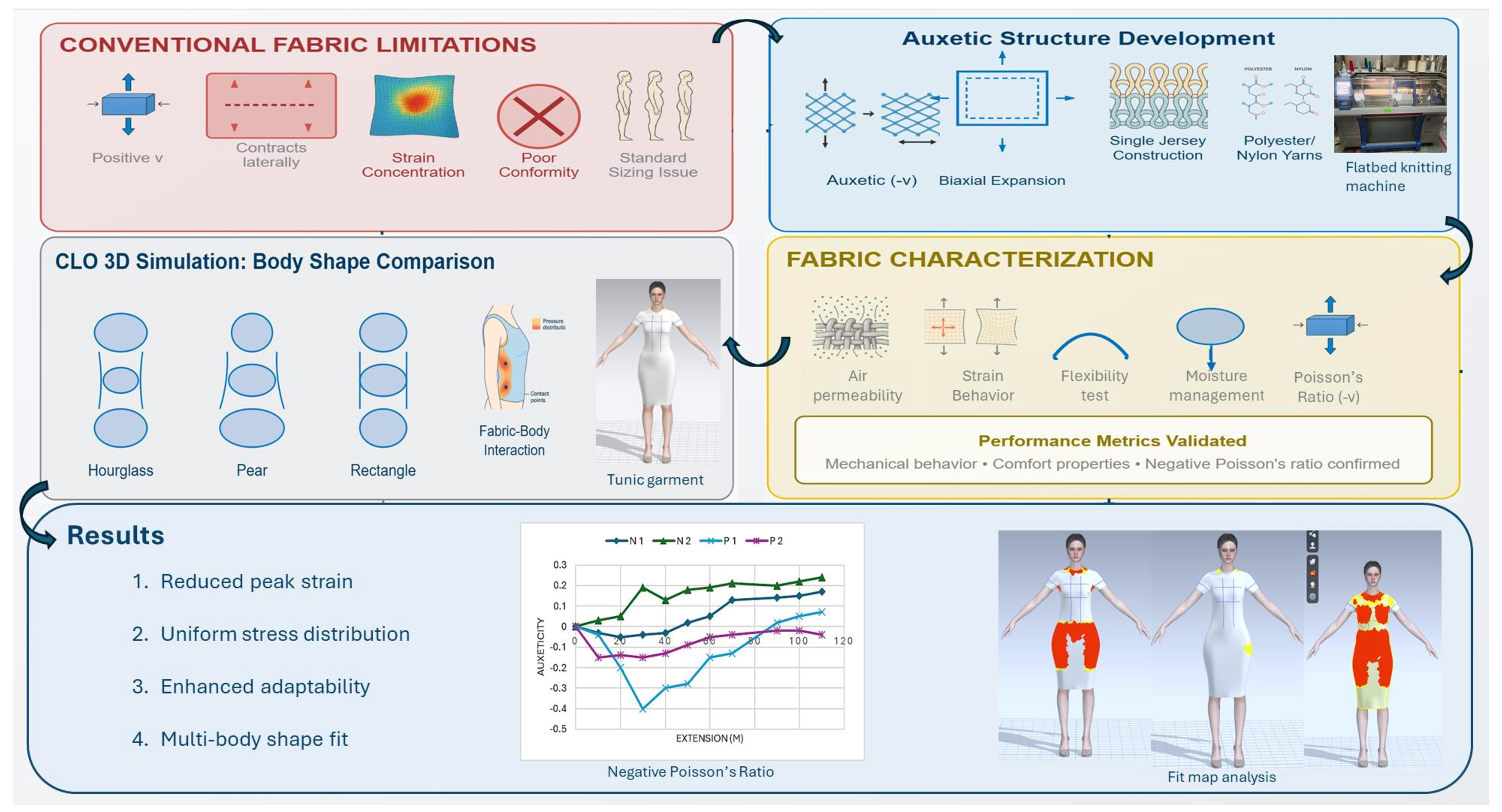
The methodology was carried out in four steps, shown in Figure 3. To create and develop the auxetic knitted structure, first, the geometry and structural parameters of single-jersey loops were manipulated to bring about negative Poisson’s ratio behavior and biaxial expansion at a controlled rate. Second, three different female body shapes, hourglass, pear and rectangle, were also chosen to measure morphological variety, and digital avatars were created to assure size-based comparison. Third, to facilitate a direct comparison of the structural characteristics, a prototype of a standard tunic garment was designed out of both auxetic and conventional single jersey to be produced within the same pattern and construction conditions. Lastly, a characterization of the fabric was performed to determine the mechanical and comfort-related characteristics and a virtual fitting analysis was conducted in CLO 3D, where stress, strain and fit maps were computed to determine adaptability and body contact with clothing across various body shapes.
2.1. Design and Development of Auxetic Knitted Structure
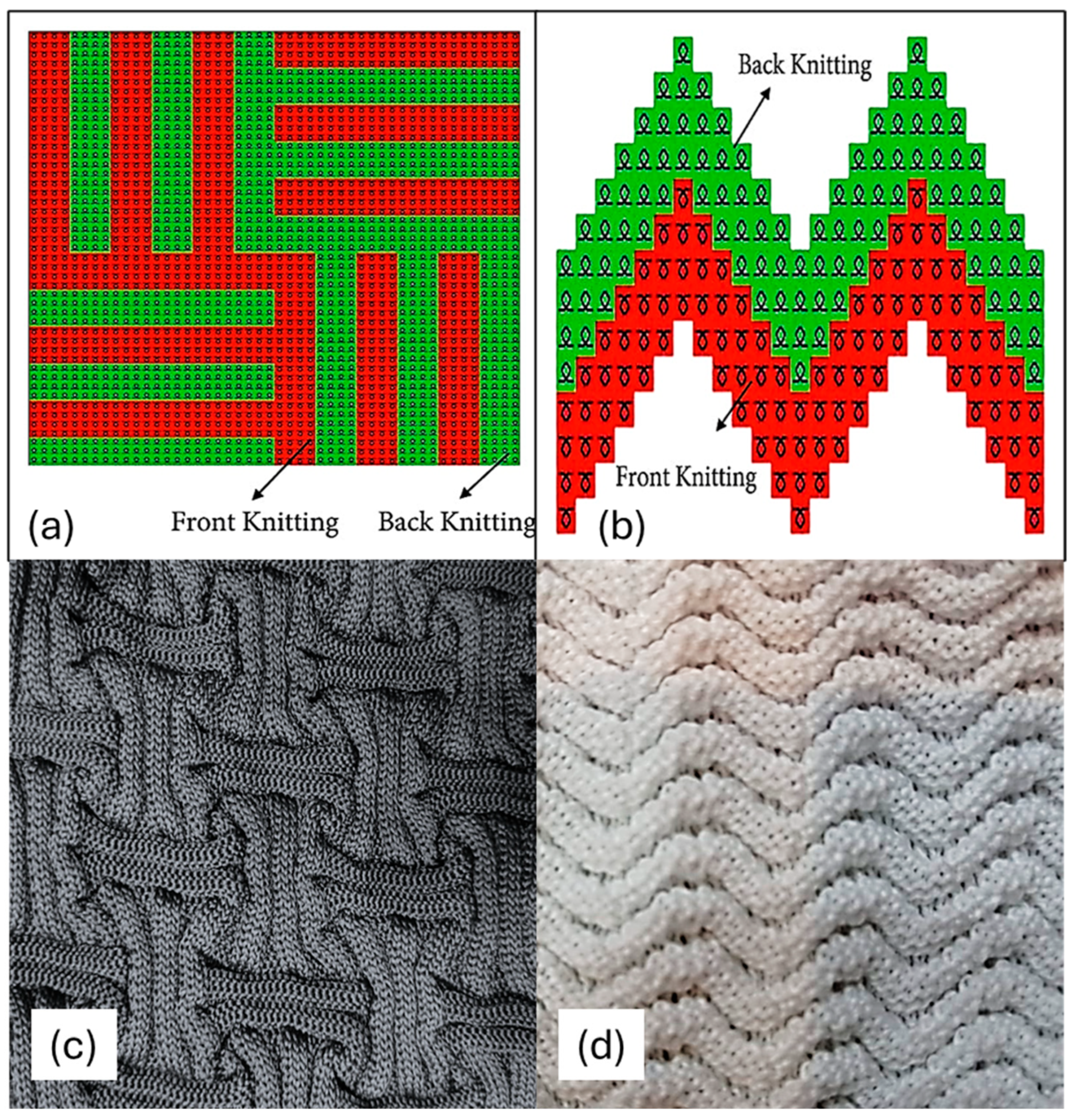
Samples with two auxetic knit structures—line and zigzag—were chosen, both using a single jersey base structure; the auxetic knits were created with 100% polyester and 100% nylon as the yarns, with a yarn count of 150 D, ply 4, with a fabric weight of 230 g/m2. The knitted form was a loop knit structure which had a density of 16 Wales and 26 courses per inch, where controlled loop establishment and consistency of the structure necessary to cause auxetic deformation was achieved, as shown in Figure 4. The choice of single jersey was purposely made as single-jersey fabrics naturally have curling edges because they have loops that are not symmetrical. In the fabric architecture where the front and back of the single-jersey structure is knitted alternately, the curled edges on opposite sides curl in opposite directions; when tensile force is applied, these curled sections open, and this allows the fabric to expand laterally, thus creating the auxetic effect. Therefore, structural design was used in attaining the auxetic behavior as opposed to material changes, and the internal loop shape and the arrangement of stitches were essential in creating biaxial deformation. The seamless knitting technology was used to develop fabric on a whole-garment flatbed knitting machine (Stoll CMS 530 HPBW manufactured by Karl Mayer Stoll, Reutlingen, Germany), which allows fine control of the stitch patterning needed to achieve intricate auxetic geometry. The fabrics were knitted with a machine gauge of 12–14, while the stitch length was maintained at 0.9 mm to ensure consistent loop formation and structural stability. This technique has allowed the continuous incorporation of auxetic structures into areas of the garment without cutting or stitching, which contributes to higher comfort, structural continuity and applicability in adaptive, close-fitting apparel.
2.2. Selection of Body Types and Shapes
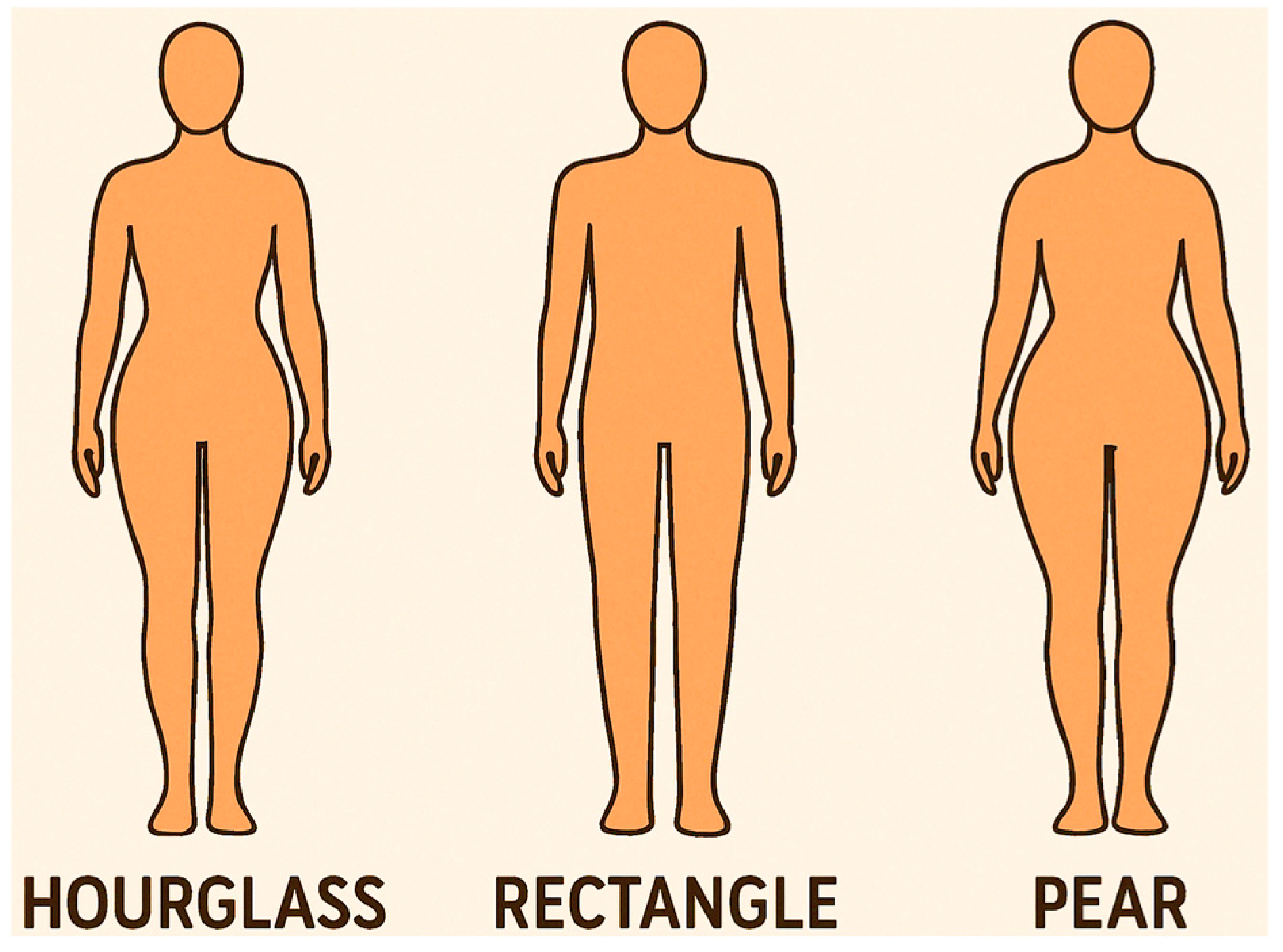
Three representative body shape types for females were chosen, i.e., hourglass, rectangle, and pear, shown in Figure 5 to represent both standard and non-standard body proportions that generally occur together with fitting issues in garments [36]. The hourglass shape was selected as it is very similar to the reference body model used in traditional sizing systems and is thus a basis used to evaluate fit. The rectangle shape was included because of its lack of definition in the waist, which often shows excess ease and poor shaping in fitted garments made with the standard grading rules. The pear shape was chosen because of its dominating hip region to the bust and a waist region that is often associated with strain, distortion and discomfort in ready-to-wear clothing.
2.3. Development of the Prototype
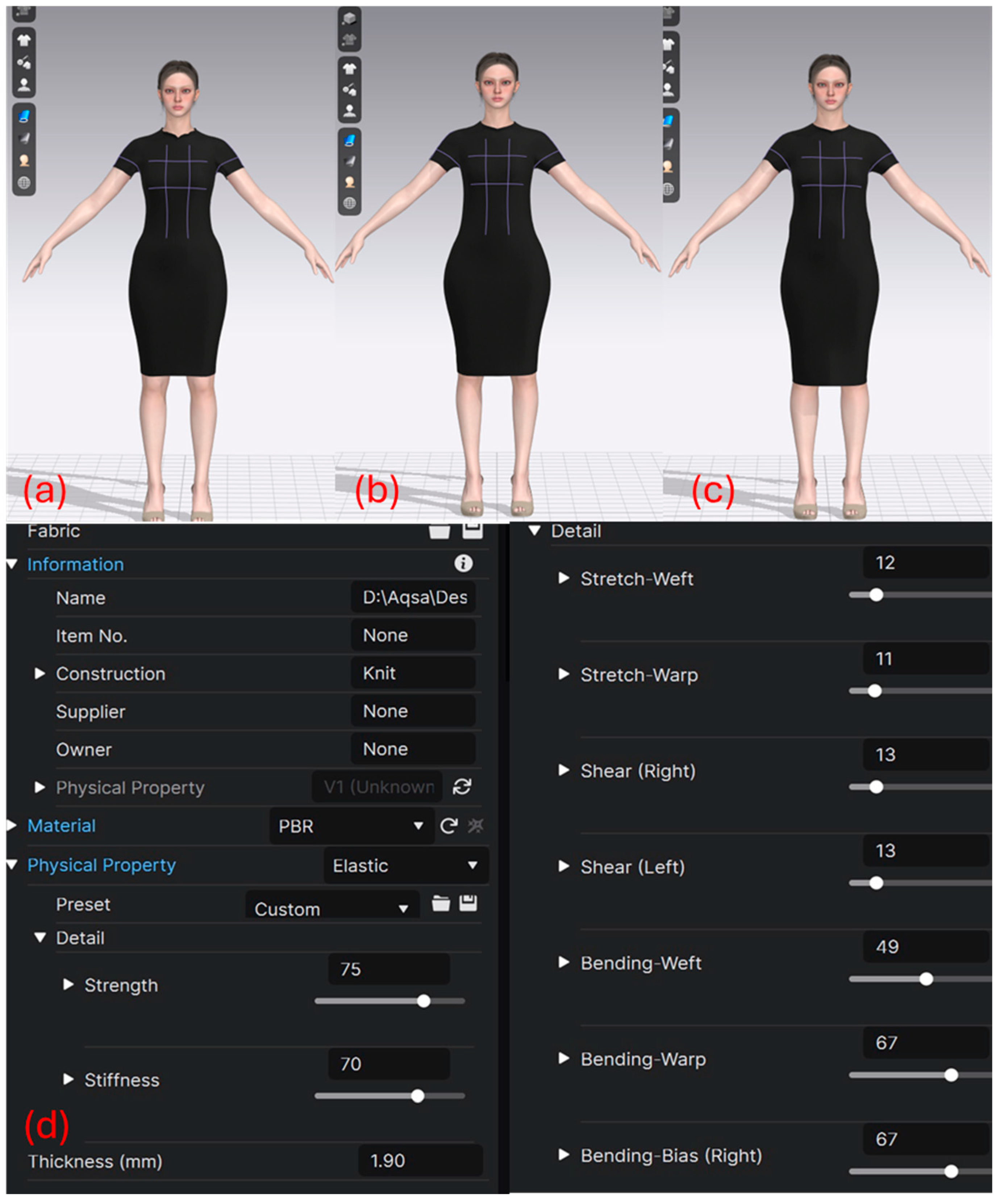
Digital avatars for each body shape were generated in CLO 3D standalone (version 5.2.284.29975), which enables the realistic visualization of garment and body interaction by physics-based fabric simulation and allows for the stabilization of height and size while changing body proportions; in order to control the fit of garments and the ability of fabric to adapt to different body morphologies and to simulate fabric realistically in CLO 3D, the software requires specific physical and mechanical fabric properties. These inputs allow the digital fabric to behave like real material when draped on a 3D avatar. Most of these values are obtained through fabric testing using the CLO Fabric Kit. The main inputs required in CLO 3D include weight, thickness, stretch, bending, shear, and friction, shown in Figure 6. A tunic garment has been chosen in terms of virtual simulation because of the coverage of the torso and the tight fit of the garment, which would enable the analysis of the behavior of the fabric over the bust, the waist, and the hip areas at the same time. The body can be clearly analyzed on the entire vertical axis in terms of its stress, strain, and distribution of fit due to its continuous nature. The garment was designed through a CLO 3D technical specification package that included garment sketches, pattern dimensions, construction details, seam placement and material specifications [37].
2.4. Characterization
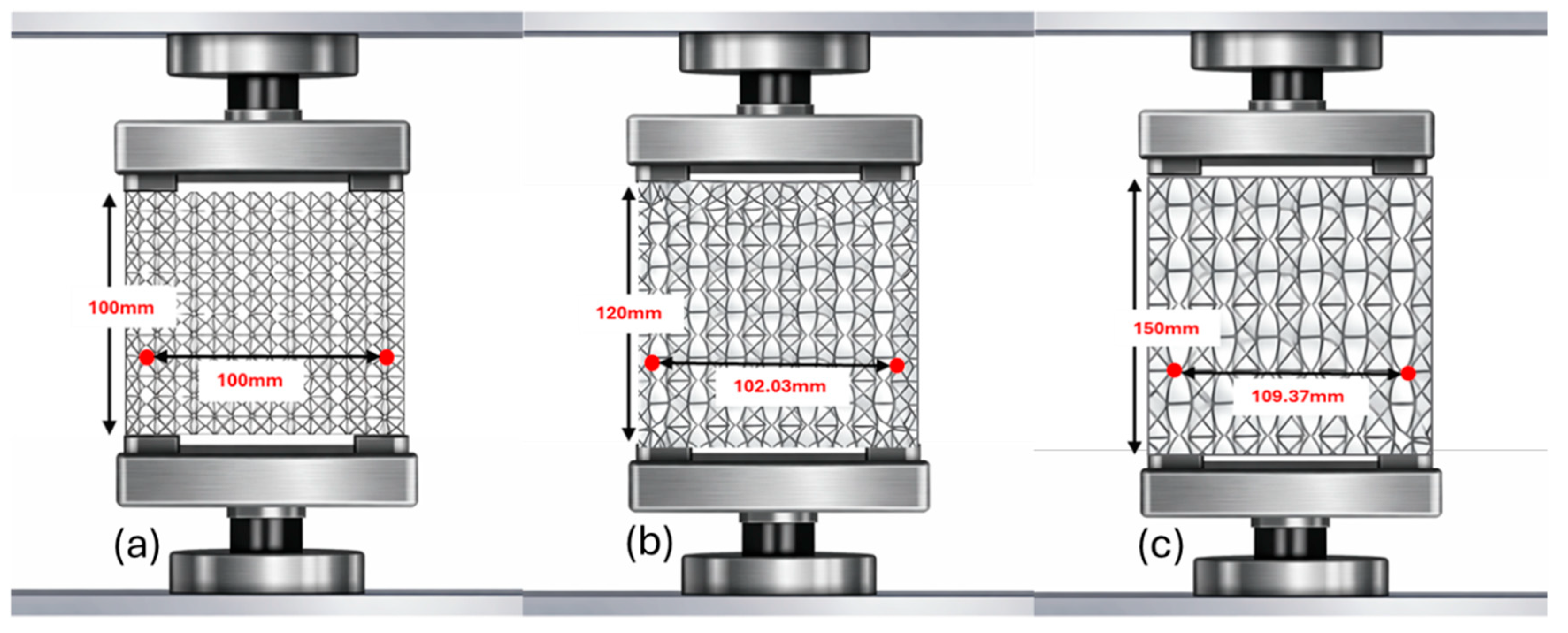
Prior to the simulation of the garment, an initial physical characterization of the auxetic knitted fabric was conducted in order to assess the evaluated mechanical and comfort-related performance. The auxetic behavior was confirmed by determining the negative Poisson’s ratio (NPR) in uniaxial tensile loading in a universal testing machine shown in Figure 7. The samples were placed for 24 h under 65 ± 2% relative humidity and a temperature of 20 ± 2 °C. For testing, the fabric effective length was 100 mm × 100 mm. The samples were fixed onto the jaws of the machine. Two reference points were marked along the width, and the change in distance between these points during extension was used for calculations. This approach minimizes the influence of edge curvature and ensures that the strain is calculated based on a consistent and representative region of the fabric. The fabrics were extended periodically and at each stop the change in length with respect to width was noted. After taking all the required measurements, the NPR ratio was calculated using the following formulas:
Here, L0 is the original length and W0 is the original width, whereas L is the length under applied force and W is the width under applied force [38].
Figure 7.
NPR measurement at various extensions: (a) no extension; (b) 20% extension; (c) 50% extension.
Figure 7.
NPR measurement at various extensions: (a) no extension; (b) 20% extension; (c) 50% extension.
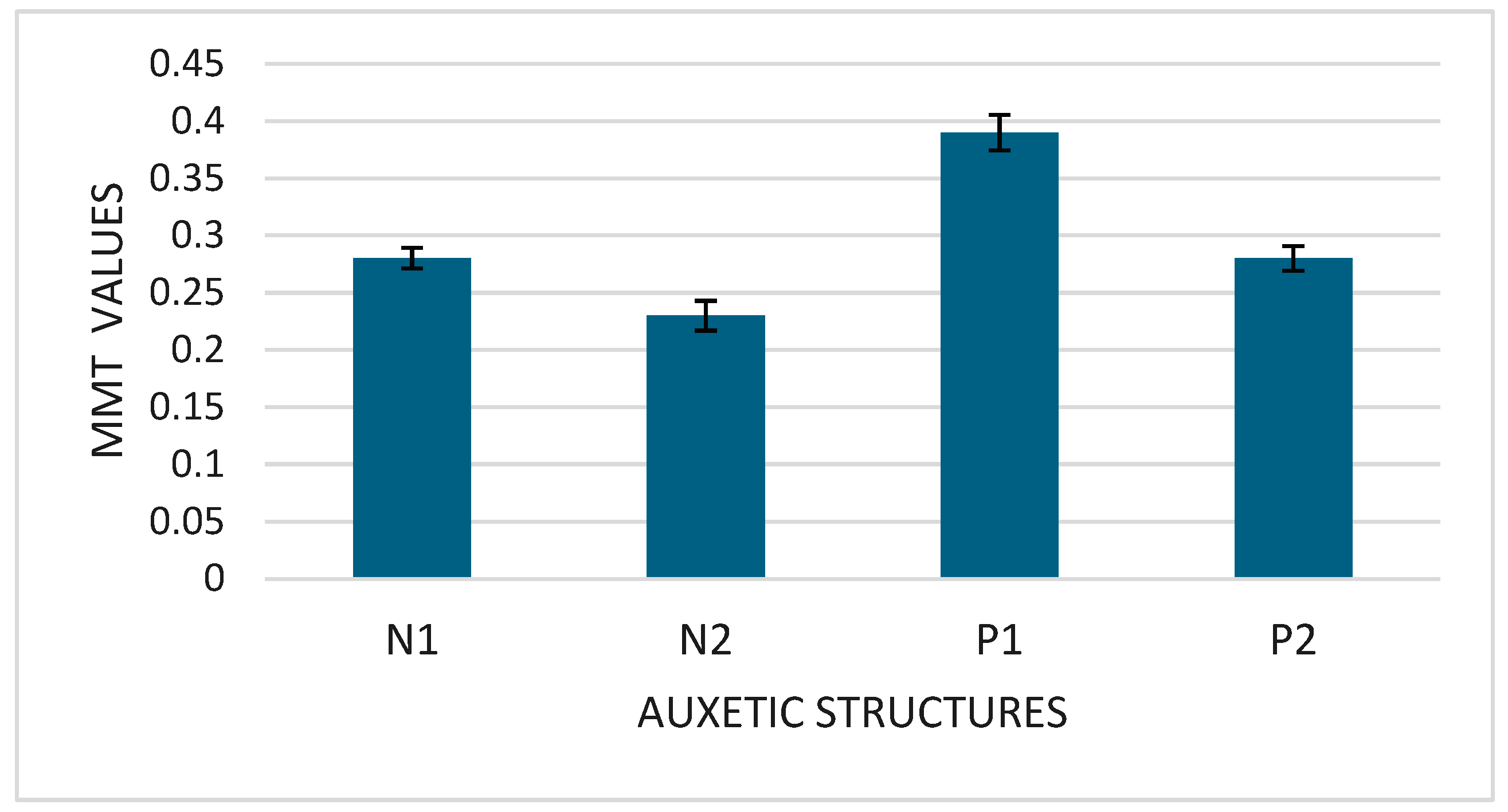
The air permeability was tested based on ISO 9237 [39] to study the breathability of the fabric and the moisture management properties were tested based on AATCC 195 [40] to study the liquid transport and sweat handling capability of the fabric. The fabric stiffness and flexibility were measured by the circular bend test, and other low-stress mechanical and surface properties such as bending and stiffness properties were measured using a fabric touch testing system to determine comfort-related behavior, as explained in Table 1.
After fabric-level characterization, the characterization analysis of fit was performed with the CLO 3D virtual garment simulation where standard garments were applied to hourglass, rectangle and pear body-type avatars. The fit evaluation of the garment was a visual assessment of the drape of the garment and distribution of pressure on the body and strain map analysis, allowing the identification of high-tension zones, the distortion of fabrics and the adaptability of the auxetic structure for different body shapes.
3. Results and Discussion
The characterization was carried out in two phases—first, fabric testing and then garment fit characterization.
3.1. Fabric Characterization
In fabric characterization, the NPR, air permeability, moisture management, fabric stiffness, and bending were tested. The total number of structures was four, including N1 (nylon line structure), N2 (nylon zigzag structure), P1 (polyester line structure), and P2 (polyester zigzag structure). Then, in the second phase, virtual fit analysis was performed on different body shapes, with a comparison between jersey and auxetic knitted structure fabrics.
3.1.1. Negative Poisson’s Ratio
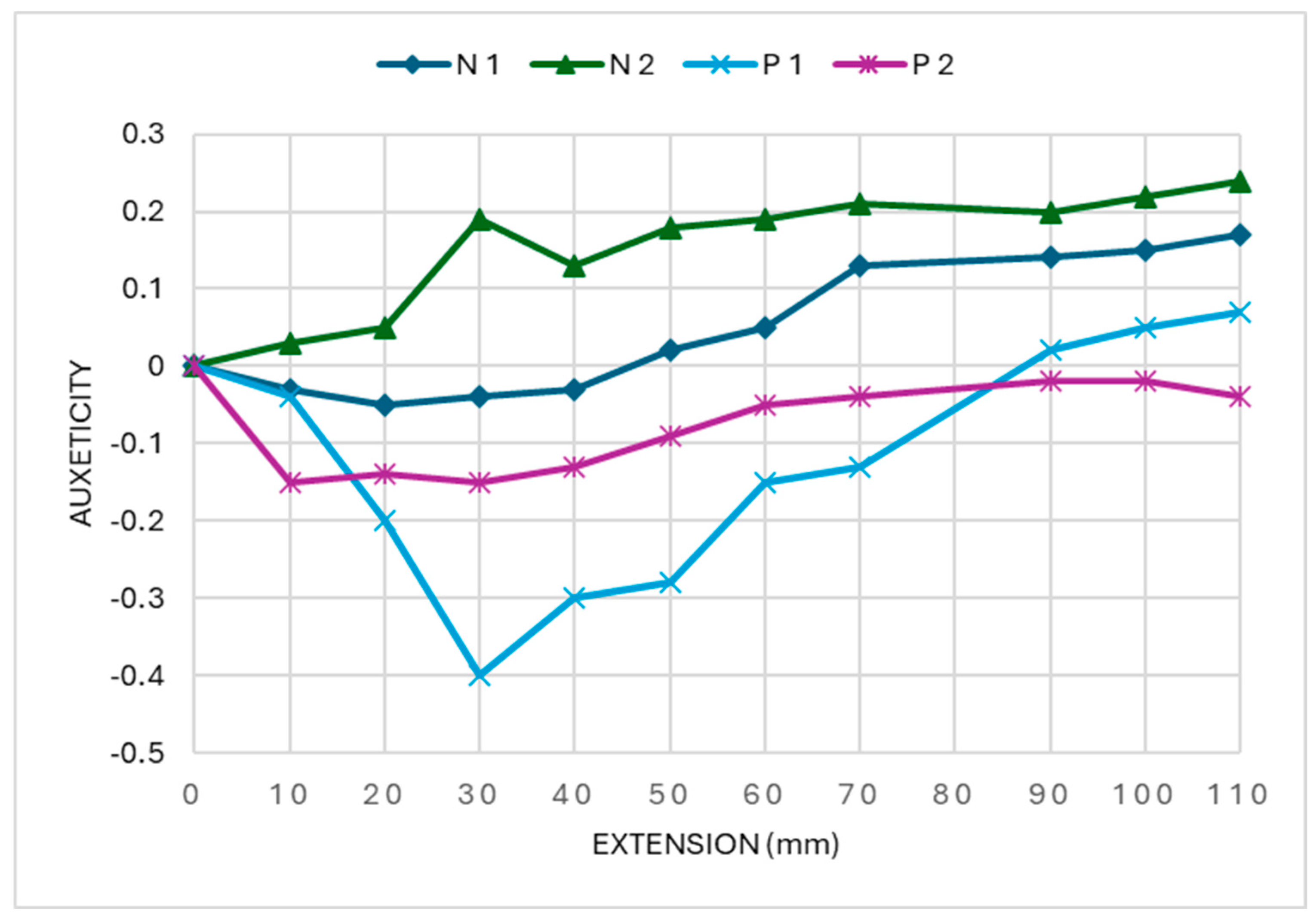
The NPR test shows the results of the expansion and contraction of the length of knitted fabric structures by changing the width of the fabric by a constant gap of 10 mm. The graph in Figure 8 can be analyzed to compare the auxeticity of all the structures. Auxeticity is achieved when Poisson’s ratio occurs in negative values. The graph shows that N2 structures do not show any kind of auxeticity as their Poisson’s ratio is positive throughout the graph.
For N1 structures, auxeticity is observed for the first few values until 45 mm and that too is very low and hence quite negligible. After that, the structure loses its auxeticity and starts behaving like a conventional material with a positive Poisson’s ratio. P1 and P2 show much greater NPR and for a longer range. P1 has the highest value of NPR at −0.4,after which the auxeticity starts decreasing until at 90 mm, when the structure becomes a conventional structure with an increasing Poisson’s ratio, as shown in Table 2.
P2 shows lower auxeticity than P1 but is more constant than P1. It is the only structure that shows a NPR throughout the graph and does not lose its auxeticity at any point. Therefore, P2 is considered the most auxetic amongst all.
3.1.2. Air Permeability
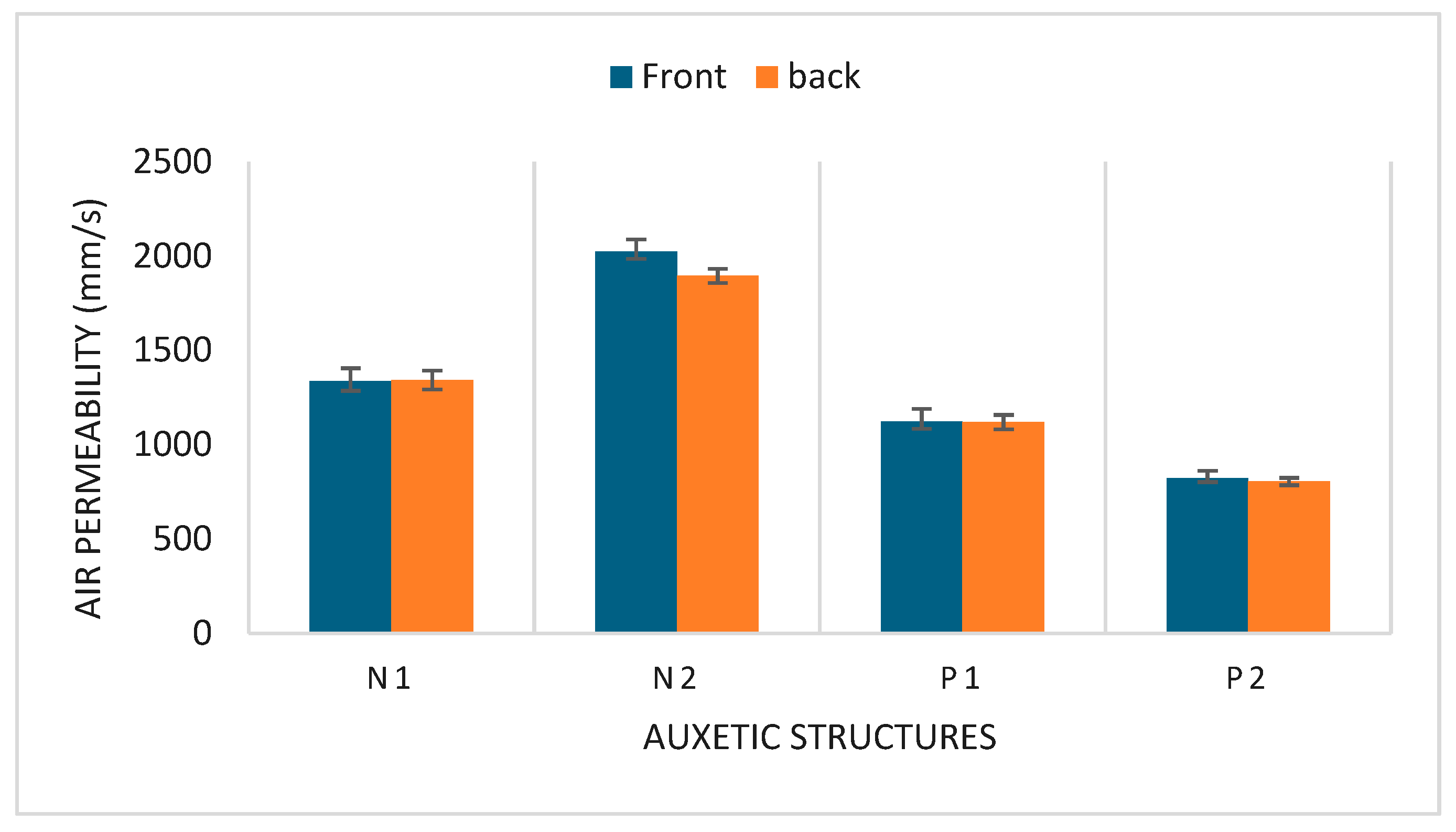
The graph in Figure 9 represents the air permeability of the front and back face of all the structures. It can be observed that N2 has the highest permeability value for the front face and N2 has the highest value for the back face, followed by N1 and P1, with the lowest value observed for P2. P2 is the least breathable.
3.1.3. Moisture Management
The graph in Figure 10 shows that P1 had the highest moisture management amongst all of the structures, followed by P2 and N1 at the same level, with N2 showing the lowest value. Therefore, P1 performs comparatively better at overall moisture management capacity (OMMC), with a value near to 1, which exhibits better performance, along with P2 and N1 [21].
3.1.4. Bending
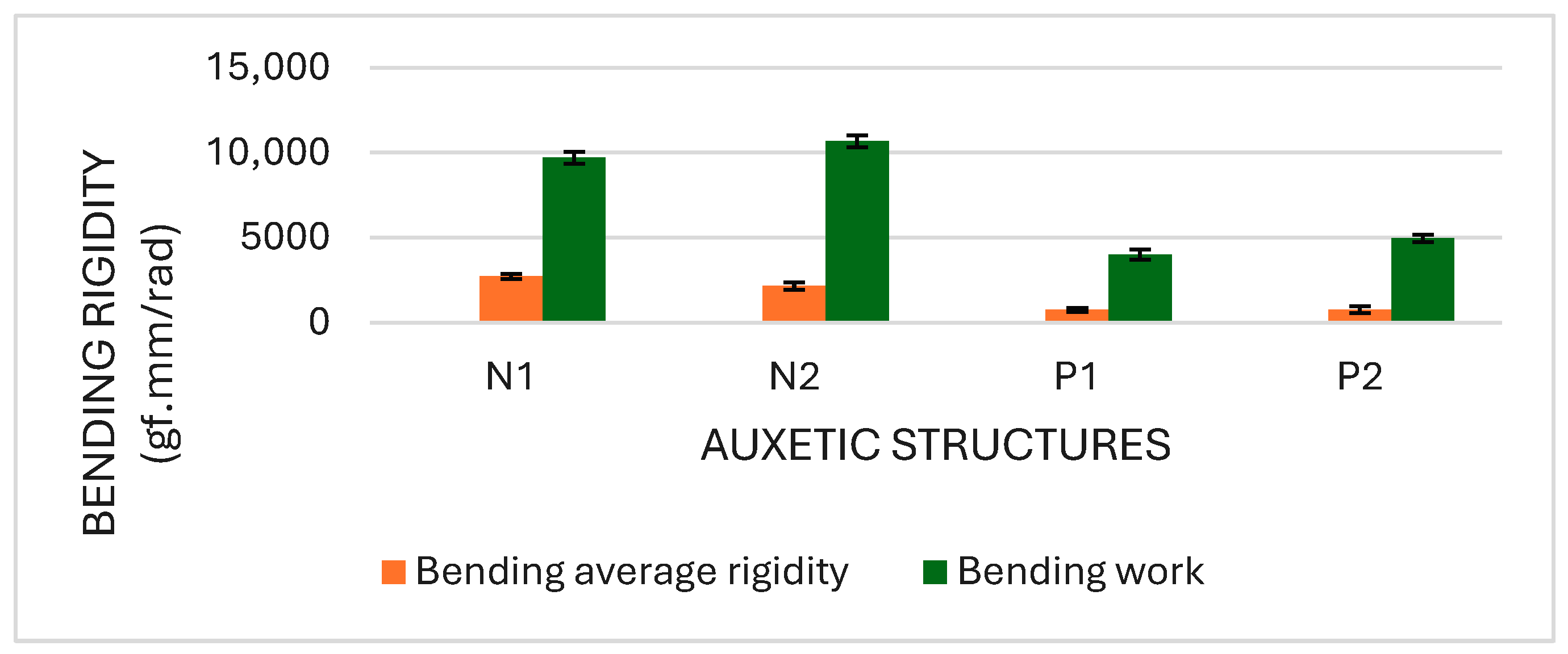
Bending average rigidity represents the force required to bend per radian and bending work represents the work needed to bend the fabric. The graph in
Figure 11 represents the bending average rigidity of four of the structures. It indicates that N1 has the highest bending rigidity, followed by N2, P1, and P2. This means that more force is required to bend N1, whereas P1 bends most easily.
3.1.5. Fabric Stiffness
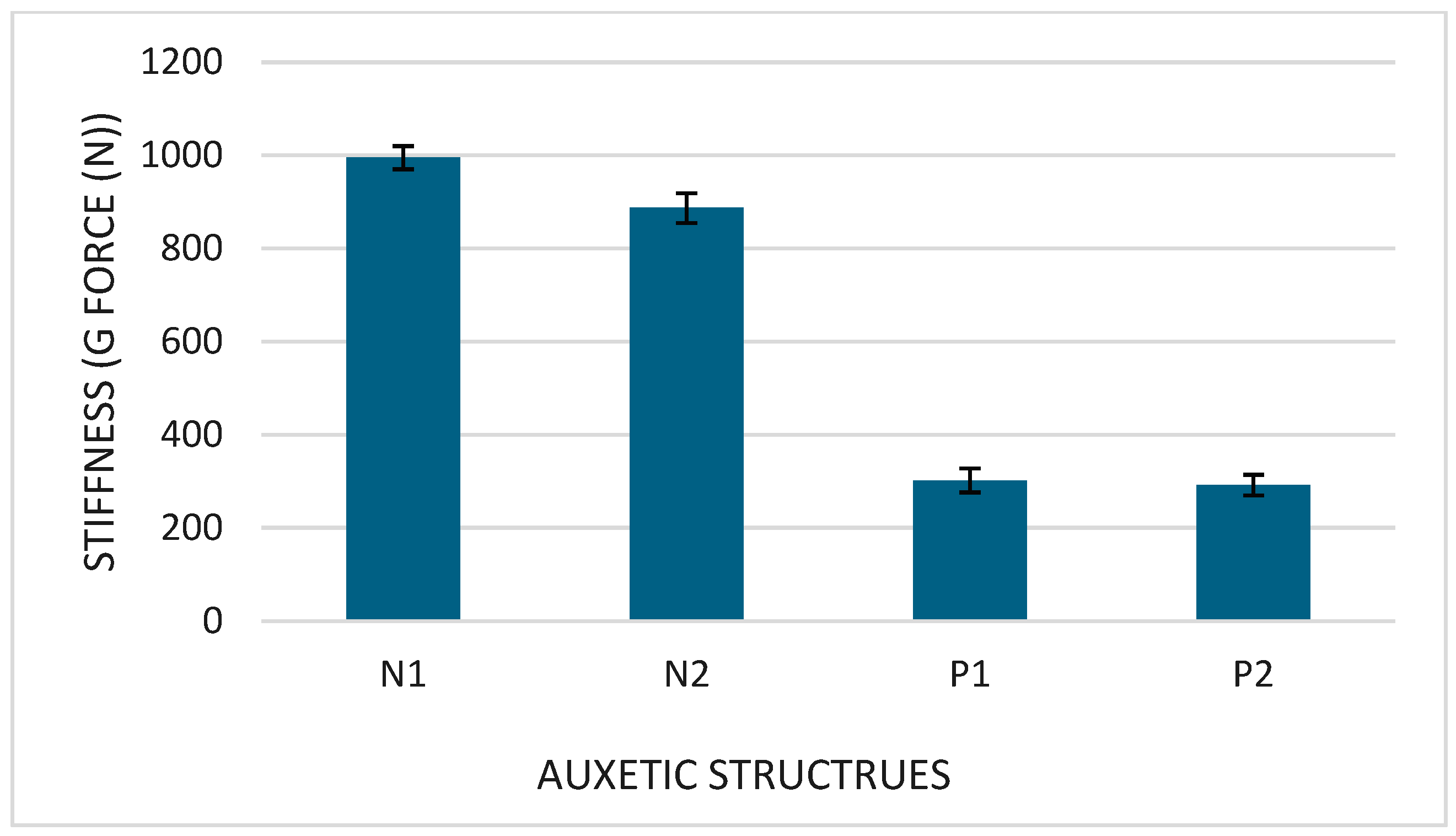
The graph in Figure 12 indicates that N1 has the highest stiffness, followed by N2, P1, and P2. The difference between nylon stiffness and polyester stiffness is significantly large. This suggests that nylon, in all its auxetic structures, is highly stiff, whereas polyester is more flexible, with P2 having the most flexibility.
3.2. Virtual Fitting Analysis Across Different Body Shapes
Virtual fitting simulations were tested in CLO 3D to comparatively assess the fit of garments made by auxetic knitted structure (P1) and single-jersey structure on three body shapes, representing hourglass, pear, and rectangle in terms of their performance. The GSM of the single-jersey fabric was kept the same (230 g/m2) as the auxetic structures to have the same basis on which to compare the performance of the fabric. The single-jersey fabric was designed as per the typical knitting parameters with 32 Wales per inch (WPI) and 36 courses per inch (CPI), covering a typical knitted configuration used in apparel applications. The assessment was performed with the inbuilt analytical functions in CLO 3D that include stress maps, strain maps, and fit maps that give the visual and quantitative evaluation of the fabric deformation, tension distribution, and how the garment as well as the body interact. Local pressure and tension maps were developed by examining stress maps, fabric elongation and deformation behavior by examining strain maps, and tightness, optimal fit and looseness areas were assessed by examining fit maps. Comparative interpretation placed great emphasis on establishing how the structural disparity in between the auxetic and jersey fabrics affected the prospect of garment adaptability and strain dispersion in different body proportions.
Shape 1: Hourglass body shape
The standard grading assumptions are closely related to the hourglass body shape which is characterized by proportionality of the bust, hip measurements and a defined waist. Both the fabrics showed reasonable fit performance, though there was a structural difference affecting the deformation mechanics. The stress map analysis revealed that tension concentration is locally known along the waistline of the jersey structure by the lateral contraction caused by the positive Poisson’s ratio of the jersey structure. These contraction effects decreased the circumferential complacency and augmented compressive pressure across the skinny waist area.
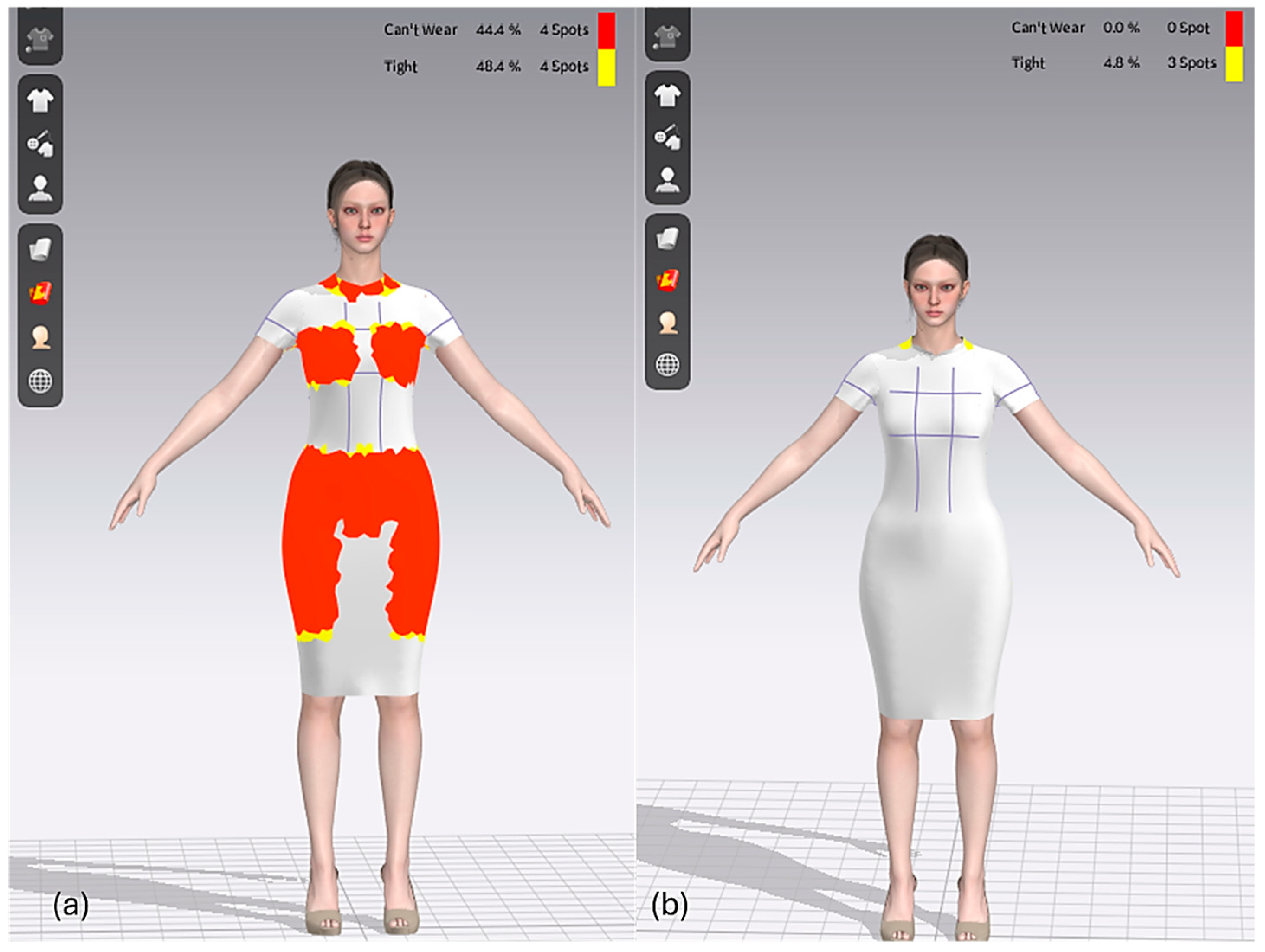
Conversely, the homogeneity of stress distribution at the bust–waist–hip transition phases was greater in the auxetic structure. Due to its negative Poisson’s ratio, the auxetic fabric stretched sideways in the event of longitudinal tensile loading created by the process of putting on the garment. This led to a decrease in compressive stress at the waist and reshaped the load redistribution between the adjacent panels. The strain map comparison also showed that the jersey structure had the maximum elongation areas in the convex areas (bust and hips) with stronger strain gradients between the adjacent areas. The auxetic structure exhibited fewer strain transitions and a decreased strain concentration gradient, indicating better structural accommodation and minimized distortion of the fabric. The assessment of fit maps, shown in Figure 13, revealed that the auxetic fabric showed better contour fit and reduced strain-line formation, indicating that the mechanical compatibility was better than that of the other fabrics, even with anthropometric proportions approaching normal.
Shape 2: Pear body shape
The pear body shape is considered very dominant as far as the lower body is concerned, since the circumference of the hips is bigger than both the bust and the waist. The morphology presents a higher level of transverse dimensional demand to the hip zone when testing fabrics which have uniaxial stretch properties. The accumulation of stress was very high at the hip panels and on the side seams and lower curvature areas of the jersey structure. The jersey fabric was not easily stretched in a circular way, resulting in extreme stress intensity zones because of the lateral contraction when in contact with longitudinal tension. This means that it has limited flexibility and might cause inconvenience to the wearer in dynamic situations.
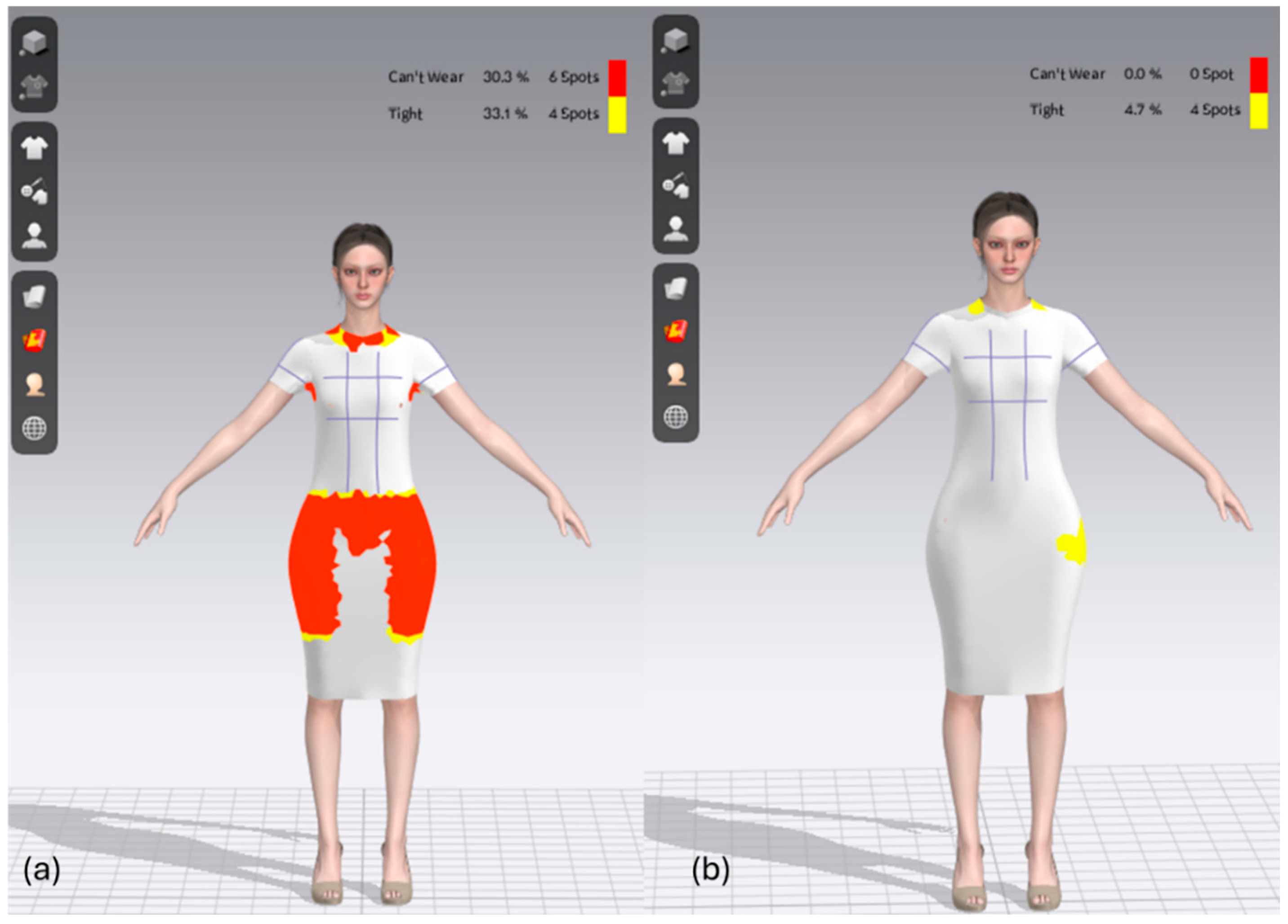
The auxetic structure, on the other hand, displayed controlled biaxial expansion stoichiometrically in response to the rise in transversal demand. The stress map showed lower levels of maximum tension values, because the auxetic geometry made it possible to expand laterally without creating excessive longitudinal strain. This act avoided a transmission of stress to other parts of the body like the upper torso and the waist. The strain map analysis indicated that the jersey fabric had high percentages of localized elongation in the hip location, which had sudden strain gradients. More distributed strain patterns were observed in the auxetic structure, as well as progressive deformation rather than localized overstretching. Such even strain distribution helps in decreasing the chances of distortion of the seams and structural instability. The fit map analysis also confirmed that the jersey garment tended to move in the direction of tight fit in part of the hips, explaining why the auxetic garment had a more balanced fit profile, as shown in Figure 14. The findings indicate the geometric superiority of auxetic materials when it comes to adapting to the prevailing lower-body morphologies.
Shape 3: Rectangle body shape
The nature of the rectangle body shape is defined by a slight indentation of the waist and shoulder and relatively similar bust, waist, and hip measurements. The stress map of the jersey structure showed minimal tensile stress in the waist area and an increase in strain redistribution in the shoulder and hip transition areas. This means there is an ineffective transfer of loads and focal structural imbalance. The jersey fabric was also loose around the hips since it lacked the facility to expand laterally; thus, there were slack areas.
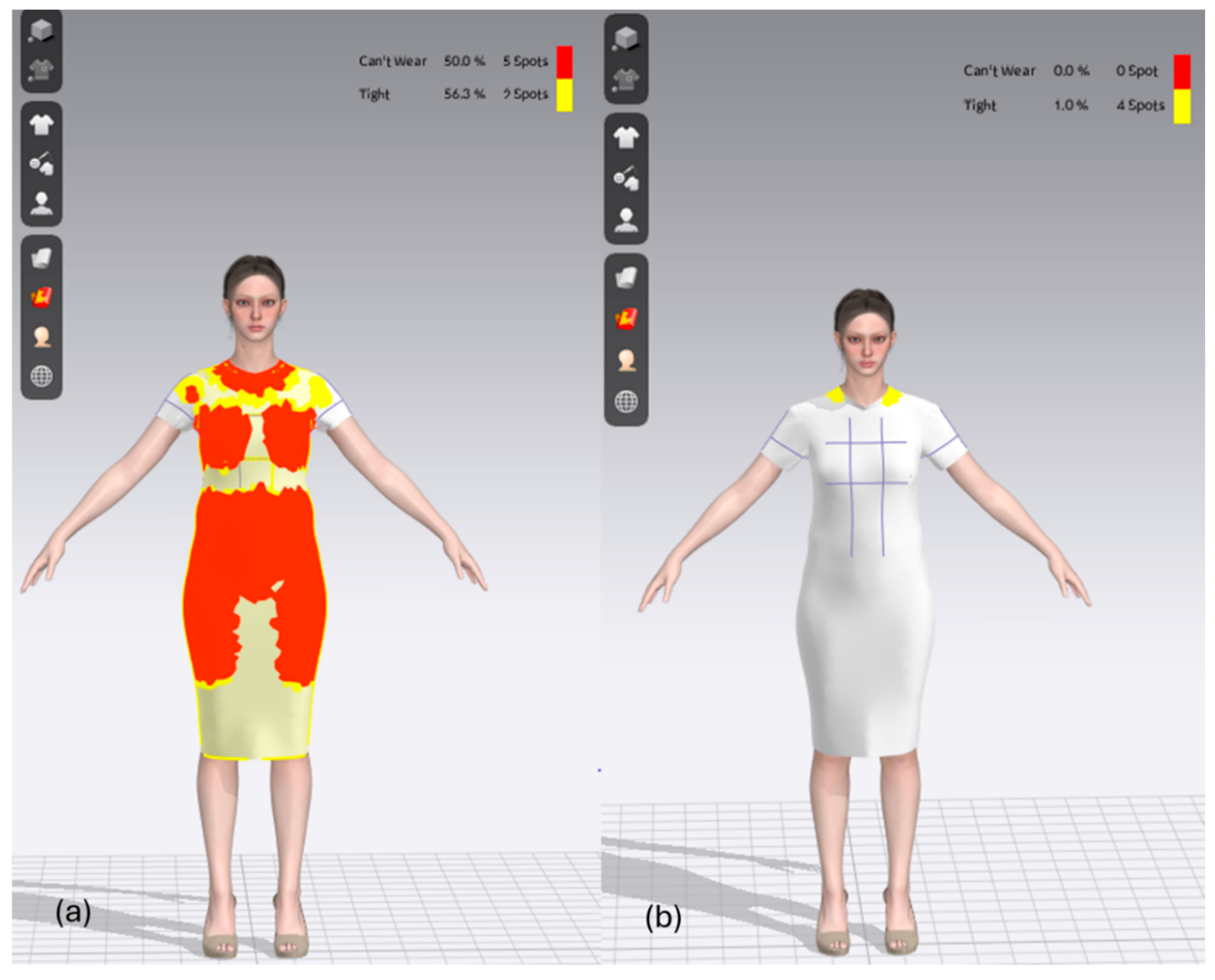
Conversely, the auxetic structure had an enhanced structural interaction throughout the midsection. By acting as a negative Poisson’s ratio, the fabric laterally crept at the presence of a slight longitudinal strain, which minimized the creation of slack. The strain map indicated less fabric bunching and enhanced conformity around the circumference as well as smoother deformation fields. Comparison of fit maps showed that the jersey garment had areas of excessive looseness at the waistline, whereas the auxetic garment had a more consistent contact profile with an equal distribution of tension. The lack of waist curvature in the garment was offset by the auxetic structure, which dynamically reconfigured its structure, which made the garment more stable and, appearance-wise, more fluid, as shown in Figure 15.
Comparative fit analysis
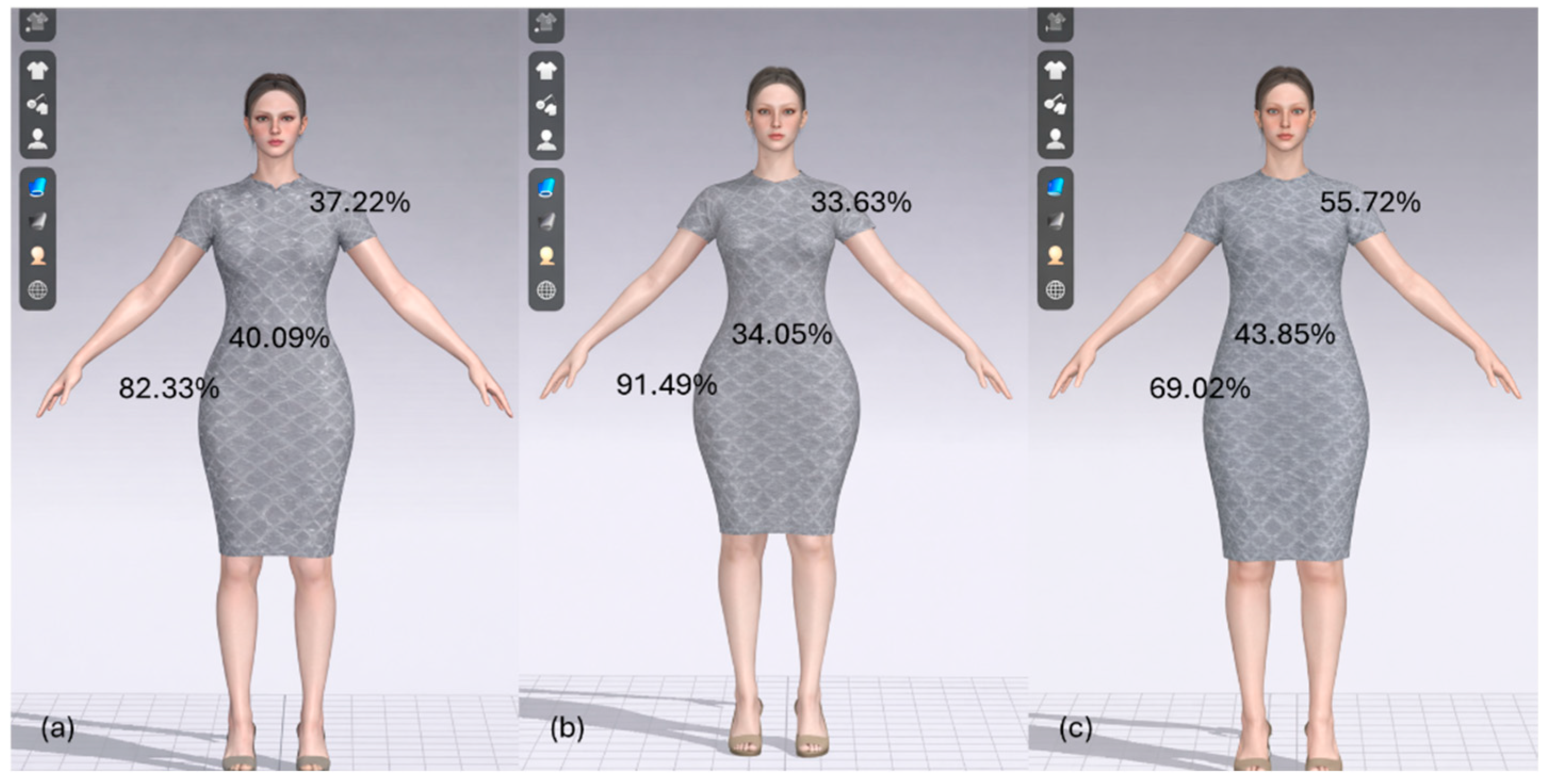
The findings of the fit map percentage values of CLO 3D represent the intensity of the garments of the single-jersey and auxetic knitted structure (P1) at the shoulders, waist, and hips regions of the fabric under deformation at three points under simulated conditions of the same size (size 34). Thus, the difference in the percentage values can be explained only by the differences in the body shape morphology and structural behavior in fabrics, instead of the difference in the size. In the hourglass body shape, it was found that the single-jersey structure represented high strain values at the point of the hip region (477.57%), and a large, widespread strain at the shoulder (117.10%) (114.67%); therefore, tension was accumulated locally and overstretched. This is in line with the positive Poisson’s ratio of jersey fabric: longitudinal stretching causes the lateral shrinkage, consequently augmenting circumferential stress and strain concentration. By comparison, the auxetic knitted fabric exhibited a much lower strain level (37.22% at the shoulder, 40.09% at the waist, and 82.33% at the hip), which proves the enhanced load redistribution with the help of biaxial expansion.
The same trends were also found in the pear-shaped body, where the prevalent hip morphology increased strain on the single-jersey fabric, with stretching the hip reaching 509.75% and strain at the waist increasing to 156.53%, which provides evidence of intense localized deformation because of low transverse adaptability. These values decreased significantly (33.63% shoulder, 34.05% waist and 91.49% hip) in the auxetic structure and proved that it could fit into a bigger circumference in the hip area without causing too much tensile stress. In the case of the rectangle body shape, the single jersey showed a high percentage of strain across the entire body (188.07% at the shoulder, 140.66% at the waist, and 463.80% at the hip), indicating the nonexistent redistribution of stress and structural imbalance, whereas the auxetic structure had a relatively balanced and moderate level of strain (55.72% at the shoulder, 43.85% at the waist, and 69.02% at the hip), as shown in Table 3 and Figure 16.
The individual jersey produced the same extreme values of peak strain and non-uniform deformation gradients for all three morphologies, but the auxetic knitted structure exhibited strain patterns with controlled, distributed behavior. These results numerically validate the fact that the negative Poisson’s behavioral reaction of the auxetic surface allows tensile loading to cause lateral expansion and concentrated stress suppression in the microstructure and enhanced morphological convergence, even with the size of the garment remaining constant.
4. Conclusions
This work showed that the traditional single-jersey ready-to-wear garment that has positive behavior of Poisson’s ratio has a high concentration of strain and localized redistribution of stress when subjected to varying body shapes with constant garment sizing. Fabrics were developed with 100 percent polyester and nylon with four different structures. The negative Poisson’s ratio (NPR) tensile testing, air permeability testing, moisture control testing, and stiffness testing of fabric characterization gave an insight into the mechanical and comfort-related behavior of the developed structures. Virtual fitting analysis in CLO 3D also reported higher strain percentages in the single-jersey structure, especially in the morphologically dominant areas of the body, like the hip area in the pear and hourglass body shapes. The lateral contraction that is maintained by the traditional knit geometry led to high-tension concentration and structural imbalance along anatomical transition zones.
Conversely, engineered auxetic knitted structures had significantly lower values of peak strain and better-distributed stress running through the shoulders, waist, and hips. P1 presented the highest auxeticity between the developed configurations, as verified by the NPR testing and the deformation analysis. The geometric design allowed controlled biaxial expansion to redistribute the loads and reduce the local stress without changing the size of the garments. The overall outcome of the fabric-level tests and CLO 3D stress, strain, and fit map tests confirm that auxetic geometry gives more conformity and adaptability to garments. The results justify the incorporation of auxetic knitted structures, especially the polyester zigzag (P2) structure, as a material-based and scalable solution in the adaptable and inclusive design of apparel. Future work may focus on the development of the physical prototypes of garments that incorporate optimized auxetic knitted patterns as well as verifying them through controlled wear tests that involve human subjects. This may allow experimental verification of the CLO 3D simulation results through the evaluation of real-body deformation, distribution of pressure, and performance in terms of comfort, and thus development of the correlation between virtual fitting predictions of virtual garment behavior and actual garment behavior. Other gender and size morphologies may be added to broaden the analysis.
Author Contributions
A.I.: Conceptualization, supervision, validation; M.B.R.: resources, visualization, investigation; S.M.Q.: formal analysis, software, data curation; M.R.: writing—original draft, methodology; S.u.Z.: writing—review and editing, project administration. All authors have read and agreed to the published version of the manuscript.
Funding
This research received no external funding.
Institutional Review Board Statement
Not applicable.
Data Availability Statement
The original contributions presented in this study are included in the article. Further inquiries can be directed to the corresponding authors.
Lim, T.-C. Engineering Materials Auxetic Materials and Structures. Available online: http://www.springer.com/series/4288 (accessed on 27 December 2025).
Liu, Y.; Hu, H. A review on auxetic structures and polymeric materials. Sci. Res. Essays2010, 5, 1052–1063. Available online: http://www.academicjournals.org/SRE (accessed on 27 December 2025).
Mir, M.; Ali, M.N.; Sami, J.; Ansari, U. Review of mechanics and applications of auxetic structures. Adv. Mater. Sci. Eng.2014, 2014, 753496. [Google Scholar] [CrossRef]
Li, Z.Y.; Wang, W.; Li, H.; Yang, J.; Zhang, W.; Wang, X.; Xiong, J.; Hu, H. Mechanical properties of novel uniform/gradient auxetic structures made of CFRP composites. Polym. Compos.2025, 46, 10824–10841. [Google Scholar] [CrossRef]
Joseph, A.; Mahesh, V.; Harursampath, D. On the application of additive manufacturing methods for auxetic structures: A review. Adv. Manuf.2021, 9, 342–368. [Google Scholar] [CrossRef]
Mrozek-Czajkowska, A.; Stręk, T. Design Optimization of the Mechanics of a Metamaterial-Based Prosthetic Foot. Materials2025, 18, 96. [Google Scholar] [CrossRef]
Hu, H.; Wang, Z.; Liu, S. Development of auxetic fabrics using flat knitting technology. Text. Res. J.2011, 81, 1493–1502. [Google Scholar] [CrossRef]
Sengul, M.; Tasdemir, H.A.; Tamer, A. Real-world applications of auxetic structures in engineering: A review. Structures2025, 80, 109673. [Google Scholar] [CrossRef]
Novak, N.; Dubrovski, P.D.; Borovinšek, M.; Vesenjak, M.; Ren, Z. Deformation behaviour of advanced textile composites with auxetic structure. Compos. Struct.2020, 252, 112761. [Google Scholar] [CrossRef]
Ugbolue, S.C.; Kim, Y.K.; Warner, S.B.; Fan, Q.; Yang, C.; Kyzymchuk, O.; Feng, Y.; Lord, J. The formation and performance of auxetic textiles. Part II: Geometry and structural properties. J. Text. Inst.2011, 102, 424–433. [Google Scholar] [CrossRef]
Ingrole, A.; Hao, A.; Liang, R. Design and modeling of auxetic and hybrid honeycomb structures for in-plane property enhancement. Mater. Des.2017, 117, 72–83. [Google Scholar] [CrossRef]
Rad, M.S.; Prawoto, Y.; Ahmad, Z. Analytical solution and finite element approach to the 3D re-entrant structures of auxetic materials. Mech. Mater.2014, 74, 76–87. [Google Scholar] [CrossRef]
Montazeri, A.; Bahmanpour, E.; Safarabadi, M. Three-Point Bending Behavior of Foam-Filled Conventional and Auxetic 3D-Printed Honeycombs. Adv. Eng. Mater.2023, 25, 2300273. [Google Scholar] [CrossRef]
Lim, T.-C. Analogies across auxetic models based on deformation mechanism. Phys. Status Solidi (RRL)–Rapid Res. Lett.2017, 11, 1600440. [Google Scholar] [CrossRef]
Steffens, F.; Rana, S.; Fangueiro, R. Development of novel auxetic textile structures using high performance fibres. Mater. Des.2016, 106, 81–89. [Google Scholar] [CrossRef]
Moroney, C.; Alderson, A.; Allen, T.; Sanami, M.; Venkatraman, P. The Application of Auxetic Material for Protective Sports Apparel. Proceedings2018, 2, 251. [Google Scholar] [CrossRef]
Duncan, O.; Shepherd, T.; Moroney, C.; Foster, L.; Venkatraman, P.D.; Winwood, K.; Allen, T.; Alderson, A. Review of Auxetic Materials for Sports Applications: Expanding Options in Comfort and Protection. Appl. Sci.2018, 8, 941. [Google Scholar] [CrossRef]
Nguy, H.; Fangueiro, R.; Ferreira, F.; Nguy, Q. Auxetic materials and structures for potential defense applications: An overview and recent developments. Text. Res. J.2023, 93, 5268–5306. [Google Scholar] [CrossRef]
Siddique, A.; Hassan, T.; Abid, S.; Ashraf, M.; Hussain, A.; Shafiq, F.; Khan, M.Q.; Kim, I.S. The effect of softeners applications on moisture management properties of polyester/cotton blended sandwich weft-knitted fabric structure. Coatings2021, 11, 575. [Google Scholar] [CrossRef]
Naseer, R.; Abbas, A.; Sarwar, Z.; Saeed, M.H.; Gul, Z.; Anas, M.S. Cross-tuck honeycomb based 3D weft knitted auxetic structures with enhanced adaptability/size changing capability & thermo-physiological comfort properties. J. Text. Inst.2025, 116, 1297–1312. [Google Scholar] [CrossRef]
Tiwari, M.; Anand, N. Comprehensive Analysis of Body Shapes in the Indian Female Population: A National and Regional Study. In Human Factors for Apparel and Textile Engineering; AHFE International: Nice, France, 2024. [Google Scholar] [CrossRef]
Tan, Z.; Lin, S.; Wang, Z. Cluster Size Intelligence Prediction System for Young Women’s Clothing Using 3D Body Scan Data. Mathematics2024, 12, 497. [Google Scholar] [CrossRef]
Penko, T.; Rudolf, A. The effect of the difference in female body shapes on clothing fitting. Autex Res. J.2025, 25, 20240021. [Google Scholar] [CrossRef]
Jabbar, M.; Akhtar, S. Introduction to Pattern Making. In Garment Sizing and Pattern Making; Khan, M.Q., Nawab, Y., Kim, I.S., Eds.; Springer Nature: Singapore, 2024; pp. 53–84. [Google Scholar] [CrossRef]
Ünal, N.; Utkun, E. Impacts of female body shapes on patternmaking. Ind. Textila2018, 69, 519–523. [Google Scholar] [CrossRef]
Naveed, T.; Zhong, Y.; Hussain, A.; Babar, A.A.; Naeem, A.; Iqbal, A.; Saleemi, S. Female Body Shape Classifications and Their Significant Impact on Fabric Utilization. Fibers Polym.2018, 19, 2642–2656. [Google Scholar] [CrossRef]
Thoma, M.E.; Hediger, M.L.; Sundaram, R.; Stanford, J.B.; Peterson, C.M.; Croughan, M.S.; Chen, Z. Comparing apples and pears: Women’s perceptions of their body size and shape. J. Womens Health2012, 21, 1074–1081. [Google Scholar] [CrossRef] [PubMed]
Hidayati, S.C.; Hua, K.L.; Hsu, C.C.; Fu, J.; Chang, Y.T.; Cheng, W.H. What dress fits me best? Fashion recommendation on the clothing style for personal body shape. In MM 2018—Proceedings of the 2018 ACM Multimedia Conference; Association for Computing Machinery, Inc.: New York, NY, USA, 2018; pp. 438–446. [Google Scholar] [CrossRef]
Ural, Ö.; Tatman, D. Investigating the effect of body shape on denim clothing fit. Text. Res. J.2025, 95, 1219–1230. [Google Scholar] [CrossRef]
Cegindir, N.Y. An analysis of alteration in design from garment to fashion product. New Trends Issues Proc. Humanit. Soc. Sci.2018, 5, 74–84. [Google Scholar] [CrossRef][Green Version]
Yang, Y.; Baytar, F. Fit models’ roles in identifying fit issues in the apparel technical design process and implications for improving 3D virtual fitting. Fash. Text.2024, 11, 32. [Google Scholar] [CrossRef]
Jin, P.; Jiang, R.; Zheng, R.; Chen, Q.; Fan, J. Smart Bodysuit Integrating Digital Twin Technology for Real-Time Human Motion Monitoring and Visualization. IEEE Sens. J.2025, 25, 38693–38706. [Google Scholar] [CrossRef]
Jiang, G.; Macintyre, L.; Spanellis, A.; Carrigan, M. The State of Garment Repair and Alteration Services in the UK: Typology, Evaluation of Online Information and Thematic Analysis of Customer Reviews. J. Community Appl. Soc. Psychol.2025, 35, e70091. [Google Scholar] [CrossRef]
Pandarum, R. Assessing Students’ Aptitude in Analysing 3D Scanned Women’s Body Shapes to Improve Fashion Curriculum Design. Progressio2025, 46, 17447–17458. [Google Scholar] [CrossRef] [PubMed]
Zangue, F.; Klepser, A.; Morlock, S.; Chen, A. Key steps in the development of production guidelines for 3D garment simulations. Commun. Dev. Assem. Text. Prod.2024, 5, 131–139. [Google Scholar] [CrossRef]
Anas, M.S.; Awais, H.; Hamdani, S.T.A.; Shaker, K.; Azam, Z.; Nawab, Y. Investigating the Thermo-Physiological Comfort Properties of Weft-Knitted Smart Structures Having a Negative Poisson’s Ratio. Adv. Mater. Sci. Eng.2022, 2022, 1896634. [Google Scholar] [CrossRef]
ISO 9237:1995; Textiles—Determination of the Permeability of Fabrics to Air. ISO: Geneva, Switzerland, 1995.
Test Method AATCC 195; 2017, “Liquid Moisture Management Properties of Textile Fabrics.” Raleigh, United States. Available online: https://members.aatcc.org/store/tm195/591/ (accessed on 1 April 2026).
ASTM D4032-08(2016); Standard Test Method for Stiffness of Fabric by the Circular Bend Procedure. ASTM International: West Conshohocken, PA, USA, 2016.
UNE EN ISO 9073-7:2024; Test Methods for Nonwovens, Part 7: Determination of Bending Length. ISO: Geneva, Switzerland, 2024.
Figure 1.
(a) Longitudinal expansion of conventional materials. (b) Biaxial expansion of auxetic materials. (c) Lateral expansion of conventional materials. (d) Biaxial compression of auxetic materials.
Figure 1.
(a) Longitudinal expansion of conventional materials. (b) Biaxial expansion of auxetic materials. (c) Lateral expansion of conventional materials. (d) Biaxial compression of auxetic materials.
Figure 2.
Comparison of auxetic material and conventional material behavior.
Figure 2.
Comparison of auxetic material and conventional material behavior.
Figure 3.
Methodology of designing auxetic garments.
Figure 3.
Methodology of designing auxetic garments.
Figure 4.
Different auxetic structure samples: (a,c) line; (b,d) zigzag.
Figure 4.
Different auxetic structure samples: (a,c) line; (b,d) zigzag.
Figure 5.
Three different shapes of the female body.
Figure 5.
Three different shapes of the female body.
Figure 6.
Different body shape avatars: (a) hourglass; (b) pear; (c) rectangle. (d) Tech pack fabric interface of CLO 3D.
Figure 6.
Different body shape avatars: (a) hourglass; (b) pear; (c) rectangle. (d) Tech pack fabric interface of CLO 3D.
Figure 8.
Comparison of Poisson’s ratio/auxeticity of all structures.
Figure 8.
Comparison of Poisson’s ratio/auxeticity of all structures.
Figure 9.
Air permeability test.
Figure 9.
Air permeability test.
Figure 10.
Moisture management ratios.
Figure 10.
Moisture management ratios.
Figure 11.
Bending average rigidity of auxetic structures.
Figure 11.
Bending average rigidity of auxetic structures.
Figure 12.
Stiffness of auxetic structures.
Figure 12.
Stiffness of auxetic structures.
Figure 13.
Hourglass shape fit map of (a) jersey and (b) auxetic P1 (polyester line).
Figure 13.
Hourglass shape fit map of (a) jersey and (b) auxetic P1 (polyester line).
Figure 14.
Pear shape fit map of (a) jersey and (b) auxetic P1 (Polyester line).
Figure 14.
Pear shape fit map of (a) jersey and (b) auxetic P1 (Polyester line).
Figure 15.
Rectangle shape fit map of (a) jersey and (b) auxetic P1 (Polyester line).
Figure 15.
Rectangle shape fit map of (a) jersey and (b) auxetic P1 (Polyester line).
Figure 16.
All body proportions with strain measurements: (a) hourglass; (b) pear; and (c) rectangle.
Figure 16.
All body proportions with strain measurements: (a) hourglass; (b) pear; and (c) rectangle.
Table 1.
Different characterizations with their purposes.
Table 1.
Different characterizations with their purposes.
Characterization
ISO Standards
Purpose
NPR
To measure longitudinal strain and transversal strain during tensile loading and to transform Poisson’s ratio. Samples were mounted on the universal testing machine and extended gradually while recording changes in both length and width. A negative value indicates auxetic behavior, meaning the fabric expands laterally when stretched, which is important for improved fit, conformability, and pressure distribution in sportswear.
To determine the airflow rate flowed perpendicularly through the fabric when exposed to a certain pressure difference. Typically, 100 Pa was applied across the fabric surface, and the rate of airflow passing perpendicularly through the fabric was measured. This characterization provides insight into ventilation properties, which are essential for thermal comfort and sweat evaporation in active applications.
To measure the liquid moisture carriage quality and a one-way transport capacity. These results indicate how effectively the fabric can absorb, transport, and evaporate moisture, thereby maintaining dryness and enhancing wear and comfort during physical activity.
To identify fabric bending length and flexural rigidity. In this test, fabric is subjected to bending forces, and parameters like bending rigidity and bending work are determined.
To ascertain the resistance of fabrics to multiple directional deformation and hand stiffness. Using a circular bending method, the fabric sample was deformed under controlled conditions, and the peak force required was recorded.
Table 2.
Poisson’s ratio of polyester line structure.
Table 2.
Poisson’s ratio of polyester line structure.
Stretch (mm)
Width (mm)
New Width (mm)
Length (mm)
Change in Length (mm)
Polyester Line (P1) ν
0
100
100
0
100
0
0
0
10
100
100.36
−0.0036
110
10
−0.09
−0.04
20
100.36
102.03
−0.0166
120
10
−0.083
−0.2
30
102.03
105.13
−0.0304
130
10
−0.076
−0.4
40
105.13
107.37
−0.0213
140
10
−0.071
−0.3
50
107.37
109.35
−0.01848
150
10
−0.066
−0.28
60
109.35
110.37
−0.0093
160
10
−0.062
−0.15
70
110.37
111.20
−0.00754
170
10
−0.058
−0.13
90
111.20
111.08
0.0011
180
10
−0.055
0.02
100
111.08
110.79
0.0026
190
10
−0.052
0.05
110
110.79
110.40
0.0035
200
10
−0.05
0.07
Table 3.
Comparative analysis of both structures.
Table 3.
Comparative analysis of both structures.
Body Shapes
Single-Jersey Structure
Auxetic Knitted Structure (P1)
Shoulder
Waist
Hip Area
Shoulder
Waist
Hip Area
Hourglass
117.10%
114.67%
477.57%
37.22%
40.09%
82.33%
Pear
104.13%
156.53%
509.75%
33.63
34.05%
91.49%
Rectangle
188.07%
140.66%
463.80%
55.72%
43.85%
69.02%
Disclaimer/Publisher’s Note: The statements, opinions and data contained in all publications are solely those of the individual author(s) and contributor(s) and not of MDPI and/or the editor(s). MDPI and/or the editor(s) disclaim responsibility for any injury to people or property resulting from any ideas, methods, instructions or products referred to in the content.
Imran, A.; Ramzan, M.B.; Qureshi, S.M.; Raza, M.; Zaman, S.u.
Design and Evaluation of Adaptive Clothing for Diverse Body Shapes Using Auxetic Knitted Structures. Textiles2026, 6, 44.
https://doi.org/10.3390/textiles6020044
AMA Style
Imran A, Ramzan MB, Qureshi SM, Raza M, Zaman Su.
Design and Evaluation of Adaptive Clothing for Diverse Body Shapes Using Auxetic Knitted Structures. Textiles. 2026; 6(2):44.
https://doi.org/10.3390/textiles6020044
Chicago/Turabian Style
Imran, Aqsa, Muhammad Babar Ramzan, Sheheryar Mohsin Qureshi, Maham Raza, and Shahood uz Zaman.
2026. "Design and Evaluation of Adaptive Clothing for Diverse Body Shapes Using Auxetic Knitted Structures" Textiles 6, no. 2: 44.
https://doi.org/10.3390/textiles6020044
APA Style
Imran, A., Ramzan, M. B., Qureshi, S. M., Raza, M., & Zaman, S. u.
(2026). Design and Evaluation of Adaptive Clothing for Diverse Body Shapes Using Auxetic Knitted Structures. Textiles, 6(2), 44.
https://doi.org/10.3390/textiles6020044
Article Metrics
No
No
Article Access Statistics
For more information on the journal statistics, click here.
Multiple requests from the same IP address are counted as one view.
Imran, A.; Ramzan, M.B.; Qureshi, S.M.; Raza, M.; Zaman, S.u.
Design and Evaluation of Adaptive Clothing for Diverse Body Shapes Using Auxetic Knitted Structures. Textiles2026, 6, 44.
https://doi.org/10.3390/textiles6020044
AMA Style
Imran A, Ramzan MB, Qureshi SM, Raza M, Zaman Su.
Design and Evaluation of Adaptive Clothing for Diverse Body Shapes Using Auxetic Knitted Structures. Textiles. 2026; 6(2):44.
https://doi.org/10.3390/textiles6020044
Chicago/Turabian Style
Imran, Aqsa, Muhammad Babar Ramzan, Sheheryar Mohsin Qureshi, Maham Raza, and Shahood uz Zaman.
2026. "Design and Evaluation of Adaptive Clothing for Diverse Body Shapes Using Auxetic Knitted Structures" Textiles 6, no. 2: 44.
https://doi.org/10.3390/textiles6020044
APA Style
Imran, A., Ramzan, M. B., Qureshi, S. M., Raza, M., & Zaman, S. u.
(2026). Design and Evaluation of Adaptive Clothing for Diverse Body Shapes Using Auxetic Knitted Structures. Textiles, 6(2), 44.
https://doi.org/10.3390/textiles6020044





 ,
,