


Abstract
In this study, we employed forced convective cooling under the fan-cooling garment (FC condition) and conductive cooling under the neck cooling device (NC condition) in a hot environment during intermittent exercise to compare their effects on thermophysiological and subjective responses. Cooling was examined under two conditions: continuous application throughout both exercise and rest periods (Experiment 1) and application solely during rest periods (Experiment 2). As different participant groups were utilized for each experiment, the effects of cooling timing were interpreted in an exploratory manner. No differences were observed between conditions at baseline. In the FC condition, whole-body heat dissipation (HF_mean) significantly increased (p < 0.05), particularly during the recovery phase, and was associated with significant suppression of mean skin temperature rise (p < 0.05) and enhanced thermal comfort. Conversely, although localized heat dissipation at the neck (HF_neck) significantly increased under the NC condition, its effects on whole-body heat dissipation and mean skin temperature were limited. No consistent differences were observed between cooling conditions in axillary temperature or heart rate responses. These results suggest that forced convective cooling, which facilitates ventilation within clothing, and localized conductive cooling exhibit distinct thermal response characteristics. This study provides fundamental comparative data under controlled conditions, contributing to the understanding of the response characteristics of wearable cooling devices.
1. Introduction
In recent years, the progression of global warming and the urban heat island effect have increased the risk of heatstroke among workers and athletes in hot summer environments [1,2,3]. From the perspective of heatstroke prevention, it is imperative to establish effective and practical cooling methods that mitigate the increase in body temperature and reduce heat stress. Among these methods, wearable cooling devices, which can be integrated into clothing or worn on the body, have garnered significant attention owing to their portability and flexibility, allowing their use not only during work but also during breaks [4].
Among wearable cooling devices, fan-cooling garments that utilize convection have been reported to effectively reduce the heat burden by promoting ventilation within the clothing and enhancing evaporative heat dissipation [5,6,7,8,9,10,11,12,13,14,15,16,17,18]. Long-sleeved, fan-cooling workwear has been shown to suppress the rise in core body temperature under hot and humid conditions [5] and also contributes to recovery after and between exercise sessions [6,7]. Furthermore, the position of the fan and the design of the openings influence ventilation efficiency, and optimizing airflow pathways within the clothing is crucial for determining cooling performance [8,9,10].
Conversely, neck cooling devices, commonly referred to as cooling collars, have been extensively investigated for their efficacy in rapidly mitigating subjective heat stress through localized conductive cooling [19,20,21,22,23,24,25,26,27]. Additionally, cooling the head, face, and neck has been documented to exert a beneficial effect on enhancing exercise performance and comfort [19,20]. Nevertheless, the constraints associated with cooling surface area and heat capacity may restrict the effect on the body’s overall thermal equilibrium.
Standards widely used in occupational heat stress management, such as the ACGIH Threshold Limit Values (TLVs) [28], NIOSH criteria for occupational heat exposure [29], and ISO 7243 [30], define allowable exposure limits based on indices such as WBGT and metabolic rate and provide guidance for determining appropriate work–rest schedules. However, these frameworks do not offer specific guidance on how wearable cooling devices should be operated or integrated into heat stress management strategies.
In recent years, there has been a notable increase in studies introducing cooling garments, such as fan-equipped jackets and liquid-cooled vests, into actual work environments to assess their effectiveness and practicality in real-world settings. Reported examples include fan jackets that mitigate increases in core body temperature even in extreme environments where the external temperature surpasses the body temperature [15], and liquid-cooled vests that alleviate heat strain when worn with protective clothing [31]. Field studies have demonstrated the effects of cooling vests on specific professions, including construction workers, agricultural workers, and healthcare professionals [32,33,34,35,36,37,38], alongside meta-analyses comparing various cooling methods [39]. While these studies offer valuable insights from a practical perspective, they also highlight that site-specific constraints, such as weight, operating time, ability to replenish, and interference with equipment, can affect the efficacy of these devices.
Recent research has increasingly focused on the timing of these cooling interventions. This includes a meta-analysis comparing the effects of pre-cooling and per-cooling [40], investigations into the impact of neck cooling on cognitive function post-exercise [41], and studies suggesting improvements in repeated sprint performance [42]. These findings consistently highlight that the efficacy of cooling is significantly influenced by the timing of its application. Moreover, a comprehensive review systematically summarizing the effects of various cooling methods, application sites, and durations on physiological responses and performance has emphasized the necessity of considering environmental conditions, activity intensity, and practical constraints when designing an optimal cooling strategy [43].
Previous research has predominantly concentrated on evaluating the cooling effects in isolation, with a limited number of studies directly comparing forced convective cooling under the fan-cooling garment and conductive cooling under the neck cooling device under identical heat load conditions and exercise protocols. Moreover, there is a paucity of fundamental research on wearable electric cooling devices that contrasts continuous cooling with cooling applied solely during rest periods. In our prior study [44], we elucidated the differences in cooling mechanisms between the fan-cooling garment and neck cooling device under resting conditions; however, we did not compare these devices during intermittent exercise involving metabolic heat production.
Consequently, this study was designed to simulate scenarios of alternating exercise and rest in a hot and humid environment, comparing fan-cooling garment and neck cooling device under consistent heat load and device conditions. Additionally, we established two operational cooling methods: one applying cooling throughout the entire period and another applying it only during rest intervals, and we investigated their effects. It is important to note that these operational methods were conducted with different participant groups, necessitating cautious interpretation of the effects of cooling timing. The objective of this study is to elucidate the differences in thermal physiological responses and subjective responses between forced convective cooling and localized conductive cooling during intermittent exercise. This comparative study, conducted in a controlled environment, provides fundamental data to enhance understanding of the characteristics of wearable cooling devices in structured work-rest scenarios. Unlike our previous resting study, the present design incorporates metabolic heat production associated with exercise and explicitly evaluates recovery phases, thereby addressing thermal responses under dynamic intermittent conditions.
2. Methods
The experiment was conducted under two distinct conditions: the “all-phases cooling condition (Experiment 1),” in which cooling was continuously applied throughout each phase of two cycles, each consisting of five minutes of exercise followed by five minutes of rest in a hot environment, and the “rest-phase cooling condition (Experiment 2),” where cooling was applied exclusively during the rest phase. In each experimental condition, three distinct cooling methodologies were utilized: (1) cooling through a fan-cooling garment (FC condition), (2) cooling via a neck cooling device (NC condition), and (3) a control condition without any cooling interventions (non-cooling condition: NON condition).
2.1. Participants
The study involved ten healthy male university students aged 18 years or older, all of whom satisfied the following criteria: stature ranging from 160 to 180 cm, no prior experience of skin irritation from adhesive tape, and no history of heat stroke. Of the participants, panels 1–5 took part in Experiment 1, and panels 6–10 participated in Experiment 2. The ages and body measurements of the participants are shown in Table 1.
Table 1.
Age and body measurements of participants.
All participants reported no history of cardiovascular or respiratory diseases, no previous incidents of heatstroke, and self-reported their ability to engage in light-to-moderate physical activity in hot environments. Prior to participation, all individuals were thoroughly briefed on the research objectives, procedures, potential risks, and anticipated benefits, and written informed consent was obtained from all participants. This study was approved by the Ethics Committee for Human Research at Shinshu University (Approval Number: 394).
2.2. Samples
Among the wearable cooling devices, the KAZEfit (KF1SV, manufactured by Yamazen) was selected as the fan-cooling garment (FC condition), and the Neck cooling device (TKNNC22, manufactured by THANKO) was selected as the neck cooling device (NC condition). The characteristics and rationale for the adoption of each device are delineated below. Initially, in selecting the fan-cooling garment (FC condition), this study utilized a commercially available model featuring fans installed on the lower back, specifically around the waist area. In recent years, most commercially available fan-cooling garment has adopted a configuration with two intake fans positioned on the lower back. This design has become prevalent owing to considerations of safety, mobility, and weight distribution at worksites. This arrangement facilitates the intake of air into the clothing from the waist area, allowing it to flow upward throughout the garment, thereby creating effective forced convective cooling across a broad torso area. Furthermore, Zhao et al. [8] reported that the positioning of the fans influences cooling efficiency, and that with fans located at the waist, the latent heat of evaporation from the torso can be utilized more effectively. In light of this, the present study employed a commercially available product with fans positioned on the lower back, as this design is the most widely used in practical applications and offers high comparability with previous studies. Conversely, the neck cooling device (TKNNC22) is a conductive cooling device that employs a thermoelectric (Peltier) element. When activated, the cooling plate side becomes cold, providing localized cooling upon contact with the neck sides. This device lacks a mechanism to circulate air with a fan but is designed to cool blood around the carotid arteries through direct-contact cooling. During operation, the metal cooling plate comes into direct contact with the skin surface, and the heat transfer action of the Peltier element reduces the surface temperature of the neck. Additionally, the cooling area of this device is relatively small; therefore, although its local cooling performance is high, its direct impact on heat dissipation from the torso and humidity inside the clothing is considered limited.
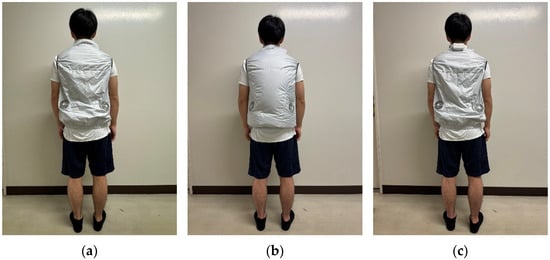
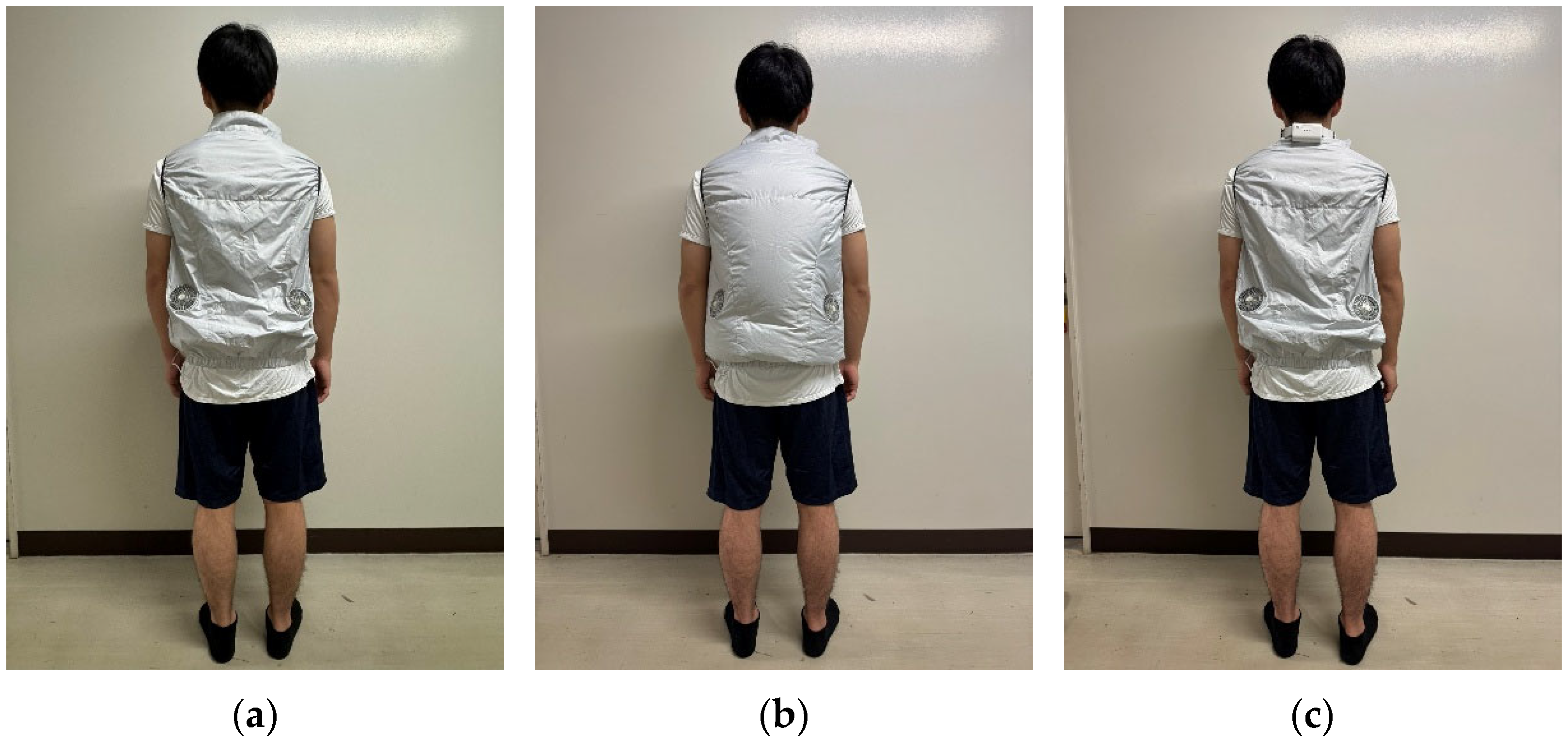
To ensure consistent device performance during the experiment, the fan-cooling garment was operated at its maximum airflow setting (70 m3/h). The neck cooling device was also used at its maximum intensity, beginning one minute prior to the onset of cooling, at which time the surface temperature of the cooling plate was 23 °C. The attire was designed to replicate summer conditions: a short-sleeved shirt (88% polyester, 12% polyurethane), shorts (80% polyester, 20% nylon), and underwear (93% cotton, 7% polyurethane), with the fan-cooling garment worn as outerwear. In the FC condition, the fan was activated, whereas in the NC condition, a neck cooling device was used. The clothing configuration for each condition is depicted in Figure 1.
Figure 1.
Clothing styles by condition. (a) NON condition. (b) FC condition. (c) NC condition. Reproduced from our previous study [44].
2.3. Protocol
Experiments 1 and 2 were conducted over a period of three days for each participant, with each of the three conditions—① NON condition, ② FC condition, and ③ NC condition—administered on separate days. The experiment commenced at a consistent time for each participant, who was required to complete their meals at least two hours prior to the start; from that point until the conclusion of the experiment, neither food nor drink was permitted. Furthermore, to minimize potential order and habituation effects, the order of all three conditions (NON, FC, and NC) was randomized for each participant. Each participant completed all three conditions in a randomized sequence across the three experimental days.
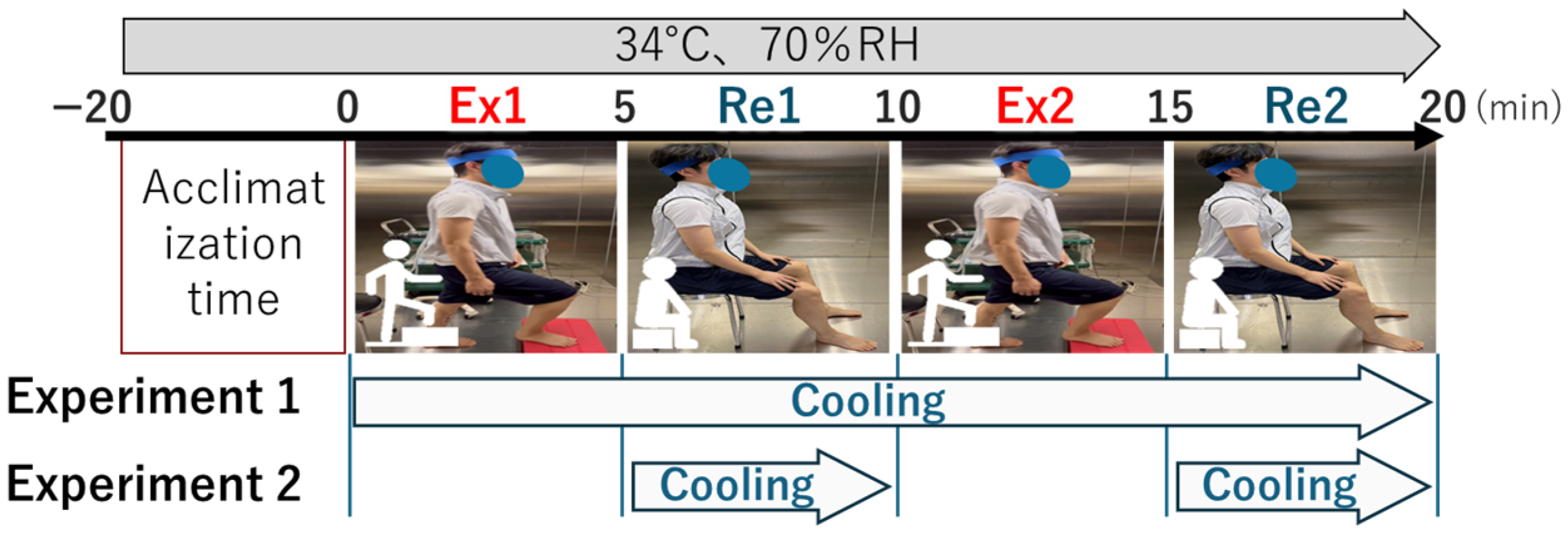
The procedures common to both experiments are delineated below (Figure 2). Thirty minutes prior to the commencement of the experiment, participants entered a preparation room maintained at 25 °C and 50% relative humidity (RH), where they consumed 150 mL of water and had their nude body weight recorded. Subsequent to this, water consumption was restricted. Participants then changed into experimental attire and were equipped with measurement devices before proceeding to a laboratory designed to simulate a hot environment (35 °C, 70% RH), where they remained seated and at rest. The initial 20 min were designated as the heat acclimation phase, during which no cooling interventions were implemented under any condition. Following acclimation, participants engaged in two cycles of alternating exercise and rest: each cycle comprised 5 min of step exercise (exercise phase) followed by 5 min of seated rest (rest phase), totaling 10 min per cycle (20 min in total). The step exercise was conducted using a metronome (Smart Metronome and Tuner; Ihara Products Co., Ltd., Ichikawa, Japan) set at 60 beats per minute (bpm), with a step height of 20 cm and a pace of 15 steps per minute. This exercise intensity was determined based on previous reports [45] indicating that typical physical activity in road construction, building work, agricultural labor, or manufacturing is approximately 4 METs. The timing of cooling application varied according to the experimental condition. In Experiment 1, continuous cooling was applied throughout the entire phase from the conclusion of the acclimation phase until the termination of the experiment. In Experiment 2, cooling was applied solely during the rest phases following acclimation and was discontinued during the exercise phases. Upon completion of the experiment, participants promptly exited the chamber, the measuring devices were removed, and after wiping off the sweat from the skin surface, their post-experiment nude body weight was measured. The participants were then required to rehydrate with a sports drink or similar beverage. If any participant reported feeling unwell during the experiment, the procedure was immediately halted, and rehydration and body cooling were performed. The decision to set both the exercise and rest periods to five minutes was made to ensure the minimum duration necessary for thermoregulatory responses to manifest, while also prioritizing participant safety and maintaining the total experiment duration within one hour.
Figure 2.
Schematic overview of the experimental protocol and cooling application timing in Experiments 1 and 2.
2.4. Measurement Items
To investigate the temporal variations in response to thermal load, psychological factors (thermal comfort and wetness sensation), physiological factors (heart rate, perspiration levels, and skin temperature), and physical factors (heat dissipation from the skin) were concurrently measured.
Psychological variables were assessed based on participants’ subjective evaluations of comfort versus discomfort and wetness versus dryness. Evaluations were conducted at five-minute intervals from the conclusion of the heat acclimatization phase (0 min) until the termination of the experiment, specifically at the conclusion of each exercise and rest phase. Although various scales exist for thermal psychological measurements, this study selected thermal comfort and wetness to evaluate the efficacy of fan-cooling garment in hot environments. The thermal comfort scale was developed with reference to ISO standards [46] and comprised five levels: “0: Comfortable,” “−1: Slightly uncomfortable,” “−2: Uncomfortable,” “−3: Very uncomfortable,” and “−4: Extremely uncomfortable.” It is important to note that “comfortable” on this scale signifies “not uncomfortable” and is not synonymous with “actively comfortable.” The wetness sensation scale consisted of seven levels: “−3: Very wet,” “−2: Wet,” “−1: Slightly wet,” “0: Neither,” “1: Slightly dry,” “2: Dry,” and “3: Very dry.” These evaluations specifically targeted the “dryness/wetness sensation inside the clothing,” rather than the whole-body sensation.
The heart rate was assessed in accordance with NASA guidelines by affixing the negative electrode to the superior margin of the sternum and the positive electrode to the inferior margin of the sternum, utilizing a heart rate sensor (WHS-1, manufactured by UNION TOOL). The sampling frequency was established at 128 Hz, and the instantaneous heart rate was derived from the acquired electrocardiogram signals.
The amount of sweating was determined by calculating the decrease in body weight. Specifically, the reduction in nude body weight before and after the experiment, along with the participant’s body surface area, was used to calculate body weight loss according to the formulas by Kurasumi et al. [47] (Equations (1) and (2)). The Kurasumi formula was selected because it was developed and validated for estimating the body surface area in Japanese adults, which is considered more appropriate for the present study population than formulas derived primarily from Western populations, such as the DuBois equation. A precision body scale for humans (Metter ID2 Multirange) was used to measure body weight.
Skin temperature was assessed at seven anatomical sites—namely, the forehead, forearm, abdomen, dorsum of the hand, anterior thigh, anterior lower leg, and instep—utilizing the 7-point method as described by Hardy & DuBois [48]. At each location, a heat flux and temperature sensor (FHF05, manufactured by Hukseflux) was affixed, and data were recorded at 1-s intervals using a wireless heat flux logger (LB8416, manufactured by HIOKI). Additionally, to monitor internal body temperature, a thermocouple (AMI-T/3K, manufactured by AMI Techno) was positioned in the left axilla, with the upper arm maintained in close proximity to the torso. Data collection was conducted using a compact thermal logger (AM-8061K, manufactured by Anritsu Meter), with measurements similarly recorded at 1-s intervals.
The quantification of heat dissipation was conducted using identical sensors affixed to the same seven anatomical sites utilized for skin temperature measurement. Data were recorded at 1-s intervals, with the direction of heat transfer from the body surface to the environment designated as positive. Furthermore, to assess the heat dissipation characteristics of the neck, an additional sensor of the same type was positioned at the seventh cervical vertebra. The skin temperature and heat dissipation values obtained from the seven sites—namely, the forehead, forearm, abdomen, back of the hand, front of the thigh, front of the lower leg, and dorsum of the foot—were each weighted and averaged in accordance with the Hardy & DuBois coefficients. Subsequently, the mean skin temperature and mean whole-body heat dissipation (HF_mean) were calculated. This method was employed to ensure comparability with prior research, and its alignment with the calculation method based on ISO 9886 [49] will be explored in future studies.
2.5. Analysis Method
For the parameters of mean skin temperature, axillary temperature, mean whole-body heat dissipation, neck heat dissipation, and instantaneous heart rate, the mean value recorded during the final minute preceding the conclusion of the heat acclimation phase was employed as the baseline. The change amount (Δ value) was determined by calculating the difference between this baseline value and the values at each subsequent time point following the commencement of exercise. Utilizing the baseline (the final minute before the conclusion of the 20-min acclimation), the representative value for each subsequent phase (Ex1: first exercise, Re1: first rest, Ex2: second exercise, Re2: second rest) was defined as the mean value during the last minute of each phase. For subjective evaluation indices (thermal comfort and wetness sensation), the reported values obtained were utilized as representative values for each phase as they were.
Statistical analyses were conducted using R (version 4.5.2). Prior to conducting the primary analysis, a linear mixed-effects model (LMM) was employed to verify the absence of differences in baseline values across conditions for each experiment. In this model, Baseline served as the dependent variable, Condition was treated as a fixed effect, and participants were considered a random effect.
For the main analysis, a two-factor linear mixed-effects model (LMM) was applied separately for each experiment, with Δ values as the dependent variable and Condition and Interval as fixed effects, while participants were included as a random effect to assess main effects and interactions. When a significant interaction was detected, comparisons between conditions within intervals were adjusted using the Tukey method. To evaluate the main effect of Condition across the set of primary continuous outcome measures, the false discovery rate was controlled using the Benjamini–Hochberg procedure to limit inflation of Type I errors due to multiple testing. Effect sizes were calculated using partial η2.
For sweat volume, an LMM was applied to each experiment, with Condition as a fixed effect and participants as a random effect, to investigate the main effect of the cooling method.
Given that subjective evaluation indices are ordinal scales, a cumulative link mixed model (CLMM) was initially applied to assess the effects of Condition and Interval. However, due to the small sample size and data distribution bias, the model could not be estimated reliably, necessitating the use of the Friedman test for each Interval as an alternative. When significant, paired multiple comparisons were conducted using the Conover method and adjusted with the Benjamini–Hochberg method. Kendall’s coefficient of concordance W was calculated as the effect size for ordinal data. A two-tailed significance level of 5% was employed for all analyses. Furthermore, as Experiment 1 and Experiment 2 involved different participant groups, the effect of cooling timing (continuous cooling/rest-period cooling) represents a between-subjects comparison, precluding a direct test of the timing factor.
3. Results
Upon examining the differences in Baseline conditions across each Experiment (Table 2), no significant main effects of Condition were observed for any of the indices (all p > 0.05), indicating that each condition commenced from a comparable initial state. Consequently, subsequent analyses utilizing Δ values were deemed appropriate. Table 3 presents the results of fixed effect tests from the two-factor LMMs (Condition × Interval) conducted for each index by Experiment, while Table 4 displays the results of within-interval comparisons for indices with significant interactions. Table 5 presents the outcomes of employing a linear mixed model (LMM) to analyze sweat volume, with Condition as a fixed effect and participants as a random effect for each Experiment. Table 6 displays the results of the Friedman test conducted on subjective evaluation indicators for each Interval. Additionally, the mean values and standard deviation for each interval, illustrating the time course, are depicted in Figure 3, Figure 4, Figure 5, Figure 6, Figure 7, Figure 8 and Figure 9. Detailed descriptive statistics are provided in Appendix A.
Table 2.
Linear mixed-effects models examining baseline equivalence among cooling conditions (FC, NC, and NON) in Experiment 1 and Experiment 2.
Table 3.
Linear mixed-effects model results for the effects of cooling condition (FC, NC, NON) and interval on heat dissipation, temperature, heart rate, and sweat responses in Experiment 1 and Experiment 2.
Table 4.
Results of pairwise comparisons within each interval for outcome variables exhibiting significant Condition × Interval interactions in the linear mixed-effects models.
Table 5.
Linear mixed-effects model results examining the effect of cooling condition on sweat loss in each experiment.
Table 6.
Results of Friedman tests (χ2, p, Kendall’s W) for subjective ratings across cooling conditions within each interval.
Figure 3.
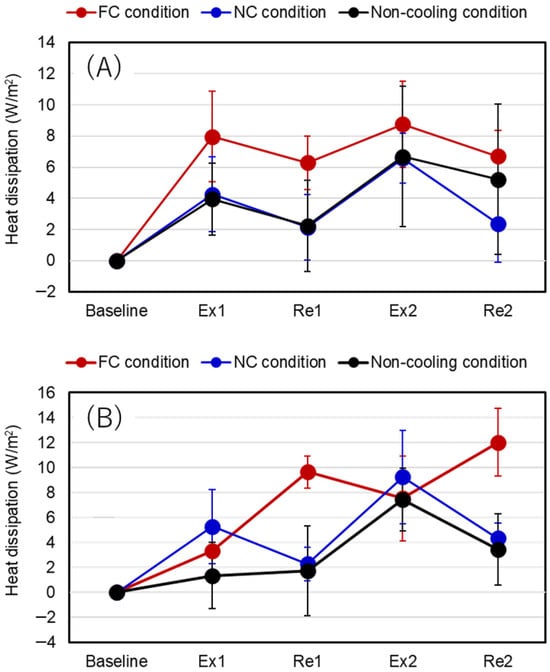
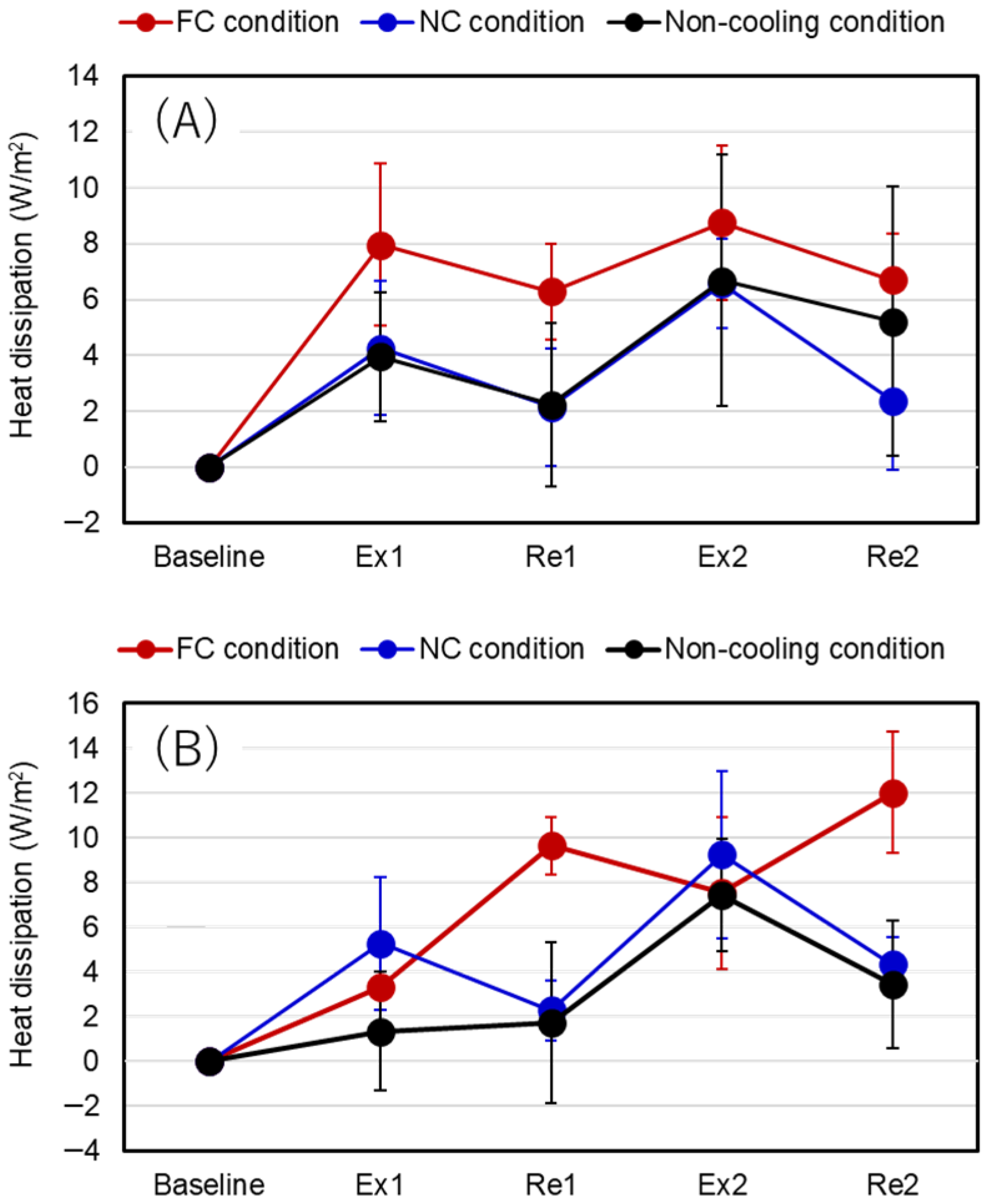
Time-course changes in HF_mean under fan cooling (FC), neck cooling (NC), and non-cooling (NON). (A) Continuous cooling (Experiment 1) and (B) cooling only during rests (Experiment 2). Error bars represent SD. Lines are shown to illustrate temporal sequence only; statistical analyses treated Interval as a categorical factor.
Figure 4.
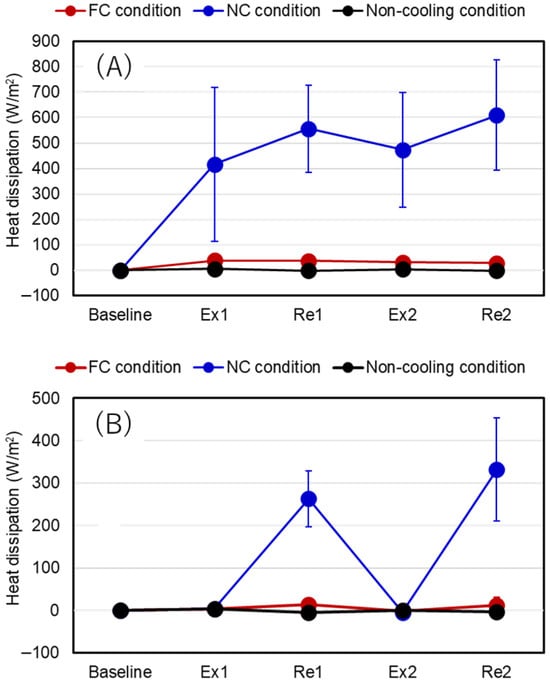
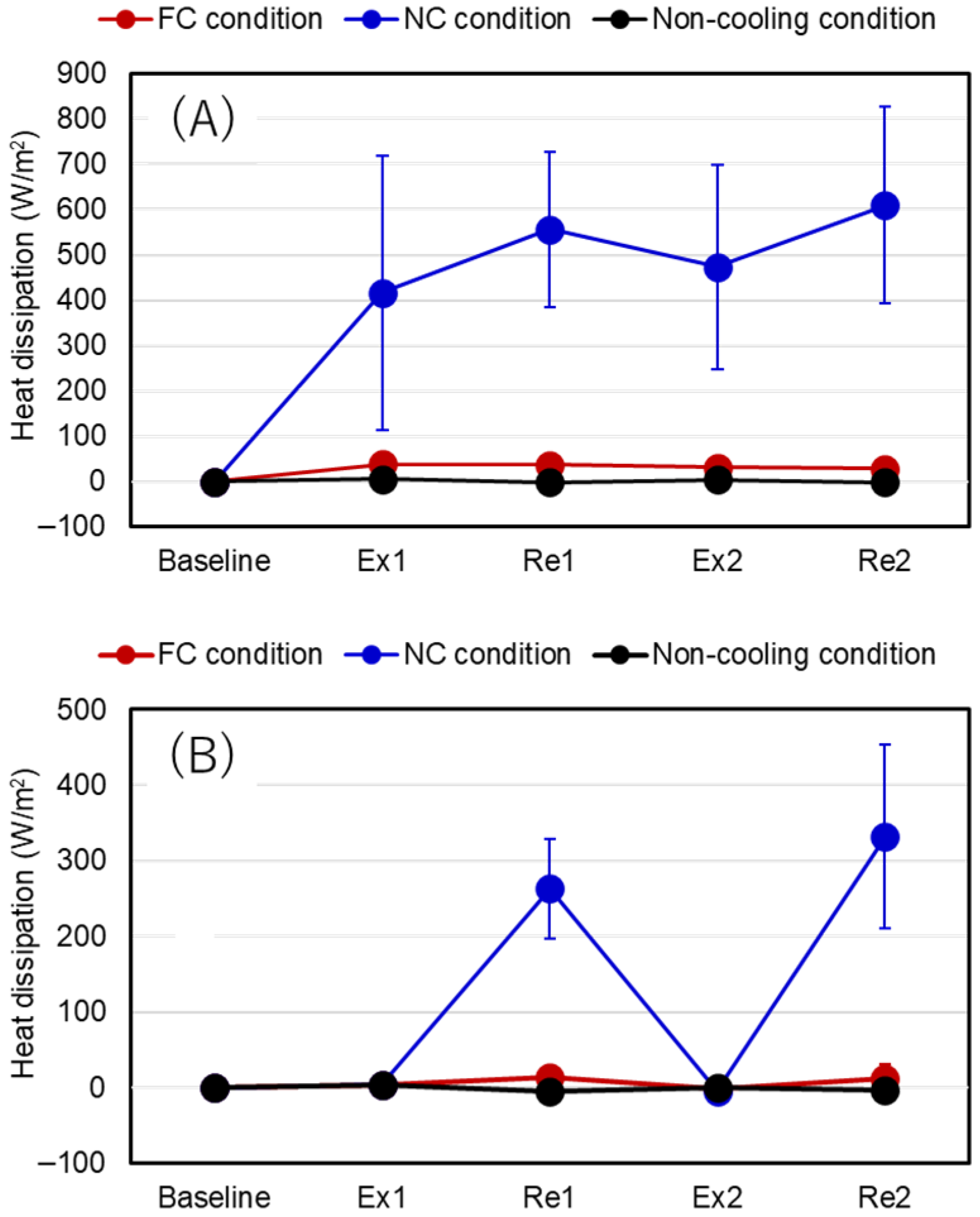
Time-course changes in heat dissipation from the neck (HF_neck) under fan cooling (FC), neck cooling (NC), and non-cooling (NON). (A) Continuous cooling (Experiment 1) and (B) cooling only during rests (Experiment 2). Error bars represent SD. Lines are shown to illustrate temporal sequence only; statistical analyses treated Interval as a categorical factor.
Figure 5.
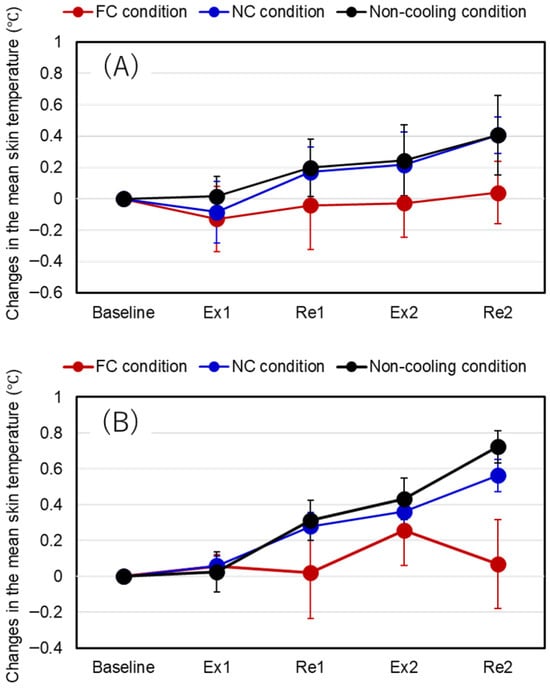
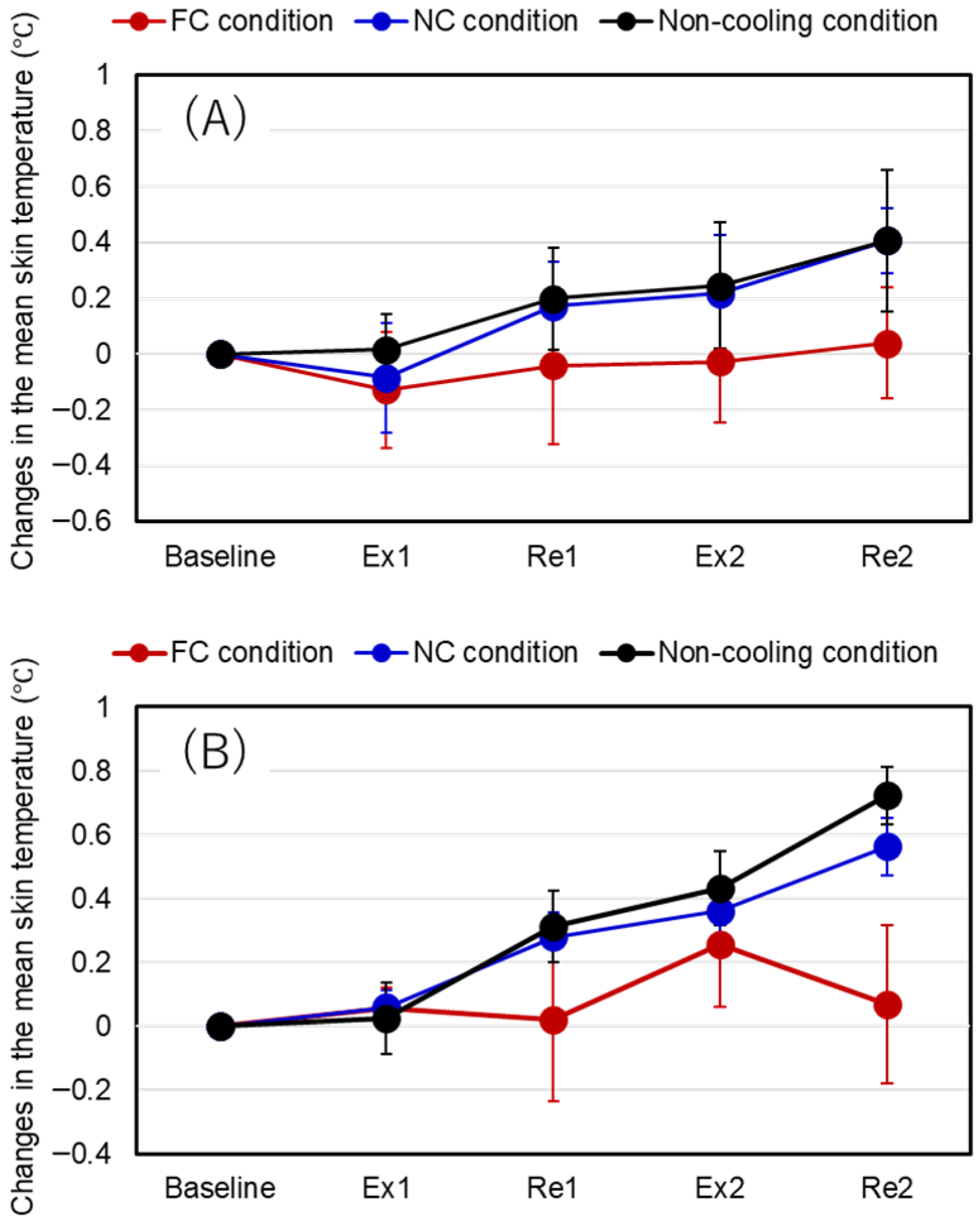
Time-course changes in mean skin temperature (SkinTemp_mean) under fan cooling (FC), neck cooling (NC), and non-cooling (NON). (A) Continuous cooling (Experiment 1) and (B) cooling only during rests (Experiment 2). Error bars represent SD. Lines are shown to illustrate temporal sequence only; statistical analyses treated Interval as a categorical factor.
Figure 6.
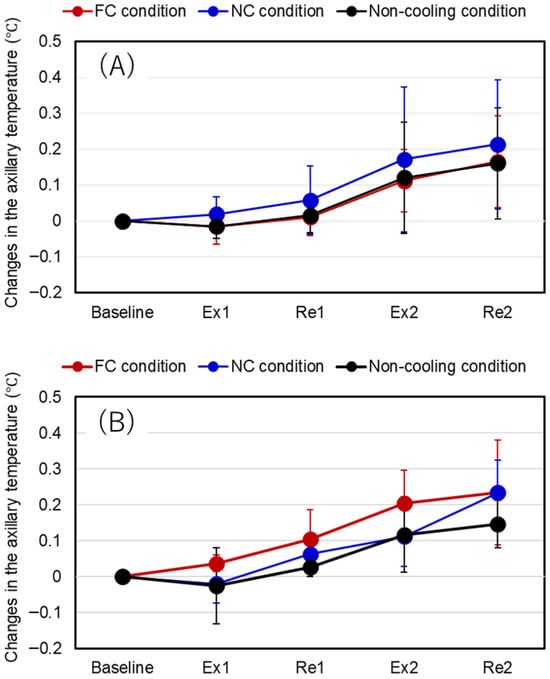
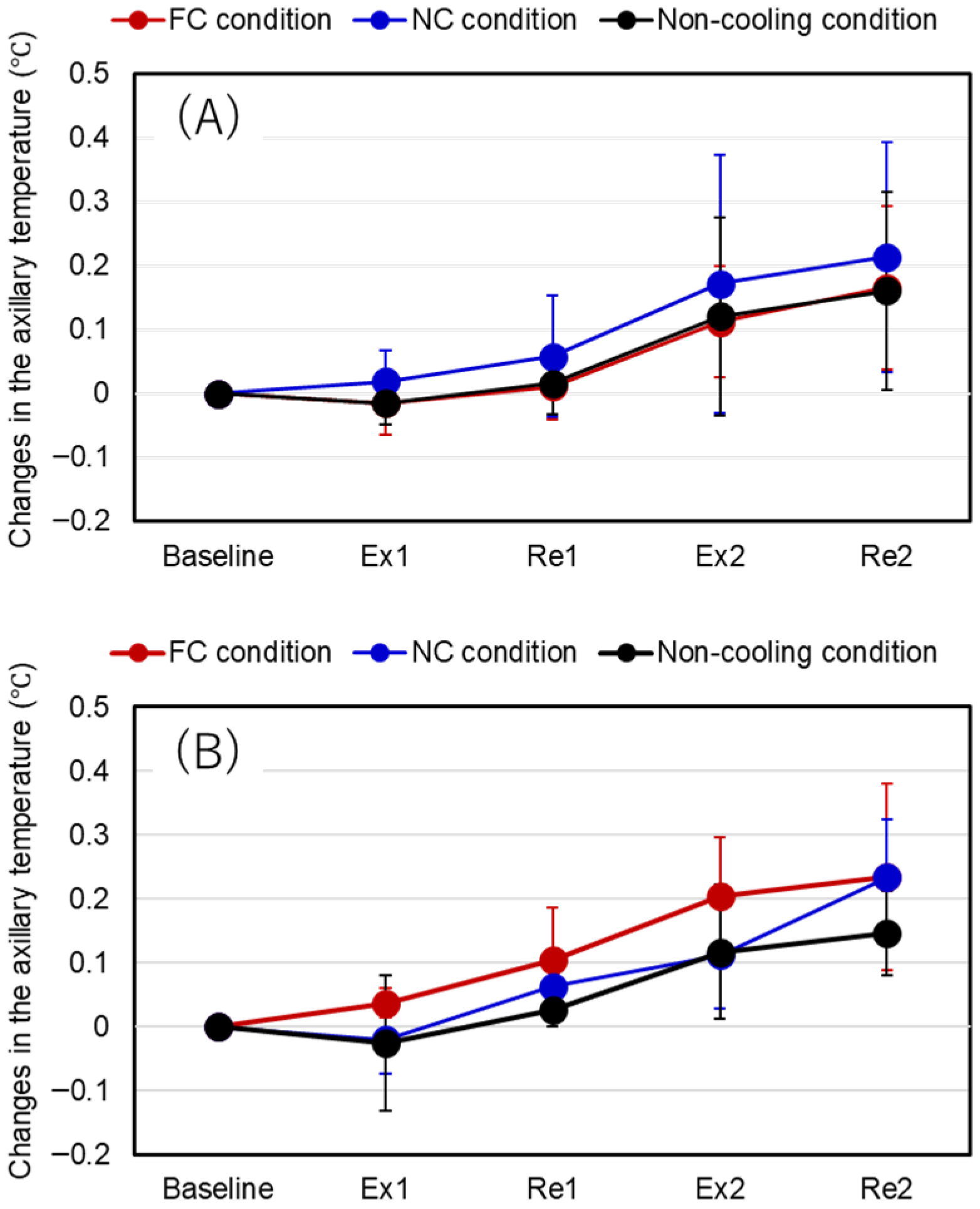
Time-course changes in axillary temperature (AxTemp_mean) under fan cooling (FC), neck cooling (NC), and non-cooling (NON). (A) Continuous cooling (Experiment 1) and (B) cooling only during rests (Experiment 2). Error bars represent SD. Lines are shown to illustrate temporal sequence only; statistical analyses treated Interval as a categorical factor.
Figure 7.
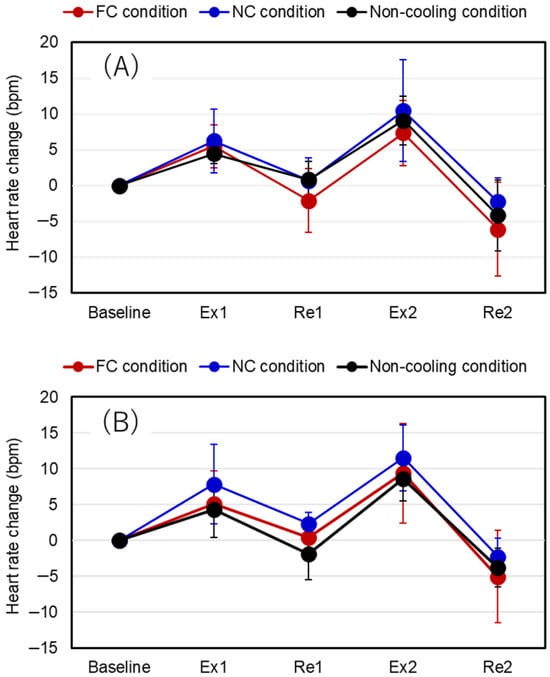
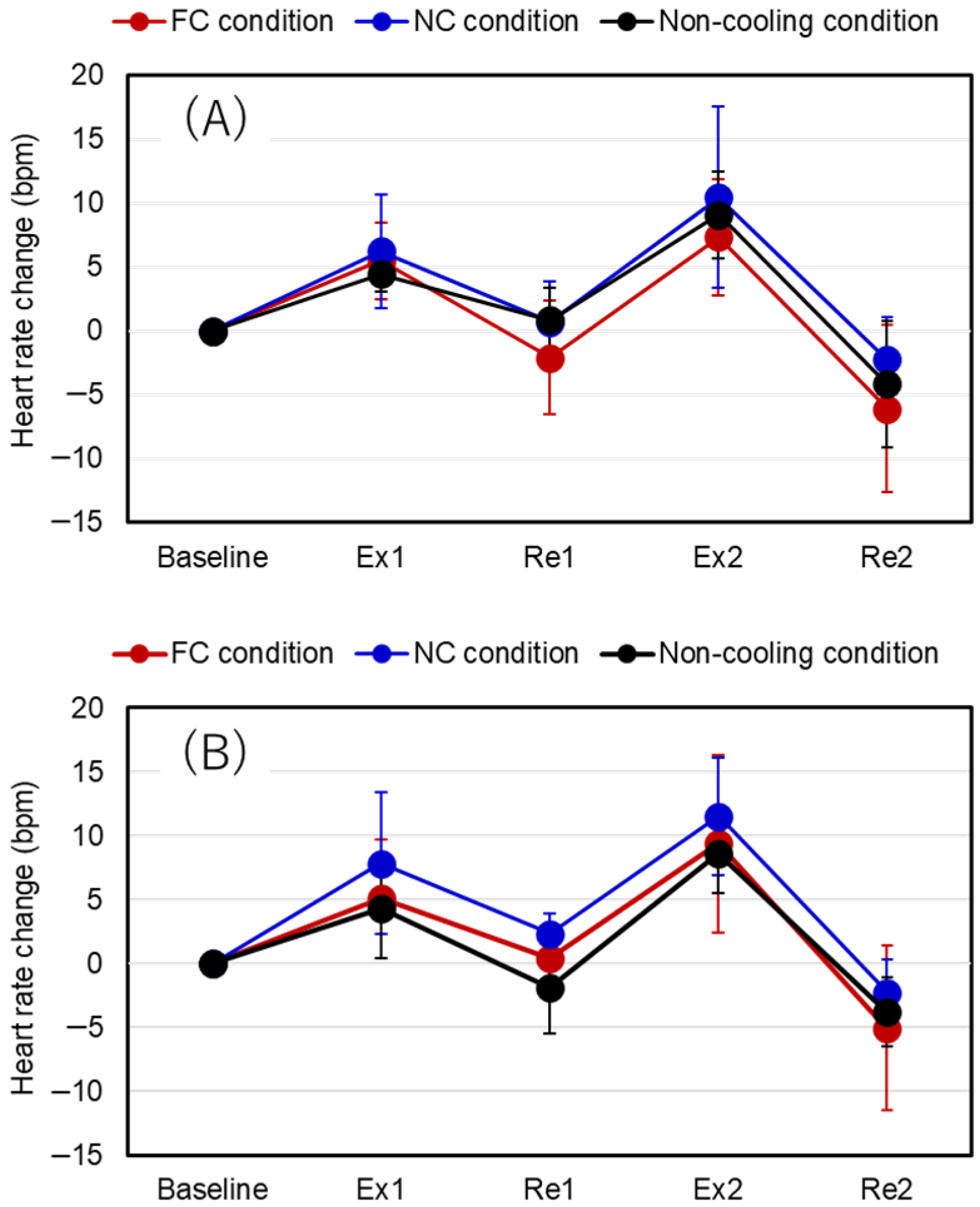
Time-course changes in heart rate (HR_mean) under fan cooling (FC), neck cooling (NC), and non-cooling (NON). (A) Continuous cooling (Experiment 1) and (B) cooling only during rests (Experiment 2). Error bars represent SD.
Figure 8.
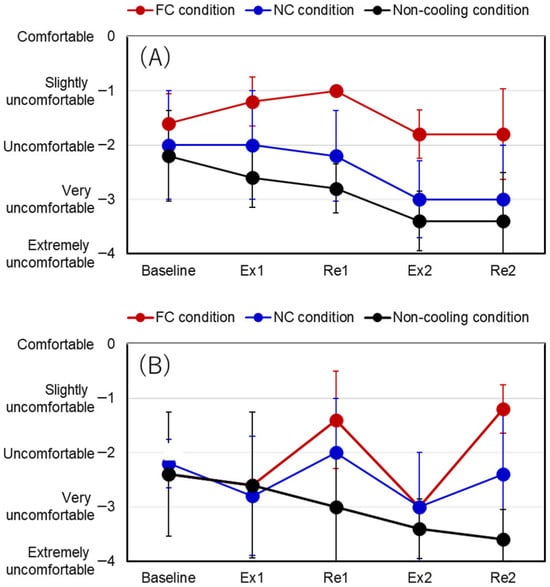
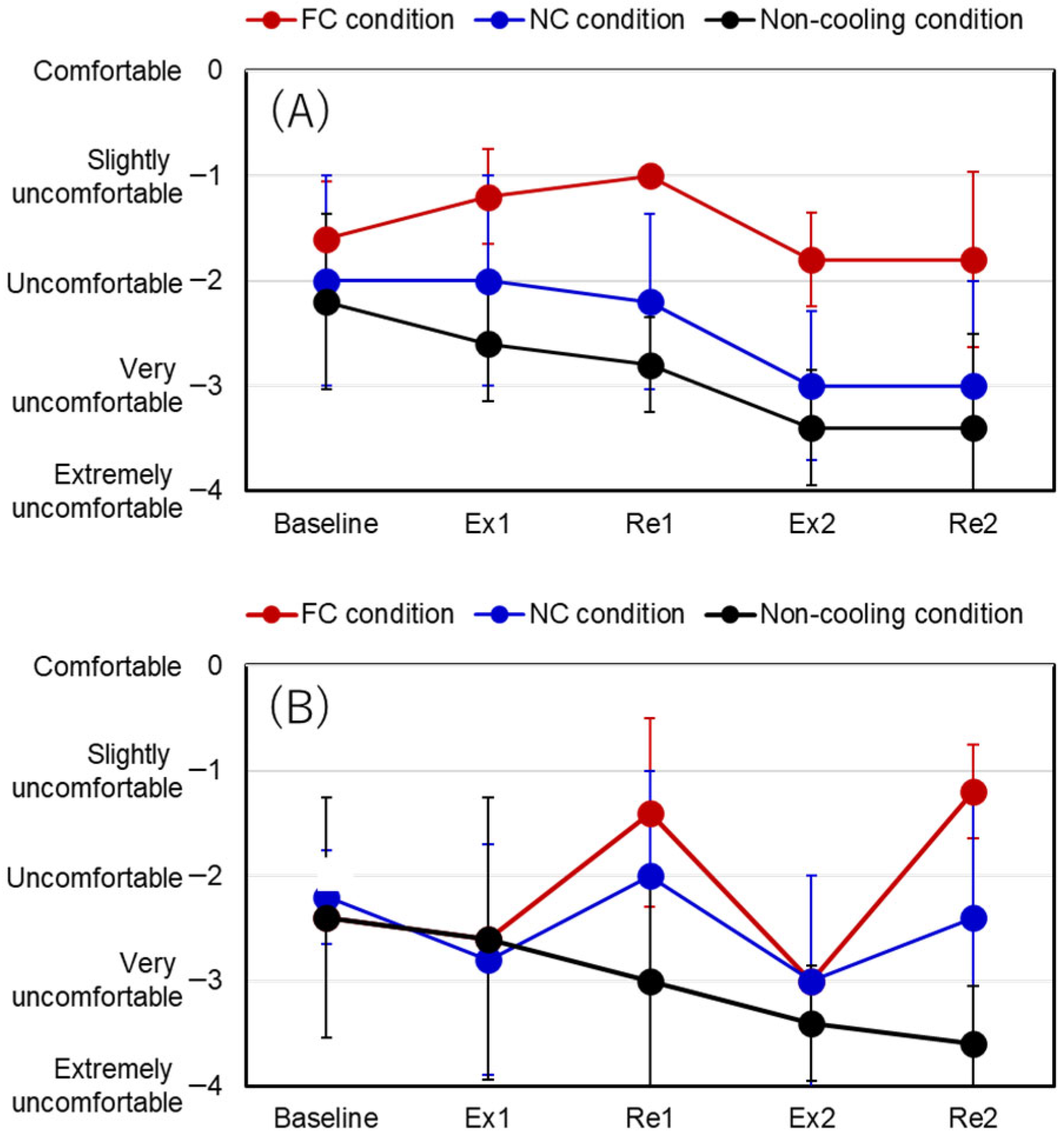
Time-course changes in thermal comfort sensation scores under fan cooling (FC), neck cooling (NC), and non-cooling (NON). (A) Continuous cooling (Experiment 1) and (B) cooling only during rests (Experiment 2). Error bars represent SD. Lines are shown to illustrate temporal sequence only; statistical analyses treated Interval as a categorical factor.
Figure 9.
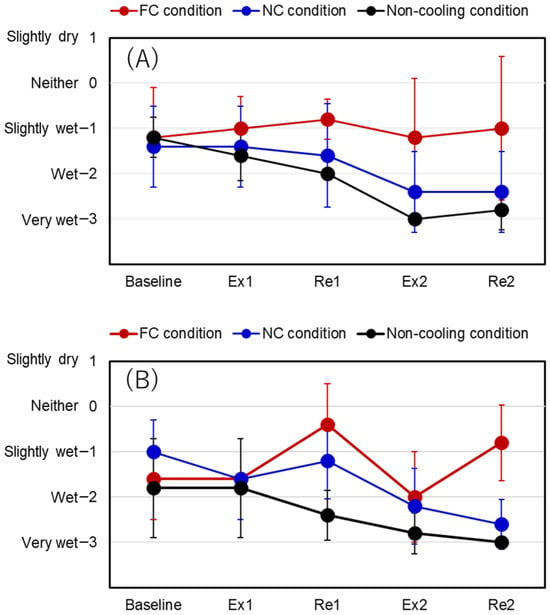
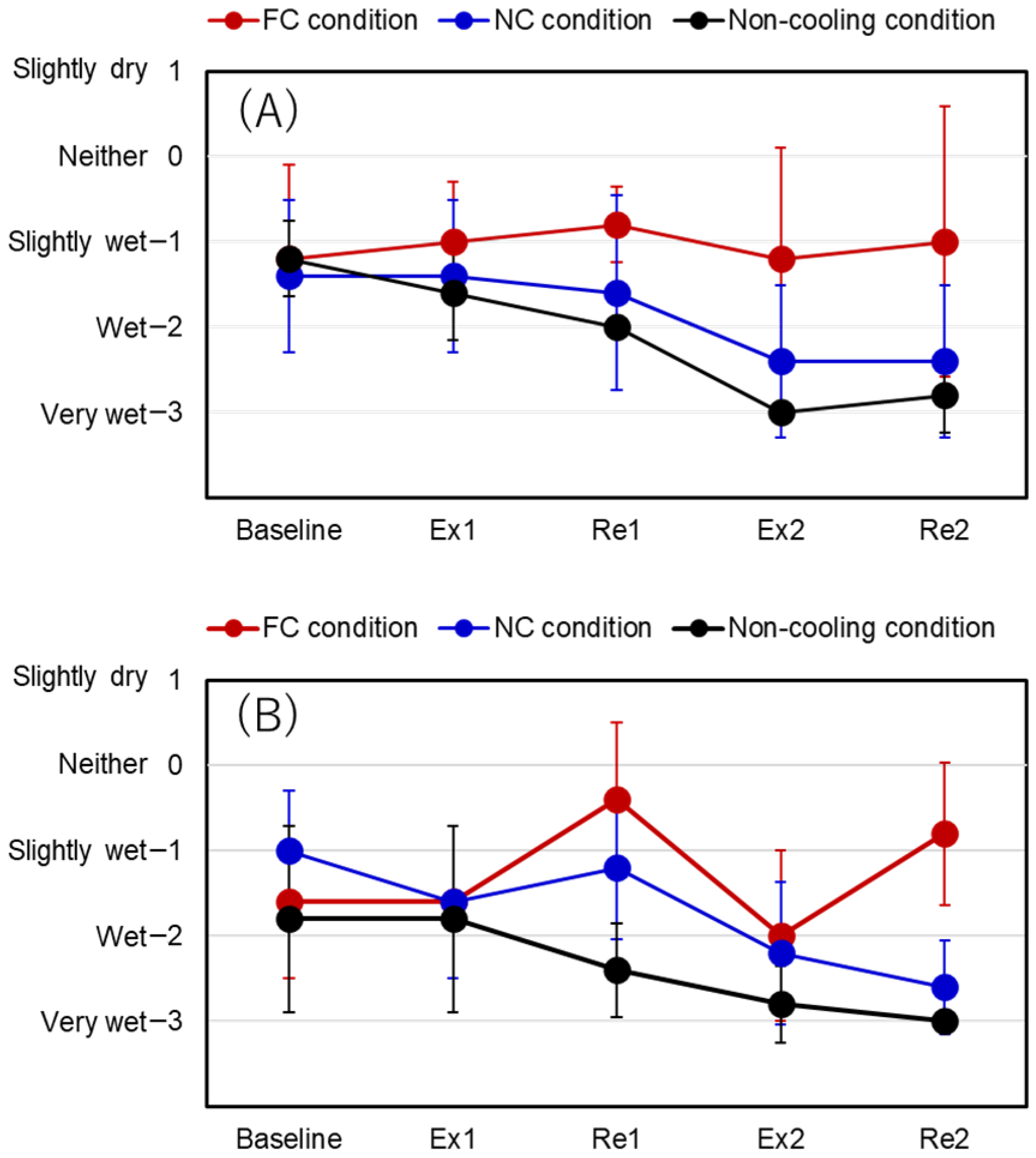
Time-course changes in wetness sensation scores under fan cooling (FC), neck cooling (NC), and non-cooling (NON). (A) Continuous cooling (Experiment 1) and (B) cooling only during rests (Experiment 2). Error bars represent SD. Lines are shown to illustrate temporal sequence only; statistical analyses treated Interval as a categorical factor.
To elucidate the progression of the effects of the cooling device on the body, we sequentially describe the heat dissipation response, temperature response, heart rate response, sweating response, and subjective response. First, regarding heat dissipation responses, the main effect of Condition on HF_mean was significant in both Experiment 1 and Experiment 2 (Experiment 1: p = 0.001, Experiment 2: p < 0.001), indicating that differences in cooling devices had a clear impact on HF_mean. In Experiment 1, no interaction was observed, and the FC condition showed higher heat dissipation than other conditions throughout all intervals. In contrast, in Experiment 2, the Condition × Interval interaction was significant, and during the recovery phase (Re1, Re2), the FC condition showed significantly higher heat dissipation than other conditions (p < 0.001). In other words, FC tended to continuously promote whole-body heat dissipation.
On the other hand, for neck heat dissipation (HF_neck), the main effect of Condition was highly significant in both experiments (both p < 0.001), with the NC condition showing the highest values. Especially in Exp2, the interaction was also significant, with neck heat dissipation under the NC condition increasing markedly during the recovery phase. Thus, while FC consistently enhanced whole-body heat dissipation, NC elicited a localized increase in heat dissipation at the neck.
Next, regarding temperature responses, for mean skin temperature, the main effects of both Condition and Interval were significant in both experiments, and the interaction was also significant in Experiment 2. Interval comparisons showed that during the recovery phase (Re1, Re2), the FC condition had significantly lower mean skin temperatures than the NON condition (p < 0.02), indicating that the promotion of heat dissipation resulted in suppression of the rise in skin temperature.
In contrast, for axillary temperature, no main effect of Condition was found in Experiment 1, and although a significant difference was detected in Experiment 2, the effect size was small and no interaction was observed. That is, axillary temperature primarily changed over time rather than due to differences in cooling devices, and any distinct effects of cooling methods were limited.
Regarding heart rate responses, for mean heart rate (HR_mean), no main effect of Condition was observed in Experiment 1, and although a significant difference was detected in Experiment 2, the effect size was small. In both experiments, the main effect of Interval was strongly significant, indicating that heart rate changed primarily in response to the passage of time associated with exercise and rest.
For sweat volume, the main effect of Condition was not significant in either experiment. While the FC condition showed the lowest mean value in Experiment 2, this difference was not statistically significant. Under the conditions of this study, no systematic differences in sweat volume due to cooling methods were confirmed.
In relation to psychological measures, significant differences in comfort and discomfort were observed across all intervals in Experiment 1 and during the recovery period in Experiment 2. The FC condition consistently exhibited the highest comfort level in terms of median values. The Kendall’s coefficient of concordance W was notably high, ranging from 0.61 to 0.93, indicating a strong effect size. Conversely, no significant main effect of Condition was found for the sensation of wetness in any Experiment or Interval (all p > 0.05), and no discernible differences attributable to cooling methods were observed.
4. Discussion
4.1. Differences in Heat Release Mechanisms
Forced convective cooling under the fan-cooling garment (FC condition) and conductive cooling under the neck cooling device (NC condition) demonstrated distinct heat dissipation responses. Under FC conditions, the HF_mean consistently increased across both experiments, particularly during the recovery phase. This phenomenon is attributed to an increase in evaporative heat dissipation, as the forced convection replaces the moist air within the clothing with external air, thereby enhancing sweat evaporation. Conversely, under NC conditions, heat dissipation from the neck (HF_neck) significantly increased in both experiments; however, this effect remained predominantly localized and did not result in an increase in HF_mean. In essence, FC is characterized by enhanced heat dissipation throughout the body due to promoted convection, whereas NC is characterized by cooling confined to the neck through conduction. The difference in the fundamental mechanisms of action between the cooling devices is considered significant.
4.2. Relationship with Physiological and Subjective Responses
The increase in whole-body heat dissipation was reflected in the suppression of mean skin temperature elevation. Notably, under FC conditions, the rise in skin temperature during the recovery phase was significantly suppressed, confirming a consistent relationship between promoted heat dissipation and skin temperature regulation. Furthermore, the FC condition consistently demonstrated higher levels of comfort, suggesting a possible link between increased physical heat dissipation and reduced subjective thermal burden. In contrast, although NC led to increased localized heat dissipation at the neck, it did not suppress overall skin temperature elevation, resulting in only minor improvements in comfort. This suggests that localized cooling has little effect on overall body heat balance, possibly due to the limited cooling area.
4.3. Axillary Temperature and Heart Rate
In examining axillary temperature and heart rate responses, minimal differences were observed contingent upon the cooling method employed. Axillary temperature, while commonly utilized as a straightforward indicator of internal body temperature, exhibits slower responsiveness compared to rectal or esophageal temperature and may not sufficiently reflect changes in response to short-term cooling stimuli. Within the parameters of this study, it is inferred that the cooling devices primarily affected the skin surface and the microclimate within the clothing, exerting limited influence on axillary temperature indicators. Heart rate was predominantly influenced by the progression of time (exercise and rest periods), with no systematic changes attributable to the cooling method. This is likely due to the significant impact of exercise intensity and individual variability on circulatory responses.
4.4. Exploratory Findings on Cooling Timing
This study compared methods where cooling was administered throughout the entire period with those applied solely during rest periods; however, as these experiments were conducted with different participant groups, findings regarding the timing of cooling remain exploratory. The results suggest that the increase in heat dissipation and the suppression of skin temperature during the recovery phase under FC conditions indicate that forced convective cooling may be more effective in the highly humid state following intermittent exercise. Nonetheless, a rigorous evaluation of timing effects would necessitate a within-subject comparative design.
4.5. Limitations and Future Challenges
This study has several limitations that should be acknowledged.
First, the sample size was limited, which may have reduced the statistical power of the analysis. The restricted number of participants was partly attributable to safety considerations associated with conducting repeated exercise trials in a hot and humid climate chamber environment, where careful monitoring and risk management were required. As this study was designed as a fundamental comparison under controlled laboratory conditions, future research should include a larger and more diverse population to enhance the generalizability and robustness of the findings.
Second, the comparison of cooling timing was conducted using a between-subjects design rather than a direct within-subject comparison. Consequently, interpretations of timing effects should remain exploratory, and causal inferences must be made with caution. A within-subject design, in which each participant experiences both timing strategies, would be necessary to rigorously evaluate the causal impact of cooling timing. In addition, the use of a common baseline defined at the end of the acclimation phase, rather than resetting the baseline at the start of each exercise phase, may have influenced the interpretation of second-cycle responses. This approach was adopted to maintain a unified thermal starting point across conditions; however, it may limit the isolation of cumulative exercise effects.
Third, axillary temperature was used as an indicator of internal body temperature. Although this method provides a practical and non-invasive measure, its responsiveness is slower than that of rectal or esophageal temperature and may not fully capture transient changes induced by short-term cooling stimuli. The simultaneous use of more precise core temperature measurements would allow for a clearer assessment of cooling effects.
Fourth, under the FC conditions, forced convection generated by the fan may have altered the air environment surrounding the heat flux sensors, thereby influencing the measured heat flux values. Therefore, the observed differences in heat flux should be interpreted as device-induced heat transfer under applied conditions rather than purely physiological heat dissipation of the human body. Future studies should refine measurement methodologies and verify these findings across multiple body sites.
Fifth, body surface area was estimated using the Kurasumi formula, which has been reported for Japanese adults. Because the comparisons in this study were based on relative differences within each experiment, recalculation using the DuBois formula would uniformly scale body surface area values and is unlikely to alter the comparative conclusions. Nevertheless, confirmation using alternative body surface area equations should be addressed in future analyses.
Finally, although the overall experimental period was relatively short, short-term heat adaptation across repeated exposures cannot be entirely excluded. Future studies employing full counterbalancing and longer washout periods would further reduce the possibility of acclimatization effects.
5. Conclusions
In this study, forced convective cooling under the fan-cooling garment (FC condition) and conductive cooling under the neck cooling device (NC condition) were employed under intermittent exercise conditions to evaluate their effects on physiological and subjective responses in a hot environment. The FC condition facilitated increased whole-body heat dissipation, particularly during the recovery phase, and was associated with the suppression of skin temperature elevation and enhanced comfort. Conversely, the NC condition improved local heat dissipation at the neck but exerted limited influence on mean skin temperature and axillary temperature. These findings suggest that the mechanism of action for forced convective cooling, which enhances ventilation within clothing, differs from that of localized conductive cooling and is associated with increased whole-body heat dissipation. Furthermore, the pronounced heat dissipation response during the recovery period underscores the significance of promoting convection in highly humid conditions following intermittent exercise. However, as the comparison of cooling timing was conducted using a between-subjects design, interpretations of its effects remain exploratory. In summary, this study provides fundamental insights into the differences in thermal response characteristics between forced convective cooling and localized cooling under controlled conditions. These findings contribute to a better understanding of the characteristics of wearable cooling devices during work and rest conditions. Future research should include a more comprehensive evaluation, encompassing longer work durations, various environmental factors, and additional indices such as work efficiency and cognitive function, to further enhance our understanding of the characteristics of wearable cooling devices.
Author Contributions
Conceptualization, H.M.; methodology, H.M. and T.Y.; Software, T.Y.; Validation, H.M., T.Y. and H.K.; Formal analysis, H.M. and T.Y.; Investigation, T.Y.; Resources, H.M. and T.Y.; Data curation, T.Y.; Writing—original draft preparation, H.M. and T.Y.; Writing—review and editing, H.M.; Visualization, H.M., T.Y. and H.K.; Supervision, H.M.; Project administration, H.M.; Funding acquisition, H.M. All authors have read and agreed to the published version of the manuscript.
Funding
This research was supported by the Japan Society for the Promotion of Science (JSPS) KAKENHI (Grant Number JP25K15298).
Institutional Review Board Statement
The study was conducted in accordance with the Declaration of Helsinki, and the protocol was approved by the Ethics Committee of Human Research at Shinshu University (Approval Number: 394) on 11 July 2025.
Informed Consent Statement
Informed consent was obtained from all participants involved in the study.
Data Availability Statement
The original contributions presented in the study are included in the article, further inquiries can be directed to the corresponding author.
Acknowledgments
During the preparation of this manuscript, the authors used paperpal for the purpose of check the grammar. The authors have reviewed and edited the output and take full responsibility for the content of this publication.
Conflicts of Interest
The authors declare no conflicts of interest.
Appendix A
Appendix A.1. Baseline Values
Table A1.
Baseline values (Mean ± SD) of thermophysiological indicators prior to exercise in Experiment 1 and Experiment 2.
Appendix A.2. Summary of Δ Values
Table A2.
Descriptive statistics (Mean ± SD) of changes from baseline (Δ values) for all measured thermophysiological indicators across cooling conditions and phases.
References
- Gibb, K.; Beckman, S.; Vergara, X.P.; Heinzerling, A.; Harrison, R. Extreme heat and occupational health risks. Annu. Rev. Public Health 2024, 45, 315–335. [Google Scholar] [CrossRef] [PubMed]
- Levi, M.; Kjellstrom, T.; Baldasseroni, A. Impact of climate change on occupational health and productivity: A systematic literature review focusing on workplace heat. Med. Lav. 2018, 109, 163–179. [Google Scholar] [CrossRef] [Scilit] [PubMed]
- El Khayat, M.; Halwani, D.A.; Hneiny, L.; Alameddine, I.; Haidar, M.A.; Habib, R.R. Impacts of climate change and heat stress on farmworkers’ health: A scoping review. Front. Public Health 2022, 10, 782811. [Google Scholar] [CrossRef] [Scilit] [PubMed]
- Ren, S.; Han, M.; Fang, J. Personal cooling garments: A review. Polymers 2022, 14, 5522. [Google Scholar] [CrossRef] [Scilit]
- Mori, K.; Nagano, C.; Fukuzawa, K.; Hoshuyama, N.; Tanaka, R.; Nishi, K.; Hashimoto, K.; Horie, S.; Inoue, J. Mitigation of heat strain by wearing a long-sleeve fan-attached jacket in a hot or humid environment. J. Occup. Health 2022, 64, e12323. [Google Scholar] [CrossRef] [Scilit]
- Naito, T.; Saito, T.; Ohhashi, M.; Hayashi, S. Recovery with a fan-cooling jacket after exposure to high solar radiation during exercise in hot outdoor environments. Front. Sports Act. Living 2023, 5, 1106882. [Google Scholar] [CrossRef] [Scilit]
- Otani, H.; Fukuda, M.; Tagawa, T. Cooling between exercise bouts and post-exercise with the fan cooling jacket on thermal strain in hot–humid environments. Front. Physiol. 2021, 12, 640400. [Google Scholar] [CrossRef] [Scilit]
- Zhao, M.; Gao, C.; Wang, F.; Kuklane, K.; Holmér, I.; Li, J. A study on local cooling of garments with ventilation fans and openings placed at different torso sites. Int. J. Ind. Ergon. 2013, 43, 232–237. [Google Scholar] [CrossRef] [Scilit]
- Zhao, M.; Yang, J.; Wang, F.; Udayraj; Chan, W.C. The cooling performance of forced air ventilation garments in a warm environment: The effect of clothing eyelet designs. J. Text. Inst. 2023, 114, 378–387. [Google Scholar] [CrossRef] [Scilit]
- Zhao, M.; Gao, C.; Wang, M. Development of air ventilation garments with small fan panels to improve thermal comfort. Sustainability 2023, 15, 8452. [Google Scholar] [CrossRef] [Scilit]
- Sakakibara, K.; Kuwabara, K.; Someya, S.; Yamazaki, K.; Dempoya, A. Thermal environment that reduces physiological and psychological burden of walking workers wearing long-sleeved ventilated working jacket. J. Environ. Eng. 2024, 89, 332–339. [Google Scholar] [CrossRef] [Scilit]
- Tokizawa, K.; Sawada, S.; Oka, T.; Yasuda, A.; Tai, T.; Ida, H.; Nakayama, K. Fan-pre-cooling effect on heat strain while wearing protective clothing. Int. J. Biometeorol. 2014, 58, 1919–1925. [Google Scholar] [CrossRef] [Scilit]
- Choudhary, B.; Udayraj. Effectiveness of air ventilation clothing in hot and humid environment for decreasing and intermittent activity scenarios. Build. Environ. 2023, 239, 110436. [Google Scholar] [CrossRef] [Scilit]
- Kim, S.; Lee, S.; Shin, S.; Lim, D. Cooling performance measurements of different types of cooling vests using thermal manikin. Fash. Text. 2024, 11, 15. [Google Scholar] [CrossRef] [Scilit]
- Hashimoto, K.; Horie, S.; Nagano, C.; Hibino, H.; Mori, K.; Fukuzawa, K.; Nakayama, M.; Tanaka, H.; Inoue, J. A fan-attached jacket worn in an environment exceeding body temperature suppresses an increase in core temperature. Sci. Rep. 2021, 11, 21269. [Google Scholar] [CrossRef] [Scilit]
- Lu, Y.; Wei, F.; Lai, D.; Shi, W.; Wang, F.; Gao, C.; Song, G. A novel personal cooling system (PCS) incorporated with phase change materials and ventilation fans: An investigation on its cooling efficiency. J. Therm. Biol. 2015, 52, 137–146. [Google Scholar] [CrossRef] [Scilit] [PubMed]
- Del Ferraro, S.; Falcone, T.; Morabito, M.; Messeri, A.; Bonafede, M.; Marinaccio, A.; Molinaro, V. A potential wearable solution for preventing heat strain in workplaces: The cooling effect and the total evaporative resistance of a ventilation jacket. Environ. Res. 2022, 212, 113475. [Google Scholar] [CrossRef] [Scilit]
- Del Ferraro, S.; Falcone, T.; Morabito, M.; Bonafede, M.; Marinaccio, A.; Gao, C.; Molinaro, V. Mitigating heat effects in the workplace with a ventilation jacket: Simulations of whole-body and local human thermophysiological response with a sweating thermal manikin in a warm-dry environment. J. Therm. Biol. 2024, 119, 103772. [Google Scholar] [CrossRef] [Scilit]
- Cao, Y.; Lei, T.H.; Wang, F.; Yang, B.; Mündel, T. Head, face and neck cooling as per-cooling (cooling during exercise) modalities to improve exercise performance in the heat: A narrative review and practical applications. Sports Med.-Open 2022, 8, 16. [Google Scholar] [CrossRef] [Scilit] [PubMed]
- Stevens, C.J.; Borg, D.; Brade, C.; Carter, S.; Filingeri, D.; Lee, J.; Lim, L.; Mündel, T.; Taylor, L.; Tyler, C.J. Head, face, and neck cooling for performance: A systematic review and meta-analysis. Int. J. Sports Physiol. Perform. 2025, 20, 743–763. [Google Scholar] [CrossRef] [Scilit] [PubMed]
- Wang, F.; Su, M.; Ke, Y.; Zheng, Q.; Zhang, X.; Lei, T.-H.; Yang, B. Cooling collars incorporated with PCM packs and gels to improve indoor thermal comfort in healthy young females. Build. Environ. 2024, 262, 111788. [Google Scholar] [CrossRef] [Scilit]
- Yang, B.; Lei, T.-H.; Yang, P.; Liu, K.; Wang, F. On the use of wearable face and neck cooling fans to improve occupant thermal comfort in warm indoor environments. Energies 2021, 14, 8077. [Google Scholar] [CrossRef] [Scilit]
- Zhang, G.; Xin, G.; Li, H.; Ma, P.; Wang, H. Neck cooling provides ergogenic benefits after heat acclimation during exercise in the heat. Front. Physiol. 2025, 16, 1646930. [Google Scholar] [CrossRef] [Scilit]
- Tyler, C.J.; Wild, P.; Sunderland, C. Practical neck cooling and time-trial running performance in a hot environment. Eur. J. Appl. Physiol. 2010, 110, 1063–1074. [Google Scholar] [CrossRef] [Scilit]
- Tyler, C.J.; Sunderland, C. Neck cooling and running performance in the heat: Single versus repeated application. Med. Sci. Sports Exerc. 2011, 43, 2388–2395. [Google Scholar] [CrossRef] [Scilit] [PubMed]
- Cuttell, S.A.; Kiri, V.; Tyler, C. A comparison of two practical cooling methods on cycling capacity in the heat. J. Athl. Train. 2016, 51, 525–532. [Google Scholar] [CrossRef] [Scilit] [PubMed]
- Tyler, C.J.; Sunderland, C. Cooling the neck region during exercise in the heat. J. Athl. Train. 2011, 46, 61–68. [Google Scholar] [CrossRef] [Scilit]
- American Conference of Governmental Industrial Hygienists (ACGIH). 2024 TLVs® and BEIs®: Threshold Limit Values for Chemical Substances and Physical Agents & Biological Exposure Indices; ACGIH: Cincinnati, OH, USA, 2024. [Google Scholar]
- National Institute for Occupational Safety and Health (NIOSH). Criteria for a Recommended Standard: Occupational Exposure to Heat and Hot Environments; DHHS (NIOSH) Publication No. 2016-106; NIOSH: Cincinnati, OH, USA, 2016. [Google Scholar]
- ISO 7243:2017; Ergonomics of the Thermal Environment—Assessment of Heat Stress Using the WBGT (Wet Bulb Globe Temperature) Index. International Organization for Standardization: Geneva, Switzerland, 2017.
- Tokizawa, K.; Son, S.-Y.; Oka, T.; Yasuda, A. Effectiveness of a field-type liquid cooling vest for reducing heat strain while wearing protective clothing. Ind. Health 2020, 58, 63–71. [Google Scholar] [CrossRef] [Scilit]
- Chan, A.; Zhang, Y.; Wang, F.; Wong, F.; Chan, D. A field study of the effectiveness and practicality of a novel hybrid personal cooling vest worn during rest in Hong Kong construction industry. J. Therm. Biol. 2017, 70, 21–27. [Google Scholar] [CrossRef] [Scilit]
- Chicas, R.; Xiuhtecutli, N.; Elon, L.; Scammell, M.K.; Steenland, K.; Hertzberg, V.; McCauley, L. Cooling interventions among agricultural workers: A pilot study. Workplace Health Saf. 2021, 69, 315–322. [Google Scholar] [CrossRef] [Scilit]
- Wang, Y.; Zhao, B.; Zhu, H.; Yang, W.; Li, T.; Cao, Z.; Wang, J. Vests with radiative cooling materials to improve thermal comfort of outdoor workers: An experimental study. Nanomaterials 2024, 14, 1119. [Google Scholar] [CrossRef] [Scilit]
- Jamshidi, H.; Zamanian, Z.; Daneshmandi, H.; Gaoua, N.; Vizeshfar, F.; Zare, M.; Jahangiri, H. The effect of cooling vest along with hospital full-body protection equipment on physiological and cognitive indicators among hospital nurses: An interventional study. BMC Health Serv. Res. 2025, 25, 1481. [Google Scholar] [CrossRef] [Scilit]
- Del Ferraro, S.; Falcone, T.; Morabito, M.; Messeri, A.; Bonafede, M.; Marinaccio, A.; Gao, C.; Molinaro, V. Cooling garments against environmental heat conditions in occupational fields: Measurements of the effect of a ventilation jacket on the total thermal insulation. Int. J. Ind. Ergon. 2021, 86, 103230. [Google Scholar] [CrossRef] [Scilit]
- Ciuha, U.; Valenčič, T.; Ioannou, L.G.; Mekjavic, I.B. Efficacy of cooling vests based on different heat-extraction concepts: The HEAT-SHIELD project. J. Therm. Biol. 2023, 112, 103442. [Google Scholar] [CrossRef] [Scilit] [PubMed]
- Otani, H.; Goto, T.; Kobayashi, Y.; Goto, H.; Hosokawa, Y.; Tokizawa, K.; Shirato, M. The fan cooling vest use reduces thermal and perceptual strain during outdoor exercise in the heat on a sunny summer day. Int. J. Biometeorol. 2024, 68, 1625–1635. [Google Scholar] [CrossRef] [Scilit]
- Tetzlaff, E.; Ioannou, L.; O’Connor, F.; Kaltsatou, A.; Ly, V.; Kenny, G. Practical considerations for using personal cooling garments for heat stress management in physically demanding occupations: A systematic review and meta-analysis using realist evaluation. Am. J. Ind. Med. 2024, 68, 3–25. [Google Scholar] [CrossRef] [Scilit] [PubMed]
- Tyler, C.J.; Sunderland, C.; Cheung, S.S. The effect of cooling prior to and during exercise on exercise performance and capacity in the heat: A meta-analysis. Br. J. Sports Med. 2015, 49, 7–13. [Google Scholar] [CrossRef] [Scilit]
- Lee, J.K.W.; Koh, A.C.H.; Koh, S.X.T.; Liu, G.J.X.; Nio, A.Q.X.; Fan, P.W.P. Neck cooling and cognitive performance following exercise-induced hyperthermia. Eur. J. Appl. Physiol. 2014, 114, 375–384. [Google Scholar] [CrossRef] [Scilit]
- Sunderland, C.; Stevens, R.; Tyler, C.J. Neck-cooling improves repeated sprint performance in the heat. Front. Physiol. 2015, 6, 314. [Google Scholar] [CrossRef] [Scilit] [PubMed]
- Bongers, C.C.W.G.; Hopman, M.T.E.; Eijsvogels, T.M.H. Cooling interventions for athletes: An overview of effectiveness, physiological mechanisms, and practical considerations. Temperature 2017, 4, 60–78. [Google Scholar] [CrossRef] [Scilit] [PubMed]
- Maru, H.; Yuasa, T.; Kanai, H. Evaluation of resting-state cooling effectiveness in wearable body-cooling devices using thermophysiological and psychological responses. Textiles 2025, 5, 69. [Google Scholar]
- Ainsworth, B.E.; Haskell, W.L.; Herrmann, S.D.; Meckes, N.; Bassett, D.R., Jr.; Tudor-Locke, C.; Greer, J.L.; Vezina, J.; Whitt-Glover, M.C.; Leon, A.S. 2011 compendium of physical activities: A second update of codes and MET values. Med. Sci. Sports Exerc. 2011, 43, 1575–1581. [Google Scholar] [PubMed]
- ISO 10551:2019; Ergonomics of the Physical Environment—Subjective Judgement Scales for Assessing Physical Environments. International Organization for Standardization: Geneva, Switzerland, 2019.
- Kurazumi, Y.; Tsuchikawa, T.; Kakutani, K.; Torii, T.; Matsubara, N.; Horikoshi, T. Evaluation of the conformability of the calculation formula for the body surface area of the human body. Jpn. J. Biometeorol. 2002, 39, 101–106. [Google Scholar] [CrossRef]
- Hardy, J.D.; Du Bois, E.F.; Soderstrom, G.F. Basal metabolism, radiation, convection and vaporization at temperatures of 22 to 35 °C. J. Nutr. 1938, 15, 477–497. [Google Scholar] [CrossRef] [Scilit]
- ISO 9886:2004; Ergonomics—Evaluation of Thermal Strain by Physiological Measurements. International Organization for Standardization: Geneva, Switzerland, 2004.

Disclaimer/Publisher’s Note: The statements, opinions and data contained in all publications are solely those of the individual author(s) and contributor(s) and not of MDPI and/or the editor(s). MDPI and/or the editor(s) disclaim responsibility for any injury to people or property resulting from any ideas, methods, instructions or products referred to in the content. |
© 2026 by the authors. Licensee MDPI, Basel, Switzerland. This article is an open access article distributed under the terms and conditions of the Creative Commons Attribution (CC BY) license.