


Abstract
The growing demand for sustainable smart packaging arises from the urgent need to preserve food quality and minimize environmental waste. In this study, multifunctional gelatin-based pH-responsive indicator films were fabricated by incorporating anthocyanins extracted from Hibiscus x archeri W Watson (HAE) and zinc oxide nanoparticles (ZnO-NPs). The incorporation of HAE and ZnO-NPs enhanced surface hydrophobicity, as evidenced by an increase in the water contact angle from 99° to 106°. The Fourier transform infrared (FTIR) analysis verified the lack of new chemical bond formation, indicating that the interactions among components were primarily physical in nature. Distinct colour transitions in buffer solutions of differing pH demonstrated the films’ colorimetric behavior. The films exhibited strong antimicrobial activity against Listeria monocytogenes (18.961 mm), Salmonella typhimurium (18.969 mm), and Aeromonas hydrophila (18.237 mm), whereas the neat gelatin film showed no inhibitory zone. The films also demonstrated superior UV-blocking capacity, with an opacity value (1.34 a.u/mm) compared to the control gelatin film (0.79 a.u/mm). Notably, fish fillets wrapped with the films remained fresh for up to 10 days, compared to day 4 for the unwrapped samples. These findings highlight the considerable potential of multifunctional, active and intelligent packaging for food preservation and real-time freshness monitoring.
1. Introduction
The modern food industry is facing increasing demand for packaging systems that not only preserve food quality and safety but also address sustainability concerns. Conventional synthetic and petroleum-based polymers offer superior mechanical strength and barrier characteristics; however, their non-biodegradable nature substantially exacerbates environmental degradation, waste accumulation, and resource depletion [1,2]. In response, the development of biodegradable, edible, and renewable-material-based packaging has intensified to mitigate the ecological footprint of packaging waste [3,4].
Sustainable food packaging encompasses more than just biodegradability, it also considers environmental, economic, and social dimensions. Desired attributes include recyclability, reusability, reduced resource consumption, minimized greenhouse gas emissions, and the use of renewable energy to preserve both human and ecosystem health [5,6]. Biodegradable packaging derived from renewable biological resources has emerged as a sustainable alternative to conventional plastic packaging, as such material can decompose into carbon dioxide, water, and biomass through microbial activity or controlled composting. Growing interest in these materials is driven by increasing environmental awareness among consumers, the accumulation of plastic waste, stringent governmental disposal policies, and advances in biopolymer processing technologies [6,7].
Biopolymer-based films and coatings, sourced from natural macromolecules such as proteins, polysaccharides, and lipids, have garnered significant interest as sustainable alternatives to conventional plastics [7]. Gelatin, obtained from the partial hydrolysis of collagen, is widely utilized within the food and pharmaceutical sectors owing to its biodegradability, edibility, transparency, and excellent oxygen barrier capabilities [8]. Gelatin has good film-forming capabilities, but its high-water solubility and poor gas barrier performance limit its use in food packaging [9]. To overcome these drawbacks, researchers have focused on formulating composite films by incorporating active agents or functional nanomaterials into the gelatin matrix, thereby improving its physicochemical functionality [10].
The advancement of active and intelligent packaging technologies has been driven by innovations in food packaging. Active packaging involves the integration of functional agents, including antioxidants, antimicrobials, or moisture regulators, into packaging materials to extend food shelf life and enhance safety. These agents interact with the food or its surroundings to achieve the desired effect [11,12]. Intelligent packaging, in contrast, delivers real-time information regarding the condition of the food product, such as freshness or spoilage, often through visual indicators that respond to changes in pH, temperature, or microbial activity. Combining both functionalities in a single packaging material offers a promising strategy for maintaining food integrity and safety while minimizing food waste. Since food spoilage is closely linked to pH fluctuations, visual indicator films incorporating pH-sensitive dyes on biopolymer substrates have become a focus of research in monitoring meat and seafood freshness [12].
Anthocyanins, a class of water-soluble flavonoid pigments commonly found in various fruits and vegetables, are among the most extensively studied pH-sensitive compounds for intelligent packaging applications. Their ability to undergo distinct and reversible color changes across a wide pH range renders them particularly suitable for visual monitoring of food freshness, especially in protein-rich products, where microbial spoilage is typically associated with increased pH levels [13]. This pH-responsive behavior is attributed to structural transformations within the anthocyanin molecule as environmental pH fluctuates [14]. In addition to their colorimetric sensitivity, anthocyanins also exhibit antioxidant and antimicrobial properties, further enhancing their functionality in active packaging systems [15,16]. Narayanan et al. (2023) demonstrated the application of these properties by developing a pH-sensitive film using a gelatin–pectin matrix incorporated with anthocyanin from butterfly pea flower for monitoring tilapia filler freshness [17]. During cold storage conditions (4 °C), a discernible color change was observed in the film, shifting from a dark blue hue to a greenish tint, concomitant with increased total volatile basic nitrogen (TVB-N) and pH in the fish sample, thereby substantiating the film’s efficacy in spoilage detection.
Zinc oxide nanoparticles (ZnO-NPs) are another promising additive due to their broad-spectrum antimicrobial activity, UV-blocking properties, and low toxicity at appropriate concentrations [18]. The incorporation of ZnO-NPs into biopolymer matrices has demonstrated the ability to suppress the proliferation of spoilage microorganisms, thereby extending the shelf life of perishable foods [19]. A synergistic interaction between ZnO-NPs and natural antioxidants such as anthocyanins may further augment the overall efficacy of the packaging material.
In this study, a multifunctional gelatin-based film was developed by incorporating anthocyanin extract from Hibiscus x archeri W Watson and zinc oxide nanoparticles as a smart and active packaging system. Hibiscus x archeri W Watson was selected as the anthocyanin source due to its notably high total anthocyanin content (TAC) of 88.89 ± 1.40 mg cyanidin-3-glucoside equivalent per gram of extract, as well as its distinct pH-responsive color transitions ranging from red at pH 3–6 to purple at 7–8, as previously characterized by Jusnita et al. (2025) [20]. Anthocyanin incorporation aims to provide real-time visual indicators of fish spoilage through pH-responsive color changes, while ZnO-NPs are included for their antimicrobial properties to enhance preservation. The film was characterized for physicochemical and antimicrobial properties, as well as responsiveness to spoilage-related pH changes, and its performance was further evaluated in Nile tilapia packaging by monitoring TVB-N, microbial load, and pH during refrigerated storage. This research highlights the potential of synergistically integrating plant-derived anthocyanins and ZnO-NPs into gelatin matrices to develop sustainable, real-time freshness monitoring systems for highly perishable seafood.
2. Materials and Methods
2.1. Plant Sample Preparation
Dried Hibiscus x archeri W Watson flowers were collected from East Java, Indonesia. The species of the plant was identified by Mr. Heri Susanto from Yayasan Generasi Biologi Indonesia. The dried flowers were then pulverized using a grinder, packed into a plastic container containing silica gel, and stored in a freezer until further analysis.
2.2. Extraction of Anthocyanin
The Hibiscus x archeri W Watson powder (5 g) was extracted with 100 mL of ethanol 96%, followed by ultrasonic-assisted extraction for 30 min at a frequency of 42 kHz using a Ultrasonic Cleaner (Bransonic 8510E MTH, Branson Ultrasonics, Danbury, CT, USA). The obtained extract was filtered using Whatman No.1 filter paper and subsequently concentrated using Rotavapor® R-300 rotary evaporator (Buchi, Flawil, Switzerland) at a temperature of 40 °C and flushed with nitrogen. This process continued until the ethanol had completely evaporated. The extract was placed in an amber bottle and stored at −20 °C [21].
2.3. Film Preparation
The film production process refers to F. M. Pereira et al. (2022) with slight modifications [22]. The films were prepared by means of a solution composed of 100 milliliters of distilled water and 1 g of glycerol, which functioned as a plasticizer, which was then added to a stirred mixture of 5 g of gelatin. This was achieved by heating the mixture for 30 min at 80 °C on a hot plate magnetic stirrer (Thermolyne Cimarec 3, Thermo Fisher Scientific, Waltham, MA, USA). Next, 0.286 g of ZnO-NPs (obtained from the Nanomaterial for Renewable Energy (nre) laboratory, Medan, North Sumatra, Indonesia; average particle size: 57 ± 15 nm; molecular weight: 81.38 g/mol; purity 99%) were dispersed in 3 mL of 1N HCl by vortexing for 10 min, then incorporated into the gelatin solution using a magnetic stirrer for 30 min. Subsequently, the solution was cooled, and 0.414 g the HAE was incorporated into the gelatin solution at 30 °C for an additional 30 min. The resulting solutions were cast onto Teflon plates (20 × 10 × 2 cm) and desiccated at 40 °C for 24 h in a dehydrator. After drying, the films were manually removed and stored in a humidity chamber at 50% RH and 25 °C for 24 h. Following this conditioning step, the films were subjected to analysis for various responses: tensile strength, elongation at break, water vapor transmission rate (WVTR), and antibacterial activity.
2.4. pH-Sensitivity of Film
The evaluation of the pH sensitivity and color-changing behavior of the indicator films was conducted in accordance with the methodology outlined by Alizadeh-Sani et al. (2021) [23]. The color indicator films were submerged in several buffer solutions with pH values of 2–13. The films’ images were subsequently recorded to illustrate the observable color change of the color indicator films.
2.5. FTIR Spectroscopy Analysis
The FTIR spectra of gelatin, both with and without the incorporation of HAE and ZnO-NPs, were captured using a compact FT-IR ATR (ALPHA II-Platinum, Bruker, Ettlingen, Germany) across a frequency range of 500–4000 cm−1. Thickness measurements were obtained from sample films with thicknesses ranging from 20 to 30 µm [24].
2.6. Opacity
The film’s opacity is analyzed using a UV-Vis spectrophotometer at a wavelength of 600 nm. The sample is trimmed to conform to the cuvette and positioned within until the film layer entirely envelops it. The opacity of the edible film is determined using the following formula:
where T signifies transparency, A600 denotes the absorbance at 600 nanometers, and X represents the film thickness in millimeters [24].
T = A600/x
2.7. Hydrophobicity
The films’ surface hydrophobicity was assessed by measuring the water contact angle (WCA) on the film surface with a WCA analyzer (OCA25, Dataphysics, Filderstadt, Germany). A 10 µL droplet of water is gradually applied to the film surface, and the dynamic contact angle is assessed using an ideal analytic system based on the average of three measurements [25].
2.8. Thermal Analysis by DSC
The thermal properties of the films were assessed utilizing a differential scanning calorimeter (DSC-60, Shimadzu, Kyoto, Japan). Following the conditioning of a sample specimen, 3 mg samples were excised and encapsulated in aluminum pans. An empty pan was used as a reference sample, and the analysis was carried out at a scanning rate of 10 °C per minute between −20 °C and 300 °C [19].
2.9. Antibacterial Activity
The antibacterial properties were evaluated using the agar diffusion technique [23]. Listeria monocytogenes, Aeromonas hydrophila, and Salmonella typhimurium served as the test bacteria, whereas chloramphenicol served as the positive control. The films were prepared as described above. Tryptone Soya Agar (TSA) plates were inoculated with 0.1 mL of bacteria at a concentration of 105–106 CFU/mL. The prepared films were cut into 6 mm diameter disks using a hole punch and placed on the microbial cultures. The bacterial strains were incubated at 37 °C and 30 °C for 24 h. The diameter of the inhibition zone was measured with a caliper around each film disc (mm). The tests were performed in triplicate.
2.10. Monitoring Fish Fillet Freshness
The G/Antho/ZnO-NPs and gelatin film were evaluated as a control to assess the freshness of Tilapia fish fillet. Recently purchased Tilapia was meticulously cleaned and preserved at 4 °C for 12 days in a sterile Petri plate. Film serves as the primary packaging for all fish fillets, which are thereafter examined every two days until the twelfth day. The study was conducted over a period of 12 days, during which the pH level, total volatile basic nitrogen (TVB-N), and total plate count (TPC) of the fish were meticulously examined.
3. Results and Discussions
3.1. Surface Color of Film
One of the key requirements for an effective indicator film is its ability to respond sensitively to slight variations in pH. As the pH increases, the indicator film exhibits distinct color changes: it exhibits a pink hue at pH levels ranging from 2 to 6, turns green when the pH level is between 7 and 8, shifts to blue for pH values of 9 through 11, and appears yellow at pH levels from 12 to 13. Another critical parameter for evaluating the performance of indicator films is the total color difference (ΔE), which must be sufficiently large to allow consumers to perceive the color change and interpret the condition of the packaged product [26].
As presented in Table 1, the ΔE value of the G/HAE/ZnO-NPs film showed a marked change within the pH range of 6–8. An ΔE value exceeding 5 is generally considered perceptible to the human eye [27,28]. This suggests that the film can visually distinguish between fresh and spoiled products through its color response as well, and can be used as an indicator of product freshness based on color variations that occur.
Table 1.
Surface color of films.
3.2. Fourier Transform Infrared (FTIR) Analysis
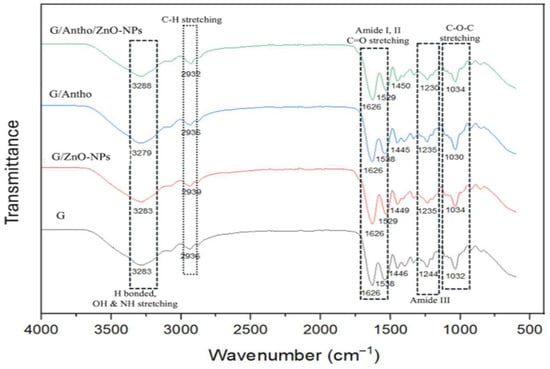
The compatibility and chemical interactions of the films were investigated using ATR-FTIR spectroscopy. All films displayed nearly identical FTIR spectra, as shown in Figure 1, indicating dispersion, compatibility, and efficient interaction between the film’s constituent parts. Nonetheless, minor alterations are noted in certain circumstances, potentially attributable to the molecular interactions of the components. The composite films had prominent peaks between 4000 and 500 cm−1.
Figure 1.
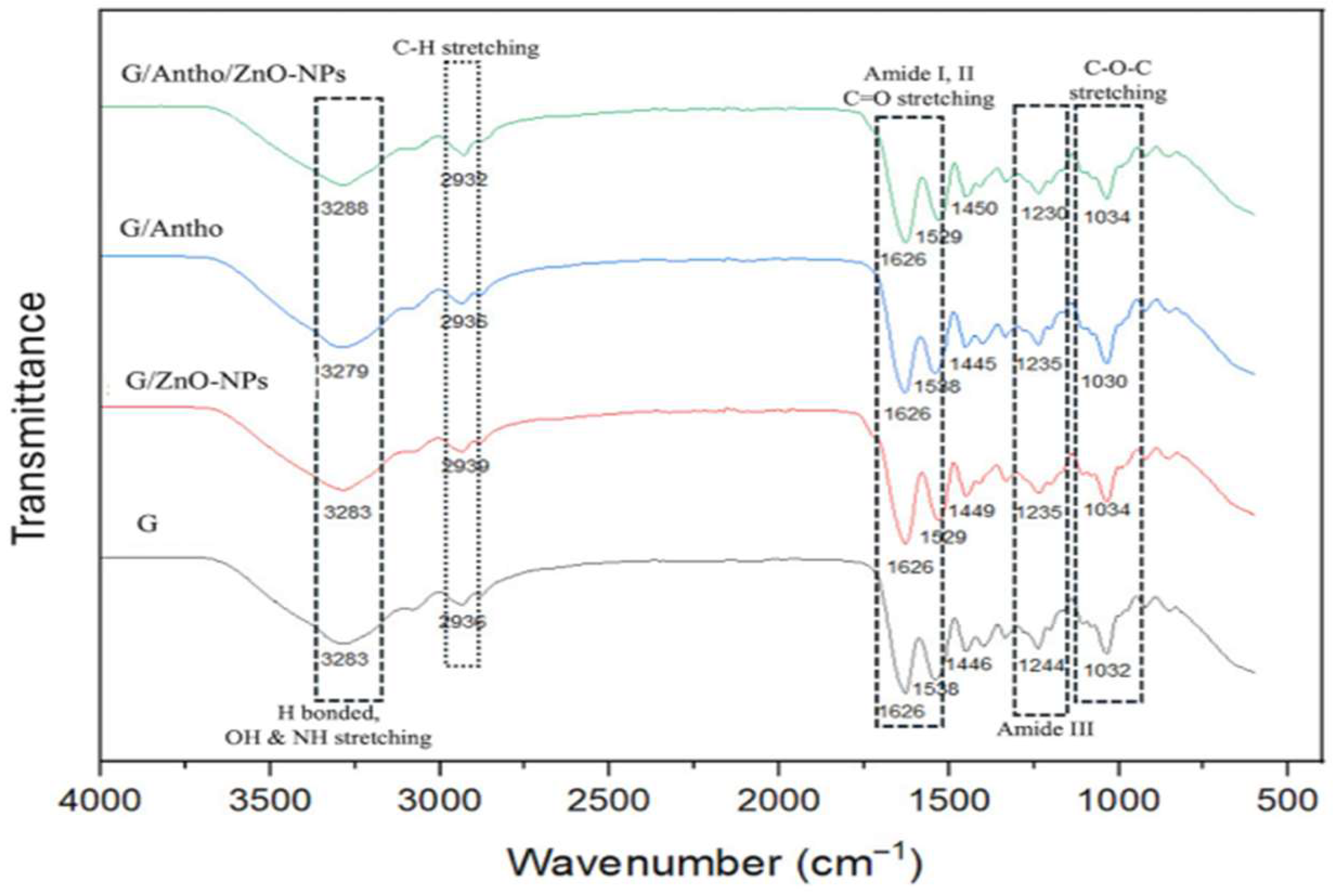
ATR-FTIR spectra of sample film gelatin (G), sample film containing ZnO-NPs (G/ZnO-NPs), sample film containing anthocyanin (G/Antho), and sample film containing ZnO-NPs and anthocyanin (G/Antho/ZnO-NPs).
The FTIR spectra revealed characteristic peaks of gelatin at 1626, 1538, and 1244 cm−1, pertaining to amide I (characterized by C=O stretching), amide II (involving N–H bending), and amide III (encompassing C–N and N–H stretching), respectively [24]. Additionally, the bands known as amide A and amide B bands were observed in the regions of 3278–3288 cm−1 and 2932–2939 cm−1. The broad absorption band centered around 3278 cm−1 is attributed to hydroxyl (O–H) groups, which can form hydrogen bonds with both O–H and N–H groups in the protein matrix (O–H stretching). A peak at 1035 cm−1, consistently detected across all film samples, is associated with the incorporation of glycerol as a plasticizer, indicating interactions between hydroxyl groups and glycerol molecules (interaction of –OH and glycerol) in the film [18].
In Figure 1, it can be seen that there is a slight peak shift due to the incorporation of ZnO-NPs. The peak at 1538 cm−1 shifts to 1529 cm−1, the peak at 1032 cm−1 shifts to 1034 cm−1, and the peak at 2936 cm−1 shifts to 2939 cm−1 as a result of hydrogen bond formation between ZnO-NPs and the matrix of polymer [29]. Additionally, the incorporation of anthocyanin extract causes the peak at 1032 cm−1 shifts to 1030 cm−1, attributable to the intramolecular interactions among functional groups, the polymer, as well as anthocyanin. The FTIR data indicate no substantial alterations in peak locations and no emergence of new peaks following the incorporation of ZnO-NPs and anthocyanin extract. This indicates that the polymer matrix and the filler are not chemically interacting.
3.3. Opacity
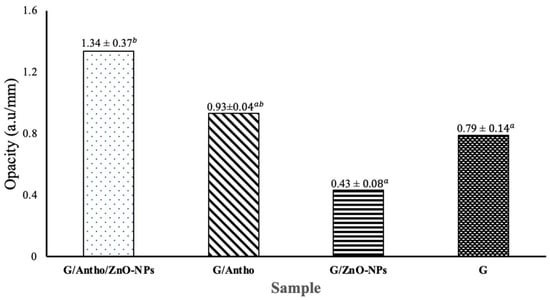
Figure 2 shows that the opacity of the film samples incorporating anthocyanin and ZnO-NPs differs markedly from that of the gelatin film sample (0.79 ± 0.14 c) as well as the gelatin/ZnO-NPs film (1.34 ± 0.37 b), although it does not differ significantly from the gelatin/anthocyanin film (0.93 ± 0.40 ab). The addition of anthocyanins increased film opacity, suggesting an enhanced capacity to block UV and visible light transmission. This improvement is likely attributable to the integration of anthocyanins into the film matrix, which promotes the formation of a dense intermolecular interactions, particularly hydrogen bonds, between the polymer and anthocyanin molecules reduce the exposure of hydrophilic groups, resulting in a more compact internal microstructure that contributes to improved barrier performance against water vapor and oxygen [10].
Figure 2.
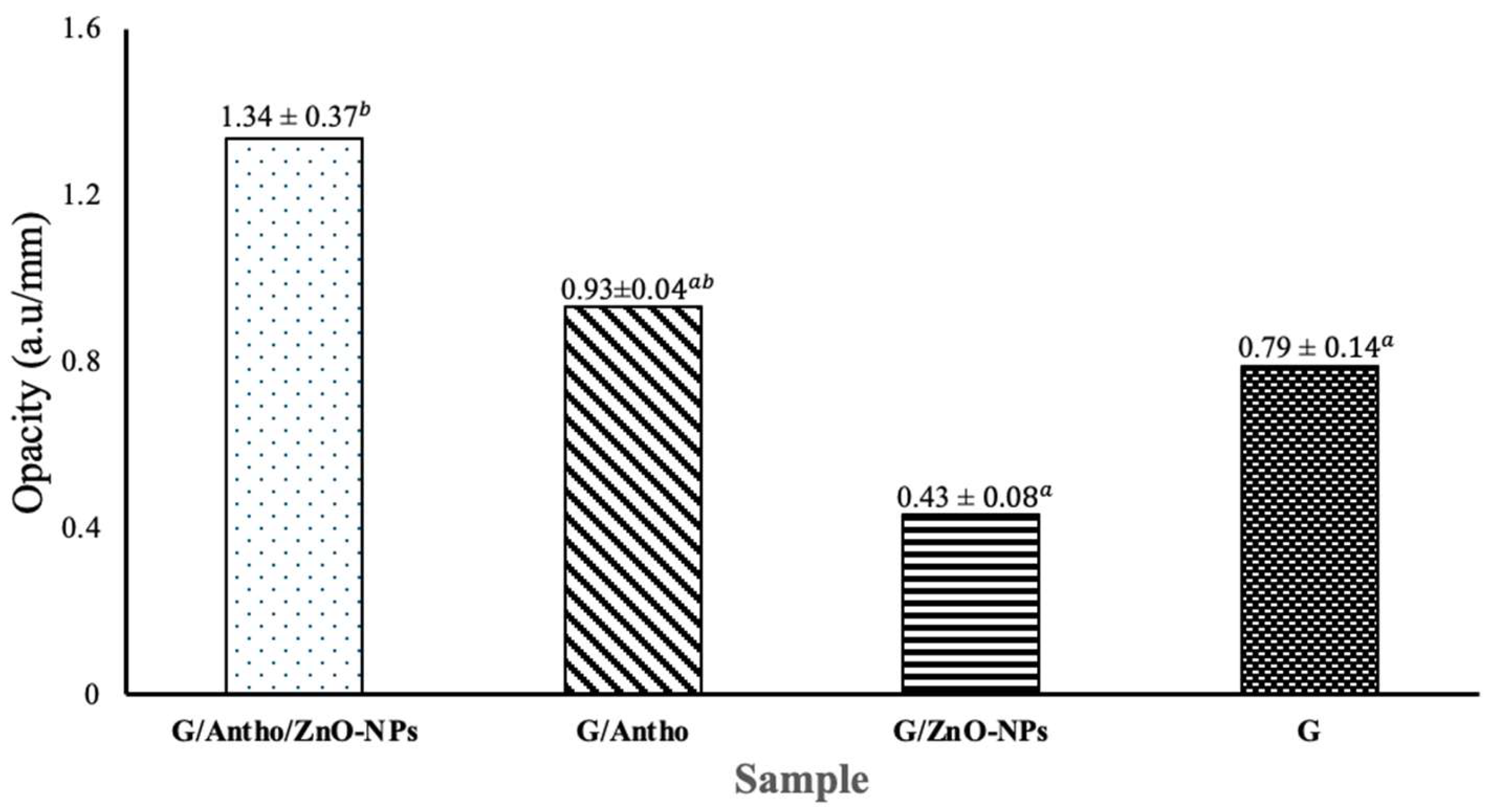
Opacity of sample film gelatin (G), sample film containing ZnO-NPs (G/ZnO-NPs), sample film containing anthocyanin (G/Antho), and sample film containing ZnO-NPs and anthocyanin (G/Antho/ZnO-NPs). Values are presented as the mean ± standard deviation (n = 3). Different superscript letters (a,b) indicate significant differences between samples (p < 0.05).
3.4. Hydrophobicity and Thermal Properties
Table 2 shows that the gelatin film has the lowest contact angle compared to the others, while the largest contact angle is produced by the film incorporated with ZnO-NPs and anthocyanin extract. The addition of nanomaterials can increase the contact angle owing to the establishment of the hydrogen bonds between gelatin and ZnO-NPs, as well as anthocyanins, leading to a decrease in free hydrophilic groups within the gelatin matrix; additionally, it enhances crystalline structure and polymer chain density in the film through the integration of anthocyanins and ZnO-NPs [30]. Biopolymer-based films are categorized as hydrophobic when their water contact angle (WCA) is greater than 65° [30]. These criteria indicate that the incorporation of ZnO-NPs and HAE enhanced the hydrophobicity of the films.
Table 2.
Water contact angle and thermal properties of films.
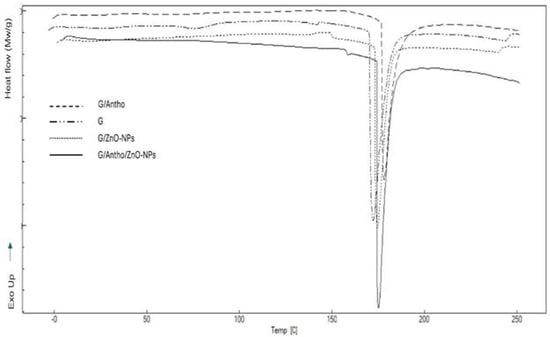
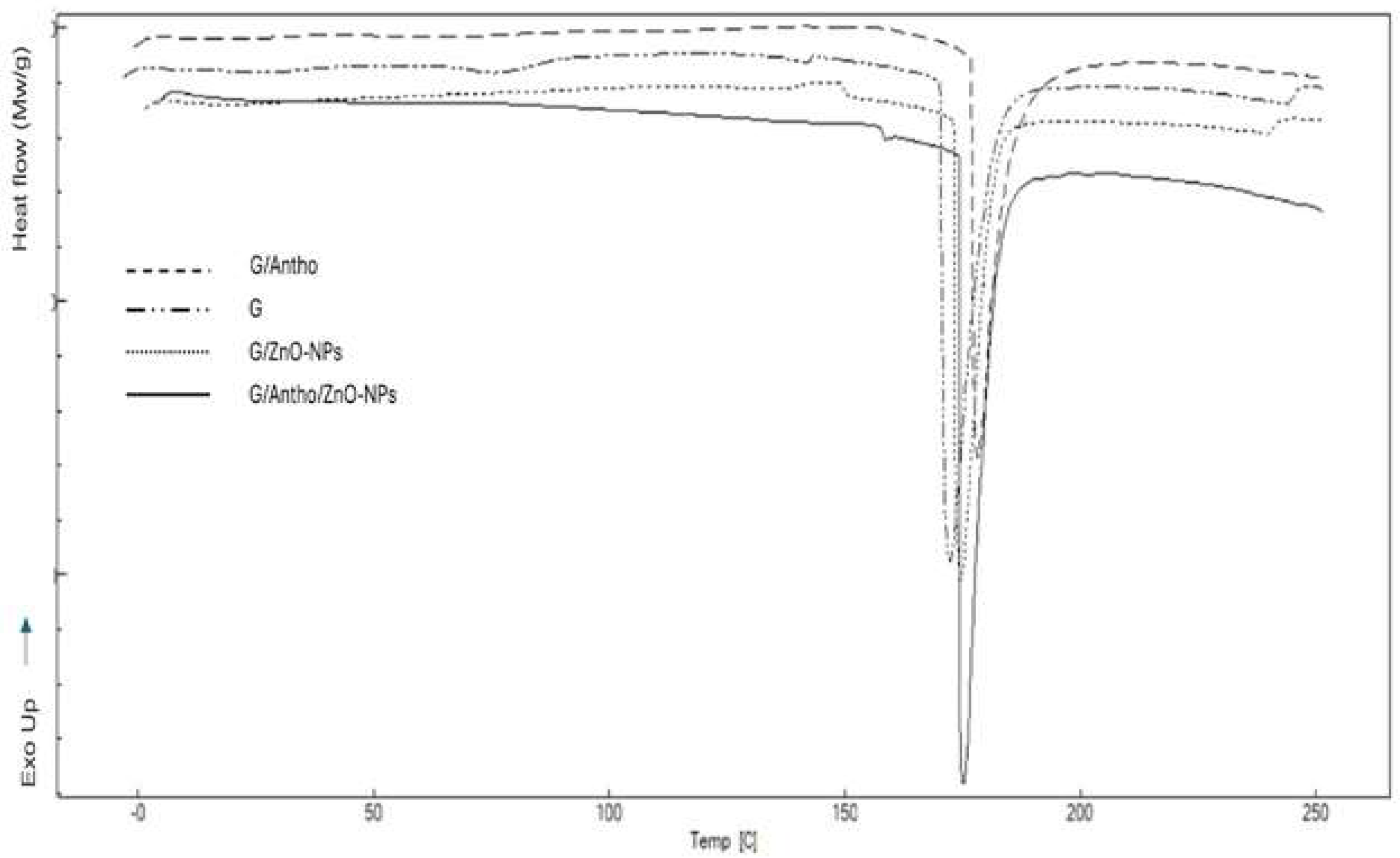
Figure 3 shows that the melting temperature of gelatin films incorporated with HAE increased compared to other film samples (172.23 °C to 178.21 °C). Integrating HAE and ZnO-NPs can enhance the film’s thermal stability, which is important for many applications. The presence of hydrogen bonds and electrostatic interactions among gelatin, ZnO-NPs, and anthocyanin extract is responsible for this [7,31].
Figure 3.
Melting temperature of sample film gelatin (G), sample film containing ZnO-NPs (G/ZnO-NPs), sample film containing anthocyanin (G/Antho), and sample film containing ZnO-NPs and anthocyanin (G/Antho/ZnO-NPs).
3.5. Antibacterial Activity
Table 3 shows that the G and the G/Antho films do not exhibit antibacterial activity, whereas the G/Antho/ZnO-NPs film shows inhibition zones against the three observed bacteria. Chloramphenicol, used as a positive control, generates the largest inhibition zones for all bacteria, confirming its strong, broad-spectrum efficacy and serving as a benchmark to validate the test conditions. Among the ZnO-containing samples, the G/Antho/ZnO-NPs films show larger inhibition zones, indicating that incorporating ZnO-NPs into the gelatin matrix enhances the antibacterial activity compared with ZnO-NPs by themselves. Comparing the three bacteria, S. typhirium show higher inhibition values than L. monocytogenes and A. hydrophila. Liu et al. (2021) explain that Zn2+ released from the film matrix can effectively inhibit bacterial growth, and the surface of ZnO nanoparticles can generate hydrogen peroxide, which can damage bacterial membranes and inhibit growth [4].
Table 3.
Antibacterial activity of sample films.
The values were the average from 3 replications. Abbreviations: the control gelatin film (G); gelatin + zinc oxide nanoparticles film (G/ZnO-NPs); gelatin + anthocyanin extract film (G/Antho); gelatin + anthocyanin extract + zinc oxide nanoparticles film (G/Antho/ZnO-NPs).
3.6. Monitoring Fish Fillet Freshness
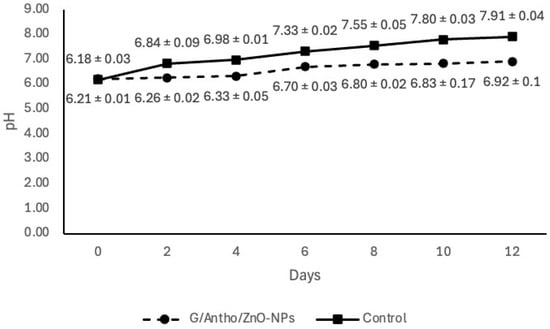
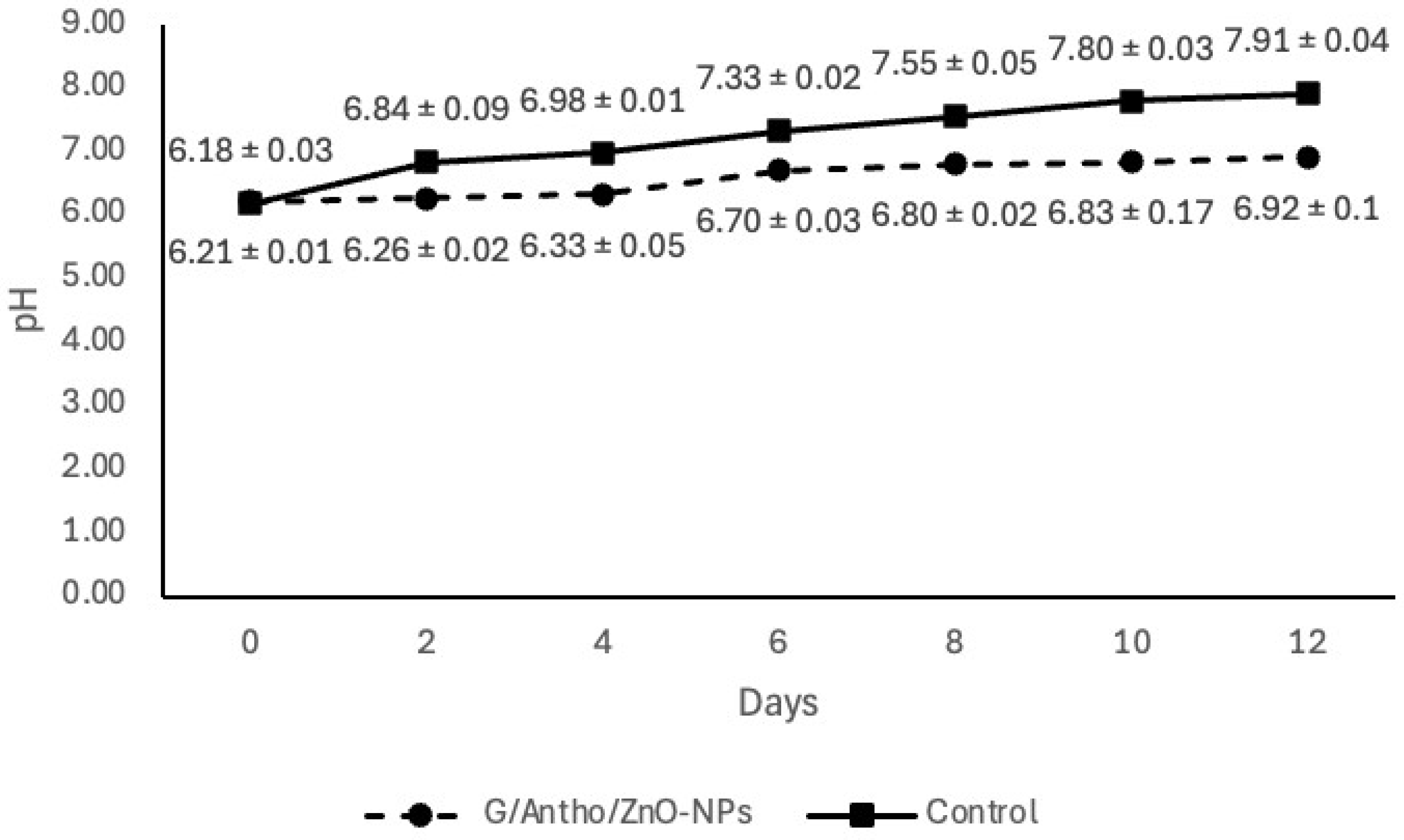
The pH value (Figure 4) increased steadily in the control group (G), rising from 6.18 at day 0 to 7.91 by day 12, indicating significant protein breakdown and microbial activity. In contrast, the pH of the fish wrapped in G/HAE/ZnO-NPs remained relatively stable, slightly increasing from 6.21 to 6.92 over the same period. pH levels above 6.8 are generally associated with the onset of rotting, as supported by FAO Technical Paper No. 348 and EU guidelines, suggesting that the control group underwent spoilage conditions before the active packing treatment.
Figure 4.
Changes in pH in fish samples (both unwrapped and wrapped in smart active gelatin film containing anthocyanin extract and zinc oxide nanoparticles (G/HAE/ZnO-NPs) during refrigerated storage at 4 °C. Values represent the mean ± SD (n = 3).
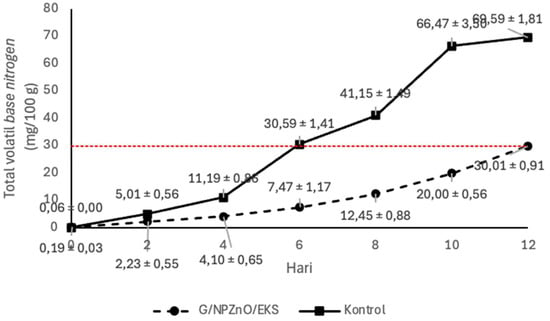
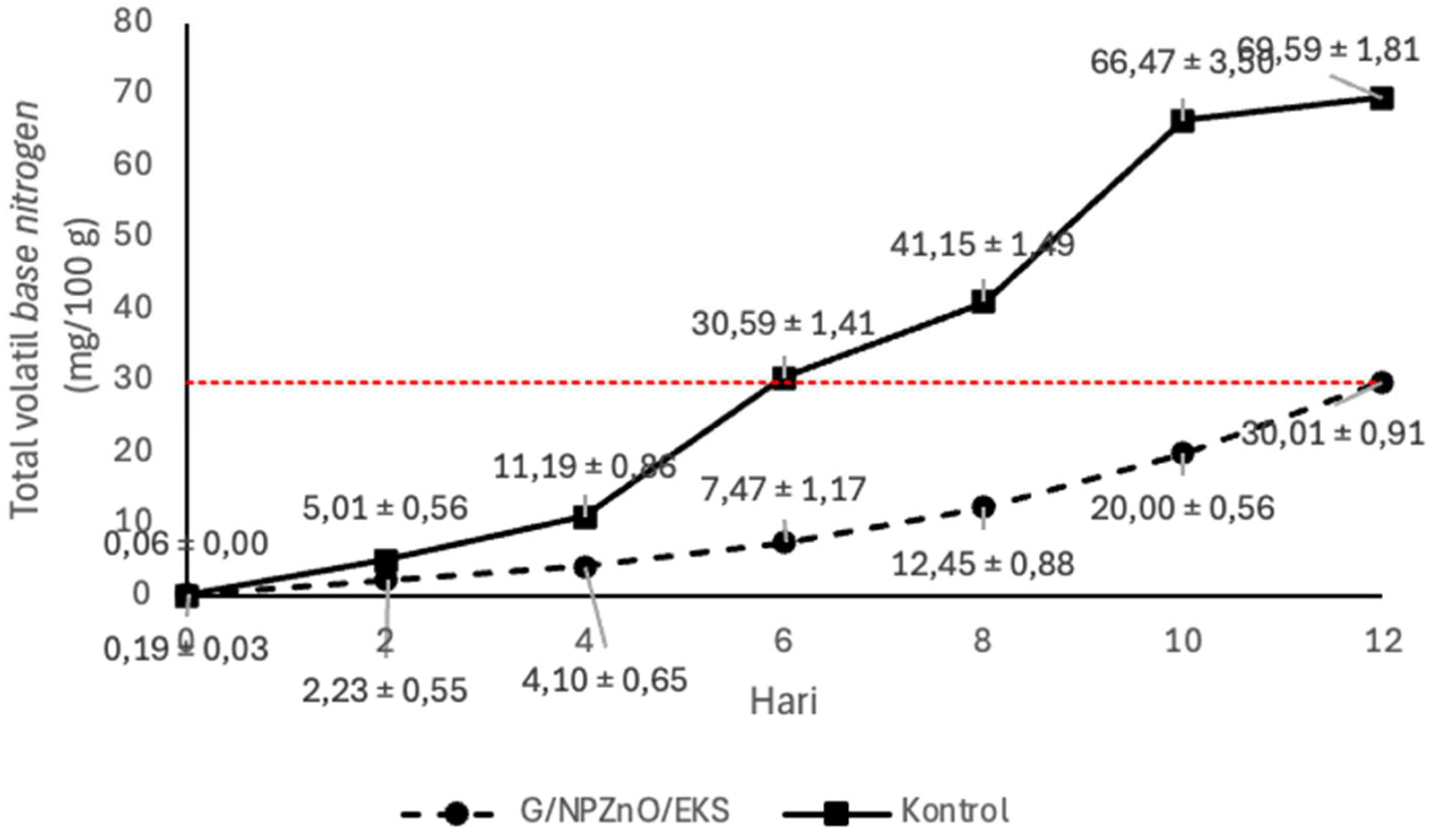
Concomitantly, TVB-N levels (Figure 5) escalated significantly in the control group, exceeding the regulatory limit of 30 mg N/100 g (according to SNI 2729:2013 and EU Regulation No. 2074/2005) by day 6 (30.59 mg N/100 g), and attaining 69.59 mg N/100 g by day 12. Conversely, the G/HAE/ZnO-NPs-treated samples exhibited markedly reduced values, remaining below the spoilage threshold until day 10 (20.00 mg N/100 g), thereby illustrating the film’s efficacy in inhibiting nitrogenous compound accumulation and preserving fish freshness.
Figure 5.
Changes in total volatile basic nitrogen (TVB-N, mg N/100 g) in fish samples (both unwrapped and wrapped in smart active gelatin film containing anthocyanin extract and zinc oxide nanoparticles (G/HAE/ZnO-NPs) during refrigerated storage at 4 °C. Values represent the mean ± SD (n = 3).
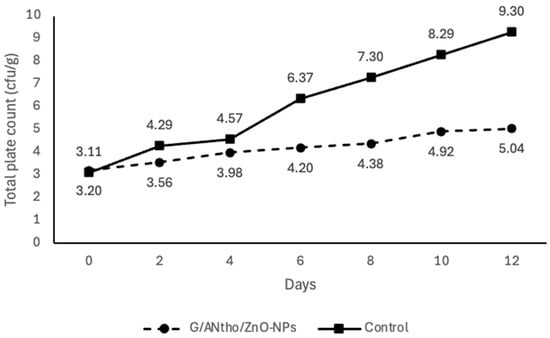
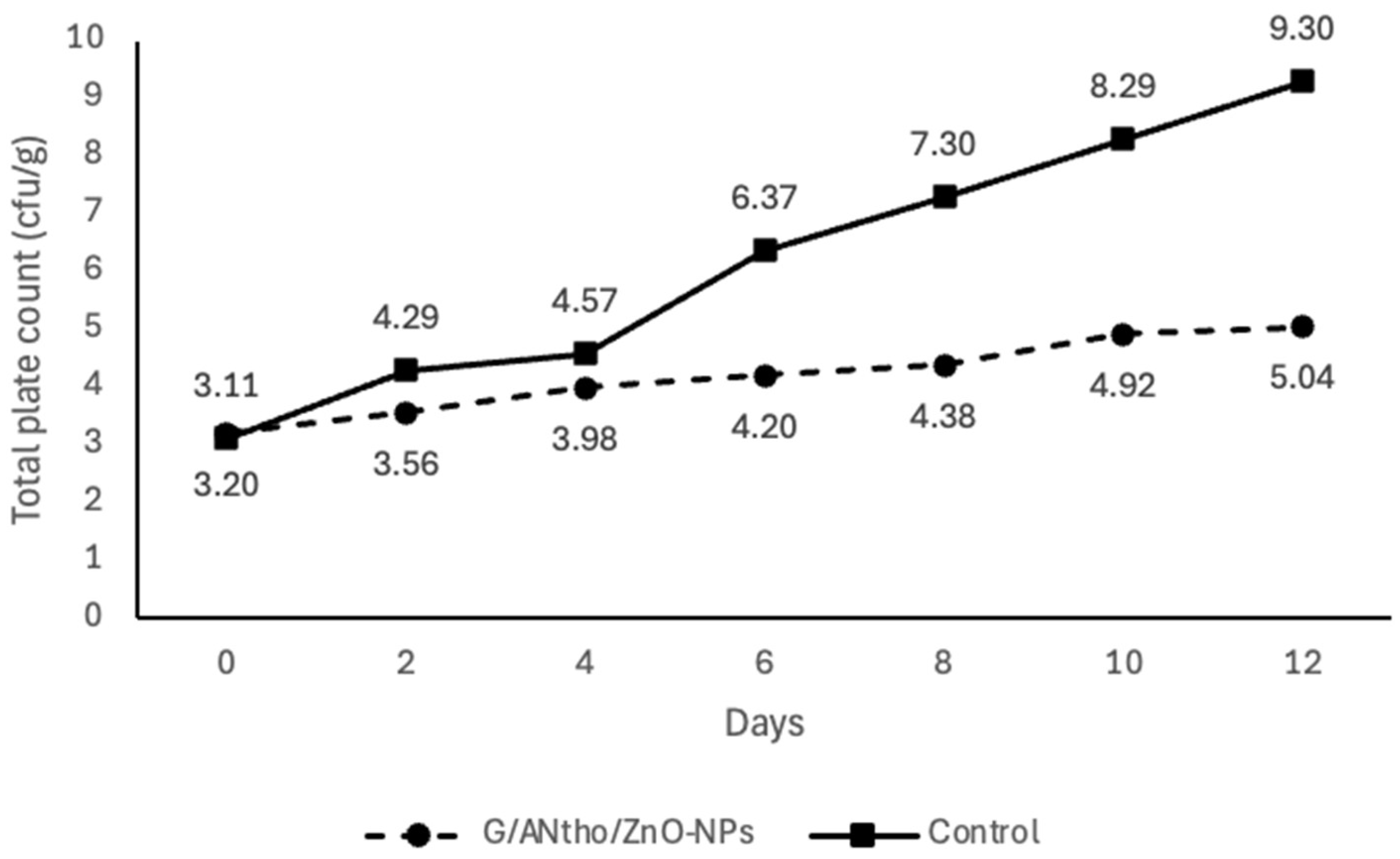
The Total Plate Count (TPC) data (Figure 6) indicated that microbial counts in the control group escalated from 3.11 to 9.30 log CFU/g within 12 days, significantly above the maximum allowable threshold of 5 log CFU/g for fresh fish, as stipulated by numerous international microbiological quality standards. Conversely, samples encased with G/Antho/ZnO-NPs demonstrated markedly inhibited microbial proliferation, sustaining TPC levels 5.04 log CFU/g during storage. This provides further evidence of the antibacterial properties of the anthocyanin and ZnO-NPs film.
Figure 6.
Changes in total plate count (TPC, log CFU/g) in fish samples (both unwrapped and wrapped in smart active gelatin film containing anthocyanin extract and zinc oxide nanoparticles (G/HAE/ZnO-NPs) during refrigerated storage at 4 °C. Values represent the mean ± SD (n = 3).
Fish wrapped in film until the 10th day exhibited no alterations in texture, scent, or film coloration; meanwhile, on the 6th day of storage, the control fish exhibited a pronounced foul odor, a smoother texture, and visible white mycelium on the surface, signifying degradation. The pH and TVB-N levels are intricately linked to microbial proliferation and serve as critical markers for evaluating the freshness of aquatic products [32]. While in storage, the metabolic processes of bacteria that cause fish spoilage generate numerous volatile gases that gradually accumulate in the headspace of the storage container [26].
3.7. Comparison with Previous Studies
To better highlight the novelty and performance of the developed film, a comparison with previously reported gelatin and chitosan-based anthocyanin/ZnO system is presented in Table 4.
Table 4.
Comparison of anthocyanin-based intelligent films incorporated with ZnO nanoparticles in different biopolymer matrices.
As shown in Table 4, the present study demonstrates higher hydrophobicity compared to most previously reported systems. In addition, the antimicrobial activity (13,017 mm inhibition zones) is comparable to or stronger than that of similar films, while the shelf-life extension is consistent with or exceeds prior reports. These findings confirm the effectiveness of combining Hibiscus x archeri W Watson anthocyanins with ZnO nanoparticles for multifunctional packaging applications.
4. Conclusions
The development of an active and intelligent gelatin-based packaging film, incorporating anthocyanin extract from Hibiscus x archeri W Watson ZnO-NPs, exhibited significant potential for monitoring and preserving fish fillet freshness. The inclusion of both active agents markedly improved the film’s physicochemical properties, conferred distinct pH responsiveness, provided strong UV-blocking capacity, and exhibited significant antibacterial efficacy against Listeria monocytogenes, Salmonella typhimurium, and Aeromonas hydrophila. The G/HAE/ZnO-NPs films extended the freshness of fish fillet up to 10 days at 4 °C by maintaining acceptable pH, TVB-N and TVC values, whereas control samples exhibited spoilage on the 6th day. This indicates that the active film effectively inhibits microbial growth and chemical breakdown, resulting in significantly longer freshness compared to the control samples. These results highlight the film’s potential as a sustainable smart packaging system for seafood preservation and real-time freshness monitoring. Future studies should incorporate HPLC-based anthocyanin profiling and purity assessment of Hibiscus x archeri W Watson extract to further characterize the pigment composition and strengthen the scientific basis of its application in intelligent packaging systems.
Author Contributions
Conceptualization, N.J., K.B., A.T. and N.E.S.; methodology, N.J.; validation, N.D.Y., S., L.F., A.T. and N.E.S.; formal analysis, N.J.; investigation, K.B., L.F. and A.T.; data curation, N.J.; writing—original draft preparation, N.J.; writing—review and editing, N.D.Y., S. and A.T.; visualization, N.J.; supervision, N.E.S. and A.T. All authors have read and agreed to the published version of the manuscript.
Funding
This research was funded by Indonesian Education Scholarship, Center for Higher Education Funding and Assessment and Indonesian Endowment Fund for Education, BPI ID: 202101122127.
Institutional Review Board Statement
Not applicable.
Data Availability Statement
The original contributions presented in this study are included in the article. Further inquiries can be directed to the corresponding authors.
Acknowledgments
The authors would like to thank the Division of Food Science and Technology, IPB University, for providing access to tha analytical facilities used in this study.
Conflicts of Interest
The authors declare no conflicts of interest. The funders had no role in the design of the study; in the collection, analyses, or interpretation of data; in the writing of the manuscript; or in the decision to publish the results.
Abbreviations
The following abbreviations are used in this manuscript:
| HAE | Hibiscus x archeri W Watson’ extract |
| ZnO-NPs | ZnO nanoparticles |
| CFU | Colony forming unit |
| TVB-N | Total volatile base nitrogen |
| FT-IR ATR | Fourier Transform Infrared—Attenuated Total Reflection |
References
- de Oliveira Filho, J.G.; Bertolo, M.R.V.; Rodrigues, M.Á.V.; Silva, G.d.C.; de Mendonça, G.M.N.; Bogusz Junior, S.; Ferreira, M.D.; Egea, M.B. Recent Advances in the Development of Smart, Active, and Bioactive Biodegradable Biopolymer-Based Films Containing Betalains. Food Chem. 2022, 390, 133149. [Google Scholar] [CrossRef] [Scilit]
- Ncube, L.K.; Ude, A.U.; Ogunmuyiwa, E.N.; Zulkifli, R.; Beas, I.N. Environmental Impact of Food Packaging Materials: A Review of Contemporary Development from Conventional Plastics to Polylactic Acid Based Materials. Materials 2020, 13, 4994. [Google Scholar] [CrossRef] [Scilit] [PubMed]
- Hasan, M.; Utami, A.; Siregar, C.; Hanum, L.; Khaldun, I.; Nazar, M. Thermal, Structural and Mechanical Characterization of Bio-Nanocomposite Films from Purple Sweet Potato Starch/Chitosan Nanoparticles Integrated with Anthocyanin Extract. Results Eng. 2025, 25, 104448. [Google Scholar] [CrossRef] [Scilit]
- Liu, J.; Huang, J.; Ying, Y.; Hu, L.; Hu, Y. pH-Sensitive and Antibacterial Films Developed by Incorporating Anthocyanins Extracted from Purple Potato or Roselle into Chitosan/Polyvinyl Alcohol/Nano-ZnO Matrix: Comparative Study. Int. J. Biol. Macromol. 2021, 178, 104–112. [Google Scholar] [CrossRef] [Scilit]
- Schouten, M.A.; Ben Rejeb, I.; Khamassi, F.; Tinyiro, S.E.; Aruho, C.; Kabenge, I.; Muyonga, J.; Maitha, I.; Okoth, M.W.; Mwanri, A.; et al. Sustainable Food Packaging System: Status of Regulatory Initiatives and Issues on Plastic Use in Tunisia, Kenya, Uganda and Tanzania African Countries. Trends Food Sci. Technol. 2025, 163, 105143. [Google Scholar] [CrossRef] [Scilit]
- Cheng, J.; Gao, R.; Zhu, Y.; Lin, Q. Applications of Biodegradable Materials in Food Packaging: A Review. Alex. Eng. J. 2024, 91, 70–83. [Google Scholar] [CrossRef] [Scilit]
- Tshamisane, M.; Adeyemi, J.O.; Fawole, O.A. Fabrication of Active and Intelligent Bio-Based Edible Films Using Encapsulated Beetroot Powders for Smart Packaging. Mater. Adv. 2025, 6, 1051–1066. [Google Scholar] [CrossRef] [Scilit]
- Luo, Q.; Hossen, M.A.; Zeng, Y.; Dai, J.; Li, S.; Qin, W.; Liu, Y. Gelatin-Based Composite Films and Their Application in Food Packaging: A Review. J. Food Eng. 2022, 313, 110762. [Google Scholar] [CrossRef] [Scilit]
- Roy, S.; Priyadarshi, R.; Rhim, J.W. Gelatin/Agar-Based Multifunctional Film Integrated with Copper-Doped Zinc Oxide Nanoparticles and Clove Essential Oil Pickering Emulsion for Enhancing the Shelf Life of Pork Meat. Food Res. Int. 2022, 160, 111690. [Google Scholar] [CrossRef] [Scilit]
- Zhao, L.; Liu, Y.; Zhao, L.; Wang, Y. Anthocyanin-Based pH-Sensitive Smart Packaging Films for Monitoring Food Freshness. J. Agric. Food Res. 2022, 9, 100340. [Google Scholar] [CrossRef] [Scilit]
- Ghaani, M.; Cozzolino, C.A.; Castelli, G.; Farris, S. An Overview of the Intelligent Packaging Technologies in the Food Sector. Trends Food Sci. Technol. 2016, 51, 1–11. [Google Scholar] [CrossRef] [Scilit]
- Tahir, H.E.; Hashim, S.B.H.; Komla Mahunu, G.; Arslan, M.; Jiyong, S.; Adam Mariod, A.; Zhang, J.; El-Seedi, H.R.; Zhai, X.; Musa, T.H.; et al. Smart Films Fabricated from Natural Pigments for Measurement of Total Volatile Basic Nitrogen (TVB-N) Content of Meat for Freshness Evaluation: A Systematic Review. Food Chem. 2022, 396, 133674. [Google Scholar] [CrossRef] [Scilit]
- Kang, S.; Wang, H.; Xia, L.; Chen, M.; Li, L.; Cheng, J.; Li, X.; Jiang, S. Colorimetric Film Based on Polyvinyl Alcohol/Okra Mucilage Polysaccharide Incorporated with Rose Anthocyanins for Shrimp Freshness Monitoring. Carbohydr. Polym. 2020, 229, 115402. [Google Scholar] [CrossRef] [Scilit]
- Oladzadabbasabadi, N.; Mohammadi Nafchi, A.; Ghasemlou, M.; Ariffin, F.; Singh, Z.; Al-Hassan, A.A. Natural Anthocyanins: Sources, Extraction, Characterization, and Suitability for Smart Packaging. Food Packag. Shelf Life 2022, 33, 100872. [Google Scholar] [CrossRef] [Scilit]
- Li, Y.; Yang, X.; Zou, Y.; Zhang, H.; Zhou, Y.; Zhu, Q.; Liu, Y.; Wang, Z. Effects of Different White Nanomaterials on pH Response Ability and Physicochemical Performance of Anthocyanin-Loaded Carboxymethyl Cellulose-Polyvinyl Alcohol Films. Food Chem. X 2025, 25, 102137. [Google Scholar] [CrossRef] [Scilit]
- Roy, S.; Rhim, J.W. Anthocyanin Food Colorant and Its Application in pH-Responsive Color Change Indicator Films. Crit. Rev. Food Sci. Nutr. 2021, 61, 2297–2325. [Google Scholar] [CrossRef] [Scilit]
- Narayanan, G.P.; Radhakrishnan, P.; Baiju, P. Fabrication Of Butterfly Pea Flower Anthocyanin-Incorporated Colorimetric Indicator Film Based On Gelatin/Pectin For Monitoring Fish Freshness. Food Hydrocoll. Health 2023, 4, 100159. [Google Scholar] [CrossRef] [Scilit]
- Kim, H.-J.; Roy, S.; Rhim, J.-W. Gelatin/Agar-Based Color-Indicator Film Integrated with Clitoria Ternatea Flower Anthocyanin and Zinc Oxide Nanoparticles for Monitoring Freshness of Shrimp. Food Hydrocoll. 2022, 124, 107294. [Google Scholar] [CrossRef] [Scilit]
- Suyatma, N.E.; Gunawan, S.; Putri, R.Y.; Tara, A.; Abbès, F.; Hastati, D.Y.; Abbès, B. Active Biohybrid Nanocomposite Films Made from Chitosan, ZnO Nanoparticles, and Stearic Acid: Optimization Study to Develop Antibacterial Films for Food Packaging Application. Materials 2023, 16, 926. [Google Scholar] [CrossRef] [Scilit] [PubMed]
- Jusnita, N.; Yuliana, N.D.; Sugiyono; Suyatma, N.E. Exploring pH-Responsive Color Changes of Anthocyanin Extracts from Four Selected Plants as Potential Natural Food Deterioration Indicators. Indones. Food Sci. Technol. J. 2025, 9, 61–70. [Google Scholar] [CrossRef] [Scilit]
- Jusnita, N.; Yuliana, N.D.; Sugiyono; Suyatma, N.E. A Simplex Lattice Design for Optimization of Sustainable Active and Intelligent Packaging Based on Gelatin Films Incorporated with Hibiscus × Archeri Wats Anthocyanins and ZnO Nanoparticles. BIO Web Conf. 2026, 224, 01013. [Google Scholar] [CrossRef] [Scilit]
- Pereira, P.F.; de Sousa Picciani, P.H.; Calado, V.; Tonon, R.V. Anthocyanin-Sensitized Gelatin-ZnO Nanocomposite Based Film for Meat Quality Assessment. Food Chem. 2022, 372, 131228. [Google Scholar] [CrossRef] [Scilit] [PubMed]
- Alizadeh-Sani, M.; Tavassoli, M.; Mohammadian, E.; Ehsani, A.; Khaniki, G.J.; Priyadarshi, R.; Rhim, J.W. pH-Responsive Color Indicator Films Based on Methylcellulose/Chitosan Nanofiber and Barberry Anthocyanins for Real-Time Monitoring of Meat Freshness. Int. J. Biol. Macromol. 2021, 166, 741–750. [Google Scholar] [CrossRef] [Scilit]
- Tezer Karaboğa, A.; Gürkan Polat, T.; Duman, O.; Tunç, S. Development of pH-Sensitive Colorimetric Bioindicator Antimicrobial Films from Oak Tree Acorn Starch, Red Onion Peel Extract and Methyl Cellulose for Freshness Monitoring of Chicken Meat. Int. J. Biol. Macromol. 2025, 307, 141925. [Google Scholar] [CrossRef] [Scilit]
- Shankar, S.; Teng, X.; Li, G.; Rhim, J.W. Preparation, Characterization, and Antimicrobial Activity of Gelatin/ZnO Nanocomposite Films. Food Hydrocoll. 2015, 45, 264–271. [Google Scholar] [CrossRef] [Scilit]
- Roy, S.; Rhim, J.W. Preparation of Antimicrobial and Antioxidant Gelatin/Curcumin Composite Films for Active Food Packaging Application. Colloids Surf. B Biointerfaces 2020, 188, 110761. [Google Scholar] [CrossRef] [Scilit]
- Ezati, P.; Rhim, J.-W. pH-Responsive Chitosan-Based Film Incorporated with Alizarin for Intelligent Packaging Applications. Food Hydrocoll. 2020, 102, 105629. [Google Scholar] [CrossRef] [Scilit]
- Qin, Y.; Wang, Y.; Tang, Z.; Chen, K.; Wang, Z.; Cheng, G.; Chi, H.; Soteyome, T. A pH-Sensitive Film Based on Chitosan/Gelatin and Anthocyanin from Zingiber Striolatum Diels for Monitoring Fish Freshness. Food Chem. X 2024, 23, 101639. [Google Scholar] [CrossRef] [Scilit] [PubMed]
- Yuan, G.; Chen, X.; Li, D. Chitosan Films and Coatings Containing Essential Oils: The Antioxidant and Antimicrobial Activity, and Application in Food Systems. Food Res. Int. 2016, 89, 117–128. [Google Scholar] [CrossRef] [Scilit]
- Vogler, E.A. Structure and Reactivity of Water at Biomaterial Surfaces. Adv. Colloid Interface Sci. 1998, 74, 69–117. [Google Scholar] [CrossRef] [Scilit]
- Hao, R.; Pang, S.; Mraz, J.; Geng, Y.; Liu, Y.; Pan, J. Anthocyanin Modified by Chondroitin Sulphate and Tannic Acid Improved the Quality-Indicating Properties of Gelatin-Based Intelligent Film. Food Chem. X 2024, 24, 101779. [Google Scholar] [CrossRef] [Scilit] [PubMed]
- Huang, H.-L.; Tsai, I.-L.; Lin, C.; Hang, Y.-H.; Ho, Y.-C.; Tsai, M.-L.; Mi, F.-L. Intelligent Films of Marine Polysaccharides and Purple Cauliflower Extract for Food Packaging and Spoilage Monitoring. Carbohydr. Polym. 2023, 299, 120133. [Google Scholar] [CrossRef] [Scilit] [PubMed]
- Tymczewska, A.; Furtado, B.U.; Nowaczyk, J.; Hrynkiewicz, K.; Szydłowska-Czerniak, A. Functional Properties of Gelatin/Polyvinyl Alcohol Films Containing Black Cumin Cake Extract and Zinc Oxide Nanoparticles Produced via Casting Technique. Int. J. Mol. Sci. 2022, 23, 2734. [Google Scholar] [CrossRef] [Scilit]
- Khan, A.; Riahi, Z.; Kim, J.-T.; Rhim, J.-W. Carrageenan-based multifunctional packaging films containing Zn-carbon dots/anthocyanin derived from Kohlrabi peel for monitoring quality and extending the shelf life of shrimps. Food Chem. 2024, 432, 137215. [Google Scholar] [CrossRef] [Scilit] [PubMed]



Disclaimer/Publisher’s Note: The statements, opinions and data contained in all publications are solely those of the individual author(s) and contributor(s) and not of MDPI and/or the editor(s). MDPI and/or the editor(s) disclaim responsibility for any injury to people or property resulting from any ideas, methods, instructions or products referred to in the content. |
© 2026 by the authors. Licensee MDPI, Basel, Switzerland. This article is an open access article distributed under the terms and conditions of the Creative Commons Attribution (CC BY) license.