


Abstract
Small-scale fisheries are socio-ecological systems in which resource users interact with environmental conditions, fishing regulations, community initiatives, and institutional actors. Understanding how fishers perceive and report these interactions provides information on the social context of fisheries management, although such perceptions cannot substitute for independent assessments of ecological sustainability, behavioural compliance, or governance effectiveness. This study characterized fishers’ environmental perceptions, self-reported fishing practices, participation in environmental education and conservation activities, and perceptions of community and institutional involvement in fisheries management in Tecomate Lagoon, Guerrero, Mexico. A cross-sectional quantitative design was used, and structured questionnaires were administered to 120 active artisanal fishers selected through simple random sampling. Data were analyzed descriptively using frequencies and percentages. Respondents primarily associated the lagoon with economic (49.17%) and food-related (25.83%) functions. Declining water levels (60.00%) and reduced species abundance (40.00%) were the environmental changes reported by respondents. Regarding fishing practices, 94.17% stated that they complied with fishing regulations, and 100% reported releasing organisms below the minimum legal catch size. Environmental training was reported by 95.00% of respondents, while 94.17% reported participation in conservation-related activities. CONAPESCA (80.83%) and UAGro (19.17%) were identified as institutions involved in fisheries-related initiatives. These findings characterize the perceptions and self-reported experiences of surveyed fishers and should not be interpreted as evidence of ecological sustainability, actual behavioural compliance, educational effectiveness, or governance performance. The contribution of the study lies in systematically documenting the resource-user perspective as a component of the social dimension of the fishery. This information provides a descriptive baseline that can complement future ecological, behavioural, institutional, and longitudinal assessments of small-scale fisheries in coastal lagoon systems.
1. Introduction
Small-scale fisheries constitute one of the most important economic, cultural, and food-related activities for communities inhabiting coastal and lagoon environments in Mexico [1,2,3]. Beyond providing livelihoods, these fisheries play a fundamental role in shaping local identity, preserving cultural heritage, and strengthening social cohesion. Based on traditional fishing practices and knowledge accumulated through generations, artisanal fisheries operate within socio-ecological systems that support both local economies and food security for resource-dependent populations [4,5]. However, increasing fishing pressure, ecosystem degradation, pollution, and the impacts of climate change have contributed to declining fish populations, habitat loss, and weakened local governance structures, threatening the long-term viability of these systems [6,7].
Over recent decades, the concept of fisheries sustainability has evolved from a predominantly biological perspective toward a more comprehensive socio-ecological approach [8,9]. Within this framework, fisheries are understood as systems in which ecological processes interact with resource users, institutions, governance arrangements, and broader socioeconomic conditions [10,11]. Consequently, understanding fisheries management requires attention not only to ecological conditions but also to the social and institutional contexts in which resource-use decisions are made. Sajeva [12] emphasizes the importance of community-based management and social capital in socio-ecological systems, particularly through the integration of local knowledge and adaptive management. This perspective is consistent with the interactive governance approach discussed by Jentoft and Chuenpagdee [13], which conceptualizes fisheries governance as a process involving interactions among resource users, institutions, and other actors.
A growing body of literature has highlighted the importance of co-management and participatory governance in small-scale fisheries [14]. Pomeroy and Rivera-Guieb [15] emphasize that involving resource users in decision-making can strengthen the legitimacy of management arrangements and facilitate cooperation between communities and institutions. In the Mexican context, previous studies have also documented the relevance of interactions among fishers, governmental agencies, academic institutions, and local organizations in fisheries governance [16]. These perspectives underline that fishers are not merely users of biological resources but social actors whose knowledge, experiences, interpretations, and interactions with institutions form part of the governance context in which fisheries management occurs.
Environmental education represents another component of this social and institutional context. Educational and participatory initiatives may provide opportunities for knowledge exchange, environmental awareness, and discussion of resource-use practices [17]. Torralba-Burrial and Dopico [18] have examined environmental education as a means of promoting sustainability-related learning in artisanal fishing contexts, while Hsu [19] highlights the role of community-based environmental education in strengthening connections between local populations and coastal environments. Fujitani et al. [20] further demonstrate the importance of considering both social and ecological constraints when examining voluntary investments in renewable natural resources. Together, these studies indicate that environmental education, knowledge exchange, and participation are relevant dimensions for understanding how resource users engage with fisheries management, although their presence alone cannot be considered evidence of behavioural change or ecological sustainability.
Social relationships and collective organization are also relevant to the functioning of small-scale fisheries. Alexander et al. [21] identified trust, reciprocity, communication, and other characteristics of social relationships as important elements of community cohesion in fishing communities. Similarly, Gómez-Andújar et al. [22] documented the relevance of social cohesion and self-governance arrangements among small-scale fishers. These studies illustrate why the perspectives and experiences of fishers constitute a legitimate object of inquiry within fisheries governance research: resource users interpret regulations, environmental changes, institutional interventions, and collective initiatives through their own experiences, and these interpretations form part of the social context within which management measures are received and implemented.
Institutional interactions constitute an additional dimension of this context. Governmental agencies, universities, fishing organizations, and community actors may participate in technical assistance, training, regulation, knowledge exchange, and conservation initiatives. Chuenpagdee and Jentoft [23] emphasize the importance of transdisciplinary and multi-actor approaches to small-scale fisheries governance, while Doria et al. [24] highlight the challenges created by institutional fragmentation and coordination across governance levels. In the present study, institutional governance is therefore approached from the perspective of how fishers identify and perceive the actors and initiatives involved in local fisheries management, rather than as an independent assessment of institutional effectiveness.
This distinction between perceptions and independently verified outcomes is particularly important. Fishers’ perceptions and self-reported practices cannot, by themselves, establish the ecological status of a fishery, demonstrate actual compliance with fishing regulations, or determine the effectiveness of governance arrangements. Such questions require complementary evidence, including ecological indicators, fisheries-dependent or fisheries-independent data, direct behavioural observations, institutional assessments, and longitudinal monitoring. Nevertheless, perceptions remain empirically relevant because they document how resource users understand environmental conditions, regulations, conservation initiatives, educational activities, and institutional interactions. Accordingly, perception-based information should be treated as evidence about the perspectives and reported experiences of fishers themselves, rather than as a proxy for ecological sustainability or governance performance.
This distinction is especially relevant in coastal lagoon systems of southern Mexico, where fishing communities interact directly with ecosystems affected by environmental and socioeconomic pressures. Local conservation initiatives, including lagoon clean-up campaigns, mangrove protection activities, and environmental awareness programs, have been reported in coastal settings [25,26]. These initiatives also intersect with broader policy frameworks concerning small-scale fisheries and aquatic-resource conservation [27]. However, understanding their social context requires documenting how the resource users directly involved in fishing perceive and report their participation in these processes.
Despite the growing literature on small-scale fisheries governance, limited empirical attention has been given to systematically documenting how fishers themselves perceive and report environmental knowledge, fishing practices, participation in environmental education and conservation activities, and institutional involvement in coastal lagoon fisheries of southern Mexico. This represents a distinct knowledge gap. Ecological assessments can determine changes in environmental conditions and fishery resources, while institutional evaluations can examine governance performance; neither, however, substitutes for information about how resource users perceive and experience management-related processes. Conversely, fishers’ perceptions cannot substitute for those ecological or institutional assessments. The different forms of evidence are therefore complementary rather than interchangeable.
Within this context, the present study aimed to characterize fishers’ environmental knowledge and perceptions, self-reported fishing practices, participation in environmental education and conservation activities, and perceptions of community and institutional involvement in fisheries management in Tecomate Lagoon, Guerrero, Mexico. Using a socio-ecological systems perspective, the study documents how fishers report and interpret selected social and institutional aspects of the local fishery. Specifically, the study addresses four questions: (1) How do fishers characterize the importance of the lagoon and the environmental changes they have observed? (2) What fishing practices and regulatory behaviours do they report? (3) What participation do they report in environmental education and conservation activities? And (4) which community and institutional actors and actions do they identify as part of local fisheries management? The study does not use these responses as proxies for ecological sustainability, actual behavioural compliance, governance effectiveness, or long-term socio-ecological resilience. Rather, it examines them as a distinct source of information about the perspectives and reported experiences of resource users within the local fishery.
2. Materials and Methods
2.1. Study Area
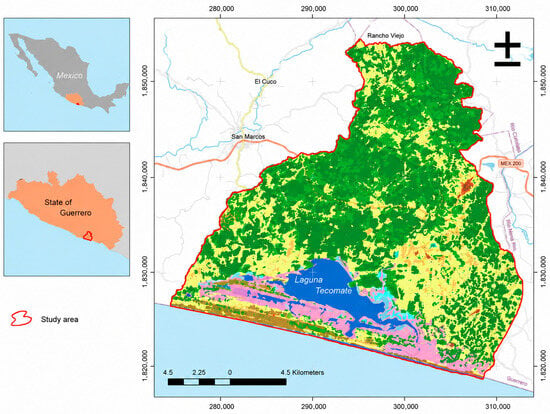
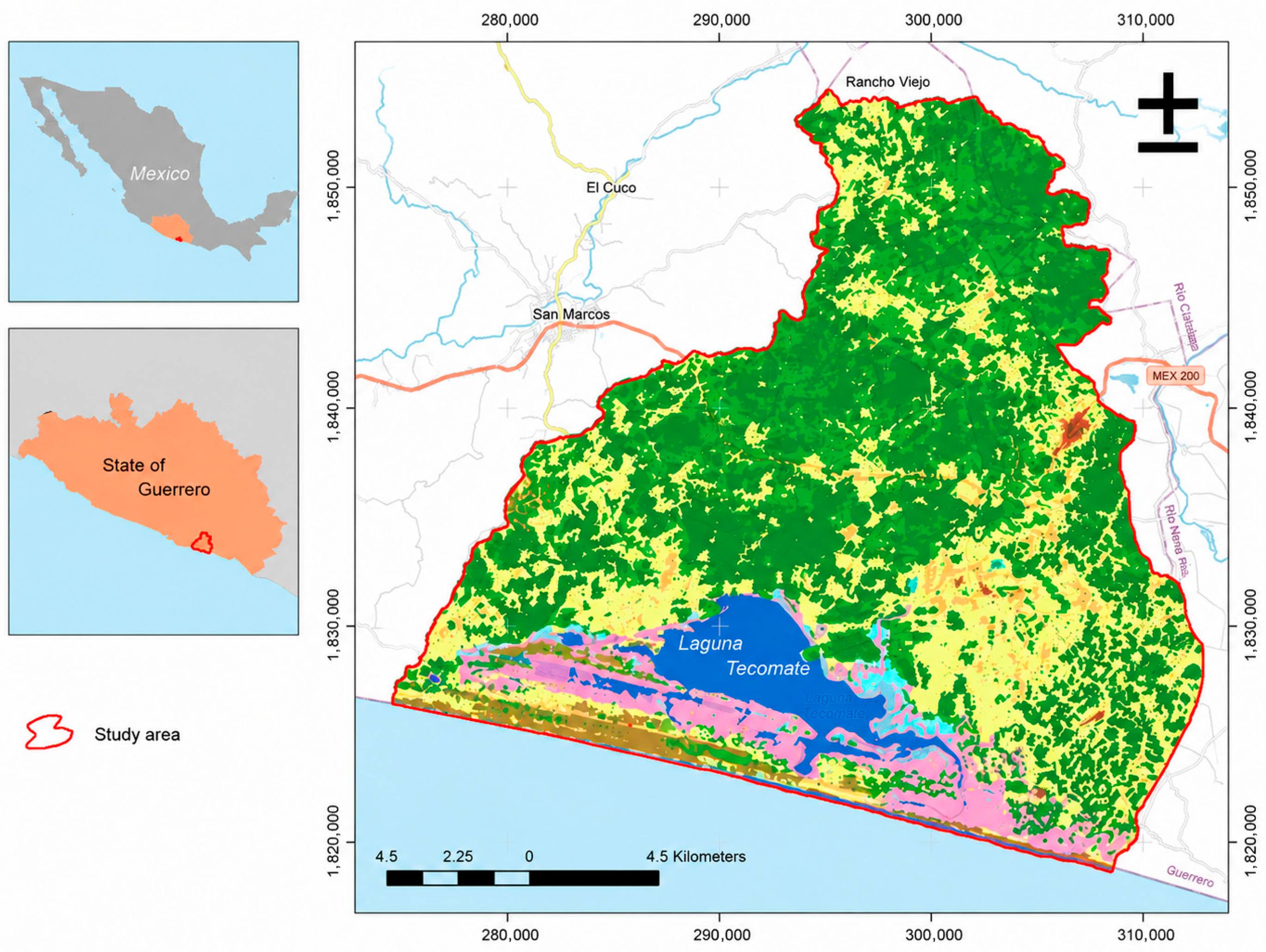
The study was conducted in Tecomate Lagoon, a coastal lagoon located in the municipality of San Marcos, within the Costa Chica region of Guerrero, Mexico (16°47′–16°53′ N and 99°24′–99°30′ W) (Figure 1). The lagoon is seasonally connected to the Pacific Ocean and constitutes an important socio-ecological system that supports artisanal fisheries and the livelihoods of the Tecomate Pesquería community. Fishing represents the principal economic activity, with catches primarily composed of tilapia (Mojarra spp.), cuatete (Ariopsis guatemalensis), shrimp, and blue crab. In recent years, the lagoon has experienced increasing sedimentation, loss of aquatic vegetation, declining water levels, and other environmental changes associated with climate variability, land-use change, and anthropogenic pressures, increasing the vulnerability of both the ecosystem and the local fishing community.
Figure 1.
Geographical location of the study area.
2.2. Research Design
This study employed a cross-sectional quantitative research design with a descriptive scope to characterize fishers’ environmental knowledge and perceptions, self-reported fishing practices, participation in environmental education and conservation activities, and perceptions of community and institutional involvement in fisheries management. The study was framed within a socio-ecological systems perspective, recognizing fishers as resource users whose knowledge, experiences, and perceptions constitute part of the social dimension of the local fishery.
The research design was intended to document and describe the perspectives and self-reported experiences of fishers at the time of data collection. It was not designed to establish causal relationships or to use respondents’ perceptions and reported practices as indicators of ecological sustainability, actual behavioural compliance, governance effectiveness, or long-term socio-ecological resilience. These outcomes would require complementary ecological, behavioural, institutional, and longitudinal evidence beyond the scope of the present survey.
2.3. Population and Sample
The target population consisted of approximately 1500 active artisanal fishers from the Tecomate Pesquería community, located around Tecomate Lagoon in the municipality of San Marcos, Guerrero, Mexico. An existing community census of active fishers served as the sampling frame for participant selection. Although several fishing cooperatives operate within the community, including Las Ramaditas, these correspond to fishing organizations rather than separate communities.
The sampling unit was the individual active fisher. A total of 120 active fishers participated in the study. Participants were selected through simple random sampling from the community census. Each fisher included in the sampling frame was assigned a unique identification number, and participants were selected using a random number generator in Microsoft Excel.
2.4. Data Collection Instrument and Variables
Data were collected using a structured questionnaire developed based on the socio-ecological systems framework and previous studies on small-scale fisheries, environmental education, and participatory governance. The instrument was designed to characterize fishers’ environmental knowledge and perceptions, self-reported fishing practices, participation in environmental education and conservation activities, and perceptions of community and institutional involvement in fisheries management.
Before field implementation, the questionnaire was evaluated by specialists in environmental sciences and sustainable development to assess its content validity, clarity, and relevance. Subsequently, a pilot test involving 20 artisanal fishers from the study area was conducted to evaluate the clarity of the questions, the adequacy of the response options, and the overall comprehensibility of the instrument. Based on the pilot test, minor adjustments were made to improve question wording before the final survey was administered.
The questionnaire consisted primarily of closed-ended questions organized into four analytical dimensions:
Environmental knowledge and perceptions, which documented the importance respondents attributed to the lagoon, the species they perceived as vulnerable, and the environmental changes they reported observing.
Self-reported fishing practices, which documented fishing methods, fishing frequency, and respondents’ declared compliance with fisheries regulations and minimum catch-size requirements.
Environmental education and conservation participation, which documented respondents’ reported participation in training and conservation-related activities and the topics they reported learning through these initiatives.
Community and institutional involvement in fisheries management, which documented conservation actions, educational mechanisms, and the governmental, academic, and community actors identified by respondents as participating in local fisheries management.
Most variables were categorical and were based on respondents’ perceptions, experiences, and self-reported practices. Accordingly, the questionnaire generated information about what fishers reported knowing, perceiving, experiencing, and doing. It was not designed to independently verify regulatory compliance, measure ecological conditions, evaluate the effectiveness of environmental education programs, or assess the performance of governance arrangements.
2.5. Field Procedures
Fieldwork was conducted between January and May 2023 in the Tecomate Pesquería community, Guerrero, Mexico. Prior to data collection, meetings were held with community representatives to explain the objectives of the study, request their collaboration, and facilitate contact with the selected participants.
Face-to-face interviews were conducted by a research team at fish landing sites and other locations within the community that were convenient for the participants. Each interview lasted approximately 15–20 min. Before each interview, participants were informed about the objectives of the study, the voluntary nature of their participation, and the confidential treatment of the information collected. Only fishers who voluntarily agreed to participate and provided informed consent were included in the study.
Throughout the fieldwork, complementary observations of fishing activities, environmental conditions, and community conservation practices were recorded to document the general context of the study area. These observations were used exclusively to support the interpretation of survey findings and were not incorporated into the statistical analyses or used to verify respondents’ self-reported information.
The study adhered to the ethical principles established by the Autonomous University of Guerrero, ensuring participants’ anonymity, confidentiality, voluntary participation, and informed consent throughout the research process.
2.6. Data Analysis
Survey data were coded, organized, and analyzed using IBM SPSS Statistics version 26 (IBM Corp., Armonk, NY, USA). Descriptive statistical analyses were performed to summarize respondents’ answers within the four analytical dimensions defined in the questionnaire. Absolute frequencies and percentages were calculated for categorical variables and are presented in tables to characterize the distribution of responses among the surveyed fishers.
Percentages were calculated using the number of valid responses for each question as the denominator. For questions answered by a specific subset of respondents, percentages were calculated using the corresponding subgroup as the denominator. Prior to analysis, the database was reviewed to verify the consistency of data coding and response frequencies.
Consistent with the descriptive objective and cross-sectional design of the study, no inferential statistical analyses were performed. Therefore, the analysis was not intended to test causal relationships or statistical associations among environmental education, community participation, institutional involvement, and fishing practices. The results are interpreted exclusively as descriptive evidence of respondents’ perceptions, knowledge, experiences, and self-reported practices at the time of the survey. They are not interpreted as independent evidence of ecological conditions, actual regulatory compliance, governance effectiveness, behavioural change, or long-term socio-ecological resilience.
3. Results
3.1. Environmental Knowledge and Perceptions of the Lagoon System
Table 1 summarizes fishers’ responses regarding the perceived importance of the lagoon, species considered vulnerable, and environmental changes observed in recent years. Regarding the perceived importance of the lagoon, 49.17% of respondents identified its primary value as an economic resource, while 25.83% associated it with food provision. Smaller proportions identified commercial activities (15.83%) and tourism (9.17%). Thus, economic and food-related functions were the most frequently reported dimensions of the lagoon’s importance among surveyed fishers.
Table 1.
Environmental knowledge and perceptions of fishing activities in Tecomate lagoon fishery.
Regarding species perceived as vulnerable, respondents most frequently identified Camarón Chacal (35.00%), Cuatete (24.17%), and white tilapia (23.33%), followed by Croaker (17.50%). These responses describe which species respondents themselves considered vulnerable and should not be interpreted as an independent assessment of species conservation status.
Concerning environmental changes observed in recent years, 60.00% of respondents reported declining water levels, whereas 40.00% reported a reduction in species abundance. Furthermore, 71.67% identified climate change as the principal factor affecting the lagoon ecosystem, while 28.33% identified dredging activities. These results document fishers’ reported observations and interpretations of environmental change. Because no independent ecological measurements were used to verify these responses, they represent perceived environmental conditions rather than measured ecological trends.
3.2. Fishing Practices and Compliance with Environmental Regulations
Table 2 summarizes the fishing practices and regulatory behaviours reported by surveyed fishers. The most commonly reported fishing gears were cast nets (atarraya) (38.33%) and gillnets (trasmallo) (35.00%), followed by crab traps (jaibero) (9.17%), trawl nets (9.17%), and fish enclosures (encierro) (8.33%). These frequencies describe the fishing gears reported by respondents and do not constitute an assessment of their relative ecological impacts.
Table 2.
Current fishing practices in Tecomate lagoon fishery.
Regarding fishing frequency, 72.50% of respondents reported fishing daily, whereas 27.50% reported fishing occasionally. These responses indicate that daily fishing was the predominant frequency reported among surveyed fishers.
Regarding regulatory behaviour, 94.17% of respondents stated that they complied with existing fishing regulations, whereas 5.83% reported otherwise. In addition, all respondents (100%) stated that they released organisms that did not meet minimum legal catch sizes. These percentages represent self-reported compliance and should not be interpreted as independently verified evidence of actual fishing behaviour. No direct behavioural observations or independent compliance records were used to validate these responses.
3.3. Environmental Education and Community Participation
Table 3 summarizes respondents’ reported participation in environmental education and conservation-related activities. A substantial majority of respondents (95.00%) reported having received training related to sustainable fishing practices, whereas 5.00% reported no previous participation in such training.
Table 3.
Environmental education and sustainable fishing experiences in Tecomate lagoon fishery.
Regarding the topics respondents reported learning through these activities, lagoon conservation was the most frequently identified topic (42.50%), followed by good fishing practices (30.83%), mangrove conservation (15.00%), and lagoon clean-up activities (11.67%). These results describe the content that respondents recalled or associated with the training activities in which they reported participating; they do not measure knowledge acquisition or the effectiveness of the training programs.
Participation in sustainable fishing and conservation activities was reported by 94.17% of respondents, whereas 5.83% reported no participation. Because participation was self-reported, these percentages document respondents’ declared involvement in such initiatives rather than independently verified collective action. The survey did not assess the frequency, duration, intensity, or effectiveness of individual participation, nor whether participation resulted in behavioural or ecological outcomes.
3.4. Institutional Governance and Collaborative Networks
Table 4 summarizes the community and institutional actions that respondents identified in relation to lagoon conservation and fisheries management. Among the conservation-related actions reported, environmental awareness activities were identified by 34.17% of respondents, community organization initiatives by 32.50%, lagoon clean-up activities by 22.50%, and resource protection activities by 10.83%. These frequencies describe the actions most frequently identified by respondents rather than their effectiveness or environmental outcomes.
Table 4.
Community and institutional actions for the conservation of Tecomate lagoon fishery.
Regarding educational mechanisms used to communicate sustainable fishing practices, workshops were most frequently identified (39.17%), followed by conferences (25.83%), community talks (19.17%), and activities involving children and youth (15.83%). These responses document the educational mechanisms recognized by surveyed fishers; the study did not independently evaluate their implementation, quality, or educational effectiveness.
Regarding institutional involvement, 80.83% of respondents identified the National Commission of Aquaculture and Fisheries (CONAPESCA) as an institution contributing to sustainable fishing-related activities, whereas 19.17% identified the Autonomous University of Guerrero (UAGro). These findings document which institutions respondents most frequently associated with local fisheries-related initiatives. They should not be interpreted as an assessment of institutional performance, the effectiveness of inter-institutional coordination, or the contribution of these organizations to ecological sustainability.
4. Discussion
The findings of this study provide a descriptive account of how artisanal fishers in Tecomate Lagoon perceive and report selected environmental, behavioural, educational, community, and institutional aspects of the local fishery. These findings should be interpreted within the broader context of small-scale fisheries as socio-ecological systems, in which resource users interact with environmental conditions, institutional arrangements, and governance structures [28,29]. Previous research has shown that social networks, governance arrangements, and institutional contexts are relevant dimensions of small-scale fisheries [30,31]. However, the present study does not evaluate whether these dimensions result in ecological sustainability or effective governance. Rather, it documents how they are perceived and reported by fishers who directly depend on and interact with the lagoon system.
This distinction is particularly important when interpreting the role of governance. Bavinck et al. [32] emphasize that fisheries governance involves multiple objectives and interactions that extend beyond biological resource management, while Frawley et al. [33,34] illustrate the importance of considering interactions among environmental conditions, fisheries, resource users, and adaptive responses. Within this broader literature, the present study contributes information from the perspective of resource users themselves. Such information does not establish the effectiveness of local governance arrangements but helps characterize how fishers perceive their environmental and management context.
The importance attributed to the lagoon by respondents illustrates the close relationship between the fishery and local livelihoods. Economic value was the most frequently identified dimension of the lagoon’s importance (49.17%), followed by food provision (25.83%). Rather than demonstrating the sustainability of resource use, these responses indicate the values and functions that surveyed fishers themselves associate with the lagoon. This finding is relevant because small-scale fisheries involve multiple economic, ecological, food-security, and social objectives that may coexist or compete with one another [35]. Aguión et al. [36] similarly conceptualize small-scale fisheries as multidimensional systems in which different objectives and interests must be considered simultaneously. Studies addressing these trade-offs have shown that management decisions focused on one dimension may generate consequences for other ecological or social objectives [37,38]. From this perspective, the present results provide information about the livelihood-related priorities expressed by respondents rather than evidence regarding the ecological condition of the lagoon.
Respondents also reported environmental changes that they perceived in the lagoon. Declining water levels were reported by 60.00% of participants, while 40.00% reported reductions in species abundance, and 71.67% identified climate change as the principal factor affecting the lagoon. These findings document which environmental changes and pressures were most salient to respondents at the time of the survey. They should not be interpreted as measurements of hydrological change, fish abundance, or climate impacts because these variables were not independently measured in the present study. Instead, the responses characterize fishers’ interpretations of environmental change. Such perceptions represent one component of the human dimension of socio-ecological systems but require comparison with biophysical and longitudinal data before conclusions can be drawn regarding the magnitude, causes, or ecological consequences of the reported changes.
A similarly cautious interpretation is necessary for the reported fishing practices. Cast nets (atarraya) and gillnets (trasmallo) were the most frequently reported fishing gears, and 72.50% of respondents reported fishing daily. Furthermore, 94.17% stated that they complied with fisheries regulations, and all respondents reported releasing organisms that did not meet minimum legal catch sizes. These findings characterize respondents’ accounts of their own behaviour but cannot demonstrate actual regulatory compliance. Self-reported behaviour may differ from observed behaviour because responses can be influenced by recall, interpretation of regulations, or social desirability. Consequently, direct observations, landing records, enforcement information, or other independent measures would be necessary to determine the extent to which declared compliance corresponds to fishing practices in the field.
The distinction between reported behaviour and independently observed behaviour is also relevant to the literature on participation and adaptation. Previous studies have identified participation and adaptation as important components of collective learning and socio-ecological resilience [39,40]. Fujitani et al. [41] have also examined how participation in resource management can contribute to learning and the development of shared understandings. Social learning processes have similarly been discussed as potentially important components of collaborative resource management [42,43]. The present findings, however, do not demonstrate that such learning processes occurred in Tecomate Lagoon. Instead, they document reported participation in training and conservation-related activities. This distinction prevents the presence of educational or participatory activities from being interpreted automatically as evidence of collective learning, behavioural change, or socio-ecological resilience.
Environmental education was particularly prominent in respondents’ reported experiences. Most participants (95.00%) stated that they had received training related to sustainable fishing practices. Lagoon conservation (42.50%) and good fishing practices (30.83%) were the most frequently reported topics, followed by mangrove conservation (15.00%) and lagoon clean-up activities (11.67%). These findings indicate that surveyed fishers reported exposure to educational activities and identified specific topics associated with those experiences. Environmental education has been recognized as an important component of environmental learning when developed through participatory and contextually appropriate approaches [17], and evidence from other socio-ecological contexts suggests that experiential and community-based learning can contribute to environmental commitment and conservation-oriented behaviour [44,45]. Nevertheless, the present results do not demonstrate these outcomes. They document participation and recalled educational content rather than changes in knowledge, attitudes, behaviour, or ecological conditions.
This distinction is important for assessing the scientific contribution of the environmental education findings. The high reported participation rate should not be interpreted as evidence that educational interventions were effective. Demonstrating educational effectiveness would require a different research design, such as pre- and post-intervention measurements, control or comparison groups, longitudinal follow-up, or independent behavioural indicators. In the present study, the value of these data lies instead in identifying the educational activities and topics that fishers report encountering within their local fisheries context. This provides a descriptive basis for subsequent research designed specifically to evaluate learning and behavioural outcomes.
Participation in conservation-related activities was also frequently reported, with 94.17% of respondents declaring involvement in sustainable fishing and conservation initiatives. This percentage indicates that declared participation was widespread among surveyed fishers, but it does not establish the frequency, duration, intensity, quality, or effectiveness of such participation. Nor can it demonstrate collective environmental action or stewardship. Nevertheless, documenting the prevalence of reported participation is relevant because it identifies an empirical pattern that can subsequently be examined using behavioural observations, organizational records, or qualitative approaches to determine how participation occurs in practice.
The interpretation of these findings can also be situated within the literature on social organization. Gómez-Andújar et al. [46] discuss how small-scale fisheries may rely on social cohesion, informal organizational arrangements, norms, and cooperation when formal governance mechanisms are limited. Related research has emphasized the role of social relationships in knowledge exchange, monitoring, and collective decision-making [47]. Alexander et al. [21] likewise identified characteristics such as geographic proximity, shared fishing practices, and local leadership as factors associated with community cohesion, while other studies have examined their implications for cooperation and collective action [48]. In Tecomate Lagoon, respondents reported participation in workshops, educational activities, and conservation-related initiatives. However, the survey did not directly measure trust, reciprocity, social cohesion, leadership, network structure, or collective-action effectiveness. Consequently, the present results should not be interpreted as evidence that the social mechanisms identified in these previous studies are operating effectively in the study community.
Institutional involvement represents another important component of respondents’ accounts. CONAPESCA was identified by 80.83% of respondents as an institution contributing to sustainable fishing-related activities, while UAGro was identified by 19.17%. Workshops were the most frequently identified educational mechanism, and respondents also identified community organization, environmental awareness, lagoon clean-up, and resource protection activities. These findings show which institutional actors and management-related activities were most visible or salient to surveyed fishers. They do not, however, demonstrate effective institutional coordination or the existence of a successful co-management arrangement.
This distinction is particularly relevant given the institutional challenges documented elsewhere. Doria et al. [24] found that regulatory fragmentation, administrative inconsistencies, and limited coordination among governance levels can reduce fisheries-management effectiveness. Other studies similarly emphasize that governance challenges may exceed the capacity of local communities alone [49]. Aguión et al. [50] note that small-scale fisheries may lack institutional conditions such as clear operational rules, monitoring mechanisms, and organizational structures. The present study did not evaluate these characteristics directly. Therefore, respondents’ identification of governmental, academic, and community actors should be interpreted as evidence of perceived institutional presence and visibility rather than as evidence of institutional coherence, coordination, or performance.
Taken together, these results illustrate why fishers’ perceptions should be treated as a distinct form of empirical information rather than as proxies for ecological sustainability or governance effectiveness. Ecological monitoring can assess environmental conditions and fish populations; direct behavioural observations and fisheries records can assess regulatory compliance; and institutional analyses can evaluate governance arrangements, decision-making processes, coordination, and organizational performance. A perception-based survey addresses a different question: how resource users themselves understand environmental changes, describe their fishing practices, report participation in educational and conservation activities, and identify the actors involved in local fisheries management. These forms of evidence are complementary rather than interchangeable.
This distinction also helps clarify the relationship between the present findings and broader discussions of sustainable fisheries management. The inclusion of multiple stakeholders is frequently considered relevant to fisheries governance, and Chambon et al. [51] emphasize the importance of incorporating women and other groups that may be underrepresented in fisheries decision-making. Broader participation has also been discussed in relation to equity and governance processes [52]. The present study focused on active fishers and therefore cannot characterize the perspectives of all community actors involved in fisheries-related livelihoods. This represents an important boundary of the evidence generated here and suggests that subsequent research should incorporate a wider range of stakeholders rather than assuming that the perceptions of active fishers represent those of the entire community.
From a sustainable-development perspective, environmental awareness, social organization, education, and institutional involvement are relevant dimensions of the broader social context in which fisheries management takes place. However, their presence in respondents’ accounts should not be interpreted as demonstrating progress toward ecological sustainability or the achievement of the Sustainable Development Goals. In particular, alignment with SDG 14 (Life Below Water) and SDG 13 (Climate Action) would require evidence regarding ecological and climate-related outcomes beyond the scope of the present survey. The contribution of the current study is therefore more appropriately situated in documenting the human and institutional perceptions associated with these broader sustainability concerns.
The study has several limitations that are central to the interpretation of its findings. First, the data are predominantly self-reported and may therefore be affected by recall and social-desirability biases. Second, the cross-sectional design provides a description of responses at a particular period and cannot determine changes over time. Third, the descriptive statistical approach does not test causal relationships or statistical associations among environmental education, participation, institutional involvement, and reported fishing practices. Finally, the study did not independently measure ecological conditions, behavioural compliance, educational effectiveness, social cohesion, institutional performance, or long-term socio-ecological resilience. These limitations define the type of conclusions that can legitimately be drawn from the data rather than diminishing the descriptive value of the information collected.
Future research can build on this descriptive evidence by examining whether the perceptions documented here correspond to independently measured environmental, behavioural, and institutional conditions. Perceived declines in water levels and species abundance, for example, could be compared with hydrological and fisheries-monitoring data. Reported regulatory compliance could be evaluated through landing observations, fisheries records, or other independent behavioural measures. Likewise, reported institutional involvement could be complemented by interviews and organizational analyses involving governmental agencies, academic institutions, fishing organizations, and other community actors. Longitudinal approaches would further allow researchers to examine whether perceptions and reported practices change over time and whether those changes correspond to independently observed ecological or governance outcomes.
Accordingly, the contribution of this study does not lie in demonstrating that the Tecomate Lagoon fishery is ecologically sustainable, that fishers comply with regulations in practice, or that existing governance arrangements are effective. Rather, it lies in systematically documenting how surveyed artisanal fishers perceive and report environmental change, resource use, regulatory behaviour, environmental education, conservation participation, and institutional involvement within the same local fishery. In a coastal lagoon context where these resource-user perspectives have received limited empirical attention, this information provides a descriptive characterization of the social dimension of the fishery and establishes a basis for complementary ecological, behavioural, institutional, and longitudinal research.
5. Conclusions
This study provides a descriptive characterization of how artisanal fishers in Tecomate Lagoon perceive and report selected environmental, behavioural, educational, community, and institutional aspects of the local fishery. The findings show that respondents primarily associated the lagoon with economic and food-related functions, reported perceived changes in water levels and species abundance, described high levels of self-reported regulatory compliance, and frequently reported participation in environmental education and conservation-related activities. Respondents also identified community actions and institutional actors associated with local fisheries management, particularly CONAPESCA and UAGro.
The scientific contribution of the study lies in documenting these perceptions and self-reported experiences as a distinct component of the social dimension of the fishery. Fishers are direct resource users who interact with environmental conditions, fishing regulations, educational initiatives, community activities, and institutions. Understanding how they perceive and report these aspects provides information about the human context in which fisheries management takes place. However, these perceptions should not be treated as proxies for independently measured ecological conditions, actual behavioural compliance, educational effectiveness, or institutional performance.
Accordingly, the high levels of reported participation in environmental training and conservation activities cannot be interpreted as evidence that these initiatives have generated behavioural change, collective environmental action, or measurable ecological outcomes. Similarly, respondents’ reported compliance with fisheries regulations does not demonstrate actual compliance, and their identification of governmental, academic, and community actors does not establish the effectiveness of institutional coordination or governance arrangements. Evaluating these outcomes requires independent ecological, behavioural, and institutional evidence.
The study therefore addresses a question that is complementary to, rather than a substitute for, ecological and governance assessments. Ecological monitoring is required to determine changes in water conditions, species abundance, and fishery resources; behavioural and fisheries data are required to assess actual regulatory compliance; and institutional analyses are necessary to evaluate governance structures and coordination. The present survey contributes a different form of evidence by documenting how resource users themselves perceive environmental change, describe their practices, report participation in educational and conservation initiatives, and identify actors involved in local fisheries management.
The cross-sectional and self-reported nature of the data limits conclusions regarding causality, long-term change, ecological sustainability, governance effectiveness, and socio-ecological resilience. Future research should therefore integrate the perceptions documented here with biophysical indicators, fisheries-dependent and fisheries-independent data, direct behavioural observations, institutional analyses, and longitudinal monitoring. Such complementary approaches would make it possible to examine the extent to which reported perceptions and practices correspond to independently observed ecological, behavioural, and governance conditions.
Overall, the study establishes a descriptive baseline of fishers’ perspectives and reported experiences in a coastal lagoon fishery in southern Mexico. Its contribution is not to demonstrate that the Tecomate Lagoon fishery is sustainable or that its governance arrangements are effective, but to provide systematically collected information on how artisanal fishers perceive and report key aspects of the environmental and management context in which they conduct their livelihoods. This resource-user perspective can complement future ecological, behavioural, and institutional assessments aimed at developing a more comprehensive understanding of small-scale fisheries in Mexico and other comparable coastal settings.
Author Contributions
Conceptualization, E.M.M., S.S.C. and M.S.A.; methodology, R.B.S., C.R.A. and A.L.J.L.; validation, E.M.M., S.S.C. and M.S.A.; formal analysis, E.M.M., S.S.C. and M.S.A.; investigation, R.B.S., C.R.A. and A.L.J.L.; resources, E.M.M.; data curation, R.B.S., C.R.A. and A.L.J.L.; writing—preparation of original draft, S.S.C., M.S.A., E.M.M., R.B.S., C.R.A. and A.L.J.L.; writing—review and editing, S.S.C., M.S.A. and E.M.M.; visualization, S.S.C., M.S.A. and E.M.M.; supervision, M.S.A. and S.S.C. All authors have read and agreed to the published version of the manuscript.
Funding
This research received no external funding.
Institutional Review Board Statement
The study was conducted in accordance with the Declaration of Helsinki and approved by the Ethics and Transparency in Research Committee of the UAGro (protocol code 050 and date of approval 1 June 2026).
Informed Consent Statement
Informed consent was obtained from all subjects involved in the study. In this study, verbal rather than written informed consent was used because data collection consisted of brief, non-invasive, face-to-face questionnaire interviews with adult artisanal fishers in a community field setting. Before each interview, participants were verbally informed about the objective and purpose of the research, the exclusively academic and scientific use of the information collected, the voluntary nature of their participation, and the confidential and anonymous treatment of their responses. They were also informed that they could decline to participate or withdraw from the interview at any time without any consequences. After this information was provided and any questions raised by the participants were addressed, verbal informed consent was obtained. The questionnaire was administered only to fishers who voluntarily agreed to participate in the study. No names or other information intended to personally identify individual participants were collected.
Data Availability Statement
The original contributions presented in this study are included in the article. For further inquiries, please contact the corresponding authors.
Conflicts of Interest
The authors declare no conflicts of interest.
References
- Guzmán, M.A.E.; Barretto, J.W.; Pineda López, M.D.R.; Cruz, C.C. Sustainability of Fishing Cooperatives in the Gulf of Mexico: A Case Study. Fish. Res. 2024, 279, 107105. [Google Scholar] [CrossRef] [Scilit]
- Day, J.W.; Rivera-Arriaga, E.; Del Carmen Peña-Puch, A.; Hunter, R.G. Sustainability of Gulf of Mexico Coastal Estuaries and Lagoons: Interactions with Hydrocarbon Production—A Review with a Look to the Future. Sustainability 2024, 16, 8601. [Google Scholar] [CrossRef] [Scilit]
- Cardona-Castaño, J.C.; Rodríguez-Alviso, C.; Maganda-Ramírez, M.C.; Villerías-Salinas, S.; Brito-Carmona, R.M.; Aparicio-López, J.L. Community Perspective of the Fishing Activity in El Arenal, Acapulco, Mexico. Agro Product. 2023, 16, 125–143. [Google Scholar] [CrossRef] [Scilit]
- Sultana, R.; Irfanullah, H.M.; Selim, S.A.; Alam, M.S. Social-Ecological Vulnerability to Climate Change and Risk Governance in Coastal Fishing Communities of Bangladesh. Front. Mar. Sci. 2023, 10, 1174659. [Google Scholar] [CrossRef] [Scilit]
- Ndarathi, J.; Munga, C.; Hugé, J.; Dahdouh-Guebas, F. A Socio-Ecological System Perspective on Trade Interactions within Artisanal Fisheries in Coastal Kenya. West. Indian Ocean J. Mar. Sci. 2021, 19, 29–43. [Google Scholar] [CrossRef] [Scilit]
- Phillip Masere, T.; Gumbo, A.; Shumba, A.; Kunaka, K.; Parwada, C.; Stella Masere, V. Socio-Economic Impacts of Climate Change and Marine Pollution on Fish-Dependent Communities of Southern Africa. In Environmental Sciences; Phillip Masere, T., Ed.; IntechOpen: Rijeka, Croatia, 2025; Volume 34, ISBN 978-1-83635-187-0. [Google Scholar]
- Dash, A. Environmental Degradation and Sustainability: Trends, Challenges, and Opportunities. In Impact of Environmental Degradation on Ecosystems and Preventive Measures; Mbedzi, M., Nkosi, S.I., Alabi, D.O., Eds.; IGI Global: Hershey, PA, USA, 2025; pp. 1–28. ISBN 979-8-3373-1549-2. [Google Scholar]
- Elegbede, I.O.; Fakoya, K.A.; Adewolu, M.A.; Jolaosho, T.L.; Adebayo, J.A.; Oshodi, E.; Hungevu, R.F.; Oladosu, A.O.; Abikoye, O. Understanding the Social–Ecological Systems of Non-State Seafood Sustainability Scheme in the Blue Economy. Env. Dev. Sustain. 2023, 27, 2721–2752. [Google Scholar] [CrossRef] [Scilit]
- Bueno, P.F.; Schiavetti, A. The Influence of Fisherman Scale in the Resilience of Socio-Ecological Systems: An Analysis Using Q Methodology. Ocean Coast. Manag. 2019, 169, 214–224. [Google Scholar] [CrossRef] [Scilit]
- Stephenson, R.L.; Paul, S.; Wiber, M.; Angel, E.; Benson, A.J.; Charles, A.; Chouinard, O.; Clemens, M.; Edwards, D.; Foley, P.; et al. Evaluating and Implementing Social–Ecological Systems: A Comprehensive Approach to Sustainable Fisheries. Fish Fish. 2018, 19, 853–873. [Google Scholar] [CrossRef] [Scilit]
- Hossain, M.S.; Basak, S.M.; Amin, M.N.; Anderson, C.C.; Cremin, E.; Renaud, F.G. Social-ecological Systems Approach for Adaptation to Climate Change. Sustain. Dev. 2024, 32, 2766–2778. [Google Scholar] [CrossRef] [Scilit]
- Sajeva, G. Rights for Ecosystem Services: Local Communities and the Rights of Nature, 1st ed.; Routledge: London, UK, 2024; ISBN 978-1-003-38112-9. [Google Scholar]
- Jentoft, S.; Chuenpagdee, R. Roles of Institutions for the Governability of Small-Scale Fisheries. In Implementation of the Small-Scale Fisheries Guidelines; Nakamura, J., Chuenpagdee, R., Jentoft, S., Eds.; MARE Publication Series; Springer Nature: Cham, Switzerland, 2024; Volume 28, pp. 13–28. ISBN 978-3-031-56715-5. [Google Scholar]
- Handayani, S.; Ibrahim, M.A. Collaborative Governance in Locally-Based Fisheries Management: A Literature Review. KnE Soc. Sci. 2025, 10, 1252–1269. [Google Scholar] [CrossRef] [Scilit]
- Pomeroy, R.S.; Rivera-Guieb, R. Fishery Co-Management: A Practical Handbook; CABI: New York, NY, USA, 2006. [Google Scholar]
- Gössling, S.; Meyer-Habighorst, C.; Humpe, A. A Global Review of Marine Air Pollution Policies, Their Scope and Effectiveness. Ocean Coast. Manag. 2021, 212, 105824. [Google Scholar] [CrossRef] [Scilit]
- Miao, Q.; Nduneseokwu, C. Advancing Environmental Leadership: Education, Development, and Training. In Environmental Leadership in a VUCA Era; Springer Nature: Singapore, 2024; pp. 467–538. ISBN 978-981-96-0323-7. [Google Scholar]
- Torralba-Burrial, A.; Dopico, E. Promoting the Sustainability of Artisanal Fishing through Environmental Education with Game-Based Learning. Sustainability 2023, 15, 12905. [Google Scholar] [CrossRef] [Scilit]
- Hsu, C.-H. Outdoor Environmental Education as a Nature-Based Solution for “Education” and “Environment”: A New Conceptual Framework and Its Pilot Application in a Coastal Community Case Study in Taiwan. J. Coast Conserv. 2025, 29, 13. [Google Scholar] [CrossRef] [Scilit]
- Fujitani, M.L.; Riepe, C.; Pagel, T.; Buoro, M.; Santoul, F.; Lassus, R.; Cucherousset, J.; Arlinghaus, R. Ecological and Social Constraints Are Key for Voluntary Investments into Renewable Natural Resources. Glob. Environ. Change 2020, 63, 102125. [Google Scholar] [CrossRef] [Scilit]
- Alexander, S.M.; Bodin, Ö.; Barnes, M.L. Untangling the Drivers of Community Cohesion in Small-Scale Fisheries. Int. J. Commons 2018, 12, 519–547. [Google Scholar] [CrossRef] [Scilit]
- Gómez-Andújar, N.X.; Gerkey, D.; Conway, F.; Watson, J.R. Social Cohesion and Self-Governance Arrangements among Small-Scale Fisheries in Puerto Rico. Front. Mar. Sci. 2022, 9, 966309. [Google Scholar] [CrossRef] [Scilit]
- Chuenpagdee, R.; Jentoft, S. (Eds.) Transdisciplinarity for Small-Scale Fisheries Governance: Analysis and Practice. In MARE Publication Series; Springer International Publishing: Cham, Switzerland, 2019; Volume 21, ISBN 978-3-319-94937-6. [Google Scholar]
- Doria, C.R.C.; Athayde, S.; Lima, H.M.D.; Carvajal-Vallejos, F.M.; Dutka-Gianelli, J. Challenges for the Governance of Small-Scale Fisheries on the Brazil-Bolivia Transboundary Region. Soc. Nat. Resour. 2020, 33, 1213–1231. [Google Scholar] [CrossRef] [Scilit]
- Gee-lyn, M.M. Mangrove Conservation: Awareness and Attitudes of the Local Community. Am. J. Tour. Hosp. 2023, 1, 35–43. [Google Scholar] [CrossRef] [Scilit]
- Abidin, Z.; Setiawan, B.; Muhaimin, A.W.; Shinta, A. The Role of Coastal Biodiversity Conservation on Sustainability and Environmental Awareness in Mangrove Ecosystem of Southern Malang, Indonesia. Biodivers. J. Biol. Divers. 2021, 22, 648. [Google Scholar] [CrossRef] [Scilit]
- FRA FAO. FAO Global Forest Resources Assessment 2010; FAO Forestry Paper 163; FAO: Rome, Italy, 2010. [Google Scholar]
- London, S.; Rojas, M.L.; Ibáñez Martin, M.M.; Scordo, F.; Andrea Huamantinco Cisneros, M.; Luján Bustos, M.; Perillo, G.M.E.; Cintia Piccolo, M. Characterization of an Artisanal Fishery in Argentina Using the Social-Ecological Systems Framework. Int. J. Commons 2017, 11, 1–69. [Google Scholar] [CrossRef] [Scilit]
- Alam, S.; Rahman, M.; Al Arif, A. Challenges and Opportunities in Artisanal Fisheries (Sonadia Island, Bangladesh): The Role of Legislative, Policy and Institutional Frameworks. Ocean Coast. Manag. 2021, 201, 105424. [Google Scholar] [CrossRef] [Scilit]
- Packer, H.; Schmidt, J.; Bailey, M. Social Networks and Seafood Sustainability Governance: Exploring the Relationship between Social Capital and the Performance of Fishery Improvement Projects. People Nat. 2020, 2, 797–810. [Google Scholar] [CrossRef] [Scilit]
- Freeman, R.; Phillipson, J.; Gorton, M.; Tocco, B. Social Capital and Short Food Supply Chains: Evidence from Fisheries Local Action Groups. Sociol. Rural. 2024, 64, 510–528. [Google Scholar] [CrossRef] [Scilit]
- Bavinck, M.; Scholtens, J.; Fabinyi, M. Maximum Sustainable Employment: Adding to the Beacons of Wild Fisheries Governance. Fish Fish. 2024, 25, 619–629. [Google Scholar] [CrossRef] [Scilit]
- Frawley, T.; Provost, M.; Bellquist, L.; Ben-Aderet, N.; Blondin, H.; Brodie, S.; Buil, M.P.; Jacox, M.; Bograd, S.J.; Hazen, E.L.; et al. A Collaborative Climate Vulnerability Assessment of California Marine Fishery Species. PLoS Clim. 2025, 4, e0000574. [Google Scholar] [CrossRef] [Scilit]
- Frawley, T.H.; Muhling, B.; Brodie, S.; Blondin, H.; Welch, H.; Arostegui, M.C.; Bograd, S.J.; Braun, C.D.; Cimino, M.A.; Farchadi, N.; et al. Dynamic Human, Oceanographic, and Ecological Factors Mediate Transboundary Fishery Overlap across the Pacific High Seas. Fish Fish. 2024, 25, 60–81. [Google Scholar] [CrossRef] [Scilit]
- Haque, C.E.; Berkes, F.; Fernández-Llamazares, Á.; Ross, H.; Chapin, F.S., III; Doberstein, B.; Reed, M.G.; Agrawal, N.; Nayak, P.K.; Etkin, D.; et al. Social Learning for Enhancing Social-Ecological Resilience to Disaster-Shocks: A Policy Delphi Approach. DPM 2022, 31, 335–348. [Google Scholar] [CrossRef] [Scilit]
- Aguión, A.; Cruz, T.; Acuña, J.L.; Broudin, C.; Castro, J.J.; Davoult, D.; Dubert, J.; Fernandes, J.N.; Geiger, K.J.; Jacinto, D.; et al. A Large-Scale Comparison of Reproduction and Recruitment of the Stalked Barnacle Pollicipes Pollicipes across Europe. Mar. Biol. 2022, 169, 63. [Google Scholar] [CrossRef] [Scilit]
- Esteban, T.A.O. Building Resilience through Collective Engagement. Archit._MPS 2020, 17, 1–15. [Google Scholar] [CrossRef] [Scilit]
- Charles, A. Sustainable Fishery Systems; John Wiley & Sons: New York, NY, USA, 2023. [Google Scholar]
- Blackman, D. Knowledge Management and Communities of Practice: Supporting Successful Knowledge Transfer. In The Palgrave Handbook of Knowledge Management; Syed, J., Murray, P.A., Hislop, D., Mouzughi, Y., Eds.; Springer International Publishing: Cham, Switzerland, 2018; pp. 227–247. ISBN 978-3-319-71433-2. [Google Scholar]
- Kunoy, B.; Heidar, T.; Yiallourides, C. International Fisheries Law: Persistent and Emerging Challenges. In International Fisheries Law; Routledge: London, UK, 2024; pp. 3–13. [Google Scholar]
- Fujitani, M.; McFall, A.; Randler, C.; Arlinghaus, R. Participatory Adaptive Management Leads to Environmental Learning Outcomes Extending beyond the Sphere of Science. Sci. Adv. 2017, 3, e1602516. [Google Scholar] [CrossRef] [Scilit] [PubMed]
- Kwayu, S.; Abubakre, M.; Lal, B. The Influence of Informal Social Media Practices on Knowledge Sharing and Work Processes within Organizations. Int. J. Inf. Manag. 2021, 58, 102280. [Google Scholar] [CrossRef] [Scilit]
- Orazani, S.N.; Reynolds, K.J.; Osborne, H. What Works and Why in Interventions to Strengthen Social Cohesion: A Systematic Review. J. Appl. Soc. Psychol. 2023, 53, 938–995. [Google Scholar] [CrossRef] [Scilit]
- Siple, M.C.; Essington, T.E.; Plagányi, É.E. Forage Fish Fisheries Management Requires a Tailored Approach to Balance Trade-offs. Fish Fish. 2019, 20, 110–124. [Google Scholar] [CrossRef] [Scilit]
- Gómez-Andújar, N.; Sierra Castillo, L.; Rivera-Hechem, M.; Gaines, S.; Quintana, A. Moving beyond Binary Metrics of Compliance in Small-Scale Fisheries. Ecol. Soc. 2024, 29, art39. [Google Scholar] [CrossRef] [Scilit]
- Kubiszewski, I.; Ward, C.; Pickett, K.E.; Costanza, R. The Complex Relationships between Economic Inequality and Biodiversity: A Scoping Review. Anthr. Rev. 2024, 11, 49–66. [Google Scholar] [CrossRef] [Scilit]
- Suresh, K.; Khanal, U.; Wilson, C. Stakeholders’ Use and Preservation Valuation of Lagoon Ecosystems. Econ. Anal. Policy 2021, 71, 123–137. [Google Scholar] [CrossRef] [Scilit]
- Liu, W.-H.; Wang, P.; Lee, H.-C.; Chen, Y.-J.; Huang, A.; Ko, Y.-C.; Kuo, C.-C.; Lin, C.-C. Empowering Future Leaders: A Cross-University Study on Integrating SDGS in University Social Responsibility Programs in Taiwan. Int. J. Sustain. High. Educ. 2025, 26, 1118–1137. [Google Scholar] [CrossRef] [Scilit]
- Powers, S.L.; Trauntvein, N.E.; Hartman, C.L.; Barcelona, R.J. Utilizing Culturally Relevant Leisure as an Experiential Learning Tool: Implications for Leisure Studies and Recreation Education. Sch. A J. Leis. Stud. Recreat. Educ. 2022, 37, 158–172. [Google Scholar] [CrossRef] [Scilit]
- Aguión, A.; Basurto, X.; Funge-Smith, S.; Gorelli, G.; Iversen, E.; Mancha-Cisneros, M.D.M.; Gutierrez, N.L. Five Archetypes of Small-Scale Fisheries Reveal a Continuum of Production Strategies to Guide Governance and Policymaking. Nat. Food 2025, 6, 1020–1031. [Google Scholar] [CrossRef] [Scilit] [PubMed]
- Chambon, M.; Miñarro, S.; Alvarez Fernandez, S.; Porcher, V.; Reyes-Garcia, V.; Tonalli Drouet, H.; Ziveri, P. A Synthesis of Women’s Participation in Small-Scale Fisheries Management: Why Women’s Voices Matter. Rev. Fish Biol. Fish. 2024, 34, 43–63. [Google Scholar] [CrossRef] [Scilit] [PubMed]
- Syddall, V.M.; Fisher, K.; Thrush, S. What Does Gender Have to Do with the Price of Tuna? Social-Ecological Systems View of Women, Gender, and Governance in Fiji’s Tuna Fishery. Marit. Stud. 2022, 21, 447–463. [Google Scholar] [CrossRef] [Scilit]

Disclaimer/Publisher’s Note: The statements, opinions and data contained in all publications are solely those of the individual author(s) and contributor(s) and not of MDPI and/or the editor(s). MDPI and/or the editor(s) disclaim responsibility for any injury to people or property resulting from any ideas, methods, instructions or products referred to in the content. |
© 2026 by the authors. Licensee MDPI, Basel, Switzerland. This article is an open access article distributed under the terms and conditions of the Creative Commons Attribution (CC BY) license.