


Abstract
The illegal wildlife trade remains a significant threat to biodiversity in South Africa. The poaching of native species in the country has increased over the years, primarily driven by the demand for abalone, rhino horns, and pangolin scales. This study analysed TRAFFIC wildlife crime records between 1984 and 2025 to identify hotspots, trends in enforcement over time, and the most affected species. We found that provinces such as Gauteng and KwaZulu-Natal have the highest diversity of species affected, while the Western Cape recorded the highest number of incidents, predominantly seizures. Seizure was the most common wildlife activity, followed by poaching and illegal harvesting, with fewer cases of smuggling, breeding, and prosecution. A total of 50 species across nine animal classes were impacted, with white rhinoceros (Ceratotherium simum (Burchell, 1817)), abalone (Haliotis midae (Linnaeus, 1758)), lion (Panthera leo (Linnaeus, 1758)), and ground pangolin (Smutsia temminckii (Smuts, 1832)) among the most frequently targeted. Correlation analysis revealed a strong positive relationship between seizures and arrests (Pearson’s r = 0.90, p = 0.001) across provinces. This indicates a substantial strengthening of law-enforcement activity across provinces, likely driven by enhanced detection or reporting, as reflected in a rising proportion of cases resulting in arrests. Species such as elephants and pangolins were associated with enforcement outcomes, particularly those involving horns, tusks, scales, and dead specimens. There is a need for targeted interventions in high-risk areas, and provinces must collaborate in combating the wildlife trade. Limitations in data completeness and species representation suggest the need for improved surveillance and reporting mechanisms to fully understand and combat illegal wildlife trade in South Africa.
1. Introduction
Illegal wildlife trade is the unlawful exchange of live and dead plants and animals across national and international borders [1,2,3]. Live animals are traded as pets, food, and ornaments, and are kept at zoos, while live plants are traded for ornamentation and horticulture [4,5,6]. Dead plants and animals are used for medicinal purposes, decoration, and jewellery [3,4,6,7]. The illegal exchange of these species is in violation of international regulations (e.g., the Convention on International Trade in Endangered Species of Wild Fauna and Flora (CITES)) as well as national laws [8,9,10]. Under the legal trade requirements, traders incur financial obligations including taxes, inspection, compliance, and permit fees associated with sustainable harvesting quotas [11]. Consequently, illegal traders import or export these species without the required permits, therefore bypassing the frameworks and regulations designed to protect threatened species [11,12,13].
The efforts to combat illegal wildlife trade are hindered by corruption and weak or a lack of law enforcement in some regions [2,14,15]. As a result, this strengthens the power of organised crime networks worldwide [8,16]. In many cases, corrupt officials aid the illegal trade by accepting bribes, producing fake trade permits, and turning a blind eye to trafficking activities [2,13,17]. Consequently, numerous species have been illegally collected from their natural habitats and smuggled abroad, leading to a decline in their wild populations [18,19]. For example, pangolins (Manis spp.), some parrot species (e.g., Spix’s macaw (Cyanopsitta spixii (Wagler, 1832))), tiger (Panthera tigris (Linnaeus, 1758)), white rhino (Ceratotherium simum (Burchell, 1817)), black rhino (Diceros bicornis (Linnaeus, 1758)) and African elephant (Loxodonta africana (Blumenbach, 1797)) have seen their populations decline in the wild due to illegal wildlife trade [19,20,21,22,23].
Several countries serve as key sources, transit hubs, or consumer markets for illegally traded wildlife and their products [4,11,24,25]. For example, Mexico has been identified as an ideal transit point for the movement of wildlife to other countries because of its geographic location, which bridges North and South America [26]. In Africa, South Africa is an important source and transit hub of rhino poaching, elephant ivory trade, and exotic pet trade [7,27,28]. Southeast Asia and China rank as the primary destinations for illegally trafficked rhino horn, elephant ivory, and pangolin scales originating from South Africa [26,27]. The illegal wildlife trade poses serious risks to South African native biodiversity. Given the country’s role as a major hub for such activities, it is essential to analyse emerging trends to inform conservation and enforcement strategies and identify critical gaps in policy, monitoring, and enforcement. The present study analysed data from the Trade Records Analysis of Flora and Fauna in Commerce (TRAFFIC) to identify the species affected, hotspots for illegal activities, the primary purposes for which these species are trafficked, and any associated arrests and trends.
2. Materials and Methods
2.1. Data Collection
We utilised the TRAFFIC Bulletin database to extract wildlife trade incident records. We filtered the countries and selected South Africa as the focal region for our analysis. However, the earliest records for South Africa begin in 1984, and as a result, our analysis was limited to data from 1984 onwards. The TRAFFIC database is widely regarded as an important tool for monitoring wildlife trade; it offers critical insights into illegal trade networks [29,30]. Each report include data such as species involved (common and scientific names (not all the species)), the number of individuals or the weight of the wildlife products, form in which the species were trafficked (e.g., live animals, carcasses, body parts, or processed products), countries involved in the trade (origin, seizure, and intended destination), and law enforcement outcomes (e.g., arrests, prosecutions, and sentencing).
We downloaded the data and organised it according to our aims. Each case was categorised based on the following: province where the incident took place, specific location, whether arrests were made, the form in which the species was recorded, and the total number of species or individuals involved. We focused exclusively on South African incidents; this approach allows for a better understanding of the scope and dynamics of the illegal wildlife trade at the national level. As a result, we can identify patterns, assess the scale of the problem, and develop targeted strategies to mitigate risks.
2.2. Data Analysis
All statistical analyses were performed in R. The heatmaps were generated in ArcGIS desktop, version 10.4.3 [31], and incident locations were spatially referenced using GPS coordinates when available; where coordinates were missing, locality names were geocoded to their approximate point locations derived from the locality boundary. Kernel Density Estimation was applied with a 10 km radius to smooth incident points and reveal primary spatial hotspots. While geocoded points represent approximate positions, all incidents were constrained to their respective provinces using national administrative boundary shapefiles. We analyzed the relationship between seizure records and the number of arrests across four variables (i.e., province, year, species, and specific items) using Pearson’s correlation test. Even though seizures and arrests appear closely aligned in descriptive patterns, we conducted Pearson correlation analyses to quantify the strength of this relationship across provinces, years, species, and item types. This allowed us to assess whether increases in seizures are consistently associated with increases in arrests across the four variables, thereby providing an evidence-based measure of how closely these indicators track each other. Statistical significance was determined at a threshold of p < 0.05 for all Pearson correlations, and model visualizations were generated using the ggplot2 package. We used Negative Binomial generalized linear models to examine temporal patterns in arrest and non-arrest cases and evaluated the significance of annual trends using a Wald test on the year term. The Sankey diagram was generated using the networkD3 package in R to explore which specific flows are most prominent.
3. Results
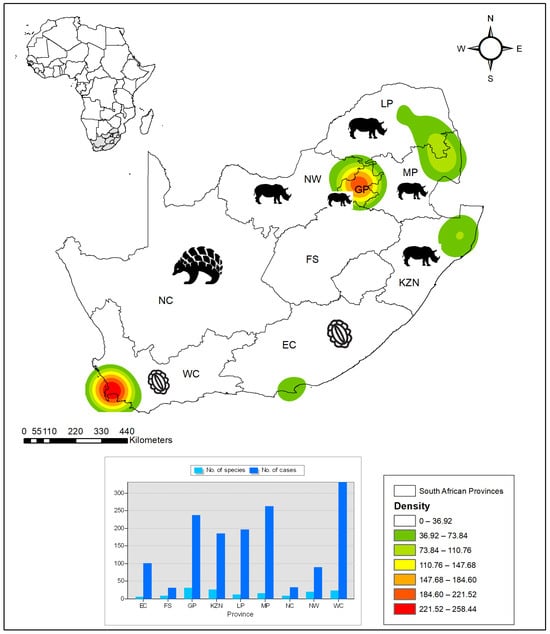
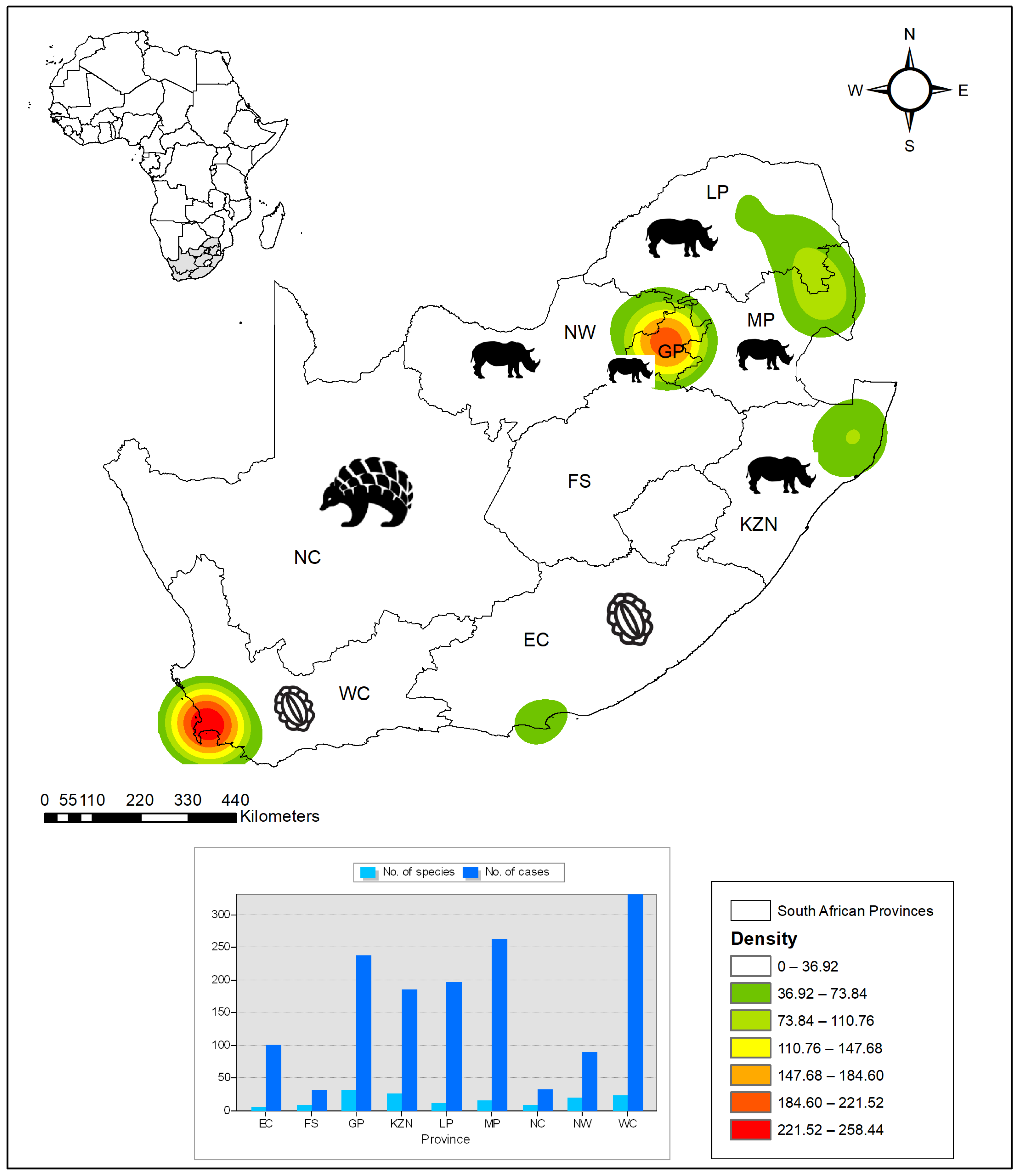
We analysed a total of 1853 illegal wildlife trade records between 1985 and 2025. Of these, 1501 were geographically traceable to specific provinces. The Western Cape Province, Mpumalanga, Gauteng, Limpopo, and KwaZulu-Natal had the highest number of illegal wildlife trade incidents (Figure 1). The Free State and Northern Cape reported fewer instances of illegal wildlife trade, with each province experiencing fewer than 50 cases. In the Western Cape, the most significant hotspots were Cape Town (51 reports) and Hout Bay (8). Mpumalanga experienced significant illegal activity in Kruger National Park (156 reports) and Mbombela (8). In Gauteng, the illegal trade was largely centred around OR Tambo Airport (49) and Pretoria (16). KwaZulu-Natal had high incidents in key conservation areas, including Hluhluwe-Imfolozi Park (16) and iSimangaliso Wetland Park (12). Limpopo’s most affected areas were Hoedspruit (20), Kruger National Park (11), and Gravelotte (11). North West, Northern Cape, and Free State had fewer incidents; however, their hotspots included Mahikeng (5) and Brits (4) in North West; Kuruman (7) and Kimberley (5) in Northern Cape; and Bloemfontein (9) in Free State.
Figure 1.
Heatmap showing the distribution of illegal wildlife activities in each province between 1984 and 2025, where n indicates the number of cases. The bar chart indicates the number of species per province. Abbreviations (FS: Free State, NC: Northern Cape, NW: North West, EC: Eastern Cape, KZN: KwaZulu-Natal, LP: Limpopo Province, GP: Gauteng Province, MP: Mpumalanga, and WC: Western Cape). Animal icons represent the dominant wildlife species involved in seizures or arrests in each province, where LP, GP, NW, KZN, and GP are represented by rhino, NC by pangolin, and WC and EC by abalone.
In terms of the number of species per province, Gauteng and KwaZulu-Natal had the highest number of species affected by crime. This was followed by Western Cape, North West, and Mpumalanga. Limpopo had fewer than 15 species affected by crime, despite the province reporting high levels of wildlife crime. Rhinos were the most affected species in five of the provinces, while abalone cases were mostly in the Eastern Cape and Western Cape. Pangolin cases were most dominant in Northern Cape Province (Figure 1). The Free State had no specific species affected by wildlife crime.
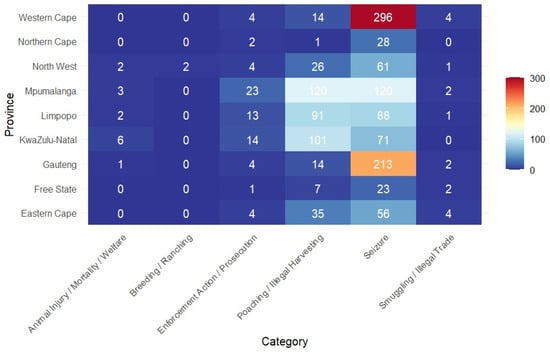
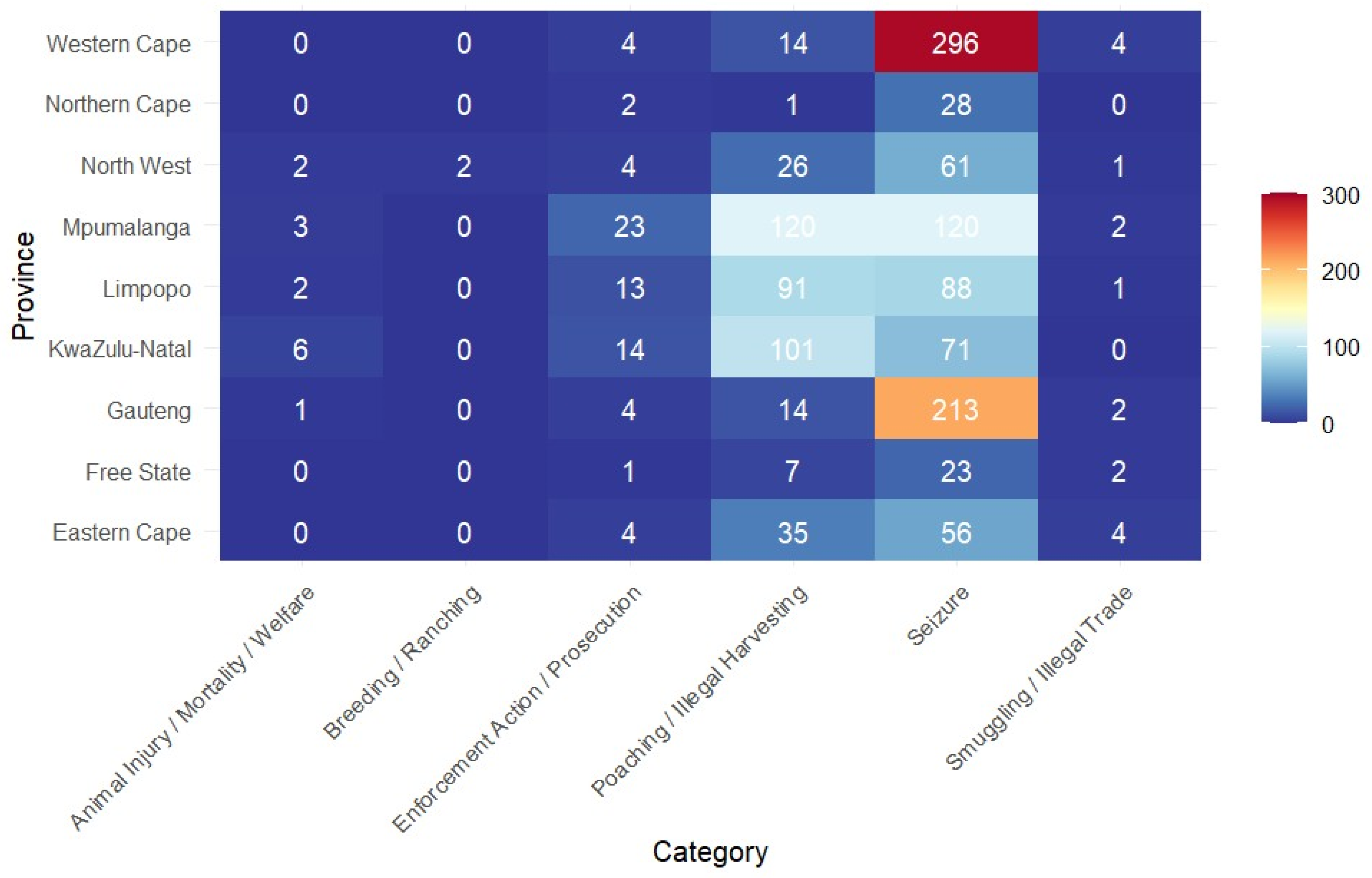
In terms of activities related to the illegal wildlife trade across the provinces, we found that seizures were the most frequently documented category, followed by poaching/illegal harvesting. There were fewer enforcement actions/prosecutions recorded; this also includes categories such as smuggling, breeding, and animal injury (Figure 2). The Western Cape recorded the highest number of incidents (314 total), with seizures reported the most (296 cases, 94.3%). Gauteng Province followed with 234 incidents, of which 213 (91%) were seizures. This was followed by Mpumalanga Province, with 268 incidents, of which poaching and seizures were reported the most. KwaZulu-Natal (192 total) and Limpopo (195 total) showed similar patterns where poaching cases (101 and 91, respectively) were slightly more than seizure reports (71 and 88). The Eastern Cape and North West provinces reported a total of 99 and 96 incidents, respectively, with seizures constituting 56.6% and 63.5% of cases, respectively. Free State (33 total) and Northern Cape (31 total) had the least number of recorded incidents; however, seizures still accounted for 69.7% and 90.3% of their cases, respectively. Overall, seizure operations were recorded in the major transport and economic hubs provinces, Western Cape and Gauteng, which aligns with their roles as ports of entry and international transit points. In contrast, provinces such as Mpumalanga, KwaZulu-Natal, and Limpopo, which contain significant conservation areas such as the Kruger National Park and Hluhluwe-Imfolozi Park, had higher relative proportions of poaching incidents. Additionally, there were low numbers in the “Enforcement Action/Prosecution” category across all provinces, suggesting a systemic gap between detection (seizures) and legal consequences.
Figure 2.
Heatmap showing the distribution of illegal wildlife trade activities across South African provinces.
A total of nine animal classes were identified, comprising 26 families, 57species, and 945 entries (individuals) (Table S1). Mammals were the most recorded group with 640 entries, comprising 24 species identified, 228 records of family entries, and only one genus entry. Reptiles included 13 species, with four entries as family, one genus, and one order entry (Table S1). Malacostraca consisted of five species and 15 entries as a family. Birds contributed six species, and 2 entries as a family (Table S1). Amphibians, Bivalvia, Fish, Gastropoda, Holothuroidea, and Bivalvia had a few species recorded. However, the number of individuals for Gastropoda exceeded 100 (Table S1). Of the individuals recorded, the white rhinoceros and the Abalone were the most affected, each having more than 100 entries (Table S1). This was followed by lion, Panthera leo (Linnaeus, 1758) (50 entries), and Ground pangolin, Smutsia temminckii (Smuts, 1832) (30 entries). African elephant and Cape rock lobster, Jasus lalandii (H.Milne-Edwards, 1837), each had 25 entries. Other species in the top 10 most affected included the leopard (P. pardus), Vervet monkey (Chlorocebus pygerythrus (F.Cuvier, 1821)), with 15 entries each, the cheetah (Acinonyx jubatus (Schreber, 1775)), and the tiger (P. tigris), with 9 and 6 entries, respectively.
We found that nine species are listed in CITES Appendix I, 22 in Appendix II, and 17 are not listed under CITES (Table 1). Species such as African elephant, Crocodylus niloticus (Laurenti, 1768), white rhinoceros and lion are included in CITES Appendix I and II. According to the International Union for Conservation of Nature (IUCN) Red List, 3 species are Critically Endangered (i.e., Cape vulture (Gyps coprotheres (J.R.Forster, 1798)), white-backed vulture, and black rhinoceros, 5 Endangered, 10 Vulnerable, 8 Near Threatened, 21 Least Concern, and 6 Data Deficient (Table S1). Most CITES Appendix I species are also classified as threatened by IUCN, for example, Caretta caretta (Linnaeus, 1758), cheetah, Panthera pardus (Linnaeus, 1758), tiger, Psittacus erithacus (Linnaeus, 1758), and black rhino. Species not included under CITES are primarily those considered Least Concern or Data Deficient by IUCN.
Table 1.
Summary of species counts by class and conservation status (CITES and IUCN Red List).
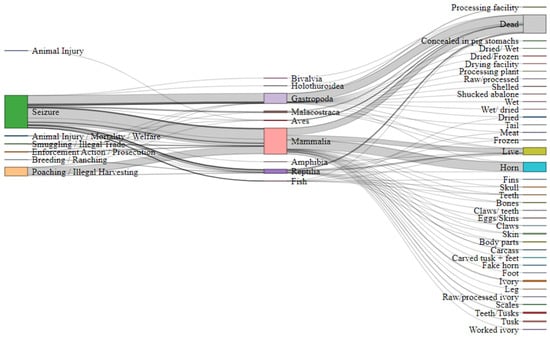
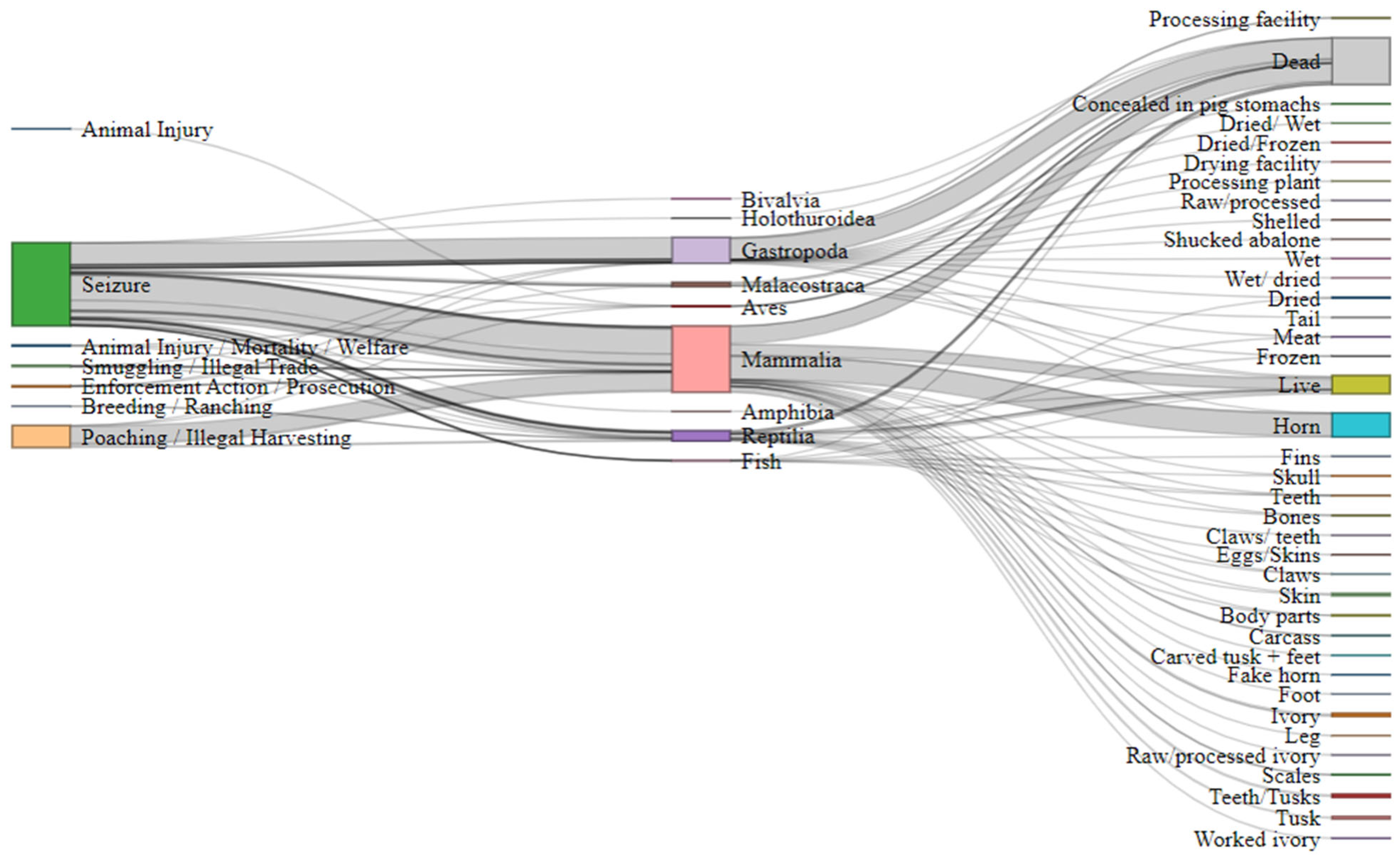
The wildlife crime in South Africa is associated with different outcomes. Seizure was the most prevalent category and associated with rhino and halotis species (Figure 3). Rhinos were mostly seized for their horn, while halotis species were seized for abalone in wet or dried form. Elephants were also frequently seized for ivory, tusks, or teeth (Figure 3). Rhinos and elephants were also predominantly affected by poaching/illegal harvesting. However, these species were mostly recorded as dead (Figure 3). Pangolins were frequently poached for their scales, and this was associated with mortality. Organised crime cases largely involved species of high value, such as rhinos and elephants, linked to horn and ivory, respectively (Figure 3). However, reptiles and birds in this category were recorded as live, while some marine species and small vertebrates were listed as dead (Figure 3). Smuggling or illegal trade was represented by live birds (Psittaciformes) and reptile species such as Python natalensis (Smith, 1840). The least recorded wildlife categories included breeding or ranching and prosecution. Cases in the breeding or ranching category involved live animals, particularly parrots (Psittaciformes) and reptiles. Prosecution cases were largely associated with Rhinocerotidae and Elephantidae, often involving horn, ivory, or dead specimens. Additional species were pangolins and reptiles, often associated with live animals. In terms of the trade flows, we found that South Africa’s supply chain is shaped by species type and product form. For example, high-value commodities such as rhino horn, elephant ivory, and abalone follow a flow from field-based poaching to processing, concealment, and international export. Conversely, the live animal trade, particularly for reptiles and birds, follows a smuggling pathway.
Figure 3.
A Sankey diagram illustrating the flow of wildlife crime data across categories (e.g., seizure, poaching, smuggling), species, and specific items.
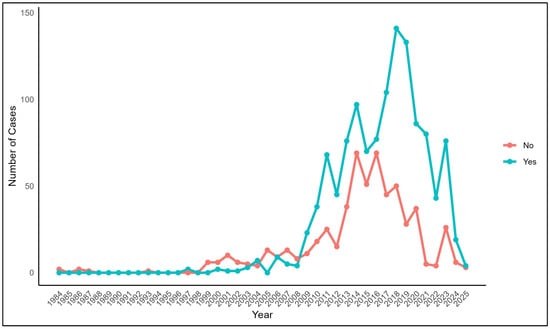
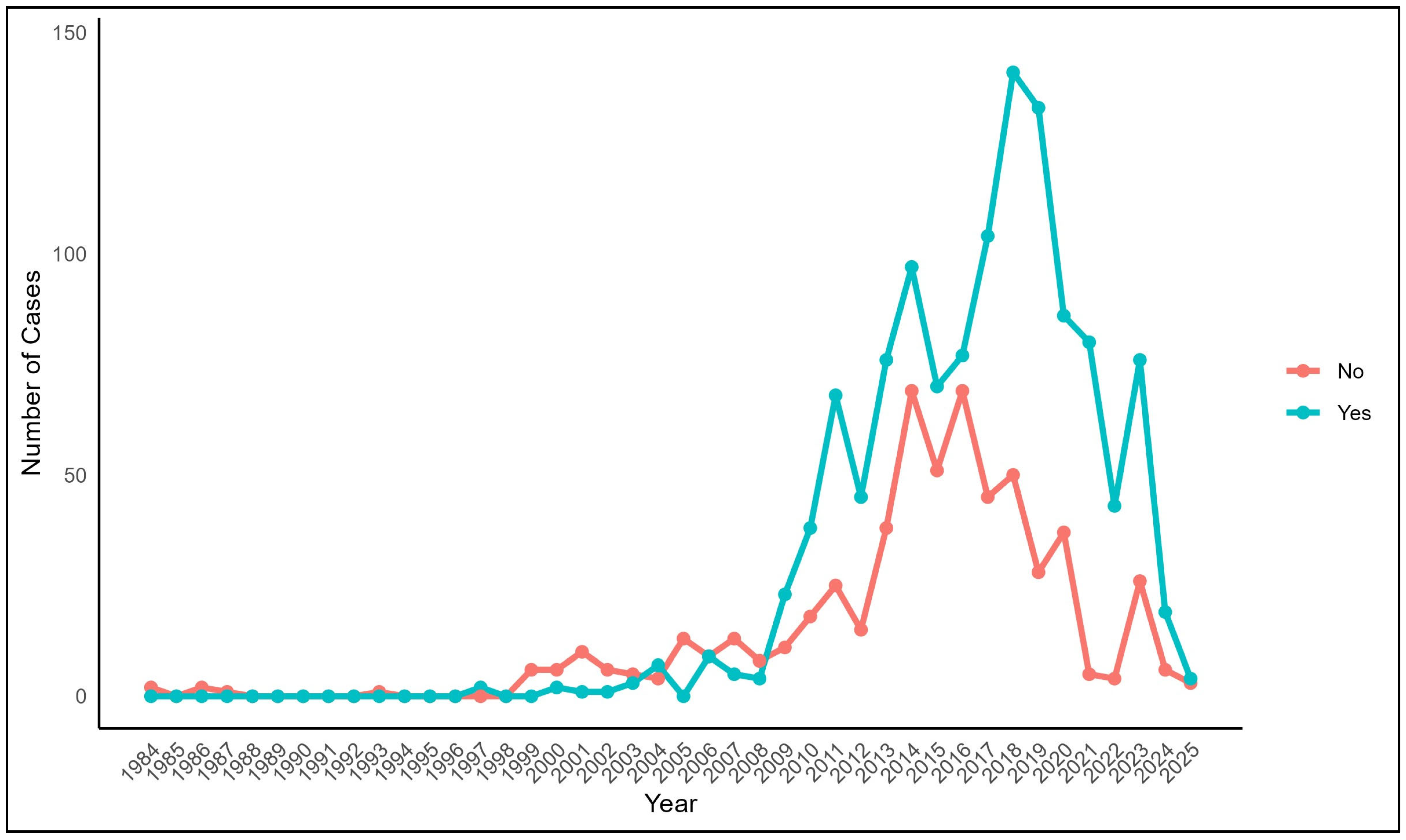
Temporal trends in arrest cases were assessed using a Negative Binomial generalized linear model. Arrest counts increased significantly over time (β = 0.082, SE = 0.020, Wald z = 4.10, p < 0.005), indicating an annual increase in the number of detected arrests and improvements in law enforcement (Figure 4). The number of cases began to increase around 2005 and continued to accelerate after 2010. This increase peaked first for non-arrest cases around 2016, while arrests lagged, reaching their maximum approximately two years later in 2018 (Figure 4). Throughout the escalation phases, the number of arrest cases exceeded that of non-arrest cases, indicating a strengthened law-enforcement capacity during this period. However, both trends declined substantially after the 2016–2018 peaks, marking a recent contraction in detected incidents.
Figure 4.
Trend in the number of wildlife crime cases over the years. “No” indicates no arrests, and “Yes” indicates an arrest as a law enforcement outcome of the reported case.
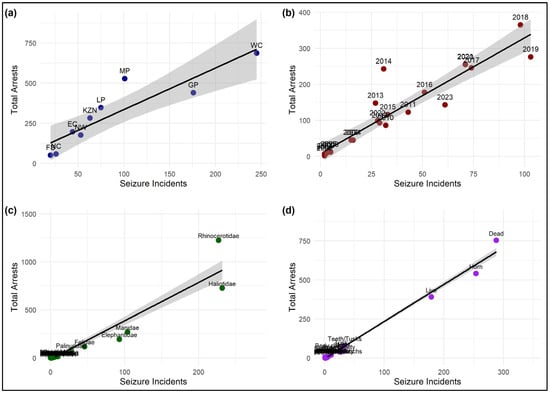
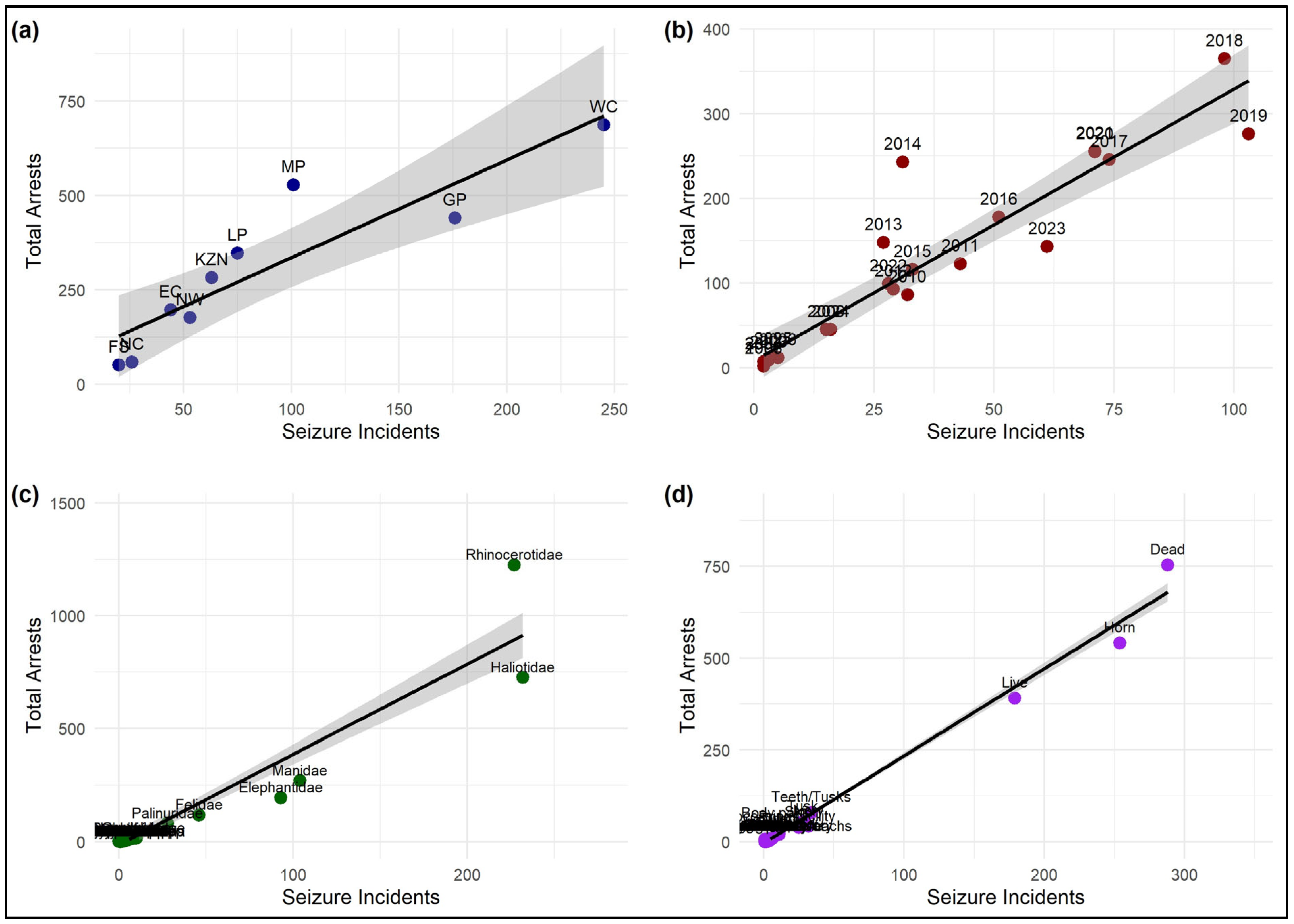
We found a positive correlation between the number of seizures and the number of arrests across South African provinces (Pearson’s r = 0.90, t = 5.60, p < 0.005) (Figure 5a). Correlation strength varied across provinces, with the Eastern Cape, Free State, North West, and Mpumalanga showing a positive correlation (Figure S1). This geographic pattern may suggest that law enforcement effectiveness or operational focus is not uniform across the country and is particularly evident in these four provinces, either due to proactive efforts, a higher crime rate, or more consistent administrative practices. Provinces such as the Western Cape, Limpopo, KwaZulu-Natal, and Gauteng exhibited a negative correlation, despite having a high number of arrests, suggesting that seizures do not result in proportional arrests. A positive correlation was also observed between the number of arrests and years (Pearson’s r = 0.93, t = 11.86, p < 0.001), with arrests increasing from 2003 to 2023 (Figure 5b). At the species family level, we found an overall strong positive correlation (Pearson’s r = 0.95, t = 17.48, p < 0.001) between seizures and arrests (Figure 5c). However, the correlation varied across species families, with families such as Manidae, Felidae, Palaeorhinidae, and Elephantidae associated with arrests. This pattern likely reflects targeted poaching and illegal trade pressures on high-value species, such as pangolins, big cats, elephants, and certain reptiles, demonstrating how conservation status and market demand directly influence wildlife crime metrics. Rhinocerotidae showed a negative correlation, even though it had the highest number of seizures, suggesting that seizures of rhino products do not translate to arrest. In terms of specific wildlife items, we found a positive correlation (Pearson’s r = 0.99, t = 52.94, p < 0.001), where items such as horns, dead specimens, tusks, and live animals predict arrest outcomes (Figure 5d).
Figure 5.
The relationship between seizure incidents and arrests across (a) province, (b) years, (c) species, and (d) specific item. Abbreviations (FS: Free State, NC: Northern Cape, NW: North-West, EC: Eastern Cape, KZN: KwaZulu-Natal, LP: Limpopo Province, GP: Gauteng Province, MP: Mpumalanga, and WC: Western Cape).
4. Discussion
Different species are targeted for illegal trade around the world [3,32], and those in South Africa are no exception. We analysed 1853 illegal wildlife trade records between 1984 and 2025, highlighting the geographic hotspot, taxonomic scope, and enforcement outcomes of wildlife crime in South Africa. Most cases were geographically traceable, and provinces such as the Western Cape, Mpumalanga, Gauteng, Limpopo, and KwaZulu-Natal were identified as the major hotspots for wildlife crime. The crime in provinces such as Limpopo, Mpumalanga, and KwaZulu-Natal affects major conservation areas, for example, Kruger National Park and Hluhluwe-Imfolozi Park. As a result, these areas should be prioritized when developing targeted interventions to safeguard high-value species. This pattern is not only observed in South Africa, but protected areas are the major hotspots for wildlife crime, even though they are highly patrolled, for example, Uganda and Tanzania [33,34]. The Western Cape and Gauteng Province hotspot areas are associated with transport hubs, such as OR Tambo International Airport and the Cape Town port of entry. The identified spatial hotspots in these provinces are strongly indicative of where enforcement is most active and well-resourced. In addition, most of these areas are often characterized by complex socio-economic dynamics such as high unemployment, poverty, and inequality, which, combined with access to global transit networks, create an ideal environment for recruitment into poaching and wildlife trafficking networks [35,36,37].
Although provinces such as Free State, North West, and Northern Cape had fewer records, they still exhibited distinct hotspots that warrant monitoring. In particular, the Northern Cape was identified as the hotspot area for the most trafficked species, the pangolin [38]. As a result, the province should be patrolled, and interventions such as increasing law enforcement should be implemented. The number of entries per species, genus, or family was small; consequently, the data in this study represent indicative estimates rather than precise counts of individuals. Seizure records primarily reflect enforcement effort, capacity, and geography rather than the actual distribution or volume of illegal trade. This enforcement bias may have likely led to the underrepresentation of high-value, field-based poaching (e.g., professional rhino horn syndicates operating in remote areas) in the data, while overrepresenting interceptions at monitored transit hubs.
In terms of wildlife categories, seizures were most prevalent across provinces, indicating robust law enforcement activity. Specifically, the Western Cape and Gauteng Province had the highest number of seizures. This suggests that law enforcement is prevalent in those provinces. In addition, Gauteng Province and Western Cape Province are major transit areas, which explains why these provinces have better law enforcement compared to other provinces. For provinces such as Limpopo, Mpumalanga, and KwaZulu-Natal, poaching rates were high, indicating that enforcement challenges persist in conservation landscapes. Seizure trends were strongly correlated with arrests, indicating that law enforcement responses are increasingly effective, particularly against high-value species such as elephants, pangolins, and abalone. This trend was also observed in other countries, for example, in India, over 8600 pangolins were intercepted in 426 seizures, resulting in 1320 arrests [39]. Similarly, in China, 326 seizures involving more than 143,000 pangolins led to 264 arrests and 28 convictions, with enforcement efforts intensifying after policy reforms in 2018 [23]. The positive correlation between seizures and arrests primarily reflects success at the physical level of enforcement, including the interdiction of commodities and the arrest of low- to mid-level poachers. Consequently, the high-level organizers and financiers of illegal trade, including politicians and kingpins, are often not arrested or identified, particularly where highly organized operations, such as professional rhino horn syndicates, often go undetected [40,41]. For example, a persistent discrepancy exists between reported poaching incidents and the rapid, ongoing decline in rhino populations within large parks such as Kruger National Park, South Africa [42]. However, with the recent analysis of South Africa’s anti-illegal wildlife trade, analyzing money flows [43], kingpins can be identified and possibly arrested.
The pattern of arrests related to high-value species is not limited to animals but also extends to plants. For example, law enforcement responses are increasingly effective, particularly in border regions and against species targeted for international luxury markets [44]. Arrests have increased significantly over the years, indicating improvements in law enforcement capacity. A positive relationship also existed between specific items and species. These relationships demonstrate that enforcement activity is not only increasing over time but is also highly predictable based on the type of species and products involved. In practical terms, the interception of items such as rhino horn, abalone, ivory, and live animals is strongly associated with arrest outcomes, making them reliable indicators of enforcement success. Taxonomic analyses revealed that mammals, particularly rhinoceroses and elephants, as well as marine species such as abalone, were disproportionately targeted. The trade in these species is consistent with global trafficking patterns, where demand for rhino horn, ivory, and abalone drives organised crime [45].
The Sankey analysis of species and specific terms further demonstrates how wildlife commodities such as rhino horn, elephant ivory, and abalone dominate seizures and prosecutions. However, the presence of live animals in smuggling and breeding/ranching cases may highlight welfare concerns and the complexity of policing wildlife crime beyond seizures of dead specimens. Most live animals are sold as part of the exotic pet trade [5], hence birds and reptile species are mostly recorded in this category. Bird and reptile species are traded for the exotic pet trade, particularly in international trade, where South African native reptiles are in high demand. The link between “smuggling” and “live animals” may indicate a trade dynamic driven by the demand for live specimens, where survival during transit is important. This trade often involves specialized smuggling techniques such as concealment in luggage, false-bottomed containers, or fraudulent paperwork [46,47,48,49]. While this study captures noticeable trends in the exotic pet trade, it likely underrepresents the full scope of trade in lower-profile reptile, bird, amphibian, and marine species due to enforcement and data collection biases toward high-value taxa. This gap suggests that emerging threats within these lesser-monitored groups may be overlooked in seizure-based analyses.
5. Conclusions
Our findings suggest that while enforcement efforts are increasing, targeted interventions are required at specific hotspots. Provinces such as Gauteng and KwaZulu-Natal not only recorded high incident volumes but also had the greatest diversity of species affected, including critically endangered and CITES-listed taxa. Seizure was the most frequently documented activity across all provinces, particularly in the Western Cape and Gauteng, followed by poaching and illegal harvesting in Limpopo and KwaZulu-Natal. The most affected species were white rhinoceros, abalone, lion, and ground pangolin, with rhinos and elephants predominantly targeted for horns and ivory, respectively.
Our results also indicate that the data entry in the TRAFFIC database is incomplete; for example, most species were entered as families or under their genus names. Entering species using generic, family, or genus names makes it difficult for law enforcement or interventions to target those species. Consequently, when species are seized, proper identification should be done, which will assist in determining the origin of the species in the country. Critically Endangered taxa, such as the black rhinoceros and Cape vulture, as well as Vulnerable species like the African elephant and lion, highlight the conservation risks posed by the illegal trade.
Strengthening interprovincial enforcement collaboration, combined with demand reduction strategies, will help curb the illegal wildlife trade in South Africa. Enhanced coordination between provinces, particularly for cross-border investigations, should be strengthened. Additionally, supporting the monitoring of emerging trade in lesser-known species before they become conservation crises should be prioritized.
Supplementary Materials
The following supporting information can be downloaded at: https://www.mdpi.com/article/10.3390/conservation6010027/s1, Figure S1: Correlation coefficient of geographic location (Province) and taxonomic group (Species family); Table S1: List of species affected by illegal wildlife trade in South Africa.
Author Contributions
N.S. conceptualized the study, collected datasets, analysed the data, and wrote the original manuscript. T.N. and N.S.-P. reviewed and revised the manuscript before submission. All authors have read and agreed to the published version of the manuscript.
Funding
This research was funded by the National Research Foundation (NRF) of South Africa (ZA), grant number: PSTD240412213818-PR-2025, and APC was funded by the Department of Nature Conservation, the Faculty of Science, and the Directorate of Research and Innovation at Tshwane University of Technology (South Africa).
Institutional Review Board Statement
Not applicable.
Informed Consent Statement
Not applicable, this study did not involve humans.
Data Availability Statement
All data for this study are available upon request.
Acknowledgments
We are most grateful to the Department of Nature Conservation, especially Luandri Bothafor her logistical support.
Conflicts of Interest
The authors declare no conflicts of interest.
References
- Kazmar, J.P. The international illegal plant and wildlife trade: Biological genocide. UC Davis J. Int’l L. Pol’y 2000, 6, 105. [Google Scholar]
- Van Uhm, D.P.; Moreto, W.D. Corruption within the illegal wildlife trade: A symbiotic and antithetical enterprise. Br. J. Criminol. 2018, 58, 864–885. [Google Scholar] [CrossRef] [Scilit]
- Salas-Picazo, R.I.; Ramírez-Bravo, O.E.; Meza-Padilla, I.; Camargo-Rivera, E.E. The role of social media groups on illegal wildlife trade in four Mexican states: A year-long assessment. GECCO 2023, 45, e02539. [Google Scholar] [CrossRef] [Scilit]
- Rosen, G.E.; Smith, K.F. Summarizing the evidence on the international trade in illegal wildlife. EcoHealth 2010, 7, 24–32. [Google Scholar] [CrossRef] [Scilit]
- Shivambu, N.; Shivambu, T.C.; Nelufule, T.; Moshobane, M.C.; Seoraj-Pillai, N.; Nangammbi, T.C. South Africa as a Donor of Its Native and Exotic Species to the International Pet Trade. Sustainability 2024, 16, 8828. [Google Scholar] [CrossRef] [Scilit]
- Brandis, K.J.; Meagher, P.; Schoppe, S.; Zawada, K.; Widmann, I.; Widmann, P.; Dolorosa, R.G.; Francis, R. Determining the provenance of traded wildlife in the Philippines. Animals 2023, 13, 2165. [Google Scholar] [CrossRef] [Scilit]
- Shivambu, N.; Shivambu, T.C.; Nelufule, T.; Moshobane, M.C.; Seoraj-Pillai, N.; Nangammbi, T.C. A Snapshot of the Global Trade of South African Native Vertebrate Species Not Listed on CITES. Animals 2024, 14, 2782. [Google Scholar] [CrossRef] [Scilit]
- Zimmerman, M.E. The black market for wildlife: Combating transnational organized crime in the illegal wildlife trade. Vand. J. Transnat’l L. 2003, 36, 1657–1689. [Google Scholar]
- Alarcon, R.E. The Convention on International Trade in Endangered Species: The Difficulty in Enforcing CITES and the United States Solution to Hindering the Illegal Trade of Endangered Species. NY Int’l L. Rev. 2021, 34, 105. [Google Scholar]
- Wyatt, T. Canada and the convention on international trade in endangered species of wild fauna and flora (CITES): Lessons learned on implementation and compliance. Liverp. Law Rev. 2021, 42, 143–159. [Google Scholar] [CrossRef] [Scilit]
- Osorio, C.P.; Bernaz, N. Addressing the international illegal wildlife trade through a human rights approach. Rev. Eur. Comp. Int. Environ. Law 2024, 33, 507–520. [Google Scholar] [CrossRef] [Scilit]
- Emordi, P.J. Illegal animal trade in a globalized world: Implications for sustainable development. Ariz. J. Environ. Law Policy 2023, 8, 8–13. [Google Scholar]
- Meeks, D.; Morton, O.; Edwards, D.P. Wildlife farming: Balancing economic and conservation interests in the face of illegal wildlife trade. People Nat. 2024, 6, 446–457. [Google Scholar] [CrossRef] [Scilit]
- Wyatt, T. The illegal trade of raptors in the Russian Federation. Contemp. Justice Rev. 2011, 14, 103–123. [Google Scholar] [CrossRef] [Scilit]
- Wyatt, T.; Johnson, K.; Hunter, L.; George, R.; Gunter, R. Corruption and wildlife trafficking: Three case studies involving Asia. Asian J. Criminol. 2018, 13, 35–55. [Google Scholar] [CrossRef] [Scilit]
- Wyatt, T.; van Uhm, D.; Nurse, A. Differentiating criminal networks in the illegal wildlife trade: Organized, corporate and disorganized crime. Trends Organ. Crime 2020, 23, 350–366. [Google Scholar] [CrossRef] [Scilit]
- Shelley, L.I. Corruption & illicit trade. Daedalus 2018, 147, 127–143. [Google Scholar] [CrossRef] [Scilit]
- Hinsley, A.; Willis, J.; Dent, A.R.; Oyanedel, R.; Kubo, T.; Challender, D.W. Trading species to extinction: Evidence of extinction linked to the wildlife trade. Camb. Prism. Extinction 2023, 1, e10. [Google Scholar] [CrossRef] [Scilit]
- Hughes, A.C.; Morton, O.; Scheffers, B.R.; Edwards, D.P. The ecological drivers and consequences of wildlife trade. Biol. Rev. 2023, 98, 775–791. [Google Scholar] [CrossRef] [Scilit]
- Tella, J.L.; Hiraldo, F. Illegal and legal parrot trade shows a long-term, cross-cultural preference for the most attractive species, increasing their risk of extinction. PLoS ONE 2014, 9, e107546. [Google Scholar] [CrossRef] [Scilit] [PubMed]
- Bennett, E.L. Legal ivory trade in a corrupt world and its impact on African elephant populations. Conserv. Biol. 2015, 29, 54–60. [Google Scholar] [CrossRef] [Scilit]
- Ewart, K.M.; Frankham, G.J.; McEwing, R.; Webster, L.M.I.; Ciavaglia, S.A.; Linacre, A.M.T.; Johnson, R.N. An internationally standardized species identification test for use on suspected seized rhinoceros horn in the illegal wildlife trade. Forensic Sci. Int. Genet. 2018, 32, 33–39. [Google Scholar] [CrossRef] [Scilit]
- Saif, S.; Rahman, H.T.; MacMillan, D.C. Who is killing the tiger Panthera tigris and why? Oryx 2018, 52, 46–54. [Google Scholar] [CrossRef] [Scilit]
- Omifolaji, J.K.; Hughes, A.C.; Ibrahim, A.S.; Zhou, J.; Zhang, S.; Ikyaagba, E.T.; Luan, X. Dissecting the illegal pangolin trade in China: An insight from seizures data reports. Nat. Conserv. 2022, 46, 17–38. [Google Scholar] [CrossRef] [Scilit]
- Patel, N.G.; Rorres, C.; Joly, D.O.; Brownstein, J.S.; Boston, R.; Levy, M.Z.; Smith, G. Quantitative methods of identifying the key nodes in the illegal wildlife trade network. Proc. Natl. Acad. Sci. USA 2015, 112, 7948–7953. [Google Scholar] [CrossRef] [Scilit]
- Olsen, M.T.; Geldmann, J.; Harfoot, M.; Tittensor, D.P.; Price, B.; Sinovas, P.; Nowak, K.; Sanders, N.J.; Burgess, N.D. Thirty-six years of legal and illegal wildlife trade entering the USA. Oryx 2021, 55, 432–441. [Google Scholar] [CrossRef] [Scilit]
- Martínez, I.A.; Alonso, A.I. Mexican organized crime and the illegal trade in totoaba maw. Trends Organ. Crime 2021, 24, 526–546. [Google Scholar] [CrossRef] [Scilit]
- Lopes, A.A. Transnational links in rhino poaching and the black-market price of rhino horns. Aust. J. Agric. Resour. Econ. 2019, 63, 95–115. [Google Scholar] [CrossRef] [Scilit]
- Stiles, D. Ivory trafficking, transnational organized criminal networks in eastern and southern Africa 2009-2020, and the emerging new threat. Pachyderm 2022, 63, 140–152. [Google Scholar] [CrossRef] [Scilit]
- Sonricker Hansen, A.L.; Li, A.; Joly, D.; Mekaru, S.; Brownstein, J.S. Digital surveillance: A novel approach to monitoring the illegal wildlife trade. PLoS ONE 2012, 7, e51156. [Google Scholar] [CrossRef] [Scilit]
- ESRI. ArcGIS Desktop; Release 10.4.1; Environmental Systems Research Institute: Redlands, CA, USA, 2022. [Google Scholar]
- Stringham, O.C.; Moncayo, S.; Thomas, E.; Heinrich, S.; Toomes, A.; Maher, J.; Hill, K.G.; Mitchell, L.; Ross, J.V.; Shepherd, C.R.; et al. Dataset of seized wildlife and their intended uses. Data Brief 2021, 39, 107531. [Google Scholar] [CrossRef] [Scilit]
- Nehemy, I.K.; Gomes, T.O.; Paiva, F.; Kubo, W.K.; Almeida Júnior, J.E.; Neves, N.F.; São Pedro, V. Herpeto-commerce: A look at the illegal online trade of amphibians and reptiles in Brazil. Cuad. De Herpetol. 2022, 36, 185–196. [Google Scholar]
- Kyando, M.; Ikanda, D.; Røskaft, E. Hotspot elephant-poaching areas in the Eastern Selous Game Reserve, Tanzania. Afr. J. Ecol. 2017, 55, 365–371. [Google Scholar] [CrossRef] [Scilit]
- Moreto, W.D.; Matusiak, M.C. “We Fight Wrong Doers”: Law enforcement rangers’ roles, responsibilities, and patrol operations in Uganda. Deviant Behav. 2017, 4, 426–447. [Google Scholar] [CrossRef] [Scilit]
- Knapp, E.J.; Peace, N.; Bechtel, L. Poachers and Poverty: Assessing Objective and Subjective Measures of Poverty among Illegal Hunters Outside Ruaha National Park, Tanzania. Conserv. Soc. 2017, 15, 24–32. [Google Scholar] [CrossRef] [Scilit]
- Lunstrum, E.; Givá, N. What drives commercial poaching? From poverty to economic inequality. Biol. Conserv. 2020, 245, 108505. [Google Scholar] [CrossRef] [Scilit]
- Manqele, N.S.; Jeanetta Selier, S.A.; Downs, C.T. Aspects of the illegal hunting and trade of vultures in northern KwaZulu-Natal, South Africa. Ostrich 2024, 95, 274–286. [Google Scholar] [CrossRef] [Scilit]
- Heighton, S.P.; Allio, R.; Murienne, J.; Salmona, J.; Meng, H.; Scornavacca, C.; Bastos, A.D.; Njiokou, F.; Pietersen, D.W.; Tilak, M.K.; et al. Pangolin Genomes Offer Key Insights and Resources for the World’s Most Trafficked Wild Mammals. Mol. Biol. Evol. 2023, 10, msad190. [Google Scholar] [CrossRef] [Scilit]
- Gomez, L.; Joseph, T.; Heinrich, S.; Wright, B.; D’Cruze, N. Illegal trade of pangolins in India with international trade links: An analysis of seizures from 1991 to 2022. Eur. J. Wildl. Res. 2023, 69, 85. [Google Scholar] [CrossRef] [Scilit]
- Hübschle, A. Security coordination in an illegal market: The transnational trade in rhinoceros horn. Politikon 2016, 43, 193–214. [Google Scholar] [CrossRef] [Scilit]
- Young, M.A. Going Down the Glocal”: Wildlife Crime in Vietnam. Eur. Rev. Organised Crime 2017, 4, 54–83. [Google Scholar]
- South African Anti-Money Laundering Integrated Task Force (SAMLIT). Updated Report on Illicit Financial Flows From Illegal Wildlife Trade in South Africa. 2025. Available online: https://www.banking.org.za/wp-content/uploads/2025/10/EWG-report-Updated-IWT-report-2025.pdf (accessed on 15 September 2025).
- Argue, J. The Rhino Horn Trade: Everything You Need to Know. Doctoral Dissertation, Duke University, Durham, NC, USA, 2022. [Google Scholar]
- Siriwat, P.; Nijman, V. Online media seizure reports: A tool to monitor CITES implementation in regulating the international rosewood trade. For. Policy Econ. 2018, 97, 67–72. [Google Scholar] [CrossRef] [Scilit]
- Wittig, T. Poaching, Wildlife Trafficking and Organised Crime. Whitehall Pap. 2016, 86, 77–101. [Google Scholar] [CrossRef] [Scilit]
- Musing, L.; Harris, L.; Williams, A.; Parry-Jones, R.; Van Uhm, D.P.; Wyatt, T. Corruption and Wildlife Crime: A Focus on Caviar Trade; A TRAFFIC; WWF; U4 ACRC; Utrecht University and Northumbria University, 2019. [Google Scholar]
- Zain, S. Corrupting Trade: An Overview of Corruption Issues in Illicit Wildlife Trade. Targeting Natural Resource Corruption. 2020. Available online: https://files.worldwildlife.org/wwfcmsprod/files/Publication/file/3m48phx0ap_Introductory_Overview_Corrupting_trade_An_overview_of_corruption_issues_in_illicit_wildlife_trade.pdf (accessed on 15 October 2025).
- Vigne, L.; Nijman, V. Elephant ivory, rhino horn, pangolin and helmeted hornbill products for sale at the Myanmar–Thailand–China border. Environ. Conserv. 2022, 49, 187–194. [Google Scholar] [CrossRef] [Scilit]

Disclaimer/Publisher’s Note: The statements, opinions and data contained in all publications are solely those of the individual author(s) and contributor(s) and not of MDPI and/or the editor(s). MDPI and/or the editor(s) disclaim responsibility for any injury to people or property resulting from any ideas, methods, instructions or products referred to in the content. |
© 2026 by the authors. Licensee MDPI, Basel, Switzerland. This article is an open access article distributed under the terms and conditions of the Creative Commons Attribution (CC BY) license.