


Abstract
Plant establishment, encompassing seed germination and early seedling development, represents one of the most critical and vulnerable phases in the plant life cycle. During these transitions, plants encounter a wide range of abiotic stresses, which impair survival and establishment, ultimately affecting crop productivity. This review synthesizes current knowledge on the physiological, biochemical, and molecular mechanisms during the seed-to-seedling transition and responses to major abiotic stresses, such as drought, salinity, extreme temperatures, waterlogging, nutrient imbalances, and variable light. During germination, drought and salinity disrupt water uptake and imbibition kinetics and trigger hormonal signaling, osmotic adjustment, and antioxidant defense responses. Extreme temperatures further alter metabolic activation, enzyme stability, and membrane integrity, thereby affecting germination success. In contrast, waterlogging induces hypoxic conditions, which impair aerobic respiration and trigger adaptive responses such as anaerobic metabolism, fermentation, and aerenchyma formation. In parallel, the transition from skotomorphogenesis to photomorphogenesis requires precise coordination of phytochrome- and cryptochrome-mediated signaling networks, ensuring successful seedling emergence under variable light environments. Nutrient stress, including both deficiency and toxicity, affects reserve mobilization, root system architecture, and early seedling vigor. Emerging strategies, including seed priming, biopriming, nanotechnology-based interventions, and molecular breeding, are also discussed as approaches to enhance stress resilience during establishment. A deeper understanding of stage-specific regulation and mechanisms during seed-to-seedling development can provide critical insight for developing climate-resilient crops that maintain robust establishment under increasingly variable environmental conditions.
1. Introduction
The transition from seed to seedling is one of the most critical phases in the plant life cycle because it determines whether a plant can successfully establish, survive environmental stress, and complete its reproductive cycle. In agricultural systems, this stage strongly influences crop stand establishment, early vigor, resource-use efficiency, and ultimately yield stability [1]. Seed germination is especially vulnerable to abiotic stresses such as drought, salinity, extreme temperatures, nutrient stress, waterlogging, and seed ageing, all of which can delay or inhibit germination, weaken seedling establishment, and reduce crop productivity. Seed-stress research focused on drought, salinity, oxidative stress, and abscisic acid (ABA) indicates that these factors significantly modulate seed-to-seedling establishment [2,3].
The seed-to-seedling transition is not a single event but a sequential developmental process. It begins with the dry seed, which remains metabolically quiescent but retains the capacity to rapidly resume growth when conditions become favorable. During seed imbibition, water uptake reactivates respiration, enzyme activity, membrane repair, protein synthesis, and reserve mobilization, leading to germination [4]. Phytohormones integrate internal developmental cues with external environmental signals and regulate processes including seed germination, root development, and shoot growth [5]. Among these hormones, ABA and gibberellins (GAs) play particularly important and often antagonistic roles in regulating seed dormancy and germination. The balance between ABA and GA signaling is closely associated with the induction and retention of seed dormancy, with variation in seed sensitivity to these hormones contributing to differences in dormancy [6]. More broadly, seed germination is regulated through extensive crosstalk among ABA, GA, ethylene, and environmental signals such as light, enabling seeds to integrate endogenous developmental cues with changing environmental conditions [7,8].
On the other hand, abiotic stress disrupts finely regulated processes at multiple levels. For example, drought limits water availability, reduces seed imbibition, delays metabolic activation, and restricts radicle emergence. At the seedling stage, water deficit decreases photosynthetic activity, inhibits cell elongation, and promotes oxidative stress [9]. Under exposure to polyethylene glycol (PEG) to induce drought stress in Chamerion angustifolium, Liu and Zhang [3] reported a reduction in germination rate, germination vigor, germination index, radicle length, and plumule length, while soluble sugars and proteins increased, indicating osmotic adjustment during early stress responses. Similarly, Marthandan et al. [9] describe that drought induces reactive oxygen species (ROS) accumulation, lipid peroxidation, membrane deterioration, and inhibition of cell division and expansion during early plant growth. In contrast, a study on Brassica napus showed that waterlogging conditions in the soil induce hypoxia because oxygen diffuses 10,000 times more slowly than in air. Low oxygen levels cause anaerobic conditions, leading to the accumulation of ethylene and ethanol, which affect seedling growth [10]. Similarly, salinity stress affects germination through both osmotic and ionic components. The osmotic effect reduces water uptake, while ion toxicity disrupts cellular homeostasis and damages metabolic processes [11]. In soybean, salt stress was reported to delay germination even when the final germination percentage was not strongly affected, indicating that stress may affect germination speed and uniformity before reducing final germination [12].
These changes in germination dynamics are closely linked to the complex molecular signaling networks that regulate seed responses to stress. In particular, ROS function as an important signaling hub during seed germination, interacting with phytohormones such as ABA and GA and influencing multiple cellular and molecular processes [13]. Maintaining ROS homeostasis is therefore essential for preventing excessive oxidative damage and supporting successful seedling establishment, with both enzymatic and non-enzymatic antioxidant systems contributing to ROS detoxification [14]. Given the importance of antioxidant protection during stress, seed priming has emerged as a practical strategy for enhancing germination and improving drought stress tolerance by stimulating pre-germinative metabolic and defense responses. It is a pre-sowing, controlled hydration technique that activates pre-germinative metabolic and biochemical processes without radicle protrusion. Priming can promote enzyme activation, cell repair, antioxidant defence, osmolyte accumulation, and the mobilization of stored reserves [9]. Primed seeds can germinate faster and more uniformly under stress because they enter the germination process in a metabolically prepared state.
Despite substantial progress in seed biology, an important knowledge gap remains. First, many studies focus on single stresses, whereas field-grown seeds often encounter combined stresses such as drought plus heat, salinity plus drought, or ageing plus osmotic stress. Second, biochemical and physiological responses are often studied separately, limiting our ability to connect molecular regulation with actual seedling establishment. Third, priming methods are promising but remain difficult to standardize across crops because optimal treatment conditions vary widely. Finally, more integration is needed among phenotyping, metabolomics, proteomics, transcriptomics, and field validation. Metabolomics is particularly valuable because stress-responsive metabolites such as osmoprotectants, antioxidants, amino acids, sugars, and signalling compounds provide direct insight into the biochemical state of stressed seeds and seedlings [15]. Despite extensive advances in seed biology, our understanding of the seed-to-seedling transition under abiotic stress remains fragmented, with most studies focusing on isolated processes such as germination percentage, hormonal signaling, or stress physiology in later growth stages.
Building on this conceptual framework, this review mainly aims to synthesize current knowledge on the physiological, biochemical, hormonal, and molecular mechanisms that regulate the progression from seed germination to seedling establishment under abiotic stress conditions. Specifically, the review (i) defines the major developmental stages from the dry seed to the establishment of an autotrophic seedling, (ii) discusses how key abiotic stresses, such as drought, salinity, extreme temperatures, oxidative stress, nutrient stress, and seed ageing, disrupt these stages, and (iii) explores the integrative roles of hormonal signaling networks, ROS dynamics, osmotic adjustment, and antioxidant defense systems during these developmental stages. In addition, the review evaluates the emerging strategies such as seed priming, biopriming, nanopriming, and advanced phenotyping indices, which aim to enhance germination performance and stress tolerance during this transition. Finally, it highlights the critical knowledge gaps and proposes future research directions for the seed-to-seedling transition, emphasizing the need for multi-scale, systems-level approaches that integrate physiological, biochemical, omics-based, and field-level insights to develop crops with improved establishment and resilience under increasingly variable environmental conditions.
2. The Dry, Quiescence, and Cytoplasmic Glassy States of Seed
2.1. Dry State of Seed and Its Structural and Biochemical Features
The dry seed represents a unique biological state characterized by extreme desiccation, metabolic quiescence, and remarkable longevity [16,17]. In this phase, seeds maintain viability over extended periods while remaining poised to rapidly resume metabolic activity upon exposure to favourable environmental conditions. This quiescent state is not merely passive; rather, it is a highly regulated condition that ensures survival during unfavorable conditions and synchronizes germination with optimal environmental cues [18]. Importantly, the dry seed can be considered a metabolically inactive yet structurally organized system, in which biochemical reactions are severely restricted due to extremely low water content, often below 10% of dry weight [19,20]. Dry seeds exhibit structural and biochemical adaptations that enable them to tolerate severe dehydration and maintain viability. Under such conditions, cytoplasmic viscosity increases dramatically, which restricts molecular diffusion, markedly slows chemical reactions, and effectively suppresses enzymatic activity and respiration, thereby contributing to the long-term preservation of cellular structures and macromolecules [20]. This near-arrested metabolic state prevents uncontrolled biochemical reactions and minimizes the generation of ROS, thereby preserving cellular integrity over long periods [21]. However, the seeds of some species, such as Aesculus hippocastanum (horse chestnut), retain a high water content and remain metabolically active rather than entering the dry state typical of most seeds [22]. Despite their apparent inactivity, average plant seeds retain the intrinsic capacity for rapid metabolic reactivation, supported by pre-existing cellular organization and stored macromolecules [23]. A key feature enabling this remarkable stability is the transition of the cytoplasm into a glassy state, which immobilizes cellular components and protects membranes, proteins, and nucleic acids from damage during desiccation [24,25]. In parallel, seeds accumulate a range of protective molecules, including non-reducing oligosaccharides and late embryogenesis abundant (LEA) proteins, which contribute to cellular protection during dehydration [26,27]. Together, these protective compounds help maintain cellular structural integrity and prevent protein denaturation, thereby ensuring the preservation of cellular function upon rehydration. Moreover, dry seeds are not entirely inert; they retain molecular systems for repair and recovery that can initiate DNA repair and genome surveillance once water becomes available [28].
This highly specialized state also contributes to seed longevity and ecological adaptation. By drastically reducing metabolic activity, seeds limit energy expenditure and cellular damage, allowing them to persist in soil seed banks for extended periods [29,30]. At the same time, the quiescent state is closely linked to environmental sensing mechanisms, enabling seeds to synchronize germination with favorable conditions such as adequate moisture, temperature, and light [31,32]. Thus, the dry seed represents a physiologically arrested yet environmentally responsive state, bridging survival during stress with rapid transition to active growth during germination.
Metabolically, dry seeds remain in a highly quiescent state characterized by limited enzymatic activity due to the lack of available free water. Nevertheless, they retain substantial reserves of carbohydrates, lipids, and proteins that can support metabolic activity upon germination. As imbibition proceeds, metabolic and enzymatic processes are progressively activated, facilitating the mobilization and utilization of stored reserves required for germination and subsequent seedling growth [33]. Additionally, antioxidant metabolites play an important role in protecting plants against oxidative stress and are associated with enhanced tolerance to abiotic stress [15]. During seed imbibition, metabolic processes are reinitiated, allowing antioxidant defenses and other protective mechanisms to respond to the oxidative changes associated with the transition from the dry state to active metabolism [23].
2.1.1. Hormonal and Molecular Regulation in the Dry Seed
Although metabolic activity is largely suppressed, the dry seed maintains a complex regulatory framework at the molecular level. Hormonal balance plays a critical role in maintaining quiescence and preventing premature germination. ABA remains the dominant hormone in dry seeds, promoting desiccation tolerance, inhibiting growth, and maintaining the quiescent state [34]. Conversely, GAs, which promote germination, are present at low levels during this stage [8]. Hormonal crosstalk among ABA, GAs, ethylene, and other hormones creates a dynamic network that allows seeds to respond rapidly to environmental signals once imbibition begins. These interactions are tightly controlled in a spatiotemporal manner, ensuring that germination occurs only under favourable conditions [7]. A study using the ethylene receptor mutant etr2b in Cucurbita pepo demonstrated that crosstalk between ethylene and ABA is necessary for seed germination [34]. Beyond hormonal regulation, successful germination also depends on the preservation of cellular integrity during the dry seed state. Desiccation-tolerant seeds enter a metabolically quiescent state that prolongs embryo viability and protects against adverse environmental conditions, while DNA repair and genome protection mechanisms help maintain their germination potential [35].
2.1.2. Stress Tolerance and Longevity of Dry Seeds
One of the most remarkable features of the dry seed state is its ability to tolerate extreme environmental conditions, including desiccation, temperature fluctuations, and oxidative stress. This tolerance is essential for seed longevity and survival in natural ecosystems [36]. However, environmental stress during storage or in the soil seed bank can lead to seed deterioration, reducing viability and vigor over time. Oxidative stress is a major factor contributing to seed ageing [37]. Even in the dry state, ROS can contribute to oxidative damage in seeds. When ROS accumulation exceeds the capacity of antioxidant defences, oxidative damage impairs cellular components and accelerates seed ageing, leading to loss of viability, reduced germination, and poor seedling establishment [9,38]. In Chamerion angustifolium, drought stress during germination was reported to impair seed germination and vigor, accompanied by changes in soluble osmolytes and antioxidant enzyme activity, indicating physiological adjustment to drought [3].
2.2. Nature of Seed Quiescence
Seed quiescence refers to the inability of a viable seed to germinate due to the absence of favourable environmental conditions, such as adequate water and oxygen, suitable temperature, or light. Unlike dormancy, which is internally regulated, quiescence is externally imposed and rapidly reversible when suitable conditions are restored [39]. In the dry seed state, moreover, cellular metabolism is drastically reduced or nearly halted, allowing seeds to withstand prolonged periods of environmental stress without losing viability [21]. At this stage, the decision to germinate is tightly regulated by the integration of internal hormonal signals and external environmental cues. The balance between ABA and GA, together with environmental signals such as light, helps determine whether seeds remain dormant or proceed toward germination, while environmental factors such as moisture and temperature strongly influence seed survival and longevity [8,40].
Upon imbibition, seeds undergo a coordinated transition from a quiescent to an active physiological state, involving metabolic activation, enzyme synthesis, mitochondrial reactivation, membrane reorganization, and changes in hormonal signaling [13,17]. This transition marks the end of quiescence and the beginning of germination. Importantly, the efficiency of this transition depends on the physiological quality of the dry seed. Seeds with higher vigor exhibit faster and more uniform germination, while those affected by ageing or stress show delayed or uneven germination [29,41]. This highlights the importance of successful germination for subsequent seedling establishment and the ability of seeds to maintain germination performance and recover under abiotic stress conditions [2].
2.3. Cytoplasmic Glassy State
During seed maturation, desiccation progressively reduces water availability, contributing to the transition of seeds into a dry, physiologically quiescent state. This water-dependent transition is essential for the acquisition of seed quality and subsequent germination capacity [21]. As seeds undergo progressive dehydration during maturation, LEA proteins accumulate and contribute to cellular tolerance to water loss [26]. During seed drying, the cytoplasm becomes markedly more viscous and eventually transforms into a glassy state. This state is primarily stabilized by the accumulation of non-reducing sugars, such as sucrose and raffinose family oligosaccharides, which play a critical role in replacing water molecules around membranes, proteins, and other macromolecules [41,42]. Together with protective proteins and stress-responsive molecular mechanisms, these compounds contribute to the preservation of cellular structures and metabolic stability, thereby supporting seed quality, longevity, and viability under adverse conditions [43].
The formation of this vitrified cytoplasm provides multiple layers of protection that are essential for seed survival. By immobilizing cellular structures, it physically stabilizes membranes and organelles, preventing membrane fusion, phase transitions, or leakage that would otherwise occur under desiccated conditions [41]. Upon rehydration, however, this protective state is progressively reversed as seeds transition from a dormant or quiescent state to an actively growing state, accompanied by the reactivation of cellular metabolism and responsiveness to environmental and biotic signals. Biotic stressors such as allelochemicals, mycotoxins, and bacterial toxins can disrupt enzymatic activity, membrane integrity, and cellular signaling, thereby impairing germination and subsequent seedling development [18].
Despite the loss of water during dehydration, LEA proteins are thought to contribute to cellular protection by stabilizing labile cellular components under stress conditions. Their high hydrophilicity and ability to stabilize enzymes during drying and freezing suggest that LEA proteins play an important role in maintaining cellular integrity and enhancing dehydration tolerance [26]. This rehydration process enables the reactivation of metabolic pathways, including respiration, enzyme activity, and reserve mobilization, thereby initiating the transition from quiescence to active growth. Importantly, the efficiency of this transition depends on the integrity of the glassy state during storage; seeds that maintain a stable vitrified cytoplasm are better able to recover rapidly and uniformly upon hydration [21]. Thus, cytoplasmic vitrification not only ensures survival during desiccation but also preserves the seed’s capacity for rapid metabolic reactivation, making it a central feature of successful seed-to-seedling transition.
Desiccation during seed maturation imposes profound structural and biochemical stress on cellular components, particularly proteins, membranes, and nucleic acids, which are inherently sensitive to dehydration-induced denaturation and damage. To withstand these extreme conditions, seeds have evolved highly efficient stabilization mechanisms that rely on the accumulation of specialized protective proteins, most notably LEA proteins and Heat Shock Proteins (HSPs) [44,45]. In particular, LEA proteins act as molecular “water substitutes,” forming hydrogen bonds with macromolecules and maintaining hydration shells that would otherwise be lost during desiccation [46]. In addition, they contribute to membrane stabilization by associating with phospholipid bilayers, reducing the risk of membrane phase transitions, leakage, and irreversible damage [28]. For example, Several LEA4 proteins from Arabidopsis thaliana, including LEA11, COR15A (LEA24), LEA25 and LEA29, have been shown to interact with and stabilize membrane model systems under specific stress conditions, although their protective effects vary depending on the protein and the type of stress [47].
Complementing the protective role of LEA proteins, heat shock proteins function as molecular chaperones that safeguard cellular proteins under stress conditions [48]. They can also contribute to seed protection and germination by regulating the function of key cellular proteins. For example, the mitochondrial small heat shock protein HSP24.7 interacts with components of the mitochondrial electron transport chain and promotes cytochrome c/c1 formation and ROS production, thereby facilitating seed germination upon imbibition [49]. In addition to these protein-mediated mechanisms, the acquisition of seed desiccation tolerance and the subsequent transition from dormancy to germination are tightly coordinated by hormonal signaling. LEA proteins are associated with the late stages of seed development, when seeds acquire desiccation tolerance [46], while ABA signaling promotes the expression of LEA and other stress-responsive genes during seed maturation, thereby contributing to the establishment and maintenance of seed dormancy [50]. As seeds progress toward the dry state, these interconnected protective and hormonal mechanisms help establish the physiological conditions required for survival during desiccation and subsequent germination upon rehydration [7,8]. The balance between ABA and gibberellins is particularly important in determining whether seeds remain dormant or proceed toward germination and subsequent seedling development [51].
3. Storage Forms and Reserve Accumulation
During seed maturation, plants allocate substantial resources to the developing seed, forming stored reserves that sustain metabolism during germination and early seedling establishment. Because the emerging seedling is initially heterotrophic and cannot yet photosynthesize, these reserves provide the sole source of energy, carbon, and nitrogen required for growth until autotrophy is established [16,33]. The nature, composition, and distribution of these reserves vary among species, but they are broadly categorized into carbohydrates, lipids, and storage proteins, each playing distinct physiological and biochemical roles.
3.1. Carbohydrates: Starch and Raffinose Family Oligosaccharides
Carbohydrates constitute one of the principal storage reserves in seeds, particularly in cereals, where starch serves as the dominant energy source supporting early seedling development. Starch is deposited in specialized plastids known as amyloplasts, located primarily in the endosperm or cotyledons, and is composed of two structurally distinct polymers: amylose, which consists of relatively linear chains of glucose units, and amylopectin, which is highly branched and forms the bulk of the starch granule [52,53]. During germination and early seedling development, starch degradation provides energy and primary metabolic substrates required to support anabolic processes and growth in heterotrophic tissues [54]. In rice, for example, starch represents the main source of carbon and metabolic substrates during germination. Following imbibition, carbohydrate reserves are mobilized through the action of hydrolytic enzymes such as α-amylase, releasing soluble sugars that fuel glycolysis, the tricarboxylic acid (TCA) cycle, and the pentose phosphate pathway. This mobilization is closely integrated with hormonal signaling, including interactions between GAs and ABA, which coordinate carbohydrate metabolism with developmental processes during germination [52,53,54]. Beyond serving as metabolic substrates, soluble sugars also contribute to seed protection during maturation by forming a glassy matrix that immobilizes macromolecules and protects cellular membranes and proteins, thereby supporting seed viability under desiccated conditions [55]. At the same time, sugar-derived carbon skeletons contribute to biosynthetic processes required for early seedling growth and development [16,56].
In addition to starch, seeds accumulate a distinct class of soluble carbohydrates known as raffinose family oligosaccharides (RFOs), including raffinose, stachyose, and verbascose. These oligosaccharides have functions that extend beyond carbon storage, contributing to the protection of cellular structures during seed desiccation and storage [57]. Such protective mechanisms are particularly important because desiccation and subsequent rehydration are associated with substantial oxidative and genotoxic stress, which can result in damage to proteins, DNA, and cellular structures and consequently affect seed viability and germination [28]. In this context, soluble sugars are thought to contribute to cellular desiccation tolerance, while LEA proteins may function as cellular stabilizers under dehydration stress [26]. Beyond their protective functions, sugars provide energy and carbon for protein and cell wall synthesis and act as signaling molecules that interact with hormonal pathways [58].
These metabolic, protective, and signaling functions become particularly important during the transition from seed dormancy to germination. Seed germination represents a transition from a dormant or quiescent state to an active and growing state, during which seeds respond to environmental factors that influence germination success and seedling growth [18]. Following this transition, the mobilization of stored reserves supports embryo growth and radicle emergence and is regulated by the antagonistic actions of GAs and ABA [59,60]. The tightly regulated hormonal process is highly sensitive to environmental conditions; abiotic stresses such as drought, salinity, and temperature extremes can impair enzyme activity, disrupt sugar transport, and alter hormonal balance, ultimately reducing the efficiency of starch mobilization and delaying germination [2,19].
3.2. Lipids: Triacylglycerols (TAGs) in Oil Bodies
In many dicotyledonous species, including soybean, sunflower, and Arabidopsis, lipids constitute the predominant form of stored reserves, reflecting an evolutionary strategy to maximize energy density within the seed. These lipids are primarily accumulated as triacylglycerols (TAGs) within specialized organelles known as oil bodies or oleosomes [61,62]. Structurally, oil bodies are highly organized entities composed of a hydrophobic core of TAGs enclosed by a phospholipid monolayer embedded with specific structural proteins, such as oleosins, which play a critical role in maintaining organelle stability and preventing coalescence during desiccation and storage [63,64]. This structural arrangement ensures that lipid reserves remain accessible yet protected, allowing efficient mobilization upon germination.
The mobilization and utilization of seed reserves are particularly important during early seedling development, when the demand for energy and metabolic substrates increases and developmental processes remain highly sensitive to environmental stresses. In sorghum, increasing salt concentrations significantly reduced germination, germination speed, and early seedling growth, demonstrating its sensitivity to salt stress [65]. Among the major storage reserves mobilized during this stage, lipids provide an important source of carbon and energy. In plant seeds, fatty acids are synthesized primarily in plastids, assembled into TAGs, and packaged into oil bodies in the embryo and endosperm, which serve as the main sites of neutral lipid storage [66]. Beyond their role as storage compounds, fatty acids also serve as precursors for the formation of oxylipins, a diverse group of oxygenated lipid-derived signaling molecules involved in plant signaling and physiological responses and abiotic stress resistance [67]. However, the high unsaturated fatty acid content of lipids renders them particularly susceptible to oxidative damage, especially through lipid peroxidation, which can compromise membrane integrity and reduce seed viability [68]. Consequently, the stability and efficient utilization of lipid reserves depend on robust antioxidant defense systems that limit oxidative stress during both storage and germination [69]. This highlights the dual nature of lipid reserves as both a vital energy resource and a potential vulnerability, underscoring the importance of tightly regulated redox homeostasis in oil-rich seeds [14].
3.3. Storage Proteins: Globulins and Prolamins
Proteins represent an important class of seed storage reserves and play a fundamental role in supporting the nutrition and growth of the emerging seedling. During early development, storage proteins serve primarily as a source of amino acids that provide the building blocks required for the synthesis of new proteins and support the growth and development of the young plant [70]. In wheat, prolamins represent the major class of storage proteins in the starchy endosperm, accounting for approximately 80% of total proteins in the endosperm. These proteins have an unusual amino acid composition, characterized by high contents of glutamine and proline and relatively low levels of lysine, which contributes to the comparatively low content of essential amino acids in wheat protein [71]. In developing seeds, amino acids serve as an important form of organic nitrogen and are transported through specialized amino acid transporters to sink organs and developing embryos, where their allocation contributes to nitrogen supply and supports seed growth and development [72].
The mobilization of protein reserves does not occur in isolation but is closely coordinated with the metabolism of carbohydrates and lipids to ensure a balanced supply of carbon, nitrogen, and energy during early seedling development [73]. Seed storage proteins store amino acids required for seedling growth and include globulins such as legumin and vicilin in legumes and prolamins such as gliadin and zein in cereals [70,72]. Their accumulation is tightly regulated during seed development. Seed storage proteins are generally classified into four groups: albumins, globulins, prolamins, and glutelins. Albumins and globulins are the major storage proteins of the dicots (e.g., pulses), except for monocot oats (Avena sativa) and rice (Oryza sativa). In cereals such as maize (Zea mays), sorghum (Sorghum bicolor), coix (Coix lacryma-jobi), and millets, prolamins are the main storage proteins. Their accumulation is tightly regulated during seed development [74].
Amino acid transport within seeds varies with tissue organization; in endospermic seeds, amino acids must be transported across the seed coat, endosperm, and embryo [72]. These processes are coordinated with hormonal regulation of seed development and germination, in which ABA metabolism plays a central role in responding to environmental signals such as temperature and light [33]. In addition, amino acids act as precursors for the biosynthesis of nucleotides, phytohormones, and a wide range of secondary metabolites, thereby supporting diverse physiological processes during early growth. Under certain conditions, particularly when carbohydrate availability is limited or metabolic demand is high, amino acids may also be catabolized and enter respiratory pathways, contributing to energy production. Efficient nitrogen remobilization is therefore fundamental for sustaining rapid cell proliferation, enabling the establishment of functional root and shoot systems, and ensuring overall seedling vigor [75].
Beyond their role in growth and metabolism, certain amino acids contribute directly to stress adaptation during germination. For example, proline is well known for its function as an osmoprotectant, helping to maintain cellular osmotic balance, stabilize proteins and membranes, and mitigate oxidative stress under adverse environmental conditions [76]. Such multifunctional roles highlight the importance of protein-derived metabolites not only in supporting development but also in enhancing stress tolerance during the critical seed-to-seedling transition. Consequently, the efficiency of protease activation and nitrogen remobilization represents a key determinant of germination success and seedling establishment, particularly under abiotic stress conditions [9,19].
4. Imbibition: Rehydration and Metabolic Reactivation
Imbibition represents a critical physiological turning point in the seed life cycle, marking the transition from metabolic quiescence to active cellular processes [17]. This transition is accompanied by metabolic and mitochondrial reactivation, as well as increased ROS production during germination [77]. As water becomes available, enzymatic activity resumes and ABA is degraded, promoting the activation of germination [33]. Concurrently, imbibition promotes the repair and reorganization of cellular components, including membranes, proteins, and nucleic acids [19].
The progression of imbibition is highly regulated and sensitive to external environmental conditions, including temperature, water availability, oxygen levels, and osmotic potential. Suboptimal conditions can disrupt water uptake kinetics, delay metabolic reactivation, and impair the coordination of biochemical processes required for germination [13]. Hormonal signaling also contributes to the regulation of seed germination, with CKs promoting germination through antagonistic effects on ABA signaling [78]. These events collectively establish the metabolic and regulatory framework necessary for the transition to germination. Overall, the efficiency and synchronization of imbibition play a decisive role in determining germination speed, uniformity, and subsequent seedling vigor, making this phase a critical determinant of successful plant establishment under both optimal and stress conditions [2,9].
4.1. Phases of Imbibition (I–III)
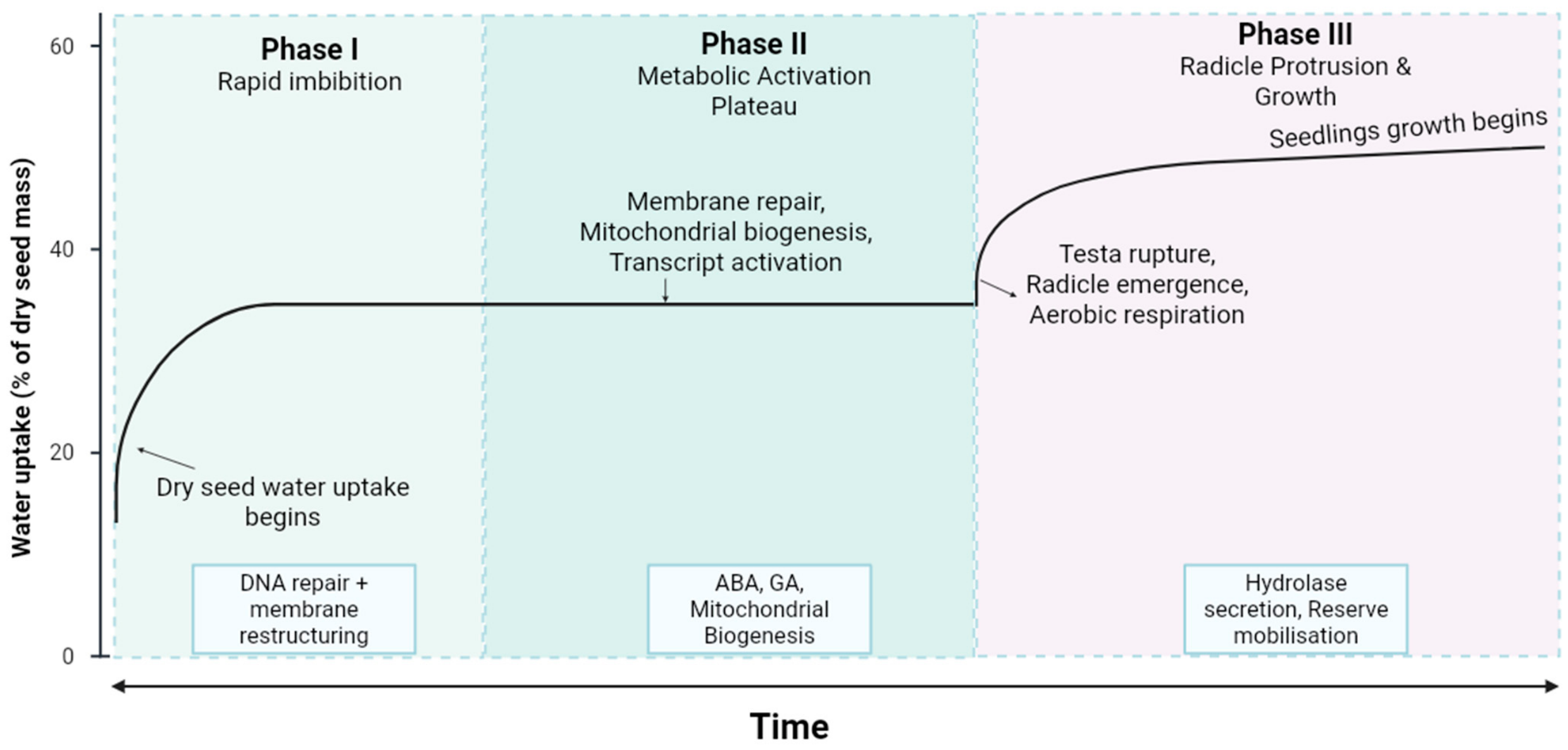
Imbibition proceeds through a well-characterized triphasic pattern of water uptake, with each phase corresponding to distinct physiological and biochemical events that collectively drive the transition from a quiescent seed to an actively growing seedling [17] (Figure 1). Phase I (rapid imbibition) is characterized by rapid water absorption, initiating membrane reorganization, DNA repair, and early metabolic recovery. During early imbibition, the availability of water enables enzymatic activity, while ABA degradation contributes to the release of dormancy and activation of germination [33]. Consequently, a critical process during early imbibition, which facilitates membrane restructuring, involves the reassembly of phospholipid bilayers, restoration of selective permeability, and re-establishment of proper cellular compartmentalization [29]. Maintaining membrane integrity during seed storage is closely associated with the preservation of seed vigor and germinability [41].
Phase II (metabolic activation or plateau phase) involves limited additional water uptake but extensive metabolic reactivation, including membrane repair, mitochondrial biogenesis, transcriptional activation, and hormonal regulation mediated by ABA and GA. Additionally, stored mRNAs and proteins accumulated during seed maturation facilitate the rapid onset of metabolic activity, while de novo synthesis of RNA and proteins supports continued development [74]. Simultaneously, the mobilization of stored reserves begins, providing the substrates necessary for respiration and biosynthesis. During this phase, cellular membranes and organelles become fully functional, enabling efficient compartmentalization and coordination of metabolic pathways [79]. Hormonal rebalancing is also a defining feature of this stage, thereby shifting the physiological state from dormancy maintenance toward active growth and preparing the seed for radicle protrusion [8,78] (Table 1).
The final stage, Phase III, is associated with renewed water uptake driven primarily by cell expansion and growth processes rather than passive hydration. This phase culminates in radicle emergence, marking the completion of germination and the onset of seedling establishment. Cell elongation and division become highly active during this stage, supported by increased energy production from respiration and the continued mobilization of stored reserves [17,33]. The coordinated integration of cellular expansion, metabolic activity, and hormonal signaling ensures the successful transition from a hydrated embryo to a growing seedling. Collectively, the triphasic pattern of imbibition reflects a finely tuned sequence of physical, biochemical, and developmental processes, the efficiency of which determines the speed, uniformity, and success of germination, particularly under variable environmental conditions [13].
Figure 1.
Schematic representation of the triphasic model of seed germination and the major physiological and metabolic events. The figure is modified from Bewley [80]; the timescale shown is representative only and may vary among plant species.
4.2. Oxidative Burst and Redox Resetting During Imbibition
As the seed rehydrates and metabolic processes resume, electron transport chains in mitochondria and other cellular compartments become active, inevitably leading to the generation of ROS such as O2•−, H2O2, and •OH [81,82]. While these molecules are often associated with cellular damage, their role during germination is more nuanced, as they function both as potentially harmful oxidants and as essential signaling mediators [83]. When maintained within controlled concentrations, ROS serve as key signaling molecules that regulate critical developmental processes, including the activation of germination-related genes, modulation of hormonal pathways, particularly the balance between ABA and GAs, and facilitation of cell wall loosening required for radicle emergence [13]. This dual functionality highlights the importance of ROS as integral components of the regulatory network controlling germination timing and progression [14].
Post-translational modifications further contribute to the regulation of starch biosynthesis-related proteins in developing rice seeds by affecting their activity, stability, and localization [52]. At the same time, enzymatic antioxidants, such as SOD, CAT, APX, and GR, and non-enzymatic antioxidants, including ascorbate, glutathione, tocopherols, flavonoids, and other secondary metabolites, help scavenge reactive species and protect cellular components from oxidative damage [13]. Beyond redox regulation, gluconeogenesis provides an important metabolic link between organic acids, amino acids, lipids, and sugars, thereby contributing to the coordination of carbon metabolism in plants [84].
Beyond detoxification, the redox state of the cell plays a regulatory role in modulating enzyme activity and metabolic pathways during germination. Changes in redox balance can influence protein function through mechanisms such as thiol disulfide exchange, reversible oxidation of cysteine residues, and other post-translational modifications that alter enzyme conformation and activity [83]. Collectively, the interplay between ROS production, antioxidant defenses, and redox-regulated signaling constitutes a finely tuned system that underpins successful germination and early seedling development.
4.3. Early Respiratory and Energetic Shifts with Imbibition
Rehydration during imbibition initiates a profound metabolic transition in the seed, shifting it from a dormant, low-energy state to one characterized by intense metabolic activity and high energy demand. In the earliest stages of imbibition, oxygen availability within seed tissues may be limited because rapid water influx and restricted diffusion reduce oxygen diffusion, leading to transient reliance on anaerobic pathways such as fermentation [17]. However, as hydration progresses and tissue permeability improves, oxygen diffusion increases, enabling a shift toward aerobic respiration, which is substantially more efficient in generating ATP. This transition from anaerobic to aerobic metabolism is critical, as efficient oxidative phosphorylation alone can meet the energy demands of germination, including macromolecular repair, reserve mobilization, and cellular expansion [16,19].
Central to this metabolic reactivation is the rapid maturation and activation of mitochondria. In dry seeds, mitochondria are present in a simplified, pro-mitochondrial form, with underdeveloped internal structures and limited respiratory capacity. Upon imbibition, these organelles undergo extensive structural and functional reorganization, including the development of cristae, assembly of respiratory complexes, and activation of the electron transport chain [79].
The reactivation of mitochondrial respiration during seed imbibition is regulated by coordinated modulation of respiratory electron transport, alternative oxidase (AOX) activity and mitochondrial redox homeostasis. AOX, a cyanide-resistant terminal oxidase located in the inner mitochondrial membrane, provides an alternative route for electron transfer from reduced ubiquinone to molecular oxygen, bypassing complexes III and IV of the cytochrome respiratory pathway. Although AOX does not directly contribute to proton pumping, it facilitates continued electron transport, helps prevent excessive reduction in the mitochondrial electron transport chain and can limit ROS accumulation [85]. Further, they demonstrated that seed imbibition stimulated AOX activity and increased AOX1A expression in Arabidopsis thaliana. Furthermore, hydrogen sulfide (H2S) signaling enhanced AOX protein accumulation and maintained AOX in its reduced (active state, thereby promoting germination. Similarly, Rodrigues et al. [86] reported that inhibition of AOX significantly affected germination in Pisum sativum, while expression of PsAOX1, PsAOX2a, and PsAOX2b varied among genotypes, indicating the importance of alternative respiration in germination-associated metabolic regulation. The physiological importance of AOX in maintaining mitochondrial energy metabolism has also been demonstrated in rice. Ji et al. [87] reported that suppression of OsAOX1 reduced mitochondrial oxygen consumption, malate dehydrogenase activity, ATP content, and the abundance of respiratory complex I subunits in aged rice seeds following imbibition. These findings suggest that AOX contributes to maintaining respiratory competence and metabolic stability during seed germination, particularly when mitochondrial function is compromised. Furthermore, AOX-mediated respiration may support metabolic flexibility by facilitating electron flow associated with the TCA cycle and other pathways involved in reserve mobilization.
In addition to AOX, under oxygen-limited conditions, NO metabolism and alternative respiration are closely associated with cellular energy regulation. Kumari et al. [88] demonstrated that nitrite supplementation enhanced anaerobic germination and seedling growth in deepwater rice by stimulating components of the phytoglobin–nitric oxide (PGB–NO) cycle, increasing anaerobic ATP production, and promoting AOX protein accumulation and respiratory activity. These responses were accompanied by reduced ROS accumulation and lipid peroxidation, suggesting coordinated regulation of nitrogen metabolism, respiratory activity, and oxidative stress. Mitochondrial respiratory reactivation is also closely associated with thiol-redox regulation. Nietzel et al. [82] demonstrated that seed imbibition rapidly stimulates oxygen consumption and ATP accumulation, accompanied by a shift toward a more reduced mitochondrial thiol-redox environment. Their redox proteomic analysis identified extensive changes in cysteine oxidation states among proteins associated with the respiratory electron transport chain and TCA cycle, highlighting the importance of redox-dependent regulation during the transition from metabolic quiescence to active respiration. Together, these findings indicate that early seed respiratory activation depends not only on the structural and functional competence of mitochondria but also on the coordinated regulation of alternative respiration, gaseous signaling, and mitochondrial redox homeostasis.
These molecular and developmental processes are further coordinated by hormonal regulation, with the ABA–GA balance controlling germination and brassinosteroids (BRs) signaling regulating cell division and elongation [33,89]. Together, hormonal regulation, reserve mobilization, and energy metabolism support the continuous availability of substrates and ATP required for germination and early seedling growth. The efficiency of this metabolic reprogramming is a key determinant of germination speed and seedling vigor. Conversely, abiotic stresses that impair mitochondrial function, limit oxygen availability, or disrupt metabolic flux can significantly reduce ATP production, delay germination, and compromise seedling establishment [2,19].
5. Hormonal Control During Seed to Seedling Transition
The progression from a hydrated, metabolically reactivated seed to an established seedling is governed by a highly interconnected hormonal network [17]. Rather than acting in isolation, phytohormones form dynamic, context-dependent signaling circuits that integrate environmental cues (light, temperature, water, oxygen) with endogenous developmental programs. Central to this network is the ABA–GA axis, which determines the dormancy–germination decision, while auxin, CK, ethylene, and BRs fine-tune cell division, elongation, tissue differentiation, and early seedling morphogenesis [90,91]. Hormonal effects are further modulated by redox status and ROS signaling, creating multilayered control over the seed–seedling transition [7,8].
5.1. ABA–GA Antagonism: The Central Regulatory Switch
ABA plays a central role in establishing and maintaining the quiescent, desiccation-tolerant state of the mature seed, acting as the primary hormonal regulator of dormancy and stress readiness [78]. A key component of ABA signaling is the activation of transcription factors such as ABSCISIC ACID INSENSITIVE 5 (ABI5), which acts as a central regulatory hub by repressing germination-associated genes and maintaining a transcriptional program characteristic of dormancy [8].
Declining dormancy is associated with reduced endogenous ABA and increased ABA catabolism through CYP707A2, together with enhanced GA biosynthesis [92]. This hormonal balance is further shaped by environmental cues that regulate GA biosynthesis and inactivation, thereby modulating GA levels and their effects on plant growth and development [93]. Together, these dynamic hormonal responses allow seeds to adjust germination timing to environmental conditions, reducing the likelihood of germination under unfavorable conditions. Thus, ABA acts not only as a germination inhibitor but also as an important component of the environmental regulation of seed dormancy and germination [19].
In contrast to ABA, GAs act as major promoters of germination and early seedling growth, functioning antagonistically to ABA within a finely balanced regulatory system [94]. GA treatment can enhance germination performance and recovery under abiotic stress, highlighting the role of hormonal regulation in seed germination [2]. In addition, GAs promote cell wall loosening and expansion in the embryonic axis, facilitating radicle protrusion through the surrounding tissues. At the molecular level, GA signaling operates through the degradation of DELLA proteins, which are negative regulators of growth; their removal releases repression on downstream transcriptional programs that drive cell elongation and metabolic activation [17,94]. This hormone-driven reprogramming is essential for transitioning the seed from a dormant state to active growth.
Crucially, the outcome of these opposing hormonal influences depends not only on the absolute levels of ABA or GA but also on their relative balance, often expressed as the ABA to GA ratio. A high ABA-to-GA ratio favors dormancy maintenance or delayed germination, whereas a lower ratio promotes germination and seedling establishment [78]. This hormonal balance is further influenced by environmental and developmental conditions, which affect seed cellular stability and metabolism through protective proteins and transcriptional regulation [46,95]. Together, these interconnected regulatory pathways integrate developmental and environmental signals, providing coordinated control of germination and early seedling development [7,8].
5.2. Auxin, Cytokinin, Ethylene, and Brassinosteroids
While the antagonistic interplay between ABA and GA establishes the fundamental decision framework governing dormancy and germination, the successful progression from germination to seedling establishment requires the coordinated action of additional phytohormones that regulate cell expansion, division, tissue differentiation, and overall seedling architecture. Among these, auxin, CKs, ethylene, and BRs function as key modulators that fine-tune developmental processes in response to both internal cues and environmental conditions [96].
Auxin, primarily in the form of indole-3-acetic acid (IAA), plays a central role in regulating cell elongation and establishing spatial organization during early seedling development [97]. Auxin transport generates spatial and temporal variations in auxin signaling that regulate patterning and directional growth. Beyond elongation, auxin is critical for establishing polarity and guiding tissue patterning, ensuring proper differentiation of root and shoot structures. Its distribution within the seedling is tightly controlled by polar auxin transport systems mediated by PIN-FORMED (PIN) proteins, which generate local concentration gradients that direct differential growth responses [98]. These gradients are particularly important for processes such as hypocotyl elongation and apical hook formation, where asymmetric growth protects the emerging shoot apex during soil penetration. Auxin signaling also interacts closely with GAs to promote elongation, while under stress conditions, it intersects with ABA pathways, reflecting its integrative role in coordinating growth with environmental constraints [78] (Table 1).
CKs, in contrast, are primarily associated with the regulation of cell division and meristem activity. They play a pivotal role in activating the shoot apical meristem and facilitating the transition from embryonic to vegetative growth [99]. Cytokinin regulates plant development through signaling pathways that control cell proliferation, differentiation, and tissue patterning [100]. By promoting cell proliferation in meristematic tissues, CKs contribute to shoot meristem activity. Their dynamic interaction with auxin regulates root–shoot patterning, organogenesis, and cell fate, coordinating plant growth and development [101].
Ethylene serves as another key regulator during the seed-to-seedling transition, particularly under suboptimal environmental conditions. It is widely recognized as a positive regulator of germination, capable of alleviating ABA-mediated inhibition and thereby promoting the transition from dormancy to active growth. Ethylene also facilitates endosperm weakening and radicle emergence by modulating cell wall properties, allowing the embryo to overcome mechanical resistance imposed by surrounding tissues. In etiolated seedlings, ethylene plays a crucial role in regulating apical hook formation, which protects the shoot meristem during emergence through the soil [102,103]. Notably, ethylene production and signaling are often enhanced under stress conditions, where it functions as an adaptive mechanism that enables seeds to overcome environmental and mechanical constraints [7,104].
BRs further contribute to the regulation of early seedling growth by promoting cell expansion and elongation, particularly in the hypocotyl. These hormones act synergistically with auxin and GAs to enhance growth responses and improve seedling vigor. In addition to their growth-promoting effects, BRs are increasingly recognized for their role in stress adaptation, as they modulate antioxidant systems, gene expression, and cellular metabolism to enhance tolerance to abiotic stresses [89]. Moreover, BRs interact with light signaling pathways to regulate the transition between skotomorphogenesis (growth in darkness) and photomorphogenesis (growth in light), thereby influencing key developmental processes such as cotyledon expansion, chloroplast development, and seedling greening [105].
Collectively, these hormonal pathways form an intricate and highly interconnected network that integrates developmental stages with environmental signals. Through extensive crosstalk and feedback regulation, auxin, CKs, ethylene, and BRs refine the broader ABA–GAs regulatory framework, ensuring that germination and seedling establishment proceed in a coordinated and adaptive manner [17]. This multilayered hormonal control enables seedlings to balance growth and stress responses, ultimately determining their ability to successfully establish and transition to autotrophic growth under variable environmental conditions.
5.3. Hormonal Crosstalk During Seed to Seedling Transition
5.3.1. ABA–GA Interaction During Seed Germination
The antagonistic interaction between ABA and GA represents a central regulatory mechanism controlling the transition from seed dormancy to germination. ABA inhibits germination primarily through the PYR/PYL/RCAR–PP2C–SnRK2 signaling pathway, which activates ABA-responsive transcription factors, including ABI3, ABI4, and ABI5. Conversely, GAs promote germination through GID1-mediated degradation of DELLA growth repressors, particularly RGL2 [106,107]. Further, they demonstrated that RGL2 promotes ABA accumulation and ABI5 activity, thereby preventing germination when GA availability is limited. More recently, experimental evidence demonstrated that ABI5 directly regulates the transcription of ABA receptor genes, including PYL11 and PYL12, establishing an additional feedback mechanism controlling ABA sensitivity during germination [108]. Furthermore, Finkelstein and Lynch [109] demonstrated that ABI5-binding proteins can suppress germination inhibition associated with DELLA accumulation, indicating convergence between ABA and GA regulatory pathways. These findings identify RGL2, ABI5, and SnRK2 kinases as important molecular nodes integrating ABA and GA signaling during early germination.
5.3.2. Light, ABA, and GA Signaling
Light-dependent seed germination is regulated through phytochrome signaling and PHYTOCHROME-INTERACTING FACTORs (PIFs), which influence ABA and GA metabolism [110]. Further, they identified a PIF1–miR408–PLANTACYANIN regulatory cascade that links light perception with hormonal balance during Arabidopsis seed germination. PIF1 represses miR408 expression, maintaining PLANTACYANIN accumulation and favoring a high-ABA, low-GA physiological state that inhibits germination. Light-induced PIF1 degradation releases this repression, facilitating hormonal changes associated with germination. This mechanism illustrates how environmental light signals are integrated with hormonal regulation through specific transcriptional and post-transcriptional regulators.
5.3.3. Ethylene–Auxin–GA Interactions During Apical Hook Formation
Ethylene signaling activates EIN2-dependent stabilization of EIN3/EIL1 transcription factors, which promote the expression of HOOKLESS1 (HLS1), a central regulator of apical hook development. GA enhances this process by promoting DELLA degradation and facilitating EIN3/EIL1-dependent HLS1 expression. EIN3/EIL1 and PIF transcription factors also independently activate HLS1 through distinct promoter elements, integrating ethylene, GA, and light signaling. The resulting asymmetric auxin distribution contributes to differential cell elongation and hook curvature. Importantly, mechanical resistance during soil emergence stimulates EIN3-dependent HLS1 expression, demonstrating that hormonal crosstalk is dynamically modified by the physical environment [111,112].
5.3.4. Auxin–Cytokinin Interactions During Root Meristem Establishment
Auxin and cytokinin coordinate early root meristem development through antagonistic regulation of cell proliferation and differentiation. In Arabidopsis thaliana, cytokinin signaling involves the B-type response regulators ARR1 and ARR12 and the downstream transcription factor RAV1, which modulates the expression of SHORT HYPOCOTYL2/IAA3 (SHY2) and the auxin efflux transporter PIN1. This regulatory network influences auxin distribution, promotes the transition toward cell differentiation, and restricts root meristem expansion. Furthermore, brassinosteroid signaling interacts with this pathway through BES1-mediated regulation of SHY2 and PIN7, highlighting the integration of multiple hormonal signals during early root development [113,114].
5.3.5. BR–GA–Light Integration During Hypocotyl Elongation
BRs and GAs cooperatively regulate seedling hypocotyl elongation through interconnected signaling pathways involving BRASSINOSTEROID INSENSITIVE 2 (BIN2), BRASSINAZOLE RESISTANT 1 (BZR1), DELLA growth repressors, and PHYTOCHROME-INTERACTING FACTORs (PIFs). GA promotes DELLA degradation, relieving DELLA-mediated inhibition of BZR1 and PIF transcriptional activity, whereas BR signaling promotes BZR1 activation and reduces BIN2-dependent inhibition of PIF4, thereby facilitating the expression of cell elongation-related genes [115,116]. Recent studies have identified additional molecular regulators linking these hormonal pathways with environmental signals. The DELLA–ABI4–HY5 module integrates GA and light signaling by regulating hypocotyl elongation and GA catabolism through GA2ox genes [117]. Furthermore, another recent study demonstrated that the transcription elongation factor IWS1 coordinates BR and GA signaling under elevated temperatures by interacting with BZR1 to promote PIF4 transcription and with TCP14/TCP15 to enhance GA20ox2 expression, thereby promoting DELLA degradation and thermomorphogenic growth [118].
Table 1.
Hormonal crosstalk during seed germination.
5.4. Hormonal Control of Developmental Outcomes: From Germination to Seedling Architecture
Radicle protrusion marks the completion of germination and is regulated by complex crosstalk between ABA and GA [78] (Table 2). GAs promote embryo growth and cell wall loosening, while ethylene facilitates endosperm weakening and helps the radicle overcome mechanical resistance imposed by surrounding tissues [102]. This process is highly sensitive to environmental conditions and reflects the integration of hormonal and biomechanical signals that enable the embryo to transition from a confined state to active growth [7,8].
Following radicle emergence, hypocotyl elongation becomes a dominant growth process, particularly in etiolated seedlings. This elongation is regulated by a coordinated interaction between auxin, GAs, and BRs, which together promote cell expansion through modulation of cell wall extensibility and activation of growth-related gene expression [90,119]. Cytokinin signaling interacts with auxin to regulate plant growth and development [100], while GAs and BRs enhance elongation by relieving growth repression and stimulating cell expansion pathways [90,94]. Another critical morphological adaptation during early seedling growth is apical hook formation, which is a characteristic feature of etiolated growth that facilitates seedling emergence, while auxin promotes cell elongation through cell-wall modification [102,119]. Cytokinins promote cell division and, together with other phytohormones, regulate plant growth and development [99]; BRs support cell expansion and stress adaptation [90]. The integration of these processes culminates in the establishment of a functional seedling capable of initiating photosynthesis and transitioning to autotrophic growth.
Taken together, these developmental events highlight the complexity of hormonal regulation during the seed–seedling transition, which operates as a multilayered and highly dynamic system. ABA plays a central role in ensuring survival by maintaining dormancy and enabling environmental sensing, while GAs act as primary drivers of germination and reserve mobilization [92]. Auxin, cytokinins (CKs), ethylene, and BRs further refine growth patterns, tissue differentiation, and morphological development through extensive crosstalk and feedback regulation [120]. This interconnected hormonal network integrates internal developmental status with external environmental cues, allowing seeds to precisely time germination and optimize seedling establishment. Such regulation confers both robustness and plasticity, enabling seeds to balance the risks associated with premature germination against the advantages of rapid establishment when conditions are favorable. This finely tuned system underscores the adaptive significance of hormonal control in plant life cycles and highlights its importance for improving crop performance under variable environmental conditions.
Table 2.
The table summarizes the major physiological, biochemical, and cellular events occurring during the sequential phases of seed germination and early seedling establishment, including water uptake, membrane repair, mitochondrial activation, hormonal regulation, reactive oxygen species (ROS) signaling, reserve mobilization, and radicle emergence. It also highlights the influence of abiotic stresses on these processes and their consequences for germination efficiency and seedling vigor.
6. Cellular and Physiological Events During Radicle Emergence
Radicle emergence marks the completion of germination and represents a critical biomechanical transition where the embryo overcomes the physical constraints of surrounding tissues (seed coat and endosperm) [17,130]. This process requires the integration of cell wall remodeling, turgor-driven expansion, cytoskeletal reorganization, and vesicle trafficking, all tightly regulated by hormonal signals (GA, ABA, ethylene), ROS, and environmental conditions [119] (Table 2). Successful radicle protrusion is therefore not merely a growth event but a coordinated cellular and physiological process determining seedling establishment and vigor.
6.1. Cell Wall Loosening and Expansion
Radicle emergence represents a critical biomechanical event during germination, requiring the coordinated expansion of cells within the embryonic axis and the simultaneous weakening of the surrounding seed tissues, particularly the endosperm and seed coat. This process is fundamentally governed by controlled remodeling of the plant cell wall, a complex and dynamic structure composed of cellulose microfibrils embedded in a matrix of hemicellulose and pectin [131]. The extensibility and mechanical properties of the cell wall must be precisely regulated to allow cell expansion while maintaining structural integrity. Among the key regulators of this process are expansins, xyloglucan endotransglucosylase/hydrolases (XTHs), and pectin-modifying enzymes, each contributing to distinct yet complementary aspects of wall modification (Table 2). Expansins are non-enzymatic proteins that disrupt hydrogen bonding between cellulose microfibrils and hemicellulose, thereby loosening the cell wall and increasing its extensibility without directly hydrolyzing its components [131]. This process is further regulated by hormonal signaling, with GAMYB transcription factors mediating GA signaling and contributing to the regulation of seed germination [94,119]. More broadly, cell wall remodeling alters wall mechanics to accommodate plant cell growth [132]. These mechanical changes are coordinated with the cytoskeleton, as ROP-interacting ICR proteins regulate microtubule dynamics and contribute to cell wall patterning during plant development [133,134].
Hormonal signaling also plays a central role in seed germination, with GA promoting germination and cell wall loosening, whereas ABA inhibits germination [78]. In parallel, ROS contribute to redox signaling during seed germination and stress priming, modulating responses to environmental stress [83]. ROS are also involved in seed hydration, radicle elongation, and the weakening of the endosperm and cell wall [13]. Under stress conditions, limitations in water uptake can consequently reduce germination, radicle growth, and seedling vigor, highlighting the sensitivity of this stage to environmental constraints [3].
6.2. Cytoskeleton Dynamics
The cytoskeleton plays a pivotal role in coordinating the cellular and subcellular processes required for radicle emergence, acting as a dynamic structural framework that regulates cell expansion, polarity, and intracellular organization. During germination and development, extensive reorganization of cytoskeletal components, particularly microtubules and actin filaments, contributes to the spatial and temporal regulation of cell growth [135,136]. At the same time, embryo cell expansion and cell wall remodeling contribute to radicle protrusion, while surrounding seed tissues provide mechanical constraints [131]. As germination progresses, microtubule arrays undergo continuous reorganization to accommodate changes in growth patterns, supporting the coordinated elongation required for radicle protrusion.
These growth processes are accompanied by dynamic intracellular trafficking. PVC/MVB fusion contributes to the organization of plant endomembrane compartments, supporting membrane expansion and protein trafficking [137]. More broadly, intracellular transport supplies growing cells with components required for membrane and cell wall remodeling. Actin dynamics also contribute to the establishment and maintenance of cell polarity, supporting directional cell growth. The organization and activity of both microtubules and actin filaments are regulated by signaling pathways involving hormones and ROP GTPases, which act as molecular switches connecting signaling with cytoskeletal organization, cell growth, and stress responses [136,138].
In parallel with these cytoskeletal and trafficking processes, redox signaling contributes to the regulation of seed germination. ROS and NO interact with phytohormonal pathways and influence cellular processes, including cell wall remodeling [139]. Environmental and hormonal signals further regulate ROS homeostasis during germination, while ROS contribute to cell wall weakening and radicle elongation [13]. These processes ultimately interact with the mechanical properties of emerging seedlings, as cell wall remodeling and hormonal regulation contribute to growth under mechanical constraints [140]. Thus, coordinated regulation of the cytoskeleton, intracellular trafficking, redox signaling, and cell wall dynamics contributes to successful germination and early seedling establishment, particularly under challenging environmental conditions.
6.3. Significance for Germination Success
The efficiency of radicle emergence is a decisive factor in determining the overall success of germination and subsequent seedling establishment, as it directly influences the rate and uniformity with which seedlings emerge and begin growth. Rapid and synchronized radicle protrusion enables seedlings to establish functional root systems early, which is essential for efficient water and nutrient uptake, particularly under field conditions where competition and environmental variability are significant [33]. This early establishment confers a strong advantage in terms of seedling vigor, allowing plants to maintain steady growth and better withstand abiotic stresses. In addition, the ability of the radicle to penetrate the surrounding soil matrix is critical for anchorage and access to belowground resources, a process that depends on both sufficient mechanical force generated by turgor pressure and effective weakening of surrounding tissues through coordinated cell wall remodeling [133].
Conversely, any disruption in the tightly regulated processes underlying radicle emergence can have profound consequences for seedling performance. Environmental stresses such as drought, salinity, and extreme temperatures can impair water uptake, alter hormonal balance, and disrupt metabolic and redox homeostasis, thereby delaying or inhibiting radicle protrusion [13]. Similarly, poor seed quality, often associated with ageing or oxidative damage, can compromise membrane integrity, enzyme activity, and energy metabolism, further reducing the efficiency of germination [29,41]. Such delays not only affect the timing of emergence but also lead to reduced uniformity within plant populations, ultimately impacting crop productivity. As a result, radicle emergence represents a critical bottleneck in the seed-to-seedling transition, where the integration of physiological, biochemical, and mechanical processes determines the likelihood of successful establishment. Understanding and improving the mechanisms governing this stage therefore constitute an important target for enhancing crop performance and resilience under increasingly variable environmental conditions [2,19].
7. Stress Physiology During Seed–Seedling Transition
The seed-to-seedling transition is one of the most vulnerable and precisely regulated phases of the plant life cycle. This transition can be severely disrupted by environmental stressors, resulting in reduced germination efficiency and seedling growth. Recent studies have revealed that stress responses during this stage are maintained by complex regulatory networks involving redox homeostasis, ROS, epigenetic regulation, and phytohormone interactions [13,141]. Within these regulatory networks, transcription factors such as ZmMYB71, ZmMYB4, and ZmGNAT16 contribute to the regulation of starch biosynthesis and kernel starch content in maize [95,142]. In addition, stress memory and metabolic reprogramming can enhance seed resilience to adverse environmental conditions [2]. In both natural and agricultural contexts, seeds often encounter unfavorable environments, including water scarcity, high salinity, limited oxygen availability due to waterlogging, and temperature fluctuations. These stresses can delay or inhibit seed germination, impair reserve mobilization, and reduce seedling vigor [143]. Therefore, understanding the physiological and molecular mechanisms underlying stress responses during this transition stage is essential to improve crop quality. Recent research has identified a systems-level approach, showing that germination is regulated by dynamic interactions among ROS signaling, hormonal networks, metabolic pathways, and transcriptional regulation [144]. This section highlights the current understanding of stress physiology during the seed-to-seedling transition, along with new concepts and strategies to enhance crop resilience during changing climatic conditions.
7.1. Abiotic Stresses During Transition
Heat stress can disrupt water uptake, enzyme activity, and energy metabolism during germination, leading to poor or uneven seedling emergence. It also alters hormonal and redox homeostasis, including ABA and GA signaling [145] (Figure 2). In addition to these effects, environmental stresses can influence lipid droplet metabolism and autophagy, which contribute to cellular homeostasis and stress adaptation [66]. Seed protection under stress is also supported by small heat shock proteins, whose expression is regulated by developmental and stress-related signals and which contribute to desiccation tolerance [146]. At the same time, seed oil reserves, mainly stored as TAG, provide an important energy source for germination and seedling development, while their accumulation is regulated by interacting transcription factors in response to developmental and environmental cues [142] (Figure 2).
Figure 2.
Hormonal Redox Regulatory network during seed germination under abiotic stress.
Under waterlogging conditions, hypoxia can alter metabolic and developmental processes and promote adventitious root elongation, contributing to seed germination rate/plant adaptation to low-oxygen conditions [147]. Plant species and genotypes differ markedly in their ability to tolerate flooding during germination [148]. Rice (Oryza sativa) can produce α-amylase under low-oxygen conditions, enabling seeds to break down starch and germinate even when submerged. In contrast, wheat and barley seeds are unable to germinate under such conditions [149]. For Ethylene has a key role in the plant adaptation to waterlogging. During seedling establishment, waterlogging induces the expression of the transcription factor SPEEDY HYPONASTIC GROWTH, which regulates the expression of ACC OXIDASE5 and ASC genes, further modulating the biosynthesis of ethylene [150]. This stress also induces responses involving ROS-associated proteins and respiratory protection mechanisms, including CYP81D8 and AOX1A [127,151].
Oxygen availability plays a critical role during germination, especially under waterlogged conditions. Roots are among the first organs to experience low oxygen stress and show distinct responses compared with shoots [128,152,153]. For example, ABA promotes starch accumulation and a shift toward storage metabolism during grapevine bud dormancy [154], while salt stress can strongly reduce germination and activate antioxidant defense mechanisms in maize [155]. However, drought can further impair seed germination percentage and vigor by limiting water imbibition and radicle emergence, while in seedlings alter physiological processes, reduce growth, and affect survival, with potential consequences for crop yield [156]. There are several drought-responsive genes such as DREB2 and AQP7, transcription factors [NF-Y (nuclear factor Y), ERF (ethylene responsive factor), and NAC (NAM-no apical meristem; ATAF-Arabidopsis transcription activation factor; CUC-cup-shaped cotyledon)], aquaporins, LEA, dehydrins, and HSPs, which play significant roles in seedling adjustment to stress [157]. On the other hand, nutrient deprivation during early seedling establishment arrests normal growth and activates complex survival and signalling responses. In starvation conditions, GA can induce ATG8-dependent autophagic degradation of DELLA proteins to promote germination and early seedling establishment [158]. Arabidopsis seedlings can survive severe mineral starvation by arresting their development and entering a metabolic quiescent state until more favorable conditions become available [159].
ROS can also play an important signaling role during germination, and the concept of an “oxidative window” suggests that appropriate ROS levels are required for successful germination [13,141]. Under salinity stress, complex crosstalk among ABA, GA, auxin, and ethylene regulates seed germination and stress responses, while ABA–ROS interactions contribute to ROS homeostasis [144,160].
Beyond these individual stress responses, combined abiotic stresses can alter several physiological processes, including respiration, starch metabolism, and nitrogen assimilation, thereby slowing or inhibiting the seed-to-seedling transition in maize [161]. Salinity lowers osmotic potential and water uptake, while salinity and waterlogging can disrupt nutrient balance and impair seedling growth and physiological processes [162] (Table 3). Similarly, in Arabidopsis thaliana, osmotic stress is reported to arrest seed germination through ABA-dependent mechanisms, while ODR1/AtSDR4L limits ABA accumulation and alleviates this inhibition [163].
Table 3.
Effects of abiotic stresses, hormonal regulation, and study limitations during the seed-to-seedling transition.
7.2. Stress Memory from Seed Transition
Stress memory is the remarkable ability of seeds to retain crucial information about the environmental conditions they encountered during their development on the mother plant (Figure 3). This memory plays a pivotal role in determining seed dormancy, vigor, and stress tolerance during germination [40,229]. Key environmental factors, such as drought, temperature variations, and nutrient availability during seed maturation, induce significant and enduring biochemical and molecular changes.
Figure 3.
Stress Memory Model from seed maturation to seedling establishment.
Epigenetic modifications, particularly DNA methylation and histone modifications, are fundamental in encoding this stress memory. Changes in chromatin states effectively regulate the expression of stress-responsive genes during the germination process [230,231]. For instance, histone demethylases such as REF6 activate germination-related genes by removing repressive marks (H3K27me3), thereby firmly linking developmental cues to stress adaptation. Several studies report epigenetically mediated effects that persist into subsequent generations. In most cases, however, only one or two generations after exposure have been examined, and direct exposure of the embryo or of germline precursor cells has not always been excluded. Genuine transgenerational inheritance has been demonstrated experimentally in specific systems, but its occurrence, magnitude and stability cannot be generalised across stress types or species [230].
7.3. Small-Molecule Signaling During Seed to Seedling Transition and Abiotic Stress Responses
Small signaling molecules, including hydrogen cyanide, hydrogen sulfide and nitric oxide, regulate seed germination and early seedling establishment through interactions with ROS, phytohormones, and mitochondrial metabolism. HCN is generated as a by-product of ethylene biosynthesis and through the breakdown of cyanogenic glycosides in cyanogenic species, while excess cyanide is detoxified by β-cyanoalanine synthase (β-CAS). Beyond its inhibitory effect on cytochrome c oxidase, HCN can promote dormancy release by modifying ROS metabolism and cell-wall loosening. A study in walnut and tomato has demonstrated that cyanide treatment influences redox signaling and germination-associated physiological processes [232]. H2S is produced mainly through cysteine metabolism involving L-cysteine desulfhydrase (LCD) and DES1. It regulates germination through redox signaling and mitochondrial respiratory activity. NO, which can be generated through nitrate reductase-associated pathways involving NIA1/NIA2, regulates germination through protein S-nitrosylation and interactions with ABA signaling. Albertos et al. [181] demonstrated that NO-mediated S-nitrosylation of ABI5 at Cys153 promotes its proteasomal degradation, alleviating ABA-dependent germination inhibition. These signaling pathways also contribute to stress adaptation by modifying antioxidant responses and cellular redox homeostasis. In addition, melatonin has been shown to improve seed germination and early seedling growth under salinity by reducing oxidative damage and enhancing antioxidant defense, as demonstrated in wheat and maize [233,234].
8. Omics and Systems Biology Approaches to Understanding Seed to Seedling Establishment
The transition from seed to seedling is a crucial developmental stage that is particularly sensitive to environmental stresses. Recent advancements in omics technologies and systems biology have significantly enhanced our understanding of the molecular and physiological mechanisms that underpin stress adaptation during this transition. High-throughput methods, including transcriptomics, proteomics, and metabolomics, facilitate comprehensive profiling of gene expression, protein dynamics, and metabolic reprogramming in response to stress conditions [235]. Additionally, emerging technologies such as single-cell and spatial omics offer unprecedented resolution for identifying cell- and tissue-specific responses to these challenges. Furthermore, integrative systems biology frameworks enable the reconstruction of complex metabolic and hormonal networks, paving the way for predictive modeling of plant responses to environmental cues [236].
This section elaborates on recent advancements in omics-driven research on seed germination and early seedling establishment under stress conditions, emphasizing the integration of multi-layer datasets and computational modeling approaches. These insights lay the groundwork for developing stress-resilient crops through precision breeding and seed enhancement technologies. While traditional physiological studies have contributed valuable knowledge to seed biology, they often fall short in capturing the complexity of molecular interactions. The emergence of omics technologies and systems biology approaches has provided a comprehensive understanding of stress responses during germination. These methodologies enable the integration of molecular, cellular, and physiological data, revealing intricate regulatory networks that influence seed performance under stress conditions.
8.1. Transcriptomics, Proteomics, and Metabolomics Approaches
Transcriptomic analyses, particularly RNA sequencing (RNA-seq), have provided valuable insights into the dynamic changes in gene expression that occur during germination under stress conditions. Key findings identify genes associated with hormonal signaling pathways (including ABA, GA, and ethylene), ROS detoxification and redox regulation, and reserve mobilization and energy metabolism. Recent studies have shown that transcriptomic profiling can uncover gene regulatory networks and transcription factors, such as those from the ABI5, WRKY, and bZIP families, that play crucial roles in modulating stress responses [8,125]. Time-resolved transcriptomics further indicates that gene expression is highly stage-specific, with distinct transcriptional programs functioning during imbibition, the lag phase, and radicle protrusion.
Proteomics complements transcriptomics by providing insights into protein abundance and functional changes. These approaches, together with metabolic profiling, reveal coordinated molecular changes during seed development and germination, including alterations in proteins involved in stress responses and reserve metabolism [236]. At the same time, ABA metabolism is regulated at both transcriptional and post-transcriptional levels, contributing to the control of seed dormancy and germination [33,237].
Integrated omics profiling can reveal coordinated changes in plant stress responses, including alterations in redox regulation and carbon metabolism, such as glycolysis and the pentose phosphate pathway [238,239]. At a finer cellular resolution, single-cell RNA sequencing enables the identification of cell-type-specific gene expression patterns and developmental trajectories in response to external stimuli [240,241].
8.2. Single-Cell and Spatial Omics Techniques
Single-cell RNA sequencing (scRNA-seq) has transformed the field of plant biology by facilitating the analysis of gene expression at the level of individual cells. During the seed-to-seedling transition, this technique uncovers cell-type-specific transcriptional programs, developmental trajectories of embryonic and meristematic cells, and varied stress responses across different tissues. Recent research emphasizes the significance of cellular heterogeneity in regulating germination and early growth [242,243].
Advances in computational and machine-learning methods facilitate the analysis and interpretation of large, complex genomic and multi-omics datasets, including transcriptomic, proteomic, and metabolomic data. These approaches can identify complex patterns and relationships within high-dimensional datasets, improving the functional interpretation of genomic and molecular data [244]. However, challenges remain, including technical limitations imposed by plant cell walls, high computational demands, and a scarcity of reference atlases for seeds. Ongoing technological advancements are anticipated to address these obstacles.
8.3. Integrative Modeling of Metabolic and Hormonal Networks
Systems biology integrates multi-omics data to develop predictive models of biological processes. In the field of seed biology, these models illustrate the interactions among various components, including hormonal pathways (ABA, GA, ethylene, and auxin), redox systems (ROS and antioxidants), and metabolic networks. Network approaches represent biological systems as interconnected nodes and edges, which facilitates the identification of key regulatory hubs, the analysis of signaling cascades, and the prediction of system behavior under stress. Graph-based and probabilistic models are frequently utilized for network reconstruction [245].
Seed priming influences metabolic processes during germination, including starch mobilization, antioxidant defense, and ROS-related responses. These changes support the activation of pre-germination metabolism and improve seed germination and seedling vigor. Multivariate analyses, including PCA and cluster analysis, further reveal relationships among germination, seedling vigor, growth, and productivity-related traits under different growing conditions [246]. These changes support the activation of pre-germination metabolism and improve seed germination and seedling vigor. Multivariate analyses, including PCA and cluster analysis, further reveal relationships among germination, seedling vigor, growth, and productivity-related traits under different growing conditions. Omics and systems biology approaches have improved our understanding of molecular and cellular processes during the seed-to-seedling transition. Transcriptomic, single-cell, and spatial approaches reveal dynamic gene expression, cellular heterogeneity, and spatial organization during seed development and germination [247]. Hydrothermal-time models provide quantitative predictions of germination dynamics by integrating temperature and water potential. Integrating molecular datasets with such mechanistic models could provide a basis for developing dynamic, data-driven representations of seed germination and vigor [248].
9. Agricultural and Ecological Implications in Seed to Seedling Transition
Successful transition from seed to seedling requires precise coordination of physiological, biochemical, and molecular processes, including water uptake, metabolic activation, and cell expansion. Environmental stress frequently disrupts these processes, leading to poor germination, delayed emergence, and reduced plant productivity. Abiotic stresses such as drought, salinity, extreme temperatures, and flooding are major constraints affecting crop establishment worldwide. Climate change is further exacerbating these stresses, increasing their frequency and severity. Consequently, improving stress resilience during early plant development has become a key objective in modern agriculture and ecological restoration. Climate change is intensifying environmental variability, making adaptive mechanisms such as hormonal plasticity, redox regulation, and metabolic flexibility increasingly important. Integrating physiological insights with modern agronomic and biotechnological approaches offers promising avenues for developing resilient cropping systems and sustaining ecosystem stability under changing environmental conditions [249].
From an agricultural perspective, improving seed vigor and early seedling performance contributes to enhanced field emergence, better nutrient and water use efficiency, improved competitiveness against weeds, and greater yield stability under both optimal and stress conditions. In natural and restored ecosystems, successful seedling establishment is equally important for vegetation regeneration, species persistence, ecosystem resilience, biodiversity conservation, and restoration of degraded landscapes under changing climates.
9.1. Seed Vigor and Crop Establishment
Seed vigor refers to the properties of seeds that determine rapid and uniform germination, seedling establishment, and growth, particularly under suboptimal environmental conditions. Unlike standard germination percentage, seed vigor provides a broader measure of seed performance because it reflects the capacity of a seed lot to germinate and establish healthy seedlings under stressful field conditions, such as increased ROS [1,250]. Several key factors influence this vigor, including genetic background, environmental conditions during seed development, maturity at harvest, storage conditions, and the seeds’ biochemical composition and metabolic status.
High-vigor seeds are characterized by superior membrane integrity, efficient reserve mobilization, and robust antioxidant defense systems. The physiological foundations of seed vigor include: (i) membrane stability, which effectively prevents solute leakage during imbibition; (ii) mitochondrial activity, enabling rapid ATP production; (iii) enzyme activation, which is critical for mobilizing stored reserves; and (iv) antioxidant defense, ensuring protection against oxidative damage [251].
ROS play a crucial dual role, serving as signaling molecules at lower concentrations while inducing oxidative damage at higher concentrations [252]. Therefore, maintaining ROS homeostasis through efficient antioxidant defense is essential for preserving seed viability and vigor [1]. This redox balance is also important for successful seed germination and seedling establishment, particularly under stress conditions such as salinity [253]. In modern agriculture, high-quality seed is essential for maximizing productivity and resource-use efficiency. Furthermore, in natural ecosystems, seed vigor significantly shapes species distribution, population dynamics, and overall ecosystem resilience. Seeds with higher vigor are more likely to thrive under fluctuating environmental conditions, making a substantial contribution to biodiversity and ecological stability.
9.2. Enhance Climate Change Resilience Strategies
Climate change is transforming environmental conditions, significantly impacting seed germination and seedling establishment. Factors such as increased temperature variability, irregular rainfall, and soil salinity present considerable challenges to plant development. These stress conditions disrupt essential processes, including water uptake and imbibition, hormonal balance (particularly ABA–GA signaling), and metabolic activation [141].
Plants have evolved various mechanisms to cope with abiotic stress during early development, including: (i) hormonal regulation, where ABA enhances stress tolerance while GA facilitates germination; (ii) redox homeostasis, which helps maintain ROS at optimal levels; (iii) metabolic flexibility, allowing adjustments in energy pathways; and (iv) gene regulation, which activates stress-responsive pathways. Together, these mechanisms contribute to plant resilience under changing environmental conditions [95,141]. Strategies to enhance crop resilience include breeding stress-tolerant varieties, improving seed quality and vigor, and adopting climate-smart agricultural practices can help significantly. The integration of physiological and molecular approaches is crucial for developing resilient cropping systems. Climate change also affects the timing and success of seed germination, influencing species distribution and ecosystem dynamics. Adaptive responses at the seed stage are vital for maintaining biodiversity and ecosystem resilience.
9.3. Seed Priming and Biostimulants for Triggering Germination and Enhancing Growth
Seed priming is a pre-sowing treatment that partially hydrates seeds, activating metabolic processes without triggering germination. Primed seeds demonstrate faster germination, improved uniformity, and enhanced stress tolerance. This process induces biochemical changes, including the activation of antioxidant systems, accumulation of osmoprotectants, and repair of cellular damage [253,254]. In addition, priming may create stress memory through epigenetic mechanisms, including DNA methylation, histone modifications, chromatin remodeling, and transcriptional reprogramming, allowing improved stress responses later in development or even in subsequent generations [255]. Several priming agents are available, which are categorized based on their nature, such as hydropriming, osmopriming, solid matrix priming, nanopriming, biopriming, priming with plant biostimulants, etc. [254,256,257]. Each method promotes specific physiological responses and, in some cases, improves stress resilience. Hydropriming is the cheapest priming technique for seed priming, soaking the seeds in water, followed by seed dehydration, and then imbibing again. This technique allows water to enter the seed in an uncontrolled way and can trigger an oxidative burst that damages the seed and may impair germination or cause the radicle to emerge too early. However, with the optimized treatment, the seed not only germinates but also triggers responses against a wide range of abiotic stresses [258]. An alternative to hydropriming is osmopriming, which uses low-water-potential solutions such as polyethylene glycol (PEG 6000–8000) to slow seed water uptake, reducing the risk of the oxidative burst commonly associated with hydropriming [259]. Solid matrix priming (SMP) offers a cost-effective alternative to osmopriming that requires smaller amounts of priming solution. Seeds are mixed with a moistened organic or inorganic solid matrix set to a target water potential. A further advantage is that SMP can be combined with other priming methods [260]. On the other hand, nanopriming is an emerging seed technology that can enhance germination, seedling vigor, osmolyte accumulation, and antioxidant activity. In tomato, ZnO nanopriming improved early seedling establishment, increased antioxidant enzyme activity, and reduced oxidative damage [257]. Nanopriming uses chemicals such as Zn oxide nanoparticles, Cu oxide nanoparticles, Iron oxide nanoparticles, etc., which may improve water uptake, aquaporin expression, antioxidant responses, starch hydrolysis, and early seedling growth, although concerns remain regarding nanoparticle toxicity, concentration dependency, and environmental safety [261]. These approaches show promise, but their effectiveness depends strongly on species, genotype, treatment duration, concentration, stress type, and field conditions. A recent study reported that nanopriming with ZnO nanoparticles increased seed vigour, photosynthetic performance and antioxidant activity in tomato [257]. Biopriming, in which seeds are treated with beneficial microbes such as Bacillus, Enterobacter, Pseudomonas, and Trichoderma species, is increasingly used to support sustainable crop production. It improves germination rate and uniformity to a similar degree as other priming methods. The microbes colonize the rhizosphere, enhance metabolic activity, and increase nutrient solubility and availability during early germination. Its greatest advantage is protecting seeds and seedlings against soil- and seed-borne pathogens and against abiotic stresses [262]. Biostimulant-based seed priming is also a promising strategy for improving germination and seedling vigour under both optimal and stress conditions. Seaweed extracts, especially from Ascophyllum nodosum, are well suited to this because they are rich in unique polysaccharides, amino acids, and minerals. As foliar sprays, they are also known to improve osmotic adjustment, antioxidant capacity, and water-use efficiency, which helps sustain yields under drought, salinity, and heat stress [263]. That advantage of biopriming also comes for the secreted metabolites of the microorganism that was used for the seed priming, such auxins, gibberellins, saponins, and other biocontrol molecules.
Both seed priming and biostimulants provide sustainable, eco-friendly solutions that enhance crop establishment under stress and reduce reliance on chemical inputs. These technologies hold particular significance in regions vulnerable to climate change. The transition from seed to seedling is a crucial phase that determines plant establishment and productivity. Factors such as seed vigor, mechanisms of climate resilience, and technological interventions, such as priming and biostimulants, collectively influence survival under abiotic stress. Future research should prioritize integrating physiological and molecular insights, developing robust seed technologies, and enhancing climate resilience in crops. Advances in seed biology will play a vital role in ensuring food security and ecosystem sustainability in the face of changing environmental conditions.
10. Knowledge Gaps and Future Perspectives
The seed-to-seedling development is one of the most vulnerable stages in the plant life cycle, during which environmental conditions play a crucial role in determining establishment success and long-term plant performance. During this period, seeds undergo rapid physiological and biochemical transformations, including water uptake, metabolic reactivation, and cellular expansion, all of which are highly sensitive to abiotic stresses like drought, salinity, and extreme temperatures [16,251]. Although significant progress has been made in understanding the molecular and physiological mechanisms that drive these processes, a comprehensive grasp of how plants integrate multiple stress signals to coordinate germination and early growth remains elusive. Notably, the complexity of signaling networks, the variety of responses across species, and the challenge of translating laboratory findings into practical agricultural applications underscore critical gaps in current knowledge. This section focuses on three key areas that warrant further exploration: unresolved signaling hierarchies, the interaction between conserved and species-specific mechanisms, and translational opportunities for crop enhancement. Future research should prioritize the integration of multi-omics approaches, including genomics, transcriptomics, proteomics, metabolomics, epigenomics, and phenomics, with advanced computational tools to construct comprehensive regulatory networks governing the seed-to-seedling transition under diverse environmental conditions. Emerging technologies such as single-cell and spatial omics, high-resolution live-cell imaging, artificial intelligence (AI)-assisted phenotyping, genome editing, and digital agriculture offer unprecedented opportunities to identify key regulatory hubs and predict stress-adaptive responses with greater precision. Equally important is the investigation of seed microbiome interactions, transgenerational stress memory, epigenetic inheritance, and the crosstalk between ROS, phytohormones, calcium signaling, and energy metabolism during early plant development. Furthermore, future studies should place greater emphasis on evaluating combined and sequential abiotic stresses under realistic field conditions, as plants in agricultural ecosystems rarely encounter a single stress in isolation. Bridging the gap between controlled-environment studies and field-scale applications through interdisciplinary collaborations among plant physiologists, molecular biologists, breeders, agronomists, and computational scientists will be essential for translating fundamental discoveries into climate-resilient crop improvement strategies. Such integrative efforts will accelerate the development of resilient crop varieties capable of maintaining high germination efficiency, vigorous seedling establishment, and stable productivity in the face of global climate change and increasing food security challenges.
10.1. Unresolved Signaling Hierarchies
Despite growing evidence for the roles of protective proteins, metabolic processes, and transcriptional regulation during seed germination and early development, the hierarchical relationships connecting these regulatory levels remain insufficiently understood [46,95,264]. Seed priming, for example, induces interconnected biochemical, physiological, molecular, and subcellular changes that contribute to stress tolerance [253]. However, understanding how these responses are coordinated across different tissues, time points, and biological scales remains challenging. Recent single-cell and spatial omics approaches have revealed cell-type-specific responses and tissue-level heterogeneity, providing new insights into the spatial organization of stress responses [240,241]. Nevertheless, integrating these multidimensional data into coherent regulatory networks remains difficult. The presence of extensive feedback loops further complicates the identification of causal relationships, highlighting the need for systems-level approaches to reconstruct dynamic signaling networks.
10.2. Species-Specific vs. Conserved Mechanisms
A key question is how conserved regulatory mechanisms interact with species- and genotype-specific adaptations during seed development and stress responses. Core transcriptional and hormonal networks respond to developmental and environmental cues across plant species, but their regulation and contribution to stress tolerance can vary among species and genotypes [142,145]. For example, sorghum genotypes exposed to drought exhibit distinct physiological, transcriptional, and metabolic responses, highlighting genotype-specific strategies of stress adaptation [265]. Similar differences are observed across plant groups, as model organisms such as Arabidopsis thaliana may not fully capture adaptations that have evolved in specialized plants such as halophytes [266]. Halophytes employ distinct mechanisms of salinity tolerance, including ion sequestration, K+ retention, and osmotic adjustment [267].
Moreover, species-specific differences extend beyond plant-intrinsic mechanisms to the seed microbiome, whose composition and functions can influence germination, seedling establishment, and stress tolerance [268]. Thus, distinguishing conserved regulatory modules from species-specific adaptations remains essential for understanding how plants respond to diverse environmental conditions.
10.3. Translational Opportunities in Crop Improvement
Translating fundamental insights into practical applications is a vital step toward enhancing crop resilience and productivity. Recent advancements in omics technologies, gene editing, and computational modeling offer robust tools for identifying critical regulators of seed vigor and stress tolerance, as well as for devising targeted strategies for crop improvement. Multi-omics approaches facilitate the identification of candidate genes, proteins, and metabolites associated with stress resilience, which can be utilized in marker-assisted selection and genomic breeding programs [253]. Furthermore, CRISPR/Cas-based genome editing holds the potential to precisely modify genes involved in hormonal and redox signaling, thereby improving germination and early seedling performance under adverse conditions [269]. Machine learning and predictive modeling also provide powerful tools for analyzing complex agricultural datasets and forecasting crop performance under diverse environmental conditions, supporting data-driven precision agriculture [270]. Seed enhancement technologies, including priming, nanopriming, and biostimulant-based treatments, offer practical approaches for improving germination, seedling growth, and stress tolerance under adverse conditions [262,271]. However, challenges remain in scaling these technologies from laboratory to field conditions, ensuring consistent responses across environments, and evaluating their long-term ecological and safety implications [260,272]. Ultimately, translating fundamental research into agricultural practice requires integration across plant physiology, molecular biology, breeding, agronomy, and data science.
11. Conclusions and Future Directions
The transition from seed to seedling represents a critical stage in the plant life cycle, where successful establishment depends on the ability to withstand and adapt to various abiotic stresses. This phase involves complex physiological, biochemical, and molecular processes that allow seeds to move from a dormant state to active growth, often under unpredictable environmental conditions. As discussed throughout this review, successful establishment is not governed by a single mechanism but by a highly coordinated network that includes redox regulation, hormonal interactions, metabolic reprogramming, and stress tolerance memory acquired during seed maturation.
Biochemical and physiological adaptability emerges as a central theme in stress resilience. The ability to dynamically manage ROS and maintain a balance between hormones, especially ABA and GA, which adjust metabolic pathways, ensures that seeds can fine-tune their responses to environmental cues. Moreover, incorporating stress tolerance memory mechanisms offers a predictive advantage, enabling seeds to respond more effectively to recurring stressors. These adaptive responses can be further enhanced by technological interventions such as seed priming and biostimulants, which enhance intrinsic resilience and improve germination performance under adverse conditions.
Despite significant advancements, important knowledge gaps still exist in stage-dependent studies, particularly in understanding the hierarchical organization of signaling networks, the interactions between conserved and species-specific responses, and the application of laboratory findings in field settings. Addressing these challenges will require integrating advanced omics approaches, systems biology, and precision agriculture strategies. Future research should focus on identifying key regulatory hubs, clarifying the spatiotemporal dynamics of stress responses, and developing predictive models that link molecular mechanisms to agronomic outcomes. Also, drought remains a critical bottleneck during the seed-to-seedling stage, as water deficit impairs imbibition and disrupts essential germination mechanisms, leading to reduced nutrient uptake and grain yield losses. Future research should focus on developing drought-resilient seed priming strategies and identifying key genetic regulators that sustain germination under water-limited conditions. Integrating genomics, climate-adaptive breeding and precision irrigation holds strong promise for enhancing seedling establishment and securing stable grain production in drought-prone environments.
Ultimately, improving our understanding of the seed-to-seedling transition under abiotic stress is crucial to ensuring crop productivity, food security, and ecosystem stability amid global climate change. By harnessing the inherent adaptability of seeds through the integration of fundamental plant biology, innovative breeding technologies, precision agriculture, and sustainable management practices, this approach will pave the way toward the development of next-generation crops capable of maintaining robust establishment, high productivity, and environmental resilience in an increasingly unpredictable world. Harnessing the inherent adaptive capacity of seeds through the integration of fundamental plant biology, innovative breeding technologies, precision agriculture, and sustainable management practices will be helpful in yield improvement of crops.
12. Literature Search Strategy and Figure Preparation
This article is a narrative critical review. We searched PubMed, Web of Science, Scopus, ScienceDirect, Google Scholar, and Crossref. Most searches covered publications from January 1990 to 2026, with an emphasis on 2010–2026. Boolean search strings combined seed developmental terms (“seed germination” or “seedling establishment” or imbibition or “radicle protrusion”) with environmental stress-related terms (drought or salinity or “low water potential” or “heat stress” or chilling or waterlogging or hypoxia or “nutrient deficiency” or light or high temperature) and physiological, biochemical, and molecular regulatory terms (hormone* or ABA or gibberellin* or ROS or “reactive oxygen species” or “reserve mobilization” or priming or omics or cyanide or “hydrogen cyanide” or HCN or “alternative oxidase” or AOX or “hydrogen sulfide” or H2S or “nitric oxide” or “reactive nitrogen species” or RNS or melatonin or polyamine*). Searches were conducted using combinations of these term groups, with developmental terms paired with either stress-related or regulatory terms, or with both, as appropriate to the topic. Database-specific syntax and search-field restrictions were applied where necessary. Only peer-reviewed publications in English were considered. Preference was given to studies providing mechanistic insights supported by physiological, biochemical, and molecular evidence. Emphasis was placed on integrating findings from both model plants and crop species to ensure broader applicability.
Figures included in this review were created and assembled using Microsoft PowerPoint, BioRender, and R statistical software (version 4.4.3). BioRender was primarily used for schematic and conceptual illustrations, while R was employed for data visualization and graphical representation where applicable. PowerPoint was used for figure layout, annotation, and final formatting to ensure clarity and consistency across visual elements.
Author Contributions
Conceptualization was carried out by A.K.D., A.K., and N.K. The original draft of the manuscript was prepared by A.K.D., A.K., and N.K. Review and editing were performed by A.K.D., N.K., Z.N., and A.B., while N.K. supervised the overall study. All authors have read and agreed to the published version of the manuscript.
Funding
This research received no external funding.
Institutional Review Board Statement
Not applicable.
Informed Consent Statement
Not applicable.
Data Availability Statement
No new data were created or analyzed in this study. Data sharing is not applicable to this article.
Acknowledgments
During the preparation of this manuscript, the authors utilized BioRender and R (version 4.4.3 for the development of selected figures. The BioRender-created figures are produced under an active BioRender licence, and each carries the publication-agreement attribution required by BioRender and by MDPI. Microsoft PowerPoint was also used for figure formatting and layout. The authors gratefully acknowledge their respective institutions, University of Nebraska–Lincoln (USA), Universidad Nacional Autónoma de México (UNAM), Cuernavaca (Mexico), L.N. Gumilyov Eurasian National University, Astana (Kazakhstan), and the Agricultural Research Organization, Volcani Center, Rishon Lezion (Israel), for providing the facilities and resources necessary to complete this work. During the preparation of this work, the authors used Claude and Claude Code (Anthropic; Opus 5.5 and Fable 5.1) for language editing and for preparing tables from the collected data. No generative AI tool was used to fabricate data or to create or alter reported research outcomes. The authors reviewed and edited the output as needed and took full responsibility for the content of the published article.
Conflicts of Interest
The authors declare no conflicts of interest.
Citation Diversity Statement
The authors recognize that research from historically underrepresented groups may be under-cited in scientific literature. In preparing this review, efforts were made to consider diversity in authorship and to include relevant contributions representing a wide range of researchers, institutions, and geographic regions.
References
- Reed, R.C.; Bradford, K.J.; Khanday, I. Seed germination and vigor: Ensuring crop sustainability in a changing climate. Heredity 2022, 128, 450–459. [Google Scholar] [CrossRef] [Scilit] [PubMed]
- Sedghi, M. An integrated assessment of seed germination performance using classical and complementary metrics under abiotic stress. Sci. Rep. 2025, 15, 41880. [Google Scholar] [CrossRef] [Scilit] [PubMed]
- Liu, X.; Zhang, C. The response of seed germination and seedling growth of Chamerion angustifolium to drought stress. Front. Plant Sci. 2026, 17, 1802920. [Google Scholar] [CrossRef] [Scilit] [PubMed]
- Pompelli, M.F.; Jarma-Orozco, A.; Rodriguez-Páez, L.A. Imbibition and germination of seeds with economic and ecological interest: Physical and biochemical factors involved. Sustainability 2023, 15, 5394. [Google Scholar] [CrossRef] [Scilit]
- Thilakarathne, A.S.; Liu, F.; Zou, Z. Plant signaling hormones and transcription factors: Key regulators of plant responses to growth, development, and stress. Plants 2025, 14, 1070. [Google Scholar] [CrossRef] [Scilit] [PubMed]
- Nguyen, T.N.; Tuan, P.A.; Sharma, D.; Ayele, B.T. Alteration in the balance between ABA and GA signaling mediates genetic variation in induction and retention of dormancy during seed maturation in wheat. J. Plant Physiol. 2025, 304, 154394. [Google Scholar] [CrossRef] [Scilit] [PubMed]
- Gazzarrini, S.; Tsai, A.Y.-L. Hormone cross-talk during seed germination. Essays Biochem. 2015, 58, 151–164. [Google Scholar] [CrossRef] [Scilit] [PubMed]
- Zhao, H.; Zhang, Y.; Zheng, Y. Integration of ABA, GA, and light signaling in seed germination through the regulation of ABI5. Front. Plant Sci. 2022, 13, 1000803. [Google Scholar] [CrossRef] [Scilit] [PubMed]
- Marthandan, V.; Geetha, R.; Kumutha, K.; Renganathan, V.G.; Karthikeyan, A.; Ramalingam, J. Seed priming: A feasible strategy to enhance drought tolerance in crop plants. Int. J. Mol. Sci. 2020, 21, 8258. [Google Scholar] [CrossRef] [Scilit] [PubMed]
- Guo, Y.; Chen, J.; Kuang, L.; Wang, N.; Zhang, G.; Jiang, L.; Wu, D. Effects of waterlogging stress on early seedling development and transcriptomic responses in Brassica napus. Mol. Breed. 2020, 40, 85. [Google Scholar] [CrossRef] [Scilit]
- Jing, Y.; Yang, J.; Xu, D.; Chen, Q.; Xin, K.; Chen, X.; Ma, Z. Recent insights into the molecular mechanisms of salt tolerance in melon (Cucumis melo L.). Plants 2025, 14, 3598. [Google Scholar] [CrossRef] [Scilit] [PubMed]
- Xu, X.Y.; Fan, R.; Zheng, R.; Li, C.M.; Yu, D.Y. Proteomic analysis of seed germination under salt stress in soybeans. J. Zhejiang Univ. Sci. B 2011, 12, 507–517. [Google Scholar] [CrossRef] [Scilit] [PubMed]
- Wang, Y.; Sun, X.; Peng, J.; Li, F.; Ali, F.; Wang, Z. Regulation of seed germination: ROS, epigenetic, and hormonal aspects. J. Adv. Res. 2025, 71, 107–125. [Google Scholar] [CrossRef] [Scilit] [PubMed]
- Sachdev, S.; Ansari, S.A.; Ansari, M.I.; Fujita, M.; Hasanuzzaman, M. Abiotic stress and reactive oxygen species: Generation, signaling, and defense mechanisms. Antioxidants 2021, 10, 277. [Google Scholar] [CrossRef] [Scilit] [PubMed]
- Głuchowska, A.; Zieniuk, B.; Pawełkowicz, M. Unlocking plant resilience: Metabolomic insights into abiotic stress tolerance in crops. Metabolites 2025, 15, 384. [Google Scholar] [CrossRef] [Scilit] [PubMed]
- Bewley, J.D.; Bradford, K.J.; Hilhorst, H.W.M.; Nonogaki, H. Seeds: Physiology of Development, Germination and Dormancy, 3rd ed.; Springer: New York, NY, USA, 2012. [Google Scholar]
- Sarun, H. Seed propagation: Physiology, dormancy, and germination mechanisms. J. Agric. Environ. 2026, 3, 482–487. [Google Scholar]
- Begum, K.; Hasan, N.; Shammi, M. Selective biotic stressors’ action on seed germination: A review. Plant Sci. 2024, 346, 112156. [Google Scholar] [CrossRef] [Scilit] [PubMed]
- El-Maarouf-Bouteau, H. The seed and the metabolism regulation. Biology 2022, 11, 168. [Google Scholar] [CrossRef] [Scilit] [PubMed]
- Leprince, O.; Pellizzaro, A.; Berriri, S.; Buitink, J. Late seed maturation: Drying without dying. J. Exp. Bot. 2020, 71, 4247–4262. [Google Scholar]
- Bailly, C.; Gomez Roldan, M.V. Impact of climate perturbations on seeds and seed quality for global agriculture. Biochem. J. 2023, 480, 177–196. [Google Scholar] [CrossRef] [Scilit] [PubMed]
- Obroucheva, N.V.; Lityagina, S.V.; Novikova, G.V.; Sin’kevich, I.A. Vacuolar status and water relations in embryonic axes of recalcitrant Aesculus hippocastanum seeds during stratification and early germination. AoB Plants 2012, 2012, pls008. [Google Scholar] [CrossRef] [Scilit] [PubMed]
- Holdsworth, M.J.; Finch-Savage, W.E.; Grappin, P.; Job, D. Post-genomics dissection of seed dormancy and germination. Trends Plant Sci. 2008, 13, 7–13. [Google Scholar] [CrossRef] [Scilit] [PubMed]
- Leprince, O.; Buitink, J. The glassy state in dry seeds and pollen. In Plant Desiccation Tolerance; Blackwell Publishing: Ames, IA, USA, 2007; p. 193. [Google Scholar]
- Ballesteros, D.; Walters, C. Detailed characterization of mechanical properties and molecular mobility within dry seed glasses: Relevance to the physiology of dry biological systems. Plant J. 2011, 68, 607–619. [Google Scholar] [CrossRef] [Scilit] [PubMed]
- Hundertmark, M.; Hincha, D.K. LEA (late embryogenesis abundant) proteins and their encoding genes in Arabidopsis thaliana. BMC Genom. 2008, 9, 118. [Google Scholar] [CrossRef] [Scilit] [PubMed]
- Smolikova, G.; Leonova, T.; Vashurina, N.; Frolov, A.; Medvedev, S. Desiccation tolerance as the basis of long-term seed viability. Int. J. Mol. Sci. 2020, 22, 101. [Google Scholar] [CrossRef] [Scilit] [PubMed]
- Waterworth, W.M.; Footitt, S.; Bray, C.M.; Finch-Savage, W.E.; West, C.E. DNA damage checkpoint kinase ATM regulates germination and maintains genome stability in seeds. Proc. Natl. Acad. Sci. USA 2016, 113, 9647–9652. [Google Scholar] [CrossRef] [Scilit] [PubMed]
- Sano, N.; Rajjou, L.; North, H.M.; Debeaujon, I.; Marion-Poll, A.; Seo, M. Staying alive: Molecular aspects of seed longevity. Plant Cell Physiol. 2016, 57, 660–674. [Google Scholar] [CrossRef] [Scilit] [PubMed]
- Mašková, T.; Phartyal, S.S.; Abedi, M.; Bartelheimer, M.; Poschlod, P. Soil moisture level and substrate type determine long-term seed lifespan in a soil seed bank. Plant Soil 2022, 477, 475–485. [Google Scholar] [CrossRef] [Scilit]
- Finch-Savage, W.E.; Footitt, S. Seed dormancy cycling and the regulation of dormancy mechanisms to time germination in variable field environments. J. Exp. Bot. 2017, 68, 843–856. [Google Scholar] [CrossRef] [Scilit] [PubMed]
- Rajjou, L.; Duval, M.; Gallardo, K.; Catusse, J.; Bally, J.; Job, C.; Job, D. Seed germination and vigor. Annu. Rev. Plant Biol. 2012, 63, 507–533. [Google Scholar] [CrossRef] [Scilit] [PubMed]
- Sano, N.; Marion-Poll, A. ABA metabolism and homeostasis in seed dormancy and germination. Int. J. Mol. Sci. 2021, 22, 5069. [Google Scholar] [CrossRef] [Scilit] [PubMed]
- Iglesias-Moya, J.; Cebrián, G.; Garrido, D.; Martínez, C.; Jamilena, M. The ethylene receptor mutation etr2b reveals crosstalk between ethylene and ABA in the control of Cucurbita pepo germination. Physiol. Plant. 2023, 175, e13864. [Google Scholar] [CrossRef] [Scilit] [PubMed]
- Waterworth, W.; Balobaid, A.; West, C. Seed longevity and genome damage. Biosci. Rep. 2024, 44, BSR20230809. [Google Scholar] [CrossRef] [Scilit] [PubMed]
- Pirredda, M.; Fañanás-Pueyo, I.; Oñate-Sánchez, L.; Mira, S. Seed longevity and ageing: A review on physiological and genetic factors with an emphasis on hormonal regulation. Plants 2023, 13, 41. [Google Scholar] [CrossRef] [Scilit] [PubMed]
- Kurek, K.; Plitta-Michalak, B.; Ratajczak, E. Reactive oxygen species as potential drivers of the seed aging process. Plants 2019, 8, 174. [Google Scholar] [CrossRef] [Scilit] [PubMed]
- Penfield, S.; MacGregor, D.R. Effects of environmental variation during seed production on seed dormancy and germination. J. Exp. Bot. 2017, 68, 819–825. [Google Scholar] [CrossRef] [Scilit] [PubMed]
- Ginsawaeng, O.; Gorka, M.; Erban, A.; Heise, C.; Brueckner, F.; Hoefgen, R.; Kopka, J.; Skirycz, A.; Hincha, D.K.; Zuther, E. Characterization of the heat-stable proteome during seed germination in Arabidopsis with special focus on LEA proteins. Int. J. Mol. Sci. 2021, 22, 8172. [Google Scholar] [CrossRef] [Scilit] [PubMed]
- Nadarajan, J.; Walters, C.; Pritchard, H.W.; Ballesteros, D.; Colville, L. Seed longevity—The evolution of knowledge and a conceptual framework. Plants 2023, 12, 471. [Google Scholar] [CrossRef] [Scilit] [PubMed]
- Rej, S.; Banerjee, S.; Lal, S.K.; Kumar, P.R. Understanding the significance of raffinose family oligosaccharides in seed physiology. J. Adv. Biol. Biotechnol. 2024, 27, 1463–1476. [Google Scholar] [CrossRef] [Scilit]
- Hoekstra, F.A.; Golovina, E.A.; Buitink, J. Mechanisms of plant desiccation tolerance. Trends Plant Sci. 2001, 6, 431–438. [Google Scholar] [CrossRef] [Scilit] [PubMed]
- Al-Obaidi, J.R.; Lau, S.E.; Liew, Y.J.M.; Tan, B.C.; Rahmad, N. Unravelling the significance of seed proteomics: Insights into seed development, function, and agricultural applications. Protein J. 2024, 43, 1083–1103. [Google Scholar] [CrossRef] [Scilit] [PubMed]
- Arroyo-Mosso, I.A.; Diaz-Ardila, H.N.; Garciarrubio, A.; Kumara, U.G.V.S.S.; Rendón-Luna, D.F.; Nava-Ramírez, T.B.; Boothby, T.C.; Reyes, J.L.; Covarrubias, A.A. A Group 6 LEA protein plays key roles in tolerance to water deficit, and in maintaining the glassy state and longevity of seeds. Plant Cell Environ. 2025, 48, 6874–6896. [Google Scholar] [CrossRef] [Scilit] [PubMed]
- Hao, C.; Zhan, X.; Guo, N.; Liu, J.; Cui, D. LEA proteins and ABA signaling: Reciprocal regulation in stress adaptation. Front. Plant Sci. 2025, 16, 1715223. [Google Scholar] [CrossRef] [Scilit] [PubMed]
- Hincha, D.K.; Zuther, E.; Popova, A.V. Stabilization of dry sucrose glasses by four LEA_4 proteins from Arabidopsis thaliana. Biomolecules 2021, 11, 615. [Google Scholar] [CrossRef] [Scilit] [PubMed]
- Knox-Brown, P.; Rindfleisch, T.; Günther, A.; Balow, K.; Bremer, A.; Walther, D.; Miettinen, M.S.; Hincha, D.K.; Thalhammer, A. Similar yet different–structural and functional diversity among Arabidopsis thaliana LEA_4 proteins. Int. J. Mol. Sci. 2020, 21, 2794. [Google Scholar] [CrossRef] [Scilit] [PubMed]
- Ke, X.; Yao, J.; Jiang, Z.; Gu, X.; Xu, P. Recover and surpass: The mechanisms of plants transition upon rehydration from drought. Plant Stress 2025, 15, 100782. [Google Scholar] [CrossRef] [Scilit]
- Ma, W.; Guan, X.; Li, J.; Pan, R.; Wang, L.; Liu, F.; Ma, H.; Zhu, S.; Hu, J.; Ruan, Y.L.; et al. Mitochondrial small heat shock protein mediates seed germination via thermal sensing. Proc. Natl. Acad. Sci. USA 2019, 116, 4716–4721. [Google Scholar] [CrossRef] [Scilit] [PubMed]
- Wang, X.; Li, Y.; Zhang, L.; Wang, B. Comprehensive identification of LEA protein family genes and functional analysis of MdLEA60 involved in abiotic stress responses in apple (Malus domestica). Int. J. Biol. Macromol. 2024, 283, 137641. [Google Scholar] [CrossRef] [Scilit] [PubMed]
- Shu, K.; Luo, X.; Meng, Y.; Yang, W. Toward a molecular understanding of abscisic acid actions in floral transition. Plant Cell Physiol. 2018, 59, 215–221. [Google Scholar] [CrossRef] [Scilit] [PubMed]
- Tappiban, P.; Ying, Y.; Xu, F.; Bao, J. Proteomics and post-translational modifications of starch biosynthesis-related proteins in developing seeds of rice. Int. J. Mol. Sci. 2021, 22, 5901. [Google Scholar] [CrossRef] [Scilit] [PubMed]
- Bozdar, B.; Ahmed, N.; Tu, P.; Li, Z.H. Beyond energy: How small-molecule sugars fuel seed life and shape next-generation crop technologies. J. Agron. Crop Sci. 2025, 211, e70050. [Google Scholar] [CrossRef] [Scilit]
- Zheng, K.; Martinez, M.D.P.; Bouzid, M.; Balparda, M.; Schwarzländer, M.; Maurino, V.G. Regulation of plant glycolysis and the tricarboxylic acid cycle by posttranslational modifications. Plant J. 2025, 122, e70142. [Google Scholar] [CrossRef] [Scilit] [PubMed]
- Matilla, A.J. The orthodox dry seeds are alive: A clear example of desiccation tolerance. Plants 2021, 11, 20. [Google Scholar] [CrossRef] [Scilit] [PubMed]
- Zhu, Y.; Yuan, Q.; Yan, F.; Wang, Y.; Liu, Y.; Li, J.; Liu, X.; Hou, J.; Wang, Q. Dynamic Reprogramming of Sugar Metabolism Mediates Salt Stress Adaptation in Sophora alopecuroides Roots. Plant Stress 2026, 22, 101447. [Google Scholar] [CrossRef] [Scilit]
- Sengupta, S.; Mukherjee, S.; Basak, P.; Majumder, A.L. Significance of galactinol and raffinose family oligosaccharide synthesis in plants. Front. Plant Sci. 2015, 6, 656. [Google Scholar] [CrossRef] [Scilit] [PubMed]
- Barbier, F.F.; Dun, E.A.; Kerr, S.C.; Chabikwa, T.G.; Beveridge, C.A. An update on the signals controlling shoot branching. Trends Plant Sci. 2019, 24, 220–236. [Google Scholar] [CrossRef] [Scilit] [PubMed]
- Yan, A.; Chen, Z. The pivotal role of abscisic acid signaling during transition from seed maturation to germination. Plant Cell Rep. 2017, 36, 689–703. [Google Scholar] [CrossRef] [Scilit] [PubMed]
- Liew, L.C.; Auroux, L.; Bassel, G.W.; Lewsey, M.G. Seeds in suspension: Cell type-specific control of seed dormancy and germination initiation. Curr. Opin. Plant Biol. 2026, 92, 102925. [Google Scholar] [CrossRef] [Scilit] [PubMed]
- Board, A.J.; Crowther, J.M.; Acevedo-Fani, A.; Meisrimler, C.N.; Jameson, G.B.; Dobson, R.C. How plants solubilise seed fats: Revisiting oleosin structure and function to inform commercial applications. Biophys. Rev. 2022, 14, 257–266. [Google Scholar] [CrossRef] [Scilit] [PubMed]
- Chapman, K.D.; Aziz, M.; Dyer, J.M.; Mullen, R.T. Mechanisms of lipid droplet biogenesis. Biochem. J. 2019, 476, 1929–1942. [Google Scholar] [CrossRef] [Scilit] [PubMed]
- Pyc, M.; Cai, Y.; Greer, M.S.; Yurchenko, O.; Chapman, K.D.; Dyer, J.M.; Mullen, R.T. Turning over a new leaf in lipid droplet biology. Trends Plant Sci. 2017, 22, 596–609. [Google Scholar] [CrossRef] [Scilit] [PubMed]
- Yang, Y.; Benning, C. Functions of triacylglycerols during plant development and stress. Curr. Opin. Biotechnol. 2018, 49, 191–198. [Google Scholar] [CrossRef] [Scilit] [PubMed]
- Kaur, M.; Gupta, N.; Kaur, N.; Sohu, R.S.; Mahal, A.K.; Choudhary, A. Preliminary screening of sorghum (Sorghum bicolor L.) germplasm for salinity stress tolerance at the early seedling stage. Cereal Res. Commun. 2023, 51, 603–613. [Google Scholar] [CrossRef] [Scilit]
- Zhao, Y.; Dong, Q.; Geng, Y.; Ma, C.; Shao, Q. Dynamic regulation of lipid droplet biogenesis in plant cells and proteins involved in the process. Int. J. Mol. Sci. 2023, 24, 7476. [Google Scholar] [CrossRef] [Scilit] [PubMed]
- Wasternack, C.; Feussner, I. The oxylipin pathways: Biochemistry and function. Annu. Rev. Plant Biol. 2018, 69, 363–386. [Google Scholar] [CrossRef] [Scilit] [PubMed]
- Hasanuzzaman, M.; Bhuyan, M.B.; Parvin, K.; Bhuiyan, T.F.; Anee, T.I.; Nahar, K.; Hossen, M.S.; Zulfiqar, F.; Alam, M.M.; Fujita, M. Regulation of ROS metabolism in plants under environmental stress: A review of recent experimental evidence. Int. J. Mol. Sci. 2020, 21, 8695. [Google Scholar] [CrossRef] [Scilit] [PubMed]
- Singh, A.; Raina, S.N.; Sharma, M.; Chaudhary, M.; Sharma, S.; Rajpal, V.R. Peanut (Arachis hypogaea L.) seed storage proteins. In Grain and Seed Proteins Functionality; IntechOpen: London, UK, 2021; p. 121. [Google Scholar]
- Rasheed, F.; Markgren, J.; Hedenqvist, M.; Johansson, E. Modeling to understand plant protein structure-function relationships, Implications for seed storage proteins. Molecules 2020, 25, 873. [Google Scholar] [CrossRef] [Scilit] [PubMed]
- Shewry, P.R.; Hey, S.J. The contribution of wheat to human diet and health. Food Energy Secur. 2015, 4, 178–202. [Google Scholar] [CrossRef] [Scilit] [PubMed]
- Yang, G.; Wei, Q.; Huang, H.; Xia, J. Amino acid transporters in plant cells: A brief review. Plants 2020, 9, 967. [Google Scholar] [CrossRef] [Scilit] [PubMed]
- Galland, M.; Huguet, R.; Arc, E.; Cueff, G.; Job, D.; Rajjou, L. Dynamic proteomics emphasizes the importance of selective mRNA translation and protein turnover during Arabidopsis seed germination. Mol. Cell. Proteom. 2014, 13, 252–268. [Google Scholar] [CrossRef] [Scilit] [PubMed]
- Gaur, V.S.; Sood, S.; Tiwari, S.; Kumar, A. Genome-wide identification and characterization of seed storage proteins (SSPs) of foxtail millet (Setaria italica (L.) P. Beauv.). Biotech 2018, 8, 415. [Google Scholar] [CrossRef] [Scilit] [PubMed]
- Zhu, M.; Zang, Y.; Zhang, X.; Shang, S.; Xue, S.; Chen, J.; Tang, X. Insights into the regulation of energy metabolism during the seed-to-seedling transition in marine angiosperm Zostera marina L.: Integrated metabolomic and transcriptomic analysis. Front. Plant Sci. 2023, 14, 1130292. [Google Scholar] [CrossRef] [Scilit] [PubMed]
- Kaur, M.; Tak, Y.; Bhatia, S.; Asthir, B.; Lorenzo, J.M.; Amarowicz, R. Crosstalk during the carbon–nitrogen cycle that interlinks the biosynthesis, mobilization and accumulation of seed storage reserves. Int. J. Mol. Sci. 2021, 22, 12032. [Google Scholar] [CrossRef] [Scilit] [PubMed]
- Amir, M.; Sandhu, R.; Khan, F.A.; Moinuddin; Ahmad, B. Oxidative signalling in seed dormancy release and germination: The role of reactive oxygen species. J. Plant Growth Regul. 2026, 45, 5267–5284. [Google Scholar] [CrossRef] [Scilit]
- Wang, M.; Le Gourrierec, J.; Jiao, F.; Demotes-Mainard, S.; Perez-Garcia, M.D.; Ogé, L.; Hamama, L.; Crespel, L.; Bertheloot, J.; Chen, J. Convergence and divergence of sugar and cytokinin signaling in plant development. Int. J. Mol. Sci. 2021, 22, 1282. [Google Scholar] [CrossRef] [Scilit] [PubMed]
- de Carvalho, J.C.; de Carvalho Gonçalves, J.F.; Fernandes, A.V.; da Costa, K.C.; de Lima, E.; Borges, E.E.; Araújo, W.L.; Nunes-Nesi, A.; Ramos, M.V.; Rathinasabapathi, B. Reserve mobilization and the role of primary metabolites during the germination and initial seedling growth of rubber tree genotypes. Acta Physiol. Plant. 2022, 44, 80. [Google Scholar] [CrossRef] [Scilit]
- Bewley, J.D. Seed germination and dormancy. Plant Cell 1997, 9, 1055. [Google Scholar] [CrossRef] [Scilit] [PubMed]
- Foyer, C.H.; Kunert, K. The ascorbate–glutathione cycle coming of age. J. Exp. Bot. 2024, 75, 2682–2699. [Google Scholar] [CrossRef] [Scilit] [PubMed]
- Nietzel, T.; Mostertz, J.; Ruberti, C.; Née, G.; Fuchs, P.; Wagner, S.; Moseler, A.; Müller-Schüssele, S.J.; Benamar, A.; Poschet, G.; et al. Redox-mediated kick-start of mitochondrial energy metabolism drives resource-efficient seed germination. Proc. Natl. Acad. Sci. USA 2020, 117, 741–751. [Google Scholar] [CrossRef] [Scilit] [PubMed]
- Srivastava, A.K.; Suresh Kumar, J.; Suprasanna, P. Seed ‘primeomics’: Plants memorize their germination under stress. Biol. Rev. 2021, 96, 1723–1743. [Google Scholar] [CrossRef] [Scilit] [PubMed]
- Walker, R.P.; Chen, Z.H.; Famiani, F. Gluconeogenesis in plants: A key interface between organic acid/amino acid/lipid and sugar metabolism. Molecules 2021, 26, 5129. [Google Scholar] [CrossRef] [Scilit] [PubMed]
- Fang, H.; Liu, R.; Yu, Z.; Shao, Y.; Wu, G.; Pei, Y. Gasotransmitter H2S accelerates seed germination via activating AOX mediated cyanide-resistant respiration pathway. Plant Physiol. Biochem. 2022, 190, 193–202. [Google Scholar] [CrossRef] [Scilit] [PubMed]
- Rodrigues, L.; Nogales, A.; Nunes, J.; Rodrigues, L.; Hansen, L.D.; Cardoso, H. Germination of Pisum sativum L. seeds is associated with the alternative respiratory pathway. Biology 2023, 12, 1318. [Google Scholar] [CrossRef] [Scilit] [PubMed]
- Ji, J.; Lin, S.; Xin, X.; Li, Y.; He, J.; Xu, X.; Zhao, Y.; Su, G.; Lu, X.; Yin, G. Effects of OsAOX1a deficiency on mitochondrial metabolism at critical node of seed viability in rice. Plants 2023, 12, 2284. [Google Scholar] [CrossRef] [Scilit] [PubMed]
- Kumari, A.; Singh, P.; Kaladhar, V.C.; Manbir Paul, D.; Pathak, P.K.; Gupta, K.J. Phytoglobin-NO cycle and AOX pathway play a role in anaerobic germination and growth of deepwater rice. Plant Cell Environ. 2022, 45, 178–190. [Google Scholar] [PubMed]
- Nolan, T.M.; Vukasinovic, N.; Liu, D.; Russinova, E.; Yin, Y. Brassinosteroids: Multidimensional regulators of plant growth, development, and stress responses. Plant Cell 2020, 32, 295–318. [Google Scholar] [CrossRef] [Scilit] [PubMed]
- Zhao, Y.; Shan, L.; Wu, Y.; Zhu, Z.; Yang, J. Brassinosteroid-mediated stress adaptation and signaling networks in Brassicaceae crops. Planta 2026, 263, 146. [Google Scholar] [CrossRef] [Scilit] [PubMed]
- Bakhshy, E.; Zarinkamar, F.; Nazari, M.; Zare, Z. Key signaling pathways regulating gene expression during seed germination. Crit. Rev. Plant Sci. 2026, 45, 53–78. [Google Scholar] [CrossRef] [Scilit]
- Footitt, S.; Douterelo-Soler, I.; Clay, H.; Finch-Savage, W.E. Dormancy cycling in Arabidopsis seeds is controlled by seasonally distinct hormone-signaling pathways. Proc. Natl. Acad. Sci. USA 2011, 108, 20236–20241. [Google Scholar] [CrossRef] [Scilit] [PubMed]
- Hedden, P. The current status of research on gibberellin biosynthesis. Plant Cell Physiol. 2020, 61, 1832–1849. [Google Scholar] [CrossRef] [Scilit] [PubMed]
- Matilla, A.J.; Fuertes-Aguilar, J. Regulatory roles of R2R3-MYB genes in plant growth, development and stress adaptation: Insights into seed dormancy and germination. Planta 2026, 264, 43. [Google Scholar] [CrossRef] [Scilit] [PubMed]
- Han, D.; Jiang, J.; Yu, Z.; Wang, C.; Zhang, C.; Lai, J.; Yang, C. SUMOylation in plants: A versatile post-translational mechanism responding to environmental stresses. J. Integr. Plant Biol. 2026, 68, 2731–2746. [Google Scholar] [CrossRef] [Scilit] [PubMed]
- Di, D.W.; Kriechbaumer, V. Recent advances and future perspectives in plant auxin biology. Plants 2026, 15, 683. [Google Scholar] [CrossRef] [Scilit] [PubMed]
- Sánchez-Parra, B.; Pérez-Alonso, M.M.; Ortiz-García, P.; Moya-Cuevas, J.; Hentrich, M.; Pollmann, S. Accumulation of the auxin precursor indole-3-acetamide curtails growth through the repression of ribosome-biogenesis and development-related transcriptional networks. Int. J. Mol. Sci. 2021, 22, 2040. [Google Scholar] [CrossRef] [Scilit] [PubMed]
- Sauer, M.; Kleine-Vehn, J. PIN-FORMED and PIN-LIKES auxin transport facilitators. Development 2019, 146, dev168088. [Google Scholar] [CrossRef] [Scilit] [PubMed]
- Faizan, M.; Chen, J.; Karabulut, F.; Sharma, R.; Afzal, S.; Sharma, P.; Alam, P.; Hayat, S.; Khan, I.; Ahmed, S.M.; et al. Plant hormones and membrane transporters: Integrating nutrient uptake, ion homeostasis, and stress responses through hormonal cross-talk. Front. Plant Sci. 2025, 16, 1699212. [Google Scholar] [CrossRef] [Scilit] [PubMed]
- Kieber, J.J.; Schaller, G.E. Cytokinin signaling in plant development. Development 2021, 145, dev149344. [Google Scholar]
- Schaller, G.E.; Bishopp, A.; Kieber, J.J. The yin-yang of hormones: Cytokinin and auxin interactions in plant development. Plant Cell 2015, 27, 44–63. [Google Scholar] [CrossRef] [Scilit] [PubMed]
- Mukherjee, A.; Das, S.; Singh, N.; Datta, S. Light regulation of seed-to-seedling transition under dynamic environment. Plant Physiol. 2026, 200, kiag050. [Google Scholar] [CrossRef] [Scilit] [PubMed]
- Sandhya, S.; Kushwah, S.; Saksena, H.B.; Kumar, M.; Kumari, N.; Shrivastava, S.; Laxmi, A. The role of light in shaping plant growth: Mechanisms of photomorphogenesis and hormonal integration during seedling development. Front. Plant Physiol. 2026, 4, 1886654. [Google Scholar] [CrossRef] [Scilit]
- Fatma, M.; Asgher, M.; Iqbal, N.; Rasheed, F.; Sehar, Z.; Sofo, A.; Khan, N.A. Ethylene signaling under stressful environments: Analyzing collaborative knowledge. Plants 2022, 11, 2211. [Google Scholar] [CrossRef] [Scilit] [PubMed]
- Legris, M.; Ince, Y.Ç.; Fankhauser, C. Molecular mechanisms underlying phytochrome-controlled morphogenesis in plants. Nat. Commun. 2019, 10, 5219. [Google Scholar] [CrossRef] [Scilit] [PubMed]
- Piskurewicz, U.; Jikumaru, Y.; Kinoshita, N.; Nambara, E.; Kamiya, Y.; Lopez-Molina, L. The gibberellic acid signaling repressor RGL2 inhibits Arabidopsis seed germination by stimulating abscisic acid synthesis and ABI5 activity. Plant Cell 2008, 20, 2729–2745. [Google Scholar] [CrossRef] [Scilit] [PubMed]
- Sun, T.P. The molecular mechanism and evolution of the GA–GID1–DELLA signaling module in plants. Curr. Biol. 2011, 21, R338–R345. [Google Scholar] [CrossRef] [Scilit] [PubMed]
- Zhao, H.; Nie, K.; Zhou, H.; Yan, X.; Zhan, Q.; Zheng, Y.; Song, C.P. ABI5 modulates seed germination via feedback regulation of the expression of the PYR/PYL/RCAR ABA receptor genes. New Phytol. 2020, 228, 596–608. [Google Scholar] [CrossRef] [Scilit] [PubMed]
- Finkelstein, R.R.; Lynch, T.J. Overexpression of ABI5 binding proteins suppresses inhibition of germination due to overaccumulation of DELLA proteins. Int. J. Mol. Sci. 2022, 23, 5537. [Google Scholar] [CrossRef] [Scilit] [PubMed]
- Jiang, M.; Wen, G.; Zhao, C. Phylogeny and evolution of plant Phytochrome Interacting Factors (PIFs) gene family and functional analyses of PIFs in Brachypodium distachyon. Plant Cell Rep. 2022, 41, 1209–1227. [Google Scholar] [CrossRef] [Scilit] [PubMed]
- Shen, X.; Li, Y.; Pan, Y.; Zhong, S. Activation of HLS1 by mechanical stress via ethylene-stabilized EIN3 is crucial for seedling soil emergence. Front. Plant Sci. 2016, 7, 1571. [Google Scholar] [CrossRef] [Scilit] [PubMed]
- Zhang, X.; Ji, Y.; Xue, C.; Ma, H.; Xi, Y.; Huang, P.; Wang, H.; An, F.; Li, B.; Wang, Y.; et al. Integrated regulation of apical hook development by transcriptional coupling of EIN3/EIL1 and PIFs in Arabidopsis. Plant Cell 2018, 30, 1971–1988. [Google Scholar] [CrossRef] [Scilit] [PubMed]
- Li, T.; Kang, X.; Lei, W.; Yao, X.; Zou, L.; Zhang, D.; Lin, H. SHY2 as a node in the regulation of root meristem development by auxin, brassinosteroids, and cytokinin. J. Integr. Plant Biol. 2020, 62, 1500–1517. [Google Scholar] [CrossRef] [Scilit] [PubMed]
- Mandal, D.; Datta, S.; Raveendar, G.; Mondal, P.K.; Nag Chaudhuri, R. RAV1 mediates cytokinin signaling for regulating primary root growth in Arabidopsis. Plant J. 2023, 113, 106–126. [Google Scholar] [CrossRef] [Scilit] [PubMed]
- Bai, M.Y.; Shang, J.X.; Oh, E.; Fan, M.; Bai, Y.; Zentella, R.; Sun, T.P.; Wang, Z.Y. Brassinosteroid, gibberellin and phytochrome impinge on a common transcription module in Arabidopsis. Nat. Cell Biol. 2012, 14, 810–817. [Google Scholar] [CrossRef] [Scilit] [PubMed]
- Bernardo-García, S.; de Lucas, M.; Martínez, C.; Espinosa-Ruiz, A.; Daviere, J.M.; Prat, S. BR-dependent phosphorylation modulates PIF4 transcriptional activity and shapes diurnal hypocotyl growth. Genes Dev. 2014, 28, 1681–1694. [Google Scholar] [CrossRef] [Scilit] [PubMed]
- Xiong, H.; Lu, D.; Li, Z.; Wu, J.; Ning, X.; Lin, W.; Bai, Z.; Zheng, C.; Sun, Y.; Chi, W.; et al. The DELLA-ABI4-HY5 module integrates light and gibberellin signals to regulate hypocotyl elongation. Plant Commun. 2023, 4, 100597. [Google Scholar] [CrossRef] [Scilit] [PubMed]
- Chen, X.; Pan, Y.; Shang, F.; Liu, N.; Xu, J.; Hong, L.; Zhou, M. The transcription elongation factor IWS1 promotes thermomorphogenesis by integrating the brassinosteroid and gibberellin pathways in Arabidopsis. Plant Commun. 2026, 7, 101772. [Google Scholar] [CrossRef] [Scilit] [PubMed]
- Tariq, F.; Ma, C.; Zhao, S. Integrative dynamics of cell wall architecture and plant growth under salt stress. Front. Plant Sci. 2025, 16, 1644412. [Google Scholar] [CrossRef] [Scilit] [PubMed]
- Farooq, M.A.; Ma, W.; Shen, S.; Gu, A. Underlying biochemical and molecular mechanisms for seed germination. Int. J. Mol. Sci. 2022, 23, 8502. [Google Scholar] [CrossRef] [Scilit] [PubMed]
- Smolikova, G.; Medvedev, S. Seed-to-seedling transition: Novel aspects. Plants 2022, 11, 1988. [Google Scholar] [CrossRef] [Scilit] [PubMed]
- Sajeev, N.; Koornneef, M.; Bentsink, L. A commitment for life: Decades of unraveling the molecular mechanisms behind seed dormancy and germination. Plant Cell 2024, 36, 1358–1376. [Google Scholar] [CrossRef] [Scilit] [PubMed]
- Smolikova, G.; Strygina, K.; Krylova, E.; Leonova, T.; Frolov, A.; Khlestkina, E.; Medvedev, S. Transition from seeds to seedlings: Hormonal and epigenetic aspects. Plants 2021, 10, 1884. [Google Scholar] [CrossRef] [Scilit] [PubMed]
- Xiong, M.; Yu, J.; Wang, J.; Gao, Q.; Huang, L.; Chen, C.; Zhang, C.; Fan, X.; Zhao, D.; Liu, Q.Q.; et al. Brassinosteroids regulate rice seed germination through the BZR1-RAmy3D transcriptional module. Plant Physiol. 2022, 189, 402–418. [Google Scholar] [CrossRef] [Scilit] [PubMed]
- Kumar, A.; Partap, M.; Warghat, A.R. Jasmonic acid: A versatile phytohormone regulating growth, physiology, and biochemical responses. J. Plant Growth Regul. 2025, 44, 131–154. [Google Scholar] [CrossRef] [Scilit]
- Considine, M.J.; Foyer, C.H. Oxygen and reactive oxygen species-dependent regulation of plant growth and development. Plant Physiol. 2021, 186, 79–92. [Google Scholar] [CrossRef] [Scilit] [PubMed]
- Nowak, K. Regulation of developmental transitions in plants: The role of VIVAPAROUS ABI3-LIKE (VAL) repressors. J. Plant Res. 2026, 139, 331–347. [Google Scholar] [CrossRef] [Scilit] [PubMed]
- Farooq, M.A.; Kalemba, E.M.; Balestrazzi, A. Underlying mechanisms transitioning seeds to seedlings. Front. Plant Sci. 2024, 15, 1503165. [Google Scholar] [CrossRef] [Scilit] [PubMed]
- Cosgrove, D.J. Building an extensible cell wall. Plant Physiol. 2022, 189, 1246–1277. [Google Scholar] [CrossRef] [Scilit] [PubMed]
- Franková, L.; Fry, S.C. Biochemistry and physiological roles of enzymes that ‘cut and paste’ plant cell-wall polysaccharides. J. Exp. Bot. 2013, 64, 3519–3550. [Google Scholar] [CrossRef] [Scilit] [PubMed]
- Steinbrecher, T.; Leubner-Metzger, G. Tissue and cellular mechanics of seeds. Curr. Opin. Genet. Dev. 2018, 51, 1–10. [Google Scholar] [CrossRef] [Scilit] [PubMed]
- Hamant, O.; Haswell, E.S. Life behind the wall: Sensing mechanical cues in plants. BMC Biol. 2017, 15, 59. [Google Scholar] [CrossRef] [Scilit] [PubMed]
- Feiguelman, G.; Cui, X.; Sternberg, H.; Hur, E.B.; Higa, T.; Oda, Y.; Fu, Y.; Yalovsky, S. Microtubule-associated ROP interactors affect microtubule dynamics and modulate cell wall patterning and root hair growth. Development 2022, 149, dev200811, Correction in Development 2022, 149, dev201502. [Google Scholar] [CrossRef] [Scilit] [PubMed]
- Zhang, S.; Jiang, L.; Chen, H.; Liu, H.; Xiong, M.; Niu, Y.; Xie, L.; Wang, L.; Mao, Z.; Guo, T.; et al. Gibberellin triggers ATG8-dependent autophagic degradation of DELLA proteins to promote seed germination and skotomorphogenesis under nutrient starvation in Arabidopsis. Mol. Plant 2025, 18, 2101–2118. [Google Scholar] [CrossRef] [Scilit] [PubMed]
- Wieczorek, M.; Bechstedt, S.; Chaaban, S.; Brouhard, G.J. Microtubule-associated proteins control the kinetics of microtubule nucleation. Nat. Cell Biol. 2015, 17, 907–916. [Google Scholar] [CrossRef] [Scilit] [PubMed]
- Wu, Z.; Gao, L.; Ashraf, M.A.; Nan, Q. Interaction Between Actin and Microtubules During Plant Development. Cytoskeleton 2026, 83, 328–336. [Google Scholar] [CrossRef] [Scilit] [PubMed]
- Wang, J.; Cai, Y.; Miao, Y.; Lam, S.K.; Jiang, L. Wortmannin induces homotypic fusion of plant prevacuolar compartments. J. Exp. Bot. 2009, 60, 3075–3083. [Google Scholar] [CrossRef] [Scilit] [PubMed]
- Cascallares, M.; Setzes, N.; Marchetti, F.; López, G.A.; Distéfano, A.M.; Cainzos, M.; Zabaleta, E.; Pagnussat, G.C. A complex journey: Cell wall remodeling, interactions, and integrity during pollen tube growth. Front. Plant Sci. 2020, 11, 599247. [Google Scholar] [CrossRef] [Scilit] [PubMed]
- Bykova, N.V.; Igamberdiev, A.U. Redox control of seed germination is mediated by nitric oxide and ROS crosstalk. Antioxid. Redox Signal. 2025, 42, 442–461. [Google Scholar] [CrossRef] [Scilit] [PubMed]
- Dey, D.; Sah, R.P.; Beena, R.; Dunna, V.; Sahu, A.K.; Pandit, M.; Pradhan, B.; Moharana, D.; Behera, S.; Mohanty, S.P.; et al. Early seedling vigor for direct-seeded rice: Traits, mechanisms, and improvement strategies, A review. Plant Growth Regul. 2026, 106, 19. [Google Scholar] [CrossRef] [Scilit]
- Ament, A.; Kuchařová, A.; Vladejić, J.; Bělíček, J.; Brunoni, F.; Novák, O. Auxin-mediated seed germination and crosstalk with other phytohormones. Front. Plant Sci. 2025, 16, 1746472. [Google Scholar] [CrossRef] [Scilit] [PubMed]
- Yang, Y.; Kong, Q.; Lim, A.R.; Lu, S.; Zhao, H.; Guo, L.; Yuan, L.; Ma, W. Transcriptional regulation of oil biosynthesis in seed plants: Current understanding, applications, and perspectives. Plant Commun. 2022, 3, 100328. [Google Scholar] [CrossRef] [Scilit] [PubMed]
- Kucera, B.; Cohn, M.A.; Leubner-Metzger, G. Plant hormone interactions during seed germination. Seed Sci. Res. 2005, 15, 281–307. [Google Scholar] [CrossRef] [Scilit]
- Ghosh, T.; Atta, K.; Mondal, S.; Bandyopadhyay, S.; Singh, A.P.; Jha, U.C.; Kumar, R.; Gujjar, R.S. Hormonal signaling at seed germination and seedling stage of plants under salinity stress. Plant Growth Regul. 2025, 105, 583–600. [Google Scholar] [CrossRef] [Scilit]
- Kumar, A.; Muthuramalingam, P.; Kumar, R.; Tiwari, S.; Verma, L.; Park, S.; Shin, H. Adapting crops to rising temperatures: Understanding heat stress and plant resilience mechanisms. Int. J. Mol. Sci. 2025, 26, 10426. [Google Scholar] [CrossRef] [Scilit] [PubMed]
- Wehmeyer, N.; Vierling, E. The expression of small heat shock proteins in seeds responds to discrete developmental signals and suggests a general protective role in desiccation tolerance. Plant Physiol. 2000, 122, 1099–1108. [Google Scholar] [CrossRef] [Scilit] [PubMed]
- Eysholdt-Derzsó, E.; Sauter, M. Hypoxia and the group VII ethylene response transcription factor HRE2 promote adventitious root elongation in Arabidopsis. Plant Biol. 2019, 21, 103–108. [Google Scholar] [CrossRef] [Scilit] [PubMed]
- Zaman, M.S.; Malik, A.I.; Kaur, P.; Erskine, W. Waterlogging tolerance of pea at germination. J. Agron. Crop Sci. 2018, 204, 155–164. [Google Scholar] [CrossRef] [Scilit]
- Park, M.; Yim, H.K.; Park, H.G.; Lim, J.; Kim, S.H.; Hwang, Y.S. Interference with oxidative phosphorylation enhances anoxic expression of rice α-amylase genes through abolishing sugar regulation. J. Exp. Bot. 2010, 61, 3235–3244. [Google Scholar] [CrossRef] [Scilit] [PubMed]
- Zhou, W.; Chen, F.; Meng, Y.; Chandrasekaran, U.; Luo, X.; Yang, W.; Shu, K. Plant waterlogging/flooding stress responses: From seed germination to maturation. Plant Physiol. Biochem. 2020, 148, 228–236. [Google Scholar] [CrossRef] [Scilit] [PubMed]
- Panozzo, A.; Dal Cortivo, C.; Ferrari, M.; Vicelli, B.; Varotto, S.; Vamerali, T. Morphological changes and expressions of AOX1A, CYP81D8, and putative PFP genes in a large set of commercial maize hybrids under extreme waterlogging. Front. Plant Sci. 2019, 10, 62. [Google Scholar] [CrossRef] [Scilit] [PubMed]
- Bailey-Serres, J.; Chang, R. Sensing and signalling in response to oxygen deprivation in plants and other organisms. Ann. Bot. 2005, 96, 507–518. [Google Scholar] [CrossRef] [Scilit] [PubMed]
- Yeung, E.; van Veen, H.; Vashisht, D.; Sobral Paiva, A.L.; Hummel, M.; Rankenberg, T.; Steffens, B.; Steffen-Heins, A.; Sauter, M.; de Vries, M.; et al. A stress recovery signaling network for enhanced flooding tolerance in Arabidopsis thaliana. Proc. Natl. Acad. Sci. USA 2018, 115, E6085–E6094. [Google Scholar] [CrossRef] [Scilit] [PubMed]
- Rubio, S.; Noriega, X.; Pérez, F.J. ABA promotes starch synthesis and storage metabolism in dormant grapevine buds. J. Plant Physiol. 2019, 234, 1–8. [Google Scholar] [CrossRef] [Scilit] [PubMed]
- Farooq, M.; Hussain, M.; Wakeel, A. Salt stress in maize: Effects, resistance mechanisms, and management. A review. Agron. Sustain. Dev. 2015, 35, 461–481. [Google Scholar] [CrossRef] [Scilit]
- Peršić, V.; Ament, A.; Antunović Dunić, J.; Drezner, G.; Cesar, V. PEG-induced physiological drought for screening winter wheat genotypes sensitivity—Integrated biochemical and chlorophyll a fluorescence analysis. Front. Plant Sci. 2022, 13, 987702. [Google Scholar] [CrossRef] [Scilit] [PubMed]
- Nakashima, K.; Yamaguchi-Shinozaki, K.; Shinozaki, K. The Molecular responses to drought stress transcriptional regulatory network in the drought response and its crosstalk in abiotic stress responses including drought, cold, and heat. Front. Plant Sci. 2014, 5, 170. [Google Scholar] [CrossRef] [Scilit] [PubMed]
- Zhang, L.; Xu, M.; Li, Q.; Hou, L.; Zhang, M. ROP signaling in plant seed germination under abiotic stress. Seeds 2025, 4, 26. [Google Scholar] [CrossRef] [Scilit]
- Réthoré, E.; d’Andrea, S.; Benamar, A.; Cukier, C.; Tolleter, D.; Limami, A.M.; Avelange-Macherel, M.H.; Macherel, D. Arabidopsis seedlings display a remarkable resilience under severe mineral starvation using their metabolic plasticity to remain self-sufficient for weeks. Plant J. 2019, 99, 302–315. [Google Scholar] [CrossRef] [Scilit] [PubMed]
- Wichelns, D.; Qadir, M. Achieving sustainable irrigation requires effective management of salts, soil salinity, and shallow groundwater. Agric. Water Manag. 2015, 157, 31–38. [Google Scholar] [CrossRef] [Scilit]
- Mahmood, U.; Hussain, S.; Hussain, S.; Ali, B.; Ashraf, U.; Zamir, S.; Al-Robai, S.A.; Alzahrani, F.O.; Hano, C.; El-Esawi, M.A. Morpho-physio-biochemical and molecular responses of maize hybrids to salinity and waterlogging during stress and recovery phase. Plants 2021, 10, 1345. [Google Scholar] [CrossRef] [Scilit] [PubMed]
- Ding, L.; Ran, X.; Cao, Y.; Liu, X.; Xiang, Y.; Chen, X. ODR1/AtSDR4L alleviates osmotic stress-induced germination arrest via ABA-dependent negative feedback on ABA biosynthesis. BMC Plant Biol. 2025, 25, 1528. [Google Scholar] [CrossRef] [Scilit] [PubMed]
- Vishal, B.; Kumar, P.P. Regulation of seed germination and abiotic stresses by gibberellins and abscisic acid. Front. Plant Sci. 2018, 9, 838. [Google Scholar] [CrossRef] [Scilit] [PubMed]
- Geng, S.; Lin, Z.; Xie, S.; Xiao, J.; Wang, H.; Zhao, X.; Zhou, Y.; Duan, L. Ethylene enhanced waterlogging tolerance by changing root architecture and inducing aerenchyma formation in maize seedlings. J. Plant Physiol. 2023, 287, 154042. [Google Scholar] [CrossRef] [Scilit] [PubMed]
- Nguyen, T.-N.; Tuan, P.A.; Mukherjee, S.; Son, S.; Ayele, B.T. Hormonal regulation in adventitious roots and during their emergence under waterlogged conditions in wheat. J. Exp. Bot. 2018, 69, 4065–4082. [Google Scholar] [CrossRef] [Scilit] [PubMed]
- Li, L.; Meng, L.; Tong, Y.; Xiang, W.; Su, Y.; Zhang, H.; Wang, J.; Dun, B.; Li, C.; Huang, G.; et al. ERF3 of Myricaria laxiflora contributes to waterlogging tolerance by regulating ethylene biosynthesis through transcriptional regulation of MylACO1. Front. Plant Sci. 2026, 17, 1851263. [Google Scholar] [CrossRef] [Scilit] [PubMed]
- Pucciariello, C. Molecular mechanisms supporting rice germination and coleoptile elongation under low oxygen. Plants 2020, 9, 1037. [Google Scholar] [CrossRef] [Scilit] [PubMed]
- Zhou, W.; Yang, Y.; Zheng, C.; Luo, X.; Chandrasekaran, U.; Yin, H.; Chen, F.; Meng, Y.; Chen, L.; Shu, K. Flooding represses soybean seed germination by mediating anaerobic respiration, glycometabolism and phytohormones biosynthesis. Environ. Exp. Bot. 2021, 188, 104491. [Google Scholar] [CrossRef] [Scilit]
- Wang, X.; Komatsu, S. The role of phytohormones in plant response to flooding. Int. J. Mol. Sci. 2022, 23, 6383. [Google Scholar] [CrossRef] [Scilit] [PubMed]
- Gu, D.; Chen, C.Y.; Zhao, M.; Zhao, L.; Duan, X.; Duan, J.; Wu, K.; Liu, X. Identification of HDA15-PIF1 as a key repression module directing the transcriptional network of seed germination in the dark. Nucleic Acids Res. 2017, 45, 7137–7150. [Google Scholar] [CrossRef] [Scilit] [PubMed]
- Li, Z.; Sheerin, D.J.; von Roepenack-Lahaye, E.; Stahl, M.; Hiltbrunner, A. The phytochrome interacting proteins ERF55 and ERF58 repress light-induced seed germination in Arabidopsis thaliana. Nat. Commun. 2022, 13, 1656. [Google Scholar] [CrossRef] [Scilit] [PubMed]
- Choudhury, R.; Singh, P.; Choudhary, K.K. Differential trade-offs between morpho-physiological, antioxidant profile and nutritional qualities of proso millet seedlings under elevated UV-B radiation. Sci. Rep. 2025, 15, 41483. [Google Scholar] [CrossRef] [Scilit] [PubMed]
- Armarego-Marriott, T.; Sandoval-Ibañez, O.; Kowalewska, Ł. Beyond the darkness: Recent lessons from etiolation and de-etiolation studies. J. Exp. Bot. 2020, 71, 1215–1225. [Google Scholar] [CrossRef] [Scilit] [PubMed]
- Wei, Y.; Wang, S.; Yu, D. The role of light quality in regulating early seedling development. Plants 2023, 12, 2746. [Google Scholar] [CrossRef] [Scilit] [PubMed]
- Podolec, R.; Lau, K.; Wagnon, T.B.; Hothorn, M.; Ulm, R. A constitutively monomeric UVR8 photoreceptor confers enhanced UV-B photomorphogenesis. Proc. Natl. Acad. Sci. USA 2021, 118, e2017284118. [Google Scholar] [CrossRef] [Scilit] [PubMed]
- Dębski, H.; Szwed, M.; Wiczkowski, W.; Szawara-Nowak, D.; Bączek, K.; Horbowicz, M. UV-B radiation increases anthocyanin levels in cotyledons and inhibits the growth of common buckwheat seedlings. Acta Biol. Hung. 2016, 67, 403–411. [Google Scholar] [CrossRef] [Scilit] [PubMed]
- Vanhaelewyn, L.; Prinsen, E.; Van Der Straeten, D.; Vandenbussche, F. Hormone-controlled UV-B responses in plants. J. Exp. Bot. 2016, 67, 4469–4482. [Google Scholar] [CrossRef] [Scilit] [PubMed]
- Wen, D.; Xu, H.; Xie, L.; He, M.; Hou, H.; Wu, C.; Li, Y.; Zhang, C. Effects of nitrogen level during seed production on wheat seed vigor and seedling establishment at the transcriptome level. Int. J. Mol. Sci. 2018, 19, 3417. [Google Scholar] [CrossRef] [Scilit] [PubMed]
- Lv, X.; Zhang, Y.; Hu, L.; Zhang, Y.; Zhang, B.; Xia, H.; Du, W.; Fan, S.; Kong, L. Low-nitrogen stress stimulates lateral root initiation and nitrogen assimilation in wheat: Roles of phytohormone signaling. J. Plant Growth Regul. 2021, 40, 436–450. [Google Scholar] [CrossRef] [Scilit]
- Yan, D.; Easwaran, V.; Chau, V.; Okamoto, M.; Ierullo, M.; Kimura, M.; Endo, A.; Yano, R.; Pasha, A.; Gong, Y.; et al. NIN-like protein 8 is a master regulator of nitrate-promoted seed germination in Arabidopsis. Nat. Commun. 2016, 7, 13179. [Google Scholar] [CrossRef] [Scilit] [PubMed]
- Albertos, P.; Romero-Puertas, M.C.; Tatematsu, K.; Mateos, I.; Sánchez-Vicente, I.; Nambara, E.; Lorenzo, O. S-nitrosylation triggers ABI5 degradation to promote seed germination and seedling growth. Nat. Commun. 2015, 6, 8669. [Google Scholar] [CrossRef] [Scilit] [PubMed]
- Yugandhar, P.; Veronica, N.; Subrahmanyam, D.; Brajendra, P.; Nagalakshmi, S.; Srivastava, A.; Voleti, S.R.; Sarla, N.; Sundaram, R.M.; Sevanthi, A.M.; et al. Revealing the effect of seed phosphorus concentration on seedling vigour and growth of rice using mutagenesis approach. Sci. Rep. 2022, 12, 1203. [Google Scholar] [CrossRef] [Scilit] [PubMed]
- Song, L.; Yu, H.; Dong, J.; Che, X.; Jiao, Y.; Liu, D. The molecular mechanism of ethylene-mediated root hair development induced by phosphate starvation. PLoS Genet. 2016, 12, e1006194. [Google Scholar] [CrossRef]
- He, K.; Du, J.; Han, X.; Li, H.; Kui, M.; Zhang, J.; Huang, Z.; Fu, Q.; Jiang, Y.; Hu, Y. PHOSPHATE STARVATION RESPONSE1 (PHR1) interacts with JASMONATE ZIM-DOMAIN (JAZ) and MYC2 to modulate phosphate deficiency-induced jasmonate signaling in Arabidopsis. Plant Cell 2023, 35, 2132–2156. [Google Scholar] [CrossRef] [Scilit] [PubMed]
- Choi, I.; Cho, H.; Brandizzi, F.; Rouached, H. Phosphorus deficiency and root growth: The role of TOR signaling in adaptive responses. J. Exp. Bot. 2026, 77, 1375–1383. [Google Scholar] [CrossRef] [Scilit] [PubMed]
- Bhat, M.A.; Mishra, A.K.; Shah, S.N.; Bhat, M.A.; Jan, S.; Rahman, S.; Baek, K.H.; Jan, A.T. Soil and mineral nutrients in plant health: A prospective study of iron and phosphorus in the growth and development of plants. Curr. Issues Mol. Biol. 2024, 46, 5194–5222. [Google Scholar] [CrossRef] [Scilit] [PubMed]
- Murgia, I.; Morandini, P. Iron deficiency prolongs seed dormancy in Arabidopsis plants. Front. Plant Sci. 2017, 8, 2077. [Google Scholar] [CrossRef] [Scilit] [PubMed]
- Lingam, S.; Mohrbacher, J.; Brumbarova, T.; Potuschak, T.; Fink-Straube, C.; Blondet, E.; Genschik, P.; Bauer, P. Interaction between the bHLH transcription factor FIT and ETHYLENE INSENSITIVE3/ETHYLENE INSENSITIVE3-LIKE1 reveals molecular linkage between the regulation of iron acquisition and ethylene signaling in Arabidopsis. Plant Cell 2011, 23, 1815–1829. [Google Scholar] [CrossRef] [Scilit] [PubMed]
- Nikolic, D.B.; Nesic, S.; Bosnic, D.; Kostic, L.; Nikolic, M.; Samardzic, J.T. Silicon alleviates iron deficiency in barley by enhancing expression of strategy II genes and metal redistribution. Front. Plant Sci. 2019, 10, 416. [Google Scholar] [CrossRef] [Scilit] [PubMed]
- Barberon, M.; Vermeer, J.E.; De Bellis, D.; Wang, P.; Naseer, S.; Andersen, T.G.; Humbel, B.M.; Nawrath, C.; Takano, J.; Salt, D.E.; et al. Adaptation of root function by nutrient-induced plasticity of endodermal differentiation. Cell 2016, 164, 447–459. [Google Scholar] [CrossRef] [Scilit] [PubMed]
- Liu, L.; Xia, W.; Li, H.; Zeng, H.; Wei, B.; Han, S.; Yin, C. Salinity inhibits rice seed germination by reducing α-amylase activity via decreased bioactive gibberellin content. Front. Plant Sci. 2018, 9, 275. [Google Scholar] [CrossRef] [Scilit] [PubMed]
- Peng, J.; Li, Z.; Wen, X.; Li, W.; Shi, H.; Yang, L.; Zhu, H.; Guo, H. Salt-induced stabilization of EIN3/EIL1 confers salinity tolerance by deterring ROS accumulation in Arabidopsis. PLoS Genet. 2014, 10, e1004664. [Google Scholar] [CrossRef] [Scilit] [PubMed]
- Li, J.; Zhao, C.; Zhang, M.; Yuan, F.; Chen, M. Exogenous melatonin improves seed germination in Limonium bicolor under salt stress. Plant Signal. Behav. 2019, 14, 1659705. [Google Scholar] [CrossRef] [Scilit] [PubMed]
- Xiong, M.; Wang, C.; Liang, X.; Yu, J.; Liu, T.; Peng, B.; Du, X.; Yang, T.; Feng, G.; Liu, Q.; et al. Multi-omics analysis reveals the mechanism by which brassinosteroids enhance salt tolerance in rice seed germination. J. Integr. Agric. 2026, 25, 2288–2298. [Google Scholar]
- Xiong, M.; Xu, J.; Zhou, Z.; Peng, B.; Shen, Y.; Shen, H.; Xu, X.; Li, C.; Deng, L.; Feng, G. Salinity inhibits seed germination and embryo growth by reducing starch mobilization efficiency in barley. Plant Direct 2024, 8, e564. [Google Scholar] [CrossRef] [Scilit] [PubMed]
- Nie, L.; Song, S.; Yin, Q.; Zhao, T.; Liu, H.; He, A.; Wang, W. Enhancement in seed priming-induced starch degradation of rice seed under chilling stress via GA-mediated α-amylase expression. Rice 2022, 15, 19. [Google Scholar] [CrossRef] [Scilit] [PubMed]
- Zhang, H.; Zhang, X.; Gao, G.; Ali, I.; Wu, X.; Tang, M.; Chen, L.; Jiang, L.; Liang, T. Effects of various seed priming on morphological, physiological, and biochemical traits of rice under chilling stress. Front. Plant Sci. 2023, 14, 1146285. [Google Scholar] [CrossRef] [Scilit] [PubMed]
- Hu, Y.; Jiang, L.; Wang, F.; Yu, D. Jasmonate regulates the inducer of CBF expression–c-repeat binding factor/DRE binding factor1 cascade and freezing tolerance in Arabidopsis. Plant Cell 2013, 25, 2907–2924. [Google Scholar] [CrossRef] [Scilit] [PubMed]
- Peng, C.; Hua, W.; Liu, J. Unraveling the signaling pathways of plant cold stress: Current insights and future directions. Front. Plant Sci. 2025, 16, 1666852. [Google Scholar] [CrossRef] [Scilit] [PubMed]
- Wang, Y.; Wang, J.; Sarwar, R.; Zhang, W.; Geng, R.; Zhu, K.M.; Tan, X.L. Research progress on the physiological response and molecular mechanism of cold response in plants. Front. Plant Sci. 2024, 15, 1334913. [Google Scholar] [CrossRef] [Scilit] [PubMed]
- Lim, S.; Park, J.; Lee, N.; Jeong, J.; Toh, S.; Watanabe, A.; Kim, J.; Kang, H.; Kim, D.H.; Kawakami, N.; et al. ABA-INSENSITIVE3, ABA-INSENSITIVE5, and DELLAs interact to activate the expression of SOMNUS and other high-temperature-inducible genes in imbibed seeds in Arabidopsis. Plant Cell 2013, 25, 4863–4878. [Google Scholar] [CrossRef] [Scilit] [PubMed]
- Argyris, J.; Dahal, P.; Hayashi, E.; Still, D.W.; Bradford, K.J. Genetic variation for lettuce seed thermoinhibition is associated with temperature-sensitive expression of abscisic acid, gibberellin, and ethylene biosynthesis, metabolism, and response genes. Plant Physiol. 2008, 148, 926–947. [Google Scholar] [CrossRef] [Scilit] [PubMed]
- Reis, L.P.; de Lima, e.; Borges, E.E.; Brito, D.S.; Bernardes, R.C.; dos Santos Araújo, R. Heat stress-mediated effects on the morphophysiological, biochemical, and ultrastructural parameters of germinating Melanoxylon brauna Schott. seeds. Plant Cell Rep. 2021, 40, 1773–1787. [Google Scholar] [CrossRef] [Scilit] [PubMed]
- Xu, T.; Ran, T.; Shi, Y.; Yang, F.; Chen, X.; Sobieszczuk-Nowicka, E.; Fotopoulos, V.; Zhou, J. MYC2 interacts with JMJC3 to modulate jasmonate-regulated thermotolerance in tomato. New Phytol. 2026, 249, 2435–2451. [Google Scholar] [CrossRef] [Scilit] [PubMed]
- Sharma, S.; Singh, V.; Tanwar, H.; Mor, V.S.; Kumar, M.; Punia, R.C.; Dalal, M.S.; Khan, M.; Sangwan, S.; Bhuker, A.; et al. Impact of high temperature on germination, seedling growth and enzymatic activity of wheat. Agriculture 2022, 12, 1500. [Google Scholar] [CrossRef] [Scilit]
- Acila, S.; Derouiche, S.; Allioui, N. Embryo growth alteration and oxidative stress responses in germinating Cucurbita pepo seeds exposed to cadmium and copper toxicity. Sci. Rep. 2024, 14, 8608. [Google Scholar] [CrossRef] [Scilit] [PubMed]
- Acila, S.; Allioui, N.; Derouiche, S. Physiological responses of Cucurbita pepo seeds to cadmium and copper stress: Differential impacts on reserve mobilization, metabolic efficiency, and growth. PLoS ONE 2026, 21, e0341814. [Google Scholar] [CrossRef] [Scilit] [PubMed]
- Kong, X.; Li, C.; Zhang, F.; Yu, Q.; Gao, S.; Zhang, M.; Tian, H.; Zhang, J.; Yuan, X.; Ding, Z. Ethylene promotes cadmium-induced root growth inhibition through EIN3 controlled XTH33 and LSU1 expression in Arabidopsis. Plant Cell Environ. 2018, 41, 2449–2462. [Google Scholar] [CrossRef] [Scilit] [PubMed]
- Yuan, H.M.; Huang, X. Inhibition of root meristem growth by cadmium involves nitric oxide-mediated repression of auxin accumulation and signalling in Arabidopsis. Plant Cell Environ. 2016, 39, 120–135. [Google Scholar] [CrossRef] [Scilit] [PubMed]
- Rahman, S.U.; Li, Y.; Hussain, S.; Hussain, B.; Khan, W.U.; Riaz, L.; Ashraf, M.N.; Khaliq, M.A.; Du, Z.; Cheng, H. Role of phytohormones in heavy metal tolerance in plants: A review. Ecol. Indic. 2023, 146, 109844. [Google Scholar] [CrossRef] [Scilit]
- Jung, J.Y.; Shin, R.; Schachtman, D.P. Ethylene mediates response and tolerance to potassium deprivation in Arabidopsis. Plant Cell 2009, 21, 607–621. [Google Scholar] [CrossRef] [Scilit] [PubMed]
- Li, J.; Wu, W.H.; Wang, Y. Potassium channel AKT1 is involved in the auxin-mediated root growth inhibition in Arabidopsis response to low K+ stress. J. Integr. Plant Biol. 2017, 59, 895–909. [Google Scholar] [CrossRef] [Scilit] [PubMed]
- Nam, Y.J.; Tran, L.S.; Kojima, M.; Sakakibara, H.; Nishiyama, R.; Shin, R. Regulatory roles of cytokinins and cytokinin signaling in response to potassium deficiency in Arabidopsis. PLoS ONE 2012, 7, e47797. [Google Scholar] [CrossRef] [Scilit] [PubMed]
- Hafsi, C.; Debez, A.; Abdelly, C. Potassium deficiency in plants: Effects and signaling cascades. Acta Physiol. Plant. 2014, 36, 1055–1070. [Google Scholar] [CrossRef] [Scilit]
- Assunção, A.G.; Herrero, E.; Lin, Y.F.; Huettel, B.; Talukdar, S.; Smaczniak, C.; Immink, R.G.; Van Eldik, M.; Fiers, M.; Schat, H.; et al. Arabidopsis thaliana transcription factors bZIP19 and bZIP23 regulate the adaptation to zinc deficiency. Proc. Natl. Acad. Sci. USA 2010, 107, 10296–10301. [Google Scholar] [CrossRef] [Scilit] [PubMed]
- Jain, A.; Sinilal, B.; Dhandapani, G.; Meagher, R.B.; Sahi, S.V. Effects of deficiency and excess of zinc on morphophysiological traits and spatiotemporal regulation of zinc-responsive genes reveal incidence of cross talk between micro-and macronutrients. Environ. Sci. Technol. 2013, 47, 5327–5335. [Google Scholar] [CrossRef] [Scilit] [PubMed]
- Prom-u-thai, C.; Rerkasem, B.; Yazici, A.; Cakmak, I. Zinc priming promotes seed germination and seedling vigor of rice. J. Plant Nut. Soil Sci. 2012, 175, 482–488. [Google Scholar] [CrossRef] [Scilit]
- Nciizah, A.D.; Rapetsoa, M.C.; Wakindiki, I.I.; Zerizghy, M.G. Micronutrient seed priming improves maize (Zea mays) early seedling growth in a micronutrient deficient soil. Heliyon 2020, 6, e04766. [Google Scholar] [CrossRef] [Scilit] [PubMed]
- Begum, N.; Hasanuzzaman, M.; Li, Y.; Akhtar, K.; Zhang, C.; Zhao, T. Seed germination behavior, growth, physiology and antioxidant metabolism of four contrasting cultivars under combined drought and salinity in soybean. Antioxidants 2022, 11, 498. [Google Scholar] [CrossRef] [Scilit] [PubMed]
- Wang, Z.; Wei, Y. Physiological and transcriptomic analysis of antioxidant mechanisms in sweet sorghum seedling leaves in response to single and combined drought and salinity stress. J. Plant Interations 2022, 17, 1006–1016. [Google Scholar] [CrossRef] [Scilit]
- Chen, L.; Lu, B.; Liu, L.; Duan, W.; Jiang, D.; Li, J.; Zhang, K.; Sun, H.; Zhang, Y.; Li, C.; et al. Melatonin promotes seed germination under salt stress by regulating ABA and GA3 in cotton (Gossypium hirsutum L.). Plant Physiol. Biochem. 2021, 162, 506–516. [Google Scholar] [CrossRef] [Scilit] [PubMed]
- Angon, P.B.; Tahjib-Ul-Arif, M.; Samin, S.I.; Habiba, U.; Hossain, M.A.; Brestic, M. How do plants respond to combined drought and salinity stress? A systematic review. Plants 2022, 11, 2884. [Google Scholar] [CrossRef] [Scilit] [PubMed]
- Rajjou, L.; Lovigny, Y.; Groot, S.P.; Belghazi, M.; Job, C.; Job, D. Proteome-wide characterization of seed aging in Arabidopsis: A comparison between artificial and natural aging protocols. Plant Physiol. 2008, 148, 620–641. [Google Scholar] [CrossRef] [Scilit] [PubMed]
- Wang, B.; Wang, S.; Tang, Y.; Jiang, L.; He, W.; Lin, Q.; Yu, F.; Wang, L. Transcriptome-wide characterization of seed aging in rice: Identification of specific long-lived mRNAs for seed longevity. Front. Plant Sci. 2022, 13, 857390. [Google Scholar] [CrossRef] [Scilit] [PubMed]
- Zheng, Q.; Teng, Z.; Zhang, J.; Ye, N. ABA inhibits rice seed aging by reducing H2O2 accumulation in the radicle of seeds. Plants 2024, 13, 809. [Google Scholar] [CrossRef] [Scilit] [PubMed]
- Kerdaffrec, E.; Nordborg, M. The maternal environment interacts with genetic variation in regulating seed dormancy in Swedish Arabidopsis thaliana. PLoS ONE 2017, 12, e0190242. [Google Scholar] [CrossRef] [Scilit] [PubMed]
- Bouyer, D.; Roudier, F.; Heese, M.; Andersen, E.D.; Gey, D.; Nowack, M.K.; Goodrich, J.; Renou, J.P.; Grini, P.E.; Colot, V.; et al. Polycomb repressive complex 2 controls the embryo-to-seedling phase transition. PLoS Genet. 2011, 7, e1002014. [Google Scholar] [CrossRef] [Scilit] [PubMed]
- Sano, N.; Rajjou, L.; North, H.M. Lost in translation: Physiological roles of stored mRNAs in seed germination. Plants 2020, 9, 347. [Google Scholar] [CrossRef] [Scilit] [PubMed]
- Lämke, J.; Bäurle, I. Epigenetic and chromatin-based mechanisms in environmental stress adaptation and stress memory in plants. Genome Biol. 2017, 18, 124. [Google Scholar] [CrossRef] [Scilit] [PubMed]
- Yu, T.; Ma, X.; Zhang, J.; Cao, S.; Li, W.; Yang, G.; He, C. Progress in transcriptomics and metabolomics in plant responses to abiotic stresses. Curr. Issues Mol. Biol. 2025, 47, 421. [Google Scholar] [CrossRef] [Scilit] [PubMed]
- Kundu, B.K.; Tanti, B. Decoding plant physiology through systems biology: Integrative multi-omics and computational perspectives for next-generation crop design. Plant Commun. 2026, 7, 101668. [Google Scholar] [CrossRef] [Scilit] [PubMed]
- Yu, L.L.; Liu, C.J.; Peng, Y.; He, Z.Q.; Xu, F. New insights into the role of cyanide in the promotion of seed germination in tomato. BMC Plant Biol. 2022, 22, 28. [Google Scholar] [CrossRef] [Scilit] [PubMed]
- Wang, J.; Lv, P.; Yan, D.; Zhang, Z.; Xu, X.; Wang, T.; Wang, Y.; Peng, Z.; Yu, C.; Gao, Y.; et al. Exogenous melatonin improves seed germination of wheat (Triticum aestivum L.) under salt stress. Int. J. Mol. Sci. 2022, 23, 8436. [Google Scholar] [CrossRef] [Scilit] [PubMed]
- Su, W.; Qiu, J.; Soufan, W.; El Sabagh, A. Synergistic effects of melatonin and glycine betaine on seed germination, seedling growth, and biochemical attributes of maize under salinity stress. Physiol. Plant. 2024, 176, e14514. [Google Scholar] [CrossRef] [Scilit] [PubMed]
- Srivastava, Y.; Saini, N.; Nishu; Yadav, S.; Tripathi, S.; Kumar, A.; Yadav, N.; Saini, M.; Sangwan, N.S. Responses and adaptations of plants to abiotic stress: Transcriptional regulation of secondary metabolic pathways, metabolomics, and nanobiological approaches. Front. Genet. 2026, 17, 1762633. [Google Scholar] [CrossRef] [Scilit] [PubMed]
- Kosová, K.; Vítámvás, P.; Urban, M.O.; Klíma, M.; Roy, A.; Prášil, I.T. Biological networks underlying abiotic stress tolerance in temperate crops—A proteomic perspective. Int. J. Mol. Sci. 2015, 16, 20913–20942. [Google Scholar] [CrossRef] [Scilit] [PubMed]
- Angelovici, R.; Galili, G.; Fernie, A.R.; Fait, A. Seed desiccation: A bridge between maturation and germination. Trends Plant Sci. 2010, 15, 211–218. [Google Scholar] [CrossRef] [Scilit] [PubMed]
- Fait, A.; Angelovici, R.; Less, H.; Ohad, I.; Urbanczyk-Wochniak, E.; Fernie, A.R.; Galili, G. Arabidopsis seed development and germination is associated with temporally distinct metabolic switches. Plant Physiol. 2006, 142, 839–854. [Google Scholar] [CrossRef] [Scilit] [PubMed]
- Srivastava, V.; Obudulu, O.; Bygdell, J.; Löfstedt, T.; Rydén, P.; Nilsson, R.; Ahnlund, M.; Johansson, A.; Jonsson, P.; Freyhult, E.; et al. OnPLS integration of transcriptomic, proteomic and metabolomic data shows multi-level oxidative stress responses in the cambium of transgenic hipI-superoxide dismutase Populus plants. BMC Genom. 2013, 14, 893. [Google Scholar] [CrossRef] [Scilit] [PubMed]
- Denyer, T.; Ma, X.; Klesen, S.; Scacchi, E.; Nieselt, K.; Timmermans, M.C. Spatiotemporal developmental trajectories in the Arabidopsis root revealed using high-throughput single-cell RNA sequencing. Dev. Cell 2019, 48, 840–852. [Google Scholar] [CrossRef] [Scilit] [PubMed]
- Shulse, C.N.; Cole, B.J.; Ciobanu, D.; Lin, J.; Yoshinaga, Y.; Gouran, M.; Turco, G.M.; Zhu, Y.; O’Malley, R.C.; Brady, S.M.; et al. High-throughput single-cell transcriptome profiling of plant cell types. Cell Rep. 2019, 27, 2241–2247. [Google Scholar] [CrossRef] [Scilit] [PubMed]
- Wang, Q.; Sun, X.; Sun, Y.; Cheng, Z.; Cheng, Z.; Han, S.; Feng, Y.; Yang, W.; Li, H.; Zhu, M.; et al. Integrated single-cell and spatial transcriptomics reveal cell-type-specific immune regulatory networks in maize responding to southern corn rust. Adv. Sci. 2026, 13, e12295. [Google Scholar]
- Barabási, A.-L.; Oltvai, Z.N. Network biology: Understanding the cell’s functional organization. Nat. Rev. Genet. 2004, 5, 101–113. [Google Scholar] [CrossRef] [Scilit] [PubMed]
- Libbrecht, M.W.; Noble, W.S. Machine learning applications in genetics and genomics. Nat. Rev. Genet. 2015, 16, 321–332. [Google Scholar] [CrossRef] [Scilit] [PubMed]
- Finch-Savage, W.E.; Bassel, G.W. Seed vigour and crop establishment: Extending performance beyond adaptation. J. Exp. Bot. 2016, 67, 567–591. [Google Scholar] [CrossRef] [Scilit] [PubMed]
- Islam, A.M.; Khatun, T.; Bipra, P.C.; Sazzad, M.; Roy, T.K.; Rana, M.M.; Yeasmin, S.; Kheya, S.A.; Urmi, S.A.; Meem, M.M.M.; et al. Seed priming-induced enhancement in seed germination, seedling vigor, and productivity of foxtail millet (Setaria italica L.) in winter and summer seasons under Bangladesh conditions. PLoS ONE 2026, 21, e0348288. [Google Scholar] [CrossRef] [Scilit] [PubMed]
- Millsteed, T.; Henry, R.J. Seed function in space and time: How spatial transcriptomics completes the picture. Front. Plant Sci. 2026, 17, 1864389. [Google Scholar] [CrossRef] [Scilit] [PubMed]
- Allen, P. When and how many? Hydrothermal models and the prediction of seed germination. New Phytol. 2003, 1, 1–3. [Google Scholar] [CrossRef] [Scilit]
- Singh, R.B.; Taranath, A.; Priyadarshini, V.; Maharana, T.; Bharath, M.; Ramachandra, R. Seed priming for drought tolerance: Mechanisms, innovations, and implications for sustainable agriculture. J. Crop Health 2026, 78, 9. [Google Scholar] [CrossRef] [Scilit]
- Mittler, R.; Zandalinas, S.I.; Fichman, Y.; Van Breusegem, F. Reactive oxygen species signalling in plant stress responses. Nat. Rev. Mol. Cell Biol. 2022, 23, 663–679. [Google Scholar] [CrossRef] [Scilit] [PubMed]
- Singh, N.K.; Alam, M.; Saubhari, Y.; Srivastava, R.P.; Kumar, B.; Shukla, A.; Baboo, A. The Science behind Seed Vigour: Biological Trait Linking Seed Quality. J. Agric. Ecol. Res. Int. 2026, 27, 1. [Google Scholar] [CrossRef] [Scilit]
- Mishra, A.; Bhardwaj, A.; Bhatt, U.; Soni, V. Reactive oxygen species as integrators of stress signalling and developmental regulation in plants. Discov. Plants 2026, 3, 320. [Google Scholar] [CrossRef] [Scilit]
- Louis, N.; Dhankher, O.P.; Puthur, J.T. Seed priming can enhance and retain stress tolerance in ensuing generations by inducing epigenetic changes and trans-generational memory. Physiol. Plant. 2023, 175, e13881. [Google Scholar] [CrossRef] [Scilit] [PubMed]
- Vigneshwaran, K.; Lakshmi, S.; Vanitha, C.; Anand, T.; Babu, V.P.R.; Kavitha, S.; Venudevan, B.; Parameswari, K.; Nelson, K.N. Seed biopriming: A promising strategy to tackle abiotic stress in plants. Plant Sci. Today 2025, 12, 9581. [Google Scholar] [CrossRef] [Scilit]
- Kushwaha, S.S.; Singh, H.; Singh, A.; Sharma, M.; Thakur, S.; Mehta, J.; Rani, R.; Adil, S. A comprehensive review on modern pre-treatments and emerging technologies for seed germination. Discov. Agric. 2026, 4, 102. [Google Scholar] [CrossRef] [Scilit]
- Martí-Guillén, J.M.; Martínez-Lorente, S.E.; Pedreño, M.Á.; Almagro, L.; Sabater-Jara, A.B. Seed priming as a tool to improve crop resilience to abiotic stress: Methodology, mechanisms of action and usefulness in crops of agronomic interest. Plant Stress 2026, 21, 101366. [Google Scholar] [CrossRef] [Scilit]
- Kumar, S.M.; Yadav, S.; Choudhary, R.; Anumantharaj, A.; Yadav, A.; Hussain, Z.; Singh, P.K.; Singh, S.P.; Mandal, A.; Singh, N.; et al. Nanopriming with zinc oxide nanoparticle boosts seed vigour, photosynthesis, osmolytes accumulation and antioxidant activity in tomato. Sci. Rep. 2025, 15, 37375. [Google Scholar] [CrossRef] [Scilit] [PubMed]
- Hameed, A.; Hussain, S.; Nisar, F.; Rasheed, A.; Shah, S.Z. Seed priming as an effective technique for enhancing salinity tolerance in plants: Mechanistic insights and prospects for saline agriculture with a special emphasis on halophytes. Seeds 2025, 4, 14. [Google Scholar] [CrossRef] [Scilit]
- Corbineau, F.; Taskiran-Özbingöl, N.; El-Maarouf-Bouteau, H. Improvement of seed quality by priming: Concept and biological basis. Seeds 2023, 2, 101–115. [Google Scholar] [CrossRef] [Scilit]
- Pagano, A.; Macovei, A.; Balestrazzi, A. Molecular dynamics of seed priming at the crossroads between basic and applied research. Plant Cell Rep. 2023, 42, 657–688. [Google Scholar] [CrossRef] [Scilit] [PubMed]
- Nile, S.H.; Thiruvengadam, M.; Wang, Y.; Samynathan, R.; Shariati, M.A.; Rebezov, M.; Nile, A.; Sun, M.; Venkidasamy, B.; Xiao, J.; et al. Nano-priming as emerging seed priming technology for sustainable agriculture—Recent developments and future perspectives. J. Nanobiotechnology 2022, 20, 254. [Google Scholar] [CrossRef] [Scilit] [PubMed]
- Gohari, G.; Spanos, A.; Ioannou, A.; Efstathiou, I.; Panahirad, S.; Kolbert, Z.; Fotopoulos, V. Seed priming approaches for climate-resilient agriculture. J. Exp. Bot. 2026, 77, 2013–2026. [Google Scholar] [CrossRef] [Scilit] [PubMed]
- Beedubail, S.P.; Farrona, S.; Wittenberg, M.; Gechev, T.; Sujeeth, N. Biostimulant seed priming enhances germination, early field emergence and osmotic stress responses, accompanied by a distinct metabolic signature in Brassica napus L. Plant Stress 2026, 15, 101448. [Google Scholar] [CrossRef] [Scilit]
- Farooq, M.; Usman, M.; Nadeem, F.; Rehman, H.U.; Wahid, A.; Basra, S.M.; Siddique, K.H. Seed priming in field crops: Potential benefits, adoption and challenges. Crop Pasture Sci. 2019, 70, 731–771. [Google Scholar] [CrossRef] [Scilit]
- Fracasso, A.; Trindade, L.M.; Amaducci, S. Drought stress tolerance strategies revealed by RNA-Seq in two sorghum genotypes with contrasting WUE. BMC Plant Biol. 2016, 16, 115. [Google Scholar] [CrossRef] [Scilit] [PubMed]
- Kazachkova, Y.; Eshel, G.; Pantha, P.; Cheeseman, J.M.; Dassanayake, M.; Barak, S. Halophytism: What have we learnt from Arabidopsis thaliana relative model systems? Plant Physiol. 2018, 178, 972–988. [Google Scholar] [CrossRef] [Scilit] [PubMed]
- Flowers, T.J.; Colmer, T.D. Plant salt tolerance: Adaptations in halophytes. Ann. Bot. 2015, 115, 327–331. [Google Scholar] [CrossRef] [Scilit] [PubMed]
- Qi, X.; Jin, D.; Olimi, E.; Chen, X.; Cernava, T. What do we know about the seed microbiome? Microbiome 2026, 14, 106. [Google Scholar] [CrossRef] [Scilit] [PubMed]
- Al-Sawa’eer, A.S.; Al-Samydai, A.; Odeh, L.; Haj Ahmad, F.; Obekh, R.; Elqader, Y.M.; Khaleel, A.; Al-Athamneh, A.M.; Gabriele, M.; Di Simone, S.C.; et al. Early Plant Development as a Systems-Level Trait: Integrating Omics, Artificial Intelligence, and Emerging Biotechnologies. Plants 2026, 15, 787. [Google Scholar] [CrossRef] [Scilit] [PubMed]
- Jabed, M.A.; Murad, M.A. Crop yield prediction in agriculture: A comprehensive review of machine learning and deep learning approaches, with insights for future research and sustainability. Heliyon 2024, 10, e40836. [Google Scholar] [CrossRef] [Scilit] [PubMed]
- Wazeer, H.; Shridhar Gaonkar, S.; Doria, E.; Pagano, A.; Balestrazzi, A.; Macovei, A. Plant-based biostimulants for seeds in the context of circular economy and sustainability. Plants 2024, 13, 1004. [Google Scholar] [CrossRef] [Scilit] [PubMed]
- Lee, J.H.; Kasote, D.M. Nano-priming for inducing salinity tolerance, disease resistance, yield attributes, and alleviating heavy metal toxicity in plants. Plants 2024, 13, 446. [Google Scholar] [CrossRef] [Scilit] [PubMed]
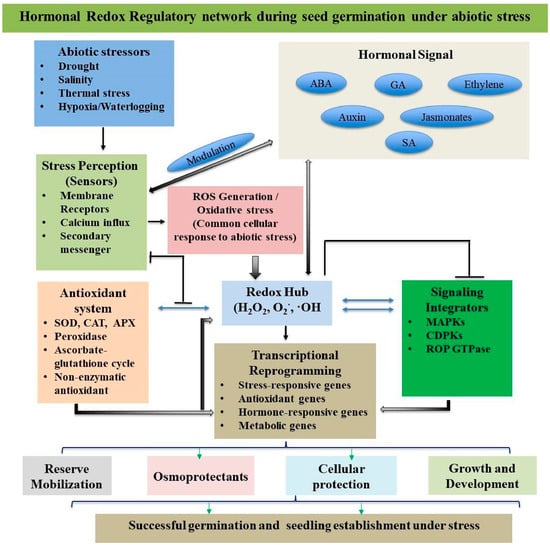
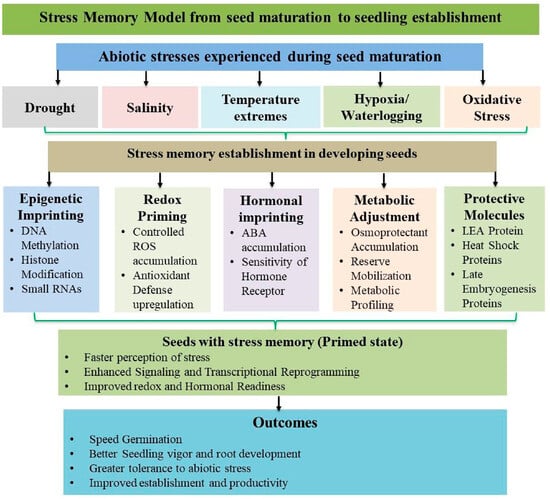
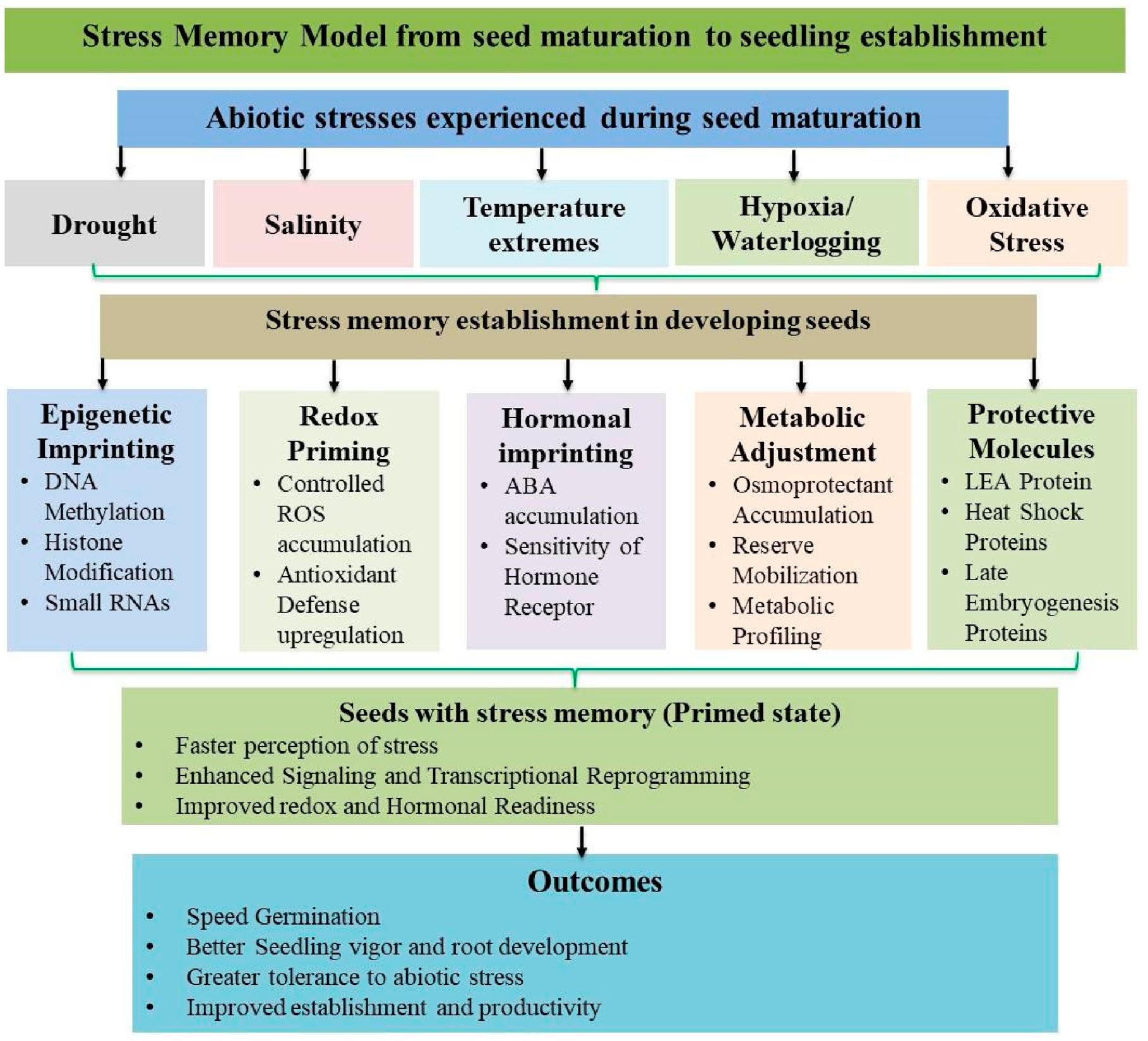

Disclaimer/Publisher’s Note: The statements, opinions and data contained in all publications are solely those of the individual author(s) and contributor(s) and not of MDPI and/or the editor(s). MDPI and/or the editor(s) disclaim responsibility for any injury to people or property resulting from any ideas, methods, instructions or products referred to in the content. |
© 2026 by the authors. Licensee MDPI, Basel, Switzerland. This article is an open access article distributed under the terms and conditions of the Creative Commons Attribution (CC BY) license.