


Abstract
Smoking is a major lifestyle factor associated with impaired male reproductive health, affecting both active smokers and individuals exposed to secondhand smoke. It also represents a significant source of cadmium (Cd) exposure, a toxic metal associated with altered sperm quality. This study aimed to evaluate the association between active and passive smoking and semen parameters, sperm DNA fragmentation, and chromatin decondensation, as well as cadmium (Cd) and zinc (Zn) levels in seminal plasma. A total of 280 men from infertile couples were included and categorized into three groups: 104 non-smokers (control), 90 active smokers, and 86 passive smokers. Semen samples were analyzed according to the WHO 2021 guidelines. Cadmium and zinc concentrations in seminal plasma were determined using inductively coupled plasma atomic emission spectroscopy (ICP-AES), and sperm DNA fragmentation and chromatin decondensation were evaluated. The findings indicated that both active and passive smoking were associated with impaired semen parameters, increased sperm DNA fragmentation and chromatin decondensation, decreased zinc levels, and elevated cadmium concentrations in seminal plasma.
1. Introduction
Infertility represents a major global public health concern and is defined as the inability to achieve pregnancy after 12 months of regular unprotected intercourse. According to the World Health Organization (WHO), approximately 15% of couples of reproductive age are affected worldwide [1]. Male factors contribute to nearly 50% of all infertility cases, either as a primary or contributing cause [2]. Over recent decades, a significant decline in male reproductive health has been reported across various regions worldwide, particularly in developed countries, with sperm counts decreasing by approximately 50–60% between 1973 and 2011 [3]. More recent data suggests that this downward trend is continuing and may even be accelerating globally [4], highlighting the need to identify modifiable risk factors involved in male infertility.
Male infertility is a multifactorial condition involving genetic, hormonal, anatomical, and environmental determinants [5], with a considerable proportion of cases remaining idiopathic [6]. Among modifiable risk factors, lifestyle-related exposures such as smoking have been increasingly implicated in impaired male reproductive function [7]. Smoking is widely recognized as a major source of toxicants exposure and has been associated with alterations in semen parameters. While the adverse effects of active smoking on male reproductive health are well established [2,7], the impact of passive smoking remains insufficiently investigated, with limited and sometimes inconsistent evidence. Importantly, emerging data suggest that even indirect exposure to environmental tobacco smoke may negatively affect male reproductive health [8].
Cigarette smoke contains numerous toxic substances, including heavy metals such as cadmium (Cd), which is considered a major toxic component of tobacco [9]. Due to its very long biological half-life (20–40 years) and low excretion rate, cadmium progressively accumulates in the body, disrupting the function of multiple organs [10]. In addition to accumulating in the liver and kidneys, cadmium can also build up in the testes, where it may cross the blood–testis barrier and create a toxic microenvironment for spermatozoa [11], Cadmium accumulation has been associated with impaired spermatogenesis, reduced semen quality [10]. Previous studies have also suggested that cadmium exposure is associated with increased oxidative stress and sperm DNA damage [12,13]. In contrast, zinc (Zn) is an essential trace element involved in sperm function and male reproductive health. It plays a key role in antioxidant defense, contributes to spermatogenesis [14] and is essential for sperm chromatin stability and DNA integrity [15,16]. An imbalance between cadmium and zinc has been associated with alterations in semen quality and sperm DNA integrity [9].
Although the association between smoking and male infertility has been widely studied, several gaps remain. In particular, limited studies have simultaneously evaluated the impact of both active and passive smoking on conventional semen parameters, sperm DNA fragmentation and chromatin decondensation, and trace element levels in infertile men. Moreover, the combined assessment of seminal cadmium and zinc in relation to sperm DNA damage remains insufficiently investigated. Therefore, the aim of this study was to evaluate the association between cadmium exposure related to active and passive smoking and semen quality, sperm DNA fragmentation and chromatin decondensation, as well as seminal zinc levels in infertile men.
2. Results
2.1. Age of Male Participants and Duration of Infertility
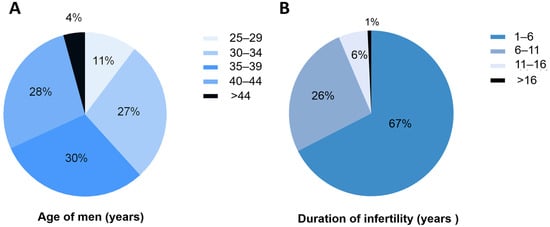
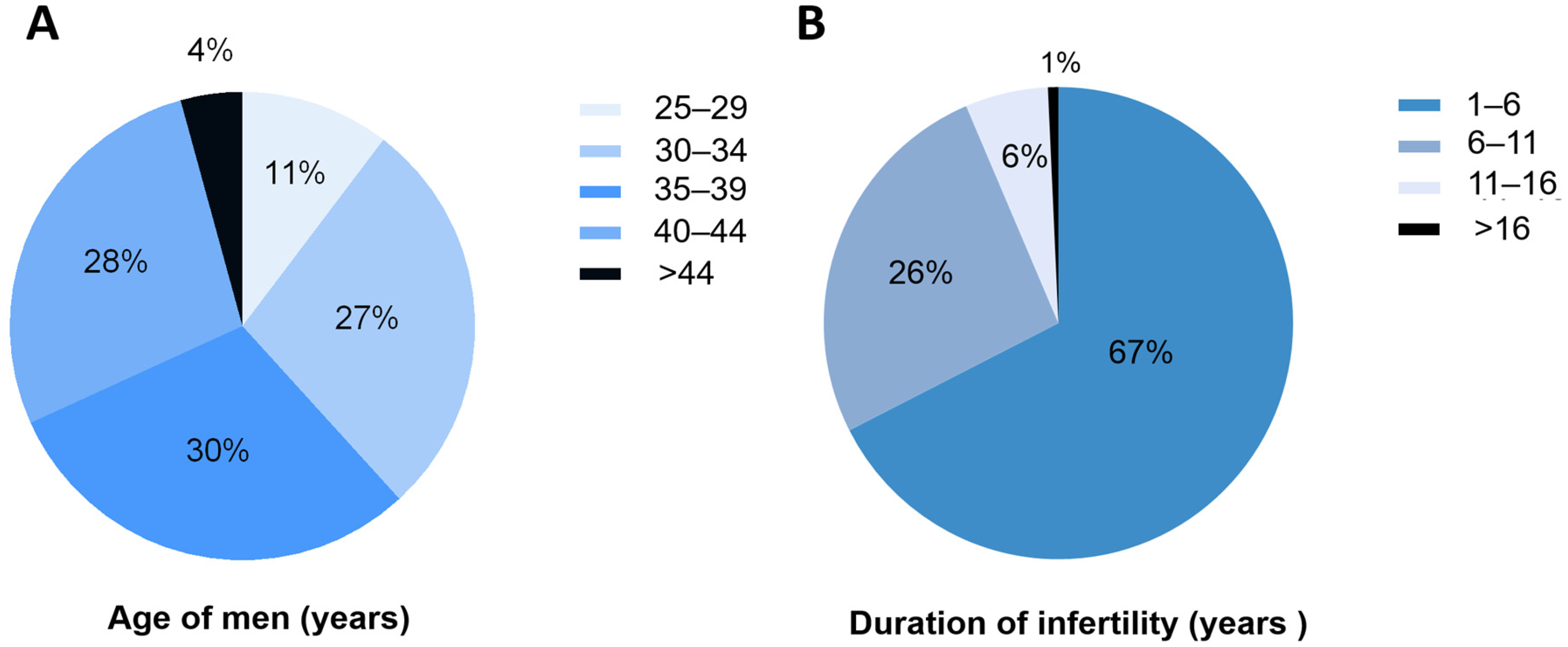
The age of male participants ranged from 25 to 47 years, with the majority of subjects distributed between 30 and 44 years. Specifically, the most represented age groups were 35–39 years (30%) and 30–34 years (27%), followed by 40–44 years (28%), whereas younger (25–29 years) and older (>44 years) participants were less frequent.
The duration of infertility ranged from 1 to 19 years. Most couples (67%) experienced infertility for 1–6 years, followed by 26% for 6–11 years, while longer durations were less common (Figure 1).
Figure 1.
Distribution of male age participants according to age groups (A) and duration of infertility (B).
2.2. Association Between Smoking and Semen Parameters
No significant differences were observed in age or body mass index (BMI) among non-smokers, passive smokers, and active smokers (p > 0.05). The median number of cigarettes smoked per day among active smokers was 20 (IQR: 17–20), and the median duration of smoking was 16 years (IQR: 11–22). Semen volume was significantly lower in both active and passive smokers compared to non-smokers (p < 0.0001), while no significant difference was observed between active and passive smokers. Most sperm parameters, including concentration, motility, viability, and normal morphology, were significantly reduced in both active and passive smokers compared to non-smokers (p < 0.0001). Significant differences were also observed between active and passive smokers for most parameters (Table 1).
Table 1.
Comparison of semen parameters between non-smokers, passive smokers, and active smokers.
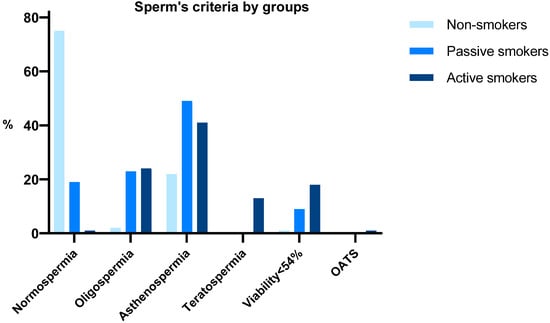
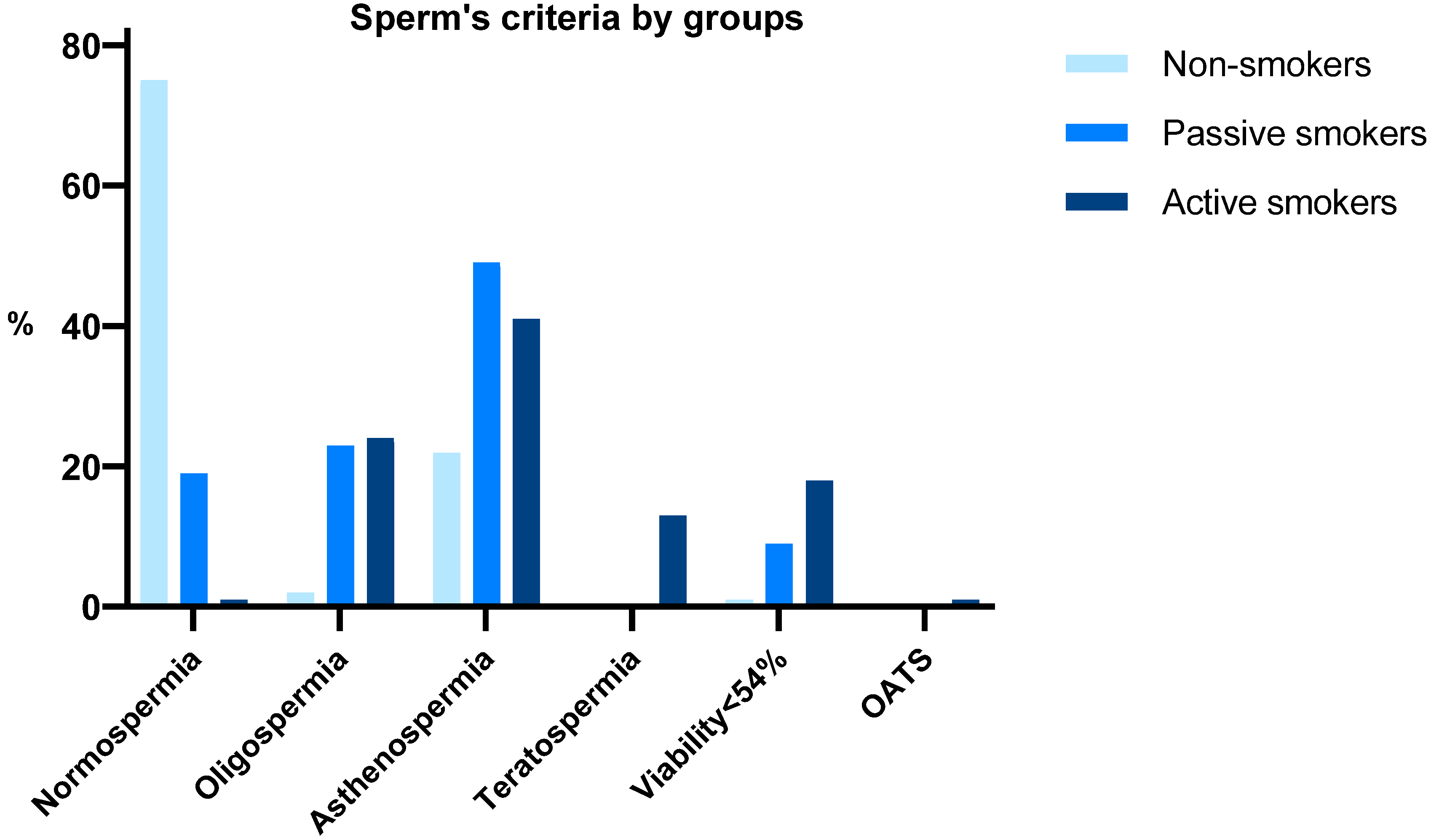
The distribution of semen profiles differed across the study groups (Figure 2). Normospermia was predominantly observed in non-smokers, whereas its prevalence decreased in both passive and active smokers. The frequency of oligospermia and teratospermia was higher in smokers, particularly in the active smoker group. In contrast, asthenospermia was more frequently observed in passive smokers compared to active smokers. Oligo-astheno-teratozoospermia (OATS) was mainly detected in active smokers. Additionally, the proportion of sperm with viability below 54% was higher in smokers, especially in active smokers. Teratospermia was observed only in the active smoker group and was absent in the other groups.
Figure 2.
Distribution of patients across groups according to conventional semen parameters, based on the WHO 6th edition (2021) reference values [17]. Normospermia: sperm concentration ≥ 16 million/mL, total motility ≥ 42%, normal morphology ≥ 4%, viability ≥ 54%, and volume ≥ 1.4 mL. Oligospermia: sperm concentration < 16 million/mL. Asthenospermia: total motility < 42%. Teratospermia: normal morphology < 4%. OATS (Oligo-Astheno-Teratospermia): combination of sperm concentration < 16 million/mL, total motility < 42%, and normal morphology < 4%.
2.3. Sperm DNA Fragmentation (DFI) and Chromatin Decondensation (SDI)
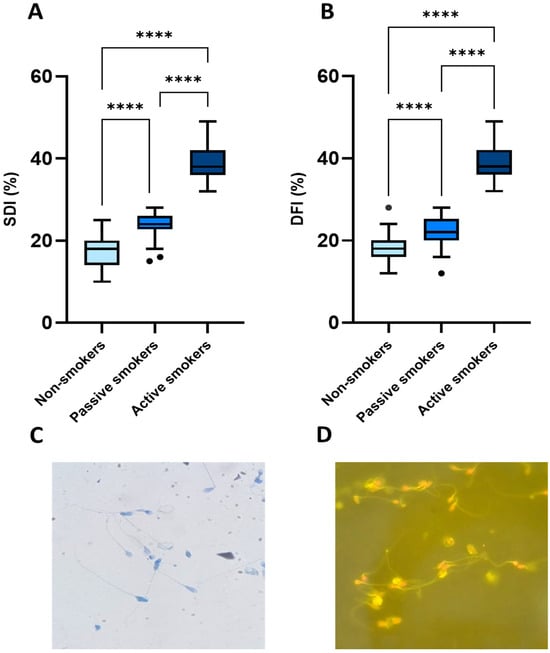
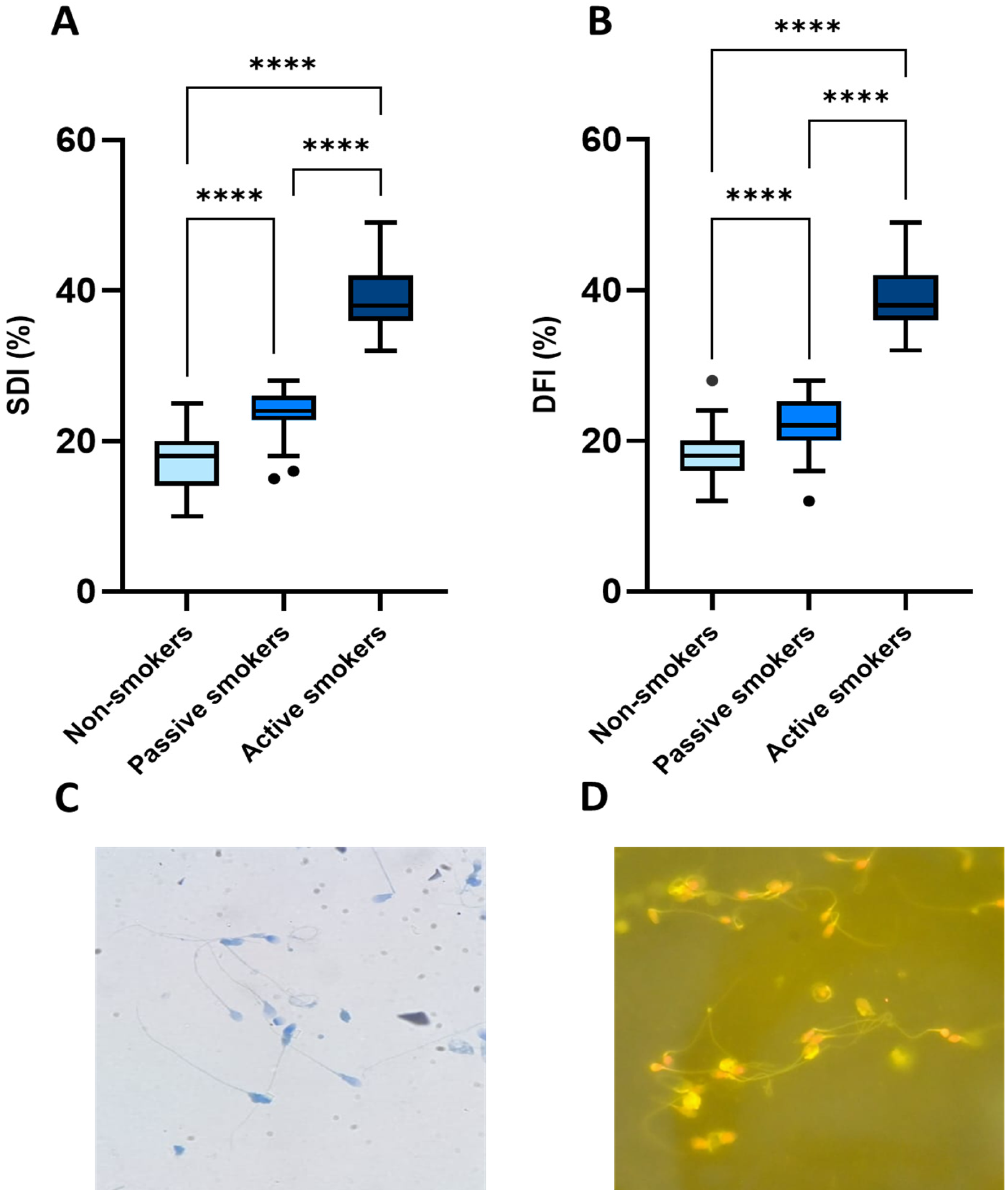
The DNA fragmentation index (DFI) increased progressively across groups, with median values of 18% [16–20] in non-smokers, 22% [20–25.25] in passive smokers, and 38% [36–42] in active smokers. Similarly, the sperm chromatin decondensation index (SDI) showed a significant increase, with median values of 18% [14–20] in non-smokers, 24% [22.75–26] in passive smokers, and 38% [36–42] in active smokers. Both the DFI and SDI were significantly higher in passive smokers compared to non-smokers and further increased in active smokers compared to passive smokers (Figure 3).
Figure 3.
Impact of active and passive smoking on sperm DNA integrity. (A) Sperm chromatin decondensation index (SDI) and (B) DNA fragmentation index (DFI) in non-smokers, passive smokers, and active smokers. Data are presented as median with interquartile range (boxplot, Tukey). (C) Representative image of sperm chromatin decondensation. (D) Representative image of sperm DNA fragmentation; **** p < 0.0001.
2.4. Cadmium and Zinc Levels in Seminal Plasma
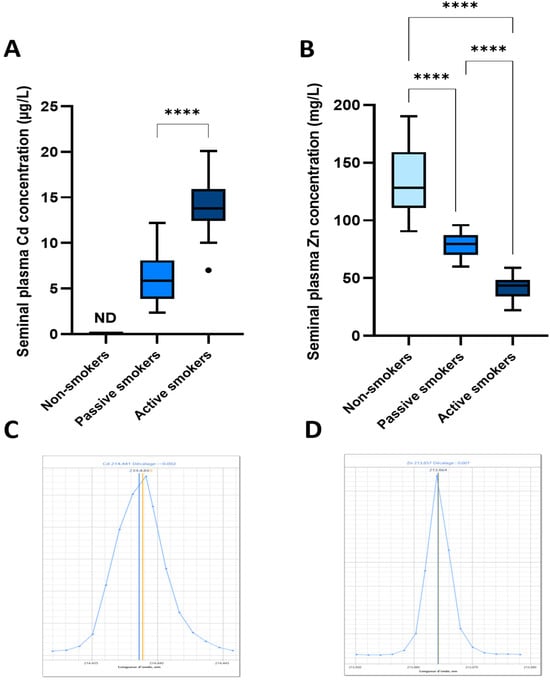
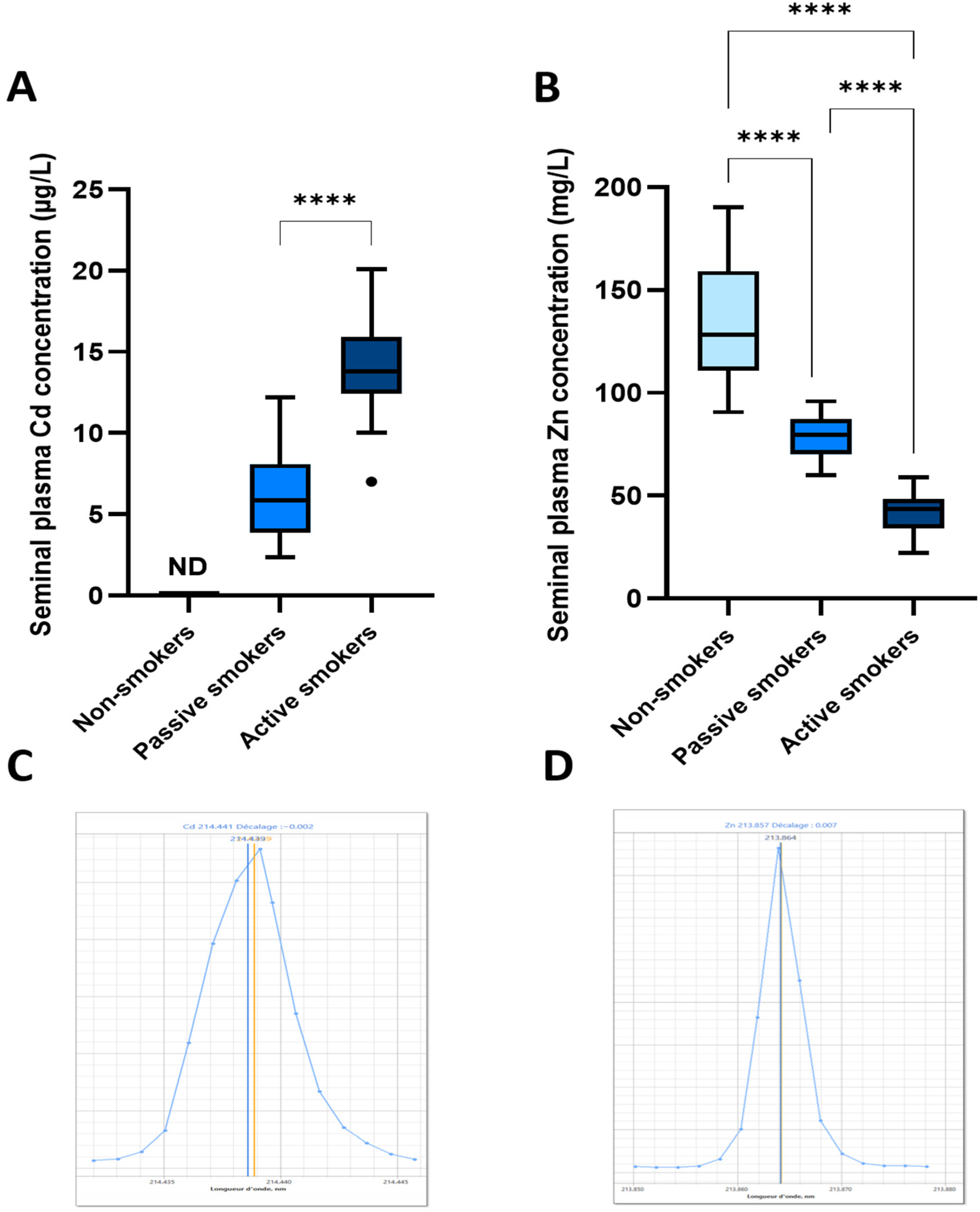
Seminal plasma cadmium concentration showed a clear increasing trend according to smoking status. Cadmium levels in non-smokers were below the limit of detection (LOD), indicating concentrations too low to be quantified. In contrast, detectable levels were observed in both passive and active smokers, with significantly higher concentrations in active smokers compared to passive smokers (median: 14.01 vs. 6.05 µg/L, respectively; p < 0.0001) (Figure 4A). Due to the high proportion of values below the limit of detection in the non-smoker group, statistical comparisons with this group were not performed.
Figure 4.
Seminal plasma cadmium (A) and zinc (B) concentrations in non-smokers, passive smokers, and active smokers. Data are presented as median with interquartile range (boxplot, Tukey). (C) Representative atomic emission spectrum of cadmium; (D) representative atomic emission spectrum of zinc. Cadmium levels in non-smokers were below the limit of detection (ND). Data are presented as median and interquartile range. **** p < 0.0001.
Regarding seminal plasma zinc, a significant decrease was observed across the three groups (Figure 4B). Non-smokers exhibited the highest zinc levels (median: 128.2 mg/L; IQR: 110.9–159.3), followed by passive smokers (median: 79.52 mg/L; IQR: 70.01–87.20), and active smokers (median: 43.63 mg/L; IQR: 34.00–48.22). Zinc concentrations were significantly lower in both passive and active smokers compared to non-smokers (p < 0.0001) and were also significantly lower in active smokers compared to passive smokers (p < 0.0001).
2.5. Multivariate Linear Regression Analysis
Multivariate linear regression analysis showed that both active and passive smoking were significantly associated with changes in semen parameters and sperm DNA integrity (Table 2). Active smoking was associated with significant decreases in sperm volume, motility, viability, and morphology, as well as an increase in immobility. Passive smoking was also associated with similar changes, although with lower magnitude. In addition, both active and passive smoking were significantly associated with increased sperm DNA fragmentation and chromatin decondensation. Furthermore, seminal zinc levels were significantly reduced in both active and passive smokers, with a greater reduction observed in the active smoking group.
Table 2.
Multivariate linear regression analysis of the association between smoking status and semen parameters, sperm DNA integrity, and seminal zinc levels.
2.6. Correlation Analysis
Spearman correlation analysis revealed significant positive correlations between seminal cadmium levels and both sperm DNA fragmentation and chromatin decondensation indices (Table 3). These correlations indicate that higher cadmium levels are associated with increased DNA damage markers. In contrast, seminal zinc levels showed significant positive correlations with sperm motility and viability. All correlations were statistically significant (p < 0.0001).
Table 3.
Sperman correlation analysis between seminal cadmium, zinc levels and sperm parameters and DNA integrity indices.
3. Discussion
The present study investigated the association between cadmium exposure related to active and passive smoking and semen quality, as well as sperm DNA fragmentation and chromatin decondensation, and seminal plasma cadmium and zinc levels in men from infertile couples.
A marked and statistically significant decline in sperm parameters was observed across the studied groups. Sperm concentration decreased substantially from 67.5 × 10⁶/mL in non-smokers to 30 × 106/mL in passive smokers and 8 × 10⁶/mL in active smokers (p < 0.001). Similarly, sperm motility declined from 52% to 37.5% and 22.5%, respectively (p < 0.001), while semen volume decreased from 3 mL to 2.1 mL (p < 0.001). Sperm viability and normal morphology were also significantly reduced in smokers, with more pronounced alterations in active smokers compared to passive smokers (p < 0.001). These findings indicate a substantial impairment of male reproductive function. Notably, passive smokers exhibited intermediate alterations, suggesting that even indirect exposure to cigarette smoke may negatively affect semen quality.
These findings are consistent with most previous studies reporting impaired semen parameters among smokers [2,9,18,19,20]. However, the majority of these studies have primarily focused on active smoking, whereas the effects of passive smoking remain less extensively investigated. Our results therefore provide additional evidence that passive exposure may also be associated with altered semen quality, although to a lesser extent than active smoking. In contrast, some studies have reported no significant association [21,22]. which may be explained by differences in study design, population characteristics, smoking intensity and duration, as well as methodological variations in semen analysis and WHO criteria.
The deleterious effects of smoking on semen parameters may be attributed to several toxic components of cigarette smoke, particularly nicotine and cadmium. Nicotine has been linked to mitochondrial dysfunction, leading to increased production of reactive oxygen species (ROS) and reduced ATP generation, both of which are critical for sperm motility [23,24].
Cadmium appears to play a key role in smoking-related reproductive toxicity. In the present study, cadmium was detected in both active and passive smokers (median: 14.01 vs. 6.05 µg/L, respectively; p < 0.0001), whereas it was undetectable in non-smokers, supporting tobacco as a major source of exposure. This difference reflects a substantial accumulation of cadmium among smokers. The relatively elevated cadmium levels observed in our study may be explained by several factors. Although individuals with known occupational or significant environmental exposure were excluded, variability in cadmium levels may still arise from differences in smoking intensity and duration, as well as from residual environmental exposure and dietary sources that are difficult to fully control. In addition, differences in the geographic origin and composition of tobacco may influence cadmium content in cigarettes. These factors have been reported to contribute to inter-individual variability in cadmium exposure [25,26]. At the cellular level, cadmium disrupts spermatogenesis through cytotoxic effects on Sertoli and Leydig cells and by interfering with endocrine regulation. It may also impair the integrity of the blood–testis barrier and induce vascular damage, facilitating its accumulation in testicular tissue. Furthermore, cadmium can activate apoptotic pathways, further compromising spermatogenic function [27]. At the biochemical level, cadmium inhibits key antioxidant enzymes, including superoxide dismutase (SOD) and glutathione peroxidase (GPx), leading to excessive ROS accumulation. This oxidative imbalance promotes lipid peroxidation, reduces membrane fluidity, and impairs sperm function. In addition, cadmium disrupts mitochondrial respiratory chain, leading to decreased ATP production required for sperm motility [28]. Cadmium also alters calcium homeostasis through inhibition of Ca2+-ATPase activity, an enzyme essential for sperm motility and energy metabolism, thereby contributing to mitochondrial dysfunction and impaired flagellar movement [29].
These findings are supported by the predominance of asthenozoospermia observed among smokers in our study, suggesting that sperm motility is particularly susceptible to toxic exposure.
Spermatozoa are highly vulnerable to oxidative stress due to their high content of polyunsaturated fatty acids and limited antioxidant defenses. Increased ROS production may lead to lipid peroxidation [30], mitochondrial dysfunction, and impaired motility. Moreover, oxidative stress can damage both nuclear and mitochondrial DNA, resulting in increased DNA fragmentation and chromatin decondensation, thereby compromising sperm function and genomic integrity [31,32].
We also observed significantly lower zinc levels in the seminal plasma of both active and passive smokers compared to non-smokers (median: 128.2 mg/L in non -smokers, 79.52 mg/L in passive smokers, and 43.63 mg/L in active smokers; p < 0.001), in agreement with several studies [19,33], although some studies have reported no significant differences [34]. Zinc plays an essential role in antioxidant defense, particularly through its involvement in SOD activity, and contributes to chromatin stabilization and maintenance of sperm DNA integrity. Its depletion may therefore exacerbate oxidative stress and increase sperm susceptibility to damage [35].
Consistent with these mechanisms, our results showed significantly higher levels of DNA fragmentation and chromatin decondensation in smokers compared to non-smokers (p < 0.001), with more pronounced alterations in active smokers, as reported in several studies [7,18,20,36,37,38] and confirmed by recent reviews [39,40,41] regarding DNA fragmentation. Moreover, they align with other studies on sperm chromatin decondensation [38,42]. Excessive ROS generation within the testicular microenvironment has been identified as a major driver of sperm DNA damage [41], while smoking-induced hypoxia may further impair spermatogenesis and sperm maturation [43,44,45,46].
The combined effect of increased cadmium and decreased zinc levels may further amplify oxidative stress and contribute to sperm DNA damage. This hypothesis is supported by our correlation analyses using Spearman’s test, which revealed a significant positive correlation between cadmium levels and DNA damage and positive associations between zinc levels and sperm motility and viability. These findings support the deleterious role of Cd and the protective role of zinc in male reproductive function.
Linear regression analysis further confirmed these associations independently of potential confounding factors, strengthening the robustness of the observed relationships between smoking exposure, trace element levels, and sperm alterations.
However, some limitations should be acknowledged. Information regarding the fertility status of the participants was limited, as they were generally at early stages of clinical evaluation, and classification was based solely on smoking status. In addition, cadmium was not detectable in non-smokers, limiting some comparative analyses. Finally, due to the cross-sectional design of the study, causal relationships cannot be definitively established.
4. Materials and Methods
4.1. Study Participants
The study population comprised 280 male partners of infertile couples who attended the laboratory (LABOMAC, Casablanca, Morocco) for infertility evaluation between 2022 and 2024. Male participants were excluded if they had azoospermia, occupational exposure to heavy metals, varicocele/hydrocele, a history of post-vasectomy reconstructive surgery, testicular injuries, or chronic diseases such as diabetes, hypertension, dyslipidemia or chronic urinary infections. Additionally, individuals undergoing antioxidant treatment were excluded.
Participants were categorized into three groups: Group 1 (non-smokers, n = 104), Group 2 (passive smokers, n = 86), and Group 3 (active smokers, n = 90). Active smokers were defined as individuals consuming more than 10 cigarettes per day for a duration exceeding 5 years. Passive smokers were defined as individuals who regularly frequented designated smoking areas in cafés on a daily basis.
4.2. Collection and Semen Parameter Analysis
Semen samples were collected by masturbation following an abstinence period of 2 to 7 days and subsequently analyzed. After a liquefaction period of 30 min to one hour at 37 °C, semen analysis commenced with a macroscopic assessment, including the evaluation of appearance, viscosity, volume, and pH. Subsequently, all samples underwent microscopic examination for standard sperm parameters (volume, concentration, motility, and morphology) in accordance with the guidelines of the 2021 WHO Laboratory Manual for the Examination and Processing of Human Semen [17].
Sperm concentration was determined using an improved Neubauer hemocytometer (Marienfeld, Lauda-Königshofen, Germany) on fixed and appropriately diluted samples based on the initial sperm count. Motility was assessed by counting approximately 200 spermatozoa across at least five randomly selected fields. Viability assessment was performed by mixing a 50 µL semen aliquot with an eosin-nigrosin suspension. A smear was then prepared on a glass slide and air-dried. Sperm cells were distinguished using nigrosin staining [17], with non-viable sperm cells appearing red (stained head) and viable sperm remaining unstained. Sperm morphology was evaluated using Shorr staining [8].
4.3. Sperm DNA Fragmentation Index (DFI) Analysis
DNA fragmentation was assessed using the TUNEL assay with the In Situ Cell Death Detection Kit, Fluorescein (Roche, Mannheim, Germany). After centrifugation at 1200× g for 10 min and washing the samples, the spermatozoa were fixed with a 4% paraformaldehyde solution and then permeabilized with ethanol. DNA strand breaks were labeled using terminal deoxynucleotidyl transferase (TdT), which adds fluorescein-labeled nucleotides (dUTP) to the ends of DNA fragments. Approximately 200 spermatozoa were examined under a fluorescence microscope to determine the DNA fragmentation index (DFI), with sperm exhibiting DNA breaks appearing as green fluorescent spots [47].
4.4. Sperm Chromatin Decondensation Index (SDI)
After washing the samples with phosphate-buffered saline (PBS) and centrifugation, spermatozoa were fixed with a 3% glycerol solution in PBS and subsequently permeabilized. Duplicates were prepared and incubated in an aniline blue and acetic acid solution for 10 to 15 min at room temperature. The sperm chromatin decondensation index (SDI) was determined by counting the number of spermatozoa stained with aniline blue, with a total of 200 spermatozoa counted per sample. Spermatozoa with less condensed chromatin allow greater penetration of aniline blue into their DNA, resulting in more intense staining (deep blue coloration). Thus, the SDI serves as an indicator of the degree of DNA condensation in spermatozoa [48].
4.5. Cadmium and Zinc Analysis
Seminal plasma samples were obtained after semen centrifugation. One milliliter of seminal plasma was digested with 5 mL of concentrated nitric acid (HNO3, 65%, analytical grade) at 80 °C until complete clarification. The final volume was adjusted to 10 mL with ultrapure water (Milli-Q system).
Cadmium (Cd) and zinc (Zn) concentrations were determined using Inductively Coupled Plasma Atomic Emission Spectroscopy (ICP-AES) [49] (Horiba Jobin Yvon Ultima Expert, Longjumeau, France). The analytical wavelengths used were 214.441 nm for Cd and 213.857 nm for Zn. Instrumental conditions included an RF power of 1000 W, plasma gas flow of 15 L/min, and nebulizer gas flow of 0.7 L/min.
Calibration was performed using standard solutions with a multi-point calibration curve. Quality control measures included the use of procedural blanks and ultrapure water to monitor potential contamination. Method accuracy was evaluated using recovery tests by spiking samples with known concentrations of cadmium and zinc. All samples were analyzed in replicate.
Limits of detection (LOD) and quantification (LOQ) were determined according to standard analytical procedures. For cadmium, the LOD and LOQ were 3.66 µg/L and 10.98 µg/L, respectively. For zinc, the LOD and LOQ were 3.46 µg/L and 10.38 µg/L, respectively.
All analyses were performed under standardized and controlled conditions to ensure reproducibility and reliability of the measurements.
4.6. Statistical Analysis
Statistical analysis was performed using GraphPad Prism software (version 9.5.0, GraphPad Software, San Diego, CA, USA). Data distribution was assessed using the Shapiro–Wilk normality test. As most variables did not follow a normal distribution, results are presented as median and interquartile range (IQR, Q1–Q3).
Comparisons between more than two independent groups (non-smokers, passive smokers, and active smokers) were performed using the Kruskal–Wallis test, followed by Dunn’s post hoc test for multiple comparisons. For comparisons between two groups, the Mann–Whitney U test was used. Due to the high proportion of values below the limit of detection (LOD) for cadmium in the non-smoker group, statistical comparisons involving this group were not performed for cadmium concentrations.
Correlations between variables were assessed using Spearman’s rank correlation coefficient (r).
Multivariate linear regression analysis was performed to evaluate the association between smoking status and semen parameters, sperm DNA integrity indices, and seminal zinc levels. Models were adjusted for age and body mass index (BMI). Non-smokers were used as the reference group. Results were considered statistically significant at p < 0.05.
5. Conclusions
Smoking, whether active or passive, is associated with alterations in male reproductive function and with impaired sperm quality as well as altered sperm DNA integrity, including increased DNA fragmentation and chromatin decondensation. These findings highlight the importance of considering both direct and indirect exposure to cigarette smoke as relevant risk factors for male infertility. In addition, passive smoking should not be underestimated, as it represents a significant source of exposure to toxic compounds, particularly heavy metals such as cadmium, even in non-smokers. Reducing exposure to tobacco smoke may therefore represent an important strategy for improving reproductive health.
Future studies are warranted to further elucidate the underlying molecular mechanisms, particularly those involving oxidative stress, intracellular signaling pathways, and epigenetic regulation. Longitudinal and interventional approaches are also needed to better assess causality and to explore potential protective strategies, including antioxidant supplementation and zinc-based interventions, aimed at mitigating the adverse effects of smoking on male fertility.
Author Contributions
Conceptualization, J.A.B.; methodology, J.A.B.; software, J.A.B.; validation, J.A.B.; formal analysis, J.A.B. and S.H.; investigation, J.A.B., M.E.B., N.L., A.Z. and O.H.; resources, J.A.B. and N.L.; data curation, J.A.B.; writing—original draft preparation, J.A.B.; writing—review and editing, J.A.B. and R.A.; visualization, J.A.B.; supervision, J.A.B., R.A. and N.L.; project administration, J.A.B. and R.A.; funding acquisition, J.A.B., N.L. and R.A. All authors have read and agreed to the published version of the manuscript.
Funding
This research received no external funding.
Institutional Review Board Statement
The study was conducted in accordance with the Declaration of Helsinki, and the study protocol was approved by the Ethics Committee of the IBN ROCHD University Hospital Center, Casablanca, Morocco (Approval No. 10/2022) (Approval date 22 April 2022).
Informed Consent Statement
Informed consent was obtained from all subjects involved in the study.
Data Availability Statement
The original contributions presented in this study are included in the article. Further inquiries can be directed to the corresponding author.
Acknowledgments
The authors express their gratitude to those who generously contributed by sharing their materials and ongoing projects.
Conflicts of Interest
The authors declare that they have no conflict of interest. This research did not receive any specific grant from funding agencies in the public, commercial, or not-for-profit sectors.
References
- Lamothe, S.; Kerlan, V.; Christin-Maitre, S. Qualité du sperme et fertilité: Rôle de l’environnement et de la santé. Ann. D’endocrinologie 2018, 79, S1–S9. [Google Scholar] [CrossRef] [Scilit]
- Henriques, M.C.; Santiago, J.; Patrício, A.; Herdeiro, M.T.; Loureiro, S.; Fardilha, M. Smoking Induces a Decline in Semen Quality and the Activation of Stress Response Pathways in Sperm. Antioxidants 2023, 12, 1828. [Google Scholar] [CrossRef] [Scilit]
- Levine, H.; Jørgensen, N.; Martino-Andrade, A.; Mendiola, J.; Weksler-Derri, D.; Mindlis, I.; Pinotti, R.; Swan, S.H. Temporal Trends in Sperm Count: A Systematic Review and Meta-Regression Analysis. Hum. Reprod. Update 2017, 23, 646–659. [Google Scholar] [CrossRef] [Scilit]
- Levine, H.; Jørgensen, N.; Martino-Andrade, A.; Mendiola, J.; Weksler-Derri, D.; Jolles, M.; Pinotti, R.; Swan, S.H. Temporal Trends in Sperm Count: A Systematic Review and Meta-Regression Analysis of Samples Collected Globally in the 20th and 21st Centuries. Hum. Reprod. Update 2023, 29, 157–176. [Google Scholar] [CrossRef] [Scilit]
- Leaver, R.B. Male Infertility: An Overview of Causes and Treatment Options. Br. J. Nurs. 2016, 25, S35–S40. [Google Scholar] [CrossRef] [Scilit]
- Gelbaya, T.A.; Potdar, N.; Jeve, Y.B.; Nardo, L.G. Definition and Epidemiology of Unexplained Infertility. Obstet. Gynecol. Surv. 2014, 69, 109–115. [Google Scholar] [CrossRef] [Scilit] [PubMed]
- Osadchuk, L.; Kleshchev, M.; Osadchuk, A. Effects of Cigarette Smoking on Semen Quality, Reproductive Hormone Levels, Metabolic Profile, Zinc and Sperm DNA Fragmentation in Men: Results from a Population-Based Study. Front. Endocrinol. 2023, 14, 1255304. [Google Scholar] [CrossRef] [Scilit] [PubMed]
- De Brucker, S.; Drakopoulos, P.; Dhooghe, E.; De Geeter, J.; Uvin, V.; Santos-Ribeiro, S.; Michielsen, D.; Tournaye, H.; De Brucker, M. The Effect of Cigarette Smoking on the Semen Parameters of Infertile Men. Gynecol. Endocrinol. 2020, 36, 1127–1130. [Google Scholar] [CrossRef] [Scilit] [PubMed]
- Ranganathan, P.; Rao, K.A.; Sudan, J.J.; Balasundaram, S. Cadmium Effects on Sperm Morphology and Semenogelin with Relates to Increased ROS in Infertile Smokers: An in Vitro and in Silico Approach. Reprod. Biol. 2018, 18, 189–197. [Google Scholar] [CrossRef] [Scilit] [PubMed]
- Bhardwaj, J.K.; Panchal, H.; Saraf, P. Cadmium as a Testicular Toxicant: A Review. J. Appl. Toxicol. 2021, 41, 105–117. [Google Scholar] [CrossRef] [Scilit]
- Bhardwaj, J.K.; Panchal, H. Quercetin Mediated Attenuation of Cadmium-induced Oxidative Toxicity and Apoptosis of Spermatogenic Cells in Caprine Testes in Vitro. Environ. Mol. Mutagen 2021, 62, 374–384. [Google Scholar] [CrossRef] [Scilit]
- Zhang, Y.; Li, S.; Li, S. Relationship between Cadmium Content in Semen and Male Infertility: A Meta-Analysis. Environ. Sci. Pollut. Res. 2019, 26, 1947–1953. [Google Scholar] [CrossRef] [Scilit]
- Manouchehri, A.; Shokri, S.; Pirhadi, M.; Karimi, M.; Abbaszadeh, S.; Mirzaei, G.; Bahmani, M. The Effects of Toxic Heavy Metals Lead, Cadmium and Copper on the Epidemiology of Male and Female Infertility. JBRA Assist. Reprod. 2022, 26, 627–630. [Google Scholar] [CrossRef] [Scilit]
- Zhao, J.; Dong, X.; Hu, X.; Long, Z.; Wang, L.; Liu, Q.; Sun, B.; Wang, Q.; Wu, Q.; Li, L. Zinc Levels in Seminal Plasma and Their Correlation with Male Infertility: A Systematic Review and Meta-Analysis. Sci. Rep. 2016, 6, 22386. [Google Scholar] [CrossRef] [Scilit] [PubMed]
- Beigi Harchegani, A.; Dahan, H.; Tahmasbpour, E.; Bakhtiari Kaboutaraki, H.; Shahriary, A. Effects of Zinc Deficiency on Impaired Spermatogenesis and Male Infertility: The Role of Oxidative Stress, Inflammation and Apoptosis. Hum. Fertil. 2020, 23, 5–16. [Google Scholar] [CrossRef] [Scilit]
- Nenkova, G.; Petrov, L.; Alexandrova, A. Role of Trace Elements for Oxidative Status and Quality of Human Sperm. Balk. Med. J. 2017, 34, 343–348. [Google Scholar] [CrossRef] [Scilit] [PubMed]
- World Health Organization. WHO Laboratory Manual for the Examination and Processing of Human Semen, 6th ed.; World Health Organization: Geneva, Switzerland, 2010; ISBN 978-92-4-003078-7. [Google Scholar]
- Amor, H.; Alkhaled, Y.; Bibi, R.; Hammadeh, M.E.; Jankowski, P.M. The Impact of Heavy Smoking on Male Infertility and Its Correlation with the Expression Levels of the PTPRN2 and PGAM5 Genes. Genes 2023, 14, 1617. [Google Scholar] [CrossRef] [Scilit] [PubMed]
- Bazid, H.A.S.; Attia, A.M.; Yousef, A.M.; Fawal, A.N.; Mostafa, M.I. Evaluating the Serum and Seminal Plasma Levels of Zinc and Cadmium in Smokers and Their Relation to the Semen Parameters. Biol. Trace Elem. Res. 2021, 200, 1002–1009. [Google Scholar] [CrossRef] [Scilit]
- Ranganathan, P.; Rao, K.A.; Thalaivarasai Balasundaram, S. Deterioration of Semen Quality and sperm-DNA Integrity as Influenced by Cigarette Smoking in Fertile and Infertile Human Male Smokers—A Prospective Study. J. Cell. Biochem. 2019, 120, 11784–11793. [Google Scholar] [CrossRef] [Scilit]
- Sepaniak, S.; Forges, T.; Gerard, H.; Foliguet, B.; Bene, M.-C.; Monnier-Barbarino, P. The Influence of Cigarette Smoking on Human Sperm Quality and DNA Fragmentation. Toxicology 2006, 223, 54–60. [Google Scholar] [CrossRef] [Scilit]
- Li, Y.; Lin, H.; Ma, M.; Li, L.; Cai, M.; Zhou, N.; Han, X.; Bao, H.; Huang, L.; Zhu, C.; et al. Semen Quality of 1346 Healthy Men, Results from the Chongqing Area of Southwest China. Hum. Reprod. 2009, 24, 459–469. [Google Scholar] [CrossRef] [Scilit] [PubMed]
- Cui, J.; Wang, C.; Zheng, Y.; Zhang, Y.; Luo, S.; Ren, Z.; Qin, X.; Zhang, M.; Gao, F.; Huang, H.; et al. Mechanisms and Reversibility of Nicotine-Induced Spermatogenesis Impairment and DNA Methylation Changes. Commun. Biol. 2025, 8, 1053. [Google Scholar] [CrossRef] [Scilit]
- Zhang, Z.; Jiang, Z.; Cheng, J.; Price, C.A.; Yang, L.; Li, Q. Nicotine Induces Senescence in Spermatogonia Stem Cells by Disrupting Homeostasis between Circadian Oscillation and Rhythmic Mitochondrial Dynamics via the SIRT6/Bmal1 Pathway. Life Sci. 2024, 352, 122860. [Google Scholar] [CrossRef] [Scilit]
- Satarug, S. Dietary Cadmium Intake and Its Effects on Kidneys. Toxics 2018, 6, 15. [Google Scholar] [CrossRef] [Scilit]
- Sattar, S.; Yahya, M.; Aslam, S.; Hussain, R.; Shah, S.M.M.; Rauf, Z.; Zamir, A.; Ullah, R.; Shahzad, A. Environmental Occurrence, Hazards, and Remediation Strategies for the Removal of Cadmium from the Polluted Environment. Results Eng. 2025, 25, 104322. [Google Scholar] [CrossRef] [Scilit]
- Estevan, C.; Báez-Barroso, G.A.; Vilanova, E.; Sogorb, M.A. Risk Assessment of Impairment of Fertility Due to Exposure to Tobacco Constituents Classified as Reprotoxicants. Toxics 2025, 13, 234. [Google Scholar] [CrossRef] [Scilit]
- Kumosani, T.A.; Elshal, M.F.; Al-Jonaid, A.A.; Abduljabar, H.S. The Influence of Smoking on Semen Quality, Seminal Microelements and Ca2+-ATPase Activity among Infertile and Fertile Men. Clin. Biochem. 2008, 41, 1199–1203. [Google Scholar] [CrossRef] [Scilit] [PubMed]
- Amara, S.; Abdelmelek, H.; Garrel, C.; Guiraud, P.; Douki, T.; Ravanat, J.-L.; Favier, A.; Sakly, M.; Ben Rhouma, K. Preventive Effect of Zinc against Cadmium-Induced Oxidative Stress in the Rat Testis. J. Reprod. Dev. 2008, 54, 129–134. [Google Scholar] [CrossRef] [Scilit]
- Adamkovicova, M.; Toman, R.; Martiniakova, M.; Omelka, R.; Babosova, R.; Krajcovicova, V.; Grosskopf, B.; Massanyi, P. Sperm Motility and Morphology Changes in Rats Exposed to Cadmium and Diazinon. Reprod. Biol. Endocrinol. 2016, 14, 42. [Google Scholar] [CrossRef] [Scilit] [PubMed]
- Penzias, A.; Bendikson, K.; Butts, S.; Coutifaris, C.; Falcone, T.; Gitlin, S.; Gracia, C.; Hansen, K.; Jindal, S.; Kalra, S.; et al. Smoking and Infertility: A Committee Opinion. Fertil. Steril. 2018, 110, 611–618. [Google Scholar] [CrossRef] [Scilit]
- Harlev, A.; Agarwal, A.; Gunes, S.O.; Shetty, A.; du Plessis, S.S. Smoking and Male Infertility: An Evidence-Based Review. World J. Mens. Health 2015, 33, 143–160. [Google Scholar] [CrossRef] [Scilit]
- Vickram, S.; Rohini, K.; Srinivasan, S.; Nancy Veenakumari, D.; Archana, K.; Anbarasu, K.; Jeyanthi, P.; Thanigaivel, S.; Gulothungan, G.; Rajendiran, N.; et al. Role of Zinc (Zn) in Human Reproduction: A Journey from Initial Spermatogenesis to Childbirth. Int. J. Mol. Sci. 2021, 22, 2188. [Google Scholar] [CrossRef] [Scilit] [PubMed]
- Subhani, G.M.; Khan, N.I.; Akmal, M.; Munir, M.I.; Javed, S.H. Correlation Between Semen Zinc Concentration and Semen Parameters of Infertile Men. Ann. Punjab Med. Coll. 2019, 13, 18–22. [Google Scholar]
- Allouche-Fitoussi, D.; Breitbart, H. The Role of Zinc in Male Fertility. Int. J. Mol. Sci. 2020, 21, 7796. [Google Scholar] [CrossRef] [Scilit] [PubMed]
- Boeri, L.; Capogrosso, P.; Ventimiglia, E.; Pederzoli, F.; Cazzaniga, W.; Chierigo, F.; Dehò, F.; Montanari, E.; Montorsi, F.; Salonia, A. Heavy Cigarette Smoking and Alcohol Consumption Are Associated with Impaired Sperm Parameters in Primary Infertile Men. Asian J. Androl. 2019, 21, 478–485. [Google Scholar] [CrossRef] [Scilit]
- Aboulmaouahib, S.; Madkour, A.; Kaarouch, I.; Sefrioui, O.; Saadani, B.; Copin, H.; Benkhalifa, M.; Louanjli, N.; Cadi, R. Impact of Alcohol and Cigarette Smoking Consumption in Male Fertility Potential: Looks at Lipid Peroxidation, Enzymatic Antioxidant Activities and Sperm DNA Damage. Andrologia 2018, 50, e12926. [Google Scholar] [CrossRef] [Scilit]
- Hammadeh, M.E.; Hamad, M.F.; Montenarh, M.; Fischer-Hammadeh, C. Protamine Contents and P1/P2 Ratio in Human Spermatozoa from Smokers and Non-Smokers. Hum. Reprod. 2010, 25, 2708–2720. [Google Scholar] [CrossRef] [Scilit]
- Gunes, S.; Metin Mahmutoglu, A.; Arslan, M.A.; Henkel, R. Smoking-Induced Genetic and Epigenetic Alterations in Infertile Men. Andrologia 2018, 50, e13124. [Google Scholar] [CrossRef] [Scilit]
- Szabó, A.; Váncsa, S.; Hegyi, P.; Váradi, A.; Forintos, A.; Filipov, T.; Ács, J.; Ács, N.; Szarvas, T.; Nyirády, P.; et al. Lifestyle-, Environmental-, and Additional Health Factors Associated with an Increased Sperm DNA Fragmentation: A Systematic Review and Meta-Analysis. Reprod. Biol. Endocrinol. 2023, 21, 5. [Google Scholar] [CrossRef] [Scilit]
- Omolaoye, T.S.; El Shahawy, O.; Skosana, B.T.; Boillat, T.; Loney, T.; du Plessis, S.S. The Mutagenic Effect of Tobacco Smoke on Male Fertility. Environ. Sci. Pollut. Res. Int. 2022, 29, 62055–62066. [Google Scholar] [CrossRef] [Scilit] [PubMed]
- Mostafa, R.M.; Nasrallah, Y.S.; Hassan, M.M.; Farrag, A.F.; Majzoub, A.; Agarwal, A. The Effect of Cigarette Smoking on Human Seminal Parameters, Sperm Chromatin Structure and Condensation. Andrologia 2018, 50, e12910. [Google Scholar] [CrossRef] [Scilit] [PubMed]
- Leisegang, K.; Dutta, S. Do Lifestyle Practices Impede Male Fertility? Andrologia 2021, 53, e13595. [Google Scholar] [CrossRef] [Scilit]
- Durairajanayagam, D. Lifestyle Causes of Male Infertility. Arab. J. Urol. 2018, 16, 10–20. [Google Scholar] [CrossRef] [Scilit]
- Dai, J.-B.; Wang, Z.-X.; Qiao, Z.-D. The Hazardous Effects of Tobacco Smoking on Male Fertility. Asian J. Androl. 2015, 17, 954–960. [Google Scholar] [CrossRef] [Scilit]
- Bundhun, P.K.; Janoo, G.; Bhurtu, A.; Teeluck, A.R.; Soogund, M.Z.S.; Pursun, M.; Huang, F. Tobacco Smoking and Semen Quality in Infertile Males: A Systematic Review and Meta-Analysis. BMC Public Health 2019, 19, 36. [Google Scholar] [CrossRef] [Scilit] [PubMed]
- Lahimer, M.; Gherissi, O.; Ben Salem, N.; Ben Mustapha, H.; Bach, V.; Khorsi-Cauet, H.; Khairi, H.; Ben Ali, H.; BenKhalifa, M.; Ajina, M. Effect of Micronutrients and L-Carnitine as Antioxidant on Sperm Parameters, Genome Integrity, and ICSI Outcomes: Randomized, Double-Blind, and Placebo-Controlled Clinical Trial. Antioxidants 2023, 12, 1937. [Google Scholar] [CrossRef] [Scilit]
- Lahimer, M.; Montjean, D.; Cabry, R.; Capelle, S.; Lefranc, E.; Bach, V.; Ajina, M.; Ben Ali, H.; Khorsi-Cauet, H.; Benkhalifa, M. Paternal Age Matters: Association with Sperm Criteria’s- Spermatozoa DNA Integrity and Methylation Profile. J. Clin. Med. 2023, 12, 4928. [Google Scholar] [CrossRef] [Scilit]
- Pant, N.; Kumar, G.; Upadhyay, A.D.; Gupta, Y.K.; Chaturvedi, P.K. Correlation between Lead and Cadmium Concentration and Semen Quality. Andrologia 2014, 47, 887–891. [Google Scholar] [CrossRef] [Scilit] [PubMed]

Disclaimer/Publisher’s Note: The statements, opinions and data contained in all publications are solely those of the individual author(s) and contributor(s) and not of MDPI and/or the editor(s). MDPI and/or the editor(s) disclaim responsibility for any injury to people or property resulting from any ideas, methods, instructions or products referred to in the content. |
© 2026 by the authors. Licensee MDPI, Basel, Switzerland. This article is an open access article distributed under the terms and conditions of the Creative Commons Attribution (CC BY) license.