
Stress Across Species: Unraveling the Physiological, Behavioral, and Molecular Responses in Humans and Animals

A topical collection in Stresses (ISSN 2673-7140). This collection belongs to the section "Animal and Human Stresses".

Viewed by 678

Editor


E-Mail Website
Collection Editor
Department of Comparative Physiology and Ecophysiology, Faculty of Biology, University of Belgrade, 11158 Belgrade, Serbia
Interests: comparative physiology; ecophysiology; neuroendocrinology; animal and human physiology; stress physiology and adaptation

Topical Collection Information

Dear Colleagues,

In an era marked by rapid environmental change, urbanization, and increasing ecological pressures, stress has emerged as a unifying factor influencing the health and survival of organisms across species. From cellular responses to systemic adaptations, stress shapes biological function in both complex and deeply interconnected ways.

This Topical Collection, entitled “Stress Across Species: Unraveling the Physiological, Behavioral, and Molecular Responses in Humans and Animals”, will advance our understanding of how diverse stressors affect living organisms across species boundaries. Stress is a fundamental biological response that influences health, behavior, and adaptation, with physiological, cellular, and molecular consequences.

We invite the submission of original research articles, reviews, and short communications that explore the mechanisms and consequences of stress in humans and animals. Contributions may address various stressors, including environmental (e.g., temperature, noise), biological (e.g., pathogens, parasites), chemical (e.g., pollutants, toxins), and metabolic or psychological stressors.

Topics of interest include, but are not limited to, the following:

  • Physiological and endocrine responses to stress;
  • Behavioral adaptations and stress-related disorders;
  • Molecular and cellular mechanisms, including oxidative stress and inflammation;
  • Comparative and translational studies across species;
  • Stress resilience, adaptation, and coping mechanisms;
  • Impact of stress on development, reproduction, and health outcomes;
  • Interventional strategies and mitigation approaches;
  • Role of the microbiome and gene–environment interactions in stress responses.

Both experimental and observational studies are welcome, including research involving humans, animals, and in vitro models. Interdisciplinary approaches integrating physiology, neuroscience, molecular biology, and ecology are particularly encouraged.

This Topical Collection will provide a comprehensive platform for sharing novel insights and fostering collaboration in the rapidly evolving field of stress biology across species.

We look forward to receiving your contributions.

Dr. Nebojša Jasnić
Collection Editor

Manuscript Submission Information

Manuscripts should be submitted online at www.mdpi.com by registering and logging in to this website. Once you are registered, click here to go to the submission form. All submissions that pass pre-check are peer-reviewed. Accepted papers will be published continuously in the journal (as soon as accepted) and will be listed together on the collection website. Research articles, review articles as well as short communications are invited. For planned papers, a title and short abstract (about 250 words) can be sent to the Editorial Office for assessment.

Submitted manuscripts should not have been published previously, nor be under consideration for publication elsewhere (except conference proceedings papers). All manuscripts are thoroughly refereed through a single-blind peer-review process. A guide for authors and other relevant information for submission of manuscripts is available on the Instructions for Authors page. Stresses is an international peer-reviewed open access quarterly journal published by MDPI.

Please visit the Instructions for Authors page before submitting a manuscript. The Article Processing Charge (APC) for publication in this open access journal is 1200 CHF (Swiss Francs). Submitted papers should be well formatted and use good English. Authors may use MDPI's English editing service prior to publication or during author revisions.

Keywords

  • stress response
  • physiological stress
  • behavioral stress
  • oxidative stress
  • comparative biology
  • stress resilience
  • animal models
  • human health
  • molecular mechanisms
  • environmental stressors

Published Papers (1 paper)

2026

14 pages, 1563 KB  
Article
The Association of Cadmium Exposure from Active and Passive Smoking with Sperm Quality, DNA Fragmentation, and Chromatin Decondensation in Male Partners of Infertile Couples
by Jihane Ait Benbella, Mouad El Badr, Samy Housbane, Noureddine Louanjli, Achraf Zakaria, Othmane Hammani and Rachid Aboutaieb
Stresses 2026, 6(2), 20; https://doi.org/10.3390/stresses6020020 - 10 Apr 2026
Viewed by 500
Abstract
Smoking is a major lifestyle factor associated with impaired male reproductive health, affecting both active smokers and individuals exposed to secondhand smoke. It also represents a significant source of cadmium (Cd) exposure, a toxic metal associated with altered sperm quality. This study aimed [...] Read more.
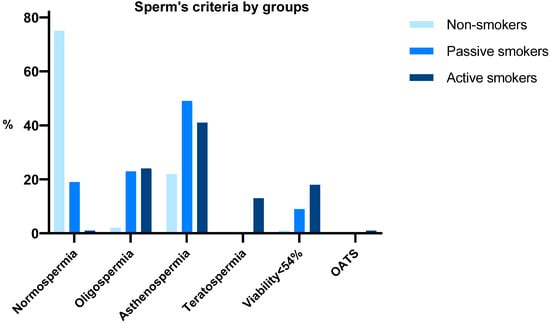
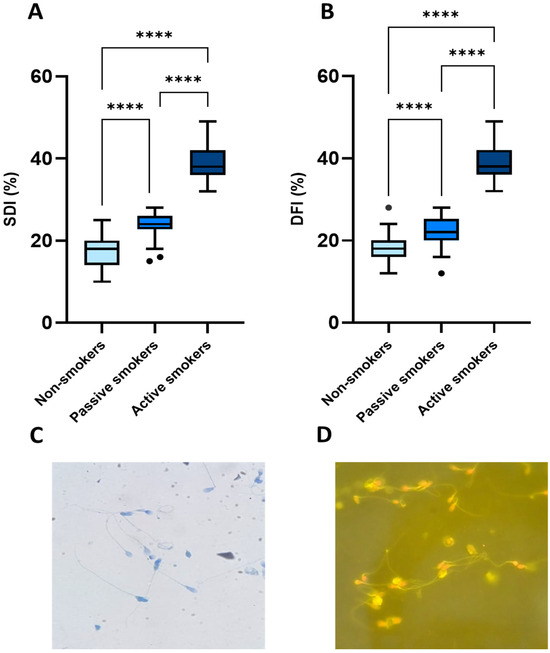
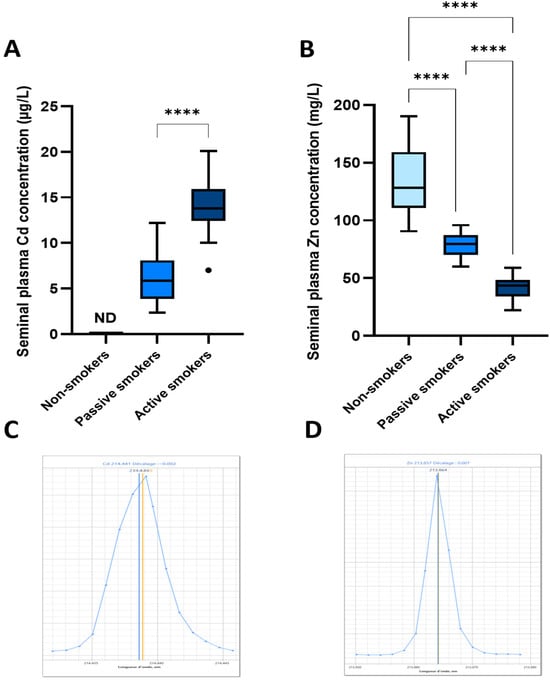
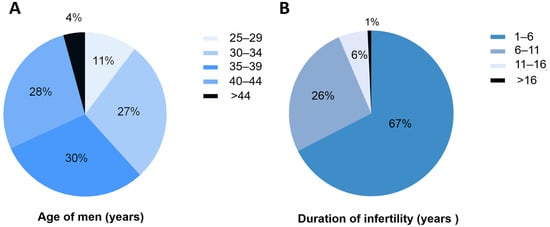
Smoking is a major lifestyle factor associated with impaired male reproductive health, affecting both active smokers and individuals exposed to secondhand smoke. It also represents a significant source of cadmium (Cd) exposure, a toxic metal associated with altered sperm quality. This study aimed to evaluate the association between active and passive smoking and semen parameters, sperm DNA fragmentation, and chromatin decondensation, as well as cadmium (Cd) and zinc (Zn) levels in seminal plasma. A total of 280 men from infertile couples were included and categorized into three groups: 104 non-smokers (control), 90 active smokers, and 86 passive smokers. Semen samples were analyzed according to the WHO 2021 guidelines. Cadmium and zinc concentrations in seminal plasma were determined using inductively coupled plasma atomic emission spectroscopy (ICP-AES), and sperm DNA fragmentation and chromatin decondensation were evaluated. The findings indicated that both active and passive smoking were associated with impaired semen parameters, increased sperm DNA fragmentation and chromatin decondensation, decreased zinc levels, and elevated cadmium concentrations in seminal plasma. Full article
Show Figures

Figure 1

Back to TopTop