


Abstract
The disposal of industrial solid waste poses significant challenges in the context of sustainable global development. This issue is particularly critical for low-calcium solid waste, which is generated in large quantities and accumulates in extensive stockpiles. Owing to its low reactivity, the high-value utilisation of such waste remains challenging. In this study, three representative and readily available industrial solid wastes—coal gangue (CG), fly ash, and blast furnace slag—were selected for investigation. CG was activated using a combination of chemical, thermal, and mechanical treatments. Experiments were conducted to improve the working performance of CG-based alkali-activated cementitious materials. The microstructural characteristics of the materials were characterised using isothermal calorimetry, nuclear magnetic resonance spectroscopy, and X-ray diffraction. The results indicated that the biomass ash-composite-modified sodium silicate solution provided the best working performance among the activators evaluated, outperforming conventional NaOH and sodium silicate solutions. The thermal activation parameters had a greater influence on the cementitious system than the grinding time. Under the investigated conditions, CG exhibited the highest cementitious reactivity after 2 h of grinding followed by calcination at 800 °C for 4 h. These findings provide a reference for the efficient activation of large quantities of low-reactivity solid waste and support its large-scale, high-value utilisation.
1. Introduction
Against the backdrop of global sustainable development, full-chain solid-waste management has become a critical issue. China is undergoing vigorous industrial development and rapid urbanisation. It faces severe challenges in solid-waste management, particularly in the treatment of industrial solid waste [1,2,3,4]. Currently, stockpiles of low-calcium solid waste in China exceed 10 billion tons. Annual output continues to grow at a rate of more than 1 billion tons per year. Many types of low-calcium solid waste, such as coal gangue (CG), tailings, and muck, have potential cementitious reactivity. However, their reactivity is relatively low [5,6,7]. They are primarily used in low-end applications, including aggregates, mineral admixtures, and bricks and blocks [8,9]. These materials have low added value and utilisation rates, resulting in massive stockpiles. The large-scale stockpiling of low-calcium solid waste requires a large amount of land resources. Long-term exposure to the sun and rain can easily trigger problems such as spontaneous combustion, landslides, and heavy metal ion leaching. These issues pose serious threats to the environment [8,10,11]. Therefore, high-value utilisation of low-calcium solid waste is an urgent requirement.
Low-calcium solid waste is primarily composed of aluminosilicate minerals. This composition enables it to react with alkaline solutions. The reaction forms a cementitious network structure. This indicates broad application prospects in the field of green building materials. Recently, extensive research has been conducted on alkali-activated low-calcium solid wastes, particularly CG. For example, Zhang et al. [12] investigated the effect of the modulus of modified sodium silicate on the properties of blast furnace slag (BFS)–CG-based alkali-activated concrete. The results showed that the compressive strength and freeze–thaw resistance of concrete reached optimal values when the modulus of the modified sodium silicate was 1.3. In another study, Zhao et al. [13] used a modified sodium silicate with a modulus of 1.2 combined with sodium carbonate as the activator. They activated BFS and CG calcined at 750 °C for 4 h to prepare a novel alkali-activated cementitious material. They observed that the compressive strength of the material reached its maximum when the proportion of calcined CG was 25%. A review of the relevant studies indicates that most scholars have focused on using highly reactive BFS to compensate for the low reactivity of low-calcium solid waste. They used a sodium silicate solution to activate the BFS-CG system and prepare binary alkali-activated cementitious materials. The selection of alkali activators is limited [12,13,14,15,16]. Guo et al. [17] prepared a ternary geopolymer grouting material based on CG, BFS, and fly ash (FA) using a modified sodium silicate solution. Its 90 d compressive strength was close to 12 MPa. This material can be applied in projects such as general grouting, filling, and shallow soft soil reinforcement. However, mineral resource development is rapidly advancing into deep spaces beyond 1000 m. The development of kilometre-deep mines involves extremely complex geological environments. This imposes more stringent requirements on material properties. Overall, existing studies have made progress. However, traditional alkali activators, such as NaOH and sodium silicate solutions, have limited activation effects on the reactivity of low-calcium solid wastes. In contrast, composite alkali activators offer significant advantages in terms of strength improvement and performance stability [18,19,20,21,22]. Further research on the synergistic effects of alkali activators and the development of composite alkali activators is required.
Notably, some low-Ca solid wastes contain inert mineral phases. However, chemical activation alone cannot achieve satisfactory utilisation. Thermal and mechanical activation have proven to be effective methods for improving reactivity [23,24,25,26,27]. Zhu et al. [28] compared the properties of CG calcined at 450 °C and 750 °C with uncalcined CG. They confirmed that calcination was an effective approach for improving the performance of CG-based concrete. They also reported that reducing the particle size of calcined CG helped mitigate structural cracking and water absorption. Zhao et al. [29] performed wet grinding of CG for 30, 60, and 120 min. They compared the microstructural transformations of the CG after different treatment durations. The results showed that a longer wet grinding time significantly increased the specific surface area of the CG. This further improved its solubility and enhanced its pozzolanic reactivity. Another study reported that CG calcined at 650 °C for 2 h exhibited optimal reactivity. Calcination at excessively low or high temperatures reduced the reactive components in CG [30]. These findings provide a valuable reference for the activation and utilisation of inert low-calcium solid waste. Notably, the optimal calcination temperature for CG varies among different studies. Nevertheless, it mostly falls within the range of 500 to 1000 °C. This variation may be caused by factors such as different experimental gradient settings, raw material Si/Al ratios, impurities, and particle structures. These studies demonstrated that calcination and grinding can substantially improve the reactivity of inert solid wastes. This is expected to provide a broadly applicable pathway for the high-value utilisation of inert solid waste. However, existing systematic studies on calcination parameters and grinding time are limited, with narrow parameter ranges. Few studies have investigated the combined effects of chemical, thermal, and mechanical activation on the performance of alkali-activated cementitious materials. These activation parameters are closely associated with the working performance and microstructure of the final cementitious materials. With optimal activation conditions, material performance can be efficiently improved. Meanwhile, the processing cost of the raw materials can be controlled within a reasonable range. Therefore, it is necessary to investigate the combined activation and performance enhancement of inert solid wastes. This will promote the high-value and large-scale utilisation of massive amounts of low-calcium solid waste, such as CG.
In summary, this study selected three typical and widely available solid wastes as research subjects: CG, FA, and BFS. It hypothesised that cementitious materials activated by a biomass ash (BA) composite activator possess better mechanical properties than those activated by conventional single activators. Through the combined action of chemical, thermal, and mechanical activation, the pozzolanic activity of low-calcium solid wastes, such as CG, could be effectively enhanced. Isothermal calorimetry, nuclear magnetic resonance (NMR), and X-ray diffraction (XRD) were used to characterise the hydration heat release process, pore structure features, and mineral phases of the prepared materials.
2. Materials and Methods
2.1. Raw Materials
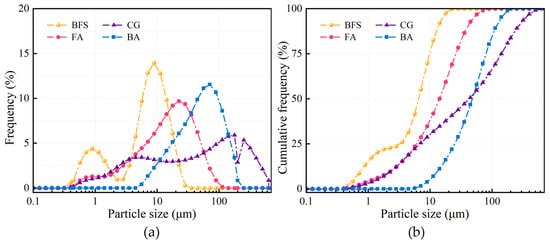
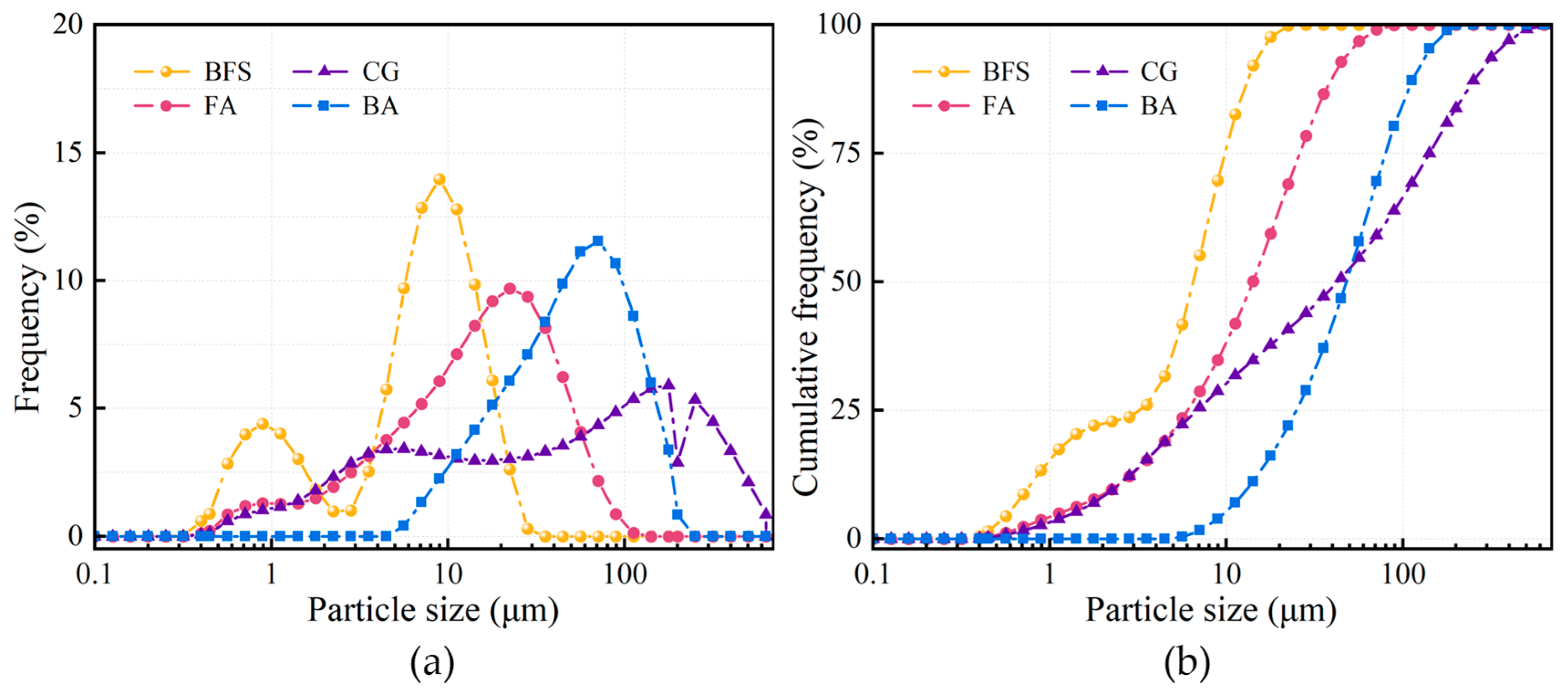
Raw materials, including CG, FA, BFS, and biomass ash (BA), were sourced from Qingdao and its surrounding regions, China. All raw materials were ground in a planetary ball mill prior to testing, and their particle size distributions were characterised via a laser particle size analyser, as plotted in Figure 1. The average particle sizes of CG, FA, BFS, and BA were 45.703, 14.162, 6.557, and 46.902 μm, respectively. Their chemical compositions were determined by X-ray fluorescence (XRF) spectroscopy(Shimadzu (Shanghai) Experimental Equipment Co., Ltd., Shanghai, China), as shown in Table 1. The loss on ignition (LOI) of CG is mainly attributed to hydroxyl water from kaolinite minerals and a small amount of organic matter, with the latter accounting for a very low proportion. The calcination treatment at 500–1000 °C adopted in this study can effectively decompose and remove organic components, thereby avoiding their adverse interference with the alkali-activation process. BA exhibits unique chemical properties. Its CaO and K2O contents are 25.00% and 21.00%, respectively, indicating considerable alkali-activation potential.
Figure 1.
Particle size distribution of the raw materials: (a) frequency distribution; (b) cumulative frequency distribution.
Table 1.
Chemical compositions of BFS, CG, FA, and BA determined by XRF analysis.
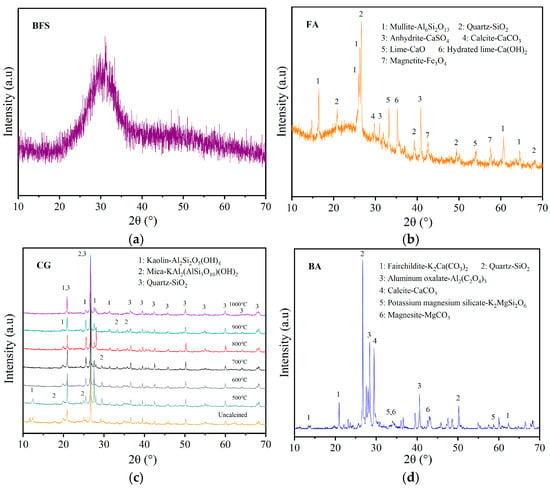
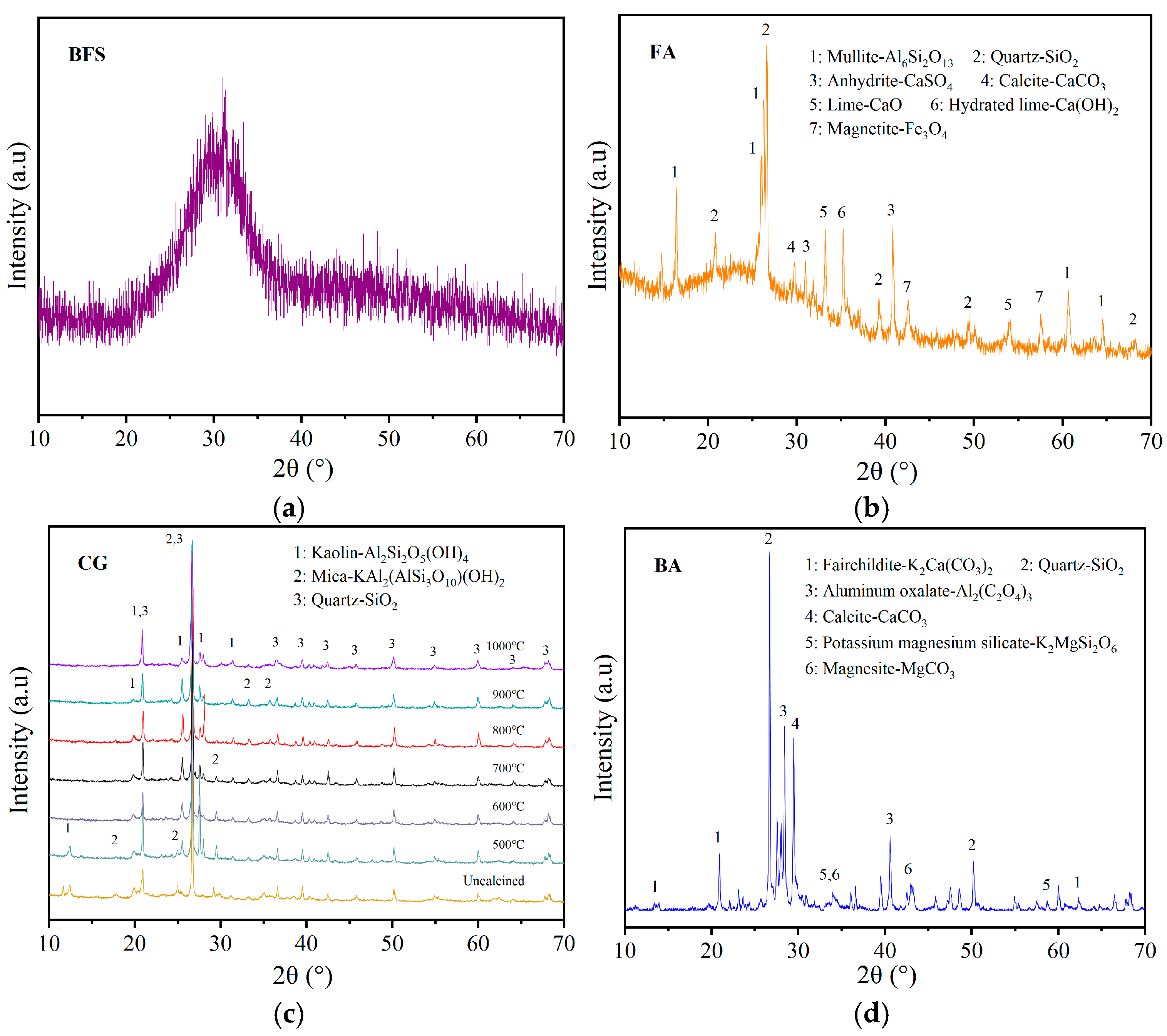
The XRD patterns of BFS, CG, FA, and BA are displayed in Figure 2. As shown in Figure 2a, BFS presents a broad hump across the 2θ range of 25–35°, which is indicative of abundant amorphous glassy phases and accounts for its high pozzolanic reactivity. For FA, the dominant crystalline phases are identified as mullite and quartz, accompanied by a broad diffuse hump at 25–30°, reflecting a considerable content of amorphous aluminosilicate phases. Figure 2c compares the mineral assemblages of raw CG and CG calcined at 500–1000 °C. The diffraction intensities of kaolinite decline gradually with increasing calcination temperature; this phase nearly vanishes under all calcination conditions above 500 °C, while quartz diffraction peaks show a slight intensification. For BA, the primary crystalline phases are fairchildite and quartz.
Figure 2.
XRD patterns of different raw materials: (a) BFS; (b) FA; (c) CG; and (d) BA.
Solid NaOH (analytical grade, 98% purity) was purchased from Sinopharm Chemical Reagent Co., Ltd., Shanghai, China. A sodium silicate solution (Baumé degree: 39.9; modulus: 3.28) was supplied by Hebei Litian Chemical Co., Ltd., Hengshui, China, containing 8.35% Na2O and 26.54% SiO2. Modified sodium silicate solutions with target moduli were prepared by blending solid NaOH with the raw sodium silicate solution in calculated proportions [31,32]. Deionised water was used throughout all experimental procedures.
2.2. Experimental Methods
Previous studies and preliminary experiments consistently demonstrated that BFS and FA possess high cementitious reactivity, whereas raw, uncalcined CG exhibits almost no cementitious reactivity. Increasing the fineness of CG through mechanical activation alone is insufficient to impart pozzolanic reactivity comparable to that of BFS and FA. Therefore, raw CG was subjected to calcination followed by mechanical activation to enhance its pozzolanic reactivity. The activated CG was subsequently mixed with FA and BFS to prepare the precursor. The mass ratio of CG, FA, and BFS was maintained at 1:1:2 throughout the study. The prepared alkali activator solution was mixed with the precursor at a liquid-to-solid ratio of 0.72, which was selected based on preliminary experiments. The prepared solution was stirred for 3 min and then cast into 40 mm × 40 mm × 40 mm moulds. The samples were demoulded after 24 h and subsequently cured in a curing chamber under constant temperature and humidity conditions until the designated test ages. The curing chamber (model SHBY-90B, Hengsheng Weiye Highway Instrument Co., Ltd., Cangzhou, China) was maintained at 20 ± 2 °C and a relative humidity of 95%. The test ages were 1, 3, and 28 d. The experimental scheme is summarised in Table 2.
Table 2.
Experimental scheme.
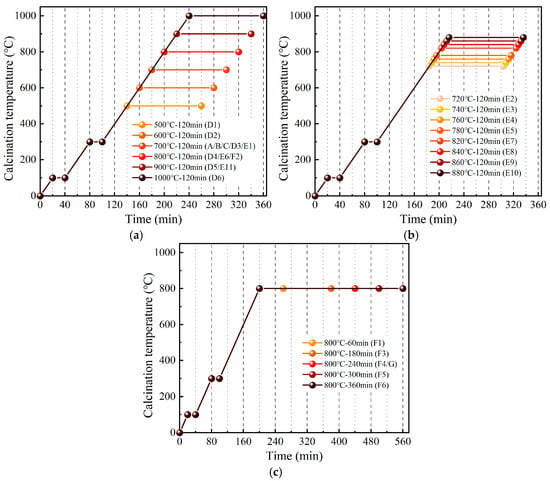
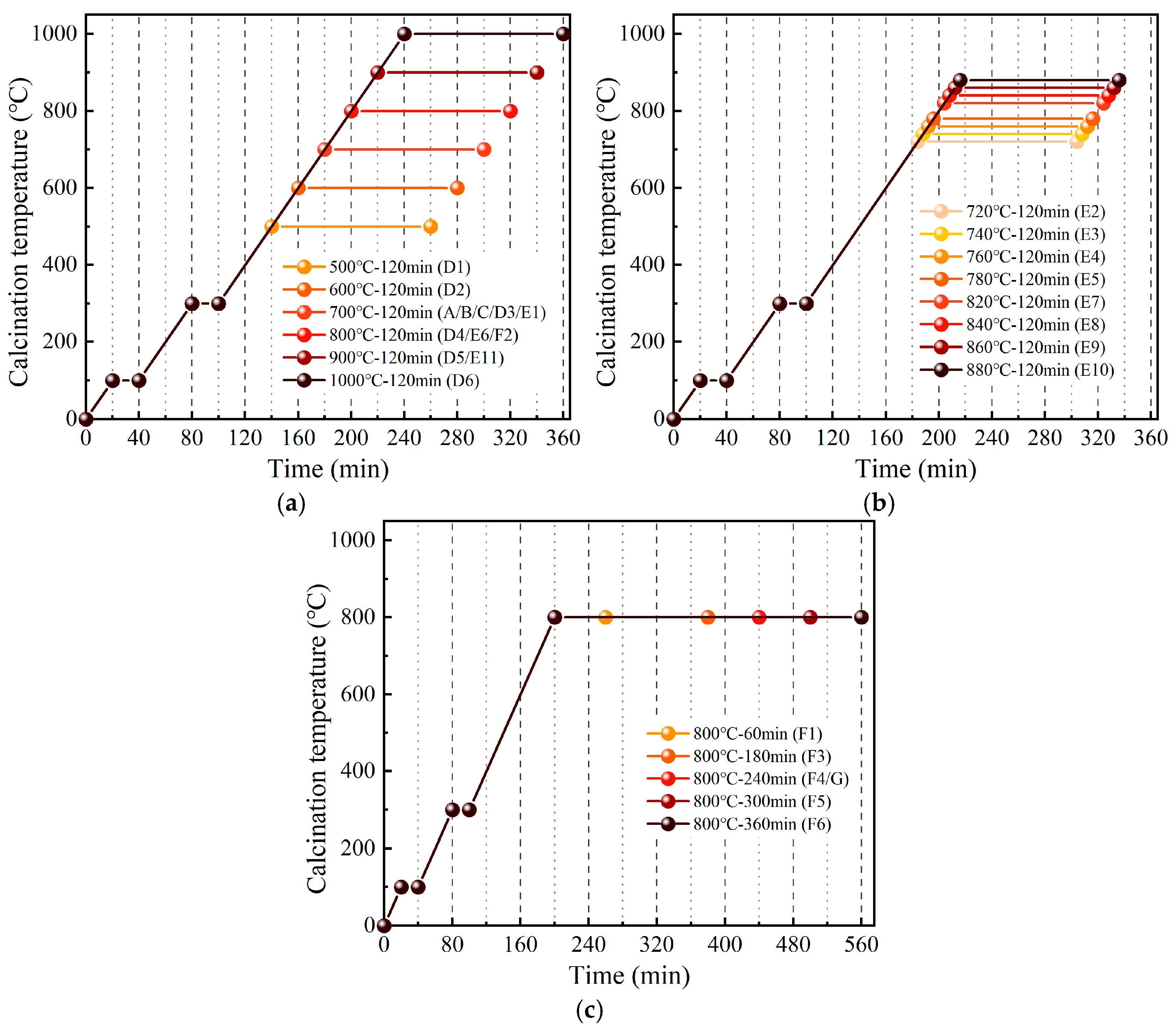
The CG was calcined in an SLQ1700-844 box-type atmosphere furnace (Shengli Test Instrument Co., Ltd., Shanghai, China). The furnace was preheated before use to prevent cracking of the furnace chamber. To avoid excessive thermal stress below 300 °C, a 20 min stabilisation period was applied at 100 and 300 °C, respectively. The heating rate was 5 °C/min.
In Groups A, B, and C, the calcination temperature was fixed at 700 °C, the calcination time at 2 h, the grinding time at 2 h, and the modulus of the sodium silicate solution at 1.2. These parameters were selected based on preliminary experiments and published studies, as they provide a reasonable balance between material performance and economic cost. This study compared the effects of three common alkali activators on the properties of ternary alkali-activated cementitious materials. The examined activators included a NaOH solution, a modified sodium silicate solution, and a novel composite alkali activator. The composite alkali activator was ultimately selected for subsequent investigations. The aim of this comparison was to identify an efficient alkali-activation method suitable for the ternary solid-waste system of CG, FA, and BFS. The selected activation method was subsequently adopted in Groups D, E, F, and G to investigate the combined effects of calcination temperature, calcination time, and grinding time on the properties of the ternary alkali-activated cementitious materials.
The relationship between the calcination temperature and calcination time for CG investigated in this study is shown in Figure 3.
Figure 3.
Calcination programme for CG (including heating and holding stages): (a) 500–1000 °C, (b) 720–880 °C, and (c) 1–6 h. Note: The calcination time given for the experimental groups denotes the holding time at the specified temperature, excluding the heating-up time.
As shown in Figure 3a, only the calcination temperature in Group D differed among the test groups. The heating procedure below 300 °C and the heating rate above 300 °C remained unchanged. After the furnace reached the target temperature, calcination was carried out at a constant temperature for 2 h. The calcination procedure used in Groups A, B, and C was identical to the 700 °C/2 h calcination procedure used in Group D. The results of Group D showed that CG calcined at 800 °C exhibited the highest cementitious reactivity. Therefore, the calcination temperatures in Group E were set to 720, 740, 760, 780, 820, 840, 860, and 880 °C to further determine the preferred calcination temperature within the range of 700–900 °C. After the preferred calcination temperature was determined, Group F was used to investigate the effect of calcination time on the working performance of the cementitious material. This investigation identified the preferred calcination temperature and calcination duration for the material system. In Group G, the preferred calcination temperature and duration were fixed, and the effect of grinding time on the working performance of the cementitious material was investigated.
A fluidity test was conducted on the fresh alkali-activated cementitious slurry in accordance with GB/T 8077-2023 [33], with each mix proportion tested in triplicate. The setting time was determined using a Vicat apparatus in accordance with GB/T 1346-2024 [34]. The initial setting time was defined as the time at which the pointer fell freely and remained 4 mm ± 1 mm above the glass plate. The final setting time was defined as the time at which the pointer fell freely and remained 1 mm ± 0.5 mm above the glass plate. The compressive strength of the cementitious materials was tested using a CDT1305-2 flexural and compressive testing machine. The instrument was manufactured by MTS Industrial Systems Co., Ltd. (Shanghai, China), with three parallel specimens prepared for each mix at every curing age.
The setting and hardening processes were monitored using a Calmetrix I-Cal 8000 HPC hydration calorimeter (Calmetrix Inc., Arlington, MA, USA), in accordance with GB/T 12959-2024 [35]. Pore structure analysis was performed using a MacroMR12-150 V-I NMR spectrometer manufactured by Suzhou Niumag Analytical Instrument Co., Ltd., Suzhou, China. The pore structure data for each sample represent the average of three parallel samples. X-ray diffraction (XRD) analysis was conducted using a Bruker D8 Advance diffractometer (Bruker AXS SE, Karlsruhe, Germany).
3. Results and Discussion
3.1. Chemical Activation
3.1.1. Activation by NaOH Solution
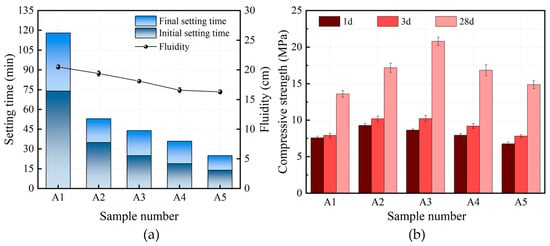
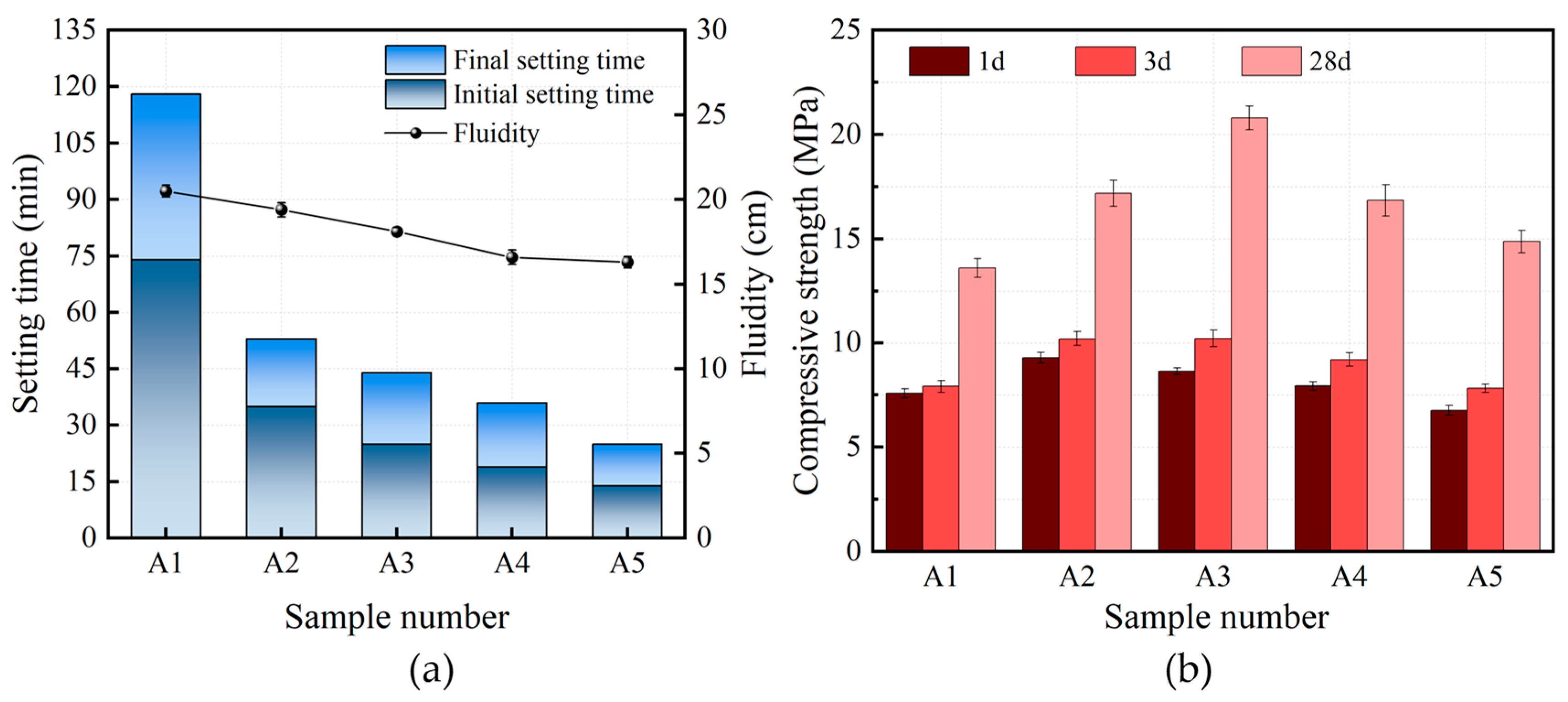
The fluidity, setting time, and mechanical properties of the cementitious materials in Group A, activated by NaOH solutions at different concentrations, are shown in Figure 4. The fluidity of the NaOH-activated system was greater than 160 mm when the NaOH concentration ranged from 1 to 5 mol/L and decreased with increasing NaOH concentration. This trend arises from two factors: first, the addition of solid NaOH replaces part of the free water in the activator solution, indirectly lowering the free water content in the cementitious system and narrowing the flow diameter; second, the high alkalinity of NaOH enhances the early reactivity of the mixed system, accelerating precursor dissolution and reconstruction and promoting the rapid formation of C-(A)-S-H gels, which also impairs paste fluidity [36,37].
Figure 4.
Fluidity, setting time, and compressive strength of the Group A samples: (a) fluidity and setting time; (b) compressive strength.
Both initial and final setting times shortened markedly with increasing NaOH concentration, as higher OH− concentration intensifies the attack on Si-O-Si and Si-O-Al bonds in precursor vitreous structures, accelerates glass phase dissolution, and reduces the time required for setting [36,37]. All samples exhibited relatively high compressive strength at 1 d of curing, and the strength followed an increasing-then-decreasing trend with increasing NaOH concentration. This behaviour is governed by the differential dissolution rates of calcium-rich and silicon-rich phases in alkaline environments: Ca-O bonds have lower bond energy than Si-O bonds, so calcium-bearing phases dissolve faster [38], while silicon-rich phase dissolution dominates later strength development. Moderately high OH− concentrations promote the breakage of Si-O-Si and Si-O-Al bonds, improve matrix compactness, and thus enhance strength. Nevertheless, excessively high OH− concentrations restrict the dissolution equilibrium of calcium-bearing phases, lower the migration and dissolution efficiency of Ca2+, and ultimately lead to a decline in compressive strength [39,40].
3.1.2. Activation by Modified Sodium Silicate Solution
Figure 5 shows the effects of sodium silicate concentration on the fluidity, setting time, and mechanical properties of the cementitious materials in Group B. The fluidity of the materials activated by the sodium silicate solution was higher than that of the materials activated by NaOH. All values exceeded 200 mm. With increasing activator concentration, more sodium silicate replaced water in the system. On the one hand, this accelerated the dissolution and reconstruction of the precursors. On the other hand, it reduced the free water content in the system. Thus, the fluidity of the cementitious materials decreased.
Figure 5.
Fluidity, setting time, and compressive strength of Group B samples: (a) fluidity and setting time; (b) compressive strength.
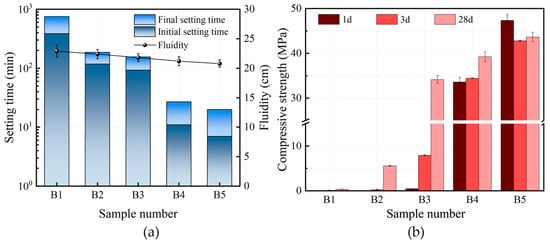
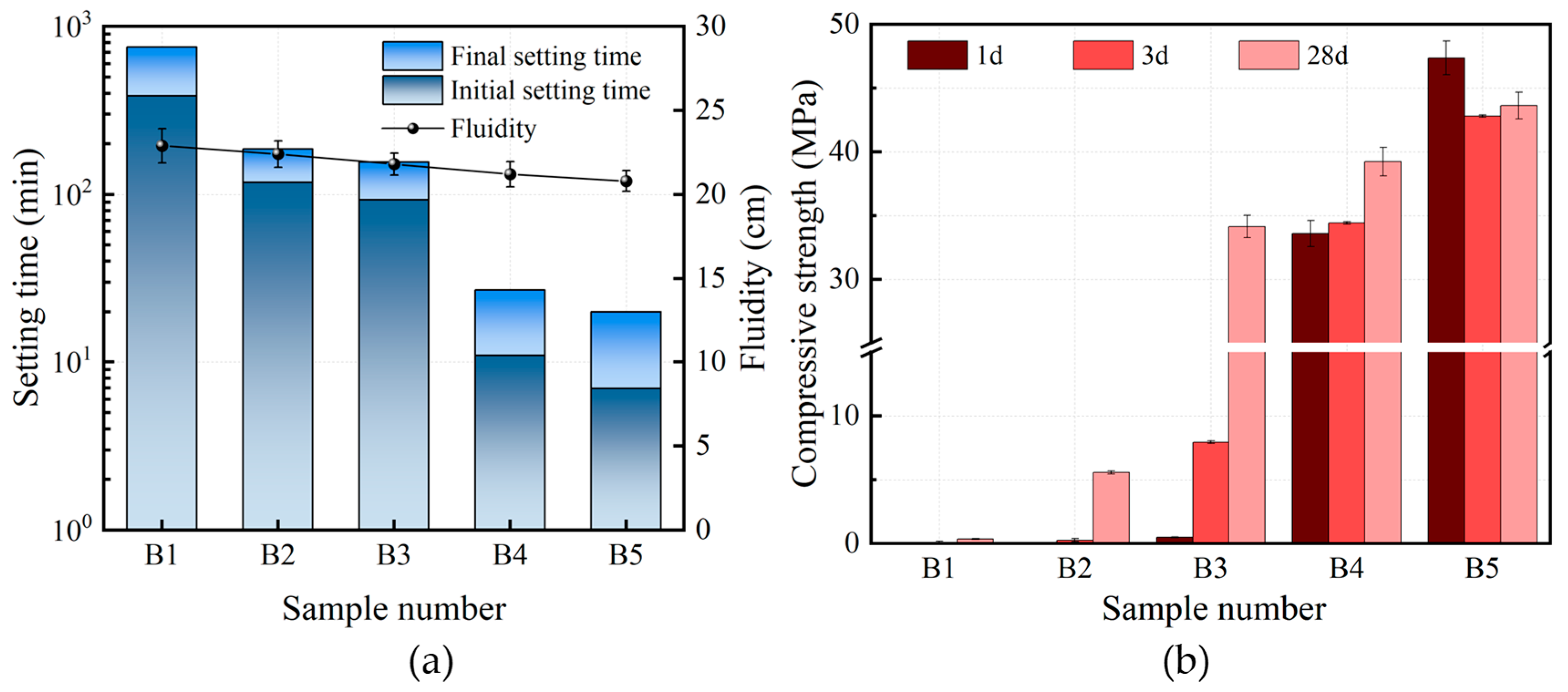
Setting time decreased rapidly with increasing activator concentration, while compressive strength increased sharply, indicating that sodium silicate concentration is a dominant factor controlling both setting kinetics and mechanical development. At low concentrations, sodium silicate cannot fully react with aluminosilicate precursors, which hinders the formation of a refined pore network within the system. Meanwhile, increasing the sodium silicate concentration increased the Na+ content of the system, thereby helping to balance the negative charges within the system [41,42,43]. Increasing the sodium silicate concentration also promoted the dehydration and condensation reactions of [SiO4]4− and [AlO4]5−. The heat released during hydroxyl polycondensation also accelerated the repolymerisation of the reaction system. These three factors jointly account for the observed phenomena.
3.1.3. Activation by BA Composite Activator
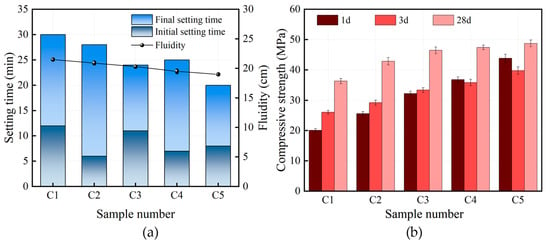
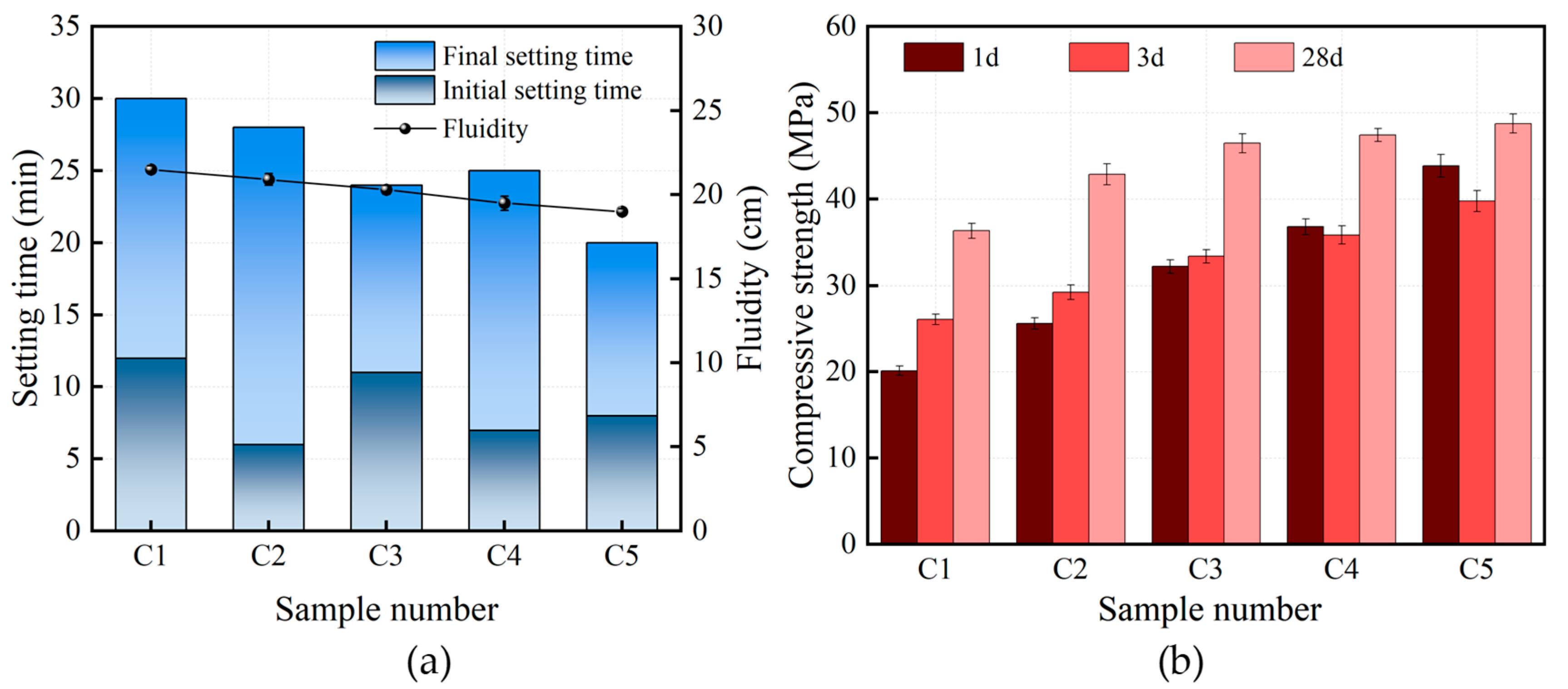
BA was selected as a novel alternative alkali activator. BA exhibited favourable late-stage activation effects [44], indicating potential for a synergistic effect combined with the modified sodium silicate solution. Therefore, BA was used as a composite activator in this study. Figure 6 shows the effects of BA concentration on the fluidity, setting time, and mechanical properties of the cementitious materials in Group C. The addition of BA indirectly reduced the water-to-binder ratio of the mixture, thereby reducing its fluidity. When the BA concentration increased from 0.02 to 0.10, the fluidity of the cementitious material decreased from 215 to 190 mm, corresponding to a reduction of 11.6%. The obtained result indicates that reasonably controlling the BA content in the composite activator can limit its influence on fluidity performance.
Figure 6.
Fluidity, setting time, and compressive strength of Group C samples: (a) fluidity and setting time; (b) compressive strength.
BA addition led to a notable reduction in setting time. When the BA concentration rose from 0.02 to 0.10, the initial setting time decreased from 12 min to 7.5 min and the final setting time from 30 min to 20 min, corresponding to reductions of 37.5% and 33.3% respectively. This is because alkali metal and alkaline earth metal oxides (K2O, CaO, SiO2, and Al2O3) dissolved from BA participate in the hydration reaction and promote the formation of C(K)-A-S-H and C-S-H gels, thus accelerating the setting and hardening process [45,46]. For engineering scenarios requiring a longer operation time, the setting time can be regulated by incorporating retarders such as sodium citrate. BA incorporation also markedly enhanced the compressive strength of hardened pastes. With the BA concentration increasing from 0.02 to 0.10, the 1 d compressive strength rose from 20.10 MPa to 43.85 MPa (an increase of 118.2%), and the 28 d strength increased from 36.34 MPa to 48.75 MPa (an increase of 34.1%). It is notable that BA exerts a more pronounced enhancement effect on early-age strength than on late-age strength. This is mainly attributed to the reduced effective water-to-binder ratio at higher BA dosages, which raises precursor concentration and dissolution efficiency and thus boosts early strength development. At later reaction stages, the vitreous structure is largely dissolved in all samples, so the influence of BA concentration on compressive strength diminishes. The additional active oxides supplied by BA also contribute to gel formation and strength growth [45].
In summary, the BA composite activator was selected as the chemical activator for subsequent experiments based on its superior overall performance. The preferred activation parameters were as follows: the modified sodium silicate had a modulus of 1.2 and a concentration of 0.4, while the BA concentration was 0.06.
3.2. Thermal Activation
3.2.1. Calcination Temperature
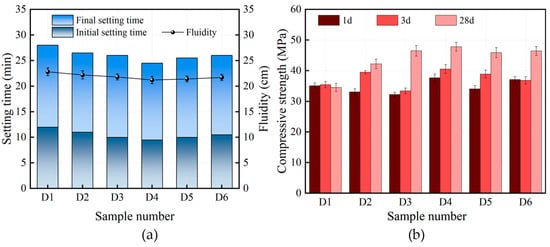
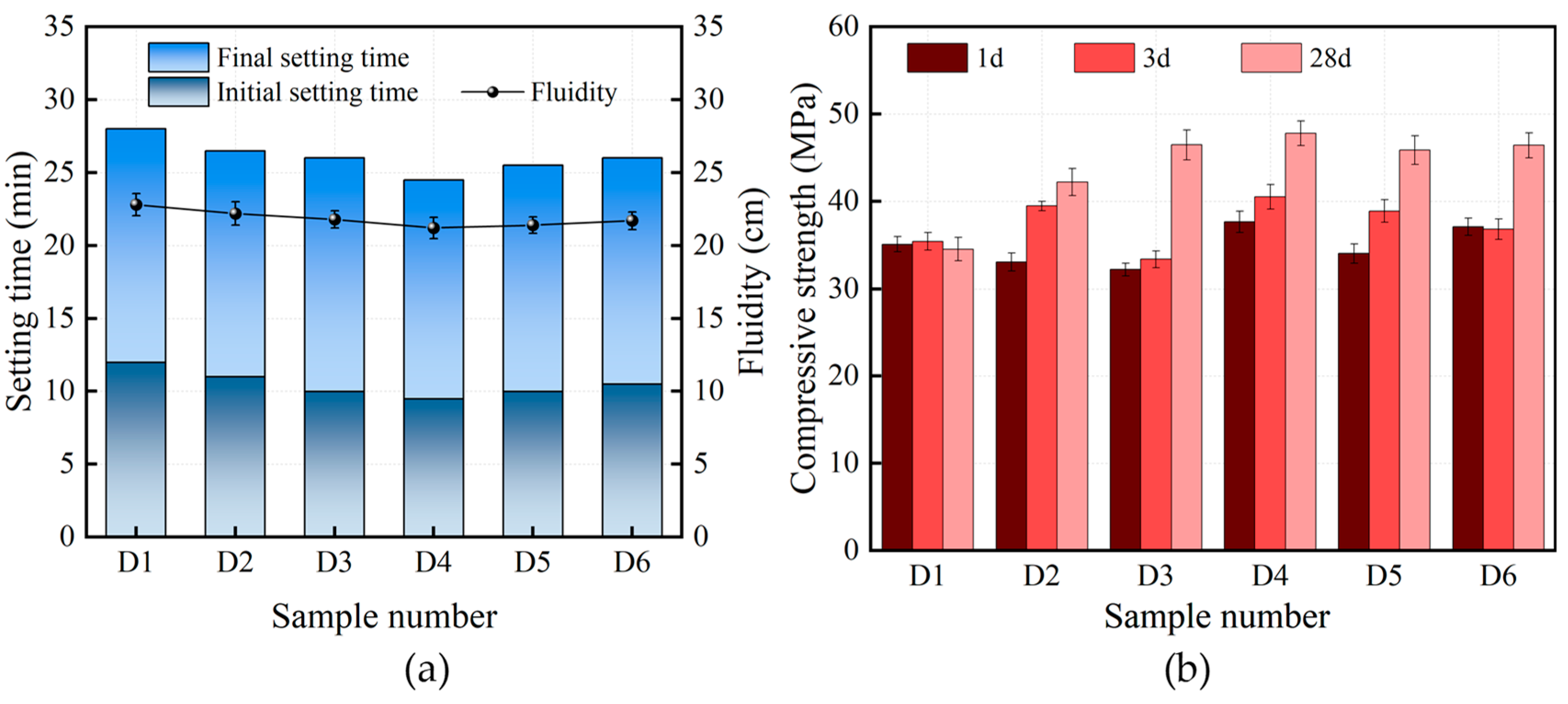
The fluidity, setting time, and mechanical properties of the CG-based alkali-activated cementitious materials prepared with CG calcined at different temperatures in Group D are shown in Figure 7. The calcination temperature has only a slight effect on the fluidity of the materials. The fluidity reached its maximum when CG was calcined at 500 °C, with a flow diameter of 22.8 cm. When the calcination temperature was increased from 600 °C to 800 °C and then to 1000 °C, the flow diameter of the cementitious material decreased from 22.2 cm to 21.2 cm and 21.7 cm, corresponding to reductions of 4.5% and 2.3%, respectively. This behaviour may be attributed to changes in the mineral composition and particle size distribution of CG during high-temperature calcination [7]. Previous studies have found that kaolinite in CG undergoes only a slight change at calcination temperatures below 400 °C. Between 400 and 800 °C, kaolinite gradually undergoes dehydroxylation, with the crystal structure destroyed and transformed into an amorphous state. This process increases the specific surface area of the material [47,48]. The increased specific surface area of the particles enables them to adsorb more water from the mixed system, thereby reducing the free water content available. Consequently, the flow diameter of the fresh slurry decreases slightly.
Figure 7.
Fluidity, setting time, and compressive strength of Group D samples: (a) fluidity and setting time; (b) compressive strength.
The variation in setting time with increasing calcination temperature was similar to that observed for the fluidity. This indicates that the crystal structure of kaolinite was progressively destroyed between 500 and 800 °C, thereby enhancing the reactivity of the CG and accelerating the reaction rate of the system. The compressive strength showed a similar trend. The compressive strength of the cementitious material was lowest when CG was calcined at 500 °C. As the calcination temperature was increased from 600 °C to 800 °C and subsequently to 1000 °C, the 1 d compressive strength increased by 14.0% and 12.2% respectively. Similarly, the 28 d compressive strength exhibited sequential increases of 13.2% and 10.0%, respectively. When the calcination temperature exceeded 800 °C, the dehydroxylation of kaolinite was almost complete. However, the specific surface area no longer increased. Meanwhile, as the temperature further increased to 900 °C and 1000 °C, metakaolin underwent phase transformation and recrystallisation, forming aluminosilicate spinel and mullite. This reduced the specific surface area of the particles [24]. Consequently, the fluidity, setting time, and compressive strength exhibited corresponding trends.
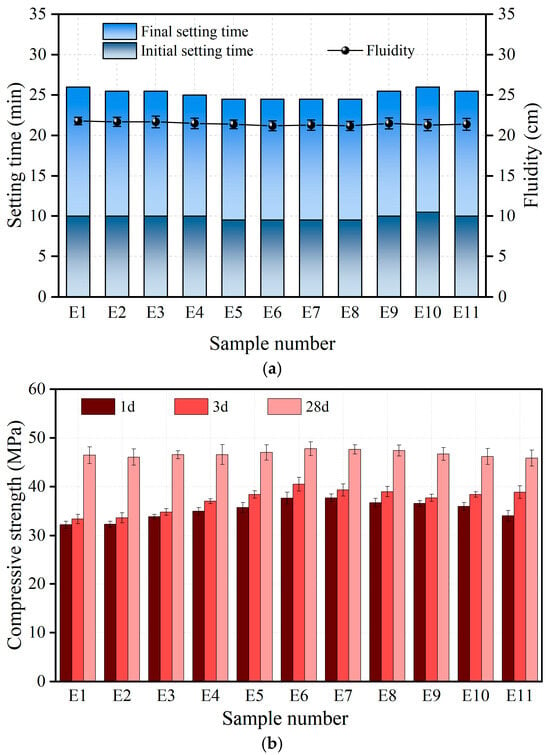
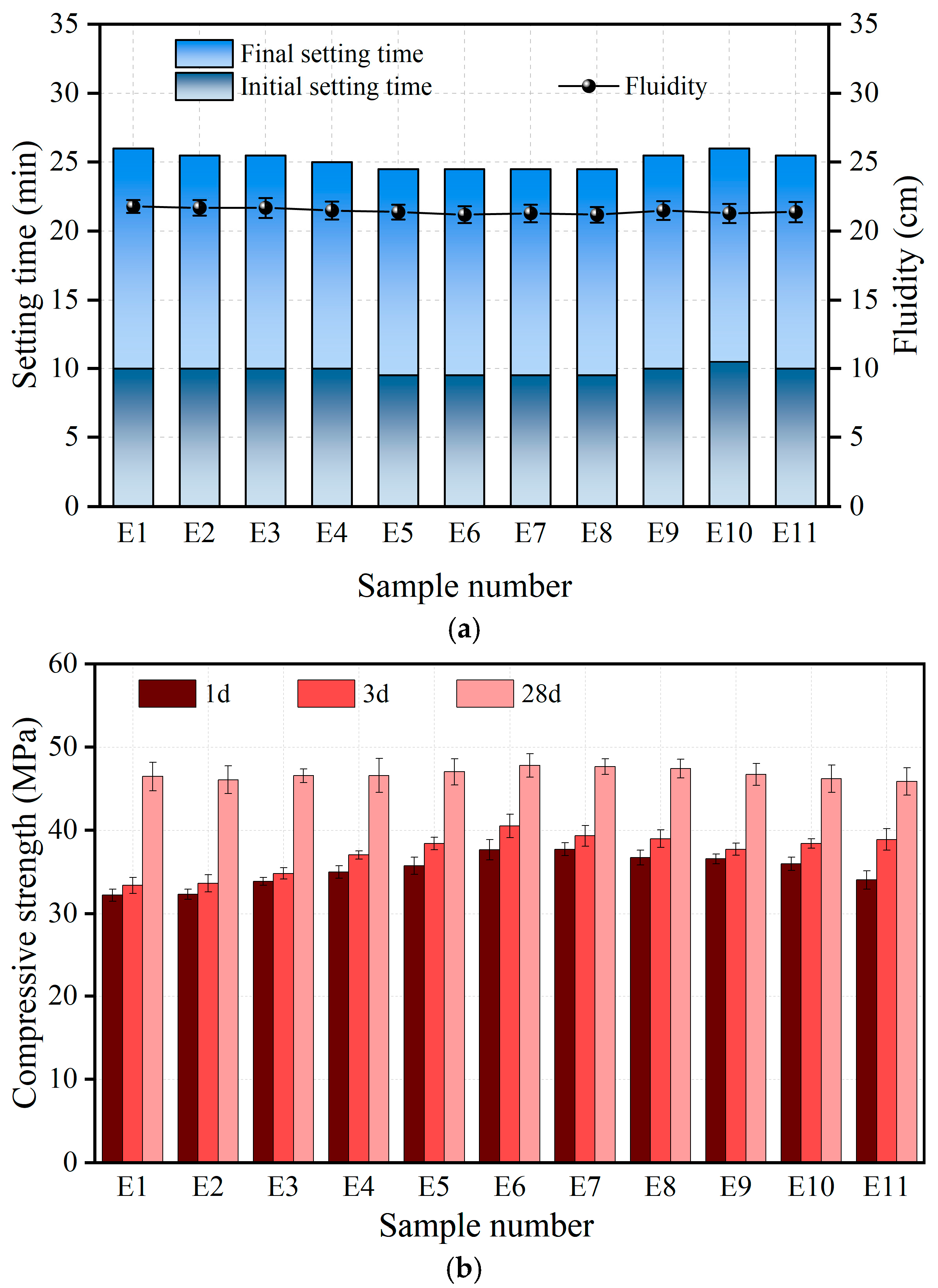
Further experiments were conducted on the fluidity, setting time, and mechanical properties of CG-based alkali-activated cementitious materials prepared with CG calcined between 700 and 900 °C. As shown in Figure 8, the fluidity and setting time of the materials varied only slightly within this calcination temperature range. The cementitious material exhibited the highest fluidity, with a flow diameter of 21.8 cm, when CG was calcined at 700 °C. The minimum flow diameter of 21.2 cm was observed at calcination temperatures of 800 °C and 840 °C. This may be attributed to the relatively complete dehydroxylation of kaolinite at 800 °C. The increased specific surface area of the particles resulted in a slight decrease in the flow diameter of the fresh slurry. In addition, the initial and final setting times of the cementitious material varied within a narrow range when CG was calcined between 700 and 900 °C. The variation trend of the setting time was very similar to that of the fluidity. The final setting time reached its maximum of 26 min at calcination temperatures of 700 °C and 880 °C. The shortest final setting time of 24.5 min was obtained at calcination temperatures between 780 and 820 °C. This indicates that the dehydroxylation of CG was relatively complete at ~800 °C under the experimental conditions of this study.
Figure 8.
Fluidity, setting time and compressive strength of Group E samples: (a) fluidity and setting time; (b) compressive strength.
The compressive strength results showed an opposite trend to those of the fluidity and setting time. The compressive strength was lower at calcination temperatures of 900 and 720 °C. The cementitious material achieved the highest 28 d compressive strength when CG was calcined at 800 °C and 820 °C. The above results indicate that CG exhibited the highest hydration reactivity at calcination temperatures of approximately 800 to 820 °C. Below this temperature range, kaolinite dehydroxylation was incomplete, and the reactivity of Si4+ and Al3+ had not reached their respective peaks. When the temperature was further increased to 900 °C, metakaolin recrystallised to form aluminosilicate spinel and mullite [24]. This reduced the specific surface area and reactivity of the particles. Consequently, the compressive strength decreased slightly.
3.2.2. Calcination Time
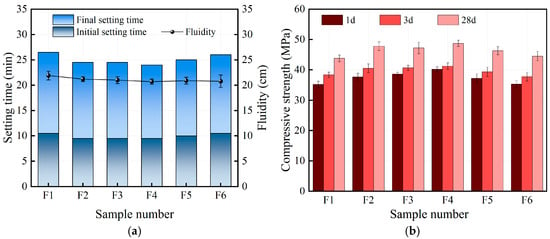
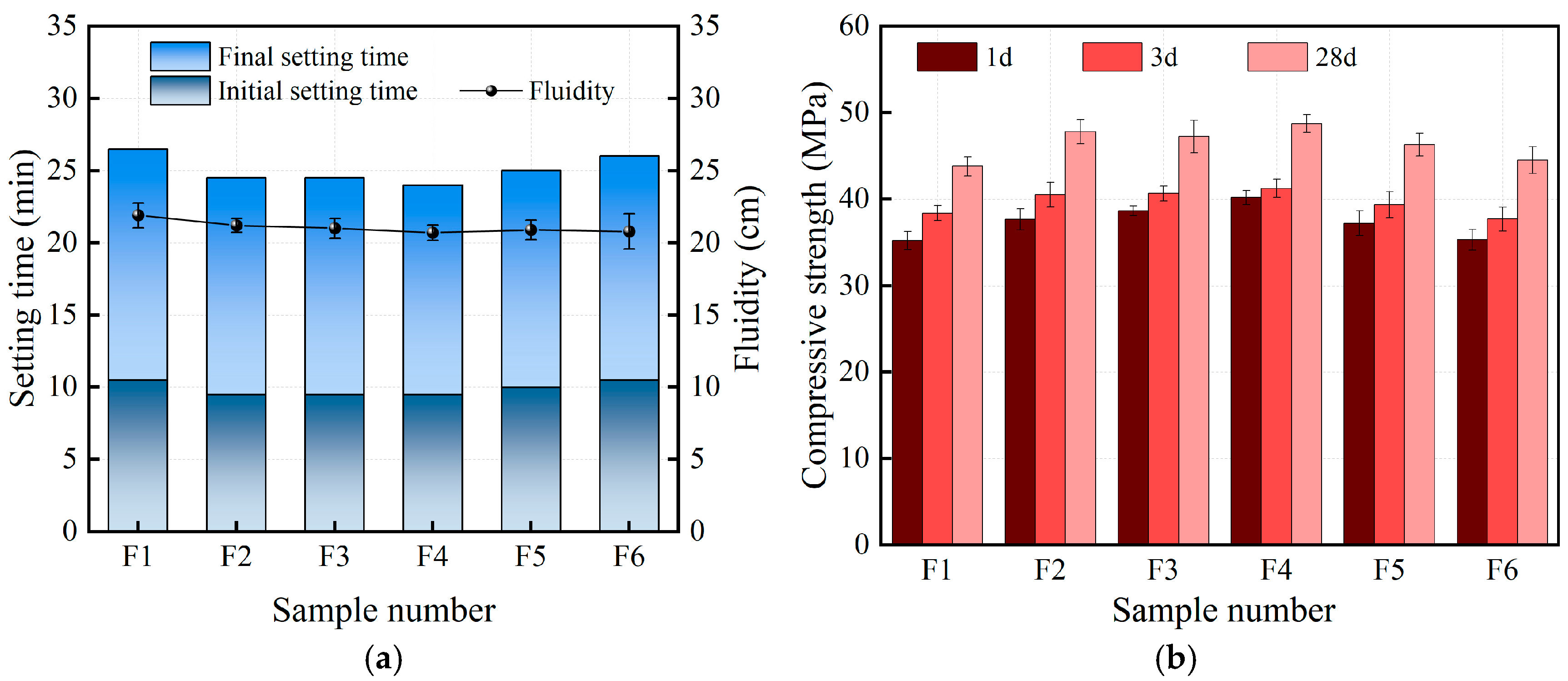
Figure 9 shows the effects of the CG calcination time on the working performance of the CG-based alkali-activated cementitious materials in Group F. The calcination time of CG had only a slight effect on the fluidity. The highest fluidity was achieved at a calcination time of 1 h. When the calcination time increased from 2 h to 4 h and then to 6 h, the flow diameter of the cementitious material decreased from 21.2 cm to 20.7 cm and 20.8 cm, corresponding to reductions of 2.4% and 1.9%, respectively. This behaviour is mainly attributed to the influence of the calcination time on the mineral composition and particle size distribution of the CG [7,27]. If the calcination time was too short, the dehydroxylation of part of the CG might not have been complete. Consequently, the destruction of the crystal structure and the increase in the specific surface area were limited. Excessively long calcination times led to overburning, resulting in a decrease in the specific surface area and reduced reactivity of CG. This is because metakaolin formed at high temperatures transforms into more stable phases, such as mullite, upon prolonged heating [24]. Consequently, prolonged calcination is unfavourable for the working performance of CG-based alkali-activated cementitious materials. In addition, the initial and final setting times of the cementitious materials varied within a narrow range for calcination times of 1–6 h. The variation trend of the setting time was similar to that of the fluidity. The final setting time was relatively long at calcination times of 1 h and 6 h, with values of 26.5 min and 26 min, respectively. The shortest final setting time (24 min) was obtained at a calcination time of 4 h. This indicates that a calcination time of 4 h was sufficient to achieve the dehydroxylation of CG without causing overburning.
Figure 9.
Fluidity, setting time, and compressive strength of Group F samples: (a) fluidity and setting time; (b) compressive strength.
The compressive strength showed a negative correlation with the fluidity and setting time. The compressive strength was lower at calcination times of 1 and 6 h. The cementitious material achieved its highest mechanical performance at a calcination time of 4 h. Its 28 d compressive strength reached 48.75 MPa. The above results indicate that CG calcined at 800 °C for 4 h exhibited the highest hydration reactivity in this study. An insufficient calcination time resulted in incomplete dehydroxylation of part of the CG. Consequently, the destruction of the crystal structure and the increase in the specific surface area were limited. When the calcination time exceeded 4 h, the metakaolin formed by the dehydroxylation of kaolinite in CG transformed into more stable phases, such as mullite. Both scenarios reduced the reactivities of Si4+ and Al3+ and thereby decreased the compressive strength.
3.3. Mechanical Activation
Grinding Time
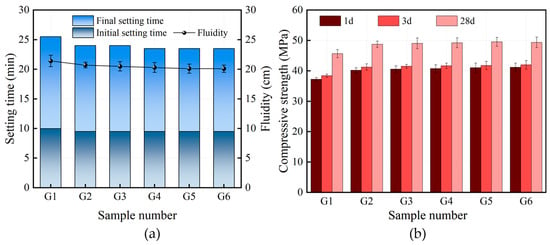
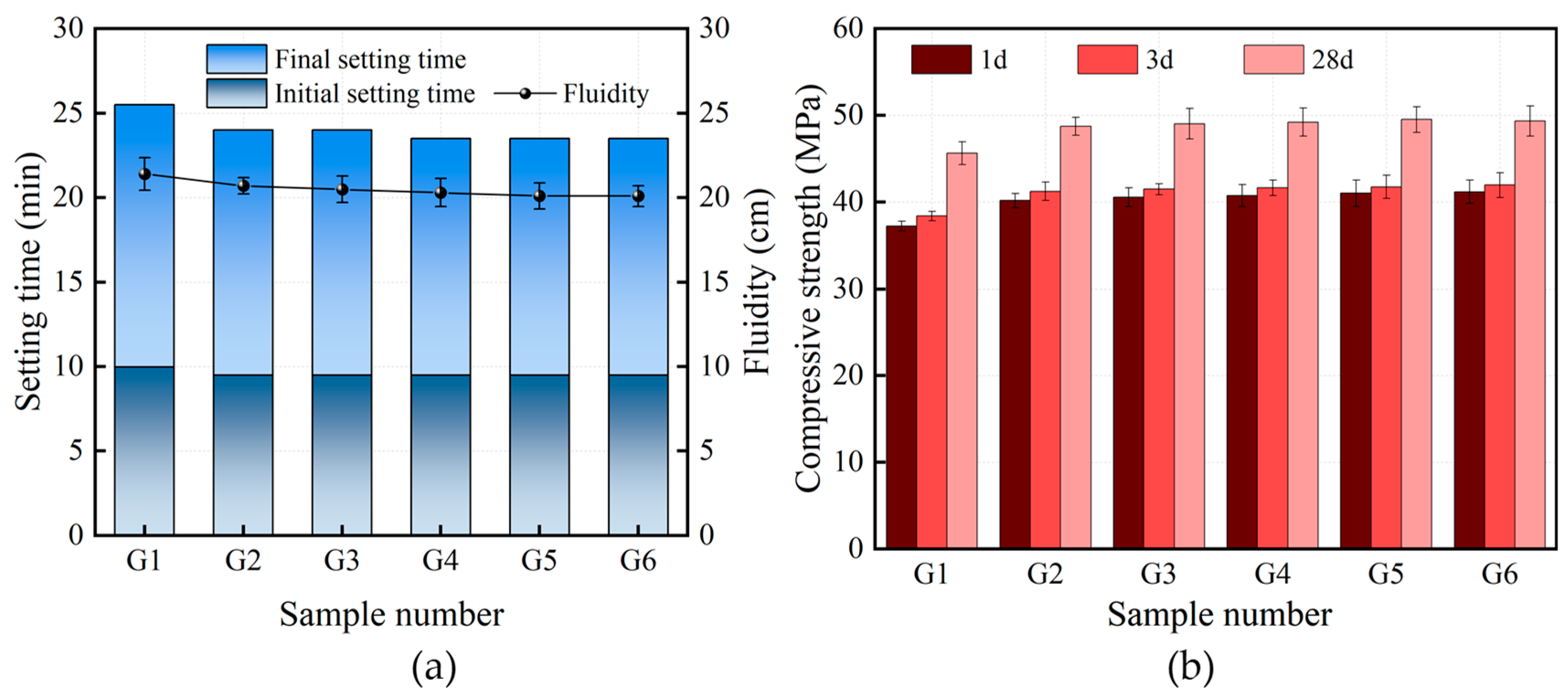
Group G was used to further investigate the effects of CG grinding for 1–6 h on the working performance of the cementitious materials. As shown in Figure 10, the fluidity and setting time of the CG-based alkali-activated cementitious materials varied only slightly over the investigated grinding time range. The cementitious material exhibited the highest fluidity, with a flow diameter of 21.4 cm, after 1 h of grinding. When the CG grinding time was extended from 2 h to 4 h and then to 6 h, the flow diameter of the cementitious material decreased from 20.7 cm to 20.3 cm and 20.1 cm, respectively. This is attributed to the fact that mechanical grinding reduced the particle size of CG. The resulting finer particles exhibited a larger specific surface area, thereby reducing the free water content in the system and decreasing the flow diameter of the cementitious material. In addition, the initial and final setting times of the cementitious materials varied within a narrow range over grinding times of 1–6 h. The variation trend of the setting time was consistent with that of the fluidity. The final setting time of the cementitious material was longest after 1 h of grinding. With further increases in the grinding time, the effect of grinding on accelerating the setting process became less pronounced.
Figure 10.
Fluidity, setting time, and compressive strength of Group G samples: (a) fluidity and setting time; (b) compressive strength.
The compressive strength results (Figure 10b) showed an almost opposite trend to those of the fluidity and setting time. The compressive strength was relatively low after 1 h of grinding. The 28 d compressive strength was only 45.65 MPa. This indicates that 1 h of grinding resulted in insufficient activation of CG. When the grinding time was extended from 1 to 2 h, the 28 d compressive strength increased to some extent. With further extension of the grinding time, the 28 d compressive strength showed no obvious change. Mechanical activation improved the mechanical performance mainly by reducing the particle size of CG and decreasing the crystallinity of the inert quartz. This increased the number of reaction sites and the amount of reactive species, thereby improving the cementitious reactivity of CG [25,26,49]. Finer particles were more likely to release reactive Al3+ and Si4+ ions and form more reaction products. This improved the compactness and mechanical performance of the hardened pastes. In addition, the ground CG particles exhibited a stronger water-binding capacity. The reduction in free water in the system also contributed to the development of the mechanical performance. The parameter combination obtained in this study, namely “2 h grinding + calcination at 800 °C for 4 h”, substantially improves the cementitious activity of CG. Nevertheless, this combination suffers from high energy consumption. For practical engineering applications, the calcination temperature and holding time can be reduced while meeting material-performance requirements to cut energy consumption and economic costs. Furthermore, CG is characterised by wide-ranging sources and considerable compositional variations. Future work should consider the adaptability of the activation parameters proposed in this study against compositional fluctuations of CG. Meanwhile, durability, as an essential indicator for engineering materials, also remains to be further investigated.
3.4. Microanalysis
3.4.1. Hydration Heat Analysis
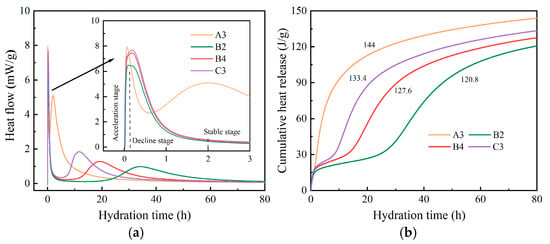
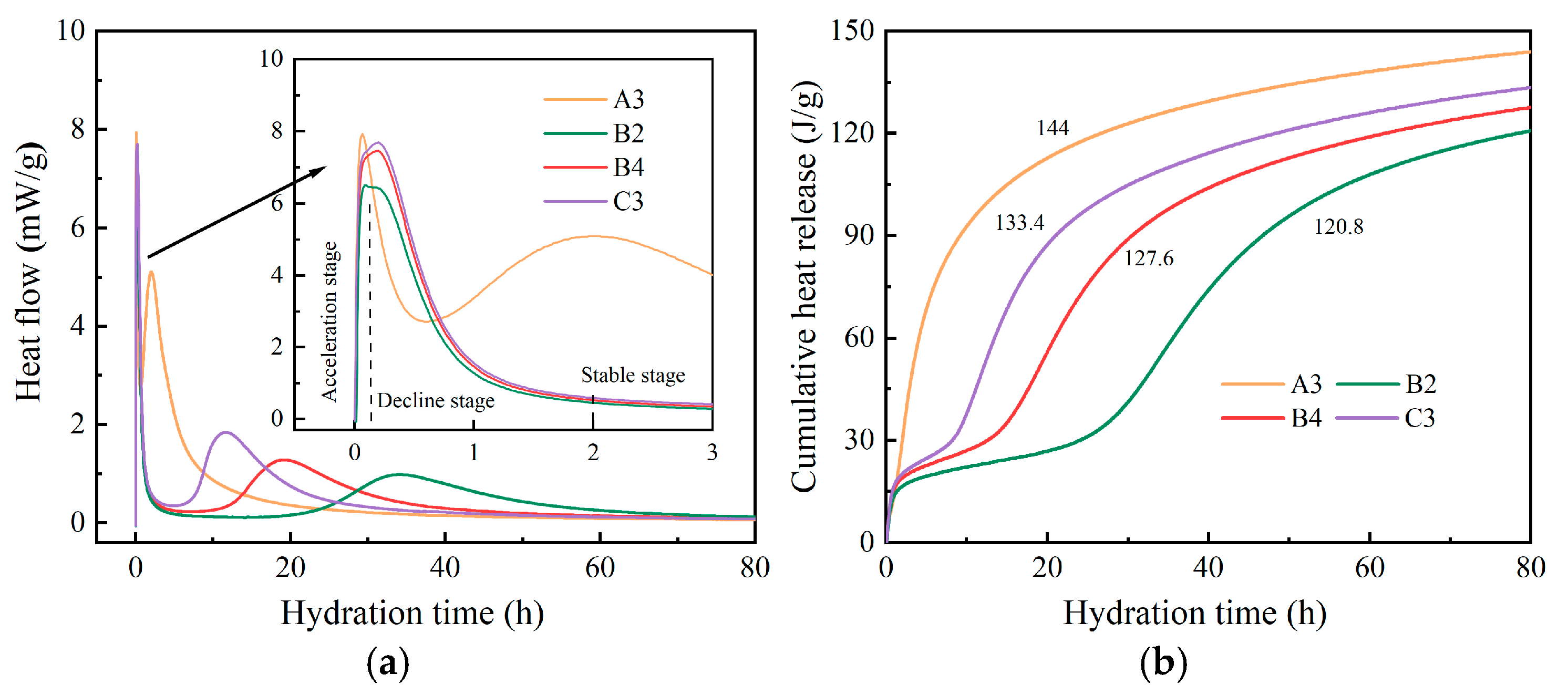
The early-stage calorimetric behaviour of CG-based alkali-activated binders activated by various alkaline media is illustrated in Figure 11a. Across all formulations, the early reaction sequence consistently progresses through an initial pre-induction phase comprising an acceleration transient, an intensity attenuation, and an eventual plateau stage. During the opening 5–12 min, a sudden release of heat occurs as the alkaline solution aggressively dissolves reactive Si4+ and Al3+ from the solid precursors, accompanied by the swift precipitation of initial oligomeric complexes. Subsequently, the accumulation of these early hydration precursors onto the unreacted particle boundaries creates a physical barrier that restricts continuous ionic detachment, leading to a marked deceleration in thermal output until a dynamic dissolution–precipitation equilibrium is achieved (stabilisation stage). Upon exiting the induction plateau, the systems enter the main acceleration period, culminating in a prominent second calorimetric peak primarily governed by the nucleation, widespread precipitation, and framework assembly of stable reaction gels [50,51,52]. Specifically, sample A3 (NaOH-activated) developed its second thermal maximum most rapidly at approximately 2 h, reaching the highest power of 5.1 mW/g. This accelerated heat release stems from the extreme alkalinity of free OH−, which triggers almost immediate framework dissolution. For sample C3 (activated by the BA composite activator), the second exothermic maximum emerged at 11.5 h with a thermal power of 2.0 mW/g. The presence of soluble silicate oligomers from the modified sodium silicate, combined with Ca2+ released from the blast furnace slag, substantially accelerated C-(A)-S-H gel development compared to plain waterglass systems. Conversely, mixtures B4 and B2 required prolonged hydration periods of 19.0 h and 33.7 h to reach their respective exothermic peaks, yielding noticeably lower peak values of 1.3 mW/g and 1.0 mW/g.
Figure 11.
Reaction heat evolution of samples prepared with different alkali activators: (a) heat flow; (b) cumulative heat release.
The corresponding 80 h cumulative heat yields are displayed in Figure 11b. Specimen A3 discharged the largest total thermal output (144.0 J/g), followed progressively by C3 (133.4 J/g), B4 (127.6 J/g), and B2 (120.8 J/g). This hierarchy matches the rank order of peak heat flows, confirming a direct correspondence between transient reaction kinetics and the overall extent of geopolymeric condensation.
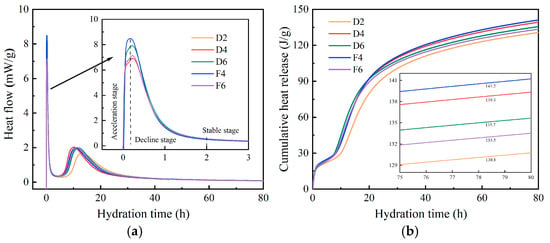
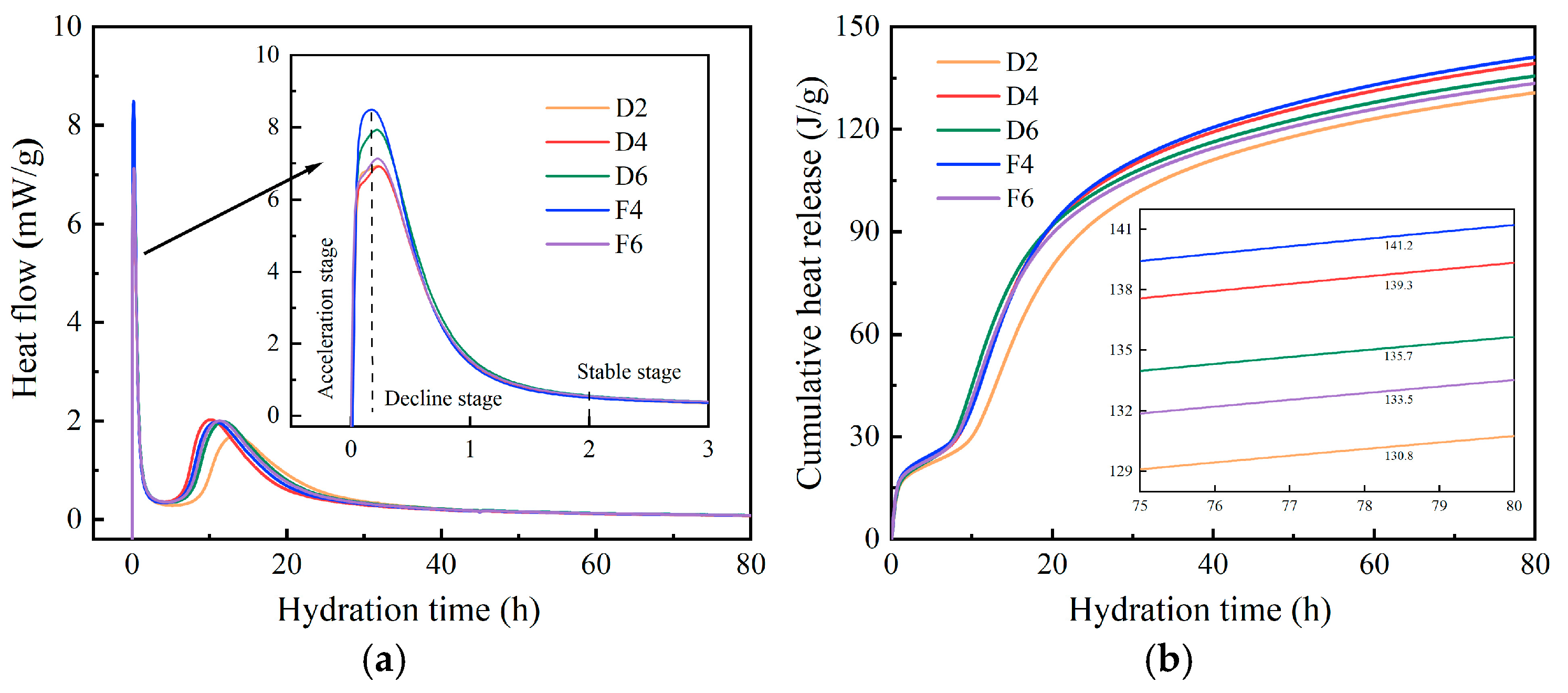
Figure 12a shows the effects of the calcination parameters on the hydration heat release process of the CG-based alkali-activated cementitious materials. The calcination temperature and calcination time had only slight effects on the heat release process. The heat release profiles of all the samples were similar to those of sample C3. The second exothermic peak of sample D4 appeared at approximately 10.2 h of hydration and reached the highest peak heat flow of 2.03 mW/g. The second exothermic peaks of samples F4, F6, and D6 appeared at 10.8, 11.2, and 11.8 h of reaction, respectively. Their peak heat flow values are 1.99, 2.01, and 2.00 mW/g, respectively. Sample D2 exhibited the slowest peak heat flow at 13.3 h, with a peak value of only 1.72 mW/g. The above results indicate that calcination at 600 °C provided insufficient activation of CG. After calcination at 800 °C or above, CG-based alkali-activated cementitious materials exhibited high early-age reaction activity. This finding was consistent with the results obtained from the setting time and compressive strength analyses.
Figure 12.
Reaction heat evolution of alkali-activated samples under different calcination parameters: (a) heat flow; (b) cumulative heat release.
Figure 12b shows the 80 h cumulative heat release of the CG-based alkali-activated cementitious materials under different calcination parameters. Sample F4 exhibited the highest total heat release of 141.2 J/g. The total heat release values of samples D4, D6, F6, and D2 were 139.3, 135.7, 133.5, and 130.8 J/g respectively. Notably, the ranking of the total heat release among the five groups was consistent with that of the compressive strength. Calcination at 800 °C for 4 h resulted in the highest degree of activation of CG. This indicates that sufficient crystal structure destruction and dehydroxylation promoted the heat release rate and total heat release of the reaction system. Consequently, this effect contributed to the improvement in the mechanical performance.
3.4.2. Pore Structure Analysis
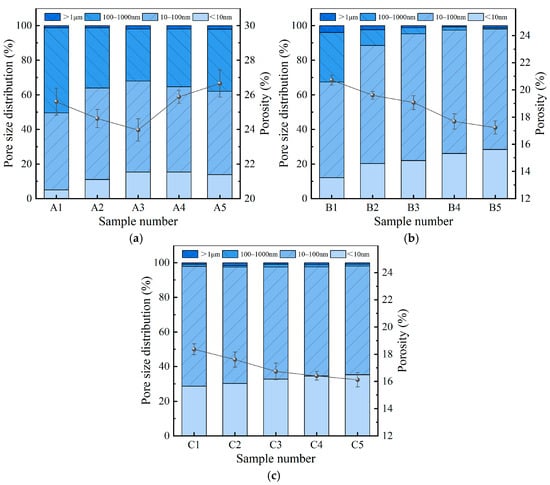
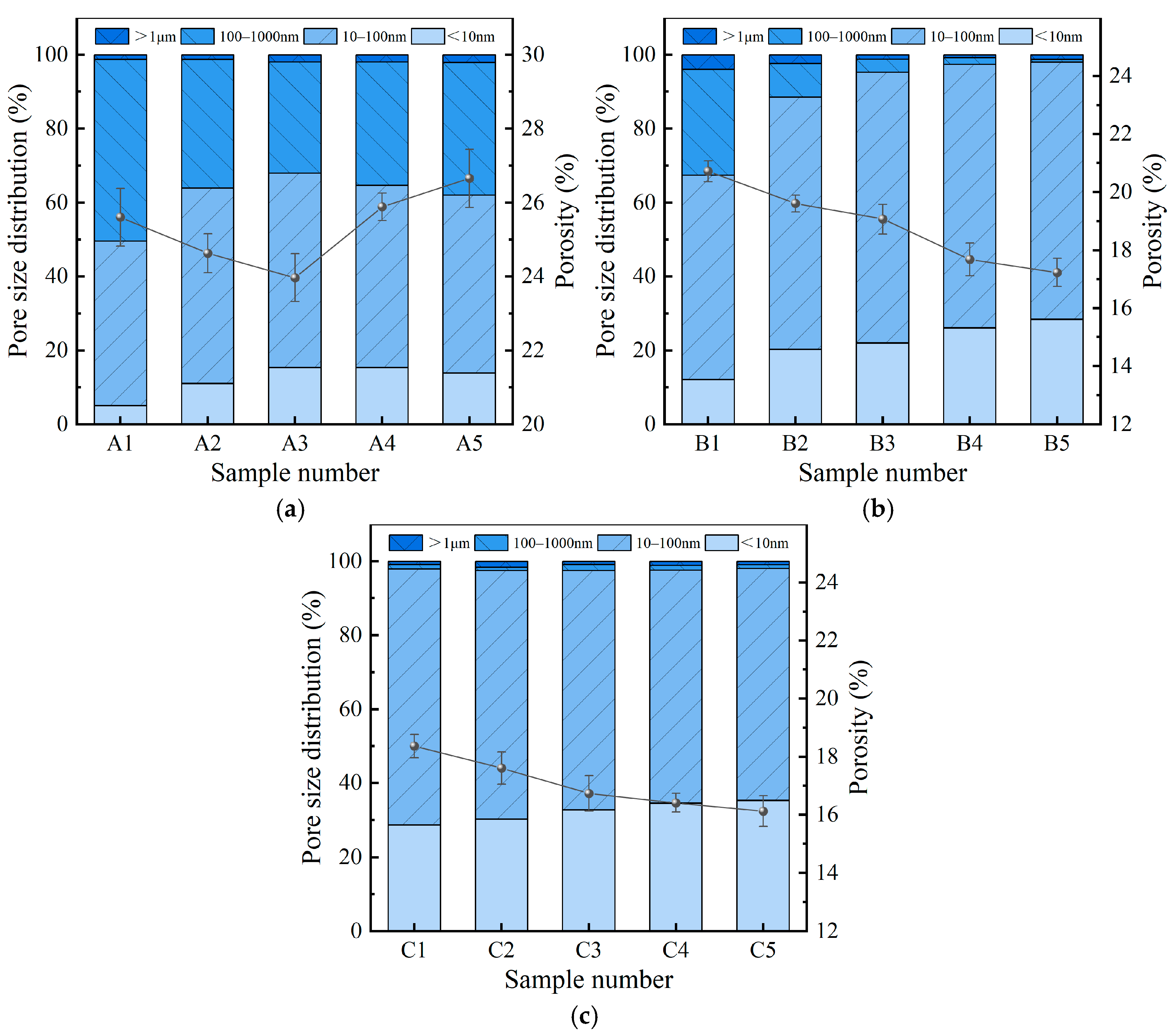
The pore structure is a key factor affecting the performance of alkali-activated cementitious materials, reflecting their microstructural characteristics, such as the abundance of nanopores. It also directly affects the macroscopic properties of the materials, including their mechanical strength and permeability. The pore-size distributions and porosities of the cementitious materials prepared with different alkali activators are shown in Figure 13.
Figure 13.
Pore structure characteristics of alkali-activated samples with different alkali activators: (a) Group A; (b) Group B; (c) Group C. The dotted-line plot represents the porosity of each sample.
In Group A (Figure 13a), raising the NaOH molarity caused the matrix porosity to decrease initially before rebounding at higher dosages. Although elevated OH− concentrations facilitate the cleavage of robust Si-O-Si and Si-O-Al linkages in precursor glasses and favour matrix densification, excessively high caustic levels disrupt the leaching equilibrium of Ca2+ from slag [53,54,55]. This calcium starvation hinders stoichiometric gel formation and increases void volume. Consequently, specimen A3 exhibited both the lowest porosity and the maximum compressive strength, demonstrating that pore refinement directly underpins mechanical performance.
Based on conventional categorisation, internal voids are divided into gel pores (<10 nm), transitional pores (10–100 nm), capillary voids (100–1000 nm), and macroscopic pores (>1000 nm) [56]. Increasing the caustic concentration caused the sub-100 nm micropore fraction (gel and transition domains) to expand initially and then decline, closely paralleling the compressive strength trajectory. Moderate alkalinity accelerates the dissolution of glassy precursors and generates abundant C-(A)-S-H gel products, which systematically clog and segment larger capillary and macropore channels into nanoscale gel pores. For Group B (Figure 13b), higher concentrations of modified sodium silicate yielded noticeable microstructural refinement and lower total porosities, corroborating the superior strength observed in densely packed pastes. In Group C (Figure 13c), introducing BA diminished total porosity. This reduction is primarily driven by the ash particles consuming available mix water, thereby effectively lowering the local water-to-binder ratio, elevating reactant concentrations, and accelerating dissolution kinetics. In addition, the oxides, such as K2O, CaO, SiO2 and Al2O3, supplied by BA promoted the formation of gels, such as C(K)-A-S-H and C-S-H [46], thereby contributing to the refinement of the pore structure of the hardened pastes.
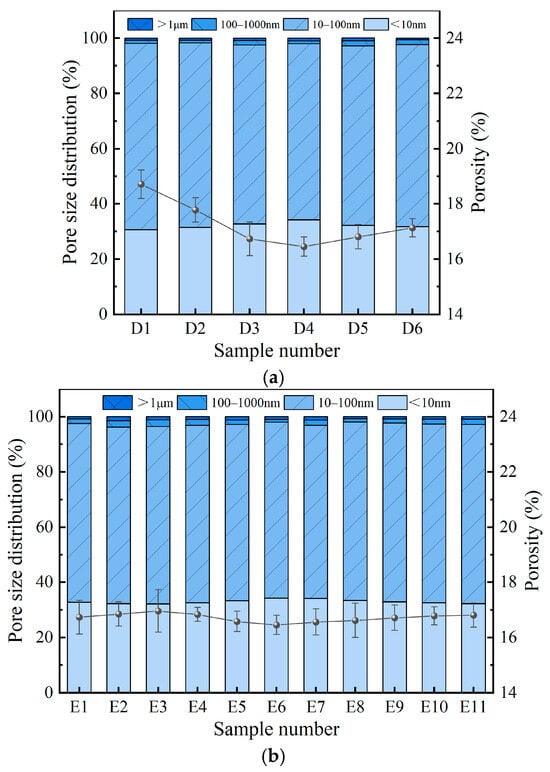
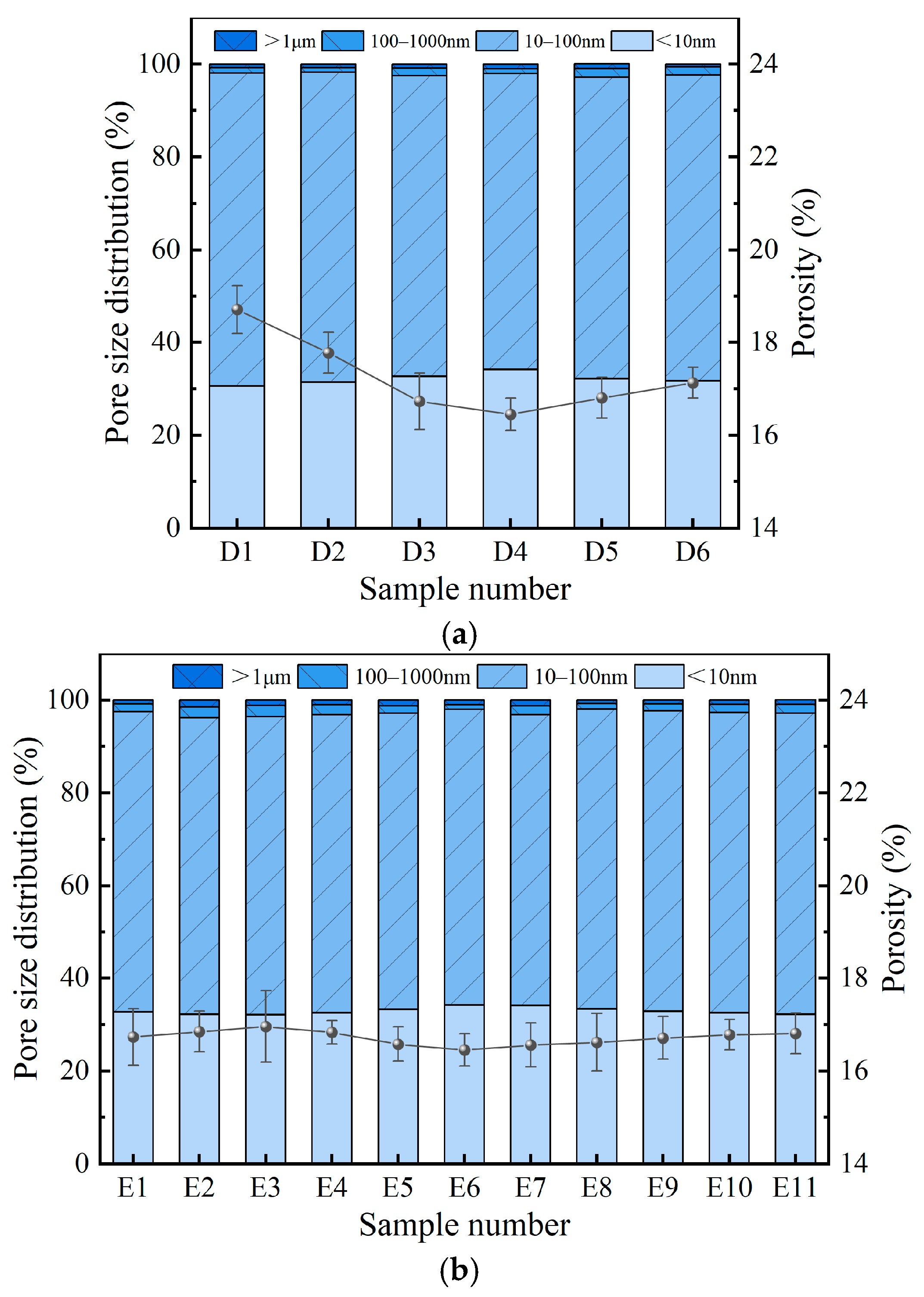
The pore-size distributions and porosities of the cementitious materials at different calcination temperatures are shown in Figure 14. The porosity first decreased and then increased with increasing calcination temperature. Sample D1 exhibited the highest porosity of 18.71% and the lowest compressive strength of 34.55 MPa simultaneously. This indicates that a loose microstructure is detrimental to mechanical performance. When the calcination temperature increased from 600 °C to 800 °C and then to 1000 °C, the porosity of the cementitious material decreased from 17.78% to 16.45% and 17.13%, corresponding to reductions of 7.5% and 3.7%, respectively. As shown in Figure 14b, sample E3, with a porosity of 16.96%, and sample E11, with a porosity of 16.81%, exhibited the densest pore structures. By contrast, samples E6, with 16.45% porosity, and E7, with 16.56% porosity, exhibited the densest pore structures. This finding was consistent with the results of the compressive strength tests. The above results indicate that CG calcined at 800–820 °C exhibited the highest hydration reactivity. Below this temperature range, kaolinite dehydroxylation was incomplete. The reactivity of Si4+ and Al3+ had not reached their respective peaks. When the temperature became excessively high, metakaolin recrystallised to form aluminosilicate spinel and mullite. This reduced the specific surface area and reactivity of the particles [24], leading to a decrease in the amount of hydration products and an increase in porosity. In addition, a negative correlation was observed between the proportion of gel pores (<10 nm) and the overall porosity. This indicates that the formation of additional hydration products filled larger pores, thereby increasing the proportion of gel pores. Consequently, the compactness and mechanical properties of the hardened pastes were improved.
Figure 14.
Pore structure characteristics of alkali-activated samples under different calcination temperatures: (a) Group D; (b) Group E. The dotted-line plot represents the porosity of each sample.
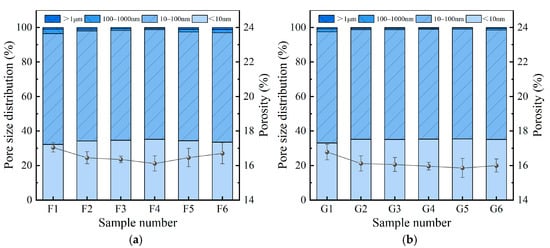
Figure 15 shows the pore structure characteristics of the cementitious materials under different calcination and grinding times. The porosity first decreased and then increased with increasing calcination and grinding times. Sample F1 exhibited the highest porosity (17.05%). When the calcination time increased from 2 to 4 h and then to 6 h, the porosity of the cementitious material changed from 16.45% to 16.12% and 16.71%, respectively; these values correspond to a decrease of 2.0% and an increase of 1.6%, respectively. The results indicate that an excessively long calcination time is not conducive to the formation of a denser microstructure, aligning well with the results of the compressive strength tests.
Figure 15.
Pore structure characteristics of alkali-activated samples with different calcination and grinding times: (a) Group F; (b) Group G. The dotted-line plot represents the porosity of each sample.
As shown in Figure 15b, the sample ground for 1 h exhibited the poorest performance, with a porosity of 16.78%. When the grinding time increased from 2 to 6 h, the porosity of the group samples varied only slightly, ranging from 15.89% to 16.12%. The above results indicate that the particle fineness of the CG was not appreciably further refined after 2 h of grinding. Therefore, in practical applications, the grinding time can be set to 2 h to reduce energy consumption. In addition, CG calcined at 800 °C for 4 h underwent sufficient dehydroxylation, resulting in the largest amounts of reactive species, including Si4+, Al3+, and other reaction products. Consequently, the calcined sample exhibited a denser pore structure and improved mechanical properties than those exhibited by other samples. The increase in the number of fine pores in the pore-size distribution further supports this conclusion.
3.4.3. XRD Analysis
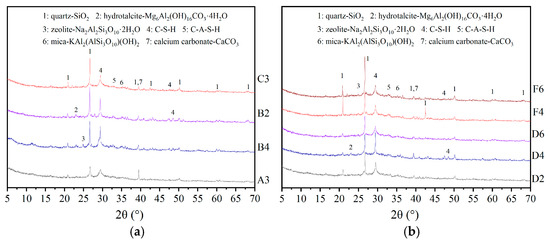
Figure 16 presents the 28 d XRD patterns of the hardened pastes prepared with different alkali activators and calcination parameters. The mineral phases of the hardened pastes primarily included quartz, hydrotalcite, zeolite, mica, and calcium carbonate. Quartz diffraction peaks appeared near 2θ values of 21° and 27°. These peaks originated from the unreacted inert quartz present in the raw FA and CG. Interestingly, the lower quartz peak intensity in sample A3 can be linked to its highly alkaline environment, which, lacking an external soluble silica source, forced a greater degree of dissolution of the native crystalline quartz.
Figure 16.
XRD patterns of alkali-activated samples: (a) samples prepared with different alkali activators; (b) samples prepared under different calcination conditions.
Broad diffuse peaks were observed near 2θ values of 30° and 34° in some samples from Groups A, C, D, and F. Meanwhile, diffraction peaks corresponding to minerals such as mullite and kaolinite present in raw materials disappeared. This indicates that these minerals dissolved and participated in the alkali-activation reaction, forming amorphous phases, such as C-S-H and C(N)-A-S-H. In contrast, the diffraction peak intensity at 2θ = 30° increased in the Group B samples and sample D4. The diffraction peak became sharper and more distinct, indicating an increased degree of structural ordering. This was attributed to the abundant low-polymerisation silicate tetrahedra in the reaction system. Zeolites are amorphous aluminosilicates formed from FA and CG in an alkaline environment. The XRD patterns of the samples from the different groups were similar. This indicates that all three alkali activators provided sufficient alkalinity and promoted the dissolution and repolymerisation reactions of the system. With increasing calcination temperature and time, the diffraction peaks of the C-S-H and C-A-S-H gels first became more intense and then slightly weakened. This trend was consistent with the variation pattern in mechanical strength under different calcination conditions. Sample F4 exhibited the most pronounced diffuse peak within the 2θ range of 25–35°. This further confirms that calcination at 800 °C for 4 h provided the preferred activation effect for CG.
4. Conclusions
This study investigated the effects of combined chemical, thermal, and mechanical activation on the working performance of CG-based alkali-activated cementitious materials. Isothermal calorimetry, NMR and XRD were used to characterise the microstructural properties of the materials. The main conclusions are as follows:
- (1)
- The BA composite activator exhibited the best compatibility with CG-based alkali-activated cementitious materials, followed by the modified sodium silicate solution. The NaOH solution exhibited the worst performance.
- (2)
- Within the calcination temperature range of 500 to 800 °C and a time of 1 to 4 h, kaolinite underwent progressive dehydroxylation as the calcination temperature and calcination time increased. Consequently, the setting of the BA composite activation system was accelerated, whereas the fluidity and porosity decreased, resulting in increased compressive strength. However, excessively high calcination temperatures or prolonged calcination times promoted the transformation of metakaolin into thermodynamically stable phases, such as mullite, thereby reducing the cementitious reactivity.
- (3)
- When the grinding time was increased from 2 to 6 h, the fluidity, setting time, and compressive strength of the CG-based alkali-activated cementitious material exhibited no significant changes. Therefore, prolonging the grinding time only increased energy consumption without improving material performance.
- (4)
- The preferred activation parameters for improving the reactivity of the CG–FA–BFS ternary solid-waste system were identified. The preferred activation scheme consisted of a BA composite activator comprising a sodium silicate solution with a modulus of 1.2 and a concentration of 0.4, together with a BA concentration of 0.06. The preferred pretreatment conditions for CG were 2 h of grinding followed by calcination at 800 °C for 4 h.
Author Contributions
S.L.: Investigation, Data curation, Visualization, Resources. B.W.: Investigation, Writing-original draft, Visualization. Z.Z.: Writing-review and editing, Supervision, Funding acquisition. R.L.: Conceptualization, Methodology, Funding acquisition. J.B.: Formal analysis, Validation. M.C.: Supervision, Methodology. C.M.: Data curation, Validation. All authors have read and agreed to the published version of the manuscript.
Funding
This research was funded by the National Natural Science Foundation of China, grant number 52508446; the Jiangsu Province Science and Technology Department, grant number BK20250434; the Department of Science and Technology of Shandong Province, grant numbers ZR2024JQ023 and SDCX-ZG-202501010.
Institutional Review Board Statement
Not applicable.
Informed Consent Statement
Not applicable.
Data Availability Statement
The datasets generated and analysed during the current study are not publicly available due to proprietary restrictions but are available from the corresponding author on reasonable request.
Conflicts of Interest
Author Sheng Liu was employed by China Railway Tunnel Group Yichu Co., Ltd. The remaining authors declare that the research was conducted in the absence of any commercial or financial relationships that could be construed as a potential conflict of interest.
References
- Willson-Levy, R.; Peled, A.; Klein-BenDavid, O.; Bar-Nes, G. Development of One-part geopolymers based on industrial carbonate waste. Constr. Build. Mater. 2023, 365, 130009. [Google Scholar] [CrossRef] [Scilit]
- Gu, J.; Liu, X.; Zhang, Z. Road base materials prepared by multi-industrial solid wastes in China: A review. Constr. Build. Mater. 2023, 373, 130860. [Google Scholar] [CrossRef] [Scilit]
- Ambaye, T.G.; Djellabi, R.; Vaccari, M.; Prasad, S.; Aminabhavi, T.M.; Rtimi, S. Emerging technologies and sustainable strategies for municipal solid waste valorization: Challenges of circular economy implementation [Review]. J. Clean. Prod. 2023, 423, 138708. [Google Scholar] [CrossRef] [Scilit]
- Gao, M.; Chen, Y. Get the win-win: Sustainable circular model of ‘generation-value-technology’ of industrial solid waste management. Waste Manag. Res. 2024, 42, 191–205. [Google Scholar] [CrossRef] [Scilit]
- Su, C.; Zhang, J.X.; Ding, Y.J. Research on reactivity evaluation and micro-mechanism of various solid waste powders for alkali-activated cementitious materials. Constr. Build. Mater. 2024, 411, 134374. [Google Scholar] [CrossRef] [Scilit]
- Kong, D.D.; Zhang, S.B.; Zhang, J.F.; Liu, T.; Wang, L.; Jin, L. Enhancing carbonation resistance of low-activity coal gangue-based LC3 cementitious materials with Ca(OH)2 and gypsum additives. J. Build. Eng. 2024, 98, 111275. [Google Scholar] [CrossRef] [Scilit]
- Gao, Q.W.; Jiu, S.; Chen, Y.X.; Zhao, S.J.; Chen, C.; Jia, R.Q. Modification of low-quality calcined coal gangue and its effect on mechanical properties and microstructure. Constr. Build. Mater. 2025, 458, 139433. [Google Scholar] [CrossRef] [Scilit]
- Wang, A.G.; Pan, Y.H.; Zhao, J.; Liu, P.; Wang, Y.M.; Chu, Y.J.; Liu, K.W.; Sun, D.S. Research progress of resourceful and efficient utilization of coal gangue in the field of building materials. J. Build. Eng. 2025, 99, 111526. [Google Scholar] [CrossRef] [Scilit]
- Guo, X.; Zeng, M.L.; Yu, H.D.; Lin, F.W.; Li, J.W.; Wang, W.L.; Chen, G.Y. Critical review for the potential analysis of material utilization from inorganic industrial solid waste. J. Clean. Prod. 2024, 459, 142457. [Google Scholar] [CrossRef] [Scilit]
- Gao, S.; Zhao, G.H.; Guo, L.H.; Zhou, L.Q.; Yuan, K.K. Utilization of coal gangue as coarse aggregates in structural concrete. Constr. Build. Mater. 2021, 268, 121212. [Google Scholar] [CrossRef] [Scilit]
- Li, J.Y.; Wang, J.M. Comprehensive utilization and environmental risks of coal gangue: A review. J. Clean. Prod. 2019, 239, 117946. [Google Scholar] [CrossRef] [Scilit]
- Zhang, B.; Yan, B.Q.; Li, Y.T. Study on mechanical properties, freeze-thaw and chlorides penetration resistance of alkali activated granulated blast furnace slag-coal gangue concrete and its mechanism. Constr. Build. Mater. 2023, 366, 130218. [Google Scholar] [CrossRef] [Scilit]
- Zhao, J.; Wang, A.G.; Zhang, Z.H.; Xu, Q.; Zhu, Y.C.; Liu, K.W.; Wang, X.Y.; Sun, D.S. Design and evaluation of alkali-activated slag-calcined coal gangue cement and the shrinkage control by calcium carbonate whisker. Constr. Build. Mater. 2024, 443, 137753. [Google Scholar] [CrossRef] [Scilit]
- Ma, H.Q.; Zhu, H.G.; Wu, C.; Chen, H.Y.; Sun, J.W.; Liu, J.Y. Study on compressive strength and durability of alkali-activated coal gangue-slag concrete and its mechanism. Powder Technol. 2020, 368, 112–124. [Google Scholar] [CrossRef] [Scilit]
- Ma, H.Q.; Chen, H.Y.; Zhu, H.G.; Shi, Y.Y.; Ni, Y.D.; Huo, Q.J.; Hang, Z.T. Study on the drying shrinkage of alkali-activated coal gangue-slag mortar and its mechanisms. Constr. Build. Mater. 2019, 225, 204–213. [Google Scholar] [CrossRef] [Scilit]
- Huang, G.D.; Ji, Y.S.; Li, J.; Hou, Z.H.; Dong, Z.C. Improving strength of calcinated coal gangue geopolymer mortars via increasing calcium content. Constr. Build. Mater. 2018, 166, 760–768. [Google Scholar] [CrossRef] [Scilit]
- Guo, L.Z.; Liu, J.H.; Zhou, M.; An, S.H. Effect of an alkali activators on the compressive strength and reaction mechanism of coal gangue-slag-fly ash geopolymer grouting materials. Constr. Build. Mater. 2024, 426, 136012. [Google Scholar] [CrossRef] [Scilit]
- Wang, X.; Que, Y.; Wang, S.; Kang, S.; Zheng, W.; Xu, L.; Wu, W. Effects of alkali activator on the carbonation of one-part alkali-activated nickel slag cement. J. Sustain. Cem.-Based Mater. 2025, 14, 627–644. [Google Scholar] [CrossRef] [Scilit]
- Li, Y.; Guo, S.L.; Zhang, Y.; Zheng, D.Z.; Wang, R.; Zhang, Y.H.; Tang, J.J. Effect of Activator Type on the High-Temperature Properties of Alkali-Activated Slag Cementing Fluid. ACS Omega 2024, 9, 51431–51441. [Google Scholar] [CrossRef] [Scilit]
- Zhao, Y.Q.; Gu, X.W.; Xu, X.C.; Zhang, Z.L. Using calcium carbide residue to prepare ecological alkali activated slag composites: Effect of anion type. Ceram. Int. 2023, 49, 25092–25104. [Google Scholar] [CrossRef] [Scilit]
- Sun, X.G.; Liu, J.; Qiu, J.P.; Wu, P.Q.; Zhao, Y.Q. Alkali activation of blast furnace slag using a carbonate-calcium carbide residue alkaline mixture to prepare cemented paste backfill. Constr. Build. Mater. 2022, 320, 126234. [Google Scholar] [CrossRef] [Scilit]
- Wei, D.Y.; Du, C.F.; Zhang, L.F.; Li, Y.X.; Ba, L. Preparation of a Composite Calcium Silicate Board with Carbide Slag and Coal-Based Solid Waste Activated by Different Alkali Activators. ACS Omega 2020, 5, 8934–8942. [Google Scholar] [CrossRef] [Scilit]
- Wang, A.G.; Liu, P.; Mo, L.W.; Liu, K.W.; Ma, R.; Guan, Y.M.; Sun, D.S. Mechanism of thermal activation on granular coal gangue and its impact on the performance of cement mortars. J. Build. Eng. 2022, 45, 103616. [Google Scholar] [CrossRef] [Scilit]
- Hao, R.W.; Li, X.L.; Xu, P.J.; Liu, Q.F. Thermal activation and structural transformation mechanism of kaolinitic coal gangue from Jungar coalfield, Inner Mongolia, China. Appl. Clay Sci. 2022, 223, 106508. [Google Scholar] [CrossRef] [Scilit]
- Geng, J.J.; Zhou, M.; Li, Y.X.; Chen, Y.C.; Han, Y.; Wan, S.; Zhou, X.; Hou, H.B. Comparison of red mud and coal gangue blended geopolymers synthesized through thermal activation and mechanical grinding preactivation. Constr. Build. Mater. 2017, 153, 185–192. [Google Scholar] [CrossRef] [Scilit]
- Guo, Y.X.; Yan, K.Z.; Cui, L.; Cheng, F.Q. Improved extraction of alumina from coal gangue by surface mechanically grinding modification. Powder Technol. 2016, 302, 33–41. [Google Scholar] [CrossRef] [Scilit]
- Zhang, Y.Y.; Xu, L.; Seetharaman, S.; Liu, L.L.; Wang, X.D.; Zhang, Z.T. Effects of chemistry and mineral on structural evolution and chemical reactivity of coal gangue during calcination: Towards efficient utilization. Mater. Struct. 2015, 48, 2779–2793. [Google Scholar] [CrossRef] [Scilit]
- Zhu, Y.Y.; Zhu, Y.C.; Wang, A.G.; Sun, D.S.; Liu, K.W.; Liu, P.; Chu, Y.J. Valorization of calcined coal gangue as coarse aggregate in concrete. Cem. Concr. Compos. 2021, 121, 104057. [Google Scholar] [CrossRef] [Scilit]
- Zhao, Y.L.; Qiu, J.P.; Ma, Z.Y.; Sun, X.G. Eco-friendly treatment of coal gangue for its utilization as supplementary cementitious materials. J. Clean. Prod. 2021, 285, 124834. [Google Scholar] [CrossRef] [Scilit]
- Fei, E.; Zhang, X.D.; Su, L.J.; Liu, B.N.; Li, B.T.; Li, W.L. Analysis of calcination activation modified coal gangue and its acid activation mechanism. J. Build. Eng. 2024, 95, 109916. [Google Scholar] [CrossRef] [Scilit]
- Chang, J.; Li, W.; Wang, D.; Zhang, Y. Effect of silicate modulus on tensile properties and microstructure of waterproof coating based on polymer and sodium silicate-activated GGBS. Constr. Build. Mater. 2020, 252, 119056. [Google Scholar] [CrossRef] [Scilit]
- Firdous, R.; Stephan, D. Effect of silica modulus on the geopolymerization activity of natural pozzolans. Constr. Build. Mater. 2019, 219, 31–43. [Google Scholar] [CrossRef] [Scilit]
- GB/T 8077-2023; Methods for Testing Uniformity of Concrete Admixtures. National Standardization Administration of the People’s Republic of China (SAC): Beijing, China, 2023.
- GB/T 1346-2024; Test Methods for Water Requirement of Standard Consistency, Setting Time and Soundness of the Portland Cement. National Standardization Administration of the People’s Republic of China (SAC): Beijing, China, 2024.
- GB/T 12959-2024; Test Methods for Heat of Hydration of Cement. National Standardization Administration of the People’s Republic of China (SAC): Beijing, China, 2024.
- Xiao, Q.Y.; Tang, Z.; Xiang, Y.; Cai, Y.X.; Wang, J.L.; Xu, W.R.; Long, G.C. Early age reaction, rheological properties, and environment impact of NaOH-activated fly ash mixtures at ambient environment. J. Build. Eng. 2024, 88, 109145. [Google Scholar] [CrossRef] [Scilit]
- Paillard, C.; Sanson, N.; de Lacaillerie, J.B.D.; Palacios, M.; Boustingorry, P.; Jachiet, M.; Giraudeau, C.; Kocaba, V. An experimental review of the reaction paths followed by alkali-activated slag pastes. Cem. Concr. Res. 2025, 189, 107765. [Google Scholar] [CrossRef] [Scilit]
- Zhu, X.H.; Luan, M.Y.; Tang, D.S.; Yang, K.; Yang, C.H. Understanding the setting behaviours of alkali-activated slag from the dissolution-precipitation point of view. Cem. Concr. Compos. 2024, 148, 105474. [Google Scholar] [CrossRef] [Scilit]
- Ji, X.; Wang, Z.J.; Wang, X.F.; Zhao, X.; Zhang, H.B.; Zhang, T.H. Microstructures and properties of alkali-activated slags with composite activator: Effects of Na2O equivalents. J. Clean. Prod. 2024, 450, 141754. [Google Scholar] [CrossRef] [Scilit]
- Huang, Z.X.; Wang, Q.; Lu, J.M. The effects of cations and concentration on reaction mechanism of alkali-activated blast furnace ferronickel slag. Compos. Part B Eng. 2022, 236, 109825. [Google Scholar] [CrossRef] [Scilit]
- Fernández-Jiménez, A.; Palomo, A. Composition and microstructure of alkali activated fly ash binder: Effect of the activator. Cem. Concr. Res. 2005, 35, 1984–1992. [Google Scholar] [CrossRef] [Scilit]
- Meng, T.; Jia, Y.; Dai, D.; Wang, Z.; Lai, J.; Lai, Z.; Yang, J.; He, K. Effect of nano-CaCO3 on metakaolin geopolymers at different Na/Al ratios: Early performance, microstructure, and hydration process. Constr. Build. Mater. 2025, 484, 141789. [Google Scholar] [CrossRef] [Scilit]
- Sakulich, A.R.; Anderson, E.; Schauer, C.; Barsoum, M.W. Mechanical and microstructural characterization of an alkali-activated slag/limestone fine aggregate concrete. Constr. Build. Mater. 2009, 23, 2951–2957. [Google Scholar] [CrossRef] [Scilit]
- Mendes, B.C.; Pedroti, L.G.; Vieira, C.M.F.; Marvila, M.; Azevedo, A.R.G.; de Carvalho, J.M.F.; Ribeiro, J.C.L. Application of eco-friendly alternative activators in alkali-activated materials: A review. J. Build. Eng. 2021, 35, 102010. [Google Scholar] [CrossRef] [Scilit]
- Zhu, Z.J.; Zhang, C.Y.; Liu, R.T.; Li, S.C.; Wang, M. Sunflower straw ash as an alternative activator in alkali-activated grouts: A new 100% waste-based material. Ceram. Int. 2023, 49, 32308–32312. [Google Scholar] [CrossRef] [Scilit]
- Zhu, Z.J.; Xu, X.J.; Liu, R.T.; Liu, P.; Tang, H.T.; Gong, Y.A.; Zhang, C.Y.; Li, X.H.; Liu, Y.K.; Bai, J.W.; et al. Feasibility study of highly alkaline biomass ash to activate alkali-activated grouts. Constr. Build. Mater. 2023, 393, 132067. [Google Scholar] [CrossRef] [Scilit]
- Sun, T.; Ge, K.Y.; Wang, G.M.; Geng, H.N.; Shui, Z.H.; Cheng, S.K.; Chen, M. Comparing pozzolanic activity from thermal-activated water-washed and coal-series kaolin in Portland cement mortar. Constr. Build. Mater. 2019, 227, 117092. [Google Scholar] [CrossRef] [Scilit]
- Shvarzman, A.; Kovler, K.; Grader, G.S.; Shter, G.E. The effect of dehydroxylation/amorphization degree on pozzolanic activity of kaolinite. Cem. Concr. Res. 2003, 33, 405–416. [Google Scholar] [CrossRef] [Scilit]
- Gu, X.W.; Li, Z.J.; Yang, B.H.; Hu, Z.Y.; Liu, J.P.; Zhang, Y.N.; Nehdi, M.L. Spontaneous combustion coal gangue-based composite cement: Compressive performance and environmental benefits under grinding kinetics control. J. Build. Eng. 2024, 98, 111089. [Google Scholar] [CrossRef] [Scilit]
- Jiang, D.D.; Zhang, Z.H.; Shi, C.J. Evolution of silicate species from waterglass in waterglass activated slag (WAS) pastes at early age. Cem. Concr. Res. 2024, 180, 107513. [Google Scholar] [CrossRef] [Scilit]
- Li, L.M.; Xie, J.H.; Zhang, B.F.; Feng, Y.; Yang, J. A state-of-the-art review on the setting behaviours of ground granulated blast furnace slag- and metakaolin-based alkali-activated materials. Constr. Build. Mater. 2023, 368, 130389. [Google Scholar] [CrossRef] [Scilit]
- Shi, C.J.; Day, R.L. Some factors affecting early hydration of alkali-slag cements. Cem. Concr. Res. 1996, 26, 439–447. [Google Scholar] [CrossRef] [Scilit]
- Li, N.; Shi, C.J.; Zhang, Z.H. Understanding the roles of activators towards setting and hardening control of alkali-activated slag cement. Compos. Part B Eng. 2019, 171, 34–45. [Google Scholar] [CrossRef] [Scilit]
- Liu, C.; Liang, X.H.; Chen, Y.; Li, Z.M.; Ye, G. Degradation of alkali-activated slag subjected to water immersion. Cem. Concr. Compos. 2023, 142, 105157. [Google Scholar] [CrossRef]
- Yan, F.L.; Luo, K.; Ye, J.Y.; Zhang, W.S.; Chen, J.J.; Ren, X.H.; Liu, Z.C.; Li, J. Leaching kinetics and dissolution model of steel slag in NaOH solution. Constr. Build. Mater. 2024, 434, 136743. [Google Scholar] [CrossRef] [Scilit]
- Huo, W.; Zhu, Z.; Zhang, J.; Kang, Z.; Pu, S.; Wan, Y. Utilization of OPC and FA to enhance reclaimed lime-fly ash macadam based geopolymers cured at ambient temperature. Constr. Build. Mater. 2021, 303, 124378. [Google Scholar] [CrossRef] [Scilit]

Disclaimer/Publisher’s Note: The statements, opinions and data contained in all publications are solely those of the individual author(s) and contributor(s) and not of MDPI and/or the editor(s). MDPI and/or the editor(s) disclaim responsibility for any injury to people or property resulting from any ideas, methods, instructions or products referred to in the content. |
© 2026 by the authors. Licensee MDPI, Basel, Switzerland. This article is an open access article distributed under the terms and conditions of the Creative Commons Attribution (CC BY) license.